US10347330B2 - Solid state storage device and reading control method thereof for read retry process with optimal read voltage set - Google Patents

Solid state storage device and reading control method thereof for read retry process with optimal read voltage set Download PDF

Info

Publication number
US10347330B2
US10347330B2 US15/013,023 US201615013023A US10347330B2 US 10347330 B2 US10347330 B2 US 10347330B2 US 201615013023 A US201615013023 A US 201615013023A US 10347330 B2 US10347330 B2 US 10347330B2
Authority
US
United States
Prior art keywords
read
block
read voltage
voltage set
storage device
Prior art date
Legal status (The legal status is an assumption and is not a legal conclusion. Google has not performed a legal analysis and makes no representation as to the accuracy of the status listed.)
Active, expires
Application number
US15/013,023
Other versions
US20170125090A1 (en
Inventor
Shih-Jia Zeng
Jen-Chien Fu
Current Assignee (The listed assignees may be inaccurate. Google has not performed a legal analysis and makes no representation or warranty as to the accuracy of the list.)
Solid State Storage Technology Corp
Original Assignee
Lite On Technology Corp
Priority date (The priority date is an assumption and is not a legal conclusion. Google has not performed a legal analysis and makes no representation as to the accuracy of the date listed.)
Filing date
Publication date
Application filed by Lite On Technology Corp filed Critical Lite On Technology Corp
Assigned to LITE-ON TECHNOLOGY CORPORATION, LITE-ON ELECTRONICS (GUANGZHOU) LIMITED reassignment LITE-ON TECHNOLOGY CORPORATION ASSIGNMENT OF ASSIGNORS INTEREST (SEE DOCUMENT FOR DETAILS). Assignors: FU, JEN-CHIEN, ZENG, SHIH-JIA
Publication of US20170125090A1 publication Critical patent/US20170125090A1/en
Application granted granted Critical
Publication of US10347330B2 publication Critical patent/US10347330B2/en
Assigned to SOLID STATE STORAGE TECHNOLOGY CORPORATION reassignment SOLID STATE STORAGE TECHNOLOGY CORPORATION ASSIGNMENT OF ASSIGNORS INTEREST (SEE DOCUMENT FOR DETAILS). Assignors: LITE-ON ELECTRONICS (GUANGZHOU) LIMITED, LITE-ON TECHNOLOGY CORPORATION
Active legal-status Critical Current
Adjusted expiration legal-status Critical

Links

Images

Classifications

    • GPHYSICS
    • G11INFORMATION STORAGE
    • G11CSTATIC STORES
    • G11C11/00Digital stores characterised by the use of particular electric or magnetic storage elements; Storage elements therefor
    • G11C11/56Digital stores characterised by the use of particular electric or magnetic storage elements; Storage elements therefor using storage elements with more than two stable states represented by steps, e.g. of voltage, current, phase, frequency
    • G11C11/5621Digital stores characterised by the use of particular electric or magnetic storage elements; Storage elements therefor using storage elements with more than two stable states represented by steps, e.g. of voltage, current, phase, frequency using charge storage in a floating gate
    • G11C11/5642Sensing or reading circuits; Data output circuits
    • GPHYSICS
    • G06COMPUTING OR CALCULATING; COUNTING
    • G06FELECTRIC DIGITAL DATA PROCESSING
    • G06F11/00Error detection; Error correction; Monitoring
    • G06F11/07Responding to the occurrence of a fault, e.g. fault tolerance
    • G06F11/08Error detection or correction by redundancy in data representation, e.g. by using checking codes
    • G06F11/10Adding special bits or symbols to the coded information, e.g. parity check, casting out 9's or 11's
    • G06F11/1008Adding special bits or symbols to the coded information, e.g. parity check, casting out 9's or 11's in individual solid state devices
    • G06F11/1048Adding special bits or symbols to the coded information, e.g. parity check, casting out 9's or 11's in individual solid state devices using arrangements adapted for a specific error detection or correction feature
    • GPHYSICS
    • G06COMPUTING OR CALCULATING; COUNTING
    • G06FELECTRIC DIGITAL DATA PROCESSING
    • G06F11/00Error detection; Error correction; Monitoring
    • G06F11/07Responding to the occurrence of a fault, e.g. fault tolerance
    • G06F11/08Error detection or correction by redundancy in data representation, e.g. by using checking codes
    • G06F11/10Adding special bits or symbols to the coded information, e.g. parity check, casting out 9's or 11's
    • G06F11/1008Adding special bits or symbols to the coded information, e.g. parity check, casting out 9's or 11's in individual solid state devices
    • G06F11/1068Adding special bits or symbols to the coded information, e.g. parity check, casting out 9's or 11's in individual solid state devices in sector programmable memories, e.g. flash disk
    • GPHYSICS
    • G11INFORMATION STORAGE
    • G11CSTATIC STORES
    • G11C16/00Erasable programmable read-only memories
    • G11C16/02Erasable programmable read-only memories electrically programmable
    • G11C16/06Auxiliary circuits, e.g. for writing into memory
    • G11C16/26Sensing or reading circuits; Data output circuits
    • GPHYSICS
    • G11INFORMATION STORAGE
    • G11CSTATIC STORES
    • G11C16/00Erasable programmable read-only memories
    • G11C16/02Erasable programmable read-only memories electrically programmable
    • G11C16/06Auxiliary circuits, e.g. for writing into memory
    • G11C16/26Sensing or reading circuits; Data output circuits
    • G11C16/28Sensing or reading circuits; Data output circuits using differential sensing or reference cells, e.g. dummy cells
    • GPHYSICS
    • G11INFORMATION STORAGE
    • G11CSTATIC STORES
    • G11C16/00Erasable programmable read-only memories
    • G11C16/02Erasable programmable read-only memories electrically programmable
    • G11C16/06Auxiliary circuits, e.g. for writing into memory
    • G11C16/34Determination of programming status, e.g. threshold voltage, overprogramming or underprogramming, retention
    • G11C16/3436Arrangements for verifying correct programming or erasure
    • G11C16/3454Arrangements for verifying correct programming or for detecting overprogrammed cells
    • G11C16/3459Circuits or methods to verify correct programming of nonvolatile memory cells
    • GPHYSICS
    • G11INFORMATION STORAGE
    • G11CSTATIC STORES
    • G11C29/00Checking stores for correct operation ; Subsequent repair; Testing stores during standby or offline operation
    • G11C29/52Protection of memory contents; Detection of errors in memory contents
    • GPHYSICS
    • G11INFORMATION STORAGE
    • G11CSTATIC STORES
    • G11C16/00Erasable programmable read-only memories
    • G11C16/02Erasable programmable read-only memories electrically programmable
    • G11C16/06Auxiliary circuits, e.g. for writing into memory
    • G11C16/34Determination of programming status, e.g. threshold voltage, overprogramming or underprogramming, retention
    • G11C16/3418Disturbance prevention or evaluation; Refreshing of disturbed memory data
    • GPHYSICS
    • G11INFORMATION STORAGE
    • G11CSTATIC STORES
    • G11C16/00Erasable programmable read-only memories
    • G11C16/02Erasable programmable read-only memories electrically programmable
    • G11C16/06Auxiliary circuits, e.g. for writing into memory
    • G11C16/34Determination of programming status, e.g. threshold voltage, overprogramming or underprogramming, retention
    • G11C16/349Arrangements for evaluating degradation, retention or wearout, e.g. by counting erase cycles
    • GPHYSICS
    • G11INFORMATION STORAGE
    • G11CSTATIC STORES
    • G11C29/00Checking stores for correct operation ; Subsequent repair; Testing stores during standby or offline operation
    • G11C29/04Detection or location of defective memory elements, e.g. cell constructio details, timing of test signals
    • G11C2029/0409Online test
    • GPHYSICS
    • G11INFORMATION STORAGE
    • G11CSTATIC STORES
    • G11C7/00Arrangements for writing information into, or reading information out from, a digital store
    • G11C7/14Dummy cell management; Sense reference voltage generators

Definitions

  • the present invention relates to a solid state storage device and a control method thereof, and more particularly to a solid state storage device and a reading control method thereof.
  • solid state storage devices such as SD cards or solid state storage drives (SSD) are widely used in a variety of electronic devices.
  • SSD solid state storage drives
  • a solid state storage device comprises a controlling circuit and a non-volatile memory.
  • a NAND-based flash memory is one kind of non-volatile memory.
  • the NAND-based flash memories may be classified into three types, i.e. a single-level cell (SLC) flash memory, a multi-level cell (MLC) flash memory and a triple-level cell (TLC) flash memory.
  • SLC flash memory can store only one bit of data per cell.
  • MLC flash memory can store two bits of data per cell.
  • TLC flash memory can store three bits of data per cell.
  • FIG. 1 is a schematic functional block diagram illustrating a conventional solid state storage device.
  • the solid state storage device 10 is connected with a host 14 through an external bus 12 .
  • the external bus 12 is a USB bus, an SATA bus, a PCIe bus, or the like.
  • the solid state storage device 10 comprises a controlling circuit 101 and a non-volatile memory 105 .
  • the controlling circuit 101 is connected with the non-volatile memory 105 through an internal bus 107 .
  • the controlling circuit 101 stores the received write data into the non-volatile memory 105 , or the controlling circuit 101 acquires a read data from the non-volatile memory 105 and transmits the read data to the host 14 .
  • the controlling circuit 101 further comprises an error correction (ECC) unit 104 and a retry table 106 .
  • ECC error correction
  • the ECC unit 104 is used for correcting the error bits of the read data. After the error bits of the read data are corrected, corrected read data are transmitted to the host 14 . However, if the ECC unit 104 is unable to successfully correct all bits of the read data, the read data cannot output the read data to the host 14 . Under this circumstance, the retry table 106 provides another read voltage to the controlling circuit 101 . According to the read voltage, the controlling unit 101 performs a read retry operation on the non-volatile memory 105 .
  • FIG. 2A schematically illustrates the architecture of cells in the non-volatile memory of the solid state storage device.
  • the non-volatile memory 105 has a memory array composed of plural cells. Each cell includes a floating gate transistor.
  • the memory array comprises plural word lines WL(n ⁇ 1), WL(n) and WL(n+1) for controlling respective rows of cells. When one of the plural word lines is activated, a selected row corresponding to the activated word line is determined. According to the on/off states of the floating gate transistors of the cells in the selected row, the storing states of the cells are determined.
  • the cells are SLC, MLC or TLC cells.
  • the floating gate transistor of each cell has a floating gate to store hot carriers.
  • a threshold voltage (V TH ) of the floating gate transistor is determined according to the amount of the stored hot carriers. If a floating gate transistor has a higher threshold voltage, it means that a higher gate voltage is required to turn on the floating gate transistor. Whereas, if a floating gate transistor has a lower threshold voltage, it means that the floating gate transistor can be turned on by a lower gate voltage.
  • the controlling circuit 101 controls the amount of hot carriers to be injected into the floating gate , so that the threshold voltage (V TH ) of floating gate transistor is correspondingly changed.
  • the controlling circuit 101 provides a read voltage to the floating gate of the floating gate transistor and determines the storing state of the floating gate transistor by judging whether the floating gate transistor is turned on.
  • FIG. 2B schematically illustrates the threshold voltage distribution curves of the MLC flash memory in different storing states.
  • Each cell of the MLC flash memory can be programed into one of four storing states E, A, B and C according to the amount of the injected hot carriers.
  • the cell Before the hot carriers are injected into the cell, the cell is in a storing state E. According to the number of hot carriers injected into the cell, the cell is in the storing state A, the storing state B or the storing state C.
  • the cell in the storing state C has the highest threshold voltage.
  • the cell in the storing state E has the lowest threshold voltage.
  • the cell is returned to the storing state E where no hot carriers are injected into the cell.
  • each cell of the SLC flash memory has two storing states
  • each cell of the TLC flash memory has eight storing states.
  • the concepts of the present invention are also applied to the SLC flash memory and the TLC flash memory.
  • the threshold voltages of these cells are not all identical. That is, the threshold voltages of these cells are distributed in a specified distribution curve with a median threshold voltage.
  • the cells in the storing state E have a median threshold voltage V THE (e.g. 0V)
  • the cells in the storing state A have a median threshold voltage V THA (e.g. 10V)
  • the cells in the storing state B have a median threshold voltage V THB (e.g. 20V)
  • the cells in the storing state C have a median threshold voltage V THC (e.g. 30V).
  • V THA median threshold voltage
  • a read voltage set including three read voltages Vra, Vrb and Vrc is defined.
  • the controlling circuit 101 provides the three read voltages of the read voltage set to the word line in order to detect the storing states of the cells of the MLC flash memory.
  • a most significant bit (MSB) of the cell can be determined. If the threshold voltage of the cell is lower than the read voltage Vrb and the cell can be turned, the controlling circuit 101 judges that the MSB of the cell is “1”. Whereas, if the threshold voltage of the cell is higher than the read voltage Vrb and the cell cannot be turned, the controlling circuit 101 judges that the MSB of the cell is “0”. Similarly, after the read voltage Vra and the read voltage Vrc are provided to the non-volatile memory 105 , a least significant bit (LSB) of the cell can be determined.
  • LSB least significant bit
  • the storing state E is denoted as a logic state is “11”
  • the storing state A is denoted as a logic state “10”
  • the storing state B is denoted as the logic state “00”
  • the storing state C is denoted as the logic state “01”.
  • controlling circuit 101 can employ one read voltage to determine two storing states of the SLC flash memory. Similarly, the controlling circuit 101 can use a read voltage set including seven read voltages to determine eight storing states of the TLC flash memory.
  • the read voltages Vra, Vrb and Vrc are important for determining the storing states of the cells.
  • the characteristics of the cells are subjected to changes.
  • the threshold voltage distribution curves of the storing state of all cells in the non-volatile memory 105 are possibly changed, and the median threshold voltages are shifted. If the original read voltages Vra, Vrb and Vrc are still used to read the data of the non-volatile memory 105 , the number of error bits increases. Since the number of the erroneously-judged cells increases, the ECC unit 104 cannot effectively correct the erroneously-judged cells. Under this circumstance, the controlling circuit 101 cannot output the corrected read data to the host 14 .
  • the controlling circuit 101 has a retry table.
  • the retry table contains plural read voltage sets stored in a memory. If the controlling circuit 101 confirms that a read retry operation is required, the controlling circuit 101 acquires another read voltage set including three read voltages Vra′, Vrb′ and Vrc′ from the retry table 106 . Moreover, the read voltages Vra′, Vrb′ and Vrc′ are provided to the non-volatile memory 105 in order to read the data again.
  • FIG. 2C is a flowchart illustrating a decoding process of the conventional solid state storage device.
  • the controlling circuit 101 provides a default read voltage set including read voltages Vra, Vrb and Vrc to the non-volatile memory 105 in order to read data from the non-volatile memory 105 (Step S 302 ).
  • the controlling circuit 101 judges whether the data is successfully decoded (Step S 304 ).
  • Step S 304 If the data is successfully decoded by the ECC unit 104 in the Step S 304 , it means the error bits in the read data can be corrected. Consequently, the controlling circuit 101 outputs the read data (Step S 310 ). Whereas, if the data is not successfully decoded in the Step S 304 , it means that the error bits in the read data cannot be effectively corrected. Consequently, the controlling circuit 101 performs a read retry process (Step S 305 ).
  • Step S 305 the controlling circuit 101 acquires an updated read voltage set including read voltages Vra′, Vrb′ and Vrc′ from the retry table 106 , and provides the updated read voltage set to the non-volatile memory 105 in order to read data from the non-volatile memory 105 (Step S 306 ). Then, the controlling circuit 101 judges whether the data can be successfully decoded (Step S 308 ).
  • M read voltage sets have been previously listed and contained in the retry table 106 .
  • the M read voltage sets are sequentially used as the updated read voltage sets and provided to the non-volatile memory 105 .
  • the controlling circuit 101 reads the data from the non-volatile memory 105 again. If the data is successfully decoded according to the updated read voltage sets, the controlling circuit 101 outputs the read data (Step S 310 ) and ends the read retry process S 305 .
  • the controlling circuit 101 generates a failed message to indicate that the read retry process fails (Step S 312 ). In other words, the steps S 306 and S 308 are performed M times at most during the read retry process.
  • the controlling circuit 101 will not perform the read retry process. Under this circumstance, all of the M read voltage sets in the retry table 106 are not used. On the other hand, if the controlling circuit 101 performs the read retry process, the M read voltage sets in the retry table 106 are possibly used.
  • the M read voltage sets in the retry table 106 are provided by the manufacturer of the non-volatile memory 105 .
  • the controlling circuit 101 sequentially reads the M read voltage sets from the retry table 106 and sequentially provides the M read voltage sets to the non-volatile memory 105 . Since the read retry process is only able to sequentially provide the M read voltage sets to the non-volatile memory 105 but is unable to directly acquire the suitable read voltage set, the read retry process is time-consuming.
  • An embodiment of the present invention provides a reading control method for a solid state storage device.
  • the solid state storage device includes a non-volatile memory with plural blocks.
  • the plural blocks include a first block and a second block.
  • the reading control method includes the following steps. While the solid state storage device is in an idle mode, a background monitoring operation is performed on the first block and the second block. Consequently, a first optimal read voltage set corresponding to the first block and a second optimal read voltage set corresponding to the second block are acquired.
  • a default read voltage set is provided to the non-volatile memory to read a data of the first block, and a judging step is performed to judge whether the data of the first block is successfully decoded. If the data of the first block is not successfully decoded, a read retry process is performed on the first block and the first optimal read voltage set is provided to the non-volatile memory to read the data of the first block.
  • the solid state storage device includes a non-volatile memory and a controlling circuit.
  • the non-volatile memory includes plural blocks.
  • the plural blocks include a first block and a second block.
  • the controlling circuit is connected with the non-volatile memory.
  • the controlling circuit includes an error correction unit and a retry table, and plural read voltage sets are contained in the retry table.
  • the controlling circuit performs a background monitoring operation to acquire a first optimal read voltage set corresponding to the first block and a second optimal read voltage set corresponding to the second block.
  • the controlling circuit provides the first optimal read voltage set to the non-volatile memory to read a data of the first block.
  • a further embodiment of the present invention provides a reading control method for a solid state storage device.
  • the solid state storage device includes a non-volatile memory with plural blocks.
  • the plural blocks include a first block and a second block.
  • the reading control method includes following steps. While the solid state storage device is in an idle mode, a background monitoring operation is performed on the first block and the second block.
  • the background monitoring operation is performed by steps of providing X read voltage sets in a retry table to the non-volatile memory to read a data of the first block and correspondingly generate X decoding results, and determining one of the X read voltage sets as the first optimal read voltage set corresponding to the first block according to the X decoding results.
  • a read retry process is performed, and the first optimal read voltage set is provided to the non-volatile memory to read the data of the first block.
  • FIG. 1 (prior art) is a schematic functional block diagram illustrating a conventional solid state storage device
  • FIG. 2A (prior art) schematically illustrates the architecture of cells in the non-volatile memory of the solid state storage device
  • FIG. 2B (prior art) schematically illustrates the threshold voltage distribution curves of the MLC flash memory in different storing states
  • FIG. 2C (prior art) is a flowchart illustrating a decoding process of the conventional solid state storage device
  • FIG. 3 is a schematic functional block diagram illustrating a solid state storage device according an embodiment of the present invention.
  • FIG. 4A is a flowchart illustrating the operations of the solid state storage device of the present invention.
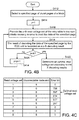
  • FIG. 4B is a flowchart illustrating a process of performing a background monitoring operation on one block according to an embodiment of the present invention
  • FIG. 4C is table illustrating the relationships between read voltage sets, uncorrectable codewords and error bits for determining an optimal read voltage set
  • FIG. 4D schematically illustrates a flowchart of a read retry process according to a first embodiment of the present invention
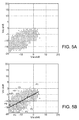
  • FIG. 5A is a schematic diagram illustrating the test result of the non-volatile memory in the data retention condition
  • FIG. 5B illustrates the use of a group algorithm to divide the measured points of FIG. 5A into plural groups
  • FIGS. 6A and 6B illustrate an approach of determining plural extension points according to the main points
  • FIG. 7 schematically illustrates a flowchart of a read retry process according to a second embodiment of the present invention.
  • the present invention provides a solid state storage device and a reading control method thereof.
  • the reading control method can be used to directly provide an appropriate read voltage set to perform a read retry process. Consequently, the read retry process is time-saving.
  • the term “idle period” used herein indicates that no data are transmitted between the solid state storage device and a host.
  • a controlling circuit performs a background monitoring operation on all blocks of a non-volatile memory. While the background monitoring operation is performed, read voltage sets previously listed and contained in a retry table are provided to blocks of the non-volatile memory by the controlling circuit. Then, the blocks are correlated with the corresponding optimal read voltage sets according to the generated data of the blocks.
  • the optimal read voltage sets are selected from the retry table.
  • the optimal read voltage sets for different blocks may be identical or different. While the host reads the read data of the solid state storage device and the read retry process is performed, the controlling circuit performs the read retry process according to the optimal read voltage sets of the corresponding blocks.
  • FIG. 3 is a schematic functional block diagram illustrating a solid state storage device according an embodiment of the present invention.
  • the solid state storage device 30 is connected with a host 34 through an external bus 32 .
  • the external bus 32 is a USB bus, an SATA bus, a PCIe bus, or the like.
  • the solid state storage device 30 comprises a controlling circuit 301 and a non-volatile memory 305 .
  • the controlling circuit 301 is connected with the non-volatile memory 305 through an internal bus 307 .
  • the controlling circuit 301 stores the received write data into the non-volatile memory 305 , or the controlling circuit 301 acquires a read data from the non-volatile memory 305 and transmits the read data to the host 34 .
  • the controlling circuit 301 further comprises an error correction (ECC) unit 304 and a retry table 306 .
  • ECC error correction
  • the ECC unit 304 is used for correcting the error bits of the read data. After the error bits of the read data are corrected, corrected read data are transmitted to the host 34 .
  • X read voltage sets have been previously stored in the retry table 306 . During the idle period of the solid state storage device 30 , the controlling circuit 301 performs the background monitoring operation according to the X read voltage sets. In addition, the X read voltage sets can be used in a read retry process.
  • FIG. 4A is a flowchart illustrating the operations of the solid state storage device of the present invention.
  • the controlling circuit 301 judges whether a data accessing action between the host 34 and the solid state storage device 30 is being performed. That is, the controlling circuit 301 judges whether the solid state storage device 30 is in an idle mode (Step S 404 ). If the data accessing action is being performed, the solid state storage device 30 is not in an idle mode. Consequently, the solid state storage device 30 is in a normal working mode, and the solid state storage device 30 performs the data accessing action according to a command from the host 34 (Step S 406 ). After the data accessing action according to the command is completed, the controlling circuit 301 continuously judges whether the solid state storage device 30 is in the idle mode (Step S 404 ).
  • the solid state storage device 30 if no data accessing action between the host 34 and the solid state storage device 30 is being performed, the solid state storage device 30 is in the idle mode. In the idle mode, the solid state storage device 30 performs a background monitoring operation (Step S 408 ). While the background monitoring operation is performed, if the solid state storage device 30 receives the command for accessing data from the host 34 , the solid state storage device 30 is no longer in the idle mode, and the background monitoring operation may be suspended.
  • the non-volatile memory 305 of the solid state storage device 30 contains plural blocks.
  • each block contains plural pages.
  • the non-volatile memory 305 contains 1024 blocks, and each block contains 256 pages.
  • Each page is typically 8 k bytes in size.
  • a codeword of the ECC unit 304 has a length of 1 k bytes. In other words, each page contains 8 codewords.
  • FIG. 4B is a flowchart illustrating a process of performing a background monitoring operation on one block according to an embodiment of the present invention.
  • X read voltage sets have been previously stored in the retry table 306 .
  • the background monitoring operation as described in FIG. 4B has to be performed 1024 times.
  • the solid state storage device 30 may be switched from the idle mode to the normal working state while the background monitoring operation is performed.
  • the background monitoring operation may have been performed on only portions of the blocks to determine the corresponding optimal read voltage sets, but the optimal read voltage sets for the remaining blocks have not been determined.
  • the background monitoring operation is continuously performed on the remaining blocks to determine the corresponding optimal read voltage sets.
  • FIG. 4C is table illustrating the relationships between read voltage sets, uncorrectable codewords and error bits for deter for determining an optimal read voltage set.
  • the retry table 306 contains 9 read voltage sets. Consequently, after the background monitoring operation is performed on one block, 9 decoding results are generated. Please refer to FIG. 4C .
  • the number of the uncorrectable codewords is 8.
  • the number of the uncorrectable codewords is 0, and 706 error bits are generated.
  • the third read voltage set is provided to read the data of the specified page, the number of the uncorrectable codewords is 0, and 597 error bits are generated.
  • the number of the uncorrectable codewords is 0, and 614 error bits are generated.
  • the number of the uncorrectable codewords is 0, and 617 error bits are generated.
  • the sixth read voltage set is provided to read the data of the specified page, the number of the uncorrectable codewords is 6, and 247 error bits are generated.
  • the seventh read voltage set is provided to read the data of the specified page, the number of the uncorrectable codewords is 8.
  • the eighth read voltage set is provided to read the data of the specified page, the number of the uncorrectable codewords is 8.
  • the ninth read voltage set is provided to read the data of the specified page, the number of the uncorrectable codewords is 8.
  • the data of the specified page cannot be successfully decoded by the ECC unit 304 according to the first, sixth, seventh, eighth and ninth read voltage sets.
  • the data of the specified page can be successfully decoded by the ECC unit 304 according to the second, third, fourth and fifth read voltage sets. Since the number of the generated error bits and the number of the uncorrectable codewords according to the third read voltage set are the lowest, the third read voltage set can be considered as the optimal read voltage set.
  • the optimal read voltage set corresponding to the block is determined according to the optimized decoding efficacy. Consequently, the successful decoding probability of reading the block according to the optimal read voltage set is higher when compared with the successful decoding probability of using the other read voltage sets.
  • the background monitoring operation is performed on the specified block of one block. It is noted that numerous modifications and alterations may be made while retaining the teachings of the invention. In another embodiment, the background monitoring operation is performed on a portion of one block. For example, the background monitoring operation is performed on two pages of one block or the entire of one block.
  • the controlling circuit 301 For reading data from the solid state storage device 30 , the controlling circuit 301 provides a default read voltage to the non-volatile memory 305 . If the data is not successfully decoded, the controlling circuit 301 performs a read retry process.
  • FIG. 4D schematically illustrates a flowchart of a read retry process according to a first embodiment of the present invention.
  • the controlling circuit 301 judges whether the background monitoring operation has been performed on the block to be read and judges whether an optimal read voltage set corresponding to the block has been acquired (Step S 430 ). If the optimal read voltage set corresponding to the block has been acquired, the optimal read voltage set is provided to the non-volatile memory 305 in order to read data of the block (Step S 432 ). Then, the controlling circuit 301 judges whether the data is successfully decoded (Step S 436 ).
  • the controlling circuit 301 provides an updated read voltage set of the retry table 306 to the non-volatile memory 305 in order to read data of the block (Step S 434 ). Then, the controlling circuit 301 judges whether the data is successfully decoded (Step S 436 ).
  • Step S 438 If the controlling circuit 301 judges that the data is successfully decoded, the controlling circuit 301 outputs the read data (Step S 438 ). Whereas, if the data is not successfully decoded, the step S 434 is repeatedly done.
  • X read voltage sets have been previously stored in the retry table 306 . While the read retry process is performed, if the optimal read voltage set corresponding to the block has been acquired, the optimal read voltage set is provided to the non-volatile memory 305 in order to read and decode the data of the block. If the optimal read voltage set corresponding to the block has not been acquired, the X read voltage sets of the retry table 306 are sequentially provided to the non-volatile memory 305 in order to read and decode the data of the block.
  • the background monitoring operation is performed on all blocks of the non-volatile memory to determine the optimal read voltage sets of all blocks. While the read retry process is performed, the optimal read voltage set is preferentially used to read the data of the corresponding block. Consequently, the data can be successfully decoded at a faster speed, and the number of times of performing the read retry process will be reduced.
  • the present invention also provides a method of creating plural read voltage sets in the retry table.
  • the obtained read voltages sets can be used to judge the status of the non-volatile memory 305 .
  • a method of creating plural read voltage sets in the retry table will be illustrated in more details.
  • the read failure condition includes a program disturbance condition, a data retention condition or a read disturbance condition.
  • the read failure condition is the program disturbance condition.
  • the performance of the cells is possibly deteriorated and the storing states of the cells are erroneously judged.
  • the read failure condition is the read disturbance condition.
  • the read failure condition is the data retention condition.
  • the non-volatile memory 305 is subjected to various disturbance experiments.
  • the changes of the read voltage sets of the non-volatile memory 305 are measured and analyzed. According to the analyzing result, plural read voltage sets for reading the non-volatile memory 305 are created and stored in the retry table 306 .
  • a process of creating the read voltage sets in the data retention condition will be illustrated as follows.
  • the processes of creating the read voltage sets in the program disturbance condition and the read disturbance condition are similar to the process of creating the read voltage sets in the data retention condition, and are not redundantly described herein.
  • FIG. 5A is a schematic diagram illustrating the test result of the non-volatile memory in the data retention condition.
  • FIG. 5A only the changes of the read voltages Vra and Vrc for the MLC flash memory are illustrated as examples. It is noted that the other read voltage Vrb can be tested by the similar approach.
  • the coordinate (0,0) indicates the location of the default read voltage set (Vra′, Vrc′)
  • the x-axis indicates the voltage shift between the measured read voltage Vra and the default read voltage Vra′
  • the y-axis indicates the voltage shift between the measured read voltage Vrc and the default read voltage Vrc′.
  • FIG. 5B illustrates the use of a group algorithm to divide the measured points of FIG. 5A into plural groups.
  • the measured points are divided into five groups ⁇ I>, ⁇ II>, ⁇ Ill>, ⁇ IV> and ⁇ V>.
  • the averages of the five groups are defined as main points P 1 , P 2 , P 3 , P 4 and P 5 , respectively.
  • the main points are indicated by square marks. These five P 1 , P 2 , P 3 , P 4 and P 5 can be used as the five read voltage sets corresponding to the data retention condition and stored in the retry table 306 .
  • the above method can be applied to create the read voltage sets in the program disturbance condition and the read disturbance condition. For example, five read voltage sets are created in the program disturbance condition, and five read voltage sets are created in the read disturbance condition. Consequently, a total of fifteen read voltage sets corresponding to different read failure conditions are stored in the retry table 306 .
  • the retry table 306 can be applied to the process of performing the background monitoring operation (see FIG. 4B ). While the background monitoring operation is performed, the plural read voltage sets in the retry table 306 are provided to the non-volatile memory 305 by the controlling circuit 301 . Consequently, the data of the specified page is read, and the corresponding decoding result is obtained. Then, the optimal read voltage set corresponding to the block is obtained according to the decoding result. As mentioned above, the retry table 306 is established by testing and analyzing the read voltage sets in different read failure conditions. After the background monitoring operation is performed to acquire the optimal read voltage sets of the corresponding blocks, the controlling circuit can realize the type of the read failure condition and the failure degree in order to activate a corresponding processing action.
  • the optimal read voltage set for a specified block is in the main point P 3 of FIG. 3 . Consequently, the controlling circuit 301 realizes that the read failure condition of the specified block is the data retention condition. Since the main point P 3 is in the group ⁇ III>, the controlling circuit 301 can further realize the storing time condition of the specified block. For example, the main point P 3 in the group ⁇ III> indicates that the data storing time exceeds a threshold value. Consequently, after the background monitoring operation is performed and the controlling circuit 301 realizes that the optimal read voltage set is in the group ⁇ III> of the data retention condition, the controlling circuit 301 can activate a proper processing action to improve the reading performance.
  • the controlling circuit 301 can perform a data moving action to move the data of the specified block to another block.
  • a corresponding processing action is activated. For example, after the background monitoring operation is performed and the optimal read voltage set for a specified block is in the program disturbance condition, the controlling circuit judges whether a program count and an erase count of the block exceed threshold values. If the program count and the erase count of the block exceed the threshold values, the controlling circuit 301 realizes that the specified block is not suitable for storing data and the controlling circuit 301 activates the corresponding processing action. For example, the controlling circuit 301 can perform a data moving action to move the data of the specified block to another block and perform a block marking action to make the block as an unavailable block.
  • the present invention provides a method of establishing the retry table. After the background monitoring operation is performed to acquire the optimal read voltage sets of the corresponding blocks, the controlling circuit can realize the type of the read failure condition and the failure degree in order to activate a corresponding processing action.
  • the background monitoring operation is performed on a specified page of a block to acquire the optimal read voltage set.
  • some extension points based on the main points can be used to extend the read voltage sets. Consequently, the probability of successfully reading data can be increased, and the number of times of performing the read retry process will be reduced.
  • FIG. 6A illustrates an approach of determining plural extension points according to the main points.
  • the five main points as shown in FIG. 5B are further extended.
  • each main point is extended to obtain three extended points.
  • the main points are indicated by square marks, and the extended points are indicated by circular marks.
  • the main points and the extended points are stored in the retry table 306 .
  • the controlling circuit 301 further provides plural extended read voltage sets corresponding to the extended points near the main point. Consequently, an extended read retry process is performed.
  • the main point P 3 corresponds to the optimal read voltage set. If the data cannot be successfully decoded according to the optimal read voltage set of the main point P 3 during the read retry process, the read voltage sets of the nine extended points neighboring the main point P 3 (i.e. the points circumscribed by the dotted lines) are used to perform the extended read retry process. It is noted that the number of the extended points neighboring each main point and the number of the extended points used in the extended read retry process are not restricted.
  • FIG. 7 schematically illustrates a flowchart of a read retry process according to a second embodiment of the present invention.
  • the read retry process of this embodiment further comprises an extended read retry process (Step S 720 ).
  • the controlling circuit 301 judges whether the background monitoring operation has been performed on the block to be read and judges whether an optimal read voltage set corresponding to the block has been acquired (Step S 710 ). If the optimal read voltage set corresponding to the block has been acquired, the optimal read voltage set is provided to the non-volatile memory 305 in order to read data of the block (Step S 712 ). Then, the controlling circuit 301 judges whether the data is successfully decoded (Step S 713 ). If the controlling circuit 301 judges that the data is successfully decoded in the step S 713 , the controlling circuit 301 outputs the read data (Step S 718 ).
  • Step S 720 an extended read retry process is started.
  • the N extended read voltage sets corresponding to the optimal read voltage set are sequentially provided to the non-volatile memory 305 by the controlling circuit 301 to read and decode the data of the block (S 722 ).
  • the controlling circuit 301 judges whether the data is successfully decoded (Step S 724 ). If the controlling circuit 301 judges that the data is successfully decoded according to the extended read voltage sets, the controlling circuit 301 outputs the read data (Step S 718 ), and the extended read retry process is ended. Whereas, if the controlling circuit 301 judges that the data is not successfully decoded according to all of the extended read voltage sets, it means that the extended read retry process fails. Then, a step S 714 is performed. In other words, the steps S 722 and S 724 are performed N times at most during the read retry process.
  • the controlling circuit 301 provides an updated read voltage set of the retry table 306 to the non-volatile memory 305 in order to read data of the block (Step S 714 ). Then, the controlling circuit 301 judges whether the data is successfully decoded (Step S 716 ).
  • Step S 718 the controlling circuit 301 judges that the data is successfully decoded in the step S 716 . If the controlling circuit 301 judges that the data is successfully decoded in the step S 716 , the controlling circuit 301 outputs the read data (Step S 718 ). Whereas, if the data is not successfully decoded in the step S 716 , the step S 714 is repeatedly done.
  • the optimal read voltage set is firstly provided to the non-volatile memory during the read retry process. If the data is not successfully decoded, extended read voltage sets are further provided to the non-volatile memory during the extended read retry process. Consequently, the successful decoding probability is increased.
  • the present invention provides a solid state storage device and a reading control method thereof.
  • the background monitoring operation is performed on all blocks of the non-volatile memory to determine the optimal read voltage sets of all blocks.
  • the optimal read voltage set is preferentially used to read the data of the corresponding block. Consequently, the successful decoding probability is increased, and the number of times of performing the read retry process will be reduced.
  • the background monitoring operation is performed on a specified page of a block to acquire the optimal read voltage set.
  • some extension points based on the main points can be used to extend the read voltage sets. Consequently, the probability of successfully reading data can be increased, and the number of times of performing the read retry process will be reduced.

Landscapes

  • Engineering & Computer Science (AREA)
  • Theoretical Computer Science (AREA)
  • Quality & Reliability (AREA)
  • Physics & Mathematics (AREA)
  • General Engineering & Computer Science (AREA)
  • General Physics & Mathematics (AREA)
  • Computer Hardware Design (AREA)
  • Read Only Memory (AREA)
  • Techniques For Improving Reliability Of Storages (AREA)

Abstract

A reading control method for a solid state storage device includes following steps. While the solid state storage device is in an idle mode, a background monitoring operation is performed on the first block and the second block. Consequently, a first optimal read voltage set corresponding to the first block and a second optimal read voltage set corresponding to the second block are acquired. In reading operation, a default read voltage set is provided to the non-volatile memory to read a data of the first block. If a data of the first block is not successfully decoded, a read retry process is performed on the first block and the first optimal read voltage set is provided to the non-volatile memory to read the data of the first block.

Description

This application claims the benefit of People's Republic of China Application Serial No. 201510732764.4, filed Oct. 28, 2015, the subject matter of which is incorporated herein by reference.
FIELD OF THE INVENTION
The present invention relates to a solid state storage device and a control method thereof, and more particularly to a solid state storage device and a reading control method thereof.
BACKGROUND OF THE INVENTION
As is well known, solid state storage devices such as SD cards or solid state storage drives (SSD) are widely used in a variety of electronic devices. Generally, a solid state storage device comprises a controlling circuit and a non-volatile memory.
Moreover, a NAND-based flash memory is one kind of non-volatile memory. Depending on the amount of data to be stored, the NAND-based flash memories may be classified into three types, i.e. a single-level cell (SLC) flash memory, a multi-level cell (MLC) flash memory and a triple-level cell (TLC) flash memory. The SLC flash memory can store only one bit of data per cell. The MLC flash memory can store two bits of data per cell. The TLC flash memory can store three bits of data per cell.
FIG. 1 is a schematic functional block diagram illustrating a conventional solid state storage device. As shown in FIG. 1, the solid state storage device 10 is connected with a host 14 through an external bus 12. Generally, the external bus 12 is a USB bus, an SATA bus, a PCIe bus, or the like. Moreover, the solid state storage device 10 comprises a controlling circuit 101 and a non-volatile memory 105. The controlling circuit 101 is connected with the non-volatile memory 105 through an internal bus 107. According to a command from the host 14, the controlling circuit 101 stores the received write data into the non-volatile memory 105, or the controlling circuit 101 acquires a read data from the non-volatile memory 105 and transmits the read data to the host 14.
The controlling circuit 101 further comprises an error correction (ECC) unit 104 and a retry table 106. The ECC unit 104 is used for correcting the error bits of the read data. After the error bits of the read data are corrected, corrected read data are transmitted to the host 14. However, if the ECC unit 104 is unable to successfully correct all bits of the read data, the read data cannot output the read data to the host 14. Under this circumstance, the retry table 106 provides another read voltage to the controlling circuit 101. According to the read voltage, the controlling unit 101 performs a read retry operation on the non-volatile memory 105.
FIG. 2A schematically illustrates the architecture of cells in the non-volatile memory of the solid state storage device. The non-volatile memory 105 has a memory array composed of plural cells. Each cell includes a floating gate transistor. The memory array comprises plural word lines WL(n−1), WL(n) and WL(n+1) for controlling respective rows of cells. When one of the plural word lines is activated, a selected row corresponding to the activated word line is determined. According to the on/off states of the floating gate transistors of the cells in the selected row, the storing states of the cells are determined. Moreover, the cells are SLC, MLC or TLC cells.
Generally, the floating gate transistor of each cell has a floating gate to store hot carriers. A threshold voltage (VTH) of the floating gate transistor is determined according to the amount of the stored hot carriers. If a floating gate transistor has a higher threshold voltage, it means that a higher gate voltage is required to turn on the floating gate transistor. Whereas, if a floating gate transistor has a lower threshold voltage, it means that the floating gate transistor can be turned on by a lower gate voltage.
During a program cycle of the solid state storage device, the amount of hot carriers to be injected into the floating gate is controlled by the controlling circuit 101, so that the threshold voltage (VTH) of floating gate transistor is correspondingly changed. During a read cycle, the controlling circuit 101 provides a read voltage to the floating gate of the floating gate transistor and determines the storing state of the floating gate transistor by judging whether the floating gate transistor is turned on.
FIG. 2B schematically illustrates the threshold voltage distribution curves of the MLC flash memory in different storing states. Each cell of the MLC flash memory can be programed into one of four storing states E, A, B and C according to the amount of the injected hot carriers. Before the hot carriers are injected into the cell, the cell is in a storing state E. According to the number of hot carriers injected into the cell, the cell is in the storing state A, the storing state B or the storing state C. The cell in the storing state C has the highest threshold voltage. The cell in the storing state E has the lowest threshold voltage. After an erase cycle, the cell is returned to the storing state E where no hot carriers are injected into the cell.
Moreover, each cell of the SLC flash memory has two storing states, and each cell of the TLC flash memory has eight storing states. Hereinafter, only the cells of the MLC flash memory will be described. It is noted that the concepts of the present invention are also applied to the SLC flash memory and the TLC flash memory.
In practical, even if many cells are in the same storing state during the program cycle, the threshold voltages of these cells are not all identical. That is, the threshold voltages of these cells are distributed in a specified distribution curve with a median threshold voltage. As shown in FIG. 2B, the cells in the storing state E have a median threshold voltage VTHE (e.g. 0V), the cells in the storing state A have a median threshold voltage VTHA (e.g. 10V), the cells in the storing state B have a median threshold voltage VTHB (e.g. 20V), and the cells in the storing state C have a median threshold voltage VTHC (e.g. 30V). In other words, a greater number of the cells in the storing state A have the median threshold voltage VTHA (e.g. 10V).
Please refer to FIG. 2B again. According to the above characteristics of the MLC flash memory, a read voltage set including three read voltages Vra, Vrb and Vrc is defined. During the read cycle, the controlling circuit 101 provides the three read voltages of the read voltage set to the word line in order to detect the storing states of the cells of the MLC flash memory.
For example, when the read voltage Vrb is provided to the non-volatile memory 105, a most significant bit (MSB) of the cell can be determined. If the threshold voltage of the cell is lower than the read voltage Vrb and the cell can be turned, the controlling circuit 101 judges that the MSB of the cell is “1”. Whereas, if the threshold voltage of the cell is higher than the read voltage Vrb and the cell cannot be turned, the controlling circuit 101 judges that the MSB of the cell is “0”. Similarly, after the read voltage Vra and the read voltage Vrc are provided to the non-volatile memory 105, a least significant bit (LSB) of the cell can be determined. Consequently, the storing state E is denoted as a logic state is “11”, the storing state A is denoted as a logic state “10”, the storing state B is denoted as the logic state “00”, and the storing state C is denoted as the logic state “01”.
Similarly, the controlling circuit 101 can employ one read voltage to determine two storing states of the SLC flash memory. Similarly, the controlling circuit 101 can use a read voltage set including seven read voltages to determine eight storing states of the TLC flash memory.
As mentioned above, the read voltages Vra, Vrb and Vrc are important for determining the storing states of the cells. However, after the non-volatile memory 105 has been used for a certain time period, the characteristics of the cells are subjected to changes. Under this circumstance, the threshold voltage distribution curves of the storing state of all cells in the non-volatile memory 105 are possibly changed, and the median threshold voltages are shifted. If the original read voltages Vra, Vrb and Vrc are still used to read the data of the non-volatile memory 105, the number of error bits increases. Since the number of the erroneously-judged cells increases, the ECC unit 104 cannot effectively correct the erroneously-judged cells. Under this circumstance, the controlling circuit 101 cannot output the corrected read data to the host 14.
For solving the above drawbacks, the controlling circuit 101 has a retry table. For example, the retry table contains plural read voltage sets stored in a memory. If the controlling circuit 101 confirms that a read retry operation is required, the controlling circuit 101 acquires another read voltage set including three read voltages Vra′, Vrb′ and Vrc′ from the retry table 106. Moreover, the read voltages Vra′, Vrb′ and Vrc′ are provided to the non-volatile memory 105 in order to read the data again.
FIG. 2C is a flowchart illustrating a decoding process of the conventional solid state storage device. Firstly, the controlling circuit 101 provides a default read voltage set including read voltages Vra, Vrb and Vrc to the non-volatile memory 105 in order to read data from the non-volatile memory 105 (Step S302). Then, the controlling circuit 101 judges whether the data is successfully decoded (Step S304).
If the data is successfully decoded by the ECC unit 104 in the Step S304, it means the error bits in the read data can be corrected. Consequently, the controlling circuit 101 outputs the read data (Step S310). Whereas, if the data is not successfully decoded in the Step S304, it means that the error bits in the read data cannot be effectively corrected. Consequently, the controlling circuit 101 performs a read retry process (Step S305).
In the read retry process Step S305, the controlling circuit 101 acquires an updated read voltage set including read voltages Vra′, Vrb′ and Vrc′ from the retry table 106, and provides the updated read voltage set to the non-volatile memory 105 in order to read data from the non-volatile memory 105 (Step S306). Then, the controlling circuit 101 judges whether the data can be successfully decoded (Step S308).
For example, M read voltage sets have been previously listed and contained in the retry table 106. During the read retry process S305, the M read voltage sets are sequentially used as the updated read voltage sets and provided to the non-volatile memory 105. According to the updated read voltage sets, the controlling circuit 101 reads the data from the non-volatile memory 105 again. If the data is successfully decoded according to the updated read voltage sets, the controlling circuit 101 outputs the read data (Step S310) and ends the read retry process S305. Whereas, if the data is not successfully decoded according to all of the M read voltage sets, it means that the read retry process fails. Under this circumstance, the controlling circuit 101 generates a failed message to indicate that the read retry process fails (Step S312). In other words, the steps S306 and S308 are performed M times at most during the read retry process.
From the above discussions, if the data is successfully decoded according to the default read voltage set, the controlling circuit 101 will not perform the read retry process. Under this circumstance, all of the M read voltage sets in the retry table 106 are not used. On the other hand, if the controlling circuit 101 performs the read retry process, the M read voltage sets in the retry table 106 are possibly used.
Moreover, the M read voltage sets in the retry table 106 are provided by the manufacturer of the non-volatile memory 105. During the read retry process, the controlling circuit 101 sequentially reads the M read voltage sets from the retry table 106 and sequentially provides the M read voltage sets to the non-volatile memory 105. Since the read retry process is only able to sequentially provide the M read voltage sets to the non-volatile memory 105 but is unable to directly acquire the suitable read voltage set, the read retry process is time-consuming.
SUMMARY OF THE INVENTION
An embodiment of the present invention provides a reading control method for a solid state storage device. The solid state storage device includes a non-volatile memory with plural blocks. The plural blocks include a first block and a second block. The reading control method includes the following steps. While the solid state storage device is in an idle mode, a background monitoring operation is performed on the first block and the second block. Consequently, a first optimal read voltage set corresponding to the first block and a second optimal read voltage set corresponding to the second block are acquired. In reading operation, a default read voltage set is provided to the non-volatile memory to read a data of the first block, and a judging step is performed to judge whether the data of the first block is successfully decoded. If the data of the first block is not successfully decoded, a read retry process is performed on the first block and the first optimal read voltage set is provided to the non-volatile memory to read the data of the first block.
Another embodiment of the present invention provides a solid state storage device. The solid state storage device includes a non-volatile memory and a controlling circuit. The non-volatile memory includes plural blocks. The plural blocks include a first block and a second block. The controlling circuit is connected with the non-volatile memory. The controlling circuit includes an error correction unit and a retry table, and plural read voltage sets are contained in the retry table. When the solid state storage device is in an idle mode, the controlling circuit performs a background monitoring operation to acquire a first optimal read voltage set corresponding to the first block and a second optimal read voltage set corresponding to the second block. During a read retry process, the controlling circuit provides the first optimal read voltage set to the non-volatile memory to read a data of the first block.
A further embodiment of the present invention provides a reading control method for a solid state storage device. The solid state storage device includes a non-volatile memory with plural blocks. The plural blocks include a first block and a second block. The reading control method includes following steps. While the solid state storage device is in an idle mode, a background monitoring operation is performed on the first block and the second block. The background monitoring operation is performed by steps of providing X read voltage sets in a retry table to the non-volatile memory to read a data of the first block and correspondingly generate X decoding results, and determining one of the X read voltage sets as the first optimal read voltage set corresponding to the first block according to the X decoding results. When a read retry process is performed, and the first optimal read voltage set is provided to the non-volatile memory to read the data of the first block.
Numerous objects, features and advantages of the present invention will be readily apparent upon a reading of the following detailed description of embodiments of the present invention when taken in conjunction with the accompanying drawings. However, the drawings employed herein are for the purpose of descriptions and should not be regarded as limiting.
BRIEF DESCRIPTION OF THE DRAWINGS
The above objects and advantages of the present invention will become more readily apparent to those ordinarily skilled in the art after reviewing the following detailed description and accompanying drawings, in which:
FIG. 1 (prior art) is a schematic functional block diagram illustrating a conventional solid state storage device;
FIG. 2A (prior art) schematically illustrates the architecture of cells in the non-volatile memory of the solid state storage device;
FIG. 2B (prior art) schematically illustrates the threshold voltage distribution curves of the MLC flash memory in different storing states;
FIG. 2C (prior art) is a flowchart illustrating a decoding process of the conventional solid state storage device;
FIG. 3 is a schematic functional block diagram illustrating a solid state storage device according an embodiment of the present invention;
FIG. 4A is a flowchart illustrating the operations of the solid state storage device of the present invention;
FIG. 4B is a flowchart illustrating a process of performing a background monitoring operation on one block according to an embodiment of the present invention;
FIG. 4C is table illustrating the relationships between read voltage sets, uncorrectable codewords and error bits for determining an optimal read voltage set;
FIG. 4D schematically illustrates a flowchart of a read retry process according to a first embodiment of the present invention;
FIG. 5A is a schematic diagram illustrating the test result of the non-volatile memory in the data retention condition;
FIG. 5B illustrates the use of a group algorithm to divide the measured points of FIG. 5A into plural groups;
FIGS. 6A and 6B illustrate an approach of determining plural extension points according to the main points; and
FIG. 7 schematically illustrates a flowchart of a read retry process according to a second embodiment of the present invention.
DETAILED DESCRIPTION OF PREFERRED EMBODIMENTS
The present invention provides a solid state storage device and a reading control method thereof. The reading control method can be used to directly provide an appropriate read voltage set to perform a read retry process. Consequently, the read retry process is time-saving. The term “idle period” used herein indicates that no data are transmitted between the solid state storage device and a host. During the idle period, a controlling circuit performs a background monitoring operation on all blocks of a non-volatile memory. While the background monitoring operation is performed, read voltage sets previously listed and contained in a retry table are provided to blocks of the non-volatile memory by the controlling circuit. Then, the blocks are correlated with the corresponding optimal read voltage sets according to the generated data of the blocks. The optimal read voltage sets are selected from the retry table. The optimal read voltage sets for different blocks may be identical or different. While the host reads the read data of the solid state storage device and the read retry process is performed, the controlling circuit performs the read retry process according to the optimal read voltage sets of the corresponding blocks.
FIG. 3 is a schematic functional block diagram illustrating a solid state storage device according an embodiment of the present invention. As shown in FIG. 3, the solid state storage device 30 is connected with a host 34 through an external bus 32. Generally, the external bus 32 is a USB bus, an SATA bus, a PCIe bus, or the like. Moreover, the solid state storage device 30 comprises a controlling circuit 301 and a non-volatile memory 305. The controlling circuit 301 is connected with the non-volatile memory 305 through an internal bus 307. According to a command from the host 34, the controlling circuit 301 stores the received write data into the non-volatile memory 305, or the controlling circuit 301 acquires a read data from the non-volatile memory 305 and transmits the read data to the host 34.
The controlling circuit 301 further comprises an error correction (ECC) unit 304 and a retry table 306. The ECC unit 304 is used for correcting the error bits of the read data. After the error bits of the read data are corrected, corrected read data are transmitted to the host 34. Moreover, X read voltage sets have been previously stored in the retry table 306. During the idle period of the solid state storage device 30, the controlling circuit 301 performs the background monitoring operation according to the X read voltage sets. In addition, the X read voltage sets can be used in a read retry process.
FIG. 4A is a flowchart illustrating the operations of the solid state storage device of the present invention. After the solid state storage device 30 is powered on (Step 402), the controlling circuit 301 judges whether a data accessing action between the host 34 and the solid state storage device 30 is being performed. That is, the controlling circuit 301 judges whether the solid state storage device 30 is in an idle mode (Step S404). If the data accessing action is being performed, the solid state storage device 30 is not in an idle mode. Consequently, the solid state storage device 30 is in a normal working mode, and the solid state storage device 30 performs the data accessing action according to a command from the host 34 (Step S406). After the data accessing action according to the command is completed, the controlling circuit 301 continuously judges whether the solid state storage device 30 is in the idle mode (Step S404).
Whereas, if no data accessing action between the host 34 and the solid state storage device 30 is being performed, the solid state storage device 30 is in the idle mode. In the idle mode, the solid state storage device 30 performs a background monitoring operation (Step S408). While the background monitoring operation is performed, if the solid state storage device 30 receives the command for accessing data from the host 34, the solid state storage device 30 is no longer in the idle mode, and the background monitoring operation may be suspended.
Generally, the non-volatile memory 305 of the solid state storage device 30 contains plural blocks. In addition, each block contains plural pages. For example, the non-volatile memory 305 contains 1024 blocks, and each block contains 256 pages. Each page is typically 8 k bytes in size. Moreover, a codeword of the ECC unit 304 has a length of 1 k bytes. In other words, each page contains 8 codewords.
In an embodiment, the background monitoring operation is performed in a block-wise fashion. FIG. 4B is a flowchart illustrating a process of performing a background monitoring operation on one block according to an embodiment of the present invention. In this embodiment, X read voltage sets have been previously stored in the retry table 306.
Firstly, a specified page of plural pages of a block is selected (Step S412). Then, set p=1 (Step S414), and a p-th read voltage set in the retry table 306 is provided to the non-volatile memory 305 to read the data of the specified page (Step 416). Then, the data of the specified page is decoded by the ECC unit 304, and the result of decoding the data of the specified page is recorded as a p-th decoding result (Step 418).
Then, a step S420 is performed to judge whether p is equal to X. If p is not equal to X, set p=p+1 (Step S414). After the step S414, the steps S416 and S418 is repeatedly done. Whereas, if p is equal to X, it means that X read voltage sets of the retry table 306 have been used to read the data of the specified page and X decoding results have been generated. Consequently, the controlling circuit 301 determines an optimal read voltage set according to the X decoding results (Step S422). The optimal read voltage set is recorded and will be used in the read retry process.
In case that the non-volatile memory 305 has 1024 blocks, the background monitoring operation as described in FIG. 4B has to be performed 1024 times. However, as described in FIG. 4A, the solid state storage device 30 may be switched from the idle mode to the normal working state while the background monitoring operation is performed. After the solid state storage device 30 is switched from the idle mode to the normal working state, the background monitoring operation may have been performed on only portions of the blocks to determine the corresponding optimal read voltage sets, but the optimal read voltage sets for the remaining blocks have not been determined. Once the solid state storage device 30 enters the idle mode again, the background monitoring operation is continuously performed on the remaining blocks to determine the corresponding optimal read voltage sets.
FIG. 4C is table illustrating the relationships between read voltage sets, uncorrectable codewords and error bits for deter for determining an optimal read voltage set. For example, the retry table 306 contains 9 read voltage sets. Consequently, after the background monitoring operation is performed on one block, 9 decoding results are generated. Please refer to FIG. 4C. In case that the first read voltage set is provided to read the data of the specified page, the number of the uncorrectable codewords is 8. In case that the second read voltage set is provided to read the data of the specified page, the number of the uncorrectable codewords is 0, and 706 error bits are generated. In case that the third read voltage set is provided to read the data of the specified page, the number of the uncorrectable codewords is 0, and 597 error bits are generated. In case that the fourth read voltage set is provided to read the data of the specified page, the number of the uncorrectable codewords is 0, and 614 error bits are generated. In case that the fifth read voltage set is provided to read the data of the specified page, the number of the uncorrectable codewords is 0, and 617 error bits are generated. In case that the sixth read voltage set is provided to read the data of the specified page, the number of the uncorrectable codewords is 6, and 247 error bits are generated. In case that the seventh read voltage set is provided to read the data of the specified page, the number of the uncorrectable codewords is 8. In case that the eighth read voltage set is provided to read the data of the specified page, the number of the uncorrectable codewords is 8. In case that the ninth read voltage set is provided to read the data of the specified page, the number of the uncorrectable codewords is 8.
As mentioned above, the data of the specified page cannot be successfully decoded by the ECC unit 304 according to the first, sixth, seventh, eighth and ninth read voltage sets. On the other hand, the data of the specified page can be successfully decoded by the ECC unit 304 according to the second, third, fourth and fifth read voltage sets. Since the number of the generated error bits and the number of the uncorrectable codewords according to the third read voltage set are the lowest, the third read voltage set can be considered as the optimal read voltage set. In this embodiment, the optimal read voltage set corresponding to the block is determined according to the optimized decoding efficacy. Consequently, the successful decoding probability of reading the block according to the optimal read voltage set is higher when compared with the successful decoding probability of using the other read voltage sets.
In the above embodiment, the background monitoring operation is performed on the specified block of one block. It is noted that numerous modifications and alterations may be made while retaining the teachings of the invention. In another embodiment, the background monitoring operation is performed on a portion of one block. For example, the background monitoring operation is performed on two pages of one block or the entire of one block.
For reading data from the solid state storage device 30, the controlling circuit 301 provides a default read voltage to the non-volatile memory 305. If the data is not successfully decoded, the controlling circuit 301 performs a read retry process.
FIG. 4D schematically illustrates a flowchart of a read retry process according to a first embodiment of the present invention. Firstly, the controlling circuit 301 judges whether the background monitoring operation has been performed on the block to be read and judges whether an optimal read voltage set corresponding to the block has been acquired (Step S430). If the optimal read voltage set corresponding to the block has been acquired, the optimal read voltage set is provided to the non-volatile memory 305 in order to read data of the block (Step S432). Then, the controlling circuit 301 judges whether the data is successfully decoded (Step S436).
Whereas, if the judging result of the step S430 indicates that the optimal read voltage set corresponding to the block has not been acquired, it means that the background monitoring operation has not been performed on the block. Meanwhile, the controlling circuit 301 provides an updated read voltage set of the retry table 306 to the non-volatile memory 305 in order to read data of the block (Step S434). Then, the controlling circuit 301 judges whether the data is successfully decoded (Step S436).
If the controlling circuit 301 judges that the data is successfully decoded, the controlling circuit 301 outputs the read data (Step S438). Whereas, if the data is not successfully decoded, the step S434 is repeatedly done.
From the above descriptions, X read voltage sets have been previously stored in the retry table 306. While the read retry process is performed, if the optimal read voltage set corresponding to the block has been acquired, the optimal read voltage set is provided to the non-volatile memory 305 in order to read and decode the data of the block. If the optimal read voltage set corresponding to the block has not been acquired, the X read voltage sets of the retry table 306 are sequentially provided to the non-volatile memory 305 in order to read and decode the data of the block.
Moreover, during the idle period of the solid state storage device, the background monitoring operation is performed on all blocks of the non-volatile memory to determine the optimal read voltage sets of all blocks. While the read retry process is performed, the optimal read voltage set is preferentially used to read the data of the corresponding block. Consequently, the data can be successfully decoded at a faster speed, and the number of times of performing the read retry process will be reduced.
The present invention also provides a method of creating plural read voltage sets in the retry table. The obtained read voltages sets can be used to judge the status of the non-volatile memory 305. Hereinafter, a method of creating plural read voltage sets in the retry table will be illustrated in more details.
After the solid state storage device 30 leaves the factory, if the solid state storage device 30 has been written and erased many times, the threshold voltage distribution curves of the storing state of all cells in the non-volatile memory 305 are possibly changed. Under this circumstance, the median threshold voltage is shifted, and the solid state storage device 30 is in a read failure condition. Generally, the read failure condition includes a program disturbance condition, a data retention condition or a read disturbance condition.
Generally, after the non-volatile memory 305 has been programed and erased many times, the performance of the cells is possibly deteriorated and the storing states of the cells are erroneously judged. Under this circumstance, the read failure condition is the program disturbance condition. Similarly, after the programed cells have been read many times, the performance of the cells is possibly deteriorated and the storing states of the cells are erroneously judged. Under this circumstance, the read failure condition is the read disturbance condition. Moreover, after the cells have been programmed and the data have been stored for a long time, the hot carriers in the cells are gradually lost and the storing states of the cells are erroneously judged. Under this circumstance, the read failure condition is the data retention condition.
For example, before solid state storage device 30 leaves the factory, the non-volatile memory 305 is subjected to various disturbance experiments. The changes of the read voltage sets of the non-volatile memory 305 are measured and analyzed. According to the analyzing result, plural read voltage sets for reading the non-volatile memory 305 are created and stored in the retry table 306.
A process of creating the read voltage sets in the data retention condition will be illustrated as follows. The processes of creating the read voltage sets in the program disturbance condition and the read disturbance condition are similar to the process of creating the read voltage sets in the data retention condition, and are not redundantly described herein.
FIG. 5A is a schematic diagram illustrating the test result of the non-volatile memory in the data retention condition. In FIG. 5A, only the changes of the read voltages Vra and Vrc for the MLC flash memory are illustrated as examples. It is noted that the other read voltage Vrb can be tested by the similar approach.
In the data retention condition, plural cells of the non-volatile memory 305 at different storing time conditions are read, and their read voltages are measured. In FIG. 5A, the coordinate (0,0) indicates the location of the default read voltage set (Vra′, Vrc′), the x-axis indicates the voltage shift between the measured read voltage Vra and the default read voltage Vra′, and the y-axis indicates the voltage shift between the measured read voltage Vrc and the default read voltage Vrc′. Obviously, as the storing time increases, the read voltages Vra and Vrc gradually decrease and the voltage shifts gradually increase.
FIG. 5B illustrates the use of a group algorithm to divide the measured points of FIG. 5A into plural groups. As shown in FIG. 5B, the measured points are divided into five groups <I>, <II>, <Ill>, <IV> and <V>. The averages of the five groups are defined as main points P1, P2, P3, P4 and P5, respectively. In FIG. 5B, the main points are indicated by square marks. These five P1, P2, P3, P4 and P5 can be used as the five read voltage sets corresponding to the data retention condition and stored in the retry table 306.
The above method can be applied to create the read voltage sets in the program disturbance condition and the read disturbance condition. For example, five read voltage sets are created in the program disturbance condition, and five read voltage sets are created in the read disturbance condition. Consequently, a total of fifteen read voltage sets corresponding to different read failure conditions are stored in the retry table 306.
After the retry table 306 is established by the above method, the retry table 306 can be applied to the process of performing the background monitoring operation (see FIG. 4B). While the background monitoring operation is performed, the plural read voltage sets in the retry table 306 are provided to the non-volatile memory 305 by the controlling circuit 301. Consequently, the data of the specified page is read, and the corresponding decoding result is obtained. Then, the optimal read voltage set corresponding to the block is obtained according to the decoding result. As mentioned above, the retry table 306 is established by testing and analyzing the read voltage sets in different read failure conditions. After the background monitoring operation is performed to acquire the optimal read voltage sets of the corresponding blocks, the controlling circuit can realize the type of the read failure condition and the failure degree in order to activate a corresponding processing action.
For example, after the background monitoring operation is performed, the optimal read voltage set for a specified block is in the main point P3 of FIG. 3. Consequently, the controlling circuit 301 realizes that the read failure condition of the specified block is the data retention condition. Since the main point P3 is in the group <III>, the controlling circuit 301 can further realize the storing time condition of the specified block. For example, the main point P3 in the group <III> indicates that the data storing time exceeds a threshold value. Consequently, after the background monitoring operation is performed and the controlling circuit 301 realizes that the optimal read voltage set is in the group <III> of the data retention condition, the controlling circuit 301 can activate a proper processing action to improve the reading performance. For example, for avoiding data loss because of the long storing time, the controlling circuit 301 can perform a data moving action to move the data of the specified block to another block. Similarly, in response to another type of the read failure condition and a different failure degree, a corresponding processing action is activated. For example, after the background monitoring operation is performed and the optimal read voltage set for a specified block is in the program disturbance condition, the controlling circuit judges whether a program count and an erase count of the block exceed threshold values. If the program count and the erase count of the block exceed the threshold values, the controlling circuit 301 realizes that the specified block is not suitable for storing data and the controlling circuit 301 activates the corresponding processing action. For example, the controlling circuit 301 can perform a data moving action to move the data of the specified block to another block and perform a block marking action to make the block as an unavailable block.
From the above descriptions, the present invention provides a method of establishing the retry table. After the background monitoring operation is performed to acquire the optimal read voltage sets of the corresponding blocks, the controlling circuit can realize the type of the read failure condition and the failure degree in order to activate a corresponding processing action.
Moreover, the background monitoring operation is performed on a specified page of a block to acquire the optimal read voltage set. For reducing the variance between pages, some extension points based on the main points can be used to extend the read voltage sets. Consequently, the probability of successfully reading data can be increased, and the number of times of performing the read retry process will be reduced.
FIG. 6A illustrates an approach of determining plural extension points according to the main points. By using the group algorithm, the five main points as shown in FIG. 5B are further extended. In this embodiment, each main point is extended to obtain three extended points. In FIG. 6A, the main points are indicated by square marks, and the extended points are indicated by circular marks. In other words, there are fifth extended points in the five groups. The main points and the extended points are stored in the retry table 306.
In case that the data cannot be successfully decoded according to the optimal read voltage set of the main point during the read retry process, the controlling circuit 301 further provides plural extended read voltage sets corresponding to the extended points near the main point. Consequently, an extended read retry process is performed. For example, as shown in FIG. 6B, the main point P3 corresponds to the optimal read voltage set. If the data cannot be successfully decoded according to the optimal read voltage set of the main point P3 during the read retry process, the read voltage sets of the nine extended points neighboring the main point P3 (i.e. the points circumscribed by the dotted lines) are used to perform the extended read retry process. It is noted that the number of the extended points neighboring each main point and the number of the extended points used in the extended read retry process are not restricted.
FIG. 7 schematically illustrates a flowchart of a read retry process according to a second embodiment of the present invention. In comparison with the first embodiment shown in FIG. 4D, the read retry process of this embodiment further comprises an extended read retry process (Step S720).
For example, X (e.g., X=15) read voltage sets are stored in the read retry table 306, wherein each read voltage set corresponds to N (e.g., N=9) extended read voltage sets.
Firstly, the controlling circuit 301 judges whether the background monitoring operation has been performed on the block to be read and judges whether an optimal read voltage set corresponding to the block has been acquired (Step S710). If the optimal read voltage set corresponding to the block has been acquired, the optimal read voltage set is provided to the non-volatile memory 305 in order to read data of the block (Step S712). Then, the controlling circuit 301 judges whether the data is successfully decoded (Step S713). If the controlling circuit 301 judges that the data is successfully decoded in the step S713, the controlling circuit 301 outputs the read data (Step S718).
Whereas, if the data is not successfully decoded in the step S713, an extended read retry process is started (Step S720). During the extended read retry process, the N extended read voltage sets corresponding to the optimal read voltage set are sequentially provided to the non-volatile memory 305 by the controlling circuit 301 to read and decode the data of the block (S722).
After the step S722, the controlling circuit 301 judges whether the data is successfully decoded (Step S724). If the controlling circuit 301 judges that the data is successfully decoded according to the extended read voltage sets, the controlling circuit 301 outputs the read data (Step S718), and the extended read retry process is ended. Whereas, if the controlling circuit 301 judges that the data is not successfully decoded according to all of the extended read voltage sets, it means that the extended read retry process fails. Then, a step S714 is performed. In other words, the steps S722 and S724 are performed N times at most during the read retry process.
Whereas, if the judging result of the step S710 indicates that the optimal read voltage set corresponding to the block has not been acquired, it means that the background monitoring operation has not been performed on the block. Meanwhile, the controlling circuit 301 provides an updated read voltage set of the retry table 306 to the non-volatile memory 305 in order to read data of the block (Step S714). Then, the controlling circuit 301 judges whether the data is successfully decoded (Step S716).
If the controlling circuit 301 judges that the data is successfully decoded in the step S716, the controlling circuit 301 outputs the read data (Step S718). Whereas, if the data is not successfully decoded in the step S716, the step S714 is repeatedly done.
As mentioned above, if the optimal read voltage set has been acquired, the optimal read voltage set is firstly provided to the non-volatile memory during the read retry process. If the data is not successfully decoded, extended read voltage sets are further provided to the non-volatile memory during the extended read retry process. Consequently, the successful decoding probability is increased.
From the above descriptions, the present invention provides a solid state storage device and a reading control method thereof. During the idle period of the solid state storage device, the background monitoring operation is performed on all blocks of the non-volatile memory to determine the optimal read voltage sets of all blocks. While the read retry process is performed, the optimal read voltage set is preferentially used to read the data of the corresponding block. Consequently, the successful decoding probability is increased, and the number of times of performing the read retry process will be reduced.
Moreover, the background monitoring operation is performed on a specified page of a block to acquire the optimal read voltage set. For reducing the variance between pages, some extension points based on the main points can be used to extend the read voltage sets. Consequently, the probability of successfully reading data can be increased, and the number of times of performing the read retry process will be reduced.
While the invention has been described in terms of what is presently considered to be the most practical and preferred embodiments, it is to be understood that the invention needs not be limited to the disclosed embodiment. On the contrary, it is intended to cover various modifications and similar arrangements included within the spirit and scope of the appended claims which are to be accorded with the broadest interpretation so as to encompass all such modifications and similar structures.

Claims (14)

What is claimed is:
1. A reading control method for a solid state storage device, the solid state storage device comprising a non-volatile memory with a first block and a second block, the reading control method comprising steps of:
performing a background monitoring operation on the first block for determining a first optimal read voltage set for the first block while the solid state storage device is in an idle mode, comprising:
selecting a specified page of the first block;
providing X read voltage sets stored in a retry table for reading the specified page of the first block, and correspondingly generating X decoding results; and
determining one of the X read voltage sets as the first optimal read voltage set corresponding to the first block according to the X decoding results, wherein the first optimal read voltage set has a corresponding decoding result with a least number of uncorrectable codewords and a least number of error bits;
reading the first block based on a default read voltage in a normal mode, and judging whether the first block is successfully read; and
performing a read retry process on the first block with the first optimal read voltage set if the first block is not successfully read with the default read voltage set;
wherein the X read voltage sets are previously stored in the retry table, X is a positive integer that is equal to or greater than 2.
2. The reading control method as claimed in claim 1, wherein the X read voltage sets in the retry table are corresponding to different read failure conditions.
3. The reading control method as claimed in claim 2, wherein the read failure condition includes a program disturbance condition, a data retention condition, or a read disturbance condition.
4. The reading control method as claimed in claim 2, further comprising steps of:
realizing a type of the read failure condition and a failure degree corresponding to the first block according to the first optimal read voltage set; and
judging whether a processing action is performed according to the type of the read failure condition and the failure degree.
5. The reading control method as claimed in claim 1, further comprising performing an extended read retry process on the first block if the first block is not successfully read according to the first optimal read voltage set, wherein at least one extended read voltage set corresponding to the first optimal read voltage set is previously stored in the retry table for used in the extended read retry process.
6. A solid state storage device, comprising:
a non-volatile memory comprising plural blocks, wherein the plural blocks comprise a first block and a second block; and
a controlling circuit connected with the non-volatile memory, wherein the controlling circuit comprises an error correction unit and a retry table, and plural read voltage sets are stored in the retry table;
wherein the controlling circuit performs a background monitoring operation to determine a first optimal read voltage set corresponding to the first block while the solid state storage device is in an idle mode, the background monitoring operation comprising:
selecting a specified page of the first block;
providing the plural read voltage sets stored in the retry table for reading the specified page of the first block, and correspondingly generating plural decoding results; and
determining one of the plural read voltage sets as the first optimal read voltage set corresponding to the first block according to the plural decoding results, wherein the first optimal read voltage set has a corresponding decoding result with a least number of uncorrectable codewords and a least number of error bits; and
wherein the plural read voltage sets are previously stored in the retry table.
7. The solid state storage device as claimed in claim 6, wherein while the background monitoring operation is performed, the plural read voltage sets in the retry table are provided to the non-volatile memory to read a specified page of the first block, and plural decoding results are correspondingly generated by the error correction unit.
8. The solid state storage device as claimed in claim 6, wherein the plural read voltage sets in the retry table are corresponding to different read failure conditions.
9. The solid state storage device as claimed in claim 8, wherein the read failure condition includes a program disturbance condition, a data retention condition, or a read disturbance condition.
10. The solid state storage device as claimed in claim 8, wherein the controlling circuit further realizes a type of the read failure condition and a failure degree corresponding to the first block according to the first optimal read voltage set, and judges whether a processing action is performed according to the type of the read failure condition and the failure degree.
11. A reading control method for a solid state storage device, the solid state storage device comprising a non-volatile memory with plural blocks, the plural blocks comprising a first block and a second block, the reading control method comprising steps of:
performing a background monitoring operation on the first block for determining a first optimal read voltage set while the solid state storage device is in an idle mode, wherein the background monitoring operation is performed by steps of:
providing X read voltage sets stored in a retry table for reading the first block, and correspondingly generating X decoding results, wherein X is a positive integer equal to or greater than 2, and the X read voltage sets are previously stored in the retry table; and
determining one of the X read voltage sets as the first optimal read voltage set corresponding to the first block according to the X decoding results, wherein the first optimal read voltage set has a corresponding decoding result with a least number of uncorrectable codewords and a least number of error bits; and
performing a read retry process with the first optimal read voltage set to read the first block.
12. The reading control method as claimed in claim 11, wherein the X read voltage sets in the retry table are corresponding to different read failure conditions.
13. The reading control method as claimed in claim 12, further comprising steps of:
realizing a type of the read failure condition and a failure degree corresponding to the first block according to the first optimal read voltage set; and
judging whether a processing action is performed according to the type of the read failure condition and the failure degree.
14. The reading control method as claimed in claim 11, further comprising steps of:
providing a default read voltage set to the non-volatile memory to read the first block in a normal mode, and judging whether the first block is successfully read; and
performing the read retry process on the first block if the first block is not successfully read with the default read voltage set.
US15/013,023 2015-10-28 2016-02-02 Solid state storage device and reading control method thereof for read retry process with optimal read voltage set Active 2037-06-07 US10347330B2 (en)

Applications Claiming Priority (3)

Application Number Priority Date Filing Date Title
CN201510732764.4 2015-10-28
CN201510732764 2015-10-28
CN201510732764.4A CN106653087A (en) 2015-10-28 2015-10-28 A solid state memory device and a related reading and controlling method thereof

Publications (2)

Publication Number Publication Date
US20170125090A1 US20170125090A1 (en) 2017-05-04
US10347330B2 true US10347330B2 (en) 2019-07-09

Family

ID=58635064

Family Applications (1)

Application Number Title Priority Date Filing Date
US15/013,023 Active 2037-06-07 US10347330B2 (en) 2015-10-28 2016-02-02 Solid state storage device and reading control method thereof for read retry process with optimal read voltage set

Country Status (2)

Country Link
US (1) US10347330B2 (en)
CN (1) CN106653087A (en)

Cited By (29)

* Cited by examiner, † Cited by third party
Publication number Priority date Publication date Assignee Title
US20200105350A1 (en) * 2018-10-01 2020-04-02 SK Hynix Inc. Storage device and operating method thereof
US10658065B2 (en) * 2018-03-09 2020-05-19 Solid State Storage Technology Corporation Failure mode detection method and error correction method for solid state storage device
US20210265005A1 (en) * 2018-08-07 2021-08-26 Samsung Electronics Co., Ltd. Memory controller operating method of memory controller and memory system
US11275681B1 (en) 2017-11-17 2022-03-15 Pure Storage, Inc. Segmented write requests
US11294660B2 (en) * 2016-10-08 2022-04-05 Institute of Microelectronics, Chinese Academy of Sciences Apparatus and method for configuring or updating programmable logic device
US11416338B2 (en) 2020-04-24 2022-08-16 Pure Storage, Inc. Resiliency scheme to enhance storage performance
US11474986B2 (en) 2020-04-24 2022-10-18 Pure Storage, Inc. Utilizing machine learning to streamline telemetry processing of storage media
US11487455B2 (en) 2020-12-17 2022-11-01 Pure Storage, Inc. Dynamic block allocation to optimize storage system performance
US11500570B2 (en) 2018-09-06 2022-11-15 Pure Storage, Inc. Efficient relocation of data utilizing different programming modes
US11507297B2 (en) 2020-04-15 2022-11-22 Pure Storage, Inc. Efficient management of optimal read levels for flash storage systems
US11513974B2 (en) 2020-09-08 2022-11-29 Pure Storage, Inc. Using nonce to control erasure of data blocks of a multi-controller storage system
US11520514B2 (en) 2018-09-06 2022-12-06 Pure Storage, Inc. Optimized relocation of data based on data characteristics
US11581943B2 (en) 2016-10-04 2023-02-14 Pure Storage, Inc. Queues reserved for direct access via a user application
US11614893B2 (en) 2010-09-15 2023-03-28 Pure Storage, Inc. Optimizing storage device access based on latency
US11630593B2 (en) 2021-03-12 2023-04-18 Pure Storage, Inc. Inline flash memory qualification in a storage system
US11681448B2 (en) 2020-09-08 2023-06-20 Pure Storage, Inc. Multiple device IDs in a multi-fabric module storage system
US11714572B2 (en) 2019-06-19 2023-08-01 Pure Storage, Inc. Optimized data resiliency in a modular storage system
US11768763B2 (en) 2020-07-08 2023-09-26 Pure Storage, Inc. Flash secure erase
US11832410B2 (en) 2021-09-14 2023-11-28 Pure Storage, Inc. Mechanical energy absorbing bracket apparatus
US11947814B2 (en) 2017-06-11 2024-04-02 Pure Storage, Inc. Optimizing resiliency group formation stability
US11994723B2 (en) 2021-12-30 2024-05-28 Pure Storage, Inc. Ribbon cable alignment apparatus
US12001684B2 (en) 2019-12-12 2024-06-04 Pure Storage, Inc. Optimizing dynamic power loss protection adjustment in a storage system
US12001688B2 (en) 2019-04-29 2024-06-04 Pure Storage, Inc. Utilizing data views to optimize secure data access in a storage system
US12008266B2 (en) 2010-09-15 2024-06-11 Pure Storage, Inc. Efficient read by reconstruction
US12032848B2 (en) 2021-06-21 2024-07-09 Pure Storage, Inc. Intelligent block allocation in a heterogeneous storage system
US12039165B2 (en) 2016-10-04 2024-07-16 Pure Storage, Inc. Utilizing allocation shares to improve parallelism in a zoned drive storage system
US12099742B2 (en) 2021-03-15 2024-09-24 Pure Storage, Inc. Utilizing programming page size granularity to optimize data segment storage in a storage system
US12153818B2 (en) 2020-09-24 2024-11-26 Pure Storage, Inc. Bucket versioning snapshots
US12175124B2 (en) 2018-04-25 2024-12-24 Pure Storage, Inc. Enhanced data access using composite data views

Families Citing this family (23)

* Cited by examiner, † Cited by third party
Publication number Priority date Publication date Assignee Title
CN107247636B (en) * 2017-06-06 2020-05-26 苏州浪潮智能科技有限公司 A method and device for data reconstruction and optimization in a solid-state hard disk
CN109841250B (en) * 2017-11-24 2020-11-13 建兴储存科技股份有限公司 Method for establishing prediction system of decoding state and operation method
KR102456582B1 (en) * 2017-12-19 2022-10-20 에스케이하이닉스 주식회사 Memory system and operating method of memory system
CN109949850A (en) * 2017-12-21 2019-06-28 光宝电子(广州)有限公司 Stocking system and storage method
CN110265083B (en) * 2018-03-12 2021-07-27 旺宏电子股份有限公司 Data detection method of memory device
CN110364197B (en) * 2018-04-11 2021-08-27 深圳大心电子科技有限公司 Decoding method and storage controller
CN110364207B (en) * 2018-04-11 2022-01-11 深圳大心电子科技有限公司 Decoding method and storage controller
US10446254B1 (en) * 2018-05-03 2019-10-15 Western Digital Technologies, Inc. Method for maximizing power efficiency in memory interface block
CN108962320A (en) * 2018-07-10 2018-12-07 深圳忆联信息系统有限公司 SSD is promoted to read to retry the method, apparatus and computer equipment of efficiency
JP2020047322A (en) 2018-09-14 2020-03-26 キオクシア株式会社 Memory system
CN111104044B (en) * 2018-10-25 2024-04-30 上海宝存信息科技有限公司 Data storage device and adaptive data reading method thereof
CN111104245B (en) * 2018-10-29 2023-07-14 建兴储存科技(广州)有限公司 Method for reading and retrying solid-state storage device
CN110007861A (en) * 2019-03-29 2019-07-12 新华三技术有限公司 A kind of method for reading data and device
KR102880015B1 (en) * 2019-04-09 2025-11-03 에스케이하이닉스 주식회사 Memory system, memory controller and operating method of thereof
CN110046059A (en) * 2019-04-15 2019-07-23 联芸科技(杭州)有限公司 Read control device, reading and control method thereof and controller for memory
US11127471B2 (en) * 2019-07-23 2021-09-21 SK Hynix Inc. Read retry threshold voltage selection
TWI720852B (en) * 2020-03-20 2021-03-01 慧榮科技股份有限公司 Method for accessing flash memory module and associated flash memory controller and electronic device
US11204833B1 (en) * 2020-06-19 2021-12-21 Western Digital Technologies, Inc. NVM endurance group controller using shared resource architecture
TWI751620B (en) * 2020-07-23 2022-01-01 群聯電子股份有限公司 Memory control method, memory storage device and memory control circuit unit
CN112214164B (en) * 2020-09-07 2024-03-29 上海威固信息技术股份有限公司 Method for determining data inspection period of solid state disk
CN112331254B (en) * 2020-11-24 2024-08-06 北京泽石科技有限公司 Method and device for generating error test table of nonvolatile memory
CN112530499B (en) * 2020-12-09 2024-09-13 合肥康芯威存储技术有限公司 Data reading method and computer readable storage device
CN113223583B (en) * 2021-05-14 2024-05-17 深圳市硅格半导体有限公司 Method for re-reading data in NAND FLASH bad blocks, electronic equipment and storage medium

Citations (1)

* Cited by examiner, † Cited by third party
Publication number Priority date Publication date Assignee Title
US20150287453A1 (en) * 2012-05-04 2015-10-08 Seagate Technology Llc Optimization of read thresholds for non-volatile memory

Family Cites Families (5)

* Cited by examiner, † Cited by third party
Publication number Priority date Publication date Assignee Title
US8072805B2 (en) * 2009-08-18 2011-12-06 Skymedi Corporation Method and system of finding a read voltage for a flash memory
CN103295631B (en) * 2012-02-22 2016-05-18 慧荣科技股份有限公司 Method, memory controller and system for reading data stored in flash memory
KR20140045168A (en) * 2012-10-08 2014-04-16 삼성전자주식회사 Non-volatile memory device, memory system and operating method thereof
KR102131802B1 (en) * 2013-03-15 2020-07-08 삼성전자주식회사 Method of reading data from a nonvolatile memory device, nonvolatile memory device, and method of operating a memory system
CN104217761B (en) * 2013-05-31 2018-12-14 慧荣科技股份有限公司 Data storage device and error correction method thereof

Patent Citations (1)

* Cited by examiner, † Cited by third party
Publication number Priority date Publication date Assignee Title
US20150287453A1 (en) * 2012-05-04 2015-10-08 Seagate Technology Llc Optimization of read thresholds for non-volatile memory

Cited By (31)

* Cited by examiner, † Cited by third party
Publication number Priority date Publication date Assignee Title
US12008266B2 (en) 2010-09-15 2024-06-11 Pure Storage, Inc. Efficient read by reconstruction
US11614893B2 (en) 2010-09-15 2023-03-28 Pure Storage, Inc. Optimizing storage device access based on latency
US12282686B2 (en) 2010-09-15 2025-04-22 Pure Storage, Inc. Performing low latency operations using a distinct set of resources
US12039165B2 (en) 2016-10-04 2024-07-16 Pure Storage, Inc. Utilizing allocation shares to improve parallelism in a zoned drive storage system
US11581943B2 (en) 2016-10-04 2023-02-14 Pure Storage, Inc. Queues reserved for direct access via a user application
US11294660B2 (en) * 2016-10-08 2022-04-05 Institute of Microelectronics, Chinese Academy of Sciences Apparatus and method for configuring or updating programmable logic device
US11947814B2 (en) 2017-06-11 2024-04-02 Pure Storage, Inc. Optimizing resiliency group formation stability
US11275681B1 (en) 2017-11-17 2022-03-15 Pure Storage, Inc. Segmented write requests
US10658065B2 (en) * 2018-03-09 2020-05-19 Solid State Storage Technology Corporation Failure mode detection method and error correction method for solid state storage device
US12175124B2 (en) 2018-04-25 2024-12-24 Pure Storage, Inc. Enhanced data access using composite data views
US20210265005A1 (en) * 2018-08-07 2021-08-26 Samsung Electronics Co., Ltd. Memory controller operating method of memory controller and memory system
US11500570B2 (en) 2018-09-06 2022-11-15 Pure Storage, Inc. Efficient relocation of data utilizing different programming modes
US11520514B2 (en) 2018-09-06 2022-12-06 Pure Storage, Inc. Optimized relocation of data based on data characteristics
US20200105350A1 (en) * 2018-10-01 2020-04-02 SK Hynix Inc. Storage device and operating method thereof
US11133069B2 (en) * 2018-10-01 2021-09-28 SK Hynix Inc. Memory controller to determine an optimal read voltage, operating method thereof and storage device including the same
US12001688B2 (en) 2019-04-29 2024-06-04 Pure Storage, Inc. Utilizing data views to optimize secure data access in a storage system
US11714572B2 (en) 2019-06-19 2023-08-01 Pure Storage, Inc. Optimized data resiliency in a modular storage system
US12001684B2 (en) 2019-12-12 2024-06-04 Pure Storage, Inc. Optimizing dynamic power loss protection adjustment in a storage system
US11507297B2 (en) 2020-04-15 2022-11-22 Pure Storage, Inc. Efficient management of optimal read levels for flash storage systems
US11474986B2 (en) 2020-04-24 2022-10-18 Pure Storage, Inc. Utilizing machine learning to streamline telemetry processing of storage media
US11416338B2 (en) 2020-04-24 2022-08-16 Pure Storage, Inc. Resiliency scheme to enhance storage performance
US11768763B2 (en) 2020-07-08 2023-09-26 Pure Storage, Inc. Flash secure erase
US11681448B2 (en) 2020-09-08 2023-06-20 Pure Storage, Inc. Multiple device IDs in a multi-fabric module storage system
US11513974B2 (en) 2020-09-08 2022-11-29 Pure Storage, Inc. Using nonce to control erasure of data blocks of a multi-controller storage system
US12153818B2 (en) 2020-09-24 2024-11-26 Pure Storage, Inc. Bucket versioning snapshots
US11487455B2 (en) 2020-12-17 2022-11-01 Pure Storage, Inc. Dynamic block allocation to optimize storage system performance
US11630593B2 (en) 2021-03-12 2023-04-18 Pure Storage, Inc. Inline flash memory qualification in a storage system
US12099742B2 (en) 2021-03-15 2024-09-24 Pure Storage, Inc. Utilizing programming page size granularity to optimize data segment storage in a storage system
US12032848B2 (en) 2021-06-21 2024-07-09 Pure Storage, Inc. Intelligent block allocation in a heterogeneous storage system
US11832410B2 (en) 2021-09-14 2023-11-28 Pure Storage, Inc. Mechanical energy absorbing bracket apparatus
US11994723B2 (en) 2021-12-30 2024-05-28 Pure Storage, Inc. Ribbon cable alignment apparatus

Also Published As

Publication number Publication date
CN106653087A (en) 2017-05-10
US20170125090A1 (en) 2017-05-04

Similar Documents

Publication Publication Date Title
US10347330B2 (en) Solid state storage device and reading control method thereof for read retry process with optimal read voltage set
US9922706B2 (en) Solid state storage device using state prediction method
CN113168875B (en) Read disturb scan combining
US10417086B2 (en) Data write method and memory storage device using the same
KR101835605B1 (en) Flash memory device and reading method of flash memory device
US9799405B1 (en) Nonvolatile memory system with read circuit for performing reads using threshold voltage shift read instruction
US9639419B2 (en) Read voltage level estimating method, memory storage device and memory control circuit unit
US9135105B2 (en) Probability-based remedial action for read disturb effects
US10115468B2 (en) Solid state storage device and read control method thereof
US20200303016A1 (en) Memory reading method and memory system
US20140173172A1 (en) System and method to update read voltages in a non-volatile memory in response to tracking data
US9478298B2 (en) Memory system and method of reading data thereof
US10658065B2 (en) Failure mode detection method and error correction method for solid state storage device
CN113168884B (en) Implementing sticky reads using error control success rates associated with the memory subsystem
US9870830B1 (en) Optimal multilevel sensing for reading data from a storage medium
KR101731408B1 (en) Method for writing data into flash memory and associated memory device and flash memory
US9514848B2 (en) Solid state drive and associated error check and correction method
US9490024B1 (en) Solid state storage device and reading control method thereof
US20200042237A1 (en) Solid state storage device and read retry method thereof
TWI387970B (en) Systems and methods of reading nonvolatile memory
US10133645B2 (en) Data recovery in three dimensional non-volatile memory array after word line short
EP3579237A1 (en) Solid state drive with improved llr tables
US20160077914A1 (en) Solid state storage device and error correction method thereof
CN111273857A (en) Selective relocation of data of subgroups of data blocks based on statistical distribution of reliability
US12154619B2 (en) Nonvolatile memory

Legal Events

Date Code Title Description
AS Assignment

Owner name: LITE-ON ELECTRONICS (GUANGZHOU) LIMITED, CHINA

Free format text: ASSIGNMENT OF ASSIGNORS INTEREST;ASSIGNORS:ZENG, SHIH-JIA;FU, JEN-CHIEN;SIGNING DATES FROM 20151119 TO 20151120;REEL/FRAME:037642/0174

Owner name: LITE-ON TECHNOLOGY CORPORATION, TAIWAN

Free format text: ASSIGNMENT OF ASSIGNORS INTEREST;ASSIGNORS:ZENG, SHIH-JIA;FU, JEN-CHIEN;SIGNING DATES FROM 20151119 TO 20151120;REEL/FRAME:037642/0174

STPP Information on status: patent application and granting procedure in general

Free format text: FINAL REJECTION MAILED

STPP Information on status: patent application and granting procedure in general

Free format text: PUBLICATIONS -- ISSUE FEE PAYMENT VERIFIED

STCF Information on status: patent grant

Free format text: PATENTED CASE

AS Assignment

Owner name: SOLID STATE STORAGE TECHNOLOGY CORPORATION, TAIWAN

Free format text: ASSIGNMENT OF ASSIGNORS INTEREST;ASSIGNORS:LITE-ON ELECTRONICS (GUANGZHOU) LIMITED;LITE-ON TECHNOLOGY CORPORATION;REEL/FRAME:051213/0824

Effective date: 20191204

MAFP Maintenance fee payment

Free format text: PAYMENT OF MAINTENANCE FEE, 4TH YEAR, LARGE ENTITY (ORIGINAL EVENT CODE: M1551); ENTITY STATUS OF PATENT OWNER: LARGE ENTITY

Year of fee payment: 4