US10319249B2 - Facial expression recognition in educational learning systems - Google Patents
Facial expression recognition in educational learning systems Download PDFInfo
- Publication number
- US10319249B2 US10319249B2 US14/086,695 US201314086695A US10319249B2 US 10319249 B2 US10319249 B2 US 10319249B2 US 201314086695 A US201314086695 A US 201314086695A US 10319249 B2 US10319249 B2 US 10319249B2
- Authority
- US
- United States
- Prior art keywords
- avatar
- instructional content
- identifiers
- emotion
- interface
- Prior art date
- Legal status (The legal status is an assumption and is not a legal conclusion. Google has not performed a legal analysis and makes no representation as to the accuracy of the status listed.)
- Active, expires
Links
- 230000008921 facial expression Effects 0.000 title abstract description 16
- 230000008451 emotion Effects 0.000 claims abstract description 65
- 238000000034 method Methods 0.000 claims abstract description 34
- 230000009471 action Effects 0.000 claims description 33
- 238000003384 imaging method Methods 0.000 claims 6
- 230000004075 alteration Effects 0.000 abstract description 7
- 238000010586 diagram Methods 0.000 description 15
- 239000000463 material Substances 0.000 description 10
- 230000008569 process Effects 0.000 description 10
- 238000007726 management method Methods 0.000 description 8
- 230000014509 gene expression Effects 0.000 description 7
- 230000015654 memory Effects 0.000 description 7
- 230000000875 corresponding effect Effects 0.000 description 6
- 238000005516 engineering process Methods 0.000 description 6
- 238000000322 laser mass spectrometry Methods 0.000 description 5
- 239000013598 vector Substances 0.000 description 5
- 238000011161 development Methods 0.000 description 4
- 230000018109 developmental process Effects 0.000 description 4
- 238000013459 approach Methods 0.000 description 3
- 230000001815 facial effect Effects 0.000 description 3
- 230000002452 interceptive effect Effects 0.000 description 3
- 230000004044 response Effects 0.000 description 3
- 239000008186 active pharmaceutical agent Substances 0.000 description 2
- 230000008901 benefit Effects 0.000 description 2
- 230000002596 correlated effect Effects 0.000 description 2
- 230000003993 interaction Effects 0.000 description 2
- 238000004519 manufacturing process Methods 0.000 description 2
- 238000012986 modification Methods 0.000 description 2
- 230000004048 modification Effects 0.000 description 2
- 238000012805 post-processing Methods 0.000 description 2
- 238000007781 pre-processing Methods 0.000 description 2
- 230000011218 segmentation Effects 0.000 description 2
- 238000012549 training Methods 0.000 description 2
- 230000001755 vocal effect Effects 0.000 description 2
- 238000004458 analytical method Methods 0.000 description 1
- 238000013473 artificial intelligence Methods 0.000 description 1
- 238000013528 artificial neural network Methods 0.000 description 1
- 230000005540 biological transmission Effects 0.000 description 1
- 239000011449 brick Substances 0.000 description 1
- 230000001149 cognitive effect Effects 0.000 description 1
- 230000002860 competitive effect Effects 0.000 description 1
- 230000008878 coupling Effects 0.000 description 1
- 238000010168 coupling process Methods 0.000 description 1
- 238000005859 coupling reaction Methods 0.000 description 1
- 238000013461 design Methods 0.000 description 1
- 238000001514 detection method Methods 0.000 description 1
- 230000000694 effects Effects 0.000 description 1
- 230000002996 emotional effect Effects 0.000 description 1
- 238000000605 extraction Methods 0.000 description 1
- 230000006870 function Effects 0.000 description 1
- 230000002068 genetic effect Effects 0.000 description 1
- 230000036541 health Effects 0.000 description 1
- 238000010801 machine learning Methods 0.000 description 1
- 239000004570 mortar (masonry) Substances 0.000 description 1
- 238000012545 processing Methods 0.000 description 1
- 230000000135 prohibitive effect Effects 0.000 description 1
- 230000035755 proliferation Effects 0.000 description 1
- 238000012552 review Methods 0.000 description 1
- 239000007787 solid Substances 0.000 description 1
- 230000002269 spontaneous effect Effects 0.000 description 1
- 238000006467 substitution reaction Methods 0.000 description 1
Images




Classifications
-
- G—PHYSICS
- G09—EDUCATION; CRYPTOGRAPHY; DISPLAY; ADVERTISING; SEALS
- G09B—EDUCATIONAL OR DEMONSTRATION APPLIANCES; APPLIANCES FOR TEACHING, OR COMMUNICATING WITH, THE BLIND, DEAF OR MUTE; MODELS; PLANETARIA; GLOBES; MAPS; DIAGRAMS
- G09B5/00—Electrically-operated educational appliances
- G09B5/02—Electrically-operated educational appliances with visual presentation of the material to be studied, e.g. using film strip
Definitions
- the present invention relates to dissemination of education material in general, and to methods, systems, and media of developing such educational materials through an online collaboration environment.
- a learning management system is software for delivering, tracking and managing training of students.
- LMSs range from systems for managing student training records to software for distributing courses over the Internet and offering features for online collaboration. In many instances, LMSs are used to automate record-keeping as well as to register students for classroom and online courses. Self-registration, faculty-led learning, learning workflow, the provision of on-line learning (e.g., read and understand), on-line assessment, management of continuous professional education (CPE), collaborative learning (e.g., application sharing, discussion threads), and learning resource management (e.g., instructors, facilities, equipment), are various aspects of LMSs.
- CPE continuous professional education
- collaborative learning e.g., application sharing, discussion threads
- learning resource management e.g., instructors, facilities, equipment
- FIG. 1 is a diagram depicting a known LMS 10 , including one offered by Blackboard, WebCT, Moodle, eCollege and others, which allows a faculty member to place his or her courses, in whole or in part, online.
- the faculty 12 plays a central role for mediating between a student 13 , presenting course content 15 and assessing a student 14 .
- LMSs 10 usually provide all-inclusive learning environments for faculty and students, with the faculty 12 disseminating instructional material specific to a course of study amongst students. As such, the faculty member serves as the facilitator, assessor and content developer.
- the LMS model has not fully taken advantage of the available features for educating students. For example, such advances allow students to access educational content not only via laptops and desktops, but also smart phones, PDA's, iPods, Netbooks and eBooks. It is, for example, estimated that the majority of prospective student market has a smart phone or PDA, with advances content delivery capabilities via downloadable applications or by content streaming. These new devices have enabled users access to podcasting, wikis, blogs, web cams, eBook readers, MP3 players, social networks and virtual learning environments.
- LMS developers' attempt in incorporating new features into their existing systems in some cases can result in significant developments cost in redesigning their content to incorporate the functionality of these new technologies.
- the developers may have to open up their system platform through application programming interfaces (API's) to “bolt on” new technological capabilities.
- API's application programming interfaces
- LMS redesign investment may be expensive, especially when new development work may not be able to keep up with the proliferation of ever advancing technologies and features. Opening up platforms through APIs may present a significant competitive disadvantage to LMS vendors and service providers who have invested heavily in their proprietary instructional material delivery systems.
- educational services are increasingly offered over global networks of institutions and universities.
- Laureate Education Inc. the assignee of the present application, currently offers accredited campus-based and online courses in a wide variety of programs, including undergraduate and graduate degree programs and specializations, to nearly a wide range of students in numerous countries.
- Such a global educational network requires supporting learning environments that are tailored to bring to students a global perspective blended with a local point of view, creating a truly multicultural, career-oriented educational experience for students.
- the educational experience may be a career-focused or licensing program, a multi-year undergraduate degree program, or master's and/or doctorate degree program in any one of a number of fields including engineering, education, business, health care, hospitality, architecture, and information technology, etc.
- Laureate Education Inc.'s U.S. Patent Publication No. US 2009-0291426 A1 discloses an “Educational System For Presenting One Or More Learning Units To Students In Different Learning Environments”, where each unit is associated with an assessment information relating to students.
- a digital rights and asset management application controls access to the content associated with each one of said one or more units according to corresponding unit identifiers.
- An assessment application e.g., a grade book application, stores assessment information derived from presenting the content to said one or more users in the first and second interactive environments, with the unit identifier correlating the assessment information with the units.
- a database stores an initial framework that defines a sequence of learning units for creating a desired learning environment for students.
- the learning units are identified by corresponding learning unit identifiers.
- a plurality of workstations coupled to the network are used for entry of reviewer information by the participants using the learning environment created for the students.
- the reviewer information comprise one or more comments entered by one participant about a learning unit and a rank entered by anther participant about the comment, with the rank being correlated with a defined ranking standard.
- a processor processes the rank according to a predefined criteria to produce a ranking result that is associated with a learning unit identifier.
- the ranking result is used for associating learning content to the learning unit identified by the learning unit identifier.
- the conventional learning process also involves receiving and responding to facial expressions from students.
- a facial expression is a visible manifestation of the affective state, cognitive activity, intention, personality, and psychopathology of a person.
- Facial expressions convey non-verbal cues and play an important role in the instructional setting. These cues may indicate that the student is perplexed, bored, excited, happy, thoughtful, frustrated, or a wide range of other emotions. Instructors in the conventional learning process use these cues as feedback and adapt lessons accordingly to meet their students' needs.
- FRSS facial recognition software systems
- U.S. Pat. No. 6,690,814 B1 to Yuasa et al. the entire contents of which are hereby incorporated by reference
- FIG. 2 illustrates a logic flow diagram depicting a known process for classifying facial expressions.
- the process in the FRSS 200 begins by acquiring an image 200 .
- the image may be acquired from an input device, and the input device may be a camera, a video recorder, an integrated camera, a file, a streaming video source, a computer, a portable computer, a mobile device, a phone, or any other source capable of supplying an image.
- the image may be in the form of raw data 220 .
- the image may be user image data 215 .
- Pre-processing 230 may be performed on the raw data 220 to perform face segmentation. An example of face segmentation is shown in element 235 .
- feature extraction 240 may be performed, which converts pixel data in a higher-level representation, for example, shape, motion, color, texture, or spatial configuration of the face or its components.
- the extracted features are represented by feature vector 242 , which includes basis vectors 244 and weights 246 .
- Feature data may include feature vector 242 , basis vectors 244 , or weights 246 .
- Classification 250 may be performed on the feature vector 242 .
- Classification 250 uses a model 255 to determine which emotion 257 is present in the image.
- Post-processing 260 may be performed on the output from the classifications 250 . Post-processing uses techniques to improve recognition and includes techniques of exploiting domain knowledge to correct classification errors or coupling together several levels of classification hierarchy.
- the process in FRSS 200 produces an emotion value 270 .
- an avatar is the graphical representation of the user or the user's alter ego or character. It may take either a three-dimensional form, as in games or virtual worlds, or a two-dimensional form as an icon in Internet forums and other online communities. It can also refer to a text construct.
- An avatar is an object representing the user. An avatar may be as simple as a smiley face or as complex as a virtual face.
- Various embodiments are generally directed to methods, systems, and media for participating in a learning session of a collaborative network.
- User image data is received.
- the user image data is converted into expressive avatar information comprising an avatar identifier and an avatar emotion identifier.
- the expressive avatar information is transmitted.
- Altered instructional content is received, wherein the altered instructional content is an alteration of the instructional content and the alteration is based on a plurality of avatar identifiers and a plurality of avatar emotion identifiers, wherein the plurality of avatar identifiers comprises at least the avatar identifier, and wherein the plurality of avatar emotion identifiers comprises at least the avatar emotion identifier.
- Various embodiments are generally directed to methods, systems, and media for conducting a learning session over a collaborative network.
- Expressive avatar information associated with instructional content is received from a plurality of participant workstations, the expressive avatar information comprising a plurality of avatar identifiers and a plurality of avatar emotion identifiers.
- Instructional content is altered based on the plurality of avatar identifiers and the plurality of avatar emotion identifiers.
- the altered instructional content is transmitted to the plurality of participant workstations.
- FIG. 1 illustrates a diagram depicting a known learning management system.
- FIG. 2 illustrates a logic flow diagram depicting a known process for classifying facial expressions.
- FIG. 3 illustrates a block diagram of an educational system that uses avatars in accordance with one or more embodiments.
- FIG. 4 illustrates a block diagram of a network having a front-end system and a back-end system in accordance with one or more embodiments.
- FIG. 5A illustrates a table of emotion values and avatar expression identifiers in accordance with one or more embodiments.
- FIG. 5B illustrates a set of exemplary avatar images in accordance with one or more embodiments.
- FIG. 6 illustrates an instructor interface in accordance with one or more embodiments.
- FIG. 7 illustrates an instructor interface in accordance with one or more embodiments.
- FIG. 8 illustrates a block diagram in accordance with one or more embodiments.
- FIG. 9 illustrates a block diagram in accordance with one or more embodiments.
- FIG. 10 illustrates a logic flow diagram in accordance with one or more embodiments.
- Embodiments attempt to solve these problems by taking a different approach to transmitting facial expression information in a LMS.
- Image data of the users interacting with the LMS is received and converted into avatar information.
- Facial expression recognition is performed on the image data to determine the emotion or facial expression present on a user's face.
- the expression is represented by an avatar emotion identifier, and the user's avatar is identified by an avatar identifier.
- the expressive avatar information includes the avatar emotion identifier and the avatar identifier.
- the expressive avatar information may be represented using much less data than video, e.g., a byte or less for each data point, and may only need to be transmitted when the avatar or expression changes.
- FIG. 3 is a block diagram of one embodiment of an educational system that uses expressive avatar information for educational courses.
- the courses instructional content that is may be altered based on the received expressive avatar information.
- users 1 -n are registered within a particular learning system or institution and may connect to a network (i.e. the Internet) through a mobile device, for example, a PDA, an iPad or a laptop computer.
- a server maintained by the school/university or a third party vendor, may include an inventory of all users that are affiliated with the particular learning program or institution.
- such users are associated with network address, e.g., IP addresses, that may be stored in a user's profile.
- the LMS When a user accesses the LMS through their device receives user image data from the user.
- the user image data may be received through an input device.
- the input device may be a camera, video recorder, an integrated camera, a file, a streaming video source, a computer, a portable computer, a mobile device, or a phone.
- the user device converts the user image data into expressive avatar information.
- the expressive avatar information is sent to the server.
- the server may have access to one or more avatar databases that store expressive avatar information.
- the server may send the expressive avatar information for any or all of the users to device 2 , and device 2 may display any or all of the avatar images corresponding to the expressive avatar information.
- FIG. 4 shows the block diagram of a network having a front-end system and a back-end system.
- the front-end system 330 includes a firewall 332 , which is coupled to one or more load balancers 334 a , 334 b .
- Load balancers 334 a - b are in turn coupled to one or more web servers 336 a - b .
- the web servers 336 a - b are coupled to one or more application servers 338 a - c , each of which includes and/or accesses one or more front-end databases 340 , 342 , which may be central or distributed databases.
- the application servers serve various modules used for interaction between the different users and the learning system, including instructional enrolment module, course registration module, learning session management module, content delivery module, avatar module, proximity module and event module.
- the avatar module allows a student and/or teacher to interact with instructional content based expressive avatar information.
- the proximity module allows a teacher and/or students to interact with one another based on geographic proximity.
- the event module allows a teacher and/or student to interact with instructional material based on a geographical event. These modules may be run independently of each other based on corresponding teacher, student, geolocation and event profiles, as further described below.
- Web servers 336 a - b provide various user portals, including student, teacher, and event portals.
- the servers 336 a - b are coupled to load balancers 334 a - b , which perform load balancing functions for providing optimum online session performance by transferring client user requests to one or more of the application servers 338 a - c according to a series of semantics and/or rules.
- the application servers 338 a - c may include a database management system (DBMS) 346 and/or a file server 348 , which manage access to one or more databases 340 , 342 .
- DBMS database management system
- the application servers 338 a and/or 338 b provide instructional content to the users 306 , 310 which include electronic interfaces, progress reports, student profiles, teacher profiles, event profiles, as well as instructional content correlated with a student, teacher, course, school, expressive avatar information or event as processed by the server.
- Some of the instructional content is generated via code stored either on the application servers 338 a and/or 338 b , while some other information and content, such as student profiles, instructional material, teacher schedule, or other information, which is presented dynamically to the user, is retrieved along with the necessary data from the databases 340 , 342 via application server 338 c .
- the application server 338 b may also provide users 306 , 306 access to executable files which can be downloaded and installed on user devices 304 , 310 for creating an appropriate learning environments and sessions, with branding and or marketing features that are tailored for a particular application, client or customer.
- the central or distributed database 340 , 342 stores, among other things, the web content and instructional material deliverable to the students.
- the avatar database 340 , 342 also stores retrievable information relating to or associated with students, teachers, responsible authorities, parents, learning centers, profiles (student, facilitator, teacher, faculty, course developer, assessor, etc.), billing information, schedules, statistical data, attendance data, enrollment data, teacher attributes, student attributes, historical data, demographic data, compliance data, certification data, billing rules, third party contract rules, educational district requirements, expressive avatar information, etc. Any or all of the foregoing data can be processed and associated as necessary for achieving a desired learning objective or a business objective associated with operating the system of the present invention.
- Updated program code and data are transferred from the back-end system 360 to the front-end system 330 to synchronize data between databases 340 , 342 of the front-end system and databases 340 a , 342 a of the back-end system.
- web servers 336 a , 336 b which may be coupled to application servers 338 a - c , may also be updated periodically via the same process.
- the back-end system 360 interfaces with a user device 350 such as a workstation, enabling interactive access for a system user 352 , who may be, for example, a developer or a system administrator.
- the workstation 350 may be coupled to the back-end system 360 via a local network 328 .
- the workstation 350 may be coupled to the back-end system 360 via the Internet 120 through the wired network 324 and/or the wireless network 326 .
- the back-end system 360 includes an application server 362 , which may also include a file server or a database management system (DBMS).
- the application server 362 allows a user 352 to develop or modify application code or update other data, e.g., electronic content and electronic instructional material, in databases 340 a , 342 a .
- interactive client-side applications on the internet execute on a variety of internet delivery devices such as a web-browser, smart phones, and tablet devices such as the iPad, to provide an improved core student experience.
- FIG. 5A illustrates a table of emotion values and avatar expression identifiers in accordance with one or more embodiments. Each emotion value corresponds the avatar expression identifier in the same row. Several emotion labels may correspond to the same avatar expression identifier.
- FIG. 5B illustrates a set of exemplary avatar images in accordance with one or more embodiments.
- the avatar images may take either a three-dimensional form, as in games or virtual worlds, or a two-dimensional form as an icon in Internet forums and other online communities. It can also refer to a text construct.
- An avatar image is an object representing the user.
- the avatar image may be as simple as a smiley face as shown in FIG. 5 or as complex as a virtual face.
- FIG. 6 illustrates an instructor interface in accordance with one or more embodiments.
- the instructor interface includes a current instructional content display, an avatar status display, and an action interface element associated with an action.
- the instructional content is displayed in the current instructional content display.
- the altered content may be displayed in the current instructional content display in response to the alteration.
- the avatar status display lists the avatar images for a plurality of students that are viewing the content presented in the current instructional content display. Each avatar image may have the name of a user or an identifier of a user to let the instructor know which user avatar image corresponds to which user.
- the avatar status display may also include a graph that indicates changes of avatar images over the course of the presentation of course content.
- the action interface element may comprise a button or any other input element on the interface.
- the actions that correspond to the action interface element include pausing display of the content presented in the current instructional content display, stopping display of the content presented in the current instructional content display, replacing the content presented in the current instructional content display with other instructional content, inserting additional instructional content into the content presented in the current instructional content display, or any combination thereof.
- the interface may include any number of action interface elements that may correspond to any combination of actions.
- the instructor interface 600 may also include a suggestion request interface element.
- the system may provide the user with a suggested action.
- the suggestion may be any action or combination of actions that the system can take described above.
- the suggestion may be based on analysis of the expressive avatar information of the plurality of users.
- the system may compare the expressive avatar information to a model.
- the model may a simple model that merely counts the number of users have avatar emotion identifiers of each type. In this simple model, the threshold is the number avatar emotion identifier that is the highest of all avatar emotion identifiers. The threshold is exceeded by the avatar emotion identifier that has the most users.
- the system may alter the instructional content by performing an action associated with happy meeting the threshold.
- the model may based on more complicated machine learning or artificial intelligence techniques, including Bayesian learning techniques, artificial neural networks, kernel machines, genetic algorithms, rule-based learning techniques, or any other techniques currently known in the art.
- the suggested action is provided to the user of the instructional interface. The user take the suggestion and perform the suggest action to alter the content or the user may disregard the suggestion.
- the instructor interface 600 may also include an automatic adjusting interface element.
- the system determines a suggested action as described above with respect to the suggestion request interface element. However, instead of providing the suggestion to the user and waiting for a response to perform the action, the system performs the determined action without further user interaction.
- the system may continue to perform alterations to the instructional content during the presentation, or the system may only perform one action in response to selection of the automatic adjusting interface element. Alternatively, the system may continue to perform alterations until the expiration of a time period. The time period may be set by a user, configured by another user in the system, or determined by the machine.
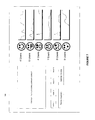
- FIG. 7 illustrates an instructor interface 700 in accordance with one or more embodiments.
- Instructor interface is similar instructor interface 600 , except instructor interface 700 shows a configuration of the avatar status display.
- the avatar status display includes avatar images that represent the different types of avatar emotion identifiers. Next to each avatar image is the total number of users currently displaying a facial expression corresponding to the particular avatar emotion identifier.
- the graphs track the changes in the number of users for each avatar emotion identifier over the course of the presentation of course content.
- the instructor interface 600 and instructor interface 700 may include any combination of the displays and elements discussed herein.
- FIG. 8 illustrates a block diagram in accordance with one or more embodiments.
- the user operating a device interacts with the student interface.
- An input device of the device receives user image data.
- the user image data is converted into expressive avatar information.
- the expressive avatar information is transmitted through the network to another user's interface on the other user's device and represented on the other user's interface as an avatar image.
- FIG. 9 illustrates a block diagram in accordance with one or more embodiments.
- a plurality of user image data is converted into expressive avatar information.
- a plurality of the expressive avatar information is transmitted through the network.
- the device receives the plurality of expressive avatar information.
- FIG. 10 a logic flow diagram in accordance with one or more embodiments.
- a user image is received.
- the user image is converted to expressive avatar information.
- expressive avatar information is transmitted.
- expressive avatar information is received.
- instructional content is altered based on the expressive avatar information.
- Various embodiments may comprise one or more elements.
- An element may comprise any structure arranged to perform certain operations.
- Each element may be implemented as hardware, software, or any combination thereof, as desired for a given set of design and/or performance constraints.
- an embodiment may be described with a limited number of elements in a certain topology by way of example, the embodiment may include more or less elements in alternate topologies as desired for a given implementation.
- any reference to “one embodiment” or “an embodiment” means that a particular feature, structure, or characteristic described in connection with the embodiment is included in at least one embodiment.
- the appearances of the phrase “in one embodiment” in the specification are not necessarily all referring to the same embodiment.
- exemplary functional components or modules may be implemented by one or more hardware components, software components, and/or combination thereof.
- the functional components and/or modules may be implemented, for example, by logic (e.g., instructions, data, and/or code) to be executed by a logic device (e.g., processor).
- logic e.g., instructions, data, and/or code
- Such logic may be stored internally or externally to a logic device on one or more types of computer-readable storage media.
- An article of manufacture may comprise a storage medium to store logic.
- Examples of a storage medium may include one or more types of computer-readable storage media capable of storing electronic data, including volatile memory or non-volatile memory, removable or non-removable memory, erasable or non-erasable memory, writeable or re-writeable memory, and so forth. Examples of storage media include hard drives, disk drives, solid state drives, and any other tangible storage media.
- processing refers to the action and/or processes of a computer or computing system, or similar electronic computing device, that manipulates and/or transforms data represented as physical quantities (e.g., electronic) within registers and/or memories into other data similarly represented as physical quantities within the memories, registers or other such information storage, transmission or display devices.
- physical quantities e.g., electronic
- FIG. 1 Some of the figures may include a flow diagram. Although such figures may include a particular logic flow, it can be appreciated that the logic flow merely provides an exemplary implementation of the general functionality. Further, the logic flow does not necessarily have to be executed in the order presented unless otherwise indicated. In addition, the logic flow may be implemented by a hardware element, a software element executed by a processor, or any combination thereof.
Landscapes
- Engineering & Computer Science (AREA)
- Business, Economics & Management (AREA)
- Physics & Mathematics (AREA)
- Educational Administration (AREA)
- Educational Technology (AREA)
- General Physics & Mathematics (AREA)
- Theoretical Computer Science (AREA)
- Electrically Operated Instructional Devices (AREA)
Abstract
Description
Claims (18)
Priority Applications (2)
| Application Number | Priority Date | Filing Date | Title |
|---|---|---|---|
| US14/086,695 US10319249B2 (en) | 2012-11-21 | 2013-11-21 | Facial expression recognition in educational learning systems |
| US16/374,940 US10810895B2 (en) | 2012-11-21 | 2019-04-04 | Facial expression recognition in educational learning systems |
Applications Claiming Priority (2)
| Application Number | Priority Date | Filing Date | Title |
|---|---|---|---|
| US201261728989P | 2012-11-21 | 2012-11-21 | |
| US14/086,695 US10319249B2 (en) | 2012-11-21 | 2013-11-21 | Facial expression recognition in educational learning systems |
Related Child Applications (1)
| Application Number | Title | Priority Date | Filing Date |
|---|---|---|---|
| US16/374,940 Continuation US10810895B2 (en) | 2012-11-21 | 2019-04-04 | Facial expression recognition in educational learning systems |
Publications (2)
| Publication Number | Publication Date |
|---|---|
| US20140154659A1 US20140154659A1 (en) | 2014-06-05 |
| US10319249B2 true US10319249B2 (en) | 2019-06-11 |
Family
ID=50825782
Family Applications (2)
| Application Number | Title | Priority Date | Filing Date |
|---|---|---|---|
| US14/086,695 Active 2035-02-08 US10319249B2 (en) | 2012-11-21 | 2013-11-21 | Facial expression recognition in educational learning systems |
| US16/374,940 Active 2033-12-20 US10810895B2 (en) | 2012-11-21 | 2019-04-04 | Facial expression recognition in educational learning systems |
Family Applications After (1)
| Application Number | Title | Priority Date | Filing Date |
|---|---|---|---|
| US16/374,940 Active 2033-12-20 US10810895B2 (en) | 2012-11-21 | 2019-04-04 | Facial expression recognition in educational learning systems |
Country Status (1)
| Country | Link |
|---|---|
| US (2) | US10319249B2 (en) |
Families Citing this family (34)
| Publication number | Priority date | Publication date | Assignee | Title |
|---|---|---|---|---|
| US9401937B1 (en) | 2008-11-24 | 2016-07-26 | Shindig, Inc. | Systems and methods for facilitating communications amongst multiple users |
| US8902272B1 (en) | 2008-11-24 | 2014-12-02 | Shindig, Inc. | Multiparty communications systems and methods that employ composite communications |
| US9930310B2 (en) | 2009-09-09 | 2018-03-27 | Apple Inc. | Audio alteration techniques |
| CN107257403A (en) | 2012-04-09 | 2017-10-17 | 英特尔公司 | Use the communication of interaction incarnation |
| US10271010B2 (en) | 2013-10-31 | 2019-04-23 | Shindig, Inc. | Systems and methods for controlling the display of content |
| WO2016101131A1 (en) | 2014-12-23 | 2016-06-30 | Intel Corporation | Augmented facial animation |
| US9734410B2 (en) | 2015-01-23 | 2017-08-15 | Shindig, Inc. | Systems and methods for analyzing facial expressions within an online classroom to gauge participant attentiveness |
| US11681738B2 (en) * | 2015-04-08 | 2023-06-20 | Christopher John Allison | Creative arts recommendation systems and methods |
| JP6798707B2 (en) | 2015-07-30 | 2020-12-09 | インテル・コーポレーション | Emotion expansion avatar animation |
| WO2017101094A1 (en) * | 2015-12-18 | 2017-06-22 | Intel Corporation | Avatar animation system |
| JP6722482B2 (en) * | 2016-03-18 | 2020-07-15 | 株式会社Nttドコモ | Information processing apparatus and information processing method |
| US10065658B2 (en) * | 2016-05-23 | 2018-09-04 | International Business Machines Corporation | Bias of physical controllers in a system |
| US10607386B2 (en) * | 2016-06-12 | 2020-03-31 | Apple Inc. | Customized avatars and associated framework |
| US10573048B2 (en) * | 2016-07-25 | 2020-02-25 | Oath Inc. | Emotional reaction sharing |
| US10133916B2 (en) * | 2016-09-07 | 2018-11-20 | Steven M. Gottlieb | Image and identity validation in video chat events |
| CN106487918B (en) * | 2016-11-07 | 2019-06-18 | 清华大学 | A MOOC system based on edX platform |
| US12394329B2 (en) * | 2017-02-27 | 2025-08-19 | Luis F. Martinez | Systems and methods for remote collaborative realtime learning |
| US10861210B2 (en) | 2017-05-16 | 2020-12-08 | Apple Inc. | Techniques for providing audio and video effects |
| US10870056B2 (en) | 2017-11-01 | 2020-12-22 | Sony Interactive Entertainment Inc. | Emoji-based communications derived from facial features during game play |
| CN107657852B (en) * | 2017-11-14 | 2023-09-22 | 翟奕雲 | Preschool teaching robot, teaching system and storage media based on face recognition |
| US11533272B1 (en) * | 2018-02-06 | 2022-12-20 | Amesite Inc. | Computer based education methods and apparatus |
| TWI674553B (en) * | 2018-07-27 | 2019-10-11 | 財團法人資訊工業策進會 | System and method for monitoring qualities of teaching and learning |
| US20200090536A1 (en) * | 2018-08-25 | 2020-03-19 | Actiontec Electronics, Inc. | Classroom assistance system |
| CN109272793A (en) * | 2018-11-21 | 2019-01-25 | 合肥虹慧达科技有限公司 | Child interactive reading learning system |
| CN111835617B (en) * | 2019-04-23 | 2022-12-27 | 阿里巴巴集团控股有限公司 | User head portrait adjusting method and device and electronic equipment |
| CN111078096B (en) * | 2019-06-09 | 2021-07-23 | 广东小天才科技有限公司 | A human-computer interaction method and electronic device |
| US11972636B2 (en) * | 2020-09-30 | 2024-04-30 | Ringcentral, Inc. | System and method of determining an emotional state of a user |
| CN112507243B (en) * | 2021-02-07 | 2021-05-18 | 深圳市阿卡索资讯股份有限公司 | Content pushing method and device based on expressions |
| US12340791B1 (en) * | 2021-06-10 | 2025-06-24 | Amazon Technologies, Inc. | Enhanced voice-based presentation of user sentiment |
| USD969216S1 (en) * | 2021-08-25 | 2022-11-08 | Rebecca Hadley | Educational poster |
| US12288480B2 (en) * | 2022-01-21 | 2025-04-29 | Dell Products L.P. | Artificial intelligence-driven avatar-based personalized learning techniques |
| WO2023203960A1 (en) * | 2022-04-19 | 2023-10-26 | Metaclassroom株式会社 | Information processing device, information processing method, program, and information processing system |
| CN115567744B (en) * | 2022-08-29 | 2023-05-23 | 广州极智云科技有限公司 | Internet-based online teaching data transmission system |
| CN116757524B (en) * | 2023-05-08 | 2024-02-06 | 广东保伦电子股份有限公司 | A method and device for evaluating teacher teaching quality |
Citations (13)
| Publication number | Priority date | Publication date | Assignee | Title |
|---|---|---|---|---|
| US20030175676A1 (en) * | 2002-02-07 | 2003-09-18 | Wolfgang Theilmann | Structural elements for a collaborative e-learning system |
| US20050095569A1 (en) * | 2003-10-29 | 2005-05-05 | Patricia Franklin | Integrated multi-tiered simulation, mentoring and collaboration E-learning platform and its software |
| US20070117073A1 (en) * | 2005-10-21 | 2007-05-24 | Walker Michele A | Method and apparatus for developing a person's behavior |
| US20080270240A1 (en) * | 2007-04-30 | 2008-10-30 | Viva Chu | Systems and methods of managing tasks assigned to an individual |
| US20090291426A1 (en) * | 2008-05-20 | 2009-11-26 | Laureate Education, Inc. | Educational system for presenting one or more learning units to students in different learning environments |
| US20090311658A1 (en) * | 2008-06-17 | 2009-12-17 | Laureate Education, Inc. | System and method for collaborative development of online courses and programs of study |
| US20100151431A1 (en) * | 2008-03-27 | 2010-06-17 | Knowledge Athletes, Inc. | Virtual learning |
| US20120089635A1 (en) * | 2010-10-12 | 2012-04-12 | WeSpeke, Inc., | Language learning exchange |
| US20120130717A1 (en) * | 2010-11-19 | 2012-05-24 | Microsoft Corporation | Real-time Animation for an Expressive Avatar |
| US20130004929A1 (en) * | 2011-03-23 | 2013-01-03 | Laureate Education, Inc. | Educational system and method for creating learning sessions based on geo-location information |
| US20130095460A1 (en) * | 2010-06-15 | 2013-04-18 | Jonathan Edward Bishop | Assisting human interaction |
| US20140006326A1 (en) * | 2012-06-28 | 2014-01-02 | Nokia Corporation | Method and apparatus for providing rapport management |
| US20140045158A1 (en) * | 2012-08-10 | 2014-02-13 | Tammy Zietchick Movsas | System And Method For Associating Auditory Stimuli With Visual Depictions |
-
2013
- 2013-11-21 US US14/086,695 patent/US10319249B2/en active Active
-
2019
- 2019-04-04 US US16/374,940 patent/US10810895B2/en active Active
Patent Citations (13)
| Publication number | Priority date | Publication date | Assignee | Title |
|---|---|---|---|---|
| US20030175676A1 (en) * | 2002-02-07 | 2003-09-18 | Wolfgang Theilmann | Structural elements for a collaborative e-learning system |
| US20050095569A1 (en) * | 2003-10-29 | 2005-05-05 | Patricia Franklin | Integrated multi-tiered simulation, mentoring and collaboration E-learning platform and its software |
| US20070117073A1 (en) * | 2005-10-21 | 2007-05-24 | Walker Michele A | Method and apparatus for developing a person's behavior |
| US20080270240A1 (en) * | 2007-04-30 | 2008-10-30 | Viva Chu | Systems and methods of managing tasks assigned to an individual |
| US20100151431A1 (en) * | 2008-03-27 | 2010-06-17 | Knowledge Athletes, Inc. | Virtual learning |
| US20090291426A1 (en) * | 2008-05-20 | 2009-11-26 | Laureate Education, Inc. | Educational system for presenting one or more learning units to students in different learning environments |
| US20090311658A1 (en) * | 2008-06-17 | 2009-12-17 | Laureate Education, Inc. | System and method for collaborative development of online courses and programs of study |
| US20130095460A1 (en) * | 2010-06-15 | 2013-04-18 | Jonathan Edward Bishop | Assisting human interaction |
| US20120089635A1 (en) * | 2010-10-12 | 2012-04-12 | WeSpeke, Inc., | Language learning exchange |
| US20120130717A1 (en) * | 2010-11-19 | 2012-05-24 | Microsoft Corporation | Real-time Animation for an Expressive Avatar |
| US20130004929A1 (en) * | 2011-03-23 | 2013-01-03 | Laureate Education, Inc. | Educational system and method for creating learning sessions based on geo-location information |
| US20140006326A1 (en) * | 2012-06-28 | 2014-01-02 | Nokia Corporation | Method and apparatus for providing rapport management |
| US20140045158A1 (en) * | 2012-08-10 | 2014-02-13 | Tammy Zietchick Movsas | System And Method For Associating Auditory Stimuli With Visual Depictions |
Also Published As
| Publication number | Publication date |
|---|---|
| US20140154659A1 (en) | 2014-06-05 |
| US10810895B2 (en) | 2020-10-20 |
| US20190236968A1 (en) | 2019-08-01 |
Similar Documents
| Publication | Publication Date | Title |
|---|---|---|
| US10810895B2 (en) | Facial expression recognition in educational learning systems | |
| Ngah et al. | The sequential mediation model of students’ willingness to continue online learning during the COVID-19 pandemic | |
| Fleischmann | Hands-on versus virtual: Reshaping the design classroom with blended learning | |
| Becker et al. | NMC horizon report: 2018 higher education edition | |
| Hofmann | Blended learning | |
| Becker et al. | Horizon report 2018 higher education edition brought to you by educause | |
| Kraus et al. | Teaching guidelines for digital entrepreneurship | |
| Chatterjee et al. | Digital education: the basics with slant to digital pedagogy-an overview | |
| Hazari et al. | Investigating factors affecting group processes in virtual learning environments | |
| Dewan et al. | Incorporating online instruction in academic libraries: Getting ahead of the curve | |
| Serrano-Lagunaa et al. | Learning analytics and educational games: lessons learned from practical experience | |
| Glazunova et al. | Hybrid cloud-oriented educational environment for training future IT specialists | |
| Pilcher et al. | Best practices for learning with technology | |
| Abernethy et al. | ParallelAR: An augmented reality app and instructional approach for learning parallel programming scheduling concepts | |
| Usoro et al. | Conceptualising quality e-learning in higher education | |
| Sanda | Impact of digitised ‘teaching-learning’virtual platforms on tertiary students’ learning objectives and teaching outcomes | |
| Gardner et al. | Systems to support co-creative collaboration in mixed-reality environments | |
| Newell et al. | Teaching ad tech: Assessing collaborative teaching in an advertising, computer science and design course | |
| Hu et al. | An Empirical Study of VR Microteaching Training to Enhance Pre-Service Teachers’ Teaching Skills: Teaching Behaviors Analysis Based on Two-phase Training | |
| Garg et al. | Estimation of sustainability aspects of MOOC platforms in higher education in India using the PLS-SEM approach | |
| Hernández et al. | Towards full engagement for open online education. A practical experience for a MicroMaster | |
| Letourneau et al. | Excellence in nursing preceptorship-to-hire, part 1 | |
| Vilalta-Perdomo et al. | Embedding 21st-Century Skills Through Challenge-Based Learning. Delivering Operations Management to Undergraduate Students | |
| Webb | The School Librarian's Compass: A Journey Through School Library Management | |
| Seetharam et al. | A Marker-Based Augmented Reality Application to Teach Chemistry to Indian Students |
Legal Events
| Date | Code | Title | Description |
|---|---|---|---|
| AS | Assignment |
Owner name: LAUREATE EDUCATION, INC., MARYLAND Free format text: ASSIGNMENT OF ASSIGNORS INTEREST;ASSIGNOR:OTWELL, KEN;REEL/FRAME:035469/0925 Effective date: 20150128 |
|
| AS | Assignment |
Owner name: LAUREATE EDUCATION, INC., MARYLAND Free format text: ASSIGNMENT OF ASSIGNORS INTEREST;ASSIGNOR:OTWELL, KEN;REEL/FRAME:037689/0914 Effective date: 20150721 |
|
| AS | Assignment |
Owner name: CITIBANK, N.A., AS COLLATERAL AGENT, NEW YORK Free format text: GRANT OF SECURITY INTEREST IN PATENT RIGHTS;ASSIGNOR:LAUREATE EDUCATION, INC.;REEL/FRAME:043326/0891 Effective date: 20170725 |
|
| STPP | Information on status: patent application and granting procedure in general |
Free format text: NOTICE OF ALLOWANCE MAILED -- APPLICATION RECEIVED IN OFFICE OF PUBLICATIONS |
|
| STCF | Information on status: patent grant |
Free format text: PATENTED CASE |
|
| MAFP | Maintenance fee payment |
Free format text: PAYMENT OF MAINTENANCE FEE, 4TH YEAR, LARGE ENTITY (ORIGINAL EVENT CODE: M1551); ENTITY STATUS OF PATENT OWNER: LARGE ENTITY Year of fee payment: 4 |
|
| AS | Assignment |
Owner name: GOLDMAN SACHS BANK USA, NEW YORK Free format text: ASSIGNMENT OF SECURITY INTEREST IN PATENT COLLATERAL RECORDED AT R/F 043326/0891;ASSIGNOR:CITIBANK, N.A.;REEL/FRAME:065346/0845 Effective date: 20231024 |