US10274783B2 - Direct-view LED backlight with gradient reflective layer - Google Patents

Direct-view LED backlight with gradient reflective layer Download PDF

Info

Publication number
US10274783B2
US10274783B2 US15/962,947 US201815962947A US10274783B2 US 10274783 B2 US10274783 B2 US 10274783B2 US 201815962947 A US201815962947 A US 201815962947A US 10274783 B2 US10274783 B2 US 10274783B2
Authority
US
United States
Prior art keywords
array
reflective layer
light
backlight unit
gradient
Prior art date
Legal status (The legal status is an assumption and is not a legal conclusion. Google has not performed a legal analysis and makes no representation as to the accuracy of the status listed.)
Active
Application number
US15/962,947
Other versions
US20180321557A1 (en
Inventor
David Gerard Pelka
Current Assignee (The listed assignees may be inaccurate. Google has not performed a legal analysis and makes no representation or warranty as to the accuracy of the list.)
Pelka & Associates Inc
Original Assignee
Pelka & Associates Inc
Priority date (The priority date is an assumption and is not a legal conclusion. Google has not performed a legal analysis and makes no representation as to the accuracy of the date listed.)
Filing date
Publication date
Application filed by Pelka & Associates Inc filed Critical Pelka & Associates Inc
Priority to US15/962,947 priority Critical patent/US10274783B2/en
Assigned to PELKA & ASSOCIATES, INC. reassignment PELKA & ASSOCIATES, INC. ASSIGNMENT OF ASSIGNORS INTEREST (SEE DOCUMENT FOR DETAILS). Assignors: PELKA, DAVID GERARD
Publication of US20180321557A1 publication Critical patent/US20180321557A1/en
Application granted granted Critical
Publication of US10274783B2 publication Critical patent/US10274783B2/en
Active legal-status Critical Current
Anticipated expiration legal-status Critical

Links

Images

Classifications

    • GPHYSICS
    • G02OPTICS
    • G02FOPTICAL DEVICES OR ARRANGEMENTS FOR THE CONTROL OF LIGHT BY MODIFICATION OF THE OPTICAL PROPERTIES OF THE MEDIA OF THE ELEMENTS INVOLVED THEREIN; NON-LINEAR OPTICS; FREQUENCY-CHANGING OF LIGHT; OPTICAL LOGIC ELEMENTS; OPTICAL ANALOGUE/DIGITAL CONVERTERS
    • G02F1/00Devices or arrangements for the control of the intensity, colour, phase, polarisation or direction of light arriving from an independent light source, e.g. switching, gating or modulating; Non-linear optics
    • G02F1/01Devices or arrangements for the control of the intensity, colour, phase, polarisation or direction of light arriving from an independent light source, e.g. switching, gating or modulating; Non-linear optics for the control of the intensity, phase, polarisation or colour 
    • G02F1/13Devices or arrangements for the control of the intensity, colour, phase, polarisation or direction of light arriving from an independent light source, e.g. switching, gating or modulating; Non-linear optics for the control of the intensity, phase, polarisation or colour  based on liquid crystals, e.g. single liquid crystal display cells
    • G02F1/133Constructional arrangements; Operation of liquid crystal cells; Circuit arrangements
    • G02F1/1333Constructional arrangements; Manufacturing methods
    • G02F1/1335Structural association of cells with optical devices, e.g. polarisers or reflectors
    • G02F1/1336Illuminating devices
    • G02F1/133602Direct backlight
    • G02F1/133603Direct backlight with LEDs
    • GPHYSICS
    • G02OPTICS
    • G02FOPTICAL DEVICES OR ARRANGEMENTS FOR THE CONTROL OF LIGHT BY MODIFICATION OF THE OPTICAL PROPERTIES OF THE MEDIA OF THE ELEMENTS INVOLVED THEREIN; NON-LINEAR OPTICS; FREQUENCY-CHANGING OF LIGHT; OPTICAL LOGIC ELEMENTS; OPTICAL ANALOGUE/DIGITAL CONVERTERS
    • G02F1/00Devices or arrangements for the control of the intensity, colour, phase, polarisation or direction of light arriving from an independent light source, e.g. switching, gating or modulating; Non-linear optics
    • G02F1/01Devices or arrangements for the control of the intensity, colour, phase, polarisation or direction of light arriving from an independent light source, e.g. switching, gating or modulating; Non-linear optics for the control of the intensity, phase, polarisation or colour 
    • G02F1/13Devices or arrangements for the control of the intensity, colour, phase, polarisation or direction of light arriving from an independent light source, e.g. switching, gating or modulating; Non-linear optics for the control of the intensity, phase, polarisation or colour  based on liquid crystals, e.g. single liquid crystal display cells
    • G02F1/133Constructional arrangements; Operation of liquid crystal cells; Circuit arrangements
    • G02F1/1333Constructional arrangements; Manufacturing methods
    • G02F1/1335Structural association of cells with optical devices, e.g. polarisers or reflectors
    • G02F1/1336Illuminating devices
    • G02F1/133602Direct backlight
    • G02F1/133605Direct backlight including specially adapted reflectors
    • GPHYSICS
    • G02OPTICS
    • G02FOPTICAL DEVICES OR ARRANGEMENTS FOR THE CONTROL OF LIGHT BY MODIFICATION OF THE OPTICAL PROPERTIES OF THE MEDIA OF THE ELEMENTS INVOLVED THEREIN; NON-LINEAR OPTICS; FREQUENCY-CHANGING OF LIGHT; OPTICAL LOGIC ELEMENTS; OPTICAL ANALOGUE/DIGITAL CONVERTERS
    • G02F1/00Devices or arrangements for the control of the intensity, colour, phase, polarisation or direction of light arriving from an independent light source, e.g. switching, gating or modulating; Non-linear optics
    • G02F1/01Devices or arrangements for the control of the intensity, colour, phase, polarisation or direction of light arriving from an independent light source, e.g. switching, gating or modulating; Non-linear optics for the control of the intensity, phase, polarisation or colour 
    • G02F1/13Devices or arrangements for the control of the intensity, colour, phase, polarisation or direction of light arriving from an independent light source, e.g. switching, gating or modulating; Non-linear optics for the control of the intensity, phase, polarisation or colour  based on liquid crystals, e.g. single liquid crystal display cells
    • G02F1/133Constructional arrangements; Operation of liquid crystal cells; Circuit arrangements
    • G02F1/1333Constructional arrangements; Manufacturing methods
    • G02F1/1335Structural association of cells with optical devices, e.g. polarisers or reflectors
    • G02F1/1336Illuminating devices
    • G02F1/133602Direct backlight
    • G02F1/133606Direct backlight including a specially adapted diffusing, scattering or light controlling members
    • GPHYSICS
    • G02OPTICS
    • G02FOPTICAL DEVICES OR ARRANGEMENTS FOR THE CONTROL OF LIGHT BY MODIFICATION OF THE OPTICAL PROPERTIES OF THE MEDIA OF THE ELEMENTS INVOLVED THEREIN; NON-LINEAR OPTICS; FREQUENCY-CHANGING OF LIGHT; OPTICAL LOGIC ELEMENTS; OPTICAL ANALOGUE/DIGITAL CONVERTERS
    • G02F1/00Devices or arrangements for the control of the intensity, colour, phase, polarisation or direction of light arriving from an independent light source, e.g. switching, gating or modulating; Non-linear optics
    • G02F1/01Devices or arrangements for the control of the intensity, colour, phase, polarisation or direction of light arriving from an independent light source, e.g. switching, gating or modulating; Non-linear optics for the control of the intensity, phase, polarisation or colour 
    • G02F1/13Devices or arrangements for the control of the intensity, colour, phase, polarisation or direction of light arriving from an independent light source, e.g. switching, gating or modulating; Non-linear optics for the control of the intensity, phase, polarisation or colour  based on liquid crystals, e.g. single liquid crystal display cells
    • G02F1/133Constructional arrangements; Operation of liquid crystal cells; Circuit arrangements
    • G02F1/1333Constructional arrangements; Manufacturing methods
    • G02F1/1335Structural association of cells with optical devices, e.g. polarisers or reflectors
    • G02F1/1336Illuminating devices
    • G02F1/133602Direct backlight
    • G02F1/133608Direct backlight including particular frames or supporting means
    • GPHYSICS
    • G02OPTICS
    • G02FOPTICAL DEVICES OR ARRANGEMENTS FOR THE CONTROL OF LIGHT BY MODIFICATION OF THE OPTICAL PROPERTIES OF THE MEDIA OF THE ELEMENTS INVOLVED THEREIN; NON-LINEAR OPTICS; FREQUENCY-CHANGING OF LIGHT; OPTICAL LOGIC ELEMENTS; OPTICAL ANALOGUE/DIGITAL CONVERTERS
    • G02F1/00Devices or arrangements for the control of the intensity, colour, phase, polarisation or direction of light arriving from an independent light source, e.g. switching, gating or modulating; Non-linear optics
    • G02F1/01Devices or arrangements for the control of the intensity, colour, phase, polarisation or direction of light arriving from an independent light source, e.g. switching, gating or modulating; Non-linear optics for the control of the intensity, phase, polarisation or colour 
    • G02F1/13Devices or arrangements for the control of the intensity, colour, phase, polarisation or direction of light arriving from an independent light source, e.g. switching, gating or modulating; Non-linear optics for the control of the intensity, phase, polarisation or colour  based on liquid crystals, e.g. single liquid crystal display cells
    • G02F1/133Constructional arrangements; Operation of liquid crystal cells; Circuit arrangements
    • G02F1/1333Constructional arrangements; Manufacturing methods
    • G02F1/1335Structural association of cells with optical devices, e.g. polarisers or reflectors
    • G02F1/1336Illuminating devices
    • G02F1/133614Illuminating devices using photoluminescence, e.g. phosphors illuminated by UV or blue light
    • G02F2001/133614

Definitions

  • the present application is generally directed to systems and methods of providing light, and more specifically, to light-emitting, direct-view backlights for use with flat-screen displays.
  • CRT cathode-ray tube
  • LCDs liquid-crystal displays
  • LEDs As light-emitting diodes (LEDs) rapidly increased in brightness and efficacy, they replaced the fluorescent tubes while retaining the edge-illuminated waveguide.
  • waveguides may be thick and heavy for large screen sizes, so that direct-view area backlights comprising hollow light boxes may be desirable because their lights are distributed all across the back area of the light box.
  • LED backlights are used for myriad applications including LCDs, reach-in refrigeration lighting, and general illumination (light fixtures). All of these applications have a throw distance (panel thickness) much less than the spacing between the LED sources. Since LEDs emit in a quasi-Lambertian manner, a diverging lens is used to spread the emitted light out across a large lateral area, with a lens that modifies the forward emitting angular distribution of the LED source into a mostly side-emitting angular distribution.
  • the conventional art has focused almost exclusively on solutions with rotational symmetry. While some of these solutions predict near ideal uniformity in one dimension, they are fundamentally limited by étendue, specifically its skewness, from achieving near ideal uniformity in two dimensions.
  • Example architectures of LED backlights are disclosed by U.S. Pat. No. 7,798,679, U.S. Pat. No. 8,227,969, and U.S. Pat. No. 8,328,395.
  • a backlight unit comprising an array of light sources configured to emit light.
  • the backlight unit further comprises a reflective layer comprising a plurality of holes configured to allow the light emitted from the array of light sources to propagate through the reflective layer.
  • the backlight unit further comprises a gradient reflective layer configured to modify a distribution of light emitted from the gradient reflective layer.
  • a method of providing backlight for a display device comprises emitting light from an array of light sources.
  • the method further comprises propagating at least a portion of the light emitted from the array of light sources through holes of a reflective layer.
  • the method further comprises transmitting at least a portion of the light propagated through the holes of the reflective layer through a layer comprising an array of first regions having a first transmissivity and separated from one another by one or more second regions having a second transmissivity higher than the first transmissivity.
  • the first regions are positioned above the light sources.
  • FIG. 1 shows an illuminance distribution for a back light unit (BLU) comprising an array of light sources without a gradient filter.
  • BLU back light unit
  • FIG. 2 schematically illustrates an example BLU in accordance with certain embodiments described herein.
  • FIG. 3A schematically illustrates a perspective view and a cross-sectional view of an example configuration of a light source of the array and a corresponding hole of the reflective layer in accordance with certain embodiments described herein.
  • FIG. 3B schematically illustrates a perspective view and a cross-sectional view of another example configuration of a light source of the array and a corresponding hole of the reflective layer in accordance with certain embodiments described herein.
  • FIGS. 4A-4C schematically illustrate an example gradient reflective layer in accordance with certain embodiments described herein.
  • FIG. 5 is a plot of an angular far-field intensity distribution of an example light source of the array of light sources in accordance with certain embodiments described herein.
  • FIGS. 6A and 6B are plots of an angular intensity distribution for reflected light (e.g., backward scattering) and for transmitted light (e.g., forward scattering), respectively, for an example transmissive diffusing layer in accordance with certain embodiments described herein.
  • FIGS. 7A-7C show some example simulation data for an example BLU in which the reflective layer comprises a specular reflective film in accordance with certain embodiments described herein.
  • FIG. 8A shows some example illuminance distributions for light emitted from the transmissive diffusing layer of the example BLU of FIGS. 7A-7C for various sizes of the holes in the specular reflective layer and distances between the array of light sources and the specular reflective layer in accordance with certain embodiments described herein.
  • FIG. 8B shows another example illuminance distribution for a BLU having a specular reflective layer in accordance with certain embodiments described herein.
  • FIGS. 9A-9C show some example simulation data for an example BLU in which the reflective layer comprises a diffusely reflective layer (e.g., highly diffusely film; having 90+% diffuse reflectivity) in accordance with certain embodiments described herein.
  • a diffusely reflective layer e.g., highly diffusely film; having 90+% diffuse reflectivity
  • FIG. 10A shows some example illuminance distributions for light emitted from the transmissive diffusing layer of the example BLU of FIGS. 9A-9C for various sizes of the holes in the diffusely reflective layer and distances between the array of light sources and the diffusely reflective layer in accordance with certain embodiments described herein.
  • FIG. 10B shows another example illuminance distribution for a BLU having a Lambertian reflective layer in accordance with certain embodiments described herein.
  • Direct-view area backlights can spread the light out uniformly to eliminate hot spots on the screen just over each LED light source, which is what LEDs without dedicated local lenses do not accomplish.
  • LEDs have matured, their increasing power output means that any particular illumination task may be achieved using fewer and fewer LEDs.
  • area backlights try to use fewer LEDs, especially with the 16:9 proportions of typical high-definition televisions, their illumination geometry becomes increasingly difficult to achieve uniform illumination in several ways.
  • LCD backlights are generally an inch or less in thickness.
  • OLED organic LED
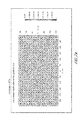
  • FIG. 1 shows an illuminance distribution for a back light unit (BLU) comprising an array of light sources (e.g., light-emitting diodes; LEDs) without a gradient reflective film. Without a gradient reflective film above the light sources, the illuminance has a spotty distribution, in that there is a high illuminance on top of every light source and a low illuminance (e.g., almost no light) in the spaces between the light sources.
  • BLU back light unit
  • a gradient reflective film is used to reduce light extraction directly over the light sources by redirecting a portion of this light towards the reflective layer (e.g., at the bottom floor of the BLU). After one or more bounces, this light fills the space between light sources to provide a uniform illuminance distribution on the top of the BLU.
  • a BLU in accordance with certain embodiments described herein can have an LED array, a specular reflective film on the bottom, a top window with a variable reflection/transmission (e.g., a gradient reflective film), and a transmissive diffuser on the top of this window.
  • such modeling can take into consideration multiple bounces of light between the top and bottom of the cavity, and such modeling can be used to optimize the transmission distribution across the cavity (e.g., to provide a predetermined level of uniformity).
  • a large number of data points across the X/Y grid e.g., the X/Y plane of the gradient reflective film) can be used to provide high spatial resolution.
  • FIG. 2 schematically illustrates an example BLU 10 in accordance with certain embodiments described herein.
  • the BLU 10 can comprise an array 20 of light sources 22 (e.g., on one or more printed circuit boards 24 comprising circuitry and components to provide electrical power to the LEDs) configured to emit light, a reflective layer (e.g., film) 30 comprising a plurality of holes 32 configured to allow the light emitted from the array 20 of light sources 22 to propagate through the reflective layer 30 (e.g., from a first side 34 of the reflective layer 30 to a second side 36 of the reflective layer 30 ), a gradient reflective layer (e.g., film) 40 configured to modify the distribution of light emitted from the gradient reflective layer 40 , and a frame 50 .
  • a reflective layer e.g., film
  • a gradient reflective layer e.g., film
  • the BLU 10 can further comprise a transmissive diffusing layer (e.g., film) 60 configured to diffuse light emitted from the gradient reflective layer 40 propagating towards a receiver 70 (e.g., a liquid crystal display (LCD)).
  • a transmissive diffusing layer e.g., film
  • a receiver 70 e.g., a liquid crystal display (LCD)
  • the array 20 of light sources 22 comprises a planar array of LEDs arranged in a regular pattern.
  • the array 20 can comprise 576 LEDs mounted on one or more printed circuit boards (PCBs) 24 (e.g., with each LED having dimensions of 0.81 mm ⁇ 0.81 mm ⁇ 0.17 mm) and arranged in a rectilinear 18 ⁇ 32 pattern with a 18.7 mm pitch in both the X and Y directions and the PCB 24 having a Lambertian reflectivity (e.g., 50%, 80%).
  • PCBs printed circuit boards
  • the LEDs can be configured to emit light having a predetermined wavelength or color distribution (e.g., centered at a particular wavelength such as 550 nm; having a tri-color distribution such as red-green-blue).
  • the BLU 10 can comprise a quantum dot material (e.g., in a layer in place of the diffusing layer 60 shown in FIG. 2 ; within the diffusing layer 60 shown in FIG. 2 ) with the quantum dot material configured to convert blue light from the array 20 to white light.
  • the reflective layer 30 comprises a planar film generally parallel with the array 20 of light sources 22 .
  • the reflective layer 30 can be considered to be a bottom floor layer which at least partially defines a boundary of the region 52 (e.g., at least partially defines the cavity).
  • the plurality of holes 32 of the reflective layer 30 can be arranged in the same regular pattern as are the light sources 22 (e.g., LEDs) of the array 20 .
  • Each hole 32 of the reflective layer 30 is positioned above a corresponding one of the light sources 22 (e.g., LEDs) of the array 20 such that light from the light source 22 propagates through the corresponding hole 32 above the light source 22 .
  • the reflective layer 30 can be a white, opaque layer having a reflectivity (e.g., 90+%; up to 98%), and which can be specular (e.g., an enhanced specular reflector (ESR) film available from 3M Corp. of Maplewood, Minn.) or diffusive or Lambertian (e.g., available from White Optics LLC of New Castle, Del.).
  • the holes 32 are generally perpendicular to the plane of the reflective layer 30 (e.g., formed by laser drilling the reflective layer 30 ; formed by mechanical drilling or mechanical punching of holes through the reflective layer 30 ), although the holes 32 can have other angles of inclination relative to the reflective layer 30 and other fabrication techniques may be alternatively be used.
  • FIG. 3A schematically illustrates a perspective view and a cross-sectional view of an example configuration of a light source 22 (e.g., an LED) of the array 20 and a corresponding hole 32 of the reflective layer 30 in accordance with certain embodiments described herein.
  • a light source 22 e.g., an LED
  • the light source 22 is mounted to the PCB 24 and the hole 32 of the reflective layer 30 (e.g., film) is generally circular and has a diameter of 2.5 mm, while other shapes and sizes of the hole 32 may also be used in accordance with certain embodiments described herein.
  • the reflective layer 30 is positioned above and spaced away from the array 20 with a predetermined distance between the reflective layer 30 and the array 20 , such that the light sources 22 do not extend into the holes 32 .
  • the reflective layer 30 is spaced above the light source 22 (e.g., LED) by a distance of 0.1 mm, while other distances may also be used in accordance with certain embodiments described herein.
  • the array of light sources are affixed to one or more PCBs 24 having a surface facing the reflective layer 30 , and the surface has a reflectivity greater than 90%.
  • FIG. 3B schematically illustrates a perspective view and a cross-sectional view of another example configuration of a light source 22 (e.g., an LED) of the array 20 and a corresponding hole 32 of the reflective layer 30 in accordance with certain embodiments described herein.
  • the holes 32 are configured to fit over at least a portion of the light sources 22 of the array 20 such that the light sources 22 extend at least partially into the holes 32 , an example of which is schematically illustrated by FIG. 3B .
  • FIG. 3B schematically illustrates a perspective view and a cross-sectional view of another example configuration of a light source 22 (e.g., an LED) of the array 20 and a corresponding hole 32 of the reflective layer 30 in accordance with certain embodiments described herein.
  • the holes 32 are configured to fit over at least a portion of the light sources 22 of the array 20 such that the light sources 22 extend at least partially into the holes 32 , an example of which is schematically illustrated by FIG. 3B .
  • FIG. 3B schematically illustrates
  • the light source 22 comprises an LED having a height of 0.17 mm and is mounted to the PCB 24 (e.g., Lambertian reflector; reflectivity of 50%) and the hole 32 of the reflective layer 30 (e.g., reflective Lambertian film; reflectivity of 98%) has a thickness (e.g., 0.18 mm; 0.2 mm) that is larger than the height of the LED and that is affixed (e.g., laminated; using adhesive) on the PCB 24 .
  • the PCB 24 e.g., Lambertian reflector; reflectivity of 50%
  • the hole 32 of the reflective layer 30 e.g., reflective Lambertian film; reflectivity of 98% has a thickness (e.g., 0.18 mm; 0.2 mm) that is larger than the height of the LED and that is affixed (e.g., laminated; using adhesive) on the PCB 24 .
  • the gradient reflective layer 40 comprises a planar film generally parallel with the reflective layer 30 and positioned above the reflective layer 30 .
  • the gradient reflective layer 40 has a transmittance function which varies across the area of the gradient reflective layer 40 .
  • the gradient reflective layer 40 can comprise poly(methyl methacrylate) (“PMMA”) film (e.g., with a thickness of 0.25 mm).
  • PMMA poly(methyl methacrylate)
  • the gradient reflective layer 40 can comprise a plurality of features 42 with a predetermined size and/or density across the area of the gradient reflective layer 40 , the plurality of features 42 comprising at least one of: a plurality of reflective dots, a plurality of indentations extending partially through the thickness of the gradient reflective layer 40 , a plurality of holes extending completely through the thickness of the gradient reflective layer 40 , or a plurality of protrusions (e.g., structures sputter coated onto the gradient reflective layer 40 or via means of chemical vapor deposition on selected spatial areas of the gradient reflective layer 40 ) extending from one or both of a first side (e.g., top side) or a second side (e.g., bottom side) of the gradient reflective layer 40 .
  • a first side e.g., top side
  • a second side e.g., bottom side
  • the plurality of features 42 can be, shaped, positioned, and/or patterned across the area of the gradient reflective layer 40 to alter the optical properties of the gradient reflective layer 40 (e.g., at least one of the reflectance function, transmittance function, or absorption function across the area of the gradient reflective layer 40 ) so as to yield a desired uniformity and efficiency of light emitted from the gradient reflective layer 40 .
  • select chemical vapor deposition (CVD) techniques can be used to yield a gradient reflective layer 40 (e.g., which can serve as a spatially determined gradient filter).
  • FIGS. 4A-4C schematically illustrate an example gradient reflective layer 40 in accordance with certain embodiments described herein.
  • the gradient reflective layer 40 can comprise a PMMA layer having a thickness of 0.25 mm, a specular reflectivity of 99%, and a plurality of features 42 (e.g., holes or dots) which are substantially clear (e.g., transmittance greater than 99%).
  • the holes can be distributed with a varying density across the gradient reflective layer 40 to form a regular array of low transmissivity regions 44 (e.g., with lower density of holes) separated from one another by one or more high transmissivity regions 46 (e.g., with higher density of holes).
  • the low transmissivity regions 44 can be positioned generally above the light sources 22 (e.g., LEDs) and can be spaced from one another by 18.7 mm. As schematically illustrated by FIGS. 4A-4C , the low transmissivity regions 44 are less dark than the high transmissivity regions 46 .
  • the low transmissivity regions 44 and high transmissivity regions 46 can be formed by a plurality of high reflectivity features 42 (e.g., dots) on a high transmittance film, such that the low transmissivity regions 44 have higher densities of these features 42 while the high transmissivity regions 46 have lower densities of these features 42 .
  • the size, shape, and distribution of the low transmissivity regions 44 and high transmissivity regions 46 can be selected to produce a predetermined uniformity and efficiency of light output from the BLU 10 .
  • the frame 50 is positioned between the reflective layer 30 and the gradient reflective layer 40 (e.g., around a perimeter of one or both of the reflective layer 30 and the gradient reflective layer 40 ).
  • the frame 50 , the reflective layer 30 , and the gradient reflective layer 40 generally bound a region 52 (e.g., hollow cavity) through which the light propagates before being emitted from the gradient reflective layer 40 .
  • the frame 50 can comprise one or more reflective surfaces (e.g., mirror surfaces) bounding at least a portion of the region 52 .
  • the region 52 can comprise a hollow cavity having dimensions of 336 mm ⁇ 598 mm and can have a thickness of 2.8 mm.
  • the frame 50 is configured to reduce leakage of light from the region 52 that does not propagate through the gradient reflective layer 40 .
  • the frame 50 can comprise ESR film (e.g., enhanced specular reflecting film having a reflectivity greater than 98%, available from 3M Corp.).
  • the transmissive diffusing layer 60 comprises a planar film generally parallel with the gradient reflective layer 40 and is positioned above the gradient layer 40 .
  • the transmissive diffusing layer 60 can comprise Luminit 60 available from Luminit, LLC of Torrance, Calif.
  • the diffusing layer 60 can comprise a quantum dot material configured to convert blue light from the array 20 to white light.
  • the various attributes e.g., dimensions and operating characteristics
  • these attributes can be selected so that the BLU 10 exhibits an illuminance distribution with a desired level of uniformity and a desired level of intensity (e.g., selected to maximize illuminance uniformity and optical efficiency).
  • FIG. 5 is a plot of an angular far-field intensity distribution of an example light source 22 (e.g., LED) of the array 20 of light sources 22 in accordance with certain embodiments described herein.
  • FIGS. 6A and 6B are plots of an angular intensity distribution for reflected light (e.g., backward scattering) and for transmitted light (e.g., forward scattering), respectively, for an example transmissive diffusing layer 60 in accordance with certain embodiments described herein.
  • FIGS. 7A-7C show some example simulation data for an example BLU 10 in which the reflective layer 30 comprises a specular reflective film in accordance with certain embodiments described herein.
  • the simulation was calculated using a receiver pixel size of 2 mm ⁇ 2 mm, 28.8 million light rays, computation noise of 4.3%, holes 32 having a 2.0 mm diameter in the reflective layer 30 , a distance between the array 20 of light sources 22 (e.g., LEDs) and the reflective layer 30 of 0.1 mm.
  • FIG. 7A is an example transmission distribution
  • FIG. 7B is an example transmission spatial distribution for an example gradient reflective layer 40 in accordance with certain embodiments described herein. In certain embodiments, as shown in FIGS.
  • the transmittance can be at relative minima (e.g., lowest) in the brightest spatial regions (e.g., directly over the LED sources 22 ) and can be at relative maxima (e.g., highest) in the least bright spatial regions (e.g., regions between the LED sources 22 ).
  • FIG. 7C shows an example illuminance distribution for light emitted from the transmissive diffusing layer 60 of the example BLU 10 in accordance with certain embodiments described herein.
  • FIG. 8A shows some example illuminance distributions for light emitted from the transmissive diffusing layer 60 of the example BLU 10 for various sizes of the holes 32 in the reflective layer 30 (e.g., diameters in a range of 1.5 mm to 2.5 mm; diameters of 1.5 mm, 2.0 mm, 2.5 mm) and distances between the array 20 of light sources 22 and the reflective layer 30 (e.g., distances in a range of 0.01 mm to 0.15 mm; distances of 0.01 mm, 0.05 mm, 0.10 mm, 0.15 mm) in accordance with certain embodiments described herein.
  • the example illuminance distribution in the upper center position of FIG. 8A corresponds to that of FIG. 7C .
  • FIG. 8A shows some example illuminance distributions for light emitted from the transmissive diffusing layer 60 of the example BLU 10 for various sizes of the holes 32 in the reflective layer 30 (e.g., diameters in a range of 1.5 mm to 2.5 mm; diameters
  • the efficiency and uniformity of the BLU 10 can be adjusted by varying these structural parameters.
  • another simulation using a reflective layer 30 having a specular reflectivity of 98%, a gradient reflective layer 40 having a maximum specular reflectivity of 99% with a distribution of 0.2-mm-diameter transmissive dots can exhibit an illumination distribution on the top of the diffuser having an efficiency of 66.6% and a uniformity of 83%, as shown in FIG. 8B .
  • the uniformity (e.g., min/max) of the illuminance distribution can be in a range between 80% and 99%, in a range between 80% and 95%, and/or in a range between 85% and 90%.
  • the efficiency of the illuminance distribution can be in a range between 65% and 95%, in a range between 70% and 95%, and/or in a range between 80% and 90%.
  • the contrast (e.g., (max ⁇ min)/(max+min)) of the illuminance distribution can be in a range between 0 and 0.2, in a range between 0.01 and 0.15, and/or in a range between 0.01 and 0.1.
  • FIGS. 9A-9C show some example simulation data for an example BLU 10 in which the reflective layer 30 comprises a diffusing reflective film in accordance with certain embodiments described herein.
  • the simulation was calculated using a receiver pixel size of 2 mm ⁇ 2 mm, 28.8 million light rays, computation noise of 4.4%, holes 32 having a 2.0 mm diameter in the reflective layer 30 , a distance between the array 20 of light sources 22 (e.g., LEDs) and the reflective layer 30 of 0.1 mm.
  • FIG. 9A is an example transmission distribution
  • FIG. 9B is an example transmission spatial distribution for an example gradient reflective layer 40 in accordance with certain embodiments described herein. In certain embodiments, as shown in FIGS.
  • the transmittance can be at relative minima (e.g., lowest) in the brightest spatial regions (e.g., directly over the LED sources 22 ) and can be at relative maxima (e.g., highest) in the least bright spatial regions (e.g., regions between the LED sources 22 ).
  • FIG. 9C shows an example illuminance distribution for light emitted from the transmissive diffusing layer 60 of the example BLU 10 in accordance with certain embodiments described herein.
  • FIG. 10A shows some example illuminance distributions for light emitted from the transmissive diffusing layer 60 of the example BLU 10 for various sizes of the holes in the reflective layer 30 (e.g., diameters in a range of 1.5 mm to 2.5 mm; diameters of 1.5 mm, 2.0 mm, 2.5 mm) and distances between the array 20 of light sources 22 and the reflective layer 30 (e.g., distances in a range of 0.01 mm to 0.15 mm; distances of 0.01 mm, 0.05 mm, 0.10 mm, 0.15 mm) in accordance with certain embodiments described herein.
  • the example illuminance distribution in the upper center position of FIG. 10A corresponds to that of FIG. 9C .
  • FIG. 9C The example illuminance distribution in the upper center position of FIG. 10A corresponds to that of FIG. 9C .
  • FIG. 10A shows that the efficiency and uniformity of the BLU 10 can be adjusted by varying these structural parameters.
  • a reflective layer 30 having a Lambertian reflectivity of 98% a gradient reflective layer 40 having a maximum specular reflectivity of 99% with a distribution of 0.2-mm-diameter transmissive dots can exhibit an illumination distribution on the top of the diffuser efficiency of 78% and a uniformity of 81.4%, as shown in FIG. 10B .
  • the words “comprise,” “comprising,” and the like are to be construed in an inclusive sense, as opposed to an exclusive or exhaustive sense; that is to say, in the sense of “including, but not limited to.”
  • the words “coupled” or connected,” as generally used herein, refer to two or more elements that may be either directly connected, or connected by way of one or more intermediate elements. Where the context permits, words in this disclosure using the singular or plural number may also include the plural or singular number respectively.
  • the word “or,” in reference to a list of two or more items covers all of the following interpretations of the word: any of the items in the list, all of the items in the list, and any combination of the items in the list.
  • conditional language used herein such as, among others, “can,” “could,” “might,” “can,” “e.g.,” “for example,” “such as,” and the like, unless specifically stated otherwise, or otherwise understood within the context as used, is generally intended to convey that certain embodiments include, while other embodiments do not include, certain features, elements and/or states.
  • conditional language is not generally intended to imply that features, elements, and/or states are in any way required for one or more embodiments or that one or more embodiments necessarily include logic for deciding, with or without author input or prompting, whether these features, elements, and/or states are included or are to be performed in any particular embodiment.
  • a phrase referring to “at least one of” a list of items refers to any combination of those items, including single members.
  • “at least one of A, B, or C” is intended to cover: A, B, C, A and B, A and C, B and C, and A and B and C.
  • Conjunctive language such as the phrase “at least one of X, Y, and Z,” unless specifically stated otherwise, is otherwise understood with the context as used in general to convey that an item, term, etc. may be at least one of X, Y, or Z. Thus, such conjuctive language is not generally intended to imply that certain embodiments require at least one of X, at least one of Y, and at least one of Z to each be present.

Landscapes

  • Physics & Mathematics (AREA)
  • Nonlinear Science (AREA)
  • Mathematical Physics (AREA)
  • Chemical & Material Sciences (AREA)
  • Crystallography & Structural Chemistry (AREA)
  • General Physics & Mathematics (AREA)
  • Optics & Photonics (AREA)
  • Planar Illumination Modules (AREA)

Abstract

A backlight unit includes an array of light sources arranged on at least one printed circuit board, a reflective member including a plurality of holes provided over the array of light sources such that light from the light sources passes through the holes, and a gradient reflective layer provided over the reflective member to modify a distribution of light received from the array of light sources and the reflective member.

Description

CROSS-REFERENCE TO RELATED APPLICATIONS
This application claims the benefit of priority to U.S. Provisional Appl. No. 62/502,407 filed May 5, 2017 which is incorporated in its entirety by reference herein.
BACKGROUND Field
The present application is generally directed to systems and methods of providing light, and more specifically, to light-emitting, direct-view backlights for use with flat-screen displays.
Description of the Related Art
In the past decade, flat-screen televisions have gone from luxury-status to market domination that is so complete that cathode-ray tube (CRT) televisions have ceased production and old CRT sets cannot be given away. While plasma flat-screens are like CRTs in having emissive pixels, the pixels of liquid-crystal displays (LCDs) are passive, merely acting to rotate the polarization of light passing through them, so such pixels are placed between two orthogonal polarizers in order for the pixels to act as intensity modulators. Originally, flat-screen LCDs utilized waveguide-based backlights that were edge-illuminated by fluorescent tubes. As light-emitting diodes (LEDs) rapidly increased in brightness and efficacy, they replaced the fluorescent tubes while retaining the edge-illuminated waveguide. However, waveguides may be thick and heavy for large screen sizes, so that direct-view area backlights comprising hollow light boxes may be desirable because their lights are distributed all across the back area of the light box.
LED backlights are used for myriad applications including LCDs, reach-in refrigeration lighting, and general illumination (light fixtures). All of these applications have a throw distance (panel thickness) much less than the spacing between the LED sources. Since LEDs emit in a quasi-Lambertian manner, a diverging lens is used to spread the emitted light out across a large lateral area, with a lens that modifies the forward emitting angular distribution of the LED source into a mostly side-emitting angular distribution. The conventional art has focused almost exclusively on solutions with rotational symmetry. While some of these solutions predict near ideal uniformity in one dimension, they are fundamentally limited by étendue, specifically its skewness, from achieving near ideal uniformity in two dimensions. Example architectures of LED backlights are disclosed by U.S. Pat. No. 7,798,679, U.S. Pat. No. 8,227,969, and U.S. Pat. No. 8,328,395.
SUMMARY
In certain embodiments, a backlight unit is provided. The backlight unit comprises an array of light sources configured to emit light. The backlight unit further comprises a reflective layer comprising a plurality of holes configured to allow the light emitted from the array of light sources to propagate through the reflective layer. The backlight unit further comprises a gradient reflective layer configured to modify a distribution of light emitted from the gradient reflective layer.
In certain embodiments, a method of providing backlight for a display device is provided. The method comprises emitting light from an array of light sources. The method further comprises propagating at least a portion of the light emitted from the array of light sources through holes of a reflective layer. The method further comprises transmitting at least a portion of the light propagated through the holes of the reflective layer through a layer comprising an array of first regions having a first transmissivity and separated from one another by one or more second regions having a second transmissivity higher than the first transmissivity. The first regions are positioned above the light sources.
BRIEF DESCRIPTION OF THE DRAWINGS
The patent or application file contains at least one drawing executed in color. Copies of this patent or patent application publication with color drawing(s) will be provided by the Office upon request and payment of the necessary fee.
FIG. 1 shows an illuminance distribution for a back light unit (BLU) comprising an array of light sources without a gradient filter.
FIG. 2 schematically illustrates an example BLU in accordance with certain embodiments described herein.
FIG. 3A schematically illustrates a perspective view and a cross-sectional view of an example configuration of a light source of the array and a corresponding hole of the reflective layer in accordance with certain embodiments described herein.
FIG. 3B schematically illustrates a perspective view and a cross-sectional view of another example configuration of a light source of the array and a corresponding hole of the reflective layer in accordance with certain embodiments described herein.
FIGS. 4A-4C schematically illustrate an example gradient reflective layer in accordance with certain embodiments described herein.
FIG. 5 is a plot of an angular far-field intensity distribution of an example light source of the array of light sources in accordance with certain embodiments described herein.
FIGS. 6A and 6B are plots of an angular intensity distribution for reflected light (e.g., backward scattering) and for transmitted light (e.g., forward scattering), respectively, for an example transmissive diffusing layer in accordance with certain embodiments described herein.
FIGS. 7A-7C show some example simulation data for an example BLU in which the reflective layer comprises a specular reflective film in accordance with certain embodiments described herein.
FIG. 8A shows some example illuminance distributions for light emitted from the transmissive diffusing layer of the example BLU of FIGS. 7A-7C for various sizes of the holes in the specular reflective layer and distances between the array of light sources and the specular reflective layer in accordance with certain embodiments described herein.
FIG. 8B shows another example illuminance distribution for a BLU having a specular reflective layer in accordance with certain embodiments described herein.
FIGS. 9A-9C show some example simulation data for an example BLU in which the reflective layer comprises a diffusely reflective layer (e.g., highly diffusely film; having 90+% diffuse reflectivity) in accordance with certain embodiments described herein.
FIG. 10A shows some example illuminance distributions for light emitted from the transmissive diffusing layer of the example BLU of FIGS. 9A-9C for various sizes of the holes in the diffusely reflective layer and distances between the array of light sources and the diffusely reflective layer in accordance with certain embodiments described herein.
FIG. 10B shows another example illuminance distribution for a BLU having a Lambertian reflective layer in accordance with certain embodiments described herein.
DETAILED DESCRIPTION
Direct-view area backlights can spread the light out uniformly to eliminate hot spots on the screen just over each LED light source, which is what LEDs without dedicated local lenses do not accomplish. As LEDs have matured, their increasing power output means that any particular illumination task may be achieved using fewer and fewer LEDs. However, when area backlights try to use fewer LEDs, especially with the 16:9 proportions of typical high-definition televisions, their illumination geometry becomes increasingly difficult to achieve uniform illumination in several ways.
First, locations intermediate between the LEDs are subject to a cosine to the third-power drop-off, which even at 60° off-axis is an 8:1 ratio. This power drop-off is over and above the lesser lateral intensity typical of LEDs. Second, an illumination lens is subject to inevitable scattering, due to imperfections inherent to the injection-molded lens material, which becomes more important as LED luminosity increases. This effect may superimpose hot spots upon the direct-light pattern which the lens produces, requiring compensation of that pattern with a central dark zone.
In some applications, these adverse factors may be dealt with by increasing the relative size of the illumination lens compared to that of the LED. LCD backlights, however, are generally an inch or less in thickness. To compete with organic LED (OLED) TVs, which are now beginning to appear in the market with smaller thicknesses, it is desirable to have LED backlight units with thicknesses of a few millimeters or less.
FIG. 1 shows an illuminance distribution for a back light unit (BLU) comprising an array of light sources (e.g., light-emitting diodes; LEDs) without a gradient reflective film. Without a gradient reflective film above the light sources, the illuminance has a spotty distribution, in that there is a high illuminance on top of every light source and a low illuminance (e.g., almost no light) in the spaces between the light sources.
In certain embodiments described herein, a gradient reflective film is used to reduce light extraction directly over the light sources by redirecting a portion of this light towards the reflective layer (e.g., at the bottom floor of the BLU). After one or more bounces, this light fills the space between light sources to provide a uniform illuminance distribution on the top of the BLU. For example, a BLU in accordance with certain embodiments described herein can have an LED array, a specular reflective film on the bottom, a top window with a variable reflection/transmission (e.g., a gradient reflective film), and a transmissive diffuser on the top of this window.
In modeling the illuminance distribution for a BLU comprising a gradient reflective film, the gradient reflective film can be approximated by assuming that the film does not have any absorption, but has a variable transmission T and variable reflection R (with R=1−T). In addition, such modeling can take into consideration multiple bounces of light between the top and bottom of the cavity, and such modeling can be used to optimize the transmission distribution across the cavity (e.g., to provide a predetermined level of uniformity). A large number of data points across the X/Y grid (e.g., the X/Y plane of the gradient reflective film) can be used to provide high spatial resolution.
FIG. 2 schematically illustrates an example BLU 10 in accordance with certain embodiments described herein. The BLU 10 can comprise an array 20 of light sources 22 (e.g., on one or more printed circuit boards 24 comprising circuitry and components to provide electrical power to the LEDs) configured to emit light, a reflective layer (e.g., film) 30 comprising a plurality of holes 32 configured to allow the light emitted from the array 20 of light sources 22 to propagate through the reflective layer 30 (e.g., from a first side 34 of the reflective layer 30 to a second side 36 of the reflective layer 30), a gradient reflective layer (e.g., film) 40 configured to modify the distribution of light emitted from the gradient reflective layer 40, and a frame 50. The reflective layer 30, the gradient reflective layer 40, and the frame 50 are bounding a region 52 (e.g., a hollow cavity). In certain embodiments, the BLU 10 can further comprise a transmissive diffusing layer (e.g., film) 60 configured to diffuse light emitted from the gradient reflective layer 40 propagating towards a receiver 70 (e.g., a liquid crystal display (LCD)).
In certain embodiments, the array 20 of light sources 22 comprises a planar array of LEDs arranged in a regular pattern. For example, the array 20 can comprise 576 LEDs mounted on one or more printed circuit boards (PCBs) 24 (e.g., with each LED having dimensions of 0.81 mm×0.81 mm×0.17 mm) and arranged in a rectilinear 18×32 pattern with a 18.7 mm pitch in both the X and Y directions and the PCB 24 having a Lambertian reflectivity (e.g., 50%, 80%). The LEDs can be configured to emit light having a predetermined wavelength or color distribution (e.g., centered at a particular wavelength such as 550 nm; having a tri-color distribution such as red-green-blue). In certain embodiments in which the array 20 comprises a blue LED array, the BLU 10 can comprise a quantum dot material (e.g., in a layer in place of the diffusing layer 60 shown in FIG. 2; within the diffusing layer 60 shown in FIG. 2) with the quantum dot material configured to convert blue light from the array 20 to white light.
In certain embodiments, the reflective layer 30 comprises a planar film generally parallel with the array 20 of light sources 22. In certain embodiments, the reflective layer 30 can be considered to be a bottom floor layer which at least partially defines a boundary of the region 52 (e.g., at least partially defines the cavity). The plurality of holes 32 of the reflective layer 30 can be arranged in the same regular pattern as are the light sources 22 (e.g., LEDs) of the array 20. Each hole 32 of the reflective layer 30 is positioned above a corresponding one of the light sources 22 (e.g., LEDs) of the array 20 such that light from the light source 22 propagates through the corresponding hole 32 above the light source 22. For example, the reflective layer 30 can be a white, opaque layer having a reflectivity (e.g., 90+%; up to 98%), and which can be specular (e.g., an enhanced specular reflector (ESR) film available from 3M Corp. of Maplewood, Minn.) or diffusive or Lambertian (e.g., available from White Optics LLC of New Castle, Del.). In certain embodiments, the holes 32 are generally perpendicular to the plane of the reflective layer 30 (e.g., formed by laser drilling the reflective layer 30; formed by mechanical drilling or mechanical punching of holes through the reflective layer 30), although the holes 32 can have other angles of inclination relative to the reflective layer 30 and other fabrication techniques may be alternatively be used.
FIG. 3A schematically illustrates a perspective view and a cross-sectional view of an example configuration of a light source 22 (e.g., an LED) of the array 20 and a corresponding hole 32 of the reflective layer 30 in accordance with certain embodiments described herein. For example, as shown in FIG. 3A, the light source 22 is mounted to the PCB 24 and the hole 32 of the reflective layer 30 (e.g., film) is generally circular and has a diameter of 2.5 mm, while other shapes and sizes of the hole 32 may also be used in accordance with certain embodiments described herein. In certain embodiments, the reflective layer 30 is positioned above and spaced away from the array 20 with a predetermined distance between the reflective layer 30 and the array 20, such that the light sources 22 do not extend into the holes 32. For example, as shown in FIG. 3A, the reflective layer 30 is spaced above the light source 22 (e.g., LED) by a distance of 0.1 mm, while other distances may also be used in accordance with certain embodiments described herein. In certain embodiments, the array of light sources are affixed to one or more PCBs 24 having a surface facing the reflective layer 30, and the surface has a reflectivity greater than 90%.
FIG. 3B schematically illustrates a perspective view and a cross-sectional view of another example configuration of a light source 22 (e.g., an LED) of the array 20 and a corresponding hole 32 of the reflective layer 30 in accordance with certain embodiments described herein. In certain embodiments, the holes 32 are configured to fit over at least a portion of the light sources 22 of the array 20 such that the light sources 22 extend at least partially into the holes 32, an example of which is schematically illustrated by FIG. 3B. For example, as shown in FIG. 3B, the light source 22 comprises an LED having a height of 0.17 mm and is mounted to the PCB 24 (e.g., Lambertian reflector; reflectivity of 50%) and the hole 32 of the reflective layer 30 (e.g., reflective Lambertian film; reflectivity of 98%) has a thickness (e.g., 0.18 mm; 0.2 mm) that is larger than the height of the LED and that is affixed (e.g., laminated; using adhesive) on the PCB 24.
In certain embodiments, the gradient reflective layer 40 comprises a planar film generally parallel with the reflective layer 30 and positioned above the reflective layer 30. The gradient reflective layer 40 has a transmittance function which varies across the area of the gradient reflective layer 40. For example, the gradient reflective layer 40 can comprise poly(methyl methacrylate) (“PMMA”) film (e.g., with a thickness of 0.25 mm). In certain embodiments, the gradient reflective layer 40 can comprise a plurality of features 42 with a predetermined size and/or density across the area of the gradient reflective layer 40, the plurality of features 42 comprising at least one of: a plurality of reflective dots, a plurality of indentations extending partially through the thickness of the gradient reflective layer 40, a plurality of holes extending completely through the thickness of the gradient reflective layer 40, or a plurality of protrusions (e.g., structures sputter coated onto the gradient reflective layer 40 or via means of chemical vapor deposition on selected spatial areas of the gradient reflective layer 40) extending from one or both of a first side (e.g., top side) or a second side (e.g., bottom side) of the gradient reflective layer 40. The plurality of features 42 can be, shaped, positioned, and/or patterned across the area of the gradient reflective layer 40 to alter the optical properties of the gradient reflective layer 40 (e.g., at least one of the reflectance function, transmittance function, or absorption function across the area of the gradient reflective layer 40) so as to yield a desired uniformity and efficiency of light emitted from the gradient reflective layer 40. For example, in certain embodiments, select chemical vapor deposition (CVD) techniques can be used to yield a gradient reflective layer 40 (e.g., which can serve as a spatially determined gradient filter).
FIGS. 4A-4C schematically illustrate an example gradient reflective layer 40 in accordance with certain embodiments described herein. For example, the gradient reflective layer 40 can comprise a PMMA layer having a thickness of 0.25 mm, a specular reflectivity of 99%, and a plurality of features 42 (e.g., holes or dots) which are substantially clear (e.g., transmittance greater than 99%). As shown in FIGS. 4A-4C, the holes can be distributed with a varying density across the gradient reflective layer 40 to form a regular array of low transmissivity regions 44 (e.g., with lower density of holes) separated from one another by one or more high transmissivity regions 46 (e.g., with higher density of holes). For example, the low transmissivity regions 44 can be positioned generally above the light sources 22 (e.g., LEDs) and can be spaced from one another by 18.7 mm. As schematically illustrated by FIGS. 4A-4C, the low transmissivity regions 44 are less dark than the high transmissivity regions 46.
In certain other embodiments, the low transmissivity regions 44 and high transmissivity regions 46 can be formed by a plurality of high reflectivity features 42 (e.g., dots) on a high transmittance film, such that the low transmissivity regions 44 have higher densities of these features 42 while the high transmissivity regions 46 have lower densities of these features 42. The size, shape, and distribution of the low transmissivity regions 44 and high transmissivity regions 46 can be selected to produce a predetermined uniformity and efficiency of light output from the BLU 10.
In certain embodiments, the frame 50 is positioned between the reflective layer 30 and the gradient reflective layer 40 (e.g., around a perimeter of one or both of the reflective layer 30 and the gradient reflective layer 40). The frame 50, the reflective layer 30, and the gradient reflective layer 40 generally bound a region 52 (e.g., hollow cavity) through which the light propagates before being emitted from the gradient reflective layer 40. The frame 50 can comprise one or more reflective surfaces (e.g., mirror surfaces) bounding at least a portion of the region 52. For example, the region 52 can comprise a hollow cavity having dimensions of 336 mm×598 mm and can have a thickness of 2.8 mm. In certain embodiments, the frame 50 is configured to reduce leakage of light from the region 52 that does not propagate through the gradient reflective layer 40. For example, the frame 50 can comprise ESR film (e.g., enhanced specular reflecting film having a reflectivity greater than 98%, available from 3M Corp.).
In certain embodiments, the transmissive diffusing layer 60 comprises a planar film generally parallel with the gradient reflective layer 40 and is positioned above the gradient layer 40. For example, the transmissive diffusing layer 60 can comprise Luminit 60 available from Luminit, LLC of Torrance, Calif. In certain embodiments in which the array 20 comprises a blue LED array, the diffusing layer 60 can comprise a quantum dot material configured to convert blue light from the array 20 to white light.
As described more fully below, the various attributes (e.g., dimensions and operating characteristics) of the components of the BLU 10 can be optimized to provide a predetermined illuminance distribution. In certain embodiments, these attributes can be selected so that the BLU 10 exhibits an illuminance distribution with a desired level of uniformity and a desired level of intensity (e.g., selected to maximize illuminance uniformity and optical efficiency).
FIG. 5 is a plot of an angular far-field intensity distribution of an example light source 22 (e.g., LED) of the array 20 of light sources 22 in accordance with certain embodiments described herein. FIGS. 6A and 6B are plots of an angular intensity distribution for reflected light (e.g., backward scattering) and for transmitted light (e.g., forward scattering), respectively, for an example transmissive diffusing layer 60 in accordance with certain embodiments described herein.
FIGS. 7A-7C show some example simulation data for an example BLU 10 in which the reflective layer 30 comprises a specular reflective film in accordance with certain embodiments described herein. The simulation was calculated using a receiver pixel size of 2 mm×2 mm, 28.8 million light rays, computation noise of 4.3%, holes 32 having a 2.0 mm diameter in the reflective layer 30, a distance between the array 20 of light sources 22 (e.g., LEDs) and the reflective layer 30 of 0.1 mm. FIG. 7A is an example transmission distribution and FIG. 7B is an example transmission spatial distribution for an example gradient reflective layer 40 in accordance with certain embodiments described herein. In certain embodiments, as shown in FIGS. 7A-7B, the transmittance can be at relative minima (e.g., lowest) in the brightest spatial regions (e.g., directly over the LED sources 22) and can be at relative maxima (e.g., highest) in the least bright spatial regions (e.g., regions between the LED sources 22).
FIG. 7C shows an example illuminance distribution for light emitted from the transmissive diffusing layer 60 of the example BLU 10 in accordance with certain embodiments described herein. The illuminance distribution of FIG. 7C has a high uniformity (e.g., min/max=87%) and a high efficiency (e.g., 81.8%). Residual non-uniformity visible in FIG. 7C has extremely low contrast (e.g., contrast=(max−min)/(max+min)=0.07) and may be further reduced by tuning the reflection/transmission distribution of the gradient reflective layer 40 across the area of the BLU 10.
FIG. 8A shows some example illuminance distributions for light emitted from the transmissive diffusing layer 60 of the example BLU 10 for various sizes of the holes 32 in the reflective layer 30 (e.g., diameters in a range of 1.5 mm to 2.5 mm; diameters of 1.5 mm, 2.0 mm, 2.5 mm) and distances between the array 20 of light sources 22 and the reflective layer 30 (e.g., distances in a range of 0.01 mm to 0.15 mm; distances of 0.01 mm, 0.05 mm, 0.10 mm, 0.15 mm) in accordance with certain embodiments described herein. The example illuminance distribution in the upper center position of FIG. 8A corresponds to that of FIG. 7C. FIG. 8A shows that the efficiency and uniformity of the BLU 10 can be adjusted by varying these structural parameters. For example, another simulation using a reflective layer 30 having a specular reflectivity of 98%, a gradient reflective layer 40 having a maximum specular reflectivity of 99% with a distribution of 0.2-mm-diameter transmissive dots can exhibit an illumination distribution on the top of the diffuser having an efficiency of 66.6% and a uniformity of 83%, as shown in FIG. 8B. In certain embodiments, the uniformity (e.g., min/max) of the illuminance distribution can be in a range between 80% and 99%, in a range between 80% and 95%, and/or in a range between 85% and 90%. In certain embodiments, the efficiency of the illuminance distribution can be in a range between 65% and 95%, in a range between 70% and 95%, and/or in a range between 80% and 90%. In certain embodiments, the contrast (e.g., (max−min)/(max+min)) of the illuminance distribution can be in a range between 0 and 0.2, in a range between 0.01 and 0.15, and/or in a range between 0.01 and 0.1.
FIGS. 9A-9C show some example simulation data for an example BLU 10 in which the reflective layer 30 comprises a diffusing reflective film in accordance with certain embodiments described herein. The simulation was calculated using a receiver pixel size of 2 mm×2 mm, 28.8 million light rays, computation noise of 4.4%, holes 32 having a 2.0 mm diameter in the reflective layer 30, a distance between the array 20 of light sources 22 (e.g., LEDs) and the reflective layer 30 of 0.1 mm. FIG. 9A is an example transmission distribution and FIG. 9B is an example transmission spatial distribution for an example gradient reflective layer 40 in accordance with certain embodiments described herein. In certain embodiments, as shown in FIGS. 9A-9B, the transmittance can be at relative minima (e.g., lowest) in the brightest spatial regions (e.g., directly over the LED sources 22) and can be at relative maxima (e.g., highest) in the least bright spatial regions (e.g., regions between the LED sources 22).
FIG. 9C shows an example illuminance distribution for light emitted from the transmissive diffusing layer 60 of the example BLU 10 in accordance with certain embodiments described herein. The illuminance distribution of FIG. 9C has a high uniformity (e.g., min/max=87%) and a high efficiency (e.g., 83.7%). Residual non-uniformity visible in FIG. 9C has extremely low contrast (e.g., contrast=(max−min)/(max+min)=0.07) and may be further reduced by tuning the reflection/transmission distribution of the gradient reflective layer 40 across the area of the BLU 10.
FIG. 10A shows some example illuminance distributions for light emitted from the transmissive diffusing layer 60 of the example BLU 10 for various sizes of the holes in the reflective layer 30 (e.g., diameters in a range of 1.5 mm to 2.5 mm; diameters of 1.5 mm, 2.0 mm, 2.5 mm) and distances between the array 20 of light sources 22 and the reflective layer 30 (e.g., distances in a range of 0.01 mm to 0.15 mm; distances of 0.01 mm, 0.05 mm, 0.10 mm, 0.15 mm) in accordance with certain embodiments described herein. The example illuminance distribution in the upper center position of FIG. 10A corresponds to that of FIG. 9C. FIG. 10A shows that the efficiency and uniformity of the BLU 10 can be adjusted by varying these structural parameters. For example, another simulation using a reflective layer 30 having a Lambertian reflectivity of 98%, a gradient reflective layer 40 having a maximum specular reflectivity of 99% with a distribution of 0.2-mm-diameter transmissive dots can exhibit an illumination distribution on the top of the diffuser efficiency of 78% and a uniformity of 81.4%, as shown in FIG. 10B.
In the foregoing detailed description, reference is made to the accompanying drawings. The illustrative embodiments described herein are not meant to be limiting. Other embodiments can be utilized, and other changes can be made, without departing from the spirit or scope of the subject matter presented. It will be readily understood that the aspects of the present disclosure and illustrated in the figures, can be arranged, substituted, combined, and designed in a wide variety of different configurations by a person of ordinary skill in the art, all of which are made part of this disclosure.
Reference throughout this disclosure to “one embodiment,” “an embodiment,” or “in certain embodiments” means that a particular feature, structure, or characteristic described in connection with the embodiment is included in at least one embodiment. Moreover, the appearance of these or similar phrases throughout the specification does not necessarily all refer to the same embodiment, nor are separate or alternative embodiments necessarily mutually exclusive. Various features are described herein which can be exhibited by some embodiments and not by others.
Directional terms used herein (e.g., top, bottom, side, up, down, above, below, etc.) are generally used in this disclosure with reference to the orientation shown in the figures and are not intended to be limiting. For example, while some portions of the apparatus may be described as being “on the bottom” with other portions of the apparatus “above,” these terms are intended to provide information regarding the relative positions of these portions to one another and do not imply any absolute orientation with respect to the environment in which the apparatus may be situated.
Unless the context clearly requires otherwise, throughout this disclosure, the words “comprise,” “comprising,” and the like are to be construed in an inclusive sense, as opposed to an exclusive or exhaustive sense; that is to say, in the sense of “including, but not limited to.” The words “coupled” or connected,” as generally used herein, refer to two or more elements that may be either directly connected, or connected by way of one or more intermediate elements. Where the context permits, words in this disclosure using the singular or plural number may also include the plural or singular number respectively. The word “or,” in reference to a list of two or more items, covers all of the following interpretations of the word: any of the items in the list, all of the items in the list, and any combination of the items in the list.
Moreover, conditional language used herein, such as, among others, “can,” “could,” “might,” “can,” “e.g.,” “for example,” “such as,” and the like, unless specifically stated otherwise, or otherwise understood within the context as used, is generally intended to convey that certain embodiments include, while other embodiments do not include, certain features, elements and/or states. Thus, such conditional language is not generally intended to imply that features, elements, and/or states are in any way required for one or more embodiments or that one or more embodiments necessarily include logic for deciding, with or without author input or prompting, whether these features, elements, and/or states are included or are to be performed in any particular embodiment.
As used herein, a phrase referring to “at least one of” a list of items refers to any combination of those items, including single members. As an example, “at least one of A, B, or C” is intended to cover: A, B, C, A and B, A and C, B and C, and A and B and C. Conjunctive language such as the phrase “at least one of X, Y, and Z,” unless specifically stated otherwise, is otherwise understood with the context as used in general to convey that an item, term, etc. may be at least one of X, Y, or Z. Thus, such conjuctive language is not generally intended to imply that certain embodiments require at least one of X, at least one of Y, and at least one of Z to each be present.
The above detailed description of embodiments is not intended to be exhaustive or to limit the invention to the precise form disclosed above. While specific embodiments of, and examples for, the invention are described above for illustrative purposes, various equivalent modifications are possible within the scope of the invention, as those skilled in the relevant art will recognize. For example, while processes or blocks are presented in a given order, alternative embodiments may perform routines having steps, or employ systems having blocks, in a different order, and some processes or blocks may be deleted, moved, added, subdivided, combined, and/or modified. Each of these processes or blocks may be implemented in a variety of different ways. Also, while processes or blocks are at times shown as being performed in series, these processes or blocks may instead be performed in parallel, or may be performed at different times.
The teachings of the invention provided herein can be applied to other systems, not necessarily the system described above. The elements and acts of the various embodiments described above can be combined to provide further embodiments.

Claims (33)

What is claimed is:
1. A backlight unit comprising:
an array of light sources configured to emit light;
a reflective member comprising a plurality of holes that allow the light emitted from the array of light sources to propagate through the reflective member; and
a gradient reflective layer that modifies a distribution of light received from the array of light sources and the reflective member, wherein a thickness between the reflective member and the gradient reflective layer is less than or equal to 3 mm.
2. The backlight unit of claim 1, wherein the reflective member comprises a reflective film.
3. The backlight unit of claim 1, further comprising a transmissive diffusing layer configured to diffuse light emitted from the gradient reflective layer propagating towards a receiver.
4. The backlight unit of claim 1, wherein the array of light sources comprises an array of LEDs configured to emit blue light, and the backlight unit further comprises a quantum dot material configured to convert the blue light from the array to white light.
5. The backlight unit of claim 1, wherein the array of light sources comprises a planar array of light-emitting diodes (LEDs) affixed to one or more printed circuit boards.
6. The backlight unit of claim 5, wherein the LEDs are arranged in a rectilinear pattern.
7. The backlight unit of claim 1, wherein each hole of the plurality of holes is positioned above a corresponding one of the light sources of the array and the array of light sources are affixed to one or more printed circuit boards having a surface facing the reflective member, the surface having a reflectivity greater than 90%.
8. The backlight unit of claim 7, wherein the corresponding one of the light sources of the array extends at least partially into said hole.
9. The backlight unit of claim 1, further comprising a frame, wherein the reflective member, the gradient reflective layer, and the frame bound a region through which the light propagates before being emitted from the gradient reflective layer.
10. The backlight unit of claim 9, wherein the frame comprises one or more reflective surfaces bounding at least a portion of the region and the region comprises a hollow cavity.
11. The backlight unit of claim 1, wherein the gradient reflective layer has a transmittance function which varies across an area of the gradient reflective layer.
12. The backlight unit of claim 11, wherein the gradient reflective layer comprises a plurality of features across the area of the gradient reflective layer, the plurality of featured comprising at least one of: a plurality of reflective dots, a plurality of indentations extending partially through a thickness of the gradient reflective layer, a plurality of holes extending completely through the thickness of the gradient reflective layer, or a plurality of protrusions extending from one or both of a first side or a second side of the gradient reflective layer.
13. The backlight unit of claim 11, wherein the gradient reflective layer comprises an array of first regions having a first transmissivity and separated from one another by one or more second regions having a second transmissivity higher than the first transmissivity.
14. The backlight unit of claim 13, wherein the gradient reflective layer comprises a reflective material with a plurality of holes, the first regions having a first density of holes, and the second regions having a second density of holes, the second density higher than the first density.
15. The backlight unit of claim 13, wherein the gradient reflective layer comprises a transmissive material with a plurality of reflective dots, the first regions having a first density of reflective dots, and the second regions having a second density of reflective dots, the second density less than the first density.
16. The backlight unit of claim 13, wherein the first regions are positioned above the light sources.
17. A backlight unit comprising:
an array of light sources configured to emit light;
a reflective member comprising a plurality of holes that allow the light emitted from the array of light sources to propagate through the reflective member; and
a gradient reflective layer that modifies a distribution of light received from the array of light sources and the reflective member, wherein the array of light sources comprises an array of light-emitting diodes (LEDs) configured to emit blue light, and the backlight unit further comprises a quantum dot material configured to convert the blue light from the array to white light.
18. The backlight unit of claim 17, wherein the gradient reflective layer comprises a gradient reflective film.
19. The backlight unit of claim 17, further comprising a transmissive diffusing layer configured to diffuse light emitted from the gradient reflective layer propagating towards a receiver.
20. The backlight unit of claim 17, wherein the array of light sources comprises a planar array of LEDs affixed to one or more printed circuit boards.
21. The backlight unit of claim 20, wherein the LEDs are arranged in a rectilinear pattern.
22. The backlight unit of claim 17, wherein each hole of the plurality of holes is positioned above a corresponding one of the light sources of the array and the array of light sources are affixed to one or more printed circuit boards having a surface facing the reflective member, the surface having a reflectivity greater than 90%.
23. The backlight unit of claim 22, wherein the corresponding one of the light sources of the array extends at least partially into said hole.
24. The backlight unit of claim 17, further comprising a frame, wherein the reflective member, the gradient reflective layer, and the frame bound a region through which the light propagates before being emitted from the gradient reflective layer.
25. The backlight unit of claim 24, wherein the frame comprises one or more reflective surfaces bounding at least a portion of the region and the region comprises a hollow cavity.
26. The backlight unit of claim 17, wherein the gradient reflective layer has a transmittance function which varies across an area of the gradient reflective layer.
27. The backlight unit of claim 26, wherein the gradient reflective layer comprises a plurality of features across the area of the gradient reflective layer, the plurality of featured comprising at least one of: a plurality of reflective dots, a plurality of indentations extending partially through a thickness of the gradient reflective layer, a plurality of holes extending completely through the thickness of the gradient reflective layer, or a plurality of protrusions extending from one or both of a first side or a second side of the gradient reflective layer.
28. The backlight unit of claim 26, wherein the gradient reflective layer comprises an array of first regions having a first transmissivity and separated from one another by one or more second regions having a second transmissivity higher than the first transmissivity.
29. The backlight unit of claim 28, wherein the gradient reflective layer comprises a reflective material with a plurality of holes, the first regions have a first density of holes, and the second regions having a second density of holes, the second density higher than the first density.
30. The backlight unit of claim 28, wherein the gradient reflective layer comprises a transmissive material with a plurality of reflective dots, the first regions have a first density of reflective dots, and the second regions having a second density of reflective dots, the second density less than the first density.
31. The backlight unit of claim 28, wherein the first regions are positioned above the light sources.
32. A method of providing backlight for a display device, the method comprising:
emitting light from an array of light sources;
propagating at least a portion of the light emitted from the array of light sources through holes of a reflective member; and
transmitting at least a portion of the light propagated through the holes of the reflective member through a layer comprising an array of first regions having a first transmissivity and separated from one another by one or more second regions having a second transmissivity higher than the first transmissivity, the first regions positioned above the light sources, wherein a thickness between the reflective member and the layer is less than or equal to 3 mm.
33. A method of providing backlight for a display device, the method comprising:
emitting light from an array of light sources comprising light-emitting diodes configured to emit blue light;
converting the blue light to white light using a quantum dot material;
propagating at least a portion of the light emitted from the array of light sources through holes of a reflective member; and
transmitting at least a portion of the light propagated through the holes of the reflective member through a layer comprising an array of first regions having a first transmissivity and separated from one another by one or more second regions having a second transmissivity higher than the first transmissivity, the first regions positioned above the light sources.
US15/962,947 2017-05-05 2018-04-25 Direct-view LED backlight with gradient reflective layer Active US10274783B2 (en)

Priority Applications (1)

Application Number Priority Date Filing Date Title
US15/962,947 US10274783B2 (en) 2017-05-05 2018-04-25 Direct-view LED backlight with gradient reflective layer

Applications Claiming Priority (2)

Application Number Priority Date Filing Date Title
US201762502407P 2017-05-05 2017-05-05
US15/962,947 US10274783B2 (en) 2017-05-05 2018-04-25 Direct-view LED backlight with gradient reflective layer

Publications (2)

Publication Number Publication Date
US20180321557A1 US20180321557A1 (en) 2018-11-08
US10274783B2 true US10274783B2 (en) 2019-04-30

Family

ID=64014199

Family Applications (1)

Application Number Title Priority Date Filing Date
US15/962,947 Active US10274783B2 (en) 2017-05-05 2018-04-25 Direct-view LED backlight with gradient reflective layer

Country Status (1)

Country Link
US (1) US10274783B2 (en)

Families Citing this family (5)

* Cited by examiner, † Cited by third party
Publication number Priority date Publication date Assignee Title
US11036082B2 (en) * 2018-07-12 2021-06-15 Apple Inc. Color homogenizing film for displays with direct-lit backlight units
KR102852971B1 (en) * 2020-07-20 2025-09-01 삼성전자주식회사 Backlight unit and display apparatus including the same
CN114415426B (en) * 2022-02-17 2022-11-29 深圳创维-Rgb电子有限公司 A kind of Mini LED module and its display device
CN114683729B (en) * 2022-06-01 2022-08-26 芯体素(杭州)科技发展有限公司 Printing method and device for reflecting layer of Mini-LED backlight plate
CN116953988A (en) * 2023-07-27 2023-10-27 中航华东光电有限公司 Device for improving chromaticity stability of LED

Citations (67)

* Cited by examiner, † Cited by third party
Publication number Priority date Publication date Assignee Title
US2337745A (en) 1941-07-26 1943-12-28 Electronic Lab Inc Lamp and receptacle therefor
US2433690A (en) 1941-07-26 1947-12-30 Electronic Lab Inc Illuminating unit
US2510346A (en) 1948-07-01 1950-06-06 Sylvania Electric Prod Light controlling panel
US2741694A (en) 1952-12-22 1956-04-10 Thomstad Magne Vilhelm Shade assembly for light sources of tubular shape
US3860903A (en) 1974-03-26 1975-01-14 Westinghouse Electric Corp High output low brightness ventilated luminaire
US4254453A (en) * 1978-08-25 1981-03-03 General Instrument Corporation Alpha-numeric display array and method of manufacture
US4271408A (en) * 1978-10-17 1981-06-02 Stanley Electric Co., Ltd. Colored-light emitting display
US4336580A (en) 1978-08-25 1982-06-22 General Instrument Corporation Alpha-numeric display array and method of manufacture
US4345308A (en) 1978-08-25 1982-08-17 General Instrument Corporation Alpha-numeric display array and method of manufacture
US4418378A (en) 1981-03-05 1983-11-29 Plan Hold Corporation Light box
US4485377A (en) 1981-08-12 1984-11-27 Veb Werk Fur Fernsehelektronik Im Veb Kombinat Mikroelektronik LED Displays with high information content
US4622625A (en) 1984-09-06 1986-11-11 W. C. Heraeus Gmbh Operating-room light with variable illumination
US4688156A (en) 1984-04-26 1987-08-18 Kabushiki Kaisha Tokai Light-shielding screen device
US4783920A (en) 1985-03-26 1988-11-15 Eckhart Muller-Tolk Display device for the reproduction of characters and symbols
US4914731A (en) 1987-08-12 1990-04-03 Chen Shen Yuan Quickly formed light emitting diode display and a method for forming the same
US4935665A (en) 1987-12-24 1990-06-19 Mitsubishi Cable Industries Ltd. Light emitting diode lamp
US4970812A (en) 1987-08-07 1990-11-20 Stanley Electric Co., Ltd. Sheet type large display unit
US5093768A (en) 1989-10-27 1992-03-03 Stanley Electric Co., Ltd. Signal lamp composed of light emitting diodes for vehicle
US5126886A (en) 1989-04-10 1992-06-30 Morpheus Lights, Inc. Scrolling primary color changer
US5226723A (en) * 1992-05-11 1993-07-13 Chen Der Jong Light emitting diode display
US5390436A (en) * 1990-09-20 1995-02-21 Illumination Research Group, Inc. Display system
US5779351A (en) 1995-05-02 1998-07-14 Daktronics, Inc. Matrix display with multiple pixel lens and multiple partial parabolic reflector surfaces
US5813751A (en) 1996-07-01 1998-09-29 Shaffer; Robert G. Device for permanent installation of christmas lighting
US5819454A (en) * 1993-12-30 1998-10-13 Rosenitsch; Harald Display device having triangular reflectors
US6106137A (en) 1998-02-20 2000-08-22 Lorin Industries, Inc. Reflector for automotive exterior lighting
US6416201B1 (en) 2000-03-31 2002-07-09 3M Innovative Properties Company Illuminated sign with lamp masks for uniform illumination
US6783263B1 (en) 1998-03-10 2004-08-31 Paul Andrew Cronk Adjustable reflector device
US7068332B2 (en) 2002-08-16 2006-06-27 Au Optronics Corp. Direct-type backlight unit with diffusion film for flat panel liquid crystal display
US20060164858A1 (en) 2005-01-21 2006-07-27 Samsung Electronics Co., Ltd. Backlight assembly and display apparatus having the same
US7093955B2 (en) 2000-11-29 2006-08-22 Zumtobel Staff Gmbh Light with a transparent panel
US20060245208A1 (en) 2005-04-27 2006-11-02 Mitsubishi Denki Kabushiki Kaisha Planar light-source device
US7156539B2 (en) 1998-03-10 2007-01-02 Paul Andrew Cronk Adjustable reflector device
US7165868B2 (en) 2003-04-07 2007-01-23 Flos S.P.A Luminous diffuser with differentiated light emitting parts for lighting equipment
US7175329B1 (en) 2005-08-17 2007-02-13 Au Optronics Corp. Bottom lighting module
US7204604B2 (en) * 2004-06-18 2007-04-17 Au Optronics Corp. Support member and light emitting diode module using the same
US7393123B2 (en) 2004-10-13 2008-07-01 Metalumen Manufacturing Inc. Diffuser shield and lighting system for uniform illumination
US20080192174A1 (en) 2004-06-14 2008-08-14 Ryota Odake Backlight Device and Liquid Crystal Display Device
US7434977B2 (en) * 2004-12-28 2008-10-14 Citizen Electronics Co., Ltd. Backlight system
US20090003002A1 (en) * 2006-01-27 2009-01-01 Opto Design, Inc. Planar Illumination Light Source Device and Planar Illumination Light Device Using The Planar Illumination Light Source Device
US7481553B2 (en) 2006-06-26 2009-01-27 Lg Display Co., Ltd. Backlight assembly and liquid crystal display module using the same
US7530711B2 (en) 2005-12-28 2009-05-12 Lg Display Co., Ltd. Backlight assembly and liquid crystal display module using the same
US7549760B2 (en) 2006-05-20 2009-06-23 Samsung Electronics Co., Ltd. Backlight assembly, liquid crystal display apparatus having the same and method thereof
US7566146B2 (en) 2005-06-15 2009-07-28 Lg Display Co., Ltd. Backlight unit including a first reflector and a second reflector and liquid crystal display using the same
US7588345B1 (en) 2005-01-06 2009-09-15 Arch Lighting Group Inc. Lighting system
US7604365B2 (en) 2006-10-20 2009-10-20 Hon Hai Precision Industry Co., Ltd. Direct type backlight module having reflective sheet supported by supporting member
US7654689B2 (en) * 2007-06-01 2010-02-02 Hon Hai Precision Industry Co., Ltd. LED lamp assembly
US7780312B2 (en) 2005-05-31 2010-08-24 Lg Display Co., Ltd. Backlight assembly for liquid crystal display device and liquid crystal display device using the same
US7784970B2 (en) 2007-03-01 2010-08-31 Edison Opto Corporation Heat dissipating structure of light source utility
US7997771B2 (en) * 2004-06-01 2011-08-16 3M Innovative Properties Company LED array systems
US8152333B2 (en) 2007-10-25 2012-04-10 Lsi Industries, Inc. Reflector
US8162500B2 (en) 2007-06-14 2012-04-24 Lg Display Co. Ltd. Backlight unit and liquid crystal display device having the same
US8313214B2 (en) 2010-01-18 2012-11-20 Hong Fu Jin Precision Industry (Shenzhen) Co., Ltd. Double-sided LED lamp
US20130058074A1 (en) 2011-09-05 2013-03-07 Junichi Somei Handrail with illumination function
US20130070440A1 (en) 2011-09-21 2013-03-21 Universal Display Corporation OLED Light Panel in Combination with a Gobo
US8439521B2 (en) 2009-04-10 2013-05-14 Toshiba Lighting & Technology Corporation Light-emitting module and luminaire
US8550683B2 (en) 2011-11-03 2013-10-08 Automotive Research & Testing Center Converging illuminant device
US8651685B2 (en) 2007-03-16 2014-02-18 Cree, Inc. Apparatus and methods for backlight unit with vertical interior reflectors
US8690380B2 (en) 2009-09-11 2014-04-08 Opto Design, Inc. Surface illumination method using point light source, linear light source device, and surface illumination device using linear light source device
US8742435B2 (en) * 2008-03-24 2014-06-03 Panasonic Corporation LED lighting device
US9039256B2 (en) 2013-03-26 2015-05-26 Hon Hai Precision Industry Co., Ltd. LED lamp with cover having through holes
US9123267B2 (en) 2010-07-28 2015-09-01 Anders Rensmo Light panel and method for producing the light panel
US9482897B2 (en) * 2013-01-23 2016-11-01 Lg Electronics Inc. Planar lighting device
US9739462B2 (en) 2011-11-03 2017-08-22 Vision Motor Sports, Inc. Lighting system with plurality of LED and heat fins
US9874322B2 (en) 2012-04-10 2018-01-23 Cree, Inc. Lensed troffer-style light fixture
US9880345B2 (en) 2011-07-26 2018-01-30 Lg Innotek Co., Ltd. Lighting module
US20180045396A1 (en) * 2016-08-11 2018-02-15 Sintai Optical (Shenzhen) Co., Ltd. Backlight module
US9989212B2 (en) 2015-04-30 2018-06-05 Cory D Dedick Reduced glare LED light device

Patent Citations (67)

* Cited by examiner, † Cited by third party
Publication number Priority date Publication date Assignee Title
US2433690A (en) 1941-07-26 1947-12-30 Electronic Lab Inc Illuminating unit
US2337745A (en) 1941-07-26 1943-12-28 Electronic Lab Inc Lamp and receptacle therefor
US2510346A (en) 1948-07-01 1950-06-06 Sylvania Electric Prod Light controlling panel
US2741694A (en) 1952-12-22 1956-04-10 Thomstad Magne Vilhelm Shade assembly for light sources of tubular shape
US3860903A (en) 1974-03-26 1975-01-14 Westinghouse Electric Corp High output low brightness ventilated luminaire
US4345308A (en) 1978-08-25 1982-08-17 General Instrument Corporation Alpha-numeric display array and method of manufacture
US4254453A (en) * 1978-08-25 1981-03-03 General Instrument Corporation Alpha-numeric display array and method of manufacture
US4336580A (en) 1978-08-25 1982-06-22 General Instrument Corporation Alpha-numeric display array and method of manufacture
US4271408A (en) * 1978-10-17 1981-06-02 Stanley Electric Co., Ltd. Colored-light emitting display
US4418378A (en) 1981-03-05 1983-11-29 Plan Hold Corporation Light box
US4485377A (en) 1981-08-12 1984-11-27 Veb Werk Fur Fernsehelektronik Im Veb Kombinat Mikroelektronik LED Displays with high information content
US4688156A (en) 1984-04-26 1987-08-18 Kabushiki Kaisha Tokai Light-shielding screen device
US4622625A (en) 1984-09-06 1986-11-11 W. C. Heraeus Gmbh Operating-room light with variable illumination
US4783920A (en) 1985-03-26 1988-11-15 Eckhart Muller-Tolk Display device for the reproduction of characters and symbols
US4970812A (en) 1987-08-07 1990-11-20 Stanley Electric Co., Ltd. Sheet type large display unit
US4914731A (en) 1987-08-12 1990-04-03 Chen Shen Yuan Quickly formed light emitting diode display and a method for forming the same
US4935665A (en) 1987-12-24 1990-06-19 Mitsubishi Cable Industries Ltd. Light emitting diode lamp
US5126886A (en) 1989-04-10 1992-06-30 Morpheus Lights, Inc. Scrolling primary color changer
US5093768A (en) 1989-10-27 1992-03-03 Stanley Electric Co., Ltd. Signal lamp composed of light emitting diodes for vehicle
US5390436A (en) * 1990-09-20 1995-02-21 Illumination Research Group, Inc. Display system
US5226723A (en) * 1992-05-11 1993-07-13 Chen Der Jong Light emitting diode display
US5819454A (en) * 1993-12-30 1998-10-13 Rosenitsch; Harald Display device having triangular reflectors
US5779351A (en) 1995-05-02 1998-07-14 Daktronics, Inc. Matrix display with multiple pixel lens and multiple partial parabolic reflector surfaces
US5813751A (en) 1996-07-01 1998-09-29 Shaffer; Robert G. Device for permanent installation of christmas lighting
US6106137A (en) 1998-02-20 2000-08-22 Lorin Industries, Inc. Reflector for automotive exterior lighting
US6783263B1 (en) 1998-03-10 2004-08-31 Paul Andrew Cronk Adjustable reflector device
US7156539B2 (en) 1998-03-10 2007-01-02 Paul Andrew Cronk Adjustable reflector device
US6416201B1 (en) 2000-03-31 2002-07-09 3M Innovative Properties Company Illuminated sign with lamp masks for uniform illumination
US7093955B2 (en) 2000-11-29 2006-08-22 Zumtobel Staff Gmbh Light with a transparent panel
US7068332B2 (en) 2002-08-16 2006-06-27 Au Optronics Corp. Direct-type backlight unit with diffusion film for flat panel liquid crystal display
US7165868B2 (en) 2003-04-07 2007-01-23 Flos S.P.A Luminous diffuser with differentiated light emitting parts for lighting equipment
US7997771B2 (en) * 2004-06-01 2011-08-16 3M Innovative Properties Company LED array systems
US20080192174A1 (en) 2004-06-14 2008-08-14 Ryota Odake Backlight Device and Liquid Crystal Display Device
US7204604B2 (en) * 2004-06-18 2007-04-17 Au Optronics Corp. Support member and light emitting diode module using the same
US7393123B2 (en) 2004-10-13 2008-07-01 Metalumen Manufacturing Inc. Diffuser shield and lighting system for uniform illumination
US7434977B2 (en) * 2004-12-28 2008-10-14 Citizen Electronics Co., Ltd. Backlight system
US7588345B1 (en) 2005-01-06 2009-09-15 Arch Lighting Group Inc. Lighting system
US20060164858A1 (en) 2005-01-21 2006-07-27 Samsung Electronics Co., Ltd. Backlight assembly and display apparatus having the same
US20060245208A1 (en) 2005-04-27 2006-11-02 Mitsubishi Denki Kabushiki Kaisha Planar light-source device
US7780312B2 (en) 2005-05-31 2010-08-24 Lg Display Co., Ltd. Backlight assembly for liquid crystal display device and liquid crystal display device using the same
US7566146B2 (en) 2005-06-15 2009-07-28 Lg Display Co., Ltd. Backlight unit including a first reflector and a second reflector and liquid crystal display using the same
US7175329B1 (en) 2005-08-17 2007-02-13 Au Optronics Corp. Bottom lighting module
US7530711B2 (en) 2005-12-28 2009-05-12 Lg Display Co., Ltd. Backlight assembly and liquid crystal display module using the same
US20090003002A1 (en) * 2006-01-27 2009-01-01 Opto Design, Inc. Planar Illumination Light Source Device and Planar Illumination Light Device Using The Planar Illumination Light Source Device
US7549760B2 (en) 2006-05-20 2009-06-23 Samsung Electronics Co., Ltd. Backlight assembly, liquid crystal display apparatus having the same and method thereof
US7481553B2 (en) 2006-06-26 2009-01-27 Lg Display Co., Ltd. Backlight assembly and liquid crystal display module using the same
US7604365B2 (en) 2006-10-20 2009-10-20 Hon Hai Precision Industry Co., Ltd. Direct type backlight module having reflective sheet supported by supporting member
US7784970B2 (en) 2007-03-01 2010-08-31 Edison Opto Corporation Heat dissipating structure of light source utility
US8651685B2 (en) 2007-03-16 2014-02-18 Cree, Inc. Apparatus and methods for backlight unit with vertical interior reflectors
US7654689B2 (en) * 2007-06-01 2010-02-02 Hon Hai Precision Industry Co., Ltd. LED lamp assembly
US8162500B2 (en) 2007-06-14 2012-04-24 Lg Display Co. Ltd. Backlight unit and liquid crystal display device having the same
US8152333B2 (en) 2007-10-25 2012-04-10 Lsi Industries, Inc. Reflector
US8742435B2 (en) * 2008-03-24 2014-06-03 Panasonic Corporation LED lighting device
US8439521B2 (en) 2009-04-10 2013-05-14 Toshiba Lighting & Technology Corporation Light-emitting module and luminaire
US8690380B2 (en) 2009-09-11 2014-04-08 Opto Design, Inc. Surface illumination method using point light source, linear light source device, and surface illumination device using linear light source device
US8313214B2 (en) 2010-01-18 2012-11-20 Hong Fu Jin Precision Industry (Shenzhen) Co., Ltd. Double-sided LED lamp
US9123267B2 (en) 2010-07-28 2015-09-01 Anders Rensmo Light panel and method for producing the light panel
US9880345B2 (en) 2011-07-26 2018-01-30 Lg Innotek Co., Ltd. Lighting module
US20130058074A1 (en) 2011-09-05 2013-03-07 Junichi Somei Handrail with illumination function
US20130070440A1 (en) 2011-09-21 2013-03-21 Universal Display Corporation OLED Light Panel in Combination with a Gobo
US8550683B2 (en) 2011-11-03 2013-10-08 Automotive Research & Testing Center Converging illuminant device
US9739462B2 (en) 2011-11-03 2017-08-22 Vision Motor Sports, Inc. Lighting system with plurality of LED and heat fins
US9874322B2 (en) 2012-04-10 2018-01-23 Cree, Inc. Lensed troffer-style light fixture
US9482897B2 (en) * 2013-01-23 2016-11-01 Lg Electronics Inc. Planar lighting device
US9039256B2 (en) 2013-03-26 2015-05-26 Hon Hai Precision Industry Co., Ltd. LED lamp with cover having through holes
US9989212B2 (en) 2015-04-30 2018-06-05 Cory D Dedick Reduced glare LED light device
US20180045396A1 (en) * 2016-08-11 2018-02-15 Sintai Optical (Shenzhen) Co., Ltd. Backlight module

Also Published As

Publication number Publication date
US20180321557A1 (en) 2018-11-08

Similar Documents

Publication Publication Date Title
US10274783B2 (en) Direct-view LED backlight with gradient reflective layer
US9880417B2 (en) Illumination lens for LED backlights
JP6634611B2 (en) Backlight device and liquid crystal display device
JP5518453B2 (en) Light guide plate and backlight module
JP6695035B2 (en) Backlight device and liquid crystal display device
JP5421785B2 (en) Lighting system and display device
JP2011059680A (en) Brightness enhancement film and backlight module
CN102518988B (en) Backlight module
US10338364B2 (en) Light source module and light source unit
US9933561B2 (en) Liquid crystal display and backlight module thereof
US20050168969A1 (en) Backlight module
US10983394B2 (en) Thin direct-view LED backlights
JP2018205414A (en) Optical structure and display device
CN113168040A (en) Outcoupling structures for light guides
US20180203300A1 (en) Display device
US8049845B2 (en) Optical diffusion device
CN113168815B (en) LED backlight system
US20060249742A1 (en) Light emitting device for achieving uniform light distribution and backlight unit employing the same
WO2013081038A1 (en) Light source device, surface light source device, display device and lighting device
CN113454525A (en) Planar lighting device
KR20050113757A (en) Direct type back light assembly
US8814413B2 (en) Backlight module and liquid crystal display using the same
US20060221640A1 (en) Back light module having concave-down luminance distribution
KR20060093956A (en) Backlight unit of liquid crystal display device having integral reflection member
KR20220008059A (en) Direct Type Back Light Unit

Legal Events

Date Code Title Description
FEPP Fee payment procedure

Free format text: ENTITY STATUS SET TO UNDISCOUNTED (ORIGINAL EVENT CODE: BIG.); ENTITY STATUS OF PATENT OWNER: SMALL ENTITY

FEPP Fee payment procedure

Free format text: ENTITY STATUS SET TO SMALL (ORIGINAL EVENT CODE: SMAL); ENTITY STATUS OF PATENT OWNER: SMALL ENTITY

AS Assignment

Owner name: PELKA & ASSOCIATES, INC., CALIFORNIA

Free format text: ASSIGNMENT OF ASSIGNORS INTEREST;ASSIGNOR:PELKA, DAVID GERARD;REEL/FRAME:047416/0281

Effective date: 20180813

STPP Information on status: patent application and granting procedure in general

Free format text: PUBLICATIONS -- ISSUE FEE PAYMENT VERIFIED

STCF Information on status: patent grant

Free format text: PATENTED CASE

MAFP Maintenance fee payment

Free format text: PAYMENT OF MAINTENANCE FEE, 4TH YR, SMALL ENTITY (ORIGINAL EVENT CODE: M2551); ENTITY STATUS OF PATENT OWNER: SMALL ENTITY

Year of fee payment: 4