US10212719B2 - Communication timing control method, communication service system and wireless communication terminal - Google Patents
Communication timing control method, communication service system and wireless communication terminal Download PDFInfo
- Publication number
- US10212719B2 US10212719B2 US15/546,108 US201515546108A US10212719B2 US 10212719 B2 US10212719 B2 US 10212719B2 US 201515546108 A US201515546108 A US 201515546108A US 10212719 B2 US10212719 B2 US 10212719B2
- Authority
- US
- United States
- Prior art keywords
- wireless communication
- timing
- data
- group
- communication devices
- Prior art date
- Legal status (The legal status is an assumption and is not a legal conclusion. Google has not performed a legal analysis and makes no representation as to the accuracy of the status listed.)
- Active, expires
Links
Images




Classifications
-
- H—ELECTRICITY
- H04—ELECTRIC COMMUNICATION TECHNIQUE
- H04W—WIRELESS COMMUNICATION NETWORKS
- H04W72/00—Local resource management
- H04W72/12—Wireless traffic scheduling
-
- H—ELECTRICITY
- H04—ELECTRIC COMMUNICATION TECHNIQUE
- H04W—WIRELESS COMMUNICATION NETWORKS
- H04W16/00—Network planning, e.g. coverage or traffic planning tools; Network deployment, e.g. resource partitioning or cells structures
- H04W16/02—Resource partitioning among network components, e.g. reuse partitioning
- H04W16/12—Fixed resource partitioning
-
- H04W4/04—
-
- H—ELECTRICITY
- H04—ELECTRIC COMMUNICATION TECHNIQUE
- H04W—WIRELESS COMMUNICATION NETWORKS
- H04W4/00—Services specially adapted for wireless communication networks; Facilities therefor
- H04W4/30—Services specially adapted for particular environments, situations or purposes
-
- H—ELECTRICITY
- H04—ELECTRIC COMMUNICATION TECHNIQUE
- H04W—WIRELESS COMMUNICATION NETWORKS
- H04W4/00—Services specially adapted for wireless communication networks; Facilities therefor
- H04W4/30—Services specially adapted for particular environments, situations or purposes
- H04W4/38—Services specially adapted for particular environments, situations or purposes for collecting sensor information
-
- H—ELECTRICITY
- H04—ELECTRIC COMMUNICATION TECHNIQUE
- H04W—WIRELESS COMMUNICATION NETWORKS
- H04W52/00—Power management, e.g. Transmission Power Control [TPC] or power classes
- H04W52/04—Transmission power control [TPC]
- H04W52/54—Signalisation aspects of the TPC commands, e.g. frame structure
- H04W52/60—Signalisation aspects of the TPC commands, e.g. frame structure using different transmission rates for TPC commands
-
- H04W72/0413—
-
- H04W72/048—
-
- H—ELECTRICITY
- H04—ELECTRIC COMMUNICATION TECHNIQUE
- H04W—WIRELESS COMMUNICATION NETWORKS
- H04W72/00—Local resource management
- H04W72/12—Wireless traffic scheduling
- H04W72/121—Wireless traffic scheduling for groups of terminals or users
-
- H04L67/325—
-
- H—ELECTRICITY
- H04—ELECTRIC COMMUNICATION TECHNIQUE
- H04L—TRANSMISSION OF DIGITAL INFORMATION, e.g. TELEGRAPHIC COMMUNICATION
- H04L67/00—Network arrangements or protocols for supporting network services or applications
- H04L67/50—Network services
- H04L67/60—Scheduling or organising the servicing of application requests, e.g. requests for application data transmissions using the analysis and optimisation of the required network resources
- H04L67/62—Establishing a time schedule for servicing the requests
-
- H—ELECTRICITY
- H04—ELECTRIC COMMUNICATION TECHNIQUE
- H04W—WIRELESS COMMUNICATION NETWORKS
- H04W4/00—Services specially adapted for wireless communication networks; Facilities therefor
- H04W4/02—Services making use of location information
- H04W4/021—Services related to particular areas, e.g. point of interest [POI] services, venue services or geofences
-
- H—ELECTRICITY
- H04—ELECTRIC COMMUNICATION TECHNIQUE
- H04W—WIRELESS COMMUNICATION NETWORKS
- H04W4/00—Services specially adapted for wireless communication networks; Facilities therefor
- H04W4/06—Selective distribution of broadcast services, e.g. multimedia broadcast multicast service [MBMS]; Services to user groups; One-way selective calling services
- H04W4/08—User group management
-
- H—ELECTRICITY
- H04—ELECTRIC COMMUNICATION TECHNIQUE
- H04W—WIRELESS COMMUNICATION NETWORKS
- H04W4/00—Services specially adapted for wireless communication networks; Facilities therefor
- H04W4/70—Services for machine-to-machine communication [M2M] or machine type communication [MTC]
Definitions
- the present disclosure relates to a communication service system and is applicable to, for example, a control method for the communication timing of a wireless communication terminal of a wireless communication device in a communication service system.
- wireless communication systems are used as communication service systems including a plurality of wireless communication terminals and configured to monitor equipment in factories and plants and collect inventory information from vending machines or the like and data from meters for use quantities of electricity, gas, and tap water by wireless communication.
- Wireless communication systems may be connected with a server or the like via a wired network to manage date collected through wireless communication terminals.
- a wireless communication terminal used in wireless communication systems a system utilizing a private system based on a specific low power wireless device or the like or a system utilizing the same public network system as cellular phones are based on a wireless data module or the like is adopted. There can be cases where several thousands to several tends of thousands of wireless communication terminals are present in a single network.
- wireless communication devices having a wireless communication terminal in a wireless communication system communication service system
- an event is expected after the operation of the wireless communication devices is stopped by an external power source being interrupted due to a power failure or the like.
- the external power source is recovered and a plurality of the wireless communication devices on the system are supplied with power in unison, it is expected that the wireless communication devices under the charge of the communication service system will start communication in unison. In such a case, the system processing by the communication service system is congested and this may lead to such a trouble as system down.
- the wireless communication devices are grouped using device information including: the characteristics of services provided to the wireless communication devices participating in the communication service system via the wireless network; the characteristics of communication data handled in an execution application for receiving the provided services; and the mobility characteristics of the wireless communication devices receiving the provided services.
- Communication timing specific to each group is determined for the grouped wireless communication devices. Communication is performed based on the determined communication timing.
- a communication load on an entire communication service system due to temporal concentration can be reduced when it is expected that the wireless communication devices under the charge of the communication service system will start communication in unison.
- FIG. 1 is a flow diagram illustrating the operation of a wireless communication device in an example as is started up;
- FIG. 2 is a flow diagram illustrating the operation of a wireless communication device in the example in a normal mode
- FIG. 3 is a drawing illustrating a sequence related to position registration/service system participation/setting control in a communication service system in the example
- FIG. 4 is a drawing illustrating a concept of group allocation in a communication service system in the example
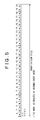
- FIG. 5 is a drawing illustrating a concept of group allocation in a communication service system in the example
- FIG. 6 is a drawing illustrating a concept of timing dispersion with respect to timing blocks in a communication service system in the example
- FIG. 7 is a drawing illustrating an example of device information in a communication service system in the example.
- FIG. 8 is a drawing illustrating a concept of grouping in a communication service system in the example.
- FIG. 9A is a drawing illustrating an example of setting control information in a communication service system in the example.
- FIG. 9B is a drawing illustrating an example of setting control acknowledgment in a communication service system in the example.
- FIG. 10 is a drawing illustrating a communication service system
- FIG. 11A is a flow diagram illustrating an example of the operation of a wireless communication device used in a communication service system
- FIG. 11B is a flow diagram illustrating an example of the operation of a wireless communication device in a communication service system.
- FIG. 12 is a drawing illustrating an example of the operation of a wireless communication device used in a communication service system after power restoration.
- FIG. 10 illustrates a configuration of the communication service system.
- the communication service system 10 is composed of a plurality of wireless communication devices AO 1 (AO 1 - 1 , AO 1 - 2 , AO 1 - 3 ), a wireless network AO 2 , a data server (higher-level server) AO 3 , and the like.
- the wireless communication devices AO 1 are a wattmeter, a vending machine, and the like having wireless communication functions.
- the wireless network AO 2 is composed of a radio base station AO 2 _ 1 , a switchboard AO 2 _ 2 , and the like to which the wireless communication devices AO 1 connect via a radio link.
- the higher-level server AO 3 controls the services provided by the communication service system 10 by managing varied information from the wireless communication devices AO 1 and delivering varied information and providing services to the wireless communication devices AO 1 .
- the wireless communication devices AO 1 connect with the wireless network AO 2 by a radio link and are connected to the higher-level server AO 3 through the wireless network AO 2 .
- the wireless communication devices AO 1 report, for example, meterage on wattmeters and inventory information of vending machines to the higher-level server AO 3 .
- users of the communication service system 10 can calculate electric charges and ship products for sale through vending machines.
- FIG. 11A and FIG. 11B are flow diagrams illustrating an example of the operation of the wireless communication device.
- FIG. 12 illustrates an example of the operation of the wireless communication devices after power restoration.
- each wireless communication device AO 1 After power is supplied, each wireless communication device AO 1 performs required device initialization processing (Step B 1 ), searches for any nearby radio base station AO 2 _ 1 for connection with the wireless network AO 2 , and acquires wireless network information such as broadcast information (Step B 2 ). In case of mobile communication system, mobile terminals must be managed. Therefore, the wireless communication device AO 1 performs position registration for terminal management in the wireless network AO 2 (Step B 3 ). After the completion of position registration, the flow proceeds to normal processing (normal mode) (Step B 4 ). In the normal mode, the wireless communication device AO 1 detects whether data to transmit from the device to the higher-level server AO 3 or data to be received from the higher-level server AO 3 is present or not (Step B 5 ).
- normal processing normal mode
- the wireless communication device When it is detected that there is any transmit/receive data, the wireless communication device performs radio link/data link connection (Step B 6 ) and performs data communication (user data transmission/reception) between the wireless communication device AO 1 and the higher-level server AO 3 (Step B 7 ).
- a problem may occur when power supply is restored (power restoration) after a power failure occurred over a wide area due to a large-scale disaster or the like.
- power restoration power restoration
- the wireless communication devices AO 1 perform position registration with the wireless network AO 2 and the higher-level server AO 3 in unison. This will be described with reference to FIG. 12 .
- Step B 1 PERFORM INITIALIZATION
- Step B 2 PERFORM CELL SEARCH AND ACQUIRE WIRELESS NETWORK INFORMATION
- Step B 3 PERFORM POSITION REGISTRATION
- a procedure is taken when a plurality of wireless communication devices communicate with a wireless network and a server in charge of services provided by the communication service system.
- the wireless communication devices are grouped based on the device information of each wireless communication device and communication timing is provided for wireless communication devices assigned to the individual groups. The timing of communication from the wireless communication devices is thereby dispersed. As a result, a communication load on the entire communication service system due to temporal concentration caused by establishing communication connections in unison can be reduced.
- Each wireless communication device AO 1 includes a wireless communication terminal for data transmission with the higher-level server AO 3 via the wireless network AO 2 and such data terminal equipment (DTE) as a wattmeter and a vending machine.
- DTE data terminal equipment
- FIG. 3 illustrates a sequence taken between wireless communication devices and a wireless network and a higher-level server in a communication service system.
- FIG. 7 illustrates an example of the device information in the communication service system in the example.
- Step 301 position registration processing
- Step 302 radio link/data link connection processing
- Step 312 processing for participating in the service system
- the following steps are taken as the service system participation processing (Step 312 ).
- group assignment and setting control information generation are performed for the wireless communication devices AO 1 at the higher-level server AO 3 (Step 304 ).
- the generated setting control information (initial setting control information) is transmitted to the wireless communication devices AO 1 (Step 305 ).
- the device information is information composed of device information, connection information, mobility information, service type including the characteristics of provided services, application data type, and the like.
- the device information includes, for example, device type, device ID, device Ver, device state, and the like.
- the connection information includes data connection mode, the IP address of the relevant device, and the like.
- the mobility type is information related to the mobile environment of each wireless communication device, such as fixed installation, low-speed moving, and high-speed moving.
- the application data type includes the periodicity, immediacy, data volume, and the like of data handled by an execution application for receiving services. When there are a plurality of types of data handled by the relevant application, a plurality of data types may be defined according to the characteristics thereof.
- FIG. 7 shows a case where there are n types of data handled by an application.
- FIG. 8 illustrates a concept of grouping in the communication service system in the example.
- the wireless communication devices AO 1 To group the wireless communication devices AO 1 based on device information transmitted by the wireless communication devices AO 1 , individual scores are given according to the respective parameters (device report values) of the mobility type, service type, and application data type contained in device information. Groups are determined according to the resulting total scores. Device report values are transmitted from data terminal equipment to wireless communication terminals. In the sequence shown in FIG. 3 , the operation of the wireless communication devices AO 1 is equivalent to the operation of the wireless communication terminals except device report values being transmitted from data terminal equipment to wireless communication terminals.
- FIG. 8 shows an example in which a higher total score is determined as group D and a lower total score is determined as group A. That is, the frequency of transmission start permission is reduced with increase in score.
- fixed installation it is estimated that change in surrounding radio environments, such as the movement of a cell, is small; therefore, it is estimated that accompanying transmission of data including radio control data is less frequent.
- high-speed moving change in surrounding radio environments, such as the movement of a cell, is large and it is estimated that accompanying transmission of data is frequent.
- a wireless communication device AO 1 moving at high speed should be assigned to a group involving frequent transmission start permission (score “low”).
- a fixedly installed wireless communication device AO 1 is assigned to a group involving less frequent transmission start permission (score “high”), that will not probably have a great influence.
- the highest individual score is 5 points and the lowest point is 1 point; therefore, for example, a score of 5 points is given to fixed installation and a score of 1 point is given to high-speed moving.
- Scores are determined according to the characteristics of services provided to the wireless communication devices AO 1 . For example, scores are determined according to such characteristics of services as shown in FIG. 8 . A more specific description will be given.
- a wireless communication device AO 1 is equipment related to a social infrastructure or the like and is applied to provide highly public services, it can be estimated that data handled in a communication service system thereof is relatively high in importance. Therefore, wireless communication devices AO 1 applied to provide services related to social infrastructures should be assigned to a group involving frequent transmission start permission (score “low”).
- a wireless communication device When a wireless communication device is equipment related to an individual user system and is applied to provide relatively less public services, it is estimated that data handled in a communication service system thereof is relatively low in importance. Thus, it can be estimated that even if a wireless communication device AO 1 applied to an individual user system is assigned to a group involving less frequent transmission start permission (score “high”), that will not have a great influence.
- Individual user systems can be classified into large-scale systems and small-scale systems depending on the number of users handled in the relevant communication service system or the like, and a “medium” score can be given to large-scale systems and a “high” score can be given to small-scale systems.
- Scores are determined according to the characteristics of data handled by an application for executing services provided to the wireless communication devices AO 1 .
- scores are determined according to such characteristics of application data as shown in FIG. 8 . That is, scores are determined using the periodicity, immediacy, data volume, and the like of data as parameters. Attention will be focused on the periodicity of data.
- Application data characterized in that data is generated in a short cycle should be assigned to a group involving more frequent transmission start permission (score “low”). It can be estimated that even if application data characterized in that data is generated in a long cycle is assigned to a group involving less frequent transmission start permission (score “high”), that will not have a great influence.
- Application data characterized in that data high in immediacy is generated should be assigned to a group involving more frequent transmission start permission (score “low”). It can be estimated that even if application data characterized in that data low in immediacy is generated is assigned to a group involving less transmission start permission (score “high”), that will not have a great influence. Attention will be focused on data volume. It can be estimated that even if application data characterized in that data relatively low in volume is generated is assigned to a group involving more frequent transmission start permission (score “low”), system resources will be less probably occupied. Conversely, application data characterized in that a large volume of data is generated can be assigned to a group involving less frequent transmission start permission (score “high”). Thus, the influence of system resource occupation on other wireless communication devices AO 1 can be reduced. As mentioned above, when there are a plurality of types of data handled by the relevant application, a plurality of data types may be defined according to the characteristics thereof.
- FIG. 4 illustrates a concept of group assignment of the communication service system in the example.
- wireless communication devices are assigned to four groups A to D.
- the wireless communication devices AO 1 are different in transmission timing depending on the assigned groups. This will be described with reference to FIG. 4 .
- the wireless communication devices AO 1 are grouped and communication timing is provided for the wireless communication devices assigned to each group. Dispersed control of communication timing is thereby implemented.
- the transmission start permission interval for some group will be defined as “timing block.”
- Each wireless communication device AO 1 is permitted to start transmission during a duration shown by “timing block length t ⁇ s>” in a timing block allocated thereto.
- permitted groups are switched according to a group pattern (A ->B ->A ->C ->A ->B ->A ->D ->A ->B ->A ->C ->A ->B ->A in the example shown in FIG. 4 ) determined in the communication service system.
- the invention is configured such that a series of group patterns are cyclically repeated and this repetition cycle will be defined as “group pattern cycle.” That is, the grouped wireless communication devices AO 1 can determine their own transmission start timing according to “group pattern,” “timing block length,” and “group pattern cycle.” For example, when each hour (00 minutes 00 second every hour) is arranged as the start timing of cycles, a plurality of the wireless communication devices AO 1 can recognize a common “timing block.”
- FIG. 4 shows an example in which the group pattern is A ->B ->A- >C ->A ->B ->A ->D ->A ->B ->A ->C ->A ->B ->A and the numbers of permission blocks are as follows:
- this example is configured such that group A is higher in the frequency of transmission start permission and group D is lower.
- communication start timing can be dispersed and transmission can be started in response to the generation of data thereof.
- FIG. 9A shows an example of setting control information of the communication service system in the example.
- FIG. 9B shows an example of setting control acknowledgment in the communication service system in the example.
- setting control information is transmitted from the higher-level server AO 3 to the wireless communication devices AO 1 (Step 305 ).
- the setting control information is composed of device setting information, timing block allocation information, group allocation information for reporting group allocation results, and the like.
- the device setting information includes a setting control command for setting and controlling the wireless communication devices AO 1 .
- the timing block allocation information includes group pattern cycle, timing block length, group pattern, timing block allocation update timing (time), and the like.
- a wireless communication device AO 1 that received setting control information from the higher-level server AO 3 stores the setting control information in the device and reflects the contents of the setting (Step 306 ).
- the wireless communication device generates an acknowledgment of the setting control including ack information associated with the set information, including device setting information, timing block allocation information, and group allocation information, as shown in FIG. 9B and transmits the acknowledgment to the higher-level server AO 3 (Step 307 ).
- the wireless communication devices AO 1 transmit device information to the higher-level server AO 3 and the higher-level server AO 3 determines groups based on the device information.
- the wireless devices AO 1 may receive group determination criteria from the higher-level server AO 3 and determine groups based on the device information possessed by the wireless devices AO 1 .
- group allocation information need not be included in setting control information.
- the wireless communication devices AO 1 include the group determination result in a setting control acknowledgment to be transmitted to the higher-level server AO 3 .
- FIG. 5 illustrates a change of a group pattern in the communication service system in the example.
- the balance of group allocation of the entire communication service system can vary depending on the number of other wireless communication devices participating in the communication service system providing services to the wireless communication devices AO 1 and change in an executed application. To cope with these cases, it may be made possible to change a group pattern or group allocation.
- a change of a group pattern is made by updating timing block allocation information. For example, when the devices assigned to group B is increased in number as shown in FIG. 5 , some of timing blocks assigned to groups C and D in FIG. 4 are re-assigned to groups B and C. For example, timing block allocation information is updated by doubling a group pattern cycle. Update is performed by taking the procedure shown in broken line 313 in FIG. 3 .
- setting control information is updated (Step 308 ); the updated setting control information is transmitted to the wireless communication devices AO 1 (Step 309 ) and is received, updated and maintained, and reflected by the wireless communication devices AO 1 (Step 310 ); and a setting control acknowledgment is performed for update result acknowledgment (Step 311 ).
- Steps 309 , 310 , and 311 the same processing as of Steps 305 , 306 , and 309 is respectively performed. Reflection at the wireless communication devices AO 1 is notified with timing block allocation update timing in timing block allocation information and the setting is reflected in the relevant devices with that timing.
- Each wireless communication device AO 1 may manage time. Thus, the wireless communication devices can change the group allocation thereof in unison in response to notification of update timing.
- FIG. 1 is a flow diagram of the operation of each wireless communication device in the communication service system in the example as is started up immediately after start of power supply.
- FIG. 2 is a flow diagram of the operation of each wireless communication device in the communication service system in the example as in normal operation.
- FIG. 6 illustrates a concept of timing dispersion of timing blocks in the communication service system in the example.
- the wireless communication device AO 1 When power is supplied to each wireless communication device AO 1 , as shown in FIG. 1 , the wireless communication device AO 1 performs its own initialization (Step 101 ). Subsequently, the wireless communication device AO 1 performs a cell search for a wireless network AO 2 where the device is possibly located and acquires wireless network information from a channel for broadcasting (Step 102 ). This wireless network information includes, for example, wireless network timing managed in the wireless network AO 2 , time information, a radio parameter specific to the relevant cell, cell identification information, neighboring cell information, and the like. Subsequently, the wireless communication device AO 1 checks whether the device has participated in the communication service system from which the device desires to receive services (Step 103 ).
- the device When the wireless communication device has not participated (when a negative judgment is made at Step 103 ), the device performs position registration processing (Step 107 , Step 301 ) and radio link/data link connection processing (Step 108 , Step 302 ). In addition, the wireless communication device transmits device information (Step 109 , Step 303 ) in order to participate in the communication service system. Based on the device information from the wireless communication device AO 1 , the higher-level server AO 3 performs group determination for the relevant wireless communication device AO 1 , generates initial setting control information, and transmits the information to the wireless communication device AO 1 . The wireless communication device AO 1 receives the initial setting control information (Step 110 ).
- Step 109 and Step 110 the processing of the wireless communication device AO 1 participating in the service system is completed.
- the received initial setting control information is maintained in the relevant device and setting and control associated therewith is reflected in the relevant device (Step 111 , Step 306 ).
- the wireless communication device Based on the timing block allocation information and group allocation information included in the initial setting control information, the wireless communication device calculates timing with which the device is permitted to start transmission (own transmission start timing) (Step 112 ) and the flow proceeds to normal processing (Step 113 ).
- Step 104 the wireless communication device calculates position registration start timing in the same manner as the above-mentioned calculation of own transmission start timing.
- Position registration start timing can be calculated, for example, by handling the group of data #1 in the group allocation information in the setting control information mentioned above with reference to FIG. 9A as a default group of the wireless communication device AO 1 .
- the wireless communication device monitors whether the calculated time to start position registration has come (Step 105 ) and when the time to start position registration has come, the device starts position registration.
- the wireless communication device performs timing delay processing so that the position registration start timing of a plurality of wireless communication devices AO 1 assigned to an identical group can be dispersed (Step 106 ).
- timing delay processing is performed within the time.
- a time to start position registration for example, random numbers are generated at the relevant wireless communication device AO 1 and a timing delay time (td) is provided based on the random numbers.
- a timing delay time (td) is provided based on a device ID (device identification).
- actual position registration processing is performed (Step 107 , Step 301 ) and subsequently, radio link/data link connection processing is performed (Step 108 , Step 302 ).
- Steps 109 to 113 is the same as mentioned above.
- System re-participation processing (Step 114 ) is performed and transmission start timing for the relevant device is recalculated. The flow then proceeds to normal processing.
- Step 201 After proceeding to normal processing, data transmission/reception processing is performed when a transmission request from the relevant wireless communication device AO 1 to the higher-level server AO 3 is detected or when data arrives via the wireless network AO 2 (a reception request is detected).
- this transmission request or reception request is detected (Step 201 )
- it checked whether the request is a transmission request or a reception request (Step 202 ).
- a data category/application data type is checked (Step 209 ).
- a description will be given to data categories.
- Data handled by each wireless communication device AO 1 includes:
- radio control data category (1) data related to radio state control for the management of movement within a wireless network and radio resource management: radio control data category,
- Step 211 When the selected time to start own transmission has come, the same timing delay processing as at start-up is performed (Step 211 ). After this timing delay time has passed, radio link/data link connection processing is performed (Step 212 ) and subsequently, actual data transmission is performed (Step 213 ).
- the above-mentioned data categories (1) and (2), their groups may be predetermined in the system or the same group as data #1 (default) in the example shown in FIG. 8 may be assigned. Though not specifically described in the example of device information in FIG. 7 or the description of a concept of grouping in FIG. 8 , they may also be included in (application) data types. Then the parameters in each (application) data type may be made appropriate and transmitted as device information so as to be handled as objects of grouping at the higher-level server AO 3 .
- a data category or an application data type for which transmission can be started with any timing may be provided by defining a data type of “no group.”
- Step 202 When it is determined at Step 202 that the request is a reception request, radio link/data link connection processing is performed for data reception (Step 203 ) and data reception is performed (Step 204 ). Subsequently, the data category of the received data is checked (Step 205 ). When it is determined that the received data is service system control data, the received setting control information is maintained and updated and reflected (Step 206 ). Then the own transmission start timing is updated as required (Step 207 ). At Steps 206 and 207 , the same processing as at start-up is performed. When it is determined at Step 205 that the received data is radio control data or application data, processing is performed in accordance with the received radio control data or application data (Step 208 ).
- the device When a wireless communication device AO 1 has participated in the relevant communication service system, the device performs the operation performed in such a case as described in the above section of ⁇ Operation of Wireless Communication Device>.
- the position registration start timing calculation processing at Step 104 timing block allocation information and group allocation information are known. Therefore, position registration is not started in unison and wireless communication devices AO 1 supplied with power perform position registration with respective timing based on timing block allocation information and group allocation information already possessed by themselves. As a result, the communication timing of the wireless communication devices AO 1 within the service system is dispersed.
- the communication timing of wireless communication devices can be dispersed. Therefore, an advantage is brought about even when a power failure is caused by a large-scale disaster or the like and the wireless communication devices at the charge of a communication service system start communication in unison, triggered by power restoration. Congestion of system processing can be reduced and thus a possibility of such a trouble as system down resulting can be reduced.
- AO 1 wireless communication device
- AO 2 wireless network
Landscapes
- Engineering & Computer Science (AREA)
- Computer Networks & Wireless Communication (AREA)
- Signal Processing (AREA)
- Mobile Radio Communication Systems (AREA)
Abstract
Description
Claims (18)
Applications Claiming Priority (1)
| Application Number | Priority Date | Filing Date | Title |
|---|---|---|---|
| PCT/JP2015/053782 WO2016129074A1 (en) | 2015-02-12 | 2015-02-12 | Communication timing control method, communication service system, and wireless communication terminal |
Publications (2)
| Publication Number | Publication Date |
|---|---|
| US20180007699A1 US20180007699A1 (en) | 2018-01-04 |
| US10212719B2 true US10212719B2 (en) | 2019-02-19 |
Family
ID=56614415
Family Applications (1)
| Application Number | Title | Priority Date | Filing Date |
|---|---|---|---|
| US15/546,108 Active 2035-02-28 US10212719B2 (en) | 2015-02-12 | 2015-02-12 | Communication timing control method, communication service system and wireless communication terminal |
Country Status (3)
| Country | Link |
|---|---|
| US (1) | US10212719B2 (en) |
| JP (1) | JP6383442B2 (en) |
| WO (1) | WO2016129074A1 (en) |
Families Citing this family (5)
| Publication number | Priority date | Publication date | Assignee | Title |
|---|---|---|---|---|
| JP6880464B2 (en) * | 2016-07-27 | 2021-06-02 | 日本精機株式会社 | Communication device |
| DE102017204186A1 (en) | 2017-03-14 | 2018-09-20 | Fraunhofer-Gesellschaft zur Förderung der angewandten Forschung e.V. | Efficient multi-user addressing |
| RU2737867C1 (en) * | 2017-08-09 | 2020-12-04 | Телефонактиеболагет Лм Эрикссон (Пабл) | Network node and method in wireless communication network |
| US11323174B2 (en) * | 2019-06-26 | 2022-05-03 | Qualcomm Incorporated | Paging for non-terrestrial networks |
| CN112104582B (en) * | 2020-11-09 | 2021-02-05 | 电子科技大学 | I/Q domain modulation method, double domain modulation method and multiple access communication method |
Citations (4)
| Publication number | Priority date | Publication date | Assignee | Title |
|---|---|---|---|---|
| JP2010118744A (en) | 2008-11-11 | 2010-05-27 | Ntt Docomo Inc | Information collection system, communication terminal and information collection method |
| US20120076085A1 (en) * | 2010-09-24 | 2012-03-29 | Industrial Technology Research Institute | Group paging method and wireless communication device and base station and paging controller using the same |
| JP2014155161A (en) | 2013-02-13 | 2014-08-25 | Sharp Corp | Radio communication system |
| JP2014212425A (en) | 2013-04-18 | 2014-11-13 | 株式会社日立国際電気 | Radio communication terminal and radio communication start timing control method of radio communication terminal |
-
2015
- 2015-02-12 WO PCT/JP2015/053782 patent/WO2016129074A1/en not_active Ceased
- 2015-02-12 JP JP2016574571A patent/JP6383442B2/en active Active
- 2015-02-12 US US15/546,108 patent/US10212719B2/en active Active
Patent Citations (4)
| Publication number | Priority date | Publication date | Assignee | Title |
|---|---|---|---|---|
| JP2010118744A (en) | 2008-11-11 | 2010-05-27 | Ntt Docomo Inc | Information collection system, communication terminal and information collection method |
| US20120076085A1 (en) * | 2010-09-24 | 2012-03-29 | Industrial Technology Research Institute | Group paging method and wireless communication device and base station and paging controller using the same |
| JP2014155161A (en) | 2013-02-13 | 2014-08-25 | Sharp Corp | Radio communication system |
| JP2014212425A (en) | 2013-04-18 | 2014-11-13 | 株式会社日立国際電気 | Radio communication terminal and radio communication start timing control method of radio communication terminal |
Non-Patent Citations (1)
| Title |
|---|
| International Search Report of PCT/JP2015/053782 dated May 19, 2015. |
Also Published As
| Publication number | Publication date |
|---|---|
| JPWO2016129074A1 (en) | 2017-11-02 |
| JP6383442B2 (en) | 2018-08-29 |
| WO2016129074A1 (en) | 2016-08-18 |
| US20180007699A1 (en) | 2018-01-04 |
Similar Documents
| Publication | Publication Date | Title |
|---|---|---|
| US10212719B2 (en) | Communication timing control method, communication service system and wireless communication terminal | |
| CN109417829B (en) | Method and apparatus for determining cluster head | |
| US10362506B2 (en) | Communication aggregation system, control device, processing load control method and non-transitory computer readable medium storing program | |
| JP6999051B2 (en) | Communication systems, methods, servers and programs | |
| Basu et al. | A post-disaster demand forecasting system using principal component regression analysis and case-based reasoning over smartphone-based DTN | |
| US8566478B2 (en) | Information collecting system, communication terminal and information collecting method | |
| US8131299B2 (en) | Location registration area assigning method and wireless communication system | |
| US9510231B2 (en) | Congestion control apparatus and congestion control method | |
| JP6787412B2 (en) | Communication processing system, communication processing method, base station and communication processing device control program | |
| JP2009212707A (en) | Management device, management method, and computer program | |
| CN102083109B (en) | Offline detection method, device and system | |
| US10051561B2 (en) | Methods and nodes for M2M communication | |
| US9894600B1 (en) | Providing adaptive network access | |
| KR101906416B1 (en) | Network acceing method and apparatus thereof | |
| CN107465609B (en) | Terminal routing method based on Internet of things and Internet of things terminal | |
| CN105611566A (en) | Control method and system for access equipment of WIFI (Wireless Fidelity) network and network equipment | |
| CN104469865A (en) | Target cell configuration method and device | |
| JP5562317B2 (en) | Wireless communication system and session sharing method | |
| CN106803789A (en) | A kind of method and apparatus for configuring gateway | |
| JP2013115677A (en) | Broadcast distribution method and system for communication devices in group units according to communication environment | |
| CN113395724A (en) | Mode optimization method and device for base station | |
| JPWO2014208166A1 (en) | Wireless communication system and communication terminal device | |
| CN106230878A (en) | A kind of equipment service calling method based on AllJoyn framework and device | |
| JP6449538B2 (en) | Wireless communication system and construction method thereof | |
| CN110996359B (en) | Network control method, terminal and storage medium |
Legal Events
| Date | Code | Title | Description |
|---|---|---|---|
| AS | Assignment |
Owner name: HITACHI KOKUSAI ELECTRIC INC., JAPAN Free format text: ASSIGNMENT OF ASSIGNORS INTEREST;ASSIGNOR:ISHII, TAKAHITO;REEL/FRAME:043090/0761 Effective date: 20170710 |
|
| STCF | Information on status: patent grant |
Free format text: PATENTED CASE |
|
| MAFP | Maintenance fee payment |
Free format text: PAYMENT OF MAINTENANCE FEE, 4TH YEAR, LARGE ENTITY (ORIGINAL EVENT CODE: M1551); ENTITY STATUS OF PATENT OWNER: LARGE ENTITY Year of fee payment: 4 |
|
| AS | Assignment |
Owner name: KOKUSAI DENKI ELECTRIC INC., JAPAN Free format text: CHANGE OF NAME;ASSIGNOR:HITACHI KOKUSAI ELECTRIC INC.;REEL/FRAME:071275/0236 Effective date: 20241227 Owner name: HITACHI KOKUSAI ELECTRIC INC., JAPAN Free format text: CHANGE OF ADDRESS;ASSIGNOR:HITACHI KOKUSAI ELECTRIC INC.;REEL/FRAME:071275/0058 Effective date: 20161001 |