US10150740B2 - 6,7-dihydropyrido[2,1-A]phthalazin-2-ones for the treatment and prophylaxis of hepatitis B virus infection - Google Patents
6,7-dihydropyrido[2,1-A]phthalazin-2-ones for the treatment and prophylaxis of hepatitis B virus infection Download PDFInfo
- Publication number
- US10150740B2 US10150740B2 US15/866,429 US201815866429A US10150740B2 US 10150740 B2 US10150740 B2 US 10150740B2 US 201815866429 A US201815866429 A US 201815866429A US 10150740 B2 US10150740 B2 US 10150740B2
- Authority
- US
- United States
- Prior art keywords
- alkyloxy
- oxo
- phthalazine
- pyrido
- carboxylic acid
- Prior art date
- Legal status (The legal status is an assumption and is not a legal conclusion. Google has not performed a legal analysis and makes no representation as to the accuracy of the status listed.)
- Active
Links
- 0 [1*]C1=C([2*])C([3*])=C([4*])C2=C1C1=CC(=O)C(C(=O)O)=CN1N([6*])C2[5*] Chemical compound [1*]C1=C([2*])C([3*])=C([4*])C2=C1C1=CC(=O)C(C(=O)O)=CN1N([6*])C2[5*] 0.000 description 10
- CBPJWMDCDAVEAE-UHFFFAOYSA-N C=CCN1CC2=C(C=C(OC)C(OC)=C2)C2=CC(=O)C(C(=O)O)=CN21 Chemical compound C=CCN1CC2=C(C=C(OC)C(OC)=C2)C2=CC(=O)C(C(=O)O)=CN21 CBPJWMDCDAVEAE-UHFFFAOYSA-N 0.000 description 2
- PURJTKDWCZADSM-UHFFFAOYSA-N COC1=CC2=C(C=C1OC)C1=CC(=O)C(C(=O)O)=CN1N(C(C)C)C2 Chemical compound COC1=CC2=C(C=C1OC)C1=CC(=O)C(C(=O)O)=CN1N(C(C)C)C2 PURJTKDWCZADSM-UHFFFAOYSA-N 0.000 description 2
- BDJCMBLCOXVSEH-UHFFFAOYSA-N COC1=CC2=C(C=C1OC)C1=CC(=O)C(C(=O)O)=CN1N(C)C2 Chemical compound COC1=CC2=C(C=C1OC)C1=CC(=O)C(C(=O)O)=CN1N(C)C2 BDJCMBLCOXVSEH-UHFFFAOYSA-N 0.000 description 2
- ONZKXPKUWNQLRK-UHFFFAOYSA-N COC1=CC2=C(C=C1OC)C1=CC(=O)C(C(=O)O)=CN1N(CC(C)C)C2 Chemical compound COC1=CC2=C(C=C1OC)C1=CC(=O)C(C(=O)O)=CN1N(CC(C)C)C2 ONZKXPKUWNQLRK-UHFFFAOYSA-N 0.000 description 2
- BPBHVSAWZGGVPZ-UHFFFAOYSA-N COC1=CC2=C(C=C1OC)C1=CC(=O)C(C(=O)O)=CN1NC2 Chemical compound COC1=CC2=C(C=C1OC)C1=CC(=O)C(C(=O)O)=CN1NC2 BPBHVSAWZGGVPZ-UHFFFAOYSA-N 0.000 description 2
- WMHXWLQJSKIYBR-UHFFFAOYSA-N COCCCOC1=C(OC)C=C2C(=C1)CN(CC(C)C)N1C=C(C(=O)O)C(=O)C=C21 Chemical compound COCCCOC1=C(OC)C=C2C(=C1)CN(CC(C)C)N1C=C(C(=O)O)C(=O)C=C21 WMHXWLQJSKIYBR-UHFFFAOYSA-N 0.000 description 2
- UJCKPRPJVMKSGH-UHFFFAOYSA-N C=C(C)CN1CC2=C(C=C(OC)C(OC)=C2)C2=CC(=O)C(C(=O)O)=CN21 Chemical compound C=C(C)CN1CC2=C(C=C(OC)C(OC)=C2)C2=CC(=O)C(C(=O)O)=CN21 UJCKPRPJVMKSGH-UHFFFAOYSA-N 0.000 description 1
- RPZLASNGCMIDPE-UHFFFAOYSA-N C=C(C)CN1CC2=C(C=C(OC)C(OC)=C2)C2=CC(=O)C(C(=O)OC(C)(C)C)=CN21 Chemical compound C=C(C)CN1CC2=C(C=C(OC)C(OC)=C2)C2=CC(=O)C(C(=O)OC(C)(C)C)=CN21 RPZLASNGCMIDPE-UHFFFAOYSA-N 0.000 description 1
- ORDVBRBXHARMHN-UHFFFAOYSA-N C=C(C)CN1CC2=CC(OCC3=CC=CC=C3)=C(OC)C=C2C2=CC(=O)C(C(=O)O)=CN21 Chemical compound C=C(C)CN1CC2=CC(OCC3=CC=CC=C3)=C(OC)C=C2C2=CC(=O)C(C(=O)O)=CN21 ORDVBRBXHARMHN-UHFFFAOYSA-N 0.000 description 1
- OEWNAQOGPJJKGA-UHFFFAOYSA-N C=CCN1CC2=C(C=C(OC)C(OC)=C2)C2=CC(=O)C(C(=O)OC(C)(C)C)=CN21 Chemical compound C=CCN1CC2=C(C=C(OC)C(OC)=C2)C2=CC(=O)C(C(=O)OC(C)(C)C)=CN21 OEWNAQOGPJJKGA-UHFFFAOYSA-N 0.000 description 1
- KJFFPNCTSYAOCU-CLFYSBASSA-N CC(=O)/C(=C/N(C)C)C(=O)OC(C)(C)C Chemical compound CC(=O)/C(=C/N(C)C)C(=O)OC(C)(C)C KJFFPNCTSYAOCU-CLFYSBASSA-N 0.000 description 1
- QGPGIXRKPOHAGL-UHFFFAOYSA-N CC(C)(C)OC(=O)C1=COC=CC1=O Chemical compound CC(C)(C)OC(=O)C1=COC=CC1=O QGPGIXRKPOHAGL-UHFFFAOYSA-N 0.000 description 1
- MFUORPGRDPJHQM-UHFFFAOYSA-N CC(C)(C)OC(=O)NN1C=CC(=O)C(C(=O)OC(C)(C)C)=C1 Chemical compound CC(C)(C)OC(=O)NN1C=CC(=O)C(C(=O)OC(C)(C)C)=C1 MFUORPGRDPJHQM-UHFFFAOYSA-N 0.000 description 1
- SBVDYRWACOOPER-UHFFFAOYSA-N COC(=O)C1=CN2NCC3=CC(OCC4=CC=CC=C4)=C(OC)C=C3C2=CC1=O Chemical compound COC(=O)C1=CN2NCC3=CC(OCC4=CC=CC=C4)=C(OC)C=C3C2=CC1=O SBVDYRWACOOPER-UHFFFAOYSA-N 0.000 description 1
- IJXYWBSRWDXJSC-UHFFFAOYSA-N COC1=C(O)C=C2CN(CC(C)C)N3C=C(C(=O)O)C(=O)C=C3C2=C1 Chemical compound COC1=C(O)C=C2CN(CC(C)C)N3C=C(C(=O)O)C(=O)C=C3C2=C1 IJXYWBSRWDXJSC-UHFFFAOYSA-N 0.000 description 1
- DGUBUFUKINEOMB-UHFFFAOYSA-N COC1=C(OC)C=C2C(=C1)CN(C)N1C=C(C(=O)OC(C)(C)C)C(=O)C=C21 Chemical compound COC1=C(OC)C=C2C(=C1)CN(C)N1C=C(C(=O)OC(C)(C)C)C(=O)C=C21 DGUBUFUKINEOMB-UHFFFAOYSA-N 0.000 description 1
- FQXVGVVVTTXQHM-UHFFFAOYSA-N COC1=C(OC)C=C2C(=C1)CNN1C=C(C(=O)OC(C)(C)C)C(=O)C=C21 Chemical compound COC1=C(OC)C=C2C(=C1)CNN1C=C(C(=O)OC(C)(C)C)C(=O)C=C21 FQXVGVVVTTXQHM-UHFFFAOYSA-N 0.000 description 1
- ANWJPSFDUFCUKZ-UHFFFAOYSA-N COC1=C(OCC(F)(F)F)C=C2CN(CC(C)C)N3C=C(C(=O)O)C(=O)C=C3C2=C1 Chemical compound COC1=C(OCC(F)(F)F)C=C2CN(CC(C)C)N3C=C(C(=O)O)C(=O)C=C3C2=C1 ANWJPSFDUFCUKZ-UHFFFAOYSA-N 0.000 description 1
- GCTNEZSSECQKFD-UHFFFAOYSA-N COC1=C(OCC2=CC=CC=C2)C=C2CN(C(=O)OC(C)(C)C)N3C=C(C(=O)OC(C)(C)C)C(=O)C=C3C2=C1.COC1=C(OCC2=CC=CC=C2)C=C2CNN3C=C(C(=O)OC(C)(C)C)C(=O)C=C3C2=C1 Chemical compound COC1=C(OCC2=CC=CC=C2)C=C2CN(C(=O)OC(C)(C)C)N3C=C(C(=O)OC(C)(C)C)C(=O)C=C3C2=C1.COC1=C(OCC2=CC=CC=C2)C=C2CNN3C=C(C(=O)OC(C)(C)C)C(=O)C=C3C2=C1 GCTNEZSSECQKFD-UHFFFAOYSA-N 0.000 description 1
- DOJGHYRTZVVPJK-UHFFFAOYSA-N COC1=C(OCC2=CC=CC=C2)C=C2CNN3C=C(C(=O)O)C(=O)C=C3C2=C1 Chemical compound COC1=C(OCC2=CC=CC=C2)C=C2CNN3C=C(C(=O)O)C(=O)C=C3C2=C1 DOJGHYRTZVVPJK-UHFFFAOYSA-N 0.000 description 1
- RUBXMEDWBCBLEZ-UHFFFAOYSA-N COC1=CC(Br)=C(C=O)C=C1OCC1=CC=CC=C1 Chemical compound COC1=CC(Br)=C(C=O)C=C1OCC1=CC=CC=C1 RUBXMEDWBCBLEZ-UHFFFAOYSA-N 0.000 description 1
- GJOPMIJUVCIPIZ-UHFFFAOYSA-N COC1=CC(Br)=C(CCl)C=C1OC Chemical compound COC1=CC(Br)=C(CCl)C=C1OC GJOPMIJUVCIPIZ-UHFFFAOYSA-N 0.000 description 1
- QJVWJRKFUSNSMP-UHFFFAOYSA-N COC1=CC(Br)=C(CCl)C=C1OCC1=CC=CC=C1 Chemical compound COC1=CC(Br)=C(CCl)C=C1OCC1=CC=CC=C1 QJVWJRKFUSNSMP-UHFFFAOYSA-N 0.000 description 1
- ZJWRMWQWGVRLCW-UHFFFAOYSA-N COC1=CC(Br)=C(CN(C(=O)OC(C)(C)C)N2C=CC(=O)C(C(=O)OC(C)(C)C)=C2)C=C1OC Chemical compound COC1=CC(Br)=C(CN(C(=O)OC(C)(C)C)N2C=CC(=O)C(C(=O)OC(C)(C)C)=C2)C=C1OC ZJWRMWQWGVRLCW-UHFFFAOYSA-N 0.000 description 1
- CMDAHFAEDYIOOZ-UHFFFAOYSA-N COC1=CC(Br)=C(CN(C(=O)OC(C)(C)C)N2C=CC(=O)C(C(=O)OC(C)(C)C)=C2)C=C1OCC1=CC=CC=C1 Chemical compound COC1=CC(Br)=C(CN(C(=O)OC(C)(C)C)N2C=CC(=O)C(C(=O)OC(C)(C)C)=C2)C=C1OCC1=CC=CC=C1 CMDAHFAEDYIOOZ-UHFFFAOYSA-N 0.000 description 1
- XAAHVTGKEWHQCR-UHFFFAOYSA-N COC1=CC(Br)=C(CO)C=C1OCC1=CC=CC=C1 Chemical compound COC1=CC(Br)=C(CO)C=C1OCC1=CC=CC=C1 XAAHVTGKEWHQCR-UHFFFAOYSA-N 0.000 description 1
- HRXTXYXNLXAQQV-UHFFFAOYSA-N COC1=CC2=C(C=C1OC)C1=CC(=O)C(C(=O)OC(C)(C)C)=CN1N(C(C)C)C2 Chemical compound COC1=CC2=C(C=C1OC)C1=CC(=O)C(C(=O)OC(C)(C)C)=CN1N(C(C)C)C2 HRXTXYXNLXAQQV-UHFFFAOYSA-N 0.000 description 1
- LUPAWNGHPTVUGB-UHFFFAOYSA-N COC1=CC2=C(C=C1OCC(C)(C)CO)CN(CC(C)C)N1C=C(C(=O)O)C(=O)C=C21 Chemical compound COC1=CC2=C(C=C1OCC(C)(C)CO)CN(CC(C)C)N1C=C(C(=O)O)C(=O)C=C21 LUPAWNGHPTVUGB-UHFFFAOYSA-N 0.000 description 1
- IBVPDBFAGRZFRV-UHFFFAOYSA-N COC1=CC2=C(C=C1OCC1CCOCC1)CN(CC(C)C)N1C=C(C(=O)O)C(=O)C=C21 Chemical compound COC1=CC2=C(C=C1OCC1CCOCC1)CN(CC(C)C)N1C=C(C(=O)O)C(=O)C=C21 IBVPDBFAGRZFRV-UHFFFAOYSA-N 0.000 description 1
- CAZSNQPRLXQZPL-UHFFFAOYSA-N COC1=CC2=C(C=C1OCCCCC(=O)O)CN(CC(C)C)N1C=C(C(=O)O)C(=O)C=C21 Chemical compound COC1=CC2=C(C=C1OCCCCC(=O)O)CN(CC(C)C)N1C=C(C(=O)O)C(=O)C=C21 CAZSNQPRLXQZPL-UHFFFAOYSA-N 0.000 description 1
- VQJOUARBAMEROM-UHFFFAOYSA-N COC1=CC2=C(C=C1OCCCCCN)CN(CC(C)C)N1C=C(C(=O)O)C(=O)C=C21.Cl Chemical compound COC1=CC2=C(C=C1OCCCCCN)CN(CC(C)C)N1C=C(C(=O)O)C(=O)C=C21.Cl VQJOUARBAMEROM-UHFFFAOYSA-N 0.000 description 1
- RWRQSSIUVTYZMH-UHFFFAOYSA-N COC1=CC2=C(C=C1OCCCCCNC(=O)OC(C)(C)C)CN(CC(C)C)N1C=C(C(=O)O)C(=O)C=C21 Chemical compound COC1=CC2=C(C=C1OCCCCCNC(=O)OC(C)(C)C)CN(CC(C)C)N1C=C(C(=O)O)C(=O)C=C21 RWRQSSIUVTYZMH-UHFFFAOYSA-N 0.000 description 1
- RECMZXKLBVQDRN-UHFFFAOYSA-N COC1=CC2=C(C=C1OCCCS(C)(=O)=O)CN(CC(C)C)N1C=C(C(=O)O)C(=O)C=C21 Chemical compound COC1=CC2=C(C=C1OCCCS(C)(=O)=O)CN(CC(C)C)N1C=C(C(=O)O)C(=O)C=C21 RECMZXKLBVQDRN-UHFFFAOYSA-N 0.000 description 1
- RTXVTBJAKQOJTL-UHFFFAOYSA-N COC1=CC2=C(C=C1OCCN1CCOCC1)CN(CC(C)C)N1C=C(C(=O)O)C(=O)C=C21 Chemical compound COC1=CC2=C(C=C1OCCN1CCOCC1)CN(CC(C)C)N1C=C(C(=O)O)C(=O)C=C21 RTXVTBJAKQOJTL-UHFFFAOYSA-N 0.000 description 1
- SGQIRWOYPPQGGY-UHFFFAOYSA-N [C-]#[N+]CCCOC1=CC2=C(C=C1OC)C1=CC(=O)C(C(=O)O)=CN1N(CC(C)C)C2 Chemical compound [C-]#[N+]CCCOC1=CC2=C(C=C1OC)C1=CC(=O)C(C(=O)O)=CN1N(CC(C)C)C2 SGQIRWOYPPQGGY-UHFFFAOYSA-N 0.000 description 1
Classifications
-
- C—CHEMISTRY; METALLURGY
- C07—ORGANIC CHEMISTRY
- C07D—HETEROCYCLIC COMPOUNDS
- C07D237/00—Heterocyclic compounds containing 1,2-diazine or hydrogenated 1,2-diazine rings
- C07D237/26—Heterocyclic compounds containing 1,2-diazine or hydrogenated 1,2-diazine rings condensed with carbocyclic rings or ring systems
-
- A—HUMAN NECESSITIES
- A61—MEDICAL OR VETERINARY SCIENCE; HYGIENE
- A61P—SPECIFIC THERAPEUTIC ACTIVITY OF CHEMICAL COMPOUNDS OR MEDICINAL PREPARATIONS
- A61P31/00—Antiinfectives, i.e. antibiotics, antiseptics, chemotherapeutics
- A61P31/12—Antivirals
- A61P31/20—Antivirals for DNA viruses
-
- C—CHEMISTRY; METALLURGY
- C07—ORGANIC CHEMISTRY
- C07D—HETEROCYCLIC COMPOUNDS
- C07D471/00—Heterocyclic compounds containing nitrogen atoms as the only ring hetero atoms in the condensed system, at least one ring being a six-membered ring with one nitrogen atom, not provided for by groups C07D451/00 - C07D463/00
- C07D471/02—Heterocyclic compounds containing nitrogen atoms as the only ring hetero atoms in the condensed system, at least one ring being a six-membered ring with one nitrogen atom, not provided for by groups C07D451/00 - C07D463/00 in which the condensed system contains two hetero rings
- C07D471/04—Ortho-condensed systems
Definitions
- the present invention relates to organic compounds useful for therapy and/or prophylaxis in a mammal, and in particular to HBsAg (HBV Surface antigen) inhibitors and HBV DNA production inhibitors useful for treating HBV infection.
- HBsAg HBV Surface antigen
- the present invention relates to novel 6,7-dihydropyrido[2,1-a]phthalazin-2-ones compounds of formula (I) having pharmaceutical activity, their manufacture, pharmaceutical compositions containing them and their potential use as medicaments.
- R 1 to R 6 are as described below, or to a pharmaceutically acceptable salt, or an enantiomers, or a diastereomer thereof.
- the hepatitis B virus is an enveloped, partially double-stranded DNA virus.
- the compact 3.2 kb HBV genome consists of four overlapping open reading frames (ORF), which encode for the core, polymerase (Pol), envelope and X-proteins.
- ORF open reading frames
- the Pol ORF is the longest and the envelope ORF is located within it, while the X and core ORFs overlap with the Pol ORF.
- the lifecycle of HBV has two main events: 1) generation of closed circular DNA (cccDNA) from relaxed circular (RC DNA), and 2) reverse transcription of pregenomic RNA (pgRNA) to produce RC DNA. Prior to the infection of host cells, the HBV genome exists within the virion as RC DNA.
- HBV virions are able to gain entry into host cells by non-specifically binding to the negatively charged proteoglycans present on the surface of human hepatocytes (Schulze, A., P. Gripon & S. Urban. Hepatology, 46, (2007), 1759-68) and via the specific binding of HBV surface antigens (HBsAg) to the hepatocyte sodium-taurocholate cotransporting polypeptide (NTCP) receptor (Yan, H. et al. J Virol, 87, (2013), 7977-91).
- HBV surface antigens HBV surface antigens
- NTCP sodium-taurocholate cotransporting polypeptide
- cccDNA acts as the template for all viral mRNAs and as such, is responsible for HBV persistence in infected individuals.
- the transcripts produced from cccDNA are grouped into two categories; Pregenomic RNA (pgRNA) and subgenomic RNA.
- Subgenomic transcripts encode for the three envelopes (L, M and S) and X proteins
- pgRNA encodes for Pre-Core, Core, and Pol proteins
- Inhibition of HBV gene expression or HBV RNA synthesis leads to the inhibition of HBV viral replication and antigens production (Mao, R. et al. PLoS Pathog, 9, (2013), e1003494; Mao, R. et al. J Virol, 85, (2011), 1048-57).
- IFN- ⁇ was shown to inhibit HBV replication and viral HBsAg production by decreasing the transcription of pgRNA and subgenomic RNA from the HBV covalently closed circular DNA (cccDNA) minichromosome.
- cccDNA covalently closed circular DNA
- nascent pgRNA is packaged with viral Pol so that reverse transcription of pgRNA, via a single stranded DNA intermediate, into RC DNA can commence.
- the mature nucleocapsids containing RC DNA are enveloped with cellular lipids and viral L, M, and S proteins and then the infectious HBV particles are then released by budding at the intracellular membrane (Locarnini, S. Semin Liver Dis , (2005), 25 Suppl 1, 9-19).
- non-infectious particles are also produced that greatly outnumber the infectious virions.
- These empty, enveloped particles (L, M and S) are referred to as subviral particles.
- subviral particles share the same envelope proteins and as infectious particles, it has been surmised that they act as decoys to the host immune system and have been used for HBV vaccines.
- the S, M, and L envelope proteins are expressed from a single ORF that contains three different start codons. All three proteins share a 226aa sequence, the S-domain, at their C-termini. M and L have additional pre-S domains, Pre-S2 and Pre-S2 and Pre-S1, respectively. However, it is the S-domain that has the HBsAg epitope (Lambert, C. & R. Prange. Virol J , (2007), 4, 45).
- HBV Hepatitis B virus
- the secretion of antiviral cytokines in response to HBV infection by the hepatocytes and/or the intra-hepatic immune cells plays a central role in the viral clearance of infected liver.
- chronically infected patients only display a weak immune response due to various escape strategies adopted by the virus to counteract the host cell recognition systems and the subsequent antiviral responses.
- HBV empty subviral particles SVPs, HBsAg
- CHB chronically infected patients
- HBsAg has been reported to suppress the function of immune cells such as monocytes, dendritic cells (DCs) and natural killer (NK) cells by direct interaction (Op den Brouw et al. Immunology , (2009b), 126, 280-9; Woltman et al. PLoS One , (2011), 6, e15324; Shi et al. J Viral Hepat . (2012), 19, e26-33; Kondo et al. ISRN Gasteroenterology , (2013), Article ID 935295).
- DCs dendritic cells
- NK natural killer
- HBsAg quantification is a significant biomarker for prognosis and treatment response in chronic hepatitis B.
- Current therapy such as Nucleos(t)ide analogues are molecules that inhibit HBV DNA synthesis but are not directed at reducing HBsAg level.
- Nucleos(t)ide analogs even with prolonged therapy, have demonstrated rates of HBsAg clearance comparable to those observed naturally (between ⁇ 1%-2%) (Janssen et al. Lancet , (2005), 365, 123-9; Marcellin et al. N. Engl. J.
- Objects of the present invention are novel compounds of formula I, their manufacture, medicaments based on a compound in accordance with the invention and their production as well as the use of compounds of formula I as HBV inhibitors and for the treatment or prophylaxis of HBV infection.
- the compounds of formula I show superior anti-HBV activity.
- the present invention relates to a compound of formula I
- R 1 , R 2 , R 3 and R 4 are independently selected from C 1-6 alkyl, haloC 1-6 alkyl, hydrogen, halogen, amino, cyano, pyrrolidinyl, hydroxy, C 1-6 alkoxy, haloC 1-6 alkoxy, C 3-7 cycloalkylC 1-6 alkyloxy, phenylC 1-6 alkyloxy, hydroxyC 1-6 alkyloxy, C 1-6 alkoxyC 1-6 alkyloxy, C 1-6 alkylsulfanylC 1-6 alkyloxy, C 1-6 alkylsulfonylC 1-6 alkyloxy, cyanoC 1-6 alkyloxy, aminoC 1-6 alkyloxy, C 1-6 alkylaminoC 1-6 alkyloxy, diC 1-6 alkylaminoC 1-6 alkyloxy, C 1-6 alkylcarbonylaminoC 1-6 alkyloxy, C 1-6 alkylsulfonylaminoC
- C 1-6 alkyl alone or in combination signifies a saturated, linear- or branched chain alkyl group containing 1 to 6, particularly 1 to 4 carbon atoms, for example methyl, ethyl, propyl, isopropyl, 1-butyl, 2-butyl, tert-butyl and the like.
- Particular “C 1-6 alkyl” groups are methyl, ethyl, isopropyl and tert-butyl.
- C 2-6 alkenyl denotes a monovalent linear or branched hydrocarbon group of 2 to 6 carbon atoms with at least one double bond.
- C 1-6 alkenyl has 2 to 4 carbon atoms with at least one double bond.
- alkenyl include ethenyl, propenyl, prop-2-enyl, isopropenyl, n-butenyl, and iso-butenyl.
- Particular “C 1-6 alkyl” group is prop-2-enyl.
- C 3-7 cycloalkyl refers to a saturated carbon ring containing from 3 to 7 carbon atoms, particularly from 3 to 6 carbon atoms, for example, cyclopropyl, cyclobutyl, cyclopentyl, cyclohexyl, cycloheptyl and the like.
- Particular “C 3-7 cycloalkyl” groups are cyclopropyl, cyclobutyl, cyclopentyl and cyclohexyl.
- C 1-6 alkoxy alone or in combination signifies a group C 1-6 alkyl-O—, wherein the “C 1-6 alkyl” is as defined above; for example methoxy, ethoxy, propoxy, iso-propoxy, n-butoxy, iso-butoxy, 2-butoxy, tert-butoxy, pentoxy, hexyloxy, octyloxy and the like.
- Particular “C 1-6 alkoxy” groups are methoxy, ethoxy and propoxy.
- halogen means fluorine, chlorine, bromine or iodine.
- haloC 1-6 alkyl denotes a C 1-6 alkyl group wherein at least one of the hydrogen atoms of the C 1-6 alkyl group has been replaced by same or different halogen atoms, particularly fluoro atoms.
- haloC 1-6 alkyl include monofluoro-, difluoro- or trifluoro-methyl, -ethyl or -propyl, for example 3,3,3-trifluoropropyl, 3,3-difluoropropyl, 2-fluoroethyl, 2,2-difluoroethyl, 2,2,2-trifluoroethyl, fluoromethyl, difluoromethyl or trifluoromethyl.
- Particular “haloC 1-6 alkyl” group is difluoromethyl or trifluoromethyl.
- haloC 1-6 alkoxy denotes a C 1-6 alkoxy group wherein at least one of the hydrogen atoms of the C 1-6 alkoxy group has been replaced by same or different halogen atoms, particularly fluoro atoms.
- haloC 1-6 alkoxyl include monofluoro-, difluoro- or trifluoro-methoxy, -ethoxy or -propoxy, for example fluoropropoxy, difluoropropoxy, trifluoropropoxy, fluoroethoxy, difluoroethoxy, trifluoroethoxy, fluoromethoxy, difluoromethoxy or trifluoromethoxy.
- haloC 1-6 alkoxy is 3-fluoropropoxy, 3,3-difluoropropoxy, 3,3,3-trifluoropropoxy, 2-fluoroethoxy, 2,2-difluoroethoxy, 2,2,2-trifluoroethoxy, fluoromethoxy, difluoromethoxy or trifluoromethoxy.
- amino denotes a group of the formula —NR′R′′ wherein R′ and R′′ are independently hydrogen, C 1-6 alkyl, C 1-6 alkoxy, C 3-7 cycloalkyl, heteroC 3-7 cycloalkyl, aryl or heteroaryl. Alternatively, R′ and R′′, together with the nitrogen to which they are attached, can form a heteroC 3-7 cycloalkyl.
- carbonyl alone or in combination refers to the group —C(O)—.
- cyano alone or in combination refers to the group —CN.
- C 1-6 alkylsulfanyl denotes the group —S—R′, wherein R′ is a C 1-6 alkyl group as defined above.
- Examples of C 1-6 alkylsulfanyl include methylsulfanyl and ethylsulfanyl.
- C 1-6 alkylsulfonyl denotes a group —SO 2 —R′, wherein R′ is a C 1-6 alkyl group as defined above.
- Examples of C 1-6 alkylsulfonyl include methylsulfonyl and ethylsulfonyl.
- monocyclic heterocycloalkyl is a monovalent saturated or partly unsaturated monocyclic ring system of 4 to 7 ring atoms, comprising 1, 2, or 3 ring heteroatoms selected from N, O and S, the remaining ring atoms being carbon.
- Examples for monocyclic heterocycloalkyl are aziridinyl, oxiranyl, azetidinyl, oxetanyl, pyrrolidinyl, 2-oxo-pyrrolidinyl, tetrahydrofuranyl, tetrahydro-thienyl, pyrazolidinyl, imidazolidinyl, oxazolidinyl, isoxazolidinyl, thiazolidinyl, piperidinyl, tetrahydropyranyl, tetrahydrothiopyranyl, piperazinyl, morpholinyl, 2-oxo-morpholinyl, 2-oxo-piperazinyl, thiomorpholinyl, 1,1-dioxo-thiomorpholin-4-yl, 1,1-dioxothiolanyl, azepanyl, diazepanyl, homopiperazinyl, or oxazepan
- Particular “monocyclic heterocycloalkyl” groups are oxetanyl, tetrahydrofuranyl, tetrahydropyranyl, 1,1-dioxothiolanyl, morpholinyl, 2-oxo-pyrrolidinyl, 2-oxo-morpholinyl and 2-oxo-piperazinyl.
- N-containing monocyclic heterocycloalkyl refers to a monocyclic heterocycloalkyl wherein at least one of the heteroatoms is N.
- Examples for N-containing monocyclic heterocycloalkyl are azetidinyl, pyrrolidinyl, pyrazolidinyl, imidazolidinyl, oxazolidinyl, isoxazolidinyl, thiazolidinyl, piperidinyl, piperazinyl, morpholinyl, azepanyl, diazepanyl, homopiperazinyl or oxazepanyl.
- N-containing monocyclic heterocycloalkyl groups are pyrrolidinyl, 2-oxo-pyrrolidinyl, piperidinyl, piperazinyl, tetrahydropyranyl and morpholinyl, and more particularly tetrahydropyranyl and morpholinyl.
- enantiomer denotes two stereoisomers of a compound which are non-superimposable mirror images of one another.
- diastereomer denotes a stereoisomer with two or more centers of chirality and whose molecules are not mirror images of one another. Diastereomers have different physical properties, e.g. melting points, boiling points, spectral properties, and reactivities.
- the compounds according to the present invention may exist in the form of their pharmaceutically acceptable salts.
- pharmaceutically acceptable salt refers to conventional acid-addition salts or base-addition salts that retain the biological effectiveness and properties of the compounds of formula I and are formed from suitable non-toxic organic or inorganic acids or organic or inorganic bases.
- Acid-addition salts include for example those derived from inorganic acids such as hydrochloric acid, hydrobromic acid, hydroiodic acid, sulfuric acid, sulfamic acid, phosphoric acid and nitric acid, and those derived from organic acids such as p-toluenesulfonic acid, salicylic acid, methanesulfonic acid, oxalic acid, succinic acid, citric acid, malic acid, lactic acid, fumaric acid, and the like.
- Base-addition salts include those derived from ammonium, potassium, sodium and, quaternary ammonium hydroxides, such as for example, tetramethyl ammonium hydroxide.
- the chemical modification of a pharmaceutical compound into a salt is a technique well known to pharmaceutical chemists in order to obtain improved physical and chemical stability, hygroscopicity, flowability and solubility of compounds. It is for example described in Bastin R. J., et al., Organic Process Research & Development 2000, 4, 427-435. Particular are the sodium salts of the compounds of formula I.
- Racemates can be separated according to known methods into the enantiomers.
- diastereomeric salts which can be separated by crystallization are formed from the racemic mixtures by reaction with an optically active acid such as e.g. D- or L-tartaric acid, mandelic acid, malic acid, lactic acid or camphorsulfonic acid.
- the present invention provides (i) a compound having the general formula I:
- R 1 , R 2 , R 3 and R 4 are independently selected from C 1-6 alkyl, haloC 1-6 alkyl, hydrogen, halogen, amino, cyano, pyrrolidinyl, hydroxy, C 1-6 alkoxy, haloC 1-6 alkoxy, C 3-7 cycloalkylC 1-6 alkyloxy, phenylC 1-6 alkyloxy, hydroxyC 1-6 alkyloxy, C 1-6 alkoxyC 1-6 alkyloxy, C 1-6 alkylsulfanylC 1-6 alkyloxy, C 1-6 alkylsulfonylC 1-6 alkyloxy, cyanoC 1-6 alkyloxy, aminoC 1-6 alkyloxy, C 1-6 alkylaminoC 1-6 alkyloxy, diC 1-6 alkylaminoC 1-6 alkyloxy, C 1-6 alkylcarbonylaminoC 1-6 alkyloxy, C 1-6 alkylsulfonylaminoC
- Another embodiment of present invention is (ii) a compound of formula I, wherein
- R 1 is hydrogen
- R 2 is C 1-6 alkoxy
- R 3 is C 1-6 alkoxy, haloC 1-6 alkoxy, hydroxyC 1-6 alkoxy, C 1-6 alkoxyC 1-6 alkoxy, C 1-6 alkylsulfonylC 1-6 alkoxy, cyanoC 1-6 alkoxy, carboxyC 1-6 alkoxy, aminoC 1-6 alkoxy, C 1-6 alkoxycarbonylaminoC 1-6 alkoxy, morpholinylC 1-6 alkoxy or tetrahydropyranylC 1-6 alkoxy;
- R 4 is hydrogen
- R 5 is hydrogen
- R 6 is hydrogen, C 1-6 alkyl or C 2-6 alkenyl
- a further embodiment of present invention is (iii) a compound of formula I, wherein
- R 1 is hydrogen
- R 2 is methoxy
- R 3 methoxy, trifluoroethoxy, hydroxydimethylpropoxy, methoxypropoxy, methylsulfonylpropoxy, cyanopropoxy, carboxybutoxy, aminopentoxy, tert-butoxycarbonylaminopentoxy, morpholinylethoxy or tetrahydropyranylmethoxy;
- R 4 is hydrogen
- R 5 is hydrogen
- R 6 is hydrogen, methyl, isopropyl, isobutyl or prop-2-enyl
- Another embodiment of present invention is (iv) a compound of formula I or pharmaceutically acceptable salts, or enantiomers, or diastereomer thereof, wherein R 2 is methoxy, and all remaining substituents have the significances given herein before.
- Another embodiment of present invention is (v) a compound of formula I or pharmaceutically acceptable salts, or enantiomers, or diastereomer thereof, wherein R 3 is haloC 1-6 alkoxy, hydroxyC 1-6 alkoxy, C 1-6 alkoxyC 1-6 alkoxy, cyanoC 1-6 alkoxy, C 1-6 alkoxycarbonylaminoC 1-6 alkoxy or tetrahydropyranylC 1-6 alkoxy, and all remaining substituents have the significances given herein before.
- a further embodiment of present invention is (vi) a compound of formula I or pharmaceutically acceptable salts, or enantiomers, or diastereomer thereof, wherein R 3 is trifluoroethoxy, hydroxydimethylpropoxy, methoxypropoxy, cyanopropoxy, tert-butoxycarbonylaminopentoxy, or tetrahydropyranylmethoxy, and all remaining substituents have the significances given herein before.
- Another embodiment of present invention is (vii) a compound of formula I or pharmaceutically acceptable salts, or enantiomers, or diastereomer thereof, wherein R 6 is C 1-6 alkyl, and all remaining substituents have the significances given herein before.
- a further embodiment of present invention is (viii) a compound of formula I or pharmaceutically acceptable salts, or enantiomers, or diastereomer thereof, wherein R 6 is isobutyl, and all remaining substituents have the significances given herein before.
- the compounds of the present invention can be prepared by any conventional means. Suitable processes for synthesizing these compounds as well as their starting materials are provided in the schemes below and in the examples. All substituents, in particular, R 1 to R 6 are as defined above unless otherwise indicated. Furthermore, and unless explicitly otherwise stated, all reactions, reaction conditions, abbreviations and symbols have the meanings well known to a person of ordinary skill in organic chemistry.
- the intermediate of formula V can be prepared according to Scheme 1.
- Compound II reacts with DMFDMA at a temperature between 0 and 80° C. to afford compound III, which reacts with ethyl formate in the presence of a base such as t-BuOK, and then the resulting reaction mixture is treated with an acid such as hydrochloric acid to afford compound IV.
- Compound IV reacts with tert-butyl N-aminocarbamate in a suitable solvent such as EtOH at a temperature between rt and 100° C. to give compound V.
- the compound of formula I can be prepared according to Scheme 2, wherein X is halogen; Y is halogen or triflate; Q 1 is halogen, —O—S(O) 2 CH 3 or —O—S(O) 2 -(4-methylphenyl); R 11 is C 1-6 alkyl.
- Reaction of substituted benzene VI with compound V in the presence of a base such as K 2 CO 3 affords Compound VII, which undergoes intramolecular coupling reaction to give compound VIII.
- the coupling reaction can be carried out in the presence of a Pd catalyst such as PdBr 2 and a suitable base such as KOAc in a suitable solvent such as DMA at a temperature between room temperature and 150° C.
- Compound VIII reacts with halide, mesylate or tosylate in the presence of a base such as K 2 CO 3 in a solvent such as acetonitrile or DMF to give compound VIII-1.
- a base such as K 2 CO 3
- a solvent such as acetonitrile or DMF
- Hydrolyzation of Compound VIII-1 with an acid such as TFA or HCl in a suitable solvent such as DCM, or with a base such as lithium hydroxide in a suitable solvent such as EtOH/H 2 O or MeOH/H 2 O affords the compound of formula I.
- the compound of formula I-1 can be prepared according to Scheme 3, wherein Q 1 is halogen, —O—S(O) 2 CH 3 or —O—S(O) 2 -(4-methylphenyl); R 8 is C 1-6 alkyl, haloC 1-6 alkyl, C 3-7 cycloalkylC 1-6 alkyl, phenylC 1-6 alkyl, hydroxyC 1-6 alkyl, C 1-6 alkoxyC 1-6 alkyl, C 1-6 alkylsulfanylC 1-6 alkyl, C 1-6 alkylsulfonylC 1-6 alkyl, cyanoC 1-6 alkyl, amino C 1-6 alkyl, C 1-6 alkylaminoC 1-6 alkyl, diC 1-6 alkylaminoC 1-6 alkyl, C 1-6 alkylcarbonylaminoC 1-6 alkyl, C 1-6 alkylsulfonylaminoC 1-6 alkyl, C 1-6 alkoxycarbon
- Debenzylation of Compound VIII-2 by hydrogenation is carried out in the presence of Pd/C in a solvent such as ethanol to afford Compound VIII-3.
- Compound VIII-3 reacts with halide, mesylate or tosylate in the presence of a base such as K 2 CO 3 in a solvent such as DMF to give VIII-4.
- Hydrolyzation of Compound VIII-4 with an acid such as TFA or HCl in a suitable solvent such as DCM, or with a base such as lithium hydroxide in a suitable solvent such as EtOH/H 2 O or MeOH/H 2 O affords the compound of formula I.
- This invention also relates to a process for the preparation of a compound of formula I comprising
- R 1 to R 6 , R 8 and R 11 are defined as above unless otherwise indicated.
- an acid is for example TFA or HCl; or a base is for example lithium hydroxide or sodium hydroxide.
- a compound of formula I when manufactured according to the above process is also an object of the invention.
- the invention also relates to a compound of formula I for use as therapeutically active substance.
- compositions or medicaments containing the compounds of the invention and a therapeutically inert carrier, diluent or excipient, as well as methods of using the compounds of the invention to prepare such compositions and medicaments.
- compounds of formula (I) may be formulated by mixing at ambient temperature at the appropriate pH, and at the desired degree of purity, with physiologically acceptable carriers, i.e., carriers that are non-toxic to recipients at the dosages and concentrations employed into a galenical administration form.
- the pH of the formulation depends mainly on the particular use and the concentration of compound, but preferably ranges anywhere from about 3 to about 8.
- a compound of formula (I) is formulated in an acetate buffer, at pH 5.
- the compounds of formula (I) are sterile.
- the compound may be stored, for example, as a solid or amorphous composition, as a lyophilized formulation or as an aqueous solution.
- compositions are formulated, dosed, and administered in a fashion consistent with good medical practice.
- Factors for consideration in this context include the particular disorder being treated, the particular mammal being treated, the clinical condition of the individual patient, the cause of the disorder, the site of delivery of the agent, the method of administration, the scheduling of administration, and other factors known to medical practitioners.
- the “effective amount” of the compound to be administered will be governed by such considerations, and is the minimum amount necessary to inhibit HBsAg. For example, such amount may be below the amount that is toxic to normal cells, or the mammal as a whole.
- the pharmaceutically effective amount of the compound of the invention administered parenterally per dose will be in the range of about 0.01 to 100 mg/kg, alternatively about 0.01 to 100 mg/kg of patient body weight per day, with the typical initial range of compound used being 0.3 to 15 mg/kg/day.
- oral unit dosage forms such as tablets and capsules, preferably contain from about 0.1 to about 1000 mg of the compound of the invention.
- the compounds of the invention may be administered by any suitable means, including oral, topical (including buccal and sublingual), rectal, vaginal, transdermal, parenteral, subcutaneous, intraperitoneal, intrapulmonary, intradermal, intrathecal and epidural and intranasal, and, if desired for local treatment, intralesional administration.
- Parenteral infusions include intramuscular, intravenous, intraarterial, intraperitoneal, or subcutaneous administration.
- the compounds of the present invention may be administered in any convenient administrative form, e.g., tablets, powders, capsules, solutions, dispersions, suspensions, syrups, sprays, suppositories, gels, emulsions, patches, etc.
- Such compositions may contain components conventional in pharmaceutical preparations, e.g., diluents, carriers, pH modifiers, sweeteners, bulking agents, and further active agents.
- a typical formulation is prepared by mixing a compound of the present invention and a carrier or excipient. Suitable carriers and excipients are well known to those skilled in the art.
- the formulations may also include one or more buffers, stabilizing agents, surfactants, wetting agents, lubricating agents, emulsifiers, suspending agents, preservatives, antioxidants, opaquing agents, glidants, processing aids, colorants, sweeteners, perfuming agents, flavoring agents, diluents and other known additives to provide an elegant presentation of the drug (i.e., a compound of the present invention or pharmaceutical composition thereof) or aid in the manufacturing of the pharmaceutical product (i.e., medicament).
- An example of a suitable oral dosage form is a tablet containing about 0.1 to 1000 mg of the compound of the invention compounded with about 0 to 2000 mg anhydrous lactose, about 0 to 2000 mg sodium croscarmellose, about 0 to 2000 mg polyvinylpyrrolidone (PVP) K30, and about 0 to 2000 mg magnesium stearate.
- the powdered ingredients are first mixed together and then mixed with a solution of the PVP.
- the resulting composition can be dried, granulated, mixed with the magnesium stearate and compressed to tablet form using conventional equipment.
- An example of an aerosol formulation can be prepared by dissolving the compound, for example 0.1 to 1000 mg, of the invention in a suitable buffer solution, e.g. a phosphate buffer, adding a tonicifier, e.g. a salt such sodium chloride, if desired.
- the solution may be filtered, e.g., using a 0.2 micron filter, to remove impurities and contaminants.
- An embodiment therefore, includes a pharmaceutical composition comprising a compound of Formula I, or a stereoisomer or pharmaceutically acceptable salt thereof.
- a pharmaceutical composition comprising a compound of Formula I, or a stereoisomer or pharmaceutically acceptable salt thereof, together with a pharmaceutically acceptable carrier or excipient.
- a compound of formula I can be used in a manner known per se as the active ingredient for the production of tablets of the following composition:
- a compound of formula I can be used in a manner known per se as the active ingredient for the production of capsules of the following composition:
- the compounds of the invention can inhibit HBsAg production or secretion and inhibit HBV gene expression. Accordingly, the compounds of the invention are useful for the treatment or prophylaxis of HBV infection.
- the invention relates to the use of a compound of formula I for the inhibition of HBsAg production or secretion.
- the invention relates to the use of a compound of formula I for the inhibition of HBV DNA production.
- the invention relates to the use of a compound of formula I for the inhibition of HBV gene expression.
- the invention relates to the use of a compound of formula I for the treatment or prophylaxis of HBV infection.
- the invention relates in particular to the use of a compound of formula I for the preparation of a medicament for the treatment or prophylaxis of HBV infection.
- Another embodiment includes a method for the treatment or prophylaxis of HBV infection, which method comprises administering an effective amount of a compound of Formula I, a stereoisomer, tautomer, prodrug, conjugates or pharmaceutically acceptable salt thereof.
- Acidic condition A: 0.1% formic acid in H 2 O; B: 0.1% formic acid in acetonitrile;
- Mass spectra generally only ions which indicate the parent mass are reported, and unless otherwise stated the mass ion quoted is the positive mass ion (M+H) + .
- the microwave assisted reactions were carried out in a Biotage Initiator Sixty or CEM Discover.
- Step 1 Preparation of tert-butyl 2-(dimethylaminomethylene)-3-oxo-butanoate
- Step 3 Preparation of tert-butyl 1-ethyl-4-oxo-pyridine-3-carboxylate
- Step 5 Preparation of tert-butyl 1-[2-(2-bromo-4,5-dimethoxy-phenyl)-1-methyl-ethyl]-4-oxo-pyridine-3-carboxylate
- Step 6 Preparation of tert-butyl 9,10-dimethoxy-2-oxo-6,7-dihydropyrido[2,1-a]phthalazine-3-carboxylate
- Step 7 Preparation of 9,10-dimethoxy-2-oxo-6,7-dihydropyrido[2,1-a]phthalazine-3-carboxylic acid
- Step 1 Preparation of tert-butyl 9,10-dimethoxy-6-methyl-2-oxo-7H-pyrido[2,1-a]phthalazine-3-carboxylate
- Step 2 Preparation of 9,10-dimethoxy-6-methyl-2-oxo-7H-pyrido[2,1-a]phthalazine-3-carboxylic acid
- Step 1 Preparation of tert-butyl 6-allyl-9,10-dimethoxy-2-oxo-7H-pyrido[2,1-a]phthalazine-3-carboxylate
- Step 1 Preparation of tert-butyl 6-isopropyl-9,10-dimethoxy-2-oxo-7H-pyrido[2,1-a]phthalazine-3-carboxylate
- Step 2 Preparation of 6-isopropyl-9,10-dimethoxy-2-oxo-7H-pyrido[2,1-a]phthalazine-3-carboxylic acid
- Step 1 Preparation of tert-butyl 9,10-dimethoxy-6-(2-methylallyl)-2-oxo-7H-pyrido[2,1-a]phthalazine-3-carboxylate
- Step 2 Preparation of 9,10-dimethoxy-6-(2-methylallyl)-2-oxo-7H-pyrido[2,1-a]phthalazine-3-carboxylic acid
- Step 3 Preparation of 6-isobutyl-9,10-dimethoxy-2-oxo-7H-pyrido[2,1-a]phthalazine-3-carboxylic acid
- Step 4 Preparation of tert-butyl 1-[(5-benzyloxy-2-bromo-4-methoxy-phenyl)methyl-tert-butoxycarbonyl-amino]-4-oxo-pyridine-3-carboxylate
- Step 5 Preparation of tert-butyl 9-benzyloxy-10-methoxy-2-oxo-6,7-dihydropyrido[2,1-a]phthalazine-3-carboxylate and di-tert-butyl 9-benzyloxy-10-methoxy-2-oxo-7H-pyrido[2,1-a]phthalazine-3,6-dicarboxylate
- Step 6 Preparation of 9-benzyloxy-10-methoxy-2-oxo-6,7-dihydropyrido[2,1-a]phthalazine-3-carboxylic acid
- Step 7 Preparation of methyl 9-benzyloxy-10-methoxy-2-oxo-6,7-dihydropyrido[2,1-a]phthalazine-3-carboxylate
- Step 8 Preparation of 9-benzyloxy-10-methoxy-6-(2-methylallyl)-2-oxo-7H-pyrido[2,1-a]phthalazine-3-carboxylic acid
- Step 9 Preparation of 9-hydroxy-6-isobutyl-10-methoxy-2-oxo-7H-pyrido[2,1-a]phthalazine-3-carboxylic acid
- Step 10 Preparation 6-isobutyl-10-methoxy-9-(3-methoxypropoxy)-2-oxo-7H-pyrido[2,1-a]phthalazine-3-carboxylic acid
- HepG2.2.15 cells (Acs et al. Proc Natl Acad Sci USA, 84, (1987), 4641-4), a constitutively HBV-expressing cell line were cultured in DMEM+Glutamax-I medium (Invitrogen, Carlsbad, Calif., USA), supplemented with 10% fetal bovine serum (Invitrogen) and G418 (Invitrogen) at a final concentration of 200 mg/L and maintained in 5% CO 2 at 37° C.
- DMEM+Glutamax-I medium Invitrogen, Carlsbad, Calif., USA
- 10% fetal bovine serum Invitrogen
- G418 Invitrogen
- HepG2.2.15 cells were seeded in duplicate into white, 96-well plates at 1.5 ⁇ 10 4 cells/well. The cells were treated with a three-fold serial dilution series of the compounds in DMSO. The final DMSO concentration in all wells was 1% and DMSO was used as no drug control.
- the HBsAg chemiluminescence immunoassay (CLIA) kit (Autobio Diagnostics Co., Zhengzhou, China, Catalog number: CL0310-2) was used to measure the levels of secreted HBV antigens semi-quantitatively.
- CLIA HBsAg chemiluminescence immunoassay
- 50 ⁇ L/well culture supernatant was used and HBsAg was quantified using HBsAg chemiluminescence immunoassay (CLIA) kit (Autobio Diagnostics Co., Zhengzhou, China, Catalog number: CL0310-2), 50 ⁇ L of the supernatant was transferred to the CLIA assay plate and 50 ⁇ L of enzyme conjugate reagent was added into each well. The plates were sealed and gently agitated for 1 hour at room temperature.
- the supernatant-enzyme-mixture was discarded and wells were washed 6 times with 300 ⁇ L of PBS.
- the residual liquid was removed by plating the CLIA plate right side down on absorbent tissue paper. 25 ⁇ L of substrates A and B were added to each well.
- Luminance was measured using a luminometer (Mithras LB 940 Multimode Microplate Reader) after 10 minutes incubation. Dose-response curves were generated and the IC 50 value was extrapolated by using the E-WorkBook Suite (ID Business Solutions Ltd., Guildford, UK).
- the IC 50 was defined as the compound concentration (or conditioned media log dilution) at which HBsAg secretion was reduced by 50% compared to the no drug control.
- the compounds according to formula I were tested for their capacity to inhibit HBsAg as described herein.
- the Examples were tested in the above assay and found to have IC 50 below 50 ⁇ M.
- Particular compounds of formula I were found to have IC 50 below 1.0 ⁇ M.
- Results of HBsAg assay are given in Table 1.
Landscapes
- Organic Chemistry (AREA)
- Chemical & Material Sciences (AREA)
- Health & Medical Sciences (AREA)
- Life Sciences & Earth Sciences (AREA)
- Virology (AREA)
- General Chemical & Material Sciences (AREA)
- Nuclear Medicine, Radiotherapy & Molecular Imaging (AREA)
- Oncology (AREA)
- Molecular Biology (AREA)
- Chemical Kinetics & Catalysis (AREA)
- Biotechnology (AREA)
- Medicinal Chemistry (AREA)
- Communicable Diseases (AREA)
- Engineering & Computer Science (AREA)
- Pharmacology & Pharmacy (AREA)
- Animal Behavior & Ethology (AREA)
- General Health & Medical Sciences (AREA)
- Public Health (AREA)
- Veterinary Medicine (AREA)
- Pharmaceuticals Containing Other Organic And Inorganic Compounds (AREA)
- Nitrogen Condensed Heterocyclic Rings (AREA)
Abstract

wherein R1 to R6 are as described herein, compositions including the compounds and methods of using the compounds.
Description

wherein R1 to R6 are as described below, or to a pharmaceutically acceptable salt, or an enantiomers, or a diastereomer thereof.
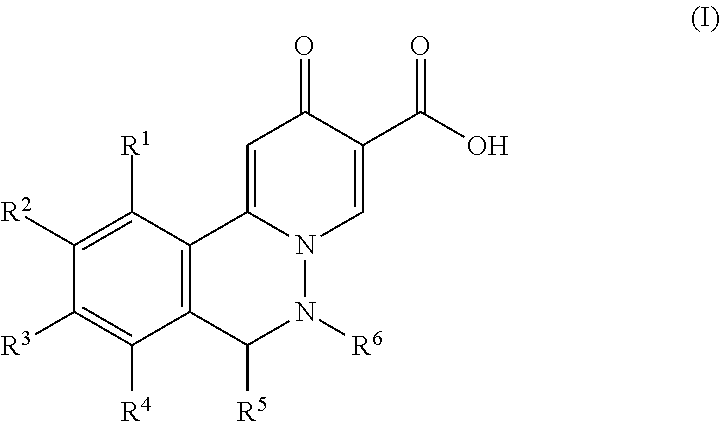
wherein
R1, R2, R3 and R4 are independently selected from C1-6alkyl, haloC1-6alkyl, hydrogen, halogen, amino, cyano, pyrrolidinyl, hydroxy, C1-6alkoxy, haloC1-6alkoxy, C3-7cycloalkylC1-6alkyloxy, phenylC1-6alkyloxy, hydroxyC1-6alkyloxy, C1-6alkoxyC1-6alkyloxy, C1-6alkylsulfanylC1-6alkyloxy, C1-6alkylsulfonylC1-6alkyloxy, cyanoC1-6alkyloxy, aminoC1-6alkyloxy, C1-6alkylaminoC1-6alkyloxy, diC1-6alkylaminoC1-6alkyloxy, C1-6alkylcarbonylaminoC1-6alkyloxy, C1-6alkylsulfonylaminoC1-6alkyloxy, C1-6alkoxycarbonylaminoC1-6alkyloxy, pyrazolylC1-6alkyloxy, triazolylC1-6alkyloxy and monocyclic heterocycloalkylC1-6alkyloxy, wherein monocyclic heterocycloalkyl is N-containing monocyclic heterocycloalkyl;
R5 and R6 are independently selected from hydrogen, C1-6alkyl, haloC1-6alkyl or C2-6alkenyl; or pharmaceutically acceptable salts, or enantiomers, or diastereomer thereof.

wherein
R1, R2, R3 and R4 are independently selected from C1-6alkyl, haloC1-6alkyl, hydrogen, halogen, amino, cyano, pyrrolidinyl, hydroxy, C1-6alkoxy, haloC1-6alkoxy, C3-7cycloalkylC1-6alkyloxy, phenylC1-6alkyloxy, hydroxyC1-6alkyloxy, C1-6alkoxyC1-6alkyloxy, C1-6alkylsulfanylC1-6alkyloxy, C1-6alkylsulfonylC1-6alkyloxy, cyanoC1-6alkyloxy, aminoC1-6alkyloxy, C1-6alkylaminoC1-6alkyloxy, diC1-6alkylaminoC1-6alkyloxy, C1-6alkylcarbonylaminoC1-6alkyloxy, C1-6alkylsulfonylaminoC1-6alkyloxy, C1-6alkoxycarbonylaminoC1-6alkyloxy, pyrazolylC1-6alkyloxy, triazolylC1-6alkyloxy and monocyclic heterocycloalkylC1-6alkyloxy, wherein monocyclic heterocycloalkyl is N-containing monocyclic heterocycloalkyl;
R5 and R6 are independently selected from hydrogen, C1-6alkyl, haloC1-6alkyl or C2-6alkenyl; or pharmaceutically acceptable salts, or enantiomers, or diastereomer thereof.
- 9,10-Dimethoxy-2-oxo-6,7-dihydropyrido[2,1-a]phthalazine-3-carboxylic acid;
- 9,10-Dimethoxy-6-methyl-2-oxo-7H-pyrido[2,1-a]phthalazine-3-carboxylic acid;
- 6-Allyl-9,10-dimethoxy-2-oxo-7H-pyrido[2,1-a]phthalazine-3-carboxylic acid;
- 6-Isopropyl-9,10-dimethoxy-2-oxo-7H-pyrido[2,1-a]phthalazine-3-carboxylic acid;
- 6-Isobutyl-9,10-dimethoxy-2-oxo-7H-pyrido[2,1-a]phthalazine-3-carboxylic acid;
- 6-Isobutyl-10-methoxy-9-(3-methoxypropoxy)-2-oxo-7H-pyrido[2,1-a]phthalazine-3-carboxylic acid;
- 6-Isobutyl-10-methoxy-2-oxo-9-(2,2,2-trifluoroethoxy)-7H-pyrido[2,1-a]phthalazine-3-carboxylic acid;
- 6-Isobutyl-10-methoxy-2-oxo-9-(tetrahydropyran-4-ylmethoxy)-7H-pyrido[2,1-a]phthalazine-3-carboxylic acid;
- 6-Isobutyl-10-methoxy-9-(3-methylsulfonylpropoxy)-2-oxo-7H-pyrido[2,1-a]phthalazine-3-carboxylic acid;
- 6-Isobutyl-10-methoxy-9-(2-morpholinoethoxy)-2-oxo-7H-pyrido[2,1-a]phthalazine-3-carboxylic acid;
- 9-(3-Hydroxy-2,2-dimethyl-propoxy)-6-isobutyl-10-methoxy-2-oxo-7H-pyrido[2,1-a]phthalazine-3-carboxylic acid;
- 9-(4-Carboxybutoxy)-6-isobutyl-10-methoxy-2-oxo-7H-pyrido[2,1-a]phthalazine-3-carboxylic acid;
- 9-(3-Cyanopropoxy)-6-isobutyl-10-methoxy-2-oxo-7H-pyrido[2,1-a]phthalazine-3-carboxylic acid;
- 9-[5-(Tert-butoxycarbonylamino)pentoxy]-6-isobutyl-10-methoxy-2-oxo-7H-pyrido[2,1-a]phthalazine-3-carboxylic acid;
- 9-(5-Aminopentoxy)-6-isobutyl-10-methoxy-2-oxo-7H-pyrido[2,1-a]phthalazine-3-carboxylic acid hydrochloride
or pharmaceutically acceptable salts, or enantiomers, or diastereomer thereof.
10. A compound according to claim 1, selected from - 6-Isobutyl-10-methoxy-9-(3-methoxypropoxy)-2-oxo-7H-pyrido[2,1-a]phthalazine-3-carboxylic acid;
- 6-Isobutyl-10-methoxy-2-oxo-9-(tetrahydropyran-4-ylmethoxy)-7H-pyrido[2,1-a]phthalazine-3-carboxylic acid;
- 9-(3-Hydroxy-2,2-dimethyl-propoxy)-6-isobutyl-10-methoxy-2-oxo-7H-pyrido[2,1-a]phthalazine-3-carboxylic acid;
- 9-[5-(Tert-butoxycarbonylamino)pentoxy]-6-isobutyl-10-methoxy-2-oxo-7H-pyrido[2,1-a]phthalazine-3-carboxylic acid;
or pharmaceutically acceptable salts, or enantiomers, or diastereomer thereof.
- 6-Isobutyl-10-methoxy-9-(3-methoxypropoxy)-2-oxo-7H-pyrido[2,1-a]phthalazine-3-carboxylic acid;
- 6-Isobutyl-10-methoxy-2-oxo-9-(tetrahydropyran-4-ylmethoxy)-7H-pyrido[2,1-a]phthalazine-3-carboxylic acid;
- 9-(3-Hydroxy-2,2-dimethyl-propoxy)-6-isobutyl-10-methoxy-2-oxo-7H-pyrido[2,1-a]phthalazine-3-carboxylic acid;
- 9-[5-(Tert-butoxycarbonylamino)pentoxy]-6-isobutyl-10-methoxy-2-oxo-7H-pyrido[2,1-a]phthalazine-3-carboxylic acid;
or pharmaceutically acceptable salts, or enantiomers, or diastereomer thereof.
Synthesis


or

| Per tablet | ||
| Active ingredient | 200 mg | ||
| Microcrystalline cellulose | 155 mg | ||
| Corn starch | 25 mg | ||
| Talc | 25 mg | ||
| Hydroxypropylmethylcellulose | 20 mg | ||
| 425 mg | |||
| Per capsule | ||
| Active ingredient | 100.0 mg | ||
| Corn starch | 20.0 mg | ||
| Lactose | 95.0 mg | ||
| Talc | 4.5 mg | ||
| Magnesium stearate | 0.5 mg | ||
| 220.0 mg | |||
Indications and Methods of Treatment


| TABLE 1 |
| List of Activity data |
| Example No. | IC50 (μM) | ||
| 1 | 18.707 | ||
| 2 | 2.534 | ||
| 3 | 0.74 | ||
| 4 | 26.068 | ||
| 5 | 0.248 | ||
| 6 | 0.053 | ||
| 7 | 0.172 | ||
| 8 | 0.044 | ||
| 9 | 0.624 | ||
| 10 | 0.225 | ||
| 11 | 0.039 | ||
| 12 | 9.428 | ||
| 13 | 0.11 | ||
| 14 | 0.047 | ||
| 15 | 0.5 | ||
Claims (15)


Applications Claiming Priority (4)
| Application Number | Priority Date | Filing Date | Title |
|---|---|---|---|
| CNPCT/CN2015/085265 | 2015-07-28 | ||
| WOPCT/CN2015/085265 | 2015-07-28 | ||
| CN2015085265 | 2015-07-28 | ||
| PCT/EP2016/067609 WO2017017043A1 (en) | 2015-07-28 | 2016-07-25 | Novel 6,7-dihydropyrido[2,1-a]phthalazin-2-ones for the treatment and prophylaxis of hepatitis b virus infection |
Related Parent Applications (1)
| Application Number | Title | Priority Date | Filing Date |
|---|---|---|---|
| PCT/EP2016/067609 Continuation WO2017017043A1 (en) | 2015-07-28 | 2016-07-25 | Novel 6,7-dihydropyrido[2,1-a]phthalazin-2-ones for the treatment and prophylaxis of hepatitis b virus infection |
Publications (2)
| Publication Number | Publication Date |
|---|---|
| US20180127381A1 US20180127381A1 (en) | 2018-05-10 |
| US10150740B2 true US10150740B2 (en) | 2018-12-11 |
Family
ID=56511579
Family Applications (1)
| Application Number | Title | Priority Date | Filing Date |
|---|---|---|---|
| US15/866,429 Active US10150740B2 (en) | 2015-07-28 | 2018-01-09 | 6,7-dihydropyrido[2,1-A]phthalazin-2-ones for the treatment and prophylaxis of hepatitis B virus infection |
Country Status (5)
| Country | Link |
|---|---|
| US (1) | US10150740B2 (en) |
| EP (1) | EP3328858B1 (en) |
| JP (1) | JP6559324B2 (en) |
| CN (1) | CN107835813B (en) |
| WO (1) | WO2017017043A1 (en) |
Cited By (3)
| Publication number | Priority date | Publication date | Assignee | Title |
|---|---|---|---|---|
| US10966970B2 (en) | 2017-06-01 | 2021-04-06 | Sunshine Lake Pharma Co., Ltd. | Fused tricyclic compounds and uses thereof in medicine |
| US11447498B2 (en) | 2018-09-30 | 2022-09-20 | Sunshine Lake Pharma Co., Ltd. | Fused tetracyclic compounds and uses thereof in medicine |
| US12128044B2 (en) | 2018-08-28 | 2024-10-29 | Sunshine Lake Pharma Co., Ltd. | Fused tricyclic compounds and uses thereof in medicine |
Families Citing this family (61)
| Publication number | Priority date | Publication date | Assignee | Title |
|---|---|---|---|---|
| US10179131B2 (en) | 2015-07-13 | 2019-01-15 | Enanta Pharmaceuticals, Inc. | Hepatitis B antiviral agents |
| KR102398439B1 (en) | 2016-03-07 | 2022-05-16 | 이난타 파마슈티칼스, 인코포레이티드 | Hepatitis B antiviral drugs |
| BR102017010009A2 (en) | 2016-05-27 | 2017-12-12 | Gilead Sciences, Inc. | COMPOUNDS FOR THE TREATMENT OF HEPATITIS B VIRUS INFECTION |
| CA3028228A1 (en) | 2016-06-10 | 2017-12-14 | Enanta Pharmaceuticals, Inc. | Hepatitis b antiviral agents |
| WO2018022282A1 (en) | 2016-07-29 | 2018-02-01 | Newave Pharmaceutical Inc. | Novel therapeutic agents for the treatment of hbv infection |
| KR20230010826A (en) | 2016-10-14 | 2023-01-19 | 프리시젼 바이오사이언시스 인코포레이티드 | Engineered meganucleases specific for recognition sequences in the hepatitis b virus genome |
| SG11201902944TA (en) | 2016-11-07 | 2019-05-30 | Arbutus Biopharma Corp | Substituted pyridinone-containing tricyclic compounds, and methods using same |
| UY37581A (en) | 2017-02-02 | 2018-08-31 | Gilead Sciences Inc | COMPOUNDS FOR THE TREATMENT OF HEPATITIS B VIRUS INFECTION |
| PL3590942T3 (en) * | 2017-03-09 | 2021-12-13 | Fujian Cosunter Pharmaceutical Co., Ltd. | Hepatitis b virus surface antigen inhibitor |
| MA49014A (en) | 2017-03-21 | 2020-02-05 | Arbutus Biopharma Corp | DIHYDROINDENE-4-CARBOXAMIDES SUBSTITUTED, THEIR ANALOGUES AND PROCESSES FOR THEIR CORRESPONDING USE |
| SG11202001685TA (en) | 2017-08-28 | 2020-03-30 | Enanta Pharm Inc | Hepatitis b antiviral agents |
| GB201720163D0 (en) * | 2017-12-04 | 2018-01-17 | Galapagos Nv | Novel compounds and pharmaceutical compositions thereof for the treatment of hepatitis B |
| WO2019113173A1 (en) | 2017-12-06 | 2019-06-13 | Enanta Pharmaceuticals, Inc. | Hepatitis b antiviral agents |
| WO2019113175A1 (en) | 2017-12-06 | 2019-06-13 | Enanta Pharmaceuticals, Inc. | Hepatitis b antiviral agents |
| EP3728283B1 (en) | 2017-12-20 | 2023-11-22 | Institute of Organic Chemistry and Biochemistry ASCR, V.V.I. | 3'3' cyclic dinucleotides with phosphonate bond activating the sting adaptor protein |
| WO2019123339A1 (en) | 2017-12-20 | 2019-06-27 | Institute Of Organic Chemistry And Biochemistry Ascr, V.V.I. | 2'3' cyclic dinucleotides with phosphonate bond activating the sting adaptor protein |
| US11058678B2 (en) | 2018-01-22 | 2021-07-13 | Enanta Pharmaceuticals, Inc. | Substituted heterocycles as antiviral agents |
| JP7050165B2 (en) | 2018-02-26 | 2022-04-07 | ギリアード サイエンシーズ, インコーポレイテッド | Substituted pyrrolidine compounds as HBV replication inhibitors |
| WO2019191166A1 (en) | 2018-03-29 | 2019-10-03 | Enanta Pharmaceuticals, Inc. | Hepatitis b antiviral agents |
| US10870691B2 (en) | 2018-04-05 | 2020-12-22 | Gilead Sciences, Inc. | Antibodies and fragments thereof that bind hepatitis B virus protein X |
| TW202005654A (en) | 2018-04-06 | 2020-02-01 | 捷克科學院有機化學與生物化學研究所 | 2'2'-cyclic dinucleotides |
| TWI818007B (en) | 2018-04-06 | 2023-10-11 | 捷克科學院有機化學與生物化學研究所 | 2'3'-cyclic dinucleotides |
| TWI833744B (en) | 2018-04-06 | 2024-03-01 | 捷克科學院有機化學與生物化學研究所 | 3'3'-cyclic dinucleotides |
| US11142750B2 (en) | 2018-04-12 | 2021-10-12 | Precision Biosciences, Inc. | Optimized engineered meganucleases having specificity for a recognition sequence in the Hepatitis B virus genome |
| US20190359645A1 (en) | 2018-05-03 | 2019-11-28 | Institute Of Organic Chemistry And Biochemistry Ascr, V.V.I. | 2'3'-cyclic dinucleotides comprising carbocyclic nucleotide |
| TWI826492B (en) | 2018-07-27 | 2023-12-21 | 加拿大商愛彼特生物製藥公司 | Substituted tetrahydrocyclopenta[c]pyrroles, substituted dihydropyrrolizines, analogues thereof, and methods using same |
| WO2020028097A1 (en) | 2018-08-01 | 2020-02-06 | Gilead Sciences, Inc. | Solid forms of (r)-11-(methoxymethyl)-12-(3-methoxypropoxy)-3,3-dimethyl-8-0x0-2,3,8,13b-tetrahydro-1h-pyrido[2,1-a]pyrrolo[1,2-c] phthalazine-7-c arboxylic acid |
| JP2022500466A (en) | 2018-09-21 | 2022-01-04 | エナンタ ファーマシューティカルズ インコーポレイテッド | Functionalized heterocycle as an antiviral agent |
| CN110950860B (en) * | 2018-09-26 | 2023-03-31 | 广东东阳光药业有限公司 | Fused tricyclic compound and application thereof in medicines |
| WO2020092528A1 (en) | 2018-10-31 | 2020-05-07 | Gilead Sciences, Inc. | Substituted 6-azabenzimidazole compounds having hpk1 inhibitory activity |
| US11203591B2 (en) | 2018-10-31 | 2021-12-21 | Gilead Sciences, Inc. | Substituted 6-azabenzimidazole compounds |
| IL283190B2 (en) | 2018-11-21 | 2025-08-01 | Enanta Pharm Inc | Heterocyclics that function as antibiotic agents |
| TW202415643A (en) | 2018-12-12 | 2024-04-16 | 加拿大商愛彼特生物製藥公司 | Substituted arylmethylureas and heteroarylmethylureas, analogues thereof, and methods using same |
| WO2020178768A1 (en) | 2019-03-07 | 2020-09-10 | Institute Of Organic Chemistry And Biochemistry Ascr, V.V.I. | 3'3'-cyclic dinucleotide analogue comprising a cyclopentanyl modified nucleotide as sting modulator |
| EP3934757B1 (en) | 2019-03-07 | 2023-02-22 | Institute of Organic Chemistry and Biochemistry ASCR, V.V.I. | 2'3'-cyclic dinucleotides and prodrugs thereof |
| WO2020178770A1 (en) | 2019-03-07 | 2020-09-10 | Institute Of Organic Chemistry And Biochemistry Ascr, V.V.I. | 3'3'-cyclic dinucleotides and prodrugs thereof |
| TW202212339A (en) | 2019-04-17 | 2022-04-01 | 美商基利科學股份有限公司 | Solid forms of a toll-like receptor modulator |
| TWI751516B (en) | 2019-04-17 | 2022-01-01 | 美商基利科學股份有限公司 | Solid forms of a toll-like receptor modulator |
| EP3972695A1 (en) | 2019-05-23 | 2022-03-30 | Gilead Sciences, Inc. | Substituted exo-methylene-oxindoles which are hpk1/map4k1 inhibitors |
| WO2020247444A1 (en) | 2019-06-03 | 2020-12-10 | Enanta Pharmaceuticals, Inc, | Hepatitis b antiviral agents |
| WO2020247561A1 (en) | 2019-06-04 | 2020-12-10 | Enanta Pharmaceuticals, Inc, | Hepatitis b antiviral agents |
| WO2020247575A1 (en) | 2019-06-04 | 2020-12-10 | Enanta Pharmaceuticals, Inc. | Hepatitis b antiviral agents |
| WO2020263830A1 (en) | 2019-06-25 | 2020-12-30 | Gilead Sciences, Inc. | Flt3l-fc fusion proteins and methods of use |
| US11738019B2 (en) | 2019-07-11 | 2023-08-29 | Enanta Pharmaceuticals, Inc. | Substituted heterocycles as antiviral agents |
| WO2021034804A1 (en) | 2019-08-19 | 2021-02-25 | Gilead Sciences, Inc. | Pharmaceutical formulations of tenofovir alafenamide |
| US11236108B2 (en) | 2019-09-17 | 2022-02-01 | Enanta Pharmaceuticals, Inc. | Functionalized heterocycles as antiviral agents |
| DK4037708T3 (en) | 2019-09-30 | 2024-09-30 | Gilead Sciences Inc | HBV vaccines and methods of treating HBV |
| DK4069729T3 (en) | 2019-12-06 | 2025-04-07 | Prec Biosciences Inc | OPTIMIZED, MODIFIED MEGANUCLEASES WITH SPECIFICITY FOR A RECOGNITION SEQUENCE IN THE HEPATITIS B VIRUS GENOME |
| WO2021188414A1 (en) | 2020-03-16 | 2021-09-23 | Enanta Pharmaceuticals, Inc. | Functionalized heterocyclic compounds as antiviral agents |
| WO2021188959A1 (en) | 2020-03-20 | 2021-09-23 | Gilead Sciences, Inc. | Prodrugs of 4'-c-substituted-2-halo-2'-deoxyadenosine nucleosides and methods of making and using the same |
| EP4192474B1 (en) | 2020-08-07 | 2025-09-10 | Gilead Sciences, Inc. | Prodrugs of phosphonamide nucleotide analogues and their pharmaceutical use |
| TW202406932A (en) | 2020-10-22 | 2024-02-16 | 美商基利科學股份有限公司 | Interleukin-2-fc fusion proteins and methods of use |
| WO2022241134A1 (en) | 2021-05-13 | 2022-11-17 | Gilead Sciences, Inc. | COMBINATION OF A TLR8 MODULATING COMPOUND AND ANTI-HBV siRNA THERAPEUTICS |
| AU2022299051B2 (en) | 2021-06-23 | 2025-03-13 | Gilead Sciences, Inc. | Diacylglyercol kinase modulating compounds |
| MX2023014762A (en) | 2021-06-23 | 2024-01-15 | Gilead Sciences Inc | DIACYL GLYCEROL KINASE MODULATING COMPOUNDS. |
| JP7651018B2 (en) | 2021-06-23 | 2025-03-25 | ギリアード サイエンシーズ, インコーポレイテッド | Diacylglycerol kinase modulating compounds |
| JP7686091B2 (en) | 2021-06-23 | 2025-05-30 | ギリアード サイエンシーズ, インコーポレイテッド | Diacylglycerol kinase modulating compounds |
| WO2025240244A1 (en) | 2024-05-13 | 2025-11-20 | Gilead Sciences, Inc. | Combination therapies comprising bulevirtide and lonafarnib for use in the treatment of hepatitis d virus infection |
| WO2025240243A1 (en) | 2024-05-13 | 2025-11-20 | Gilead Sciences, Inc. | Combination therapies with bulevirtide and an inhibitory nucleic acid targeting hepatitis b virus |
| WO2025240246A1 (en) | 2024-05-13 | 2025-11-20 | Gilead Sciences, Inc. | Combination therapies with ribavirin |
| WO2025240242A1 (en) | 2024-05-13 | 2025-11-20 | Gilead Sciences, Inc. | Combination therapies with ribavirin |
Citations (6)
| Publication number | Priority date | Publication date | Assignee | Title |
|---|---|---|---|---|
| JPS60197684A (en) | 1984-03-21 | 1985-10-07 | Dainippon Pharmaceut Co Ltd | Benzo(a)quinolizine derivative and its salt |
| WO2015113990A1 (en) | 2014-01-30 | 2015-08-06 | F. Hoffmann-La Roche Ag | Novel dihydroquinolizinones for the treatment and prophylaxis of hepatitis b virus infection |
| WO2015173164A1 (en) | 2014-05-13 | 2015-11-19 | F. Hoffmann-La Roche Ag | Novel dihydroquinolizinones for the treatment and prophylaxis of hepatitis b virus infection |
| WO2016071215A1 (en) | 2014-11-03 | 2016-05-12 | F. Hoffmann-La Roche Ag | Novel 6,7-dihydrobenzo[a]quinolizin-2-one derivatives for the treatment and prophylaxis of hepatitis b virus infection |
| WO2016128335A1 (en) | 2015-02-11 | 2016-08-18 | F. Hoffmann-La Roche Ag | Novel 2-oxo-6,7-dihydrobenzo[a]quinolizine-3-carboxylic acid derivatives for the treatment and prophylaxis of hepatitis b virus infection |
| US20170342068A1 (en) * | 2016-05-27 | 2017-11-30 | Gilead Sciences, Inc. | Compounds for the treatment of hepatitis b virus infection |
-
2016
- 2016-07-25 WO PCT/EP2016/067609 patent/WO2017017043A1/en not_active Ceased
- 2016-07-25 CN CN201680038398.5A patent/CN107835813B/en active Active
- 2016-07-25 EP EP16741943.1A patent/EP3328858B1/en active Active
- 2016-07-25 JP JP2018504115A patent/JP6559324B2/en not_active Expired - Fee Related
-
2018
- 2018-01-09 US US15/866,429 patent/US10150740B2/en active Active
Patent Citations (6)
| Publication number | Priority date | Publication date | Assignee | Title |
|---|---|---|---|---|
| JPS60197684A (en) | 1984-03-21 | 1985-10-07 | Dainippon Pharmaceut Co Ltd | Benzo(a)quinolizine derivative and its salt |
| WO2015113990A1 (en) | 2014-01-30 | 2015-08-06 | F. Hoffmann-La Roche Ag | Novel dihydroquinolizinones for the treatment and prophylaxis of hepatitis b virus infection |
| WO2015173164A1 (en) | 2014-05-13 | 2015-11-19 | F. Hoffmann-La Roche Ag | Novel dihydroquinolizinones for the treatment and prophylaxis of hepatitis b virus infection |
| WO2016071215A1 (en) | 2014-11-03 | 2016-05-12 | F. Hoffmann-La Roche Ag | Novel 6,7-dihydrobenzo[a]quinolizin-2-one derivatives for the treatment and prophylaxis of hepatitis b virus infection |
| WO2016128335A1 (en) | 2015-02-11 | 2016-08-18 | F. Hoffmann-La Roche Ag | Novel 2-oxo-6,7-dihydrobenzo[a]quinolizine-3-carboxylic acid derivatives for the treatment and prophylaxis of hepatitis b virus infection |
| US20170342068A1 (en) * | 2016-05-27 | 2017-11-30 | Gilead Sciences, Inc. | Compounds for the treatment of hepatitis b virus infection |
Non-Patent Citations (4)
| Title |
|---|
| Fecik et al., "Chiral DNA gyrase inhibitors. 3. Probing the chiral preference of the active site of DNA gyrase. Synthesis of 10-fluoro-6-methyl-6,7-dihydro-9-piperazinyl-2H-benzo[a]quinolizin-20-one-3-carboxylic acid analogues" J Med Chem 48(4):1229-1236 ( 2005). |
| Geng et al., "Small-molecule inhibitors for the treatment of hepatitis B virus documented in patents" Mini Reviews in Medical Chemistry 13(5):749-776 (Apr. 1, 2013). |
| Georgopapadakou et al., "Monocyclic and Tricyclic Analogs of Quinolones: Mechanism of Action" Antimicrobal Agents and Chemotherapy, 31(4):614-616 ( 1987). |
| ISR for PCT/EP2016/067609 (Aug. 17, 2016). |
Cited By (3)
| Publication number | Priority date | Publication date | Assignee | Title |
|---|---|---|---|---|
| US10966970B2 (en) | 2017-06-01 | 2021-04-06 | Sunshine Lake Pharma Co., Ltd. | Fused tricyclic compounds and uses thereof in medicine |
| US12128044B2 (en) | 2018-08-28 | 2024-10-29 | Sunshine Lake Pharma Co., Ltd. | Fused tricyclic compounds and uses thereof in medicine |
| US11447498B2 (en) | 2018-09-30 | 2022-09-20 | Sunshine Lake Pharma Co., Ltd. | Fused tetracyclic compounds and uses thereof in medicine |
Also Published As
| Publication number | Publication date |
|---|---|
| CN107835813A (en) | 2018-03-23 |
| JP2018522897A (en) | 2018-08-16 |
| CN107835813B (en) | 2020-04-24 |
| JP6559324B2 (en) | 2019-08-14 |
| US20180127381A1 (en) | 2018-05-10 |
| WO2017017043A1 (en) | 2017-02-02 |
| EP3328858A1 (en) | 2018-06-06 |
| EP3328858B1 (en) | 2019-05-15 |
| HK1251219A1 (en) | 2019-01-25 |
Similar Documents
| Publication | Publication Date | Title |
|---|---|---|
| US10150740B2 (en) | 6,7-dihydropyrido[2,1-A]phthalazin-2-ones for the treatment and prophylaxis of hepatitis B virus infection | |
| US10336751B2 (en) | Tricyclic 4-pyridone-3-carboxylic acid derivatives for the treatment and prophylaxis of hepatitis B virus infection | |
| US10093671B2 (en) | 2-oxo-6,7-dihydrobenzo[a]quinolizine-3-carboxylic acid derivatives for the treatment and prophylaxis of hepatitis B virus infection | |
| US9920049B2 (en) | Dihydroquinolizinones for the treatment and prophylaxis of hepatitis B virus infection | |
| US10053461B2 (en) | Tetracyclic 4-oxo-pyridine-3-carboxylic acid derivatives for the treatment and prophylaxis of hepatitis B virus infection | |
| US9637485B2 (en) | 6,7-dihydrobenzo[a]quinolizin-2-one derivatives for the treatment and prophylaxis of hepatitis B virus infection | |
| US10968218B2 (en) | Tetrahydropyridopyrimidines for the treatment and prophylaxis of hepatitis B virus infection | |
| US9949966B2 (en) | Dihydroquinolizinones for the treatment and prophylaxis of hepatitis B virus infection | |
| US10968217B2 (en) | Tetrahydropyridopyrimidines for the treatment and prophylaxis of hepatitis B virus infection | |
| HK1251219B (en) | 6,7-dihydropyrido[2,1-a]phthalazin-2-ones for the treatment and prophylaxis of hepatitis b virus infection |
Legal Events
| Date | Code | Title | Description |
|---|---|---|---|
| FEPP | Fee payment procedure |
Free format text: ENTITY STATUS SET TO UNDISCOUNTED (ORIGINAL EVENT CODE: BIG.); ENTITY STATUS OF PATENT OWNER: LARGE ENTITY |
|
| AS | Assignment |
Owner name: HOFFMANN-LA ROCHE INC., NEW JERSEY Free format text: ASSIGNMENT OF ASSIGNORS INTEREST;ASSIGNOR:F. HOFFMANN-LA ROCHE AG;REEL/FRAME:045908/0355 Effective date: 20151022 Owner name: F. HOFFMANN-LA ROCHE AG, SWITZERLAND Free format text: ASSIGNMENT OF ASSIGNORS INTEREST;ASSIGNOR:ROCHE R&D CENTER (CHINA) LTD.;REEL/FRAME:045908/0349 Effective date: 20150826 Owner name: ROCHE R&D CENTER (CHINA) LTD., CHINA Free format text: ASSIGNMENT OF ASSIGNORS INTEREST;ASSIGNORS:CHEN, ZHANLING;HAN, XINGCHUN;WANG, YONGGUANG;AND OTHERS;REEL/FRAME:045908/0342 Effective date: 20150824 |
|
| STCF | Information on status: patent grant |
Free format text: PATENTED CASE |
|
| MAFP | Maintenance fee payment |
Free format text: PAYMENT OF MAINTENANCE FEE, 4TH YEAR, LARGE ENTITY (ORIGINAL EVENT CODE: M1551); ENTITY STATUS OF PATENT OWNER: LARGE ENTITY Year of fee payment: 4 |