US10092595B2 - Compositions and methods for treating inflammatory arthritis - Google Patents
Compositions and methods for treating inflammatory arthritis Download PDFInfo
- Publication number
- US10092595B2 US10092595B2 US12/781,970 US78197010A US10092595B2 US 10092595 B2 US10092595 B2 US 10092595B2 US 78197010 A US78197010 A US 78197010A US 10092595 B2 US10092595 B2 US 10092595B2
- Authority
- US
- United States
- Prior art keywords
- arthritis
- human subject
- receptor
- fibroblast
- synoviocytes
- Prior art date
- Legal status (The legal status is an assumption and is not a legal conclusion. Google has not performed a legal analysis and makes no representation as to the accuracy of the status listed.)
- Active, expires
Links
- 238000000034 method Methods 0.000 title claims abstract description 52
- 206010003246 arthritis Diseases 0.000 title claims abstract description 47
- 230000002757 inflammatory effect Effects 0.000 title claims abstract description 10
- 239000000203 mixture Substances 0.000 title abstract description 31
- HJTAZXHBEBIQQX-UHFFFAOYSA-N 1,5-bis(chloromethyl)naphthalene Chemical compound C1=CC=C2C(CCl)=CC=CC2=C1CCl HJTAZXHBEBIQQX-UHFFFAOYSA-N 0.000 claims abstract description 122
- GOLCXWYRSKYTSP-UHFFFAOYSA-N arsenic trioxide Inorganic materials O1[As]2O[As]1O2 GOLCXWYRSKYTSP-UHFFFAOYSA-N 0.000 claims abstract description 122
- 206010039073 rheumatoid arthritis Diseases 0.000 claims abstract description 24
- 102000010781 Interleukin-6 Receptors Human genes 0.000 claims description 49
- 108010038501 Interleukin-6 Receptors Proteins 0.000 claims description 49
- 210000002437 synoviocyte Anatomy 0.000 claims description 43
- 230000015556 catabolic process Effects 0.000 claims description 30
- 238000006731 degradation reaction Methods 0.000 claims description 30
- 230000037361 pathway Effects 0.000 claims description 19
- 230000035755 proliferation Effects 0.000 claims description 14
- 229910052785 arsenic Inorganic materials 0.000 claims description 12
- RQNWIZPPADIBDY-UHFFFAOYSA-N arsenic atom Chemical compound [As] RQNWIZPPADIBDY-UHFFFAOYSA-N 0.000 claims description 12
- 230000004663 cell proliferation Effects 0.000 claims description 12
- 238000010798 ubiquitination Methods 0.000 claims description 10
- 102000011727 Caspases Human genes 0.000 claims description 9
- 108010076667 Caspases Proteins 0.000 claims description 9
- 230000001419 dependent effect Effects 0.000 claims description 5
- 230000002401 inhibitory effect Effects 0.000 claims description 4
- 230000003907 kidney function Effects 0.000 claims description 4
- 230000002132 lysosomal effect Effects 0.000 claims description 4
- 230000003637 steroidlike Effects 0.000 claims description 4
- 239000000041 non-steroidal anti-inflammatory agent Substances 0.000 claims description 3
- 229940021182 non-steroidal anti-inflammatory drug Drugs 0.000 claims description 3
- 230000000593 degrading effect Effects 0.000 claims 7
- 239000002294 steroidal antiinflammatory agent Substances 0.000 claims 1
- 238000009472 formulation Methods 0.000 abstract description 26
- 208000024891 symptom Diseases 0.000 abstract description 12
- 239000000243 solution Substances 0.000 abstract description 6
- 239000000725 suspension Substances 0.000 abstract description 4
- 239000000839 emulsion Substances 0.000 abstract description 3
- 239000003826 tablet Substances 0.000 abstract description 3
- 239000002775 capsule Substances 0.000 abstract description 2
- 239000006188 syrup Substances 0.000 abstract description 2
- 235000020357 syrup Nutrition 0.000 abstract description 2
- 210000004027 cell Anatomy 0.000 description 46
- 108090001005 Interleukin-6 Proteins 0.000 description 33
- 102000004889 Interleukin-6 Human genes 0.000 description 29
- 230000000694 effects Effects 0.000 description 21
- 230000004913 activation Effects 0.000 description 19
- 230000014509 gene expression Effects 0.000 description 17
- 239000000463 material Substances 0.000 description 15
- 108090000623 proteins and genes Proteins 0.000 description 15
- 238000001262 western blot Methods 0.000 description 15
- 230000006870 function Effects 0.000 description 11
- 230000026731 phosphorylation Effects 0.000 description 11
- 238000006366 phosphorylation reaction Methods 0.000 description 11
- 102000004169 proteins and genes Human genes 0.000 description 11
- 101000979342 Homo sapiens Nuclear factor NF-kappa-B p105 subunit Proteins 0.000 description 10
- 102100023050 Nuclear factor NF-kappa-B p105 subunit Human genes 0.000 description 10
- 230000001965 increasing effect Effects 0.000 description 10
- -1 parabens Substances 0.000 description 10
- 238000003757 reverse transcription PCR Methods 0.000 description 10
- 102000004121 Annexin A5 Human genes 0.000 description 9
- 108090000672 Annexin A5 Proteins 0.000 description 9
- 230000007423 decrease Effects 0.000 description 9
- NLXLAEXVIDQMFP-UHFFFAOYSA-N Ammonia chloride Chemical compound [NH4+].[Cl-] NLXLAEXVIDQMFP-UHFFFAOYSA-N 0.000 description 8
- 230000005764 inhibitory process Effects 0.000 description 8
- XJMOSONTPMZWPB-UHFFFAOYSA-M propidium iodide Chemical compound [I-].[I-].C12=CC(N)=CC=C2C2=CC=C(N)C=C2[N+](CCC[N+](C)(CC)CC)=C1C1=CC=CC=C1 XJMOSONTPMZWPB-UHFFFAOYSA-M 0.000 description 8
- 230000012010 growth Effects 0.000 description 7
- 210000003712 lysosome Anatomy 0.000 description 7
- 230000001868 lysosomic effect Effects 0.000 description 7
- 230000001404 mediated effect Effects 0.000 description 7
- 238000003753 real-time PCR Methods 0.000 description 7
- 230000001629 suppression Effects 0.000 description 7
- 210000001258 synovial membrane Anatomy 0.000 description 7
- 231100000002 MTT assay Toxicity 0.000 description 6
- 238000000134 MTT assay Methods 0.000 description 6
- DNIAPMSPPWPWGF-UHFFFAOYSA-N Propylene glycol Chemical compound CC(O)CO DNIAPMSPPWPWGF-UHFFFAOYSA-N 0.000 description 6
- 230000001640 apoptogenic effect Effects 0.000 description 6
- LOKCTEFSRHRXRJ-UHFFFAOYSA-I dipotassium trisodium dihydrogen phosphate hydrogen phosphate dichloride Chemical compound P(=O)(O)(O)[O-].[K+].P(=O)(O)([O-])[O-].[Na+].[Na+].[Cl-].[K+].[Cl-].[Na+] LOKCTEFSRHRXRJ-UHFFFAOYSA-I 0.000 description 6
- 239000002953 phosphate buffered saline Substances 0.000 description 6
- 239000012825 JNK inhibitor Substances 0.000 description 5
- 229940118135 JNK inhibitor Drugs 0.000 description 5
- 206010028980 Neoplasm Diseases 0.000 description 5
- 241000283973 Oryctolagus cuniculus Species 0.000 description 5
- 108060008682 Tumor Necrosis Factor Proteins 0.000 description 5
- 102000000852 Tumor Necrosis Factor-alpha Human genes 0.000 description 5
- 238000004458 analytical method Methods 0.000 description 5
- 230000003305 autocrine Effects 0.000 description 5
- 201000011510 cancer Diseases 0.000 description 5
- 230000003833 cell viability Effects 0.000 description 5
- 238000001114 immunoprecipitation Methods 0.000 description 5
- 239000003112 inhibitor Substances 0.000 description 5
- 238000013518 transcription Methods 0.000 description 5
- 230000035897 transcription Effects 0.000 description 5
- XLYOFNOQVPJJNP-UHFFFAOYSA-N water Chemical compound O XLYOFNOQVPJJNP-UHFFFAOYSA-N 0.000 description 5
- 102000003952 Caspase 3 Human genes 0.000 description 4
- 108090000397 Caspase 3 Proteins 0.000 description 4
- MIFGOLAMNLSLGH-QOKNQOGYSA-N Z-Val-Ala-Asp(OMe)-CH2F Chemical compound COC(=O)C[C@@H](C(=O)CF)NC(=O)[C@H](C)NC(=O)[C@H](C(C)C)NC(=O)OCC1=CC=CC=C1 MIFGOLAMNLSLGH-QOKNQOGYSA-N 0.000 description 4
- 230000022131 cell cycle Effects 0.000 description 4
- 239000003153 chemical reaction reagent Substances 0.000 description 4
- 230000006378 damage Effects 0.000 description 4
- 238000004925 denaturation Methods 0.000 description 4
- 230000036425 denaturation Effects 0.000 description 4
- 239000003814 drug Substances 0.000 description 4
- 238000000684 flow cytometry Methods 0.000 description 4
- 239000000499 gel Substances 0.000 description 4
- XMBWDFGMSWQBCA-UHFFFAOYSA-N hydrogen iodide Chemical compound I XMBWDFGMSWQBCA-UHFFFAOYSA-N 0.000 description 4
- 208000018937 joint inflammation Diseases 0.000 description 4
- 238000006386 neutralization reaction Methods 0.000 description 4
- 239000000546 pharmaceutical excipient Substances 0.000 description 4
- 230000011664 signaling Effects 0.000 description 4
- 230000036962 time dependent Effects 0.000 description 4
- 230000034512 ubiquitination Effects 0.000 description 4
- 230000035899 viability Effects 0.000 description 4
- MZOFCQQQCNRIBI-VMXHOPILSA-N (3s)-4-[[(2s)-1-[[(2s)-1-[[(1s)-1-carboxy-2-hydroxyethyl]amino]-4-methyl-1-oxopentan-2-yl]amino]-5-(diaminomethylideneamino)-1-oxopentan-2-yl]amino]-3-[[2-[[(2s)-2,6-diaminohexanoyl]amino]acetyl]amino]-4-oxobutanoic acid Chemical compound OC[C@@H](C(O)=O)NC(=O)[C@H](CC(C)C)NC(=O)[C@H](CCCN=C(N)N)NC(=O)[C@H](CC(O)=O)NC(=O)CNC(=O)[C@@H](N)CCCCN MZOFCQQQCNRIBI-VMXHOPILSA-N 0.000 description 3
- 102000004127 Cytokines Human genes 0.000 description 3
- 108090000695 Cytokines Proteins 0.000 description 3
- LFQSCWFLJHTTHZ-UHFFFAOYSA-N Ethanol Chemical compound CCO LFQSCWFLJHTTHZ-UHFFFAOYSA-N 0.000 description 3
- 102100031181 Glyceraldehyde-3-phosphate dehydrogenase Human genes 0.000 description 3
- 102000043136 MAP kinase family Human genes 0.000 description 3
- 108091054455 MAP kinase family Proteins 0.000 description 3
- 239000004698 Polyethylene Substances 0.000 description 3
- 229920002472 Starch Polymers 0.000 description 3
- 230000003321 amplification Effects 0.000 description 3
- 238000000137 annealing Methods 0.000 description 3
- 239000011324 bead Substances 0.000 description 3
- 210000004369 blood Anatomy 0.000 description 3
- 239000008280 blood Substances 0.000 description 3
- 239000013592 cell lysate Substances 0.000 description 3
- 239000002299 complementary DNA Substances 0.000 description 3
- 235000014113 dietary fatty acids Nutrition 0.000 description 3
- 201000010099 disease Diseases 0.000 description 3
- 208000037265 diseases, disorders, signs and symptoms Diseases 0.000 description 3
- 229940079593 drug Drugs 0.000 description 3
- 239000003623 enhancer Substances 0.000 description 3
- 239000000194 fatty acid Substances 0.000 description 3
- 229930195729 fatty acid Natural products 0.000 description 3
- 229960002011 fludrocortisone Drugs 0.000 description 3
- AAXVEMMRQDVLJB-BULBTXNYSA-N fludrocortisone Chemical compound O=C1CC[C@]2(C)[C@@]3(F)[C@@H](O)C[C@](C)([C@@](CC4)(O)C(=O)CO)[C@@H]4[C@@H]3CCC2=C1 AAXVEMMRQDVLJB-BULBTXNYSA-N 0.000 description 3
- 108020004445 glyceraldehyde-3-phosphate dehydrogenase Proteins 0.000 description 3
- 238000003119 immunoblot Methods 0.000 description 3
- 210000001503 joint Anatomy 0.000 description 3
- 239000012528 membrane Substances 0.000 description 3
- 230000003472 neutralizing effect Effects 0.000 description 3
- 238000003199 nucleic acid amplification method Methods 0.000 description 3
- 230000008506 pathogenesis Effects 0.000 description 3
- 230000019491 signal transduction Effects 0.000 description 3
- 239000002904 solvent Substances 0.000 description 3
- 239000008107 starch Substances 0.000 description 3
- 235000019698 starch Nutrition 0.000 description 3
- 230000009885 systemic effect Effects 0.000 description 3
- 230000008685 targeting Effects 0.000 description 3
- QTBSBXVTEAMEQO-UHFFFAOYSA-M Acetate Chemical compound CC([O-])=O QTBSBXVTEAMEQO-UHFFFAOYSA-M 0.000 description 2
- CIWBSHSKHKDKBQ-JLAZNSOCSA-N Ascorbic acid Chemical compound OC[C@H](O)[C@H]1OC(=O)C(O)=C1O CIWBSHSKHKDKBQ-JLAZNSOCSA-N 0.000 description 2
- BSYNRYMUTXBXSQ-UHFFFAOYSA-N Aspirin Chemical compound CC(=O)OC1=CC=CC=C1C(O)=O BSYNRYMUTXBXSQ-UHFFFAOYSA-N 0.000 description 2
- 108091003079 Bovine Serum Albumin Proteins 0.000 description 2
- QWOJMRHUQHTCJG-UHFFFAOYSA-N CC([CH2-])=O Chemical compound CC([CH2-])=O QWOJMRHUQHTCJG-UHFFFAOYSA-N 0.000 description 2
- 229940123169 Caspase inhibitor Drugs 0.000 description 2
- 102000005754 Cytokine Receptor gp130 Human genes 0.000 description 2
- 108010006197 Cytokine Receptor gp130 Proteins 0.000 description 2
- IAZDPXIOMUYVGZ-UHFFFAOYSA-N Dimethylsulphoxide Chemical compound CS(C)=O IAZDPXIOMUYVGZ-UHFFFAOYSA-N 0.000 description 2
- WJOHZNCJWYWUJD-IUGZLZTKSA-N Fluocinonide Chemical compound C1([C@@H](F)C2)=CC(=O)C=C[C@]1(C)[C@]1(F)[C@@H]2[C@@H]2C[C@H]3OC(C)(C)O[C@@]3(C(=O)COC(=O)C)[C@@]2(C)C[C@@H]1O WJOHZNCJWYWUJD-IUGZLZTKSA-N 0.000 description 2
- 238000012413 Fluorescence activated cell sorting analysis Methods 0.000 description 2
- POPFMWWJOGLOIF-XWCQMRHXSA-N Flurandrenolide Chemical compound C1([C@@H](F)C2)=CC(=O)CC[C@]1(C)[C@@H]1[C@@H]2[C@@H]2C[C@H]3OC(C)(C)O[C@@]3(C(=O)CO)[C@@]2(C)C[C@@H]1O POPFMWWJOGLOIF-XWCQMRHXSA-N 0.000 description 2
- PEDCQBHIVMGVHV-UHFFFAOYSA-N Glycerine Chemical compound OCC(O)CO PEDCQBHIVMGVHV-UHFFFAOYSA-N 0.000 description 2
- 206010061218 Inflammation Diseases 0.000 description 2
- 102000015696 Interleukins Human genes 0.000 description 2
- 108010063738 Interleukins Proteins 0.000 description 2
- 102000015617 Janus Kinases Human genes 0.000 description 2
- 108010024121 Janus Kinases Proteins 0.000 description 2
- 208000012659 Joint disease Diseases 0.000 description 2
- 108010057466 NF-kappa B Proteins 0.000 description 2
- 102000003945 NF-kappa B Human genes 0.000 description 2
- 108700020796 Oncogene Proteins 0.000 description 2
- MITFXPHMIHQXPI-UHFFFAOYSA-N Oraflex Chemical compound N=1C2=CC(C(C(O)=O)C)=CC=C2OC=1C1=CC=C(Cl)C=C1 MITFXPHMIHQXPI-UHFFFAOYSA-N 0.000 description 2
- 229940079156 Proteasome inhibitor Drugs 0.000 description 2
- 241000219061 Rheum Species 0.000 description 2
- FAPWRFPIFSIZLT-UHFFFAOYSA-M Sodium chloride Chemical compound [Na+].[Cl-] FAPWRFPIFSIZLT-UHFFFAOYSA-M 0.000 description 2
- 230000001154 acute effect Effects 0.000 description 2
- 150000001413 amino acids Chemical class 0.000 description 2
- 229940121363 anti-inflammatory agent Drugs 0.000 description 2
- 239000002260 anti-inflammatory agent Substances 0.000 description 2
- 229940124599 anti-inflammatory drug Drugs 0.000 description 2
- 238000003782 apoptosis assay Methods 0.000 description 2
- 238000003556 assay Methods 0.000 description 2
- 239000000872 buffer Substances 0.000 description 2
- 230000001413 cellular effect Effects 0.000 description 2
- 230000005754 cellular signaling Effects 0.000 description 2
- 239000003795 chemical substances by application Substances 0.000 description 2
- 239000003246 corticosteroid Substances 0.000 description 2
- 229960001334 corticosteroids Drugs 0.000 description 2
- 239000006071 cream Substances 0.000 description 2
- 229960003957 dexamethasone Drugs 0.000 description 2
- 229950009888 dichlorisone Drugs 0.000 description 2
- YNNURTVKPVJVEI-GSLJADNHSA-N dichlorisone Chemical compound C1CC2=CC(=O)C=C[C@]2(C)[C@]2(Cl)[C@@H]1[C@@H]1CC[C@@](C(=O)COC(=O)C)(O)[C@@]1(C)C[C@@H]2Cl YNNURTVKPVJVEI-GSLJADNHSA-N 0.000 description 2
- 229960001760 dimethyl sulfoxide Drugs 0.000 description 2
- 230000003828 downregulation Effects 0.000 description 2
- 238000002474 experimental method Methods 0.000 description 2
- 239000012091 fetal bovine serum Substances 0.000 description 2
- NJNWEGFJCGYWQT-VSXGLTOVSA-N fluclorolone acetonide Chemical compound C1([C@@H](F)C2)=CC(=O)C=C[C@]1(C)[C@]1(Cl)[C@@H]2[C@@H]2C[C@H]3OC(C)(C)O[C@@]3(C(=O)CO)[C@@]2(C)C[C@@H]1Cl NJNWEGFJCGYWQT-VSXGLTOVSA-N 0.000 description 2
- 229960004511 fludroxycortide Drugs 0.000 description 2
- 229960000785 fluocinonide Drugs 0.000 description 2
- 229960003238 fluprednidene Drugs 0.000 description 2
- YVHXHNGGPURVOS-SBTDHBFYSA-N fluprednidene Chemical compound O=C1C=C[C@]2(C)[C@@]3(F)[C@@H](O)C[C@](C)([C@@](C(=C)C4)(O)C(=O)CO)[C@@H]4[C@@H]3CCC2=C1 YVHXHNGGPURVOS-SBTDHBFYSA-N 0.000 description 2
- 238000010438 heat treatment Methods 0.000 description 2
- JYGXADMDTFJGBT-VWUMJDOOSA-N hydrocortisone Chemical compound O=C1CC[C@]2(C)[C@H]3[C@@H](O)C[C@](C)([C@@](CC4)(O)C(=O)CO)[C@@H]4[C@@H]3CCC2=C1 JYGXADMDTFJGBT-VWUMJDOOSA-N 0.000 description 2
- 229920001477 hydrophilic polymer Polymers 0.000 description 2
- 239000001866 hydroxypropyl methyl cellulose Substances 0.000 description 2
- 235000010979 hydroxypropyl methyl cellulose Nutrition 0.000 description 2
- 229920003088 hydroxypropyl methyl cellulose Polymers 0.000 description 2
- UFVKGYZPFZQRLF-UHFFFAOYSA-N hydroxypropyl methyl cellulose Chemical compound OC1C(O)C(OC)OC(CO)C1OC1C(O)C(O)C(OC2C(C(O)C(OC3C(C(O)C(O)C(CO)O3)O)C(CO)O2)O)C(CO)O1 UFVKGYZPFZQRLF-UHFFFAOYSA-N 0.000 description 2
- 238000011534 incubation Methods 0.000 description 2
- CGIGDMFJXJATDK-UHFFFAOYSA-N indomethacin Chemical compound CC1=C(CC(O)=O)C2=CC(OC)=CC=C2N1C(=O)C1=CC=C(Cl)C=C1 CGIGDMFJXJATDK-UHFFFAOYSA-N 0.000 description 2
- 230000004054 inflammatory process Effects 0.000 description 2
- 229960000598 infliximab Drugs 0.000 description 2
- 230000000977 initiatory effect Effects 0.000 description 2
- 238000002372 labelling Methods 0.000 description 2
- 239000002502 liposome Substances 0.000 description 2
- 230000006674 lysosomal degradation Effects 0.000 description 2
- 238000002483 medication Methods 0.000 description 2
- 238000001543 one-way ANOVA Methods 0.000 description 2
- 229940127255 pan-caspase inhibitor Drugs 0.000 description 2
- YBYRMVIVWMBXKQ-UHFFFAOYSA-N phenylmethanesulfonyl fluoride Chemical compound FS(=O)(=O)CC1=CC=CC=C1 YBYRMVIVWMBXKQ-UHFFFAOYSA-N 0.000 description 2
- BASFCYQUMIYNBI-UHFFFAOYSA-N platinum Chemical compound [Pt] BASFCYQUMIYNBI-UHFFFAOYSA-N 0.000 description 2
- 229920001223 polyethylene glycol Polymers 0.000 description 2
- 229920000136 polysorbate Polymers 0.000 description 2
- 230000001124 posttranscriptional effect Effects 0.000 description 2
- 239000000843 powder Substances 0.000 description 2
- 238000011533 pre-incubation Methods 0.000 description 2
- 239000003207 proteasome inhibitor Substances 0.000 description 2
- 230000017854 proteolysis Effects 0.000 description 2
- 102000005962 receptors Human genes 0.000 description 2
- 108020003175 receptors Proteins 0.000 description 2
- WVYADZUPLLSGPU-UHFFFAOYSA-N salsalate Chemical compound OC(=O)C1=CC=CC=C1OC(=O)C1=CC=CC=C1O WVYADZUPLLSGPU-UHFFFAOYSA-N 0.000 description 2
- 210000002966 serum Anatomy 0.000 description 2
- 238000002415 sodium dodecyl sulfate polyacrylamide gel electrophoresis Methods 0.000 description 2
- 239000007909 solid dosage form Substances 0.000 description 2
- 235000000346 sugar Nutrition 0.000 description 2
- 150000008163 sugars Chemical class 0.000 description 2
- 238000012360 testing method Methods 0.000 description 2
- 230000001225 therapeutic effect Effects 0.000 description 2
- 229960003989 tocilizumab Drugs 0.000 description 2
- 229960005294 triamcinolone Drugs 0.000 description 2
- IHIXIJGXTJIKRB-UHFFFAOYSA-N trisodium vanadate Chemical compound [Na+].[Na+].[Na+].[O-][V]([O-])([O-])=O IHIXIJGXTJIKRB-UHFFFAOYSA-N 0.000 description 2
- 239000003981 vehicle Substances 0.000 description 2
- KIUKXJAPPMFGSW-DNGZLQJQSA-N (2S,3S,4S,5R,6R)-6-[(2S,3R,4R,5S,6R)-3-Acetamido-2-[(2S,3S,4R,5R,6R)-6-[(2R,3R,4R,5S,6R)-3-acetamido-2,5-dihydroxy-6-(hydroxymethyl)oxan-4-yl]oxy-2-carboxy-4,5-dihydroxyoxan-3-yl]oxy-5-hydroxy-6-(hydroxymethyl)oxan-4-yl]oxy-3,4,5-trihydroxyoxane-2-carboxylic acid Chemical compound CC(=O)N[C@H]1[C@H](O)O[C@H](CO)[C@@H](O)[C@@H]1O[C@H]1[C@H](O)[C@@H](O)[C@H](O[C@H]2[C@@H]([C@@H](O[C@H]3[C@@H]([C@@H](O)[C@H](O)[C@H](O3)C(O)=O)O)[C@H](O)[C@@H](CO)O2)NC(C)=O)[C@@H](C(O)=O)O1 KIUKXJAPPMFGSW-DNGZLQJQSA-N 0.000 description 1
- RDJGLLICXDHJDY-NSHDSACASA-N (2s)-2-(3-phenoxyphenyl)propanoic acid Chemical compound OC(=O)[C@@H](C)C1=CC=CC(OC=2C=CC=CC=2)=C1 RDJGLLICXDHJDY-NSHDSACASA-N 0.000 description 1
- MDKGKXOCJGEUJW-VIFPVBQESA-N (2s)-2-[4-(thiophene-2-carbonyl)phenyl]propanoic acid Chemical compound C1=CC([C@@H](C(O)=O)C)=CC=C1C(=O)C1=CC=CS1 MDKGKXOCJGEUJW-VIFPVBQESA-N 0.000 description 1
- LJRDOKAZOAKLDU-UDXJMMFXSA-N (2s,3s,4r,5r,6r)-5-amino-2-(aminomethyl)-6-[(2r,3s,4r,5s)-5-[(1r,2r,3s,5r,6s)-3,5-diamino-2-[(2s,3r,4r,5s,6r)-3-amino-4,5-dihydroxy-6-(hydroxymethyl)oxan-2-yl]oxy-6-hydroxycyclohexyl]oxy-4-hydroxy-2-(hydroxymethyl)oxolan-3-yl]oxyoxane-3,4-diol;sulfuric ac Chemical compound OS(O)(=O)=O.N[C@@H]1[C@@H](O)[C@H](O)[C@H](CN)O[C@@H]1O[C@H]1[C@@H](O)[C@H](O[C@H]2[C@@H]([C@@H](N)C[C@@H](N)[C@@H]2O)O[C@@H]2[C@@H]([C@@H](O)[C@H](O)[C@@H](CO)O2)N)O[C@@H]1CO LJRDOKAZOAKLDU-UDXJMMFXSA-N 0.000 description 1
- FUFLCEKSBBHCMO-UHFFFAOYSA-N 11-dehydrocorticosterone Natural products O=C1CCC2(C)C3C(=O)CC(C)(C(CC4)C(=O)CO)C4C3CCC2=C1 FUFLCEKSBBHCMO-UHFFFAOYSA-N 0.000 description 1
- WHBHBVVOGNECLV-OBQKJFGGSA-N 11-deoxycortisol Chemical compound O=C1CC[C@]2(C)[C@H]3CC[C@](C)([C@@](CC4)(O)C(=O)CO)[C@@H]4[C@@H]3CCC2=C1 WHBHBVVOGNECLV-OBQKJFGGSA-N 0.000 description 1
- KLIVRBFRQSOGQI-UHFFFAOYSA-N 2-(11-oxo-6h-benzo[c][1]benzothiepin-3-yl)acetic acid Chemical compound S1CC2=CC=CC=C2C(=O)C2=CC=C(CC(=O)O)C=C12 KLIVRBFRQSOGQI-UHFFFAOYSA-N 0.000 description 1
- PYIHCGFQQSKYBO-UHFFFAOYSA-N 2-(11-oxo-6h-benzo[c][1]benzoxepin-3-yl)acetic acid Chemical compound O1CC2=CC=CC=C2C(=O)C2=CC=C(CC(=O)O)C=C12 PYIHCGFQQSKYBO-UHFFFAOYSA-N 0.000 description 1
- MYQXHLQMZLTSDB-UHFFFAOYSA-N 2-(2-ethyl-2,3-dihydro-1-benzofuran-5-yl)acetic acid Chemical compound OC(=O)CC1=CC=C2OC(CC)CC2=C1 MYQXHLQMZLTSDB-UHFFFAOYSA-N 0.000 description 1
- DCXHLPGLBYHNMU-UHFFFAOYSA-N 2-[1-(4-azidobenzoyl)-5-methoxy-2-methylindol-3-yl]acetic acid Chemical compound CC1=C(CC(O)=O)C2=CC(OC)=CC=C2N1C(=O)C1=CC=C(N=[N+]=[N-])C=C1 DCXHLPGLBYHNMU-UHFFFAOYSA-N 0.000 description 1
- JIEKMACRVQTPRC-UHFFFAOYSA-N 2-[4-(4-chlorophenyl)-2-phenyl-5-thiazolyl]acetic acid Chemical compound OC(=O)CC=1SC(C=2C=CC=CC=2)=NC=1C1=CC=C(Cl)C=C1 JIEKMACRVQTPRC-UHFFFAOYSA-N 0.000 description 1
- WGDADRBTCPGSDG-UHFFFAOYSA-N 2-[[4,5-bis(4-chlorophenyl)-1,3-oxazol-2-yl]sulfanyl]propanoic acid Chemical compound O1C(SC(C)C(O)=O)=NC(C=2C=CC(Cl)=CC=2)=C1C1=CC=C(Cl)C=C1 WGDADRBTCPGSDG-UHFFFAOYSA-N 0.000 description 1
- ZDPCIXZONVNODH-UHFFFAOYSA-N 2-acetyloxybenzoic acid;n-(4-hydroxyphenyl)acetamide Chemical compound CC(=O)NC1=CC=C(O)C=C1.CC(=O)OC1=CC=CC=C1C(O)=O ZDPCIXZONVNODH-UHFFFAOYSA-N 0.000 description 1
- QKNYBSVHEMOAJP-UHFFFAOYSA-N 2-amino-2-(hydroxymethyl)propane-1,3-diol;hydron;chloride Chemical compound Cl.OCC(N)(CO)CO QKNYBSVHEMOAJP-UHFFFAOYSA-N 0.000 description 1
- DJIOGHZNVKFYHH-UHFFFAOYSA-N 2-hexadecylpyridine Chemical compound CCCCCCCCCCCCCCCCC1=CC=CC=N1 DJIOGHZNVKFYHH-UHFFFAOYSA-N 0.000 description 1
- SYCHUQUJURZQMO-UHFFFAOYSA-N 4-hydroxy-2-methyl-1,1-dioxo-n-(1,3-thiazol-2-yl)-1$l^{6},2-benzothiazine-3-carboxamide Chemical compound OC=1C2=CC=CC=C2S(=O)(=O)N(C)C=1C(=O)NC1=NC=CS1 SYCHUQUJURZQMO-UHFFFAOYSA-N 0.000 description 1
- MYYIMZRZXIQBGI-HVIRSNARSA-N 6alpha-Fluoroprednisolone Chemical compound O=C1C=C[C@]2(C)[C@H]3[C@@H](O)C[C@](C)([C@@](CC4)(O)C(=O)CO)[C@@H]4[C@@H]3C[C@H](F)C2=C1 MYYIMZRZXIQBGI-HVIRSNARSA-N 0.000 description 1
- HCKFPALGXKOOBK-NRYMJLQJSA-N 7332-27-6 Chemical compound C1([C@]2(O[C@]3([C@@]4(C)C[C@H](O)[C@]5(F)[C@@]6(C)C=CC(=O)C=C6CC[C@H]5[C@@H]4C[C@H]3O2)C(=O)CO)C)=CC=CC=C1 HCKFPALGXKOOBK-NRYMJLQJSA-N 0.000 description 1
- 208000031261 Acute myeloid leukaemia Diseases 0.000 description 1
- 208000036762 Acute promyelocytic leukaemia Diseases 0.000 description 1
- 108010039627 Aprotinin Proteins 0.000 description 1
- 235000011330 Armoracia rusticana Nutrition 0.000 description 1
- 240000003291 Armoracia rusticana Species 0.000 description 1
- 208000036487 Arthropathies Diseases 0.000 description 1
- KUVIULQEHSCUHY-XYWKZLDCSA-N Beclometasone Chemical compound C1CC2=CC(=O)C=C[C@]2(C)[C@]2(Cl)[C@@H]1[C@@H]1C[C@H](C)[C@@](C(=O)COC(=O)CC)(OC(=O)CC)[C@@]1(C)C[C@@H]2O KUVIULQEHSCUHY-XYWKZLDCSA-N 0.000 description 1
- 241000283707 Capra Species 0.000 description 1
- 239000004215 Carbon black (E152) Substances 0.000 description 1
- 206010007710 Cartilage injury Diseases 0.000 description 1
- 206010057854 Cerebral Toxoplasmosis Diseases 0.000 description 1
- 208000003322 Coinfection Diseases 0.000 description 1
- MFYSYFVPBJMHGN-ZPOLXVRWSA-N Cortisone Chemical compound O=C1CC[C@]2(C)[C@H]3C(=O)C[C@](C)([C@@](CC4)(O)C(=O)CO)[C@@H]4[C@@H]3CCC2=C1 MFYSYFVPBJMHGN-ZPOLXVRWSA-N 0.000 description 1
- MFYSYFVPBJMHGN-UHFFFAOYSA-N Cortisone Natural products O=C1CCC2(C)C3C(=O)CC(C)(C(CC4)(O)C(=O)CO)C4C3CCC2=C1 MFYSYFVPBJMHGN-UHFFFAOYSA-N 0.000 description 1
- PMATZTZNYRCHOR-CGLBZJNRSA-N Cyclosporin A Chemical compound CC[C@@H]1NC(=O)[C@H]([C@H](O)[C@H](C)C\C=C\C)N(C)C(=O)[C@H](C(C)C)N(C)C(=O)[C@H](CC(C)C)N(C)C(=O)[C@H](CC(C)C)N(C)C(=O)[C@@H](C)NC(=O)[C@H](C)NC(=O)[C@H](CC(C)C)N(C)C(=O)[C@H](C(C)C)NC(=O)[C@H](CC(C)C)N(C)C(=O)CN(C)C1=O PMATZTZNYRCHOR-CGLBZJNRSA-N 0.000 description 1
- 108010036949 Cyclosporine Proteins 0.000 description 1
- FBPFZTCFMRRESA-FSIIMWSLSA-N D-Glucitol Natural products OC[C@H](O)[C@H](O)[C@@H](O)[C@H](O)CO FBPFZTCFMRRESA-FSIIMWSLSA-N 0.000 description 1
- 108020004414 DNA Proteins 0.000 description 1
- VPGRYOFKCNULNK-ACXQXYJUSA-N Deoxycorticosterone acetate Chemical compound C1CC2=CC(=O)CC[C@]2(C)[C@@H]2[C@@H]1[C@@H]1CC[C@H](C(=O)COC(=O)C)[C@@]1(C)CC2 VPGRYOFKCNULNK-ACXQXYJUSA-N 0.000 description 1
- 235000019739 Dicalciumphosphate Nutrition 0.000 description 1
- HHJIUUAMYGBVSD-YTFFSALGSA-N Diflucortolone valerate Chemical compound C1([C@@H](F)C2)=CC(=O)C=C[C@]1(C)[C@]1(F)[C@@H]2[C@@H]2C[C@@H](C)[C@H](C(=O)COC(=O)CCCC)[C@@]2(C)C[C@@H]1O HHJIUUAMYGBVSD-YTFFSALGSA-N 0.000 description 1
- KCXVZYZYPLLWCC-UHFFFAOYSA-N EDTA Chemical compound OC(=O)CN(CC(O)=O)CCN(CC(O)=O)CC(O)=O KCXVZYZYPLLWCC-UHFFFAOYSA-N 0.000 description 1
- 239000001692 EU approved anti-caking agent Substances 0.000 description 1
- 208000009386 Experimental Arthritis Diseases 0.000 description 1
- RBBWCVQDXDFISW-UHFFFAOYSA-N Feprazone Chemical compound O=C1C(CC=C(C)C)C(=O)N(C=2C=CC=CC=2)N1C1=CC=CC=C1 RBBWCVQDXDFISW-UHFFFAOYSA-N 0.000 description 1
- 108010010803 Gelatin Proteins 0.000 description 1
- MUQNGPZZQDCDFT-JNQJZLCISA-N Halcinonide Chemical compound C1CC2=CC(=O)CC[C@]2(C)[C@]2(F)[C@@H]1[C@@H]1C[C@H]3OC(C)(C)O[C@@]3(C(=O)CCl)[C@@]1(C)C[C@@H]2O MUQNGPZZQDCDFT-JNQJZLCISA-N 0.000 description 1
- 101001076408 Homo sapiens Interleukin-6 Proteins 0.000 description 1
- 108010001336 Horseradish Peroxidase Proteins 0.000 description 1
- DLVOSEUFIRPIRM-KAQKJVHQSA-N Hydrocortisone cypionate Chemical compound O=C([C@@]1(O)CC[C@H]2[C@H]3[C@@H]([C@]4(CCC(=O)C=C4CC3)C)[C@@H](O)C[C@@]21C)COC(=O)CCC1CCCC1 DLVOSEUFIRPIRM-KAQKJVHQSA-N 0.000 description 1
- 206010020880 Hypertrophy Diseases 0.000 description 1
- 101150101999 IL6 gene Proteins 0.000 description 1
- HEFNNWSXXWATRW-UHFFFAOYSA-N Ibuprofen Chemical compound CC(C)CC1=CC=C(C(C)C(O)=O)C=C1 HEFNNWSXXWATRW-UHFFFAOYSA-N 0.000 description 1
- 206010023203 Joint destruction Diseases 0.000 description 1
- FBOZXECLQNJBKD-ZDUSSCGKSA-N L-methotrexate Chemical compound C=1N=C2N=C(N)N=C(N)C2=NC=1CN(C)C1=CC=C(C(=O)N[C@@H](CCC(O)=O)C(O)=O)C=C1 FBOZXECLQNJBKD-ZDUSSCGKSA-N 0.000 description 1
- GUBGYTABKSRVRQ-QKKXKWKRSA-N Lactose Natural products OC[C@H]1O[C@@H](O[C@H]2[C@H](O)[C@@H](O)C(O)O[C@@H]2CO)[C@H](O)[C@@H](O)[C@H]1O GUBGYTABKSRVRQ-QKKXKWKRSA-N 0.000 description 1
- GDBQQVLCIARPGH-UHFFFAOYSA-N Leupeptin Natural products CC(C)CC(NC(C)=O)C(=O)NC(CC(C)C)C(=O)NC(C=O)CCCN=C(N)N GDBQQVLCIARPGH-UHFFFAOYSA-N 0.000 description 1
- GZENKSODFLBBHQ-ILSZZQPISA-N Medrysone Chemical compound C([C@@]12C)CC(=O)C=C1[C@@H](C)C[C@@H]1[C@@H]2[C@@H](O)C[C@]2(C)[C@@H](C(C)=O)CC[C@H]21 GZENKSODFLBBHQ-ILSZZQPISA-N 0.000 description 1
- FQISKWAFAHGMGT-SGJOWKDISA-M Methylprednisolone sodium succinate Chemical compound [Na+].C([C@@]12C)=CC(=O)C=C1[C@@H](C)C[C@@H]1[C@@H]2[C@@H](O)C[C@]2(C)[C@@](O)(C(=O)COC(=O)CCC([O-])=O)CC[C@H]21 FQISKWAFAHGMGT-SGJOWKDISA-M 0.000 description 1
- 208000033776 Myeloid Acute Leukemia Diseases 0.000 description 1
- CMWTZPSULFXXJA-UHFFFAOYSA-N Naproxen Natural products C1=C(C(C)C(O)=O)C=CC2=CC(OC)=CC=C21 CMWTZPSULFXXJA-UHFFFAOYSA-N 0.000 description 1
- 239000000020 Nitrocellulose Substances 0.000 description 1
- 208000001388 Opportunistic Infections Diseases 0.000 description 1
- HYRKAAMZBDSJFJ-LFDBJOOHSA-N Paramethasone acetate Chemical compound C1([C@@H](F)C2)=CC(=O)C=C[C@]1(C)[C@@H]1[C@@H]2[C@@H]2C[C@@H](C)[C@@](C(=O)COC(C)=O)(O)[C@@]2(C)C[C@@H]1O HYRKAAMZBDSJFJ-LFDBJOOHSA-N 0.000 description 1
- 108091000080 Phosphotransferase Proteins 0.000 description 1
- 208000005384 Pneumocystis Pneumonia Diseases 0.000 description 1
- 206010073755 Pneumocystis jirovecii pneumonia Diseases 0.000 description 1
- 229920000148 Polycarbophil calcium Polymers 0.000 description 1
- 239000002202 Polyethylene glycol Substances 0.000 description 1
- TVQZAMVBTVNYLA-UHFFFAOYSA-N Pranoprofen Chemical compound C1=CC=C2CC3=CC(C(C(O)=O)C)=CC=C3OC2=N1 TVQZAMVBTVNYLA-UHFFFAOYSA-N 0.000 description 1
- 208000033826 Promyelocytic Acute Leukemia Diseases 0.000 description 1
- 229940124158 Protease/peptidase inhibitor Drugs 0.000 description 1
- 102000004245 Proteasome Endopeptidase Complex Human genes 0.000 description 1
- 108090000708 Proteasome Endopeptidase Complex Proteins 0.000 description 1
- 239000012980 RPMI-1640 medium Substances 0.000 description 1
- 229920002684 Sepharose Polymers 0.000 description 1
- MTCFGRXMJLQNBG-UHFFFAOYSA-N Serine Natural products OCC(N)C(O)=O MTCFGRXMJLQNBG-UHFFFAOYSA-N 0.000 description 1
- DBMJMQXJHONAFJ-UHFFFAOYSA-M Sodium laurylsulphate Chemical compound [Na+].CCCCCCCCCCCCOS([O-])(=O)=O DBMJMQXJHONAFJ-UHFFFAOYSA-M 0.000 description 1
- 101710120037 Toxin CcdB Proteins 0.000 description 1
- 239000007983 Tris buffer Substances 0.000 description 1
- 239000013504 Triton X-100 Substances 0.000 description 1
- 229920004890 Triton X-100 Polymers 0.000 description 1
- RACDDTQBAFEERP-PLTZVPCUSA-N [2-[(6s,8s,9s,10r,13s,14s,17r)-6-chloro-17-hydroxy-10,13-dimethyl-3,11-dioxo-6,7,8,9,12,14,15,16-octahydrocyclopenta[a]phenanthren-17-yl]-2-oxoethyl] acetate Chemical compound C1([C@@H](Cl)C2)=CC(=O)C=C[C@]1(C)[C@@H]1[C@@H]2[C@@H]2CC[C@@](C(=O)COC(=O)C)(O)[C@@]2(C)CC1=O RACDDTQBAFEERP-PLTZVPCUSA-N 0.000 description 1
- 230000002159 abnormal effect Effects 0.000 description 1
- 229940022663 acetate Drugs 0.000 description 1
- 150000001242 acetic acid derivatives Chemical class 0.000 description 1
- 229960001138 acetylsalicylic acid Drugs 0.000 description 1
- 239000012190 activator Substances 0.000 description 1
- 208000038016 acute inflammation Diseases 0.000 description 1
- 230000006022 acute inflammation Effects 0.000 description 1
- 239000000443 aerosol Substances 0.000 description 1
- 229960004663 alminoprofen Drugs 0.000 description 1
- FPHLBGOJWPEVME-UHFFFAOYSA-N alminoprofen Chemical compound OC(=O)C(C)C1=CC=C(NCC(C)=C)C=C1 FPHLBGOJWPEVME-UHFFFAOYSA-N 0.000 description 1
- 229950003408 amcinafide Drugs 0.000 description 1
- 235000019270 ammonium chloride Nutrition 0.000 description 1
- 229940111136 antiinflammatory and antirheumatic drug fenamates Drugs 0.000 description 1
- 229940111133 antiinflammatory and antirheumatic drug oxicams Drugs 0.000 description 1
- 229940111131 antiinflammatory and antirheumatic product propionic acid derivative Drugs 0.000 description 1
- 239000003963 antioxidant agent Substances 0.000 description 1
- 235000006708 antioxidants Nutrition 0.000 description 1
- 230000006907 apoptotic process Effects 0.000 description 1
- 238000013459 approach Methods 0.000 description 1
- 229960004405 aprotinin Drugs 0.000 description 1
- 239000007864 aqueous solution Substances 0.000 description 1
- 235000010323 ascorbic acid Nutrition 0.000 description 1
- 229960005070 ascorbic acid Drugs 0.000 description 1
- 239000011668 ascorbic acid Substances 0.000 description 1
- 230000001363 autoimmune Effects 0.000 description 1
- 229960001671 azapropazone Drugs 0.000 description 1
- WOIIIUDZSOLAIW-NSHDSACASA-N azapropazone Chemical compound C1=C(C)C=C2N3C(=O)[C@H](CC=C)C(=O)N3C(N(C)C)=NC2=C1 WOIIIUDZSOLAIW-NSHDSACASA-N 0.000 description 1
- 229950000210 beclometasone dipropionate Drugs 0.000 description 1
- 229940092705 beclomethasone Drugs 0.000 description 1
- NBMKJKDGKREAPL-DVTGEIKXSA-N beclomethasone Chemical compound C1CC2=CC(=O)C=C[C@]2(C)[C@]2(Cl)[C@@H]1[C@@H]1C[C@H](C)[C@@](C(=O)CO)(O)[C@@]1(C)C[C@@H]2O NBMKJKDGKREAPL-DVTGEIKXSA-N 0.000 description 1
- 230000009286 beneficial effect Effects 0.000 description 1
- 230000008901 benefit Effects 0.000 description 1
- FEJKLNWAOXSSNR-UHFFFAOYSA-N benorilate Chemical compound C1=CC(NC(=O)C)=CC=C1OC(=O)C1=CC=CC=C1OC(C)=O FEJKLNWAOXSSNR-UHFFFAOYSA-N 0.000 description 1
- 229960004277 benorilate Drugs 0.000 description 1
- 229960005430 benoxaprofen Drugs 0.000 description 1
- 229960002537 betamethasone Drugs 0.000 description 1
- UREBDLICKHMUKA-DVTGEIKXSA-N betamethasone Chemical compound C1CC2=CC(=O)C=C[C@]2(C)[C@]2(F)[C@@H]1[C@@H]1C[C@H](C)[C@@](C(=O)CO)(O)[C@@]1(C)C[C@@H]2O UREBDLICKHMUKA-DVTGEIKXSA-N 0.000 description 1
- 239000003833 bile salt Substances 0.000 description 1
- 229940093761 bile salts Drugs 0.000 description 1
- 239000011230 binding agent Substances 0.000 description 1
- 239000012148 binding buffer Substances 0.000 description 1
- 230000004071 biological effect Effects 0.000 description 1
- 230000015572 biosynthetic process Effects 0.000 description 1
- QRZAKQDHEVVFRX-UHFFFAOYSA-N biphenyl-4-ylacetic acid Chemical compound C1=CC(CC(=O)O)=CC=C1C1=CC=CC=C1 QRZAKQDHEVVFRX-UHFFFAOYSA-N 0.000 description 1
- 230000000903 blocking effect Effects 0.000 description 1
- 210000000988 bone and bone Anatomy 0.000 description 1
- 229940098773 bovine serum albumin Drugs 0.000 description 1
- 239000001506 calcium phosphate Substances 0.000 description 1
- 229960003184 carprofen Drugs 0.000 description 1
- IVUMCTKHWDRRMH-UHFFFAOYSA-N carprofen Chemical compound C1=CC(Cl)=C[C]2C3=CC=C(C(C(O)=O)C)C=C3N=C21 IVUMCTKHWDRRMH-UHFFFAOYSA-N 0.000 description 1
- 239000000969 carrier Substances 0.000 description 1
- 210000000845 cartilage Anatomy 0.000 description 1
- 230000010261 cell growth Effects 0.000 description 1
- 230000006037 cell lysis Effects 0.000 description 1
- 239000002738 chelating agent Substances 0.000 description 1
- 238000006243 chemical reaction Methods 0.000 description 1
- 229950006229 chloroprednisone Drugs 0.000 description 1
- 208000037976 chronic inflammation Diseases 0.000 description 1
- 230000006020 chronic inflammation Effects 0.000 description 1
- 229960001265 ciclosporin Drugs 0.000 description 1
- 229960002842 clobetasol Drugs 0.000 description 1
- CBGUOGMQLZIXBE-XGQKBEPLSA-N clobetasol propionate Chemical compound C1CC2=CC(=O)C=C[C@]2(C)[C@]2(F)[C@@H]1[C@@H]1C[C@H](C)[C@@](C(=O)CCl)(OC(=O)CC)[C@@]1(C)C[C@@H]2O CBGUOGMQLZIXBE-XGQKBEPLSA-N 0.000 description 1
- 239000011248 coating agent Substances 0.000 description 1
- 238000000576 coating method Methods 0.000 description 1
- 239000003086 colorant Substances 0.000 description 1
- 238000002648 combination therapy Methods 0.000 description 1
- 239000007891 compressed tablet Substances 0.000 description 1
- BMCQMVFGOVHVNG-TUFAYURCSA-N cortisol 17-butyrate Chemical compound C1CC2=CC(=O)CC[C@]2(C)[C@@H]2[C@@H]1[C@@H]1CC[C@@](C(=O)CO)(OC(=O)CCC)[C@@]1(C)C[C@@H]2O BMCQMVFGOVHVNG-TUFAYURCSA-N 0.000 description 1
- FZCHYNWYXKICIO-FZNHGJLXSA-N cortisol 17-valerate Chemical compound C1CC2=CC(=O)CC[C@]2(C)[C@@H]2[C@@H]1[C@@H]1CC[C@@](C(=O)CO)(OC(=O)CCCC)[C@@]1(C)C[C@@H]2O FZCHYNWYXKICIO-FZNHGJLXSA-N 0.000 description 1
- ALEXXDVDDISNDU-JZYPGELDSA-N cortisol 21-acetate Chemical compound C1CC2=CC(=O)CC[C@]2(C)[C@@H]2[C@@H]1[C@@H]1CC[C@@](C(=O)COC(=O)C)(O)[C@@]1(C)C[C@@H]2O ALEXXDVDDISNDU-JZYPGELDSA-N 0.000 description 1
- 229960004544 cortisone Drugs 0.000 description 1
- 229950002276 cortodoxone Drugs 0.000 description 1
- 239000013078 crystal Substances 0.000 description 1
- 229930182912 cyclosporin Natural products 0.000 description 1
- 230000010250 cytokine signaling pathway Effects 0.000 description 1
- 231100000433 cytotoxic Toxicity 0.000 description 1
- 230000001472 cytotoxic effect Effects 0.000 description 1
- 231100000135 cytotoxicity Toxicity 0.000 description 1
- 230000003013 cytotoxicity Effects 0.000 description 1
- 238000007405 data analysis Methods 0.000 description 1
- 230000003247 decreasing effect Effects 0.000 description 1
- 230000002950 deficient Effects 0.000 description 1
- 229960003662 desonide Drugs 0.000 description 1
- WBGKWQHBNHJJPZ-LECWWXJVSA-N desonide Chemical compound C1CC2=CC(=O)C=C[C@]2(C)[C@@H]2[C@@H]1[C@@H]1C[C@H]3OC(C)(C)O[C@@]3(C(=O)CO)[C@@]1(C)C[C@@H]2O WBGKWQHBNHJJPZ-LECWWXJVSA-N 0.000 description 1
- 229960002593 desoximetasone Drugs 0.000 description 1
- VWVSBHGCDBMOOT-IIEHVVJPSA-N desoximetasone Chemical compound C1CC2=CC(=O)C=C[C@]2(C)[C@]2(F)[C@@H]1[C@@H]1C[C@@H](C)[C@H](C(=O)CO)[C@@]1(C)C[C@@H]2O VWVSBHGCDBMOOT-IIEHVVJPSA-N 0.000 description 1
- 229960004486 desoxycorticosterone acetate Drugs 0.000 description 1
- 238000011161 development Methods 0.000 description 1
- UREBDLICKHMUKA-CXSFZGCWSA-N dexamethasone Chemical compound C1CC2=CC(=O)C=C[C@]2(C)[C@]2(F)[C@@H]1[C@@H]1C[C@@H](C)[C@@](C(=O)CO)(O)[C@@]1(C)C[C@@H]2O UREBDLICKHMUKA-CXSFZGCWSA-N 0.000 description 1
- 229960004833 dexamethasone phosphate Drugs 0.000 description 1
- VQODGRNSFPNSQE-CXSFZGCWSA-N dexamethasone phosphate Chemical compound C1CC2=CC(=O)C=C[C@]2(C)[C@]2(F)[C@@H]1[C@@H]1C[C@@H](C)[C@@](C(=O)COP(O)(O)=O)(O)[C@@]1(C)C[C@@H]2O VQODGRNSFPNSQE-CXSFZGCWSA-N 0.000 description 1
- NEFBYIFKOOEVPA-UHFFFAOYSA-K dicalcium phosphate Chemical compound [Ca+2].[Ca+2].[O-]P([O-])([O-])=O NEFBYIFKOOEVPA-UHFFFAOYSA-K 0.000 description 1
- 229940038472 dicalcium phosphate Drugs 0.000 description 1
- 229910000390 dicalcium phosphate Inorganic materials 0.000 description 1
- 229960001259 diclofenac Drugs 0.000 description 1
- DCOPUUMXTXDBNB-UHFFFAOYSA-N diclofenac Chemical compound OC(=O)CC1=CC=CC=C1NC1=C(Cl)C=CC=C1Cl DCOPUUMXTXDBNB-UHFFFAOYSA-N 0.000 description 1
- 229960002124 diflorasone diacetate Drugs 0.000 description 1
- BOBLHFUVNSFZPJ-JOYXJVLSSA-N diflorasone diacetate Chemical compound C1([C@@H](F)C2)=CC(=O)C=C[C@]1(C)[C@]1(F)[C@@H]2[C@@H]2C[C@H](C)[C@@](C(=O)COC(C)=O)(OC(C)=O)[C@@]2(C)C[C@@H]1O BOBLHFUVNSFZPJ-JOYXJVLSSA-N 0.000 description 1
- 229960003970 diflucortolone valerate Drugs 0.000 description 1
- 229960000616 diflunisal Drugs 0.000 description 1
- HUPFGZXOMWLGNK-UHFFFAOYSA-N diflunisal Chemical compound C1=C(O)C(C(=O)O)=CC(C=2C(=CC(F)=CC=2)F)=C1 HUPFGZXOMWLGNK-UHFFFAOYSA-N 0.000 description 1
- 239000003085 diluting agent Substances 0.000 description 1
- 229940105576 disalcid Drugs 0.000 description 1
- 239000012153 distilled water Substances 0.000 description 1
- 231100000673 dose–response relationship Toxicity 0.000 description 1
- 239000008298 dragée Substances 0.000 description 1
- 239000003937 drug carrier Substances 0.000 description 1
- 238000012377 drug delivery Methods 0.000 description 1
- 230000002500 effect on skin Effects 0.000 description 1
- 239000012636 effector Substances 0.000 description 1
- 239000003995 emulsifying agent Substances 0.000 description 1
- 238000005516 engineering process Methods 0.000 description 1
- 239000002662 enteric coated tablet Substances 0.000 description 1
- 230000003628 erosive effect Effects 0.000 description 1
- 150000002148 esters Chemical class 0.000 description 1
- 235000013861 fat-free Nutrition 0.000 description 1
- 150000004665 fatty acids Chemical class 0.000 description 1
- 150000002191 fatty alcohols Chemical class 0.000 description 1
- 229960000192 felbinac Drugs 0.000 description 1
- 229960001395 fenbufen Drugs 0.000 description 1
- ZPAKPRAICRBAOD-UHFFFAOYSA-N fenbufen Chemical compound C1=CC(C(=O)CCC(=O)O)=CC=C1C1=CC=CC=C1 ZPAKPRAICRBAOD-UHFFFAOYSA-N 0.000 description 1
- 229950006236 fenclofenac Drugs 0.000 description 1
- IDKAXRLETRCXKS-UHFFFAOYSA-N fenclofenac Chemical compound OC(=O)CC1=CC=CC=C1OC1=CC=C(Cl)C=C1Cl IDKAXRLETRCXKS-UHFFFAOYSA-N 0.000 description 1
- HAWWPSYXSLJRBO-UHFFFAOYSA-N fendosal Chemical compound C1=C(O)C(C(=O)O)=CC(N2C(=CC=3C4=CC=CC=C4CCC=32)C=2C=CC=CC=2)=C1 HAWWPSYXSLJRBO-UHFFFAOYSA-N 0.000 description 1
- 229950005416 fendosal Drugs 0.000 description 1
- 229960001419 fenoprofen Drugs 0.000 description 1
- 229960002679 fentiazac Drugs 0.000 description 1
- 229960000489 feprazone Drugs 0.000 description 1
- 210000002950 fibroblast Anatomy 0.000 description 1
- 239000007941 film coated tablet Substances 0.000 description 1
- 239000000796 flavoring agent Substances 0.000 description 1
- 235000019634 flavors Nutrition 0.000 description 1
- 229960003721 fluclorolone acetonide Drugs 0.000 description 1
- 229940094766 flucloronide Drugs 0.000 description 1
- 229940042902 flumethasone pivalate Drugs 0.000 description 1
- JWRMHDSINXPDHB-OJAGFMMFSA-N flumethasone pivalate Chemical compound C1([C@@H](F)C2)=CC(=O)C=C[C@]1(C)[C@]1(F)[C@@H]2[C@@H]2C[C@@H](C)[C@@](C(=O)COC(=O)C(C)(C)C)(O)[C@@]2(C)C[C@@H]1O JWRMHDSINXPDHB-OJAGFMMFSA-N 0.000 description 1
- 229960000676 flunisolide Drugs 0.000 description 1
- 229960003973 fluocortolone Drugs 0.000 description 1
- GAKMQHDJQHZUTJ-ULHLPKEOSA-N fluocortolone Chemical compound C1([C@@H](F)C2)=CC(=O)C=C[C@]1(C)[C@@H]1[C@@H]2[C@@H]2C[C@@H](C)[C@H](C(=O)CO)[C@@]2(C)C[C@@H]1O GAKMQHDJQHZUTJ-ULHLPKEOSA-N 0.000 description 1
- MHMNJMPURVTYEJ-UHFFFAOYSA-N fluorescein-5-isothiocyanate Chemical compound O1C(=O)C2=CC(N=C=S)=CC=C2C21C1=CC=C(O)C=C1OC1=CC(O)=CC=C21 MHMNJMPURVTYEJ-UHFFFAOYSA-N 0.000 description 1
- FAOZLTXFLGPHNG-KNAQIMQKSA-N fluorometholone Chemical compound C([C@@]12C)=CC(=O)C=C1[C@@H](C)C[C@@H]1[C@]2(F)[C@@H](O)C[C@]2(C)[C@@](O)(C(C)=O)CC[C@H]21 FAOZLTXFLGPHNG-KNAQIMQKSA-N 0.000 description 1
- 229960003590 fluperolone Drugs 0.000 description 1
- HHPZZKDXAFJLOH-QZIXMDIESA-N fluperolone Chemical compound C1CC2=CC(=O)C=C[C@]2(C)[C@]2(F)[C@@H]1[C@@H]1CC[C@@](C(=O)[C@@H](OC(C)=O)C)(O)[C@@]1(C)C[C@@H]2O HHPZZKDXAFJLOH-QZIXMDIESA-N 0.000 description 1
- 229960000618 fluprednisolone Drugs 0.000 description 1
- 229960002390 flurbiprofen Drugs 0.000 description 1
- SYTBZMRGLBWNTM-UHFFFAOYSA-N flurbiprofen Chemical compound FC1=CC(C(C(O)=O)C)=CC=C1C1=CC=CC=C1 SYTBZMRGLBWNTM-UHFFFAOYSA-N 0.000 description 1
- 229950010931 furofenac Drugs 0.000 description 1
- 239000008273 gelatin Substances 0.000 description 1
- 229920000159 gelatin Polymers 0.000 description 1
- 239000007903 gelatin capsule Substances 0.000 description 1
- 235000019322 gelatine Nutrition 0.000 description 1
- 235000011852 gelatine desserts Nutrition 0.000 description 1
- 238000003633 gene expression assay Methods 0.000 description 1
- 235000011187 glycerol Nutrition 0.000 description 1
- PCHJSUWPFVWCPO-UHFFFAOYSA-N gold Chemical compound [Au] PCHJSUWPFVWCPO-UHFFFAOYSA-N 0.000 description 1
- 239000010931 gold Substances 0.000 description 1
- 229910052737 gold Inorganic materials 0.000 description 1
- 230000009422 growth inhibiting effect Effects 0.000 description 1
- 230000009036 growth inhibition Effects 0.000 description 1
- 229960002383 halcinonide Drugs 0.000 description 1
- 230000036541 health Effects 0.000 description 1
- 230000005802 health problem Effects 0.000 description 1
- 102000052611 human IL6 Human genes 0.000 description 1
- 239000003906 humectant Substances 0.000 description 1
- 229920002674 hyaluronan Polymers 0.000 description 1
- 229960003160 hyaluronic acid Drugs 0.000 description 1
- 229930195733 hydrocarbon Natural products 0.000 description 1
- 150000002430 hydrocarbons Chemical class 0.000 description 1
- 229950000208 hydrocortamate Drugs 0.000 description 1
- FWFVLWGEFDIZMJ-FOMYWIRZSA-N hydrocortamate Chemical compound C1CC2=CC(=O)CC[C@]2(C)[C@@H]2[C@@H]1[C@@H]1CC[C@@](C(=O)COC(=O)CN(CC)CC)(O)[C@@]1(C)C[C@@H]2O FWFVLWGEFDIZMJ-FOMYWIRZSA-N 0.000 description 1
- 229960000890 hydrocortisone Drugs 0.000 description 1
- 229960001067 hydrocortisone acetate Drugs 0.000 description 1
- 229960001524 hydrocortisone butyrate Drugs 0.000 description 1
- 229960003331 hydrocortisone cypionate Drugs 0.000 description 1
- 229960000631 hydrocortisone valerate Drugs 0.000 description 1
- 206010020718 hyperplasia Diseases 0.000 description 1
- 230000002390 hyperplastic effect Effects 0.000 description 1
- 229960001680 ibuprofen Drugs 0.000 description 1
- 230000028993 immune response Effects 0.000 description 1
- 210000004201 immune sera Anatomy 0.000 description 1
- 229940042743 immune sera Drugs 0.000 description 1
- 229940124622 immune-modulator drug Drugs 0.000 description 1
- 239000012133 immunoprecipitate Substances 0.000 description 1
- 239000003018 immunosuppressive agent Substances 0.000 description 1
- 229940124589 immunosuppressive drug Drugs 0.000 description 1
- 230000001771 impaired effect Effects 0.000 description 1
- 239000007943 implant Substances 0.000 description 1
- 230000006872 improvement Effects 0.000 description 1
- 229960000905 indomethacin Drugs 0.000 description 1
- 230000006882 induction of apoptosis Effects 0.000 description 1
- 230000001939 inductive effect Effects 0.000 description 1
- 208000015181 infectious disease Diseases 0.000 description 1
- 230000008595 infiltration Effects 0.000 description 1
- 238000001764 infiltration Methods 0.000 description 1
- 210000004969 inflammatory cell Anatomy 0.000 description 1
- ZPNFWUPYTFPOJU-LPYSRVMUSA-N iniprol Chemical compound C([C@H]1C(=O)NCC(=O)NCC(=O)N[C@H]2CSSC[C@H]3C(=O)N[C@@H](CCCCN)C(=O)N[C@@H](C)C(=O)N[C@@H](CCCNC(N)=N)C(=O)N[C@H](C(N[C@H](C(=O)N[C@@H](CCCNC(N)=N)C(=O)N[C@@H](CC=4C=CC(O)=CC=4)C(=O)N[C@@H](CC=4C=CC=CC=4)C(=O)N[C@@H](CC=4C=CC(O)=CC=4)C(=O)N[C@@H](CC(N)=O)C(=O)N[C@@H](C)C(=O)N[C@@H](CCCCN)C(=O)N[C@@H](C)C(=O)NCC(=O)N[C@@H](CC(C)C)C(=O)N[C@@H](CSSC[C@H](NC(=O)[C@H](CC(O)=O)NC(=O)[C@H](CCC(O)=O)NC(=O)[C@H](C)NC(=O)[C@H](CO)NC(=O)[C@H](CCCCN)NC(=O)[C@H](CC=4C=CC=CC=4)NC(=O)[C@H](CC(N)=O)NC(=O)[C@H](CC(N)=O)NC(=O)[C@H](CCCNC(N)=N)NC(=O)[C@H](CCCCN)NC(=O)[C@H](C)NC(=O)[C@H](CCCNC(N)=N)NC2=O)C(=O)N[C@@H](CCSC)C(=O)N[C@@H](CCCNC(N)=N)C(=O)N[C@@H]([C@@H](C)O)C(=O)N[C@@H](CSSC[C@H](NC(=O)[C@H](CC=2C=CC=CC=2)NC(=O)[C@H](CC(O)=O)NC(=O)[C@H]2N(CCC2)C(=O)[C@@H](N)CCCNC(N)=N)C(=O)N[C@@H](CC(C)C)C(=O)N[C@@H](CCC(O)=O)C(=O)N2[C@@H](CCC2)C(=O)N2[C@@H](CCC2)C(=O)N[C@@H](CC=2C=CC(O)=CC=2)C(=O)N[C@@H]([C@@H](C)O)C(=O)NCC(=O)N2[C@@H](CCC2)C(=O)N3)C(=O)NCC(=O)NCC(=O)N[C@@H](C)C(O)=O)C(=O)N[C@@H](CCC(N)=O)C(=O)N[C@H](C(=O)N[C@@H](CC=2C=CC=CC=2)C(=O)N[C@H](C(=O)N1)C(C)C)[C@@H](C)O)[C@@H](C)CC)=O)[C@@H](C)CC)C1=CC=C(O)C=C1 ZPNFWUPYTFPOJU-LPYSRVMUSA-N 0.000 description 1
- 238000002347 injection Methods 0.000 description 1
- 239000007924 injection Substances 0.000 description 1
- 229950011455 isoxepac Drugs 0.000 description 1
- QFGMXJOBTNZHEL-UHFFFAOYSA-N isoxepac Chemical compound O1CC2=CC=CC=C2C(=O)C2=CC(CC(=O)O)=CC=C21 QFGMXJOBTNZHEL-UHFFFAOYSA-N 0.000 description 1
- 229950002252 isoxicam Drugs 0.000 description 1
- YYUAYBYLJSNDCX-UHFFFAOYSA-N isoxicam Chemical compound OC=1C2=CC=CC=C2S(=O)(=O)N(C)C=1C(=O)NC=1C=C(C)ON=1 YYUAYBYLJSNDCX-UHFFFAOYSA-N 0.000 description 1
- DKYWVDODHFEZIM-UHFFFAOYSA-N ketoprofen Chemical compound OC(=O)C(C)C1=CC=CC(C(=O)C=2C=CC=CC=2)=C1 DKYWVDODHFEZIM-UHFFFAOYSA-N 0.000 description 1
- 229960000991 ketoprofen Drugs 0.000 description 1
- 229960004752 ketorolac Drugs 0.000 description 1
- OZWKMVRBQXNZKK-UHFFFAOYSA-N ketorolac Chemical compound OC(=O)C1CCN2C1=CC=C2C(=O)C1=CC=CC=C1 OZWKMVRBQXNZKK-UHFFFAOYSA-N 0.000 description 1
- 210000003734 kidney Anatomy 0.000 description 1
- 239000008101 lactose Substances 0.000 description 1
- 208000032839 leukemia Diseases 0.000 description 1
- GDBQQVLCIARPGH-ULQDDVLXSA-N leupeptin Chemical compound CC(C)C[C@H](NC(C)=O)C(=O)N[C@@H](CC(C)C)C(=O)N[C@H](C=O)CCCN=C(N)N GDBQQVLCIARPGH-ULQDDVLXSA-N 0.000 description 1
- 108010052968 leupeptin Proteins 0.000 description 1
- 210000003041 ligament Anatomy 0.000 description 1
- 239000008297 liquid dosage form Substances 0.000 description 1
- 239000006210 lotion Substances 0.000 description 1
- 239000000314 lubricant Substances 0.000 description 1
- 239000006166 lysate Substances 0.000 description 1
- 239000012139 lysis buffer Substances 0.000 description 1
- 238000004519 manufacturing process Methods 0.000 description 1
- 229960001011 medrysone Drugs 0.000 description 1
- 229960001810 meprednisone Drugs 0.000 description 1
- PIDANAQULIKBQS-RNUIGHNZSA-N meprednisone Chemical compound C1CC2=CC(=O)C=C[C@]2(C)[C@@H]2[C@@H]1[C@@H]1C[C@H](C)[C@@](C(=O)CO)(O)[C@@]1(C)CC2=O PIDANAQULIKBQS-RNUIGHNZSA-N 0.000 description 1
- 229960000485 methotrexate Drugs 0.000 description 1
- 229960004584 methylprednisolone Drugs 0.000 description 1
- 239000004530 micro-emulsion Substances 0.000 description 1
- 239000004005 microsphere Substances 0.000 description 1
- 235000013336 milk Nutrition 0.000 description 1
- 239000008267 milk Substances 0.000 description 1
- 210000004080 milk Anatomy 0.000 description 1
- 229950006616 miroprofen Drugs 0.000 description 1
- OJGQFYYLKNCIJD-UHFFFAOYSA-N miroprofen Chemical compound C1=CC(C(C(O)=O)C)=CC=C1C1=CN(C=CC=C2)C2=N1 OJGQFYYLKNCIJD-UHFFFAOYSA-N 0.000 description 1
- 230000004048 modification Effects 0.000 description 1
- 238000012986 modification Methods 0.000 description 1
- 238000010172 mouse model Methods 0.000 description 1
- VMGAPWLDMVPYIA-HIDZBRGKSA-N n'-amino-n-iminomethanimidamide Chemical compound N\N=C\N=N VMGAPWLDMVPYIA-HIDZBRGKSA-N 0.000 description 1
- 229960002009 naproxen Drugs 0.000 description 1
- CMWTZPSULFXXJA-VIFPVBQESA-N naproxen Chemical compound C1=C([C@H](C)C(O)=O)C=CC2=CC(OC)=CC=C21 CMWTZPSULFXXJA-VIFPVBQESA-N 0.000 description 1
- 239000013642 negative control Substances 0.000 description 1
- 230000017066 negative regulation of growth Effects 0.000 description 1
- 229920001220 nitrocellulos Polymers 0.000 description 1
- 239000012457 nonaqueous media Substances 0.000 description 1
- 239000002674 ointment Substances 0.000 description 1
- 210000000056 organ Anatomy 0.000 description 1
- 229960002739 oxaprozin Drugs 0.000 description 1
- OFPXSFXSNFPTHF-UHFFFAOYSA-N oxaprozin Chemical compound O1C(CCC(=O)O)=NC(C=2C=CC=CC=2)=C1C1=CC=CC=C1 OFPXSFXSNFPTHF-UHFFFAOYSA-N 0.000 description 1
- 229950005708 oxepinac Drugs 0.000 description 1
- 229960000649 oxyphenbutazone Drugs 0.000 description 1
- HFHZKZSRXITVMK-UHFFFAOYSA-N oxyphenbutazone Chemical compound O=C1C(CCCC)C(=O)N(C=2C=CC=CC=2)N1C1=CC=C(O)C=C1 HFHZKZSRXITVMK-UHFFFAOYSA-N 0.000 description 1
- 229960002858 paramethasone Drugs 0.000 description 1
- 230000001717 pathogenic effect Effects 0.000 description 1
- 229960001639 penicillamine Drugs 0.000 description 1
- 239000000137 peptide hydrolase inhibitor Substances 0.000 description 1
- 150000002978 peroxides Chemical class 0.000 description 1
- 229960002895 phenylbutazone Drugs 0.000 description 1
- VYMDGNCVAMGZFE-UHFFFAOYSA-N phenylbutazonum Chemical compound O=C1C(CCCC)C(=O)N(C=2C=CC=CC=2)N1C1=CC=CC=C1 VYMDGNCVAMGZFE-UHFFFAOYSA-N 0.000 description 1
- 102000020233 phosphotransferase Human genes 0.000 description 1
- 229960002702 piroxicam Drugs 0.000 description 1
- QYSPLQLAKJAUJT-UHFFFAOYSA-N piroxicam Chemical compound OC=1C2=CC=CC=C2S(=O)(=O)N(C)C=1C(=O)NC1=CC=CC=N1 QYSPLQLAKJAUJT-UHFFFAOYSA-N 0.000 description 1
- 229960000851 pirprofen Drugs 0.000 description 1
- PIDSZXPFGCURGN-UHFFFAOYSA-N pirprofen Chemical compound ClC1=CC(C(C(O)=O)C)=CC=C1N1CC=CC1 PIDSZXPFGCURGN-UHFFFAOYSA-N 0.000 description 1
- 229910052697 platinum Inorganic materials 0.000 description 1
- 201000000317 pneumocystosis Diseases 0.000 description 1
- 229950005134 polycarbophil Drugs 0.000 description 1
- 229920000642 polymer Polymers 0.000 description 1
- 230000023603 positive regulation of transcription initiation, DNA-dependent Effects 0.000 description 1
- 229960003101 pranoprofen Drugs 0.000 description 1
- 229960005205 prednisolone Drugs 0.000 description 1
- OIGNJSKKLXVSLS-VWUMJDOOSA-N prednisolone Chemical compound O=C1C=C[C@]2(C)[C@H]3[C@@H](O)C[C@](C)([C@@](CC4)(O)C(=O)CO)[C@@H]4[C@@H]3CCC2=C1 OIGNJSKKLXVSLS-VWUMJDOOSA-N 0.000 description 1
- 229960004618 prednisone Drugs 0.000 description 1
- XOFYZVNMUHMLCC-ZPOLXVRWSA-N prednisone Chemical compound O=C1C=C[C@]2(C)[C@H]3C(=O)C[C@](C)([C@@](CC4)(O)C(=O)CO)[C@@H]4[C@@H]3CCC2=C1 XOFYZVNMUHMLCC-ZPOLXVRWSA-N 0.000 description 1
- 239000003755 preservative agent Substances 0.000 description 1
- 238000002203 pretreatment Methods 0.000 description 1
- 230000000861 pro-apoptotic effect Effects 0.000 description 1
- 230000008569 process Effects 0.000 description 1
- 230000000770 proinflammatory effect Effects 0.000 description 1
- 230000002035 prolonged effect Effects 0.000 description 1
- 230000000069 prophylactic effect Effects 0.000 description 1
- 150000005599 propionic acid derivatives Chemical class 0.000 description 1
- 238000002731 protein assay Methods 0.000 description 1
- 150000003217 pyrazoles Chemical class 0.000 description 1
- MIXMJCQRHVAJIO-TZHJZOAOSA-N qk4dys664x Chemical compound O.C1([C@@H](F)C2)=CC(=O)C=C[C@]1(C)[C@@H]1[C@@H]2[C@@H]2C[C@H]3OC(C)(C)O[C@@]3(C(=O)CO)[C@@]2(C)C[C@@H]1O.C1([C@@H](F)C2)=CC(=O)C=C[C@]1(C)[C@@H]1[C@@H]2[C@@H]2C[C@H]3OC(C)(C)O[C@@]3(C(=O)CO)[C@@]2(C)C[C@@H]1O MIXMJCQRHVAJIO-TZHJZOAOSA-N 0.000 description 1
- 238000011002 quantification Methods 0.000 description 1
- 239000011541 reaction mixture Substances 0.000 description 1
- 238000011084 recovery Methods 0.000 description 1
- 230000002829 reductive effect Effects 0.000 description 1
- 230000001105 regulatory effect Effects 0.000 description 1
- BOLDJAUMGUJJKM-LSDHHAIUSA-N renifolin D Natural products CC(=C)[C@@H]1Cc2c(O)c(O)ccc2[C@H]1CC(=O)c3ccc(O)cc3O BOLDJAUMGUJJKM-LSDHHAIUSA-N 0.000 description 1
- 238000011160 research Methods 0.000 description 1
- 230000004044 response Effects 0.000 description 1
- 230000002441 reversible effect Effects 0.000 description 1
- 150000003902 salicylic acid esters Chemical class 0.000 description 1
- 239000011780 sodium chloride Substances 0.000 description 1
- 235000019333 sodium laurylsulphate Nutrition 0.000 description 1
- 239000000600 sorbitol Substances 0.000 description 1
- 238000010186 staining Methods 0.000 description 1
- 238000010561 standard procedure Methods 0.000 description 1
- 239000000758 substrate Substances 0.000 description 1
- 229950005175 sudoxicam Drugs 0.000 description 1
- 239000007940 sugar coated tablet Substances 0.000 description 1
- 229960000894 sulindac Drugs 0.000 description 1
- MLKXDPUZXIRXEP-MFOYZWKCSA-N sulindac Chemical compound CC1=C(CC(O)=O)C2=CC(F)=CC=C2\C1=C/C1=CC=C(S(C)=O)C=C1 MLKXDPUZXIRXEP-MFOYZWKCSA-N 0.000 description 1
- 239000006228 supernatant Substances 0.000 description 1
- 239000000829 suppository Substances 0.000 description 1
- 229960004492 suprofen Drugs 0.000 description 1
- 239000004094 surface-active agent Substances 0.000 description 1
- 230000004083 survival effect Effects 0.000 description 1
- 239000000375 suspending agent Substances 0.000 description 1
- 238000003786 synthesis reaction Methods 0.000 description 1
- 239000000454 talc Substances 0.000 description 1
- 229910052623 talc Inorganic materials 0.000 description 1
- 229960002871 tenoxicam Drugs 0.000 description 1
- WZWYJBNHTWCXIM-UHFFFAOYSA-N tenoxicam Chemical compound O=C1C=2SC=CC=2S(=O)(=O)N(C)C1=C(O)NC1=CC=CC=N1 WZWYJBNHTWCXIM-UHFFFAOYSA-N 0.000 description 1
- 238000005382 thermal cycling Methods 0.000 description 1
- 229950002345 tiopinac Drugs 0.000 description 1
- 229950006150 tioxaprofen Drugs 0.000 description 1
- 210000001519 tissue Anatomy 0.000 description 1
- YEZNLOUZAIOMLT-UHFFFAOYSA-N tolfenamic acid Chemical class CC1=C(Cl)C=CC=C1NC1=CC=CC=C1C(O)=O YEZNLOUZAIOMLT-UHFFFAOYSA-N 0.000 description 1
- 229960001017 tolmetin Drugs 0.000 description 1
- UPSPUYADGBWSHF-UHFFFAOYSA-N tolmetin Chemical compound C1=CC(C)=CC=C1C(=O)C1=CC=C(CC(O)=O)N1C UPSPUYADGBWSHF-UHFFFAOYSA-N 0.000 description 1
- 230000000699 topical effect Effects 0.000 description 1
- 239000012049 topical pharmaceutical composition Substances 0.000 description 1
- GFNANZIMVAIWHM-OBYCQNJPSA-N triamcinolone Chemical compound O=C1C=C[C@]2(C)[C@@]3(F)[C@@H](O)C[C@](C)([C@@]([C@H](O)C4)(O)C(=O)CO)[C@@H]4[C@@H]3CCC2=C1 GFNANZIMVAIWHM-OBYCQNJPSA-N 0.000 description 1
- 229960002117 triamcinolone acetonide Drugs 0.000 description 1
- YNDXUCZADRHECN-JNQJZLCISA-N triamcinolone acetonide Chemical compound C1CC2=CC(=O)C=C[C@]2(C)[C@]2(F)[C@@H]1[C@@H]1C[C@H]3OC(C)(C)O[C@@]3(C(=O)CO)[C@@]1(C)C[C@@H]2O YNDXUCZADRHECN-JNQJZLCISA-N 0.000 description 1
- 229950000919 tribuzone Drugs 0.000 description 1
- OFVFGKQCUDMLLP-UHFFFAOYSA-N tribuzone Chemical compound O=C1C(CCC(=O)C(C)(C)C)C(=O)N(C=2C=CC=CC=2)N1C1=CC=CC=C1 OFVFGKQCUDMLLP-UHFFFAOYSA-N 0.000 description 1
- 229940078279 trilisate Drugs 0.000 description 1
- 201000008827 tuberculosis Diseases 0.000 description 1
- 229940070710 valerate Drugs 0.000 description 1
- NQPDZGIKBAWPEJ-UHFFFAOYSA-N valeric acid Chemical compound CCCCC(O)=O NQPDZGIKBAWPEJ-UHFFFAOYSA-N 0.000 description 1
- 229920002554 vinyl polymer Polymers 0.000 description 1
- 235000019154 vitamin C Nutrition 0.000 description 1
- 239000011718 vitamin C Substances 0.000 description 1
- 235000019165 vitamin E Nutrition 0.000 description 1
- 239000011709 vitamin E Substances 0.000 description 1
- 229950007802 zidometacin Drugs 0.000 description 1
- XOOUIPVCVHRTMJ-UHFFFAOYSA-L zinc stearate Chemical class [Zn+2].CCCCCCCCCCCCCCCCCC([O-])=O.CCCCCCCCCCCCCCCCCC([O-])=O XOOUIPVCVHRTMJ-UHFFFAOYSA-L 0.000 description 1
- 229960003414 zomepirac Drugs 0.000 description 1
- ZXVNMYWKKDOREA-UHFFFAOYSA-N zomepirac Chemical compound C1=C(CC(O)=O)N(C)C(C(=O)C=2C=CC(Cl)=CC=2)=C1C ZXVNMYWKKDOREA-UHFFFAOYSA-N 0.000 description 1
Images
Classifications
-
- A—HUMAN NECESSITIES
- A61—MEDICAL OR VETERINARY SCIENCE; HYGIENE
- A61K—PREPARATIONS FOR MEDICAL, DENTAL OR TOILETRY PURPOSES
- A61K33/00—Medicinal preparations containing inorganic active ingredients
- A61K33/24—Heavy metals; Compounds thereof
-
- A—HUMAN NECESSITIES
- A61—MEDICAL OR VETERINARY SCIENCE; HYGIENE
- A61K—PREPARATIONS FOR MEDICAL, DENTAL OR TOILETRY PURPOSES
- A61K45/00—Medicinal preparations containing active ingredients not provided for in groups A61K31/00 - A61K41/00
- A61K45/06—Mixtures of active ingredients without chemical characterisation, e.g. antiphlogistics and cardiaca
-
- A—HUMAN NECESSITIES
- A61—MEDICAL OR VETERINARY SCIENCE; HYGIENE
- A61P—SPECIFIC THERAPEUTIC ACTIVITY OF CHEMICAL COMPOUNDS OR MEDICINAL PREPARATIONS
- A61P19/00—Drugs for skeletal disorders
- A61P19/02—Drugs for skeletal disorders for joint disorders, e.g. arthritis, arthrosis
-
- A—HUMAN NECESSITIES
- A61—MEDICAL OR VETERINARY SCIENCE; HYGIENE
- A61P—SPECIFIC THERAPEUTIC ACTIVITY OF CHEMICAL COMPOUNDS OR MEDICINAL PREPARATIONS
- A61P29/00—Non-central analgesic, antipyretic or antiinflammatory agents, e.g. antirheumatic agents; Non-steroidal antiinflammatory drugs [NSAID]
-
- A—HUMAN NECESSITIES
- A61—MEDICAL OR VETERINARY SCIENCE; HYGIENE
- A61P—SPECIFIC THERAPEUTIC ACTIVITY OF CHEMICAL COMPOUNDS OR MEDICINAL PREPARATIONS
- A61P43/00—Drugs for specific purposes, not provided for in groups A61P1/00-A61P41/00
-
- C—CHEMISTRY; METALLURGY
- C12—BIOCHEMISTRY; BEER; SPIRITS; WINE; VINEGAR; MICROBIOLOGY; ENZYMOLOGY; MUTATION OR GENETIC ENGINEERING
- C12N—MICROORGANISMS OR ENZYMES; COMPOSITIONS THEREOF; PROPAGATING, PRESERVING, OR MAINTAINING MICROORGANISMS; MUTATION OR GENETIC ENGINEERING; CULTURE MEDIA
- C12N5/00—Undifferentiated human, animal or plant cells, e.g. cell lines; Tissues; Cultivation or maintenance thereof; Culture media therefor
- C12N5/06—Animal cells or tissues; Human cells or tissues
- C12N5/0602—Vertebrate cells
- C12N5/0652—Cells of skeletal and connective tissues; Mesenchyme
- C12N5/0655—Chondrocytes; Cartilage
-
- A—HUMAN NECESSITIES
- A61—MEDICAL OR VETERINARY SCIENCE; HYGIENE
- A61K—PREPARATIONS FOR MEDICAL, DENTAL OR TOILETRY PURPOSES
- A61K2300/00—Mixtures or combinations of active ingredients, wherein at least one active ingredient is fully defined in groups A61K31/00 - A61K41/00
-
- C—CHEMISTRY; METALLURGY
- C12—BIOCHEMISTRY; BEER; SPIRITS; WINE; VINEGAR; MICROBIOLOGY; ENZYMOLOGY; MUTATION OR GENETIC ENGINEERING
- C12N—MICROORGANISMS OR ENZYMES; COMPOSITIONS THEREOF; PROPAGATING, PRESERVING, OR MAINTAINING MICROORGANISMS; MUTATION OR GENETIC ENGINEERING; CULTURE MEDIA
- C12N2501/00—Active agents used in cell culture processes, e.g. differentation
- C12N2501/40—Regulators of development
- C12N2501/48—Regulators of apoptosis
-
- C—CHEMISTRY; METALLURGY
- C12—BIOCHEMISTRY; BEER; SPIRITS; WINE; VINEGAR; MICROBIOLOGY; ENZYMOLOGY; MUTATION OR GENETIC ENGINEERING
- C12N—MICROORGANISMS OR ENZYMES; COMPOSITIONS THEREOF; PROPAGATING, PRESERVING, OR MAINTAINING MICROORGANISMS; MUTATION OR GENETIC ENGINEERING; CULTURE MEDIA
- C12N2501/00—Active agents used in cell culture processes, e.g. differentation
- C12N2501/999—Small molecules not provided for elsewhere
Definitions
- the present disclosure generally relates to the field of methods for treating rheumatoid arthritis and other inflammatory arthritis using arsenic trioxide.
- RA Rheumatoid arthritis
- RA is an autoimmune arthropathy associated with systemic inflammatory manifestations.
- the synovium the inner lining of synovial joints, is abnormal.
- There is infiltration of acute inflammatory cells in the synovium which undergoes hypertrophy, resulting in effusion of the joint.
- Hyperplastic synovium may also lead to erosion of the adjacent cartilage and bone, causing joint destruction.
- the end result is joint inflammation, effusion, joint and adjacent ligament destruction, joint deformity and, finally, loss of function.
- RA is the most common inflammatory joint disease, affecting virtually all populations in the world. It is a serious worldwide health problem.
- Immunomodulatory drugs may also be effective, including immunosuppressive drugs such as corticosteroids, methotrexate and cyclosporine (Tamer, et al., Nat. Clin. Pract. Rheumatol., 3:336-45 (2007)).
- immunosuppressive drugs such as corticosteroids, methotrexate and cyclosporine (Tamer, et al., Nat. Clin. Pract. Rheumatol., 3:336-45 (2007)).
- Other disease modifying medications including penicillamine and gold may also be used.
- cytokine signaling pathways incriminated in RA pathogenesis include the tumor necrosis factor alpha (TNF- ⁇ ) pathway, the mitogen activated protein kinase (MAPK) pathway, the Janus kinases (JAK) pathway, and the signal transducer and activator of transcription (STAT) pathways.
- TNF- ⁇ tumor necrosis factor alpha
- MAPK mitogen activated protein kinase
- JNK Janus kinases
- STAT signal transducer and activator of transcription
- TNF- ⁇ pathway An important molecule downstream of TNF- ⁇ pathway is the transcription factor nuclear factor kappa B (NF ⁇ B). These pathways play important parts in the synovial proliferation, and the consequent joint damage characteristic of RA (Tamer, et al., Nat. Clin. Pract. Rheumatol., 3:336-45 (2007)).
- NF ⁇ B transcription factor nuclear factor kappa B
- synovium plays an active role in joint inflammation. Fibroblast-like synoviocytes are the most important cellular component of the synovium. Synoviocytes are necessary for the initiation and propagation of the inflammation observed in RA, mediating both cartilage damage and acute and chronic inflammation (Lipsky, N. Engl. J. Med., 356:2419-20 (2007)). The importance of the synoviocytes is further shown by the finding that mouse models deficient in a functional synovium are resistant to experimental arthritis (Amano, et al., Genes Dev., 17:2436-49 (2003); Lee, et al., Science, 315:1006-10 (2007)).
- infliximab has been associated with tuberculosis (Keane, et al., N. Engl. J. Med., 345:1098-104 (2001)), and other opportunistic infections including pneumocystis pneumonia (Harigai, et al., N. Engl. J. Med., 357:1874-6 (2007))) and cerebral toxoplasmosis (Young, et al., N. Engl. J. Med., 353:1530-1 (2005)). Serious infections have also happened to patients on tocilizumab treatment (Nishimoto, et al., Ann. Rheum Dis ., (2008)). These medications are also expensive. Moreover, because they are given intravenously, they are expensive and cumbersome for the patient.
- synoviocytes may also play important pathogenetic roles in other inflammatory arthritis
- Methods for inhibiting or reducing the growth of synoviocytes using As 2 O 3 are provided. Also provided are methods for treating or preventing one or more symptoms of rheumatoid arthritis and other inflammatory arthritis using formulations containing As 2 O 3 .
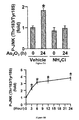
- FIG. 1B is a bar graph showing the percent of apoptosis in the absence or presence of 5 ⁇ M As 2 O 3 , as determined by FACS analysis of MH7A cells following propidium iodide (PI) and annexin-V staining. Apoptotic cells were
- Arsenic trioxide is very useful in the treatment of refractory promyelocytic (M3) subtype of acute myeloid leukemia.
- An oral arsenic trioxide (As 2 O 3 ) is highly efficacious for relapsed acute promyelocytic leukemia.
- Oral As 2 O 3 causes a smaller prolongation of QT intervals, and therefore is a much safer drug for treating leukemia.
- oral As 2 O 3 produces minimal QT prolongation in the heart, meaning that it is safe for prolonged use (Siu, et al., Blood, 108:103-6 (2006)).
- the following delivery systems are representative of formulations for administering the As 2 O 3 .
- Injectable drug delivery systems include pharmaceutically acceptable solutions, suspensions, gels, microspheres and implants. Typically these will be in the form of distilled water, phosphate buffered saline, or other vehicle for injection intravenously or subcutaneously.
- Oral delivery systems include solutions, suspensions, and solid dosage forms such as tablets (e.g, compressed tablets, sugar-coated tablets, film-coated tablets, and enteric coated tablets), capsules (e.g., hard or soft gelatin or non-gelatin capsules), blisters, and cachets.
- tablets e.g, compressed tablets, sugar-coated tablets, film-coated tablets, and enteric coated tablets
- capsules e.g., hard or soft gelatin or non-gelatin capsules
- blisters e.g., hard or soft gelatin or non-gelatin capsules
- binders e.g., hydroxypropylmethylcellulose, polyvinyl pyrilodone, other cellulosic materials and starch
- diluents e.g., lactose and other sugars, starch, dicalcium phosphate and cellulosic materials
- disintegrating agents e.g., starch polymers and cellulosic materials
- lubricating agents e.g., stearates and talc.
- the solid dosage forms can be coated using coatings and techniques well known in the art.
- Oral liquid dosage forms include solutions, syrups, suspensions, emulsions, elixirs (e.g., hydroalcoholic solutions), and powders for reconstitutable delivery systems.
- the formulations can contain one or more carriers or excipients, such as suspending agents (e.g., gums, zanthans, cellulosics and sugars), humectants (e.g., sorbitol), solubilizers (e.g., ethanol, water, PEG, glycerin, and propylene glycol), surfactants (e.g., sodium lauryl sulfate, Spans, TWEENs, and cetyl pyridine), emulsifiers, preservatives and antioxidants (e.g., parabens, vitamins E and C, and ascorbic acid), anti-caking agents, coating agents, chelating agents (e.g., EDTA), flavorants, colorants, and combinations thereof.
- suspending agents
- Transmucosal delivery systems include patches, tablets, suppositories, pessaries, gels and creams, and can contain excipients such as solubilizers and enhancers (e.g., propylene glycol, bile salts and amino acids), and other vehicles (e.g., polyethylene glycol, fatty acid esters and derivatives, and hydrophilic polymers such as hydroxypropylmethylcellulose and hyaluronic acid).
- solubilizers and enhancers e.g., propylene glycol, bile salts and amino acids
- other vehicles e.g., polyethylene glycol, fatty acid esters and derivatives, and hydrophilic polymers such as hydroxypropylmethylcellulose and hyaluronic acid.
- Dermal delivery systems include, for example, aqueous and nonaqueous gels, creams, multiple emulsions, microemulsions, liposomes, ointments, aqueous and nonaqueous solutions, lotions, aerosols, hydrocarbon bases and powders, and can contain excipients such as solubilizers, permeation enhancers (e.g., fatty acids, fatty acid esters, fatty alcohols and amino acids), and hydrophilic polymers (e.g., polycarbophil and polyvinylpyrolidone).
- the pharmaceutically acceptable carrier is a liposome or a transdermal enhancer.
- As 2 O 3 formulations are administered to an individual having RA in an effective amount to inhibit or reduce the proliferation of synoviocytes, to inhibit or reduce cell surface expression of the IL-6 receptor in synovial cells, or in an effective amount to treat or reduce the risk of developing one or more symptoms of rheumatoid arthritis.
- the disclosed As 2 O 3 formulations can be administered therapeutically or prophylactically.
- Therapeutically effective amounts of the disclosed As 2 O 3 formulations refers to amounts effective to delay progression, expedite remission, induce remission, augment remission, speed recovery, increase efficacy of or decrease resistance to alternative therapeutics, or a combination thereof.
- Therapeutically effective amounts can be effective in reducing the severity of symptoms, reducing the severity of an acute episode, reducing the number of symptoms, reducing the incidence of disease-related symptoms, reducing the latency of symptoms, ameliorating symptoms, reducing secondary symptoms, reducing secondary infections, prolonging patient survival, or a combination thereof.
- Prophylactically effective amounts of the As 2 O 3 formulations refers to amounts effective to delay the onset of symptoms, prevent relapse to a disease, decrease the number or frequency of relapse episodes, increasing latency between symptomatic episodes, or a combination thereof.
- MH7A As a model of RA synovium, since MH7A retains most of the biological properties of fibroblast-like synoviocytes, including surface immunophenotype and response to cytokines (Miyazawa, et al., J. Biochem., 124:1153-62 (1998)). Cellular signaling and gene expression patterns of MH7A cells are also similar to primary RA synoviocytes (Kitano, et al., Arthritis Rheum., 54:742-53 (2006)). Using this model, it was discovered that As 2 O 3 is effective to inhibit the proliferation of fibroblast synoviocytes implicated in the development of rheumatoid arthritis.
- IL-6 signals by binding to the IL-6 receptor complex, which comprises an 80-kDa IL-6 binding protein (IL-6 receptor ⁇ ) and a 130 kDa signal transducer gp130 (Naka and Kishimoto, Arthritis Res., 4:154-6 (2002)).
- IL-6 receptor complex which comprises an 80-kDa IL-6 binding protein (IL-6 receptor ⁇ ) and a 130 kDa signal transducer gp130 (Naka and Kishimoto, Arthritis Res., 4:154-6 (2002)).
- the examples demonstrate that an autocrine IL-6 loop functions in MH7A cells, as shown by expression of both IL-6 and IL-6 receptor, and that IL-6 neutralization significantly inhibits MH7A cellular proliferation.
- IL-6 signals by binding to the IL-6 receptor complex, which comprises an 80-kDa IL-6 binding protein (IL-6 receptor ⁇ ) and a 130 kDa signal transducer gp130 (Naka and Kishimoto, Arthritis Res., 4:154-6 (2002)).
- the examples demonstrate that As 2 O 3 treatment leads to a time and dose dependent decrease in gp130 cell surface expression post-transcriptionally.
- the examples show that As 2 O 3 -mediated decreases of gp130 are regulated by the lysosome and not the proteasome or caspase systems.
- the examples also show that gp130 degradation is initiated by mono-ubiquitination, a process that provides a biologic signal leading to sorting of the receptors for degradation in the lysosomes (Marmor and Yarden, Oncogene, 23:2057-70 (2004)).
- the As 2 O 3 formulations can be administered before, during or after the onset of symptoms associated with rheumatoid arthritis. Any acceptable method known to one of ordinary skill in the art can be used to administer the disclosed As 2 O 3 formulations to a subject.
- the administration can be localized (i.e., to a particular region, physiological system, tissue, organ, or cell type) or systemic.
- As 2 O 3 formulations can be administered by different routes, such as oral, parenteral and topical.
- the As 2 O 3 formulations can also be administered directly to a joint, especially a synovial joint.
- the particular route of administration selected will depend upon factors such as the particular formulation, the severity of the state of the subject being treated, and the dosage required to induce an effective immune response.
- the As 2 O 3 formulations are administered orally.
- Effective oral dosages of As 2 O 3 range from about 0.5 mg to about 1 to 10 mg, typically about 5 to 10 mg depending on the age if the subject and their kidney function. As 2 O 3 is excreted via the kidneys, and therefore As 2 O 3 dosage has to be adjusted according to the renal function, lowering the dosage where renal function of the patient is impaired.
- An effective level of the As 2 O 3 formulation can be ideally obtained after one single administration. In certain circumstances, it can be beneficial to administer two or more doses of As 2 O 3 formulations.
- the As 2 O 3 formulations can be administered alone or in combination with one or more additional therapeutic or prophylactic agents, or can be coupled with surgical, radiologic, or other approaches in order to affect treatment.
- the As 2 O 3 formulations can be administered in combination with one or more anti-inflammatory agents.
- Anti-inflammatory agents can be non-steroidal, steroidal, or a combination thereof.
- non-steroidal anti-inflammatory agents include, without limitation, oxicams, such as piroxicam, isoxicam, tenoxicam, sudoxicam; salicylates, such as aspirin, disalcid, benorylate, trilisate, safapryn, solprin, diflunisal, and fendosal; acetic acid derivatives, such as diclofenac, fenclofenac, indomethacin, sulindac, tolmetin, isoxepac, furofenac, tiopinac, zidometacin, acematacin, fentiazac, zomepirac, clindanac, oxepinac, felbinac, and ketorolac; fenamates, such as mefenamic, meclofenamic, flufenamic, niflumic
- steroidal anti-inflammatory drugs include, without limitation, corticosteroids such as hydrocortisone, hydroxyl-triamcinolone, alpha-methyl dexamethasone, dexamethasone-phosphate, beclomethasone dipropionates, clobetasol valerate, desonide, desoxymethasone, desoxycorticosterone acetate, dexamethasone, dichlorisone, diflorasone diacetate, diflucortolone valerate, fluadrenolone, fluclorolone acetonide, fludrocortisone, flumethasone pivalate, fluosinolone acetonide, fluocinonide, flucortine butylesters, fluocortolone, fluprednidene (fluprednylidene) acetate, flurandrenolone, halcinonide, hydrocortisone acetate, hydrocortisone butyrate, cort
- MH7A was purchased from the Riken BioResource Center (Tsukuba, Japan). Cells were maintained in RPMI1640 (Invitrogen, Carlsbad, Calif., USA) supplemented with 10% heat inactivated fetal bovine serum (FBS; Invitrogen) in 5% CO 2 at 37° C.
- FBS heat inactivated fetal bovine serum
- Reagents included As 2 O 3 and dimethylsulphoxide (DMSO) (Sigma, St. Louis, Mo., USA), ammonium chloride (NH 4 Cl) (Amresco, Solon, Ohio, USA), the proteasome inhibitor MG115, pan-caspase inhibitor Z-VAD-FMK, JNK inhibitor SP600125 and its negative control (Merck, Darmtadt, Germany), and recombinant human IL-6 (Peprotech, Rocky Hill, N.J., USA).
- DMSO dimethylsulphoxide
- NH 4 Cl ammonium chloride
- MG115 proteasome inhibitor
- pan-caspase inhibitor Z-VAD-FMK pan-caspase inhibitor Z-VAD-FMK
- JNK inhibitor SP600125 and its negative control
- recombinant human IL-6 Peprotech, Rocky Hill, N.J., USA.
- Cellular proliferation was assessed by an MTT assay (GE Healthcare, Piscataway, N.J., USA) (Cheung et al., Cancer Lett., 246:122-8 (2007)).
- Cells (2 ⁇ 10 4 cells/well in 96-well plates) were incubated overnight before treatment with controls or reagents for 2-6 days. The treated cells were then incubated with the MTT labeling solution (10 ⁇ L/well). After 4 hours of incubation, cells were lyzed, and formazan crystals solubilized overnight at 37° C. Formazean signal was detected at 570 nm ( ⁇ -QuantTM microplate spectrometer, Bio-Tek Instruments Inc., VT, USA). Data obtained were analyzed by the KC junior software (BLD Science, Garner, N.C., USA).
- the membranes were then washed thrice with TBS-T, and incubated for 1 hour at room temperature with 1:2000 horseradish peroxidase-conjugated secondary antibodies (Amersham-Pharmacia Biotechnology, Piscataway, N.J., USA). Immunoreactive bands were detected with chemiluminescence using the SuperSignal West Pico Chemiluminescent Substrate (Pierce Chemical Co., Rockford, Ill., USA), and visualized on X-ray films. Densitometric quantification of band signals was performed using ImageJ 1.36b software (National Institutes of Health, USA). All experiments were performed in triplicates.
- apoptosis assay 1 ⁇ 10 6 cells were incubated in 10-cm plates overnight, before treatment with controls or reagents for 24 hours. Cells were then trypsinized, washed twice with ice-cold phosphate buffered saline (PBS), re-suspended in 500 ⁇ L of binding buffer, and incubated on ice for 10 minutes with FITC-conjugated annexin-V and propidium iodide (PI) (Immunotech; Fullerton, Calif., USA).
- PBS ice-cold phosphate buffered saline
- PI propidium iodide
- Apoptotic cells (annexin-V-positive, PI-negative) were enumerated by flow cytometry in triplicates (Epics, Beckman Coulter, Fullerton, Calif., USA) after appropriate color compensation. Data analysis was performed by the WinMDI 2.8 software (The Scripps Research Institute, La Jolla, Calif., USA).
- MH7A cells were incubated with As 2 O 3 (5 ⁇ M) for 0-24 hours, and stained with propodium iodide (PT) and annexin-V to distinguish between apoptotic cells and dead cells.
- PT propodium iodide
- Immunoblot analysis was performed with gp130 ubiquitinylation.
- MH7A cells are incubated with 100 ⁇ M As 2 O 3 for 0, 4 or 6 hours.
- Antibody to gp130 is used for immunoprecipitation (IP) of total cell lysates, followed by Western blot analysis with anti-ubiquitin antibodies FK1 and FK2.
- IP immunoprecipitation
- NIS non-immune rabbit serum
- Quantitative-RT-PCR for GP130 was performed with the Assays-on-DemandTM Gene Expression System (AssayID: Hs00174360_m1, PE Biosystems, Foster City, Calif., USA) according to the manufacturer's instructions.
- the reaction mix contained 2 ⁇ L of cDNA, 10 ⁇ L of TaqMan® Universal PCR Master Mix, 1 ⁇ L of Assay-on-DemandTM Gene Expression Assay Mix, and RNase-free water to a volume of 20 ⁇ L.
- Q-PCR was performed with the ABI Prism 7700 Sequence Detector (PE Biosystems). Thermal cycling was initiated with an initial setup for 50° C. for 2 minutes, followed by a first denaturation step at 95° C.
- GAPDH was used as an internal control for cDNA input.
- amplification was performed with an initiation step of 2 minutes at 50° C., a first denaturation step of heating at 95° C. for 10 minutes, and then 40 cycles of 95° C. for 20 seconds (denaturation) and 62° C. for 1 minute (annealing and extension).
- Real-time PCR amplification data were collected continuously and analyzed with the ABI Prism 7700 Sequence Detector.
- RT-PCR Semi-quantitative reverse transcription polymerase chain reaction
- Example 4 As 2 O 3 Induces Degradation of gp130 Through the Lysosomal Pathway
- Immunoprecipitation was performed by standard procedures (Pang et al., Gastroenterology, 132:1088-103 (2007)). Cells were washed with ice-cold PBS supplemented with 1 mM sodium orthovanadate and Complete protease inhibitor cocktail (Complete; Roche Molecular Biochemicals), and lysed with buffer (50 mM Tris-HCl, pH: 7.5, 100 mM NaCl, 1% Triton X-100, 4 ⁇ g/mL aprotinin, 100 ⁇ M phenylmethylsulfonyl fluoride, 200 ⁇ M sodium orthovanadate, 2 ⁇ g/mL leupeptin, 1 mM ditheiothreitol, and 1 ⁇ Complete) at 4° C.
- buffer 50 mM Tris-HCl, pH: 7.5, 100 mM NaCl, 1% Triton X-100, 4 ⁇ g/mL aprotinin, 100 ⁇
- the supernatant was aspirated, and 50 ⁇ L of 2 ⁇ Laemmli buffer added.
- the antibody-protein complex was released from the beads by heating at 95° C. for 10 minutes.
- the immunoprecipitates were then analyzed by Western blotting in triplicates
- Example 6 As 2 O 3 Activation of the c-Jun-Terminal-N Kinase (JNK) is Involved in Suppression of IL-6 Signaling
- JNK activation was investigated. As 2 O 3 treatment resulted in significant increases in JNK phosphorylation and hence its activation ( FIG. 4A ). Pre-treatment with the JNK inhibitor SP600125 (30 ⁇ M) prevented As 2 O 3 -induced increase in JNK phosphorylation. JNK activation was biologically relevant, as inhibition of As 2 O 3 -induced JNK activation significantly prevented As 2 O 3 -mediated suppression of MH7A cellular proliferation ( FIG. 4B ).
- Example 7 As 2 O 3 -Induced JNK Activation Might Induce Growth Arrest Via the p53 Pathway
- NF ⁇ B Another important cross-talk partner of JNK is NF ⁇ B (Liu and Lin, Oncogene, 26:3267-78 (2007)). NF ⁇ B is also an important pro-inflammatory factor in arthritis (Simmonds, et al., Rheumatology, 47:584-90 (2008)). As shown in FIGS. 6A and 6B , NF ⁇ B was constitutively expressed in MI-17A. As 2 O 3 treatment significantly decreased the level of NF ⁇ B in a dose ( FIG. 6A ) and time ( FIG. 6B ) dependent manner.
Landscapes
- Health & Medical Sciences (AREA)
- Life Sciences & Earth Sciences (AREA)
- Chemical & Material Sciences (AREA)
- Engineering & Computer Science (AREA)
- General Health & Medical Sciences (AREA)
- Veterinary Medicine (AREA)
- Medicinal Chemistry (AREA)
- Public Health (AREA)
- Pharmacology & Pharmacy (AREA)
- Animal Behavior & Ethology (AREA)
- Organic Chemistry (AREA)
- Biomedical Technology (AREA)
- Rheumatology (AREA)
- Bioinformatics & Cheminformatics (AREA)
- Epidemiology (AREA)
- Zoology (AREA)
- Biotechnology (AREA)
- Genetics & Genomics (AREA)
- Wood Science & Technology (AREA)
- Nuclear Medicine, Radiotherapy & Molecular Imaging (AREA)
- General Chemical & Material Sciences (AREA)
- Chemical Kinetics & Catalysis (AREA)
- Inorganic Chemistry (AREA)
- Biochemistry (AREA)
- Microbiology (AREA)
- General Engineering & Computer Science (AREA)
- Cell Biology (AREA)
- Immunology (AREA)
- Orthopedic Medicine & Surgery (AREA)
- Physical Education & Sports Medicine (AREA)
- Pain & Pain Management (AREA)
- Pharmaceuticals Containing Other Organic And Inorganic Compounds (AREA)
- Medicinal Preparation (AREA)
- Peptides Or Proteins (AREA)
- Medicines That Contain Protein Lipid Enzymes And Other Medicines (AREA)
Abstract
Methods for treating or preventing one or more symptoms of rheumatoid arthritis or other types of inflammatory arthritis involves administering a formulation containing an effective amount of arsenic trioxide to an affected patient. The arsenic trioxide formulation can be administered orally, for example, as a solution, suspension, syrup, emulsion, tablet, or capsule.
Description
This application claims benefit of U.S. Provisional Application No. 61/179,147, filed May 18, 2009, which is incorporated herein by reference in its entirety.
The present disclosure generally relates to the field of methods for treating rheumatoid arthritis and other inflammatory arthritis using arsenic trioxide.
Rheumatoid arthritis (RA) is an autoimmune arthropathy associated with systemic inflammatory manifestations. In RA, the synovium, the inner lining of synovial joints, is abnormal. There is infiltration of acute inflammatory cells in the synovium, which undergoes hypertrophy, resulting in effusion of the joint. Hyperplastic synovium may also lead to erosion of the adjacent cartilage and bone, causing joint destruction. The end result is joint inflammation, effusion, joint and adjacent ligament destruction, joint deformity and, finally, loss of function. RA is the most common inflammatory joint disease, affecting virtually all populations in the world. It is a serious worldwide health problem.
Traditional treatment of RA centers on the use of anti-inflammatory drugs to suppress joint inflammation and production of cytokines. Immunomodulatory drugs may also be effective, including immunosuppressive drugs such as corticosteroids, methotrexate and cyclosporine (Tamer, et al., Nat. Clin. Pract. Rheumatol., 3:336-45 (2007)). Other disease modifying medications including penicillamine and gold may also be used.
The pathogenesis of RA is complex and has not been fully defined. However, a number of cytokines, including interleukin (IL)-6, IL-15, IL-17, and tumor necrosis factor, have been implicated in causing joint and systemic inflammation (Tamer, et al., Nat. Clin. Pract. Rheumatol., 3:336-45 (2007)). The cytokine signaling pathways incriminated in RA pathogenesis include the tumor necrosis factor alpha (TNF-α) pathway, the mitogen activated protein kinase (MAPK) pathway, the Janus kinases (JAK) pathway, and the signal transducer and activator of transcription (STAT) pathways. An important molecule downstream of TNF-α pathway is the transcription factor nuclear factor kappa B (NFκB). These pathways play important parts in the synovial proliferation, and the consequent joint damage characteristic of RA (Tamer, et al., Nat. Clin. Pract. Rheumatol., 3:336-45 (2007)).
Recently, it has also been shown that the synovium plays an active role in joint inflammation. Fibroblast-like synoviocytes are the most important cellular component of the synovium. Synoviocytes are necessary for the initiation and propagation of the inflammation observed in RA, mediating both cartilage damage and acute and chronic inflammation (Lipsky, N. Engl. J. Med., 356:2419-20 (2007)). The importance of the synoviocytes is further shown by the finding that mouse models deficient in a functional synovium are resistant to experimental arthritis (Amano, et al., Genes Dev., 17:2436-49 (2003); Lee, et al., Science, 315:1006-10 (2007)).
Targeting of two of the key pathways involved putatively in RA pathogenesis has shown that this may be a potential therapeutic strategy (Choy, et al., N. Engl. J. Med., 344:907-16 (2001)). Treatment with infliximab, a chimeric monoclonal antibody against TNF-α, results in significant improvement in joint inflammation and halts the progression of joint damage (Lisky, et al., N. Engl. J. Med., 343:1594-602 (2000)). Treatment with tocilizumab, an antibody against the IL-6 receptor (IL-6R), leads to significant control of symptoms in RA patients (Smolen, et al., Lancet, 371:987-97 (2008)).
The use of infliximab, however, has been associated with tuberculosis (Keane, et al., N. Engl. J. Med., 345:1098-104 (2001)), and other opportunistic infections including pneumocystis pneumonia (Harigai, et al., N. Engl. J. Med., 357:1874-6 (2007))) and cerebral toxoplasmosis (Young, et al., N. Engl. J. Med., 353:1530-1 (2005)). Serious infections have also happened to patients on tocilizumab treatment (Nishimoto, et al., Ann. Rheum Dis., (2008)). These medications are also expensive. Moreover, because they are given intravenously, they are expensive and cumbersome for the patient.
Therefore, it is an object of the invention to provide formulations and methods for suppressing the growth and activity of synoviocytes in rheumatoid arthritis. Because synoviocytes may also play important pathogenetic roles in other inflammatory arthritis, it is another object of the invention to provide formulations and methods for suppressing the growth and activity of synoviocytes in other inflammatory arthritis.
It is yet another object of the invention to provide formulations and methods for treating inflammatory arthritis.
It has been discovered that As2O3 reduces the growth of synoviocytes associated with rheumatoid arthritis. As2O3 leads to a decrease in levels of gp130, a component of the IL-6 receptor complex, by targeting gp130 to destruction in the lysosome, thereby disrupting an autocrine IL-6 loop in synovial cells.
Methods for inhibiting or reducing the growth of synoviocytes using As2O3 are provided. Also provided are methods for treating or preventing one or more symptoms of rheumatoid arthritis and other inflammatory arthritis using formulations containing As2O3.
A. Arsenic Trioxide
Arsenic trioxide is very useful in the treatment of refractory promyelocytic (M3) subtype of acute myeloid leukemia. An oral arsenic trioxide (As2O3) is highly efficacious for relapsed acute promyelocytic leukemia. (Au, et al., Blood, 112:3587-90 (2008)) Oral As2O3 causes a smaller prolongation of QT intervals, and therefore is a much safer drug for treating leukemia. Recently, it was also demonstrated that oral As2O3 produces minimal QT prolongation in the heart, meaning that it is safe for prolonged use (Siu, et al., Blood, 108:103-6 (2006)).
B. Formulations
The following delivery systems are representative of formulations for administering the As2O3.
1. Parenteral Formulations
Injectable drug delivery systems include pharmaceutically acceptable solutions, suspensions, gels, microspheres and implants. Typically these will be in the form of distilled water, phosphate buffered saline, or other vehicle for injection intravenously or subcutaneously.
2. Enteral Formulations
Oral delivery systems include solutions, suspensions, and solid dosage forms such as tablets (e.g, compressed tablets, sugar-coated tablets, film-coated tablets, and enteric coated tablets), capsules (e.g., hard or soft gelatin or non-gelatin capsules), blisters, and cachets. These can contain excipients such as binders (e.g., hydroxypropylmethylcellulose, polyvinyl pyrilodone, other cellulosic materials and starch), diluents (e.g., lactose and other sugars, starch, dicalcium phosphate and cellulosic materials), disintegrating agents (e.g., starch polymers and cellulosic materials) and lubricating agents (e.g., stearates and talc). The solid dosage forms can be coated using coatings and techniques well known in the art.
Oral liquid dosage forms include solutions, syrups, suspensions, emulsions, elixirs (e.g., hydroalcoholic solutions), and powders for reconstitutable delivery systems. The formulations can contain one or more carriers or excipients, such as suspending agents (e.g., gums, zanthans, cellulosics and sugars), humectants (e.g., sorbitol), solubilizers (e.g., ethanol, water, PEG, glycerin, and propylene glycol), surfactants (e.g., sodium lauryl sulfate, Spans, TWEENs, and cetyl pyridine), emulsifiers, preservatives and antioxidants (e.g., parabens, vitamins E and C, and ascorbic acid), anti-caking agents, coating agents, chelating agents (e.g., EDTA), flavorants, colorants, and combinations thereof.
3. Topical Formulations
Transmucosal delivery systems include patches, tablets, suppositories, pessaries, gels and creams, and can contain excipients such as solubilizers and enhancers (e.g., propylene glycol, bile salts and amino acids), and other vehicles (e.g., polyethylene glycol, fatty acid esters and derivatives, and hydrophilic polymers such as hydroxypropylmethylcellulose and hyaluronic acid).
Dermal delivery systems include, for example, aqueous and nonaqueous gels, creams, multiple emulsions, microemulsions, liposomes, ointments, aqueous and nonaqueous solutions, lotions, aerosols, hydrocarbon bases and powders, and can contain excipients such as solubilizers, permeation enhancers (e.g., fatty acids, fatty acid esters, fatty alcohols and amino acids), and hydrophilic polymers (e.g., polycarbophil and polyvinylpyrolidone). In one embodiment, the pharmaceutically acceptable carrier is a liposome or a transdermal enhancer.
A. Treatment of Rheumatoid Arthritis
As2O3 formulations are administered to an individual having RA in an effective amount to inhibit or reduce the proliferation of synoviocytes, to inhibit or reduce cell surface expression of the IL-6 receptor in synovial cells, or in an effective amount to treat or reduce the risk of developing one or more symptoms of rheumatoid arthritis. The disclosed As2O3 formulations can be administered therapeutically or prophylactically.
Therapeutically effective amounts of the disclosed As2O3 formulations refers to amounts effective to delay progression, expedite remission, induce remission, augment remission, speed recovery, increase efficacy of or decrease resistance to alternative therapeutics, or a combination thereof. Therapeutically effective amounts can be effective in reducing the severity of symptoms, reducing the severity of an acute episode, reducing the number of symptoms, reducing the incidence of disease-related symptoms, reducing the latency of symptoms, ameliorating symptoms, reducing secondary symptoms, reducing secondary infections, prolonging patient survival, or a combination thereof.
Prophylactically effective amounts of the As2O3 formulations refers to amounts effective to delay the onset of symptoms, prevent relapse to a disease, decrease the number or frequency of relapse episodes, increasing latency between symptomatic episodes, or a combination thereof.
The examples below use MH7A as a model of RA synovium, since MH7A retains most of the biological properties of fibroblast-like synoviocytes, including surface immunophenotype and response to cytokines (Miyazawa, et al., J. Biochem., 124:1153-62 (1998)). Cellular signaling and gene expression patterns of MH7A cells are also similar to primary RA synoviocytes (Kitano, et al., Arthritis Rheum., 54:742-53 (2006)). Using this model, it was discovered that As2O3 is effective to inhibit the proliferation of fibroblast synoviocytes implicated in the development of rheumatoid arthritis.
The examples below also demonstrate that an autocrine IL-6 loop functions in MH7A cells, as shown by expression of both IL-6 and IL-6 receptor, and that IL-6 neutralization significantly inhibits MH7A cellular proliferation. IL-6 signals by binding to the IL-6 receptor complex, which comprises an 80-kDa IL-6 binding protein (IL-6 receptor α) and a 130 kDa signal transducer gp130 (Naka and Kishimoto, Arthritis Res., 4:154-6 (2002)).
The examples also demonstrate that an autocrine IL-6 loop functions in MH7A cells, as shown by expression of both IL-6 and IL-6 receptor, and that IL-6 neutralization significantly inhibits MH7A cellular proliferation. IL-6 signals by binding to the IL-6 receptor complex, which comprises an 80-kDa IL-6 binding protein (IL-6 receptor α) and a 130 kDa signal transducer gp130 (Naka and Kishimoto, Arthritis Res., 4:154-6 (2002)). The examples demonstrate that As2O3 treatment leads to a time and dose dependent decrease in gp130 cell surface expression post-transcriptionally. Through the use of specific inhibitors, the examples show that As2O3-mediated decreases of gp130 are regulated by the lysosome and not the proteasome or caspase systems. The examples also show that gp130 degradation is initiated by mono-ubiquitination, a process that provides a biologic signal leading to sorting of the receptors for degradation in the lysosomes (Marmor and Yarden, Oncogene, 23:2057-70 (2004)).
B. Methods of Administration
The As2O3 formulations can be administered before, during or after the onset of symptoms associated with rheumatoid arthritis. Any acceptable method known to one of ordinary skill in the art can be used to administer the disclosed As2O3 formulations to a subject.
The administration can be localized (i.e., to a particular region, physiological system, tissue, organ, or cell type) or systemic. As2O3 formulations can be administered by different routes, such as oral, parenteral and topical. The As2O3 formulations can also be administered directly to a joint, especially a synovial joint. The particular route of administration selected will depend upon factors such as the particular formulation, the severity of the state of the subject being treated, and the dosage required to induce an effective immune response.
In a preferred embodiment, the As2O3 formulations are administered orally. Effective oral dosages of As2O3 range from about 0.5 mg to about 1 to 10 mg, typically about 5 to 10 mg depending on the age if the subject and their kidney function. As2O3 is excreted via the kidneys, and therefore As2O3 dosage has to be adjusted according to the renal function, lowering the dosage where renal function of the patient is impaired.
An effective level of the As2O3 formulation can be ideally obtained after one single administration. In certain circumstances, it can be beneficial to administer two or more doses of As2O3 formulations.
C. Combination Therapy
The As2O3 formulations can be administered alone or in combination with one or more additional therapeutic or prophylactic agents, or can be coupled with surgical, radiologic, or other approaches in order to affect treatment. For example, the As2O3 formulations can be administered in combination with one or more anti-inflammatory agents.
Anti-inflammatory agents can be non-steroidal, steroidal, or a combination thereof. Representative examples of non-steroidal anti-inflammatory agents include, without limitation, oxicams, such as piroxicam, isoxicam, tenoxicam, sudoxicam; salicylates, such as aspirin, disalcid, benorylate, trilisate, safapryn, solprin, diflunisal, and fendosal; acetic acid derivatives, such as diclofenac, fenclofenac, indomethacin, sulindac, tolmetin, isoxepac, furofenac, tiopinac, zidometacin, acematacin, fentiazac, zomepirac, clindanac, oxepinac, felbinac, and ketorolac; fenamates, such as mefenamic, meclofenamic, flufenamic, niflumic, and tolfenamic acids; propionic acid derivatives, such as ibuprofen, naproxen, benoxaprofen, flurbiprofen, ketoprofen, fenoprofen, fenbufen, indopropfen, pirprofen, carprofen, oxaprozin, pranoprofen, miroprofen, tioxaprofen, suprofen, alminoprofen, and tiaprofenic; pyrazoles, such as phenylbutazone, oxyphenbutazone, feprazone, azapropazone, and trimethazone. Mixtures of these non-steroidal anti-inflammatory agents can also be employed.
Representative examples of steroidal anti-inflammatory drugs include, without limitation, corticosteroids such as hydrocortisone, hydroxyl-triamcinolone, alpha-methyl dexamethasone, dexamethasone-phosphate, beclomethasone dipropionates, clobetasol valerate, desonide, desoxymethasone, desoxycorticosterone acetate, dexamethasone, dichlorisone, diflorasone diacetate, diflucortolone valerate, fluadrenolone, fluclorolone acetonide, fludrocortisone, flumethasone pivalate, fluosinolone acetonide, fluocinonide, flucortine butylesters, fluocortolone, fluprednidene (fluprednylidene) acetate, flurandrenolone, halcinonide, hydrocortisone acetate, hydrocortisone butyrate, methylprednisolone, triamcinolone acetonide, cortisone, cortodoxone, flucetonide, fludrocortisone, difluorosone diacetate, fluradrenolone, fludrocortisone, difluorosone diacetate, fluradrenolone acetonide, medrysone, amcinafel, amcinafide, betamethasone and the balance of its esters, chloroprednisone, chlorprednisone acetate, clocortelone, clescinolone, dichlorisone, diflurprednate, flucloronide, flunisolide, fluoromethalone, fluperolone, fluprednisolone, hydrocortisone valerate, hydrocortisone cyclopentylpropionate, hydrocortamate, meprednisone, paramethasone, prednisolone, prednisone, beclomethasone dipropionate, triamcinolone, and mixtures thereof.
Materials and Methods:
Fibroblast-Like Synoviocyte MH7A Cell Line
MH7A was purchased from the Riken BioResource Center (Tsukuba, Japan). Cells were maintained in RPMI1640 (Invitrogen, Carlsbad, Calif., USA) supplemented with 10% heat inactivated fetal bovine serum (FBS; Invitrogen) in 5% CO2 at 37° C.
Reagents and Antibodies
Reagents included As2O3 and dimethylsulphoxide (DMSO) (Sigma, St. Louis, Mo., USA), ammonium chloride (NH4Cl) (Amresco, Solon, Ohio, USA), the proteasome inhibitor MG115, pan-caspase inhibitor Z-VAD-FMK, JNK inhibitor SP600125 and its negative control (Merck, Darmtadt, Germany), and recombinant human IL-6 (Peprotech, Rocky Hill, N.J., USA). Primary antibodies included rabbit anti-IL-6 receptor α (IL-6Rα) and gp130 (C-20) antibodies (Santa-Cruz Biotechnology, Santa Cruz, Calif., USA), rabbit-IL-6 antibody (Merck), rabbit anti-phosphorylated JNK (Thr183/Tyr185), anti-caspase 3, anti-β-actin and anti-NFκB antibodies (Cell Signaling Technology, Beverly, Mass., USA), and mouse anti-ubiquitin antibodies FK1 and FK2 (Biomol, Plymouth Meeting, Pa., USA). Secondary antibodies included horseradish peroxide conjugated goat anti-rabbit IgG and rabbit anti-mouse IgG (Invitrogen).
MTT Assay
Cellular proliferation was assessed by an MTT assay (GE Healthcare, Piscataway, N.J., USA) (Cheung et al., Cancer Lett., 246:122-8 (2007)). Cells (2×10⁴ cells/well in 96-well plates) were incubated overnight before treatment with controls or reagents for 2-6 days. The treated cells were then incubated with the MTT labeling solution (10 μL/well). After 4 hours of incubation, cells were lyzed, and formazan crystals solubilized overnight at 37° C. Formazean signal was detected at 570 nm (μ-Quant™ microplate spectrometer, Bio-Tek Instruments Inc., VT, USA). Data obtained were analyzed by the KC junior software (BLD Science, Garner, N.C., USA).
Western Blot Analysis
Western blot analysis was performed (Pang et al., Gastroenterology, 132:1088-103 (2007)). Cell lysis and protein collection was conducted according to standard protocols. Protein samples (typically 30 μg) were separated by sodium dodecyl sulfate-polyacrylamide gel electrophoresis (SDS-PAGE) in 12% resolving gel and electro-transferred to nitrocellulose membranes (400 mA for 2 hours). After blocking with tris-buffered saline-TWEEN (TBS-T) containing 5% non-fat milk at room temperature for 30 minutes, membranes were incubated with the primary antibody and TBS-T with 5% bovine serum albumin at 4° C. overnight. The membranes were then washed thrice with TBS-T, and incubated for 1 hour at room temperature with 1:2000 horseradish peroxidase-conjugated secondary antibodies (Amersham-Pharmacia Biotechnology, Piscataway, N.J., USA). Immunoreactive bands were detected with chemiluminescence using the SuperSignal West Pico Chemiluminescent Substrate (Pierce Chemical Co., Rockford, Ill., USA), and visualized on X-ray films. Densitometric quantification of band signals was performed using ImageJ 1.36b software (National Institutes of Health, USA). All experiments were performed in triplicates.
Annexin V Apoptosis Assay
For apoptosis assay, 1×10⁶ cells were incubated in 10-cm plates overnight, before treatment with controls or reagents for 24 hours. Cells were then trypsinized, washed twice with ice-cold phosphate buffered saline (PBS), re-suspended in 500 μL of binding buffer, and incubated on ice for 10 minutes with FITC-conjugated annexin-V and propidium iodide (PI) (Immunotech; Fullerton, Calif., USA). Apoptotic cells (annexin-V-positive, PI-negative) were enumerated by flow cytometry in triplicates (Epics, Beckman Coulter, Fullerton, Calif., USA) after appropriate color compensation. Data analysis was performed by the WinMDI 2.8 software (The Scripps Research Institute, La Jolla, Calif., USA).
Results:
As2O3 induced a dose and time dependent inhibition of growth of MH7A cells (FIG. 1A ), with a 50% inhibitory concentration at about 5 μM. Flow cytometric analysis confirmed that inhibition of cellular growth was mediated by induction of apoptosis. MH7A cells were incubated with As2O3 (5 μM) for 0-24 hours, and stained with propodium iodide (PT) and annexin-V to distinguish between apoptotic cells and dead cells. In a representative assays, 13% of control cells were annexin-V positive, propidium iodide negative (apoptotic) and 2.36% were annexin-V positive, popidium iodide positive (dead), while 38.2% of treated cells were annexin-V positive, propidium iodide negative (apoptotic) and 5.76% were annexin-V positive, popidium iodide positive (dead). Results of the FACS analysis shows an increase in apoptotic cells after As2O3 treatment.
Western blot analysis showed that As2O3 induced a dose and time dependent activation of caspase 3. Inhibition of caspase 3 by the caspase inhibitor Z-VAD-FMK (25 μM) significantly reduced but did not totally ameliorate the cytotoxic effect of As2O3 (FIG. 1C ). The results implied that both caspase-dependent and caspase-independent pathways were involved in As2O3-induced cytotoxicity in MH7A.
Materials and Methods:
Reverse Transcription Polymerase Chain Reaction (RT-PCR)
Total RNA was prepared using TRIzol (Invitrogen). Reverse transcription PCR (RT-PCR) was performed (Cheung, et al., Cancer Lett., 246:122-8 (2007)). RNA was reverse transcribed with the Superscript™ III First-Strand Synthesis System (Invitrogen) according to the manufacturer's instructions. Reaction mixes contained 1.2 μL of cDNA, 18 μL of Platinum® PCR Supermix (Invitrogen) and 200 nM of each pair of primers. Annealing temperatures and number of amplification cycles performed for each set of primers were listed in the following table.
| TABLE 1 |
| Primers and conditions for RT-PCR |
| Gene | Primer | Sequence | Tem. | Cyc. | Size |
| IL-6 | IL-6- |
5′-ATG AAC TCC TTC TCC ACA AGC GC-3′ | 58° C. | 35 | 628 bp |
| (SEQ. ID NO: 1) | |||||
| IL-6- |
5′-GAA GAG CCC TCA GGC TGG ACT G-3′ | ||||
| (SEQ. ID NO: 2) | |||||
| GAPDH | GAPDH- | 5′-AAC GGA TTT GGC CGT ATT GG-3′ | 58° C. | 35 | 657 bp |
| F | (SEQ. ID NO: 3) | ||||
| GAPDH- | 5′-CTT CCC GTT CAG CTC TGG G-3′ | ||||
| R | (SEQ. ID NO: 4) | ||||
| gp130 | gp130- |
5′-GAG GTG TGA GTG GGA TGG TGG-3′ | 58° C. | 30 | 810 bp |
| (SEQ. ID NO: 5) | |||||
| gp130- |
5′-GCT GCA TCT GAT TTG CCA AC-3′ | ||||
| (SEQ. ID NO: 6) | |||||
| IL-6Rα | IL-6Rα- |
5′-CAG CTG AGA ACG AGG TGT CC-3′ | 58° C. | 35 | 219 bp |
| (SEQ. ID NO: 7) | |||||
| IL-6Rα- | 5′-GCA GCT TCC ACG TCT TCT TGA-3′ | ||||
| R | (SEQ. ID NO: 8) | ||||
| Q-PCR | |||||
| GAPDH- | 5′-GAA GGT GAA GGT CGG AGT C-3′ | ||||
| F | (SEQ. ID NO: 9) | ||||
| GAPDH- | 5′-GAA GAT GGT GAT GGG ATT TC-3′ | ||||
| R | (SEQ. ID NO: 10) | ||||
| |
5′-CAA GCT TCC CGT TCT CAG CC-3′ | ||||
| dye: | (SEQ. ID NO: 11) | ||||
| FAM | |||||
Immunoblot Analysis
Immunoblot analysis was performed with gp130 ubiquitinylation. MH7A cells are incubated with 100 μM As2O3 for 0, 4 or 6 hours. Antibody to gp130 is used for immunoprecipitation (IP) of total cell lysates, followed by Western blot analysis with anti-ubiquitin antibodies FK1 and FK2. IP with non-immune rabbit serum (NIS) serves as control.
Quantitative RT-PCR
Quantitative-RT-PCR (Q-PCR) for GP130 was performed with the Assays-on-Demand™ Gene Expression System (AssayID: Hs00174360_m1, PE Biosystems, Foster City, Calif., USA) according to the manufacturer's instructions. The reaction mix contained 2 μL of cDNA, 10 μL of TaqMan® Universal PCR Master Mix, 1 μL of Assay-on-Demand™ Gene Expression Assay Mix, and RNase-free water to a volume of 20 μL. Q-PCR was performed with the ABI Prism 7700 Sequence Detector (PE Biosystems). Thermal cycling was initiated with an initial setup for 50° C. for 2 minutes, followed by a first denaturation step at 95° C. for 10 minutes and then 40 cycles of 95° C. for 15 seconds (denaturation) and 60° C. for 1 minute (annealing and extension). GAPDH was used as an internal control for cDNA input. For GAPDH, amplification was performed with an initiation step of 2 minutes at 50° C., a first denaturation step of heating at 95° C. for 10 minutes, and then 40 cycles of 95° C. for 20 seconds (denaturation) and 62° C. for 1 minute (annealing and extension). Real-time PCR amplification data were collected continuously and analyzed with the ABI Prism 7700 Sequence Detector. Relative gene expression to the control calibrator, and normalized to the internal control, was calculated by the ΔΔCT method (ABI user bulletin number 2, PE Biosystem) (Cheung, et al., Cancer Lett., 246:122-8 (2007)). All experiments were performed in triplicates.
Results:
To investigate if MH7A proliferation might be IL-6 dependent, the effects of IL-6 on cellular proliferation were investigated. Exogenous IL-6 did not increase the proliferation of MH7A cells (FIG. 2A ). The effect of an IL-6 neutralizing antibody on cellular proliferation was then investigated. Interestingly, the results indicated that IL-6 neutralization led to significant inhibition of MH7A proliferation (FIG. 2B ). As2O3-induced gp130 ubiquitination is shown by FK2 that recognizes both mono- and poly-ubiquitinated proteins, but not FK1 that recognizes poly-ubiquitinated proteins. These results demonstrates that gp130 is mono-ubiquitinated.
Semi-quantitative reverse transcription polymerase chain reaction (RT-PCR) confirmed that the IL-6 gene was actively transcribed in MH7A cells. These results suggest that an autocrine IL-6 loop might be involved in the proliferation of MH7A.
Materials and Methods:
Materials and methods were as described in Examples 1-3, above.
Results:
To investigate if the inhibitory actions of As2O3 might be mediated via targeting of the IL-6 autocrine pathway, the effect of As2O3 on IL-6 transcription was first investigated. The results showed that As2O3 did not affect IL-6 gene transcription. The effects of As2O3 on the IL-6 receptor, comprising the two subunits IL-6 receptor α and gp130, were then examined. Western blot analysis showed that both subunits were expressed. Treatment with As2O3 resulted in a dose and time dependent decrease of gp130, with IL-6α remaining unchanged. Semi-quantitative RT-PCR showed that IL-6 receptor α and gp130 were actively transcribed, and that treatment with As2O3 had no effect on the transcription of both genes. To further verify these results, real-time quantitative polymerase chain reaction for the GP130 gene was performed. The results confirmed that As2O3 treatment had no effect on GP130 gene transcription (FIG. 2E ). These findings implied that As2O3 targeted the IL-6 signaling pathway in MH7A, by down-regulation of the gp130 component of the IL-6 receptor complex at the post-transcriptional level.
Materials and Methods:
Materials and methods were as described in Examples 1-3, above.
Results:
The As2O3-mediated post-transcriptional down-regulation of gp130 suggested that degradation of gp130 might be enhanced. To address this issue, three pathways of protein degradation, lysosomal, proteasomal, and caspase-dependent proteolysis, were examined. Pre-incubation of MH7A cells with 2.5 mM NH4Cl, a lysosome inhibitor, significantly prevented As2O3-induced decrease in gp130 (FIG. 3A ). On the other hand, pre-incubation with the proteasome inhibitor MG115 (10 μM) and the caspase inhibitor Z-VAD-FMK (25 μM) had no effect on As2O3-induced decrease of gp130. These findings suggested lysosomal degradation to be involved in As2O3-induced decrease of gp130.
Materials and Methods:
Immunoprecipitation
Immunoprecipitation was performed by standard procedures (Pang et al., Gastroenterology, 132:1088-103 (2007)). Cells were washed with ice-cold PBS supplemented with 1 mM sodium orthovanadate and Complete protease inhibitor cocktail (Complete; Roche Molecular Biochemicals), and lysed with buffer (50 mM Tris-HCl, pH: 7.5, 100 mM NaCl, 1% Triton X-100, 4 μg/mL aprotinin, 100 μM phenylmethylsulfonyl fluoride, 200 μM sodium orthovanadate, 2 μg/mL leupeptin, 1 mM ditheiothreitol, and 1× Complete) at 4° C. for 15 minutes. Lysates were collected and centrifuged. Proteins were assayed (Bio-Rad Protein Assay Kit, Philadelphia, Pa., USA), and adjusted to 1 μg/μL (typically 800 to 1000 μg). Immunoprecipitation was preformed by incubating protein samples with the appropriate antibodies (typically 4 μg) or control non-immune sera at 4° C. overnight with gentle shaking. The antibody-protein complex was precipitated by incubation with 30 μL of rec-Protein G SEPHAROSE Beads® (Invitrogen) at 4° C. for 2 hours with gentle shaking. Protein G beads were then washed 3 times with 500 μL of ice-cold lysis buffer. The supernatant was aspirated, and 50 μL of 2× Laemmli buffer added. The antibody-protein complex was released from the beads by heating at 95° C. for 10 minutes. The immunoprecipitates were then analyzed by Western blotting in triplicates
Results:
The addition of mono-ubiquitin moieties to a protein enables it to be sorted to lysosomes where it is finally degraded. To investigate if As2O3 increased gp130 ubiquitination, cell lysates from MH7A cells before and after As2O3 treatment were immunoprecipitated with an anti-gp 130 antibody, followed by Western blot analysis with the antibodies FK1 that recognized poly-ubiquitinated proteins, and FK2 that recognized both mono-ubiquintinated and poly-ubiquitinated proteins. The results showed that ubiquitinated gp130 was only detected (as a high molecular weight smear) in immunoblots with FK2, and not with FK1. Therefore, As2O3 induced mono-ubiquitination of gp130. Moreover, an increased amount of ubiquitinated gp130 was obtained with longer As2O3 treatment, suggesting a time-dependent mono-ubiquitination (FIG. 3B ). These findings further confirmed that As2O3 induced lysosomal degradation of gp130.
Materials and Methods:
Materials and methods were as described in Examples 1-5, above.
Results:
One of the important IL-6 signaling cascades is the MAPK pathway, including activation of JNK (Heinrich, et al., Biochem. J, 374:1-20 (2003)). Interestingly, in other cellular systems, arsenic has also been shown to activate JNK (Davison, et al., Blood, 103:3496-502 (2004)). The possible involvement of JNK activation in As2O3-induced suppression of IL-6 signaling in MH7A cells was therefore investigated. As2O3 treatment resulted in significant increases in JNK phosphorylation and hence its activation (FIG. 4A ). Pre-treatment with the JNK inhibitor SP600125 (30 μM) prevented As2O3-induced increase in JNK phosphorylation. JNK activation was biologically relevant, as inhibition of As2O3-induced JNK activation significantly prevented As2O3-mediated suppression of MH7A cellular proliferation (FIG. 4B ).
To examine if JNK activation was related to suppression of IL-6 signaling, MH7A cells were treated with the lysosomal inhibitor NH4Cl (2.5 mM), which had previously been shown to rescue gp130 from As2O3-induced suppression. In the presence of NH4Cl, As2O3-induced JNK activation was almost totally abrogated (FIG. 5A ), suggesting that suppression of the IL-6 signaling pathway via degradation of gp130 was necessary for JNK activation. This point was directly demonstrated by treatment of MH7A cells with an IL-6 neutralizing antibody (0.5 μg/mL). As shown in FIG. 5B , IL-6 neutralization induced JNK activation. These results indicated that disruption of IL-6 signaling was needed for JNK activation in MH7A cells.
Materials and Methods:
Cell Cycle Analysis
Cell cycle analysis was performed as described (Pang et al., J. Pathol. 210:19-25, (2006)), Cells were trypsinized, washed twice with ice-cold PBS, re-suspended in 500 μL PBS, and stained with PI for 10 minutes on ice (DNA Prep™, Beckman Coulter). Cell cycle was determined by flow cytometry, and data analyzed by the WinMDI 2.8 software.
Results:
To investigate if the growth inhibitory effect of As2O3-induced JNK activation might be mediated through caspase-3, MH7A cells were treated with the JNK inhibitor SP600125 (30 μM) before As2O3 treatment. INK inhibition did not affect As2O3-induced caspase-3 activation, suggesting that a caspase-independent pathway leading to growth inhibition might be involved in As2O3-induced INK activation. This observation was consistent with the results shown in FIGS. 1A-1C . As JNK is known to phosphorylate p53, and phosphorylation of p53 is a critical step in inducing growth arrest (Wu, Cancer Biol. Ther., 3:156-61 (2004)), the effects of As2O3 on p53 phosphorylation were examined. As shown in FIG. 5C , As2O3 treatment significantly increased p53 phosphorylation at serine 46, an important site for transactivation of pro-apoptotic genes (Wu, Cancer Biol. Ther., 3:156-61 (2004)). Inhibition of JNK activation with SP600125 significantly suppressed As2O3-mediated p53 phosphorylation, confirming p53 phosphorylation to be a down-stream effector of As2O3-induced JNK activation. Analysis of cell cycle showed that As2O3 treatment led to a significant G2M arrest. Histograms were used to show the effect of treatment of MH7A cells with 5 μM As2O3 over 24 hours, as determined by cell labeling with PI and flow cytometry.
Materials and Methods:
Materials and methods were as described in Examples 1-7, above.
Results:
Another important cross-talk partner of JNK is NFκB (Liu and Lin, Oncogene, 26:3267-78 (2007)). NFκB is also an important pro-inflammatory factor in arthritis (Simmonds, et al., Rheumatology, 47:584-90 (2008)). As shown in FIGS. 6A and 6B , NFκB was constitutively expressed in MI-17A. As2O3 treatment significantly decreased the level of NFκB in a dose (FIG. 6A ) and time (FIG. 6B ) dependent manner.
Modifications and variations will be apparent to those skilled in the art and are intended to come within the scope of the appended claims.
Claims (22)
1. A method for degradation of IL-6 receptor expressed in fibroblast-like synoviocytes in a human subject with arthritis, the method comprising
administering to the human subject with arthritis an oral dosage unit containing between about 1 and 10 mg arsenic trioxide, wherein the administered oral dosage unit of arsenic causes degradation of IL-6 receptor by degrading the gp130 subunit without causing degradation of the IL-6 receptor α subunit of the IL-6 receptor expressed in fibroblast-like synoviocytes in the human subject with arthritis.
2. The method of claim 1 , wherein the fibroblast-like synoviocytes are in a patient with rheumatoid arthritis.
3. The method of claim 1 , wherein the fibroblast-like synoviocytes are in a patient with non-rheumatoid inflammatory arthritis.
4. The method of claim 1 , further comprising administering a steroidal or non-steroidal anti-inflammatory agent.
5. The method of claim 1 , wherein the dosage unit contains between 5 and 10 mg arsenic trioxide.
6. The method of claim 1 , wherein the administered oral dosage unit of arsenic causes reduction of proliferation of fibroblast-like synoviocytes in the human subject with arthritis by a caspase-independent pathway.
7. The method of claim 1 , wherein the administered oral dosage unit of arsenic causes degradation of IL-6 receptor by degrading the gp130 subunit without causing degradation of the IL-6 receptor a subunit of the IL-6 receptor expressed in fibroblast-like synoviocytes in the human subject with arthritis and reduction of proliferation of fibroblast-like synoviocytes in the human subject with arthritis.
8. A method comprising administering to a human subject with arthritis an oral dosage unit containing between about 1 and 10 mg arsenic trioxide wherein the administered oral dosage unit of arsenic causes degradation of IL-6 receptor by degrading the gp130 subunit without causing degradation of the IL-6 receptor a subunit of the IL-6 receptor expressed in fibroblast-like synoviocytes.
9. The method of claim 1 , wherein the degradation of IL-6 receptor comprises degrading component gp130 of the IL-6 receptor by at least 20% when compared to the level of gp130 of the IL-6 receptor expressed in fibroblast-like synoviocytes of the human subject with arthritis before administration of the oral dosage unit of arsenic trioxide.
10. The method of claim 1 , wherein the degradation is via mono-ubiquitination of the gp130 subunit of the IL-6 receptor expressed in the fibroblast-like synoviocytes in the human subject with arthritis.
11. The method of claim 1 , wherein the administered oral dosage unit of arsenic causes mono-ubiquitination of the gp130 subunit of the IL-6 receptor and its degradation via the lysosomal pathway in the fibroblast-like synoviocytes in the human subject with arthritis.
12. The method of claim 1 , wherein the administered oral dosage unit of arsenic causes degradation of the gp130 subunit in the absence of degradation of the IL-6 receptor a subunit of the IL-6 receptor expressed in the fibroblast-like synoviocytes in the human subject with arthritis.
13. A method for degradation of IL-6 receptor expressed in fibroblast-like synoviocytes in a human subject with arthritis, the method comprising
administering to the human subject with arthritis an oral dosage unit containing an amount of arsenic trioxide sufficient to cause, when administered to the human subject with arthritis, degradation of IL-6 receptor by degrading the gp130 subunit without causing degradation of the IL-6 receptor a subunit of the IL-6 receptor expressed in fibroblast-like synoviocytes in the human subject with arthritis,
wherein the administered oral dosage unit of arsenic causes degradation of IL-6 receptor expressed in fibroblast-like synoviocytes in the human subject with arthritis.
14. The method of claim 13 , wherein the oral dosage unit of arsenic contains an amount of arsenic trioxide sufficient to cause, when administered to the human subject with arthritis, reduction of proliferation of fibroblast-like synoviocytes in the human subject with arthritis, wherein the administered oral dosage unit of arsenic causes reduction of proliferation of fibroblast-like synoviocytes in the human subject with arthritis.
15. The method of claim 13 , wherein the oral dosage unit of arsenic contains an amount of arsenic trioxide sufficient to cause, when administered to the human subject with arthritis, degradation of IL-6 receptor by degrading the gp130 subunit without causing degradation of the IL-6 receptor a subunit of the IL-6 receptor expressed in fibroblast-like synoviocytes in the human subject with arthritis and reduction of proliferation of fibroblast-like synoviocytes in the human subject with arthritis, wherein the administered oral dosage unit of arsenic causes degradation of IL-6 receptor by degrading the gp130 subunit without causing degradation of the IL-6 receptor a subunit of the IL-6 receptor expressed in fibroblast-like synoviocytes in the human subject with arthritis and reduction of proliferation of fibroblast-like synoviocytes in the human subject with arthritis.
16. The method of claim 13 , wherein the amount of arsenic trioxide is adjusted lower according to kidney function of the human subject with arthritis.
17. The method of claim 8 , wherein the administered oral dosage unit of arsenic trioxide reduces proliferation of fibroblast-like synoviocytes in the human subject with arthritis.
18. A method for degradation of IL-6 receptor expressed in fibroblast-like synoviocytes in a human subject with arthritis, the method comprising
administering to the human subject with arthritis an oral dosage unit of arsenic trioxide containing an amount of arsenic trioxide effective to cause degradation of the gp130 subunit in the absence of degradation of the IL-6 receptor a subunit of the IL-6 receptor expressed in fibroblast-like synoviocytes in the human subject with arthritis.
19. The method of claim 18 , wherein the amount of arsenic trioxide effective to cause degradation of the gp130 subunit in the absence of degradation of the IL-6 receptor α subunit of the IL-6 receptor is between about 1 mg and 10 mg arsenic trioxide.
20. A method of inhibiting fibroblast-like synoviocyte cell proliferation in a human subject with arthritis, the method comprising
administering to the human subject with arthritis an oral dosage unit of arsenic trioxide containing an amount of arsenic trioxide effective to inhibit fibroblast-like synoviocyte cell proliferation via a caspase-independent pathway.
21. The method of claim 20 , wherein the amount of arsenic trioxide is effective to inhibit fibroblast-like synoviocyte cell proliferation via a caspase-independent and IL-6 receptor-dependent pathway.
22. The method of claim 20 , wherein the amount of arsenic trioxide effective to inhibit fibroblast-like synoviocyte cell proliferation in a caspase-independent pathway is between about 1 mg and 10 mg arsenic trioxide.
Priority Applications (2)
| Application Number | Priority Date | Filing Date | Title |
|---|---|---|---|
| US12/781,970 US10092595B2 (en) | 2009-05-18 | 2010-05-18 | Compositions and methods for treating inflammatory arthritis |
| US16/110,607 US20190046564A1 (en) | 2009-05-18 | 2018-08-23 | Compositions and methods for treating inflammatory arthritis |
Applications Claiming Priority (2)
| Application Number | Priority Date | Filing Date | Title |
|---|---|---|---|
| US17914709P | 2009-05-18 | 2009-05-18 | |
| US12/781,970 US10092595B2 (en) | 2009-05-18 | 2010-05-18 | Compositions and methods for treating inflammatory arthritis |
Related Child Applications (1)
| Application Number | Title | Priority Date | Filing Date |
|---|---|---|---|
| US16/110,607 Division US20190046564A1 (en) | 2009-05-18 | 2018-08-23 | Compositions and methods for treating inflammatory arthritis |
Publications (2)
| Publication Number | Publication Date |
|---|---|
| US20100291234A1 US20100291234A1 (en) | 2010-11-18 |
| US10092595B2 true US10092595B2 (en) | 2018-10-09 |
Family
ID=43068694
Family Applications (2)
| Application Number | Title | Priority Date | Filing Date |
|---|---|---|---|
| US12/781,970 Active 2030-11-26 US10092595B2 (en) | 2009-05-18 | 2010-05-18 | Compositions and methods for treating inflammatory arthritis |
| US16/110,607 Abandoned US20190046564A1 (en) | 2009-05-18 | 2018-08-23 | Compositions and methods for treating inflammatory arthritis |
Family Applications After (1)
| Application Number | Title | Priority Date | Filing Date |
|---|---|---|---|
| US16/110,607 Abandoned US20190046564A1 (en) | 2009-05-18 | 2018-08-23 | Compositions and methods for treating inflammatory arthritis |
Country Status (5)
| Country | Link |
|---|---|
| US (2) | US10092595B2 (en) |
| EP (1) | EP2432480B1 (en) |
| JP (2) | JP6049455B2 (en) |
| CN (2) | CN104825487A (en) |
| WO (1) | WO2010133087A1 (en) |
Cited By (1)
| Publication number | Priority date | Publication date | Assignee | Title |
|---|---|---|---|---|
| US11583552B2 (en) | 2021-02-17 | 2023-02-21 | Manoj Maniar | Pharmaceutical formulation of arsenic trioxide |
Families Citing this family (1)
| Publication number | Priority date | Publication date | Assignee | Title |
|---|---|---|---|---|
| EP2432480B1 (en) * | 2009-05-18 | 2021-05-05 | The University of Hong Kong | Compositions and methods for treating inflammatory arthritis |
Citations (2)
| Publication number | Priority date | Publication date | Assignee | Title |
|---|---|---|---|---|
| US20080089951A1 (en) * | 2006-10-11 | 2008-04-17 | The University Of Hong Kong | Method for Inhibiting Cancer Using Arsenic Trioxide |
| US20080193560A1 (en) * | 2007-02-02 | 2008-08-14 | Michael Hwang | Use of arsenic compounds for treatment of pain and inflammation |
Family Cites Families (10)
| Publication number | Priority date | Publication date | Assignee | Title |
|---|---|---|---|---|
| EP0783893B1 (en) * | 1994-10-07 | 2012-04-04 | Chugai Seiyaku Kabushiki Kaisha | Inhibition of abnormal growth of synovial cells using il-6 antagonist as active ingredient |
| CN1256096C (en) * | 2001-09-19 | 2006-05-17 | 台湾东洋药品工业股份有限公司 | Topically administered pharmaceutical composition for the treatment of subcutaneous tumors |
| EP1572103A4 (en) * | 2002-11-15 | 2008-02-13 | Centocor Inc | Anti-angiogenic uses of il-6 antagonists |
| TW200500065A (en) * | 2003-05-21 | 2005-01-01 | Wyeth Corp | Antiarthritic combinations |
| WO2005093067A1 (en) * | 2004-03-26 | 2005-10-06 | Locomogene, Inc. | Decoy nucleic acid to synoviolin gene promoter |
| US20060292243A1 (en) * | 2005-06-24 | 2006-12-28 | Shao-Chi Hsin | Arsenic compounds for the treatment of the arsenic-sensitive blast-cell related diseases |
| JP2008255008A (en) * | 2005-07-19 | 2008-10-23 | Tokyo Medical & Dental Univ | Synovial cell growth inhibitor |
| JP2007176823A (en) * | 2005-12-27 | 2007-07-12 | Kureha Corp | Composition for preventing or treating articular rheumatism, and articular rheumatism-preventing or treating agent containing the composition and food or drink |
| EP2162747B1 (en) * | 2007-06-20 | 2014-04-30 | Galapagos N.V. | Molecular targets and methods to identify compounds for treating bone and joint degenerative diseases |
| EP2432480B1 (en) * | 2009-05-18 | 2021-05-05 | The University of Hong Kong | Compositions and methods for treating inflammatory arthritis |
-
2010
- 2010-05-17 EP EP10777291.5A patent/EP2432480B1/en active Active
- 2010-05-17 WO PCT/CN2010/000690 patent/WO2010133087A1/en not_active Ceased
- 2010-05-17 CN CN201510114235.8A patent/CN104825487A/en active Pending
- 2010-05-17 CN CN2010800216345A patent/CN102427822A/en active Pending
- 2010-05-17 JP JP2012511124A patent/JP6049455B2/en active Active
- 2010-05-18 US US12/781,970 patent/US10092595B2/en active Active
-
2016
- 2016-08-15 JP JP2016159143A patent/JP2016190880A/en active Pending
-
2018
- 2018-08-23 US US16/110,607 patent/US20190046564A1/en not_active Abandoned
Patent Citations (2)
| Publication number | Priority date | Publication date | Assignee | Title |
|---|---|---|---|---|
| US20080089951A1 (en) * | 2006-10-11 | 2008-04-17 | The University Of Hong Kong | Method for Inhibiting Cancer Using Arsenic Trioxide |
| US20080193560A1 (en) * | 2007-02-02 | 2008-08-14 | Michael Hwang | Use of arsenic compounds for treatment of pain and inflammation |
Non-Patent Citations (27)
Cited By (1)
| Publication number | Priority date | Publication date | Assignee | Title |
|---|---|---|---|---|
| US11583552B2 (en) | 2021-02-17 | 2023-02-21 | Manoj Maniar | Pharmaceutical formulation of arsenic trioxide |
Also Published As
| Publication number | Publication date |
|---|---|
| CN104825487A (en) | 2015-08-12 |
| EP2432480B1 (en) | 2021-05-05 |
| JP2012527408A (en) | 2012-11-08 |
| JP2016190880A (en) | 2016-11-10 |
| JP6049455B2 (en) | 2016-12-21 |
| US20190046564A1 (en) | 2019-02-14 |
| EP2432480A1 (en) | 2012-03-28 |
| WO2010133087A1 (en) | 2010-11-25 |
| US20100291234A1 (en) | 2010-11-18 |
| EP2432480A4 (en) | 2012-10-17 |
| CN102427822A (en) | 2012-04-25 |
Similar Documents
| Publication | Publication Date | Title |
|---|---|---|
| US7678391B2 (en) | Formulations and methods of using nitric oxide mimetics against a malignant cell phenotype | |
| CA2294247C (en) | Antioxidant enhancement of therapy for hyperproliferative conditions | |
| US9526915B2 (en) | Methods for regulating cell mitosis by inhibiting serine/threonine phosphatase | |
| Lin et al. | The protective effect of hesperetin in osteoarthritis: an in vitro and in vivo study | |
| US20180071293A1 (en) | Tec family kinase inhibitor adjuvant therapy | |
| JP2005527510A (en) | Formulations and methods for using nitric oxide mimetics in the treatment of cancer | |
| JP2014510155A (en) | Antiviral combination therapy | |
| Malley et al. | Synergistic anti-human immunodeficiency virus type 1 effect of hydroxamate compounds with 2', 3'-dideoxyinosine in infected resting human lymphocytes. | |
| WO1997004761A1 (en) | Methods and compositions for treating cell proliferative disorders | |
| US20190046564A1 (en) | Compositions and methods for treating inflammatory arthritis | |
| US20080089951A1 (en) | Method for Inhibiting Cancer Using Arsenic Trioxide | |
| US20230026808A1 (en) | Compounds, compositions, and methods for treating ischemia-reperfusion injury and/or lung injury | |
| MD4802C1 (en) | Use of a glutarimide derivative to treat diseases related to the aberrant activity of cytokines | |
| Caraglia et al. | Chemotherapy regimen GOLF induces apoptosis in colon cancer cells through multi-chaperone complex inactivation and increased Raf-1 ubiquitin-dependent degradation | |
| Cheng | To market, to market-1995 | |
| WO1996002268A1 (en) | Inhibition of virus by nitric oxide | |
| Linder et al. | Rho-kinase and RGS-containing RhoGEFs as molecular targets for the treatment of erectile dysfunction | |
| US20160279079A1 (en) | Compositions and methods for treating bone diseases | |
| US20220193209A1 (en) | Compositions and methods for reactivating latent immunodeficiency virus and/or treating immunodeficiency virus infection | |
| AU785322B2 (en) | Antioxidant enhancement of therapy for hyperproliferative conditions | |
| KR20230126161A (en) | A composition for prevention, alleviation, or treatment of Epstein-Barr virus-positive gastric cancer comprising cisplatin and 5-azacytidine | |
| WO2025078334A1 (en) | Combination of pak1 inhibitors and clk inhibitors for preventing resistance to chemotherapy in patients suffering from acute myeloid leukemia | |
| Nakayamada et al. | Leflunomide Inhibits PDK1/Akt Pathway and | |
| HK1126127B (en) | Use of edg receptor binding agents in cancer |
Legal Events
| Date | Code | Title | Description |
|---|---|---|---|
| AS | Assignment |
Owner name: THE UNIVERSITY OF HONG KONG, CHINA Free format text: ASSIGNMENT OF ASSIGNORS INTEREST;ASSIGNOR:KWONG, YOK-LAM;REEL/FRAME:024966/0622 Effective date: 20100531 |
|
| STCF | Information on status: patent grant |
Free format text: PATENTED CASE |
|
| MAFP | Maintenance fee payment |
Free format text: PAYMENT OF MAINTENANCE FEE, 4TH YR, SMALL ENTITY (ORIGINAL EVENT CODE: M2551); ENTITY STATUS OF PATENT OWNER: SMALL ENTITY Year of fee payment: 4 |