US10074814B2 - Germanane analogs and optoelectronic devices using the same - Google Patents

Germanane analogs and optoelectronic devices using the same Download PDF

Info

Publication number
US10074814B2
US10074814B2 US14/244,572 US201414244572A US10074814B2 US 10074814 B2 US10074814 B2 US 10074814B2 US 201414244572 A US201414244572 A US 201414244572A US 10074814 B2 US10074814 B2 US 10074814B2
Authority
US
United States
Prior art keywords
less
geh
layer
gech
cage
Prior art date
Legal status (The legal status is an assumption and is not a legal conclusion. Google has not performed a legal analysis and makes no representation as to the accuracy of the status listed.)
Active, expires
Application number
US14/244,572
Other versions
US20170200906A1 (en
Inventor
Joshua Goldberger
Shishi Jiang
Elisabeth Bianco
Current Assignee (The listed assignees may be inaccurate. Google has not performed a legal analysis and makes no representation or warranty as to the accuracy of the list.)
Ohio State Innovation Foundation
Original Assignee
Ohio State Innovation Foundation
Priority date (The priority date is an assumption and is not a legal conclusion. Google has not performed a legal analysis and makes no representation as to the accuracy of the date listed.)
Filing date
Publication date
Application filed by Ohio State Innovation Foundation filed Critical Ohio State Innovation Foundation
Priority to US14/244,572 priority Critical patent/US10074814B2/en
Assigned to NATIONAL SCIENCE FOUNDATION reassignment NATIONAL SCIENCE FOUNDATION CONFIRMATORY LICENSE (SEE DOCUMENT FOR DETAILS). Assignors: OHIO STATE UNIVERSITY
Publication of US20170200906A1 publication Critical patent/US20170200906A1/en
Assigned to OHIO STATE INNOVATION FOUNDATION reassignment OHIO STATE INNOVATION FOUNDATION ASSIGNMENT OF ASSIGNORS INTEREST (SEE DOCUMENT FOR DETAILS). Assignors: GOLDBERGER, JOSHUA, JIANG, SHISHI, BIANCO, ELISABETH
Priority to US16/100,661 priority patent/US20190006605A1/en
Application granted granted Critical
Publication of US10074814B2 publication Critical patent/US10074814B2/en
Active legal-status Critical Current
Adjusted expiration legal-status Critical

Links

Images

Classifications

    • H01L51/0077
    • CCHEMISTRY; METALLURGY
    • C01INORGANIC CHEMISTRY
    • C01BNON-METALLIC ELEMENTS; COMPOUNDS THEREOF; METALLOIDS OR COMPOUNDS THEREOF NOT COVERED BY SUBCLASS C01C
    • C01B6/00Hydrides of metals including fully or partially hydrided metals, alloys or intermetallic compounds ; Compounds containing at least one metal-hydrogen bond, e.g. (GeH3)2S, SiH GeH; Monoborane or diborane; Addition complexes thereof
    • C01B6/06Hydrides of aluminium, gallium, indium, thallium, germanium, tin, lead, arsenic, antimony, bismuth or polonium; Monoborane; Diborane; Addition complexes thereof
    • CCHEMISTRY; METALLURGY
    • C07ORGANIC CHEMISTRY
    • C07FACYCLIC, CARBOCYCLIC OR HETEROCYCLIC COMPOUNDS CONTAINING ELEMENTS OTHER THAN CARBON, HYDROGEN, HALOGEN, OXYGEN, NITROGEN, SULFUR, SELENIUM OR TELLURIUM
    • C07F7/00Compounds containing elements of Groups 4 or 14 of the Periodic Table
    • C07F7/22Tin compounds
    • C07F7/2208Compounds having tin linked only to carbon, hydrogen and/or halogen
    • C07F7/2212
    • CCHEMISTRY; METALLURGY
    • C07ORGANIC CHEMISTRY
    • C07FACYCLIC, CARBOCYCLIC OR HETEROCYCLIC COMPOUNDS CONTAINING ELEMENTS OTHER THAN CARBON, HYDROGEN, HALOGEN, OXYGEN, NITROGEN, SULFUR, SELENIUM OR TELLURIUM
    • C07F7/00Compounds containing elements of Groups 4 or 14 of the Periodic Table
    • C07F7/30Germanium compounds
    • H01L29/0665
    • H01L29/24
    • H01L31/032
    • H01L31/035209
    • H01L33/04
    • H01L33/26
    • HELECTRICITY
    • H10SEMICONDUCTOR DEVICES; ELECTRIC SOLID-STATE DEVICES NOT OTHERWISE PROVIDED FOR
    • H10DINORGANIC ELECTRIC SEMICONDUCTOR DEVICES
    • H10D62/00Semiconductor bodies, or regions thereof, of devices having potential barriers
    • H10D62/10Shapes, relative sizes or dispositions of the regions of the semiconductor bodies; Shapes of the semiconductor bodies
    • H10D62/117Shapes of semiconductor bodies
    • H10D62/118Nanostructure semiconductor bodies
    • HELECTRICITY
    • H10SEMICONDUCTOR DEVICES; ELECTRIC SOLID-STATE DEVICES NOT OTHERWISE PROVIDED FOR
    • H10DINORGANIC ELECTRIC SEMICONDUCTOR DEVICES
    • H10D62/00Semiconductor bodies, or regions thereof, of devices having potential barriers
    • H10D62/80Semiconductor bodies, or regions thereof, of devices having potential barriers characterised by the materials
    • HELECTRICITY
    • H10SEMICONDUCTOR DEVICES; ELECTRIC SOLID-STATE DEVICES NOT OTHERWISE PROVIDED FOR
    • H10DINORGANIC ELECTRIC SEMICONDUCTOR DEVICES
    • H10D62/00Semiconductor bodies, or regions thereof, of devices having potential barriers
    • H10D62/80Semiconductor bodies, or regions thereof, of devices having potential barriers characterised by the materials
    • H10D62/881Semiconductor bodies, or regions thereof, of devices having potential barriers characterised by the materials being a two-dimensional material
    • HELECTRICITY
    • H10SEMICONDUCTOR DEVICES; ELECTRIC SOLID-STATE DEVICES NOT OTHERWISE PROVIDED FOR
    • H10FINORGANIC SEMICONDUCTOR DEVICES SENSITIVE TO INFRARED RADIATION, LIGHT, ELECTROMAGNETIC RADIATION OF SHORTER WAVELENGTH OR CORPUSCULAR RADIATION
    • H10F77/00Constructional details of devices covered by this subclass
    • H10F77/10Semiconductor bodies
    • H10F77/12Active materials
    • HELECTRICITY
    • H10SEMICONDUCTOR DEVICES; ELECTRIC SOLID-STATE DEVICES NOT OTHERWISE PROVIDED FOR
    • H10FINORGANIC SEMICONDUCTOR DEVICES SENSITIVE TO INFRARED RADIATION, LIGHT, ELECTROMAGNETIC RADIATION OF SHORTER WAVELENGTH OR CORPUSCULAR RADIATION
    • H10F77/00Constructional details of devices covered by this subclass
    • H10F77/10Semiconductor bodies
    • H10F77/14Shape of semiconductor bodies; Shapes, relative sizes or dispositions of semiconductor regions within semiconductor bodies
    • H10F77/143Shape of semiconductor bodies; Shapes, relative sizes or dispositions of semiconductor regions within semiconductor bodies comprising quantum structures
    • HELECTRICITY
    • H10SEMICONDUCTOR DEVICES; ELECTRIC SOLID-STATE DEVICES NOT OTHERWISE PROVIDED FOR
    • H10HINORGANIC LIGHT-EMITTING SEMICONDUCTOR DEVICES HAVING POTENTIAL BARRIERS
    • H10H20/00Individual inorganic light-emitting semiconductor devices having potential barriers, e.g. light-emitting diodes [LED]
    • H10H20/80Constructional details
    • H10H20/81Bodies
    • H10H20/811Bodies having quantum effect structures or superlattices, e.g. tunnel junctions
    • HELECTRICITY
    • H10SEMICONDUCTOR DEVICES; ELECTRIC SOLID-STATE DEVICES NOT OTHERWISE PROVIDED FOR
    • H10HINORGANIC LIGHT-EMITTING SEMICONDUCTOR DEVICES HAVING POTENTIAL BARRIERS
    • H10H20/00Individual inorganic light-emitting semiconductor devices having potential barriers, e.g. light-emitting diodes [LED]
    • H10H20/80Constructional details
    • H10H20/81Bodies
    • H10H20/822Materials of the light-emitting regions
    • HELECTRICITY
    • H10SEMICONDUCTOR DEVICES; ELECTRIC SOLID-STATE DEVICES NOT OTHERWISE PROVIDED FOR
    • H10KORGANIC ELECTRIC SOLID-STATE DEVICES
    • H10K85/00Organic materials used in the body or electrodes of devices covered by this subclass
    • H10K85/30Coordination compounds
    • HELECTRICITY
    • H10SEMICONDUCTOR DEVICES; ELECTRIC SOLID-STATE DEVICES NOT OTHERWISE PROVIDED FOR
    • H10KORGANIC ELECTRIC SOLID-STATE DEVICES
    • H10K85/00Organic materials used in the body or electrodes of devices covered by this subclass
    • H10K85/60Organic compounds having low molecular weight
    • BPERFORMING OPERATIONS; TRANSPORTING
    • B82NANOTECHNOLOGY
    • B82YSPECIFIC USES OR APPLICATIONS OF NANOSTRUCTURES; MEASUREMENT OR ANALYSIS OF NANOSTRUCTURES; MANUFACTURE OR TREATMENT OF NANOSTRUCTURES
    • B82Y20/00Nanooptics, e.g. quantum optics or photonic crystals
    • BPERFORMING OPERATIONS; TRANSPORTING
    • B82NANOTECHNOLOGY
    • B82YSPECIFIC USES OR APPLICATIONS OF NANOSTRUCTURES; MEASUREMENT OR ANALYSIS OF NANOSTRUCTURES; MANUFACTURE OR TREATMENT OF NANOSTRUCTURES
    • B82Y30/00Nanotechnology for materials or surface science, e.g. nanocomposites
    • BPERFORMING OPERATIONS; TRANSPORTING
    • B82NANOTECHNOLOGY
    • B82YSPECIFIC USES OR APPLICATIONS OF NANOSTRUCTURES; MEASUREMENT OR ANALYSIS OF NANOSTRUCTURES; MANUFACTURE OR TREATMENT OF NANOSTRUCTURES
    • B82Y40/00Manufacture or treatment of nanostructures
    • CCHEMISTRY; METALLURGY
    • C01INORGANIC CHEMISTRY
    • C01GCOMPOUNDS CONTAINING METALS NOT COVERED BY SUBCLASSES C01D OR C01F
    • C01G17/00Compounds of germanium
    • CCHEMISTRY; METALLURGY
    • C01INORGANIC CHEMISTRY
    • C01GCOMPOUNDS CONTAINING METALS NOT COVERED BY SUBCLASSES C01D OR C01F
    • C01G19/00Compounds of tin
    • H01L51/0558
    • H01L51/42
    • H01L51/50
    • HELECTRICITY
    • H10SEMICONDUCTOR DEVICES; ELECTRIC SOLID-STATE DEVICES NOT OTHERWISE PROVIDED FOR
    • H10KORGANIC ELECTRIC SOLID-STATE DEVICES
    • H10K10/00Organic devices specially adapted for rectifying, amplifying, oscillating or switching; Organic capacitors or resistors having potential barriers
    • H10K10/40Organic transistors
    • H10K10/46Field-effect transistors, e.g. organic thin-film transistors [OTFT]
    • H10K10/462Insulated gate field-effect transistors [IGFETs]
    • H10K10/484Insulated gate field-effect transistors [IGFETs] characterised by the channel regions
    • HELECTRICITY
    • H10SEMICONDUCTOR DEVICES; ELECTRIC SOLID-STATE DEVICES NOT OTHERWISE PROVIDED FOR
    • H10KORGANIC ELECTRIC SOLID-STATE DEVICES
    • H10K30/00Organic devices sensitive to infrared radiation, light, electromagnetic radiation of shorter wavelength or corpuscular radiation
    • HELECTRICITY
    • H10SEMICONDUCTOR DEVICES; ELECTRIC SOLID-STATE DEVICES NOT OTHERWISE PROVIDED FOR
    • H10KORGANIC ELECTRIC SOLID-STATE DEVICES
    • H10K30/00Organic devices sensitive to infrared radiation, light, electromagnetic radiation of shorter wavelength or corpuscular radiation
    • H10K30/50Photovoltaic [PV] devices
    • HELECTRICITY
    • H10SEMICONDUCTOR DEVICES; ELECTRIC SOLID-STATE DEVICES NOT OTHERWISE PROVIDED FOR
    • H10KORGANIC ELECTRIC SOLID-STATE DEVICES
    • H10K50/00Organic light-emitting devices
    • YGENERAL TAGGING OF NEW TECHNOLOGICAL DEVELOPMENTS; GENERAL TAGGING OF CROSS-SECTIONAL TECHNOLOGIES SPANNING OVER SEVERAL SECTIONS OF THE IPC; TECHNICAL SUBJECTS COVERED BY FORMER USPC CROSS-REFERENCE ART COLLECTIONS [XRACs] AND DIGESTS
    • Y02TECHNOLOGIES OR APPLICATIONS FOR MITIGATION OR ADAPTATION AGAINST CLIMATE CHANGE
    • Y02EREDUCTION OF GREENHOUSE GAS [GHG] EMISSIONS, RELATED TO ENERGY GENERATION, TRANSMISSION OR DISTRIBUTION
    • Y02E10/00Energy generation through renewable energy sources
    • Y02E10/50Photovoltaic [PV] energy
    • Y02E10/549Organic PV cells
    • YGENERAL TAGGING OF NEW TECHNOLOGICAL DEVELOPMENTS; GENERAL TAGGING OF CROSS-SECTIONAL TECHNOLOGIES SPANNING OVER SEVERAL SECTIONS OF THE IPC; TECHNICAL SUBJECTS COVERED BY FORMER USPC CROSS-REFERENCE ART COLLECTIONS [XRACs] AND DIGESTS
    • Y10TECHNICAL SUBJECTS COVERED BY FORMER USPC
    • Y10STECHNICAL SUBJECTS COVERED BY FORMER USPC CROSS-REFERENCE ART COLLECTIONS [XRACs] AND DIGESTS
    • Y10S977/00Nanotechnology
    • Y10S977/70Nanostructure
    • Y10S977/755Nanosheet or quantum barrier/well, i.e. layer structure having one dimension or thickness of 100 nm or less
    • Y10S977/758Mono-atomic layer on delta-doped sheet
    • YGENERAL TAGGING OF NEW TECHNOLOGICAL DEVELOPMENTS; GENERAL TAGGING OF CROSS-SECTIONAL TECHNOLOGIES SPANNING OVER SEVERAL SECTIONS OF THE IPC; TECHNICAL SUBJECTS COVERED BY FORMER USPC CROSS-REFERENCE ART COLLECTIONS [XRACs] AND DIGESTS
    • Y10TECHNICAL SUBJECTS COVERED BY FORMER USPC
    • Y10STECHNICAL SUBJECTS COVERED BY FORMER USPC CROSS-REFERENCE ART COLLECTIONS [XRACs] AND DIGESTS
    • Y10S977/00Nanotechnology
    • Y10S977/70Nanostructure
    • Y10S977/788Of specified organic or carbon-based composition
    • YGENERAL TAGGING OF NEW TECHNOLOGICAL DEVELOPMENTS; GENERAL TAGGING OF CROSS-SECTIONAL TECHNOLOGIES SPANNING OVER SEVERAL SECTIONS OF THE IPC; TECHNICAL SUBJECTS COVERED BY FORMER USPC CROSS-REFERENCE ART COLLECTIONS [XRACs] AND DIGESTS
    • Y10TECHNICAL SUBJECTS COVERED BY FORMER USPC
    • Y10STECHNICAL SUBJECTS COVERED BY FORMER USPC CROSS-REFERENCE ART COLLECTIONS [XRACs] AND DIGESTS
    • Y10S977/00Nanotechnology
    • Y10S977/84Manufacture, treatment, or detection of nanostructure
    • Y10S977/895Manufacture, treatment, or detection of nanostructure having step or means utilizing chemical property
    • Y10S977/896Chemical synthesis, e.g. chemical bonding or breaking
    • YGENERAL TAGGING OF NEW TECHNOLOGICAL DEVELOPMENTS; GENERAL TAGGING OF CROSS-SECTIONAL TECHNOLOGIES SPANNING OVER SEVERAL SECTIONS OF THE IPC; TECHNICAL SUBJECTS COVERED BY FORMER USPC CROSS-REFERENCE ART COLLECTIONS [XRACs] AND DIGESTS
    • Y10TECHNICAL SUBJECTS COVERED BY FORMER USPC
    • Y10STECHNICAL SUBJECTS COVERED BY FORMER USPC CROSS-REFERENCE ART COLLECTIONS [XRACs] AND DIGESTS
    • Y10S977/00Nanotechnology
    • Y10S977/902Specified use of nanostructure
    • Y10S977/932Specified use of nanostructure for electronic or optoelectronic application
    • Y10S977/933Spintronics or quantum computing
    • YGENERAL TAGGING OF NEW TECHNOLOGICAL DEVELOPMENTS; GENERAL TAGGING OF CROSS-SECTIONAL TECHNOLOGIES SPANNING OVER SEVERAL SECTIONS OF THE IPC; TECHNICAL SUBJECTS COVERED BY FORMER USPC CROSS-REFERENCE ART COLLECTIONS [XRACs] AND DIGESTS
    • Y10TECHNICAL SUBJECTS COVERED BY FORMER USPC
    • Y10STECHNICAL SUBJECTS COVERED BY FORMER USPC CROSS-REFERENCE ART COLLECTIONS [XRACs] AND DIGESTS
    • Y10S977/00Nanotechnology
    • Y10S977/902Specified use of nanostructure
    • Y10S977/932Specified use of nanostructure for electronic or optoelectronic application
    • Y10S977/949Radiation emitter using nanostructure
    • Y10S977/95Electromagnetic energy

Definitions

  • Two-dimensional van der Waals materials have shown great promise for a variety of electronic, optoelectronic, sensing and energy conversion applications. New materials are needed for such applications as well as new ways of making such two-dimensional van der Waals materials.
  • the invention provides a two-dimensional layer comprising M-R, wherein M is selected from the group consisting of Ge, and Sn; and wherein R is C 1-18 alkyl or OH.
  • the invention provides a stack comprising the two-dimensional layer of M-R.
  • the invention provides an alloy comprising Ge 1-x Sn x R 3 , wherein R 3 is H, OH or C 1-18 alkyl and x is about 0 to about 1; wherein R 3 is not H if x is zero.
  • the invention provides an alloy comprising Ge 1-x Si x R 6 , wherein R 6 is OH or C 1-18 alkyl and x is about 0 to about 1.
  • the invention provides a light-emitting device comprising a two-dimensional layer comprising M-R, a stack of such layers, or an alloy of Ge 1-x Sn x R 3 or Ge 1-x Si x R 6 .
  • the invention provides a light-absorbing device comprising a two-dimensional layer comprising M-R, a stack of such layers, or an alloy of Ge 1-x Sn x R 3 or Ge 1-x Si x R 6 .
  • the invention provides a transistor comprising a two-dimensional layer comprising M-R, a stack of such layers, or an alloy of Ge 1-x Sn x R 3 or Ge 1-x Si x R 6 .
  • the invention provides a method of synthesizing M-R comprising reacting A-M 2 with R—X to form M-R.
  • the invention provides a method of synthesizing Ge 1-x Sn x R 3 comprising reacting AGe 2-y Sn y with R 3 —X to form Ge 1-x Sn x R 3 .
  • the invention provides a method of synthesizing Ge 1-x Si x R 6 comprising reacting CaGe 2-y Si y with R 6 —X to form Ge 1-x Si x R 6 .
  • FIG. 1 is a depiction of graphane vs. graphene.
  • FIG. 2 is a list of useful organo halide reagents and there resulting organogermanane.
  • FIG. 3 is a schematic illustration of the topotactic deintercalation of CaGe 2 to GeH.
  • FIG. 4 shows optical images of a) CaGe 2 and b) GeH crystals with select crystals on graph paper with a 1 mm grid (inset).
  • FIG. 5 shows powder XRD pattern of a) CaGe 2 and b) GeH.
  • FIG. 6 shows a) low magnification and b) magnified TEM micrograph of GeH platelets.
  • FIG. 7 is an energy dispersive X-ray Spectroscopy of the GeH sheets.
  • FIG. 8 shows an electron diffraction pattern of platelets collected down the 0001 zone axis.
  • FIG. 9 shows a transmission-mode FTIR of GeH.
  • FIG. 10 shows a raman spectrum of GeH and Ge powder, highlighting the difference in energy of the E2 peak between GeH and Ge (middle inset).
  • FIG. 11 is an XPS spectrum of the Ge 2p peak for GeH and a Ge(111) wafer with native surface oxide.
  • FIG. 12 is a Mid-FTIR spectrum of GeD.
  • FIG. 13 shows time dependent reflection mode FTIR of a GeH platelet after exposure to ambient atmosphere for up to 60 days, collected via reflection mode, highlighting minimal changes in the relative intensity of the Ge—H to Ge—O vibrations.
  • FIG. 14 shows time dependent XPS spectra of germanane immediately after exposure to atmosphere, after 1 day, and 5 months, followed by Ar etching by 0.5 nm.
  • FIG. 15 is a DRA spectrum of GeH plotted as (hv ⁇ ) vs. photon energy highlighting a 1.59 eV band gap.
  • FIG. 16 shows fits of the absorption spectrum of unannealled GeH to different band structures, according to Tauc/Davis-Mott expressions of 2D densities of states and 3D densities of states. A 37.5 phonon vibration (deduced via the 300 cm ⁇ 1 Raman shift) was determined.
  • FIG. 17 is a TGA analysis of GeH.
  • FIG. 18 are DRA spectra of GeH.
  • FIG. 19 are XRD patterns of GeH.
  • FIG. 20 are Raman spectra of GeH measured after four hour annealing treatments at various temperatures in 5% H 2 /Ar.
  • FIG. 21 shows electronic band structure of an isolated single layer of GeH calculated using HSE-06 theory including spin-orbit coupling predicting a 1.56 eV direct band gap.
  • FIG. 22 shows electronic band structure of bulk 2 layer GeH calculated using HSE-06 theory including spin-orbit coupling from K- ⁇ -M.
  • FIG. 23 shows electronic band structure of bulk 2 layer GeH calculated using HSE-06 theory including spin-orbit coupling from H-A-L.
  • FIG. 24 shows electronic band structure of bulk 2 layer GeH calculated using HSE-06 theory including spin-orbit coupling from ⁇ -A, K—H and M-L.
  • FIG. 25 is an AFM micrograph (top), height profile (bottom), and optical micrograph (inset) of few layer GeH deposited on 110 nm SiO 2 /Si.
  • FIG. 26 is an AFM micrograph (top), and height profile (bottom) of single layer thick GeH sheet.
  • FIG. 27 shows a biphasic CH 3 I/H 2 O reaction setup.
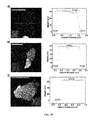
  • FIGS. 28 & 29 show AFM images and height profiles of exfoliated GeCH 3 flakes with different thickness.
  • the scale bar in d is in 1 ⁇ m, and all other scale bars are in 2 ⁇ m.
  • FIG. 30 shows PL intensity of exfoliated GeCH 3 thin flakes having average thicknesses ranging from 13-65 nm. Inset is the raw photoluminescence spectra of flakes with varying thicknesses.
  • FIG. 31 is a schematic illustration of conversion of CaGe 2 (left) into GeCH 3 (right).
  • FIG. 32 shows optical images of GeCH 3 crystals with select crystals on graph paper with a 1 mm grid. Scale bar, 3 mm.
  • FIG. 33 is a size distribution of synthesized GeCH 3 flakes.
  • FIG. 34 is a single-crystal XRD pattern of GeCH 3 collected down the [001] zone axis.
  • FIG. 35 shows powder XRD patterns of GeH (dotted) and GeCH 3 (solid). The starred peaks correspond to diffraction reflections of an internal Ge standard. The dotted line highlights the changes in the 100 reflections between GeH and GeCH 3 .
  • FIG. 36 shows structural models of GeH (a) and GeCH 3 (b) structures.
  • FIG. 37 shows FTIR spectra of GeH (i), GeCH 3 (ii), Ge 13 CH 3 (iii) and GeCD 3 (iv).
  • FIG. 38 is an XPS spectra of the Ge 2p3/2 peak for GeH (solid line) and GeCH 3 (dashed line).
  • FIG. 39 shows (a) DRA and PL of GeCH 3 ; (b) DRA spectra of GeH (left) and GeCH 3 (right) plotted in Kubelka-Munk function versus photon energy.
  • FIG. 40 shows an electronic band structure of a bilayer GeCH 3 unit cell calculated using the hybrid HSE06 theory including spin-orbit coupling with experimental lattice parameters (3.96 ⁇ ) predicting a 1.82 eV direct band gap.
  • FIG. 41 shows images of GeCH 3 photoluminescence of crystals (left) and in suspension in isopropanol (right), upon illumination with a handheld 365 nm light. Scale bars, 1 cm.
  • FIG. 42 shows (a) thermogravimetric analysis of GeCH 3 ; and (b) DRA spectra.
  • FIG. 43 shows (c) DRA spectra of bulk GeCH 3 after annealing in 5% H 2 /Ar for four hours at various temperatures; and (d) Photoluminescence spectra of a single exfoliated GeCH 3 flake using the same annealing procedure.
  • FIG. 44 is a schematic of the topotactic deintercalation of a layered CaGe 2-2x Sn 2x zintl phase.
  • FIG. 45 is an XRD spectra of the CaGe 2-y Sn y .
  • FIG. 46 is an image of the CaGe 2-y Sn y .
  • FIGS. 47 & 48 show XRD lattice parameters of the 2D Ge x Sn 1-x analogs.
  • FIG. 49 shows FTIR analysis of the 2D Ge x Sn 1-x samples.
  • FIG. 50 shows Raman spectroscopy analysis of the 2D Ge x Sn 1-x samples.
  • FIG. 51 shows diffuse Reflectance Absorption measurements of the 2D Ge x Sn 1-x samples.
  • the invention provides, among other things, a two-dimensional van der Waals material, such as an organogermanane or an organostannane.
  • a two-dimensional van der Waals material such as an organogermanane or an organostannane.
  • the invention also provides a stack of two-dimensional layers of the two-dimensional van der Waals material.
  • the invention further provides a method of synthesizing the two-dimensional van der Waals material and methods of using such materials.
  • alkyl refers to a branched, unbranched, or cyclic hydrocarbon (a “cycloalkyl”) having, for example, from 1 to 18 carbon atoms, and often 1 to 12, 1 to 10, 1 to 8, 1 to 7, 1 to 6, 1 to 5 or 1 to 4 carbon atoms.
  • Examples include, but are not limited to, methyl, ethyl, 1-propyl, 2-propyl, cyclopropyl, 1-butyl, 2-methyl-1-propyl, 2-butyl, 2-methyl-2-propyl (t-butyl), cyclobutyl, 1-pentyl, 2-pentyl, 3-pentyl, 2-methyl-2-butyl, 3-methyl-2-butyl, 3-methyl-1-butyl, 2-methyl-1-butyl, cyclopentyl, 1-hexyl, 2-hexyl, 3-hexyl, 2-methyl-2-pentyl, 3-methyl-2-pentyl, 4-methyl-2-pentyl, 3-methyl-3-pentyl, 2-methyl-3-pentyl, 2,3-dimethyl-2-butyl, 3,3-dimethyl-2-butyl, cyclohexyl, heptyl, octyl, decyl, dodecyl, and the like.
  • aryl refers to an aromatic hydrocarbon group derived from the removal of one hydrogen atom from a single carbon atom of a parent aromatic ring system.
  • the radical can be at a saturated or unsaturated carbon atom of the parent ring system.
  • the aryl group can have from 6 to 30 carbon atoms, for example from 6 to 20 carbon atoms or 6 to 14 carbon atoms.
  • the aryl group may be a C6, C10, C12, C13 or C14 aryl group.
  • the aryl group can have a single ring (e.g., phenyl) or multiple condensed (fused) rings, wherein at least one ring is aromatic (e.g., naphthyl, dihydrophenanthrenyl, fluorenyl, or anthryl).
  • Typical aryl groups include, but are not limited to, radicals derived from benzene, naphthalene, anthracene, biphenyl, and the like.
  • the aryl can be unsubstituted or optionally substituted, as described above for alkyl groups.
  • halo or halogen refers to fluorine, chlorine, bromine or iodine.
  • any numerical value recited herein includes all values from the lower value to the upper value, i.e., all possible combinations of numerical values between the lowest value and the highest value enumerated are to be considered to be expressly stated in this application.
  • a concentration range or a beneficial effect range is stated as 1% to 50%, it is intended that values such as 2% to 40%, 10% to 30%, or 1% to 3%, etc., are expressly enumerated in this specification. These are only examples of what is specifically intended.
  • the present invention provides a two-dimensional layer of M-R, wherein M is selected from the group consisting of Sn and Ge; and R is a C 1-18 alkyl or OH.
  • M is Ge.
  • M-R or “germanane” or “GeR” or “stannane” or “Sn—R” is used herein to denote a structure comprising a two-dimensional sp-3 bonded Ge or Sn backbone with —R terminations.
  • R can be substituted with one or more substituents. Suitable substituents included halo and aryl, such as F, I, and phenyl. In embodiments, R is a perfluoro moiety. In embodiments, R is —(CH 2 ) n CH 3 or —(CF 2 ) n CF 3 , wherein n is 1-17. In embodiments, R is —CH 2 CH 2 (CF 2 ) m CF 3 , wherein m is 1-10.
  • R is —CH 3 , —CH(CH 3 ) 2 , —CH 2 CH (CH 3 ) 2 , —CH 2 CH 2 CH(CH 3 ) 2 , —CH 2 C(CH 3 ) 3 , —CH 2 C 3 H 5 , —CH 2 CH(CH 3 )(CH 2 ) 3 CH 3 , —CH 2 CF 3 , —(CH 2 ) 3 CF 2 (CF 2 ) 6 CF 3 , —CH 2 C 6 H 5 , —CF 2 C 6 F 5 , —CH 2 CH ⁇ CH 2 , —CH 2 C(CH 3 ) ⁇ CH 2 , —CH 2 I, —CH 2 CH 2 I, CHICH 3 , —CH 2 CCH, —CH ⁇ CH 2 , —CH 2 CH ⁇ CHCH 3 , —CH 2 CH ⁇ C(CH 3 ) 2 , or —(CH 2 ) 8 CH ⁇ CH(CH 2 ) 7 CH 3 .
  • the present invention provides a stack of two-dimensional layers of M-R, wherein M and R are as described above.
  • the stack may be more than about 1.2 nanometers thick or more than about 20 micrometers thick or more than about 30 micrometers thick.
  • the stack may be less than about 100 micrometers thick or less than about 30 micrometers thick or less than about 20 micrometers thick.
  • the stack may be about 1.2 nanometers to about 100 micrometers thick or about 1.2 nanometers to about 30 micrometers thick or about 1.2 nanometers to about 20 micrometers thick or about 20 micrometers to about 100 micrometers thick.
  • the present invention also provides an alloy comprising Ge 1-x Sn x R 3 , wherein x is about 0 to about 1; and R 3 is at least one of C 1-18 alkyl, H or OH; wherein R 3 can be H if x is greater than zero.
  • the alloy is Ge 1-x R 1 Sn x R 2 , wherein x is about 0 to about 1; and R 1 and R 2 are independently selected from H, C 1-18 alkyl and —OH and may be the same or different; wherein R 1 is not H if x is zero.
  • x is about 0.01, about 0.04, about 0.07, about 0.09, about 0.1, about 0.2, about 0.4, about 0.6, about 0.7, or about 0.8. In embodiments, x is about 0.01 to about 0.8 or about 0.01 to about 0.1 or about 0.1 to about 0.8 or about 0.2 to about 0.6. In embodiments, x is more than about 0 or more than about 0.01 or more than about 0.04 or more than about 0.07 or more than about 0.09 or more than about 0.1 or more than about 0.2 or more than about 0.4 or more than about 0.6 or more than about 0.7 or more than about 0.8.
  • x is less than about 1 or less than about 0.8 or less than about 0.7 or less than about 0.6 or less than about 0.4 or less than about 0.2 or less than about 0.1 or less than about 0.09 or less than about 0.07 or less than about 0.04.
  • the present invention also provides an alloy comprising Ge 1-x Si x R 6 , wherein x is about 0 to about 1; and R 6 is at least one of C 1-18 alkyl or OH.
  • the alloy is Ge 1-x R 4 Si x R 5 , wherein x is about 0 to about 1; and R 4 and R 5 are independently selected from C 1-18 alkyl and —OH and may be the same or different.
  • x is about 0.01, about 0.04, about 0.07, about 0.09, about 0.1, about 0.2, about 0.4, about 0.6, about 0.7, or about 0.8. In embodiments, x is about 0.01 to about 0.8 or about 0.01 to about 0.1 or about 0.1 to about 0.8 or about 0.2 to about 0.6. In embodiments, x is more than about 0 or more than about 0.01 or more than about 0.04 or more than about 0.07 or more than about 0.09 or more than about 0.1 or more than about 0.2 or more than about 0.4 or more than about 0.6 or more than about 0.7 or more than about 0.8.
  • x is less than about 1 or less than about 0.8 or less than about 0.7 or less than about 0.6 or less than about 0.4 or less than about 0.2 or less than about 0.1 or less than about 0.09 or less than about 0.07 or less than about 0.04.
  • Two-dimensional van der Waals materials according to the present invention may be direct band gap semiconductors.
  • a multi-layer material comprising the two-dimensional van der Waals materials of the present invention is a direct band gap semiconductor.
  • a 50-layer thick stack may be a direct band gap semiconductor.
  • two-dimensional van der Waals materials according to the present invention have tunable band gaps ranging from about 0.1 eV to about 3.4 eV, or from about 0.1 eV to about 0.6 eV for stannanes, from about 1.3 eV to about 1.9 eV for germananes, from about 2.4 eV to about 3.4 eV for silicanes.
  • the two-dimensional van der Waals materials have tunable band gaps of about 0.3 to about 1.6 to about 2.9 eV for Sn to Ge to Si.
  • the band gap is more than about 0.1 eV or more than about 0.3 eV or more than about 0.6 eV or more than about 1.3 eV or or more than about 1.6 eV or more than about 2.4 eV or more than about 2.9 eV. In embodiments, the band gap is less than about 3.4 eV or less than about 2.9 eV or less than about 2.4 eV or less than about 1.6 eV or less than about 1.3 eV or less than about 0.6 eV or less than about 0.3 eV.
  • the van der Waals materials of the present invention may have a broad absorption over the visible wavelengths. For example, it may absorb from about 390 nm to about 700 nm.
  • the optical properties of the van der Waals materials of the present invention may be tuned based on the surface termination moiety.
  • the covalent nature of the surface ligand allows for fine-tuning of both the two-dimensional layer band structure (band gap, mobility, effective masses, heights of the indirect and direct bands) as well as the potential interlayer thermal and electronic conductivities.
  • Covalent surface termination of germanane with CH 3 not only increases the band gap by about 0.1 eV, but also enhances the thermal stability compared to GeH.
  • the photoluminescence quantum yield is on the same order of magnitude as other single-layer metal chalcogenides, but does not have the stringent single-layer requirement to observe such band edge emission, making these materials interesting building blocks for optoelectronic devices.
  • the optoelectric properties of the van der Waals materials of the present invention may be analyzed according to the standard techniques in the art. For example, diffuse reflective absorption (DRA) and photoluminescence (PL) measurements may be used to determine the optoelectric properties, such as the band gap and absorption wavelengths.
  • DRA diffuse reflective absorption
  • PL photoluminescence
  • the van der Waals materials of the present invention may be thermally stable. For example, they may be stable up to about 300° C. or up to about 250° C. or up to about 200° C. In embodiments, the van der Waals materials of the present invention may be air stable. For example, they may be stable for at least 10 days, for at least 15 days, for at least 30 days, for at least 45 days, for at least 90 days, for at least 180 days, for at least 1 year, for at least 3 years or for at least 5 years.
  • the thermal and air stability of the van der Waals materials may be analyzed according to the standard techniques in the art. For example, FTIR, thermogravimetric analysis (TGA), DRA, XRD, and Raman spectroscopy may be used.
  • the present invention provides a method of synthesizing two-dimensional van der Waals materials, such as germananes and stannanes.
  • the van der Waals materials are synthesized via a one-step topotactic metathesis reaction of A-M 2 crystals with R—X, wherein A is an alkaline earth metal, such as calcium, barium or strontium, M is Ge or Sn, R is C 1-18 alkyl and X is halogen.
  • the reaction occurs in the absence of solvent.
  • a solvent may be used.
  • the solvent may suitably aid in the solubilization of A-X 2 , wherein A is an alkaline earth metal and X is halo.
  • the solvent may be water.
  • the reaction occurs at a temperature at which R—X is a liquid.
  • a thin film of A-M 2 may be converted to M-R in the absence of a solvent.
  • the thin film may be no more than about 200 nanometers in thickness.
  • organogermananes are synthesized via a one-step topotactic metathesis reaction of CaGe 2 crystals with R—X, wherein R is C 1-18 alkyl and X is halo.
  • Bulk CaGe 2 crystals may be formed by annealing stoichiometric amounts of calcium and germanium.
  • CaGe 2 crystals may be formed by co-deposition of Ca and Ge via vacuum evaporation, molecular beam epitaxy (MBE), or another suitable technique, or by growing CaGe 2 layers by vapor phase epitaxy (VPE) using Ca and Ge precursors via a technique such as metalorganic chemical vapor deposition (MOCVD).
  • a technique such as atomic layer epitaxy (ALE) or migration-enhanced epitaxy (MEE) can be employed in which the surface is exposed to the Ca and Ge beams or precursor gases separately and in alternation.
  • ALE atomic layer epitaxy
  • MEE migration-enhanced epitaxy
  • organostannanes are synthesized via a one-step topotactic metathesis reaction of BaSn 2 crystals with R—X, wherein R is C 1-18 alkyl and X is halo.
  • Bulk BaSn 2 crystals may be formed by annealing stoichiometric amounts of barium and tin.
  • BaSn 2 crystals may be formed by co-deposition of Ba and Sn via vacuum evaporation, molecular beam epitaxy (MBE), or another suitable technique, or by growing BaSn 2 layers by vapor phase epitaxy (VPE) using Ba and Sn precursors via a technique such as metalorganic chemical vapor deposition (MOCVD).
  • MBE molecular beam epitaxy
  • MOCVD metalorganic chemical vapor deposition
  • ALE atomic layer epitaxy
  • MEE migration-enhanced epitaxy
  • Suitable R—X are shown in FIG. 2 .
  • the Ge 1-x Sn x R 3 materials may be synthesized in a similar manner as M-R from A-Ge 2-y Sn y crystals, wherein A is an alkaline earth metal and y is about 0 to about 2.
  • the A-Ge 2-y Sn y crystals may be obtained by annealing the correct amounts of A, Ge and Sn.
  • y may be at least about 0.1, at least about 0.2, at least about 0.4, at least about 0.5, at least about 0.6, at least about 0.7, at least about 0.8, at least about 0.9, at least about 1.0, at least about 1.1, at least about 1.2, at least about 1.3, at least about 1.4, at least about 1.5, at least about 1.6, at least about 1.7, at least about 1.8, or at least about 1.9.
  • y is less than about 2, less than about 1.9, less than about 1.8, less than about 1.7, less than about 1.6, less than about 1.5, less than about 1.4, less than about 1.3, less than about 1.2, less than about 1.1, less than about 1.0, less than about 0.9, less than about 0.8, less than about 0.7, less than about 0.6, less than about 0.5, less than about 0.4, less than about 0.3, less than about 0.2, or less than about 0.1.
  • A is Ba when y is about 1.5 to about 2; A is Sr when y is about 0.8 to about 1.5; and A is Ca when y is about 0 to about 0.8.
  • the Ge 1-x Sn x R 3 materials may be synthesized using the epitaxial growth of precursor phases CaGe 2 and BaSn 2 on Ge(111).
  • the epitaxial CaGe 2 layer then converted into GeR 1 and the epitaxial BaSn 2 layer into SnR 2 .
  • bilayer heterostructures can be prepared by transferring the GeR 1 layer onto SnR 2 , using a soft lithographic transfer approach.
  • the creation of multilayer heterostructures of GeR / Sn x Ge 1-x R 3 could be achieved through epitaxial growth of graded CaGe 2-y Sn y on Ge(111) followed by topotactic metathesis reaction of the CaGe 2 /CaGe 2-y Sn y with the organohalide.
  • the Ge 1-x Si x R 6 materials may be synthesized in a similar manner as M-from CaGe 2-y Si y crystals, wherein y is about 0 to about 2.
  • the CaGe 2-y Si y crystals may be obtained by annealing the correct amounts of Ca, Ge and Si.
  • y may be at least about 0.1, at least about 0.2, at least about 0.4, at least about 0.5, at least about 0.6, at least about 0.7, at least about 0.8, at least about 0.9, at least about 1.0, at least about 1.1, at least about 1.2, at least about 1.3, at least about 1.4, at least about 1.5, at least about 1.6, at least about 1.7, at least about 1.8, or at least about 1.9.
  • y is less than about 2, less than about 1.9, less than about 1.8, less than about 1.7, less than about 1.6, less than about 1.5, less than about 1.4, less than about 1.3, less than about 1.2, less than about 1.1, less than about 1.0, less than about 0.9, less than about 0.8, less than about 0.7, less than about 0.6, less than about 0.5, less than about 0.4, less than about 0.3, less than about 0.2, or less than about 0.1.
  • the Ge 1-x Si x R 6 materials may be synthesized using the epitaxial growth of precursor phases CaGe 2 and CaSi 2 on Ge(111).
  • the epitaxial CaGe 2 layer then converted into GeR 4 and the epitaxial CaSi 2 layer into SiR 5 .
  • bilayer heterostructures can be prepared by transferring the GeR 4 layer onto SiR 5 , using a soft lithographic transfer approach.
  • the creation of multilayer heterostructures of GeR / Si x Ge 1-x R 6 could be achieved through epitaxial growth of graded CaGe 2-y Si y on Ge(111) followed by topotactic metathesis reaction of the CaGe 2 /CaGe 2-y Si y with the organohalide.
  • the two-dimensional van der Waals materials of the present invention are suitably direct band gap semiconductors and may have enhanced thermal stability.
  • the compounds of the present invention may be used in optoelectronic devices, such as transistors, light-emitting devices, such as light-emitting diodes and lasers, and light-absorbing devices, such as photovoltaics and photodetectors.
  • the hydrogen-terminated germanane were synthesized by topotactic deintercalation of ⁇ -CaGe 2 in aqueous HCl at ⁇ 40° C. for at least eight days ( FIG. 3 ).
  • 2-6 mm crystals of ⁇ -CaGe 2 were first synthesized by sealing stoichiometric ratios of Ca and Ge in a quartz tube, annealing to 950-1050° C., and cooling down over a period of 2-10 days ( FIG. 4 a ).
  • High purity CaGe 2 was confirmed via powder X-ray diffraction ( FIG. 5 ).
  • FIG. 6 Transmission electron microscopy analysis indicates the hydrogen-terminated germanane has a layered morphology with individual layers having less contrast than the 10 nm lacey carbon support grid ( FIG. 6 ).
  • the energy dispersive X-ray spectrum has a strong Ge signal, an absence of Ca and O signals and the presence of trace amounts of Cl.
  • the Cl:Ge ratio was estimated to be 2:98 ( FIG. 7 ).
  • FIG. 8 depicts an electron diffraction pattern taken orthogonal to the layers, showing a hexagonal arrangement of diffraction peaks that occur in the a and b directions. This data further confirms that the crystallinity of the germanium layered framework is preserved upon HCl treatment, and there is a strong registration in the stacking between each layer.
  • FTIR, Raman spectroscopy, and X-ray photoelectron spectroscopy (XPS) were performed on the hydrogen-terminated germanane ( FIG. 9-11 ).
  • the 825 cm ⁇ 1 and 770 cm ⁇ 1 vibrational modes significantly decrease to negligible absorbance, and new Ge-D2 modes at 586 cm ⁇ 1 and 514 cm ⁇ 1 appear with residual Ge—H wagging modes. This is generally consistent with the change in reduced mass upon deuteration, and these vibrational frequencies are also apparent in amorphous Ge0.7:D0.3 films.
  • FIG. 10 shows the main Ge—Ge stretch in GeH occurs at 302 cm ⁇ 1 , which is slightly blue-shifted compared to the 297 cm ⁇ 1 E2 Raman mode for crystalline germanium. In addition, a second vibrational mode emerges at 228 cm ⁇ 1 .
  • ab initio calculations were performed for the F-point phonon modes in GeH using Perdew-Burke-Ernzerhof (PBE) functionals as implemented in VASP.
  • PBE Perdew-Burke-Ernzerhof
  • XPS measurements also demonstrate a single germanium oxidation state.
  • XPS of the Ge 2p3/2 peak for GeH shows a single peak at 1217.8 eV, which is indicative of Ge +1 .
  • a shift in the Ge 2p3/2 peak energy from Ge0 (1217.0 eV) is anticipated because hydrogen is more electronegative than germanium ( FIG. 11 ).
  • a control Ge(11) wafer with surface oxide shows a mixture of germanium oxidation states ranging from Ge 0 (1217.0 eV) to Ge 2+ (1218.9 eV) to Ge 4+ (1221.4 eV).
  • germanane for any optoelectronic or sensing device strongly hinges on its air and temperature stability.
  • a time-dependent FTIR study was conducted to determine if Ge—O vibrational modes in the 800-1000 cm ⁇ 1 range emerge after exposure to an ambient atmosphere. After 60 days, virtually no change was observed in this range, suggesting that the bulk of GeH resists oxidation ( FIG. 13 ). Additionally, time dependent XPS was performed to probe changes in the Ge oxidation state of the surface after exposing these layered GeH crystals to air ( FIG. 14 ), and the percentage of each germanium oxidation state for all spectra was calculated by applying a standard Gaussian fit.
  • the optical properties of germanane were investigated by diffuse reflectance absorption (DRA) spectroscopy.
  • the silver-black material has a broad absorption over visible wavelengths, and a linear approximation of the absorption edge suggests a band gap of approximately 1.59 eV ( FIG. 15 ).
  • the Tauc/Davis-Mott expression for materials with 2D densities of states predicts that the absorbance A(h- ⁇ ) at photon energy ho near the band edge would be a step function with a discontinuity in absorbance at the band gap, if the band gap was direct allowed.
  • TGA thermogravimetric analysis
  • DRA DRA
  • XRD Raman upon annealing at a range of temperatures in 5% H 2 /Ar.
  • TGA shows a ⁇ 1.1% mass loss at 200-250° C., which is close to the expected mass loss of 1 equivalent of Hydrogen in GeH, as well as a 1.7% mass loss of that occurs between 320 to 355° C. ( FIG. 17 ).
  • the second mass loss likely corresponds to the loss of Cl (3.6% molar).
  • X-ray fluorescence analysis further supports this, as there is approximately a one order of magnitude decrease in the chlorine intensity after annealing at 375° C.
  • these values may contain error since the c lattice constant, determined mostly by the weak interlayer van der Waals interactions, were found to depend very sensitively on the exact computational parameters, resulting in an uncertainty of ⁇ 1 ⁇ .
  • the a lattice constant changes with variations in c. For example, if c is fixed to the experimental value of 11.04 ⁇ , a relaxes to 4.01 ⁇ , which is identical to the isolated-layer value.
  • the difference in energy between the conduction band minimum at the M point and the valence band maximum at ⁇ is 2.48 eV and 2.33 eV for an isolated layer, and 2-layer unit cell, respectively.
  • spin-orbit splitting at the ⁇ valence band maximum is 0.2 eV.
  • the effective masses of the conduction and valence bands at each extremum were calculated for the isolated single layer and are shown in FIG. 21 .
  • GeH can be thought of as hydrogen-terminated isolated (111) sheets of germanium, the L wavevector in the Brillouin zone are effectively eliminated.
  • the phonon-limited electronic mobility for an isolated single layer was calculated having a high mobility of 18195 cm 2 /Vs. This 5 ⁇ increase in electron mobility from the bulk Ge (3900 cm 2 /Vs) is consistent with the reduced electron effective mass in GeH.
  • the Bethe-Salpeter equation was solved to account for the excitonic effects.
  • the scissors operator was used to obtain a band gap of 1.53 eV for the two layer unit cell (to correspond with the HSE calculated band gap value).
  • an excitonic binding energy was calculated to be 0.28 eV for the two layer unit cell. No excitonic phenomena were observed in the absorption or photoluminescence in the samples. However, this 0.28 eV exciton binding energy may explain the previously observed 0.45 eV red shift between the absorption onset and photoluminescence of epitaxial GeH thin films.
  • Hydrogen-terminated germanane can be mechanically exfoliated into single sheets. Similar to most layered crystal structures, the GeH crystal structure is held together predominantly via van der Waals bonding. By incorporating van der Waals corrections into the PBE simulation, the interlayer binding energy for GeH was found to be nearly entirely dominated by van der Waals interaction with a value of 72 meV per Ge atom, which is in the same range as the calculated 53.5 meV per C atom in graphite. Therefore both scotch tape and polydimethylsiloxane were used to exfoliate few and single layer thick sheets onto Si substrates with a wide range of SiO 2 thicknesses (100-165, 275-345 nm) to attain maximum contrast by optical microscopy.
  • FIG. 25 shows an AFM image, optical micrograph, and corresponding height profile for a 6-7 layer thick germanane flake.
  • FIG. 26 shows an AFM image, optical micrograph and the corresponding height profile for a 2 ⁇ m ⁇ 2 ⁇ m single GeH layer exfoliated onto a 100 nm thick SiO 2 /Si substrate.
  • the observed height ( ⁇ 6 ⁇ ) agrees well with the expected value of 5.5 ⁇ for a single layer, since it is well known that differences in the attractive potentials between the AFM tip, the substrate, and the layered material can often cause the measured AFM thickness to be larger than the expected value.
  • CaGe 2 crystals Ca and Ge were loaded into a quartz tube with stoichiometric ratio. The quartz tube was sealed under vacuum and annealed at 950-1050° C. for 16-20 hours and then slowly cooled down to room temperature.
  • GeCH 3 the CaGe 2 crystals were loaded into an extraction thimble, fully immersed in iodomethane (Sigma Aldrich), with a separated distilled water phase outside in the beaker and stir bar at the bottom of the extraction thimble ( FIG. 27 ). The reaction was performed at room temperature for a week.
  • Powder XRD (Bruker D8 powder X-ray diffractometer, Rigaku MiniFlexII X-Ray diffractometer), and Single crystal XRD (Nonius Kappa CCD diffractometer) were used to study the structure of GeCH 3 .
  • FTIR measurements were collected on a Perkin-Elmer Frontier Dual-Range FIR/MidIR spectrometer that was loaded in an Ar-filled glovebox.
  • XPS was collected using a Kratos Axis Ultra X-ray photoelectron spectrometer equipped with a monochromated (Al) X-ray gun.
  • the AFM images were collected on a Bruker AXS Dimension Icon Atomic/Magnetic Force Microscope with Scan Asyst.
  • the temperature dependent and the thickness dependent PL measurements were collected using a Renishaw InVia Raman equipped with a CCD detector upon excitation using a 633 nm HeNe laser at a power density of ⁇ 24 mW/cm 2 , with a laser spot size of ⁇ 2 ⁇ m diameter.
  • GeCH 3 was exfoliated onto 285 nm SiO 2 /Si.
  • the thicknesses of these flakes were measured by AFM to identify exfoliated flakes that had regions of relatively uniform thickness larger than the excitation spot size. The weighted average height from the AFM measurement was used to determine the thickness.
  • exfoliated flakes were annealed at different temperatures in 5% H 2 /Ar, and their PL was recollected on the same flake after cooling down to room temperature. The same trend was observed for three different exfoliated flakes.
  • Thermogravimetric Analysis (Q-500 thermogravimetric analyzer) was collected in flowing N 2 at 10° C. min ⁇ 1 . Elemental Analysis (Atlantic Microlab Inc) of the C/H ratio was collected to determine the ratio of CH 3 -termination to H-termination.
  • the bulk GeCH 3 flakes were exfoliated onto 285 nm SiO 2 /Si substrate with kapton tape.
  • the tape residue was cleaned with acetone and then by isopropanol, followed by a N 2 blow dry to clean the residue solvent on the substrate.
  • the thickness of these flakes was confirmed by AFM before the PL measurement.
  • the AFM images are shown in FIG. 28-29 , the color of the dots in AFM height profiles corresponds to the color of the PL spectra in FIG. 30 .
  • DFT Density functional theory
  • the crystal structure of CaGe 2 consists of hexagonal, puckered sp 3 layers of Ge-atoms that are separated by Ca 2+ ions ( FIG. 31 ). It was hypothesized, without being bound to any particular theory, that the anionic Ge— on the surface and edges of the crystals could react topotactically in an SN 2 or methathesis-like fashion with a small organic molecule such as CH 3 I, to form a Ge—CH 3 bond along with CaI 2 . The expansion of the lattice would allow the precursors to diffuse inward and the reaction would proceed to completion. However, in initial experiments with pure CH 3 I, only the surface layers of CaGe 2 had reacted, likely due to the low solubility of CaI 2 .
  • the 3.1 ⁇ increase is approximately twice the difference between the Ge—C bond length (1.95 ⁇ ) and the Ge—H bond length (1.52 ⁇ ), plus twice the difference between the van der Waals radii of —CH 3 (2.0 ⁇ ) and —H (1.2 ⁇ ), further indicating substitution of the —H substituent with a —CH 3 substituent ( FIG. 36 ).
  • Transmission-mode Fourier Transform Infrared spectroscopy further confirms the —CH 3 surface termination in GeCH 3 ( FIG. 37 ) and that the sample is free of residual oxide.
  • GeCH 3 the major Ge—H stretching frequency at ⁇ 2,000 cm ⁇ 1 is nearly completely gone and replaced by a Ge—C stretch that occurs at 573 cm ⁇ 1 .
  • the other major modes that are observed in GeCH 3 correspond to —CH 3 stretching at 2907 and 2974 cm ⁇ 1 , —CH 3 bending at 1403 and 1237 cm ⁇ 1 , and —CH 3 rocking at 778 cm ⁇ 1 .
  • the only vibrational modes observed in this region for GeCD 3 are the 770 and 830 cm ⁇ 1 vibrations that correspond to bond-bending Ge—H2 modes from nearest neighbor Ge atoms at the crystal edges.
  • X-ray Photoelectron Spectroscopy (XPS) measurements indicate a single Germanium +1 oxidation state ( FIG. 38 ), further suggesting that GeO 2 and other surface oxides are not present.
  • the Ge 2p3/2 peak occurs at 1217.5 eV, which is slightly shifted compared to the observed 1217.8 eV peak of GeH, but consistent with CH 3 -terminated Ge(111). The slight shift to lower XPS binding energy is consistent with previously observed XPS spectra of —H or —CH 3 terminated silicon surfaces.
  • GeCH 3 has strong photoluminescence (PL) emission centered at 1.7 eV (730 nm (red)), which is similar to the observed diffuse reflectance absorption (DRA) onset at 1.69 eV ( FIG. 39 a ). This corresponds to a 0.1 eV increase in band edge compared to GeH (1.59 eV) ( FIG. 39 b ).
  • PL photoluminescence
  • DRA diffuse reflectance absorption
  • the red PL can be easily detected by eye under UV illumination in both solid-state samples and in suspension in isopropanol ( FIG. 41 ).
  • the full-width at half maximum (FWHM) of the fluorescence emission is ⁇ 250 meV.
  • the absolute quantum yield of the solid flakes was measured to be 0.23%. This represents a minimum bound of the quantum yield, due to the difficulty in correcting for self-absorption in solid-state measurements.
  • the FWHM and quantum yield values are close to those observed in exfoliated single layer MoS2, which are 50-150 meV, and 0.4-0.5%, respectively.
  • the photoluminescence emission intensity of exfoliated samples is linearly proportional to the number of layers from 13-65 layers ( FIG. 30 and FIG. 28-29 ).
  • the band edge emission does not depend on layer thickness, at least with 13 layers and above, reflecting the relatively weak electronic coupling and orbital overlap of the conduction and valence bands in neighboring layers.
  • the intense PL contrasts with observations of previous reported crystals of GeH, of which negligible band edge PL has been observed.
  • the data shows that the nature of the covalently modifiable surface ligand can tune the optoelectronic properties of these materials.
  • GeH begins to amorphize upon annealing at 75° C., is completely amorphous above 175° C., and starts to dehydrogenate between 200° C. and 250° C.
  • GeCH 3 has considerably enhanced thermal stability.
  • thermogravimetric analysis a transition occurs starting at 300° C. ( FIG. 42 a ) that corresponds to the expected mass loss for approximately 90% CH 3 termination, which is in excellent agreement with elemental analysis.
  • DRA is a much more sensitive probe of the degree of amorphization than most techniques, due to the reduced band gap of amorphous germanium. There is virtually no shift in band edge emission up to 200° C., whereas after annealing at 250° C.
  • the resulting CaGe 2-y Sn y formed two-layer P63mc unit cells, similar to ⁇ -CaGe 2 .
  • a significant increase in both the a-b and the c-lattice parameters confirms the incorporation of Sn in the system ( FIGS. 45 & 46 ).
  • reactions in which the Sn/Ge ratio was increased demonstrates no additional lattice parameter shifts and instead the formation of an impurity tin phase is observed.
  • the product was filtered and washed with water to remove residual CaCl 2 , then acetonitrile, and subsequently dried under vacuum.
  • the resulting platelet-shaped crystallites are 2-3 mm in length and width, and 10-100 ⁇ m in thickness ( FIG. 46 ).
  • the Ge—H stretching frequency decreases from 2002 cm ⁇ 1 to 1988 cm ⁇ 1
  • the major Ge—H wagging mode decreases from 482 cm ⁇ 1 to 470 cm ⁇ 1 . Therefore, after deintercalation in HCl, the Sn atoms are terminated with —OH groups, and the Ge atoms remain terminated with —H.
  • FIG. 51 a To determine the influence of Sn—OH substitutions on the optical band gap of GeH, diffuse Reflectance Absorption measurements was performed on powders ( FIG. 51 a ).
  • the silver-black materials have a broad absorption over all visible wavelengths, and there is a systematic decrease in the absorption band edge, as well as the absorption maximum with increasing tin concentration ( FIG. 51 b ).
  • a linear approximation of the absorption edge suggests a decrease in the band edge from 1.59 eV for GeH, down to 1.38 eV for 9% Sn.

Landscapes

  • Chemical & Material Sciences (AREA)
  • Organic Chemistry (AREA)
  • Inorganic Chemistry (AREA)
  • Engineering & Computer Science (AREA)
  • Materials Engineering (AREA)
  • Physics & Mathematics (AREA)
  • Spectroscopy & Molecular Physics (AREA)
  • Crystallography & Structural Chemistry (AREA)
  • Nanotechnology (AREA)
  • Chemical Vapour Deposition (AREA)
  • Crystals, And After-Treatments Of Crystals (AREA)

Abstract

The present invention provides novel two-dimensional van der Waals materials and stacks of those materials. Also provided are methods of making and using such materials.

Description

CROSS-REFERENCE TO RELATED APPLICATIONS
This application claims the benefit of U.S. Provisional Application No. 61/814,412 filed Apr. 22, 2013, and U.S. Provisional Application No. 61/822,065, filed May 10, 2013; both of which are fully incorporated by reference herein.
STATEMENT REGARDING FEDERALLY SPONSORED RESEARCH
This invention was made with government support under grant/contract no. NSF/DMR-1201953 awarded by NSF and grant/contract no. W911-NF-12-1-0481 awarded by DARPA—ARMY/ARO. The government has certain rights in the invention.
BACKGROUND
Two-dimensional van der Waals materials have shown great promise for a variety of electronic, optoelectronic, sensing and energy conversion applications. New materials are needed for such applications as well as new ways of making such two-dimensional van der Waals materials.
SUMMARY
In an embodiment, the invention provides a two-dimensional layer comprising M-R, wherein M is selected from the group consisting of Ge, and Sn; and wherein R is C1-18 alkyl or OH.
In an embodiment, the invention provides a stack comprising the two-dimensional layer of M-R.
In an embodiment, the invention provides an alloy comprising Ge1-xSnxR3, wherein R3 is H, OH or C1-18 alkyl and x is about 0 to about 1; wherein R3 is not H if x is zero.
In an embodiment, the invention provides an alloy comprising Ge1-xSixR6, wherein R6 is OH or C1-18 alkyl and x is about 0 to about 1.
In an embodiment, the invention provides a light-emitting device comprising a two-dimensional layer comprising M-R, a stack of such layers, or an alloy of Ge1-xSnxR3 or Ge1-xSixR6.
In an embodiment, the invention provides a light-absorbing device comprising a two-dimensional layer comprising M-R, a stack of such layers, or an alloy of Ge1-xSnxR3 or Ge1-x SixR6.
In an embodiment, the invention provides a transistor comprising a two-dimensional layer comprising M-R, a stack of such layers, or an alloy of Ge1-xSnxR3 or Ge1-xSixR6.
In an embodiment, the invention provides a method of synthesizing M-R comprising reacting A-M2 with R—X to form M-R.
In an embodiment, the invention provides a method of synthesizing Ge1-xSnxR3 comprising reacting AGe2-ySny with R3—X to form Ge1-xSnxR3.
In an embodiment, the invention provides a method of synthesizing Ge1-xSixR6 comprising reacting CaGe2-ySiy with R6—X to form Ge1-xSixR6.
Other aspects of the invention will become apparent by consideration of the detailed description and accompanying drawings.
BRIEF DESCRIPTION OF THE DRAWINGS
FIG. 1 is a depiction of graphane vs. graphene.
FIG. 2 is a list of useful organo halide reagents and there resulting organogermanane.
FIG. 3 is a schematic illustration of the topotactic deintercalation of CaGe2 to GeH.
FIG. 4 shows optical images of a) CaGe2 and b) GeH crystals with select crystals on graph paper with a 1 mm grid (inset).
FIG. 5 shows powder XRD pattern of a) CaGe2 and b) GeH.
FIG. 6 shows a) low magnification and b) magnified TEM micrograph of GeH platelets.
FIG. 7 is an energy dispersive X-ray Spectroscopy of the GeH sheets.
FIG. 8 shows an electron diffraction pattern of platelets collected down the 0001 zone axis.
FIG. 9 shows a transmission-mode FTIR of GeH.
FIG. 10 shows a raman spectrum of GeH and Ge powder, highlighting the difference in energy of the E2 peak between GeH and Ge (middle inset).
FIG. 11 is an XPS spectrum of the Ge 2p peak for GeH and a Ge(111) wafer with native surface oxide.
FIG. 12 is a Mid-FTIR spectrum of GeD.
FIG. 13 shows time dependent reflection mode FTIR of a GeH platelet after exposure to ambient atmosphere for up to 60 days, collected via reflection mode, highlighting minimal changes in the relative intensity of the Ge—H to Ge—O vibrations.
FIG. 14 shows time dependent XPS spectra of germanane immediately after exposure to atmosphere, after 1 day, and 5 months, followed by Ar etching by 0.5 nm.
FIG. 15 is a DRA spectrum of GeH plotted as (hvα) vs. photon energy highlighting a 1.59 eV band gap.
FIG. 16 shows fits of the absorption spectrum of unannealled GeH to different band structures, according to Tauc/Davis-Mott expressions of 2D densities of states and 3D densities of states. A 37.5 phonon vibration (deduced via the 300 cm−1 Raman shift) was determined.
FIG. 17 is a TGA analysis of GeH.
FIG. 18 are DRA spectra of GeH.
FIG. 19 are XRD patterns of GeH.
FIG. 20 are Raman spectra of GeH measured after four hour annealing treatments at various temperatures in 5% H2/Ar.
FIG. 21 shows electronic band structure of an isolated single layer of GeH calculated using HSE-06 theory including spin-orbit coupling predicting a 1.56 eV direct band gap.
FIG. 22 shows electronic band structure of bulk 2 layer GeH calculated using HSE-06 theory including spin-orbit coupling from K-Γ-M.
FIG. 23 shows electronic band structure of bulk 2 layer GeH calculated using HSE-06 theory including spin-orbit coupling from H-A-L.
FIG. 24 shows electronic band structure of bulk 2 layer GeH calculated using HSE-06 theory including spin-orbit coupling from Γ-A, K—H and M-L.
FIG. 25 is an AFM micrograph (top), height profile (bottom), and optical micrograph (inset) of few layer GeH deposited on 110 nm SiO2/Si.
FIG. 26 is an AFM micrograph (top), and height profile (bottom) of single layer thick GeH sheet.
FIG. 27 shows a biphasic CH3I/H2O reaction setup.
FIGS. 28 & 29 show AFM images and height profiles of exfoliated GeCH3 flakes with different thickness. The scale bar in d is in 1 μm, and all other scale bars are in 2 μm.
FIG. 30 shows PL intensity of exfoliated GeCH3 thin flakes having average thicknesses ranging from 13-65 nm. Inset is the raw photoluminescence spectra of flakes with varying thicknesses.
FIG. 31 is a schematic illustration of conversion of CaGe2 (left) into GeCH3 (right).
FIG. 32 shows optical images of GeCH3 crystals with select crystals on graph paper with a 1 mm grid. Scale bar, 3 mm.
FIG. 33 is a size distribution of synthesized GeCH3 flakes.
FIG. 34 is a single-crystal XRD pattern of GeCH3 collected down the [001] zone axis.
FIG. 35 shows powder XRD patterns of GeH (dotted) and GeCH3 (solid). The starred peaks correspond to diffraction reflections of an internal Ge standard. The dotted line highlights the changes in the 100 reflections between GeH and GeCH3.
FIG. 36 shows structural models of GeH (a) and GeCH3 (b) structures.
FIG. 37 shows FTIR spectra of GeH (i), GeCH3 (ii), Ge13CH3 (iii) and GeCD3 (iv).
FIG. 38 is an XPS spectra of the Ge 2p3/2 peak for GeH (solid line) and GeCH3 (dashed line).
FIG. 39 shows (a) DRA and PL of GeCH3; (b) DRA spectra of GeH (left) and GeCH3 (right) plotted in Kubelka-Munk function versus photon energy.
FIG. 40 shows an electronic band structure of a bilayer GeCH3 unit cell calculated using the hybrid HSE06 theory including spin-orbit coupling with experimental lattice parameters (3.96 Å) predicting a 1.82 eV direct band gap.
FIG. 41 shows images of GeCH3 photoluminescence of crystals (left) and in suspension in isopropanol (right), upon illumination with a handheld 365 nm light. Scale bars, 1 cm.
FIG. 42 shows (a) thermogravimetric analysis of GeCH3; and (b) DRA spectra.
FIG. 43 shows (c) DRA spectra of bulk GeCH3 after annealing in 5% H2/Ar for four hours at various temperatures; and (d) Photoluminescence spectra of a single exfoliated GeCH3 flake using the same annealing procedure.
FIG. 44 is a schematic of the topotactic deintercalation of a layered CaGe2-2xSn2x zintl phase.
FIG. 45 is an XRD spectra of the CaGe2-ySny.
FIG. 46 is an image of the CaGe2-ySny.
FIGS. 47 & 48 show XRD lattice parameters of the 2D GexSn1-x analogs.
FIG. 49 shows FTIR analysis of the 2D GexSn1-x samples.
FIG. 50 shows Raman spectroscopy analysis of the 2D GexSn1-x samples.
FIG. 51 shows diffuse Reflectance Absorption measurements of the 2D GexSn1-x samples.
DETAILED DESCRIPTION
Before any embodiments of the invention are explained in detail, it is to be understood that the invention is not limited in its application to the details of construction and the arrangement of components set forth in the following description or illustrated in the following drawings. The invention is capable of other embodiments and of being practiced or of being carried out in various ways.
There has been widespread interest in the exploration of the unique properties and applications of single and few-layer thick sheets of layered van der Waals materials such as graphene, or the layered transition metal dichalcogenides. This work has shown the significant role of the immediate environment on the properties and reactivity of these van der Waals layers. Therefore, the properties of single atom thick materials may be manipulated by covalent termination with various substituents. In contrast to the negligible role the surface-binding ligand plays in nanoscale materials, terminating the surface of single-atom thick materials with different ligands may allow for the broad tuning of properties including band gap, band alignment, thermal stability, carrier mobility, and spin-dependent interactions.
Unfortunately, most of the two-dimensional materials studied to date are comprised of neutral van der Waals layers that lack the possibility of covalent functionalization. Although the functionalization of graphene with organic components, hydrogen atoms or even halogens have been achieved, these modifications completely disrupt the excellent electronic mobility of the Fermi-Dirac state, to produce 3-5 eV band gap semiconductors.
To bypass the potential air reactive intermediates and create new organic-terminated materials, new single-step synthetic methods that can directly convert a precursor crystalline solid-state crystal into a crystalline, exfoliatable, organic-terminated van der Waals solid in nonaqueous solvents is required.
Thus, the invention provides, among other things, a two-dimensional van der Waals material, such as an organogermanane or an organostannane. The invention also provides a stack of two-dimensional layers of the two-dimensional van der Waals material. The invention further provides a method of synthesizing the two-dimensional van der Waals material and methods of using such materials.
Definitions
As used herein, the term “alkyl” refers to a branched, unbranched, or cyclic hydrocarbon (a “cycloalkyl”) having, for example, from 1 to 18 carbon atoms, and often 1 to 12, 1 to 10, 1 to 8, 1 to 7, 1 to 6, 1 to 5 or 1 to 4 carbon atoms. Examples include, but are not limited to, methyl, ethyl, 1-propyl, 2-propyl, cyclopropyl, 1-butyl, 2-methyl-1-propyl, 2-butyl, 2-methyl-2-propyl (t-butyl), cyclobutyl, 1-pentyl, 2-pentyl, 3-pentyl, 2-methyl-2-butyl, 3-methyl-2-butyl, 3-methyl-1-butyl, 2-methyl-1-butyl, cyclopentyl, 1-hexyl, 2-hexyl, 3-hexyl, 2-methyl-2-pentyl, 3-methyl-2-pentyl, 4-methyl-2-pentyl, 3-methyl-3-pentyl, 2-methyl-3-pentyl, 2,3-dimethyl-2-butyl, 3,3-dimethyl-2-butyl, cyclohexyl, heptyl, octyl, decyl, dodecyl, and the like. The alkyl can be unsubstituted or substituted. The alkyl can also be optionally partially or fully unsaturated.
As used herein, “aryl” refers to an aromatic hydrocarbon group derived from the removal of one hydrogen atom from a single carbon atom of a parent aromatic ring system. The radical can be at a saturated or unsaturated carbon atom of the parent ring system. The aryl group can have from 6 to 30 carbon atoms, for example from 6 to 20 carbon atoms or 6 to 14 carbon atoms. For example, the aryl group may be a C6, C10, C12, C13 or C14 aryl group. The aryl group can have a single ring (e.g., phenyl) or multiple condensed (fused) rings, wherein at least one ring is aromatic (e.g., naphthyl, dihydrophenanthrenyl, fluorenyl, or anthryl). Typical aryl groups include, but are not limited to, radicals derived from benzene, naphthalene, anthracene, biphenyl, and the like. The aryl can be unsubstituted or optionally substituted, as described above for alkyl groups.
As used herein, “halo” or “halogen” refers to fluorine, chlorine, bromine or iodine.
It is specifically understood that any numerical value recited herein includes all values from the lower value to the upper value, i.e., all possible combinations of numerical values between the lowest value and the highest value enumerated are to be considered to be expressly stated in this application. For example, if a concentration range or a beneficial effect range is stated as 1% to 50%, it is intended that values such as 2% to 40%, 10% to 30%, or 1% to 3%, etc., are expressly enumerated in this specification. These are only examples of what is specifically intended.
Also, it is to be understood that the phraseology and terminology used herein is for the purpose of description and should not be regarded as limiting. The use of “comprising,” “including,” “having,” and variations thereof herein is meant to encompass the items listed thereafter and equivalents thereof as well as additional items.
Compounds and Compositions
In embodiments, the present invention provides a two-dimensional layer of M-R, wherein M is selected from the group consisting of Sn and Ge; and R is a C1-18 alkyl or OH. In embodiments, M is Ge. The notation “M-R” or “germanane” or “GeR” or “stannane” or “Sn—R” is used herein to denote a structure comprising a two-dimensional sp-3 bonded Ge or Sn backbone with —R terminations.
In embodiments, R can be substituted with one or more substituents. Suitable substituents included halo and aryl, such as F, I, and phenyl. In embodiments, R is a perfluoro moiety. In embodiments, R is —(CH2)nCH3 or —(CF2)nCF3, wherein n is 1-17. In embodiments, R is —CH2CH2(CF2)mCF3, wherein m is 1-10. In embodiments, R is —CH3, —CH(CH3)2, —CH2CH (CH3)2, —CH2CH2CH(CH3)2, —CH2C(CH3)3, —CH2C3H5, —CH2CH(CH3)(CH2)3CH3, —CH2CF3, —(CH2)3CF2(CF2)6CF3, —CH2C6H5, —CF2C6F5, —CH2CH═CH2, —CH2C(CH3)═CH2, —CH2I, —CH2CH2I, CHICH3, —CH2CCH, —CH═CH2, —CH2CH═CHCH3, —CH2CH═C(CH3)2, or —(CH2)8CH═CH(CH2)7CH3.
In embodiments, the present invention provides a stack of two-dimensional layers of M-R, wherein M and R are as described above. In embodiments, the stack may be more than about 1.2 nanometers thick or more than about 20 micrometers thick or more than about 30 micrometers thick. In embodiments, the stack may be less than about 100 micrometers thick or less than about 30 micrometers thick or less than about 20 micrometers thick. In embodiments, the stack may be about 1.2 nanometers to about 100 micrometers thick or about 1.2 nanometers to about 30 micrometers thick or about 1.2 nanometers to about 20 micrometers thick or about 20 micrometers to about 100 micrometers thick.
In embodiments, the present invention also provides an alloy comprising Ge1-xSnxR3, wherein x is about 0 to about 1; and R3 is at least one of C1-18 alkyl, H or OH; wherein R3 can be H if x is greater than zero. In embodiments, the alloy is Ge1-xR1SnxR2, wherein x is about 0 to about 1; and R1 and R2 are independently selected from H, C1-18 alkyl and —OH and may be the same or different; wherein R1 is not H if x is zero.
In embodiments, x is about 0.01, about 0.04, about 0.07, about 0.09, about 0.1, about 0.2, about 0.4, about 0.6, about 0.7, or about 0.8. In embodiments, x is about 0.01 to about 0.8 or about 0.01 to about 0.1 or about 0.1 to about 0.8 or about 0.2 to about 0.6. In embodiments, x is more than about 0 or more than about 0.01 or more than about 0.04 or more than about 0.07 or more than about 0.09 or more than about 0.1 or more than about 0.2 or more than about 0.4 or more than about 0.6 or more than about 0.7 or more than about 0.8. In embodiments, x is less than about 1 or less than about 0.8 or less than about 0.7 or less than about 0.6 or less than about 0.4 or less than about 0.2 or less than about 0.1 or less than about 0.09 or less than about 0.07 or less than about 0.04.
In embodiments, the present invention also provides an alloy comprising Ge1-xSixR6, wherein x is about 0 to about 1; and R6 is at least one of C1-18 alkyl or OH. In embodiments, the alloy is Ge1-xR4SixR5, wherein x is about 0 to about 1; and R4 and R5 are independently selected from C1-18 alkyl and —OH and may be the same or different.
In embodiments, x is about 0.01, about 0.04, about 0.07, about 0.09, about 0.1, about 0.2, about 0.4, about 0.6, about 0.7, or about 0.8. In embodiments, x is about 0.01 to about 0.8 or about 0.01 to about 0.1 or about 0.1 to about 0.8 or about 0.2 to about 0.6. In embodiments, x is more than about 0 or more than about 0.01 or more than about 0.04 or more than about 0.07 or more than about 0.09 or more than about 0.1 or more than about 0.2 or more than about 0.4 or more than about 0.6 or more than about 0.7 or more than about 0.8. In embodiments, x is less than about 1 or less than about 0.8 or less than about 0.7 or less than about 0.6 or less than about 0.4 or less than about 0.2 or less than about 0.1 or less than about 0.09 or less than about 0.07 or less than about 0.04.
Two-dimensional van der Waals materials according to the present invention may be direct band gap semiconductors. In embodiments, a multi-layer material comprising the two-dimensional van der Waals materials of the present invention is a direct band gap semiconductor. For example, a 50-layer thick stack may be a direct band gap semiconductor.
In embodiments, two-dimensional van der Waals materials according to the present invention have tunable band gaps ranging from about 0.1 eV to about 3.4 eV, or from about 0.1 eV to about 0.6 eV for stannanes, from about 1.3 eV to about 1.9 eV for germananes, from about 2.4 eV to about 3.4 eV for silicanes. In embodiments, the two-dimensional van der Waals materials have tunable band gaps of about 0.3 to about 1.6 to about 2.9 eV for Sn to Ge to Si. In embodiments, the band gap is more than about 0.1 eV or more than about 0.3 eV or more than about 0.6 eV or more than about 1.3 eV or or more than about 1.6 eV or more than about 2.4 eV or more than about 2.9 eV. In embodiments, the band gap is less than about 3.4 eV or less than about 2.9 eV or less than about 2.4 eV or less than about 1.6 eV or less than about 1.3 eV or less than about 0.6 eV or less than about 0.3 eV.
The van der Waals materials of the present invention may have a broad absorption over the visible wavelengths. For example, it may absorb from about 390 nm to about 700 nm.
In addition, the optical properties of the van der Waals materials of the present invention may be tuned based on the surface termination moiety. The covalent nature of the surface ligand allows for fine-tuning of both the two-dimensional layer band structure (band gap, mobility, effective masses, heights of the indirect and direct bands) as well as the potential interlayer thermal and electronic conductivities. Covalent surface termination of germanane with CH3 not only increases the band gap by about 0.1 eV, but also enhances the thermal stability compared to GeH. The photoluminescence quantum yield is on the same order of magnitude as other single-layer metal chalcogenides, but does not have the stringent single-layer requirement to observe such band edge emission, making these materials intriguing building blocks for optoelectronic devices.
The optoelectric properties of the van der Waals materials of the present invention may be analyzed according to the standard techniques in the art. For example, diffuse reflective absorption (DRA) and photoluminescence (PL) measurements may be used to determine the optoelectric properties, such as the band gap and absorption wavelengths.
In embodiments, the van der Waals materials of the present invention may be thermally stable. For example, they may be stable up to about 300° C. or up to about 250° C. or up to about 200° C. In embodiments, the van der Waals materials of the present invention may be air stable. For example, they may be stable for at least 10 days, for at least 15 days, for at least 30 days, for at least 45 days, for at least 90 days, for at least 180 days, for at least 1 year, for at least 3 years or for at least 5 years. The thermal and air stability of the van der Waals materials may be analyzed according to the standard techniques in the art. For example, FTIR, thermogravimetric analysis (TGA), DRA, XRD, and Raman spectroscopy may be used.
Synthesis
In embodiments, the present invention provides a method of synthesizing two-dimensional van der Waals materials, such as germananes and stannanes. In embodiments, the van der Waals materials are synthesized via a one-step topotactic metathesis reaction of A-M2 crystals with R—X, wherein A is an alkaline earth metal, such as calcium, barium or strontium, M is Ge or Sn, R is C1-18 alkyl and X is halogen. In embodiments, the reaction occurs in the absence of solvent. In embodiments, a solvent may be used. The solvent may suitably aid in the solubilization of A-X2, wherein A is an alkaline earth metal and X is halo. In embodiments, the solvent may be water. Suitably, the reaction occurs at a temperature at which R—X is a liquid.
In embodiments, a thin film of A-M2 may be converted to M-R in the absence of a solvent. In embodiments, the thin film may be no more than about 200 nanometers in thickness.
In embodiments, organogermananes are synthesized via a one-step topotactic metathesis reaction of CaGe2 crystals with R—X, wherein R is C1-18 alkyl and X is halo. Bulk CaGe2 crystals may be formed by annealing stoichiometric amounts of calcium and germanium. Alternatively, CaGe2 crystals may be formed by co-deposition of Ca and Ge via vacuum evaporation, molecular beam epitaxy (MBE), or another suitable technique, or by growing CaGe2 layers by vapor phase epitaxy (VPE) using Ca and Ge precursors via a technique such as metalorganic chemical vapor deposition (MOCVD). In another approach, a technique such as atomic layer epitaxy (ALE) or migration-enhanced epitaxy (MEE) can be employed in which the surface is exposed to the Ca and Ge beams or precursor gases separately and in alternation.
In embodiments, organostannanes are synthesized via a one-step topotactic metathesis reaction of BaSn2 crystals with R—X, wherein R is C1-18 alkyl and X is halo. Bulk BaSn2 crystals may be formed by annealing stoichiometric amounts of barium and tin. Alternatively, BaSn2 crystals may be formed by co-deposition of Ba and Sn via vacuum evaporation, molecular beam epitaxy (MBE), or another suitable technique, or by growing BaSn2 layers by vapor phase epitaxy (VPE) using Ba and Sn precursors via a technique such as metalorganic chemical vapor deposition (MOCVD). In another approach, a technique such as atomic layer epitaxy (ALE) or migration-enhanced epitaxy (MEE) can be employed in which the surface is exposed to the Ba and Sn beams or precursor gases separately and in alternation.
Suitable R—X are shown in FIG. 2.
The Ge1-xSnxR3 materials may be synthesized in a similar manner as M-R from A-Ge2-ySny crystals, wherein A is an alkaline earth metal and y is about 0 to about 2. In embodiments, the A-Ge2-ySny crystals may be obtained by annealing the correct amounts of A, Ge and Sn.
In embodiments, y may be at least about 0.1, at least about 0.2, at least about 0.4, at least about 0.5, at least about 0.6, at least about 0.7, at least about 0.8, at least about 0.9, at least about 1.0, at least about 1.1, at least about 1.2, at least about 1.3, at least about 1.4, at least about 1.5, at least about 1.6, at least about 1.7, at least about 1.8, or at least about 1.9. In embodiments, y is less than about 2, less than about 1.9, less than about 1.8, less than about 1.7, less than about 1.6, less than about 1.5, less than about 1.4, less than about 1.3, less than about 1.2, less than about 1.1, less than about 1.0, less than about 0.9, less than about 0.8, less than about 0.7, less than about 0.6, less than about 0.5, less than about 0.4, less than about 0.3, less than about 0.2, or less than about 0.1.
In embodiments, A is Ba when y is about 1.5 to about 2; A is Sr when y is about 0.8 to about 1.5; and A is Ca when y is about 0 to about 0.8.
Alternatively, the Ge1-xSnxR3 materials may be synthesized using the epitaxial growth of precursor phases CaGe2 and BaSn2 on Ge(111). For example, the epitaxial CaGe2 layer then converted into GeR1 and the epitaxial BaSn2 layer into SnR2. Then, bilayer heterostructures can be prepared by transferring the GeR1 layer onto SnR2, using a soft lithographic transfer approach.
As another example, the creation of multilayer heterostructures of GeR/SnxGe1-xR3 could be achieved through epitaxial growth of graded CaGe2-ySny on Ge(111) followed by topotactic metathesis reaction of the CaGe2/CaGe2-ySny with the organohalide.
The Ge1-xSixR6 materials may be synthesized in a similar manner as M-from CaGe2-ySiy crystals, wherein y is about 0 to about 2. In embodiments, the CaGe2-ySiy crystals may be obtained by annealing the correct amounts of Ca, Ge and Si.
In embodiments, y may be at least about 0.1, at least about 0.2, at least about 0.4, at least about 0.5, at least about 0.6, at least about 0.7, at least about 0.8, at least about 0.9, at least about 1.0, at least about 1.1, at least about 1.2, at least about 1.3, at least about 1.4, at least about 1.5, at least about 1.6, at least about 1.7, at least about 1.8, or at least about 1.9. In embodiments, y is less than about 2, less than about 1.9, less than about 1.8, less than about 1.7, less than about 1.6, less than about 1.5, less than about 1.4, less than about 1.3, less than about 1.2, less than about 1.1, less than about 1.0, less than about 0.9, less than about 0.8, less than about 0.7, less than about 0.6, less than about 0.5, less than about 0.4, less than about 0.3, less than about 0.2, or less than about 0.1.
Alternatively, the Ge1-xSixR6 materials may be synthesized using the epitaxial growth of precursor phases CaGe2 and CaSi2 on Ge(111). For example, the epitaxial CaGe2 layer then converted into GeR4 and the epitaxial CaSi2 layer into SiR5. Then, bilayer heterostructures can be prepared by transferring the GeR4 layer onto SiR5, using a soft lithographic transfer approach.
As another example, the creation of multilayer heterostructures of GeR/SixGe1-xR6 could be achieved through epitaxial growth of graded CaGe2-ySiy on Ge(111) followed by topotactic metathesis reaction of the CaGe2/CaGe2-ySiy with the organohalide.
Uses
As mentioned above, the two-dimensional van der Waals materials of the present invention are suitably direct band gap semiconductors and may have enhanced thermal stability. Thus, in embodiments, the compounds of the present invention may be used in optoelectronic devices, such as transistors, light-emitting devices, such as light-emitting diodes and lasers, and light-absorbing devices, such as photovoltaics and photodetectors.
EXAMPLES Example 1. Synthesis and Characterization of the Hydrogen-Terminated Germanane
Described below is the synthesis and characterization of hydrogen-terminated germanane. The hydrogen-terminated germanane were synthesized by topotactic deintercalation of β-CaGe2 in aqueous HCl at −40° C. for at least eight days (FIG. 3). 2-6 mm crystals of β-CaGe2 were first synthesized by sealing stoichiometric ratios of Ca and Ge in a quartz tube, annealing to 950-1050° C., and cooling down over a period of 2-10 days (FIG. 4a ). High purity CaGe2 was confirmed via powder X-ray diffraction (FIG. 5). After HCl treatment, the product was filtered and washed with methanol to remove residual CaCl2, yielding crystallites of GeH that are 2-3 mm in diameter and <100 μm in thickness (FIG. 4b ). X-ray diffraction analysis of GeH confirmed that it can be fit to a 2H unit cell (2 GeH layers per hexagonal c-unit cell spacing) with a=3.880 Å and c=11.04 Å (5.5 Å per layer). Compared to the original CaGe2 unit cell parameters of a=3.987 Å, c=30.0582 Å, (6 layer stacking, c/6=5.097 Å), the hydrogen-terminated germanane is slightly contracted in the a direction but expanded in the c-direction due to the replacement of Ca2+ with 2 Ge—H bonds between each layer. These lattice parameters do not correspond to any of the previously reported allotropes of germanium. The narrower full-width-half-maximum (FWHM) of the (100) and (110) diffraction reflections (˜0.4°2θ) compared to the (002), (011) and (112) peaks (˜1.3° 2θ) indicates that there is a significant amount of disorder along the c axis, which is common in layered materials. This disorder along the c axis precludes further structure determination via Rietveld analysis.
Transmission electron microscopy analysis indicates the hydrogen-terminated germanane has a layered morphology with individual layers having less contrast than the 10 nm lacey carbon support grid (FIG. 6). The energy dispersive X-ray spectrum has a strong Ge signal, an absence of Ca and O signals and the presence of trace amounts of Cl. The Cl:Ge ratio was estimated to be 2:98 (FIG. 7). FIG. 8 depicts an electron diffraction pattern taken orthogonal to the layers, showing a hexagonal arrangement of diffraction peaks that occur in the a and b directions. This data further confirms that the crystallinity of the germanium layered framework is preserved upon HCl treatment, and there is a strong registration in the stacking between each layer. The GeH electron diffraction pattern can be indexed to a simple hexagonal unit cell with a=b≈4.0 Å, assuming a [001] zone axis.
To further confirm hydrogen termination, FTIR, Raman spectroscopy, and X-ray photoelectron spectroscopy (XPS) were performed on the hydrogen-terminated germanane (FIG. 9-11). Transmission mode FTIR of samples, which were ground up and pressed into KBr pellets, show extremely strong Ge—H stretching and multiple wagging modes at ˜2000 cm−1 and 570, 507, and 475 cm−1, respectively. Additionally, weak vibrational modes at 770 cm−1 and 825 cm−1 are observed. These two vibrations also occur in the spectra of amorphous Ge0.7:H0.3 thin films. It is known that the weak Ge—H2 at 770 cm−1 can vary from 750-770 cm−1. The absence of any stretching modes at ˜2060 cm−1, precludes the presence of Ge—H3. Thus, the data suggests that these vibrations correspond to Ge—H2 bond bending modes from neighboring Ge atoms at the edges of each crystalline germanane sheet, and/or to Ge—H2 bonds within the lattice arising from Ge vacancies. The presence of the broad, intense Ge—O—Ge and Ge—O vibrational modes that occur between 800 cm−1 and 1000 cm−1 is not observed. To confirm that these vibrational modes originate from Ge—H2 and not Ge—O—Ge, GeD were prepared by treating CaGe2 in 95% deuterated DCl/D2O, and the FTIR spectrum was collected (FIG. 12). The 825 cm−1 and 770 cm−1 vibrational modes significantly decrease to negligible absorbance, and new Ge-D2 modes at 586 cm−1 and 514 cm−1 appear with residual Ge—H wagging modes. This is generally consistent with the change in reduced mass upon deuteration, and these vibrational frequencies are also apparent in amorphous Ge0.7:D0.3 films.
FIG. 10 shows the main Ge—Ge stretch in GeH occurs at 302 cm−1, which is slightly blue-shifted compared to the 297 cm−1 E2 Raman mode for crystalline germanium. In addition, a second vibrational mode emerges at 228 cm−1. ab initio calculations were performed for the F-point phonon modes in GeH using Perdew-Burke-Ernzerhof (PBE) functionals as implemented in VASP. These calculations predict the presence of Ge-based A1 and E2 Raman modes (assuming a C6v point group) that occur at 223 cm−1 and 289 cm−1, respectively, which are in relatively close agreement with the observed Raman modes, considering that the theoretical bond lengths and lattice constant (a=should correspond to lower frequencies than found in experiment due to the well-known d-3/2 scaling of frequencies with bond lengths). Following similar logic, the Ge—Ge bondlength in germanane should be very close to that in bulk Ge, within ˜0.1 Å. The symmetries of the vibrational modes are shown in the FIG. 10 inset.
XPS measurements also demonstrate a single germanium oxidation state. XPS of the Ge 2p3/2 peak for GeH shows a single peak at 1217.8 eV, which is indicative of Ge+1. A shift in the Ge 2p3/2 peak energy from Ge0 (1217.0 eV) is anticipated because hydrogen is more electronegative than germanium (FIG. 11). A control Ge(11) wafer with surface oxide shows a mixture of germanium oxidation states ranging from Ge0 (1217.0 eV) to Ge2+ (1218.9 eV) to Ge4+ (1221.4 eV).
The potential utility of germanane for any optoelectronic or sensing device strongly hinges on its air and temperature stability. A time-dependent FTIR study was conducted to determine if Ge—O vibrational modes in the 800-1000 cm−1 range emerge after exposure to an ambient atmosphere. After 60 days, virtually no change was observed in this range, suggesting that the bulk of GeH resists oxidation (FIG. 13). Additionally, time dependent XPS was performed to probe changes in the Ge oxidation state of the surface after exposing these layered GeH crystals to air (FIG. 14), and the percentage of each germanium oxidation state for all spectra was calculated by applying a standard Gaussian fit. After 1 month of exposure to air, a Ge2+/3+ shoulder emerges at ˜1219.3 eV (19.5% Ge2+/3+). This peak becomes more intense after 5 months of air exposure (29.7% Ge2+/3+). After Ar etching the top 0.5 nm (<1 layer), the Ge2+/3+ almost completely disappears, with approximately 10.1% Ge2+/3+ remaining. Together, the XPS and FTIR suggest that only the surface becomes oxidized over time.
The optical properties of germanane were investigated by diffuse reflectance absorption (DRA) spectroscopy. The silver-black material has a broad absorption over visible wavelengths, and a linear approximation of the absorption edge suggests a band gap of approximately 1.59 eV (FIG. 15). The Tauc/Davis-Mott expression for materials with 2D densities of states, predicts that the absorbance A(h- ω) at photon energy ho near the band edge would be a step function with a discontinuity in absorbance at the band gap, if the band gap was direct allowed. If the band gap was indirect allowed, the absorbance would be proportional to (h- ω−Eg′±Ep) where Eg′ is the indirect gap, and Ep is the energy of a particular phonon mode. However, it has been experimentally established that the Tauc/Davis-Mott approximations of absorption cannot unambiguously determine the transition mechanism for fundamental absorption for bulk materials with 2D densities of states. The absorbance was modeled assuming direct-allowed, direct-forbidden, indirect-allowed and indirect-forbidden gaps using both 2D and 3D densities of states (FIG. 16). All of these plots estimated fundamental gaps ranging from 1.48 to 1.60 eV. These analyses are complicated by a broad Urbach edge at the lower end of the absorption tail, which is often indicative of a large doping concentration or disorder. The presence of photoluminescence is often a stronger test of a direct band gap. There was negligible observance of any photoluminescence from 1.1-1.8 eV when exciting from 1.38-1.96 eV at temperatures ranging from 14-300 K.
The temperature stability of germanane was also investigated via thermogravimetric analysis (TGA), DRA, XRD, and Raman upon annealing at a range of temperatures in 5% H2/Ar. TGA shows a ˜1.1% mass loss at 200-250° C., which is close to the expected mass loss of 1 equivalent of Hydrogen in GeH, as well as a 1.7% mass loss of that occurs between 320 to 355° C. (FIG. 17). The second mass loss likely corresponds to the loss of Cl (3.6% molar). X-ray fluorescence analysis further supports this, as there is approximately a one order of magnitude decrease in the chlorine intensity after annealing at 375° C. Furthermore, it has been reported in previous temperature programmed desorption studies that Cl desorbs off of germanium at temperatures ranging from 300-350° C. However, there is a significant change in the absorption spectrum when annealing at temperatures above 75° C. The absorption onset, as detected by DRA, red shifts by 0.06 eV upon annealing at 75° C. (FIG. 18). The absorption profile continues to red-shift with higher temperature annealing until 250° C. when the absorption onset (0.58 eV) goes below that of bulk germanium (0.67). Previous studies have reported that amorphous Ge thin films have band gaps lower than that of bulk germanium (0.50 vs. 0.67 eV), and amorphous hydrogenated germanium films have larger band gaps (1.1 eV). No obvious change appears in the XRD patterns (FIG. 19) until 150° C., at which point the c axis decreases from c=11.04 Å to c=10.70 Å and the FWHM of this 002 reflection decreases from 1.3o 2θ to 0.8o 2θ. The diffraction pattern demonstrates complete amorphization upon annealing at 175° C. Raman spectroscopy shows a consistent decrease in the intensity of both the Ge—Ge and Ge—H modes as a function of annealing temperature (FIG. 20). After 175° C., there is ˜2 order magnitude decrease in the Raman scattering intensity of both the E2 and A1 modes. Taken together, this suggests that amorphization occurs at temperatures well below that of dehydrogenation (200-250° C.). It is hypothesized, without being bound to any particular theory, that the low-temperature amorphization, the broadness of the 001 reflections, and the lack of observed PL, are consequences of the presence of trace percentages of Ge—Cl bonds. This would potentially explain the observed decrease in the c-parameter and FWHM of the 001 reflections at 150° C. The observed diffraction pattern at this temperature is indicative of local domains of pure GeH that did not undergo amorphization due to the lack of nearby chlorine.
Band structure calculations suggest that germanane is a direct band gap material both as isolated layers and in the crystal structure having two layers per unit cell. The density functional theory (DFT) code VASP was used to optimize the geometry, and calculate the band structure of isolated single layer and 2-layer unit cell GeH. The interactions between cores and electrons were described for relaxation by projector augmented wave (PAW) pseudopotentials within the Perdew-Burke-Ernzerhof (PBE) exchange-correlation function with a plane-wave cutoff energy of 600 eV. Van der Waals interactions between the layers were included using the DFT-D2 method by Grimme. For the two-layer structure, the unit cell was modeled as a P63mc unit cell with relaxed lattice parameters of a=4.05 Å, and c=10.56 Å, thus having a 5.3 Å layer spacing. However, these values may contain error since the c lattice constant, determined mostly by the weak interlayer van der Waals interactions, were found to depend very sensitively on the exact computational parameters, resulting in an uncertainty of ˜1 Å. In return, the a lattice constant changes with variations in c. For example, if c is fixed to the experimental value of 11.04 Å, a relaxes to 4.01 Å, which is identical to the isolated-layer value. For the isolated single layer structure, calculations were performed in a unit cell with 20 Å of additional vacuum between GeH layers. To obtain an accurate description of the band gap in this system, the hybrid HSE06 exchange-correlation function was utilized. With this function, we obtain a direct gap at the Γ point of 1.56 eV for an isolated layer (FIG. 21), and 1.53 eV for the 2-layer unit cell (FIG. 22-24), which is in agreement with the observed experimental band gap. The calculated band gap for the two layer unit cell at the A point of the Brillouin zone is ˜1.77 eV. The difference in energy between the conduction band minimum at the M point and the valence band maximum at Γ is 2.48 eV and 2.33 eV for an isolated layer, and 2-layer unit cell, respectively. In both cases, spin-orbit splitting at the Γ valence band maximum is 0.2 eV.
Additionally, the effective masses of the conduction and valence bands at each extremum were calculated for the isolated single layer and are shown in FIG. 21. In bulk crystalline germanium, the conduction band minima occur in the 4 equivalent valleys at the L <111> point which have much higher effective mass (meL*=1.64) than the conduction band valleys at Γ (meΓ*=0.041). However, since GeH can be thought of as hydrogen-terminated isolated (111) sheets of germanium, the L wavevector in the Brillouin zone are effectively eliminated. The phonon-limited electronic mobility for an isolated single layer was calculated having a high mobility of 18195 cm2/Vs. This 5× increase in electron mobility from the bulk Ge (3900 cm2/Vs) is consistent with the reduced electron effective mass in GeH.
Also, using the EXCITING-CODE, the Bethe-Salpeter equation was solved to account for the excitonic effects. The scissors operator was used to obtain a band gap of 1.53 eV for the two layer unit cell (to correspond with the HSE calculated band gap value). Within this theoretical framework, an excitonic binding energy was calculated to be 0.28 eV for the two layer unit cell. No excitonic phenomena were observed in the absorption or photoluminescence in the samples. However, this 0.28 eV exciton binding energy may explain the previously observed 0.45 eV red shift between the absorption onset and photoluminescence of epitaxial GeH thin films.
Example 2. Exfoliation of Hydrogen-Terminated Germanane into Single Sheets
Hydrogen-terminated germanane can be mechanically exfoliated into single sheets. Similar to most layered crystal structures, the GeH crystal structure is held together predominantly via van der Waals bonding. By incorporating van der Waals corrections into the PBE simulation, the interlayer binding energy for GeH was found to be nearly entirely dominated by van der Waals interaction with a value of 72 meV per Ge atom, which is in the same range as the calculated 53.5 meV per C atom in graphite. Therefore both scotch tape and polydimethylsiloxane were used to exfoliate few and single layer thick sheets onto Si substrates with a wide range of SiO2 thicknesses (100-165, 275-345 nm) to attain maximum contrast by optical microscopy. Few-layer and single-layer sheets were visible by optical microscopy, with 110 nm and 300 nm thick SiO2 substrates providing optimal contrast. FIG. 25 shows an AFM image, optical micrograph, and corresponding height profile for a 6-7 layer thick germanane flake. FIG. 26 shows an AFM image, optical micrograph and the corresponding height profile for a 2 μm×2 μm single GeH layer exfoliated onto a 100 nm thick SiO2/Si substrate. The observed height (˜6 Å) agrees well with the expected value of 5.5 Å for a single layer, since it is well known that differences in the attractive potentials between the AFM tip, the substrate, and the layered material can often cause the measured AFM thickness to be larger than the expected value. The weak Raman intensities of few layer GeH, the photothermal degradation at laser intensities above 40 kW/cm2 and the overlap of the two E2 and A1 Raman modes with higher order silicon substrate Raman modes prevents the collection of thickness-dependent Raman maps on conventional SiO2/Si substrates.
Example 3. Synthesis and Characterization of the Methyl-Terminated Germanane
To synthesize CaGe2 crystals, Ca and Ge were loaded into a quartz tube with stoichiometric ratio. The quartz tube was sealed under vacuum and annealed at 950-1050° C. for 16-20 hours and then slowly cooled down to room temperature. To synthesize GeCH3, the CaGe2 crystals were loaded into an extraction thimble, fully immersed in iodomethane (Sigma Aldrich), with a separated distilled water phase outside in the beaker and stir bar at the bottom of the extraction thimble (FIG. 27). The reaction was performed at room temperature for a week. Then the exfoliated flakes were rinsed with isopropanol (Sigma Aldrich), concentrated HCl(aq) (Fisher, Certified ACS Plus) followed by isopropanol. The sample was then dried on a Schlenk line at room temperature. For all thermal stability study experiments, the room temperature sample was annealed at different temperatures in flowing 5% H2 in Ar, then cooled down and characterized at room temperature.
Powder XRD (Bruker D8 powder X-ray diffractometer, Rigaku MiniFlexII X-Ray diffractometer), and Single crystal XRD (Nonius Kappa CCD diffractometer) were used to study the structure of GeCH3. FTIR measurements were collected on a Perkin-Elmer Frontier Dual-Range FIR/MidIR spectrometer that was loaded in an Ar-filled glovebox. XPS was collected using a Kratos Axis Ultra X-ray photoelectron spectrometer equipped with a monochromated (Al) X-ray gun. The AFM images were collected on a Bruker AXS Dimension Icon Atomic/Magnetic Force Microscope with Scan Asyst. DRA measurements (PerkinElmer Lambda950 UV/Vis Spectrometer) and PL (Cary Eclipse Fluorescence Spectrophotometer) measurements were conducted to study the optical properties of the bulk solid crystals. In the PL measurements, the excitation wavelength was set to 380 nm, the excitation and emission slit widths were set to 20 nm and 5 nm, respectively. The absolute Quantum Yield of the solid samples was measured with the Quanta-phi (HORIBA Scientific) assembled in Fluorolog (HORIBA Scientific). The temperature dependent and the thickness dependent PL measurements were collected using a Renishaw InVia Raman equipped with a CCD detector upon excitation using a 633 nm HeNe laser at a power density of ˜24 mW/cm2, with a laser spot size of ˜2 μm diameter. To collect the thickness dependent measurement, GeCH3 was exfoliated onto 285 nm SiO2/Si. The thicknesses of these flakes were measured by AFM to identify exfoliated flakes that had regions of relatively uniform thickness larger than the excitation spot size. The weighted average height from the AFM measurement was used to determine the thickness. For the temperature dependent PL, exfoliated flakes were annealed at different temperatures in 5% H2/Ar, and their PL was recollected on the same flake after cooling down to room temperature. The same trend was observed for three different exfoliated flakes. Thermogravimetric Analysis (Q-500 thermogravimetric analyzer) was collected in flowing N2 at 10° C. min−1. Elemental Analysis (Atlantic Microlab Inc) of the C/H ratio was collected to determine the ratio of CH3-termination to H-termination.
To study the PL intensity of GeCH3 flakes with different thickness, the bulk GeCH3 flakes were exfoliated onto 285 nm SiO2/Si substrate with kapton tape. The tape residue was cleaned with acetone and then by isopropanol, followed by a N2 blow dry to clean the residue solvent on the substrate. The thickness of these flakes was confirmed by AFM before the PL measurement. The AFM images are shown in FIG. 28-29, the color of the dots in AFM height profiles corresponds to the color of the PL spectra in FIG. 30.
Density functional theory (DFT) calculations were performed using the Vienna Ab initio simulation package (VASP). The effect of the core electrons was included using projector augmented wave (PAW) pseudopotentials. To simulate GeCH3 monolayers, a supercell was used with a vacuum of 20 Å and with the in-plane lattice parameter fixed to the experimental value a=3.97 Å. Bilayer GeCH3 was simulated using a supercell with lattice parameters fixed to a=3.97 Å and c=17.26 Å. Relaxation of the ionic positions was done using the Perdew-Burke-Ernzerhof exchange correlation functional with a plane-wave cutoff energy of 600 eV and a 9×9×1 Monkhorst Pack k-point mesh. To obtain an accurate description of the band gap, high-level calculations were performed based on the HSE06 hybrid functional.
The crystal structure of CaGe2 consists of hexagonal, puckered sp3 layers of Ge-atoms that are separated by Ca2+ ions (FIG. 31). It was hypothesized, without being bound to any particular theory, that the anionic Ge— on the surface and edges of the crystals could react topotactically in an SN2 or methathesis-like fashion with a small organic molecule such as CH3I, to form a Ge—CH3 bond along with CaI2. The expansion of the lattice would allow the precursors to diffuse inward and the reaction would proceed to completion. However, in initial experiments with pure CH3I, only the surface layers of CaGe2 had reacted, likely due to the low solubility of CaI2. Instead, a biphasic CH3I/H2O solvent reaction was developed, in which 2-3 mm crystals of CaGe2 are fully immersed in CH3I, while CaI2 is transferred into the H2O layer (FIG. 27). After rinsing in concentrated HCl to remove any trace residual CaI2, and then isopropanol, the reaction yields crystals of GeCH3 that are ˜1 mm in diameter and <100 μm in thickness (FIG. 32 and FIG. 33). Single-Crystal X-ray diffraction (XRD) analysis (FIG. 34) shows that each one of the crystallites is a single crystal having a hexagonal spacing of a=3.96 Å, however the interlayer turbostratic disorder and curvature of these crystallites preclude determination of the c-axis spacing. Powder XRD analysis (FIG. 35) of GeCH3 confirms that it can be fit to a 2H unit cell (2 GeCH3 layers per hexagonal unit cell spacing) with a=3.97 Å and c=17.26 Å (8.63 Å per layer). This corresponds to a 0.09 Å expansion in the a-direction and a 3.1 Å increase per layer compared to GeH, which has lattice parameters of a=3.880 Å and c=11.04 Å (5.50 Å per layer). The 3.1 Å increase is approximately twice the difference between the Ge—C bond length (1.95 Å) and the Ge—H bond length (1.52 Å), plus twice the difference between the van der Waals radii of —CH3 (2.0 Å) and —H (1.2 Å), further indicating substitution of the —H substituent with a —CH3 substituent (FIG. 36).
Transmission-mode Fourier Transform Infrared spectroscopy further confirms the —CH3 surface termination in GeCH3 (FIG. 37) and that the sample is free of residual oxide. In GeCH3, the major Ge—H stretching frequency at ˜2,000 cm−1 is nearly completely gone and replaced by a Ge—C stretch that occurs at 573 cm−1. The other major modes that are observed in GeCH3 correspond to —CH3 stretching at 2907 and 2974 cm−1, —CH3 bending at 1403 and 1237 cm−1, and —CH3 rocking at 778 cm−1. The residual amount of Ge—H stretching suggests that there exists a small percentage of —H termination, and elemental analysis suggests that 90%±10% of the Germanium atoms are terminated with —CH3. The residual —H could result either from the minor solubility of H2O in CH3I, or during the washing process. To further confirm the identity of each vibrational mode, Ge13CH3 and GeCD3 were created. In Ge13CH3, the Ge—C stretch shifts down to 558 cm−1, and the other —CH3 vibrational modes slightly decrease by 1-10 cm−1 (Table 1). There is a significant change in the vibrational energies of GeCD3, as the —CD3 stretching modes are shifted to 2240 and 2116 cm−1, the —CD3 bending mode decreases to 1024 and 954 cm−1, the —CD3 rocking mode decreases to 584 cm−1, and the Ge—CD3 stretch decreases to 530 cm−1 (Table 1). As the 778 cm−1 CH3 rocking mode can possibly mask the existence of any residual Ge—O—Ge or Ge—O vibrational modes, which normally occur from 800-1000 cm−1, the shift of this rocking mode in GeCD3 allows elucidation of any residual Ge—O—Ge or Ge—O. The only vibrational modes observed in this region for GeCD3 are the 770 and 830 cm−1 vibrations that correspond to bond-bending Ge—H2 modes from nearest neighbor Ge atoms at the crystal edges. X-ray Photoelectron Spectroscopy (XPS) measurements indicate a single Germanium +1 oxidation state (FIG. 38), further suggesting that GeO2 and other surface oxides are not present. The Ge 2p3/2 peak occurs at 1217.5 eV, which is slightly shifted compared to the observed 1217.8 eV peak of GeH, but consistent with CH3-terminated Ge(111). The slight shift to lower XPS binding energy is consistent with previously observed XPS spectra of —H or —CH3 terminated silicon surfaces.
TABLE 1
Comparison of vibration modes of GeCH3,
GeCD3 and Ge13CH3.
Vibration modes* GeCH3 Ge13CH3 GeCD3
—CH3 stretch 2907, 2974 2902, 2972 2240, 2116
—CH3 bend 1403, 1237 1402, 1230 1024, 954 
—CH3 rock 778 764 584
Ge—CH3 stretch 573 558 530
*Here, C refers to either C or 13C, H refers to either H or D depending on the isotope listed. The units for all vibrations are in cm−1.
The absorption and fluorescence measurements of GeCH3 are consistent with that of a direct band gap semiconductor. GeCH3 has strong photoluminescence (PL) emission centered at 1.7 eV (730 nm (red)), which is similar to the observed diffuse reflectance absorption (DRA) onset at 1.69 eV (FIG. 39a ). This corresponds to a 0.1 eV increase in band edge compared to GeH (1.59 eV) (FIG. 39b ). Band structure calculations, for the measured structure using the hybrid HSE06 exchange-correlation functional, confirm this band gap, and predict that the 2-layer unit cell has a direct band gap of 1.82 eV (FIG. 40). The red PL can be easily detected by eye under UV illumination in both solid-state samples and in suspension in isopropanol (FIG. 41). The full-width at half maximum (FWHM) of the fluorescence emission is ˜250 meV. The absolute quantum yield of the solid flakes was measured to be 0.23%. This represents a minimum bound of the quantum yield, due to the difficulty in correcting for self-absorption in solid-state measurements. The FWHM and quantum yield values are close to those observed in exfoliated single layer MoS2, which are 50-150 meV, and 0.4-0.5%, respectively. Notably, the photoluminescence emission intensity of exfoliated samples is linearly proportional to the number of layers from 13-65 layers (FIG. 30 and FIG. 28-29). The band edge emission does not depend on layer thickness, at least with 13 layers and above, reflecting the relatively weak electronic coupling and orbital overlap of the conduction and valence bands in neighboring layers. The intense PL contrasts with observations of previous reported crystals of GeH, of which negligible band edge PL has been observed. Taken together, the data shows that the nature of the covalently modifiable surface ligand can tune the optoelectronic properties of these materials.
As discussed above, GeH begins to amorphize upon annealing at 75° C., is completely amorphous above 175° C., and starts to dehydrogenate between 200° C. and 250° C. In contrast, GeCH3 has considerably enhanced thermal stability. According to thermogravimetric analysis, a transition occurs starting at 300° C. (FIG. 42a ) that corresponds to the expected mass loss for approximately 90% CH3 termination, which is in excellent agreement with elemental analysis. As detailed above, DRA is a much more sensitive probe of the degree of amorphization than most techniques, due to the reduced band gap of amorphous germanium. There is virtually no shift in band edge emission up to 200° C., whereas after annealing at 250° C. and 300° C., the band edge red-shifts by 0.06 and 0.10 eV, respectively (FIG. 42b ). The powder XRD pattern also shows negligible changes after annealing up to 250° C., but it is almost completely amorphous after annealing at 300° C. (FIG. 43c ). The intensity of photoluminescence emission also started to decrease after annealing at 250° C. (FIG. 43d ). These techniques collectively demonstrate that GeCH3 begins to amorphize at approximately 250° C. Considering the lack of PL in the studies listed above on GeH, the enhanced stability upon methyl termination is likely necessary to realize semiconductor properties, such as band edge photoluminescence, that are often disrupted by defect states.
Example 4. Band Gap Tuning of Germanane with Sn Alloying
2D Ge1-xSnxH1-xOHx analogues were created by the topotactic deintercalation of a layered CaGe2-ySny Zintl phase in aqueous HCl at −40° C. for 8-10 days (FIG. 44). Crystals of CaGe2-ySny were synthesized by sealing stoichiometic amounts of Ca, Ge and Sn inside a quartz tube, annealing to 950-1050° C., and cooling over a period of 3-5 days. X-ray diffraction (XRD) measurements confirmed the successful formation of said Zintl phases. The resulting CaGe2-y Sny formed two-layer P63mc unit cells, similar to α-CaGe2. A significant increase in both the a-b and the c-lattice parameters confirms the incorporation of Sn in the system (FIGS. 45 & 46). Furthermore, reactions in which the Sn/Ge ratio was increased demonstrates no additional lattice parameter shifts and instead the formation of an impurity tin phase is observed. After HCl treatment, the product was filtered and washed with water to remove residual CaCl2, then acetonitrile, and subsequently dried under vacuum. The resulting platelet-shaped crystallites are 2-3 mm in length and width, and 10-100 μm in thickness (FIG. 46). XRD of these platelets confirmed the transformation into a 2D GexSn1-x analog. Compared to the original CaGe2-ySny unit cell parameters, the 2D Ge1-xSnx (FIG. 47) is slightly contracted in the a and b direction and are significantly expanded in the c-direction (FIG. 48). After deintercalation there is still an increase in all the unit cell parameters with increasing Sn, suggesting that Sn remains in the lattice. The observed ˜0.1 Å contraction in the a and b direction is consistent with the change observed for going from CaGe2 to GeH. However, the observed 1.2 Å c-axis expansion is much larger than the ˜0.4 Å increase that is observed when replacing a Ca2+ in CaGe2 with 2 Ge—H bonds between each layer. This suggests the presence of —OH termination of the Sn substituents.
To further elucidate the identity of the surface terminating ligand, transmission-mode Fourier Transform Infrared Spectrosocopy (FTIR) measurements were performed on the 2D Ge1-xSnx samples (FIG. 49). With increasing Sn concentration, there is an emergence of a broad O—H stretching mode at ˜3450 cm−1, as well as a broad, intense Sn—O stretching mode centered at ˜560 cm−1, which is consistent with previously reported assignments. The emergence of Sn—H stretching modes centered at ˜1700-1800 cm−1 is not observed with increasing Sn. Additionally, in all samples, it is observed that extremely strong Ge—H stretching modes are centered at ˜2000 cm−1, weaker wagging modes occur at 570 cm−1, 507 cm−1, and 475 cm−1, and weak vibrational modes occur at 770 and 825 cm−1, consistent with bond-bending Ge—H2 from nearest neighbor Ge atoms at the edges of the crystalline sheets. There is no observation of the broad intense, Ge—O—Ge or Ge—O vibrational modes that occur between 800 and 1000 cm−1. Furthermore, there is a consistent redshift in the Ge—H stretching frequency and a major Ge—H wagging mode, upon increasing Sn incorporation. For example, at 9% Sn, the Ge—H stretching frequency decreases from 2002 cm−1 to 1988 cm−1, and the major Ge—H wagging mode decreases from 482 cm−1 to 470 cm−1. Therefore, after deintercalation in HCl, the Sn atoms are terminated with —OH groups, and the Ge atoms remain terminated with —H.
Raman spectroscopy further confirms the alloy formation of the 2D network. Crystalline GeH as an E2 Ge—Ge stretching mode at 302 cm−1 and an A1 vibration at 228 cm−1. With increasing Sn, there is an increasing shift in both vibrations to lower energies, and at 9% Sn, the E2, and A1 mode shift to 299 cm−1 and 221 cm−1, respectively (FIG. 50). The full-width-half maximum (FWHM) of the E2 vibration also increases with increasing Sn concentration. The decrease in energy, as well as the increased FWHM, is consistent with the expected Raman shifts with increasing tin due to the increasing average Ge—Ge/Sn bond length, as well as the increased disorder in the mass distribution.
To determine the influence of Sn—OH substitutions on the optical band gap of GeH, diffuse Reflectance Absorption measurements was performed on powders (FIG. 51a ). The silver-black materials have a broad absorption over all visible wavelengths, and there is a systematic decrease in the absorption band edge, as well as the absorption maximum with increasing tin concentration (FIG. 51b ). A linear approximation of the absorption edge suggests a decrease in the band edge from 1.59 eV for GeH, down to 1.38 eV for 9% Sn.
Various features and advantages of the invention are set forth in the following claims.

Claims (19)

What is claimed is:
1. A two-dimensional layer comprising M-R, wherein M is selected from the group consisting of Ge, and Sn; wherein R is C1-18 alkyl; and wherein the M-R is crystalline.
2. The two-dimensional layer of claim 1, wherein M is Ge.
3. The two-dimensional layer of claim 1, wherein R is CH3.
4. The two-dimensional layer of claim 1, wherein the layer is stable up to about 300° C.
5. The two-dimensional layer of claim 1, wherein the layer has a band gap of from about 0.1 eV to about 3.4 eV.
6. A stack comprising the two-dimensional layer of claim 1.
7. The stack of claim 6, wherein M is Ge.
8. The stack of claim 6, wherein R is CH3.
9. A two-dimensional layer of claim 1, wherein M-R is Ge(CH3).
10. A stack comprising the two-dimensional layer of claim 9.
11. The two-dimensional layer of claim 1, wherein R is a branched or unbranched hydrocarbon.
12. A light-emitting device comprising the two-dimensional layer of claim 1.
13. The light-emitting device of claim 12, wherein the light-emitting device is selected from the group consisting of light-emitting diodes and lasers.
14. The light-emitting device of claim 12, wherein the two dimensional layer comprises GeCH3.
15. A light-absorbing device comprising the two dimensional layer of claim 1.
16. The light-absorbing device of claim 15, wherein the light-absorbing device is selected from the group consisting of photovoltaics and photodetectors.
17. The light-absorbing device of claim 15, wherein the two dimensional layer comprises GeCH3.
18. A transistor comprising the two-dimensional layer of claim 1.
19. The transistor of claim 18, wherein the two dimensional layer comprises GeCH3.
US14/244,572 2013-04-22 2014-04-03 Germanane analogs and optoelectronic devices using the same Active 2037-05-15 US10074814B2 (en)

Priority Applications (2)

Application Number Priority Date Filing Date Title
US14/244,572 US10074814B2 (en) 2013-04-22 2014-04-03 Germanane analogs and optoelectronic devices using the same
US16/100,661 US20190006605A1 (en) 2013-04-22 2018-08-10 Germanane analogs and optoelectronic devices using the same

Applications Claiming Priority (3)

Application Number Priority Date Filing Date Title
US201361814412P 2013-04-22 2013-04-22
US201361822065P 2013-05-10 2013-05-10
US14/244,572 US10074814B2 (en) 2013-04-22 2014-04-03 Germanane analogs and optoelectronic devices using the same

Related Child Applications (1)

Application Number Title Priority Date Filing Date
US16/100,661 Division US20190006605A1 (en) 2013-04-22 2018-08-10 Germanane analogs and optoelectronic devices using the same

Publications (2)

Publication Number Publication Date
US20170200906A1 US20170200906A1 (en) 2017-07-13
US10074814B2 true US10074814B2 (en) 2018-09-11

Family

ID=59275849

Family Applications (2)

Application Number Title Priority Date Filing Date
US14/244,572 Active 2037-05-15 US10074814B2 (en) 2013-04-22 2014-04-03 Germanane analogs and optoelectronic devices using the same
US16/100,661 Abandoned US20190006605A1 (en) 2013-04-22 2018-08-10 Germanane analogs and optoelectronic devices using the same

Family Applications After (1)

Application Number Title Priority Date Filing Date
US16/100,661 Abandoned US20190006605A1 (en) 2013-04-22 2018-08-10 Germanane analogs and optoelectronic devices using the same

Country Status (1)

Country Link
US (2) US10074814B2 (en)

Families Citing this family (12)

* Cited by examiner, † Cited by third party
Publication number Priority date Publication date Assignee Title
DE102016206824A1 (en) * 2015-04-21 2016-10-27 Infineon Technologies Austria Ag Structure for plasmonic wavelength separation, structures for photonic wavelength separation, microlab systems, optical receivers, method for producing a structure for plasmonic wavelength separation, method for producing a structure for photonic wavelength separation
US10247865B2 (en) * 2017-07-24 2019-04-02 Viavi Solutions Inc. Optical filter
CN110615465B (en) * 2018-06-20 2021-09-14 天津大学 Preparation method of amorphous germanium-based nanowire
CN109053796B (en) * 2018-07-04 2020-10-20 天津大学 A class of alcohol-substituted two-dimensional layered germanes and preparation method thereof
CN110746268A (en) * 2018-07-24 2020-02-04 天津大学 Fluoroethyl substituted two-dimensional layered germanium and preparation method thereof
CN110745859A (en) * 2018-07-24 2020-02-04 天津大学 A method for preparing high-performance materials by functionalizing two-dimensional material CaGeTe
CN110746452A (en) * 2018-07-24 2020-02-04 天津大学 Method for preparing high-performance material by methylating two-dimensional material CaGeTe
CN110775947B (en) * 2018-07-31 2023-05-02 天津大学 Preparation method of fluorinated germanium telluride two-dimensional material
CN110835109B (en) * 2018-08-16 2022-08-05 天津大学 A new type of two-dimensional layered semiconductor material and its preparation method
CN112441559B (en) * 2019-08-27 2022-11-01 天津大学 Two-dimensional layered functionalized boron-doped germane and preparation method thereof
CN114890385B (en) * 2021-07-01 2023-09-08 中国科学院上海硅酸盐研究所 An efficient antioxidant two-dimensional hydrogen germanene nanosheet and its preparation method and application
WO2023058449A1 (en) * 2021-10-05 2023-04-13 スガイ化学工業株式会社 Naphthalene dithiol and derivative thereof, and production methods and uses for same

Citations (7)

* Cited by examiner, † Cited by third party
Publication number Priority date Publication date Assignee Title
US20030151117A1 (en) * 2000-03-26 2003-08-14 Gunther Vogg Semiconductor polymers, method for the production thereof and an optoelectronic component
WO2006009073A1 (en) 2004-07-16 2006-01-26 Kabushiki Kaisha Toyota Chuo Kenkyusho Silicon nanosheet, nanosheet solution and process for producing the same, nanosheet-containing composite, and nanosheet aggregate
JP2007254593A (en) * 2006-03-23 2007-10-04 Jsr Corp Germanium polymer, method for producing the same, and method for forming germanium film
JP2008069301A (en) 2006-09-15 2008-03-27 Toyota Central R&D Labs Inc Silicon nanosheet, colloidal solution thereof, and method for producing silicon nanosheet
JP2010132640A (en) 2008-10-28 2010-06-17 Toyota Central R&D Labs Inc Silicon nano sheet, method for producing the same and lithium ion secondary battery
JP2010215895A (en) 2009-02-20 2010-09-30 Toyota Central R&D Labs Inc Silicon nano-sheet and method for manufacturing the same
JP2011020884A (en) 2009-07-15 2011-02-03 Toyota Central R&D Labs Inc Halogenated layered polysilane, method for producing the same, and lithium ion secondary battery using the same

Patent Citations (7)

* Cited by examiner, † Cited by third party
Publication number Priority date Publication date Assignee Title
US20030151117A1 (en) * 2000-03-26 2003-08-14 Gunther Vogg Semiconductor polymers, method for the production thereof and an optoelectronic component
WO2006009073A1 (en) 2004-07-16 2006-01-26 Kabushiki Kaisha Toyota Chuo Kenkyusho Silicon nanosheet, nanosheet solution and process for producing the same, nanosheet-containing composite, and nanosheet aggregate
JP2007254593A (en) * 2006-03-23 2007-10-04 Jsr Corp Germanium polymer, method for producing the same, and method for forming germanium film
JP2008069301A (en) 2006-09-15 2008-03-27 Toyota Central R&D Labs Inc Silicon nanosheet, colloidal solution thereof, and method for producing silicon nanosheet
JP2010132640A (en) 2008-10-28 2010-06-17 Toyota Central R&D Labs Inc Silicon nano sheet, method for producing the same and lithium ion secondary battery
JP2010215895A (en) 2009-02-20 2010-09-30 Toyota Central R&D Labs Inc Silicon nano-sheet and method for manufacturing the same
JP2011020884A (en) 2009-07-15 2011-02-03 Toyota Central R&D Labs Inc Halogenated layered polysilane, method for producing the same, and lithium ion secondary battery using the same

Non-Patent Citations (5)

* Cited by examiner, † Cited by third party
Title
Blanco et al., "Stability and Exfoliation of Germanane: A Germanium Graphane Analog," ACS Nano, 2013, 7(5):4414-4421.
Jiang et al., "Improving the stability and optical properties of germanane via one-step covalent methyl-termination," Nature Communications, 2014, 5:3389, 6 pages.
Machine translation of JP 2007-254593A, Translated Sep. 27, 2017. (Year: 2007). *
Vogg et al., "Polygermyne-A Prototype System for Layered Germanium Polymers," Advanced Materials, 2000, vol. 12, Issue 17, pp. 1278-1281.
Vogg et al., "Polygermyne—A Prototype System for Layered Germanium Polymers," Advanced Materials, 2000, vol. 12, Issue 17, pp. 1278-1281.

Also Published As

Publication number Publication date
US20190006605A1 (en) 2019-01-03
US20170200906A1 (en) 2017-07-13

Similar Documents

Publication Publication Date Title
US10074814B2 (en) Germanane analogs and optoelectronic devices using the same
Apte et al. Polytypism in ultrathin tellurium
Kozhakhmetov et al. Scalable low-temperature synthesis of two-dimensional materials beyond graphene
Hao et al. Atomic layer deposition of stable 2D materials
Shi et al. Synthesis and structure of two-dimensional transition-metal dichalcogenides
Fu et al. Direct growth of MoS2/h-BN heterostructures via a sulfide-resistant alloy
US11802350B2 (en) Layered GaAs, method of preparing same, and GaAs nanosheet exfoliated from same
EP3084033B1 (en) Method of producing transition metal dichalcogenide layer and materials
Wang et al. Toward wafer‐scale production of 2D transition metal chalcogenides
Chen et al. Low-temperature direct growth of few-layer hexagonal boron nitride on catalyst-free sapphire substrates
Bansal et al. Substrate modification during chemical vapor deposition of hBN on sapphire
Cheng et al. Van der Waals epitaxial growth of MoS 2 on SiO 2/Si by chemical vapor deposition
KR20180075898A (en) Forming method of metal oxide layer on graphene, metal oxide layer on graphene formed thereby and electronic device comprising the metal oxide layer on graphene
Jung et al. Recent progresses in the growth of two-dimensional transition metal dichalcogenides
Zhao et al. Epitaxial growth of two-dimensional SnSe 2/MoS 2 misfit heterostructures
Lei et al. Low‐temperature chemical vapor deposition growth of 2D materials
Gomes et al. Influence of temperature on morphological and optical properties of MoS2 layers as grown based on solution processed precursor
Cadot et al. Low-temperature and scalable CVD route to WS2 monolayers on SiO2/Si substrates
Dive et al. Single step chemical growth of ZnMgS nanorod thin film and its DFT study
Tobeñas et al. Growth of Cd (1− x) ZnxTe epitaxial layers by isothermal closed space sublimation
KR101580252B1 (en) Method of Healing Defective Graphene and the Defect-healing Graphene
Wang et al. Towards Wafer-Scale Production of TwoDimensional Transition Metal Chalcogenides
Fernandes et al. Understanding 2D MoSe2 grown by CVD
Yarra Band Gap Engineering and Phase Transition in InSeS and InSeTe Alloys
Mastrippolito et al. In situ investigation of 1T′/1H phase transition in colloidal WS 2 monolayers

Legal Events

Date Code Title Description
AS Assignment

Owner name: NATIONAL SCIENCE FOUNDATION, VIRGINIA

Free format text: CONFIRMATORY LICENSE;ASSIGNOR:OHIO STATE UNIVERSITY;REEL/FRAME:036285/0597

Effective date: 20150630

AS Assignment

Owner name: OHIO STATE INNOVATION FOUNDATION, OHIO

Free format text: ASSIGNMENT OF ASSIGNORS INTEREST;ASSIGNORS:GOLDBERGER, JOSHUA;JIANG, SHISHI;BIANCO, ELISABETH;SIGNING DATES FROM 20140409 TO 20180522;REEL/FRAME:045874/0410

STCF Information on status: patent grant

Free format text: PATENTED CASE

MAFP Maintenance fee payment

Free format text: PAYMENT OF MAINTENANCE FEE, 4TH YR, SMALL ENTITY (ORIGINAL EVENT CODE: M2551); ENTITY STATUS OF PATENT OWNER: SMALL ENTITY

Year of fee payment: 4