US10056458B2 - Siloxane and organic-based MOL contact patterning - Google Patents

Siloxane and organic-based MOL contact patterning Download PDF

Info

Publication number
US10056458B2
US10056458B2 US14/993,537 US201614993537A US10056458B2 US 10056458 B2 US10056458 B2 US 10056458B2 US 201614993537 A US201614993537 A US 201614993537A US 10056458 B2 US10056458 B2 US 10056458B2
Authority
US
United States
Prior art keywords
layer
sog
forming
over
barc
Prior art date
Legal status (The legal status is an assumption and is not a legal conclusion. Google has not performed a legal analysis and makes no representation as to the accuracy of the status listed.)
Active, expires
Application number
US14/993,537
Other versions
US20170200792A1 (en
Inventor
Chang Ho Maeng
Andy Wei
Anthony Ozzello
Bharat KRISHNAN
Guillaume Bouche
Haifeng Sheng
Haigou Huang
Huang Liu
Huy M. Cao
Ja-Hyung Han
Sangwoo Lim
Kenneth A. BATES
Shyam Pal
Xintuo Dai
Jinping Liu
Current Assignee (The listed assignees may be inaccurate. Google has not performed a legal analysis and makes no representation or warranty as to the accuracy of the list.)
GlobalFoundries US Inc
Original Assignee
GlobalFoundries Inc
Priority date (The priority date is an assumption and is not a legal conclusion. Google has not performed a legal analysis and makes no representation as to the accuracy of the date listed.)
Filing date
Publication date
Application filed by GlobalFoundries Inc filed Critical GlobalFoundries Inc
Priority to US14/993,537 priority Critical patent/US10056458B2/en
Assigned to GLOBALFOUNDRIES INC. reassignment GLOBALFOUNDRIES INC. ASSIGNMENT OF ASSIGNORS INTEREST (SEE DOCUMENT FOR DETAILS). Assignors: OZZELLO, ANTHONY, HUANG, HAIGOU, WEI, ANDY, BATES, KENNETH A., BOUCHE, GUILLAUME, CAO, HUY M., DAI, XINTUO, KRISHNAN, BHARAT, LIM, SANGWOO, LIU, Huang, LIU, JINPING, MAENG, CHANG HO, PAL, SHYAM, SHENG, HAIFENG, HAN, JA-HYUNG
Publication of US20170200792A1 publication Critical patent/US20170200792A1/en
Application granted granted Critical
Publication of US10056458B2 publication Critical patent/US10056458B2/en
Assigned to GLOBALFOUNDRIES U.S. INC. reassignment GLOBALFOUNDRIES U.S. INC. ASSIGNMENT OF ASSIGNOR'S INTEREST Assignors: GLOBALFOUNDRIES INC.
Assigned to GLOBALFOUNDRIES U.S. INC. reassignment GLOBALFOUNDRIES U.S. INC. RELEASE OF SECURITY INTEREST Assignors: WILMINGTON TRUST, NATIONAL ASSOCIATION
Active legal-status Critical Current
Adjusted expiration legal-status Critical

Links

Images

Classifications

    • H01L29/401
    • HELECTRICITY
    • H10SEMICONDUCTOR DEVICES; ELECTRIC SOLID-STATE DEVICES NOT OTHERWISE PROVIDED FOR
    • H10DINORGANIC ELECTRIC SEMICONDUCTOR DEVICES
    • H10D64/00Electrodes of devices having potential barriers
    • H10D64/01Manufacture or treatment
    • HELECTRICITY
    • H01ELECTRIC ELEMENTS
    • H01LSEMICONDUCTOR DEVICES NOT COVERED BY CLASS H10
    • H01L21/00Processes or apparatus adapted for the manufacture or treatment of semiconductor or solid state devices or of parts thereof
    • H01L21/02Manufacture or treatment of semiconductor devices or of parts thereof
    • H01L21/02104Forming layers
    • H01L21/02107Forming insulating materials on a substrate
    • H01L21/02109Forming insulating materials on a substrate characterised by the type of layer, e.g. type of material, porous/non-porous, pre-cursors, mixtures or laminates
    • H01L21/02112Forming insulating materials on a substrate characterised by the type of layer, e.g. type of material, porous/non-porous, pre-cursors, mixtures or laminates characterised by the material of the layer
    • H01L21/02123Forming insulating materials on a substrate characterised by the type of layer, e.g. type of material, porous/non-porous, pre-cursors, mixtures or laminates characterised by the material of the layer the material containing silicon
    • H01L21/02126Forming insulating materials on a substrate characterised by the type of layer, e.g. type of material, porous/non-porous, pre-cursors, mixtures or laminates characterised by the material of the layer the material containing silicon the material containing Si, O, and at least one of H, N, C, F, or other non-metal elements, e.g. SiOC, SiOC:H or SiONC
    • HELECTRICITY
    • H01ELECTRIC ELEMENTS
    • H01LSEMICONDUCTOR DEVICES NOT COVERED BY CLASS H10
    • H01L21/00Processes or apparatus adapted for the manufacture or treatment of semiconductor or solid state devices or of parts thereof
    • H01L21/02Manufacture or treatment of semiconductor devices or of parts thereof
    • H01L21/02104Forming layers
    • H01L21/02107Forming insulating materials on a substrate
    • H01L21/02225Forming insulating materials on a substrate characterised by the process for the formation of the insulating layer
    • H01L21/0226Forming insulating materials on a substrate characterised by the process for the formation of the insulating layer formation by a deposition process
    • H01L21/02282Forming insulating materials on a substrate characterised by the process for the formation of the insulating layer formation by a deposition process liquid deposition, e.g. spin-coating, sol-gel techniques, spray coating
    • HELECTRICITY
    • H01ELECTRIC ELEMENTS
    • H01LSEMICONDUCTOR DEVICES NOT COVERED BY CLASS H10
    • H01L21/00Processes or apparatus adapted for the manufacture or treatment of semiconductor or solid state devices or of parts thereof
    • H01L21/02Manufacture or treatment of semiconductor devices or of parts thereof
    • H01L21/04Manufacture or treatment of semiconductor devices or of parts thereof the devices having potential barriers, e.g. a PN junction, depletion layer or carrier concentration layer
    • H01L21/18Manufacture or treatment of semiconductor devices or of parts thereof the devices having potential barriers, e.g. a PN junction, depletion layer or carrier concentration layer the devices having semiconductor bodies comprising elements of Group IV of the Periodic Table or AIIIBV compounds with or without impurities, e.g. doping materials
    • H01L21/28Manufacture of electrodes on semiconductor bodies using processes or apparatus not provided for in groups H01L21/20 - H01L21/268
    • H01L21/28008Making conductor-insulator-semiconductor electrodes
    • H01L21/28017Making conductor-insulator-semiconductor electrodes the insulator being formed after the semiconductor body, the semiconductor being silicon
    • H01L21/28158Making the insulator
    • H01L21/28229Making the insulator by deposition of a layer, e.g. metal, metal compound or poysilicon, followed by transformation thereof into an insulating layer
    • H01L29/41791
    • H01L29/4232
    • HELECTRICITY
    • H10SEMICONDUCTOR DEVICES; ELECTRIC SOLID-STATE DEVICES NOT OTHERWISE PROVIDED FOR
    • H10DINORGANIC ELECTRIC SEMICONDUCTOR DEVICES
    • H10D30/00Field-effect transistors [FET]
    • H10D30/60Insulated-gate field-effect transistors [IGFET]
    • HELECTRICITY
    • H10SEMICONDUCTOR DEVICES; ELECTRIC SOLID-STATE DEVICES NOT OTHERWISE PROVIDED FOR
    • H10DINORGANIC ELECTRIC SEMICONDUCTOR DEVICES
    • H10D30/00Field-effect transistors [FET]
    • H10D30/60Insulated-gate field-effect transistors [IGFET]
    • H10D30/62Fin field-effect transistors [FinFET]
    • H10D30/6219Fin field-effect transistors [FinFET] characterised by the source or drain electrodes
    • H10D64/0135
    • HELECTRICITY
    • H10SEMICONDUCTOR DEVICES; ELECTRIC SOLID-STATE DEVICES NOT OTHERWISE PROVIDED FOR
    • H10DINORGANIC ELECTRIC SEMICONDUCTOR DEVICES
    • H10D64/00Electrodes of devices having potential barriers
    • H10D64/20Electrodes characterised by their shapes, relative sizes or dispositions 
    • H10D64/27Electrodes not carrying the current to be rectified, amplified, oscillated or switched, e.g. gates
    • H10D64/311Gate electrodes for field-effect devices
    • H10D64/411Gate electrodes for field-effect devices for FETs
    • H10D64/511Gate electrodes for field-effect devices for FETs for IGFETs
    • H10P14/6342
    • H10P14/6922
    • H10W20/069
    • H10W20/097
    • H10W20/098

Definitions

  • the present disclosure relates to a manufacture of source/drain (S/D) contacts for semiconductor devices.
  • the present disclosure is particularly applicable to the 10 nanometer (nm) technology node and beyond.
  • a known flow for S/D contact formation involves etching silicon oxide (SiO 2 ) over the S/D region of a replacement metal gate (RMG) device.
  • SiO 2 silicon oxide
  • RMG replacement metal gate
  • Another known flow involves replacing the dielectric and using a wet etch for the contact area.
  • RIE reactive-ion etching
  • An aspect of the present disclosure is method of a siloxane and organic-based middle-of-line (MOL) contact patterning flow to prevent gouging of the Rx area of a RMG device during direct patterning of the S/D contacts.
  • MOL middle-of-line
  • some technical effects may be achieved in part by a method including: forming a spin-on glass (SOG) layer around a RMG structure, the RMG structure having a contact etch stop layer and a gate cap layer; forming a lithography stack over the SOG and gate cap layers; patterning first and second trench silicide (TS) openings through the lithography stack down to the SOG layer; removing a portion of the SOG layer through the first and second TS openings, the removing selective to the contact etch stop layer; converting the SOG layer to a SiO 2 layer; forming a metal layer over the SiO 2 layer; and planarizing the metal and SiO 2 layers down to the gate cap layer.
  • SOG spin-on glass
  • TS trench silicide
  • aspects of the present disclosure include forming the SOG layer of a polysilazane-based SOG material.
  • Other aspects include the contact etch stop and gate cap layers being formed of nitride.
  • Further aspects include forming a TEOS layer over the SOG layer; and planarizing the TEOS and SOG layers down to the gate cap layer prior to forming the lithography stack.
  • Additional aspects include forming the lithography stack by: forming a spin-on-hardmask (SOH) layer over the SOG and gate cap layers; forming a silicon oxynitride (SiON) layer over the SOH layer; forming a TEOS memory layer over the SiON layer; forming a buried anti-reflective coating (BARC) layer over the TEOS memory layer; and forming a photoresist layer over the BARC layer.
  • SOH spin-on-hardmask
  • SiON silicon oxynitride
  • BARC buried anti-reflective coating
  • Another aspect includes patterning the first and second TS openings by: patterning the first opening through the photoresist layer down to the BARC layer; etching the first TS opening through the BARC and TEOS memory layers down to the SiON layer; stripping the BARC layer; forming a second BARC layer over the TEOS memory layer and in the first TS opening; forming a second photoresist layer over the second BARC layer; patterning the second TS opening through the second photoresist layer down to the second BARC layer; etching the second TS opening through the second BARC layer and the TEOS memory layer down to the SiON layer; etching the SiON layer through the first and second TS openings down to the SOH layer, the etching being non-selective to the TEOS memory layer; and etching the SOH layer through the first and second TS openings in the SiON layer down to the SOG layer.
  • aspects include etching the SiON layer selective to the SOG, contact etch stop, and gate cap layers after removing the portion of the SOG layer; and stripping the SOH layer before converting the SOG layer into the SiO 2 layer. Further aspects include removing the portion of the SOG layer by: RIE. Additional aspects include converting the SOG layer into the SiO 2 layer by: heating the SOG layer in a furnace at a temperature of 600° C. to 800° C. for approximately one hour or heating the SOG layer at a temperature of 600° C. in a wet anneal condition for 30 minutes.
  • Another aspect includes etching the contact etch stop layer in the first and second TS openings after converting the SOG layer into the SiO 2 layer; and forming a barrier layer of titanium (Ti) or titanium nitride (TiN) over the SiO 2 and gate cap layers and in the first and second TS openings prior to forming the metal layer.
  • Other aspects include the metal layer being formed of tungsten (W).
  • Another aspect of the present disclosure is a method including: forming a polysilazane-based SOG layer around a RMG structure, the RMG structure having a nitride contact etch stop layer and a nitride gate cap layer; forming a TEOS layer over the SOG layer; planarizing the TEOS and SOG layers down to the nitride gate cap layer; forming a lithography stack over the SOG and nitride gate cap layers; patterning first and second TS openings through the lithography stack down to the SOG layer; removing a portion of the SOG layer through the first and second TS openings, the removing selective to the nitride contact etch stop layer; converting the SOG layer into a SiO 2 layer after removing the portion of the SOG layer by heating the SOG layer in a furnace at a temperature of 600° C.
  • aspects include of the present disclosure include forming the lithography stack by: forming a SOH layer over the SOG and gate cap layers; forming a SiON layer over the SOH layer; forming a TEOS memory layer over the SiON layer; forming a BARC layer over the TEOS memory layer; and forming a photoresist layer over the BARC layer.
  • Other aspects include patterning the first and second TS openings by: patterning the first opening through the photoresist layer down to the BARC layer; etching the first TS opening through the BARC and TEOS memory layers down to the SiON layer; stripping the BARC layer; forming a second BARC layer over the TEOS memory layer and in the first TS opening; forming a second photoresist layer over the second BARC layer; patterning the second TS opening through the second photoresist layer down to the second BARC layer; etching the second TS opening through the second BARC layer and the TEOS memory layer down to the SiON layer; etching the SiON layer through the first and second TS openings down to the SOH layer, the etching being non-selective to the TEOS memory layer; and etching the SOH layer through the first and second TS openings in the SiON layer down to the SOG layer.
  • Further aspects include etching the SiON layer selective to the SOG, nitride contact etch stop, and nitride gate cap layers after removing the portion of the SOG layer; and stripping the SOH layer before converting the SOG layer into the SiO 2 layer. Additional aspects include removing the portion of the SOG layer by RIE.
  • a further aspect of the present disclosure is a method including: forming a polysilazane-based SOG layer around a RMG structure, the RMG structure having a nitride contact etch stop layer and a nitride gate cap layer; forming a TEOS layer over the SOG layer; planarizing the TEOS and SOG layers down to the nitride gate cap layer; forming a lithography stack over the SOG and nitride gate cap layers; patterning first and second TS openings through the lithography stack down to the SOG layer, the first and second TS openings being equally arranged; RIE a portion of the SOG layer through the first and second TS openings, the RIE selective to the nitride contact etch stop layer; converting the SOG layer into a SiO 2 layer after RIE the portion of the SOG layer by heating the SOG layer in a furnace at a temperature of 600° C.
  • aspects of the present disclosure include forming the lithography stack by: forming a SOH layer over the SOG and gate cap layers; forming a SiON layer over the SOH layer; forming a TEOS memory layer over the SiON layer; forming a BARC layer over the TEOS memory layer; and forming a photoresist layer over the BARC layer.
  • Other aspects include patterning the first and second TS openings by: patterning the first opening through the photoresist layer down to the BARC layer; etching the first TS opening through the BARC and TEOS memory layers down to the SiON layer; stripping the BARC layer; forming a second BARC layer over the TEOS memory layer and in the first TS opening; forming a second photoresist layer over the second BARC layer; patterning the second TS opening through the second photoresist layer down to the second BARC layer; etching the second TS opening through the second BARC layer and the TEOS memory layer down to the SiON layer; etching the SiON layer through the first and second TS openings down to the SOH layer, the etching being non-selective to the TEOS memory layer; and etching the SOH layer through the first and second TS openings in the SiON layer down to the SOG layer.
  • Further aspects include etching the SiON layer selective to the SOG, nitride contact etch stop, and nitride gate cap layers after removing the portion of the SOG layer; and stripping the SOH layer before converting the SOG layer into the SiO 2 layer.
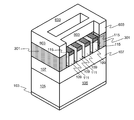
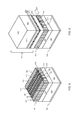
  • FIGS. 1 through 18 schematically illustrate a siloxane and organic-based MOL contact patterning flow to prevent gouging of the Rx area of a RMG device during direct patterning of the S/D contacts, in accordance with an exemplary embodiment.
  • the present disclosure addresses and solves the current problems of gouging and complicated self-aligned contact (SAC) formation attendant upon direct patterning of the S/D contacts over the Rx area of a RMG device.
  • SAC self-aligned contact
  • Methodology in accordance with embodiments of the present disclosure includes forming a SOG layer around a RMG structure, the RMG structure having a contact etch stop layer and a gate cap layer.
  • a lithography stack is formed over the SOG and gate cap layers, and TS openings are patterned through the lithography stack down to the SOG layer.
  • a portion of the SOG layer is removed through the TS openings, the removal selective to the contact etch stop layer.
  • the SOG layer is then converted to a SiO 2 layer.
  • a metal layer is formed over the SiO 2 layer, and the metal and SiO 2 layers are planarized down to the gate cap layer.
  • FIGS. 1 through 18 schematically illustrate a siloxane and organic-based MOL contact patterning flow to prevent gouging of the Rx area of a RMG device during direct patterning of the S/D contacts, in accordance with an exemplary embodiment.
  • a pre-metal dielectric (PMD) replacement process is performed by first forming a RMG structure 101 .
  • the RMG structure 101 in this example includes a nitride layer 103 ; a silicon layer 105 ; a nitride layer (not shown for illustrative convenience), e.g., an etch stop layer; a STI oxide layer 107 ; a plurality of gates 109 ; a contact etch stop layer (CESL) 111 , e.g., formed of a nitride, and a TEOS layer 113 .
  • the gates 109 also include a gate cap layer 115 and spacers (not shown for illustrative convenience).
  • the TEOS layer 113 is stripped, for example, using a wet dilute hydrofluoric acid (dHF) or SiCoNiTM, selective to nitride, e.g., the CESL 111 and gate cap layer 115 , as depicted in FIG. 2 .
  • dHF wet dilute hydrofluoric acid
  • SiCoNiTM SiCoNiTM
  • the small “bumps” on the left side of the drawing are the tops of fins covered by the CESL 111 .
  • a SOG layer 301 e.g. formed of a polysilazane-based SOG material, is formed around the RMG structure 101 .
  • the SOG layer 301 may be formed, for example, to a thickness of 10 nm to 40 nm using a photo resist coating track through spin and baking at 150° C.
  • a TEOS layer 401 is then formed over the SOG layer 301 , as depicted in FIG. 4 . Thereafter, the TEOS layer 401 and the SOG layer 301 are planarized, e.g., by chemical mechanical polishing (CMP), down to gate cap layer 115 , as depicted in FIG. 5 .
  • CMP chemical mechanical polishing
  • a lithography stack 601 is formed over the SOG layer 301 and the gate cap layer 115 .
  • the lithography stack 601 may be formed, for example, of a SOH layer 603 , a SiON layer 605 , a TEOS memory layer 607 , a BARC layer 609 , and a photoresist layer 611 .
  • the lithography stack 601 is then double-patterned, for example, using two different color TS masks in a lithography/etch/lithography/etch (LELE) scheme.
  • a first TS opening is patterned, for example, through the photoresist layer 611 down to the BARC layer 609 , as depicted in FIG. 7 .
  • the first TS opening is etched through the BARC layer 609 and the TEOS memory layer 607 down to the SiON layer 605 , and then the photoresist layer 611 and the BARC layer 609 are removed.
  • a BARC layer 901 is formed over the TEOS memory layer 607 and in the first TS opening, as depicted in FIG. 9 .
  • a photoresist layer 903 is then formed over the BARC layer 901 .
  • the second TS opening is patterned (not shown for illustrative convenience), for example, through the photoresist layer 903 down to the BARC layer 901 .
  • the second TS opening is etched through the BARC layer 901 and the TEOS memory layer 607 down to the SiON layer 605 , and then the photoresist layer 903 and the BARC layer 901 are removed, as depicted in FIG. 10 .
  • the SiON layer 605 is etched, e.g., by punch etching, non-selective to the TEOS memory layer 607 and, therefore, removing the TEOS memory layer 607 , as depicted in FIG. 11 .
  • the SOH layer 603 is etched through the first and second TS openings in the SiON layer 605 down to the SOG layer 301 .
  • a portion of the SOG layer 301 is then removed through the first and second TS openings by RIE, as depicted in FIG. 13 .
  • the SOG layer 301 is soft relative to SiO 2 , it is easy to etch selective to nitride, e.g., the CESL 111 and the gate cap layer 115 .
  • nitride e.g., the CESL 111 and the gate cap layer 115 .
  • polysilazane contains S—H, S—N bonds and, therefore, may be etched, for example, with chlorine (Cl) and fluorine (F) containing plasma, hexafluorobutadiene (C 4 F 6 ) with oxygen (O 2 ), or octafluorocyclobutane (C 4 F 8 ) with O 2 . Consequently, no gouging of the Rx area is expected.
  • the SiON layer 605 is etched selective (imperfect selectivity) to the SOG layer 301 , the CESL 111 , and the gate cap layer 115 .
  • the SOH layer 603 is stripped, and the SOG layer 301 is converted to a SiO 2 layer 1501 , as depicted in FIG. 15 .
  • the SOG layer 301 is converted to the SiO 2 layer 1501 , for example, by heating the SOG layer 301 in a high temperature furnace at a temperature of 600° C. to 800° C. for approximately one hour or heating the SOG layer 301 at a temperature of 600° C. in a wet anneal condition for 30 minutes.
  • the CESL 111 is etched in the first and second TS openings, as depicted in FIG. 16 .
  • the etching of the CESL 111 will also erode some of the gate cap layer 115 .
  • a barrier layer (not shown for illustrative convenience) is then formed, e.g., of Ti or TiN, over the SiO 2 layer 1501 and the gate cap layer 115 and in the first and second TS openings.
  • a metal layer 1701 is formed, for example, of W, over the barrier layer.
  • the metal layer 1701 and the SiO 2 layer 1501 are then planarized, e.g., by CMP, down to the gate cap layer 115 , as depicted in FIG. 18 .
  • the embodiments of the present disclosure can achieve several technical effects including taking advantage of siloxane and organic-based materials to enable direct patterning of the S/D contacts of a RMG device without gouging the Rx area or replacing materials.
  • Embodiments of the present disclosure enjoy utility in various industrial applications as, for example, microprocessors, smart phones, mobile phones, cellular handsets, set-top boxes, DVD recorders and players, automotive navigation, printers and peripherals, networking and telecom equipment, gaming systems, and digital cameras.
  • the present disclosure therefore has industrial applicability in the 10 nm technology node and beyond.

Landscapes

  • Engineering & Computer Science (AREA)
  • Manufacturing & Machinery (AREA)
  • Physics & Mathematics (AREA)
  • Condensed Matter Physics & Semiconductors (AREA)
  • General Physics & Mathematics (AREA)
  • Computer Hardware Design (AREA)
  • Microelectronics & Electronic Packaging (AREA)
  • Power Engineering (AREA)
  • Internal Circuitry In Semiconductor Integrated Circuit Devices (AREA)

Abstract

Methods of MOL S/D contact patterning of RMG devices without gouging of the Rx area or replacement of the dielectric are provided. Embodiments include forming a SOG layer around a RMG structure, the RMG structure having a contact etch stop layer and a gate cap layer; forming a lithography stack over the SOG and gate cap layers; patterning first and second TS openings through the lithography stack down to the SOG layer; removing a portion of the SOG layer through the first and second TS openings, the removing selective to the contact etch stop layer; converting the SOG layer to a SiO2 layer; forming a metal layer over the SiO2 layer; and planarizing the metal and SiO2 layers down to the gate cap layer.

Description

TECHNICAL FIELD
The present disclosure relates to a manufacture of source/drain (S/D) contacts for semiconductor devices. The present disclosure is particularly applicable to the 10 nanometer (nm) technology node and beyond.
BACKGROUND
A known flow for S/D contact formation involves etching silicon oxide (SiO2) over the S/D region of a replacement metal gate (RMG) device. However, because SiO2 is a relatively hard material, the etching can lead to gouging of the active (Rx) area. Another known flow involves replacing the dielectric and using a wet etch for the contact area. However, this makes reactive-ion etching (RIE) difficult and requires replacement of materials.
A need therefore exists for methodology enabling S/D contact formation without gouging of the Rx area or replacement of materials.
SUMMARY
An aspect of the present disclosure is method of a siloxane and organic-based middle-of-line (MOL) contact patterning flow to prevent gouging of the Rx area of a RMG device during direct patterning of the S/D contacts.
Additional aspects and other features of the present disclosure will be set forth in the description which follows and in part will be apparent to those having ordinary skill in the art upon examination of the following or may be learned from the practice of the present disclosure. The advantages of the present disclosure may be realized and obtained as particularly pointed out in the appended claims.
According to the present disclosure, some technical effects may be achieved in part by a method including: forming a spin-on glass (SOG) layer around a RMG structure, the RMG structure having a contact etch stop layer and a gate cap layer; forming a lithography stack over the SOG and gate cap layers; patterning first and second trench silicide (TS) openings through the lithography stack down to the SOG layer; removing a portion of the SOG layer through the first and second TS openings, the removing selective to the contact etch stop layer; converting the SOG layer to a SiO2 layer; forming a metal layer over the SiO2 layer; and planarizing the metal and SiO2 layers down to the gate cap layer.
Aspects of the present disclosure include forming the SOG layer of a polysilazane-based SOG material. Other aspects include the contact etch stop and gate cap layers being formed of nitride. Further aspects include forming a TEOS layer over the SOG layer; and planarizing the TEOS and SOG layers down to the gate cap layer prior to forming the lithography stack. Additional aspects include forming the lithography stack by: forming a spin-on-hardmask (SOH) layer over the SOG and gate cap layers; forming a silicon oxynitride (SiON) layer over the SOH layer; forming a TEOS memory layer over the SiON layer; forming a buried anti-reflective coating (BARC) layer over the TEOS memory layer; and forming a photoresist layer over the BARC layer. Another aspect includes patterning the first and second TS openings by: patterning the first opening through the photoresist layer down to the BARC layer; etching the first TS opening through the BARC and TEOS memory layers down to the SiON layer; stripping the BARC layer; forming a second BARC layer over the TEOS memory layer and in the first TS opening; forming a second photoresist layer over the second BARC layer; patterning the second TS opening through the second photoresist layer down to the second BARC layer; etching the second TS opening through the second BARC layer and the TEOS memory layer down to the SiON layer; etching the SiON layer through the first and second TS openings down to the SOH layer, the etching being non-selective to the TEOS memory layer; and etching the SOH layer through the first and second TS openings in the SiON layer down to the SOG layer. Other aspects include etching the SiON layer selective to the SOG, contact etch stop, and gate cap layers after removing the portion of the SOG layer; and stripping the SOH layer before converting the SOG layer into the SiO2 layer. Further aspects include removing the portion of the SOG layer by: RIE. Additional aspects include converting the SOG layer into the SiO2 layer by: heating the SOG layer in a furnace at a temperature of 600° C. to 800° C. for approximately one hour or heating the SOG layer at a temperature of 600° C. in a wet anneal condition for 30 minutes. Another aspect includes etching the contact etch stop layer in the first and second TS openings after converting the SOG layer into the SiO2 layer; and forming a barrier layer of titanium (Ti) or titanium nitride (TiN) over the SiO2 and gate cap layers and in the first and second TS openings prior to forming the metal layer. Other aspects include the metal layer being formed of tungsten (W).
Another aspect of the present disclosure is a method including: forming a polysilazane-based SOG layer around a RMG structure, the RMG structure having a nitride contact etch stop layer and a nitride gate cap layer; forming a TEOS layer over the SOG layer; planarizing the TEOS and SOG layers down to the nitride gate cap layer; forming a lithography stack over the SOG and nitride gate cap layers; patterning first and second TS openings through the lithography stack down to the SOG layer; removing a portion of the SOG layer through the first and second TS openings, the removing selective to the nitride contact etch stop layer; converting the SOG layer into a SiO2 layer after removing the portion of the SOG layer by heating the SOG layer in a furnace at a temperature of 600° C. to 800° C. for approximately one hour or heating the SOG layer at a temperature of 600° C. in a wet anneal condition for 30 minutes; etching the nitride contact etch stop layer in the first and second TS openings after converting the SOG layer into the SiO2 layer; forming a barrier layer of Ti or TiN over the SiO2 and gate cap layers and in the first and second TS openings; forming a tungsten (W) layer over the Ti or TiN barrier layer; and planarizing the W, Ti or TiN barrier, and SiO2 layers down to the nitride gate cap layer.
Aspects include of the present disclosure include forming the lithography stack by: forming a SOH layer over the SOG and gate cap layers; forming a SiON layer over the SOH layer; forming a TEOS memory layer over the SiON layer; forming a BARC layer over the TEOS memory layer; and forming a photoresist layer over the BARC layer. Other aspects include patterning the first and second TS openings by: patterning the first opening through the photoresist layer down to the BARC layer; etching the first TS opening through the BARC and TEOS memory layers down to the SiON layer; stripping the BARC layer; forming a second BARC layer over the TEOS memory layer and in the first TS opening; forming a second photoresist layer over the second BARC layer; patterning the second TS opening through the second photoresist layer down to the second BARC layer; etching the second TS opening through the second BARC layer and the TEOS memory layer down to the SiON layer; etching the SiON layer through the first and second TS openings down to the SOH layer, the etching being non-selective to the TEOS memory layer; and etching the SOH layer through the first and second TS openings in the SiON layer down to the SOG layer. Further aspects include etching the SiON layer selective to the SOG, nitride contact etch stop, and nitride gate cap layers after removing the portion of the SOG layer; and stripping the SOH layer before converting the SOG layer into the SiO2 layer. Additional aspects include removing the portion of the SOG layer by RIE.
A further aspect of the present disclosure is a method including: forming a polysilazane-based SOG layer around a RMG structure, the RMG structure having a nitride contact etch stop layer and a nitride gate cap layer; forming a TEOS layer over the SOG layer; planarizing the TEOS and SOG layers down to the nitride gate cap layer; forming a lithography stack over the SOG and nitride gate cap layers; patterning first and second TS openings through the lithography stack down to the SOG layer, the first and second TS openings being equally arranged; RIE a portion of the SOG layer through the first and second TS openings, the RIE selective to the nitride contact etch stop layer; converting the SOG layer into a SiO2 layer after RIE the portion of the SOG layer by heating the SOG layer in a furnace at a temperature of 600° C. to 800° C. for approximately one hour or heating the SOG layer at a temperature of 600° C. in a wet anneal condition for 30 minutes; etching the nitride contact etch stop layer in the first and second TS openings after converting the SOG layer into the SiO2 layer, the nitride gate cap layer recessed by the etching; forming a barrier layer of Ti or TiN over the SiO2 and gate cap layers and in the first and second TS openings; forming a W layer over the Ti or TiN barrier layer; and planarizing the W, Ti or TiN barrier, and SiO2 layers down to the nitride gate cap layer.
Aspects of the present disclosure include forming the lithography stack by: forming a SOH layer over the SOG and gate cap layers; forming a SiON layer over the SOH layer; forming a TEOS memory layer over the SiON layer; forming a BARC layer over the TEOS memory layer; and forming a photoresist layer over the BARC layer. Other aspects include patterning the first and second TS openings by: patterning the first opening through the photoresist layer down to the BARC layer; etching the first TS opening through the BARC and TEOS memory layers down to the SiON layer; stripping the BARC layer; forming a second BARC layer over the TEOS memory layer and in the first TS opening; forming a second photoresist layer over the second BARC layer; patterning the second TS opening through the second photoresist layer down to the second BARC layer; etching the second TS opening through the second BARC layer and the TEOS memory layer down to the SiON layer; etching the SiON layer through the first and second TS openings down to the SOH layer, the etching being non-selective to the TEOS memory layer; and etching the SOH layer through the first and second TS openings in the SiON layer down to the SOG layer. Further aspects include etching the SiON layer selective to the SOG, nitride contact etch stop, and nitride gate cap layers after removing the portion of the SOG layer; and stripping the SOH layer before converting the SOG layer into the SiO2 layer.
Additional aspects and technical effects of the present disclosure will become readily apparent to those skilled in the art from the following detailed description wherein embodiments of the present disclosure are described simply by way of illustration of the best mode contemplated to carry out the present disclosure. As will be realized, the present disclosure is capable of other and different embodiments, and its several details are capable of modifications in various obvious respects, all without departing from the present disclosure. Accordingly, the drawings and description are to be regarded as illustrative in nature, and not as restrictive.
BRIEF DESCRIPTION OF THE DRAWINGS
The present disclosure is illustrated by way of example, and not by way of limitation, in the figures of the accompanying drawing and in which like reference numerals refer to similar elements and in which:
FIGS. 1 through 18 schematically illustrate a siloxane and organic-based MOL contact patterning flow to prevent gouging of the Rx area of a RMG device during direct patterning of the S/D contacts, in accordance with an exemplary embodiment.
DETAILED DESCRIPTION
In the following description, for the purposes of explanation, numerous specific details are set forth in order to provide a thorough understanding of exemplary embodiments. It should be apparent, however, that exemplary embodiments may be practiced without these specific details or with an equivalent arrangement. In other instances, well-known structures and devices are shown in block diagram form in order to avoid unnecessarily obscuring exemplary embodiments. In addition, unless otherwise indicated, all numbers expressing quantities, ratios, and numerical properties of ingredients, reaction conditions, and so forth used in the specification and claims are to be understood as being modified in all instances by the term “about.”
The present disclosure addresses and solves the current problems of gouging and complicated self-aligned contact (SAC) formation attendant upon direct patterning of the S/D contacts over the Rx area of a RMG device.
Methodology in accordance with embodiments of the present disclosure includes forming a SOG layer around a RMG structure, the RMG structure having a contact etch stop layer and a gate cap layer. A lithography stack is formed over the SOG and gate cap layers, and TS openings are patterned through the lithography stack down to the SOG layer. Next, a portion of the SOG layer is removed through the TS openings, the removal selective to the contact etch stop layer. The SOG layer is then converted to a SiO2 layer. Subsequently, a metal layer is formed over the SiO2 layer, and the metal and SiO2 layers are planarized down to the gate cap layer.
Still other aspects, features, and technical effects will be readily apparent to those skilled in this art from the following detailed description, wherein preferred embodiments are shown and described, simply by way of illustration of the best mode contemplated. The disclosure is capable of other and different embodiments, and its several details are capable of modifications in various obvious respects. Accordingly, the drawings and description are to be regarded as illustrative in nature, and not as restrictive.
FIGS. 1 through 18 (orthographic views) schematically illustrate a siloxane and organic-based MOL contact patterning flow to prevent gouging of the Rx area of a RMG device during direct patterning of the S/D contacts, in accordance with an exemplary embodiment. Adverting to FIG. 1, a pre-metal dielectric (PMD) replacement process is performed by first forming a RMG structure 101. The RMG structure 101 in this example includes a nitride layer 103; a silicon layer 105; a nitride layer (not shown for illustrative convenience), e.g., an etch stop layer; a STI oxide layer 107; a plurality of gates 109; a contact etch stop layer (CESL) 111, e.g., formed of a nitride, and a TEOS layer 113. The gates 109 also include a gate cap layer 115 and spacers (not shown for illustrative convenience).
Next, the TEOS layer 113 is stripped, for example, using a wet dilute hydrofluoric acid (dHF) or SiCoNi™, selective to nitride, e.g., the CESL 111 and gate cap layer 115, as depicted in FIG. 2. The small “bumps” on the left side of the drawing are the tops of fins covered by the CESL 111. Adverting to FIG. 3, a SOG layer 301, e.g. formed of a polysilazane-based SOG material, is formed around the RMG structure 101. The SOG layer 301 may be formed, for example, to a thickness of 10 nm to 40 nm using a photo resist coating track through spin and baking at 150° C. A TEOS layer 401 is then formed over the SOG layer 301, as depicted in FIG. 4. Thereafter, the TEOS layer 401 and the SOG layer 301 are planarized, e.g., by chemical mechanical polishing (CMP), down to gate cap layer 115, as depicted in FIG. 5.
Adverting to FIG. 6, a lithography stack 601 is formed over the SOG layer 301 and the gate cap layer 115. The lithography stack 601 may be formed, for example, of a SOH layer 603, a SiON layer 605, a TEOS memory layer 607, a BARC layer 609, and a photoresist layer 611. The lithography stack 601 is then double-patterned, for example, using two different color TS masks in a lithography/etch/lithography/etch (LELE) scheme. A first TS opening is patterned, for example, through the photoresist layer 611 down to the BARC layer 609, as depicted in FIG. 7. Adverting to FIG. 8, the first TS opening is etched through the BARC layer 609 and the TEOS memory layer 607 down to the SiON layer 605, and then the photoresist layer 611 and the BARC layer 609 are removed. Next, a BARC layer 901 is formed over the TEOS memory layer 607 and in the first TS opening, as depicted in FIG. 9. A photoresist layer 903 is then formed over the BARC layer 901. The second TS opening is patterned (not shown for illustrative convenience), for example, through the photoresist layer 903 down to the BARC layer 901. The second TS opening is etched through the BARC layer 901 and the TEOS memory layer 607 down to the SiON layer 605, and then the photoresist layer 903 and the BARC layer 901 are removed, as depicted in FIG. 10.
Next, the SiON layer 605 is etched, e.g., by punch etching, non-selective to the TEOS memory layer 607 and, therefore, removing the TEOS memory layer 607, as depicted in FIG. 11. Adverting to FIG. 12, the SOH layer 603 is etched through the first and second TS openings in the SiON layer 605 down to the SOG layer 301. A portion of the SOG layer 301 is then removed through the first and second TS openings by RIE, as depicted in FIG. 13. Because the SOG layer 301 is soft relative to SiO2, it is easy to etch selective to nitride, e.g., the CESL 111 and the gate cap layer 115. For instance, polysilazane contains S—H, S—N bonds and, therefore, may be etched, for example, with chlorine (Cl) and fluorine (F) containing plasma, hexafluorobutadiene (C4F6) with oxygen (O2), or octafluorocyclobutane (C4F8) with O2. Consequently, no gouging of the Rx area is expected.
Adverting to FIG. 14, the SiON layer 605 is etched selective (imperfect selectivity) to the SOG layer 301, the CESL 111, and the gate cap layer 115. Next, the SOH layer 603 is stripped, and the SOG layer 301 is converted to a SiO2 layer 1501, as depicted in FIG. 15. The SOG layer 301 is converted to the SiO2 layer 1501, for example, by heating the SOG layer 301 in a high temperature furnace at a temperature of 600° C. to 800° C. for approximately one hour or heating the SOG layer 301 at a temperature of 600° C. in a wet anneal condition for 30 minutes.
After the SOG layer 301 is converted to the SiO2 layer 1501, the CESL 111 is etched in the first and second TS openings, as depicted in FIG. 16. The etching of the CESL 111 will also erode some of the gate cap layer 115. The recessing of the gates 109 via the partial erosion of the gate cap layer 115 enables a SAC type of integration scheme. A barrier layer (not shown for illustrative convenience) is then formed, e.g., of Ti or TiN, over the SiO2 layer 1501 and the gate cap layer 115 and in the first and second TS openings. Adverting to FIG. 17, a metal layer 1701 is formed, for example, of W, over the barrier layer. The metal layer 1701 and the SiO2 layer 1501 are then planarized, e.g., by CMP, down to the gate cap layer 115, as depicted in FIG. 18.
The embodiments of the present disclosure can achieve several technical effects including taking advantage of siloxane and organic-based materials to enable direct patterning of the S/D contacts of a RMG device without gouging the Rx area or replacing materials. Embodiments of the present disclosure enjoy utility in various industrial applications as, for example, microprocessors, smart phones, mobile phones, cellular handsets, set-top boxes, DVD recorders and players, automotive navigation, printers and peripherals, networking and telecom equipment, gaming systems, and digital cameras. The present disclosure therefore has industrial applicability in the 10 nm technology node and beyond.
In the preceding description, the present disclosure is described with reference to specifically exemplary embodiments thereof. It will, however, be evident that various modifications and changes may be made thereto without departing from the broader spirit and scope of the present disclosure, as set forth in the claims. The specification and drawings are, accordingly, to be regarded as illustrative and not as restrictive. It is understood that the present disclosure is capable of using various other combinations and embodiments and is capable of any changes or modifications within the scope of the inventive concept as expressed herein.

Claims (19)

What is claimed is:
1. A method comprising:
forming a spin-on glass (SOG) layer around a replacement metal gate (RMG) structure, the RMG structure having a contact etch stop layer and a gate cap layer;
forming a TEOS layer over the SOG layer;
planarizing the TEOS and SOG layers down to the gate cap layer;
forming a lithography stack over the SOG and gate cap layers;
patterning first and second trench silicide (TS) openings through the lithography stack down to the SOG layer;
removing a portion of the SOG layer through the first and second TS openings, the removing selective to the contact etch stop layer;
converting the SOG layer to a silicon oxide (SiO2) layer;
etching the contact etch stop layer in the first and second TS openings after converting the SOG layer into the SiO2 layer;
forming a barrier layer over the SiO2 and gate cap layers and in the first and second TS openings;
forming a metal layer over the barrier layer; and
planarizing the metal, barrier and SiO2 layers down to the gate cap layer.
2. The method according to claim 1, comprising forming the SOG layer of a polysilazane-based SOG material.
3. The method according to claim 1, wherein the contact etch stop and gate cap layers comprise nitride.
4. The method according to claim 1, comprising forming the lithography stack by:
forming a spin-on-hardmask (SOH) layer over the SOG and gate cap layers;
forming a silicon oxynitride (SiON) layer over the SOH layer;
forming a TEOS memory layer over the SiON layer;
forming a buried anti-reflective coating (BARC) layer over the TEOS memory layer; and
forming a photoresist layer over the BARC layer.
5. The method according to claim 4, comprising patterning the first and second TS openings by:
patterning the first opening through the photoresist layer down to the BARC layer;
etching the first TS opening through the BARC and TEOS memory layers down to the SiON layer;
stripping the BARC layer;
forming a second BARC layer over the TEOS memory layer and in the first TS opening;
forming a second photoresist layer over the second BARC layer;
patterning the second TS opening through the second photoresist layer down to the second BARC layer;
etching the second TS opening through the second BARC layer and the TEOS memory layer down to the SiON layer;
etching the SiON layer through the first and second TS openings down to the SOH layer, the etching being non-selective to the TEOS memory layer; and
etching the SOH layer through the first and second TS openings in the SiON layer down to the SOG layer.
6. The method according to claim 5, comprising:
etching the SiON layer selective to the SOG, contact etch stop, and gate cap layers after removing the portion of the SOG layer; and
stripping the SOH layer before converting the SOG layer into the SiO2 layer.
7. The method according to claim 1, comprising removing the portion of the SOG layer by:
reactive-ion etching (RIE).
8. The method according to claim 1, comprising converting the SOG layer into the SiO2 layer by:
heating the SOG layer in a furnace at a temperature of 600° C. to 800° C. for approximately one hour or heating the SOG layer at a temperature of 600° C. in a wet anneal condition for 30 minutes.
9. The method according to claim 1, comprising:
forming the barrier layer of titanium (Ti) or titanium nitride (TiN) over the SiO2 and gate cap layers and in the first and second TS openings prior to forming the metal layer.
10. The method according to claim 1, wherein the metal layer comprises tungsten (W).
11. A method comprising:
forming a polysilazane-based spin-on glass (SOG) layer around a replacement metal gate (RMG) structure, the RMG structure having a nitride contact etch stop layer and a nitride gate cap layer;
forming a TEOS layer over the SOG layer;
planarizing the TEOS and SOG layers down to the nitride gate cap layer;
forming a lithography stack over the SOG and nitride gate cap layers;
patterning first and second trench silicide (TS) openings through the lithography stack down to the SOG layer;
removing a portion of the SOG layer through the first and second TS openings, the removing selective to the nitride contact etch stop layer;
converting the SOG layer into a silicon oxide (SiO2) layer after removing the portion of the SOG layer by heating the SOG layer in a furnace at a temperature of 600° C. to 800° C. for approximately one hour or heating the SOG layer at a temperature of 600° C. in a wet anneal condition for 30 minutes;
etching the nitride contact etch stop layer in the first and second TS openings after converting the SOG layer into the SiO2 layer;
forming a barrier layer of titanium (Ti) or titanium nitride (TiN) over the SiO2 and gate cap layers and in the first and second TS openings;
forming a tungsten (W) layer over the Ti or TiN barrier layer; and
planarizing the W, Ti or TiN barrier, and SiO2 layers down to the nitride gate cap layer.
12. The method according to claim 11, comprising forming the lithography stack by:
forming a spin-on-hardmask (SOH) layer over the SOG and gate cap layers;
forming a silicon oxynitride (SiON) layer over the SOH layer;
forming a TEOS memory layer over the SiON layer;
forming a buried anti-reflective coating (BARC) layer over the TEOS memory layer; and
forming a photoresist layer over the BARC layer.
13. The method according to claim 12, comprising patterning the first and second TS openings by:
patterning the first opening through the photoresist layer down to the BARC layer;
etching the first TS opening through the BARC and TEOS memory layers down to the SiON layer;
stripping the BARC layer;
forming a second BARC layer over the TEOS memory layer and in the first TS opening;
forming a second photoresist layer over the second BARC layer;
patterning the second TS opening through the second photoresist layer down to the second BARC layer;
etching the second TS opening through the second BARC layer and the TEOS memory layer down to the SiON layer;
etching the SiON layer through the first and second TS openings down to the SOH layer, the etching being non-selective to the TEOS memory layer; and
etching the SOH layer through the first and second TS openings in the SiON layer down to the SOG layer.
14. The method according to claim 12, further comprising:
etching the SiON layer selective to the SOG, nitride contact etch stop, and nitride gate cap layers after removing the portion of the SOG layer; and
stripping the SOH layer before converting the SOG layer into the SiO2 layer.
15. The method according to claim 11, comprising removing the portion of the SOG layer by reactive-ion etching (RIE).
16. A method comprising:
forming a polysilazane-based spin-on glass (SOG) layer around a replacement metal gate (RMG) structure, the RMG structure having a nitride contact etch stop layer and a nitride gate cap layer;
forming a TEOS layer over the SOG layer;
planarizing the TEOS and SOG layers down to the nitride gate cap layer;
forming a lithography stack over the SOG and nitride gate cap layers;
patterning first and second trench silicide (TS) openings through the lithography stack down to the SOG layer, the first and second TS openings being equally arranged;
reactive-ion etching (RIE) a portion of the SOG layer through the first and second TS openings, the RIE selective to the nitride contact etch stop layer;
converting the SOG layer into a silicon oxide (SiO2) layer after RIE the portion of the SOG layer by heating the SOG layer in a furnace at a temperature of 600° C. to 800° C. for approximately one hour or heating the SOG layer at a temperature of 600° C. in a wet anneal condition for 30 minutes;
etching the nitride contact etch stop layer in the first and second TS openings after converting the SOG layer into the SiO2 layer, the nitride gate cap layer recessed by the etching;
forming a barrier layer of titanium (Ti) or titanium nitride (TiN) over the SiO2 and gate cap layers and in the first and second TS openings;
forming a tungsten (W) layer over the Ti or TiN barrier layer; and
planarizing the W, Ti or TiN barrier, and SiO2 layers down to the nitride gate cap layer.
17. The method according to claim 16, comprising forming the lithography stack by:
forming a spin-on-hardmask (SOH) layer over the SOG and gate cap layers;
forming a silicon oxynitride (SiON) layer over the SOH layer;
forming a TEOS memory layer over the SiON layer;
forming a buried anti-reflective coating (BARC) layer over the TEOS memory layer; and
forming a photoresist layer over the BARC layer.
18. The method according to claim 17, comprising patterning the first and second TS openings by:
patterning the first opening through the photoresist layer down to the BARC layer;
etching the first TS opening through the BARC and TEOS memory layers down to the SiON layer;
stripping the BARC layer;
forming a second BARC layer over the TEOS memory layer and in the first TS opening;
forming a second photoresist layer over the second BARC layer;
patterning the second TS opening through the second photoresist layer down to the second BARC layer;
etching the second TS opening through the second BARC layer and the TEOS memory layer down to the SiON layer;
etching the SiON layer through the first and second TS openings down to the SOH layer, the etching being non-selective to the TEOS memory layer; and
etching the SOH layer through the first and second TS openings in the SiON layer down to the SOG layer.
19. The method according to claim 17, further comprising:
etching the SiON layer selective to the SOG, nitride contact etch stop, and nitride gate cap layers after removing the portion of the SOG layer; and
stripping the SOH layer before converting the SOG layer into the SiO2 layer.
US14/993,537 2016-01-12 2016-01-12 Siloxane and organic-based MOL contact patterning Active 2036-03-31 US10056458B2 (en)

Priority Applications (1)

Application Number Priority Date Filing Date Title
US14/993,537 US10056458B2 (en) 2016-01-12 2016-01-12 Siloxane and organic-based MOL contact patterning

Applications Claiming Priority (1)

Application Number Priority Date Filing Date Title
US14/993,537 US10056458B2 (en) 2016-01-12 2016-01-12 Siloxane and organic-based MOL contact patterning

Publications (2)

Publication Number Publication Date
US20170200792A1 US20170200792A1 (en) 2017-07-13
US10056458B2 true US10056458B2 (en) 2018-08-21

Family

ID=59276434

Family Applications (1)

Application Number Title Priority Date Filing Date
US14/993,537 Active 2036-03-31 US10056458B2 (en) 2016-01-12 2016-01-12 Siloxane and organic-based MOL contact patterning

Country Status (1)

Country Link
US (1) US10056458B2 (en)

Citations (10)

* Cited by examiner, † Cited by third party
Publication number Priority date Publication date Assignee Title
US5459086A (en) * 1994-11-07 1995-10-17 United Microelectronics Corporation Metal via sidewall tilt angle implant for SOG
US5643407A (en) * 1994-09-30 1997-07-01 Taiwan Semiconductor Manufacturing Company, Ltd. Solving the poison via problem by adding N2 plasma treatment after via etching
US6074939A (en) * 1997-02-27 2000-06-13 Nec Corporation Method for fabricating semiconductor device
US6165905A (en) * 1999-01-20 2000-12-26 Philips Electronics, North America Corp. Methods for making reliable via structures having hydrophobic inner wall surfaces
US6645879B2 (en) * 2001-08-18 2003-11-11 Samsung Electronics Co., Ltd. Method of forming a silicon oxide layer of a semiconductor device and method of forming a wiring having the same
US7482267B2 (en) * 2005-04-22 2009-01-27 Ami Semiconductor Belgium Bvba Ion implantation of spin on glass materials
US7585786B2 (en) * 2003-12-10 2009-09-08 Samsung Electronics Co., Ltd. Methods of forming spin-on-glass insulating layers in semiconductor devices and associated semiconductor device
US20130248999A1 (en) * 1999-09-28 2013-09-26 Glenn A. Glass Contact resistance reduction employing germanium overlayer pre-contact metalization
US20130309856A1 (en) * 2012-05-15 2013-11-21 International Business Machines Corporation Etch resistant barrier for replacement gate integration
US20160172356A1 (en) * 2014-12-10 2016-06-16 International Business Machines Corporation Inter-level dielectric layer in replacement metal gates and resistor fabrication

Patent Citations (10)

* Cited by examiner, † Cited by third party
Publication number Priority date Publication date Assignee Title
US5643407A (en) * 1994-09-30 1997-07-01 Taiwan Semiconductor Manufacturing Company, Ltd. Solving the poison via problem by adding N2 plasma treatment after via etching
US5459086A (en) * 1994-11-07 1995-10-17 United Microelectronics Corporation Metal via sidewall tilt angle implant for SOG
US6074939A (en) * 1997-02-27 2000-06-13 Nec Corporation Method for fabricating semiconductor device
US6165905A (en) * 1999-01-20 2000-12-26 Philips Electronics, North America Corp. Methods for making reliable via structures having hydrophobic inner wall surfaces
US20130248999A1 (en) * 1999-09-28 2013-09-26 Glenn A. Glass Contact resistance reduction employing germanium overlayer pre-contact metalization
US6645879B2 (en) * 2001-08-18 2003-11-11 Samsung Electronics Co., Ltd. Method of forming a silicon oxide layer of a semiconductor device and method of forming a wiring having the same
US7585786B2 (en) * 2003-12-10 2009-09-08 Samsung Electronics Co., Ltd. Methods of forming spin-on-glass insulating layers in semiconductor devices and associated semiconductor device
US7482267B2 (en) * 2005-04-22 2009-01-27 Ami Semiconductor Belgium Bvba Ion implantation of spin on glass materials
US20130309856A1 (en) * 2012-05-15 2013-11-21 International Business Machines Corporation Etch resistant barrier for replacement gate integration
US20160172356A1 (en) * 2014-12-10 2016-06-16 International Business Machines Corporation Inter-level dielectric layer in replacement metal gates and resistor fabrication

Non-Patent Citations (1)

* Cited by examiner, † Cited by third party
Title
Honeywell, "Honeywell Electronic Materials: Electronic Polymers Overview", Dec. 2014, 18 Pages.

Also Published As

Publication number Publication date
US20170200792A1 (en) 2017-07-13

Similar Documents

Publication Publication Date Title
US9478462B1 (en) SAV using selective SAQP/SADP
US11217678B2 (en) Differential SG/EG spacer integration with equivalent NFET/PFET spacer widths and dual raised source drain expitaxial silicon and triple-nitride spacer integration enabling high-voltage EG device on FDSOI
US9960077B1 (en) Ultra-scale gate cut pillar with overlay immunity and method for producing the same
US8518775B2 (en) Integration of eNVM, RMG, and HKMG modules
US8679968B2 (en) Method for forming a self-aligned contact opening by a lateral etch
US9419101B1 (en) Multi-layer spacer used in finFET
US9425097B1 (en) Cut first alternative for 2D self-aligned via
US10211103B1 (en) Advanced structure for self-aligned contact and method for producing the same
US9859125B2 (en) Block patterning method enabling merged space in SRAM with heterogeneous mandrel
TW201436230A (en) Semiconductor device and method of manufacturing same
CN102543696A (en) A method of manufacturing a semiconductor device
CN103545185B (en) A kind of method that use dummy grid manufactures semiconductor devices
CN108878292B (en) FINFET device and method of forming the same
US20080268589A1 (en) Shallow trench divot control post
CN106898575B (en) Semiconductor device, manufacturing method thereof and electronic device
US10056458B2 (en) Siloxane and organic-based MOL contact patterning
US20140353728A1 (en) Method and apparatus for a reduced capacitance middle-of-the-line (mol) nitride stack
CN103794479B (en) A kind of manufacture method of semiconductor device
CN108735670A (en) A kind of semiconductor devices and its manufacturing method and electronic device
US9972621B1 (en) Fin structure in sublitho dimension for high performance CMOS application
US9698018B1 (en) Introducing self-aligned dopants in semiconductor fins
US9875936B1 (en) Spacer defined fin growth and differential fin width
CN105990237A (en) Semiconductor device, manufacturing method thereof, and electronic device
CN103579110B (en) A kind of manufacture method of semiconductor device
CN104037073A (en) Manufacture method of semiconductor device

Legal Events

Date Code Title Description
AS Assignment

Owner name: GLOBALFOUNDRIES INC., CAYMAN ISLANDS

Free format text: ASSIGNMENT OF ASSIGNORS INTEREST;ASSIGNORS:MAENG, CHANG HO;WEI, ANDY;OZZELLO, ANTHONY;AND OTHERS;SIGNING DATES FROM 20151215 TO 20151221;REEL/FRAME:037467/0427

STCF Information on status: patent grant

Free format text: PATENTED CASE

AS Assignment

Owner name: WILMINGTON TRUST, NATIONAL ASSOCIATION, DELAWARE

Free format text: SECURITY AGREEMENT;ASSIGNOR:GLOBALFOUNDRIES INC.;REEL/FRAME:049490/0001

Effective date: 20181127

AS Assignment

Owner name: GLOBALFOUNDRIES U.S. INC., CALIFORNIA

Free format text: ASSIGNMENT OF ASSIGNORS INTEREST;ASSIGNOR:GLOBALFOUNDRIES INC.;REEL/FRAME:054633/0001

Effective date: 20201022

AS Assignment

Owner name: GLOBALFOUNDRIES INC., CAYMAN ISLANDS

Free format text: RELEASE BY SECURED PARTY;ASSIGNOR:WILMINGTON TRUST, NATIONAL ASSOCIATION;REEL/FRAME:054636/0001

Effective date: 20201117

AS Assignment

Owner name: GLOBALFOUNDRIES U.S. INC., NEW YORK

Free format text: RELEASE BY SECURED PARTY;ASSIGNOR:WILMINGTON TRUST, NATIONAL ASSOCIATION;REEL/FRAME:056987/0001

Effective date: 20201117

Owner name: GLOBALFOUNDRIES U.S. INC., NEW YORK

Free format text: RELEASE OF SECURITY INTEREST;ASSIGNOR:WILMINGTON TRUST, NATIONAL ASSOCIATION;REEL/FRAME:056987/0001

Effective date: 20201117

MAFP Maintenance fee payment

Free format text: PAYMENT OF MAINTENANCE FEE, 4TH YEAR, LARGE ENTITY (ORIGINAL EVENT CODE: M1551); ENTITY STATUS OF PATENT OWNER: LARGE ENTITY

Year of fee payment: 4