US10035481B2 - Method and system for independent management of the lighting and/or signalling of vehicles - Google Patents
Method and system for independent management of the lighting and/or signalling of vehicles Download PDFInfo
- Publication number
- US10035481B2 US10035481B2 US14/783,080 US201414783080A US10035481B2 US 10035481 B2 US10035481 B2 US 10035481B2 US 201414783080 A US201414783080 A US 201414783080A US 10035481 B2 US10035481 B2 US 10035481B2
- Authority
- US
- United States
- Prior art keywords
- battery pack
- trailer
- kit
- energy
- semi
- Prior art date
- Legal status (The legal status is an assumption and is not a legal conclusion. Google has not performed a legal analysis and makes no representation as to the accuracy of the status listed.)
- Active, expires
Links
Images




Classifications
-
- B—PERFORMING OPERATIONS; TRANSPORTING
- B60—VEHICLES IN GENERAL
- B60R—VEHICLES, VEHICLE FITTINGS, OR VEHICLE PARTS, NOT OTHERWISE PROVIDED FOR
- B60R16/00—Electric or fluid circuits specially adapted for vehicles and not otherwise provided for; Arrangement of elements of electric or fluid circuits specially adapted for vehicles and not otherwise provided for
- B60R16/02—Electric or fluid circuits specially adapted for vehicles and not otherwise provided for; Arrangement of elements of electric or fluid circuits specially adapted for vehicles and not otherwise provided for electric constitutive elements
- B60R16/03—Electric or fluid circuits specially adapted for vehicles and not otherwise provided for; Arrangement of elements of electric or fluid circuits specially adapted for vehicles and not otherwise provided for electric constitutive elements for supply of electrical power to vehicle subsystems or for
- B60R16/033—Electric or fluid circuits specially adapted for vehicles and not otherwise provided for; Arrangement of elements of electric or fluid circuits specially adapted for vehicles and not otherwise provided for electric constitutive elements for supply of electrical power to vehicle subsystems or for characterised by the use of electrical cells or batteries
-
- B—PERFORMING OPERATIONS; TRANSPORTING
- B60—VEHICLES IN GENERAL
- B60Q—ARRANGEMENT OF SIGNALLING OR LIGHTING DEVICES, THE MOUNTING OR SUPPORTING THEREOF OR CIRCUITS THEREFOR, FOR VEHICLES IN GENERAL
- B60Q1/00—Arrangement of optical signalling or lighting devices, the mounting or supporting thereof or circuits therefor
- B60Q1/26—Arrangement of optical signalling or lighting devices, the mounting or supporting thereof or circuits therefor the devices being primarily intended to indicate the vehicle, or parts thereof, or to give signals, to other traffic
-
- B—PERFORMING OPERATIONS; TRANSPORTING
- B60—VEHICLES IN GENERAL
- B60Q—ARRANGEMENT OF SIGNALLING OR LIGHTING DEVICES, THE MOUNTING OR SUPPORTING THEREOF OR CIRCUITS THEREFOR, FOR VEHICLES IN GENERAL
- B60Q1/00—Arrangement of optical signalling or lighting devices, the mounting or supporting thereof or circuits therefor
- B60Q1/26—Arrangement of optical signalling or lighting devices, the mounting or supporting thereof or circuits therefor the devices being primarily intended to indicate the vehicle, or parts thereof, or to give signals, to other traffic
- B60Q1/30—Arrangement of optical signalling or lighting devices, the mounting or supporting thereof or circuits therefor the devices being primarily intended to indicate the vehicle, or parts thereof, or to give signals, to other traffic for indicating rear of vehicle, e.g. by means of reflecting surfaces
- B60Q1/305—Indicating devices for towed vehicles
-
- B—PERFORMING OPERATIONS; TRANSPORTING
- B60—VEHICLES IN GENERAL
- B60Q—ARRANGEMENT OF SIGNALLING OR LIGHTING DEVICES, THE MOUNTING OR SUPPORTING THEREOF OR CIRCUITS THEREFOR, FOR VEHICLES IN GENERAL
- B60Q1/00—Arrangement of optical signalling or lighting devices, the mounting or supporting thereof or circuits therefor
- B60Q1/26—Arrangement of optical signalling or lighting devices, the mounting or supporting thereof or circuits therefor the devices being primarily intended to indicate the vehicle, or parts thereof, or to give signals, to other traffic
- B60Q1/32—Arrangement of optical signalling or lighting devices, the mounting or supporting thereof or circuits therefor the devices being primarily intended to indicate the vehicle, or parts thereof, or to give signals, to other traffic for indicating vehicle sides, e.g. clearance lights
-
- H—ELECTRICITY
- H02—GENERATION; CONVERSION OR DISTRIBUTION OF ELECTRIC POWER
- H02J—CIRCUIT ARRANGEMENTS OR SYSTEMS FOR SUPPLYING OR DISTRIBUTING ELECTRIC POWER; SYSTEMS FOR STORING ELECTRIC ENERGY
- H02J7/00—Circuit arrangements for charging or depolarising batteries or for supplying loads from batteries
-
- H—ELECTRICITY
- H02—GENERATION; CONVERSION OR DISTRIBUTION OF ELECTRIC POWER
- H02J—CIRCUIT ARRANGEMENTS OR SYSTEMS FOR SUPPLYING OR DISTRIBUTING ELECTRIC POWER; SYSTEMS FOR STORING ELECTRIC ENERGY
- H02J7/00—Circuit arrangements for charging or depolarising batteries or for supplying loads from batteries
- H02J7/0029—Circuit arrangements for charging or depolarising batteries or for supplying loads from batteries with safety or protection devices or circuits
-
- H02J7/0052—
-
- H—ELECTRICITY
- H02—GENERATION; CONVERSION OR DISTRIBUTION OF ELECTRIC POWER
- H02J—CIRCUIT ARRANGEMENTS OR SYSTEMS FOR SUPPLYING OR DISTRIBUTING ELECTRIC POWER; SYSTEMS FOR STORING ELECTRIC ENERGY
- H02J7/00—Circuit arrangements for charging or depolarising batteries or for supplying loads from batteries
- H02J7/007—Regulation of charging or discharging current or voltage
-
- H—ELECTRICITY
- H02—GENERATION; CONVERSION OR DISTRIBUTION OF ELECTRIC POWER
- H02J—CIRCUIT ARRANGEMENTS OR SYSTEMS FOR SUPPLYING OR DISTRIBUTING ELECTRIC POWER; SYSTEMS FOR STORING ELECTRIC ENERGY
- H02J7/00—Circuit arrangements for charging or depolarising batteries or for supplying loads from batteries
- H02J7/34—Parallel operation in networks using both storage and other DC sources, e.g. providing buffering
- H02J7/35—Parallel operation in networks using both storage and other DC sources, e.g. providing buffering with light sensitive cells
-
- B—PERFORMING OPERATIONS; TRANSPORTING
- B60—VEHICLES IN GENERAL
- B60Q—ARRANGEMENT OF SIGNALLING OR LIGHTING DEVICES, THE MOUNTING OR SUPPORTING THEREOF OR CIRCUITS THEREFOR, FOR VEHICLES IN GENERAL
- B60Q2900/00—Features of lamps not covered by other groups in B60Q
- B60Q2900/10—Retrofit arrangements
-
- B—PERFORMING OPERATIONS; TRANSPORTING
- B60—VEHICLES IN GENERAL
- B60Q—ARRANGEMENT OF SIGNALLING OR LIGHTING DEVICES, THE MOUNTING OR SUPPORTING THEREOF OR CIRCUITS THEREFOR, FOR VEHICLES IN GENERAL
- B60Q2900/00—Features of lamps not covered by other groups in B60Q
- B60Q2900/30—Lamps commanded by wireless transmissions
-
- H02J2007/004—
-
- H02J7/63—
-
- Y—GENERAL TAGGING OF NEW TECHNOLOGICAL DEVELOPMENTS; GENERAL TAGGING OF CROSS-SECTIONAL TECHNOLOGIES SPANNING OVER SEVERAL SECTIONS OF THE IPC; TECHNICAL SUBJECTS COVERED BY FORMER USPC CROSS-REFERENCE ART COLLECTIONS [XRACs] AND DIGESTS
- Y02—TECHNOLOGIES OR APPLICATIONS FOR MITIGATION OR ADAPTATION AGAINST CLIMATE CHANGE
- Y02T—CLIMATE CHANGE MITIGATION TECHNOLOGIES RELATED TO TRANSPORTATION
- Y02T10/00—Road transport of goods or passengers
- Y02T10/80—Technologies aiming to reduce greenhouse gasses emissions common to all road transportation technologies
- Y02T10/92—Energy efficient charging or discharging systems for batteries, ultracapacitors, supercapacitors or double-layer capacitors specially adapted for vehicles
Definitions
- the present invention relates to the field of lighting methods and systems and more precisely for vehicles of any type: semi-trailers, trailers, campers, trucks, etc.
- the system is able to recover the mechanical energy produced, for example from the tractor, from the moving vehicle, and convert the energy into electric energy, accumulating the energy in the suitable batteries.
- the system disclosed here is completely independent of the structure of the vehicle and the kit thereof can be subsequently mounted and installed parallel to the lighting system that is already present in the vehicle.
- trailers, semi-trailers is supplied by the general system of the tractor of the vehicle (tractor) through a male/female connecting plug, this connection is obligatory because only the tractor has the electric energy to permit operation both at night and day of the lighting devices used on the vehicle.
- the signalling lights or position of the entire articulated truck are switched off because if they were kept on and with the engine switched off the battery would run down in a short period of time, compromising the function of the vehicle; whereas in the case of a switched-on engine, fuel would be consumed and a contribution to the emission of environmental pollutants would be obtained unnecessarily.
- the aim of the present invention is to solve the aforesaid drawbacks by providing the prior art with a method and system in a kit that is suitable for solving the problem of the lack of lighting of articulated trucks with trailers and semi-trailers and the case in which the trailer or semi-truck is totally disconnected from the truck.
- Another object of the present invention is to solve the problem of the lack of lighting of the vehicle when it is stationary, for example in unlit lay-bys, near bends, whilst waiting to be loaded/unloaded etc, without using the system already present in the vehicle.
- a further object is to make the system work that is disclosed here by recovering the mechanical energy produced by the vehicle moving and converting the mechanical energy into electrical energy to be accumulated, if it is not required, into batteries.
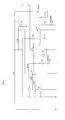
- FIG. 1 the operating diagram of the independent system of lighting or signalling that is applicable to vehicles that is the object of the invention
- FIG. 2 this illustrates the circuit diagram that manages the electric energy produced by the generator
- FIG. 3 this illustrates the advantage that is obtainable from the independent kit, once it has been applied to the vehicle,
- FIG. 4 this illustrates the prior art of the vehicles devoid of an independent kit in object.
- the overall kit is indicated for independent lighting of a vehicle.
- the invention disclosed here is applicable to any type of vehicle such as semi-trailers, trailers, campers, trucks, etc.
- the kit 10 in question mainly consists of at least:
- the lighting system of the vehicle is illustrated overall. Although it is not part of the kit in question, it is also depicted because it is indispensable for operation. It is already present on the vehicle.
- the generating system can be of two types:
- the choice of generation system to be applied is substantially connected to the type of trailer and semi-trailer under consideration.
- the converter circuit or load adjuster is indicated; this is used to adjust the dispensed current of the generator so as to make the current suitable for the field of use of the battery, when MOSFET 1 is running, the battery charges whereas when MOSFET 2 is running, the battery supplies the charge.
- MOSFET 1 is driven by a comparator that ensures that the battery is protected from overcharge, whereas the drive signal of MOSFET 2 protects the battery, preventing the battery becoming completely exhausted; this operation enables optimum battery performance and greater lifetime to be obtained.
- the signals managing the adjusting circuit are managed by the control circuit.
- control circuit is indicated, which is based on a microprocessor that is able to manage in an optimum manner the entire system, battery charging discharging, when to supply the charge, managing the various signals, etc.
- said battery pack will be able to supply the load for a long time, up to 48 h considering that almost all the semi-trailers or trailers are provided with LED signalling (thus with very low energy consumption, duration is much longer in the absence of generation).
- a transmitter/remote control for activating and/or deactivating the system if it is voluntarily desired to keep the parked vehicle non lighted.
- the plug 8 ensures the flow of current from the tractor to the trailer/semi-trailer when the tractor is operating and if the tractor is switched off, ensures the flow of current from the kit in question to the lighting system of the trailer but never ensures the flow of current from the tractor to the kit because the latter is totally independent and above all does not influence the electrical operation of the truck.
Landscapes
- Engineering & Computer Science (AREA)
- Mechanical Engineering (AREA)
- Power Engineering (AREA)
- Lighting Device Outwards From Vehicle And Optical Signal (AREA)
- Electric Propulsion And Braking For Vehicles (AREA)
Abstract
The Independent lighting and signalling kit (10) is an innovative light system of semi-trailers trailers (7), campers and trucks that uses the best technologies. It is able to recover alternative energy and convert it into electric energy, accumulating it in the appropriate batteries (4), if necessary in situations that ensure road safety is improved, saving human lives. It is a system that is completely independent of the structure of the vehicle that can be installed subsequently. The disclosed device is able to improve road safety, reduce road accidents involving vehicles that collide against trailers or semitrailers parked in rest areas with poor or no visibility.
Description
The present invention relates to the field of lighting methods and systems and more precisely for vehicles of any type: semi-trailers, trailers, campers, trucks, etc.
The system is able to recover the mechanical energy produced, for example from the tractor, from the moving vehicle, and convert the energy into electric energy, accumulating the energy in the suitable batteries.
The system disclosed here is completely independent of the structure of the vehicle and the kit thereof can be subsequently mounted and installed parallel to the lighting system that is already present in the vehicle.
Currently the lighting or signalling system: trailers, semi-trailers, is supplied by the general system of the tractor of the vehicle (tractor) through a male/female connecting plug, this connection is obligatory because only the tractor has the electric energy to permit operation both at night and day of the lighting devices used on the vehicle.
Usually, in the case of long waits, the signalling lights or position of the entire articulated truck (tractor with trailer) are switched off because if they were kept on and with the engine switched off the battery would run down in a short period of time, compromising the function of the vehicle; whereas in the case of a switched-on engine, fuel would be consumed and a contribution to the emission of environmental pollutants would be obtained unnecessarily.
The aim of the present invention is to solve the aforesaid drawbacks by providing the prior art with a method and system in a kit that is suitable for solving the problem of the lack of lighting of articulated trucks with trailers and semi-trailers and the case in which the trailer or semi-truck is totally disconnected from the truck.
Another object of the present invention is to solve the problem of the lack of lighting of the vehicle when it is stationary, for example in unlit lay-bys, near bends, whilst waiting to be loaded/unloaded etc, without using the system already present in the vehicle.
A further object is to make the system work that is disclosed here by recovering the mechanical energy produced by the vehicle moving and converting the mechanical energy into electrical energy to be accumulated, if it is not required, into batteries.
Amongst the advantages, it must be stated that:
-
- the claimed system is completely independent of the structure of the vehicle and the kit thereof can be mounted subsequently and installed parallel to the lighting system that is already present in the vehicle;
- the system of the vehicle is not affected;
- a significant contribution is given to saving human lives because the system always works in the vehicles, especially when it is stationary.
Such objects and advantages are all reached by the kit for independent lighting or signalling that is applicable to vehicles and operates with mechanical energy produced by said vehicle that is the object of the invention that is characterised by what is set out in the claims below.
This and further characteristics of the invention will be better highlighted in the following description of some embodiments thereof, illustrated, in the form of a non-limiting example, with the help of accompanying drawings.
With particular reference to the figures, with 10 the overall kit is indicated for independent lighting of a vehicle. Nevertheless, the invention disclosed here is applicable to any type of vehicle such as semi-trailers, trailers, campers, trucks, etc.
The kit 10 in question mainly consists of at least:
-
- a generating
system 1, - a converter circuit or charge adjuster 2,
- a
control unit 3, - a
battery pack 4, - a
photoelectric sensor 5, - a transmitter/
receiver 6, -
a connecting plug 8.
- a generating
With 7, the lighting system of the vehicle is illustrated overall. Although it is not part of the kit in question, it is also depicted because it is indispensable for operation. It is already present on the vehicle.
The generating system can be of two types:
-
- the first type consists of an electric generator with a suitable reduction gear and mechanical supports connected mechanically to the axle of the trailer/semi-trailer in a structurally non-invasive manner, creating a system that is able to recover mechanical energy and convert it into electric energy.
- The second type consists of photovoltaic cells installed on a suitable photovoltaic cells installed on a suitable shelf supporting the photovoltaic cells in the upper zone of the semi-trailer so as not to take up space, generating electric energy from solar radiation.
The choice of generation system to be applied is substantially connected to the type of trailer and semi-trailer under consideration.
With 2 the converter circuit or load adjuster is indicated; this is used to adjust the dispensed current of the generator so as to make the current suitable for the field of use of the battery, when MOSFET 1 is running, the battery charges whereas when MOSFET 2 is running, the battery supplies the charge.
MOSFET1 is driven by a comparator that ensures that the battery is protected from overcharge, whereas the drive signal of MOSFET2 protects the battery, preventing the battery becoming completely exhausted; this operation enables optimum battery performance and greater lifetime to be obtained. The signals managing the adjusting circuit are managed by the control circuit.
With 3, the control circuit is indicated, which is based on a microprocessor that is able to manage in an optimum manner the entire system, battery charging discharging, when to supply the charge, managing the various signals, etc.
With 4 one or more batteries or energy storage batteries are indicated: said battery pack will be able to supply the load for a long time, up to 48 h considering that almost all the semi-trailers or trailers are provided with LED signalling (thus with very low energy consumption, duration is much longer in the absence of generation).
With 5 the presence of a photodetector is observed that is suitable for reporting to the control unit whether the vehicle is in a zone with or without light.
With 6 a transmitter/remote control for activating and/or deactivating the system if it is voluntarily desired to keep the parked vehicle non lighted.
Lastly, 8 indicates a connecting plug.
The plug 8 ensures the flow of current from the tractor to the trailer/semi-trailer when the tractor is operating and if the tractor is switched off, ensures the flow of current from the kit in question to the lighting system of the trailer but never ensures the flow of current from the tractor to the kit because the latter is totally independent and above all does not influence the electrical operation of the truck.
Claims (9)
1. A lighting and signaling kit (10) for a lighting system of semi-trailers, trailers, campers, and trucks to recover alternative energy and convert said energy into electric energy, accumulating the electric energy in batteries to make said electric energy available when needed to ensure improved road safety, characterized in that the kit comprises at least:
a. a generation system (1) connected to a trailer or semi-trailer,
b. a converter circuit or load adjuster (2) connected to the generation system for adjusting currents of the generation system,
c. a control unit (3) in communication with the converter circuit or load adjuster for managing the signaling system,
d. a battery pack (4) connected to the load adjuster,
e. a photoelectric sensor (5) connected to the control unit,
f. a transmitter/receiver (6) that communicates with the control unit, and
g. a connecting plug (8) that provides a flow of current from a tractor to the trailer or semi-trailer when the tractor is operating, and provides a flow of current from the battery pack to the lighting system of semi-trailers, trailers, campers, and trucks when the tractor is not operating.
2. The kit according to claim 1 , characterized in that said generating system (1) consists of an electric generator with a reduction gear and mechanical supports connected mechanically to an axle of the semi-trailer, trailer, camper, or truck, creating a system that is capable of recovering mechanical energy and converting the mechanical energy into electric energy.
3. The kit according to claim 1 , characterized in that said generating system (1) consists of photovoltaic cells that are installable in an upper zone of a semi-trailer, trailer, camper, or truck, generating electric energy from the solar energy.
4. The kit according to claim 1 , characterized in that said converter circuit or load adjuster (2) adjusts the currents dispensed by the generation system so as to make the currents suitable for the field of use of the battery pack; particularly when the MOSFET MOS1 runs, the battery pack charges whereas when MOSFET MOS2 runs, the battery pack supplies a charge; MOSFET MOS1 is driven by a comparator that ensures protection against battery overcharge whereas a control signal of MOSFET MOS2 protects the battery pack, preventing said battery pack from draining.
5. The kit according to claim 1 or 4 , characterized in that the control circuit (3) is a microprocessor that is able to manage battery charging and discharging, the time for supplying a charge, and what signals to send.
6. The kit according to claim 1 , characterized in that the battery pack consists of at least one battery or energy storage battery.
7. The kit according to claim 1 , characterized in that the photoelectric sensor (5) reports to the control unit whether the vehicle is in a zone with or without light.
8. The kit according to claim 1 , characterized in that the transmitter/remote control (6) activates and/or deactivates the kit.
9. Method for lighting vehicles, the vehicle comprising the kit (10) according to claim 1 , characterized in that:
a. said kit recovers mechanical energy from a moving vehicle and converts said mechanical energy into electric energy stored in a battery pack;
b. Said mechanical energy is converted by a converter circuit or load adjuster (2) that adjusts currents dispensed by the generation system so as to make the current suitable for the field of use of the battery pack; particularly, when MOSFET MOS1 is running, the battery pack charges whereas when MOSFET MOS2 is running, the battery pack supplies the charge; said MOSFET MOS 1 being driven by a comparator that ensures protection against battery pack overcharge, whereas a monitoring signal of MOSFET MOS2 protects the battery pack from draining; and
c. the control unit manages signals from the converter circuit or load adjuster.
Applications Claiming Priority (4)
| Application Number | Priority Date | Filing Date | Title |
|---|---|---|---|
| IT000101A ITMO20130101A1 (en) | 2013-04-18 | 2013-04-18 | METHOD AND SYSTEM FOR THE INDEPENDENT MANAGEMENT OF THE LIGHTING AND / OR REPORTING OF VEHICLES |
| ITMO2013A000101 | 2013-04-18 | ||
| ITMO2013A0101 | 2013-04-18 | ||
| PCT/EP2014/001002 WO2014170010A1 (en) | 2013-04-18 | 2014-04-15 | Method and system for independent management of the lighting and/or signalling of vehicles |
Publications (2)
| Publication Number | Publication Date |
|---|---|
| US20160114744A1 US20160114744A1 (en) | 2016-04-28 |
| US10035481B2 true US10035481B2 (en) | 2018-07-31 |
Family
ID=48917628
Family Applications (1)
| Application Number | Title | Priority Date | Filing Date |
|---|---|---|---|
| US14/783,080 Active 2035-04-07 US10035481B2 (en) | 2013-04-18 | 2014-04-15 | Method and system for independent management of the lighting and/or signalling of vehicles |
Country Status (4)
| Country | Link |
|---|---|
| US (1) | US10035481B2 (en) |
| EP (1) | EP2986470B1 (en) |
| IT (1) | ITMO20130101A1 (en) |
| WO (1) | WO2014170010A1 (en) |
Citations (5)
| Publication number | Priority date | Publication date | Assignee | Title |
|---|---|---|---|---|
| DE10342785A1 (en) | 2003-09-06 | 2005-03-31 | Preuß, Constanze-Christine | Brake lights and turn indicating winking lights for road vehicle trailer have control system drawing current from battery on trailer and give flashing signal if vehicle connection is disconnected |
| EP1621409A2 (en) | 2004-07-27 | 2006-02-01 | Schmitz Gotha Fahrzeugwerke GmbH | Lighting arrangement for a commercial vehicle, especially for a trailer, and cable connector therefore |
| DE202007013188U1 (en) | 2007-09-20 | 2008-01-10 | Beyer, Markus | Wireless transmission of the control for the lighting device of a towing vehicle trailer |
| US20080258899A1 (en) * | 2004-07-13 | 2008-10-23 | Stiles Terry J | Transmitter Apparatus and System for Remote Signaling |
| US20110316298A1 (en) * | 2010-06-18 | 2011-12-29 | Kenrick Rampersad | Energy efficient banner towing system & method |
Family Cites Families (5)
| Publication number | Priority date | Publication date | Assignee | Title |
|---|---|---|---|---|
| DE19936357B4 (en) * | 1999-08-03 | 2008-06-05 | Volkswagen Ag | Lighting device for a motor vehicle |
| US20060238317A1 (en) * | 2005-04-22 | 2006-10-26 | Colledge Neal E | Wireless trailer light system |
| US20070171031A1 (en) * | 2006-01-24 | 2007-07-26 | Steve Hastings | Portable flashing trailer safety lighting system |
| WO2012025908A1 (en) * | 2010-08-26 | 2012-03-01 | Neosho Trading 15 (Pty) Ltd T/A Tri-Vision Safety | A visual warning device |
| US20120191270A1 (en) * | 2011-01-24 | 2012-07-26 | Raymond Floyd | Wireless towed vehicle light conditions communication application |
-
2013
- 2013-04-18 IT IT000101A patent/ITMO20130101A1/en unknown
-
2014
- 2014-04-15 US US14/783,080 patent/US10035481B2/en active Active
- 2014-04-15 WO PCT/EP2014/001002 patent/WO2014170010A1/en not_active Ceased
- 2014-04-15 EP EP14727399.9A patent/EP2986470B1/en not_active Not-in-force
Patent Citations (5)
| Publication number | Priority date | Publication date | Assignee | Title |
|---|---|---|---|---|
| DE10342785A1 (en) | 2003-09-06 | 2005-03-31 | Preuß, Constanze-Christine | Brake lights and turn indicating winking lights for road vehicle trailer have control system drawing current from battery on trailer and give flashing signal if vehicle connection is disconnected |
| US20080258899A1 (en) * | 2004-07-13 | 2008-10-23 | Stiles Terry J | Transmitter Apparatus and System for Remote Signaling |
| EP1621409A2 (en) | 2004-07-27 | 2006-02-01 | Schmitz Gotha Fahrzeugwerke GmbH | Lighting arrangement for a commercial vehicle, especially for a trailer, and cable connector therefore |
| DE202007013188U1 (en) | 2007-09-20 | 2008-01-10 | Beyer, Markus | Wireless transmission of the control for the lighting device of a towing vehicle trailer |
| US20110316298A1 (en) * | 2010-06-18 | 2011-12-29 | Kenrick Rampersad | Energy efficient banner towing system & method |
Also Published As
| Publication number | Publication date |
|---|---|
| WO2014170010A1 (en) | 2014-10-23 |
| EP2986470B1 (en) | 2022-04-13 |
| EP2986470A1 (en) | 2016-02-24 |
| US20160114744A1 (en) | 2016-04-28 |
| ITMO20130101A1 (en) | 2014-10-19 |
Similar Documents
| Publication | Publication Date | Title |
|---|---|---|
| CN108539848B (en) | Carport type photovoltaic charging station system and method based on double-path redundant power supply system | |
| CN214057431U (en) | Working vehicle | |
| JP3171390U (en) | Traffic warning device | |
| CN104553673B (en) | Vehicular direct-current air handling system and its control method | |
| US9525305B2 (en) | Electric system and vehicle | |
| CN204323094U (en) | A kind of electronlmobil with distance increasing unit | |
| US10035481B2 (en) | Method and system for independent management of the lighting and/or signalling of vehicles | |
| CN201970876U (en) | Automobile lighting power supply | |
| TWI668940B (en) | Mobile solar energy storage device | |
| CN202972904U (en) | Solar energy safety caution lamp | |
| CN202333974U (en) | Power supply control system of modified vehicles | |
| CN101951714B (en) | Automotive light delay control device | |
| CN201068073Y (en) | Trailer type power supply unit for electric automobile | |
| CN209534970U (en) | Low-speed electronic carriage 12V battery charging circuit | |
| CN203084944U (en) | Solar parking stall guiding system used for open parking lot and supporting wireless charging means | |
| CN203349140U (en) | Energy-saving solar street lamp | |
| JP2012071788A (en) | Power supply control device for vehicle | |
| CN201779580U (en) | vehicle safety warning light | |
| JP6570868B2 (en) | Railway vehicle interior lighting system and interior light unit | |
| CN204020592U (en) | Caravan solar electric power supply system | |
| JP2013256197A (en) | Power control device | |
| CN201566553U (en) | Rear-end collision prevention device of motor vehicle in tunnel | |
| CN103832316A (en) | Intelligent-power-off automobile light circuit | |
| CN109204025B (en) | Vehicle-mounted charging device and new energy vehicle | |
| CN206264865U (en) | Intelligent movable charging vehicle |
Legal Events
| Date | Code | Title | Description |
|---|---|---|---|
| STCF | Information on status: patent grant |
Free format text: PATENTED CASE |
|
| MAFP | Maintenance fee payment |
Free format text: PAYMENT OF MAINTENANCE FEE, 4TH YEAR, MICRO ENTITY (ORIGINAL EVENT CODE: M3551); ENTITY STATUS OF PATENT OWNER: MICROENTITY Year of fee payment: 4 |