CROSS-REFERENCE TO RELATED APPLICATIONS
This U.S. application is the National Phase of PCT Application No. PCT/IB2014/064709 filed 21 Sep. 2014, which claims priority to U.S. Provisional Patent Application No. 61/909,434 filed 23 Nov. 2013, each of which is incorporated herein by reference.
BACKGROUND OF THE INVENTION
The present invention relates to the field of real time sports betting, and audience interaction to any sports game which includes predictable occurrences.
This invention gives sports fans the opportunity to predict occurrences that happen during the event (such as a goal in a soccer match). Many sports fans believe they can predict such occurrence and with this application they can compete with friends and other users who try to do the same.
Currently there are several inventions in the field of real time sports betting. The most relevant to ours are:
WO2012088540A1—a patent application which presents a method that gives sports fans a way to interact during a sports event by betting on sub-events that are being created by an admin and broadcasted to their mobile devices. For example, this application could broadcast a question to the users' devices asking if the player batting in a baseball game will make a home run.
WO2013132293A1—a second patent application presents a method of letting the users predict sub-events during a sports match. In this invention the users predict that an occurrence is going to happen within a predefined time frame. For example, the user presses a button if he believes that a goal is going to happen in the next 30 seconds.
BRIEF SUMMARY OF THE INVENTION
Our invention offers a method to sports fans for predicting pre-defined occurrences during a sports match. The users can click a button and enter the betting zone whenever they feel that the occurrence is about to take place, and leave the betting zone when they feel that the occurrence is no longer about to take place. When a user enters the betting zone (1) his credits decrease constantly; (2) his round points increase constantly; (3) he is in a state of potentially being awarded if an occurrence will actually happen while he is in the betting zone.
TERMS
Occurrence—Occurrences are things that happen during an event. For example: an occurrence can be a goal in a soccer match.
Betting Zone—The Betting zone is the place that the users should be in when an incident happens. Only users that were in the betting zone get rewarded when an occurrence happens. In order to enter the betting zone, the user have to press on a button of the application.
Credits—Credits are being used in order to enter the betting zone. Users can obtain credits either by buying them, or by winning. When users enter the betting zone, their credits decrease constantly. Once out of credit, the users can no longer enter the betting zone.
Round Points—The round point is a parameter that checks who was the first user that forecasted the occurrence. When entering the betting zone, a clock with the users' round points starts to run. If an incident happens, the users that were in the betting zone are being sorted according to the amount of round points that they have, so that the user that has the highest amount of round points gets the first place.
DETAILED DESCRIPTION OF THE INVENTION
This invention is a system that allows people watching a sports match to bet during the matches by predicting the when pre-defined occurrences will happen.
The users predict the occurrences by entering and leaving a betting zone. If an occurrence took place while a user was in the betting zone, he is awarded.
Each user starts the game with a certain amount of credits. Whenever he is in the betting zone, his credits decrease constantly. If the user runs out of credits he can no longer enter the betting zone.
When entering the betting zone, a round points counter starts to increase. If an occurrence happens during that time, the users that were in the betting zone and have the highest amount of round points, win.
If a user who is in the betting zone, feels that the chance for an occurrence to happen is no longer high, he can leave the betting zone and stops losing credits.
The aim of this game is to reward users who are able to recognize a situation that will lead to an occurrence. The game gives incentives to the first users that foresaw an upcoming occurrence, pressed the button and entered the betting zone. The credit limitation encourages the user to enter the betting zone only when he believes that there is a true chance for an occurrence to happen, for otherwise he will run out of credits quickly and won't have a chance to catch other occurrences. For the limitation to be effective, a good amount of credits to play with in a soccer game could be 300 seconds. This amount of time covers 5.6% of the game, as a full game lasts 90 minutes, which equals 5,400 seconds.
The round point mechanism rewards the first users that foresaw the occurrence. Its easy to foresee the occurrence a few seconds before it takes place, but it takes skill, intuition and good knowledge of the game to foresee it earlier.
All the credits that are reduced from the users that enter the betting zone, move to a general pot. Whenever an occurrence takes place and there are winners, the pot is being divided between them, where the users with the highest amount of round points get the highest share from the pot, and so on.
How it Actually Works
The application works on client's devices, such as smartphones, tablets, or any other device that can carry the required software.
The client's devices communicate with a central server that holds all the data.
Whenever a user clicks on a button to enter the betting zone, his device sends a message to the server with all the needed details.
As seen in FIG. 1 the server sends back a message to the client, and on the client's side two counters start counting: one for the round points that starts from zero and increases constantly, and the other for credits that starts from the amount of credits the user had before entering the betting zone and decreases constantly.
As seen in FIG. 2, after entering the betting zone, the client's device shows an option to leave the betting zone. By choosing that option, the client sends a message to the server that contains the details of the betting zone that the user is leaving. After receiving the request to leave the betting zone, the server calculates the remaining credits of the user by comparing the time stamp on the two messages (the one the client sent when entering the betting zone, and the one he sent when leaving it) and sends back to the client the remaining credits. Sometimes, due to connection times, there are going to be differences between the time counted on the client's device to the time counted on the server, and in those cases the user will see its credits counter correcting itself to the number of credits that was sent by the server.
When the server gets a notification of a real occurrence from the actual match, it stores the details in its database and sends a message to all involved clients with the details of the occurrence, and the calculations of earned credits.
The server will do the calculation of the credits and the clients will get a message from the server that contains the details of the occurence, the exact number of credits left for them to play with and the amount of credits that they have earned—all calculated by the server.
The calculation of the remaining credits will be by comparing the time stamp from the messages that were received when the users entered the betting zone to the time stamp of the occurrence.
To calculate the pot, the server accumulates the number of credits that were deducted from users since the last occurrence that had winners. Whenever an occurrence take place, the pot is being cleared and split between the winners.
The credits that are being given to the users as a prize cannot be used to enter the betting zone in the same match—this in order to prevent that the winning users would have an disproportionate amount of credits to play with.
Optional Features
Rooms
The room feature can be added to increase personalization to the game. With this feature, users can choose to play within certain rooms. When a user enters the betting zone within a certain room, his credits move to the personal pot of the room, and the whole competition is happening within the room. Whenever an incident with winners happens, the winners split the pot that was accumulated in their room.
Power
As seen in FIGS. 1 and 2, the power is another optional feature which allows the users to choose “how strong” they want to enter the betting zone. By selecting a power, they choose the speed of their credits decrement and the speed of their round points increment. Users who believes that there is a very good chance for an occurrence to happen, may enter the betting zone with high level of power. This way his round points counter will increase very fast and he will have more round points in a case of an occurrence. The other side of it is that his credits that will decrease faster.
Stop Loss
The stop loss allows the users to limit to the amount of credits they want to spend when they enter the betting zone. For example: a user will be able to choose to leave the betting zone automatically after spending 100 credits.
Multiple Betting Zones
Another way to enrich the game experience is by giving the users several betting options. In soccer for example, users will be able to enter the betting zone of several occurrences such as: goal and corner. If a corner will happen for example, only users that were in the corner's betting zone will get awarded.
Another option is to allow the user to enter two betting zones simultaneously. For example, a user will be allowed to enter the betting zones of goal and corner. If one of those occurrences will happen while the user was in the betting zone of the occurrence that has happened, he will be awarded for it. The credit should decrease faster when a user is in the betting zones of two or more occurrences, and each occurrence should have its own round points counter.
Different occurrence types may have different impact on the speed of round points and credits counters. For example, betting on a corner, which is much more common than a goal, will either cause the credits counter to decrease faster, or the round points counter to increase slower,—or both.
Betting Zones of Players
In this version the user sees betting buttons for each player on the field. The user can choose who will score the next occurrence (goal, basket) by getting into the betting zone of that particular player. The user will have the option to get into the betting zones of several players at a time. Different players will make different impacts on the counters, for example a good player will cause the credits counter to decrease faster, or the round points counter to increase slower, or both.
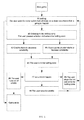
As seen in FIG. 3, the whole process and steps involved in the invention are:
Step 1 The user waits for something that could indicate that an occurrence is going to happen.
Step 2 The user feels that the occurence is close and presses the button to enter the betting zone. When pressing, a message is sent to the server with the client's details.
Step 3 and 4 When receiving the accept notification from the server, two things happen on the client's device simultaneously: the round points counter starts to increase and the remaining credits start to decrease.
Step 5 The user is now in the betting zone.
There are three ways to leave the betting zone:
-
- (a) Step 6 When the client's remaining credits are finished—he will leave the betting zone automatically.
- (b) Step 7 When the occurrence happens—the server sends a message to the clients that the occurrence has happened, and mentions the amount of credits earned and the new amount of remaining credits.
- (c) Step 8 When the user believes that the changes for an occurrence to happen are lower and he presses a button to leave the betting zone. A message is being sent to the server, and the server calculates and sends back the amount of the user's remaining credits.
DESCRIPTION OF THE DRAWINGS
Drawing # 1—Soccer—Waiting Mode
Drawing # 1 presents a Smartphone implementation for soccer. The round points counter (in the bottom with the blue background) shows zero because the user didn't press “Get In” yet and he is not in the betting zone. In the pot there are 27 credits now.
Drawing # 2—Soccer—in the Betting Zone
Drawing # 2 presents a Smartphone implementation for soccer, when a user already pressed “Get In” and he is in the betting zone. The round point's counter increases constantly (stands on 60), and the credits counter decreases constantly (stands on 377). In the pot there are 75 credits, so if an occurrence will happen in that particular moment all the winning users are going to split those 75 credits, and the users with more time credits will win a bigger share. The user can either wait for an occurrence to happen or press “Get Out” in order to stop the credits' decrement and leave the betting zone.
Drawing # 3—Flow Chart
Drawing # 3 presents a flow chart of the whole process.
-
- #1—The user waits for something that could indicate that an occurrence is going to happen.
- #2—The user feels that the occurrence is close and presses the button to enter the betting zone. When pressing, a message is sent to the server with the client's details.
- #3 and #4—When receiving the accept notification from the server, two things happen on the client's device simultaneously: the round points counter starts to increase and a the remaining credits starts to decrease.
- #5—The user is now in the betting zone.
- There are three ways to leave the betting zone:
- a. #6—When the client's remaining credits are finished—he will leave the betting zone automatically.
- b. #7—When the occurrence happens—the server sends a message to the clients that the occurrence has happened, and mentions the amount of credits earned and the new amount of remaining credits.
- c. #8—When the user believes that the chances for an occurrence to happen are lower and he presses a button to leave the betting zone. A message is being sent to the server, and the server calculates and sends back the amount of the user's remaining credits.