TW202123647A - Indication of time-frequency synchronization signal block (ssb) locations of neighboring transmission-reception points for positioning reference signal puncturing purposes - Google Patents
Indication of time-frequency synchronization signal block (ssb) locations of neighboring transmission-reception points for positioning reference signal puncturing purposes Download PDFInfo
- Publication number
- TW202123647A TW202123647A TW109127799A TW109127799A TW202123647A TW 202123647 A TW202123647 A TW 202123647A TW 109127799 A TW109127799 A TW 109127799A TW 109127799 A TW109127799 A TW 109127799A TW 202123647 A TW202123647 A TW 202123647A
- Authority
- TW
- Taiwan
- Prior art keywords
- prs
- ssb
- ssbs
- network entity
- parameter set
- Prior art date
Links
Images


Classifications
-
- H—ELECTRICITY
- H04—ELECTRIC COMMUNICATION TECHNIQUE
- H04L—TRANSMISSION OF DIGITAL INFORMATION, e.g. TELEGRAPHIC COMMUNICATION
- H04L5/00—Arrangements affording multiple use of the transmission path
- H04L5/0091—Signalling for the administration of the divided path, e.g. signalling of configuration information
- H04L5/0094—Indication of how sub-channels of the path are allocated
-
- H—ELECTRICITY
- H04—ELECTRIC COMMUNICATION TECHNIQUE
- H04B—TRANSMISSION
- H04B7/00—Radio transmission systems, i.e. using radiation field
- H04B7/02—Diversity systems; Multi-antenna system, i.e. transmission or reception using multiple antennas
- H04B7/04—Diversity systems; Multi-antenna system, i.e. transmission or reception using multiple antennas using two or more spaced independent antennas
- H04B7/06—Diversity systems; Multi-antenna system, i.e. transmission or reception using multiple antennas using two or more spaced independent antennas at the transmitting station
- H04B7/0697—Diversity systems; Multi-antenna system, i.e. transmission or reception using multiple antennas using two or more spaced independent antennas at the transmitting station using spatial multiplexing
-
- H—ELECTRICITY
- H04—ELECTRIC COMMUNICATION TECHNIQUE
- H04J—MULTIPLEX COMMUNICATION
- H04J11/00—Orthogonal multiplex systems, e.g. using WALSH codes
-
- H—ELECTRICITY
- H04—ELECTRIC COMMUNICATION TECHNIQUE
- H04L—TRANSMISSION OF DIGITAL INFORMATION, e.g. TELEGRAPHIC COMMUNICATION
- H04L1/00—Arrangements for detecting or preventing errors in the information received
- H04L1/0001—Systems modifying transmission characteristics according to link quality, e.g. power backoff
- H04L1/0009—Systems modifying transmission characteristics according to link quality, e.g. power backoff by adapting the channel coding
- H04L1/0013—Rate matching, e.g. puncturing or repetition of code symbols
-
- H—ELECTRICITY
- H04—ELECTRIC COMMUNICATION TECHNIQUE
- H04L—TRANSMISSION OF DIGITAL INFORMATION, e.g. TELEGRAPHIC COMMUNICATION
- H04L5/00—Arrangements affording multiple use of the transmission path
- H04L5/0001—Arrangements for dividing the transmission path
- H04L5/0003—Two-dimensional division
- H04L5/0005—Time-frequency
-
- H—ELECTRICITY
- H04—ELECTRIC COMMUNICATION TECHNIQUE
- H04L—TRANSMISSION OF DIGITAL INFORMATION, e.g. TELEGRAPHIC COMMUNICATION
- H04L5/00—Arrangements affording multiple use of the transmission path
- H04L5/0001—Arrangements for dividing the transmission path
- H04L5/0003—Two-dimensional division
- H04L5/0005—Time-frequency
- H04L5/0007—Time-frequency the frequencies being orthogonal, e.g. OFDM(A) or DMT
-
- H—ELECTRICITY
- H04—ELECTRIC COMMUNICATION TECHNIQUE
- H04L—TRANSMISSION OF DIGITAL INFORMATION, e.g. TELEGRAPHIC COMMUNICATION
- H04L5/00—Arrangements affording multiple use of the transmission path
- H04L5/0001—Arrangements for dividing the transmission path
- H04L5/0003—Two-dimensional division
- H04L5/0005—Time-frequency
- H04L5/0007—Time-frequency the frequencies being orthogonal, e.g. OFDM(A) or DMT
- H04L5/001—Time-frequency the frequencies being orthogonal, e.g. OFDM(A) or DMT the frequencies being arranged in component carriers
-
- H—ELECTRICITY
- H04—ELECTRIC COMMUNICATION TECHNIQUE
- H04L—TRANSMISSION OF DIGITAL INFORMATION, e.g. TELEGRAPHIC COMMUNICATION
- H04L5/00—Arrangements affording multiple use of the transmission path
- H04L5/003—Arrangements for allocating sub-channels of the transmission path
- H04L5/0048—Allocation of pilot signals, i.e. of signals known to the receiver
-
- H—ELECTRICITY
- H04—ELECTRIC COMMUNICATION TECHNIQUE
- H04L—TRANSMISSION OF DIGITAL INFORMATION, e.g. TELEGRAPHIC COMMUNICATION
- H04L5/00—Arrangements affording multiple use of the transmission path
- H04L5/003—Arrangements for allocating sub-channels of the transmission path
- H04L5/0053—Allocation of signalling, i.e. of overhead other than pilot signals
-
- H—ELECTRICITY
- H04—ELECTRIC COMMUNICATION TECHNIQUE
- H04W—WIRELESS COMMUNICATION NETWORKS
- H04W72/00—Local resource management
- H04W72/20—Control channels or signalling for resource management
- H04W72/23—Control channels or signalling for resource management in the downlink direction of a wireless link, i.e. towards a terminal
Landscapes
- Engineering & Computer Science (AREA)
- Signal Processing (AREA)
- Computer Networks & Wireless Communication (AREA)
- Quality & Reliability (AREA)
- Mobile Radio Communication Systems (AREA)
Abstract
Description
本發明之態樣大體上係關於無線通信及其類似者。Aspects of the present invention generally relate to wireless communication and the like.
無線通信系統已經過多代發展,包括第一代類比無線電話服務(1G)、第二代(2G)數位無線電話服務(包括臨時的2.5G及2.75G網路)、第三代(3G)高速資料、具有網際網路(Internet)能力之無線服務及第四代(4G)服務(例如,長期演進(LTE)或WiMax)。目前存在許多不同類型的在使用中之無線通信系統,包括蜂巢式及個人通信服務(PCS)系統。已知蜂巢式系統之實例包括蜂巢式類比進階行動電話系統(AMPS)及基於分碼多重存取(CDMA)、分頻多重存取(FDMA)、分時多重存取(TDMA)之數位蜂巢式系統、全球行動通信系統(GSM)等。Wireless communication systems have been developed over many generations, including first-generation analog wireless telephone services (1G), second-generation (2G) digital wireless telephone services (including temporary 2.5G and 2.75G networks), and third-generation (3G) high-speed Data, Internet-capable wireless services, and fourth-generation (4G) services (for example, Long Term Evolution (LTE) or WiMax). There are currently many different types of wireless communication systems in use, including cellular and personal communication service (PCS) systems. Examples of known cellular systems include cellular analog advanced mobile phone systems (AMPS) and digital cellular systems based on code division multiple access (CDMA), frequency division multiple access (FDMA), and time division multiple access (TDMA) System, Global System for Mobile Communications (GSM), etc.
被稱作新無線電(NR)之第五代(5G)行動標準需要更高資料傳送速度、更多數目之連接及更佳涵蓋範圍以及其他改良。根據下一代行動網路聯盟,5G標準被設計成向數以萬計之使用者中之每一者提供每秒數千萬位元之資料速率,以及向辦公樓上之數十位工作者提供每秒十億位元之資料速率。應支援數十萬個同時連接以支援大型感測器部署。因此,5G行動通信之頻譜效率與當前4G標準相比應顯著增強。此外,與當前標準相比發信效率應增強且潛時應實質上減少。The fifth-generation (5G) mobile standard called New Radio (NR) requires higher data transmission speed, more connections, better coverage, and other improvements. According to the Next Generation Mobile Network Alliance, the 5G standard is designed to provide data rates of tens of millions of bits per second to each of tens of thousands of users, as well as to dozens of workers in office buildings. The data rate of one billion bits per second. Should support hundreds of thousands of simultaneous connections to support large-scale sensor deployment. Therefore, the spectrum efficiency of 5G mobile communications should be significantly enhanced compared with the current 4G standard. In addition, compared with current standards, the efficiency of sending letters should be enhanced and the latency should be substantially reduced.
下文呈現與本文中所揭示之一或多個態樣有關的簡化發明內容。因此,以下發明內容不應被考慮為與所有預期態樣有關之廣泛綜述,以下發明內容亦不應被考慮為識別與所有預期態樣有關之關鍵或重要元素或劃定與任何特定態樣相關聯之範疇。因此,以下發明內容之唯一目的為在下文呈現之實施方式之前,以簡化形式呈現與關於本文中所揭示之機制的一或多個態樣有關的某些概念。The following presents a simplified summary of the invention related to one or more aspects disclosed herein. Therefore, the following invention content should not be considered as a comprehensive overview related to all expected aspects, nor should the following invention content be considered as identifying key or important elements related to all expected aspects or delineating that it is related to any particular aspect The category of associations. Therefore, the sole purpose of the following summary is to present some concepts related to one or more aspects of the mechanism disclosed herein in a simplified form before the implementations presented below.
在一態樣中,一種藉由一使用者設備(UE)執行之無線通信方法包括:自一網路實體接收用於一或多個伺服或鄰近傳輸接收點(TRP)之複數個定位參考信號(PRS)組態;自該網路實體接收指示該一或多個伺服或鄰近TRP之一或多個同步信號區塊(SSB)之時間及頻率位置的一參數集合;及基於該參數集合來判定該複數個PRS組態中之哪些PRS已被該一或多個SSB穿刺。In one aspect, a wireless communication method performed by a user equipment (UE) includes: receiving a plurality of positioning reference signals for one or more servo or proximity transmission receiving points (TRP) from a network entity (PRS) configuration; receiving from the network entity a parameter set indicating the time and frequency positions of the one or more servos or one or more synchronization signal blocks (SSB) adjacent to the TRP; and based on the parameter set Determine which PRS of the plurality of PRS configurations have been punctured by the one or more SSBs.
在一態樣中,一種藉由一網路實體執行之無線通信方法包括:向一UE傳輸用於一或多個伺服或鄰近TRP之複數個PRS組態;及向該UE傳輸指示該一或多個伺服或鄰近TRP之一或多個SSB之時間及頻率位置的一參數集合。In one aspect, a wireless communication method performed by a network entity includes: transmitting a plurality of PRS configurations for one or more servos or neighboring TRPs to a UE; and transmitting to the UE indicating the one or A parameter set of the time and frequency position of one or more SSBs of multiple servos or adjacent TRPs.
在一態樣中,一種UE包括:一記憶體;至少一個收發器;及至少一個處理器,該至少一個處理器以通信方式耦接至該記憶體及該至少一個收發器,該至少一個處理器經組態以:經由該至少一個收發器自一網路實體接收用於一或多個伺服或鄰近TRP之複數個PRS組態;經由該至少一個收發器自該網路實體接收指示該一或多個伺服或鄰近TRP之一或多個SSB之時間及頻率位置的一參數集合;且基於該參數集合來判定該複數個PRS組態中之哪些PRS已被該一或多個SSB穿刺。In one aspect, a UE includes: a memory; at least one transceiver; and at least one processor, the at least one processor is communicatively coupled to the memory and the at least one transceiver, and the at least one processor The device is configured to: receive a plurality of PRS configurations for one or more servos or neighboring TRPs from a network entity via the at least one transceiver; receive instructions from the network entity via the at least one transceiver. A parameter set of the time and frequency positions of one or more SSBs of one or more servos or adjacent TRPs; and based on the parameter set, which PRS of the plurality of PRS configurations have been punctured by the one or more SSBs.
在一態樣中,一網路實體包括:一記憶體;一通信器件;及至少一個處理器,該至少一個處理器以通信方式耦接至該記憶體及該通信器件,該至少一個處理器經組態以:使得該通信器件向一UE傳輸用於一或多個伺服或鄰近TRP之複數個PRS組態;且使得該通信器件向該UE傳輸指示該一或多個伺服或鄰近TRP之一或多個SSB之時間及頻率位置的一參數集合。In one aspect, a network entity includes: a memory; a communication device; and at least one processor, the at least one processor is communicatively coupled to the memory and the communication device, the at least one processor It is configured to: cause the communication device to transmit a plurality of PRS configurations for one or more servo or neighboring TRPs to a UE; and cause the communication device to transmit to the UE instructions for the one or more servo or neighboring TRPs A parameter set of time and frequency positions of one or more SSBs.
在一態樣中,一種UE包括:用於自一網路實體接收用於一或多個伺服或鄰近TRP之複數個PRS組態的構件;用於自該網路實體接收指示該一或多個伺服或鄰近TRP之一或多個SSB之時間及頻率位置的一參數集合的構件;以及用於基於該參數集合來判定該複數個PRS組態中之哪些PRS已被該一或多個SSB穿刺的構件。In one aspect, a UE includes: a component for receiving a plurality of PRS configurations for one or more servos or neighboring TRPs from a network entity; for receiving instructions from the network entity for the one or more PRS configurations; A component of a parameter set of the time and frequency positions of one or more SSBs of a servo or adjacent TRP; and used to determine which PRS of the plurality of PRS configurations have been controlled by the one or more SSBs based on the parameter set Piercing member.
在一態樣中,一種網路實體包括:用於向一UE傳輸用於一或多個伺服或鄰近TRP之複數個PRS組態的構件;及用於向該UE傳輸指示該一或多個伺服或鄰近TRP之一或多個SSB之時間及頻率位置的一參數集合的構件。In one aspect, a network entity includes: a means for transmitting a plurality of PRS configurations for one or more servos or neighboring TRPs to a UE; and a means for transmitting to the UE indicating the one or more PRS configurations Servo or a component of a parameter set of the time and frequency positions of one or more SSBs adjacent to the TRP.
在一態樣中,一種儲存電腦可執行指令之非暫時性電腦可讀媒體包括電腦可執行指令,該等電腦可執行指令包含:命令一UE自一網路實體接收用於一或多個伺服或鄰近TRP之複數個PRS組態的至少一個指令;命令該UE自該網路實體接收指示該一或多個伺服或鄰近TRP之一或多個SSB之時間及頻率位置的一參數集合的至少一個指令;以及命令該UE基於該參數集合來判定該複數個PRS組態中之哪些PRS已被該一或多個SSB穿刺的至少一個指令。In one aspect, a non-transitory computer-readable medium storing computer-executable instructions includes computer-executable instructions. The computer-executable instructions include: command a UE to receive from a network entity for one or more servers Or at least one command of a plurality of PRS configurations of the neighboring TRP; command the UE to receive from the network entity at least a parameter set indicating the time and frequency position of the one or more servos or one or more SSBs of the neighboring TRP An instruction; and at least one instruction instructing the UE to determine which of the plurality of PRS configurations has been punctured by the one or more SSBs based on the parameter set.
在一態樣中,一種儲存電腦可執行指令之非暫時性電腦可讀媒體包括電腦可執行指令,該等電腦可執行指令包含:命令一網路實體向一UE傳輸用於一或多個伺服或鄰近TRP之複數個定位參考信號(PRS)組態的至少一個指令;及命令該網路實體向該UE傳輸指示該一或多個伺服或鄰近TRP之一或多個SSB之時間及頻率位置的一參數集合的至少一個指令。In one aspect, a non-transitory computer-readable medium storing computer-executable instructions includes computer-executable instructions. The computer-executable instructions include: command a network entity to transmit to a UE for one or more servers Or at least one command for the configuration of a plurality of positioning reference signal (PRS) adjacent to the TRP; and command the network entity to transmit to the UE the time and frequency positions of the one or more servos or one or more SSBs of the adjacent TRP At least one instruction of a parameter set of.
對於熟習此項技術者而言,基於隨附圖式及實施方式,與本文中所揭示之態樣相關聯的其他目標及優勢將顯而易見。For those familiar with this technology, based on the accompanying drawings and implementations, other goals and advantages associated with the aspects disclosed in this article will be obvious.
相關申請案之交叉參考Cross reference of related applications
本專利申請案主張2019年8月15日申請之名稱為「INDICATION OF TIME-FREQUENCY SYNCHRONIZATION SIGNAL BLOCK (SSB) LOCATIONS OF NEIGHBORING TRANSMISSION-RECEPTION POINTS FOR POSITIONING REFERENCE SIGNAL PUNCTURING PURPOSES」的美國臨時申請案第62/887,595號之權益,該申請案讓與給其受讓人且明確地以全文引用之方式併入本文中。This patent application claims the U.S. Provisional Application No. 62/887,595 named ``INDICATION OF TIME-FREQUENCY SYNCHRONIZATION SIGNAL BLOCK (SSB) LOCATIONS OF NEIGHBORING TRANSMISSION-RECEPTION POINTS FOR POSITIONING REFERENCE SIGNAL PUNCTURING PURPOSES'' filed on August 15, 2019 The rights and interests of the number, the application is assigned to its assignee and is expressly incorporated in this article by reference in its entirety.
本發明之態樣在以下描述及針對出於說明目的而提供之各種實例的相關圖式中提供。可在不脫離本發明之範疇的情況下設計替代態樣。另外,將不詳細描述或將省略本發明之熟知元件以免混淆本發明之相關細節。Aspects of the invention are provided in the following description and related drawings for various examples provided for illustrative purposes. Alternative aspects can be designed without departing from the scope of the present invention. In addition, the well-known elements of the present invention will not be described in detail or omitted so as not to obscure the relevant details of the present invention.
本文中所使用之詞語「例示性」及/或「實例」意謂「充當實例、例項或說明」。本文中描述為「例示性」及/或「實例」之任何態樣未必解釋為較佳或優於其他態樣。同樣地,術語「本發明之態樣」並不要求本發明之所有態樣包括所論述之特徵、優勢或操作模式。The words "exemplary" and/or "example" as used herein mean "serving as an example, instance, or illustration." Any aspect described herein as "exemplary" and/or "example" is not necessarily interpreted as better or superior to other aspects. Likewise, the term "aspects of the invention" does not require that all aspects of the invention include the discussed features, advantages or modes of operation.
熟習此項技術者將瞭解,下文所描述之資訊及信號可使用多種不同技藝及技術中之任一者表示。舉例而言,部分取決於特定應用程式、部分取決於所要設計、部分取決於對應技藝等,可貫穿以下描述參考之資料、指令、命令、資訊、信號、位元、符號及晶片可由電壓、電流、電磁波、磁場或磁粒子、光場或光粒子或其任何組合表示。Those familiar with this technology will understand that the information and signals described below can be expressed using any of a variety of different techniques and techniques. For example, partly depends on the specific application, partly depends on the design, and partly depends on the corresponding skills, etc. The data, instructions, commands, information, signals, bits, symbols and chips that can be referenced throughout the following description can be voltage, current , Electromagnetic waves, magnetic fields or magnetic particles, light fields or light particles, or any combination thereof.
另外,就待由(例如)計算器件之元件執行之動作的序列而言描述許多態樣。將認識到,本文所描述之各種動作可藉由特定電路(例如,特殊應用積體電路(ASIC))、藉由由一或多個處理器執行之程式指令或藉由兩者之組合來執行。另外,本文中所描述之動作的序列可被視為完全體現在任何形式之非暫時性電腦可讀儲存媒體內,該非暫時性電腦可讀儲存媒體中儲存有一組對應電腦指令,該等電腦指令在執行時將使得或命令器件之相關聯處理器執行本文中所描述之功能性。因此,本發明之各種態樣可以許多不同形式體現,其皆已被預期在所主張主題之範疇內。另外,對於本文所描述之態樣中之每一者,任何此等態樣之對應形式可在本文中被描述為(例如)「經組態以執行所描述動作之邏輯」。In addition, many aspects are described in terms of the sequence of actions to be performed by, for example, elements of a computing device. It will be appreciated that the various actions described herein can be performed by specific circuits (for example, application-specific integrated circuits (ASIC)), by program instructions executed by one or more processors, or by a combination of both . In addition, the sequence of actions described in this article can be regarded as fully embodied in any form of non-transitory computer-readable storage medium, and a set of corresponding computer instructions is stored in the non-transitory computer-readable storage medium. When executed, it will cause or command the associated processor of the device to perform the functionality described herein. Therefore, the various aspects of the present invention can be embodied in many different forms, all of which are expected to be within the scope of the claimed subject matter. In addition, for each of the aspects described herein, the corresponding form of any of these aspects may be described herein as, for example, "logic configured to perform the described actions."
如本文中所使用,除非另外指出,否則術語「使用者設備(UE)」及「基地台」並不意欲為特定於或以其他方式受限於任何特定無線電存取技術(RAT)。一般而言,UE可為由使用者使用以經由無線通信網路進行通信之任何無線通信器件(例如,行動電話、路由器、平板電腦、膝上型電腦、追蹤器件、可穿戴件(例如,智慧型手錶、眼鏡、擴增實境(AR)/虛擬實境(VR)耳機等)、車輛(例如,汽車、摩托車、自行車等)、物聯網(IoT)器件等)。UE可為行動的或(例如在某些時間)可為固定的,且可與無線電存取網路(RAN)通信。如本文中所使用,術語「UE」可互換地稱為「存取終端機」或「AT」、「用戶端器件」、「無線器件」、「用戶器件」、「用戶終端機」、「用戶台」、「使用者終端機」或「UT」、「行動器件」、「行動終端機」、「行動台」或其變體。一般而言,UE可經由RAN與核心網路通信,且經由核心網路,UE可與諸如網際網路之外部網路連接且與其他UE連接。當然,UE亦可能存在連接至核心網路及/或網際網路之其他機制,諸如經由有線存取網路、無線區域網路(WLAN)網路(例如,基於IEEE 802.11等)等等。As used herein, unless otherwise indicated, the terms "user equipment (UE)" and "base station" are not intended to be specific or otherwise restricted to any specific radio access technology (RAT). Generally speaking, a UE can be any wireless communication device used by a user to communicate via a wireless communication network (e.g., mobile phone, router, tablet, laptop, tracking device, wearable device (e.g., smart Type watches, glasses, augmented reality (AR)/virtual reality (VR) headsets, etc.), vehicles (for example, cars, motorcycles, bicycles, etc.), Internet of Things (IoT) devices, etc.). The UE may be mobile or (e.g., at certain times) may be fixed, and may communicate with a radio access network (RAN). As used herein, the term "UE" is interchangeably referred to as "access terminal" or "AT", "client device", "wireless device", "user device", "user terminal", "user "Station", "User Terminal" or "UT", "Mobile Device", "Mobile Terminal", "Mobile Station" or its variants. Generally speaking, the UE can communicate with the core network via the RAN, and via the core network, the UE can connect to an external network such as the Internet and connect to other UEs. Of course, the UE may also have other mechanisms for connecting to the core network and/or the Internet, such as a wired access network, a wireless local area network (WLAN) network (for example, based on IEEE 802.11, etc.) and so on.
基地台可根據與取決於其部署之網路之UE通信的若干RAT中之一者進行操作,且可替代地被稱作存取點(AP)、網路節點、NodeB、演進型NodeB (eNB)、下一代eNB (ng-eNB)、新無線電(NR)節點B (亦被稱作gNB或gNodeB)等。基地台可主要用以支援藉由UE進行之無線存取,包括支援用於所支援UE之資料、語音及/或發信連接。在一些系統中,基地台可僅提供邊緣節點發信功能,而在其他系統中其可提供額外控制及/或網路管理功能。UE可藉以將信號發送至基地台的通信鏈路被稱作上行鏈路(UL)頻道(例如反向訊務頻道、反向控制頻道、存取頻道等)。基地台可藉以將信號發送至UE的通信鏈路被稱作下行鏈路(DL)或前向鏈路頻道(例如,傳呼頻道、控制頻道、廣播頻道、前向訊務頻道等)。如本文中所使用,術語訊務頻道(TCH)可指上行鏈路/反向或下行鏈路/前向訊務頻道。The base station may operate according to one of several RATs that communicate with UEs depending on the network on which it is deployed, and may alternatively be referred to as an access point (AP), a network node, a NodeB, an evolved NodeB (eNB ), Next Generation eNB (ng-eNB), New Radio (NR) Node B (also known as gNB or gNodeB), etc. The base station can be mainly used to support wireless access by the UE, including supporting data, voice, and/or signaling connections for the supported UE. In some systems, the base station may only provide edge node signaling functions, while in other systems it may provide additional control and/or network management functions. The communication link through which the UE can send signals to the base station is called an uplink (UL) channel (for example, reverse traffic channel, reverse control channel, access channel, etc.). The communication link through which the base station can send signals to the UE is called a downlink (DL) or forward link channel (for example, a paging channel, a control channel, a broadcast channel, a forward traffic channel, etc.). As used herein, the term traffic channel (TCH) can refer to uplink/reverse or downlink/forward traffic channels.
術語「基地台」可指單個實體傳輸接收點(TRP)或可指可或可不共置之多個實體TRP。舉例而言,在術語「基地台」指單個實體TRP的情況下,該實體TRP可為基地台的對應於該基地台之小區(或若干小區扇區)的天線。在術語「基地台」指多個共置實體TRP的情況下,實體TRP可為基地台之天線陣列(例如,如在多輸入多輸出(MIMO)系統中或在基地台採用波束成形之情況下)。在術語「基地台」指多個非共置實體TRP的情況下,實體TRP可為分佈式天線系統(DAS) (經由輸送媒體連接至共同源極的在空間上分離之天線之網路)或遠端無線電頭端(RRH) (連接至伺服基地台之遠端基地台)。替代地,非共置實體TRP可為自UE及UE正量測其參考射頻(RF)信號之鄰近基地台接收量測報告之伺服基地台。如本文中所使用,由於TRP為基地台自其傳輸及接收無線信號之點,因此對自基地台之傳輸或基地台處之接收之提及應理解為係指基地台之特定TRP。The term "base station" may refer to a single physical transmission reception point (TRP) or may refer to multiple physical TRPs that may or may not be co-located. For example, when the term "base station" refers to a single entity TRP, the entity TRP may be the antenna of the base station corresponding to the cell (or several cell sectors) of the base station. When the term "base station" refers to multiple co-located entity TRPs, the entity TRP can be the antenna array of the base station (for example, as in a multiple input multiple output (MIMO) system or in the case where the base station uses beamforming) ). When the term "base station" refers to multiple non-co-located entity TRPs, the entity TRP can be a distributed antenna system (DAS) (a network of spatially separated antennas connected to a common source via a transmission medium) or Remote radio head (RRH) (remote base station connected to the serving base station). Alternatively, the non-co-located entity TRP may be a servo base station that receives measurement reports from the UE and a neighboring base station whose reference radio frequency (RF) signal is being measured by the UE. As used herein, since TRP is the point from which the base station transmits and receives wireless signals, references to transmission from the base station or reception at the base station should be understood as referring to the specific TRP of the base station.
在支援UE之定位的一些實施方案中,基地台可能不支援藉由UE進行之無線存取(例如,可能不支援用於UE之資料、語音及/或發信連接),但可替代地將參考信號傳輸至UE以供UE量測,及/或可接收且量測藉由UE傳輸之信號。此類基地台可被稱作定位信標(例如,在將信號傳輸至UE時)及/或被稱作位置量測單元(例如,在接收且量測來自UE之信號時)。In some implementations that support the positioning of the UE, the base station may not support wireless access by the UE (for example, it may not support data, voice, and/or signaling connections for the UE), but may instead The reference signal is transmitted to the UE for measurement by the UE, and/or the signal transmitted by the UE can be received and measured. Such a base station may be referred to as a positioning beacon (for example, when transmitting a signal to the UE) and/or as a position measurement unit (for example, when receiving and measuring a signal from the UE).
「RF信號」包含經由傳輸器與接收器之間的空間輸送資訊的給定頻率之電磁波。如本文中所使用,傳輸器可將單個「RF信號」或多個「RF信號」傳輸至接收器。然而,由於RF信號經由多路徑頻道之傳播特性,接收器可接收對應於每一經傳輸RF信號之多個「RF信號」。傳輸器與接收器之間的不同路徑上之相同經傳輸RF信號可被稱作「多路徑」RF信號。如本文中所使用,RF信號亦可被稱作「無線信號」或在自上下文明顯可見術語「信號」係指無線信號或RF信號的情況下簡稱為「信號」。"RF signal" includes electromagnetic waves of a given frequency that convey information through the space between the transmitter and the receiver. As used herein, a transmitter can transmit a single "RF signal" or multiple "RF signals" to the receiver. However, due to the propagation characteristics of RF signals via multipath channels, the receiver can receive multiple "RF signals" corresponding to each transmitted RF signal. The same transmitted RF signal on different paths between the transmitter and the receiver can be referred to as a "multipath" RF signal. As used herein, an RF signal may also be referred to as a "wireless signal" or simply as a "signal" when it is obvious from the context that the term "signal" refers to a wireless signal or an RF signal.
根據各個態樣,圖 1
說明例示性無線通信系統100。無線通信系統100 (其亦可被稱作無線廣域網路(WWAN))可包括各種基地台(BS) 102及各種UE 104。基地台102可包括巨型小區基地台(高功率蜂巢式基地台)及/或小型小區基地台(低功率蜂巢式基地台)。在一態樣中,巨型小區基地台可包括其中無線通信系統100對應於LTE網路之eNB及/或ng-eNB,或其中無線通信系統100對應於NR網路之gNB,或兩者之組合,且小型小區基地台可包括超微型小區、微微小區、微小區等。According to various aspects, FIG. 1 illustrates an exemplary
基地台102可共同地形成RAN,且經由空載傳輸鏈路122與核心網路170 (例如,演進型封包核心(EPC)或5G核心(5GC))介接,並經由該核心網路170介接至一或多個位置伺服器172 (其可為核心網路170之部分,或可位於核心網路170外部)。除了其他功能以外,基地台102可執行與以下中之一或多者有關的功能:傳送使用者資料、無線電頻道加密及解密、完整性保護、標頭壓縮、行動性控制功能(例如,交遞、雙連接性)、小區間干擾協調、連接設置及釋放、負載平衡、非存取層(NAS)訊息之分佈、NAS節點選擇、同步、RAN共用、多媒體廣播多播服務(MBMS)、用戶及設備跡線、RAN資訊管理(RIM)、傳呼、定位及遞送警告訊息。基地台102可經由空載傳輸鏈路134直接或間接地(例如,經由EPC/5GC)彼此通信,該等空載傳輸鏈路可為有線或無線的。The
基地台102可與UE 104以無線方式通信。基地台102中之每一者可提供用於各別地理涵蓋區域110之通信涵蓋。在一態樣中,一或多個小區可由每一地理涵蓋區域110中之基地台102支援。「小區」為用於(例如,經由被稱為載波頻率、分量載波、載波、頻帶或其類似者的一些頻率資源)與基地台通信之邏輯通信實體,且可與用於區分經由相同或不同載波頻率操作之小區的識別符(例如,實體小區識別符(PCI)、虛擬小區識別符(VCI)、小區全域識別符(CGI))相關聯。在一些情況下,可根據不同協定類型(例如機器類型通信(MTC)、窄頻帶IoT (NB-IoT)、增強型行動寬頻帶(eMBB)或其他)而組態不同小區,該等不同協定類型可提供對不同類型之UE的存取。由於小區由特定基地台支援,因此根據上下文,術語「小區」可指邏輯通信實體及支援其之基地台中之任一者或兩者。另外,由於TRP通常為小區之實體傳輸點,因此術語「小區」及「TRP」可互換使用。在一些情況下,術語「小區」亦可指基地台之地理涵蓋區域(例如扇區),只要可偵測到載波頻率且該載波頻率可用於在地理涵蓋區域110之一些部分內進行通信即可。The
雖然鄰近巨型小區基地台102之地理涵蓋區域110可部分重疊(例如,在交遞區中),但地理涵蓋區域110中之一些可實質上由更大地理涵蓋區域110重疊。舉例而言,小型小區基地台102' (圖1中標記為「SC」)可具有與一或多個巨型小區基地台102之地理涵蓋區域110實質上重疊的地理涵蓋區域110'。包括小型小區及巨型小區基地台兩者之網路可被稱為異質網路。異質網路亦可包括本籍eNB (HeNB),其可為被稱作封閉式用戶群(CSG)之受限群提供服務。Although the
基地台102與UE 104之間的通信鏈路120可包括自UE 104至基地台102的上行鏈路(亦被稱為反向鏈路)傳輸及/或自基地台102至UE 104的下行鏈路(亦被稱為前向鏈路)傳輸。通信鏈路120可使用MIMO天線技術,包括空間多工、波束成形及/或傳輸分集。通信鏈路120可經由一或多個載波頻率。載波之分配可相對於下行鏈路及上行鏈路為不對稱的(例如相較於用於上行鏈路之載波,可將更多或更少載波分配用於下行鏈路)。The
無線通信系統100可進一步包括無線區域網路(WLAN)存取點(AP) 150,其經由無執照頻譜(例如5 GHz)中之通信鏈路154與WLAN台(STA) 152通信。當在無執照頻譜中通信時,WLAN STA 152及/或WLAN AP 150可在通信之前執行空閒頻道評估(clear channel assessment;CCA)或先聽後說(LBT)程序以判定頻道是否可用。The
小型小區基地台102'可在有執照及/或無執照頻譜中操作。當在無執照頻譜中操作時,小型小區基地台102'可採用LTE或NR技術且使用與WLAN AP 150所使用相同的5 GHz無執照頻譜。在無執照頻譜中採用LTE/5G之小型小區基地台102'可將涵蓋範圍提昇為存取網路之容量及/或增加存取網路之容量。無執照頻譜中之NR可被稱作NR-U。無執照頻譜中之LTE可被稱作LTE-U、有執照輔助存取(LAA)或MulteFire。The small cell base station 102' may operate in licensed and/or unlicensed spectrum. When operating in the unlicensed spectrum, the small cell base station 102' may adopt LTE or NR technology and use the same 5 GHz unlicensed spectrum used by the
無線通信系統100可進一步包括與UE 182通信的毫米波(mmW)基地台180,其可在mmW頻率及/或近mmW頻率中操作。極高頻率(EHF)為電磁頻譜中之RF的部分。EHF具有介於30 GHz至300 GHz之範圍及介於1毫米與10毫米之間的波長。此頻帶中之無線電波可被稱作毫米波。近mmW可向下擴展至具有100毫米之波長的3 GHz頻率。超高頻率(SHF)頻帶在3 GHz與30 GHz之間擴展,其亦被稱作厘米波。使用mmW/近mmW射頻頻帶之通信具有高路徑損耗及相對較短距離。mmW基地台180及UE 182可利用經由mmW通信鏈路184之波束成形(傳輸及/或接收)以補償極高路徑損耗及較短距離。此外,應瞭解,在可替代組態中,一或多個基地台102亦可使用mmW或近mmW及波束成形來傳輸。因此,應瞭解,前述說明僅為實例且不應解釋為限制本文中所揭示之各個態樣。The
傳輸波束成形為用於使RF信號集中在特定方向上之技術。傳統地,當網路節點(例如,基地台)廣播RF信號時,其在所有方向上(全向地)廣播該信號。藉由傳輸波束成形,網路節點判定給定目標器件(例如,UE) (相對於傳輸網路節點)位於何處且在彼特定方向上發射較強下行鏈路RF信號,從而為接收器件提供較快(就資料速率而言)且較強的RF信號。為了改變RF信號在傳輸時之方向性,網路節點可在正廣播RF信號的一或多個傳輸器中之每一者處控制RF信號之相位及相對振幅。舉例而言,網路節點可使用天線陣列(被稱為「相控陣列」或「天線陣列」),該天線陣列產生可在不實際上移動天線的情況下「經導引」以指向不同方向的RF波束。特定言之,以正確相位關係將來自傳輸器之RF電流饋送至個別天線,使得來自單獨天線之無線電波加在一起以增加在所要方向上之輻射,同時抵消以抑制在非所需方向上之輻射。Transmission beamforming is a technique used to concentrate RF signals in a specific direction. Traditionally, when a network node (e.g., base station) broadcasts an RF signal, it broadcasts the signal in all directions (omnidirectional). Through transmission beamforming, the network node determines where a given target device (for example, UE) (relative to the transmission network node) is located and transmits a strong downlink RF signal in that specific direction, thereby providing the receiving device with Faster (in terms of data rate) and stronger RF signal. In order to change the directionality of the RF signal during transmission, the network node can control the phase and relative amplitude of the RF signal at each of the one or more transmitters that are broadcasting the RF signal. For example, network nodes can use antenna arrays (called "phased arrays" or "antenna arrays"), which generate antenna arrays that can be "guided" to point in different directions without actually moving the antenna RF beam. In particular, the RF current from the transmitter is fed to the individual antennas in the correct phase relationship, so that the radio waves from the individual antennas are added together to increase the radiation in the desired direction, and at the same time cancel to suppress the radio waves in the undesired direction. radiation.
傳輸波束可準共置,此意謂傳輸波束對接收器(例如UE)而言看似具有相同參數,而不考慮網路節點本身之傳輸天線是否實體上共置。在NR中,存在四種類型之準共置(QCL)關係。特定言之,給定類型之QCL關係意謂可自關於源波束上之源參考RF信號的資訊導出關於第二波束上之第二參考RF信號的某些參數。因此,若源參考RF信號為QCL類型A,則接收器可使用源參考RF信號來估計在相同頻道上傳輸之第二參考RF信號的都卜勒(Doppler)頻移、都卜勒擴展、平均延遲及延遲擴展。若源參考RF信號為QCL類型B,則接收器可使用源參考RF信號來估計在相同頻道上傳輸之第二參考RF信號的都卜勒頻移及都卜勒擴展。若源參考RF信號為QCL類型C,則接收器可使用源參考RF信號來估計在相同頻道上傳輸之第二參考RF信號的都卜勒頻移及平均延遲。若源參考RF信號為QCL類型D,則接收器可使用源參考RF信號來估計在相同頻道上傳輸之第二參考RF信號的空間接收參數。The transmission beams can be quasi-co-located, which means that the transmission beams appear to have the same parameters to the receiver (for example, UE), regardless of whether the transmission antennas of the network node itself are physically co-located. In NR, there are four types of quasi-collocation (QCL) relationships. In particular, a given type of QCL relationship means that certain parameters about the second reference RF signal on the second beam can be derived from the information about the source reference RF signal on the source beam. Therefore, if the source reference RF signal is QCL type A, the receiver can use the source reference RF signal to estimate the Doppler frequency shift, Doppler spread, and average of the second reference RF signal transmitted on the same channel. Delay and delay expansion. If the source reference RF signal is QCL type B, the receiver can use the source reference RF signal to estimate the Doppler frequency shift and Doppler spread of the second reference RF signal transmitted on the same channel. If the source reference RF signal is QCL type C, the receiver can use the source reference RF signal to estimate the Doppler frequency shift and average delay of the second reference RF signal transmitted on the same channel. If the source reference RF signal is QCL type D, the receiver can use the source reference RF signal to estimate the spatial reception parameters of the second reference RF signal transmitted on the same channel.
在接收波束成形中,接收器使用接收波束來放大在給定頻道上偵測到之RF信號。舉例而言,接收器可增加天線陣列在特定方向上之增益設定及/或調整天線陣列在特定方向上之相位設定,以放大自彼方向接收到之RF信號(例如,以增加自彼方向接收到之RF信號之增益位準)。因此,當據稱接收器在某一方向上波束成形時,其意謂在彼方向上之波束增益相對於沿其他方向之波束增益較高,或在彼方向上之波束增益與可用於接收器的所有其他接收波束之彼方向上的波束增益相比最高。此產生自彼方向接收到之RF信號之較強接收信號強度(例如參考信號接收功率(RSRP)、參考信號接收品質(RSRQ)、信擾雜比(SINR)等)。In receive beamforming, the receiver uses the receive beam to amplify the RF signal detected on a given channel. For example, the receiver can increase the gain setting of the antenna array in a specific direction and/or adjust the phase setting of the antenna array in a specific direction to amplify the RF signal received from the other direction (for example, to increase the reception from the other direction). The gain level of the received RF signal). Therefore, when the receiver is said to be beamforming in a certain direction, it means that the beam gain in that direction is higher than the beam gain in other directions, or the beam gain in that direction is the same as all other beam gains available to the receiver. The beam gain in the other direction of the receiving beam is the highest in comparison. This results from the strong received signal strength of the RF signal received from the other direction (for example, reference signal received power (RSRP), reference signal received quality (RSRQ), signal to interference ratio (SINR), etc.).
接收波束可在空間上與傳輸波束相關。空間關係意謂第二參考信號之傳輸波束的參數可自關於第一參考信號之接收波束的資訊導出。舉例而言,UE可使用特定接收波束自基地台接收參考下行鏈路參考信號(例如,SSB)。UE隨後可基於該接收波束之參數來形成用於將上行鏈路參考信號(例如探測參考信號(SRS))發送至彼基地台之傳輸波束。The receiving beam may be spatially related to the transmitting beam. The spatial relationship means that the parameters of the transmission beam of the second reference signal can be derived from the information about the reception beam of the first reference signal. For example, the UE may use a specific receiving beam to receive a reference downlink reference signal (for example, SSB) from the base station. The UE can then form a transmission beam for transmitting an uplink reference signal (such as a sounding reference signal (SRS)) to the base station based on the parameters of the received beam.
應注意,「下行鏈路」波束可根據形成其之實體而為傳輸波束或接收波束中之任一者。舉例而言,若基地台正在形成用以將參考信號傳輸至UE之下行鏈路波束,則下行鏈路波束為傳輸波束。然而,若UE正在形成下行鏈路波束,則該下行鏈路波束為用以接收下行鏈路參考信號之接收波束。類似地,「上行鏈路」波束可根據形成其之實體而為傳輸波束或接收波束中之任一者。舉例而言,若基地台正在形成上行鏈路波束,則其為上行鏈路接收波束,且若UE正在形成上行鏈路波束,則其為上行鏈路傳輸波束。It should be noted that the "downlink" beam can be either a transmission beam or a reception beam depending on the entity that forms it. For example, if the base station is forming a downlink beam for transmitting the reference signal to the UE, the downlink beam is a transmission beam. However, if the UE is forming a downlink beam, the downlink beam is the receiving beam used to receive the downlink reference signal. Similarly, the "uplink" beam can be either a transmission beam or a reception beam depending on the entity that forms it. For example, if the base station is forming an uplink beam, it is an uplink receiving beam, and if the UE is forming an uplink beam, it is an uplink transmission beam.
在5G中,將無線節點(例如,基地台102/180、UE 104/182)操作之頻譜劃分成多個頻率範圍:FR1 (450至6000 MHz)、FR2 (24250至52600 MHz)、FR3 (高於52600 MHz)及FR4 (FR1與FR2之間)。在諸如5G之多載波系統中,載波頻率中之一者被稱作「主要載波」或「錨載波」或「主要伺服小區」或「PCell」,且其餘載波頻率被稱作「次要載波」或「次要伺服小區」或「SCell」。在載波聚合中,錨載波為在UE 104/182以及UE 104/182在其中執行初始無線電資源控制(RRC)連接建立程序或起始RRC連接重新建立程序之小區所利用之主要頻率(例如,FR1)上操作的載波。主要載波攜載所有常見及UE特定控制頻道,且可為有執照頻率中之載波(然而,並非總是如此)。次要載波為在第二頻率(例如,FR2)上操作之載波,該載波一旦在UE 104與錨載波之間建立RRC連接即可經組態且可用於提供額外無線電資源。在一些情況下,次要載波可為無執照頻率中之載波。次要載波可僅含有必要的發信資訊及信號,例如UE特定的彼等發信資訊及信號可不存在於次要載波中,此係由於主要上行鏈路及下行鏈路載波兩者通常為UE特定的。此意謂小區中之不同UE 104/182可具有不同下行鏈路主要載波。相同情況亦適用於上行鏈路主要載波。網路能夠在任何時候改變任何UE 104/182之主要載波。舉例而言,進行此改變以平衡不同載波上之負載。由於「伺服小區」(PCell抑或SCell)對應於某一基地台正經由其通信的載波頻率/分量載波,因此術語「小區」、「伺服小區」、「分量載波」、「載波頻率」及其類似者可互換使用。In 5G, the frequency spectrum operated by wireless nodes (for example,
舉例而言,仍參考圖1,由巨型小區基地台102利用之頻率中之一者可為錨載波(或「PCell」),且由巨型小區基地台102及/或mmW基地台180利用之其他頻率可為次要載波(「SCell」)。多個載波之同時傳輸及/或接收使得UE 104/182能夠顯著地增加其資料傳輸及/或接收速率。舉例而言,與藉由單個20 MHz載波獲得之資料速率相比,多載波系統中之兩個20 MHz聚合載波在理論上將使得資料速率增加兩倍(亦即,40 MHz)。For example, still referring to FIG. 1, one of the frequencies used by the macro
無線通信系統100可進一步包括一或多個UE (諸如UE 190),該一或多個UE經由一或多個器件至器件(D2D)同級間(P2P)鏈路間接地連接至一或多個通信網路。在圖1之實例中,UE 190與連接至基地台102中之一者的UE 104中之一者具有D2D P2P鏈路192 (例如,UE 190可經由其間接獲得蜂巢式連接性),且與連接至WLAN AP 150之WLAN STA 152具有D2D P2P鏈路194 (UE 190可經由其間接獲得基於WLAN之網際網路連接性)。在一實例中,D2D P2P鏈路192及194可由任何熟知D2D RAT (諸如LTE Direct (LTE-D)、WiFi Direct (WiFi-D)、Bluetooth®等)支援。The
無線通信系統100可進一步包括UE 164,其可經由通信鏈路120與巨型小區基地台102通信及/或經由mmW通信鏈路184與mmW基地台180通信。舉例而言,巨型小區基地台102可支援用於UE 164之PCell及一或多個SCell,且mmW基地台180可支援用於UE 164之一或多個SCell。The
根據各個態樣,圖 2A
說明例示性無線網路結構200。舉例而言,5GC 210 (亦被稱作下一代核心(NGC))在功能上可被視為控制平面功能(C平面) 214 (例如,UE註冊、驗證、網路存取、閘道器選擇等)及使用者平面功能(U平面) 212 (例如,UE閘道器功能、存取資料網路、IP佈線等),該等功能協作地操作以形成核心網路。使用者平面介面(NG-U) 213及控制平面介面(NG-C) 215將gNB 222連接至5GC 210,且特定言之將其分別連接至使用者平面功能212及控制平面功能214。在另一組態中,ng-eNB 224亦可經由與控制平面功能214之NG-C 215及與使用者平面功能212之NG-U 213連接至5GC 210。此外,ng-eNB 224可經由空載傳輸連接223直接與gNB 222通信。在一些組態中,新RAN 220可僅具有一或多個gNB 222,而其他組態同時包括一或多個ng-eNB 224及gNB 222。gNB 222或ng-eNB 224任一者可與UE 204 (例如,圖1中所描繪之UE中之任一者)通信。另一視情況存在之態樣可包括位置伺服器230,其可與5GC 210通信以為UE 204提供位置輔助。位置伺服器230可實施為複數個獨立伺服器(例如,實體上獨立的伺服器、單個伺服器上之不同軟體模組、散佈遍及多個實體伺服器之不同軟體模組等),或替代地可各自對應於單個伺服器。位置伺服器230可經組態以支援UE 204之一或多個位置服務,該等UE 204可經由核心網路5GC 210及/或經由網際網路(未說明)連接至位置伺服器230。此外,位置伺服器230可整合至核心網路之組件中,或替代地可在核心網路外部。According to various aspects, FIG. 2A illustrates an exemplary
根據各個態樣,圖 2B
說明另一例示性無線網路結構250。舉例而言,5GC 260在功能上可被視為由存取及行動性管理功能(AMF) 264提供之控制平面功能及由使用者平面功能(UPF) 262提供之使用者平面功能,該等功能協作地操作以形成核心網路(亦即,5GC 260)。使用者平面介面263及控制平面介面265將ng-eNB 224連接至5GC 260,且特定言之分別連接至UPF 262及AMF 264。在另一組態中,gNB 222亦可經由與AMF 264之控制平面介面265及與UPF 262之使用者平面介面263連接至5GC 260。此外,在存在或不存在gNB直接連接至5GC 260之情況下,ng-eNB 224可經由空載傳輸連接223直接與gNB 222通信。在一些組態中,新RAN 220可僅具有一或多個gNB 222,而其他組態同時包括一或多個ng-eNB 224及gNB 222。gNB 222或ng-eNB 224任一者可與UE 204 (例如,圖1中所描繪之UE中之任一者)通信。新RAN 220之基地台經由N2介面與AMF 264通信,且經由N3介面與UPF 262通信。According to various aspects, FIG. 2B illustrates another exemplary
AMF 264之功能包括註冊管理、連接管理、可達性管理、行動性管理、合法攔截、UE 204與會話管理功能(SMF) 266之間的會話管理(SM)訊息輸送、用於路由SM訊息之透明代理服務、存取驗證及存取授權、UE 204與短訊息服務功能(SMSF) (未展示)之間的短訊息服務(SMS)訊息輸送及安全錨功能性(SEAF)。AMF 264亦與驗證伺服器功能(AUSF) (未展示)及UE 204相互作用,且接收作為UE 204驗證程序之結果而建立之中間密鑰。在基於UMTS (全球行動電信系統)用戶識別模組(USIM)之驗證之情況下,AMF 264自AUSF擷取安全材料。AMF 264之功能亦包括安全環境管理(SCM)。SCM自SEAF接收密鑰,其用以導出存取網路專用密鑰。AMF 264之功能性亦包括用於調節服務之位置服務管理、UE 204與位置管理功能(LMF) 270 (其充當位置伺服器230)之間的位置服務訊息輸送、新RAN 220與LMF 270之間的位置服務訊息輸送、用於與EPS交互工作的演進型封包系統(EPS)承載識別符分配及UE 204行動性事件通知。另外,AMF 264亦支援非3GPP存取網路之功能。The functions of
UPF 262之功能包括充當RAT內/RAT間行動性之錨定點(適當時);充當與資料網路(未展示)之互連的外部協定資料單元(PDU)會話點;提供封包路由及轉發、封包檢驗、使用者平面策略規則執行(例如閘控、重定向、訊務導引)、合法攔截(使用者平面收集)、訊務使用報告、使用者平面之服務品質(QoS)處置(例如上行鏈路/下行鏈路速率執行、下行鏈路中之反射QoS標記)、上行鏈路訊務驗證(服務資料流(SDF)至QoS流映射)、上行鏈路及下行鏈路中之輸送層級封包標記、下行鏈路封包緩衝及下行鏈路資料通知觸發;及將一或多個「結束標記」發送及轉發至源RAN節點。UPF 262亦可支援在UE 204與位置伺服器(諸如安全使用者平面位置(SUPL)定位平台(SLP) 272)之間經由使用者平面的位置服務訊息之傳送。The functions of
SMF 266之功能包括會話管理、UE網際網路協定(IP)位址分配及管理、使用者平面功能之選擇及控制、在UPF 262處組態訊務導引以將訊務路由至適當目的地、控制部分策略執行及QoS以及下行鏈路資料通知。SMF 266藉以與AMF 264通信之介面被稱作N11介面。The functions of
另一視情況存在之態樣可包括LMF 270,其可與5GC 260通信以為UE 204提供位置輔助。LMF 270可實施為複數個獨立伺服器(例如,實體上獨立的伺服器、單個伺服器上之不同軟體模組、散佈遍及多個實體伺服器之不同軟體模組等),或替代地可各自對應於單個伺服器。LMF 270可經組態以支援UE 204之一或多個位置服務,該等UE 204可經由核心網路5GC 260及/或經由網際網路(未說明)連接至LMF 270。SLP 272可與LMF 270支援類似功能,但鑒於LMF 270可經由控制平面與AMF 264、新RAN 220及UE 204通信(例如,使用意欲傳遞發信訊息而非語音或資料之介面及協定),SLP 272可經由使用者平面與UE 204及外部用戶端(圖2B中未展示)通信(例如,使用意欲攜載語音及/或資料之協定,如傳輸控制協定(TCP)及/或IP)。Another optional aspect may include
圖 3A 、圖 3B 及圖 3C
說明可併入至UE 302 (其可對應於本文中所描述之UE中之任一者)、基地台304 (其可對應於本文中所描述之基地台中之任一者)及網路實體306 (其可對應於或體現本文中所描述之網路功能中之任一者,包括位置伺服器230及LMF 270)中以支援如本文中所教示之檔案傳輸操作的若干例示性組件(由對應區塊表示)。將瞭解,在不同實施方案中(例如,在ASIC中、在系統單晶片(SoC)中等),此等組件可實施於不同類型之裝置中。所說明組件亦可併入至通信系統中的其他裝置中。舉例而言,系統中之其他裝置可包括類似於所描述之彼等組件的組件以提供類似功能性。又,給定裝置可含有組件中之一或多者。舉例而言,裝置可包括使得裝置能夠在多個載波上操作及/或經由不同技術通信之多個收發器組件。 Figures 3A , 3B, and 3C illustrate that it can be incorporated into UE 302 (which can correspond to any of the UEs described herein), base station 304 (which can correspond to any of the base stations described herein). One) and network entity 306 (which can correspond to or embody any of the network functions described in this article, including
UE 302及基地台304各自分別包括無線廣域網路(WWAN)收發器310及350,其經組態以經由諸如NR網路、LTE網路、GSM網路及/或其類似者之一或多個無線通信網路(未展示)進行通信。WWAN收發器310及350可分別連接至一或多個天線316及356,以用於經由所關注之無線通信媒體(例如,特定頻率頻譜中之某一時間/頻率資源集合)經由至少一個指定RAT (例如,NR、LTE、GSM等)與其他網路節點(諸如其他UE、存取點、基地台(例如,eNB、gNB)等)通信。根據指定RAT,WWAN收發器310及350可以不同方式分別經組態以用於傳輸及編碼信號318及358 (例如訊息、指示、資訊等),且相反地,分別經組態以用於接收及解碼信號318及358 (例如訊息、指示、資訊、導頻等)。特定言之,WWAN收發器310及350分別包括分別用於傳輸及編碼信號318及358的一或多個傳輸器314及354,且分別包括分別用於接收及解碼信號318及358的一或多個接收器312及352。
至少在一些情況下,UE 302及基地台304亦分別包括無線區域網路(WLAN)收發器320及360。WLAN收發器320及360可分別連接至一或多個天線326及366,以用於經由所關注之無線通信媒體經由至少一個指定RAT (例如,WiFi、LTE-D、Bluetooth®等)與其他網路節點(諸如其他UE、存取點、基地台等)進行通信。根據指定RAT,WLAN收發器320及360可以不同方式分別經組態以用於傳輸及編碼信號328及368 (例如訊息、指示、資訊等),且相反地,分別經組態以用於接收及解碼信號328及368 (例如訊息、指示、資訊、導頻等)。特定言之,收發器320及360分別包括分別用於傳輸及編碼信號328及368的一或多個傳輸器324及364,且分別包括分別用於接收及解碼信號328及368的一或多個接收器322及362。In at least some cases,
包括至少一個傳輸器及至少一個接收器之收發器電路在一些實施方案中可包含積體器件(例如體現為單個通信器件之傳輸器電路及接收器電路),在一些實施方案中可包含單獨傳輸器器件及單獨接收器器件,或在其他實施方案中可以其他方式體現。在一態樣中,如本文所描述,傳輸器可包括或耦接至諸如天線陣列之複數個天線(例如天線316、326、356、366),其准許各別裝置執行傳輸「波束成形」。類似地,如本文所描述,接收器可包括或耦接至諸如天線陣列之複數個天線(例如天線316、326、356、366),其准許各別裝置執行接收波束成形。在一態樣中,傳輸器及接收器可共用相同的複數個天線(例如,天線316、326、356、366),使得各別裝置僅可在給定時間接收或傳輸,而不能同時接收或傳輸。UE 302之無線通信器件(例如,收發器310及320中之一或兩者)及/或基地台304之無線通信器件(例如,收發器350及360中之一或兩者)亦可包含用於執行各種量測之網路收聽模組(NLM)或其類似者。The transceiver circuit including at least one transmitter and at least one receiver may include integrated devices in some implementations (for example, a transmitter circuit and a receiver circuit embodied as a single communication device), and may include separate transmissions in some implementations Receiver device and a separate receiver device, or may be embodied in other ways in other embodiments. In one aspect, as described herein, the transmitter may include or be coupled to a plurality of antennas such as an antenna array (e.g.,
至少在一些情況下,UE 302及基地台304亦分別包括衛星定位系統(SPS)接收器330及370。SPS接收器330及370可分別連接至一或多個天線336及376,以分別用於接收SPS信號338及378,諸如全球定位系統(GPS)信號、全球導航衛星系統(GLONASS)信號、伽利略(Galileo)信號、北斗(Beidou)信號、印度區域導航衛星系統(NAVIC)、準天頂衛星系統(QZSS)等。SPS接收器330及370可包含分別用於接收及處理SPS信號338及378之任何合適之硬體及/或軟體。SPS接收器330及370視需要自另一系統請求資訊及操作,且分別執行使用由任何合適之SPS演算法獲得之量測值來判定UE 302及基地台304之位置所必要的計算。At least in some cases,
基地台304及網路實體306各自分別包括用於與其他網路實體通信之一或多個網路介面380及390。舉例而言,網路介面380及390 (例如,一或多個網路存取埠)可經組態以經由基於有線或無線空載傳輸連接與一或多個網路實體通信。在一些態樣中,網路介面380及390可實施為經組態以支援基於有線或無線信號通信之收發器。此通信可涉及例如發送及接收訊息、參數及/或其他類型之資訊。The
UE 302、基地台304及網路實體306亦包括可與如本文中所揭示之操作結合使用的其他組件。UE 302包括實施處理系統332之處理器電路,以用於提供與例如定位操作相關之功能性,且用於提供其他處理功能性。基地台304包括處理系統384,以用於提供與例如本文中所揭示之定位操作相關的功能性,且用於提供其他處理功能性。網路實體306包括處理系統394,以用於提供與例如本文中所揭示之定位操作相關的功能性,且用於提供其他處理功能性。在一態樣中,處理系統332、384及394可包括例如一或多個通用處理器、多核心處理器、ASIC、數位信號處理器(DSP)、場可程式化閘陣列(FPGA)或其他可程式化邏輯器件或處理電路。
UE 302、基地台304及網路實體306分別包括實施記憶體組件340、386及396 (例如各自包括記憶體器件)之記憶體電路,以用於維持資訊(例如指示所保留資源、臨限值、參數等之資訊)。在一些情況下,UE 302、基地台304及網路實體306可分別包括定位組件342、388及398。定位組件342、388及398可分別為作為處理系統332、384及394之一部分或耦接至處理系統332、384及394的硬體電路,該等硬體電路在經執行時使得UE 302、基地台304及網路實體306執行本文所描述之功能性。在其他態樣中,定位組件342、388及398可分別位於處理系統332、384及394外部(例如,為數據機處理系統之一部分、與另一處理系統整合等)。替代地,定位組件342、388及398可分別為儲存於記憶體組件340、386及396中之記憶體模組(如圖3A至圖3C中所展示),該等記憶體模組在由處理系統332、384及394 (或數據機處理系統、另一處理系統等)執行時,使得UE 302、基地台304及網路實體306執行本文所描述之功能性。The
UE 302可包括耦接至處理系統332之一或多個感測器344,以提供獨立於自藉由WWAN收發器310、WLAN收發器320及/或SPS接收器330接收之信號導出的運動資料的移動及/或定向資訊。藉助於實例,感測器344可包括加速計(例如,微機電系統(MEMS)器件)、陀螺儀、地磁感測器(例如,羅盤)、高度計(例如,大氣壓力高度計)及/或任何其他類型之移動偵測感測器。此外,感測器344可包括複數個不同類型之器件且組合其輸出以提供運動資訊。舉例而言,感測器344可使用多軸加速計及定向感測器之組合以提供計算在2D及/或3D座標系統中之方位的能力。The
另外,UE 302包括用於將指示(例如,聽覺及/或視覺指示)提供至使用者及/或用於接收使用者輸入(例如,在使用者啟動諸如小鍵盤、觸控式螢幕、麥克風等之感測器件後)之使用者介面346。儘管未展示,但基地台304及網路實體306亦可包括使用者介面。In addition, the
更詳細地參考處理系統384,在下行鏈路中,可將來自網路實體306之IP封包提供至處理系統384。處理系統384可實施RRC層、封包資料聚合協定(PDCP)層、無線電鏈路控制(RLC)層及媒體存取控制(MAC)層之功能性。處理系統384可提供以下功能性:RRC層功能性,其與系統資訊(例如主要資訊區塊(MIB)、系統資訊區塊(SIB))之廣播、RRC連接控制(例如RRC連接傳呼、RRC連接建立、RRC連接修改及RRC連接釋放)、RAT間行動性及用於UE量測報告之量測組態相關聯;PDCP層功能性,其與標頭壓縮/解壓縮、安全(加密、解密、完整性保護、完整性驗證)及交遞支援功能相關聯;RLC層功能性,其與上層封包資料單元(PDU)之傳送、經由自動重複請求(ARQ)之錯誤校正、RLC服務資料單元(SDU)之級聯、分段及重組、RLC資料PDU之重新分段及RLC資料PDU之重新定序相關聯;及MAC層功能性,其與邏輯頻道與輸送頻道之間的映射、排程資訊報告、錯誤校正、優先級處置及邏輯頻道優先化相關聯。With reference to the
傳輸器354及接收器352可實施與各種信號處理功能相關聯之層-1功能性。包括實體(PHY)層之層-1可包括輸送頻道上之錯誤偵測;輸送頻道之前向錯誤校正(FEC)寫碼/解碼;至實體頻道上之交錯、速率匹配、映射;實體頻道之調變/解調;及MIMO天線處理。傳輸器354基於各種調變方案(例如,二元相移鍵控(BPSK)、正交相移鍵控(QPSK)、M相移鍵控(M-PSK)、M正交振幅調變(M-QAM))來處置至信號分佈圖之映射。經寫碼及經調變符號隨後可分裂成並列串流。隨後可將每一串流映射至用時域及/或頻域中之參考信號(例如,導頻)多工之正交分頻多工(OFDM)子載波,且隨後使用快速傅立葉逆變換(inverse fast Fourier transform;IFFT)將其組合在一起以產生攜載時域OFDM符號串流之實體頻道。OFDM符號串流在空間上經預寫碼以產生多個空間串流。來自頻道估計器之頻道估計可用於判定寫碼及調變方案以及用於空間處理。頻道估計可自UE 302傳輸之參考信號及/或頻道條件反饋導出。隨後可將每一空間串流提供至一或多個不同天線356。傳輸器354可利用各別空間串流來調變RF載波以供傳輸。The
在UE 302處,接收器312經由其各別天線316接收信號。接收器312恢復經調變至RF載波上之資訊,且將資訊提供至處理系統332。傳輸器314及接收器312可實施與各種信號處理功能相關聯之層-1功能性。接收器312可對資訊執行空間處理以恢復指定用於UE 302之任何空間串流。若多個空間串流經指定用於UE 302,則其可由接收器312組合為單個OFDM符號串流。接收器312隨後使用快速傅立葉變換(FFT)將OFDM符號串流自時域轉換至頻域。頻域信號包含用於OFDM信號之每一子載波的獨立OFDM符號串流。各子載波上之符號及參考信號藉由判定由基地台304傳輸之最可能信號分佈圖點來恢復及解調。此等軟決策可係基於由頻道估計器計算之頻道估計。軟決策隨後經解碼及解交錯以恢復最初由基地台304在實體頻道上傳輸之資料及控制信號。接著將資料及控制信號提供至實施層-3及層-2功能性之處理系統332。At the
在上行鏈路中,處理系統332提供輸送頻道與邏輯頻道之間的解多工、封包重組、解密、標頭解壓及控制信號處理以恢復來自核心網路之IP封包。處理系統332亦負責錯誤偵測。In the uplink, the
類似於結合由基地台304進行之下行鏈路傳輸所描述的功能性,處理系統332提供以下功能性:RRC層功能性,其與系統資訊(例如MIB、SIB)獲取、RRC連接及量測報告相關聯;PDCP層功能性,其與標頭壓縮/解壓及安全(加密、解密、完整性保護、完整性驗證)相關聯;RLC層功能性,其與上層PDU之傳送、經由ARQ之錯誤校正、RLC SDU之級聯、分段及重組、RLC資料PDU之重新分段及RLC資料PDU之重新定序相關聯;及MAC層功能性,其與邏輯頻道與輸送頻道之間的映射、MAC SDU至輸送區塊(TB)上之多工、MAC SDU自TB之解多工、排程資訊報告、經由混合自動重複請求(HARQ)之錯誤校正、優先權處置及邏輯頻道優先化相關聯。Similar to the functionality described in conjunction with downlink transmission by the
由頻道估計器自基地台304傳輸之參考信號或反饋導出之頻道估計可由傳輸器314用於選擇適當寫碼及調變方案,且促進空間處理。可將由傳輸器314產生之空間串流提供至不同天線316。傳輸器314可利用各別空間串流來調變RF載波以供傳輸。The channel estimate derived from the reference signal or feedback transmitted by the
上行鏈路傳輸係在基地台304處以與結合UE 302處之接收器功能所描述的方式類似的方式處理。接收器352經由其各別天線356接收信號。接收器352恢復調變至RF載波上之資訊且將資訊提供至處理系統384。The uplink transmission is processed at the
在上行鏈路中,處理系統384提供輸送頻道與邏輯頻道之間的解多工、封包重組、解密、標頭解壓、控制信號處理以恢復來自UE 302之IP封包。可將來自處理系統384之IP封包提供至核心網路。處理系統384亦負責錯誤偵測。In the uplink, the
出於方便起見,UE 302、基地台304及/或網路實體306在圖3A至圖3C中經展示為包括可根據本文所描述的各種實例組態之各種組件。然而,應瞭解,所說明區塊在不同設計中可具有不同功能性。For convenience, the
UE 302、基地台304及網路實體306之各種組件可分別經由資料匯流排334、382及392彼此通信。圖3A至圖3C之組件可以各種方式實施。在一些實施方案中,圖3A至圖3C之組件可實施於一或多個電路中,諸如一或多個處理器及/或一或多個ASIC (其可包括一或多個處理器)。此處,每一電路可使用及/或併有至少一個記憶體組件以儲存由電路用於提供此功能性的資訊或可執行程式碼。舉例而言,由區塊310至346表示之功能性中之一些或全部可藉由UE 302之處理器及記憶體組件(例如,藉由執行適當程式碼及/或藉由適當組態處理器組件)實施。類似地,由區塊350至388表示之功能性中之一些或全部可藉由基地台304之處理器及記憶體組件(例如,藉由執行適當程式碼及/或藉由適當組態處理器組件)實施。又,由區塊390至398表示之功能性中之一些或全部可由網路實體306之處理器及記憶體組件(例如,藉由執行適當程式碼及/或藉由適當組態處理器組件)實施。為簡單起見,本文中將各種操作、動作及/或功能描述為「藉由UE」、「藉由基地台」、「藉由定位實體」等執行。然而,如將瞭解,此類操作、動作及/或功能實際上可由UE、基地台、定位實體等之特定組件或組件組合執行,諸如處理系統332、384、394、收發器310、320、350及360、記憶體組件340、386及396、定位組件342、388及398等。The various components of the
各種訊框結構可用於支援網路節點(例如基地台及UE)之間的下行鏈路及上行鏈路傳輸。圖 4A
為說明根據本發明之態樣的下行鏈路訊框結構之實例的圖式400。圖 4B
為說明根據本發明之態樣的下行鏈路訊框結構內的頻道之實例的圖式430。其他無線通信技術可具有不同訊框結構及/或不同頻道。Various frame structures can be used to support downlink and uplink transmissions between network nodes (such as base stations and UEs). FIG. 4A for explaining an example of the frame structure of the kind of aspect of the present invention, a
LTE且在一些情況下NR在下行鏈路上利用OFDM且在上行鏈路上利用單載波分頻多工(SC-FDM)。然而,不同於LTE,NR亦具有在上行鏈路上使用OFDM之選項。OFDM及SC-FDM將系統頻寬分割成多個(K個)正交子載波,其通常亦被稱作頻調、位元子等。每一子載波可使用資料來調變。一般而言,在頻域中藉由OFDM發送調變符號,且在時域中藉由SC-FDM發送調變符號。相鄰子載波之間的間隔可為固定的,且子載波之總數(K)可取決於系統頻寬。舉例而言,子載波之間隔可為15 kHz,且最小資源分配(資源區塊)可為12個子載波(或180 kHz)。因此,對於1.25、2.5、5、10或20兆赫茲(MHz)之系統頻寬,標稱FFT大小可分別等於128、256、512、1024或2048。亦可將系統頻寬分割成子頻帶。舉例而言,子頻帶可涵蓋1.08 MHz (亦即,6個資源區塊),且對於1.25、2.5、5、10或20 MHz之系統頻寬,可分別存在1、2、4、8或16個子頻帶。LTE and in some cases NR utilizes OFDM on the downlink and single carrier frequency division multiplexing (SC-FDM) on the uplink. However, unlike LTE, NR also has the option of using OFDM on the uplink. OFDM and SC-FDM divide the system bandwidth into multiple (K) orthogonal sub-carriers, which are usually also called tones, bits, and so on. Each subcarrier can be modulated using data. Generally speaking, the modulation symbols are sent by OFDM in the frequency domain, and the modulation symbols are sent by SC-FDM in the time domain. The interval between adjacent subcarriers can be fixed, and the total number of subcarriers (K) can depend on the system bandwidth. For example, the interval of subcarriers may be 15 kHz, and the minimum resource allocation (resource block) may be 12 subcarriers (or 180 kHz). Therefore, for a system bandwidth of 1.25, 2.5, 5, 10, or 20 megahertz (MHz), the nominal FFT size can be equal to 128, 256, 512, 1024, or 2048, respectively. The system bandwidth can also be divided into sub-bands. For example, the sub-band may cover 1.08 MHz (that is, 6 resource blocks), and for a system bandwidth of 1.25, 2.5, 5, 10, or 20 MHz, there may be 1, 2, 4, 8, or 16 respectively Sub-bands.
LTE支援單個數字方案(子載波間隔、符號長度等)。相比之下,NR可支援多個數字方案(µ),例如15 kHz、30 kHz、60 kHz、120 kHz及240 kHz或更大的子載波間隔可為可用的。下方所提供之表1列出用於不同NR數字方案之一些各種參數。
在圖4A及圖4B之實例中,使用15 kHz之數字方案。因此,在時域中,將訊框(例如,10 ms)劃分成各自1 ms之10個同樣大小的子訊框,且每一子訊框包括一個時間槽。在圖4A及圖4B中,時間在水平方向上(例如,在X軸上)表示,其中時間自左向右增加,而頻率在豎直方向上(例如,在Y軸上)表示,其中頻率由下至上增加(或減小)。In the examples of Fig. 4A and Fig. 4B, a 15 kHz digital scheme is used. Therefore, in the time domain, a frame (for example, 10 ms) is divided into 10 sub-frames of the same size each of 1 ms, and each sub-frame includes a time slot. In FIGS. 4A and 4B, time is represented in the horizontal direction (for example, on the X axis), where time increases from left to right, and the frequency is represented in the vertical direction (for example, on the Y axis), where frequency Increase (or decrease) from bottom to top.
資源柵格可用於表示時間槽,每一時間槽包括頻域中之一或多個時間並行資源區塊(RB) (亦被稱作實體RB (PRB))。將資源柵格進一步劃分成多個資源要素(RE)。RE可對應於時域中之一個符號長度及頻域中之一個子載波。在圖4A及圖4B之數字方案中,對於正常循環首碼,RB可含有頻域中之12個連續子載波及時域中之七個連續符號,總計84個RE。對於經擴展之循環首碼,RB可含有頻域中之12個連續子載波及時域中之六個連續符號,總計72個RE。由每一RE攜載之位元數目取決於調變方案。The resource grid can be used to represent time slots, and each time slot includes one or more time parallel resource blocks (RB) (also known as physical RB (PRB)) in the frequency domain. The resource grid is further divided into multiple resource elements (RE). RE can correspond to one symbol length in the time domain and one subcarrier in the frequency domain. In the digital schemes of FIG. 4A and FIG. 4B, for the normal cyclic prefix, the RB may contain 12 consecutive subcarriers in the frequency domain and seven consecutive symbols in the time domain, totaling 84 REs. For the extended cyclic prefix, the RB can contain 12 consecutive subcarriers in the frequency domain and six consecutive symbols in the time domain, for a total of 72 REs. The number of bits carried by each RE depends on the modulation scheme.
如圖4A中所說明,一些RE攜載下行鏈路參考(導頻)信號(DL-RS)以用於UE處之頻道估計。DL-RS可包括解調參考信號(DMRS)、頻道狀態資訊參考信號(CSI-RS)、小區特定參考信號(CRS)、定位參考信號(PRS)、導航參考信號(NRS)、追蹤參考信號(TRS)等,其例示性位置在圖4A中標記為「R」。As illustrated in Figure 4A, some REs carry downlink reference (pilot) signals (DL-RS) for channel estimation at the UE. DL-RS can include demodulation reference signal (DMRS), channel status information reference signal (CSI-RS), cell specific reference signal (CRS), positioning reference signal (PRS), navigation reference signal (NRS), tracking reference signal ( TRS), etc., whose exemplary positions are marked as "R" in Figure 4A.
用於傳輸PRS之資源要素(RE)集合被稱作「PRS資源」。資源要素之集合可橫跨頻域中之多個PRB及時域中之一時槽內的N個(例如,1個或多個)連續符號。在時域中之給定OFDM符號中,PRS資源佔用頻域中之連續PRB。The set of resource elements (RE) used to transmit PRS is called "PRS resource". The set of resource elements can span multiple PRBs in the frequency domain and N (for example, one or more) consecutive symbols in one of the time slots in the time domain. In a given OFDM symbol in the time domain, PRS resources occupy continuous PRBs in the frequency domain.
「PRS資源集合」為用於傳輸PRS信號之PRS資源集合,其中每一PRS資源具有PRS資源ID。另外,PRS資源集合中之PRS資源與同一TRP相關聯。PRS資源集合由PRS資源集合ID識別,且與特定TRP (由小區ID識別)相關聯。另外,PRS資源集合中之PRS資源具有相同週期性、共同靜音模式組態及跨時槽之相同重複係數。週期性可具有2µ ·t 個時槽之長度,其中t 選自集合{4, 5, 8, 10, 16, 20, 32, 40, 64, 80, 160, 320, 640, 1280, 2560, 5120, 10240},且µ = 0、1、2或3。重複係數可具有n 個時槽之長度,其中n 選自集合{1, 2, 4, 6, 8, 16, 32}。"PRS resource set" is a set of PRS resources used to transmit PRS signals, where each PRS resource has a PRS resource ID. In addition, the PRS resources in the PRS resource set are associated with the same TRP. The PRS resource set is identified by the PRS resource set ID and is associated with a specific TRP (identified by the cell ID). In addition, the PRS resources in the PRS resource set have the same periodicity, a common silent mode configuration, and the same repetition coefficient across time slots. The periodicity can have a length of 2 µ ·t time slots, where t is selected from the set {4, 5, 8, 10, 16, 20, 32, 40, 64, 80, 160, 320, 640, 1280, 2560, 5120, 10240}, and µ = 0, 1, 2, or 3. The repetition coefficient may have the length of n time slots, where n is selected from the set {1, 2, 4, 6, 8, 16, 32}.
PRS資源集合中之PRS資源ID與自單個TRP (其中TRP可傳輸一或多個波束)傳輸之單個波束(及/或波束ID)相關聯。亦即,PRS資源集合中之每一PRS資源可在不同波束上傳輸,且因此,「PRS資源」或簡稱「資源」亦可被稱作「波束」。應注意,此對於UE是否已知TRP及其上傳輸PRS之波束不具有任何暗示。The PRS resource ID in the PRS resource set is associated with a single beam (and/or beam ID) transmitted from a single TRP (where the TRP can transmit one or more beams). That is, each PRS resource in the PRS resource set can be transmitted on a different beam, and therefore, "PRS resource" or simply "resource" can also be called "beam". It should be noted that this does not have any hint as to whether the UE knows the TRP and the beam on which the PRS is transmitted.
「PRS例項」或「PRS出現時刻」為預期傳輸PRS之週期性重複時間窗(例如,一或多個連續時槽之群組)的一個例項。PRS出現時刻亦可被稱作「PRS定位出現時刻」、「PRS定位例項」、「定位出現時刻」、「定位例項」,或簡稱為「出現時刻」或「例項」。"PRS instance" or "PRS occurrence time" is an instance of the periodical repetition time window (for example, a group of one or more consecutive time slots) of the expected transmission of the PRS. PRS occurrence time can also be called "PRS positioning occurrence time", "PRS positioning instance", "positioning occurrence time", "positioning instance", or simply called "appearance time" or "example".
應注意,術語「定位參考信號」及「PRS」有時可係指用於在LTE系統中進行定位之特定參考信號。然而,如本文所使用,除非另外規定,否則術語「定位參考信號」及「PRS」係指可用於定位的任何類型之參考信號,諸如(但不限於) LTE中之PRS信號、5G中之NRS、TRS、CRS、CSI-RS、DMRS、主要同步信號(PSS)、次要同步信號(SSS)、SSB等。It should be noted that the terms “positioning reference signal” and “PRS” may sometimes refer to a specific reference signal used for positioning in an LTE system. However, as used herein, unless otherwise specified, the terms "positioning reference signal" and "PRS" refer to any type of reference signal that can be used for positioning, such as (but not limited to) PRS signals in LTE, NRS in 5G , TRS, CRS, CSI-RS, DMRS, primary synchronization signal (PSS), secondary synchronization signal (SSS), SSB, etc.
圖4B說明無線電訊框之下行鏈路時槽內之各種頻道的實例。在NR中,將頻道頻寬或系統頻寬劃分成多個頻寬部分(BWP)。BWP為選自用於給定載波上之給定數字方案的共同RB之連續子集合的連續PRB集合。一般而言,下行鏈路及上行鏈路中可指定最多四個BWP。亦即,UE可經組態在下行鏈路上具有至多四個BWP,且在上行鏈路上具有至多四個BWP。僅一個BWP (上行鏈路或下行鏈路)可在給定時間啟用,其意謂UE一次可僅經由一個BWP接收或傳輸。在下行鏈路上,每一BWP之頻寬應等於或大於SSB之頻寬,但其可或可不含有SSB。Fig. 4B illustrates an example of various frequency channels in the time slot of the downlink of the radio frame. In NR, the channel bandwidth or system bandwidth is divided into multiple bandwidth parts (BWP). BWP is a set of consecutive PRBs selected from consecutive subsets of common RBs used for a given digital scheme on a given carrier. Generally speaking, up to four BWPs can be specified in the downlink and uplink. That is, the UE can be configured to have up to four BWPs on the downlink and up to four BWPs on the uplink. Only one BWP (uplink or downlink) can be enabled at a given time, which means that the UE can receive or transmit via only one BWP at a time. On the downlink, the bandwidth of each BWP should be equal to or greater than the bandwidth of SSB, but it may or may not contain SSB.
參考圖4B,UE使用PSS來判定子訊框/符號時序及實體層識別碼。UE使用SSS來判定實體層小區識別碼群組數目及無線電訊框時序。基於實體層識別碼及實體層小區識別碼群組數目,UE可判定PCI。基於PCI,UE可判定前述DL-RS之位置。攜載MIB之實體廣播頻道(PBCH)可藉由PSS及SSS以邏輯方式分組以形成同步信號(SS)/PBCH區塊(亦被稱作NR中之SSB,且在本文中可互換地稱作SS/PBCH區塊、SS區塊或SSB)。SS/PBCH區塊用於初始小區搜尋、波束及小區量測(例如,無線電資源管理(RRM))、無線電鏈路監測及波束恢復程序中之新波束識別等等。MIB提供下行鏈路系統頻寬中之RB數目及系統訊框編號(SFN)。實體下行鏈路共用頻道(PDSCH)為主要資料承載頻道,其在動態及機會性基礎上分配至使用者,且攜載使用者資料、不經由PBCH傳輸之廣播系統資訊(諸如系統資訊區塊(SIB))及傳呼訊息。Referring to FIG. 4B, the UE uses the PSS to determine the sub-frame/symbol timing and the physical layer identification code. The UE uses SSS to determine the number of physical layer cell ID groups and the timing of radio frames. Based on the entity layer identification code and the number of entity layer cell identification code groups, the UE can determine the PCI. Based on PCI, the UE can determine the location of the aforementioned DL-RS. The physical broadcast channel (PBCH) carrying the MIB can be logically grouped by PSS and SSS to form a synchronization signal (SS)/PBCH block (also known as the SSB in NR, and is interchangeably referred to herein as SS/PBCH block, SS block or SSB). The SS/PBCH block is used for initial cell search, beam and cell measurement (for example, radio resource management (RRM)), radio link monitoring and new beam identification in beam recovery procedures, etc. MIB provides the number of RBs in the downlink system bandwidth and the system frame number (SFN). The physical downlink shared channel (PDSCH) is the main data-bearing channel, which is allocated to users on a dynamic and opportunistic basis, and carries user data and broadcast system information that is not transmitted via PBCH (such as system information block ( SIB)) and paging messages.
實體下行鏈路控制頻道(PDCCH)攜載一或多個控制頻道要素(CCE)內之下行鏈路控制資訊(DCI),每一CCE包括一或多個RE群組(REG)集束(其可橫跨時域中之多個符號),每一REG集束包括一或多個REG,每一REG對應於頻域中之12個資源要素(一個資源區塊)及時域中之一個OFDM符號。用於攜載PDCCH/DCI之實體資源集合在NR中被稱作控制資源集合(CORESET)。在NR中,PDCCH受限於單個CORESET且藉由其自身DMRS傳輸。此實現用於PDCCH之UE特定波束成形。The physical downlink control channel (PDCCH) carries downlink control information (DCI) in one or more control channel elements (CCE), and each CCE includes one or more RE group (REG) bundles (which may Across multiple symbols in the time domain), each REG bundle includes one or more REGs, and each REG corresponds to 12 resource elements (one resource block) in the frequency domain and one OFDM symbol in the time domain. The physical resource set used to carry the PDCCH/DCI is called the control resource set (CORESET) in NR. In NR, the PDCCH is restricted to a single CORESET and is transmitted by its own DMRS. This implementation is used for UE-specific beamforming of PDCCH.
在圖4B之實例中,每一BWP存在一個CORESET,且CORESET橫跨時域中之三個符號。不同於佔據整個系統頻寬之LTE控制頻道,在NR中,PDCCH頻道定位於頻域中之特定區(亦即,CORESET)。因此,圖4B中所展示之PDCCH之頻率分量經說明為小於頻域中之單個BWP。應注意,儘管所說明之CORESET在頻域中為連續的,但其不一定為連續的。另外,CORESET可橫跨時域中小於三個符號。In the example of Figure 4B, there is one CORESET for each BWP, and CORESET spans three symbols in the time domain. Unlike the LTE control channel that occupies the entire system bandwidth, in NR, the PDCCH channel is located in a specific area in the frequency domain (ie, CORESET). Therefore, the frequency component of the PDCCH shown in FIG. 4B is illustrated as being smaller than a single BWP in the frequency domain. It should be noted that although the illustrated CORESET is continuous in the frequency domain, it is not necessarily continuous. In addition, CORESET can span less than three symbols in the time domain.
PDCCH內之DCI攜載關於上行鏈路資源分配(持久性及非持久性)之資訊及關於傳輸至UE之下行鏈路資料之描述。多個(例如,高達八個) DCI可在PDCCH中經組態,且此等DCI可具有多種格式中之一者。舉例而言,存在用於上行鏈路排程、用於非MIMO下行鏈路排程、用於MIMO下行鏈路排程及用於上行鏈路功率控制之不同DCI格式。PDCCH可由1、2、4、8或16個CCE輸送以容納不同的DCI負載大小或寫碼速率。The DCI in the PDCCH carries information about uplink resource allocation (persistent and non-persistent) and description about the downlink data transmitted to the UE. Multiple (e.g., up to eight) DCIs can be configured in the PDCCH, and these DCIs can have one of multiple formats. For example, there are different DCI formats for uplink scheduling, for non-MIMO downlink scheduling, for MIMO downlink scheduling, and for uplink power control. The PDCCH can be transported by 1, 2, 4, 8, or 16 CCEs to accommodate different DCI load sizes or code rates.
行動網路業者對NR與LTE無線電存取技術之間的動態頻譜共用(DSS)展示出極大關注。在無DSS之情況下,業者必須將其可用頻譜分成兩個部分,一部分用於LTE且一部分用於NR。然而,在有DSS之情況下,業者可根據訊務要求及使用者需求,藉由在於相同頻帶(例如,20 MHz)中操作之NR載波與LTE載波之間智慧地分配而將其所有可用頻譜用於NR及LTE兩者。Mobile network operators have shown great interest in dynamic spectrum sharing (DSS) between NR and LTE radio access technologies. In the absence of DSS, the industry must divide its available spectrum into two parts, one for LTE and one for NR. However, in the case of DSS, the industry can allocate all its available spectrum by intelligently allocating between NR carriers operating in the same frequency band (for example, 20 MHz) and LTE carriers according to traffic requirements and user needs Used for both NR and LTE.
為了實施DSS,預期傳統LTE網路將能夠在沒有修改的情況下操作,而預期NR網路節點執行速率匹配以佔據LTE頻帶中未被LTE訊務佔據之資源。目前,用於15 KHz子載波間隔(SCS)之NR中支援與LTE資源之RB層級及RE層級速率匹配。在RE層級處,若啟用RRC資訊元素(IE)「lte-CRS-ToMatchAround」,則NR PDSCH可在LTE CRS符號之RE中傳輸。亦即,可對NR PDSCH訊務進行速率匹配以適合於LTE CRS符號之其餘子載波,從而在不影響傳統LTE使用者之情況下增加NR使用者之輸送量。對於下行鏈路排程,在LTE與NR訊務之間共用的時槽中,為避免與LTE PDCCH衝突,NR訊務自時槽之第二符號開始且僅使用B類型排程。In order to implement DSS, it is expected that the traditional LTE network will be able to operate without modification, and the NR network node is expected to perform rate matching to occupy resources in the LTE frequency band that are not occupied by LTE traffic. Currently, the NR used for 15 KHz subcarrier spacing (SCS) supports RB-level and RE-level rate matching with LTE resources. At the RE level, if the RRC Information Element (IE) "lte-CRS-ToMatchAround" is enabled, the NR PDSCH can be transmitted in the RE of the LTE CRS symbol. That is, the NR PDSCH traffic can be rate-matched to fit the remaining sub-carriers of the LTE CRS symbol, thereby increasing the throughput of NR users without affecting traditional LTE users. For downlink scheduling, in the time slot shared between LTE and NR traffic, in order to avoid conflicts with LTE PDCCH, NR traffic starts from the second symbol of the time slot and only uses type B scheduling.
在NR與LTE之間實施DSS需要處理各種問題。一個問題為SS/PBCH區塊(在NR中亦可被稱作SSB)在時域中佔據四個連續符號,且在頻域中佔據20個連續RB,如圖5中所展示。圖 5
說明根據本發明之態樣的SS/PBCH區塊500之組態。如圖5中所說明,SS/PBCH區塊500 (或SSB)之組態在時域中包含四個OFDM符號510至540,第一者橫跨頻域中之12個RB,且其餘三者橫跨20個RB。第一符號510攜載PSS,第二符號520攜載PBCH,第三符號530攜載SSS,且第四符號540攜載另一PBCH。PBCH RB亦填充攜載SSS之第三符號530之剩餘RB (減去一些保護子載波),如由符號530中之PBCH RB與SSS之間的間隙所展示。Implementing DSS between NR and LTE needs to deal with various issues. One problem is that the SS/PBCH block (also called SSB in NR) occupies four consecutive symbols in the time domain and 20 consecutive RBs in the frequency domain, as shown in FIG. 5. FIG. 5 illustrates the configuration of the SS/PBCH block 500 according to aspects of the present invention. As illustrated in Figure 5, the configuration of the SS/PBCH block 500 (or SSB) includes four
第一符號510中之PSS及第三符號530中之SSS各自分別包含12個RB,且總共存在48個PBCH RB。如上文參考圖4A及圖4B所描述,每一RB包含12個子載波,因此,12個RB包含144個子載波,且20個RB包含240個子載波。因此,符號520及540中之PBCH橫跨240個子載波,且第一符號510中之PSS及第三符號530中之SSS各自包含127個子載波(144個子載波減去一些保護子載波)。儘管未說明,但攜載PBCH之第二符號520及第四符號540包括PBCH DMRS及PBCH資料。每一PBCH之20個RB具有梳狀-3 DMRS (亦即,在每個第三子載波上傳輸DMRS)。PSS、SSS及PBCH存在於每一SSB中。The PSS in the
在NR中,對於低於6 GHz之頻率(亦即,FR1),SCS為15及30 kHz,且對於高於低於6 GHz之頻率,SCS為120或240 kHz。不管SS叢發集合週期性為何,SS叢發集合內之SSB傳輸都受限於5 ms窗口。在此5 ms窗口內,可能的候選SSB位置之最大數目為L (其定義用於SSB之波束掃掠)。叢發集合可具有5、10、20、40、80或160 ms之週期性,且在低於3 GHz之頻率下L =4,在介於3與6 GHz之間的頻率下L =8,且在介於6與52.6 GHz之間的頻率下L =64。時槽內之L 個SSB之可能時間位置以適當標準指定。在剩餘最小系統資訊(RMSI,亦被稱作SIB1)中存在6位元指示,且在專用RRC發信中存在完整位元映圖(L 位元),其可傳遞實際上傳輸L 個可能SSB位置中之哪些。In NR, for frequencies below 6 GHz (ie, FR1), SCS is 15 and 30 kHz, and for frequencies above 6 GHz, SCS is 120 or 240 kHz. Regardless of the periodicity of the SS burst set, the SSB transmission in the SS burst set is limited to a 5 ms window. Within this 5 ms window, the maximum number of possible candidate SSB positions is L (which is defined for the beam sweep of the SSB). The burst set can have a periodicity of 5, 10, 20, 40, 80, or 160 ms, and L = 4 at frequencies below 3 GHz, and L = 8 at frequencies between 3 and 6 GHz, And L =64 at a frequency between 6 and 52.6 GHz. The possible time positions of the L SSBs in the time slot are designated by appropriate standards. There is a 6-bit indication in the remaining minimum system information (RMSI, also known as SIB1), and there is a complete bitmap ( L- bit) in the dedicated RRC signaling, which can convey the actual transmission of L possible SSBs Which of the locations.
圖 6A
說明根據本發明之態樣的具有15 kHz及30 kHz SCS之SS的5 ms半訊框內之時域中之SSB位置。在圖6A中,針對每個SCS展示L
之最大可能值。對於由時刻表610說明之15 KHz SCS,SSB之兩個可能位置在OFDM符號2至5及8至11。對於由時刻表620說明之30 KHz SCS,在兩個不同映射選項中之每一者中存在SSB之四個可能位置。在第一映射選項622中,四個可能SSB位置為第一時槽中之OFDM符號4至7及8至11以及第二時槽中之OFDM符號2至5及6至9。在第二映射選項624中,四個可能SSB位置為第一時槽中之OFDM符號2至5及8至11以及第二時槽中之OFDM符號2至5及8至11。在圖6A之實例中,對於伺服小區(可互換地稱作伺服TRP),UE已知每20 ms將存在一SSB,且基於規範可找到SSB。 FIG. 6A illustrates the position of the SSB in the time domain within the 5 ms half frame of the SS with 15 kHz and 30 kHz SCS according to aspects of the present invention. In Figure 6A, the maximum possible value of L is shown for each SCS. For the 15 KHz SCS illustrated by the
圖 6B
說明根據本發明之態樣的具有120 kHz及240 kHz SCS之SS的5 ms半訊框內之時域中之SSB位置。同樣,在圖6B中,針對每個SCS展示L
之最大可能值。對於由時刻表630說明之120 KHz SCS,SSB之四個可能位置位於OFDM符號4至7、8至11、16至19及20至23。對於由時刻表640說明之240 KHz SCS,存在SSB之八個可能位置:8至11、12至15、16至19、20至23、32至35、36至39、40至43及44至47。 6B illustrates SSB aspect of the present invention in accordance with the position of the sample having the time domain of 5 ms half-
對於具有SS/PBCH區塊(例如,SS/PBCH區塊500)之半訊框,如下根據SS/PBCH區塊之SCS來判定候選SS/PBCH區塊之第一符號索引,其中索引0對應於半訊框中之第一時槽之第一符號。For a half frame with SS/PBCH block (for example, SS/PBCH block 500), the first symbol index of the candidate SS/PBCH block is determined according to the SCS of the SS/PBCH block as follows, where
情況A - 15 kHz SCS:候選SS/PBCH區塊(SSB)之第一符號具有索引{2, 8}+14×n 。對於小於或等於3 GHz之載波頻率,n 選自集合{0, 1}。對於FR1內大於3 GHz之載波頻率,n 選自集合{0, 1, 2, 3}。Case A-15 kHz SCS: The first symbol of the candidate SS/PBCH block (SSB) has index {2, 8}+14× n . For carrier frequencies less than or equal to 3 GHz, n is selected from the set {0, 1}. For carrier frequencies greater than 3 GHz in FR1, n is selected from the set {0, 1, 2, 3}.
情況B - 30 kHz SCS:候選SS/PBCH區塊(SSB)之第一符號具有索引{4, 8, 16, 20}+28×n 。對於小於或等於3 GHz之載波頻率,n =0。對於FR1內大於3 GHz之載波頻率,n 選自集合{0, 1}。Case B-30 kHz SCS: The first symbol of the candidate SS/PBCH block (SSB) has index {4, 8, 16, 20}+28× n . For carrier frequencies less than or equal to 3 GHz, n =0. For carrier frequencies greater than 3 GHz in FR1, n is selected from the set {0, 1}.
情況C - 30 kHz SCS:候選SS/PBCH區塊(SSB)之第一符號具有索引{2, 8}+14×n 。對於成對頻譜操作,對於小於或等於3 GHz之載波頻率,n 選自集合{0, 1}。對於FR1內大於3 GHz之載波頻率,n 選自集合{0, 1, 2, 3}。對於不成對頻譜操作,對於小於或等於2.4 GHz之載波頻率,n 選自集合{0, 1}。對於FR1內大於2.4 GHz之載波頻率,n 選自集合{0, 1, 2, 3}。Case C-30 kHz SCS: The first symbol of the candidate SS/PBCH block (SSB) has index {2, 8}+14× n . For paired spectrum operation, for carrier frequencies less than or equal to 3 GHz, n is selected from the set {0, 1}. For carrier frequencies greater than 3 GHz in FR1, n is selected from the set {0, 1, 2, 3}. For unpaired spectrum operation, for carrier frequencies less than or equal to 2.4 GHz, n is selected from the set {0, 1}. For carrier frequencies greater than 2.4 GHz in FR1, n is selected from the set {0, 1, 2, 3}.
情況D - 120 kHz SCS:候選SS/PBCH區塊(SSB)之第一符號具有索引{4, 8, 16, 20}+28×n 。對於FR2內之載波頻率,n 選自集合{0, 1, 2, 3, 5, 6, 7, 8, 10, 11, 12, 13, 15, 16, 17, 18}。Case D-120 kHz SCS: The first symbol of the candidate SS/PBCH block (SSB) has index {4, 8, 16, 20}+28× n . For the carrier frequency in FR2, n is selected from the set {0, 1, 2, 3, 5, 6, 7, 8, 10, 11, 12, 13, 15, 16, 17, 18}.
情況E - 240 kHz SCS:候選SS/PBCH區塊之第一符號具有索引{8, 12, 16, 20, 32, 36, 40, 44}+56×n 。對於FR2內之載波頻率,n 選自集合{0, 1, 2, 3, 5, 6, 7, 8}。Case E-240 kHz SCS: The first symbol of the candidate SS/PBCH block has an index {8, 12, 16, 20, 32, 36, 40, 44}+56× n . For the carrier frequency in FR2, n is selected from the set {0, 1, 2, 3, 5, 6, 7, 8}.
UE不僅需要知曉SSB可能出現在哪一(些)訊框中,且亦需要知曉SSB之週期性以及可能SSB位置中之哪些位置實際上攜載SSB。此資訊在ServingCellConfigCommon
IE中傳遞。ServingCellConfigCommon
IE用於組態UE之伺服小區之小區特定參數。IE含有UE在自RRC IDLE狀態存取小區時通常將自SSB、MIB或SIB獲取之參數。藉由此IE,網路在用SCell或額外小區群組(SCG)組態UE時在專用發信中提供此等參數。網路亦在利用同步重新組態之後針對SpCell (主要小區群組(MCG)及次要小區群組(SCG))提供此等參數。圖 7
說明根據本發明之態樣的例示性ServingCellConfigCommon
IE 700。The UE not only needs to know in which frame(s) the SSB may appear, but also needs to know the periodicity of the SSB and which of the possible SSB positions actually carry the SSB. This information is passed in ServingCellConfigCommon IE. The ServingCellConfigCommon IE is used to configure the cell-specific parameters of the UE's serving cell. The IE contains parameters that the UE will usually obtain from the SSB, MIB, or SIB when accessing the cell from the RRC IDLE state. With this IE, the network provides these parameters in dedicated signaling when configuring the UE with SCell or additional cell group (SCG). The network also provides these parameters for SpCell (primary cell group (MCG) and secondary cell group (SCG)) after reconfiguration using synchronization. FIG. 7 illustrates an
在NR中,跨不同小區之SSB位置可在不同時間及/或頻率資源上出現,且甚至多個SSB可存在於同一載波上。另外,在小區(或TRP)傳輸SSB及PRS兩者之情況下,可排程SSB及PRS以在同時傳輸。由於SSB具有高於PRS之優先級,因此與SSB重疊之PRS「被SSB穿刺」。因此,UE需要知曉在何處傳輸SSB,使得UE不在彼等時間及頻率位置處試圖量測PRS。然而,UE無法像對伺服小區之SSB一樣偵測鄰近小區之SSB (可互換地被稱作鄰近TRP)。因此,其將有益於UE知曉鄰近小區之SSB之時間及頻率位置,使得UE感知是否及如何穿刺來自彼等小區之對應PRS。In NR, SSB positions across different cells may appear on different time and/or frequency resources, and even multiple SSBs may exist on the same carrier. In addition, in the case where the cell (or TRP) transmits both SSB and PRS, the SSB and PRS can be scheduled to be transmitted at the same time. Since the SSB has a higher priority than the PRS, the PRS overlapping with the SSB is "pierced by the SSB." Therefore, the UE needs to know where to transmit the SSB so that the UE does not try to measure the PRS at their time and frequency locations. However, the UE cannot detect the SSB of the neighboring cell (which is interchangeably referred to as the neighboring TRP) like the SSB of the serving cell. Therefore, it will be beneficial for the UE to know the time and frequency positions of the SSBs of neighboring cells, so that the UE can perceive whether and how to puncture the corresponding PRS from their cells.
「穿刺」由此為一種技術,在較高優先級信號(此處,SSB)與較低優先級信號(此處,PRS)之間重疊的情況下,較高優先級信號優先,且較低優先級信號不傳輸(亦即,「被穿刺」)以允許較高優先級信號使用原本分配給較低優先級信號之資源。更特定言之,資源集合(例如,OFDM符號)中分配給較低優先級信號之子集合被穿刺,且資源集合之經穿刺子集合用於較高優先級信號。以彼方式,較高優先級信號如同未與較低優先級信號重疊一般經傳輸。資源集合之其餘未經穿刺子集合用於較低優先級信號。"Punching" is thus a technique. In the case of overlap between a higher priority signal (here, SSB) and a lower priority signal (here, PRS), the higher priority signal takes precedence, and the lower priority signal Priority signals are not transmitted (ie, "pierced") to allow higher priority signals to use resources originally allocated to lower priority signals. More specifically, a subset of the resource set (e.g., OFDM symbols) allocated to lower priority signals is punctured, and the punctured subset of the resource set is used for higher priority signals. In that way, higher priority signals are transmitted as if they did not overlap with lower priority signals. The remaining non-punctured sub-sets of the resource set are used for lower priority signals.
圖 8
說明由基地台(或更特定言之,基地台之TRP)支援之小區的例示性PRS組態800。圖8展示藉由SFN、小區特定子訊框偏移(ΔPRS
) 852及PRS週期性(T PRS
) 820判定PRS定位出現時刻之方式。通常,小區特定PRS子訊框組態由包括於定位輔助資料中之PRS組態索引(I PRS
)定義。PRS週期性(T PRS
) 820及小區特定子訊框偏移(ΔPRS
)係基於PRS組態索引(I PRS
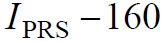
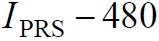
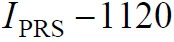
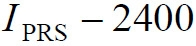
)定義,如下表2中所說明。

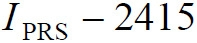
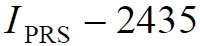

PRS組態係參考傳輸PRS之小區的SFN而定義。對於包含第一PRS定位出現時刻之N PRS
下行鏈路子訊框中之第一子訊框,PRS例項可滿足:
如圖8中所示,小區特定子訊框偏移852可依據自SFN 0 (「時槽數目 = 0」,標記為時槽850)開始至第一(後續) PRS定位出現時刻之起始所傳輸的子訊框之數目加以定義。在圖8中之實例中,連續PRS定位出現時刻818a、818b及818c中之每一者中的連續定位子訊框數目(NPRS
)等於4。應注意,儘管NPRS
可指定每個出現時刻之連續定位子訊框數目,但其實際上可基於實施方案而指定連續定位時槽數目。舉例而言,在LTE中,NPRS
指定每個出現時刻之連續定位子訊框數目,而在NR中,NPRS
指定每個出現時刻之連續定位時槽數目。As shown in FIG. 8, the cell-specific subframe offset 852 can be based on the starting position from SFN 0 ("number of time slots = 0", marked as time slot 850) to the first (subsequent) PRS positioning. The number of sub-frames to be transmitted is defined. In an example of FIG. 8, the continuous time 818A PRS positioning occurs, the number of successive locator information in the
在一些態樣中,當UE接收用於特定小區之輔助資料中之PRS組態索引I PRS
時,UE可使用表2來判定PRS週期性T PRS
820及PRS子訊框偏移ΔPRS
。UE接著可在於小區中排程PRS時判定無線電訊框、子訊框及時槽(例如,使用上文等式)。輔助資料可藉由例如位置伺服器判定,且包括用於參考小區及由各個基地台支援之多個鄰近小區的輔助資料。In some aspects, when the UE receives the PRS configuration index I PRS in the auxiliary data for a specific cell, the UE can use Table 2 to determine the
通常,來自網路中使用相同頻率之所有小區的PRS出現時刻在時間上對準且可具有相對於網路中使用不同頻率之其他小區的固定已知時間偏移(例如,小區特定子訊框偏移852)。在SFN同步網路中,所有無線節點(例如,基地台)可在訊框邊界及系統訊框編號兩者上對準。因此,在SFN同步網路中,由各個基地台支援之所有小區可對PRS傳輸之任何特定頻率使用相同PRS組態索引。另一方面,在SFN非同步網路中,各個基地台可在訊框邊界而非SFN上對準。因此,在SFN非同步網路中,每一小區之PRS組態索引可藉由網路獨立地組態,使得PRS出現時刻在時間上對準。Generally, the PRSs from all cells using the same frequency in the network are aligned in time and may have a fixed known time offset relative to other cells using different frequencies in the network (e.g., cell-specific subframes). Offset 852). In an SFN synchronization network, all wireless nodes (for example, base stations) can be aligned on both the frame boundary and the system frame number. Therefore, in an SFN synchronization network, all cells supported by each base station can use the same PRS configuration index for any specific frequency of PRS transmission. On the other hand, in an SFN asynchronous network, each base station can be aligned on the frame boundary instead of on the SFN. Therefore, in the SFN asynchronous network, the PRS configuration index of each cell can be configured independently by the network, so that the PRS appearance time is aligned in time.
若UE可獲得小區中的至少一者(例如,參考小區或伺服小區)之小區時序(例如,SFN),則UE可判定用於定位之參考小區及鄰近小區之PRS出現時刻的時序。UE可隨後基於例如來自不同小區之PRS出現時刻重疊的假設推導其他小區之時序。If the UE can obtain the cell timing (e.g., SFN) of at least one of the cells (e.g., a reference cell or a serving cell), the UE can determine the timing of the PRS occurrence time of the reference cell and neighboring cells used for positioning. The UE can then derive the timing of other cells based on the assumption that the PRSs from different cells overlap.
對於LTE系統,用於傳輸PRS (例如,用於定位)之子訊框的序列可由多個參數表徵及定義,該等參數包含:(i)頻寬(BW)之保留區塊、(ii)組態索引I PRS 、(iii)持續時間NPRS 、(iv)視情況選用之靜音模式及(v)靜音序列週期性T REP ,其可隱含地包括為(iv)中之靜音模式(若存在)的部分。在一些情況下,在極低PRS工作循環之情況下,N PRS = 1,T PRS = 160個子訊框(等於160 ms),且BW = 1.4、3、5、10、15或20 MHz。為增加PRS工作循環,可將N PRS 值增加至六(亦即,N PRS = 6)且可將頻寬(BW)值增加至系統頻寬(亦即,在LTE之情況下,BW = LTE系統頻寬)。具有較大NPRS (例如,大於六)及/或較短TPRS (例如,小於160 ms),至多全部工作循環(亦即,NPRS = TPRS )之擴展PRS亦可用於LTE定位協定(LPP)之更新版本中。方向PRS可如剛才所描述經組態,且可例如使用較低PRS工作循環(例如,N PRS = 1,T PRS = 160個子訊框)或較高工作循環。For the LTE system, the sequence of sub-frames used to transmit PRS (for example, for positioning) can be characterized and defined by multiple parameters, including: (i) reserved blocks of bandwidth (BW), (ii) groups State index I PRS , (iii) duration N PRS , (iv) optional silent mode and (v) silent sequence periodicity T REP , which can be implicitly included as the silent mode in (iv) (if any )part. In some cases, in the case of a very low PRS duty cycle, N PRS = 1, T PRS = 160 sub-frames (equal to 160 ms), and BW = 1.4, 3, 5, 10, 15 or 20 MHz. To increase the PRS duty cycle, the N PRS value can be increased to six (ie, N PRS = 6) and the bandwidth (BW) value can be increased to the system bandwidth (ie, in the case of LTE, BW = LTE System bandwidth). Extended PRS with larger N PRS (for example, greater than six) and/or shorter T PRS (for example, less than 160 ms), at most all duty cycles (ie, N PRS = T PRS ) can also be used in LTE positioning protocols ( LPP) is in the updated version. The direction PRS can be configured as just described, and a lower PRS duty cycle (eg, N PRS = 1, T PRS = 160 subframes) or a higher duty cycle can be used, for example.
本發明定義應向UE發信哪一參數集合,以使得UE能夠準確地知曉鄰近小區之SSB之時間及頻率位置。參數集合可藉由例如位置伺服器(例如,位置伺服器230、LMF 270、SLP 272)經由LPP發信或藉由UE之伺服小區發信。對於頻率內小區,參數集合包括以下:(1) SFN或相對於伺服SFN之SFN偏移;(2)相對於伺服子訊框之子訊框偏移;及(3)對於複數個「同步頻道光柵」中之每一者(在多SSB之情況下,可存在多者):(a)傳輸SSB之頻率(例如,同步光柵點、全域同步頻道數目(GSCN)或NR絕對射頻頻道數目(NRARFCN))、(b)半訊框索引(其中組態半訊框、第一或第二、SSB之叢發(亦即,連續SSB之集合))、(c) SSB位元映圖(指示在每一SSB叢發中哪一SSB處於開啟或關閉,亦被稱作叢發中SSB位置)、(d) SSB週期性(以ms為單位)及(e) SSB模式(SCS及潛在情況編號(例如,上文A、B、C、D)),其可用一個或兩個位元發信。如將瞭解,SFN偏移及子訊框偏移僅為在時域中指定SSB偏移之一個實例。The present invention defines which parameter set should be signaled to the UE so that the UE can accurately know the time and frequency position of the SSB of the neighboring cell. The parameter set can be signaled via LPP by, for example, a location server (eg,
應注意,以上參數(1)及(2)亦可包括於量測輔助資料中,因為需要其來判定PRS出現時刻。另外,術語「同步頻道光柵」僅僅意謂傳輸SSB之頻率。頻率可由GSCN或NRARFCN指定。此外,在一態樣中,半訊框索引可分別藉由用於第一及第二半部之「0」或「1」的一位元值發信。SSB週期性可以3個位元發信,且SSB模式可根據情況編號而以一個或兩個位元發信。It should be noted that the above parameters (1) and (2) can also be included in the measurement auxiliary data, because they are needed to determine the time when the PRS appears. In addition, the term "synchronized channel raster" simply means the frequency at which the SSB is transmitted. The frequency can be specified by GSCN or NRARFCN. In addition, in one aspect, the half-frame index can be signaled by a bit value of "0" or "1" for the first and second halves, respectively. The SSB period can be sent with 3 bits, and the SSB mode can be sent with one or two bits according to the situation number.
對於頻率內小區,強制提供「同步頻道光柵」。For intra-frequency cells, it is mandatory to provide "synchronized channel raster".
若沒有為一些小區提供上述SSB參數中之任一者,則對於UE應存在一些預設行為。在LPP中,位置伺服器(例如,位置伺服器230、LMF 270、SLP 272)可用SSB參數組態UE以使得UE能夠判定用於鄰近小區之SSB之準確時間及頻率位置。若參數(例如,半訊框索引、SSB位元映圖、SSB週期性、SCS)中之任一者未經組態用於鄰近小區之經組態同步頻道光柵中之一者,則隨後UE將假定對應參數與伺服小區之參數相同。若沒有為鄰近小區提供同步頻道光柵,則隨後UE假定其與伺服小區之同步頻道光柵相同。應注意,若提供多個同步頻道光柵,則隨後將亦需要提供頻率(例如,由GSCN或NRARFCN指示)。If any of the above SSB parameters is not provided for some cells, there should be some preset behaviors for the UE. In LPP, a location server (eg,
如圖9中所說明,另一待處理問題為,在PRS組態(例如,PRS組態800)之PRS頻寬(BW)內有多個SSB之情況下,預期UE如何使用鄰近小區之SSB的輔助資料。特定言之,圖 9
說明在PRS頻寬930內佔據不同頻率資源之兩個SSB (「SSB1」910及「SSB2」920)。在一個PRS頻寬內有多個SSB之情況下,如在圖9之實例中,存在以下選項。作為第一選項,可穿刺攜載PRS之整個OFDM符號。作為第二選項,預期傳輸小區僅穿刺衝突之PRB,假定產生不超過某一數目「X」之連續頻寬部分(在圖9之實例中為三個,在SSB之每側上一個),每一者不小於PRB之臨限值。在一態樣中,PRB之臨限值可等於可經組態為PRS頻寬之最小數目(例如,24個PRB)。As illustrated in Figure 9, another problem to be solved is, in the case of multiple SSBs in the PRS bandwidth (BW) of the PRS configuration (for example, PRS configuration 800), how the UE is expected to use the SSB of the neighboring cell Supporting information. Specifically, FIG. 9 illustrates two SSBs ("SSB1" 910 and "SSB2" 920) occupying different frequency resources within the
UE支援前述選項之能力取決於UE之能力,且UE可發信(例如,向位置伺服器或伺服小區發信)支援哪一(些)選項。此訊息可包括表示支援哪一選項之一個位元、「X」之值(例如,X = 2、3、5)及臨限值(例如,4個PRB、24個PRB)。The ability of the UE to support the aforementioned options depends on the ability of the UE, and which option(s) the UE can signal (for example, send a signal to a location server or a serving cell). This message may include a bit indicating which option is supported, the value of "X" (for example, X = 2, 3, 5), and a threshold (for example, 4 PRBs, 24 PRBs).
圖 10
說明根據本發明之態樣的例示性無線通信方法1000。在一態樣中,方法1000可由UE (例如,本文中所述之UE中之任一者)執行。 FIG. 10 illustrates an exemplary
在1010處,UE自網路實體(例如,伺服TRP、位置伺服器230、LMF 270、SLP 272)接收用於一或多個伺服或鄰近TRP之複數個PRS組態。在一態樣中,操作1010可由WWAN收發器310、處理系統332、記憶體組件340及/或定位組件342執行,其中任一者或全部可被視為用於執行此操作之構件。At 1010, the UE receives a plurality of PRS configurations for one or more servos or neighboring TRPs from a network entity (eg, servo TRP,
在1020處,UE自網路實體接收指示一或多個伺服或鄰近TRP之一或多個SSB之時間及頻率位置的參數集合。在一態樣中,操作1020可由WWAN收發器310、處理系統332、記憶體組件340及/或定位組件342執行,其中任一者或全部可被視為用於執行此操作之構件。At 1020, the UE receives a parameter set indicating the time and frequency positions of one or more servos or one or more SSBs of neighboring TRPs from the network entity. In one aspect,
在1030處,UE基於參數集合判定複數個PRS組態中之哪些PRS已被一或多個SSB穿刺。在一態樣中,操作1030可由WWAN收發器310、處理系統332、記憶體組件340及/或定位組件342執行,其中任一者或全部可被視為用於執行此操作之構件。At 1030, the UE determines which of the plurality of PRS configurations have been punctured by one or more SSBs based on the parameter set. In one aspect, the
在1040處,UE視情況基於判定來處理複數個PRS組態中之其餘PRS中之至少一些。在一態樣中,操作1040可由WWAN收發器310、處理系統332、記憶體組件340及/或定位組件342執行,其中任一者或全部可被視為用於執行此操作之構件。At 1040, the UE processes at least some of the remaining PRS in the plurality of PRS configurations based on the decision as appropriate. In one aspect,
圖 11
說明根據本發明之態樣的例示性無線通信方法1100。方法1100可藉由網路實體(例如,伺服TRP、位置伺服器230、LMF 270、SLP 272)執行。 FIG. 11 illustrates an exemplary
在1110處,網路實體向UE (例如,本文所描述之UE中之任一者)傳輸用於一或多個伺服或鄰近TRP之複數個PRS組態。在網路實體為位置伺服器之一態樣中,操作1110可藉由網路介面390、處理系統394、記憶體組件396及/或定位組件398執行,其中任一者或全部可被視為用於執行此操作之構件。在網路實體為TRP之一態樣中,操作1110可由WWAN收發器350、處理系統384、記憶體組件386及/或定位組件388執行,其中任一者或全部可被視為用於執行此操作之構件。At 1110, the network entity transmits a plurality of PRS configurations for one or more servos or neighboring TRPs to a UE (eg, any of the UEs described herein). In the case where the network entity is a location server,
在1120處,網路實體向UE傳輸指示一或多個伺服或鄰近TRP之一或多個SSB之時間及頻率位置的參數集合。在網路實體為位置伺服器之一態樣中,操作1120可藉由網路介面390、處理系統394、記憶體組件396及/或定位組件398執行,其中任一者或全部可被視為用於執行此操作之構件。在網路實體為TRP之一態樣中,操作1120可由WWAN收發器350、處理系統384、記憶體組件386及/或定位組件388執行,其中任一者或全部可被視為用於執行此操作之構件。At 1120, the network entity transmits to the UE a parameter set indicating the time and frequency location of one or more servos or one or more SSBs of neighboring TRPs. In the case where the network entity is a location server,
熟習此項技術者將瞭解,資訊及信號可使用多種不同技術及技藝中之任一者表示。舉例而言,可由電壓、電流、電磁波、磁場或磁性粒子、光場或光學粒子或其任何組合來表示在貫穿以上描述中可能引用之資料、指令、命令、資訊、信號、位元、符號及晶片。Those familiar with this technology will understand that information and signals can be expressed using any of a variety of different technologies and techniques. For example, voltage, current, electromagnetic waves, magnetic fields or magnetic particles, light fields or optical particles, or any combination thereof can be used to represent the data, instructions, commands, information, signals, bits, symbols, and symbols that may be cited throughout the above description. Wafer.
另外,熟習此項技術者將瞭解,結合本文中所揭示之態樣而描述的各種說明性邏輯區塊、模組、電路及演算法步驟可實施為電子硬體、電腦軟體或兩者之組合。為了清楚地說明硬體與軟體之此互換性,上文已大體上在其功能性方面描述各種說明性組件、區塊、模組、電路及步驟。將此功能性實施為硬體抑或軟體取決於特定應用及強加於整個系統上之設計約束。熟習此項技術者可針對每一特定應用而以變化之方式實施所描述之功能性,但不應將此等實施方案決策解譯為致使脫離本發明之範疇。In addition, those familiar with this technology will understand that the various descriptive logic blocks, modules, circuits, and algorithm steps described in combination with the aspects disclosed in this article can be implemented as electronic hardware, computer software, or a combination of both . In order to clearly illustrate this interchangeability of hardware and software, various illustrative components, blocks, modules, circuits, and steps have been generally described above in terms of their functionality. Whether this functionality is implemented as hardware or software depends on the specific application and design constraints imposed on the entire system. Those skilled in the art can implement the described functionality in various ways for each specific application, but these implementation decisions should not be interpreted as deviating from the scope of the present invention.
結合本文中所揭示之態樣描述的各種說明性邏輯區塊、模組及電路可藉由以下來實施或執行:通用處理器、DSP、ASIC、FPGA或其他可程式化邏輯器件、離散閘或電晶體邏輯、離散硬體組件或其經設計以執行本文中所描述之功能的任何組合。通用處理器可為微處理器,但在替代例中,處理器可為任何習知處理器、控制器、微控制器或狀態機。處理器亦可實施為計算器件之組合,例如DSP與微處理器之組合、複數個微處理器、一或多個微處理器連同DSP核心,或任何其他此類組態。Various descriptive logic blocks, modules, and circuits described in combination with the aspects disclosed in this article can be implemented or executed by: general-purpose processors, DSP, ASIC, FPGA or other programmable logic devices, discrete gates, or Transistor logic, discrete hardware components, or any combination thereof designed to perform the functions described herein. The general-purpose processor may be a microprocessor, but in the alternative, the processor may be any conventional processor, controller, microcontroller, or state machine. The processor can also be implemented as a combination of computing devices, such as a combination of a DSP and a microprocessor, a plurality of microprocessors, one or more microprocessors together with a DSP core, or any other such configuration.
結合本文中所揭示之態樣描述之方法、序列及/或演算法可以硬體、以由處理器執行之軟體模組、或以兩者之組合直接體現。軟體模組可駐留於隨機存取記憶體(RAM)、快閃記憶體、唯讀記憶體(ROM)、可抹除可程式化ROM (EPROM)、電可抹除可程式化ROM (EEPROM)、暫存器、硬碟、抽取式磁碟、CD-ROM、或此項技術中已知的任何其他形式之儲存媒體。將例示性儲存媒體耦接至處理器,使得處理器可自儲存媒體讀取資訊及將資訊寫入至儲存媒體。在替代例中,儲存媒體可整合至處理器。處理器及儲存媒體可駐留於ASIC中。ASIC可駐留於使用者終端(例如,UE)中。在替代例中,處理器及儲存媒體可作為離散組件駐留於使用者終端中。The methods, sequences, and/or algorithms described in combination with the aspects disclosed herein can be directly embodied in hardware, in a software module executed by a processor, or in a combination of both. The software module can reside in random access memory (RAM), flash memory, read-only memory (ROM), erasable programmable ROM (EPROM), electrically erasable programmable ROM (EEPROM) , Scratchpad, hard disk, removable disk, CD-ROM, or any other form of storage media known in the art. The exemplary storage medium is coupled to the processor, so that the processor can read information from the storage medium and write information to the storage medium. In the alternative, the storage medium may be integrated into the processor. The processor and storage medium may reside in the ASIC. The ASIC may reside in a user terminal (e.g., UE). In the alternative, the processor and the storage medium may reside as discrete components in the user terminal.
在一或多個例示性態樣中,所描述之功能可實施於硬體、軟體、韌體或其任何組合中。若實施於軟體中,則可將功能作為一或多個指令或程式碼而儲存於電腦可讀媒體上或經由電腦可讀媒體傳輸。電腦可讀媒體包括電腦儲存媒體及通信媒體兩者,該通信媒體包括促進電腦程式自一處傳輸至另一處之任何媒體。儲存媒體可為可由電腦存取之任何可用媒體。藉助於實例而非限制,此等電腦可讀媒體可包含RAM、ROM、EEPROM、CD-ROM或其他光碟儲存器、磁碟儲存器或其他磁性儲存器件,或可用以攜載或儲存呈指令或資料結構之形式的所要程式碼且可由電腦存取的任何其他媒體。又,任何連接被適當地稱為電腦可讀媒體。舉例而言,若使用同軸電纜、光纖纜線、雙絞線、數位用戶線(DSL)或諸如,紅外線、無線電及微波之無線技術自網站、伺服器或其他遠端源傳輸軟體,則隨後同軸電纜、光纖纜線、雙絞線、DSL或諸如,紅外線、無線電及微波之無線技術包括於媒體之定義中。如本文所使用之磁碟及光碟包括緊密光碟(CD)、雷射光碟、光學光碟、數位多功能光碟(DVD)、軟碟及藍光光碟(Blu-ray disc),其中磁碟通常以磁性方式再生資料,而光碟用雷射以光學方式再生資料。以上之組合亦應包括於電腦可讀媒體之範疇內。In one or more exemplary aspects, the described functions can be implemented in hardware, software, firmware, or any combination thereof. If implemented in software, the function can be stored on a computer-readable medium or transmitted via the computer-readable medium as one or more instructions or program codes. Computer-readable media includes both computer storage media and communication media. The communication media includes any medium that facilitates the transfer of a computer program from one place to another. The storage medium can be any available medium that can be accessed by a computer. By way of example and not limitation, these computer-readable media may include RAM, ROM, EEPROM, CD-ROM or other optical disk storage, magnetic disk storage or other magnetic storage devices, or may be used to carry or store instructions or Any other medium that can be accessed by a computer in the form of a data structure. Also, any connection is properly termed a computer-readable medium. For example, if you use coaxial cable, optical fiber cable, twisted pair, digital subscriber line (DSL) or wireless technology such as infrared, radio and microwave to transmit software from a website, server or other remote source, then coaxial Cable, fiber optic cable, twisted pair, DSL, or wireless technologies such as infrared, radio, and microwave are included in the definition of media. Disks and optical discs as used in this article include compact discs (CDs), laser discs, optical discs, digital versatile discs (DVD), floppy discs and Blu-ray discs, among which the discs are usually magnetic Regenerate data, and optical discs use lasers to regenerate data optically. The combination of the above should also be included in the category of computer-readable media.
雖然前述揭示展示本發明之說明性態樣,但應注意,可在不脫離如所附申請專利範圍所定義的本發明之範疇的情況下,在本文中作出各種改變及修改。無需以任何特定次序執行根據本文中所描述之本發明之態樣所主張的方法之功能、步驟及/或動作。此外,儘管可能以單數形式描述或主張本發明之元件,但除非明確地陳述限於單數形式,否則涵蓋複數形式。Although the foregoing disclosure shows illustrative aspects of the present invention, it should be noted that various changes and modifications can be made herein without departing from the scope of the present invention as defined by the scope of the appended application. It is not necessary to perform the functions, steps and/or actions of the methods claimed according to the aspects of the invention described herein in any particular order. In addition, although elements of the present invention may be described or claimed in the singular form, the plural form is encompassed unless it is explicitly stated that they are limited to the singular form.
100:無線通信系統 102:基地台 102':小型小區基地台 104:使用者設備 110:地理涵蓋區域 110':地理涵蓋區域 120:通信鏈路 122:空載傳輸鏈路 134:空載傳輸鏈路 150:無線區域網路存取點 152:無線區域網路台 154:通信鏈路 164:使用者設備 170:核心網路 172:位置伺服器 180:毫米波基地台 182:使用者設備 184:毫米波通信鏈路 190:使用者設備 192:D2D P2P鏈路 194:D2D P2P鏈路 200:無線網路結構 204:使用者設備 210:5GC 212:使用者平面功能 213:使用者平面介面 214:控制平面功能 215:控制平面介面 220:新無線電存取網路 222:gNB 223:空載傳輸連接 224:ng-eNB 230:位置伺服器 250:無線網路結構 260:5GC 262:使用者平面功能 263:使用者平面介面 264:存取及行動性管理功能 265:控制平面介面 266:會話管理功能 270:位置管理功能 272:安全使用者平面位置定位平台 302:使用者設備 304:基地台 306:網路實體 310:無線廣域網路收發器 312:接收器 314:傳輸器 316:天線 318:信號 320:無線區域網路收發器 322:接收器 324:傳輸器 326:天線 328:信號 330:衛星定位系統接收器 332:處理系統 334:資料匯流排 336:天線 338:衛星定位系統信號 340:記憶體組件 342:定位組件 344:感測器 346:使用者介面 350:無線廣域網路收發器 352:接收器 354:傳輸器 356:天線 358:信號 360:無線區域網路收發器 362:接收器 364:傳輸器 366:天線 368:信號 370:衛星定位系統接收器 376:天線 378:衛星定位系統信號 380:網路介面 382:資料匯流排 384:處理系統 386:記憶體組件 388:定位組件 390:網路介面 392:資料匯流排 394:處理系統 396:記憶體組件 398:定位組件 400:圖式 430:圖式 500:SS/PBCH區塊 510:第一符號 520:第二符號 530:第三符號 540:第四符號 610:時刻表 620:時刻表 622:第一映射選項 624:第二映射選項 630:時刻表 640:時刻表 700:ServingCellConfigCommon IE 800:PRS組態 818a:PRS定位出現時刻 818b:PRS定位出現時刻 818c:PRS定位出現時刻 820:PRS週期性 850:時槽 852:小區特定子訊框偏移 910:SSB1 920:SSB2 930:PRS頻寬 1000:方法 1010:操作 1020:操作 1030:操作 1040:操作 1100:方法 1110:操作 1120:操作100: wireless communication system 102: base station 102': small cell base station 104: user equipment 110: geographic coverage area 110': geographic coverage area 120: communication link 122: no-load transmission link 134: no-load transmission link Road 150: wireless local area network access point 152: wireless local area network station 154: communication link 164: user equipment 170: core network 172: location server 180: millimeter wave base station 182: user equipment 184: Millimeter wave communication link 190: user equipment 192: D2D P2P link 194: D2D P2P link 200: wireless network structure 204: user equipment 210: 5GC 212: user plane function 213: user plane interface 214: Control plane function 215: Control plane interface 220: New radio access network 222: gNB 223: No-load transmission connection 224: ng-eNB 230: Location server 250: Wireless network structure 260: 5GC 262: User plane function 263: User plane interface 264: Access and mobility management functions 265: Control plane interface 266: Session management functions 270: Location management functions 272: Secure user plane location positioning platform 302: User equipment 304: Base station 306: Network entity 310: Wireless WAN transceiver 312: Receiver 314: Transmitter 316: Antenna 318: Signal 320: Wireless LAN transceiver 322: Receiver 324: Transmitter 326: Antenna 328: Signal 330: Satellite positioning System receiver 332: Processing system 334: Data bus 336: Antenna 338: Satellite positioning system signal 340: Memory component 342: Positioning component 344: Sensor 346: User interface 350: Wireless WAN transceiver 352: Receive Transmitter 354: Transmitter 356: Antenna 358: Signal 360: Wireless LAN Transceiver 362: Receiver 364: Transmitter 366: Antenna 368: Signal 370: Satellite Positioning System Receiver 376: Antenna 378: Satellite Positioning System Signal 380 : Network interface 382: Data bus 384: Processing system 386: Memory component 388: Positioning component 390: Network interface 392: Data bus 394: Processing system 396: Memory component 398: Positioning component 400: Graphic 430 : Scheme 500: SS/PBCH block 510: First symbol 520: Second symbol 530: Third symbol 540: Fourth symbol 610: Timetable 620: Timetable 622: First mapping option 624: Second mapping option 630: Timetable 640: Timetable 700: ServingCellConfigCommon IE 800: PRS configuration 818a: PRS positioning time 818b: PRS positioning time 818c: PRS positioning time 820: PR S periodic 850: time slot 852: cell-specific subframe offset 910: SSB1 920: SSB2 930: PRS bandwidth 1000: Method 1010: Operation 1020: Operation 1030: Operation 1040: Operation 1100: Method 1110: Operation 1120: operating
呈現隨附圖式以輔助描述本發明之各個態樣,且提供該等隨附圖式僅用於說明該等態樣而非對其進行限制。The accompanying drawings are presented to assist in describing various aspects of the present invention, and the accompanying drawings are provided only to illustrate the aspects and not to limit them.
圖1說明根據本發明之各個態樣的例示性無線通信系統。Figure 1 illustrates an exemplary wireless communication system according to various aspects of the present invention.
圖2A及圖2B說明根據本發明之各個態樣的例示性無線網路結構。2A and 2B illustrate exemplary wireless network structures according to various aspects of the present invention.
圖3A至圖3C為根據本發明之態樣的分別可在UE、基地台及網路實體中採用之組件之若干例示性態樣的簡化方塊圖。3A to 3C are simplified block diagrams of several exemplary aspects of components that can be used in UEs, base stations, and network entities, respectively, according to aspects of the present invention.
圖4A及圖4B為說明根據本發明之態樣的例示性訊框結構及訊框結構內之頻道的圖式。4A and 4B are diagrams illustrating an exemplary frame structure and channels in the frame structure according to aspects of the present invention.
圖5為說明根據本發明之一態樣的SSB之一實例的圖式。Fig. 5 is a diagram illustrating an example of an SSB according to an aspect of the present invention.
圖6A及圖6B說明根據本發明之態樣的半訊框內用於不同子載波間隔之SSB位置。6A and 6B illustrate the SSB positions for different subcarrier spacings within a half frame according to aspects of the present invention.
圖7說明根據本發明之態樣的例示性ServingCellConfigCommon 資訊元素(IE)。FIG. 7 illustrates an exemplary ServingCellConfigCommon information element (IE) according to aspects of the present invention.
圖8說明用於由基地台支援之小區的例示性定位參考信號(PRS)組態。Figure 8 illustrates an exemplary positioning reference signal (PRS) configuration for a cell supported by a base station.
圖9說明根據本發明之態樣的PRS頻寬內之不同頻率上之兩個SSB。Figure 9 illustrates two SSBs on different frequencies within the PRS bandwidth according to aspects of the present invention.
圖10及圖11說明根據本發明之態樣的例示性無線通信方法。10 and 11 illustrate an exemplary wireless communication method according to aspects of the present invention.
1000:方法 1000: method
1010:操作 1010: Operation
1020:操作 1020: Operation
1030:操作 1030: Operation
1040:操作 1040: Operation
Claims (54)
Applications Claiming Priority (4)
| Application Number | Priority Date | Filing Date | Title |
|---|---|---|---|
| US201962887595P | 2019-08-15 | 2019-08-15 | |
| US62/887,595 | 2019-08-15 | ||
| US16/992,401 US11533144B2 (en) | 2019-08-15 | 2020-08-13 | Indication of time-frequency synchronization signal block (SSB) locations of neighboring transmission-reception points for positioning reference signal puncturing purposes |
| US16/992,401 | 2020-08-13 |
Publications (2)
| Publication Number | Publication Date |
|---|---|
| TW202123647A true TW202123647A (en) | 2021-06-16 |
| TWI858110B TWI858110B (en) | 2024-10-11 |
Family
ID=74567587
Family Applications (1)
| Application Number | Title | Priority Date | Filing Date |
|---|---|---|---|
| TW109127799A TWI858110B (en) | 2019-08-15 | 2020-08-14 | Indication of time-frequency synchronization signal block (ssb) locations of neighboring transmission-reception points for positioning reference signal puncturing purposes |
Country Status (9)
| Country | Link |
|---|---|
| US (1) | US11533144B2 (en) |
| EP (1) | EP4014418A1 (en) |
| JP (2) | JP2022545621A (en) |
| KR (1) | KR20220047975A (en) |
| CN (1) | CN114258656B (en) |
| BR (1) | BR112022002191A2 (en) |
| PH (1) | PH12022550076A1 (en) |
| TW (1) | TWI858110B (en) |
| WO (1) | WO2021030744A1 (en) |
Families Citing this family (11)
| Publication number | Priority date | Publication date | Assignee | Title |
|---|---|---|---|---|
| KR102392079B1 (en) * | 2018-05-04 | 2022-05-02 | 주식회사 케이티 | Apparatus and Method of performing positioning in new radio |
| US12192923B2 (en) * | 2021-01-14 | 2025-01-07 | Apple Inc. | Synchronization signal block transmission with 480 kHz or 960 kHz subcarrier spacing |
| US12075449B2 (en) * | 2021-07-01 | 2024-08-27 | Nokia Technologies Oy | Blind physical broadcast channel detection for narrowband new radio |
| CN116015571B (en) * | 2021-10-21 | 2025-03-21 | 展讯通信(上海)有限公司 | Communication method and communication device |
| CN116391332B (en) * | 2021-11-03 | 2025-10-03 | 北京小米移动软件有限公司 | Information transmission and reception method, device, equipment and storage medium |
| CN114095142B (en) * | 2021-11-18 | 2023-12-05 | 紫光展锐(重庆)科技有限公司 | Signal processing methods and related devices |
| JP2025016819A (en) * | 2021-12-28 | 2025-02-05 | シャープ株式会社 | Terminal device, base station device, and communication method |
| WO2023130296A1 (en) * | 2022-01-06 | 2023-07-13 | Qualcomm Incorporated | Coverage recovery for punctured physical broadcast channel |
| WO2023206046A1 (en) * | 2022-04-25 | 2023-11-02 | Nokia Shanghai Bell Co., Ltd. | Mechanism for single beam reception inside prs processing window |
| US20240298279A1 (en) * | 2023-03-02 | 2024-09-05 | Qualcomm Incorporated | Wideband synchronization signal block (ssb) using phase-coded frequency-modulated continuous-wave (pc-fmcw) for joint communications and sensing (jcs) |
| US20240373381A1 (en) * | 2023-05-04 | 2024-11-07 | Raytheon Applied Signal Technology, Inc. | Optimizing cell searching in 5g new radio wireless networks or other wireless networks |
Family Cites Families (31)
| Publication number | Priority date | Publication date | Assignee | Title |
|---|---|---|---|---|
| KR101191215B1 (en) * | 2010-07-16 | 2012-10-15 | 엘지전자 주식회사 | Method and apparatus of positioning in a wireless communication system |
| US9344248B2 (en) * | 2010-11-12 | 2016-05-17 | Google Technology Holdings LLC | Positioning reference signal assistance data signaling for enhanced interference coordination in a wireless communication network |
| TWI815125B (en) * | 2013-05-08 | 2023-09-11 | 美商內數位專利控股公司 | Methods, systems and apparatuses for network assisted interference cancellation and/or suppression (naics) in long term evolution (lte) systems |
| CN105917717B (en) * | 2014-01-15 | 2019-11-05 | 华为技术有限公司 | System and method for uplink OFDMA transmission |
| WO2016144028A1 (en) | 2015-03-06 | 2016-09-15 | 엘지전자 주식회사 | Reference signal reception method in wireless communication system, and device for same |
| CN107925448B (en) * | 2015-09-11 | 2021-11-19 | 苹果公司 | Apparatus and method for enhanced seamless mobility |
| US10511413B2 (en) * | 2016-02-03 | 2019-12-17 | Ofinno, Llc | Hybrid automatic repeat requests in a wireless device and wireless network |
| KR102379418B1 (en) * | 2016-03-30 | 2022-03-28 | 인터디지탈 패튼 홀딩스, 인크 | Method and procedure for downlink physical channel to reduce latency in LTE advanced system |
| US10547421B2 (en) * | 2016-09-30 | 2020-01-28 | Qualcomm Incorporated | Scheduling for positioning reference signal (PRS) in narrowband-internet of things (NB-IoT) |
| US10484153B2 (en) * | 2017-03-09 | 2019-11-19 | Samsung Electronics Co., Ltd. | Method and apparatus for NR-DMRS sequence design |
| CN110892759B (en) * | 2017-05-03 | 2021-12-10 | 索尼公司 | Method and apparatus for efficient utilization of SSBs in new radio systems |
| WO2018204665A1 (en) | 2017-05-04 | 2018-11-08 | Sharp Laboratories Of America, Inc. | Synchronization signal transmission and reception for radio system |
| CN108810983B (en) * | 2017-05-05 | 2021-07-09 | 华为技术有限公司 | Method, network device and terminal device for sending and receiving information |
| CN110692210B (en) | 2017-05-19 | 2022-04-15 | 三星电子株式会社 | Method and apparatus for reducing CSI-RS transmission overhead in wireless communication system |
| CN115843097A (en) * | 2017-06-16 | 2023-03-24 | Lg 电子株式会社 | Method for transceiving downlink channel and apparatus therefor |
| CN111108730B (en) | 2017-06-21 | 2023-09-19 | 苹果公司 | Conflict handling of synchronization signal (SS) blocks |
| WO2019022575A1 (en) | 2017-07-28 | 2019-01-31 | 엘지전자 주식회사 | Method for transmitting and receiving synchronization signal block and device therefor |
| US10736074B2 (en) * | 2017-07-31 | 2020-08-04 | Qualcomm Incorporated | Systems and methods to facilitate location determination by beamforming of a positioning reference signal |
| US10587323B2 (en) * | 2017-08-11 | 2020-03-10 | Lg Electronics Inc. | Method for transmitting and receiving reference signal and apparatus therefor |
| US11463968B2 (en) * | 2017-09-17 | 2022-10-04 | Qualcomm Incorporated | Techniques for signaling synchronization signal burst set patterns |
| IL273804B2 (en) * | 2017-10-06 | 2025-01-01 | Ntt Docomo Inc | User terminal and radio communication method |
| US10925041B2 (en) * | 2017-10-09 | 2021-02-16 | Qualcomm Incorporated | Common indexing for uplink physical resource blocks |
| KR102346259B1 (en) * | 2017-11-09 | 2022-01-03 | 삼성전자 주식회사 | Method and device for requesting resource for transmitting data in radio communication system |
| EP3711338A1 (en) * | 2017-11-16 | 2020-09-23 | Telefonaktiebolaget LM Ericsson (publ) | User equipment, network nodes and methods in a wireless communications network |
| US10993248B2 (en) | 2017-11-17 | 2021-04-27 | Qualcomm Incorporated | Designs for remaining minimum system information (RMSI) control resource set (CORESET) and other system information (OSI) coreset |
| CN109803376B (en) * | 2017-11-17 | 2024-04-09 | 华为技术有限公司 | Method, terminal device and network device for transmitting paging message |
| ES3042613T3 (en) * | 2017-12-13 | 2025-11-21 | Ntt Docomo Inc | User terminal and radio communication method |
| CN109936430B (en) * | 2017-12-18 | 2024-04-12 | 华为技术有限公司 | Signal transmitting and receiving method and device |
| CN110690950B (en) * | 2018-07-06 | 2020-08-11 | 维沃移动通信有限公司 | Positioning reference signal configuration, receiving method and device |
| US10834708B2 (en) * | 2018-07-06 | 2020-11-10 | Samsung Electronics Co., Ltd. | Method and apparatus for NR sidelink SS/PBCH block |
| WO2020165708A1 (en) * | 2019-02-15 | 2020-08-20 | Telefonaktiebolaget Lm Ericsson (Publ) | System and method to allocate positioning reference signals in a communication system |
-
2020
- 2020-08-13 US US16/992,401 patent/US11533144B2/en active Active
- 2020-08-14 KR KR1020227004099A patent/KR20220047975A/en active Pending
- 2020-08-14 JP JP2022507610A patent/JP2022545621A/en active Pending
- 2020-08-14 EP EP20764248.9A patent/EP4014418A1/en active Pending
- 2020-08-14 CN CN202080057514.4A patent/CN114258656B/en active Active
- 2020-08-14 WO PCT/US2020/046498 patent/WO2021030744A1/en not_active Ceased
- 2020-08-14 PH PH1/2022/550076A patent/PH12022550076A1/en unknown
- 2020-08-14 TW TW109127799A patent/TWI858110B/en active
- 2020-08-14 BR BR112022002191A patent/BR112022002191A2/en unknown
-
2025
- 2025-07-15 JP JP2025118829A patent/JP2025165958A/en active Pending
Also Published As
| Publication number | Publication date |
|---|---|
| BR112022002191A2 (en) | 2022-05-03 |
| CN114258656A (en) | 2022-03-29 |
| US11533144B2 (en) | 2022-12-20 |
| JP2025165958A (en) | 2025-11-05 |
| TWI858110B (en) | 2024-10-11 |
| US20210050986A1 (en) | 2021-02-18 |
| CN114258656B (en) | 2024-06-28 |
| JP2022545621A (en) | 2022-10-28 |
| PH12022550076A1 (en) | 2023-07-03 |
| WO2021030744A1 (en) | 2021-02-18 |
| EP4014418A1 (en) | 2022-06-22 |
| KR20220047975A (en) | 2022-04-19 |
Similar Documents
| Publication | Publication Date | Title |
|---|---|---|
| TWI858110B (en) | Indication of time-frequency synchronization signal block (ssb) locations of neighboring transmission-reception points for positioning reference signal puncturing purposes | |
| JP2023500280A (en) | Common measurement and transmission windows for downlink and uplink positioning reference signal processing and transmission | |
| JP2023517455A (en) | Downlink Control Information (DCI) based Triggered Positioning Reference Signal (PRS) | |
| TW202116078A (en) | Per-band capability reporting and relation to band-agnostic positioning signals | |
| TW202131009A (en) | Positioning in networks with frequency reuse | |
| US11895521B2 (en) | Positioning measurement data reported via L1 or L2 signaling | |
| US11395301B2 (en) | Muting pattern configuration options for downlink positioning reference signals (PRS) | |
| TW202123646A (en) | Puncturing indicator of a portion of a reference signal within an unpunctured portion of the reference signal | |
| US11825420B2 (en) | Selective transmission of power headroom reports | |
| US11646837B2 (en) | Interference measurement report with indication of inter-cell interference burst dynamic | |
| US11632687B2 (en) | Positioning measurement data | |
| US11356301B2 (en) | Determining a path loss for semi-persistent sounding reference signals for positioning | |
| US20210105182A1 (en) | Constraints on a source reference signal for quasi-collocation timing reference of a positioning reference signal | |
| US20240064685A1 (en) | Handling of punctured positioning reference signals | |
| US11632725B2 (en) | Selective transmission of power headroom reports | |
| WO2021164008A1 (en) | Dci-guided pdcch dmrs reception bundling | |
| WO2021223076A1 (en) | Optimizing physical downlink control channel (pdcch) power |