RU2480944C2 - Determining load measure for network element using weighted method - Google Patents
Determining load measure for network element using weighted method Download PDFInfo
- Publication number
- RU2480944C2 RU2480944C2 RU2009145101/07A RU2009145101A RU2480944C2 RU 2480944 C2 RU2480944 C2 RU 2480944C2 RU 2009145101/07 A RU2009145101/07 A RU 2009145101/07A RU 2009145101 A RU2009145101 A RU 2009145101A RU 2480944 C2 RU2480944 C2 RU 2480944C2
- Authority
- RU
- Russia
- Prior art keywords
- network element
- information
- traffic
- load
- blocks
- Prior art date
Links
- 238000000034 method Methods 0.000 title claims abstract description 30
- 238000004891 communication Methods 0.000 claims abstract description 10
- 238000005303 weighing Methods 0.000 claims description 5
- 238000012546 transfer Methods 0.000 claims description 3
- 230000002457 bidirectional effect Effects 0.000 claims 2
- 238000005516 engineering process Methods 0.000 abstract 1
- 239000000126 substance Substances 0.000 abstract 1
- 238000004590 computer program Methods 0.000 description 6
- 208000037918 transfusion-transmitted disease Diseases 0.000 description 6
- 238000005259 measurement Methods 0.000 description 5
- 230000005540 biological transmission Effects 0.000 description 3
- 238000010586 diagram Methods 0.000 description 3
- 238000013459 approach Methods 0.000 description 2
- 238000012986 modification Methods 0.000 description 2
- 230000004048 modification Effects 0.000 description 2
- 102100035111 Farnesyl pyrophosphate synthase Human genes 0.000 description 1
- 101001023007 Homo sapiens Farnesyl pyrophosphate synthase Proteins 0.000 description 1
- 230000010267 cellular communication Effects 0.000 description 1
- 230000007774 longterm Effects 0.000 description 1
- 238000012544 monitoring process Methods 0.000 description 1
- 238000005457 optimization Methods 0.000 description 1
- 238000013468 resource allocation Methods 0.000 description 1
- 230000003595 spectral effect Effects 0.000 description 1
Images
Classifications
-
- H—ELECTRICITY
- H04—ELECTRIC COMMUNICATION TECHNIQUE
- H04L—TRANSMISSION OF DIGITAL INFORMATION, e.g. TELEGRAPHIC COMMUNICATION
- H04L43/00—Arrangements for monitoring or testing data switching networks
- H04L43/08—Monitoring or testing based on specific metrics, e.g. QoS, energy consumption or environmental parameters
- H04L43/0876—Network utilisation, e.g. volume of load or congestion level
-
- H—ELECTRICITY
- H04—ELECTRIC COMMUNICATION TECHNIQUE
- H04W—WIRELESS COMMUNICATION NETWORKS
- H04W16/00—Network planning, e.g. coverage or traffic planning tools; Network deployment, e.g. resource partitioning or cells structures
- H04W16/02—Resource partitioning among network components, e.g. reuse partitioning
- H04W16/04—Traffic adaptive resource partitioning
-
- H—ELECTRICITY
- H04—ELECTRIC COMMUNICATION TECHNIQUE
- H04W—WIRELESS COMMUNICATION NETWORKS
- H04W28/00—Network traffic management; Network resource management
- H04W28/02—Traffic management, e.g. flow control or congestion control
- H04W28/0284—Traffic management, e.g. flow control or congestion control detecting congestion or overload during communication
-
- H—ELECTRICITY
- H04—ELECTRIC COMMUNICATION TECHNIQUE
- H04W—WIRELESS COMMUNICATION NETWORKS
- H04W72/00—Local resource management
-
- H—ELECTRICITY
- H04—ELECTRIC COMMUNICATION TECHNIQUE
- H04W—WIRELESS COMMUNICATION NETWORKS
- H04W24/00—Supervisory, monitoring or testing arrangements
Landscapes
- Engineering & Computer Science (AREA)
- Computer Networks & Wireless Communication (AREA)
- Signal Processing (AREA)
- Environmental & Geological Engineering (AREA)
- Mobile Radio Communication Systems (AREA)
- Data Exchanges In Wide-Area Networks (AREA)
- Small-Scale Networks (AREA)
Abstract
Description
Приоритет и ссылка на родственную заявкуPriority and reference to related application
Данная заявка притязает на приоритет патентной заявки США №60/927,967, поданной 7 мая 2007 г.This application claims priority to US Patent Application No. 60 / 927,967, filed May 7, 2007.
Область техникиTechnical field
Данное изобретение относится, в целом, к связи, например беспроводной связи, и, в частности, к определению меры нагрузки для сетевого элемента (например, для Node B на нисходящей линии связи или восходящей линии связи).This invention relates generally to communications, such as wireless communications, and, in particular, to determining a load measure for a network element (e.g., for a Node B on a downlink or an uplink).
Уровень техникиState of the art
В новой концепции для long term evolution (LTE) 3GPP (3rd Generation Partnership Project), предполагается использовать экстенсивную диспетчеризацию пакетов в частотной области (extensive frequency domain packet scheduling) (FDPS) для достижения высокой спектральной эффективности. Поскольку LTE 3GPP разработана как система сотовой связи, обеспечивающая передачи обслуживания между разными evolved-Node B (eNB), каждый из этих eNB нуждается в информации о состоянии трафика на соседствующих eNB для сетевой оптимизации. Поскольку в сети нет центральной сущности, отслеживающей состояние нагрузки для каждого eNB, необходим обмен информацией нагрузки между разными соседствующими eNB.The new concept for a long term evolution (LTE) 3GPP (3 rd Generation Partnership Project), to be used extensive packet scheduling in the frequency domain (extensive frequency domain packet scheduling) ( FDPS) to achieve high spectral efficiency. Since LTE 3GPP is designed as a cellular communication system providing handoffs between different evolved-Node B (eNBs), each of these eNBs needs traffic status information on neighboring eNBs for network optimization. Since there is no central entity in the network that monitors the load state for each eNB, exchange of load information between different neighboring eNBs is necessary.
В связи с измерением нагрузки в данной соте желательно иметь измерение, которое предоставляет информацию другим eNB, что полезно для управления результирующей производительностью сети. Функции/сущности, которые могут использовать этот тип измерения, могут включать в себя (но не ограничиваясь этим):In connection with the load measurement in a given cell, it is desirable to have a measurement that provides information to other eNBs, which is useful for managing the resulting network performance. Functions / entities that can use this type of dimension can include (but not limited to):
- передачу обслуживания, основанную на нагрузке, благодаря чему сота с высокой нагрузкой может, в принципе, перенаправить трафик/UE на соседствующие eNB с более низкой нагрузкой;- load-based handoff, whereby a high-load cell can, in principle, redirect traffic / UEs to neighboring eNBs with a lower load;
- для решения, в какой соте/несущей должно располагаться UE (пользовательское оборудование);- to decide in which cell / carrier the UE (user equipment) should be located;
- контролирование и оптимизацию производительности сети.- Monitoring and optimizing network performance.
Чтобы иметь эффективное использование этих измерений, полезно знать текущее состояние нагрузки соты, которое будет описывать объем информационного трафика, который может быть используемым/неиспользуемым. Традиционно эти типы измерений нагрузки осуществляются с использованием, например, полной принятой мощности посредством сетевого элемента (например, Node B) или в случае мультиплексирования с частотным разделением (FDM) количества занятых частотных каналов, и т.д.In order to have effective use of these measurements, it is useful to know the current load state of the cell, which will describe the amount of information traffic that can be used / not used. Traditionally, these types of load measurements are carried out using, for example, the total received power through a network element (e.g., Node B) or in the case of frequency division multiplexing (FDM) the number of occupied frequency channels, etc.
Сущность изобретенияSUMMARY OF THE INVENTION
Согласно первому аспекту изобретения способ содержит этапы, на которых: предоставляют информационный трафик посредством сетевого элемента с использованием всех или выбранных блоков из совокупности блоков физических ресурсов, доступных в сетевом элементе; и определяют меру нагрузки информационного трафика в заранее определенном интервале времени с использованием заранее определенного алгоритма: путем взвешивания некоторого количества из всех или выбранных блоков соответствующим отношением количества цифровых битов, используемых только для заранее выбранной информации информационного трафика, и полного количества цифровых битов, оба из которых используются для всех экземпляров пользовательского оборудования, участвующих в информационном трафике, или путем суммирования некоторого количества из одного или нескольких блоков из всех или выбранных блоков, используемых каждым экземпляром пользовательского оборудования из всех пользовательских оборудований, участвующих в информационном трафике, взвешенных соответствующими отношениями количества цифровых битов, используемых только для заранее выбранной информации, и полного пользовательского количества цифровых битов, оба из которых используются для каждого пользовательского оборудования.According to a first aspect of the invention, the method comprises the steps of: providing information traffic through a network element using all or selected blocks from the set of physical resource blocks available in the network element; and determining a measure of the load of information traffic in a predetermined time interval using a predetermined algorithm: by weighing a certain number of all or selected blocks with an appropriate ratio of the number of digital bits used only for pre-selected information traffic information and the total number of digital bits, both of which are used for all instances of user equipment involved in information traffic, or by summing some the number of one or more blocks from all or selected blocks used by each instance of the user equipment from all user equipment involved in information traffic, weighted by the corresponding ratios of the number of digital bits used only for pre-selected information, and the total user number of digital bits, both of which are used for each user equipment.
Также согласно первому аспекту изобретения сетевым элементом может быть Node B, пригодный для беспроводной связи.Also, according to a first aspect of the invention, the network element may be a Node B suitable for wireless communication.
Также согласно первому аспекту изобретения заранее определенный интервал времени может составлять одну миллисекунду.Also, according to a first aspect of the invention, a predetermined time interval may be one millisecond.
Также согласно первому аспекту изобретения информационный трафик может находиться в нисходящей линии связи.Also according to the first aspect of the invention, information traffic may be in the downlink.
Также согласно первому аспекту изобретения информационный трафик может находиться в восходящей линии связи.Also according to the first aspect of the invention, information traffic may be in the uplink.
Также согласно первому аспекту изобретения способ может содержать этап, на котором предоставляют меру нагрузки соседствующим сетевым элементам.Also, according to a first aspect of the invention, the method may comprise the step of providing a measure of the load to neighboring network elements.
Также согласно первому аспекту изобретения существенная информация может содержать, по меньшей мере, один или все из однонаправленных каналов с гарантированной битовой скоростью, сообщений управления радиоресурсами и протокольных блоков данных управления доступом к среде MAC-c.Also according to the first aspect of the invention, the essential information may comprise at least one or all of the guaranteed bit rate unidirectional channels, radio resource control messages, and MAC-c medium access control protocol data units.
Также согласно первому аспекту изобретения каждый из блоков физических ресурсов может содержать двенадцать последовательных поднесущих множественного доступа с ортогональным частотным разделением.Also, according to a first aspect of the invention, each of the physical resource blocks may comprise twelve consecutive orthogonal frequency division multiple access subcarriers.
Также согласно первому аспекту изобретения мера нагрузки может находиться в диапазоне между нулем и совокупностью блоков физических ресурсов, доступных в сетевом элементе.Also, according to a first aspect of the invention, the load measure may range between zero and the plurality of physical resource blocks available in the network element.
Согласно второму аспекту изобретения компьютерный программный продукт содержит компьютерно-считываемую структуру хранения, в которой воплощен код компьютерной программы для выполнения компьютерным процессором с кодом компьютерной программы, в котором код компьютерной программы содержит инструкции для осуществления первого аспекта изобретения, указанные как осуществляемые любым компонентом или комбинацией компонентов сетевого элемента.According to a second aspect of the invention, the computer program product comprises a computer-readable storage structure that embodies a computer program code for execution by a computer processor with a computer program code, in which the computer program code contains instructions for implementing the first aspect of the invention, indicated as being carried out by any component or combination of components network element.
Согласно третьему аспекту изобретения сетевой элемент, содержит передатчики и приемники, способные предоставлять информационный трафик с использованием всех или выбранных блоков из совокупности блоков физических ресурсов, доступных в сетевом элементе; и модуль определения нагрузки, способный определять меру нагрузки информационного трафика в заранее определенном интервале времени с использованием заранее определенного алгоритма: путем взвешивания некоторого количества из всех или выбранных блоков соответствующим отношением количества цифровых битов, используемых только для заранее выбранной информации информационного трафика, и полного количества цифровых битов, оба из которых используются для всех экземпляров пользовательского оборудования, участвующих в информационном трафике, или путем суммирования некоторого количества из одного или нескольких блоков из всех или выбранных блоков, используемых каждым экземпляром пользовательского оборудования из всех экземпляров пользовательского оборудования, участвующих в информационном трафике, взвешенных соответствующими отношениями количества цифровых битов, используемых только для заранее выбранной информации, и полного пользовательского количества цифровых битов, оба из которых используются для каждого пользовательского оборудования.According to a third aspect of the invention, the network element comprises transmitters and receivers capable of providing information traffic using all or selected blocks from the plurality of physical resource blocks available in the network element; and a load determination module capable of determining a measure of the load of information traffic in a predetermined time interval using a predetermined algorithm: by weighing a certain number of all or selected blocks with an appropriate ratio of the number of digital bits used only for pre-selected information traffic information and the total number of digital bits, both of which are used for all instances of user equipment involved in the information traffic or by summing a certain number of one or more blocks from all or selected blocks used by each instance of user equipment from all instances of user equipment involved in information traffic, weighted by the corresponding ratios of the number of digital bits used only for pre-selected information, and the total a user number of digital bits, both of which are used for each user equipment.
Также согласно первому аспекту изобретения сетевым элементом может быть Node B, пригодный для беспроводной связи.Also, according to a first aspect of the invention, the network element may be a Node B suitable for wireless communication.
Также согласно третьему аспекту изобретения заранее определенный интервал времени может составлять одну миллисекунду.Also, according to a third aspect of the invention, a predetermined time interval may be one millisecond.
Также согласно третьему аспекту изобретения информационный трафик может находиться в нисходящей линии связи.Also, according to a third aspect of the invention, information traffic may be in the downlink.
Также согласно третьему аспекту изобретения информационный трафик может находиться в восходящей линии связи.Also, according to a third aspect of the invention, information traffic may be in the uplink.
Также согласно третьему аспекту изобретения сетевой элемент может дополнительно содержать модуль передачи нагрузки, способный передавать меру нагрузки соседствующим сетевым элементам.Also according to a third aspect of the invention, the network element may further comprise a load transfer module capable of transmitting a measure of the load to neighboring network elements.
Также согласно третьему аспекту изобретения существенная информация может содержать, по меньшей мере, один или все из однонаправленных каналов с гарантированной битовой скоростью, сообщений управления радиоресурсами и протокольных блоков данных управления доступом к среде MAC-c.Also, according to a third aspect of the invention, essential information may comprise at least one or all of the guaranteed bit rate unidirectional channels, radio resource control messages, and MAC-c medium access control protocol data units.
Также согласно третьему аспекту изобретения каждый из блоков физических ресурсов может содержать двенадцать последовательных поднесущих множественного доступа с ортогональным частотным разделением.Also, according to a third aspect of the invention, each of the physical resource blocks may comprise twelve consecutive orthogonal frequency division multiple access subcarriers.
Также согласно третьему аспекту изобретения мера нагрузки может находиться в диапазоне между нулем и совокупностью блоков физических ресурсов доступных в сетевом элементе.Also, according to a third aspect of the invention, the load measure may range between zero and the plurality of physical resource blocks available in the network element.
Также согласно третьему аспекту изобретения интегральная схема может содержать модуль определения нагрузки и передатчик и приемники.Also according to a third aspect of the invention, the integrated circuit may comprise a load sensing module and a transmitter and receivers.
Краткое описание чертежейBrief Description of the Drawings
Для лучшего понимания характера и задач настоящего изобретения обратимся к нижеследующему подробному описанию, приведенному совместно с прилагаемыми чертежами, в которых:For a better understanding of the nature and objectives of the present invention, we turn to the following detailed description, given in conjunction with the accompanying drawings, in which:
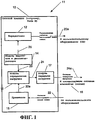
фиг.1 - блок-схема сетевого элемента (например, Node B) для определения (например, вычисления) меры нагрузки согласно варианту осуществления настоящего изобретения; и1 is a block diagram of a network element (eg, Node B) for determining (eg, calculating) a load measure according to an embodiment of the present invention; and
фиг.2 - логическая блок-схема, демонстрирующая определение меры нагрузки для сетевого элемента (например, Node B) согласно варианту осуществления настоящего изобретения.FIG. 2 is a flowchart illustrating determination of a load measure for a network element (eg, Node B) according to an embodiment of the present invention.
Варианты осуществления изобретенияEmbodiments of the invention
Представлены новые способ, система, устройства и программный продукт для определения (например, вычисления) меры нагрузки посредством сетевого элемента (например, evolved-Node B, eNB или Node B в общем случае, шлюза или любых других сетевых элементов) для оптимизации информационного трафика в сетях связи (например, системах беспроводной связи). Согласно вариантам осуществления настоящего изобретения эта мера нагрузки может представлять объем доступного/избыточного трафика, который может переносить данный сетевой элемент, и является относительной мерой, которая учитывает полный объем ресурсов, доступный в системе (например, в зависимости от полосы системы) и объем ресурсов, которые свободны для переноса только «важного» или «существенного» трафика, с использованием описанного здесь способа взвешивания.A new method, system, devices and software product for determining (for example, calculating) a load measure by means of a network element (for example, evolved-Node B, eNB or Node B in general, a gateway or any other network elements) is presented to optimize information traffic in communication networks (e.g. wireless communication systems). According to embodiments of the present invention, this load measure can represent the amount of available / excess traffic that a given network element can carry, and is a relative measure that takes into account the total amount of resources available in the system (for example, depending on the system bandwidth) and the amount of resources which are free to carry only “important” or “significant” traffic using the weighting method described here.
Заметим, что в рамках настоящего изобретения меру нагрузки можно задать для соты с помощью некоторой полосы системы или информационной емкости, которая может отображаться в максимальное количество одновременно поддерживаемых блоков физических ресурсов (PRB) для передачи (для нисходящей линии связи или восходящей линии связи). В качестве одного из примеров PRB можно задать как набор из 12 последовательных поднесущих (с использованием множественного доступа с ортогональным частотным разделением, OFDMA, в качестве техники доступа) в течение периода 1 мс. Тогда PRB можно интерпретировать как минимальную единицу выделения ресурсов, которые может получать UE (пользовательское оборудование). Кроме того, в каждой соте трафик может диспетчеризоваться независимо на восходящей линии связи и нисходящей линии связи, благодаря чему меру нагрузки можно вычислять отдельно для восходящей линии связи и нисходящей линии связи. Например, для меры нагрузки, вычисленной на eNB, ее можно вычислять на передатчике для нисходящей линии связи, а также ее можно вычислять на приемнике для восходящей линии связи.Note that, within the framework of the present invention, a load measure can be set for a cell using some system bandwidth or information capacity, which can be mapped to the maximum number of simultaneously supported physical resource blocks (PRBs) for transmission (for downlink or uplink). As one example, a PRB can be defined as a set of 12 consecutive subcarriers (using orthogonal frequency division multiple access, OFDMA, as an access technique) for a period of 1 ms. Then the PRB can be interpreted as the minimum unit of resource allocation that the UE (user equipment) can receive. In addition, in each cell, traffic can be scheduled independently on the uplink and downlink, whereby a measure of the load can be calculated separately for the uplink and downlink. For example, for a load measure calculated on an eNB, it can be calculated at the transmitter for the downlink, and it can also be calculated at the receiver for the uplink.
Очевидная прямая мера нагрузки должна задавать измерение, которое просто учитывает среднее количество неиспользуемых или используемых PRB в течение данного промежутка времени. Недостаток такого подхода состоит в невозможности отличить "важный" или "существенный" информационный трафик от "низкоприоритетного" или "несущественного" информационного трафика, которые эквивалентны трафику в реальном времени (RT) и вне реального времени (NRT) соответственно, причем термины RT и NRT традиционно используются (см., например, 3GPP TS 25.423). Заметим, что параметры QoS (качества обслуживания): однонаправленный канал с GBR (с гарантированной битовой скоростью) (например, определенный в 3GPP TS 25.401, V8.1.0, раздел 4.7) предназначен для RT, и однонаправленный канал без GBR (например, определенный в 3GPP TS 25.401 V8.1.0, раздел 4.7) предназначен для NRT.An obvious direct measure of the load should specify a measurement that simply takes into account the average number of unused or used PRBs over a given period of time. The disadvantage of this approach is the inability to distinguish between “important” or “significant” information traffic from “low priority” or “non-essential” information traffic, which are equivalent to real-time (RT) and non-real-time (NRT) traffic, respectively, with the terms RT and NRT traditionally used (see, for example, 3GPP TS 25.423). Note that the QoS (Quality of Service) parameters: a unidirectional channel with GBR (with guaranteed bit rate) (for example, defined in 3GPP TS 25.401, V8.1.0, Section 4.7) is for RT, and a unidirectional channel without GBR (for example, defined in 3GPP TS 25.401 V8.1.0, Section 4.7) is for NRT.
Таким образом, согласно варианту осуществления настоящего изобретения меру нагрузки можно генерировать с учетом того факта, что "низкоприоритетный" (или "несущественный") информационный трафик является трафиком, который переносится в сети без каких-либо гарантий для UE, запрашивающего трафик. В целях настоящего изобретения «важный» или «существенный» трафик, рассматривается как трафик, который либо гарантируется для UE, либо необходим для работы сети. Этот "существенный" информационный трафик может быть заранее выбран для определения меры нагрузки согласно описанным здесь вариантам осуществления настоящего изобретения. Например, трафик, необходимый для сети ("существенный" трафик), может включать в себя (но без ограничения): сообщения SAE (эволюция архитектуры системы), GBR (гарантированная битовая скорость), RRC (управления радиоресурсами), и протокольные блоки данных (PDU) управления доступом к среде (MAC-c). Заметим, что однонаправленный канал SAE называется однонаправленным каналом EPS (evolved packet system) в последних документах 3GPP (см., например, 3GPP TS 25.401 V8.1.0, раздел 4.7). Последние два являются сообщениями управления, которые могут быть необходимы, например, для информирования UE о конфигурации и назначениях в сети и критичны для работы сети.Thus, according to an embodiment of the present invention, a load measure can be generated taking into account the fact that “low priority” (or “non-essential”) information traffic is traffic that is carried on the network without any guarantees for the UE requesting the traffic. For the purposes of the present invention, “important” or “substantial” traffic is considered as traffic that is either guaranteed to the UE or necessary for the operation of the network. This “substantial” information traffic can be preselected to determine the load measure according to the embodiments of the present invention described herein. For example, the traffic needed for the network ("substantial" traffic) may include (but not limited to): SAE messages (evolution of system architecture), GBR (guaranteed bit rate), RRC (radio resource control), and protocol data units ( Media Access Control PDU (MAC-c). Note that a SAE unidirectional channel is called an evolved packet system (EPS) unidirectional channel in recent 3GPP documents (see, for example, 3GPP TS 25.401 V8.1.0, Section 4.7). The last two are control messages that may be necessary, for example, to inform the UE of the configuration and assignments in the network and are critical to the operation of the network.
Таким образом, согласно одному варианту осуществления настоящего изобретения меру нагрузки "существенного" (эквивалентного RT) информационного трафика можно определять (вычислять) в заранее определенном интервале времени (например, в интервале времени передачи TTI) как взвешенную сумму используемых PRB для диспетчеризованных пользователей с использованием заранее выбранной существенной информации трафика следующим образом:Thus, according to one embodiment of the present invention, the load measure of the “substantial” (equivalent RT) information traffic can be determined (calculated) in a predetermined time interval (eg, in a TTI transmission time interval) as a weighted sum of the used PRBs for the scheduled users using the predetermined selected essential traffic information as follows:

в котором индекс n связан с n-м диспетчеризованным пользовательским оборудованием (или пользователем) в заранее определенном интервале времени (например, TTI). Следовательно, количество используемых PRB в расчете на пользователя, PRBused(n), взвешивается отношением количества битов, используемых для однонаправленных каналов с GBR+сообщения RRC+MAC C-PDU (TBS SAE GBR(n)+TBS RRC(n)+TBS Mac _ c(n)) для отдельных пользователей (в числителе) к полному количеству переданных битов (TBStotal(n)) для соответствующих отдельных пользователей (в знаменателе). Применяя деление полной переносимой нагрузки, мы получаем меру для эффективных PRB, которые используются для "существенного" трафика, и, таким образом, затем можно вычислять доступный трафик, вычисляя это количество из полного количества доступных PRB в соте, которая обычно поддерживается одним Node B. Уравнение 1 можно применять к трафику нисходящей линии связи, трафику восходящей линии связи или комбинированному трафику восходящей линии связи и нисходящей линии связи.in which the index n is associated with the nth scheduled user equipment (or user) in a predetermined time interval (eg, TTI). Therefore, the number of used PRBs per user, PRB used (n), is weighted by the ratio of the number of bits used for unidirectional channels with GBR + RRC + MAC C-PDU messages ( TBS SAE GBR ( n ) + TBS RRC ( n ) + TBS Mac _ c ( n )) for individual users (in the numerator) to the total number of bits transmitted (TBS total (n)) for the corresponding individual users (in the denominator). By dividing the total tolerated load, we obtain a measure for the effective PRBs that are used for “substantial” traffic, and thus we can then calculate the available traffic by calculating this amount from the total number of available PRBs in the cell, which is usually supported by one Node B. Equation 1 can be applied to downlink traffic, uplink traffic, or combined uplink and downlink traffic.
Альтернативно, согласно другому варианту осуществления настоящего изобретения уравнение 1 можно видоизменить для применения ко всем пользователям одновременно без суммирования, следующим образом:Alternatively, according to another embodiment of the present invention, Equation 1 can be modified to apply to all users simultaneously without summing, as follows:

Нагрузка, измеренная в уравнениях 1 и 2, может находиться в диапазоне от 0 до N (например, будучи округленной до целого числа), в котором N - это максимальное количество PRB в соте (зависит от полосы системы). Таким образом, если сота полностью нагружена передачей на всех PRB с трафиком GBR SAE, то нагрузка будет равна N. Определенную меру нагрузки можно сообщать одному или нескольким соседствующим сетевым элементам (например, Node B) для эффективного управления информационным трафиком в сети. Меру нагрузки в уравнениях 1 и 2 можно усреднять по нескольким интервалам времени (например, нескольким TTI) прежде, чем сообщать ее одному или нескольким соседствующим сетевым элементам (сотам). Заранее определенный интервал времени (TTI) может быть равен, например, одной миллисекунде.The load measured in equations 1 and 2 can range from 0 to N (for example, being rounded to an integer), in which N is the maximum number of PRBs in a cell (depending on the system bandwidth). Thus, if a cell is fully loaded with transmission on all PRBs with GBR SAE traffic, then the load will be N. A certain measure of the load can be reported to one or more neighboring network elements (for example, Node B) to effectively manage information traffic in the network. The load measure in equations 1 and 2 can be averaged over several time intervals (for example, several TTIs) before reporting it to one or more neighboring network elements (cells). A predefined time interval (TTI) may be, for example, one millisecond.
Также следует заметить, что с точки зрения реализации не играет роли, сообщать ли используемую нагрузку в соте (определенную из уравнений 1 или 2) или дополнительную неиспользуемую нагрузку, т.е. N за минусом средней используемой нагрузки, определенной из уравнений 1 или 2.It should also be noted that from the point of view of implementation, it does not matter whether to report the used load in the cell (determined from equations 1 or 2) or the additional unused load, i.e. N minus the average load used, determined from equations 1 or 2.
Согласно вышеописанному подходу эквивалентную меру нагрузки в расчете на TTI "несущественного" (эквивалентного NRT) трафика можно выразить следующим образом:According to the above approach, the equivalent measure of load per TTI of “non-essential” (equivalent NRT) traffic can be expressed as follows:


соответственно (аналогично уравнениям 1 и 2).respectively (similar to equations 1 and 2).
Заранее выбранная "существенная" информация трафика, представленная суммой 3 членов, TBS SAE GBR(n)+TBS RRC(n)+TBS Mac _ c(n), используемых в уравнениях 1 и 3 (аналогичные 3 члена используются также в уравнениях 2 и 4), представляет только один возможный сценарий и возможны другие определения заранее выбранной "существенной" информации.Pre-selected "essential" traffic information provided by the sum of the 3 members, TBS SAE GBR (n) + TBS RRC (n) + TBS Mac _ c (n), used in Equations 1 and 3 (similar to 3 members are also used in the equations 2 and 4), represents only one possible scenario, and other definitions of pre-selected “material” information are possible.
Также следует заметить, что, согласно варианту осуществления настоящего изобретения меры "существенной" и "несущественной" нагрузки можно вычислять, например, в Node-B на уровне 2 (сетевом уровне).It should also be noted that, according to an embodiment of the present invention, measures of “substantial” and “non-significant” load can be calculated, for example, in Node-B at level 2 (network level).
На фиг.1 приведен один из примеров блок-схемы сетевого элемента 10 (например, Node B, базовой приемопередающей станции BTS, и т.д.) в беспроводной сети 11 для определения (например, вычисления) меры нагрузки для сетевого элемента 10 согласно варианту осуществления настоящего изобретения.Figure 1 shows one example of a block diagram of a network element 10 (e.g., Node B, a base transceiver station BTS, etc.) in a
В примере, показанном на фиг.1, сетевой элемент 10 содержит передатчики 12, приемники 18, модуль 14 выделения и диспетчеризации, модуль 15 определения нагрузки и модуль 17 передачи нагрузки.In the example shown in FIG. 1, the
Модуль 15 определения нагрузки используется для определения (вычисления) меры нагрузки согласно описанным здесь вариантам осуществления настоящего изобретения (см., например, уравнения 1-4) с использованием входного сигнала 20 от модуля 14 выделения и диспетчеризации, касающегося информационного трафика нисходящей линии связи (сигнал 20 передается как сигнал 20a на соответствующие UE). Заметим, что сигнал 20 может также содержать информацию о трафике восходящей линии связи, если модуль 14 используется также для диспетчеризации трафика восходящей линии связи. Модуль 15 также может получать от приемников 18 входной сигнал 22a, касающийся сигналов восходящей линии связи 22, принятых от UE, как показано на фиг.1, для определения меры нагрузки восходящей линии связи согласно описанным здесь вариантам осуществления настоящего изобретения (см., например, уравнения 1-4). После определения (вычисления) меры нагрузки модулем 15 ее можно передавать с использованием, например, модуля 17 передачи нагрузки на соседствующие элементы (например, на Node B и, возможно, на другие сетевые элементы, например, на шлюзы и т.д.) для оптимизации производительности сети, как описано здесь.The load determination module 15 is used to determine (calculate) the load measure according to the embodiments of the present invention described here (see, for example, Equations 1-4) using an
Согласно варианту осуществления настоящего изобретения модуль 15, 17 или 14 можно реализовать в виде программного или аппаратного модуля или их комбинации. Кроме того, модуль 15, 17 или 14 можно реализовать как отдельный блок или можно объединить с любым другим стандартным блоком или его можно разделить на несколько блоков согласно их функциям. Передатчики 12 и приемники 18 также можно реализовать как приемопередатчики, известные в технике. Все или выбранные модули сетевого элемента 10 можно реализовать с использованием интегральной схемы.According to an embodiment of the present invention,
На фиг.2 показана логическая блок-схема, демонстрирующая определение меры нагрузки для сетевого элемента (например, Node B) согласно варианту осуществления настоящего изобретения.2 is a flowchart showing a load measure for a network element (eg, Node B) according to an embodiment of the present invention.
Логическая блок-схема, показанная на фиг.2, представляет только один возможный сценарий помимо прочих. Порядок этапов, показанных на фиг.2, не является абсолютно необходимым, поэтому в общем случае различные этапы можно осуществлять не по порядку. В способе согласно варианту осуществления настоящего изобретения на первом этапе 32 сетевой элемент, например Node B, может предоставлять информационный трафик (нисходящей линии связи и/или восходящей линии связи) с использованием всех или выбранных блоков из совокупности блоков физических ресурсов (PSB), доступных в сетевом элементе (например, PSB может содержать 12 поднесущих, что эквивалентно частотному интервалу 180 кГц, и это количество одинаково для восходящей линии связи и нисходящей линии связи). На следующем этапе 34 сетевой элемент может определять (вычислять) меру нагрузки информационного трафика в заранее определенном интервале времени (например, TTI) с использованием способа взвешивания, согласно описанным здесь вариантам осуществления настоящего изобретения. На следующем этапе 36 сетевой элемент может предоставлять меру нагрузки одному или нескольким соседствующим сетевым элементам для эффективного управления информационным трафиком в сети.The logical block diagram shown in FIG. 2 represents only one possible scenario, among others. The order of the steps shown in FIG. 2 is not absolutely necessary, therefore, in the general case, the various steps can be carried out out of order. In the method according to an embodiment of the present invention, in a first step 32, a network element, such as Node B, can provide information traffic (downlink and / or uplink) using all or selected blocks from the set of physical resource blocks (PSBs) available in network element (for example, a PSB may contain 12 subcarriers, which is equivalent to a frequency interval of 180 kHz, and this number is the same for the uplink and downlink). In the next step 34, the network element can determine (calculate) a measure of the load of information traffic in a predetermined time interval (eg, TTI) using the weighting method according to the embodiments of the present invention described herein. In the next step 36, the network element may provide a measure of the load to one or more adjacent network elements for efficiently managing information traffic in the network.
Как объяснено выше, изобретение предусматривает способ и соответствующее оборудование, состоящее из различных модулей, предоставляющих функции для осуществления этапов способа. Модули можно реализовать в виде оборудования или можно реализовать в виде программного или программно-аппаратного обеспечения для выполнения компьютерным процессором. В частности, в случае программной или программно-аппаратной реализации изобретение можно предоставить как компьютерный программный продукт, включающий в себя компьютерно-считываемую структуру хранения, в которой воплощен код компьютерной программы (т.е. программного или программно-аппаратного обеспечения) для выполнения компьютерным процессором.As explained above, the invention provides a method and related equipment consisting of various modules providing functions for implementing the steps of the method. Modules can be implemented in the form of equipment or can be implemented in the form of software or firmware for execution by a computer processor. In particular, in the case of a software or hardware-software implementation, the invention can be provided as a computer program product including a computer-readable storage structure that embodies the code of a computer program (i.e., software or hardware-software) for execution by a computer processor .
Следует понимать, что вышеописанные конфигурации лишь иллюстрируют применение принципов настоящего изобретения. Специалисты в данной области техники могут предложить многочисленные модификации и альтернативные конфигурации не выходя за рамки объема настоящего изобретения и нижеследующая формула изобретения призвана охватывать такие модификации и конфигурации.It should be understood that the above configurations only illustrate the application of the principles of the present invention. Those skilled in the art can propose numerous modifications and alternative configurations without departing from the scope of the present invention and the following claims are intended to cover such modifications and configurations.
Claims (24)
предоставляют информационный трафик посредством сетевого элемента (10) с использованием всех или выбранных блоков из совокупности блоков физических ресурсов, доступных в сетевом элементе, и определяют меру нагрузки упомянутого информационного трафика способом взвешивания с использованием заранее выбранной информации упомянутого информационного трафика, предоставляемого упомянутыми всеми или выбранными блоками, участвующими в упомянутом информационном трафике,
при этом упомянутый способ взвешивания содержит этапы, на которых взвешивают некоторое количество из упомянутых всех или выбранных блоков соответствующим отношением количества цифровых битов, используемых только для заранее выбранной информации упомянутого информационного трафика, и полного количества цифровых битов, оба из которых используются для всех пользовательских оборудований, участвующих в упомянутом информационном трафике.1. A method of determining a load measure for a network element, comprising stages in which
provide information traffic through the network element (10) using all or selected blocks from the set of physical resource blocks available in the network element, and determine the load measure of said information traffic by the weighting method using the pre-selected information of said information traffic provided by the said all or selected blocks participating in said traffic information
wherein said weighting method comprises the steps of weighing a certain number of said all or selected blocks with a corresponding ratio of the number of digital bits used only for the pre-selected information of said information traffic and the total number of digital bits, both of which are used for all user equipments, participating in said traffic information.
предоставляют упомянутую меру нагрузки одному или нескольким соседствующим сетевым элементам.8. The method according to claim 1, additionally containing a stage in which
provide said load measure to one or more adjacent network elements.
однонаправленных каналов с гарантированной битовой скоростью, сообщений управления радиоресурсами и
протокольных блоков данных управления доступом к среде MAC-c.9. The method according to claim 1, in which the aforementioned pre-selected information relates to significant information traffic and contains at least one or all of
guaranteed bidirectional channels, radio resource control messages and
MAC-c medium access control protocol data units.
передатчики (12) и приемники (18), выполненные с возможностью предоставления информационного трафика с использованием всех или выбранных блоков из совокупности блоков физических ресурсов, доступных в упомянутом сетевом элементе, и
модуль определения нагрузки (15), выполненный с возможностью определения меры нагрузки упомянутого информационного трафика в заранее определенном интервале времени способом взвешивания с использованием заранее выбранной информации упомянутого информационного трафика, предоставляемого упомянутыми всеми или выбранными блоками, участвующими в упомянутом информационном трафике,
при этом упомянутый способ взвешивания содержит этапы, на которых взвешивают некоторое количество из упомянутых всех или выбранных блоков соответствующим отношением количества цифровых битов, используемых только для заранее выбранной информации упомянутого информационного трафика, и полного количества цифровых битов, оба из которых используются для всех пользовательских оборудований, участвующих в упомянутом информационном трафике.13. The network element (10) containing
transmitters (12) and receivers (18), configured to provide information traffic using all or selected blocks from the set of blocks of physical resources available in said network element, and
a load determination module (15), configured to determine a load measure of said information traffic in a predetermined time interval by a weighing method using the pre-selected information of said information traffic provided by said all or selected blocks participating in said information traffic,
wherein said weighting method comprises the steps of weighing a certain number of said all or selected blocks with a corresponding ratio of the number of digital bits used only for the pre-selected information of said information traffic and the total number of digital bits, both of which are used for all user equipments, participating in said traffic information.
модуль передачи нагрузки, выполненный с возможностью передачи меры нагрузки одному или нескольким соседствующим сетевым элементам.20. The network element according to item 13, further comprising
a load transfer module configured to transmit a load measure to one or more adjacent network elements.
однонаправленных каналов с гарантированной битовой скоростью, сообщений управления радиоресурсами и
протокольных блоков данных управления доступом к среде MAC-c.21. The network element according to item 13, in which the aforementioned pre-selected information relates to significant information traffic and contains at least one or all of
guaranteed bidirectional channels, radio resource control messages and
MAC-c medium access control protocol data units.
Applications Claiming Priority (3)
| Application Number | Priority Date | Filing Date | Title |
|---|---|---|---|
| US92796707P | 2007-05-07 | 2007-05-07 | |
| US60/927,967 | 2007-05-07 | ||
| PCT/EP2008/055593 WO2008135583A1 (en) | 2007-05-07 | 2008-05-07 | Determining load measure for network element using a weighted method |
Publications (2)
| Publication Number | Publication Date |
|---|---|
| RU2009145101A RU2009145101A (en) | 2011-06-20 |
| RU2480944C2 true RU2480944C2 (en) | 2013-04-27 |
Family
ID=39769415
Family Applications (1)
| Application Number | Title | Priority Date | Filing Date |
|---|---|---|---|
| RU2009145101/07A RU2480944C2 (en) | 2007-05-07 | 2008-05-07 | Determining load measure for network element using weighted method |
Country Status (15)
| Country | Link |
|---|---|
| US (1) | US8068513B2 (en) |
| EP (1) | EP2156699B1 (en) |
| JP (1) | JP5054815B2 (en) |
| KR (1) | KR101188379B1 (en) |
| CN (1) | CN101690007B (en) |
| AU (1) | AU2008248544B2 (en) |
| BR (1) | BRPI0811552B1 (en) |
| CA (1) | CA2686147C (en) |
| ES (1) | ES2602605T3 (en) |
| MX (1) | MX2009012025A (en) |
| PL (1) | PL2156699T3 (en) |
| RU (1) | RU2480944C2 (en) |
| UA (1) | UA102224C2 (en) |
| WO (1) | WO2008135583A1 (en) |
| ZA (1) | ZA200907748B (en) |
Families Citing this family (13)
| Publication number | Priority date | Publication date | Assignee | Title |
|---|---|---|---|---|
| JP3466175B2 (en) * | 2001-12-03 | 2003-11-10 | 三島 大二 | Ultrasonic vibration horn |
| GB2458258A (en) | 2008-02-04 | 2009-09-16 | Nec Corp | Method of controlling base station loading in a mobile communication system |
| ES2700050T3 (en) | 2008-12-30 | 2019-02-13 | Zte Corp | Procedure of measurement and communication of resources in a system of long-term evolution |
| US8982750B2 (en) * | 2009-01-16 | 2015-03-17 | Qualcomm Incorporated | Method and apparatus for transmitting overload indicator over the air |
| US8660600B2 (en) * | 2009-03-12 | 2014-02-25 | Qualcomm Incorporated | Over-the-air overload indicator |
| CN102076093B (en) * | 2009-11-24 | 2014-09-10 | 中兴通讯股份有限公司 | Downlink service admission control method and device |
| US20130067093A1 (en) * | 2010-03-16 | 2013-03-14 | Optimi Corporation | Determining Essential Resources in a Wireless Network |
| EP2482588B1 (en) * | 2011-01-28 | 2016-05-18 | Alcatel Lucent | Method for performing a handover of a mobile device |
| GB2490366A (en) * | 2011-04-28 | 2012-10-31 | Sharp Kk | Determining bottleneck information in a cellular network with a relay node |
| GB2508381B (en) * | 2012-11-29 | 2018-04-25 | Ubiquisys Ltd | Load estimation and load management in a cellular communications network |
| US9300544B2 (en) | 2014-02-28 | 2016-03-29 | International Business Machines Corporation | Calculating workload closure in networks |
| US9191858B1 (en) * | 2014-05-22 | 2015-11-17 | Sprint Spectrum L.P. | Broadcast cell loading information for wireless network access and handoff |
| US9603093B1 (en) * | 2014-07-09 | 2017-03-21 | Sprint Spectrum L.P. | Methods and systems for using a load metric based on time and variance of using RF resources to select an RF coverage area |
Citations (2)
| Publication number | Priority date | Publication date | Assignee | Title |
|---|---|---|---|---|
| RU2214064C2 (en) * | 1997-08-18 | 2003-10-10 | Нокиа Мобайл Фоунс Лтд. | Method and device for processing data in definite layers corresponding to respective protocols in mobile communication system |
| US6738624B1 (en) * | 2000-11-16 | 2004-05-18 | Nokia Corporation | Method and system for capacity reporting in a mobile telecommunications network |
Family Cites Families (24)
| Publication number | Priority date | Publication date | Assignee | Title |
|---|---|---|---|---|
| FI964707A7 (en) * | 1996-11-26 | 1998-05-27 | Nokia Telecommunications Oy | Method for controlling load and radio system |
| JPH10304060A (en) * | 1997-04-24 | 1998-11-13 | Fujitsu Ltd | Traffic measuring device and traffic measuring method |
| US6333936B1 (en) * | 1998-04-29 | 2001-12-25 | Telefonaktiebolaget Lm Ericsson (Publ) | Method and apparatus for allocating processing resources |
| FR2813006B1 (en) * | 2000-08-10 | 2003-01-31 | Cit Alcatel | METHOD FOR TAKING ACCOUNT OF TRAFFIC PROCESSING CAPACITY FOR CONTROLLING TRAFFIC LOAD IN A MOBILE RADIO COMMUNICATION NETWORK |
| US6985739B2 (en) | 2000-12-15 | 2006-01-10 | Telefonaktiebolaget Lm Ericsson (Publ) | Admission and congestion control in a CDMA-based mobile radio communications system |
| KR20070058703A (en) * | 2002-05-07 | 2007-06-08 | 아이피알 라이센싱, 인코포레이티드 | Antenna Control of Time Division Redundancy System |
| JP4928076B2 (en) * | 2002-07-03 | 2012-05-09 | シーメンス アクチエンゲゼルシヤフト | Method for controlling data transmission in a wireless communication system having a hierarchical network architecture |
| AU2002340994A1 (en) * | 2002-11-08 | 2004-06-07 | Nokia Corporation | A method and a system for selecting non-real-time users to perform cell reselection |
| JP2004207839A (en) * | 2002-12-24 | 2004-07-22 | Nec Corp | Wireless resource management system, method thereof, management apparatus used for the same, base station, and terminal |
| US20040166835A1 (en) * | 2003-02-20 | 2004-08-26 | Klas Johansson | Radio resource management with adaptive congestion control |
| US20040170179A1 (en) * | 2003-02-27 | 2004-09-02 | Klas Johansson | Radio resource management with adaptive congestion control |
| US20040203938A1 (en) | 2003-03-04 | 2004-10-14 | Kulkarni Narayan A. | Weighted average traffic calculation and resource allocation system for voice and data services on a single wireless carrier |
| JP4272675B2 (en) * | 2003-08-19 | 2009-06-03 | エルジー エレクトロニクス インコーポレイティド | NodeB scheduling method in mobile communication system |
| DE10319310B4 (en) * | 2003-09-05 | 2006-06-08 | Siemens Ag | Improve the utilization of links and communication networks with access control |
| KR100560386B1 (en) * | 2003-12-17 | 2006-03-13 | 한국전자통신연구원 | Transmitter and Method of Orthogonal Frequency Division Multiple Access for Coherent Detection in Uplink of Wireless Communication System |
| US7580716B2 (en) * | 2005-03-31 | 2009-08-25 | Alcatel-Lucent Usa Inc. | Method and apparatus for load balancing in a wireless network |
| US20070155390A1 (en) * | 2006-01-04 | 2007-07-05 | Ipwireless, Inc. | Initial connection establishment in a wireless communication system |
| KR100929087B1 (en) * | 2006-02-09 | 2009-11-30 | 삼성전자주식회사 | Method and apparatus for performing uplink timing sync procedure in handover in mobile communication system |
| US20070224995A1 (en) * | 2006-03-16 | 2007-09-27 | Nokia Corporation | Apparatus, methods and computer program products providing signaling of time staggered measurement reports and scheduling in response thereto |
| US7844277B2 (en) * | 2006-03-21 | 2010-11-30 | Alcatel-Lucent Usa Inc. | Method for coordinated control of radio resources in a distributed wireless system |
| US7738907B2 (en) * | 2006-06-20 | 2010-06-15 | Motorola, Inc. | Method and apparatus for uplink power control in a frequency division multiple access communication system |
| US7808951B2 (en) * | 2006-07-05 | 2010-10-05 | Infineon Technologies Ag | Method and apparatus for handover of wireless communication between networks |
| MX2009002847A (en) * | 2006-09-14 | 2009-05-19 | Interdigital Tech Corp | ALLOCATION OF CELLS AND RESOURCE BLOCKS BY INTERFERENCE OPTIMIZATION. |
| US9307464B2 (en) * | 2007-06-21 | 2016-04-05 | Sony Corporation | Cellular communication system, apparatus and method for handover |
-
2008
- 2008-05-06 US US12/151,583 patent/US8068513B2/en active Active
- 2008-05-07 KR KR1020097025560A patent/KR101188379B1/en active Active
- 2008-05-07 BR BRPI0811552-4A patent/BRPI0811552B1/en active IP Right Grant
- 2008-05-07 PL PL08750116T patent/PL2156699T3/en unknown
- 2008-05-07 CA CA2686147A patent/CA2686147C/en active Active
- 2008-05-07 JP JP2010506923A patent/JP5054815B2/en active Active
- 2008-05-07 EP EP08750116.9A patent/EP2156699B1/en active Active
- 2008-05-07 UA UAA200912618A patent/UA102224C2/en unknown
- 2008-05-07 AU AU2008248544A patent/AU2008248544B2/en active Active
- 2008-05-07 CN CN2008800228171A patent/CN101690007B/en active Active
- 2008-05-07 RU RU2009145101/07A patent/RU2480944C2/en active
- 2008-05-07 WO PCT/EP2008/055593 patent/WO2008135583A1/en not_active Ceased
- 2008-05-07 ES ES08750116.9T patent/ES2602605T3/en active Active
- 2008-05-07 MX MX2009012025A patent/MX2009012025A/en active IP Right Grant
-
2009
- 2009-11-04 ZA ZA200907748A patent/ZA200907748B/en unknown
Patent Citations (2)
| Publication number | Priority date | Publication date | Assignee | Title |
|---|---|---|---|---|
| RU2214064C2 (en) * | 1997-08-18 | 2003-10-10 | Нокиа Мобайл Фоунс Лтд. | Method and device for processing data in definite layers corresponding to respective protocols in mobile communication system |
| US6738624B1 (en) * | 2000-11-16 | 2004-05-18 | Nokia Corporation | Method and system for capacity reporting in a mobile telecommunications network |
Also Published As
| Publication number | Publication date |
|---|---|
| JP5054815B2 (en) | 2012-10-24 |
| EP2156699A1 (en) | 2010-02-24 |
| JP2010526501A (en) | 2010-07-29 |
| CA2686147C (en) | 2014-08-12 |
| EP2156699B1 (en) | 2016-08-24 |
| CA2686147A1 (en) | 2008-11-13 |
| ES2602605T3 (en) | 2017-02-21 |
| KR101188379B1 (en) | 2012-10-08 |
| US8068513B2 (en) | 2011-11-29 |
| BRPI0811552B1 (en) | 2020-09-29 |
| AU2008248544B2 (en) | 2011-09-15 |
| BRPI0811552A2 (en) | 2015-06-16 |
| CN101690007B (en) | 2013-06-05 |
| RU2009145101A (en) | 2011-06-20 |
| PL2156699T3 (en) | 2017-05-31 |
| WO2008135583A1 (en) | 2008-11-13 |
| UA102224C2 (en) | 2013-06-25 |
| KR20100018538A (en) | 2010-02-17 |
| CN101690007A (en) | 2010-03-31 |
| US20090080342A1 (en) | 2009-03-26 |
| AU2008248544A1 (en) | 2008-11-13 |
| ZA200907748B (en) | 2010-07-28 |
| MX2009012025A (en) | 2010-04-01 |
Similar Documents
| Publication | Publication Date | Title |
|---|---|---|
| RU2480944C2 (en) | Determining load measure for network element using weighted method | |
| US12063655B2 (en) | Telecommunications apparatus and methods | |
| US12526668B2 (en) | Transmission of measurement reports in a wireless communication system | |
| JP5413631B2 (en) | Load estimation to meet specified service quality | |
| JP4694644B2 (en) | Base station equipment | |
| EP2468057B1 (en) | Method and apparatus for measuring radio resource use per traffic class in a wireless communication system | |
| EP3167671B1 (en) | Carrier aggregation activation | |
| KR20110122454A (en) | Efficient Management Method for Carriers of Terminals in which a plurality of Carriers are Integrated in a Mobile Communication System | |
| US10292109B2 (en) | Method for coordinating at least one first transmission from a single-point transmitter to a single-point receiver and at least one second transmission from a multipoint transmitter or to a multipoint receiver in a radio communication system, network node and mobile station thereof | |
| CN102742347A (en) | Method and arrangement for adapting semi-persistently configured, periodic resources in a wireless communications network | |
| US20180152899A1 (en) | Method and apparatus for adjusting transmission power | |
| US10470083B2 (en) | Network node and method in a wireless telecommunications network | |
| CN114208334B (en) | Method and product for coordinating information exchange between network devices for sidelink communications | |
| WO2014187489A1 (en) | Signalling scheme |
Legal Events
| Date | Code | Title | Description |
|---|---|---|---|
| PD4A | Correction of name of patent owner |