RU2378503C1 - Method to extract high-viscosity oil from oil accumulation - Google Patents
Method to extract high-viscosity oil from oil accumulation Download PDFInfo
- Publication number
- RU2378503C1 RU2378503C1 RU2008123688/03A RU2008123688A RU2378503C1 RU 2378503 C1 RU2378503 C1 RU 2378503C1 RU 2008123688/03 A RU2008123688/03 A RU 2008123688/03A RU 2008123688 A RU2008123688 A RU 2008123688A RU 2378503 C1 RU2378503 C1 RU 2378503C1
- Authority
- RU
- Russia
- Prior art keywords
- injection
- oil
- wells
- reservoir
- heat carrier
- Prior art date
Links
- 238000000034 method Methods 0.000 title claims abstract description 24
- 238000009825 accumulation Methods 0.000 title abstract 3
- 238000002347 injection Methods 0.000 claims abstract description 59
- 239000007924 injection Substances 0.000 claims abstract description 59
- 238000004519 manufacturing process Methods 0.000 claims abstract description 32
- 230000015572 biosynthetic process Effects 0.000 claims abstract description 20
- 238000011161 development Methods 0.000 claims abstract description 16
- 239000002826 coolant Substances 0.000 claims description 26
- 238000005086 pumping Methods 0.000 claims description 6
- 239000011148 porous material Substances 0.000 claims description 5
- 230000008859 change Effects 0.000 claims description 3
- 238000005065 mining Methods 0.000 claims description 2
- 238000000605 extraction Methods 0.000 abstract description 9
- 125000004122 cyclic group Chemical group 0.000 abstract description 3
- 230000000694 effects Effects 0.000 abstract description 3
- 230000009897 systematic effect Effects 0.000 abstract description 3
- 239000000969 carrier Substances 0.000 abstract 1
- 239000000126 substance Substances 0.000 abstract 1
- 238000004364 calculation method Methods 0.000 description 12
- XLYOFNOQVPJJNP-UHFFFAOYSA-N water Substances O XLYOFNOQVPJJNP-UHFFFAOYSA-N 0.000 description 10
- 238000005553 drilling Methods 0.000 description 7
- 238000011084 recovery Methods 0.000 description 7
- 230000008569 process Effects 0.000 description 5
- 230000007423 decrease Effects 0.000 description 4
- 238000010793 Steam injection (oil industry) Methods 0.000 description 2
- 230000009471 action Effects 0.000 description 2
- 238000004458 analytical method Methods 0.000 description 2
- 239000003795 chemical substances by application Substances 0.000 description 2
- 238000005516 engineering process Methods 0.000 description 2
- 238000010438 heat treatment Methods 0.000 description 2
- 229920006395 saturated elastomer Polymers 0.000 description 2
- 238000013459 approach Methods 0.000 description 1
- 244000309464 bull Species 0.000 description 1
- 238000013461 design Methods 0.000 description 1
- 238000006073 displacement reaction Methods 0.000 description 1
- 238000002474 experimental method Methods 0.000 description 1
- 210000003746 feather Anatomy 0.000 description 1
- 238000003801 milling Methods 0.000 description 1
- 230000035699 permeability Effects 0.000 description 1
- 239000000243 solution Substances 0.000 description 1
- 230000000638 stimulation Effects 0.000 description 1
- 238000012546 transfer Methods 0.000 description 1
Images

Landscapes
- Fats And Perfumes (AREA)
Abstract
Description
Изобретение относится к нефтяной промышленности, а именно к способам разработки нефтяных месторождений с нефтью высокой вязкости с применением теплоносителя.The invention relates to the oil industry, and in particular to methods for developing oil fields with high viscosity oil using a heat transfer medium.
Совершенствование существующих тепловых методов является одной из важнейших задач. Важно не только получить максимальный коэффициент охвата пласта воздействием, но также сделать это при оптимальных экономических показателях, которые зависят от расходования теплоносителя и времени разработки.Improving the existing thermal methods is one of the most important tasks. It is important not only to obtain the maximum coefficient of reservoir coverage by impact, but also to do this at optimal economic indicators, which depend on the consumption of coolant and development time.
Известен способ разработки залежи вязкой нефти, вскрытой сеткой нагнетательных и добывающих скважин, включающий циклическое нагнетание в пласт расчетного количества теплоносителя и холодной воды через нагнетательную скважину (импульсно-дозированное тепловое воздействие (ИДТВ)) и отбор продукции через добывающие скважины (Кудинов В.И., Сучков Б.М. Новые технологии повышения добычи нефти. - Самара: Кн. изд-во, 1998 г.).A known method of developing a reservoir of viscous oil, opened by a grid of injection and production wells, including cyclic injection into the reservoir of the calculated amount of coolant and cold water through the injection well (pulse-dosed heat exposure (IDTV)) and product selection through production wells (Kudinov V.I. , Suchkov BM New technologies for increasing oil production. - Samara: Publishing House, 1998).
Недостатком этого способа является то, что при периодически чередующемся нагнетании теплоносителя и холодной воды через нагнетательную скважину теплоноситель при перемещении в выработанных заводненных областях пласта выполняет малоэффективную работу, что ведет к неполному охвату воздействием окружающих добывающих скважин, увеличению срока разработки залежи и низкому конечному коэффициенту нефтеизвлечения.The disadvantage of this method is that when periodically alternating injection of coolant and cold water through an injection well, the coolant, when moving in the developed water-filled areas of the formation, performs inefficient work, which leads to incomplete coverage by the influence of the surrounding production wells, an increase in the term of development of the reservoir and a low final oil recovery coefficient.
Наиболее близким по технической сущности и достигаемому результату к предлагаемому является способ извлечения вязкой нефти из залежи (Патент РФ №1744998, МПК Е21В 43/24, опубл. Бюл. №35, 20.12.1995 г.), вскрытой сеткой нагнетательных и добывающих скважин по пяти-, семи- или девятиточечным обращенным элементам разработки, включающий закачку заданного количества теплоносителя в данный элемент (участок) залежи через паронагнетательную и сгруппированные через одну добывающие скважины, систематическое нагнетание теплоносителя в паронагнетательную скважину, а в добывающие - циклическое, с переменой их функций по закачке теплоносителя и отбору продукции.The closest in technical essence and the achieved result to the proposed one is a method for extracting viscous oil from a reservoir (RF Patent No. 1744998, IPC ЕВВ 43/24, publ. Bull. No. 35, 12/20/1995), opened with a grid of injection and production wells according to five-, seven- or nine-point inverted elements of development, including the injection of a given amount of coolant into a given element (section) of a reservoir through steam injection and grouped through one production well, systematic injection of the coolant into a steam injection well Inu, and in mining - cyclical, with a change of their functions by injecting coolant and the selection of products.
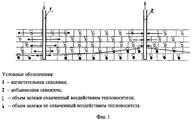
Недостатком этого способа является то, что тепловой фронт продвигается по кровельной части пласта, а в силу геометрии линии тока в сегменте элемента между добывающими и нагнетательной скважинами образуются застойные зоны (потери), что приводит к низкому темпу выработки запасов и снижению коэффициента нефтеизвлечения (фиг.1).The disadvantage of this method is that the heat front moves along the roofing of the formation, and due to the geometry of the streamline in the element segment between the producing and injection wells stagnant zones (losses) are formed, which leads to a low rate of production of reserves and a decrease in the oil recovery coefficient (Fig. one).
Технической задачей изобретения является повышение темпа отбора от запасов и конечного нефтеизвлечения за счет увеличения охвата пласта воздействием теплоносителя, создания единого технологического процесса теплового воздействия на нефтяной пласт через нагнетательные и добывающие скважины.An object of the invention is to increase the rate of selection from reserves and final oil recovery by increasing the coverage of the formation by the influence of the coolant, creating a single technological process of thermal impact on the oil formation through injection and production wells.
Решение поставленной задачи достигается описываемым способом извлечения высоковязкой нефти из залежи вскрытой сеткой нагнетательных и добывающих скважин по пяти-, семи- или девятиточечным обращенным элементам разработки, включающим закачку заданного количества теплоносителя в данный элемент (участок) залежи через нагнетательную и сгруппированные через одну добывающие скважины, систематическое нагнетание теплоносителя в нагнетательную скважину, а в добывающие - циклическое, с переменой их функций по закачке теплоносителя и отбору продукции.The solution to this problem is achieved by the described method of extracting high-viscosity oil from a reservoir by an open grid of injection and production wells using five-, seven-, or nine-dot inverted development elements, including pumping a given amount of coolant into a given element (section) of the reservoir through injection and grouped through one producing well, systematic injection of the coolant into the injection well, and into the producing ones - cyclic, with a change in their functions of pumping the coolant and selecting oduktsii.
Новым является то, что расстояние между нагнетательными и добывающими скважинами принимают не более 200 метров, из нагнетательной скважины в подошвенной части продуктивного пласта дополнительно бурят боковые стволы в радиальном направлении длиной, равной 0,3-0,35 расстояния между нагнетательными и добывающими скважинами, которые размещают равноудаленно от двух соседних добывающих скважин, при этом расчетный объем теплоносителя принимают 0,3-0,5 от перового объема продуктивного пласта.What is new is that the distance between the injection and production wells is taken no more than 200 meters, lateral shafts are additionally drilled from the injection well in the bottom of the productive formation in the radial direction, with a length equal to 0.3-0.35 of the distance between the injection and production wells, which placed equidistant from two adjacent producing wells, while the estimated volume of coolant is taken 0.3-0.5 of the first volume of the reservoir.
Способ осуществляют следующим образом.The method is as follows.
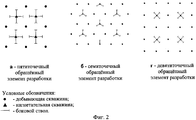
Залежь высоковязкой нефти вскрывают сеткой нагнетательных и добывающих скважин по пяти-, семи- или девятиточечным обращенным элементам с расстоянием между скважинами не более 200 м. Сетка разбуривания зависит от размеров месторождения и его геологического строения. В процессе бурения уточняют геологическое строение залежи, определяют геолого-физические характеристики продуктивного пласта (площадь нефтеносности, нефтенасыщенную толщину, пористость, коэффициент нефтенасыщенности, плотность, объемный коэффициент), подсчитывают запасы высоковязкой нефти. Определяют расчетный объем теплоносителя, необходимого для эффективного прогрева элемента разработки, который составляет 0,3-0,5 д.ед. от перового объема. Из нагнетательных скважин в подошвенной части продуктивного пласта в радиальном направлении дополнительно бурят боковые стволы (БС), например по технологии «Rad-tech», длиной, равной 0,30-0,35 д.ед. по отношению к расстоянию между скважинами. На залежи вскрытой сеткой нагнетательных и добывающих скважин по пяти- или девятиточечным обращенным элементам разработки из нагнетательных скважин бурят 4 боковых ствола, которые размещают равноудаленно от двух соседних добывающих скважин (фиг.2. А, Г), а на залежи вскрытой сеткой нагнетательных и добывающих скважин по семиточечным обращенным элементам разработки из нагнетательных скважин бурят 3 боковых ствола, которые размещают равноудаленно от двух соседних добывающих скважин чередованием через один сегмент (фиг.2. Б). Скважины осваивают под закачку расчетного количества теплоносителя, например пара, горячей воды с последующей закачкой холодной воды. Запускают в работу добывающие скважины для отбора продукции, в которых циклически проводят паротепловую обработку призабойной зоны пласта до наступления теплового фронта от закачки теплоносителя в нагнетательную скважину.A highly viscous oil deposit is opened with a grid of injection and production wells along five-, seven- or nine-dot reversed elements with a distance between the wells of not more than 200 m. The drilling grid depends on the size of the field and its geological structure. In the process of drilling, the geological structure of the reservoir is specified, the geological and physical characteristics of the reservoir are determined (oil area, oil saturated thickness, porosity, oil saturation coefficient, density, volume factor), and reserves of high viscosity oil are calculated. Determine the estimated volume of coolant required for effective heating of the development element, which is 0.3-0.5 d.ed. from feather volume. From injection wells in the bottom part of the reservoir in the radial direction, sidetracks (BS) are additionally drilled, for example, using the Rad-tech technology, with a length of 0.30-0.35 units. in relation to the distance between the wells. On the deposits opened with a grid of injection and production wells, five sidetracks are drilled from injection wells along five- or nine-point reversed development elements from injection wells, which are placed equidistant from two adjacent production wells (Fig. 2, A, D), and on the deposits are opened with a grid of injection and
Предложенный способ исследован с использованием программного комплекса компании CMG (Канада). Термогидродинамические расчеты выполнены в модуле STARS. Термогидродинамический симулятор STARS является составным компонентом программного комплекса компании CMG (Tutorials of Stars ver. 2005. 10.).The proposed method was investigated using the software package of the company CMG (Canada). Thermohydrodynamic calculations are performed in the STARS module. The STARS thermohydrodynamic simulator is a component of the CMG software package (Tutorials of Stars ver. 2005. 10.).
Выбор оптимальной системы разработки решался последовательно. На начальном этапе осуществлялся выбор оптимального варианта извлечения высоковязкой нефти из залежи для отдельного пяти, семи -и девятиточечного обращенного элемента разработки, включающий закачку теплоносителя. В целях совершенствования методов теплового воздействия в нагнетательной скважине для увеличения эффективного радиуса воздействия дополнительно по пласту разместили равноудаленно от двух соседних добывающих скважин боковые стволы.The choice of the optimal development system was decided sequentially. At the initial stage, the choice was made of the optimal option for extracting high-viscosity oil from the reservoir for an individual five, seven, and nine-point inverted development element, including the injection of a coolant. In order to improve the methods of thermal action in the injection well, to increase the effective radius of action, sidetracks were additionally placed along the formation equidistant from two adjacent production wells.
С целью выбора оптимального варианта извлечения высоковязкой нефти из залежи для различных элементов разработки проводились термогидродинамические расчеты, в ходе которых решались следующие задачи по определению:In order to choose the best option for the extraction of high-viscosity oil from the reservoir for various elements of the development, thermohydrodynamic calculations were carried out, during which the following tasks were determined by definition:
- геометрического размещения боковых стволов по гидродинамическим слоям в кровельной, подошвенной и центральной части исследуемого пласта;- geometric location of the lateral shafts along the hydrodynamic layers in the roofing, plantar and central part of the investigated formation;
- оптимальной длины боковых стволов;- the optimal length of the side trunks;
- эффективного расстояния между скважинами.- effective distance between wells.
Далее термогидродинамические расчеты проводились на укрупненных элементах воздействия (системах) с использованием результатов предыдущего этапа и рационального объема закачки теплоносителя, т.е. его оптимальное сочетание с вытесняющим агентом в зависимости от объема пор пласта.Next, thermohydrodynamic calculations were performed on enlarged impact elements (systems) using the results of the previous stage and the rational volume of coolant injection, i.e. its optimal combination with a displacing agent depending on the pore volume of the formation.
Исходные данные для проведения расчетов приведены в таблице 1.The source data for the calculations are shown in table 1.
Основные исходные данныеTable 1
Basic input
Анализ результатов, полученных с использованием термогидродинамических расчетов, показал следующее.An analysis of the results obtained using thermohydrodynamic calculations showed the following.
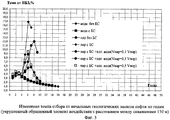
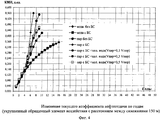
1. Максимальный темп отбора от геологических запасов высоковязкой нефти и высокие значения коэффициентов нефтеизвлечения достигаются при закачке пара с дополнительным бурением в нагнетательных скважинах боковых стволов в пятом (нижнем) гидродинамическом слое. При этом соотношение длины бокового ствола к расстоянию между соседними скважинами равен 0,30-0,35 д.ед. Такая тенденция наблюдается для всех проведенных расчетов с различными расстояниями между скважинами (150, 200, 300 м). Максимальные значения темпа достигаются при расстояниях между скважинами 150 и 200 м.1. The maximum rate of extraction from geological reserves of high-viscosity oil and high oil recovery ratios are achieved by injecting steam with additional drilling in the sidetrack injection wells in the fifth (lower) hydrodynamic layer. The ratio of the length of the sidetrack to the distance between adjacent wells is 0.30-0.35 d.ed. This trend is observed for all calculations performed with different distances between wells (150, 200, 300 m). The maximum rate is achieved at distances between wells of 150 and 200 m.
2. С увеличением расстояния между скважинами в 1,5 раза максимальный темп отбора снижается в 2 раза, что ведет к увеличению срока разработки в 2 раза.2. With an increase in the distance between the wells by 1.5 times, the maximum production rate decreases by 2 times, which leads to an increase in the development period by 2 times.
Следовательно, большие потенциальные возможности для достижения максимальной выработки запасов высоковязкой нефти из пласта при применении теплового воздействия наблюдаются:Consequently, great potential for achieving maximum production of highly viscous oil reserves from the reservoir when applying thermal exposure are observed:
- при дополнительном бурении боковых стволов в нагнетательной скважине;- with additional sidetracking in the injection well;
- при бурении боковых стволов по подошвенной части пласта;- when drilling sidetracks along the bottom of the formation;
- при соотношении длины боковых стволов к расстоянию между соседними добывающими скважинами, равному 0,30-0,35 д.ед.;- with the ratio of the length of the sidetracks to the distance between adjacent producing wells equal to 0.30-0.35 units;
- при расстоянии между скважинами не более 200 м.- when the distance between the wells is not more than 200 m
Далее термогидродинамические расчеты проводились на укрупненных элементах с расстояниями между скважинами 150, 200 и 300 м. При этом учитывались ранее полученные результаты расчетов для элементов, где было применено бурение боковых стволов по пятому (нижнему) гидродинамическому слою длиной соответственно 45-53, 60-70 и 90-105 м.Next, thermohydrodynamic calculations were carried out on enlarged elements with well spacings of 150, 200 and 300 m. The previously obtained calculation results for elements where sidetracks were drilled along the fifth (lower) hydrodynamic layer with a length of 45-53, 60-70, respectively, were taken into account. and 90-105 m.
Теоретические исследования, технологические и экономические расчеты выявили важную предпосылку успешного и целесообразного применения метода вытеснения нефти теплоносителями - отказ от непрерывного нагнетания и необходимости сочетания закачки теплоносителя с заводнением. Такое сочетание достигается путем нагнетания теплоносителя в пласт в определенном объеме и последующего перемещения тепловой оторочки по пласту нагнетанием более дешевого агента - воды.Theoretical studies, technological and economic calculations have revealed an important prerequisite for the successful and appropriate application of the method of oil displacement by coolants - the rejection of continuous pumping and the need to combine the coolant injection with water flooding. This combination is achieved by forcing the coolant into the formation in a certain volume and then moving the thermal rim along the formation by injecting a cheaper agent - water.
Особенности процесса извлечения высоковязкой нефти из залежи с применением нагнетания в пласт оторочек теплоносителя обуславливают и подход к проектированию. Так как необходимый объем оторочки теплоносителя определяется расстоянием, которое тепловая волна должна пройти до эксплуатационных скважин, то это приводит к ограничениям по плотности размещения скважин. Наконец, сам факт извлечения высоковязкой нефти из залежи при помощи оторочки теплоносителя вызывает целесообразность принципа последовательной разработки отдельных участков залежи или залежей месторождения.Features of the process of extracting high-viscosity oil from a reservoir using injection of coolant fringes into the formation also determine the design approach. Since the required volume of the coolant rim is determined by the distance that the heat wave must travel to production wells, this leads to restrictions on the density of the wells. Finally, the very fact of extracting high-viscosity oil from a reservoir using a coolant rim causes the expediency of the principle of sequential development of individual sections of a reservoir or reservoir deposits.
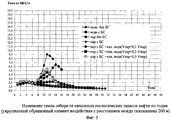
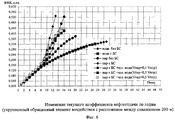
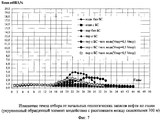
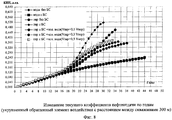
В рамках данного изобретения проведены численные эксперименты по закачке холодной воды и пара отдельно и в комбинации друг с другом, а также с учетом и без учета дополнительного бурения в нагнетательных скважинах боковых стволов. С целью обоснования и изучения методов комбинированного воздействия на пласт выполнены термогидродинамические расчеты на разные объемы закачки (0,1, 0,3, 0,5 д.ед. от порового объема) оторочек пара с последующей закачкой воды и циклической паротепловой обработкой призабойной зоны добывающих скважин до наступления теплового фронта от закачки теплоносителя в нагнетательную скважину.In the framework of this invention, numerical experiments on the injection of cold water and steam separately and in combination with each other, as well as taking into account and without taking into account additional drilling in injection wells of the sidetracks, have been carried out. In order to justify and study the methods of combined stimulation of the formation, thermohydrodynamic calculations for different injection volumes (0.1, 0.3, 0.5 units of pore volume) of steam rims with subsequent injection of water and cyclic heat and steam treatment of the bottom-hole zone of producing wells before the onset of the heat front from the injection of the coolant into the injection well.
Результаты расчетов приведены на фиг.3-8.The calculation results are shown in Fig.3-8.
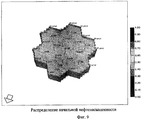
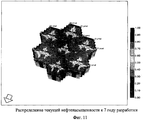
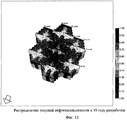
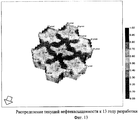
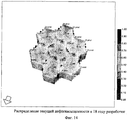
Распределение текущей нефтенасыщенности в зависимости от времени для укрупненного обращенного элемента (системы) с расстоянием между скважинами 200 м и бурением в радиальном направлении боковых стволов по пятому (нижнему) гидродинамическому слою длиной 60 м представлены на фиг.9-14.The distribution of the current oil saturation versus time for an enlarged inverted element (system) with a distance between the wells of 200 m and drilling in the radial direction of the sidetracks along the fifth (lower) hydrodynamic layer 60 m long is shown in Figs. 9-14.
Из анализа вышеприведенных результатов термогидродинамических расчетов установлено следующее:From the analysis of the above results of thermohydrodynamic calculations, the following was established:
1. Бурение в нагнетательных скважинах боковых стволов в радиальном направлении длиной, равной 0,30-0,35 д.ед. по отношению к расстоянию между скважинами, которые размещают равноудаленно от двух соседних добывающих скважин, ведет к повышению темпа отбора от запасов и конечного нефтеизвлечения за счет увеличения охвата пласта воздействием, создания единого технологического процесса теплового воздействия на нефтяной пласт через нагнетательные и добывающие скважины.1. Drilling in injection wells of lateral shafts in a radial direction with a length of 0.30-0.35 units with respect to the distance between the wells, which are placed equidistant from two neighboring producing wells, leads to an increase in the rate of selection from reserves and final oil recovery by increasing the coverage of the formation by exposure, creating a single technological process of thermal exposure of the oil reservoir through the injection and production wells.
2. Увеличение расстояния между скважинами более 200 м заметно сказывается на падении темпа отбора, на снижении коэффициента нефтеизвлечения и на увеличении срока разработки пласта.2. An increase in the distance between wells of more than 200 m significantly affects the decrease in the rate of production, a decrease in the oil recovery coefficient and an increase in the term of development of the reservoir.
3. При закачке оторочек пара в объеме 0,3-0,5 д.ед. от порового объема результаты основных технологических показателей разработки близки между собой.3. When injecting steam rims in the amount of 0.3-0.5 units from the pore volume, the results of the main technological development indicators are close to each other.
4. Заявляемый способ по сравнению со способом-прототипом позволяет повысить нефтеизвлечение на 2-4%.4. The inventive method in comparison with the prototype method allows to increase oil recovery by 2-4%.
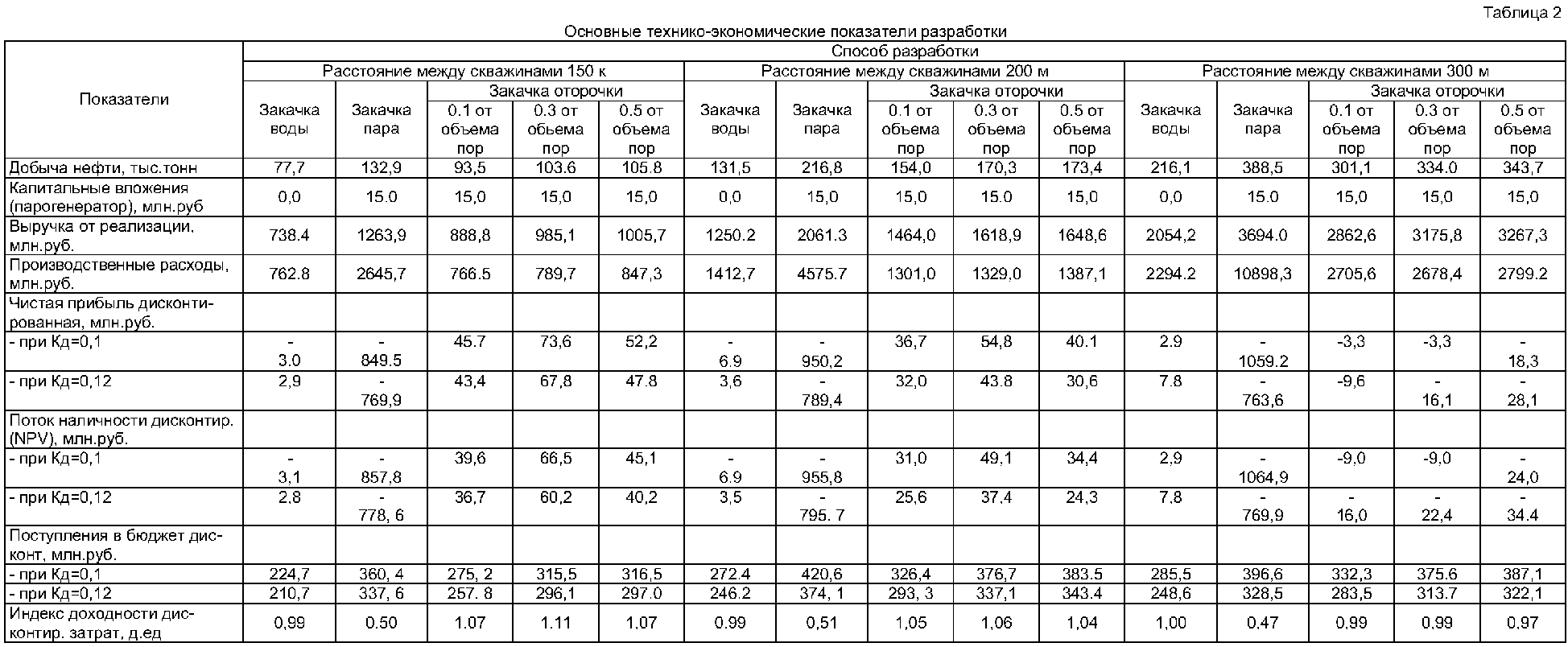
Результаты технико-экономической оценки представлены в таблице 2. Выбор наиболее предпочтительного технологического процесса по извлечению высоковязкой нефти из залежи осуществлялся по наилучшим экономическим показателям: чистой прибыли, потоку наличности, доходу государства, индексу доходности дисконтированных затрат. Видно, что при любой сетке скважин наиболее экономически эффективным является способ извлечения высоковязкой нефти из залежи при сочетании теплового воздействия на пласт с заводнением при закачке оторочки пара в объеме 0,3-0,5 д.ед. от порового объема.The results of the feasibility study are presented in table 2. The most preferred technological process for extracting high-viscosity oil from the reservoir was selected according to the best economic indicators: net profit, cash flow, state revenue, discounted cost index. It can be seen that with any well pattern, the most cost-effective is the method of extracting high-viscosity oil from the reservoir by combining thermal effects on the formation with water flooding when injecting a steam rim in the amount of 0.3-0.5 units. from pore volume.
Claims (1)
Priority Applications (1)
| Application Number | Priority Date | Filing Date | Title |
|---|---|---|---|
| RU2008123688/03A RU2378503C1 (en) | 2008-06-10 | 2008-06-10 | Method to extract high-viscosity oil from oil accumulation |
Applications Claiming Priority (1)
| Application Number | Priority Date | Filing Date | Title |
|---|---|---|---|
| RU2008123688/03A RU2378503C1 (en) | 2008-06-10 | 2008-06-10 | Method to extract high-viscosity oil from oil accumulation |
Publications (1)
| Publication Number | Publication Date |
|---|---|
| RU2378503C1 true RU2378503C1 (en) | 2010-01-10 |
Family
ID=41644249
Family Applications (1)
| Application Number | Title | Priority Date | Filing Date |
|---|---|---|---|
| RU2008123688/03A RU2378503C1 (en) | 2008-06-10 | 2008-06-10 | Method to extract high-viscosity oil from oil accumulation |
Country Status (1)
| Country | Link |
|---|---|
| RU (1) | RU2378503C1 (en) |
Citations (11)
| Publication number | Priority date | Publication date | Assignee | Title |
|---|---|---|---|---|
| US4434849A (en) * | 1978-09-07 | 1984-03-06 | Heavy Oil Process, Inc. | Method and apparatus for recovering high viscosity oils |
| US4646839A (en) * | 1984-11-23 | 1987-03-03 | Exxon Production Research Co. | Method and apparatus for through-the-flowline gravel packing |
| US4787449A (en) * | 1987-04-30 | 1988-11-29 | Mobil Oil Corporation | Oil recovery process in subterranean formations |
| RU2012789C1 (en) * | 1991-07-12 | 1994-05-15 | Печорский государственный научно-исследовательский и проектный институт нефтяной промышленности | Method for mine development of oil field with nonuniform fractured reservoirs |
| SU1744998A1 (en) * | 1990-02-13 | 1995-12-20 | Научно-производственное объединение по термическим методам добычи нефти | Method for withdrawal of viscous oil from pool |
| RU2104393C1 (en) * | 1996-06-27 | 1998-02-10 | Александр Петрович Линецкий | Method for increasing degree of extracting oil, gas and other useful materials from ground, and for opening and control of deposits |
| RU2206728C1 (en) * | 2002-05-18 | 2003-06-20 | Всероссийский нефтегазовый научно-исследовательский институт (ОАО ВНИИнефть) | Method of high-viscocity oil production |
| RU2211318C2 (en) * | 2000-11-21 | 2003-08-27 | Открытое акционерное общество "Всероссийский нефтегазовый научно-исследовательский институт им. акад. А.П. Крылова" | Method of recovery of viscous oil with heat stimulation of formation |
| RU2237804C1 (en) * | 2003-04-29 | 2004-10-10 | Открытое акционерное общество "Всероссийский нефтегазовый научно-исследовательский институт" им. А.П. Крылова | Method for extracting deposits of highly viscous oils and bitumens by slanted-horizontal wells |
| RU2246001C1 (en) * | 2003-05-26 | 2005-02-10 | Российский государственный университет нефти и газа им. И.М. Губкина | Method for extracting deposits of viscous oils and bitumens |
| RU2285116C2 (en) * | 2004-08-25 | 2006-10-10 | Анис Тагарович Тимашев | Method for extracting deposits of bitumen and highly viscous oil and complex system of equipment for realization of said method |
-
2008
- 2008-06-10 RU RU2008123688/03A patent/RU2378503C1/en not_active IP Right Cessation
Patent Citations (11)
| Publication number | Priority date | Publication date | Assignee | Title |
|---|---|---|---|---|
| US4434849A (en) * | 1978-09-07 | 1984-03-06 | Heavy Oil Process, Inc. | Method and apparatus for recovering high viscosity oils |
| US4646839A (en) * | 1984-11-23 | 1987-03-03 | Exxon Production Research Co. | Method and apparatus for through-the-flowline gravel packing |
| US4787449A (en) * | 1987-04-30 | 1988-11-29 | Mobil Oil Corporation | Oil recovery process in subterranean formations |
| SU1744998A1 (en) * | 1990-02-13 | 1995-12-20 | Научно-производственное объединение по термическим методам добычи нефти | Method for withdrawal of viscous oil from pool |
| RU2012789C1 (en) * | 1991-07-12 | 1994-05-15 | Печорский государственный научно-исследовательский и проектный институт нефтяной промышленности | Method for mine development of oil field with nonuniform fractured reservoirs |
| RU2104393C1 (en) * | 1996-06-27 | 1998-02-10 | Александр Петрович Линецкий | Method for increasing degree of extracting oil, gas and other useful materials from ground, and for opening and control of deposits |
| RU2211318C2 (en) * | 2000-11-21 | 2003-08-27 | Открытое акционерное общество "Всероссийский нефтегазовый научно-исследовательский институт им. акад. А.П. Крылова" | Method of recovery of viscous oil with heat stimulation of formation |
| RU2206728C1 (en) * | 2002-05-18 | 2003-06-20 | Всероссийский нефтегазовый научно-исследовательский институт (ОАО ВНИИнефть) | Method of high-viscocity oil production |
| RU2237804C1 (en) * | 2003-04-29 | 2004-10-10 | Открытое акционерное общество "Всероссийский нефтегазовый научно-исследовательский институт" им. А.П. Крылова | Method for extracting deposits of highly viscous oils and bitumens by slanted-horizontal wells |
| RU2246001C1 (en) * | 2003-05-26 | 2005-02-10 | Российский государственный университет нефти и газа им. И.М. Губкина | Method for extracting deposits of viscous oils and bitumens |
| RU2285116C2 (en) * | 2004-08-25 | 2006-10-10 | Анис Тагарович Тимашев | Method for extracting deposits of bitumen and highly viscous oil and complex system of equipment for realization of said method |
Similar Documents
| Publication | Publication Date | Title |
|---|---|---|
| CN109977612B (en) | A fracturing process suitable for infill development of shale gas wells | |
| CN102606129B (en) | Method and system for thin interbed oilfield development | |
| MX2015002304A (en) | Methods and devices for hydraulic fracturing design and optimization: a modification to zipper frac. | |
| CN108076649A (en) | Heat induces low flow rate pressure break | |
| RU2455471C1 (en) | System of solid low-productive zonary-heterogeneous oil formation development | |
| RU2387819C1 (en) | Method to develop sticky oil and bitumen accumulation | |
| RU2526430C1 (en) | Development of low-permeability oil pools by horizontal wells with maintenance of seam pressure | |
| RU2334098C1 (en) | Method of high-viscosity oil pool development | |
| RU2672292C1 (en) | Method for oil deposit development with horizontal wells with multi-stage fracing | |
| RU2387815C1 (en) | Method to develop oil accumulation in laminar carbonate reservoirs | |
| Zeng et al. | Optimized design and use of induced complex fractures in horizontal wellbores of tight gas reservoirs | |
| RU2342522C1 (en) | Cyclic method of hydrocarbon deposits development of wells with horizontal borehole | |
| CN105735961A (en) | Separate-layer fracturing stage number optimization method for low-permeability compact reservoir | |
| RU2285117C2 (en) | Method for extracting hydrocarbon deposits | |
| Evans et al. | Impact of cluster spacing on infill completions in the Eagle Ford | |
| RU2599994C1 (en) | Method for developing heterogenous ultraviscous oil reservoir | |
| RU2424425C1 (en) | Procedure for development of deposit of oil in carbonate collectors | |
| KR101237723B1 (en) | Drilling and connection system of wellbore for enhanced geothermal system and drilling method thereof | |
| CN117114208A (en) | A fully coupled well factory dynamically adjusted overall fracturing optimization method | |
| RU2526047C1 (en) | Development of extra-heavy crude oil | |
| RU2579039C1 (en) | Method for development of low-permeability oil-gas formations | |
| RU2580562C1 (en) | Method of developing oil deposits | |
| RU2338061C1 (en) | Method of production of heavy and high viscous hydrocarbons from underground deposit | |
| Rahim et al. | Improved Reservoir Management Strategy via Limited Entry Multi-Stage Completion Boosts Production from Massive Carbonate Reservoirs in Saudi Arabia | |
| CN116025323B (en) | Reservoir reconstruction method based on geomechanical action in SAGD full life cycle |
Legal Events
| Date | Code | Title | Description |
|---|---|---|---|
| MM4A | The patent is invalid due to non-payment of fees |
Effective date: 20160611 |