RU2022373C1 - Process of carrying out of fusion nuclear reaction in solids - Google Patents
Process of carrying out of fusion nuclear reaction in solids Download PDFInfo
- Publication number
- RU2022373C1 RU2022373C1 SU915014312A SU5014312A RU2022373C1 RU 2022373 C1 RU2022373 C1 RU 2022373C1 SU 915014312 A SU915014312 A SU 915014312A SU 5014312 A SU5014312 A SU 5014312A RU 2022373 C1 RU2022373 C1 RU 2022373C1
- Authority
- RU
- Russia
- Prior art keywords
- target
- reactions
- deuterium
- ions
- energy
- Prior art date
Links
- 238000000034 method Methods 0.000 title claims abstract description 18
- 239000007787 solid Substances 0.000 title claims abstract description 11
- 238000006243 chemical reaction Methods 0.000 title abstract description 43
- 230000004927 fusion Effects 0.000 title abstract description 19
- 230000008569 process Effects 0.000 title abstract description 6
- 229910052805 deuterium Inorganic materials 0.000 claims abstract description 20
- 150000002500 ions Chemical class 0.000 claims abstract description 10
- 230000008859 change Effects 0.000 claims abstract description 8
- 230000003993 interaction Effects 0.000 claims abstract description 5
- -1 deuterium ions Chemical class 0.000 claims description 6
- 238000003786 synthesis reaction Methods 0.000 claims description 6
- YZCKVEUIGOORGS-OUBTZVSYSA-N Deuterium Chemical compound [2H] YZCKVEUIGOORGS-OUBTZVSYSA-N 0.000 abstract description 10
- 230000000694 effects Effects 0.000 abstract description 4
- 230000005658 nuclear physics Effects 0.000 abstract description 2
- 239000000126 substance Substances 0.000 abstract 1
- 229910052722 tritium Inorganic materials 0.000 description 18
- YZCKVEUIGOORGS-NJFSPNSNSA-N Tritium Chemical compound [3H] YZCKVEUIGOORGS-NJFSPNSNSA-N 0.000 description 17
- 239000007789 gas Substances 0.000 description 10
- KDLHZDBZIXYQEI-UHFFFAOYSA-N Palladium Chemical compound [Pd] KDLHZDBZIXYQEI-UHFFFAOYSA-N 0.000 description 8
- 238000002474 experimental method Methods 0.000 description 7
- 229910052739 hydrogen Inorganic materials 0.000 description 7
- 239000001257 hydrogen Substances 0.000 description 7
- UFHFLCQGNIYNRP-UHFFFAOYSA-N Hydrogen Chemical compound [H][H] UFHFLCQGNIYNRP-UHFFFAOYSA-N 0.000 description 6
- 239000000463 material Substances 0.000 description 6
- 230000015572 biosynthetic process Effects 0.000 description 5
- 230000007423 decrease Effects 0.000 description 5
- 239000000203 mixture Substances 0.000 description 5
- 239000002245 particle Substances 0.000 description 5
- 239000013077 target material Substances 0.000 description 5
- IJGRMHOSHXDMSA-UHFFFAOYSA-N Atomic nitrogen Chemical compound N#N IJGRMHOSHXDMSA-UHFFFAOYSA-N 0.000 description 4
- ZOKXTWBITQBERF-UHFFFAOYSA-N Molybdenum Chemical compound [Mo] ZOKXTWBITQBERF-UHFFFAOYSA-N 0.000 description 4
- 238000009825 accumulation Methods 0.000 description 4
- 125000004429 atom Chemical group 0.000 description 4
- 230000007613 environmental effect Effects 0.000 description 4
- 230000004907 flux Effects 0.000 description 4
- 150000004678 hydrides Chemical class 0.000 description 4
- 229910052763 palladium Inorganic materials 0.000 description 4
- 230000002285 radioactive effect Effects 0.000 description 4
- 229910052744 lithium Inorganic materials 0.000 description 3
- 238000004519 manufacturing process Methods 0.000 description 3
- 229910052750 molybdenum Inorganic materials 0.000 description 3
- 239000011733 molybdenum Substances 0.000 description 3
- 239000000047 product Substances 0.000 description 3
- 238000010926 purge Methods 0.000 description 3
- 230000005855 radiation Effects 0.000 description 3
- OKTJSMMVPCPJKN-UHFFFAOYSA-N Carbon Chemical compound [C] OKTJSMMVPCPJKN-UHFFFAOYSA-N 0.000 description 2
- XLYOFNOQVPJJNP-ZSJDYOACSA-N Heavy water Chemical compound [2H]O[2H] XLYOFNOQVPJJNP-ZSJDYOACSA-N 0.000 description 2
- WHXSMMKQMYFTQS-UHFFFAOYSA-N Lithium Chemical compound [Li] WHXSMMKQMYFTQS-UHFFFAOYSA-N 0.000 description 2
- PXHVJJICTQNCMI-UHFFFAOYSA-N Nickel Chemical compound [Ni] PXHVJJICTQNCMI-UHFFFAOYSA-N 0.000 description 2
- 229910052770 Uranium Inorganic materials 0.000 description 2
- QCWXUUIWCKQGHC-UHFFFAOYSA-N Zirconium Chemical compound [Zr] QCWXUUIWCKQGHC-UHFFFAOYSA-N 0.000 description 2
- 239000000654 additive Substances 0.000 description 2
- 229910052799 carbon Inorganic materials 0.000 description 2
- 238000005336 cracking Methods 0.000 description 2
- 230000006378 damage Effects 0.000 description 2
- 238000005868 electrolysis reaction Methods 0.000 description 2
- 238000010849 ion bombardment Methods 0.000 description 2
- 230000000155 isotopic effect Effects 0.000 description 2
- 239000007788 liquid Substances 0.000 description 2
- 229910052758 niobium Inorganic materials 0.000 description 2
- 239000010955 niobium Substances 0.000 description 2
- GUCVJGMIXFAOAE-UHFFFAOYSA-N niobium atom Chemical compound [Nb] GUCVJGMIXFAOAE-UHFFFAOYSA-N 0.000 description 2
- 229910052757 nitrogen Inorganic materials 0.000 description 2
- 230000000737 periodic effect Effects 0.000 description 2
- 239000002994 raw material Substances 0.000 description 2
- 230000005641 tunneling Effects 0.000 description 2
- 229910052726 zirconium Inorganic materials 0.000 description 2
- 229910052691 Erbium Inorganic materials 0.000 description 1
- YZCKVEUIGOORGS-IGMARMGPSA-N Protium Chemical compound [1H] YZCKVEUIGOORGS-IGMARMGPSA-N 0.000 description 1
- 241000720974 Protium Species 0.000 description 1
- 241000238370 Sepia Species 0.000 description 1
- XUIMIQQOPSSXEZ-UHFFFAOYSA-N Silicon Chemical compound [Si] XUIMIQQOPSSXEZ-UHFFFAOYSA-N 0.000 description 1
- 239000005083 Zinc sulfide Substances 0.000 description 1
- 239000011149 active material Substances 0.000 description 1
- 230000000996 additive effect Effects 0.000 description 1
- 238000004458 analytical method Methods 0.000 description 1
- 238000007664 blowing Methods 0.000 description 1
- 238000009933 burial Methods 0.000 description 1
- 238000007707 calorimetry Methods 0.000 description 1
- 239000007795 chemical reaction product Substances 0.000 description 1
- 238000000576 coating method Methods 0.000 description 1
- UYAHIZSMUZPPFV-UHFFFAOYSA-N erbium Chemical compound [Er] UYAHIZSMUZPPFV-UHFFFAOYSA-N 0.000 description 1
- 238000007499 fusion processing Methods 0.000 description 1
- 150000002431 hydrogen Chemical class 0.000 description 1
- 125000004435 hydrogen atom Chemical group [H]* 0.000 description 1
- 239000010410 layer Substances 0.000 description 1
- 239000011159 matrix material Substances 0.000 description 1
- 238000005259 measurement Methods 0.000 description 1
- 230000007246 mechanism Effects 0.000 description 1
- 229910052751 metal Inorganic materials 0.000 description 1
- 239000002184 metal Substances 0.000 description 1
- 150000002739 metals Chemical class 0.000 description 1
- 229910052759 nickel Inorganic materials 0.000 description 1
- 239000012188 paraffin wax Substances 0.000 description 1
- 229920003229 poly(methyl methacrylate) Polymers 0.000 description 1
- 239000004926 polymethyl methacrylate Substances 0.000 description 1
- 238000000079 presaturation Methods 0.000 description 1
- 238000012545 processing Methods 0.000 description 1
- 238000005086 pumping Methods 0.000 description 1
- 238000000746 purification Methods 0.000 description 1
- 230000005258 radioactive decay Effects 0.000 description 1
- 230000035945 sensitivity Effects 0.000 description 1
- 239000010703 silicon Substances 0.000 description 1
- 229910052710 silicon Inorganic materials 0.000 description 1
- 229910052709 silver Inorganic materials 0.000 description 1
- 239000004332 silver Substances 0.000 description 1
- 238000004544 sputter deposition Methods 0.000 description 1
- 230000006641 stabilisation Effects 0.000 description 1
- 238000011105 stabilization Methods 0.000 description 1
- 239000007858 starting material Substances 0.000 description 1
- 239000000758 substrate Substances 0.000 description 1
- 239000002344 surface layer Substances 0.000 description 1
- 238000012360 testing method Methods 0.000 description 1
- 238000005382 thermal cycling Methods 0.000 description 1
- 238000012546 transfer Methods 0.000 description 1
- 230000007704 transition Effects 0.000 description 1
- JFALSRSLKYAFGM-UHFFFAOYSA-N uranium(0) Chemical compound [U] JFALSRSLKYAFGM-UHFFFAOYSA-N 0.000 description 1
- 229910052720 vanadium Inorganic materials 0.000 description 1
- LEONUFNNVUYDNQ-UHFFFAOYSA-N vanadium atom Chemical compound [V] LEONUFNNVUYDNQ-UHFFFAOYSA-N 0.000 description 1
- XLYOFNOQVPJJNP-UHFFFAOYSA-N water Substances O XLYOFNOQVPJJNP-UHFFFAOYSA-N 0.000 description 1
- DRDVZXDWVBGGMH-UHFFFAOYSA-N zinc;sulfide Chemical compound [S-2].[Zn+2] DRDVZXDWVBGGMH-UHFFFAOYSA-N 0.000 description 1
Images

Classifications
-
- Y—GENERAL TAGGING OF NEW TECHNOLOGICAL DEVELOPMENTS; GENERAL TAGGING OF CROSS-SECTIONAL TECHNOLOGIES SPANNING OVER SEVERAL SECTIONS OF THE IPC; TECHNICAL SUBJECTS COVERED BY FORMER USPC CROSS-REFERENCE ART COLLECTIONS [XRACs] AND DIGESTS
- Y02—TECHNOLOGIES OR APPLICATIONS FOR MITIGATION OR ADAPTATION AGAINST CLIMATE CHANGE
- Y02E—REDUCTION OF GREENHOUSE GAS [GHG] EMISSIONS, RELATED TO ENERGY GENERATION, TRANSMISSION OR DISTRIBUTION
- Y02E30/00—Energy generation of nuclear origin
- Y02E30/10—Nuclear fusion reactors
Landscapes
- Particle Accelerators (AREA)
Abstract
Description
Изобретение относится к ядерной физике и физике твердого тела и может быть использовано в ядерной и водородной энергетике, очистке газовых смесей от трития, переработке и накоплении изотопов для аналитических работ и в медицинских целях. The invention relates to nuclear physics and solid state physics and can be used in nuclear and hydrogen energy, purification of gas mixtures from tritium, processing and accumulation of isotopes for analytical work and for medical purposes.
Генерация нейтронов при облучении ионами дейтерия твердотельных мишеней снижает экологичность систем ядерного синтеза. Повреждаемость нейтронами многих конструкционных материалов может привести к необходимости захоронения высокоактивных материалов на десятки и сотни лет. Neutron generation upon irradiation of solid targets by deuterium ions reduces the environmental friendliness of nuclear fusion systems. Neutron damage to many structural materials can lead to the need for burial of highly active materials for tens and hundreds of years.
В этом отношении тритий как продукт реакции синтеза намного безопаснее, может использоваться как сырье для термоядерных реакторов, нейтронных генераторов и в медицинских целях. Однако при широком использовании ядерных систем с наработкой трития его производство может превысить естественные потребности, что приведет как к проблемам расширения использования энергетики подобного типа, так и к проблемам утилизации и захоронения. Поэтому поиск условий, при которых в реакциях ядерного синтеза с дейтерием не образовалось бы большого количества не только нейтронов, но и трития, является актуальной задачей, позволяющей существенно повысить экологичность способа. In this regard, tritium as a product of the synthesis reaction is much safer, can be used as raw material for thermonuclear reactors, neutron generators and for medical purposes. However, with the widespread use of nuclear systems with tritium production, its production can exceed natural needs, which will lead both to problems of expanding the use of this type of energy, and to problems of disposal and disposal. Therefore, the search for conditions under which in the reactions of nuclear fusion with deuterium would not have formed a large number of not only neutrons, but also tritium, is an urgent task that can significantly increase the environmental friendliness of the method.
Известен способ получения реакции ядерного синтеза в твердом теле при электролизе тяжелой воды с катодом из палладия, заключающийся в предварительном насыщении палладия дейтерием и интенсивном термоциклировании в процессе электролиза палладиевого катода посредством изменения электрической мощности вблизи резкого изменения предела растворимости. При этом температура палладия изменялась в пределах от 350 до 390 К. Отмечена интенсивная генерация потока нейтронов, достигающая 108 нейтр˙с-1 [1].A known method of obtaining a nuclear fusion reaction in a solid during the electrolysis of heavy water with a palladium cathode, which consists in pre-saturation of palladium with deuterium and intensive thermal cycling in the process of electrolysis of a palladium cathode by changing the electric power near a sharp change in the solubility limit. In this case, the palladium temperature varied from 350 to 390 K. Intense neutron flux generation was observed, reaching 10 8 neutron s -1 [1].
Недостатком известного способа является генерация интенсивного потока нейтронов. The disadvantage of this method is the generation of an intense neutron flux.
Известен способ получения ядерных реакций синтеза, заключающийся в бомбардировке атомов Li, Ве, В ускоренными до энергий в несколько мегаэлектронвольт изотопами водорода и организации таким образом цепных реакций с восстановлением активных центров через несколько промежуточных звеньев цепи. Реакции такого типа, например 1Н + IIВ = 34Не, могут быть экологически достаточно чистыми (Дж. Мак-Нелли. Цепные реакции синтеза.- В сб. под ред. А. А. Филюкова. Проблемы лазерного термоядерного синтеза. М.: Атомиздат, 1976, с.296).A known method of producing nuclear fusion reactions, which consists in the bombardment of Li, Be, B atoms accelerated to energies of several megaelectronvolt isotopes of hydrogen and thus organizing chain reactions with the restoration of active centers through several intermediate chain links. Reactions of this type, for example, 1 H + II B = 3 4 He, can be environmentally friendly (J. Mac-Nellie. Chain fusion reactions. - In the collection edited by A. A. Filyukov. Problems of laser thermonuclear fusion. M .: Atomizdat, 1976, p.296).
Недостатком известного способа является трудность создания и поддержания в горячем состоянии высокотемпературной плазмы, большая вероятность вторичных реакций ядерного синтеза с образованием радиоактивных изотопов, а также нейтронов. The disadvantage of this method is the difficulty of creating and maintaining a hot state of high-temperature plasma, a high probability of secondary nuclear fusion reactions with the formation of radioactive isotopes, as well as neutrons.
Наиболее близким к предлагаемому, выбранному в качестве прототипа, является способ, заключающийся в бомбардировке металлов ускоренными ионами дейтерия из плазмы тлеющего разряда в диапазоне энергий (100-1000)˙1,6˙10-19 Дж при температурах в пределах 300-800 К [2].Closest to the proposed, selected as a prototype, is a method consisting in the bombardment of metals by accelerated deuterium ions from a glow discharge plasma in the energy range (100-1000) ˙1.6˙10 -19 J at temperatures ranging from 300-800 K [ 2].
Недостатком известного решения является повышенная генерация нейтронов, до 107 нейтр˙с-1.The disadvantage of this solution is the increased generation of neutrons, up to 10 7 neutrons -1 .
Целью изобретения является обеспечение экологичности процесса ядерного синтеза путем снижения выхода нейтронов и трития в общем балансе продуктов реакций. The aim of the invention is to ensure the environmental friendliness of the nuclear fusion process by reducing the yield of neutrons and tritium in the overall balance of reaction products.
Цель достигается тем, что при бомбардировке мишеней ускоренными ионами из плазмы тлеющего разряда проводят бомбардировку твердотельных мишеней ионами дейтерия с энергией (20-20000)x x1,6˙10-19 Дж, при этом температуру мишени поддерживают в диапазоне от 80 до 700 К со скоростью изменения температуры не выше 0,04 К˙с-1, причем через зону взаимодействия ионов с мишенью осуществляют прокачку плазмообразующего газа со скоростью (2-50) м˙с-1.The goal is achieved in that when targets are bombarded with accelerated ions from a glow discharge plasma, solid-state targets are bombarded with deuterium ions with an energy of (20-20000) x x1.6 x10 -19 J, while the target temperature is maintained in the range from 80 to 700 K the rate of temperature change is not higher than 0.04 K˙s -1 , and through the zone of interaction of ions with the target, a plasma-forming gas is pumped at a speed of (2-50) m˙s -1 .
Сущность изобретения заключается в том, что используется низкоэнергетическая бомбардировка мишеней при пониженных температурах с жесткой стабилизацией уровня и использованием наиболее высоких энергий низкоэнергетического диапазона. При повышенных температурах возрастает вероятность протекания реакции ядерного синтеза 2Н + 2Н->>3Н + 1Н, при этом реакция 2Н + 2Н->>3Не + n при низких энергиях практически не идет. Таким образом, при повышенных температурах в области низких энергий генерация нейтронов практически не заметна, поскольку этот процесс является вторичным, а ускорительные механизмы за счет растрескивания поверхности при таких температурах маловероятны. Однако накопление трития в высокотемпературных низкоэнергетических реакциях синтеза тоже не всегда желательно. Реакции ядерного синтеза при низких энергиях протекают за счет туннелирования внешнего нейтрона, энергия связи которого у дейтеронов и тритонов сравнительно мала. Ввиду этого слабо связанный нейтрон может туннелировать не только к другому дейтерону, но и к ядрам материала твердотельной мишени. Расчеты показывают, что при низких энергиях возможны экзотермические реакции:
2H+6Li __→ 7Li+1H+5,02·1,6·10-13 Дж
2H+12C __→ 13C+1H+2,72·1,6·10-13 Дж
2H+90Zr __→ 91Zr+1H+4,96·1,6·10-13 Дж
2H+238U __→ 239U+1H+2,64·1,6·10-13 Дж
3H+6Li __→ 7Li+2H+0,99·1,6·10-13 Дж
3H+13C __→ 14C+2H+1,91·1,6·10-13 Дж
3H+90Zr __→ 91Zr+2H+0,93·1,6·10-13 Дж
3H+235U __→ 236U+2H+0,23·1,6·10-13 Дж
Это реакции, в результате которых происходит переход трития в дейтерий, а дейтерия - в протий и выделяется энергия. Материал мишени меняет при этом свой изотопный состав, в результате чего могут образовываться и новые элементы за счет радиоактивного распада. Соответствующим подбором материала мишени, например 6Li или 90Zr, мы можем иметь в результате нерадиоактивные продукты даже при использовании в качестве сырья радиоактивного трития. Это соображение справедливо и для материала мишени.The essence of the invention lies in the fact that low-energy bombardment of targets at low temperatures is used with strict stabilization of the level and the use of the highest energies of the low-energy range. At elevated temperatures, the probability of a nuclear fusion reaction 2 H + 2 H -> 3 H + 1 H increases, while the reaction 2 H + 2 H -> 3 He + n practically does not occur at low energies. Thus, at elevated temperatures in the low-energy region, neutron generation is practically not noticeable, since this process is secondary, and accelerator mechanisms due to surface cracking at such temperatures are unlikely. However, the accumulation of tritium in high-temperature low-energy synthesis reactions is also not always desirable. Nuclear fusion reactions at low energies occur due to the tunneling of an external neutron, the binding energy of which is relatively small for deuterons and tritons. In view of this, a weakly bound neutron can tunnel not only to another deuteron, but also to the nuclei of the material of the solid-state target. Calculations show that at low energies exothermic reactions are possible:
2 H + 6 Li __ → 7 Li + 1 H + 5.02 · 1.6 · 10 -13 J
2 H + 12 C __ → 13 C + 1 H + 2.72 · 1.6 · 10 -13 J
2 H + 90 Zr __ → 91 Zr + 1 H + 4.96 · 1.6 · 10 -13 J
2 H + 238 U __ → 239 U + 1 H + 2.64 · 1.6 · 10 -13 J
3 H + 6 Li __ → 7 Li + 2 H + 0.99 · 1.6 · 10 -13 J
3 H + 13 C __ → 14 C + 2 H + 1.91 · 1.6 · 10 -13 J
3 H + 90 Zr __ → 91 Zr + 2 H + 0.93 · 1.6 · 10 -13 J
3 H + 235 U __ → 236 U + 2 H + 0.23 · 1.6 · 10 -13 J
These are reactions resulting in the transition of tritium to deuterium, and deuterium to protium and energy is released. In this case, the target material changes its isotopic composition, as a result of which new elements can also be formed due to radioactive decay. By appropriate selection of the target material, for example, 6 Li or 90 Zr, we can result in non-radioactive products even when using radioactive tritium as a raw material. This consideration holds true for the target material.
Взаимодействие ионов с ядрами мишени в реакциях подобного типа значительно менее эффективно из-за повышенного Кулоновского потенциала ядер, препятствующего их сближению на расстояния, достаточно близкие для туннелирования нейтронов и прохождения ядерных реакций. Расчеты, выполненные по теории пробегов быстрых частиц в твердом теле Линдхарда, Шарфа, Шиота (ЛШШ), показали, что низкоэнергетический оптимум для реакций дейтеронов с элементами мишени лежит на один-два порядка выше по сравнению с чисто водородными реакциями и для лития составляет около 200˙1,6˙10-19 Дж. Эта энергия и является минимальной для ядерных реакций тяжелых изотопов водорода с другими элементами таблицы Менделеева, поскольку отношение ядерных потерь к электронным при понижении энергии резко падает. Этот оптимум для углерода составляет уже 700˙1,6˙10-19 Дж, а для дейтерий-уран 5000˙1,6˙10-19 Дж или уран-дейтерий около 600000˙1,6˙10-19 Дж. Т.е. верхний предел для урана по условиям эффективности должен быть около 1,6˙10-13 Дж, однако при этом уровне энергий уже интенсивно идут обычные высокоэнергетические реакции, продуктами которых являются среди прочих нейтроны и тритий. Поэтому высокоэнергетический предел для заявляемых низкоэнергетических реакций мы выбираем на уровне 20000˙1,6˙10-19 Дж, так как при этих энергиях сечение высокоэнергетических реакций дейтерий-дейтерий и дейтерий-тритий еще почти на два порядка ниже максимума. Такое соотношение обеспечивает в большинстве случаев приемлемый уровень экологичности ядерных систем синтеза, хотя при этом эффективность реакций в твердом теле для элементов таблицы Менделеева тяжелее никеля снижается примерно вдвое.The interaction of ions with target nuclei in reactions of this type is much less effective due to the increased Coulomb potential of the nuclei, which prevents them from approaching to distances close enough for neutron tunneling and nuclear reactions. Calculations based on the theory of ranges of fast particles in a solid of Lindhard, Sharf, and Schiot (LSH) showed that the low-energy optimum for reactions of deuterons with target elements lies one or two orders of magnitude higher than pure hydrogen reactions and for lithium is about 200 ˙1.6˙10 -19 J. This energy is the minimum for nuclear reactions of heavy hydrogen isotopes with other elements of the periodic table, since the ratio of nuclear to electronic losses decreases sharply when the energy decreases. This optimum for carbon is already 700˙1.6˙10 -19 J, and for deuterium-uranium 5000˙1.6˙10 -19 J or uranium-deuterium about 600000˙1.6˙10 -19 J. T. e. The upper limit for uranium in terms of efficiency should be about 1.6˙10 -13 J, however, at this energy level, ordinary high-energy reactions are already intensively carried out, the products of which are, among others, neutrons and tritium. Therefore, we select the high-energy limit for the claimed low-energy reactions at the level of 20,000-1.6-10 -19 J, since at these energies the cross section for high-energy reactions of deuterium-deuterium and deuterium-tritium is still almost two orders of magnitude lower than the maximum. This ratio provides in most cases an acceptable level of environmental friendliness of nuclear synthesis systems, although at the same time, the efficiency of reactions in a solid for elements of the periodic table heavier than nickel is reduced by about half.
Для реакций тяжелый изотоп водорода-атом матрицы эффективность мало зависит от температуры в отличие от реакций дейтерий-дейтерий. Поскольку реакции дейтерий-дейтерий эффективно идут при температурах выше 700 К, то эту температуру мы выбираем как предельно максимальную. При температурах выше 700 К становятся заметными реакций дейтерий-дейтерий с образованием трития. For reactions, the heavy isotope of hydrogen — the atom of the matrix — the efficiency does not depend much on temperature, in contrast to deuterium – deuterium reactions. Since deuterium-deuterium reactions are effective at temperatures above 700 K, we choose this temperature as the maximum temperature. At temperatures above 700 K, deuterium-deuterium reactions with the formation of tritium become noticeable.
При понижении температуры увеличивается концентрация атомов водорода в мишени и соответственно увеличивается эффективность реакции. При криогенных температурах возможно использование максимальных концентраций водорода в таких элементах, как углерод, кремний или азот. При этом резко возрастает стоимость обеспечения подобных реакций, что делает практическое их использование при температурах ниже температуры жидкого азота нецелесообразным. Поэтому ниже 80 К найти практическое применение указанным реакциям, за исключением отдельных случаев, будет невозможным. As the temperature decreases, the concentration of hydrogen atoms in the target increases and, accordingly, the reaction efficiency increases. At cryogenic temperatures, it is possible to use maximum concentrations of hydrogen in elements such as carbon, silicon or nitrogen. At the same time, the cost of providing such reactions sharply increases, which makes their practical use at temperatures below the temperature of liquid nitrogen impractical. Therefore, below 80 K, it will be impossible to find practical application of these reactions, with the exception of individual cases.
Нейтроны, возникающие в низкоэнергетических реакциях ядерного синтеза, в значительной мере являются следствием нарушений сплошности гидридообразующих материалов (Царев В. А. Низкотемпературный ядерный синтез. - Успехи физических наук, 1990, т. 160, в.11, с.1 - 53). Особенно ярко этот эффект проявляется при пониженных температурах. Значительно повысить устойчивость гидридообразующих материалов к растрескиванию под облучением можно как за счет уменьшения толщины, так и за счет уменьшения колебаний температуры. Так при заданной толщине гидрида параметром, определяющим устойчивость гидрида, будет скорость изменения температуры, которая не должна приводить к разрушению. Из этих соображений скорость изменения температуры не должна превышать более 0,04 К˙с-1 для большинства гидридов.Neutrons arising in low-energy nuclear fusion reactions are largely the result of discontinuities in hydride-forming materials (Tsarev V. A. Low-temperature nuclear fusion. - Uspekhi Fizicheskikh Nauk, 1990, v. 160, v.11, p.1 - 53). This effect is especially pronounced at low temperatures. Significantly increase the resistance of hydride-forming materials to cracking under irradiation, both by reducing the thickness and by reducing temperature fluctuations. So for a given hydride thickness, the parameter determining the hydride stability is the rate of temperature change, which should not lead to destruction. For these reasons, the rate of temperature change should not exceed more than 0.04 K˙s -1 for most hydrides.
Реакции синтеза в твердом теле при пониженных температурах приведут к образованию на поверхности мишени модифицированного по составу материала, который необходимо будет время от времени заменять. Накопление в поверхностном слое изотопов, отличных от исходных, приведет к тому, что вновь образовавшиеся изотопы мишени будут далее реагировать с изотопами водорода, образуя целый ряд элементов, в том числе и радиоактивных. Для предотвращения накопления вновь образовавшихся изотопов материала мишени предлагается их сдувать с поверхности продувкой плазмообразующего газа через зону взаимодействия ионов с мишенью вдоль поверхности. Это возможно осуществить, так как интенсивное катодное распыление мишени приводит к тому, что часть атомов с поверхности уходит в область плазмы, однако совсем не может улететь из-за повышенных давлений газа в отличие от вакуума. Из-за наличия пристеночного слоя с переменной скоростью в потоке газа эффект продувки становится заметным при скорости около 2 м˙с-1. Выше 50 м˙с-1 поднимать скорость прокачки газа не имеет смысла из-за того, что при этой скорости практически все частицы уносятся с потоком и состав поверхности сохраняется в допустимых пределах.Synthesis reactions in a solid at low temperatures will lead to the formation of a material modified in composition on the surface of the target, which will need to be replaced from time to time. Accumulation of isotopes different from the initial ones in the surface layer will lead to the fact that the newly formed target isotopes will further react with hydrogen isotopes, forming a number of elements, including radioactive ones. To prevent the accumulation of newly formed isotopes of the target material, it is proposed to blow them off the surface by blowing a plasma-forming gas through the zone of interaction of ions with the target along the surface. This can be done, since intense cathodic sputtering of the target leads to the fact that some of the atoms from the surface leave for the plasma region, but cannot escape at all due to increased gas pressures, in contrast to vacuum. Due to the presence of a wall layer with a variable velocity in the gas stream, the purge effect becomes noticeable at a speed of about 2 ms -1 . Above 50 m˙s -1 it does not make sense to raise the gas pumping rate due to the fact that at this speed almost all particles are carried away with the flow and the surface composition is kept within acceptable limits.
Пример осуществления. An example implementation.
Практическое выполнение способа проверяли при бомбардировке мишеней из различных материалов ускоренными ионами дейтерия и дейтерия с добавками трития из плазмы тлеющего разряда. Эксперименты проводили в диапазоне энергий от 20˙1,6x x10-19 Дж до 10˙1,6˙10-16 Дж при температурах от 80 до 1500 К. Твердотельные мишени выполняли в виде пластин или покрытий на пластинах.The practical implementation of the method was tested during the bombardment of targets from various materials by accelerated ions of deuterium and deuterium with tritium additives from a glow discharge plasma. The experiments were carried out in the energy range from 20˙1.6x x10 -19 J to 10˙1.6˙10 -16 J at temperatures from 80 to 1500 K. Solid targets were made in the form of plates or coatings on plates.
Поток нейтронов измеряли стационарной системой РТН и дозиметрическим прибором РУП-1. В системе РТН использовали 60 датчиков СНМ-12 с замедлителем из парафина, а в РУП-1 применяли сцинтиллятор для быстрых нейтронов на основе сернистого цинка, активированного серебром и вмонтированного в полиметилметакрилат. Чувствительность обеих систем не превышала 0,1 нейтр˙с-1.The neutron flux was measured by a stationary PTH system and an RUP-1 dosimetric device. In the PTH system, 60 SNM-12 sensors with a paraffin moderator were used, and in RUP-1 a fast neutron scintillator based on zinc sulphide activated with silver and mounted in polymethylmethacrylate was used. The sensitivity of both systems did not exceed 0.1 neutron s -1 .
Регистрацию трития проводили, анализируя плазмообразующий газ из экспериментальной рабочей камеры до и после процесса ионной бомбардировки. Пробный газ сжигали, а полученную воду исследовали на β -активность жидкостным сцинтилляционным методом. Tritium was recorded by analyzing a plasma-forming gas from the experimental working chamber before and after the ion bombardment process. The test gas was burned, and the resulting water was examined for β-activity by liquid scintillation.
Как видно из представленных формул реакций, в них не образуются нейтроны и тритий. Обнаружить реакцию подобного типа можно по регистрации заряженных частиц или тепла. Учитывая, что пробег заряженных частиц в твердом теле небольшой (десятки микрометров), то достаточно надежным способом регистрации реакций предложенного типа является калориметрирование. Выделение тепла определяли двумя методами. Один по перепаду температур на молибденовой трубке, измеряемому двумя блоками термопар, при теплосбросе на охлаждаемую водой подложку. В этом случае температура экспериментов на превышала 700 К для образцов из гидридообразующих элементов, приваренных к молибдену. As can be seen from the presented reaction formulas, neutrons and tritium are not formed in them. A reaction of this type can be detected by recording charged particles or heat. Given that the range of charged particles in a solid is small (tens of micrometers), calorimetry is a fairly reliable way to register reactions of the proposed type. Heat evolution was determined by two methods. One on the temperature difference on the molybdenum tube, measured by two blocks of thermocouples, with heat transfer to a water-cooled substrate. In this case, the experimental temperature exceeded 700 K for samples of hydride-forming elements welded to molybdenum.
Другой метод заключался в измерении перепада температур между гидридообразующим элементом и молибденом вблизи сварного шва. В этом случае перепад температур определяли пирометром в диапазоне 1200-1600 К, а при расчете тепла, выделяемого за счет ядерного синтеза, темпетатуру молибденовой части образца принимали за исходную. Another method was to measure the temperature difference between the hydride forming element and molybdenum near the weld. In this case, the temperature difference was determined with a pyrometer in the range of 1200–1600 K, and when calculating the heat released due to nuclear fusion, the temperature of the molybdenum part of the sample was taken as the initial one.
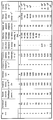
Результаты, характеризующие предлагаемый способ и пределы действующих параметров, представлены в таблице. The results characterizing the proposed method and the limits of the current parameters are presented in the table.
В первой сеприи экспериментов представлены результаты по наработке тепла за счет ядерного синтеза для ванадия, циркония и ниобия. Видно, что в представленных условиях ядерный синтез дает добавку около 30% от вкладываемой мощности как при низких, так и при повышенных температурах. Уровень нейтронов находился на фоновом уровне, а скорость реакции по тритию для получения тепла явно недостаточна, поскольку на 1 Вт надо иметь скорость реакции около 1012 частиц˙с-1. В указанных экспериментах тепловая мощность, выделяемая за счет ядерного синтеза, составляла в среднем несколько десятков Ватт. Поскольку по тритиевому каналу реакции для получения тепла не хватает 6-7 порядков, то это обстоятельство служит убедительным доказательством того, что зафиксированный избыток тепла принадлежит заявляемым реакциям дейтрон-ядро атома мишени. Зафиксировать при этом характеристическое γ-излучение, которое бы свидетельствовало о возможной реакции 2H+2H __→ 4He+γ также не удалось. Положительные результаты дал и вторично-ионный анализ образцов из ниобия после экспериментов по синтезу, который зафиксировал наряду с 93-й массой также и наличие 94-й массы. Это доказывает, что происходит изменение изотопного состава материала мишени в процессе ионной бомбардировки ионами дейтерия, поскольку в исходном материале значимых количеств 94-й массы не обнаружено.The first sepia of experiments presents the results of heat production due to nuclear fusion for vanadium, zirconium and niobium. It can be seen that under the conditions presented, nuclear fusion gives an additive of about 30% of the input power both at low and at elevated temperatures. The neutron level was at the background level, and the reaction rate for tritium to obtain heat is clearly insufficient, since at 1 W it is necessary to have a reaction rate of about 10 12 particles s -1 . In these experiments, the thermal power released by nuclear fusion averaged several tens of watts. Since 6–7 orders of magnitude are lacking in the reaction channel for generating heat, this circumstance serves as convincing evidence that the recorded excess of heat belongs to the claimed deuteron-nucleus reactions of the target atom. In this case, it was also not possible to fix the characteristic γ radiation, which would indicate a possible reaction 2 H + 2 H __ → 4 He + γ. Positive results were also obtained by the secondary-ion analysis of samples from niobium after synthesis experiments, which recorded the presence of the 94th mass along with the 93rd mass. This proves that the isotopic composition of the target material changes during the ion bombardment by deuterium ions, since no significant quantities of the 94th mass were found in the starting material.
Вторая группа экспериментов с литием, эрбием и цирконием выявила, что при температурах не выше 700 К тритий может не только не накапливаться, но его содержание в процессе эксперимента может даже уменьшаться. Это также свидетельствует в пользу того, что при заявленных условиях идет реакция не только с дейтерием, но и с тритием. The second group of experiments with lithium, erbium, and zirconium revealed that at temperatures not higher than 700 K tritium can not only not accumulate, but its content during the experiment can even decrease. This also testifies in favor of the fact that under the stated conditions there is a reaction not only with deuterium, but also with tritium.
Остальные эксперименты показывают пределы протекания заявленных реакций и характеризуют величину изменения заданных параметров. Так, при снижении энергии бомбардирующих ионов до 100˙1,6˙10-19 Дж (поз.7) фиксируемый избыток тепла сравним с погрешностью измерений. При температурах выше 700 К фиксируются значительные потоки трития в плазмообразующем газе (поз. 1-5, 10). Пpи скорости изменения температуры выше 0,04 К˙с-1 (поз.16) может наблюдаться повышенная эмиссия нейтронов.The remaining experiments show the limits of the claimed reactions and characterize the magnitude of the change in the given parameters. So, when the energy of the bombarding ions decreases to 100˙1.6˙10 -19 J (pos. 7), the detected excess of heat is comparable with the measurement error. At temperatures above 700 K, significant tritium fluxes are detected in the plasma-forming gas (items 1-5, 10). At a rate of temperature change above 0.04 K˙s -1 (pos. 16), increased neutron emission can be observed.
Отсутствие продувки газа может сопровождаться появлением через некоторое время дополнительного вторичного излучения (поз. 3, 4, 13, 17). Повышение скорости продувки существенно увеличивает время заявляемого процесса до возможного появления дополнительного излучения (поз. 18). The absence of gas purging may be accompanied by the appearance of additional secondary radiation after some time (
Технические преимущества заявляемого способа в сравнении с прототипом заключаются в следующем. Technical advantages of the proposed method in comparison with the prototype are as follows.
При осуществлении реакции ядерного синтеза значительно снижается генерация нейтронов. Повышается эффективность ядерного синтеза по сравнению с чисто тяжеловодородными реакциями. When carrying out a nuclear fusion reaction, neutron generation is significantly reduced. The efficiency of nuclear fusion is increased compared to purely hydrogen reactions.
Claims (1)
Priority Applications (1)
| Application Number | Priority Date | Filing Date | Title |
|---|---|---|---|
| SU915014312A RU2022373C1 (en) | 1991-08-15 | 1991-08-15 | Process of carrying out of fusion nuclear reaction in solids |
Applications Claiming Priority (1)
| Application Number | Priority Date | Filing Date | Title |
|---|---|---|---|
| SU915014312A RU2022373C1 (en) | 1991-08-15 | 1991-08-15 | Process of carrying out of fusion nuclear reaction in solids |
Publications (1)
| Publication Number | Publication Date |
|---|---|
| RU2022373C1 true RU2022373C1 (en) | 1994-10-30 |
Family
ID=21590423
Family Applications (1)
| Application Number | Title | Priority Date | Filing Date |
|---|---|---|---|
| SU915014312A RU2022373C1 (en) | 1991-08-15 | 1991-08-15 | Process of carrying out of fusion nuclear reaction in solids |
Country Status (1)
| Country | Link |
|---|---|
| RU (1) | RU2022373C1 (en) |
Cited By (9)
| Publication number | Priority date | Publication date | Assignee | Title |
|---|---|---|---|---|
| RU2123730C1 (en) * | 1995-12-19 | 1998-12-20 | Евсюков Геннадий Александрович | Heavy-nuclei low-temperature fusion process |
| RU2145122C1 (en) * | 1997-06-20 | 2000-01-27 | Олендский Олег Леонидович | Low-temperature nuclear fusion reaction process in heavy fermion systems |
| RU2175788C2 (en) * | 1995-11-30 | 2001-11-10 | СГС-Томсон Майкроэлектроникс С.Р.Л. | Monolithic integrated device |
| RU2175789C2 (en) * | 1995-11-30 | 2001-11-10 | СГС-Томсон Майкроэлектроникс С.Р.Л. | Heat energy generating device and cold fusion reactor |
| RU2201625C2 (en) * | 2000-10-19 | 2003-03-27 | Леонов Владимир Семенович | Method and reactor for energy generation |
| RU2240612C2 (en) * | 2000-04-03 | 2004-11-20 | Зао "Самар+" | Thermal power generation process |
| RU2287196C2 (en) * | 2004-08-11 | 2006-11-10 | Федеральное государственное унитарное предприятие "Государственный научный центр Российской Федерации Институт теоретической и экспериментальной физики им. А.И. Алиханова" | Neutron production process |
| RU2527941C1 (en) * | 2013-03-12 | 2014-09-10 | Российская Федерация, от имени которой выступает Государственная корпорация по атомной энергии "Росатом" | Device to monitor breed tritium in blanket of thermonuclear reactor |
| RU2560528C1 (en) * | 2014-06-27 | 2015-08-20 | Российская Федерация, от имени которой выступает Государственная корпорация по атомной энергии "Росатом" | Device to monitor bred tritium in thermonuclear reactor blanket |
-
1991
- 1991-08-15 RU SU915014312A patent/RU2022373C1/en active
Non-Patent Citations (2)
| Title |
|---|
| 1. Yoshiaki A., Yue-Chanc Z. Achievement of an intense cold fusion reaction. - Fusion Technology, 1990, v.18, N 1, pp.95-102. * |
| 2. Карабут А.Б. и др. Ядерная реакция на катоде в газовом разряде. Письма в ЖТФ, 1990, т.16, в.12, с.53-57. * |
Cited By (9)
| Publication number | Priority date | Publication date | Assignee | Title |
|---|---|---|---|---|
| RU2175788C2 (en) * | 1995-11-30 | 2001-11-10 | СГС-Томсон Майкроэлектроникс С.Р.Л. | Monolithic integrated device |
| RU2175789C2 (en) * | 1995-11-30 | 2001-11-10 | СГС-Томсон Майкроэлектроникс С.Р.Л. | Heat energy generating device and cold fusion reactor |
| RU2123730C1 (en) * | 1995-12-19 | 1998-12-20 | Евсюков Геннадий Александрович | Heavy-nuclei low-temperature fusion process |
| RU2145122C1 (en) * | 1997-06-20 | 2000-01-27 | Олендский Олег Леонидович | Low-temperature nuclear fusion reaction process in heavy fermion systems |
| RU2240612C2 (en) * | 2000-04-03 | 2004-11-20 | Зао "Самар+" | Thermal power generation process |
| RU2201625C2 (en) * | 2000-10-19 | 2003-03-27 | Леонов Владимир Семенович | Method and reactor for energy generation |
| RU2287196C2 (en) * | 2004-08-11 | 2006-11-10 | Федеральное государственное унитарное предприятие "Государственный научный центр Российской Федерации Институт теоретической и экспериментальной физики им. А.И. Алиханова" | Neutron production process |
| RU2527941C1 (en) * | 2013-03-12 | 2014-09-10 | Российская Федерация, от имени которой выступает Государственная корпорация по атомной энергии "Росатом" | Device to monitor breed tritium in blanket of thermonuclear reactor |
| RU2560528C1 (en) * | 2014-06-27 | 2015-08-20 | Российская Федерация, от имени которой выступает Государственная корпорация по атомной энергии "Росатом" | Device to monitor bred tritium in thermonuclear reactor blanket |
Similar Documents
| Publication | Publication Date | Title |
|---|---|---|
| WO1990010935A1 (en) | Method and apparatus for power generation | |
| EP4327341A1 (en) | Components for an apparatus that produces a neutron flux | |
| Vernickel et al. | A general formula for impurity radiation loss of fusion plasmas in corona equilibrium | |
| Benyo et al. | The history of LENR research at NASA Glenn Research Center | |
| McHargue et al. | Materials requirements for fusion reactors | |
| Kozima et al. | Analysis of cold fusion experiments generating excess heat, tritium and helium | |
| Baker et al. | Status and prospects for fusion energy from magnetically confined plasmas | |
| Potapov | Application of stable boron isotopes | |
| Keilholtz et al. | Irradiation Damage to Aluminum Oxide Exposed to 5× 10²¹ Fast Neutrons/CM2 | |
| RU1131364C (en) | Material of first wall of thermonuclear plants and reactors | |
| Beltyukov et al. | Laser-induced cold nuclear fusion in Ti-H2-D2-T2 compositions | |
| Pogrebnyak et al. | Modification of the properties of metals by high-power ion beams | |
| Ogawa et al. | Experimental study on melting and evaporation of metal exposed to intense hydrogen ion beam | |
| WO2006046680A1 (en) | Molecule chemistry nuclear fusion reaction generation method and molecule chemistry nuclear fusion energy generator | |
| Storms | A student’s guide to cold fusion | |
| Sasao et al. | Active diagnostics of magnetically confined alpha particles by pellet injection | |
| Grisham et al. | A nuclear diagnostic for fast alpha particles | |
| Samarkhanov et al. | Pumping of gas mixtures by the products of 6 Li (n, α) 3 H nuclear reaction in the nuclear reactor core | |
| Yoshikawa | Kyoto University | |
| Krivit | Low energy nuclear reaction research–Global scenario | |
| Liu et al. | Research Progress of Tritium Target for Neutron Generator | |
| Zuppero et al. | Catalysis of Transmutations by Heavy Electron Quasiparticles in Crystallites | |
| Green et al. | Materials problems in magnetically confined pulsed fusion reactors | |
| Moroni | Production and characterization of medium entropy alloy thin films for nuclear fusion applications | |
| Schlapbach | B. REPORT ON ACCF2, COMO, ITALY CONFERENCE HIGHLIGHTS |