KR20220106339A - Biometrics authentification system using bio-code storage medium and method of the same - Google Patents
Biometrics authentification system using bio-code storage medium and method of the same Download PDFInfo
- Publication number
- KR20220106339A KR20220106339A KR1020210009165A KR20210009165A KR20220106339A KR 20220106339 A KR20220106339 A KR 20220106339A KR 1020210009165 A KR1020210009165 A KR 1020210009165A KR 20210009165 A KR20210009165 A KR 20210009165A KR 20220106339 A KR20220106339 A KR 20220106339A
- Authority
- KR
- South Korea
- Prior art keywords
- biometric
- code
- information
- biometric information
- card
- Prior art date
- Legal status (The legal status is an assumption and is not a legal conclusion. Google has not performed a legal analysis and makes no representation as to the accuracy of the status listed.)
- Ceased
Links
Images



Classifications
-
- G—PHYSICS
- G06—COMPUTING OR CALCULATING; COUNTING
- G06F—ELECTRIC DIGITAL DATA PROCESSING
- G06F21/00—Security arrangements for protecting computers, components thereof, programs or data against unauthorised activity
- G06F21/30—Authentication, i.e. establishing the identity or authorisation of security principals
- G06F21/31—User authentication
- G06F21/32—User authentication using biometric data, e.g. fingerprints, iris scans or voiceprints
-
- G—PHYSICS
- G06—COMPUTING OR CALCULATING; COUNTING
- G06F—ELECTRIC DIGITAL DATA PROCESSING
- G06F21/00—Security arrangements for protecting computers, components thereof, programs or data against unauthorised activity
- G06F21/30—Authentication, i.e. establishing the identity or authorisation of security principals
- G06F21/31—User authentication
- G06F21/34—User authentication involving the use of external additional devices, e.g. dongles or smart cards
-
- G—PHYSICS
- G06—COMPUTING OR CALCULATING; COUNTING
- G06F—ELECTRIC DIGITAL DATA PROCESSING
- G06F21/00—Security arrangements for protecting computers, components thereof, programs or data against unauthorised activity
- G06F21/30—Authentication, i.e. establishing the identity or authorisation of security principals
- G06F21/31—User authentication
- G06F21/34—User authentication involving the use of external additional devices, e.g. dongles or smart cards
- G06F21/35—User authentication involving the use of external additional devices, e.g. dongles or smart cards communicating wirelessly
-
- G—PHYSICS
- G06—COMPUTING OR CALCULATING; COUNTING
- G06F—ELECTRIC DIGITAL DATA PROCESSING
- G06F21/00—Security arrangements for protecting computers, components thereof, programs or data against unauthorised activity
- G06F21/30—Authentication, i.e. establishing the identity or authorisation of security principals
- G06F21/45—Structures or tools for the administration of authentication
-
- G—PHYSICS
- G06—COMPUTING OR CALCULATING; COUNTING
- G06F—ELECTRIC DIGITAL DATA PROCESSING
- G06F21/00—Security arrangements for protecting computers, components thereof, programs or data against unauthorised activity
- G06F21/60—Protecting data
- G06F21/602—Providing cryptographic facilities or services
-
- G—PHYSICS
- G06—COMPUTING OR CALCULATING; COUNTING
- G06F—ELECTRIC DIGITAL DATA PROCESSING
- G06F21/00—Security arrangements for protecting computers, components thereof, programs or data against unauthorised activity
- G06F21/60—Protecting data
- G06F21/62—Protecting access to data via a platform, e.g. using keys or access control rules
- G06F21/6218—Protecting access to data via a platform, e.g. using keys or access control rules to a system of files or objects, e.g. local or distributed file system or database
- G06F21/6245—Protecting personal data, e.g. for financial or medical purposes
-
- G—PHYSICS
- G06—COMPUTING OR CALCULATING; COUNTING
- G06K—GRAPHICAL DATA READING; PRESENTATION OF DATA; RECORD CARRIERS; HANDLING RECORD CARRIERS
- G06K19/00—Record carriers for use with machines and with at least a part designed to carry digital markings
- G06K19/06—Record carriers for use with machines and with at least a part designed to carry digital markings characterised by the kind of the digital marking, e.g. shape, nature, code
- G06K19/067—Record carriers with conductive marks, printed circuits or semiconductor circuit elements, e.g. credit or identity cards also with resonating or responding marks without active components
- G06K19/07—Record carriers with conductive marks, printed circuits or semiconductor circuit elements, e.g. credit or identity cards also with resonating or responding marks without active components with integrated circuit chips
- G06K19/0723—Record carriers with conductive marks, printed circuits or semiconductor circuit elements, e.g. credit or identity cards also with resonating or responding marks without active components with integrated circuit chips the record carrier comprising an arrangement for non-contact communication, e.g. wireless communication circuits on transponder cards, non-contact smart cards or RFIDs
-
- G—PHYSICS
- G06—COMPUTING OR CALCULATING; COUNTING
- G06V—IMAGE OR VIDEO RECOGNITION OR UNDERSTANDING
- G06V40/00—Recognition of biometric, human-related or animal-related patterns in image or video data
- G06V40/10—Human or animal bodies, e.g. vehicle occupants or pedestrians; Body parts, e.g. hands
-
- G—PHYSICS
- G06—COMPUTING OR CALCULATING; COUNTING
- G06V—IMAGE OR VIDEO RECOGNITION OR UNDERSTANDING
- G06V40/00—Recognition of biometric, human-related or animal-related patterns in image or video data
- G06V40/10—Human or animal bodies, e.g. vehicle occupants or pedestrians; Body parts, e.g. hands
- G06V40/12—Fingerprints or palmprints
-
- G—PHYSICS
- G06—COMPUTING OR CALCULATING; COUNTING
- G06V—IMAGE OR VIDEO RECOGNITION OR UNDERSTANDING
- G06V40/00—Recognition of biometric, human-related or animal-related patterns in image or video data
- G06V40/10—Human or animal bodies, e.g. vehicle occupants or pedestrians; Body parts, e.g. hands
- G06V40/16—Human faces, e.g. facial parts, sketches or expressions
-
- G—PHYSICS
- G06—COMPUTING OR CALCULATING; COUNTING
- G06V—IMAGE OR VIDEO RECOGNITION OR UNDERSTANDING
- G06V40/00—Recognition of biometric, human-related or animal-related patterns in image or video data
- G06V40/10—Human or animal bodies, e.g. vehicle occupants or pedestrians; Body parts, e.g. hands
- G06V40/18—Eye characteristics, e.g. of the iris
Landscapes
- Engineering & Computer Science (AREA)
- Theoretical Computer Science (AREA)
- Physics & Mathematics (AREA)
- General Physics & Mathematics (AREA)
- Computer Security & Cryptography (AREA)
- Computer Hardware Design (AREA)
- Software Systems (AREA)
- General Engineering & Computer Science (AREA)
- General Health & Medical Sciences (AREA)
- Health & Medical Sciences (AREA)
- Multimedia (AREA)
- Human Computer Interaction (AREA)
- Bioethics (AREA)
- Computer Networks & Wireless Communication (AREA)
- Ophthalmology & Optometry (AREA)
- Oral & Maxillofacial Surgery (AREA)
- Microelectronics & Electronic Packaging (AREA)
- Medical Informatics (AREA)
- Databases & Information Systems (AREA)
- Collating Specific Patterns (AREA)
Abstract
Description
본 발명은 생체 코드 저장 매체를 이용한 생체 인증 시스템에 관한 것으로, 더욱 상세하게는 사전에 카드 및 기기에 사용자의 생체 정보를 등록하고, 센서에 인식된 사용자의 생체 정보와 등록된 생체 정보를 비교하여 인증된 사용자만 출입이 허용되도록 통제하는 시스템 및 그 방법에 관한 것이다.The present invention relates to a biometric authentication system using a biometric code storage medium, and more particularly, by registering a user's biometric information on a card and a device in advance, and comparing the user's biometric information recognized by a sensor with the registered biometric information. It relates to a system and method for controlling so that only authorized users are allowed to enter.
최근 기업, 사무실, 아파트 등은 보안의 문제로 인증된 사람의 출입만을 허용하기 위하여 출입 통제 시스템을 구비하고 있다. Recently, companies, offices, apartments, etc. are equipped with an access control system to allow only authorized persons to enter due to security concerns.
이러한 장소들은 사용자에게 RFID카드를 부여하고, 출입문에 설치되어 있는 RFID 카드 리더기 등의 출입 통제 시스템에서 인증되어야 출입이 허용된다. 즉, 출입이 허용될 수 있도록 설정된 RF 카드를 RF 카드 리더기에 접촉시켜 사전에 등록된 RFID 카드를 소지한 사용자만에게만 출입을 허용하는 방식을 이용하고 있다.Access to these places is permitted only when an RFID card is given to the user and authenticated by an access control system such as an RFID card reader installed on the door. That is, a method of allowing access only to users with pre-registered RFID cards by contacting the RF card set to allow access to the RF card reader is used.
RFID 카드를 이용하는 출입 통제는 출입이 가능한 사용자를 관리하는 것에 용이하지만, RFID 카드의 도난과 분실시에 보안이 뚫리는 문제 때문에 진정한 출입이 허용된 사용자 인증에 취약한 점이 존재한다.Access control using an RFID card is easy to manage users who can enter, but there is a weakness in authenticating users who are allowed to enter because of the problem of security breach in case of theft or loss of the RFID card.
한편, 홍채, 안면, 지문, 장정맥과 같은 사용자의 생체 정보를 이용한 출입 통제 시스템을 사용하는 경우도 있다. 생체 정보 인증 방식은 RFID 카드의 보안 취약점을 보완하기 때문에 보안이 보다 엄격하게 관리되어 있는 곳에서 사용될 수 있다. 생체 정보는 사용자가 지니고 있는 지문, 홍채, 장정맥 및 얼굴 등 개인별 신체 특정 부위의 정보를 사전에 시스템이 등록하고, 사용자로부터 센싱된 특정 생체 정보와 사전에 출입 통제 시스템에 등록된 정보가 동일하면 출입이 허용될 수 있다. 그러나, 생체 정보는 개인의 고유한 정보이기 때문에 해킹시에 악용될 위험이 크기 때문에 생체 정보를 등록 보관하는 시스템의 철저한 보안이 필요하다. On the other hand, there is a case of using an access control system using the user's biometric information such as iris, face, fingerprint, and intestinal veins. Since the biometric information authentication method compensates for the security vulnerabilities of the RFID card, it can be used where security is more strictly managed. When the system registers the information of each individual body part in advance, such as fingerprint, iris, intestinal vein, and face, that the user possesses, and the specific biometric information sensed by the user and the information registered in the access control system in advance are the same, Entry may be permitted. However, since biometric information is unique information of an individual, there is a high risk of being misused during hacking. Therefore, thorough security of a system for registering and storing biometric information is required.
종래 기술로의 하나로서, 인증된 사용자의 지문에 해당하는 지문 템플릿(T)과 RFID 태그를 이용하는 방법이 개시되어 있다. As one of the prior art, a method using a fingerprint template (T) corresponding to an authenticated user's fingerprint and an RFID tag is disclosed.
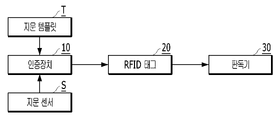
도 1은 종래 기술에 따른 RFID와 생체 정보를 이용한 포터블 액세스 장치를 도시하는 블록도이다. 1 is a block diagram illustrating a portable access device using RFID and biometric information according to the related art.
도 1를 참조하면, 종래 기술의 포터블 장치는 미리 저장된 지문 템플릿(T)과 지문 센서(S)에 입력된 생체 정보를 비교하여 인증 장치(10)이 인증 신호를 생성한다. 만약 생체 정보가 인증되었다면 RFID 태그(20)에 인증 신호를 송신하여 RFID 태그(20)의 스위치를 온 시켜서 RFID 태그를 구동한다.Referring to FIG. 1 , in the portable device of the prior art, the
구동된 사용자는 RFID 태그를 구동시키기 위한 지문 템플릿 저장장치와 센서가 함께 구비된 포터블 장치를 가지고 진정한 소유자인 경우에 RFID 태그를 이용하여 사용자 인증을 수행한다. The driven user has a fingerprint template storage device for driving the RFID tag and a portable device equipped with a sensor, and performs user authentication using the RFID tag when the user is a true owner.
즉, 인증 신호가 저장된 지문 템플릿과 센싱된 지문이 부합하다는 것을 나타낼 때, RFID 태그(20)를 실행 가능하게 한다. 실행 가능하게 된 RFID 태그(20)는 판독기(30)에 의해 검출된다. That is, when the authentication signal indicates that the stored fingerprint template and the sensed fingerprint match, the
이러한 종래 기술에 따르면, RFID 태그가 분실 도난 시에도 오용을 일부 막을 수 있는 장점이 있으나, 저장 장치, 센서, 프로세서가 포함된 고가의 큰 장비를 이용하여야 사용자 인증이 가능하다.According to this prior art, although the RFID tag has an advantage in that it can partially prevent misuse even when lost or stolen, user authentication is possible only by using expensive and large equipment including a storage device, a sensor, and a processor.
그리고, 종래 기술은 최종에는 RFID 태그만을 이용하여 사용자 인증을 하고 출입 통제 시스템을 통과하게 되므로, 도난 시에 RFID 태그 만을 활성화시키는 경우에는 결국 출입 통제 시스템은 해킹되는 문제점이 존재한다. In addition, in the prior art, the user is authenticated using only the RFID tag and passes through the access control system. Therefore, when only the RFID tag is activated during theft, there is a problem that the access control system is eventually hacked.
더구나, 개인의 지문 템플릿이 저장된 저장 장치마저 해킹되는 경우에는 사용자의 중요 생체 정보가 함께 도난당하는 심각한 문제가 발생할 수 있다. Moreover, if even the storage device in which the personal fingerprint template is stored is hacked, there may be a serious problem in that important biometric information of the user is also stolen.
아울러 생체 정보는 지문 인증 후 RFID 태그 인증의 2단계 인증 수행이 필요하기 때문에 출입의 허용까지 필요한 사용자 인증에 상당한 시간이 소요될 수 있다. In addition, since biometric information requires performing two-step authentication of RFID tag authentication after fingerprint authentication, it may take a considerable amount of time for user authentication required to allow access.
본 발명이 이루고자 하는 기술적 과제는 다수의 생체 정보를 저장하지 않고 보안 처리하여 생체 정보가 유출되는 것을 방지하는 생체 인증 시스템을 제공하는 것이다.An object of the present invention is to provide a biometric authentication system that prevents leakage of biometric information by secure processing without storing a plurality of biometric information.
또한, 생체 정보를 암호화 처리하여 RFID카드, 스마트 장치 등에 저장한 후, 생체 인증 시스템에서 암호화된 생체 정보를 코드로 복호화 하여 인증 여부를 판단하기 때문에 위조, 변조의 문제점을 해결할 수 있는 생체 인증 시스템을 제공하는 것이다. In addition, after encrypting biometric information and storing it on an RFID card, smart device, etc., the biometric information encrypted in the biometric authentication system is decoded into a code to determine whether to authenticate, so a biometric authentication system that can solve the problems of forgery and falsification will provide
또한, 스마트폰, 웨어러블, 랩탑 등 스마트 장치를 이용하여 출입 인증 시간을 효과적으로 단축할 수 있는 생체 인증 시스템을 제공하는 것이다.Another object of the present invention is to provide a biometric authentication system that can effectively shorten access authentication time using smart devices such as smartphones, wearables, and laptops.
또한, RFID 카드, 스마트폰 등 인증 기기를 분실이나 도난 당하는 경우에도, 도용이나 해킹이 불가능한 생체 인증 시스템을 제공하는 것이다. In addition, even when an authentication device such as an RFID card or a smart phone is lost or stolen, it is to provide a biometric authentication system that cannot be stolen or hacked.
본 발명이 이루고자 하는 기술적 과제는 이상에서 언급한 기술적 과제로 제한되지 않으며, 언급되지 않은 또 다른 기술적 과제들은 아래의 기재로부터 본 발명이 속하는 기술 분야에서 통상의 지식을 가진 자에게 명확하게 이해될 수 있을 것이다.The technical problems to be achieved by the present invention are not limited to the technical problems mentioned above, and other technical problems not mentioned can be clearly understood by those of ordinary skill in the art to which the present invention belongs from the description below. There will be.
상기 기술적 과제를 달성하기 위하여, 본 발명의 일실시예에 따른 생체 코드 저장 매체를 이용한 생체 인증 시스템은, 생체 정보 인식 센서로부터 사용자의 적어도 하나의 생체 정보를 수신하는 생체 정보 수신부; 상기 생체 정보 수신부로부터 수신된 생체 정보를 제1 생체 코드로 가공하는 생체 정보 가공부; 상기 사용자의 RFID 카드 또는 스마트 장치에 저장된 생체 암호화 코드를 수신하는 생체 암호화 코드 수신부; 상기 생체 암호화 코드를 제2 생체 코드로 복호화하는 복호화부; 및 상기 제1 생체 코드와 상기 제2생체 코드를 비교하여 인증을 수행하는 생체 코드 비교부를 포함한다. In order to achieve the above technical object, a biometric authentication system using a biometric code storage medium according to an embodiment of the present invention includes: a biometric information receiver configured to receive at least one biometric information of a user from a biometric information recognition sensor; a biometric information processing unit that processes the biometric information received from the biometric information receiving unit into a first biometric code; a biometric encryption code receiving unit for receiving the biometric encryption code stored in the user's RFID card or smart device; a decryption unit that decrypts the biometric encryption code into a second biometric code; and a biometric code comparison unit configured to perform authentication by comparing the first biometric code with the second biometric code.
여기서, 상기 생체 암호화 코드는 생체 코드 발급 시스템으로부터 상기 사용자의 생체 정보를 코드화 및 암호화하여 상기 RFID 카드 또는 스마트 장치에 발급되어 저장될 수 있다. Here, the biometric encryption code may be issued and stored in the RFID card or smart device by encoding and encrypting the user's biometric information from the biometric code issuing system.
또한, 상기 생체 코드 발급 시스템은 상기 생체 암호화 코드를 발급한 후 상기 사용자의 생체 정보를 폐기하는 개인 보안 처리부를 포함할 수 있다. In addition, the biometric code issuing system may include a personal security processing unit that discards the user's biometric information after issuing the biometric encryption code.
또한, 상기 생체 정보 인식 센서는 광학 기기를 이용하여 지문, 장정맥, 얼굴 및 홍채 중 적어도 하나를 비접촉 방식으로 인식할 수 있다. Also, the biometric information recognition sensor may recognize at least one of a fingerprint, a iliac vein, a face, and an iris in a non-contact manner using an optical device.
또한, 상기 생체 인증 시스템은, 상기 RFID 또는 스마트 장치와 무선으로 접속하여, 카드/기기 정보 및 생체 암호화 코드를 수신하는 무선 통신 인터페이스를 더 포함할 수 있다. In addition, the biometric authentication system may further include a wireless communication interface for wirelessly connecting to the RFID or smart device to receive card/device information and a biometric encryption code.
여기서, 상기 무선 통신 인터페이스는 상기 스마트 장치가 일정 범위내에 진입하면 상기 생체 암호화 코드를 요청하며, 상기 요청에 응답한 상기 생체 암호화 코드를 수신할 수 있다. Here, the wireless communication interface may request the biometric encryption code when the smart device enters within a predetermined range, and receive the biometric encryption code in response to the request.
상기 무선 통신 인터페이스는, 다수 사용자의 스마트 장치로부터 생체 암호화 코드를 수신할 때의 수신 세기를 비교하는 수신 세기 비교부와, 상기 수신 세기에 기초하여 비교 우선 순위를 결정하는 비교 우선 순위 결정부를 포함할 수 있다.The wireless communication interface may include a reception strength comparison unit that compares reception strength when receiving biometric encryption codes from smart devices of multiple users, and a comparison priority determination unit that determines a comparison priority based on the reception strength can
여기서, 상기 복호화부는 상기 생체 암호화 코드를 상기 카드/기기 정보를 이용하여 복호화할 수 있다. Here, the decryption unit may decrypt the biometric encryption code using the card/device information.
또는, 상기 복호화부는 상기 생체 코드 발급 시스템이 제공한 암호화키를 이용하여 상기 생체 암호화 코드를 복호화할 수 있다. Alternatively, the decryption unit may decrypt the biometric code using an encryption key provided by the biometric code issuing system.
본 발명의 일 실시예에 따른 생체 코드 저장 매체를 이용한 생체 인증을 위한 생체 코드 발급 방법은, 사용자의 적어도 하나의 생체 정보를 수신하는 단계; 상기 생체 코드 저장 매체에 저장하기 위해 상기 수신된 생체 정보에 대응하는 제1생체 코드를 생성하는 단계; 및 상기 제1생체 코드를 암호화하여 생체 암호화 코드로서 출력하고 RFID 카드 또는 스마트 장치의 저장 매체에 저장하는 단계를 포함할 수 있다. A biometric code issuance method for biometric authentication using a biometric code storage medium according to an embodiment of the present invention comprises: receiving at least one biometric information of a user; generating a first biometric code corresponding to the received biometric information to be stored in the biometric code storage medium; and encrypting the first biometric code, outputting it as a biometric encryption code, and storing it in an RFID card or a storage medium of a smart device.
여기서, 상기 RFID 카드 또는 스마트 장치의 카드/기기 정보를 수신하는 단계를 더 포함하고, 상기 제2생체코드는 상기 수신된 카드/기기 정보를 더 이용하여 생성될 수 있다. Here, the method may further include receiving card/device information of the RFID card or smart device, and the second biometric code may be generated by further using the received card/device information.
또한, 상기 생체 암호화 코드가 저장된 후 상기 생체 정보를 삭제하여 폐기하는 단계를 더 포함할 수 있다.The method may further include deleting and discarding the biometric information after the biometric encryption code is stored.
본 발명의 일 실시예에 따른, 출입 통제 방법은, 생체 정보 인식 센서를 이용하여 출입하려는 사용자의 생체 정보를 수신하는 단계; 상기 수신된 생체 정보를 가공하여 제1생체 코드를 생성하는 단계; RFID 카드 또는 스마트 장치에 저장된 생체 암호화 코드를 수신하는 단계; 상기 생체 암호화 코드를 복호화하여 제2생체 코드를 추출하는 단계; 및 상기 제1생체 코드와 상기 제2생체 코드를 비교하여 인증을 수행하여 출입의 허용 및 거부를 수행하는 단계를 포함할 수 있다. According to an embodiment of the present invention, an access control method includes: receiving biometric information of a user who wants to enter using a biometric information recognition sensor; generating a first biometric code by processing the received biometric information; receiving a biometric encryption code stored in an RFID card or a smart device; extracting a second biometric code by decrypting the biometric encryption code; and performing authentication by comparing the first biometric code with the second biometric code to allow and deny access.
여기서, 상기 생체 정보 인식 센서는 광학 기기를 이용하여 지문, 장정맥, 얼굴 및 홍채 중 적어도 하나를 비접촉 방식으로 인식할 수 있다. Here, the biometric information recognition sensor may recognize at least one of a fingerprint, a iliac vein, a face, and an iris in a non-contact manner using an optical device.
또한, 상기 생체 암호화 코드 수신 단계는, 상기 스마트 장치가 일정 범위내에 진입하면 상기 생체 암호화 코드를 요청하며, 상기 요청에 응답한 상기 생체 암호화 코드를 수신할 수 있다. In addition, in the receiving of the biometric code, when the smart device enters within a certain range, the biometric code may be requested, and the biometric code in response to the request may be received.
또한, 상기 RFID 카드 또는 스마트 장치로부터 카드/기기 정보를 수신하는 단계를 더 포함할 수 있고, 상기 복호화 단계는 상기 생체 암호화 코드를 상기 카드/기기 정보를 이용하여 복호화한다. The method may further include receiving card/device information from the RFID card or smart device, wherein the decrypting step decrypts the biometric encryption code using the card/device information.
본 발명의 실시예에 따르면, 생체 정보를 출입 통제 시스템이 아니라 RFID 카드, 스마트 장치 등 인증 기기에 암호화하여 저장하기 때문에 생체 정보가 유출되는 것을 방지할 수 있다.According to an embodiment of the present invention, since biometric information is encrypted and stored in an authentication device such as an RFID card or a smart device, not in an access control system, it is possible to prevent leakage of biometric information.
또한, 생체 정보는 RFID 카드, 스마트폰 등 인증 기기에 암호화 처리되어 등록된 후, 생체 인증 시스템에서 인식 센서에 수신된 생체 정보와 코드 형태로 비교되기 때문에 위조, 변조가 어려워 생체 인증 시스템의 신뢰도를 향상시킬 수 있다.In addition, biometric information is encrypted and registered in authentication devices such as RFID cards and smartphones, and then compared with the biometric information received from the recognition sensor in the biometric authentication system in the form of a code. can be improved
또한, 사용자가 스마트폰, 태블릿, 웨어러블 등 스마트 장치를 소지한 채 일정 범위 이내로 진입하면 자동으로 생체 정보를 생체 인증 시스템에 송신할 수 있기 때문에, 출입 인증 시간을 단축시킬 수 있다.In addition, when a user enters within a certain range while carrying a smart device such as a smart phone, tablet, or wearable, biometric information can be automatically transmitted to the biometric authentication system, thereby shortening the access authentication time.
또한, 생체 인식 센서는 생체 정보를 비접촉 방식으로 인식할 수 있기 때문에 접촉 인식 방법와 비교하여 위생상의 문제점을 해소할 수 있다. In addition, since the biometric sensor can recognize biometric information in a non-contact manner, it is possible to solve a hygiene problem compared to a contact recognition method.
본 발명의 효과는 상기한 효과로 한정되는 것은 아니며, 본 발명의 설명 또는 청구범위에 기재된 발명의 구성으로부터 추론 가능한 모든 효과를 포함하는 것으로 이해되어야 한다.It should be understood that the effects of the present invention are not limited to the above-described effects, and include all effects that can be inferred from the configuration of the invention described in the description or claims of the present invention.
도 1은 종래 기술에 따른 RFID와 생체 정보를 이용한 포터블 액세스 장치를 도시하는 블록도이다.
도 2는 본 발명의 일 실시예에 따른 생체 인증 시스템의 개요를 도시하는 도면이다.
도 3은 본 발명의 일 실시예에 따른 생체 코드 발급 시스템을 도시하는 블록도이다.
도 4는 본 발명의 일 실시예에 따른 생체 코드 인증 시스템을 도시하는 블록도이다.
도 5는 본 발명의 일 실시예 따라 스마트 장치를 이용한 다중 생체 정보를 인식하는 방법을 도시하는 예시도이다.
도 6은 본 발명의 다른 실시예 따라 스마트 장치를 이용한 다중 생체 정보를 인식하는 방법을 도시하는 예시도이다.
도 7은 본 발명의 일 실시예에 따라 생체 정보를 카드/기기에 등록하는 방법을 도시하는 흐름도이다.
도 8은 본 발명의 일 실시예에 따라 생체 암호 코드를 이용하여 출입을 통제하는 방법을 도시하는 흐름도이다.1 is a block diagram illustrating a portable access device using RFID and biometric information according to the related art.
2 is a diagram illustrating an outline of a biometric authentication system according to an embodiment of the present invention.
3 is a block diagram illustrating a biometric code issuance system according to an embodiment of the present invention.
4 is a block diagram illustrating a biometric code authentication system according to an embodiment of the present invention.
5 is an exemplary diagram illustrating a method for recognizing multiple biometric information using a smart device according to an embodiment of the present invention.
6 is an exemplary diagram illustrating a method of recognizing multiple biometric information using a smart device according to another embodiment of the present invention.
7 is a flowchart illustrating a method of registering biometric information in a card/device according to an embodiment of the present invention.
8 is a flowchart illustrating a method of controlling access using a biometric encryption code according to an embodiment of the present invention.
이하에서는 첨부한 도면을 참조하여 본 발명을 설명하기로 한다. 그러나 본 발명은 여러 가지 상이한 형태로 구현될 수 있으며, 따라서 여기에서 설명하는 실시예로 한정되는 것은 아니다. 그리고 도면에서 본 발명을 명확하게 설명하기 위해서 설명과 관계없는 부분은 생략하였으며, 명세서 전체를 통하여 유사한 부분에 대해서는 유사한 도면 부호를 붙였다.Hereinafter, the present invention will be described with reference to the accompanying drawings. However, the present invention may be embodied in several different forms, and thus is not limited to the embodiments described herein. And in order to clearly explain the present invention in the drawings, parts irrelevant to the description are omitted, and similar reference numerals are attached to similar parts throughout the specification.
명세서 전체에서, 어떤 부분이 다른 부분과 "연결(접속, 접촉, 결합)"되어 있다고 할 때, 이는 "직접적으로 연결"되어 있는 경우뿐 아니라, 그 중간에 다른 부재를 사이에 두고 "간접적으로 연결"되어 있는 경우도 포함한다. 또한 어떤 부분이 어떤 구성요소를 "포함"한다고 할 때, 이는 특별히 반대되는 기재가 없는 한 다른 구성요소를 제외하는 것이 아니라 다른 구성요소를 더 구비할 수 있다는 것을 의미한다.Throughout the specification, when a part is "connected (connected, contacted, coupled)" with another part, it is not only "directly connected" but also "indirectly connected" with another member interposed therebetween. "Including cases where In addition, when a part "includes" a certain component, this means that other components may be further provided without excluding other components unless otherwise stated.
본 명세서에서 사용한 용어는 단지 특정한 실시예를 설명하기 위해 사용된 것으로, 본 발명을 한정하려는 의도가 아니다. 단수의 표현은 문맥상 명백하게 다르게 뜻하지 않는 한, 복수의 표현을 포함한다. 본 명세서에서, "포함하다" 또는 "가지다" 등의 용어는 명세서상에 기재된 특징, 숫자, 단계, 동작, 구성요소, 부품 또는 이들을 조합한 것이 존재함을 지정하려는 것이지, 하나 또는 그 이상의 다른 특징들이나 숫자, 단계, 동작, 구성요소, 부품 또는 이들을 조합한 것들의 존재 또는 부가 가능성을 미리 배제하지 않는 것으로 이해되어야 한다.The terms used herein are used only to describe specific embodiments, and are not intended to limit the present invention. The singular expression includes the plural expression unless the context clearly dictates otherwise. In the present specification, terms such as “comprise” or “have” are intended to designate that a feature, number, step, operation, component, part, or combination thereof described in the specification exists, but one or more other features It is to be understood that it does not preclude the possibility of the presence or addition of numbers, steps, operations, components, parts, or combinations thereof.
이하 첨부된 도면을 참고하여 본 발명의 실시예를 상세히 설명하기로 한다.Hereinafter, embodiments of the present invention will be described in detail with reference to the accompanying drawings.
도 2는 본 발명의 일 실시예에 따른 생체 인증 시스템의 개요를 도시하는 도면이다. 2 is a diagram illustrating an outline of a biometric authentication system according to an embodiment of the present invention.
도 2를 참조하면, 본 발명은 생체 코드 발급 시스템(100), 생체 코드 인증 시스템(200) 및 인식기(300)를 포함한다. Referring to FIG. 2 , the present invention includes a biometric
먼저, 생체 코드 발급 시스템(100)은 사용자(A)의 다중 생체 정보(B)를 생체 코드로 변환하고 이를 암호화한 생체 정보 암호화 코드로 출력할 수 있다. 다중 생체 정보(B)는 지문, 장정맥, 홍채 및 얼굴 등의 정보가 포함될 수 있으며, 두 가지 이상의 생체 정보가 이용될 수 있다. First, the biometric
다중 생체 정보(B)는 이미지 형태로 캡쳐될 수 있으며, 특징점, 패턴, 템플릿 형태로 변환되어 사용자의 고유한 생체적 특징을 표현하는 데이터로 변환될 수 있다. 변환된 데이터는 저장 매체에 저장될 수 있는 형식으로 코드화될 수 있으며 이를 생체 코드라 칭하기로 한다. Multiple biometric information (B) may be captured in the form of an image, and may be converted into feature points, patterns, and templates to be converted into data expressing the user's unique biometric characteristics. The converted data may be encoded in a format that can be stored in a storage medium, and this will be referred to as a biometric code.
생체 코드 발급 시스템(100)에 의해 발급된 생체 코드는 미리 정해진 키값을 가지고 암호화될 수 있다. 암호화되는 키는 저장 매체나 기기의 식별자를 이용하거나 사용자가 부여한 식별자를 이용할 수도 있다. The biometric code issued by the biometric
또는 생체 코드 발급 시스템(100)가 생성한 암호화키를 이용하여 생체 코드를 암호화하는 것이 가능하다. 이 때는 생체 코드 발급 시스템(100)은 복호화키를 보안채널을 통해 생체 코드 인증 시스템(200)에 제공할 수 있다. Alternatively, it is possible to encrypt the biometric code using the encryption key generated by the biometric
암호화된 다중 생체 정보(B)는 생체 정보 암호화 코드 형태로 스마트 장치C) 또는 RFID 카드(D) 등에 저장된다. 스마트 장치(C)는 웨어러블 장치, 태블릿, 랩탑 등 다양한 형태의 스마트 장치를 포함할 수 있다. The encrypted multi-biometric information (B) is stored in a smart device C) or an RFID card (D) in the form of a biometric information encryption code. The smart device C may include various types of smart devices such as wearable devices, tablets, and laptops.
생체 암호화 코드가 발급된 후에는 다중 생체 정보(B)는 생체 코드 발급 시스템(100)에 저장되지 않고 삭제되어 폐기 될 수 있다. 따라서, 다중 생체 정보(B), 다중 생체 정보(B) 등록 여부 등의 개인 정보를 효과적으로 보호할 수 있다.After the biometric code is issued, the multiple biometric information (B) may be deleted and discarded without being stored in the biometric
한편, 사용자(A)가 출입을 허용을 요청할 때는 스마트 장치(C) 또는 RFID 카드(D)에 저장되어 있는 생체 정보 암호화 코드를 생체 코드 인증 시스템(200)에 제공한다. 사용자(A)는 RFID 카드(D)를 카드 리더와 연결시키거나, WiFi, 블루투스, UWB와 같은 스마트 장치(C)가 접속 가능한 무선 링크를 이용하여 생체 정보 암호화 코드를 제공할 수 있다. Meanwhile, when the user A requests permission to enter, the biometric information encryption code stored in the smart device C or the RFID card D is provided to the biometric
이후, 생체 코드 인증 시스템(200)은 사용자 인증을 수행하기 위해 다중 생체 정보(B)를 센싱할 수 있다. Thereafter, the biometric
생체 코드 인증 시스템(200)은 출입을 요청하는 사용자(A)의 다중 생체 정보(B)가 센싱되면 생체 정보를 코드화 한다. 이후, 스마트 장치(C) 또는 RFID 카드(D)에 저장되어 있던 암호화된 다중 생체 정보(B)는 복호화 된 후 센싱된 생체 정보로부터 코드화된 코드와 서로 비교하게 된다. 비교 값이 임계치 이상인 경우에는 생체 코드 인증 시스템(200)은 사용자(A)의 출입을 허용하게 된다.The biometric
또는, 생체 코드 인증 시스템(200)은 스마트 장치(C) 또는 RFID 카드(D)에 저장되어 있는 암호화된 다중 생체 정보(B)를 디코딩하여 복원한 후, 센싱된 생체 정보와 비교하는 것도 가능하다.Alternatively, the biometric
전술한 구성에 의하며, 생체 코드 발급 시스템(100) 또는 생체 코드 인증 시스템(200)은 다수의 사용자의 생체 정보를 저장하지 않기 때문에 해킹의 위험에서 벗어날 수 있다. According to the above-described configuration, the biometric
아울러, 스마트 장치(C) 또는 RFID 카드(D)는 단독으로 사용이 불가능하기 때문에 스마트 장치(C) 또는 RFID 카드(D)가 도난당한다 하여도 출입 통제 시스템의 보안에 문제가 발생하지 않는다. In addition, since the smart device (C) or the RFID card (D) cannot be used alone, even if the smart device (C) or the RFID card (D) is stolen, there is no problem in the security of the access control system.
또한, 스마트 장치(C) 또는 RFID 카드(D)에 저장되어 있는 정보는 코드화되고 암호화되어 있기 때문에 분실 및 도난 시에도 생체 정보의 복원이나 해킹이 불가능하다. In addition, since the information stored in the smart device (C) or the RFID card (D) is coded and encrypted, it is impossible to restore or hack biometric information even when lost or stolen.
도 3은 본 발명의 일 실시예에 따른 생체 코드 발급 시스템을 도시하는 블록도이다. 3 is a block diagram illustrating a biometric code issuance system according to an embodiment of the present invention.
생체 코드 발급 시스템(100)은 생체 정보 수신부(110), 카드 정보 수신부(111), 기기 정보 수신부(112), 템플릿 생성부(120), 코드 생성부(121), 코드 합성부(122), 암호화 처리부(130), 생체 정보 암호화 코드 출력부(140) 및 개인 보안 처리부(141)를 포함한다. The biometric
생체 정보 수신부(110)는 사용자의 생체 정보를 수신할 수 있다. 일 예로, 사용자는 출입을 허용 받기 위하여 다중 생체 정보에 해당하는 일부를 비접촉 방법으로 제공할 수 있다. 이때, 사용자의 생체 정보는 지문, 장정맥, 홍채 및 얼굴 등의 정보가 포함될 수 있으며, 두 가지 이상의 생체 정보가 이용될 수 있다. 생체 정보 수신부(110)는 적어도 하나 이상의 생체 정보 중에서 인식된 생체 정보를 수신할 수 있다. The biometric
카드 정보 수신부(111)는 사용자가 사전에 등록한 RFID 카드로부터 카드 정보를 수신한다. 카드 정보는 RFID 카드 고유 번호 등을 포함할 수 있다. 카드 정보는 RFID 카드로부터 카드 정보 수신부(111)로부터 비접촉 방식으로 수신될 수 있다The card
기기 정보 수신부(112)는 사용자가 사전에 등록한 생체 정보를 포함하고 있는 스마트폰, 웨어러블 기기 등의 스마트 장치의 기기 정보를 수신할 수 있다. 기기 정보는 기기 고유 번호, 사용자 계정, MAC 어드레스 중 적어도 하나를 포함할 수 있다. 기기 정보는 기기 정보 수신부(111)로부터 수신될 수 있다The
이 때, RFID 카드와 스마트 장치는 선택적으로 사용될 수 있기 때문에, 카드 정보 수신부(111)부와 기기 정보 수신부(112)는 선택적으로 정보가 수신될 수 있다.At this time, since the RFID card and the smart device can be selectively used, the card
일 예로, 사용자가 RFID 카드만 이용하는 경우, 카드 정보 수신부(111)가 RFID 카드로부터 카드 정보를 수신 받을 수 있다. 또한, 사용자가 스마트 장치만 이용하는 경우, 기기 정보 수신부(112)가 스마트 장치의 기기 정보를 수신할 수 있다. 또한, RFID 카드 및 스마트 장치 모두의 정보를 수신하는 것도 가능하다.For example, when the user uses only the RFID card, the card
템플릿 생성부(120)는 생체 정보 수신부(110)로부터 수신된 생체 정보의 템플릿을 생성할 수 있다. 생체 정보의 모든 정보를 템플릿으로 생성하지 않고, 사전에 설정된 생체 정보의 특징점에 해당하는 생체 정보만을 템플릿으로 생성할 수 있다. 즉, 수신된 생체 정보는 단순화되어 템플릿으로 생성될 수 있다.The
코드 생성부(121)는 단순화된 생체 정보의 템플릿을 저장 매체에 저장 가능한 코드로 변환할 수 있다. 코드 생성부(121)가 생성하는 코드는 전자기적 방법으로 저장 가능한 임의의 코드를 포함한다. The
코드 합성부(122)는 카드 정보 수신부(111)로부터 수신된 카드 정보와 코드 생성부(121)에서 생성된 코드를 합성할 수 있다. 또한 기기 정보 수신부(112)로부터 수신된 기기 정보와 코드 생성부(121)에서 생성된 코드를 합성할 수도 있다. 이를 통해, 카드 또는 기기 정보가 삽입된 사용자의 다중 생체 정보 코드를 생성할 수 있다. The
암호화 처리부(130)는 코드 합성부(122)에서 합성된 코드를 암호화 처리할 수 있다. 코드는 생체 정보를 포함하고 있기 때문에, 개인 정보에 해당된다. 따라서, 도난, 분실 시 사용자 이외의 사람이 인위적으로 변조, 위조 및 도용할 수 있는 것을 방지하기 위해서 암호화 처리를 한다. 암호화 키는 저장 매체나 기기의 식별자를 이용하거나 사용자가 부여한 식별자를 이용할 수도 있다. 또는 생체 코드 발급 시스템(100)가 생성한 암호화키를 이용하여 생체 코드를 암호화하는 것이 가능하다. 이 때는 생체 코드 발급 시스템(100)은 복호화키를 보안채널을 통해 생체 코드 인증 시스템(200)에 제공할 수 있다. The
생체 정보 암호화 코드 출력부(140)는 암호화 처리부(130)에서 암호화된 코드를 생체 정보 암호화 코드를 출력한다. 암호화된 생체 정보인 생체 정보 암호화 코드는 RFID 카드, 스마트폰, 웨어러블 등 다양한 기기로 송신되어 저장될 수 있다. The biometric information encryption
개인 보안 처리부(141)는 생체 정보 암호화 코드가 전송되고 나면 개인 정보 보안을 위해 다중 생체 정보를 저장하지 않고 폐기할 수 있다. 따라서, 개인 정보가 유출되지 않기 때문에 보안을 극대화할 수 있다.After the biometric information encryption code is transmitted, the personal
도 4는 본 발명의 일 실시예에 따른 생체 코드 인증 시스템을 도시하는 블록도이다. 4 is a block diagram illustrating a biometric code authentication system according to an embodiment of the present invention.
생체 코드 인증 시스템(200)은 생체 정보 수신부(210), 생체 정보 가공부(211), 생체 암호화 코드 수신부(220), 복호화 부(221), 생체 코드 비교부(222) 카드/기기 정보 수신부(230) 및 생체 정보 인증부(240)를 포함한다. The biometric
먼저, 생체 정보 수신부(210)는 인증 받기 위한 사용자의 생체 정보를 수신할 수 있다. 생체 정보는 지문, 장정맥, 홍채 및 얼굴 등의 정보가 포함될 수 있으며, 두 가지 이상이 이용될 수 있다. First, the biometric
생체 정보 가공부(211)는 수신된 생체 정보를 가공할 수 있다. 일 예로, 수신된 생체 정보는 이미지 형태일 수 있다. 이때, 생체 정보 가공부(211)는 수신된 생체 정보 이미지 또는 그 일부를 템플릿 또는 다른 데이터 형식으로 가공한다. 즉, 수신된 생체 정보는 단순화될 수 있다. The biometric
또한, 생성된 템플릿은 코드로 변환될 수 있다. 후술하겠지만, 인증 받기 위해 인식된 사용자의 생체 정보와 사전에 기기에 등록된 생체 정보는 코드 형태로 비교될 수 있다. Also, the generated template can be converted into code. As will be described later, the biometric information of the user recognized for authentication and the biometric information previously registered in the device may be compared in the form of a code.
생체 암호화 코드 수신부(220)는 사용자가 RFID를 이용하는 경우, RFID카드에 미리 저장된 사용자의 생체 정보를 수신할 수 있다. RFID카드에 저장된 사용자의 생체 정보는 암호화된 코드 형태일 수 있다. 사용자는 RFID와 스마트 장치를 선택적으로 이용할 수 있다. 스마트 장치를 이용하는 경우에는 스마트 장치에 내장된 RFID 모듈 또는 NFC 모듈을 통해 생체 암호화 코드를 수신할 수 있다.When the user uses the RFID, the biometric encryption
복호화 부(221)는 암호화된 사용자의 생체 정보, 즉 생체 암호화 코드를 복호화 할 수 있다. 인증하기 위해서 수신된 사용자의 생체 정보는 암호화된 코드 형태로 되어 있다. 따라서, 암호화된 사용자의 생체 정보는 생체 정보 수신부(210)에 수신된 사용자의 생체 정보와 비교되기 위해서 복호화 된다. The
생체 코드 비교부(222)는 인증을 받기 위해 생체 정보 수신부(210)에 수신된 생체 정보에서 가공된 생체 코드와 사전에 카드/기기에 저장된 사용자의 생체 코드를 비교한다. The biometric
한편, 카드/기기 정보 수신부(230)는 사용자가 RFID 카드를 이용하는 경우, RFID카드 정보를 수신한다. 또한, 사용자가 스마트 장치를 이용하는 경우, 스마트 장치의 정보와 스마트 장치에 저장된 생체 암호화 코드를 무선 링크를 통해 수신할 수 있다. 여기서 카드/기기 정보는 RFDI 카드 또는 스마트 장치를 식별하는데 이용될 수 있으며, 암호화된 생체코드를 복호하는데 필요한 정보로서 이용될 수도 있다. Meanwhile, the card/device
생체 정보 인증부(240)는 사용자 생체 정보를 이용하여 사용자 인증 여부를 판단할 수 있다. 생체 코드 비교부(222)에서 인증을 받기 위해 수신된 생체 코드와 사전에 카드/기기에 저장된 생체 코드가 임계치 이상 일치하면, 생체 정보 인증부(240)는 인증된 사용자라고 판단할 수 있다. 또한, 생체 코드가 일치하지 않다고 판단되면, 인증되지 않은 사용자 및 외부인이라고 판단할 수 있다. 따라서, 생체 정보 인증부(240)에서 판단된 사용자의 인증 여부에 따라 출입을 통제할 수 있다. The
한편, 인식기(300)는 생체 정보 인식 센서(310), 생체 암호화 코드 리더(320), 무선 통신 인터페이스(330)를 포함한다. Meanwhile, the
먼저, 생체 정보 인식 센서(310)는 인증 받기 위한 사용자의 생체 정보를 인식한다. 생체 정보는 지문, 장정맥, 홍채 및 얼굴 등의 정보가 포함될 수 있으며, 두 가지 이상이 이용될 수 있다. 따라서, 생체 정보 인식 센서(310)는 지문 인식 센서, 장정맥 인식 센서, 홍채 인식 센서 및 얼굴 인식 센서 등 적어도 하나 이상을 포함할 수 있다. 생체 정보 인식 센서(310)에서 인식된 생체 정보는 생체 정보 수신부(210)로 송신될 수 있다. 생체 정보 인식 센서(310)은 광학 기기를 이용한 비접촉 방식의 센서로 구현될 수 있다. First, the biometric
생체 암호화 코드 리더(320)는 RFID 카드에 등록된 생체 암호화 코드를 읽을 수 있다. 생체 암호화 코드 리더(320)에 의해 인식된 생체 암호화 코드는 생체 암호화 코드 수신부(220)로 송신될 수 있다. The biometric
또한, RFID카드에 저장된 RFID카드 정보를 카드/기기 정보 수신부(230)으로 송신할 수 있다. In addition, the RFID card information stored in the RFID card may be transmitted to the card/device
무선 통신 인터페이스(330)는 스마트폰, 웨어러블, 랩탑 등의 스마트 장치와 인식기(300)를 무선으로 접속시킬 수 있다. 무선 통신 인터페이스(330)는 스마트 장치의 식별 정보와 스마트 장치에 저장된 암호화 생체 정보 코드를 카드/기기 정보 수신부(230)로 송신할 수 있다. 송신된 암호화 생체 정보 코드는 복호화 부(221)에서 암호화되지 않은 코드로 변환되며, 생체 코드 비교부(222)에서 생체 정보와 비교될 수 있다. The
무선 통신 인터페이스(330)을 이용한 실시예는 도 5를 참조하여 더욱 상세히 설명하도록 한다. An embodiment using the
도 5는 본 발명의 일 실시예 따라 스마트 장치를 이용한 다중 생체 정보를 인식하는 방법을 도시하는 예시도이다. 5 is an exemplary diagram illustrating a method for recognizing multiple biometric information using a smart device according to an embodiment of the present invention.
도 5를 참조하면, 일 예로, 사용자(A)는 스마트 장치(C)을 소지하여 이동할 수 있다. 스마트 장치(C)에 사용자(A)의 다중 생체 정보(B)가 생체 암호화 코드로 저장되어 있다.Referring to FIG. 5 , as an example, a user A may move while carrying a smart device C. As shown in FIG. Multiple biometric information (B) of the user (A) is stored in the smart device (C) as a biometric encryption code.
사용자(A)가 무선 통신 인터페이스(330)의 커버리지에 진입하는 경우에는 스마트 장치(C)는 무선 통신 인터페이스(330)의 요청에 응답하여 생체 암호화 코드를 전송할 수 있다. When the user A enters the coverage of the
예를 들어, 스마트 폰(C)가 Wi-Fi, Bluetooth, UWB와 등 무선 프로토콜의 일정 범위로 진입하게 된다면, 무선 통신 인터페이스(330)은 스마트 장치(C)의 식별자를 인식하고, 생체 암호화 코드를 요청하게 된다. 만약 스마트 장치(C)가 생체 암호화 코드가 없다면 해당 요청은 무시되고, 만약 스마트 장치(C)가 생체 암호화 코드를 보유하고 있으면 자동 또는 사용자의 승인에 따라 생체 암호화 코드를 해당 무선 프로토콜에 따라 전송하게 된다. For example, if the smart phone (C) enters a certain range of a wireless protocol such as Wi-Fi, Bluetooth, UWB, etc., the
스마트 장치(C)을 이용하는 경우 일정 범위 내에 진입하기만 하면 사용자의 다중 생체 정보(B)를 인식기(300)에 전송할 수 있기 때문에, 사용자의 저장된 생체 암호화 코드를 입력하는 시간이 단축될 수 있다. 일 예로, 사용자는 미리 인식기(300)에 저장된 생체 암호화 코드를 송신하고, 생체 정보 인식 센서(310)에 얼굴, 지문, 홍채, 장정맥과 같은 다중 생체 정보(B)를 인식시키면 된다.When using the smart device (C), the user's multiple biometric information (B) can be transmitted to the
따라서, 사용자는 실제 생체 인증 만을 수행하는 절차만을 이용해서 더 강화된 보안 서비스를 이용할 수 있게 된다.Accordingly, the user can use a more enhanced security service by using only the actual biometric authentication procedure.
도 6은 본 발명의 다른 실시예 따라 스마트 장치를 이용한 다중 생체 정보를 인식하는 방법을 도시하는 예시도이다. 6 is an exemplary diagram illustrating a method of recognizing multiple biometric information using a smart device according to another embodiment of the present invention.
도 5에 도시된 실시예와 비교하면, 도 6에 도시된 실시예는 커버리지내에 다수의 사용자(A1, A2, A3)가 각각 스마트 장치(C1, C2, C3)를 가지고 진입할 수 있다. 이때 무선통신 인터페이스(330)은 여러 사용자의 다중 생체 정보에 대응하는 생체 암호화 코드를 수신할 수 있다. 결국 커버리지 내에서 사용자의 생체 암호화 코드는 1:1이 아니라 1:N 의 다중 비교를 수행하게 된다.Compared with the embodiment shown in FIG. 5 , in the embodiment shown in FIG. 6 , a plurality of users A1 , A2 , and A3 can enter the coverage area with smart devices C1 , C2 , C3 respectively. In this case, the
1:N의 다중 비교는 비교의 우선 순위 설정에 따라 처리 속도의 차이가 발생하게 된다. 도 6에 도시된 실시예에서는 1:N의 다중 비교 처리를 위한 구성이 추가될 수 있다.Multiple comparison of 1:N causes a difference in processing speed according to the priority setting of comparison. In the embodiment shown in FIG. 6, a configuration for multiple comparison processing of 1:N may be added.
수신 세기 비교부(331)는 생체 암호화 코드를 수신할 때 수신 세기 정보를 측정하여 저장하고 각각의 수신 세기를 비교할 수 있다. 신호의 수신 세기는 RSSI(Receiver Signal Strength Indicator)와 같은 식별자를 통해 용이하게 획득할 수 있으며, 신호의 세기, 거리, 접근 방향을 식별할 수 있는 어떠한 무선 프로토콜을 사용해도 무방하다.The reception strength comparison unit 331 may measure and store reception strength information when receiving the biometric encryption code, and compare each reception strength. The signal reception strength can be easily obtained through an identifier such as a Receiver Signal Strength Indicator (RSSI), and any wireless protocol capable of identifying the signal strength, distance, and approach direction may be used.
수신 세기가 파악되면, 비교 우선 순위 결정부(333)는 비교되지 않은 생체 암호화 코드 중에서 수신 세기가 가장 큰 생체 암호화 코드부터 차례로 비교를 시작한다. 이로 인해, 무선 통신 인터페이스(330)과 가장 가까운 사용자(A1)부터 다중 생체 정보를 비교할 수 있기 때문에 자신의 생체 암호화 코드와 매칭하여 처리하는 속도를 향상 시킬 수 있다. When the reception strength is determined, the comparison
이러한 수신 세기의 측정은 주기적으로 진행될 수 있기 때문에 거의 실시간적인 사용자(A1, A2, A3)의 위치를 파악할 수 있으며, 사용자 (A1, A2, A3)가 나란히 줄지어 진입할 때 지연을 최소화하여 개인을 인증 및 식별할 수 있다. Since the measurement of the reception strength can be performed periodically, the location of the users (A1, A2, A3) can be grasped in near real time, and when the users (A1, A2, A3) enter in a line, the delay is minimized and the individual can be authenticated and identified.
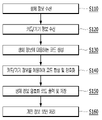
도 7은 본 발명의 일 실시예에 따라 생체 정보를 카드/기기에 등록하는 방법을 도시하는 흐름도이다. 7 is a flowchart illustrating a method of registering biometric information in a card/device according to an embodiment of the present invention.
단계(S110)에서, 생체 코드 발급 시스템은 사용자의 생체 정보를 수신할 수 있다. 생체 정보는 지문, 장정맥, 홍채 및 얼굴 등을 포함할 수 있다. 또한, 적어도 하나 이상의 생체 정보를 수신할 수 있으며, 두 가지 이상의 생체 정보를 수신하여 출입 보안을 향상시킬 수 있다. In step S110, the biometric code issuing system may receive the user's biometric information. The biometric information may include a fingerprint, an intestinal vein, an iris, and a face. In addition, at least one or more pieces of biometric information may be received, and access security may be improved by receiving two or more pieces of biometric information.
사용자의 생체 정보는 지문 인식 센서, 장정맥 인식 센서, 홍채 인식 센서 및 얼굴 인식 센서 등 적어도 하나 이상으로부터 인식될 수 있다. The user's biometric information may be recognized from at least one of a fingerprint recognition sensor, a intestinal vein recognition sensor, an iris recognition sensor, and a face recognition sensor.
단계(S120)에서는, RFID 카드 또는 스마트 장치로부터 카드/기기의 정보를 수신할 수 있다. 카드/기기의 정보는 카드나 기기의 고유의 번호, 식별자, 사용자 계정 등을 포함할 수 있다. 수신된 카드/기기의 정보는 RFID 카드 또는 스마트 장치를 식별하거나 암호화/복호화 키의 일부로 이용될 수 있다. In step S120, information of the card/device may be received from the RFID card or the smart device. The card/device information may include a unique number, identifier, and user account of the card or device. The received card/device information may be used to identify an RFID card or a smart device or as part of an encryption/decryption key.
단계(S130)에서는, 수신된 생체 정보에 대응하는 코드를 생성한다. 수신된 생체 정보의 모든 정보를 코드로 생성하는 것이 아니라, 생체 정보의 특징점 또는 템플릿에 대응하는 정보만 코드로 생성될 수 있다. 즉, 생체 정보는 단순화되어 저장매체에 저장될 수 있도록 코드로 생성될 수 있다. In step S130, a code corresponding to the received biometric information is generated. Instead of generating all information of the received biometric information as a code, only information corresponding to a feature point or template of the biometric information may be generated as a code. That is, biometric information may be simplified and generated as a code to be stored in a storage medium.
단계(S140)에서는, 카드/기기 정보 코드와 수신된 사용자의 생체 정보의 코드를 합성할 수 있다. 카드/기기 정보 코드에 대응하는 사용자의 생체 정보를 합성함으로써, 해당 카드/기기에 사용자의 생체 정보를 저장할 수 있는 코드가 생성될 수 있다. 또한, 개인 정보 보안을 위해서 생성된 코드는 암호화될 수 있다. In step S140, the card/device information code and the received user's biometric information code may be synthesized. By synthesizing the user's biometric information corresponding to the card/device information code, a code for storing the user's biometric information in the card/device may be generated. In addition, the generated code for personal information security may be encrypted.
암호화된 코드는 위조, 변조, 도용이 어렵기 때문에 안정성이 향상될 수 있다. 따라서 카드/기기를 도난, 분실하는 경우에도, 생체 정보는 효과적으로 보호될 수 있다. Encrypted code is difficult to forge, falsify, and steal, so its stability can be improved. Therefore, even if the card/device is stolen or lost, biometric information can be effectively protected.
단계(S150)에서는, 암호화된 생체 정보 코드를 생체 암호화 코드로서 출력하고, 카드/기기에 저장할 수 있다. 암호화된 생체 정보 코드는 사용자가 지정한 RFID 카드, 스마트폰, 웨어러블 등 적어도 하나 이상의 기기의 저장 매체에 저장될 수 있다. In step S150, the encrypted biometric information code may be output as a biometric encryption code and stored in a card/device. The encrypted biometric information code may be stored in a storage medium of at least one device, such as an RFID card, a smart phone, or a wearable, designated by a user.
단계(S160)에서는, 생체 코드 발급 시스템은 생체 암호화 코드가 저장매에체 저장되고 나면 생체 정보를 저장하지 않고 삭제할 수 있다. 따라서, 사용자가 소지한 카드/기기에만 생체 정보가 저장되기 때문에 개인 정보 유출이 발생하지 않는다. 개인 정보 보안 처리를 통해 사용자 등록 여부, 다중 생체 정보 등 개인 정보를 효과적으로 보호할 수 있다. In step S160, the biometric code issuing system may delete the biometric information without storing the biometric information after the biometric code is stored in the storage medium. Therefore, personal information leakage does not occur because biometric information is stored only on the card/device possessed by the user. Personal information security processing can effectively protect personal information such as user registration and multiple biometric information.
도 8은 본 발명의 일 실시예에 따라 생체 암호 코드를 이용하여 출입을 통제하는 방법을 도시하는 흐름도이다. 8 is a flowchart illustrating a method of controlling access using a biometric encryption code according to an embodiment of the present invention.
단계(S210)에서, 생체 코드 인증 시스템은 카드/기기의 정보를 수신할 수 있다. 일 예로, 사용자는 출입을 허가 받기 위해서 카드/기기를 인식기에 비접촉 방식으로 인식시킬 수 있다. 사용자는 생체 코드를 저장하는 저장 매체로서 RFID카드와 스마트폰, 웨어러블 및 랩탑 등의 스마트 장치를 선택적으로 사용할 수 있다. In step S210, the biometric code authentication system may receive card/device information. For example, the user may recognize the card/device in a non-contact manner to the recognizer in order to obtain access. A user can selectively use an RFID card, a smart phone, a wearable, and a smart device such as a laptop as a storage medium for storing the biometric code.
사용자가 RFID 카드를 사용하는 경우 생체 코드 인증 시스템은 RFID 카드 정보를 수신하고, 스마트 장치를 사용하는 경우 스마트 장치의 정보를 수신할 수 있다. When a user uses an RFID card, the biometric code authentication system may receive RFID card information, and when a smart device is used, the biometric code authentication system may receive information of the smart device.
이때, 사용자가 스마트 장치를 이용하는 경우, 무선 프로토콜의 일정 범위에 들어오면 스마트 장치에 생체 암호화 코드 요청이 표시될 수 있다. 사용자는 디스플레이에 표시된 요청에 응답하여 생체 암호화 코드를 송신할 수 있다. 또한 생체 암호화 코드가 자동으로 정보가 송신될 수 있도록 설정할 수 있다. 따라서, 사용자가 일정 범위에 진입을 하면 스마트 장치에서 생체 정보를 전송할 수 있도록 되어있기 때문에 인증 시간을 단축할 수 있다. In this case, when the user uses a smart device, a biometric encryption code request may be displayed on the smart device when the user enters a predetermined range of the wireless protocol. The user may transmit the biometric encryption code in response to the request displayed on the display. In addition, the biometric encryption code can be set to automatically transmit information. Therefore, when the user enters a certain range, the authentication time can be shortened because biometric information can be transmitted from the smart device.
단계(S211)에서는, 생체 코드 인증 시스템이 생체 암호화 코드를 수신할 수 있다. 생체 암호화 코드는 RFID카드와 스마트 장치에 저장된 사용자의 생체 정보를 포함한다. 생체 정보는 개인 정보 보안을 위해 RFID 카드와 스마트 장치에 암호화된 형태로 저장된다. 사용자가 RFID 카드를 사용하는 경우, RFID카드 리더로부터RFID 카드에 저장된 사용자의 생체 암호화 코드를 수신할 수 있다. In step S211, the biometric code authentication system may receive the biometric encryption code. The biometric encryption code includes the user's biometric information stored in the RFID card and the smart device. Biometric information is stored in encrypted form on RFID cards and smart devices for personal information security. When the user uses the RFID card, the user's biometric encryption code stored in the RFID card may be received from the RFID card reader.
스마트 장치를 사용하는 경우, 무선 통신 인터페이스를 통해 무선으로 생체 암호화 코드를 수신할 수 있다. When using a smart device, the biometric encryption code may be wirelessly received through a wireless communication interface.
단계(S212)에서는, 암호화된 생체 정보를 복호화 할 수 있다. In step S212, the encrypted biometric information can be decrypted.
단계(S213)에서는, 복호화된 생체 정보 코드를 추출한다. RFID카드와 스마트 장치에는 다중 생체 정보가 등록되어 있을 수 있다. 복수의 생체 정보 중에서 인증 받기 위하여 필요한 생체 정보 코드만을 추출할 수 있다. 또는 복호화된 데이터에 카드/기기 정보가 섞여 있는 경우에는 생체 정보에 관한 생체 코드만을 추출할 수 있다. In step S213, the decoded biometric information code is extracted. Multiple biometric information may be registered in the RFID card and the smart device. From among the plurality of biometric information, only the biometric information code required for authentication may be extracted. Alternatively, when card/device information is mixed in the decrypted data, only the biometric code related to the biometric information may be extracted.
한편, 단계(S220)에서는, 인식기를 이용하여 사용자의 생체 정보를 인식한다. 생체 정보를 인식하기 위해서 지문 인식 센서, 장정맥 인식 센서, 홍채 인식 센서 및 얼굴 인식 센서 등을 사용할 수 있다. Meanwhile, in step S220, the user's biometric information is recognized using the recognizer. In order to recognize biometric information, a fingerprint recognition sensor, a intestinal vein recognition sensor, an iris recognition sensor, a face recognition sensor, etc. may be used.
단계(S221)에서는, 인식된 생체 정보를 비교 가공할 수 있다. 생체 정보는 통상 이미지 형태로 획득되는데 모든 이미지 데이터를 생체 정보로서 필요로 하는 것이 아니기 때문에, 특징점 정보만 사용할 수 있도록 생체 정보를 가공할 수 있다. In step S221, the recognized biometric information may be compared and processed. Biometric information is usually obtained in the form of an image, but since all image data is not required as biometric information, biometric information can be processed so that only feature point information can be used.
단계(S222)에서는, 가공된 생체 정보의 코드를 생성할 수 있다. 가공된 생체 정보는, 카드/기기에 저장된 생체 코드와 비교하기 위하여 동일한 형식의 코드로 변환될 수 있다. In step S222, it is possible to generate a code of the processed biometric information. The processed biometric information may be converted into a code of the same format for comparison with the biometric code stored in the card/device.
단계(S230)에서는, 인식기에서 획득된 사용자의 생체 코드와 카드/기기의 저장 매체에 저장되어 추출된 생체 코드를 비교한다. In step S230, the user's biometric code obtained from the recognizer is compared with the biometric code stored in the card/device storage medium and extracted.
단계(S240)에서는, 비교된 두 개의 생체 정보 코드가 일치하면 인증되었다고 판단하고, 불일치하면 인증되지 않았다고 판단한다. In step S240, if the two compared biometric information codes match, it is determined that the authentication is authenticated, and when the two compared biometric information codes do not match, it is determined that the authentication is not performed.
단계(S250)에서는 인증되었다고 판단된 경우에는 사용자의 출입을 허용하고, 단계(S250)에서는 인증되지 않았다고 판단된 경우에는 사용자의 출입을 거부할 수 있다. When it is determined that the user is authenticated in step S250, the user's access is allowed, and when it is determined that the user is not authenticated in step S250, the user's access can be denied.
전술한 실시예에 따르면, 카드/기기를 분실하여도, 습득한 외부인이 출입을 시도해도 생체 정보 인식이 인증되지 않기 때문에 출입이 거절될 수 있다. According to the above-described embodiment, even if the card/device is lost, access may be denied because biometric information recognition is not authenticated even if a learned outsider tries to enter.
또한, 습득된 카드/기기에 저장된 생체 정보는 생체 암호화 코드로 저장되기 때문에 해킹이나 복원이 불가능하다.In addition, since biometric information stored in the acquired card/device is stored as a biometric encryption code, hacking or restoration is impossible.
아울러, 중앙 시스템에서는 생체 정보를 저장하지 않기 때문에 해킹의 위험 등으로부터도 안전하다.In addition, since the central system does not store biometric information, it is also safe from the risk of hacking.
또한, 높은 보안이 필요한 경우에는 복수의 생체 정보를 이용하여 보안도를 더 높이는 것도 가능하다. In addition, when high security is required, it is possible to further increase the security level by using a plurality of biometric information.
전술한 본 발명의 설명은 예시를 위한 것이며, 본 발명이 속하는 기술분야의 통상의 지식을 가진 자는 본 발명의 기술적 사상이나 필수적인 특징을 변경하지 않고서 다른 구체적인 형태로 쉽게 변형이 가능하다는 것을 이해할 수 있을 것이다. 그러므로 이상에서 기술한 실시예들은 모든 면에서 예시적인 것이며 한정적이 아닌 것으로 이해해야만 한다. 예를 들어, 단일형으로 설명되어 있는 각 구성 요소는 분산되어 실시될 수도 있으며, 마찬가지로 분산된 것으로 설명되어 있는 구성 요소들도 결합된 형태로 실시될 수 있다.The above description of the present invention is for illustration, and those of ordinary skill in the art to which the present invention pertains can understand that it can be easily modified into other specific forms without changing the technical spirit or essential features of the present invention. will be. Therefore, it should be understood that the embodiments described above are illustrative in all respects and not restrictive. For example, each component described as a single type may be implemented in a dispersed form, and likewise components described as distributed may also be implemented in a combined form.
본 발명의 범위는 후술하는 청구범위에 의하여 나타내어지며, 청구범위의 의미 및 범위 그리고 그 균등 개념으로부터 도출되는 모든 변경 또는 변형된 형태가 본 발명의 범위에 포함되는 것으로 해석되어야 한다.The scope of the present invention is indicated by the following claims, and all changes or modifications derived from the meaning and scope of the claims and their equivalents should be construed as being included in the scope of the present invention.
100. 생체 코드 발급 시스템
200. 생체 코드 인증 시스템
300. 인식기100. Biometric code issuance system
200. Biometric code authentication system
300. Recognizer
Claims (15)
생체 정보 인식 센서로부터 사용자의 적어도 하나의 생체 정보를 수신하는 생체 정보 수신부;
상기 생체 정보 수신부로부터 수신된 생체 정보를 제1 생체 코드로 가공하는 생체 정보 가공부;
상기 사용자의 RFID 카드 또는 스마트 장치에 저장된 생체 암호화 코드를 수신하는 생체 암호화 코드 수신부;
상기 생체 암호화 코드를 제2 생체 코드로 복호화하는 복호화부; 및
상기 제1 생체 코드와 상기 제2생체 코드를 비교하여 인증을 수행하는 생체 코드 비교부를 포함하며,
상기 생체 암호화 코드는 생체 코드 발급 시스템으로부터 상기 사용자의 생체 정보를 코드화 및 암호화하여 상기 RFID 카드 또는 스마트 장치에 발급되어 저장된 것인 생체 인증 시스템.
A biometric authentication system using a biometric code storage medium, comprising:
a biometric information receiver configured to receive at least one biometric information of the user from the biometric information recognition sensor;
a biometric information processing unit that processes the biometric information received from the biometric information receiving unit into a first biometric code;
a biometric encryption code receiving unit for receiving the biometric encryption code stored in the user's RFID card or smart device;
a decryption unit that decrypts the biometric encryption code into a second biometric code; and
and a biometric code comparison unit that performs authentication by comparing the first biometric code with the second biometric code;
The biometric encryption code is a biometric authentication system that encodes and encrypts the user's biometric information from the biometric code issuing system, is issued and stored in the RFID card or smart device.
상기 생체 코드 발급 시스템은 상기 생체 암호화 코드를 발급한 후 상기 사용자의 생체 정보를 폐기하는 개인 보안 처리부를 포함하는 것인 생체 인증 시스템.
The method of claim 1,
The biometric code issuance system includes a personal security processing unit that discards the user's biometric information after issuing the biometric encryption code.
상기 생체 정보 인식 센서는 광학 기기를 이용하여 지문, 장정맥, 얼굴 및 홍채 중 적어도 하나를 비접촉 방식으로 인식하는 것인 생체 인증 시스템.
According to claim 1,
The biometric information recognition sensor is a biometric authentication system that uses an optical device to recognize at least one of a fingerprint, an intestinal vein, a face, and an iris in a non-contact manner.
상기 RFID 또는 스마트 장치와 무선으로 접속하여, 카드/기기 정보 및 생체 암호화 코드를 수신하는 무선 통신 인터페이스를 더 포함하는 것인 생체 인증 시스템.
The method of claim 1,
The biometric authentication system further comprises a wireless communication interface for wirelessly connecting with the RFID or smart device to receive card/device information and biometric encryption code.
상기 무선 통신 인터페이스는 상기 스마트 장치가 일정 범위내에 진입하면 상기 생체 암호화 코드를 요청하며, 상기 요청에 응답한 상기 생체 암호화 코드를 수신하는 것인 생체 인증 시스템.
5. The method of claim 4,
The wireless communication interface requests the biometric encryption code when the smart device enters a predetermined range, and receives the biometric encryption code in response to the request.
상기 무선 통신 인터페이스는,
다수 사용자의 스마트 장치로부터 생체 암호화 코드를 수신할 때의 수신 세기를 비교하는 수신 세기 비교부와,
상기 수신 세기에 기초하여 비교 우선 순위를 결정하는 비교 우선 순위 결정부를 포함하는 생체 인증 시스템.6. The method of claim 5,
The wireless communication interface,
A reception strength comparison unit for comparing reception strength when receiving biometric encryption codes from smart devices of multiple users;
and a comparison priority determining unit that determines a comparison priority based on the reception strength.
상기 복호화부는 상기 생체 암호화 코드를 상기 카드/기기 정보를 이용하여 복호화하는 것인 생체 인증 시스템.
5. The method of claim 4,
The decryption unit decrypts the biometric encryption code using the card/device information.
상기 복호화부는 상기 생체 코드 발급 시스템이 제공한 암호화키를 이용하여 상기 생체 암호화 코드를 복호화하는 것인 생체 인증 시스템.
According to claim 1,
wherein the decryption unit decrypts the biometric encryption code using the encryption key provided by the biometric code issuance system.
사용자의 적어도 하나의 생체 정보를 수신하는 단계;
상기 생체 코드 저장 매체에 저장하기 위해 상기 수신된 생체 정보에 대응하는 제1생체 코드를 생성하는 단계; 및
상기 제1생체 코드를 암호화하여 생체 암호화 코드로서 출력하고 RFID 카드 또는 스마트 장치의 저장 매체에 저장하는 단계를 포함하는 생체 코드 발급 방법.
In the biometric code issuance method for biometric authentication using a biometric code storage medium,
receiving at least one biometric information of a user;
generating a first biometric code corresponding to the received biometric information to be stored in the biometric code storage medium; and
and encrypting the first biometric code, outputting it as a biometric encryption code, and storing it in an RFID card or a storage medium of a smart device.
상기 RFID 카드 또는 스마트 장치의 카드/기기 정보를 수신하는 단계를 더 포함하고,
상기 제2생체코드는 상기 수신된 카드/기기 정보를 더 이용하여 생성되는 것인 생체 코드 발급 방법.
10. The method of claim 9,
Further comprising the step of receiving card / device information of the RFID card or smart device,
and the second biometric code is generated by further using the received card/device information.
상기 생체 암호화 코드가 저장된 후 상기 생체 정보를 삭제하여 폐기하는 단계를 더 포함하는 것인 생체 코드 발급 방법.
10. The method of claim 9,
The biometric code issuance method further comprising the step of deleting and discarding the biometric information after the biometric encryption code is stored.
생체 정보 인식 센서를 이용하여 출입하려는 사용자의 생체 정보를 수신하는 단계;
상기 수신된 생체 정보를 가공하여 제1생체 코드를 생성하는 단계;
RFID 카드 또는 스마트 장치에 저장된 생체 암호화 코드를 수신하는 단계;
상기 생체 암호화 코드를 복호화하여 제2생체 코드를 추출하는 단계; 및
상기 제1생체 코드와 상기 제2생체 코드를 비교하여 인증을 수행하여 출입의 허용 및 거부를 수행하는 단계를 포함하는 출입 통제 방법.
In the access control method using biometric authentication using biometric code storage medium,
receiving biometric information of a user who wants to enter and exit using a biometric information recognition sensor;
generating a first biometric code by processing the received biometric information;
receiving a biometric encryption code stored in an RFID card or a smart device;
extracting a second biometric code by decrypting the biometric encryption code; and
and performing authentication by comparing the first biometric code with the second biometric code to permit and deny access.
상기 생체 정보 인식 센서는 광학 기기를 이용하여 지문, 장정맥, 얼굴 및 홍채 중 적어도 하나를 비접촉 방식으로 인식하는 것인 출입 통제 방법.
13. The method of claim 12,
The biometric information recognition sensor uses an optical device to recognize at least one of a fingerprint, an intestinal vein, a face, and an iris in a non-contact manner.
상기 생체 암호화 코드 수신 단계는, 상기 스마트 장치가 일정 범위내에 진입하면 상기 생체 암호화 코드를 요청하며, 상기 요청에 응답한 상기 생체 암호화 코드를 수신하는 것인 출입 통제 방법.
13. The method of claim 12,
In the step of receiving the biometric encryption code, when the smart device enters within a predetermined range, the biometric encryption code is requested, and the biometric encryption code in response to the request is received.
상기 RFID 카드 또는 스마트 장치로부터 카드/기기 정보를 수신하는 단계를 더 포함하고,
상기 복호화 단계는 상기 생체 암호화 코드를 상기 카드/기기 정보를 이용하여 복호화하는 것인 출입 통제 방법.
13. The method of claim 12,
Further comprising the step of receiving card / device information from the RFID card or smart device,
The decryption step is an access control method of decrypting the biometric encryption code using the card/device information.
Priority Applications (2)
| Application Number | Priority Date | Filing Date | Title |
|---|---|---|---|
| KR1020210009165A KR20220106339A (en) | 2021-01-22 | 2021-01-22 | Biometrics authentification system using bio-code storage medium and method of the same |
| CN202111371946.5A CN114065167A (en) | 2021-01-22 | 2021-11-18 | Biometric authentication system using biometric code storage medium and method thereof |
Applications Claiming Priority (1)
| Application Number | Priority Date | Filing Date | Title |
|---|---|---|---|
| KR1020210009165A KR20220106339A (en) | 2021-01-22 | 2021-01-22 | Biometrics authentification system using bio-code storage medium and method of the same |
Publications (1)
| Publication Number | Publication Date |
|---|---|
| KR20220106339A true KR20220106339A (en) | 2022-07-29 |
Family
ID=80278287
Family Applications (1)
| Application Number | Title | Priority Date | Filing Date |
|---|---|---|---|
| KR1020210009165A Ceased KR20220106339A (en) | 2021-01-22 | 2021-01-22 | Biometrics authentification system using bio-code storage medium and method of the same |
Country Status (2)
| Country | Link |
|---|---|
| KR (1) | KR20220106339A (en) |
| CN (1) | CN114065167A (en) |
Families Citing this family (1)
| Publication number | Priority date | Publication date | Assignee | Title |
|---|---|---|---|---|
| US20240303638A1 (en) * | 2023-03-08 | 2024-09-12 | Capital One Services, Llc | Systems and methods for secure authentication of contactless card |
Family Cites Families (6)
| Publication number | Priority date | Publication date | Assignee | Title |
|---|---|---|---|---|
| KR100481672B1 (en) * | 2002-12-13 | 2005-04-11 | 주식회사 아이디테크 | Card having a secret code and system using it |
| KR100834816B1 (en) * | 2007-01-23 | 2008-06-05 | 삼성전자주식회사 | Apparatus and method for transmitting data using strength of Bluetooth signal in portable terminal |
| JP4117335B2 (en) * | 2007-07-18 | 2008-07-16 | 日立オムロンターミナルソリューションズ株式会社 | IC card authentication system |
| KR20150056711A (en) * | 2013-11-15 | 2015-05-27 | 주식회사 카티스 | Access management system using smart access card and method |
| KR102041926B1 (en) * | 2018-03-29 | 2019-11-07 | 주식회사 에스원 | Visitor Certification and Control System based on Body Area Network and Method thereof |
| CN110070014A (en) * | 2019-04-12 | 2019-07-30 | 顾宏超 | Recognition methods and its device, equipment and storage medium based on biometric feature |
-
2021
- 2021-01-22 KR KR1020210009165A patent/KR20220106339A/en not_active Ceased
- 2021-11-18 CN CN202111371946.5A patent/CN114065167A/en active Pending
Also Published As
| Publication number | Publication date |
|---|---|
| CN114065167A (en) | 2022-02-18 |
Similar Documents
| Publication | Publication Date | Title |
|---|---|---|
| US10681025B2 (en) | Systems and methods for securely managing biometric data | |
| US11012438B2 (en) | Biometric device pairing | |
| US20220103362A1 (en) | Biometric-based identity authentication | |
| JP3222110B2 (en) | Personal identification fob | |
| US7529944B2 (en) | Support for multiple login method | |
| CN104508674B (en) | System and device for certification user | |
| US20100138667A1 (en) | Authentication using stored biometric data | |
| KR101086236B1 (en) | Access control system and method | |
| EP2192513B1 (en) | Authentication using stored biometric data | |
| US20260005864A1 (en) | Systems and methods of identity authentication using a custom visual code | |
| KR20220106339A (en) | Biometrics authentification system using bio-code storage medium and method of the same | |
| KR20200013494A (en) | System and Method for Identification Based on Finanace Card Possessed by User | |
| US20190028470A1 (en) | Method For Verifying The Identity Of A Person | |
| JP3807943B2 (en) | Biometric information verification security device | |
| US12518281B2 (en) | Method, apparatuses and system for authorizing a third party | |
| KR100472105B1 (en) | Stand-alone type fingerprint recognition module and protection method of stand-alone type fingerprint recognition module | |
| GB2413672A (en) | Access control | |
| JPH04315248A (en) | Personal identification system |
Legal Events
| Date | Code | Title | Description |
|---|---|---|---|
| PA0109 | Patent application |
Patent event code: PA01091R01D Comment text: Patent Application Patent event date: 20210122 |
|
| PA0201 | Request for examination | ||
| PE0902 | Notice of grounds for rejection |
Comment text: Notification of reason for refusal Patent event date: 20220515 Patent event code: PE09021S01D |
|
| E601 | Decision to refuse application | ||
| PE0601 | Decision on rejection of patent |
Patent event date: 20220719 Comment text: Decision to Refuse Application Patent event code: PE06012S01D Patent event date: 20220515 Comment text: Notification of reason for refusal Patent event code: PE06011S01I |
|
| PG1501 | Laying open of application |