KR20210080098A - Acrylic emulsion pressure snsitive adhesive composition - Google Patents
Acrylic emulsion pressure snsitive adhesive composition Download PDFInfo
- Publication number
- KR20210080098A KR20210080098A KR1020190172492A KR20190172492A KR20210080098A KR 20210080098 A KR20210080098 A KR 20210080098A KR 1020190172492 A KR1020190172492 A KR 1020190172492A KR 20190172492 A KR20190172492 A KR 20190172492A KR 20210080098 A KR20210080098 A KR 20210080098A
- Authority
- KR
- South Korea
- Prior art keywords
- acrylate
- meth
- repeating unit
- adhesive composition
- based monomer
- Prior art date
- Legal status (The legal status is an assumption and is not a legal conclusion. Google has not performed a legal analysis and makes no representation as to the accuracy of the status listed.)
- Ceased
Links
- 239000000839 emulsion Substances 0.000 title claims abstract description 67
- 239000000203 mixture Substances 0.000 title claims abstract description 58
- NIXOWILDQLNWCW-UHFFFAOYSA-N acrylic acid group Chemical group C(C=C)(=O)O NIXOWILDQLNWCW-UHFFFAOYSA-N 0.000 title claims abstract description 48
- 230000001070 adhesive effect Effects 0.000 title claims abstract description 35
- 239000000853 adhesive Substances 0.000 title claims abstract description 32
- NIXOWILDQLNWCW-UHFFFAOYSA-M Acrylate Chemical compound [O-]C(=O)C=C NIXOWILDQLNWCW-UHFFFAOYSA-M 0.000 claims description 125
- 239000000178 monomer Substances 0.000 claims description 104
- 125000000217 alkyl group Chemical group 0.000 claims description 54
- 239000002245 particle Substances 0.000 claims description 42
- 239000004820 Pressure-sensitive adhesive Substances 0.000 claims description 37
- -1 isooctyl Chemical group 0.000 claims description 26
- 239000004908 Emulsion polymer Substances 0.000 claims description 21
- 125000004432 carbon atom Chemical group C* 0.000 claims description 21
- 239000011347 resin Substances 0.000 claims description 21
- 229920005989 resin Polymers 0.000 claims description 21
- RSWGJHLUYNHPMX-UHFFFAOYSA-N Abietic-Saeure Natural products C12CCC(C(C)C)=CC2=CCC2C1(C)CCCC2(C)C(O)=O RSWGJHLUYNHPMX-UHFFFAOYSA-N 0.000 claims description 19
- KHPCPRHQVVSZAH-HUOMCSJISA-N Rosin Natural products O(C/C=C/c1ccccc1)[C@H]1[C@H](O)[C@@H](O)[C@@H](O)[C@@H](CO)O1 KHPCPRHQVVSZAH-HUOMCSJISA-N 0.000 claims description 19
- KHPCPRHQVVSZAH-UHFFFAOYSA-N trans-cinnamyl beta-D-glucopyranoside Natural products OC1C(O)C(O)C(CO)OC1OCC=CC1=CC=CC=C1 KHPCPRHQVVSZAH-UHFFFAOYSA-N 0.000 claims description 19
- 238000000034 method Methods 0.000 claims description 14
- 150000001732 carboxylic acid derivatives Chemical class 0.000 claims description 13
- 239000000758 substrate Substances 0.000 claims description 12
- 239000003431 cross linking reagent Substances 0.000 claims description 11
- 239000000126 substance Substances 0.000 claims description 11
- 125000000391 vinyl group Chemical group [H]C([*])=C([H])[H] 0.000 claims description 11
- 229920002554 vinyl polymer Polymers 0.000 claims description 11
- PPBRXRYQALVLMV-UHFFFAOYSA-N Styrene Chemical compound C=CC1=CC=CC=C1 PPBRXRYQALVLMV-UHFFFAOYSA-N 0.000 claims description 10
- 150000002148 esters Chemical class 0.000 claims description 10
- 239000001257 hydrogen Substances 0.000 claims description 9
- 229910052739 hydrogen Inorganic materials 0.000 claims description 9
- 125000004435 hydrogen atom Chemical group [H]* 0.000 claims description 9
- 125000002496 methyl group Chemical group [H]C([H])([H])* 0.000 claims description 9
- 239000010410 layer Substances 0.000 claims description 8
- 229920000642 polymer Polymers 0.000 claims description 8
- 125000003438 dodecyl group Chemical group [H]C([H])([H])C([H])([H])C([H])([H])C([H])([H])C([H])([H])C([H])([H])C([H])([H])C([H])([H])C([H])([H])C([H])([H])C([H])([H])C([H])([H])* 0.000 claims description 7
- VZCYOOQTPOCHFL-OWOJBTEDSA-N Fumaric acid Chemical compound OC(=O)\C=C\C(O)=O VZCYOOQTPOCHFL-OWOJBTEDSA-N 0.000 claims description 6
- 150000003505 terpenes Chemical class 0.000 claims description 6
- 235000007586 terpenes Nutrition 0.000 claims description 6
- VZCYOOQTPOCHFL-UHFFFAOYSA-N trans-butenedioic acid Natural products OC(=O)C=CC(O)=O VZCYOOQTPOCHFL-UHFFFAOYSA-N 0.000 claims description 6
- XTXRWKRVRITETP-UHFFFAOYSA-N Vinyl acetate Chemical compound CC(=O)OC=C XTXRWKRVRITETP-UHFFFAOYSA-N 0.000 claims description 5
- 125000000484 butyl group Chemical group [H]C([*])([H])C([H])([H])C([H])([H])C([H])([H])[H] 0.000 claims description 4
- 125000002704 decyl group Chemical group [H]C([H])([H])C([H])([H])C([H])([H])C([H])([H])C([H])([H])C([H])([H])C([H])([H])C([H])([H])C([H])([H])C([H])([H])* 0.000 claims description 4
- 125000001495 ethyl group Chemical group [H]C([H])([H])C([H])([H])* 0.000 claims description 4
- 125000003187 heptyl group Chemical group [H]C([*])([H])C([H])([H])C([H])([H])C([H])([H])C([H])([H])C([H])([H])C([H])([H])[H] 0.000 claims description 4
- 125000004051 hexyl group Chemical group [H]C([H])([H])C([H])([H])C([H])([H])C([H])([H])C([H])([H])C([H])([H])* 0.000 claims description 4
- 239000000463 material Substances 0.000 claims description 4
- 125000002347 octyl group Chemical group [H]C([*])([H])C([H])([H])C([H])([H])C([H])([H])C([H])([H])C([H])([H])C([H])([H])C([H])([H])[H] 0.000 claims description 4
- 125000001147 pentyl group Chemical group C(CCCC)* 0.000 claims description 4
- 125000001436 propyl group Chemical group [H]C([*])([H])C([H])([H])C([H])([H])[H] 0.000 claims description 4
- DTGKSKDOIYIVQL-WEDXCCLWSA-N (+)-borneol Chemical group C1C[C@@]2(C)[C@@H](O)C[C@@H]1C2(C)C DTGKSKDOIYIVQL-WEDXCCLWSA-N 0.000 claims description 3
- 125000006832 (C1-C10) alkylene group Chemical group 0.000 claims description 3
- XVOUMQNXTGKGMA-OWOJBTEDSA-N (E)-glutaconic acid Chemical compound OC(=O)C\C=C\C(O)=O XVOUMQNXTGKGMA-OWOJBTEDSA-N 0.000 claims description 3
- JAHNSTQSQJOJLO-UHFFFAOYSA-N 2-(3-fluorophenyl)-1h-imidazole Chemical compound FC1=CC=CC(C=2NC=CN=2)=C1 JAHNSTQSQJOJLO-UHFFFAOYSA-N 0.000 claims description 3
- ZDZVKPXKLLLOOA-UHFFFAOYSA-N Allylmalonic acid Chemical compound OC(=O)C(C(O)=O)CC=C ZDZVKPXKLLLOOA-UHFFFAOYSA-N 0.000 claims description 3
- GAWIXWVDTYZWAW-UHFFFAOYSA-N C[CH]O Chemical group C[CH]O GAWIXWVDTYZWAW-UHFFFAOYSA-N 0.000 claims description 3
- 239000004215 Carbon black (E152) Substances 0.000 claims description 3
- SNRUBQQJIBEYMU-UHFFFAOYSA-N Dodecane Natural products CCCCCCCCCCCC SNRUBQQJIBEYMU-UHFFFAOYSA-N 0.000 claims description 3
- OFOBLEOULBTSOW-UHFFFAOYSA-N Propanedioic acid Natural products OC(=O)CC(O)=O OFOBLEOULBTSOW-UHFFFAOYSA-N 0.000 claims description 3
- 125000002947 alkylene group Chemical group 0.000 claims description 3
- HNEGQIOMVPPMNR-IHWYPQMZSA-N citraconic acid Chemical compound OC(=O)C(/C)=C\C(O)=O HNEGQIOMVPPMNR-IHWYPQMZSA-N 0.000 claims description 3
- 229940018557 citraconic acid Drugs 0.000 claims description 3
- 150000001875 compounds Chemical class 0.000 claims description 3
- 239000001530 fumaric acid Substances 0.000 claims description 3
- 229930195733 hydrocarbon Natural products 0.000 claims description 3
- 150000002430 hydrocarbons Chemical group 0.000 claims description 3
- 125000000959 isobutyl group Chemical group [H]C([H])([H])C([H])(C([H])([H])[H])C([H])([H])* 0.000 claims description 3
- 125000001449 isopropyl group Chemical group [H]C([H])([H])C([H])(*)C([H])([H])[H] 0.000 claims description 3
- VZCYOOQTPOCHFL-UPHRSURJSA-N maleic acid Chemical compound OC(=O)\C=C/C(O)=O VZCYOOQTPOCHFL-UPHRSURJSA-N 0.000 claims description 3
- 239000011976 maleic acid Substances 0.000 claims description 3
- LVHBHZANLOWSRM-UHFFFAOYSA-N methylenebutanedioic acid Natural products OC(=O)CC(=C)C(O)=O LVHBHZANLOWSRM-UHFFFAOYSA-N 0.000 claims description 3
- 125000004430 oxygen atom Chemical group O* 0.000 claims description 3
- 239000005011 phenolic resin Substances 0.000 claims description 3
- 125000000999 tert-butyl group Chemical group [H]C([H])([H])C(*)(C([H])([H])[H])C([H])([H])[H] 0.000 claims description 3
- 239000002253 acid Substances 0.000 claims 1
- HNEGQIOMVPPMNR-NSCUHMNNSA-N mesaconic acid Chemical compound OC(=O)C(/C)=C/C(O)=O HNEGQIOMVPPMNR-NSCUHMNNSA-N 0.000 claims 1
- HNEGQIOMVPPMNR-UHFFFAOYSA-N methylfumaric acid Natural products OC(=O)C(C)=CC(O)=O HNEGQIOMVPPMNR-UHFFFAOYSA-N 0.000 claims 1
- 229920003023 plastic Polymers 0.000 abstract description 4
- 239000004033 plastic Substances 0.000 abstract description 4
- 239000003995 emulsifying agent Substances 0.000 description 25
- 239000004816 latex Substances 0.000 description 22
- 229920000126 latex Polymers 0.000 description 22
- 239000000123 paper Substances 0.000 description 21
- 238000007720 emulsion polymerization reaction Methods 0.000 description 18
- 238000006116 polymerization reaction Methods 0.000 description 17
- 239000003505 polymerization initiator Substances 0.000 description 13
- 238000005259 measurement Methods 0.000 description 10
- HEMHJVSKTPXQMS-UHFFFAOYSA-M Sodium hydroxide Chemical compound [OH-].[Na+] HEMHJVSKTPXQMS-UHFFFAOYSA-M 0.000 description 9
- 238000002360 preparation method Methods 0.000 description 8
- 229920003171 Poly (ethylene oxide) Polymers 0.000 description 7
- 230000008569 process Effects 0.000 description 7
- 239000011734 sodium Substances 0.000 description 7
- 229910052708 sodium Inorganic materials 0.000 description 7
- 239000012874 anionic emulsifier Substances 0.000 description 6
- DGAQECJNVWCQMB-PUAWFVPOSA-M Ilexoside XXIX Chemical group C[C@@H]1CC[C@@]2(CC[C@@]3(C(=CC[C@H]4[C@]3(CC[C@@H]5[C@@]4(CC[C@@H](C5(C)C)OS(=O)(=O)[O-])C)C)[C@@H]2[C@]1(C)O)C)C(=O)O[C@H]6[C@@H]([C@H]([C@@H]([C@H](O6)CO)O)O)O.[Na+] DGAQECJNVWCQMB-PUAWFVPOSA-M 0.000 description 5
- 230000032683 aging Effects 0.000 description 5
- 229920001903 high density polyethylene Polymers 0.000 description 5
- 239000004700 high-density polyethylene Substances 0.000 description 5
- XLYOFNOQVPJJNP-UHFFFAOYSA-N water Substances O XLYOFNOQVPJJNP-UHFFFAOYSA-N 0.000 description 5
- GOXQRTZXKQZDDN-UHFFFAOYSA-N 2-Ethylhexyl acrylate Chemical compound CCCCC(CC)COC(=O)C=C GOXQRTZXKQZDDN-UHFFFAOYSA-N 0.000 description 4
- 239000012790 adhesive layer Substances 0.000 description 4
- 239000011521 glass Substances 0.000 description 4
- 238000004519 manufacturing process Methods 0.000 description 4
- 239000012875 nonionic emulsifier Substances 0.000 description 4
- 239000002904 solvent Substances 0.000 description 4
- IJGRMHOSHXDMSA-UHFFFAOYSA-N Atomic nitrogen Chemical compound N#N IJGRMHOSHXDMSA-UHFFFAOYSA-N 0.000 description 3
- VVQNEPGJFQJSBK-UHFFFAOYSA-N Methyl methacrylate Chemical compound COC(=O)C(C)=C VVQNEPGJFQJSBK-UHFFFAOYSA-N 0.000 description 3
- ROOXNKNUYICQNP-UHFFFAOYSA-N ammonium peroxydisulfate Substances [NH4+].[NH4+].[O-]S(=O)(=O)OOS([O-])(=O)=O ROOXNKNUYICQNP-UHFFFAOYSA-N 0.000 description 3
- VAZSKTXWXKYQJF-UHFFFAOYSA-N ammonium persulfate Chemical compound [NH4+].[NH4+].[O-]S(=O)OOS([O-])=O VAZSKTXWXKYQJF-UHFFFAOYSA-N 0.000 description 3
- 229910001870 ammonium persulfate Inorganic materials 0.000 description 3
- CQEYYJKEWSMYFG-UHFFFAOYSA-N butyl acrylate Chemical compound CCCCOC(=O)C=C CQEYYJKEWSMYFG-UHFFFAOYSA-N 0.000 description 3
- 125000002091 cationic group Chemical group 0.000 description 3
- 238000002156 mixing Methods 0.000 description 3
- 239000007787 solid Substances 0.000 description 3
- 239000000243 solution Substances 0.000 description 3
- 229910001220 stainless steel Inorganic materials 0.000 description 3
- 239000010935 stainless steel Substances 0.000 description 3
- 238000003756 stirring Methods 0.000 description 3
- PAHUTFPWSUWSCR-XQHVRGAUSA-N (e)-2-methylbut-2-enedioic acid Chemical compound OC(=O)C(/C)=C/C(O)=O.OC(=O)C(/C)=C/C(O)=O PAHUTFPWSUWSCR-XQHVRGAUSA-N 0.000 description 2
- QGZKDVFQNNGYKY-UHFFFAOYSA-N Ammonia Chemical compound N QGZKDVFQNNGYKY-UHFFFAOYSA-N 0.000 description 2
- 208000030984 MIRAGE syndrome Diseases 0.000 description 2
- 239000004698 Polyethylene Substances 0.000 description 2
- BQCADISMDOOEFD-UHFFFAOYSA-N Silver Chemical compound [Ag] BQCADISMDOOEFD-UHFFFAOYSA-N 0.000 description 2
- CDBYLPFSWZWCQE-UHFFFAOYSA-L Sodium Carbonate Chemical compound [Na+].[Na+].[O-]C([O-])=O CDBYLPFSWZWCQE-UHFFFAOYSA-L 0.000 description 2
- PMZURENOXWZQFD-UHFFFAOYSA-L Sodium Sulfate Chemical compound [Na+].[Na+].[O-]S([O-])(=O)=O PMZURENOXWZQFD-UHFFFAOYSA-L 0.000 description 2
- FAPWRFPIFSIZLT-UHFFFAOYSA-M Sodium chloride Chemical compound [Na+].[Cl-] FAPWRFPIFSIZLT-UHFFFAOYSA-M 0.000 description 2
- 239000012190 activator Substances 0.000 description 2
- 238000007792 addition Methods 0.000 description 2
- 125000000129 anionic group Chemical group 0.000 description 2
- 239000003125 aqueous solvent Substances 0.000 description 2
- 238000006243 chemical reaction Methods 0.000 description 2
- 239000011248 coating agent Substances 0.000 description 2
- 238000000576 coating method Methods 0.000 description 2
- 230000000052 comparative effect Effects 0.000 description 2
- 238000004132 cross linking Methods 0.000 description 2
- 230000007423 decrease Effects 0.000 description 2
- USIUVYZYUHIAEV-UHFFFAOYSA-N diphenyl ether Chemical compound C=1C=CC=CC=1OC1=CC=CC=C1 USIUVYZYUHIAEV-UHFFFAOYSA-N 0.000 description 2
- 239000003814 drug Substances 0.000 description 2
- 230000000694 effects Effects 0.000 description 2
- 230000009477 glass transition Effects 0.000 description 2
- PCHJSUWPFVWCPO-UHFFFAOYSA-N gold Chemical compound [Au] PCHJSUWPFVWCPO-UHFFFAOYSA-N 0.000 description 2
- 239000010931 gold Substances 0.000 description 2
- 229910052737 gold Inorganic materials 0.000 description 2
- 239000002655 kraft paper Substances 0.000 description 2
- 230000014759 maintenance of location Effects 0.000 description 2
- 239000000693 micelle Substances 0.000 description 2
- 229920006254 polymer film Polymers 0.000 description 2
- TVLSRXXIMLFWEO-UHFFFAOYSA-N prochloraz Chemical compound C1=CN=CN1C(=O)N(CCC)CCOC1=C(Cl)C=C(Cl)C=C1Cl TVLSRXXIMLFWEO-UHFFFAOYSA-N 0.000 description 2
- 239000004332 silver Substances 0.000 description 2
- 229910052709 silver Inorganic materials 0.000 description 2
- 238000010998 test method Methods 0.000 description 2
- LCPVQAHEFVXVKT-UHFFFAOYSA-N 2-(2,4-difluorophenoxy)pyridin-3-amine Chemical compound NC1=CC=CN=C1OC1=CC=C(F)C=C1F LCPVQAHEFVXVKT-UHFFFAOYSA-N 0.000 description 1
- OMIGHNLMNHATMP-UHFFFAOYSA-N 2-hydroxyethyl prop-2-enoate Chemical compound OCCOC(=O)C=C OMIGHNLMNHATMP-UHFFFAOYSA-N 0.000 description 1
- FRIBMENBGGCKPD-UHFFFAOYSA-N 3-(2,3-dimethoxyphenyl)prop-2-enal Chemical compound COC1=CC=CC(C=CC=O)=C1OC FRIBMENBGGCKPD-UHFFFAOYSA-N 0.000 description 1
- 239000004342 Benzoyl peroxide Substances 0.000 description 1
- OMPJBNCRMGITSC-UHFFFAOYSA-N Benzoylperoxide Chemical compound C=1C=CC=CC=1C(=O)OOC(=O)C1=CC=CC=C1 OMPJBNCRMGITSC-UHFFFAOYSA-N 0.000 description 1
- LFQSCWFLJHTTHZ-UHFFFAOYSA-N Ethanol Chemical compound CCO LFQSCWFLJHTTHZ-UHFFFAOYSA-N 0.000 description 1
- WQZGKKKJIJFFOK-GASJEMHNSA-N Glucose Natural products OC[C@H]1OC(O)[C@H](O)[C@@H](O)[C@@H]1O WQZGKKKJIJFFOK-GASJEMHNSA-N 0.000 description 1
- UIIMBOGNXHQVGW-DEQYMQKBSA-M Sodium bicarbonate-14C Chemical compound [Na+].O[14C]([O-])=O UIIMBOGNXHQVGW-DEQYMQKBSA-M 0.000 description 1
- 239000000654 additive Substances 0.000 description 1
- 239000002313 adhesive film Substances 0.000 description 1
- 150000003973 alkyl amines Chemical class 0.000 description 1
- 150000001346 alkyl aryl ethers Chemical class 0.000 description 1
- 150000004996 alkyl benzenes Chemical class 0.000 description 1
- 125000005907 alkyl ester group Chemical group 0.000 description 1
- 150000005215 alkyl ethers Chemical class 0.000 description 1
- 150000001412 amines Chemical class 0.000 description 1
- 229910021529 ammonia Inorganic materials 0.000 description 1
- 239000007864 aqueous solution Substances 0.000 description 1
- 229940077388 benzenesulfonate Drugs 0.000 description 1
- 235000019400 benzoyl peroxide Nutrition 0.000 description 1
- WQZGKKKJIJFFOK-VFUOTHLCSA-N beta-D-glucose Chemical compound OC[C@H]1O[C@@H](O)[C@H](O)[C@@H](O)[C@@H]1O WQZGKKKJIJFFOK-VFUOTHLCSA-N 0.000 description 1
- 210000001217 buttock Anatomy 0.000 description 1
- 150000004649 carbonic acid derivatives Chemical class 0.000 description 1
- 230000015556 catabolic process Effects 0.000 description 1
- 230000008859 change Effects 0.000 description 1
- 150000003841 chloride salts Chemical class 0.000 description 1
- 239000002537 cosmetic Substances 0.000 description 1
- 238000006731 degradation reaction Methods 0.000 description 1
- 238000011161 development Methods 0.000 description 1
- 230000018109 developmental process Effects 0.000 description 1
- 239000008121 dextrose Substances 0.000 description 1
- 229910001873 dinitrogen Inorganic materials 0.000 description 1
- 238000002845 discoloration Methods 0.000 description 1
- JMGZBMRVDHKMKB-UHFFFAOYSA-L disodium;2-sulfobutanedioate Chemical compound [Na+].[Na+].OS(=O)(=O)C(C([O-])=O)CC([O-])=O JMGZBMRVDHKMKB-UHFFFAOYSA-L 0.000 description 1
- 239000003792 electrolyte Substances 0.000 description 1
- 238000005886 esterification reaction Methods 0.000 description 1
- 239000011790 ferrous sulphate Substances 0.000 description 1
- 235000003891 ferrous sulphate Nutrition 0.000 description 1
- 238000010438 heat treatment Methods 0.000 description 1
- 125000001165 hydrophobic group Chemical group 0.000 description 1
- 150000004679 hydroxides Chemical class 0.000 description 1
- 125000002768 hydroxyalkyl group Chemical group 0.000 description 1
- 230000000977 initiatory effect Effects 0.000 description 1
- BAUYGSIQEAFULO-UHFFFAOYSA-L iron(2+) sulfate (anhydrous) Chemical compound [Fe+2].[O-]S([O-])(=O)=O BAUYGSIQEAFULO-UHFFFAOYSA-L 0.000 description 1
- 229910000359 iron(II) sulfate Inorganic materials 0.000 description 1
- 238000002372 labelling Methods 0.000 description 1
- 229910052751 metal Inorganic materials 0.000 description 1
- 239000002184 metal Substances 0.000 description 1
- 150000002739 metals Chemical class 0.000 description 1
- 230000004048 modification Effects 0.000 description 1
- 238000012986 modification Methods 0.000 description 1
- 239000002105 nanoparticle Substances 0.000 description 1
- 229910052757 nitrogen Inorganic materials 0.000 description 1
- 239000012299 nitrogen atmosphere Substances 0.000 description 1
- 150000001451 organic peroxides Chemical class 0.000 description 1
- 230000003647 oxidation Effects 0.000 description 1
- 238000007254 oxidation reaction Methods 0.000 description 1
- 150000002978 peroxides Chemical class 0.000 description 1
- 230000000704 physical effect Effects 0.000 description 1
- 229920000058 polyacrylate Polymers 0.000 description 1
- USHAGKDGDHPEEY-UHFFFAOYSA-L potassium persulfate Chemical compound [K+].[K+].[O-]S(=O)(=O)OOS([O-])(=O)=O USHAGKDGDHPEEY-UHFFFAOYSA-L 0.000 description 1
- 238000003825 pressing Methods 0.000 description 1
- 230000009257 reactivity Effects 0.000 description 1
- 238000010992 reflux Methods 0.000 description 1
- 238000011160 research Methods 0.000 description 1
- XWGJFPHUCFXLBL-UHFFFAOYSA-M rongalite Chemical compound [Na+].OCS([O-])=O XWGJFPHUCFXLBL-UHFFFAOYSA-M 0.000 description 1
- 229910000029 sodium carbonate Inorganic materials 0.000 description 1
- 239000011780 sodium chloride Substances 0.000 description 1
- CHQMHPLRPQMAMX-UHFFFAOYSA-L sodium persulfate Substances [Na+].[Na+].[O-]S(=O)(=O)OOS([O-])(=O)=O CHQMHPLRPQMAMX-UHFFFAOYSA-L 0.000 description 1
- 239000001488 sodium phosphate Substances 0.000 description 1
- 229910000162 sodium phosphate Inorganic materials 0.000 description 1
- 229910052938 sodium sulfate Inorganic materials 0.000 description 1
- 235000011152 sodium sulphate Nutrition 0.000 description 1
- UEUXEKPTXMALOB-UHFFFAOYSA-J tetrasodium;2-[2-[bis(carboxylatomethyl)amino]ethyl-(carboxylatomethyl)amino]acetate Chemical compound [Na+].[Na+].[Na+].[Na+].[O-]C(=O)CN(CC([O-])=O)CCN(CC([O-])=O)CC([O-])=O UEUXEKPTXMALOB-UHFFFAOYSA-J 0.000 description 1
- RYFMWSXOAZQYPI-UHFFFAOYSA-K trisodium phosphate Chemical compound [Na+].[Na+].[Na+].[O-]P([O-])([O-])=O RYFMWSXOAZQYPI-UHFFFAOYSA-K 0.000 description 1
- 239000003190 viscoelastic substance Substances 0.000 description 1
- 238000010792 warming Methods 0.000 description 1
Classifications
-
- C—CHEMISTRY; METALLURGY
- C09—DYES; PAINTS; POLISHES; NATURAL RESINS; ADHESIVES; COMPOSITIONS NOT OTHERWISE PROVIDED FOR; APPLICATIONS OF MATERIALS NOT OTHERWISE PROVIDED FOR
- C09J—ADHESIVES; NON-MECHANICAL ASPECTS OF ADHESIVE PROCESSES IN GENERAL; ADHESIVE PROCESSES NOT PROVIDED FOR ELSEWHERE; USE OF MATERIALS AS ADHESIVES
- C09J133/00—Adhesives based on homopolymers or copolymers of compounds having one or more unsaturated aliphatic radicals, each having only one carbon-to-carbon double bond, and at least one being terminated by only one carboxyl radical, or of salts, anhydrides, esters, amides, imides, or nitriles thereof; Adhesives based on derivatives of such polymers
- C09J133/04—Homopolymers or copolymers of esters
-
- C—CHEMISTRY; METALLURGY
- C08—ORGANIC MACROMOLECULAR COMPOUNDS; THEIR PREPARATION OR CHEMICAL WORKING-UP; COMPOSITIONS BASED THEREON
- C08F—MACROMOLECULAR COMPOUNDS OBTAINED BY REACTIONS ONLY INVOLVING CARBON-TO-CARBON UNSATURATED BONDS
- C08F2/00—Processes of polymerisation
- C08F2/12—Polymerisation in non-solvents
- C08F2/16—Aqueous medium
- C08F2/22—Emulsion polymerisation
-
- C—CHEMISTRY; METALLURGY
- C08—ORGANIC MACROMOLECULAR COMPOUNDS; THEIR PREPARATION OR CHEMICAL WORKING-UP; COMPOSITIONS BASED THEREON
- C08F—MACROMOLECULAR COMPOUNDS OBTAINED BY REACTIONS ONLY INVOLVING CARBON-TO-CARBON UNSATURATED BONDS
- C08F220/00—Copolymers of compounds having one or more unsaturated aliphatic radicals, each having only one carbon-to-carbon double bond, and only one being terminated by only one carboxyl radical or a salt, anhydride ester, amide, imide or nitrile thereof
- C08F220/02—Monocarboxylic acids having less than ten carbon atoms; Derivatives thereof
- C08F220/04—Acids; Metal salts or ammonium salts thereof
- C08F220/06—Acrylic acid; Methacrylic acid; Metal salts or ammonium salts thereof
-
- C—CHEMISTRY; METALLURGY
- C08—ORGANIC MACROMOLECULAR COMPOUNDS; THEIR PREPARATION OR CHEMICAL WORKING-UP; COMPOSITIONS BASED THEREON
- C08F—MACROMOLECULAR COMPOUNDS OBTAINED BY REACTIONS ONLY INVOLVING CARBON-TO-CARBON UNSATURATED BONDS
- C08F220/00—Copolymers of compounds having one or more unsaturated aliphatic radicals, each having only one carbon-to-carbon double bond, and only one being terminated by only one carboxyl radical or a salt, anhydride ester, amide, imide or nitrile thereof
- C08F220/02—Monocarboxylic acids having less than ten carbon atoms; Derivatives thereof
- C08F220/10—Esters
- C08F220/12—Esters of monohydric alcohols or phenols
- C08F220/16—Esters of monohydric alcohols or phenols of phenols or of alcohols containing two or more carbon atoms
- C08F220/18—Esters of monohydric alcohols or phenols of phenols or of alcohols containing two or more carbon atoms with acrylic or methacrylic acids
-
- C—CHEMISTRY; METALLURGY
- C08—ORGANIC MACROMOLECULAR COMPOUNDS; THEIR PREPARATION OR CHEMICAL WORKING-UP; COMPOSITIONS BASED THEREON
- C08F—MACROMOLECULAR COMPOUNDS OBTAINED BY REACTIONS ONLY INVOLVING CARBON-TO-CARBON UNSATURATED BONDS
- C08F220/00—Copolymers of compounds having one or more unsaturated aliphatic radicals, each having only one carbon-to-carbon double bond, and only one being terminated by only one carboxyl radical or a salt, anhydride ester, amide, imide or nitrile thereof
- C08F220/02—Monocarboxylic acids having less than ten carbon atoms; Derivatives thereof
- C08F220/10—Esters
- C08F220/26—Esters containing oxygen in addition to the carboxy oxygen
- C08F220/28—Esters containing oxygen in addition to the carboxy oxygen containing no aromatic rings in the alcohol moiety
-
- C—CHEMISTRY; METALLURGY
- C09—DYES; PAINTS; POLISHES; NATURAL RESINS; ADHESIVES; COMPOSITIONS NOT OTHERWISE PROVIDED FOR; APPLICATIONS OF MATERIALS NOT OTHERWISE PROVIDED FOR
- C09J—ADHESIVES; NON-MECHANICAL ASPECTS OF ADHESIVE PROCESSES IN GENERAL; ADHESIVE PROCESSES NOT PROVIDED FOR ELSEWHERE; USE OF MATERIALS AS ADHESIVES
- C09J11/00—Features of adhesives not provided for in group C09J9/00, e.g. additives
- C09J11/08—Macromolecular additives
-
- C—CHEMISTRY; METALLURGY
- C09—DYES; PAINTS; POLISHES; NATURAL RESINS; ADHESIVES; COMPOSITIONS NOT OTHERWISE PROVIDED FOR; APPLICATIONS OF MATERIALS NOT OTHERWISE PROVIDED FOR
- C09J—ADHESIVES; NON-MECHANICAL ASPECTS OF ADHESIVE PROCESSES IN GENERAL; ADHESIVE PROCESSES NOT PROVIDED FOR ELSEWHERE; USE OF MATERIALS AS ADHESIVES
- C09J4/00—Adhesives based on organic non-macromolecular compounds having at least one polymerisable carbon-to-carbon unsaturated bond ; adhesives, based on monomers of macromolecular compounds of groups C09J183/00 - C09J183/16
-
- C—CHEMISTRY; METALLURGY
- C09—DYES; PAINTS; POLISHES; NATURAL RESINS; ADHESIVES; COMPOSITIONS NOT OTHERWISE PROVIDED FOR; APPLICATIONS OF MATERIALS NOT OTHERWISE PROVIDED FOR
- C09J—ADHESIVES; NON-MECHANICAL ASPECTS OF ADHESIVE PROCESSES IN GENERAL; ADHESIVE PROCESSES NOT PROVIDED FOR ELSEWHERE; USE OF MATERIALS AS ADHESIVES
- C09J7/00—Adhesives in the form of films or foils
- C09J7/20—Adhesives in the form of films or foils characterised by their carriers
-
- C—CHEMISTRY; METALLURGY
- C09—DYES; PAINTS; POLISHES; NATURAL RESINS; ADHESIVES; COMPOSITIONS NOT OTHERWISE PROVIDED FOR; APPLICATIONS OF MATERIALS NOT OTHERWISE PROVIDED FOR
- C09J—ADHESIVES; NON-MECHANICAL ASPECTS OF ADHESIVE PROCESSES IN GENERAL; ADHESIVE PROCESSES NOT PROVIDED FOR ELSEWHERE; USE OF MATERIALS AS ADHESIVES
- C09J7/00—Adhesives in the form of films or foils
- C09J7/30—Adhesives in the form of films or foils characterised by the adhesive composition
- C09J7/38—Pressure-sensitive adhesives [PSA]
- C09J7/381—Pressure-sensitive adhesives [PSA] based on macromolecular compounds obtained by reactions involving only carbon-to-carbon unsaturated bonds
- C09J7/385—Acrylic polymers
Landscapes
- Chemical & Material Sciences (AREA)
- Organic Chemistry (AREA)
- Chemical Kinetics & Catalysis (AREA)
- Health & Medical Sciences (AREA)
- Medicinal Chemistry (AREA)
- Polymers & Plastics (AREA)
- Adhesives Or Adhesive Processes (AREA)
Abstract
Description
본 발명은 아크릴 계 에멀젼 점착제 조성물에 관한 것이다.The present invention relates to an acrylic emulsion pressure-sensitive adhesive composition.
점착제(Pressure-Sensitive Adhesive, PSA)는 작은 압력으로 피착제에 접착하는 성질을 가진 물질이다. 접착제와는 다른 점탄성적인 물질로 초기 점착력, 점착력, 응집력의 기본적인 성질을 가지고 있으며, 인쇄, 화학, 의약품, 가전 제품, 자동차, 문구 등 다양한 산업 분야에서 사용되고 있다.An adhesive (Pressure-Sensitive Adhesive, PSA) is a material that has the property of adhering to an adherend with a small pressure. It is a viscoelastic material different from adhesives and has basic properties of initial adhesion, adhesion, and cohesion, and is used in various industries such as printing, chemistry, medicine, home appliances, automobiles, and stationery.
이 중에서도, 라벨 혹은 라벨 스티커라 불리는 점착 라벨은 제품의 상표, 광고는 물론 인쇄, 화학, 의약품, 화장품, 식품 산업, 가전제품, 자동차, 문구 등 거의 전 산업 분야에 사용된다. 점착 라벨로 사용되는, 피착물은, 아트지, 모조지, 미라지, 금은지, 감열지, 크라프드지, 형광지, 멸균지, 인화지 등의 종이류, 또는 PET, PVC, PE, PP, PS, PI 등의 고분자 필름 류가 주로 사용되며, 보통 표면에 일정한 인쇄를 거쳐 최종 제품에 적용되는 경우가 많다. Among them, adhesive labels called labels or label stickers are used in almost all industrial fields such as printing, chemicals, pharmaceuticals, cosmetics, food industries, home appliances, automobiles, stationery, as well as trademarks and advertisements of products. The adherend used as an adhesive label is paper such as art paper, imitation paper, mirage paper, gold and silver paper, thermal paper, kraft paper, fluorescent paper, sterile paper, photo paper, or PET, PVC, PE, PP, PS, PI, etc. Polymer films are mainly used, and they are usually applied to final products through constant printing on the surface.
이러한 점착 라벨에 사용되는 점착제는 용도에 따라 점착력의 강도가 결정된다. The strength of the adhesive force is determined according to the purpose of the adhesive used in the adhesive label.
예를 들어, 영구형(permanent) 점착제는 표준 피착물을 사용하여 180 도 박리 강도 기준으로 약 8 N/in 이상의 강한 점착력을 보이지만, 종이를 피착물로 사용하는 경우에는, 박리 시, 피착물이 파괴될 수 있다. For example, a permanent adhesive shows a strong adhesive force of about 8 N/in or more based on a 180 degree peel strength using a standard adherend, but when paper is used as an adherend, when peeling, the adherend can be destroyed
반면, 박리형(removable) 점착제는 표준 피착물을 사용하여 180도 박리 강도 기준으로 약 5 내지 8 N/in의 점착력을 나타낸다. 이는, 필요에 따라 박리가 가능한 수준의 점착력으로, 대개 일시적으로 라벨을 붙이는 용도에 사용될 수 있다. On the other hand, a removable pressure-sensitive adhesive exhibits an adhesive force of about 5 to 8 N/in based on a 180 degree peel strength using a standard adherend. This is a level of adhesion that can be peeled off if necessary, and can usually be used for temporary labeling applications.
그러나, 일반적으로 사용되는 아크릴 계 에멀젼 점착제의 경우, 점착력(tack 물성)을 향상시키면 shear resistance가 감소하고, 곡면 대상에 대한 부착력이 감소하는 현상이 발생할 수 있다. However, in the case of a generally used acrylic emulsion adhesive, when the adhesion (tack properties) is improved, the shear resistance is reduced and the adhesion to the curved object may be reduced.
따라서, 우수한 점착력을 구현할 수 있으면서도, 특히 곡면 부착 대상에 대한 점착력이 우수한 점착제 개발에 대한 연구가 필요하다.Therefore, there is a need for research on the development of a pressure-sensitive adhesive having excellent adhesion to a curved surface attachment target while being able to implement excellent adhesion.
본 명세서는, 우수한 점착력을 구현할 수 있으면서도, 특히 곡면 부착 대상에 대한 점착력이 우수한, 아크릴 계 에멀젼 점착제 조성물을 제공하고자 한다.An object of the present specification is to provide an acrylic emulsion pressure-sensitive adhesive composition, which can implement excellent adhesion, and particularly has excellent adhesion to a curved surface to be attached.
본 명세서는, (A) (A1) 알킬 (메트)아크릴레이트 계 단량체 유래 제1 반복 단위; (A2) 히드록시기 알킬 (메트)아크릴레이트 계 단량체 유래 제2 반복 단위; (A3) 불포화 카르복실 산 계 단량체 유래 제3 반복 단위; 및 (A4) 스티렌 및 비닐 아세테이트 중 어느 하나 이상을 포함하는 비닐 계 단량체 유래 제 4 반복 단위를 포함하는, 유화 중합체 입자 (A); 및 (B) 점착 부여제를 포함하는, 아크릴계 에멀젼 점착제 조성물을 제공한다. The present specification, (A) (A1) an alkyl (meth) acrylate-based monomer-derived first repeating unit; (A2) a second repeating unit derived from a hydroxyl group alkyl (meth)acrylate-based monomer; (A3) a third repeating unit derived from an unsaturated carboxylic acid-based monomer; and (A4) an emulsion polymer particle (A) comprising a fourth repeating unit derived from a vinyl-based monomer comprising at least one of styrene and vinyl acetate; And (B) provides an acrylic emulsion pressure-sensitive adhesive composition comprising a tackifier.
상기 알킬 (메트)아크릴레이트 계 단량체는, 메틸 (메트)아크릴레이트, 에틸 (메트)아크릴레이트, 프로필 (메트)아크릴레이트, 이소프로필 (메트)아크릴레이트, 부틸 (메트)아크릴레이트, 이소부틸 (메트)아크릴레이트, t-부틸 (메트)아크릴레이트, 펜틸 (메트)아크릴레이트, 헥실 (메트)아크릴레이트, 헵틸 (메트)아크릴레이트, 옥틸 (메트)아크릴레이트, 이소옥틸 (메트)아크릴레이트, 2-에틸헥실 (메트)아크릴레이트, 데실 (메트)아크릴레이트, 이소데실 (메트)아크릴레이트, 도데실 (메트)아크릴레이트, 이소보닐 (메트)아크릴레이트, 및 라우릴 (메트)아크릴레이트로 이루어진 군에서 선택된 1종 이상을 포함할 수 있다. The alkyl (meth) acrylate-based monomer is, methyl (meth) acrylate, ethyl (meth) acrylate, propyl (meth) acrylate, isopropyl (meth) acrylate, butyl (meth) acrylate, isobutyl ( Meth) acrylate, t-butyl (meth) acrylate, pentyl (meth) acrylate, hexyl (meth) acrylate, heptyl (meth) acrylate, octyl (meth) acrylate, isooctyl (meth) acrylate, 2-ethylhexyl (meth)acrylate, decyl (meth)acrylate, isodecyl (meth)acrylate, dodecyl (meth)acrylate, isobornyl (meth)acrylate, and lauryl (meth)acrylate It may include one or more selected from the group consisting of.
그리고, 상기 히드록시기 알킬 (메트)아크릴레이트 계 단량체는 히드록시에틸 (메트)아크릴레이트, 히드록시프로필 (메트)아크릴레이트, 및 히드록시부틸 (메트)아크릴레이트로 이루어진 군에서 선택된 1종 이상을 포함할 수 있다. And, the hydroxy group alkyl (meth) acrylate-based monomer includes at least one selected from the group consisting of hydroxyethyl (meth) acrylate, hydroxypropyl (meth) acrylate, and hydroxybutyl (meth) acrylate can do.
그리고, 상기 불포화 카르복실 산 계 단량체는 아크릴 산(acrylic acid), 푸마르 산(fumaric acid), 말레 산(maleic acid), 이타콘 산(itaconic acid), 시트라콘 산(citraconic acid), 메사콘 산(mesaconic acid), 글루타콘 산(glutaconic acid), 및 알릴말론 산(allylmalonic acid)으로 이루어진 군에서 선택된 1종 이상을 포함할 수 있다. In addition, the unsaturated carboxylic acid-based monomer is acrylic acid, fumaric acid, maleic acid, itaconic acid, citraconic acid, mesaconic acid (mesaconic acid), glutaconic acid, and allylmalonic acid may include at least one selected from the group consisting of.
발명의 일 실시예에 따르면, 상기 점착 부여제는, 히드로카본계 수지, 및 그 수소 첨가물; 로진 수지, 및 그 수소 첨가물; 로진 에스터 수지, 및 그 수소 첨가물; 테르펜 수지, 및 그 수소 첨가물; 테르펜 페놀 수지, 및 그 수소 첨가물; 및 중합 로진 수지 및 중합 로진 에스터 수지로 이루어진 군에서 선택된 1종 이상을 포함하는 것일 수 있다. According to one embodiment of the invention, the tackifier, a hydrocarbon-based resin, and a hydrogenated product thereof; rosin resins, and hydrogenated products thereof; rosin ester resins, and hydrogenated products thereof; terpene resins and their hydrogenated substances; terpene phenol resins and their hydrogenated substances; and at least one selected from the group consisting of a polymerized rosin resin and a polymerized rosin ester resin.
이 때, 상기 점착 부여제는, 상기 유화 중합체 입자 100 중량부에 대하여, 약 5 내지 약 50 중랑부로 포함될 수 있다. In this case, the tackifier may be included in an amount of about 5 to about 50 parts by weight based on 100 parts by weight of the emulsion polymer particles.
발명의 다른 일 실시예에 따르면, 상기 유화 중합체는, 유화 중합체 총 중량에 대하여, (A1) 알킬 (메트)아크릴레이트 계 단량체 유래 제1 반복 단위 약 60 내지 약 90 wt%; (A2) 히드록시기 알킬 (메트)아크릴레이트 계 단량체 유래 제2 반복 단위 약 0.1 내지 약 10 wt%; (A3) 불포화 카르복실 산 계 단량체 유래 제3 반복 단위 약 0.1 내지 약 10 wt%; 및 (A4) 비닐 계 단량체 유래 제 4 반복 단위 약 5 내지 약 20 wt%를 포함할 수 있으며, 더욱 바람직하게는, (A1) 알킬 (메트)아크릴레이트 계 단량체 유래 제1 반복 단위 약 75 내지 약 85 wt%; (A2) 히드록시기 알킬 (메트)아크릴레이트 계 단량체 유래 제2 반복 단위 약 0.5 내지 약 5 wt%; (A3) 불포화 카르복실 산 계 단량체 유래 제3 반복 단위 약 0.5 내지 약 5 wt%; 및 (A4) 비닐 계 단량체 유래 제 4 반복 단위 약 10 내지 약 20 wt%를 포함할 수 있다. According to another embodiment of the present invention, the emulsion polymer comprises, based on the total weight of the emulsion polymer, (A1) about 60 to about 90 wt% of a first repeating unit derived from an alkyl (meth)acrylate-based monomer; (A2) about 0.1 to about 10 wt% of a second repeating unit derived from a hydroxyl group alkyl (meth)acrylate-based monomer; (A3) about 0.1 to about 10 wt% of a third repeating unit derived from an unsaturated carboxylic acid-based monomer; and (A4) about 5 to about 20 wt% of a fourth repeating unit derived from a vinyl-based monomer, and more preferably, (A1) about 75 to about a first repeating unit derived from an alkyl (meth)acrylate-based monomer. 85 wt %; (A2) about 0.5 to about 5 wt% of a second repeating unit derived from a hydroxyl group alkyl (meth)acrylate-based monomer; (A3) about 0.5 to about 5 wt% of a third repeating unit derived from an unsaturated carboxylic acid-based monomer; and (A4) about 10 to about 20 wt% of a fourth repeating unit derived from a vinyl-based monomer.
그리고, 상기 제1 반복 단위는, 알킬 기의 탄소 수가 6 내지 10인 장쇄형 알킬 (메트)아크릴레이트계 단량체 유래 반복 단위 및 및 알킬 기의 탄소 수가 1 또는 2인 단쇄형 알킬 (메트)아크릴레이트계 단량체 유래 반복 단위를 동시에 포함할 수 있다. In addition, the first repeating unit includes a repeating unit derived from a long-chain alkyl (meth)acrylate-based monomer having an alkyl group having 6 to 10 carbon atoms, and a short-chain alkyl (meth)acrylate having 1 or 2 carbon atoms in the alkyl group. A repeating unit derived from a system monomer may be included simultaneously.
이 때, 상기 제1 반복 단위는, 알킬 기의 탄소 수가 6 내지 10인 장쇄형 알킬 (메트)아크릴레이트계 단량체 유래 반복 단위 100 중량부에 대하여, 알킬 기의 탄소 수가 1 또는 2인 단쇄형 알킬 (메트)아크릴레이트계 단량체 유래 반복 단위 약 5 내지 약 40 중량부, 또는 약 10 내지 약 35 중량부를 포함할 수 있다. In this case, the first repeating unit is a short-chain alkyl having 1 or 2 carbon atoms in the alkyl group based on 100 parts by weight of the repeating unit derived from the long-chain alkyl (meth)acrylate-based monomer having 6 to 10 carbon atoms in the alkyl group. The (meth) acrylate-based monomer-derived repeating unit may include about 5 to about 40 parts by weight, or about 10 to about 35 parts by weight.
그리고, 상기 유화 중합체는, 내부 가교제에 의해 형성된 가교 결합을 더 포함할 수 있다. And, the emulsion polymer may further include a cross-linkage formed by an internal cross-linking agent.
이 때 상기 내부 가교제로는, 하기 화학식 1로 표시되는 화합물을 포함할 수 있다. In this case, the internal crosslinking agent may include a compound represented by the following formula (1).
[화학식 1][Formula 1]
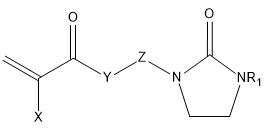
상기 화학식 1에서, In Formula 1,
R1은, 수소, 또는 탄소수 1 내지 10의 알킬기이고, R1 is hydrogen or an alkyl group having 1 to 10 carbon atoms,
X는, 수소 또는 메틸기이고, X is hydrogen or a methyl group,
Y는, 산소 원자, 또는 -NR2-이고, R2는, 수소, 또는 탄소수 1 내지 10의 알킬렌이고, Y is an oxygen atom or -NR2-, R2 is hydrogen or alkylene having 1 to 10 carbon atoms;
Z는, 탄소수 1 내지 10의 알킬렌이다. Z is C1-C10 alkylene.
그리고, 상기 유화 중합체 입자의 입경은, 약 150 내지 약 260nm, 또는 약 200 내지 약 260nm일 수 있다.In addition, the particle diameter of the emulsion polymer particles may be from about 150 to about 260 nm, or from about 200 to about 260 nm.
한편 본 명세서는, 기재; 및 상기 기재 상의 적어도 일 면에 형성되는, 점착층을 포함하고, 상기 점착층은, 제1항에 따른 아크릴 계 에멀젼 점착제 조성물에 의해 형성되는, 접착 부재를 제공한다. On the other hand, the present specification, the description; and an adhesive layer formed on at least one surface on the substrate, wherein the adhesive layer is formed by the acrylic emulsion adhesive composition according to claim 1, and provides an adhesive member.
본 발명에서, 제1, 제2 등의 용어는 다양한 구성 요소들을 설명하는데 사용되며, 상기 용어들은 하나의 구성 요소를 다른 구성 요소와 구별하기 위한 목적으로만 사용된다. In the present invention, terms such as first, second, etc. are used to describe various components, and the terms are used only for the purpose of distinguishing one component from other components.
또한, 본 명세서에서 사용되는 용어는 단지 예시적인 실시예들을 설명하기 위해 사용된 것으로, 본 발명을 한정하려는 의도는 아니다. In addition, the terminology used herein is only used to describe exemplary embodiments, and is not intended to limit the present invention.
단수의 표현은 문맥상 명백하게 다르게 뜻하지 않는 한, 복수의 표현을 포함한다. The singular expression includes the plural expression unless the context clearly dictates otherwise.
본 명세서에서, "포함하다", "구비하다" 또는 "가지다" 등의 용어는 실시된 특징, 숫자, 단계, 구성 요소 또는 이들을 조합을 설명하기 위한 것이며, 하나 또는 그 이상의 다른 특징들이나 숫자, 단계, 구성 요소, 이들의 조합 또는 부가 가능성을 배제하는 것은 아니다. In this specification, terms such as "comprises", "comprises" or "have" are intended to describe embodied features, numbers, steps, components, or combinations thereof, and include one or more other features, numbers, or steps. , components, combinations or additions thereof are not excluded.
또한 본 명세서에 있어서, 각 층 또는 요소가 각 층들 또는 요소들의 "상에" 또는 "위에” 형성되는 것으로 언급되는 경우에는 각 층 또는 요소가 직접 각 층들 또는 요소들의 위에 형성되는 것을 의미하거나, 다른 층 또는 요소가 각 층 사이, 대상체, 기재 상에 추가적으로 형성될 수 있음을 의미한다. Also in this specification, when it is said that each layer or element is formed "on" or "on" each layer or element, it means that each layer or element is formed directly on each layer or element, or other It means that a layer or element may additionally be formed between each layer, on the object, on the substrate.
본 발명은 다양한 변경을 가할 수 있고 여러 가지 형태를 가질 수 있는 바, 특정 실시예들을 예시하고 하기에서 상세하게 설명하고자 한다. 그러나, 이는 본 발명을 특정한 개시 형태로 한정하는 것이 아니며, 본 발명의 사상 및 기술 범위에 포함되는 모든 변경, 균등물 내지 대체물을 포함하는 것으로 이해되어야 한다.Since the present invention may have various changes and may have various forms, specific embodiments will be illustrated and described in detail below. However, this is not intended to limit the present invention to the specific disclosed form, and it should be understood to include all modifications, equivalents and substitutes included in the spirit and scope of the present invention.
이하, 본 발명을 상세하게 설명한다.Hereinafter, the present invention will be described in detail.
본 발명의 일 측면에 따르면, (A) (A1) 알킬 (메트)아크릴레이트 계 단량체 유래 제1 반복 단위; (A2) 히드록시기 알킬 (메트)아크릴레이트 계 단량체 유래 제2 반복 단위; (A3) 불포화 카르복실 산 계 단량체 유래 제3 반복 단위; 및 (A4) 스티렌 및 비닐 아세테이트 중 어느 하나 이상을 포함하는 비닐 계 단량체 유래 제 4 반복 단위를 포함하는, 유화 중합체 입자 (A); 및 (B) 점착 부여제를 포함하는, 아크릴계 에멀젼 점착제 조성물이 제공된다. According to an aspect of the present invention, (A) (A1) an alkyl (meth) acrylate-based monomer-derived first repeating unit; (A2) a second repeating unit derived from a hydroxyl group alkyl (meth)acrylate-based monomer; (A3) a third repeating unit derived from an unsaturated carboxylic acid-based monomer; and (A4) an emulsion polymer particle (A) comprising a fourth repeating unit derived from a vinyl-based monomer comprising at least one of styrene and vinyl acetate; And (B) comprising a tackifier, an acrylic emulsion pressure-sensitive adhesive composition is provided.
본 발명의 발명자들은, 아크릴레이트 계 단량체 등의 유화 중합에 의해 제조되는 라텍스 입자의 에멀젼을 포함하는, 아크릴 계 에멀젼 점착제 조성물에서, 특정 단량체를 조합하고, 점착 부여제를 사용하는 경우, 접착력, 특히, 곡면 기재에 대한 부착력이 매우 우수하다는 사실을 발견하고, 본 발명을 완성하게 되었다.The inventors of the present invention, in an acrylic emulsion pressure-sensitive adhesive composition, including an emulsion of latex particles prepared by emulsion polymerization of an acrylate-based monomer, etc., by combining specific monomers and using a tackifier, adhesive strength, particularly , found that the adhesion to the curved substrate is very excellent, and completed the present invention.
먼저, 본 발명의 일 구현예에 따른 아크릴 계 에멀젼 점착제 조성물은, 특정 단량체의 유화 중합체, 즉, 라텍스 입자를 포함하며, 각 단량체는, 라텍스 입자 내에서, 단량체로부터 유래된 반복 단위의 형태로 존재할 수 있다.First, the acrylic emulsion pressure-sensitive adhesive composition according to an embodiment of the present invention includes an emulsion polymer of a specific monomer, that is, latex particles, and each monomer is present in the latex particle in the form of a repeating unit derived from the monomer. can
단량체monomer
먼저, 상기 라텍스 입자를 제조하기 위한 유화 중합에는, 알킬 (메트)아크릴레이트 계 단량체가 사용될 수 있으며, 이를 제1 단량체로 일컬을 수 있다. 이에 따라, 상기 라텍스 입자는 알킬 (메트)아크릴레이트 계 단량체로부터 유래되는 반복 단위를 포함할 수 있으며, 이를 제1 반복 단위라 할 수 있다. First, in the emulsion polymerization for producing the latex particles, an alkyl (meth) acrylate-based monomer may be used, which may be referred to as a first monomer. Accordingly, the latex particles may include a repeating unit derived from an alkyl (meth)acrylate-based monomer, which may be referred to as a first repeating unit.
상기 알킬 (메트)아크릴레이트 계 단량체는, 메틸 (메트)아크릴레이트, 에틸 (메트)아크릴레이트, 프로필 (메트)아크릴레이트, 이소프로필 (메트)아크릴레이트, 부틸 (메트)아크릴레이트, 이소부틸 (메트)아크릴레이트, t-부틸 (메트)아크릴레이트, 펜틸 (메트)아크릴레이트, 헥실 (메트)아크릴레이트, 헵틸 (메트)아크릴레이트, 옥틸 (메트)아크릴레이트, 이소옥틸 (메트)아크릴레이트, 2-에틸헥실 (메트)아크릴레이트, 데실 (메트)아크릴레이트, 이소데실 (메트)아크릴레이트, 도데실 (메트)아크릴레이트, 이소보닐 (메트)아크릴레이트, 및 라우릴 (메트)아크릴레이트로 이루어진 군에서 선택된 1종 이상일 수 있으며, 이들을 단독으로 사용하거나, 2종 이상 혼합하여 사용할 수 있다.The alkyl (meth) acrylate-based monomer is, methyl (meth) acrylate, ethyl (meth) acrylate, propyl (meth) acrylate, isopropyl (meth) acrylate, butyl (meth) acrylate, isobutyl ( Meth) acrylate, t-butyl (meth) acrylate, pentyl (meth) acrylate, hexyl (meth) acrylate, heptyl (meth) acrylate, octyl (meth) acrylate, isooctyl (meth) acrylate, 2-ethylhexyl (meth)acrylate, decyl (meth)acrylate, isodecyl (meth)acrylate, dodecyl (meth)acrylate, isobornyl (meth)acrylate, and lauryl (meth)acrylate It may be one or more selected from the group consisting of, and these may be used alone or in a mixture of two or more.
그리고, 상기 라텍스 입자를 제조하기 위한 유화 중합에는, 상술한 알킬 (메트)아크릴레이트 외에 히드록시기 알킬 (메트)아크릴레이트 계 단량체를 사용할 수 있으며, 이를 제2단량체로 일컬을 수 있다. 이에 따라, 상기 라텍스 입자는 히드록시기 알킬 (메트)아크릴레이트 계 단량체로부터 유래되는 반복 단위를 포함할 수 있으며, 이를 제2 반복 단위라 할 수 있다. And, in the emulsion polymerization for producing the latex particles, in addition to the above-described alkyl (meth) acrylate, a hydroxyl group alkyl (meth) acrylate-based monomer may be used, which may be referred to as a second monomer. Accordingly, the latex particles may include a repeating unit derived from a hydroxyl group alkyl (meth)acrylate-based monomer, which may be referred to as a second repeating unit.
상기 히드록시 알킬 (메트)아크릴레이트 계 단량체는, 히드록시에틸 (메트)아크릴레이트, 히드록시프로필 (메트)아크릴레이트, 및 히드록시부틸 (메트)아크릴레이트로 이루어진 군에서 선택된 1종 이상을 포함할 수 있다. The hydroxyalkyl (meth)acrylate-based monomer includes at least one selected from the group consisting of hydroxyethyl (meth)acrylate, hydroxypropyl (meth)acrylate, and hydroxybutyl (meth)acrylate can do.
그리고, 상기 라텍스 입자를 제조하기 위한 유화 중합에는, 불포화 카르복실 산 계 단량체를 사용할 수 있으며, 이를 제3단량체로 일컬을 수 있다. 이에 따라, 상기 라텍스 입자는 불포화 카르복실 산 계 단량체로부터 유래되는 반복 단위를 포함할 수 있으며, 이를 제3 반복 단위라 할 수 있다. And, in the emulsion polymerization for producing the latex particles, an unsaturated carboxylic acid-based monomer may be used, which may be referred to as a third monomer. Accordingly, the latex particles may include a repeating unit derived from an unsaturated carboxylic acid-based monomer, which may be referred to as a third repeating unit.
그리고, 상기 불포화 카르복실 산 계 단량체는 아크릴 산(acrylic acid), 푸마르 산(fumaric acid), 말레 산(maleic acid), 이타콘 산(itaconic acid), 시트라콘 산(citraconic acid), 메사콘 산(mesaconic acid), 글루타콘 산(glutaconic acid), 및 알릴말론 산(allylmalonic acid)으로 이루어진 군에서 선택된 1종 이상을 포함할 수 있다. In addition, the unsaturated carboxylic acid-based monomer is acrylic acid, fumaric acid, maleic acid, itaconic acid, citraconic acid, mesaconic acid (mesaconic acid), glutaconic acid, and allylmalonic acid may include at least one selected from the group consisting of.
그리고, 상기 라텍스 입자를 제조하기 위한 유화 중합에는, 비닐 계 단량체를 사용할 수 있으며, 이를 제4단량체로 일컬을 수 있다. 이에 따라, 상기 라텍스 입자는 비닐 계 단량체로부터 유래되는 반복 단위를 포함할 수 있으며, 이를 제4 반복 단위라 할 수 있다. And, in the emulsion polymerization for producing the latex particles, a vinyl-based monomer may be used, which may be referred to as a fourth monomer. Accordingly, the latex particles may include a repeating unit derived from a vinyl-based monomer, which may be referred to as a fourth repeating unit.
그리고, 상기 비닐 계 단량체는, 스티렌, 및 비닐 아세테이트로 이루어진 군에서 선택된 1종 이상을 포함한다. And, the vinyl-based monomer includes at least one selected from the group consisting of styrene, and vinyl acetate.
발명의 다른 일 실시예에 따르면, 상기 유화 중합체는, 유화 중합체 총 중량에 대하여, (A1) 알킬 (메트)아크릴레이트 계 단량체 유래 제1 반복 단위 약 60 내지 약 90 wt%; (A2) 히드록시기 알킬 (메트)아크릴레이트 계 단량체 유래 제2 반복 단위 약 0.1 내지 약 10 wt%; (A3) 불포화 카르복실 산 계 단량체 유래 제3 반복 단위 약 0.1 내지 약 10 wt%; 및 (A4) 비닐 계 단량체 유래 제 4 반복 단위 약 5 내지 약 20 wt%를 포함할 수 있으며, 더욱 바람직하게는, (A1) 알킬 (메트)아크릴레이트 계 단량체 유래 제1 반복 단위 약 75 내지 약 85 wt%; (A2) 히드록시기 알킬 (메트)아크릴레이트 계 단량체 유래 제2 반복 단위 약 0.5 내지 약 5 wt%; (A3) 불포화 카르복실 산 계 단량체 유래 제3 반복 단위 약 0.5 내지 약 5 wt%; 및 (A4) 비닐 계 단량체 유래 제 4 반복 단위 약 10 내지 약 20 wt%를 포함할 수 있다. According to another embodiment of the present invention, the emulsion polymer comprises, based on the total weight of the emulsion polymer, (A1) about 60 to about 90 wt% of a first repeating unit derived from an alkyl (meth)acrylate-based monomer; (A2) about 0.1 to about 10 wt% of a second repeating unit derived from a hydroxyl group alkyl (meth)acrylate-based monomer; (A3) about 0.1 to about 10 wt% of a third repeating unit derived from an unsaturated carboxylic acid-based monomer; and (A4) about 5 to about 20 wt% of a fourth repeating unit derived from a vinyl-based monomer, and more preferably, (A1) about 75 to about a first repeating unit derived from an alkyl (meth)acrylate-based monomer. 85 wt %; (A2) about 0.5 to about 5 wt% of a second repeating unit derived from a hydroxyl group alkyl (meth)acrylate-based monomer; (A3) about 0.5 to about 5 wt% of a third repeating unit derived from an unsaturated carboxylic acid-based monomer; and (A4) about 10 to about 20 wt% of a fourth repeating unit derived from a vinyl-based monomer.
본 발명의 일 실시예에 따른 아크릴 계 에멀젼 점착제 조성물은, 상기와 같은 함량 범위로 인하여, 우수한 접착력을 발휘할 수 있으며, 특히 곡면 기재에 대해서도 매우 우수한 접착력을 구현할 수 있다. The acrylic emulsion pressure-sensitive adhesive composition according to an embodiment of the present invention, due to the content range as described above, can exhibit excellent adhesion, in particular, can implement very excellent adhesion even to a curved substrate.
그리고, 상기 제1 반복 단위는, 알킬 기의 탄소 수가 6 내지 10인 장쇄형 알킬 (메트)아크릴레이트계 단량체 유래 반복 단위 및 및 알킬 기의 탄소 수가 1 또는 2인 단쇄형 알킬 (메트)아크릴레이트계 단량체 유래 반복 단위를 동시에 포함할 수 있다. In addition, the first repeating unit includes a repeating unit derived from a long-chain alkyl (meth)acrylate-based monomer having an alkyl group having 6 to 10 carbon atoms, and a short-chain alkyl (meth)acrylate having 1 or 2 carbon atoms in the alkyl group. A repeating unit derived from a system monomer may be included simultaneously.
상기 장쇄형 알킬 (메트)아크릴레이트계 단량체로는, 헥실 (메트)아크릴레이트, 헵틸 (메트)아크릴레이트, 옥틸 (메트)아크릴레이트, 이소옥틸 (메트)아크릴레이트, 2-에틸헥실 (메트)아크릴레이트, 데실 (메트)아크릴레이트, 이소데실 (메트)아크릴레이트 등을 들 수 있으며, 이 중 2-에틸헥실 아크릴레이트를 사용하는 것이 바람직할 수 있다. As the long-chain alkyl (meth) acrylate monomer, hexyl (meth) acrylate, heptyl (meth) acrylate, octyl (meth) acrylate, isooctyl (meth) acrylate, 2-ethylhexyl (meth) acrylate, decyl (meth)acrylate, isodecyl (meth)acrylate, and the like, among which it may be preferable to use 2-ethylhexyl acrylate.
그리고, 상기 단쇄형 알킬 (메트)아크릴레이트계 단량체로는, 메틸 (메트)아크릴레이트 또는 에틸 (메트)아크릴레이트 등을 들 수 있으며, 이 중에서 메틸 (메트)아크릴레이트를 사용하는 것이 바람직할 수 있다. In addition, the short-chain alkyl (meth) acrylate-based monomer may include methyl (meth) acrylate or ethyl (meth) acrylate, among which it may be preferable to use methyl (meth) acrylate. have.
이 때, 상기 제1 반복 단위는, 알킬 기의 탄소 수가 6 내지 10인 장쇄형 알킬 (메트)아크릴레이트계 단량체 유래 반복 단위 100 중량부에 대하여, 알킬 기의 탄소 수가 1 또는 2인 단쇄형 알킬 (메트)아크릴레이트계 단량체 유래 반복 단위 약 5 내지 약 40 중량부, 또는 약 10 내지 약 35중량부를 포함할 수 있다. In this case, the first repeating unit is a short-chain alkyl having 1 or 2 carbon atoms in the alkyl group based on 100 parts by weight of the repeating unit derived from the long-chain alkyl (meth)acrylate-based monomer having 6 to 10 carbon atoms in the alkyl group. The (meth) acrylate-based monomer-derived repeating unit may include about 5 to about 40 parts by weight, or about 10 to about 35 parts by weight.
2-에틸헥실 아크릴레이트 등의 장쇄형 알킬 (메트)아크릴레이트계 단량체는, 중합체의 주 사슬을 형성하며, 유화 중합체 입자의 분자량을 증가시키는 단량체로 작용할 수 있고, 특히, 2-에틸헥실 아크릴레이트 등은, 중합된 라텍스 입자가 분지쇄 구조를 가질 수 있게 하여, 이에 따라 제조되는 아크릴계 에멀젼 점착제 조성물이 더 우수한 접착력을 구현할 수 있게 해준다. Long-chain alkyl (meth)acrylate monomers such as 2-ethylhexyl acrylate form the main chain of the polymer and may act as a monomer to increase the molecular weight of the emulsified polymer particles, and in particular, 2-ethylhexyl acrylate and the like, so that the polymerized latex particles can have a branched chain structure, so that the acrylic emulsion pressure-sensitive adhesive composition prepared accordingly can implement better adhesion.
메틸 (메트)아크릴레이트 등의 단쇄형 알킬 (메트)아크릴레이트계 단량체는, 중합체의 유리 전이 온도 및 코팅 물성에 변화를 주어, 아크릴계 에멀젼 점착제 조성물에 경도를 증가시켜, 박리 시 잔사를 감소시키는 역할을 할 수 있다. Short-chain alkyl (meth) acrylate monomers such as methyl (meth) acrylate change the glass transition temperature and coating properties of the polymer to increase hardness in the acrylic emulsion pressure-sensitive adhesive composition, thereby reducing residues during peeling can do.
이와 별도로, 상기 제1 반복 단위는, 알킬 기의 탄소 수가 3 내지 5인 중쇄형 알킬 (메트)아크릴레이트계 단량체 유래 반복 단위를 더 포함할 수도 있다. Separately, the first repeating unit may further include a repeating unit derived from a medium-chain alkyl (meth)acrylate-based monomer having 3 to 5 carbon atoms in the alkyl group.
상기 중쇄형 알킬 (메트)아크릴레이트계 단량체로는, 프로필 (메트)아크릴레이트, 부틸 (메트)아크릴레이트, 펜틸 (메트)아크릴레이트 등을 들 수 있으며, 이 중 부틸 아크릴레이트를 사용하는 것이 바람직할 수 있다. Examples of the medium-chain alkyl (meth) acrylate-based monomer include propyl (meth) acrylate, butyl (meth) acrylate, and pentyl (meth) acrylate. Among them, butyl acrylate is preferable. can do.
부틸 아크릴레이트는 유화 중합에 사용되는 단량체 중 반응성이 높은 편으로, 중합 반응을 촉진시킬 수 있고, 또한, 중합체에 낮은 유리 전이 온도를 부여하여, 점착제의 점착 물성을 향상시킬 수 있다. Butyl acrylate has a high reactivity among monomers used for emulsion polymerization, and can promote a polymerization reaction, and also provides a low glass transition temperature to the polymer, thereby improving adhesion properties of the pressure-sensitive adhesive.
이 때, 상기 제1 반복 단위는, 알킬 기의 탄소 수가 6 내지 10인 장쇄형 알킬 (메트)아크릴레이트계 단량체 유래 반복 단위 100 중량부에 대하여, 알킬 기의 탄소 수가 3 내지 5인 중쇄형 알킬 (메트)아크릴레이트계 단량체 유래 반복 단위 약 30 내지 약 150 중량부를 포함할 수 있다. In this case, the first repeating unit is a medium-chain alkyl having 3 to 5 carbon atoms in the alkyl group based on 100 parts by weight of the repeating unit derived from the long-chain alkyl (meth)acrylate-based monomer having 6 to 10 carbon atoms in the alkyl group. The (meth) acrylate-based monomer-derived repeating unit may include about 30 to about 150 parts by weight.
유화 중합emulsion polymerization
본 발명의 일 구현예에 따른 조성물에 포함되는 유화 중합체, 즉 라텍스 입자는, 상술한 단량체 성분을 포함하는 단량체 혼합물, 중합 개시제, 및 유화제를 포함하는 중합용 조성물을 유화 중합하는 단계를 포함하는, 유화 중합법에 의해 제조될 수 있다. The emulsion polymer included in the composition according to an embodiment of the present invention, that is, latex particles, comprises the step of emulsion polymerization of a polymerization composition comprising a monomer mixture comprising the above-described monomer component, a polymerization initiator, and an emulsifier, It can be prepared by emulsion polymerization.
이 때, 중합 온도 및 중합 시간은 경우에 따라 적절히 결정할 수 있다. 예를 들어, 중합 온도는 약 50 ℃ 내지 약 200 ℃ 일 수 있고, 중합 시간은 약 0.5 시간 내지 약 20 시간일 수 있다.In this case, the polymerization temperature and polymerization time may be appropriately determined depending on the case. For example, the polymerization temperature may be from about 50 °C to about 200 °C, and the polymerization time may be from about 0.5 hours to about 20 hours.
상기 유화 중합 시 사용 가능한 중합 개시제로는, 무기 또는 유기 과산화물이 사용될 수 있으며, 예를 들어, 포타슘 퍼설페이트, 소듐 퍼설페이트, 암모늄 퍼설페이트 등을 포함하는 수용성 중합 개시제와, 큐멘 하이드로퍼옥시드, 벤조일 퍼옥시드 등을 포함하는 유용성 중합 개시제를 사용할 수 있다. As the polymerization initiator usable during the emulsion polymerization, an inorganic or organic peroxide may be used, for example, a water-soluble polymerization initiator containing potassium persulfate, sodium persulfate, ammonium persulfate, etc., cumene hydroperoxide, Oil-soluble polymerization initiators containing benzoyl peroxide and the like can be used.
또한, 상기 중합 개시제와 함께 과산화물의 반응 개시를 촉진시키기 위해 활성화제를 더 포함할 수 있으며, 이러한 활성화제로는 소듐 포름알데히드 설폭실레이트, 소듐 에틸렌디아민테트라아세테이트, 황산 제1 철, 및 덱스트로오스로 이루어진 군에서 선택된 1종 이상이 사용될 수 있다.In addition, an activator may be further included to promote the initiation of the reaction of the peroxide together with the polymerization initiator, and such activators include sodium formaldehyde sulfoxylate, sodium ethylenediaminetetraacetate, ferrous sulfate, and dextrose. At least one selected from the group consisting of may be used.
상기 중합 개시제는 건조 중량 기준으로 단량체 혼합물 100 중량부 대비 약 0.1 내지 약 10 중량부로 포함될 수 있으며, 바람직하게는 약 0.1 내지 약 5 중량부로 포함될 수 있다. The polymerization initiator may be included in an amount of from about 0.1 to about 10 parts by weight, preferably from about 0.1 to about 5 parts by weight, based on 100 parts by weight of the monomer mixture on a dry weight basis.
본 발명의 일 실시예에 따르면, 상기 아크릴 계 에멀젼 점착제 조성물은, 전술한 성분 외에 발명이 목적하는 효과를 저하시키지 않는 범위 내에서 기타 첨가제를 특별한 제한 없이 포함할 수 있다. According to an embodiment of the present invention, the acrylic emulsion pressure-sensitive adhesive composition may include, in addition to the above-described components, other additives within a range that does not reduce the desired effect of the invention without any particular limitation.
구체적으로, 중합 반응에서 pH를 조절하고, 중합 안정성을 부여하기 위해 전해질을 더 포함할 수 있으며, 예를 들면, 소듐 히드록시드, 소듐 바이카보네이트, 소듐 카보네이트, 소듐 포스페이트, 소듐 설페이트, 소듐 클로라이드 등을 들 수 있으나, 이에 한정되는 것은 아니다. 또한, 이들은 단독으로 또는 2종 이상 혼합되어 사용될 수 있다.Specifically, it may further include an electrolyte to adjust the pH in the polymerization reaction and impart polymerization stability, for example, sodium hydroxide, sodium bicarbonate, sodium carbonate, sodium phosphate, sodium sulfate, sodium chloride, etc. may be mentioned, but is not limited thereto. In addition, these may be used alone or in combination of two or more.
유화 중합은, 구체적으로 하기 단계를 통해 진행될 수 있다. Emulsion polymerization may be specifically carried out through the following steps.
유화제를 용매에 분산시켜, 유화액을 제조하는, 제1 단계;Dispersing the emulsifier in a solvent to prepare an emulsion, a first step;
각 단량체 성분을 포함하는 단량체 혼합물 및 유화제 등을 혼합하여, 프리 에멀젼을 제조하는, 제2 단계;A second step of preparing a pre-emulsion by mixing a monomer mixture including each monomer component and an emulsifier, etc.;
중합 개시제 존재 하에, 상기 제1단계의 유화액 및 상기 제2단계의 프리 에멀젼을 혼합하고, 유화 중합을 진행하는 제3 단계.A third step of mixing the emulsion of the first step and the pre-emulsion of the second step in the presence of a polymerization initiator, and proceeding with emulsion polymerization.
본 발명의 구체적인 실시예에서, 상술한 아크릴 계 에멀젼 점착제 조성물은, 구체적으로, 하기와 같은 방법에 의해 제조될 수 있으나, 반드시 이에 한정되는 것은 아니다. In a specific embodiment of the present invention, the above-described acrylic emulsion pressure-sensitive adhesive composition, specifically, may be prepared by the following method, but is not necessarily limited thereto.
먼저, 제1 단계로, 유화제를 포함하는 유화액을 제조한다. 이는, 하기 프리 에멀젼(pre-emulsion) 제조 과정과 별도이다. 유화제는, 음이온성 유화제를 단독으로 사용하거나, 혹은 음이온성 유화제, 양이온성 유화제 및 상술한 비이온성 유화제를 함께 사용할 수 있으며, 이러한 유화제 성분 및 물 등의 용매를 혼합하여, 유화액을 제조할 수 있다. First, as a first step, an emulsion containing an emulsifier is prepared. This is separate from the following pre-emulsion preparation process. The emulsifier may be an anionic emulsifier alone, or an anionic emulsifier, a cationic emulsifier and the above-mentioned nonionic emulsifier may be used together, and the emulsifier component and a solvent such as water may be mixed to prepare an emulsion. .
상기 유화액 제조 과정에서, 수 나노미터 크기의 마이셀 초기 입자(micelle)가 안정적으로 형성될 수 있다. During the emulsion preparation process, micelles having a size of several nanometers may be stably formed.
그리고, 제2 단계로, 상술한 단량체 혼합물을 포함하는, 프리 에멀젼을 제조하는 과정으로, 상술한 각 단량체, 유화제 등을 물에 혼합하여 프리 에멀젼을 제조한다. And, as a second step, in the process of preparing a pre-emulsion, including the above-described monomer mixture, each of the above-described monomers, emulsifiers, etc. are mixed with water to prepare a pre-emulsion.
이 때 역시, 유화제로는, 음이온성 유화제를 단독으로 사용하거나, 혹은 음이온성 유화제 및 상술한 비이온성 유화제를 함께 사용할 수 있다. 이 과정에서 상기 프리 에멀젼 내에는, 나노 사이즈의 라텍스 입자들이 형성될 수 있다. In this case, too, as the emulsifier, an anionic emulsifier may be used alone, or an anionic emulsifier and the above-described nonionic emulsifier may be used together. In this process, in the pre-emulsion, nano-sized latex particles may be formed.
즉, 상술한 유화제는, 유화액 제조 단계, 및 프리 에멀젼 제조 단계 중 어느 한 단계 이상에서 사용될 수 있다. That is, the above-described emulsifier may be used in any one or more stages of the emulsion preparation step and the pre-emulsion preparation step.
그리고, 제3 단계로, 위에서 준비된 상기 유화액에 중합 개시제를 투입한 후, 상기 프리 에멀젼 및 중합 개시제를 균등한 비율로 소정의 시간 동안 연속 투입한다. And, as a third step, after the polymerization initiator is added to the emulsion prepared above, the pre-emulsion and the polymerization initiator are continuously added at an equal ratio for a predetermined time.
본 발명의 비제한적인 실시예에서, 상기 유화액에 투입되는 중합 개시제의 함량은, 단량체 혼합물 100 중량부 대비 약 0 내지 약 1 중량부일 수 있고, 상기 프리 에멀젼과 함께 투입되는 중합 개시제의 함량은, 단량체 혼합물 100 중량부 대비 약 0.1 내지 약 2 중량부일 수 있으며, 상기 연속 투입하는 시간은, 약 3시간 내지 약 7시간일 수 있다.In a non-limiting embodiment of the present invention, the content of the polymerization initiator added to the emulsion may be about 0 to about 1 part by weight based on 100 parts by weight of the monomer mixture, and the content of the polymerization initiator added together with the pre-emulsion is, It may be about 0.1 to about 2 parts by weight based on 100 parts by weight of the monomer mixture, and the continuous input time may be about 3 hours to about 7 hours.
이 과정을 통해서, 프리 에멀젼 내 부유 모노머 또는 중합체들이 상기 유화액에서 생성된 초기 입자들 내로 유입될 수 있다. Through this process, suspended monomers or polymers in the pre-emulsion can be introduced into the initial particles produced in the emulsion.
이러한 반응의 결과물들은, 이후, 추가 중합 개시제의 존재 하에, 가온 중합하는 과정을 거칠 수도 있으며, 이를 통해 나머지 단량체 들의 중합이 이루어진다.The results of this reaction may then be subjected to a process of heating polymerization in the presence of an additional polymerization initiator, through which polymerization of the remaining monomers takes place.
이때, 중합 개시제는 단량체 혼합물 100 중량부 대비 약 0.1 내지 약 10 중량부가 더 투입될 수 있고, 상기 가온 중합은, 약 75 내지 약 85 ℃의 온도에서, 약 40 분 내지 약 80 분 정도 진행될 수 있다. At this time, the polymerization initiator may be added in an amount of about 0.1 to about 10 parts by weight based on 100 parts by weight of the monomer mixture, and the warming polymerization may be performed at a temperature of about 75 to about 85 ° C., for about 40 minutes to about 80 minutes. .
이러한 아크릴 계 에멀젼 점착제 조성물의 제조 방법은, 유화액 제조 과정과 프리 에멀젼 제조 과정으로 이원화 되어 있고, 이후, 유화액에 프리 에멀젼을 혼합하는 단순한 방법으로 진행될 수 있어, 종래의 고고형분, 저점도의 아크릴 계 에멀젼 점착제 조성물을 제조하는 방법들에 비해 공정 안정성 및 생산성을 향상시킬 수 있다.The manufacturing method of such an acrylic emulsion pressure-sensitive adhesive composition is divided into an emulsion manufacturing process and a pre-emulsion manufacturing process, and thereafter, it can be proceeded by a simple method of mixing the pre-emulsion with the emulsion, and the conventional high-solids, low-viscosity acrylic Process stability and productivity can be improved compared to methods for preparing the emulsion pressure-sensitive adhesive composition.
한편, 상기한 프리 에멀젼 제조 과정에서는, 내부 가교제가 사용될 수도 있다. 이러한 내부 가교제들은, 각 단량체들이 가지고 있던 불포화 결합에 의해 중합체가 형성되는 과정에서, 각 단량체 사이를 연결하는 가교 결합을 형성하는 역할을 할 수 있다. 이러한 가교 결합에 의해 아크릴계 중합체 내부에서의 응집력이 상승할 수 있고, 이에 따라 본 발명의 아크릴계 에멀젼 점착제 조성물은, 우수한 점착력과 점착 내구성(shear)를 구현할 수 있게 된다. On the other hand, in the above-described pre-emulsion preparation process, an internal crosslinking agent may be used. These internal cross-linking agents may serve to form a cross-linking bond linking each monomer in the process of forming a polymer by the unsaturated bond possessed by each monomer. The cohesive force inside the acrylic polymer may be increased by such cross-linking, and accordingly, the acrylic emulsion pressure-sensitive adhesive composition of the present invention may realize excellent adhesion and adhesion durability (shear).
이러한 내부 가교제는 하기 화학식 1로 표시되는 화합물을 포함할 수 있다. Such an internal crosslinking agent may include a compound represented by the following formula (1).
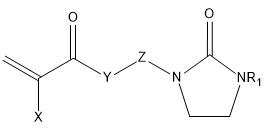
상기 화학식 1에서, In Formula 1,
R1은, 수소, 또는 탄소수 1 내지 10의 알킬기이고, R1 is hydrogen or an alkyl group having 1 to 10 carbon atoms,
X는, 수소 또는 메틸기이고, X is hydrogen or a methyl group,
Y는, 산소 원자, 또는 -NR2-이고, R2는, 수소, 또는 탄소수 1 내지 10의 알킬렌이고, Y is an oxygen atom or -NR2-, R2 is hydrogen or alkylene having 1 to 10 carbon atoms;
Z는, 탄소수 1 내지 10의 알킬렌이다. Z is C1-C10 alkylene.
그리고, 이러한 내부 가교제들은, 상술한 단량체 성분 100 중량부에 대하여, 약 0.05 내지 약 0.5 중량부, 또는 약 0.05 내지 약 0.2 중량부로 사용될 수 있다. In addition, these internal crosslinking agents may be used in an amount of about 0.05 to about 0.5 parts by weight, or about 0.05 to about 0.2 parts by weight, based on 100 parts by weight of the above-described monomer component.
그리고, 본 발명의 일 실시예에 있어서, 상기 중합 단계 이후, pH를 조절하는 단계를 더 수행할 수 있다. And, in one embodiment of the present invention, after the polymerization step, the step of adjusting the pH may be further performed.
상기 아크릴 계 에멀젼 수지의 pH의 조절은 당 분야에 통상적으로 사용되는 방법이 특별한 제한 없이 사용될 수 있으며, 예를 들면, 알칼리성 물질인 1가 금속 또는 2가 금속의 수산화물, 염화물, 탄산염 등의 무기물, 암모니아 또는 유기 아민 등이 사용될 수 있다.The pH of the acrylic emulsion resin may be adjusted by a method commonly used in the art without any particular limitation, for example, inorganic substances such as hydroxides, chlorides, and carbonates of monovalent or divalent metals, which are alkaline substances, Ammonia or organic amines and the like can be used.
이렇게 제조된 유화 중합체 입자의 입경은, 약 150 내지 약 260nm, 또는 약 200 내지 약 260nm일 수 있다.The particle diameter of the emulsion polymer particles thus prepared may be from about 150 to about 260 nm, or from about 200 to about 260 nm.
유화 중합체 입자의 입경이 너무 큰 경우 적정 점도에 못 미치는 문제가 발생할 수 있으며, 너무 작은 경우, 적정 점도를 상회하는 문제가 발생할 수 있다. If the particle size of the emulsion polymer particles is too large, a problem of not reaching the appropriate viscosity may occur, and if it is too small, a problem of exceeding the appropriate viscosity may occur.
유화제emulsifier
그리고, 상기 유화 중합에 사용되는 유화제는, 음이온성 유화제, 양이온성 유화제, 및 비이온성 유화제로 이루어진 군에서 선택된 1종 이상을 포함할 수 있다. And, the emulsifier used in the emulsion polymerization may include at least one selected from the group consisting of anionic emulsifiers, cationic emulsifiers, and nonionic emulsifiers.
이러한 유화제는, 친수성(hydrophilic) 기와 소수성(hydrophobic) 기를 동시에 가지고 있는 물질로, 유화 중합 과정에서, 미셀(micelle) 구조를 형성하고, 미셀 구조 내부에서 각 단량체의 중합이 일어날 수 있게 한다. Such an emulsifier is a material having a hydrophilic group and a hydrophobic group at the same time, and during the emulsion polymerization process, a micelle structure is formed, and polymerization of each monomer can occur inside the micellar structure.
유화 중합에 일반적으로 사용되는 유화제는, 음이온성 유화제, 양이온성 유화제, 및 비이온성 유화제 등으로 나뉠 수 있는데, 유화 중합에서의 중합 안정성 측면에서 2종 이상을 서로 섞어 사용할 수도 있다.Emulsifiers commonly used in emulsion polymerization may be divided into anionic emulsifiers, cationic emulsifiers, and nonionic emulsifiers, and two or more types may be mixed and used in terms of polymerization stability in emulsion polymerization.
구체적으로, 상기 비이온성 유화제는, 폴리에틸렌옥사이드 알킬 아릴 에테르, 폴리에틸렌옥사이드 알킬 아민, 및 폴리에틸렌옥사이드 알킬 에스테르로 이루어진 군에서 선택된 1종 이상을 포함할 수 있다. Specifically, the nonionic emulsifier may include at least one selected from the group consisting of polyethylene oxide alkyl aryl ethers, polyethylene oxide alkyl amines, and polyethylene oxide alkyl esters.
그리고, 상기 음이온성 유화제는, 소듐 알킬 디페닐 에테르 디설포네이트, 소듐 폴리옥시에틸렌 알킬 에테르 설페이트, 소듐 폴리옥시에틸렌 아릴 에테르 설페이트, 소듐 알킬 설페이트, 소듐 알킬 벤젠 설포네이트, 및 디알킬 소듐 설포석시네이트로 이루어진 군에서 선택된 1종 이상을 포함할 수 있다. And, the anionic emulsifier is sodium alkyl diphenyl ether disulfonate, sodium polyoxyethylene alkyl ether sulfate, sodium polyoxyethylene aryl ether sulfate, sodium alkyl sulfate, sodium alkyl benzene sulfonate, and dialkyl sodium sulfosuccinate. It may include one or more selected from the group consisting of nates.
이들은 단독 혹은 2종 이상 혼합하여 사용할 수 있고, 음이온 유화제와 비이온 유화제를 혼합하여 사용하는 경우 보다 효과적일 수 있지만, 본 발명이 반드시 이러한 유화제의 종류에 제한되는 것은 아니다. These may be used alone or in mixture of two or more, and may be more effective when a mixture of anionic emulsifier and nonionic emulsifier is used, but the present invention is not necessarily limited to the type of these emulsifiers.
그리고, 상기 유화제는, 예를 들어, 상기 라텍스 입자의 제조에 사용되는 단량체 성분 총 100 중량부에 대해, 약 0.1 내지 약 10 중량부, 또는, 약 1 내지 약 5 중량부로 사용될 수 있다. And, the emulsifier, for example, with respect to a total of 100 parts by weight of the monomer component used in the preparation of the latex particles, about 0.1 to about 10 parts by weight, or, about 1 to about 5 parts by weight may be used.
사용되는 유화제의 양이 너무 많은 경우, 라텍스 입자의 입경이 작아지게 되어, 점, 접착력이 저하되는 문제점이 발생할 수 있으며, 유화제가 지나치게 적게 사용되는 경우, 유화 중합 반응에서 중합의 안정성이 저하되고, 생성되는 라텍스 입자의 안정성 역시 저하되는 문제점이 발생할 수 있다. When the amount of the emulsifier used is too large, the particle diameter of the latex particles becomes small, and there may be problems that points and adhesion are lowered, and when the emulsifier is used too little, the stability of polymerization in the emulsion polymerization reaction is lowered, The stability of the generated latex particles may also be deteriorated.
용매menstruum
발명의 일 실시예에 따르면, 상기 중합용 조성물은, 상술한 유화제나 단량체 성분 외에, 물 등의 수성 용매를 더 포함할 수도 있다. According to an embodiment of the present invention, the polymerization composition may further include an aqueous solvent such as water in addition to the above-described emulsifier or monomer component.
이때, 상기 수성 용매는, 라텍스 입자의 안정성 및 점도 조절 측면에서, 상기 라텍스 입자 100 중량부에 대해, 약 10 내지 약 1,000 중량부로 사용될 수 있으며, 예를 들어, 조성물 총량을 기준으로 하였을 때, 총 고형분 함량(total solid content, TSC)이 약 10 내지 약 60 중량%로 조절되도록 사용될 수 있다. At this time, the aqueous solvent may be used in an amount of about 10 to about 1,000 parts by weight, based on 100 parts by weight of the latex particles, in terms of stability and viscosity control of the latex particles, for example, based on the total amount of the composition, the total It can be used so that the total solid content (TSC) is adjusted to about 10 to about 60% by weight.
용매가 지나치게 적게 사용되는 경우, 아크릴 계 에멀젼 점착제 조성물에서 점도가 상승하고, 유화 중합 시, 라텍스 입자의 안정성이 저하되는 문제점이 발생할 수 있으며, 용매가 지나치게 많이 사용되는 경우, 점도 저하로 인하여, 코팅성이 저하되는 문제점이 발생할 수 있다.When the solvent is used too little, the viscosity rises in the acrylic emulsion pressure-sensitive adhesive composition, and during emulsion polymerization, there may be problems that the stability of the latex particles is lowered, and when the solvent is used too much, the viscosity decreases due to the coating There may be problems with performance degradation.
점착 부여제(tackifier)tackifier
그리고, 본 발명의 일 측면에 따른 아크릴 계 점착제 조성물은, 상술한 유화 중합체, 즉 라텍스 입자 외에 점착 성능의 조절의 관점에서 점착성 부여 수지를 추가로 포함할 수 있다. And, the acrylic pressure-sensitive adhesive composition according to an aspect of the present invention, in addition to the above-described emulsion polymer, ie, latex particles, may further include a tackifying resin from the viewpoint of controlling the adhesive performance.
본 발명에서 사용할 수 있는 점착성 부여 수지의 종류는 특별히 한정되지 않으며, 예를 들면 히드로카본계 수지 또는 그 수소 첨가물; 로진 수지 또는 그 수소 첨가물; 로진 에스터 수지 또는 그 수소 첨가물; 테르펜 수지 또는 그 수소 첨가물; 테르펜 페놀 수지 또는 그 수소 첨가물; 중합 로진 수지 또는 중합 로진 에스테르 수지 등의 일종 또는 이종 이상의 혼합물을 사용할 수 있다. The kind of tackifying resin that can be used in the present invention is not particularly limited, and examples thereof include a hydrocarbon-based resin or a hydrogenated product thereof; Rosin resin or its hydrogenated substance; Rosin ester resin or its hydrogenated product; terpene resin or its hydrogenated substance; terpene phenol resin or its hydrogenated substance; One kind or a mixture of two or more kinds of polymerized rosin resin or polymerized rosin ester resin may be used.
이 중, 로진 에스터는 로진과 알코올의 에스터화 반응의 생성물로, 로진 자체도 점착부여 능력이 있으나 로진 내의 불포화기의 산화로 인한 변색, 로진 에스터의 연화점 상승에 따른 점착 능력 향상 등을 위해 로진 에스터를 주로 사용하는 것이 바람직할 수 있다. Among them, rosin ester is a product of the esterification reaction between rosin and alcohol, and although rosin itself has tackifying ability, rosin ester is used to improve adhesion due to discoloration due to oxidation of unsaturated groups in rosin and increase in softening point of rosin ester It may be preferable to mainly use
상기 점착 부여제는, 상기 유화 중합체 입자 100 중량부에 대하여, 약 5 내지 약 50 중랑부, 또는 약 5 중량부 이상, 바람직하게는 약 7 중량부 이상, 또는 약 50 중량부 미만, 바람직하게는 약 40 중량부 미만으로 포함될 수 있다. The tackifier is, based on 100 parts by weight of the emulsion polymer particles, about 5 to about 50 parts by weight, or about 5 parts by weight or more, preferably about 7 parts by weight or more, or less than about 50 parts by weight, preferably It may be included in less than about 40 parts by weight.
점착 부여제의 함량이 너무 적은 경우, 곡면 형태의 부착 대상 기재에 적용 시, 노화 후 점착 특성이 감소하여, 가장자리가 들뜨는 현상이 발생할 수 있으며, 점착 부여제의 함량이 너무 많은 경우, 점착 유지력(shear)이 급격히 감소하는 문제점이 발생할 수 있다. If the content of the tackifier is too small, when applied to a substrate to be attached in a curved shape, the adhesive properties decrease after aging, which may cause the edges to lift, and if the content of the tackifier is too high, the adhesion retention ( shear) may be rapidly reduced.
접착 부재adhesive member
전술한 방법에 따라 제조된 본 발명의 아크릴 계 에멀젼 점착제 조성물은 점착 시트 등의 접착 부재에 적용될 수 있으며, 인테리어 재료, 광고용 필름, 또는 의류용 라벨의 점착용 필름이나 시트일 수 있지만, 본 발명이 반드시 이들만으로 한정되는 것은 아니다.The acrylic emulsion pressure-sensitive adhesive composition of the present invention prepared according to the above-described method may be applied to an adhesive member such as an adhesive sheet, and may be an interior material, an advertisement film, or an adhesive film or sheet of a label for clothing, but the present invention It is not necessarily limited only to these.
다만, 본 발명의 일 실시예에 따른 아크릴 계 점착제 조성물이, 특히 곡면 부착 대상에 대한 점착력이 우수한 것을 고려하면, 플라스틱 용기 라벨 등에 적용하는 것이 가장 바람직할 수 있다. However, considering that the acrylic pressure-sensitive adhesive composition according to an embodiment of the present invention has excellent adhesion to a curved surface to be attached, it may be most preferable to be applied to a plastic container label or the like.
이러한 시트는, 기재; 및 상기 기재의 일면, 혹은 양면 상에 형성되는 점착층을 포함하며, 상기 점착층은, 상술한 아크릴 계 에멀젼 점착제 조성물에 의해 형성되는 것일 수 있다.Such a sheet may include a substrate; and an adhesive layer formed on one or both surfaces of the substrate, wherein the adhesive layer may be formed by the above-described acrylic emulsion pressure-sensitive adhesive composition.
상기 기재는, 아트지, 모조지, 미라지, 금은지, 감열지, 크라프드지, 형광지, 멸균지, 인화지 등의 종이류, 또는 PET, PVC, PE, PP, PS, PI 등의 고분자 필름 류가 사용될 수 있다.The substrate may be paper such as art paper, imitation paper, mirage paper, gold and silver paper, thermal paper, kraft paper, fluorescent paper, sterile paper, photo paper, or polymer films such as PET, PVC, PE, PP, PS, PI. have.
상술한 바와 같이, 본 발명의 일 구현 예에 따른 아크릴 계 에멀젼 점착제 조성물은, 우수한 접착력을 구현할 수 있으며, 특히, 곡면에 대해서도 매우 우수한 접착력을 보일 수 있어, 특히 플라스틱 용기 라벨 등으로 유용하게 사용될 수 있다. As described above, the acrylic emulsion pressure-sensitive adhesive composition according to an embodiment of the present invention can realize excellent adhesion, and in particular, can show very good adhesion even to a curved surface, so that it can be particularly usefully used as a plastic container label, etc. have.
이하, 발명의 구체적인 실시예를 통해, 발명의 작용 및 효과를 보다 상술하기로 한다. 다만, 이러한 실시예는 발명의 예시로 제시된 것에 불과하며, 이에 의해 발명의 권리범위가 정해지는 것은 아니다.Hereinafter, through specific examples of the invention, the operation and effect of the invention will be described in more detail. However, these embodiments are merely presented as an example of the invention, and the scope of the invention is not defined thereby.
<실시예><Example>
제조예: 유화 중합체 입자의 제조Preparation Example: Preparation of Emulsified Polymer Particles
온도 계, 교반기, 적하 깔때기, 질소가스 도입관 및 환류 냉각기를 구비한 3 L 용량의 유리 반응기에 물 220 g과 26 중량% 농도의 소듐 폴리옥시에틸렌 아릴에테르 설페이트 10 g을 넣고 교반하였다. 반응기 내부를 질소로 치환한 다음, 질소 분위기 하에서 85 ℃로 승온시키고 이를 60 분 동안 유지하였다.220 g of water and 10 g of sodium polyoxyethylene aryl ether sulfate having a concentration of 26% by weight were placed in a 3 L glass reactor equipped with a thermometer, a stirrer, a dropping funnel, a nitrogen gas inlet tube and a reflux condenser and stirred. After replacing the inside of the reactor with nitrogen, the temperature was raised to 85° C. under a nitrogen atmosphere and maintained for 60 minutes.
이와 별도로, 2 L 비이커에, 하기 조성 비에 따른 단량체와 내부 가교제를 투입한 후, 30 분 동안 교반하여, 단량체 혼합물을 제조하였다. (단량체 혼합물 총 중량: 약 1126 g)Separately, in a 2 L beaker, a monomer according to the following composition ratio and an internal crosslinking agent were added, followed by stirring for 30 minutes to prepare a monomer mixture. (Total weight of the monomer mixture: about 1126 g)
여기에, 26 중량% 농도의 소듐 폴리옥시에틸렌 라우릴 에테르설페이트 35 g, 45 중량% 농도의 소듐 알킬디페닐옥사이드 디설포네이트 용액 10 g, NaOH 2.2 g, 50 중량 % 농도의 소듐 디옥틸 설포석시네이트 용액 8.8g, 물 44.8g으로 이루어진 용액을 투입하고, 교반하여, 백탁의 프리 에멀젼을 제조하였다.Herein, 35 g of sodium polyoxyethylene lauryl ethersulfate at a concentration of 26% by weight, 10 g of a sodium alkyldiphenyloxide disulfonate solution at a concentration of 45% by weight, 2.2 g of NaOH, sodium dioctyl sulfosite at a concentration of 50% by weight A solution consisting of 8.8 g of cinate solution and 44.8 g of water was added and stirred to prepare a cloudy free emulsion.
여기에 평균 입경이 상이한 로진 에스터를 투입하고 약 10분 간 교반하였다. Rosin esters having different average particle diameters were added thereto and stirred for about 10 minutes.
상기 유리 반응기에 30 중량% 농도의 과황산 암모늄 5.6 g을 투입하고 10 분 동안 교반하여 용해시켰다.5.6 g of ammonium persulfate having a concentration of 30 wt% was added to the glass reactor and dissolved by stirring for 10 minutes.
상기 유리 반응기에 상기 프리 에멀젼과, 3 중량% 농도의 과황산 암모늄 150g을 5.5 시간 동안 균등하게 연속 투입하면서, 85 ℃에서 중합을 진행하고, 투입이 완료된 후, 1 시간 동안 같은 온도에서 교반을 진행하였다. The pre-emulsion and 150 g of 3 wt% ammonium persulfate were evenly and continuously added to the glass reactor for 5.5 hours, and polymerization was carried out at 85 ° C. After the addition was completed, stirring was carried out at the same temperature for 1 hour. did.
이를 상온으로 냉각하고, 5 중량% 농도의 수산화 나트륨 수용액을 첨가하여 pH를 5~7로 조절하여, 유화 중합체 입자를 제조하였다. (고형분 함량: 약 56%)This was cooled to room temperature, and an aqueous solution of sodium hydroxide having a concentration of 5 wt% was added to adjust the pH to 5 to 7, thereby preparing emulsion polymer particles. (Solid content: about 56%)
(총 98 중량부)monomer component
(total 98 parts by weight)
(중량부)comparative example
(parts by weight)
(중량부)Example 1
(parts by weight)
(중량부)Example 2
(parts by weight)
(중량부)Example 3
(parts by weight)
(중량부)Example 4
(parts by weight)
(중량부)Example 5
(parts by weight)
* 2EHA: 2-에틸헥실 아크릴레이트; BA: 부틸 아크릴레이트; MMA: 메틸 메타크릴레이트; VAc: 비닐 아세테이트; HEA: 히드록시에틸 아크릴레이트 * 2EHA: 2-ethylhexyl acrylate; BA: butyl acrylate; MMA: methyl methacrylate; VAc: vinyl acetate; HEA: hydroxyethyl acrylate
* 내부 가교제(Solvay 사 Sipomer WAM II)* Internal crosslinking agent (Sipomer WAM II from Solvay)
접착 부재 제조Adhesive member manufacturing
상기에서 제조된 아크릴 계 에멀젼 점착제 조성물을, 이형지에 20 ㎛ 두께로 코팅하고, 120 ℃에서 1 분 간 건조한 후, 종이 기재에 라미네이션하여 접착 부재로 제조하였다. The acrylic emulsion pressure-sensitive adhesive composition prepared above was coated on a release paper to a thickness of 20 μm, dried at 120° C. for 1 minute, and then laminated on a paper substrate to prepare an adhesive member.
점착 물성 측정Adhesive properties measurement
90 degree 박리 강도 측정90 degree peel strength measurement
상기에서 제조된 시편을 상온에서 24시간 동안 에이징한 후, FINAT 테스트 방법 중 FTM 2에 준하여 측정하였다. After aging the specimen prepared above at room temperature for 24 hours, it was measured according to FTM 2 of the FINAT test method.
150mm(길이)×25.4mm(폭, 1 inch) 크기의 시편을 준비하고, 스테인리스 스틸(SUS304) 표면, 또는 HDPE 표면에 부착한 후, 2 kg 롤러로 300mm/min의 속도로 2 회 왕복하여 압착하였다. Prepare a specimen of size 150mm (length) × 25.4mm (width, 1 inch), attach it to the surface of stainless steel (SUS304) or HDPE, and press it by reciprocating twice at a speed of 300mm/min with a 2 kg roller did.
20분 동안 상온에서 숙성시킨 후, 5초 동안 300 mm/min의 속도로 박리하면서 박리 강도 값을 측정하였다. After aging at room temperature for 20 minutes, peel strength values were measured while peeling at a rate of 300 mm/min for 5 seconds.
측정 시편을 5 개 준비하여 측정한 후 평균 값을 구하였다.Five measurement specimens were prepared and measured to obtain an average value.
(측정장비: TA Texture Analyzer, 제조 사: Stable Micro Systems; 측정 조건: 23℃ 습도 50%)(Measuring equipment: TA Texture Analyzer, Manufacturer: Stable Micro Systems; Measurement conditions: 23℃ humidity 50%)
Loop tack 박리 강도 측정Loop tack peel strength measurement
상기에서 제조된 시편을 상온에서 24시간 동안 에이징한 후, FINAT 테스트 방법 중 FTM 9에 준하여 측정하였다. After aging the specimen prepared above at room temperature for 24 hours, it was measured according to FTM 9 of the FINAT test method.
150mm(길이)×25.4mm(폭, 1 inch) 크기의 시편을 준비하고, 스테인리스 스틸(SUS304) 표면 또는 HDPE 표면에 부착한 후, 압력을 가하지 않고 5초 동안 접촉시켰다. A specimen having a size of 150 mm (length) × 25.4 mm (width, 1 inch) was prepared and attached to a stainless steel (SUS304) surface or an HDPE surface, and then contacted for 5 seconds without applying pressure.
5초 동안 300 mm/min의 속도로 박리하면서 초기 점착력을 측정하였다. The initial adhesive strength was measured while peeling at a rate of 300 mm/min for 5 seconds.
측정 시편을 5 개 준비하여 측정한 후 평균 값을 구하였다. Five measurement specimens were prepared and measured to obtain an average value.
(측정장비: TA Texture Analyzer, 제조 사: Stable Micro Systems; 측정 조건: 23℃ 습도 50%)(Measuring equipment: TA Texture Analyzer, Manufacturer: Stable Micro Systems; Measurement conditions: 23℃ humidity 50%)
곡면 접착력 측정Surface adhesion measurement
지름 15mm, 높이 30cm의 HDPE 원기둥의 옆면에 가로 3.5cm, 세로 1.25cm 크기로 제작한 시편을 부착하고 1주일 방치한 후 원기둥 표면에서 떨어진 시편의 길이를 측정하였다. A specimen prepared in the size of 3.5 cm in width and 1.25 cm in length was attached to the side of an HDPE cylinder with a diameter of 15 mm and a height of 30 cm, and after leaving it for one week, the length of the specimen separated from the surface of the cylinder was measured.
측정 결과 이격된 시편의 길이가 0.5mm 이하인 경우, 1등급, 0.5~1.5mm인 경우 2등급, 1.5~2.5mm인 경우 3등급, 2.5 이상인 경우, 3.5mm인 경우 4등급으로 정리하였다. As a result of the measurement, when the length of the spaced specimen was 0.5 mm or less, it was classified as Grade 1, when it was 0.5 to 1.5 mm, it was Grade 2, when it was 1.5 to 2.5 mm, it was Grade 3, when it was 2.5 or more, and when it was 3.5 mm, it was graded 4
측정 결과를 하기 표 2에 정리하였다. The measurement results are summarized in Table 2 below.
N/inLoop tack(SUS)
N/in
N/inLoop tack (HDPE)
N/in
N/in90degree(SUS)
N/in
N/in90degree(HDPE)
N/in
상기 표 2를 참고하면, 본 발명의 일 실시예에 따른 아크릴계 에멀젼 점착제 조성물은, 스테인리스 스틸과 유리 표면 모두에 대해, 매우 우수한 초기 점착력 및 90도 박리 강도 값을 구현할 수 있음을 알 수 있다. Referring to Table 2, it can be seen that the acrylic emulsion pressure-sensitive adhesive composition according to an embodiment of the present invention can implement very good initial adhesive force and 90 degree peel strength value for both stainless steel and glass surfaces.
또한, 본 발명의 일 실시예에 따른 아크릴계 에멀젼 점착제 조성물은, 곡면의 부착 대상 기재에 부착한 후, 노화가 진행되더라도, 점착 상태가 비교적 우수하게 유지되는 것을 알 수 있다. In addition, it can be seen that the acrylic emulsion pressure-sensitive adhesive composition according to an embodiment of the present invention maintains a relatively excellent adhesive state even if aging proceeds after being attached to a curved substrate to be attached.
즉, 본 발명의 일 실시예에 따른 아크릴계 에멀젼 점착제 조성물은, 곡면 대상 부착 기재에 대해 우수한 점착 관련 물성과 우수한 점착 유지력을 동시에 달성할 수 있는 것으로 확인하였으며, 이에 따라, 플라스틱이나 캔 용기 등의 라벨에 유용하게 사용될 수 있을 것으로 생각된다. That is, it was confirmed that the acrylic emulsion pressure-sensitive adhesive composition according to an embodiment of the present invention can simultaneously achieve excellent adhesion-related physical properties and excellent adhesion retention to a substrate attached to a curved surface, and accordingly, labels such as plastic or can containers It is thought to be useful for
Claims (13)
(A1) 알킬 (메트)아크릴레이트 계 단량체 유래 제1 반복 단위;
(A2) 히드록시기 알킬 (메트)아크릴레이트 계 단량체 유래 제2 반복 단위;
(A3) 불포화 카르복실 산 계 단량체 유래 제3 반복 단위; 및
(A4) 스티렌 및 비닐 아세테이트 중 어느 하나 이상을 포함하는 비닐 계 단량체 유래 제 4 반복 단위를 포함하는,
유화 중합체 입자 (A); 및
(B) 점착 부여제를 포함하는,
아크릴계 에멀젼 점착제 조성물.
(A)
(A1) a first repeating unit derived from an alkyl (meth)acrylate-based monomer;
(A2) a second repeating unit derived from a hydroxyl group alkyl (meth)acrylate-based monomer;
(A3) a third repeating unit derived from an unsaturated carboxylic acid-based monomer; and
(A4) comprising a fourth repeating unit derived from a vinyl-based monomer comprising at least one of styrene and vinyl acetate,
emulsified polymer particles (A); and
(B) comprising a tackifier;
Acrylic emulsion adhesive composition.
상기 알킬 (메트)아크릴레이트 계 단량체는, 메틸 (메트)아크릴레이트, 에틸 (메트)아크릴레이트, 프로필 (메트)아크릴레이트, 이소프로필 (메트)아크릴레이트, 부틸 (메트)아크릴레이트, 이소부틸 (메트)아크릴레이트, t-부틸 (메트)아크릴레이트, 펜틸 (메트)아크릴레이트, 헥실 (메트)아크릴레이트, 헵틸 (메트)아크릴레이트, 옥틸 (메트)아크릴레이트, 이소옥틸 (메트)아크릴레이트, 2-에틸헥실 (메트)아크릴레이트, 데실 (메트)아크릴레이트, 이소데실 (메트)아크릴레이트, 도데실 (메트)아크릴레이트, 이소보닐 (메트)아크릴레이트, 및 라우릴 (메트)아크릴레이트로 이루어진 군에서 선택된 1종 이상을 포함하는,
아크릴계 에멀젼 점착제 조성물.
According to claim 1,
The alkyl (meth) acrylate-based monomer is methyl (meth) acrylate, ethyl (meth) acrylate, propyl (meth) acrylate, isopropyl (meth) acrylate, butyl (meth) acrylate, isobutyl ( Meth) acrylate, t-butyl (meth) acrylate, pentyl (meth) acrylate, hexyl (meth) acrylate, heptyl (meth) acrylate, octyl (meth) acrylate, isooctyl (meth) acrylate, 2-ethylhexyl (meth) acrylate, decyl (meth) acrylate, isodecyl (meth) acrylate, dodecyl (meth) acrylate, isobornyl (meth) acrylate, and lauryl (meth) acrylate Containing one or more selected from the group consisting of,
Acrylic emulsion adhesive composition.
상기 히드록시기 알킬 (메트)아크릴레이트 계 단량체는 히드록시에틸 (메트)아크릴레이트, 히드록시프로필 (메트)아크릴레이트, 및 히드록시부틸 (메트)아크릴레이트로 이루어진 군에서 선택된 1종 이상을 포함하는,
아크릴계 에멀젼 점착제 조성물.
According to claim 1,
The hydroxy group alkyl (meth) acrylate-based monomer comprises at least one selected from the group consisting of hydroxyethyl (meth) acrylate, hydroxypropyl (meth) acrylate, and hydroxybutyl (meth) acrylate,
Acrylic emulsion adhesive composition.
상기 불포화 카르복실 산 계 단량체는 아크릴 산(acrylic acid), 푸마르 산(fumaric acid), 말레 산(maleic acid), 이타콘 산(itaconic acid), 시트라콘 산(citraconic acid), 메사콘 산(mesaconic acid), 글루타콘 산(glutaconic acid), 및 알릴말론 산(allylmalonic acid)으로 이루어진 군에서 선택된 1종 이상을 포함하는,
아크릴 계 에멀젼 점착제 조성물.
According to claim 1,
The unsaturated carboxylic acid-based monomer is acrylic acid, fumaric acid, maleic acid, itaconic acid, citraconic acid, mesaconic acid (mesaconic) acid), including at least one selected from the group consisting of glutaconic acid, and allylmalonic acid,
Acrylic emulsion adhesive composition.
상기 점착 부여제는, 히드로카본계 수지, 및 그 수소 첨가물; 로진 수지, 및 그 수소 첨가물; 로진 에스터 수지, 및 그 수소 첨가물; 테르펜 수지, 및 그 수소 첨가물; 테르펜 페놀 수지, 및 그 수소 첨가물; 및 중합 로진 수지 및 중합 로진 에스터 수지로 이루어진 군에서 선택된 1종 이상을 포함하는, 아크릴 계 에멀젼 점착제 조성물.
According to claim 1,
The said tackifier is a hydrocarbon type resin and its hydrogenated substance; rosin resins, and hydrogenated products thereof; rosin ester resins, and hydrogenated products thereof; terpene resins and their hydrogenated substances; terpene phenol resins and their hydrogenated substances; and at least one selected from the group consisting of a polymerized rosin resin and a polymerized rosin ester resin.
상기 점착 부여제는, 상기 유화 중합체 입자 100 중량부에 대하여, 5 내지 50 중랑부로 포함되는, 아크릴 계 에멀젼 점착제 조성물.
According to claim 1,
The tackifier is, based on 100 parts by weight of the emulsion polymer particles, 5 to 50 parts by weight, an acrylic emulsion pressure-sensitive adhesive composition.
상기 유화 중합체는, 유화 중합체 총 중량에 대하여,
(A1) 알킬 (메트)아크릴레이트 계 단량체 유래 제1 반복 단위 60 내지 90 wt%;
(A2) 히드록시기 알킬 (메트)아크릴레이트 계 단량체 유래 제2 반복 단위 0.1 내지 10 wt%;
(A3) 불포화 카르복실 산 계 단량체 유래 제3 반복 단위 0.1 내지 10 wt%; 및
(A4) 비닐 계 단량체 유래 제 4 반복 단위 5 내지 20 wt%를 포함하는,
아크릴 계 에멀젼 점착제 조성물.
According to claim 1,
The emulsion polymer, based on the total weight of the emulsion polymer,
(A1) 60 to 90 wt% of a first repeating unit derived from an alkyl (meth)acrylate-based monomer;
(A2) 0.1 to 10 wt% of a second repeating unit derived from an alkyl (meth)acrylate-based monomer;
(A3) 0.1 to 10 wt% of a third repeating unit derived from an unsaturated carboxylic acid-based monomer; and
(A4) comprising 5 to 20 wt% of a fourth repeating unit derived from a vinyl-based monomer,
Acrylic emulsion adhesive composition.
상기 제1 반복 단위는, 알킬 기의 탄소 수가 6 내지 10인 장쇄형 알킬 (메트)아크릴레이트계 단량체 유래 반복 단위 및 및 알킬 기의 탄소 수가 1 또는 2인 단쇄형 알킬 (메트)아크릴레이트계 단량체 유래 반복 단위를 포함하는, 아크릴 계 에멀젼 점착제 조성물.
According to claim 1,
The first repeating unit includes a repeating unit derived from a long-chain alkyl (meth)acrylate monomer having 6 to 10 carbon atoms in the alkyl group, and a short-chain alkyl (meth)acrylate monomer having 1 or 2 carbon atoms in the alkyl group. An acrylic emulsion pressure-sensitive adhesive composition comprising a derived repeating unit.
상기 제1 반복 단위는, 알킬 기의 탄소 수가 6 내지 10인 장쇄형 알킬 (메트)아크릴레이트계 단량체 유래 반복 단위 100 중량부에 대하여, 알킬 기의 탄소 수가 1 또는 2인 단쇄형 알킬 (메트)아크릴레이트계 단량체 유래 반복 단위 5 내지 40 중량부를 포함하는, 아크릴 계 에멀젼 점착제 조성물.
9. The method of claim 8,
The first repeating unit is, based on 100 parts by weight of a repeating unit derived from a long-chain alkyl (meth)acrylate-based monomer having 6 to 10 carbon atoms in the alkyl group, short-chain alkyl (meth) having 1 or 2 carbon atoms in the alkyl group. An acrylic emulsion pressure-sensitive adhesive composition comprising 5 to 40 parts by weight of a repeating unit derived from an acrylate-based monomer.
상기 유화 중합체는, 내부 가교제에 의해 형성된 가교 결합을 더 포함하는, 아크릴 계 에멀젼 점착제 조성물.
According to claim 1,
The emulsion polymer, the acrylic emulsion pressure-sensitive adhesive composition further comprising a crosslink formed by an internal crosslinking agent.
상기 내부 가교제는, 하기 화학식 1로 표시되는 화합물을 포함하는, 아크릴 계 에멀젼 점착제 조성물:
[화학식 1]
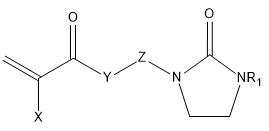
상기 화학식 1에서,
R1은, 수소, 또는 탄소수 1 내지 10의 알킬기이고,
X는, 수소 또는 메틸기이고,
Y는, 산소 원자, 또는 -NR2-이고, R2는, 수소, 또는 탄소수 1 내지 10의 알킬렌이고,
Z는, 탄소수 1 내지 10의 알킬렌이다.
11. The method of claim 10,
The internal crosslinking agent, an acrylic emulsion pressure-sensitive adhesive composition comprising a compound represented by the following formula (1):
[Formula 1]
In Formula 1,
R1 is hydrogen or an alkyl group having 1 to 10 carbon atoms,
X is hydrogen or a methyl group,
Y is an oxygen atom or -NR2-, R2 is hydrogen or alkylene having 1 to 10 carbon atoms;
Z is C1-C10 alkylene.
상기 유화 중합체 입자의 입경이 150 내지 260nm인, 아크릴 계 에멀젼 점착제 조성물.
According to claim 1,
The particle diameter of the emulsion polymer particles is 150 to 260 nm, acrylic emulsion pressure-sensitive adhesive composition.
상기 기재 상의 적어도 일 면에 형성되는, 점착층을 포함하고,
상기 점착층은, 제1항에 따른 아크릴 계 에멀젼 점착제 조성물에 의해 형성되는,
접착 부재.
materials; and
A pressure-sensitive adhesive layer formed on at least one surface of the substrate,
The pressure-sensitive adhesive layer is formed by the acrylic emulsion pressure-sensitive adhesive composition according to claim 1,
no adhesive.
Priority Applications (1)
| Application Number | Priority Date | Filing Date | Title |
|---|---|---|---|
| KR1020190172492A KR20210080098A (en) | 2019-12-20 | 2019-12-20 | Acrylic emulsion pressure snsitive adhesive composition |
Applications Claiming Priority (1)
| Application Number | Priority Date | Filing Date | Title |
|---|---|---|---|
| KR1020190172492A KR20210080098A (en) | 2019-12-20 | 2019-12-20 | Acrylic emulsion pressure snsitive adhesive composition |
Publications (1)
| Publication Number | Publication Date |
|---|---|
| KR20210080098A true KR20210080098A (en) | 2021-06-30 |
Family
ID=76602195
Family Applications (1)
| Application Number | Title | Priority Date | Filing Date |
|---|---|---|---|
| KR1020190172492A Ceased KR20210080098A (en) | 2019-12-20 | 2019-12-20 | Acrylic emulsion pressure snsitive adhesive composition |
Country Status (1)
| Country | Link |
|---|---|
| KR (1) | KR20210080098A (en) |
-
2019
- 2019-12-20 KR KR1020190172492A patent/KR20210080098A/en not_active Ceased
Similar Documents
| Publication | Publication Date | Title |
|---|---|---|
| KR20190072421A (en) | Aqueous acrylic adhesive for clothes and method for preparing the same | |
| KR102332742B1 (en) | Acrylic emulsion pressure sensitive adhesive composition | |
| EP4006117B1 (en) | Acrylic emulsion pressure-sensitive adhesive composition | |
| CA2968914C (en) | Pressure sensitive compositions based on a modified rubber polymer aqueous dispersion | |
| KR20210023259A (en) | Acrylic emulsion pressure sensitive adhesive composition | |
| KR102497140B1 (en) | Acrylic emulsion pressure snsitive adhesive composition | |
| KR102797461B1 (en) | An adhesive comprising an acrylic emulsion adhesive composition | |
| KR102749488B1 (en) | Acrylic emulsion pressure snsitive adhesive composition | |
| KR102794523B1 (en) | Acrylic emulsion pressure snsitive adhesive composition | |
| KR102705358B1 (en) | Acrylic emulsion pressure snsitive adhesive composition | |
| US12344779B2 (en) | Acrylic emulsion pressure-sensitive adhesive composition | |
| KR20210020328A (en) | Acrylic emulsion pressure sensitive adhesive composition, preparation method thereof and pressure sensitive adhesive film | |
| KR102742231B1 (en) | Acrylic emulsion pressure snsitive adhesive composition | |
| KR20210023258A (en) | Acrylic emulsion pressure sensitive adhesive composition | |
| KR102822966B1 (en) | Preparation method of acrylic emusion adhesive composition | |
| KR102872256B1 (en) | Acrylic emulsion pressure snsitive adhesive composition | |
| KR102291556B1 (en) | Acrylic emulsion pressure snsitive adhesive composition | |
| KR102743847B1 (en) | Acrylic adhesive composition | |
| KR102764483B1 (en) | Acrylic emulsion pressure snsitive adhesive composition | |
| KR20200053348A (en) | Acrylic emulsion pressure snsitive adhesive composition | |
| KR20200077337A (en) | Acrylic emulsion pressure snsitive adhesive composition | |
| US20220135843A1 (en) | Acrylic Emulsion Pressure-Sensitive Adhesive Composition | |
| JP2006008827A (en) | Composite resin composition aqueous dispersion for pressure-sensitive adhesive and pressure-sensitive adhesive composition | |
| KR20210150874A (en) | Acrylic emulsion adhesive composition and adhesive comprising the same | |
| JP2006008832A (en) | Aqueous resin composition aqueous dispersion and pressure-sensitive adhesive composition |
Legal Events
| Date | Code | Title | Description |
|---|---|---|---|
| PA0109 | Patent application |
Patent event code: PA01091R01D Comment text: Patent Application Patent event date: 20191220 |
|
| PG1501 | Laying open of application | ||
| A201 | Request for examination | ||
| PA0201 | Request for examination |
Patent event code: PA02012R01D Patent event date: 20220621 Comment text: Request for Examination of Application Patent event code: PA02011R01I Patent event date: 20191220 Comment text: Patent Application |
|
| E902 | Notification of reason for refusal | ||
| PE0902 | Notice of grounds for rejection |
Comment text: Notification of reason for refusal Patent event date: 20240104 Patent event code: PE09021S01D |
|
| E601 | Decision to refuse application | ||
| PE0601 | Decision on rejection of patent |
Patent event date: 20241029 Comment text: Decision to Refuse Application Patent event code: PE06012S01D |