KR20180098458A - Apparatus and method for detectiong an application over engagement of user - Google Patents
Apparatus and method for detectiong an application over engagement of user Download PDFInfo
- Publication number
- KR20180098458A KR20180098458A KR1020170025048A KR20170025048A KR20180098458A KR 20180098458 A KR20180098458 A KR 20180098458A KR 1020170025048 A KR1020170025048 A KR 1020170025048A KR 20170025048 A KR20170025048 A KR 20170025048A KR 20180098458 A KR20180098458 A KR 20180098458A
- Authority
- KR
- South Korea
- Prior art keywords
- information
- user
- game
- application
- immersion
- Prior art date
- Legal status (The legal status is an assumption and is not a legal conclusion. Google has not performed a legal analysis and makes no representation as to the accuracy of the status listed.)
- Ceased
Links
Images








Classifications
-
- A—HUMAN NECESSITIES
- A61—MEDICAL OR VETERINARY SCIENCE; HYGIENE
- A61B—DIAGNOSIS; SURGERY; IDENTIFICATION
- A61B5/00—Measuring for diagnostic purposes; Identification of persons
- A61B5/16—Devices for psychotechnics; Testing reaction times ; Devices for evaluating the psychological state
- A61B5/168—Evaluating attention deficit, hyperactivity
-
- A—HUMAN NECESSITIES
- A61—MEDICAL OR VETERINARY SCIENCE; HYGIENE
- A61B—DIAGNOSIS; SURGERY; IDENTIFICATION
- A61B5/00—Measuring for diagnostic purposes; Identification of persons
- A61B5/0059—Measuring for diagnostic purposes; Identification of persons using light, e.g. diagnosis by transillumination, diascopy, fluorescence
- A61B5/0077—Devices for viewing the surface of the body, e.g. camera, magnifying lens
-
- A—HUMAN NECESSITIES
- A61—MEDICAL OR VETERINARY SCIENCE; HYGIENE
- A61B—DIAGNOSIS; SURGERY; IDENTIFICATION
- A61B5/00—Measuring for diagnostic purposes; Identification of persons
- A61B5/103—Measuring devices for testing the shape, pattern, colour, size or movement of the body or parts thereof, for diagnostic purposes
- A61B5/11—Measuring movement of the entire body or parts thereof, e.g. head or hand tremor or mobility of a limb
-
- G—PHYSICS
- G06—COMPUTING OR CALCULATING; COUNTING
- G06N—COMPUTING ARRANGEMENTS BASED ON SPECIFIC COMPUTATIONAL MODELS
- G06N3/00—Computing arrangements based on biological models
- G06N3/02—Neural networks
-
- G—PHYSICS
- G06—COMPUTING OR CALCULATING; COUNTING
- G06Q—INFORMATION AND COMMUNICATION TECHNOLOGY [ICT] SPECIALLY ADAPTED FOR ADMINISTRATIVE, COMMERCIAL, FINANCIAL, MANAGERIAL OR SUPERVISORY PURPOSES; SYSTEMS OR METHODS SPECIALLY ADAPTED FOR ADMINISTRATIVE, COMMERCIAL, FINANCIAL, MANAGERIAL OR SUPERVISORY PURPOSES, NOT OTHERWISE PROVIDED FOR
- G06Q50/00—Information and communication technology [ICT] specially adapted for implementation of business processes of specific business sectors, e.g. utilities or tourism
- G06Q50/10—Services
- G06Q50/22—Social work or social welfare, e.g. community support activities or counselling services
Landscapes
- Health & Medical Sciences (AREA)
- Life Sciences & Earth Sciences (AREA)
- Engineering & Computer Science (AREA)
- Physics & Mathematics (AREA)
- General Health & Medical Sciences (AREA)
- Molecular Biology (AREA)
- Biophysics (AREA)
- Biomedical Technology (AREA)
- Heart & Thoracic Surgery (AREA)
- Surgery (AREA)
- Business, Economics & Management (AREA)
- Theoretical Computer Science (AREA)
- Medical Informatics (AREA)
- Veterinary Medicine (AREA)
- Animal Behavior & Ethology (AREA)
- Pathology (AREA)
- Public Health (AREA)
- Tourism & Hospitality (AREA)
- General Physics & Mathematics (AREA)
- Child & Adolescent Psychology (AREA)
- Developmental Disabilities (AREA)
- General Business, Economics & Management (AREA)
- Artificial Intelligence (AREA)
- Psychology (AREA)
- Psychiatry (AREA)
- Hospice & Palliative Care (AREA)
- Educational Technology (AREA)
- Strategic Management (AREA)
- Primary Health Care (AREA)
- Marketing (AREA)
- Human Resources & Organizations (AREA)
- Economics (AREA)
- Social Psychology (AREA)
- Computational Linguistics (AREA)
- Data Mining & Analysis (AREA)
- Evolutionary Computation (AREA)
- Computing Systems (AREA)
- General Engineering & Computer Science (AREA)
- Mathematical Physics (AREA)
- Software Systems (AREA)
Abstract
본 발명의 사용자의 어플리케이션 몰입 진단방법은 컴퓨터 환경 정보 및 학습된 사용자의 실행 패턴 정보를 포함하는 어플리케이션 기준정보들을 저장하는 단계와, 어플리케이션을 실행하는 컴퓨터 환경 정보 및 사용자의 어플리케이션 패턴의 어플리케이션 실행정보를 수집하는 수집단계와, 상기 수집된 컴퓨터 환경 정보 및 사용자의 실행 패턴 정보들을 각각 대응되는 기준정보들에 기반하여 비교 분석하며, 분석된 결과 값들에 기반하여 사용자의 어플리케이션 몰입 정도를 진단하는 진단단계 및 진단된 상기 사용자의 어플리케이션 몰입 정도에 대응되는 감성을 표현하는 표현단계를 포함할 수 있다. A method of diagnosing an application immersion of a user according to the present invention includes the steps of storing application reference information including computer environment information and execution pattern information of a learned user, computer environment information for executing an application, and application execution information of a user application pattern Analyzing the collected computer environment information and execution pattern information of the user on the basis of corresponding reference information and diagnosing the user's degree of application immersion based on the analyzed result values; And an expression step of expressing the emotion corresponding to the degree of the application immersion of the user diagnosed.
Description
본 발명은 어플리케이션을 실행할 때 사용자의 과몰입 여부를 진단할 수 있는 장치 및 방법에 관한 것이다. The present invention relates to an apparatus and a method for diagnosing whether or not a user is immersed in executing an application.
컴퓨터를 이용하여 다양한 어플리케이션들을 수행할 수 있다. 어플리케이션은 운영 체제에서 실행되는 모든 소프트웨어를 의미할 수 있다. 예를들면 어플리케이션은 워드 프로세서, 스프레드시트, 웹브라우저, 멀티미디어 처리, 게임 등을 포함할 수 있다. 사용자는 자신이 선호하는 어플리케이션을 수행할 때 과몰입(over-engagement)에 빠질 수 있다. 특히 게임의 과몰입 문제는 사회적인 문제로 자리잡고 있다. 컴퓨터 게임의 중독적 사용은 나아가 어릴수록 더욱 많은 문제를 야기할 수 있으며, 정상적인 성장 발달을 저해시킬 수 있는 위험성을 내포하고 있다. A variety of applications can be performed using a computer. An application may refer to any software running in the operating system. For example, an application may include a word processor, a spreadsheet, a web browser, a multimedia processing, a game, and the like. The user may fall into over-engagement when performing his or her preferred application. Especially, the problem of game and immersion is becoming a social problem. The addictive use of computer games has the potential to cause more problems as the younger they are, and the risk of hindering normal growth and development.
본 발명의 다양한 실시예들은 어플리케이션의 실행 데이터들을 활용하여 사용자의 과몰입 상태를 자동으로 진단할 수 있는 장치 및 방법을 제공할 수 있다.Various embodiments of the present invention can provide an apparatus and method for automatically diagnosing a user's immersion state by utilizing application execution data.
본 발명의 다양한 실시예들은 어플리케이션을 실행하는 사용자의 과몰입 상태를 진단하고, 과몰입 상태로 판단되면 사용자에게 과몰입 상태를 감성적으로 표현할 수 있는 장치 및 방법을 제공할 수 있다. The various embodiments of the present invention can provide an apparatus and method for diagnosing the immersion state of a user who executes an application and expressing the immersion state emotionally to a user when it is determined that the immersion state is the immersion state.
본 발명의 다양한 실시예에 따른 사용자의 어플리케이션 몰입 진단 방법은, 컴퓨터 환경 정보 및 학습된 사용자의 실행 패턴 정보를 포함하는 어플리케이션 기준정보들을 데이터 베이스 저장하는 단계와, 어플리케이션을 실행하는 컴퓨터 환경 정보 및 사용자의 어플리케이션 패턴의 어플리케이션 실행정보를 수집하는 수집단계와, 상기 수집된 컴퓨터 환경 정보 및 사용자의 실행 패턴 정보들을 각각 대응되는 기준정보들에 기반하여 비교 분석하며, 분석된 결과 값들에 기반하여 사용자의 어플리케이션 몰입 정도를 진단하는 진단단계와, 진단된 상기 사용자의 어플리케이션 몰입 정도에 대응되는 감성을 표현하는 표현단계를 포함할 수 있다. A method for diagnosing an application of a user according to various embodiments of the present invention includes storing application baseline information including computer environment information and execution pattern information of a learned user in a database, And analyzing the collected computer environment information and the execution pattern information of the user on the basis of the corresponding reference information, analyzing the collected application environment information based on the analyzed result information, A diagnostic step of diagnosing the degree of immersion, and a step of expressing emotion corresponding to the degree of application of the user who is diagnosed.
본 발명의 다양한 실시예에 따른 사용자의 어플리케이션 몰입 진단 방법은, 학습된 생체 정보 및 표정 정보들을 포함하는 어플리케이션 기준정보들을 데이터베이스에 저장하는 단계와, 어플리케이션을 실행하는 상태에서 사용자의 생체 변화 정보 및 표정 변화 정보를 수집하는 수집단계와, 상기 수집된 사용자의 생체 변화 정보 및 표정 변화 정보를 각각 대응되는 생체 기준정보 및 표정 기준 정보에 기반하여 비교 분석하며, 분석된 결과 값들에 기반하여 사용자의 어플리케이션 몰입 정도를 진단하는 진단단계 및 진단된 상기 사용자의 어플리케이션 몰입 정도에 대응되는 감성을 표현하는 표현단계를 포함할 수 있다. The method of diagnosing an application of a user according to various embodiments of the present invention includes the steps of storing application reference information including learned biometric information and facial expression information in a database, The method includes a collecting step of collecting change information, a bio-change information and a facial expression change information of the user based on the corresponding bio-reference information and facial expression criterion information, and based on the analyzed result values, A diagnosis step of diagnosing the degree of the user's presence, and an expression step of expressing emotions corresponding to the degree of application immersion of the user who is diagnosed.
본 발명의 다양한 실시예에 따른 사용자의 어플리케이션 몰입 진단 방법은, 컴퓨터의 환경정보, 학습된 플레이 패턴 정보, 생체 정보 및 표정 정보들을 포함하는 어플리케이션 기준정보들을 데이터베이스에 저장하는 단계와, 어플리케이션을 실행하는 상태에서 사용자의 플레이 패턴 정보, 생체 변화 정보 및 표정 변화 정보를 수집하는 수집단계와, 상기 수집된 사용자의 플레이 패턴 정보, 생체 변화 정보 및 표정 변화 정보를 각각 대응되는 플레이 패턴 기준 정보, 생체 기준정보 및 표정 기준 정보에 기반하여 비교 분석하며, 분석된 결과 값들에 기반하여 사용자의 어플리케이션 몰입 정도를 진단하는 진단단계 및 진단된 상기 사용자의 어플리케이션 몰입 정도에 대응되는 감성을 표현하는 표현단계를 포함할 수 있다.A method for diagnosing an application of a user according to various embodiments of the present invention includes storing application reference information including environmental information of a computer, play pattern information, biometric information, and facial expression information in a database, The biometric information and the facial expression change information of the user, and the play pattern information, the biometric information, and the facial expression change information of the collected user, And a display step of expressing emotions corresponding to the degree of application immersion of the user who is diagnosed. The present invention relates to a method of analyzing a user's degree of immersion of an application based on analyzed results, have.
본 발명의 다양한 실시예에 따른 사용자의 어플리케이션 몰입 진단 장치는, 어플리케이션 실행할 때 어플리케이션 서버로부터 컴퓨터 환경 정보 및 학습된 사용자의 실행 패턴 정보를 포함하는 어플리케이션 기준정보들을 저장하는 데이터베이스와, 어플리케이션을 실행하는 컴퓨터 환경 정보 및 사용자의 어플리케이션 패턴의 어플리케이션 실행정보를 수집하는 수집모듈과, 상기 수집된 컴퓨터 환경 정보 및 사용자의 실행 패턴 정보들을 각각 대응되는 기준정보들에 기반하여 비교 분석하며, 분석된 결과 값들에 기반하여 사용자의 어플리케이션 몰입 정도를 진단하는 진단모듈 및 진단된 상기 사용자의 어플리케이션 몰입 정도에 대응되는 감성을 표현하는 표현모듈을 포함할 수 있다.The apparatus for diagnosing an application of the user according to various embodiments of the present invention includes a database for storing application environment information including computer environment information and execution pattern information of a learned user from an application server when the application is executed, A collection module for collecting application execution information of environment information and an application pattern of a user; and a control module for comparing and analyzing the collected computer environment information and execution pattern information of the user on the basis of corresponding reference information, A diagnostic module for diagnosing a user's degree of application immersion and a display module for expressing emotion corresponding to the degree of application immersion of the user.
본 발명은 PC 및 모바일 환경에서 게임 데이터를 획득하기 위한 플랫폼 구축할 수 있으며, 몰입도 분류를 위한 알고리즘 개발에 기반하여 SVM, 인공 신경망, 심화신경망 기반 분류기로 고위험군과 저위험군 과몰입 대상자를 분류할 수 있으며, 게임 로그 데이터로부터 획득된 정보를 기반으로 게이미피케이션이 접목된 S/W 개발할 수 있다. 또한 본 발명의 사용자 어플리케이션 몰입 진단 장치 및 방법에 따르면, 게임 몰입 수준을 자가 진단으로 판단할 수 있으며, 사용자의 게임 과몰입 상태를 감성적으로 표현하여 사용자의 거부감을 최소화할 수 있다. The present invention can build a platform for acquiring game data in PC and mobile environment and classify SVM, artificial neural network, and deepening neural network based classifier into high risk group, low risk group and immersion target based on algorithm development for immersion classification It is possible to develop S / W that incorporates a gay mission based on information obtained from game log data. Further, according to the apparatus and method for diagnosing user application immersion, the game immersion level can be determined by self diagnosis, and the user's sense of rejection can be minimized by emotionally expressing the game and the immersion state of the user.
도 1은 본 발명의 다양한 실시예들에 따른 어플리케이션 시스템의 구성을 도시하는 도면이다.
도 2는 본 발명의 다양한 실시예들에 따른 전자장치의 구성을 도시하는 도면이다.
도 3a ? 도 3d는 본 발명의 다양한 실시예들에 기반하여 사용자의 과몰입 상태를 진단하는 예를 도시하는 도면이다
도 4는 본 발명의 제1 실시예에 따른 어플리케이션 과몰입 진단장치의 구성을 도시하는 도면이다.
도 5a 및 도 5b는 본 발명의 다양한 실시예들에 따라 게임 진단 결과를 표현하는 예를 도시하는 도면이다.
도 6a ? 도 6d는 본 발명의 실시예에 따라 게임을 실행하는 중에 사용자의 생체 변화를 감지할 수 있는 마우스의 구성을 도시하는 도면이다.
도 7a ? 도 7b는 본 발명의 실시예에 따라 얼굴 표정을 인식하기 위한 특징점의 예를 도시하는 도면이다.
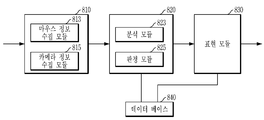
도 8은 본 발명의 제2 실시예에 따른 어플리케이션 과몰입 진단 장치의 구성을 도시하는 도면이다.
도 9는 본 발명의 제3 실시예에 따른 어플리케이션 과몰입 진단장치의 구성을 도시하는 도면이다.
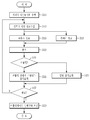
도 10은 본 발명의 제1 실시예에 따른 사용자 몰입 정도를 진단하는 절차를 도시하는 흐름도이다.
도 11은 본 발명의 제2 실시예에 따른 사용자 몰입 정도를 진단하는 절차를 도시하는 흐름도이다.
도 12는 본 발명의 제3 실시예에 따른 사용자 몰입 정도를 진단하는 절차를 도시하는 흐름도이다.1 is a diagram showing a configuration of an application system according to various embodiments of the present invention.
2 is a diagram showing a configuration of an electronic device according to various embodiments of the present invention.
3A. FIG. 3D is a diagram illustrating an example of diagnosing a user's immersion state based on various embodiments of the present invention
4 is a diagram showing a configuration of an application and an immersion diagnosis apparatus according to the first embodiment of the present invention.
Figures 5A and 5B are diagrams illustrating examples of representing game diagnostic results in accordance with various embodiments of the present invention.
6a? FIG. 6D is a diagram illustrating a configuration of a mouse capable of detecting a user's biometric change during execution of a game according to an embodiment of the present invention. FIG.
7a? 7B is a diagram illustrating an example of feature points for recognizing a facial expression according to an embodiment of the present invention.
8 is a diagram showing a configuration of an application and an immersion diagnosis apparatus according to a second embodiment of the present invention.
9 is a diagram showing a configuration of an application and an immersion diagnostic apparatus according to a third embodiment of the present invention.
FIG. 10 is a flowchart illustrating a procedure for diagnosing the degree of user involvement according to the first embodiment of the present invention.
11 is a flowchart showing a procedure for diagnosing the degree of user's immersion according to the second embodiment of the present invention.
12 is a flowchart illustrating a procedure for diagnosing the degree of user involvement according to the third embodiment of the present invention.
본 발명의 상세한 설명에 앞서, 이하에서 설명되는 본 명세서 및 청구범위에 사용된 용어나 단어는 통상적이거나 사전적인 의미로 한정해서 해석되어서는 아니 되며, 발명자는 그 자신의 발명을 가장 최선의 방법으로 설명하기 위해 용어의 개념으로 적절하게 정의할 수 있다는 원칙에 입각하여 본 발명의 기술적 사상에 부합하는 의미와 개념으로 해석되어야만 한다. 따라서 본 명세서에 기재된 실시예와 도면에 도시된 구성은 본 발명의 가장 바람직한 실시예에 불과할 뿐, 본 발명의 기술적 사상을 모두 대변하는 것은 아니므로, 본 출원시점에 있어서 이들을 대체할 수 있는 다양한 균등물과 변형 예들이 있을 수 있음을 이해하여야 한다. Prior to the detailed description of the present invention, the terms or words used in the present specification and claims should not be construed as limited to ordinary or preliminary meaning, and the inventor may designate his own invention in the best way It should be construed in accordance with the technical idea of the present invention based on the principle that it can be appropriately defined as a concept of a term to describe it. Therefore, the embodiments described in the present specification and the configurations shown in the drawings are merely the most preferred embodiments of the present invention, and are not intended to represent all of the technical ideas of the present invention. Therefore, various equivalents It should be understood that water and variations may be present.
본 발명의 다양한 실시예들은 과몰입에 빠질 수 있는 어플리케이션의 과몰입 진단 및 치료를 위한 장치 및 방법을 제안한다. 본 발명의 다양한 실시예들의 어플리케이션은 오픈 API(open application programming interface)를 이용하여 어플리케이션 서버로부터 사용자의 어플리케이션 실행 정보를 획득할 수 있다. 여기서 어플리케이션 기준 정보는 사용자의 과몰입 여부를 판단하기 위한 기준 정보가 될 수 있다. 이후 사용자가 어플리케이션을 실행하면, 클라이언트로 동작되는 전자장치는 컴퓨터의 사양 정보, 해당하는 어플리케이션의 클라이언트 정보, 입력 데이터(예를들면 키보드 정보 및/또는 마우스 정보), 사용자 정보(예를들면 사용자의 표정 및/또는 동작(자세) 정보)들 중의 일부 또는 전부를 추출하여 사용자의 어플리케이션 실행 상태를 수집할 수 있다. 컴퓨터는 어플리케이션을 실행하는 중에 어플리케이션 기준 정보에 기반하여 수집되는 어플리케이션 상태 정보를 분석하고, 분석 결과에 따라 사용자의 과몰입 여부를 판정할 수 있다. 이때 과몰입 상태로 판정되면, 컴퓨터는 본 발명의 다양한 실시예에 따른 게이미피케이션(gamification)에 기반하여 과몰입 상태를 감성적으로 표현하고, 이에 따른 치료 방법 등을 실시간으로 안내할 수 있다.Various embodiments of the present invention propose an apparatus and method for diagnosing and treating immersive and immersive applications that may become immersed. The application of various embodiments of the present invention may obtain the application execution information of the user from the application server using an open application programming interface (API). Here, the application reference information may be reference information for determining whether the user is immersed in the application. Then, when the user executes the application, the electronic device operating as the client receives specification information of the computer, client information of the corresponding application, input data (e.g., keyboard information and / or mouse information), user information Facial expression and / or operation (posture) information) of the user can be extracted to collect the application execution state of the user. The computer analyzes the application status information collected based on the application reference information while executing the application, and can determine whether the user is immersed or not according to the analysis result. If it is determined to be immersive at this time, the computer can express the immersion state emotionally based on the gamification according to various embodiments of the present invention, and can guide the treatment method and the like in real time.
이하의 설명에서 어플리케이션은 게임인 경우로 예를 들어 설명될 수 있다. 그리고 “어플리케이션 기준정보”라는 용어는 사전에 많은 사용자들이 설정된 조건에서 실행한 어플리케이션의 실행 정보들을 학습된 정보를 의미하는 용어가 될 수 있으며, 사용자의 과몰입 여부를 판단하는 기준 정보가 될 수 있다. 이하의 설명에서 어플리케이션 기준정보 및 게임 기준정보는 같은 의미로 사용할 수 있다. 또한 “어플리케이션 상태정보”라는 용어는 사용자가 어플리케이션을 실행하는 중에 추출되는 정보를 의미하는 용어로서, 하나 또는 둘 이상의 정보로 수집될 수 있다. 어플리케이션 상태정보는 컴퓨터의 사양 정보, 어플리케이션 및 실행 정보, 키보드 및 마우스 등의 입력 정보, 사용자의 표정 및 자세 등의 정보들 중의 일부 또는 전부를 포함할 수 있다. 이하의 어플리케이션 상태정보는 게임 상태정보와 같은 의미로 사용될 수 있다. “게이미피케이션”이라는 용어는 어플리케이션 제작자(또는 기업)이 의도하는 활동에 사용자의 참여를 유도하기 위해 어플리케이션과 무관한 웹사이트나 어플리케이션에서 어플리케이션과 연관된 개념을 활용하는 것을 의미하는 용어가 될 수 있다. 예를 들면, 어플리케이션이 게임인 경우, 게이미피케이션은 게임 외적인 분야에서 문제 해결, 지식 전달, 행동 및 관심 유도 혹은 마케팅을 위해 게임의 '매커니즘'(Mechanism)과 사고방식을 접목시킬 수 있다. 본 발명의 다양한 실시예에서, 게이미피케이션은 감성/인지공학에 기반하여 활용 가능한 감성 모델 구축하여 사용자의 과몰입 상태를 표현하고, 게임 플레이 데이터를 활용한 사용자 행동 분석을 할 수 있다. In the following description, an application may be described as an example of a game. The term " application reference information " may be a term indicating execution information of an application executed in a condition in which a large number of users have been set in advance, and may be reference information for determining whether or not the user is immersed . In the following description, the application reference information and the game reference information can be used with the same meaning. Also, the term " application state information " is a term that refers to information extracted by a user while executing an application, and may be collected into one or more pieces of information. The application status information may include some or all of information such as specification information of a computer, application and execution information, input information such as a keyboard and a mouse, and a user's expression and attitude. The following application status information may be used in the same meaning as game status information. The term "gay mission" can be a term that refers to utilizing the concepts associated with an application in a web site or application that is independent of the application in order to engage users in activities intended by the application creator (or business) . For example, if an application is a game, it can combine game mechanics and mindset for problem solving, knowledge transfer, behavior and attraction or marketing in the non-game field. In various embodiments of the present invention, the gamemapping may be based on emotional / cognitive engineering to create an emotional model that can be utilized to express the user's immersive state and to analyze user behavior using game play data.
이하, 첨부된 도면을 참조하여 본 발명의 바람직한 실시예들을 상세히 설명한다. 이때, 첨부된 도면에서 동일한 구성 요소는 가능한 동일한 부호로 나타내고 있음을 유의해야 한다. 또한, 본 발명의 요지를 흐리게 할 수 있는 공지 기능 및 구성에 대한 상세한 설명은 생략할 것이다. 마찬가지의 이유로 첨부 도면에 있어서 일부 구성요소는 과장되거나 생략되거나 또는 개략적으로 도시되었으며, 각 구성요소의 크기는 실제 크기를 전적으로 반영하는 것이 아니다. Hereinafter, preferred embodiments of the present invention will be described in detail with reference to the accompanying drawings. Note that, in the drawings, the same components are denoted by the same reference symbols as possible. Further, the detailed description of known functions and configurations that may obscure the gist of the present invention will be omitted. For the same reason, some of the elements in the accompanying drawings are exaggerated, omitted, or schematically shown, and the size of each element does not entirely reflect the actual size.
도 1은 본 발명의 다양한 실시예들에 따른 어플리케이션 시스템의 구성을 도시하는 도면이다.1 is a diagram showing a configuration of an application system according to various embodiments of the present invention.
도 1을 참조하면, 어플리케이션 시스템은 복수의 클라이언트(100), 인터넷 망(400), 복수의 어플리케이션 서버(150) 및 데이터베이스 서버(190)을 포함할 수 있다. 도 1에서 클라이언트(100)은 N개의 클라이언트(111-11N)을 포함할 수 있으며, 어플리케이션 서버(150)는 M개의 어플리케이션 서버(161-16N)들을 포함할 수 있다. 또한 어플리케이션 서버(161-16N)들은 데이터베이스 서버(190)을 분리하여 구성할 수 있으며, 또는 내부에 포함할 수 있다. 도 1에서 어플리케이션 서버(161)은 게임 서버이며, 데이터베이스 서버(190)을 분리하여 구성하는 것으로 가정한다.Referring to FIG. 1, an application system may include a plurality of
게임서버(161)는 실질적인 게임을 진행하는 역할을 담당할 수 있다. 게임 서버(161)는 사용자 간의 동기화, NPC 의 인공지능, 아이템 시스템 등 게임 시스템의 총 집합이라 할 수 있다. 게임서버(161)는 게임 진행에 필요한 모든 게임의 요소들을 총괄하여 진행시켜주는 작업을 수행할 수 있으며, 게임을 진행하는 방대한 요소들을 포함할 수 있다. 게임서버(161)는 NPC(Non-Player Characters), 동기화 및 채팅 등의 기능을 포함할 수 있다. 게임서버(161)는 서버의 기능에 따라 부하(NPC, 동기화, 채팅)를 분산시키기 위하여, 일부 또는 전부를 분리(NPC 서버, 동기화 서버, 채팅 서버)할 수 있다. The
게임 서버(161)는 일정 기간 동안 설정된 인원들에 의해 실행되는 플레이 데이터들을 수집하고, 수집된 플레이 데이터들을 설정된 딥 러닝 기법에 기반하여 학습하여 과몰입 여부를 판단하기 위한 게임 기준 정보를 생성할 수 있으며, 생성된 게임 기준정보를 데이터 베이스 서버(190)에 저장할 수 있다. 또한 어플리케이션 서버(150)의 일부 또는 또는 전부는 게임서버(161)과 같이 사용자의 어플리케이션 실행 정보들을 수집하여 해당 어플리케이션의 과몰입 여부를 판정하기 위한 어플리케이션 기준정보들을 생성하여 대응되는 데이터베이스 서버에 저장할 수 있다. The
클라이언트(100)은 인터넷망(130)을 통해 어플리케이션 서버(150)에 접속될 수 있다. 이때 어플리케이션 기준정보를 가지는 어플리케이션 서버(150)은 해당 클라이언트(100)에 어플리케이션 기준정보를 다운로드할 수 있다. 클라이언트(100)은 다운로드되는 어플리케이션 기준정보를 내부 메모리에 저장할 수 있으며, 또는 어플리케이션 서버에 접속시 마다 다운로드할 수도 있다.The
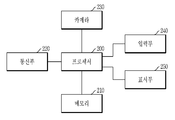
도 2는 본 발명의 다양한 실시예들에 따른 전자장치의 구성을 도시하는 도면이다. 2 is a diagram showing a configuration of an electronic device according to various embodiments of the present invention.
도 2를 참조하면, 전자장치는 도 1에서 클라이언트(100)가 될 수 있다. 전자장치는 프로세서(200), 메모리(210), 통신부(220), 카메라(230), 입력부(240), 표시부(250)를 포함할 수 있다. Referring to FIG. 2, the electronic device may be the
메모리(210)는 본 발명의 실시예에 따른 어플리케이션을 실행하기 위한 프로그램들을 저장할 수 있다. 또한 메모리(120)는 어플리케이션 프로그램 수행에 필요한 데이터들을 저장할 수 있다. 예를 들면, 메모리(120)은 사용자의 과몰입 여부를 판정하기 위한 어플리케이션 기준정보, 어플리케이션을 실행하는 중에 수집되는 어플리케이션 상태 정보, 과몰입 여부에 따른 감성 표현을 위한 게이미피케이션 정보들을 저장할 수 있다.The
프로세서(200)는 어플리케이션을 실행할 때 어플리케이션 서버에 학습된 어플리케이션 기준 정보의 다운을 요청할 수 있으며, 다운로드되는 어플리케이션 학습 정보를 메모리(120)에 저장할 수 있다. 프로세서(200)은 어플리케이션을 실행하는 중에 발생되는 어플리케이션 실행정보들을 수집할 수 있다. 또한 상기 프로세서(200)는 어플리케이션을 실행하는 중에 어플리케이션 기준정부에 기반하여 수집되는 어플리케이션 실행 정보들을 분석하여 사용자의 과몰입 여부를 진단하고, 진단 결과에 따라 과몰입 상태를 감성적으로 표현되도록 제어할 수 있다. 예를 들면, 상기 프로세서(110)는 데이터베이스, 수집모듈, 판단모듈, 표현모듈들을 포함할 수 있다. The
통신부(220)는 인터넷망(400)을 통해 어플리케이션 서버(200)과 통신할 수 있다. 통신부(220)는 어플리케이션 서버에서 학습된 어플리케이션 기준 정보를 다운로드할 수 있으며, 어플리케이션 실행시 수집되는 어플리케이션 실행정보를 어플리케이션 서버(200)에 전송할 수 있으며, 과몰입 여부 진단 정보를 전송할 수 있다. 또한 통신부(220)는 어플리케이션 서버(200)으로부터 전송되는 게이미피케이션 정보를 수신할 수 있다.The
카메라(230)은 어플리케이션을 실행하는 사용자의 표정 정보 및/또는 동작(자세) 정보를 획득할 수 있다. 입력부(240)은 마우스 및/또는 키보드를 포함할 수 있으며, 사용자에 의해 입력되는 마우스 정보 및 키보드 정보를 획득할 수 있다. 카메라(230) 및 입력부(240)는 사용자의 어플리케이션 실행정보들을 발생할 수 있다. 표시부(250)는 프로세서(200)의 제어 하에 게임의 정보들을 표시할 수 있으며, 어플리케이션 실행중에 수집되는 어플리케이션 실행 정보를 표시할 수 있다. 또한 표시부(250)은 과몰입 상태로 진단된 경우 게이미피케이션 정보를 표시할 수 있다. The
본 발명의 다양한 실시예들에 따른 어플리케이션 서버(200)는 일정 기간 동안 설정된 인원들이 설정된 시간 동안 실행하는 어플리케이션 정보들을 수집하고, 수집되는 정보들을 기반으로 딥 러닝(deep learning) 기법으로 학습하여 어플리케이션 기준정보를 생성하여 데이터 베이스화할 수 있다. 이후 사용자가 해당 어플리케이션을 실행하면, 어플리케이션 서버(200)는 데이터베이스화된 어플리케이션의 기준 정보를 클라이언트에 제공할 수 있다. The
이하의 설명에서 어플리케이션은 게임인 경우로 가정하여 설명하기로 한다. In the following description, it is assumed that the application is a game.
본 발명의 다양한 실시예들에 따른 어플리케이션 실행 정보들은 다양한 형태로 수집될 수 있다. 본 발명의 제1 실시예는 컴퓨터의 사양 정보 및 게임 클라이언트의 정보들을 수집하여 사용자의 과몰입 여부를 진단할 수 있다. 본 발명의 제2 실시예는 사용자의 게임 실행 입력 정보 및 사용자의 표정 정보를 수집하여 사용자의 과몰입 여부를 진단할 수 있다. 본 발명의 제3 실시예는 컴퓨터의 사양 정보, 게임 클라이언트의 정보, 사용자의 게임 실행 입력 정보 및 사용자의 표정 정보를 수집하여 사용자의 과몰입 여부를 진단할 수 있다.Application execution information according to various embodiments of the present invention may be collected in various forms. The first embodiment of the present invention collects the specification information of the computer and the information of the game client to diagnose whether or not the user is immersed in the game. The second embodiment of the present invention collects user's game execution input information and user's facial expression information and can diagnose whether or not the user is immersed in the game. The third embodiment of the present invention collects the specification information of the computer, the information of the game client, the game execution input information of the user, and the user's facial expression information, thereby diagnosing whether the user is immersed or not.
이하 설명되는 본 발명의 다양한 실시예들은 어플리케이션 서버에서 일정 기간 동안 설정된 사용자들에 의해 실행되는 어플리케이션의 실행 정보들을 수집하여 학습하고, 학습된 결과에 따른 기준정보들을 생성하여 데이터베이스화할 수 있다. 그리고 사용자들이 어플리케이션을 실행할 때 데이터베이스화된 기준정보들을 다운로드할 수 있다. 본 발명의 다양한 실시예들에서는 어플리케이션에 대응되는 기준정보 및 감성표현 에이전트를 어플리케이션 서버가 구비하고, 어플리케이션 실행시 이를 클라이언트가 다운로드하여 어플리케이션의 사용자 과몰입 및 감성 표현을 수행하는 동작으로 설명될 것이다. 그러나 어플리케이션에 대응되는 기준정보 및 감성표현 에이전트를 어플리케이션 서버가 구비하고, 어플리케이션 실행시 클라이언트는 어플리케이션의 실행정보들을 수집하여 어플리케이션 서버에 전달하며, 어플리케이션 서버가 클라이언트의 어플리케이션 실행 정보를 분석하여 사용자의 몰입 정도를 진단하고, 진단결과에 기반하는 감성 표현 정보를 클라이언트에 다운로드할 수도 있다. Various embodiments of the present invention described below can collect and learn execution information of an application executed by users set for a predetermined period in an application server, generate reference information according to the learned result, and convert the generated information into a database. And users can download database-based reference information when they run applications. In various embodiments of the present invention, the application server has the reference information and the emotional expression agent corresponding to the application, and the client downloads it when the application is executed, and performs the immersion and emotion expression with the user of the application. However, the application server has the reference information and the emotional expression agent corresponding to the application, and when the application is executed, the client collects the execution information of the application and transmits the information to the application server. The application server analyzes the application execution information of the client, And the emotion expression information based on the diagnosis result may be downloaded to the client.
먼저 본 발명의 제1 실시예에 따른 과몰입 진단 장치 및 방법을 살펴본다.First, an over-immersion diagnostic apparatus and method according to a first embodiment of the present invention will be described.
게임 서버(예를 들면 도 1의 어플리케이션 서버(251))는 먼저 사용자의 게임 과몰입을 진단하기 위한 기준 정보를 생성할 수 있다. 이를 위하여, 게임서버는 설정된 수의 클라이언트들이 일정 기간 동안 실행하는 게임 플레이 데이터에 기반하여 기준정보를 생성할 수 있다. 예를 들면, 수개월(예를들면 6개월에서 1년 사이) 동안 수십명 내지 수백명의 사용자들로부터 게임 플레이 데이터들을 수집할 수 있다. 게임에 참여하는 클라이언트들은 하루 또는 일주일에 일정 시간 이상 이상에 게임을 플레이하는 사용자들이 될 수 있으며, 본 발명의 제1 실시예에 따른 프로그램들을 설치할 수 있다. The game server (for example, the application server 251 in FIG. 1) may first generate reference information for diagnosing the game and immersion of the user. To this end, the game server may generate reference information based on game play data that is executed for a predetermined number of clients for a predetermined period. For example, game play data can be collected from dozens to hundreds of users over several months (e.g., 6 months to 1 year). Clients participating in the game can be users who play the game over a certain period of time or more per day or week, and can install the programs according to the first embodiment of the present invention.
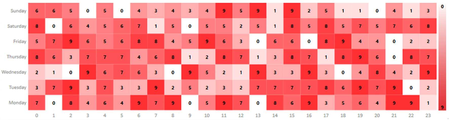
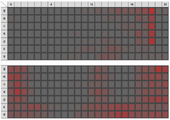
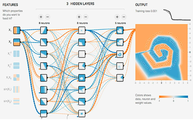
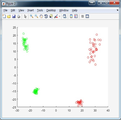
도 3a ? 도 3d는 본 발명의 다양한 실시예(예를 들면, 제1 실시예)에 기반하여 사용자의 과몰입 상태를 진단하는 예를 도시하는 도면이다. 도 3a 및 도 3b는 상대적 과몰입 상태를 비교하기 위한 히트맵 데이터의 예를 도시하는 도면이며, 도 3c는 수집되는 사용자들의 플레이 데이터들을 학습하는 장치의 구성 예를 도시하는 도면이며, 도 3d는 딥러닝 학습에 의해 분석된 사용자의 분포도를 예시하는 도면이다.3A. FIG. 3D is a diagram showing an example of diagnosing a user's immersion state based on various embodiments of the present invention (for example, the first embodiment). 3A and 3B are diagrams showing examples of heat map data for comparing relative and immersive states, and FIG. 3C is a diagram showing a configuration example of an apparatus for learning play data of collected users. FIG. 5 is a diagram illustrating a distribution diagram of users analyzed by the deep learning learning. FIG.
클라이언트들로부터 게임 플레이 데이터들이 수집되면, 게임 서버는 개인별로 수집한 데이터에서 게임을 플레이한 시간대 데이터를 통해 히트맵(Heat Map)을 생성해 도 3a 및 도 3b와 같이 표시할 수 있다. 도 3a 및 도 3b의 히트맵 데이터에서 붉은 색이 짙을수록 해당 시간대에 반복적으로 플레이를 했다는 의미가 될 수 있다. 게임 서버는 생성된 데이터를 통해 개인의 플레이 패턴을 7*24(일주일 단위로 하루 24시간의 히트맵)의 벡터로 재구성 할 수 있다. When the game play data is collected from the clients, the game server generates a heat map through the time zone data of the game collected from the collected data, and displays the heat map as shown in FIGS. 3A and 3B. As the red color in the heat map data of FIGS. 3A and 3B becomes darker, it means that the game has repeatedly played in the corresponding time zone. The game server can reconstruct an individual's play pattern as a vector of 7 * 24 (a heat map of 24 hours a day on a weekly basis) through the generated data.
새로운 사용자의 7*24 형태의 플레이 패턴 벡터가 들어오면, 게임 서버는 도 3c와 같이 이를 분류하기 위하여 딥 러닝(deep learning) 모형에 기반하여 예측 모형을 구축할 수 있다. 딥 러닝은 7*24 벡터 형태의 입력 데이터(input data)를 받아들여 강한 과몰입, 약한 과몰입, 과몰임 아님 3개의 아웃풋(output) 결과 중 하나를 예측할 수 있다. 본 발명의 다양한 실시예들에 따른 딥 러닝 모형은 도 3c에 도시된 바와 같은 3개의 히든 레이어로 구성할 수 있다. 그리고 각 레이어당 1024, 512, 1024개의 뉴런을 할당하여 예측 모형을 구축할 수 있다. 도 3c의 딥 러닝의 구현 예는 Google Tensorflow 라이브러리를 활용하여 Python 환경에 기반하여 구축한 예를 도시하고 있다. 본 발명의 다양한 실시예들에 따르면, 10명의 새로운 사용자 패턴이 들어왔을 때 80%의 정확도로 3가지 과몰입 패턴을 분류해 내는 것을 확인할 수 있다. 도 3d는 MPCA 기법에 기반하여 분석된 사용자 분포도의 표시 예를 도시하는 도면이다.When a 7 * 24 type play pattern vector of a new user comes in, the game server can build a prediction model based on a deep learning model to classify it as shown in FIG. 3C. Deep running can predict one of the three output results: strong and immersive, weak, immersive, and immune, accepting input data in the form of 7 * 24 vectors. The deep running model according to various embodiments of the present invention can be configured with three hidden layers as shown in FIG. 3C. And we can construct a prediction model by assigning 1024, 512, and 1024 neurons to each layer. 3C illustrates an example of the deep running based on the Python environment utilizing the Google Tensorflow library. According to various embodiments of the present invention, it can be seen that when 10 new user patterns come in, three types and immersion patterns are classified with 80% accuracy. FIG. 3D is a diagram showing an example of display of the analyzed user distribution based on the MPCA technique.
상기 도 3a ? 도 3d에 도시된 바와 같이 설정된 기간 동안 게임에 참여하는 복수의 사용자들에 의해 발생되는 플레이 데이터들을 학습하여 게임 기준 정보를 생성할 수 있다. 그리고 생성된 게임 기준 정보는 데이터베이스화 저장될 수 있다. 그리고 이후 클라이언트가 게임 서버에 접속되어 게임을 실행할 때, 클라이언트는 게임 기준정보에 기반하여 사용자의 과몰입 정도를 측정할 수 있다.3A. As shown in FIG. 3D, game data generated by a plurality of users participating in the game during the set period can be learned to generate game reference information. The generated game reference information can be stored in a database. Then, when the client is connected to the game server and executes the game, the client can measure the degree of the user's immersion based on the game reference information.
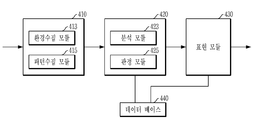
도 4는 본 발명의 제1 실시예에 따른 어플리케이션 과몰입 진단장치의 구성을 도시하는 도면이다.4 is a diagram showing a configuration of an application and an immersion diagnosis apparatus according to the first embodiment of the present invention.
도 4를 참조하면, 클라이언트의 구성은 도 2와 같은 구성을 가질 수 있다. 그리고 클라이언트의 프로세서(예를 들면, 도 2의 프로세서(200))는 수집모듈(410), 진단모듈(420), 표현모듈(430) 및 데이터베이스(440)을 포함할 수 있다. 클라이언트는 게임을 실행하는 사용자 데이터를 수집하여 사용자의 과몰입 여부를 진단할 수 있다. 클라이언트는 게임을 실행할 때 NTP(Network Time Protocol) 서버를 통해 게임 서버와 시간 동기화를 수행할 수 있으며, 동기화 이후에는 어떤 게임 클라이언트에서 측정을 하더라도 동일한 시간대에서 데이터 측정이 가능할 수 있다. Referring to FIG. 4, the configuration of the client may have a configuration as shown in FIG. The processor of the client (e.g.,
데이터베이스(440)는 프로세서(예를 들면 도 2의 프로세서(200))의 제어 하에 게임서버에서 다운로드되는 게임 기준정보를 저장할 수 있다. 게임 기준정보는 도 3a ? 도 3d에서 설명된 바와 같이 게임 서버에서 학습된 정보로서, 사용자의 과몰입 여부를 진단하기 위한 기준 정보가 될 수 있다. 프로세서는 최초 게임 서버에 접속될 때 게임서버로부터 게임 기준정보를 다운로드하여 저장할 수 있다. 또한 프로세서는 게임서버에 접속될 때마다 게임서버로부터 게임 기준정보를 다운로드할 수 있다.
클라이언트의 수집모듈은 사용자의 컴퓨터 사양 정보를 수집하는 환경수집모듈(413) 및 게임 플레이 패턴 정보를 수집하는 패턴 수집모듈(415)를 포함할 수 있다. 상기 환경 정보는 컴퓨터의 사양 및 PC 로그 정보들을 포함할 수 있다. 플레이 패턴 정보는 게임 이름, 게임 장르, 시작 시간, 종료 시간, 실제 플레이 시간, 마우스 이벤트 및 키보드 이벤트 정보 등이 될 수 있다. 프로세서는 사용자의 선택에 따라 클라이언트를 트레이에 아이콘 형태로 숨길 수 있으며 별도의 윈도우를 통해 자신의 게임 플레이 정보를 확인할 수 있다. 따라서 사용자의 선택에 따라 클라이언트는 과몰입 여부를 진단하는 동작을 하지 않는 일반 게임을 실행할 수도 있다. The collection module of the client may include an
진단모듈(420)는 수집모듈(410)에서 수집되는 환경 정보 및 플레이 패턴 정보들을 분석하는 분석 모듈(423)과, 분석모듈(423)에서 분석된 게임 실행 정보를 데이터베이스에 저장된 게임 기준정보에 기반하여 과몰입 여부를 판정하는 판정모듈(425)를 포함할 수 있다. 즉, 분석모듈(420)는 수집모듈(410)에서 수집되는 정보들을 분석하여 학습된 게임 기준정보에 적용하기 위한 게임 실행 정보들을 생성할 수 있으며, 판정모듈(425)는 학습된 게임 기준정보에 생성된 게임 실행정보들을 적용하여 사용자의 게임 과몰입 여부를 판정할 수 있다. The
표현모듈(430)은 진단모듈(420)에서 진단된 결과에 기반하여 사용자의 상태 및 진단 결과를 감성적으로 표현할 수 있다. 표현 모듈(430)은 게이미피케이션을 표현하는 모듈이 될 수 있다. The
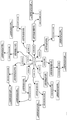
도 5a 및 도 5b는 본 발명의 다양한 실시예들에 따라 게임 진단 결과를 표현하는 예를 도시하는 도면이다. 도 5a는 캐릭터 에이전트 및 감정 표현을 예시하는 도면이다. 도 5b는 캐릭터 에이전트와 연동되는 스토리텔링 노드 그래프의 예를 도시하는 도면이다.Figures 5A and 5B are diagrams illustrating examples of representing game diagnostic results in accordance with various embodiments of the present invention. Figure 5A is a diagram illustrating character agents and emotional expressions. 5B is a diagram showing an example of a story telling node graph linked with a character agent.
본 발명의 실시예에 따른 게임 클라이언트는 사용자 플레이 패턴을 기록할 때 백그라운드에서 실행되는 캐릭터 에이전트(예를 들면, ECA(Embodied Conversational Agents)가 탑재될 수 있다. 캐릭터 에이전트는 게임 서버로부터 다운로드되어 데이터베이스(440)에 저장될 수 있다. 도 5a에 도시된 바와 같이 ECA는 10가지 이상의 감정을 표현할 수 있는 캐릭터(예를 들면, 아바타)들을 포함할 수 있다. 표현모듈(430)은 사용자와 인터랙션하며 진단 결과를 캐릭터 에이전트 형태로 표시부(예를 들면 도 2의 표시부(250)) 및 스피커를 통해 표현함으로써, 사용자의 심리적 방어기제에 미치는 영향을 줄여줄 수 있다. 도 5b에 도시된 바와 같이 ECA가 주로 하는 역할은 여러 가지 감정표현을 이용하여 현재 사용자의 게임 플레이 패턴에 대한 정보를 전달하는 것이 될 수 있다. 이는 사용자에게 친근감을 주고 과몰입 상태 측정 솔루션에 대한 거부반응을 줄여주는 역할을 할 수 있다. 또한 수평 확장형 스토리텔링 생성 기술을 접목하여 사용자의 상태를 기반으로 동적 이야기 생성을 시도할 수 있으며, 이를 통해 과몰입 상태의 플레이어의 게임 플레이 감소를 자연스럽게 유도할 수 있다. The game client according to the embodiment of the present invention may be loaded with a character agent (for example, ECA (Embodied Conversational Agents)) executed in the background when recording a user play pattern. The character agent is downloaded from a game server, 5A, the ECA may include characters (e.g., avatars) capable of expressing more than ten emotions. The
예를 들면, 게임 서버에서 다운로드되는 게임 기준정보는 컴퓨터 사양 정보 및 플레이 패턴 데이터에 의해 학습된 정보가 될 수 있다. 이런 경우, 도 3c와 같은 딥러닝 기반의 학습 모형에서 학습되는 입력 데이터들은 컴퓨터 사양 정보, 게임 이름, 게임 장르, 게임 시작 시간, 게임 종료시간, 실제 플레이 시간, 마우스 이벤트, 키보드 이벤트의 정보들이 입력데이터가 될 수 있다. 게임 서버는 설정된 기간 동안 복수의 인원들에서 입력되는 위와 같은 정보들을 학습하며, 학습 결과에 기반하여 입력데이터들에 따른 과몰입, 몰입 및 정상 등의 3개의 상태로 분류할 수 있는 딥러닝 기반의 학습 모델을 구현할 수 있다. 그리고 클라이언트가 접속되어 게임을 실행할 때 구현된 딥러닝 기반의 학습 모델을 게임 기준정보로 다운로드할 수 있다.For example, the game reference information downloaded from the game server may be information learned by computer specification information and play pattern data. In this case, the input data learned in the deep learning-based learning model shown in FIG. 3C includes information on the computer specification information, game name, game genre, game start time, game end time, actual play time, mouse event, Lt; / RTI > The game server learns the above information input from a plurality of personnel during a predetermined period and then executes a deep learning based on the learning result and can classify the game into three states such as immersion, Learning models can be implemented. Then, the deep learning based learning model implemented when the client is connected and playing the game can be downloaded as the game reference information.
클라이언트는 게임을 실행할 때 컴퓨터 사양정보 및 사용자에 의해 실행되는 플레이 패턴 정보들을 수집하고, 수집된 게임 실행 정보들을 다운로드된 게임 기준정보에 적용하여 게임 중의 사용자가 몰입 정도를 진단할 수 있다. 예를들면, 사용자가 심야에 일반 사용자들에 의해 학습된 게임 시간을 초과하도록 게임을 실행하고 있으면, 클라이언트는 게임 기준정보에 기반하여 사용자에게 과몰입 상태임을 감성적으로 표현할 수 있다. The client collects computer specification information and play pattern information executed by the user when executing the game, and applies the collected game execution information to the downloaded game reference information to diagnose the degree of immersion by the user during the game. For example, if the user is playing a game in excess of the game time learned by general users at midnight, the client can emotionally express to the user that the game is immersive based on the game reference information.
본 발명의 제2 실시예에서는 게임을 실행하는 중에서 입력되는 정보 및 사용자의 표정(및/또는 자세) 정보를 수집하여 사용자의 게임 과몰입 여부를 진단하는 장치 및 방법을 제공할 수 있다. 게임을 수행하는 사용자는 특별한 행동을 할 수 있다. 본 발명의 제2 실시예는 게임 플레이 환경에서 비 침투적인 방법을 통해 수집되는 사용자의 생체 정보, 특징 및 반복적인 패턴에 기반하여 게임 중의 사용자의 생체 정보 변화 및 특이 행동을 탐지하여 사용자의 게임 과몰입 여부를 진단할 수 있다. 사용자의 입력 정보는 입력부(예를 들면 도 2의 입력부(240))에서 발생되는 마우스 및 키보드의 입력신호들이 될 수 있다. 그리고 사용자의 표정 정보는 카메라(예를 들면 도 2의 카메라(230))에서 획득되는 사용자의 이미지가 될 수 있다.In the second embodiment of the present invention, it is possible to provide an apparatus and a method for collecting information inputted during execution of a game and user's facial expression (and / or posture) information to diagnose whether or not the game is immersed in the user. The user performing the game can do special actions. The second embodiment of the present invention detects biometric information changes and specific behaviors of a user in a game based on biometric information, features and repetitive patterns of a user collected through a non-invasive method in a game play environment, You can diagnose the immersion. The input information of the user may be input signals of a mouse and a keyboard generated in an input unit (for example, the
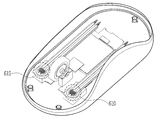
본 발명의 실시예에서는 게임을 실행하는 중에서 사용자의 생체 변화를 탐지하여 과몰입 여부를 진단할 수 있다. 도 6a ? 도 6d는 본 발명의 실시예에 따라 게임을 실행하는 중에 사용자의 생체 변화를 감지할 수 있는 마우스의 구성을 도시하는 도면이다. In the embodiment of the present invention, it is possible to detect a change in the user's body during execution of a game and diagnose whether the user is immersed or not. 6a? FIG. 6D is a diagram illustrating a configuration of a mouse capable of detecting a user's biometric change during execution of a game according to an embodiment of the present invention. FIG.
도 6a를 참조하면, 마우스(100)는 두 개의 FSR 센서(610, 615), 두 개의 GSR 센서(620, 625) 및 온도 센서(230)을 구비할 수 있다. Referring to FIG. 6A, the
두 개의 FSR 센서(610, 615)는 도 6b에 도시된 바와 같이, 버튼 접점 부분에 각각 위치될 수 있으며, 손가락 면적에 무관하게 버튼의 누름 강도를 감지할 수 있다. 오른손 잡이인 경우, FSR 센서(610)는 왼쪽 버튼 누름 강도(검지 누름 강도)를 측정할 수 있으며, FSR 센서(615) 오른쪽 버튼 누름 강도(중지 누름 강도)를 측정할 수 있다. 두 개의 GSR 센서(620, 625)는 도 6c에 도시된 바와 같이, 손가락이 닿는 부분인 버튼들이 도체들로 처리될 수 있다. 각 도체들은 GSR 센서(620, 625)와 내부적으로 연결되어 있으며, 검지와 중지 사이에 흐르는 전류의 강도를 측정할 수 있다. 저항이 높을수록 사용자의 심리적 안정감이 높다는 것을 의미하고, 반대로 저항이 낮을수록 심리적 안정감이 낮다는 것을 의미할 수 있다. 오른손 잡이인 경우, GSR 센서(620)는 오른쪽 피부 전도도(검지 전도도)를 측정할 수 있으며, GSR 센서(620)는 오른쪽 피부 전도도(중지 전도도)를 측정할 수 있다. 온도 센서(630) 도 6d에 도시된 바와 같이 적외선 온도 센서(Infrared thermometer)가 될 수 있으며, 비침습적인 손바닥 온도를 측정할 수 있다. 온도 센서(630)는 적외선을 이용하기 때문에 대상과의 거리나 습도 등에 영향을 적게 받아 정확하게 사용자의 온도를 측정할 수 있다. As shown in FIG. 6B, the two
FSR1 센서(610) 및 FSR6 센서(615)는 각각 오른손잡이인 경우 검지 및 중지(왼손잡이인 경우 중지와 검지)의 압력을 감지하기 위한 압력 센서로서, 마우스에 가해지는 물리적인 압력, 무게 등을 측정할 수 있다. FSR 센서(610, 615)는 압력이 없을 때에는 큰 저항 값을 가지며, 압력에 비례하여 저항 값이 낮아질 수 있다. GSR1 센서(620) 및 GSR2 센서(625)는 각각 오른손잡이인 경우 검지 및 중지(왼손잡이인 경우 중지와 검지)의 피부 습기에 의한 전류 변화를 감지할 수 있는 센서로서, 사용자의 흥분과 같은 감정의 변화를 감지할 수 있다. 대뇌를 제어하는 자율 신경계는 교감 신경계와 부교감 신경계로 나뉠 수 있으며, 피부의 습기 변화는 교감 신경계에 의해 제어될 수 있다. 예를 들면, 강한 감정이 발생되면, 교감 신경계에 의해 피부 습도가 변할 수 있으며, GSR 센서(620, 625)는 이런 변화를 저항의 변화로 감지할 수 있다. GSR(Galvanic skin response)은 생리적인 활동에 따른 피부의 전기 임피던스와 그 변화를 의미할 수 있으며, 손가락 부위에 땀샘의 활동은 전신적인 자극이나 주변의 상황에 민감할 수 있다. 본 발명의 다양한 실시예들에 따른 GSR 센서(620, 625)는 두 전극 사이에 손가락의 습기에 따른 저항을 측정하여 사용자의 상태를 감지할 수 있다. 온도 센서(630)는 비침습적인 손바닥 온도를 측정할 수 있다. The
사용자가 마우스를 사용하는데 있어 2개의 손가락을 각각 양쪽 버튼 위에 올려놓고 사용한다는 전제하에 사용자의 생체 신호를 받을 마우스의 센서(FSR 센서, GSR 센서, 온도 센서)들은 도 6a와 같이 장착할 수 있다. 마우스는 직렬 통신 방식으로 사용자의 센서 측정값을 프로세서에 제공할 수 있다. 양쪽 각 버튼 아래 FSR센서(210,215)을 장착할 수 있으며, FSR 센서(210, 215)에서 감지되는 신호들은 각각 사용자가 마우스의 해당하는 버튼에 가하는 압력의 세기를 나타낼 수 있다. GSR 센서(620, 625)는 두 접점 사이의 저항을 측정하기 때문에 사용자가 일반으로 두 손가락을 올려놓는 마우스(100)의 버튼 양쪽에 알루미늄 테이프를 붙여 GSR 값들을 측정할 수 있다. GSR 센서(620, 625)에서 감지되는 신호들은 사용자의 감정 변화가 심할수록 낮아지는 형태로 감지될 수 있다. 온도 센서(230)는 마우스(100)의 아래 쪽에 있어 사용자의 손바닥 근처에 장착할 수 있으며, 사용자의 손바닥 온도를 측정할 수 있다. The sensor (FSR sensor, GSR sensor, temperature sensor) of the mouse which receives the user's biometric signal can be installed as shown in FIG. 6A on the assumption that the user uses two fingers on both buttons in using the mouse. The mouse can provide the user's sensor measurements to the processor in a serial communication manner. The
또한 마우스는 버튼 클릭 및 마우스의 이동을 추적할 수 있다. 즉, 사용자는 마우스를 통해 게임 아이템을 선택 또는 해제하기 위한 클릭 동작을 수행할 수 있으며, 원하는 아이템을 선택하기 위하여 드래그하는 동작을 수행할 수 있다. 프로세서는 사용자의 마우스 조작(클릭 및 드래그)을 인식할 수 있다. The mouse can also track button clicks and mouse movements. That is, the user can perform a click operation for selecting or releasing the game item through the mouse, and can perform the drag operation to select a desired item. The processor can recognize the user's mouse operation (click and drag).
프로세서는 게임 실행에 따른 사용자의 응답 결과를 수집할 수 있으며, 응답 결과가 수신되면 해당 질문에 대한 응답 결과 및 사용자의 생체 정보에 기반하여 사용자의 상태를 판정할 수 있다. 프로세서는 마우스에서 출력되는 FSR 센서, GSR 센서 및 온도 센서들의 평균값을 계산할 수 있다. 이때 평균값을 계산하는 구간은 게임 정보가 표시되는 시점에서 사용자가 응답하는 시점까지의 구간이 될 수 있다. 또한 평균값을 계산하는 방법은 노이즈를 제거하기 위하여 측정된 센서의 값들 중에서 설정된 비율의 최대값 및 최소값들을 제거한 나머지 측정 값들을 평균한 값이 될 수 있다. 평균값은 각 센서들 각각에 대하여 구할 수 있다. 이후 프로세서는 각 센서들의 측정값을 분석할 수 있다. 측정값을 분석하는 방법은 각 센서 출력값의 기준값들과 비교하는 방법이 될 수 있다. 기준값은 실험에 의해 미리 설정된 값이 될 수 있다. 프로세서는 FSR 측정값, GSR 측정값 및 온도센서의 측정값들을 각각 대응되는 기준값들과 비교 분석하여 각 측정값들이 정상 범위의 값들로 측정되었는가를 분석할 수 있다. 즉, 프로세서는 FSR, GSR, 온도 측정값들이 모두 정상 범위의 값들로 측정되는 경우, 하나의 측정값이 정상 범위를 벗어나는 경우, 두 개 이상의 측정값들이 정상 범위를 벗어나는 경우들을 분석하여 사용자의 상태를 판정할 수 있다. The processor can collect the response result of the user according to the execution of the game. When the response result is received, the processor can determine the state of the user based on the result of the response to the question and the biometric information of the user. The processor can calculate the average of the FSR sensor, the GSR sensor, and the temperature sensors output from the mouse. In this case, the section for calculating the average value may be a section from the point at which the game information is displayed to the point at which the user responds. Also, the method of calculating the average value may be averaging the remaining measured values from which the maximum and minimum values of the set ratio among the measured values of the sensor to remove noise are removed. The average value can be obtained for each of the sensors. The processor can then analyze the measurements of each sensor. The method of analyzing the measured values may be a method of comparing with the reference values of the respective sensor output values. The reference value may be a preset value by an experiment. The processor can analyze whether the measured values are measured in the normal range by comparing the FSR measured value, the GSR measured value, and the measured values of the temperature sensor with corresponding reference values respectively. That is, when the FSR, the GSR, and the temperature measurement values are measured in the normal range, the processor analyzes the cases where two or more measurement values deviate from the normal range when one measured value is out of the normal range, Can be determined.
또한 게임을 실행하는 중에 사용자들은 몰입 정도에 따라 공통적인 반응을 할 수 있다. 주로 나타나는 사용자의 행동들을 살펴보면, 몸의 움직임이 전후 또는 좌우 방향으로 커질 수 있으며, 표정이 변할 수 있다. 표정 변화는 눈을 크게 뜨거나, 눈썹이 위로 올라가거나, 입이 커지거나, 눈 깜빡임의 변화가 많아질 수 있다. 이런 사용자의 행동은 대부분 복합적으로 나타날 수 있다. 이와 같은 사용자의 행동을 바탕으로, 복합적인 결과에 대한 의미를 찾기 위해 키보드 사용량에 때한 키보드 사용 행동군을 정리할 필요가 있다. 키보드 사용은 반복적인 패턴 검출을 위한 키스트로크(keystroke list for repeated pattern detection)는 네비게이션 키(arrow keypad)를 통해 키입력을 매핑(left, right, up, down)할 수 있다.Also, while running the game, users can react in a common way depending on the degree of immersion. If we look at the behaviors of the users that appear mainly, the movement of the body can become large or small, and the expression can change. Changes in facial expressions can lead to large changes in eyes, eyebrows up, mouth enlargement, and eye blinking. Most of these user behaviors can be complex. Based on such user behavior, it is necessary to organize a group of keyboard usage behaviors into the keyboard usage to find meaning for complex results. The keystroke list for repeated pattern detection can be used to map key inputs (left, right, up, down) via the arrow keypad.
게임을 하는 중에 몰입 정도에 따라 사용자의 얼굴 표정 변화는 다양하게 변화될 수 있다. 본 발명의 실시예에서는 게임을 실행하는 상태에서 사용자의 얼굴 표정 변화를 탐지하여 게임의 몰입 정도를 판단할 수 있다. The user's facial expression change can be variously changed depending on the degree of immersion while playing the game. According to the embodiment of the present invention, it is possible to determine the degree of immersion of the game by detecting the change in the facial expression of the user while the game is being executed.
도 7a ? 도 7b는 본 발명의 실시예에 따라 얼굴 표정을 인식하기 위한 특징점의 예를 도시하는 도면이다.7a? 7B is a diagram illustrating an example of feature points for recognizing a facial expression according to an embodiment of the present invention.
도 7을 참조하면, 얼굴 표정은 얼굴 특징점 데이터들을 신경망 회로를 통해 학습하여 인식할 수 있다. 신경망 회로를 활용하기 위해서는 적절한 숫자의 노드를 가지도록 층 설정하는 것이 중요하며, 본 발명의 실시예에서는 도 7에 도시된 바와 같이 얼굴 특징 점들을 24개 그룹으로 다시 나누어 표정 인식을 할 수 있다. 하기의 <표 1>은 표정 변화에 일반적으로 가장 큰 영향을 미치는 특징 점들의 예를 나타내고 있다. Referring to FIG. 7, facial expression can be recognized by learning facial feature point data through a neural network circuit. In order to utilize the neural network circuit, it is important to set the layer so as to have an appropriate number of nodes. In the embodiment of the present invention, facial feature points can be divided into 24 groups to recognize facial expressions as shown in FIG. Table 1 below shows examples of feature points that generally have the greatest effect on facial expression change.
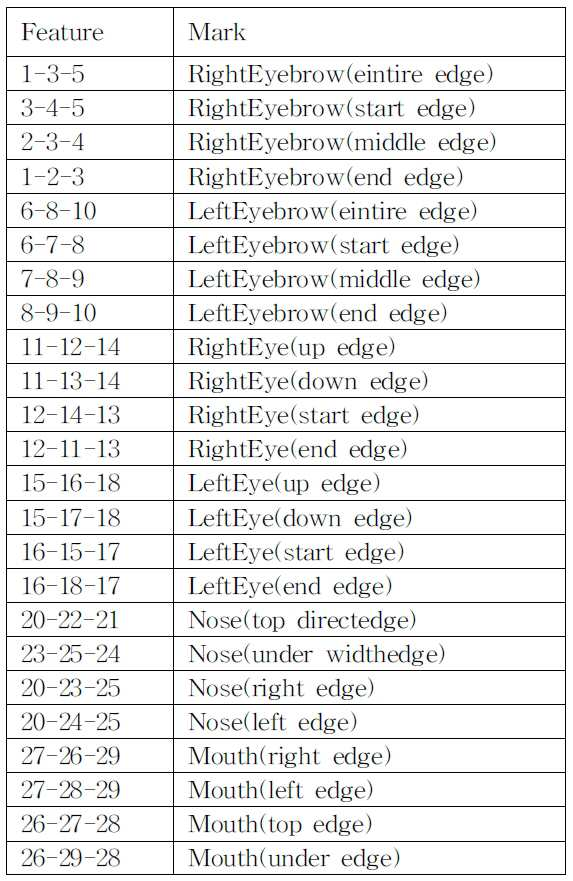
각 그룹에 해당하는 특징점의 움직임 변화량의 합은 신경망의 학습에 사용할 수 있다. 신경망회로(MATLAB Neural Network Toolbox)의 입력층(input layer)은 상기 <표 2>와 같은 24개 집합의 노드로 사용할 수 있다. 출력층(output layer)은 인식하고자 하는 사용자의 몰입 정도를 나타내는 출력값으로 설정할 수 있다. 숨은 층(hidden layer)은 경험적으로 노드를 구성하여 사용할 수 있다. 신경망 회로의 학습을 수행하기 위하여, 일정 기간 동안 해당 게임을 수행하는 사용자들의 게임 플레이 데이터들을 이용하여 개인별로 몰입 정도에 대응되는 데이터를 산출하여 학습할 수 있다. The sum of the amount of motion variation of the feature points corresponding to each group can be used for the learning of the neural network. The input layer of the MATLAB Neural Network Toolbox can be used as 24 sets of nodes as shown in Table 2 above. The output layer can be set as an output value indicating the degree of immersion of the user to be recognized. A hidden layer can be used by empirically constructing a node. In order to perform the learning of the neural network circuit, it is possible to calculate and learn data corresponding to the degree of immersion for each individual using game play data of users who play the game for a predetermined period.
사용자 표정 데이터를 이용한 실시간으로 사용자의 게임 몰입 여부를 진단하기 위한 게임 기준정보를 생성할 수 있다. 게임들은 게임의 결과에 커다란 영향을 주는 지표를 제공할 수 있다. 예를 들면, “오버워치” 게임의 경우, 게임 내부에서 제공하는 지표인 ‘폭주 게이지’를 제공할 수 있다. 폭주 게이지는 게임 승리에 영향을 주는 행동을 했을 때 상승하며, 시간이 지날수록 감소하는 지표가 될 수 있다. 따라서 게임 기준 정보를 생성할 때, 게임 내부에서 제공하는 지표와 게임 플레이인 사용자의 행동을 연계시켜 과몰입 여부를 판정하는 것이 효과적일 수 있다. It is possible to generate game reference information for diagnosing whether or not the user's game is immersed in real time using the user's facial expression data. Games can provide indicators that have a large impact on the outcome of the game. For example, in the case of an " over-watch " game, it is possible to provide an " runaway gauge " The runaway gauge rises when you do something that affects the game win, and it can be a declining indicator over time. Therefore, when generating the game standard information, it may be effective to determine whether the game is an immersion by linking the indicator provided in the game with the action of the user, which is a game play.
이를 위하여, 게임 서버(예를들면 오버워치 게임 서버)는 일정 시간의 동안 설정된 인원들의 게임 플레이 데이터 및 표정 데이터를 수집하여 학습하고, 학습된 결과를 토대로 게임 기준 정보를 생성할 수 있다. 도 7b는 게임(오버워치 게임)를 실행하는 상태에서 사용자의 얼굴 표정을 인식하여 게임 기준정보를 생성하는 예를 도시하는 도면이다. 도 7b에서 750은 표시부의 화면이며, 751은 표시부에 표시되는 게임(오버워치 게임)이 될 수 있으며, 753은 게임에서 제공하는 지표(폭주 게이지)가 될 수 있다. 760은 카메라에서 획득되는 사용자의 이미지가 될 수 있으며, 763은 게임 플레이의 얼굴 특징점들이 될 수 있다. 770은 지표인 폭주 게이지 상태에 따른 몰입 태그 알람이며, 770은 사용자의 몰입 상태를 표정변화 상태에 태깅한 결과가 될 수 있다. To this end, a game server (e.g., an over-watch game server) may collect game play data and facial expression data of the set personnel for a predetermined period of time, and may generate game reference information based on the learned results. 7B is a diagram showing an example of generating game reference information by recognizing a facial expression of a user in a state of executing a game (over-watch game). In FIG. 7B,
몰입 상태를 객관적인 기준으로 나타내기 위해 오버워치 게임 내부에서 제공하는 지표(폭주 게이지)(753)를 사용할 수 있다. 폭주 게이지는 상기한 바와 같이 게임 승리에 영향을 주는 행동을 했을 때 상승하며 시간이 지날수록 감소하며, 폭주게이지(753)에 영향을 주는 요인은 적 처치, 아군 회복, 거점 점령, 목표물 호위 등이 있을 수 있다. 수집한 게임 데이터와 표정 데이터를 대조하여 폭주 게이지 양을 수치화 하여 태깅 값을 부여할 수 있다. 도 7의 771과 같이 폭주 게이지 양이 0에서 중간지점까지의 범위를 가질 때는 0, 도 7의 773과 같이 중간부터 폭주상태(화살표 부분)까지의 범위를 가질 때는 1, 도 7의 775와 같이 폭주 상태 이상일 경우 2의 값을 주는 것으로 가정한다. 태깅된 데이터로부터 가장 적은 숫자를 가진 집단의 개수에 맞춰서 나머지 데이터를 랜덤 샘플링하고, 그 뒤 데이터의 80%를 (1024, 512, 512)의 3개 층을 가진 MATLAB Neural Network Toolbox를 이용해 학습할 수 있다. 이런 경우, 나머지 20%의 데이터를 통해 테스트 과정을 거친 결과 85%정도의 정확도를 보일 수 있었다. An indicator (congestion gauge) 753 provided within the over-watch game may be used to indicate the immersive state as an objective criterion. The congestion gauge increases when the action that affects the game victory as described above increases and decreases with time. The factors affecting the congestion gauge (753) are the enemy treatment, the friendly recovery, the base occupation, the target escort Can be. The tagging value can be given by comparing the collected game data with the facial expression data to quantify the congestion gauge amount. 7, when the range of the congestion gauge is from 0 to the intermediate point, and when the range is from the middle to the congested state (arrow portion) as shown by 771 in FIG. 7, It is assumed that a value of 2 is given when the congestion state is abnormal. The remaining data is randomly sampled according to the number of populations with the smallest number of data from the tagged data and then 80% of the data can be learned using the MATLAB Neural Network Toolbox with three layers (1024, 512, 512) have. In this case, the test results of the remaining 20% of the data showed an accuracy of 85%.
도 8은 본 발명의 제2 실시예에 따른 어플리케이션 과몰입 진단 장치의 구성을 도시하는 도면이다.8 is a diagram showing a configuration of an application and an immersion diagnosis apparatus according to a second embodiment of the present invention.
도 8을 참조하면, 클라이언트의 구성은 도 2와 같은 구성을 가질 수 있다. 그리고 클라이언트의 프로세서(예를 들면, 도 2의 프로세서(200))는 수집모듈(810), 진단모듈(820), 표현모듈(830) 및 데이터베이스(840)을 포함할 수 있다. 클라이언트는 게임을 실행하는 사용자 데이터를 수집하여 사용자의 과몰입 여부를 진단할 수 있다. 클라이언트는 게임을 실행할 때 NTP(Network Time Protocol) 서버를 통해 게임 서버와 시간 동기화를 수행할 수 있으며, 동기화 이후에는 어떤 게임 클라이언트에서 측정을 하더라도 동일한 시간대에서 데이터 측정이 가능할 수 있다. Referring to FIG. 8, the configuration of the client may have the configuration shown in FIG. The processor of the client (e.g.,
데이터베이스(840)는 프로세서(예를 들면 도 2의 프로세서(200))의 제어하에 게임서버에서 다운로드되는 게임 기준정보를 저장할 수 있다. 게임 기준정보는 도 6a ? 도 7b에서 설명된 바와 같이 학습된 정보로서, 사용자의 과몰입 여부를 진단하기 위한 게임 기준 정보가 될 수 있다. 프로세서는 최초 게임 서버에 접속될 때 게임서버로부터 게임 기준정보를 다운로드하여 저장할 수 있다. 또한 프로세서는 게임서버에 접속될 때마다 게임서버로부터 게임 기준정보를 다운로드할 수 있다. 데이터베이스(840)에 저장되는 게임 기준정보는 마우스에서 획득되는 생체정보(FSR, GSR, 온도 정보)를 토대로 사용자의 과몰입 여부를 판단하기 위한 기준 값들을 포함할 수 있다. 또한 데이터베이스(840)에 저장되는 게임 기준정보는 카메라에서 획득되는 사용자의 얼굴 이미지 정보를 토대로 사용자의 과몰입 여부를 판단하기 위한 학습된 표정정보들을 포함할 수 있다.
클라이언트의 수집모듈(810)은 마우스에서 획득되는 FSR, GSR, 온도의 생체 정보 들을 수집하는 마우스정보 수집모듈(813) 및 게임 중에서 사용자의 얼굴 표정 정보를 수집하는 카메라 정보 수집모듈(815)를 포함할 수 있다. 또한 수집모듈(810)은 게임 중에서 사용자의 키보드 조작에 따른 키 스트로크 정보를 수신하는 키보드 정보 수집모듈을 더 포함할 수 있으며, 마우스 정보 수집모듈(813)은 마우스의 클릭 및 드래그 정보들을 더 수집할 수 있다. The
진단모듈(820)는 수집모듈(810)에서 수집되는 마우스 정보 및 얼굴 표정 정보를 분석하는 분석 모듈(823)과, 분석모듈(823)에서 분석된 게임 실행 정보를 데이터베이스에 저장된 게임 기준정보에 기반하여 과몰입 여부를 판정하는 판정모듈(825)를 포함할 수 있다. 즉, 분석모듈(820)는 수집모듈(810)에서 수집되는 정보들을 분석하여 학습된 게임 기준정보에 적용하기 위한 게임 실행 정보들을 생성할 수 있으며, 판정모듈(825)는 학습된 게임 기준정보에 생성된 게임 실행정보들을 적용하여 사용자의 게임 과몰입 여부를 판정할 수 있다. 분석모듈(820)은 마우스에서 수집된 사용자의 생체 정보들을 기준값들과 비교 분석하여 긴장 여부를 나타내는 분석값들로 출력할 수 있다. 또한 분석모듈(820)는 사용자의 얼굴 표정 정보에서 각 특징점들을 추출하고, 추출된 특징점들을 학습된 게임 기준정보에 적용하여 몰입 여부를 판정하기 위한 분석 값들을 출력할 수 있다. 그러면 판정모듈(825)는 상기 생체 정보 및 얼굴 표정의 분석 값들을 기반으로 사용자의 게임 몰입 상태를 판정할 수 있다. The
표현모듈(830)은 진단모듈(820)에서 진단된 결과에 기반하여 사용자의 상태 및 진단 결과를 감성적으로 표현할 수 있다. 표현 모듈(830)은 게이미피케이션을 표현하는 모듈이 될 수 있다. 표현모듈(830)는 상기 도 5a 및 도 5b에서 설명된 바와 같은 방법으로 사용자의 과몰입, 몰입 또는 정상 상태에 기반하는 감성 표현을 할 수 있다. The
또한 클라이언트는 도 7b에 도시된 바와 같이 게임에서 제공하는 지표에 기반하여 사용자의 과몰입 여부를 진단할 수 있다. 그러면 분석모듈(823)의 표정 분석모듈은 수집되는 게임 데이터와 얼굴 표정 데이터를 대조하여 게임 지표의 양을 수치화하여 태깅 값을 부여할 수 있다. 그리고 태깅 값이 부여된 게임 실행 정보를 학습된 게임 기준정부에 적용하여 얼굴 표정에 기반하는 분석값을 출력할 수 있다.7B, the client can diagnose whether or not the user is immersed in the game based on the indicators provided in the game. Then, the facial expression analysis module of the
또한 수집모듈(810)에서 마우스의 클릭 및 드래그 정보 및 키보드의 키 스트로크 정보들을 더 수집하는 경우, 판단모듈(820)의 분석모듈(823)은 마우스의 동작(클릭 및 드래그) 정보 및 키보드의 키 스트로크 정보를 분석하는 구성을 더 포함할 수 있다. 그리고 판정모듈(825)는 사용자의 생체 정보 및 얼굴 표정 정보의 분석값들에 마우스의 동작 분석 값 및 키 스트로크 분석값들을 포함시켜 사용자의 게임 몰입 정도를 진단할 수 있다. In addition, when the
도 9는 본 발명의 제3 실시예에 따른 어플리케이션 과몰입 진단장치의 구성을 도시하는 도면이다.9 is a diagram showing a configuration of an application and an immersion diagnostic apparatus according to a third embodiment of the present invention.
도 9를 참조하면, 클라이언트의 구성은 도 2와 같은 구성을 가질 수 있다. 그리고 클라이언트의 프로세서(예를 들면, 도 2의 프로세서(200))는 수집모듈(910), 진단모듈(920), 표현모듈(930) 및 데이터베이스(940)을 포함할 수 있다. 클라이언트는 게임을 실행하는 사용자 데이터를 수집하여 사용자의 과몰입 여부를 진단할 수 있다. 클라이언트는 게임을 실행할 때 NTP(Network Time Protocol) 서버를 통해 게임 서버와 시간 동기화를 수행할 수 있으며, 동기화 이후에는 어떤 게임 클라이언트에서 측정을 하더라도 동일한 시간대에서 데이터 측정이 가능할 수 있다. Referring to FIG. 9, the configuration of the client may have the configuration shown in FIG. The processor of the client (e.g.,
프로세서는 사용자의 선택에 따라 클라이언트를 트레이에 아이콘 형태로 숨길 수 있으며 별도의 윈도우를 통해 자신의 게임 플레이 정보를 확인할 수 있다. 따라서 사용자의 선택에 따라 클라이언트는 과몰입 여부를 진단하면서 게임을 실행하거나 또는 일반 게임으로 실행할 수 있다. The processor can hide the client in the form of an icon in the tray according to the user's choice, and can check his game play information through a separate window. Accordingly, according to the user's selection, the client can run the game while diagnosing whether or not the user is immersed in the game, or can execute the game as a general game.
데이터베이스(940)는 프로세서(예를 들면 도 2의 프로세서(200))의 제어하에 게임서버에서 다운로드되는 게임 기준정보를 저장할 수 있다. 게임 기준정보는 도 3a ? 도 3d에서 설명된 바와 같이 게임 서버에서 학습된 정보로서, 사용자의 과몰입 여부를 진단하기 위한 기준 정보가 될 수 있다. 게임서버로부터 다운로드되는 게임 기준정보는 게임의 플레이 패턴에 기반하여 학습된 기준정보, 사용자의 생체 정보에 기반하여 학습된 기준정보 및 사용자의 표정 정보에 기반하여 학습된 기준정보들을 포함할 수 있다. 프로세서는 최초 게임 서버에 접속될 때 게임서버로부터 게임 기준정보들을 다운로드하여 저장할 수 있다. 또한 프로세서는 게임서버에 접속될 때마다 게임서버로부터 게임 기준정보를 다운로드할 수 있다.The
클라이언트의 수집모듈은 사용자의 컴퓨터 사양 정보를 수집하는 환경수집모듈(913), 게임 플레이 패턴 정보를 수집하는 패턴 수집모듈(915), 마우스정보 수집모듈(917) 및 카메라 정보 수집모듈(919)를 포함할 수 있다. 상기 환경정보는 컴퓨터의 사양 및 PC 로그 정보들을 포함할 수 있다. 플레이 패턴 정보는 게임 이름, 게임 장르, 시작 시간, 종료 시간, 실제 플레이 시간 정보 등을 포함할 수 있다. 마우스 정보는 게임을 실행하는 중에 마우스에서 획득되는 FSR, GSR, 온도의 생체 정보 들을 포함할 수 있다. 카메라 정보는 게임을 실행하는 중에 카메라에서 획득되는 사용자의 얼굴 표정 정보가 될 수 있다. 또한 수집모듈(810)은 게임 중에서 사용자의 키보드 조작에 따른 키 스트로크 정보를 수신하는 키보드 정보 수집모듈을 더 포함할 수 있으며, 마우스 정보 수집모듈(813)은 마우스의 클릭 및 드래그 정보들을 더 수집할 수 있다. The collection module of the client includes an
진단모듈(920)는 수집모듈(910)에서 수집되는 환경 정보, 플레이 패턴 정보, 생체 정보 및 표정 정보들을 분석하는 분석 모듈(923)과, 분석모듈(923)에서 분석된 게임 실행 정보를 데이터베이스에 저장된 게임 기준정보에 기반하여 과몰입 여부를 판정하는 판정모듈(925)를 포함할 수 있다. 분석모듈(820)은 수집모듈(910)에서 수집되는 환경정보, 플레이 패턴정보, 사용자의 생체정보 및 표정정보들을 데이터베이스(940)에 저장된 대응되는 기준정보들과 각각 비교 분석하여 게임을 실행하는 사용자의 몰입 여부를 판정하기 위한 분석 값들을 출력할 수 있다. The
표현모듈(830)은 진단모듈(820)에서 진단된 결과에 기반하여 사용자의 상태 및 진단 결과를 감성적으로 표현할 수 있다. 표현 모듈(830)은 게이미피케이션을 표현하는 모듈이 될 수 있다. 표현모듈(830)는 상기 도 5a 및 도 5b에서 설명된 바와 같은 방법으로 사용자의 과몰입, 몰입 또는 정상 상태에 기반하는 감성 표현을 할 수 있다. The
상기한 바와 같이, 본 발명의 다양한 실시예들은 어플리케이션을 실행하는 사용자의 상태를 진단할 수 있다. 이를 위하여, 본 발명의 다양한 실시예들은 각각 대응되는 어플리케이션을 수행하면서 사용자의 어플리케이션 실행 정보들을 수집하고, 수집된 정보들을 딥 러닝 기법으로 학습하여 해당 어플리케이션의 기준정보를 생성할 수 있다. 또한 어플리케이션 서버는 사용자의 몰입 정도에 따른 감성 표현 에이전트(ECA(Embodied Conversational Agents))를 탑재할 수 있다. 이후 어플리케이션을 실행할 때, 클라이언트는 해당 어플리케이션 서버로부터 어플리케이션 기준정보 및 감성 표현 에이전트를 다운로드하고, 어플리케이션을 실행하는 중에 사용자의 어플리케이션 실행정보들을 수집할 수 있다. 이후 클라이언트는 다운로드된 어플리케이션의 기준정보와 게임 실행중에 수집되는 어플리케이션 실행정보를 비교 분석하고, 분석된 결과에 기반하여 게임을 실행하는 사용자의 게임 몰입 정도를 진단할 수 있다. 그리고 진단된 몰입 정도에 기반하여 게이미피케이션 기법으로 사용자에게 게임 플레이 패턴에 따른 감성 표현을 할 수 있다. As described above, various embodiments of the present invention can diagnose the status of a user executing an application. To this end, various embodiments of the present invention may collect user application execution information while performing a corresponding application, and learn the collected information by a deep learning technique to generate reference information of the application. Also, the application server can mount an emotional expression agent (ECA (Embodied Conversational Agents)) according to the degree of user's immersion. When the application is subsequently executed, the client can download the application reference information and the emotional expression agent from the application server, and collect user application execution information while executing the application. Then, the client can compare the analyzed application information with the reference information of the downloaded application and the application execution information collected during game execution, and diagnose the degree of game immersion by the user executing the game based on the analyzed result. Based on the diagnosed immersion level, emotional expression according to the gameplay pattern can be presented to the user with the gay mimetic technique.
본 발명의 다양한 실시 예들에서는 어플리케이션에 대응되는 기준정보 및 감성표현 에이전트를 어플리케이션 서버가 구비하고, 어플리케이션 실행시 이를 클라이언트가 다운로드하여 어플리케이션의 사용자 과몰입 및 감성 표현을 수행하는 동작으로 설명하였다. 그러나 어플리케이션에 대응되는 기준정보 및 감성표현 에이전트를 어플리케이션 서버가 구비하고, 어플리케이션 실행시 클라이언트는 어플리케이션의 실행정보들을 수집하여 어플리케이션 서버에 전달하며, 어플리케이션 서버가 클라이언트의 어플리케이션 실행 정보를 분석하여 사용자의 몰입 정도를 진단하고, 진단결과에 기반하는 감성 표현 정보를 클라이언트에 다운로드할 수도 있다. In the various embodiments of the present invention, the application server has the reference information and the emotional expression agent corresponding to the application, and the client downloads it when the application is executed to perform the immersion and emotion expression with the user of the application. However, the application server has the reference information and the emotional expression agent corresponding to the application, and when the application is executed, the client collects the execution information of the application and transmits the information to the application server. The application server analyzes the application execution information of the client, And the emotion expression information based on the diagnosis result may be downloaded to the client.
이하의 설명에서 어플리케이션은 게임으로 가정하여 설명될 것이다.In the following description, an application will be described assuming a game.
도 10은 본 발명의 제1 실시예에 따른 사용자 몰입 정도를 진단하는 절차를 도시하는 흐름도이다.FIG. 10 is a flowchart illustrating a procedure for diagnosing the degree of user involvement according to the first embodiment of the present invention.
도 10을 참조하면, 클라이언트의 프로세서(예를들면 도 2의 프로세서(200))는 1011 단계에서 게임 서버에 시간 동기화를 수행할 수 있다. 또한 프로세서는 게임 서버로부터 게임의 기준정보 및 감성 표현 에이전트 정보들을 다운로드할 수 있다. 게임 기준정보는 컴퓨터의 사양 정보 및 플레이 패턴 정보들의 기준값이 될 수 있다. 이후 프로세서는 1013 단계에서 컴퓨터의 사양 정보를 수집하고, 1015 단계에서 사용자의 게임 실행 중에서 발생되는 사용자의 플레이 패턴 정보들을 수집할 수 있다. 이후 프로세서는 수집되는 사용자의 플레이 패턴의 실행 정보들과 다운로드한 플레이 패턴의 기준정보들을 비교 분석하며, 1019 단계에서 비교 분석 결과를 기반으로 사용자의 몰입 정도를 판단할 수 있다. 이때 과몰입으로 판단되면, 프로세서는 1019 단계에서 감성 표현 에이전트에서 과몰입에 대응되는 감성 표현 정보들을 억세스하여 표현할 수 있다. 또한 과몰입 상태가 아지면, 프로세서는 1019 단계에서 이를 인식하고, 1023 단계에서 대응되는 몰입 정도에 대응되는 감성 표현 정보를 억세스하여 표현할 수 있다. 위와 같은 1015 단계에서 1023 단계의 동작들은 게임이 종료될 때까지 반복적으로 수행될 수 있다. 이후 사용자가 게임을 종료하면, 프로세서는 1025 단계에서 이를 인식하고, 게임 실행 결과를 저장하고 종료할 수 있다. 또한 프로세서는 사용자의 게임 실행 결과를 게임서버에 전송할 수도 있다.10, the processor of the client (e.g., the
도 11은 본 발명의 제2 실시예에 따른 사용자 몰입 정도를 진단하는 절차를 도시하는 흐름도이다.11 is a flowchart showing a procedure for diagnosing the degree of user's immersion according to the second embodiment of the present invention.
도 11을 참조하면, 클라이언트의 프로세서(예를들면 도 2의 프로세서(200))는 1111 단계에서 게임 서버에 시간 동기화를 수행할 수 있다. 또한 프로세서는 게임 서버로부터 게임의 기준정보 및 감성 표현 에이전트 정보들을 다운로드할 수 있다. 게임 기준정보는 사용자의 상체 변화를 분석하기 위한 기준 정보들 및 사용자의 표정 변화를 분석하기 위한 기준정보들을 포함할 수 있다. 이후 프로세서는 1113 단계에서 게임을 수행하는 중에서 사용자에 의해 발생되는 입력정보들을 수집할 수 있다. 이때 입력정보는 마우스, 키보드 및 카메라를 통해 수집될 수 있다. 마우스는 도 6a ?도 6d에 도시된 바와 같이 사용자의 생체 변화를 감지할 수 있는 이모션 마우스(emotion mouse)일 수 있다. 프로세서는 1117 단계에서 마우스에서 획득되는 FSR, GSR, 온도 등의 사용자 생체정보를 획득할 수 있으며, 1119 단계에서 카메라에서 획득되는 사용자의 얼굴 이미지를 수집할 수 있다. 이후 프로세서는 1121단계에서 수집되는 사용자의 생체 정보를 다운로드된 기준정보에 비교 분석하고, 수집된 사용자의 얼굴 표정 변화 정보를 학습된 기준정보에 적용하여 분석할 수 있다. 이후 프로세서는 1123 단계에서 생체 변화 및 표정 변화에 따른 비교 분석 결과를 기반으로 사용자의 몰입 정도를 판단할 수 있다. 이때 과몰입으로 판단되면, 프로세서는 1025 단계에서 감성 표현 에이전트에서 과몰입에 대응되는 감성 표현 정보들을 억세스하여 표현할 수 있다. 또한 과몰입 상태가 아니면, 프로세서는 1123 단계에서 이를 인식하고, 1027 단계에서 대응되는 몰입 정도에 대응되는 감성 표현 정보를 억세스하여 표현할 수 있다. 위와 같은 1113 단계에서 1127 단계의 동작들은 게임이 종료될 때까지 반복적으로 수행될 수 있다. 이후 사용자가 게임을 종료하면, 프로세서는 1029 단계에서 이를 인식하고, 게임 실행 결과를 저장하고 종료할 수 있다. 또한 프로세서는 사용자의 게임 실행 결과를 게임서버에 전송할 수도 있다.11, the processor of the client (e.g., the
도 12는 본 발명의 제3 실시예에 따른 사용자 몰입 정도를 진단하는 절차를 도시하는 흐름도이다.12 is a flowchart illustrating a procedure for diagnosing the degree of user involvement according to the third embodiment of the present invention.
도 12를 참조하면, 클라이언트의 프로세서(예를들면 도 2의 프로세서(200))는 1211 단계에서 게임 서버에 시간 동기화를 수행할 수 있다. 또한 프로세서는 게임 서버로부터 게임의 기준정보 및 감성 표현 에이전트 정보들을 다운로드할 수 있다. 게임 기준정보는 컴퓨터의 사양 기준 정보, 게임의 플레이 패턴 기준 정보, 사용자의 상체 변화를 분석하기 위한 기준 정보들 및 사용자의 표정 변화를 분석하기 위한 기준정보들을 포함할 수 있다. 이후 프로세서는 1213 단계에서 컴퓨터의 사양 정보를 수집할 수 있다. 그리고 프로세서는 1215 단계에서 게임을 수행하는 중에서 사용자에 의해 발생되는 입력정보들을 수집할 수 있다. 이때 입력정보는 사용자가 플레이하는 게임의 패턴 정보와, 마우스, 키보드 및 카메라 등에서 획득되는 정보들이 될 수 있다. 프로세서는 1217 단계에서 사용자의 게임 실행 중에서 발생되는 사용자의 플레이 패턴 정보들을 수집할 수 있다. 또한 프로세서는 1219 단계에서 마우스에서 획득되는 FSR, GSR, 온도 등의 사용자 생체정보를 획득할 수 있으며, 1221 단계에서 카메라에서 획득되는 사용자의 얼굴 이미지를 수집할 수 있다. 12, the processor of the client (e.g., the
프로세서는 1223단계에서 수집되는 사용자의 플레이 패턴 정보, 사용자의 생체 변화 정보 및 사용자의 표정 변화 정보들을 각각 대응되는 기준정보들과 비교 분석하여 각각의 분석 결과 값을 출력할 수 있다. 이후 프로세서는 1225 단계에서 플레이 패턴, 생체 변화 및 표정 변화에 따른 비교 분석 결과를 기반으로 사용자의 몰입 정도를 판단할 수 있다. 이때 과몰입으로 판단되면, 프로세서는 1227 단계에서 감성 표현 에이전트에서 과몰입에 대응되는 감성 표현 정보들을 억세스하여 표현할 수 있다. 또한 과몰입 상태가 아니면, 프로세서는 1225 단계에서 이를 인식하고, 1229 단계에서 대응되는 몰입 정도에 대응되는 감성 표현 정보를 억세스하여 표현할 수 있다. 위와 같은 1215 단계에서 1229 단계의 동작들은 게임이 종료될 때까지 반복적으로 수행될 수 있다. 이후 사용자가 게임을 종료하면, 프로세서는 1231 단계에서 이를 인식하고, 게임 실행 결과를 저장하고 종료할 수 있다. 또한 프로세서는 사용자의 게임 실행 결과를 게임서버에 전송할 수도 있다.The processor may compare the user's play pattern information, the user's biometric information, and the user's facial expression change information collected in
도 10 내지 도 12에 도시된 사용자의 과몰입 진단 방법은 게임 서버에 수행할 수도 있다. 즉, 게임 서버가 각 입력들에 대응되는 기준정보들 및 감성 표현 에이전트들을 구비하고, 각 클라이언트들은 게임을 실행할 때 사용자에 의해 발생되는 게임의 실행정보들을 수집하여 게임 서버에 전송할 수 있다. 그리고 게임 서버는 학습된 기준정보들과 클라이언트에서 전송되는 대응되는 실행 정보들을 비교 분석하여 사용자의 몰입 정도를 진단하고, 진단 결과에 기반하는 감성 표현 에이전트 정보를 클라이언트에 전달할 수도 있다. 10 and 12 may be performed in a game server. That is, the game server includes reference information corresponding to each input and emotional expression agents, and each client can collect game execution information generated by the user when the game is executed, and transmit the information to the game server. The game server may analyze the user's degree of immersion by comparing and analyzing the learned reference information and the corresponding execution information transmitted from the client, and may transmit the emotion expression agent information based on the diagnosis result to the client.
이상 본 발명을 몇 가지 바람직한 실시예를 사용하여 설명하였으나, 이들 실시예는 예시적인 것이며 한정적인 것이 아니다. 이와 같이, 본 발명이 속하는 기술분야에서 통상의 지식을 지닌 자라면 본 발명의 사상과 첨부된 특허청구범위에 제시된 권리범위에서 벗어나지 않으면서 균등론에 따라 다양한 변화와 수정을 가할 수 있음을 이해할 것이다. While the present invention has been described with reference to several preferred embodiments, these embodiments are illustrative and not restrictive. It will be understood by those skilled in the art that various changes and modifications may be made without departing from the spirit of the invention and the scope of the appended claims.
Claims (9)
어플리케이션을 실행하는 컴퓨터 환경 정보 및 사용자의 어플리케이션 패턴의 어플리케이션 실행정보를 수집하는 수집단계;
상기 수집된 컴퓨터 환경 정보 및 사용자의 실행 패턴 정보들을 각각 대응되는 기준정보들에 기반하여 비교 분석하며, 분석된 결과 값들에 기반하여 사용자의 어플리케이션 몰입 정도를 진단하는 진단단계; 및
진단된 상기 사용자의 어플리케이션 몰입 정도에 대응되는 감성을 표현하는 표현단계를 포함하는 사용자의 어플리케이션 몰입 진단 방법.
Storing application reference information including a computer environment information and execution pattern information of a learned user in a database;
A collection step of collecting computer environment information for executing an application and application execution information of a user's application pattern;
Analyzing the collected computer environment information and execution pattern information of the user on the basis of corresponding reference information and diagnosing the user's degree of application immersion based on the analyzed result values; And
And an expression step of expressing emotion corresponding to the degree of the application immersion of the user who is diagnosed.
상기 어플리케이션은 게임이며,
상기 패턴 정보는 상기 게임 이름, 게임 장르, 게임 시작시간 및 종료시간, 게임 실행 시간 등을 포함하며,
상기 진단단계는 상기 실행 패턴 정보와 상기 기준 패턴정보를 비교 분석하여 사용자의 게임 과몰입 여부를 판정하는 사용자의 어플리케이션 몰입 진단 방법.
The method according to claim 1,
The application is a game,
The pattern information includes the game name, game genre, game start time and end time, game execution time,
Wherein the diagnosing step comprises: comparing the execution pattern information with the reference pattern information to determine whether the game is immersed in the user's game.
어플리케이션을 실행하는 상태에서 사용자의 생체 변화 정보 및 표정 변화 정보를 수집하는 수집단계;
상기 수집된 사용자의 생체 변화 정보 및 표정 변화 정보를 각각 대응되는 생체 기준정보 및 표정 기준 정보에 기반하여 비교 분석하며, 분석된 결과 값들에 기반하여 사용자의 어플리케이션 몰입 정도를 진단하는 진단단계; 및
진단된 상기 사용자의 어플리케이션 몰입 정도에 대응되는 감성을 표현하는 표현단계를 포함하는 사용자의 어플리케이션 몰입 진단 방법.
Storing application reference information including learned biometric information and facial expression information in a database;
A collection step of collecting biometric information and facial expression change information of a user while the application is running;
Analyzing the collected biometric information and facial expression change information of the user based on corresponding biometric reference information and facial expression criterion information respectively and diagnosing a user's degree of application immersion based on the analyzed results; And
And an expression step of expressing emotion corresponding to the degree of the application immersion of the user who is diagnosed.
상기 어플리케이션은 게임이며,
상기 수집단계는
생체 감지 센서들을 포함하는 마우스로부터 게임을 실행하는 중에 획득되는 사용자의 생체 변화 정보들을 수집하는 마우스 정보 수집단계 및
카메라로부터 게임을 실행하는 중에 획득되는 사용자의 이미지로부터 표정 변화 정보를 수집하는 카메라정보 수집단계를 포함하며,
상기 진단단계는 상기 수집된 사용자의 생체 변화 정보 및 표정 변화 정보를 각각 대응되는 기준정보들에 기반하여 사용자의 몰입 정도를 진단하는 사용자의 어플리케이션 몰입 진단 방법.
The method of claim 3,
The application is a game,
The collecting step
A mouse information collecting step of collecting biometric information of a user obtained during execution of a game from a mouse including biometric sensors;
And a camera information collecting step of collecting facial expression change information from an image of a user obtained while the game is being executed from the camera,
Wherein the diagnosing step diagnoses the immersion degree of the user based on the collected reference information of the biometric information and the facial expression change information of the user, respectively.
어플리케이션을 실행하는 상태에서 사용자의 플레이 패턴 정보, 생체 변화 정보 및 표정 변화 정보를 수집하는 수집단계;
상기 수집된 사용자의 플레이 패턴 정보, 생체 변화 정보 및 표정 변화 정보를 각각 대응되는 플레이 패턴 기준 정보, 생체 기준정보 및 표정 기준 정보에 기반하여 비교 분석하며, 분석된 결과 값들에 기반하여 사용자의 어플리케이션 몰입 정도를 진단하는 진단단계; 및
진단된 상기 사용자의 어플리케이션 몰입 정도에 대응되는 감성을 표현하는 표현단계를 포함하는 사용자의 어플리케이션 몰입 진단 방법.
Storing application reference information including environmental information of a computer, learned play pattern information, biometric information, and facial expression information in a database;
A collection step of collecting play pattern information, biometric change information, and facial expression change information of a user while the application is running;
Based on the play pattern reference information, the biometric reference information, and the facial expression reference information, the collected play pattern information, the biometric change information, and the facial expression change information of the user are compared and analyzed, and based on the analyzed result values, A diagnostic step of diagnosing the degree of the disease; And
And an expression step of expressing emotion corresponding to the degree of the application immersion of the user who is diagnosed.
상기 어플리케이션은 게임이며,
상기 수집단계는
사용자의 플레이 패턴 정보를 획득하는 패턴정보 수집단계;
생체 감지 센서들을 포함하는 마우스로부터 게임을 실행하는 중에 획득되는 사용자의 생체 변화 정보들을 수집하는 마우스 정보 수집단계; 및
카메라로부터 게임을 실행하는 중에 획득되는 사용자의 이미지로부터 표정 변화 정보를 수집하는 카메라정보 수집단계를 포함하며,
상기 진단단계는 상기 수집된 사용자의 플레이 패턴 정보, 생체 변화 정보 및 표정 변화 정보를 각각 대응되는 기준정보들에 기반하여 사용자의 몰입 정도를 진단하는 사용자의 어플리케이션 몰입 진단 방법.
6. The method of claim 5,
The application is a game,
The collecting step
A pattern information collecting step of acquiring play pattern information of a user;
A mouse information collecting step of collecting biometric information of a user obtained during execution of a game from a mouse including biometric sensors; And
And a camera information collecting step of collecting facial expression change information from an image of a user obtained while the game is being executed from the camera,
Wherein the diagnosis step diagnoses the degree of immersion of the user based on the collected reference information of the user's play pattern information, biometric information, and facial expression change information, respectively.
어플리케이션을 실행하는 컴퓨터 환경 정보 및 사용자의 어플리케이션 패턴의 어플리케이션 실행정보를 수집하는 수집모듈;
상기 수집된 컴퓨터 환경 정보 및 사용자의 실행 패턴 정보들을 각각 대응되는 기준정보들에 기반하여 비교 분석하며, 분석된 결과 값들에 기반하여 사용자의 어플리케이션 몰입 정도를 진단하는 진단모듈; 및
진단된 상기 사용자의 어플리케이션 몰입 정도에 대응되는 감성을 표현하는 표현모듈을 포함하는 사용자의 어플리케이션 몰입 진단 장치.
A database for storing application environment information including application environment information and execution pattern information of a learned user from an application server when an application is executed;
A collection module for collecting computer environment information for executing the application and application execution information of the application pattern of the user;
A diagnostic module for comparing and analyzing the collected computer environment information and execution pattern information of the user on the basis of corresponding reference information and diagnosing a user's degree of application immersion based on the analyzed result values; And
And an expression module for expressing emotions corresponding to the degree of application immersion of the user who is diagnosed.
상기 어플리케이션은 게임이며,
상기 수집모듈에서 수집되는 패턴 정보는 상기 게임 이름, 게임 장르, 게임 시작시간 및 종료시간, 게임 실행 시간 등을 포함하며,
상기 진단모듈은 상기 실행 패턴 정보와 상기 기준 패턴정보를 비교 분석하여 사용자의 게임 과몰입 여부를 판정하는 사용자의 어플리케이션 몰입 진단 장치.
8. The method of claim 7,
The application is a game,
The pattern information collected by the collection module includes the game name, game genre, game start time and end time, game execution time,
Wherein the diagnostic module compares the execution pattern information with the reference pattern information to determine whether the game is immersed in the user's game.
게임을 실행하는 상태에서 사용자의 생체 변화 정보 및 표정 변화 정보를 더 수집하며,
상기 진단모듈은
수집된 사용자의 생체 변화 정보 및 표정 변화 정보를 각각 대응되는 생체 기준정보 및 표정 기준 정보에 기반하여 비교 분석하며, 분석된 결과 값들에 기반하여 사용자의 어플리케이션 몰입 정도를 진단하는 사용자의 어플리케이션 몰입 진단 장치.The acquisition module
The biometric information and the facial expression change information of the user are further collected while the game is being executed,
The diagnostic module
The user biometric change information and the facial expression change information of the collected user are compared with each other based on the corresponding biometric reference information and the facial expression criterion information and the user's application immersion diagnosis device for diagnosing the user's application immersion level based on the analyzed result values .
Priority Applications (1)
| Application Number | Priority Date | Filing Date | Title |
|---|---|---|---|
| KR1020170025048A KR20180098458A (en) | 2017-02-24 | 2017-02-24 | Apparatus and method for detectiong an application over engagement of user |
Applications Claiming Priority (1)
| Application Number | Priority Date | Filing Date | Title |
|---|---|---|---|
| KR1020170025048A KR20180098458A (en) | 2017-02-24 | 2017-02-24 | Apparatus and method for detectiong an application over engagement of user |
Publications (1)
| Publication Number | Publication Date |
|---|---|
| KR20180098458A true KR20180098458A (en) | 2018-09-04 |
Family
ID=63598442
Family Applications (1)
| Application Number | Title | Priority Date | Filing Date |
|---|---|---|---|
| KR1020170025048A Ceased KR20180098458A (en) | 2017-02-24 | 2017-02-24 | Apparatus and method for detectiong an application over engagement of user |
Country Status (1)
| Country | Link |
|---|---|
| KR (1) | KR20180098458A (en) |
Cited By (2)
| Publication number | Priority date | Publication date | Assignee | Title |
|---|---|---|---|---|
| KR20200029923A (en) * | 2018-09-11 | 2020-03-19 | 주식회사 넥슨코리아 | Method for processing user's data for game on computing devices and computing devices |
| KR20210017357A (en) * | 2019-08-08 | 2021-02-17 | 엘지전자 주식회사 | Robot and contolling method thereof |
-
2017
- 2017-02-24 KR KR1020170025048A patent/KR20180098458A/en not_active Ceased
Cited By (3)
| Publication number | Priority date | Publication date | Assignee | Title |
|---|---|---|---|---|
| KR20200029923A (en) * | 2018-09-11 | 2020-03-19 | 주식회사 넥슨코리아 | Method for processing user's data for game on computing devices and computing devices |
| KR20210017357A (en) * | 2019-08-08 | 2021-02-17 | 엘지전자 주식회사 | Robot and contolling method thereof |
| US11548144B2 (en) | 2019-08-08 | 2023-01-10 | Lg Electronics Inc. | Robot and controlling method thereof |
Similar Documents
| Publication | Publication Date | Title |
|---|---|---|
| Küntzler et al. | Automatic facial expression recognition in standardized and non-standardized emotional expressions | |
| Kołakowska et al. | Emotion recognition and its applications | |
| Martin et al. | Virtual reality sickness detection: an approach based on physiological signals and machine learning | |
| Yannakakis et al. | Modeling players | |
| Yannakakis et al. | Towards affective camera control in games | |
| Pan et al. | Video-based engagement estimation of game streamers: An interpretable multimodal neural network approach | |
| Hadadi et al. | Prediction of cybersickness in virtual environments using topological data analysis and machine learning | |
| US9965675B2 (en) | Using virtual reality for behavioral analysis | |
| Smith et al. | Prospective memory, personality, and working memory | |
| KR20230127776A (en) | Apparatus and method for adjusting game difficulty based on user satisfaction | |
| Robitaille et al. | Increased affect-arousal in VR can be detected from faster body motion with increased heart rate | |
| CN103154953A (en) | Measuring affective data for web-enabled applications | |
| CN113853161A (en) | Systems and methods for identifying and measuring affective states | |
| Liapis et al. | Detection of subtle stress episodes during UX evaluation: Assessing the performance of the WESAD bio-signals dataset | |
| KR20190118142A (en) | System and methods for evaluating and deducing interviewer's ability to use interview game | |
| Dai et al. | Can your smartphone detect your emotion? | |
| Gavrilescu | Study on determining the Big-Five personality traits of an individual based on facial expressions | |
| Somarathna et al. | Exploring user engagement in immersive virtual reality games through multimodal body movements | |
| Ferrari et al. | Using voice and biofeedback to predict user engagement during product feedback interviews | |
| Södergård et al. | Inferring students’ self-assessed concentration levels in Daily Life using Biosignal Data from Wearables | |
| Manikandan et al. | Predicting the onset of acute performance decline in esports | |
| Girardi et al. | The way it makes you feel predicting users’ engagement during interviews with biofeedback and supervised learning | |
| Liu et al. | Assessing player profiles of achievement, affiliation, and power motivation using electroencephalography | |
| Alzahrani et al. | Real-time trust measurement in human-robot interaction: insights from physiological behaviours | |
| Silvis-Cividjian et al. | On using physiological sensors and ai to monitor emotions in a bug-hunting game |
Legal Events
| Date | Code | Title | Description |
|---|---|---|---|
| A201 | Request for examination | ||
| PA0109 | Patent application |
Patent event code: PA01091R01D Comment text: Patent Application Patent event date: 20170224 |
|
| PA0201 | Request for examination | ||
| PG1501 | Laying open of application | ||
| E902 | Notification of reason for refusal | ||
| PE0902 | Notice of grounds for rejection |
Comment text: Notification of reason for refusal Patent event date: 20181101 Patent event code: PE09021S01D |
|
| E601 | Decision to refuse application | ||
| PE0601 | Decision on rejection of patent |
Patent event date: 20190115 Comment text: Decision to Refuse Application Patent event code: PE06012S01D Patent event date: 20181101 Comment text: Notification of reason for refusal Patent event code: PE06011S01I |