KR20080080098A - How to add attributes and labels to structured data - Google Patents
How to add attributes and labels to structured data Download PDFInfo
- Publication number
- KR20080080098A KR20080080098A KR1020087012450A KR20087012450A KR20080080098A KR 20080080098 A KR20080080098 A KR 20080080098A KR 1020087012450 A KR1020087012450 A KR 1020087012450A KR 20087012450 A KR20087012450 A KR 20087012450A KR 20080080098 A KR20080080098 A KR 20080080098A
- Authority
- KR
- South Korea
- Prior art keywords
- attribute
- data item
- data
- item
- provider
- Prior art date
- Legal status (The legal status is an assumption and is not a legal conclusion. Google has not performed a legal analysis and makes no representation as to the accuracy of the status listed.)
- Ceased
Links
Images




Classifications
-
- G—PHYSICS
- G06—COMPUTING OR CALCULATING; COUNTING
- G06F—ELECTRIC DIGITAL DATA PROCESSING
- G06F7/00—Methods or arrangements for processing data by operating upon the order or content of the data handled
-
- G—PHYSICS
- G06—COMPUTING OR CALCULATING; COUNTING
- G06F—ELECTRIC DIGITAL DATA PROCESSING
- G06F16/00—Information retrieval; Database structures therefor; File system structures therefor
- G06F16/20—Information retrieval; Database structures therefor; File system structures therefor of structured data, e.g. relational data
- G06F16/24—Querying
- G06F16/245—Query processing
- G06F16/2458—Special types of queries, e.g. statistical queries, fuzzy queries or distributed queries
- G06F16/2477—Temporal data queries
-
- G—PHYSICS
- G06—COMPUTING OR CALCULATING; COUNTING
- G06F—ELECTRIC DIGITAL DATA PROCESSING
- G06F16/00—Information retrieval; Database structures therefor; File system structures therefor
- G06F16/90—Details of database functions independent of the retrieved data types
- G06F16/95—Retrieval from the web
- G06F16/958—Organisation or management of web site content, e.g. publishing, maintaining pages or automatic linking
Landscapes
- Engineering & Computer Science (AREA)
- Theoretical Computer Science (AREA)
- Physics & Mathematics (AREA)
- Databases & Information Systems (AREA)
- General Engineering & Computer Science (AREA)
- General Physics & Mathematics (AREA)
- Data Mining & Analysis (AREA)
- Fuzzy Systems (AREA)
- Mathematical Physics (AREA)
- Probability & Statistics with Applications (AREA)
- Software Systems (AREA)
- Computational Linguistics (AREA)
- Information Retrieval, Db Structures And Fs Structures Therefor (AREA)
Abstract
본 발명은 라벨 및 속성값을 데이터 콜렉션의 아이템과 관련시키는 방법 및 시스템을 개시한다. 제공자는 속성 및 라벨을 자신의 데이터와 관련시킬 수 있고 또는 속성 및 라벨이 현존하는 데이터에 추가될 수 있다. 바람직한 실시예는 콘텐츠 제공자가 데이터를 업로드하게 하고, 자신들의 고유한 개인화된 라벨 및 속성을 아이템에 첨부하게 하거나 미리 정의된 라벨 및 속성을 사용하게 한다. 제공자는 사용자 인터페이스 또는 벌크 업로드 메커니즘을 사용하여 데이터를 업로드할 수 있다.The present invention discloses a method and system for associating labels and attribute values with items in a data collection. The provider can associate the attribute and label with his data or the attribute and label can be added to existing data. Preferred embodiments allow content providers to upload data, attach their own personalized labels and attributes to items, or use predefined labels and attributes. The provider can upload data using a user interface or bulk upload mechanism.
Description
본 출원은 35 U.S.C.§119(e)에 따라 2005년 10월 23일에 출원되고, 발명자 Reddy 등이 발명한 미국 특허출원 제 11/256,883 호, 발명의 명칭 "구조화된 데이터에 속성 및 라벨을 추가하는 방법"에 대해 우선권을 주장한다. 본 출원은 2005년 10월 23일에 출원되고, 발명자 Reddy 등이 발명한 미국 특허 출원 제 11/257,282 호, 발명의 명칭 "구조화된 데이터 검색 방법"과도 관련되고, 이 출원들은 본 출원에 참조로서 포함되어 있다.This application is filed on October 23, 2005, in accordance with 35 USC § 119 (e), US Patent Application No. 11 / 256,883, invented by inventor Reddy et al., Entitled "Adding Attributes and Labels to Structured Data." How to do it. " This application is also filed on October 23, 2005, and is also related to US Patent Application No. 11 / 257,282, titled “Method of Searching for Structured Data,” invented by inventor Reddy et al., Which are incorporated herein by reference. Included.
종래 검색 엔진은 월드 와이드 웹 또는 매우 큰 데이터베이스 같은 매우 큰 콜렉션(Collection)을 검색할 수 있다. 검색할 데이터 콜렉션의 크기가 커질수록, 사용자에 의해 입력된 쿼리 용어와 일치하는 쿼리 결과를 정확하게 얻을 수 없게 되었다. 대신에, 사용자가 검색으로부터 돌아온 대량의 데이터를 분류하도록 돕는 메커니즘(Mechanism)이 제공되는 것이 바람직하다. Conventional search engines can search very large collections, such as the World Wide Web or very large databases. As the size of the data collection to be retrieved grows, it is no longer possible to accurately obtain query results that match the query terms entered by the user. Instead, it is desirable to provide a mechanism to help the user sort the large amounts of data returned from the search.
현재, 다수의 종래 검색 엔진은 쿼리 결과로 돌아온 데이터를 조직화하기 위해 다양한 방법을 사용한다. 그러한 조직 방법의 목표는 사용자가 가장 관심을 갖는 쿼리 결과를 결정하는 것이다. 종래 검색 엔진은 일반적으로 검색 결과를 우선 순위화하는 다양한 기술을 사용하지만, 이러한 기술은 사용자가 검색하는 정보의 유형에 대한 가정을 사용해야만 하기 때문에 이상적이지 않다. 예를 들어, 사용자가 "직업(Jobs)"을 입력했다면, 사용자는 직업 공고, 스티브 잡스(Steve Jobs)에 대한 정보, 특정 국가의 직업 통계, 또는 많은 다른 아이템들을 검색하게 된다. 따라서, 종래 검색 엔진을 사용할 때, 사용자는 쿼리 용어로 "직업"이라고만 입력해서는 안된다. 사용자는 아마도 검색을 좁혀줄 추가적인 쿼리 용어도 입력해야 한다. 불행하게도, 사용자는 좁혀줄 용어를 포함하지 않는 적절한 목록을 놓치기도 한다.Currently, many conventional search engines use various methods to organize the data returned in the query results. The goal of such an organizational method is to determine the query results that the user is most interested in. Conventional search engines generally use a variety of techniques to prioritize search results, but this technique is not ideal because the user must use assumptions about the type of information that the user is searching for. For example, if the user entered "Jobs", the user would search for job announcements, information about Steve Jobs, job statistics for a particular country, or many other items. Thus, when using a conventional search engine, the user should not only enter "job" as the query term. The user will also need to enter additional query terms that will narrow the search. Unfortunately, the user may miss an appropriate list that does not contain terms to narrow down.
현재, 월드 와이드 웹에 저장되거나 또는 저장되지 않는 서로 다른 유형의 데이터를 검색하는 것이 매우 어렵다. 종래 검색 엔진은 보통 소수의 소스만으로부터 데이터에 작용한다. 예를 들어, 웹 기반 검색 엔진은 전통적으로 사용자가 월드 와이드 웹 상에서 페이지를 검색하도록 한다. 보통 웹 검색 엔진은 정보 콜렉션을 검색 가능하도록 색인화하는 "후단(Back End)"을 포함한다. 예를 들어, 웹 기반 검색 엔진은 주기적으로 월드 와이드 웹을 탐색하고 탐색된 페이지와 사이트의 색인을 만든다. 다른 검색 엔진은 사용자가 현존하는 데이터베이스를 검색하도록 한다. 그러한 검색 엔진은 미리 결정된 데이터베이스 조직에 의존한다. 예를 들어, 데이터베이스가 알려진 영역 및 속성을 가지고 있으면, 사용자는 그러한 속성 내에서 검색할 수 있다. 예를 들어, XML 데이터베이스는 잘 형성된 XML 입력만을 수용한다. 검색할 데이터가 잘 조직화되어 있지 않다면, XML 데이터베이스는 일반적으로 검색을 위해 데이터를 수용하거나 데이터를 조직할 수 없다. Currently, it is very difficult to retrieve different types of data stored on or off the World Wide Web. Conventional search engines usually operate on data from only a few sources. For example, web-based search engines traditionally allow users to search pages on the world wide web. Web search engines usually include a "back end" that indexes the collection of information to be searchable. For example, web-based search engines periodically browse the World Wide Web and index the pages and sites found. Other search engines allow users to search existing databases. Such search engines rely on predetermined database organization. For example, if the database has a known area and attributes, the user can search within those attributes. For example, an XML database only accepts well-formed XML input. Unless the data to be retrieved is well organized, XML databases generally cannot accept or organize data for retrieval.
다른 검색 엔진은 사용자가 데이터베이스를 검색하거나 또는 플랫(Flat) 조직을 가진 텍스트 문서를 검색하도록 한다. 그러한 검색 엔진은 데이터베이스의 조직 및 그 내부의 문서 조직에 대해 알고 있어야만 한다. 데이터가 저장되는 위치 및 포맷의 다양성은 사용자가 일반적으로 필요한 정보를 찾기 위해서 다중 데이터베이스의 다중 위치에서 검색을 해야만 한다는 것을 의미한다.Other search engines allow users to search the database or search for text documents with flat organization. Such a search engine must know about the organization of the database and the organization of documents therein. The variety of locations and formats in which data is stored means that users typically have to search across multiple locations in multiple databases to find the information they need.
문서 콜렉션은 웹 기반 검색 엔진을 통해 검색 가능하고 따라서 대부분의 사람들에게 쉽게 접속 가능하고, 동시에 다양한 유형의 문서 및 다양한 포맷의 데이터를 포함하는 것이 바람직하다. 추가적으로, 검색 가능한 문서 콜렉션이 사용자가 자신의 검색을 정밀하게 하도록 도울 수 있는 방법으로 조직화되는 것이 바람직하다. Document collections are searchable through a web-based search engine and are therefore easily accessible to most people, and at the same time preferably include various types of documents and various formats of data. Additionally, it is desirable that searchable document collections be organized in a way that can help users refine their searches.
본 발명의 실시예는 라벨 및 속성값과 검색할 데이터 아이템을 관련시킨다. 제공자는 속성 및 라벨을 자신들의 데이터와 관련시킬 수 있거나, 속성 및 라벨을 현존하는 데이터에 추가시킬 수 있다. 바람직한 실시예는 콘텐츠 제공자가 자신의 개인화된 라벨 및 속성을 아이템에 첨부(Attach)하거나 또는 미리 결정된 라벨 및 속성을 사용할 수 있도록 한다. 제공자는 사용자 인터페이스 또는 벌크 업로드 메커니즘을 사용하여 데이터를 업로드(Upload)할 수 있다.Embodiments of the present invention associate labels and attribute values with data items to retrieve. The provider can associate the attribute and label with their data or add the attribute and label to existing data. Preferred embodiments enable content providers to attach their personalized labels and attributes to items or to use predetermined labels and attributes. The provider can upload data using a user interface or bulk upload mechanism.
본 발명의 사상(Teaching)은 이하의 발명의 상세한 설명을 첨부한 도면과 함께 고려함으로써 즉시 이해될 수 있다. 첨부한 도면에서 동일한 참조 번호는 동일한 구성요소를 위해 사용된다.The teachings of the present invention can be readily understood by considering the following detailed description of the invention in conjunction with the accompanying drawings. In the accompanying drawings, like reference numerals are used for like elements.
도면은 본 발명의 실시예들을 예시의 목적으로만 나타낸다. 당업자는 이하의 발명의 상세한 설명으로부터 본원에 예시된 구조 및 방법의 대체적 실시예가 본원에 설명된 발명의 핵심을 벗어나지 않는 범위에서 개시됨을 직관적으로 인식한다. The drawings illustrate embodiments of the invention for purposes of illustration only. Those skilled in the art will intuitively recognize from the following description of the invention that alternative embodiments of the structures and methods illustrated herein are disclosed without departing from the spirit of the invention described herein.
도 1a는 본 발명의 바람직한 실시예에 따르는 데이터 처리 시스템을 도시하는 블록 다이어그램(Block Diagram)이다. 1A is a block diagram illustrating a data processing system according to a preferred embodiment of the present invention.
도 1b는 본 발명의 바람직한 실시예에 따르는 다른 데이터 처리 시스템을 도시하는 블록 다이어그램이다.1B is a block diagram illustrating another data processing system according to a preferred embodiment of the present invention.
도 1c는 본 발명의 바람직한 실시예에 따르는 아키텍처(Architecture) 다이어그램이다.1C is an architecture diagram in accordance with a preferred embodiment of the present invention.
도 2a는 본 발명의 바람직한 실시예에 따라 검색 가능한 데이터 아이템 콜렉션을 만드는 개관을 도시하는 순서도이다.2A is a flow chart illustrating an overview of creating a searchable data item collection in accordance with a preferred embodiment of the present invention.
도 2b는 본 발명의 바람직한 실시예에 따라 문서 콜렉션을 검색하고 검색을 걸러내는 개관을 도시하는 순서도이다.FIG. 2B is a flow chart illustrating an overview of retrieving and filtering documents collections in accordance with a preferred embodiment of the present invention.
도 3a는 데이터 아이템 콜렉션으로부터 라벨 및 속성을 추출하는 방법을 도시하는 순서도이다.3A is a flow chart illustrating a method of extracting labels and attributes from a collection of data items.
도 3b는 쿼리 용어를 수신하고 쿼리 결과를 디스플레이하는 방법을 도시하는 순서도이다. 3B is a flow chart illustrating a method of receiving query terms and displaying query results.
도 3c는 주어진 쿼리 결과에 대해 어떤 속성을 디스플레이할 것인지 결정하는 방법을 도시하는 순서도이다.3C is a flow chart illustrating a method of determining which attributes to display for a given query result.
도 3d는 사용자가 디스플레이된 쿼리 결과를 라벨 및/또는 속성값을 사용하여 걸러내도록 하는 방법을 도시하는 순서도이다.FIG. 3D is a flow chart illustrating a method for allowing a user to filter displayed query results using labels and / or attribute values.
도 3e는 제공자가 제공한 새로운 속성이 정보 유형을 위해 코어 속성에 추가되어야만 하는지를 결정하기 위해 주기적으로 수행되는 방법을 도시한다. FIG. 3E illustrates how the provider-provided new attribute is performed periodically to determine if a new attribute should be added to the core attribute for the information type.
도 4a는 검색 엔진 및 사용자에 의해 입력된 쿼리 용어의 예시적 스크린 샷(Screen Shot)이다. 4A is an example Screen Shot of query terms entered by a search engine and a user.
도 4b는 도 4a의 쿼리로부터 쿼리 결과를 도시하고, 쿼리 용어에 대한 쿼리 결과와 관련된 라벨 및 속성도 도시하는 예시적 스크린 샷이다.4B is an example screen shot showing the query results from the query of FIG. 4A and also showing labels and attributes associated with the query results for the query term.
도 4c-4g는 추가적인 속성과 라벨, 및 어떻게 사용자가 속성 및/또는 라벨을 사용하여 검색을 좁히는지를 도시하는 예시적 스크린 샷이다.4C-4G are example screen shots showing additional attributes and labels, and how a user narrows the search using the attributes and / or labels.
도 5a는 검색 가능한 데이터 콜렉션을 위한 속성 및 라벨을 저장하기 위해 사용되는 데이터 포맷을 도시한다.5A illustrates a data format used for storing attributes and labels for searchable data collection.
도 5b는 도 5a의 포맷을 사용하여 저장된 속성의 예를 도시한다.FIG. 5B shows an example of attributes stored using the format of FIG. 5A.
도 5c는 도 5a의 포맷을 사용하여 저장된 라벨의 예를 도시한다.5C shows an example of a label stored using the format of FIG. 5A.
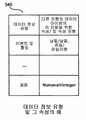
도 5d는 정보 유형을 그 속성에 대응시키기 위한 예시적 데이터 구조를 도시한다. 5D shows an example data structure for mapping an information type to its attributes.
도 5e는 정보 유형을 위한 일부 예시적 속성에 매핑(Mapping)되는 정보 유형의 예를 도시한다.5E shows an example of an information type that is mapped to some example attribute for the information type.
도 6a-6e는 제공자가 데이터를 편집하고 시스템에 입력하도록 하는 사용자 인터페이스를 도시하는 예시적 스크린 샷이다.6A-6E are example screen shots illustrating a user interface that allows a provider to edit data and enter data into the system.
도 7은 벌크 업로드 파일을 등록하기 위한 사용자 인터페이스를 도시하는 예시적 스크린 샷이다.7 is an example screen shot illustrating a user interface for registering a bulk upload file.
도 8a-8d는 제공자가 데이터 및 속성값을 벌크 업로드하는 방법을 도시한다.8A-8D illustrate how a provider bulk uploads data and attribute values.
이하의 단락에서는 본 발명에 따라 구조화된 데이터를 업로드하고 검색하기 위한 시스템의 다양한 실시예를 설명한다.The following paragraphs describe various embodiments of a system for uploading and retrieving structured data in accordance with the present invention.
도 1a는 본 발명의 바람직한 실시예에 따르는 데이터 처리 시스템을 도시하는 블록 다이어그램(100)이다. 도 1a는 다수의 클라이언트 데이터 처리 시스템(110a,...,110n), 네트워크(130), 및 서버 데이터 처리 시스템(120)을 포함한다. 도 1a에서, 예시적 사용자 데이터 처리 시스템(110a)은 프로세서(140), 브라우저(150), 및 메모리(160)를 포함한다. 사용자 데이터 처리 시스템(110) 또는 그 구성요소는 개인용 컴퓨터, 유선 네트워크 컴퓨터, 무선 네트워크 컴퓨터, 이동 전화기 또는 이동 전화기를 포함하는 장비, 휴대용 장비, 초박형 클라이언트 장비, 이들의 조합 등을 포함하는 어떠한 적절한 데이터 처리 시스템도 될 수 있지만 이들에 제한되지는 않는다. 네트워크(130)는 하나 이상의 사용자 데이터 처리 시스템(110)과 서버 데이터 처리 시스템(120) 사이의 통신을 가능하게 하는 어떠한 네트워크도 될 수 있다. 예를 들어, 네트워크(130)는 인터넷, LAN, WAN, 유선 네트워크, 무선 네트워크, 이동 전화 네트워크, 문자 메시지를 송신하는 네트워크, 이들의 조합이 될 수 있지만 이들에 제한되지는 않는다.1A is a block diagram 100 illustrating a data processing system in accordance with a preferred embodiment of the present invention. 1A includes a number of client data processing systems 110a,..., 110n, a network 130, and a server data processing system 120. In FIG. 1A, example user data processing system 110a includes a processor 140, a browser 150, and a memory 160. The user data processing system 110 or component thereof may be any suitable data including a personal computer, a wired network computer, a wireless network computer, a mobile phone or a device including a mobile phone, a portable device, an ultra thin client device, a combination thereof, and the like. Processing systems can also be, but are not limited to these. Network 130 may be any network that enables communication between one or more user data processing systems 110 and server data processing system 120. For example, network 130 may be, but is not limited to, the Internet, a LAN, a WAN, a wired network, a wireless network, a mobile phone network, a network for sending text messages, or a combination thereof.
본 발명의 바람직한 실시예에서, 사용자 데이터 처리 시스템(110a)은 사용자 가 서버 시스템(120)과 통신할 수 있도록 하고 프로세서(140)에 의해 실행되는 브라우저 소프트웨어(150)를 메모리(160)에 포함한다. 이하에서 상세히 설명될 것처럼, 그러한 브라우저(150)는 사용자가 서버 데이터 처리 시스템(120)과 통신하게 하고, 쿼리 용어를 서버 데이터 처리 시스템(120)에 전송하게 하며, 시스템(120)으로부터 쿼리 결과를 수신하게 한다. 이하에서 더 상세히 설명될 것처럼, 브라우저(150)는 사용자가 쿼리 결과와 관련된 라벨 및 속성을 수신하게 하고, 라벨 및 속성을 사용하여 쿼리 결과를 더 정의하게 한다. 상기한 실시예는 브라우저 기반이지만, 본 발명은 브라우저 기반의 검색에 제한되지 않고 사용자(110)와 서버(120) 사이의 어떠한 적절한 통신 메커니즘도 본 발명의 핵심 및 범위를 벗어나지 않는 범위에서 사용된다. In a preferred embodiment of the present invention, user data processing system 110a includes browser software 150 in memory 160 that enables a user to communicate with server system 120 and is executed by processor 140. . As will be described in detail below, such a browser 150 allows a user to communicate with the server data processing system 120, send query terms to the server data processing system 120, and retrieve query results from the system 120. Receive As will be described in more detail below, the browser 150 allows the user to receive labels and attributes associated with the query results and further define the query results using the labels and attributes. Although the above embodiment is browser based, the present invention is not limited to browser based searching and any suitable communication mechanism between user 110 and server 120 is used within the scope and spirit of the present invention.
본원발명에 설명된 모든 소프트웨어 및 컴퓨터 실행 가능 명령어의 일부는 데이터 처리 시스템의 메모리, CD ROM, 플래시 메모리, 플로피 디스크를 포함하지만 이에 제한되지는 않는 컴퓨터 판독 가능 매체에 컴퓨터 프로그램 제품으로 저장될 수 있거나, 또는 네트워크를 통해 또는 시스템 구성요소들 사이에서 신호로서 송신될 수 있다.Portions of all software and computer executable instructions described herein may be stored as computer program products on computer readable media, including but not limited to memory, CD ROM, flash memory, floppy disks of data processing systems, or Or as a signal over a network or between system components.
서버 데이터 처리 시스템(120)은 서버 시스템(120)이 쿼리 용어를 구조화된 데이터 콜렉션(190)에서 검색할 수 있도록 하기 위해 검색 및 쿼리 엔진 소프트웨어(185)를 실행하는 프로세서(170)를 포함한다(검색 및 쿼리 엔진(185)은 "검색 엔진"으로도 불림). 구조화된 데이터의 일례는 필드화된(Fielded) 데이터, 즉 각각이 하나 이상의 데이터 필드(이름, 주소, 상태 등과 같은)를 갖는 데이터 아이템들이 다.Server data processing system 120 includes a processor 170 that executes search and
메모리(180)는 속성 저장소(195)도 포함하는데, 이는 구조화된 데이터(190)에서 일부 또는 모든 데이터 아이템을 위한 속성(및 라벨)을 저장한다. 저장소는 도 5와 연관하여 이하에서 설명한다. 저장소(195)는 구조화된 데이터 콜렉션(190)의 일부로 도시되었지만, 저장소(195)는 데이터 콜렉션(190)으로부터 분리도 된다.Memory 180 also includes an
큰 검색 엔진 및 큰 데이터 콜렉션은 분산(Distributed) 데이터 처리 시스템, 협동(Cooperating) 데이터 처리 시스템, 네트워크 데이터 처리 시스템 등을 포함하지만 이에 제한되지는 않는 많은 방식으로 저장되지만, 도 1a에서는 검색 엔진(185), 저장소(195), 및 구조화된 데이터 콜렉션(190) 모두가 단일 메모리(180) 내에 도시되었다. 검색 엔진(185)은 소프트웨어, 하드웨어, 펌웨어, 또는 이들의 어떠한 조합도 가능하다.Large search engines and large data collections are stored in many ways, including, but not limited to, distributed data processing systems, cooperative data processing systems, network data processing systems, and the like, but FIG. ),
바람직한 실시예에서, 쿼리 용어는 하나 이상의 다수의 사용자 시스템을 통해 사용자에 의해 입력되고, 네트워크(130)를 통해 서버 데이터 처리 시스템(120)으로 송신된다. 데이터 컬렉션을 수신, 색인화, 및 검색하기 위해 서버(120)에 의해 사용되는 방법의 자세한 내용이 본원발명에서 설명된다.In a preferred embodiment, the query term is entered by the user through one or more multiple user systems and sent via the network 130 to the server data processing system 120. Details of the method used by server 120 to receive, index, and retrieve data collections are described herein.
도 1b는 본 발명의 바람직한 실시예에 따르는 다른 데이터 처리 시스템을 도시하는 블록 다이어그램(111)이다. 도 1b에서, 사용자는 자신의 기계(110)에 개인 데이터 콜렉션(190)을 저장한다. 개인 검색 엔진은, 사용자 및 가능하게는 네트워크(130)를 통해 다른 사용자에 의해 검색 가능하도록, 이 데이터에 접속하고 조직화하는 것이 고려된다. 그러한 시스템은 데이터베이스 및 다른 유형의 데이터 콜렉 션이 중앙 검색 엔진에 의해 접속 가능한 검색 가능 문서의 풀(Pool)에 추가될 수 있도록 한다.1B is a block diagram 111 illustrating another data processing system according to a preferred embodiment of the present invention. In FIG. 1B, a user stores a
도 1b의 실시예에서, 데이터 콜렉션(190)은 사용자의 데이터 처리 시스템(110) 또는 엔터프라이즈(Enterprise) 서버(도시되지 않음)에 저장되고, 사용자, 사용자들 중 더 작은 부분 집합, 또는 데이터 콜렉션(190)에 어떻게 접속하는지 알고 있는 모든 사용자와 같이 선택된 그룹의 사람 또는 개인이 이용 가능하도록 만들어진다. 그러한 경우에, 상기한 것처럼 속성 및 라벨을 통해 검색을 필터링하는 능력이 컴퓨터에서 또는 컴퓨터의 로컬 네트워크에서 지역적으로 실행되는 개인 검색 엔진(185)의 일부분이 될 수 있다. 예를 들어, 캘리포니아 마운틴 뷰에 있는 구글 사에서 제공하는 구글 데스크탑 검색 툴은 사용자의 데스크탑에서 실행되는 검색 툴이고 사용자의 개인용 컴퓨터 상의 데이터를 색인화한다. 본 발명을 포함하는 구글 데스크탑의 구현은 사용자에게 사용자의 데스크탑에 저장되거나 그로부터 접속 가능한 데이터베이스 및 다른 유형의 데이터 콜렉션을 검색하는 능력을 제공한다.In the embodiment of FIG. 1B,
구글 데스크탑의 구현은 사용자에게 유용한 속성 및 라벨로 자신의 데이터를 조직하는 능력도 제공한다. 예를 들어, 대학 도서관은 모든 온라인 콜렉션을 대학의 학생, 교직원, 및 졸업생이 사용 가능하도록 할 수 있다. 그러한 경우에, 정보는 공개적으로 사용 가능한 서버에 있지 않으나, 대학의 서버에 저장되고 대학 데이터 제공자에 의해 접속이 허락된 사람(및 프로그램)에게만 사용 및 검색이 가능하다. 이 예에서, 대학은 어떤 제공자가 데이터 콜렉션에 추가할 능력을 가지는지 도 제어할 수 있다.The Google Desktop implementation also gives users the ability to organize their data with attributes and labels that are useful to the user. For example, the university library can make all online collections available to students, faculty, and graduates of the university. In such a case, the information is not on a publicly available server, but only available to and retrieved by a person (and program) stored on the university's server and authorized by the university data provider. In this example, the university can also control which providers have the ability to add to the data collection.
도 1c는 본 발명의 바람직한 실시예에 따르는 아키텍처 다이어그램(131)이다. 설명된 실시예에서, 제공자는 데이터 및 속성을 시스템에 입력하는 세 가지 방식 중 하나 이상을 사용할 수 있다. 제공자측 전단(Front End, 132)은 제공자가 그러한 목적을 위해 제공되는 사용자 인터페이스를 사용하여 데이터 아이템 및 속성을 입력하도록 한다(예를 들어, 도 6b 참조). 제공자는 데이터 아이템의 벌크 업로드(133)도 수행할 수 있다(예를 들어, 도 8a-8d 참조). 제공자는 특정 URL로부터 아이템을 업로드(134)도 할 수 있다(예를 들어, FTP를 사용함). 검색 및 쿼리 엔진(185)은 데이터 콜렉션(190)의 아이템을 색인화하고, 데이터 콜렉션(190)은 바람직하게는 모든 데이터의 색인(137)을 생산하기 위해 데이터 아이템에 대하여 입력된 속성 및 속성값을 포함한다. 검색 엔진(185)은 사용자가 쿼리를 입력하도록 한다(예를 들어, 도 4a 참조). 시스템은 소프트웨어 프로그램이 검색 엔진(185)을 통해 데이터를 쿼리하도록 하는 API(Application Program Interface)도 포함한다.1C is an architecture diagram 131 in accordance with a preferred embodiment of the present invention. In the described embodiment, the provider may use one or more of three ways of entering data and attributes into the system. The provider side
도 2a는 본 발명의 바람직한 실시예에 따라 검색 가능한 데이터 아이템 콜렉션을 만드는 개관을 도시하는 순서도(200)이다. 도 6a-6e 및 도 8a-8d와 연관하여 이하에 설명된 것처럼, 서버(120)는 데이터 아이템 콜렉션을 수신한다(202). 이 데이터는 표준 웹 탐색의 결과로서 수신되거나 또는 자신의 데이터가 검색 가능하도록 되기를 원하는 하나 이상의 제공자에 의해 제공될 수 있다. 수신된 데이터 아이템 콜렉션은 이하에 설명될 것처럼 라벨, 속성, 및 속성값을 추출하기 위해 처리되고 그러한 라벨, 속성, 및 속성값은 다양한 정보 유형과 관련된다. 특정 환경에서, 사용자는 입력된 데이터의 일부 또는 전체를 위해 속성 이름 및/또는 속성값을 제공한다. 예를 들어, 사용자가 의학 저널 콜렉션을 보관하기 위해 만든 데이터베이스를 업로드한다고 한다. 사용자는 "저널", "발행 년도", "저널 이름"과 같은 속성이름을 반영하는 값으로 이러한 저널에 대한 속성을 특정할 수 있다. 사용자는 "의학", "치학", "하바드로부터" 등과 같은 저널 각각을 위한 0 개 이상의 라벨을 입력한다. 라벨은 그와 관련된 값을 갖지 않는 특별한 종류의 속성이다(값없는 태그라고도 함). 요소(204)의 상세한 내용을 도 3a과 함께 설명한다.2A is a
도 2b는 본 발명의 바람직한 실시예에 따라 문서 콜렉션을 검색하고 검색을 걸러내는 개관을 도시하는 순서도(210)이다. 실시예에서, 사용자는 쿼리 용어(도 4a의 스크린 샷(400)에서 "암 수용체(402)"와 같은 쿼리 용어)를 입력한다(212).FIG. 2B is a
특정 실시예에서, 사용자는 속성 이름 및 값을 영역(402)에 입력된 쿼리의 일부로서 입력한다. 예를 들어, 사용자는 영역(402)에 다음의 내용을 입력한다.In a particular embodiment, the user enters the attribute name and value as part of the query entered in
암 수용체 속성(저널유형:의학)Cancer Receptor Properties (Journal Type: Medicine)
쿼리 결과의 일부 아이템이 저널유형으로 명명된 속성을 가지지만 속성이 코어 속성 집합의 일부분이 아니라는 것을 사용자가 안다면, 사용자는 의학 저널만을 돌려받기를 원한다. If a user knows that some of the items in the query result have an attribute named journaltype but the attribute is not part of the core attribute set, the user wants to get back only the medical journal.
도 3b와 연관하여 이하에서 상세히 설명될 것처럼, 시스템은 쿼리 결과를 결정한다(213). 일부 실시예에서, 쿼리 결과는 이 시점에서 디스플레이된다(213). 다른 실시예에서, 쿼리 결과는 아직 디스플레이되지 않고, 대신에 사용자는 쿼리 용어에 특정하는 라벨 및/또는 속성을 선택함으로써 자신의 검색을 더 걸러내도록 요 청받는다. 예를 들어, 도 3d에 도시된 것처럼, 사용자는 라벨 및 속성을 특정함으로서 자신의 검색을 걸러낼 수 있다(214).As will be described in detail below in connection with FIG. 3B, the system determines 213 the query results. In some embodiments, the query results are displayed 213 at this point. In another embodiment, the query results are not yet displayed, but instead the user is asked to further filter his search by selecting labels and / or attributes specific to the query term. For example, as shown in FIG. 3D, the user can filter out his search by specifying labels and attributes (214).
도 3a는 데이터 아이템 콜렉션으로부터 라벨 및 속성을 추출하는 방법을 도시하는 순서도이다. 이 방법은 데이터 콜렉션이 검색될 수 있도록 데이터 콜렉션을 조직하기 위해 사용된 셋업(Set-up) 과정의 일부이다.3A is a flow chart illustrating a method of extracting labels and attributes from a collection of data items. This method is part of the set-up process used to organize data collection so that data collection can be retrieved.
각각이 정보 유형을 가지는 데이터 아이템이 수신되면, 시스템은 이 정보 유형을 위한 라벨 및 속성을 결정한다(304). 속성은 "저널"과 같은 이름을 가지고, 하나 이상의 가능한 저널 이름의 값을 가지는 이름/값의 쌍(Pair)이다. When a data item is received, each of which has an information type, the system determines 304 a label and attribute for this information type. An attribute is a name / value pair that has a name such as "journal" and that has the value of one or more possible journal names.
바람직한 실시예에서, 속성 및 라벨은 데이터 제공자에 의해 특정된다. 따라서, 속성의 결정은 사용자가 제공한 속성 및 라벨을 식별하는 문제에 불과하다.In a preferred embodiment, the attributes and labels are specified by the data provider. Thus, the determination of attributes is only a matter of identifying the attributes and labels provided by the user.
특정한 경우에, 데이터 제공자는 자신의 아이템을 위한 속성 및 라벨을 특정하지 않는다. 예를 들어, 아이템이 웹 탐색자(Crawler)에 의해 위치된 웹 페이지라면, 웹 페이지의 소유자는 자신의 페이지를 위한 속성 또는 라벨을 특정하기 위한 기회를 갖지 못한다. 따라서, 다른 바람직한 실시예에서, 라벨 및 속성은 데이터 콜렉션을 위해 소프트웨어에 의해 유도된다. 라벨 및 속성을 유도하는 단계는 미리 결정된 라벨 및 속성 목록을 위한 잠재적 값이 소프트웨어에 의해 데이터 콜렉션 내에서 발견되는 순수하게 자동화된 과정과 관련된다. 예를 들어, 판매를 위한 아이템 목록에서(예를 들어, 구글의 프루글 시스템), 미리 결정된 기준(Criteria)을 만족시키는 가격의 금액(Amount)은 그 아이템을 위해 "가격" 속성의 값으로 지정된다. 다른 바람직한 실시예에서, 소프트웨어는 소프트웨어가 속성/값 쌍을 제안하 고, 제공자에 의해 속성/값 쌍이 수용되거나 거절되는 제공자와의 쌍방향 과정을 수행한다. 다른 바람직한 실시예에서, html 태그가 스캔되고, 발견된 정보는 태그를 가지는 페이지를 위한 속상 값을 유도하기 위해 사용된다. 예를 들어, 페이지가 다음과 같은 html 코멘트를 포함한다고 가정한다.In certain cases, the data provider does not specify the attributes and labels for his item. For example, if the item is a web page located by a web crawler, the owner of the web page does not have the opportunity to specify an attribute or label for his page. Thus, in another preferred embodiment, labels and attributes are derived by software for data collection. Deriving labels and attributes involves a purely automated process in which potential values for predetermined labels and attributes lists are found within the data collection by the software. For example, in a list of items for sale (e.g., Google's Plug system), an amount of price that satisfies a predetermined criterion is specified as the value of the "price" attribute for that item. do. In another preferred embodiment, the software performs an interactive process with the provider where the software proposes the attribute / value pair and the attribute / value pair is accepted or rejected by the provider. In another preferred embodiment, the html tag is scanned and the information found is used to derive upset values for the page with the tag. For example, suppose your page contains the following html comment:
<! 현재 가격은 http://www.todayspricesforbigco.com%id=32423490 에 있음 !><! Current prices are at http ://www.todayspricesforbigco.com% id = 32423490!>
소프트웨어는 지시된 URL로부터 현재 가격을 획득하고, 그 웹 페이지를 위한 가격 속성값을 만들어낸다.The software obtains the current price from the indicated URL and generates a price attribute value for the web page.
속성 및 라벨이 데이터 아이템과 관련되면(306), 데이터 아이템은 검색될 수 있도록 색인화된다(309). 바람직한 제 1 실시예에서, 속성과 라벨, 및 그 값들이 색인화되지만, 다른 바람직한 실시예에서는 개별적으로 검색되거나 개별적으로 색인화된다.If the attribute and label are associated with the data item (306), the data item is indexed (309) for retrieval. In the first preferred embodiment, the attributes and labels, and their values are indexed, while in other preferred embodiments they are searched individually or indexed separately.
도 5a는 검색 가능한 데이터 콜렉션을 위한 속성 및 라벨을 저장소(195)에 저장하기 위해 사용되는 데이터 포맷(500)을 도시한다. 각 아이템은 그 유형에 적합한 특정 속성 및 라벨과 관련된다. 예를 들어, 직업 공고는, 직업 기능 - 제품 관리; 고용주 - ABC 사; 및 직업 유형 - 전문직인 속성을 가진다. 바람직한 실시예에서 속성 및 라벨은 다음 유형의 값을 가질 수 있다.5A illustrates a
BOOLEANBOOLEAN
INTINT
FLOATFLOAT
URLURL
STRINGSTRING
LOCATIONLOCATION
DATEDATE
DATE RANGEDATE RANGE
속성 및 라벨은 저장 장치에 다음의 메타태그(Metatag)에 의해 지시된다. Attributes and labels are indicated by the following Metatag to the storage device.
<start name><start name>
이름name
</end name></ end name>
<start value><start value>
값value
</end value></ end value>
따라서, 바람직한 실시예에서, 각 속성은 "저널"인 속성 이름 및 "염증에 대한 저널"인 "저널" 속성에 대한 값과 같은 이름/값 쌍이다(도 5b 참조). 각 라벨은 특정 저널이 의학 저널이라는 것을 지시하는 "의학"과 같은 이름만을 가진다(도 5c 참조). 바람직한 실시예에서, 데이터 아이템의 정보 유형도 라벨 중 하나의 이름이다. 따라서, "이벤트 및 활동"이라는 정보 유형을 가진 데이터 아이템도 같은 이름의 라벨을 가진다. 이런 방식으로, 사용자는 데이터 아이템의 정보 유형과 같은 이름을 가진 라벨을 특정함으로써 특정 정보 유형을 가진 데이터를 검색할 수 있다. Thus, in a preferred embodiment, each attribute is a name / value pair, such as the attribute name being "journal" and the value for the "journal" attribute being "journal for inflammation" (see Figure 5b). Each label has only a name such as "medicine" indicating that the particular journal is a medical journal (see Figure 5C). In a preferred embodiment, the information type of the data item is also the name of one of the labels. Thus, data items with an information type of "events and activities" also have a label with the same name. In this way, a user can retrieve data with a particular type of information by specifying a label with the same name as the information type of the data item.
도 5d는 정보 유형을 그 속성에 매핑시키기 위한 예시적 데이터 구조를 도시 한다. 따라서, 데이터 콜렉션(190)에 있는 아이템이 "제품"이라는 정보 유형을 가지면, 아이템의 속성은 "제품"이라는 정보 유형을 위한 속성 및 속성 유형을 포함하는 도 5c의 데이터 구조에 접속함으로써 결정될 수 있다. 5D shows an example data structure for mapping information types to their attributes. Thus, if an item in
도 5d에 도시된 것처럼, 각 정보 유형은 미리 결정된 속성이다. 속성값은 속성 유형의 값이다. 도 5e는 일부 실질적 값을 도시한다. 따라서, "저널"이라는 정보 유형은 속성 유형이 스트링(String)인 값을 가지는 "저널 이름" 속성 및 널(Null) 값을 가지는 "의학"이라는 라벨을 가진다. 예를 들어, 그러한 속성은 사용자가 특정 저널 제목을 검색할 수 있게 하거나 모든 의학 저널을 검색할 수 있게 한다. 유사하게, "제품"이라는 정보 유형은 판매 가능한 특정 제품의 개수를 지시하고 정수의 속성 유형을 가지는 "NumAvail" 속성을 가진다. 모든 속성은 선택적이다. 제공자는 제안된 속성을 채우거나(Populate) 자신만의 속성을 만드는 것을 선택할 수 있다. As shown in Fig. 5D, each type of information is a predetermined attribute. The attribute value is the value of the attribute type. 5E shows some substantial values. Thus, the information type "journal" has a "journal name" attribute with a value whose attribute type is String and a label "medicine" with a null value. For example, such an attribute may allow a user to search for a particular journal title or to search all medical journals. Similarly, an information type of "product" has a "NumAvail" attribute indicating the number of specific products available for sale and having an attribute type of integer. All attributes are optional. The provider can choose to populate the proposed attribute or create its own.
도 3b는 수신된 쿼리 용어 또는 용어에 대응하여 쿼리 결과를 디스플레이하는 방법(300)을 도시하는 순서도이다. 바람직한 실시예에서, 쿼리 결과는 검색 엔진(185)에 의해 결정된다. 예를 들어, "암 수용체"라는 쿼리(도 4a 참조)는 도 4b에 도시된 것과 같은 속성(404)을 가지는 아이템의 쿼리 결과(406)를 가져온다(312). 상기한 것처럼, 본 발명의 일부 실시예는 이 시점에서 쿼리 결과(406) 결정하지만 디스플레이하지는 않는다. 3B is a flowchart illustrating a
쿼리에 대한 쿼리 결과가 결정되면(선택적으로 디스플레이되지는 않음), 쿼리 결과에 대한 최소한 일부의 속성 이름 및 라벨이 디스플레이된다(322). 데이터 집합의 데이터 아이템(406)은 특정 정보 유형을 가진다. 처음에 디스플레이되는 속성(404)은 쿼리 결과(406)에서 데이터 아이템의 정보 유형을 위한 속성의 일부 또는 전체이다. 쿼리 결과는 데이터 아이템을 가지고, 각각의 데이터 아이템은 서로 다른 속성을 가진다. 쿼리 결과의 위 쪽에 보이는 속성은 쿼리 결과에서 가장 흔하고, 검색자들에 의해서 가장 많이 클릭되거나 걸러진 속성이다. 예를 들어, "주거(Housing)"라는 쿼리는 침실 및 욕실 속성을 가진 많은 아이템을 가지고, 검색자는 항상 주거라는 쿼리에 대해서 "침실" 및 "욕실" 속성에 의해 걸러내기를 한다. 그래서 침실 및 욕실은 검색 결과에서 제일 먼저 보인다.If a query result for the query is determined (not optionally displayed), at least some attribute names and labels for the query result are displayed (322). The
도 4b는 쿼리 결과(406), 다수의 속성 및 라벨 이름(404, "저널", "공중보건", "뉴스 소스", "저자")을 도시한다. 각 속성 다음의 숫자는 검색 결과(406)와 관련된 속성을 가진 검색 결과에서 아이템의 개수를 지시한다. 예를 들어, 도 4b에서, 쿼리 결과(406)는 "저널"과 관련된 속성/라벨을 가진 2050 개의 아이템을 포함한다. 따라서, 특정 쿼리 결과와 함께 도시된 속성의 개수 및 주체(Identity)는 쿼리 의존적이고, 나중에 검색 결과를 좁히기 위해 선택되는 속성 및 라벨에 더 의존적이다. 4B shows the
도 3c는 주어진 쿼리 결과(406)에 대해 어떤 속성을 디스플레이할 것인지 결정하는 방법을 도시하는 순서도(340)이다. 최종 사용자가 검색을 수행할 때, q 개의 가장 적절한 결과가 검색 엔진(185)에 의해 결정되고(341), q 개의 가장 적절한 결과를 위해 n 개의 가장 인기있는 속성이 결정된다(342). 상위 n 개의 속성 이름을 위해, 시스템은 상위 m 개의 속성/라벨 값을 결정한다(344). 그리고나서, 히스 토그램을 계산하거나, 적절한 결과 집합에서 매칭(Matching)되는 오퍼(Offer)의 개수를 세어 오퍼 카운트(Count)를 계산한다. q, n, 및 m 값은 모두 설정 가능하다. 이하의 값에 제한되는 것은 아니지만 예시적으로, q는 1,000 개에서 100,000,000 개(q는 특정 쿼리 용어와 매칭되는 모든 결과로 설정될수도 있음), N은 100 개 부근 및 M은 20 개에서 100개의 값이다. 3C is a
바람직한 실시예에서, 속성은 히스토그램이 결정되기 전에 표준화된다(346). 특정 구현에서, 소정양의 데이터 소거(Cleanup) 및 표준화는 데이터가 초기에 데이터 콜렉션(190)에 저장될 때 이루어진다. 설명된 실시예에서, 데이터 표준화는 검색되는 쿼리 용어에 기초하여 즉시(On the fly) 이루어진다(예를 들어, 쿼리 용어가 "자동차"일 때 모든 "브랜드" 속성을 "제작"으로 표준화하는 것이 의미있지만, 쿼리가 "핸드백"이면 모든 제작 속성을 "브랜드"로 표준화하는 것이 의미있음). 다른 실시예는 데이터가 데이터 콜렉션(190)으로 수신될 때 더 많은 표준화를 한다. 데이터 표준화는 바람직한 실시예에서 다음과 같이 이루어진다. In a preferred embodiment, the attribute is normalized before the histogram is determined (346). In certain implementations, a certain amount of data cleanup and normalization occurs when data is initially stored in
1. 보충하기(Stemming) - 예를 들어, 레스토랑 = 레스토랑들1. Stemming-for example, restaurant = restaurants
2. 축약하기(Abbrevation) - 예를 들어, sz = 크기2. Abbreviation-eg sz = size
3. 동등한 단위 - 예를 들어, 무게 = 온스, 파운드 등3. Equivalent units-for example, weight = ounces, pounds, etc.
4. 철자 수정 시도4. Try spelling correction
보충하기는 변형 및 오기를 데이터 콜렉션(190)으로 끌어오게 함으로써 제공자가 자신의 속성 이름을 특정하는 시스템에서 특히 유용하다. 예를 들어, 보충하기는 사용자가 "저널", "저늘들", "저럴" 속성 이름을 보충된 속성인 "저널들"의 단일 선택으로 필터링하도록 한다.Replenishing is particularly useful in systems where a provider specifies his or her attribute name by drawing transformations and misleadings into the
특정 바람직한 실시예에서, 제공자에 의해 추가된 속성은 확인된 유형이다. 예를 들어, URL, DateTime, Number, String, Location, Boolean 속성은 그들이 유효한 값을 가지는지 알아보기 위해 확인된다. 일부 실시예는 각각의 URL 값이 활성인지 알아보기 위해 접속을 확인하는데(Ping), 이는 다양한 구현에서 선택적이다. 바람직한 실시예에서, 위치는 지리적으로 코딩되어 예를 들어, 구글맵과 같은 온라인 지도 서비스에 의해 참조될 수 있다. 특정 실시예에서, 지리적으로 코딩될 수 없는 "위치" 속성은 유효하지 않은 것으로 고려된다.In certain preferred embodiments, the attributes added by the provider are of the identified type. For example, the URL, DateTime, Number, String, Location, and Boolean attributes are checked to see if they have valid values. Some embodiments ping the connection to see if each URL value is active, which is optional in various implementations. In a preferred embodiment, the location can be geographically coded and referenced by an online map service such as, for example, a Google map. In certain embodiments, "location" attributes that cannot be geographically coded are considered invalid.
인기있는 속성 및 라벨이 결정되고 디스플레이되면(322)(도 3b 참조), 사용자는 쿼리 결과를 위해 하나 이상의 디스플레이된 라벨 및 속성값을 특정하도록 허용된다(324)(도 3d 참조).Once the popular attributes and labels are determined and displayed 322 (see FIG. 3B), the user is allowed to specify one or more displayed labels and attribute values for the query results (324) (see FIG. 3D).
도 4c는 사용자가 도 4b로부터 "저널" 속성을 선택하고 자신의 검색을 한정하기 위해서 영역(408)에 저널의 이름을 입력하기 위해 준비하는 예를 도시한다. 쿼리 용어(402)는 이제 "암 수용체 필터 : 저널"이라는 것을 주목한다. "저널" 속성은 나열된 코어 속성(404)에서 사라졌다.FIG. 4C shows an example in which the user prepares to enter the name of the journal in
유사하게, 도 4d에서, 사용자는 제 2 속성인 "년도(410)"를 선택하고, 사용자가 특정 저널 쿼리 용어에서 검색하고자 하는 년도 또는 범위 또는 년도들을 입력한다. 년도 속성은 "년도의 범위" 속성 유형이다. 쿼리 용어(402)가 이제 "암 수용체 필터 : 저널 필터 : 년도"라는 것을 주목한다. "년도" 속성은 나열된 속성(404)로부터 사라졌다. 사용자가 GO 버튼(411)을 선택하면, 선택된 속성이 필터 로 사용되어 검색이 다시 수행되고, 도 4e와 같은 화면이 디스플레이된다. 따라서, 사용자는 디스플레이된 쿼리 결과를 위해 하나 이상의 속성을 선택할 수 있고, 디스플레이된 속성(또는 라벨)에 따라 초기 검색을 필터링할 수 있다. 사용자가 속성값을 빈 칸으로 두면, 모든 속성값이 매칭된다. 예를 들어, 사용자가 저널 속성을 선택하지만 저널 이름을 입력하지 않으면, 모든 저널 속성을 가진 데이터 아이템이 쿼리 결과에 대한 가능한 후보로 선택된다. 저널 속성을 가지지 않은 데이터 아이템은 쿼리 결과에 선택되지 않는다.Similarly, in FIG. 4D, the user selects the second attribute, "
도 4d는 검색을 좁히기 위해 사용자가 하나 이상의 속성 또는 라벨을 선택하는 예를 도시한다. 설명된 실시예에서, 다중 라벨 및 속성은 속성 및 라벨(404)의 다중 라벨 및 속성을 클릭함으로써 선택된다. 다른 바람직한 실시예에서는 검색창(402)에 라벨 및 속성이 입력되도록 한다. 예를 들어, 가격 속성이 있으면, 사용자는 쿼리 용어로 다음과 같이 입력한다고 한다.4D shows an example where a user selects one or more attributes or labels to narrow the search. In the described embodiment, multiple labels and attributes are selected by clicking on multiple labels and attributes of the attribute and
속성(가격: 150 달러)Property (price: $ 150)
이 쿼리는 현재 쿼리 결과에서 가격 속성 및 150 달러 속성값을 가진 현재 쿼리 결과에 데이터 아이템을 찾는다. This query finds data items in the current query results with a Price attribute and a $ 150 attribute value in the current query results.
다른 예로, 사용자가 다음과 같이 입력한다고 한다.In another example, a user enters:
속성(가격: 150 달러) 및 라벨(빵상자보다작음)Property (price: $ 150) and label (less than a pan)
이 쿼리는 가격 속성, 150 달러 속성값, 및 빵상자보다작음이라는 라벨을 가진 데이터 아이템을 현재 쿼리 결과에서 찾는다. 다른 바람직한 실시예는 다른 적절한 사용자 인터페이스 요소를 사용하여 사용자가 논리적으로 속성 및 라벨을 결 합하도록 한다.This query looks for data items in the current query results that have a price attribute, a $ 150 attribute value, and a label smaller than the bread box. Another preferred embodiment uses other suitable user interface elements to allow users to logically combine attributes and labels.
도 4e는 도 4d에서 특정된 대로 특정 년도나 특정 년도들의 특정 저널에 한정되는 쿼리 결과를 도시한다. 사용자는 저널 내에서 검색(412)을 계속하기 원하는지 여부 또는 전체 데이터 아이템 콜렉션을 검색(413, 예를 들어, "구글베이스 전체 검색")을 계속하기 원하는지 여부를 결정하도록 허용된다. 이 예에서, 사용자는 영역(414)에서 다수의 라벨("생명공학", "의료", 및 "사진", 이들 각각은 쿼리 결과(406')에서 아이템(30,15 및 6)과 관련됨)의 선택을 오퍼받는다. 이 예에서, 사용자는 영역(416: 날짜, 저자, 공중보건, 인용)에서 속성을 위한 값을 특정하기 위한 선택을 오퍼받는다. 사용자는 관련성, 날짜 속성 또는 사용자가 정의하는 어떠한 속성(예를 들어, 가격, 위치 등)에 의해 쿼리 결과(406')를 분류(416)하는 옵션을 오퍼받기도 한다.FIG. 4E illustrates the results of a query that are specific to a particular year or to a particular journal of particular years as specified in FIG. The user is allowed to determine whether they want to continue the
도 4f에서, 사용자는 도 4e의 영역(414)로부터 "날짜" 속성을 선택하고, 날짜(420)를 입력할 기회가 주어진다. 사용자가 드롭다운(Drop-down) 연산자 "기간(Between)"을 선택할 때, 사용자에게 날짜 범위(도시됨)를 선택할 기회가 주어진다. "날짜" 속성은 나열된 속성(418)로부터 사라졌다. 이 예에서, "저자" 속성은 속성(414)로부터 사라졌다. 속성이 더 이상 쿼리 및 쿼리 결과와 관련되지 않으면 속성이 사라진다. 사용자가 현재 저널에 의해 필터링하지 않았다는 사실은 사용자가 제한된 아이템 집합만을 찾아본다는 것을 가정한다. 검색 및 저자 용어가 다시 나타나도록 하려면 사용자는 Go 버튼을 선택하면 된다. In FIG. 4F, the user is given the opportunity to select a “date” attribute from the
도 4g는 사용자가 저자 이름(422)을 선택하는 것을 도시한다. 속성 및 라벨 은 쿼리 결과에 기초하고 쿼리 결과는 지속적으로 변화하므로, 쿼리가 걸러지면서 새로운 속성 및 라벨이 보이게 된다. 사용자가 Go 버튼(423)을 누를 때, 다른 검색이 수행되고, 사용자에 의해 특정된 속성 및 속성값을 반영하기 위해 쿼리 결과가 더 필터링된다. 4G illustrates the user selecting
이하의 단락에서는 속성 및 라벨을 사용하여 검색 도중 또는 검색을 좁히는 도중에 속성 저장소(195)로의 접속을 설명한다. The following paragraphs describe the connection to the
저장소(195)를 참조하는 쿼리 및 색인과정은 바람직하게 다음의 연산자를 지원한다. The query and indexing process that references the
숫자 - 같음, 사이에, 초과, 미만, 숫자 범위 제안Number-equal, between, greater than, less than, suggest a range of numbers
스트링 - 이다(Is), 가지다(Has)String-Is, Has
날짜 - 범위, 이전, 이후, 현재Date-Range, Before, After, Current
위치 - 이내Location-within
저장소(195)는 적어도 다음의 방식으로 쿼리될 수 있다.The
-특정 속성 이름-유형 쌍과 매칭되는 모든 아이템을 내게 보낼 것Send me all items that match a specific attribute name-type pair
-속성값의 값에 기초하여 이 아이템들을 분류할 것Classify these items based on the value of the attribute value.
-이하의 속성 유형에 따른 분류가 지원됨Classification based on the following attribute types is supported:
-날짜시간Date Time
-Number - Int, Float-Number-Int, Float
-스트링String
-위치 - 위치를 입력한 사용자로부터의 거리Location-distance from user who entered location
이 쿼리 능력은 사용자가 다음의 속성 쿼리 유형을 입력하도록 한다.This query capability allows the user to enter the following attribute query types:
-특정 이름-유형 쌍을 가진 모든 아이템을 내게 보낼 것Send me all items with a specific name-type pair
-주어진 이 아이템을 속성값에 의해 분류할 것(예를 들어, 이벤트_날짜를 가진 모든 아이템을 내게 보낼 것 및 오름차순으로 저장된 아이템을 내게 보낼 것)Categorize this given item by its attribute value (for example, send me all items with event_date and send me items in ascending order)
-특정 이름-유형 속성을 위한 value1 및 value2 사이의 모든 아이템을 내게 보낼 것Send me all items between value1 and value2 for specific name-type attributes
예Yes
-요리_유형 속성을 가지고 15 분에서 30 분 사이의 값을 가지는 모든 아이템을 내게 보낼 것Send me all items with a cooking_type attribute with a value between 15 and 30 minutes
-크기 속성을 가지고 단위 없이 1 및 15의 값을 가지는 모든 아이템을 내게 보낼 것Send me all items with size attributes and values of 1 and 15 without units
-이벤트_날짜 속성을 가지고 오늘 이전의 값을 가지는 모든 아이템을 내게 보낼 것Send me all items with an event_date attribute that have a value earlier than today
-발행_날짜 속성을 가지고 1925 년의 값을 가지는 모든 아이템을 내게 보낼 것Send me all items with a value of 1925 with the issue_date attribute
이하의 연산자가 지원된다.The following operators are supported.
-숫자의 경우 -int, float-Int, float for numbers
-미만-under
-초과-Excess
-사이-between
-날짜시간의 경우 -현재-For date time-Current
-이전-Previous
-이후-after
-사이-between
-아이템 점수Item score
현재 아이템이 채점되는 2 개의 주요한 신호가 있다.There are currently two major signals for which items are scored.
-쿼리 의존 순위 - 주로 IR 점수-Query dependency rank-mainly IR score
-쿼리 독립 순위 - 페이지 순위 및 아이템 순위의 복합-Query Independent Ranking-Combination of Page Ranking and Item Ranking
페이지 순위는 제공자의 웹사이트 페이지 순위이다. 페이지 순위는 아이템이 데이터 콜렉션(190)에 호스트(Host)되거나 및/또는 아이템이 다른 아이템에 링크되지 않거나 연결되지 않은 경우에는 존재하지 않는다. Page ranking is the provider's website page ranking. The page rank does not exist if the item is hosted in
아이템 순위는 다수의 인자(Factor)에 의해 결정될 수 있다. 두가지 주요한 신호는 다음과 같다.The item rank may be determined by a number of factors. The two main signals are:
-제공자 특정 신호(예를 들어, 등급)Provider-specific signals (eg ratings)
-오퍼 특정 신호(예를 들어, desc의 길이, 속성 및 라벨의 개수, 사진 등)-Offer specific signals (e.g. length of desc, number of attributes and labels, photos, etc.)
아이템 순위는 다음의 신호에 의해 정의될 수 있다.The item rank may be defined by the following signals.
-desc 길이-desc length
-제목의 길이-Length of title
-라벨의 개수Number of labels
-속성의 개수Number of attributes
-사진-Picture
-오퍼가 스팸으로 보고된 횟수The number of times an offer was reported as spam.
-제공자의 등급Provider's rating
-오퍼의 새로움(Vecency)-Offer's newness
아이템은 쿼리 의존 순위*쿼리 독립 순위로 채점된다.Items are scored in query dependency rank * query independent rank.
순위가 기본 본류(Default Sort)이다.The rank is the default sort.
바람직한 실시예에서, 특정 파라미터가 시스템에 설정될 수 있다. 이 파라미터는 제공자 당 아이템의 최대 개수를 포함한다. 이는 특정 제공자에 의한 페이지의 혼잡을 방지한다. In a preferred embodiment, certain parameters can be set in the system. This parameter contains the maximum number of items per provider. This prevents congestion of pages by certain providers.
사용자가 검색을 좁히기 위해 속성 및/또는 라벨을 선택할 때, 시스템은 라벨, 제목, 설명 및 속성값을 검색한다. 속성 이름도 완성된 이름처럼 검색 가능해야만 한다. 구(Phrase)는 자주 발생하는 단어와 비교하여 훨씬 중요하다. 라벨은 제목에 비해 훨씬 중요하고, 제목은 설명보다 훨씬 더 중요하다. 속성값은 라벨과 동일한 정도로 중요하다. 각 제공자에 의한 소매상 모집(Merchant Crowding)은 개인 제공자로부터 아이템의 페이지 수가 검색 결과로 디스플레이되거나 디스플레이되지 않는지 여부를 규제하기 위해 사용자에 의해 켜지거나 켜지지 않는다. 수행된 검색에 의존하여, 소매상 모집은 바람직하거나 바람직하지 않게 된다.When the user selects an attribute and / or a label to narrow the search, the system retrieves the label, title, description, and attribute value. Attribute names must be searchable just like completed names. Phrases are much more important than words that occur frequently. Labels are much more important than titles, and titles are much more important than descriptions. Attribute values are as important as labels. Merchant Crowding by each provider is turned on or off by the user to regulate whether or not the number of pages of items from the individual provider is displayed in search results. Depending on the search performed, retailer recruitment may or may not be desirable.
바람직한 실시예에서, 시스템은 동일하거나 유사한 유형의 다른 아이템과 관련된 속성에 기초하여 새로운 아이템의 특정 유형의 구조를 정의한다(예를 들어, "직업들" 정보 유형의 대부분의 아이템이 직업 기능, 직업 유형 및 고용주의 속성을 가지고 있다면, "직업" 정보 유형의 데이터 아이템을 위한 공통 속성 구조는 직업 유형, 고용주 및 직업 기능을 갖지 않음). 검색자 및 다른 프로그램은 "고용주가 ABC 사이고 직업 유형이 제품 관리인 모든 직업을 내게로 보낼 것"과 같은 쿼리로 데이터 집합을 쿼리할 수 있다. In a preferred embodiment, the system defines the structure of a particular type of new item based on attributes associated with other items of the same or similar type (e.g., most items of the "occupations" information type are occupational functions, occupations If you have attributes of type and employer, the common attribute structure for data items of the "job" information type does not have job type, employer and job function). Searchers and other programs can query the dataset with a query such as "Send me all jobs with employer ABC and job type product manager."
본원발명에 설명된 예는 사람인 사용자를 나타내지만, 본 발명의 다른 실시예는 인공 지능 소프트웨어 프로그램과 같은 사람이 아닌 사용자, 또는 사람일 수도 있고 사람이 아닐 수도 있는 웹을 통해 통신하는 존재(Entity)와 동작하기 위해 설계됨이 이해된다. 사람이 아닌 사용자가 소프트웨어 프로그램이면, 상기한 것처럼 결과 및 속성을 디스플레이할 필요가 없다. 대신에, 그러한 구현은 쿼리 결과를 좁히는데 사용될 수 있는 잠재적 속성과 통신할 뿐이다. 그러한 실시예에서, 사람이 아닌 인공 지능은 무엇으로부터 선택을 해야하는지 다수의 속성에 의해 압도되기 않기 때문에, 더 많은 속성의 옵션이 디스플레이될 수 있다. 그러한 실시예에서, 히스토그램을 결정하는 과정과 같은 방법의 구성 요소는 필요하지 않거나, 속성 선택의 순위를 매기고 가능한 속성 선택의 개수를 제한하지 않기 위해서만 사용된다.Although the examples described herein represent a user who is a person, another embodiment of the invention is an entity that communicates via a non-human user, such as an artificial intelligence software program, or a web that may or may not be a person. It is understood that it is designed to operate with. If the user is a non-human software program, there is no need to display the results and attributes as described above. Instead, such an implementation only communicates with potential attributes that can be used to narrow the query results. In such embodiments, more attributes may be displayed because non-human AI is not overwhelmed by a number of attributes from which to choose. In such embodiments, components of the method, such as the process of determining the histogram, are not needed or used only to rank attribute selections and not to limit the number of possible attribute selections.
주기적으로, 구조화된 데이터(190)에서 다양한 정보 유형을 위한 코어 속성이 업데이트될 필요가 있음이 이해된다. 데이터가 구조화된 데이터 콜렉션에 추가되면서, 처음에는 인기가 없었던 특정 속성이 인기가 있게 된다. 예를 들어, 정수(Integer)의 속성 유형을 가지며 출연진(Cast) 사진의 출처인 텔레비전 쇼의 어떤 시즌을 특정하는 "시즌(Season)" 속성은 "TV 쇼" 정보 유형으로 초기 코어 속성 에 의해 처음에는 고려되지 않지만, 더 많은 출연진 사진이 데이터 콜렉션에 추가되면서 시즌 속성은 인기가 있게 될 수 있다. 일부 실시예에서, 코어 속성은 스팸 필터를 통과한 후에 인기 및 시즌에 기초하여 자동 업데이트 되기도 한다.Periodically, it is understood that the core attributes for the various information types need to be updated in the structured
도 3e는 제공자가 제공한 새로운 속성이 정보 유형을 위해 코어 속성에 추가되어야만 하는지를 결정하기 위해 주기적으로 수행되는 방법(350)을 도시한다. 아이템 정보 유형을 위한 속성의 코어 그룹은 제공자가 새로운 정보 유형의 아이템을 추가할 때마다 자동으로 오퍼되는 속성이다. 바람직한 실시예에서, 제공자가 자신의 방식을 디스플레이된 속성에 강제하기 위해 속성을 스팸(Spam)할 가능성을 감소시키도록 코어 속성만이 오퍼된다. 정보 유형 각각을 위해, 본 방법은 그 정보 유형을 위한 가장 인기 있는 사용자가 추가한 속성만을 살피고(352), 그 정보 유형에 대해 가장 인기 있는 속성을 코어 속성으로 승급시킨다(Promote).3E illustrates a
어떤 속성이 코어 속성으로 승급되는지 결정하기 위해 사용되는 "가장 인기있음"은 서로 다른 실시예에서 다르게 정의된다. 예를 들어, 가장 인기있음은 예를 들어, 일주일 또는 한 달과 같은 미리 결정된 시간 주기에 동안 사용자에 의해 가장 자주 선택(352)된, 코어 속성에 없는 속성일 수 있다. 다른 예로서, 가장 인기있음은 미리 결정된 시간 주기 동안 쿼리 결과에서 가장 자주 나타나는 데이터 아이템을 가진, 코어 속성에 없는 속성일 수 있다. 또 다른 예로서, 가장 인기있음은 미리 결정된 시간 주기 동안 대규모의 제공자 데이터에 나타나는, 코어 속성에 없는 속성일 수 있다. 가장 인기있음은 코어 속성에 추가되며 검색을 좁히는데 유용한 속성을 만들어 낸다면 어떠한 적절한 방식으로도 결정될 수 있다."Most popular" used to determine which attributes are promoted to core attributes is defined differently in different embodiments. For example, the most popular may be an attribute that is not in the core attribute, most often selected 352 by the user during a predetermined time period, such as, for example, a week or a month. As another example, the most popular may be an attribute that is not in the core attribute, with data items that appear most frequently in the query results for a predetermined time period. As another example, the most popular may be an attribute not present in the core attribute that appears in large provider data for a predetermined time period. The most popular is added to the core properties and can be determined in any suitable way as long as they produce properties that are useful for narrowing the search.
예를 들어, 제공자는 블로그에서 언급되는 기사(Article)를 지시하기 위해 기사의 아이템 정보 유형을 위한 "블로그됨(Blogged)" 속성을 추가하기 시작한다. 그러한 속성은 URL 속성 유형을 가지고, 블로그의 URL은 아이템이 어디에서 언급되는지 지시해준다. 유일 제공자 또는 사용자의 임계치 숫자가 정보 유형을 위해 특정한 새로운 속성을 사용하면(354), 속성은 그 정보 유형을 위한 속성의 코어 그룹에 추가된다(356). 바람직한 실시예에서, 임계치 값은 시스템을 사용하는 제공자의 전체 숫자에 기초한다. 이는 2~3 개의 작은 값에서 시작하여 큰 숫자로 증가된다. 인기 있는 라벨을 코어 라벨 집합에 추가하기 위해 라벨의 경우에도 유사한 방법이 수행된다. 바람직한 실시예에서, 승급된 속성은 사람에 의해 또는 적절한 소프트웨어 또는 하드웨어로 구현된 방법에 의해 완전함(Sanity)이 확인된다.For example, the provider begins adding a "Blogged" attribute for the article's item information type to indicate the article mentioned in the blog. Such attributes have a URL attribute type, and the URL of the blog indicates where the item is mentioned. If a threshold number of unique providers or users uses a particular new attribute for the information type (354), the attribute is added to the core group of attributes for that information type (356). In a preferred embodiment, the threshold value is based on the total number of providers using the system. It starts with two or three small values and increases to a large number. Similar methods are performed for labels to add popular labels to the core label set. In a preferred embodiment, the promoted attribute is confirmed sanity by a person or by a method implemented in appropriate software or hardware.
상기 단락에서는 구조화된 데이터 콜렉션(190)에 입력되는 데이터를 검색하고 업데이트하기 위한 방식을 일반적으로 설명하였다. 이하의 단락에서는 제공자가 구조화된 데이터 콜렉션(190)에 데이터를 입력하거나 추가할 수 있는 방식에 대해서 설명한다. 바람직한 실시예에서, 제공자는 자신의 데이터를 위한 새로운 속성을 특정한다.The foregoing paragraphs generally described a manner for retrieving and updating data input to structured
도 6a-6e는 제공자가 데이터 콜렉션의 아이템을 어떻게 편집할 수 있는지를 도시하는 예시적 스크린 샷이다. 제공자는 데이터 콜렉션(190)에 콘텐츠를 추가하거나 추가할 수 있는 자이다. 설명된 실시예에서, 데이터 콜렉션(190)은 개인, 비영리 집단, 또는 회사와 같은 하나 이상의 제공자에 의해 소유된 데이터이다. 본 실시예는 그러한 사용자가 웹을 통해 자기들의 고유한 구조화된 데이터 콜렉션(예 를 들어, 데이터베이스)을 셋업하고 채우도록 하고, 웹 또는 유사한 네트워크를 통해 검색 가능한 그러한 콜렉션을 만들어내도록 한다. 제공자는 다른 사람에 의해 데이터가 검색되도록 허용하는 수수료 또는 대가로서 중앙 저장소에 데이터를 저장하려고 하는 것이 고려된다. 그러한 경우에, 데이터 콜렉션은 본원발명에 설명된 일부 또는 모든 기능을 포함한 버전의 구글 브라우저 또는 구글 데스크탑 검색 엔진과 같은 웹 또는 네트워크 기반 브라우저를 통해 검색될 수 있다.6A-6E are example screenshots illustrating how a provider can edit the items of the data collection. The provider is the person who can add or add content to the
도 6a-6e는 제공자가 데이터를 편집 및 시스템에 입력하도록 하는 사용자 인터페이스를 도시하는 예시적 스크린 샷이다.6A-6E are example screen shots illustrating a user interface that allows a provider to edit data and enter data into the system.
도 6a는 제공자가 데이터 콜렉션(190)의 데이터 아이템을 보고 편집할 수 있도록 하는 사용자 인터페이스(600)를 도시한다. 사용자 인터페이스는 데이터 콜렉션(190)에 아이템을 추가하기 위해서도 사용될 수 있다. 영역(602)은 데이터 콜렉션(190)에 있는 아이템의 일부 목록을 포함한다. 이 예에서, 이 목록은 아이템 제목(601), 아이템 유형(605,정보 유형이라고도 함), 상태(603), 만료 기한, 임프레션(Impression) 횟수(아이템이 디스플레이된 횟수), 대상을 클릭한 횟수, 및 사용자 클릭 비율, 검색 결과에서 아이템이 클릭된 횟수를 포함한다. 예에서, 데이터 콜렉션의 모든 아이템의 부분 집합이 영역(602)에 도시되지만, 제공자는 자신의 개인적 데이터 콜렉션(620)을 검색하거나 전체 데이터 콜렉션(622)을 검색할 수도 있다. 제공자는 비활성 아이템(616) 또는 벌크 업로드 파일(618)을 볼 수도 있다. 데이터 아이템 각각은 관련 "편집" 링크를 가진다. 바람직한 실시예에서, 제공자는 자신의 고유한 데이터 아이템만을 편집할 수 있다. 영역(604)은 제공자가 현존하는 정보 유형(이벤트 및 활동, 주거 등)을 보여주는 드롭다운 메뉴와 같은 선택 장비를 디스플레이하도록 한다. 제공자가 정보 유형을 선택하면, 제공자는 자신의 데이터를 위해 영역(606)에 정보 유형의 설명을 추가할 수 있다.6A illustrates a
도 6b는 제공자가 데이터 콜렉션(190)의 데이터 아이템을 보고 편집(610)할 수 있도록 하는 사용자 인터페이스를 도시한다. 아이템은 "뉴스 및 기사" 정보 유형을 가진다. 제공자가 도 6a의 영역(602)의 데이터 아이템을 선택하면, 그 아이템의 정보가 영역의 필드(611)에 디스플레이된다. 하지만, 이 예에서, 제공자가 아이템을 선택하지 않았다면, 제공자가 새로운 데이터 아이템을 입력하는 것은 자유이다. 이 예에서, "뉴스 및 기사" 정보 유형(610)은 쿼리 결과에 디스플레이되기 위한 제목, 사진, 설명 및 링크(예를 들어, URL)와 같은 필드를 포함한다.6B illustrates a user interface that allows a provider to view and edit 610 data items of
도 6b의 사용자 인터페이스는 제공자가 아이템의 속성 및 라벨도 편집할 수 있도록 한다. 주목할 것은, 정보 유형 각각이 속성과 관련되지만, 특정 유형의 데이터 아이템 모두가 그 정보 유형을 위해 모든 가능한 속성값을 가지는 것은 아니라는 점이다. 이 예에서, 참조 번호 612에 의해 도시된 것처럼, 제공자는 아이템 수량 "1 개"가 사용 가능하거나 존재함을 지시한다. 이 아이템에 대한 저자 또는 뉴스 소스 속성의 값이 특정되지 않는다. 각각의 속성은 "텍스트" 속성 유형을 가진다. 제공자가 개별적인 데이터 아이템의 속성값을 추가하는 것은 자유이다. 제공자는 영역(613)을 사용하여 속성을 추가할 수도 있다. 이 경우, 제공자는 속성 이름 및 속성값을 추가할 수 있다. The user interface of FIG. 6B allows the provider to also edit the attributes and labels of the items. Note that although each type of information is associated with an attribute, not all data items of a particular type have all possible attribute values for that type of information. In this example, as shown by
제공자는 영역(618)의 연락처(Contact) 정보와 관련된 속성값을 제공할 수 있다. 제공자는 영역(619)의 위치 정보와 관련된 속성값을 제공할 수 있다. The provider may provide an attribute value associated with contact information of the
제공자는 라벨을 영역(619)의 아이템에 추가할 수 있다. 특정 실시예에서, 정보 유형은 기본 속성 이름이다. 이 경우, 정보 유형은 뉴스 및 기사이고, 이것이 라벨이기도 하다. The provider can add a label to the item in
도 6c는 제공자가 데이터 콜렉션(190)의 데이터 아이템을 보고 편집(610)할 수 있도록 하는 도 6b의 사용자 인터페이스를 도시한다. 이 예에서, 제공자는 제공자가 정의한 새로운 속성(613)을 위한 이름 및 값을 추가할 수 있다. 기본 속성 유형은 "텍스트"이지만, 제공자는 숫자 단위, 숫자, 날짜 범위, 큰 텍스트, URL, Boolean, 및 위치와 같은 다른 속성 유형을 선택할 수 있다.FIG. 6C illustrates the user interface of FIG. 6B that allows a provider to view and edit 610 data items of
도 6d는 제공자가 데이터 콜렉션(190)의 데이터 아이템을 보고 편집(610)할 수 있도록 하는 사용자 인터페이스를 도시한다. 아이템은 "제품" 정보 유형(630)을 가진다. 제공자가 도 6a의 영역(602)에 있는 데이터 아이템을 선택하면, 그 아이템의 정보가 영역(611)의 필드에 디스플레이된다. 하지만, 이 예에서, 제공자가 아이템을 선택하지 않았으면, 제공자가 사용자 인터페이스(630)를 사용하여 새로운 아이템을 입력하는 것은 자유이다. 이 예에서, "제품" 정보 유형은 쿼리 결과에 디스플레이되기 위한 제목, 사진, 설명 및 링크(634: 예를 들어, URL)와 같은 필드를 포함한다.6D illustrates a user interface that allows a provider to view and edit 610 data items of
도 6d의 사용자 인터페이스는 제공자가 아이템의 속성 및 라벨도 편집할 수 있도록 한다. 정보 유형 각각이 속성과 관련되지만, 특정 유형의 데이터 아이템 모두가 그 정보 유형을 위해 모든 가능한 속성값을 가지는 것은 아니라는 점이다. 이 예에서, 참조 번호(632)에 의해 도시된 것처럼, 제공자는 아이템 당(예를 들어, 파운드 당 또는 다스 당과 비교됨) 가격이 150 달러임을 지시한다. 수량이 "1 개"임이 특정된다. 가격 유형은 제공자가 설정한 가격 유형이다(예를 들어, 최적 오퍼, 흥정 가능, 고정됨 등). 이 아이템에 대한 가격 옵션, 브랜드, 조건, 및 제품 유형의 어떠한 값도 특정되지 않는다. 그러한 속성 각각은 "텍스트" 속성 유형을 가진다. 이 예에서, 제공자는 자신이 특정한 속성을 위한 속성 유형을 변경할 수 있다. 제공자가 개인적인 데이터 아이템의 속성값을 추가하는 것은 자유이다. 제공자는 영역(613)을 사용하여 속성을 추가할 수도 있다. 이 경우, 제공자는 속성 이름 및 속성값을 추가할 수 있다.The user interface of FIG. 6D allows the provider to also edit the attributes and labels of the items. Although each type of information is associated with an attribute, not all data items of a particular type have all possible attribute values for that type of information. In this example, as shown by
이 실시예에서, 제공자가 추가한 속성은 현재 정보 유형의 모든 아이템에 추가된다. 예를 들어, 이 경우 일단 정의되면, "제품" 유형을 가진 모든 제공자의 아이템에 새로 추가된 속성(613)이 주어진다. 각 아이템을 위한 값은 보통 개별적으로 추가된다. 특정 실시예는 제공자가 특정된 정보 유형의 모든 아이템을 위한 값도 특정할 수 있도록 한다. 상기한 것처럼, 새로운 속성이 코어 속성 집합으로 진급하는 것도 가능하다. 다른 실시예에서, 한 명의 제공자가 속성을 추가할 때 그룹의 다른 제공자도 동일한 속성을 가지게 함으로써 정의된 제공자 그룹이 모두 동일한 속성을 가지도록 제공자가 동의할 수 있다. In this embodiment, the attributes added by the provider are added to all items of the current information type. For example, in this case, once defined, a newly added
제공자는 영역(618)의 연락처 정보와 관련된 속성값을 제공할 수 있다. 제공자는 영역(619)의 위치 정보와 관련된 속성값을 제공할 수 있다. 제공자는 영역(638)의 지불 방법과 관련된 속성값을 제공할 수 있다.The provider may provide attribute values related to contact information in
제공자는 영역(616)의 아이템에 라벨을 추가할 수 있다. 특정 실시예에서, 정보 유형은 기본 속성 이름이다. 이 경우, 정보 유형은 제품이고, 이는 라벨이기도 하다. 이 실시예에서, 제공자가 추가하는 라벨은 현재 유형의 아이템 모두에 추가되지는 않는다(라벨이 정보 유형인 경우는 제외함). 상기한 것처럼, 새로운 라벨이 코어 라벨 집합에 진급하는 것도 가능하다. 다른 실시예에서, 새로운 라벨은 정보 유형의 모든 아이템에 항상 추가된다.The provider may add a label to the item in
도 6e는 제공자가 데이터 콜렉션(190)의 데이터 아이템을 보고 편집(630)할 수 있도록 하는 도 6d의 사용자 인터페이스를 도시한다. 이 예에서, 연락처, 지불, 및 위치는 제품 정보 유형의 모든 속성이다. 이 속성은 복합 유형(정수 또는 단순한 스트링이 아님)을 가지는 속성이다. 이 예에서, 제공자는 "제품" 정보 유형의 아이템을 위해 연락처(618)와 관련된 값을 추가할 수 있다. 이 경우, 제공자는 별명, 전화 번호, 이메일 주소(제공자 정보의 데이터베이스로부터 가져온 잠재적 값, 도시되지 않음)의 일부 또는 전부를 특정한다. 이 예에서, 제공자는 "제품" 정보 유형의 아이템을 위해 지불(638)과 관련된 값을 추가할 수 있다. 이 경우, 제공자는 지불 방법 및 노트의 일부 또는 전부를 특정한다. 이 예에서, 제공자는 "제품" 정보 유형의 아이템을 위해 위치(619)와 관련된 값을 추가할 수 있다. 이 경우, 제공자는 텍스트 노트(예를 들어, "캘리포니아, 프리몬트")의 일부 또는 전부를 특정한다. 이 실시예에는, 고객이 이 위치 및 배달 반경으로부터 픽업(Pickup)할 수 있는지 여부를 지시하는 체크박스도 있다. FIG. 6E illustrates the user interface of FIG. 6D to allow a provider to view and edit 630 data items of
이 예에서, 연락처, 지불, 및 위치 값은 각 아이템마다 별도로 입력된다. 제 공자가 추가하는 값은 현재 정보 유형의 아이템 모두에 추가되지는 않는다. 예를 들어, 이 경우, "제품" 정보 유형의 모든 제공자 아이템이 도 6e에 도시된 연락처, 지불, 및 위치 값에 주어지는 것은 아니다. 각 아이템을 위한 값은 보통 개별적으로 추가된다. 특정 실시예는 제공자가 특정 정보 유형의 모든 아이템을 위한 값도 특정할 수 있도록 한다. 예를 들어, 지불 정보는 제공자의 모든 "제품"에 대해서 동일하다.In this example, contact, payment, and location values are entered separately for each item. The value added by the provider is not added to all items of the current information type. For example, in this case, not all provider items of the "product" information type are given to the contact, payment, and location values shown in FIG. 6E. The value for each item is usually added individually. Certain embodiments allow the provider to also specify values for all items of a particular information type. For example, the payment information is the same for all "products" of the provider.
후원자(Promoter)는 도 6의 사용자 인터페이스를 통해, 또는 도 7 및 도 8에 도시된 벌크 업로드 방법을 통해 아이템을 입력할 수 있다. The sponsor may enter an item through the user interface of FIG. 6 or through the bulk upload method shown in FIGS. 7 and 8.
도 7은 벌크 업로드 파일을 등록하기 위한 사용자 인터페이스를 도시하는 예시적 스크린 샷(700)이다. 벌크 업로드 파일은 데이터 콜렉션(190)을 만들거나 그에 추가하기 위해 사용된다. 이 예에서, 모두 동일한 정보 유형인 아이템의 플랫 파일이 추가된다. 이 예에서, 파일 이름(712)은 "지역 조사(Local Inventory)"이다. 제공자는 미리 결정된 정보 유형 또는 개인화된 정보인 데이터 유형(714)을 선택한다. 제공자는 데이터의 텍스트 스트링을 위한 언어(716)를 선택한다. 제공자가 "벌크 업로드 파일 등록" 버튼(718)을 선택할 때, 파일 이름(712)을 가진 파일이 등록되고 제공자는 파일을 업로드 할 수 있게 된다. 제공자는 웹 기반 업로드 인터페이스를 사용하거나 FTP(File Transfer Protocol) 또는 RSS와 같은 다른 메커니즘을 사용하여 파일을 업로드할 수 있다.7 is an example screen shot 700 illustrating a user interface for registering a bulk upload file. The bulk upload file is used to create or add
도 8a는 벌크 업로드되는 탭제한(Tab-delimited) 파일을 위한 포맷(801)을 도시한다. 다음의 내용은 벌크 업로드 파일을 위한 포맷 요구사항이다.8A shows a
-탭제한 일반 텍스트-Tab limit plain text
-파일의 첫번째 줄은 헤더일 것 - 반드시 속성 이름을 포함하고(이하에 기술함), 탭에 의해 나누어질 것The first line of the file must be a header-it must contain an attribute name (described below) and be separated by tabs.
-한 줄에 하나의 아이템; 각 속성은 탭에 의해 나누어질 것-One item per line; Each property will be divided by a tab
-라인의 마지막에 트레일링(Trailing) 탭을 가지면 안됨Do not have a trailing tab at the end of a line
-파일은 반드시 LATIN1 또는 UTF-8 인코딩으로 저장될 것. LATIN1의 부분집합인 ASCII도 가능함The file must be saved in LATIN1 or UTF-8 encoding. ASCII, a subset of LATIN1 is also possible
-링크와 이미지 URL은 충분히 검증된 것이어야만 함. 즉, 예를 들어, http://www.example.com/image.gif와 같이 http:// 부분을 반드시 포함할 것The link and image URL must be fully validated. That is, it must include the http: // part, for example http://www.example.com/image.gif.
-탭, 복귀(Carriage Return), 또는 줄 내림 문자(New Line Character) - 이들 중 하나라도 속성에 나타나면, 그 아이템은 디스플레이할 수 없음Tab, Carriage Return, or New Line Character. If any of these appear in an attribute, the item cannot be displayed.
-HTML 태그, 주석, 및 확장 문자열(Escape Sequence) - html은 벌크 업로드로부터 제거되지 않지만, 최적의 모습을 위해 HTML을 포함하지도 않음-HTML tags, comments, and escape sequences-HTML is not removed from bulk uploads, but does not contain HTML for optimal look
바람직한 실시예에서, 데이터 아이템은 속성도 포함하는 업로드된 파일의 일부이다. 다른 바람직한 실시예에서, 데이터 아이템 및 속성은 어떤 속성값이 어떤 데이터 아이템에 속하는지 명확하게 하기 위해 구성되는 별개의 파일로 업로드된다.In a preferred embodiment, the data item is part of an uploaded file that also contains an attribute. In another preferred embodiment, the data items and attributes are uploaded in separate files that are configured to clarify which attribute values belong to which data item.
도 8b는 벌크 업로드 파일을 만들기 위해 제공자에 의해 사용되는 예시적 방법의 순서도(800)이다. 제공자는 사람이거나, 하드웨어 또는 소프트웨어일 수 있다.8B is a
요소 802: 스프레드시트(Spreadsheet) 프로그램에서 새 파일을 오픈함Element 802: Open a new file in a spreadsheet program
설명된 방법은 벌크 업로드 파일을 만들기 위해 마이크로소프트의 엑셀과 같은 스프레드시트 프로그램을 사용한다. 마이크로소프트의 엑셀과 같은 스프레드시트 프로그램을 사용하면 벌크 업로드 파일을 쉽게 만들고 이를 적절한 포맷으로 전환할 수 있다. 적절하게 포맷된 파일을 만들기 위해 다른 방법도 사용될 수 있다.The method described uses a spreadsheet program such as Microsoft's Excel to create a bulk upload file. Using a spreadsheet program like Microsoft's Excel, you can easily create a bulk upload file and convert it to the appropriate format. Other methods can also be used to produce properly formatted files.
요소 804: 헤더 가로줄(Row)을 만듦Element 804: Create Header Row
예로서, 제품 벌크 업로드를 위한 헤더 가로줄은 도 8c의 가로줄(832)처럼 생겼다. 제공자가 제출하고자 하는 아이템의 정보 유형(도 7의 714 참조)에 따라 벌크 업로드의 세로줄 각각을 특정한다. 스프레드시트의 첫 번째 가로줄(832)에서, 제공자가 자신의 아이템을 설명하기 위해 포함시키고자 하는 각 속성의 이름을 입력한다. 이것이 헤더 가로줄이다. 헤더 가로줄의 콘텐츠는 제출된 정보의 정보 유형, 및 제공자가 정의된 정보 유형을 전송했는지 또는 자신이 직접 창조한 정보 유형을 전송했는지 여부에 의존한다.As an example, the header row for product bulk uploads looks like the
개인화 정보 유형:Personalization Information Types:
벌크 업로드는 어떤 유형의 정보도 제출하도록 사용될 수 있다. 제공자가 자신의 고유한 정보 유형을 전송하면, 제공자는 미리 정의된 속성의 어떠한 조합도 사용할 수 있다. 바람직한 실시예에서, 제공자는 미리 정의된 속성을 사용하도록 강력하게 권고된다. 제공자는 개인화 속성을 개수 제한 없이 사용할 수도 있다. 제공자는 자신의 아이템을 가장 잘 설명하는 속성 집합을 골라야 한다.Bulk uploads can be used to submit any type of information. If a provider sends its own type of information, the provider can use any combination of predefined attributes. In a preferred embodiment, the provider is strongly advised to use predefined attributes. The provider may use any number of personalization attributes. The provider should choose a set of attributes that best describes his item.
정의된 정보 유형:Defined Information Types:
제공자는 정의된 정보 유형 중 하나를 위해 벌크 업로드를 전송할 수 있다. 제공자는 자신의 벌크 업로드에 정의된 정보 유형을 포함시키도록 강력하게 권고된다. 정의된 정보 유형은 쿼리를 검색하기 위해 더 정확하게 아이템이 매칭되도록 한다. 제공자가 더 많은 정보를 줄수록, 사용자가 아이템을 찾기가 쉬워진다. 바람직한 실시예에서, 제공자는 제공자의 아이템이 완료된 검색의 중요한 부분에 나타날 수 있도록 하는 권고된 속성을 포함시켜야만 한다.The provider can send a bulk upload for one of the defined types of information. Providers are strongly advised to include the type of information defined in their bulk upload. The defined information type allows items to be matched more accurately to retrieve a query. The more information a provider gives, the easier it is for a user to find an item. In a preferred embodiment, the provider should include the recommended attributes that allow the provider's items to appear in an important part of the completed search.
요소 806: 아이템 정보를 입력함Element 806: Enter Item Information
각 가로줄(834)에서, 제공자는 자신의 데이터 켈렉션의 아이템을 위한 정보를 입력한다. 각 정보는 그 정보가 속한 세로줄의 헤더를 반영해야만 한다(예를 들어, 제품의 가격은 "가격" 헤더 아래로 가야만 함). 각 가로줄은 가로줄 당 하나의 아이템만 포함한다. 도 8c를 참조한다.In each
요소 808: 벌크 업로드를 탭제한이 있는 보통(Plain) 텍스트로 전환함Element 808: Convert bulk upload to plain text with tabs
이전에 등록된 파일 이름을 사용하여 스프레드시트를 탭제한이 있는 텍스트(.txt) 파일로 전환한다(도 7 참조). 제공자가 모든 아이템을 스프레드시트에 입력한 후에, 제공자는 탭제한이 있는 텍스트(.txt) 포맷으로 스프레드시트를 저장한다. 등록된 파일 이름은 차기 업로드를 위해 재사용될 수 있다. 업로드된 파일이 등록되지 않은 이름을 가지면, 파일의 아이템은 데이터 콜렉션(190)에 추가되지 않는다. 바람직한 실시예에서, 데이터 콜렉션(190)에 아이템이 유지되는 것을 확실히 하기 위해서 30 일마다 적어도 한 번씩 업데이트된 벌크 업로드가 전송되어야만 한다. Convert the spreadsheet to a tab-limited text (.txt) file using the previously registered file name (see FIG. 7). After the provider has entered all the items into the spreadsheet, the provider saves the spreadsheet in a tabbed text (.txt) format. The registered file name can be reused for future uploads. If the uploaded file has an unregistered name, the items of the file are not added to the
요소 810: 파일을 업로드함Element 810: Uploaded file
도 8d는 파일을 업로드하기 위한 사용자 인터페이스(840)을 도시한다.8D shows a user interface 840 for uploading a file.
요소 812: 벌크 업로드의 에러(Error)를 확인함Element 812: Check for Errors in Bulk Upload
제공자가 벌크 업로드를 전송한 후에, 제공자는 중앙 웹 사이트에 로그인하여 벌크 업로드 상태를 볼 수 있다. 결과가 '성공'으로 나열되면, 벌크 업로드는 변경될 필요가 없다. 실패이면, 제공자는 에러(들)를 어떻게 수정해야 하는지에 관한 정보를 보기 위해 벌크 업로드의 파일 이름을 클릭할 수 있다.After the provider has sent the bulk upload, the provider can log in to the central web site and view the bulk upload status. If the result is listed as 'success', the bulk upload does not need to be changed. If unsuccessful, the provider can click on the file name of the bulk upload to see information on how to correct the error (s).
벌크 업로드가 업로드된 후에, 파일은 아이템, 속성, 및 라벨을 데이터 콜렉션(190) 및 도 5의 데이터 구조에 추가하기 위해 처리된다. 업로드가 승인되면, 이후에 동일한 파일 이름의 어떠한 업데이트도 자동으로 처리된다.After the bulk upload is uploaded, the file is processed to add items, attributes, and labels to the
본 발명은 상기한 것처럼 다수의 실시예와 함께 설명되었지만, 다양한 수정이 본 발명의 범위 내에서 만들어질 수 있다. 예를 들어, 특정한 바람직한 실시예는 유효하지 않거나 "스팸" 속성 및 라벨을 탐지하기 위한 방법 및 시스템을 포함한다. 제공자가 데이터 아이템을 검색의 가장 위에 오도록 하는 자신의 데이터에 속성을 추가하는 것은 바람직하지 못하다. 그러한 속성을 피하기 위해 사용된 일부 방법은 블랙리스팅(Blacklisting), 특정 히스토그램 분포 등을 포함한다. Although the present invention has been described with a number of embodiments as described above, various modifications may be made within the scope of the present invention. For example, certain preferred embodiments include methods and systems for detecting invalid or "spam" attributes and labels. It is undesirable to add an attribute to their data that causes the provider to place the data item on top of the search. Some methods used to circumvent such attributes include blacklisting, specific histogram distribution, and so on.
다른 바람직한 실시예에서 디스플레이된 상위 속성 및 라벨은 단순히 속성 키-유형 튜플(Tuple) 및 라벨의 인기에 기초하여 결정되는 것이 아니고 값의 분포에 기초하여 결정된다(분포가 이산적(Discrete)일수록 더 좋고, 스큐(Skew)가 클수 록 더 좋음. 예를 들어, 속성을 위한 5 개의 인기있는 값이 균등하게 분포된 50 개의 값보다 좋음). 예를 들어, 색깔이 속성이고, 상위 색깔이 빨간색, 파란색 및 녹색이면, 이들은 걸러내기를 하기에 좋은 속성이다. 한편, 각각의 색깔이 3 번 발생하는 100 개의 값을 가지는 것은 도움이 되지 않는다.In another preferred embodiment the displayed upper attributes and labels are not simply determined based on the popularity of attribute key-type tuples and labels, but on the distribution of values (the more discrete the distribution is, the more Good, better skew, for example, five popular values for an attribute are better than 50 evenly distributed values). For example, if color is an attribute and the top colors are red, blue, and green, these are good attributes for filtering. On the other hand, it is not helpful to have 100 values where each color occurs 3 times.
다른 바람직한 실시예는 속성, 아이템 순위/각 오퍼의 오퍼 순위를 사용하는 제공자의 수에 기초하여 복잡한 신뢰도 점수를 계산한다. Another preferred embodiment calculates a complex confidence score based on the number of providers using the attribute, item ranking / offer ranking of each offer.
다른 바람직한 실시예는 어떤 속성을 사용자에게 디스플레이할 것인지 결정하기 위해 사용자로부터의 클릭 신호를 사용한다. 속성 및 라벨은 인기 순위로 정의된 무엇인가에 의해 채점된다.Another preferred embodiment uses a click signal from the user to determine which attributes to display to the user. Attributes and labels are scored by something defined by popularity ranking.
PR = 쿼리 결과에서의 인기*그 특정 쿼리에 대한 CTRPR = popularity in query results * CTR for that particular query
다른 바람직한 실시예에서, 사용자의 ALWAYS2 속성이 특정 쿼리를 제한하면 쿼리 결과에 미리 적용된 제한을 보여준다(예를 들어, 아이팟은 90%의 경우에 가격 및 위치에 대해 항상 제한되고, 사용자가 아이팟을 입력할 때 시스템은 미리 가격 및 위치를 제한함). In another preferred embodiment, if the user's ALWAYS2 attribute restricts a particular query, it shows a pre-applied limit on the query results (e.g., the iPod is always limited to price and location in 90% of cases, and the user enters the iPod. System limits price and location in advance).
따라서, 본 발명의 개시는 예시적인 것을 의도한 것이고, 본 발명의 핵심을 한정하지 않으며, 본 발명의 핵심은 이하의 특허 청구범위에 기술된다.Accordingly, the disclosure of the present invention is intended to be illustrative, and not to limit the core of the invention, which is described in the following claims.
Claims (18)
Applications Claiming Priority (2)
| Application Number | Priority Date | Filing Date | Title |
|---|---|---|---|
| US11/256,883 US20070100862A1 (en) | 2005-10-23 | 2005-10-23 | Adding attributes and labels to structured data |
| US11/256,883 | 2005-10-23 |
Publications (1)
| Publication Number | Publication Date |
|---|---|
| KR20080080098A true KR20080080098A (en) | 2008-09-02 |
Family
ID=37962934
Family Applications (1)
| Application Number | Title | Priority Date | Filing Date |
|---|---|---|---|
| KR1020087012450A Ceased KR20080080098A (en) | 2005-10-23 | 2005-12-13 | How to add attributes and labels to structured data |
Country Status (6)
| Country | Link |
|---|---|
| US (4) | US20070100862A1 (en) |
| EP (1) | EP1955137A4 (en) |
| JP (2) | JP2009512953A (en) |
| KR (1) | KR20080080098A (en) |
| CA (1) | CA2626856A1 (en) |
| WO (1) | WO2007046829A2 (en) |
Families Citing this family (34)
| Publication number | Priority date | Publication date | Assignee | Title |
|---|---|---|---|---|
| EP2487607A3 (en) * | 2000-08-29 | 2013-03-27 | Open Text S.A. | Tool for collaborative edit/search of dynamic objects |
| US7702730B2 (en) | 2004-09-03 | 2010-04-20 | Open Text Corporation | Systems and methods for collaboration |
| US7707249B2 (en) * | 2004-09-03 | 2010-04-27 | Open Text Corporation | Systems and methods for collaboration |
| US7933900B2 (en) * | 2005-10-23 | 2011-04-26 | Google Inc. | Search over structured data |
| US20070100862A1 (en) | 2005-10-23 | 2007-05-03 | Bindu Reddy | Adding attributes and labels to structured data |
| US8060357B2 (en) * | 2006-01-27 | 2011-11-15 | Xerox Corporation | Linguistic user interface |
| US7890499B1 (en) | 2006-07-28 | 2011-02-15 | Google Inc. | Presentation of search results with common subject matters |
| TW200828039A (en) * | 2006-12-26 | 2008-07-01 | Go Ta Internet Information Co Ltd | List displaying method for web page searching result |
| US7987185B1 (en) | 2006-12-29 | 2011-07-26 | Google Inc. | Ranking custom search results |
| US7751620B1 (en) * | 2007-01-25 | 2010-07-06 | Bitdefender IPR Management Ltd. | Image spam filtering systems and methods |
| US8584013B1 (en) | 2007-03-20 | 2013-11-12 | Google Inc. | Temporal layers for presenting personalization markers on imagery |
| US8271473B2 (en) * | 2007-06-25 | 2012-09-18 | Jobs2Web, Inc. | System and method for career website optimization |
| EP2270725A3 (en) * | 2007-10-22 | 2013-01-16 | Open Text S.A. | Method and system for managing enterprise content |
| US20090198711A1 (en) * | 2008-02-04 | 2009-08-06 | Google Inc. | User-targeted advertising |
| US7996390B2 (en) * | 2008-02-15 | 2011-08-09 | The University Of Utah Research Foundation | Method and system for clustering identified forms |
| US8965865B2 (en) * | 2008-02-15 | 2015-02-24 | The University Of Utah Research Foundation | Method and system for adaptive discovery of content on a network |
| CA2714454A1 (en) * | 2008-02-22 | 2009-08-27 | Lantana Ltd. | Methods, systems, and computer program products for retrieving a file of machine-readable data |
| US20110010224A1 (en) * | 2009-07-13 | 2011-01-13 | Naveen Gupta | System and method for user-targeted listings |
| US9053454B2 (en) * | 2009-11-30 | 2015-06-09 | Bank Of America Corporation | Automated straight-through processing in an electronic discovery system |
| US20120284267A1 (en) * | 2011-05-06 | 2012-11-08 | International Business Machines | Item Randomization with Item Relational Dependencies |
| US8538934B2 (en) * | 2011-10-28 | 2013-09-17 | Microsoft Corporation | Contextual gravitation of datasets and data services |
| US8639680B1 (en) | 2012-05-07 | 2014-01-28 | Google Inc. | Hidden text detection for search result scoring |
| US20150074101A1 (en) * | 2013-09-10 | 2015-03-12 | Microsoft Corporation | Smart search refinement |
| US10459608B2 (en) | 2014-12-01 | 2019-10-29 | Ebay Inc. | Mobile optimized shopping comparison |
| US10176175B2 (en) * | 2015-08-19 | 2019-01-08 | International Business Machines Corporation | System and method for identifying candidates for back-of-book index |
| US11100544B1 (en) | 2015-12-28 | 2021-08-24 | Amazon Technologies, Inc. | Image-based item reviews |
| JP6219425B2 (en) * | 2016-03-03 | 2017-10-25 | 三菱電機インフォメーションシステムズ株式会社 | Attribute information generation device, linkage system, and attribute information generation program |
| US10585926B2 (en) * | 2016-06-14 | 2020-03-10 | International Business Machines Corporation | Managing structuring of large sets of unstructured data |
| US11005851B2 (en) * | 2018-08-09 | 2021-05-11 | Camelot Uk Bidco Limited | Retrieving digital content over a network |
| CN109919593A (en) * | 2019-03-21 | 2019-06-21 | 京东方科技集团股份有限公司 | Settlement method and system, mobile unit, computer equipment and medium |
| US11176324B2 (en) * | 2019-09-26 | 2021-11-16 | Sap Se | Creating line item information from free-form tabular data |
| CN113110840A (en) * | 2021-04-23 | 2021-07-13 | 南京诺飞尔信息科技有限公司 | Data informatization processing method and system based on page dragging and storage medium |
| EP4365751A1 (en) * | 2022-11-03 | 2024-05-08 | Software AG | Dynamic data retention policies for iot platforms |
| US20240378210A1 (en) * | 2023-05-09 | 2024-11-14 | Shopify Inc. | Systems and methods for customizing search ranges for labels associated with domains of attribute values |
Family Cites Families (54)
| Publication number | Priority date | Publication date | Assignee | Title |
|---|---|---|---|---|
| US4878175A (en) * | 1987-11-03 | 1989-10-31 | Emtek Health Care Systems | Method for generating patient-specific flowsheets by adding/deleting parameters |
| US6978277B2 (en) * | 1989-10-26 | 2005-12-20 | Encyclopaedia Britannica, Inc. | Multimedia search system |
| JPH05250414A (en) * | 1992-03-06 | 1993-09-28 | Nippon Telegr & Teleph Corp <Ntt> | Keyword search method |
| JPH08221431A (en) * | 1995-02-09 | 1996-08-30 | Canon Inc | Data management method and database system thereof |
| US5752242A (en) * | 1996-04-18 | 1998-05-12 | Electronic Data Systems Corporation | System and method for automated retrieval of information |
| US6366923B1 (en) * | 1998-03-23 | 2002-04-02 | Webivore Research, Llc | Gathering selected information from the world wide web |
| US6845370B2 (en) * | 1998-11-12 | 2005-01-18 | Accenture Llp | Advanced information gathering for targeted activities |
| US7181459B2 (en) * | 1999-05-04 | 2007-02-20 | Iconfind, Inc. | Method of coding, categorizing, and retrieving network pages and sites |
| US7650355B1 (en) * | 1999-05-21 | 2010-01-19 | E-Numerate Solutions, Inc. | Reusable macro markup language |
| US7181438B1 (en) | 1999-07-21 | 2007-02-20 | Alberti Anemometer, Llc | Database access system |
| JP2001067262A (en) * | 1999-08-31 | 2001-03-16 | Degital Institute:Kk | Information processing system and information recording medium |
| CN1387653A (en) * | 1999-11-02 | 2002-12-25 | E-卡拉里蒂公司 | Verbal classification system for efficient sending and receiving of information |
| JP2001147922A (en) * | 1999-11-18 | 2001-05-29 | Canon Inc | Document management apparatus, document management method, and storage medium |
| IL133546A0 (en) * | 1999-12-16 | 2001-04-30 | Lewin Asaf | A system for providing services through the internet |
| JP2001188760A (en) | 1999-12-28 | 2001-07-10 | Sony Corp | Information processing apparatus and method, and recording medium |
| US6701314B1 (en) * | 2000-01-21 | 2004-03-02 | Science Applications International Corporation | System and method for cataloguing digital information for searching and retrieval |
| AU2001241564A1 (en) * | 2000-02-17 | 2001-08-27 | E-Numerate Solutions, Inc. | Rdl search engine |
| WO2001073607A2 (en) * | 2000-03-27 | 2001-10-04 | Documentum, Inc. | Method and apparatus for generating metadata for a document |
| US6499029B1 (en) * | 2000-03-29 | 2002-12-24 | Koninklijke Philips Electronics N.V. | User interface providing automatic organization and filtering of search criteria |
| US6604107B1 (en) * | 2000-04-24 | 2003-08-05 | Ebay Inc. | Generic attribute database system for storing items of different categories having shared attributes |
| JP2001326921A (en) | 2000-05-15 | 2001-11-22 | Sony Corp | Content management system, contents management method, camera device |
| US7062483B2 (en) | 2000-05-18 | 2006-06-13 | Endeca Technologies, Inc. | Hierarchical data-driven search and navigation system and method for information retrieval |
| DE10031351A1 (en) * | 2000-06-28 | 2002-01-17 | Guru Netservices Gmbh | Automatic research procedure |
| US6675159B1 (en) * | 2000-07-27 | 2004-01-06 | Science Applic Int Corp | Concept-based search and retrieval system |
| US6757662B1 (en) * | 2000-08-21 | 2004-06-29 | Richard L. Greenwald | Method and system for display advertisement qualification and notification |
| US7185001B1 (en) * | 2000-10-04 | 2007-02-27 | Torch Concepts | Systems and methods for document searching and organizing |
| US7647339B2 (en) * | 2000-10-04 | 2010-01-12 | Gonzalez Emmanuel C | Method for digitally labeling websites |
| US7069310B1 (en) * | 2000-11-10 | 2006-06-27 | Trio Systems, Llc | System and method for creating and posting media lists for purposes of subsequent playback |
| JP2002183210A (en) | 2000-12-14 | 2002-06-28 | Nippon Telegraph & Telephone East Corp | Content search method in search server and computer-readable recording medium on which the program is recorded |
| JP4697913B2 (en) * | 2000-12-20 | 2011-06-08 | キヤノン株式会社 | Data retrieval apparatus and method |
| JP3545347B2 (en) | 2001-01-15 | 2004-07-21 | 株式会社アマダ情報サービス | Search system |
| US7272610B2 (en) * | 2001-11-02 | 2007-09-18 | Medrecon, Ltd. | Knowledge management system |
| US7266563B2 (en) * | 2001-12-28 | 2007-09-04 | Fotomedia Technologies, Llc | Specifying, assigning, and maintaining user defined metadata in a network-based photosharing system |
| US7203675B1 (en) * | 2002-02-19 | 2007-04-10 | Ncr Corp. | Methods, systems and data structures to construct, submit, and process multi-attributal searches |
| JP2003296341A (en) | 2002-04-03 | 2003-10-17 | Nissan Motor Co Ltd | Database generation method, database generation program, data structure, database generation system, search system, and search method |
| JP3793479B2 (en) * | 2002-04-05 | 2006-07-05 | 富士通株式会社 | Information provision system |
| US20040143659A1 (en) * | 2002-04-26 | 2004-07-22 | Milliken Russell C. | System and method for a scalable notification server providing |
| JP4073734B2 (en) | 2002-08-19 | 2008-04-09 | 日本電信電話株式会社 | Information retrieval system that recommends input word candidates |
| EP1567928A4 (en) * | 2002-09-03 | 2008-04-30 | X1 Technologies Llc | Apparatus and methods for locating data |
| US6944612B2 (en) * | 2002-11-13 | 2005-09-13 | Xerox Corporation | Structured contextual clustering method and system in a federated search engine |
| KR20040048548A (en) | 2002-12-03 | 2004-06-10 | 김상수 | Method and System for Searching User-oriented Data by using Intelligent Database and Search Editing Program |
| US7472110B2 (en) * | 2003-01-29 | 2008-12-30 | Microsoft Corporation | System and method for employing social networks for information discovery |
| US7885963B2 (en) * | 2003-03-24 | 2011-02-08 | Microsoft Corporation | Free text and attribute searching of electronic program guide (EPG) data |
| JP2004341960A (en) | 2003-05-16 | 2004-12-02 | Sony Corp | Position-dependent information search method, position-dependent information search device, position-dependent information providing device, and position-dependent information search program |
| US20040250205A1 (en) * | 2003-05-23 | 2004-12-09 | Conning James K. | On-line photo album with customizable pages |
| US8589373B2 (en) * | 2003-09-14 | 2013-11-19 | Yaron Mayer | System and method for improved searching on the internet or similar networks and especially improved MetaNews and/or improved automatically generated newspapers |
| JP2005202788A (en) * | 2004-01-16 | 2005-07-28 | National Institute Of Advanced Industrial & Technology | Spatial search method, spatial search apparatus, spatial search program, and computer-readable recording medium recording the spatial search program |
| JP2005242586A (en) * | 2004-02-25 | 2005-09-08 | Fuji Xerox Co Ltd | Program, apparatus, system and method for providing document view |
| US8676830B2 (en) | 2004-03-04 | 2014-03-18 | Yahoo! Inc. | Keyword recommendation for internet search engines |
| JP2005251115A (en) | 2004-03-08 | 2005-09-15 | Shogakukan Inc | Associative search system and associative search method |
| US20050240393A1 (en) * | 2004-04-26 | 2005-10-27 | Glosson John F | Method, system, and software for embedding metadata objects concomitantly wit linguistic content |
| US7933900B2 (en) | 2005-10-23 | 2011-04-26 | Google Inc. | Search over structured data |
| US20070100862A1 (en) | 2005-10-23 | 2007-05-03 | Bindu Reddy | Adding attributes and labels to structured data |
| US7882156B2 (en) * | 2005-11-02 | 2011-02-01 | Requisite Software, Inc. | System and method for storing item attributes in an electronic catalog |
-
2005
- 2005-10-23 US US11/256,883 patent/US20070100862A1/en not_active Abandoned
- 2005-12-13 KR KR1020087012450A patent/KR20080080098A/en not_active Ceased
- 2005-12-13 JP JP2008537678A patent/JP2009512953A/en not_active Withdrawn
- 2005-12-13 WO PCT/US2005/045189 patent/WO2007046829A2/en not_active Ceased
- 2005-12-13 CA CA002626856A patent/CA2626856A1/en not_active Abandoned
- 2005-12-13 EP EP05853989A patent/EP1955137A4/en not_active Ceased
-
2009
- 2009-05-20 US US12/469,468 patent/US20100094848A1/en not_active Abandoned
-
2011
- 2011-11-18 JP JP2011252727A patent/JP5300960B2/en not_active Expired - Fee Related
-
2012
- 2012-01-11 US US13/348,613 patent/US20120290557A1/en not_active Abandoned
-
2013
- 2013-08-23 US US13/974,868 patent/US9792333B2/en not_active Expired - Fee Related
Also Published As
| Publication number | Publication date |
|---|---|
| WO2007046829A2 (en) | 2007-04-26 |
| WO2007046829A3 (en) | 2007-11-15 |
| JP2009512953A (en) | 2009-03-26 |
| CA2626856A1 (en) | 2007-04-26 |
| US20100094848A1 (en) | 2010-04-15 |
| EP1955137A2 (en) | 2008-08-13 |
| JP2012053917A (en) | 2012-03-15 |
| US9792333B2 (en) | 2017-10-17 |
| US20130339338A1 (en) | 2013-12-19 |
| US20120290557A1 (en) | 2012-11-15 |
| US20070100862A1 (en) | 2007-05-03 |
| JP5300960B2 (en) | 2013-09-25 |
| EP1955137A4 (en) | 2009-08-05 |
Similar Documents
| Publication | Publication Date | Title |
|---|---|---|
| KR101222253B1 (en) | Search over structured data | |
| JP5300960B2 (en) | Adding attributes and labels to structured data | |
| US9824154B1 (en) | Search engine query customization and search site rating system | |
| US8380694B2 (en) | Method and system for aggregating reviews and searching within reviews for a product | |
| EP2482208A2 (en) | Generic online ranking system and method suitable for syndication | |
| US20090265321A1 (en) | Internet book marking and search results delivery | |
| JP5492160B2 (en) | Association apparatus, association method, and association program | |
| US20130204864A1 (en) | Information provision device, information provision method, program, and information recording medium | |
| US9064014B2 (en) | Information provisioning device, information provisioning method, program, and information recording medium | |
| JP2004206492A (en) | Document display method and gateway device with link destination selection function using the same | |
| WO2017031505A2 (en) | Interactive world wide web interfaces or also referred to as internet www interfaces |
Legal Events
| Date | Code | Title | Description |
|---|---|---|---|
| PA0105 | International application |
Patent event date: 20080523 Patent event code: PA01051R01D Comment text: International Patent Application |
|
| PG1501 | Laying open of application | ||
| A201 | Request for examination | ||
| PA0201 | Request for examination |
Patent event code: PA02012R01D Patent event date: 20101210 Comment text: Request for Examination of Application |
|
| E902 | Notification of reason for refusal | ||
| PE0902 | Notice of grounds for rejection |
Comment text: Notification of reason for refusal Patent event date: 20120731 Patent event code: PE09021S01D |
|
| E90F | Notification of reason for final refusal | ||
| PE0902 | Notice of grounds for rejection |
Comment text: Final Notice of Reason for Refusal Patent event date: 20130628 Patent event code: PE09021S02D |
|
| E601 | Decision to refuse application | ||
| PE0601 | Decision on rejection of patent |
Patent event date: 20131021 Comment text: Decision to Refuse Application Patent event code: PE06012S01D Patent event date: 20130628 Comment text: Final Notice of Reason for Refusal Patent event code: PE06011S02I Patent event date: 20120731 Comment text: Notification of reason for refusal Patent event code: PE06011S01I |