JP7680397B2 - Humidification laminate and humidifier - Google Patents
Humidification laminate and humidifier Download PDFInfo
- Publication number
- JP7680397B2 JP7680397B2 JP2022096879A JP2022096879A JP7680397B2 JP 7680397 B2 JP7680397 B2 JP 7680397B2 JP 2022096879 A JP2022096879 A JP 2022096879A JP 2022096879 A JP2022096879 A JP 2022096879A JP 7680397 B2 JP7680397 B2 JP 7680397B2
- Authority
- JP
- Japan
- Prior art keywords
- porous
- porous membrane
- humidifying
- laminate
- group
- Prior art date
- Legal status (The legal status is an assumption and is not a legal conclusion. Google has not performed a legal analysis and makes no representation as to the accuracy of the status listed.)
- Active
Links
Images

Classifications
-
- F—MECHANICAL ENGINEERING; LIGHTING; HEATING; WEAPONS; BLASTING
- F24—HEATING; RANGES; VENTILATING
- F24F—AIR-CONDITIONING; AIR-HUMIDIFICATION; VENTILATION; USE OF AIR CURRENTS FOR SCREENING
- F24F6/00—Air-humidification, e.g. cooling by humidification
- F24F6/02—Air-humidification, e.g. cooling by humidification by evaporation of water in the air
- F24F6/04—Air-humidification, e.g. cooling by humidification by evaporation of water in the air using stationary unheated wet elements
-
- B—PERFORMING OPERATIONS; TRANSPORTING
- B01—PHYSICAL OR CHEMICAL PROCESSES OR APPARATUS IN GENERAL
- B01D—SEPARATION
- B01D67/00—Processes specially adapted for manufacturing semi-permeable membranes for separation processes or apparatus
- B01D67/0081—After-treatment of organic or inorganic membranes
- B01D67/0088—Physical treatment with compounds, e.g. swelling, coating or impregnation
-
- B—PERFORMING OPERATIONS; TRANSPORTING
- B01—PHYSICAL OR CHEMICAL PROCESSES OR APPARATUS IN GENERAL
- B01D—SEPARATION
- B01D69/00—Semi-permeable membranes for separation processes or apparatus characterised by their form, structure or properties; Manufacturing processes specially adapted therefor
- B01D69/10—Supported membranes; Membrane supports
- B01D69/107—Organic support material
- B01D69/1071—Woven, non-woven or net mesh
-
- B—PERFORMING OPERATIONS; TRANSPORTING
- B01—PHYSICAL OR CHEMICAL PROCESSES OR APPARATUS IN GENERAL
- B01D—SEPARATION
- B01D69/00—Semi-permeable membranes for separation processes or apparatus characterised by their form, structure or properties; Manufacturing processes specially adapted therefor
- B01D69/12—Composite membranes; Ultra-thin membranes
- B01D69/1213—Laminated layers
-
- B—PERFORMING OPERATIONS; TRANSPORTING
- B01—PHYSICAL OR CHEMICAL PROCESSES OR APPARATUS IN GENERAL
- B01D—SEPARATION
- B01D69/00—Semi-permeable membranes for separation processes or apparatus characterised by their form, structure or properties; Manufacturing processes specially adapted therefor
- B01D69/14—Dynamic membranes
- B01D69/141—Heterogeneous membranes, e.g. containing dispersed material; Mixed matrix membranes
- B01D69/148—Organic/inorganic mixed matrix membranes
-
- B—PERFORMING OPERATIONS; TRANSPORTING
- B01—PHYSICAL OR CHEMICAL PROCESSES OR APPARATUS IN GENERAL
- B01D—SEPARATION
- B01D71/00—Semi-permeable membranes for separation processes or apparatus characterised by the material; Manufacturing processes specially adapted therefor
- B01D71/06—Organic material
- B01D71/28—Polymers of vinyl aromatic compounds
- B01D71/281—Polystyrene
-
- B—PERFORMING OPERATIONS; TRANSPORTING
- B01—PHYSICAL OR CHEMICAL PROCESSES OR APPARATUS IN GENERAL
- B01D—SEPARATION
- B01D71/00—Semi-permeable membranes for separation processes or apparatus characterised by the material; Manufacturing processes specially adapted therefor
- B01D71/06—Organic material
- B01D71/40—Polymers of unsaturated acids or derivatives thereof, e.g. salts, amides, imides, nitriles, anhydrides, esters
- B01D71/401—Polymers based on the polymerisation of acrylic acid, e.g. polyacrylate
-
- B—PERFORMING OPERATIONS; TRANSPORTING
- B32—LAYERED PRODUCTS
- B32B—LAYERED PRODUCTS, i.e. PRODUCTS BUILT-UP OF STRATA OF FLAT OR NON-FLAT, e.g. CELLULAR OR HONEYCOMB, FORM
- B32B27/00—Layered products comprising a layer of synthetic resin
- B32B27/12—Layered products comprising a layer of synthetic resin next to a fibrous or filamentary layer
-
- B—PERFORMING OPERATIONS; TRANSPORTING
- B32—LAYERED PRODUCTS
- B32B—LAYERED PRODUCTS, i.e. PRODUCTS BUILT-UP OF STRATA OF FLAT OR NON-FLAT, e.g. CELLULAR OR HONEYCOMB, FORM
- B32B5/00—Layered products characterised by the non- homogeneity or physical structure, i.e. comprising a fibrous, filamentary, particulate or foam layer; Layered products characterised by having a layer differing constitutionally or physically in different parts
- B32B5/02—Layered products characterised by the non- homogeneity or physical structure, i.e. comprising a fibrous, filamentary, particulate or foam layer; Layered products characterised by having a layer differing constitutionally or physically in different parts characterised by structural features of a fibrous or filamentary layer
- B32B5/022—Non-woven fabric
-
- C—CHEMISTRY; METALLURGY
- C08—ORGANIC MACROMOLECULAR COMPOUNDS; THEIR PREPARATION OR CHEMICAL WORKING-UP; COMPOSITIONS BASED THEREON
- C08J—WORKING-UP; GENERAL PROCESSES OF COMPOUNDING; AFTER-TREATMENT NOT COVERED BY SUBCLASSES C08B, C08C, C08F, C08G or C08H
- C08J9/00—Working-up of macromolecular substances to porous or cellular articles or materials; After-treatment thereof
- C08J9/36—After-treatment
- C08J9/365—Coating
-
- C—CHEMISTRY; METALLURGY
- C08—ORGANIC MACROMOLECULAR COMPOUNDS; THEIR PREPARATION OR CHEMICAL WORKING-UP; COMPOSITIONS BASED THEREON
- C08K—Use of inorganic or non-macromolecular organic substances as compounding ingredients
- C08K3/00—Use of inorganic substances as compounding ingredients
- C08K3/34—Silicon-containing compounds
- C08K3/36—Silica
-
- F—MECHANICAL ENGINEERING; LIGHTING; HEATING; WEAPONS; BLASTING
- F24—HEATING; RANGES; VENTILATING
- F24F—AIR-CONDITIONING; AIR-HUMIDIFICATION; VENTILATION; USE OF AIR CURRENTS FOR SCREENING
- F24F3/00—Air-conditioning systems in which conditioned primary air is supplied from one or more central stations to distributing units in the rooms or spaces where it may receive secondary treatment; Apparatus specially designed for such systems
- F24F3/12—Air-conditioning systems in which conditioned primary air is supplied from one or more central stations to distributing units in the rooms or spaces where it may receive secondary treatment; Apparatus specially designed for such systems characterised by the treatment of the air otherwise than by heating and cooling
- F24F3/14—Air-conditioning systems in which conditioned primary air is supplied from one or more central stations to distributing units in the rooms or spaces where it may receive secondary treatment; Apparatus specially designed for such systems characterised by the treatment of the air otherwise than by heating and cooling by humidification; by dehumidification
-
- B—PERFORMING OPERATIONS; TRANSPORTING
- B01—PHYSICAL OR CHEMICAL PROCESSES OR APPARATUS IN GENERAL
- B01D—SEPARATION
- B01D2325/00—Details relating to properties of membranes
- B01D2325/02—Details relating to pores or porosity of the membranes
- B01D2325/027—Nonporous membranes
-
- B—PERFORMING OPERATIONS; TRANSPORTING
- B01—PHYSICAL OR CHEMICAL PROCESSES OR APPARATUS IN GENERAL
- B01D—SEPARATION
- B01D2325/00—Details relating to properties of membranes
- B01D2325/06—Surface irregularities
-
- B—PERFORMING OPERATIONS; TRANSPORTING
- B01—PHYSICAL OR CHEMICAL PROCESSES OR APPARATUS IN GENERAL
- B01D—SEPARATION
- B01D2325/00—Details relating to properties of membranes
- B01D2325/08—Patterned membranes
-
- B—PERFORMING OPERATIONS; TRANSPORTING
- B01—PHYSICAL OR CHEMICAL PROCESSES OR APPARATUS IN GENERAL
- B01D—SEPARATION
- B01D2325/00—Details relating to properties of membranes
- B01D2325/14—Membrane materials having negatively charged functional groups
-
- B—PERFORMING OPERATIONS; TRANSPORTING
- B01—PHYSICAL OR CHEMICAL PROCESSES OR APPARATUS IN GENERAL
- B01D—SEPARATION
- B01D2325/00—Details relating to properties of membranes
- B01D2325/16—Membrane materials having positively charged functional groups
-
- B—PERFORMING OPERATIONS; TRANSPORTING
- B01—PHYSICAL OR CHEMICAL PROCESSES OR APPARATUS IN GENERAL
- B01D—SEPARATION
- B01D2325/00—Details relating to properties of membranes
- B01D2325/24—Mechanical properties, e.g. strength
-
- B—PERFORMING OPERATIONS; TRANSPORTING
- B32—LAYERED PRODUCTS
- B32B—LAYERED PRODUCTS, i.e. PRODUCTS BUILT-UP OF STRATA OF FLAT OR NON-FLAT, e.g. CELLULAR OR HONEYCOMB, FORM
- B32B2262/00—Composition or structural features of fibres which form a fibrous or filamentary layer or are present as additives
- B32B2262/02—Synthetic macromolecular fibres
- B32B2262/0253—Polyolefin fibres
-
- B—PERFORMING OPERATIONS; TRANSPORTING
- B32—LAYERED PRODUCTS
- B32B—LAYERED PRODUCTS, i.e. PRODUCTS BUILT-UP OF STRATA OF FLAT OR NON-FLAT, e.g. CELLULAR OR HONEYCOMB, FORM
- B32B2307/00—Properties of the layers or laminate
- B32B2307/70—Other properties
- B32B2307/724—Permeability to gases, adsorption
-
- B—PERFORMING OPERATIONS; TRANSPORTING
- B32—LAYERED PRODUCTS
- B32B—LAYERED PRODUCTS, i.e. PRODUCTS BUILT-UP OF STRATA OF FLAT OR NON-FLAT, e.g. CELLULAR OR HONEYCOMB, FORM
- B32B2307/00—Properties of the layers or laminate
- B32B2307/70—Other properties
- B32B2307/728—Hydrophilic
-
- B—PERFORMING OPERATIONS; TRANSPORTING
- B32—LAYERED PRODUCTS
- B32B—LAYERED PRODUCTS, i.e. PRODUCTS BUILT-UP OF STRATA OF FLAT OR NON-FLAT, e.g. CELLULAR OR HONEYCOMB, FORM
- B32B2307/00—Properties of the layers or laminate
- B32B2307/70—Other properties
- B32B2307/73—Hydrophobic
-
- C—CHEMISTRY; METALLURGY
- C08—ORGANIC MACROMOLECULAR COMPOUNDS; THEIR PREPARATION OR CHEMICAL WORKING-UP; COMPOSITIONS BASED THEREON
- C08J—WORKING-UP; GENERAL PROCESSES OF COMPOUNDING; AFTER-TREATMENT NOT COVERED BY SUBCLASSES C08B, C08C, C08F, C08G or C08H
- C08J2323/00—Characterised by the use of homopolymers or copolymers of unsaturated aliphatic hydrocarbons having only one carbon-to-carbon double bond; Derivatives of such polymers
- C08J2323/02—Characterised by the use of homopolymers or copolymers of unsaturated aliphatic hydrocarbons having only one carbon-to-carbon double bond; Derivatives of such polymers not modified by chemical after treatment
- C08J2323/10—Homopolymers or copolymers of propene
- C08J2323/12—Polypropene
-
- C—CHEMISTRY; METALLURGY
- C08—ORGANIC MACROMOLECULAR COMPOUNDS; THEIR PREPARATION OR CHEMICAL WORKING-UP; COMPOSITIONS BASED THEREON
- C08J—WORKING-UP; GENERAL PROCESSES OF COMPOUNDING; AFTER-TREATMENT NOT COVERED BY SUBCLASSES C08B, C08C, C08F, C08G or C08H
- C08J2433/00—Characterised by the use of homopolymers or copolymers of compounds having one or more unsaturated aliphatic radicals, each having only one carbon-to-carbon double bond, and only one being terminated by only one carboxyl radical, or of salts, anhydrides, esters, amides, imides, or nitriles thereof; Derivatives of such polymers
- C08J2433/04—Characterised by the use of homopolymers or copolymers of compounds having one or more unsaturated aliphatic radicals, each having only one carbon-to-carbon double bond, and only one being terminated by only one carboxyl radical, or of salts, anhydrides, esters, amides, imides, or nitriles thereof; Derivatives of such polymers esters
- C08J2433/06—Characterised by the use of homopolymers or copolymers of compounds having one or more unsaturated aliphatic radicals, each having only one carbon-to-carbon double bond, and only one being terminated by only one carboxyl radical, or of salts, anhydrides, esters, amides, imides, or nitriles thereof; Derivatives of such polymers esters of esters containing only carbon, hydrogen, and oxygen, the oxygen atom being present only as part of the carboxyl radical
- C08J2433/08—Homopolymers or copolymers of acrylic acid esters
-
- F—MECHANICAL ENGINEERING; LIGHTING; HEATING; WEAPONS; BLASTING
- F24—HEATING; RANGES; VENTILATING
- F24F—AIR-CONDITIONING; AIR-HUMIDIFICATION; VENTILATION; USE OF AIR CURRENTS FOR SCREENING
- F24F1/00—Room units for air-conditioning, e.g. separate or self-contained units or units receiving primary air from a central station
- F24F1/02—Self-contained room units for air-conditioning, i.e. with all apparatus for treatment installed in a common casing
- F24F1/037—Self-contained room units for air-conditioning, i.e. with all apparatus for treatment installed in a common casing with humidification means
-
- F—MECHANICAL ENGINEERING; LIGHTING; HEATING; WEAPONS; BLASTING
- F24—HEATING; RANGES; VENTILATING
- F24F—AIR-CONDITIONING; AIR-HUMIDIFICATION; VENTILATION; USE OF AIR CURRENTS FOR SCREENING
- F24F3/00—Air-conditioning systems in which conditioned primary air is supplied from one or more central stations to distributing units in the rooms or spaces where it may receive secondary treatment; Apparatus specially designed for such systems
- F24F3/12—Air-conditioning systems in which conditioned primary air is supplied from one or more central stations to distributing units in the rooms or spaces where it may receive secondary treatment; Apparatus specially designed for such systems characterised by the treatment of the air otherwise than by heating and cooling
- F24F3/14—Air-conditioning systems in which conditioned primary air is supplied from one or more central stations to distributing units in the rooms or spaces where it may receive secondary treatment; Apparatus specially designed for such systems characterised by the treatment of the air otherwise than by heating and cooling by humidification; by dehumidification
- F24F2003/1435—Air-conditioning systems in which conditioned primary air is supplied from one or more central stations to distributing units in the rooms or spaces where it may receive secondary treatment; Apparatus specially designed for such systems characterised by the treatment of the air otherwise than by heating and cooling by humidification; by dehumidification comprising semi-permeable membrane
Landscapes
- Chemical & Material Sciences (AREA)
- Engineering & Computer Science (AREA)
- Chemical Kinetics & Catalysis (AREA)
- Combustion & Propulsion (AREA)
- General Engineering & Computer Science (AREA)
- Mechanical Engineering (AREA)
- Polymers & Plastics (AREA)
- Health & Medical Sciences (AREA)
- Medicinal Chemistry (AREA)
- Organic Chemistry (AREA)
- Inorganic Chemistry (AREA)
- Materials Engineering (AREA)
- Manufacturing & Machinery (AREA)
- Dispersion Chemistry (AREA)
- Textile Engineering (AREA)
- Laminated Bodies (AREA)
- Separation Using Semi-Permeable Membranes (AREA)
- Devices For Blowing Cold Air, Devices For Blowing Warm Air, And Means For Preventing Water Condensation In Air Conditioning Units (AREA)
- Air Humidification (AREA)
Description
本開示は、加湿用積層体、および加湿器に関する。 This disclosure relates to a humidifier laminate and a humidifier.
透湿膜式の加湿器は水蒸気のみが透湿膜を透過し、加湿する空気と水が直接的に触れ合うことがないため、雑菌やスケール成分の飛散を抑制することが可能である。このような透湿膜式の加湿器の透湿性能を向上させるために、透湿膜の面積を拡大するための工夫がなされてきた。例えば特許文献1のような3次元の多孔板を無孔の透湿膜の中に封入する形態が知られていた。 In a moisture-permeable membrane humidifier, only water vapor passes through the moisture-permeable membrane, and the air being humidified does not come into direct contact with the water, making it possible to suppress the dispersion of germs and scale components. In order to improve the moisture permeability of such moisture-permeable membrane humidifiers, efforts have been made to increase the area of the moisture-permeable membrane. For example, a form in which a three-dimensional porous plate is enclosed within a non-porous moisture-permeable membrane, as in Patent Document 1, is known.
特許文献1のような3次元の多孔板を使用する構成は、透湿膜と水の接触する表面積を向上して、透湿性能を向上させることが可能であった。 The configuration using a three-dimensional porous plate as in Patent Document 1 was able to increase the surface area of contact between the moisture permeable membrane and water, thereby improving moisture permeability.
特許文献1の加湿器では送気性を発揮させるために、多孔板が封入された無孔の透湿膜の間に隙間を設ける必要があった。隙間がない場合、無孔膜同士が接触してブロッキングし、送気性が損なわれるおそれがあるためである。しかしながら、特許文献1では無孔の透湿膜の間に隙間を設けることにより、加湿器を大型化する必要があるという欠点を有していた。さらに、加湿器が大型化するとコストが嵩むという問題もあった。 In the humidifier of Patent Document 1, in order to achieve air supply performance, it was necessary to provide gaps between the non-porous moisture-permeable membranes in which the perforated plates are enclosed. This is because if there were no gaps, the non-porous membranes would come into contact with each other and cause blocking, which could impair air supply performance. However, Patent Document 1 had the disadvantage that it was necessary to make the humidifier larger by providing gaps between the non-porous moisture-permeable membranes. Furthermore, there was also the problem that making the humidifier larger would increase costs.
したがって、本開示の目的は、このような課題を解決するものであって、無孔膜同士のブロッキングを抑制できる加湿用積層体を提供することにある。 Therefore, the objective of this disclosure is to solve these problems and provide a humidification laminate that can suppress blocking between nonporous membranes.
本開示の発明者らは、上記目的を達成するため鋭意検討した結果、多孔の補強材と、上記多孔の補強材の少なくとも一方の面に積層され、透湿膜として機能する無孔膜とを有する積層体であり、上記無孔膜表面が撥水性を有し、かつ凹凸形状を有する加湿用積層体であれば、無孔膜同士のブロッキングを抑制可能であることを見出した。本開示はこれらの知見に基づいて完成させたものに関する。 The inventors of the present disclosure conducted intensive research to achieve the above-mentioned object, and as a result, discovered that a laminate for humidification having a porous reinforcing material and a non-porous membrane that is laminated on at least one surface of the porous reinforcing material and functions as a moisture-permeable membrane, in which the non-porous membrane surface is water-repellent and has an uneven shape, can suppress blocking between the non-porous membranes. The present disclosure relates to a product that has been completed based on these findings.
すなわち、本開示は、無多孔の補強材と、上記多孔の補強材の少なくとも一方の面に積層される透湿膜として機能する無孔膜とを有する積層体であり、上記無孔膜表面が撥水性を有し、かつ凹凸形状を有する加湿用積層体を提供するものである。 In other words, the present disclosure provides a laminate for humidification that has a non-porous reinforcing material and a non-porous membrane that functions as a moisture-permeable membrane laminated on at least one surface of the porous reinforcing material, and the non-porous membrane has a water-repellent surface and an uneven shape.
上記加湿用積層体は上記無孔膜表面が撥水性を有し、凹凸形状を有することで、無孔膜同士のブロッキングを抑制することができる。 The non-porous membrane surface of the humidifying laminate is water repellent and has an uneven shape, which can prevent blocking between the non-porous membranes.
上記無孔膜はアンチブロッキング剤を含むことが好ましい。アンチブロッキング剤を含むことにより、無孔膜同士のブロッキングを抑制することが容易となる。 The non-porous membrane preferably contains an anti-blocking agent. By including an anti-blocking agent, it becomes easier to prevent blocking between the non-porous membranes.
上記アンチブロッキング剤の平均粒子径が、上記無孔膜の膜厚よりも大きく、上記凹凸形状が上記アンチブロッキング剤により形成されることが好ましい。アンチブロッキング剤の平均粒子径が無孔膜の膜厚よりも大きいことにより、無孔膜表面に凹凸形状を形成することが容易になる。 It is preferable that the average particle size of the antiblocking agent is larger than the thickness of the nonporous membrane, and the uneven shape is formed by the antiblocking agent. By having the average particle size of the antiblocking agent larger than the thickness of the nonporous membrane, it becomes easier to form an uneven shape on the surface of the nonporous membrane.
上記無孔膜表面の水接触角が90°~120°であることが好ましい。無孔膜表面の水接触角が上記範囲内であることにより、撥水性を発揮することが容易となる。 It is preferable that the water contact angle of the nonporous membrane surface is 90° to 120°. When the water contact angle of the nonporous membrane surface is within the above range, it becomes easier for the membrane to exhibit water repellency.
また、上記無孔膜表面の算術平均粗さ(Sa)が0.1μm~0.5μmであることが好ましい。無孔膜表面の算術平均粗さ(Sa)が上記範囲内であることにより、無孔膜同士のブロッキングを抑制することが容易となる。 It is also preferable that the arithmetic mean roughness (Sa) of the nonporous membrane surface is 0.1 μm to 0.5 μm. By having the arithmetic mean roughness (Sa) of the nonporous membrane surface within the above range, it becomes easier to suppress blocking between the nonporous membranes.
また、上記無孔膜は上記多孔の補強材に対して液体の水側に配置され、上記液体の水を吸収して空気中に放出することに用いられることが好ましい。 The non-porous membrane is preferably disposed on the liquid water side of the porous reinforcing material and is used to absorb the liquid water and release it into the air.
上記無孔膜はカチオン部を有する熱可塑性樹脂を含有し、上記カチオン部はアンモニウムイオンを含む基またはアンモニウムイオンを形成可能な基を含有することが好ましい。アンモニウムイオンを含む基またはアンモニウムイオンを形成可能な基を含有することにより、上記無孔膜が殺菌作用を発揮することが可能となるため、雑菌などの付着・堆積を抑制することができる。 The non-porous membrane contains a thermoplastic resin having a cationic portion, and the cationic portion preferably contains a group containing an ammonium ion or a group capable of forming an ammonium ion. By containing a group containing an ammonium ion or a group capable of forming an ammonium ion, the non-porous membrane can exert a bactericidal effect, thereby suppressing the adhesion and accumulation of germs and the like.
上記無孔膜は親水部を有する熱可塑性樹脂を含有し、上記親水部は下記式(1)で表される構成単位を含有することが好ましい。上記無孔膜が上記構成単位の親水部を有することにより、無孔膜中に導水パスを形成することができ、透湿性を発揮することが容易となる。

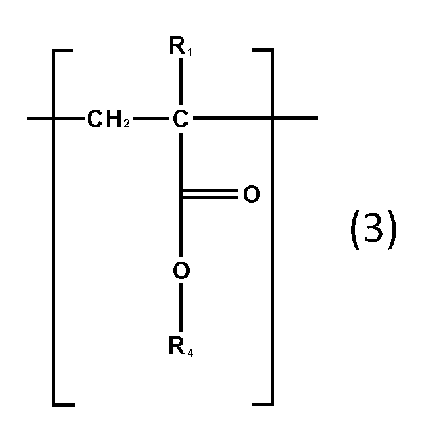
また、上記無孔膜は疎水部を有する熱可塑性樹脂を含有し、上記疎水部は下記式(2)および/または下記式(3)で表される構成単位を含有することが好ましい。上記無孔膜が上記構成単位の疎水部を有することにより、無孔膜表面が撥水性を発揮することができる。

また、上記加湿用積層体は保水量が5g/m2~30g/m2であることが好ましい。保水量が上記範囲内であることにより、十分な透湿性を発揮することが容易となる。 The humidifying laminate preferably has a water retention capacity of 5 g/m 2 to 30 g/m 2. When the water retention capacity is within the above range, it becomes easy to exhibit sufficient moisture permeability.
また、上記加湿用積層体は上記無孔膜が上記多孔の補強材の少なくとも一方の表面を覆うようにコーティングされていることが好ましい。 It is also preferable that the non-porous membrane of the humidifying laminate is coated so as to cover at least one surface of the porous reinforcing material.
また、本開示は、上記加湿用積層体とフレームとを貼り合わせた袋状の保水容器が複数枚設置された加湿器を提供する。上記加湿器は上記加湿用積層体から形成されるため、無孔膜同士が近接して設置された場合でも、無孔膜同士のブロッキングを抑制できるため、加湿器に使用した際に加湿器を小型化することが容易となる。 The present disclosure also provides a humidifier in which a plurality of bag-shaped water-retaining containers are installed, each of which is formed by bonding the humidification laminate to a frame. Since the humidifier is formed from the humidification laminate, blocking between the non-porous membranes can be suppressed even when the non-porous membranes are installed close to each other, making it easy to reduce the size of the humidifier when used in the humidifier.
また、本開示は上記加湿器を搭載した空調機を提供する。 The present disclosure also provides an air conditioner equipped with the above-mentioned humidifier.
また、本開示は上記加湿器を搭載した換気装置を提供する。 The present disclosure also provides a ventilation device equipped with the above-mentioned humidifier.
また、本開示は上記加湿器を搭載した空気清浄機を提供する。 The present disclosure also provides an air purifier equipped with the above-mentioned humidifier.
本開示の加湿用積層体は、無孔膜同士のブロッキングを抑制することができる。結果として加湿器として使用する際に、無孔膜同士を近接して設置することができるようになるため、加湿器を小型化することが可能となり、製造コストを抑えることができる。このため、本開示の加湿用積層体は透湿膜式の加湿器に好ましく用いられる。 The humidification laminate of the present disclosure can suppress blocking between non-porous membranes. As a result, when used as a humidifier, the non-porous membranes can be placed close to each other, making it possible to miniaturize the humidifier and reduce manufacturing costs. For this reason, the humidification laminate of the present disclosure is preferably used in moisture-permeable membrane-type humidifiers.
[加湿用積層体]
本開示の一実施形態に係る加湿用積層体は、多孔の補強材と、上記多孔の補強材の少なくとも一方の面に設けられた無孔膜と、を少なくとも備える。上記無孔膜は、上記多孔の補強材の片面に設けられていてもよいし、両面に設けられていてもよい。また、上記加湿用積層体は、上記無孔膜が2つの上記多孔の補強材に挟まれた構造であってもよい。すなわち上記多孔の補強材は上記無孔膜の両面に設けられていてもよい。この場合の2つの上記多孔の補強材は、同一の多孔の補強材であってもよいし、材質や厚さなどが異なる多孔の補強材であってもよい。
[Humidification laminate]
The humidifying laminate according to one embodiment of the present disclosure includes at least a porous reinforcing material and a non-porous membrane provided on at least one side of the porous reinforcing material. The non-porous membrane may be provided on one side or both sides of the porous reinforcing material. The humidifying laminate may also have a structure in which the non-porous membrane is sandwiched between two of the porous reinforcing materials. That is, the porous reinforcing material may be provided on both sides of the non-porous membrane. In this case, the two porous reinforcing materials may be the same porous reinforcing material, or may be porous reinforcing materials with different materials, thicknesses, etc.
図1は、本開示の加湿用積層体の一実施形態を表す断面模式図である。加湿用積層体1は、多孔の補強材11と、多孔の補強材11の一方の面11aに設けられた無孔膜12と、を備える。
Figure 1 is a schematic cross-sectional view showing one embodiment of a humidification laminate of the present disclosure. The humidification laminate 1 includes a porous reinforcing
<無孔膜>
上記無孔膜は透湿膜として機能する。また、上記無孔膜表面に撥水性および凹凸形状を有する。これにより、無孔膜同士が接触した際の接地面積を低減することで接着を防止することができる。また、無孔膜同士が接着したとしても再剥離し易くなるため、無孔膜同士のブロッキングを防止することができる。
<Non-porous membrane>
The non-porous membrane functions as a moisture-permeable membrane. In addition, the non-porous membrane surface has water repellency and an uneven shape. This reduces the contact area when the non-porous membranes come into contact with each other, thereby preventing adhesion. In addition, even if the non-porous membranes are adhered to each other, they can be easily peeled off again, so blocking between the non-porous membranes can be prevented.
上記無孔膜はアンチブロッキング剤を含むことが好ましい。アンチブロッキング剤を含むことで、無孔膜表面に凹凸形状を形成することが容易となり、無孔膜同士が接触した際に、膜同士のブロッキングを抑制することが容易となる。 The non-porous membrane preferably contains an anti-blocking agent. By containing an anti-blocking agent, it becomes easier to form an uneven shape on the surface of the non-porous membrane, and it becomes easier to suppress blocking between the non-porous membranes when they come into contact with each other.
上記アンチブロッキング剤の平均粒子径は0.5μm~5μmであることが好ましく、より好ましくは1μm~4μmであり、特に好ましくは1.5μm~3μmである。 The average particle size of the antiblocking agent is preferably 0.5 μm to 5 μm, more preferably 1 μm to 4 μm, and particularly preferably 1.5 μm to 3 μm.
上記無孔膜の厚さは、特に限定されないが、0.5μm~5μmが好ましく、より好ましくは1μm~4μmである。上記厚さが0.5μm以上であると、製膜性が良好となり、ガスバリア性向上に繋がる。また、上記無孔膜は厚さが厚いほうが透湿性に優れる傾向にある。これは無孔膜の含水率が高いことによるものと推測される。上記厚さが5μm以下であると薄膜形成が容易であり、経済性にも優れる。 The thickness of the non-porous film is not particularly limited, but is preferably 0.5 μm to 5 μm, and more preferably 1 μm to 4 μm. If the thickness is 0.5 μm or more, the film-forming properties are good, leading to improved gas barrier properties. Furthermore, the thicker the non-porous film, the more excellent its moisture permeability tends to be. This is presumably due to the high moisture content of the non-porous film. If the thickness is 5 μm or less, thin film formation is easy and economical.
また、上記アンチブロッキング剤の平均粒子径は上記無孔膜の膜厚よりも大きいことが好ましく、0.1μm~3μm大きいことがより好ましく、0.3μm~2μm大きいことが特に好ましい。アンチブロッキング剤の平均粒子径が無孔膜の膜厚よりも大きいことで無孔膜表面に凹凸形状を形成することが容易となる。上限としては、無孔膜の形成容易性の観点から3μm以下であることが好ましい。 The average particle size of the antiblocking agent is preferably larger than the thickness of the nonporous membrane, more preferably 0.1 μm to 3 μm larger, and particularly preferably 0.3 μm to 2 μm larger. Having an average particle size of the antiblocking agent larger than the thickness of the nonporous membrane makes it easier to form an uneven shape on the surface of the nonporous membrane. From the viewpoint of ease of forming the nonporous membrane, the upper limit is preferably 3 μm or less.
また、上記無孔膜表面の凹凸形状は上記アンチブロッキング剤により形成されるものであることが好ましい。なお、無孔膜表面に凹凸形状が形成されるのであれば、アンチブロッキング剤の平均粒子径は無孔膜の膜厚よりも小さくてもよく、アンチブロッキング剤を含まなくてもよい。アンチブロッキング剤の平均粒子径が無孔膜の膜厚よりも大きいことにより、無孔膜表面に凹凸形状を付与することが容易となり、膜同士が接触した際の接触面積を低減できるため、ブロッキングを抑制することができる。 The uneven shape of the nonporous membrane surface is preferably formed by the antiblocking agent. If an uneven shape is formed on the nonporous membrane surface, the average particle size of the antiblocking agent may be smaller than the thickness of the nonporous membrane, and the antiblocking agent may not be included. When the average particle size of the antiblocking agent is larger than the thickness of the nonporous membrane, it becomes easier to impart an uneven shape to the nonporous membrane surface, and the contact area when the membranes come into contact with each other can be reduced, thereby suppressing blocking.
上記無孔膜表面の算術平均粗さ(Sa)は0.1μm~0.5μmであることが好ましく、より好ましくは0.15μm~0.45μmであり、特に好ましくは0.2μm~0.4μmである。無孔膜表面の算術平均粗さ(Sa)が0.1μm以上であることにより、無孔膜表面に十分な凹凸形状を付与することが可能となる。また、無孔膜表面の算術平均粗さ(Sa)が0.5μm以下であることにより、無孔膜として形成することが容易となる。 The arithmetic mean roughness (Sa) of the non-porous membrane surface is preferably 0.1 μm to 0.5 μm, more preferably 0.15 μm to 0.45 μm, and particularly preferably 0.2 μm to 0.4 μm. When the arithmetic mean roughness (Sa) of the non-porous membrane surface is 0.1 μm or more, it is possible to impart a sufficiently uneven shape to the non-porous membrane surface. Furthermore, when the arithmetic mean roughness (Sa) of the non-porous membrane surface is 0.5 μm or less, it is easy to form a non-porous membrane.
上記アンチブロッキング剤としてはフッ素系、シリカ系、およびキトサン系などのアンチブロッキング剤が好ましい。また、上記アンチブロッキング剤としては後述の離型剤とを組み合わせて含むことが好ましい。上記アンチブロッキング剤を用いることで、上記無孔膜と上記多孔の補強材とのブロッキングを容易に抑制するもことができる。上記アンチブロッキング剤としてはシリカ系、キトサン系がより好ましい。上記アンチブロッキング剤は、1種のみを使用してもよいし、2種以上を組み合わせて使用してもよい。 The antiblocking agent is preferably a fluorine-based, silica-based, or chitosan-based antiblocking agent. The antiblocking agent is preferably combined with a release agent, which will be described later. By using the antiblocking agent, blocking between the nonporous membrane and the porous reinforcing material can be easily suppressed. The antiblocking agent is more preferably a silica-based or chitosan-based agent. The antiblocking agent may be used alone or in combination of two or more types.
上記フッ素系のアンチブロッキング剤としてはトリパーフルオロオクチルホスフェート、およびトリパーフルオロドデシルホスフェートなどが挙げられる。上記シリカ系のアンチブロッキング剤としては天然シリカ微粒子、および合成シリカ微粒子などが挙げられる。上記キトサン系のアンチブロッキング剤としては例えばキトサンナノファイバーが挙げられる。 The above-mentioned fluorine-based antiblocking agents include triperfluorooctyl phosphate and triperfluorododecyl phosphate. The above-mentioned silica-based antiblocking agents include natural silica fine particles and synthetic silica fine particles. The above-mentioned chitosan-based antiblocking agents include, for example, chitosan nanofibers.
上記アンチブロッキング剤の含有量は上記共重合体の総量(100質量部)に対して、0.1質量部~10質量部であることが好ましく、より好ましくは0.5質量部~5質量部であり、特に好ましくは1質量部~3質量部である。上記アンチブロッキング剤は上記の含有量であることにより、十分なブロッキング防止性能と透湿性を両立することが容易となる。 The content of the antiblocking agent is preferably 0.1 to 10 parts by mass, more preferably 0.5 to 5 parts by mass, and particularly preferably 1 to 3 parts by mass, relative to the total amount (100 parts by mass) of the copolymer. By using the antiblocking agent in the above content, it becomes easy to achieve both sufficient antiblocking performance and moisture permeability.
上記無孔膜は離型剤を含んでいてもよい。上記離型剤としては、シリコーン系の離型剤が挙げられる。上記離型剤は上記無孔膜において離型作用を発揮する。本開示において、離型作用は接着後、再剥離しやすい性質を表す。上記離型作用を発揮する材料を用いることで、上記無孔膜は撥水性を有し、無孔膜同士の接触後の再剥離を容易とすることができる。 The nonporous film may contain a release agent. Examples of the release agent include silicone-based release agents. The release agent exerts a release effect on the nonporous film. In this disclosure, the release effect refers to the property of being easily peeled off after adhesion. By using a material that exerts the release effect, the nonporous film has water repellency, making it easy to peel off the nonporous film after it comes into contact with another nonporous film.
上記シリコーン系離型剤としては、例えばジメチルポリシロキサンなどが挙げられる。上記シリコーン系離型剤は変性されていてもよく、変性シリコーンとしてはアミノ変性シリコーン、エポキシ変性シリコーン、および親水性ポリエーテル変性シリコーンなどが挙げられる。上記離型剤は、1種のみを使用してもよいし、2種以上を組み合わせて使用してもよい。 The silicone-based release agent may be, for example, dimethylpolysiloxane. The silicone-based release agent may be modified, and examples of modified silicones include amino-modified silicone, epoxy-modified silicone, and hydrophilic polyether-modified silicone. The release agents may be used alone or in combination of two or more.
上記離型剤の含有量は上記共重合体の総量(100質量部)に対して、0.1質量部~10質量部であることが好ましく、より好ましくは0.5質量部~5質量部であり、特に好ましくは1質量部~3質量部である。上記離型剤は上記の含有量であることにより、十分な撥水性と透湿性を両立することが容易となる。 The content of the release agent is preferably 0.1 to 10 parts by mass, more preferably 0.5 to 5 parts by mass, and particularly preferably 1 to 3 parts by mass, relative to the total amount (100 parts by mass) of the copolymer. By using the release agent in the above content, it becomes easy to achieve both sufficient water repellency and moisture permeability.
上記無孔膜表面の水接触角は90°~120°であることが好ましく、より好ましくは92°~110°である。無孔膜表面の水接触角が90°~120°であることにより、無孔膜が撥水性を発揮することが容易となる。 The water contact angle of the non-porous membrane surface is preferably 90° to 120°, and more preferably 92° to 110°. When the water contact angle of the non-porous membrane surface is 90° to 120°, the non-porous membrane can easily exhibit water repellency.
上記無孔膜は透湿膜であり、上記無孔膜に水分を吸収するため、熱可塑性樹脂を含むことが好ましい。上記熱可塑性樹脂は親水部を有することが好ましい。また、上記無孔膜表面に撥水性を付与しつつ、上記無孔膜中に導水パスを形成するために上記熱可塑性樹脂に疎水部を有することが好ましい。したがって、上記熱可塑性樹脂は親水部と疎水部との両方を有することが好ましい。上記無孔膜において、上記親水部と上記疎水部が相分離した構造を形成することで上記親水部が導水パスとして機能し、水蒸気をより多く透過させることが可能となるため、より透湿性が優れると推測される。 The non-porous membrane is a moisture-permeable membrane, and preferably contains a thermoplastic resin to absorb moisture into the non-porous membrane. The thermoplastic resin preferably has a hydrophilic portion. In addition, the thermoplastic resin preferably has a hydrophobic portion to form a water-conducting path in the non-porous membrane while imparting water repellency to the non-porous membrane surface. Therefore, the thermoplastic resin preferably has both a hydrophilic portion and a hydrophobic portion. In the non-porous membrane, by forming a structure in which the hydrophilic portion and the hydrophobic portion are phase-separated, the hydrophilic portion functions as a water-conducting path, allowing more water vapor to pass through, and it is presumed that the moisture permeability is superior.
上記熱可塑性樹脂としては、例えば、アクリル系樹脂、セルロース系樹脂、およびポリブチレンテレフタレートなどのポリエステル系樹脂、ポリエーテル系樹脂、ポリウレタン系樹脂、ポリ塩化ビニル系樹脂、ポリエチレン、ポリスチレン系樹脂、ポリアミド系樹脂、ポリアセタール系樹脂、ポリカーボネート系樹脂、ポリフェニレンサルファイド系樹脂、ポリエーテルエーテルケトン、ポリイミド系樹脂、ポリテトラフルオロエチレン系樹脂、ポリカプロラクトン、およびポリ乳酸などが挙げられる。 Examples of the thermoplastic resin include acrylic resins, cellulose resins, and polyester resins such as polybutylene terephthalate, polyether resins, polyurethane resins, polyvinyl chloride resins, polyethylene, polystyrene resins, polyamide resins, polyacetal resins, polycarbonate resins, polyphenylene sulfide resins, polyether ether ketone, polyimide resins, polytetrafluoroethylene resins, polycaprolactone, and polylactic acid.
上記熱可塑性樹脂は上述のように親水部と疎水部とを有することが好ましいことから、異なるモノマー成分を含む熱可塑性の共重合体であることが好ましい。 As described above, it is preferable that the thermoplastic resin has a hydrophilic portion and a hydrophobic portion, and therefore it is preferable that the thermoplastic resin is a thermoplastic copolymer containing different monomer components.
上記親水部とは上記共重合体の構成単位のうち、側鎖に親水性の官能基を含有するモノマー(a)(以後、モノマー(a)とする)単位によって構成されるものが好ましい。また、上記疎水部とは側鎖に疎水性の官能基を含有するモノマー(b)(以後、モノマー(b)とする)単位によって構成されるものが好ましい。また、上記親水部および上記疎水部は上記共重合体内に形成されていることが好ましい。上記無孔膜において上記共重合体が内側に疎水部、外側に親水部を形成するコアシェル構造を維持していてもよく、その場合は、上記親水部および疎水部は隣り合う2以上の上記共重合体のコア部およびシェル部によって形成されていてもよい。また、上記共重合体は、無孔膜形成前においてコアシェル構造であり、上記無孔膜形成時においてはコアシェル構造を維持していなくてもよい。 The hydrophilic portion is preferably composed of monomer (a) (hereinafter, referred to as monomer (a)) units containing a hydrophilic functional group in the side chain among the constituent units of the copolymer. The hydrophobic portion is preferably composed of monomer (b) (hereinafter, referred to as monomer (b)) units containing a hydrophobic functional group in the side chain. The hydrophilic portion and the hydrophobic portion are preferably formed within the copolymer. In the non-porous membrane, the copolymer may maintain a core-shell structure in which the hydrophobic portion is formed on the inside and the hydrophilic portion is formed on the outside, and in that case, the hydrophilic portion and the hydrophobic portion may be formed by the core portion and the shell portion of two or more adjacent copolymers. The copolymer may have a core-shell structure before the non-porous membrane is formed, and may not maintain the core-shell structure when the non-porous membrane is formed.
上記共重合体は、上記親水部を構成する部分として上記モノマー(a)由来の構造単位を含有することが好ましい。上記モノマー(a)としては、例えば、グリシジル基含有モノマー、加水分解性シリル基含有モノマー、アセトアセチル基含有モノマー、ヒドロキシル基含有モノマー、カルボキシ基含有モノマー、メチル(メタ)アクリレート、および後述のカチオン性の官能基を有するモノマーなどが挙げられる。中でも、カルボキシ基含有モノマー、メチル(メタ)アクリレート、および後述のカチオン性の官能基を有するモノマーであることが好ましい。上記モノマー(a)は単独で使用してもよく、2種以上を組み合わせて使用してもよい。なお、本明細書における「(メタ)アクリル」は、「アクリル」および「メタクリル」の少なくとも一方を表す。 The copolymer preferably contains a structural unit derived from the monomer (a) as a portion constituting the hydrophilic portion. Examples of the monomer (a) include a glycidyl group-containing monomer, a hydrolyzable silyl group-containing monomer, an acetoacetyl group-containing monomer, a hydroxyl group-containing monomer, a carboxy group-containing monomer, methyl (meth)acrylate, and a monomer having a cationic functional group as described below. Among them, a carboxy group-containing monomer, methyl (meth)acrylate, and a monomer having a cationic functional group as described below are preferable. The monomer (a) may be used alone or in combination of two or more kinds. In this specification, "(meth)acrylic" refers to at least one of "acrylic" and "methacrylic".
上記グリシジル基含有モノマーとしては、例えば、グリシジル(メタ)アクリレート、およびグリシジル(メタ)アリルエーテルなどが挙げられる。 Examples of the glycidyl group-containing monomer include glycidyl (meth)acrylate and glycidyl (meth)allyl ether.
上記加水分解性シリル基含有モノマーとしては、例えば、ビニルトリメトキシシラン、ビニルトリエトキシシラン、ビニルトリス(β-メトキシエトキシ)シランおよびビニルメチルジメトキシシランなどのビニル系シリル基含有モノマー;γ-(メタ)アクリロキシプロピルトリメトキシシラン、γ-(メタ)アクリロキシプロピルメチルジメトキシシラン、γ-(メタ)アクリロキシプロピルトリエトキシシラン、およびγ-(メタ)アクリロキシプロピルメチルジエトキシシランなどの(メタ)アクリロキシ系シリル基含有モノマーが挙げられる。 Examples of the hydrolyzable silyl group-containing monomer include vinyl-based silyl group-containing monomers such as vinyltrimethoxysilane, vinyltriethoxysilane, vinyltris(β-methoxyethoxy)silane, and vinylmethyldimethoxysilane; and (meth)acryloxy-based silyl group-containing monomers such as γ-(meth)acryloxypropyltrimethoxysilane, γ-(meth)acryloxypropylmethyldimethoxysilane, γ-(meth)acryloxypropyltriethoxysilane, and γ-(meth)acryloxypropylmethyldiethoxysilane.
上記アセトアセチル基含有モノマーとしては、例えば、ジアセト酢酸アリルエステル、アセトアセトキシエチル(メタ)アクリレート、アセトアセトキシエチルクロトナート、アセトアセトキシプロピル(メタ)アクリレート、アセトアセトキシプロピルクロトナート、および2-シアノアセトアセトキシエチル(メタ)アクリレートなどが挙げられる。 Examples of the acetoacetyl group-containing monomer include diacetoacetic acid allyl ester, acetoacetoxyethyl (meth)acrylate, acetoacetoxyethyl crotonate, acetoacetoxypropyl (meth)acrylate, acetoacetoxypropyl crotonate, and 2-cyanoacetoacetoxyethyl (meth)acrylate.
上記ヒドロキシル基含有モノマーとしては、例えば、2-ヒドロキシエチル(メタ)アクリレート、ヒドロキシプロピル(メタ)アクリレート、および4-ヒドロキシブチル(メタ)アクリレートなどのヒドロキシル基含有(メタ)アクリレートが挙げられる。 Examples of the hydroxyl group-containing monomer include hydroxyl group-containing (meth)acrylates such as 2-hydroxyethyl (meth)acrylate, hydroxypropyl (meth)acrylate, and 4-hydroxybutyl (meth)acrylate.
上記カルボキシ基含有モノマーとしては、例えば、クロトン酸、マレイン酸、無水マレイン酸などの酸無水物モノマー、フマル酸、シトラコン酸、グルタコン酸、イタコン酸、アクリルアミドN-グリコール酸、ケイ皮酸、および(メタ)アクリル酸などが挙げられる。 Examples of the carboxyl group-containing monomer include acid anhydride monomers such as crotonic acid, maleic acid, and maleic anhydride, fumaric acid, citraconic acid, glutaconic acid, itaconic acid, acrylamido-N-glycolic acid, cinnamic acid, and (meth)acrylic acid.
また、上記モノマー(a)としては、特にメチル(メタ)アクリレートおよび/または(メタ)アクリル酸が好ましく、すなわち、上記親水部は下記式(1)で表される構成単位を含むことが好ましい。

上記モノマー(a)の含有割合は、上記共重合体を構成する単量体成分全体に対して、好ましくは20モル%~70モル%、より好ましくは30モル%~70モル%、さらに好ましくは40モル%~60モル%である。上記モノマー(a)の含有割合をこの範囲内に調製することにより、無孔膜に親水部を形成して導水パスを容易に形成できるようになり、透湿性により優れる。 The content of the monomer (a) is preferably 20 mol% to 70 mol%, more preferably 30 mol% to 70 mol%, and even more preferably 40 mol% to 60 mol% of the total monomer components constituting the copolymer. By adjusting the content of the monomer (a) within this range, hydrophilic parts can be formed in the non-porous membrane, making it easy to form water-conducting paths, resulting in superior moisture permeability.
上記共重合体は、上記疎水部を構成する部分として上記モノマー(b)由来の構造単位を含有することが好ましい。上記モノマー(b)としては、特に限定されないが、好ましくは炭素数2以上の炭化水素基を含むものであり、より好ましくは炭素数2以上の炭化水素基を有する(メタ)アクリル酸エステルが挙げられる。上記モノマー(b)は単独で使用してもよく、2種以上を組み合わせて使用していてもよい。 The copolymer preferably contains a structural unit derived from the monomer (b) as a portion constituting the hydrophobic portion. The monomer (b) is not particularly limited, but is preferably one containing a hydrocarbon group having 2 or more carbon atoms, and more preferably a (meth)acrylic acid ester having a hydrocarbon group having 2 or more carbon atoms. The monomer (b) may be used alone or in combination of two or more kinds.
上記炭素数2以上の炭化水素基としては、例えば、脂肪族炭化水素基、脂環式炭化水素基、芳香族炭化水素基、およびこれらが2以上結合した基などが挙げられる。 Examples of the hydrocarbon group having two or more carbon atoms include aliphatic hydrocarbon groups, alicyclic hydrocarbon groups, aromatic hydrocarbon groups, and groups in which two or more of these are bonded together.
上記脂肪族炭化水素基としては、例えば、アルキル基、アルケニル基、アルキニル基などが挙げられる。アルキル基としては、例えば、エチル基、プロピル基、イソプロピル基、ブチル基、イソブチル基、ヘキシル基、オクチル基、イソオクチル基、デシル基、ドデシル基、ステアリル基などの直鎖または分岐鎖状アルキル基が挙げられる。アルケニル基としては、例えば、ビニル基、アリル基、メタリル基、1-プロペニル基、イソプロペニル基、1-ブテニル基、2-ブテニル基、3-ブテニル基、1-ペンテニル基、2-ペンテニル基、3-ペンテニル基、4-ペンテニル基、5-ヘキセニル基などの直鎖状または分岐鎖状アルケニル基が挙げられる。アルキニル基としては、例えば、エチニル基、プロピニル基などの直鎖状または分岐鎖状アルキニル基が挙げられる。 Examples of the aliphatic hydrocarbon group include alkyl groups, alkenyl groups, and alkynyl groups. Examples of the alkyl group include linear or branched alkyl groups such as ethyl groups, propyl groups, isopropyl groups, butyl groups, isobutyl groups, hexyl groups, octyl groups, isooctyl groups, decyl groups, dodecyl groups, and stearyl groups. Examples of the alkenyl group include linear or branched alkenyl groups such as vinyl groups, allyl groups, methallyl groups, 1-propenyl groups, isopropenyl groups, 1-butenyl groups, 2-butenyl groups, 3-butenyl groups, 1-pentenyl groups, 2-pentenyl groups, 3-pentenyl groups, 4-pentenyl groups, and 5-hexenyl groups. Examples of the alkynyl group include linear or branched alkynyl groups such as ethynyl groups and propynyl groups.
上記脂環式炭化水素基としては、例えば、シクロプロピル基、シクロブチル基、シクロペンチル基、シクロヘキシル基、シクロドデシル基などの炭素数3~12のシクロアルキル基;シクロヘキセニル基などの炭素数3~12のシクロアルケニル基;ビシクロヘプタニル基、ビシクロヘプテニル基などの炭素数4~15の架橋環式炭化水素基などが挙げられる。 Examples of the alicyclic hydrocarbon group include cycloalkyl groups having 3 to 12 carbon atoms, such as cyclopropyl, cyclobutyl, cyclopentyl, cyclohexyl, and cyclododecyl; cycloalkenyl groups having 3 to 12 carbon atoms, such as cyclohexenyl; and bridged cyclic hydrocarbon groups having 4 to 15 carbon atoms, such as bicycloheptanyl and bicycloheptenyl.
上記芳香族炭化水素基としては、例えば、フェニル基、ナフチル基などの炭素数6~14のアリール基(特に、炭素数6~10のアリール基)などが挙げられる。 Examples of the aromatic hydrocarbon group include aryl groups having 6 to 14 carbon atoms, such as phenyl groups and naphthyl groups (particularly aryl groups having 6 to 10 carbon atoms).
上記炭素数2以上の炭化水素基としては、脂肪族炭化水素基および芳香族炭化水素基が好ましく、より好ましくは直鎖または分岐鎖状アルキル基および芳香族炭化水素基である。 As the above-mentioned hydrocarbon group having 2 or more carbon atoms, an aliphatic hydrocarbon group and an aromatic hydrocarbon group are preferable, and a linear or branched alkyl group and an aromatic hydrocarbon group are more preferable.
中でも、上記モノマー(b)としては、具体的には、例えば下記式(2)、および/または下記式(3)に記載される構成単位を形成可能なモノマーが好ましい。すなわち、上記疎水部は下記式(2)および/または下記式(3)で表される構成単位を含むことが好ましい。


上記式(2)のうち、R3の結合位置はベンゼン環を構成する炭化水素のどれであってもよく、上記式(2)で表される構成単位を形成可能なモノマーとしては、例えば、スチレン、α-メチルスチレン、p-メチルスチレン、p-エチルスチレンなどが挙げられる。 In the above formula (2), the bonding position of R3 may be any position in the hydrocarbon constituting the benzene ring, and examples of monomers capable of forming the structural unit represented by the above formula (2) include styrene, α-methylstyrene, p-methylstyrene, and p-ethylstyrene.
上記式(3)のうち、R4は炭素数3~10の分岐鎖状アルキル基であることが好ましい。上記式(3)で表される構成単位を形成可能なモノマーとしては、例えば、イソプロピル(メタ)アクリレート、イソブチル(メタ)アクリレート、tert-ブチル(メタ)アクリレート、2-エチルヘキシル(メタ)アクリレートなどが挙げられる。 In the above formula (3), R4 is preferably a branched alkyl group having 3 to 10 carbon atoms. Examples of monomers capable of forming the structural unit represented by the above formula (3) include isopropyl (meth)acrylate, isobutyl (meth)acrylate, tert-butyl (meth)acrylate, and 2-ethylhexyl (meth)acrylate.
上記モノマー(b)の含有割合は、上記共重合体を構成する単量体成分全体に対して、好ましくは20モル%~70モル%、より好ましくは30モル%~70モル%、さらに好ましくは40モル%~60モル%である。上記モノマー(b)の含有割合をこの範囲内に調製することにより、撥水性を発揮しつつ、無孔膜に疎水部を形成して導水パスを容易に形成できるようになり、透湿性により優れる。 The content of the monomer (b) is preferably 20 mol% to 70 mol%, more preferably 30 mol% to 70 mol%, and even more preferably 40 mol% to 60 mol% of the total monomer components constituting the copolymer. By adjusting the content of the monomer (b) within this range, it becomes possible to easily form a water-conducting path by forming hydrophobic parts in the non-porous membrane while exhibiting water repellency, and the moisture permeability is superior.
上記熱可塑性樹脂はカチオン部を有することが好ましい。この場合、上記親水部および/または上記疎水部にカチオン部を有していてもよいし、これら以外にカチオン部を有していてもよい。また、上記熱可塑性樹脂は親水部にカチオン部を有することが好ましい。上記カチオン部はカチオン性の官能基またはカチオン性の官能基を生成可能な基であることが好ましい。上記カチオン性の官能基を生成可能な基とは上記熱可塑性樹脂の段階ではカチオン性の官能基を有しておらず、上記無孔膜を形成した段階や使用時においてカチオン性の官能基を生成するような基を指す。また、上記カチオン性の官能基はカチオンとアニオンの両方が存在する両性イオン性の官能基であってもよい。したがって、上記熱可塑性樹脂はアニオン部を有していてもよい。また、上記熱可塑性樹脂はアニオン部を有さないことが好ましい。 The thermoplastic resin preferably has a cationic portion. In this case, the hydrophilic portion and/or the hydrophobic portion may have a cationic portion, or may have a cationic portion other than these. The thermoplastic resin preferably has a cationic portion in the hydrophilic portion. The cationic portion is preferably a cationic functional group or a group capable of generating a cationic functional group. The group capable of generating a cationic functional group refers to a group that does not have a cationic functional group at the stage of the thermoplastic resin, but generates a cationic functional group at the stage of forming the nonporous membrane or during use. The cationic functional group may be a zwitterionic functional group in which both a cation and an anion exist. Therefore, the thermoplastic resin may have an anionic portion. The thermoplastic resin preferably does not have an anionic portion.
上記カチオン性の官能基としては、例えば窒素含有基が挙げられる。上記窒素含有基としては、アンモニウムイオンを含む基またはアンモニウムイオンを形成可能な基が挙げられる。ここで上記アンモニウムイオンを形成可能な基とは上記熱可塑性樹脂の段階ではイオン化しておらず、上記無孔膜を形成した段階や使用時においてイオン化体を形成するような基を指す。上記アンモニウムイオンを含む基および上記アンモニウムイオンを生成可能な基としては、例えば1級アミノ基、2級アミノ基、3級アミノ基、4級アンモニウム基、イミノ基(-NH-基および=NH基)、アミジノ基、イミジノ基、ヒドラジノ基、アミド基、イミド基、ピリジル基などの窒素原子を含む環状基などが挙げられる。また、上記両性イオン性の官能基としては例えば、4級アンモニウム含有基が挙げられる。上記4級アンモニウム含有基としては例えば、ベタイン基、ホスホコリン基などが挙げられる。中でも上記熱可塑性樹脂においては、抗菌性を発揮させて無孔膜からの雑菌の飛散を防ぐ観点から、無孔膜形成後にアンモニウムイオンを生成可能な基が好ましく、4級アンモニウム基を生成することが可能な基(4級アンモニウム基、イミド基)がより好ましい。 The cationic functional group may be, for example, a nitrogen-containing group. The nitrogen-containing group may be, for example, a group containing an ammonium ion or a group capable of forming an ammonium ion. The group capable of forming an ammonium ion is a group that is not ionized at the stage of the thermoplastic resin, but forms an ionized form at the stage of forming the nonporous membrane or during use. Examples of the group containing an ammonium ion and the group capable of generating an ammonium ion include, for example, a primary amino group, a secondary amino group, a tertiary amino group, a quaternary ammonium group, an imino group (-NH- group and =NH group), an amidino group, an imidino group, a hydrazino group, an amide group, an imide group, a pyridyl group, and other cyclic groups containing a nitrogen atom. The zwitterionic functional group may be, for example, a quaternary ammonium-containing group. Examples of the quaternary ammonium-containing group include a betaine group and a phosphocholine group. Among these, in the above thermoplastic resins, from the viewpoint of exerting antibacterial properties and preventing the scattering of germs from the non-porous membrane, groups capable of generating ammonium ions after the non-porous membrane is formed are preferred, and groups capable of generating quaternary ammonium groups (quaternary ammonium groups, imide groups) are more preferred.
上記熱可塑性樹脂が上記共重合体である場合、上記共重合体は側鎖にカチオン性の官能基を有するモノマー由来の構造単位を含有することが好ましい。上記カチオン性の官能基を有するモノマーとしては、上述の窒素含有基を官能基として有するモノマーが挙げられる。上記窒素含有基を官能基として有するモノマーとしては、たとえばアミド基含有モノマー、アミノ基含有モノマー、およびイミド基含有モノマーなどが挙げられる。アミド基含有モノマーとしてN,N-ジメチル(メタ)アクリルアミド、N,N-ジエチル(メタ)アクリルアミド、N,N-ジプロピル(メタ)アクリルアミド、N,N-ジイソプロピル(メタ)アクリルアミド、N,N-ジ(n-ブチル)(メタ)アクリルアミド、N,N-ジ(t-ブチル)(メタ)アクリルアミドなどのN,N-ジアルキル(メタ)アクリルアミド;N-エチル(メタ)アクリルアミド、N-イソプロピル(メタ)アクリルアミド、N-ブチル(メタ)アクリルアミド、N-n-ブチル(メタ)アクリルアミドなどのN-アルキル(メタ)アクリルアミド;N-ビニルアセトアミド、N-(2-ヒドロキシエチル)(メタ)アクリルアミド、N-(2-ヒドロキシプロピル)(メタ)アクリルアミド、N-(1-ヒドロキシプロピル)(メタ)アクリルアミド、N-(3-ヒドロキシプロピル)(メタ)アクリルアミド、N-(2-ヒドロキシブチル)(メタ)アクリルアミド、N-(3-ヒドロキシブチル)(メタ)アクリルアミド、N-(4-ヒドロキシブチル)(メタ)アクリルアミドなどのN-ヒドロキシアルキル(メタ)アクリルアミド;N-メトキシメチル(メタ)アクリルアミド、N-メトキシエチル(メタ)アクリルアミド、N-ブトキシメチル(メタ)アクリルアミドなどのN-アルコキシアルキル(メタ)アクリルアミド;その他、N,N-ジメチルアミノプロピル(メタ)アクリルアミド、およびN-(メタ)アクリロイルモルホリンなどが挙げられる。また、アミノ基含有モノマーとしてアミノエチル(メタ)アクリレート、N,N-ジメチルアミノエチル(メタ)アクリレート、およびt-ブチルアミノエチル(メタ)アクリレートなどの置換または無置換アミノ基含有(メタ)アクリレートなどが挙げられる。また、イミド基含有モノマーとしてN-(メタ)アクリロイルオキシメチレンスクシンイミド、N-(メタ)アクリロイル-6-オキシヘキサメチレンスクシンイミド、N-(メタ)アクリロイル-8-オキシヘキサメチレンスクシンイミド、N-シクロヘキシルマレイミド、N-イソプロピルマレイミド 、N-ラウリルマレイミド、N-フェニルマレイミド、N-メチルイタコンイミド、N-エチルイタコンイミド、N-ブチルイタコンイミド、N-オクチルイタコンイミド、N-2-エチルへキシルイタコンイミド、N-シクロへキシルイタコンイミド、およびN-ラウリルイタコンイミドなどが挙げられる。上記カチオン性の官能基を有するモノマーは単独で使用してもよく、2種以上を組み合わせて使用してもよい。 When the thermoplastic resin is a copolymer, it is preferable that the copolymer contains a structural unit derived from a monomer having a cationic functional group in a side chain. Examples of the monomer having the cationic functional group include the monomer having the nitrogen-containing group as a functional group. Examples of the monomer having the nitrogen-containing group as a functional group include, for example, an amide group-containing monomer, an amino group-containing monomer, and an imide group-containing monomer. Examples of amide group-containing monomers include N,N-dialkyl(meth)acrylamides such as N,N-dimethyl(meth)acrylamide, N,N-diethyl(meth)acrylamide, N,N-dipropyl(meth)acrylamide, N,N-diisopropyl(meth)acrylamide, N,N-di(n-butyl)(meth)acrylamide, and N,N-di(t-butyl)(meth)acrylamide; N-alkyl(meth)acrylamides such as N-ethyl(meth)acrylamide, N-isopropyl(meth)acrylamide, N-butyl(meth)acrylamide, and N-n-butyl(meth)acrylamide; N-vinylacetamide, N-(2-hydroxyethyl)(meth)acrylamide, and N-(2-hydroxypropyl)(meth)acrylamide; N-hydroxyalkyl (meth)acrylamides such as N-(meth)acrylamide, N-(1-hydroxypropyl) (meth)acrylamide, N-(3-hydroxypropyl) (meth)acrylamide, N-(2-hydroxybutyl) (meth)acrylamide, N-(3-hydroxybutyl) (meth)acrylamide, and N-(4-hydroxybutyl) (meth)acrylamide; N-alkoxyalkyl (meth)acrylamides such as N-methoxymethyl (meth)acrylamide, N-methoxyethyl (meth)acrylamide, and N-butoxymethyl (meth)acrylamide; and others such as N,N-dimethylaminopropyl (meth)acrylamide and N-(meth)acryloylmorpholine. In addition, examples of amino group-containing monomers include substituted or unsubstituted amino group-containing (meth)acrylates such as aminoethyl (meth)acrylate, N,N-dimethylaminoethyl (meth)acrylate, and t-butylaminoethyl (meth)acrylate. Examples of imide group-containing monomers include N-(meth)acryloyloxymethylene succinimide, N-(meth)acryloyl-6-oxyhexamethylene succinimide, N-(meth)acryloyl-8-oxyhexamethylene succinimide, N-cyclohexylmaleimide, N-isopropylmaleimide, N-laurylmaleimide, N-phenylmaleimide, N-methylitaconimide, N-ethylitaconimide, N-butylitaconimide, N-octylitaconimide, N-2-ethylhexylitaconimide, N-cyclohexylitaconimide, and N-laurylitaconimide. The above-mentioned monomers having cationic functional groups may be used alone or in combination of two or more.
上記カチオン性の官能基を有するモノマーの含有割合は、上記共重合体を構成する単量体成分全体に対して、好ましくは0.5モル%~10モル%、より好ましくは1モル%~7モル%、さらに好ましくは2モル%~5モル%である。上記カチオン性の官能基を有するモノマーの含有割合をこの範囲内に調製することにより、スケール成分との斥力を発揮することが可能となり、スケール成分の無孔膜への付着・堆積を抑制することができる。 The content of the monomer having the cationic functional group is preferably 0.5 mol% to 10 mol%, more preferably 1 mol% to 7 mol%, and even more preferably 2 mol% to 5 mol% of the total monomer components constituting the copolymer. By adjusting the content of the monomer having the cationic functional group within this range, it becomes possible to exert a repulsive force against the scale components, and adhesion and deposition of the scale components on the non-porous membrane can be suppressed.
また、上記共重合体は架橋剤に由来する構造部を含有していてもよい。上記架橋剤としては、上記共重合体を構成するモノマーの側鎖と架橋可能な化合物であれば特に限定されないが、例えば、反応性官能基を2つ有する2官能体が好ましく、重合体内の架橋密度の粗密の幅を大きくし、力学物性などを調整する観点から3官能以上の架橋剤を使用してもよい。上記架橋剤としては、例えば2官能以上のエポキシ基含有化合物、2官能以上のイソシアネート基含有化合物などが挙げられる。上記共重合体においては側鎖に形成される官能基との架橋反応後に4級アンモニウムイオンを生成可能になることから、特に2官能以上のエポキシ基含有化合物を含有するものが好ましい。 The copolymer may also contain a structural part derived from a crosslinking agent. The crosslinking agent is not particularly limited as long as it is a compound capable of crosslinking with the side chains of the monomers constituting the copolymer. For example, a bifunctional compound having two reactive functional groups is preferred, and a trifunctional or higher crosslinking agent may be used in order to increase the range of density of crosslinks in the polymer and adjust the mechanical properties. Examples of the crosslinking agent include a bifunctional or higher epoxy group-containing compound and a bifunctional or higher isocyanate group-containing compound. In the copolymer, a compound containing a bifunctional or higher epoxy group is particularly preferred because it is possible to generate quaternary ammonium ions after the crosslinking reaction with the functional groups formed in the side chains.
上記エポキシ基含有化合物としては例えば、ビスフェノールAおよびエピクロルヒドリン型のエポキシ化合物、ポリエチレングリコールジグリシジルエーテル、グリセリンジグリシジルエーテル、グリセリントリグリシジルエーテル、1,6-ヘキサンジオールジグリシジルエーテル、トリメチロールプロパントリグリシジルエーテル、ジグリシジルアニリン、N,N,N′,N′-テトラグリシジル-m-キシレンジアミン(例えば、商品名「TETRAD-X」、三菱ガス化学社製)、1,3-ビス(N,N-ジグリシジルアミノメチル)シクロへキサン(例えば、商品名「TETRAD-C」、三菱ガス化学社製)などが挙げられる。 Examples of the epoxy group-containing compound include bisphenol A and epichlorohydrin type epoxy compounds, polyethylene glycol diglycidyl ether, glycerin diglycidyl ether, glycerin triglycidyl ether, 1,6-hexanediol diglycidyl ether, trimethylolpropane triglycidyl ether, diglycidylaniline, N,N,N',N'-tetraglycidyl-m-xylylenediamine (e.g., trade name "TETRAD-X", manufactured by Mitsubishi Gas Chemical Co., Ltd.), 1,3-bis(N,N-diglycidylaminomethyl)cyclohexane (e.g., trade name "TETRAD-C", manufactured by Mitsubishi Gas Chemical Co., Ltd.), and the like.
上記架橋剤の使用量は、上記共重合体の反応可能な側鎖の総量(100モル部)に対して、好ましくは1モル部~60モル部、より好ましくは2モル部~30モル部、さらに好ましくは4モル部~15モル部である。上記架橋剤の使用量をこの範囲内に調製することにより、無孔膜に導水パスを容易に形成できるようになり、透湿性に優れることが容易となる。 The amount of the crosslinking agent used is preferably 1 to 60 parts by mole, more preferably 2 to 30 parts by mole, and even more preferably 4 to 15 parts by mole, relative to the total amount (100 parts by mole) of reactive side chains of the copolymer. By adjusting the amount of the crosslinking agent used within this range, it becomes easy to form water-conducting paths in the non-porous membrane, making it easier to achieve excellent moisture permeability.
上記熱可塑性樹脂の重量平均分子量は、特に限定されないが、2万~200万が好ましく、より好ましくは3万~150万、さらに好ましくは5万~100万、特に好ましくは7万~50万である。上記重量平均分子量は、ゲルパーミエーション・クロマトグラフィー(GPC)により測定し、ポリスチレン換算により算出された値をいうものとする。 The weight average molecular weight of the thermoplastic resin is not particularly limited, but is preferably 20,000 to 2,000,000, more preferably 30,000 to 1,500,000, even more preferably 50,000 to 1,000,000, and particularly preferably 70,000 to 500,000. The weight average molecular weight is measured by gel permeation chromatography (GPC) and calculated in terms of polystyrene.
上記無孔膜は、本開示の加湿用積層体における効果を損なわない範囲内で、上記熱可塑性樹脂以外のその他の成分を含んでいてもよい。 The non-porous membrane may contain components other than the thermoplastic resin as long as the effects of the humidifying laminate of the present disclosure are not impaired.
上記無孔膜は、その他の成分として、例えば、防腐剤、レベリング剤などを含んでいてもよい。上記その他の成分の含有量としては、上記熱可塑性樹脂の総量(100質量部)に対して、0.1質量部~10質量部であることが好ましく、より好ましくは0.15質量部~3質量部であり、特に好ましくは0.2質量部~2質量部である。 The non-porous membrane may contain other components, such as preservatives and leveling agents. The content of the other components is preferably 0.1 to 10 parts by mass, more preferably 0.15 to 3 parts by mass, and particularly preferably 0.2 to 2 parts by mass, relative to the total amount (100 parts by mass) of the thermoplastic resin.
上記共重合体が親水部および疎水部を有することに起因して、上記無孔膜は表面に親水部および疎水部が相分離した構造を有する。上記無孔膜表面における親水部の最大径は50nm以下であることが好ましく、より好ましくは20nm以下である。上記親水部の最大径が50nm以下であると、サイズが50nmを超える物質が上記無孔膜を透過しにくく、上記無孔膜を、50nm以上の物質(例えばウイルスなど)を透過させないバリアフィルムとして使用することができる。上記親水部の径は次の方法によって評価される。走査型プローブ顕微鏡(SPM)の凝着力測定モードを用いて吸着力の高い部位(親水部)と吸着力の低い部位(疎水部)を凝着力によって数値化し、画像解析ソフトで処理することで、円相当径として親水部の径を算出することができる。そして、上記最大径は、上述のようにして算出された親水部の径(円相当径)のうち、最も径が大きい径である。 The copolymer has a hydrophilic portion and a hydrophobic portion, and the non-porous membrane has a structure in which the hydrophilic portion and the hydrophobic portion are phase-separated on the surface. The maximum diameter of the hydrophilic portion on the surface of the non-porous membrane is preferably 50 nm or less, more preferably 20 nm or less. If the maximum diameter of the hydrophilic portion is 50 nm or less, substances with a size exceeding 50 nm are unlikely to pass through the non-porous membrane, and the non-porous membrane can be used as a barrier film that does not allow substances with a size of 50 nm or more (such as viruses, etc.) to pass through. The diameter of the hydrophilic portion is evaluated by the following method. The adhesion force measurement mode of a scanning probe microscope (SPM) is used to digitize the high adhesion force portion (hydrophilic portion) and the low adhesion force portion (hydrophobic portion) according to adhesion force, and the diameter of the hydrophilic portion can be calculated as a circle equivalent diameter by processing the results with image analysis software. The maximum diameter is the largest diameter among the diameters (circle equivalent diameters) of the hydrophilic portions calculated as described above.
なお、本開示において、上記親水部の最大径が50nm以下の構造は実質的に50nm以上の大きさの成分を透過しないことから実質的に水蒸気のみを透過するものであるため、本開示における上記無孔膜の孔とは上記親水部に形成される50nm以下のものを除くものとする。また、上記親水部の最大径が50nm超である場合、水蒸気以外のその他の成分を透過させる可能性があるため、上記親水部の最大径が50nm超の構造を複数有する膜を多孔膜であると定義する。 In this disclosure, the structure in which the maximum diameter of the hydrophilic portion is 50 nm or less does not substantially transmit components with a size of 50 nm or more, and therefore substantially transmits only water vapor. Therefore, the pores of the non-porous membrane in this disclosure exclude those formed in the hydrophilic portion with a diameter of 50 nm or less. In addition, if the maximum diameter of the hydrophilic portion exceeds 50 nm, there is a possibility that components other than water vapor may be transmitted, so a membrane having multiple structures in which the maximum diameter of the hydrophilic portion exceeds 50 nm is defined as a porous membrane.
上記無孔膜はコーティングにより形成された層であることが好ましい。コーティングにより形成されることで無孔膜として容易に作製することができ、スケール成分や雑菌などの飛散を抑制することが容易になる。 The non-porous membrane is preferably a layer formed by coating. By forming it by coating, it can be easily produced as a non-porous membrane, making it easier to suppress the dispersion of scale components, germs, etc.
<多孔の補強材>
上記多孔の補強材は、上記無孔膜の支持体となる要素であり、透湿性に優れるものであることが好ましい。
<Polyporous reinforcement material>
The porous reinforcing material is an element that serves as a support for the non-porous membrane, and is preferably one that has excellent moisture permeability.
上記多孔の補強材を形成する材料としては、親水性材料および疎水性材料のいずれであってもよいが、疎水性材料であることが好ましい。上記疎水性材料を用いると、無孔膜を形成するための組成物を塗布した際、組成物が多孔の補強材に染み込まないため、多孔の補強材において組成物が塗膜形成面とは反対側の面から流れ落ちるのを防ぐためのリード基材が不要となる。 The material for forming the porous reinforcing material may be either a hydrophilic material or a hydrophobic material, but is preferably a hydrophobic material. When the hydrophobic material is used, when the composition for forming the non-porous membrane is applied, the composition does not soak into the porous reinforcing material, and therefore a lead substrate is not required to prevent the composition from flowing off the surface of the porous reinforcing material opposite to the surface on which the coating film is formed.
上記多孔の補強材を形成する材料としては、例えば、ポリオレフィン系樹脂、セルロース系樹脂、ポリカーボネート樹脂、ポリアミド樹脂、ポリイミド樹脂、ポリアミドイミド樹脂、およびフッ素系樹脂などの有機物、金属、ガラス、およびセラミックなどの無機物などが挙げられる。中でも、上記無孔膜は上記多孔の補強材上に比較的低温で製膜可能であるため、また、透湿性および耐水性に優れる観点から、有機物であることが好ましく、上記有機物としては特にポリオレフィン系樹脂が好ましい。上記材料は、金属繊維、無機繊維などの繊維状であってもよい。上記多孔の補強材を形成する材料は、1種のみであってもよいし、2種以上であってもよい。 Examples of materials for forming the porous reinforcing material include organic materials such as polyolefin resins, cellulose resins, polycarbonate resins, polyamide resins, polyimide resins, polyamideimide resins, and fluorine-based resins, and inorganic materials such as metals, glass, and ceramics. Among them, the non-porous membrane is preferably an organic material because it can be formed on the porous reinforcing material at a relatively low temperature and because it has excellent moisture permeability and water resistance, and polyolefin resins are particularly preferable as the organic material. The material may be fibrous, such as metal fibers or inorganic fibers. The material for forming the porous reinforcing material may be one type only or two or more types.
上記多孔の補強材としては、例えば、樹脂多孔膜、無機多孔膜、金属多孔膜、繊維状基材などが挙げられる。 Examples of the porous reinforcing material include resin porous membranes, inorganic porous membranes, metal porous membranes, and fibrous substrates.
上記ポリオレフィン系樹脂は、オレフィンを必須の単量体成分として構成される重合体(オレフィン系エラストマーを含む)であり、即ち、分子中(1分子中)にオレフィンに由来する構成単位を少なくとも含む重合体である。上記オレフィンとしては、特に限定されないが、例えば、エチレン、プロピレン、1-ブテン、4-メチル-1-ペンテンなどのα-オレフィンが挙げられる。 The polyolefin resin is a polymer (including olefin elastomers) that is composed of olefin as an essential monomer component, that is, a polymer that contains at least one structural unit derived from olefin in the molecule (per molecule). The olefin is not particularly limited, but examples thereof include α-olefins such as ethylene, propylene, 1-butene, and 4-methyl-1-pentene.
上記ポリオレフィン系樹脂としては、例えば、エチレンを必須の単量体成分として構成される重合体(ポリエチレン系樹脂)、プロピレンを必須の単量体成分として構成される重合体(ポリプロピレン系樹脂)、アイオノマー、非晶性環状オレフィン系重合体などが挙げられる。 Examples of the polyolefin resin include polymers composed of ethylene as an essential monomer component (polyethylene resins), polymers composed of propylene as an essential monomer component (polypropylene resins), ionomers, and amorphous cyclic olefin polymers.
上記多孔の補強材の空隙率は、特に限定されないが、30体積%~90体積%が好ましく、より好ましくは40体積%~70体積%である。上記空隙率が30体積%以上であると、透湿性がより良好となる。上記空隙率が90体積%以下であると、無孔膜の支持性能がより良好となる。 The porosity of the porous reinforcing material is not particularly limited, but is preferably 30% to 90% by volume, and more preferably 40% to 70% by volume. If the porosity is 30% by volume or more, the moisture permeability will be better. If the porosity is 90% by volume or less, the support performance of the non-porous membrane will be better.
上記多孔の補強材の厚さは、特に限定されないが、上記無孔膜を充分に支持可能である観点から、5μm以上が好ましく、より好ましくは10μm以上である。また、上記多孔の補強材の厚さは、透湿性に優れる観点や経済性を考慮して、50μm以下が好ましく、より好ましくは30μm以下である。 The thickness of the porous reinforcing material is not particularly limited, but is preferably 5 μm or more, more preferably 10 μm or more, from the viewpoint of being able to adequately support the non-porous membrane. In addition, the thickness of the porous reinforcing material is preferably 50 μm or less, more preferably 30 μm or less, from the viewpoint of excellent moisture permeability and taking into account economic efficiency.
上記多孔の補強材の上記無孔膜を備える側の表面(例えば図1に示す面11a)は、上記無孔膜を容易に形成可能とする観点から、親水化処理が施されていることが好ましい。特に、上記多孔の補強材を形成する材料として疎水性材料を用いた場合、上記親水化処理が施されていることが好ましい。上記親水化処理としては、コロナ放電処理、プラズマ処理などが挙げられる。これらの親水化処理により、多孔の補強材表面にカルボキシ基、ヒドロキシル基、或いはカルボニル基を生じさせることができ、上記無孔膜を形成するための組成物が多孔の補強材表面に濡れ広がりやすくなり、上記無孔膜の形成が容易となる。また、これにより、上記多孔の補強材と上記無孔膜の密着性が向上する。また、疎水性基材から形成された上記多孔の補強材を巻回体として保管する際、巻回体において上記多孔の補強材の一方の面と他方の面とが接触する形態となるが、親水性の一方の面と疎水性の他方の面とが接触することとなるため、ブロッキングを抑制することができる。
The surface of the porous reinforcing material on the side having the non-porous membrane (for example,
上記多孔の補強材の上記無孔膜を形成する側の面の表面張力は、35dyn/cm~55dyn/cmが好ましく、より好ましくは37dyn/cm~50dyn/cmである。上記表面張力が35dyn/cm以上であると、上記無孔膜を形成するための組成物を塗布することが容易となり、上記無孔膜の形成が容易となる。上記表面張力が55dyn/cm以下であると、上記無孔膜を形成するための組成物が濡れ広がりすぎず、上記多孔の補強材表面に容易に上記無孔膜を形成することができる。なお、上記多孔の補強材の表面が親水化処理されている場合、上記無孔膜を形成する側の面は、上記親水化処理が施された面である。 The surface tension of the surface of the porous reinforcing material on which the non-porous membrane is formed is preferably 35 dyn/cm to 55 dyn/cm, more preferably 37 dyn/cm to 50 dyn/cm. If the surface tension is 35 dyn/cm or more, it becomes easy to apply the composition for forming the non-porous membrane, and the non-porous membrane is easily formed. If the surface tension is 55 dyn/cm or less, the composition for forming the non-porous membrane does not wet and spread too much, and the non-porous membrane can be easily formed on the surface of the porous reinforcing material. In addition, if the surface of the porous reinforcing material has been hydrophilized, the surface on which the non-porous membrane is formed is the surface that has been hydrophilized.
上記多孔の補強材の内部(すなわち、上記無孔膜が形成されていない領域である内部)の表面張力は、35dyn/cm未満が好ましく、より好ましくは33dyn/cm以下である。上記表面張力が35dyn/cm未満であると、上記無孔膜を形成するための組成物が上記多孔の補強材の内部まで浸透するのを抑制され、上記多孔の補強材表面に容易に上記無孔膜を形成することができる。なお、上記多孔の補強材の表面が親水化処理されている場合、上記多孔の補強材の内部は、親水化処理が施されていない領域である内部である。また、上記内部の表面張力は、上記多孔の補強材を切断した断面について測定して得ることができる。 The surface tension of the inside of the porous reinforcing material (i.e., the inside where the non-porous membrane is not formed) is preferably less than 35 dyn/cm, more preferably 33 dyn/cm or less. If the surface tension is less than 35 dyn/cm, the composition for forming the non-porous membrane is prevented from penetrating into the inside of the porous reinforcing material, and the non-porous membrane can be easily formed on the surface of the porous reinforcing material. If the surface of the porous reinforcing material is hydrophilized, the inside of the porous reinforcing material is the inside where the hydrophilization treatment has not been applied. The surface tension of the inside can be obtained by measuring the cross section of the porous reinforcing material.
上記加湿用積層体は、ロール状態のシートを70℃で15時間加熱後、シートを手で引き出した際に上記無孔膜同士、上記多孔の補強材同士、または上記無孔膜と上記多孔の補強材との間でブロッキングが抑制されることが好ましく、特に、多孔の補強材の片側に無孔膜が形成された加湿用積層体の場合、上記無孔膜と上記多孔の補強材のとの間でブロッキングが抑制されることが好ましい。加湿用積層体は上述の各様態でブロッキングが抑制されていることで、巻回体として製造、保管することが容易となる。 When the humidification laminate is heated in a roll state at 70°C for 15 hours and then manually pulled out, it is preferable that blocking is suppressed between the non-porous membranes, between the porous reinforcing materials, or between the non-porous membrane and the porous reinforcing material. In particular, in the case of a humidification laminate in which a non-porous membrane is formed on one side of a porous reinforcing material, it is preferable that blocking is suppressed between the non-porous membrane and the porous reinforcing material. Since blocking is suppressed in each of the above-mentioned aspects, the humidification laminate can be easily manufactured and stored as a roll.
上記無孔膜を少なくとも一方の表面に有する上記加湿用積層体を25mm×100mmの短冊状にしたもの2枚のうち、一方の加湿用積層体の無孔膜側に水を滴下した後、もう一方の加湿用積層体の無孔膜側を張り合わせ、水を全面に馴染ませた。貼り合わせた加湿用積層体を55℃で1時間加熱し、剥離強度をテンシロンで測定した際の剥離強度が3N/25mm以下であることが好ましく、より好ましくは2N/25mm以下であり、さらに好ましくは0.5N/25mm以下である。上記剥離強度が3N/25mm以下であることにより、上記無孔膜同士が接触したとしても容易に再剥離し、ブロッキングが抑制されやすい。 The humidifying laminate having the non-porous membrane on at least one surface was cut into two strips measuring 25 mm x 100 mm. Water was dropped onto the non-porous membrane side of one of the humidifying laminates, and then the non-porous membrane side of the other humidifying laminate was attached to the other laminate, allowing the water to soak into the entire surface. The attached humidifying laminate was heated at 55°C for 1 hour, and the peel strength measured with a Tensilon was preferably 3 N/25 mm or less, more preferably 2 N/25 mm or less, and even more preferably 0.5 N/25 mm or less. By having the peel strength of 3 N/25 mm or less, the non-porous membranes can be easily peeled off again even if they come into contact with each other, and blocking is easily suppressed.
また、上記加湿用積層体の保水量は8g/m2以上であることが好ましく、より好ましくは15g/m2以上であり、特に好ましくは15g/m2以上である。なお、本開示における保水量とは直径7cmの円形にカットし、無孔膜側を純水に15分含侵させ、取り出した際の試験片1m2あたりの上記加湿用積層体の増加量を意味する。加湿用積層体の保水量が8g/m2以上であることにより、十分な透湿性を発揮することが容易となる。 The moisture retention of the humidifying laminate is preferably 8 g/ m2 or more, more preferably 15 g/ m2 or more, and particularly preferably 15 g/ m2 or more. In this disclosure, the moisture retention means the increase in the humidifying laminate per m2 of a test piece cut into a circle with a diameter of 7 cm, immersing the non-porous membrane side in pure water for 15 minutes, and removing it. When the moisture retention of the humidifying laminate is 8 g/ m2 or more, it becomes easy to exhibit sufficient moisture permeability.
[加湿用積層体の製造法]
本開示の加湿用積層体は、上記多孔の補強材の少なくとも一方の表面上に、公知乃至慣用の方法により上記無孔膜を形成することで作製することができる。例えば、上記無孔膜を上記多孔の補強材の一方の表面に直接形成してもよいし、いったん他の支持体上に上記無孔膜を形成した後、上記多孔の補強材の一方の表面に転写する(貼り合わせる)ことにより、多孔の補強材上に上記無孔膜を形成してもよい。中でも、上記無孔膜と上記多孔の補強材の密着性に優れる観点から、前者の方法が好ましい。
[Method for producing humidifying laminate]
The humidifying laminate of the present disclosure can be produced by forming the non-porous membrane on at least one surface of the porous reinforcing material by a known or conventional method.For example, the non-porous membrane may be directly formed on one surface of the porous reinforcing material, or the non-porous membrane may be formed on another support, and then transferred (laminated) to one surface of the porous reinforcing material to form the non-porous membrane on the porous reinforcing material.Among them, the former method is preferred from the viewpoint of excellent adhesion between the non-porous membrane and the porous reinforcing material.
上記多孔の補強材の上記無孔膜を設ける側の表面に親水化処理を施してもよい。上記親水化処理としては、上述のものが挙げられる。 The surface of the porous reinforcing material on which the non-porous membrane is to be provided may be subjected to a hydrophilic treatment. Examples of the hydrophilic treatment include those described above.
上記無孔膜は、上記多孔の補強材または上記他の支持体上に、上記無孔膜を形成するための組成物を塗布(塗工)し、得られた塗膜を加熱などにより脱溶媒することで形成することができる。 The non-porous membrane can be formed by applying a composition for forming the non-porous membrane to the porous reinforcing material or other support, and removing the solvent from the resulting coating by heating or the like.
上記多孔の補強材は上記親水化処理を施されることでブロッキングが抑制されているため、あらかじめ巻回体として作製した上記多孔の補強材に無孔膜を形成後、再度巻回体の状態とするロールtoロール方式で製造することができる。 Because the porous reinforcing material is subjected to the hydrophilic treatment, blocking is suppressed, so the porous reinforcing material can be manufactured using the roll-to-roll method, in which a non-porous membrane is formed on the porous reinforcing material that has already been prepared as a wound body, and then the reinforcing material is again wound into a wound body.
上記組成物は、公知乃至慣用の方法で作製することができる。例えば、上記共重合体を溶媒に溶解または分散させ、必要に応じて防腐剤などの添加剤を混合することにより、作製することができる。上記溶媒としては、水および/または水溶性溶媒が好ましい。水や水溶性溶媒を用いると、上記共重合体は、内側を疎水部、外側を親水部とするコアシェル形状で組成物中に分散するものと推測される。このような組成物を用いることで、塗膜を乾燥した際に親水部と疎水部が相分離し導水パスを有する状態で無孔膜が形成され、また、疎水部同士が強固に結合した状態となるものと推測され、耐水性がより良好となる。 The composition can be prepared by a known or conventional method. For example, the composition can be prepared by dissolving or dispersing the copolymer in a solvent and mixing additives such as preservatives as necessary. The solvent is preferably water and/or a water-soluble solvent. When water or a water-soluble solvent is used, it is presumed that the copolymer is dispersed in the composition in a core-shell shape with a hydrophobic part on the inside and a hydrophilic part on the outside. By using such a composition, when the coating film is dried, the hydrophilic and hydrophobic parts are phase-separated to form a non-porous film with a water-conducting path, and it is presumed that the hydrophobic parts are firmly bonded to each other, resulting in better water resistance.
上記水溶性溶媒としては、例えば、メタノール、エタノール、n-プロパノール、i-プロパノールなどの脂肪族系の水溶性アルコール;エチレングリコールモノメチルエーテル、エチレングリコールモノブチルエーテル、プロピレングリコールモノメチルエーテル、プロピレングリコールモノエチルエーテルなどのグリコールエーテルなどが挙げられる。上記水溶性溶媒は、1種のみを用いてもよいし、2種以上を用いてもよい。 Examples of the water-soluble solvent include aliphatic water-soluble alcohols such as methanol, ethanol, n-propanol, and i-propanol; and glycol ethers such as ethylene glycol monomethyl ether, ethylene glycol monobutyl ether, propylene glycol monomethyl ether, and propylene glycol monoethyl ether. Only one type of the water-soluble solvent may be used, or two or more types may be used.
上記共重合体が溶解または分散した上記組成物中の上記共重合体の割合(濃度)は、特に限定されないが、0.5~5質量%が好ましく、より好ましくは1~4質量%、さらに好ましくは1.5~3質量%である。上記濃度が5質量%以下であると、塗工層の厚みが厚くなるため、乾燥後の無孔膜の膜厚がより均一化される。これにより、ガスバリア性に優れつつ、より薄膜化された無孔膜を形成することができ、結果として透湿性がより向上する。また、上記濃度が上記範囲内であると、塗工性に優れ、また、透湿性およびガスバリア性に優れる無孔膜の形成が容易である。 The proportion (concentration) of the copolymer in the composition in which the copolymer is dissolved or dispersed is not particularly limited, but is preferably 0.5 to 5% by mass, more preferably 1 to 4% by mass, and even more preferably 1.5 to 3% by mass. If the concentration is 5% by mass or less, the thickness of the coating layer will be thicker, and the thickness of the non-porous film after drying will be more uniform. This makes it possible to form a thinner non-porous film that has excellent gas barrier properties, and as a result, the moisture permeability is further improved. Furthermore, if the concentration is within the above range, it is easy to form a non-porous film that has excellent coating properties, moisture permeability, and gas barrier properties.
なお、上記組成物の塗布(塗工)には、公知のコーティング法を利用してもよい。例えば、グラビヤロールコーター、リバースロールコーター、キスロールコーター、ディップロールコーター、バーコーター、ナイフコーター、スプレーコーター、コンマコーター、ダイレクトコーターなどのコーターが用いられてもよい。このようなコーティングにより形成することで無孔膜を形成することが容易となる。 The composition may be applied (coated) using a known coating method. For example, a coater such as a gravure roll coater, reverse roll coater, kiss roll coater, dip roll coater, bar coater, knife coater, spray coater, comma coater, or direct coater may be used. Forming a nonporous membrane by such coating makes it easy to form the membrane.
上記塗膜を脱溶媒する際の加熱温度は、35℃~90℃が好ましく、より好ましくは40℃~85℃、さらに好ましくは45℃~80℃である。加熱時間は、適宜、適切な時間が採用され得るが、例えば5秒~20分であり、好ましくは5秒~10分、より好ましくは10秒~5分である。上記組成物を用いて90℃以下(特に、80℃以下)の低温で無孔膜を形成可能であるため、製膜が容易であり、また、多孔の補強材として透湿性に優れるポリオレフィン系樹脂を使用することができる。 The heating temperature when removing the solvent from the coating film is preferably 35°C to 90°C, more preferably 40°C to 85°C, and even more preferably 45°C to 80°C. The heating time can be appropriately selected, for example, 5 seconds to 20 minutes, preferably 5 seconds to 10 minutes, and more preferably 10 seconds to 5 minutes. Since the composition can be used to form a non-porous film at a low temperature of 90°C or less (particularly 80°C or less), film formation is easy, and polyolefin resins with excellent moisture permeability can be used as a porous reinforcing material.
上記多孔の補強材の少なくとも一方の面に上述の方法で上記無孔膜を形成した加湿用積層体は、撥水性および凹凸形状を有するため、無孔膜同士のブロッキングを抑制することが可能となり、無孔膜同士を近接して設置することが可能となるため、加湿器をより小型化することが可能となる。なお、上記加湿用積層体とは、水蒸気を、加湿用積層体を介して移動させることができる積層体を意味する。また、上記加湿用積層体は、親水部と疎水部が相分離した構造を有するため、透湿性を有するバリアフィルムとして用いることもできる。上記親水部の径が小さい場合、上記透湿性を有するバリアフィルムであることにより、親水性を有する小サイズの物質(例えば水蒸気)については親水部を通過させ、サイズの大きい物質(例えばウイルス)を通過させないで、両者を分離することができる。 The humidifying laminate in which the non-porous membrane is formed on at least one surface of the porous reinforcing material by the above-mentioned method has water repellency and an uneven shape, so that it is possible to suppress blocking between the non-porous membranes, and it is possible to install the non-porous membranes close to each other, so that it is possible to make the humidifier smaller. The humidifying laminate means a laminate that can move water vapor through the humidifying laminate. In addition, since the humidifying laminate has a structure in which the hydrophilic part and the hydrophobic part are phase-separated, it can also be used as a moisture-permeable barrier film. When the diameter of the hydrophilic part is small, the moisture-permeable barrier film allows small-sized substances with hydrophilicity (e.g., water vapor) to pass through the hydrophilic part and prevents large-sized substances (e.g., viruses) from passing through, and thus the two can be separated.
[袋状の保水容器]
上記加湿用積層体がフレームの外側を覆うことで袋状の保水容器を作製することができる。
[Bag-shaped water-retaining container]
The humidifying laminate covers the outside of the frame to produce a bag-shaped water-retaining container.
上記フレームは剛性を有している材料であると好ましく、例えば樹脂や金属・合金材料などが挙げられる。また、上記フレームは押出成型により作製した板状もしくは袋状のフレームであってもよいし、射出成型にて板状に作製したフレームであってもよいし、板状に作製したフレームを2枚以上貼り合わせることで袋状の構造を作製してもよい。また、袋状のフレームを作製後に孔部を設けてもよいし、あらかじめ孔部を設けたフレームを作製してもよい。 The frame is preferably made of a material having rigidity, such as a resin, metal, or alloy material. The frame may be a plate- or bag-shaped frame made by extrusion molding, a plate-shaped frame made by injection molding, or a bag-shaped structure may be made by bonding two or more plate-shaped frames together. Holes may be provided in the bag-shaped frame after it is made, or a frame with holes provided in advance may be made.
上記積層体と上記フレームとの接触部分のうち、一部または全体を貼り付けられていることが好ましい。上記フレームに貼り付ける方法は特に限定されないが、公知乃至慣用の接着剤により接着する方法や、超音波融着、高周波融着、熱融着などの方法により、融着する方法で貼り付けることができる。 It is preferable that the contact portion between the laminate and the frame is partially or entirely attached. The method of attaching to the frame is not particularly limited, but it can be attached by a method of adhesion using a known or commonly used adhesive, or by a fusion method such as ultrasonic fusion, high frequency fusion, or heat fusion.
上述の方法で袋状の保水容器を作製することができる。上記袋状の保水容器はフレーム構造の外側に積層体が配置されており、上記袋状の保水容器に通液した液体の水が、上記積層体に水蒸気として吸水され、上記積層体内を拡散し、積層体全体から水蒸気を放出することができる。 The above-mentioned method can be used to create a bag-shaped water-retaining container. The bag-shaped water-retaining container has a laminate placed on the outside of a frame structure, and liquid water passed through the bag-shaped water-retaining container is absorbed as water vapor by the laminate, which diffuses within the laminate and can release water vapor from the entire laminate.
また、上記袋状の保水容器を複数個搭載して加湿器を作製することができる。このような加湿器は従来よりも加湿性能が向上しているため、加湿器を小型化したうえで同等の性能を発揮することができ、コスト面にも優れる。 A humidifier can also be made by mounting multiple bag-shaped water-retaining containers as described above. Such humidifiers have improved humidification performance compared to conventional humidifiers, so they can be made smaller while still providing the same performance, and are also cost-effective.
したがって、上記加湿器は上記加湿用積層体を有することにより、加湿器を小型化することが可能となるため、空調機、換気装置、空気清浄機などの用途に好適に使用することができる。 The humidifier thus has the humidifying laminate, which allows the humidifier to be made smaller, making it suitable for use in air conditioners, ventilators, air purifiers, and other applications.
本明細書に開示された各々の態様は、本明細書に開示された他のいかなる特徴とも組み合わせることができる。各実施形態における各構成およびそれらの組み合わせなどは、一例であって、本開示の趣旨から逸脱しない範囲内で、適宜、構成の付加、省略、置換、およびその他の変更が可能である。また、本開示に係る各発明は、実施形態や以下の実施例によって限定されることはなく、特許請求の範囲によってのみ限定される。 Each aspect disclosed in this specification may be combined with any other feature disclosed in this specification. Each configuration in each embodiment and their combinations are merely examples, and additions, omissions, substitutions, and other modifications of configurations are possible as appropriate within the scope of the spirit of this disclosure. Furthermore, each invention related to this disclosure is not limited by the embodiments or the following examples, but is limited only by the scope of the claims.
以下に、実施例に基づいて本開示の一実施形態をより詳細に説明する。 Below, one embodiment of the present disclosure is described in more detail based on an example.
実施例1
ポリマー中の疎水部を形成する構成単位としてアクリル酸イソブチル47モル部、スチレン1モル部、親水部を形成する構成単位としてアクリル酸21モル部、アクリル酸メチル28モル部、カチオン部形成する構成単位としてイミド3モル部、架橋剤としてエポキシ化合物を2モル部含有する熱可塑性樹脂溶液100質量部に、シリコーン(商品名「X-51-1264」、信越化学工業社製)、およびシリカ微粒子(平均粒子径1.7μm、商品名「サイリシア300」、富士シリシア化学社製)を添加し、エタノール21質量部と蒸留水154質量部で希釈し、コート液を調製した。一方、ポリプロピレン製多孔質基材(厚さ:20μm、空隙率:48体積%)の一方の表面にコロナ処理を行い、表面張力39dynの親水性表面を形成した。そして、上記多孔質基材の親水性表面に、ワイヤーバーを用いて上記コート液を塗工し、70℃で1分間加熱して、無孔膜(厚さ:1μm)を形成した。このようにして実施例1の加湿用積層体を作製した。なお、実施例1の加湿用積層体はシリカ微粒子の平均粒子径が無孔膜の膜厚よりも大きく、シリカ微粒子によって凹凸形状を形成され、シリコーン粒子によって撥水性を付与されたものである。
Example 1
47 mol parts of isobutyl acrylate as a structural unit forming a hydrophobic portion in the polymer, 1 mol part of styrene, 21 mol parts of acrylic acid as a structural unit forming a hydrophilic portion, 28 mol parts of methyl acrylate, 3 mol parts of imide as a structural unit forming a cationic portion, and 2 mol parts of an epoxy compound as a crosslinking agent were added to 100 parts by mass of a thermoplastic resin solution containing silicone (trade name "X-51-1264", manufactured by Shin-Etsu Chemical Co., Ltd.), and silica fine particles (average particle size 1.7 μm, trade name "Sylysia 300", manufactured by Fuji Silysia Chemical Co., Ltd.), and diluted with 21 parts by mass of ethanol and 154 parts by mass of distilled water to prepare a coating liquid. Meanwhile, a corona treatment was performed on one surface of a polypropylene porous substrate (thickness: 20 μm, porosity: 48% by volume) to form a hydrophilic surface with a surface tension of 39 dyn. Then, the coating liquid was applied to the hydrophilic surface of the porous substrate using a wire bar, and heated at 70 ° C. for 1 minute to form a non-porous membrane (thickness: 1 μm). In this manner, the humidifying laminate of Example 1 was produced. In the humidifying laminate of Example 1, the average particle diameter of the silica fine particles was larger than the thickness of the nonporous membrane, the silica fine particles formed an uneven shape, and the silicone particles imparted water repellency.
実施例2、3、比較例1、2
表1に記載されたように○が付された成分を添加し、コート液を調製したこと以外は、実施例1と同様にして加湿用積層体を作製した。なお、作製した各加湿用積層体は表1に記載の通り凹凸形状を有するものである。
Examples 2 and 3, Comparative Examples 1 and 2
A humidifying laminate was produced in the same manner as in Example 1, except that the coating liquid was prepared by adding the components marked with an O as shown in Table 1. Each of the produced humidifying laminates had an uneven shape as shown in Table 1.
上述した以外の表1中の各成分の詳細に関して、以下に記載する。
シリカ微粒子B:商品名「MP―4540M」、日産化学社製、平均粒子径0.45μm
キトサン:商品名「EFo―08002」、スギノマシン社製
キトサンはナノファイバーであり、粒子ではないので平均粒子径が記載できません。実施例から削除しても問題ありませんので、好ましい記載方法があれば修正下さい。
Details of each component in Table 1 other than those mentioned above are described below.
Silica fine particles B: Product name "MP-4540M", manufactured by Nissan Chemical Industries, Ltd., average particle size 0.45 μm
Chitosan: Product name "EFo-08002", manufactured by Sugino Machine Co., Ltd. Chitosan is a nanofiber, not a particle, so the average particle size cannot be listed. There is no problem in deleting it from the examples, so please modify it if there is a preferred way to list it.
[評価]
実施例および比較例で得られた各加湿用積層体について以下のように評価した。評価結果は表に記載した。
[evaluation]
The humidifying laminates obtained in the Examples and Comparative Examples were evaluated as follows, and the evaluation results are shown in the table.
(1)水接触角
接触角測定装置(商品名「DropMaster DMs-401」、協和界面科学社製)を用いて、得られた加湿用積層体の無孔膜表面上に約2μLの蒸留水を滴下し、液滴と表面とがなす角度(接触角)を3点測定してその平均値を水接触角として評価した。
(1) Water Contact Angle Using a contact angle measuring device (product name "DropMaster DMs-401", manufactured by Kyowa Interface Science Co., Ltd.), about 2 μL of distilled water was dropped onto the non-porous membrane surface of the obtained humidifying laminate, and the angle (contact angle) between the droplet and the surface was measured at three points, and the average value was evaluated as the water contact angle.
(2)算術平均粗さ(Sa)
JIS B 0681に準拠し、非接触表面・層断面形状計測システム(商品名「VertScan2.0」、菱化システム社製)を用いて、5倍の対物レンズ、視野2.51mm×1.88mmで無孔膜表面の凹凸形状を計測して得られた領域に基づいて、算術平均高さ(Sa)を求めた。
(2) Arithmetic mean roughness (Sa)
In accordance with JIS B 0681, a non-contact surface/layer cross-sectional shape measurement system (trade name "VertScan 2.0", manufactured by Ryoka Systems Co., Ltd.) is used to measure the uneven shape of the non-porous membrane surface with a 5x objective lens and a field of view of 2.51 mm x 1.88 mm, and the arithmetic mean height (Sa) is calculated based on the area obtained.
(3)保水量
直径7cmの円形にカットした加湿用積層体の無孔膜側を純水に15分含侵させ取り出し、試験前の加湿用積層体の質量からの増加分を試験片1m2あたりの質量に換算し、保水量として計算した。
(3) Water retention capacity The nonporous membrane side of a humidifying laminate cut into a circle with a diameter of 7 cm was immersed in pure water for 15 minutes and then removed. The increase in mass of the humidifying laminate from that before the test was converted into a mass per m2 of the test piece and calculated as the water retention capacity.
(4)アンチブロッキング性
(ロール状態の評価)
上記加湿用積層体をロール状態とし、70℃で15時間加熱後、上記加湿用積層体を手で巻き出し、ブロッキング性を以下のように評価した。なお、当該評価は加湿用積層体における無孔膜と多孔質基材とのアンチブロッキング性を評価するものであり、中以下のものはアンチブロッキング性を有するものと評価した。
大:加湿用積層体を巻き出せない
中:加湿用積層体を巻き出した後に、加湿用積層体が変形している
小:加湿用積層体を巻き出した後に、全く加湿用積層体が変形していない
(4) Anti-blocking property (evaluation of roll state)
The laminate for humidification was rolled up and heated at 70° C. for 15 hours, after which the laminate for humidification was unwound by hand and the blocking property was evaluated as follows: This evaluation was for evaluating the anti-blocking property between the non-porous membrane and the porous substrate in the laminate for humidification, and those with a rating of medium or lower were evaluated as having anti-blocking property.
Large: The humidifying laminate could not be unwound. Medium: The humidifying laminate was deformed after being unwound. Small: The humidifying laminate was not deformed at all after being unwound.
(シート状態の評価)
25mm×100mmの短冊状の上記加湿用積層体を2枚準備し、一方のサンプルの無孔膜側に水を滴下した後、もう一方の加湿用積層体の無孔膜を張り合わせ、水を全面に馴染ませた。貼り合わせたサンプルを55℃で1時間加熱し、剥離強度をテンシロンで測定した。なお、当該評価は加湿用積層体における無孔膜表面同士のアンチブロッキング性を評価するものであり、3N/25mm以下のものはアンチブロッキング性を有するものと評価した。
(Evaluation of seat condition)
Prepare two pieces of the above-mentioned humidifying laminate in the shape of a strip of 25mm x 100mm, drop water on the non-porous membrane side of one sample, then laminate the non-porous membrane of the other humidifying laminate, and allow water to penetrate the entire surface. Heat the laminated sample at 55°C for 1 hour, and measure the peel strength with Tensilon. This evaluation is to evaluate the anti-blocking property between the non-porous membrane surfaces in the humidifying laminate, and those with 3N/25mm or less are evaluated as having anti-blocking property.

実施例1~3に示す通り、無孔膜表面が撥水性を有し、凹凸形状を有する加湿用積層体では、無孔膜同士のブロッキングが低減されることが確認された。また、撥水性が不十分であり、凹凸形状が小さい加湿用積層体(比較例1)や、撥水性のみを有し、凹凸形状が小さい加湿用積層体(比較例2)ではブロッキングが確認された。 As shown in Examples 1 to 3, it was confirmed that blocking between non-porous membranes was reduced in a humidifying laminate in which the non-porous membrane surface had water repellency and an uneven shape. Blocking was also confirmed in a humidifying laminate in which the water repellency was insufficient and the uneven shape was small (Comparative Example 1) and in a humidifying laminate in which the non-porous membrane surface had only water repellency and a small uneven shape (Comparative Example 2).
以下本開示に係る発明のバリエーションを記載する。
[付記1]
多孔の補強材と、前記多孔の補強材の少なくとも一方の面に積層される透湿膜として機能する無孔膜とを有する積層体であり、前記無孔膜表面が撥水性を有し、かつ凹凸形状を有する加湿用積層体。
[付記2]
前記無孔膜はアンチブロッキング剤を含む付記1に記載の加湿用積層体。
[付記3]
前記アンチブロッキング剤の平均粒子径が、前記無孔膜の膜厚よりも大きく、
前記凹凸形状が前記アンチブロッキング剤により形成される付記2に記載の加湿用積層体。
[付記4]
前記無孔膜表面の水接触角が90°~120°である付記1~3のいずれか1つに記載の加湿用積層体。
[付記5]
前記無孔膜表面の算術平均粗さ(Sa)が0.1μm~0.5μmである付記1~4のいずれか1つに記載の加湿用積層体。
[付記6]
前記無孔膜は前記多孔の補強材に対して液体の水側に配置され、前記液体の水を吸収して空気中に放出することに用いられる付記1~5のいずれか1つに記載の加湿用積層体。
[付記7]
前記無孔膜はカチオン部を有する熱可塑性樹脂を含有し、前記カチオン部はアンモニウムイオンを含む基またはアンモニウムイオンを形成可能な基を含有する付記1~6のいずれか1つに記載の加湿用積層体。
[付記8]
前記無孔膜は親水部を有する熱可塑性樹脂を含有し、前記親水部は下記式(1)で表される構成単位を含有する付記1~7のいずれか1つに記載の加湿用積層体。

[付記9]
前記無孔膜は疎水部を有する熱可塑性樹脂を含有し、前記疎水部は下記式(2)および/または下記式(3)で表される構成単位を含有する付記1~8のいずれか1つに記載の加湿用積層体。
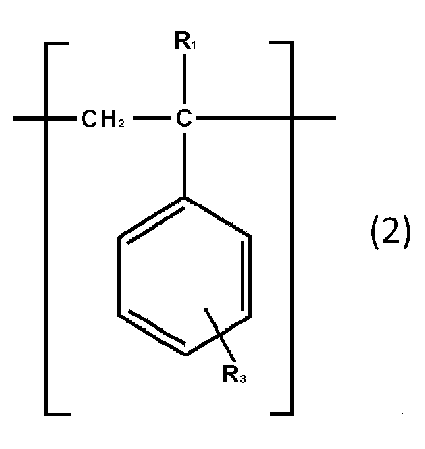

[付記10]
保水量が5g/m2~30g/m2である付記1~9のいずれか1つに記載の加湿用積層体。
[付記11]
前記無孔膜は前記多孔の補強材の少なくとも一方の表面を覆うようにコーティングされている付記1~10のいずれか1つに記載の加湿用積層体。
[付記12]
付記1~11のいずれか1つに記載の加湿用積層体とフレームとを貼り合わせた袋状の保水容器が複数枚設置された加湿器。
[付記13]
付記12に記載の加湿器を搭載した空調機。
[付記14]
付記12に記載の加湿器を搭載した換気装置。
[付記15]
付記12に記載の加湿器を搭載した空気清浄機。
Variations of the invention according to the present disclosure are described below.
[Appendix 1]
A laminate for humidification comprising a porous reinforcing material and a non-porous membrane that functions as a moisture-permeable membrane laminated on at least one surface of the porous reinforcing material, the non-porous membrane surface being water-repellent and having an uneven shape.
[Appendix 2]
2. The humidifying laminate according to claim 1, wherein the non-porous membrane comprises an anti-blocking agent.
[Appendix 3]
the average particle size of the antiblocking agent is greater than the thickness of the nonporous membrane;
3. The humidifying laminate according to claim 2, wherein the uneven shape is formed by the antiblocking agent.
[Appendix 4]
4. The humidifying laminate according to any one of claims 1 to 3, wherein the non-porous membrane surface has a water contact angle of 90° to 120°.
[Appendix 5]
The humidifying laminate according to any one of claims 1 to 4, wherein the arithmetic mean roughness (Sa) of the non-porous membrane surface is 0.1 μm to 0.5 μm.
[Appendix 6]
The humidifying laminate described in any one of appendixes 1 to 5, wherein the non-porous membrane is disposed on the liquid water side of the porous reinforcing material and is used to absorb the liquid water and release it into the air.
[Appendix 7]
The non-porous membrane contains a thermoplastic resin having a cationic moiety, and the cationic moiety contains a group containing an ammonium ion or a group capable of forming an ammonium ion.
[Appendix 8]
The non-porous membrane contains a thermoplastic resin having a hydrophilic portion, and the hydrophilic portion contains a structural unit represented by the following formula (1):
[Appendix 9]
The non-porous membrane contains a thermoplastic resin having a hydrophobic portion, and the hydrophobic portion contains a structural unit represented by the following formula (2) and/or the following formula (3).
[Appendix 10]
10. The humidifying laminate according to any one of claims 1 to 9, having a water retention capacity of 5 g/m 2 to 30 g/m 2 .
[Appendix 11]
11. The humidifying laminate according to any one of claims 1 to 10, wherein the non-porous membrane is coated so as to cover at least one surface of the porous reinforcing material.
[Appendix 12]
A humidifier comprising a plurality of bag-shaped water-retaining containers each formed by bonding the humidifying laminate according to any one of claims 1 to 11 to a frame.
[Appendix 13]
13. An air conditioner equipped with the humidifier according to
[Appendix 14]
13. A ventilation device equipped with the humidifier according to
[Appendix 15]
An air purifier equipped with the humidifier described in
1 積層体
11 多孔の補強材
11a 多孔の補強材の一方の面
12 無孔膜
REFERENCE SIGNS LIST 1
Claims (13)
前記無孔膜表面の水接触角が90°~120°であり、
前記無孔膜表面の算術平均粗さ(Sa)が0.1μm~0.5μmであり、
前記無孔膜が親水部と疎水部を有する熱可塑性樹脂を含む加湿用積層体。 A laminate having a porous reinforcing material and a non-porous membrane functioning as a moisture-permeable membrane laminated on at least one surface of the porous reinforcing material, the non-porous membrane surface having water repellency and an uneven shape,
The water contact angle of the non-porous membrane surface is 90° to 120°,
The arithmetic mean roughness (Sa) of the non-porous membrane surface is 0.1 μm to 0.5 μm,
The non-porous membrane comprises a thermoplastic resin having a hydrophilic portion and a hydrophobic portion .
前記凹凸形状が前記アンチブロッキング剤により形成される請求項2に記載の加湿用積層体。 the average particle size of the antiblocking agent is greater than the thickness of the nonporous membrane;
3. The humidifier laminate according to claim 2, wherein the uneven surface is formed by the antiblocking agent.


An air purifier equipped with the humidifier according to claim 10.
Priority Applications (6)
| Application Number | Priority Date | Filing Date | Title |
|---|---|---|---|
| JP2022096879A JP7680397B2 (en) | 2022-06-15 | 2022-06-15 | Humidification laminate and humidifier |
| EP23823890.1A EP4541579A1 (en) | 2022-06-15 | 2023-06-12 | Laminate for humidification, and humidifier |
| US18/862,161 US20250277594A1 (en) | 2022-06-15 | 2023-06-12 | Laminate for humidification, and humidifier |
| PCT/JP2023/021732 WO2023243600A1 (en) | 2022-06-15 | 2023-06-12 | Laminate for humidification, and humidifier |
| AU2023290870A AU2023290870A1 (en) | 2022-06-15 | 2023-06-12 | Laminate for humidification, and humidifier |
| CN202380045951.8A CN119343232A (en) | 2022-06-15 | 2023-06-12 | Humidification laminate and humidifier |
Applications Claiming Priority (1)
| Application Number | Priority Date | Filing Date | Title |
|---|---|---|---|
| JP2022096879A JP7680397B2 (en) | 2022-06-15 | 2022-06-15 | Humidification laminate and humidifier |
Publications (2)
| Publication Number | Publication Date |
|---|---|
| JP2023183332A JP2023183332A (en) | 2023-12-27 |
| JP7680397B2 true JP7680397B2 (en) | 2025-05-20 |
Family
ID=89191255
Family Applications (1)
| Application Number | Title | Priority Date | Filing Date |
|---|---|---|---|
| JP2022096879A Active JP7680397B2 (en) | 2022-06-15 | 2022-06-15 | Humidification laminate and humidifier |
Country Status (6)
| Country | Link |
|---|---|
| US (1) | US20250277594A1 (en) |
| EP (1) | EP4541579A1 (en) |
| JP (1) | JP7680397B2 (en) |
| CN (1) | CN119343232A (en) |
| AU (1) | AU2023290870A1 (en) |
| WO (1) | WO2023243600A1 (en) |
Citations (4)
| Publication number | Priority date | Publication date | Assignee | Title |
|---|---|---|---|---|
| JP2003097831A (en) | 2001-07-17 | 2003-04-03 | Japan Gore Tex Inc | Gas-liquid separation element, gas-liquid separator and gas-liquid separation unit |
| US20070149074A1 (en) | 2005-12-27 | 2007-06-28 | Industrial Technology Research Institute | Water-vapor permeable films and textiles |
| WO2021200382A1 (en) | 2020-03-31 | 2021-10-07 | 株式会社ダイセル | Laminate body |
| WO2022070948A1 (en) | 2020-09-30 | 2022-04-07 | 株式会社ダイセル | Laminate |
Family Cites Families (7)
| Publication number | Priority date | Publication date | Assignee | Title |
|---|---|---|---|---|
| JPH07111261B2 (en) * | 1989-05-09 | 1995-11-29 | 旭硝子株式会社 | Humidification method |
| JP3275613B2 (en) | 1995-03-01 | 2002-04-15 | 三菱電機株式会社 | Humidifier |
| JPH08266631A (en) * | 1995-03-31 | 1996-10-15 | Asahi Glass Co Ltd | Respiratory gas humidifier |
| CA2515461C (en) * | 2003-02-04 | 2012-04-10 | Toray Industries, Inc. | A moisture-permeable, waterproof film, a composite material, and a method for manufacturing thereof |
| JP2015160926A (en) * | 2014-02-28 | 2015-09-07 | 富士フイルム株式会社 | Aqueous composition, hard coat film, laminated film, transparent conductive film, and touch panel |
| CN108627898A (en) * | 2017-03-24 | 2018-10-09 | 张家港康得新光电材料有限公司 | A kind of anti-sticking brightness enhancement film of high briliancy and backlight module |
| JP7620425B2 (en) | 2020-12-18 | 2025-01-23 | シャープ株式会社 | Video encoding device and video decoding device |
-
2022
- 2022-06-15 JP JP2022096879A patent/JP7680397B2/en active Active
-
2023
- 2023-06-12 AU AU2023290870A patent/AU2023290870A1/en active Pending
- 2023-06-12 US US18/862,161 patent/US20250277594A1/en active Pending
- 2023-06-12 WO PCT/JP2023/021732 patent/WO2023243600A1/en not_active Ceased
- 2023-06-12 EP EP23823890.1A patent/EP4541579A1/en active Pending
- 2023-06-12 CN CN202380045951.8A patent/CN119343232A/en active Pending
Patent Citations (4)
| Publication number | Priority date | Publication date | Assignee | Title |
|---|---|---|---|---|
| JP2003097831A (en) | 2001-07-17 | 2003-04-03 | Japan Gore Tex Inc | Gas-liquid separation element, gas-liquid separator and gas-liquid separation unit |
| US20070149074A1 (en) | 2005-12-27 | 2007-06-28 | Industrial Technology Research Institute | Water-vapor permeable films and textiles |
| WO2021200382A1 (en) | 2020-03-31 | 2021-10-07 | 株式会社ダイセル | Laminate body |
| WO2022070948A1 (en) | 2020-09-30 | 2022-04-07 | 株式会社ダイセル | Laminate |
Also Published As
| Publication number | Publication date |
|---|---|
| EP4541579A1 (en) | 2025-04-23 |
| AU2023290870A1 (en) | 2024-11-07 |
| WO2023243600A1 (en) | 2023-12-21 |
| CN119343232A (en) | 2025-01-21 |
| US20250277594A1 (en) | 2025-09-04 |
| JP2023183332A (en) | 2023-12-27 |
Similar Documents
| Publication | Publication Date | Title |
|---|---|---|
| CN101768381B (en) | Self-cleaning article and a process for preparing the same | |
| JP2017530002A (en) | Separation module, system and method | |
| US20230129711A1 (en) | Laminate | |
| CN1133709C (en) | Hydrophilic treatment agent, hydrophilization treatment solution, and hydrophilization treatment method | |
| JP7677931B2 (en) | Humidification laminate and humidifier | |
| JP5270570B2 (en) | Humidification vaporization filter, humidification vaporization filter laminate, and humidification method using them | |
| JP7680396B2 (en) | Humidification laminate and humidifier | |
| US20250277594A1 (en) | Laminate for humidification, and humidifier | |
| US20250327588A1 (en) | Humidification element and humidifier | |
| JP7142065B2 (en) | Partition member for total heat exchange element, total heat exchange element, and ventilator | |
| JP2023183331A (en) | Humidification laminate and humidifier | |
| JP2023183387A (en) | Humidification elements and humidifiers | |
| JP2002294153A (en) | Surface covered molded product | |
| JP6328983B2 (en) | Functional structure and method for producing the functional structure | |
| JP2008006419A (en) | Photocatalytic film and method for producing the same | |
| WO2023277190A1 (en) | Protective cover member, sheet for member supply, and microelectromechanical system | |
| JP7146867B2 (en) | laminate | |
| CN115515781B (en) | laminated body | |
| JP2017028107A (en) | Back surface protection sheet for solar cell module and solar cell module using the same | |
| JP2011002126A (en) | Vaporization filter for humidification, vaporization filter laminated body for humidification and humidification method using them |
Legal Events
| Date | Code | Title | Description |
|---|---|---|---|
| A621 | Written request for application examination |
Free format text: JAPANESE INTERMEDIATE CODE: A621 Effective date: 20230509 |
|
| A131 | Notification of reasons for refusal |
Free format text: JAPANESE INTERMEDIATE CODE: A131 Effective date: 20240702 |
|
| A521 | Request for written amendment filed |
Free format text: JAPANESE INTERMEDIATE CODE: A523 Effective date: 20240826 |
|
| A131 | Notification of reasons for refusal |
Free format text: JAPANESE INTERMEDIATE CODE: A131 Effective date: 20241126 |
|
| A521 | Request for written amendment filed |
Free format text: JAPANESE INTERMEDIATE CODE: A523 Effective date: 20250124 |
|
| TRDD | Decision of grant or rejection written | ||
| A01 | Written decision to grant a patent or to grant a registration (utility model) |
Free format text: JAPANESE INTERMEDIATE CODE: A01 Effective date: 20250422 |
|
| A61 | First payment of annual fees (during grant procedure) |
Free format text: JAPANESE INTERMEDIATE CODE: A61 Effective date: 20250508 |
|
| R150 | Certificate of patent or registration of utility model |
Ref document number: 7680397 Country of ref document: JP Free format text: JAPANESE INTERMEDIATE CODE: R150 |