JP7635142B2 - Method for initializing battery charging status - Patents.com - Google Patents
Method for initializing battery charging status - Patents.com Download PDFInfo
- Publication number
- JP7635142B2 JP7635142B2 JP2021558727A JP2021558727A JP7635142B2 JP 7635142 B2 JP7635142 B2 JP 7635142B2 JP 2021558727 A JP2021558727 A JP 2021558727A JP 2021558727 A JP2021558727 A JP 2021558727A JP 7635142 B2 JP7635142 B2 JP 7635142B2
- Authority
- JP
- Japan
- Prior art keywords
- battery
- state
- charge
- sococv
- time
- Prior art date
- Legal status (The legal status is an assumption and is not a legal conclusion. Google has not performed a legal analysis and makes no representation as to the accuracy of the status listed.)
- Active
Links
Images
Classifications
-
- B—PERFORMING OPERATIONS; TRANSPORTING
- B60—VEHICLES IN GENERAL
- B60L—PROPULSION OF ELECTRICALLY-PROPELLED VEHICLES; SUPPLYING ELECTRIC POWER FOR AUXILIARY EQUIPMENT OF ELECTRICALLY-PROPELLED VEHICLES; ELECTRODYNAMIC BRAKE SYSTEMS FOR VEHICLES IN GENERAL; MAGNETIC SUSPENSION OR LEVITATION FOR VEHICLES; MONITORING OPERATING VARIABLES OF ELECTRICALLY-PROPELLED VEHICLES; ELECTRIC SAFETY DEVICES FOR ELECTRICALLY-PROPELLED VEHICLES
- B60L58/00—Methods or circuit arrangements for monitoring or controlling batteries or fuel cells, specially adapted for electric vehicles
- B60L58/10—Methods or circuit arrangements for monitoring or controlling batteries or fuel cells, specially adapted for electric vehicles for monitoring or controlling batteries
- B60L58/12—Methods or circuit arrangements for monitoring or controlling batteries or fuel cells, specially adapted for electric vehicles for monitoring or controlling batteries responding to state of charge [SoC]
- B60L58/13—Maintaining the SoC within a determined range
-
- B—PERFORMING OPERATIONS; TRANSPORTING
- B60—VEHICLES IN GENERAL
- B60L—PROPULSION OF ELECTRICALLY-PROPELLED VEHICLES; SUPPLYING ELECTRIC POWER FOR AUXILIARY EQUIPMENT OF ELECTRICALLY-PROPELLED VEHICLES; ELECTRODYNAMIC BRAKE SYSTEMS FOR VEHICLES IN GENERAL; MAGNETIC SUSPENSION OR LEVITATION FOR VEHICLES; MONITORING OPERATING VARIABLES OF ELECTRICALLY-PROPELLED VEHICLES; ELECTRIC SAFETY DEVICES FOR ELECTRICALLY-PROPELLED VEHICLES
- B60L58/00—Methods or circuit arrangements for monitoring or controlling batteries or fuel cells, specially adapted for electric vehicles
- B60L58/10—Methods or circuit arrangements for monitoring or controlling batteries or fuel cells, specially adapted for electric vehicles for monitoring or controlling batteries
- B60L58/12—Methods or circuit arrangements for monitoring or controlling batteries or fuel cells, specially adapted for electric vehicles for monitoring or controlling batteries responding to state of charge [SoC]
-
- G—PHYSICS
- G01—MEASURING; TESTING
- G01R—MEASURING ELECTRIC VARIABLES; MEASURING MAGNETIC VARIABLES
- G01R31/00—Arrangements for testing electric properties; Arrangements for locating electric faults; Arrangements for electrical testing characterised by what is being tested not provided for elsewhere
- G01R31/36—Arrangements for testing, measuring or monitoring the electrical condition of accumulators or electric batteries, e.g. capacity or state of charge [SoC]
- G01R31/3644—Constructional arrangements
- G01R31/3648—Constructional arrangements comprising digital calculation means, e.g. for performing an algorithm
-
- G—PHYSICS
- G01—MEASURING; TESTING
- G01R—MEASURING ELECTRIC VARIABLES; MEASURING MAGNETIC VARIABLES
- G01R31/00—Arrangements for testing electric properties; Arrangements for locating electric faults; Arrangements for electrical testing characterised by what is being tested not provided for elsewhere
- G01R31/36—Arrangements for testing, measuring or monitoring the electrical condition of accumulators or electric batteries, e.g. capacity or state of charge [SoC]
- G01R31/374—Arrangements for testing, measuring or monitoring the electrical condition of accumulators or electric batteries, e.g. capacity or state of charge [SoC] with means for correcting the measurement for temperature or ageing
-
- G—PHYSICS
- G01—MEASURING; TESTING
- G01R—MEASURING ELECTRIC VARIABLES; MEASURING MAGNETIC VARIABLES
- G01R31/00—Arrangements for testing electric properties; Arrangements for locating electric faults; Arrangements for electrical testing characterised by what is being tested not provided for elsewhere
- G01R31/36—Arrangements for testing, measuring or monitoring the electrical condition of accumulators or electric batteries, e.g. capacity or state of charge [SoC]
- G01R31/382—Arrangements for monitoring battery or accumulator variables, e.g. SoC
- G01R31/3835—Arrangements for monitoring battery or accumulator variables, e.g. SoC involving only voltage measurements
-
- Y—GENERAL TAGGING OF NEW TECHNOLOGICAL DEVELOPMENTS; GENERAL TAGGING OF CROSS-SECTIONAL TECHNOLOGIES SPANNING OVER SEVERAL SECTIONS OF THE IPC; TECHNICAL SUBJECTS COVERED BY FORMER USPC CROSS-REFERENCE ART COLLECTIONS [XRACs] AND DIGESTS
- Y02—TECHNOLOGIES OR APPLICATIONS FOR MITIGATION OR ADAPTATION AGAINST CLIMATE CHANGE
- Y02T—CLIMATE CHANGE MITIGATION TECHNOLOGIES RELATED TO TRANSPORTATION
- Y02T10/00—Road transport of goods or passengers
- Y02T10/60—Other road transportation technologies with climate change mitigation effect
- Y02T10/70—Energy storage systems for electromobility, e.g. batteries
Landscapes
- General Physics & Mathematics (AREA)
- Physics & Mathematics (AREA)
- Engineering & Computer Science (AREA)
- Power Engineering (AREA)
- Sustainable Development (AREA)
- Sustainable Energy (AREA)
- Life Sciences & Earth Sciences (AREA)
- Transportation (AREA)
- Mechanical Engineering (AREA)
- Charge And Discharge Circuits For Batteries Or The Like (AREA)
- Secondary Cells (AREA)
- Electric Propulsion And Braking For Vehicles (AREA)
- Tests Of Electric Status Of Batteries (AREA)
Description
本発明は、電気化学的なエネルギ貯蔵デバイスの充電状態を初期化するための方法に関し、より詳細には、アキュムレータバッテリに関する。本発明は、特に、ただし、非排他的に、再充電可能なハイブリッド車両および電気車両のためのトラクションバッテリの管理における使用が意図される。 The present invention relates to a method for initializing the state of charge of an electrochemical energy storage device, and more particularly to an accumulator battery. The present invention is particularly, but not exclusively, intended for use in managing traction batteries for rechargeable hybrid and electric vehicles.
ハイブリッド車両および電気車両の分野では、トラクションバッテリの管理システムのための主要な課題のうちの1つは、バッテリの充填状態(SOC)を推定することである。充電状態は、バッテリの電子管理における必須のパラメータである。このパラメータは、アキュムレータバッテリが所与の瞬間に送達できる電気エネルギの量を代表しており、その公称能力の百分率として表現される。充電状態を正確に推定することは、バッテリの性能および寿命を最適化するのに役立つ。動作中のバッテリの充電状態を決定するための知られている方法は、時間の関数として、バッテリを通って流れる(充電または放電)電流の強度を積分することを含む。積分回路の信頼性および堅牢性に加えて、そういった方法の信頼性は、バッテリがウェーキングするときの充電状態の初期化フェーズに依存する。この初期化フェーズは、現実に、推定の収斂、したがって、推定された充電状態の精度、を確実にすることにおいて重要な役割を果たす。 In the field of hybrid and electric vehicles, one of the main challenges for management systems of traction batteries is to estimate the state of charge (SOC) of the battery. The state of charge is an essential parameter in the electronic management of batteries. This parameter is representative of the amount of electrical energy that an accumulator battery can deliver at a given moment and is expressed as a percentage of its nominal capacity. An accurate estimation of the state of charge helps to optimize the performance and life of the battery. Known methods for determining the state of charge of a battery during operation include integrating the intensity of the current (charging or discharging) flowing through the battery as a function of time. In addition to the reliability and robustness of the integrator circuit, the reliability of such methods depends on a state of charge initialization phase when the battery wakes up. This initialization phase actually plays a key role in ensuring the convergence of the estimation and therefore the accuracy of the estimated state of charge.
車両がスタートするとき即ちバッテリ動作が始まるときのバッテリの推定された充電状態の初期化フェーズを含むバッテリの充電状態を決定するための方法は、文献EP2101183A1から知られている。この知られている方法によれば、バッテリの第1の充電状態値は、車両がスタートするときのバッテリの開回路電圧(OCV)から計算され、車両がストップするとき即ちバッテリ動作がストップするときの充電状態の計算から生じる第2の値は、メモリに記憶される。比較は、その後に、第1の計算された充電状態値と、第2の記憶された充電状態値との間で行われ、第1の計算された値は、初期の充電状態値として選択され、それは比較の結果が絶対的な期間において閾値より下である場合であり、そうでなければ、第2の記憶された値が選択される。斯くして、スタート時の開回路電圧から計算された第1の値が、低い信頼度を有する場合、第2の記憶された値は、初期の充電状態値として規定される。
A method for determining the state of charge of a battery, including an initialization phase of the estimated state of charge of the battery when the vehicle is started, i.e. when the battery operation begins, is known from
しかしながら、バッテリの初期の充電状態値を推定するためのこの方法は、或る種の用途のシナリオでは、特に、バッテリ緩和時間がとても短いときに、不正確である。従来、バッテリの充電期間および/または放電期間は、緩和の期間によって分離され、その間は電流がバッテリを通って流れない。所与の緩和時間の後で、バッテリは、定常状態に達する。いったんこの定常状態が達せられると、無負荷電圧(開回路電圧)は、バッテリの端子で測定でき、これは、それの定常状態の起電力に対応する。バッテリのタイプにもよるが、数分から数時間の緩和時間は、定常状態に達するために必要とされる。より具体的には、定常状態に達するために必要とされる緩和時間は、電極の分極の程度に依存し、それはそれで、バッテリを通って流れる電流の強度、並びに、前記電流の印加時間に顕著に依存する。更に、定常状態外の起電力のどんな決定も、充電状態の推定の精度に影響を及ぼす。上述した文献に係る充電状態の初期化方法が、バッテリの分極だけでなくバッテリの緩和時間も考慮に入れないという理由で、この方法は、バッテリの長い休養期間後にだけ使用されるべきであり、そうでなければ、方法は、不正確になるであろう。 However, this method for estimating the initial state-of-charge value of a battery is inaccurate in certain application scenarios, especially when the battery relaxation time is very short. Conventionally, battery charging and/or discharging periods are separated by periods of relaxation, during which no current flows through the battery. After a given relaxation time, the battery reaches a steady state. Once this steady state is reached, a no-load voltage (open circuit voltage) can be measured at the battery terminals, which corresponds to its steady-state electromotive force. Depending on the type of battery, a relaxation time of several minutes to several hours is required to reach the steady state. More specifically, the relaxation time required to reach the steady state depends on the degree of polarization of the electrodes, which in turn depends significantly on the strength of the current flowing through the battery, as well as on the application time of said current. Moreover, any determination of the electromotive force outside the steady state affects the accuracy of the estimation of the state of charge. Because the charge state initialization method according to the above-mentioned document does not take into account the battery polarization as well as the battery relaxation time, this method should only be used after a long rest period of the battery, otherwise the method will be inaccurate.
したがって、本発明は、上述した制限を克服しながらモータ車両のバッテリの初期の充電状態値を推定するための方法を提供することを意図している。 The present invention therefore aims to provide a method for estimating an initial state of charge value of a battery in a motor vehicle while overcoming the limitations mentioned above.
この目的のために、本発明は、バッテリの充電状態を推定するための方法であって、前記充電状態の初期値を推定することを含む、バッテリの充電状態の初期化フェーズを含み、前記初期化フェーズは、
バッテリがスリープモードに移行するときのバッテリの記憶された充電状態値の受領ステップと、
バッテリがウェーキングするときの端子の無負荷電圧の測定値を用いる充電状態値の計算ステップと
を含み、
初期化フェーズは、バッテリの緩和に起因する無負荷電圧の測定の誤差を計算するための計算ステップを含み、前記誤差は、バッテリの現在温度と、各温度のためにモデル化されたバッテリの目標緩和時間と、に応じて計算され、
前記充電状態の初期値の推定は、充電状態の前記記憶された値と前記計算された値との間の比較に基づいて、前記計算された誤差に応じて計算される、方法に関する。
To this end, the invention relates to a method for estimating a state of charge of a battery, comprising an initialization phase of the state of charge of the battery, comprising estimating an initial value of said state of charge, said initialization phase comprising:
receiving a stored state of charge value of the battery when the battery transitions to a sleep mode;
and calculating a state of charge value using a measurement of the no-load voltage at the terminals when the battery is waking;
The initialization phase includes a calculation step for calculating an error of the measurement of the no-load voltage due to relaxation of the battery, said error being calculated as a function of a current temperature of the battery and a target relaxation time of the battery modeled for each temperature;
wherein an estimate of the initial value of the state of charge is calculated as a function of the calculated error based on a comparison between the stored value and the calculated value of the state of charge.
そういった推定は、たとえ緩和期間があまりに短くてバッテリが定常状態に達することができず、その結果として、バッテリの緩和が保証されないとしても、バッテリの初期の充電状態値の信頼性のある推定を提供し、緩和期間中のリセットされるべき充電状態の推定を可能にする。 Such an estimation provides a reliable estimate of the battery's initial state of charge value and allows the state of charge estimate to be reset during the relaxation period, even if the relaxation period is too short for the battery to reach a steady state and, as a result, relaxation of the battery is not guaranteed.
有利なことに、緩和によって引き起こされる誤差の計算は、
バッテリの所与の温度のために、バッテリの所与の充電状態を所与の無負荷電圧と相関づけるマップデータを記憶することと、
最小緩和時間のためのウェーキング時のバッテリ電圧と、前記目標緩和時間のためのウェーキング時のバッテリ電圧との間の誤差に対応する無負荷電圧の測定の最大誤差を決定することと、
前記最大誤差に応じて、マップデータによって提供される充電状態値に関連して、充電状態の誤差マージンの変化を記述する誤差較正データを提供することと、
バッテリがウェーキングするときの前記無負荷電圧測定値と前記較正データとを用いて緩和によって引き起こされる前記誤差を計算することと、を含む。
Advantageously, the calculation of the error caused by relaxation can be done by:
storing map data correlating a given state of charge of the battery with a given no-load voltage for a given temperature of the battery;
determining a maximum error in the measurement of the no-load voltage corresponding to an error between the battery voltage at waking for a minimum relaxation time and the battery voltage at waking for the target relaxation time;
providing error calibration data describing a change in a state of charge error margin relative to a state of charge value provided by map data in response to said maximum error;
and calculating the error caused by relaxation using the no-load voltage measurement when the battery is waking and the calibration data.
有利なことに、前記充電状態の初期値の推定は、分極方向が、スリープモード移行時にバッテリの充電に対応するのか、または放電に対応するのかに応じて計算される。 Advantageously, the estimate of the initial state of charge is calculated depending on whether the polarization direction corresponds to charging or discharging the battery when entering the sleep mode.
有利なことに、前記充電状態の初期値の推定は、バッテリの目標緩和時間に関連して、バッテリの実際スリープ時間を代表するパラメータを考慮して計算される。 Advantageously, the estimate of the initial state of charge is calculated taking into account parameters representative of the actual sleep time of the battery in relation to the target relaxation time of the battery.
有利なことに、分極方向が、スリープモード移行時に放電に対応し、その瞬間の記憶された充電状態値SOCmemが、ウェーキング時の計算された充電状態値SOCocv以上である場合には、初期の充電状態値SOCiniの推定は、
SOCini=min(SOCmem,SOCocv+Err)
で計算され、そうでない場合には、
SOCini=(1-a).SOCocv+a.(SOCocv+Err)
で計算され、パラメータaは、バッテリのスリープ時間がバッテリの目標緩和時間に等しい場合の0と、バッテリのスリープ時間がバッテリスリープ要求とバッテリウェーキング要求との間で必要とされる最小時間に等しい場合の1との間で変化する。
Advantageously, if the polarization direction corresponds to discharging at the time of the sleep mode transition and the stored state of charge value SOCmem at that moment is equal to or greater than the calculated state of charge value SOCocv at the time of waking, then the estimation of the initial state of charge value SOCini is:
SOCini=min(SOCmem, SOCocv+Err)
otherwise,
SOCini=(1-a). SOCocv+a. (SOCocv+Err)
where the parameter a varies between 0 when the battery sleep time is equal to the battery's target relax time, and 1 when the battery sleep time is equal to the minimum time required between a battery sleep request and a battery waking request.
有利なことに、分極方向が、スリープモード移行時に充電に対応し、その瞬間の記憶された充電状態値SOCmemが、ウェーキング時の計算された充電状態値SOCocv以下である場合には、初期の充電状態値SOCiniの推定は、
SOCini=max(SOCmem,SOCocv-Err)
で計算され、そうでない場合には、
SOCini=(1-a).SOCocv+a.(SOCocv-Err)
で計算され、パラメータaは、バッテリのスリープ時間がバッテリの目標緩和時間に等しい場合の0と、バッテリのスリープ時間がバッテリスリープ要求とバッテリウェーキング要求との間で必要とされる最小時間に等しい場合の1との間で変化する。
Advantageously, if the polarization direction corresponds to charging at the time of the sleep mode transition and the stored state of charge value SOCmem at that moment is less than or equal to the calculated state of charge value SOCocv at the time of waking, then the estimation of the initial state of charge value SOCini is:
SOCini=max(SOCmem, SOCocv-Err)
otherwise,
SOCini=(1-a). SOCocv+a. (SOCocv-Err)
where the parameter a varies between 0 when the battery sleep time is equal to the battery's target relax time, and 1 when the battery sleep time is equal to the minimum time required between a battery sleep request and a battery waking request.
変形例では、分極方向が、スリープモード移行時に放電に対応し、その瞬間の記憶された充電状態値SOCmemが、ウェーキング時の計算された充電状態値SOCocvより小さい場合には、初期の充電状態値SOCiniの推定は、
SOCini=(SOCocv+(SOCocv+Err))/2
で計算される。
In a variant, if the polarization direction corresponds to discharging at the time of the sleep mode transition and the stored state of charge value SOCmem at that moment is smaller than the calculated state of charge value SOCocv at the time of waking, the estimation of the initial state of charge value SOCini is
SOCini=(SOCocv+(SOCocv+Err))/2
It is calculated as follows.
変形例では、分極方向が、スリープモード移行時に放電に対応し、その瞬間の記憶された充電状態値SOCmemが、ウェーキング時の計算された充電状態値SOCocvより大きい場合には、初期の充電状態値SOCiniの推定は、
SOCini=(SOCocv+(SOCocv-Err))/2
で計算される。
In a variant, if the polarization direction corresponds to discharging at the time of the sleep mode transition and the stored state of charge value SOCmem at that moment is greater than the calculated state of charge value SOCocv at the time of waking, the estimation of the initial state of charge value SOCini is
SOCini=(SOCocv+(SOCocv-Err))/2
It is calculated as follows.
本発明は、上で説明された方法を実施するための手段を含むことを特徴とする、バッテリ、特に、電気車両のトラクションバッテリのための管理デバイスにも関する。 The invention also relates to a management device for a battery, in particular a traction battery of an electric vehicle, characterized in that it includes means for implementing the method described above.
本発明は、上で説明されたようなデバイスを備えることを特徴とする再充電可能なハイブリッド車両または電気モータ車両にも関する。 The invention also relates to a rechargeable hybrid or electric motor vehicle, characterized in that it comprises a device as described above.
本発明の他の特徴および利点は、添付の図面を参照して、非限定例として、下で提供される説明で提示される。 Other characteristics and advantages of the present invention are presented in the description provided below, by way of non-limiting example, with reference to the accompanying drawings.
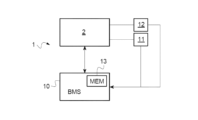
図1は、本発明の一実施形態に係る方法を実装するための手段を含むデバイスを示す。デバイス1は、特にバッテリ管理システム10(BMS)を含む。バッテリ管理システム10は、バッテリ2にリンクされる。バッテリ管理システムは、バッテリの温度を測定するための手段11と、バッテリの端子で電圧を測定するための手段12と、にもリンクされ、前記手段は、それ自体知られている。バッテリ管理システム10は、データを記憶するために使用される不揮発性メモリ13を含み、特に、データは、バッテリの推定充電状態SOCmemに関し、また、バッテリがスリープモードに移行するときのバッテリの分極Signe_Polarisation(充電または放電)と、このスリープの持続時間Rest_timeと、バッテリの端子の電圧Ucellおよびバッテリがウェーキングするときのバッテリの温度Tと、に関する。これらのデータは、特に、下で非常に詳細に解説されるように、ウェーキング時のバッテリの緩和状態を判断するのを可能にする。
1 shows a device including means for implementing a method according to an embodiment of the invention. The
メモリ13は、例えば、マップOCV=f(SOC)の形式で、バッテリの所与の温度のためのバッテリの規定された充電状態SOCと規定された無負荷電圧OCVとの間の相互関係に関するデータも記憶する。これらのデータは、異なった温度条件下でそういったバッテリに関する予備試験から取得できる。斯くして、バッテリがウェーキングする際に、バッテリ端子の電圧の測定値は、バッテリの無負荷電圧OCVであり、バッテリを通って流れる電流はなく、バッテリ管理システム10は、バッテリの対応する充電状態SOCocvを計算でき、バッテリがウェーキングするときの無負荷電圧OCVの測定値と、バッテリの温度と、を用いる。
The
初期化方法は、バッテリがウェーキングするときに信頼性のある初期の充電状態値を決定することが意図される。現実に、バッテリの緩和が保証できないときは、バッテリがウェーキングするときの無負荷電圧の測定値に基づく充電状態値は、バッテリの緩和によって引き起こされる誤差にさらされる。斯くして、ウェーキング時にバッテリに負わされる無負荷電圧測定値に生じる誤差を代表する規模のオーダーを取得する目的で、緩和によって引き起こされるこの誤差を較正するためのステップは、下で詳述されるように、実装される。 The initialization method is intended to determine a reliable initial state-of-charge value when the battery wakes up. In reality, when relaxation of the battery cannot be guaranteed, the state-of-charge value based on the measurement of the no-load voltage when the battery wakes up is subject to an error caused by relaxation of the battery. Thus, steps are implemented, as detailed below, to calibrate this error caused by relaxation with the aim of obtaining an order of magnitude representative of the error occurring in the no-load voltage measurement imposed on the battery when waking up.
誤差は、論議されているバッテリのための緩和期間の持続時間に特に依存する。更に、緩和曲線は、例えば、異なった温度から引き出され、各曲線は、特定の温度に対応する。好ましくは、異なった曲線は、緩和期間がバッテリ充電または放電分極に続くか否かに応じて引かれる。 The error depends in particular on the duration of the relaxation period for the battery under consideration. Furthermore, relaxation curves may be drawn, for example, at different temperatures, each curve corresponding to a particular temperature. Preferably, different curves are drawn depending on whether the relaxation period follows a battery charge or discharge polarization.
これらの異なった温度の緩和曲線は、分析され、目標緩和時間Threshは、各温度のために識別される。 These relaxation curves for different temperatures are analyzed and a target relaxation time Thresh is identified for each temperature.
更に、不完全な緩和によって引き起こされる無負荷電圧の測定値の最大誤差Errmaxも決定される。この誤差は、2つの周期間のバッテリのスリープ要求およびウェーキング要求間で必要とされる最小時間(例えば、1分)に対応する最小緩和時間のためのウェーキング時のバッテリ電圧と、バッテリの測定された温度のために決定される目標緩和時間のためのウェーキング時のバッテリ電圧との間の誤差を考慮して推定される。下の表は、上で解説されたように、バッテリの最小スリープ/ウェーキング周期時間を考慮して無負荷電圧の測定値の対応する目標関係時間および最大誤差を決定するために異なった温度で実施される緩和考察の例を示す。

無負荷電圧の測定値における最大誤差は、次いで、マップOCV=f(SOC)上で実行される誤差計算を用いて、充電状態の誤差に変換され、バッテリの所与の温度のために、バッテリの充電状態SOCと、バッテリのウェーキング電圧またはバッテリの無負荷電圧OCVとの間の相関関係を確立する。この、無負荷電圧の測定値における最大誤差の、充電状態の誤差への変換は、好ましくは、オフラインで実行される。 The maximum error in the no-load voltage measurement is then converted to a state-of-charge error using an error calculation performed on the map OCV=f(SOC) to establish a correlation between the state-of-charge SOC of the battery and the waking voltage or no-load voltage OCV of the battery for a given temperature of the battery. This conversion of the maximum error in the no-load voltage measurement to a state-of-charge error is preferably performed offline.
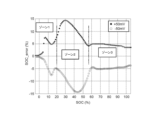
図3は、バッテリのウェーキング電圧の値における50mVの決定された最大誤差例のためのこの変換の結果を示す。斯くして、所与の温度OCV=f(SOC)のために記憶された実体マップに基づいて、決定された最大誤差値は、バッテリウェーキング時の各電圧値のために考慮に入れられ、対応する充電状態値のために上側および下側の誤差マージンを提供する。図3は、生じる誤差のための較正曲線を描いており、マップOCV=f(SOC)によって提供される充電状態値SOCに関連して、百分率として充電状態のこの誤差マージンSOC_errorの変化を示す。 Figure 3 shows the result of this conversion for an example of a determined maximum error of 50 mV in the value of the waking voltage of the battery. Thus, based on the reality map stored for a given temperature OCV = f (SOC), the determined maximum error value is taken into account for each voltage value at the waking of the battery, providing an upper and lower error margin for the corresponding state of charge value. Figure 3 plots a calibration curve for the resulting error, showing the change in this error margin SOC_error of the state of charge as a percentage in relation to the state of charge value SOC provided by the map OCV = f (SOC).
有利なことに、この誤差較正曲線は、幾つかのゾーン、好ましくは、少なくとも2つのゾーンに分解できる。図3の例に示された較正曲線は、参照記号ゾーン1、ゾーン2、ゾーン3を用いて表わされた3つのゾーンを有し、個々が充電状態値の事前規定範囲にそれぞれ対応する。斯くして、充電状態値は、ウェーキング時に測定されるバッテリ電圧値のためのマップOCV=f(SOC)から取得され、また、この値が該当する充電状態の事前規定範囲に応じて、論議されている事前規定された充電状態範囲のための誤差マージンSOC_errorの推定最大値は、緩和によって引き起こされる誤差Errであると解釈される。図3の例によれば、充電状態の事前規定範囲ゾーン1のために、緩和によって引き起こされる誤差Errは、7.5%であると考えられ、充電状態の事前規定範囲ゾーン2のために、緩和によって引き起こされる誤差Errは、15%であると考えられ、充電状態の事前規定範囲ゾーン3のために、緩和によって引き起こされる誤差Errは、5%であると考えられる。斯くして、幾つかの事前規定ゾーンのうちの1つに属することについて、ウェーキング時のバッテリの電圧に関する調子を考慮に入れることは、計算で最大誤差マージンを用いる必要性を不要にし、代わりに、前記誤差マージンを実体誤差マージンの出来る限り近くに適合させる。
Advantageously, this error calibration curve can be decomposed into several zones, preferably at least two zones. The calibration curve shown in the example of FIG. 3 has three zones, designated with the
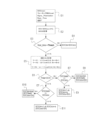
図2は、図1で説明されたように、実装のために必要とされるデバイスに関連して、バッテリの充電状態を初期化するための方法のフローチャート図である。先ず、第1のステップE1では、バッテリ管理システム10は、上で示されたように、メモリ13に記録されたデータ、即ち、スリープモード移行時のバッテリの推定充電状態SOCmem、スリープモード移行時のバッテリの分極Signe_Polarisation(充電または放電)、ウェーキング時のバッテリの端子の電圧Ucellの値、ウェーキング時のバッテリの温度T、最後に、スリープ時間Rest_time、を検索する。
2 is a flow chart diagram of a method for initializing the state of charge of the battery, as described in FIG. 1, in relation to the device required for implementation. First, in a first step E1, the
第2のステップE2は、それの無負荷電圧OCVに対応するウェーキング時のバッテリ電圧Ucellの直接測定を用いて、バッテリの温度TのためのマップOCV=f(SOC)から演繹される充電状態SOCocvを計算することを含む。 The second step E2 involves calculating the state of charge SOCoCv deduced from the map OCV=f(SOC) for the temperature T of the battery using a direct measurement of the battery voltage Ucell at waking corresponding to its no-load voltage OCV.
これらの2つのステップE1およびE2は、初期化フェーズを構成する。この初期化フェーズに続いて、緩和によって引き起こされる誤差のための較正フェーズは、上で提示された原理に従って実装される。 These two steps E1 and E2 constitute an initialization phase. Following this initialization phase, a calibration phase for the errors induced by the relaxation is implemented according to the principles presented above.
先ず、ステップE3では、スリープ時間Rest_timeは、所与の温度Tのために論議されているバッテリの緩和の考察から生じる目標緩和時間Threshと比較される。バッテリのスリープ時間Rest_timeが目標緩和時間Thresh以上である場合には、ステップE4では、既に計算された充電状態値SOCocvは、初期の充電状態値SOCiniとして設定される。現実に、このケースでは、バッテリが定常状態に達するために必要とされる緩和時間は、達成または凌駕されており、したがって、ウェーキング時に測定されるバッテリの電圧値OCVは、信頼性のある初期の充電状態値を提供する。更に、メモリ13に対するアクセス制御ステップは、ステップE3で実装できる。メモリがアクセス可能でない場合、方法は、それにもかかわらず、ステップE4を前進させ、初期の充電状態値SOCiniは、計算された充電状態値SOCocvに設定されるが、その理由は他の値が利用可能でないからである。換言すると、バッテリの緩和が完全であるかまたはメモリに記憶された情報が何であれ何らかの理由のために利用可能でない場合、初期の充電状態値は、計算された充電状態値SOCocvを用いて決定される。
First, in step E3, the sleep time Rest_time is compared with a target relaxation time Thresh resulting from the relaxation considerations of the battery under consideration for a given temperature T. If the battery sleep time Rest_time is equal to or greater than the target relaxation time Thresh, then in step E4 the already calculated state of charge value SOCoCv is set as the initial state of charge value SOCini. Indeed, in this case, the relaxation time required for the battery to reach a steady state has been achieved or exceeded, and therefore the voltage value OCV of the battery measured at waking provides a reliable initial state of charge value. Furthermore, an access control step to the
逆に、メモリがアクセスでき、スリープ時間Rest_timeが目標緩和時間Threshよりも短い場合には、方法は、緩和によって引き起こされる誤差Errを較正するためのステップE5に前進する。上で提示された原理によれば、この誤差は、ウェーキング時のバッテリ電圧値Ucellに応じて図3の誤差較正曲線を用いて決定される。 Conversely, if the memory is accessible and the sleep time Rest_time is shorter than the target relaxation time Thresh, the method proceeds to step E5 for calibrating the error Err caused by relaxation. According to the principles presented above, this error is determined using the error calibration curve of FIG. 3 as a function of the battery voltage value Ucell at waking.
いったん緩和によって引き起こされた誤差ErrがステップE5で決定されると、方法は、初期の充電状態値SOCiniのために計算フェーズに前進する。有利なことに、バッテリの分極方向は、初期の充電状態値を計算するときに考慮に入れられる。分極方向を考慮に入れることは、充電状態における過大評価誤差または過小評価誤差を最少化することによって実体充電状態値により近付くのに役立つ。 Once the error Err caused by relaxation has been determined in step E5, the method proceeds to a calculation phase for an initial state-of-charge value SOCini. Advantageously, the polarization direction of the battery is taken into account when calculating the initial state-of-charge value. Taking the polarization direction into account helps to get closer to the actual state-of-charge value by minimizing overestimation or underestimation errors in the state of charge.
斯くして、分極試験は、スリープモード移行時の分極方向を決定するためにステップE6で先ず実行される。この試験は、スリープモード移行直後のバッテリ電圧の変化の分析に基づいている。極めて最初の緩和での電圧増加は、バッテリ放電が中断されたことを示し、その一方で逆に、極めて最初の緩和での電圧減少は、バッテリ充電が中断されたことを示す。メモリに記憶される可変Signe_Polarisationは、この試験の結果を示す。可変Signe_PolarisationによってステップE6で提供されるバッテリの分極方向に応じて、比較は、ステップE7で、スリープモード移行時にメモリに記憶されたバッテリの推定された充電状態SOCmemと、ウェーキング時のバッテリのOCV電圧の直接測定から生じる計算された充電状態SOCocvとの間で実行される。続いて、この比較に応じて、決断は、ステップE5で決定されるように、緩和によって引き起こされる誤差Errを用いて初期の充電状態値を決定するために行われる。 Thus, a polarization test is first performed in step E6 to determine the polarization direction at the time of sleep mode transition. This test is based on the analysis of the change in the battery voltage immediately after sleep mode transition. A voltage increase at the very first relaxation indicates that the battery discharge has been interrupted, while conversely, a voltage decrease at the very first relaxation indicates that the battery charging has been interrupted. A variable Signe_Polarization stored in memory indicates the result of this test. Depending on the polarization direction of the battery provided in step E6 by the variable Signe_Polarization, a comparison is performed in step E7 between the estimated state of charge of the battery SOCmem stored in memory at the time of sleep mode transition and the calculated state of charge SOCoCv resulting from a direct measurement of the OCV voltage of the battery at waking. Then, depending on this comparison, a decision is made to determine an initial state of charge value with the error Err caused by the relaxation, as determined in step E5.
メモリにセーブされた可変Signe_Polarisationが、バッテリ放電(DCH)がスリープモード移行時に中断されたことを示す場合に、スリープモード移行時のバッテリの推定された充電状態SOCmemが、ウェーキング時の計算された充電状態SOCocv以上である(SOCmem>=SOCocv)場合には、初期の充電状態値SOCiniは、次のようにステップE8で決定される。
SOCini=min(SOCmem,SOCocv+Err)
If the variable Signe_Polarization saved in memory indicates that battery discharge (DCH) was interrupted at the time of sleep mode transition, and if the estimated state of charge SOCmem of the battery at the time of sleep mode transition is greater than or equal to the calculated state of charge SOCocv at waking (SOCmem>=SOCocv), then an initial state of charge value SOCini is determined in step E8 as follows:
SOCini=min(SOCmem, SOCocv+Err)
逆に、バッテリ放電がスリープモード移行時に中断される場合であるが、SOCmem<SOCocvの場合には、初期の充電状態値SOCiniは、次のようにステップE9で決定される。
SOCini=(1-a).SOCocv+a.(SOCocv+Err)
aは、パラメータであり、0から1の間で変化し、スリープ時間Rest_timeを代表し、所与の温度のためのバッテリの目標緩和時間Threshに関連する。より具体的には、a=0は、スリープ時間が目標緩和時間に等しい場合、a=1は、スリープ時間がバッテリのスリープ/ウェーキング周期の最小持続時間(例えば、1分)に等しい場合である。
Conversely, if the battery discharge is interrupted at the transition to the sleep mode, but SOCmem<SOCocv, then the initial state of charge value SOCini is determined in step E9 as follows:
SOCini=(1-a). SOCocv+a. (SOCocv+Err)
a is a parameter that varies between 0 and 1 and represents the sleep time Rest_time and is related to the target relaxation time Thresh of the battery for a given temperature. More specifically, a=0 is when the sleep time is equal to the target relaxation time and a=1 is when the sleep time is equal to the minimum duration of the battery's sleep/wake cycle (e.g., 1 minute).
パラメータaを用いて目標緩和時間に関連して実際スリープ時間を考慮することは、初期値SOCiniの計算を最適化することに役立つ。 Taking into account the actual sleep time in relation to the target relaxation time using the parameter a helps to optimize the calculation of the initial value SOCini.
ステップE6では、メモリにセーブされた可変Signe_Polarisationが、バッテリ放電というよりもむしろバッテリ充電がスリープモード移行時に中断されたことを示す場合に、スリープモード移行時のバッテリの推定された充電状態SOCmemが、ウェーキング時の計算された充電状態SOCocv以下である(SOCmem<=SOCocv)場合には、初期の充電状態値SOCiniは、次のようにステップE10で決定される。
SOCini=max(SOCmem,SOCocv-Err)
In step E6, if the variable Signe_Polarisation saved in memory indicates that battery charging, rather than battery discharging, was interrupted at the time of sleep mode entry, then if the estimated state of charge SOCmem of the battery at the time of sleep mode entry is less than or equal to the calculated state of charge SOCocv at waking (SOCmem <= SOCocv), then an initial state of charge value SOCini is determined in step E10 as follows:
SOCini=max(SOCmem, SOCocv-Err)
逆に、バッテリ充電がスリープモード移行時に中断される場合であるが、SOCmem>SOCocvの場合には、初期の充電状態値SOCiniは、次のようにステップE11で決定される。
SOCini=(1-a).SOCocv+a.(SOCocv-Err)
パラメータaは、上で解説されたように決定される。
Conversely, if battery charging is interrupted at the transition to the sleep mode, but SOCmem>SOCocv, then the initial state of charge value SOCini is determined in step E11 as follows:
SOCini=(1-a). SOCocv+a. (SOCocv-Err)
The parameter a is determined as described above.
変形例において、次の例では、初期の充電状態値SOCiniは、次のように計算できる。 In a modified example, in the following example, the initial state of charge value SOCini can be calculated as follows:
バッテリ放電がスリープモード移行時に中断される場合に、SOCmem<SOCocvの場合には、
SOCini=SOCocv+(SOCocv+Err)/2
When the battery discharge is interrupted at the time of transition to the sleep mode, if SOCmem<SOCoCv,
SOCini=SOCocv+(SOCocv+Err)/2
バッテリ充電がスリープモード移行時に中断される場合に、SOCmem>SOCocvの場合には、
SOCini=SOCocv+(SOCocv-Err)/2
When battery charging is interrupted during a sleep mode transition, if SOCmem>SOCoCv,
SOCini=SOCocv+(SOCocv-Err)/2
本発明に係る方法は、それ故に、充電状態値が、より物理的に実体的な値に、前記値が初期化されるたびに、より近付いて行くのを可能にし、以って、メモリにセーブされた充電状態の累積誤差を防止する。 The method of the present invention therefore allows the state of charge value to approach a more physically substantial value each time it is initialized, thus preventing cumulative errors in the state of charge saved in memory.
Claims (7)
スリープモードに移行時にメモリに記憶された前記バッテリの充電状態値(SOCmem)の受領ステップ(E1)と、
前記バッテリがウェーキングするときの前記バッテリの端子の無負荷電圧の測定値(Ucell)を用いる充電状態値(SOCocv)の計算ステップ(E2)と
を含む、方法において、
前記初期化フェーズは、前記バッテリの緩和に起因する前記無負荷電圧の測定の誤差(Err)を計算するための計算ステップ(E5)を含み、前記誤差(Err)は、前記ウェーキング時の前記バッテリの温度(T)と、前記スリープモードの持続時間(Rest_time)と、各温度のためにモデル化された前記バッテリの目標緩和時間(Thresh)と、に応じて計算され、
前記スリープモードの持続時間(Rest_time)が前記目標緩和時間(Thresh)以上の場合、前記計算された前記充電状態値(SOCocv)が前記充電状態の初期値(SOCini)として設定され、
前記スリープモードの持続時間(Rest_time)が前記目標緩和時間(Thresh)よりも短い場合、前記誤差(Err)の前記計算が実行され、前記誤差(Err)の前記計算は、
前記バッテリの所与の温度のために、前記バッテリの所与の充電状態を所与の無負荷電圧と相関づけるマップデータを記憶することと、
最小緩和時間のためのウェーキング時のバッテリ電圧と、前記目標緩和時間(Thresh)のためのウェーキング時の前記バッテリ電圧との間の前記誤差(Err)に対応する前記無負荷電圧の前記測定の最大誤差(Err_max)を決定することと、
前記最大誤差(Err_max)に応じて、前記マップデータによって提供される充電状態値(SOC)に関連して、前記充電状態の誤差マージン(SOC_error)の変化を記述する誤差較正データであって、前記提供される前記充電状態値(SOC)の複数の事前規定範囲にそれぞれ対応する複数のゾーンに分解される誤差較正データを提供することと、
前記バッテリがウェーキングするときの無負荷電圧の前記測定値(Ucell)と前記誤差較正データとを用いて、前記測定値(Ucell)を用いて前記計算された前記充電状態値(SOCocv)が該当する事前充電範囲における前記誤差マージン(SOC_error)の最大値を前記誤差(Err)として計算をすることと
を含み、
前記充電状態の前記初期値(SOCini)の前記推定は、前記メモリに記憶された前記充電状態値(SOCmem)と前記計算された前記充電状態値(SOCocv)との間の比較に基づいて、前記計算された前記誤差(Err)と、前記バッテリの分極方向が、スリープモード移行直後のバッテリ電圧の変化の分析に基づいて、スリープモード移行時に前記バッテリの充電が中断されたことを示すものなのか、または前記バッテリの放電が中断されたことを示すものなのかに応じて計算されることを特徴とする、方法。 A method for estimating a state of charge of a battery (2), comprising an initialization phase of the state of charge of the battery including estimating an initial value of the state of charge (SOC), the initialization phase comprising:
A step (E1) of receiving a state of charge value (SOCmem) of the battery stored in a memory when the battery is switched to a sleep mode;
and (E2) a calculation step of a state of charge value (SOCoCv) using a measurement of the no-load voltage (Ucell) at the terminals of the battery when the battery is waking,
The initialization phase includes a calculation step (E5) for calculating an error (Err) of the measurement of the no-load voltage due to relaxation of the battery, said error (Err) being calculated as a function of the temperature (T) of the battery at the time of waking, the duration of the sleep mode (Rest_time) and a target relaxation time (Thresh) of the battery modelled for each temperature,
If the duration of the sleep mode (Rest_time) is equal to or greater than the target relaxation time (Thresh), the calculated state of charge value (SOCoCv) is set as an initial value of the state of charge (SOCini);
If the duration of the sleep mode (Rest_time) is less than the target relaxation time (Thresh), the calculation of the error (Err) is performed, the calculation of the error (Err) being:
storing map data correlating a given state of charge of the battery with a given no-load voltage for a given temperature of the battery;
determining a maximum error (Err_max) of the measurement of the no-load voltage corresponding to the error (Err) between a battery voltage at waking for a minimum relaxation time and the battery voltage at waking for the target relaxation time (Thresh);
providing error calibration data describing a change in an error margin of the state of charge (SOC_error) in relation to a state of charge value (SOC) provided by the map data as a function of the maximum error (Err_max), the error calibration data being resolved into a number of zones respectively corresponding to a number of predefined ranges of the state of charge value (SOC) provided;
Calculating, as the error (Err), a maximum value of the error margin (SOC_error) in a pre-charging range to which the state of charge value (SOCoCv) calculated using the measured value (Ucell) of the no-load voltage when the battery is waking, using the error calibration data ;
the estimate of the initial value of the state of charge (SOCini) is calculated based on a comparison between the state of charge value (SOCmem) stored in the memory and the calculated state of charge value (SOCocv) depending on the calculated error (Err) and whether the polarization direction of the battery indicates that charging of the battery was interrupted or that discharging of the battery was interrupted upon entering a sleep mode based on an analysis of a change in battery voltage immediately after entering a sleep mode .
SOCini=min(SOCmem,SOCocv+Err)
で計算され、
そうでない場合には、
SOCini=(1-a)・SOCocv+a・(SOCocv+Err)
で計算され、パラメータaは、前記バッテリの前記スリープモードの持続時間(Rest_time)が前記バッテリの前記目標緩和時間(Thresh)に等しい場合の0と、前記バッテリの前記スリープモードの持続時間(Rest_time)がバッテリスリープ要求とバッテリウェーキング要求との間で必要とされる最小時間に等しい場合の1との間で変化することを特徴とする、請求項1に記載の方法。 If the polarization direction indicates that the discharge of the battery was interrupted at the time of the sleep mode transition, if the state of charge value (SOCmem) stored in the memory at that moment is equal to or greater than the calculated state of charge value (SOCocv), the estimation of the initial value of the state of charge (SOCini) is
SOCini=min(SOCmem, SOCocv+Err)
It is calculated as
If not,
SOCini=(1-a)・SOCocv+a・(SOCocv+Err)
and parameter a varies between 0 when the duration of the sleep mode of the battery (Rest_time) is equal to the target relaxation time of the battery (Thresh) and 1 when the duration of the sleep mode of the battery (Rest_time) is equal to the minimum time required between a battery sleep request and a battery waking request.
SOCini=max(SOCmem,SOCocv-Err)
で計算され、
そうでない場合には、
SOCini=(1-a)・SOCocv+a・(SOCocv-Err)
で計算され、前記パラメータaは、前記スリープモードの持続時間(Rest_time)が前記バッテリの前記目標緩和時間(Thresh)に等しい場合の0と、前記スリープモードの持続時間(Rest_time)がバッテリスリープ要求とバッテリウェーキング要求との間で必要とされる最小時間に等しい場合の1との間で変化することを特徴とする、請求項2に記載の方法。 If the polarization direction indicates that charging of the battery was interrupted when entering a sleep mode, if the state of charge value (SOCmem) stored in the memory at that moment is less than or equal to the calculated state of charge value (SOCocv), the estimation of the initial value (SOCini) of the state of charge is
SOCini=max(SOCmem, SOCocv-Err)
It is calculated as
If not,
SOCini=(1-a)・SOCocv+a・(SOCocv-Err)
and the parameter a varies between 0 when the duration of the sleep mode (Rest_time) is equal to the target relaxation time (Thresh) of the battery, and 1 when the duration of the sleep mode (Rest_time) is equal to the minimum time required between a battery sleep request and a battery waking request.
SOCini=(SOCocv+(SOCocv+Err))/2
で計算されることを特徴とする、請求項1に記載の方法。 If the polarization direction indicates that the discharge of the battery was interrupted when entering a sleep mode, if the state of charge value (SOCmem) stored in the memory at that moment is smaller than the calculated state of charge value (SOCocv) at the time of waking, the estimation of the initial value (SOCini) of the state of charge is
SOCini=(SOCocv+(SOCocv+Err))/2
2. The method of claim 1 , wherein the calculation is performed by:
SOCini=(SOCocv+(SOCocv-Err))/2
で計算されることを特徴とする、請求項1または4に記載の方法。 If the polarization direction indicates that charging of the battery was interrupted when entering a sleep mode, the estimation of the initial value of the state of charge (SOCini) is performed if the state of charge value (SOCmem) stored in the memory at that moment is greater than the calculated state of charge value (SOCocv) at the time of waking.
SOCini=(SOCocv+(SOCocv-Err))/2
5. The method according to claim 1 or 4 , characterized in that the calculation is performed by:
Applications Claiming Priority (3)
| Application Number | Priority Date | Filing Date | Title |
|---|---|---|---|
| FR1903547 | 2019-04-03 | ||
| FR1903547A FR3094796B1 (en) | 2019-04-03 | 2019-04-03 | Method of initializing the state of charge of a battery |
| PCT/EP2020/058058 WO2020200897A1 (en) | 2019-04-03 | 2020-03-24 | Method for initialising the charge state of a battery |
Publications (2)
| Publication Number | Publication Date |
|---|---|
| JP2022526179A JP2022526179A (en) | 2022-05-23 |
| JP7635142B2 true JP7635142B2 (en) | 2025-02-25 |
Family
ID=67384055
Family Applications (1)
| Application Number | Title | Priority Date | Filing Date |
|---|---|---|---|
| JP2021558727A Active JP7635142B2 (en) | 2019-04-03 | 2020-03-24 | Method for initializing battery charging status - Patents.com |
Country Status (7)
| Country | Link |
|---|---|
| US (1) | US12291124B2 (en) |
| EP (1) | EP3948316B1 (en) |
| JP (1) | JP7635142B2 (en) |
| KR (1) | KR20210149760A (en) |
| CN (1) | CN113711067B (en) |
| FR (1) | FR3094796B1 (en) |
| WO (1) | WO2020200897A1 (en) |
Families Citing this family (2)
| Publication number | Priority date | Publication date | Assignee | Title |
|---|---|---|---|---|
| US10322688B2 (en) | 2016-12-30 | 2019-06-18 | Textron Innovations Inc. | Controlling electrical access to a lithium battery on a utility vehicle |
| FR3130388B1 (en) | 2021-12-15 | 2024-09-13 | Psa Automobiles Sa | METHOD FOR RECALIBRATION OF THE STATE OF CHARGE OF A BATTERY SYSTEM |
Citations (6)
| Publication number | Priority date | Publication date | Assignee | Title |
|---|---|---|---|---|
| JP2001272444A (en) | 2000-03-27 | 2001-10-05 | Hitachi Maxell Ltd | Remaining battery capacity estimation device |
| JP2008167622A (en) | 2007-01-04 | 2008-07-17 | Toyota Motor Corp | Storage device control device and vehicle |
| JP2011257207A (en) | 2010-06-08 | 2011-12-22 | Nissan Motor Co Ltd | Device for estimating charge capacity of secondary battery |
| JP2013108919A (en) | 2011-11-24 | 2013-06-06 | Toyota Industries Corp | Soc estimator |
| US20140225621A1 (en) | 2011-10-13 | 2014-08-14 | Toyota Jidosha Kabushiki Kaisha | Control device and control method for secondary battery |
| CN104360286A (en) | 2014-12-01 | 2015-02-18 | 重庆长安汽车股份有限公司 | Lithium ion battery charge state estimation modification method |
Family Cites Families (13)
| Publication number | Priority date | Publication date | Assignee | Title |
|---|---|---|---|---|
| DE3520985A1 (en) * | 1985-06-12 | 1986-12-18 | Ford-Werke AG, 5000 Köln | METHOD AND DEVICE FOR MONITORING THE CHARGING STATE OF THE STARTER BATTERY OF A MOTOR VEHICLE, IN PARTICULAR PERSONAL VEHICLE |
| KR100842678B1 (en) * | 2005-03-17 | 2008-06-30 | 주식회사 엘지화학 | How to Configure Reference Values for Battery Residual Estimation for Dynamic Patterns |
| WO2008053410A2 (en) * | 2006-10-30 | 2008-05-08 | Koninklijke Philips Electronics N.V. | Apparatus and method for determination of the state-of-charge of a battery when the battery is not in equilibrium |
| JP4702859B2 (en) * | 2008-04-11 | 2011-06-15 | 古河電気工業株式会社 | Battery status detection method |
| US8855956B2 (en) * | 2008-06-05 | 2014-10-07 | A123 Systems Llc | Method and system for determining state of charge of an energy delivery device |
| FR2942882A1 (en) * | 2009-03-09 | 2010-09-10 | Peugeot Citroen Automobiles Sa | METHOD FOR DETERMINING THE CHARGE STATE OF AN ELECTROCHEMICAL SOURCE FOR THE ELECTRICAL TRACTION OF VEHICLES |
| US8638070B2 (en) * | 2010-05-21 | 2014-01-28 | Qnovo Inc. | Method and circuitry to adaptively charge a battery/cell |
| US9676288B2 (en) * | 2015-03-20 | 2017-06-13 | Ford Global Technologies, Llc | Battery open-circuit voltage measurement using reverse current pulse |
| US10322634B2 (en) * | 2015-10-14 | 2019-06-18 | Ford Global Technologies, Llc | Estimating battery capacity in an electric vehicle |
| US9925888B2 (en) * | 2016-03-02 | 2018-03-27 | Ford Global Technologies, Llc | Battery cell state of charge initialization in a presence of voltage measurement uncertainty |
| FR3051916B1 (en) * | 2016-05-31 | 2020-07-10 | Renault S.A.S. | METHOD FOR ESTIMATING THE HEALTH CONDITION OF A BATTERY |
| JP6898585B2 (en) * | 2017-04-10 | 2021-07-07 | 日産自動車株式会社 | Secondary battery state estimation method and state estimation system |
| CN109462265A (en) * | 2018-12-18 | 2019-03-12 | 珠海银隆电器有限公司 | A kind of battery charging and discharging balance control method and device |
-
2019
- 2019-04-03 FR FR1903547A patent/FR3094796B1/en not_active Expired - Fee Related
-
2020
- 2020-03-24 WO PCT/EP2020/058058 patent/WO2020200897A1/en not_active Ceased
- 2020-03-24 JP JP2021558727A patent/JP7635142B2/en active Active
- 2020-03-24 US US17/600,482 patent/US12291124B2/en active Active
- 2020-03-24 CN CN202080027306.XA patent/CN113711067B/en active Active
- 2020-03-24 KR KR1020217034972A patent/KR20210149760A/en active Pending
- 2020-03-24 EP EP20712969.3A patent/EP3948316B1/en active Active
Patent Citations (6)
| Publication number | Priority date | Publication date | Assignee | Title |
|---|---|---|---|---|
| JP2001272444A (en) | 2000-03-27 | 2001-10-05 | Hitachi Maxell Ltd | Remaining battery capacity estimation device |
| JP2008167622A (en) | 2007-01-04 | 2008-07-17 | Toyota Motor Corp | Storage device control device and vehicle |
| JP2011257207A (en) | 2010-06-08 | 2011-12-22 | Nissan Motor Co Ltd | Device for estimating charge capacity of secondary battery |
| US20140225621A1 (en) | 2011-10-13 | 2014-08-14 | Toyota Jidosha Kabushiki Kaisha | Control device and control method for secondary battery |
| JP2013108919A (en) | 2011-11-24 | 2013-06-06 | Toyota Industries Corp | Soc estimator |
| CN104360286A (en) | 2014-12-01 | 2015-02-18 | 重庆长安汽车股份有限公司 | Lithium ion battery charge state estimation modification method |
Also Published As
| Publication number | Publication date |
|---|---|
| US20220212563A1 (en) | 2022-07-07 |
| FR3094796A1 (en) | 2020-10-09 |
| JP2022526179A (en) | 2022-05-23 |
| FR3094796B1 (en) | 2021-08-06 |
| WO2020200897A1 (en) | 2020-10-08 |
| CN113711067B (en) | 2024-10-11 |
| CN113711067A (en) | 2021-11-26 |
| US12291124B2 (en) | 2025-05-06 |
| EP3948316A1 (en) | 2022-02-09 |
| EP3948316B1 (en) | 2024-05-08 |
| KR20210149760A (en) | 2021-12-09 |
Similar Documents
| Publication | Publication Date | Title |
|---|---|---|
| KR100970841B1 (en) | Battery capacity deterioration estimation apparatus and method using battery voltage behavior | |
| US9128162B2 (en) | Estimating state of charge (SOC) and uncertainty from relaxing voltage measurements in a battery | |
| CN106461732B (en) | Method for estimating state of health of battery | |
| CN102712263B (en) | For initialization and the method running battery management system | |
| US8718988B2 (en) | Method for determining and/or predicting the maximum power capacity of a battery | |
| CN102753985B (en) | Device and method for determining the region of a battery characteristic curve | |
| CN104335057B (en) | Method and apparatus for determining the actual capacity of a battery | |
| US20160097819A1 (en) | Battery Control Device | |
| CN105899395B (en) | Estimating energy in motor vehicle batteries | |
| US10901039B2 (en) | Open circuit voltage estimation device, condition estimation device, and method of estimating open circuit voltage | |
| WO2007074614A1 (en) | Charged state estimation device and charged state estimation method of secondary battery | |
| KR20160039663A (en) | Estimation of the state of deterioration of an electric battery | |
| CN105378497A (en) | Method for estimating state of health of a battery in hybrid vehicle | |
| JP2009236919A (en) | Method for estimating charge amount of motor vehicle battery | |
| CN109416392B (en) | Method for estimating battery state of health | |
| KR20220147089A (en) | How to estimate the health of your battery | |
| JP7635142B2 (en) | Method for initializing battery charging status - Patents.com | |
| CN112912745B (en) | Method for determining the state of charge and the state of aging of an electrochemical cell | |
| US11085967B2 (en) | Battery control device | |
| JP5129029B2 (en) | Open voltage value estimation method and open voltage value estimation apparatus | |
| CN118401848A (en) | Calibration method for calibrating state of charge of battery system | |
| CN115808630B (en) | Method and device for calculating charge state of vehicle-mounted lithium iron phosphate battery and storage medium | |
| US20180183249A1 (en) | Battery control system | |
| CN120405542A (en) | Calibration methods and energy storage devices | |
| WO2025263233A1 (en) | Battery control device and program |
Legal Events
| Date | Code | Title | Description |
|---|---|---|---|
| A621 | Written request for application examination |
Free format text: JAPANESE INTERMEDIATE CODE: A621 Effective date: 20230227 |
|
| A131 | Notification of reasons for refusal |
Free format text: JAPANESE INTERMEDIATE CODE: A131 Effective date: 20240213 |
|
| A601 | Written request for extension of time |
Free format text: JAPANESE INTERMEDIATE CODE: A601 Effective date: 20240510 |
|
| A521 | Request for written amendment filed |
Free format text: JAPANESE INTERMEDIATE CODE: A523 Effective date: 20240624 |
|
| A02 | Decision of refusal |
Free format text: JAPANESE INTERMEDIATE CODE: A02 Effective date: 20240723 |
|
| A521 | Request for written amendment filed |
Free format text: JAPANESE INTERMEDIATE CODE: A523 Effective date: 20241125 |
|
| A521 | Request for written amendment filed |
Free format text: JAPANESE INTERMEDIATE CODE: A523 Effective date: 20241202 |
|
| A911 | Transfer to examiner for re-examination before appeal (zenchi) |
Free format text: JAPANESE INTERMEDIATE CODE: A911 Effective date: 20241219 |
|
| TRDD | Decision of grant or rejection written | ||
| A01 | Written decision to grant a patent or to grant a registration (utility model) |
Free format text: JAPANESE INTERMEDIATE CODE: A01 Effective date: 20250114 |
|
| A61 | First payment of annual fees (during grant procedure) |
Free format text: JAPANESE INTERMEDIATE CODE: A61 Effective date: 20250212 |
|
| R150 | Certificate of patent or registration of utility model |
Ref document number: 7635142 Country of ref document: JP Free format text: JAPANESE INTERMEDIATE CODE: R150 |
|
| S111 | Request for change of ownership or part of ownership |
Free format text: JAPANESE INTERMEDIATE CODE: R313117 |
|
| R350 | Written notification of registration of transfer |
Free format text: JAPANESE INTERMEDIATE CODE: R350 |