JP7619552B2 - Information acquisition method, device and system - Google Patents
Information acquisition method, device and system Download PDFInfo
- Publication number
- JP7619552B2 JP7619552B2 JP2024503542A JP2024503542A JP7619552B2 JP 7619552 B2 JP7619552 B2 JP 7619552B2 JP 2024503542 A JP2024503542 A JP 2024503542A JP 2024503542 A JP2024503542 A JP 2024503542A JP 7619552 B2 JP7619552 B2 JP 7619552B2
- Authority
- JP
- Japan
- Prior art keywords
- network element
- information
- policy control
- control network
- session
- Prior art date
- Legal status (The legal status is an assumption and is not a legal conclusion. Google has not performed a legal analysis and makes no representation as to the accuracy of the status listed.)
- Active
Links
Images






Classifications
-
- H—ELECTRICITY
- H04—ELECTRIC COMMUNICATION TECHNIQUE
- H04W—WIRELESS COMMUNICATION NETWORKS
- H04W8/00—Network data management
- H04W8/02—Processing of mobility data, e.g. registration information at HLR [Home Location Register] or VLR [Visitor Location Register]; Transfer of mobility data, e.g. between HLR, VLR or external networks
- H04W8/08—Mobility data transfer
- H04W8/14—Mobility data transfer between corresponding nodes
-
- H—ELECTRICITY
- H04—ELECTRIC COMMUNICATION TECHNIQUE
- H04W—WIRELESS COMMUNICATION NETWORKS
- H04W8/00—Network data management
- H04W8/18—Processing of user or subscriber data, e.g. subscribed services, user preferences or user profiles; Transfer of user or subscriber data
Landscapes
- Engineering & Computer Science (AREA)
- Databases & Information Systems (AREA)
- Computer Networks & Wireless Communication (AREA)
- Signal Processing (AREA)
- Mobile Radio Communication Systems (AREA)
Description
[技術分野]
この出願は、通信技術の分野に関し、特に、情報取得方法及び装置並びにシステムに関する。
[ Technical field]
This application relates to the field of communication technology, and in particular to an information acquisition method, apparatus and system.
いくつかの通信システム、例えば、第5世代(5th generation, 5G)通信システムでは、ネットワークにアクセスした後に、ユーザ機器は、同じ単一ネットワークスライス選択支援情報(single network slice selection assistance information, S-NSSAI)及び同じデータネットワーク名(data network name, DNN)に対して複数のプロトコルデータユニット(protocol data unit, PDU)セッションを作成し得る。 In some communication systems, for example 5th generation (5G) communication systems, after accessing the network, a user equipment may create multiple protocol data unit (PDU) sessions for the same single network slice selection assistance information (S-NSSAI) and the same data network name (DNN).
現在、セッション管理のためのポリシー制御機能(policy control function for session management, SM PCF)のバインディング情報サブスクリプション手順において、同じユーザ機器の同じS-NSSAI及び同じDNNを有するPDUセッションは、SM PCFのバインディング情報の登録及び登録解除を複数回トリガする。これは、不必要なシグナリングオーバーヘッドを引き起こす。 Currently, in the binding information subscription procedure of the policy control function for session management (SM PCF), PDU sessions with the same S-NSSAI and the same DNN of the same user equipment trigger the registration and deregistration of binding information in the SM PCF multiple times, which causes unnecessary signaling overhead.
この出願は、PCFの情報取得手順におけるシグナリングオーバーヘッドを低減するための情報取得方法及び装置を提供する。 This application provides an information acquisition method and device for reducing signaling overhead in the information acquisition procedure of a PCF.
第1の態様によれば、情報取得方法が提供される。当該方法は、第1のポリシー制御ネットワークエレメントにより実行されてもよく、或いは、第1のポリシー制御ネットワークエレメント内のチップ、チップシステム又は回路により実行されてもよい。これは、この出願では限定されない。説明を容易にするために、以下は、説明のために、当該方法が第1のポリシー制御ネットワークエレメントにより実行される例を使用する。 According to a first aspect, an information acquisition method is provided. The method may be performed by a first policy-controlled network element, or may be performed by a chip, chip system, or circuit in the first policy-controlled network element. This is not limited in this application. For ease of explanation, the following uses an example in which the method is performed by the first policy-controlled network element for explanation.
当該方法は、以下のステップを含む。 The method includes the following steps:
第1のポリシー制御ネットワークエレメントは、アプリケーション機能ネットワークエレメントからユーザ機器の第1の情報を受信し、第1の情報は、モビリティ管理ポリシーを判断するためのものであり、第1の情報は、ユーザ機器のセッション情報を含み、第1のポリシー制御ネットワークエレメントは、モビリティ管理ポリシーを判断するネットワークエレメントである。第1のポリシー制御ネットワークエレメントは、第2のポリシー制御ネットワークエレメントに関する情報を取得するためのメッセージをバインディングサポート機能ネットワークエレメントに送信し、第2のポリシー制御ネットワークエレメントは、セッション情報に対応するセッションをサービス提供するポリシー制御ネットワークエレメントであり、第2のポリシー制御ネットワークエレメントに関する情報を取得するためのメッセージは、セッション情報及び第1の指示情報を含み、第1の指示情報は、第2のポリシー制御ネットワークエレメントに関する情報を送信するための条件を示す。 The first policy control network element receives first information of the user equipment from the application function network element, the first information is for determining a mobility management policy, the first information includes session information of the user equipment, and the first policy control network element is a network element that determines the mobility management policy. The first policy control network element transmits a message to the binding support function network element for obtaining information about a second policy control network element, the second policy control network element is a policy control network element that serves a session corresponding to the session information, and the message for obtaining information about the second policy control network element includes the session information and first instruction information, and the first instruction information indicates a condition for transmitting information about the second policy control network element.
上記の技術的解決策に基づいて、第1のポリシー制御ネットワークエレメントは、バインディングサポート機能ネットワークエレメントに送信されるべき第2のポリシー制御ネットワークエレメントに関する情報を取得するためのメッセージに第1の指示情報を含め、それにより、第1の指示情報により示される条件が満たされるときにのみ、バインディングサポート機能ネットワークエレメントが第2のポリシー制御ネットワークエレメントに関する情報を第1のポリシー制御ネットワークエレメントに送信するようにする。これは、同じユーザ機器のものであり且つ同じセッション情報に対応する複数のセッションが、第2のポリシー制御ネットワークエレメントに関する情報の通知を複数回トリガする場合を回避して、通知メッセージを配信する回数を低減し、シグナリングオーバーヘッドを低減する。 Based on the above technical solution, the first policy control network element includes the first indication information in a message for obtaining information about the second policy control network element to be sent to the binding support function network element, so that the binding support function network element sends the information about the second policy control network element to the first policy control network element only when the condition indicated by the first indication information is met. This avoids the case where multiple sessions of the same user equipment and corresponding to the same session information trigger multiple notifications of information about the second policy control network element, reducing the number of times to deliver notification messages and reducing signaling overhead.
第1の態様を参照して、第1の態様のいくつかの実現方式では、条件は、セッション情報に対応する最初のセッションをサービス提供する第2のポリシー制御ネットワークエレメントのバインディング情報が登録されることを含み、当該方法は以下を更に含む。セッション情報に対応する最初のセッションをサービス提供する第2のポリシー制御ネットワークエレメントのバインディング情報が登録されるとき、第1のポリシー制御ネットワークエレメントは、バインディングサポート機能ネットワークエレメントから第2のポリシー制御ネットワークエレメントに関する情報を受信し、第2のポリシー制御ネットワークエレメントに関する情報は、最初のセッションをサービス提供する第2のポリシー制御ネットワークエレメントのバインディング情報の登録指示情報を含む。 With reference to the first aspect, in some implementations of the first aspect, the condition includes that binding information of a second policy control network element serving an initial session corresponding to the session information is registered, and the method further includes: when the binding information of the second policy control network element serving an initial session corresponding to the session information is registered, the first policy control network element receives information about the second policy control network element from the binding support function network element, and the information about the second policy control network element includes registration instruction information for the binding information of the second policy control network element serving the initial session.
例えば、上記の条件は、セッション情報に対応する最初のセッションが作成されることを含み(或いは、条件は、セッション情報に対応する最初のセッションをサービス提供する第2のポリシー制御ネットワークエレメントがバインディングサポート機能ネットワークエレメントに登録されるか、或いは、第2のポリシー制御ネットワークエレメントのバインディング情報がバインディングサポート機能ネットワークエレメントに登録されることを含み)、バインディングサポート機能ネットワークエレメントは、セッション情報に対応する最初のセッションが作成される(或いは、最初のセッションをサービス提供する第2のポリシー制御ネットワークエレメントがバインディングサポート機能ネットワークエレメントに登録されるか、或いは、第2のポリシー制御ネットワークエレメントのバインディング情報がバインディングサポート機能ネットワークエレメントに登録される)ときにのみ、登録指示情報を第1のポリシー制御ネットワークエレメントに送信する。これは、セッション情報に対応する複数のセッションが別々に作成されるとき、ポリシー制御ネットワークエレメントの登録指示情報を複数回トリガすることを回避して、登録指示情報を配信する回数を低減し、シグナリングオーバーヘッドを低減する。 For example, the above conditions include that a first session corresponding to the session information is created (or the conditions include that a second policy control network element serving the first session corresponding to the session information is registered with the binding support function network element, or the binding information of the second policy control network element is registered with the binding support function network element), and the binding support function network element sends the registration indication information to the first policy control network element only when a first session corresponding to the session information is created (or a second policy control network element serving the first session is registered with the binding support function network element, or the binding information of the second policy control network element is registered with the binding support function network element). This avoids triggering the registration indication information of the policy control network element multiple times when multiple sessions corresponding to the session information are created separately, reducing the number of times to deliver the registration indication information and reducing signaling overhead.
第1の態様を参照して、第1の態様のいくつかの実現方式では、条件は、セッション情報に対応する最後のセッションをサービス提供する第2のポリシー制御ネットワークエレメントのバインディング情報が登録解除されることを含み、当該方法は以下を更に含む。最後のセッションをサービス提供する第2のポリシー制御ネットワークエレメントのバインディング情報が登録解除されるとき、第1のポリシー制御ネットワークエレメントは、バインディングサポート機能ネットワークエレメントから第2のポリシー制御ネットワークエレメントに関する情報を受信し、第2のポリシー制御ネットワークエレメントに関する情報は登録解除指示情報を含む。 With reference to the first aspect, in some implementations of the first aspect, the condition includes that the binding information of the second policy control network element serving the last session corresponding to the session information is deregistered, and the method further includes: when the binding information of the second policy control network element serving the last session is deregistered, the first policy control network element receives information about the second policy control network element from the binding support function network element, and the information about the second policy control network element includes deregistration instruction information.
例えば、上記の条件は、セッション情報に対応する最後のセッションが終了することであり(或いは、条件は、最後のセッションをサービス提供する第2のポリシー制御ネットワークエレメントがバインディングサポート機能ネットワークエレメントから登録解除されるか、或いは、第2のポリシー制御ネットワークエレメントのバインディング情報がバインディングサポート機能ネットワークエレメントから登録解除されることを含み)、バインディングサポート機能ネットワークエレメントは、セッション情報に対応する最後のセッションが終了する(或いは、最後のセッションをサービス提供する第2のポリシー制御ネットワークエレメントがバインディングサポート機能ネットワークエレメントから登録解除されるか、或いは、第2のポリシー制御ネットワークエレメントのバインディング情報がバインディングサポート機能ネットワークエレメントから登録解除される)ときにのみ、登録解除指示情報を第1のポリシー制御ネットワークエレメントに送信する。これは、セッション情報に対応する複数のセッションが別々に終了するとき、ポリシー制御ネットワークエレメントの登録解除指示情報を複数回トリガすることを回避して、登録解除指示情報を配信する回数を低減し、シグナリングオーバーヘッドを低減する。 For example, the above condition is that the last session corresponding to the session information is terminated (or the condition includes that the second policy control network element serving the last session is deregistered from the binding support function network element, or the binding information of the second policy control network element is deregistered from the binding support function network element), and the binding support function network element transmits the deregistration instruction information to the first policy control network element only when the last session corresponding to the session information is terminated (or the second policy control network element serving the last session is deregistered from the binding support function network element, or the binding information of the second policy control network element is deregistered from the binding support function network element). This avoids triggering the deregistration instruction information of the policy control network element multiple times when multiple sessions corresponding to the session information are terminated separately, reducing the number of times to deliver the deregistration instruction information and reducing signaling overhead.
第1の態様を参照して、第1の態様のいくつかの実現方式では、第1の情報はアプリケーション識別子を更に含み、条件は、第2のポリシー制御ネットワークエレメントのバインディング情報が登録されることであり、当該方法は以下を更に含む。第2のポリシー制御ネットワークエレメントのバインディング情報が登録されるとき、第1のポリシー制御ネットワークエレメントは、バインディングサポート機能ネットワークエレメントから第2のポリシー制御ネットワークエレメントに関する情報を受信し、第2のポリシー制御ネットワークエレメントに関する情報は、第2のポリシー制御ネットワークエレメントの識別子を含む。 Referring to the first aspect, in some implementations of the first aspect, the first information further includes an application identifier, and the condition is that the binding information of the second policy control network element is registered, and the method further includes: when the binding information of the second policy control network element is registered, the first policy control network element receives information about the second policy control network element from the binding support function network element, and the information about the second policy control network element includes an identifier of the second policy control network element.
例えば、第1の情報がアプリケーション識別子を含むとき、上記の条件は、セッション情報に対応するいずれかのセッションが作成されることであり(或いは、条件は、セッション情報に対応するセッションをサービス提供する第2のポリシー制御ネットワークエレメントがバインディングサポート機能ネットワークエレメントに登録されるか、或いは、第2のポリシー制御ネットワークエレメントのバインディング情報がバインディングサポート機能ネットワークエレメントに登録されることを含み)、バインディングサポート機能ネットワークエレメントは、セッション情報に対応するいずれかのセッションが作成される(或いは、第2のポリシー制御ネットワークエレメントがバインディングサポート機能ネットワークエレメントに登録されるか、或いは、第2のポリシー制御ネットワークエレメントのバインディング情報がバインディングサポート機能ネットワークエレメントに登録される)ときにのみ、第2のポリシー制御ネットワークエレメントの識別子を第1のポリシー制御ネットワークエレメントに送信し、セッションが終了するとき、第2のポリシー制御ネットワークエレメントの登録解除指示情報を送信する必要はない。これは、セッション情報に対応する複数のセッションが別々に終了するとき、ポリシー制御ネットワークエレメントの登録解除指示情報を複数回トリガすることを回避して、登録解除指示情報を配信する回数を低減し、シグナリングオーバーヘッドを低減する。 For example, when the first information includes an application identifier, the above condition is that any session corresponding to the session information is created (or the condition includes that the second policy control network element that provides a service for the session corresponding to the session information is registered with the binding support function network element, or the binding information of the second policy control network element is registered with the binding support function network element), and the binding support function network element transmits the identifier of the second policy control network element to the first policy control network element only when any session corresponding to the session information is created (or the second policy control network element is registered with the binding support function network element, or the binding information of the second policy control network element is registered with the binding support function network element), and does not need to transmit the deregistration instruction information of the second policy control network element when the session ends. This avoids triggering the deregistration instruction information of the policy control network element multiple times when multiple sessions corresponding to the session information end separately, reducing the number of times to deliver the deregistration instruction information and reducing the signaling overhead.
第1の態様を参照して、第1の態様のいくつかの実現方式では、当該方法は以下を更に含む。第1のポリシー制御ネットワークエレメントは、第2のポリシー制御ネットワークエレメントからセッション終了指示情報を受信し、第1のポリシー制御ネットワークエレメントは、セッション終了指示情報に基づいてモビリティ管理ポリシーを更新する。第1の態様を参照して、第1の態様のいくつかの実現方式では、第1の指示情報は、セッション情報に対応するセッションのステータスを要求するための指示情報であるか、第1の指示情報は、第2のポリシー制御ネットワークエレメントのバインディング情報の登録ステータスを要求するための指示情報であるか、第1の指示情報は、バインディング情報が登録されるイベントの識別子及びバインディング情報が登録解除されるイベントの識別子であるか、或いは、第1の指示情報は条件である。 With reference to the first aspect, in some implementations of the first aspect, the method further includes: the first policy control network element receives session termination indication information from the second policy control network element, and the first policy control network element updates a mobility management policy based on the session termination indication information. With reference to the first aspect, in some implementations of the first aspect, the first indication information is indication information for requesting a status of a session corresponding to the session information, the first indication information is indication information for requesting a registration status of the binding information of the second policy control network element, the first indication information is an identifier of an event for which the binding information is registered and an identifier of an event for which the binding information is deregistered, or the first indication information is a condition.
上記の技術的解決策に基づいて、第1の指示情報は、第2のポリシー制御ネットワークエレメントに関する情報を送信するための上記の条件を直接的又は間接的に示して、解決策の柔軟性を増加させてもよい。 Based on the above technical solution, the first instruction information may directly or indirectly indicate the above conditions for transmitting information about the second policy control network element, thereby increasing the flexibility of the solution.
第1の態様を参照して、第1の態様のいくつかの実現方式では、セッション情報は、単一ネットワークスライス選択支援情報S-NSSAI及びデータネットワーク名DNNである。 With reference to the first aspect, in some implementations of the first aspect, the session information is single network slice selection assistance information S-NSSAI and a data network name DNN.
第1の態様を参照して、第1の態様のいくつかの実現方式では、第1の情報は、サービスエリアカバレッジ情報及び/又は高スループット指示情報を更に含み、サービスエリアカバレッジ情報及び/又は高スループット指示情報は、セッション情報に対応するセッションのモビリティ管理ポリシーを判断するためのものである。 With reference to the first aspect, in some implementations of the first aspect, the first information further includes service area coverage information and/or high throughput indication information, and the service area coverage information and/or the high throughput indication information are for determining a mobility management policy for a session corresponding to the session information.
第1の態様を参照して、第1の態様のいくつかの実現方式では、第2のポリシー制御ネットワークエレメントに関する情報を取得するためのメッセージは、管理サブスクリプション要求メッセージである。 With reference to the first aspect, in some implementations of the first aspect, the message for obtaining information about the second policy controlled network element is a management subscription request message.
第2の態様によれば、情報取得方法が提供される。当該方法は、第1のポリシー制御ネットワークエレメントにより実行されてもよく、或いは、第1のポリシー制御ネットワークエレメント内のチップ、チップシステム又は回路により実行されてもよい。これは、この出願では限定されない。説明を容易にするために、以下は、説明のために、当該方法が第1のポリシー制御ネットワークエレメントにより実行される例を使用する。 According to a second aspect, an information acquisition method is provided. The method may be performed by a first policy control network element, or may be performed by a chip, chip system, or circuit in the first policy control network element. This is not limited in this application. For ease of explanation, the following uses an example in which the method is performed by the first policy control network element for explanation.
当該方法は、以下のステップを含む。 The method includes the following steps:
第1のポリシー制御ネットワークエレメントは、アプリケーション機能ネットワークエレメントからユーザ機器の第1の情報を受信し、第1の情報は、モビリティ管理ポリシーを判断するためのものであり、第1の情報は、アプリケーション識別子を含み、第1のポリシー制御ネットワークエレメントは、モビリティ管理ポリシーを判断するネットワークエレメントである。第1のポリシー制御ネットワークエレメントは、第2のポリシー制御ネットワークエレメントに関する情報を取得するためのメッセージをバインディングサポート機能ネットワークエレメントに送信し、第2のポリシー制御ネットワークエレメントは、セッションをサービス提供するポリシー制御ネットワークエレメントであり、セッションは、ユーザ機器がアプリケーションにアクセスするためのセッションであり、メッセージは、セッションのセッション情報及び第1の指示情報を含み、第1の指示情報は、第2のポリシー制御ネットワークエレメントに関する情報を送信するための条件を示し、条件は、第2のポリシー制御ネットワークエレメントのバインディング情報が登録されることである。 The first policy control network element receives first information of the user equipment from the application function network element, the first information for determining a mobility management policy, the first information includes an application identifier, and the first policy control network element is a network element that determines the mobility management policy. The first policy control network element sends a message to the binding support function network element for obtaining information about a second policy control network element, the second policy control network element is a policy control network element that serves a session, the session is a session for the user equipment to access the application, the message includes session information of the session and first instruction information, the first instruction information indicates a condition for sending information about the second policy control network element, and the condition is that the binding information of the second policy control network element is registered.
上記の技術的解決策に基づいて、第1のポリシー制御ネットワークエレメントは、バインディングサポート機能ネットワークエレメントに送信されるべき第2のポリシー制御ネットワークエレメントに関する情報を取得するためのメッセージに第1の指示情報を含め、それにより、第1の指示情報により示される条件が満たされるときにのみ、バインディングサポート機能ネットワークエレメントが第2のポリシー制御ネットワークエレメントに関する情報を第1のポリシー制御ネットワークエレメントに送信するようにする。これは、同じユーザ機器のものであり且つ同じセッション情報に対応する複数のセッションが、第2のポリシー制御ネットワークエレメントに関する情報の通知を複数回トリガする場合を回避して、通知メッセージを配信する回数を低減し、シグナリングオーバーヘッドを低減する。 Based on the above technical solution, the first policy control network element includes the first indication information in a message for obtaining information about the second policy control network element to be sent to the binding support function network element, so that the binding support function network element sends the information about the second policy control network element to the first policy control network element only when the condition indicated by the first indication information is met. This avoids the case where multiple sessions of the same user equipment and corresponding to the same session information trigger multiple notifications of information about the second policy control network element, reducing the number of times to deliver notification messages and reducing signaling overhead.
第2の態様を参照して、第2の態様のいくつかの実現方式では、当該方法は以下を更に含む。第2のポリシー制御ネットワークエレメントのバインディング情報が登録されるとき、第1のポリシー制御ネットワークエレメントは、バインディングサポート機能ネットワークエレメントから第2のポリシー制御ネットワークエレメントに関する情報を受信し、第2のポリシー制御ネットワークエレメントに関する情報は、第2のポリシー制御ネットワークエレメントの識別子を含む。 Referring to the second aspect, in some implementations of the second aspect, the method further includes: When the binding information of the second policy control network element is registered, the first policy control network element receives information about the second policy control network element from the binding support function network element, and the information about the second policy control network element includes an identifier of the second policy control network element.
例えば、上記の条件は、セッション情報に対応するいずれかのセッションが作成されることであり(或いは、条件は、セッション情報に対応するセッションをサービス提供する第2のポリシー制御ネットワークエレメントがバインディングサポート機能ネットワークエレメントに登録されるか、或いは、第2のポリシー制御ネットワークエレメントのバインディング情報がバインディングサポート機能ネットワークエレメントに登録されることを含み)、バインディングサポート機能ネットワークエレメントは、セッション情報に対応するいずれかのセッションが作成されるとき(或いは、第2のポリシー制御ネットワークエレメントがバインディングサポート機能ネットワークエレメントに登録されるとき、或いは、第2のポリシー制御ネットワークエレメントのバインディング情報がバインディングサポート機能ネットワークエレメントに登録されるとき)にのみ、第2のポリシー制御ネットワークエレメントの識別子を第1のポリシー制御ネットワークエレメントに送信し、セッションが終了するとき、ポリシー制御ネットワークエレメントの登録解除指示情報を送信する必要はない。これは、セッション情報に対応する複数のセッションが別々に終了するとき、ポリシー制御ネットワークエレメントの登録解除指示情報を複数回トリガすることを回避して、登録解除指示情報を配信する回数を低減し、シグナリングオーバーヘッドを低減する。 For example, the above condition is that any session corresponding to the session information is created (or the condition includes that a second policy control network element that provides a service for a session corresponding to the session information is registered with a binding support function network element, or that the binding information of the second policy control network element is registered with a binding support function network element), and the binding support function network element transmits an identifier of the second policy control network element to the first policy control network element only when any session corresponding to the session information is created (or when the second policy control network element is registered with a binding support function network element, or when the binding information of the second policy control network element is registered with a binding support function network element), and does not need to transmit deregistration instruction information of the policy control network element when the session ends. This avoids triggering deregistration instruction information of the policy control network element multiple times when multiple sessions corresponding to the session information are separately ended, reducing the number of times to deliver deregistration instruction information and reducing signaling overhead.
第2の態様を参照して、第2の態様のいくつかの実現方式では、当該方法は以下を更に含む。第1のポリシー制御ネットワークエレメントは、アプリケーション識別子に基づいてセッション情報を決定する。 With reference to the second aspect, in some implementations of the second aspect, the method further includes: The first policy control network element determines session information based on the application identifier.
第2の態様を参照して、第2の態様のいくつかの実現方式では、第1の指示情報は、アプリケーションのステータスを要求するための指示情報であるか、第1の指示情報は、バインディング情報が登録されるイベントの識別子であるか、或いは、第1の指示情報は条件である。 Referring to the second aspect, in some implementations of the second aspect, the first indication information is indication information for requesting a status of the application, the first indication information is an identifier of an event for which the binding information is registered, or the first indication information is a condition.
上記の技術的解決策に基づいて、第1の指示情報は、第2のポリシー制御ネットワークエレメントに関する情報を送信するための上記の条件を直接的又は間接的に示して、解決策の柔軟性を増加させてもよい。 Based on the above technical solution, the first instruction information may directly or indirectly indicate the above conditions for transmitting information about the second policy control network element, thereby increasing the flexibility of the solution.
第2の態様を参照して、第2の態様のいくつかの実現方式では、第1の情報は、サービスエリアカバレッジ情報及び/又は高スループット指示情報を更に含み、サービスエリアカバレッジ情報及び/又は高スループット指示情報は、セッション情報に対応するセッションのモビリティ管理ポリシーを判断するためのものである。 With reference to the second aspect, in some implementations of the second aspect, the first information further includes service area coverage information and/or high throughput indication information, and the service area coverage information and/or the high throughput indication information are for determining a mobility management policy for a session corresponding to the session information.
第2の態様を参照して、第2の態様のいくつかの実現方式では、第2のポリシー制御ネットワークエレメントに関する情報を取得するためのメッセージは、管理サブスクリプション要求メッセージである。 With reference to the second aspect, in some implementations of the second aspect, the message for obtaining information about the second policy control network element is a management subscription request message.
第3の態様によれば、情報取得装置が提供される。当該装置は、第1のポリシー制御ネットワークエレメントでもよく、或いは、第1のポリシー制御ネットワークエレメント内のチップでもよい。当該装置は、第1の態様又は第2の態様におけるいずれかの実施方法を実現する機能を有する。機能は、ハードウェアにより実現されてもよく、或いは、対応するソフトウェアを実行することによりハードウェアにより実現されてもよい。ハードウェア又はソフトウェアは、機能に対応する1つ以上のモジュールを含む。 According to a third aspect, an information acquisition device is provided. The device may be a first policy-controlled network element, or may be a chip in the first policy-controlled network element. The device has a function for implementing any of the implementation methods in the first or second aspect. The function may be implemented by hardware, or may be implemented by hardware by executing corresponding software. The hardware or software includes one or more modules corresponding to the function.
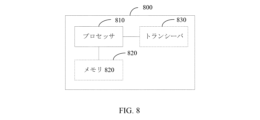
第4の態様によれば、データ取得装置が提供される。データ取得装置は、第1の態様又は第2の態様に記載の方法における第1のポリシー制御ネットワークエレメントの機能を実現するように構成されたプロセッサを含む。 According to a fourth aspect, a data acquisition device is provided. The data acquisition device includes a processor configured to implement the functionality of a first policy control network element in the method according to the first or second aspect.
可能な実現方式では、データ取得装置はメモリを更に含んでもよく、メモリはプロセッサに結合され、プロセッサは、第1の態様又は第2の態様に記載の方法における第1のポリシー制御ネットワークエレメントの機能を実現するように構成される。 In a possible implementation, the data acquisition device may further include a memory, the memory being coupled to a processor, the processor being configured to implement the functionality of the first policy control network element in the method according to the first or second aspect.
可能な実現方式では、メモリは、プログラム命令及びデータを記憶するように構成される。メモリはプロセッサに結合される。プロセッサは、メモリに記憶されたプログラム命令を呼び出して実行して、第1の態様又は第2の態様に記載の方法における第1のポリシー制御ネットワークエレメントの機能を実現してもよい。 In a possible implementation, the memory is configured to store program instructions and data. The memory is coupled to a processor. The processor may call and execute the program instructions stored in the memory to implement the functionality of the first policy control network element in the method according to the first or second aspect.
可能な実現方式では、データ取得装置は、通信インタフェースを更に含んでもよく、通信インタフェースは、他のデバイスと通信するためにデータ取得装置により使用される。通信インタフェースは、トランシーバ、入出力インタフェース、回路等でもよい。 In a possible implementation, the data acquisition device may further include a communication interface, which is used by the data acquisition device to communicate with other devices. The communication interface may be a transceiver, an input/output interface, a circuit, etc.
可能な設計では、データ取得装置は、プロセッサ及び通信インタフェースを含む。プロセッサは、コンピュータプログラムを実行して、データ取得装置が第1の態様又は第2の態様に記載のいずれかの方法を実現することを可能にするように構成される。プロセッサは、通信インタフェースを通じて外部デバイスと通信する。外部デバイスは、プロセッサ以外のオブジェクト又は当該装置以外のオブジェクトでもよいことが理解され得る。 In a possible design, the data acquisition device includes a processor and a communication interface. The processor is configured to execute a computer program to enable the data acquisition device to implement any of the methods described in the first or second aspect. The processor communicates with an external device through the communication interface. It may be understood that the external device may be an object other than the processor or an object other than the device.
他の可能な設計では、データ取得装置は、チップ又はチップシステムである。通信インタフェースは、チップ又はチップシステム内の入出力インタフェース、インタフェース回路、出力回路、入力回路、ピン、関連する回路等でもよい。プロセッサは、代替として、処理回路又は論理回路として具現されてもよい。 In another possible design, the data acquisition device is a chip or chip system. The communication interface may be an input/output interface, interface circuitry, output circuitry, input circuitry, pins, associated circuitry, etc. within the chip or chip system. The processor may alternatively be embodied as a processing circuit or logic circuitry.
第5の態様によれば、この出願は、コンピュータ可読記憶媒体を提供する。コンピュータ可読記憶媒体は命令を記憶し、命令がコンピュータ上で実行されたとき、コンピュータは、上記の態様における方法を実行することが可能になる。 According to a fifth aspect, the application provides a computer-readable storage medium. The computer-readable storage medium stores instructions that, when executed on a computer, enable the computer to perform the method of the above aspect.
第6の態様によれば、この出願は、命令を含むコンピュータプログラム製品を提供し、コンピュータプログラム製品がコンピュータ上で実行したとき、コンピュータは、上記の態様における方法を実行することが可能になる。 According to a sixth aspect, the application provides a computer program product including instructions, which when executed on a computer, enable the computer to perform the method of the above aspect.
第7の態様によれば、通信システムが提供される。通信システムは、第1の態様における第1のポリシー制御ネットワークエレメントと、第1のポリシー制御ネットワークエレメントと通信するアプリケーション機能ネットワークエレメントと、バインディングサポート機能ネットワークエレメントとを含む。 According to a seventh aspect, a communication system is provided. The communication system includes a first policy control network element according to the first aspect, an application function network element that communicates with the first policy control network element, and a binding support function network element.
第8の態様によれば、通信システムが提供される。通信システムは、第2の態様における第1のポリシー制御ネットワークエレメントと、第1のポリシー制御ネットワークエレメントと通信するアプリケーション機能ネットワークエレメントと、バインディングサポート機能ネットワークエレメントとを含む。 According to an eighth aspect, a communication system is provided. The communication system includes a first policy control network element according to the second aspect, an application function network element that communicates with the first policy control network element, and a binding support function network element.
第9の態様によれば、チップ又はチップシステムが提供される。チップ又はチップシステムは、少なくとも1つのプロセッサ及び通信インタフェースを含む。通信インタフェース及び少なくとも1つのプロセッサは、回線を通じて相互接続される。少なくとも1つのプロセッサは、コンピュータプログラム又は命令を実行して、第1の態様及び第2の態様の可能な実現方式のうちいずれか1つにおける方法を実行するように構成される。チップ内の通信インタフェースは、入出力インタフェース、ピン、回路等でもよい。 According to a ninth aspect, a chip or chip system is provided. The chip or chip system includes at least one processor and a communication interface. The communication interface and the at least one processor are interconnected through a line. The at least one processor is configured to execute a computer program or instructions to perform the method in any one of the possible implementations of the first and second aspects. The communication interface in the chip may be an input/output interface, a pin, a circuit, etc.
可能な実現方式では、この出願に記載のチップ又はチップシステムは、少なくとも1つのメモリを更に含み、少なくとも1つのメモリは命令を記憶する。メモリは、チップ内の記憶ユニット、例えば、レジスタ又はキャッシュでもよく、或いは、チップの記憶ユニット(例えば、読み取り専用メモリ又はランダムアクセスメモリ)でもよい。 In a possible implementation, the chip or chip system described in this application further includes at least one memory, the at least one memory storing instructions. The memory may be a storage unit within the chip, such as a register or cache, or may be a storage unit of the chip (e.g., a read-only memory or a random access memory).
以下に、添付の図面を参照して、この出願の技術的解決策について説明する。 The technical solution of this application is described below with reference to the attached drawings.
この出願の実施形態における技術的解決策は、様々な通信システム、例えば、第5世代(5th generation, 5G)システム、新無線(new radio, NR)システム、ロングタームエボリューション(long term evolution, LTE)システム、LTE周波数分割複信(frequency division duplex, FDD)システム又はLTE時分割複信(time division duplex, TDD)システムに適用されてもよい。この出願において提供される技術的解決策は、将来の通信システム、例えば、第6世代移動通信システムに更に適用されてもよい。この出願の実施形態における技術的解決策は、デバイス対デバイス(device-to-device, D2D)通信、ビークル対エブリシング(vehicle-to-everything, V2X)通信、マシン対マシン(machine-to-machine, M2M)通信、マシンタイプ通信(machine type communication, MTC)及びモノのインターネット(internet of things, IoT)通信システム又は他の通信システムに更に適用されてもよい。 The technical solutions in the embodiments of this application may be applied to various communication systems, such as a 5th generation (5G) system, a new radio (NR) system, a long term evolution (LTE) system, an LTE frequency division duplex (FDD) system, or an LTE time division duplex (TDD) system. The technical solutions provided in this application may further be applied to future communication systems, such as a 6th generation mobile communication system. The technical solutions in the embodiments of this application may further be applied to device-to-device (D2D) communication, vehicle-to-everything (V2X) communication, machine-to-machine (M2M) communication, machine type communication (MTC) and internet of things (IoT) communication systems or other communication systems.
この出願の実施形態の理解を容易にするために、この出願の実施形態が適用可能な通信システムについて、図1を参照して最初に簡単に説明する。 To facilitate understanding of the embodiments of this application, a communication system to which the embodiments of this application can be applied will first be briefly described with reference to FIG. 1.
図1は、本発明による通信システムの概略図である。図1に示すように、システムは、第1のポリシー制御ネットワークエレメント110と、バインディングサポート機能ネットワークエレメント120とを含む。任意選択で、システム100は、アプリケーション機能ネットワークエレメント130を更に含んでもよい。システム100は、この出願の実施形態における情報取得方法を実行するように構成されてもよい。
Fig. 1 is a schematic diagram of a communication system according to the present invention. As shown in Fig. 1, the system includes a first policy control network element 110 and a binding support
第1のポリシー制御ネットワークエレメント110は、アプリケーション機能ネットワークエレメント130からユーザ機器の第1の情報を受信するように構成され、第1の情報は、モビリティ管理ポリシーを判断するためのものであり、第1の情報は、ユーザ機器のセッション情報を含むか、或いは、第1の情報は、アプリケーション識別子を含み、第1のポリシー制御ネットワークエレメントは、モビリティ管理ポリシーを判断するネットワークエレメントであり、第2のポリシー制御ネットワークエレメントに関する情報を取得するためのメッセージをバインディングサポート機能ネットワークエレメント120に送信するように更に構成され、第2のポリシー制御ネットワークエレメントは、セッション情報に対応するセッションをサービス提供するポリシー制御ネットワークエレメントであり(或いは、第2のポリシー制御ネットワークエレメントは、セッション情報に対応するセッションのためのセッション管理ポリシーを提供するネットワークエレメントであり)、第2のポリシー制御ネットワークエレメントに関する情報を取得するためのメッセージは、セッション情報及び第1の指示情報を含み、第1の指示情報は、第2のポリシー制御ネットワークエレメントに関する情報を送信するための条件を示す。
The first policy control network element 110 is configured to receive first information of the user equipment from the application
バインディングサポート機能ネットワークエレメント120は、第1のポリシー制御ネットワークエレメント110から、第2のポリシー制御ネットワークエレメントに関する情報を取得するためのメッセージを受信するように構成される。上記の条件が満たされるとき、バインディングサポート機能ネットワークエレメント120は、第2のポリシー制御ネットワークエレメントに関する情報を第1のポリシー制御ネットワークエレメント110に送信するように更に構成される。
The binding support
任意選択で、アプリケーション機能ネットワークエレメント130は、第1の情報を第1のポリシー制御ネットワークエレメント110に送信するように構成される。
Optionally, the application
例えば、この出願において提供される通信システムによれば、バインディングサポート機能ネットワークエレメント120は、条件が満たされるときにのみ、第2のポリシー制御ネットワークエレメントに関する情報を第1のポリシー制御ネットワークエレメント110に送信する。第2のポリシー制御ネットワークエレメントに関する情報を送信することを制限するための条件のため、不必要なシグナリングオーバーヘッドが回避される。
For example, according to the communication system provided in this application, the binding support
図1に示すシステム100は、図2の(a)及び/又は図2の(b)に示す第5世代(5th generation, 5G)ネットワークアーキテクチャにおいて使用されてもよく、明らかに、将来のネットワークアーキテクチャ、例えば、第6世代(6th generation, 6G)ネットワークアーキテクチャにおいても使用されてもよい。これは、この出願の実施形態では具体的に限定されない。 The system 100 shown in FIG. 1 may be used in a 5th generation (5G) network architecture as shown in FIG. 2(a) and/or FIG. 2(b), and obviously may also be used in future network architectures, such as a 6th generation (6G) network architecture, without being specifically limited in the embodiments of this application.
例えば、図1に示す通信システムが、図2の(a)及び/又は図2の(b)に示す5Gネットワークにおいて使用されると仮定する。第1のポリシー制御ネットワークエレメントは、5Gにおけるモビリティ管理ポリシー制御ネットワークエレメント(policy control function for access and mobility control, AM PCF)でもよく、第2のポリシー制御ネットワークエレメントは、5Gにおけるセッション管理のためのポリシー制御機能(policy control function for session management, SM PCF)でもよく、バインディングサポート機能ネットワークエレメントは、5Gにおけるバインディングサポート機能(binding support function, BSF)ネットワークエレメントでもよく、アプリケーション機能ネットワークエレメントは、5Gにおけるアプリケーション機能(application function, AF)ネットワークエレメントでもよい。 For example, assume that the communication system shown in FIG. 1 is used in the 5G network shown in FIG. 2(a) and/or FIG. 2(b). The first policy control network element may be a policy control function for access and mobility control (AM PCF) network element in 5G, the second policy control network element may be a policy control function for session management (SM PCF) network element in 5G, the binding support function network element may be a binding support function (BSF) network element in 5G, and the application function network element may be an application function (AF) network element in 5G.
図2の(a)及び図2の(b)を参照して、以下は、この出願の実施形態が適用可能な5Gシステムを説明するための例を使用する。この明細書に記載の5Gシステムは単なる例であり、この出願に対する如何なる限定も構成するべきではないことが理解されるべきである。 With reference to FIG. 2(a) and FIG. 2(b), the following uses an example to describe a 5G system to which the embodiments of this application are applicable. It should be understood that the 5G system described in this specification is merely an example and should not constitute any limitation to this application.
5Gシステム内のいくつかのネットワークエレメントは、サービスベースインタフェース又はポイントツーポイントインタフェースを通じて互いに通信してもよいことが更に理解されるべきである。以下に、図2の(a)及び図2の(b)を参照して、ポイントツーポイントインタフェースに基づく5Gシステムフレームワークと、サービスベースインタフェースに基づく5Gシステムフレームワークとについて別々に説明する。 It should be further understood that some network elements in a 5G system may communicate with each other through a service-based interface or a point-to-point interface. In the following, a 5G system framework based on a point-to-point interface and a 5G system framework based on a service-based interface are separately described with reference to FIG. 2(a) and FIG. 2(b).
例えば、図2の(a)は、この出願の実施形態が適用可能な5Gシステム200aの概略アーキテクチャ図である。図2の(a)は、ポイントツーポイントインタフェースに基づく5Gネットワークアーキテクチャの概略図である。図2の(a)に示すように、ネットワークアーキテクチャは、以下のネットワークエレメント(機能ネットワークエレメント、機能エンティティ、ノード、デバイス等とも呼ばれる)、すなわち、
(無線)アクセスネットワークデバイス(radio access network, (R)AN)、アクセス及びモビリティ管理機能(access and mobility management function, AMF)ネットワークエレメント、セッション管理機能(session management function, SMF)ネットワークエレメント、ユーザプレーン機能(user plane function, UPF)ネットワークエレメント、ポリシー制御機能(policy control function, PCF)ネットワークエレメント、統一データ管理(unified data management, UDM)ネットワークエレメント、AFネットワークエレメント、データネットワーク(data network, DN)、ネットワークスライス選択機能(network slice selection function, NSSF)、認証サーバ機能(authentication server function, AUSF)、統一データ管理(unified data management, UDM)、BSFネットワークエレメント、統一データリポジトリ(unified data repository, UDR)等を含んでもよいが、これらに限定されない。
For example, FIG. 2(a) is a schematic architecture diagram of a
These may include, but are not limited to, a (radio) access network device ((R)AN), an access and mobility management function (AMF) network element, a session management function (SMF) network element, a user plane function (UPF) network element, a policy control function (PCF) network element, a unified data management (UDM) network element, an AF network element, a data network (DN), a network slice selection function (NSSF), an authentication server function (AUSF), a unified data management (UDM), a BSF network element, a unified data repository (UDR), and the like.
以下に、図2の(a)に示すネットワークエレメントについて簡単に説明する。 Below is a brief explanation of the network elements shown in Figure 2(a).
1.(R)ANと通信する端末はまた、端末デバイス(terminal equipment)、ユーザ機器(user equipment, UE)、アクセス端末、ユーザユニット、ユーザ局、モバイルコンソール、移動局(mobile station, MS)、移動端末(mobile terminal, MT)、リモート局、リモート端末、モバイルデバイス、ユーザ端末、端末、ワイヤレス通信デバイス、ユーザエージェント又はユーザ装置とも呼ばれてもよい。端末デバイスは、音声/データ接続をユーザに提供するデバイス、例えば、ワイヤレス接続機能を有するハンドヘルドデバイス又は車載デバイスでもよい。現在、端末のいくつかの例は、モバイルフォン(mobile phone)、タブレットコンピュータ(pad)、ワイヤレストランシーバ機能を有するコンピュータ(例えば、ノートブックコンピュータ又はパームトップコンピュータ)、モバイルインターネットデバイス(mobile internet device, MID)、仮想現実(virtual reality, VR)デバイス、拡張現実(augmented reality, AR)デバイス、産業制御(industrial control)におけるワイヤレス端末、自動運転(self-driving)におけるワイヤレス端末、遠隔医療(remote medical)におけるワイヤレス端末、スマートグリッド(smart grid)におけるワイヤレス端末、交通安全(transportation safety)におけるワイヤレス端末、スマートシティ(smart city)におけるワイヤレス端末、スマートホーム(smart home)におけるワイヤレス端末、携帯電話、コードレス電話、セッションイニシエーションプロトコル(session initiation protocol, SIP)電話、ワイヤレスローカルループ(wireless local loop, WLL)局、パーソナルデジタルアシスタント(personal digital assistant, PDA)、ワイヤレス通信機能を有するハンドヘルドデバイス、コンピューティングデバイス、ワイヤレスモデムに接続された他の処理デバイス、車載デバイス、ウェアラブルデバイス、5Gネットワークにおける端末デバイス、又は将来の進化型公衆地上モバイルネットワーク(public land mobile network, PLMN)における端末デバイスでもよい。 1. A terminal communicating with an (R)AN may also be called a terminal device, user equipment (UE), access terminal, user unit, user station, mobile console, mobile station (MS), mobile terminal (MT), remote station, remote terminal, mobile device, user terminal, terminal, wireless communication device, user agent, or user equipment. A terminal device may be a device that provides voice/data connectivity to a user, such as a handheld device or a vehicle-mounted device with wireless connectivity. Currently, some examples of terminals are a mobile phone, a tablet computer, a computer with a wireless transceiver function (e.g., a notebook computer or a palmtop computer), a mobile internet device (MID), a virtual reality (VR) device, an augmented reality (AR) device, a wireless terminal in industrial control, a wireless terminal in self-driving, a wireless terminal in remote medical, a wireless terminal in a smart grid, a wireless terminal in transportation safety, a wireless terminal in a smart city, a wireless terminal in a smart home, a mobile phone, a cordless phone, a session initiation protocol (SIP) phone, a wireless local loop (WLL) station, a personal digital assistant, It may be a PDA, a handheld device with wireless communication capabilities, a computing device, or other processing device connected to a wireless modem, an in-vehicle device, a wearable device, a terminal device in a 5G network, or a terminal device in a future evolved public land mobile network (PLMN).
さらに、端末デバイスは、代替として、モノのインターネット(internet of things, IoT)システムにおける端末デバイスでもよい。IoTは、情報技術の将来の発展における重要な部分である。IoTの主な技術的特徴は、通信技術を使用することによりモノをネットワークに接続して、人間対機械の相互接続及びモノ対モノの相互接続のためのインテリジェントネットワークを実現することである。IoT技術は、例えば、ナローバンド(narrow band, NB)技術を使用することにより、端末のための大量接続、ディープカバレッジ及び省電力を達成できる。 Furthermore, the terminal device may alternatively be a terminal device in an internet of things (IoT) system. IoT is an important part in the future development of information technology. The main technical feature of IoT is to connect things to a network by using communication technology to realize an intelligent network for human-to-machine interconnection and thing-to-thing interconnection. IoT technology can achieve mass connection, deep coverage and power saving for terminals, for example, by using narrow band (NB) technology.
さらに、端末デバイスは、インテリジェントプリンタ、列車検出器及びガソリンスタンドのようなセンサを更に含んでもよく、主な機能は、データを収集すること(いくつかの端末デバイスの機能である)、ネットワークデバイスの制御情報及びダウンリンクデータを受信すること、電磁波を送信すること、及びアップリンクデータをネットワークデバイスに伝送することを含む。 Furthermore, the terminal device may further include sensors such as intelligent printers, train detectors and gas stations, and its main functions include collecting data (which is the function of some terminal devices), receiving control information and downlink data of network devices, transmitting electromagnetic waves, and transmitting uplink data to network devices.
端末デバイスは、ネットワークにアクセスし得るいずれかのデバイスでもよいことが理解されるべきである。端末デバイスは、エアインタフェース技術を使用することによりアクセスネットワークデバイスと通信してもよい。 It should be understood that a terminal device may be any device that can access a network. A terminal device may communicate with an access network device by using an air interface technology.
任意選択で、ユーザ機器は、基地局として使用されてもよい。例えば、ユーザ機器は、V2X又はD2Dにおいてユーザ機器の間でサイドリンク信号を提供するスケジューリングエンティティとして使用されてもよい。例えば、携帯電話及び自動車は、サイドリンク信号を使用することにより互いに通信する。携帯電話は、基地局を通じて通信信号を中継することなく、スマートホームデバイスと通信する。 Optionally, the user equipment may be used as a base station. For example, the user equipment may be used as a scheduling entity that provides sidelink signals between user equipment in V2X or D2D. For example, a mobile phone and a car communicate with each other by using sidelink signals. A mobile phone communicates with a smart home device without relaying the communication signal through a base station.
2.(R)ANは、特定のエリア内の許可されたユーザ機器のためにネットワークアクセス機能を提供するように構成され、ユーザ機器のレベル、サービス要件等に基づいて、異なるサービス品質の伝送トンネルを使用できる。 2. (R)AN is configured to provide network access functionality for authorized user equipment within a particular area and can use transmission tunnels with different service qualities based on the user equipment level, service requirements, etc.
(R)ANは、無線リソースを管理し、ユーザ機器のためにアクセスサービスを提供して、ユーザ機器とコアネットワークとの間で制御信号及びユーザ機器データを転送してもよい。(R)ANはまた、従来のネットワークにおける基地局として理解されてもよい。 The (R)AN may manage radio resources, provide access services for user equipment, and transfer control signals and user equipment data between the user equipment and the core network. The (R)AN may also be understood as a base station in a conventional network.
例えば、この出願の実施形態におけるアクセスネットワークデバイスは、ワイヤレストランシーバ機能を有し且つユーザ機器と通信するように構成されたいずれかの通信デバイスでもよい。アクセスネットワークデバイスは、進化型ノードB(evolved NodeB, eNB)、無線ネットワークコントローラ(radio network controller, RNC)、ノードB(NodeB, NB)、基地局コントローラ(base station controller, BSC)、基地送受信局(base transceiver station, BTS)、ホーム基地局(例えば、home evolved NodeB、HeNB又はhome NodeB, HNB)、ベースバンドユニット(baseband unit, BBU)、ワイヤレスフィデリティ(wireless fidelity, Wi-Fi)システムにおけるアクセスポイント(access point, AP)、ワイヤレス中継ノード、ワイヤレスバックホールノード、伝送ポイント(transmission point, TP)、送受信ポイント(transmission reception point, TRP)等を含むが、これらに限定されない。代替として、アクセスネットワークデバイスは、NRシステムのような5GシステムにおけるgNB又は伝送ポイント(TRP又はTP)でもよく、5Gシステムにおける基地局の1つのアンテナパネル又はアンテナパネルのグループ(複数のアンテナパネルを含む)でもよく、或いは、gNB又は伝送ポイントを構成するネットワークノード、例えば、ベースバンドユニット(BBU)又は分散ユニット(distributed unit, DU)でもよい。 For example, the access network device in the embodiments of this application may be any communication device having wireless transceiver functionality and configured to communicate with user equipment. The access network device includes, but is not limited to, an evolved NodeB (eNB), a radio network controller (RNC), a NodeB (NB), a base station controller (BSC), a base transceiver station (BTS), a home base station (e.g., home evolved NodeB, HeNB or home NodeB, HNB), a baseband unit (BBU), an access point (AP) in a wireless fidelity (Wi-Fi) system, a wireless relay node, a wireless backhaul node, a transmission point (TP), a transmission reception point (TRP), and the like. Alternatively, the access network device may be a gNB or a transmission point (TRP or TP) in a 5G system such as an NR system, or may be one antenna panel or a group of antenna panels (including multiple antenna panels) of a base station in a 5G system, or may be a network node constituting a gNB or a transmission point, such as a baseband unit (BBU) or a distributed unit (DU).
いくつかの展開では、gNBは、中央ユニット(central unit, CU)及びDUを含んでもよい。gNBは、アクティブアンテナユニット(active antenna unit, AAU)を更に含んでもよい。CUはgNBのいくつかの機能を実行し、DUはgNBのいくつかの機能を実行する。例えば、CUは、非リアルタイムプロトコル及びサービスを処理する役割を果たし、無線リソース制御(radio resource control, RRC)層及びパケットデータコンバージェンスプロトコル(packet data convergence protocol, PDCP)層の機能を実現する。DUは、物理層プロトコル及びリアルタイムサービスを処理する役割を果たし、無線リンク制御(radio link control, RLC)層、媒体アクセス制御(media access control, MAC)層及び物理(physical, PHY)層の機能を実現する。AAUは、いくつかの物理層処理機能と、無線周波数処理と、アクティブアンテナに関係する機能とを実現する。RRC層における情報は、最終的にPHY層における情報に変換されるか、或いは、PHY層における情報から変換される。したがって、このアーキテクチャでは、RRC層シグナリングのような上位層シグナリングはまた、DUにより送信されるか或いはDU及びAAUにより送信されると考えられてもよい。アクセスネットワークデバイスは、CUノード、DUノード又はAAUノードのうち1つ以上を含むデバイスでもよいことが理解され得る。さらに、CUは、アクセスネットワーク(radio access network, RAN)におけるアクセスネットワークデバイスに分類されてもよく、或いは、CUは、コアネットワーク(core network, CN)におけるアクセスネットワークデバイスに分類されてもよい。これは、この出願では限定されない。 In some deployments, the gNB may include a central unit (CU) and a DU. The gNB may further include an active antenna unit (AAU). The CU performs some functions of the gNB, and the DU performs some functions of the gNB. For example, the CU is responsible for processing non-real-time protocols and services, and realizes functions of the radio resource control (RRC) layer and the packet data convergence protocol (PDCP) layer. The DU is responsible for processing physical layer protocols and real-time services, and realizes functions of the radio link control (RLC) layer, the media access control (MAC) layer, and the physical (PHY) layer. The AAU realizes some physical layer processing functions, radio frequency processing, and functions related to active antennas. Information at the RRC layer is eventually converted to or from information at the PHY layer. Therefore, in this architecture, higher layer signaling, such as RRC layer signaling, may also be considered to be transmitted by the DU or transmitted by the DU and the AAU. It may be understood that an access network device may be a device including one or more of a CU node, a DU node, or an AAU node. Furthermore, a CU may be classified as an access network device in an access network (radio access network, RAN), or a CU may be classified as an access network device in a core network (CN). This is not limited in this application.
3.UPFネットワークエレメントは、主に以下の機能、すなわち、ユーザプレーンに関連する機能、例えば、データパケットルーティング及び伝送、パケット検出、サービス使用報告、サービス品質(quality of service, QoS)処理、合法的傍受、アップリンクパケット検出及びダウンリンクデータパケット記憶を含む。 3. The UPF network element mainly includes the following functions, namely functions related to the user plane, such as data packet routing and transmission, packet detection, service usage reporting, quality of service (QoS) processing, lawful interception, uplink packet detection, and downlink data packet storage.
例えば、UPFは、パケットデータユニットセッションアンカーUPF(packet data unit session anchor UPF, PSA UPF)と、アップリンク分類機能UPF(uplink classifier function UPF, UL CL UPF)とに分類されてもよい。 For example, the UPF may be classified into a packet data unit session anchor UPF (PSA UPF) and an uplink classifier function UPF (UL CL UPF).
PSA UPFは、PDUセッションアンカー機能をサポートするUPFであり、UL CL UPFは、アップリンク分類機能を有するUPFである。UEは、N1インタフェースを通じてAMFに接続される。ANは、N2インタフェースを通じてAMFに接続され、N3インタフェースを通じてUL CL UPFに接続される。AMFは、N11インタフェースを通じてSMFに接続される。UL CL UPFは、N4インタフェースを通じてSMFに接続され、N9インタフェースを通じてPSA UPFに接続される。SMFは、N4インタフェースを通じてPSA UPFに接続される。PSA UPFは、N6インタフェースを通じてDNに接続される。UL CL UPFは、N6インタフェースを通じてDNに接続される。 The PSA UPF is a UPF that supports PDU session anchor functionality, and the UL CL UPF is a UPF with uplink classification functionality. The UE is connected to the AMF through the N1 interface. The AN is connected to the AMF through the N2 interface and to the UL CL UPF through the N3 interface. The AMF is connected to the SMF through the N11 interface. The UL CL UPF is connected to the SMF through the N4 interface and to the PSA UPF through the N9 interface. The SMF is connected to the PSA UPF through the N4 interface. The PSA UPF is connected to the DN through the N6 interface. The UL CL UPF is connected to the DN through the N6 interface.
4.DNは、データ伝送のためのネットワークである。 4.DN is a network for data transmission.
5.AMFネットワークエレメントは、主に以下のアクセス及びモビリティ関連機能、例えば、接続管理、モビリティ管理、登録管理、アクセス認証及び許可、到達可能性管理、並びにセキュリティコンテキスト管理を含む。 5. AMF network elements mainly include the following access and mobility related functions, such as connection management, mobility management, registration management, access authentication and authorization, reachability management, and security context management.
6.SMFは、主にセッションを管理し、端末デバイスのインターネットプロトコル(internet protocol, IP)アドレスを割り当てて管理し、ユーザプレーン機能インタフェース並びにポリシー制御及び課金機能インタフェースを管理できるエンドポイントを選択し、ダウンリンクデータを通知すること等を行うように構成される。 6. The SMF is configured to mainly manage sessions, assign and manage internet protocol (IP) addresses for terminal devices, select endpoints that can manage user plane function interfaces and policy control and charging function interfaces, notify downlink data, etc.
例えば、SMFは、中間SMF(intermediate SMF, I-SMF)とアンカーSMF(anchor SMF, A-SMF)とに分類されてもよい。 For example, an SMF may be classified into an intermediate SMF (I-SMF) and an anchor SMF (A-SMF).
UPFの異なる役割に基づいて、A-SMFとインタフェースするUPFは、PSA UPF(又はアンカーUPF)と呼ばれ、I-SMFとインタフェースするUPFは、UL CL UPF及びローカルPSA UPFを含み、ローカルPSA UPF及びUL CL UPFは同一場所に配置できる。PSA UPF及びローカルPSA UPFは、N6インタフェースを通じてDNに別々に相互接続される。ローカルPSA UPF及びローカルPSA UPFに接続されたDNは、UEのアクセスポイントにより近い。UEは、N1インタフェースを通じてAMFに接続され、RANは、N2インタフェースを通じてAMFに接続され、N3インタフェースを通じてI-SMFにより制御されるUPFに接続される。UPFは、N9インタフェースを通じて接続される。SMFは、N4インタフェースを通じてUPFを制御する。AMFは、N11インタフェースを通じてI-SMFに接続される。I-SMFは、Nxxインタフェースを通じてA-SMFに接続される(Nxxインタフェースは、以下では他の方式で命名されてもよく、これはこの出願では限定されない)。AMF及びA-SMFは、それぞれN8インタフェース及びN10インタフェースを通じてUDMからユーザサブスクリプションデータを取得し、それぞれN15インタフェース及びN7インタフェースを通じてPCFからポリシーデータを取得する。 Based on the different roles of UPF, the UPF interfacing with A-SMF is called PSA UPF (or anchor UPF), and the UPF interfacing with I-SMF includes UL CL UPF and local PSA UPF, where the local PSA UPF and UL CL UPF can be co-located. The PSA UPF and the local PSA UPF are interconnected to the DN separately through the N6 interface. The local PSA UPF and the DN connected to the local PSA UPF are closer to the access point of the UE. The UE is connected to the AMF through the N1 interface, and the RAN is connected to the AMF through the N2 interface and to the UPF controlled by the I-SMF through the N3 interface. The UPF is connected through the N9 interface. The SMF controls the UPF through the N4 interface. The AMF is connected to the I-SMF through the N11 interface. The I-SMF is connected to the A-SMF through the Nxx interface (the Nxx interface may be named in other ways below, which is not limited in this application). The AMF and A-SMF obtain user subscription data from the UDM via the N8 interface and the N10 interface, respectively, and obtain policy data from the PCF via the N15 interface and the N7 interface, respectively.
7.PCFは、ネットワーク挙動の統一ポリシーフレームワークをガイドし、制御プレーン機能ネットワークエレメント(例えば、AMFネットワークエレメント又はSMFネットワークエレメント)のためのポリシールール情報を提供すること等を行うように構成される。 7. The PCF is configured to guide a unified policy framework for network behavior, provide policy rule information for control plane function network elements (e.g., AMF network elements or SMF network elements), etc.
例えば、PCFは、5G通信システムアーキテクチャにおけるAM PCFでもよく、或いは、5G通信システムアーキテクチャにおけるSM PCFでもよい。 For example, the PCF may be an AM PCF in a 5G communication system architecture, or may be an SM PCF in a 5G communication system architecture.
この出願のこの実施形態では、AMF及びSMFに接続されたPCFは、それぞれAM PCF及びSM PCFに対応する。実際の展開シナリオでは、PCFは、同じPCFエンティティでもよく、或いは、2つの異なるPCFエンティティでもよい。 In this embodiment of the application, the PCFs connected to the AMF and SMF correspond to the AM PCF and SM PCF, respectively. In a practical deployment scenario, the PCFs may be the same PCF entity or may be two different PCF entities.
8.UDMは、5Gアーキテクチャにおける統一データ管理ネットワークエレメントの名前として理解されてもよい。統一データ管理ネットワークエレメントは、主に以下の機能、すなわち、統一データ管理、3GPP認証及び鍵合意機構における認証証明書処理、ユーザ識別処理、アクセス許可、登録及びモビリティ管理、サブスクリプション管理、SMSメッセージ管理等を含む。 8.UDM may be understood as the name of the unified data management network element in the 5G architecture. The unified data management network element mainly includes the following functions: unified data management, authentication certificate processing in the 3GPP authentication and key agreement mechanism, user identification processing, access authorization, registration and mobility management, subscription management, SMS message management, etc.
9.AFは、アプリケーション層情報を提供するように構成され、ネットワーク公開機能ネットワークエレメントを通じてポリシーフレームワークと相互作用してもよく、或いは、ポリシー判断を要求するためにポリシーフレームワークと直接相互作用してもよい、等である。 9. The AF is configured to provide application layer information and may interact with the policy framework through a network exposure function network element, or may interact with the policy framework directly to request policy decisions, etc.
10.NSSFは、主に以下の機能、すなわち、UEのためのネットワークスライスインスタンスのグループを選択すること、許可されたネットワークスライス選択支援情報(network slice selection assistance information, NSSAI)を決定すること、UEにサービス提供できるAMFセットを決定すること等を含む。 10.NSSF mainly includes the following functions: selecting a group of network slice instances for the UE, determining the allowed network slice selection assistance information (NSSAI), determining the AMF set that can provide services to the UE, etc.
11.AUSFは、主に以下の機能、すなわち、認証サーバ機能、ユーザ情報を取得するために統一データ管理ネットワークエレメントと相互作用すること、及び認証関連の機能を実行すること、例えば、中間鍵を生成することを含む。 11.AUSF mainly includes the following functions: authentication server function, interacting with unified data management network elements to obtain user information, and performing authentication-related functions, e.g., generating intermediate keys.
12.BSFは、セッションバインディングを実現する。具体的には、BSFは、AFによりPCFをアドレス指定するように構成される。 12. The BSF implements session binding. Specifically, the BSF is configured to address the PCF via the AF.
UEが作成することを要求するセッションについて、SMFがPCFからポリシー制御を要求するとき、SMFは、UE識別子及びユーザIPアドレスのような情報をPCFに提供する。PCFは、バインディング情報(UE識別子、ユーザIPアドレス、及び選択されたPCF識別子を含むが、これらに限定されない)をBSFに登録する。次いで、UEがセッションを使用することによりAF上のサービスにアクセスするとき、AFは、UEによりアクセスされたサービスのためにPCFからポリシー許可を要求する必要があってもよい。ポリシー許可は、通常では、SMFの関連するセッションのポリシー制御を調整するようにPCFをトリガするので、ポリシー許可のためにAFにより選択されたPCFは、セッションのためにSMFにより選択されたPCFと一致する必要がある。AFは、ユーザIPアドレス又はUE識別子に基づいて、対応するPCFについてBSFに問い合わせ、次いで、5G定義のN5インタフェースを通じてAFからポリシー許可を直接要求してもよい。 When the SMF requests policy control from the PCF for a session that the UE requests to create, the SMF provides information such as the UE identifier and user IP address to the PCF. The PCF registers the binding information (including but not limited to the UE identifier, user IP address, and selected PCF identifier) with the BSF. Then, when the UE accesses a service on the AF by using the session, the AF may need to request policy authorization from the PCF for the service accessed by the UE. Since the policy authorization usually triggers the PCF to adjust the policy control of the SMF's associated session, the PCF selected by the AF for policy authorization should match the PCF selected by the SMF for the session. The AF may query the BSF for the corresponding PCF based on the user IP address or UE identifier, and then request policy authorization directly from the AF over the 5G-defined N5 interface.
13.UDRは、主に、サブスクリプションデータ、ポリシーデータ、アプリケーションデータ及び他のタイプのデータにアクセスする機能を実現するように構成される。 13.The UDR is primarily configured to provide functionality for accessing subscription data, policy data, application data, and other types of data.
上記のネットワークエレメント又は機能ネットワークエレメントは、ハードウェアデバイス内のネットワークエレメントでもよく、専用ハードウェア上で実行するソフトウェア機能でもよく、或いは、プラットフォーム(例えば、クラウドプラットフォーム)上でインスタンス化された仮想化機能でもよいことが理解され得る。 It may be understood that the above network elements or functional network elements may be network elements in a hardware device, software functions running on dedicated hardware, or virtualized functions instantiated on a platform (e.g., a cloud platform).
図2の(a)から、図2の(a)において制御プレーンネットワークエレメントの間のインタフェースはポイントツーポイントインタフェースであることが分かる。 From Figure 2(a), it can be seen that the interfaces between the control plane network elements in Figure 2(a) are point-to-point interfaces.
図2の(a)に示すアーキテクチャにおいて、ネットワークエレメントの間のインタフェースの名前及び機能は以下の通りである。 In the architecture shown in Figure 2(a), the names and functions of the interfaces between network elements are as follows:
(1)N1は、AMFと端末との間のインタフェースを表し、QoS制御ルール等を端末に伝送するように構成されてもよい。 (1) N1 represents an interface between the AMF and the terminal, and may be configured to transmit QoS control rules, etc. to the terminal.
(2)N2は、AMFとRANとの間のインタフェースを表し、コアネットワーク側からRANに無線ベアラ制御情報等を伝送するように構成されてもよい。 (2) N2 represents an interface between the AMF and the RAN, and may be configured to transmit radio bearer control information, etc. from the core network side to the RAN.
(3)N3は、RANとUPFとの間のインタフェースを表し、主に、RANとUPFとの間でアップリンク及びダウンリンクユーザプレーンデータを伝送するように構成される。 (3)N3 represents the interface between the RAN and the UPF and is primarily configured to transmit uplink and downlink user plane data between the RAN and the UPF.
(4)N4は、SMFとUPFとの間のインタフェースを表し、制御プレーンからユーザプレーンへの転送ルール、QoS制御ルール、トラフィック統計ルール等の配信、及びユーザプレーン情報の報告を含む、制御プレーンとユーザプレーンとの間の情報を伝送するように構成されてもよい。 (4) N4 represents an interface between the SMF and the UPF and may be configured to transmit information between the control plane and the user plane, including distribution of forwarding rules, QoS control rules, traffic statistics rules, etc. from the control plane to the user plane, and reporting of user plane information.
(5)N5は、AFとPCFとの間のインタフェースを表し、アプリケーションサービス要求を配信し、ネットワークイベントを報告するように構成されてもよい。 (5) N5 represents an interface between the AF and the PCF and may be configured to deliver application service requests and report network events.
(6)N6は、UPFとDNとの間のインタフェースを表し、UPFとDNとの間でアップリンク及びダウンリンクユーザデータフローを伝送するように構成される。 (6) N6 represents an interface between the UPF and the DN and is configured to transmit uplink and downlink user data flows between the UPF and the DN.
(7)N7は、PCFとSMFとの間のインタフェースを表し、プロトコルデータユニット(protocol data unit, PDU)セッション粒度制御ポリシー及びサービスデータフロー粒度制御ポリシーを配信するように構成されてもよい。 (7) N7 represents an interface between the PCF and the SMF and may be configured to deliver protocol data unit (PDU) session granularity control policies and service data flow granularity control policies.
(8)N8は、AMFとUDMとの間のインタフェースを表し、AMFによりUDMからアクセス及びモビリティ管理に関連するサブスクリプションデータ及び認証データを取得するように構成されてもよく、AMFにより端末の現在のモビリティ管理関連情報をUDMに登録すること等を行うように構成されてもよい。 (8) N8 represents an interface between the AMF and the UDM, and may be configured by the AMF to obtain subscription data and authentication data related to access and mobility management from the UDM, and may be configured by the AMF to register the terminal's current mobility management related information to the UDM, etc.
(9)N9は、UPFの間のユーザプレーンインタフェースを表し、UPFの間でアップリンク及びダウンリンクユーザデータフローを伝送するように構成される。 (9)N9 represents a user plane interface between UPFs and is configured to transport uplink and downlink user data flows between UPFs.
(10)N10は、SMFとUDMとの間のインタフェースを表し、SMFによりUDMからセッション管理に関連するサブスクリプションデータを取得するように構成されてもよく、SMFにより端末の現在のセッション関連情報をUDMに登録すること等を行うように構成されてもよい。 (10) N10 represents an interface between the SMF and the UDM, and may be configured to allow the SMF to obtain subscription data related to session management from the UDM, and may be configured to allow the SMF to register the terminal's current session-related information in the UDM, etc.
(11)N11は、SMFとAMFとの間のインタフェースを表し、RANとUPFとの間でPDUセッショントンネル情報を伝送し、端末に送信される制御メッセージを伝送し、RANに送信される無線リソース制御情報を伝送すること等を行うように構成されてもよい。 (11) N11 represents an interface between the SMF and the AMF, and may be configured to transmit PDU session tunnel information between the RAN and the UPF, transmit control messages to be sent to terminals, transmit radio resource control information to be sent to the RAN, etc.
(12)N12は、AMFとAUSFとの間のインタフェースを表し、AMFによりAUSFへの認証プロセスを開始するように構成されてもよく、SUCIは、サブスクリプション識別子として搬送されてもよい。 (12) N12 represents an interface between the AMF and the AUSF and may be configured by the AMF to initiate an authentication process to the AUSF, and the SUCI may be carried as a subscription identifier.
(13)N13は、UDMとAUSFとの間のインタフェースを表し、AUSFによりUDMからユーザ認証ベクトルを取得して、認証手順を実行するように構成されてもよい。 (13) N13 represents an interface between the UDM and the AUSF, and may be configured by the AUSF to obtain a user authentication vector from the UDM and perform an authentication procedure.
例えば、図2の(b)は、この出願の実施形態が適用可能な5Gシステム200bの概略アーキテクチャ図である。図2おける(b)は、サービスベースインタフェースに基づく5Gネットワークアーキテクチャの概略図である。図2の(b)に示すように、ネットワークアーキテクチャは、以下のネットワークエレメント(機能ネットワークエレメント、機能エンティティ、ノード、デバイス等とも呼ばれる)、すなわち、
(R)AN、AMFネットワークエレメント、SMFネットワークエレメント、UPFネットワークエレメント、PCFネットワークエレメント、UDMネットワークエレメント、AFネットワークエレメント、DN、NSSF、AUSF、UDM、BSFネットワークエレメント、UDR等を含んでもよいが、これらに限定されない。
For example, FIG. 2(b) is a schematic architecture diagram of a
This may include, but is not limited to, an (R)AN, an AMF network element, an SMF network element, a UPF network element, a PCF network element, a UDM network element, an AF network element, a DN, an NSSF, an AUSF, an UDM, a BSF network element, an UDR, etc.
ネットワークエレメントの機能の説明については、図2の(b)における対応するネットワークエレメントの機能の説明を参照する。詳細は再び説明しない。図2の(b)と図2の(a)との間の主な違いは、図2の(b)における制御プレーンネットワークエレメントの間のインタフェースがサービスベースインタフェースであり、図2の(a)における制御プレーンネットワークエレメントの間のインタフェースがポイントツーポイントインタフェースであることにある。 For the functional description of the network elements, please refer to the functional description of the corresponding network elements in FIG. 2(b). The details will not be described again. The main difference between FIG. 2(b) and FIG. 2(a) is that the interfaces between the control plane network elements in FIG. 2(b) are service-based interfaces, while the interfaces between the control plane network elements in FIG. 2(a) are point-to-point interfaces.
図2の(b)におけるNnssf、Nudr、Nauf、Nbsf、Namf、Npcf、Nsmf、Nudm及びNafは、それぞれ、NSSF、UDR、AUSF、BSF、AMF、PCF、SMF、UDM及びAFにより提供されるサービスベースインタフェースであり、対応するサービスベース動作を呼び出すように構成される。N1、N2、N3、N4及びN6は、インタフェースシーケンス番号である。これらのインタフェースシーケンス番号の意味については、第3世代パートナーシッププロジェクト(3rd Generation Partnership Project, 3GPP)標準プロトコルにおいて定義された意味を参照する。これは、ここでは限定されない。 In FIG. 2(b), Nnssf, Nudr, Nauf, Nbsf, Namf, Npcf, Nsmf, Nudm, and Naf are service-based interfaces provided by NSSF, UDR, AUSF, BSF, AMF, PCF, SMF, UDM, and AF, respectively, and are configured to invoke corresponding service-based operations. N1, N2, N3, N4, and N6 are interface sequence numbers. The meanings of these interface sequence numbers refer to the meanings defined in the 3rd Generation Partnership Project (3GPP) standard protocol, which is not limited here.
この出願の実施形態が適用可能な上記のネットワークアーキテクチャは、単に説明のための例であり、この出願の実施形態が適用可能なネットワークアーキテクチャは、これに限定されないことが理解されるべきである。この出願の実施形態は、上記のネットワークエレメントの機能を実現できるいずれかのネットワークアーキテクチャに適用可能である。 It should be understood that the above network architectures to which the embodiments of this application are applicable are merely illustrative examples, and that the network architectures to which the embodiments of this application are applicable are not limited thereto. The embodiments of this application are applicable to any network architecture that can realize the functions of the above network elements.
図2の(a)又は図2の(b)に示すAMF、SMF、UPF、PCF、UDM等は、異なる機能を実現するように構成されたネットワークエレメントとして理解されてもよく、例えば、必要に応じてネットワークスライスに組み合わされてもよいことが更に理解されるべきである。これらのネットワークエレメントは、独立したデバイスでもよく、異なる機能を実現するために同じデバイスに統合されてもよく、ハードウェアデバイス内のネットワークエレメントでもよく、専用ハードウェア上で実行するソフトウェア機能でもよく、或いは、プラットフォーム(例えば、クラウドプラットフォーム)上でインスタンス化された仮想化機能でもよい。上記のネットワークエレメントの具体的な形式は、この出願では限定されない。 It should be further understood that the AMF, SMF, UPF, PCF, UDM, etc. shown in FIG. 2(a) or FIG. 2(b) may be understood as network elements configured to realize different functions, and may, for example, be combined into a network slice as necessary. These network elements may be independent devices, may be integrated into the same device to realize different functions, may be network elements in a hardware device, may be software functions running on dedicated hardware, or may be virtualized functions instantiated on a platform (e.g., a cloud platform). The specific form of the above network elements is not limited in this application.
上記の名前は、単に異なる機能を区別するために定義されており、この出願に対する如何なる限定も構成するべきではないことが更に理解されるべきである。この出願は、5Gネットワーク及び他の将来のネットワークにおいて他の名前を使用する可能性を排除しない。例えば、6Gネットワークでは、上記のネットワークエレメントの一部又は全部は、依然として5Gにおける用語を使用してもよく、或いは、他の名前を使用してもよい。 It should be further understood that the above names are defined merely to distinguish different functions and should not constitute any limitation to this application. This application does not exclude the possibility of using other names in 5G networks and other future networks. For example, in a 6G network, some or all of the above network elements may still use the terminology in 5G or may use other names.
図2の(a)又は図2の(b)におけるネットワークエレメントの間のインタフェースの名前は、単なる例であることが更に理解され得る。特定の実現方式では、インタフェースの名前は他の名前でもよい。これは、この出願では具体的に限定されない。さらに、上記のネットワークエレメントの間で伝送されるメッセージ(又はシグナリング)の名前は、単なる例であり、メッセージの機能に対する如何なる限定も構成しない。 It may further be understood that the names of the interfaces between the network elements in FIG. 2(a) or FIG. 2(b) are merely examples. In a particular implementation, the names of the interfaces may be other names. This is not specifically limited in this application. Furthermore, the names of the messages (or signaling) transmitted between the above network elements are merely examples and do not constitute any limitations on the functionality of the messages.
現在、図2の(a)又は図2の(b)に示す5G通信システムアーキテクチャに基づいて、UEがAMFに登録されるとき、AMFは、AM PCFと相互して、アクセス及びモビリティ管理ポリシーアソシエーション(access and mobility management policy association, AM policy association)を確立する。AMFがAM PCFと相互作用してAMポリシーアソシエーションを確立する手順は、具体的には以下のステップを含む。 Currently, based on the 5G communication system architecture shown in FIG. 2(a) or FIG. 2(b), when a UE is registered to an AMF, the AMF interacts with an AM PCF to establish an access and mobility management policy association (AM policy association). The procedure in which the AMF interacts with the AM PCF to establish an AM policy association specifically includes the following steps:
AM PCFは、AMポリシーを策定し、ポリシー実行のためにAMポリシーをAMFに提供する。AMポリシーは、サービスエリア制限(service area restriction)と、RAT/周波数選択優先度(RAT/frequency selection priority, RFSP)とを含む。サービスエリア制限は、端末のアクセスが許容されるか或いは許容されないエリアを示す。RFSPは、無線リソース管理ポリシーを決定するためにRANにより使用される。さらに、AMFは、サービスエリア制限をRAN及びUEに送信し、AMFは、RFSPをRANに送信する。 The AM PCF formulates the AM policy and provides it to the AMF for policy execution. The AM policy includes service area restriction and RAT/frequency selection priority (RFSP). The service area restriction indicates the area where the terminal is allowed or not allowed to access. The RFSP is used by the RAN to determine the radio resource management policy. Furthermore, the AMF transmits the service area restriction to the RAN and the UE, and the AMF transmits the RFSP to the RAN.
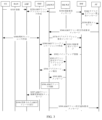
以下に、図3を参照して、現在のAMポリシー判断方法について簡単に説明する。図3は、AMポリシー判断方法の概略フローチャートである。当該方法は、以下のステップを含む。 The current AM policy determination method is briefly described below with reference to Figure 3. Figure 3 is a schematic flow chart of the AM policy determination method. The method includes the following steps:
S310:UEがAMFに登録される。 S310:UE is registered to AMF.
一般的なUE登録手順は、以下のように簡単に記載されてもよい。UEは、RANを通じて登録要求をAMFに送信し、AMFは、UEのサブスクリプションデータを取得するために、UEの識別子に基づいて要求メッセージを特定のUDMに送信し、UDMは、要求メッセージを受信した後にUDRからUEのサブスクリプションデータを取得してもよい。 A general UE registration procedure may be briefly described as follows: The UE sends a registration request to the AMF through the RAN, the AMF sends a request message to a specific UDM based on the UE's identifier to obtain the UE's subscription data, and the UDM may obtain the UE's subscription data from the UDR after receiving the request message.
UEの登録手順は、この出願のこの実施形態では限定されないことが理解されるべきである。詳細については、現在の関連技術における説明を参照する。詳細は、この出願では説明しない。さらに、この出願のこの実施形態では、UEのサブスクリプションデータは、主にUEがサブスクライブするサービスエリア制限及びRFSPに関し、UEの他のサブスクリプションデータは、この出願では詳細に記載されない。 It should be understood that the registration procedure of the UE is not limited in this embodiment of the application. For details, please refer to the description in the current related art. The details will not be described in this application. Furthermore, in this embodiment of the application, the subscription data of the UE mainly relates to the service area restriction and RFSP to which the UE subscribes, and other subscription data of the UE will not be described in detail in this application.
さらに、AMFは、AM PCFへのアクセス管理ポリシー制御作成要求を更に開始して、AMポリシーを取得してもよい。AM PCFは、このプロセスにおいてAMポリシーをAMFに返信する。AM PCFは、AMポリシーをUEに提供するように構成され、UEにサービス提供するPCF(PCF for UE)とも呼ばれてもよい。図3に示す方法の手順は、以下のステップを更に含む。 Furthermore, the AMF may further initiate an access management policy control creation request to the AM PCF to obtain the AM policy. The AM PCF returns the AM policy to the AMF in this process. The AM PCF is configured to provide the AM policy to the UE and may also be referred to as a PCF serving the UE (PCF for UE). The method procedure shown in FIG. 3 further includes the following steps:
S320:AMFは、AM PCFと相互作用して、AMポリシーアソシエーションを確立する。 S320: AMF interacts with AM PCF to establish AM policy association.
具体的には、このステップは以下を含む。AMFは、AMポリシー制御作成要求メッセージ(例えば、Npcf_AMPolicyControl_Create requestでもよい)をAM PCFに送信する。AMポリシー制御作成要求メッセージは、UEの識別子並びにUEがサブスクライブするサービスエリア制限及びRFSPのような情報を含む。AM PCFは、UEのサブスクリプションデータ、ネットワークポリシー等に基づいてAMポリシーを決定する。AMポリシーは、UEの許可されたサービスエリア制限、許可されたRFSP等を含む。ネットワークポリシーは、AM PCF上でオペレータにより構成されたポリシーでもよい。AM PCFは、AMポリシー制御作成応答メッセージ(例えば、Npcf_AMPolicyControl_Create responseでもよい)をAMFに送信する。AMポリシー制御作成応答メッセージは、AMポリシーを含む。 Specifically, this step includes: The AMF sends an AM policy control create request message (which may be, for example, Npcf_AMPolicyControl_Create request) to the AM PCF. The AM policy control create request message includes an identifier of the UE and information such as service area restrictions and RFSP to which the UE subscribes. The AM PCF determines an AM policy based on the UE's subscription data, network policies, etc. The AM policy includes the UE's allowed service area restrictions, allowed RFSP, etc. The network policy may be a policy configured by the operator on the AM PCF. The AM PCF sends an AM policy control create response message (which may be, for example, Npcf_AMPolicyControl_Create response) to the AMF. The AM policy control create response message includes the AM policy.
S330:AM PCFは、登録要求メッセージをBSFに送信するか、或いは、BSFは、AM PCFから登録要求メッセージを受信する。 S330: The AM PCF sends a registration request message to the BSF, or the BSF receives a registration request message from the AM PCF.
登録要求メッセージ(例えば、Nbsf_Management_Register requestでもよい)は、AM PCFをBSFに登録するためのもの、又はAM PCFのバインディング情報をBSFに登録するためのものである。メッセージは、AM PCFのバインディング情報を含む。AM PCFのバインディング情報は、PCF識別子#1とUEの識別子とを含む。 The registration request message (which may be, for example, Nbsf_Management_Register request) is for registering an AM PCF to a BSF or for registering binding information of an AM PCF to a BSF. The message includes the binding information of the AM PCF. The binding information of the AM PCF includes PCF identifier #1 and the UE identifier.
例えば、PCF識別子#1は、PCFがAMポリシー許可(例えば、Npcf_AmPolicyAuthorizationでもよい)サービスをサポートするためのFQDN又はIPエンドポイントでもよい。UEの識別子は、サブスクリプション永続識別子(subscription permanent identifier, SUPI)又は汎用公開サブスクライブ識別子(generic public subscribe identifier, GPSI)のような、UEを示すことができる識別子でもよい。 For example, PCF identifier #1 may be an FQDN or IP endpoint for the PCF to support the AM policy authorization (e.g., Npcf_AmPolicyAuthorization) service. The UE identifier may be an identifier that can indicate the UE, such as a subscription permanent identifier (SUPI) or a generic public subscribe identifier (GPSI).
S340:AFは、サブスクリプション要求メッセージをBSFに送信するか、或いは、BSFは、AFからサブスクリプション要求メッセージを受信する。 S340: The AF sends a subscription request message to the BSF, or the BSF receives a subscription request message from the AF.
サブスクリプション要求メッセージ(例えば、Nbsf_Management_Subscribe requestでもよい)は、UEの識別子を搬送し、サブスクリプション要求メッセージは、UEにサービスを提供するAM PCFの登録情報にサブスクライブするためのものである。 The subscription request message (which may be, for example, Nbsf_Management_Subscribe request) carries an identifier of the UE, and the subscription request message is for subscribing to the registration information of the AM PCF that provides services to the UE.
任意選択で、S240はS210の前に実行されてもよい。 Optionally, S240 may be performed before S210.
S350:BSFは、UEの識別子に基づいて対応するAM PCFの登録情報を決定し、通知メッセージをAFに送信するか、或いは、AFは、BSFから通知メッセージを受信する。 S350: The BSF determines the registration information of the corresponding AM PCF based on the UE's identifier, and sends a notification message to the AF, or the AF receives the notification message from the BSF.
通知メッセージ(例えば、Nbsf_Management_Notify requestでもよい)は、AM PCFの識別子を含み、AM PCFの識別子は、対応するAM PCFを決定するためのものである。 The notification message (which may be, for example, an Nbsf_Management_Notify request) includes an AM PCF identifier, which is used to determine the corresponding AM PCF.
S360:AFは、AMポリシー許可作成要求メッセージをAM PCFに送信するか、或いは、AM PCFは、AFからAMポリシー許可作成要求メッセージを受信する。 S360: The AF sends an AM policy authorization creation request message to the AM PCF, or the AM PCF receives an AM policy authorization creation request message from the AF.
AMポリシー許可作成要求メッセージ(例えば、Npcf_AMPolicyAuthorization_Create requestでもよい)は、UEの識別子を含む。 The AM policy authorization create request message (which may be, for example, Npcf_AMPolicyAuthorization_Create request) includes the UE identifier.
さらに、AMポリシー許可作成要求メッセージは、サービスエリアカバレッジ(service area coverage)及び/又は高スループット(high throughput)指示を更に含む。 Further, the AM policy authorization creation request message further includes a service area coverage and/or high throughput indication.
例えば、許可作成要求メッセージがサービスエリアカバレッジを含むとき、許可作成要求メッセージは、サービスエリアカバレッジに関連付けられたアプリケーション識別子(application ID)、又はサービスエリアカバレッジに関連付けられたDNN及びS-NSSAIの組み合わせを更に含む。 For example, when the permission creation request message includes a service area coverage, the permission creation request message further includes an application ID associated with the service area coverage, or a combination of a DNN and an S-NSSAI associated with the service area coverage.
例えば、許可作成要求メッセージが高スループット指示を含むとき、許可作成要求メッセージは、高スループット指示に関連付けられたアプリケーションID、又は高スループット指示に関連付けられたDNN及びS-NSSAIの組み合わせを更に含む。 For example, when the permission creation request message includes a high throughput instruction, the permission creation request message further includes an application ID associated with the high throughput instruction, or a combination of a DNN and an S-NSSAI associated with the high throughput instruction.
DNN及びS-NSSAIの組み合わせは、(DNN,S-NSSAI)の組み合わせとして表現されてもよく、或いは、(S-NSSAI,DNN)の組み合わせとして表現されてもよい。 The combination of DNN and S-NSSAI may be expressed as a combination of (DNN, S-NSSAI) or as a combination of (S-NSSAI, DNN).
任意選択で、AFは、サービスエリア制限(service area restriction)変更イベントに更にサブスクライブしてもよい。 Optionally, the AF may further subscribe to service area restriction change events.
任意選択で、AM PCFは、情報を記憶し、次いで、Npcf_AMPolicyAuthorization_Create responseを返信する。 Optionally, the AM PCF stores the information and then returns an Npcf_AMPolicyAuthorization_Create response.
S370:AM PCFは、サブスクリプション要求メッセージをBSFに送信するか、或いは、BSFは、AM PCFからサブスクリプション要求メッセージを受信する。 S370: The AM PCF sends a subscription request message to the BSF, or the BSF receives a subscription request message from the AM PCF.
サブスクリプション要求メッセージ(例えば、Nbsf_Management_Subscribe requestでもよい)は、SM PCFのバインディング情報にサブスクライブするためのものであり、メッセージは、UEの識別子と(DNN,S-NSSAI)の組み合わせとを搬送する。 The subscription request message (which may be, for example, Nbsf_Management_Subscribe request) is for subscribing to the binding information of the SM PCF, and the message carries the UE's identifier and the (DNN, S-NSSAI) combination.
さらに、サブスクリプション要求メッセージを受信した後に、BSFは、肯定応答メッセージをAM PCFに返信してもよく、BSFは、肯定応答メッセージをAM PCFに送信するか、或いは、AM PCFは、BSFから肯定応答メッセージを受信する。 Furthermore, after receiving the subscription request message, the BSF may return an acknowledgement message to the AM PCF, and the BSF may send the acknowledgement message to the AM PCF, or the AM PCF may receive the acknowledgement message from the BSF.
肯定応答メッセージ(例えば、Nbsf_Management_Subscribe acknowledgeでもよい)は、サブスクリプション要求メッセージの受信を肯定応答するためのものである。 The acknowledgement message (which may be, for example, Nbsf_Management_Subscribe acknowledge) is intended to acknowledge receipt of the subscription request message.
S380:UEは、PDUセッションを作成する。 S380: The UE creates a PDU session.
PDUセッションは、(DNN,S-NSSAI)の組み合わせに対応する。SMFは、UEアドレスをPDUセッションに割り当てる。 A PDU session corresponds to the combination of (DNN, S-NSSAI). The SMF assigns a UE address to the PDU session.
一般的なPDUセッション作成手順は、以下のように簡単に記載されてもよい。UEは、RANを通じてPDUセッション作成要求をAMFに送信する。AMFは、PDUセッションをサービス提供するためにPDUセッションのためのSMFを選択し、SMFとPDUセッションとの間の対応関係を記憶し、PDUセッション作成要求をSMFに送信する。SMFは、UEのための対応するUPFを選択し、ユーザプレーン伝送経路を作成し、IPアドレスをUEに割り当てる。このプロセスにおいて、SMFは、SM PCFへのセッションポリシー制御作成要求を更に開始して、SMFとSM PCFとの間のセッションポリシー制御を作成する。セッションポリシー制御作成プロセスにおいて、SMFは、セッションポリシー制御とPDUセッションとの間の対応関係を記憶する。さらに、AFは、SM PCFとのAFセッションを更に作成してもよく、SM PCFは、AFセッションをSMポリシーアソシエーションにバインドする。SM PCFは、PDUセッションのためのセッション管理ポリシーを提供するように構成され、PDUセッションをサービス提供するPCF(PCF for PDU session)とも呼ばれる。 A general PDU session creation procedure may be briefly described as follows: The UE sends a PDU session creation request to the AMF through the RAN. The AMF selects an SMF for the PDU session to serve the PDU session, stores the correspondence between the SMF and the PDU session, and sends a PDU session creation request to the SMF. The SMF selects a corresponding UPF for the UE, creates a user plane transmission path, and assigns an IP address to the UE. In this process, the SMF further initiates a session policy control creation request to the SM PCF to create a session policy control between the SMF and the SM PCF. In the session policy control creation process, the SMF stores the correspondence between the session policy control and the PDU session. In addition, the AF may further create an AF session with the SM PCF, and the SM PCF binds the AF session to the SM policy association. The SM PCF is configured to provide a session management policy for the PDU session, and is also called the PCF serving the PDU session (PCF for PDU session).
S390:SMFは、SM PCFと相互作用して、SMポリシーアソシエーションを確立する。 S390: SMF interacts with SM PCF to establish SM policy association.
具体的には、これは以下を含む。SMFは、SMポリシー制御作成要求メッセージ(例えば、Npcf_SMPolicyControl_Create requestでもよい)をSM PCFに送信する。メッセージは、UEの識別子、UEアドレス、DNN、S-NSSAI等を含む。 Specifically, this involves the following: The SMF sends a SM policy control create request message (which may be, for example, Npcf_SMPolicyControl_Create request) to the SM PCF. The message includes the UE identifier, UE address, DNN, S-NSSAI, etc.
SM PCFがUEのサブスクリプションデータを有さない場合、SM PCFは、UDRと相互作用して、UEのサブスクリプションデータを取得する。SM PCFは、UEのサブスクリプションデータ、ネットワークポリシー等に基づいてSMポリシーを決定する。 If the SM PCF does not have the UE's subscription data, the SM PCF interacts with the UDR to obtain the UE's subscription data. The SM PCF determines the SM policy based on the UE's subscription data, network policies, etc.
SM PCFは、SMポリシー制御作成応答メッセージ(例えば、Npcf_SMPolicyControl_Create responseでもよい)をSMFに返信する。メッセージは、SMポリシーを含む。 The SM PCF returns an SM policy control create response message (for example, Npcf_SMPolicyControl_Create response) to the SMF. The message contains the SM policy.
S391:SM PCFは、登録要求メッセージをBSFに送信する。 S391: The SM PCF sends a registration request message to the BSF.
登録要求メッセージ(例えば、Nbsf_Management_Register requestでもよい)は、SM PCFをBSFに登録するためのもの、又はSM PCFのバインディング情報をBSFに登録するためのものである。メッセージは、SM PCFのバインディング情報を含む。バインディング情報は、UEアドレス、UEの識別子、PCF識別子#2及び(DNN,S-NSSAI)の組み合わせを含む。PCF識別子#2は、SM PCFがNpcf_PolicyAuthorizationサービスをサポートするためのFQDN又はIPエンドポイントである。 The registration request message (which may be, for example, Nbsf_Management_Register request) is for registering an SM PCF to a BSF or for registering binding information of an SM PCF to a BSF. The message includes the binding information of the SM PCF. The binding information includes a combination of a UE address, a UE identifier, a PCF identifier #2, and (DNN, S-NSSAI). The PCF identifier #2 is an FQDN or IP endpoint for the SM PCF to support the Npcf_PolicyAuthorization service.
さらに、登録要求メッセージを受信した後に、BSFは、肯定応答メッセージをSM PCFに返信してもよく、BSFは、肯定応答メッセージをSM PCFに送信するか、或いは、SM PCFは、BSFから肯定応答メッセージを受信する。 Furthermore, after receiving the registration request message, the BSF may return an acknowledgment message to the SM PCF, the BSF may send the acknowledgment message to the SM PCF, or the SM PCF may receive the acknowledgment message from the BSF.
肯定応答メッセージ(例えば、Nbsf_Management_Register acknowledgeでもよい)は、登録要求メッセージの受信を肯定応答するためのものである。 The acknowledgement message (which may be, for example, Nbsf_Management_Register acknowledge) is intended to acknowledge receipt of the registration request message.
S392:BSFは、S370におけるサブスクリプションに基づいて、SM PCFのバインディング情報(例えば、Nbsf_Management_Notify requestでもよい)をAM PCFに送信する。 S392: The BSF sends the SM PCF binding information (which may be, for example, a Nbsf_Management_Notify request) to the AM PCF based on the subscription in S370.
任意選択で、S360において提供される情報が、サービスエリアカバレッジ及び/又は高スループット指示と、サービスエリアカバレッジ及び/又は高スループット指示に関連付けられたアプリケーションIDを含む場合、図3に示す方法の手順は、以下のステップを更に含む。 Optionally, if the information provided in S360 includes a service area coverage and/or high throughput indication and an application ID associated with the service area coverage and/or high throughput indication, the method procedure shown in FIG. 3 further includes the following steps:
S393:AM PCFは、ポリシー許可サブスクリプションメッセージをSM PCFに送信する。 S393: The AM PCF sends a policy grant subscription message to the SM PCF.
AM PCFは、S392において取得されたNpcf_PolicyAuthorizationサービスをサポートするために、SM PCFについてのFQDN又はIPエンドポイントに基づいて、メッセージをSM PCFに送信する。メッセージ(例えば、Npcf_PolicyAuthorization_Subscribe requestでもよい)は、アプリケーションIDを含み、アプリケーション開始/停止イベントにサブスクライブするためのものである。 The AM PCF sends a message to the SM PCF based on the FQDN or IP endpoint for the SM PCF to support the Npcf_PolicyAuthorization service obtained in S392. The message (which may be, for example, an Npcf_PolicyAuthorization_Subscribe request) includes the application ID and is to subscribe to application start/stop events.
S394:SM PCFは、SMFと相互作用して、アプリケーションIDに対応するアプリケーション開始/停止イベントを検出することを要求する。具体的には、SMFは、UPFと更に相互作用して、アプリケーションIDに対応するアプリケーション開始/停止イベントを検出するようにUPFに要求する。 S394: The SM PCF interacts with the SMF to request detection of application start/stop events corresponding to the application ID. Specifically, the SMF further interacts with the UPF to request the UPF to detect application start/stop events corresponding to the application ID.
S395:SM PCFは、通知メッセージをAM PCFに送信する。 S395: The SM PCF sends a notification message to the AM PCF.
アプリケーション開始イベントが検出されたという報告をSM PCFがSMFから受信した場合、SM PCFは、通知メッセージをAM PCFに送信する。メッセージは、検出されたアプリケーションID及びアプリケーション開始イベントを搬送する。 When the SM PCF receives a report from the SMF that an application start event has been detected, the SM PCF sends a notification message to the AM PCF. The message carries the detected application ID and the application start event.
任意選択で、S360において提供された情報が、サービスエリアカバレッジ及び/又は高スループット指示と、サービスエリアカバレッジ及び/又は高スループット指示に関連付けられた(DNN,S-NSSAI)の組み合わせとを含む場合、S392においてAM PCFがSM PCFのバインディング情報を受信した後に、或いは、S360において提供された情報が、サービスエリアカバレッジ及び/又は高スループットインジケーションと、サービスエリアカバレッジ及び/又は高スループット指示に関連付けられたアプリケーションIDとを含み、アプリケーション開始イベントがS395において受信された場合、
図3に示す方法の手順は、以下のステップを更に含む。
Optionally, after the AM PCF receives the binding information of the SM PCF in S392 if the information provided in S360 includes a service area coverage and/or high throughput indication and a combination of (DNN, S-NSSAI) associated with the service area coverage and/or high throughput indication, or if the information provided in S360 includes a service area coverage and/or high throughput indication and an application ID associated with the service area coverage and/or high throughput indication and an application start event is received in S395:
The method procedure shown in FIG.
S396:AM PCFは、AMポリシーを判断する。 S396:AM PCF determines AM policy.
具体的には、AM PCFは、サービスエリアカバレッジに基づいてサービスエリア制限を更新し、高スループット指示に基づいてRFSPを更新する。 Specifically, the AM PCF updates the service area restrictions based on the service area coverage and updates the RFSP based on the high throughput indication.
S397:AM PCFは、AMポリシー制御更新通知要求メッセージ(例えば、Npcf_AmPolicyControl_UpdateNotify requestでもよい)をAMFに送信する。メッセージは、更新されたサービスエリア制限及び/又は更新されたRFSPを含む。 S397: The AM PCF sends an AM policy control update notify request message (which may be, for example, Npcf_AmPolicyControl_UpdateNotify request) to the AMF. The message includes the updated service area restrictions and/or the updated RFSP.
S398:AMFは、更新されたAMポリシーを実行する。 S398:AMF executes the updated AM policy.
具体的には、AMFは、更新されたサービスエリア制限をRAN及びUEに送信し、AMFは、更新されたRFSPをRANに送信する。 Specifically, the AMF sends updated service area restrictions to the RAN and UE, and the AMF sends an updated RFSP to the RAN.
任意選択で、AFがS360においてサービスエリア制限変更イベントにサブスクライブする場合、図3に示す方法の手順は、以下のステップを更に含む。 Optionally, if the AF subscribes to a service area restriction change event at S360, the method procedure shown in FIG. 3 further includes the following steps:
S399:AM PCFは、AMポリシー許可通知要求メッセージ(例えば、Npcf_AMPolicyAuthorization_Notify requestでもよい)をAFに送信する。メッセージは、更新されたサービスエリア制限を通知するためのものである。 S399: The AM PCF sends an AM policy authorization notify request message (for example, Npcf_AMPolicyAuthorization_Notify request) to the AF to notify it of the updated service area restrictions.
図3に示す手順から、AMポリシー判断手順において、AM PCFは、SM PCFのものであり且つBSFからの(DNN,S-NSSAI)の組み合わせに対応するバインディング情報にサブスクライブすることが分かる。したがって、SM PCFのものであり且つ同じUEの同じ(DNN,S-NSSAI)の組み合わせを有するPDUセッションに対応するバインディング情報が登録及び登録解除されるとき、AM PCFは通知される。UEの同じ(DNN,S-NSSAI)の組み合わせを有するPDUセッションは、SM PCFのバインディング情報の登録及び登録解除を複数回トリガする。登録及び登録解除を通知するための通知メッセージは、AM PCFがAMポリシーを判断するのに役立たない。 From the procedure shown in FIG. 3, it can be seen that in the AM policy determination procedure, the AM PCF subscribes to binding information that belongs to the SM PCF and corresponds to the (DNN, S-NSSAI) combination from the BSF. Therefore, the AM PCF is notified when binding information that belongs to the SM PCF and corresponds to a PDU session with the same (DNN, S-NSSAI) combination of the same UE is registered and deregistered. A PDU session with the same (DNN, S-NSSAI) combination of the UE triggers registration and deregistration of the binding information of the SM PCF multiple times. The notification messages for notifying registration and deregistration do not help the AM PCF to determine the AM policy.
さらに、AM PCFがSM PCFからアプリケーションIDに対応するアプリケーション開始/停止イベントにサブスクライブする必要があるとき、AM PCFとSM PCFとの間にAFセッションが作成される。したがって、PDUセッションが終了するとき、SM PCFは、AM PCFに対応するPDUセッションが終了することをAM PCFに通知してもよく、AM PCFは、PDUセッションに対応するSM PCFのバインディング情報が登録解除されることを学習してもよい。この場合、BSFがSM PCFのバインディング情報が登録解除されることをAM PCFに通知した場合、不必要なシグナリングオーバーヘッドが引き起こされる。 Furthermore, when the AM PCF needs to subscribe to application start/stop events corresponding to an application ID from the SM PCF, an AF session is created between the AM PCF and the SM PCF. Therefore, when a PDU session is terminated, the SM PCF may notify the AM PCF that the PDU session corresponding to the AM PCF is terminated, and the AM PCF may learn that the binding information of the SM PCF corresponding to the PDU session is deregistered. In this case, if the BSF notifies the AM PCF that the binding information of the SM PCF is deregistered, unnecessary signaling overhead will be caused.
上記のAMポリシー判断方法に存在する問題を解決するために、この出願は、情報取得方法を提供する。SM PCFに関する情報を取得するとき、AM PCFは、SM PCFに関する情報が送信される必要があるときの条件を示して、不必要なシグナリングオーバーヘッドを低減する。 To solve the problems existing in the above AM policy decision method, this application provides an information acquisition method. When acquiring information about the SM PCF, the AM PCF indicates the conditions when the information about the SM PCF needs to be sent, thereby reducing unnecessary signaling overhead.
この出願の実施形態において提供される方法は、5G通信システム、例えば、図2の(a)又は図2の(b)に示す通信システムに適用されてもよいことが理解されるべきである。しかし、当該方法が適用できるシナリオは、この出願の実施形態では限定されない。例えば、当該方法はまた、対応する機能を実現できるネットワークエレメントを含む他のネットワークアーキテクチャにも適用可能である。 It should be understood that the method provided in the embodiments of this application may be applied to a 5G communication system, for example, the communication system shown in FIG. 2(a) or FIG. 2(b). However, the scenario in which the method can be applied is not limited to the embodiments of this application. For example, the method can also be applied to other network architectures including network elements capable of realizing corresponding functions.
この出願の実施形態における技術的解決策の理解を容易にするために、この出願の実施形態における解決策が5Gアーキテクチャに基づいて記載される前に、この出願の実施形態において使用され得る5Gにおけるいくつかの用語又は概念について最初に簡潔に説明する。 In order to facilitate understanding of the technical solutions in the embodiments of this application, before the solutions in the embodiments of this application are described based on the 5G architecture, some terms or concepts in 5G that may be used in the embodiments of this application will first be briefly explained.
1.PDUセッション 1. PDU Session
PDUセッションは、端末デバイスとDNとの間のアソシエーションであり、PDU接続サービスを提供するためのものである。 A PDU session is an association between a terminal device and a DN for the purpose of providing PDU connection services.
2.AMポリシー 2.AM Policy
AMポリシーは、UEアクセス及びモビリティ管理を支援するためのものである。この出願では、AMポリシーはまた、略してモビリティ管理ポリシーとも呼ばれる。この出願の実施形態では、AMポリシーは、主にRFSP及びサービスエリア制限に関する。 The AM policy is intended to support UE access and mobility management. In this application, the AM policy is also referred to as mobility management policy for short. In the embodiment of this application, the AM policy mainly relates to RFSP and service area restrictions.
RFSPは、無線アクセスタイプ(radio access type, RAT)及び無線周波数選択優先度(frequency selection priority, FSP)を含む。この出願の実施形態では、RAT及びFSPは、略して「RFSP」と呼ばれる。RFSPは、無線リソース管理ポリシーを決定するためにRANにより使用され、サービスエリア制限は、UEのアクセスが許可されるか或いは許可されないエリアを示す。 The RFSP includes a radio access type (RAT) and a frequency selection priority (FSP). In the embodiment of this application, the RAT and the FSP are referred to as "RFSP" for short. The RFSP is used by the RAN to determine the radio resource management policy, and the service area restrictions indicate the areas where the UE is or is not allowed to access.
3.(DNN,S-NSSAI)の組み合わせ 3. Combination of (DNN, S-NSSAI)
この出願の実施形態では、(DNN,S-NSSAI)の組み合わせは、セッション情報と呼ばれてもよい。各S-NSSAIのサブスクリプション情報は、1つのデフォルトDNN及び複数のDNNを含んでもよい。UEがPDUセッション作成要求を開始するとき、AMFは、UEのサブスクリプション情報がデフォルトDNNを含む場合、S-NSSAIのためにデフォルトDNNを選択する。デフォルトDNNが存在しない場合、AMFは、S-NSSAIのためにローカルで構成されたDNNを選択する。 In an embodiment of this application, the combination of (DNN, S-NSSAI) may be referred to as session information. The subscription information of each S-NSSAI may include one default DNN and multiple DNNs. When the UE initiates a PDU session creation request, the AMF selects a default DNN for the S-NSSAI if the UE's subscription information includes a default DNN. If no default DNN exists, the AMF selects a locally configured DNN for the S-NSSAI.
この出願の実施形態では、(DNN,S-NSSAI)の組み合わせは、AMFがPDUセッション要求メッセージを受信した後にAMFによりPDUセッション要求メッセージに追加される情報として理解されてもよく、異なるPDUセッションは、同じ(DNN,S-NSSAI)の組み合わせを有してもよい。同じ(DNN,S-NSSAI)の組み合わせについて、複数のPDUセッションが作成されてもよい。 In an embodiment of this application, the (DNN, S-NSSAI) combination may be understood as information added to the PDU session request message by the AMF after the AMF receives the PDU session request message, and different PDU sessions may have the same (DNN, S-NSSAI) combination. Multiple PDU sessions may be created for the same (DNN, S-NSSAI) combination.
4.AFセッション 4.AF session
AFセッションの主な機能は、ネットワーク内のメディア情報をサービスデータ機能情報に変換し、サービスデータ機能情報をPCFに送信することである。PCFは、サービスのためのポリシー制御を実行するために、サービスデータ機能情報を許可する役割を果たす。この出願の実施形態では、PCFは、AFセッションをセッションポリシー制御にバインドする。 The main function of the AF session is to convert media information in the network into service data capability information and send the service data capability information to the PCF. The PCF is responsible for authorizing the service data capability information to perform policy control for the service. In an embodiment of this application, the PCF binds the AF session to the session policy control.
5.バインディング情報 5.Binding information
この出願の実施形態では、AM PCFのバインディング情報及びSM PCFのバインディング情報が主に関連しており、併せてPCFのバインディング情報と呼ばれてもよい。バインディング情報は、PCF関連情報として理解されてもよく、例えば、PCFの識別子でもよく、或いは、PCFによりサービス提供されるUEの識別子又はAM PCFのための他のPCF関連情報でもよい。バインディング情報は、代替として、PCFによりサービス提供されるPDUセッションのUEの識別子、DNN、S-NSSAI、又はSM PCFのための他のPCF関連情報でもよい。PCFの識別子は、PCFの完全修飾ドメイン名(fully qualified domain name, FQDN)、IPエンドポイント等を含んでもよい。 In the embodiment of this application, the binding information of the AM PCF and the binding information of the SM PCF are mainly related and may be referred to as the binding information of the PCF together. The binding information may be understood as PCF-related information, for example, an identifier of the PCF, or an identifier of the UE served by the PCF or other PCF-related information for the AM PCF. The binding information may alternatively be an identifier of the UE of the PDU session served by the PCF, a DNN, an S-NSSAI, or other PCF-related information for the SM PCF. The identifier of the PCF may include a fully qualified domain name (FQDN) of the PCF, an IP endpoint, etc.
上記に、図1、図2の(a)及び図2の(b)を参照して、この出願の実施形態が適用できるシナリオについて説明し、図3を参照して、現在のAMポリシー判断方法の欠点を簡単に説明し、この出願における基本概念を更に簡単に説明した。以下に、添付の図面を参照して、この出願において提供される情報取得方法について詳細に説明する。 Above, with reference to Fig. 1, Fig. 2(a) and Fig. 2(b), a scenario to which the embodiment of this application can be applied is described, and with reference to Fig. 3, the shortcomings of the current AM policy determination method are briefly described, and the basic concept of this application is further briefly described. Below, with reference to the attached drawings, the information acquisition method provided in this application is described in detail.
この出願の実施形態において提供される方法のコードを記録するプログラムがこの出願の実施形態において提供される方法に従って通信を実行するために実行できるならば、この出願の実施形態において提供される方法の実行主体の具体的な構造は、この出願の実施形態では具体的に限定されない。例えば、この出願の実施形態において提供される方法の実行主体は、コアネットワークデバイスでもよく、或いは、コアネットワークデバイス内にあり且つプログラムを呼び出して実行できる機能モジュールでもよい。 As long as a program that records the code of the method provided in the embodiment of this application can be executed to perform communication according to the method provided in the embodiment of this application, the specific structure of the executing entity of the method provided in the embodiment of this application is not specifically limited in the embodiment of this application. For example, the executing entity of the method provided in the embodiment of this application may be a core network device, or may be a functional module that is in the core network device and can call and execute a program.
この出願の実施形態の理解を容易にするために、以下の説明が提供される。 The following description is provided to facilitate understanding of the embodiments of this application.
第1に、この出願において、「示す」という用語は、「有効にする」として理解されてもよく、「有効にする」は、直接的に有効にすること及び間接的に有効にすることを含んでもよい。1つの情報がAを有効にするためのものであるとき、以下が含まれる。情報は、Aを直接的に有効にするか或いはAを間接的に有効にするが、これは、情報がAを搬送することを必ずしも示さない。 First, in this application, the term "indicate" may be understood as "enable", and "enable" may include directly enabling and indirectly enabling. When a piece of information is for enabling A, the following is included: the information directly enables A or indirectly enables A, but this does not necessarily indicate that the information conveys A.
情報により有効にされる情報は、有効にされるべき情報と呼ばれる。具体的な実現プロセスにおいて、有効にされるべき情報を有効する複数の方式が存在し、例えば、有効にされるべき情報を直接的に有効する方式が存在するが、これに限定されない。例えば、有効にされるべき情報又は有効にされるべき情報のインデックスが有効にされる。代替として、有効にされるべき情報は、他の情報を有効にすることにより間接的に有効にされてもよく、他の情報と有効にされるべき情報との間に関連付け関係が存在する。代替として、有効にされるべき情報の一部のみが有効にされてもよく、有効にされるべき情報の他の部分は、事前に知られているか或いは合意されている。例えば、特定の情報は、代替として、事前に合意された(例えば、プロトコルにおいて規定された)各情報の配列順序に従って有効にされて、有効化オーバーヘッドを或る程度低減してもよい。さらに、各情報の共通部分は、統一された方式で更に識別されて有効にされて、同じ情報を別々に有効にすることにより引き起こされる有効化オーバーヘッドを低減してもよい。 Information that is enabled by information is called information to be enabled. In a specific realization process, there are multiple ways to enable information to be enabled, for example, but not limited to, a way to directly enable information to be enabled. For example, the information to be enabled or an index of the information to be enabled is enabled. Alternatively, the information to be enabled may be indirectly enabled by enabling other information, and there is an association relationship between the other information and the information to be enabled. Alternatively, only a part of the information to be enabled may be enabled, and other parts of the information to be enabled are known or agreed upon in advance. For example, specific information may alternatively be enabled according to a pre-agreed (e.g., specified in a protocol) arrangement order of each piece of information to reduce the enablement overhead to a certain extent. Furthermore, the common parts of each piece of information may be further identified and enabled in a unified manner to reduce the enablement overhead caused by enabling the same information separately.
第2に、この出願に示す「第1」、「第2」及び様々な数値(例えば、「#1」及び「#2」)は、単に説明を容易にするためのものであり、オブジェクトの間を区別するためのものであり、この出願の実施形態の範囲を限定することを意図するものではなく、例えば、異なるメッセージを区別するためのものであり、特定の順序又はシーケンスを説明するためのものではない。このように記載されるオブジェクトは、適切な状況において交換可能であり、それにより、この出願の実施形態における解決策以外の解決策が記載できるようになることが理解されるべきである。 Second, the use of "first," "second," and various numerical values (e.g., "#1" and "#2") in this application is merely for ease of description and to distinguish between objects and is not intended to limit the scope of the embodiments of this application, e.g., to distinguish between different messages and not to describe a particular order or sequence. It should be understood that the objects so described are interchangeable in appropriate circumstances, thereby enabling solutions other than those in the embodiments of this application to be described.
第3に、この出願において、「事前構成」という用語は、「事前定義」、例えば、プロトコルにおける定義を含もよい。「事前定義」は、対応するコード又はテーブルをデバイス(例えば、デバイスは各ネットワークエレメントを含む)に事前に記憶することにより実現されてもよく、或いは、関連情報を示し得る他の方式で実現されてもよい。「事前定義」の具体的な実現方式は、この出願では限定されない。 Third, in this application, the term "pre-configured" may include "pre-defined", e.g., defined in a protocol. "Pre-defined" may be realized by pre-storing corresponding codes or tables in a device (e.g., the device includes each network element), or may be realized in other ways that may indicate related information. The specific realization manner of "pre-defined" is not limited in this application.
第4に、この出願の実施形態における「記憶」という用語は、1つ以上のメモリへの記憶でもよい。1つ以上のメモリは別々に配置されてもよく、或いは、エンコーダ若しくはデコーダ、プロセッサ又は通信装置に統合されてもよい。代替として、1つ以上のメモリの一部は別々に配置されてもよく、1つ以上のメモリの一部は、デコーダ、プロセッサ又は通信装置に統合される。メモリのタイプは、いずれかの形式の記憶媒体でもよい。これは、この出願では限定されない。 Fourth, the term "storage" in the embodiments of this application may refer to storage in one or more memories. The one or more memories may be located separately or may be integrated into the encoder or decoder, the processor, or the communication device. Alternatively, a portion of the one or more memories may be located separately and a portion of the one or more memories may be integrated into the decoder, the processor, or the communication device. The type of memory may be any form of storage medium. This is not a limitation in this application.
第5に、この出願の実施形態における「プロトコル」という用語は、通信分野における標準プロトコルでもよく、例えば、5Gプロトコル、新無線(new radio, NR)プロトコル、及び将来の通信システムに使用される関連するプロトコルを含んでもよい。これは、この出願では限定されない。 Fifth, the term "protocol" in the embodiments of this application may refer to a standard protocol in the communications field, and may include, for example, 5G protocols, new radio (NR) protocols, and related protocols used in future communications systems, which are not limited in this application.
一般性を失うことなく、以下に、一例としてネットワークエレメントの間の相互作用を使用することにより、この出願の実施形態において提供される情報取得方法について詳細に説明する。 Without loss of generality, the following provides a detailed description of the information acquisition method provided in the embodiments of this application by using interactions between network elements as an example.
図4は、この出願の実施形態による情報取得方法の概略フローチャートである。以下に、各ステップを参照して情報取得方法について詳細に説明する。 Figure 4 is a schematic flowchart of an information acquisition method according to an embodiment of this application. The information acquisition method will be described in detail below with reference to each step.
S410:アプリケーション機能ネットワークエレメントは、ユーザ機器の第1の情報を第1のポリシー制御ネットワークエレメントに送信するか、或いは、第1のポリシー制御ネットワークエレメントは、アプリケーション機能ネットワークエレメントからユーザ機器の第1の情報を受信する。 S410: The application function network element transmits first information of the user equipment to the first policy control network element, or the first policy control network element receives the first information of the user equipment from the application function network element.
第1の情報は、モビリティ管理ポリシーを判断することを要求するためのものであり、第1のポリシー制御ネットワークエレメントは、モビリティ管理ポリシーを判断するネットワークエレメントである。 The first information is for requesting that a mobility management policy be determined, and the first policy control network element is a network element that determines the mobility management policy.
例えば、この出願における判断はまた、許可とも呼ばれてもよく、第1の情報は、アプリケーション層情報と考えられてもよい。 For example, the determination in this application may also be referred to as authorization, and the first information may be considered application layer information.
この実施形態では、第1の情報に含まれる情報要素について、以下の2つの可能性が存在する。 In this embodiment, there are two possibilities for the information elements included in the first information:
(1)第1の情報は、ユーザ機器のセッション情報を含み、セッション情報は、ユーザ機器により作成されたいくつかのセッションを識別するためのものである。 (1) The first information includes session information of the user device, the session information being for identifying a number of sessions created by the user device.
例えば、セッション情報は、S-NSSAI及びDNNである。 For example, the session information is S-NSSAI and DNN.
例えば、第1の情報に含まれるセッション情報はDNNであり、第1のポリシー制御ネットワークエレメントは、DNN又は事前構成された情報に基づいてS-NSSAIを取得することを決定してもよい。 For example, the session information included in the first information may be a DNN, and the first policy control network element may decide to obtain the S-NSSAI based on the DNN or pre-configured information.
この実施形態におけるセッション情報の数は限定されないことに留意されたい。例えば、セッション情報は、複数のS-NSSAI及び複数のDNNでもよい(例えば、セッション情報は、(S-NSSAI,DNN)の組み合わせ#1及び(S-NSSAI,DNN)の組み合わせ#2を含む)。 Please note that the number of session information in this embodiment is not limited. For example, the session information may be multiple S-NSSAIs and multiple DNNs (e.g., the session information includes combination #1 of (S-NSSAI,DNN) and combination #2 of (S-NSSAI,DNN)).
(2)第1の情報は、アプリケーション識別子を含む。アプリケーション識別子は、アプリケーション機能ネットワークエレメントに対応するアプリケーションサーバにより提供されるアプリケーションを識別するためのものである。第1のポリシー制御ネットワークエレメントは、アプリケーション識別子に基づいて、アプリケーション識別子により識別されるアプリケーションのステータスを取得してもよい。アプリケーション識別子は、アプリケーションの名前又は機能のような情報でもよい。アプリケーションのステータスは、アプリケーション開始又はアプリケーション停止(application start又はapplication stop)を含む。任意選択で、アプリケーション機能ネットワークエレメントが、ネットワーク公開機能(network exposure function, NEF)ネットワークエレメントを通じてアプリケーション識別子を第1のポリシー制御ネットワークエレメントに提供するとき、NEFは、アプリケーションの外部識別子から内部識別子へのマッピングを実行してもよい。 (2) The first information includes an application identifier. The application identifier is for identifying an application provided by an application server corresponding to the application function network element. The first policy control network element may obtain a status of the application identified by the application identifier based on the application identifier. The application identifier may be information such as a name or function of the application. The application status includes application start or application stop. Optionally, when the application function network element provides the application identifier to the first policy control network element through a network exposure function (NEF) network element, the NEF may perform mapping from an external identifier of the application to an internal identifier.
この実施形態では、第1の情報は、ユーザ機器のセッション情報とアプリケーション識別子との双方を更に含んでもよい点に留意すべきである。 It should be noted that in this embodiment, the first information may further include both user equipment session information and an application identifier.
任意選択で、(1)及び(2)における第1の情報は、サービスエリアカバレッジ情報及び/又は高スループット指示情報を更に含んでもよく、サービスエリアカバレッジ情報及び/又は高スループット指示情報は、上記のセッション情報に対応するセッションのモビリティ管理ポリシーを判断するためのものである。 Optionally, the first information in (1) and (2) may further include service area coverage information and/or high throughput indication information, the service area coverage information and/or the high throughput indication information for determining a mobility management policy for a session corresponding to the above session information.
サービスエリアカバレッジ情報及び/又は高スループット指示情報は、セッション情報に対応するセッションのモビリティ管理ポリシーを判断するためのものであるので、これは、サービスエリアカバレッジ情報がセッション情報に関連付けられること、及び/又は高スループット指示情報がセッション情報に関連付けられることと呼ばれてもよい。 Since the service area coverage information and/or the high throughput indication information are for determining a mobility management policy for a session corresponding to the session information, this may also be referred to as the service area coverage information being associated with the session information and/or the high throughput indication information being associated with the session information.
可能な実現方式では、アプリケーション機能ネットワークエレメントは、単一のユーザ機器がモビリティ管理ポリシーを判断するためのアプリケーション層情報を提供してもよい。この方式では、第1の情報は、ユーザ機器の識別子を更に含んでもよい。 In a possible implementation, the application function network element may provide application layer information for a single user equipment to determine a mobility management policy. In this manner, the first information may further include an identifier of the user equipment.
例えば、ユーザ機器の識別子は、ユーザ機器のSUPI又はユーザ機器のGPSIのようなユーザ機器を示すことができる識別子でもよい。 For example, the user equipment identifier may be an identifier capable of indicating the user equipment, such as the SUPI of the user equipment or the GPSI of the user equipment.
他の可能な実現方式では、アプリケーション機能ネットワークエレメントは、ユーザ機器のグループがモビリティ管理ポリシーを判断するためのアプリケーション層情報を提供してもよい。この方式では、第1の情報は、ユーザ機器が属するユーザ機器グループの識別子を更に含んでもよい。 In another possible implementation manner, the application function network element may provide application layer information for a group of user equipment to determine a mobility management policy. In this manner, the first information may further include an identifier of a user equipment group to which the user equipment belongs.
例えば、ユーザ機器グループの識別子は、ユーザ機器グループのIDでもよい。 For example, the user equipment group identifier may be the user equipment group ID.
更に他の可能な実現方式では、アプリケーション機能ネットワークエレメントは、いずれかのユーザ機器がモビリティ管理ポリシーを判断するためのアプリケーション層情報を提供してもよい。この方式では、第1の情報は、いずれかのユーザ機器の指示を更に含んでもよい。 In yet another possible implementation manner, the application function network element may provide application layer information for any user equipment to determine a mobility management policy. In this manner, the first information may further include an indication of any user equipment.
例えば、いずれかのユーザ機器の指示は、ユーザ機器を示すための指示情報でもよい。 For example, an indication of any user device may be indication information for indicating the user device.
例えば、第1の情報は、アプリケーション機能ネットワークエレメントがNpcf_AMPolicyAuthorization_Create requestサービスを呼び出すことでもよい。この出願のこの実施形態では、アプリケーション機能ネットワークエレメントにより第1の情報を第1のポリシー制御ネットワークエレメントに送信するトリガ条件及び送信方式は限定されない。詳細については、現在のAMポリシー判断手順(図3に示す手順)におけるAFによるAM PCFへのAMポリシー許可作成要求メッセージの送信の説明を参照する。詳細は、この出願では再び説明しない。 For example, the first information may be an application function network element invoking an Npcf_AMPolicyAuthorization_Create request service. In this embodiment of this application, the trigger conditions and sending manner of the application function network element sending the first information to the first policy control network element are not limited. For details, refer to the description of the sending of an AM policy authorization create request message by the AF to the AM PCF in the current AM policy decision procedure (the procedure shown in FIG. 3). The details will not be described again in this application.
図4に示す手順において、第1の情報を受信した後に、第1のポリシー制御ネットワークエレメントは、第2のポリシー制御ネットワークエレメントに関する情報を取得するためのメッセージをバインディングサポート機能ネットワークエレメントに送信する必要がある。第2のポリシー制御ネットワークエレメントに関する情報を取得するためのメッセージは、第1のメッセージと呼ばれてもよい。図4に示す方法の手順は、以下のステップを更に含む。 In the procedure shown in FIG. 4, after receiving the first information, the first policy control network element needs to send a message to the binding support function network element to obtain information about the second policy control network element. The message to obtain information about the second policy control network element may be referred to as a first message. The procedure of the method shown in FIG. 4 further includes the following steps:
S420:第1のポリシー制御ネットワークエレメントは、第1のメッセージをバインディングサポート機能ネットワークエレメントに送信するか、或いは、バインディングサポート機能ネットワークエレメントは、第1のポリシー制御ネットワークエレメントから第1のメッセージを受信する。 S420: The first policy control network element sends a first message to the binding support function network element, or the binding support function network element receives the first message from the first policy control network element.
第1のメッセージは、第2のポリシー制御ネットワークエレメントに関する情報を取得するためのものである。第2のポリシー制御ネットワークエレメントは、セッション情報に対応するセッションをサービス提供するポリシー制御ネットワークエレメントであるか、或いは、第2のポリシー制御ネットワークエレメントは、セッション情報に対応するセッションのためのセッション管理ポリシーを提供するネットワークエレメントである。 The first message is for obtaining information about a second policy controlled network element. The second policy controlled network element is a policy controlled network element that serves a session corresponding to the session information, or the second policy controlled network element is a network element that provides a session management policy for a session corresponding to the session information.
例えば、第1のメッセージは、管理サブスクリプション要求(例えば、Nbsf_Management_Subscribe request)メッセージでもよい。 For example, the first message may be a management subscription request (e.g., Nbsf_Management_Subscribe request) message.
この出願のこの実施形態における第2のポリシー制御ネットワークエレメントに関する情報は、バインディングサポート機能ネットワークエレメントにおける第2のポリシー制御ネットワークエレメントのバインディング情報の登録指示情報と、バインディングサポート機能ネットワークエレメントにおける第2のポリシー制御ネットワークエレメントのバインディング情報の登録解除指示情報と、第2のポリシー制御ネットワークエレメントの識別子とを含む。 In this embodiment of the application, the information regarding the second policy controlled network element includes registration instruction information for the binding information of the second policy controlled network element in the binding support function network element, deregistration instruction information for the binding information of the second policy controlled network element in the binding support function network element, and an identifier of the second policy controlled network element.
例えば、第2のポリシー制御ネットワークエレメントの識別子は、第2のポリシー制御ネットワークエレメントがNpcf_PolicyAuthorizationサービスをサポートするためのFQDN又はIPアドレスエンドポイントでもよい。 For example, the identifier of the second policy control network element may be an FQDN or IP address endpoint for the second policy control network element to support the Npcf_PolicyAuthorization service.
第2のポリシー制御ネットワークエレメントによりバインディングサポート機能ネットワークエレメントに登録されるバインディング情報は、ユーザ機器のアドレス、ユーザ機器の識別子、DNN、S-NSSAI、第2のポリシー制御ネットワークエレメントの識別子、第2のポリシー制御ネットワークエレメントのインスタンス識別子、第2のポリシー制御ネットワークエレメントが属するセットの識別子、バインディングレベル等を含む。ユーザ機器のアドレスは、ユーザ機器によりセッションを作成する手順において、セッション管理ネットワークエレメントによりユーザ機器に割り当てられたアドレスである。第2のポリシー制御ネットワークエレメントの識別子は、第2のポリシー制御ネットワークエレメントを識別するためのものである。 The binding information registered in the binding support function network element by the second policy control network element includes the user equipment address, the user equipment identifier, the DNN, the S-NSSAI, the second policy control network element identifier, the instance identifier of the second policy control network element, the identifier of the set to which the second policy control network element belongs, the binding level, etc. The user equipment address is an address assigned to the user equipment by the session management network element in the procedure of creating a session by the user equipment. The second policy control network element identifier is for identifying the second policy control network element.
セッション情報に対応するセッションをサービス提供する1つ以上のポリシー制御ネットワークエレメントが存在してもよいことが理解されるべきである。セッション情報に対応するセッションをサービス提供するポリシー制御ネットワークエレメントの1つ以上のバインディング情報が存在してもよい。 It should be understood that there may be one or more policy controlled network elements serving a session corresponding to the session information. There may be one or more binding information of policy controlled network elements serving a session corresponding to the session information.
例えば、セッション情報に対応する複数のセッションが存在し、異なるセッションをサービス提供するネットワークエレメントは異なる。 For example, there may be multiple sessions corresponding to the session information, and different network elements may service different sessions.
他の例では、セッション情報に対応する複数のセッションが存在し、異なるセッションをサービス提供するネットワークエレメントは同じである。 In another example, there are multiple sessions corresponding to the session information, and the network elements serving the different sessions are the same.
具体的には、第1のメッセージは、セッション情報及び第1の指示情報を含み、第1の指示情報は、第2のポリシー制御ネットワークエレメントに関する情報を送信するための条件を示す。 Specifically, the first message includes session information and first instruction information, and the first instruction information indicates the conditions for transmitting information about the second policy control network element.
ユーザ機器のものであり且つアプリケーション機能ネットワークエレメントから第1のポリシー制御ネットワークエレメントにより受信される第1の情報に含まれるセッション情報がDNNである場合、第1のメッセージをバインディングサポート機能ネットワークエレメントに送信する前に、第1のポリシー制御ネットワークエレメントは、DNNに対応するS-NSSAIを決定する必要がある点に留意すべきである。言い換えると、この出願のこの実施形態では、アプリケーション機能ネットワークエレメントから第1のポリシー制御ネットワークエレメントにより取得される第1の情報に含まれるセッション情報は、DNN、又はS-NSSAI及びDNNでもよく、第1のポリシー制御ネットワークエレメントによりバインディングサポート機能ネットワークエレメントに送信される第1のメッセージに含まれるセッション情報は、S-NSSAI及びDNNである。 It should be noted that if the session information included in the first information of the user equipment and received by the first policy control network element from the application function network element is a DNN, before sending the first message to the binding support function network element, the first policy control network element needs to determine the S-NSSAI corresponding to the DNN. In other words, in this embodiment of the application, the session information included in the first information obtained by the first policy control network element from the application function network element may be a DNN, or an S-NSSAI and a DNN, and the session information included in the first message sent by the first policy control network element to the binding support function network element is an S-NSSAI and a DNN.
さらに、第1の情報に含まれる情報要素がS410における(2)に示す場合であるとき(すなわち、第1の情報がアプリケーション識別子を含むがセッション情報を含まないとき)、第1のポリシー制御ネットワークエレメントは、第1のメッセージをバインディングサポート機能ネットワークエレメントに送信する前に、セッション情報を更に決定する必要がある。 Furthermore, when the information element included in the first information is the case shown in (2) in S410 (i.e., when the first information includes an application identifier but does not include session information), the first policy control network element needs to further determine the session information before sending the first message to the binding support function network element.
例えば、第1のポリシー制御ネットワークエレメントは、アプリケーション識別子に基づいてセッション情報を決定してもよい。例えば、アプリケーション識別子及びセッション情報は対応関係を満たす。 For example, the first policy control network element may determine the session information based on the application identifier. For example, the application identifier and the session information satisfy a correspondence relationship.
任意選択で、第1のメッセージは、ユーザ機器の識別子を更に含んでもよい。 Optionally, the first message may further include an identifier of the user equipment.
この実施形態では、S410における(1)及び(2)に対応して、第1の指示情報は、具体的には、以下の方式で表される。 In this embodiment, the first instruction information is specifically expressed in the following manner, corresponding to (1) and (2) in S410.
方式1:(1)に対応して、第1の情報は、ユーザ機器のセッション情報を含む。 In accordance with method 1:(1), the first information includes session information of the user device.
第1の指示情報は、セッション情報に対応する最初のセッションのためのポリシー制御ネットワークエレメントのバインディング情報が登録されることでもよい。方式1で第2のポリシー制御ネットワークエレメントに関する情報を送信するための条件は、セッション情報に対応する最初のセッションをサービス提供するポリシー制御ネットワークエレメントのバインディング情報が登録されることを含む。セッション情報に対応する最初のセッションが作成されるとき、セッション情報に対応する最初のセッションをサービス提供するポリシー制御ネットワークエレメントのバインディング情報がBSFに登録される。したがって、第1の指示情報は、セッション情報に対応する最初のセッションが作成されることでもよく、方式1で第2のポリシー制御ネットワークエレメントに関する情報を送信するための条件は、セッション情報に対応する最初のセッションが作成されることでもよい。 The first instruction information may be that binding information of a policy controlled network element for a first session corresponding to the session information is registered. The condition for sending information about a second policy controlled network element in method 1 includes that binding information of a policy controlled network element serving a first session corresponding to the session information is registered. When a first session corresponding to the session information is created, binding information of a policy controlled network element serving a first session corresponding to the session information is registered in the BSF. Thus, the first instruction information may be that a first session corresponding to the session information is created, and the condition for sending information about a second policy controlled network element in method 1 may be that a first session corresponding to the session information is created.
方式2:(1)に対応して、第1の情報は、ユーザ機器のセッション情報を含む。 In accordance with method 2:(1), the first information includes session information of the user device.
第1の指示情報は、セッション情報に対応する最後のセッションをサービス提供するポリシー制御ネットワークエレメントのバインディング情報が登録解除されることでもよい。方式2で第2のポリシー制御ネットワークエレメントに関する情報を送信するための条件は、セッション情報に対応する最後のセッションをサービス提供するポリシー制御ネットワークエレメントのバインディング情報が登録解除されることを含む。セッション情報に対応する最後のセッションが終了するとき、セッション情報に対応する最後のセッションをサービス提供するポリシー制御ネットワークエレメントのバインディング情報は、BSFから登録解除される。したがって、第1の指示情報は、セッション情報に対応する最後のセッションが終了することでもよく、方式2で第2のポリシー制御ネットワークエレメントに関する情報を送信するための条件は、セッション情報に対応する最後のセッションが終了することでもよい。 The first indication information may be that the binding information of the policy controlled network element serving the last session corresponding to the session information is deregistered. The condition for transmitting the information about the second policy controlled network element in the method 2 includes that the binding information of the policy controlled network element serving the last session corresponding to the session information is deregistered. When the last session corresponding to the session information is terminated, the binding information of the policy controlled network element serving the last session corresponding to the session information is deregistered from the BSF. Thus, the first indication information may be that the last session corresponding to the session information is terminated, and the condition for transmitting the information about the second policy controlled network element in the method 2 may be that the last session corresponding to the session information is terminated.
方式3:(1)に対応して、第1の情報は、ユーザ機器のセッション情報を含む。 In accordance with method 3:(1), the first information includes session information of the user device.
第1の指示情報は、セッション情報に対応するセッションをサービス提供するポリシー制御ネットワークエレメントのバインディング情報の登録ステータスを要求するための指示情報でもよい。バインディング情報の登録ステータスを要求するための指示情報は、第2のポリシー制御ネットワークエレメントに関する情報を送信するための条件を示す。方式3で第2のポリシー制御ネットワークエレメントに関する情報を送信するための条件は、セッション情報に対応する最初のセッションをサービス提供するポリシー制御ネットワークエレメントのバインディング情報が登録され、セッション情報に対応する最後のセッションをサービス提供するポリシー制御ネットワークエレメントのバインディング情報が登録解除されることを含む。最初のセッションの作成は、セッションをサービス提供するポリシー制御ネットワークエレメントのバインディング情報の登録に対応し、最後のセッションの終了は、セッションをサービス提供するポリシー制御ネットワークエレメントのバインディング情報の登録解除に対応する。したがって、第1の指示情報は、代替として、セッション情報に対応するセッションのステータスを要求するための指示情報と考えられてもよい。 The first indication information may be indication information for requesting a registration status of the binding information of the policy controlled network element serving a session corresponding to the session information. The indication information for requesting a registration status of the binding information indicates a condition for transmitting information about the second policy controlled network element. The condition for transmitting information about the second policy controlled network element in the method 3 includes that the binding information of the policy controlled network element serving a first session corresponding to the session information is registered, and the binding information of the policy controlled network element serving a last session corresponding to the session information is deregistered. The creation of the first session corresponds to the registration of the binding information of the policy controlled network element serving the session, and the termination of the last session corresponds to the deregistration of the binding information of the policy controlled network element serving the session. Thus, the first indication information may alternatively be considered as indication information for requesting a status of a session corresponding to the session information.
方式4:(1)に対応して、第1の情報は、ユーザ機器のセッション情報を含む。 In accordance with method 4:(1), the first information includes session information of the user device.
第1の指示情報は、バインディング情報が登録されるイベントの識別子及びバインディング情報が登録解除されるイベントの識別子でもよく、バインディング情報が登録されるイベントの識別子及びバインディング情報が登録解除されるイベントの識別子は、第2のポリシー制御ネットワークエレメントに関する情報を送信するための上記の条件を示す。方式4で第2のポリシー制御ネットワークエレメントに関する情報を送信するための条件は、セッション情報に対応する最初のセッションをサービス提供するポリシー制御ネットワークエレメントのバインディング情報が登録され、セッション情報に対応する最後のセッションをサービス提供するポリシー制御ネットワークエレメントのバインディング情報が登録解除されることを含む。 The first indication information may be an identifier of an event for which the binding information is registered and an identifier of an event for which the binding information is deregistered, and the identifier of the event for which the binding information is registered and the identifier of the event for which the binding information is deregistered indicate the above-mentioned conditions for transmitting information about the second policy controlled network element. In method 4, the conditions for transmitting information about the second policy controlled network element include that the binding information of the policy controlled network element serving the first session corresponding to the session information is registered and that the binding information of the policy controlled network element serving the last session corresponding to the session information is deregistered.
方式1~方式4において、第1の指示情報は、first_last_indicationが、以下の動作、すなわち、セッション情報に対応する最初のセッションをサービス提供する第2のポリシー制御ネットワークエレメントのバインディング情報が登録されるとき(すなわち、最初のセッションが作成されるとき)、バインディング情報の登録指示情報を第1のポリシー制御ネットワークエレメントに送信する動作、又はセッション情報に対応する最後のセッションをサービス提供する第2のポリシー制御ネットワークエレメントのバインディング情報が登録解除されるとき(すなわち、最後のセッションが終了するとき)、バインディング情報の登録解除指示情報を第1のポリシー制御ネットワークエレメントに送信する動作を実行するように、バインディングサポート機能ネットワークエレメントに指示するものとして理解されてもよい。 In methods 1 to 4, the first indication information, first_last_indication, may be understood as instructing the binding support function network element to perform the following operation, namely, to send registration indication information of the binding information to the first policy control network element when the binding information of the second policy control network element serving the first session corresponding to the session information is registered (i.e., when the first session is created), or to send deregistration indication information of the binding information to the first policy control network element when the binding information of the second policy control network element serving the last session corresponding to the session information is deregistered (i.e., when the last session is terminated).
方式5:(2)に対応して、第1の情報は、アプリケーション識別子を含む。 In accordance with method 5:(2), the first information includes an application identifier.
第1の指示情報は、セッション情報に対応するいずれかのセッションのための第2のポリシー制御ネットワークエレメントのバインディング情報が登録されることでもよい。方式5で第2のポリシー制御ネットワークエレメントに関する情報を送信するための条件は、第2のポリシー制御ネットワークエレメントのバインディング情報が登録されることである。セッション情報に対応するいずれかのセッションが作成されるとき、セッションをサービス提供する第2のポリシー制御ネットワークエレメントのバインディング情報がBSFに登録される。したがって、第1の指示情報は、セッション情報に対応するいずれかのセッションが作成されることでもよく、方式5で第2のポリシー制御ネットワークエレメントに関する情報を送信するための条件は、セッション情報に対応するいずれかのセッションが作成されることである。 The first instruction information may be that binding information of a second policy controlled network element for any session corresponding to the session information is registered. A condition for transmitting information about the second policy controlled network element in method 5 is that binding information of the second policy controlled network element is registered. When any session corresponding to the session information is created, binding information of the second policy controlled network element that serves the session is registered in the BSF. Thus, the first instruction information may be that any session corresponding to the session information is created, and a condition for transmitting information about the second policy controlled network element in method 5 is that any session corresponding to the session information is created.
方式6:(2)に対応して、第1の情報は、アプリケーション識別子を含む。 In accordance with method 6:(2), the first information includes an application identifier.
第1の指示情報は、アプリケーションのステータスを要求するための指示情報でもよい。アプリケーションのステータスの指示情報は、第2のポリシー制御ネットワークエレメントに関する情報を送信するための条件を示す。方式6で第2のポリシー制御ネットワークエレメントに関する情報を送信するための条件は、第2のポリシー制御ネットワークエレメントのバインディング情報が登録されることである。 The first instruction information may be instruction information for requesting the status of the application. The instruction information of the application status indicates a condition for transmitting information about the second policy controlled network element. In method 6, the condition for transmitting information about the second policy controlled network element is that binding information of the second policy controlled network element is registered.
方式7:(2)に対応して、第1の情報は、アプリケーション識別子を含む。 In accordance with method 7:(2), the first information includes an application identifier.
第1の指示情報は、バインディング情報が登録されるイベントの識別子でもよい。バインディング情報が登録されるイベントの識別子は、第2のポリシー制御ネットワークエレメントに関する情報を送信するための条件を示す。方式7で第2のポリシー制御ネットワークエレメントに関する情報を送信するための条件は、第2のポリシー制御ネットワークエレメントのバインディング情報が登録されることである。 The first instruction information may be an identifier of an event for which the binding information is registered. The identifier of the event for which the binding information is registered indicates a condition for transmitting information about the second policy controlled network element. In method 7, the condition for transmitting information about the second policy controlled network element is that the binding information of the second policy controlled network element is registered.
方式5~方式7において、第1のポリシー制御ネットワークエレメントは、第2のポリシー制御ネットワークエレメントからのアプリケーションIDに対応するアプリケーション開始/停止イベントにサブスクライブする必要があるので、バインディングサポート機能ネットワークエレメントにより第1のポリシー制御ネットワークエレメントに送信される第2のポリシー制御ネットワークエレメントに関する情報は、第2のポリシー制御ネットワークエレメントの識別子を含む必要がある。第1のポリシー制御ネットワークエレメント及び第2のポリシー制御ネットワークエレメントは、第2のポリシー制御ネットワークエレメントの識別子に基づいてAFセッションを作成する。したがって、セッションが終了するとき、第2のポリシー制御ネットワークエレメントは、対応するセッションが終了することを第1のポリシー制御ネットワークエレメントに通知してもよく、第1のポリシー制御ネットワークエレメントは、アプリケーション停止を学習してもよい。したがって、バインディングサポート機能ネットワークエレメントは、第2のポリシー制御ネットワークエレメントのバインディング情報が登録解除されることを第1のポリシー制御ネットワークエレメントに通知する必要はない。 In methods 5 to 7, since the first policy control network element needs to subscribe to the application start/stop event corresponding to the application ID from the second policy control network element, the information about the second policy control network element sent by the binding support function network element to the first policy control network element needs to include the identifier of the second policy control network element. The first policy control network element and the second policy control network element create an AF session based on the identifier of the second policy control network element. Therefore, when the session ends, the second policy control network element may notify the first policy control network element that the corresponding session ends, and the first policy control network element may learn the application stop. Therefore, the binding support function network element does not need to notify the first policy control network element that the binding information of the second policy control network element is deregistered.
方式5~方式7において、第1の指示情報は、register_only_indicationが、以下の動作、すなわち、セッション情報の組み合わせに対応するいずれかのセッションのための第2のポリシー制御ネットワークエレメントのバインディング情報が登録されるとき(すなわち、いずれかのセッションが作成されるとき)、第2のポリシー制御ネットワークエレメントの識別子を第1のポリシー制御ネットワークエレメントに送信する動作を実行するように、バインディングサポート機能ネットワークエレメントに指示することとして理解されてもよく、バインディングサポート機能ネットワークエレメントは、第2のポリシー制御ネットワークエレメントのバインディング情報が登録解除されることを通知する必要はない。 In methods 5 to 7, the first indication information, register_only_indication, may be understood as instructing the binding support function network element to perform the following operation, namely, when binding information of the second policy control network element for any session corresponding to the combination of session information is registered (i.e., when any session is created), send an identifier of the second policy control network element to the first policy control network element, and the binding support function network element does not need to notify that the binding information of the second policy control network element is deregistered.
さらに、第1のメッセージを受信した後に、バインディングサポート機能ネットワークエレメントは、第1のメッセージに含まれる第1の指示情報に基づいて、条件が満たされるとき、第2のポリシー制御ネットワークエレメントに関する情報を送信することを決定できる。図4に示す方法の手順は、以下のステップを更に含む。 Furthermore, after receiving the first message, the binding support function network element can determine, based on the first indication information included in the first message, to send information about the second policy control network element when a condition is met. The method procedure shown in FIG. 4 further includes the following steps:
S430:バインディングサポート機能ネットワークエレメントは、条件が満たされるか否かを決定する。 S430: The binding support function network element determines whether the condition is met.
条件が満たされるとバインディングサポート機能ネットワークエレメントが決定したとき、図4に示す方法の手順は、以下のステップを更に含む。 When the binding support function network element determines that the condition is met, the method procedure shown in FIG. 4 further includes the following steps:
S440:バインディングサポート機能ネットワークエレメントは、第2のポリシー制御ネットワークエレメントに関する情報を第1のポリシー制御ネットワークエレメントに送信する。 S440: The binding support function network element transmits information about the second policy control network element to the first policy control network element.
任意選択で、バインディングサポート機能ネットワークエレメントは、第2のメッセージを第1のポリシー制御ネットワークエレメントに送信する。第2のメッセージは、第2のポリシー制御ネットワークエレメントに関する情報を含む。 Optionally, the binding support function network element sends a second message to the first policy control network element. The second message includes information about the second policy control network element.
S420における第1の指示情報のいくつかの方式から、条件が満たされると決定したとき、バインディングサポート機能ネットワークエレメントが第2のポリシー制御ネットワークエレメントに関する情報を送信する以下のいくつかの方式が存在することが分かる。 From the several methods of the first indication information in S420, it can be seen that there are several methods in which the binding support function network element sends information regarding the second policy control network element when it is determined that the condition is met:
方式1:条件は、セッション情報に対応する最初のセッションをサービス提供する第2のポリシー制御ネットワークエレメントのバインディング情報が登録されることを含むか、条件は、セッション情報に対応する最初のセッションが作成されることであるか、条件は、セッション情報に対応する最初のセッションをサービス提供する第2のポリシー制御ネットワークエレメントのバインディング情報がバインディングサポート機能ネットワークエレメントに登録されることであるか、或いは、条件は、サービスセッション情報に対応する最初のセッションのための第2のポリシー制御ネットワークエレメントのバインディング情報が登録されることである。以下は、条件が、セッション情報に対応する最初のセッションをサービス提供する第2のポリシー制御ネットワークエレメントのバインディング情報が登録されることである例を説明のために使用する。 Method 1: The condition includes that the binding information of the second policy controlled network element serving the first session corresponding to the session information is registered, the condition is that the first session corresponding to the session information is created, the condition is that the binding information of the second policy controlled network element serving the first session corresponding to the session information is registered in the binding support function network element, or the condition is that the binding information of the second policy controlled network element for the first session corresponding to the service session information is registered. The following uses an example for explanation in which the condition is that the binding information of the second policy controlled network element serving the first session corresponding to the session information is registered.
セッション情報に対応する最初のセッションをサービス提供するポリシー制御ネットワークエレメントのバインディング情報が登録されるとき、バインディングサポート機能ネットワークエレメントは、条件が満たされると決定し、第2のポリシー制御ネットワークエレメントに関する情報を第1のポリシー制御ネットワークエレメントに送信する。第2のポリシー制御ネットワークエレメントに関する情報は、バインディング情報の登録指示情報を含む。 When binding information of a policy control network element that serves a first session corresponding to the session information is registered, the binding support function network element determines that the condition is met and sends information about the second policy control network element to the first policy control network element. The information about the second policy control network element includes registration instruction information for the binding information.
方式2:条件は、セッション情報に対応する最後のセッションをサービス提供する第2のポリシー制御ネットワークエレメントのバインディング情報が登録解除されることを含むか、条件は、セッション情報に対応する最後のセッションが作成されることであるか、条件は、セッション情報に対応する最後のセッションをサービス提供する第2のポリシー制御ネットワークエレメントのバインディング情報がバインディングサポート機能ネットワークエレメントから登録解除されることであるか、或いは、条件は、サービスセッション情報に対応する最後のセッションのための第2のポリシー制御ネットワークエレメントのバインディング情報が登録解除されることである。以下は、条件が、セッション情報に対応する最後のセッションをサービス提供する第2のポリシー制御ネットワークエレメントのバインディング情報が登録解除されることである例を説明のために使用する。 Method 2: The condition includes that the binding information of the second policy controlled network element serving the last session corresponding to the session information is deregistered, the condition is that the last session corresponding to the session information is created, the condition is that the binding information of the second policy controlled network element serving the last session corresponding to the session information is deregistered from the binding support function network element, or the condition is that the binding information of the second policy controlled network element for the last session corresponding to the service session information is deregistered. The following uses an example for explanation in which the condition is that the binding information of the second policy controlled network element serving the last session corresponding to the session information is deregistered.
セッション情報に対応する最初のセッションをサービス提供する第2のポリシー制御ネットワークエレメントのバインディング情報が登録解除されるとき、バインディングサポート機能ネットワークエレメントは、条件が満たされると決定し、第2のポリシー制御ネットワークエレメントに関する情報を第1のポリシー制御ネットワークエレメントに送信する。第2のポリシー制御ネットワークエレメントに関する情報は、バインディング情報の登録解除指示情報を含む。 When the binding information of the second policy control network element that serves the first session corresponding to the session information is deregistered, the binding support function network element determines that the condition is met and sends information about the second policy control network element to the first policy control network element. The information about the second policy control network element includes deregistration instruction information for the binding information.
方式3:条件は、セッション情報に対応するいずれかのセッションをサービス提供する第2のポリシー制御ネットワークエレメントのバインディング情報が登録されることを含むか、条件は、セッション情報に対応するいずれかのセッションが作成されることであるか、条件は、セッション情報に対応するいずれかのセッションをサービス提供する第2のポリシー制御ネットワークエレメントのバインディング情報がバインディングサポート機能ネットワークエレメントに登録されることであるか、条件は、第2のポリシー制御ネットワークエレメントのバインディング情報が登録されることであるか、或いは、条件は、サービスセッション情報に対応するいずれかのセッションのための第2のポリシー制御ネットワークエレメントのバインディング情報が登録されることである。以下は、条件が、セッション情報に対応するいずれかのセッションをサービス提供する第2のポリシー制御ネットワークエレメントのバインディング情報が登録されることである例を説明のために使用する。 Method 3: The condition includes that binding information of a second policy controlled network element that serves any session corresponding to the session information is registered, the condition is that any session corresponding to the session information is created, the condition is that binding information of a second policy controlled network element that serves any session corresponding to the session information is registered in a binding support function network element, the condition is that binding information of a second policy controlled network element is registered, or the condition is that binding information of a second policy controlled network element for any session corresponding to the service session information is registered. The following uses an example for explanation in which the condition is that binding information of a second policy controlled network element that serves any session corresponding to the session information is registered.
第2のポリシー制御ネットワークエレメントのバインディング情報が登録されるとき、バインディングサポート機能ネットワークエレメントは、条件が満たされると決定し、第2のポリシー制御ネットワークエレメントに関する情報を第1のポリシー制御ネットワークエレメントに送信する。第2のポリシー制御ネットワークエレメントに関する情報は、第2のポリシー制御ネットワークエレメントの識別子を含む。 When the binding information of the second policy control network element is registered, the binding support function network element determines that the condition is met and sends information about the second policy control network element to the first policy control network element. The information about the second policy control network element includes an identifier of the second policy control network element.
任意選択で、第2のポリシー制御ネットワークエレメントに関する情報は、ユーザ機器のアドレスを更に含んでもよい。 Optionally, the information about the second policy control network element may further include an address of the user equipment.
この実施形態では、バインディングサポート機能ネットワークエレメントは、条件が満たされるときにのみ、第2のポリシー制御ネットワークエレメントに関する情報を送信する。これは、同じユーザ機器の同じセッション情報に対応するセッションについて、第2のポリシー制御ネットワークエレメントに関する情報の登録及び登録解除を複数回トリガすることを回避できる。 In this embodiment, the binding support function network element transmits information about the second policy control network element only when the condition is met. This can avoid triggering registration and deregistration of information about the second policy control network element multiple times for a session corresponding to the same session information of the same user equipment.
図3に示すAMポリシー判断手順から、AMポリシー判断手順はSM PCFのバインディング情報のサブスクリプションを伴うことが分かる。以下に、この出願において提供される情報取得方法がAMポリシー判断手順におけるSM PCFのバインディング情報のサブスクリプションに適用される例を使用することにより、この出願において提供される情報取得方法について詳細に説明する。 From the AM policy decision procedure shown in FIG. 3, it can be seen that the AM policy decision procedure involves subscription to binding information of the SM PCF. Below, the information acquisition method provided in this application is described in detail by using an example in which the information acquisition method provided in this application is applied to subscription to binding information of the SM PCF in the AM policy decision procedure.
図5A及び図5Bは、この出願の実施形態によるAMポリシー判断手順を示す。各ステップを参照して、情報取得方法は、以下の図2に示す5Gネットワークアーキテクチャに適用される。 Figures 5A and 5B show an AM policy determination procedure according to an embodiment of this application. With reference to each step, the information acquisition method is applied to the 5G network architecture shown in Figure 2 below.
図5A及び図5Bに示すAMポリシー判断手順において、上記のユーザ機器はUEであり、上記の第1のポリシー制御ネットワークエレメントはAM PCFであり、上記の第2のポリシー制御ネットワークエレメントはSM PCFであり、上記のバインディングサポート機能ネットワークエレメントはBSFであり、上記のアプリケーション機能ネットワークエレメントはAFであり、上記の第1の情報はユーザ機器のセッション情報を含み、上記のセッションはPDUセッションである点に留意すべきである。 In the AM policy determination procedure shown in Figures 5A and 5B, it should be noted that the above user equipment is a UE, the above first policy control network element is an AM PCF, the above second policy control network element is an SM PCF, the above binding support function network element is a BSF, the above application function network element is an AF, the above first information includes session information of the user equipment, and the above session is a PDU session.
さらに、UEは、2つのPDUセッション、すなわち、PDUセッション#1及びPDUセッション#2を作成する。PDUセッション#1は、UEにより作成された最初のPDUセッションであり、PDUセッション#2は、UEにより作成された最後のPDUセッションである。 Furthermore, the UE creates two PDU sessions, namely PDU session #1 and PDU session #2. PDU session #1 is the first PDU session created by the UE and PDU session #2 is the last PDU session created by the UE.
図5A及び図5Bに示すAMポリシー判断手順は、以下のステップを含む。 The AM policy decision procedure shown in Figures 5A and 5B includes the following steps:
S511:UEがAMFに登録される。 S511:UE is registered to AMF.
S512:AMFは、AM PCFと相互作用して、AMポリシーアソシエーションを確立する。 S512: AMF interacts with AM PCF to establish AM policy association.
S513:AM PCFは、登録要求メッセージをBSFに送信するか、或いは、BSFは、AM PCFから登録要求メッセージを受信する。 S513: The AM PCF sends a registration request message to the BSF, or the BSF receives a registration request message from the AM PCF.
S514:AFは、サブスクリプション要求メッセージをBSFに送信するか、或いは、BSFは、AFからサブスクリプション要求メッセージを受信する。 S514: The AF sends a subscription request message to the BSF, or the BSF receives a subscription request message from the AF.
S515:BSFは、UEの識別子に基づいて、対応するAM PCFの登録情報を決定し、通知メッセージをAFに送信するか、或いは、AFは、BSFから通知メッセージを受信する。 S515: The BSF determines the registration information of the corresponding AM PCF based on the UE's identifier, and sends a notification message to the AF, or the AF receives the notification message from the BSF.
ステップS511~ステップS515は、ステップS310~ステップS350の上記の説明と同じである。詳細は、ここでは再び説明しない。 Steps S511 to S515 are the same as steps S310 to S350 described above. The details will not be explained again here.
S510:AFは、第1の情報をAM PCFに送信するか、或いは、AM PCFは、AFから第1の情報を受信する。 S510: The AF transmits the first information to the AM PCF, or the AM PCF receives the first information from the AF.
第1の情報は、AMポリシー許可作成要求メッセージでもよい(例えば、Npcf_AMPolicyAuthorization_Create requestでもよい)。 The first information may be an AM policy authorization create request message (e.g., Npcf_AMPolicyAuthorization_Create request).
任意選択で、第1の情報は、UEの識別子、UEが属するグループの識別子、又はいずれかのUEの指示情報を含む。 Optionally, the first information includes an identifier of the UE, an identifier of a group to which the UE belongs, or an indication of any UE.
さらに、第1の情報は、サービスエリアカバレッジ及び/又は高スループット指示情報を更に含む。 Further, the first information further includes service area coverage and/or high throughput indication information.
例えば、第1の情報がサービスエリアカバレッジを含むとき、第1の情報は、サービスエリアカバレッジに関連付けられたDNN及びS-NSSAIを更に含む。 For example, when the first information includes service area coverage, the first information further includes a DNN and an S-NSSAI associated with the service area coverage.
例えば、第1の情報が高スループット指示情報を含むとき、第1の情報は、高スループット指示情報に関連付けられたDNN及びS-NSSAIを更に含む。 For example, when the first information includes high throughput instruction information, the first information further includes a DNN and an S-NSSAI associated with the high throughput instruction information.
任意選択で、AFは、サービスエリア制限(service area restriction)変更イベントに更にサブスクライブしてもよい。 Optionally, the AF may further subscribe to service area restriction change events.
任意選択で、AM PCFは、第1の情報に含まれる情報要素(例えば、UEの識別子、DNN及びS-NSSAI、並びにサービスエリアカバレッジ及び/又は高スループット指示情報)を記憶し、次いで、Npcf_AMPolicyAuthorization_Create responseを返信する。 Optionally, the AM PCF stores the information elements included in the first information (e.g., the UE's identifier, the DNN and S-NSSAI, and the service area coverage and/or high throughput indication information) and then returns an Npcf_AMPolicyAuthorization_Create response.
S520:AM PCFは、第1のメッセージをBSFに送信するか、或いは、BSFは、AM PCFから第1のメッセージを受信する。 S520: The AM PCF sends a first message to the BSF, or the BSF receives a first message from the AM PCF.
第1のメッセージは、SM PCFのバインディング情報にサブスクライブするためのサブスクリプション要求メッセージでもよく(例えば、Nbsf_Management_Subscribe requestでもよく)、第1のメッセージは、UEの識別子及び(DNN,S-NSSAI)の組み合わせを搬送する。 The first message may be a subscription request message (e.g., Nbsf_Management_Subscribe request) for subscribing to the binding information of the SM PCF, and the first message carries the UE's identifier and the (DNN, S-NSSAI) combination.
さらに、AM PCFは、第1のメッセージに第1の指示情報(例えば、first_last_indication)を更に含めて、以下の動作、すなわち、
(DNN,S-NSSAI)の組み合わせに対応する最初のセッションをサービス提供するSM PCFのバインディング情報が登録されるとき(すなわち、最初のPDUセッションが作成されるとき)、バインディング情報の登録指示情報をAM PCFに送信する動作、又は
(DNN,S-NSSAI)の組み合わせに対応する最後のセッションをサービス提供するSM PCFのバインディング情報が登録解除されるとき(すなわち、最後のPDUセッションが終了するとき)、バインディング情報の登録解除指示情報をAM PCFに送信する動作
を実行するようにBSFに指示する。
In addition, the AM PCF further includes a first indication information (e.g., first_last_indication) in the first message to perform the following operations:
sending a binding information registration indication to the AM PCF when the binding information of the SM PCF serving the first session corresponding to the combination of (DNN, S-NSSAI) is registered (i.e., when the first PDU session is created); or
When the binding information of the SM PCF serving the last session corresponding to the (DNN, S-NSSAI) combination is deregistered (i.e., when the last PDU session ends), instruct the BSF to perform an operation of sending a deregistration indication information of the binding information to the AM PCF.
具体的には、第1の指示情報は、バインディング情報が登録され、バインディング情報が登録解除されるイベントの識別子、セッション情報に対応するセッションのステータスを要求するための指示情報、又はバインディング情報の登録ステータスの指示情報でもよい。第1の指示情報が、セッション情報に対応するセッションのステータスを要求するための指示情報、又はバインディング情報の登録ステータスを要求するための指示情報であるとき、AM PCFは、バインディング情報が登録されるイベントの識別子と、バインディング情報が登録解除されるイベントの識別子とを、BSFに送信される第1のメッセージに含める。 Specifically, the first indication information may be an identifier of an event for which the binding information is registered and for which the binding information is deregistered, indication information for requesting the status of a session corresponding to the session information, or indication information of the registration status of the binding information. When the first indication information is indication information for requesting the status of a session corresponding to the session information, or indication information for requesting the registration status of the binding information, the AM PCF includes the identifier of the event for which the binding information is registered and the identifier of the event for which the binding information is deregistered in the first message sent to the BSF.
S521:UEは、PDUセッション#1を作成する。 S521:UE creates PDU session #1.
PDUセッション#1は、(DNN,S-NSSAI)の組み合わせに対応する。SMFは、UEアドレス#1をPDUセッション#1に割り当てる。 PDU session #1 corresponds to the combination of (DNN, S-NSSAI). The SMF assigns UE address #1 to PDU session #1.
具体的なセッションの作成については、S380における上記の説明を参照する。詳細は、ここでは再び説明しない。 For specific details on creating a session, see the explanation above in S380. Details will not be explained again here.
S522:SMFは、SM PCFと相互作用して、SMポリシーアソシエーション#1を確立する。 S522: SMF interacts with SM PCF to establish SM policy association #1.
具体的には、SMFはSM PCF#1と相互作用し、SMポリシーアソシエーション#1はPDUセッション#1に対応する。 Specifically, the SMF interacts with SM PCF#1, and SM policy association#1 corresponds to PDU session#1.
SMポリシーアソシエーション確立手順については、S390における上記の説明を参照する。詳細は、ここでは再び説明しない。 For the SM policy association establishment procedure, please refer to the above explanation in S390. Details will not be explained again here.
S523:SM PCFは、登録要求メッセージ#1をBSFに送信するか、或いは、BSFは、SM PCFから登録要求メッセージ#1を受信する。 S523: The SM PCF sends registration request message #1 to the BSF, or the BSF receives registration request message #1 from the SM PCF.
具体的には、SM PCF#1は、登録要求メッセージ#1をBSFに送信する。 Specifically, SM PCF#1 sends registration request message#1 to the BSF.
詳細については、S391における上記の説明を参照する。詳細は、ここでは再び説明しない。 For more details, see the explanation above in S391. We will not go into the details again here.
PDUセッション#1は、UEにより作成された最初のPDUセッションである。BSFは、S520におけるサブスクリプションに基づいて、(DNN,S-NSSAI)の組み合わせに対応するSM PCF#1のバインディング情報が登録されるという通知メッセージをAM PCFに送信する。図5A及び図5Bに示す方法の手順は、以下のステップを更に含む。 PDU session #1 is the first PDU session created by the UE. The BSF sends a notification message to the AM PCF that the binding information of the SM PCF #1 corresponding to the combination of (DNN, S-NSSAI) is registered based on the subscription in S520. The method procedure shown in Figures 5A and 5B further includes the following steps:
S530:BSFは、第2のメッセージをAM PCFに送信するか、或いは、AM PCFは、BSFから第2のメッセージを受信する。 S530: The BSF sends a second message to the AM PCF, or the AM PCF receives the second message from the BSF.
第2のメッセージ(例えば、Nbsf_Management_Notify requestでもよい)は、SM PCF#1に関する情報を含む。SM PCF#1に関する情報は、(DNN,S-NSSAI)に対応し且つUEにより作成されたPDUセッション#1のためのSM PCF#1のバインディング情報が登録されることを示すか、或いは、(DNN,S-NSSAI)に対応し且つUEにより作成されたPDUセッション#1のためのSM PCF#1が登録されることを示す。 The second message (which may be, for example, an Nbsf_Management_Notify request) includes information about SM PCF#1. The information about SM PCF#1 indicates that binding information of SM PCF#1 for PDU session #1 corresponding to (DNN, S-NSSAI) and created by the UE is to be registered, or indicates that SM PCF#1 for PDU session #1 corresponding to (DNN, S-NSSAI) and created by the UE is to be registered.
具体的には、第2のメッセージは、バインディング情報が登録されるイベントの識別子を含み、SM PCF#1のバインディング情報が登録されること、又はSM PCF#1が登録されることを示す。 Specifically, the second message includes an identifier of the event for which the binding information is registered, and indicates that the binding information of SM PCF#1 is to be registered, or that SM PCF#1 is to be registered.
任意選択で、第2のメッセージは、DNN及びS-NSSAIを更に含む。 Optionally, the second message further includes the DNN and the S-NSSAI.
S531:AM PCFは、AMポリシーを判断する。 S531:AM PCF determines AM policy.
S532:AM PCFは、AMポリシー制御更新通知要求メッセージをAMFに送信するか、或いは、AMFは、AM PCFからAMポリシー制御更新通知要求メッセージを受信する。 S532: The AM PCF sends an AM policy control update notification request message to the AMF, or the AMF receives an AM policy control update notification request message from the AM PCF.
S533:AMFは、更新されたAMポリシーを実行する。 S533:AMF executes the updated AM policy.
ステップS531~ステップS533は、ステップS396~ステップS398と同じである。詳細は、ここでは再び説明しない。 Steps S531 to S533 are the same as steps S396 to S398. Details will not be explained again here.
S534:UEは、PDUセッション#2を作成する。 S534:UE creates PDU session #2.
PDUセッション#2は、(DNN,S-NSSAI)の組み合わせに対応する。SMFは、UEアドレス#2をPDUセッション#2に割り当てる。 PDU session #2 corresponds to the combination of (DNN, S-NSSAI). The SMF assigns UE address #2 to PDU session #2.
S535:SMFがSM PCFと相互作用して、SMポリシーアソシエーション#2を確立する。 S535: SMF interacts with SM PCF to establish SM policy association #2.
具体的には、SMFは、SM PCF#2と相互作用して、SMポリシーアソシエーション#2を確立する。 Specifically, the SMF interacts with SM PCF#2 to establish SM policy association#2.
SM PCF#1及びSM PCF#2は、異なるSM PCFでもよく、或いは、同じSM PCFでもよい。 SM PCF#1 and SM PCF#2 may be different SM PCFs or may be the same SM PCF.
S536:SM PCFは、登録要求メッセージ#2をBSFに送信するか、或いは、BSFは、SM PCFから登録要求メッセージ#2を受信する。 S536: The SM PCF sends registration request message #2 to the BSF, or the BSF receives registration request message #2 from the SM PCF.
ステップS534~ステップS536は、ステップS380~ステップS391と同じである。詳細は、ここでは再び説明しない。 Steps S534 to S536 are the same as steps S380 to S391. Details will not be explained again here.
ステップS521、S522、S523、S530、S531、S532及びS533に示すPDUセッション#1の作成手順と、ステップS534、S535及びS536に示すPDUセッション#2の作成手順とを比較することにより、S530、S531、S532及びS533と同様のステップが、PDUセッション#2の作成手順においてもはや実行されないことが分かる。第2の作成されるPDUセッション#2について、この実施形態では、BSFは、PDUセッション#2に対応するSM PCF#2のバインディング情報をAM PCFに送信する必要はない。 By comparing the creation procedure of PDU session #1 shown in steps S521, S522, S523, S530, S531, S532 and S533 with the creation procedure of PDU session #2 shown in steps S534, S535 and S536, it can be seen that steps similar to S530, S531, S532 and S533 are no longer performed in the creation procedure of PDU session #2. For the second created PDU session #2, in this embodiment, the BSF does not need to send binding information of SM PCF #2 corresponding to PDU session #2 to the AM PCF.
S537:UEは、PDUセッション#1を終了することを要求する。 S537:UE requests to terminate PDU session #1.
具体的なPDUセッション終了手順については、現在の関連技術の説明を参照する。これは、この出願では限定されない。 For specific PDU session termination procedures, please refer to the current related art description, which is not a limitation of this application.
S538:SMFは、SM PCF(例えば、SM PCF#1)と相互作用して、PDUセッション#1に対応するSMポリシーアソシエーション#1を終了することを要求する。 S538: The SMF interacts with the SM PCF (e.g., SM PCF#1) to request termination of SM policy association#1 corresponding to PDU session#1.
具体的には、SMFは、SMポリシー制御削除要求メッセージ(例えば、Npcf_SMPolicyControl_delete requestメッセージでもよい)をSM PCF(例えば、SM PCF#1)に送信し、SM PCF#1は、SMポリシー制御削除応答メッセージ(例えば、Npcf_SMPolicyControl_Delete responseメッセージでもよい)をSMFに返信する。 Specifically, the SMF sends an SM policy control delete request message (which may be, for example, an Npcf_SMPolicyControl_delete request message) to an SM PCF (for example, SM PCF#1), and the SM PCF#1 replies with an SM policy control delete response message (which may be, for example, an Npcf_SMPolicyControl_Delete response message) to the SMF.
S539:SM PCF(例えば、SM PCF#1)は、登録解除要求メッセージ#1をBSFに送信するか、或いは、BSFは、SM PCFから登録解除要求メッセージ#1を受信する。 S539: The SM PCF (e.g., SM PCF#1) sends a deregistration request message #1 to the BSF, or the BSF receives a deregistration request message #1 from the SM PCF.
登録解除要求メッセージは、リソース識別子#1を含み、PDUセッション#1に対応するSM PCF1のバインディング情報を削除することを要求する。 The deregistration request message includes resource identifier #1 and requests that the binding information of SM PCF1 corresponding to PDU session #1 be deleted.
S541:UEは、PDUセッション#2を終了することを要求する。 S541:UE requests to terminate PDU session #2.
具体的なPDUセッション終了手順については、現在の関連技術の説明を参照する。これは、この出願では限定されない。 For specific PDU session termination procedures, please refer to the current related art description, which is not a limitation of this application.
S542:SMFは、SM PCF(例えば、SM PCF#2)と相互作用して、PDUセッション#2に対応するSMポリシーアソシエーション#2を終了することを要求する。 S542: The SMF interacts with the SM PCF (e.g., SM PCF#2) to request termination of SM policy association#2 corresponding to PDU session#2.
詳細については、S537における上記の説明を参照する。詳細は、ここでは再び説明しない。 For more details, see the explanation above in S537. Details will not be repeated here.
S543:SM PCF(例えば、SM PCF#2)は、登録解除要求メッセージ#2をBSFに送信するか、或いは、BSFは、SM PCFから登録解除要求メッセージ#2を受信する。 S543: The SM PCF (e.g., SM PCF#2) sends deregistration request message#2 to the BSF, or the BSF receives deregistration request message#2 from the SM PCF.
登録解除要求メッセージは、リソース識別子#2を含み、PDUセッション#2に対応するSM PCF2のバインディング情報を削除することを要求する。 The deregistration request message includes resource identifier #2 and requests that the binding information of SM PCF2 corresponding to PDU session #2 be deleted.
PDUセッション#2は、UEにより作成された最後のPDUセッションである。BSFは、S520におけるサブスクリプションに基づいて、(DNN,S-NSSAI)の組み合わせに対応するSM PCF(例えば、SM PCF#2)のバインディング情報が登録解除されるという通知メッセージをAM PCFに送信する。図5A及び図5Bに示す方法の手順は、以下のステップを更に含む。 PDU session #2 is the last PDU session created by the UE. The BSF sends a notification message to the AM PCF that the binding information of the SM PCF (e.g., SM PCF #2) corresponding to the combination of (DNN, S-NSSAI) is deregistered based on the subscription in S520. The method procedure shown in Figures 5A and 5B further includes the following steps:
S540:BSFは、第2のメッセージをAM PCFに送信するか、或いは、AM PCFは、BSFから第2のメッセージを受信する。 S540: The BSF sends the second message to the AM PCF, or the AM PCF receives the second message from the BSF.
第2のメッセージ(例えば、Nbsf_Management_Notify requestでもよい)は、SM PCF#2に関する情報を含む。SM PCF#2に関する情報は、(DNN, S-NSSAI)に対応し且つUEにより作成された最後のPDUセッションのためのSM PCF#2のバインディング情報が登録解除されることを示すか、或いは、(DNN,S-NSSAI)に対応し且つUEにより作成された最後のPDUセッションのためのSM PCF#2が登録解除されることを示す。 The second message (which may be, for example, an Nbsf_Management_Notify request) includes information about the SM PCF#2. The information about the SM PCF#2 indicates that the binding information of the SM PCF#2 for the last PDU session corresponding to (DNN, S-NSSAI) and created by the UE is to be deregistered, or indicates that the SM PCF#2 for the last PDU session corresponding to (DNN, S-NSSAI) and created by the UE is to be deregistered.
任意選択で、第2のメッセージは、バインディング情報が登録解除されるイベントの識別子を含み、SM PCF#2のバインディング情報が登録解除されること、又はSM PCF#2が登録解除されることを示す。 Optionally, the second message includes an identifier of the event for which the binding information is deregistered, indicating that the binding information of SM PCF#2 is deregistered or that SM PCF#2 is deregistered.
任意選択で、第2のメッセージは、DNN及びS-NSSAIを更に含む。 Optionally, the second message further includes the DNN and the S-NSSAI.
S544:AM PCFは、S532に基づいて許可されたAMポリシーを更新する。 S544: The AM PCF updates the AM policy authorized under S532.
許可されたAMポリシーは、許可されたサービスエリア制限及び許可されたRFSPを含む。 The permitted AM policy includes permitted service area restrictions and permitted RFSPs.
S545:AM PCFは、更新された許可AMポリシーをAMFに送信するか、或いは、AMFは、AM PCFから更新された許可AMポリシーを受信する。 S545: The AM PCF sends the updated authorized AM policy to the AMF, or the AMF receives the updated authorized AM policy from the AM PCF.
S546:AMFは、許可されたAMポリシーを実行する。 S546:AMF executes permitted AM policy.
図5A及び図5Bに示す方法の手順では、(DNN,S-NSSAI)の同じ組み合わせを有するPDUセッションが作成されるとき、1回の登録及び1回の登録解除のみが通知される必要がある。 In the method steps shown in Figures 5A and 5B, when PDU sessions with the same combination of (DNN, S-NSSAI) are created, only one registration and one deregistration needs to be notified.
図6A及び図6Bは、この出願の実施形態による他のAMポリシー判断手順である。各ステップを参照して、情報取得方法は、以下の図2の(a)又は図2の(b)に示す5Gネットワークアーキテクチャに適用される。 Figures 6A and 6B are another AM policy determination procedure according to an embodiment of this application. With reference to each step, the information acquisition method is applied to the 5G network architecture shown in Figure 2(a) or Figure 2(b) below.
図6A及び図6Bに示すAMポリシー判断手順において、上記のユーザ機器はUEであり、上記の第1のポリシー制御ネットワークエレメントはAM PCFであり、上記の第2のポリシー制御ネットワークエレメントはSM PCFであり、上記のバインディングサポート機能ネットワークエレメントはBSFであり、上記のアプリケーション機能ネットワークエレメントはAFであり、上記の第2の情報はアプリケーション識別子を含み、上記のセッションはPDUセッションである点に留意すべきである。 It should be noted that in the AM policy determination procedure shown in Figures 6A and 6B, the above user equipment is a UE, the above first policy control network element is an AM PCF, the above second policy control network element is an SM PCF, the above binding support function network element is a BSF, the above application function network element is an AF, the above second information includes an application identifier, and the above session is a PDU session.
図6A及び図6Bに示すAMポリシー判断手順は、以下のステップを含む。 The AM policy determination procedure shown in Figures 6A and 6B includes the following steps:
S611:UEがAMFに登録される。 S611:UE is registered to AMF.
S612:AMFは、AM PCFと相互作用して、AMポリシーアソシエーションを確立する。 S612: AMF interacts with AM PCF to establish AM policy association.
S613:AM PCFは、登録要求メッセージをBSFに送信するか、或いは、BSFは、AM PCFから登録要求メッセージを受信する。 S613: The AM PCF sends a registration request message to the BSF, or the BSF receives a registration request message from the AM PCF.
S614:AFは、サブスクリプション要求メッセージをBSFに送信するか、或いは、BSFは、AFからサブスクリプション要求メッセージを受信する。 S614: The AF sends a subscription request message to the BSF, or the BSF receives a subscription request message from the AF.
S615:BSFは、UEの識別子に基づいて、対応するAM PCFの登録情報を決定し、通知メッセージをAFに送信するか、或いは、AFは、BSFから通知メッセージを受信する。 S615: The BSF determines the registration information of the corresponding AM PCF based on the UE's identifier, and sends a notification message to the AF, or the AF receives the notification message from the BSF.
ステップS611~ステップS615は、ステップS310~ステップS350と同じである。詳細は、ここでは再び説明しない。 Steps S611 to S615 are the same as steps S310 to S350. Details will not be explained again here.
S610:AFは、第1の情報をAM PCFに送信するか、或いは、AM PCFは、AFから第1の情報を受信する。 S610: The AF transmits the first information to the AM PCF, or the AM PCF receives the first information from the AF.
第1の情報は、AMポリシー許可作成要求メッセージでもよい(例えば、Npcf_AMPolicyAuthorization_Create requestでもよい)。 The first information may be an AM policy authorization create request message (e.g., Npcf_AMPolicyAuthorization_Create request).
第1の情報は、UEの識別子、UEが属するグループの識別子、又はいずれかのUEの指示情報を含む。 The first information includes an identifier of the UE, an identifier of a group to which the UE belongs, or an indication of any of the UEs.
さらに、第1の情報は、サービスエリアカバレッジ及び/又は高スループット指示情報を更に含む。 Further, the first information further includes service area coverage and/or high throughput indication information.
例えば、第1の情報がサービスエリアカバレッジを含むとき、第1の情報は、サービスエリアカバレッジに関連付けられたアプリケーションIDを更に含む。 For example, when the first information includes service area coverage, the first information further includes an application ID associated with the service area coverage.
例えば、第1の情報が高スループット指示情報を含むとき、第1の情報は、高スループット指示情報に関連付けられたアプリケーションIDを更に含む。 For example, when the first information includes high throughput instruction information, the first information further includes an application ID associated with the high throughput instruction information.
任意選択で、第1の情報は、(DNN,S-NSSAI)の組み合わせを更に含む。 Optionally, the first information further includes a combination of (DNN, S-NSSAI).
任意選択で、AFは、サービスエリア制限(service area restriction)変更イベントに更にサブスクライブしてもよい。 Optionally, the AF may further subscribe to service area restriction change events.
任意選択で、AM PCFは、第1の情報に含まれる情報(例えば、UEの識別子、DNN及びS-NSSAI、並びにサービスエリアカバレッジ及び/又は高スループット指示情報)を記憶し、次いで、Npcf_AMPolicyAuthorization_Create responseを返信する。 Optionally, the AM PCF stores the information contained in the first information (e.g., the UE's identifier, the DNN and S-NSSAI, and the service area coverage and/or high throughput indication information) and then returns an Npcf_AMPolicyAuthorization_Create response.
S620:AM PCFは、第1のメッセージをBSFに送信するか、或いは、BSFは、AM PCFから第1のメッセージを受信する。 S620: The AM PCF sends a first message to the BSF, or the BSF receives a first message from the AM PCF.
第1のメッセージは、SM PCFのバインディング情報にサブスクライブするためのサブスクリプション要求メッセージでもよく(例えば、Nbsf_Management_Subscribe requestでもよく)、第1のメッセージは、UEの識別子及び(DNN,S-NSSAI)の組み合わせを搬送する。 The first message may be a subscription request message (e.g., Nbsf_Management_Subscribe request) for subscribing to the binding information of the SM PCF, and the first message carries the UE's identifier and the (DNN, S-NSSAI) combination.
第1の情報が(DNN,S-NSSAI)の組み合わせを含まないとき、第1のメッセージをBSFに送信する前に、AM PCFは、受信したアプリケーションIDに基づいて(DNN,S-NSSAI)の組み合わせを決定する必要がある点に留意すべきである。 It should be noted that when the first information does not include the (DNN, S-NSSAI) combination, before sending the first message to the BSF, the AM PCF needs to determine the (DNN, S-NSSAI) combination based on the received application ID.
さらに、AM PCFは、第1のメッセージに第1の指示情報(例えば、register_only_indication)を更に含めて、以下の動作、すなわち、(DNN,S-NSSAI)の組み合わせに対応するいずれかのセッションをサービス提供するSM PCFのバインディング情報が登録されるとき(すなわち、いずれかのセッションが作成されるとき)、SM PCFの識別子をAM PCFに送信する動作を実行するようにBSFに指示するか、或いは、以下の動作、すなわち、(DNN,S-NSSAI)の組み合わせに対応するいずれかのセッションをサービス提供するSM PCFが登録されるとき、SM PCFの識別子をAM PCFに送信する動作を実行するようにBSFに指示する。 Furthermore, the AM PCF further includes a first indication information (e.g., register_only_indication) in the first message to instruct the BSF to perform the following operation, i.e., an operation of sending an identifier of the SM PCF to the AM PCF when binding information of an SM PCF that provides any session corresponding to the combination of (DNN, S-NSSAI) is registered (i.e., when any session is created), or instruct the BSF to perform the following operation, i.e., an operation of sending an identifier of the SM PCF to the AM PCF when an SM PCF that provides any session corresponding to the combination of (DNN, S-NSSAI) is registered.
例えば、第1の指示情報は、バインディング情報が登録されるイベントの識別子、又はアプリケーションのステータスを要求するための指示情報でもよい。第1の指示情報がアプリケーションのステータスを要求するための指示情報であるとき、第1のメッセージは、バインディング情報が登録されるイベントの識別子を更に搬送してもよい。 For example, the first indication information may be an identifier of an event for which the binding information is registered, or indication information for requesting the status of an application. When the first indication information is indication information for requesting the status of an application, the first message may further carry an identifier of an event for which the binding information is registered.
S621:UEは、PDUセッションを作成する。 S621: The UE creates a PDU session.
PDUセッションは、(DNN,S-NSSAI)の組み合わせに対応する。SMFは、UEアドレス#1をPDUセッションに割り当てる。 The PDU session corresponds to the combination of (DNN, S-NSSAI). The SMF assigns UE address #1 to the PDU session.
S622:SMFは、SM PCFと相互作用して、SMポリシーアソシエーションを確立する。 S622: The SMF interacts with the SM PCF to establish an SM policy association.
S623:SM PCFは、登録要求メッセージをBSFに送信するか、或いは、BSFは、SM PCF#から登録要求メッセージを受信する。 S623: The SM PCF sends a registration request message to the BSF, or the BSF receives a registration request message from the SM PCF#.
ステップS621~ステップS623は、ステップS380~ステップS391と同じである。詳細は、ここでは再び説明しない。 Steps S621 to S623 are the same as steps S380 to S391. Details will not be explained again here.
PDUセッション#1は、UEにより作成されたいずれかのPDUセッションである。BSFは、S520におけるサブスクリプションに基づいて、(DNN,S-NSSAI)の組み合わせに対応するSM PCFのバインディング情報が登録されるという通知メッセージをAM PCFに送信する。図6A及び図6Bに示す方法の手順は、以下のステップを更に含む。 PDU session #1 is any PDU session created by the UE. The BSF sends a notification message to the AM PCF that the binding information of the SM PCF corresponding to the combination of (DNN, S-NSSAI) is registered based on the subscription in S520. The method procedure shown in Figures 6A and 6B further includes the following steps:
S630:BSFは、第2のメッセージをAM PCFに送信するか、或いは、AM PCFは、BSFから第2のメッセージを受信する。 S630: The BSF sends a second message to the AM PCF, or the AM PCF receives the second message from the BSF.
第2のメッセージ(例えば、Nbsf_Management_Notify requestでもよい)は、SM PCFに関する情報を含み、SM PCFに関する情報は、SM PCFの識別子を含み、SM PCFに関する情報は、SM PCFのバインディング情報が登録されることを示し、SM PCFの識別子は、SM PCFを識別する。 The second message (which may be, for example, an Nbsf_Management_Notify request) includes information about the SM PCF, the information about the SM PCF includes an identifier of the SM PCF, the information about the SM PCF indicates that binding information of the SM PCF is to be registered, and the identifier of the SM PCF identifies the SM PCF.
任意選択で、第2のメッセージは、UEアドレス#1を更に含む。 Optionally, the second message further includes UE address #1.
任意選択で、第2のメッセージは、バインディング情報が登録されるイベントの識別子を更に含んでもよい。 Optionally, the second message may further include an identifier of the event for which the binding information is registered.
S631:AM PCFは、ポリシー許可サブスクリプションメッセージをSM PCFに送信するか、或いは、SM PCFは、AM PCFからポリシー許可サブスクリプションメッセージを受信する。 S631: The AM PCF sends a policy authorization subscription message to the SM PCF, or the SM PCF receives a policy authorization subscription message from the AM PCF.
S632:SM PCFは、SMFと相互作用して、アプリケーションIDに対応するアプリケーション開始/停止イベントを検出することを要求する。 S632: The SM PCF interacts with the SMF to request detection of application start/stop events corresponding to the application ID.
S633:SM PCFは、通知メッセージをAM PCFに送信するか、或いは、AM PCFは、SM PCFから通知メッセージを受信する。 S633: The SM PCF sends a notification message to the AM PCF, or the AM PCF receives a notification message from the SM PCF.
S634:AM PCFは、AMポリシーを判断する。 S634:AM PCF determines AM policy.
S635:AM PCFは、AMポリシー制御更新通知要求メッセージをAMFに送信するか、或いは、AMFは、AM PCFからAMポリシー制御更新通知要求メッセージを受信する。 S635: The AM PCF sends an AM policy control update notification request message to the AMF, or the AMF receives an AM policy control update notification request message from the AM PCF.
S636:AMFは、更新されたAMポリシーを実行する。 S636:AMF executes the updated AM policy.
ステップS631~ステップS636は、ステップS393~ステップS398と同じである。詳細は、ここでは再び説明しない。 Steps S631 to S636 are the same as steps S393 to S398. Details will not be explained again here.
S637:UEは、PDUセッションを終了することを要求する。 S637: The UE requests to terminate the PDU session.
具体的なPDUセッション終了手順については、現在の関連技術の説明を参照する。これは、この出願では限定されない。 For specific PDU session termination procedures, please refer to the current related art description, which is not a limitation of this application.
S638:SMFは、SM PCFと相互作用して、PDUセッションに対応するSMポリシーアソシエーションを終了することを要求する。 S638: The SMF interacts with the SM PCF to request that the SM policy association corresponding to the PDU session be terminated.
詳細については、S537における上記の説明を参照する。詳細は、ここでは再び説明しない。 For more details, see the explanation above in S537. Details will not be repeated here.
S639:SM PCFが、通知メッセージをAM PCFに送信するか、或いは、AM PCFは、SM PCFから通知メッセージを受信する。 S639: The SM PCF sends a notification message to the AM PCF, or the AM PCF receives a notification message from the SM PCF.
通知メッセージ(例えば、Npcf_PolicyAuthorization_Notifyでもよい)は、AFセッションを終了するための指示と、PDUセッション終了のための原因値とを搬送する。 The notification message (which may be, for example, Npcf_PolicyAuthorization_Notify) carries an instruction to terminate the AF session and a cause value for the PDU session termination.
S640:AM PCFは、S635に基づいて許可されたAMポリシーを更新する。 S640: The AM PCF updates the AM policy authorized under S635.
S641:AM PCFは、更新された許可AMポリシーをAMFに送信するか、或いは、AMFは、AM PCFから更新された許可AMポリシーを受信する。 S641: The AM PCF sends an updated authorized AM policy to the AMF, or the AMF receives an updated authorized AM policy from the AM PCF.
S642:AMFは、許可されたAMポリシーを実行する。 S642:AMF executes the permitted AM policy.
S643:SM PCFは、登録解除要求メッセージをBSFに送信するか、或いは、BSFは、SM PCFから登録解除要求メッセージを受信する。 S643: The SM PCF sends a deregistration request message to the BSF, or the BSF receives a deregistration request message from the SM PCF.
登録解除要求メッセージ(例えば、Nbsf_Management_Deregister Requestでもよい)は、SM PCFのバインディング情報を削除することを要求するためのものである。 The deregistration request message (which may be, for example, Nbsf_Management_Deregister Request) is intended to request that the binding information of the SM PCF be deleted.
Register_Only_Indicationのため、BSFは、SM PCFのバインディング情報が登録解除されるという通知をAM PCFに送信しない。 Because of the Register_Only_Indication, the BSF does not send a notification to the AM PCF that the SM PCF binding information is being deregistered.
ステップS643は、ステップS638の後に実行される。 Step S643 is executed after step S638.
図6A及び図6Bに示す方法の手順では、同じ(DNN,S-NSSAI)の組み合わせを有するPDUセッションが作成されるとき、SM PCFのバインディング情報が登録解除されることのみが通知される必要があり、BSFは、SM PCFのバインディング情報が登録解除されることを通知する必要はない。 In the steps of the method shown in Figures 6A and 6B, when a PDU session with the same (DNN, S-NSSAI) combination is created, only the SM PCF binding information needs to be notified that it is deregistered, and the BSF does not need to notify that the SM PCF binding information is deregistered.
この出願の実施形態における図5A及び図5B並びに図6A及び図6Bに示す具体的な例は、単に当業者がこの出願の実施形態をより良く理解するのを助けることを意図するものであり、この出願の実施形態の範囲を限定することを意図するものではないことが理解されるべきである。例えば、AMポリシー判断手順は、具体的な実施形態における手順の説明のための例として使用される。この出願において提供される情報取得方法は、AMポリシー判断手順に適用可能であることだけに限定されず、SM PCFのバインディング情報サブスクリプションに関連する他の手順にも適用可能である。 It should be understood that the specific examples shown in Figures 5A and 5B and Figures 6A and 6B in the embodiments of this application are intended merely to help those skilled in the art better understand the embodiments of this application, and are not intended to limit the scope of the embodiments of this application. For example, the AM policy decision procedure is used as an example for describing the procedures in the specific embodiments. The information acquisition method provided in this application is not limited to being applicable only to the AM policy decision procedure, but is also applicable to other procedures related to the binding information subscription of the SM PCF.
上記のプロセスのそれぞれのシーケンス番号は、実行シーケンスの順序を意味しないことが更に理解されるべきである。各プロセスの実行シーケンスは、各プロセスの機能及び内部ロジックに基づいて決定されるべきであり、この出願の実施形態の実現プロセスに対する如何なる限定としても解釈されるべきではない。 It should be further understood that the sequence numbers of each of the above processes do not imply an order of execution sequence. The execution sequence of each process should be determined based on the function and internal logic of each process, and should not be construed as any limitation on the implementation process of the embodiments of this application.
この出願の実施形態では、特に記載しない限り或いは論理的な矛盾が存在しない限り、異なる実施形態における用語及び/又は説明は一貫しており、相互に参照されてもよく、異なる実施形態における技術的特徴は、その内部論理的関係に基づいて組み合わされて、新たな実施形態を形成してもよいことが更に理解されるべきである。 It should be further understood that in the embodiments of this application, unless otherwise stated or there is no logical contradiction, the terms and/or descriptions in different embodiments are consistent and may be cross-referenced, and the technical features in different embodiments may be combined based on their internal logical relationships to form new embodiments.
上記の実施形態のうちいくつかにおいて、既存のネットワークアーキテクチャにおけるネットワークエレメント(AF、PCF又はSMF等)が、説明のための例として主に使用されていることが更に理解されるべきである。ネットワークエレメントの具体的な形式は、この出願の実施形態では限定されないことが理解されるべきである。例えば、将来同じ機能を実現できる全てのネットワークエレメントが、この出願の実施形態に適用可能である。 It should be further understood that in some of the above embodiments, network elements (such as AF, PCF, or SMF) in existing network architectures are mainly used as examples for explanation. It should be understood that the specific form of the network element is not limited in the embodiments of this application. For example, all network elements that can realize the same function in the future are applicable to the embodiments of this application.
上記の方法の実施形態では、ネットワークデバイス(例えば、各ネットワークエレメント)により実現される方法及び動作はまた、ネットワークデバイスにおいて使用できるコンポーネント(例えば、チップ又は回路)により実現されてもよいことが理解され得る。 In the above method embodiments, it may be understood that the methods and operations performed by a network device (e.g., each network element) may also be performed by a component (e.g., a chip or circuit) that may be used in the network device.
上記は、この出願における「セッション」がPDUセッションであり、この出願における「ユーザ機器」がUEである例を使用することにより方法を記載している点に留意すべきである。実際の適用の中で、PDUセッションは、他のセッションと置き換えられてもよく、UEは、他のユーザ機器と置き換えられてもよい。これは、この出願では限定されない。 It should be noted that the above describes the method by using an example in which the "session" in this application is a PDU session and the "user equipment" in this application is a UE. In practical application, the PDU session may be replaced with another session, and the UE may be replaced with another user equipment. This is not limited in this application.
上記は、図4~図6A及び図6Bを参照して、この出願の実施形態において提供される情報取得方法を詳細に説明した。上記の情報取得方法は、主に、ネットワークエレメントの間の相互作用の観点から記載されている。上記の機能を実現するために、各ネットワークエレメントは、機能を実行するための対応するハードウェア構造及び/又はソフトウェアモジュールを含むことが理解され得る。 The above describes in detail the information acquisition method provided in the embodiments of this application with reference to Figures 4 to 6A and 6B. The above information acquisition method is described mainly from the perspective of interactions between network elements. It can be understood that, to realize the above functions, each network element includes a corresponding hardware structure and/or software module for performing the functions.
当業者は、この明細書に開示される実施形態に記載の例におけるユニット及びアルゴリズムステップを参照して、この出願がハードウェア又はハードウェアとコンピュータハードウェアとの組み合わせにより実現できることを認識すべきである。機能がハードウェアにより実行されるか、コンピュータソフトウェアにより駆動されるハードウェアにより実行されるかは、技術的解決策の特定の用途及び設計制約に依存する。当業者は、特定の用途毎に記載の機能を実現するために異なる方法を使用してもよいが、実現方式がこの出願の範囲を超えると考えられるべきではない。 Those skilled in the art should recognize that this application can be realized by hardware or a combination of hardware and computer hardware with reference to the units and algorithm steps in the examples described in the embodiments disclosed in this specification. Whether the functions are performed by hardware or by hardware driven by computer software depends on the specific application and design constraints of the technical solution. Those skilled in the art may use different methods to realize the described functions for each specific application, but the implementation method should not be considered to go beyond the scope of this application.
以下に、図7~図9を参照して、この出願の実施形態において提供される情報サブスクリプション装置について詳細に説明する。装置の実施形態の説明は、方法の実施形態の説明に対応することが理解されるべきである。したがって、詳細に記載されていない内容については、上記の方法の実施形態を参照する。簡潔にするために、いくつかの内容は再び詳細に記載されない。 The information subscription device provided in the embodiment of this application will be described in detail below with reference to Figures 7 to 9. It should be understood that the description of the device embodiment corresponds to the description of the method embodiment. Therefore, for contents that are not described in detail, reference is made to the above method embodiment. For the sake of brevity, some contents will not be described in detail again.
この出願の実施形態では、機能モジュール分割は、上記の方法の例に基づいて送信端デバイス又は受信端デバイスで実行されてもよい。例えば、各機能モジュールは、それぞれの対応する機能に基づく分割を通じて取得されてもよく、或いは、2つ以上の機能が1つの処理モジュールに統合されてもよい。統合されたモジュールは、ハードウェアの形式で実現されてもよく、或いは、ソフトウェア機能モジュールの形式で実現されてもよい。この出願の実施形態では、モジュール分割は一例であり、単なる論理的な機能分割である点に留意すべきである。実際の実現方式の中で、他の分割方式が使用されてもよい。各機能モジュールがそれぞれの対応する機能に基づく分割を通じて取得される例が、説明のために以下で使用される。 In the embodiment of this application, the functional module division may be performed in the transmitting end device or the receiving end device based on the above method example. For example, each functional module may be obtained through division based on its corresponding function, or two or more functions may be integrated into one processing module. The integrated module may be realized in the form of hardware, or in the form of a software functional module. It should be noted that in the embodiment of this application, the module division is an example, and is merely a logical functional division. In the actual implementation method, other division methods may be used. An example in which each functional module is obtained through division based on its corresponding function is used below for explanation.
図7は、この出願の実施形態による装置700の概略ブロック図である。装置700は、トランシーバユニット710と処理ユニット720とを含む。トランシーバユニット710は、対応する通信機能を実現してもよく、処理ユニット720は、データ処理を実行するように構成される。トランシーバユニット710はまた、通信インタフェース又は通信ユニットと呼ばれてもよい。
FIG. 7 is a schematic block diagram of an
任意選択で、装置700は、記憶ユニットを更に含んでもよい。記憶ユニットは、命令及び/又はデータを記憶するように構成されてもよい。処理ユニット720は、記憶ユニット内の命令及び/又はデータを読み取って、装置が上記の方法の実施形態を実現することを可能にしてもよい。
Optionally, the
代替として、装置700は、上記の方法の実施形態においてネットワークデバイス(例えば、各ネットワークエレメント)により実行される動作を実行するように構成されてもよい。この場合、装置700は、ネットワークデバイス又はネットワークデバイスに配置できるコンポーネントでもよく、トランシーバユニット710は、上記の方法の実施形態におけるネットワークデバイス側の受信/送信関連の動作を実行するように構成され、処理ユニット720は、上記の方法の実施形態におけるネットワークデバイス側の処理関連の動作を実行するように構成される。
Alternatively, the
或る設計では、装置700は、上記の方法の実施形態において第1のポリシー制御ネットワークエレメントにより実行される動作を実行するように構成される。
In one design, the
可能な実現方式では、トランシーバユニット710は、アプリケーション機能ネットワークエレメントからユーザ機器の第1の情報を受信するように構成される。第1の情報は、モビリティ管理ポリシーを判断するためのものであり、第1の情報は、ユーザ機器のセッション情報を含み、第1のポリシー制御ネットワークエレメントは、モビリティ管理ポリシーを判断するネットワークエレメントである。
In a possible implementation, the
トランシーバユニット710は、第2のポリシー制御ネットワークエレメントに関する情報を取得するためのメッセージをバインディングサポート機能ネットワークエレメントに送信するように更に構成される。第2のポリシー制御ネットワークエレメントは、セッション情報に対応するセッションをサービス提供するポリシー制御ネットワークエレメントであり、第2のポリシー制御ネットワークエレメントに関する情報を取得するためのメッセージは、セッション情報及び第1の指示情報を含み、第1の指示情報は、第2のポリシー制御ネットワークエレメントに関する情報を送信するための条件を示す。
The
任意選択で、トランシーバユニット710は、バインディングサポート機能ネットワークエレメントから第2のポリシー制御ネットワークエレメントに関する情報を受信するように更に構成される。
Optionally, the
装置700は、この出願の実施形態による方法の実施形態における第1のポリシー制御ネットワークエレメントに対応するステップ又は手順を実現してもよい。装置700は、方法の実施形態において第1のポリシー制御ネットワークエレメントにより実行される方法を実行するように構成されたユニットを含んでもよい。さらに、装置700内のユニット並びに上記の他の動作及び/又は機能は、方法の実施形態における第1のポリシー制御ネットワークエレメントの方法の実施形態における対応する手順を実現することを別々に意図する。
The
装置700が図4における方法を実行するように構成されるとき、トランシーバユニット710は、方法における受信及び送信ステップ、例えば、ステップS410、S420及びS440を実行するように構成されてもよい。
When the
装置700が図5A及び図5Bにおける方法を実行するように構成されるとき、トランシーバユニット710は、方法における受信及び送信ステップ、例えば、ステップS512、S513、S510、S520、S530、S532及びS545を実行するように構成されてもよい。処理ユニット720は、方法における処理ステップ、例えば、ステップS531及びS544を実行するように構成されてもよい。
When the
装置700が図6A及び図6Bにおける方法を実行するように構成されるとき、トランシーバユニット710は、方法における受信及び送信ステップ、例えば、ステップS612、S613、S610、S620、S630、S631、S633、S635、S639及びS641を実行するように構成されてもよい。処理ユニット720は、方法における処理ステップ、例えば、ステップS644及びS640を実行するように構成されてもよい。
6A and 6B, the
ユニットが上記の対応するステップを実行する具体的なプロセスは、上記の方法の実施形態において詳細に記載されており、簡潔にするために、詳細はここでは再び説明しないことが理解されるべきである。 It should be understood that the specific processes by which the units perform the corresponding steps above have been described in detail in the method embodiments above, and for the sake of brevity, the details will not be described again here.
他の設計では、装置700は、上記の方法の実施形態におけるバインディングサポート機能ネットワークエレメントにより実行される動作を実行するように構成される。
In another design, the
可能な実現方式では、トランシーバユニット710は、第1のポリシー制御ネットワークエレメントから第2のポリシー制御ネットワークエレメントに関する情報を取得するためのメッセージを受信するように構成される。第2のポリシー制御ネットワークエレメントは、セッション情報に対応するセッションをサービス提供するポリシー制御ネットワークエレメントであり、第2のポリシー制御ネットワークエレメントに関する情報を取得するためのメッセージは、セッション情報及び第1の指示情報を含み、第1の指示情報は、第2のポリシー制御ネットワークエレメントに関する情報を送信するための条件を示す。
In a possible implementation, the
処理ユニット720は、第2のポリシー制御ネットワークエレメントに関する情報を送信するための条件が満たされるか否かを決定するように構成される。
The
第2のポリシー制御ネットワークエレメントに関する情報を送信するための条件が満たされるとき、トランシーバユニット710は、第2のポリシー制御ネットワークエレメントに関する情報を第1のポリシー制御ネットワークエレメントに送信するように更に構成される。
When a condition for transmitting information regarding the second policy control network element is met, the
装置700は、この出願の実施形態による方法の実施形態におけるバインディングサポート機能ネットワークエレメントに対応するステップ又は手順を実現してもよい。装置700は、方法の実施形態においてバインディングサポート機能ネットワークエレメントにより実行される方法を実行するように構成されたユニットを含んでもよい。さらに、装置700内のユニット並びに上記の他の動作及び/又は機能は、方法の実施形態におけるバインディングサポート機能ネットワークエレメントの方法の実施形態における対応する手順を実現することを別々に意図する。
The
装置700が図4における方法を実行するように構成されるとき、トランシーバユニット710は、方法における受信及び送信ステップ、例えば、ステップS420及びS440を実行するように構成されてもよい。処理ユニット720は、方法における処理ステップ、例えば、ステップS430を実行するように構成されてもよい。
4, the
装置700が図5A及び図5Bにおける方法を実行するように構成されるとき、トランシーバユニット710は、方法における送信及び受信ステップ、例えば、ステップS513、S514、S515、S520、S523、S530、S536、S539、S543及びS540を実行するように構成されてもよい。
When the
装置700が図6A及び図6Bにおける方法を実行するように構成されるとき、トランシーバユニット710は、方法における受信及び送信ステップ、例えば、ステップS613、S614、S616、S620、S623、S630及びS643を実行するように構成されてもよい。
When the
ユニットが上記の対応するステップを実行する具体的なプロセスは、上記の方法の実施形態において詳細に記載されており、簡潔にするために、詳細はここでは再び説明しないことが理解されるべきである。 It should be understood that the specific processes by which the units perform the corresponding steps above have been described in detail in the method embodiments above, and for the sake of brevity, the details will not be described again here.
上記の実施形態における処理ユニット720は、少なくとも1つのプロセッサ又はプロセッサ関連回路により実現されてもよい。トランシーバユニット710は、トランシーバ又はトランシーバ関連回路により実現されてもよい。記憶ユニットは、少なくとも1つのメモリにより実現されてもよい。
The
図8に示すように、この出願の実施形態は、装置800を更に提供する。装置800は、プロセッサ810を含み、1つ以上のメモリ820を更に含んでもよい。プロセッサ810は、メモリ820に結合される。メモリ820は、コンピュータプログラム又は命令及び/又はデータを記憶するように構成される。プロセッサ810は、メモリ820に記憶されたコンピュータプログラム又は命令及び/又はデータを実行して、上記の方法の実施形態における方法を実行するように構成される。任意選択で、装置800は、1つ以上のプロセッサ810を含む。
As shown in FIG. 8, an embodiment of the present application further provides an
任意選択で、メモリ820は、プロセッサ810と統合されてもよく、或いは、別々に配置されてもよい。
Optionally,
任意選択で、図8に示すように、装置800は、トランシーバ830を更に含んでもよく、トランシーバ830は、信号を受信及び/又は送信するように構成される。例えば、プロセッサ810は、信号を受信及び/又は送信するようにトランシーバ830を制御するように構成される。
Optionally, as shown in FIG. 8, the
解決策において、装置800は、上記の方法の実施形態においてネットワークデバイス(例えば、各ネットワークエレメント)により実行される動作を実現するように構成される。
In the solution, the
この出願の実施形態は、装置900を更に提供する。装置900は、ネットワークデバイス又はチップでもよい。装置900は、上記の方法の実施形態においてネットワークデバイス(例えば、各ネットワークエレメント)により実行される動作を実行するように構成されてもよい。
An embodiment of the present application further provides an
図9は、装置の構造の簡略概略図である。装置900は、部分910及び部分920を含む。部分910は、主に、無線周波数信号を送信及び受信し、無線周波数信号とベースバンド信号との間の変換を実行するように構成される。部分920は、主に、ベースバンド処理を実行し、基地局を制御すること等を行うように構成される。部分910は、通常では、トランシーバユニット、トランシーバマシン、トランシーバ回路、トランシーバ等と呼ばれてもよい。部分920は、通常では、基地局の制御センタであり、通常では、処理ユニットと呼ばれてもよく、上記の方法の実施形態における受信端デバイス側での処理動作を実行するように基地局を制御するように構成される。
Figure 9 is a simplified schematic diagram of the structure of the device. The
部分910内のトランシーバユニットはまた、トランシーバ、トランシーバマシン等と呼ばれてもよく、アンテナ及び無線周波数回路を含む。無線周波数回路は、主に無線周波数処理を実行するように構成される。任意選択で、部分910において受信機能を実現するためのコンポーネントは、受信ユニットと考えられてもよく、送信機能を実現するためのコンポーネントは、送信ユニットと考えられてもよい。言い換えると、部分910は、受信ユニットと送信ユニットとを含む。受信ユニットはまた、受信マシン、受信機、受信回路等と呼ばれてもよい。送信ユニットは、送信マシン、送信機、送信回路等と呼ばれてもよい。
The transceiver unit in
部分920は、1つ以上の基板を含んでもよく、各基板は、1つ以上のプロセッサ及び1つ以上のメモリを含んでもよい。プロセッサは、メモリ内のプログラムを読み取って実行して、ベースバンド処理機能を実現し、基地局を制御するように構成される。複数のボードが存在する場合、処理能力を高めるために、ボードは互いに相互接続されてもよい。任意選択の実現方式では、複数のボードが1つ以上のプロセッサを共有してもよく、複数のボードが1つ以上のメモリを共有してもよく、或いは、複数のボードが1つ以上のプロセッサを同時に共有してもよい。
図9は、限定ではなく、単なる例であることが理解されるべきである。トランシーバユニット及び処理ユニットを含むネットワークデバイスは、図9に示す構造に依存しなくてもよい。 It should be understood that FIG. 9 is merely an example and not a limitation. A network device including a transceiver unit and a processing unit may not rely on the structure shown in FIG. 9.
装置900がチップであるとき、チップは、トランシーバユニット及び処理ユニットを含む。トランシーバユニットは、入出力回路又は通信インタフェースでもよい。処理ユニットは、プロセッサ、マイクロプロセッサ又はチップ上に集積された集積回路である。明らかに、装置900は、代替として、チップシステム又は処理システムでもよく、それにより、装置900が設置されたデバイスが、この出願の実施形態における方法及び機能を実現できるようになる。例えば、処理ユニット920は、チップシステム又は処理システムが設置されたデバイスを制御するための、チップシステム又は処理システム内の処理回路でもよい。処理ユニットは、記憶ユニットに更に結合され、記憶ユニット内の命令を呼び出して、デバイスがこの出願の実施形態における方法及び機能を実現することを可能にしてもよい。トランシーバユニット910は、チップシステムにより処理された情報を出力するため、或いは、処理のためにチップシステムに処理されるべきデータ又はシグナリング情報を入力するための、チップシステム又は処理システム内の入出力回路でもよい。
When the
この出願の実施形態は、コンピュータ可読記憶媒体を更に提供する。コンピュータ可読記憶媒体は、上記の方法の実施形態におけるネットワークデバイス(例えば、各ネットワークエレメント)により実行される方法を実現するためのコンピュータ命令を記憶する。 An embodiment of this application further provides a computer-readable storage medium. The computer-readable storage medium stores computer instructions for implementing a method performed by a network device (e.g., each network element) in the embodiment of the method described above.
例えば、コンピュータプログラムがコンピュータにより実行されたとき、コンピュータは、上記の方法の実施形態におけるネットワークデバイスにより実行される方法を実現することが可能になる。 For example, when the computer program is executed by a computer, the computer is capable of implementing the method performed by the network device in the above method embodiment.
この出願の実施形態は、命令を含むコンピュータプログラム製品を更に提供する。命令がコンピュータにより実行されたとき、コンピュータは、上記の方法の実施形態におけるネットワークデバイス(例えば、各ネットワークエレメント)により実行される方法を実現することが可能になる。 An embodiment of the present application further provides a computer program product including instructions that, when executed by a computer, enable the computer to implement the method performed by a network device (e.g., each network element) in the method embodiment described above.
この出願の実施形態は、通信システムを更に提供する。通信システムは、上記の実施形態におけるネットワークデバイス(例えば、各ネットワークエレメント)を含み、例えば、AM PCF及びBSFを含む。 An embodiment of the present application further provides a communication system. The communication system includes the network devices (e.g., each network element) in the above embodiment, and includes, for example, an AM PCF and a BSF.
上記に提供される装置のいずれか1つの関連する内容の説明及び有益な効果については、上記に提供される対応する方法の実施形態を参照する。詳細は、ここでは再び説明しない。 For a description of the relevant contents and beneficial effects of any one of the devices provided above, please refer to the corresponding method embodiments provided above. The details will not be described again here.
この出願の実施形態におけるプロセッサは、中央処理装置(central processing unit, CPU)でもよく、或いは、他の汎用プロセッサ、デジタルシグナルプロセッサ(digital signal processor, DSP)、特定用途向け集積回路(application-specific integrated circuit, ASIC)、フィールドプログラマブルゲートアレイ(field programmable gate array, FPGA)、又は他のプログラマブルロジックデバイス、ディスクリートゲート若しくはトランジスタ論理デバイス、ディスクリートハードウェアコンポーネント等でもよいことが理解されるべきである。汎用プロセッサはマイクロプロセッサでもよく、或いは、プロセッサはいずれかの従来のプロセッサ等でもよい。 It should be understood that the processor in the embodiments of this application may be a central processing unit (CPU) or other general-purpose processor, a digital signal processor (DSP), an application-specific integrated circuit (ASIC), a field programmable gate array (FPGA) or other programmable logic device, a discrete gate or transistor logic device, a discrete hardware component, or the like. The general-purpose processor may be a microprocessor, or the processor may be any conventional processor, or the like.
この出願の実施形態で言及されるメモリは、揮発性メモリ及び/又は非揮発性メモリでもよいことが更に理解されるべきである。非揮発性メモリは、読み取り専用メモリ(read-only memory, ROM)、プログラム可能読み取り専用メモリ(programmable ROM, PROM)、消去可能プログラム可能読み取り専用メモリ(erasable PROM, EPROM)、電気的消去可能プログラム可能読み取り専用メモリ(electrically EPROM, EEPROM)、又はフラッシュメモリでもよい。揮発性メモリは、ランダムアクセスメモリ(random access memory, RAM)でもよい。例えば、RAMは外部キャッシュとして使用されてもよい。限定ではなく例として、RAMは、以下の複数の形式、すなわち、スタティックランダムアクセスメモリ(static RAM, SRAM)、ダイナミックランダムアクセスメモリ(dynamic RAM, DRAM)、シンクロナス・ダイナミックランダムアクセスメモリ(synchronous DRAM, SDRAM)、ダブルデータレート・シンクロナス・ダイナミックランダムアクセスメモリ(double data rate SDRAM, DDR SDRAM)、エンハンスト・シンクロナス・ダイナミックランダムアクセスメモリ(enhanced SDRAM, ESDRAM)、シンクリンク・ダイナミックランダムアクセスメモリ(synchlink DRAM, SLDRAM)及びダイレクトランバス・ランダムアクセスメモリ(direct rambus RAM, DR RAM)を含んでもよい。 It should be further understood that the memory referred to in the embodiments of this application may be volatile and/or non-volatile memory. The non-volatile memory may be read-only memory (ROM), programmable read-only memory (PROM), erasable programmable read-only memory (EPROM), electrically erasable programmable read-only memory (EEPROM), or flash memory. The volatile memory may be random access memory (RAM). For example, the RAM may be used as an external cache. By way of example and not limitation, RAM may include several of the following types: static random access memory (static RAM, SRAM), dynamic random access memory (dynamic RAM, DRAM), synchronous dynamic random access memory (synchronous DRAM, SDRAM), double data rate synchronous dynamic random access memory (double data rate SDRAM, DDR SDRAM), enhanced synchronous dynamic random access memory (enhanced SDRAM, ESDRAM), synchlink dynamic random access memory (synchlink DRAM, SLDRAM), and direct rambus random access memory (direct rambus RAM, DR RAM).
プロセッサが汎用プロセッサ、DSP、ASIC、FPGA若しくは他のプログラマブルロジックデバイス、ディスクリートゲート若しくはトランジスタ論理デバイス、又はディスクリートハードウェアコンポーネントであるとき、メモリ(記憶モジュール)はプロセッサに統合されてもよい点に留意すべきである。 It should be noted that when the processor is a general purpose processor, a DSP, an ASIC, an FPGA or other programmable logic device, a discrete gate or transistor logic device, or a discrete hardware component, the memory (storage module) may be integrated into the processor.
この明細書に記載のメモリは、これらのメモリ及び他の適切なタイプのいずれかのメモリを含むことを目的とするが、これらに限定されない点に更に留意すべきである。 It should be further noted that memory as described herein is intended to include, but is not limited to, these and any other suitable types of memory.
当業者は、この明細書に開示される実施形態に記載の例と組み合わせて、ユニット及び方法が、電子ハードウェア、又はコンピュータソフトウェアと電子ハードウェアとの組み合わせにより実現されてもよいことを認識し得る。機能がハードウェアにより実行されるか、ソフトウェアにより実行されるかは、技術的解決策の特定の適用及び設計制約に依存する。当業者は、特定の用途毎に記載の機能を実現するために異なる方法を使用してもよいが、実現方式がこの出願の保護範囲を超えると考えられるべきではない。 In combination with the examples described in the embodiments disclosed in this specification, those skilled in the art may recognize that the units and methods may be realized by electronic hardware, or a combination of computer software and electronic hardware. Whether the functions are performed by hardware or software depends on the specific application and design constraints of the technical solution. Those skilled in the art may use different methods to realize the described functions for each specific application, but the realization manner should not be considered to exceed the protection scope of this application.
この出願において提供されるいくつかの実施形態では、開示の装置及び方法は、他の方式で実現されてもよいことが理解されるべきである。例えば、記載の装置の実施形態は、単なる例である。例えば、ユニットへの分割は、単なる論理的な機能分割であり、実際の実現方式の中では他の分割でもよい。例えば、複数のユニット又はコンポーネントは組み合わされてもよく或いは他のシステムに統合されてもよく、或いは、いくつかの特徴は無視されてもよく或いは実行されなくてもよい。さらに、表示又は議論された相互結合、直接結合又は通信接続は、いくつかのインタフェースを通じて実現されてもよい。装置又はユニットの間の間接結合又は通信接続は、電子的な形式、機械的な形式又は他の形式で実現されてもよい。 In some embodiments provided in this application, it should be understood that the disclosed apparatus and method may be realized in other ways. For example, the described apparatus embodiments are merely examples. For example, the division into units is merely a logical division of functions, and other divisions may be made in the actual implementation. For example, multiple units or components may be combined or integrated into other systems, or some features may be ignored or not implemented. Furthermore, the shown or discussed mutual couplings, direct couplings, or communication connections may be realized through some interfaces. Indirect couplings or communication connections between the apparatuses or units may be realized in electronic, mechanical, or other forms.
別々の部分として記載されるユニットは、物理的に別々でもよく或いは別々でなくてもよく、ユニットとして表示される部分は、物理的ユニットでもよく或いは物理的ユニットでなくてもよく、1つの場所に位置してもよく、或いは、複数のネットワークユニットに分散されてもよい。ユニットの一部又は全部は、この出願において提供される解決策を実現するための実際の要件に基づいて選択されてもよい。 Units described as separate parts may or may not be physically separate, and parts shown as units may or may not be physical units, located in one location or distributed across multiple network units. Some or all of the units may be selected based on the actual requirements for implementing the solutions provided in this application.
さらに、この出願の実施形態における機能ユニットは、1つのユニットに統合されてもよく、ユニットのそれぞれは、物理的に単独で存在してもよく、或いは、2つ以上のユニットが1つのユニットに統合される。 Furthermore, the functional units in the embodiments of this application may be integrated into one unit, each of the units may exist physically alone, or two or more units may be integrated into one unit.
上記の実施形態の全部又は一部は、ソフトウェア、ハードウェア、ファームウェア又はこれらのいずれかの組み合わせを使用することにより実現されてもよい。ソフトウェアが実施形態を実現するために使用されるとき、実施形態の全部又は一部は、コンピュータプログラム製品の形式で実現されてもよい。コンピュータプログラム製品は、1つ以上のコンピュータ命令を含む。コンピュータプログラム命令がコンピュータ上にロードされて実行されたとき、この出願の実施形態による手順又は機能が、全て或いは部分的に生成される。コンピュータは、汎用コンピュータ、専用コンピュータ、コンピュータネットワーク又は他のプログラム可能装置でもよい。例えば、コンピュータは、パーソナルコンピュータ、サーバ又はネットワークデバイスでもよい。コンピュータ命令は、コンピュータ可読記憶媒体に記憶されてもよく、或いは、コンピュータ可読記憶媒体から他のコンピュータ可読記憶媒体に伝送されてもよい。例えば、コンピュータ命令は、有線(例えば、同軸ケーブル、光ファイバ又はデジタル加入者線(DSL))又は無線(例えば、赤外線、無線又はマイクロウェーブ)方式で、ウェブサイト、コンピュータ、サーバ又はデータセンタから他のウェブサイト、コンピュータ、サーバ又はデータセンタに伝送されてもよい。コンピュータ可読記憶媒体は、コンピュータによりアクセス可能ないずれかの使用可能な媒体、又は1つ以上の使用可能な媒体を統合するデータ記憶デバイス、例えば、サーバ若しくはデータセンタでもよい。使用可能な媒体は、磁気媒体(例えば、フロッピーディスク、ハードディスク又は磁気テープ)、光媒体(例えば、DVD)、半導体媒体(例えば、ソリッドステートディスク(solid state disk, SSD))等でもよい。例えば、使用可能な媒体は、USBフラッシュドライブ、取り外し可能ハードディスク、読み取り専用メモリ(read-only memory, ROM)、ランダムアクセスメモリ(random access memory, RAM)、磁気ディクス又は光学ディスクのような、プログラムコードを記憶できるいずれかの媒体を含んでもよいが、これらに限定されない。 All or part of the above embodiments may be realized by using software, hardware, firmware, or any combination thereof. When software is used to realize the embodiments, all or part of the embodiments may be realized in the form of a computer program product. The computer program product includes one or more computer instructions. When the computer program instructions are loaded on a computer and executed, the procedures or functions according to the embodiments of this application are generated in whole or in part. The computer may be a general-purpose computer, a special-purpose computer, a computer network, or other programmable device. For example, the computer may be a personal computer, a server, or a network device. The computer instructions may be stored in a computer-readable storage medium or may be transmitted from a computer-readable storage medium to another computer-readable storage medium. For example, the computer instructions may be transmitted from a website, computer, server, or data center to another website, computer, server, or data center in a wired (e.g., coaxial cable, optical fiber, or digital subscriber line (DSL)) or wireless (e.g., infrared, radio, or microwave) manner. The computer-readable storage medium may be any available medium accessible by a computer, or a data storage device that integrates one or more available media, such as a server or a data center. The available medium may be a magnetic medium (e.g., a floppy disk, a hard disk, or a magnetic tape), an optical medium (e.g., a DVD), a semiconductor medium (e.g., a solid state disk, SSD), etc. For example, the available medium may include, but is not limited to, any medium capable of storing program code, such as a USB flash drive, a removable hard disk, a read-only memory (ROM), a random access memory (RAM), a magnetic disk, or an optical disk.
上記の説明は、単にこの出願の特定の実施形態であり、この出願の保護範囲を限定することを意図するものではない。この出願において開示される技術的範囲内で当業者により容易に考え出される如何なる変形又は置換も、この出願の保護範囲内に入るものとする。したがって、この出願の保護範囲は、特許請求の範囲の保護範囲に従うものとする。 The above description is merely a specific embodiment of this application, and is not intended to limit the scope of protection of this application. Any modifications or replacements that can be easily conceived by a person skilled in the art within the technical scope disclosed in this application shall fall within the scope of protection of this application. Therefore, the scope of protection of this application shall be subject to the scope of protection of the claims.
Claims (31)
第1のポリシー制御ネットワークエレメントにより、アプリケーション機能ネットワークエレメントからユーザ機器の第1の情報を受信するステップであり、前記第1の情報は、モビリティ管理ポリシーを判断するためのものであり、前記第1の情報は、前記ユーザ機器のセッション情報を含み、前記第1のポリシー制御ネットワークエレメントは、前記モビリティ管理ポリシーを判断するネットワークエレメントである、ステップと、
前記第1のポリシー制御ネットワークエレメントにより、第2のポリシー制御ネットワークエレメントに関する情報を取得するためのメッセージをバインディングサポート機能ネットワークエレメントに送信するステップであり、前記第2のポリシー制御ネットワークエレメントは、前記セッション情報に対応するセッションをサービス提供するポリシー制御ネットワークエレメントであり、前記第2のポリシー制御ネットワークエレメントに関する前記情報を取得するための前記メッセージは、前記セッション情報及び第1の指示情報を含み、前記第1の指示情報は、前記第2のポリシー制御ネットワークエレメントに関する前記情報を送信するための条件を示す、ステップと
を含む方法。 An information acquisition method, comprising:
receiving, by a first policy control network element, first information of a user equipment from an application function network element, the first information for determining a mobility management policy, the first information including session information of the user equipment, the first policy control network element being a network element for determining the mobility management policy;
sending, by the first policy control network element, a message to a binding support function network element for obtaining information about a second policy control network element, the second policy control network element being a policy control network element serving a session corresponding to the session information, the message for obtaining the information about the second policy control network element including the session information and first indication information, the first indication information indicating a condition for transmitting the information about the second policy control network element.
当該方法は、
前記最初のセッションをサービス提供する前記第2のポリシー制御ネットワークエレメントの前記バインディング情報が登録されるとき、前記第1のポリシー制御ネットワークエレメントにより、前記バインディングサポート機能ネットワークエレメントから前記第2のポリシー制御ネットワークエレメントに関する前記情報を受信するステップであり、前記第2のポリシー制御ネットワークエレメントに関する前記情報は登録指示情報を含む、ステップ
を更に含む、請求項1に記載の方法。 The condition includes that binding information of a second policy control network element that serves an initial session corresponding to the session information is registered;
The method comprises:
2. The method of claim 1, further comprising: when the binding information of the second policy control network element serving the first session is registered, receiving, by the first policy control network element, the information regarding the second policy control network element from the binding support function network element, wherein the information regarding the second policy control network element includes registration indication information.
当該方法は、
前記最後のセッションをサービス提供する前記第2のポリシー制御ネットワークエレメントの前記バインディング情報が登録解除されるとき、前記第1のポリシー制御ネットワークエレメントにより、前記バインディングサポート機能ネットワークエレメントから前記第2のポリシー制御ネットワークエレメントに関する前記情報を受信するステップであり、前記第2のポリシー制御ネットワークエレメントに関する前記情報は登録解除指示情報を含む、ステップ
を更に含む、請求項1又は2に記載の方法。 The condition includes that binding information of a second policy control network element serving a last session corresponding to the session information is deregistered;
The method comprises:
3. The method of claim 1, further comprising: when the binding information of the second policy control network element serving the last session is deregistered, receiving, by the first policy control network element, the information about the second policy control network element from the binding support function network element, wherein the information about the second policy control network element includes deregistration indication information.
当該方法は、前記第2のポリシー制御ネットワークエレメントの前記バインディング情報が登録されるとき、前記第1のポリシー制御ネットワークエレメントにより、前記バインディングサポート機能ネットワークエレメントから前記第2のポリシー制御ネットワークエレメントに関する前記情報を受信するステップであり、前記第2のポリシー制御ネットワークエレメントに関する前記情報は、前記第2のポリシー制御ネットワークエレメントの識別子を含む、ステップ
を更に含む、請求項1に記載の方法。 The first information further includes an application identifier, and the condition is that binding information of the second policy control network element is registered;
2. The method of claim 1, further comprising: receiving, by the first policy control network element, the information about the second policy control network element from the binding support function network element when the binding information of the second policy control network element is registered, the information about the second policy control network element including an identifier of the second policy control network element.
前記第1のポリシー制御ネットワークエレメントにより、前記第2のポリシー制御ネットワークエレメントからセッション終了指示情報を受信するステップと、
前記第1のポリシー制御ネットワークエレメントにより、前記セッション終了指示情報に基づいて前記モビリティ管理ポリシーを更新するステップと
を更に含む、請求項4に記載の方法。 The method comprises:
receiving, by the first policy control network element, a session termination indication from the second policy control network element;
The method of claim 4 , further comprising: updating, by the first policy control network element, the mobility management policy based on the session termination indication information.
前記第1の指示情報は、前記第2のポリシー制御ネットワークエレメントのバインディング情報の登録ステータスを要求するための指示情報であるか、
前記第1の指示情報は、前記バインディング情報が登録されるイベントの識別子及び前記バインディング情報が登録解除されるイベントの識別子であるか、或いは、
前記第1の指示情報は前記条件である、請求項1、2、4又は5に記載の方法。 the first indication information is indication information for requesting a status of the session corresponding to the session information,
The first indication information is an indication information for requesting a registration status of binding information of the second policy control network element;
The first indication is an identifier of an event for which the binding information is registered and an identifier of an event for which the binding information is deregistered, or
The method according to claim 1 , 2 , 4 or 5 , wherein the first indication information is the condition.
第1のポリシー制御ネットワークエレメントにより、アプリケーション機能ネットワークエレメントからユーザ機器の第1の情報を受信するステップであり、前記第1の情報は、モビリティ管理ポリシーを判断するためのものであり、前記第1の情報は、アプリケーション識別子を含み、前記第1のポリシー制御ネットワークエレメントは、前記モビリティ管理ポリシーを判断するネットワークエレメントである、ステップと、
前記第1のポリシー制御ネットワークエレメントにより、第2のポリシー制御ネットワークエレメントに関する情報を取得するためのメッセージをバインディングサポート機能ネットワークエレメントに送信するステップであり、前記第2のポリシー制御ネットワークエレメントは、セッションをサービス提供するポリシー制御ネットワークエレメントであり、前記セッションは、前記ユーザ機器がアプリケーションにアクセスするためのセッションであり、前記メッセージは、前記セッションのセッション情報及び第1の指示情報を含み、前記第1の指示情報は、前記第2のポリシー制御ネットワークエレメントに関する前記情報を送信するための条件を示し、前記条件は、前記第2のポリシー制御ネットワークエレメントのバインディング情報が登録されることである、ステップと
を含む方法。 An information acquisition method, comprising:
receiving, by a first policy control network element, first information of the user equipment from an application function network element, the first information for determining a mobility management policy, the first information including an application identifier, the first policy control network element being a network element for determining the mobility management policy;
sending, by the first policy control network element, a message to a binding support function network element to obtain information about a second policy control network element, the second policy control network element being a policy control network element serving a session, the session being a session for the user equipment to access an application, the message including session information of the session and first indication information, the first indication information indicating a condition for sending the information about the second policy control network element, the condition being that binding information of the second policy control network element is registered.
前記第2のポリシー制御ネットワークエレメントの前記バインディング情報が登録されるとき、前記第1のポリシー制御ネットワークエレメントにより、前記バインディングサポート機能ネットワークエレメントから前記第2のポリシー制御ネットワークエレメントに関する前記情報を受信するステップであり、前記第2のポリシー制御ネットワークエレメントに関する前記情報は、前記第2のポリシー制御ネットワークエレメントの識別子を含む、ステップ
を更に含む、請求項8に記載の方法。 The method comprises:
9. The method of claim 8, further comprising: receiving, by the first policy control network element, the information about the second policy control network element from the binding support function network element when the binding information of the second policy control network element is registered, the information about the second policy control network element including an identifier of the second policy control network element.
前記第1のポリシー制御ネットワークエレメントにより、前記第2のポリシー制御ネットワークエレメントからセッション終了指示情報を受信するステップと、
前記第1のポリシー制御ネットワークエレメントにより、前記セッション終了指示情報に基づいて前記モビリティ管理ポリシーを更新するステップと
を更に含む、請求項9に記載の方法。 The method comprises:
receiving, by the first policy control network element, a session termination indication from the second policy control network element;
and updating, by the first policy control network element, the mobility management policy based on the session termination indication information.
前記第1のポリシー制御ネットワークエレメントにより、前記アプリケーション識別子に基づいて前記セッション情報を決定するステップ
を更に含む、請求項8乃至10のうちいずれか1項に記載の方法。 The method comprises:
The method of claim 8 , further comprising: determining, by the first policy control network element, the session information based on the application identifier.
前記第1の指示情報は、前記バインディング情報が登録されるイベントの識別子であるか、或いは、
前記第1の指示情報は条件である、請求項8乃至10のうちいずれか1項に記載の方法。 the first indication is an indication for requesting a status of the application,
the first indication is an identifier of an event for which the binding information is to be registered, or
The method according to claim 8 , wherein the first indication is a condition.
前記第1のポリシー制御ネットワークエレメントは、アプリケーション機能ネットワークエレメントからユーザ機器の第1の情報を受信するように構成され、前記第1の情報は、モビリティ管理ポリシーを判断するためのものであり、前記第1の情報は、前記ユーザ機器のセッション情報を含み、前記第1のポリシー制御ネットワークエレメントは、前記モビリティ管理ポリシーを判断するネットワークエレメントであり、
前記第1のポリシー制御ネットワークエレメントは、第2のポリシー制御ネットワークエレメントに関する情報を取得するためのメッセージを前記バインディングサポート機能ネットワークエレメントに送信するように更に構成され、前記第2のポリシー制御ネットワークエレメントは、前記セッション情報に対応するセッションをサービス提供するポリシー制御ネットワークエレメントであり、前記第2のポリシー制御ネットワークエレメントに関する前記情報を取得するための前記メッセージは、前記セッション情報及び第1の指示情報を含み、前記第1の指示情報は、前記第2のポリシー制御ネットワークエレメントに関する前記情報を送信するための条件を示し、
前記バインディングサポート機能ネットワークエレメントは、前記第1のポリシー制御ネットワークエレメントから前記第2のポリシー制御ネットワークエレメントに関する前記情報を取得するための前記メッセージを受信するように構成される、通信システム。 A communication system including a first policy control network element and a binding support function network element,
The first policy control network element is configured to receive first information of a user equipment from an application function network element, the first information being for determining a mobility management policy, the first information including session information of the user equipment, and the first policy control network element being a network element for determining the mobility management policy;
The first policy control network element is further configured to send a message to the binding support function network element for obtaining information about a second policy control network element, the second policy control network element being a policy control network element serving a session corresponding to the session information, the message for obtaining the information about the second policy control network element includes the session information and first indication information, the first indication information indicating a condition for transmitting the information about the second policy control network element;
A communication system, wherein the binding support function network element is configured to receive the message to obtain the information regarding the second policy control network element from the first policy control network element.
前記バインディングサポート機能ネットワークエレメントは、前記最初のセッションをサービス提供する前記第2のポリシー制御ネットワークエレメントの前記バインディング情報が登録されるとき、前記第2のポリシー制御ネットワークエレメントに関する前記情報を前記第1のポリシー制御ネットワークエレメントに送信するように更に構成され、前記第2のポリシー制御ネットワークエレメントに関する前記情報は登録指示情報を含む、請求項16に記載の通信システム。 The condition includes that binding information of a second policy control network element serving the first session is registered;
17. The communication system of claim 16, wherein the binding support function network element is further configured to send the information about the second policy control network element to the first policy control network element when the binding information of the second policy control network element serving the first session is registered, and the information about the second policy control network element includes registration instruction information.
前記バインディングサポート機能ネットワークエレメントは、前記最後のセッションをサービス提供する前記第2のポリシー制御ネットワークエレメントの前記バインディング情報が登録解除されるとき、前記第2のポリシー制御ネットワークエレメントに関する前記情報を前記第1のポリシー制御ネットワークエレメントに送信するように更に構成され、前記第2のポリシー制御ネットワークエレメントに関する前記情報は登録解除指示情報を含む、請求項16又は17に記載の通信システム。 The condition includes that binding information of a second policy control network element serving a last session corresponding to the session information is deregistered;
The communication system according to claim 16 or 17, wherein the binding support function network element is further configured to transmit the information regarding the second policy control network element to the first policy control network element when the binding information of the second policy control network element serving the last session is deregistered, and the information regarding the second policy control network element includes deregistration instruction information.
前記バインディングサポート機能ネットワークエレメントは、前記第2のポリシー制御ネットワークエレメントの前記バインディング情報が登録されるとき、前記第2のポリシー制御ネットワークエレメントに関する前記情報を前記第1のポリシー制御ネットワークエレメントに送信するように更に構成され、前記第2のポリシー制御ネットワークエレメントに関する前記情報は、前記第2のポリシー制御ネットワークエレメントの識別子を含む、請求項16に記載の通信システム。 The first information further includes an application identifier, and the condition is that binding information of the second policy control network element is registered;
17. The communication system of claim 16, wherein the binding support function network element is further configured to send the information about the second policy control network element to the first policy control network element when the binding information of the second policy control network element is registered, and the information about the second policy control network element includes an identifier of the second policy control network element.
前記第1のポリシー制御ネットワークエレメントは、アプリケーション機能ネットワークエレメントからユーザ機器の第1の情報を受信するように構成され、前記第1の情報は、モビリティ管理ポリシーを判断するためのものであり、前記第1の情報は、アプリケーション識別子を含み、前記第1のポリシー制御ネットワークエレメントは、前記モビリティ管理ポリシーを判断するネットワークエレメントであり、
前記第1のポリシー制御ネットワークエレメントは、第2のポリシー制御ネットワークエレメントに関する情報を取得するためのメッセージを前記バインディングサポート機能ネットワークエレメントに送信するように構成され、前記第2のポリシー制御ネットワークエレメントは、セッションをサービス提供するポリシー制御ネットワークエレメントであり、前記セッションは、前記ユーザ機器がアプリケーションにアクセスするためのセッションであり、前記メッセージは、前記セッションのセッション情報及び第1の指示情報を含み、前記第1の指示情報は、前記第2のポリシー制御ネットワークエレメントに関する前記情報を送信するための条件を示し、前記条件は、前記第2のポリシー制御ネットワークエレメントのバインディング情報が登録されることを含み、
前記バインディングサポート機能ネットワークエレメントは、前記第1のポリシー制御ネットワークエレメントから前記第2のポリシー制御ネットワークエレメントに関する前記情報を取得するための前記メッセージを受信するように構成される、通信システム。 A communication system including a first policy control network element and a binding support function network element,
The first policy control network element is configured to receive first information of a user equipment from an application function network element, the first information being for determining a mobility management policy, the first information including an application identifier, and the first policy control network element being a network element that determines the mobility management policy;
The first policy control network element is configured to send a message to the binding support function network element to obtain information about a second policy control network element, the second policy control network element being a policy control network element serving a session, the session being a session for the user equipment to access an application, the message including session information of the session and first indication information, the first indication information indicating a condition for sending the information about the second policy control network element, the condition including that the binding information of the second policy control network element is registered;
A communication system, wherein the binding support function network element is configured to receive the message to obtain the information regarding the second policy control network element from the first policy control network element.
前記第2のポリシー制御ネットワークエレメントは、前記第2のポリシー制御ネットワークエレメントに関する前記情報を前記バインディングサポート機能ネットワークエレメントに送信するように構成される、請求項21乃至23のうちいずれか1項に記載の通信システム。 The communication system further includes the second policy control network element;
24. The communication system according to claim 21 , wherein the second policy control network element is configured to transmit the information about the second policy control network element to the binding support function network element.
第1のポリシー制御ネットワークエレメントにより、アプリケーション機能ネットワークエレメントからユーザ機器の第1の情報を受信するステップであり、前記第1の情報は、モビリティ管理ポリシーを判断するためのものであり、前記第1の情報は、前記ユーザ機器のセッション情報を含み、前記第1のポリシー制御ネットワークエレメントは、前記モビリティ管理ポリシーを判断するネットワークエレメントである、ステップと、
前記第1のポリシー制御ネットワークエレメントにより、第2のポリシー制御ネットワークエレメントに関する情報を取得するためのメッセージをバインディングサポート機能ネットワークエレメントに送信するステップであり、前記第2のポリシー制御ネットワークエレメントは、前記セッション情報に対応するセッションをサービス提供するポリシー制御ネットワークエレメントであり、前記第2のポリシー制御ネットワークエレメントに関する前記情報を取得するための前記メッセージは、前記セッション情報及び第1の指示情報を含み、前記第1の指示情報は、前記第2のポリシー制御ネットワークエレメントに関する前記情報を送信するための条件を示す、ステップと、
前記バインディングサポート機能ネットワークエレメントにより、前記第2のポリシー制御ネットワークエレメントに関する前記情報を取得するための前記メッセージを受信するステップと
を含む方法。 An information acquisition method, comprising:
receiving, by a first policy control network element, first information of a user equipment from an application function network element, the first information for determining a mobility management policy, the first information including session information of the user equipment, the first policy control network element being a network element for determining the mobility management policy;
sending a message to a binding support function network element by the first policy control network element to obtain information about a second policy control network element, the second policy control network element being a policy control network element serving a session corresponding to the session information, the message for obtaining the information about the second policy control network element including the session information and first indication information, the first indication information indicating a condition for transmitting the information about the second policy control network element;
receiving, by the binding support function network element, the message to obtain the information regarding the second policy control network element.
当該方法は、
前記最初のセッションをサービス提供する前記第2のポリシー制御ネットワークエレメントの前記バインディング情報が登録されるとき、前記第1のポリシー制御ネットワークエレメントにより、前記バインディングサポート機能ネットワークエレメントから前記第2のポリシー制御ネットワークエレメントに関する前記情報を受信するステップであり、前記第2のポリシー制御ネットワークエレメントに関する前記情報は登録指示情報を含む、ステップ
を更に含む、請求項26に記載の方法。 The condition includes that binding information of a second policy control network element that serves an initial session corresponding to the session information is registered;
The method comprises:
27. The method of claim 26, further comprising: when the binding information of the second policy control network element serving the initial session is registered, receiving, by the first policy control network element, the information regarding the second policy control network element from the binding support function network element, wherein the information regarding the second policy control network element includes registration indication information.
当該方法は、
前記最後のセッションをサービス提供する前記第2のポリシー制御ネットワークエレメントの前記バインディング情報が登録解除されるとき、前記第1のポリシー制御ネットワークエレメントにより、前記バインディングサポート機能ネットワークエレメントから前記第2のポリシー制御ネットワークエレメントに関する前記情報を受信するステップであり、前記第2のポリシー制御ネットワークエレメントに関する前記情報は登録解除指示情報を含む、ステップ
を更に含む、請求項26又は27に記載の方法。 The condition includes that binding information of a second policy control network element serving a last session corresponding to the session information is deregistered;
The method comprises:
28. The method of claim 26 or 27, further comprising: when the binding information of the second policy control network element serving the last session is deregistered, receiving, by the first policy control network element, the information about the second policy control network element from the binding support function network element, the information about the second policy control network element including deregistration indication information.
前記第1の指示情報は、前記第2のポリシー制御ネットワークエレメントのバインディング情報の登録ステータスを要求するための指示情報であるか、
前記第1の指示情報は、前記バインディング情報が登録されるイベントの識別子及び前記バインディング情報が登録解除されるイベントの識別子であるか、或いは、
前記第1の指示情報は前記条件である、請求項26又は27に記載の方法。 the first indication information is indication information for requesting a status of the session corresponding to the session information,
The first indication information is an indication information for requesting a registration status of binding information of the second policy control network element;
The first indication is an identifier of an event for which the binding information is registered and an identifier of an event for which the binding information is deregistered, or
28. The method of claim 26 or 27 , wherein the first indication is the condition.
当該コンピュータ可読記憶媒体は命令を記憶し、前記命令がコンピュータ上で実行されたとき、前記コンピュータは、前記コンピュータが請求項1、2、4、5、8、9又は10に記載の方法を実行することが可能になる、コンピュータ可読記憶媒体。
1. A computer-readable storage medium, comprising:
The computer-readable storage medium stores instructions that, when executed on a computer, enable the computer to perform the method of claim 1 , 2, 4, 5, 8, 9 or 10 .
Applications Claiming Priority (3)
| Application Number | Priority Date | Filing Date | Title |
|---|---|---|---|
| CN202110820760.7A CN115643559A (en) | 2021-07-20 | 2021-07-20 | Method, device and system for obtaining information |
| CN202110820760.7 | 2021-07-20 | ||
| PCT/CN2022/097406 WO2023000854A1 (en) | 2021-07-20 | 2022-06-07 | Method, apparatus and system for acquiring information |
Publications (2)
| Publication Number | Publication Date |
|---|---|
| JP2024530420A JP2024530420A (en) | 2024-08-21 |
| JP7619552B2 true JP7619552B2 (en) | 2025-01-22 |
Family
ID=84939462
Family Applications (1)
| Application Number | Title | Priority Date | Filing Date |
|---|---|---|---|
| JP2024503542A Active JP7619552B2 (en) | 2021-07-20 | 2022-06-07 | Information acquisition method, device and system |
Country Status (5)
| Country | Link |
|---|---|
| US (1) | US20240155325A1 (en) |
| EP (1) | EP4358556A4 (en) |
| JP (1) | JP7619552B2 (en) |
| CN (1) | CN115643559A (en) |
| WO (1) | WO2023000854A1 (en) |
Families Citing this family (2)
| Publication number | Priority date | Publication date | Assignee | Title |
|---|---|---|---|---|
| CN118785275A (en) * | 2023-04-07 | 2024-10-15 | 华为技术有限公司 | A communication method and a communication device |
| CN118945751A (en) * | 2023-05-12 | 2024-11-12 | 华为技术有限公司 | A communication method and device |
Citations (4)
| Publication number | Priority date | Publication date | Assignee | Title |
|---|---|---|---|---|
| CN110933711A (en) | 2018-09-19 | 2020-03-27 | 华为技术有限公司 | Policy control method, device and system |
| CN112087815A (en) | 2019-06-13 | 2020-12-15 | 华为技术有限公司 | Communication method, device and system |
| US11064422B2 (en) | 2019-05-16 | 2021-07-13 | Verizon Patent And Licensing Inc. | System and method for enabling subscriber-based policy decisions |
| WO2022267824A1 (en) | 2021-06-25 | 2022-12-29 | 华为技术有限公司 | Method, device, and system for policy control |
Family Cites Families (6)
| Publication number | Priority date | Publication date | Assignee | Title |
|---|---|---|---|---|
| CN111200845B (en) * | 2018-11-19 | 2022-09-23 | 华为技术有限公司 | Resource information sending method, device and system |
| CN111225013A (en) * | 2018-11-27 | 2020-06-02 | 华为技术有限公司 | A transmission strategy determination method, strategy control method and device |
| EP4111713B1 (en) * | 2020-03-25 | 2025-10-15 | ZTE Corporation | Multicast or broadcast session establishment and management |
| US20240365088A1 (en) * | 2021-03-30 | 2024-10-31 | Beijing Xiaomi Mobile Software Co., Ltd. | Policy coordination method for group of user equipmentand communication device |
| CN113038394B (en) * | 2021-05-20 | 2021-10-19 | 中兴通讯股份有限公司 | Session binding relationship processing method, apparatus, electronic device and readable medium |
| US11843512B2 (en) * | 2021-08-24 | 2023-12-12 | Cisco Technology, Inc. | Integration of a standalone non-public network and a public land mobile network using an application function session |
-
2021
- 2021-07-20 CN CN202110820760.7A patent/CN115643559A/en active Pending
-
2022
- 2022-06-07 WO PCT/CN2022/097406 patent/WO2023000854A1/en not_active Ceased
- 2022-06-07 EP EP22845021.9A patent/EP4358556A4/en active Pending
- 2022-06-07 JP JP2024503542A patent/JP7619552B2/en active Active
-
2024
- 2024-01-19 US US18/417,320 patent/US20240155325A1/en active Pending
Patent Citations (5)
| Publication number | Priority date | Publication date | Assignee | Title |
|---|---|---|---|---|
| CN110933711A (en) | 2018-09-19 | 2020-03-27 | 华为技术有限公司 | Policy control method, device and system |
| US11064422B2 (en) | 2019-05-16 | 2021-07-13 | Verizon Patent And Licensing Inc. | System and method for enabling subscriber-based policy decisions |
| CN112087815A (en) | 2019-06-13 | 2020-12-15 | 华为技术有限公司 | Communication method, device and system |
| WO2020248828A1 (en) | 2019-06-13 | 2020-12-17 | 华为技术有限公司 | Communication method, device, and system |
| WO2022267824A1 (en) | 2021-06-25 | 2022-12-29 | 华为技术有限公司 | Method, device, and system for policy control |
Also Published As
| Publication number | Publication date |
|---|---|
| EP4358556A1 (en) | 2024-04-24 |
| JP2024530420A (en) | 2024-08-21 |
| WO2023000854A1 (en) | 2023-01-26 |
| US20240155325A1 (en) | 2024-05-09 |
| CN115643559A (en) | 2023-01-24 |
| EP4358556A4 (en) | 2024-10-23 |
Similar Documents
| Publication | Publication Date | Title |
|---|---|---|
| US20240171647A1 (en) | Method and apparatus for discovering edge application server | |
| US12507290B2 (en) | Authorization method, apparatus and system for authorizing relay service relationships between remote and relay terminals using policy control function devices | |
| US20230397097A1 (en) | Network slicing method and device, and storage medium | |
| US20240206012A1 (en) | Method and apparatus for inter-device communication | |
| US12425367B2 (en) | Communication method and apparatus | |
| WO2021136211A1 (en) | Method and device for determining authorization result | |
| US20250039777A1 (en) | Communication method and communication apparatus | |
| JP2020536407A (en) | Secure network steering information | |
| US20240080345A1 (en) | Method for determining security protection enabling manner, communication method, and communication apparatus | |
| WO2022199451A1 (en) | Session switching method and apparatus | |
| CN110366204A (en) | Communication method and communication device | |
| US20240155325A1 (en) | Information obtaining method and apparatus, and system | |
| WO2022001318A1 (en) | Communication method and apparatus | |
| CN113382468A (en) | Address allocation method for local network device, electronic device, and storage medium | |
| US20240179661A1 (en) | Deregistration Method and Communication Apparatus | |
| CN115884155A (en) | Method and device for information transmission | |
| US20250056382A1 (en) | Policy transmission method, and communication apparatus and system | |
| CN113795019A (en) | Communication control method and communication equipment | |
| CN117221884B (en) | Base station system information management method and system | |
| US11723079B2 (en) | Systems and methods for wireless mesh network devices operating on multiple radio access technologies | |
| CN116709291A (en) | Communication method and device | |
| US20250124166A1 (en) | Communication method and apparatus | |
| CN117062173B (en) | Secure communication method and device under edge network | |
| WO2025171569A1 (en) | Communication method, device and system, and storage medium | |
| WO2024234190A1 (en) | Personal iot network (pin) service rule generation method, and apparatus |
Legal Events
| Date | Code | Title | Description |
|---|---|---|---|
| A521 | Request for written amendment filed |
Free format text: JAPANESE INTERMEDIATE CODE: A523 Effective date: 20240215 |
|
| A621 | Written request for application examination |
Free format text: JAPANESE INTERMEDIATE CODE: A621 Effective date: 20240215 |
|
| TRDD | Decision of grant or rejection written | ||
| A01 | Written decision to grant a patent or to grant a registration (utility model) |
Free format text: JAPANESE INTERMEDIATE CODE: A01 Effective date: 20241210 |
|
| A61 | First payment of annual fees (during grant procedure) |
Free format text: JAPANESE INTERMEDIATE CODE: A61 Effective date: 20241224 |
|
| R150 | Certificate of patent or registration of utility model |
Ref document number: 7619552 Country of ref document: JP Free format text: JAPANESE INTERMEDIATE CODE: R150 |