JP7616640B2 - Polymer property estimation device and learning method - Google Patents
Polymer property estimation device and learning method Download PDFInfo
- Publication number
- JP7616640B2 JP7616640B2 JP2020217774A JP2020217774A JP7616640B2 JP 7616640 B2 JP7616640 B2 JP 7616640B2 JP 2020217774 A JP2020217774 A JP 2020217774A JP 2020217774 A JP2020217774 A JP 2020217774A JP 7616640 B2 JP7616640 B2 JP 7616640B2
- Authority
- JP
- Japan
- Prior art keywords
- nmr spectrum
- data
- spectrum data
- physical property
- learning
- Prior art date
- Legal status (The legal status is an assumption and is not a legal conclusion. Google has not performed a legal analysis and makes no representation as to the accuracy of the status listed.)
- Active
Links
Images

Landscapes
- Investigating Or Analysing Materials By Optical Means (AREA)
Description
特許法第30条第2項適用 ウェブサイトに掲載。掲載日 令和1年8月9日 ウェブサイトのアドレス https://www.sbj.or.jp/2019/abstract/index.html [刊行物等] 集会名 第71回日本生物工学会大会 開催日 令和1年9月17日Article 30,
本発明は、ポリマー試料の物性を推定する技術に関する。 The present invention relates to a technique for estimating the physical properties of a polymer sample.
ポリマー試料の物性を簡単に推定する技術が求められている。 There is a demand for technology that can easily estimate the physical properties of polymer samples.
従来、化学物性値の予測は、化学構造を表すSMILES記法等からRDKitやMordred等により算出した記述子(例えば、QSARデータ、分子フィンガープリント)を介して実現されている。例えば、SMILES記法を学習させてCCS(衝突断面積)を予測する方法が報告されてい
る(非特許文献1)。
Conventionally, prediction of chemical properties has been realized through descriptors (e.g., QSAR data, molecular fingerprints) calculated from SMILES notation, which represents a chemical structure, using RDKit, Mordred, etc. For example, a method for predicting CCS (collision cross section) by training the SMILES notation has been reported (Non-Patent Document 1).
しかしながら、SMILES記法等から記述子を求めることは手間がかかる。また、ポリマー開発においては、設計時に添加剤を含めることが通常であるが、上記の方法では入力情報は化学物質そのものだけであり、添加剤を考慮に入れた物性予測は行えない。また、共重合ポリマーのモノマー比率の相違による物性の違いや、ポリマーの経年劣化に伴う物性の違いを予測することは困難である。 However, obtaining descriptors from SMILES notation etc. is time-consuming. In addition, in polymer development, additives are usually included at the design stage, but with the above method, the only input information is the chemical substance itself, and it is not possible to predict physical properties taking additives into account. It is also difficult to predict differences in physical properties due to differences in the monomer ratio of a copolymer, or differences in physical properties due to deterioration of the polymer over time.
本発明は、簡易な作業によってポリマー試料の物性を精度良く予測できる技術を提供することを目的とする。 The present invention aims to provide a technology that can accurately predict the physical properties of polymer samples through simple operations.
上記の課題を解決するために、本発明はポリマー試料のNMRスペクトルデータを用いて、ポリマー試料の物性を予測する。 To solve the above problems, the present invention predicts the physical properties of a polymer sample using NMR spectrum data of the polymer sample.
より具体的には、本発明の第一の態様に係るポリマー物性推定装置は、
ポリマー試料のNMRスペクトルデータを取得する取得手段と、
物性値が既知のポリマー試料のNMRスペクトルデータに基づくデータと前記物性値とを教師データとした機械学習によりあらかじめ生成された、学習モデルと、
前記学習モデルを用いて、前記ポリマー試料の物性値を推定する推定手段と、
を備える。
More specifically, the polymer property estimation apparatus according to the first aspect of the present invention comprises:
An acquisition means for acquiring NMR spectrum data of a polymer sample;
A learning model that is generated in advance by machine learning using data based on NMR spectrum data of a polymer sample whose physical properties are known and the physical properties as training data;
an estimation means for estimating physical property values of the polymer sample using the learning model;
Equipped with.
また、本発明の他の態様は上述の学習モデルを学習する学習装置であり、
ポリマー試料のNMRスペクトルデータと、前記ポリマー試料の物性値とを取得する取得手段と、
前記NMRスペクトルデータと前記物性値とを教師データとして機械学習をして、NM
Rスペクトルデータから物性値を推定する学習モデルを学習する学習手段と、
を備える。
Another aspect of the present invention is a learning device that learns the above-mentioned learning model,
An acquisition means for acquiring NMR spectrum data of a polymer sample and physical property values of the polymer sample;
The NMR spectrum data and the physical property values are used as training data for machine learning, and the NMR
A learning means for learning a learning model for estimating physical property values from R spectrum data;
Equipped with.
ポリマー試料のNMRスペクトルデータは簡易に取得可能であり、また、NMRスペクトルデータには添加剤の情報も含まれる。したがって、本発明によれば、添加剤を含むポリマー試料の物性を簡易にかつ精度良く推定することができる。 NMR spectrum data of a polymer sample can be easily obtained, and the NMR spectrum data also includes information on additives. Therefore, according to the present invention, the physical properties of a polymer sample containing additives can be easily and accurately estimated.
本発明において、推定精度を向上させるために、NMRスペクトルデータに前処理を施し、前処理後のデータを学習モデルの入力として用いてもよい。 In the present invention, in order to improve the estimation accuracy, the NMR spectrum data may be preprocessed, and the preprocessed data may be used as input for the learning model.
前処理の第1の例は、NMRスペクトルデータから所定の周波数範囲内のデータを所定の周波数間隔で抽出する処理である。 The first example of preprocessing is the process of extracting data within a specified frequency range at specified frequency intervals from NMR spectrum data.
前処理の第2の例は、NMRスペクトルデータから、教師データとして使用する平均NMRスペクトルデータを減算する処理である。 A second example of preprocessing is the process of subtracting average NMR spectrum data to be used as training data from the NMR spectrum data.
前処理の第3の例は、NMRスペクトルデータの二次微分を求める処理である。 A third example of preprocessing is the process of calculating the second derivative of NMR spectrum data.
前処理の第4の例は、NMRスペクトルデータから物性値(目的変数)との相関が高い周波数範囲のデータを抽出する処理である。 The fourth example of preprocessing is the process of extracting data from NMR spectrum data in a frequency range that has a high correlation with a physical property value (objective variable).
これらの前処理は、1つ以上を適宜組み合わせて使用することができる。また、複数の前処理により得られるデータを組み合わせて説明変数として使用することもできる。 One or more of these pre-processing methods can be used in combination as appropriate. In addition, data obtained by multiple pre-processing methods can be combined and used as explanatory variables.
このような前処理により、物性値の予測精度向上、およびデータ数の削減に伴う学習速度の向上が図られる。 This type of preprocessing improves the accuracy of predicting physical properties and improves the learning speed by reducing the amount of data.
本発明はまた、上記方法をコンピュータに実行させるためのプログラムとして捉えることができる。本発明はまた、上記方法を行うための学習済モデルとして捉えることができる。本発明はまた、当該プログラムまたは学習済モデルを記憶したコンピュータ可読記憶媒体として捉えることもできる。 The present invention can also be seen as a program for causing a computer to execute the above method. The present invention can also be seen as a trained model for performing the above method. The present invention can also be seen as a computer-readable storage medium that stores the program or trained model.
本発明によれば、簡易な作業によってポリマー試料の物性を精度良く予測できる。 The present invention makes it possible to accurately predict the physical properties of polymer samples through simple procedures.
以下では、図面を参照しながら、この発明を実施するための形態を説明するが、本発明はこれに限定されない。以下で説明する各実施形態の構成要素は、適宜組み合わせることができる。 Below, the embodiments of the present invention will be described with reference to the drawings, but the present invention is not limited to these. The components of each embodiment described below can be combined as appropriate.
本発明の実施形態は、ポリマー試料の物性を推定するための学習モデルを学習する学習装置、およびこの学習モデルを用いたポリマー物性推定装置である。 Embodiments of the present invention are a learning device that learns a learning model for estimating the physical properties of a polymer sample, and a polymer property estimation device that uses this learning model.
本実施形態において物性推定の対象とするポリマー試料は、特定のポリマー(高分子)に限られない。ポリマーは、典型的には分子量10000以上(重合度100以上)であるが、本開示においては分子量10000以下(重合度2~100)も含まれ、いわゆるオリゴマーも含まれる。また、本開示において、ポリマーはホモポリマー、コポリマー(共重合体)の別は問わない。ポリマーの一例として、ポリエチレン(PE)、ポリプロピレン(PP)、ポリエチレンテレフタレート(PET)、ポリスチレン(PS)、ABS樹脂、ポリ塩化ビニル(PVC)、ポリメタクリル酸メチル(PMMA)、ポリカーボネート(PC)、ポリアミド(PA)、ポリブチレンテレフタレート(PBT)、ポリアセタール(POM)、ポリフェニレンエーテル(PPE)、ポリ乳酸(PLA)、ポリカプロラクトン(PCL)、ポリビニルアルコール(PVA)、ポリグリコール酸(PGA)、ポリエチレンサクシネート(PES)、ポリブチレンサクシネート(PBS)、ポリブチレンサクシネートアジペート(PBSA)、ポリブチレンアジペートテレフタレート(PBAT)、ポリエチレンテレフタレートサクシネート(PETS)、3-ヒドロキシブチレート・3-ヒドロキシヘキサノエート重合体(PHBH)などの熱可塑性樹脂(プラスチック)、およびフェノール樹脂、ユリア樹脂、メラミン樹脂、ポリイミド(PI)などの熱硬化性樹脂が含まれる。また、物性推定の対象とするポリマー試料は、純物質である必要はなく、任意の添加剤が添加されていてもよく、さらに、作成直後の新しい試料であっても、一定の期間経過後の劣化を伴った試料であってもよい。また、ポリマー試料が共重合ポリマーである場合、モノマー比率は任意であってよい。
In this embodiment, the polymer sample to be subjected to physical property estimation is not limited to a specific polymer (polymer). The polymer typically has a molecular weight of 10,000 or more (degree of
本実施形態において推定する物性(特性)は、任意の性質であってよく、機械的特性(力学的性質)、熱的特性、光学的特性、物理的特性、化学的特性、成形加工性、耐環境特性、電気的特性、分解特性などが挙げられる。特性の例(分解特性以外)には、融点、沸点、昇華温度、ガラス転移点、結晶化温度、融解熱、結晶熱、熱変形温度、連続耐熱温度、荷重たわみ温度、重量、密度、導電率、露出表面積、結晶化度、吸水率、水蒸気透過度、ガス透過度、線膨張係数、熱伝導率、破断強度、引張強度、引裂強度、硬度、衝撃強度、圧縮強度、曲げ強度、動的粘弾性、質量電荷比、キャリア移動度、屈折率、耐光性、耐酸性、耐アルカリ性、耐有機溶剤性、溶媒溶解性、絶縁破壊電圧が含まれる。なお、分解特性における分解の種類としては、生分解、光分解、熱分解、衝撃分解、加水分解、電気分解などが挙げられ、特に生分解には土壌(自然土、富栄養土、微生物含有土等)分解、コンポストでの分解、水系(海洋、河川、湖沼、池、地下水、土壌水、汚泥水、下水等)分解がある。なお、水系分解評価に使われる水には人工水も含む。分解特性の例としては、試験前後、または、試験前および試験中における崩壊度、重量減少度、露出表面積減少度、化学的酸素消費量の変化量、生物化学的酸素消費量の変化量、溶存有機炭素量の変化量、発生二酸化炭素量の変化量などが含まれ、さらに、上記分解特性以外の物性例で挙げた項目のうち、試験前後、または、試験前および試験中において数値に変化があるものも分解特性の指標例に含まれる。これらの物性や指標の試験法は、原則的には、ISO、ASTM、JISなどの規格に基づく手法を採用するが、一定の基準を明示した上で独自の試験法により数値を示すことも可能である。特に分解性評価についての試験法は、所定時間経過後の1点の数値、または、経時的に複数時における数値を取得する手法が採用される。左記分解法としては、陸圏(例えば、湿地、乾燥地、森林、山岳地、土壌中、空気中など)や水圏(例えば、河川、湖沼、海洋など)などの自然界の環境下、または、実験室内での疑似的・人為的な環境下へ放置・設置の他、マイクロ波、紫外線等の光照射下、酸性またはアルカリ性下、高温下または低温下、高塩下、高圧下、物理的衝撃負荷下、有機溶媒下、コンポスト下、富栄養水または富栄養土下、微生物含有水または微生物含有土下などの人為的な環境下への放置・設置があり、また、これらを組み合わせた環境下への放
置・設置も可能である。なお、上記試験法は、分解態様の違いにより分解種を想定しており、例えば、海洋水を利用した場合などの海洋中での分解を想定した試験が海洋生分解様評価、土壌を利用した場合などの土壌中での分解を想定した試験が土壌生分解様評価、紫外線等を利用した場合などの光照射下での分解を想定した試験が光分解様評価などとなる。また、これらの評価系は開放系、閉鎖系の両者とも想定される。また、分解促進剤等を添加した等の特定の手法により分解速度を調整した試験も想定される。
The physical properties (characteristics) estimated in this embodiment may be any properties, including mechanical properties (mechanical properties), thermal properties, optical properties, physical properties, chemical properties, moldability, environmental resistance properties, electrical properties, decomposition properties, etc. Examples of properties (other than decomposition properties) include melting point, boiling point, sublimation temperature, glass transition point, crystallization temperature, heat of fusion, heat of crystallization, heat distortion temperature, continuous heat resistance temperature, deflection temperature under load, weight, density, electrical conductivity, exposed surface area, crystallinity, water absorption rate, water vapor permeability, gas permeability, linear expansion coefficient, thermal conductivity, breaking strength, tensile strength, tear strength, hardness, impact strength, compressive strength, bending strength, dynamic viscoelasticity, mass-to-charge ratio, carrier mobility, refractive index, light resistance, acid resistance, alkali resistance, organic solvent resistance, solvent solubility, and dielectric breakdown voltage. In addition, the types of decomposition in the decomposition characteristics include biodecomposition, photodecomposition, thermal decomposition, impact decomposition, hydrolysis, electrolysis, etc., and in particular, biodecomposition includes soil (natural soil, nutrient-rich soil, soil containing microorganisms, etc.) decomposition, decomposition in compost, and decomposition in water systems (ocean, river, lake, pond, groundwater, soil water, sludge water, sewage, etc.). In addition, artificial water is also included in the water used for the evaluation of decomposition in water systems. Examples of decomposition characteristics include the degree of disintegration, the degree of weight loss, the degree of exposed surface area loss, the change in chemical oxygen consumption, the change in biochemical oxygen consumption, the change in the amount of dissolved organic carbon, the change in the amount of carbon dioxide generated, etc. before and after the test, or before and during the test. Furthermore, among the items listed as examples of physical properties other than the above decomposition characteristics, those whose numerical values change before and after the test, or before and during the test, are also included in the examples of indicators of the decomposition characteristics. In principle, the test methods for these physical properties and indicators are based on standards such as ISO, ASTM, and JIS, but it is also possible to show numerical values using an original test method after clearly indicating certain standards. In particular, the test method for evaluating decomposition is to obtain a single value after a certain time has elapsed, or a method for obtaining values at multiple times over time. Examples of the decomposition method include leaving or placing the product in a natural environment such as land (e.g., wetlands, dry areas, forests, mountains, soil, air, etc.) or hydrosphere (e.g., rivers, lakes, oceans, etc.), or in a simulated or artificial environment in a laboratory, as well as leaving or placing the product in an artificial environment such as under irradiation with light such as microwaves or ultraviolet rays, under acidic or alkaline conditions, under high or low temperatures, under high salt, under high pressure, under physical impact load, under organic solvents, under compost, under eutrophic water or eutrophic soil, under water or soil containing microorganisms, or under a combination of these environments. The above test methods assume decomposition species depending on the difference in decomposition mode, for example, a test assuming decomposition in the ocean, such as when ocean water is used, is called a marine biodegradation-like evaluation, a test assuming decomposition in soil, such as when soil is used, is called a soil biodegradation-like evaluation, and a test assuming decomposition under light irradiation, such as when ultraviolet rays are used, is called a photodegradation-like evaluation. In addition, both open and closed systems are assumed for these evaluation systems. Tests in which the decomposition rate is adjusted by a specific method, such as adding a decomposition promoter, are also assumed.
[第1の実施形態]
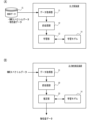
図1(A)は本実施形態に係る学習装置10の機能構成を示し、図1(B)は本実施形態に係る物性推定装置20の機能構成を示す。学習装置10および物性推定装置20は、いずれも、演算プロセッサ、記憶装置、入力装置、出力装置、通信装置等を含むコンピュータ(情報処理装置)であり、演算プロセッサがプログラムを実行することによってこれらの機能が実現される。
[First embodiment]
Fig. 1(A) shows the functional configuration of a learning device 10 according to this embodiment, and Fig. 1(B) shows the functional configuration of a physical property estimation device 20 according to this embodiment. Both the learning device 10 and the physical property estimation device 20 are computers (information processing devices) including an arithmetic processor, a storage device, an input device, an output device, a communication device, etc., and these functions are realized by the arithmetic processor executing a program.
学習装置10の演算プロセッサがプログラムを実行することにより、データ取得部11、前処理部12、学習部13の機能が実現され、学習モデル14の学習が行われる。同様に、物性推定装置20の演算プロセッサがプログラムを実行することにより、データ取得部21、前処理部22、推定部23の機能が実現され、学習装置10によって学習された学習モデル14を用いて物性値の推定を行う。
When the arithmetic processor of the learning device 10 executes a program, the functions of the data acquisition unit 11, preprocessing
<学習装置>
まず、学習装置10が行う学習モデル14の学習方法について説明する。学習処理では、データ取得部11による教師データの取得処理、前処理部12による教師データの前処理、および、学習部13による学習処理がこの順番で実行される。
<Learning device>
First, a description will be given of a learning method of the
データ取得部11は、教師データ15として、物性値が既知の複数のポリマー試料のNMRスペクトルデータを取得する。言い換えると、教師データ15は、複数のポリマー試料に関するNMRスペクトルデータと、その物性値データとを含む。なお、物性値が既知であるというのは、学習処理を行うまでに物性値が判明しているという意味であり、NMR測定の段階では物性値が不明であっても、その後に測定等により物性値が判明していればよい。
The data acquisition unit 11 acquires NMR spectrum data of multiple polymer samples with known physical property values as the
本実施形態においては、NMRスペクトルデータとして、固体NMR測定によりポリマー試料を無回転で測定したデータを採用する。なお、回転系であるMAS(Magic Angle Spinning) NMRで測定したデータを利用してもよい。無回転の固体NMR測定であるので、広
幅の異方性スペクトルデータが得られる。図2(A)に示されるグラフ201は、73種類のポリマー試料(約100mg)を無回転の固体NMR(500MHz)で測定したスペクトルデータ(化学シフト値)を重ねて表示したグラフである。
In this embodiment, the NMR spectrum data is data obtained by measuring a polymer sample without rotation using solid-state NMR. Data measured using MAS (Magic Angle Spinning) NMR, which is a rotation system, may also be used. Since the solid-state NMR measurement is without rotation, broadband anisotropic spectrum data can be obtained. The
ここでは、無回転の固体NMR測定により得られるスペクトルデータを扱うが、マジック角回転を行う固体NMR測定あるいは溶液NMR測定により得られるスペクトルデータを採用しても構わない。 Here, we deal with spectral data obtained by solid-state NMR measurements without rotation, but it is also possible to use spectral data obtained by solid-state NMR measurements or solution NMR measurements with magic angle spinning.
なお、学習処理のために新しくNMR測定を行ってもよいし、過去に自らあるいは他人が行ったNMR測定によって取得済みのNMRスペクトルデータを教師データとして利用してもよい。 Note that new NMR measurements may be performed for the learning process, or NMR spectrum data previously obtained through NMR measurements performed by the user or others may be used as training data.
物性値データは上述のように特に限定されないが、ここでは融点(Tm)およびガラス転移点(Tg)を例に説明する。図2(B)のグラフ202および図2(C)のグラフ203は、上記73種類のポリマー試料の融点およびガラス転移点を示す。物性値データと
して、実験による測定データ(実測値)を用いてもよいし、当該試料の物性値として知られている公知の値を用いてもよい。
As mentioned above, the physical property data is not particularly limited, but melting point (Tm) and glass transition point (Tg) will be described as an example here.
データ取得部11は、本実施形態では、教師データ15を数値データとして取得してもよいが、その他の形式で教師データ15の入力を受け付けてもよい。例えば、データ取得部11は、ポリマー試料のNMRスペクトルデータをグラフ表示した画像データを取得し、この画像データを解析して各周波数におけるシグナル強度を読み取ってもよい。データ取得部11は、グラフの軸に付されたラベルを文字認識することにより、グラフ内における各位置の周波数(化学シフト値)およびシグナル強度を把握できる。物性値データについても同様に、画像データを元に数値を読み取ってもよい。
In this embodiment, the data acquisition unit 11 may acquire the
前処理部12は、教師データ15に対して前処理を施す。前処理には、型変換、欠損値処理(除去、補間)、スケーリングのような機械学習において一般的に行われる処理が含まれる。以下では、本実施形態において特有の前処理を説明する。なお、以下の4つの前処理はいずれか1つのみを行ってもよいし、4つのうちの任意の2つまたは3つを行ってもよいし、4つ全部行ってもよい。なお、これ以降は特に断らない限り、「前処理」とは以下の4つの前処理(第1~第4の前処理)のいずれかを指すものとする。
The preprocessing
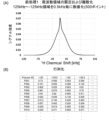
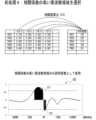
第1の前処理は、NMRスペクトルデータの領域限定および離散化である。図2(A)に示すように、NMR測定により得られるスペクトルデータは、例えば、200~-200kHzの範囲についての5Hz間隔のデータであるが、前処理部12は、これを125~-125kHzの領域に限定し、かつ0.5kHz間隔に離散化する。ここでは、125~-125kHzの領域に限定しているが、どのような領域に限定するかは適宜決定すればよい。図3(A)は、1つのサンプルについての第1の前処理後のスペクトルデータを示し、図3(B)は、第1の前処理後のデータを行列化して表現している。本実施形態では125~-125kHzを0.5kHz間隔で離散化しているので、1つの試料あたり500個のデータポイントに削減される。なお、図3(B)における「P001」等はポリマー試料のIDを示す。
The first preprocessing is the region restriction and discretization of the NMR spectrum data. As shown in FIG. 2(A), the spectrum data obtained by the NMR measurement is, for example, data in the range of 200 to -200 kHz at 5 Hz intervals, but the
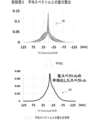
第2の前処理は、取得したNMRスペクトルデータから、教師データのNMRスペクトルの平均値(平均スペクトル)を減算する処理である。図4のグラフ401は、全てのポリマー試料のNMRスペクトルデータを重畳したグラフである。前処理部12は、全てのNMRスペクトルデータの平均を取った平均スペクトル402を求め、それぞれのポリマー試料のNMRスペクトルデータから平均スペクトルデータを減算した値(差分)を求める。
The second preprocessing is a process of subtracting the average value (average spectrum) of the NMR spectra of the teacher data from the acquired NMR spectrum data.
本実施形態では、第2の前処理は第1の前処理と組み合わせて行う。すなわち、前処理部12は、第1の前処理後のデータに対して第2の前処理を施す。しかしながら、第2の前処理を第1の前処理と組み合わせなくてもよい。
In this embodiment, the second preprocessing is performed in combination with the first preprocessing. That is, the preprocessing
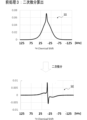
第3の前処理は、NMRスペクトルデータから二次微分を求める処理である。前処理部12は、図5に示すNMRスペクトルデータ501の二次微分502を求める。
The third preprocessing is a process of calculating the second derivative from the NMR spectrum data. The preprocessing
本実施形態では、第3の前処理は第1の前処理と組み合わせて行う。すなわち、前処理部12は、第1の前処理後のデータに対して第3の前処理を施す。しかしながら、第3の前処理を第1の前処理と組み合わせなくてもよいし、また、第2の前処理と組み合わせてもよい。言い換えると、前処理部12は、第1の前処理後のデータ、第1の前処理および第2の前処理後のデータ、前処理なしのデータのいずれに対して第3の前処理を行ってもよい。
In this embodiment, the third preprocessing is performed in combination with the first preprocessing. That is, the preprocessing
第4の前処理は、物性値との相関係数が閾値以上の周波数領域を抽出する処理である。前処理部12は、図6に示すように、NMRスペクトルデータのそれぞれの周波数のデータについて、物性値データ(目的変数)との相関係数を算出する(符号610)。図6(B)のグラフ620は、算出された相関係数を示す。ここでは、相関係数の閾値として0.6を採用し、前処理部12は、相関係数の絶対値が0.6以上である周波数領域621,622のデータを抽出する。相関係数の閾値は0.6に限られず任意の値であって構わない。第4の前処理は、NMRスペクトルデータから所定の周波数範囲のデータを抽出するという点では第1の前処理と共通するが、抽出対象の周波数範囲の決定が相関係数に基づくという点で異なる。
The fourth preprocessing is a process of extracting frequency regions in which the correlation coefficient with the physical property value is equal to or greater than a threshold value. As shown in FIG. 6, the preprocessing
相関係数は、線形的な関係を評価する指標に限定されず、非線形的な関係を評価する指標を用いてもよい。線形的な関係を評価する指標の代表例として、ピアソン積率相関係数が挙げられる。非線形的な関係を評価する指標の代表例として、MIC(Maximal Information Coefficient)が挙げられる。 The correlation coefficient is not limited to an index that evaluates a linear relationship, and an index that evaluates a nonlinear relationship may be used. A representative example of an index that evaluates a linear relationship is the Pearson product-moment correlation coefficient. A representative example of an index that evaluates a nonlinear relationship is the MIC (Maximal Information Coefficient).
本実施形態では、第4の前処理は第1の前処理と組み合わせて行う。すなわち、前処理部12は、第1の前処理後のデータに対して第4の前処理を施す。しかしながら、第4の前処理は、前処理なしのデータに対して行ってもよく、第1の前処理後のデータに対して行ってもよい。また、第4の前処理は、第2の前処理あるいは第3の前処理後のデータに対して行ってもよい。
In this embodiment, the fourth preprocessing is performed in combination with the first preprocessing. That is, the preprocessing
学習部13は、前処理部12による前処理後の教師データを用いて、学習モデル14の学習処理を行う。学習モデル14は、NMRスペクトルデータから物性値を回帰により推定する推定エンジンである。学習モデル14の学習アルゴリズムとして、ランダムフォレストなどのような決定木分析法、glmbооst(Generalized Linear Model Boosting)のようなブースティングアルゴリズム、XGBооst(Extreme Gradient Boosting)のようなブースティングアルゴリズム(特に勾配ブースティング)に決定木分析などを取り入れたGBDT(Gradient Boosting Decision Tree)、その他、サポート・ベクタ
ー・マシン(SVM)、ニューラルネットワーク、ディープニューラルネットワークなどの回帰分析法が採用可能である。また、これらの学習アルゴリズムの複数を組み合わせて一つの学習モデルを作成するアンサンブル学習も可能である。
The
学習部13は、説明変数として、いずれかの前処理後のNMRスペクトルデータを使用する。ただし、複数の前処理から得られるデータを組み合わせて説明変数として使用してもよい。例えば、第2の前処理後のデータと第3の前処理後のデータを組み合わせて説明変数として使用してもよい。
The
学習部13による学習処理の結果、ポリマー試料のNMRスペクトルデータを入力として受け付け、このポリマー試料の物性値を推定する学習モデル14が生成される。
As a result of the learning process by the
<物性推定装置>
次に、物性推定装置20が行うポリマー試料の物性値の推定処理について説明する。物性値推定処理では、データ取得部21によるポリマー試料のNMRスペクトルデータの取得処理、前処理部22による前処理、および、推定部23による推定処理がこの順番で実行される。
<Physical property estimation device>
Next, a description will be given of a process for estimating the physical property values of a polymer sample performed by the physical property estimation device 20. In the process for estimating the physical property values, an acquisition process of NMR spectrum data of the polymer sample by the
データ取得部21は、物性を推定する対象のポリマー試料のNMRスペクトルデータを取得する。取得するNMRスペクトルデータは、教師データにおけるNMRスペクトルデータと同様のNMR測定により得られる測定データである。もっとも、物性推定のために新規にNMR測定を行う必要はなく、過去に自らあるいは他人が行ったNMR測定によっ
て取得済みのNMRスペクトルデータを入力データとして取得してもよい。本実施形態では、NMRスペクトルデータは、無回転の固体NMR測定により得られる異方性スペクトルデータである。
The
データ取得部21は、NMRスペクトルデータを数値データとして取得してもよいし、NMRスペクトルデータをグラフ表示した画像データを取得し、この画像データを解析して各周波数におけるシグナル強度を読み取ってもよい。
The
前処理部22は、データ取得部21が取得したNMRスペクトルデータに対して前処理を施す。前処理部22が行う前処理は、学習装置10の前処理部12が行う処理と同じである。したがって繰り返しの説明は省略する。
The preprocessing
推定部23は、学習モデル14を用いて、前処理後のNMRスペクトルデータからポリマー試料の物性値を推定する。学習モデル14は、学習装置10によってあらかじめ生成された学習モデルである。推定部23は、前処理後のNMRスペクトルデータを学習モデル14に入力し、その結果として得られる学習モデル14の出力から、ポリマー試料の物性値を推定する。
The
<解析例>
73種類のポリマー試料について、NMRスペクトルデータ(図2(A))、融点(図2(B))、ガラス転移点(図2(C))を取得し、NMRスペクトルデータを説明変数、融点およびガラス転移点を目的変数として、機械学習を行った。この際、学習モデル14の学習アルゴリズムとして、ランダムフォレストを採用した。
<Analysis example>
NMR spectrum data ( FIG. 2(A) ), melting points ( FIG. 2(B) ), and glass transition points ( FIG. 2(C) ) were obtained for 73 types of polymer samples, and machine learning was performed using the NMR spectrum data as explanatory variables and the melting points and glass transition points as objective variables. In this case, random forest was adopted as the learning algorithm for the
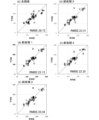
図7(A)~図7(E)は、前処理の違いによる学習モデル14の融点Tmの予測精度を示す図である。図7(A)は前処理なしの場合の精度、図7(B)~7(E)はそれぞれ第1~第4の前処理を施した場合の精度を示す。
Figures 7(A) to 7(E) show the prediction accuracy of the melting point Tm of the
図7(A)~図7(E)に示すように、前処理なしの場合は二乗平均平方根誤差(RMSE)が28.72であるのに対して、第1~第4の前処理を施すことによりRMSEがそれぞれ23.13, 23.31, 22.25, 25.04に改善する。 As shown in Figures 7(A) to 7(E), the root mean square error (RMSE) without preprocessing is 28.72, whereas the RMSE improves to 23.13, 23.31, 22.25, and 25.04 by applying the first to fourth preprocessing methods, respectively.
同様に、学習モデル14によるガラス転移点Tg予測のRMSEは、前処理なしで45.29で
あるのに対し、第1~第4の前処理を施すことによりそれぞれ34.55, 34.83, 37.21, 33.78に改善した。
Similarly, the RMSE of the glass transition temperature Tg prediction by learning
<本実施形態の有利な効果>
本実施形態によれば、無回転の固体NMRスペクトルデータからポリマー試料の物性値を推定することができる。このようなNMRスペクトルデータは容易かつ短時間で取得可能であるため、物性推定のために過度な手間がかからない。また、本実施形態によれば、ポリマー試料が添加剤を含んでいてもその物性を推定することができる。さらに、上述の前処理により、物性値の予測精度が向上する。また、前処理により説明変数のデータ数を削減できることから、学習処理を短時間で完了できる。
<Advantageous Effects of the Present Embodiment>
According to this embodiment, the physical properties of a polymer sample can be estimated from non-rotating solid-state NMR spectrum data. Such NMR spectrum data can be acquired easily and in a short time, so that excessive effort is not required for property estimation. Furthermore, according to this embodiment, the physical properties of a polymer sample can be estimated even if the polymer sample contains an additive. Furthermore, the above-mentioned preprocessing improves the prediction accuracy of the physical properties. Furthermore, since the number of data of explanatory variables can be reduced by the preprocessing, the learning process can be completed in a short time.
<変形例>
上記の説明では、いずれかの前処理後のデータを用いて学習処理を行っているが、複数の前処理後のデータを組み合わせて使用してもよい。例えば、第2の前処理後のデータ(平均スペクトルとの差分)と第3の前処理後のデータ(二次微分)を組み合わせて説明変数として使用してもよい。
<Modification>
In the above description, the learning process is performed using data after any of the preprocessing processes, but multiple pieces of preprocessing data may be used in combination. For example, the second preprocessing data (difference from the average spectrum) and the third preprocessing data (second derivative) may be used in combination as explanatory variables.
また、上記の実施形態では、無回転の固体NMR測定により得られるスペクトルデータを使用しているが、マジック角回転を施した固体NMR測定あるいは溶液NMR測定により得られるNMRスペクトルデータを説明変数として用いてもよい。 In addition, in the above embodiment, spectral data obtained by solid-state NMR measurement without rotation is used, but NMR spectral data obtained by solid-state NMR measurement or solution NMR measurement with magic angle rotation may also be used as explanatory variables.
また、前処理の1つとして、NMRスペクトルデータに対して、波形分離処理(ピークフィッティング処理)を施してもよい。波形分離処理は、NMRスペクトルデータから、誤差が最も小さくなるようにピーク形状を求める処理である。代表的なピーク形状関数として、ガウス関数、ローレンツ関数、ガウス・ローレンツ混合関数が挙げられる。 As a pre-processing step, the NMR spectrum data may be subjected to waveform separation processing (peak fitting processing). The waveform separation processing is a process for determining the peak shape from the NMR spectrum data so as to minimize the error. Representative peak shape functions include the Gaussian function, the Lorentzian function, and the Gaussian-Lorentzian mixed function.
[第2の実施形態]
本実施形態では、ポリマー試料の生分解性特性を推定する。生分解性の例として、崩壊度、重量減少度、露出表面積減少度、化学的酸素消費量(COD)の変化量、生物化学的酸素消費量(BOD)の変化量、溶存有機炭素量の変化量、発生二酸化炭素量の変化量などが含まれる。生分解性に関わるさらなる指標例としては、pH、平均分子量、屈折率、密度、露出表面積、結晶化度、微生物量、代謝物量、濁度などが含まれる。なお、生分解性評価試験の前後において数値に変化があるその他の物性も分解特性の指標例に含まれる。
Second Embodiment
In this embodiment, the biodegradability characteristics of a polymer sample are estimated. Examples of biodegradability include the degree of disintegration, the degree of weight loss, the degree of exposed surface area loss, the amount of change in chemical oxygen demand (COD), the amount of change in biochemical oxygen demand (BOD), the amount of change in the amount of dissolved organic carbon, and the amount of carbon dioxide generated. Further examples of indices related to biodegradability include pH, average molecular weight, refractive index, density, exposed surface area, crystallinity, amount of microorganisms, amount of metabolites, and turbidity. Note that other physical properties whose values change before and after a biodegradability evaluation test are also included as examples of indices of decomposition characteristics.
生分解の分解環境は特に限定されず、海水あるいは淡水などの水系環境でもよいし、土壌環境やコンポストでもよい。本実施形態では、ポリマー試料の海水中での生分解特性を予測する。そこで、ポリマー試料を用意して人為的環境に設置し、一定時間(例えば1日、1週間、1ヶ月など)経過後にポリマー試料を取り出して測定を行う。評価試験におけるポリマー試料の形態は特に限定されず、例えば、プレート状、フィルム状、パウダー状の試料を採用できる。測定対象の生分解特性を表すデータは、上述のように任意のものであってよいが、例えば、生物化学的酸素要求量(BOD)、理論的酸素要求量(ThOD)、重量変化率、崩壊率などを含む。本実施形態では、次式で表される生分解度を測定対象とする。

また、上記の評価試験開始時のNMRスペクトルデータも取得する。NMRスペクトルデータは、無回転固体NMR測定で得られる異方性スペクトルデータを使用してもよいし、第1の実施形態で説明したその他の測定により得られるスペクトルデータを用いてもよい。 The NMR spectrum data at the start of the above evaluation test is also obtained. The NMR spectrum data may be anisotropic spectrum data obtained by non-rotational solid-state NMR measurement, or spectrum data obtained by other measurements described in the first embodiment.
このようにして測定した測定データを教師データとして、NMRスペクトルデータから所定時間経過後の生分解度を予測するための学習モデル14の学習を行う。学習装置10の構成(図1A)や学習処理は第1の実施形態と同様である。また、学習の前処理として、第1の実施形態で説明した第1から第4の前処理の一部または全てを採用してもよい。
The measurement data thus obtained is used as training data to train a
なお、複数の時点で生分解度(あるいはその他の分解特性を表すデータ)を測定して、学習データとして用いてもよい。例えば、1日おきに7日間の生分解度を測定して学習データとして用いれば、NMRスペクトルデータから1日経過ごとの生分解度を予測する学習モデルが得られる。ここでは測定間隔(予測間隔と等しい)を1日おきとしているが、その他の間隔であってよく、また、間隔は等間隔でなくても構わない。複数時点の測定デ
ータを扱う場合は、学習モデル14の学習にRNN(Recurrent Neural Network)として、simple RNN、LTSM(Long-Short Term Memory)、GRU(Gated Recurrent Unit)などのアルゴリズムを用いて学習をしてもよい。
In addition, the biodegradability (or data representing other decomposition characteristics) may be measured at multiple time points and used as learning data. For example, if the biodegradability is measured every other day for 7 days and used as learning data, a learning model that predicts the biodegradability for each day from the NMR spectrum data can be obtained. Here, the measurement interval (equal to the prediction interval) is every other day, but other intervals may be used, and the intervals do not have to be equal intervals. When handling measurement data at multiple time points, the
物性推定装置20は、このようにして学習された学習モデル14を用いて、生分解性特性を推定する対象のポリマー試料のNMRスペクトルデータから所定期間経過後の生分解性特性(例えば、上述の生分解度)を推定する。物性推定装置20の構成および処理内容は第1の実施形態と同様であるため繰り返しの説明は省略する。
The physical property estimation device 20 uses the
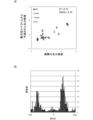
図8(A)は、PBS,PBSA,PHBH,PLAの4種類の材料について、上述の学習モデルの生成を行い、試験開始前のNMRスペクトルデータ(異方性スペクトルデータ)から1週間後の生分解度を予測した結果を示す図である。なお、この実験では、前処理として第1から第4の前処理のうち第1の前処理のみ実施している。予測精度は、決定係数(R2)が0.72であり、2乗平均平方根誤差(RMSE)が0.74であり精度の良い予測が行えていることが分かる。また、図8(B)はNMRデータの化学シフト値ごとの重要度(Gini係数)を示している。 FIG. 8(A) shows the results of generating the above-mentioned learning model for four types of materials, PBS, PBSA, PHBH, and PLA, and predicting the biodegradability after one week from the NMR spectrum data (anisotropic spectrum data) before the start of the test. In this experiment, only the first pretreatment of the first to fourth pretreatments was performed as pretreatment. The prediction accuracy was 0.72 in coefficient of determination ( R2 ) and 0.74 in root mean square error (RMSE), indicating that accurate prediction was possible. FIG. 8(B) shows the importance (Gini coefficient) of each chemical shift value of the NMR data.
[変型例]
上記の実施形態では、説明変数はNMRスペクトルデータのみであったが、説明変数として目的変数に含まれない種類の物性値(第2の物性値)を採用してもよい。例えば、生分解性特性の推測においては、NMRスペクトルデータの他に、露出表面積や密度のような目的変数としていない生分解性特性の指標値を説明変数として加えて学習すると、予測精度が向上すると考えられる。この場合、物性推定処理においては、推定対象のポリマー試料のNMRスペクトルデータに加えて第2の物性値も取得して、これらのデータを推定部23(学習モデル14)に入力して、ポリマー試料の物性値を推定する。なお、第2の物性値の種類は特に限定されず、生分解特性以外のその他の任意の物性であってよい。
[Variation example]
In the above embodiment, the explanatory variable was only the NMR spectrum data, but a type of physical property value (second physical property value) not included in the objective variable may be adopted as the explanatory variable. For example, in the estimation of biodegradable properties, it is considered that the prediction accuracy is improved by learning by adding, as an explanatory variable, an index value of the biodegradable property that is not the objective variable, such as an exposed surface area or density, in addition to the NMR spectrum data. In this case, in the physical property estimation process, in addition to the NMR spectrum data of the polymer sample to be estimated, the second physical property value is also acquired, and these data are input into the estimation unit 23 (learning model 14) to estimate the physical property value of the polymer sample. The type of the second physical property value is not particularly limited, and may be any physical property other than the biodegradable property.
10:学習装置 11:データ取得部 12:前処理部 13:学習部
14:学習モデル
20:物性推定装置 21:データ取得部 22:前処理部 23:推定部
10: Learning device 11: Data acquisition unit 12: Preprocessing unit 13: Learning unit 14: Learning model 20: Physical property estimation device 21: Data acquisition unit 22: Preprocessing unit 23: Estimation unit
Claims (15)
前記NMRスペクトルデータに前処理を施す前処理手段と、
物性値が既知のポリマー試料のNMRスペクトルデータに基づくデータと前記物性値とを教師データとした機械学習によりあらかじめ生成された、学習モデルと、
前記学習モデルに前記前処理後のNMRスペクトルデータを入力して、前記ポリマー試料の物性値を推定する推定手段と、
を備え、
前記前処理は、前記NMRスペクトルデータから、所定の周波数範囲のデータを抽出する処理を含み、
前記所定の周波数範囲は、前記教師データにおいて、物性値との相関係数が閾値以上の周波数である、
ポリマー物性推定装置。 An acquisition means for acquiring NMR spectrum data of a polymer sample;
a preprocessing means for preprocessing the NMR spectrum data;
A learning model that is generated in advance by machine learning using data based on NMR spectrum data of a polymer sample whose physical properties are known and the physical properties as training data;
an estimation means for estimating physical property values of the polymer sample by inputting the preprocessed NMR spectrum data into the learning model;
Equipped with
The pre-processing includes a process of extracting data in a predetermined frequency range from the NMR spectrum data,
The predetermined frequency range is a frequency in the teacher data where the correlation coefficient with the physical property value is equal to or greater than a threshold value.
Polymer property estimation device.
請求項1に記載のポリマー物性推定装置。 The pre-processing includes a process of subtracting an average value of the NMR spectrum data of the teacher data from the NMR spectrum data.
The polymer property estimation device according to claim 1 .
請求項1または2に記載のポリマー物性推定装置。 The pre-processing includes a process of calculating a second derivative of the NMR spectrum data.
The polymer property estimation device according to claim 1 or 2 .
請求項1から3のいずれか1項に記載のポリマー物性推定装置。 The NMR spectrum data is anisotropic spectrum data obtained by non-rotating solid-state NMR measurement.
The polymer property estimation device according to claim 1 .
請求項1から4のいずれか1項に記載のポリマー物性推定装置。 The learning model is machine-learned using teacher data of a second physical property value of the polymer sample, the second physical property value being different from the physical property value estimated by the estimation means.
The polymer property estimation device according to claim 1 .
前記NMRスペクトルデータに前処理を施す前処理手段と、
前記前処理後のNMRスペクトルデータと前記物性値とを教師データとして機械学習をして、NMRスペクトルデータから物性値を推定する学習モデルを学習する学習手段と、
を備え、
前記前処理は、前記NMRスペクトルデータから、所定の周波数範囲のデータを抽出する処理を含み、
前記所定の周波数範囲は、前記教師データにおいて、物性値との相関係数が閾値以上の周波数である、
学習装置。 An acquisition means for acquiring NMR spectrum data of a polymer sample and physical property values of the polymer sample;
a preprocessing means for preprocessing the NMR spectrum data;
a learning means for performing machine learning using the preprocessed NMR spectrum data and the physical property values as training data to learn a learning model for estimating the physical property values from the NMR spectrum data;
Equipped with
The pre-processing includes a process of extracting data in a predetermined frequency range from the NMR spectrum data,
The predetermined frequency range is a frequency in the teacher data where the correlation coefficient with the physical property value is equal to or greater than a threshold value.
Learning device.
請求項6に記載の学習装置。 the pre-processing includes a process of subtracting an average value of the NMR spectrum data acquired by the acquisition means from the NMR spectrum data;
The learning device according to claim 6 .
請求項6または7に記載の学習装置。 The pre-processing includes a process of calculating a second derivative of the NMR spectrum data.
A learning device according to claim 6 or 7 .
請求項6から8のいずれか1項に記載の学習装置。 The NMR spectrum data is anisotropic spectrum data obtained by non-rotating solid-state NMR measurement.
A learning device according to any one of claims 6 to 8 .
前記学習手段は、前記前処理後のNMRスペクトルデータと前記物性値と前記第2の物性値とを教師データとして機械学習をして、前記学習モデルを学習する、
請求項6から9のいずれか1項に記載の学習装置。 The acquisition means also acquires a second physical property value of the polymer sample, the second physical property value being different from the physical property value estimated by the learning model;
the learning means performs machine learning using the preprocessed NMR spectrum data, the physical property value, and the second physical property value as training data to learn the learning model.
A learning device according to any one of claims 6 to 9 .
ポリマー試料のNMRスペクトルデータを取得する取得ステップと、
前記NMRスペクトルデータに前処理を施す前処理ステップと、
物性値が既知のポリマー試料のNMRスペクトルデータに基づくデータと前記物性値とを教師データとした機械学習によりあらかじめ生成された、学習モデルに前記前処理後のNMRスペクトルデータを入力することにより、前記ポリマー試料の物性値を推定する推定ステップと、
を含み、
前記前処理は、前記NMRスペクトルデータから、所定の周波数範囲のデータを抽出する処理を含み、
前記所定の周波数範囲は、前記教師データにおいて、物性値との相関係数が閾値以上の周波数である、
ポリマー物性推定方法。 1. A computer-implemented method for predicting polymer properties, comprising:
acquiring NMR spectral data of the polymer sample;
a pre-processing step of pre-processing the NMR spectrum data;
an estimation step of estimating physical property values of the polymer sample by inputting the preprocessed NMR spectrum data into a learning model that has been generated in advance by machine learning using data based on NMR spectrum data of a polymer sample whose physical property values are known and the physical property values as training data;
Including,
The pre-processing includes a process of extracting data in a predetermined frequency range from the NMR spectrum data,
The predetermined frequency range is a frequency in the teacher data where the correlation coefficient with the physical property value is equal to or greater than a threshold value.
Polymer property estimation method.
ポリマー試料のNMRスペクトルデータと、前記ポリマー試料の物性値とを取得する取得ステップと、
前記NMRスペクトルデータに前処理を施す前処理ステップと、
前記前処理後のNMRスペクトルデータと前記物性値とを教師データとして機械学習をして、NMRスペクトルデータから物性値を推定する学習モデルを学習する学習ステップと、
を含み、
前記前処理は、前記NMRスペクトルデータから、所定の周波数範囲のデータを抽出する処理を含み、
前記所定の周波数範囲は、前記教師データにおいて、物性値との相関係数が閾値以上の周波数である、
学習方法。 A computer-implemented method for training a learning model, comprising:
An acquisition step of acquiring NMR spectrum data of a polymer sample and physical property values of the polymer sample;
a pre-processing step of pre-processing the NMR spectrum data;
a learning step of performing machine learning using the preprocessed NMR spectrum data and the physical property values as training data to learn a learning model for estimating the physical property values from the NMR spectrum data;
Including,
The pre-processing includes a process of extracting data in a predetermined frequency range from the NMR spectrum data,
The predetermined frequency range is a frequency in the teacher data where the correlation coefficient with the physical property value is equal to or greater than a threshold value.
How to learn.
ポリマー試料のNMRスペクトルデータと、前記ポリマー試料の物性値とを取得する取得ステップと、
前記NMRスペクトルデータに前処理を施す前処理ステップと、
前記前処理後のNMRスペクトルデータと前記物性値とを教師データとして機械学習をして、NMRスペクトルデータから物性値を推定する学習モデルを学習する学習ステップと、
を含み、
前記前処理は、前記NMRスペクトルデータから、所定の周波数範囲のデータを抽出する処理を含み、
前記所定の周波数範囲は、前記教師データにおいて、物性値との相関係数が閾値以上の周波数である、
学習モデルの作成方法。 1. A computer-implemented method for creating a learning model, comprising:
An acquisition step of acquiring NMR spectrum data of a polymer sample and physical property values of the polymer sample;
a pre-processing step of pre-processing the NMR spectrum data;
a learning step of performing machine learning using the preprocessed NMR spectrum data and the physical property values as training data to learn a learning model for estimating the physical property values from the NMR spectrum data;
Including,
The pre-processing includes a process of extracting data in a predetermined frequency range from the NMR spectrum data,
The predetermined frequency range is a frequency in the teacher data where the correlation coefficient with the physical property value is equal to or greater than a threshold value.
How to create a learning model.
前記前処理は、前記NMRスペクトルデータから、所定の周波数範囲のデータを抽出する処理を含み、
前記所定の周波数範囲は、前記教師データにおいて、物性値との相関係数が閾値以上の周波数である、
学習済みモデル。 The trained model is machine-learned using preprocessed NMR spectrum data of a polymer sample having known physical property values and the preprocessed NMR spectrum data and the physical property values as training data, and is for causing a computer to function so as to estimate the physical property values of the polymer sample to be estimated using the NMR spectrum data of the polymer sample to be estimated as input data,
The pre-processing includes a process of extracting data in a predetermined frequency range from the NMR spectrum data,
The predetermined frequency range is a frequency in the teacher data where the correlation coefficient with the physical property value is equal to or greater than a threshold value.
Trained model .
Applications Claiming Priority (2)
| Application Number | Priority Date | Filing Date | Title |
|---|---|---|---|
| JP2019238623 | 2019-12-27 | ||
| JP2019238623 | 2019-12-27 |
Publications (2)
| Publication Number | Publication Date |
|---|---|
| JP2021107813A JP2021107813A (en) | 2021-07-29 |
| JP7616640B2 true JP7616640B2 (en) | 2025-01-17 |
Family
ID=76967853
Family Applications (1)
| Application Number | Title | Priority Date | Filing Date |
|---|---|---|---|
| JP2020217774A Active JP7616640B2 (en) | 2019-12-27 | 2020-12-25 | Polymer property estimation device and learning method |
Country Status (1)
| Country | Link |
|---|---|
| JP (1) | JP7616640B2 (en) |
Families Citing this family (5)
| Publication number | Priority date | Publication date | Assignee | Title |
|---|---|---|---|---|
| JP2025508430A (en) * | 2022-02-18 | 2025-03-26 | ビーエーエスエフ ソシエタス・ヨーロピア | Methods for determining habitat descriptor values that provide target biodegradability of polymers |
| CN114897031B (en) * | 2022-06-14 | 2025-06-20 | 四川省医学科学院·四川省人民医院 | A method and system for analyzing NMR spectra of mixtures under visualization conditions |
| JP7806629B2 (en) * | 2022-07-08 | 2026-01-27 | 株式会社プロテリアル | Apparatus, program, and method for predicting physical properties of composite materials |
| JP7711246B1 (en) | 2024-03-18 | 2025-07-22 | Dic株式会社 | Method for predicting resin physical properties, information processing device, and program |
| CN118197507B (en) * | 2024-04-30 | 2024-11-29 | 华东理工大学 | Performance prediction method and system of phthalonitrile resin material, structural design method thereof, electronic device and computer-readable storage medium |
Citations (4)
| Publication number | Priority date | Publication date | Assignee | Title |
|---|---|---|---|---|
| JP2000503392A (en) | 1996-01-16 | 2000-03-21 | オーバーン インターナショナル,インコーポレーテッド | Use of neural networks and partial least squares regression techniques to obtain measurements of one or more polymer properties in an online NMR system |
| JP2004138545A (en) | 2002-10-18 | 2004-05-13 | Mitsubishi Chemicals Corp | NMR measurement method and structure for use in the method |
| JP2011508217A (en) | 2007-12-20 | 2011-03-10 | シェブロン ユー.エス.エー. インコーポレイテッド | Base oil property expert system |
| WO2019048965A1 (en) | 2017-09-06 | 2019-03-14 | 株式会社半導体エネルギー研究所 | Physical property prediction method and physical property prediction system |
Family Cites Families (1)
| Publication number | Priority date | Publication date | Assignee | Title |
|---|---|---|---|---|
| JPH0755905A (en) * | 1993-08-10 | 1995-03-03 | Hitachi Ltd | Spectral decomposition method |
-
2020
- 2020-12-25 JP JP2020217774A patent/JP7616640B2/en active Active
Patent Citations (4)
| Publication number | Priority date | Publication date | Assignee | Title |
|---|---|---|---|---|
| JP2000503392A (en) | 1996-01-16 | 2000-03-21 | オーバーン インターナショナル,インコーポレーテッド | Use of neural networks and partial least squares regression techniques to obtain measurements of one or more polymer properties in an online NMR system |
| JP2004138545A (en) | 2002-10-18 | 2004-05-13 | Mitsubishi Chemicals Corp | NMR measurement method and structure for use in the method |
| JP2011508217A (en) | 2007-12-20 | 2011-03-10 | シェブロン ユー.エス.エー. インコーポレイテッド | Base oil property expert system |
| WO2019048965A1 (en) | 2017-09-06 | 2019-03-14 | 株式会社半導体エネルギー研究所 | Physical property prediction method and physical property prediction system |
Also Published As
| Publication number | Publication date |
|---|---|
| JP2021107813A (en) | 2021-07-29 |
Similar Documents
| Publication | Publication Date | Title |
|---|---|---|
| JP2021107813A (en) | Polymer physical property estimation device and learning method | |
| Malashin et al. | Applications of long short-term memory (LSTM) networks in polymeric sciences: A review | |
| CN113688665B (en) | A remote sensing image target detection method and system based on semi-supervised iterative learning | |
| Uddin et al. | Interpretable machine learning framework to predict the glass transition temperature of polymers | |
| Seckler et al. | Machine-learning solutions for the analysis of single-particle diffusion trajectories | |
| Hu et al. | A machine learning based framework to tailor properties of nanofiltration and reverse osmosis membranes for targeted removal of organic micropollutants | |
| Niazi et al. | Simultaneous spectrophotometric determination of nitroaniline isomers after cloud point extraction by using least-squares support vector machines | |
| Sarmiento et al. | Microplastic identification using impedance spectroscopy and machine learning algorithms | |
| Li et al. | Accelerating the design and development of polymeric materials via deep learning: Current status and future challenges | |
| Fujita et al. | Bayesian optimization of biodegradable polymers via machine learning driven features from low-field NMR data | |
| Redko et al. | Alteration and progressive degradation of plastic waste in a polish operational landfill analysed over 60 years | |
| Tang | The role of artificial intelligence in microplastic pollution studies and management | |
| Ni et al. | Simultaneous multimodal and multitask strategies for diverse biodegradable polymers powered by NMR data science | |
| Ghosh et al. | Towards entity-aware conditional variational inference for heterogeneous time-series prediction: An application to hydrology | |
| Iranmehr et al. | Automated Background Noise Removal from Substrate Materials in Raman Spectra Using Dynamic Time Warping | |
| Neelam et al. | Analysis of physical, mechanical and thermal degradation of gelatin-based film–exploring the biopolymer for plastic advancement | |
| Pandey et al. | Machine Learning Applications in Polymer Informatics—An Overview | |
| Qiu et al. | Vector-Quantized Variational Teacher and Multimodal Collaborative Student Based Knowledge Distillation Paradigm for Cracks Segmentation | |
| Pant et al. | A hybrid model for forecasting biological oxygen demand using ceemdan-LSTM | |
| Gentile et al. | Wasserstein-based identification of metastable states in time series data via change point detection and segment clustering | |
| Wasik et al. | Detection of imprecise estimations for polarization-resolved second-harmonic generation microscopy | |
| Hao et al. | Acoustic Analysis of Semi-Rigid Base Asphalt Pavements Based on Transformer Model and Parallel Cross-Gate Convolutional Neural Network | |
| Nicolaï et al. | Challenges in protein sequencing using 2-D MoS 2 Nanopores | |
| Zhou et al. | Deep Learning-Enhanced Ocean Acoustic Tomography: A Latent Feature Fusion Framework for Hydrographic Inversion with Source Characteristic Embedding | |
| Washio et al. | Machine learning independent of population distributions for measurement |
Legal Events
| Date | Code | Title | Description |
|---|---|---|---|
| A621 | Written request for application examination |
Free format text: JAPANESE INTERMEDIATE CODE: A621 Effective date: 20231222 |
|
| A977 | Report on retrieval |
Free format text: JAPANESE INTERMEDIATE CODE: A971007 Effective date: 20240930 |
|
| A131 | Notification of reasons for refusal |
Free format text: JAPANESE INTERMEDIATE CODE: A131 Effective date: 20241008 |
|
| A521 | Request for written amendment filed |
Free format text: JAPANESE INTERMEDIATE CODE: A523 Effective date: 20241024 |
|
| TRDD | Decision of grant or rejection written | ||
| A01 | Written decision to grant a patent or to grant a registration (utility model) |
Free format text: JAPANESE INTERMEDIATE CODE: A01 Effective date: 20241126 |
|
| A61 | First payment of annual fees (during grant procedure) |
Free format text: JAPANESE INTERMEDIATE CODE: A61 Effective date: 20241223 |
|
| R150 | Certificate of patent or registration of utility model |
Ref document number: 7616640 Country of ref document: JP Free format text: JAPANESE INTERMEDIATE CODE: R150 |