JP7612552B2 - Verification device, verification method, and verification program - Google Patents
Verification device, verification method, and verification program Download PDFInfo
- Publication number
- JP7612552B2 JP7612552B2 JP2021164953A JP2021164953A JP7612552B2 JP 7612552 B2 JP7612552 B2 JP 7612552B2 JP 2021164953 A JP2021164953 A JP 2021164953A JP 2021164953 A JP2021164953 A JP 2021164953A JP 7612552 B2 JP7612552 B2 JP 7612552B2
- Authority
- JP
- Japan
- Prior art keywords
- result
- verification
- matching
- user terminal
- input data
- Prior art date
- Legal status (The legal status is an assumption and is not a legal conclusion. Google has not performed a legal analysis and makes no representation as to the accuracy of the status listed.)
- Active
Links
Images


Landscapes
- Management, Administration, Business Operations System, And Electronic Commerce (AREA)
Description
本発明は、ユーザからの入力に基づくサービスの正当性を検証するためのシステムに関する。 The present invention relates to a system for verifying the validity of a service based on input from a user.
二部グラフにおけるマッチングの最適化問題は、労働者を仕事に割り当てるジョブマッチング問題の数学モデルなどとして古くから研究されている。全体として満足度を最適化するマッチングは、重み付き最小完全二部グラフの最小フロー問題に帰着される。非特許文献1の安定結婚問題は、このマッチングに安定性という概念を採用した問題であり、安定なマッチングをO(n2)の計算量で見つけるアルゴリズムが提案されている。
The optimization problem of matching in a bipartite graph has been studied for a long time as a mathematical model of the job matching problem of assigning workers to jobs. Matching that optimizes overall satisfaction is reduced to a minimum flow problem in a weighted minimal complete bipartite graph. The stable marriage problem in Non-Patent
安定結婚問題については、これまでに様々な拡張問題が考えられており、拡張問題の一分野として、公平性の議論がある。非特許文献1のアルゴリズムによって見つかる安定なマッチングは、男性又は女性の一方に最適なマッチングであり、また、全体としてのコストの最適化などは考慮されていなかった。
そこで、最小コスト安定マッチング、最小後悔安定マッチング(非特許文献2)、男女平等安定マッチング(非特許文献3)など、安定結婚問題を拡張した最適化問題が研究されてきた。これらの問題は、全体最適化の意味合いでの公平性を目指している。
Various extension problems have been considered for the stable marriage problem, and one area of extension problems is the discussion of fairness. The stable matching found by the algorithm in
Therefore, optimization problems that extend the stable marriage problem, such as minimum-cost stable matching, minimum-regret stable matching (Non-Patent Document 2), and gender-equality stable matching (Non-Patent Document 3), have been studied. These problems aim for fairness in the sense of global optimization.
前述の公平性に関する問題は、全体最適化という意味では共通していても、それぞれ異なる公平性の評価基準が定義されている。また、全体としては必ずしも安定とは限らない個人主義的な意味合いでの公平性について定義することも可能である。 The fairness problems mentioned above have in common the sense of global optimization, but each defines different fairness evaluation criteria. It is also possible to define fairness in an individualistic sense that is not necessarily stable overall.
例えば、いずれかの評価基準を採用したマッチングサービスが提供される場合、たとえサービスの方針が提示されていても、ユーザは、実際にどのような方針に基づくマッチング結果を受領しているのかを確信する手段がなかった。
同様に、マッチングサービスに限らず、ユーザからの入力に基づくサービスにおける実際の処理アルゴリズムが、事前に提示された方針に違反していないかを検証することは難しかった。
For example, when a matching service employing some evaluation criterion is provided, even if the service's policy is presented, the user has no way of being sure of what policy the matching results he or she is receiving are based on.
Similarly, it has been difficult to verify whether the actual processing algorithms of any service based on user input, not limited to matching services, violate any policy presented in advance.
本発明は、ユーザからの入力に基づいて提供された処理結果に対して、この処理結果を導出した実際のアルゴリズムの正当性を検証できる検証装置、検証方法及び検証プログラムを提供することを目的とする。 The present invention aims to provide a verification device, verification method, and verification program that can verify the validity of the actual algorithm that derives a processing result provided based on user input.
本発明に係る検証装置は、ユーザの入力データに基づいて実行サーバにより処理された結果を取得したユーザ端末それぞれから、当該結果、及び当該結果の元となった前記入力データを、準同型暗号方式により暗号化された状態で受信する受信部と、前記準同型暗号方式により、予め定義された前記実行サーバの処理アルゴリズムを前記入力データに基づいて実行し、実行結果が受信された前記結果と一致するか否かを示す値が暗号化された判定情報を算出する判定部と、前記判定情報を前記ユーザ端末へ送信し、当該判定情報を前記ユーザ端末に復号させることにより前記実行サーバの処理アルゴリズムが正当であるか否かを通知する送信部と、を備える。 The verification device according to the present invention includes a receiving unit that receives, from each user terminal that has acquired a result processed by an execution server based on user input data, the result and the input data on which the result is based, in a state encrypted by a homomorphic encryption method; a determining unit that executes a predefined processing algorithm of the execution server based on the input data using the homomorphic encryption method, and calculates determination information in which a value indicating whether the execution result matches the received result is encrypted; and a transmitting unit that transmits the determination information to the user terminal and has the user terminal decrypt the determination information, thereby notifying the user terminal of whether the processing algorithm of the execution server is valid.
前記処理アルゴリズムは、前記ユーザそれぞれの選好順序を前記入力データとするマッチングアルゴリズムであり、前記判定情報は、前記選好順序に基づくマッチング結果が正当なアルゴリズムによる実行結果であるか否かを示す値が暗号化されたものであってもよい。 The processing algorithm may be a matching algorithm in which the input data is the preference order of each of the users, and the determination information may be an encrypted value indicating whether or not the matching result based on the preference order is the result of execution of a legitimate algorithm.
本発明に係る検証方法は、ユーザの入力データに基づいて実行サーバにより処理された結果を取得したユーザ端末それぞれから、当該結果、及び当該結果の元となった前記入力データを、準同型暗号方式により暗号化された状態で受信する受信ステップと、前記準同型暗号方式により、予め定義された前記実行サーバの処理アルゴリズムを前記入力データに基づいて実行し、実行結果が受信された前記結果と一致するか否かを示す値が暗号化された判定情報を算出する判定ステップと、前記判定情報を前記ユーザ端末へ送信し、当該判定情報を前記ユーザ端末に復号させることにより前記実行サーバの処理アルゴリズムが正当であるか否かを通知する送信ステップと、をコンピュータが実行する。 The verification method according to the present invention includes a receiving step of receiving, from each user terminal that has acquired a result processed by an execution server based on user input data, the result and the input data on which the result is based, in a state encrypted by a homomorphic encryption method; a determining step of executing a predefined processing algorithm of the execution server based on the input data using the homomorphic encryption method, and calculating determination information in which a value indicating whether the execution result matches the received result is encrypted; and a transmitting step of transmitting the determination information to the user terminal and having the user terminal decrypt the determination information to notify whether the processing algorithm of the execution server is valid.
本発明に係る検証プログラムは、前記検証装置としてコンピュータを機能させるためのものである。 The verification program according to the present invention is for causing a computer to function as the verification device.
本発明によれば、ユーザからの入力に基づいて提供された処理結果に対して、この処理結果を導出した実際のアルゴリズムの正当性を検証できる。 The present invention makes it possible to verify the validity of the actual algorithm that derived a processing result provided based on user input.
以下、本発明の実施形態の一例について説明する。
本実施形態では、ユーザが利用するサービスとして、男女のマッチングサービスを例示する。例えば、個人主義的に公平なマッチングを実施していると提示しておきながら、実際には全体最適なマッチング又は安定なマッチングなど、異なる方針によって結果が出力されている場合、本実施形態の検証方法により方針違反が検知される。
An example of an embodiment of the present invention will now be described.
In this embodiment, a male-female matching service is exemplified as a service used by a user. For example, if a service presents itself as being an individualistically fair matching service, but actually outputs results based on a different policy, such as globally optimal matching or stable matching, the verification method of this embodiment detects a violation of the policy.
また、本実施形態の検証方法は、ジョブマッチングなどの類似のマッチングサービス、あるいは、マッチング以外のユースケースにおいても、ユーザが入力を与え、サーバでの処理が決定的なアルゴリズムである場合に適用できる。 The verification method of this embodiment can also be applied to similar matching services such as job matching, or to use cases other than matching, where the user provides input and the processing on the server is a deterministic algorithm.
ここで、本実施形態で扱うマッチングサービスにおける全体主義的公平と個人主義的公平を、次のように定義する。なお、マッチングを行う2つの集合(男性集合、女性集合)は、いずれも、他方の集合から選好順序が指定されていることとする。 Here, totalitarian fairness and individualistic fairness in the matching service used in this embodiment are defined as follows. Note that the preference order of each of the two sets (male set, female set) to be matched is specified by the other set.
まず、同サイズnの男性集合Mと女性集合Wとがあり、これらのマッチングをXとする。ここでは簡単のため、必ず1対1のペアをn組作る場合のみ考える。各人はそれぞれ、もう一方の性別の全てのメンバに対する選好順序を持つ。 First, let us have a set of men M and a set of women W of the same size n, and let us call their matching X. For simplicity, we will only consider the case where we make n one-to-one pairs. Each person has a preference order for all members of the other gender.
マッチングXにおいて、男性mと女性wとがペアであるとき、X(m)=w,X(w)=mとする。また、男性m及び女性wについて、Pm(w)を、mの選好順序におけるwの順位とし、同様に、Pw(m)を、wの選好順序におけるmの順位とする。 In a matching X, when a man m and a woman w are a pair, let X(m) = w and X(w) = m. For a man m and a woman w, let Pm (w) be the rank of w in the preference order of m, and similarly, let Pw (m) be the rank of m in the preference order of w.
このとき、マッチングの全体満足度は、例えば、次のコスト関数Cにより評価することができ、全体主義的公平性を次のように定義できる。 In this case, the overall satisfaction of the matching can be evaluated, for example, by the following cost function C, and holistic fairness can be defined as follows:
定義1.C(X)を最小とするマッチングXを全体主義的公平であるとする。
C(X)=Σ(m,w)∈X(Pm(w)+Pw(m))
C(X)=Σ (m,w)∈X (P m (w)+P w (m))
これに対し、次のような個人主義的公平性も考えられる。
G(m)=Σwi∈WPwi(m)を、mの優秀度とする。優秀度G(m)は、値が小さいほど女性集合Wからの評価が高いことを表す。同様に、G(w)=Σmi∈MPmi(w)をwの優秀度とする。
また、O(m)を、男性集合Mを優秀度G(m)の昇順にソートした場合の男性mの順位とし、これを優秀順位と呼ぶ。同様に、O(w)を、女性集合Wを優秀度G(w)の昇順にソートした場合の女性wの優秀順位とする。
ここで、ある集合Hについて、pよりも優秀順位の低い部分集合をH<pとすると、個人主義的公平性は、次のように定義できる。
In contrast, individualistic fairness can also be considered as follows:
Let G(m) = Σ wi ∈ W P wi (m) be the excellence of m. The smaller the value of the excellence G(m), the higher the evaluation from the female group W. Similarly, let G(w) = Σ mi ∈ M P mi (w) be the excellence of w.
Let O(m) be the rank of male m when the male set M is sorted in ascending order of superiority G(m), and call this the superiority rank. Similarly, let O(w) be the superiority rank of female w when the female set W is sorted in ascending order of superiority G(w).
Here, for a certain set H, if a subset with a lower ranking than p is defined as H <p , then individualistic fairness can be defined as follows.
定義2.全てのm∈M及びw∈Wについて、
(1)全てのm′∈M<O(m)についてPm(X(m))≦Pm′(X(m′))
(2)全てのw′∈W<O(w)についてPw(X(w))≦Pw′(X(w′))
が成り立つとき、このマッチングXを個人主義的公平であるとする。
(1) For all m'∈M < O(m) , Pm (X(m)) ≤ Pm' (X(m'))
(2) For all w′∈W < O(w) , Pw (X(w))≦Pw ′ (X(w′))
If this holds, then we say that the matching X is individualistically fair.
ただし、定義2の条件を満足する個人主義的公平なマッチングは、任意の選好順序において、必ずしも存在するとは限らない。また、個人主義的な公平性を満足するものの、全体最適性を大きく損なうマッチングしか存在しない場合もある。
そこで、自分より優秀順位が下位k番目以内の人が自分よりも選好順序上の順位が上の人とマッチングするのを許容する、あるいは、ある2名とマッチングした相手の選好順序上の順位の差がl以下であれば差がないとみなし許容するといった、条件を緩和した次のような定義も可能である。
However, an individualistically fair matching that satisfies the conditions of
Therefore, it is possible to define it in a way that relaxes the conditions as follows, such as allowing a person who is within the kth lowest ranking of oneself to be matched with a person who is ranked higher in the preference order than oneself, or, if the difference in the preference order between two people and their matched partner is l or less, it is considered that there is no difference and is acceptable.
定義3.全てのm∈M及びw∈Wについて、
(1)全てのm′∈M<O(m)+kについてPm(X(m))≦Pm′(X(m′))+l
(2)全てのw′∈W<O(w)+kについてPw(X(w))≦Pw′(X(w′))+l
が成り立つとき、このマッチングXを(k,l)-個人主義的公平であるとする。
(1) For all m′∈M < O(m)+k , P m (X(m))≦P m′ (X(m′))+l
(2) For all w′∈W < O(w)+k , Pw (X(w))≦Pw ′ (X(w′))+l
If this holds, then we say that the matching X is (k, l)-individualistically fair.
なお、定義1及び2において、選好順序上の順位が等しい場合を含む条件を定義したが、これには限られず、等しい場合を除外(≦を<に変更)した、より厳しい条件としてもよい。この場合も、定義2におけるk又はlを適宜設定することで条件が緩和される。
In addition, in
本実施形態の検証方法による方針違反検知の要件は、次の通りである。
・マッチングサーバで実施したマッチング処理が提示された方針と一致しない場合、ユーザはそれを検知できる。
・マッチングサーバ以外にユーザの選好順序を知られることがない。
The requirements for detecting a policy violation using the verification method of this embodiment are as follows.
If the matching process performed by the matching server does not match the presented policy, the user can detect this.
- The user's preference order is not known to anyone other than the matching server.
図1は、本実施形態における検証方法を実施する検証システム100の全体構成、及びサービスの概要を示す図である。
検証システム100は、検証サーバ1と、マッチングサービスを提供する実行サーバ2と、複数のユーザそれぞれの端末3とを備える。
FIG. 1 is a diagram showing the overall configuration of a
The
本検証方法では、処理アルゴリズムの検証を行うための検証サーバ1が設けられる。検証サーバ1は、semi-honestとし、ユーザの選好順序に興味はあるが、決められた処理以外の処理を実施することはないものとする。悪意のある実行サーバ2の目的は、提示した方針とは異なるマッチング処理を実施し、ユーザにそれを検知されないことである。また、ユーザに悪意のある者は含まれず、虚偽の入力を与えるなど、決められた処理以外の処理を実施することはないものとする。
In this verification method, a
ユーザ(端末3)は、自身の選好順序を実行サーバ2に送付する(1)。実行サーバ2は、受け取った選好順序に基づくマッチング結果を各ユーザの端末3に送付する(2)。
マッチング結果を受け取ったユーザの端末3は、完全準同型暗号により、暗号化した選好順序とマッチング結果とを検証サーバ1に送付する(3)。検証サーバ1は、暗号化された選好順序に対し、提示されたマッチング処理を実施し、その結果をユーザから受け取った暗号化されたマッチング結果と照合し、暗号化された照合結果をユーザの端末3に送付する(4)。
A user (terminal 3) sends his/her preference order to the execution server 2 (1). The
The
ここで、完全準同型暗号は、暗号化したまま任意の演算が可能となる暗号であり、次のように定義される(例えば、非特許文献4参照)。 Here, fully homomorphic encryption is a type of encryption that allows arbitrary calculations to be performed while keeping the data encrypted, and is defined as follows (see, for example, Non-Patent Document 4):
定義4.完全準同型暗号HEは、正当性、簡潔性、安全性を満たすアルゴリズム(Setup,Keygen,Enc,Dec,Eval)の5つ組である。
・セットアップ param←Setup(1λ):
公開パラメータparamを出力する。
・鍵生成 (pk,sk)←Keygen(param):
公開の暗号鍵pkと秘密の復号鍵skを出力する。
・暗号化 c←Enc(pk,μ):
公開鍵pkを用いてメッセージμ∈{0,1}を暗号化し、暗号文cを出力する。
・復号 μ←Dec(sk,c):
秘密鍵skを用いて暗号文cを復号し、メッセージμを出力する。
・準同型演算 c^←Eval(C,(c1,…,cl),pk):
公開鍵pkを用いて、c1,…,clに対して任意の回路C:{0,1}l→{0,1}を適用し、暗号文c^を出力する。
Setup param←Setup(1 λ ):
The public parameters param are output.
・Key generation (pk, sk)←Keygen(param):
A public encryption key pk and a private decryption key sk are output.
・Encryption c←Enc(pk, μ):
A message με{0,1} is encrypted using the public key pk, and a ciphertext c is output.
・Decoding μ←Dec(sk, c):
The ciphertext c is decrypted using the private key sk, and the message μ is output.
・Homomorphic operation c^←Eval(C, (c 1 ,..., c l ), pk):
Using the public key pk, an arbitrary circuit C:{0,1} l →{0,1} is applied to c 1 , . . . , c l , and the ciphertext c^ is output.
なお、正当性とは、暗号化アルゴリズム及び準同型演算アルゴリズムによって得られた暗号文が正しく復号できる性質である。簡潔性とは、準同型演算を行った後の暗号文の大きさが回路の大きさに依らない性質である。安全性とは、任意の攻撃者による攻撃成功率が無視できるほど小さい性質である。
ここで、任意の回路に対して準同型演算可能であれば、任意のアルゴリズムに対して準同型演算可能な完全準同型暗号を構成できることは自明である。したがって、次のような完全準同型暗号を改めて定義する。以下、完全準同型暗号というときには、次の定義を適用することとする。
Note that correctness refers to the property that ciphertext obtained by an encryption algorithm and a homomorphic computation algorithm can be correctly decrypted. Simplicity refers to the property that the size of the ciphertext after homomorphic computation does not depend on the size of the circuit. Security refers to the property that the success rate of an attack by an arbitrary attacker is negligibly small.
It is obvious that if homomorphic operations are possible for any circuit, then it is possible to construct fully homomorphic encryption that is homomorphic for any algorithm. Therefore, we will redefine fully homomorphic encryption as follows. Hereinafter, when we talk about fully homomorphic encryption, the following definition will apply.
定義5.完全準同型暗号HEは、正当性、簡潔性、安全性を満たすアルゴリズム(Setup,Keygen,Enc,Dec,Eval)の5つ組である。
・セットアップ param←Setup(1λ):
公開パラメータparamを出力する。
・鍵生成 (pk,sk)←Keygen(param):
公開の暗号鍵pkと秘密の復号鍵skを出力する。
・暗号化 c←Enc(pk,μ):
公開鍵pkを用いて任意のメッセージμを暗号化し、暗号文cを出力する。
・復号 μ←Dec(sk,c):
秘密鍵skを用いて暗号文cを復号し、メッセージμを出力する。
・準同型演算 c^←Eval(A,(c1,…,cl),pk):
公開鍵pkを用いて、c1,…,clに対して任意のアルゴリズムAを適用し、暗号文c^を出力する。
Definition 5. Fully homomorphic encryption (HE) is a quintuplet of algorithms (Setup, Keygen, Enc, Dec, Eval) that satisfy correctness, simplicity, and security.
Setup param←Setup(1 λ ):
The public parameters param are output.
・Key generation (pk, sk)←Keygen(param):
A public encryption key pk and a private decryption key sk are output.
・Encryption c←Enc(pk, μ):
An arbitrary message μ is encrypted using the public key pk, and a ciphertext c is output.
・Decoding μ←Dec(sk, c):
The ciphertext c is decrypted using the private key sk, and the message μ is output.
・Homomorphic operation c^←Eval(A, (c 1 ,..., c l ), pk):
Using the public key pk, an arbitrary algorithm A is applied to c 1 , . . . , c l to output a ciphertext c^.
図2は、本実施形態における検証サーバ1(検証装置)の機能構成を示す図である。
検証サーバ1は、制御部10及び記憶部20の他、各種データの入出力デバイス及び通信デバイスなどを備えたサーバ装置とするが、パーソナルコンピュータなどの各種の情報処理装置(コンピュータ)で代替可能ある。
FIG. 2 is a diagram showing the functional configuration of the validation server 1 (validation device) in this embodiment.
The
制御部10は、検証サーバ1の全体を制御する部分であり、記憶部20に記憶された各種プログラムを適宜読み出して実行することにより、本実施形態における各機能を実現する。制御部10は、CPUであってよい。
The
記憶部20は、ハードウェア群を検証サーバ1として機能させるための各種プログラム、及び各種データなどの記憶領域であり、ROM、RAM、フラッシュメモリ又はハードディスクドライブ(HDD)などであってよい。
具体的には、記憶部20は、本実施形態の各機能を制御部10に実行させるためのプログラム(検証プログラム)の他、ユーザからの検証依頼データ及び検証結果などの暗号化されたデータなどを記憶する。
The
Specifically, the
ここで、検証プログラムには、実行サーバ2で実行されるべきマッチングアルゴリズムが予め組み込まれていてよい。あるいは、アルゴリズムを特定するデータが別途記憶され、検証プログラムにより参照されてもよい。この場合、マッチングの方針(例えば、全体主義的公平、個人主義的公平など)に応じて、データが適宜書き換えられ、又は選択されることにより、様々なサービスに対応可能な汎用性が得られる。
The matching algorithm to be executed by the
制御部10は、受信部11と、判定部12と、送信部13とを備える。
受信部11は、ユーザの入力データに基づいて実行サーバ2により処理された結果を取得した端末3(ユーザ端末)のそれぞれから、この結果、及び結果の元となった入力データを、準同型暗号方式により暗号化された状態で受信する。
The
The receiving
判定部12は、準同型暗号方式により、予め定義された実行サーバ2の処理アルゴリズムを、受信した入力データに基づいて実行し、実行結果が受信した結果と一致するか否かを示す値が暗号化された判定情報を算出する。
The
送信部13は、判定部12により算出された判定情報を端末3へ送信し、この判定情報を端末3に復号させることにより実行サーバ2の処理アルゴリズムが正当であるか否かを通知する。
The
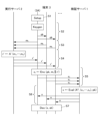
図3は、本実施形態における検証システム100が実施する検証方法を示すシーケンス図である。
ここでは、実行サーバ2の処理をマッチングには限定せず、予め定義された任意の処理に一般化して説明する。
FIG. 3 is a sequence diagram showing a verification method performed by the
Here, the processing of the
n人のユーザ{u1,…,un}が実行サーバ2のサービスを利用しているものとする。各ユーザは、それぞれの入力{m1,…,mn}を持つ。
なお、予め実行サーバ2が実行するアルゴリズムAは与えられており、Aは決定的アルゴリズムとする。
It is assumed that n users {u 1 , ..., un } are using the services of the
The algorithm A to be executed by the
ステップS1において、ユーザの代表者(任意の端末3A)は、Setup(1λ)を実行してパラメータparamを取得し、これを公開する。 In step S1, a user representative (any terminal 3A) executes Setup(1 λ ) to obtain parameters param and makes them public.
ステップS2において、端末3Aは、Keygen(param)を実行し、(pk,sk)を取得する。端末3Aは、pkを公開し、skをユーザ全員の端末3に配布する。
In step S2, terminal 3A executes Keygen(param) and obtains (pk, sk).
ステップS3において、各ユーザuiの端末3は、miを安全な通信路を用いて実行サーバ2に送付する。
In step S3, the
ステップS4において、実行サーバ2は、r′←A′(m1,…,mn)を実行し、r′を全てのユーザの端末3に送付する。
In step S4, the
ステップS5において、各ユーザuiの端末3は、ci←Enc(pk,mi∥r′)を、安全な通信路を用いて検証サーバ1に送付する。ここで、∥は文字列の連結を表す。
In step S5, the
ステップS6において、検証サーバ1は、x←Eval(AV,(c1,…,cn),pk)を実行し、xを全てのユーザの端末3に送付する。
ここで、アルゴリズムAVは次の通りである。
(a)miとr′とを分割する。
(b)r=A(m1,…,mn)を実行する。
(c)r=r′であれば1を、r≠r′であれば0を出力する。
In step S6, the
Here, the algorithm A V is as follows:
(a) Divide m i and r'.
(b) Do r = A( m1 ,..., mn ).
(c) If r=r',
ステップS7において、各ユーザuiの端末3は、Dec(x,sk)を実行し、1であれば、ユーザは、実行サーバ2がアルゴリズムAを実行したことを確信できる。
In step S7, the
なお、マッチング処理においては、各ユーザの選好順序、マッチングアルゴリズム、マッチング結果を符号化したものがそれぞれ、m,A,rであり、この手順により、ユーザは方針違反を検知することができる。 In the matching process, the order of preference of each user, the matching algorithm, and the matching result are encoded as m, A, and r, respectively. This procedure allows users to detect policy violations.
本実施形態によれば、検証システム100は、実行サーバ2からユーザに提供された処理結果を、この結果の元となった入力データと共に、準同型暗号方式により暗号化して検証サーバ1へ送信する。検証サーバ1は、準同型暗号方式により入力データに基づいて実行した正しい処理アルゴリズムによる結果と、受信した処理結果とを比較演算した値が暗号化された判定情報を出力する。端末3は、この判定情報を復号することにより、実行サーバ2の処理結果が正当であるか否かを検証できる。
したがって、検証サーバ1は、ユーザからの入力に基づいて実行サーバ2により提供された処理結果に対して、この処理結果を導出した実際のアルゴリズムの正当性を検証可能な判定情報を端末3に提供できる。この結果、実行サーバ2で実施した処理が提示された方針と一致しない場合、ユーザはそれを検知できる。このとき、準同型暗号を利用することにより、実行サーバ2以外にユーザの入力データを知られることがない。
According to this embodiment, the
Therefore, the
なお、これにより、例えばインターネット上で提供されるサービスの正当性を第三者により検証できることから、国連が主導する持続可能な開発目標(SDGs)の目標9「レジリエントなインフラを整備し、持続可能な産業化を推進するとともに、イノベーションの拡大を図る」に貢献することが可能となる。 This will also enable a third party to verify the legitimacy of services provided online, which will contribute to Goal 9 of the United Nations-led Sustainable Development Goals (SDGs), which is to "build resilient infrastructure, promote sustainable industrialization and foster innovation."
以上、本発明の実施形態について説明したが、本発明は前述した実施形態に限るものではない。また、前述した実施形態に記載された効果は、本発明から生じる最も好適な効果を列挙したに過ぎず、本発明による効果は、実施形態に記載されたものに限定されるものではない。 Although the embodiments of the present invention have been described above, the present invention is not limited to the above-described embodiments. Furthermore, the effects described in the above-described embodiments are merely a list of the most favorable effects resulting from the present invention, and the effects of the present invention are not limited to those described in the embodiments.
検証サーバ1による検証方法は、ソフトウェアにより実現される。ソフトウェアによって実現される場合には、このソフトウェアを構成するプログラムが、情報処理装置(コンピュータ)にインストールされる。また、これらのプログラムは、CD-ROMのようなリムーバブルメディアに記録されてユーザに配布されてもよいし、ネットワークを介してユーザのコンピュータにダウンロードされることにより配布されてもよい。さらに、これらのプログラムは、ダウンロードされることなくネットワークを介したWebサービスとしてユーザのコンピュータに提供されてもよい。
The verification method by the
1 検証サーバ(検証装置)
2 実行サーバ
3 端末(ユーザ端末)
10 制御部
11 受信部
12 判定部
13 送信部
20 記憶部
100 検証システム
1. Verification server (verification device)
2
REFERENCE SIGNS
Claims (4)
前記準同型暗号方式により、予め定義された前記実行サーバの処理アルゴリズムを前記入力データに基づいて実行し、実行結果が受信された前記結果と一致するか否かを示す値が暗号化された判定情報を算出する判定部と、
前記判定情報を前記ユーザ端末へ送信し、当該判定情報を前記ユーザ端末に復号させることにより前記実行サーバの処理アルゴリズムが正当であるか否かを通知する送信部と、を備える検証装置。 a receiving unit that receives, from each user terminal that has acquired a result of processing performed by the execution server based on user input data, the result and the input data on which the result is based, in a state encrypted by a homomorphic encryption method;
a determination unit that executes a predefined processing algorithm of the execution server based on the input data by the homomorphic encryption method and calculates determination information in which a value indicating whether or not an execution result matches the received result is encrypted;
a transmission unit that transmits the determination information to the user terminal and causes the user terminal to decode the determination information, thereby notifying the user terminal of whether or not the processing algorithm of the execution server is valid.
前記判定情報は、前記選好順序に基づくマッチング結果が正当なアルゴリズムによる実行結果であるか否かを示す値が暗号化されたものである請求項1に記載の検証装置。 the processing algorithm is a matching algorithm in which the input data is a preference order of each of the users;
2. The verification device according to claim 1, wherein the determination information is an encrypted value indicating whether or not the matching result based on the preference order is a result of execution by a legitimate algorithm.
受信部で、ユーザの入力データに基づいて実行サーバにより処理された結果を取得したユーザ端末それぞれから、当該結果、及び当該結果の元となった前記入力データを、準同型暗号方式により暗号化された状態で受信し、
判定部で、前記準同型暗号方式により、予め定義された前記実行サーバの処理アルゴリズムを前記入力データに基づいて実行し、実行結果が受信された前記結果と一致するか否かを示す値が暗号化された判定情報を算出し、
送信部で、前記判定情報を前記ユーザ端末へ送信し、当該判定情報を前記ユーザ端末に復号させることにより前記実行サーバの処理アルゴリズムが正当であるか否かを通知する検証方法。 The computer
a receiving unit receiving, from each user terminal that has acquired a result of processing performed by the execution server based on user input data, the result and the input data on which the result is based, in a state encrypted by a homomorphic encryption scheme;
a determination unit that executes a predefined processing algorithm of the execution server based on the input data by the homomorphic encryption method, and calculates determination information in which a value indicating whether or not an execution result matches the received result is encrypted;
A verification method in which a transmission unit transmits the determination information to the user terminal and causes the user terminal to decode the determination information, thereby notifying the user terminal of whether or not the processing algorithm of the execution server is valid.
Priority Applications (1)
| Application Number | Priority Date | Filing Date | Title |
|---|---|---|---|
| JP2021164953A JP7612552B2 (en) | 2021-10-06 | 2021-10-06 | Verification device, verification method, and verification program |
Applications Claiming Priority (1)
| Application Number | Priority Date | Filing Date | Title |
|---|---|---|---|
| JP2021164953A JP7612552B2 (en) | 2021-10-06 | 2021-10-06 | Verification device, verification method, and verification program |
Publications (2)
| Publication Number | Publication Date |
|---|---|
| JP2023055512A JP2023055512A (en) | 2023-04-18 |
| JP7612552B2 true JP7612552B2 (en) | 2025-01-14 |
Family
ID=86004029
Family Applications (1)
| Application Number | Title | Priority Date | Filing Date |
|---|---|---|---|
| JP2021164953A Active JP7612552B2 (en) | 2021-10-06 | 2021-10-06 | Verification device, verification method, and verification program |
Country Status (1)
| Country | Link |
|---|---|
| JP (1) | JP7612552B2 (en) |
Citations (6)
| Publication number | Priority date | Publication date | Assignee | Title |
|---|---|---|---|---|
| JP2017509076A (en) | 2014-03-07 | 2017-03-30 | ノキア テクノロジーズ オーユー | Method and apparatus for verifying processed data |
| JP2019168590A (en) | 2018-03-23 | 2019-10-03 | Kddi株式会社 | Information processing method and information processing system |
| WO2020006319A1 (en) | 2018-06-29 | 2020-01-02 | Alibaba Group Holding Limited | Method and apparatus for obtaining input of secure multiparty computation protocol |
| US20200036512A1 (en) | 2018-07-24 | 2020-01-30 | Duality Technologies, Inc. | Hybrid system and method for secure collaboration using homomorphic encryption and trusted hardware |
| JP2020024376A (en) | 2018-08-08 | 2020-02-13 | パナソニック インテレクチュアル プロパティ コーポレーション オブ アメリカPanasonic Intellectual Property Corporation of America | Data protection method, authentication server, data protection system and data structure |
| US20200136797A1 (en) | 2017-06-20 | 2020-04-30 | Nokia Technologies Oy | Secured computing |
-
2021
- 2021-10-06 JP JP2021164953A patent/JP7612552B2/en active Active
Patent Citations (6)
| Publication number | Priority date | Publication date | Assignee | Title |
|---|---|---|---|---|
| JP2017509076A (en) | 2014-03-07 | 2017-03-30 | ノキア テクノロジーズ オーユー | Method and apparatus for verifying processed data |
| US20200136797A1 (en) | 2017-06-20 | 2020-04-30 | Nokia Technologies Oy | Secured computing |
| JP2019168590A (en) | 2018-03-23 | 2019-10-03 | Kddi株式会社 | Information processing method and information processing system |
| WO2020006319A1 (en) | 2018-06-29 | 2020-01-02 | Alibaba Group Holding Limited | Method and apparatus for obtaining input of secure multiparty computation protocol |
| US20200036512A1 (en) | 2018-07-24 | 2020-01-30 | Duality Technologies, Inc. | Hybrid system and method for secure collaboration using homomorphic encryption and trusted hardware |
| JP2020024376A (en) | 2018-08-08 | 2020-02-13 | パナソニック インテレクチュアル プロパティ コーポレーション オブ アメリカPanasonic Intellectual Property Corporation of America | Data protection method, authentication server, data protection system and data structure |
Also Published As
| Publication number | Publication date |
|---|---|
| JP2023055512A (en) | 2023-04-18 |
Similar Documents
| Publication | Publication Date | Title |
|---|---|---|
| US12021971B2 (en) | Computer-implemented systems and methods for performing computational tasks across a group operating in a trust-less or dealer-free manner | |
| Li et al. | Privacy-preserving-outsourced association rule mining on vertically partitioned databases | |
| CN115461744B (en) | Processing machine learning modeling data to improve classification accuracy | |
| Li et al. | Fuzzy identity-based data integrity auditing for reliable cloud storage systems | |
| Niu et al. | Toward verifiable and privacy preserving machine learning prediction | |
| CN108712261B (en) | Key generation method, device and medium based on block chain | |
| US20220374544A1 (en) | Secure aggregation of information using federated learning | |
| Zhou et al. | ExpSOS: Secure and verifiable outsourcing of exponentiation operations for mobile cloud computing | |
| CN111598186A (en) | Decision model training method, prediction method and device based on vertical federated learning | |
| CN114930357A (en) | Privacy preserving machine learning via gradient boosting | |
| CN111027981B (en) | Method and device for multi-party joint training of risk assessment model for IoT equipment | |
| CN106161415B (en) | An information processing method and a mobile crowd sensing application platform | |
| CN110400162B (en) | A data processing method, device, server and system | |
| CN114039785B (en) | Data encryption, decryption, processing methods, devices, equipment and storage media | |
| CN115396115B (en) | Block chain data privacy protection method, device, equipment and readable storage medium | |
| Meshram et al. | A provably secure lightweight subtree-based short signature scheme with fuzzy user data sharing for human-centered IoT | |
| Ghosh et al. | Private blockchain-assisted certificateless public key encryption with multikeyword search for fog-based IIoT environments | |
| CN109104410B (en) | Information matching method and device | |
| Li et al. | Matching as you want: A decentralized, flexible, and efficient realization for crowdsourcing with dual-side privacy | |
| Hu et al. | Privacy-preserving combinatorial auction without an auctioneer | |
| CN113806755B (en) | Power data privacy protection and access control method based on blockchain | |
| CN119602945A (en) | Trusted online and offline federated learning method and system based on Shamir secret sharing | |
| Hegde et al. | Secure search scheme for encrypted data in the VANET cloud with random query trapdoor | |
| JP2023055512A (en) | Verification device, verification method and verification program | |
| JP2024047165A (en) | Policy violation detection device, policy violation detection method, and policy violation detection program |
Legal Events
| Date | Code | Title | Description |
|---|---|---|---|
| A621 | Written request for application examination |
Free format text: JAPANESE INTERMEDIATE CODE: A621 Effective date: 20240209 |
|
| A977 | Report on retrieval |
Free format text: JAPANESE INTERMEDIATE CODE: A971007 Effective date: 20240930 |
|
| A131 | Notification of reasons for refusal |
Free format text: JAPANESE INTERMEDIATE CODE: A131 Effective date: 20241022 |
|
| A521 | Request for written amendment filed |
Free format text: JAPANESE INTERMEDIATE CODE: A523 Effective date: 20241126 |
|
| TRDD | Decision of grant or rejection written | ||
| A01 | Written decision to grant a patent or to grant a registration (utility model) |
Free format text: JAPANESE INTERMEDIATE CODE: A01 Effective date: 20241210 |
|
| A61 | First payment of annual fees (during grant procedure) |
Free format text: JAPANESE INTERMEDIATE CODE: A61 Effective date: 20241225 |
|
| R150 | Certificate of patent or registration of utility model |
Ref document number: 7612552 Country of ref document: JP Free format text: JAPANESE INTERMEDIATE CODE: R150 |