JP7607222B2 - Sealed battery - Google Patents
Sealed battery Download PDFInfo
- Publication number
- JP7607222B2 JP7607222B2 JP2022511613A JP2022511613A JP7607222B2 JP 7607222 B2 JP7607222 B2 JP 7607222B2 JP 2022511613 A JP2022511613 A JP 2022511613A JP 2022511613 A JP2022511613 A JP 2022511613A JP 7607222 B2 JP7607222 B2 JP 7607222B2
- Authority
- JP
- Japan
- Prior art keywords
- sealing plate
- main surface
- battery
- groove
- thin
- Prior art date
- Legal status (The legal status is an assumption and is not a legal conclusion. Google has not performed a legal analysis and makes no representation as to the accuracy of the status listed.)
- Active
Links
Images



Classifications
-
- H—ELECTRICITY
- H01—ELECTRIC ELEMENTS
- H01M—PROCESSES OR MEANS, e.g. BATTERIES, FOR THE DIRECT CONVERSION OF CHEMICAL ENERGY INTO ELECTRICAL ENERGY
- H01M10/00—Secondary cells; Manufacture thereof
- H01M10/05—Accumulators with non-aqueous electrolyte
- H01M10/058—Construction or manufacture
- H01M10/0587—Construction or manufacture of accumulators having only wound construction elements, i.e. wound positive electrodes, wound negative electrodes and wound separators
-
- H—ELECTRICITY
- H01—ELECTRIC ELEMENTS
- H01M—PROCESSES OR MEANS, e.g. BATTERIES, FOR THE DIRECT CONVERSION OF CHEMICAL ENERGY INTO ELECTRICAL ENERGY
- H01M50/00—Constructional details or processes of manufacture of the non-active parts of electrochemical cells other than fuel cells, e.g. hybrid cells
- H01M50/10—Primary casings; Jackets or wrappings
- H01M50/102—Primary casings; Jackets or wrappings characterised by their shape or physical structure
- H01M50/107—Primary casings; Jackets or wrappings characterised by their shape or physical structure having curved cross-section, e.g. round or elliptic
-
- H—ELECTRICITY
- H01—ELECTRIC ELEMENTS
- H01M—PROCESSES OR MEANS, e.g. BATTERIES, FOR THE DIRECT CONVERSION OF CHEMICAL ENERGY INTO ELECTRICAL ENERGY
- H01M50/00—Constructional details or processes of manufacture of the non-active parts of electrochemical cells other than fuel cells, e.g. hybrid cells
- H01M50/10—Primary casings; Jackets or wrappings
- H01M50/147—Lids or covers
- H01M50/148—Lids or covers characterised by their shape
- H01M50/152—Lids or covers characterised by their shape for cells having curved cross-section, e.g. round or elliptic
-
- H—ELECTRICITY
- H01—ELECTRIC ELEMENTS
- H01M—PROCESSES OR MEANS, e.g. BATTERIES, FOR THE DIRECT CONVERSION OF CHEMICAL ENERGY INTO ELECTRICAL ENERGY
- H01M50/00—Constructional details or processes of manufacture of the non-active parts of electrochemical cells other than fuel cells, e.g. hybrid cells
- H01M50/10—Primary casings; Jackets or wrappings
- H01M50/183—Sealing members
- H01M50/184—Sealing members characterised by their shape or structure
-
- H—ELECTRICITY
- H01—ELECTRIC ELEMENTS
- H01M—PROCESSES OR MEANS, e.g. BATTERIES, FOR THE DIRECT CONVERSION OF CHEMICAL ENERGY INTO ELECTRICAL ENERGY
- H01M50/00—Constructional details or processes of manufacture of the non-active parts of electrochemical cells other than fuel cells, e.g. hybrid cells
- H01M50/10—Primary casings; Jackets or wrappings
- H01M50/183—Sealing members
- H01M50/186—Sealing members characterised by the disposition of the sealing members
-
- H—ELECTRICITY
- H01—ELECTRIC ELEMENTS
- H01M—PROCESSES OR MEANS, e.g. BATTERIES, FOR THE DIRECT CONVERSION OF CHEMICAL ENERGY INTO ELECTRICAL ENERGY
- H01M50/00—Constructional details or processes of manufacture of the non-active parts of electrochemical cells other than fuel cells, e.g. hybrid cells
- H01M50/30—Arrangements for facilitating escape of gases
- H01M50/342—Non-re-sealable arrangements
- H01M50/3425—Non-re-sealable arrangements in the form of rupturable membranes or weakened parts, e.g. pierced with the aid of a sharp member
-
- H—ELECTRICITY
- H01—ELECTRIC ELEMENTS
- H01M—PROCESSES OR MEANS, e.g. BATTERIES, FOR THE DIRECT CONVERSION OF CHEMICAL ENERGY INTO ELECTRICAL ENERGY
- H01M50/00—Constructional details or processes of manufacture of the non-active parts of electrochemical cells other than fuel cells, e.g. hybrid cells
- H01M50/10—Primary casings; Jackets or wrappings
- H01M50/147—Lids or covers
- H01M50/166—Lids or covers characterised by the methods of assembling casings with lids
- H01M50/167—Lids or covers characterised by the methods of assembling casings with lids by crimping
-
- H—ELECTRICITY
- H01—ELECTRIC ELEMENTS
- H01M—PROCESSES OR MEANS, e.g. BATTERIES, FOR THE DIRECT CONVERSION OF CHEMICAL ENERGY INTO ELECTRICAL ENERGY
- H01M50/00—Constructional details or processes of manufacture of the non-active parts of electrochemical cells other than fuel cells, e.g. hybrid cells
- H01M50/10—Primary casings; Jackets or wrappings
- H01M50/147—Lids or covers
- H01M50/166—Lids or covers characterised by the methods of assembling casings with lids
- H01M50/169—Lids or covers characterised by the methods of assembling casings with lids by welding, brazing or soldering
-
- Y—GENERAL TAGGING OF NEW TECHNOLOGICAL DEVELOPMENTS; GENERAL TAGGING OF CROSS-SECTIONAL TECHNOLOGIES SPANNING OVER SEVERAL SECTIONS OF THE IPC; TECHNICAL SUBJECTS COVERED BY FORMER USPC CROSS-REFERENCE ART COLLECTIONS [XRACs] AND DIGESTS
- Y02—TECHNOLOGIES OR APPLICATIONS FOR MITIGATION OR ADAPTATION AGAINST CLIMATE CHANGE
- Y02E—REDUCTION OF GREENHOUSE GAS [GHG] EMISSIONS, RELATED TO ENERGY GENERATION, TRANSMISSION OR DISTRIBUTION
- Y02E60/00—Enabling technologies; Technologies with a potential or indirect contribution to GHG emissions mitigation
- Y02E60/10—Energy storage using batteries
Landscapes
- Chemical & Material Sciences (AREA)
- Chemical Kinetics & Catalysis (AREA)
- Electrochemistry (AREA)
- General Chemical & Material Sciences (AREA)
- Engineering & Computer Science (AREA)
- Manufacturing & Machinery (AREA)
- Sealing Battery Cases Or Jackets (AREA)
- Gas Exhaust Devices For Batteries (AREA)
Description
本発明は、電池缶と、電池缶に収容された電極体と、電池缶の開口を塞ぐ封口板とを具備する密閉型電池に関する。The present invention relates to a sealed battery comprising a battery can, an electrode body housed in the battery can, and a sealing plate that closes the opening of the battery can.
異常な充放電や火中への投下等の誤使用時、密閉型電池の内部でガスが発生して、内圧が上昇する場合がある。このときの安全装置として、密閉型電池には、通常、防爆弁が設けられている。防爆弁が開くことにより、電池の破裂や膨れが抑制される。防爆弁は、例えば、電池缶を封口する封口板の一部をプレス加工して形成される薄肉部である。 In the event of abnormal charging/discharging or misuse, such as being dropped into a fire, gas may be generated inside a sealed battery, causing the internal pressure to rise. As a safety device for such situations, sealed batteries are usually equipped with an explosion-proof valve. When the explosion-proof valve opens, it prevents the battery from exploding or swelling. The explosion-proof valve is, for example, a thin-walled section formed by pressing part of the sealing plate that seals the battery can.
特許文献1は、薄肉部を境にして、封口板の内周側を外周側よりも電池缶の底方向に偏位させることを教示している。Patent document 1 teaches that the inner side of the sealing plate is offset toward the bottom of the battery can relative to the outer side, at the thin-walled portion.
特許文献1のように封口板の内周側を外周側よりも電池缶の底方向に偏位させると、作動圧は高くなる。As in Patent Document 1, when the inner side of the sealing plate is displaced toward the bottom of the battery can more than the outer side, the operating pressure becomes higher.
本発明の一局面は、開口を有する有底円筒形の電池缶と、前記電池缶に収容される電極体と、前記電池缶の前記開口を塞ぐ封口板と、を具備し、前記封口板は、平板状の外周部と、内周部と、これらの間に介在する傾斜部とを備えるとともに、前記電池缶の外側を向く第1主面および前記第1主面とは反対側の第2主面を備え、前記傾斜部は、前記内周部を前記外周部よりも前記電池缶の外側に配置させるように傾斜するとともに、前記封口板の径方向に並ぶ薄肉部および前記薄肉部より厚いベース部を備える、密閉型電池に関する。One aspect of the present invention relates to a sealed battery comprising a bottomed cylindrical battery can having an opening, an electrode body housed in the battery can, and a sealing plate that closes the opening of the battery can, the sealing plate having a flat outer peripheral portion, an inner peripheral portion, and an inclined portion interposed therebetween, a first main surface facing the outside of the battery can, and a second main surface opposite to the first main surface, the inclined portion being inclined so as to position the inner peripheral portion closer to the outside of the battery can than the outer peripheral portion, and the sealing plate having a thin-walled portion aligned in the radial direction of the sealing plate and a base portion that is thicker than the thin-walled portion.
本発明によれば、低い作動圧で作動するバラツキの小さい防爆機能を有する密閉型電池を提供できる。 The present invention provides a sealed battery that operates at low operating pressure and has a low variation in explosion-proof function.
本実施形態に係る密閉型電池(以下、単に電池と称する場合がある。)は、開口を有する有底円筒形の電池缶と、電池缶に収容される電極体と、電池缶の開口を塞ぐ封口板と、を具備する。封口板は、電池缶の外側を向く第1主面と、第1主面とは反対側の第2主面と、を有する。封口板は、さらに、平板状の外周部、内周部およびこれらの間に介在する傾斜部を備える。傾斜部は、内周部を外周部よりも電池缶の外側に配置させるように傾斜している。傾斜部は、封口板の径方向に並ぶ薄肉部と、薄肉部より厚いベース部と、を備える。The sealed battery according to this embodiment (hereinafter, sometimes simply referred to as the battery) comprises a bottomed cylindrical battery can having an opening, an electrode body housed in the battery can, and a sealing plate that closes the opening of the battery can. The sealing plate has a first main surface facing the outside of the battery can and a second main surface opposite the first main surface. The sealing plate further comprises a flat outer periphery, an inner periphery, and an inclined portion interposed between them. The inclined portion is inclined so that the inner periphery is positioned outside the battery can relative to the outer periphery. The inclined portion comprises a thin portion aligned in the radial direction of the sealing plate, and a base portion that is thicker than the thin portion.
電池の内圧が上昇すると、封口板には外方に盛り上げる方向の圧力がかかる。この圧力により薄肉部において封口板が破断して、内圧が解放される。これが、防爆機能である。防爆機能により、電池の破裂や膨れが抑制される。 When the internal pressure of the battery rises, pressure is applied to the sealing plate in an outward direction. This pressure causes the sealing plate to break at the thin section, releasing the internal pressure. This is the explosion-proof function. The explosion-proof function prevents the battery from exploding or swelling.
特許文献1のように封口板の内周部が凹んでいると、薄肉部にはまず圧縮応力が作用し、その後、引張応力が作用する。よって、薄肉部の破断が生じるまでの圧力(作動圧)が大きくなり易い。さらに、薄肉部は、封口板の傾斜部全体に形成されている。そのため、応力の集中が起こり難く、作動圧がばらつきやすい。 When the inner periphery of the sealing plate is recessed as in Patent Document 1, compressive stress acts on the thin-walled portion first, and then tensile stress acts on it. Therefore, the pressure (operating pressure) until the thin-walled portion breaks tends to be large. Furthermore, the thin-walled portion is formed over the entire inclined portion of the sealing plate. Therefore, stress concentration is unlikely to occur, and the operating pressure tends to vary.
本実施形態では、封口板に内周部を盛り上げる傾斜部を設ける。これにより、内圧上昇時、傾斜部に引張応力のみを作用させることができる。よって、防爆機能を低い内圧で作動させることができる。さらに、薄肉部は、傾斜部の一部に設けられている。そのため、引張応力はさらに薄肉部に集中し易くなる。よって、作動圧のバラツキも抑制される。 In this embodiment, the sealing plate is provided with an inclined portion that raises the inner circumference. This allows only tensile stress to act on the inclined portion when the internal pressure rises. Therefore, the explosion-proof function can be activated at low internal pressure. Furthermore, a thin-walled portion is provided in part of the inclined portion. Therefore, tensile stress is more likely to concentrate in the thin-walled portion. This also suppresses variation in operating pressure.
また、外的負荷が加わる環境下においても、本実施形態の電池によれば、高い信頼性を得ることができる。例えば、特許文献1のように封口板の内周部が凹んでいると、外的負荷により薄肉部に引張応力が作用する。この引張応力が長期にわたって負荷されると、薄肉部に応力腐食割れが生じる場合がある。一方、本実施形態によれば、薄肉部に引張応力は作用しない。よって、応力腐食割れは生じ難い。 Furthermore, the battery of this embodiment can provide high reliability even in an environment where an external load is applied. For example, if the inner periphery of the sealing plate is recessed as in Patent Document 1, tensile stress acts on the thin-walled portion due to the external load. If this tensile stress is applied for a long period of time, stress corrosion cracking may occur in the thin-walled portion. On the other hand, according to this embodiment, tensile stress does not act on the thin-walled portion. Therefore, stress corrosion cracking is unlikely to occur.
内容物の飛散防止の観点から、防爆機能の作動圧は、5.5MPa以下が望ましく、5.3MPa以下がより望ましく、5.0MPa以下が特に望ましい。本実施形態に係る密閉型電池の作動圧は、この範囲に含まれ得る。From the viewpoint of preventing scattering of the contents, the operating pressure of the explosion-proof function is preferably 5.5 MPa or less, more preferably 5.3 MPa or less, and particularly preferably 5.0 MPa or less. The operating pressure of the sealed battery according to this embodiment may be within this range.
(傾斜部)
傾斜部は、内周部を外周部よりも電池缶の外側に配置させるように傾斜している。傾斜部は、例えば、プレス加工により形成される。
(Inclined portion)
The inclined portion is inclined so that the inner periphery is disposed closer to the outside of the battery can than the outer periphery The inclined portion is formed by, for example, pressing.
傾斜部の傾斜角度は特に限定されない。例えば、外周部における第2主面と、傾斜部における第2主面とが成す外角の角度A(以下、傾斜角度Aと称す場合がある。)は、0°より大きく90°以下である。内周部における第2主面と、傾斜部における第2主面とが成す外角の角度もまた、0°より大きく90°以下である。The inclination angle of the inclined portion is not particularly limited. For example, the exterior angle A (hereinafter sometimes referred to as inclination angle A) formed by the second main surface at the outer periphery and the second main surface at the inclined portion is greater than 0° and less than 90°. The exterior angle formed by the second main surface at the inner periphery and the second main surface at the inclined portion is also greater than 0° and less than 90°.
言い換えれば、傾斜部は、外周部における第2主面との成す角度Aが0°を越える地点から、内周部における第2主面との成す角度Aが0°を越える地点までの間の領域である。外周部における第2主面と内周部における第2主面とは、おおよそ平行である。In other words, the inclined portion is the region between the point where the angle A between the second main surface at the outer periphery exceeds 0° and the point where the angle A between the second main surface at the inner periphery exceeds 0°. The second main surface at the outer periphery and the second main surface at the inner periphery are approximately parallel.
薄肉部に引張応力が作用し易くなる点で、傾斜角度Aは25°以上が好ましく、30°以上がより好ましい。同様に、傾斜角度Aは、75°以下が好ましく、70°以下がより好ましく、65°以下が特に好ましい。傾斜角度Aは、例えば25°以上75°以下である。傾斜角度Aは、封口板を径方向Rに切断して得られる異なる3つの断面(以下、断面Rと称す。)を用いて測定された傾斜角度Aの平均値である。In order to facilitate the application of tensile stress to the thin-walled portion, the inclination angle A is preferably 25° or more, and more preferably 30° or more. Similarly, the inclination angle A is preferably 75° or less, more preferably 70° or less, and particularly preferably 65° or less. The inclination angle A is, for example, 25° or more and 75° or less. The inclination angle A is the average value of the inclination angles A measured using three different cross sections (hereinafter referred to as cross sections R) obtained by cutting the sealing plate in the radial direction R.
傾斜部の配置は特に限定されず、封口板の半径等に応じて適宜設定すればよい。封口板を内周部における第1主面の法線方向から見た投影図において、外周部の外縁から内周部の内縁までの長さを合計幅Wと称する。傾斜部は、例えば、外周部の外縁から合計幅Wの3%より内側であって、外周部の外縁から合計幅Wの90%までの領域、好ましくは外周部の外縁から合計幅Wの70%までの領域に収まるように配置される。The arrangement of the inclined portion is not particularly limited and may be set appropriately depending on the radius of the sealing plate, etc. In a projection of the sealing plate viewed from the normal direction of the first main surface at the inner periphery, the length from the outer edge of the outer periphery to the inner edge of the inner periphery is referred to as the total width W. The inclined portion is arranged, for example, so as to be located inside 3% of the total width W from the outer edge of the outer periphery and within an area from the outer edge of the outer periphery to 90% of the total width W, preferably within an area from the outer edge of the outer periphery to 70% of the total width W.
傾斜部の幅は特に限定されず、封口板の半径等に応じて適宜設定すればよい。傾斜部の幅W3は、例えば、合計幅Wの5%以上90%以下であってよく、10%以上50%以下であってよく、15%以上30%以下であってよい。傾斜部の幅W3は、上記投影図に異なる3つの径方向Rに延びる直線を引いて測定された、傾斜部の外縁と内縁との間の長さの平均値である。傾斜部の幅W3は、合計幅Wから、外周部の幅W1および内周部の幅W2を差し引いて算出されてもよい。傾斜部の外縁は、外周部と傾斜部との境界と同義である。傾斜部の内縁は、傾斜部と内周部との境界と同義である。The width of the inclined portion is not particularly limited and may be set appropriately depending on the radius of the sealing plate, etc. The width W3 of the inclined portion may be, for example, 5% to 90% of the total width W, 10% to 50% of the total width W, or 15% to 30% of the total width W. The width W3 of the inclined portion is the average value of the length between the outer edge and the inner edge of the inclined portion measured by drawing straight lines extending in three different radial directions R on the projection diagram. The width W3 of the inclined portion may be calculated by subtracting the width W1 of the outer periphery and the width W2 of the inner periphery from the total width W. The outer edge of the inclined portion is synonymous with the boundary between the outer periphery and the inclined portion. The inner edge of the inclined portion is synonymous with the boundary between the inclined portion and the inner periphery.
傾斜部は、封口板の径方向Rに並ぶ薄肉部と、薄肉部より厚いベース部と、を備える。これにより、引張応力は薄肉部に集中し易くなって、作動圧のバラつきが抑制される。The inclined portion has a thin portion aligned in the radial direction R of the sealing plate and a base portion that is thicker than the thin portion. This makes it easier for tensile stress to concentrate in the thin portion, suppressing variations in operating pressure.
〈薄肉部〉
薄肉部は、傾斜部における電池缶の外側を向く第1主面に円弧状に配置された溝により形成される。溝は、プレス加工あるいは切削加工等により傾斜部の一部における第1主面を凹ませて形成される。生産性の向上および作動圧のバラツキが抑制され易い点で、傾斜部における第2主面には凹みおよび凸部が形成されず、傾斜部における第2主面は平坦であることが望ましい。
<Thin-walled section>
The thin-walled portion is formed by a groove arranged in an arc shape on a first main surface of the inclined portion facing the outside of the battery can. The groove is formed by recessing the first main surface at a part of the inclined portion by pressing, cutting, etc. From the viewpoint of improving productivity and easily suppressing variations in operating pressure, it is desirable that no recess or protrusion is formed on the second main surface of the inclined portion and that the second main surface of the inclined portion is flat.
傾斜部を形成する際のプレス加工によって、外周部と傾斜部との境界、および、傾斜部と内周部との境界において強度が高くなり易い。そのため、封口板が本実施形態に係る傾斜部を備える場合、内圧上昇時、境界の内周側と外周側とで封口板の変形量の差が大きくなり、その結果、両方の境界で挟まれた領域、すなわち傾斜部に応力集中が生じる。ただし、封口板の外縁は電池缶に固定されているため、外周部自体の変形量は小さい。よって、外周部と傾斜部の境界における変形量の差は、傾斜部と内周部との境界における変形量の差より大きくなる。そのため、応力は、傾斜部の外周部側により集中する。 The press processing used to form the inclined portion tends to increase the strength at the boundary between the outer periphery and the inclined portion, and at the boundary between the inclined portion and the inner periphery. Therefore, when the sealing plate has the inclined portion according to this embodiment, when the internal pressure rises, the difference in the amount of deformation of the sealing plate between the inner and outer periphery of the boundary becomes large, and as a result, stress concentration occurs in the area sandwiched between the two boundaries, i.e., the inclined portion. However, since the outer edge of the sealing plate is fixed to the battery can, the amount of deformation of the outer periphery itself is small. Therefore, the difference in the amount of deformation at the boundary between the outer periphery and the inclined portion is larger than the difference in the amount of deformation at the boundary between the inclined portion and the inner periphery. Therefore, stress is concentrated more on the outer periphery side of the inclined portion.
上記の観点から、溝の底部が傾斜部の外周部側に配置していることが好ましい。溝の底部には引張応力が集中する。内圧上昇時、傾斜部および内周部は、溝の底部を起点として外部に向かって押し上げられる。一方、外周部自体の変形量は小さい。そのため、溝の底部において封口板は速やかに破断する。溝の底部の少なくとも一部は、傾斜部の外縁から傾斜部の幅W3の50%までの領域にあってよい。From the above viewpoint, it is preferable that the bottom of the groove is located on the outer periphery side of the inclined portion. Tensile stress is concentrated at the bottom of the groove. When the internal pressure rises, the inclined portion and the inner periphery are pushed upward toward the outside starting from the bottom of the groove. On the other hand, the deformation of the outer periphery itself is small. Therefore, the sealing plate breaks quickly at the bottom of the groove. At least a portion of the bottom of the groove may be located in an area from the outer edge of the inclined portion to 50% of the width W3 of the inclined portion.
特に、外周部における第2主面から溝の底部までの高さhと、外周部における第2主面から内周部における第1主面までの高さHとは、h/H≦45%の関係を満たすことが好ましい。この関係を満たす場合、溝の底部は、外周部と傾斜部との境界に十分近いといえる。h/H≦40%の関係を満たすことが好ましく、h/H≦35%の関係を満たすことが好ましい。In particular, it is preferable that the height h from the second main surface at the outer periphery to the bottom of the groove and the height H from the second main surface at the outer periphery to the first main surface at the inner periphery satisfy the relationship h/H≦45%. When this relationship is satisfied, it can be said that the bottom of the groove is sufficiently close to the boundary between the outer periphery and the inclined portion. It is preferable to satisfy the relationship h/H≦40%, and it is more preferable to satisfy the relationship h/H≦35%.
溝の底部とは、溝の一番深い部分である。具体的には、断面Rにおいて、第2主面までの距離が最も近い第1主面上の地点である。第2主面までの距離が最も近い第1主面上の地点が複数ある場合、最も端にある当該地点同士をつなぐ直線全体が底部である。The bottom of a groove is the deepest part of the groove. Specifically, it is the point on the first main surface that is closest to the second main surface in cross section R. If there are multiple points on the first main surface that are closest to the second main surface, the entire straight line connecting the two end-most points is the bottom.
高さhは、外周部における第2主面から、溝の底部までの高さである。底部が直線状である場合、高さhは、外周部における第2主面から、底部の中点までの高さである。 Height h is the height from the second main surface at the outer periphery to the bottom of the groove. If the bottom is linear, height h is the height from the second main surface at the outer periphery to the midpoint of the bottom.
高さHは、外周部における第2主面から、内周部における第1主面のうち、傾斜部に最も近い地点までの高さである。高さhおよびHは、異なる3つの断面Rを用いて測定された高さの平均値である。 Height H is the height from the second main surface at the outer periphery to the point on the first main surface at the inner periphery that is closest to the inclined portion. Heights h and H are the average values of the heights measured using three different cross sections R.
溝全体の配置は特に限定されず、傾斜部の配置等に応じて適宜設定すればよい。引張応力がより溝に集中し易くなる点で、溝全体もまた、傾斜部の外周部側にあることが好ましい。例えば、溝の少なくとも一部は、傾斜部の外縁からその幅の50%までの領域にあってよい。The arrangement of the entire groove is not particularly limited and may be set appropriately depending on the arrangement of the inclined portion, etc. It is preferable that the entire groove is also located on the outer periphery side of the inclined portion, since this makes it easier for tensile stress to concentrate in the groove. For example, at least a part of the groove may be located in an area extending from the outer edge of the inclined portion to 50% of its width.
溝の断面形状は特に限定されない。断面Rにおいて、溝の内壁は、例えば、底部と、底部と第1主面とをそれぞれ繋ぐ第1側面部および第2側面部と、を備える。溝の底部の形状は、直線状であり得、円弧状であり得、点状であり得る。加工性の観点から、溝の底部の形状は直線状であってよく、円弧状であってよい。円弧状の底部の曲率半径は特に限定されず、例えば、0.01mm以上1mm以下であってよい。The cross-sectional shape of the groove is not particularly limited. In the cross section R, the inner wall of the groove has, for example, a bottom portion, and a first side portion and a second side portion that respectively connect the bottom portion and the first main surface. The shape of the bottom portion of the groove may be linear, arc-shaped, or dot-shaped. From the viewpoint of processability, the shape of the bottom portion of the groove may be linear or arc-shaped. The radius of curvature of the arc-shaped bottom portion is not particularly limited, and may be, for example, 0.01 mm or more and 1 mm or less.
底部が直線状である場合、溝の底部の幅は、狭い方が望ましい。引張応力が溝の底部に集中し易くなるためである。例えば、溝の底部の幅Wbとベース部の厚みDとは、Wb/D≦50%の関係を満たすことが好ましい。Wb/D≦40%の関係であることが好ましく、Wb/D≦30%の関係であることが好ましい。 When the bottom is linear, it is desirable for the width of the bottom of the groove to be narrow. This is because tensile stress tends to concentrate at the bottom of the groove. For example, it is preferable for the width Wb of the bottom of the groove and the thickness D of the base portion to satisfy the relationship Wb/D≦50%. It is preferable for the relationship Wb/D≦40%, and it is preferable for the relationship Wb/D≦30%.
溝の底部の幅Wbは、例えば、0.5mm以下であってよい。溝の底部の幅Wbは、例えば、0.01mm以上であってよく、0.03mm以上であってよい。底部の幅Wbが0.01mmである場合、底部の断面形状は点状である。The width Wb of the bottom of the groove may be, for example, 0.5 mm or less. The width Wb of the bottom of the groove may be, for example, 0.01 mm or more, and may be 0.03 mm or more. When the width Wb of the bottom is 0.01 mm, the cross-sectional shape of the bottom is dot-like.
溝の断面形状は、断面Rにおける溝の形状である。溝の底部の幅Wbは、異なる3つの断面Rを用いて測定された溝の底部における第1主面の長さの平均値である。ベース部の厚みDは、異なる3つの断面Rを用いて測定されたベース部の厚みの平均値である。 The cross-sectional shape of the groove is the shape of the groove at cross-section R. The width Wb of the bottom of the groove is the average value of the lengths of the first main surface at the bottom of the groove measured using three different cross-sections R. The thickness D of the base portion is the average value of the thicknesses of the base portion measured using three different cross-sections R.
引張応力が溝の底部により集中し易くなる点で、溝の幅は、第2主面に向かうにしたがって小さくなっていることが望ましい。言い換えれば、第1側面部および第2側面部は、溝の幅を底部から第1主面に向かって広げるように傾斜していることが好ましい。It is preferable that the width of the groove is smaller toward the second main surface, since tensile stress tends to be concentrated at the bottom of the groove. In other words, it is preferable that the first side portion and the second side portion are inclined so that the width of the groove increases from the bottom toward the first main surface.
第1側面部と第2側面部とが成す角度B(以下、開き角度Bと称する場合がある。)は、30°以上が好ましく、45°以上がより好ましい。開き角度Bは、120°以下が好ましく、100°以下がより好ましい。開き角度Bは、例えば、30°以上120°以下である。The angle B between the first side portion and the second side portion (hereinafter sometimes referred to as the opening angle B) is preferably 30° or more, and more preferably 45° or more. The opening angle B is preferably 120° or less, and more preferably 100° or less. The opening angle B is, for example, 30° or more and 120° or less.
開き角度Bは、断面Rにおいて、溝の内壁と第1主面との2つの交点と、溝の底部の中点とをそれぞれ結ぶ2つの直線と、が成す角度である。開き角度Bは、異なる3つの断面Rを用いて測定された開き角度Bの平均値である。The opening angle B is the angle between two straight lines connecting two intersections between the inner wall of the groove and the first main surface and the midpoint of the bottom of the groove at the cross section R. The opening angle B is the average value of the opening angles B measured using three different cross sections R.
溝の中心角C(以下、ベント角Cと称す場合がある。)は特に限定されない。ベント角Cは、60°以上であることが好ましい。これにより、封口板がより開裂し易くなって、作動圧はさらに小さくなる。そのため、内容物の飛散も抑制される。ベント角Cは、180°以上であってよい。また、ベント角Cは、360°であってよく、360°未満であってよく、270°以下であってよい。なかでも、ベント角Cは60°以上270°以下が好ましい。 The central angle C of the groove (hereinafter, sometimes referred to as the vent angle C) is not particularly limited. It is preferable that the vent angle C is 60° or more. This makes it easier for the sealing plate to be ruptured, and the operating pressure is further reduced. Therefore, scattering of the contents is also suppressed. The vent angle C may be 180° or more. In addition, the vent angle C may be 360°, may be less than 360°, or may be 270° or less. In particular, it is preferable that the vent angle C is 60° or more and 270° or less.
溝のベント角Cは、溝の一方の周方向における最端部を通り封口板の径方向Rに引いた直線と、溝の他方の最端部を通り封口板の径方向Rに引いた直線と、が成す角度である。The bent angle C of the groove is the angle between a line drawn through one circumferential end of the groove in the radial direction R of the sealing plate and a line drawn through the other circumferential end of the groove in the radial direction R of the sealing plate.
薄肉部の厚みは特に限定されない。薄肉部の厚みdは、ベース部の厚みDの5%以上30%以下であってよい。薄肉部の厚みが上記範囲であれば、封口板の強度を維持しながら、低い作動圧で防爆機能を発揮することが容易になる。薄肉部の厚みdは、ベース部の厚みDの7%以上であってよく、10%以上であってよい。薄肉部の厚みdは、ベース部の厚みDの25%以下であってよい。The thickness of the thin-walled portion is not particularly limited. The thickness d of the thin-walled portion may be 5% or more and 30% or less of the thickness D of the base portion. If the thickness of the thin-walled portion is within the above range, it becomes easy to exert the explosion-proof function at a low operating pressure while maintaining the strength of the sealing plate. The thickness d of the thin-walled portion may be 7% or more, or may be 10% or more of the thickness D of the base portion. The thickness d of the thin-walled portion may be 25% or less of the thickness D of the base portion.
薄肉部の厚みは、断面Rにおいて、第2主面から薄肉部に最も近い地点までの最短距離である。薄肉部の厚みdは、異なる3つの上記断面を用いて測定された薄肉部の厚みの平均値である。The thickness of the thin-walled portion is the shortest distance from the second main surface to the point closest to the thin-walled portion on cross section R. The thickness d of the thin-walled portion is the average value of the thicknesses of the thin-walled portion measured using three different cross sections mentioned above.
〈ベース部〉
ベース部は、薄肉部より厚い。ベース部の厚みDは特に限定されず、外周部の厚みD1および/または内周部の厚みD2と同程度であってよい。厚みDは、例えば、厚みD1および/または厚みD2の±10%程度である。
<Base section>
The base portion is thicker than the thin portion. The thickness D of the base portion is not particularly limited and may be approximately the same as the thickness D1 of the outer periphery portion and/or the thickness D2 of the inner periphery portion. The thickness D is, for example, approximately ±10% of the thickness D1 and/or the thickness D2.
(外周部)
外周部は、封口板のうち、傾斜部を取り囲む平板状かつドーナツ状の部分である。外周部の幅は特に限定されず、封口板の半径等に応じて適宜設定すればよい。外周部の幅は、例えば、合計幅Wの3%以上80%以下であってよい。外周部の厚みD1も特に限定されない。外周部の厚みD1は、例えば、0.2mm以上0.5mm以下である。
(Outer periphery)
The outer peripheral portion is a flat, doughnut-shaped portion of the sealing plate that surrounds the inclined portion. The width of the outer peripheral portion is not particularly limited and may be set appropriately depending on the radius of the sealing plate, etc. The width of the outer peripheral portion may be, for example, 3% to 80% of the total width W. The thickness D1 of the outer peripheral portion is also not particularly limited. The thickness D1 of the outer peripheral portion is, for example, 0.2 mm to 0.5 mm.
(内周部)
内周部は、封口板のうち、傾斜部に囲まれたドーナツ状の部分である。内周部の幅は特に限定されず、封口板の半径等に応じて適宜設定すればよい。内周部の幅は、例えば、合計幅Wの10%以上90%以下であってよい。内周部の厚みD2も特に限定されない。内周部の厚みD2は、例えば、0.2mm以上0.5mm以下である。
(Inner circumference)
The inner periphery is a donut-shaped portion of the sealing plate surrounded by the inclined portion. The width of the inner periphery is not particularly limited and may be set appropriately depending on the radius of the sealing plate, etc. The width of the inner periphery may be, for example, 10% to 90% of the total width W. The thickness D2 of the inner periphery is also not particularly limited. The thickness D2 of the inner periphery is, for example, 0.2 mm to 0.5 mm.
以下、本実施形態に係る密閉型電池について、図面を参照しながら説明する。ただし、本実施形態はこれに限定されるものではない。図1は、本実施形態に係る密閉型電池の要部を示す断面模式図である。以下の図示例において、同じ機能を有する部材には、同じ符号を付している。The sealed battery according to this embodiment will be described below with reference to the drawings. However, this embodiment is not limited thereto. FIG. 1 is a schematic cross-sectional view showing the main part of the sealed battery according to this embodiment. In the illustrated examples below, the same reference numerals are used for components having the same functions.
封口板300は、電池缶100の開口近傍に固定され、開口を塞いでいる。封口板300は、電池缶の外側を向く第1主面300Xと、第1主面300Xとは反対側の第2主面300Yと、を備え、中央に貫通孔S(図2等参照)を備えるドーナツ状である。封口板300の中央にある貫通孔には、絶縁性のガスケット310およびワッシャ320を介して、先端部分がつぶされた外部端子330が固定されている。外部端子330には、電極体を構成する正極または負極から導出された内部リード線210の端部が接続されている。以下、封口板300と、ガスケット310と、ワッシャ320と、外部端子330と、により構成された部材を封口体と称する場合がある。ただし、封口板300および封口体の形状はこれに限定されない。The sealing
封口板300は、外周部301、内周部302およびこれらの間に介在する傾斜部303を備える。傾斜部303は、薄肉部を備える。電池の内圧が上昇すると、封口板300が外方に向けて盛り上がる方向に圧力がかかる。このとき、薄肉部に集中して引張応力がかかる。そして、薄肉部において封口板が破断することにより、防爆機能が作動して内圧が解放される。The sealing
次に、図2および図3を参照しながら封口板を具体的に説明する。ただし、本実施形態に係る封口板はこれに限定されない。図2は、本実施形態に係る封口板を示す上面模式図である。図3は、図2の封口板のX-X線における断面図である。図2では、便宜上、傾斜部および薄肉部にそれぞれハッチングを付している。X-X線は、径方向Rに沿っている。図2および図3において、封口板のうち、電池ケースへの固定に用いられる外縁部分は省略されている。Next, the sealing plate will be described in detail with reference to Figures 2 and 3. However, the sealing plate according to this embodiment is not limited thereto. Figure 2 is a schematic top view showing the sealing plate according to this embodiment. Figure 3 is a cross-sectional view of the sealing plate of Figure 2 taken along line X-X. In Figure 2, the inclined portion and the thin portion are hatched for convenience. Line X-X is along the radial direction R. In Figures 2 and 3, the outer edge portion of the sealing plate used for fixing to the battery case is omitted.
封口板300は、外周部301、内周部302およびこれらの間に介在する傾斜部303を備える。封口板300の中央には、貫通孔Sが形成されている。傾斜部は、合計幅Wの3%より内側であって、外周部301の外縁から合計幅Wの90%までの領域に収まるように配置されている。傾斜部の幅W3は、合計幅Wの5%以上90%以下である。ベント角Cは60°以上270°以下である。傾斜部303の傾斜角度Aは25°以上75°以下である。The sealing
傾斜部303は、径方向Rに並ぶ薄肉部303aと、薄肉部303aより厚いベース部303bと、を備える。薄肉部303aは、傾斜部303における第1主面300Xに円弧状に配置された溝により形成されている。The
溝の内壁は、底部3031と第1側面部3032と第2側面部3033と、を備える。底部3031は、2つの側面部の交点である。底部3031の厚みdは、ベース部303bの厚みDの5%以上30%以下である。ベース部303bの厚みDは、外周部301の厚みD1および内周部302の厚みD2とほぼ同じである。第1側面部3032と第2側面部3033とが成す開き角度Bは約90°である。The inner wall of the groove comprises a
外周部301における第2主面300Yから溝の底部3031までの高さhと、外周部301における第2主面300Yから内周部302における第1主面300Xまでの高さHとは、h/H≦45%の関係を満たす。溝および溝の底部3031の少なくとも一部は、傾斜部303の外縁からその幅W3の50%までの領域にある。The height h from the second
次に、図4Aから図4Cを参照しながら薄肉部を具体的に説明する。図4Aから図4Cは、本実施形態に係る他の封口板の要部を拡大した断面模式図である。図4Aから図4Cにおいて、封口板のうち、電池ケースへの固定に用いられる外縁部分は省略されている。Next, the thin-walled portion will be specifically described with reference to Figures 4A to 4C. Figures 4A to 4C are schematic cross-sectional views showing enlarged main parts of another sealing plate according to this embodiment. In Figures 4A to 4C, the outer edge portion of the sealing plate used for fixing to the battery case is omitted.
図4Aに示す封口板300Aは、溝が円弧状の底部3031を有していること以外、図3に示す封口板と同様の構成を備える。底部3031の曲率半径は、0.01mm以上1mm以下である。The sealing
図4Bに示す封口板300Bは、溝が直線状の底部3031を有していること以外、図3に示す封口板と同様の構成を備える。底部3031の幅Wbとベース部303bの厚みDとは、Wb/D≦50%の関係を満たす。The sealing
図4Cに示す封口板300Cは、溝が開いたU字形上であること以外、図3に示す封口板と同様の構成を備える。底部3031の曲率半径は、0.01mm以上1mm以下である。第1側面部3032と第2側面部3033とが成す開き角度は30°以上120°以下である。The sealing
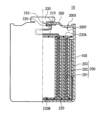
図5は、密閉型電池の一例の縦断面模式図である。 Figure 5 is a schematic vertical cross-sectional view of an example of a sealed battery.
電池10は、有底円筒形の電池缶100と、電池缶100に収容された円筒型の電極体200と、電池缶100の開口を塞ぐ封口板300と、を具備する。封口板300は、例えばレーザ溶接により、電池缶100の開口近傍に固定されている。封口板300は、電池缶100の開口近傍にかしめられていてもよい。The
電池缶100および封口板300の材質は特に限定されず、鉄、および/または鉄合金(ステンレス鋼を含む)、アルミニウム、アルミニウム合金(マンガン、銅などの他の金属を微量含有する合金など)、などが例示できる。The material of the battery can 100 and the sealing
次に、リチウム一次電池を例に、電極体200の構成について例示的に説明する。Next, the configuration of the electrode body 200 will be explained using a lithium primary battery as an example.
円筒型の電極体200は捲回型であり、正極201と負極202とをセパレータ203を介して渦巻状に捲回することにより構成されている。正極201および負極202の一方(図示例では、正極201)には内部リード線210が接続されている。内部リード線210は、外部端子330に溶接等により接続される。正極201および負極202の他方(図示例では、負極202)には、別の内部リード線220が接続されている。内部リード線220は、電池缶100の内面に溶接等により接続される。The cylindrical electrode body 200 is a wound type, and is constructed by winding a
電極体200は、電解質(図示せず)とともに、電池缶100の内部に収納されている。内部短絡防止のために、電極体200の上部および下部には、それぞれ上部絶縁板230Aおよび下部絶縁板230Bが配置されている。The electrode body 200 is housed inside the battery can 100 together with an electrolyte (not shown). To prevent internal short circuits, an upper insulating
(正極)
正極は正極活物質を含み、正極活物質として二酸化マンガンを用いることができる。正極は、例えば、正極集電体と、正極集電体に付着している正極合剤層とを具備する。正極合剤層は、正極活物質の他に、フッ素樹脂などの樹脂材料を結着剤として含み得る。正極合剤層は、炭素材料などの導電性材料を導電剤として含んでもよい。正極集電体は、例えばステンレス鋼製のエキスパンドメタル、ネット、パンチングメタルなどである。
(Positive electrode)
The positive electrode includes a positive electrode active material, and manganese dioxide can be used as the positive electrode active material. The positive electrode includes, for example, a positive electrode current collector and a positive electrode mixture layer attached to the positive electrode current collector. The positive electrode mixture layer may include a resin material such as a fluororesin as a binder in addition to the positive electrode active material. The positive electrode mixture layer may include a conductive material such as a carbon material as a conductive material. The positive electrode current collector is, for example, an expanded metal, a net, or a punched metal made of stainless steel.
(負極)
負極は負極活物質を含み、負極活物質として金属リチウムまたはリチウム合金を用いることができる。金属リチウムまたはリチウム合金は、例えば、長尺のシート状に押し出し成形され、負極として用いられる。リチウム合金としては、Li-Al、Li-Sn、Li-Ni-Si、Li-Pbなどの合金が用いられるが、Li-Al合金が好ましい。リチウム合金に含まれるリチウム以外の金属元素の含有量は、放電容量の確保や内部抵抗の安定化の観点から、0.1質量%以上5質量%以下とすることが好ましい。
(Negative electrode)
The negative electrode includes a negative electrode active material, and metallic lithium or a lithium alloy can be used as the negative electrode active material. The metallic lithium or lithium alloy is extruded, for example, into a long sheet shape and used as the negative electrode. As the lithium alloy, an alloy such as Li-Al, Li-Sn, Li-Ni-Si, or Li-Pb is used, but Li-Al alloy is preferred. The content of metal elements other than lithium contained in the lithium alloy is preferably 0.1% by mass or more and 5% by mass or less from the viewpoint of ensuring discharge capacity and stabilizing internal resistance.
(セパレータ)
セパレータとしては、樹脂製の微多孔膜や不織布が好ましく用いられる。セパレータの材料(樹脂)としては、ポリオレフィン、ポリアミド、ポリアミドイミドなどが好ましい。
(Separator)
The separator is preferably a microporous film or nonwoven fabric made of a resin, and the material (resin) of the separator is preferably polyolefin, polyamide, polyamideimide, or the like.
(電解質)
電解質にはリチウム塩を溶解させた非水溶媒を用い得る。非水溶媒は、特に限定されるものではないが、プロピレンカーボネート、エチレンカーボネート、1,2-ジメトキシエタン、γ-ブチロラクトンなどを使用することができる。リチウム塩としては、ホウフッ化リチウム、六フッ化リン酸リチウム、トリフルオロメタンスルホン酸リチウム、リチウムビス(フルオロスルホニル)イミド、リチウムビス(トリフルオロメチルスルホニル)イミドなどを用いることができる。
(Electrolytes)
The electrolyte may be a non-aqueous solvent in which a lithium salt is dissolved. The non-aqueous solvent is not particularly limited, but may be propylene carbonate, ethylene carbonate, 1,2-dimethoxyethane, γ-butyrolactone, or the like. The lithium salt may be lithium borofluoride, lithium hexafluorophosphate, lithium trifluoromethanesulfonate, lithium bis(fluorosulfonyl)imide, lithium bis(trifluoromethylsulfonyl)imide, or the like.
以下、本発明を実施例および比較例に基づいて具体的に説明するが、本発明は以下の実施例に限定されるものではない。The present invention will be described in detail below based on examples and comparative examples, but the present invention is not limited to the following examples.
《実施例1》
(1)封口体の作製
封口板(直径17mm)を作製した。
Example 1
(1) Preparation of Sealing Body A sealing plate (diameter 17 mm) was prepared.
封口板(SUS316L製)をプレス加工して、図2に示すような傾斜部と、図3に示すような断面形状を有する溝(薄肉部)とを形成した。傾斜部を、外周部の外縁から合計幅Wの33%より内側であって、外周部の外縁から合計幅Wの54%までの領域に収まるように形成した。傾斜部の幅W3は、合計幅Wの22%である。傾斜角度Aは45°である。A sealing plate (made of SUS316L) was pressed to form an inclined portion as shown in Figure 2 and a groove (thin portion) having a cross-sectional shape as shown in Figure 3. The inclined portion was formed so as to fit within an area that is 33% of the total width W from the outer edge of the outer periphery and 54% of the total width W from the outer edge of the outer periphery. The width W3 of the inclined portion is 22% of the total width W. The inclination angle A is 45°.
溝を、高さHに対する高さhの比がh/H=31%となるように形成した。溝の底部は点状である。溝のベント角Cは270°である。溝の側面部同士が成す開き角度Bは90°である。溝の底部の幅Wbは0.01mmである。The groove is formed so that the ratio of height h to height H is h/H = 31%. The bottom of the groove is dot-like. The bent angle C of the groove is 270°. The opening angle B between the side portions of the groove is 90°. The width Wb of the bottom of the groove is 0.01 mm.
外周部の厚みD1、内周部の厚みD2およびベース部の厚みDは、いずれも0.2mmである。薄肉部の厚みdは0.05mmである。The thickness D1 of the outer periphery, the thickness D2 of the inner periphery, and the thickness D of the base are all 0.2 mm. The thickness d of the thin-walled portion is 0.05 mm.
封口板の中央に、直径約3mmの貫通孔を形成した。この貫通孔に、絶縁性のガスケットおよびワッシャを介して外部端子を固定し、封口体を得た。A through hole with a diameter of approximately 3 mm was formed in the center of the sealing plate. An external terminal was fixed to this through hole via an insulating gasket and washer to obtain a sealing body.
(2)正極の作製
正極活物質である電解二酸化マンガン92質量部に、導電剤であるケッチェンブラック3.5質量部と、結着剤であるポリテトラフルオロエチレン4.5質量部と、適量の純水と、を加えて混錬し、湿潤状態の正極合剤を調製した。
(2) Preparation of Positive Electrode 92 parts by mass of electrolytic manganese dioxide as a positive electrode active material was mixed with 3.5 parts by mass of Ketjen black as a conductive agent, 4.5 parts by mass of polytetrafluoroethylene as a binder, and an appropriate amount of pure water to prepare a wet positive electrode mixture.
次に、湿潤状態の正極合剤を、ステンレス鋼製のエキスパンドメタルからなる正極集電体に塗布して、正極前駆体を作製した。その後、正極前駆体を、乾燥させ、ロールプレスにより圧延し、所定寸法に裁断し、帯状の正極を得た。Next, the wet positive electrode mixture was applied to a positive electrode current collector made of stainless steel expanded metal to prepare a positive electrode precursor. The positive electrode precursor was then dried, rolled using a roll press, and cut to a specified size to obtain a strip-shaped positive electrode.
(3)負極の作製
シート状のLi-Al合金(Al含有量:0.3質量%)を、所定寸法に裁断し、帯状の負極を得た。
(3) Preparation of Negative Electrode A sheet-like Li-Al alloy (Al content: 0.3% by mass) was cut to a predetermined size to obtain a strip-like negative electrode.
(4)電極群の作製
正極の一部から正極合剤を剥がして正極集電体を露出させ、その露出部にステンレス鋼製の正極タブリードを溶接した。負極の所定箇所にニッケル製の負極タブリードを溶接した。正極と負極とを、これらの間にセパレータを介在させて、渦巻状に捲回し、柱状の電極群を構成した。セパレータには、ポリエチレン製の微多孔膜を用いた。
(4) Preparation of electrode group The positive electrode mixture was peeled off from a part of the positive electrode to expose the positive electrode current collector, and a stainless steel positive electrode tab lead was welded to the exposed part. A nickel negative electrode tab lead was welded to a predetermined part of the negative electrode. The positive electrode and the negative electrode were wound in a spiral shape with a separator interposed between them to form a columnar electrode group. A polyethylene microporous film was used as the separator.
(5)電解質の調製
プロピレンカーボネート(PC)と、エチレンカーボネート(EC)と、1,2-ジメトキシエタン(DME)とを、体積比2:1:2で混合した非水溶媒に、リチウム塩としてトリフルオロメタンスルホン酸リチウムを0.5モル/リットルの濃度で溶解させ、電解質を調製した。
(5) Preparation of Electrolyte An electrolyte was prepared by dissolving lithium trifluoromethanesulfonate as a lithium salt at a concentration of 0.5 mol/L in a non-aqueous solvent prepared by mixing propylene carbonate (PC), ethylene carbonate (EC), and 1,2-dimethoxyethane (DME) in a volume ratio of 2:1:2.
(6)円筒形電池の組み立て
電極群を、その底部にリング状の下部絶縁板を配置した状態で、有底円筒形(SUS316L製)の電池缶の内部に挿入した。負極タブリードを電池缶の内底面に溶接し、リング状の上部絶縁板を電極群の上部に配置した後、正極タブリードを封口板に固定された外部端子に溶接した。次に、電解質を電池缶の内部に注液し、その後、電池缶の開口近傍に封口板をレーザ溶接した。このようにして、図4に示す構造を有する密閉型の円筒形リチウム電池を10個作製した。別途、作動圧評価用として、電極群および電解質を収容しなかったこと以外は同様にして、密閉型の評価用電池を10個作製した。
(6) Assembly of Cylindrical Battery The electrode group was inserted into a bottomed cylindrical battery can (made of SUS316L) with a ring-shaped lower insulating plate disposed at the bottom of the electrode group. The negative electrode tab lead was welded to the inner bottom surface of the battery can, and a ring-shaped upper insulating plate was disposed on the top of the electrode group, and then the positive electrode tab lead was welded to an external terminal fixed to a sealing plate. Next, an electrolyte was poured into the inside of the battery can, and then the sealing plate was laser welded near the opening of the battery can. In this way, 10 sealed cylindrical lithium batteries having the structure shown in FIG. 4 were produced. Separately, 10 sealed evaluation batteries were produced for operating pressure evaluation in the same manner except that the electrode group and electrolyte were not contained.
[作動圧の評価]
評価用電池の電池缶の側面に穴を開け、そこから水を供給し、水圧によって電池内部の圧力を高めて防爆機能を作動させた。
[Evaluation of working pressure]
A hole was drilled in the side of the battery can of the evaluation battery, water was supplied through it, and the water pressure increased the pressure inside the battery, activating the explosion-proof function.
作動圧の平均値(n=10)、標準偏差(σ)、平均値+6σをそれぞれ算出した。結果を表1に示す。標準偏差が0.22以下、好ましくは0.20以下、より好ましくは0.15以下であり、かつ、平均値+6σが6.5MPa以下である場合、作動圧が低く、そのバラツキが小さいといえる。The average value (n=10), standard deviation (σ), and average value + 6σ of the operating pressure were calculated. The results are shown in Table 1. When the standard deviation is 0.22 or less, preferably 0.20 or less, and more preferably 0.15 or less, and the average value + 6σ is 6.5 MPa or less, it can be said that the operating pressure is low and its variation is small.
《比較例1》
封口体の作製(1)において、内周部を電池缶の内側に凹ませる傾斜部を形成するとともに、傾斜部全体に一定の厚みを有する帯状の薄肉部を形成したこと以外は、実施例1と同様に封口板を作製した。傾斜角度は45°とした。溝の底部の幅Wb(薄肉部の幅)は0.37mmとした。
Comparative Example 1
In the production of the sealing body (1), a slanted portion was formed so that the inner periphery was recessed toward the inside of the battery can, and a strip-shaped thin portion having a constant thickness was formed on the entire slanted portion, except that a sealing plate was produced in the same manner as in Example 1. The slanted angle was 45°. The width Wb of the bottom of the groove (width of the thin portion) was 0.37 mm.
図6は、比較例1で作製された封口板の要部を拡大した断面模式図である。薄肉部1303aは帯状に形成されている。薄肉部1303aの底部13031の幅は、傾斜部1303の幅と同じである。第1および第2側面部13032、13033は、ほぼ平行である。
Figure 6 is a schematic cross-sectional view showing an enlarged view of a main portion of the sealing plate produced in Comparative Example 1. The
得られた封口板を用いて、実施例1と同様にして円筒形リチウム電池および評価用電池をそれぞれ10個作製し、評価した。結果を表1に示す。実施例1とは傾斜の方向が逆であるため、表1において、傾斜角度Aを-45°と示している。Using the obtained sealing plate, 10 cylindrical lithium batteries and 10 evaluation batteries were fabricated and evaluated in the same manner as in Example 1. The results are shown in Table 1. Since the direction of inclination is opposite to that in Example 1, in Table 1 the inclination angle A is shown as -45°.
《比較例2》
封口体の作製(1)において、傾斜角度Aを0°にしたこと以外は、比較例1と同様に封口板を作製した。溝の底部の幅Wb(薄肉部の幅)は0.72mmとした。
Comparative Example 2
A sealing plate was produced in the same manner as in Comparative Example 1, except that in the production of the sealing body (1), the inclination angle A was set to 0°. The width Wb of the bottom of the groove (width of the thin portion) was set to 0.72 mm.
《比較例3》
封口体の作製(1)において、傾斜の方向を実施例1と同じにしたこと以外は、比較例1と同様に封口板を作製した。傾斜角度Aは25°とした。溝の底部の幅Wb(薄肉部の幅)は0.61mmとした。得られた封口板を用いて、実施例1と同様にして円筒形リチウム電池および評価用電池をそれぞれ10個作製し、評価した。結果を表1に示す。
Comparative Example 3
In the preparation of the sealing body (1), a sealing plate was prepared in the same manner as in Comparative Example 1, except that the direction of inclination was the same as in Example 1. The inclination angle A was 25°. The width Wb (width of the thin portion) of the bottom of the groove was 0.61 mm. Using the obtained sealing plate, 10 cylindrical lithium batteries and 10 evaluation batteries were prepared in the same manner as in Example 1, and evaluated. The results are shown in Table 1.
《比較例4》
封口体の作製(1)において、傾斜角度Aを45°とし、溝の底部の幅Wb(薄肉部の幅)を0.36mmとしたこと以外は、比較例3と同様に封口板を作製した。得られた封口板を用いて、実施例1と同様にして円筒形リチウム電池および評価用電池をそれぞれ10個作製し、評価した。結果を表1に示す。
Comparative Example 4
A sealing plate was prepared in the same manner as in Comparative Example 3, except that in the preparation of the sealing body (1), the inclination angle A was set to 45° and the width Wb (width of the thin portion) of the bottom of the groove was set to 0.36 mm. Using the obtained sealing plate, 10 cylindrical lithium batteries and 10 evaluation batteries were prepared in the same manner as in Example 1, and evaluated. The results are shown in Table 1.
実施例1において、作動圧の平均値は5MPa以下であり、標準偏差は0.15以下であり、平均値+6σは6.5MPa以下である。よって、作動圧が低く、そのバラツキが小さい。一方、比較例1~4では作動圧の平均値、σおよび平均値+6σがいずれも高い。特に、平均値+6σが大きく、バラツキが大きいことがわかる。In Example 1, the average value of the operating pressure is 5 MPa or less, the standard deviation is 0.15 or less, and the average value + 6σ is 6.5 MPa or less. Thus, the operating pressure is low and its variation is small. On the other hand, in Comparative Examples 1 to 4, the average value of the operating pressure, σ, and the average value + 6σ are all high. In particular, it can be seen that the average value + 6σ is large and the variation is large.
《実施例2》
封口体の作製(1)において、傾斜角度Aを15°にしたこと以外は、実施例1と同様に封口板を作製した。得られた封口板を用いて、実施例1と同様にして円筒形リチウム電池および評価用電池をそれぞれ10個作製し、評価した。結果を表2に示す。
Example 2
A sealing plate was prepared in the same manner as in Example 1, except that in the preparation of the sealing body (1), the inclination angle A was set to 15°. Using the obtained sealing plate, ten cylindrical lithium batteries and ten evaluation batteries were prepared in the same manner as in Example 1, and evaluated. The results are shown in Table 2.
《実施例3》
封口体の作製(1)において、傾斜角度Aを25°にしたこと以外は、実施例1と同様に封口板を作製した。得られた封口板を用いて、実施例1と同様にして円筒形リチウム電池および評価用電池をそれぞれ10個作製し、評価した。結果を表2に示す。
Example 3
A sealing plate was prepared in the same manner as in Example 1, except that in the preparation of the sealing body (1), the inclination angle A was set to 25°. Using the obtained sealing plate, ten cylindrical lithium batteries and ten evaluation batteries were prepared in the same manner as in Example 1, and evaluated. The results are shown in Table 2.
《実施例4》
封口体の作製(1)において、傾斜角度Aを35°にしたこと以外は、実施例1と同様に封口板を作製した。得られた封口板を用いて、実施例1と同様にして円筒形リチウム電池および評価用電池をそれぞれ10個作製し、評価した。結果を表2に示す。
Example 4
A sealing plate was prepared in the same manner as in Example 1, except that in the preparation of the sealing body (1), the inclination angle A was set to 35°. Using the obtained sealing plate, ten cylindrical lithium batteries and ten evaluation batteries were prepared in the same manner as in Example 1, and evaluated. The results are shown in Table 2.
《実施例5》
封口体の作製(1)において、傾斜角度Aを55°にしたこと以外は、実施例1と同様に封口板を作製した。得られた封口板を用いて、実施例1と同様にして円筒形リチウム電池および評価用電池をそれぞれ10個作製し、評価した。結果を表2に示す。
Example 5
A sealing plate was prepared in the same manner as in Example 1, except that in the preparation of the sealing body (1), the inclination angle A was set to 55°. Using the obtained sealing plate, ten cylindrical lithium batteries and ten evaluation batteries were prepared in the same manner as in Example 1, and evaluated. The results are shown in Table 2.
《実施例6》
封口体の作製(1)において、傾斜角度Aを65°にしたこと以外は、実施例1と同様に封口板を作製した。得られた封口板を用いて、実施例1と同様にして円筒形リチウム電池および評価用電池をそれぞれ10個作製し、評価した。結果を表2に示す。
Example 6
A sealing plate was prepared in the same manner as in Example 1, except that in the preparation of the sealing body (1), the inclination angle A was set to 65°. Using the obtained sealing plate, ten cylindrical lithium batteries and ten evaluation batteries were prepared in the same manner as in Example 1, and evaluated. The results are shown in Table 2.
《実施例7》
封口体の作製(1)において、傾斜角度Aを75°にしたこと以外は、実施例1と同様に封口板を作製した。得られた封口板を用いて、実施例1と同様にして円筒形リチウム電池および評価用電池をそれぞれ10個作製し、評価した。結果を表2に示す。
Example 7
A sealing plate was prepared in the same manner as in Example 1, except that in the preparation of the sealing body (1), the inclination angle A was set to 75°. Using the obtained sealing plate, ten cylindrical lithium batteries and ten evaluation batteries were prepared in the same manner as in Example 1, and evaluated. The results are shown in Table 2.
《実施例8》
封口体の作製(1)において、傾斜角度Aを85°にしたこと以外は、実施例1と同様に封口板を作製した。得られた封口板を用いて、実施例1と同様にして円筒形リチウム電池および評価用電池をそれぞれ10個作製し、評価した。結果を表2に示す。
Example 8
A sealing plate was prepared in the same manner as in Example 1, except that in the preparation of the sealing body (1), the inclination angle A was set to 85°. Using the obtained sealing plate, ten cylindrical lithium batteries and ten evaluation batteries were prepared in the same manner as in Example 1, and evaluated. The results are shown in Table 2.
《比較例5》
封口体の作製(1)において、傾斜角度Aを0°にしたこと以外は、実施例1と同様に封口板を作製した。得られた封口板を用いて、実施例1と同様にして円筒形リチウム電池および評価用電池をそれぞれ10個作製し、評価した。結果を表2に示す。
Comparative Example 5
A sealing plate was prepared in the same manner as in Example 1, except that in the preparation of the sealing body (1), the inclination angle A was set to 0°. Using the obtained sealing plate, 10 cylindrical lithium batteries and 10 evaluation batteries were prepared in the same manner as in Example 1, and evaluated. The results are shown in Table 2.
実施例1から実施例8において、作動圧の平均値は5.5MPa以下であり、標準偏差は0.20以下であり、平均値+6σは6.5MPa以下である。特に、実施例1、実施例3から実施例7における標準偏差は小さく、作動圧のバラツキが効果的に抑制されている。一方、比較例5では平均値+6σは6.5MPaを超えている。In Examples 1 to 8, the average value of the operating pressure is 5.5 MPa or less, the standard deviation is 0.20 or less, and the average value + 6σ is 6.5 MPa or less. In particular, the standard deviation is small in Examples 1 and 3 to 7, and the variation in the operating pressure is effectively suppressed. On the other hand, in Comparative Example 5, the average value + 6σ exceeds 6.5 MPa.
《実施例9》
封口体の作製(1)において、h/Hが25%になるように溝の位置を変えたこと以外は、実施例1と同様に封口板を作製した。得られた封口板を用いて、実施例1と同様にして円筒形リチウム電池および評価用電池をそれぞれ10個作製し、評価した。結果を表3に示す。
Example 9
A sealing plate was prepared in the same manner as in Example 1, except that in the preparation of the sealing body (1), the position of the groove was changed so that h/H was 25%. Using the obtained sealing plate, 10 cylindrical lithium batteries and 10 evaluation batteries were prepared in the same manner as in Example 1, and evaluated. The results are shown in Table 3.
《実施例10》
封口体の作製(1)において、h/Hが44%になるように溝の位置を変えたこと以外は、実施例1と同様に封口板を作製した。得られた封口板を用いて、実施例1と同様にして円筒形リチウム電池および評価用電池をそれぞれ10個作製し、評価した。結果を表3に示す。
Example 10
In the preparation of the sealing body (1), except that the position of the groove was changed so that h/H was 44%, a sealing plate was prepared in the same manner as in Example 1. Using the obtained sealing plate, 10 cylindrical lithium batteries and 10 evaluation batteries were prepared in the same manner as in Example 1, and evaluated. The results are shown in Table 3.
《実施例11》
封口体の作製(1)において、h/Hが56%になるように溝の位置を変えたこと以外は、実施例1と同様に封口板を作製した。得られた封口板を用いて、実施例1と同様にして円筒形リチウム電池および評価用電池をそれぞれ10個作製し、評価した。結果を表3に示す。
Example 11
A sealing plate was prepared in the same manner as in Example 1, except that in the preparation of the sealing body (1), the position of the groove was changed so that h/H was 56%. Using the obtained sealing plate, 10 cylindrical lithium batteries and 10 evaluation batteries were prepared in the same manner as in Example 1, and evaluated. The results are shown in Table 3.
《実施例12》
封口体の作製(1)において、h/Hが69%になるように溝の位置を変えたこと以外は、実施例1と同様に封口板を作製した。得られた封口板を用いて、実施例1と同様にして円筒形リチウム電池および評価用電池をそれぞれ10個作製し、評価した。結果を表3に示す。
Example 12
In the preparation of the sealing body (1), except that the position of the groove was changed so that h/H was 69%, a sealing plate was prepared in the same manner as in Example 1. Using the obtained sealing plate, 10 cylindrical lithium batteries and 10 evaluation batteries were prepared in the same manner as in Example 1, and evaluated. The results are shown in Table 3.
実施例1、実施例9から実施例12において、作動圧の平均値は5.5MPa以下であり、標準偏差は0.21以下であり、平均値+6σは6.5MPa以下である。特に、実施例1、実施例9、実施例10における平均値+6σは小さく、作動圧のバラツキが効果的に抑制されている。In Examples 1, 9, and 12, the average value of the operating pressure is 5.5 MPa or less, the standard deviation is 0.21 or less, and the average value +6σ is 6.5 MPa or less. In particular, the average value +6σ in Examples 1, 9, and 10 is small, and the variation in the operating pressure is effectively suppressed.
本発明に係る密閉型電池は、安定した防爆機能を発揮するため、様々な電子機器の電源に適している。 The sealed battery of the present invention exhibits stable explosion-proof functionality and is therefore suitable as a power source for a variety of electronic devices.
10:電池
100:電池缶
200:電極体
201:正極
202:負極
203:セパレータ
210、220:内部リード線
230A:上部絶縁板
230B:下部絶縁板
300、300A、300B、300C:封口板
300X:第1主面
300Y:第2主面
301:外周部
302:内周部
303:傾斜部
303a:薄肉部
3031:底部
3032:第1側面部
3033:第2側面部
303b:ベース部
310:ガスケット
320:ワッシャ
330:外部端子
1303:傾斜部(薄肉部)
13031:底部
13032:第1側面部
13033:第2側面部
10: Battery 100: Battery can 200: Electrode body 201: Positive electrode 202: Negative electrode 203:
13031: Bottom part 13032: First side part 13033: Second side part
Claims (8)
前記電池缶に収容される電極体と、
前記電池缶の前記開口を塞ぐ封口板と、を具備し、
前記封口板は、平板状の外周部と、内周部と、これらの間に介在する傾斜部とを備えるとともに、前記電池缶の外側を向く第1主面および前記第1主面とは反対側の第2主面を備え、
前記傾斜部は、前記内周部を前記外周部よりも前記電池缶の外側に配置させるように傾斜するとともに、前記封口板の径方向に並ぶ薄肉部および前記薄肉部より厚いベース部を備える、密閉型電池。 a cylindrical battery can having an opening and a bottom;
An electrode assembly accommodated in the battery can;
a sealing plate that closes the opening of the battery can,
the sealing plate has a flat outer peripheral portion, an inner peripheral portion, and an inclined portion interposed therebetween, and also has a first main surface facing an outside of the battery can and a second main surface opposite to the first main surface,
The inclined portion is inclined so that the inner peripheral portion is positioned outside the battery can relative to the outer peripheral portion, and the sealed battery has a thin-walled portion aligned in the radial direction of the sealing plate and a base portion thicker than the thin-walled portion.
前記第1側面部および前記第2側面部は、前記溝の幅を前記底部から前記第1主面に向かって広げるように傾斜している、請求項2~5のいずれか一項に記載の密閉型電池。 an inner wall of the groove includes a bottom portion, and a first side portion and a second side portion respectively connecting the bottom portion and the first main surface;
The sealed battery according to any one of claims 2 to 5, wherein the first side portion and the second side portion are inclined so that the width of the groove increases from the bottom portion toward the first main surface.
Applications Claiming Priority (3)
| Application Number | Priority Date | Filing Date | Title |
|---|---|---|---|
| JP2020065600 | 2020-04-01 | ||
| JP2020065600 | 2020-04-01 | ||
| PCT/JP2021/004884 WO2021199692A1 (en) | 2020-04-01 | 2021-02-10 | Hermetically sealed battery |
Publications (2)
| Publication Number | Publication Date |
|---|---|
| JPWO2021199692A1 JPWO2021199692A1 (en) | 2021-10-07 |
| JP7607222B2 true JP7607222B2 (en) | 2024-12-27 |
Family
ID=77928058
Family Applications (1)
| Application Number | Title | Priority Date | Filing Date |
|---|---|---|---|
| JP2022511613A Active JP7607222B2 (en) | 2020-04-01 | 2021-02-10 | Sealed battery |
Country Status (5)
| Country | Link |
|---|---|
| US (1) | US12476309B2 (en) |
| EP (1) | EP4131591A4 (en) |
| JP (1) | JP7607222B2 (en) |
| CN (1) | CN115362592A (en) |
| WO (1) | WO2021199692A1 (en) |
Families Citing this family (3)
| Publication number | Priority date | Publication date | Assignee | Title |
|---|---|---|---|---|
| CN116558686B (en) * | 2023-04-03 | 2026-05-29 | 东莞市创明电池技术有限公司 | Battery sealing force calculation method |
| KR102950673B1 (en) * | 2023-06-09 | 2026-04-09 | 삼성에스디아이 주식회사 | Cylindrical secondary battery |
| CN116826261B (en) * | 2023-08-29 | 2023-12-26 | 深圳海辰储能控制技术有限公司 | Lower plastic, end cover assembly, energy storage device and electrical equipment |
Citations (1)
| Publication number | Priority date | Publication date | Assignee | Title |
|---|---|---|---|---|
| WO2015146077A1 (en) | 2014-03-28 | 2015-10-01 | 三洋電機株式会社 | Cylindrical hermetically sealed battery |
Family Cites Families (7)
| Publication number | Priority date | Publication date | Assignee | Title |
|---|---|---|---|---|
| JP2004335287A (en) * | 2003-05-08 | 2004-11-25 | Hitachi Maxell Ltd | Non-aqueous secondary battery |
| JP4591012B2 (en) * | 2004-09-28 | 2010-12-01 | 新神戸電機株式会社 | Sealed lithium secondary battery |
| JP2011228019A (en) * | 2010-04-15 | 2011-11-10 | Skk Corp | Battery can, method for producing the same, and nonaqueous electrolytic solution secondary battery |
| JP6523722B2 (en) | 2015-03-18 | 2019-06-05 | Fdk株式会社 | Sealing plate of cylindrical battery and cylindrical battery |
| KR101970650B1 (en) * | 2015-06-19 | 2019-04-22 | 주식회사 엘지화학 | Secondary battery |
| KR102761907B1 (en) * | 2017-01-05 | 2025-02-05 | 삼성에스디아이 주식회사 | Secondary Battery |
| JP7178656B2 (en) * | 2018-09-21 | 2022-11-28 | パナソニックIpマネジメント株式会社 | sealed battery |
-
2021
- 2021-02-10 CN CN202180023556.0A patent/CN115362592A/en active Pending
- 2021-02-10 EP EP21779028.6A patent/EP4131591A4/en active Pending
- 2021-02-10 WO PCT/JP2021/004884 patent/WO2021199692A1/en not_active Ceased
- 2021-02-10 JP JP2022511613A patent/JP7607222B2/en active Active
- 2021-02-10 US US17/913,744 patent/US12476309B2/en active Active
Patent Citations (1)
| Publication number | Priority date | Publication date | Assignee | Title |
|---|---|---|---|---|
| WO2015146077A1 (en) | 2014-03-28 | 2015-10-01 | 三洋電機株式会社 | Cylindrical hermetically sealed battery |
Also Published As
| Publication number | Publication date |
|---|---|
| JPWO2021199692A1 (en) | 2021-10-07 |
| WO2021199692A1 (en) | 2021-10-07 |
| EP4131591A1 (en) | 2023-02-08 |
| US20230112952A1 (en) | 2023-04-13 |
| CN115362592A (en) | 2022-11-18 |
| EP4131591A4 (en) | 2024-04-03 |
| US12476309B2 (en) | 2025-11-18 |
Similar Documents
| Publication | Publication Date | Title |
|---|---|---|
| JP7308469B2 (en) | sealed battery | |
| JP5292843B2 (en) | battery | |
| EP4432433A1 (en) | Cylindrical battery | |
| EP4471971A1 (en) | Battery and current collector | |
| WO2020137372A1 (en) | Sealed battery | |
| JP7411969B2 (en) | sealed battery | |
| JP4219661B2 (en) | Battery sealing plate | |
| JP2018056075A (en) | Lithium primary battery | |
| WO2019082712A1 (en) | Cylindrical battery | |
| WO2021199692A1 (en) | Hermetically sealed battery | |
| JP7178656B2 (en) | sealed battery | |
| CN117561645A (en) | Cylindrical battery | |
| EP4318768A1 (en) | Sealed battery | |
| US20240039096A1 (en) | Gasket and cylindrical battery | |
| EP4632884A1 (en) | Cylindrical battery | |
| EP4300644A1 (en) | Cylindrical battery | |
| JP2009266715A (en) | Cylindrical nonaqueous electrolyte primary battery and its manufacturing method | |
| JP2004335287A (en) | Non-aqueous secondary battery | |
| EP4109641B1 (en) | Cylindrical battery | |
| EP4629406A1 (en) | Cylindrical battery | |
| JP7793532B2 (en) | Cylindrical battery | |
| JP7398719B2 (en) | sealed battery | |
| JPWO2017203853A1 (en) | Sealed battery and battery case | |
| EP4679615A1 (en) | Cylindrical battery | |
| JP3773744B2 (en) | Flat type non-aqueous electrolyte secondary battery |
Legal Events
| Date | Code | Title | Description |
|---|---|---|---|
| A621 | Written request for application examination |
Free format text: JAPANESE INTERMEDIATE CODE: A621 Effective date: 20231120 |
|
| TRDD | Decision of grant or rejection written | ||
| A01 | Written decision to grant a patent or to grant a registration (utility model) |
Free format text: JAPANESE INTERMEDIATE CODE: A01 Effective date: 20241112 |
|
| A61 | First payment of annual fees (during grant procedure) |
Free format text: JAPANESE INTERMEDIATE CODE: A61 Effective date: 20241203 |
|
| R150 | Certificate of patent or registration of utility model |
Ref document number: 7607222 Country of ref document: JP Free format text: JAPANESE INTERMEDIATE CODE: R150 |