JP7599208B2 - Transmitter, receiver, wireless communication system including these, program, and computer-readable recording medium having the program recorded thereon - Google Patents
Transmitter, receiver, wireless communication system including these, program, and computer-readable recording medium having the program recorded thereon Download PDFInfo
- Publication number
- JP7599208B2 JP7599208B2 JP2021012882A JP2021012882A JP7599208B2 JP 7599208 B2 JP7599208 B2 JP 7599208B2 JP 2021012882 A JP2021012882 A JP 2021012882A JP 2021012882 A JP2021012882 A JP 2021012882A JP 7599208 B2 JP7599208 B2 JP 7599208B2
- Authority
- JP
- Japan
- Prior art keywords
- packet
- individual
- packets
- encoded
- processing means
- Prior art date
- Legal status (The legal status is an assumption and is not a legal conclusion. Google has not performed a legal analysis and makes no representation as to the accuracy of the status listed.)
- Active
Links
- 238000004891 communication Methods 0.000 title claims description 70
- 238000012545 processing Methods 0.000 claims description 328
- 238000000034 method Methods 0.000 claims description 132
- 230000005540 biological transmission Effects 0.000 claims description 103
- 230000008569 process Effects 0.000 claims description 84
- 238000010586 diagram Methods 0.000 description 32
- 238000005259 measurement Methods 0.000 description 10
- 102100023882 Endoribonuclease ZC3H12A Human genes 0.000 description 7
- 101710112715 Endoribonuclease ZC3H12A Proteins 0.000 description 7
- QGVYYLZOAMMKAH-UHFFFAOYSA-N pegnivacogin Chemical compound COCCOC(=O)NCCCCC(NC(=O)OCCOC)C(=O)NCCCCCCOP(=O)(O)O QGVYYLZOAMMKAH-UHFFFAOYSA-N 0.000 description 7
- 108700012361 REG2 Proteins 0.000 description 6
- 101150108637 REG2 gene Proteins 0.000 description 6
- 101100120298 Rattus norvegicus Flot1 gene Proteins 0.000 description 6
- 101100412403 Rattus norvegicus Reg3b gene Proteins 0.000 description 6
- 238000000926 separation method Methods 0.000 description 3
- 230000000903 blocking effect Effects 0.000 description 2
- 230000006870 function Effects 0.000 description 2
- 230000007704 transition Effects 0.000 description 2
- NAWXUBYGYWOOIX-SFHVURJKSA-N (2s)-2-[[4-[2-(2,4-diaminoquinazolin-6-yl)ethyl]benzoyl]amino]-4-methylidenepentanedioic acid Chemical compound C1=CC2=NC(N)=NC(N)=C2C=C1CCC1=CC=C(C(=O)N[C@@H](CC(=C)C(O)=O)C(O)=O)C=C1 NAWXUBYGYWOOIX-SFHVURJKSA-N 0.000 description 1
- 101100501274 Caenorhabditis elegans elp-1 gene Proteins 0.000 description 1
- 230000001174 ascending effect Effects 0.000 description 1
- 230000008859 change Effects 0.000 description 1
- 238000012790 confirmation Methods 0.000 description 1
- 230000001934 delay Effects 0.000 description 1
- 238000012986 modification Methods 0.000 description 1
- 230000004048 modification Effects 0.000 description 1
- 230000000737 periodic effect Effects 0.000 description 1
Images








Landscapes
- Mobile Radio Communication Systems (AREA)
Description
この発明は、送信装置、受信装置、これらを備えた無線通信システム、プログラムおよびプログラムを記録したコンピュータ読み取り可能な記録媒体に関する。 This invention relates to a transmitting device, a receiving device, a wireless communication system including these, a program, and a computer-readable recording medium on which the program is recorded.
非特許文献1は、送信対象である複数のパケットが揃った時点で複数のパケットを複数の経路で伝送することを開示する。
Non-Patent
また、非特許文献2は、送信対象である複数のパケットが揃った時点でウィンドウを複数のパケットに対してスライディングさせながら複数のパケットを送信することによって低遅延化を試行することを開示する。
Non-Patent
更に、特許文献1は、多対多の通信において、複数のパケットをネットワークコーディングし、そのネットワークコーディングしたコーディングパケットをブロードキャストすることによってパケットの到達率を向上することを開示する。
Furthermore,
より具体的には、無線装置TM_1~TM_6は、1番目の周期において、それぞれ、シーケンス番号Seq=1の単一のパケットPKT1(1)~PKT6(1)を生成してブロードキャストする。その後、無線装置TM_1~TM_6は、2番目の周期において、シーケンス番号Seq=1のパケットPKT1(1)~PKT6(1)をネットワークコーディングしたコーディングパケットと、シーケンス番号Seq=2の単一のパケットとの結合パケットを生成してブロードキャストする。更に、無線装置TM_1~TM_6は、3番目の周期において、シーケンス番号Seq=2のパケットPKT1(2)~PKT6(2)をネットワークコーディングしたコーディングパケットと、シーケンス番号Seq=3の単一のパケットとの結合パケットを生成してブロードキャストする。そして、無線装置TM_1~TM_6は、これを繰り返し行う。 More specifically, in the first period, the wireless devices TM_1 to TM_6 each generate and broadcast a single packet PKT1(1) to PKT6(1) with sequence number Seq=1. Then, in the second period, the wireless devices TM_1 to TM_6 generate and broadcast a combined packet of a coding packet obtained by network-coding packets PKT1(1) to PKT6(1) with sequence number Seq=1 and a single packet with sequence number Seq=2. Furthermore, in the third period, the wireless devices TM_1 to TM_6 generate and broadcast a combined packet of a coding packet obtained by network-coding packets PKT1(2) to PKT6(2) with sequence number Seq=2 and a single packet with sequence number Seq=3. The wireless devices TM_1 to TM_6 then repeat this process.
このように、特許文献1は、無線装置TM_1~TM_6の各々が自己で生成したパケットと他の無線装置から受信したパケットとをネットワークコーディングしてコーディングパケットを生成することを開示する。つまり、特許文献1は、ネットワークコーディングの対象となるパケットが既知である場合において、複数のパケットをネットワークコーディングしてコーディングパケットを生成することを開示する。
In this way,
しかし、非特許文献1,2に記載の通信方法は、複数のパケットの到着を待ってから処理する方法であるため、バーストを構成する複数のパケットを非特許文献1,2に記載の通信方法によって送信した場合、遅延が生じてしまう。
However, the communication methods described in
また、バーストの開始および/または終了を知ることはできないため、特許文献1に記載の方法では、パケットのネットワークコーディング(符号化)を効率的に行うことが困難である。
In addition, since it is not possible to know the start and/or end of a burst, the method described in
そこで、この発明の実施の形態によれば、バーストを構成する複数のパケットを低遅延で送信可能な送信装置を提供する。 Therefore, according to an embodiment of the present invention, a transmitting device is provided that can transmit multiple packets that make up a burst with low latency.
また、この発明の実施の形態によれば、バーストを構成する複数のパケットを低遅延で送信可能な送信装置からパケットを受信する受信装置を提供する。 In addition, according to an embodiment of the present invention, a receiving device is provided that receives packets from a transmitting device that can transmit multiple packets that make up a burst with low latency.
更に、この発明の実施の形態によれば、バーストを構成する複数のパケットを低遅延で送信可能な送信装置と、バーストを構成する複数のパケットを低遅延で送信可能な送信装置からパケットを受信する受信装置とを備える無線通信システムを提供する。 Furthermore, according to an embodiment of the present invention, a wireless communication system is provided that includes a transmitting device capable of transmitting multiple packets constituting a burst with low latency, and a receiving device that receives packets from the transmitting device capable of transmitting multiple packets constituting a burst with low latency.
更に、この発明の実施の形態によれば、バーストを構成する複数のパケットの低遅延な送信をコンピュータに実行させるためのプログラムを提供する。 Furthermore, according to an embodiment of the present invention, a program is provided for causing a computer to execute low-latency transmission of multiple packets that make up a burst.
更に、この発明の実施の形態によれば、バーストを構成する複数のパケットの低遅延な送信によって送信されたパケットの受信をコンピュータに実行させるためのプログラムを提供する。 Furthermore, according to an embodiment of the present invention, a program is provided for causing a computer to receive packets transmitted by low-latency transmission of multiple packets constituting a burst.
更に、この発明の実施の形態によれば、バーストを構成する複数のパケットの低遅延な送信をコンピュータに実行させるためのプログラムを記録したコンピュータ読み取り可能な記録媒体を提供する。 Furthermore, according to an embodiment of the present invention, a computer-readable recording medium is provided that stores a program for causing a computer to execute low-latency transmission of multiple packets that constitute a burst.
更に、この発明の実施の形態によれば、バーストを構成する複数のパケットの低遅延な送信によって送信されたパケットの受信をコンピュータに実行させるためのプログラムを記録したコンピュータ読み取り可能な記録媒体を提供する。 Furthermore, according to an embodiment of the present invention, a computer-readable recording medium is provided that stores a program for causing a computer to receive packets transmitted by low-latency transmission of multiple packets that constitute a burst.
(構成1)
この発明の実施の形態によれば、送信装置は、リアルタイムトラフィックを構成するパケットをアプリケーションから受信し、その受信したパケットを送信する送信装置であって、送信用バッファと、処理手段と、送信手段とを備える。送信用バッファは、送信用パケットを格納するためのバッファである。処理手段は、パケットに対して送信用の処理を実行する。送信手段は、処理手段から受けたパケットを送信する。そして、処理手段は、パケットが第1の時間間隔で当該送信装置に到着する第1の単体パケットであるとき、第1の単体パケットが当該送信装置に到着すると、第1の単体パケットを送信バッファにコピーするとともに第1の単体パケットを送信手段へ出力する第1の処理を実行し、パケットが第1の時間間隔よりも短い第2の時間間隔で連続して当該送信装置に到着する複数の単体パケットであるとき、複数の単体パケットのうちの最初に当該送信装置に到着した単体パケット以外の単体パケットから選択された第2の単体パケットが当該送信装置に到着すると、第2の単体パケットを送信バッファにコピーし、第2の単体パケットよりも早く当該送信装置に到着した単体パケットを含む第1の符号化パケットを第2の単体パケットに付与した結合パケットを生成するとともに結合パケットを送信手段へ出力する第2の処理を実行し、複数の単体パケットに含まれ、かつ、第2の単体パケット以外の単体パケットである第3の単体パケットが当該送信装置に到着すると、第3の単体パケットに対して第1の処理を実行し、複数の単体パケットのうちの最後の単体パケットが当該送信装置に到着したと判定すると、最後の単体パケットを送信バッファにコピーし、最後の単体パケットが第2の単体パケットに該当するとき最後の単体パケットに対して第2の処理を実行し、最後の単体パケットが第3の単体パケットに該当するとき最後の単体パケットに対して第1の処理を実行し、最後の単体パケットが当該送信装置に到着したと判定したタイミングから所定の時間が経過すると、送信バッファに格納された全ての単体パケットを含む第2の符号化パケットを生成して送信手段へ出力する第3の処理を実行する。また、送信手段は、第1の単体パケットを処理手段から受けると、その受けた第1の単体パケットを単独で送信する第1の送信処理を実行し、結合パケットを処理手段から受けると、その受けた結合パケットを送信する第2の送信処理を実行し、第3の単体パケットまたは最後の単体パケットを処理手段から受けると、その受けた第3の単体パケットまたは最後の単体パケットに対して第1の送信処理を実行し、第2の符号化パケットを処理手段から受けると、その受けた第2の符号化パケットを単独で送信する第3の送信処理を実行する。
(Configuration 1)
According to an embodiment of the present invention, a transmitting device receives packets constituting real-time traffic from an application and transmits the received packets, and includes a transmitting buffer, a processing means, and a transmitting means. The transmitting buffer is a buffer for storing packets to be transmitted. The processing means executes a transmission process on the packets. The transmitting means transmits the packets received from the processing means. The processing means executes a first process for copying the first individual packet to a transmission buffer and outputting the first individual packet to the transmitting means when the packet is a first individual packet arriving at the transmitting device at a first time interval, and for copying the second individual packet to the transmission buffer and outputting the first individual packet to the transmitting means when the packet is a plurality of individual packets arriving at the transmitting device successively at a second time interval shorter than the first time interval, and for generating a combined packet by adding a first encoded packet including an individual packet that arrived at the transmitting device earlier than the second individual packet to the second individual packet and outputting the combined packet to the transmitting means. when a third individual packet, which is included in the multiple individual packets and is an individual packet other than the second individual packet, arrives at the transmitting device, a first process is performed on the third individual packet, and when it is determined that the last individual packet of the multiple individual packets has arrived at the transmitting device, the last individual packet is copied to a transmission buffer, and when the last individual packet corresponds to the second individual packet, a second process is performed on the last individual packet, and when the last individual packet corresponds to the third individual packet, a first process is performed on the last individual packet, and when a predetermined time has elapsed from the time it is determined that the last individual packet has arrived at the transmitting device, a third process is performed to generate a second encoded packet including all of the individual packets stored in the transmission buffer and output it to the transmitting means. Furthermore, when the transmitting means receives a first individual packet from the processing means, it executes a first transmission process for transmitting the received first individual packet alone, when it receives a combined packet from the processing means, it executes a second transmission process for transmitting the received combined packet, when it receives a third individual packet or the last individual packet from the processing means, it executes the first transmission process for the received third individual packet or the last individual packet, and when it receives a second encoded packet from the processing means, it executes a third transmission process for transmitting the received second encoded packet alone.
(構成2)
構成1において、処理手段は、第2の処理において、第2の単体パケットまたは最後の単体パケットよりも早く当該送信装置に到着した単体パケットのうちで最後に当該送信装置に到着した単体パケットである第4の単体パケットが当該送信装置に到着すると、第4の単体パケットが送信手段によって送信された後に、第2の単体パケットまたは最後の単体パケットよりも早く当該送信装置に到着した単体パケットを含む第1の符号化パケットを生成する第1のサブ処理を実行し、第1のサブ処理を実行した後に、第2の単体パケットまたは最後の単体パケットが当該送信装置に到着すると、第1の符号化パケットを第2の単体パケットまたは最後の単体パケットに付与して結合パケットを生成して送信手段へ出力する第2のサブ処理を実行する。
(Configuration 2)
In
(構成3)
構成2において、処理手段は、第2の処理において、第2の単体パケットがa(aは、1以上の整数である。)個の単体パケットからなるとき、a個の単体パケットの各々について、第1および第2のサブ処理を実行する。
(Configuration 3)
In
(構成4)
構成1から構成3のいずれかにおいて、処理手段は、符号化パケットの初期値を所定長の零からなるY0とし、送信用バッファから取り出したパケットをXi(i=1,2,・・・,I、Iは、第1の符号化パケットまたは第2の符号化パケットを生成するときに送信用バッファに格納されているパケットの総数)とし、所定長の乱数をCiとし、符号化パケットをYiとしたとき、所定長の乱数CiをパケットXiに乗算した乗算結果Ci・XiとYi-1との排他的論理和の演算を全てのiについて実行することによって得られた符号化パケットYiを第1の符号化パケットまたは第2の符号化パケットとして生成する。
(Configuration 4)
In any of
(構成5)
構成1から構成4のいずれかにおいて、送信装置は、複数の基地局を更に備える。複数の基地局は、送信手段と有線ケーブルによって接続される。そして、複数の基地局は、第1の単体パケット、結合パケット、第3の単体パケット、最後の単体パケットおよび第2の符号化パケットを送信手段から有線ケーブルを介して受信し、その受信した第1の単体パケット、結合パケット、第3の単体パケット、最後の単体パケットおよび第2の符号化パケットを相互に異なる通信経路によって送信する。
(Configuration 5)
In any one of
(構成6)
また、この発明の実施の形態によれば、受信装置は、構成1から構成5のいずれかに記載の送信装置からパケットを受信する受信装置であって、第1の受信バッファと、第2の受信バッファと、受信手段と、分離手段と、第1の処理手段と、第2の処理手段と、復号手段とを備える。第1の受信バッファは、単体パケットを格納するためのバッファである。第2の受信バッファは、符号化パケットを格納するためのバッファである。受信手段は、第1および第3の単体パケット、結合パケット、および第2の符号化パケットを受信する。分離手段は、結合パケットを第1の符号化パケットと第2の単体パケットとに分離する。第1の処理手段は、第1の単体パケットまたは第3の単体パケットのうち、第1の受信バッファに格納されていない単体パケットまたは受信済でない単体パケットを第1の受信バッファに格納するとともに第1の受信バッファに格納された単体パケットを送信装置からパケットによって送信された情報を利用するアプリケーションへ伝送する受信処理を実行する。第2の処理手段は、受信手段によって受信された符号化パケットに基づいて、第1の受信バッファに格納されていない複数の単体パケットのみを含む第3の符号化パケットを生成し、その生成した第3の符号化パケットを第2の受信バッファに格納する処理を第1および第2の符号化パケットの全てについて実行する。復号手段は、第2の受信バッファから複数の第3の符号化パケットを読み出し、その読み出した複数の第3の符号化パケットについての連立方程式を解いて複数の第3の符号化パケットを復号する復号処理を実行する。そして、第1の処理手段は、復号手段によって復号された単体パケットに対して受信処理を更に実行する。
(Configuration 6)
According to an embodiment of the present invention, a receiving device receives packets from a transmitting device according to any one of
(構成7)
構成6において、第2の処理手段は、受信手段によって受信された符号化パケットから第1の受信バッファに格納された単体パケットの情報を除去することによって第3の符号化パケットを生成する。
(Configuration 7)
In the sixth configuration, the second processing means generates a third encoded packet by removing the information of the individual packet stored in the first receiving buffer from the encoded packet received by the receiving means.
(構成8)
構成7において、第2の処理手段は、第1の受信バッファに格納された単体パケットが受信手段によって受信された符号化パケットに含まれると判定したとき、受信手段によって受信された符号化パケットから第3の符号化パケットを生成する。
(Configuration 8)
In
(構成9)
構成7または構成8において、第2の処理手段は、受信手段によって受信された符号化パケットから第1の受信バッファに格納された単体パケットの情報を除去した後の符号化パケットが1個の単体パケットを含むとき、更に、1個の単体パケットを含む符号化パケットを第2の受信バッファから消去する。第1の処理手段は、1個の単体パケットを含む符号化パケットを単体パケットに変換し、その変換した単体パケットに対して受信処理を実行する。
(Configuration 9)
In
(構成10)
構成6から構成9のいずれかにおいて、受信装置は、複数の基地局を更に備える。複数の基地局は、受信手段と有線ケーブルによって接続され、送信装置から送信されたパケットを相互に異なる複数の通信経路を介して受信する。そして、複数の基地局の各々は、受信したパケットを有線ケーブルを介して受信手段へ出力する。
(Configuration 10)
In any one of
(構成11)
更に、この発明の実施の形態によれば、無線通信システムは、構成1から構成5のいずれかに記載の送信装置と、構成6から構成10のいずれかに記載の受信装置とを備える。
(Configuration 11)
Furthermore, according to an embodiment of the present invention, a wireless communication system includes a transmitting device according to any one of
(構成12)
更に、この発明の実施の形態によれば、プログラムは、リアルタイムトラフィックを構成するパケットをアプリケーションから受信する送信装置においてパケットの送信をコンピュータに実行させるためのプログラムであって、
処理手段が、パケットに対して送信用の処理を実行する第1のステップと、
送信手段が、処理手段から受けたパケットを送信する第2のステップとをコンピュータに実行させ、
処理手段は、第1のステップにおいて、パケットが第1の時間間隔で送信装置に到着する第1の単体パケットであるとき、第1の単体パケットが送信装置に到着すると、送信用のパケットを格納するための送信バッファに第1の単体パケットをコピーするとともに第1の単体パケットを送信手段へ出力する第1の処理を実行し、パケットが第1の時間間隔よりも短い第2の時間間隔で連続して送信装置に到着する複数の単体パケットであるとき、複数の単体パケットのうちの最初に送信装置に到着した単体パケット以外の単体パケットから選択された第2の単体パケットが送信装置に到着すると、第2の単体パケットを送信バッファにコピーし、第2の単体パケットよりも早く送信装置に到着した単体パケットを含む第1の符号化パケットを第2の単体パケットに付与した結合パケットを生成するとともに結合パケットを送信手段へ出力する第2の処理を実行し、複数の単体パケットに含まれ、かつ、第2の単体パケット以外の単体パケットである第3の単体パケットが送信装置に到着すると、第3の単体パケットに対して第1の処理を実行し、複数の単体パケットのうちの最後の単体パケットが送信装置に到着したと判定すると、最後の単体パケットを送信バッファにコピーし、最後の単体パケットが第2の単体パケットに該当するとき最後の単体パケットに対して第2の処理を実行し、最後の単体パケットが第3の単体パケットに該当するとき最後の単体パケットに対して第1の処理を実行し、最後の単体パケットが送信装置に到着したと判定したタイミングから所定の時間が経過すると、送信バッファに格納された全ての単体パケットを含む第2の符号化パケットを生成して送信手段へ出力する第3の処理を実行し、
送信手段は、第2のステップにおいて、第1の単体パケットを処理手段から受けると、その受けた第1の単体パケットを単独で送信する第1の送信処理を実行し、結合パケットを処理手段から受けると、その受けた結合パケットを送信する第2の送信処理を実行し、第3の単体パケットまたは最後の単体パケットを処理手段から受けると、その受けた第3の単体パケットまたは最後の単体パケットに対して第1の送信処理を実行し、第2の符号化パケットを処理手段から受けると、その受けた第2の符号化パケットを単独で送信する第3の送信処理を実行する。
(Configuration 12)
Further, according to an embodiment of the present invention, a program is provided for causing a computer to execute transmission of packets in a transmitting device that receives packets constituting real-time traffic from an application, the program comprising:
A first step in which a processing means performs processing on a packet for transmission;
a second step in which the transmitting means transmits the packet received from the processing means;
In a first step, the processing means executes a first process for copying the first individual packet to a transmission buffer for storing packets for transmission when the packet is a first individual packet arriving at the transmitting device at a first time interval and outputting the first individual packet to the transmitting means when the first individual packet arrives at the transmitting device, and for copying the second individual packet to the transmission buffer when a second individual packet selected from the individual packets other than the individual packet that arrived at the transmitting device first among the multiple individual packets arrives at the transmitting device when the packet is a first individual packet arriving at the transmitting device at a first time interval shorter than the first time interval, and for generating a combined packet by adding a first encoded packet including an individual packet that arrived at the transmitting device earlier than the second individual packet to the second individual packet and outputting the combined packet to the transmitting means. when a third individual packet, which is included in the plurality of individual packets and is an individual packet other than the second individual packet, arrives at the transmitting device, a first process is performed on the third individual packet; when it is determined that the last individual packet of the plurality of individual packets has arrived at the transmitting device, the last individual packet is copied to a transmission buffer, and when the last individual packet corresponds to the second individual packet, a second process is performed on the last individual packet; when the last individual packet corresponds to the third individual packet, a first process is performed on the last individual packet; and when a predetermined time has elapsed from the timing at which it is determined that the last individual packet has arrived at the transmitting device, a third process is performed to generate a second encoded packet including all of the individual packets stored in the transmission buffer and output the second encoded packet to the transmitting means;
In the second step, when the transmitting means receives a first individual packet from the processing means, it executes a first transmission process to transmit the received first individual packet alone, when it receives a combined packet from the processing means, it executes a second transmission process to transmit the received combined packet, when it receives a third individual packet or the last individual packet from the processing means, it executes the first transmission process for the received third individual packet or the last individual packet, and when it receives a second encoded packet from the processing means, it executes a third transmission process to transmit the received second encoded packet alone.
(構成13)
構成12において、処理手段は、第1のステップの第2の処理において、
第2の単体パケットまたは最後の単体パケットよりも早く送信装置に到着した単体パケットのうちで最後に送信装置に到着した単体パケットである第4の単体パケットが送信装置に到着すると、第4の単体パケットが送信手段によって送信された後に、第2の単体パケットまたは最後の単体パケットよりも早く送信装置に到着した単体パケットを含む第1の符号化パケットを生成する第1のサブ処理を実行し、第1のサブ処理を実行した後に、第2の単体パケットまたは最後の単体パケットが送信装置に到着すると、第1の符号化パケットを第2の単体パケットまたは最後の単体パケットに付与して結合パケットを生成して送信手段へ出力する第2のサブ処理を実行する。
(Configuration 13)
In
When a fourth individual packet, which is the last individual packet to arrive at the transmitting device among the individual packets which arrived at the transmitting device earlier than the second individual packet or the last individual packet, arrives at the transmitting device, a first sub-process is executed after the fourth individual packet is transmitted by the transmitting means, in which a first encoded packet is generated including the individual packet which arrived at the transmitting device earlier than the second individual packet or the last individual packet, and when the second individual packet or the last individual packet arrives at the transmitting device after the first sub-process is executed, a second sub-process is executed in which the first encoded packet is added to the second individual packet or the last individual packet to generate a combined packet and output it to the transmitting means.
(構成14)
構成13において、処理手段は、第1のステップの第2の処理において、第2の単体パケットがa(aは、1以上の整数である。)個の単体パケットからなるとき、a個の単体パケットの各々について、第1および第2のサブ処理を実行する。
(Configuration 14)
In
(構成15)
構成12から構成14のいずれかにおいて、処理手段は、符号化パケットの初期値を所定長の零からなるY0とし、送信用バッファから取り出したパケットをXi(i=1,2,・・・,I、Iは、第1の符号化パケットまたは第2の符号化パケットを生成するときに送信用バッファに格納されているパケットの総数)とし、所定長の乱数をCiとし、符号化パケットをYiとしたとき、所定長の乱数CiをパケットXiに乗算した乗算結果Ci・XiとYi-1との排他的論理和の演算を全てのiについて実行することによって得られた符号化パケットYiを第1の符号化パケットまたは第2の符号化パケットとして生成する。
(Configuration 15)
In any of
(構成16)
構成12から構成14のいずれかにおいて、送信手段は、第2のステップにおいて、有線ケーブルを介して、第1の単体パケット、結合パケット、第3の単体パケット、最後の単体パケットおよび第2の符号化パケットを複数の基地局へ送信し、
複数の基地局は、第1の単体パケット、結合パケット、第3の単体パケット、最後の単体パケットおよび第2の符号化パケットを送信手段から有線ケーブルを介して受信し、その受信した第1の単体パケット、結合パケット、第3の単体パケット、最後の単体パケットおよび第2の符号化パケットを相互に異なる通信経路によって送信する。
(Configuration 16)
In any one of
The multiple base stations receive the first individual packet, the combined packet, the third individual packet, the last individual packet and the second encoded packet from the transmitting means via wired cables, and transmit the received first individual packet, the combined packet, the third individual packet, the last individual packet and the second encoded packet via mutually different communication paths.
(構成17)
更に、この発明の実施の形態によれば、プログラムは、構成12から構成16のいずれかに記載のプログラムをコンピュータに実行させることによって送信されたパケットの受信をコンピュータに実行させるためのプログラムであって、
受信手段が、第1および第3の単体パケット、結合パケット、および第2の符号化パケットを受信する第1のステップと、
分離手段が、結合パケットを第1の符号化パケットと第2の単体パケットとに分離する第2のステップと、
第1の処理手段が、第1の単体パケットまたは第3の単体パケットのうち、第1の受信バッファに格納されていない単体パケットまたは受信済でない単体パケットを第1の受信バッファに格納するとともに第1の受信バッファに格納された単体パケットをパケットによって送信された情報を利用するアプリケーションへ伝送する受信処理を実行する第3のステップと、
第2の処理手段が、第1のステップにおいて受信された符号化パケットに基づいて、第1の受信バッファに格納されていない複数の単体パケットのみを含む第3の符号化パケットを生成し、その生成した第3の符号化パケットを第2の受信バッファに格納する処理を第1および第2の符号化パケットの全てについて実行する第4のステップと、
復号手段が、第2の受信バッファから複数の第3の符号化パケットを読み出し、その読み出した複数の第3の符号化パケットについての連立方程式を解いて複数の第3の符号化パケットを復号する復号処理を実行する第5のステップとをコンピュータに実行させ、
第1の処理手段は、第3のステップにおいて、復号手段によって復号された単体パケットに対して受信処理を更に実行する。
(Configuration 17)
Further, according to an embodiment of the present invention, a program is provided for causing a computer to execute a program according to any one of
a first step in which a receiving means receives first and third individual packets, a combined packet, and a second encoded packet;
a second step in which a separating means separates the combined packet into a first encoded packet and a second individual packet;
a third step in which the first processing means executes a receiving process for storing, in the first receiving buffer, an individual packet that is not stored in the first receiving buffer or an individual packet that has not been received, among the first individual packet or the third individual packet, and transmitting the individual packet stored in the first receiving buffer to an application that uses information transmitted by the packet;
a fourth step in which the second processing means executes a process of generating a third encoded packet including only a plurality of individual packets not stored in the first receiving buffer based on the encoded packet received in the first step, and storing the generated third encoded packet in the second receiving buffer, for all of the first and second encoded packets;
a fifth step of executing a decoding process in which the decoding means reads the third encoded packets from the second receiving buffer and solves simultaneous equations for the third encoded packets that have been read, thereby decoding the third encoded packets;
In a third step, the first processing means further performs a receiving process on the individual packet decoded by the decoding means.
(構成18)
構成17において、第2の処理手段は、第4のステップにおいて、第1のステップにおいて受信された符号化パケットから第1の受信バッファに格納された単体パケットの情報を除去することによって第3の符号化パケットを生成する。
(Configuration 18)
In configuration 17, in a fourth step, the second processing means generates a third encoded packet by removing information of the individual packet stored in the first receiving buffer from the encoded packet received in the first step.
(構成19)
構成18において、第2の処理手段は、第4のステップにおいて、第1の受信バッファに格納された単体パケットが第1のステップにおいて受信された符号化パケットに含まれると判定したとき、第1のステップにおいて受信された符号化パケットから第3の符号化パケットを生成する。
(Configuration 19)
In configuration 18, when the second processing means determines in the fourth step that the single packet stored in the first receiving buffer is included in the encoded packet received in the first step, it generates a third encoded packet from the encoded packet received in the first step.
(構成20)
構成18または構成19において、第2の処理手段は、第4のステップにおいて、第1のステップにおいて受信された符号化パケットから第1の受信バッファに格納された単体パケットの情報を除去した後の符号化パケットが1個の単体パケットを含むとき、更に、1個の単体パケットを含む符号化パケットを第1の受信バッファから消去し、
第1の処理手段は、第3のステップにおいて、1個の単体パケットを含む符号化パケットを単体パケットに変換し、その変換した単体パケットに対して受信処理を実行する。
(Configuration 20)
In the configuration 18 or 19, in the fourth step, the second processing means, when the encoded packet after removing the information of the individual packet stored in the first receiving buffer from the encoded packet received in the first step includes one individual packet, further deletes the encoded packet including one individual packet from the first receiving buffer;
In the third step, the first processing means converts the encoded packet including one individual packet into an individual packet, and executes a receiving process on the converted individual packet.
(構成21)
更に、この発明の実施の形態によれば、記録媒体は、構成12から構成20のいずれかに記載のプログラムを記録したコンピュータ読み取り可能な記録媒体である。
(Configuration 21)
Furthermore, according to an embodiment of the present invention, a recording medium is a computer-readable recording medium having the program according to any one of
バーストを構成する複数のパケットを低遅延で送信できる。 Multiple packets that make up a burst can be transmitted with low latency.
本発明の実施の形態について図面を参照しながら詳細に説明する。なお、図中同一または相当部分には同一符号を付してその説明は繰返さない。 The embodiment of the present invention will be described in detail with reference to the drawings. Note that the same or corresponding parts in the drawings are given the same reference numerals and their description will not be repeated.
図1は、この発明の実施の形態による無線通信システムの概略図である。図1を参照して、この発明の実施の形態による無線通信システム10は、送信機1と受信機2とを備える。送信機1および受信機2は、無線通信空間に配置される。
Fig. 1 is a schematic diagram of a wireless communication system according to an embodiment of the present invention. With reference to Fig. 1, a
アプリケーション20は、例えば、カメラによって画像を撮影し、その撮影した画像の画像データをペイロードに含むパケットPKTを送信機1へ伝送する。
The
送信機1は、パケットPKTをアプリケーション20から受信する。そして、送信機1は、後述する方法によって、パケットPKTをリアルタイムトラフィックを構成するパケットとして無線通信によって受信機2へ送信する。
The
受信機2は、送信機1からのパケットPKTを無線通信によって受信し、その受信したパケットPKTに対して後述する受信処理を実行する。そして、受信機2は、受信処理を行ったパケットPKTをアプリケーション30へ伝送する。アプリケーション30は、受信機2からパケットPKTを受信し、その受信したパケットPKTに含まれる画像データを再生して表示部に表示する。
The
無線通信システム10は、次の特徴を有する。無線通信システム10は、到達確認を用いた効率的な再送ができないシステムであり、例えば、無線通信によるブロードキャストまたはマルチキャストを行う。また、無線通信システム10は、複数経路を用いるシステムである。更に、無線通信システム10は、高い信頼性を必要とするリアルタイム通信(例えば、映像伝送等)を行うものである。
The
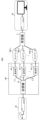
図2は、図1に示す送信機1の概略図である。図2を参照して、送信機1は、バッファ11と、処理手段12と、送信手段13と、アンテナ14とを備える。
Figure 2 is a schematic diagram of the
バッファ11は、アプリケーション20から到着した複数のパケットPKT_N(1)~PKT_N(V)を格納する。複数のパケットPKT_N(1)~PKT_N(V)の各々は、アプリケーション20によって生成された生(Native)のパケットからなる。また、Vは、整数からなる。
The
処理手段12は、タイマーを内蔵している。そして、処理手段12は、パケットが到着したか否かを判定する。そして、処理手段12は、パケットが到着したと判定したとき、到着したパケットPKT_N(v)(vは、1~Vの整数)のコピーをバッファ11に格納し、元のパケットPKT_N(v)を送信手段13へ出力する。また、処理手段12は、パケットが到着したと判定したとき、複数のパケットがバッファ11に格納されていれば、複数のパケットをバッファ11から取り出し、その取り出した複数のパケットに基づいて後述する方法によって符号化パケットPKT_Cを含む送信用パケットPKT_TRを生成し、その生成した送信用パケットPKT_TRを送信手段13へ出力する。なお、処理手段12は、タイマーを参照して、パケットPKT_N(v)または送信用パケットPKT_TRを送信手段13へ出力する。
The processing means 12 includes a timer. The processing means 12 determines whether a packet has arrived. When the processing means 12 determines that a packet has arrived, it stores a copy of the arriving packet PKT_N(v) (v is an integer between 1 and V) in the
送信手段13は、1個のパケットPKT_N(v)または送信用パケットPKT_TRを処理手段12から受けると、その受けた1個のパケットPKT_N(v)または送信用パケットPKT_TRを無線通信によってアンテナ14を介して受信機2へ送信する。
When the transmitting means 13 receives one packet PKT_N(v) or one packet for transmission PKT_TR from the processing means 12, it transmits the received packet PKT_N(v) or one packet for transmission PKT_TR to the
図3は、図1に示す受信機2の概略図である。図3を参照して、受信機2は、アンテナ21と、受信手段22と、処理手段23と、Nバッファ24と、Cバッファ25とを備える。
Figure 3 is a schematic diagram of the
受信手段22は、アンテナ21を介してパケットPKT(パケットPKT_N(v)または送信用パケットPKT_TR)を受信し、その受信したパケットPKT(パケットPKT_N(v)または送信用パケットPKT_TR)を処理手段23へ出力する。
The receiving means 22 receives a packet PKT (packet PKT_N(v) or packet PKT_TR for transmission) via the
処理手段23は、パケットPKT_N(v)を受信手段22から受けると、後述する方法によって、パケットPKT_N(v)に対してNパケット受信処理を実行する。この場合、処理手段23は、Nパケット受信処理において、パケットPKT_N(v)が受信済でないとき、パケットPKT_N(v)をNバッファ24に格納する。そして、処理手段23は、Nバッファ24に格納された全てのパケットPKT_N(v)をアプリケーション30へ伝送する。
When the processing means 23 receives packet PKT_N(v) from the receiving means 22, it executes N packet reception processing on packet PKT_N(v) by a method described below. In this case, in the N packet reception processing, when packet PKT_N(v) has not been received, the processing means 23 stores packet PKT_N(v) in the
一方、処理手段23は、送信用パケットPKT_TRを受信手段22から受けると、送信用パケットPKT_TRが符号化パケットPKT_Cと単体パケットPKT_Nとを含むとき、符号化パケットPKT_Cと単体パケットPKT_Nとを分離する分離処理を実行する。そして、処理手段23は、その分離した単体パケットPKT_Nに対してNパケット受信処理を実行する。また、処理手段23は、Nバッファ24に格納済の単体パケットPKT_N(即ち、受信済の単体パケットPKT_N)の情報を符号化パケットPKT_Cから除去する除去処理を実行し、その除去処理後の符号化パケットPKT_C’が複数の単体パケットPKT_Nを含むとき、符号化パケットPKT_C’をCバッファ25に格納する。その後、処理手段23は、Cバッファ25に格納された符号化パケットPKT_C’に対して後述する復号処理を実行する。この場合、処理手段23は、復号処理において復号された単体パケットPKT_Nに対してNパケット受信処理を実行する。
On the other hand, when the processing means 23 receives a transmission packet PKT_TR from the receiving means 22, if the transmission packet PKT_TR includes an encoded packet PKT_C and an individual packet PKT_N, the processing means 23 performs a separation process to separate the encoded packet PKT_C from the individual packet PKT_N. Then, the processing means 23 performs an N-packet reception process on the separated individual packet PKT_N. In addition, the processing means 23 performs a removal process to remove information on the individual packet PKT_N (i.e., the received individual packet PKT_N) already stored in the
処理手段23は、送信用パケットPKT_TRが符号化パケットPKT_Cのみを含むとき、上述した分離処理を実行せずに、上述した除去処理および復号処理を順次実行する。 When the transmission packet PKT_TR contains only the encoded packet PKT_C, the processing means 23 does not perform the above-mentioned separation process, but instead sequentially performs the above-mentioned removal process and decoding process.
図4は、画像の送信を示す概念図である。図4を参照して、リアルタイム動画伝送の場合の特徴を説明する。Iピクチャは、前後のピクチャの差分を用いない圧縮画像からなり、サイズが大きい。Pピクチャは、前のピクチャとの差分を伝送するため、サイズが小さい。 Figure 4 is a conceptual diagram showing image transmission. The characteristics of real-time video transmission will be explained with reference to Figure 4. I-pictures are compressed images that do not use the difference between previous and next pictures, and are large in size. P-pictures are small in size because they transmit the difference with the previous picture.
IピクチャおよびPピクチャは、周期的に送信される。そして、周期的な送信の際の送信パケット数は、異なり、バースト的に一度にパケットを送信する場合もある。また、Iピクチャは、IPPPIPPPIPのように周期的に生成されて送信される。 I-pictures and P-pictures are transmitted periodically. The number of packets transmitted during periodic transmission varies, and packets may be transmitted in bursts at once. I-pictures are generated and transmitted periodically, as in IPPPIPPPIP.
Iピクチャを伝送する際にバーストが発生し、バーストのサイズは、一定でない。また、バーストを構成するパケットは、一度に到着せずに逐次到着する。 When transmitting an I-picture, a burst occurs, and the size of the burst is not constant. Also, the packets that make up the burst do not arrive all at once, but arrive one after the other.
更に、図4に示すPピクチャ、Pピクチャ、Pピクチャ、Iピクチャ、Pピクチャ、Pピクチャ、Pピクチャ、IピクチャおよびPピクチャにおいて、Pピクチャをペイロードに含むパケットおよびIピクチャをペイロードに含むパケットがアプリケーション20から送信機1に到着する時間間隔は、Tinterval_1であり、Iピクチャをペイロードに含む複数のパケットがアプリケーション20から連続して送信機1に到着する時間間隔は、Tinterval_1よりも短いTinterval_2である。
Furthermore, in the P picture, P picture, P picture, I picture, P picture, P picture, P picture, I picture, and P picture shown in FIG. 4, the time interval at which a packet including a P picture in its payload and a packet including an I picture in its payload arrive at
図5は、パケットのフォーマットを示す概略図である。図5を参照して、パケットPKTは、ヘッダと、ペイロードとを含む。ヘッダは、送信先のIPアドレスを含む。 Figure 5 is a schematic diagram showing the format of a packet. Referring to Figure 5, a packet PKT includes a header and a payload. The header includes the IP address of the destination.
ペイロードは、Packet Infoと、領域REG1と、Coded Infoと、領域REG2とを含む。領域REG1は、1個のパケットPKT_Nのペイロードを含む。領域REG2は、N個のパケットPKT_N(1)~PKT_N(N)を符号化した符号化パケットPKT_Cを含む。領域REG1の長さは、Lpであり、領域REG2の長さは、L1~Lnの最大値である。Lpは、1個のパケットPKT_Nのデータ長であり、L1~Lnは、それぞれ、パケットPKT_N(1)~PKT_N(N)のデータ長である。 The payload includes Packet Info, an area REG1, Coded Info, and an area REG2. Area REG1 includes the payload of one packet PKT_N. Area REG2 includes an encoded packet PKT_C obtained by encoding N packets PKT_N(1) to PKT_N(N). The length of area REG1 is Lp , and the length of area REG2 is the maximum value of L1 to Ln . Lp is the data length of one packet PKT_N, and L1 to Ln are the data lengths of packets PKT_N(1) to PKT_N(N), respectively.
Packet Infoは、識別子N/Cと、シーケンス番号SNと、データ長Lpとを含む。識別子N/Cは、領域REG1に含まれるパケットが単体のパケットPKT_Nであるか符号化パケットPKT_Cであるかを識別する識別子であり、“N”または“C”からなる。“N”は、単体のパケットPKT_Nであることを表し、“C”は、符号化パケットPKT_Cであることを表す。シーケンス番号SNは、領域REG1に含まれるパケットの送信機1への到着順序を表す。データ長Lpは、領域REG1の長さを表す。
Packet Info includes an identifier N/C, a sequence number SN, and a data length Lp . The identifier N/C is an identifier for identifying whether the packet included in the region REG1 is a single packet PKT_N or an encoded packet PKT_C, and consists of "N" or "C". "N" indicates that it is a single packet PKT_N, and "C" indicates that it is an encoded packet PKT_C. The sequence number SN indicates the order in which the packets included in the region REG1 arrive at the
Coded Infoは、識別子N/Cと、Num coded(N)と、Packet Info 1~Packet Info Nとを含む。識別子N/Cは、領域REG2に含まれるパケットが単体のパケットPKT_Nであるか符号化パケットPKT_Cであるかを識別する識別子であり、“N”または“C”からなる。Num coded(N)は、領域REG2に含まれる符号化パケットPKT_Cを構成するパケットPKT_Nの個数を表す。
Coded Info includes an identifier N/C, Num coded (N), and
Packet Info 1は、シーケンス番号SNと、データ長L1と、符号C1とを含む。以下、同様にして、Packet Info Nは、シーケンス番号SNと、データ長LNと、符号CNとを含む。
Packet Info 1において、シーケンス番号SNは、符号化パケットPKT_Cを構成するパケットPKT_N(1)の送信機1への到着順序を表し、データ長L1は、符号化パケットPKT_Cを構成するパケットPKT_N(1)のデータ長であり、符号C1は、N個のパケットPKT_N(1)~PKT_N(N)を符号化したときのパケットPKT_N(1)の係数である。
In
以下、同様にして、Packet Info Nにおいて、シーケンス番号SNは、符号化パケットPKT_Cを構成するパケットPKT_N(N)の送信機1への到着順序を表し、データ長LNは、符号化パケットPKT_Cを構成するパケットPKT_N(N)のデータ長であり、符号CNは、N個のパケットPKT_N(1)~PKT_N(N)を符号化したときのパケットPKT_N(N)の係数である。
Similarly, in Packet Info N, the sequence number SN represents the order of arrival at the
1個のパケットPKT_Nは、ペイロードがPacket Infoと領域REG1とを含む構成からなる。 The payload of one packet PKT_N includes Packet Info and an area REG1.
バースト的に一度に送信するためのパケットがMBurst(MBurstは、2≦MBurst<Vを満たす整数である。)個のパケットPKT_N(1)~PKT_N(MBurst)からなるとすると、MBurst個のパケットPKT_N(1)~PKT_N(MBurst)のうちの最初に送信機1に到着したパケットPKT_N(1)以外の(MBurst-1)個のパケットPKT_N(2)~PKT_N(MBurst)から選択されたa(aは、1以上の整数である。)個の所定のパケットPKT_N(m)の各々が送信機1に到着すると、所定のパケットPKT_N(m)よりも早く送信機1に到着したパケットPKT_N(1)~PKT_N(m-1)を符号化して符号化パケットPKT_C1を生成し、その生成した符号化パケットPKT_C1を所定のパケットPKT_N(m)に付与した結合パケットPKT_N/PKT_C1を送信用パケットPKT_TRとして生成することになる。
If the packets to be transmitted at one time in a burst manner are M Burst (M Burst is an integer satisfying 2≦M Burst <V) packets PKT_N(1) to PKT_N(M Burst ), then (M Burst -1) packets PKT_N(2) to PKT_N(M Burst ) other than packet PKT_N(1) that arrived first at the
従って、結合パケットPKT_N/PKT_C1は、ペイロードが[Packet Info/PKT_Nのデータ/Coded Info/PKT_N(1)のデータ~PKT_N(m-1)のデータ]を含む構成からなる。 Therefore, the payload of the combined packet PKT_N/PKT_C1 contains [Packet Info/PKT_N data/Coded Info/PKT_N(1) data to PKT_N(m-1) data].
また、MBurst個のパケットPKT_N(1)~PKT_N(MBurst)が連続して送信機1に到着したとき、MBurst個のパケットPKT_N(1)~PKT_N(MBurst)を符号化した符号化パケットPKT_C2を送信用パケットPKT_TRとして生成することになる。
Furthermore, when M Burst packets PKT_N(1) to PKT_N(M Burst ) arrive consecutively at the
従って、符号化パケットPKT_C2は、ペイロードが[Coded Info/PKT_N(1)のデータ~PKT_N(MBurst)のデータ]を含む構成からなる。 Therefore, the payload of the coded packet PKT_C2 includes [Coded Info/PKT_N(1) data to PKT_N(M Burst ) data].
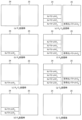
図6は、図2に示すバッファ11の概略図である。なお、図6は、バースト的に一度に送信するためのパケットの個数MBurstよりもバッファ11のサイズが大きい場合についてバッファ11の概略図を示す。
Fig. 6 is a schematic diagram of the
図6を参照して、バッファ11は、例えば、リングバッファからなる。そして、バッファ11は、シーケンス番号SNが小さい順(即ち、古い順)にMBurst個のパケットPKT_N(1)~PKT_N(MBurst)を格納する。パケットPKT_N(MBurst)は、現在時刻においてバッファ11に格納されたパケットであり、パケットPKT_N(1)~パケットPKT_N(MBurst-1)は、過去にバッファ11に格納されたパケットである。
6, the
また、バッファ11は、パケット数が最大数を超えると、古いパケットから順に上書きする構成からなる。その結果、バッファ11は、常に、最大数のパケットを格納できる。
In addition,
パケットPKT_N(1),PKT_N(2),・・・,PKT_N(MBurst)が格納されたMBurst個の領域には、それぞれ、パケットPKT_N(1)のシーケンス番号SN1およびデータ長L1、パケットPKT_N(2)のシーケンス番号SN2およびデータ長L2、・・・、パケットPKT_N(MBurst)のシーケンス番号SNMBurstおよびデータ長LMBurstも格納される。 The M Burst areas storing packets PKT_N(1), PKT_N(2), ..., PKT_N(M Burst ) also store sequence number SN 1 and data length L 1 of packet PKT_N(1), sequence number SN 2 and data length L 2 of packet PKT_N(2), ..., sequence number SN MBurst and data length L MBurst of packet PKT_N(M Burst ).
即ち、アプリケーション20から送信機1に到着したパケットPKT_N(PKT_N(1)~PKT_N(MBurst)のいずれか)がペイロードを構成し、バッファ11の各領域には、[SN/Lp/ペイロード/パディング(全て“0”)]が格納される。なお、パディング(全て“0”)は、[SN/Lp/ペイロード]の長さが最大長にならない場合に追加される。
That is, a packet PKT_N (any of PKT_N(1) to PKT_N(M Burst )) arriving at the
図7は、パケットを符号化する方法を説明するための図である。図7においては、パケットXi(iは、1,2,3,・・・)と符号化パケットYi-1とを符号化する方法を説明する。 7 is a diagram for explaining a method of encoding packets, in which a method of encoding packets X i (i is 1, 2, 3, . . . ) and encoded packet Y i-1 is explained.
図7を参照して、パケットXiは、Liバイトのデータ長を有するので、パケットXiは、Li×8/n個の成分Xi,1,Xi,2,Xi,3,Xi,4,・・・,Xi,Li×8/nと、“0”からなるパディングとを含む。成分Xi,1,Xi,2,Xi,3,Xi,4,・・・,Xi,Li×8/nの各々は、n(nは、正の整数である。)ビットの長さを有する。符号Ciは、ガロア体GF(2n)上のnビット長の乱数からなる。ここで、nは、例えば、8からなる。
7, packet Xi has a data length of Li bytes , so packet Xi includes
符号化パケットYi-1は、成分Yi-1,1,Yi-1,2,Yi-1,3,Yi-1,4,・・・,Yi-1,Li×8/n,Yi-1,Max×8/nからなる。成分Yi-1,1,Yi-1,2,Yi-1,3,Yi-1,4,・・・,Yi-1,Li×8/n,Yi-1,Max×8/nの各々は、nビットの長さを有する。 Encoded packet Y i-1 consists of components Y i-1,1 , Y i-1,2 , Y i-1,3 , Y i-1,4 , ..., Y i-1,Li×8/n , Y i-1,Max×8 /n , each of components Y i-1,1 , Y i-1,2 , Y i-1,3 , Y i-1,4 , ..., Y i-1,Li×8/n , Y i-1,Max×8/n has a length of n bits.
符号Ciを成分Xi,1,Xi,2,Xi,3,Xi,4,・・・,Xi,Li×8/nの各々に乗算して乗算結果Ci・Xi,1,Ci・Xi,2,Ci・Xi,3,Ci・Xi,4,・・・,Ci・Xi,Li×8/nを生成する。この場合、符号Ciと、成分Xi,1,Xi,2,Xi,3,Xi,4,・・・,Xi,Li×8/nの各々との乗算は、ガロア体GF(2n)上の乗算として実行される。 The code Ci is multiplied by each of the components Xi ,1 , Xi ,2 , Xi ,3 , Xi ,4 , ..., Xi ,Li x 8/n to generate multiplication results Ci · Xi ,1 , Ci · Xi,2 , Ci ·Xi ,3 , Ci · Xi,4 , ..., Ci · Xi,Li x 8/n , where the multiplication of the code Ci by each of the components Xi ,1 , Xi ,2 , Xi ,3 , Xi ,4 , ..., Xi,Li x 8/n is performed as a multiplication over a Galois field GF( 2n ).
その後、乗算結果Ci・Xi,1と成分Yi-1,1との排他的論理和を演算して成分Yi,1を生成し、乗算結果Ci・Xi,2と成分Yi-1,2との排他的論理和を演算して成分Yi,2を生成し、乗算結果Ci・Xi,3と成分Yi-1,3との排他的論理和を演算して成分Yi,3を生成し、乗算結果Ci・Xi,4と成分Yi-1,4との排他的論理和を演算して成分Yi,4を生成し、以下、同様にして、乗算結果Ci・Xi,Li×8/nと成分Yi-1,Li×8/nとの排他的論理和を演算して成分Yi,Li×8/nを生成し、更に、“0”からなるパディングと成分Yi-1,Max×8/nとの排他的論理和を演算して成分Yi,Max×8/nを生成する。これによって、符号化パケットYi=[Yi,1,Yi,2,Yi,3,Yi,4,・・・,Yi,Li×8/n,・・・,Yi,Max×8/n]が生成される。 Thereafter, the multiplication result C i · X i,1 is exclusive-ORed with the component Y i-1,1 to generate a component Y i,1 , the multiplication result C i · X i,2 is exclusive-ORed with the component Y i-1,2 to generate a component Y i,2 , the multiplication result C i · X i,3 is exclusive-ORed with the component Y i-1,3 to generate a component Y i,3 , the multiplication result C i · X i,4 is exclusive-ORed with the component Y i-1,4 to generate a component Y i,4 , and so on in the same manner as above, the multiplication result C i · X i,Li×8/n is exclusive-ORed with the component Y i-1,Li×8/n to generate a component Y i,Li×8/n , and further, padding consisting of "0" and the component Y , Yi ,Li×8/n , ... , Yi,Max×8 / n ] .
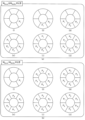
図8は、MBurst個のパケットPKT_N(1)~PKT_N(MBurst)を送信するときの符号化パケットの生成方法を説明する図である。 FIG. 8 is a diagram for explaining a method of generating coded packets when transmitting M Burst packets PKT_N(1) to PKT_N(M Burst ).
図8においては、パケットP3,P5,P7,P9が送信機1に到着したタイミングで符号化パケットを受信機2へ送信すると判定するものとする。
In FIG. 8, it is assumed that a decision is made to transmit the encoded packets to the
図8の(a)を参照して、バーストを構成するMBurst個のパケットPKT_N(1)~PKT_N(MBurst)は、パケットP1~P6からなる。そして、バッファ11に格納できるパケットの最大数は、6個である。即ち、バーストを構成するパケットの個数MBurstは、バッファ11のサイズMBuffer以下である。
8A, M Burst packets PKT_N(1) to PKT_N(M Burst ) constituting a burst are made up of packets P 1 to P 6. The maximum number of packets that can be stored in the
送信機1の処理手段12は、パケットP1が送信機1に到着すると、パケットP1をバッファ11にコピーする(図8の(a)(i)参照)。そして、処理手段12は、バッファ11からパケットP1を取り出し、その取り出したパケットP1を図7において説明した方法によって符号化して符号化パケットC1を生成する。
When packet P1 arrives at the
より具体的には、処理手段12は、nビット長の“0”からなる符号化パケットY0={000・・・0}を生成し、ガロア体GF(2n)上のnビット長の乱数からなる符号C1を生成する。そして、処理手段12は、パケットX1(=P1)と符号化パケットY0={000・・・0}と符号C1とに基づいて、図7において説明した方法によって、符号化パケットY1(=C1)を生成する。 More specifically, the processing means 12 generates a coded packet Y0 ={000...0} consisting of n-bit "0"s, and generates a code C1 consisting of n-bit random numbers in a Galois field GF( 2n ). Then, the processing means 12 generates a coded packet Y1(= C1 ) based on the packet X1 (= P1 ), the coded packet Y0 ={000...0 } , and the code C1 by the method described in FIG.
その後、処理手段12は、パケットP2が送信機1に到着すると、パケットP2をバッファ11にコピーする(図8の(a)(ii)参照)。そして、処理手段12は、バッファ11からパケットP2を取り出す。そして、処理手段12は、ガロア体GF(2n)上のnビット長の乱数からなる符号C2を生成する。そうすると、処理手段12は、パケットX2(=P2)と符号化パケットY1と符号C2とに基づいて、図7において説明した方法によって、符号化パケットY2(=C2)を生成する。
Thereafter, when packet P2 arrives at the
以下、同様にして、パケットP3~P6が送信機1に到着したタイミングで、それぞれ、符号化パケットY3~Y6(=C3~C6)を順次生成する(図8の(a)(iii)~(vi)参照)。この場合、パケットP6が送信機1に到着し、パケットP6をバッファ11にコピーした段階で、バッファ11は、最大数MBufferのパケットを格納する。
Similarly, encoded packets Y3 to Y6 (= C3 to C6 ) are generated in sequence as packets P3 to P6 arrive at the transmitter 1 (see (iii) to (vi) of FIG. 8A). In this case, when packet P6 arrives at the transmitter 1 and is copied to the
処理手段12は、パケットP3が送信機1に到着すると、パケットP3をバッファ11にコピーし(図8の(a)(iii)参照)、符号化パケットを送信すると判定する。そして、処理手段12は、パケットP2が送信機1に到着したタイミングで生成した符号化パケットY2(=C2)をパケットP3に付与して結合パケットP3/C2を生成し、その生成した結合パケットP3/C2を送信手段13へ出力して結合パケットP3/C2を受信機2へ送信する。なお、結合パケットP3/C2によって情報を送信することは、Piggybackによる情報の送信である。
When packet P3 arrives at the
また、処理手段12は、パケットP5が送信機1に到着すると、パケットP5をバッファ11にコピーし(図8の(a)(v)参照)、符号化パケットを送信すると判定する。そして、処理手段12は、パケットP4が送信機1に到着したタイミングで生成した符号化パケットY4(=C4)をパケットP5に付与して結合パケットP5/C4を生成し、その生成した結合パケットP5/C4を送信手段13へ出力して結合パケットP5/C4を受信機2へ送信する。
Furthermore, when packet P5 arrives at the
そして、処理手段12は、パケットP6が送信機1に到着し、符号化パケットY6(=C6)を生成した後、後述する方法によって、パケットP6がバーストを構成するパケットP1~P6のうちの最後のパケットP6であると判定した後、未送信の符号化パケットY6(=C6)を送信手段13へ出力して符号化パケットY6(=C6)を単独で受信機2へ送信する。
Then, after packet P6 arrives at the
また、処理手段12は、バッファ11からパケットP1~P6を取り出し、その取り出したパケットP1~P6を符号化して符号化パケットY7(=C7)を生成する。そして、処理手段12は、符号化パケットY7(=C7)を送信手段13へ出力して符号化パケットY7(=C7)を単独で受信機2へ送信する。
Furthermore, the processing means 12 retrieves packets P1 to P6 from the
このように、処理手段12は、バーストを構成するパケットの個数MBurstがバッファ11のサイズMBuffer以下であるとき、バーストを構成する全てのパケットP1~P6を含む符号化パケットY7(=C7)を生成して受信機2へ送信する。
In this way, when the number M Burst of packets constituting a burst is equal to or less than the size M Buffer of the
図8の(b)を参照して、バーストを構成するMBurst個のパケットPKT_N(1)~PKT_N(MBurst)は、パケットP1~P10からなる。そして、バッファ11に格納できるパケットの最大数は、6個である。即ち、バーストを構成するパケットの個数MBurstは、バッファ11のサイズMBufferよりも大きい。
8B, M Burst packets PKT_N(1) to PKT_N(M Burst ) constituting a burst are made up of packets P 1 to P 10. The maximum number of packets that can be stored in the
処理手段12は、パケットP1~P6が送信機1に到着したとき、図8の(a)において説明した処理を実行する(図8の(b)(i),(ii)参照)。
When packets P 1 to P 6 arrive at the
そして、処理手段12は、パケットP7が送信機1に到着すると、パケットP7をバッファ11にコピーする(図8の(b)(iii)参照)。その結果、パケットP6が送信機1に到着した段階でバッファ11に格納されていたパケットP1~P6は、それぞれ、パケットP2~P7によって上書きされる。
Then, when packet P7 arrives at the
処理手段12は、パケットP7をバッファ11にコピーした後、バッファ11からパケットP7を取り出す。そして、処理手段12は、ガロア体GF(2n)上のnビット長の乱数からなる符号C7を生成する。そうすると、処理手段12は、パケットX7(=P7)と符号化パケットY6と符号C7とに基づいて、図7において説明した方法によって、符号化パケットY7(=C7)を生成する。
The processing means 12 copies the packet P7 to the
その後、処理手段12は、パケットP8~P10が送信機1に到着したタイミングで、同様にして、それぞれ、符号化パケットY8(=C8)~Y10(=C10)を生成する(図8の(b)(iv)~(vi)参照)。
Thereafter, when packets P 8 to P 10 arrive at the
そして、パケットP10をバッファ11にコピーした段階で、バッファ11は、パケットP5~P10を格納する。
Then, at the stage where packet P 10 is copied to buffer 11,
処理手段12は、パケットP10が送信機1に到着し、符号化パケットY10(=C10)を生成した後、後述する方法によって、パケットP10がバーストを構成するパケットP1~P10のうちの最後のパケットP10であると判定した後、未送信の符号化パケットY10(=C10)を送信手段13へ出力して符号化パケットY10(=C10)を単独で受信機2へ送信する。
After packet P10 arrives at the
また、処理手段12は、バッファ11からパケットP5~P10を取り出し、その取り出したパケットP5~P10を符号化して符号化パケットY11(=C11)を生成する。そして、処理手段12は、符号化パケットY11(=C11)を送信手段13へ出力して符号化パケットY11(=C11)を単独で受信機2へ送信する。
Furthermore, the processing means 12 retrieves packets P5 to P10 from the
このように、処理手段12は、バーストを構成するパケットの個数MBurstがバッファ11のサイズMBufferよりも大きいとき、バーストを構成するパケットP1~P10のうちのパケットP5~P10を含む符号化パケットY11(=C11)を生成して受信機2へ送信する。
In this way, when the number M Burst of packets constituting a burst is greater than the size M Buffer of the
図8において説明したように、単独で送信される符号化パケットは、バーストを構成するパケットの個数MBurstとバッファ11のサイズMBufferとの大小関係によって異なるパケットを含む。
As described with reference to FIG. 8, a coded packet transmitted independently includes different packets depending on the magnitude relationship between the number of packets constituting a burst, M Burst , and the size of the
なお、処理手段12は、バーストを構成するMBurst個のパケットPKT_N(1)~PKT_N(MBurst)のうちの最後のパケットPKT_N(MBurst)がバッファ11に到着したか否かを次の方法によって判定する。
The processing means 12 judges whether the last packet PKT_N(M Burst ) of the M Burst packets PKT_N(1) to PKT_N(M Burst ) constituting a burst has arrived at the
MBurst個のパケットPKT_N(1)~PKT_N(MBurst)は、連続してバッファ11に到着するので、シーケンス番号SNが連続する2個のパケットPKT_N(m),PKT_N(m+1)について、1個のパケットPKT_N(m)がバッファ11に到着してから1個のパケットPKT_N(m+1)がバッファ11に到着するまでの標準経過時間である経過時間TSTANDARDを予め固定値に決定し、その決定した固定値からなる経過時間TSTANDARDを処理手段12に設定しておく。
Since M Burst packets PKT_N(1) to PKT_N(M Burst ) arrive at the
処理手段12は、MBurst個のパケットPKT_N(1)~PKT_N(MBurst)のうちの1個のパケットPKT_N(m’)が到着してからの経過時間tELPが経過時間tSTANDARDよりも長くなってもパケットPKT_Nがバッファ11に到着しないとき、パケットPKT_N(m’)がMBurst個のパケットPKT_N(1)~PKT_N(MBurst)のうちの最後のパケットPKT_N(MBurst)であると判定し、MBurst個のパケットPKT_N(1)~PKT_N(MBurst)のうちの最後のパケットPKT_N(MBurst)がバッファ11に到着したと判定する。
When the elapsed time t ELP since the arrival of one packet PKT_N(m') of the M Burst packets PKT_N(1) to PKT_N(M Burst ) has become longer than the elapsed time t STANDARD but the packet PKT_N has not arrived at the
また、アプリケーション20がMBurst個のパケットPKT_N(1)~PKT_N(MBurst)のうちの最後のパケットPKT_N(MBurst)に、最後のパケットであることを示すフラグFGを設定しておき、処理手段12がアプリケーション20からパケットPKT_Nを受信する毎にパケットPKT_NにフラグFGが設定されているか否かを判定し、パケットPKT_NにフラグFGが設定されていると判定したとき、フラグFGが設定されているパケットPKT_Nを最後のパケットPKT_N(MBurst)であると判定するようにしてもよい。
Furthermore, the
図9は、バーストを構成するパケットの送信方法を説明するための図である。図9においては、バーストを構成するMBurst個のパケットPKT_N(1)~PKT_N(MBurst)がパケットP1~P6である場合において、バーストを構成するMBurst個のパケットPKT_N(1)~PKT_N(MBurst)の送信方法を説明する。この場合、処理手段12は、例えば、パケットP3,P5のいずれかが送信機1に到着したタイミングで符号化パケットを送信すると判定し、パケットP1,P2,P4,P6のいずれかが送信機1に到着したタイミングでは符号化パケットを送信しないと判定するものとする。また、パケットP1,P3が送信先へ送信できなかったものとする。
Fig. 9 is a diagram for explaining a method of transmitting packets constituting a burst. In Fig. 9, a method of transmitting M Burst packets PKT_N(1) to PKT_N(M Burst ) constituting a burst will be explained when the M Burst packets PKT_N(1) to PKT_N(M Burst ) constituting the burst are packets P 1 to P 6. In this case, the processing means 12 determines to transmit an encoded packet at the timing when any of packets P 3 and P 5 arrive at the
図9を参照して、パケットP1~P6は、バースト的に一度に送信するパケットを構成する。 Referring to FIG. 9, packets P 1 to P 6 constitute packets that are transmitted at one time in a burst manner.
処理手段12は、パケットP1が送信機1に到着すると、タイマーによって経過時間tELP_1の計測を開始するとともに、パケットP1をバッファ11にコピーし、パケットP1がパケットP3,P5以外のパケットであるので(即ち、パケットP1がm=1であるパケットPKT_N(1)であるので)、符号化パケットを送信しないと判定する。そして、処理手段12は、元のパケットP1を送信手段13へ出力してパケットP1を受信機2へ送信する。その後、処理手段12は、バッファ11からパケットP1を取り出し、その取り出したパケットP1を上述した方法によって符号化して符号化パケットC1を生成する。符号化パケットC1は、次式によって表される。
When packet P1 arrives at the

引き続いて、処理手段12は、パケットP2が送信機1に到着すると、経過時間tELP_1の計測を終了し、パケットP2が到着してからの経過時間tELP_2の計測を開始する。そして、処理手段12は、パケットP2をバッファ11にコピーし、パケットP2がパケットP3,P5以外のパケットであるので(即ち、パケットP2がm=2であるパケットPKT_N(2)であるので)、符号化パケットを送信しないと判定する。そして、処理手段12は、元のパケットP2を送信手段13へ出力してパケットP2を受信機2へ送信する。その後、処理手段12は、パケットP1,P2をバッファ11から取り出し、その取り出したパケットP1,P2を上述した方法によって符号化して符号化パケットC2を生成する。符号化パケットC2は、次式によって表される。
Subsequently, when the packet P2 arrives at the

引き続いて、処理手段12は、パケットP3が送信機1に到着すると、経過時間tELP_2の計測を終了し、パケットP3が到着してからの経過時間tELP_3の計測を開始する。そして、処理手段12は、パケットP3をバッファ11にコピーし、パケットP3がパケットP3,P5のいずれかに該当するパケットであるので(即ち、パケットP3がm=3であるパケットPKT_N(3)であるので)、符号化パケットを送信すると判定する。そうすると、処理手段12は、パケットP2が送信機1に到着したタイミングで生成した符号化パケットC2を元のパケットP3に付与して結合パケットP3/C2を生成し、その生成した結合パケットP3/C2を送信手段13へ出力して結合パケットP3/C2を受信機2へ送信する。その後、処理手段12は、パケットP1~P3をバッファ11から取り出し、その取り出したパケットP1~P3を上述した方法によって符号化して符号化パケットC3を生成する。符号化パケットC3は、次式によって表される。
Subsequently, when packet P3 arrives at the

引き続いて、処理手段12は、パケットP4が送信機1に到着すると、経過時間tELP_3の計測を終了し、パケットP4が到着してからの経過時間tELP_4の計測を開始する。そして、処理手段12は、パケットP4をバッファ11にコピーし、パケットP4がパケットP3,P5以外のパケットであるので(即ち、パケットP4がm=4であるパケットPKT_N(4)であるので)、符号化パケットを送信しないと判定する。そうすると、処理手段12は、元のパケットP4を送信手段13へ出力してパケットP4を受信機2へ送信する。そして、処理手段12は、パケットP1~P4をバッファ11から取り出し、その取り出したパケットP1~P4を上述した方法によって符号化して符号化パケットC4を生成する。符号化パケットC4は、次式によって表される。
Subsequently, when packet P4 arrives at the

その後、パケットP5が送信機1に到着すると、処理手段12は、経過時間tELP_4の計測を終了し、パケットP5が到着してからの経過時間tELP_5の計測を開始する。そして、処理手段12は、パケットP5をバッファ11にコピーし、パケットP5がパケットP3,P5のいずれかに該当するパケットであるので(即ち、パケットP5がm=5であるパケットPKT_N(5)であるので)、符号化パケットを送信すると判定する。そうすると、処理手段12は、パケットP4が送信機1に到着したタイミングで生成した符号化パケットC4を元のパケットP5に付与して結合パケットP5/C4を生成し、その生成した結合パケットP5/C4を送信手段13へ出力して結合パケットP5/C4を受信機2へ送信する。その後、処理手段12は、パケットP1~P5をバッファ11から取り出し、その取り出したパケットP1~P5を上述した方法によって符号化して符号化パケットC5を生成する。符号化パケットC5は、次式によって表される。
Thereafter, when packet P5 arrives at the

引き続いて、処理手段12は、パケットP6が送信機1に到着すると、経過時間tELP_5の計測を終了し、パケットP6が到着してからの経過時間tELP_6の計測を開始する。そして、処理手段12は、パケットP6をバッファ11にコピーし、パケットP6がパケットP3,P5以外のパケットであるので(即ち、パケットP6がm=6であるパケットPKT_N(6)であるので)、符号化パケットを送信しないと判定する。そうすると、処理手段12は、元のパケットP6を送信手段13へ出力してパケットP6を受信機2へ送信する。その後、処理手段12は、パケットP1~P6をバッファ11から取り出し、その取り出したパケットP1~P6を上述した方法によって符号化して符号化パケットC6を生成する。符号化パケットC6は、次式によって表される。
Subsequently, when packet P6 arrives at the

なお、符号化パケットC6をパケットP6に付与して受信機2へ送信しないのは、符号化パケットを単体パケットに付与して受信機2へ送信するタイミングがパケットP3,P5のいずれかがバッファ11に到着したタイミングであると決定されているので、パケットP6がバッファ11に到着したタイミングが符号化パケットを単体パケットに付与して受信機2へ送信するタイミングでないからである。
The reason why the encoded packet C6 is not attached to packet P6 and transmitted to the
そして、処理手段12は、経過時間tELP_6が経過時間TSTANDARDよりも長くなってもパケットが送信機1に到着しないことを確認し、パケットP6がパケットP1~P6のうちの最後のパケットP6であると判定する。
Then, the processing means 12 confirms that the packet does not arrive at the
その後、処理手段12は、最後のパケットP6がバッファ11に到着した後、Tミリ秒が経過したか否かを判定する。ここで、Tは、T<T_interval_1を満たす時間であり、例えば、5ミリ秒である。
Thereafter, the processing means 12 determines whether T milliseconds have elapsed since the last packet P6 arrived at the
処理手段12は、最後のパケットP6がバッファ11に到着した後、Tミリ秒が経過したと判定したとき、符号化パケットC6を送信手段13へ出力して符号化パケットC6を受信機2へ送信する。
When the processing means 12 determines that T milliseconds have elapsed since the last packet P 6 arrived at the
そして、処理手段12は、符号化パケットの送信数がK個であるか否かを判定する。Kは、例えば、3である。また、Kは、バッファ11に格納されるパケット数に応じて変更されてもよい。この場合、Kは、K=A+B/Mによって決定される。Mは、バッファ11に格納されるパケット数であり、A,Bは、定数である。そして、A,B,Mの各々は、整数である。K=A+B/Mによれば、バッファ11に格納されるパケット数Mが多くなれば、Kは、小さくなり、バッファ11に格納されるパケット数Mが少なくなれば、Kは、大きくなる。従って、符号化パケットの送信数KをK=A+B/Mによって決定することによって、バッファ11に格納されるパケット数Mが第1の個数であるとき、符号化パケットの送信数Kを第1の送信数に設定し、バッファ11に格納されるパケット数Mが第1の個数よりも多い第2の個数であるとき、符号化パケットの送信数Kを第1の送信数よりも少ない第2の送信数に設定する。つまり、バッファ11に格納されるパケット数Mが少なくなれば、より多くの符号化パケットを送信することになる。
Then, the processing means 12 judges whether the number of transmissions of the encoded packets is K. K is, for example, 3. K may be changed according to the number of packets stored in the
処理手段12は、符号化パケットの送信数がK個でないと判定したとき、バッファ11に格納されたパケットP1~P6を取り出し、その取り出したパケットP1~P6を上述した方法によって符号化して符号化パケットC7を生成する。符号化パケットC7は、次式によって表される。
When the processing means 12 determines that the number of transmitted encoded packets is not K, it retrieves packets P 1 to P 6 stored in the

そして、処理手段12は、符号化パケットC7を送信手段13へ出力して符号化パケットC7を受信機2へ送信する。
Then, the processing means 12 outputs the encoded packet C 7 to the transmitting means 13 to transmit the encoded packet C 7 to the
その後、処理手段12は、符号化パケットの送信数がK個(=3個)でないと判定する。そして、処理手段12は、バッファ11に格納されたパケットP1~P6を取り出し、その取り出したパケットP1~P6を上述した方法によって符号化して符号化パケットC8を生成する。符号化パケットC8は、次式によって表される。
After that, the processing means 12 determines that the number of transmitted encoded packets is not K (=3). Then, the processing means 12 retrieves the packets P1 to P6 stored in the

このように、処理手段12は、符号化パケットを単体で送信するとき、バッファ11に格納されている全てのパケットP1~P6を用いて符号化パケットC6~C8を生成する。
In this way, when transmitting encoded packets individually, the processing means 12 generates encoded packets C 6 to C 8 using all packets P 1 to P 6 stored in the
引き続いて、処理手段12は、符号化パケットの送信数がK個(=3個)であると判定し、バッファ11をクリアする。
The processing means 12 then determines that the number of encoded packets sent is K (=3) and clears the
式(6)~(8)に示すように、符号化パケットC6,C7,C8は、同じパケットP1~P6を含み、係数Ciのみが異なる符号化パケットである。係数Ciは、ガロア体GF(2n)上のnビット長の乱数からなるので、例えば、式(6)における係数a62,a64が零であることもある。この場合、符号化パケットC6は、実質的に、パケットP1,P3,P5,P6を含むことになる。符号化パケットC7,C8についても同様である。 As shown in equations (6) to (8), the coded packets C 6 , C 7 , and C 8 are coded packets that include the same packets P 1 to P 6 and differ only in the coefficient C i . Since the coefficient C i is an n-bit random number in the Galois field GF(2 n ), for example, the coefficients a 62 and a 64 in equation (6) may be zero. In this case, the coded packet C 6 essentially includes packets P 1 , P 3 , P 5 , and P 6. The same is true for the coded packets C 7 and C 8 .
受信機2は、送信機1から送信されたパケットP1の受信に失敗し、送信機1から送信されたパケットP2を受信する。また、受信機2は、送信機1から送信された結合パケットP3/C2の受信に失敗し、送信機1から送信されたパケットP4、結合パケットP5/C4、パケットP6および符号化パケットC6,C7,C8を順次受信する。
受信機2は、パケットP1,P3および符号化パケットC1を受信できなかったので、受信できなったパケットP1,P3を符号化パケットC4,C6から復号するために、符号化パケットC4,C6から受信済のパケットP2,P4の情報を除去する。
Since the
より具体的には、受信機2は、次式によって、符号化パケットC4から受信済のパケットP2,P4の情報を除去する。
More specifically, the

また、受信機2は、次式によって、符号化パケットC6から受信済のパケットP2,P4,P5,P6の情報を除去する。
Furthermore, the

その結果、符号化パケットC4から受信済のパケットP2,P4の情報を除去した後の符号化パケットC4’および符号化パケットC6から受信済のパケットP2,P4,P5,P6の情報を除去した後の符号化パケットC6’は、共に、パケットP1,P3を含む。 As a result, encoded packet C4' obtained after removing information about already received packets P2 and P4 from encoded packet C4 , and encoded packet C6 ' obtained after removing information about already received packets P2 , P4 , P5 , and P6 from encoded packet C6 both contain packets P1 and P3 .
そして、式(9)の左辺は、符号化パケットC4とパケットP2との排他的論理和を演算し、その排他的論理和の演算結果とパケットP4との排他的論理和を演算することによって得られる。また、式(10)の左辺は、符号化パケットC6とパケットP2との排他的論理和を演算し、その排他的論理和の演算結果とパケットP4との排他的論理和を演算し、その排他的論理和の演算結果とパケットP5との排他的論理和を演算し、その排他的論理和の演算結果とパケットP6との排他的論理和を演算することによって得られる。従って、受信機2は、式(9)および式(10)の左辺の値を取得できる。
The left side of equation (9) is obtained by performing an exclusive OR between encoded packet C4 and packet P2 , and performing an exclusive OR between the result of the exclusive OR and packet P4 . The left side of equation (10) is obtained by performing an exclusive OR between encoded packet C6 and packet P2 , performing an exclusive OR between the result of the exclusive OR and packet P4 , performing an exclusive OR between the result of the exclusive OR and packet P5 , and performing an exclusive OR between the result of the exclusive OR and packet P6 . Thus, the
また、式(9)の符号a41,a43は、符号化パケットC4の“Coded Infoに含まれており、式(10)の符号a61,a63は、符号化パケットC6の“Coded Infoに含まれているので(図5参照)、既知である。 Furthermore, the codes a41 and a43 in equation (9) are included in “Coded Info” of coded packet C4 , and the codes a61 and a63 in equation (10) are included in “Coded Info” of coded packet C6 (see FIG. 5), and therefore are known.
従って、受信機2は、式(9)および式(10)の連立方程式を解くことによって、受信できなかったパケットP1,P3を復号できる。
Therefore, the
また、受信機2は、同様にして、符号化パケットC6~C8から任意に選択した2つの符号化パケットに基づいて、受信できなかったパケットP1,P3を復号できる。
Similarly, the
このように、受信機2が受信できなかったパケットが2個のパケットP1,P3である場合、送信機1は、受信機2が受信できなかったパケットの個数(=2個)以上の符号化パケットを送信することによって、受信できなかった2個のパケットP1,P3を復号できる。
In this way, if the packets that the
受信機2が結合パケットP3/C2に代えて結合パケットP5/C2を受信できなかった場合について、上記の方法によって、受信できなかった2個のパケットを復号できることを説明する。この場合、受信機2は、2個のパケットP1,P5を受信できなかったことになる。
A case will be described in which the
そこで、受信機2は、符号化パケットC2から受信済のパケットP2の情報を除去した後の符号化パケットC2’と、符号化パケットC6から受信済のパケットP2,P3,P4,P6の情報を除去した後の符号化パケットC6”とを次式によって算出する。
Therefore, the

従って、受信機2は、式(11A),(11B)の連立方程式を解くことによって、受信できなかった2個のパケットP1,P5を復号できる。
Therefore, the
符号化パケットC2,C4がそれぞれ付与されるパケットP3,P5以外のパケットP1,P2,P4を受信機2へ送信できなくても、受信機2は、3個の符号化パケットC6,C7,C8を受信できる。
Even if packets P1 , P2 , and P4 other than packets P3 and P5 to which encoded packets C2 and C4 are respectively attached cannot be transmitted to the
そこで、受信機2は、符号化パケットC6から受信済のパケットP3,P5の情報を除去した後の符号化パケットC6
(3)と、符号化パケットC7から受信済のパケットP3,P5の情報を除去した後の符号化パケットC7
(3)と、符号化パケットC8から受信済のパケットP3,P5の情報を除去した後の符号化パケットC8
(3)とを算出する。その結果、次式が得られる。
Therefore, the

受信機2は、式(12A),(12B),(12C)の連立方程式を解くことによってパケットP1,P2,P4を復号できる。
The
なお、受信機2は、符号化パケットから受信済のパケットの情報を除去した後の符号化パケットCが1個のパケットのみを含むとき、次式によって符号化パケットCを1個のパケットPKT_Nに変換する。
When the encoded packet C after removing the information of already received packets from the encoded packet contains only one packet, the

この場合、受信機2は、受信済のパケットの情報を除去した符号化パケットCを式(13)の“Y”に代入し、受信済のパケットの情報を除去した符号化パケットCのいずれかに含まれる1個の符号Cを式(13)の“C”に代入する。なお、式(13)の演算は、ガロア体GF(2n)上の演算である。
In this case, the
図10は、バーストを構成するパケットの別の送信方法を説明するための図である。図10を参照して、処理手段12は、図9において説明したように、パケットP1~P6をそれぞれバッファ11にコピーする毎に、それぞれ、符号化パケットC1~C6を生成する。
Fig. 10 is a diagram for explaining another method of transmitting packets constituting a burst. Referring to Fig. 10, the processing means 12 generates encoded packets C1 to C6 each time it copies packets P1 to P6 to the
処理手段12は、パケットP2が送信機1に到着すると、パケットP2をバッファ11にコピーし、符号化パケットC1をパケットP2に付与して結合パケットP2/C1を生成し、その生成した結合パケットP2/C1を送信手段13へ出力して結合パケットP2/C1を受信機2へ送信する。
When packet P2 arrives at the
その後、処理手段12は、符号化パケットC2を生成し、パケットP3が送信機1に到着すると、パケットP3をバッファ11にコピーし、符号化パケットC2をパケットP3に付与して結合パケットP3/C2を生成し、その生成した結合パケットP3/C2を送信手段13へ出力して結合パケットP3/C2を受信機2へ送信する。
Thereafter, the processing means 12 generates an encoded packet C2 , and when the packet P3 arrives at the
更に、処理手段12は、符号化パケットC3を生成し、パケットP4が送信機1に到着すると、パケットP4をバッファ11にコピーし、符号化パケットC3をパケットP4に付与して結合パケットP4/C3を生成し、その生成した結合パケットP4/C3を送信手段13へ出力して結合パケットP4/C3を受信機2へ送信する。
Furthermore, the processing means 12 generates an encoded packet C3 , and when packet P4 arrives at the
更に、処理手段12は、符号化パケットC4を生成し、パケットP5が送信機1に到着すると、パケットP5をバッファ11にコピーし、符号化パケットC4をパケットP5に付与して結合パケットP5/C4を生成し、その生成した結合パケットP5/C4を送信手段13へ出力して結合パケットP5/C4を受信機2へ送信する。
Furthermore, the processing means 12 generates an encoded packet C4 , and when packet P5 arrives at the
更に、処理手段12は、符号化パケットC5を生成し、パケットP6が送信機1に到着すると、パケットP6をバッファ11にコピーし、符号化パケットC5をパケットP6に付与して結合パケットP6/C5を生成し、その生成した結合パケットP6/C5を送信手段13へ出力して結合パケットP6/C5を受信機2へ送信する。なお、符号化パケットC5は、パケットP1~P5を含むが(式(5)参照)、バーストを構成するパケットP1~P6のうちの最後に送信機1に到着したパケットP6に符号化パケットCを付与して結合パケットを生成する場合、符号化パケットCは、バッファ11に格納された全てのパケットP1~P6を含む。従って、結合パケットP6/C5における符号化パケットC5は、上記の式(5)ではなく、図10に示すようにパケットP1~P6の全てを含む。
Furthermore, the processing means 12 generates an encoded packet C5 , and when the packet P6 arrives at the
このように、Piggybackによる符号化パケットの送信は、バーストを構成するパケットP1~P6のうちのパケットP2~P6の各々において実行されてもよい。 In this way, transmission of encoded packets by Piggyback may be performed for each of packets P 2 to P 6 among packets P 1 to P 6 that make up a burst.
結合パケットP6/C5を受信機2へ送信した後、処理手段12は、図9において説明したように、符号化パケットC6~C8をそれぞれ単独で受信機2へ送信する。
After transmitting the combined packet P 6 /C 5 to the
図11は、バーストを構成するパケットの更に別の送信方法を説明するための図である。 Figure 11 is a diagram to explain yet another method of transmitting packets that make up a burst.
図11を参照して、処理手段12は、図9において説明したように、パケットP1~P6をそれぞれバッファ11にコピーする毎に、それぞれ、符号化パケットC1~C6を生成する。
11, the processing means 12 generates encoded packets C 1 to C 6 each time it copies packets P 1 to P 6 into the
処理手段12は、パケットP2~P5がそれぞれ送信機1に到着したタイミングでは、それぞれ符号化パケットC1~C4をパケットP2~P5に付与せずに、パケットP2~P5をそれぞれ単独で受信機2へ送信する。
When packets P 2 to P 5 arrive at the
そして、処理手段12は、パケットP6が送信機1に到着すると、符号化パケットC5をパケットP6に付与して結合パケットP6/C5を生成し、その生成した結合パケットP6/C5を送信手段13へ出力して結合パケットP6/C5を受信機2へ送信する。この場合も、符号化パケットP5は、上記の式(5)ではなく、図11に示すようにパケットP1~P6の全てを含む。
Then, when packet P6 arrives at the
このように、Piggybackによる符号化パケットの送信は、バーストを構成するパケットP1~P6のうちの最後のパケットP6のみにおいて実行されてもよい。 In this way, transmission of an encoded packet by Piggyback may be performed only in the last packet P6 among packets P1 to P6 that make up a burst.
結合パケットP6/C5を受信機2へ送信した後、処理手段12は、図9において説明したように、符号化パケットC6~C8をそれぞれ単独で受信機2へ送信する。
After transmitting the combined packet P 6 /C 5 to the
図9から図11において説明したように、この発明の実施の形態においては、結合パケットによる符号化パケットの送信(即ち、Piggybackによる符号化パケットの送信)は、バーストを構成するパケットP1~P6のうち、パケットP2~P6から選択された1個以上のパケットがそれぞれ送信機1に到着したタイミングで実行されればよい。
As described with reference to Figures 9 to 11, in this embodiment of the present invention, transmission of an encoded packet using a combined packet (i.e., transmission of an encoded packet using Piggyback) may be performed at the timing when one or more packets selected from packets P2 to P6 constituting a burst arrive at
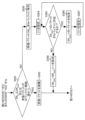
図12は、図1および図2に示す送信機1の動作を説明するためのフローチャートである。
Figure 12 is a flowchart for explaining the operation of the
図12を参照して、送信機1の動作が開始されると、処理手段12は、シーケンス番号SNをSN=0に設定する(ステップS1)。そして、処理手段12は、パケットがバッファ11に到着したか否かを判定する(ステップS2)。
Referring to FIG. 12, when the operation of the
ステップS2において、パケットPKT_Nがバッファ11に到着したと判定されたとき、処理手段12は、SN=SN+1を設定し(ステップS3)、シーケンス番号SNとパケット長LとをパケットPKT_Nに追加し、シーケンス番号SN、パケット長LおよびパケットPKT_Nをバッファ11にコピーする(ステップS4)。なお、ステップS3が実行されることによって、バッファ11(即ち、送信機1)に到着した順番を示すシーケンス番号SNがパケットPKT_Nおよびパケット長Lと共にバッファ11に格納される。
When it is determined in step S2 that packet PKT_N has arrived at
その後、処理手段12は、符号化パケットCを送信するか否かを判定する(ステップS5)。図9から図12において説明したように、結合パケットによる符号化パケットの送信(即ち、Piggybackによる符号化パケットの送信)は、バーストを構成するパケットP1~P6のうち、パケットP2~P6から選択された1個以上のパケットがそれぞれ送信機1に到着したタイミングで実行されるので、結合パケットによる符号化パケットの送信(即ち、Piggybackによる符号化パケットの送信)を実行するパケットPPiggybackを予め決定しておき、その決定したパケットPPiggybackがバッファ11(即ち、送信機1)に到着すると、処理手段12は、符号化パケットCを送信すると判定し、パケットPPiggyback以外のパケットがバッファ11(即ち、送信機1)に到着すると、符号化パケットCを送信しないと判定する。
Thereafter, the processing means 12 judges whether or not to transmit the encoded packet C (step S5). As explained in Fig. 9 to Fig. 12, the transmission of the encoded packet by the combined packet (i.e., the transmission of the encoded packet by Piggyback) is executed at the timing when one or more packets selected from packets P2 to P6 among packets P1 to P6 constituting a burst arrive at the
ステップS5において、符号化パケットCを送信すると判定されたとき、符号化パケットをNパケットPKT_Nに付与し(ステップS6)、結合パケットを生成する。 When it is determined in step S5 that encoded packet C is to be transmitted, the encoded packet is added to N packet PKT_N (step S6) to generate a combined packet.
そして、ステップS5において、符号化パケットCを送信しないと判定されたとき、またはステップS6の後、処理手段12は、パケットを送信手段13へ出力し、送信手段13は、処理手段12からのパケットをアンテナ14を介して受信機2へ送信する(ステップS7)。
Then, when it is determined in step S5 that the encoded packet C is not to be transmitted, or after step S6, the processing means 12 outputs the packet to the transmitting means 13, and the transmitting means 13 transmits the packet from the processing means 12 to the
その後、処理手段12は、上述した方法によって、バッファ11に格納されたパケットから符号化パケットCを生成する(ステップS8)。
Then, the processing means 12 generates an encoded packet C from the packets stored in the
そして、一連の動作は、ステップS2へ移行する。 Then, the sequence of operations proceeds to step S2.
一方、ステップS2において、パケットがバッファ11に到着しなかったと判定されたとき、処理手段12は、最後のパケットがバッファ11に到着してからTミリ秒が経過したか否かを判定する(ステップS9)。
On the other hand, when it is determined in step S2 that the packet has not arrived at the
ステップS9において、最後のパケットがバッファ11に到着してからTミリ秒が経過したと判定されたとき、処理手段12は、符号化パケットCを送信手段13へ出力し、送信手段13は、処理手段12から受けた符号化パケットCをアンテナ14を介して受信機2へ送信する(ステップS10)。
When it is determined in step S9 that T milliseconds have elapsed since the last packet arrived at the
その後、処理手段12は、符号化パケットCの送信数がKであるか否かを判定する(ステップS11)。 Then, the processing means 12 determines whether the number of transmissions of the encoded packet C is K (step S11).
ステップS11において、符号化パケットCの送信数がKでないと判定されたとき、処理手段12は、バッファ11に格納されたパケットから符号化パケットCを生成する(ステップS12)。その後、一連の動作は、ステップS10へ移行し、ステップS11において、符号化パケットCの送信数がKであると判定されるまで、ステップS10~ステップS12が繰り返し実行される。 When it is determined in step S11 that the number of transmissions of encoded packets C is not K, the processing means 12 generates encoded packets C from the packets stored in the buffer 11 (step S12). After that, the series of operations proceeds to step S10, and steps S10 to S12 are repeatedly executed until it is determined in step S11 that the number of transmissions of encoded packets C is K.
そして、ステップS11において、符号化パケットCの送信数がKであると判定されると、処理手段12は、バッファ11をクリアする(ステップS13)。その後、一連の動作は、ステップS2へ移行する。また、ステップS9において、最後のパケットがバッファ11に到着してからTミリ秒が経過していないと判定されたとき、一連の動作は、ステップS2へ移行する。
If it is determined in step S11 that the number of transmitted encoded packets C is K, the processing means 12 clears the buffer 11 (step S13). The series of operations then proceeds to step S2. Also, if it is determined in step S9 that T milliseconds have not elapsed since the last packet arrived at the
図13は、図12に示すステップS8の詳細な動作を説明するためのフローチャートである。 Figure 13 is a flowchart for explaining the detailed operation of step S8 shown in Figure 12.
図13を参照して、図12のステップS7の後、処理手段12は、i=1を設定する(ステップS81)。ここで、iは、図12のステップS8が実行される時点においてバッファ11に格納された各パケットのシーケンス番号SNを示す引数である。そして、i=1は、バッファ11に格納されたパケットのうち、最も古いパケットを表す。
Referring to FIG. 13, after step S7 in FIG. 12, the processing means 12 sets i=1 (step S81). Here, i is an argument indicating the sequence number SN of each packet stored in the
ステップS81の後、処理手段12は、nビットの長さを有する“000・・・0”からなる符号化パケットY0={000・・・0}を生成する(ステップS82)。 After step S81, the processing means 12 generates a coded packet Y 0 ={000...0} consisting of "000...0" having a length of n bits (step S82).
そして、処理手段12は、バッファ11からパケットXiを取得する(ステップS83)。 Then, the processing means 12 obtains the packet Xi from the buffer 11 (step S83).
その後、処理手段12は、ガロア体(GF(2n))によってnビット長の乱数を生成し、その生成したnビット長の乱数をCiに格納する(ステップS84)。 Thereafter, the processing means 12 generates a random number of n bits using a Galois field (GF(2 n )), and stores the generated random number of n bits in C i (step S84).
そうすると、処理手段12は、パケットXiの各要素Xi,1~Xi,Li×8/nにCiを掛け、Ci・XiとYi-1との排他的論理和を演算する。即ち、処理手段12は、次式によってYiを算出する(ステップS85)。 Then, the processing means 12 multiplies each element X i,1 to X i,Li×8/n of the packet X i by C i and calculates the exclusive OR of C i ·X i and Y i−1 . That is, the processing means 12 calculates Y i by the following formula (step S85).

引き続いて、処理手段12は、パケットXiのシーケンス番号SNi、パケット長Liおよび符号CiをCoded infoに追加する(ステップS86)。 Subsequently, the processing means 12 adds the sequence number SN i , the packet length L i and the code C i of the packet X i to the Coded info (step S86).
そして、処理手段12は、i=Iであるか否かを判定する(ステップS87)。ここで、Iは、図12のステップS8が実行される時点においてバッファ11に格納されたパケットのシーケンス番号SNの最大値を示す。
Then, the processing means 12 determines whether i=I (step S87). Here, I indicates the maximum value of the sequence number SN of the packets stored in the
ステップS87において、i=Iでないと判定されたとき、処理手段12は、i=i+1を設定する(ステップS88)。その後、一連の動作は、ステップS83へ移行し、ステップS87において、i=Iであると判定されるまで、ステップS83~ステップS88が繰り返し実行される。 When it is determined in step S87 that i is not equal to I, the processing means 12 sets i to i+1 (step S88). After that, the series of operations proceeds to step S83, and steps S83 to S88 are repeatedly executed until it is determined in step S87 that i is equal to I.
そして、ステップS87において、i=Iであると判定されると、処理手段12は、YiとCoded infoとからなる符号化パケットを生成する(ステップS89)。 Then, when it is determined in step S87 that i=I, the processing means 12 generates a coded packet consisting of Yi and Coded info (step S89).
その後、一連の動作は、図12のステップS2へ移行する。 Then, the sequence of operations proceeds to step S2 in Figure 12.
なお、図12のステップS12の詳細な動作も、図13に示すフローチャートによって実行される。この場合、図12のステップS11において、符号化パケットの送信数がKでないと判定されたとき、ステップS81~ステップS89が順次実行され、ステップS89の後、一連の動作は、図12のステップS10へ移行する。 The detailed operation of step S12 in FIG. 12 is also performed according to the flowchart shown in FIG. 13. In this case, when it is determined in step S11 in FIG. 12 that the number of transmitted encoded packets is not K, steps S81 to S89 are executed in sequence, and after step S89, the series of operations proceeds to step S10 in FIG. 12.
送信機1は、駆動されている限り、図12に示すステップS1~ステップS13(図13に示すフローチャートを含む)を繰り返し実行する。
As long as the
図12に示すフローチャート(図13に示すフローチャートを含む)においては、ステップS1が実行された後に、処理手段12は、ステップS2において、バーストを構成しないパケットPKT_N(1)(図4に示すPピクチャを示すパケット)がバッファ11に到着したと判定すると、上述したステップS3,S4を順次実行した後、ステップS5において符号化パケットCを送信しないと判定し、ステップS7において、パケットPKT_N(1)を送信手段13およびアンテナ14を介して受信機2へ送信する。
In the flowchart shown in FIG. 12 (including the flowchart shown in FIG. 13), after step S1 is executed, if the processing means 12 determines in step S2 that a packet PKT_N(1) that does not constitute a burst (a packet indicating a P picture shown in FIG. 4) has arrived at the
その後、処理手段12は、ステップS8において、符号化パケットCを生成し、ステップS8の後、一連の動作は、ステップS2へ移行する。 Then, in step S8, the processing means 12 generates an encoded packet C, and after step S8, the series of operations proceeds to step S2.
そして、処理手段12は、ステップS2において、バーストを構成しないパケットPKT_N(図4に示すPピクチャを示すパケット)がバッファ11に到着したと判定する毎に、ステップS3,S4、ステップS5の“NO”およびステップS7を順次実行して単体のパケットPKT_Nを受信機2へ送信し、ステップS8において、符号化パケットCを生成する。その後、一連の動作は、ステップS2へ移行する。
Then, in step S2, each time the processing means 12 determines that a packet PKT_N that does not constitute a burst (a packet indicating a P picture shown in FIG. 4) has arrived at the
なお、ステップS8において、バーストを構成しないパケットPKT_N(1)を符号化して符号化パケットを生成し、ステップS2において、パケットが到着しなかったと判定され、ステップS9において、最後のパケットがバッファ11に到着してからTミリ秒が経過したと判定された場合、符号化パケット(ほぼ、Nパケットからなる。)がK回送信されることになる(ステップS10~ステップS12参照)。
In step S8, a packet PKT_N(1) that does not constitute a burst is encoded to generate an encoded packet, and if it is determined in step S2 that no packet has arrived, and it is determined in step S9 that T milliseconds have passed since the last packet arrived at
次に、バーストを構成するパケット(例えば、図9に示すパケットP1~P6のいずれか)がバッファ11に到着したときの送信機1の動作を説明する。
Next, the operation of the
処理手段12は、ステップS2において、パケットP1がバッファ11に到着したと判定し、上述したステップS3,S4を順次実行した後、ステップS5において符号化パケットCを送信しないと判定し、ステップS7において、パケットP1を送信手段13およびアンテナ14を介して受信機2へ送信する。
The processing means 12 determines in step S2 that the packet P1 has arrived at the
そして、処理手段12は、ステップS8において、パケットP1を含む符号化パケットC1を生成し、その後、一連の動作は、ステップS2へ移行する。 Then, in step S8, the processing means 12 generates an encoded packet C1 containing packet P1 , after which the sequence of operations proceeds to step S2.
その後、処理手段12は、ステップS2において、パケットP2がバッファ11に到着したと判定し、上述したステップS3,S4を順次実行した後、ステップS5において符号化パケットCを送信しないと判定し、ステップS7において、パケットP2を送信手段13およびアンテナ14を介して受信機2へ送信する。そして、処理手段12は、ステップS8において、パケットP1,P2を含む符号化パケットC2を生成する。その後、一連の動作は、ステップS2へ移行する。
Thereafter, in step S2, the processing means 12 determines that packet P2 has arrived at the
引き続いて、処理手段12は、ステップS2において、パケットP3がバッファ11に到着したと判定し、上述したステップS3,S4を順次実行した後、ステップS5において符号化パケットC(=符号化パケットC1)を送信すると判定し、ステップS6において、符号化パケットC2をパケットP3に付与して結合パケットP3/C2を生成する。そして、処理手段12は、ステップS7において、送信手段13およびアンテナ14を介して結合パケットP3/C2を受信機2へ送信する。その後、処理手段12は、ステップS8において、パケットP1~P3を含む符号化パケットC3を生成する。そして、一連の動作は、ステップS2へ移行する。
Subsequently, in step S2, the processing means 12 determines that packet P3 has arrived at the
処理手段12は、符号化パケットC3を生成した後、ステップS2において、パケットP4がバッファ11に到着したと判定し、上述したステップS3,S4を順次実行した後、ステップS5において符号化パケットCを送信しないと判定し、ステップS7において、パケットP4を送信手段13およびアンテナ14を介して受信機2へ送信する。そして、処理手段12は、ステップS8において、パケットP1~P4を含む符号化パケットC4を生成する。その後、一連の動作は、ステップS2へ移行する。
After generating encoded packet C3 , the processing means 12 determines in step S2 that packet P4 has arrived at the
処理手段12は、符号化パケットC4を生成した後、ステップS2において、パケットP5がバッファ11に到着したと判定し、上述したステップS3,S4を順次実行した後、ステップS5において符号化パケットCを送信すると判定し、ステップS6において、符号化パケットC4をパケットP5に付与して結合パケットP5/C4を生成する。そして、処理手段12は、ステップS7において、結合パケットP5/C4を送信手段13およびアンテナ14を介して受信機2へ送信する。
After generating the encoded packet C4 , the processing means 12 determines in step S2 that packet P5 has arrived at the
その後、処理手段12は、ステップS8において、パケットP1~P5を含む符号化パケットC5を生成する。そして、一連の動作は、ステップS2へ移行する。 Thereafter, the processing means 12 generates, in step S8, an encoded packet C5 including packets P1 to P5 , and the sequence of operations then proceeds to step S2.
処理手段12は、符号化パケットC5を生成した後、ステップS2において、パケットP6がバッファ11に到着したと判定し、上述したステップS3,S4を順次実行した後、ステップS5において符号化パケットCを送信しないと判定し、ステップS7において、パケットP6を送信手段13およびアンテナ14を介して受信機2へ送信する。そして、処理手段12は、ステップS8において、パケットP1~P6を含む符号化パケットC6を生成する。その後、一連の動作は、ステップS2へ移行する。
After generating encoded packet C5 , the processing means 12 determines in step S2 that packet P6 has arrived at the
引き続いて、処理手段12は、ステップS2において、パケットがバッファ11に到着しなかったと判定し、ステップS9において、最後のパケット(=パケットP6)がバッファ11に到着した後、Tミリ秒が経過したと判定し、ステップS10において、符号化パケットC6を送信手段13およびアンテナ14を介して受信機2へ送信する。そして、処理手段12は、ステップS11において、符号化パケットCの送信数がK(=3)でないと判定し、ステップS12において、バッファ11に格納されたパケットP1~P6からパケットP1~P6を含む符号化パケットC7を生成する。
Subsequently, in step S2, the processing means 12 determines that no packet has arrived at the
その後、処理手段12は、ステップS10において、符号化パケットC7を送信手段13およびアンテナ14を介して受信機2へ送信する。
Thereafter, the processing means 12 transmits the encoded packet C7 to the
引き続いて、処理手段12は、ステップS11において、符号化パケットCの送信数がK(=3)でないと判定し、ステップS12において、バッファ11に格納されたパケットP1~P6からパケットP1~P6を含む符号化パケットC8を生成する。
Subsequently, in step S11, the processing means 12 determines that the number of transmissions of the encoded packet C is not K (=3), and in step S12 generates an encoded packet C8 including packets P1 to P6 from the packets P1 to P6 stored in the
その後、処理手段12は、ステップS10において、符号化パケットC8を送信手段13およびアンテナ14を介して受信機2へ送信する。
Thereafter, the processing means 12 transmits the encoded packet C8 to the
そして、処理手段12は、ステップS11において、符号化パケットCの送信数がK(=3)であると判定し、ステップS13において、バッファ11をクリアする。
Then, in step S11, the processing means 12 determines that the number of transmitted encoded packets C is K (= 3), and in step S13, clears the
図12に示すフローチャートにおいては、ステップS11における符号化パケットの送信数は、ステップS10において送信された符号化パケットの個数であり、ステップS7において、結合パケットによって送信された符号化パケットの個数を含まない。 In the flowchart shown in FIG. 12, the number of encoded packets sent in step S11 is the number of encoded packets sent in step S10, and does not include the number of encoded packets sent by the combined packet in step S7.
また、図8の(a)において説明したように、バーストを構成するパケットの個数MBurstがバッファ11のサイズMBuffer以下である場合、図12のステップS2においてパケットが到着しなかったと判定されたとき、パケットP1~P6がバッファ11に格納されているので、処理手段12は、ステップS12において、パケットP1~P6の全てを含む符号化パケットC7,C8を生成することができる。その結果、ステップS7において、符号化パケット(符号化パケットC1~C5の少なくとも1つ)を含む結合パケットまたは単体のパケット(図9のパケットP1,P2,P4,P6等)が受信機2によって受信できなくても、ステップS10において、受信機2が受信できなかったパケット(パケットP1~P6のうちの一部のパケット)の個数以上の個数の符号化パケット(符号化パケットC7,C8等)を受信機2へ送信するように“K”を決定することによって、受信機2が受信できなかったパケット(パケットP1~P6のうちの一部のパケット)を復号できる。
Furthermore, as explained in FIG. 8(a), if the number M Burst of packets constituting a burst is equal to or less than the size M Buffer of the
更に、図8の(b)において説明したように、バーストを構成するパケットの個数MBurstがバッファ11のサイズMBufferよりも大きい場合、図10に示すように、パケットP2~P10がそれぞれ送信機1に到着したタイミングで、パケットP2~P10に、それぞれ、符号化パケットC1~C9を付与した結合パケットP2/C1,P3/C2,P4/C3,P5/C4,P6/C5,P7/C6,P8/C7,P9/C8,P10/C9を受信機2へ送信するようにすると、符号化パケットC1~C9は、次式によって表される。
Furthermore, as explained in FIG. 8B, when the number M Burst of packets constituting a burst is larger than the size M Buffer of the
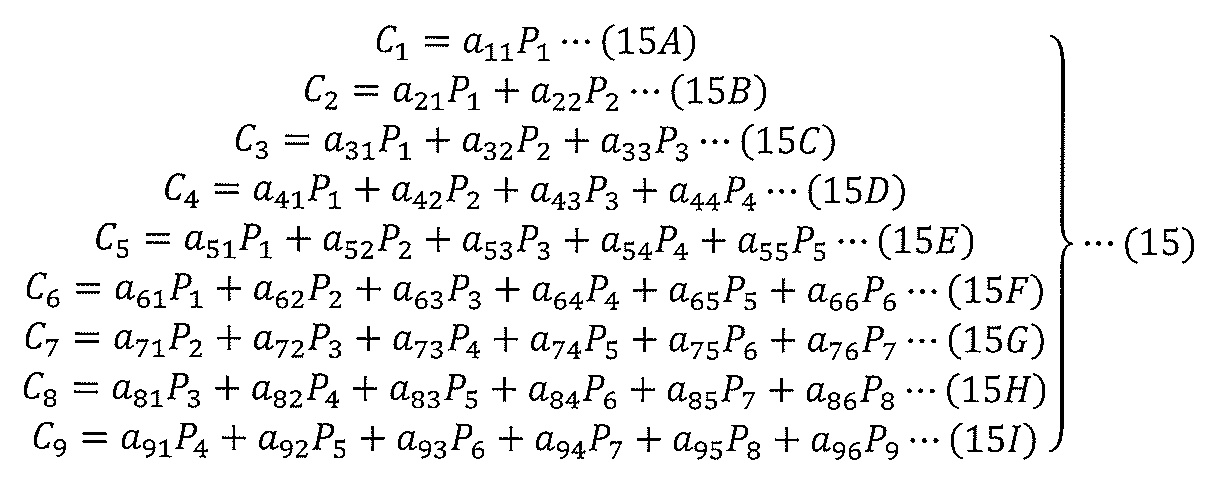
式(15)において、符号化パケットC6~C9に含まれるパケットの個数が6個であるのは、バッファ11に格納できるパケットの最大数MBufferが“6”であるので、パケットP7がバッファ11にコピーされると、パケットP1~P6がパケットP2~P7によって上書きされ、パケットP8がバッファ11にコピーされると、パケットP2~P7がパケットP3~P8によって上書きされ、パケットP9がバッファ11にコピーされると、パケットP3~P8がパケットP4~P9によって上書きされるからである。
In equation (15), the number of packets included in encoded packets C6 to C9 is 6 because the maximum number of packets MBuffer that can be stored in
そして、単体のパケットP1および結合パケットP2/C1,P3/C2,P4/C3,P5/C4,P6/C5,P7/C6,P8/C7,P9/C8,P10/C9は、図12のステップS7において送信される。 Then, the single packet P1 and the combined packets P2 / C1 , P3 / C2 , P4 / C3 , P5 / C4 , P6 / C5 , P7 / C6 , P8 / C7 , P9 / C8 , and P10 / C9 are transmitted in step S7 of FIG.
単体のパケットP1および結合パケットP2/C1,P3/C2,P4/C3,P5/C4,P6/C5,P7/C6,P8/C7,P9/C8,P10/C9の個数(=10個)のうちの半分が受信機2によって受信できなかった場合、9個の結合パケットP2/C1,P3/C2,P4/C3,P5/C4,P6/C5,P7/C6,P8/C7,P9/C8,P10/C9のうち、少なくとも4個の結合パケットが受信機2によって受信できる。
If half of the number (=10) of individual packet P1 and combined packets P2 / C1 , P3 / C2 , P4 / C3 , P5 / C4 , P6/C5, P7/C6, P8/C7, P9/C8, and P10 / C9 cannot be received by receiver 2 , at least four of the nine combined packets P2 / C1 , P3 / C2 , P4 / C3 , P5 / C4 , P6/ C5 , P7 / C6 , P8 / C7 , P9 /C8, and P10 / C9 can be received by
この場合、受信機2がパケットP1と、4個の結合パケットP2/C1,P3/C2,P4/C3,P5/C4とを受信でき、5個の結合パケットP6/C5,P7/C6,P8/C7,P9/C8,P10/C9を受信できなかったとすると、受信機2は、パケットP6~P10を受信できず、パケットP1~P5を受信できたことになる。
In this case, if
しかし、送信機1は、図12のステップS10~S12を5回繰り返し実行することによって、パケットP5~P10を含む5個の符号化パケットC10~C14を受信機2へ送信できる。5個の符号化パケットC10~C14は、次式によって表される。
12 five times, the

そして、受信機2は、例えば、式(16)から4個の符号化パケットC10~C13を選択し、4個の符号化パケットC10~C13から受信済のパケットP5の情報を除去して符号化パケットC10’,C11’,C12’,C13’を生成する。符号化パケットC10’,C11’,C12’,C13’の各々は、4個のパケットP6~P10を含むので、次式の連立方程式を解くことによってパケットP6~P10を復号できる。
Then, the

また、受信機2がパケットP1と、5個の結合パケットP6/C5,P7/C6,P8/C7,P9/C8,P10/C9とを受信でき、4個の結合パケットP2/C1,P3/C2,P4/C3,P5/C4を受信できなかったとすると、パケットP2~P5を受信できなかったことになる。
Furthermore, if
そうすると、受信できなかったパケットの個数が“4個”であるので、式(15)の符号化パケットC5~C9から4個の符号化パケットC6~C9を選択し、符号化パケットC6~C9から受信済のパケットP1,P6~P9の情報を除去し、受信済のパケットP1,P6~P9の情報を除去した符号化パケットC6’~C9’を示す連立方程式を解くことによってパケットP2~P5を復号できる。 In this case, since the number of packets that could not be received is "4," packets P2 to P5 can be decoded by selecting four encoded packets C6 to C9 from encoded packets C5 to C9 in equation (15), removing the information of already received packets P1 , P6 to P9 from encoded packets C6 to C9 , and solving the simultaneous equations that represent encoded packets C6 ' to C9 ' from which the information of already received packets P1 , P6 to P9 has been removed.
このように、バーストを構成するパケットの個数MBurstがバッファ11のサイズMBufferよりも大きい場合においても、受信機2が受信できなかったパケットを復号できる。
In this way, even if the number M Burst of packets constituting a burst is larger than the size M Buffer of the
更に、図12に示すフローチャート(図13に示すフローチャートを含む)においては、送信機1は、バーストを構成するパケットP1~P6の各パケットが送信機1に到着する毎に、単体のパケットまたは結合パケット(符号化パケットを含む。)を受信機2へ送信するので、バーストを構成する複数のパケットP1~P6を低遅延で受信機2へ送信できる。
Furthermore, in the flowchart shown in FIG. 12 (including the flowchart shown in FIG. 13), the
送信機1は、バーストを構成するパケット(図9に示すパケットP1~P6の全て)を受信機2へ送信した後、バーストを構成しないパケットPKT_N(図4に示すPピクチャを示すパケット)がバッファ11に到着したと判定すると、上述した方法によって、バーストを構成しないパケットPKT_N(図4に示すPピクチャを示すパケット)を受信機2へ送信する。
After transmitting packets constituting a burst (all of packets P1 to P6 shown in FIG. 9) to the
このように、送信機1は、図12に示すフローチャート(図13に示すフローチャートを含む)に従って、バーストを構成しないパケットおよびバーストを構成するパケットを受信機2へ送信する。
In this way, the
図14は、図1および図3に示す受信機2の動作を説明するためのフローチャートである。
Figure 14 is a flowchart for explaining the operation of the
図14を参照して、受信機2の動作が開始されると、受信手段22は、アンテナ21を介してパケットを受信すると(ステップS21の“YES”)、その受信したパケットを処理手段23へ出力する。
Referring to FIG. 14, when the operation of the
処理手段23は、パケットPKTを受信手段22から受け、その受けたパケットPKTがNパケットPKT_Nであるか否かを判定することによってNパケットPKT_Nを受信したか否かを判定する(ステップS22)。この場合、処理手段23は、パケットPKTのPacket infoの識別子N/Cが“N”からなり、かつ、パケットPKTがCoded infoおよび領域REG2を含んでいないとき、NパケットPKT_Nを受信したと判定し、パケットPKTのPacket infoの識別子N/Cが“C”からなるとき、またはパケットPKTのPacket infoの識別子N/Cが“N”からなり、かつ、Coded infoの識別子N/Cが“C”からなるとき、NパケットPKT_Nを受信しなかったと判定する。 The processing means 23 receives the packet PKT from the receiving means 22, and determines whether the received packet PKT is an N packet PKT_N, thereby determining whether or not N packet PKT_N has been received (step S22). In this case, the processing means 23 determines that N packet PKT_N has been received when the identifier N/C of the packet info of the packet PKT is "N" and the packet PKT does not include Coded info and the region REG2, and determines that N packet PKT_N has not been received when the identifier N/C of the packet info of the packet PKT is "C", or when the identifier N/C of the packet info of the packet PKT is "N" and the identifier N/C of the Coded info is "C".
ステップS22において、NパケットPKT_Nを受信しなかったと判定されたとき、処理手段23は、結合パケット(Piggybackによって送信されたパケット)を受信したか否かを判定する(ステップS23)。この場合、処理手段23は、パケットPKTのPacket infoの識別子N/Cが“N”からなり、かつ、パケットPKTのCoded infoの識別子N/Cが“C”からなるとき、結合パケットを受信したと判定し、パケットPKTのPacket infoの識別子N/Cが“C”からなるとき、結合パケットを受信しなかったと判定する。 When it is determined in step S22 that N packets PKT_N have not been received, the processing means 23 determines whether or not a combined packet (a packet sent by Piggyback) has been received (step S23). In this case, the processing means 23 determines that a combined packet has been received when the identifier N/C of the Packet info of the packet PKT is "N" and the identifier N/C of the Coded info of the packet PKT is "C", and determines that a combined packet has not been received when the identifier N/C of the Packet info of the packet PKT is "C".
ステップS23において、結合パケットを受信したと判定されたとき、処理手段23は、NパケットとCパケット(=符号化パケット)とを分離する(ステップS24)。 When it is determined in step S23 that a combined packet has been received, the processing means 23 separates the N packet from the C packet (= encoded packet) (step S24).
その後、処理手段23は、NパケットPKT_Nが有るか否かを判定する(ステップS25)。 Then, the processing means 23 determines whether or not N packets PKT_N are present (step S25).
ステップS25において、NパケットPKTが有ると判定されたとき、またはステップS22において、NパケットPKT_Nを受信したと判定されたとき、処理手段23は、Nパケット受信処理を実行する(ステップS26)。 When it is determined in step S25 that N packets PKT are present, or when it is determined in step S22 that N packets PKT_N have been received, the processing means 23 executes an N packet reception process (step S26).
その後、処理手段23は、Cパケット(=符号化パケット)が有るか否かを判定する(ステップS27)。 Then, the processing means 23 determines whether or not there is a C packet (= encoded packet) (step S27).
そして、ステップS23において、結合パケットを受信しなかったと判定されたとき、またはステップS25において、NパケットPKT_Nが無いと判定されたとき、またはステップS27において、Cパケット(=符号化パケット)が有ると判定されたとき、処理手段23は、Cパケット(=符号化パケット)から受信済のNパケットPKT_Nの情報を除去する(ステップS28)。 Then, when it is determined in step S23 that a combined packet has not been received, or when it is determined in step S25 that there is no N packet PKT_N, or when it is determined in step S27 that there is a C packet (=encoded packet), the processing means 23 removes the information of the received N packet PKT_N from the C packet (=encoded packet) (step S28).
引き続いて、処理手段23は、復号処理を実行する(ステップS29)。そして、処理手段23は、復号できたか否かを判定する(ステップS30)。 Then, the processing means 23 executes the decryption process (step S29). Then, the processing means 23 determines whether the decryption is successful (step S30).
ステップS30において、復号できたと判定されたとき、ステップS30において、復号できなかったと判定されるまで、ステップS29,S30が繰り返し実行される。 When it is determined in step S30 that the data has been decoded, steps S29 and S30 are repeatedly executed until it is determined in step S30 that the data has not been decoded.
そして、ステップS27において、Cパケット(=符号化パケット)が無いと判定されたとき、またはステップS30において、復号できなかったと判定されたとき、一連の動作は、ステップS21へ移行する。以後、受信機2は、駆動されている限り、ステップ21~ステップS30を繰り返し実行する。
Then, if it is determined in step S27 that there is no C packet (= encoded packet), or if it is determined in step S30 that decoding has not been possible, the series of operations proceeds to step S21. After that, the
なお、ステップS23において、結合パケットを受信しなかったと判定されたときに、一連の動作がステップS28へ移行するのは、受信機2によって受信されるパケットは、NパケットPKT_N、符号化パケットPKT_Cおよび結合パケットの3種類であり、ステップS22において、NパケットPKT_Nを受信しなかったと判定され、更に、ステップS23において、結合パケットを受信しなかったと判定されているので、受信機2が受信したパケットは、符号化パケットPKT_Cであるからである。
When it is determined in step S23 that the combined packet has not been received, the series of operations proceeds to step S28 because the packets received by
図15は、図14に示すステップS26の詳細な動作を説明するためのフローチャートである。 Figure 15 is a flowchart for explaining the detailed operation of step S26 shown in Figure 14.
図15を参照して、図14のステップS22において、NパケットPKT_Nを受信したと判定されたとき、または図14のステップS25において、NパケットPKT_Nが有ると判定されたとき、処理手段23は、受信したNパケットPKT_Nのシーケンス番号SNrxが受信済、かつ、アプリケーション30へ送信済のNパケットPKT_Nのシーケンス番号SNsent(即ち、Nバッファ24に格納されたNパケットのシーケンス番号)以下であるか否か、または受信したNパケットPKT_NがNバッファ24に格納済であるか否かを判定する(ステップS261)。 15, when it is determined in step S22 of FIG. 14 that an N packet PKT_N has been received, or when it is determined in step S25 of FIG. 14 that an N packet PKT_N is present, the processing means 23 determines whether or not the sequence number SN rx of the received N packet PKT_N is equal to or less than the sequence number SN sent of the N packet PKT_N that has been received and transmitted to the application 30 (i.e., the sequence number of the N packet stored in the N buffer 24), or whether or not the received N packet PKT_N has been stored in the N buffer 24 (step S261).
ステップS261において、受信したNパケットPKT_Nのシーケンス番号SNrxが受信済、かつ、アプリケーション30へ送信済のNパケットPKT_Nのシーケンス番号SNsent以下であると判定されたとき、または受信したNパケットPKT_NがNバッファ24に格納済であると判定されたとき、処理手段23は、受信したNパケットPKT_Nを破棄する(ステップS262)。
In step S261, when it is determined that the sequence number SN rx of the received N packet PKT_N is equal to or less than the sequence number SN sent of the N packet PKT_N that has been received and transmitted to the
一方、ステップS261において、受信したNパケットPKT_Nのシーケンス番号SNrxが受信済、かつ、アプリケーション30へ送信済のNパケットPKT_Nのシーケンス番号SNsent以下でなく、かつ、受信したNパケットPKT_NがNバッファ24に格納済でないと判定されたとき、処理手段23は、受信したNパケットPKT_N(SNrx)をNバッファ24に格納する(ステップS263)。
On the other hand, when it is determined in step S261 that the sequence number SN rx of the received N packet PKT_N is not equal to or less than the sequence number SN sent of the N packet PKT_N that has been received and sent to the
そして、処理手段23は、i=1を設定し(ステップS264)、シーケンス番号SNsent+iを有するパケットPKT_NがNバッファ24に存在するか否かを判定する(ステップS265)。なお、iは、1,2,3,・・・の整数である。 Then, the processing means 23 sets i=1 (step S264), and judges whether or not a packet PKT_N having sequence number SN sent +i exists in the N buffer 24 (step S265), where i is an integer of 1, 2, 3, . . .
ステップS265において、シーケンス番号SNsent+iを有するパケットPKT_NがNバッファ24に存在すると判定されたとき、処理手段23は、シーケンス番号SNsent+iを有するパケットPKT_Nをアプリケーション30へ伝送する(ステップS266)。そして、処理手段23は、i=i+1を設定する(ステップS267)。その後、一連の動作は、ステップS265へ移行し、ステップS265において、シーケンス番号SNsent+iを有するパケットPKT_NがNバッファ24に存在しないと判定されるまで、ステップS265~ステップS267が繰り返し実行される。
When it is determined in step S265 that the packet PKT_N having the sequence number SN sent +i is present in the
そして、ステップS265において、シーケンス番号SNsent+iを有するパケットPKT_NがNバッファ24に存在しないと判定されると、処理手段23は、SNsent=SNsent+i-1を設定する(ステップS268)。
Then, when it is determined in step S265 that the packet PKT_N having the sequence number SN sent +i is not present in the
そして、ステップS262またはステップS268の後、一連の動作は、図14のステップS27へ移行する。 Then, after step S262 or step S268, the series of operations proceeds to step S27 in FIG. 14.
図15に示すステップS263~ステップS267は、新たに受信したNパケットPKT_NをNバッファ24に格納するとともにアプリケーション30に伝送するステップである。そして、i≧2であるときに、ステップS265においてシーケンス番号SNsent+iを有するパケットPKT_NがNバッファ24に存在しないと判定されると、ステップS268において、Nバッファ24における受信済のNパケットPKT_Nの最新のシーケンス番号SNsentが更新される。
15 are steps for storing a newly received N packet PKT_N in the
図16は、図14に示すステップS28の詳細な動作を説明するためのフローチャートである。 Figure 16 is a flowchart for explaining the detailed operation of step S28 shown in Figure 14.
図16を参照して、図14のステップS23において、結合パケットを受信しなかったと判定されたとき、または図14のステップS25において、Nパケットが無いと判定されたとき、または図14のステップS27において、Cパケット(符号化パケット)が有ると判定されたとき、処理手段23は、i=1を設定し(ステップS281)、Nバッファ24からパケットXiを取得する(ステップS282)。ここで、iは、Nバッファ24に格納された各パケットXiを表し、1~Iである。そして、Iは、Nバッファ24に格納されたパケットXiの総数である。
16, when it is determined in step S23 of Fig. 14 that a combined packet has not been received, or when it is determined in step S25 of Fig. 14 that an N packet does not exist, or when it is determined in step S27 of Fig. 14 that a C packet (encoded packet) exists, the processing means 23 sets i=1 (step S281) and acquires a packet X i from the N buffer 24 (step S282), where i represents each packet X i stored in the
ステップS282の後、処理手段23は、パケットXiのシーケンス番号SNが符号化パケットYのCoded infoに含まれるか否かを判定する(ステップS283)。 After step S282, the processing means 23 determines whether or not the sequence number SN of packet Xi is included in the Coded info of the coded packet Y (step S283).
ステップS283において、パケットXiのシーケンス番号SNが符号化パケットYのCoded infoに含まれると判定されたとき、処理手段23は、符号化パケットYとパケットXiとの排他的論理和を演算することによって符号化パケットYから受信済のパケットXiの情報を除去する(ステップS284)。 When it is determined in step S283 that the sequence number SN of packet Xi is included in the Coded info of encoded packet Y, the processing means 23 removes the information of the already received packet Xi from encoded packet Y by calculating the exclusive OR of encoded packet Y and packet Xi (step S284).
そして、ステップS283において、パケットXiのシーケンス番号SNが符号化パケットYのCoded infoに含まれていないと判定されたとき、またはステップS284の後、処理手段23は、i=Iであるか否かを判定する(ステップS285)。 Then, when it is determined in step S283 that the sequence number SN of packet Xi is not included in the Coded info of coded packet Y, or after step S284, the processing means 23 determines whether i=I (step S285).
ステップS285において、i=Iでないと判定されたとき、処理手段23は、i=i+1を設定する(ステップS286)。その後、一連の動作は、ステップS282へ移行し、ステップS285において、i=Iであると判定されるまで、ステップS282~ステップS286が繰り返し実行される。 When it is determined in step S285 that i is not equal to I, the processing means 23 sets i to i+1 (step S286). After that, the series of operations proceeds to step S282, and steps S282 to S286 are repeatedly executed until it is determined in step S285 that i is equal to I.
そして、ステップS285において、i=Iであると判定されると、処理手段23は、符号化パケットYに含まれていた情報の全てを受信済であるか否かを判定する(ステップS287)。この場合、処理手段23は、符号化パケットYがY={000・・・0}であるとき、符号化パケットYに含まれていた情報の全てを受信済であると判定し、符号化パケットYがY={000・・・0}でないとき、符号化パケットYに含まれていた情報の全てを受信済であることは無い(即ち、符号化パケットYに含まれていた情報の一部を受信済でない)と判定する。 Then, when it is determined in step S285 that i=I, the processing means 23 determines whether or not all of the information contained in the encoded packet Y has been received (step S287). In this case, when encoded packet Y is Y={000...0}, the processing means 23 determines that all of the information contained in encoded packet Y has been received, and when encoded packet Y is not Y={000...0}, the processing means 23 determines that not all of the information contained in encoded packet Y has been received (i.e., not all of the information contained in encoded packet Y has been received).
ステップS287において、符号化パケットYに含まれていた情報の全てを受信済であることは無いと判定されたとき、処理手段23は、符号化パケットYに含まれるNパケット数が“1”であるか否かを判定する(ステップS288)。 When it is determined in step S287 that not all of the information contained in encoded packet Y has been received, the processing means 23 determines whether the number of N packets contained in encoded packet Y is "1" (step S288).
ステップS288において、符号化パケットYに含まれるNパケット数が“1”でないと判定されたとき、処理手段23は、符号化パケットYをCバッファ25に保存する(ステップS289)。 When it is determined in step S288 that the number of N packets contained in the encoded packet Y is not "1", the processing means 23 stores the encoded packet Y in the C buffer 25 (step S289).
一方、ステップS288において、符号化パケットYに含まれるNパケット数が“1”であると判定されたとき、処理手段23は、式(13)によって符号化パケットYをパケットXに変換し、その変換したパケットXに対して、上述した「Nパケット受信処理」(図15に示すフローチャート)を実行する(ステップS290)。 On the other hand, when it is determined in step S288 that the number of N packets contained in the encoded packet Y is "1", the processing means 23 converts the encoded packet Y into packet X using equation (13) and executes the above-mentioned "N packet reception process" (flowchart shown in Figure 15) on the converted packet X (step S290).
そして、ステップS287において、符号化パケットYに含まれていた情報の全てを受信済であると判定されたとき、またはステップS289の後、またはステップS290の後、一連の動作は、図14のステップS29へ移行する。 Then, when it is determined in step S287 that all of the information contained in encoded packet Y has been received, or after step S289, or after step S290, the series of operations proceeds to step S29 in FIG. 14.
図16に示すフローチャートにおいては、ステップS285において、i=Iであると判定されるまで、ステップS282~ステップS286が繰り返し実行されることによって、符号化パケットYから受信済の全てのパケットX1~XIの情報が除去される。即ち、ステップS285において、i=Iであると判定されるまで、ステップS282~ステップS286が繰り返し実行されることによって、Nバッファ24に格納されていない複数のパケット(=受信済でない複数のパケット)のみを含む符号化パケットCが生成される。 16, steps S282 to S286 are repeatedly executed until it is determined in step S285 that i=I, thereby removing information of all received packets X 1 to XI from encoded packet Y. That is, steps S282 to S286 are repeatedly executed until it is determined in step S285 that i=I, thereby generating encoded packet C including only a plurality of packets not stored in N buffer 24 (=a plurality of packets not yet received).
図17は、図14に示すステップS29の詳細な動作を説明するためのフローチャートである。 Figure 17 is a flowchart for explaining the detailed operation of step S29 shown in Figure 14.
図17を参照して、図14のステップS28の後、またはステップS30において復号できたと判定されたとき、処理手段23は、2個以上の符号化パケットYがCバッファ25に存在するか否かを判定する(ステップS291)。 Referring to FIG. 17, after step S28 in FIG. 14, or when it is determined in step S30 that decoding has been successful, the processing means 23 determines whether or not two or more encoded packets Y are present in the C buffer 25 (step S291).
ステップS291において、2個以上の符号化パケットYがCバッファ25に存在しないと判定されたとき、一連の動作は、図14のステップS21へ移行する。
When it is determined in step S291 that two or more encoded packets Y are not present in the
一方、ステップS291において、2個以上の符号化パケットYがCバッファ25に存在すると判定されたとき、処理手段23は、i=1を設定する(ステップS292)。ここで、iは、Cバッファ25に格納された各符号化パケットYiを表し、1~Iである。そして、Iは、Cバッファ25に格納された符号化パケットYiの総数である。
On the other hand, when it is determined in step S291 that two or more encoded packets Y exist in the
ステップS292の後、処理手段23は、Cバッファ25から符号化パケットYiを取得する(ステップS293)。 After step S292, the processing means 23 obtains the encoded packet Yi from the C buffer 25 (step S293).
そして、処理手段23は、符号化パケットYiに対して「符号化パケットから受信済のパケットXiの情報を除去」(図16のフローチャート)を実行する(ステップS294)。 Then, the processing means 23 executes the process of "removing information of already-received packet Xi from the encoded packet" (flowchart of FIG. 16) for the encoded packet Yi (step S294).
その後、処理手段23は、符号化パケットYiに含まれるNパケット数が“1”以下であるか否かを判定する(ステップS295)。 Thereafter, the processing means 23 judges whether the number of N packets included in the encoded packet Yi is equal to or less than "1" (step S295).
ステップS295において、符号化パケットYiに含まれるNパケット数が“1”以下であると判定されると、処理手段23は、符号化パケットYiをCバッファ25から消去する(ステップS296)。 If it is determined in step S295 that the number of N packets included in the coded packet Yi is equal to or less than "1", the processing means 23 deletes the coded packet Yi from the C buffer 25 (step S296).
そして、ステップS295において、符号化パケットYiに含まれるNパケット数が“1”以下でないと判定されたとき、またはステップS296の後、処理手段23は、i=Iであるか否かを判定する(ステップS297)。 Then, when it is determined in step S295 that the number of N packets included in the encoded packet Yi is not "1" or less, or after step S296, the processing means 23 determines whether or not i=I (step S297).
ステップS297において、i=Iでないと判定されたとき、処理手段23は、i=i+1を設定する(ステップS298)。その後、一連の動作は、ステップS293へ移行し、ステップS297において、i=Iであると判定されるまで、ステップS293~ステップS298が繰り返し実行される。 When it is determined in step S297 that i is not equal to I, the processing means 23 sets i to i+1 (step S298). After that, the series of operations proceeds to step S293, and steps S293 to S298 are repeatedly executed until it is determined in step S297 that i is equal to I.
そして、ステップS297において、i=Iであると判定されると、処理手段23は、複数のNパケットを含む符号化パケットCがCバッファ25に複数存在するか否かを判定する(ステップS299)。 Then, when it is determined in step S297 that i=I, the processing means 23 determines whether or not there are multiple encoded packets C containing multiple N packets in the C buffer 25 (step S299).
ステップS299において、複数のNパケットを含む符号化パケットCがCバッファ25に複数存在すると判定されたとき、処理手段23は、Cバッファ25から複数の符号化パケットYを取得し、その取得した複数の符号化パケットYを表す連立方程式を解いてCパケット(符号化パケット)を復号する(ステップS300)。
When it is determined in step S299 that multiple encoded packets C each containing multiple N packets are present in the
そして、ステップS299において、複数のNパケットを含む符号化パケットCがCバッファ25に複数存在しないと判定されたとき、またはステップS300の後、処理手段23は、i=1を設定し(ステップS301)、復号できたNパケット数が“i”以上であるか否かを判定する(ステップS302)。
Then, in step S299, when it is determined that there are not multiple encoded packets C containing multiple N packets in the
ステップS302において、復号できたNパケット数が“i”以上であると判定されたとき、処理手段23は、復号されたNパケットに対して「Nパケット受信処理」(図15のフローチャート)を実行する(ステップS303)。そして、処理手段23は、i=i+1を設定する(ステップS304)。その後、一連の動作は、ステップS302へ移行し、ステップS302において、復号できたNパケット数が“i”以上でないと判定されるまで、ステップS302~ステップS304が繰り返し実行される。 When it is determined in step S302 that the number of N packets that have been successfully decoded is equal to or greater than "i", the processing means 23 executes "N packet reception processing" (flowchart in FIG. 15) for the decoded N packets (step S303). Then, the processing means 23 sets i = i + 1 (step S304). After that, the series of operations proceeds to step S302, and steps S302 to S304 are repeatedly executed until it is determined in step S302 that the number of N packets that have been successfully decoded is not equal to or greater than "i".
そして、ステップS302において、復号できたNパケット数が“i”以上でないと判定されると、一連の動作は、図14のステップS30へ移行する。 If it is determined in step S302 that the number of N packets that have been successfully decoded is not equal to or greater than "i", the process proceeds to step S30 in FIG. 14.
図17に示すフローチャートにおいては、図16のステップS287において、符号化パケットYに含まれていた情報の全てを受信済であると判定された後に、またはステップS290の後にステップS291へ移行した場合、ステップS291において、2個以上の符号化パケットYがCバッファ25に存在しないと判定され、一連の動作は、図14のステップS21へ移行する。
In the flowchart shown in FIG. 17, if the process moves to step S291 after it is determined in step S287 of FIG. 16 that all of the information contained in encoded packet Y has been received, or after step S290, it is determined in step S291 that two or more encoded packets Y are not present in
一方、図16のステップS289の後にステップS291へ移行した場合において、ステップS291において、2個以上の符号化パケットYがCバッファ25に存在すると判定されたとき、上述したステップS292~ステップS304が順次実行され、ステップS291において、2個以上の符号化パケットYがCバッファ25に存在しないと判定されたとき、一連の動作は、図14のステップS21へ移行する。
On the other hand, if the process proceeds to step S291 after step S289 in FIG. 16, and it is determined in step S291 that two or more encoded packets Y are present in the
また、図17に示すフローチャートにおいては、ステップS302において、復号できたNパケット数がi以上でないと判定されるまで、ステップS302~ステップS304が繰り返し実行されるのは、符号化パケットCを復号することによって取得された全てのNパケットに対して「Nパケット受信処理」(図15のフローチャート)を実行するためである。 In the flowchart shown in FIG. 17, steps S302 to S304 are repeatedly executed until it is determined in step S302 that the number of N packets that have been successfully decoded is not equal to or greater than i. This is to execute the "N packet reception process" (flowchart in FIG. 15) for all N packets obtained by decoding encoded packet C.
図18は、バーストを構成するパケットの受信時におけるNバッファ24およびCバッファ25の変遷を示す図である。
Figure 18 shows the changes in the
なお、図18は、バーストを構成するパケットが図9に示すパケットP1~P6からなる場合において、バーストを構成するパケットの受信時におけるNバッファ24およびCバッファ25の変遷を示す。
18 shows the transition of the
図18を参照して、送信機1がパケットP1を送信すると、受信機2は、パケットP1の受信に失敗するので、図14のステップS21においては、受信機2の受信手段22は、パケットP1を受信しない。その結果、Nバッファ24およびCバッファ25には、パケットが格納されない(図18の(a)参照)。
18, when the
その後、送信機1がパケットP2を送信すると、受信機2の受信手段22は、アンテナ21を介してパケットP2を受信し(図14のステップS21の“YES”参照)、その受信したパケットP2を処理手段23へ出力する。
Thereafter, when the
処理手段23は、パケットP2を受信手段22から受けると、パケットP2のPacket infoの識別子N/Cが“N”からなることを確認してNパケットを受信したと判定する(図14のステップS22の“YES”参照)。そして、処理手段23は、パケットP2に対してNパケット受信処理を実行し(図14のステップS26参照)、パケットP2のシーケンス番号SNrxが受信済、かつ、アプリケーション30へ送信済のNパケットPKT_Nのシーケンス番号SNsent(即ち、Nバッファ24に格納されたNパケットのシーケンス番号)よりも大きく、かつ、受信パケットがNバッファ24に格納済でないと判定し(図15のステップS261の“NO”参照)、パケットP2をNバッファ24に格納するとともにパケットP2をアプリケーション30へ伝送する(図15のステップS263~S266参照)。そして、処理手段23は、i=2であるときに、SNsent+i(=SNsent+2)のパケットがNバッファ24に存在しないと判定し(図15のステップS265の“NO”参照)、SNsent=SNsent+i-1=SNsent+2-1=SNsent+1によってNバッファ24に格納されたNパケットPKT_Nのシーケンス番号SNsentを更新する(図15のステップS268参照)。その後、処理手段23は、Cパケットが無いと判定し(図14のステップS27の“NO”参照)、受信機2の動作は、図14のステップS21へ移行する。この段階で、パケットP2がNバッファ24に格納される(図18の(b)参照)。
When the processing means 23 receives the packet P2 from the receiving means 22, it confirms that the identifier N/C of the packet info of the packet P2 is "N" and determines that the N packet has been received (see "YES" in step S22 of FIG. 14). Then, the processing means 23 executes an N packet receiving process for the packet P2 (see step S26 of FIG. 14), determines that the sequence number SNrx of the packet P2 is greater than the sequence number SNsent of the N packet PKT_N that has been received and transmitted to the application 30 (i.e., the sequence number of the N packet stored in the N buffer 24) and that the received packet has not been stored in the N buffer 24 (see "NO" in step S261 of FIG. 15), and stores the packet P2 in the
引き続いて、送信機1が結合パケットP3/C2を送信すると、受信機2は、結合パケットP3/C2の受信に失敗するので、図14のステップS21においては、受信機2の受信手段22は、結合パケットP3/C2を受信しない。その結果、Nバッファ24およびCバッファ25の状態は、変化しない(図18の(c)参照)。
Subsequently, when the
その後、送信機1がパケットP4を送信すると、受信機2は、上述したパケットP2の受信時における動作と同じ動作を実行する。その結果、パケットP4がNバッファ24に格納される(図18の(d)参照)。
Thereafter, when the
そして、送信機1が結合パケットP5/C4を送信すると、受信機2の受信手段22は、アンテナ21を介して結合パケットP5/C4を受信し(図14のステップS21の“YES”参照)、その受信した結合パケットP5/C4を処理手段23へ出力する。
Then, when the
処理手段23は、結合パケットP5/C4を受信手段22から受けると、結合パケットP5/C4のPacket infoの識別子N/Cが“N”からなり、かつ、Coded infoの識別子N/Cが“C”からなることを確認し、NパケットPKT_Nを受信しなかったと判定するとともに(図14のステップS22の“NO”参照)、結合パケットを受信したと判定する(図14のステップS23の“YES”参照)。 When the processing means 23 receives the combined packet P5 / C4 from the receiving means 22, it confirms that the identifier N/C of the Packet info of the combined packet P5 / C4 is "N" and that the identifier N/C of the Coded info is "C", and determines that it has not received N packet PKT_N (see "NO" in step S22 of FIG. 14), and also determines that it has received a combined packet (see "YES" in step S23 of FIG. 14).
その後、処理手段23は、結合パケットP5/C4のNパケットP5と符号化パケットC4とを分離し(図14のステップS24参照)、Nパケットが有ると判定し(図14のステップS25の“YES”参照)、パケットP5に対してNパケット受信処理を実行する(図14のステップS26参照)。そして、処理手段23は、Nパケット受信処理において、パケットP5のシーケンス番号SNrxが受信済、かつ、アプリケーション30へ送信済のNパケットPKT_Nのシーケンス番号SNsent(即ち、Nバッファ24に格納されたNパケットのシーケンス番号)よりも大きく、かつ、受信パケットがNバッファ24に格納されていないと判定し(図15のステップS261の“NO”参照)、パケットP5をNバッファ24に格納するとともにパケットP5をアプリケーション30へ伝送する(図15のステップS263~S266参照)。そして、処理手段23は、i=2であるときに、Nバッファ24にSNsent+i(=SNsent+2)のパケットが存在しないと判定し(図15のステップS265の“NO”参照)、SNsent=SNsent+i-1=SNsent+2-1=SNsent+1によってNバッファ24に格納されたNパケットPKT_Nのシーケンス番号SNsentを更新する(図15のステップS268参照)。その後、処理手段23は、Cパケットが有ると判定し(図14のステップS27の“YES”参照)、Cパケットから受信済のNパケットの情報を除去する(図14のステップS28参照)。この時点で、Nバッファ24には、パケットP2,P4,P5が格納されており(図18の(e)参照)、符号化パケットC4は、パケットP1~P4を含むので、処理手段23は、符号化パケットC4とパケットP2,P4との排他的論理和を順次演算して符号化パケットC4から受信済のパケットP2,P4の情報を除去する(図16のステップS282~ステップS286参照)。
Thereafter, the processing means 23 separates the N packet P5 and the encoded packet C4 of the combined packet P5 / C4 (see step S24 in FIG. 14), determines that there is an N packet (see "YES" in step S25 in FIG. 14), and executes an N packet reception process for the packet P5 (see step S26 in FIG. 14). Then, in the N packet reception process, the processing means 23 determines that the sequence number SNrx of the packet P5 is greater than the sequence number SNsent of the N packet PKT_N that has been received and transmitted to the application 30 (i.e., the sequence number of the N packet stored in the N buffer 24) and that the received packet is not stored in the N buffer 24 (see "NO" in step S261 in FIG. 15), and stores the packet P5 in the
符号化パケットC4から受信済のパケットP2,P4の情報を除去した後の符号化パケットC4’は、式(9)によって表わされる。その結果、処理手段23は、符号化パケットC4に含まれていた情報の全てを受信済であることは無いと判定し(図16のステップS287の“NO”参照)、符号化パケットC4’に含まれるNパケット数が“1”でないと判定し(図16のステップS288の“NO”参照)、符号化パケットC4’をCバッファ25に格納する(図16のステップS289参照)。これによって、Nバッファ24には、3個のパケットP2,P4,P5が格納され、Cバッファ25には、1個の符号化パケットC4’が格納される(図18の(e)参照)。
The encoded packet C 4 ' obtained by removing the information of the already received packets P 2 and P 4 from the encoded packet C 4 is expressed by the formula (9). As a result, the processing means 23 determines that all the information contained in the encoded packet C 4 has not been received (see "NO" in step S287 of FIG. 16), determines that the number of N packets contained in the encoded packet C 4 ' is not "1" (see "NO" in step S288 of FIG. 16), and stores the encoded packet C 4 ' in the C buffer 25 (see step S289 of FIG. 16). As a result, three packets P 2 , P 4 , and P 5 are stored in the
図16のステップS289の後、受信機2の動作は、図14のステップS29へ移行し、図14のステップS29の詳細な動作を示す図17のステップS291において、処理手段23は、2個以上の符号化パケットYがCバッファ25に存在しないと判定し、受信機2の動作は、図14のステップS21へ移行する。
After step S289 in FIG. 16, the operation of the
その後、送信機1がパケットP6を送信すると、受信機2は、上述したパケットP2の受信時における動作と同じ動作を実行する。その結果、パケットP6がNバッファ24に格納される(図18の(f)参照)。そして、パケットP6がNバッファ24に格納された後、処理手段23は、Cパケットが無いと判定するので(図14のステップS27の“NO”参照)、受信機2の動作は、図14のステップS21へ移行する。
Thereafter, when the
引き続いて、送信機1が符号化パケットC6を送信すると、受信機2の受信手段22は、アンテナ21を介して符号化パケットC6を受信し(図14のステップS21の“YES”参照)、その受信した符号化パケットC6を処理手段23へ出力する。
Subsequently, when the
処理手段23は、符号化パケットC6を受信手段22から受けると、符号化パケットC6のPacket infoの識別子N/Cが“C”からなるので、Nパケットを受信しなかったと判定し(図14のステップS22の“NO”参照)、結合パケットを受信しなかったと判定する(図14のステップS23の“NO”参照)。 When the processing means 23 receives the encoded packet C6 from the receiving means 22, since the identifier N/C in the packet info of the encoded packet C6 consists of “C”, the processing means 23 determines that N packets have not been received (see “NO” in step S22 of FIG. 14), and determines that a combined packet has not been received (see “NO” in step S23 of FIG. 14).
従って、処理手段23は、符号化パケットC6から受信済のパケットの情報を除去する(図14のステップS28参照)。この段階では、Nバッファ24には、パケットP2,P4,P5,P6が格納されており、符号化パケットC6は、パケットP1~P6を含むので(式(6)参照)、処理手段23は、符号化パケットC6とパケットP2,P4,P5,P6との排他的論理和を順次演算して符号化パケットC6から受信済のパケットP2,P4,P5,P6の情報を除去する(図16のステップS282~ステップS286参照)。
Therefore, the processing means 23 removes information of already received packets from encoded packet C6 (see step S28 in FIG. 14). At this stage, packets P2 , P4 , P5 , and P6 are stored in the
符号化パケットC6から受信済のパケットP2,P4,P5,P6の情報を除去した後の符号化パケットC6’は、式(10)によって表わされる。その結果、処理手段23は、符号化パケットC6に含まれていた情報の全てを受信済であることは無いと判定し(図16のステップS287の“NO”参照)、符号化パケットC6’に含まれるNパケット数が“1”でないと判定し(図16のステップS288の“NO”参照)、符号化パケットC6’をCバッファ25に格納する(図16のステップS289参照)。これによって、Nバッファ24には、4個のパケットP2,P4,P5,P6が格納され、Cバッファ25には、2個の符号化パケットC4’,C6’が格納される(図18の(g)参照)。
The encoded packet C 6 ' obtained by removing the information of the already received packets P 2 , P 4 , P 5 , and P 6 from the encoded packet C 6 is expressed by the formula (10). As a result, the processing means 23 determines that all the information contained in the encoded packet C 6 has not been received (see "NO" in step S287 of FIG. 16), determines that the number of N packets contained in the encoded packet C 6 ' is not "1" (see "NO" in step S288 of FIG. 16), and stores the encoded packet C 6 ' in the C buffer 25 (see step S289 of FIG. 16). As a result, the
そうすると、処理手段23は、複数のNパケットを含む符号化パケットが複数存在すると判定し(図17のステップS299の“YES”参照)、符号化パケットC4’を表す式(9)と符号化パケットC6’を表す式(10)との連立方程式を解いてCパケットを復号する(図17のステップS300参照)。これによって、2つのNパケットP1,P3が得られる。 Then, the processing means 23 determines that there are multiple encoded packets including multiple N packets (see "YES" in step S299 in FIG. 17), and decodes the C packet by solving the simultaneous equations of equation (9) representing encoded packet C 4 ' and equation (10) representing encoded packet C 6 ' (see step S300 in FIG. 17). As a result, two N packets P 1 and P 3 are obtained.
その後、処理手段23は、i=1を設定し(図17のステップS301参照)、復号できたNパケット数がi(=1)以上であると判定し(図17のステップS302の“YES”参照)、NパケットP1に対して「Nパケット受信処理」(図15に示すフローチャート)を実行する(図17のステップS303参照)。そして、処理手段23は、Nパケット受信処理において、パケットP1のシーケンス番号SNrxが受信済、かつ、アプリケーション30へ送信済のNパケットPKT_Nのシーケンス番号SNsent(即ち、Nバッファ24に格納されたNパケットのシーケンス番号)よりも大きく、かつ、受信パケット(=パケットP1)がNバッファ24に格納済でないと判定し(図15のステップS261の“NO”参照)、パケットP1をNバッファ24に格納するとともにパケットP1をアプリケーション30へ伝送する(図15のステップS263~S266参照)。そして、処理手段23は、i=2であるときに、Nバッファ24にSNsent+i(=SNsent+2)のパケットが存在しないと判定し(図15のステップS265の“NO”参照)、SNsent=SNsent+i-1=SNsent+2-1=SNsent+1によってNバッファ24に格納されたNパケットPKT_Nのシーケンス番号SNsentを更新する(図15のステップS268参照)。
Thereafter, the processing means 23 sets i=1 (see step S301 in FIG. 17), determines that the number of decoded N packets is equal to or greater than i (=1) (see "YES" in step S302 in FIG. 17), and executes "N packet reception processing" (flowchart shown in FIG. 15) for the N packet P1 (see step S303 in FIG. 17). Then, in the N packet reception processing, the processing means 23 determines that the sequence number SNrx of the packet P1 is greater than the sequence number SNsent of the N packet PKT_N that has been received and transmitted to the application 30 (i.e., the sequence number of the N packet stored in the N buffer 24), and that the received packet (=packet P1 ) has not been stored in the N buffer 24 (see "NO" in step S261 in FIG. 15), and stores the packet P1 in the
図17のステップS303において、「Nパケット受信処理」(図15に示すフローチャート)が実行される場合、図15のステップS268の後、受信機2の動作は、図15のステップS304へ移行するので、処理手段23は、i=i+1=2を設定し(図17のステップS304参照)、復号できたNパケット数がi(=2)以上であると判定し(図17のステップS302の“YES”参照)、NパケットP2に対して「Nパケット受信処理」(図15に示すフローチャート)を実行する(図17のステップS303参照)。そして、処理手段23は、Nパケット受信処理において、パケットP2のシーケンス番号SNrxが受信済、かつ、アプリケーション30へ送信済のNパケットPKT_Nのシーケンス番号SNsent(即ち、Nバッファ24に格納されたNパケットのシーケンス番号)よりも大きく、かつ、受信パケット(=パケットP2)がNバッファ24に格納済でないと判定し(図15のステップS261の“NO”参照)、パケットP2をNバッファ24に格納するとともにパケットP2をアプリケーション30へ伝送する(図15のステップS263~S266参照)。そして、処理手段23は、i=2であるときに、SNsent+i(=SNsent+2)のパケットがNバッファ24に存在しないと判定し(図15のステップS265の“NO”参照)、SNsent=SNsent+i-1=SNsent+2-1=SNsent+1によってNバッファ24に格納されたNパケットPKT_Nのシーケンス番号SNsentを更新する(図15のステップS268参照)。その後、処理手段23は、i=i+1=3を設定し(図17のステップS304参照)、復号できたNパケット数がi(=3)以上でないと判定する(図17のステップS302の“NO”参照)。そうすると、受信機2の動作は、図14のステップS30へ移行し、処理手段23は、復号できたと判定し(図14のステップS30の“YES”)、図14のステップS29の詳細な動作を示す図17のフローチャートのステップS291において、2個以上の符号化パケットがCバッファ25に存在しないと判定し(図17のステップS291の“NO”参照)、受信機2の動作は、図14のステップS21へ移行する。
In step S303 of FIG. 17, when the "N packet reception process" (flowchart shown in FIG. 15) is executed, after step S268 of FIG. 15, the operation of the
この段階で、Nバッファ24およびCバッファ25には、パケットが格納されていない(図18の(h)参照)。これによって、バーストを構成するパケット(パケットP1~P6)の受信処理が終了する。
At this stage, no packets are stored in the
パケットの受信処理を示す図14に示すフローチャート(図15から図17に示すフローチャートを含む)においては、図14のステップS28において、「Cパケットから受信済のNパケットの情報を除去」することを実行した後に、ステップS29における復号処理の詳細な動作を示す図17のフローチャートのステップS294において「符号化パケットから受信済のパケットXiの情報を除去」することを実行するのは、次の理由による。 In the flowchart shown in FIG. 14 (including the flowcharts shown in FIGS. 15 to 17) illustrating a packet reception process, after "removing information of already-received N packets from C packets" is performed in step S28 of FIG. 14, the reason why "removing information of already-received packet Xi from the encoded packet" is performed in step S294 of the flowchart in FIG. 17 showing detailed operations of the decoding process in step S29 is as follows.
送信機1の動作を示す図12のフローチャートにおいては、ステップS9において、最後のパケットがバッファ11に到着した後、Tミリ秒が経過したと判定されると、送信機1は、ステップS11において、符号化パケットの送信数がKであると判定されるまで符号化パケットCを受信機2へ送信する(ステップS10~ステップS12参照)。この場合、上述したように、送信機1は、符号化パケットC6(=a61P1+a62P2+a63P3+a64P4+a65P5+a66P6)、符号化パケットC7(=a71P1+a72P2+a73P3+a74P4+a75P5+a76P6)および符号化パケットC8(=a81P1+a82P2+a83P3+a84P4+a85P5+a86P6)を受信機2へ送信する。そして、ここでは、符号化パケットC6における符号a63は、零であるとする。即ち、符号化パケットC6は、実質的に、C6=a61P1+a62P2+a64P4+a65P5+a66P6からなるものとする。
In the flowchart of Figure 12 showing the operation of the
その結果、受信機2は、図12のステップS7において送信された符号化パケットC(例えば、符号化パケットC2)を受信できなくても、ステップS10において送信された符号化パケットC6~C8を受信できる。
As a result, even if the
そうすると、受信機2の処理手段23は、Nパケットを受信しなかったと判定し(図14のステップS22の“NO”参照)、かつ、結合パケットを受信しなかったと判定し(図14のステップS23の“NO”参照)、符号化パケットC6から受信済のNパケットP2,P4,P5,P6の情報を除去する(図14のステップS28(図16のフローチャートのステップS261~ステップS286)参照)。その結果、処理手段23は、符号化パケットC6’=a61P1を取得する。
Then, the processing means 23 of the
そして、処理手段23は、符号化パケットYに含まれていた情報の全てを受信済でないと判定し(図16のステップS287の“NO”参照)、符号化パケットC6’に含まれるNパケット数が“1”であると判定し(図16のステップS288の“YES”参照)、符号化パケットC6’=a61P1を式(13)によってP1に変換して「Nパケット受信処理」(図15に示すフローチャート)を実行する(図16のステップS290参照)。 Then, the processing means 23 determines that all of the information contained in the encoded packet Y has not been received (see "NO" in step S287 of FIG. 16), determines that the number of N packets contained in the encoded packet C6 ' is "1" (see "YES" in step S288 of FIG. 16), converts encoded packet C6 '= a61P1 to P1 using equation (13), and executes "N-packet receiving process" (flowchart shown in FIG. 15) (see step S290 of FIG. 16).
この場合、「Nパケット受信処理」は、パケットP1に対して初めて実行されるので、処理手段23は、パケットP1のシーケンス番号SNrxが受信済、かつ、アプリケーション30へ送信済のNパケットPKT_Nのシーケンス番号SNsent(即ち、Nバッファ24に格納されたNパケットのシーケンス番号)よりも大きく、かつ、受信パケット(パケットP1)がNバッファ24に格納済でないと判定し(図15のステップS261の“NO”参照)、パケットP1をNバッファ24に格納する(図15のステップS263参照)。この段階で、パケットP1,P2,P4,P5,P6がNバッファ24に格納されている。
In this case, since the "N packet reception process" is executed for the first time for packet P1 , the processing means 23 determines that the sequence number SNrx of packet P1 is greater than the sequence number SNsent of the N packet PKT_N that has been received and transmitted to the application 30 (i.e., the sequence number of the N packet stored in the N buffer 24) and that the received packet (packet P1 ) has not been stored in the N buffer 24 (see "NO" in step S261 of FIG. 15), and stores packet P1 in the N buffer 24 (see step S263 of FIG. 15). At this stage, packets P1 , P2 , P4 , P5 , and P6 are stored in the
そして、処理手段23は、図16のステップS290の後に、復号処理(図14のステップS29参照)の詳細な動作を示す図17のフローチャートにおいてステップS293~ステップS298を複数回繰り返し実行することによって、ステップS294において、符号化パケットC4’(=a41P1+a43P3)からパケットP1の情報を除去し、符号化パケットC7(=a71P1+a72P2+a73P3+a74P4+a75P5+a76P6)からパケットP1,P2,P4,P5,P6の情報を除去し、符号化パケットC8(=a81P1+a82P2+a83P3+a84P4+a85P5+a86P6)からパケットP1,P2,P4,P5,P6の情報を除去する。 Then, after step S290 in FIG. 16, the processing means 23 repeatedly executes steps S293 to S298 in the flowchart in FIG. 17 showing the detailed operation of the decoding process (see step S29 in FIG. 14) a plurality of times, thereby removing the information of packet P1 from encoded packet C4 ' (= a41P1 + a43P3 ) in step S294, removing the information of packets P1 , P2 , P4 , P5 , P6 from encoded packet C7 (= a71P1 + a72P2 + a73P3 + a74P4 + a75P5 + a76P6 ) , and obtaining encoded packet C8 ( = a81P1 + a82P2 + a83P3 + a84P4 + a85P5 + a76P6 ) . + a 85 P 5 + a 86 P 6 ) .
このように、新たに取得されたパケットP1(Nパケット)の情報を符号化パケットC4’,C7,C8から除去するために、図14のステップS28において、「Cパケットから受信済のNパケットの情報を除去」することを実行した後に、ステップS29における復号処理の詳細な動作を示す図17のフローチャートのステップS294において「符号化パケットから受信済のパケットXiの情報を除去」することを実行することにしたのである。 In this way, in order to remove the information of the newly obtained packet P 1 (N packet) from the encoded packets C 4 ', C 7 , and C 8 , "information of the already received N packet is removed from the C packet" in step S28 of FIG. 14, and then "information of the already received packet Xi is removed from the encoded packets" in step S294 of the flowchart in FIG. 17 which shows detailed operations of the decoding process in step S29.
この発明の実施の形態においては、送信機1の動作は、ソフトウェアによって実現されてもよい。この場合、送信機1は、CPU(Central Processing Unit)、ROM(Read Only Memory)およびRAM(Random Access Memory)を備える。そして、ROMは、図12に示すフローチャート(図13に示すフローチャートを含む)の各ステップからなるプログラムProg_Aを記憶する。
In an embodiment of the present invention, the operation of the
CPUは、ROMからプログラムProg_Aを読み出し、その読み出したプログラムProg_Aを実行して、パケットを受信機2へ送信する動作を実行する。RAMは、上述したバッファ11の機能を果たす。
The CPU reads the program Prog_A from the ROM, executes the read program Prog_A, and performs the operation of transmitting packets to the
また、プログラムProg_Aは、CD,DVD等の記録媒体に記録されて流通してもよい。プログラムProg_Aを記録した記録媒体がコンピュータに装着されると、コンピュータは、記録媒体からプログラムProg_Aを読み出して実行し、パケットを受信機2へ送信する動作を実行する。
The program Prog_A may also be distributed in a form recorded on a recording medium such as a CD or DVD. When the recording medium on which the program Prog_A is recorded is inserted into a computer, the computer reads and executes the program Prog_A from the recording medium, and transmits packets to the
従って、プログラムProg_Aを記録した記録媒体は、コンピュータ読み取り可能な記録媒体である。 Therefore, the recording medium on which the program Prog_A is recorded is a computer-readable recording medium.
また、この発明の実施の形態においては、受信機2の動作は、ソフトウェアによって実現されてもよい。この場合、受信機2は、CPU、ROMおよびRAMを備える。そして、ROMは、図14に示すフローチャート(図15から図17に示すフローチャートを含む)の各ステップからなるプログラムProg_Bを記憶する。
In addition, in an embodiment of the present invention, the operation of the
CPUは、ROMからプログラムProg_Bを読み出し、その読み出したプログラムProg_Bを実行して、パケットの受信処理を実行する。RAMは、上述したNバッファ24およびCバッファ25の機能を果たす。
The CPU reads the program Prog_B from the ROM and executes the read program Prog_B to perform packet reception processing. The RAM performs the functions of the
また、プログラムProg_Bは、CD,DVD等の記録媒体に記録されて流通してもよい。プログラムProg_Bを記録した記録媒体がコンピュータに装着されると、コンピュータは、記録媒体からプログラムProg_Bを読み出して実行し、パケットの受信処理を実行する。 The program Prog_B may also be distributed in a form recorded on a recording medium such as a CD or DVD. When the recording medium on which the program Prog_B is recorded is inserted into a computer, the computer reads and executes the program Prog_B from the recording medium, and performs packet reception processing.
従って、プログラムProg_Bを記録した記録媒体は、コンピュータ読み取り可能な記録媒体である。 Therefore, the recording medium on which the program Prog_B is recorded is a computer-readable recording medium.
図19は、この発明の実施の形態による別の無線通信システムの概略図である。この発明の実施の形態による無線通信システムは、図19に示す無線通信システム10Aであってもよい。
Figure 19 is a schematic diagram of another wireless communication system according to an embodiment of the present invention. The wireless communication system according to the embodiment of the present invention may be
図19を参照して、無線通信システム10Aは、図1に示す無線通信システム10の送信機1を送信装置100に変えたものであり、その他は、図1に示す無線通信システム10と同じである。
Referring to FIG. 19, the
送信装置100は、送信機1Aと、基地局AP_T_1~AP_T_S(Sは、2以上の整数である。)とを含む。
The transmitting
送信機1Aは、図2に示す送信機1と同じ構成からなる。基地局AP_T_1~AP_T_Sは、それぞれ、有線ケーブル3_1~3_Sを介して送信機1Aと接続される。そして、基地局AP_T_1~AP_T_Sは、受信機2との間の通信空間において、相互に異なる通信空間をカバーする通信範囲を有するように配置される。この場合、基地局AP_T_1~AP_T_Sは、受信機2との間で建物等による電波の遮蔽が発生し難い位置に配置される。
送信機1Aは、図12に示すフローチャート(図13に示すフローチャートを含む。)に従って、アプリケーション20からパケットPKTを受信する毎に、上述した方法によって、単体のパケットまたは結合パケットを有線ケーブル3_1~3_Sを介してそれぞれ基地局AP_T_1~AP_T_Sへ送信するとともに、アプリケーション20からパケットPKTを受信しない期間において、符号化パケットを有線ケーブル3_1~3_Sを介してそれぞれ基地局AP_T_1~AP_T_Sへ送信する。
In accordance with the flowchart shown in FIG. 12 (including the flowchart shown in FIG. 13), the
基地局AP_T_1~AP_T_Sは、それぞれ、有線ケーブル3_1~3_Sを介して単体のパケットまたは結合パケットを送信機1Aから受信し、その受信した単体のパケットまたは結合パケットをそれぞれネットワークNW_1~NW_Sを介して受信機2へ送信する。
The base stations AP_T_1 to AP_T_S receive individual packets or combined packets from the
また、基地局AP_T_1~AP_T_Sは、それぞれ、有線ケーブル3_1~3_Sを介して符号化パケットを送信機1Aから受信し、その受信した符号化パケットをそれぞれネットワークNW_1~NW_Sを介して受信機2へ送信する。
In addition, the base stations AP_T_1 to AP_T_S receive encoded packets from the
なお、無線通信システム10Aにおいては、受信機2は、それぞれ、ネットワークNW_1~NW_Sを介して基地局AP_T_1~AP_T_Sから単体のパケット、結合パケットおよび符号化パケットを受信し、図14に示すフローチャート(図15から図17に示すフローチャートを含む。)に従って、その受信した単体のパケット、結合パケットおよび符号化パケットに対して、上述した受信処理を実行し、受信処理後のパケットをアプリケーション30へ伝送する。
In the
無線通信システム10Aにおいては、送信装置100は、相互に異なる通信範囲を有する基地局AP_T_1~AP_T_SによってパケットPKT(単体のパケット、結合パケットおよび符号化パケット)を受信機2へ送信するので、受信機2との間で建物等による電波の遮蔽を抑制して、リアルタイムトラフィックを構成するパケットPKT(単体のパケット、結合パケットおよび符号化パケット)を高い信頼性で迅速に受信機2へ送信できる。
In the
図20は、この発明の実施の形態による更に別の無線通信システムの概略図である。この発明の実施の形態による無線通信システムは、図20に示す無線通信システム10Bであってもよい。
Figure 20 is a schematic diagram of yet another wireless communication system according to an embodiment of the present invention. The wireless communication system according to the embodiment of the present invention may be
図20を参照して、無線通信システム10Bは、図1に示す無線通信システム10の受信機2を受信装置200に変えたものであり、その他は、図1に示す無線通信システム10と同じである。
Referring to FIG. 20, the
受信装置200は、基地局AP_R_1~AP_R_Sと、受信機2Aとを含む。
The receiving
受信機2Aは、図3に示す受信機2と同じ構成からなる。基地局AP_R_1~AP_R_Sは、それぞれ、有線ケーブル4_1~4_Sを介して受信機2Aと接続される。そして、基地局AP_R_1~AP_R_Sは、送信機1との間の通信空間において、相互に異なる通信空間をカバーする通信範囲を有するように配置される。この場合、基地局AP_R_1~AP_R_Sは、送信機1との間で建物等による電波の遮蔽が発生し難い位置に配置される。
The
基地局AP_R_1~AP_R_Sは、それぞれ、ネットワークNW_1~NW_Sを介してパケットPKT(単体のパケット、結合パケットおよび符号化パケット)を受信し、その受信したパケットPKT(単体のパケット、結合パケットおよび符号化パケット)をそれぞれ有線ケーブル4_1~4_Sを介して受信機2Aへ送信する。
The base stations AP_R_1 to AP_R_S receive packets PKT (single packets, combined packets, and encoded packets) via the networks NW_1 to NW_S, respectively, and transmit the received packets PKT (single packets, combined packets, and encoded packets) to the
受信機2Aは、それぞれ、有線ケーブル4_1~4_Sを介してパケットPKT(単体のパケット、結合パケットおよび符号化パケット)を受信し、図14に示すフローチャート(図15から図17に示すフローチャートを含む。)に従って、その受信したパケットPKT(単体のパケット、結合パケットおよび符号化パケット)に対して、上述した受信処理を実行し、受信処理後のパケットをアプリケーション30へ伝送する。
無線通信システム10Bにおいては、受信装置200は、相互に異なる通信範囲を有する基地局AP_R_1~AP_R_SによってパケットPKT(単体のパケット、結合パケットおよび符号化パケット)を送信機1から受信するので、建物等による電波の遮蔽を抑制して、リアルタイムトラフィックを構成するパケットPKT(単体のパケット、結合パケットおよび符号化パケット)を高い信頼性で迅速に送信機1から受信できる。
In the
図21は、この発明の実施の形態による更に別の無線通信システムの概略図である。この発明の実施の形態による無線通信システムは、図21に示す無線通信システム10Cであってもよい。
Figure 21 is a schematic diagram of yet another wireless communication system according to an embodiment of the present invention. The wireless communication system according to the embodiment of the present invention may be
図21を参照して、無線通信システム10Cは、送信装置100と、受信装置200とを備える。送信装置100の構成については、図19において説明した通りである。また、受信装置200の構成については、図20において説明した通りである。
Referring to FIG. 21, the
無線通信システム10Cにおいては、基地局AP_T_1~AP_T_Sは、それぞれ、基地局AP_R_1~AP_R_Sに対応して設けられる。その結果、基地局AP_T_1および基地局AP_R_1は、通信性能が良い通信空間を介してパケットPKT(単体のパケット、結合パケットおよび符号化パケット)を送受信できる位置に配置される。つまり、基地局AP_T_1および基地局AP_R_1は、1対1の通信を行うので、基地局AP_T_1は、基地局AP_R_2~AP_R_Sの配置位置を考慮せずに基地局AP_R_1との間で良い通信性能が得られる位置に配置され、基地局AP_R_1は、基地局AP_T_2~AP_T_Sの配置位置を考慮せずに基地局AP_T_1との間で良い通信性能が得られる位置に配置される。基地局AP_T_2および基地局AP_R_2、・・・、基地局AP_T_Sおよび基地局AP_R_Sについても同様である。
In the
送信機1Aは、図12に示すフローチャート(図13に示すフローチャートを含む。)に従って、アプリケーション20からパケットPKTを受信する毎に、その受信したパケットPKTに対して、上述した処理を実行してそれぞれ有線ケーブル3_1~3_Sを介してパケットPKT(単体のパケット、結合パケットおよび符号化パケット)を基地局AP_T_1~AP_T_Sへ送信する。
In accordance with the flowchart shown in FIG. 12 (including the flowchart shown in FIG. 13), each time the
基地局AP_T_1は、送信機1Aから有線ケーブル3_1を介してパケットPKT(単体のパケット、結合パケットおよび符号化パケット)を受信し、その受信したパケットPKT(単体のパケット、結合パケットおよび符号化パケット)をネットワークNW_1を介して基地局AP_R_1へ送信する。
The base station AP_T_1 receives packets PKT (single packets, combined packets, and encoded packets) from the
また、基地局AP_T_2は、送信機1Aから有線ケーブル3_2を介してパケットPKT(単体のパケット、結合パケットおよび符号化パケット)を受信し、その受信したパケットPKT(単体のパケット、結合パケットおよび符号化パケット)をネットワークNW_2を介して基地局AP_R_2へ送信する。
In addition, the base station AP_T_2 receives packets PKT (single packets, combined packets, and encoded packets) from the
以下、同様にして、基地局AP_T_Sは、送信機1Aから有線ケーブル3_Sを介してパケットPKT(単体のパケット、結合パケットおよび符号化パケット)を受信し、その受信したパケットPKT(単体のパケット、結合パケットおよび符号化パケット)をネットワークNW_Sを介して基地局AP_R_Sへ送信する。
In the same manner, the base station AP_T_S receives packets PKT (single packets, combined packets, and encoded packets) from the
基地局AP_R_1は、ネットワークNW_1を介してパケットPKT(単体のパケット、結合パケットおよび符号化パケット)を基地局AP_T_1から受信し、その受信したパケットPKT(単体のパケット、結合パケットおよび符号化パケット)を有線ケーブル4_1を介して受信機2Aへ送信する。
The base station AP_R_1 receives packets PKT (single packets, combined packets, and encoded packets) from the base station AP_T_1 via the network NW_1, and transmits the received packets PKT (single packets, combined packets, and encoded packets) to the
また、基地局AP_R_2は、ネットワークNW_2を介してパケットPKT(単体のパケット、結合パケットおよび符号化パケット)を基地局AP_T_2から受信し、その受信したパケットPKT(単体のパケット、結合パケットおよび符号化パケット)を有線ケーブル4_2を介して受信機2Aへ送信する。
In addition, base station AP_R_2 receives packets PKT (single packets, combined packets, and encoded packets) from base station AP_T_2 via network NW_2, and transmits the received packets PKT (single packets, combined packets, and encoded packets) to
以下、同様にして、基地局AP_R_Sは、ネットワークNW_Sを介してパケットPKT(単体のパケット、結合パケットおよび符号化パケット)を基地局AP_T_Sから受信し、その受信したパケットPKT(単体のパケット、結合パケットおよび符号化パケット)を有線ケーブル4_Sを介して受信機2Aへ送信する。
In the same manner, the base station AP_R_S receives packets PKT (single packets, combined packets, and encoded packets) from the base station AP_T_S via the network NW_S, and transmits the received packets PKT (single packets, combined packets, and encoded packets) to the
受信機2Aは、それぞれ、有線ケーブル4_1~4_Sを介して基地局AP_R_1~AP_R_SからパケットPKT(単体のパケット、結合パケットおよび符号化パケット)を受信し、図14に示すフローチャート(図15から図17に示すフローチャートを含む。)に従って、その受信したパケットPKT(単体のパケット、結合パケットおよび符号化パケット)に対して、上述した受信処理を実行し、受信処理後のパケットをアプリケーション30へ伝送する。
無線通信システム10Cにおいては、基地局AP_T_1と基地局AP_R_1との間、基地局AP_T_2と基地局AP_R_2との間、・・・、基地局AP_T_Sと基地局AP_R_Sとの間でパケットPKT(単体のパケット、結合パケットおよび符号化パケット)を送受信するので、無線通信システム10A,10Bよりも高い信頼性で迅速にリアルタイムトラフィックを構成するパケットPKT(単体のパケット、結合パケットおよび符号化パケット)を送受信できる。
In the
図22は、図1に示す無線通信システム10の別の適用例を示す図である。図22を参照して、受信機2およびアプリケーション30は、車両および電車内に配置される。送信機1は、アプリケーション20からのパケットPKTを車両および電車へブロードキャストする。
Figure 22 is a diagram showing another application example of the
受信機2は、送信機1からのパケットPKTを受信して受信処理を実行した後、パケットPKTをアプリケーション30へ伝送する。アプリケーション30は、画像を再生して表示部に表示する。これによって、車両および電車の運転手は、再生された画像をリアルタイムに見ることができる。
After receiving the packet PKT from the
また、上述した送信機1は、基地局内に設置され、受信機2は、基地局の通信範囲内において基地局からパケットを受信する端末装置内に設置されてもよい。これによって、端末装置は、基地局から送信されたリアルタイムトラフィックを構成するパケットを、遅延を抑制して受信し、その受信したパケットに含まれる画像を再生して表示部に表示する。従って、端末装置のユーザは、高い信頼性で画像をリアルタイムに見ることができる。
The
上記においては、送信機1は、画像を受信機2へ送信すると説明したが、この発明の実施の形態においては、これに限らず、送信機1は、バーストを構成するパケットと、バーストを構成しないパケットとを送信するものであれば、画像以外の情報をペイロードに含むパケットを受信機2へ送信してもよい。
In the above, it has been described that the
この発明の実施の形態においては、Nパケットは、「単体パケット」を構成し、符号化パケットC2,C4の各々は、「第1の符号化パケット」を構成し、符号化パケットC6~C8の各々は、「第2の符号化パケット」を構成し、符号化パケットC4’,C6’等の符号化パケットC4,C6から受信済のパケットの情報を除去した後の符号化パケットは、「第3の符号化パケット」を構成する。 In an embodiment of the present invention, the N packets constitute a "single packet", each of the encoded packets C2 and C4 constitutes a "first encoded packet", each of the encoded packets C6 to C8 constitutes a "second encoded packet", and the encoded packets obtained after removing information of already received packets from encoded packets C4 and C6 , such as encoded packets C4 ' and C6 ', constitute a "third encoded packet".
また、この発明の実施の形態においては、P2/C1,P3/C2,P4/C3,P5/C4,P6/C5の各々は、「結合パケット」を構成する。 Furthermore, in this embodiment of the invention, each of P2 / C1 , P3 / C2 , P4 / C3 , P5 / C4 , and P6 / C5 constitutes a "combined packet."
更に、この発明の実施の形態においては、Nパケットを送信する処理は、「第1の送信処理」を構成し、P2/C1,P3/C2,P4/C3,P5/C4,P6/C5の各々を送信する処理は、「第2の送信処理」を構成し、符号化パケットC6~C8の各々を単独で送信する処理は、「第3の送信処理」を構成する。 Furthermore, in this embodiment of the present invention, the process of transmitting N packets constitutes a "first transmission process", the process of transmitting each of P2 / C1 , P3 / C2 , P4 / C3 , P5/ C4 , and P6 / C5 constitutes a "second transmission process", and the process of transmitting each of encoded packets C6 to C8 individually constitutes a "third transmission process".
更に、この発明の実施の形態においては、Tミリ秒は、「しきい値」を構成する。 Furthermore, in this embodiment of the invention, T milliseconds constitutes a "threshold value."
更に、この発明の実施の形態においては、Nバッファ24は、「第1の受信バッファ」を構成し、Cバッファ25は、「第2の受信バッファ」を構成する。
Furthermore, in this embodiment of the invention, the
更に、この発明の実施の形態においては、P3/C2をパケットP3と符号化パケットC2に分離し、P5/C4をパケットP5と符号化パケットC4に分離し、P6/C5をパケットP6と符号化パケットC5に分離する処理手段23は、「分離手段」を構成する。 Furthermore, in this embodiment of the present invention, the processing means 23 which separates P3 / C2 into packet P3 and encoded packet C2 , P5 / C4 into packet P5 and encoded packet C4 , and P6 / C5 into packet P6 and encoded packet C5 constitutes a "separation means".
更に、この発明の実施の形態においては、図15のステップS261において、SNrx≦SNsentでなく、かつ、受信パケットがNバッファ24に格納済でないときに受信パケット(SNrx)をNバッファ24に格納するとともにNバッファ24に格納されたパケットをアプリケーション30へ伝送する処理手段23は、「第1の処理手段」を構成する。
Furthermore, in this embodiment of the present invention, in step S261 of Figure 15, when SNrx ≦ SNsent is not true and the received packet has not yet been stored in the
更に、この発明の実施の形態においては、符号化パケットCから受信済のパケットの情報を除去した符号化パケットC4’,C6’を生成することは、Nバッファ24に格納されていない複数のパケットのみを含む符号化パケットを生成することに相当する。そして、符号化パケットCから受信済のパケットの情報を除去した符号化パケットC4’,C6’を生成する処理手段23は、「第2の処理手段」を構成する。
Furthermore, in this embodiment of the present invention, generating encoded packets C4 ', C6 ' by removing information about already received packets from encoded packet C corresponds to generating an encoded packet including only a plurality of packets that are not stored in
更に、この発明の実施の形態においては、図14のステップS29における復号処理を実行する処理手段23は、「復号手段」を構成する。 Furthermore, in this embodiment of the invention, the processing means 23 that executes the decryption process in step S29 of FIG. 14 constitutes a "decryption means."
更に、この発明の実施の形態においては、図1に示す送信機1は、「送信装置」を構成し、図1に示す受信機2は、「受信装置」を構成する。従って、この発明の実施の形態による送信装置は、送信機1または送信装置100によって構成され、この発明の実施の形態による受信装置は、受信機2または受信装置200によって構成される。
Furthermore, in this embodiment of the invention, the
今回開示された実施の形態はすべての点で例示であって制限的なものではないと考えられるべきである。本発明の範囲は、上記した実施の形態の説明ではなくて特許請求の範囲によって示され、特許請求の範囲と均等の意味および範囲内でのすべての変更が含まれることが意図される。 The embodiments disclosed herein should be considered to be illustrative and not restrictive in all respects. The scope of the present invention is indicated by the claims, not by the description of the embodiments above, and is intended to include all modifications within the meaning and scope of the claims.
この発明は、送信装置、受信装置、これらを備えた無線通信システム、プログラムおよびプログラムを記録したコンピュータ読み取り可能な記録媒体に適用される。 This invention applies to a transmitting device, a receiving device, a wireless communication system including these, a program, and a computer-readable recording medium on which the program is recorded.
1,1A 送信機、2,2A 受信機、10,10A,10B,10C 無線通信システム、11 バッファ、12,23 処理手段、13 送信手段、14,21 アンテナ、22受信手段、24 Nバッファ、25 Cバッファ、20,30 アプリケーション,100 送信装置、200 受信装置。 1, 1A transmitter, 2, 2A receiver, 10, 10A, 10B, 10C wireless communication system, 11 buffer, 12, 23 processing means, 13 transmission means, 14, 21 antenna, 22 reception means, 24 N buffer, 25 C buffer, 20, 30 application, 100 transmission device, 200 reception device.
Claims (21)
送信用パケットを格納するための送信バッファと、
前記パケットに対して送信用の処理を実行する処理手段と、
前記処理手段から受けたパケットを送信する送信手段とを備え、
前記処理手段は、前記パケットが第1の時間間隔で当該送信装置に到着する第1の単体パケットであるとき、前記第1の単体パケットが当該送信装置に到着すると、前記第1の単体パケットを前記送信バッファにコピーするとともに前記第1の単体パケットを前記送信手段へ出力する第1の処理を実行し、前記パケットが前記第1の時間間隔よりも短い第2の時間間隔で連続して当該送信装置に到着する複数の単体パケットであるとき、前記複数の単体パケットのうちの最初に当該送信装置に到着した単体パケット以外の単体パケットから選択された第2の単体パケットが当該送信装置に到着すると、前記第2の単体パケットを前記送信バッファにコピーし、前記第2の単体パケットよりも早く当該送信装置に到着した単体パケットを含む第1の符号化パケットを前記第2の単体パケットに付与した結合パケットを生成するとともに前記結合パケットを前記送信手段へ出力する第2の処理を実行し、前記複数の単体パケットに含まれ、かつ、前記第2の単体パケット以外の単体パケットである第3の単体パケットが当該送信装置に到着すると、前記第3の単体パケットに対して前記第1の処理を実行し、前記複数の単体パケットのうちの最後の単体パケットが当該送信装置に到着したと判定すると、前記最後の単体パケットを前記送信バッファにコピーし、前記最後の単体パケットが前記第2の単体パケットに該当するとき前記最後の単体パケットに対して前記第2の処理を実行し、前記最後の単体パケットが前記第3の単体パケットに該当するとき前記最後の単体パケットに対して前記第1の処理を実行し、前記最後の単体パケットが当該送信装置に到着したと判定したタイミングから所定の時間が経過すると、前記送信バッファに格納された全ての単体パケットを含む第2の符号化パケットを生成して前記送信手段へ出力する第3の処理を実行し、
前記送信手段は、前記第1の単体パケットを前記処理手段から受けると、その受けた第1の単体パケットを単独で送信する第1の送信処理を実行し、前記結合パケットを前記処理手段から受けると、その受けた結合パケットを送信する第2の送信処理を実行し、前記第3の単体パケットまたは前記最後の単体パケットを前記処理手段から受けると、その受けた第3の単体パケットまたは最後の単体パケットに対して第1の送信処理を実行し、前記第2の符号化パケットを前記処理手段から受けると、その受けた第2の符号化パケットを単独で送信する第3の送信処理を実行する、送信装置。 A transmitting device that receives packets constituting real-time traffic from an application and transmits the received packets,
a transmit buffer for storing packets to be transmitted;
A processing means for performing a process for transmission on the packet;
a transmitting means for transmitting the packet received from the processing means,
When the packet is a first individual packet arriving at the transmitting device at a first time interval, the processing means executes a first process of copying the first individual packet to the transmission buffer and outputting the first individual packet to the transmitting means when the first individual packet arrives at the transmitting device, and when the packet is a plurality of individual packets arriving at the transmitting device successively at a second time interval shorter than the first time interval, the processing means copies the second individual packet to the transmission buffer when a second individual packet selected from among the plurality of individual packets other than the individual packet that arrived at the transmitting device first arrives at the transmitting device, generates a combined packet by adding a first encoded packet including an individual packet that arrived at the transmitting device earlier than the second individual packet to the second individual packet, and outputs the combined packet to the transmitting means. a second process is executed, and when a third individual packet, which is included in the plurality of individual packets and is an individual packet other than the second individual packet, arrives at the transmitting device, the first process is executed on the third individual packet, and when it is determined that the last individual packet of the plurality of individual packets has arrived at the transmitting device, the last individual packet is copied to the transmission buffer, and when the last individual packet corresponds to the second individual packet, the second process is executed on the last individual packet, and when the last individual packet corresponds to the third individual packet, the first process is executed on the last individual packet, and when a predetermined time has elapsed from the timing when it is determined that the last individual packet has arrived at the transmitting device, a third process is executed to generate a second encoded packet including all of the individual packets stored in the transmission buffer and output the second encoded packet to the transmitting means;
a first transmission process for transmitting the received first individual packet alone when the transmitting means receives the first individual packet from the processing means, a second transmission process for transmitting the received combined packet when the transmitting means receives the combined packet from the processing means, a first transmission process for transmitting the received third individual packet or the last individual packet when the transmitting means receives the third individual packet or the last individual packet from the processing means, and a third transmission process for transmitting the received second encoded packet alone when the transmitting means receives the second encoded packet from the processing means.
前記第2の単体パケットまたは前記最後の単体パケットよりも早く当該送信装置に到着した単体パケットのうちで最後に当該送信装置に到着した単体パケットである第4の単体パケットが当該送信装置に到着すると、前記第4の単体パケットが前記送信手段によって送信された後に、前記第2の単体パケットまたは前記最後の単体パケットよりも早く当該送信装置に到着した単体パケットを含む前記第1の符号化パケットを生成する第1のサブ処理を実行し、前記第1のサブ処理を実行した後に、前記第2の単体パケットまたは前記最後の単体パケットが当該送信装置に到着すると、前記第1の符号化パケットを前記第2の単体パケットまたは前記最後の単体パケットに付与して前記結合パケットを生成して前記送信手段へ出力する第2のサブ処理を実行する、請求項1に記載の送信装置。 In the second process, the processing means
2. The transmitting device according to claim 1, wherein, when a fourth individual packet arrives at the transmitting device, the fourth individual packet being the last individual packet to arrive at the transmitting device among the individual packets that arrived at the transmitting device earlier than the second individual packet or the last individual packet, a first sub-process is performed after the fourth individual packet has been transmitted by the transmitting means, to generate the first encoded packet including the individual packet that arrived at the transmitting device earlier than the second individual packet or the last individual packet, and when the second individual packet or the last individual packet arrives at the transmitting device after performing the first sub-process, a second sub-process is performed to add the first encoded packet to the second individual packet or the last individual packet to generate the combined packet and output it to the transmitting means.
前記複数の基地局は、前記第1の単体パケット、前記結合パケット、前記第3の単体パケット、前記最後の単体パケットおよび前記第2の符号化パケットを前記送信手段から前記有線ケーブルを介して受信し、その受信した第1の単体パケット、結合パケット、第3の単体パケット、最後の単体パケットおよび第2の符号化パケットを相互に異なる通信経路によって送信する、請求項1から請求項4のいずれか1項に記載の送信装置。 The transmission means further includes a plurality of base stations connected to the transmission means by wired cables,
5. The transmitting device according to claim 1, wherein the plurality of base stations receive the first individual packet, the combined packet, the third individual packet, the last individual packet, and the second encoded packet from the transmitting means via the wired cable, and transmit the received first individual packet, the combined packet, the third individual packet, the last individual packet, and the second encoded packet via mutually different communication paths.
単体パケットを格納するための第1の受信バッファと、
符号化パケットを格納するための第2の受信バッファと、
前記第1および第3の単体パケット、前記結合パケット、および前記第2の符号化パケットを受信する受信手段と、
前記結合パケットを前記第1の符号化パケットと前記第2の単体パケットとに分離する分離手段と、
前記第1の単体パケットまたは前記第3の単体パケットのうち、前記第1の受信バッファに格納されていない単体パケットまたは受信済でない単体パケットを前記第1の受信バッファに格納するとともに前記第1の受信バッファに格納された単体パケットを前記送信装置からパケットによって送信された情報を利用するアプリケーションへ伝送する受信処理を実行する第1の処理手段と、
前記受信手段によって受信された符号化パケットに基づいて、前記第1の受信バッファに格納されていない複数の単体パケットのみを含む第3の符号化パケットを生成し、その生成した第3の符号化パケットを前記第2の受信バッファに格納する処理を前記第1および第2の符号化パケットの全てについて実行する第2の処理手段と、
前記第2の受信バッファから複数の前記第3の符号化パケットを読み出し、その読み出した複数の第3の符号化パケットについての連立方程式を解いて前記複数の第3の符号化パケットを復号する復号処理を実行する復号手段とを備え、
前記第1の処理手段は、前記復号手段によって復号された単体パケットに対して前記受信処理を更に実行する、受信装置。 A receiving device for receiving a packet from a transmitting device according to any one of claims 1 to 5,
a first receive buffer for storing individual packets;
a second receive buffer for storing the encoded packets;
receiving means for receiving the first and third individual packets, the combined packet, and the second encoded packet;
a separating means for separating the combined packet into the first encoded packet and the second individual packet;
a first processing means for executing a receiving process for storing, in the first receiving buffer, an individual packet that is not stored in the first receiving buffer or an individual packet that has not been received, among the first individual packet or the third individual packet, and transmitting the individual packet stored in the first receiving buffer to an application that uses information transmitted by a packet from the transmitting device;
a second processing means for generating a third encoded packet including only a plurality of individual packets not stored in the first receiving buffer based on the encoded packets received by the receiving means, and storing the generated third encoded packet in the second receiving buffer, for all of the first and second encoded packets;
a decoding means for reading the third encoded packets from the second receiving buffer and executing a decoding process for decoding the third encoded packets by solving simultaneous equations for the third encoded packets that have been read,
A receiving device, wherein the first processing means further executes the receiving process on the individual packet decoded by the decoding means.
前記第1の処理手段は、前記1個の単体パケットを含む符号化パケットを単体パケットに変換し、その変換した単体パケットに対して前記受信処理を実行する、請求項7または請求項8に記載の受信装置。 the second processing means, when the encoded packet received by the receiving means contains one individual packet after removing information of the individual packet stored in the first receiving buffer from the encoded packet, further erases the encoded packet containing the one individual packet from the second receiving buffer;
9. The receiving device according to claim 7, wherein said first processing means converts an encoded packet including said one individual packet into an individual packet, and performs said receiving process on the converted individual packet.
前記複数の基地局の各々は、前記受信したパケットを前記有線ケーブルを介して前記受信手段へ出力する、請求項6から請求項9のいずれか1項に記載の受信装置。 a plurality of base stations connected to the receiving means by wired cables and configured to receive the packets transmitted from the transmitting device via a plurality of mutually different communication paths;
10. The receiving device according to claim 6, wherein each of the plurality of base stations outputs the received packet to the receiving means via the wired cable.
請求項6から請求項10のいずれか1項に記載の受信装置とを備える無線通信システム。 A transmitting device according to any one of claims 1 to 5,
A wireless communication system comprising the receiving device according to any one of claims 6 to 10.
処理手段が、前記パケットに対して送信用の処理を実行する第1のステップと、
送信手段が、前記処理手段から受けたパケットを送信する第2のステップとをコンピュータに実行させ、
前記処理手段は、前記第1のステップにおいて、前記パケットが第1の時間間隔で前記送信装置に到着する第1の単体パケットであるとき、前記第1の単体パケットが前記送信装置に到着すると、送信用のパケットを格納するための送信バッファに前記第1の単体パケットをコピーするとともに前記第1の単体パケットを前記送信手段へ出力する第1の処理を実行し、前記パケットが前記第1の時間間隔よりも短い第2の時間間隔で連続して前記送信装置に到着する複数の単体パケットであるとき、前記複数の単体パケットのうちの最初に前記送信装置に到着した単体パケット以外の単体パケットから選択された第2の単体パケットが前記送信装置に到着すると、前記第2の単体パケットを前記送信バッファにコピーし、前記第2の単体パケットよりも早く前記送信装置に到着した単体パケットを含む第1の符号化パケットを前記第2の単体パケットに付与した結合パケットを生成するとともに前記結合パケットを前記送信手段へ出力する第2の処理を実行し、前記複数の単体パケットに含まれ、かつ、前記第2の単体パケット以外の単体パケットである第3の単体パケットが前記送信装置に到着すると、前記第3の単体パケットに対して前記第1の処理を実行し、前記複数の単体パケットのうちの最後の単体パケットが前記送信装置に到着したと判定すると、前記最後の単体パケットを前記送信バッファにコピーし、前記最後の単体パケットが前記第2の単体パケットに該当するとき前記最後の単体パケットに対して前記第2の処理を実行し、前記最後の単体パケットが前記第3の単体パケットに該当するとき前記最後の単体パケットに対して前記第1の処理を実行し、前記最後の単体パケットが前記送信装置に到着したと判定したタイミングから所定の時間が経過すると、前記送信バッファに格納された全ての単体パケットを含む第2の符号化パケットを生成して前記送信手段へ出力する第3の処理を実行し、
前記送信手段は、前記第2のステップにおいて、前記第1の単体パケットを前記処理手段から受けると、その受けた第1の単体パケットを単独で送信する第1の送信処理を実行し、前記結合パケットを前記処理手段から受けると、その受けた結合パケットを送信する第2の送信処理を実行し、前記第3の単体パケットまたは前記最後の単体パケットを前記処理手段から受けると、その受けた第3の単体パケットまたは最後の単体パケットに対して第1の送信処理を実行し、前記第2の符号化パケットを前記処理手段から受けると、その受けた第2の符号化パケットを単独で送信する第3の送信処理を実行する、コンピュータに実行させるためのプログラム。 A program for causing a computer to execute transmission of packets constituting real-time traffic in a transmitting device that receives the packets from an application, the program comprising:
a first step in which a processing means performs processing for transmission on the packet;
a second step in which a transmitting means transmits the packet received from the processing means;
In the first step, when the packet is a first individual packet arriving at the transmitting device at a first time interval, the processing means executes a first process of copying the first individual packet to a transmission buffer for storing packets to be transmitted and outputting the first individual packet to the transmitting means when the first individual packet arrives at the transmitting device, and when the packet is a plurality of individual packets arriving at the transmitting device successively at a second time interval shorter than the first time interval, when a second individual packet selected from among the plurality of individual packets other than the individual packet which arrived at the transmitting device first arrives at the transmitting device, copies the second individual packet to the transmission buffer, generates a combined packet by adding a first encoded packet including an individual packet which arrived at the transmitting device earlier than the second individual packet to the second individual packet, and outputs the combined packet to the transmitting means. a second process of outputting a coded packet including all of the individual packets stored in the transmission buffer to the transmission means when a third individual packet, which is included in the plurality of individual packets and is an individual packet other than the second individual packet, arrives at the transmission device, the first process is performed on the third individual packet, and when it is determined that a last individual packet of the plurality of individual packets has arrived at the transmission device, the last individual packet is copied to the transmission buffer, and when the last individual packet corresponds to the second individual packet, the second process is performed on the last individual packet, when the last individual packet corresponds to the third individual packet, the first process is performed on the last individual packet, and when a predetermined time has elapsed since it was determined that the last individual packet has arrived at the transmission device, a third process is performed of generating a second encoded packet including all of the individual packets stored in the transmission buffer and outputting the second encoded packet to the transmission means;
A program for causing a computer to execute, in the second step, the transmitting means, when receiving the first individual packet from the processing means, executes a first transmission process of transmitting the received first individual packet alone, when receiving the combined packet from the processing means, executes a second transmission process of transmitting the received combined packet, when receiving the third individual packet or the last individual packet from the processing means, executes the first transmission process for the received third individual packet or the last individual packet, and when receiving the second encoded packet from the processing means, executes a third transmission process of transmitting the received second encoded packet alone.
前記第2の単体パケットまたは前記最後の単体パケットよりも早く前記送信装置に到着した単体パケットのうちで最後に前記送信装置に到着した単体パケットである第4の単体パケットが前記送信装置に到着すると、前記第4の単体パケットが前記送信手段によって送信された後に、前記第2の単体パケットまたは前記最後の単体パケットよりも早く前記送信装置に到着した単体パケットを含む前記第1の符号化パケットを生成する第1のサブ処理を実行し、前記第1のサブ処理を実行した後に、前記第2の単体パケットまたは前記最後の単体パケットが前記送信装置に到着すると、前記第1の符号化パケットを前記第2の単体パケットまたは前記最後の単体パケットに付与して前記結合パケットを生成して前記送信手段へ出力する第2のサブ処理を実行する、請求項12に記載のコンピュータに実行させるためのプログラム。 The processing means, in the second processing of the first step,
13. The program for causing a computer to execute the program of claim 12, wherein when a fourth individual packet arrives at the transmitting device, the fourth individual packet being the last individual packet to arrive at the transmitting device among the individual packets that arrived at the transmitting device earlier than the second individual packet or the last individual packet, a first sub-process is executed after the fourth individual packet is transmitted by the transmitting means to generate the first encoded packet including the individual packet that arrived at the transmitting device earlier than the second individual packet or the last individual packet, and when the second individual packet or the last individual packet arrives at the transmitting device after executing the first sub-process, a second sub-process is executed to add the first encoded packet to the second individual packet or the last individual packet to generate the combined packet and output it to the transmitting means.
前記複数の基地局は、前記第1の単体パケット、前記結合パケット、前記第3の単体パケット、前記最後の単体パケットおよび前記第2の符号化パケットを前記送信手段から前記有線ケーブルを介して受信し、その受信した第1の単体パケット、結合パケット、第3の単体パケット、最後の単体パケットおよび第2の符号化パケットを相互に異なる通信経路によって送信する、請求項12から請求項15のいずれか1項に記載のコンピュータに実行させるためのプログラム。 in the second step, the transmitting means transmits the first individual packet, the combined packet, the third individual packet, the last individual packet and the second encoded packet to a plurality of base stations via a wired cable;
16. A program for causing a computer to execute the program according to any one of claims 12 to 15, wherein the plurality of base stations receive the first individual packet, the combined packet, the third individual packet, the last individual packet, and the second encoded packet from the transmitting means via the wired cable, and transmit the received first individual packet, the combined packet, the third individual packet, the last individual packet, and the second encoded packet via mutually different communication paths.
受信手段が、前記第1および第3の単体パケット、前記結合パケット、および前記第2の符号化パケットを受信する第1のステップと、
分離手段が、前記結合パケットを前記第1の符号化パケットと前記第2の単体パケットとに分離する第2のステップと、
第1の処理手段が、前記第1の単体パケットまたは前記第3の単体パケットのうち、第1の受信バッファに格納されていない単体パケットまたは受信済でない単体パケットを前記第1の受信バッファに格納するとともに前記第1の受信バッファに格納された単体パケットを前記パケットによって送信された情報を利用するアプリケーションへ伝送する受信処理を実行する第3のステップと、
第2の処理手段が、前記第1のステップにおいて受信された符号化パケットに基づいて、前記第1の受信バッファに格納されていない複数の単体パケットのみを含む第3の符号化パケットを生成し、その生成した第3の符号化パケットを第2の受信バッファに格納する処理を前記第1および第2の符号化パケットの全てについて実行する第4のステップと、
復号手段が、前記第2の受信バッファから複数の前記第3の符号化パケットを読み出し、その読み出した複数の第3の符号化パケットについての連立方程式を解いて前記複数の第3の符号化パケットを復号する復号処理を実行する第5のステップとをコンピュータに実行させ、
前記第1の処理手段は、前記第3のステップにおいて、前記復号手段によって復号された単体パケットに対して前記受信処理を更に実行する、コンピュータに実行させるためのプログラム。 A program for causing a computer to execute a program according to any one of claims 12 to 16 to receive a transmitted packet, the program comprising:
a first step in which receiving means receives the first and third individual packets, the combined packet, and the second encoded packet;
a second step in which a separating means separates the combined packet into the first encoded packet and the second individual packet;
a third step in which a first processing means executes a receiving process for storing, in the first receiving buffer, an individual packet that is not stored in the first receiving buffer or an individual packet that has not been received, among the first individual packet or the third individual packet, and transmitting the individual packet stored in the first receiving buffer to an application that uses information transmitted by the packet;
a fourth step in which a second processing means executes a process of generating a third encoded packet including only a plurality of individual packets not stored in the first receiving buffer based on the encoded packet received in the first step, and storing the generated third encoded packet in a second receiving buffer, for all of the first and second encoded packets;
a fifth step of executing a decoding process in which a decoding means reads the third encoded packets from the second receiving buffer and solves simultaneous equations for the third encoded packets that have been read, thereby decoding the third encoded packets;
The first processing means further executes the reception process on the individual packet decoded by the decoding means in the third step.
前記第1の処理手段は、前記第3のステップにおいて、前記1個の単体パケットを含む符号化パケットを単体パケットに変換し、その変換した単体パケットに対して前記受信処理を実行する、請求項18または請求項19に記載のコンピュータに実行させるためのプログラム。 in the fourth step, when the encoded packet received in the first step after removing information of the individual packets stored in the first receiving buffer contains one individual packet, the second processing means further deletes the encoded packet containing the one individual packet from the first receiving buffer;
20. The program for causing a computer to execute the program according to claim 18 or 19, wherein the first processing means, in the third step, converts an encoded packet including the one individual packet into an individual packet and executes the receiving process on the converted individual packet.
Priority Applications (2)
| Application Number | Priority Date | Filing Date | Title |
|---|---|---|---|
| JP2021012882A JP7599208B2 (en) | 2021-01-29 | 2021-01-29 | Transmitter, receiver, wireless communication system including these, program, and computer-readable recording medium having the program recorded thereon |
| JP2024205538A JP7788187B2 (en) | 2021-01-29 | 2024-11-26 | Transmitting device, receiving device, wireless communication system including these, program, and computer-readable recording medium having the program recorded thereon |
Applications Claiming Priority (1)
| Application Number | Priority Date | Filing Date | Title |
|---|---|---|---|
| JP2021012882A JP7599208B2 (en) | 2021-01-29 | 2021-01-29 | Transmitter, receiver, wireless communication system including these, program, and computer-readable recording medium having the program recorded thereon |
Related Child Applications (1)
| Application Number | Title | Priority Date | Filing Date |
|---|---|---|---|
| JP2024205538A Division JP7788187B2 (en) | 2021-01-29 | 2024-11-26 | Transmitting device, receiving device, wireless communication system including these, program, and computer-readable recording medium having the program recorded thereon |
Publications (2)
| Publication Number | Publication Date |
|---|---|
| JP2022116618A JP2022116618A (en) | 2022-08-10 |
| JP7599208B2 true JP7599208B2 (en) | 2024-12-13 |
Family
ID=82749661
Family Applications (2)
| Application Number | Title | Priority Date | Filing Date |
|---|---|---|---|
| JP2021012882A Active JP7599208B2 (en) | 2021-01-29 | 2021-01-29 | Transmitter, receiver, wireless communication system including these, program, and computer-readable recording medium having the program recorded thereon |
| JP2024205538A Active JP7788187B2 (en) | 2021-01-29 | 2024-11-26 | Transmitting device, receiving device, wireless communication system including these, program, and computer-readable recording medium having the program recorded thereon |
Family Applications After (1)
| Application Number | Title | Priority Date | Filing Date |
|---|---|---|---|
| JP2024205538A Active JP7788187B2 (en) | 2021-01-29 | 2024-11-26 | Transmitting device, receiving device, wireless communication system including these, program, and computer-readable recording medium having the program recorded thereon |
Country Status (1)
| Country | Link |
|---|---|
| JP (2) | JP7599208B2 (en) |
Citations (3)
| Publication number | Priority date | Publication date | Assignee | Title |
|---|---|---|---|---|
| JP2003516682A (en) | 1999-12-08 | 2003-05-13 | プロキシム,インク. | Flexible wireless LAN architecture based on communication server |
| JP2010093738A (en) | 2008-10-10 | 2010-04-22 | Advanced Telecommunication Research Institute International | Radio communication device and radio network provided with the same |
| JP2016514409A (en) | 2013-02-28 | 2016-05-19 | アップル インコーポレイテッド | Redundant transmission of real-time data |
-
2021
- 2021-01-29 JP JP2021012882A patent/JP7599208B2/en active Active
-
2024
- 2024-11-26 JP JP2024205538A patent/JP7788187B2/en active Active
Patent Citations (3)
| Publication number | Priority date | Publication date | Assignee | Title |
|---|---|---|---|---|
| JP2003516682A (en) | 1999-12-08 | 2003-05-13 | プロキシム,インク. | Flexible wireless LAN architecture based on communication server |
| JP2010093738A (en) | 2008-10-10 | 2010-04-22 | Advanced Telecommunication Research Institute International | Radio communication device and radio network provided with the same |
| JP2016514409A (en) | 2013-02-28 | 2016-05-19 | アップル インコーポレイテッド | Redundant transmission of real-time data |
Non-Patent Citations (1)
| Title |
|---|
| Xianwei Gong, et al.,Proposed text for network coding based retransmission for EMBS,IEEE C802.16m-09/2340 ,IEEE インターネット<URL:http://www.ieee802.org/16/tgm/docs/C80216m-09_2340.doc>,2009年11月09日 |
Also Published As
| Publication number | Publication date |
|---|---|
| JP7788187B2 (en) | 2025-12-18 |
| JP2025019253A (en) | 2025-02-06 |
| JP2022116618A (en) | 2022-08-10 |
Similar Documents
| Publication | Publication Date | Title |
|---|---|---|
| KR101385265B1 (en) | Data communication system, data sending apparatus, data sending method, data receiving apparatus, and data receiving method | |
| US6674731B1 (en) | Transmission and reception of TCP/IP data over a wireless communication channel | |
| EP1195923A2 (en) | Radio communication system having radio link control layer and data processing method in the same | |
| CN1859579B (en) | Apparatus and method for transmitting a multimedia data stream | |
| KR20100050516A (en) | Streaming data content in a network | |
| JPH08288934A (en) | High speed fading packet diversity transmission method and system | |
| WO2013127437A1 (en) | Method and server for sending a data stream to a client and method and client for receiving a data stream from a server | |
| JP7788187B2 (en) | Transmitting device, receiving device, wireless communication system including these, program, and computer-readable recording medium having the program recorded thereon | |
| JP6576827B2 (en) | Packet transmission method, content reproduction method, packet transmission system and terminal | |
| JP4217534B2 (en) | Packet transmitting apparatus, packet receiving apparatus, method, and program | |
| KR100919216B1 (en) | Method and apparatus for transmitting and receiving data | |
| JP2005328334A (en) | Transmission system and method, transmission apparatus and method, and reception apparatus and method | |
| JP4499489B2 (en) | Transmitting apparatus, receiving apparatus, communication system, and communication method | |
| JP7849867B2 (en) | Communication systems, programs, and computer-readable recording media containing those programs. | |
| JP6014411B2 (en) | Receiving apparatus, receiving method and program for performing wireless communication | |
| JP2023117762A (en) | Transmitting device, receiving device, wireless communication system and program provided with these | |
| JPH09200745A (en) | Method of transmitting information encoded by interframe compression and apparatus for realizing the same | |
| WO2017183244A1 (en) | Information processing device, information processing system, and information processing method | |
| JP2010193045A (en) | Method for transmitting radio data, and radio data transmitting/receiving apparatus | |
| JP6412741B2 (en) | COMMUNICATION DEVICE, COMMUNICATION METHOD, AND PROGRAM | |
| JP3442611B2 (en) | Facsimile signal transmission apparatus and facsimile signal transmission method | |
| WO2003073721A1 (en) | Storage device and storage method | |
| MX2008014753A (en) | Generation of valid program clock reference time stamps for duplicate transport stream packets. | |
| US7007113B2 (en) | System and method for data re-compression for communication over IP | |
| JP6071501B2 (en) | Relay terminal |
Legal Events
| Date | Code | Title | Description |
|---|---|---|---|
| A621 | Written request for application examination |
Free format text: JAPANESE INTERMEDIATE CODE: A621 Effective date: 20231215 |
|
| A977 | Report on retrieval |
Free format text: JAPANESE INTERMEDIATE CODE: A971007 Effective date: 20241024 |
|
| TRDD | Decision of grant or rejection written | ||
| A01 | Written decision to grant a patent or to grant a registration (utility model) |
Free format text: JAPANESE INTERMEDIATE CODE: A01 Effective date: 20241029 |
|
| A61 | First payment of annual fees (during grant procedure) |
Free format text: JAPANESE INTERMEDIATE CODE: A61 Effective date: 20241126 |
|
| R150 | Certificate of patent or registration of utility model |
Ref document number: 7599208 Country of ref document: JP Free format text: JAPANESE INTERMEDIATE CODE: R150 |