JP7581333B2 - Channel Identification of Multi-Channel Audio Signals - Google Patents
Channel Identification of Multi-Channel Audio Signals Download PDFInfo
- Publication number
- JP7581333B2 JP7581333B2 JP2022512847A JP2022512847A JP7581333B2 JP 7581333 B2 JP7581333 B2 JP 7581333B2 JP 2022512847 A JP2022512847 A JP 2022512847A JP 2022512847 A JP2022512847 A JP 2022512847A JP 7581333 B2 JP7581333 B2 JP 7581333B2
- Authority
- JP
- Japan
- Prior art keywords
- channel
- channels
- pair
- identified
- pairs
- Prior art date
- Legal status (The legal status is an assumption and is not a legal conclusion. Google has not performed a legal analysis and makes no representation as to the accuracy of the status listed.)
- Active
Links
Images

Classifications
-
- H—ELECTRICITY
- H04—ELECTRIC COMMUNICATION TECHNIQUE
- H04R—LOUDSPEAKERS, MICROPHONES, GRAMOPHONE PICK-UPS OR LIKE ACOUSTIC ELECTROMECHANICAL TRANSDUCERS; ELECTRIC HEARING AIDS; PUBLIC ADDRESS SYSTEMS
- H04R3/00—Circuits for transducers
- H04R3/12—Circuits for transducers for distributing signals to two or more loudspeakers
-
- H—ELECTRICITY
- H04—ELECTRIC COMMUNICATION TECHNIQUE
- H04S—STEREOPHONIC SYSTEMS
- H04S3/00—Systems employing more than two channels, e.g. quadraphonic
- H04S3/008—Systems employing more than two channels, e.g. quadraphonic in which the audio signals are in digital form, i.e. employing more than two discrete digital channels
-
- H—ELECTRICITY
- H04—ELECTRIC COMMUNICATION TECHNIQUE
- H04S—STEREOPHONIC SYSTEMS
- H04S7/00—Indicating arrangements; Control arrangements, e.g. balance control
- H04S7/30—Control circuits for electronic adaptation of the sound field
-
- G—PHYSICS
- G10—MUSICAL INSTRUMENTS; ACOUSTICS
- G10L—SPEECH ANALYSIS TECHNIQUES OR SPEECH SYNTHESIS; SPEECH RECOGNITION; SPEECH OR VOICE PROCESSING TECHNIQUES; SPEECH OR AUDIO CODING OR DECODING
- G10L19/00—Speech or audio signals analysis-synthesis techniques for redundancy reduction, e.g. in vocoders; Coding or decoding of speech or audio signals, using source filter models or psychoacoustic analysis
- G10L19/008—Multichannel audio signal coding or decoding using interchannel correlation to reduce redundancy, e.g. joint-stereo, intensity-coding or matrixing
-
- H—ELECTRICITY
- H04—ELECTRIC COMMUNICATION TECHNIQUE
- H04R—LOUDSPEAKERS, MICROPHONES, GRAMOPHONE PICK-UPS OR LIKE ACOUSTIC ELECTROMECHANICAL TRANSDUCERS; ELECTRIC HEARING AIDS; PUBLIC ADDRESS SYSTEMS
- H04R2420/00—Details of connection covered by H04R, not provided for in its groups
- H04R2420/01—Input selection or mixing for amplifiers or loudspeakers
-
- H—ELECTRICITY
- H04—ELECTRIC COMMUNICATION TECHNIQUE
- H04R—LOUDSPEAKERS, MICROPHONES, GRAMOPHONE PICK-UPS OR LIKE ACOUSTIC ELECTROMECHANICAL TRANSDUCERS; ELECTRIC HEARING AIDS; PUBLIC ADDRESS SYSTEMS
- H04R2420/00—Details of connection covered by H04R, not provided for in its groups
- H04R2420/03—Connection circuits to selectively connect loudspeakers or headphones to amplifiers
Landscapes
- Engineering & Computer Science (AREA)
- Physics & Mathematics (AREA)
- Acoustics & Sound (AREA)
- Signal Processing (AREA)
- Multimedia (AREA)
- Health & Medical Sciences (AREA)
- Computational Linguistics (AREA)
- Mathematical Physics (AREA)
- Audiology, Speech & Language Pathology (AREA)
- Human Computer Interaction (AREA)
- Otolaryngology (AREA)
- General Health & Medical Sciences (AREA)
- Stereophonic System (AREA)
Description
関連出願への相互参照
本願は、2019年8月30日に出願されたPCT特許出願第PCT/CN2019/103813号、2019年10月8日に出願された米国仮特許出願第62/912,279号、および2019年10月22日に出願された欧州特許出願第19204516.9号の優先権を主張するものであり、これらの各出願は、その全体が参照により本明細書に組み込まれる。
CROSS-REFERENCE TO RELATED APPLICATIONS This application claims priority to PCT Patent Application No. PCT/CN2019/103813, filed August 30, 2019, U.S. Provisional Patent Application No. 62/912,279, filed October 8, 2019, and European Patent Application No. 19204516.9, filed October 22, 2019, each of which is incorporated by reference in its entirety herein.
技術分野
本開示は、チャネル識別の分野に関し、特に、サラウンドサウンド・システムのためのチャネル識別のための方法、装置およびソフトウェアに関する。
TECHNICAL FIELD The present disclosure relates to the field of channel identification, and in particular to methods, apparatus and software for channel identification for surround sound systems.
オーディオ信号は通例、マルチチャネル・システムに到達する前に数回変換される。これらの変換の間に、チャネルはスワップされ、または損傷されることがある。サラウンドサウンド・プロセスは、通常、チャネル識別、異常チャネル検出、またはチャネル・スワップ検出のための機能は含まず、デフォルトのレイアウト設定が使用される。入力された音声データのチャネル・レイアウトが処理時の設定と一致しない場合は、チャネルがスワップされる。 Audio signals are typically transformed several times before reaching a multichannel system. During these transformations, channels can be swapped or damaged. Surround sound processes usually do not include features for channel identification, abnormal channel detection, or channel swap detection, and default layout settings are used. If the channel layout of the input audio data does not match the processing settings, the channels are swapped.
現在の標準は、スワップされたチャネル・インデックスがメタデータとしてサラウンドサウンド・データに保存されるものであり、該メタデータは将来のプロセスにとって信頼性が低く、有害である。サラウンドサウンドがいくつかの異常チャネルを含む場合、エラーが検出されない可能性があるため、次のプロセスに移る可能性がある。 The current standard is that the swapped channel indexes are stored in the surround sound data as metadata, which is unreliable and harmful for future processes. If the surround sound contains some abnormal channels, the error may go undetected and may move on to the next process.
よって、この文脈での改善が必要である。 So improvements are needed in this context.
上記に鑑み、本発明の目的は、上述の問題の少なくともいくつかを克服または緩和することである。特に、本開示の目的は、音声コーデックによって追加されたメタデータの代わりに、チャネルのオーディオ信号に基づくチャネル・レイアウト識別を提供することである。この性格のため、識別は、符号化フォーマットまたはチャネル番号とは独立になり、マッチしないメタデータの影響を受けにくくする。空間的な聴覚印象はマルチチャネル・サラウンドサウンドにとって重要であり、通例、ミキシングを通じて音源をパンすることによって生成される。ここに記載されるチャネル識別方法は、チャネル・レイアウトを回復するために空間情報を抽出する。本発明のさらなるおよび/または代替的な目的は、本開示の読者にとって明らかであろう。 In view of the above, it is an object of the present disclosure to overcome or mitigate at least some of the problems mentioned above. In particular, it is an object of the present disclosure to provide channel layout identification based on the audio signals of the channels instead of metadata added by the audio codec. This nature makes the identification independent of the encoding format or channel number, making it less susceptible to mismatched metadata. A spatial auditory impression is important for multi-channel surround sound and is typically created by panning sound sources through the mix. The channel identification method described herein extracts spatial information to recover the channel layout. Further and/or alternative objects of the present invention will be apparent to the reader of this disclosure.
本発明の第1の側面によれば、X>1個のチャネルを含むマルチチャネル・オーディオ信号のチャネル識別のための方法が提供される。本方法は、X個のチャネルの間で、空のチャネルがあればそれを識別し、結果としてY≦X個の空でないチャネルのサブセットを与える段階と;該Y個のチャネルの間に低域効果(LFE)チャネルが存在するかどうかを判定し、LFEチャネルが存在すると判定したら、Y個のチャネルの間の判別されたチャネルをLFEチャネルとして識別する段階と;対称的なチャネルをマッチングさせることによって、Y個のチャネルの間の、LFEチャネルとして識別されていない残りのチャネルを任意の数のチャネル・ペアに分割する段階と;Y個のチャネルの間の、LFEチャネルとして識別されたり、またはペアに分割されたりしていない残りの不対チャネルを中央チャネルとして識別する段階とを含む。 According to a first aspect of the present invention, there is provided a method for channel identification of a multi-channel audio signal comprising X>1 channels. The method comprises the steps of: identifying, among the X channels, any empty channels, resulting in a subset of Y≦X non-empty channels; determining whether a low frequency effects (LFE) channel is present among the Y channels, and if an LFE channel is present, identifying the determined channel among the Y channels as an LFE channel; splitting the remaining channels among the Y channels that are not identified as LFE channels into any number of channel pairs by matching symmetrical channels; and identifying the remaining unpaired channels among the Y channels that are not identified as LFE channels or split into pairs as center channels.
「チャネル識別」という用語より、本明細書の文脈において、オーディオ信号のチャネルがスワップおよび/または損傷される場合、オーディオ信号をその当初の意図に復元するための、オーディオ信号についての正しい設定を見つけるためにチャネル識別が使用されうることが理解されるべきである。用語「チャネル識別」は、異常チャネル検出および/またはチャネル・スワップ検出のような機能を含む。 By the term "channel identification", in the context of this specification, it should be understood that channel identification may be used to find the correct settings for an audio signal to restore the audio signal to its original intent when the channels of the audio signal are swapped and/or damaged. The term "channel identification" includes functions such as abnormal channel detection and/or channel swap detection.
「マルチチャネル・オーディオ信号」という用語により、本明細書の文脈において、オーディオの少なくとも2つのチャネルを有するオーディオ信号が理解されるべきである。オーディオのチャネルは、好ましくはマルチチャネル・オーディオ信号の少なくとも一つの別のチャネルとは異なる、音声信号のシーケンスである。オーディオ信号は、たとえば、オーディオ・ファイル、オーディオ・クリップ、またはオーディオ・ストリームのフォーマットであってもよい。 By the term "multichannel audio signal" in the context of this specification an audio signal having at least two channels of audio is to be understood. An audio channel is a sequence of sound signals, preferably different from at least one other channel of the multichannel audio signal. The audio signal may for example be in the format of an audio file, an audio clip or an audio stream.
「空のチャネル」という用語によって、本明細書の文脈において、ある閾値未満の音声信号内容を有するオーディオのチャネルが理解されるべきである。閾値は、たとえば、全エネルギー内容閾値または平均エネルギー内容閾値であってもよい。 By the term "empty channel" in the context of this specification is to be understood an audio channel having a speech signal content below a certain threshold. The threshold may for example be a total energy content threshold or an average energy content threshold.
「低域効果(LFE)チャネル」という用語によって、本明細書の文脈において、200Hzなどの周波数閾値未満のエネルギーを実質的に含む、かかるエネルギーを主として含む、またはかかるエネルギーのみを含む音声信号内容をもつオーディオのチャネルが理解されるべきである。 By the term "Low Frequency Effects (LFE) channel" in the context of this specification is to be understood a channel of audio having audio signal content that substantially includes, primarily includes, or includes only, energy below a frequency threshold, such as 200 Hz.
「対称的なチャネル」という用語により、本明細書の文脈において、十分に類似したおよび/または対称的な音声信号内容を有するオーディオのチャネルが理解されるべきである。対称的な音声信号内容は、たとえば、類似の背景音および異なる前景音、類似のベース音(たとえば、低周波)および異なるデスカント音(たとえば、高周波)をそれぞれ含んでいてもよく、またはその逆も含んでいてもよい。対称的な音声内容は、単一のコードの異なる部分などの同期した音、または、あるチャネルで始まり別のチャネルで終わる音をさらに含んでいてもよい。 By the term "symmetrical channels" in the context of this specification, channels of audio having sufficiently similar and/or symmetrical audio signal content should be understood. Symmetrical audio signal content may for example include similar background sounds and different foreground sounds, similar base sounds (e.g. low frequencies) and different descant sounds (e.g. high frequencies), respectively, or vice versa. Symmetrical audio content may further include synchronized sounds, such as different parts of a single chord, or sounds that start in one channel and end in another channel.
「中央チャネル」という用語により、本明細書の文脈において、他のオーディオ・チャネルの最も一般的な内容を含む、他のチャネルから実質的に独立したオーディオのチャネルが理解されるべきである。本開示は、マルチチャネル・オーディオ信号の現在の標準である1つの中央チャネルのみを有する実施形態に焦点を当てるが、現在の標準が発達する場合、第1の側面による方法は、それに応じて調整されうる。 By the term "center channel" in the context of this specification, a channel of audio that is substantially independent of other channels, including the most general content of the other audio channels, should be understood. This disclosure focuses on embodiments having only one center channel, which is the current standard for multi-channel audio signals, but as current standards evolve, the method according to the first aspect may be adjusted accordingly.
本発明者らは、中央チャネルの識別は、他の多くのステップよりも困難であることを認識した。そこで、中央チャネル識別ステップをチャネル識別方法における最後のステップとして実行することによって計算パワーが節約でき、それにより、計算は、他のすべてのチャネルが識別された後に残りのチャネルを見出し、任意的に、それを中央チャネルとして検証することに還元される。序列付け(すなわち、本明細書に記載されるチャネル識別方法のステップの特定の順序)に関連する類似の効率は、個別的な実施形態に関して議論されるが、それらの多くは、一般に、大部分の実施形態に適用可能である。 The inventors have recognized that identifying the center channel is more difficult than many of the other steps. Thus, computational power can be saved by performing the center channel identification step as the last step in the channel identification method, whereby the computation is reduced to finding the remaining channel after all other channels have been identified and, optionally, validating it as the center channel. Similar efficiencies associated with ordering (i.e., the particular order of steps of the channel identification method described herein) are discussed with respect to specific embodiments, but many of them are generally applicable to most embodiments.
計算パワーを節約するだけでなく、序列付けは、最も信頼性の高い方法から始めることによって、本方法の信頼性を高めるために使用されることができる。 In addition to saving computational power, ranking can be used to increase the reliability of the method by starting with the most reliable methods.
好ましい側面において、序列付けは、計算パワーを節約し、かつ本方法の信頼性を高めることの両方のために使用されうる。 In a preferred aspect, ranking can be used to both save computational power and increase the reliability of the method.
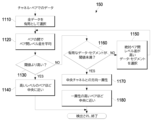
いくつかの実施形態によれば、本方法は、前方ペア、側方ペア、後方ペア、および/または他の任意の位置ペアの間で、諸ペアに分割されたチャネルを区別する段階をさらに含み、チャネル・ペア区別段階は、2つのペアごとの間のペア間レベル差(inter-pair level difference)を計算することを含み、ペア間レベル差は、各ペアのサブバンド音エネルギーの和のデシベル差に比例し、相対的に高いほうのレベルをもつペアが、前方ペアとして区別される。 According to some embodiments, the method further includes a step of differentiating the channels divided into pairs among front pairs, side pairs, rear pairs, and/or any other position pairs, the channel pair differentiating step including calculating an inter-pair level difference between every two pairs, the inter-pair level difference being proportional to the decibel difference of the sum of the subband sound energies of each pair, and the pair with the relatively higher level being differentiated as the front pair.
多くのマルチチャネル・オーディオ信号は、前方ペアと後方ペアを含む5.1のように、複数のチャネル・ペアを含む。よって、チャネル識別のための方法は、位置ペアの間を区別し、位置ペアをそのようなものとして正確に識別できることが有益である。ペア間レベル差は、位置ペアの間を区別するための効率的で正確な指標である。 Many multichannel audio signals contain multiple channel pairs, such as 5.1, which includes a front pair and a rear pair. It is therefore useful for a method for channel identification to be able to distinguish between position pairs and accurately identify position pairs as such. Inter-pair level difference is an efficient and accurate measure for distinguishing between position pairs.
いくつかの実施形態によれば、チャネル・ペア区別段階は、絶対的なペア間レベル差が絶対閾値を上回る、各ペアの各チャネルについての前記信号の一つまたは複数のセグメントを選択し;それらのセグメントのみを用いてペアのペア間レベル差を計算することをさらに含む。ここで、相対的に最も高い平均ペア間レベル差がレベル閾値を下回る場合、ペアのペア間レベル差を計算する段階は、より高い絶対閾値を用いて繰り返される。 According to some embodiments, the channel pair discrimination step further comprises selecting one or more segments of the signal for each channel of each pair in which the absolute pair-to-pair level difference is above an absolute threshold; and calculating the pair-to-pair level difference using only those segments. Here, if the relatively highest average pair-to-pair level difference is below the level threshold, the step of calculating the pair-to-pair level difference is repeated using a higher absolute threshold.
ペア間のレベル差は常に十分高いわけではない。なぜなら、たとえば2dBを下回る差は、有益な情報ではない可能性があるからである。よって、ペア間でより大きなレベル差を生成しうる内容をもつ信号のセグメントを選択することが有益である。セグメントの選択が十分に高い平均ペア間レベル差をもたらさない場合、より高い絶対閾値を用いた選択が、これを達成しうる。 The level difference between pairs is not always high enough, because differences below, for example, 2 dB, may not be useful information. It is therefore beneficial to select segments of the signal whose content may produce a larger level difference between pairs. If the selection of a segment does not result in a sufficiently high average inter-pair level difference, a selection using a higher absolute threshold may achieve this.
絶対的なペア間レベル差は、これらの実施形態では点でチェックされるので、選択されたセグメントは、いくつかの孤立したフレームを含んでいてもよい。 The absolute pairwise level difference is checked pointwise in these embodiments, so the selected segment may contain several isolated frames.
他の実施形態では、絶対値が諸セグメントにおいてチェックされ、最大の絶対的なペア間レベル差が絶対閾値と比較されるか、または平均の絶対的なペア間レベル差が絶対閾値と比較される。これにより、選択されたセグメントは、チェックされたセグメント長によって量子化される。 In other embodiments, absolute values are checked in the segments and the maximum absolute pairwise level difference is compared to an absolute threshold or the average absolute pairwise level difference is compared to an absolute threshold. The selected segments are then quantized by the checked segment length.
いくつかの実施形態によれば、相対的に最も高い平均ペア間レベル差がレベル閾値を下回り、絶対閾値が最大閾値を上回る場合、相対的に最も高い方向一貫性をもつペアが、前方ペアとして区別される。ここで、方向一貫性は、時間領域における2つのチャネルの類似性の指標であり、これは音像方向に関係し、それはひいてはチャネル間の位相差を含意する。 According to some embodiments, the pair with the highest relative directional coherence is identified as the front pair if the highest relative average inter-pair level difference is below a level threshold and the absolute threshold is above a maximum threshold. Here, directional coherence is a measure of the similarity of the two channels in the time domain, which is related to the sound image direction, which in turn implies the phase difference between the channels.
これらの実施形態では、セグメントの選択は、十分に高い平均ペア間レベル差を生じなかった。よって、方向一貫性は、代わりに、ペアを区別するために用いられる。最も高い方向性一貫性をもつペアは、前方ペアとして区別される。前方ペアの信号は、通例、方向性の音源を表すために時間整列されているので、相関が高く、遅延が小さく、よって、方向一貫性が高い。これは、前方ペアには、後方ペアと比較して、より多くの同一の成分が存在することを意味する。 In these embodiments, the selection of segments did not result in a sufficiently high average inter-pair level difference. Therefore, directional consistency is used instead to distinguish the pairs. The pair with the highest directional consistency is distinguished as the forward pair. The signals in the forward pair are typically time-aligned to represent directional sources, so they have high correlation and low delay, and therefore high directional consistency. This means that there are more identical components in the forward pair compared to the rear pair.
セグメントの選択が失敗した理由は、最も高い平均ペア間レベル差がレベル閾値を超えるのに十分高いレベルに達しておらず、絶対閾値が非常に高いため、それを上回るセグメントがペア間レベル差を計算できるほど十分長くないからである。選択された諸セグメントの全長が、たとえば、非無音信号長の20%(または任意の他の定義された割合)より短いか、または、たとえば1分(または任意の他の定義された長さ)より短い場合、有用な信号は、短すぎるとみなされうる。 The reason for the failure of the segment selection is that the highest average pairwise level difference does not reach a high enough level to exceed the level threshold, and the absolute threshold is so high that the segments above it are not long enough to allow the pairwise level difference to be calculated. If the total length of the selected segments is, for example, shorter than 20% (or any other defined percentage) of the non-silent signal length, or shorter than, for example, 1 minute (or any other defined length), the useful signal may be considered too short.
方向一貫性は、異なる点での時間領域におけるサンプル値を比較することによって、信号中の同一成分の比率を測る。2つのチャネルの信号の類似性が高いほど、相関が高く、遅延が小さい。ペアにされたチャネルは、通例、相関した信号を有し、前方ペアの信号は、通例、方向性音源を表すために時間整列されている。 Directional coherence measures the proportion of identical components in a signal by comparing sample values in the time domain at different points. The more similar the signals of the two channels are, the higher the correlation and the smaller the delay. Paired channels usually have correlated signals, and the signals of the forward pair are usually time-aligned to represent directional sources.
代替として、識別された中央チャネルとの組み合わされた方向一貫性が、ペアを区別するために使用されてもよい。中央チャネルに最も近い方向をもつペアも中央チャネルに最も近い(すなわち、そのペアが前方ペアとして識別される)。 Alternatively, the combined directional consistency with the identified center channel may be used to distinguish the pairs. The pair with the direction closest to the center channel is also closest to the center channel (i.e., the pair is identified as the forward pair).
いくつかの実施形態によれば、空チャネル識別段階は、X個のチャネルの間の各チャネルにおける音エネルギーを測定することをさらに含み、チャネルの全音エネルギーがエネルギー閾値未満である場合、チャネルは空として識別される。 According to some embodiments, the empty channel identification step further includes measuring the sound energy in each channel among the X channels, and if the total sound energy of the channel is below an energy threshold, the channel is identified as empty.
音エネルギーは、通例、各チャネルのサブバンドを用いて、各サブバンドにおける各周波数の振幅を加算することにより、測定される。これは、たとえ符号化または他の要因によるノイズが空のチャネルに存在しても、空のチャネルを識別する効率的な方法を与える。 Sound energy is typically measured using subbands for each channel by summing the amplitude of each frequency in each subband. This provides an efficient way of identifying empty channels even if noise from coding or other factors is present in the empty channel.
エネルギー閾値は、たとえば、-80~-60dB、好ましくは-70dBでありうる。全音エネルギーの測定の代わりに、またはそれに加えて、諸時間セグメントにおける平均音エネルギーが測定されてもよく、ここで、時間セグメントは1~10秒であってもよい。 The energy threshold may be, for example, -80 to -60 dB, preferably -70 dB. Instead of or in addition to measuring the total sound energy, the average sound energy in time segments may be measured, where the time segments may be from 1 to 10 seconds.
空のチャネルは、たとえば、異常なデバイス、マルチチャネルTV番組中のステレオ広告スロット、およびもとのステレオまたはモノラルサウンドからアップミックスされたマルチチャネル・サラウンドサウンドの結果でありうる。 Empty channels can be the result of, for example, abnormal devices, stereo ad slots in multichannel TV programs, and multichannel surround sound that has been upmixed from the original stereo or mono sound.
いくつかの実施形態によれば、200Hz未満の任意のサブバンドであるチャネルの低周波数領域におけるサブバンド音エネルギーの和が、そのチャネルにおける他のすべての周波数領域におけるサブバンド音エネルギーの和よりも著しく大きい場合、Y個のチャネルの間にLFEチャネルが存在すると判定される。 According to some embodiments, an LFE channel is determined to be present among the Y channels if the sum of the subband sound energy in the low frequency region of a channel, any subband below 200 Hz, is significantly greater than the sum of the subband sound energy in all other frequency regions in that channel.
これは、LFEチャネルを見逃す可能性が低いという点で有益である。200Hzは、偽陽性も減少させつつ、LFEチャネルが見逃されないことを保証するように意図された低周波数領域のカットオフである。典型的には、閾値は120Hzであるが、通常のチャネルは、はるかに広い周波数帯域で信号を伝送するので、より高い値に設定することが好ましいことがありうる。 This is beneficial in that it makes it less likely that the LFE channel will be missed. 200Hz is a low frequency cutoff intended to ensure that the LFE channel is not missed while also reducing false positives. Typically the threshold is 120Hz, but since normal channels carry signals over a much wider frequency range it may be preferable to set it to a higher value.
いくつかの実施形態によれば、チャネル・ペア分割段階における対称的なチャネルのマッチングは、各チャネルの計算された音エネルギー分布および分散を用いてチャネル間のチャネル間スペクトル距離を計算する段階であって、チャネル間スペクトル距離は、複数のサブバンドについて合計された、各チャネルにおける2つのマッチングする音エネルギー・サブバンド間の距離の正規化されたペア毎の指標である、段階と;最も短い距離をもつチャネルどうしをペアとしてマッチングする段階とをさらに含む。 According to some embodiments, matching symmetric channels in the channel pair splitting step further comprises: calculating an inter-channel spectral distance between the channels using the calculated sound energy distribution and variance of each channel, the inter-channel spectral distance being a normalized pairwise measure of the distance between two matching sound energy sub-bands in each channel, summed over multiple sub-bands; and matching the channels with the shortest distance as a pair.
チャネル間スペクトル距離は、対称性の簡単で正確な指標である。数学的な距離は、さまざまな仕方で重み付けされうる類似性の指標である。使用される距離指標は、ユークリッド距離、マンハッタン距離および/またはミンコフスキー距離であってもよい。 Inter-channel spectral distance is a simple and accurate measure of symmetry. Mathematical distance is a measure of similarity that can be weighted in various ways. Distance measures used may be Euclidean distance, Manhattan distance and/or Minkowski distance.
いくつかの実施形態によれば、チャネル・ペア分割段階は、LFEチャネルとして識別されていないY個のチャネルの間の対になっていないチャネルがあればそれをペアリングすることを、2つ未満のチャネルが残るまで、続ける。 According to some embodiments, the channel pair splitting stage continues pairing any unpaired channels among the Y channels that are not identified as LFE channels until fewer than two channels remain.
前方ペアと後方ペアのようなチャネルのペアは2つより多くてもよい。よって、もし3つ以上のチャネルが残っていれば、それらのチャネルの間にさらなるチャネル・ペアが存在し、さらなるペアが分割できる可能性がある。 There can be more than two pairs of channels, such as forward and reverse pairs. So if there are more than two channels remaining, there are more channel pairs between them, and more pairs can potentially be split.
いくつかの実施形態によれば、チャネル・ペア分割段階は、各ペア内のマルチチャネル・オーディオ信号の第1の受領チャネルを左チャネルとして割り当て、各ペア内の最後にリストされたチャネルを右チャネルとして割り当てることをさらに含む。
マルチチャネル・オーディオ信号において、各ペアの左チャネルを右チャネルの前にリストするのが慣習的である。よって、常にそうであると想定することにより、本方法はより効率的となる。
According to some embodiments, the channel pair splitting step further comprises assigning the first received channel of the multi-channel audio signal in each pair as the left channel and the last listed channel in each pair as the right channel.
In multi-channel audio signals, it is conventional to list the left channel of each pair before the right channel, so the method is more efficient by assuming that this is always the case.
いくつかの実施形態によれば、本方法は、本方法のステップの結果のいずれかについて信頼スコアを計算する段階をさらに含み、信頼スコアは、結果がどれくらい信頼できるかの指標であり、マルチチャネル・オーディオ信号の持続時間がある持続時間閾値を下回る場合、信頼スコアは1未満の重み因子を乗算され、それにより、持続時間閾値を下回る持続時間は、信頼性の低い結果につながる。 According to some embodiments, the method further comprises the step of calculating a confidence score for any of the results of the steps of the method, the confidence score being an indication of how reliable the result is, and if the duration of the multi-channel audio signal is below a certain duration threshold, the confidence score is multiplied by a weighting factor less than 1, whereby durations below the duration threshold lead to a less reliable result.
本方法の各段階の結果がどのくらい信頼できるかを知ることは、ミスを診断したり、改善を測定するために有用であろう。マルチチャネル・オーディオ信号の持続時間が短すぎる場合、計算に使用されうるデータが少なすぎるため、なされた識別は信頼できない。よって、重み因子が使用されうる。 Knowing how reliable the results of each stage of the method are can be useful to diagnose mistakes and measure improvements. If the duration of the multichannel audio signal is too short, the identification made is not reliable because there is too little data available for the calculation. Therefore, weighting factors can be used.
いくつかの実施形態によれば、本方法は、計算された信頼スコアがディスプレイ上に表示される表示段階をさらに含み、計算された信頼スコアが信頼閾値を下回る場合、および/または識別されたチャネル・レイアウトがユーザーの設定レイアウトと異なる場合、警告が表示される。 According to some embodiments, the method further comprises a display step in which the calculated confidence score is displayed on a display, and a warning is displayed if the calculated confidence score is below a confidence threshold and/or if the identified channel layout differs from the user's preferred layout.
表示は、ユーザーが本方法の信頼性に関するフィードバックを受け取ることができるという点で有益である。これにより、ユーザーは、本方法の識別が現在の設定よりも信頼できるかどうかについて、インフォームド・ディシジョンを行うことができる。この警告は、たとえば、本方法を停止する、本方法を再実行する、または、たとえばビットストリーミング速度を増加させる、および/または、上流の異常を修理することにより本方法を改善するために行動をとるようにユーザーに注意喚起することができるという点で有益である。識別されたチャネル・レイアウトがユーザーの設定レイアウトと異なる場合、設定および/または識別されたチャネル・レイアウトが誤っている可能性があり、これは、たとえば、デバイスまたはユーザーによるアクションを必要とする可能性がある。 The indication is beneficial in that the user may receive feedback regarding the reliability of the method. This allows the user to make an informed decision as to whether the method's identification is more reliable than the current configuration. The warning is beneficial in that it may alert the user to, for example, stop the method, rerun the method, or take action to improve the method, for example by increasing the bit streaming rate and/or repairing an upstream anomaly. If the identified channel layout differs from the user's configured layout, then the configured and/or identified channel layout may be erroneous, which may require action, for example, by the device or the user.
いくつかの実施形態によれば、本方法は、識別されたチャネル・レイアウトをマルチチャネル・オーディオ信号に適用する段階をさらに含む。
適用段階は、マルチチャネル・オーディオ信号のチャネルの順序を変更すること;チャネルを識別された再生ソースにリダイレクトする、すなわち、左チャネルが左側のスピーカーによって出力されるようにすること;またはチャネル識別のための本方法の結果である識別されたレイアウトに適合するようにするための、マルチチャネル・オーディオ信号の任意の他の物理的および/またはデジタル操作を含んでいてもよい。
According to some embodiments, the method further comprises applying the identified channel layout to the multi-channel audio signal.
The applying step may include changing the order of the channels of the multi-channel audio signal; redirecting the channels to the identified playback sources, i.e., so that the left channel is output by the left speaker; or any other physical and/or digital manipulation of the multi-channel audio signal to conform to the identified layout that is the result of the method for channel identification.
いくつかの実施形態によれば、本方法によって識別されたチャネル・レイアウトは、スピーカー・システムにストリームされる際に、マルチチャネル・オーディオ信号にリアルタイムで適用される。 According to some embodiments, the channel layout identified by the method is applied in real-time to the multi-channel audio signal as it is streamed to a speaker system.
提案される方法は非常に計算効率がよいので、再生に有意な遅延なしにリアルタイムで適用されうる。 The proposed method is very computationally efficient and can be applied in real-time without significant delay in playback.
最初の結果は不正確で、信頼スコアが低くなることがあるが、オーディオ信号の再生に伴ってより多くのデータが収集されるにつれて、スコアは高くなる。 Initial results may be inaccurate and result in a low confidence score, but the score will increase as more data is collected as the audio signal is played.
いくつかの実施形態によれば、本方法の段階のうちの少なくとも1つは、機械学習に基づく方法を使用し、機械学習に基づく方法は、ディシジョンツリー、アダブースト〔Adaboost〕、GMM、SVM、HMM、DNN、CNN、および/またはRNNである。 According to some embodiments, at least one of the steps of the method uses a machine learning based method, the machine learning based method being a decision tree, Adaboost, GMM, SVM, HMM, DNN, CNN, and/or RNN.
機械学習は、本方法の効率および/または信頼性をさらに改善するために使用されうる。 Machine learning can be used to further improve the efficiency and/or reliability of the method.
本発明の第2の側面によれば、マルチチャネル・オーディオ信号のチャネルを識別するように構成された装置が提供される。該装置は、本発明の第1の側面による方法を実行するように構成された回路を有する。 According to a second aspect of the present invention, there is provided an apparatus configured to identify channels of a multi-channel audio signal, the apparatus comprising circuitry configured to perform the method according to the first aspect of the present invention.
本発明の第3の側面によれば、処理能力を有する装置によって実行されたときに、本発明の第1の側面による方法を実行するように適応された命令を有する非一時的なコンピュータ読み取り可能記憶媒体を有するコンピュータ・プログラム・プロダクトが提供される。 According to a third aspect of the present invention, there is provided a computer program product having a non-transitory computer-readable storage medium having instructions adapted to perform a method according to the first aspect of the present invention when executed by a device having processing capability.
第2および第3の側面は、一般に、第1の側面と同じ特徴および利点を有してもよい。 The second and third aspects may generally have the same features and advantages as the first aspect.
さらに、本発明は、明示的に別段の記載がない限り、特徴のすべての可能な組み合わせに関することに留意されたい。 Furthermore, it should be noted that the present invention relates to all possible combinations of features unless expressly stated otherwise.
本発明の上記および追加的な目的、特徴、および利点は、添付の図面を参照して、本発明の好ましい実施形態の以下の例示的かつ非限定的な詳細な説明を通じて、よりよく理解されるであろう。同じ参照番号が、同様の要素に対して使用される。
ここで、本発明の実施形態が示されている添付の図面を参照して、本発明をより詳細に説明する。本明細書に開示されるシステムおよび装置は、動作において説明される。 The invention will now be described in more detail with reference to the accompanying drawings, in which embodiments of the invention are shown. The systems and devices disclosed herein are described in operation.
本開示は、一般に、マルチチャネル・オーディオ信号のスワップされたチャネルまたは損傷したチャネルの問題に関する。チャネルを意図された状態に復元するために、本発明者らは、チャネル識別が使用されうることを見出した。以下では、マルチチャネル・オーディオ信号は5.1オーディオ信号である。しかしながら、これは、単に例であり、本明細書に記載される方法およびシステムは、たとえば7.1のような任意のマルチチャネル・オーディオ信号のチャネル識別に使用されうる。 The present disclosure generally relates to the problem of swapped or damaged channels of a multi-channel audio signal. To restore the channels to their intended state, the inventors have found that channel identification can be used. In the following, the multi-channel audio signal is a 5.1 audio signal. However, this is merely an example and the methods and systems described herein can be used for channel identification of any multi-channel audio signal, such as 7.1 for example.
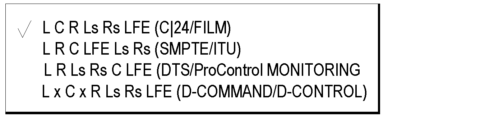
図1は、マルチチャネル音声処理のためのワークステーションのメニューを概略的に示している。これは、5.1チャネルの、種々の広く使用されているフォーマットの例である。 Figure 1 shows a schematic of a workstation menu for multichannel audio processing. It is an example of 5.1 channels in various widely used formats.
現在の標準的な実施は、単にデフォルトのフォーマットを選択することに関わり、入力音声データのチャネル・レイアウトが処理中の設定と一致しない場合、チャネルはスワップされる。スワップされたチャネル・インデックスは、メタデータとしてサラウンドサウンド・データ中に保存されてもよく、それにより継続的に正しくスワップされる。しかしながら、将来のシステムが異なるデフォルトを使用する場合、メタデータは信頼性が低く、将来のプロセスにとって有害になる。 Current standard implementation simply involves choosing a default format, and if the channel layout of the input audio data does not match the settings being processed, the channels are swapped. The swapped channel indexes may be stored as metadata in the surround sound data, thereby ensuring correct swapping on an ongoing basis. However, if future systems use different defaults, the metadata will be unreliable and detrimental to future processes.
マルチチャネル・オーディオ信号がさらに損傷チャネルを含む場合、現在の標準はこの異常を検出せず、よって、エラーが将来のシステムに伝搬する。 If a multichannel audio signal also contains a damaged channel, current standards will not detect this anomaly and therefore the error will propagate to future systems.
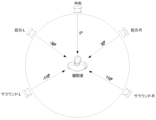
図2は、サラウンドサウンド・システム5.1の典型的なレイアウトを示す。このシステムのスピーカーのいずれかの内容が交換されるか、またはいずれかのチャネルが損傷されるか空にされるかした場合、聴取者が経験するオーディオはもとの意図とは異なる。たとえば、前方RスピーカーとサラウンドRスピーカーの内容が交換された場合、スピーカー・ペアの対称性が破られ、あるいは、フロントLスピーカーの内容が空の場合、全体の音像の重要な部分が欠落している可能性がある。もとのサラウンドサウンド・データの音像は再現できず、空間的印象が混乱し、聴取者にとってわずらわしいものになる。 Figure 2 shows a typical layout of a 5.1 surround sound system. If the content of any of the speakers in this system is swapped, or if any channel is damaged or left empty, the audio experienced by the listener will differ from the original intent. For example, if the content of the front R and surround R speakers is swapped, the symmetry of the speaker pair is broken, or if the content of the front L speaker is left empty, important parts of the overall sound image may be missing. The sound image of the original surround sound data cannot be reproduced, and the spatial impression becomes disorganized and distracting to the listener.
異常なチャネル(単数または複数)は、そのインデックスまたはレイアウト全体が異常に見えることがあるため、検出されうる。スワップされたチャネルがあれば、それも、検出されたチャネル・レイアウトとユーザーの設定におけるチャネル・レイアウトとを比較することによって見出すことができる。 An abnormal channel or channels can be detected because their index or entire layout may appear abnormal. Swapped channels, if any, can also be found by comparing the detected channel layout with the channel layout in the user's settings.
サラウンド・ペアおよび後方ペアという用語は、さらなる可能な位置ペアのために本開示を一般化するために、本開示を通じて交換可能に使用される。たとえば、7.1サラウンドサウンド・システムでは、サラウンド・ペアは側方ペアおよび後方ペアによって置き換えられる。 The terms surround pair and rear pair are used interchangeably throughout this disclosure to generalize this disclosure to further possible position pairs. For example, in a 7.1 surround sound system, the surround pair is replaced by a side pair and a rear pair.
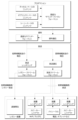
図3は、典型的な放送〔ブロードキャスト〕チェーンの高度な音響システムの一例を示す。この例は、典型的な放送チェーンにおけるサラウンドサウンド・データのフローを示しており、これは、再生前の典型的なワークフローの間にサラウンドサウンドが数回変換されることを意味する。図1に関して前述したように、メタデータのエラーは、そのようなワークフローを通じて伝播する可能性がある。さらに、ワークフローの各プロセスにおいて、チャネルがスワップまたは損傷される可能性がある。 Figure 3 shows an example of an advanced audio system in a typical broadcast chain. This example shows the flow of surround sound data in a typical broadcast chain, which means that the surround sound is transformed several times during a typical workflow before playback. As mentioned above with respect to Figure 1, metadata errors can propagate through such a workflow. Furthermore, at each process in the workflow, channels can be swapped or damaged.
フローは、プロダクションで始まる。これは、チャネルベースのコンテンツ、オブジェクトベースのコンテンツ、および/またはシーン・ベースのコンテンツが高度なサウンド・ファイル・フォーマットに寄与することを含む。高度なサウンド・ファイル・フォーマットは、プロダクションによって出力され、頒布に入力される。 The flow begins with a Production, which includes contributing channel-based content, object-based content, and/or scene-based content to advanced sound file formats. Advanced sound file formats are output by the Production and input for distribution.
頒布は、高度なサウンド・ファイル・フォーマットの、高度なサウンド・フォーマットへの頒布適応を含む。高度なサウンド・フォーマットは、頒布によって出力され、放送に入力される。放送は、高帯域幅放送と低帯域幅放送の間のフォークを含む。 The distribution includes a distribution adaptation of an advanced sound file format to an advanced sound format. The advanced sound format is output by the distribution and input to the broadcast. The broadcast includes a fork between high bandwidth broadcast and low bandwidth broadcast.
低帯域幅放送は、高度なサウンド・フォーマットをレガシー・ストリーム・フォーマットにレンダリングする。レガシー・ストリーム・フォーマットは、放送によって出力され、低帯域幅接続/レガシー放送に入力される。 The low bandwidth broadcast renders the advanced sound format into a legacy stream format that is output by the broadcast and input into the low bandwidth connection/legacy broadcast.
低帯域幅接続/レガシー放送は、レガシー装置への直接再生を含む。 Low bandwidth connections/legacy broadcasting includes direct playback to legacy devices.
高帯域幅放送は、高度なサウンド・フォーマットを放送ストリーム・フォーマットに適応する。放送ストリーム・フォーマットは、放送によって出力され、広帯域幅接続/放送に入力される。 High bandwidth broadcast adapts the advanced sound format into a broadcast stream format that is output by the broadcast and input into the high bandwidth connection/broadcast.
広帯域幅接続/放送は、いずれかの装置が、Hi-Fi、テレビ、電話、タブレットなどのためのスピーカー・レイアウトまたはバイノーラル・レイアウトにレンダリングすることを含む。 High bandwidth connection/broadcasting includes any device rendering into speaker or binaural layouts for Hi-Fi, TV, phones, tablets, etc.
メタデータの信頼性が低いため、本発明者らは、異常チャネルを検出するためにマルチチャネル・オーディオ信号のオーディオ内容にのみ頼るチャネル識別方法を見出した。検出器は、すべての利用可能なデータに基づいてチャネルのレイアウトを検出することができ、信頼性を示すために信頼スコアをもつ推定チャネル・インデックスをさらに提供することができる。異常なチャネル(単数または複数)は、そのインデックスまたはレイアウト全体が異常に見えることがあるため、検出されうる。スワップされたチャネルがあれば、それも、検出されたチャネル・レイアウトとユーザーの設定におけるチャネル・レイアウトとを比較することによって見出すことができる。 Due to the unreliability of metadata, the inventors have found a channel identification method that relies solely on the audio content of the multi-channel audio signal to detect anomalous channels. The detector can detect the layout of channels based on all available data and can further provide an estimated channel index with a confidence score to indicate the reliability. An anomalous channel(s) can be detected because their index or entire layout may appear anomalous. Swapped channels, if any, can also be found by comparing the detected channel layout with the channel layout in the user's settings.
一般に、オーディオ・データは、中央チャネルおよび可能性としては前方チャネル・ペアから来る前方音像であって、持続時間のほとんどにわたって方向安定性が維持される、前方音像と;バランスのとれた音声情報を伝達する、ペアとして扱われる左右のチャネルと;音像全体を高めうる情報を伝達する後方チャネルとを含む。オーディオ・データは、前記音像を低周波数を用いてふくらませるために、別個の低周波数チャネルをさらに含んでいてもよい。マルチチャネル・サラウンドサウンドがビデオまたは画像に伴っている場合、音像は、好ましくは、視覚的な画像および設計された聴取領域と一致する。 Typically, the audio data includes a front sound image coming from a center channel and possibly a front channel pair, which maintains directional stability over most of its duration; left and right channels treated as a pair, which convey balanced audio information; and rear channels, which convey information that may enhance the overall sound image. The audio data may further include a separate low frequency channel to plump up the sound image with low frequencies. When multi-channel surround sound accompanies a video or image, the sound image preferably matches the visual image and the designed listening area.
オーディオ・データに基づいてチャネル識別を行うことにより、識別は符号化フォーマットまたはチャネル数とは独立になり、ミスマッチしたメタデータに影響されなくなる。空間的な聴覚印象はマルチチャネル・サラウンドサウンドにとって重要であり、通例、ミキシングを通じて音源をパンすることによって生成される。チャネル識別は、チャネル・レイアウトを回復するために空間情報を抽出する。 Basing channel identification on the audio data makes the identification independent of the encoding format or number of channels and insensitive to mismatched metadata. A spatial auditory impression is important for multichannel surround sound and is typically created by panning sound sources through the mix. Channel identification extracts spatial information to recover the channel layout.
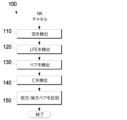
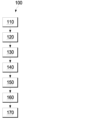
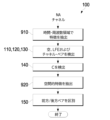
図4は、チャネル・レイアウト識別方法100のある実施形態の図を示す。方法100は、必要とされる計算を最小限にするために、特定の順序で実行される5つの段階を含む。
Figure 4 shows a diagram of one embodiment of a channel
方法100は、X>1個の識別されていないチャネルを含むマルチチャネル・オーディオ信号から開始する。第1の段階は空チャネル識別段階110である。それは、これが最も計算量が少ない段階だからである。
The
空チャネル識別段階110は、空のチャネルがあればそれを識別し、よって、Y≦X個の空でないチャネルのサブセットを生じるために、X個のチャネルの間で各チャネルにおける音エネルギーを測定することを含む。
The empty
X個のチャネルの間の各チャネルにおける音エネルギーは、短期、中期および/または長期の持続時間で測定されてもよく、時間、スペクトル、ウェーブレットおよび/または聴覚領域で測定されうる。 The sound energy in each channel among the X channels may be measured in short-term, medium-term and/or long-term durations and may be measured in the time, spectral, wavelet and/or auditory domains.
種々の項は、チャネルの内容に依存して、有用となりうる。 Various terms may be useful depending on the channel content.
時間領域は、異なる時点での音圧値に関する情報を含む。スペクトル領域は、チャネルの内容を変換することによって到達される、スペクトル成分での周波数情報を含む。ウェーブレット領域は、チャネルの内容を変換することによって到達される、ウェーブレット多重分解能分解における時間および周波数情報を含む。聴覚領域は、信号を聴くことによって引き起こされる聴覚神経応答に関する情報を含む、通常の、変換されていない領域である。 The time domain contains information about sound pressure values at different times. The spectral domain contains frequency information in spectral components, arrived at by transforming the channel contents. The wavelet domain contains time and frequency information in wavelet multiresolution decomposition, arrived at by transforming the channel contents. The auditory domain is the usual, untransformed domain, containing information about the auditory nerve response evoked by listening to the signal.
聴覚領域はチャネル識別のために使用されうる。たとえば、メル/バーク・フィルタバンクのような聴覚フィルタに基づく分解が、各方法段階において使用されうる。そのような実施形態では、各臨界帯域の特定ラウドネスが、式1のサブバンドエネルギーを置き換えるために使用される。 The auditory domain may be used for channel discrimination. For example, a decomposition based on auditory filters such as Mel/Burk filter banks may be used at each method step. In such an embodiment, the specific loudness of each critical band is used to replace the subband energy in Eq. 1.
ウェーブレット変換も、信号分解に適用可能であり、以下の方法段階のための時間‐周波数特徴を提供することができる。 Wavelet transforms can also be applied to the signal decomposition and provide time-frequency features for the following method steps.
チャネルが空と識別されるのは:チャネルの全音エネルギーがエネルギー閾値未満である場合、またはチャネルの諸サブバンド音エネルギーがエネルギー閾値未満である場合である。サブバンドはエネルギーの範囲である。 A channel is identified as empty if: the total sound energy of the channel is below an energy threshold; or the subband sound energies of the channel are below an energy threshold. A subband is a range of energy.
サブバンドエネルギーの1つの定義は:

この定義は短期的に測定される。1フレームまたは数フレームの時間ブロックについて、Eb,c(l)の平均値と標準分散の両方が計算される。平均と分散の両方が、すべての時間ブロックについてある諸閾値を下回る場合、チャネルcのサブバンドbは空であると検出される。 This definition is measured in the short term: for a time block of one or several frames, both the mean and the standard variance of E b,c (l) are calculated. If both the mean and the variance are below certain thresholds for all time blocks, then subband b of channel c is detected as empty.
代替は、帯域通過フィルタリングされた信号や聴力的レート・マップのようなスペクトル関連の指標を含む。 Alternatives include bandpass filtered signals and spectrally related measures such as auditory rate maps.
空のチャネルの識別は、メタデータを使用して格納されてもよい。 The identity of the empty channel may be stored using metadata.
LFE判別段階120が次であり、Y個のチャネル間に低域効果(LFE)チャネルが存在するかどうかを判定し、LFEチャネルが存在することを判別すると、Y個のチャネルのうちの判別されたチャネルをLFEチャネルとして識別することを含む。
The
LFE判別段階120は、さらに、LFEチャネルが存在するかどうかを判定するために、空チャネル識別段階110において測定されたY個のチャネルのうちの各チャネルにおける音エネルギーを使用することを含んでいてもよい。これにより、計算作業が節約される。
The
LFE判別段階120は、Y個のチャネルのうちの各チャネルにおいて、エネルギー閾値を超える音エネルギーが存在する周波数帯域を測定することをさらに含んでいてもよい。これは、空チャネル識別段階110における音エネルギーの測定を必要としない。
The
Y個のチャネルのうちの各チャネルにおいて、エネルギー閾値を超える音エネルギーが存在する周波数帯域は、短期、中期および/または長期の持続時間において測定されてもよい。 In each of the Y channels, frequency bands in which sound energy is present above an energy threshold may be measured for short-term, medium-term and/or long-term durations.
LFEチャネルがY個のチャネルの間に存在することの判別は、チャネルの低周波数領域におけるサブバンド音エネルギーの和が、そのチャネルの他のすべての周波数領域におけるサブバンド音エネルギーの和よりも有意に高いかどうかを調べることを含みうる。これは、LFEチャネルを見逃す可能性が低いという点で有益である。 Determining that an LFE channel is present among the Y channels may involve checking whether the sum of the subband sound energy in the low frequency region of the channel is significantly higher than the sum of the subband sound energy in all other frequency regions of that channel. This is beneficial in that it makes it less likely that the LFE channel will be missed.
サブバンド音エネルギーを加算する代わりに、たとえば、平均値および/または最大値を使用してもよい。 Instead of adding the subband sound energies, for example, the average and/or maximum values may be used.
そのようなチャネルはいずれもLFEチャネルとして識別されうる。低周波数領域は、たとえば、400Hz、300Hz、200Hz、120Hz、100Hz、または50Hz未満の任意のサブバンドであってもよい。低周波数領域は、オーディオ信号の内容に基づいて決定されてもよい。 Any such channel may be identified as the LFE channel. The low frequency region may be, for example, 400 Hz, 300 Hz, 200 Hz, 120 Hz, 100 Hz, or any subband below 50 Hz. The low frequency region may be determined based on the content of the audio signal.
実際上は、200Hz~2000Hzの任意の周波数は、実施形態に依存して、低周波数領域または高周波数領域に属することができる。よって、低周波数領域は、特定の実施形態に基づいて決定されうる。あるいはまた、200Hzより下および2000Hzより上のサブバンドのみを見ることが有益であることがある。 In practice, any frequency between 200 Hz and 2000 Hz can belong to the low frequency region or the high frequency region, depending on the embodiment. Thus, the low frequency region can be determined based on the particular embodiment. Alternatively, it may be beneficial to look only at the subbands below 200 Hz and above 2000 Hz.
信号の最高周波数は、信号のサンプルレートに依存しうる。よって、2000Hzとサンプルレートの半分との間の諸サブバンドのみを見ることは有益であることがある。 The highest frequency of a signal may depend on the sample rate of the signal. Therefore, it may be useful to look at only the subbands between 2000 Hz and half the sample rate.
Y個のチャネルのうちにLFEチャネルが存在することの判別は、チャネルが、周波数閾値未満の諸周波数領域において、エネルギー閾値を超えるサブバンド音エネルギーのみを含むかどうかを調べることを含んでいてもよい。これは、LFEチャネル以外のチャネルを検出しない可能性が高いという点で有益であるが、たとえば雑音を含んでいるか、または期待されたものとは異なる低周波数領域を有する場合には、LFEチャネルを検出しない可能性がある。いくつかの実施形態では、そのようなチャネルのみがLFEチャネルとして識別される。 Determining the presence of an LFE channel among the Y channels may include examining whether the channel contains only subband sound energy above an energy threshold in frequency regions below a frequency threshold. This is beneficial in that it is more likely not to detect channels other than the LFE channel, but may not detect the LFE channel if it contains noise or has a different low frequency region than expected, for example. In some embodiments, only such channels are identified as LFE channels.
周波数閾値は、たとえば、2000Hz、1000Hz、500Hz、400Hz、300Hz、200Hz、120Hz、100Hz、または50Hzであってもよく、またはオーディオ信号の内容に基づいて決定されてもよい。 The frequency threshold may be, for example, 2000Hz, 1000Hz, 500Hz, 400Hz, 300Hz, 200Hz, 120Hz, 100Hz, or 50Hz, or may be determined based on the content of the audio signal.
いくつかのLFEチャネルがY個のチャネルのうちに存在すると判定された場合、LFEチャネルが存在するかどうかを判定するために使用される特徴(単数または複数)の階層に従って、1つのみがLFEチャネルとして識別されうる。 If several LFE channels are determined to be present among the Y channels, only one may be identified as the LFE channel according to the hierarchy of the feature or features used to determine whether an LFE channel is present.
ほとんどのマルチチャネル・オーディオ信号は、最大で1つのLFEチャネルしかもたないので、いくつかの可能なLFEチャネルのうちどのチャネルがLFEチャネルとして識別されるかを決定するために、階層を使用することができる。階層は、たとえば、低周波数領域と他の周波数領域との間の、サブバンド音エネルギーの最大の差、またはよりハードな閾値を含んでいてもよい。
識別されたLFEチャネルは、メタデータを使用して格納されてもよい。
Since most multi-channel audio signals have at most one LFE channel, a hierarchy can be used to determine which of several possible LFE channels is identified as the LFE channel. The hierarchy may include, for example, the maximum difference in subband sound energy between the low frequency region and other frequency regions, or a harder threshold.
The identified LFE channel may be stored using metadata.
チャネル・ペア分割段階130が次であり、対称的なチャネルをマッチングすることによって、Y個のチャネルのうち、LFEチャネルとして識別されていない残りのチャネルを任意の数のチャネル・ペアに分割することを含む。チャネル・ペア分割段階130は、図10に関連してさらに議論される。
The channel
中央チャネル識別段階140が次であり、Y個のチャネルのうち、LFEチャネルとして識別されたりペアに分割されたりしていない、残りの対になっていない任意のチャネルを中央チャネルとして識別することを含む。
A center
中央チャネル識別段階140は、Y個のチャネルのうち、LFEチャネルとして識別されたり、またはペアに分割されたりしていない残りの不対チャネルの独立性および/または非相関を、Y個のチャネルのうち他のチャネルと比較して計算する段階と、中央チャネルを、最も独立したおよび/または非相関なチャネルとして識別する段階とをさらに含んでいてもよい。
The center
これは、たとえば、時間、スペクトル、ウェーブレットおよび/または聴覚領域における異なるチャネルの内容を測定することに基づいて計算されてもよい。 This may be calculated, for example, based on measuring the content of different channels in the time, spectral, wavelet and/or auditory domains.
Y個のチャネルのうち、LFEチャネルとして識別されていない、またはペアに分割されていない、残りの不対チャネルの独立性および/または非相関性の計算は、ペアに分割されたチャネルと比較してのみ計算されうる。これは、典型的には、中央チャネルが最も独立している、および/またはペア・チャネルに相関していないためである。 The independence and/or decorrelation calculations for the remaining unpaired channels of the Y channels that are not identified as the LFE channel or split into pairs may be calculated only relative to the channels that are split into pairs. This is because the center channel is typically the most independent and/or uncorrelated with its paired channels.
別の実施形態では、中央チャネル識別段階140は、チャネル・ペア区別段階150の後に行われ、独立性および/または非相関性の計算は、前方ペアとして区別されたチャネルと比較してのみ計算される。
In another embodiment, the center
これは、中央チャネルが、典型的には、前方ペア・チャネルに対して最も独立していない、および/または非相関でないが、それでも独立している、および/または非相関であるからである。よって、独立性および/または非相関性が見出される場合、偽陽性の可能性が減少するので、中央チャネルの識別は非常に信頼性が高い。中央チャネルをすべてのペアと比較すれば信頼性は高くなるが、より資源集約的になる。 This is because the center channel is typically the least independent and/or uncorrelated with respect to the forward pair channels, but is still independent and/or uncorrelated. Thus, when independence and/or uncorrelation is found, identification of the center channel is very reliable because the chance of false positives is reduced. Comparing the center channel to all pairs would be more reliable, but more resource intensive.
これらの実施形態のいずれも、非常に信頼性が高いという点で有益であるが、かなりの計算を必要としうる。よって、ある有益な実施形態では、残りのチャネルがあればどんなものでも検証なしに中央チャネルとして識別される。 Either of these embodiments is beneficial in that it is highly reliable, but may require significant computation. Thus, in one beneficial embodiment, any remaining channels are identified as the center channel without validation.
2つ以上のチャネルが残っている場合、すべてが中央チャネルとして識別されてもよく、またはエラーが想定され、チャネル識別方法が再スタートされる。すべての段階がやり直されてもよいし、あるいは誤っている可能性が高いと判断された段階のみであってもよい。 If more than one channel remains, all may be identified as the center channel, or an error may be assumed and the channel identification method restarted. All steps may be repeated, or only those steps that are determined to be likely to be in error.
繰り返される段階は、たとえば、チャネルが偶数個残っている場合は、空チャネル識別段階110および/またはLFEチャネル判別段階120であってもよく(これらは異なるパリティを与えうるから)、チャネルが1とは異なる奇数個残っている場合は、チャネル・ペア分割段階130および/またはチャネル・ペア区別段階150である(これらは同じパリティを与えるから)。
The steps that are repeated may be, for example, the empty
繰り返される段階は、追加的または代替的に、諸段階の信頼スコアに関連してもよく、これについては図6に関連してさらに説明される。 The repeated steps may additionally or alternatively be related to confidence scores of the steps, as further described in relation to FIG. 6.
中央チャネルの識別は、メタデータを用いて格納されてもよい。 The identity of the center channel may be stored using metadata.
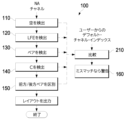
図5は、チャネル識別方法の段階を示す図である。この実施形態は、表示段階160および適用段階170をさらに含み、これらは、それぞれ図8~図9に関連してさらに説明される。図5に示されるシーケンスは、以前の結果を再利用することによって達成される効率のため、好ましい順序であるが、任意の序列が可能である。
Figure 5 illustrates the steps of a channel identification method. This embodiment further includes a
図6は、チャネル識別方法の段階を示す図である。たとえば方法の各段階の後に各チャネルが検出されると、それらは、システムの設定、たとえば、ユーザーによって選択されたチャネル・インデックスと比較210される。何らかのミスマッチが検出される場合、警告160が発されてもよい。
Figure 6 illustrates the steps of a channel identification method. As each channel is detected, e.g. after each step of the method, they are compared 210 with the system settings, e.g., the channel index selected by the user. If any mismatch is detected, a
ある実施形態では、ミスマッチは自動的に修正される。別の実施形態では、ミスマッチは、たとえば警告を受け取った後にユーザーがそれを確認しない限り、修正されない。 In one embodiment, the mismatch is automatically corrected. In another embodiment, the mismatch is not corrected unless the user acknowledges it, for example after receiving a warning.
いくつかの実施形態では、本方法は、本方法の段階のいずれかの結果に関する信頼スコアを計算することをさらに含み、該信頼スコアは、該結果がどれくらい信頼できるかの指標である。 In some embodiments, the method further comprises calculating a confidence score for the outcome of any of the steps of the method, the confidence score being an indication of how reliable the outcome is.
これは、警告の一部としてユーザーに対して表示されてもよく、ユーザーが、本方法の識別が現在の設定よりも信頼性が高いかどうかについて、情報を得た上で決定することができるようにする。 This may be displayed to the user as part of a warning, allowing the user to make an informed decision as to whether the method's identification is more reliable than the current settings.
マルチチャネル・オーディオ信号の持続時間がある持続時間閾値を下回る場合、信頼スコアは、1未満の重み因子を乗算されてもよく、そのため、持続時間閾値を下回る持続時間は、信頼性の低い結果につながる。 If the duration of the multi-channel audio signal is below a certain duration threshold, the confidence score may be multiplied by a weighting factor less than 1, such that durations below the duration threshold lead to less reliable results.
重み因子は、持続時間を持続時間閾値で割ったものに比例しうるので、比較的長い持続時間は、より信頼性の高い結果につながる。これは、重み因子の精度を高める。 Since the weighting factor can be proportional to the duration divided by the duration threshold, a relatively long duration leads to more reliable results. This increases the accuracy of the weighting factor.
ある実施形態では、持続時間が持続時間閾値より長い場合には、重み因子は、適用されないか、または1に等しい。これは、重み因子の精度を高める。 In one embodiment, if the duration is longer than the duration threshold, the weighting factor is not applied or is equal to 1. This increases the accuracy of the weighting factor.
重みは、次式により算出されてもよい。

ほとんどの実施形態では、相対的に信頼性の高い結果は、相対的に高い信頼スコアを有する。時間持続閾値は、たとえば、1~60分の間、5~30分の間、10~20分の間、または15分の定数でありうる。持続時間閾値は、その代わりに、データの長さの50分の1、20分の1、10分の1、5分の1、3分の1または2分の1のような相対的長さであってもよい。 In most embodiments, relatively reliable results have relatively high confidence scores. The time duration threshold may be, for example, between 1 and 60 minutes, between 5 and 30 minutes, between 10 and 20 minutes, or a constant of 15 minutes. The duration threshold may instead be a relative length, such as 1/50, 1/20, 1/10, 1/5, 1/3, or 1/2 the length of the data.
空チャネル識別段階110の信頼スコアは、識別された空のチャネルの音エネルギーに比例してもよく、それにより、相対的に低い音エネルギーは、より信頼性の高い結果につながる。
The confidence score of the empty
エネルギー閾値未満の音エネルギーをもつチャネルが空のチャネルとして識別されうる実施形態では、この識別の信頼性は、音エネルギーがエネルギー閾値をどの程度下回るかに依存する。よって、相対的に低い音エネルギーは、より信頼性の高い結果につながる。 In embodiments where channels with sound energy below an energy threshold may be identified as empty channels, the reliability of this identification depends on how far below the energy threshold the sound energy is. Thus, relatively lower sound energy leads to more reliable results.
空のチャネルの数が不明であるため、信頼性閾値より低い信頼スコアは、空チャネル識別段階110の結果を、たとえば短期メモリにおいて、またはメタデータとして、信頼性の低いものとしてマーク付けさせてもよい。これは、ユーザーに対して警告を表示させてもよく、および/または、たとえばミスマッチが検出された場合、または間違った数のLFEおよび/または中央チャネルが識別された場合には直接、空チャネル識別段階110がやり直されてもよい。
Because the number of empty channels is unknown, a confidence score below a confidence threshold may cause the result of the empty
LFEチャネル判別段階120についての信頼スコアは、低周波数領域におけるサブバンド音エネルギーと、判別されたLFEチャネルの他のすべての周波数領域におけるサブバンド音エネルギーとの差に比例してもよく、それにより、相対的に大きな差が、より信頼性の高い結果につながる。
The confidence score for the LFE
LFEチャネルは、他のすべての周波数領域と比較して、低周波数領域におけるサブバンド音エネルギーの実質的により大きな部分を含むべきであり、よって、大きな差は、より信頼性がある。 The LFE channel should contain a substantially larger portion of the subband sound energy in the low frequency region compared to all other frequency regions, so larger differences are more reliable.
サブバンド音エネルギー間の差は、異なる周波数領域におけるサブバンド音エネルギーの和を比較することによって計算されてもよい。 The difference between the subband sound energies may be calculated by comparing the sums of the subband sound energies in different frequency regions.
和(単数または複数)は、それぞれ、各周波数領域のサイズに対してさらに正規化されてもよい。 The sum(s) may be further normalized to the size of each frequency region, respectively.
あるいはまた、サブバンド音エネルギー間の差は、異なる周波数領域におけるサブバンド音エネルギーの平均または正規化平均を比較することによって計算されてもよい。 Alternatively, the difference between the subband sound energies may be calculated by comparing the average or normalized average of the subband sound energies in different frequency regions.
正規化された平均は、好ましくは、各周波数領域のサイズに正規化される。 The normalized average is preferably normalized to the size of each frequency region.
この結果、差が大きくなり、その結果、より標準化された信頼スコアが得られるので、この和は好ましい。 This sum is preferred because it results in a larger difference and therefore a more standardized confidence score.
低周波数領域は、たとえば、400Hz、300Hz、200Hz、120Hz、100Hz、または50Hz未満の任意のサブバンドでありうる。低周波数領域は、オーディオ信号の内容に基づいて決定されてもよい。 The low frequency region may be, for example, 400 Hz, 300 Hz, 200 Hz, 120 Hz, 100 Hz, or any subband below 50 Hz. The low frequency region may be determined based on the content of the audio signal.
さらなる実施形態では、LFEチャネル判別段階120についての信頼スコアは、周波数閾値よりも高い周波数領域における判別されたLFEチャネルのサブバンド音エネルギーの和に比例し、それにより、相対的に低い和は、より信頼性の高い結果につながる。
In a further embodiment, the confidence score for the LFE
この実施形態では、信頼スコアを決定する際に、低周波数領域の内容は使用しない。これは、実施形態によっては有益でありうる。 In this embodiment, low frequency content is not used when determining the confidence score, which may be beneficial in some embodiments.
ある実施形態では、LFEチャネル判別段階120についての信頼スコアは:低周波数領域におけるサブバンド音エネルギーと、判別されたLFEチャネルの他のすべての周波数領域におけるサブバンド音エネルギーとの差に比例し、そのため、相対的に大きな差がより信頼性の高い結果につながり、また、周波数閾値よりも高い周波数領域における判別されたLFEチャネルのサブバンド音エネルギーの和に比例し、そのため、相対的に低い和がより信頼性の高い結果につながる。
In one embodiment, the confidence score for the LFE
この実施形態では、信頼性の高い信頼スコアを生じるために、最も有用であると考えられる指標の両方が、可能性としては異なる重み付けで、組み合わせて使用される。 In this embodiment, both of the metrics considered to be the most useful are used in combination, possibly with different weightings, to produce a reliable confidence score.
周波数閾値は、たとえば、2000Hz、1000Hz、500Hz、400Hz、300Hz、200Hz、120Hz、100Hz、または50Hzであってもよく、またはオーディオ信号の内容に基づいて決定されてもよい。 The frequency threshold may be, for example, 2000Hz, 1000Hz, 500Hz, 400Hz, 300Hz, 200Hz, 120Hz, 100Hz, or 50Hz, or may be determined based on the content of the audio signal.
いくつかの実施形態では、LFEチャネル判別段階120についての信頼スコアは、判別されたLFEチャネルに存在する最高周波数信号に比例し、そのため、相対的に低い最高周波数信号は、より信頼性の高い結果につながる。
In some embodiments, the confidence score for the LFE
LFEチャネルが存在するかどうかは、エネルギー閾値に基づいて決定されてもよい。エネルギー閾値は、ノイズを無視するように適応されてもよく、または、存在しないも同然なほど低くてもよく、その結果、どんな信号でも存在すれば信頼スコアに影響を及ぼす。 The presence or absence of an LFE channel may be determined based on an energy threshold. The energy threshold may be adapted to ignore noise or may be so low that it is non-existent, so that the presence of any signal affects the confidence score.
これらの実施形態では、信頼スコアを決定する際には、最大周波数のカットオフのみが使用される。これは、実施形態によっては有益でありうる。 In these embodiments, only the maximum frequency cutoff is used when determining the confidence score, which may be beneficial in some embodiments.
LFEチャネルの存在が不明であるため、信頼性閾値より低い信頼スコアは、LFEチャネル判別段階120の結果を、たとえば短期メモリにおいて、またはメタデータとして、信頼できないものとしてマーク付けさせてもよい。これは、ユーザーに対して警告を表示させてもよく、および/または、たとえばミスマッチが検出された場合、または可能性としてはたとえのちの段階にであっても、間違った数の(たとえば複数の)中央チャネルおよび/またはLFEが識別された場合には直接、LFEチャネル判別段階120がやり直されてもよい。
Since the presence of an LFE channel is unknown, a confidence score below the confidence threshold may cause the result of the LFE
中央チャネル識別段階140についての信頼スコアは、Y個のチャネルのうちの、LFEチャネルとして識別されていないチャネルと比較した、識別された中央チャネルの独立性および/または非相関性に比例してもよく、そのため、相対的に高い独立性および/または非相関性は、より信頼性の高い結果につながる。
The confidence score for the center
中央チャネルは、Y個のチャネルのうち、LFEチャネルとして識別されていないチャネルと比較して独立および/または非相関であるべきであり、よって、高い独立性および/または非相関性は、より信頼性が高いであろう。 The center channel should be independent and/or uncorrelated compared to the Y channels that are not identified as the LFE channel, and thus a high degree of independence and/or uncorrelation will be more reliable.
本方法のある段階の信頼スコアのための複数の計算オプションが利用可能である場合、それらは階層的に適用されてもよい。 When multiple calculation options for the confidence score at a stage of the method are available, they may be applied hierarchically.
信頼スコアは、メタデータを用いて格納されてもよい。 The confidence score may be stored using metadata.
典型的には、(識別段階110~150のいずれかについて)信頼性閾値を下回る信頼スコアをもつ結果は、たとえば、より長いデータを使用して、チャネル識別方法100が再スタートされる結果をもたらしてもよい。
Typically, a result having a confidence score below a confidence threshold (for any of the identification steps 110-150) may result in the
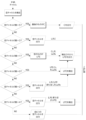
図7A~図7Bは、チャネル識別のための方法の段階のフローチャートを示す。それは、計算を最小限にするために、どのチェックと方法段階がどの順序で実行されるかの序列付け(sequencing)最適化を示す。本実施形態では、5.1サラウンドサウンド・ファイル・フォーマットが想定されているが、軽微な変更で、他のフォーマットも可能である。 Figures 7A-7B show a flow chart of method steps for channel identification. It shows the sequencing optimization of which checks and method steps are performed in which order to minimize computation. In this embodiment, a 5.1 surround sound file format is assumed, but other formats are possible with minor modifications.
第1の段階は、空チャネル識別段階110である。この段階の結果は、本方法が、マルチチャネル・オーディオ信号の可能な構成の数を、空チャネル識別段階110の結果の後にリストされる1つまたは2つのオプションに低減することを許容する。
The first step is the free
図示した実施形態は、6つのチャネルを有するが、空のチャネルの数の結果を調整しながら、任意の他の数が可能である。 The illustrated embodiment has six channels, but any other number is possible, adjusting for the result of the number of empty channels.
空チャネル識別段階110の結果、空のチャネルの数が5である場合、最後のチャネルは、自動的に中央チャネルとして識別され、次いで出力される。
If the number of empty channels is 5 as a result of the empty
空チャネル識別段階110の結果、空のチャtネルの数を3である場合、識別された空のチャネルが出力され、残りのチャネルはL、R、Cであると仮定される。チャネル・ペア分割段階130が、ペアを見つけるために使用され、残りのチャネルは、自動的に中央チャネルとして識別され、次いでペアとともに出力される。
If the result of the empty
空チャネル識別段階110の結果、空のチャネルの数が1である場合、LFEチャネル識別段階120を使用することによって、その空のチャネルが、LFEチャネルと間違えられたかどうかダブルチェックされる。LFEチャネルが検出された場合、それが出力され、そうでない場合は前記空のチャネルが出力される。チャネル・ペア分割段階130が、残りの5つのチャネルのうちから2つのペアを見つけるために使用され、残りのチャネルは自動的に中央チャネルとして識別され、次いでペアとともに出力される。
If the result of the empty
空チャネル識別段階110の結果、空のチャネルの数がゼロである場合、入力が5.1サラウンドサウンドに従ってフォーマットされているならば、LFEチャネルが存在しなければならない。たとえば7.1フォーマットが可能な実施形態では、残りの6つのチャネルは、たとえば3つのペアである可能性がある。LFEチャネルは、LFEチャネル識別段階120を使って識別され、出力される。チャネル・ペア分割段階130が、残りの5つのチャネルのうちから2つのペアを見つけるために使用され、残りのチャネルは自動的に中央チャネルとして識別され、次いでペアとともに出力される。
If the result of the empty
空チャネル識別段階110の結果、空のチャネルの数が2である場合、識別された空のチャネルが出力され、残りのチャネルは、L、R、C、LFEまたはL、R、Ls、Rsのいずれかでありうる。LFEチャネル識別段階120は比較的効率的であるので、それが次に使用される。LFEチャネルが検出される場合、それが出力され、残りのチャネルはL、R、Cとなる。そうでない場合、残りのチャネルはL、R、Ls、Rsとなる。チャネル・ペア分割段階130は、残りの3つまたは4つのチャネルのうちから1つまたは2つのペアを見つけるために使用され、残りのチャネルがあればそれは自動的に中央チャネルとして識別される。いずれの仕方でも、識別されたチャネルが次いで出力される。
If the result of the empty
空チャネル識別段階110の結果、空のチャネルの数が4である場合、識別された空のチャネルが出力され、残りのチャネルは、L、RまたはC、LFEのいずれかでありうる。LFEチャネル識別段階120は比較的効率的であるので、次に使用される。LFEチャネルが検出される場合、残りのチャネルが自動的に中央チャネルとして識別され、次いでLFEチャネルとともに出力される。LFEチャネルが検出されない場合、残りのチャネルはL、Rペアである。このペアは、直接出力されてもよく、またはチャネル・ペア分割段階130が、分割されたペアが出力される前の予防措置として使用されてもよい。
If the number of empty channels as a result of the empty
空チャネル識別段階110の結果、空のチャネルの数が6である場合、すべてのチャネルは空である。その場合、空のチャネルが出力され、本方法は終了する。
If the result of the free
図示した実施形態は、チャネル・ペア区別段階150を含んでいない。含んでいたとしたら、「L,R,C,(Ls,Rs)を出力」の結果の前に行われる。
The illustrated embodiment does not include a channel
図示した実施形態は、残っている単一のチャネルがあればそれを中央チャネルとして識別することのほかは、中央チャネル識別段階140を含んでいないが、しかしながら、当業者にとっては、前述の諸実施形態に従ってそれを補正することは簡単であろう。さらに、残っている単一のチャネルがあればそれはLFEではなくCであると想定されている。そのほうが一般的であるためであるが、このような想定がされない他の実施形態では、LFEチャネル判別段階120および/または中央チャネル識別段階140を実行してもよい。
The illustrated embodiment does not include a center
図8は、チャネル順序検出器1のシステム・アーキテクチャーを示す。チャネル順序検出器は、チャネルの順序を検出するために、本発明によるチャネル識別のための方法を適用する。
Figure 8 shows the system architecture of the
チャネル順序検出器1は、コンピュータ・プログラム・プロダクトに従って方法を実行するように適用されてもよい。コンピュータ・プログラム・プロダクトは、チャネル順序検出器のような処理能力を有する装置によって実行されたときに、本発明による方法を実行するように適応された命令を有する非一時的なコンピュータ読み取り可能な記憶媒体を含む。
The
X>1個のチャネルを含むマルチチャネル・オーディオ信号が、チャネル順序検出器に入力801される。オーディオ信号のセグメント長802は、オーディオ信号から解析されてもよく、または別に入力されてもよい。セグメント長802は、入力データの全長(分単位)に対応する。よって、オーディオ・ファイルが入力される場合、セグメント長802は、そのファイルのオーディオ信号の全長に対応する。
A multi-channel audio signal containing X>1 channels is
チャネル識別のための方法の結果、識別されたチャネルが与えられる。次いで、順序検出器は、チャネル810のラベルの順序付けられた配列を出力するために、識別されたチャネルを使用してもよい。
The method for channel identification results in identified channels. The order detector may then use the identified channels to output an ordered sequence of labels for the
前述のような、任意の数の信頼スコア820も、本方法の結果の信頼性に関連して出力されうる。信頼スコアは0~1に正規化されてもよく、信頼スコア0は信頼できず、信頼性1は信頼できる、またはその逆も可能である。 Any number of confidence scores 820, as described above, may also be output related to the reliability of the results of the method. The confidence scores may be normalized between 0 and 1, with a confidence score of 0 being unreliable and a confidence score of 1 being reliable, or vice versa.
検出されたラベルの出力された配列は、再生システムによって、複数のチャネルを複数の音源に正確にマッチさせるために使用されてもよく、その結果、たとえば、中央チャネルは、中央のスピーカーから出る、などとなる。 The output sequence of detected labels may be used by a playback system to accurately match multiple channels to multiple sound sources, so that, for example, the center channel comes from the center speaker, etc.
チャネル順序検出器を含むシステムは、ディスプレイをさらに含んでいてもよい。この方法は、計算された信頼スコア(単数または複数)がディスプレイ60上に表示される表示段階160を含んでいてもよい。
The system including the channel order detector may further include a display. The method may include a
ディスプレイ60は、ユーザーが本方法の信頼性に関するフィードバックを受け取ることができるという点で有益である。
The
表示段階160は、算出された信頼スコアが信頼閾値を下回る場合、警告を表示する段階をさらに含んでいてもよい。
The
この警告は、たとえば本方法を停止する、本方法を再実行する、または、たとえば、ビットストリーミング速度を増加させる、および/または、上流の障害を修正することにより本方法を改善するために行動をとるようにユーザーに注意喚起することができるという点で有益である。 This warning is beneficial in that it can alert the user to take action to improve the method, for example by stopping the method, rerunning the method, or by, for example, increasing the bit streaming rate and/or correcting the upstream fault.
識別されたチャネル・レイアウトは、表示段階160(図5参照)に表示されてもよい。これは、ユーザーにとって、より有意なフィードバックを提供することができる。 The identified channel layout may be displayed in a display stage 160 (see FIG. 5). This may provide more meaningful feedback to the user.
いくつかの実施形態では、表示段階160は、ボタンまたはタッチスクリーンなどのユーザー・インターフェースを使用して、ユーザー入力を待つことをさらに含む。よって、ディスプレイ60は、そのようなユーザー入力を受領するためのインターフェースを含んでいてもよい。
In some embodiments, the
これにより、ユーザーが結果を分析し、フィードバックを提供する可能性をもつことなく、本方法が継続していくことを防止する。 This prevents the method from continuing without the user having the possibility to analyze the results and provide feedback.
識別されたチャネル・レイアウトは、マルチチャネル・オーディオ信号に適用される前に、ユーザーによって承認されてもよい。これは、ミスが適用されるリスクを減らす。 The identified channel layout may be approved by the user before it is applied to the multi-channel audio signal. This reduces the risk of a mistake being applied.
ユーザーは、ユーザーの設定レイアウトと同一である識別されたチャネル・レイアウトを承認するように促されなくてもよい。このシナリオは再生システムに変更を必要としないので、時間を節約し、ユーザーの要求を低減する。 The user may not be prompted to accept an identified channel layout that is identical to the user's preferred layout. This scenario saves time and reduces user demands since no changes are required to the playback system.
表示段階160は、識別されたチャネル・レイアウトがユーザーの設定レイアウトと異なる場合、警告を表示することをさらに含んでいてもよい。これは、設定レイアウトへの変更を正当化し、および/または強制する可能性があるため、ユーザーは、これが起こる前に知りたいと望むことがありうる。
The
警告レベルは、算出された信頼スコア(単数または複数)に比例してもよい。信頼できない結果を示す信頼スコアは、たとえば、ユーザーが方法を停止したり、方法をやり直したり、および/または方法を改善したりするよう、より容易に認識できる警告、または誤りである可能性の高い警告をユーザーが無視するよう、それほど容易に認識できない警告を正当化しうる。 The warning level may be proportional to the calculated confidence score(s). A confidence score indicating an unreliable result may, for example, justify a more easily perceptible warning, so that the user stops the method, restarts the method, and/or improves the method, or a less easily perceptible warning, so that the user ignores a warning that is likely to be false.
表示段階160は、ユーザーが表示されたデータを操作できるようにすることをさらに含んでいてもよい。ユーザーは、本方法に利用可能なもの以外の情報をもっている可能性があり、本方法に利用可能なデータを追加および/または変更しうる。
The
操作されたデータは、本方法の諸チャネル識別段階において使用されうる。これは、本方法の実行時になされた変更が、諸チャネル識別段階を、それらが行われる際に改善するために使用されうることを意味する。操作されたデータは、追加的または代替的に、本方法のその後の実行のために使用されてもよい。 The manipulated data may be used in the channel identification steps of the method. This means that changes made during the execution of the method may be used to improve the channel identification steps as they are performed. The manipulated data may additionally or alternatively be used for subsequent executions of the method.
表示段階160は、ユーザーが、信号の、無視するべき少なくとも1つのセグメントを選択することを許容することをさらに含んでいてもよい。これにより、ユーザーは、たとえば、本方法を攪乱させるオーディオ信号中の欠陥を識別し、それを除去することができる。
The
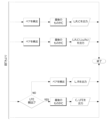
図9は、チャネル識別方法の段階を示す図である。図示した実施形態は、異なる領域で実施される方法の異なる段階を示す。この実施形態では、空チャネル識別段階110、LFE判別段階120、チャネル・ペア分割段階130、および中央チャネル識別段階140は、ウェーブレット領域のような時間‐周波数領域で行われ、チャネル・ペア区別段階150は、空間領域で行われる。これは、たとえば、特定の領域で特徴を抽出するために、特定の段階の前にマルチチャネル・オーディオ信号を変換910、920し、それらの段階が実行された後に逆変換することによって達成される。
Figure 9 illustrates the stages of the channel identification method. The illustrated embodiment shows the different stages of the method being performed in different domains. In this embodiment, the empty
これは、可能な一実施形態にすぎず、他の実施形態では、示されたものとは異なる段階が、示されたものとは異なる領域で実施されるか、または、たとえば、方法全体が1つの領域で実施される。 This is just one possible embodiment; in other embodiments, different steps than those shown are performed in different areas than those shown, or, for example, the entire method is performed in one area.
方法100は、識別されたチャネル・レイアウトをマルチチャネル・オーディオ信号に適用170する段階をさらに含んでいてもよい。これは、マルチチャネル・オーディオ信号のチャネルの順序を変更すること;識別された再生ソースにチャネルをリダイレクトすること、すなわち、左チャネルが左スピーカーによって出力されるようにすること;または、チャネル識別のための本方法の結果である識別されたレイアウトに適合するようにするための、マルチチャネル・オーディオ信号の任意の他の物理的および/またはデジタル操作を含んでいてもよい。
The
いくつかの実施形態では、識別されたチャネル・レイアウトは、計算された信頼スコア(単数または複数)が信頼閾値を超える場合にのみ適用される。 In some embodiments, the identified channel layout is applied only if the calculated confidence score(s) exceeds a confidence threshold.
識別されたチャネル・レイアウトが信頼できない場合、識別されたチャネル・レイアウトを適用することは、放射される音像を悪化させる可能性があるので、これを防止するために信頼閾値が使用されてもよい。 If the identified channel layout is not reliable, applying the identified channel layout may worsen the radiated sound image, so a confidence threshold may be used to prevent this.
適用段階170は、識別されたチャネル・レイアウトをマルチチャネル・オーディオ信号に適用するために、任意の存在するメタデータを使用することを含んでいてもよい。メタデータは、適用段階170をより効果的にすることができ、放送チェーン内の任意のさらなるシステムによって使用されうる。
The
本方法によって識別されるチャネル・レイアウトは、スピーカー・システムにストリームされているときに、マルチチャネル・オーディオ信号にリアルタイムで適用されてもよい。 The channel layout identified by this method may be applied in real-time to the multi-channel audio signal as it is being streamed to a speaker system.
提案される方法は非常に計算効率がよいので、再生への有意な遅延なしに、リアルタイムで適用されうる。 The proposed method is very computationally efficient and can be applied in real-time without significant delay to the playback.
最初の結果は不正確で、信頼スコアが低くなることがあるが、オーディオ信号の再生に伴ってより多くのデータが収集されるにつれて、スコアは高くなる。 Initial results may be inaccurate and result in a low confidence score, but the score will increase as more data is collected as the audio signal is played.
本方法のリアルタイム実施形態は:すべてのデータバッファをクリアし、チャネル番号を取得する初期化を含んでいてもよい。何らかの新しいデータが取得された後、チャネル識別は、すべての利用可能なデータに対して実行されうる。以前のデータの特徴は、消費する複雑さを低く保つために使用されてもよい。一貫性のないデータが受け入れられることもある。利用可能なデータに基づいてある種のチャネルに対して判定がなされない場合、それらのチャネルは不明としてラベル付けされてもよく、信頼スコアは0である。当初は、すべてのチャネルの信頼スコアは、グローバルな重み因子のため、低い。十分なデータが受領された後では、識別は一定に保たれ、信頼スコアは若干変動する可能性がある。 A real-time embodiment of the method may include: initialization to clear all data buffers and obtain channel numbers. After any new data is acquired, channel identification may be performed on all available data. Features of previous data may be used to keep the complexity consumption low. Inconsistent data may be accepted. If no decision can be made for certain channels based on the available data, they may be labeled as unknown and have a confidence score of 0. Initially, the confidence scores of all channels are low due to the global weighting factor. After enough data is received, the identification remains constant and the confidence scores may fluctuate slightly.
マルチチャネル・オーディオ信号は、コンテンツ作成、解析、変換および再生システムのためのマルチチャネル・サラウンドサウンド・ファイルまたはストリームであってもよい。これらのシステムはチャネル・レイアウトによって強く影響される。 The multichannel audio signal may be a multichannel surround sound file or stream for content creation, analysis, conversion and playback systems. These systems are strongly influenced by the channel layout.
本方法の段階の少なくとも1つは、機械学習に基づく方法を使用してもよい。機械学習に基づく方法は、ディシジョンツリー、アダブースト〔Adaboost〕、GMM、SVM、HMM、DNN、CNNおよび/またはRNNであってもよい。 At least one of the steps of the method may use a machine learning based method. The machine learning based method may be a decision tree, Adaboost, GMM, SVM, HMM, DNN, CNN and/or RNN.
機械学習は、本方法の効率および/または信頼性をさらに改善するために使用されうる。 Machine learning can be used to further improve the efficiency and/or reliability of the method.
チャネル・ペア検出のためのSVMが、一例として取り上げられてもよい。式3に示されるように、フレームl内のチャネルiとjの間のチャネル間スペクトル距離をDi,j(l)と表す。次いで、全周波数帯域を1,2,…またはKの異なる帯域に分割し、チャネル間スペクトル距離が計算され、それぞれ平均チャネル間スペクトル距離


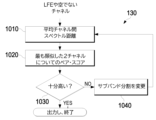
図10は、チャネル・ペア分割段階130のフローチャートを示す。チャネル・ペア検出は、より効率的にするために、通常は、空ではなく、LFEではないチャネル上で行われる。未知のチャネルの数が2以上である場合に、チャネル・ペアが検出されてもよい。
Figure 10 shows a flow chart of the channel
チャネル・ペア分割段階130における対称的なチャネルのマッチングは、各チャネルのオーディオ・エネルギーの間の音エネルギー分布および分散を計算するために、時間的特徴、スペクトル特徴、聴覚特徴および/または他の領域における特徴を比較し、最も対称的なチャネルどうしをペアとしてマッチングすることをさらに含んでいてもよい。対称的なチャネルは、音エネルギー分布および分散を解析することにより、実質的に類似したおよび/または対称的な音声信号内容をもつオーディオのチャネルとして見出される。対称的な音声信号内容は、たとえば、それぞれ、類似の背景音および異なる前景音、類似のベース音および異なるデスカント音を含んでいてもよく、または、その逆を含んでいてもよい。対称的な音声内容は、単一のコードの異なる部分などの同期した音、または、あるチャネルで始まり別のチャネルで終わる音をさらに含んでいてもよい。
Matching symmetrical channels in the channel
2つのチャネルの特徴が非常に近いが、他のチャネルの特徴とは全く異なる場合、または2つのチャネル間の相関が他のチャネルより高い場合、それら2つのチャネルはチャネル・ペアに分割されてもよい。 If the characteristics of two channels are very close but quite different from the characteristics of the other channel, or if the correlation between the two channels is higher than the other channel, then the two channels may be split into a channel pair.
チャネル・ペア分割段階130における対称的なチャネルのマッチングは、短期、中期および/または長期の継続時間において各チャネルの計算された音エネルギー分布および分散を用いてチャネル間のチャネル間スペクトル距離を計算1010する段階であって、チャネル間スペクトル距離は、複数のサブバンドについて合計された、各チャネルにおける2つのマッチングする音エネルギー・サブバンド間の距離の正規化されたペア毎の指標である、段階と;最も短い距離をもつチャネルどうしをペアとしてマッチングする段階とをさらに含む。
Matching symmetric channels in the channel
使用される距離指標は、ユークリッド距離、マンハッタン距離および/またはミンコフスキー距離であってもよい。 The distance measures used may be Euclidean distance, Manhattan distance and/or Minkowski distance.
以下の例はすべて周波数領域にあるが、他の領域も可能である。時間‐周波数特徴を用いた実施形態のほか、信号変換または信号分析理論の他の方法から導出された特徴も、たとえばペア検出および/または信頼スコア推定を行うために使用されうる。上記のようなヒューリスティック規則に基づく方法のほか、回帰、決定木、アダブースト、GMM、HMMまたはDNNのような機械学習に基づく方法もまた、たとえばペア検出および/または信頼スコア推定のために使用されうる。 The following examples are all in the frequency domain, but other domains are possible. Besides the embodiments using time-frequency features, features derived from signal transformation or other methods of signal analysis theory may also be used, e.g., for pair detection and/or confidence score estimation. Besides methods based on heuristic rules as mentioned above, methods based on machine learning, such as regression, decision trees, Adaboost, GMM, HMM or DNN, may also be used, e.g., for pair detection and/or confidence score estimation.
ある実施形態では、フレームl内のチャネルiとjの間の距離は、

計算されたチャネル間スペクトル距離の時間を追った平均が計算され、最も短い平均距離をもつチャネルどうしをペアとしてマッチさせるために使用されうる。これは、チャネル間の長期的な類似性を測定するために使用される。 The average of the calculated inter-channel spectral distances over time can be calculated and used to pair-match channels with the smallest average distance. This is used to measure the long-term similarity between channels.
ある実施形態では、チャネル間の平均チャネル間距離は、

平均距離の代わりに、またはそれに加えて、最低および/または最高のチャネル間距離が使用されてもよい。しかしながら、ペア・チャネルは平均的には類似しているが、必ずしも常に、たとえば各フレームにおいて類似しているとは限らないので、平均が好ましい。 Instead of or in addition to the average distance, the minimum and/or maximum inter-channel distance may be used. However, the average is preferred because although paired channels are similar on average, they are not necessarily similar at all times, e.g., in every frame.
チャネル間スペクトル距離を用いる実施形態では、中央チャネル識別段階140は、Y個のチャネルのうちLFEチャネルとして識別されていない、またはペアに分割されていない残っている不対チャネルがあればsの計算されたチャネル間スペクトル距離を解析して、中央チャネルを識別することをさらに含んでいてもよい。これは、中央チャネル識別段階140の精度がさらに高める。
In embodiments using inter-channel spectral distance, the center
中央チャネル識別段階140についての信頼スコアは、識別された中央チャネルと、Y個のチャネルのうちのLFEチャネルとして識別されていない他のチャネルとの間の計算されたチャネル間スペクトル距離に比例してもよく、そのため、相対的に対称的な距離が、より信頼性の高い結果につながる。
The confidence score for the center
中央チャネルは、好ましくは、LFEチャネルとして識別されていない他のチャネル、すなわち、対になったチャネルに対する対称的な距離を有し、よって、相対的に対称的な距離が、より信頼性の高い結果につながる。 The center channel preferably has a symmetrical distance to the other channel that is not identified as the LFE channel, i.e., the paired channel, so that the relatively symmetrical distance leads to more reliable results.
中央チャネル識別段階140についての信頼スコアは、チャネル・ペア分割段階130が存在する場合、その信頼スコアに直接比例してもよい。
The confidence score for the center
たとえば、中央チャネル識別段階140が単に残りのチャネルを識別することを含む場合、中央チャネル識別段階140の信頼性は、チャネル・ペア分割段階130の信頼性に直接比例する。他の実施形態でも、ペアのマッチングの信頼性は、中央チャネルとして識別されるべき利用可能なチャネルに影響を与える可能性があるので、中央チャネル識別段階140の信頼性に直接影響する可能性がある。
For example, if the center
チャネル・ペア分割段階130における対称的なチャネルのマッチングは、各チャネルの音エネルギー分布の相関を比較し、最も相関の高いチャネルどうしをペアとしてマッチングすることをさらに含んでいてもよい。これは、単純で効率的な計算であるが、いくつかの実施形態においてのみ機能する。
Matching symmetric channels in the channel
使用される相関指標は、余弦類似性、ピアソン相関係数および/または相関行列でありうる。 The correlation measures used may be cosine similarity, Pearson correlation coefficient and/or correlation matrix.
チャネル・ペア分割段階130は、さらに、Y個のチャネルのうちLFEチャネルとして識別されていない各チャネルについて、チャネルをペアとしてマッチングする計算のために使用される少なくとも1つのパラメータを測定すること、および/または、もしあれば以前の測定からインポートすることを含んでいてもよい。
The channel
指標は、たとえば、空チャネル識別段階110またはLFEチャネル判別段階120で測定された音エネルギーであってもよい。これは、方法100の効率を改善する。
The indicator may be, for example, the sound energy measured in the empty
チャネル・ペアが、それらをマッチングするために使用される特徴(単数または複数)に従って異なる仕方でマッチングされる場合、どのペアリングを適用するかを決定するために、特徴(単数または複数)の階層が使用されてもよい。 If channel pairs are matched differently according to the feature(s) used to match them, a hierarchy of the feature(s) may be used to determine which pairing to apply.
階層は、たとえば、あるタイプの指標が他よりも好ましいというものであってもよい。たとえば、平均チャネル間スペクトル距離が最大チャネル間スペクトル距離または音エネルギー分布の相関よりも好ましい。 The hierarchy may be, for example, such that some types of metrics are preferred over others, e.g., average inter-channel spectral distance is preferred over maximum inter-channel spectral distance or correlation of sound energy distributions.
チャネル・ペア分割段階130は、Y個のチャネルのうちLFEチャネルとして識別されない対になっていないチャネルがあれば、それらをペアリングすることを、残りチャネルが2つよりも少なくなるまで、続けてもよい。
The channel
5.1オーディオ・フォーマットにおける前方ペアと後方ペアのようなチャネルのペアが2つより多くあってもよい。よって、もし2つより多くのチャネルが残っていれば、その中にさらなるチャネル・ペアがある可能性が高く、さらなるペアを分割することが可能である。 There may be more than two pairs of channels, such as the front and rear pairs in a 5.1 audio format. Thus, if there are more than two channels remaining, there are likely to be further channel pairs among them, and further pairs can be split off.
チャネル・ペア分割段階130は、各ペア内のマルチチャネル・オーディオ信号の第1の受領チャネルを左チャネルとして割り当て、各ペア内の最後にリストされたチャネルを右チャネルとして割り当てることをさらに含んでいてもよい。
The channel
マルチチャネル・オーディオ信号において、各ペアの左チャネルを右チャネルの前にリストするのが慣習的である。よって、常にそうであると想定することにより、本方法はより効率的となる。 In multi-channel audio signals, it is conventional to list the left channel of each pair before the right channel, so the method is more efficient by assuming that this is always the case.
チャネルのペアへの分割、および/または、もしあれば左右のチャネルの割り当ては、メタデータを使用して格納されてもよい。 The division of channels into pairs and/or the left and right channel assignments, if any, may be stored using metadata.
チャネル・ペア分割段階130についての信頼スコアは、マッチングされたペア(単数または複数)の対称性指標に比例しうる。そのため、相対的に高い対称性指標が、より信頼性の高い結果につながる。
The confidence score for the channel
正しくマッチングされたペアは、好ましくは、高い対称性を有するので、チャネル・ペア分割段階130の結果が、比較的高い対称性をもつペアを有する場合、それは、比較的信頼性が高い。
Correctly matched pairs preferably have a high degree of symmetry, so if the result of the channel
チャネル・ペア分割段階130についての信頼スコアは、マッチングされたペア(単数または複数)間の計算されたチャネル間スペクトル距離に比例しうる。そのため、相対的に短い距離が、より信頼性の高い結果につながる。
The confidence score for the channel
正しくマッチングされたペアは、好ましくは、互いの間の短い距離を有する。よって、チャネル・ペア分割段階140の結果が、比較的短い距離のペアを有する場合、それは比較的信頼性がある。
Correctly matched pairs preferably have a short distance between each other. Thus, if the result of the channel
チャネル・ペア分割段階140についての信頼スコアは、マッチングされたペア(単数または複数)内の各チャネルと、Y個のチャネルのうち、LFEチャネルとして識別されていない、またはマッチしたチャネルでない他のチャネルとの間の計算されたチャネル間スペクトル距離に比例してもよい。そのため、相対的に長い距離が、より信頼性の高い結果につながる。
The confidence score for the channel
正しくマッチングされたペアは、好ましくは、他のチャネルへの長い距離を有する。よって、チャネル・ペア分割段階140の結果が、他のチャネルへの比較的長い距離をもつペアを有する場合には、それは比較的信頼性が高い。
Correctly matched pairs preferably have a long distance to the other channel. Thus, if the result of the channel
チャネル・ペア分割段階の少なくとも一部は、この段階についての信頼スコアが信頼閾値を下回る場合1030、チャネル間スペクトル距離を計算する際に、異なるサブバンド分割でやり直されてもよい1040。
At least a portion of the channel pair splitting step may be redone with a different subband split when calculating the inter-channel
サブバンド分割を変更することにより、より信頼性の高い結果が達成されうる。いくつかの実施形態では、たとえば信頼閾値またはペア・スコア閾値を通じてチャネル・ペア分割段階140の満足いく信頼性が達成されるまで1030、サブバンド分割が変更される。
By varying the subband partitioning, more reliable results may be achieved. In some embodiments, the subband partitioning is varied 1030 until a satisfactory reliability of the channel
ペア・スコアは、ペアのメンバーが他のペアにグループ化されうる可能性を比較するための指標である。ペア・スコア閾値は、ペア・スコアについてのあらかじめ決定された閾値である。ペア・スコアがペア・スコア閾値よりも高い場合、チャネル・ペア分割段階140の結果は十分に信頼できる。
The pair score is an index for comparing the likelihood that members of a pair can be grouped into other pairs. The pair score threshold is a pre-determined threshold for the pair score. If the pair score is higher than the pair score threshold, the results of the channel
このことのあるバージョンが、図10のフローチャートに示されている。まず、すべての可能なペアについて平均チャネル間スペクトル距離が計算される。次いで、最低のチャネル間スペクトル距離をもつペアについて、ペア・スコアが計算される1020。ペア・スコアが判断を下すのに十分に高くない場合、異なる時間‐周波数セグメンテーションを使用して、新しい平均チャネル間スペクトル距離および対応するペア・スコアが得られる。試行は、すべてのチャネルがペアになるか、または何らかの終了条件が満たされるまで実施されうる。2つより多いチャネルがまだ未検出である場合、それらの信頼スコアはすべて0に設定される。 A version of this is shown in the flowchart of Figure 10. First, the average inter-channel spectral distance is calculated for all possible pairs. Then, for the pair with the lowest inter-channel spectral distance, a pair score is calculated 1020. If the pair score is not high enough to make a decision, a different time-frequency segmentation is used to obtain a new average inter-channel spectral distance and corresponding pair score. Trials can be performed until all channels are paired or some termination condition is met. If more than two channels are still undetected, their confidence scores are all set to 0.
信頼スコアは、さらに、データの全長を考慮するために、グローバルな重み因子によって重み付けされうる。チャネル・ペア検出は、残ったチャネルが1つだけになるまで、未知のすべてのチャネルで実行される。 The confidence score can be further weighted by a global weighting factor to take into account the total length of the data. Channel pair detection is performed on all unknown channels until only one channel remains.
ペア・スコアは、信頼スコアとして、または信頼スコアの一部として使用されうる。 The pair score may be used as a confidence score or as part of a confidence score.
ある実施形態では、チャネルiとjのペアについてのペア・スコアが、次のように計算される:

ペア・スコアは、任意の可能なペアについて、または最も低い平均チャネル間スペクトル距離をもつ2つのチャネル、すなわち、上記の式におけるチャネルi,jについてのみ、計算されうる。ペア・スコアは、それらをチャネル・ペアとして分割する信頼度の指標である。 The pair score can be calculated for any possible pair, or just for the two channels with the lowest average inter-channel spectral distance, i.e., channels i,j in the above formula. The pair score is a measure of the confidence of splitting them as a channel pair.
ペア・スコアは、候補チャネル・ペアi,j間のチャネル間スペクトル・チャネル距離を他のチャネルのそれぞれと比較し、それら2つのチャネルが互いに類似しており、一方、他のチャネルのいずれとも異なることを確認する。チャネルiまたはjに類似する他のチャネルも存在する場合、Pi,jは、1よりもはるかに低く、したがって、信頼性が低いことを意味する。 The pair score compares the inter-channel spectral channel distance between a candidate channel pair i,j with each of the other channels to ensure that the two channels are similar to each other while being different from any of the other channels. If there are also other channels that are similar to channel i or j, then P i,j will be much lower than 1, which means it is less reliable.
図11は、チャネル・ペア位置区別段階150のフローチャートを示す。チャネル・ペア区別段階150は、対に分割されたチャネルを、前方ペア、側方ペア、後方ペア、および/または任意の他の位置的ペアの間で区別することを含む。
Figure 11 shows a flow chart of the channel pair
チャネル・ペア区別段階150は、好ましくは対分割段階130の後に実施される、チャネル識別のための方法の一部である。
The channel
多くのマルチチャネル・オーディオ信号は、前方ペアと後方ペアを含む5.1のように、複数のチャネル・ペアを含む。よって、チャネル識別のための方法は、位置ペアの間を区別し、位置ペアをそのようなものとして正しく識別できることが有益である。 Many multichannel audio signals contain multiple channel pairs, such as 5.1, which includes a front pair and a rear pair. It is therefore beneficial for a method for channel identification to be able to distinguish between position pairs and correctly identify position pairs as such.
前方音像の方向安定性は、通例、継続時間のほとんどの部分で維持され、後方チャネルは、通例、音像全体を向上させることができる情報を運ぶ。 The directional stability of the front sound image is typically maintained for most of its duration, and the rear channels typically carry information that can improve the overall sound image.
チャネル・ペア区別段階150は、各ペアのペア間レベル差を計算1120する段階を含んでいてもよく、ペア間レベル差は、各ペアのサブバンド音エネルギーの和のデシベル差に比例し、相対的に最も高いレベルをもつペアが、前方ペアとして区別される。
The channel
代替的または追加的に、振幅パンが、ペア間のレベル差の計算と併せて行われてもよい。振幅パンは、仮想音源を生成することを含む。 Alternatively or additionally, amplitude panning may be performed in conjunction with calculating the level difference between the pairs. Amplitude panning involves generating virtual sound sources.
ほとんどの仮想音源は、前面から現れるように生成されうる。これは、前方ペアが、他の位置的ペアよりも相対的に高い振幅を有する結果になり、よって、最も高い振幅をもつペアが、前方ペアとして区別されうる。 Most virtual sound sources can be generated to appear from the front. This results in the front pair having a relatively higher amplitude than the other positional pairs, and thus the pair with the highest amplitude can be identified as the front pair.
パン方法は、さらに、後方ペアを位相外れにすることを含んでいてもよい。よって、比較的位相が外れている対は、後方ペタとして区別されてもよい。 The panning method may further include moving the rear pairs out of phase. Thus, the relatively out of phase pairs may be identified as rear petas.
前方ペアは中央チャネルに最も近いはずなので、前方ペアは、伝統的に、相対的に最も高いレベルをもつペアである1140。 The forward pair is traditionally the pair with the highest relative level, since it should be closest to the central channel.1140
ある実施形態では、いずれも帯域bの、チャネルi,jのペアと、チャネルm,nの別のペアとの間のペア間レベル差は、各時間‐周波数タイルについて次式に従って計算される:

ペアの間のペア間レベル差は常に十分高くはない。2dBに満たない差は有益な情報をもたないことがあるからである。よって、ペアの間により大きなペア間レベル差を生じうる内容をもつ当該信号のセグメントが選択されてもよい。 The inter-pair level difference between pairs is not always high enough, since differences less than 2 dB may not carry any useful information. Therefore, a segment of the signal may be selected whose content would result in a larger inter-pair level difference between the pairs.
よって、チャネル・ペア区別段階150は、各ペア内の各チャネルについての、当該信号のサブバンド音エネルギーがエネルギー閾値を上回るような当該信号の一つまたは複数のセグメントを選択する段階と;これらのセグメントのみを用いてチャネルのペア間レベル差を計算する段階とをさらに含んでいてもよい。
Thus, the channel
エネルギー閾値を上回るサブバンド音エネルギーの形で大量の情報をもつセグメントを選択することによって、ペア間のレベル差が増加しうる。 By selecting segments that have a large amount of information in the form of subband sound energy above an energy threshold, the level difference between the pairs can be increased.
チャネル・ペア区別段階150は、絶対ペア間レベル差が絶対閾値を超える各ペアについての当該信号の一つまたは複数のセグメントを選択する段階1150と;これらのセグメントのみを使用してチャネルのペア間レベル差を計算する段階とをさらに含んでいてもよい。
The channel
高い閾値を用いてセグメントを選択することによって、平均ペア間レベル差が増加しうる。多くのマルチチャネル・オーディオ信号は、信号の一部の間、複数のチャネルにおいて同様の出力を有する。これらの部分はペア間のレベル差には寄与しないので、安全に無視できる。 Selecting segments with a high threshold can increase the average pairwise level difference. Many multi-channel audio signals have similar output in multiple channels during parts of the signal. These parts do not contribute to the pairwise level difference and can therefore be safely ignored.
絶対ペア間レベル差を測定することへの補足として、信号の全長と比較して比較的小さなセグメントにおける平均ペア間レベル差も使用してもよいし、これが代わりに使用されてもよい。セグメントの選択が十分に高い平均ペア間レベル差を与えない場合、より高い絶対閾値を用いた選択がそれを達成してもよい。 As a complement to measuring the absolute inter-pair level difference, the average inter-pair level difference in a segment that is relatively small compared to the total length of the signal may also be used, or this may be used instead. If the selection of a segment does not give a sufficiently high average inter-pair level difference, selection with a higher absolute threshold may achieve it.
よって、相対的に最も高い平均ペア間レベル差がレベル閾値を下回る場合(段階1130で判定される)、チャネルのペア間レベル差を計算する段階は、平均ペア間レベル差が十分に高くなるまで、より高い絶対閾値1150を用いて繰り返されてもよい。
Thus, if the relatively highest average inter-pair level difference falls below the level threshold (as determined in step 1130), the step of calculating the inter-pair level difference of channels may be repeated using a higher
代替的または追加的に、相対的に最も高い平均ペア間レベル差がレベル閾値を下回る場合、識別された中央チャネルとの相対的に最も高い組み合わされた方向一貫性をもつペアが、前方ペアとして区別されうる。 Alternatively or additionally, the pair with the highest relative combined directional coherence with the identified center channel may be identified as the forward pair if the highest relative average inter-pair level difference is below a level threshold.
ある実施形態では、セグメントの選択は放棄され、識別された中央チャネルとの方向的一貫性が、代わりに、ペアを区別するために使用される。中央チャネルに最も近い方向をもつペアは、中央チャネルに最も近くもある。 In one embodiment, segment selection is abandoned and directional consistency with the identified central channel is used instead to distinguish pairs. The pair with the closest orientation to the central channel is also closest to the central channel.
方向一貫性は、時間領域における2つのチャネルの類似性の指標であり、これは音像方向に関係し、音像方向は、チャネル間の位相差を含意する。 Directional coherence is a measure of the similarity of two channels in the time domain, which is related to the sound image direction, which implies the phase difference between the channels.
方向差は、2つのチャネル間の主音源の方向の一貫性を測るために使用されうる。ある実施形態による方向一貫性の簡略化された尺度は次の通りである:

前方ペアは、伝統的に、他の位置ペアよりも相対的に高い互いとの方向一貫性を有するべきであり、後方ペアは、伝統的に、他の位置ペアよりも相対的に低い互いとの方向一貫性を有するべきである。 Forward pairs should traditionally have relatively higher directional coherence with each other than other position pairs, and backward pairs should traditionally have relatively lower directional coherence with each other than other position pairs.
前方ペアの信号は、通例、方向性の音源を表すように時間整列されているため、相関が高く、遅延が小さい。これは、前方ペアには、後方ペアと比較して、より多くの同一成分が存在することを意味する。式7に示されているように、方向差はこれを測るものである。チャネルiおよびjにおける信号が同一である場合、これは、両者が同位相であり、X=1であることを意味し、そうでない場合、X<1である。2つのチャネルの位相がずれていれば(out of phase)、X=0である。 The signals in the forward pair are typically time-aligned to represent directional sources, and therefore have high correlation and low delay. This means that there are more identical components in the forward pair compared to the rear pair. The directional difference measures this, as shown in Equation 7. If the signals in channels i and j are identical, this means that they are in phase and X = 1, otherwise X < 1. If the two channels are out of phase, X = 0.
別の実施形態では、相対的に最も高い平均ペア間レベル差がレベル閾値を下回り、絶対閾値が最大閾値1160を上回る場合、識別された中央チャネル1170との相対的に最も高い組み合わされた方向一貫性を有するペアが前方ペア1180として区別される。
In another embodiment, if the relatively highest average inter-pair level difference is below the level threshold and the absolute threshold is above the
この実施形態は図11に示されている。この実施形態では、信号の全部が最初に選択される1110が、平均ペア間レベル差はレベル閾値を超えるのに十分高いレベルに達しておらず、セグメントの選択は、十分高い平均ペア間レベル差を生じなかった。よって、代わりに、識別された中央チャネルとの方向一貫性が、ペアを区別するために使用される。 This embodiment is shown in FIG. 11. In this embodiment, all of the signals are initially selected 1110, but the average inter-pair level difference does not reach a high enough level to exceed the level threshold, and selection of a segment did not result in a high enough average inter-pair level difference. Therefore, instead, directional coherence with the identified center channel is used to distinguish the pairs.
セグメントの選択が失敗した理由は、平均ペア間レベル差がレベル閾値を超えるのに十分高いレベルに達していないこと、および絶対閾値が非常に高いため、それより上のセグメントがペア間レベル差を計算できるために十分長くないためである。 The reason for the failure of segment selection is that the average pairwise level difference did not reach a high enough level to exceed the level threshold, and the absolute threshold is so high that the segments above it are not long enough to allow the pairwise level difference to be calculated.
レベル閾値は、2~3dBの間の定数であってもよい。絶対閾値の最大閾値は、2dB、および/または選択されたセグメントの全長が、たとえば非無音信号長の20%より短い、または、たとえば1分より短い任意の閾値でありうる。 The level threshold may be a constant between 2 and 3 dB. The maximum absolute threshold may be 2 dB, and/or any threshold where the total length of the selected segment is less than, for example, 20% of the non-silence signal length, or less than, for example, 1 minute.
絶対閾値の最大閾値は、各ペア内の各チャネルに対する信号の、平均チャネル間スペクトル距離が距離閾値を上回っている選択された一つまたは複数のセグメントが、チャネル間レベル差を計算するのに十分な長さでなくなるときに関係する。選択されたセグメントの全長が非無音信号長の20%より短いか、または1分より短い場合、有用な信号は短すぎる。 The maximum absolute threshold is relevant when one or more selected segments of the signal for each channel in each pair, in which the average inter-channel spectral distance exceeds the distance threshold, are no longer long enough to calculate the inter-channel level difference. If the total length of the selected segments is less than 20% of the non-silent signal length or less than 1 minute, the useful signal is too short.
位置ペアの間の区別は、それらのペアの、識別された中央チャネルとの類似性に基づいていてもよい。その場合、識別された中央チャネルに最も類似するペアは前方ペアとして区別されてもよく、識別された中央チャネルに最も類似しないペアは後方ペアとして区別されてもよい。 The distinction between the position pairs may be based on their similarity to the identified center channel. In that case, the pair that is most similar to the identified center channel may be distinguished as a forward pair, and the pair that is least similar to the identified center channel may be distinguished as a backward pair.
中央チャネルは音像の正面であることが慣例であり、よって、前方ペアは、たとえば、後方ペアよりも、それに似ているべきである。 The center channel is conventionally in front of the sound image, so the front pair should resemble that more than, say, the rear pair.
識別された中央チャネルとの類似性は、時間‐周波数特徴、空間的特徴、音像方向、チャネル間の位相差、および/またはチャネル間ペア・レベル差に基づくことができる。 The similarity to the identified center channel can be based on time-frequency features, spatial features, sound image direction, inter-channel phase difference, and/or inter-channel pair level difference.
追加的または代替的に、識別された中央チャネルに対する類似性は、遅延パンを使用して計算されてもよく、中央チャネルとの最も高い方向一貫性を有するペアが、前方ペアとして区別される。 Additionally or alternatively, similarity to the identified center channel may be calculated using delayed panning, and the pair with the highest directional consistency with the center channel is identified as the forward pair.
時間‐周波数特徴が最初に調べられ、次いで空間的特徴となる。これは、振幅パンが最も頻繁に使用され、時間‐周波数特徴の計算がそれほど時間を必要としないからである。 Time-frequency features are examined first, followed by spatial features. This is because amplitude panning is used most often and the calculation of time-frequency features does not require much time.
チャネルの方向パターンは、チャネル・ペアの、中央からペアの距離を比較するために生成されてもよい。次いで、中央チャネルにより近いチャネル・ペアが前方ペアとして検出される。 A directional pattern of channels may be generated to compare the distance of the channel pairs from the center. The channel pair closer to the center channel is then detected as the forward pair.
異なるペアが、区別を行うために使用される特徴に依存して、同じ位置ペアとして区別される場合、それらの特徴は、階層に従って優先順位付けされうる。 When different pairs are distinguished as same-location pairs depending on the features used to make the distinction, those features can be prioritized according to a hierarchy.
階層は、たとえば、信頼スコア、使用される指標、または使用される閾値に依存してもよい。 The hierarchy may depend, for example, on the confidence scores, the metrics used, or the thresholds used.
チャネルのペアの区別は、メタデータを使用して格納されてもよい。 The distinction between channel pairs may be stored using metadata.
信頼スコアは、チャネル・ペア区別段階150の結果について計算されてもよい。
A confidence score may be calculated for the results of the channel
チャネル・ペア区別段階150の信頼スコアは、識別された中央チャネルと、Y個のチャネルのうちのLFEチャネルとして識別されていないペアリングされたチャネルとの間の計算されたチャネル間スペクトル距離に比例してもよく、その結果、前方ペアと中央チャネルとの間の比較的小さなチャネル間スペクトル距離は、より信頼性の高い結果をもたらす。
The confidence score of the channel
識別された中央チャネルに最も近いペアは前方ペアとして区別され、識別された中央チャネルに最も類似していないペアは後方ペアとして区別される。この指標はこれを反映する。 The pair that is closest to the identified central channel is classified as the forward pair, and the pair that is least similar to the identified central channel is classified as the backward pair. This metric reflects this.
チャネル・ペア区別段階150についての信頼スコアは、分割されたペアのチャネルの方向性(directionality)に比例してもよく、その結果、方向性の間の比較的大きな差は、より信頼性の高い結果をもたらす。
The confidence score for the channel
中央チャネルにより近い方向を有するペアも中央チャネルにより近く、したがって前方ペアである。よって、大きな差は、より信頼性の高い区別につながる。絶対的な差および/または異なるペアの比が使用されうる。 The pair with the direction closer to the central channel is also closer to the central channel and is therefore a forward pair. Thus, a larger difference leads to a more reliable discrimination. Absolute differences and/or ratios of different pairs can be used.
同様の理由により、チャネル・ペア区別段階150についての信頼スコアは、識別された中央チャネルおよび分割されたペアのチャネルの方向性に比例してもよく、その結果、中央チャネルとペアのうちの1つの方向性の間の比較的小さな差が、より信頼性の高い結果につながる。
For similar reasons, the confidence score for the channel
チャネル・ペア区別段階150についての信頼スコアは、ペアリングされたチャネルの計算されたペア間レベル差に比例してもよく、その結果、比較的高い平均レベル差が、より信頼性の高い結果につながる。
The confidence score for the channel
2dBを超える平均ペア間レベル差は、有益な情報を与え、それが高いほど、該有益な情報が多い。より多くの情報は、より信頼性の高い結果につながる。 An average inter-pair level difference of more than 2 dB gives useful information, and the higher it is, the more useful information there is. More information leads to more reliable results.
チャネル・ペア区別段階150についての信頼スコアは、チャネル・ペア分割段階130および/または中央チャネル識別段階140が存在する場合、それらの信頼スコアに直接比例してもよい。
The confidence score for the channel
チャネル・ペア区別段階150は、チャネル・ペア分割段階130が信頼できない場合、信頼できない。さらに、チャネル・ペア区別段階150のための多くの可能な信頼スコア計算は、中央チャネル識別段階140に依存する。よって、計算を節約するために、チャネル・ペア分割段階130および/または中央チャネル識別段階140について事前に計算された信頼スコアが再使用されてもよい。
The channel
チャネル・ペア区別段階150についての信頼スコアは、信号の選択された一つまたは複数のセグメントの長さに比例してもよく、その結果、相対的に長い一つまたは複数のセグメントが、より信頼性の高い結果につながる。
The confidence score for the channel
選択されたセグメントの短い長さは、ペア間レベル差の計算を信頼できないものにするだろう。選択されたセグメントの絶対的な長および/または選択されたセグメントの長さの、データの全長に対する比が使用されうる。 A short length of the selected segment would make the calculation of the pairwise level difference unreliable. The absolute length of the selected segment and/or the ratio of the length of the selected segment to the total length of the data may be used.
チャネル・ペア区別段階150の少なくとも一部は、該段階についての信頼スコアが信頼閾値を下回る場合には、異なるデータ・セグメントで再実行されてもよい。
At least a portion of the channel
これは、チャネル・ペア区別段階150の結果が信頼できることを保証する。
This ensures that the results of the channel
本開示のさらなる実施形態は、上記の説明を検討した後、当業者に明らかになるであろう。本明細書および図面は、実施形態および例を開示しているが、本開示は、これらの特定の例に限定されない。添付の特許請求の範囲によって定義される本開示の範囲から逸脱することなく、多数の修正および変形を行うことができる。請求項に現れる参照符号があったとしても、その範囲を限定するものとして理解されない。 Further embodiments of the present disclosure will be apparent to those skilled in the art after reviewing the above description. Although the specification and drawings disclose embodiments and examples, the present disclosure is not limited to these specific examples. Numerous modifications and variations can be made without departing from the scope of the present disclosure, which is defined by the appended claims. Any reference signs appearing in the claims shall not be construed as limiting the scope thereof.
さらに、開示された実施形態に対する変形が、図面、本開示、および添付の特許請求の範囲の吟味から、本開示を実施する際に当業者によって理解され、実施されうる。請求項において、語「有する/含む」は、他の要素または段階を除外せず、不定冠詞「a」または「an」は、複数を除外しない。ある種の施策が互いに異なる従属請求項に記載されているというだけの事実は、これらの施策の組み合わせが有利に使用できないことを示すものではない。 Furthermore, variations to the disclosed embodiments can be understood and effected by those skilled in the art in practicing the present disclosure, from a study of the drawings, the disclosure, and the appended claims. In the claims, the word "comprising" does not exclude other elements or steps, and the indefinite articles "a" or "an" do not exclude a plurality. The mere fact that certain features are recited in mutually different dependent claims does not indicate that a combination of these features cannot be used to advantage.
上述のシステムおよび方法は、ソフトウェア、ファームウェア、ハードウェア、またはそれらの組み合わせとして実装されうる。たとえば、本願の諸側面は、少なくとも部分的に、装置、複数の装置を含むシステム、方法、コンピュータ・プログラム・プロダクトなどにおいて具現されうる。ハードウェア実装では、上述の機能ユニット間のタスクの分割は、必ずしも物理ユニットへの分割に対応しない。逆に、1つの物理コンポーネントが複数の機能を有していてもよく、1つのタスクが、協働する複数の物理コンポーネントによって実行されてもよい。ある種のコンポーネントまたはすべてのコンポーネントは、デジタル信号プロセッサまたはマイクロプロセッサによって実行されるソフトウェアとして実装されてもよく、またはハードウェアとして、または特定用途向け集積回路として実装されてもよい。そのようなソフトウェアは、コンピュータ記憶媒体(または非一時的媒体)および通信媒体(または一時的媒体)を含みうるコンピュータ読み取り可能な媒体上で頒布されうる。当業者には周知のように、用語「コンピュータ記憶媒体」は、コンピュータ読み取り可能な命令、データ構造、プログラムモジュール、または他のデータのような情報の記憶のための任意の方法または技術で実装される、揮発性および不揮発性、取り外し可能および非取り外し可能な媒体の両方を含む。コンピュータ記憶媒体は、RAM、ROM、EEPROM、フラッシュメモリまたは他のメモリ技術、CD-ROM、デジタル多用途ディスクまたは他の光ディスク記憶、磁気カセット、磁気テープ、磁気ディスク記憶または他の磁気記憶装置、または所望の情報を記憶するために使用でき、コンピュータによってアクセスできる他の任意の媒体を含むが、これらに限定されない。さらに、通信媒体は、典型的には、搬送波または他のトランスポート機構のような変調されたデータ信号の形のコンピュータ読み取り可能な命令、データ構造、プログラムモジュールまたは他のデータを具現し、任意の情報送達媒体を含むことが当業者には周知である。 The above-described systems and methods may be implemented as software, firmware, hardware, or a combination thereof. For example, aspects of the present application may be embodied, at least in part, in an apparatus, a system including multiple apparatuses, a method, a computer program product, etc. In a hardware implementation, the division of tasks among the functional units described above does not necessarily correspond to a division into physical units. Conversely, one physical component may have multiple functions, and one task may be performed by multiple cooperating physical components. Some or all of the components may be implemented as software executed by a digital signal processor or microprocessor, or as hardware, or as an application specific integrated circuit. Such software may be distributed on a computer-readable medium, which may include computer storage media (or non-transitory media) and communication media (or transitory media). As known to those skilled in the art, the term "computer storage media" includes both volatile and non-volatile, removable and non-removable media, implemented in any method or technology for storage of information, such as computer-readable instructions, data structures, program modules, or other data. Computer storage media includes, but is not limited to, RAM, ROM, EEPROM, flash memory or other memory technology, CD-ROM, digital versatile disks or other optical disk storage, magnetic cassettes, magnetic tape, magnetic disk storage or other magnetic storage devices, or any other medium that can be used to store the desired information and that can be accessed by a computer. Additionally, communication media typically embody computer-readable instructions, data structures, program modules or other data in the form of a modulated data signal, such as a carrier wave or other transport mechanism, and are well known to those skilled in the art to include any information delivery media.
本発明のさまざまな側面は、以下に列挙される箇条書き例示的実施形態(enumerated example embodiment、EEE)から理解されうる:
〔EEE1〕
X>1個のチャネルを含むマルチチャネル・オーディオ信号のチャネル識別のための方法であって、当該方法は:
X個のチャネルのうちで、空のチャネルがあればそれを識別し(110)、結果としてY≦X個の空でないチャネルのサブセットを与える段階と;
前記Y個のチャネルのうちに低域効果(LFE)チャネルが存在するかどうかを判定し(120)、LFEチャネルが存在すると判定したら、前記Y個のチャネルのうちの判別されたチャネルをLFEチャネルとして識別する段階と;
対称的なチャネルをマッチングさせることによって、前記Y個のチャネルのうちの、LFEチャネルとして識別されていない残りのチャネルを任意の数のチャネル・ペアに分割する段階と;
前記Y個のチャネルのうちの、LFEチャネルとして識別されたり、またはペアに分割されたりしていない残りの不対チャネルがあればそれを中央チャネルとして識別する(140)段階とを含む、
方法。
〔EEE2〕
前方ペア、側方ペア、後方ペア、および/または他の任意の位置ペアの間で、諸ペアに分割されたチャネルを区別する(150)段階をさらに含む、EEE1に記載の方法。
〔EEE3〕
チャネル・ペア区別段階は、ペアどうしの間のペア間レベル差(inter-pair level difference)を計算することを含み;ペア間レベル差は、各ペアのサブバンド音エネルギー(subband sound energy)の和のデシベル差に比例し、相対的に高いほうのレベルをもつペアが、前方ペアとして区別される、EEE2に記載の方法。
〔EEE4〕
チャネル・ペア区別段階は、ペア間レベル差の計算との関連で振幅パンをさらに含み、振幅パンは仮想音源を生成することを含む、EEE3に記載の方法。
〔EEE5〕
チャネル・ペア区別段階は、前記信号のサブバンド音エネルギーがエネルギー閾値を上回る、各ペアについての前記信号の一つまたは複数のセグメントを選択し;これらのセグメントのみを用いて前記ペアのペア間レベル差を計算することをさらに含む、EEE3または4に記載の方法。
〔EEE6〕
チャネル・ペア区別段階は、絶対的なペア間レベル差が絶対閾値を上回る、各ペアにおける前記信号の一つまたは複数のセグメントを選択し;これらのセグメントのみを用いて前記ペア間レベル差を計算することをさらに含む、EEE3ないし5のうちいずれか一項に記載の方法。
〔EEE7〕
相対的に最も高い平均ペア間レベル差がレベル閾値を下回る場合、チャネルのペア間レベル差を計算する段階は、より高い絶対閾値を用いて繰り返される、EEE6に記載の方法。
〔EEE8〕
相対的に最も高い平均ペア間レベル差がレベル閾値を下回る場合、識別された中央チャネルとの相対的に最も高い組み合わされた方向一貫性を有するペアが、前記前方ペアとして区別される、EEE3ないし7のうちいずれか一項に記載の方法。
〔EEE9〕
相対的に最も高い平均ペア間レベル差がレベル閾値を下回り、絶対閾値が最大閾値を上回る場合、識別された中央チャネルとの相対的に最も高い組み合わされた方向一貫性をもつペアが、前方ペアとして区別される、EEE7に記載の方法。
〔EEE10〕
前記絶対閾値の最大閾値は2dBである、EEE9に記載の方法。
〔EEE11〕
前記方向一貫性は、時間領域での2つのチャネルの類似性の指標であり、音像方向に関連し、音像方向は、前記チャネル間の位相差を含意する、EEE8~10のいずれか一項に記載の方法。
〔EEE12〕
前記レベル閾値は、2~3dBの間の定数である、EEE7~11のいずれか一項に記載の方法。
〔EEE13〕
位置ペア間の前記区別は、位置ペアの、前記識別された中央チャネルとの類似性に基づく、EEE2~12のうちいずれか一項に記載の方法。
〔EEE14〕
前記識別された中央チャネルに最も類似するペアが前記前方ペアとして区別され、前記識別された中央チャネルに最も類似しないペアが前記後方ペアとして区別される、EEE13に記載の方法。
〔EEE15〕
前記識別された中央チャネルとの類似性は、時間‐周波数特徴、空間的特徴、音像方向、前記チャネル間の位相差、および/またはペア間のレベル差に基づいている、EEE13または14に記載の方法。
〔EEE16〕
前記識別された中央チャネルとの類似性は、遅延パンを用いて計算され、前記中央チャネルとの最も高い方向一貫性を有するペアが、前記前方ペアとして区別される、EEE13~15のうちいずれか一項に記載の方法。
〔EEE17〕
前記識別された中央チャネルとの類似性が、前記チャネルの方向パターンを生成して、前記チャネル・ペアの、中央からペアへの距離を比較することによって計算され、中央チャネルにより近いペアが前記前方ペアとして区別される、EEE13~16のうちいずれか一項に記載の方法。
〔EEE18〕
前記区別をするために使用される特徴に依存して、異なる対が同一の位置ペアとして区別される場合、前記特徴は、階層に従って優先順位を付けられる、EEE2~17のうちいずれか一項に記載の方法。
〔EEE19〕
チャネルのペアの前記区別は、メタデータを用いて格納される、EEE2~18のうちいずれか一項に記載の方法。
〔EEE20〕
空チャネル識別段階は、前記X個のチャネルのうちの各チャネルにおける音エネルギーを測定する段階をさらに含む、EEE1ないし19のうちいずれか一項に記載の方法。
〔EEE21〕
前記X個のチャネルのうちの各チャネルにおける音エネルギーは、短期、中期および/または長期の持続時間において測定される、EEE20に記載の方法。
〔EEE22〕
チャネルは、その総音エネルギーがエネルギー閾値を下回る場合に、空として識別される、EEE20または21に記載の方法。
〔EEE23〕
チャネルは、そのサブバンド音エネルギーのそれぞれがエネルギー閾値を下回る場合に、空として識別される、EEE20~22のいずれか一項に記載の方法。
〔EEE24〕
前記音エネルギーは、時間的、スペクトル的、ウェーブレットおよび/または聴覚領域で測られる、EEE20~20のうちいずれか一項に記載の方法。
〔EEE25〕
空のチャネルの前記識別は、メタデータを用いて格納される、EEE1ないし25のうちいずれか一項に記載の方法。
〔EEE26〕
LFEチャネル決定段階は、前記Y個のチャネルのうちの各チャネルにおける測定された音エネルギーを使用して、LFEチャネルが存在するかどうかを決定する段階をさらに含む、EEE20~25のうちいずれか一項に記載の方法。
〔EEE27〕
LFEチャネル決定段階は、前記Y個のチャネルのうちの各チャネルにエネルギー閾値を上回る音エネルギーが存在する周波数帯域を測定する段階をさらに含む、EEE1~26のうちいずれか一項に記載の方法。
〔EEE28〕
前記Y個のチャネルのうちの各チャネルにエネルギー閾値を上回る音エネルギーが存在する前記周波数帯域が、短期、中期、および/または長期の持続時間において測定される、EEE27に記載の方法。
〔EEE29〕
あるチャネルの低周波数領域におけるサブバンド音エネルギーの和が、そのチャネルにおける他のすべての周波数領域におけるサブバンド音エネルギーの和よりも有意に大きい場合に、前記Y個のチャネルのうちにLFEチャネルが存在すると判定される、EEE26~28のうちいずれか一項に記載の方法。
〔EEE30〕
各周波数領域におけるサブバンド音エネルギーの和が、各周波数領域のサイズによってさらに正規化される、EEE29に記載の方法。
〔EEE31〕
そのような任意のチャネルが前記LFEチャネルとして識別される、EEE29または30に記載の方法。
〔EEE32〕
前記低周波数領域が、200Hz未満のサブバンドを含む、EEE29~31のうちいずれか一項に記載の方法。
〔EEE33〕
前記EEE26~32のうちいずれか一項に記載の方法であって、あるチャネルが周波数閾値未満の周波数領域においてのみ、エネルギー閾値を上回るサブバンド音エネルギーを含む場合に、前記Y個のチャネルのうちにLFEチャネルが存在すると判定される、方法。
〔EEE34〕
そのような任意のチャネルのみが前記LFEチャネルとして識別される、EEE33に記載の方法。
〔EEE35〕
周波数閾値が200Hz以上である、EEE33または34に記載の方法。
〔EEE36〕
前記Y個のチャネルのうちに複数のLFEチャネルが存在すると判定された場合、LFEチャネルが存在するかどうかを判定するために使用される前記特徴(単数または複数)の階層に従って、1つのみが前記LFEチャネルとして識別される、EEE26~35のうちいずれか一項に記載の方法。
〔EEE37〕
前記LFEチャネルの識別がメタデータを用いて格納される、EEE1~37のいずれか一項に記載の方法。
〔EEE38〕
前記チャネル・ペア分割段階における対称的なチャネルの前記マッチングは、各チャネルのオーディオ信号の間の音エネルギー分布および分散を計算するために、時間的特徴、スペクトル特徴、聴覚特徴および/または他のドメイン〔領域〕における特徴を比較して、最も対称的なチャネルどうしをペアとしてマッチングすることをさらに含む、EEE1~38のうちいずれか一項に記載の方法。
〔EEE39〕
EEE38に記載の方法であって、前記チャネル・ペア分割段階における対称的なチャネルの前記マッチングは、さらに、各チャネルの短期、中期および/または長期の持続時間における音エネルギー分布および分散を用いて、前記チャネル間のチャネル間スペクトル距離を計算する段階であって、前記チャネル間スペクトル距離は、複数のサブバンドについて合計された、各チャネルにおける2つのマッチングする音エネルギー・サブバンド間の距離の正規化されたペア毎の指標である、段階と;最も短い距離を有する前記チャネルどうしをペアとしてマッチングする段階とを含む、方法。
〔EEE40〕
使用される距離測度は、ユークリッド距離、マンハッタン距離および/またはミンコフスキー距離である、EEE39に記載の方法。
〔EEE41〕
計算されたチャネル間スペクトル距離の時間にわたる平均が計算され、互いまでの最短の平均距離を有するチャネルどうしをペアとしてマッチングさせるために使用される、EEE38または40に記載の方法。
〔EEE42〕
EEE39~41のうちいずれか一項に記載の方法であって、前記中央チャネル識別段階は、前記Y個のチャネルのうちLFEチャネルとして識別されていない、またはペアに分割されていない残りの任意の不対チャネルの計算されたチャネル間スペクトル距離を解析して、前記中央チャネルを識別する段階をさらに含む、方法。
〔EEE43〕
前記チャネル・ペア分割段階における対称的なチャネルの前記マッチングは、各チャネルの音エネルギー分布の相関を比較して、最も相関しているチャネルどうしをペアとしてマッチングすることをさらに含む、EEE1ないし42のうちいずれか一項に記載の方法。
〔EEE44〕
使用される相関指標は、余弦類似性、ピアソン相関係数、および/または相関行列である、EEE43に記載の方法。
〔EEE45〕
前記チャネル・ペア分割段階は、前記Y個のチャネルのうちLFEチャネルとして識別されていない各チャネルについて、前記チャネルをペアとしてマッチングする前記の諸計算のために使用される少なくとも1つのパラメータを、測定する、またはもしあれば前の測定からインポートすることをさらに含む、EEE38~44のうちいずれか一項に記載の方法。
〔EEE46〕
EEE38~45のうちいずれか一項に記載の方法であって、前記チャネル・ペアが、ペアをマッチングするために使用される特徴(単数または複数)に応じて異なる仕方でマッチングされる場合、使用される特徴の階層が、どのペアリングを適用するかを決定する、方法。
〔EEE47〕
前記チャネル・ペア分割段階は、2つより少ないチャネルが残るまで、前記Y個のチャネルのうちLFEチャネルとして識別されていない対になっていない任意のチャネルをペアリングし続ける、先のEEE1~46のうちいずれか一項に記載の方法。
〔EEE48〕
前記チャネル・ペア分割段階は、各ペア内の前記マルチチャネル・オーディオ信号の最初の受領されたチャネルを前記左チャネルとして割り当て、各ペア内の最後にリストされるチャネルを前記右チャネルとして割り当てることをさらに含む、EEE1ないし47のうちいずれか一項に記載の方法。
〔EEE49〕
チャネルのペアへの前記分割および/またはもしあれば左右のチャネルの前記割り当てがメタデータを用いて格納される、EEE1ないし48のうちいずれか一項に記載の方法。
〔EEE50〕
前記中央チャネル識別段階は、前記YチャネルのうちのLFEチャネルとして識別されていない、またはペアに分割されていない残りの不対チャネルの独立性および/または非相関性を、前記Y個のチャネルのうちの他のチャネルと比較して計算する段階と、前記中央チャネルを、最も独立なおよび/または非相関なチャネルとして識別する段階とをさらに含む、EEE1ないし49のうちいずれか一項に記載の方法。
〔EEE51〕
前記Y個のチャネルのうちLFEチャネルとして識別されていない、またはペアに分割されていない任意の残りの不対チャネルの前記独立性および/または非相関性の前記計算は、ペアに分割されたチャネルと比較してのみ計算される、EEE50に記載の方法。
〔EEE52〕
前記中央チャネル識別段階は、前記チャネル・ペア区別段階の後に行われ、前記Y個のチャネルのうちLFEチャネルとして識別されていない、またはペアに分割されていない任意の残りの不対チャネルの独立性および/または非相関性の前記計算は、前記前方ペアとして区別されたチャネルと比較してのみ計算される、EEE2~19のうちの少なくとも1つに従属するEEE50または51に記載の方法。
〔EEE53〕
前記中央チャネルの前記識別はメタデータを用いて格納される、EEE1ないし52のうちいずれか一項に記載の方法。
〔EEE54〕
当該方法の段階のいずれかの結果についての信頼スコアを計算する段階をさらに含み、前記信頼スコアは、その結果がどのくらい信頼できるかの指標である、EEE1ないし53のうちいずれか一項に記載の方法。
〔EEE55〕
前記マルチチャネル・オーディオ信号の前記持続時間がある持続時間閾値を下回る場合、前記信頼スコアは1未満の重み因子を乗算され、それにより、前記持続時間閾値を下回る持続時間は、より信頼性の低い結果につながる、EEE54に記載の方法。
〔EEE56〕
前記重み因子は、前記持続時間を前記持続時間閾値で割ったものに比例し、その結果、相対的に長い持続時間が、より信頼性の高い結果につながる、EEE55に記載の方法。
〔EEE57〕
EEE55または56に記載の方法であって、前記持続時間が前記持続時間閾値よりも長い場合、前記重み因子は、適用されないか、または1に等しい、方法。
〔EEE58〕
前記持続時間の閾値は、5~30分の間の定数である、EEE55~57のいずれか一項に記載の方法。
〔EEE59〕
EEE54~58のうちいずれか一項に記載の方法であって、前記空チャネル識別段階についての前記信頼スコアは、識別された空のチャネルの音エネルギーに比例し、相対的により低い音エネルギーは、より信頼性の高い結果につながる、方法。
〔EEE60〕
EEE54~59のうちいずれか一項に記載の方法であって、前記LFEチャネル決定段階についての信頼スコアは、前記決定されたLFEチャネルの、前記低周波数領域における前記サブバンド音エネルギーと、他のすべての周波数領域における前記サブバンド音エネルギーとの差に比例し、相対的により大きな差が、より信頼性の高い結果につながる、方法。
〔EEE61〕
前記サブバンド音エネルギーの差は、前記異なる周波数領域における前記サブバンド音エネルギーの和を比較することによって計算される、EEE60に記載の方法。
〔EEE62〕
前記低周波数領域は、200Hz未満の任意のサブバンドを含む、EEE60または61に記載の方法。
〔EEE63〕
前記LFEチャネル決定段階についての前記信頼スコアは、周波数閾値よりも高い周波数領域における前記決定されたLFEチャネルのサブバンド音エネルギーの和に比例し、その結果、相対的に低い和が、より信頼性の高い結果につながる、EEE54~62のうちいずれか一項に記載の方法。
〔EEE64〕
前記周波数閾値が200Hz以上である、EEE63に記載の方法。
〔EEE65〕
EEE54~64のうちいずれか一項に記載の方法であって、前記LFEチャネル決定段階についての前記信頼スコアは、前記決定されたLFEチャネルに存在する最も高い周波数信号に比例し、その結果、相対的により低い最も高い周波数信号が、より信頼性の高い結果につながる、方法。
〔EEE66〕
EEE54~65のうちいずれか一項に記載の方法であって、前記チャネル・ペア分割段階についての前記信頼スコアは、前記マッチングされたペア(単数または複数)の対称性指標に比例し、その結果、相対的に高い対称性指標が、より信頼性の高い結果につながる、方法。
〔EEE67〕
EEE54~66のうちいずれか一項に記載の方法であって、前記チャネル・ペア分割段階についての前記信頼スコアは、前記マッチングされたペア(単数または複数)の間の計算されたチャネル間スペクトル距離に比例し、その結果、相対的により短い距離が、より信頼性の高い結果につながる、方法。
〔EEE68〕
EEE54~67のうちいずれか一項に記載の方法であって、前記チャネル・ペア分割段階についての前記信頼スコアは、前記マッチングされるペア(単数または複数)内の各チャネルと、前記Y個のチャネルのうち前記LFEチャネルとして識別されていない、または前記マッチングされたチャネルでない他のチャネルとの間の計算されたチャネル間スペクトル距離に比例し、相対的に長い距離が、より信頼性の高い結果につながる、方法。
〔EEE69〕
EEE66~68のいずれか一項に記載の方法であって、前記チャネル・ペア分割段階の少なくとも一部は、該段階についての前記信頼スコアが信頼閾値を下回る場合、チャネル間スペクトル距離を計算する際に、異なるサブバンド分割を用いて再実行される、方法。
〔EEE70〕
EEE54~69のうちいずれか一項に記載の方法であって、前記中央チャネル識別段階についての前記信頼スコアは、前記Y個のチャネルのうちLFEチャネルとして識別されていないチャネルと比較した、識別された前記中央チャネルの独立性および/または非相関性に比例し、その結果、相対的に高い独立性および/または非相関性が、より信頼性の高い結果につながる、方法。
〔EEE71〕
EEE54~70のうちいずれか一項に記載の方法であって、前記中央チャネル識別段階についての前記信頼スコアは、前記識別された中央チャネルと、前記Y個のチャネルのうちLFEチャネルとして識別されない他のチャネルとの間の計算されたチャネル間スペクトル距離に比例し、相対的に対称的な距離が、より信頼性の高い結果につながる、方法。
〔EEE72〕
前記中央チャネル識別段階についての前記信頼スコアは、前記チャネル・ペア分割段階が存在する場合、前記チャネル・ペア分割段階の前記信頼スコアに直接比例する、EEE54~71のうちいずれか一項に記載の方法。
〔EEE73〕
EEE2~19のうちの少なくとも1つに従属するEEE54~72のうちのいずれか一項に記載の方法であって、前記チャネル・ペア区別段階の結果について信頼スコアが計算される、方法。
〔EEE74〕
EEE73に記載の方法であって、前記チャネル・ペア区別段階についての前記信頼スコアは、前記識別された中央チャネルと、前記Y個のチャネルのうちLFEチャネルとして識別されていないペアリングされたチャネルとの間の計算されたチャネル間スペクトル距離に比例し、前記前方ペアと前記中央チャネルとの間の相対的に小さなチャネル間スペクトル距離が、より信頼性の高い結果につながる、方法。
〔EEE75〕
EEE73または74に記載の方法であって、前記チャネル・ペア区別段階についての前記信頼スコアは、分割されたペアの前記チャネルの前記方向性に比例し、前記方向性の間の相対的に大きな差が、より信頼性の高い結果につながる、方法。
〔EEE76〕
EEE73~75のうちいずれか一項に記載の方法であって、前記チャネル・ペア区別段階についての前記信頼スコアは、識別された前記中央チャネルおよび分割されたペアのチャネルの方向性に比例し、前記中央チャネルと前記ペアのうちの1つとの方向性の相対的に小さな差が、より信頼性の高い結果につながる、方法。
〔EEE77〕
EEE73~76のうちいずれか一項に記載の方法であって、前記チャネル・ペア区別段階についての前記信頼スコアは、前記チャネル・ペアの前記計算されたペア間レベル差に比例し、相対的に高い平均レベル差が、より信頼性の高い結果につながる、方法。
〔EEE78〕
前記チャネル・ペア区別段階についての前記信頼スコアは、前記チャネル・ペア分割段階および/または前記中央チャネル識別段階の信頼スコアが存在する場合、それらの信頼スコアに直接比例する、EEE73~77のうちいずれか一項に記載の方法。
〔EEE79〕
少なくともEEE4または5に従属するEEE73~78のいずれか一項に記載の方法であって、前記チャネル・ペア区別段階についての信頼スコアは、前記信号の前記選択された一つまたは複数のセグメントの長さに比例し、相対的に長い一つまたは複数のセグメントが、より信頼性の高い結果につながる、方法。
〔EEE80〕
前記チャネル・ペア区別段階の少なくとも一部は、該段階についての信頼スコアが信頼閾値を下回る場合、異なるデータ・セグメントで再実行される、EEE73~70のいずれか一項に記載の方法。
〔EEE81〕
EEE54~80のいずれかに記載の方法であって、当該方法のある段階についての前記信頼スコアのための複数の計算オプションが利用可能である場合、それらは階層で適用される、方法。
〔EEE82〕
前記信頼スコアはメタデータを用いて格納される、EEE54~81のうちいずれか一項に記載の方法。
〔EEE83〕
前記計算された信頼スコアがディスプレイ(60)上に表示される表示段階(160)をさらに含む、EEE54~82のうちいずれか一項に記載の方法。
〔EEE84〕
前記表示段階は、計算された信頼スコアが信頼閾値を下回る場合に警告を表示する段階をさらに含む、EEE83に記載の方法。
〔EEE85〕
識別されたチャネル・レイアウトが表示される表示段階をさらに含む、EEE1ないし84のうちいずれか一項に記載の方法。
〔EEE86〕
前記表示段階は、ボタンまたはタッチスクリーンのようなユーザー・インターフェースを使用するユーザー入力を待つことをさらに含む、EEE83~85のいずれか一項に記載の方法。
〔EEE87〕
EEE85および86に記載の方法であって、前記識別されたチャネル・レイアウトは、前記マルチチャネル・オーディオ信号に適用される前に、ユーザーによって承認される、方法。
〔EEE88〕
ユーザーは、ユーザーの設定レイアウトと同一である識別されたチャネル・レイアウトを承認するよう促されない、EEE87に記載の方法。
〔EEE89〕
前記表示段階は、前記識別されたチャネル・レイアウトがユーザーの設定レイアウトと異なる場合、警告を表示する段階をさらに含む、EEE83~88のいずれか一項に記載の方法。
〔EEE90〕
EEE54~82のうちいずれか一項に従属するEEE89に記載の方法であって、前記警告レベルは、算出された信頼スコア(単数または複数)に比例する。
〔EEE91〕
EEE83~90のうちいずれか一項に記載の方法であって、前記表示段階は、ユーザーが前記表示されたデータを操作することを許容することをさらに含む、方法。
〔EEE92〕
前記操作されたデータが、当該方法の前記チャネル識別の諸段階において使用される、EEE91に記載の方法。
〔EEE93〕
前記表示段階は、ユーザーが前記信号の、無視すべき少なくとも1つのセグメントを選択することを許容することをさらに含む、EEE83~92のうちいずれか一項に記載の方法。
〔EEE94〕
前記識別されたチャネル・レイアウトを前記マルチチャネル・オーディオ信号に適用する段階(170)をさらに含む、EEE1ないし93のうちいずれか一項に記載の方法。
〔EEE95〕
EEE54~82のうちいずれか一項に従属するEEE94に記載の方法であって、前記識別されたチャネル・レイアウトは、計算された信頼スコア(単数または複数)が信頼閾値を超える場合にのみ適用される、方法。
〔EEE96〕
EEE94または95に記載の方法であって、前記適用する段階は、前記識別されたチャネル・レイアウトを前記マルチチャネル・オーディオ信号に適用するために、任意の存在するメタデータを使用することを含む、方法。
〔EEE97〕
当該方法によって識別される前記チャネル・レイアウトは、スピーカー・システムにストリーミングされる際に、前記マルチチャネル・オーディオ信号にリアルタイムで適用される、EEE1~96のうちいずれか一項に記載の方法。
〔EEE98〕
前記マルチチャネル・オーディオ信号は、コンテンツ作成、解析、変換および再生システムのためのマルチチャネル・サラウンドサウンド・ファイルまたはストリームである、EEE1~97のうちいずれか一項に記載の方法。
〔EEE99〕
前記方法の少なくとも1つの段階は、機械学習に基づく方法を使用する、EEE1~98のうちいずれか一項に記載の方法。
〔EEE100〕
前記機械学習に基づく方法が、ディシジョンツリー、アダブースト〔Adaboost〕、GMM、SVM、HMM、DNN、CNNおよび/またはRNNである、EEE99に記載の方法。
〔EEE101〕
マルチチャネル・オーディオ信号のチャネルを識別するように構成された装置であって、当該装置(1)は、請求項1ないし100のうちいずれか一項に記載の方法(100)を実行するように構成された回路を備える、装置。
〔EEE102〕
処理能力を有する装置(1)によって実行されたときに、EEE1ないし100のうちいずれか一項に記載の方法を実行するように適応された命令を有する、非一時的なコンピュータ読み取り可能な記憶媒体を含むコンピュータ・プログラム・プロダクト。
Various aspects of the present invention can be understood from the enumerated example embodiments (EEE) listed below:
[EEE1]
1. A method for channel identification of a multi-channel audio signal comprising X>1 channels, the method comprising:
identifying (110) any empty channels among the X channels, resulting in a subset of Y≦X non-empty channels;
determining (120) whether a low frequency effects (LFE) channel is present among the Y channels, and if an LFE channel is present, identifying the determined channel among the Y channels as an LFE channel;
splitting the remaining channels of the Y channels that are not identified as LFE channels into any number of channel pairs by matching symmetric channels;
and identifying (140) any remaining unpaired channels of the Y channels that have not been identified as an LFE channel or split into pairs as center channels.
method.
[EEE2]
The method of EEE1, further comprising the step of differentiating (150) the channels divided into pairs among forward pairs, side pairs, rear pairs, and/or any other position pairs.
[EEE3]
The method according to EEE2, wherein the channel pair discrimination step includes calculating an inter-pair level difference between the pairs; the inter-pair level difference is proportional to the decibel difference of the sum of the subband sound energy of each pair, and the pair having the relatively higher level is discriminated as the front pair.
[EEE4]
The method according to EEE3, wherein the channel pair discrimination step further comprises amplitude panning in conjunction with the calculation of the inter-pair level difference, the amplitude panning comprising generating a virtual sound source.
[EEE5]
The method of any one of claims 3 to 4, wherein the channel pair discrimination step further comprises selecting one or more segments of the signal for each pair in which the subband sound energy of the signal exceeds an energy threshold; and calculating the pair-to-pair level difference of the pair using only these segments.
[EEE6]
The method of any one of EEE3 to 5, wherein the channel pair discrimination step further comprises selecting one or more segments of the signal in each pair in which the absolute pair-to-pair level difference exceeds an absolute threshold; and calculating the pair-to-pair level difference using only these segments.
[EEE7]
The method according to EEE6, wherein if the relatively highest average pairwise level difference falls below the level threshold, the step of calculating the pairwise level differences of channels is repeated using a higher absolute threshold.
[EEE8]
The method of any one of EEE3 to 7, wherein the pair having the highest combined directional coherence with the identified center channel is distinguished as the front pair if the highest average inter-pair level difference is below a level threshold.
[EEE9]
The method described in EEE7, wherein if the relative highest average inter-pair level difference is below a level threshold and the absolute threshold is above a maximum threshold, the pair with the relative highest combined directional consistency with the identified center channel is distinguished as a front pair.
[EEE10]
The method according to claim 9, wherein the maximum absolute threshold is 2 dB.
[EEE11]
The method of any one of EEE8 to 10, wherein the directional coherence is a measure of similarity of two channels in the time domain and is related to sound image direction, which implies a phase difference between the channels.
[EEE12]
The method according to any one of EEE7 to 11, wherein the level threshold is a constant between 2 and 3 dB.
[EEE13]
The method of any one of EEE2-12, wherein the distinction between pairs of locations is based on similarity of pairs of locations to the identified central channel.
[EEE14]
The method of claim 8, wherein a pair that is most similar to the identified center channel is classified as the forward pair and a pair that is least similar to the identified center channel is classified as the rear pair.
[EEE15]
The method according to any one of
[EEE16]
The method of any one of EEE13 to 15, wherein the similarity to the identified center channel is calculated using a delay pan, and the pair with the highest directional consistency with the center channel is distinguished as the front pair.
[EEE17]
The method of any one of EEE13 to 16, wherein the similarity to the identified central channel is calculated by generating directional patterns of the channels and comparing the distance of the channel pairs from the center to the pair, and the pair closer to the central channel is distinguished as the front pair.
[EEE18]
The method of any one of EEE2-17, wherein, depending on the features used to make the distinction, if different pairs are distinguished as identical location pairs, the features are prioritized according to a hierarchy.
[EEE19]
The method of any one of EEE2-18, wherein said distinction between pairs of channels is stored using metadata.
[EEE20]
20. The method of any one of
[EEE21]
The method of EEE20, wherein the sound energy in each of the X channels is measured at short, medium and/or long durations.
[EEE22]
22. The method of claim 20 or 21, wherein a channel is identified as empty if its total sound energy is below an energy threshold.
[EEE23]
23. The method of any one of claims 20 to 22, wherein a channel is identified as empty if each of its subband sound energies is below an energy threshold.
[EEE24]
The method of any one of EEE20 to 20, wherein the sound energy is measured in the temporal, spectral, wavelet and/or auditory domains.
[EEE25]
The method of any one of EEE1 to 25, wherein the identification of empty channels is stored using metadata.
[EEE26]
The method of any one of EEE20-25, wherein the LFE channel determination step further comprises the step of determining whether an LFE channel is present using the measured sound energy in each of the Y channels.
[EEE27]
The method of any one of EEE1-26, wherein the LFE channel determination step further comprises the step of measuring frequency bands in which sound energy above an energy threshold is present in each of the Y channels.
[EEE28]
The method of claim 8, wherein the frequency bands in which sound energy above an energy threshold is present in each of the Y channels are measured in short, medium and/or long durations.
[EEE29]
29. The method of any one of EEE26 to 28, wherein an LFE channel is determined to be present among the Y channels if the sum of subband sound energy in a low frequency region of a channel is significantly greater than the sum of subband sound energy in all other frequency regions of that channel.
[EEE30]
The method according to EEE29, wherein the sum of the subband sound energies in each frequency region is further normalized by the size of each frequency region.
[EEE31]
The method of any of claims 8 to 10, wherein any such channel is identified as the LFE channel.
[EEE32]
2. The method according to any one of
[EEE33]
The method according to any one of EEE26 to EEE32, wherein an LFE channel is determined to be present among the Y channels if a channel contains subband sound energy above an energy threshold only in a frequency region below a frequency threshold.
[EEE34]
The method according to EEE33, wherein only such any channel is identified as the LFE channel.
[EEE35]
35. The method of any one of claims 33 to 34, wherein the frequency threshold is 200 Hz or greater.
[EEE36]
The method of any one of EEE26-35, wherein if it is determined that there are multiple LFE channels among the Y channels, then only one is identified as the LFE channel according to a hierarchy of the feature(s) used to determine whether an LFE channel is present.
[EEE37]
The method of any one of EEE1-37, wherein the identity of the LFE channel is stored using metadata.
[EEE38]
The method of any one of EEE1 to 38, wherein the matching of symmetric channels in the channel pair splitting step further comprises matching the most symmetric channels as pairs by comparing temporal, spectral, auditory and/or other domain features to calculate sound energy distribution and variance between the audio signals of each channel.
[EEE39]
8. The method according to claim 6, wherein the matching of symmetric channels in the channel pair splitting step further comprises the steps of calculating an inter-channel spectral distance between the channels using sound energy distribution and variance in short-term, medium-term and/or long-term duration of each channel, the inter-channel spectral distance being a normalized pairwise measure of the distance between two matching sound energy sub-bands in each channel summed over multiple sub-bands; and matching the channels with the shortest distance as a pair.
[EEE40]
The method according to EEE39, wherein the distance measures used are Euclidean distance, Manhattan distance and/or Minkowski distance.
[EEE41]
The method of any one of EEE 38 or 40, wherein an average over time of the calculated inter-channel spectral distances is calculated and used to pair-match channels having the shortest average distance to each other.
[EEE42]
8. The method according to any one of claims 39 to 41, wherein the center channel identifying step further comprises the step of analysing a calculated inter-channel spectral distance of any remaining unpaired channels of the Y channels that have not been identified as an LFE channel or split into pairs to identify the center channel.
[EEE43]
The method of any one of EEE1 to 42, wherein the matching of symmetric channels in the channel pair splitting step further comprises comparing the correlation of the sound energy distribution of each channel and matching the most correlated channels as a pair.
[EEE44]
The method according to EEE43, wherein the correlation measure used is cosine similarity, Pearson correlation coefficient, and/or a correlation matrix.
[EEE45]
The method of any one of EEE38-44, wherein the channel pair splitting step further comprises, for each channel of the Y channels that is not identified as an LFE channel, measuring, or importing from previous measurements, if any, at least one parameter used for the calculations of matching the channels in pairs.
[EEE46]
The method according to any one of EEE38 to 45, wherein if the channel pairs are matched differently depending on the feature or features used to match the pairs, a hierarchy of the features used determines which pairing applies.
[EEE47]
The method of any one of the preceding claims EEE1-46, wherein the channel pair splitting step continues pairing any unpaired channels among the Y channels that are not identified as an LFE channel until fewer than two channels remain.
[EEE48]
48. The method of any one of EEE1 to 47, wherein the channel pair splitting step further comprises assigning a first received channel of the multi-channel audio signal in each pair as the left channel and assigning a last listed channel in each pair as the right channel.
[EEE49]
The method of any one of EEE1 to 48, wherein the division into pairs of channels and/or the allocation of left and right channels, if any, is stored using metadata.
[EEE50]
The method of any one of EEE1 to 49, wherein the center channel identification step further comprises calculating the independence and/or uncorrelation of the remaining unpaired channels of the Y channels that have not been identified as an LFE channel or split into pairs compared to other channels of the Y channels, and identifying the center channel as the most independent and/or uncorrelated channel.
[EEE51]
The method of EEE50, wherein the calculation of the independence and/or decorrelation of any remaining unpaired channels among the Y channels that are not identified as LFE channels or split into pairs is calculated only in comparison to channels that are split into pairs.
[EEE52]
The method according to EEE50 or 51, dependent on at least one of EEE2 to 19, wherein the center channel identification step is performed after the channel pair discrimination step, and the calculation of independence and/or decorrelation of any remaining unpaired channels of the Y channels that have not been identified as an LFE channel or split into pairs is calculated only in comparison with the channel discriminated as the front pair.
[EEE53]
The method of any one of EEE1-52, wherein the identification of the center channel is stored using metadata.
[EEE54]
54. The method of any one of EEE1 to 53, further comprising the step of calculating a confidence score for an outcome of any of the method steps, said confidence score being an indication of how trustworthy that outcome is.
[EEE55]
The method according to EEE54, wherein if the duration of the multi-channel audio signal is below a certain duration threshold, the confidence score is multiplied by a weighting factor less than one, whereby durations below the duration threshold lead to a less reliable result.
[EEE56]
The method of EEE55, wherein the weighting factor is proportional to the duration divided by the duration threshold, such that relatively longer durations lead to more reliable results.
[EEE57]
57. The method of claim 55 or 56, wherein if the duration is greater than the duration threshold, then the weighting factor is not applied or is equal to 1.
[EEE58]
The method of any one of EEE55-57, wherein the duration threshold is a constant between 5 and 30 minutes.
[EEE59]
The method according to any one of EEE 54 to 58, wherein the confidence score for the empty channel identification stage is proportional to the sound energy of the identified empty channel, a relatively lower sound energy leading to a more reliable result.
[EEE60]
The method according to any one of EEE 54 to 59, wherein a confidence score for the LFE channel determination step is proportional to the difference between the subband sound energy in the low frequency region and the subband sound energy in all other frequency regions of the determined LFE channel, with a relatively larger difference leading to a more reliable result.
[EEE61]
The method of EEE60, wherein the subband sound energy difference is calculated by comparing sums of the subband sound energies in the different frequency regions.
[EEE62]
62. The method of
[EEE63]
The method according to any one of EEE54 to 62, wherein the confidence score for the LFE channel determination stage is proportional to a sum of the sub-band sound energy of the determined LFE channel in frequency regions higher than a frequency threshold, such that a relatively lower sum leads to a more reliable result.
[EEE64]
The method of claim EEE63, wherein the frequency threshold is greater than or equal to 200 Hz.
[EEE65]
The method according to any one of EEE 54 to 64, wherein the confidence score for the LFE channel determination stage is proportional to the highest frequency signal present in the determined LFE channel, such that a relatively lower highest frequency signal leads to a more reliable result.
[EEE66]
The method according to any one of EEE 54 to 65, wherein the confidence score for the channel pair splitting stage is proportional to a symmetry index of the matched pair(s), such that a relatively high symmetry index leads to a more reliable result.
[EEE67]
The method according to any one of EEE 54 to 66, wherein the confidence score for the channel pair splitting stage is proportional to the calculated inter-channel spectral distance between the matched pair(s), such that a relatively smaller distance leads to a more reliable result.
[EEE68]
8. The method according to any one of claims 54 to 67, wherein the confidence score for the channel pair splitting step is proportional to the calculated inter-channel spectral distance between each channel in the matched pair(s) and any other channel among the Y channels that is not identified as the LFE channel or is not the matched channel, with a relatively larger distance leading to a more reliable result.
[EEE69]
9. The method of any one of claims 66 to 68, wherein at least a portion of the channel pair splitting step is re-performed using a different subband split when calculating inter-channel spectral distances if the confidence score for that step is below a confidence threshold.
[EEE70]
8. The method of any one of claims 54 to 69, wherein the confidence score for the centre channel identification step is proportional to the independence and/or uncorrelatedness of the identified centre channel compared to channels of the Y channels that are not identified as LFE channels, such that a relatively higher independence and/or uncorrelatedness leads to a more reliable result.
[EEE71]
8. The method according to any one of claims 54 to 70, wherein the confidence score for the centre channel identification step is proportional to the calculated inter-channel spectral distance between the identified centre channel and other channels of the Y channels that are not identified as LFE channels, with a relatively symmetrical distance leading to more reliable results.
[EEE72]
The method according to any one of EEE54-71, wherein the confidence score for the central channel identification stage is directly proportional to the confidence score of the channel pair splitting stage, if the channel pair splitting stage is present.
[EEE73]
The method according to any one of EEE54-72 dependent on at least one of EEE2-19, wherein a confidence score is calculated for the result of the channel pair discrimination step.
[EEE74]
8. The method according to claim 73, wherein the confidence score for the channel pair discrimination step is proportional to a calculated inter-channel spectral distance between the identified center channel and a paired channel among the Y channels that is not identified as an LFE channel, and a relatively smaller inter-channel spectral distance between the front pair and the center channel leads to a more reliable result.
[EEE75]
The method according to claim 73 or 74, wherein the confidence score for the channel pair discrimination step is proportional to the directionality of the channels of a split pair, with a relatively larger difference between the directionality leading to a more reliable result.
[EEE76]
The method according to any one of claims 73 to 75, wherein the confidence score for the channel pair discrimination stage is proportional to the directionality of the identified centre channel and the channels of the split pairs, and a relatively small difference in directionality between the centre channel and one of the pairs leads to a more reliable result.
[EEE77]
The method according to any one of EEE73 to 76, wherein the confidence score for the channel pair discrimination step is proportional to the calculated pairwise level differences of the channel pairs, with a relatively higher average level difference leading to a more reliable result.
[EEE78]
The method according to any one of EEE73-77, wherein the confidence score for the channel pair discrimination stage is directly proportional to the confidence scores of the channel pair splitting stage and/or the central channel identification stage, if they exist.
[EEE79]
The method according to any one of EEE73 to EEE78, dependent at least on EEE4 or EEE5, wherein a confidence score for the channel pair discrimination step is proportional to a length of the selected segment or segments of the signal, a relatively longer segment or segments leading to a more reliable result.
[EEE80]
The method of any one of EEE73-70, wherein at least a portion of the channel pair discrimination step is re-performed on a different data segment if the confidence score for that step falls below a confidence threshold.
[EEE81]
The method according to any of EEE 54 to 80, wherein, when multiple calculation options for the confidence score for a stage of the method are available, they are applied hierarchically.
[EEE82]
The method of any one of EEE54-81, wherein the confidence score is stored using metadata.
[EEE83]
The method of any one of EEE54-82, further comprising a displaying step (160) in which the calculated confidence scores are displayed on a display (60).
[EEE84]
The method of EEE83, wherein the displaying step further comprises displaying a warning if the calculated confidence score is below a confidence threshold.
[EEE85]
The method of any one of EEE1-84, further comprising a display step in which the identified channel layout is displayed.
[EEE86]
The method of any one of EEE83 to 85, wherein the displaying step further comprises waiting for user input using a user interface such as buttons or a touch screen.
[EEE87]
87. The method according to any of claims 85 and 86, wherein the identified channel layout is approved by a user before being applied to the multi-channel audio signal.
[EEE88]
The method of claim 87, wherein the user is not prompted to accept an identified channel layout that is identical to the user's preferred layout.
[EEE89]
The method of any one of EEE83-88, wherein the displaying step further comprises the step of displaying a warning if the identified channel layout differs from a user's preferred layout.
[EEE90]
The method according to claim EEE89, dependent on any one of claims EEE54 to EEE82, wherein the alert level is proportional to the calculated confidence score(s).
[EEE91]
8. The method of any one of claims 83 to 890, wherein the displaying step further comprises allowing a user to manipulate the displayed data.
[EEE92]
The method according to claim 8, wherein said manipulated data is used in the channel identification steps of the method.
[EEE93]
The method of any one of EEE83-92, wherein the displaying step further comprises allowing a user to select at least one segment of the signal to be ignored.
[EEE94]
The method of any one of EEE1-93, further comprising the step of applying (170) the identified channel layout to the multi-channel audio signal.
[EEE95]
The method according to claim EEE94 dependent on any one of claims EEE54 to EEE82, wherein the identified channel layout is applied only if the calculated confidence score(s) exceeds a confidence threshold.
[EEE96]
8. The method according to claim 6, wherein the applying step comprises using any present metadata to apply the identified channel layout to the multi-channel audio signal.
[EEE97]
The method of any one of EEE1 to EEE96, wherein the channel layout identified by the method is applied in real-time to the multi-channel audio signal as it is streamed to a speaker system.
[EEE98]
The method of any one of EEE1-97, wherein the multi-channel audio signal is a multi-channel surround sound file or stream for content creation, analysis, conversion and playback systems.
[EEE99]
The method of any one of EEE1-98, wherein at least one step of the method uses a machine learning based method.
[EEE100]
The method according to EEE99, wherein the machine learning based method is a decision tree, Adaboost, GMM, SVM, HMM, DNN, CNN and/or RNN.
[EEE101]
102. An apparatus configured to identify channels of a multi-channel audio signal, the apparatus (1) comprising a circuit configured to perform a method (100) according to any one of
[EEE102]
A computer program product including a non-transitory computer readable storage medium having instructions adapted to perform the method of any one of EEE1 to 100 when executed by a device (1) having processing capability.
Claims (16)
前記X個のチャネルのうちで、空のチャネルがあればそれを識別し(110)、結果としてY≦X個の空でないチャネルのサブセットを与える段階と;
前記Y個のチャネルのうちに低域効果(LFE)チャネルが存在するかどうかを判定し(120)、LFEチャネルが存在すると判定したら、前記Y個のチャネルのうちの判別されたチャネルをLFEチャネルとして識別する段階と;
対称的なチャネルをマッチングさせることによって、前記Y個のチャネルのうちの、LFEチャネルとして識別されていない残りのチャネルを任意の数のチャネル・ペアに分割する(130)段階と;
前記Y個のチャネルのうちの、LFEチャネルとして識別されたり、またはペアに分割されたりしていない残りの不対チャネルがあればそれを中央チャネルとして識別する(140)段階とを含む、
方法。 1. A method for channel identification of a multi-channel audio signal comprising X>1 channels, the method comprising:
identifying 110 empty channels, if any, among said X channels, resulting in a subset of Y≦X non-empty channels;
determining (120) whether a low frequency effects (LFE) channel is present among the Y channels, and if an LFE channel is present, identifying the determined channel among the Y channels as an LFE channel;
splitting (130) any remaining channels of the Y channels that are not identified as LFE channels into any number of channel pairs by matching symmetric channels;
and identifying (140) any remaining unpaired channels of the Y channels that have not been identified as an LFE channel or split into pairs as center channels.
method.
請求項2に記載の方法。 the channel pair discrimination step further comprises: selecting one or more segments of the signal for each channel of each pair in which an absolute pair-wise level difference exceeds an absolute threshold; and calculating the pair-wise level difference of channels using only those segments .
The method of claim 2.
Applications Claiming Priority (7)
| Application Number | Priority Date | Filing Date | Title |
|---|---|---|---|
| CNPCT/CN2019/103813 | 2019-08-30 | ||
| CN2019103813 | 2019-08-30 | ||
| US201962912279P | 2019-10-08 | 2019-10-08 | |
| US62/912,279 | 2019-10-08 | ||
| EP19204516 | 2019-10-22 | ||
| EP19204516.9 | 2019-10-22 | ||
| PCT/US2020/048128 WO2021041623A1 (en) | 2019-08-30 | 2020-08-27 | Channel identification of multi-channel audio signals |
Publications (3)
| Publication Number | Publication Date |
|---|---|
| JP2022545709A JP2022545709A (en) | 2022-10-28 |
| JP2022545709A5 JP2022545709A5 (en) | 2023-09-05 |
| JP7581333B2 true JP7581333B2 (en) | 2024-11-12 |
Family
ID=72381169
Family Applications (1)
| Application Number | Title | Priority Date | Filing Date |
|---|---|---|---|
| JP2022512847A Active JP7581333B2 (en) | 2019-08-30 | 2020-08-27 | Channel Identification of Multi-Channel Audio Signals |
Country Status (5)
| Country | Link |
|---|---|
| US (1) | US12165657B2 (en) |
| EP (1) | EP4022606B1 (en) |
| JP (1) | JP7581333B2 (en) |
| CN (1) | CN114303392B (en) |
| WO (1) | WO2021041623A1 (en) |
Families Citing this family (4)
| Publication number | Priority date | Publication date | Assignee | Title |
|---|---|---|---|---|
| KR20230049238A (en) * | 2021-10-06 | 2023-04-13 | 삼성전자주식회사 | Method and apparatus for detecting abnormal channel of microphone array and generating compensation signal |
| KR102978337B1 (en) * | 2021-12-15 | 2026-06-17 | 삼성전자주식회사 | Display apparatus and control method thereof |
| US12477292B2 (en) * | 2022-12-13 | 2025-11-18 | Nbcuniversal Media, Llc | Systems and methods for determining audio channels in audio data |
| CN117061984A (en) * | 2023-07-20 | 2023-11-14 | 杭州当虹科技股份有限公司 | Method and system for testing multi-channel audio content |
Citations (2)
| Publication number | Priority date | Publication date | Assignee | Title |
|---|---|---|---|---|
| JP2011066868A (en) | 2009-08-18 | 2011-03-31 | Victor Co Of Japan Ltd | Audio signal encoding method, encoding device, decoding method, and decoding device |
| JP2014522155A (en) | 2011-07-01 | 2014-08-28 | ドルビー ラボラトリーズ ライセンシング コーポレイション | Systems and methods for adaptive audio signal generation, coding, and rendering |
Family Cites Families (20)
| Publication number | Priority date | Publication date | Assignee | Title |
|---|---|---|---|---|
| EP1427252A1 (en) | 2002-12-02 | 2004-06-09 | Deutsche Thomson-Brandt Gmbh | Method and apparatus for processing audio signals from a bitstream |
| KR100745688B1 (en) | 2004-07-09 | 2007-08-03 | 한국전자통신연구원 | Apparatus for encoding and decoding multichannel audio signal and method thereof |
| US7983922B2 (en) * | 2005-04-15 | 2011-07-19 | Fraunhofer-Gesellschaft Zur Foerderung Der Angewandten Forschung E.V. | Apparatus and method for generating multi-channel synthesizer control signal and apparatus and method for multi-channel synthesizing |
| US20080114478A1 (en) | 2006-11-09 | 2008-05-15 | David Wu | Method and System for Multi-Channel PCM Audio Grouping in Hardware |
| US8000485B2 (en) | 2009-06-01 | 2011-08-16 | Dts, Inc. | Virtual audio processing for loudspeaker or headphone playback |
| US8842842B2 (en) * | 2011-02-01 | 2014-09-23 | Apple Inc. | Detection of audio channel configuration |
| JP6109927B2 (en) * | 2012-05-04 | 2017-04-05 | カオニックス ラブス リミテッド ライアビリティ カンパニー | System and method for source signal separation |
| US9502044B2 (en) * | 2013-05-29 | 2016-11-22 | Qualcomm Incorporated | Compression of decomposed representations of a sound field |
| TWM487509U (en) * | 2013-06-19 | 2014-10-01 | 杜比實驗室特許公司 | Audio processing apparatus and electrical device |
| EP2830335A3 (en) | 2013-07-22 | 2015-02-25 | Fraunhofer-Gesellschaft zur Förderung der angewandten Forschung e.V. | Apparatus, method, and computer program for mapping first and second input channels to at least one output channel |
| EP2866227A1 (en) * | 2013-10-22 | 2015-04-29 | Fraunhofer-Gesellschaft zur Förderung der angewandten Forschung e.V. | Method for decoding and encoding a downmix matrix, method for presenting audio content, encoder and decoder for a downmix matrix, audio encoder and audio decoder |
| EP2879131A1 (en) * | 2013-11-27 | 2015-06-03 | Fraunhofer-Gesellschaft zur Förderung der angewandten Forschung e.V. | Decoder, encoder and method for informed loudness estimation in object-based audio coding systems |
| KR102160254B1 (en) | 2014-01-10 | 2020-09-25 | 삼성전자주식회사 | Method and apparatus for 3D sound reproducing using active downmix |
| WO2015104447A1 (en) | 2014-01-13 | 2015-07-16 | Nokia Technologies Oy | Multi-channel audio signal classifier |
| CN105657633A (en) * | 2014-09-04 | 2016-06-08 | 杜比实验室特许公司 | Method for generating metadata aiming at audio object |
| CN105898667A (en) * | 2014-12-22 | 2016-08-24 | 杜比实验室特许公司 | Method for extracting audio object from audio content based on projection |
| US9578418B2 (en) | 2015-01-21 | 2017-02-21 | Qualcomm Incorporated | System and method for controlling output of multiple audio output devices |
| EP3220668A1 (en) | 2016-03-15 | 2017-09-20 | Thomson Licensing | Method for configuring an audio rendering and/or acquiring device, and corresponding audio rendering and/or acquiring device, system, computer readable program product and computer readable storage medium |
| GB2563606A (en) | 2017-06-20 | 2018-12-26 | Nokia Technologies Oy | Spatial audio processing |
| CN107170465B (en) | 2017-06-29 | 2020-07-14 | 数据堂(北京)科技股份有限公司 | Audio quality detection method and audio quality detection system |
-
2020
- 2020-08-27 EP EP20767937.4A patent/EP4022606B1/en active Active
- 2020-08-27 JP JP2022512847A patent/JP7581333B2/en active Active
- 2020-08-27 WO PCT/US2020/048128 patent/WO2021041623A1/en not_active Ceased
- 2020-08-27 US US17/639,286 patent/US12165657B2/en active Active
- 2020-08-27 CN CN202080060506.5A patent/CN114303392B/en active Active
Patent Citations (2)
| Publication number | Priority date | Publication date | Assignee | Title |
|---|---|---|---|---|
| JP2011066868A (en) | 2009-08-18 | 2011-03-31 | Victor Co Of Japan Ltd | Audio signal encoding method, encoding device, decoding method, and decoding device |
| JP2014522155A (en) | 2011-07-01 | 2014-08-28 | ドルビー ラボラトリーズ ライセンシング コーポレイション | Systems and methods for adaptive audio signal generation, coding, and rendering |
Also Published As
| Publication number | Publication date |
|---|---|
| CN114303392A (en) | 2022-04-08 |
| JP2022545709A (en) | 2022-10-28 |
| EP4022606B1 (en) | 2026-01-28 |
| CN114303392B (en) | 2024-12-31 |
| US12165657B2 (en) | 2024-12-10 |
| EP4022606A1 (en) | 2022-07-06 |
| WO2021041623A1 (en) | 2021-03-04 |
| US20220319526A1 (en) | 2022-10-06 |
Similar Documents
| Publication | Publication Date | Title |
|---|---|---|
| CN114303392B (en) | Channel identification of multi-channel audio signals | |
| RU2705427C1 (en) | Method of encoding a multichannel signal and an encoder | |
| JP7631273B2 (en) | Directional Loudness Map Based Audio Processing | |
| US8842842B2 (en) | Detection of audio channel configuration | |
| EP2896040B1 (en) | Multi-channel audio content analysis based upmix detection | |
| US8612237B2 (en) | Method and apparatus for determining audio spatial quality | |
| KR102340151B1 (en) | Signal quality-based enhancement and compensation of compressed audio signals | |
| US20240038250A1 (en) | Method and system for triggering events | |
| KR102212225B1 (en) | Apparatus and Method for correcting Audio data | |
| US20130322633A1 (en) | Methods and systems for identifying content types | |
| US20140350923A1 (en) | Method and device for detecting noise bursts in speech signals | |
| US12170090B2 (en) | Electronic device, method and computer program | |
| AU2006233504A1 (en) | Apparatus and method for generating multi-channel synthesizer control signal and apparatus and method for multi-channel synthesizing | |
| CN110324726B (en) | Model generation method, video processing method, model generation device, video processing device, electronic equipment and storage medium | |
| Josupeit et al. | Modeling of speech localization in a multi-talker mixture using periodicity and energy-based auditory features | |
| Lopatka et al. | Improving listeners' experience for movie playback through enhancing dialogue clarity in soundtracks | |
| CN104966518A (en) | Music file tone quality detecting method and device | |
| US9445210B1 (en) | Waveform display control of visual characteristics | |
| KR101760189B1 (en) | Method of transmitting data and transmission processing agent | |
| US20260080890A1 (en) | System and method for evaluation of an audio signal processing algorithm | |
| EP4252349B1 (en) | Automatic generation and selection of target profiles for dynamic equalization of audio content | |
| George | Objective models for predicting selected multichannel audio quality attributes | |
| US20240013799A1 (en) | Adaptive noise estimation | |
| Lorkiewicz et al. | Algorithm for real-time comparison of audio streams for broadcast supervision | |
| CN118974824A (en) | Multi-channel and multi-stream source separation via multi-pair processing |
Legal Events
| Date | Code | Title | Description |
|---|---|---|---|
| A521 | Request for written amendment filed |
Free format text: JAPANESE INTERMEDIATE CODE: A523 Effective date: 20230824 |
|
| A621 | Written request for application examination |
Free format text: JAPANESE INTERMEDIATE CODE: A621 Effective date: 20230824 |
|
| TRDD | Decision of grant or rejection written | ||
| A01 | Written decision to grant a patent or to grant a registration (utility model) |
Free format text: JAPANESE INTERMEDIATE CODE: A01 Effective date: 20241001 |
|
| A61 | First payment of annual fees (during grant procedure) |
Free format text: JAPANESE INTERMEDIATE CODE: A61 Effective date: 20241030 |
|
| R150 | Certificate of patent or registration of utility model |
Ref document number: 7581333 Country of ref document: JP Free format text: JAPANESE INTERMEDIATE CODE: R150 |