JP7400965B2 - Mood prediction method, mood prediction device and program - Google Patents
Mood prediction method, mood prediction device and program Download PDFInfo
- Publication number
- JP7400965B2 JP7400965B2 JP2022527385A JP2022527385A JP7400965B2 JP 7400965 B2 JP7400965 B2 JP 7400965B2 JP 2022527385 A JP2022527385 A JP 2022527385A JP 2022527385 A JP2022527385 A JP 2022527385A JP 7400965 B2 JP7400965 B2 JP 7400965B2
- Authority
- JP
- Japan
- Prior art keywords
- mood
- behavior
- data
- time
- model
- Prior art date
- Legal status (The legal status is an assumption and is not a legal conclusion. Google has not performed a legal analysis and makes no representation as to the accuracy of the status listed.)
- Active
Links
Images







Classifications
-
- A—HUMAN NECESSITIES
- A61—MEDICAL OR VETERINARY SCIENCE; HYGIENE
- A61B—DIAGNOSIS; SURGERY; IDENTIFICATION
- A61B5/00—Measuring for diagnostic purposes; Identification of persons
- A61B5/16—Devices for psychotechnics; Testing reaction times ; Devices for evaluating the psychological state
- A61B5/165—Evaluating the state of mind, e.g. depression, anxiety
-
- G—PHYSICS
- G06—COMPUTING OR CALCULATING; COUNTING
- G06N—COMPUTING ARRANGEMENTS BASED ON SPECIFIC COMPUTATIONAL MODELS
- G06N3/00—Computing arrangements based on biological models
- G06N3/02—Neural networks
- G06N3/08—Learning methods
-
- A—HUMAN NECESSITIES
- A61—MEDICAL OR VETERINARY SCIENCE; HYGIENE
- A61B—DIAGNOSIS; SURGERY; IDENTIFICATION
- A61B5/00—Measuring for diagnostic purposes; Identification of persons
- A61B5/72—Signal processing specially adapted for physiological signals or for diagnostic purposes
- A61B5/7235—Details of waveform analysis
- A61B5/7264—Classification of physiological signals or data, e.g. using neural networks, statistical classifiers, expert systems or fuzzy systems
- A61B5/7267—Classification of physiological signals or data, e.g. using neural networks, statistical classifiers, expert systems or fuzzy systems involving training the classification device
-
- G—PHYSICS
- G06—COMPUTING OR CALCULATING; COUNTING
- G06N—COMPUTING ARRANGEMENTS BASED ON SPECIFIC COMPUTATIONAL MODELS
- G06N3/00—Computing arrangements based on biological models
- G06N3/02—Neural networks
- G06N3/04—Architecture, e.g. interconnection topology
- G06N3/044—Recurrent networks, e.g. Hopfield networks
- G06N3/0442—Recurrent networks, e.g. Hopfield networks characterised by memory or gating, e.g. long short-term memory [LSTM] or gated recurrent units [GRU]
-
- G—PHYSICS
- G06—COMPUTING OR CALCULATING; COUNTING
- G06N—COMPUTING ARRANGEMENTS BASED ON SPECIFIC COMPUTATIONAL MODELS
- G06N3/00—Computing arrangements based on biological models
- G06N3/02—Neural networks
- G06N3/04—Architecture, e.g. interconnection topology
- G06N3/045—Combinations of networks
- G06N3/0455—Auto-encoder networks; Encoder-decoder networks
-
- G—PHYSICS
- G06—COMPUTING OR CALCULATING; COUNTING
- G06N—COMPUTING ARRANGEMENTS BASED ON SPECIFIC COMPUTATIONAL MODELS
- G06N3/00—Computing arrangements based on biological models
- G06N3/02—Neural networks
- G06N3/08—Learning methods
- G06N3/09—Supervised learning
Landscapes
- Engineering & Computer Science (AREA)
- Health & Medical Sciences (AREA)
- Life Sciences & Earth Sciences (AREA)
- Physics & Mathematics (AREA)
- Artificial Intelligence (AREA)
- Theoretical Computer Science (AREA)
- Biophysics (AREA)
- General Health & Medical Sciences (AREA)
- Molecular Biology (AREA)
- Biomedical Technology (AREA)
- Mathematical Physics (AREA)
- Evolutionary Computation (AREA)
- Psychiatry (AREA)
- Data Mining & Analysis (AREA)
- General Physics & Mathematics (AREA)
- General Engineering & Computer Science (AREA)
- Software Systems (AREA)
- Computing Systems (AREA)
- Computational Linguistics (AREA)
- Animal Behavior & Ethology (AREA)
- Public Health (AREA)
- Veterinary Medicine (AREA)
- Surgery (AREA)
- Pathology (AREA)
- Heart & Thoracic Surgery (AREA)
- Medical Informatics (AREA)
- Child & Adolescent Psychology (AREA)
- Developmental Disabilities (AREA)
- Educational Technology (AREA)
- Hospice & Palliative Care (AREA)
- Psychology (AREA)
- Social Psychology (AREA)
- Signal Processing (AREA)
- Fuzzy Systems (AREA)
- Physiology (AREA)
- Computer Vision & Pattern Recognition (AREA)
- Management, Administration, Business Operations System, And Electronic Commerce (AREA)
- Measurement Of The Respiration, Hearing Ability, Form, And Blood Characteristics Of Living Organisms (AREA)
Description
本発明は、気分予測方法、気分予測装置及びプログラムに関する。 The present invention relates to a mood prediction method, a mood prediction device, and a program.
スマートウォッチ、フィットネストラッカー、又はスマートフォンなどに代表されるウェアラブルセンサの普及に伴い、ユーザの生体情報や行動ログ(以下、「行動データ」という。)を容易に記録できるようになった。これらの行動データとユーザの自己評価によって得られる心理状態(気分、感情、ストレス度など)を詳細に分析することは、様々な用途に役立つ。例えば、スマートウォッチを通じて取得されたユーザの行動データの履歴を利用して、当日のストレス度を数値として推定したり、将来の気分を予測したりすることができれば、ユーザの心理状態の改善に有効な行動の推奨などの様々な用途に役立つ。 With the spread of wearable sensors such as smart watches, fitness trackers, and smartphones, it has become possible to easily record users' biometric information and behavior logs (hereinafter referred to as "behavior data"). Detailed analysis of the psychological state (mood, emotion, stress level, etc.) obtained from this behavioral data and the user's self-evaluation is useful for a variety of purposes. For example, if the user's behavioral data history acquired through a smart watch can be used to estimate the stress level of the day as a numerical value or predict future mood, it will be effective in improving the user's psychological state. It is useful for various purposes such as recommending appropriate actions.
従来、このような行動データからユーザの心理状態を自動推定する技術として、得られているデータを離散化しヒストグラムに変換して、確率的生成モデルによって健康度合やストレス度を推定する技術が存在する(非特許文献1)。また、スマートフォンから取得される操作ログやスクリーンタイムの日々の系列データを用いて、翌日の心理状態を回帰する技術が存在する(非特許文献2)。 Conventionally, as a technology for automatically estimating a user's psychological state from such behavioral data, there is a technology that discretizes the obtained data, converts it into a histogram, and estimates the health level and stress level using a stochastic generative model. (Non-patent document 1). Furthermore, there is a technique for regressing the next day's psychological state using operation logs and daily screen time data obtained from smartphones (Non-Patent Document 2).
しかしながら、上記の従来の方法は、日単位でデータを分離し統計的に処理しているため、一定期間ごとの時系列的なユーザの気分や感情の変動を考慮できていなかった。 However, since the above-mentioned conventional method separates data on a daily basis and statistically processes it, it cannot take into account changes in the user's mood and emotions over time over a certain period of time.
例えば、非特許文献2に開示された方法は、1日の中で何度も投稿される気分データを数値化し平均値に変換してから、翌日の気分の平均値を予測する。一方で、人間の気分は、1日の中でも上下するため、平均値を予測するだけでは気分の変動をユーザに提示することができない。また、非特許文献3に開示された方法は、過去の行動データの系列から将来の気分データの系列を予測するが、どうしてその気分が予測されるのかについての解釈性をユーザに提示することができない。この結果、ユーザが心理状態の改善に有効な行動は何か理解できない問題がある。
For example, the method disclosed in Non-Patent
本発明は、上記の点に鑑みてなされたものであって、将来の気分を予測すると共にその予測と根拠となる行動の提示を可能とすることを目的とする。 The present invention has been made in view of the above points, and an object of the present invention is to make it possible to predict future moods and to present actions that serve as the basis for the prediction.
そこで上記課題を解決するため、或る期間を複数に分割する各時間区間における行動の時系列データ及び気分の時系列データに基づいて、第1の時間区間の行動の時系列データ及び気分の時系列データを入力とし、前記第1の時間区間の次の時間区間の行動の時系列データの予測値を出力する第1のニューラルネットワークを学習する第1の学習手順と、前記或る期間を複数に分割する各時間区間における行動の時系列及び気分の時系列データに基づいて、前記次の時間区間の行動の時系列データ及び前記第1の時間区間の気分の時系列データを入力とし、前記次の時間区間の気分の時系列データの予測値を出力する第2のニューラルネットワークを学習する第2の学習手順と、をコンピュータが実行する。 Therefore, in order to solve the above problem, based on the time-series data of behavior and time-series data of mood in each time interval that divides a certain period into multiple, the time-series data of behavior and time-series of mood in the first time interval are calculated. a first learning procedure for learning a first neural network that receives series data as input and outputs a predicted value of time series data of behavior in a time interval next to the first time interval; and Based on the time-series data of behavior and time-series data of mood in each time interval divided into, the time-series data of behavior of the next time interval and the time-series data of mood of the first time interval are input; The computer executes a second learning procedure for learning a second neural network that outputs a predicted value of mood time series data for the next time interval.
将来の気分を予測すると共に、その予測と根拠となる行動の提示を可能とすることができる。 It is possible to predict future moods and to present actions that serve as the basis for the predictions.
以下、図面に基づいて本発明の実施の形態を説明する。図1は、本発明の実施の形態における気分予測装置10のハードウェア構成例を示す図である。図1の気分予測装置10は、それぞれバスBで相互に接続されているドライブ装置100、補助記憶装置102、メモリ装置103、プロセッサ104、及びインタフェース装置105等を有する。
Embodiments of the present invention will be described below based on the drawings. FIG. 1 is a diagram showing an example of the hardware configuration of a
気分予測装置10での処理を実現するプログラムは、CD-ROM等の記録媒体101によって提供される。プログラムを記憶した記録媒体101がドライブ装置100にセットされると、プログラムが記録媒体101からドライブ装置100を介して補助記憶装置102にインストールされる。但し、プログラムのインストールは必ずしも記録媒体101より行う必要はなく、ネットワークを介して他のコンピュータよりダウンロードするようにしてもよい。補助記憶装置102は、インストールされたプログラムを格納すると共に、必要なファイルやデータ等を格納する。
A program for realizing the processing by the
メモリ装置103は、プログラムの起動指示があった場合に、補助記憶装置102からプログラムを読み出して格納する。プロセッサ104は、CPU若しくはGPU(Graphics Processing Unit)、又はCPU及びGPUであり、メモリ装置103に格納されたプログラムに従って気分予測装置10に係る機能を実行する。インタフェース装置105は、ネットワークに接続するためのインタフェースとして用いられる。
The
本実施の形態において、気分予測装置10が実行する処理は、学習フェーズ及び予測フェーズに分類される。まず、学習フェーズについて説明する。
In this embodiment, the processing executed by the
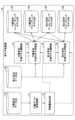
図2は、本発明の実施の形態における気分予測装置10の学習フェーズにおける機能構成例を示す図である。図2に示されるように、学習フェーズにおける気分予測装置10は、行動データ前処理部11、特徴量抽出部12、行動系列予測モデル構築部13、行動系列予測モデル学習部14、気分系列予測モデル構築部15及び気分系列予測モデル学習部16等を有する。これら各部は、気分予測装置10にインストールされた1以上のプログラムが、プロセッサ104に実行させる処理により実現される。気分予測装置10は、また、行動系列データDB121、気分系列データDB122、行動系列エンコーディングモデルDB123、行動系列デコーディングモデルDB124、気分系列エンコーディングモデルDB125及び気分系列デコーディングモデルDB126等のデータベース(記憶部)を利用する。これら各データベースは、例えば、補助記憶装置102、又は気分予測装置10にネットワークを介して接続可能な記憶装置等を用いて実現可能である。
FIG. 2 is a diagram showing an example of the functional configuration of the
学習フェーズにおける気分予測装置10は、各DBの情報を利用して、行動系列エンコーディングモデル、気分系列エンコーディングモデル、行動系列デコーディングモデル及び気分系列デコーディングモデル等のニューラルネットワークのモデルパラメータを学習データに対する固有のパラメータとして出力する。ここで、行動系列データDB121及び気分系列データDB122に記録された各データは、データが記録された日時情報で対応付けがとれるように予め構築されている。
The
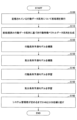
図3は、学習フェーズにおいて気分予測装置10が実行する処理手順の一例を説明するためのフローチャートである。
FIG. 3 is a flowchart for explaining an example of a processing procedure executed by the
ステップS100において、行動データ前処理部11は、行動系列データDB121に記憶されている行動データの系列(以下、「行動データ系列」という。)を取得し、当該行動データ系列に対して前処理を実行する。その結果、前処理済み行動データ系列が生成される。
In step S100, the behavior
図4は、行動系列データDB121の構成例を示す図である。図4における1行が1つの行動データに相当する。各行動データには、各種の行動を表す項目(列)に数値や時間、文字列などの形式で値が記録されており、前述の通り気分データと紐付けるための日時情報が記録されている。具体的には、各行動データは、データID、日時、歩数、運動時間及び会話時間等を含む。本実施の形態において、行動系列データDB121には、或る人(以下、「ユーザA」という。)の或る期間(以下、「期間T1」という。)における複数のタイミングにおける行動に関する行動データが時系列に記憶されている。
FIG. 4 is a diagram showing a configuration example of the behavior
行動データは、例えば、一定時間間隔で記録される。本実施の形態では、1時間間隔で記録される例が示されている。データIDは、行動データの識別情報である。日時は、行動データが記録された日時である。歩数は、当該行動データの記録時までの直近の一定時間(以下、「対象期間」という。)における歩数である。運動時間は、対象期間において運動が行われた時間である。会話時間は、対象期間において会話が行われた時間である。なお、本実施の形態において、「歩数」、「運動時間」、「会話時間」は、行動の名称(以下、「行動名」という。)の一例である。これらの行動名を項目名とする項目を、以下「行動項目」という。 Behavioral data is recorded, for example, at regular time intervals. In this embodiment, an example is shown in which recording is performed at one hour intervals. The data ID is identification information of behavior data. The date and time is the date and time when the behavior data was recorded. The number of steps is the number of steps in the most recent fixed period of time (hereinafter referred to as "target period") up to the recording of the behavior data. The exercise time is the time during which exercise was performed during the target period. The conversation time is the time during which the conversation took place during the target period. Note that in this embodiment, "number of steps," "exercise time," and "conversation time" are examples of action names (hereinafter referred to as "action names"). Items whose item names are these action names are hereinafter referred to as "action items."
続いて、特徴量抽出部12は、行動データ前処理部11から前処理済み行動データ系列を受け取り、当該前処理済みデータ系列に基づいて行動特徴ベクトルデータの系列(以下、「行動特徴ベクトルデータ系列」という。)を生成する(S110)。行動特徴ベクトルデータ系列の生成処理の詳細は後述される。
Next, the
図5は、行動特徴ベクトルデータ系列の構成例を示す図である。図5における1行が1つの行動特徴ベクトルデータに相当する。図5に示されるように、行動特徴ベクトルデータは、行動データと同じ構成を有する。但し、行動項目の値が正規化されている。 FIG. 5 is a diagram showing a configuration example of a behavior feature vector data series. One row in FIG. 5 corresponds to one behavioral feature vector data. As shown in FIG. 5, the behavior feature vector data has the same configuration as the behavior data. However, the values of action items are normalized.
続いて、行動系列予測モデル構築部13は、行動系列予測モデルを構築する(S120)。モデルの構築とは、例えば、モデルとしてのプログラムをメモリ装置103にロードすることをいう。なお、行動系列予測モデルの構造の詳細については後述される。
Subsequently, the behavior sequence prediction
続いて、気分系列予測モデル構築部15は、気分系列予測モデルを構築する(S130)。気分系列予測モデルの構造の詳細については後述される。
Subsequently, the mood series prediction
続いて、行動系列予測モデル学習部14は、特徴量抽出部12から行動特徴ベクトルデータ系列を受け取り、気分系列データDB122から気分データの系列(以下、「気分データ系列」という。)を取得し、行動系列予測モデル構築部13から行動系列予測モデルを受け取り、行動系列予測モデルを学習する(S140)。行動系列予測モデル学習部14は、学習済みの行動系列予測モデルのモデルパラメータ群を行動系列エンコーディングモデルDB123、行動系列デコーディングモデルDB124及び気分系列エンコーディングモデルDB125にそれぞれ出力する。なお、出力先の各DBに学習済みのモデルパラメータ群が存在する場合、行動系列予測モデル学習部14は、当該モデルのパラメータ群を受け取った後にモデルを再学習し、再学習後のモデルパラメータ群を各モデルパラメータに対応するDBにそれぞれ出力する。
Subsequently, the behavioral sequence prediction
図6は、気分系列データDB122の構成例を示す図である。図6における1行が1つの気分データに相当する。本実施の形態において、気分系列データDB122には、ユーザAの期間T1における複数のタイミングにおける気分に関する気分データが時系列に記憶されている。
FIG. 6 is a diagram showing an example of the configuration of the mood
各気分データは、データID、日時及び気分等を含む。データIDは、気分データの識別情報である。日時は、ユーザAの気分が評価された日時である。気分は、ユーザAが自己報告した気分の種類を示し文字列(以下、「気分名」という。)である。気分とは、例えば、ユーザAが都度感じた心理状態やストレス度等が想定される。図6の例において、気分の値は文字列であるが、数値によって気分が表現されてもよい。気分系列データDB122は、例えば、ユーザAによって気分の自己評価結果が入力され、入力された自己評価結果を「気分」に含み、入力された日時を「日時」に含む気分データをDBに格納することで構築されてもよい。
Each mood data includes data ID, date and time, mood, etc. The data ID is identification information of mood data. The date and time is the date and time when user A's mood was evaluated. Mood is a character string (hereinafter referred to as "mood name") indicating the type of mood self-reported by user A. The mood is assumed to be, for example, the psychological state or stress level that the user A feels each time. In the example of FIG. 6, the mood value is a character string, but the mood may be expressed by a numerical value. For example, the mood
続いて、気分系列予測モデル学習部16は、特徴量抽出部12から行動特徴ベクトルデータ系列を受け取り、気分系列データDB122から気分データ系列を取得し、気分系列予測モデル構築部15から気分系列予測モデルを受け取り、気分系列予測モデルを学習する(S150)。気分系列予測モデル学習部16は、学習済みの気分系列予測モデルのモデルパラメータ群を行動系列エンコーディングモデルDB123、気分系列エンコーディングモデルDB125及び気分系列デコーディングモデルDB126にそれぞれ出力する。なお、出力先のDBに学習済みのモデルパラメータ群が存在する場合、気分系列予測モデル学習部16は、当該モデルパラメータ群を受け取った後にモデルを再学習し、再学習後のモデルパラメータ群を各モデルパラメータに対応するDBにそれぞれ出力する。
Subsequently, the mood sequence prediction
なお、ステップS140及びS150は、システム管理者が定めた収束条件が満たされるまで繰り返される。 Note that steps S140 and S150 are repeated until a convergence condition determined by the system administrator is satisfied.
続いて、ステップS100の詳細について説明する。図7は、行動データ系列の前処理の処理手順の一例を説明するためのフローチャートである。 Next, details of step S100 will be explained. FIG. 7 is a flowchart for explaining an example of a processing procedure for preprocessing a behavior data series.
ステップS300において、行動データ前処理部11は、行動系列データDB121(図4)から行動データ系列を取得する。当該行動データ系列は、ユーザAの時系列の行動を示す。
In step S300, the behavior
続いて、行動データ前処理部11は、各行動データから、システム管理者によって事前に設定された1以上の種別の行動項目を抽出する(S310)。例えば、対象となる行動項目の項目名(「歩数」、「運動時間」、「会話時間」等)が設定され、その項目名と一致する行動項目が特定される。以下、特定された行動項目を「対象項目」という。なお、行動データに含まれる全ての行動項目が対象項目とされてもよい。
Subsequently, the behavior
続いて、行動データ前処理部11は、行動データ系列の対象項目の値を走査し、対象項目が欠損値である行動データや、対象項目に想定していない値が含まれている行動データが有れば、当該行動データの対象項目の値を別の値に置き換える(S320)。例えば、対象項目が数値データの場合、当該行動データの対象項目の値が、行動データ系列において有効な値の平均値又は0によって置換されてもよい。対象項目が文字列型データの場合、当該行動データの対象項目に欠損値であることを表現する文字列が挿入されてもよい。
Next, the behavior
続いて、行動データ前処理部11は、変換前の行動データごとに、当該行動データのデータID及び日時と、変換後の対象項目とを含む前処理済み行動データの系列を特徴量抽出部12へ出力する(S330)。すなわち、前処理済み行動データには、対象項目ではない行動項目は含まれない。
Next, for each behavior data before conversion, the behavior
続いて、図3のステップS110の詳細について説明する。図8は、行動特徴ベクトルデータ系列の生成処理の処理手順の一例を説明するためのフローチャートである。 Next, details of step S110 in FIG. 3 will be explained. FIG. 8 is a flowchart for explaining an example of a processing procedure for generating a behavioral feature vector data series.
ステップS400において、特徴量抽出部12は、行動データ前処理部11から出力された前処理済み行動データ系列を取得する。
In step S400, the
続いて、特徴量抽出部12は、前処理済み行動データ系列の各行動項目を走査し、当該行動項目について値の正規化を行う(S410)。例えば、特徴量抽出部12は、数値データの行動項目について、平均が0、標準偏差が1となるように値を正規化する。
Subsequently, the
続いて、特徴量抽出部12は、前処理済み行動データ系列の各行動項目を走査し、文字列型又は時刻型の項目の値を数値データに変換する(S420)。例えば、文字列型のデータは、文字列の種類を次元数とし、当該データが示す文字列に対応する次元が1であるone-hot表現のベクトルに変換される。
Subsequently, the
続いて、特徴量抽出部12は、前処理済み行動データごとに、当該前処理済み行動データの日時と各行動項目とを要素とする行動特徴ベクトルデータを生成し、当該行動特徴ベクトルデータの系列を出力する(S430)。
Next, the
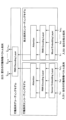
続いて、図3のステップS120の詳細について説明する。図9は、行動系列予測モデルの構造の一例を示す図である。図9に示されるように、行動系列予測モデルは、DNN(Deep Neural Network)の構造を有する。 Next, details of step S120 in FIG. 3 will be explained. FIG. 9 is a diagram showing an example of the structure of a behavior sequence prediction model. As shown in FIG. 9, the behavior sequence prediction model has a DNN (Deep Neural Network) structure.
行動系列予測モデルは、予測対象の日の前日(以下、「当日」という。)の行動特徴ベクトル系列と、当日の時系列順の気分名の系列(以下、「気分系列」という。)とを入力とし、翌日のユーザAの行動特徴ベクトル系列を出力する。行動特徴ベクトルとは、行動特徴ベクトルデータ(図5)に含まれる行動項目の値を要素とするベクトルである。 The behavioral sequence prediction model uses the behavioral feature vector sequence of the day before the prediction target day (hereinafter referred to as "the current day") and the sequence of mood names in chronological order of the current day (hereinafter referred to as the "mood sequence"). As an input, a behavioral feature vector sequence of user A on the next day is output. The behavior feature vector is a vector whose elements are the values of behavior items included in the behavior feature vector data (FIG. 5).
行動系列予測モデルは、3つのコンポーネントを含む。 The behavioral sequence prediction model includes three components.
[1つ目のコンポーネント]
1つ目のコンポーネントは、行動系列エンコーディングモデルであり、以下の3つのユニットを含む。[First component]
The first component is a behavioral sequence encoding model, which includes the following three units.
1つ目のユニットは、行動特徴ベクトル系列から、より抽象的な特徴を抽出するSensor Embedding Layerである。当該ユニットは、行動特徴ベクトル系列を全結合層で変換した後、例えば、シグモイド関数やReLu関数などを利用して、入力の特徴量(行動特徴ベクトル系列)を非線形変換し、特徴ベクトルを得る。 The first unit is the Sensor Embedding Layer, which extracts more abstract features from the behavioral feature vector sequence. The unit transforms the behavioral feature vector series in a fully connected layer, and then nonlinearly transforms the input feature amount (behavioral feature vector series) using, for example, a sigmoid function or a ReLu function to obtain a feature vector.
2つ目のユニットは、抽象化された特徴ベクトルを更に系列データ(系列特徴ベクトル)として抽象化するRNN Encoding Layerであり、例えば、LSTM(Long-short term memory(LSTM)などの既知の技術で実装される。具体的には、当該ユニットは、抽象化された特徴ベクトルを順次受け取って抽象化し、RNN Encoding Layerにおいて過去の抽象化された情報を考慮しながら、繰り返し非線形変換を実行する。 The second unit is an RNN Encoding Layer that further abstracts the abstracted feature vectors as sequence data (sequence feature vectors). Specifically, the unit sequentially receives and abstracts abstracted feature vectors, and repeatedly performs nonlinear transformation while considering past abstracted information in the RNN Encoding Layer.
3つ目のユニットは、抽象化された系列特徴ベクトルについて、それぞれの重要度合いを考慮した特徴ベクトルを得る、Attention(注意機構)である。例えば既知のAttentionは、2層の全結合層によって実現される。1つ目の全結合層は系列特徴ベクトルを入力にして任意のサイズのコンテキストベクトルを出力し、2つ目の全結合層はコンテキストベクトルを入力にして重要度に相当するスカラ値を出力する。コンテキストベクトルは、非線形変換処理されてもよい。重要度は、例えば、ソフトマックス関数などで確率値に該当する値に変換される。重要度を用いて系列特徴ベクトルを加重平均したものがAttentionの出力となる。 The third unit is Attention, which obtains feature vectors considering the importance of each abstracted sequence feature vector. For example, the known attention is realized by two fully connected layers. The first fully connected layer inputs the sequence feature vector and outputs a context vector of an arbitrary size, and the second fully connected layer inputs the context vector and outputs a scalar value corresponding to the degree of importance. The context vector may be subjected to a non-linear transformation process. The degree of importance is converted into a value corresponding to a probability value using, for example, a softmax function. The output of Attention is a weighted average of the sequence feature vectors using importance.
[2つ目のコンポーネント]
2つ目のコンポーネントは、気分系列エンコーディングモデルである。気分系列エンコーディングモデルは、気分系列を適切な特徴ベクトルに変換する。気分系列エンコーディングモデルは、行動系列エンコーディングモデルと同様に、3つのユニットから構成される。[Second component]
The second component is the mood sequence encoding model. Mood sequence encoding models transform mood sequences into appropriate feature vectors. The mood sequence encoding model is composed of three units, similar to the behavior sequence encoding model.
1つ目のユニットは、Mood Embedding Layerであり、Sensor Embedding Layerと同等の機能を有する。 The first unit is the Mood Embedding Layer, which has the same functionality as the Sensor Embedding Layer.
2つ目のユニットは、RNN Encoding Layerであり、行動系列エンコーディングモデルのRNN Encoding Layerと同等の機能を有する。 The second unit is the RNN Encoding Layer, which has the same function as the RNN Encoding Layer of the behavioral sequence encoding model.
3つ目のユニットは、Attentionであり、行動系列エンコーディングモデルのAttentionと同等の機能を有する。 The third unit is Attention, which has the same function as Attention in the behavioral sequence encoding model.
[3つ目のコンポーネント]
3つ目のコンポーネントは、行動系列デコーディングモデルである。行動系列デコーディングモデルは、行動系列エンコーディングモデルと気分系列エンコーディングモデルから出力される特徴ベクトルを入力とし、予測結果となる行動特徴ベクトル系列を出力する。行動系列デコーディングモデルは、1つのユニットを含む。[Third component]
The third component is a behavioral sequence decoding model. The behavior sequence decoding model inputs the feature vectors output from the behavior sequence encoding model and the mood sequence encoding model, and outputs a behavior feature vector sequence that is a prediction result. The behavior sequence decoding model includes one unit.
当該1つのユニットは、RNN Decoding Layerであり、例えば、LSTMなどの既知の技術で実装される。具体的には、RNN Decoding Layerは、行動系列エンコーディングモデルと気分系列エンコーディングモデルで得られた2つの特徴ベクトルを結合し、翌日の行動の系列の始まりを意味する適当な記号を加え、LSTMに入力する。その結果、出力として翌日の1つ目の行動特徴ベクトルを獲得する。以降は、一つ前の出力として得られている行動特徴ベクトルを、先に述べた適当な記号と置き換えて順次同じ処理をする。その結果、翌日の行動特徴ベクトル系列が得られる。 One such unit is the RNN Decoding Layer, which is implemented with known technology such as LSTM. Specifically, the RNN Decoding Layer combines the two feature vectors obtained by the behavior sequence encoding model and the mood sequence encoding model, adds an appropriate symbol that means the beginning of the next day's behavior sequence, and inputs it to the LSTM. do. As a result, the first behavioral feature vector for the next day is obtained as an output. Thereafter, the same processing is performed sequentially by replacing the behavioral feature vector obtained as the previous output with the appropriate symbol described above. As a result, a behavioral feature vector sequence for the next day is obtained.
続いて、図3のステップS130の詳細について説明する。図10は、気分系列予測モデルの構造の一例を示す図である。図10に示されるように、気分系列予測モデルは、DNNの構造を有する。 Next, details of step S130 in FIG. 3 will be explained. FIG. 10 is a diagram showing an example of the structure of a mood series prediction model. As shown in FIG. 10, the mood sequence prediction model has a DNN structure.
気分系列予測モデルは、翌日の行動特徴ベクトル系列と当日の気分系列とを入力とし、翌日のユーザAの気分系列を出力する。気分系列予測モデルは、3つのコンポーネントを含む。 The mood sequence prediction model receives the next day's behavior feature vector sequence and the current day's mood sequence as input, and outputs the user A's mood sequence for the next day. The mood sequence prediction model includes three components.
1つ目及び2つ目のコンポーネントは、行動系列エンコーディングモデル及び気分系列エンコーディングモデルであり、これらは先に述べた行動系列予測モデルの行動系列エンコーディングモデル及び気分系列エンコーディングモデルをコピーして得られる。 The first and second components are a behavior sequence encoding model and a mood sequence encoding model, which are obtained by copying the behavior sequence encoding model and mood sequence encoding model of the behavior sequence prediction model described above.
3つ目のコンポーネントは、気分系列デコーディングモデルである。気分系列デコーディングモデルは、行動系列エンコーディングモデルと気分系列エンコーディングモデルから出力される特徴ベクトルを入力とし、予測結果となる翌日の気分系列を出力する。気分系列デコーディングモデルは、1つのユニットを含む。 The third component is the mood sequence decoding model. The mood sequence decoding model inputs the feature vectors output from the behavior sequence encoding model and the mood sequence encoding model, and outputs the next day's mood sequence as a prediction result. The mood sequence decoding model includes one unit.
当該1つのユニットは、RNN Decoding Layerであり、例えば、LSTMなどの既知の技術で実装される。具体的には、RNN Decoding Layerは、行動系列エンコーディングモデルと気分系列エンコーディングモデルで得られた2つの特徴ベクトルを結合し、翌日の気分系列の始まりを意味する適当な記号を加え、LSTMに入力する。その結果、出力として翌日の1つ目の気分名を獲得する。以降は、一つ前の出力として得られている気分名を、先に述べた適当な記号と置き換えて順次同じ処理をする。その結果、翌日の気分系列が得られる。 One such unit is the RNN Decoding Layer, which is implemented with known technology such as LSTM. Specifically, the RNN Decoding Layer combines the two feature vectors obtained by the behavior sequence encoding model and the mood sequence encoding model, adds an appropriate symbol that means the beginning of the next day's mood sequence, and inputs it to the LSTM. . As a result, the first mood name for the next day is obtained as an output. From then on, the mood name obtained as the previous output is replaced with the appropriate symbol mentioned above, and the same processing is performed one after another. As a result, a mood series for the next day is obtained.
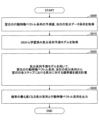
続いて、図3のステップS140の詳細について説明する。図11は、行動系列予測モデルの学習処理の処理手順の一例を説明するためのフローチャートである。 Next, details of step S140 in FIG. 3 will be explained. FIG. 11 is a flowchart for explaining an example of a processing procedure of learning processing of a behavioral sequence prediction model.
ステップS500において、行動系列予測モデル学習部14は、受け取った行動特徴ベクトルデータ系列(図5)と受け取った気分データ系列(図6)とに基づいて、行動系列予測モデルの学習データを生成する。
In step S500, the behavior sequence prediction
具体的には、行動系列予測モデル学習部14は、1日(年月日)ごとに、当該日に係る「日時」を含む行動特徴ベクトルデータ系列に基づく行動特徴ベクトル系列と、当該日に係る「日時」を含む気分データ系列に基づく気分系列とを入力データとし、当該日の翌日に係る「日時」を含む行動特徴ベクトルデータ系列に基づく行動特徴ベクトル系列を出力データとして含む学習データを生成する。したがって、年月日ごと(1日ごと)に学習データが生成される。
Specifically, for each day (year, month, and day), the behavior sequence prediction
続いて、行動系列予測モデル学習部14は、図9に示すような行動系列予測モデルを行動系列予測モデル構築部13から受け取る(S510)。以下、当該行動系列予測モデルを「対象モデル」という。
Subsequently, the behavior sequence prediction
続いて、行動系列予測モデル学習部14は、対象モデルのモデルパラメータに値を設定する(S520)。具体的には、行動系列予測モデル学習部14は、行動系列エンコーディングモデルDB123、行動系列デコーディングモデルDB124及び気分系列エンコーディングモデルDB125等のDB(以下、「対象モデルDB」という。)にアクセスし、これら各DBに既に学習済みのモデルのモデルパラメータの値が保存されている場合、各対象モデルDBに保存されている値を対象モデルの各コンポーネントのモデルパラメータに設定する。一方、これら各対象モデルDBに学習済みモデルのパラメータが保存されていない場合、行動系列予測モデル学習部14は、対象モデルの各コンポーネントのモデルパラメータを、例えば、0から1の乱数で初期化する。なお、行動系列エンコーディングモデルDB123は、学習済みの行動系列エンコーディングモデルのモデルパラメータの値が格納されるDBである。行動系列デコーディングモデルDB124は、学習済みの行動系列デコーディングモデルのモデルパラメータの値が格納されるDBである。気分系列エンコーディングモデルDB125は、学習済みの気分系列エンコーディングモデルのモデルパラメータの値が格納されるDBである。
Subsequently, the behavior sequence prediction
続いて、行動系列予測モデル学習部14は、学習データ群を用いて対象モデルを学習する(S530)。具体的には、行動系列予測モデル学習部14は、学習データごとに当該学習データに入力データとして含まれる行動特徴ベクトル系列及び気分系列を対象モデルへ入力し、対象モデルから出力される行動特徴ベクトル系列と、当該学習データに出力データとして含まれる行動特徴ベクトル系列との比較に基づいて、対象モデルのモデルパラメータを更新する。
Subsequently, the behavior sequence prediction
続いて、行動系列予測モデル学習部14は、学習済みの対象モデルのモデルパラメータ群を出力し、出力された結果を各対象モデルDBに格納する(S540)。
Subsequently, the behavior sequence prediction
図12は、行動系列エンコーディングモデルDB123の構成例を示す図である。図12に示されるように、行動系列エンコーディングモデルDB123には、学習済みの行動系列エンコーディングモデルの各ユニットのモデルパラメータの値が行列やベクトルとして格納される。
FIG. 12 is a diagram showing a configuration example of the behavior sequence
図13は、気分系列エンコーディングモデルDB125の構成例を示す図である。図13に示されるように、気分系列エンコーディングモデルDB125には、学習済みの気分系列エンコーディングモデルの各ユニットのモデルパラメータの値が行列やベクトルとして格納される。
FIG. 13 is a diagram showing a configuration example of the mood series
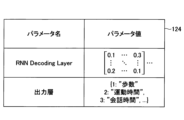
図14は、行動系列デコーディングモデルDB124の構成例を示す図である。図14に示されるように、行動系列デコーディングモデルDB124には、学習済みの行動系列デコーディングモデルの各ユニットのモデルパラメータの値が行列やベクトルとして格納される。また、出力層については、入力の行動データと同じインデックスが割り当てられるように出力ベクトルのサイズが調整され、各インデックス及び対応する行動名がテキストとして格納される。
FIG. 14 is a diagram showing a configuration example of the behavior sequence
続いて、図3のステップS150の詳細について説明する。図15は、気分系列予測モデルの学習処理の処理手順の一例を説明するためのフローチャートである。 Next, details of step S150 in FIG. 3 will be explained. FIG. 15 is a flowchart for explaining an example of the processing procedure of the learning process of the mood sequence prediction model.
ステップS600において、気分系列予測モデル学習部16は、受け取った行動特徴ベクトルデータ系列(図5)と受け取った気分データ系列(図6)とに基づいて、気分系列予測モデルの学習データを生成する。
In step S600, the mood sequence prediction
具体的には、気分系列予測モデル学習部16は、1日(年月日)ごとに、当該日の翌日に係る「日時」を含む行動特徴ベクトルデータ系列に基づく行動特徴ベクトル系列と、当該日に係る「日時」を含む気分データ系列に基づく気分系列とを入力データとし、当該日の翌日に係る「日時」を含む気分データ系列に基づく気分系列を出力データとして含む学習データを生成する。したがって、年月日ごと(1日ごと)に学習データが生成される。
Specifically, for each day (year, month, day), the mood sequence prediction
続いて、気分系列予測モデル学習部16は、図9に示すような気分系列予測モデルを気分系列予測モデル構築部15から受け取る(S610)。以下、当該気分系列予測モデルを「対象モデル」という。
Subsequently, the mood sequence prediction
続いて、気分系列予測モデル学習部16は、対象モデルのモデルパラメータに値を設定する(S620)。具体的には、気分系列予測モデル学習部16は、行動系列エンコーディングモデルDB123、気分系列エンコーディングモデルDB125及び気分系列デコーディングモデルDB126等のDB(「対象モデルDB」という。)にアクセスし、これら各DBに既に学習済みのモデルのモデルパラメータの値が保存されている場合、各対象モデルDBに保存されている値を対象モデルの各コンポーネントのモデルパラメータに設定する。一方、これら各対象モデルDBに学習済みモデルのパラメータが保存されていない場合、行動系列予測モデル学習部14は、対象モデルの各コンポーネントのモデルパラメータを、例えば、0から1の乱数で初期化する。なお、気分系列デコーディングモデルDB126は、学習済みの気分系列デコーディングモデルのモデルパラメータの値が格納されるDBである。
Subsequently, the mood series prediction
続いて、気分系列予測モデル学習部16は、学習データ群を用いて対象モデルを学習する(S630)。具体的には、気分系列予測モデル学習部16は、学習データごとに当該学習データに入力データとして含まれる行動特徴ベクトル系列及び気分系列を対象モデルへ入力し、対象モデルから出力される気分系列と、当該学習データに出力データとして含まれる気分系列との比較に基づいて、対象モデルのモデルパラメータを更新する。
Subsequently, the mood sequence prediction
続いて、気分系列予測モデル学習部16は、学習済みの気分系列予測モデルのモデルパラメータ群を出力し、出力された結果を各対象モデルDBに格納する(S640)。この際、既に値が記憶されている対象モデルDBの内容は上書きされる。対象モデルDBのうち、行動系列エンコーディングモデルDB123及び気分系列エンコーディングモデルDB125については、図12又は図13に示した通りである。
Subsequently, the mood sequence prediction
図16は、気分系列デコーディングモデルDB126の構成例を示す図である。図16に示されるように、気分系列デコーディングモデルDB126には、RNN Decoding Layerのモデルパラメータが行列として格納される。また、出力層については、入力の気分データと同じインデックスが割り当てられるように出力ベクトルのサイズが調整され、各インデックス及び対応する気分名がテキストとして格納される。
FIG. 16 is a diagram showing a configuration example of the mood sequence
続いて、予測フェーズについて説明する。図17は、本発明の実施の形態における気分予測装置10の予測フェーズにおける機能構成例を示す図である。図17中、図2と同一部分又は対応する部分には同一符号を付している。
Next, the prediction phase will be explained. FIG. 17 is a diagram showing an example of the functional configuration of the
図17において、気分予測装置10は、行動データ前処理部11、特徴量抽出部12、行動系列予測部17及び気分系列予測部18等を有する。これら各部は、気分予測装置10にインストールされた1以上のプログラムが、プロセッサ104に実行させる処理により実現される。気分予測装置10は、また、行動系列エンコーディングモデルDB123、行動系列デコーディングモデルDB124、気分系列エンコーディングモデルDB125、気分系列デコーディングモデルDB126等を利用する。
In FIG. 17, the
予測フェーズにおける気分予測装置10は、予測対象の日の前日(以下、「当日」という。)のユーザBの行動データ系列及び気分データ系列に対する予測結果として翌日(当日の次の日)の行動系列及び翌日の気分系列を出力する。なお、ユーザBは、ユーザAと同一人物であってもよいし、別人物であってもよい。
In the prediction phase, the
図18は、予測フェーズにおいて気分予測装置10が実行する処理手順の一例を説明するためのフローチャートである。
FIG. 18 is a flowchart for explaining an example of the processing procedure executed by the
ステップS200において、行動データ前処理部11は、入力される当日の行動データ系列に対して、図7において説明した前処理を実行する。
In step S200, the behavior
続いて、特徴量抽出部12は、行動データ前処理部11から前処理済み行動データ系列を受け取り、当該前処理済み行動データ系列について図8において説明した処理を実行することにより、行動特徴ベクトルデータ系列を生成する(S210)。
Subsequently, the
続いて、行動系列予測部17は、特徴量抽出部12から受け取った行動特徴ベクトルデータ及び当日の気分データ系列を、行動系列エンコーディングモデルDB123、行動系列デコーディングモデルDB124及び気分系列エンコーディングモデルDB125から取得される学習済み行動系列予測モデルに入力して、翌日の行動特徴ベクトル系列の予測値を計算する(S220)。
Subsequently, the behavior
続いて、気分系列予測部18は、当日の気分データ系列、及び行動系列予測部17によって予測された翌日の行動特徴ベクトル系列を、行動系列エンコーディングモデルDB123、気分系列エンコーディングモデルDB125及び気分系列デコーディングモデルDB126から取得される学習済み気分系列予測モデルに入力して、翌日の気分系列の予測値を計算する(S230)。気分系列予測部18は、当該予測値と翌日の行動系列の予測値とを出力する。
Next, the mood
続いて、図18のステップS220の詳細について説明する。図19は、行動特徴ベクトル系列の予測処理の処理手順の一例を説明するためのフローチャートである。 Next, details of step S220 in FIG. 18 will be explained. FIG. 19 is a flowchart for explaining an example of a processing procedure for prediction processing of a behavioral feature vector sequence.
S700において、行動系列予測部17は、入力データである当日の行動データ系列に基づく行動特徴ベクトルデータ系列、及び入力データである当日の気分データ系列を取得する。
In S700, the behavior
続いて、行動系列予測部17は、行動系列エンコーディングモデルDB123、行動系列デコーディングモデルDB124及び気分系列エンコーディングモデルDB125から学習済みの行動系列予測モデルを取得する(S710)。
Subsequently, the behavior
続いて、行動系列予測部17は、行動特徴ベクトルデータ系列に基づく行動特徴ベクトル系列と、気分データ系列に基づく気分系列とを行動系列予測モデルへ入力して、翌日の各ステップにおける行動特徴ベクトルに対する確率値を順次計算する(S720)。
Next, the behavior
続いて、行動系列予測部17は、確率の最も高くなる行動特徴ベクトルの系列を気分系列予測部18へ出力する(S730)。
Subsequently, the behavior
続いて、図18のステップS230の詳細について説明する。図20は、気分系列の予測処理の処理手順の一例を説明するためのフローチャートである。 Next, details of step S230 in FIG. 18 will be explained. FIG. 20 is a flowchart illustrating an example of a processing procedure for mood series prediction processing.
ステップS800において、気分系列予測部18は、行動系列予測部17によって予測された翌日の行動特徴ベクトル系列、及び入力データである当日の気分データ系列を取得する。
In step S800, the mood
続いて、気分系列予測部18は、行動系列エンコーディングモデルDB123、気分系列エンコーディングモデルDB125及び気分系列デコーディングモデルDB126から学習済みの気分系列予測モデルを取得する(S810)。
Subsequently, the mood
続いて、気分系列予測部18は、翌日の行動特徴ベクトル系列、及び当日の気分データ系列に基づく気分系列を気分系列予測モデルへ入力して、翌日の各ステップにおける気分に対する確率値を順次計算する(S820)。
Next, the mood
続いて、気分系列予測部18は、確率の最も高くなる気分の系列と、行動系列予測部17によって予測された行動特徴ベクトル系列とを出力する(S830)。
Subsequently, the mood
なお、本実施の形態では、期間T1及び期間T2を複数に分割する時間区間が1日単位である例を説明したが、当該時間区間は、2日以上の期間であってもよい。この場合、或る時間区間を上記の当日に当てはめて、当該或る時間区間の次の時間区間を上記の翌日に当てはめればよい。 Note that, in the present embodiment, an example has been described in which the time interval for dividing the period T1 and the period T2 into a plurality of periods is one day, but the time interval may be a period of two or more days. In this case, a certain time interval may be applied to the above-mentioned current day, and the next time interval after the certain time interval may be applied to the above-mentioned next day.
上述したように、本実施の形態によれば、行動データ系列から抽出される行動特徴ベクトル系列と、気分データ系列と時間区間が共通する(日付が共通する)単位で対応付けて行動系列予測モデルと気分系列予測モデルを学習し、得られたモデルを利用することで、従来予測できなかったユーザの将来の気分系列を予測可能になる。この際、ユーザの将来の気分系列を予測して提示するだけでなく、将来の同時期における行動特徴ベクトル系列と合わせて提示することで、その予測結果の解釈性(気分系列の予測の根拠となる行動特徴ベクトル系列)を与えることができる。したがって、将来の気分を予測すると共にその予測と根拠となる行動の提示を可能とすることができる。 As described above, according to the present embodiment, the behavior feature vector series extracted from the behavior data series is associated with the mood data series in units of time intervals (common dates), and a behavior series prediction model is created. By learning a mood sequence prediction model and using the resulting model, it becomes possible to predict the user's future mood sequence, which was previously impossible to predict. At this time, the user's future mood sequence is not only predicted and presented, but also presented together with the behavioral feature vector sequence for the same period in the future, making it easier to interpret the prediction results (the basis for predicting the mood sequence). A behavioral feature vector sequence) can be given. Therefore, it is possible to predict future moods and to present actions that serve as the basis for the predictions.
将来の気分系列と行動特徴ベクトル系列とを合わせて提示することで、ユーザが気分系列を改善したい場合に、行動から改善するための支援が可能となる。例えば、ユーザが編集した翌日の行動系列を気分系列予測部18に入力することで、その結果を提示可能となる。
By presenting the future mood series and the behavior feature vector series together, when the user wants to improve the mood series, it is possible to support the user to improve the behavior from the beginning. For example, by inputting the next day's behavior sequence edited by the user into the mood
なお、翌日の気分系列と行動系列を予測するだけでなく、その予測結果を更に予測フェーズの入力データに用いることで、翌日以降の気分系列と行動系列とが予測されてもよい。 Note that in addition to predicting the mood series and behavior series for the next day, the mood series and behavior series for the next day and thereafter may be predicted by further using the prediction results as input data for the prediction phase.
なお、本実施の形態において、行動系列予測モデル学習部14は、第1の学習部の一例である。気分系列予測モデル学習部16は、第2の学習部の一例である。行動系列予測部17は、第1の予測部の一例である。気分系列予測部18は、第2の予測部の一例である。行動データ系列又は行動特徴ベクトル系列は、行動の時系列データの一例である。気分データ系列又は気分系列は、気分の時系列データの一例である。行動系列予測モデルは、第1のニューラルネットワークの一例である。気分系列予測モデルは、第2のニューラルネットワークの一例である。当日は、第1の時間区間の一例である。
Note that in this embodiment, the behavior sequence prediction
以上、本発明の実施の形態について詳述したが、本発明は斯かる特定の実施形態に限定されるものではなく、請求の範囲に記載された本発明の要旨の範囲内において、種々の変形・変更が可能である。 Although the embodiments of the present invention have been described in detail above, the present invention is not limited to these specific embodiments, and various modifications can be made within the scope of the gist of the present invention as described in the claims. - Can be changed.
10 気分予測装置
11 行動データ前処理部
12 特徴量抽出部
13 行動系列予測モデル構築部
14 行動系列予測モデル学習部
15 気分系列予測モデル構築部
16 気分系列予測モデル学習部
17 行動系列予測部
18 気分系列予測部
100 ドライブ装置
101 記録媒体
102 補助記憶装置
103 メモリ装置
104 プロセッサ
105 インタフェース装置
121 行動系列データDB
122 気分系列データDB
123 行動系列エンコーディングモデルDB
124 行動系列デコーディングモデルDB
125 気分系列エンコーディングモデルDB
126 気分系列デコーディングモデルDB
B バス10
122 Mood series data DB
123 Behavior sequence encoding model DB
124 Behavior sequence decoding model DB
125 Mood series encoding model DB
126 Mood series decoding model DB
B bus
Claims (5)
前記或る期間を複数に分割する各時間区間における行動の時系列及び気分の時系列データに基づいて、前記次の時間区間の行動の時系列データ及び前記第1の時間区間の気分の時系列データを入力とし、前記次の時間区間の気分の時系列データの予測値を出力する第2のニューラルネットワークを学習する第2の学習手順と、
をコンピュータが実行することを特徴とする気分予測方法。Based on the behavior time series data and the mood time series data in each time interval that divides a certain period into a plurality of time intervals, the behavior time series data and the mood time series data of the first time interval are input, and the time series data of the behavior and mood time series data of the first time interval are input. a first learning procedure for learning a first neural network that outputs a predicted value of time-series data of behavior in a time interval next to the first time interval;
Based on the behavior time series and mood time series data in each time interval that divides the certain period into a plurality of time intervals, the behavior time series data in the next time interval and the mood time series in the first time interval a second learning procedure for learning a second neural network that receives the data as input and outputs a predicted value of the mood time series data for the next time interval;
A mood prediction method characterized in that a computer executes.
学習済みの前記第2のニューラルネットワークに、前記第1の予測手順において計算され前記第2の時間区間の次の時間区間の行動の時系列データの予測値と、前記第2の時間区間の気分の時系列データとを入力して、前記第2の時間区間の次の時間区間の気分の時系列データの予測値を計算する第2の予測手順と、
をコンピュータが実行することを特徴とする請求項1記載の気分予測方法。The time-series data of behavior and the time-series data of mood in the second time interval are input into the trained first neural network to generate time-series data of behavior in the time interval next to the second time interval. a first prediction procedure that calculates a predicted value of A second prediction procedure of inputting the predicted value and the mood time series data of the second time interval and calculating the predicted value of the mood time series data of the next time interval after the second time interval. and,
2. The mood prediction method according to claim 1, wherein the method is performed by a computer.
前記或る期間を複数に分割する各時間区間における行動の時系列及び気分の時系列データに基づいて、前記次の時間区間の行動の時系列データ及び前記第1の時間区間の気分の時系列データを入力とし、前記次の時間区間の気分の時系列データの予測値を出力する第2のニューラルネットワークを学習する第2の学習部と、
を有することを特徴とする気分予測装置。Based on the behavior time series data and the mood time series data in each time interval that divides a certain period into a plurality of time intervals, the behavior time series data and the mood time series data of the first time interval are input, and the time series data of the behavior and mood time series data of the first time interval are input. a first learning unit that learns a first neural network that outputs a predicted value of time-series data of behavior in a time interval next to the first time interval;
Based on the behavior time series and mood time series data in each time interval that divides the certain period into a plurality of time intervals, the behavior time series data in the next time interval and the mood time series in the first time interval a second learning unit that learns a second neural network that receives the data as input and outputs a predicted value of the mood time series data of the next time interval;
A mood prediction device comprising:
学習済みの前記第2のニューラルネットワークに、前記第1の予測部によって計算され前記第2の時間区間の次の時間区間の行動の時系列データの予測値と、前記第2の時間区間の気分の時系列データとを入力して、前記第2の時間区間の次の時間区間の気分の時系列データの予測値を計算する第2の予測部と、
を有することを特徴とする請求項3記載の気分予測装置。The time-series data of behavior and the time-series data of mood in the second time interval are input into the trained first neural network to generate time-series data of behavior in the time interval next to the second time interval. a first prediction unit that calculates a predicted value of a second prediction unit that inputs the predicted value and the mood time series data of the second time interval and calculates the predicted value of the mood time series data of the next time interval after the second time interval; and,
4. The mood prediction device according to claim 3, further comprising:
Applications Claiming Priority (1)
| Application Number | Priority Date | Filing Date | Title |
|---|---|---|---|
| PCT/JP2020/021082 WO2021240715A1 (en) | 2020-05-28 | 2020-05-28 | Mood prediction method, mood prediction device, and program |
Publications (2)
| Publication Number | Publication Date |
|---|---|
| JPWO2021240715A1 JPWO2021240715A1 (en) | 2021-12-02 |
| JP7400965B2 true JP7400965B2 (en) | 2023-12-19 |
Family
ID=78723160
Family Applications (1)
| Application Number | Title | Priority Date | Filing Date |
|---|---|---|---|
| JP2022527385A Active JP7400965B2 (en) | 2020-05-28 | 2020-05-28 | Mood prediction method, mood prediction device and program |
Country Status (3)
| Country | Link |
|---|---|
| US (1) | US12551152B2 (en) |
| JP (1) | JP7400965B2 (en) |
| WO (1) | WO2021240715A1 (en) |
Families Citing this family (3)
| Publication number | Priority date | Publication date | Assignee | Title |
|---|---|---|---|---|
| JPWO2023176885A1 (en) * | 2022-03-18 | 2023-09-21 | ||
| JP2023167351A (en) * | 2022-05-11 | 2023-11-24 | 京セラ株式会社 | Prediction device and prediction method |
| KR20250039044A (en) * | 2023-09-13 | 2025-03-20 | 한국과학기술정보연구원 | Method for predicting depression by measuring emotional symptoms and apparatus performing the same |
Citations (3)
| Publication number | Priority date | Publication date | Assignee | Title |
|---|---|---|---|---|
| JP2005199403A (en) | 2004-01-16 | 2005-07-28 | Sony Corp | Emotion recognition apparatus and method, robot apparatus emotion recognition method, robot apparatus learning method, and robot apparatus |
| JP2019191937A (en) | 2018-04-25 | 2019-10-31 | Kddi株式会社 | Feeling estimation method, feeling estimation device and program |
| US20200125976A1 (en) | 2018-10-18 | 2020-04-23 | International Business Machines Corporation | Machine learning model for predicting an action to be taken by an autistic individual |
Family Cites Families (8)
| Publication number | Priority date | Publication date | Assignee | Title |
|---|---|---|---|---|
| US10936947B1 (en) * | 2017-01-26 | 2021-03-02 | Amazon Technologies, Inc. | Recurrent neural network-based artificial intelligence system for time series predictions |
| US20180218256A1 (en) * | 2017-02-02 | 2018-08-02 | Qualcomm Incorporated | Deep convolution neural network behavior generator |
| JP6882116B2 (en) * | 2017-08-15 | 2021-06-02 | ヤフー株式会社 | Generator, generation method, generation program, training data, and model |
| US10990889B2 (en) * | 2017-11-14 | 2021-04-27 | Adobe Inc. | Generating a predictive behavior model for predicting user behavior using unsupervised feature learning and a recurrent neural network |
| EP3839843A1 (en) * | 2019-12-20 | 2021-06-23 | Siemens Aktiengesellschaft | Method for optimizing a production of an industrial installation |
| US11870939B2 (en) * | 2020-05-12 | 2024-01-09 | True Meeting Inc. | Audio quality improvement related to a participant of a virtual three dimensional (3D) video conference |
| US11805157B2 (en) * | 2020-05-12 | 2023-10-31 | True Meeting Inc. | Sharing content during a virtual 3D video conference |
| US20240403603A1 (en) * | 2023-05-31 | 2024-12-05 | Paypal, Inc. | Reducing latency through propensity models that predict data calls |
-
2020
- 2020-05-28 JP JP2022527385A patent/JP7400965B2/en active Active
- 2020-05-28 US US17/926,611 patent/US12551152B2/en active Active
- 2020-05-28 WO PCT/JP2020/021082 patent/WO2021240715A1/en not_active Ceased
Patent Citations (3)
| Publication number | Priority date | Publication date | Assignee | Title |
|---|---|---|---|---|
| JP2005199403A (en) | 2004-01-16 | 2005-07-28 | Sony Corp | Emotion recognition apparatus and method, robot apparatus emotion recognition method, robot apparatus learning method, and robot apparatus |
| JP2019191937A (en) | 2018-04-25 | 2019-10-31 | Kddi株式会社 | Feeling estimation method, feeling estimation device and program |
| US20200125976A1 (en) | 2018-10-18 | 2020-04-23 | International Business Machines Corporation | Machine learning model for predicting an action to be taken by an autistic individual |
Non-Patent Citations (1)
| Title |
|---|
| SUHARA, Yoshihiko et al.,DeepMood: Forecasting Depressed Mood Based on Self-Reported Histories via Recurrent Neural Networks,Proceedings of the 26th International Conference on World Wide Web [online],2017年,pp. 715-724,[検索日 2023.10.30], インターネット:<URL:https://dl.acm.org/doi/10.1145/3038912.3052676> |
Also Published As
| Publication number | Publication date |
|---|---|
| US20230190159A1 (en) | 2023-06-22 |
| WO2021240715A1 (en) | 2021-12-02 |
| JPWO2021240715A1 (en) | 2021-12-02 |
| US12551152B2 (en) | 2026-02-17 |
Similar Documents
| Publication | Publication Date | Title |
|---|---|---|
| CN111506723B (en) | Question-answer response method, device, equipment and storage medium | |
| CN108182389B (en) | User data processing method and robot system based on big data and deep learning | |
| US20230049089A1 (en) | Method and Apparatus For Predicting Power Consumption, Device and Readiable Storage Medium | |
| JP7400965B2 (en) | Mood prediction method, mood prediction device and program | |
| JP7139932B2 (en) | Demand forecasting method, demand forecasting program and demand forecasting device | |
| JP7424389B2 (en) | Learning device, estimation device, learning method, estimation method, and program | |
| CN111178986B (en) | User-commodity preference prediction method and system | |
| CN119991221B (en) | Intelligent advertising content recommendation method and system using prediction model | |
| JP7582465B2 (en) | Prediction device, learning device, prediction method, learning method, and program | |
| US20160371598A1 (en) | Unified attractiveness prediction framework based on content impact factor | |
| CN115049108B (en) | Multi-task model training method, multi-task prediction method, related device and medium | |
| CN118486431A (en) | Mental health assessment method and system based on user behavior data | |
| CN115018190A (en) | Overdue behavior prediction method and device, storage medium and electronic device | |
| CN114240493A (en) | Project information recommendation method, device and equipment based on long-term and short-term memory network | |
| JP7456503B2 (en) | Psychological state analysis method, psychological state analysis device and program | |
| JP2015187773A (en) | Data analysis apparatus, data analysis program, and data analysis method | |
| JP7435821B2 (en) | Learning device, psychological state sequence prediction device, learning method, psychological state sequence prediction method, and program | |
| CN114969491A (en) | Method and device for recommending object, computer equipment and storage medium | |
| CN114648070B (en) | Critical behavior extraction network, and training method and device of critical attribute extraction network | |
| JP7565468B1 (en) | Information processing system, information processing method, and computer program | |
| CN116932898B (en) | News recommendation method and device, storage medium and computer equipment | |
| WO2024241400A1 (en) | Learning device, inference device, policy planning assistance system, program, learning method, and inference method | |
| JP2025093411A (en) | Information processing device, information processing method, and program | |
| CN121120214A (en) | A Personalized Product Recommendation Method Based on Time-Time Granularity Modeling | |
| CN119025505A (en) | A complex data modeling method, device, equipment, and readable storage medium |
Legal Events
| Date | Code | Title | Description |
|---|---|---|---|
| A621 | Written request for application examination |
Free format text: JAPANESE INTERMEDIATE CODE: A621 Effective date: 20221013 |
|
| TRDD | Decision of grant or rejection written | ||
| A01 | Written decision to grant a patent or to grant a registration (utility model) |
Free format text: JAPANESE INTERMEDIATE CODE: A01 Effective date: 20231107 |
|
| A61 | First payment of annual fees (during grant procedure) |
Free format text: JAPANESE INTERMEDIATE CODE: A61 Effective date: 20231120 |
|
| R150 | Certificate of patent or registration of utility model |
Ref document number: 7400965 Country of ref document: JP Free format text: JAPANESE INTERMEDIATE CODE: R150 |
|
| S533 | Written request for registration of change of name |
Free format text: JAPANESE INTERMEDIATE CODE: R313533 |
|
| R350 | Written notification of registration of transfer |
Free format text: JAPANESE INTERMEDIATE CODE: R350 |