JP7255672B2 - System and method - Google Patents
System and method Download PDFInfo
- Publication number
- JP7255672B2 JP7255672B2 JP2021508728A JP2021508728A JP7255672B2 JP 7255672 B2 JP7255672 B2 JP 7255672B2 JP 2021508728 A JP2021508728 A JP 2021508728A JP 2021508728 A JP2021508728 A JP 2021508728A JP 7255672 B2 JP7255672 B2 JP 7255672B2
- Authority
- JP
- Japan
- Prior art keywords
- priority
- server
- wireless terminal
- communication
- communication session
- Prior art date
- Legal status (The legal status is an assumption and is not a legal conclusion. Google has not performed a legal analysis and makes no representation as to the accuracy of the status listed.)
- Active
Links
- 238000000034 method Methods 0.000 title claims description 12
- 238000004891 communication Methods 0.000 claims description 78
- 230000010267 cellular communication Effects 0.000 claims description 27
- 230000011664 signaling Effects 0.000 claims description 10
- 230000004044 response Effects 0.000 claims description 4
- 238000012546 transfer Methods 0.000 claims description 4
- 230000000977 initiatory effect Effects 0.000 claims description 2
- 238000012545 processing Methods 0.000 description 23
- 230000008520 organization Effects 0.000 description 11
- 238000010586 diagram Methods 0.000 description 8
- 238000007726 management method Methods 0.000 description 4
- 238000012986 modification Methods 0.000 description 4
- 230000004048 modification Effects 0.000 description 4
- 238000004590 computer program Methods 0.000 description 3
- 230000006870 function Effects 0.000 description 3
- 230000005540 biological transmission Effects 0.000 description 2
- 230000003321 amplification Effects 0.000 description 1
- 238000013144 data compression Methods 0.000 description 1
- 238000000354 decomposition reaction Methods 0.000 description 1
- 230000006837 decompression Effects 0.000 description 1
- 230000010354 integration Effects 0.000 description 1
- 230000007774 longterm Effects 0.000 description 1
- 230000014759 maintenance of location Effects 0.000 description 1
- 238000013507 mapping Methods 0.000 description 1
- 238000003199 nucleic acid amplification method Methods 0.000 description 1
- 230000003287 optical effect Effects 0.000 description 1
- 239000013307 optical fiber Substances 0.000 description 1
- 230000011218 segmentation Effects 0.000 description 1
- 239000004065 semiconductor Substances 0.000 description 1
- 230000003068 static effect Effects 0.000 description 1
- XLYOFNOQVPJJNP-UHFFFAOYSA-N water Substances O XLYOFNOQVPJJNP-UHFFFAOYSA-N 0.000 description 1
Images




Classifications
-
- H—ELECTRICITY
- H04—ELECTRIC COMMUNICATION TECHNIQUE
- H04W—WIRELESS COMMUNICATION NETWORKS
- H04W76/00—Connection management
- H04W76/40—Connection management for selective distribution or broadcast
- H04W76/45—Connection management for selective distribution or broadcast for Push-to-Talk [PTT] or Push-to-Talk over cellular [PoC] services
-
- H—ELECTRICITY
- H04—ELECTRIC COMMUNICATION TECHNIQUE
- H04W—WIRELESS COMMUNICATION NETWORKS
- H04W4/00—Services specially adapted for wireless communication networks; Facilities therefor
- H04W4/06—Selective distribution of broadcast services, e.g. multimedia broadcast multicast service [MBMS]; Services to user groups; One-way selective calling services
- H04W4/08—User group management
-
- H—ELECTRICITY
- H04—ELECTRIC COMMUNICATION TECHNIQUE
- H04W—WIRELESS COMMUNICATION NETWORKS
- H04W4/00—Services specially adapted for wireless communication networks; Facilities therefor
- H04W4/06—Selective distribution of broadcast services, e.g. multimedia broadcast multicast service [MBMS]; Services to user groups; One-way selective calling services
- H04W4/10—Push-to-Talk [PTT] or Push-On-Call services
-
- H—ELECTRICITY
- H04—ELECTRIC COMMUNICATION TECHNIQUE
- H04W—WIRELESS COMMUNICATION NETWORKS
- H04W4/00—Services specially adapted for wireless communication networks; Facilities therefor
- H04W4/90—Services for handling of emergency or hazardous situations, e.g. earthquake and tsunami warning systems [ETWS]
-
- H—ELECTRICITY
- H04—ELECTRIC COMMUNICATION TECHNIQUE
- H04W—WIRELESS COMMUNICATION NETWORKS
- H04W72/00—Local resource management
- H04W72/50—Allocation or scheduling criteria for wireless resources
- H04W72/56—Allocation or scheduling criteria for wireless resources based on priority criteria
-
- H—ELECTRICITY
- H04—ELECTRIC COMMUNICATION TECHNIQUE
- H04W—WIRELESS COMMUNICATION NETWORKS
- H04W76/00—Connection management
- H04W76/10—Connection setup
- H04W76/12—Setup of transport tunnels
-
- H—ELECTRICITY
- H04—ELECTRIC COMMUNICATION TECHNIQUE
- H04W—WIRELESS COMMUNICATION NETWORKS
- H04W76/00—Connection management
- H04W76/10—Connection setup
- H04W76/14—Direct-mode setup
-
- H—ELECTRICITY
- H04—ELECTRIC COMMUNICATION TECHNIQUE
- H04W—WIRELESS COMMUNICATION NETWORKS
- H04W76/00—Connection management
- H04W76/10—Connection setup
- H04W76/15—Setup of multiple wireless link connections
-
- H—ELECTRICITY
- H04—ELECTRIC COMMUNICATION TECHNIQUE
- H04W—WIRELESS COMMUNICATION NETWORKS
- H04W76/00—Connection management
- H04W76/50—Connection management for emergency connections
-
- H—ELECTRICITY
- H04—ELECTRIC COMMUNICATION TECHNIQUE
- H04W—WIRELESS COMMUNICATION NETWORKS
- H04W8/00—Network data management
- H04W8/18—Processing of user or subscriber data, e.g. subscribed services, user preferences or user profiles; Transfer of user or subscriber data
-
- H—ELECTRICITY
- H04—ELECTRIC COMMUNICATION TECHNIQUE
- H04W—WIRELESS COMMUNICATION NETWORKS
- H04W88/00—Devices specially adapted for wireless communication networks, e.g. terminals, base stations or access point devices
- H04W88/18—Service support devices; Network management devices
Landscapes
- Engineering & Computer Science (AREA)
- Computer Networks & Wireless Communication (AREA)
- Signal Processing (AREA)
- Multimedia (AREA)
- Databases & Information Systems (AREA)
- Business, Economics & Management (AREA)
- Health & Medical Sciences (AREA)
- Emergency Management (AREA)
- Environmental & Geological Engineering (AREA)
- Public Health (AREA)
- Mobile Radio Communication Systems (AREA)
Description
本開示は、無線通信に関し、特にセルラー通信ネットワークを介した複数の無線端末の間の通信セッションの提供に関する。 TECHNICAL FIELD This disclosure relates to wireless communications, and more particularly to providing communication sessions between multiple wireless terminals over a cellular communications network.
公衆安全ネットワーク(public safety network)のためにLong Term Evolution(LTE)ネットワークを使用することが検討されている。公衆安全ネットワークとは、警察、消防、救急などの緊急サービス、並びに自治体、電力、ガス、水道など公共性の高い用途に使用される無線通信ネットワークである。公衆安全ネットワークのためのLTEシステムは、Public Safety LTE(PS-LTE)と呼ばれる。Third Generation Partnership Project(3GPP)は、PS-LTEの主要な特徴の1つであるMission Critical Push-to-Talk(MCPTT)を定義している(例えば非特許文献1を参照)。MCPTTアーキテクチャは、Group Communication System for LTE(GCSE_LTE)アーキテクチャの特徴(aspect)を使用し、さらにIP Multimedia Subsystem(IMS)アーキテクチャ及びProximity-based Services(ProSe)アーキテクチャの特徴(aspect)を使用する。GCSE_LTEは、グループ通信(group communication)を可能とする(例えば非特許文献2を参照)。
The use of Long Term Evolution (LTE) networks for public safety networks is under consideration. A public safety network is a wireless communication network used for highly public uses such as emergency services such as police, fire departments, and ambulances, as well as municipalities, electric power, gas, and water. The LTE system for public safety networks is called Public Safety LTE (PS-LTE). The Third Generation Partnership Project (3GPP) has defined Mission Critical Push-to-Talk (MCPTT), which is one of the main features of PS-LTE (see Non-Patent
PS-LTEネットワーク又はシステムは、LTEネットワーク上でパブリックセーフティ・サービスを提供するために必要なアプリケーション(applications)、サービス(services)、能力(capabilities)、及び機能(functionalities)を提供するハードウェア・エンティティ(hardware entities)の集まり(collection)であると言うことができる。PS-LTEネットワーク又はシステムは、公衆LTEネットワーク(Public Land Mobile Network(PLMN))、プライベートLTEネットワーク、又はこれらの組み合わせであってもよい。 A PS-LTE network or system is a hardware entity that provides the applications, services, capabilities, and functionalities necessary to provide public safety services over an LTE network. can be said to be a collection of (hardware entities). A PS-LTE network or system may be a Public Land Mobile Network (PLMN), a private LTE network, or a combination thereof.
PS-LTEは、パブリックセーフティ・サービス、例えばPTT serviceを提供する。PTT serviceは、早いセットアップ時間(fast setup times)、高可用性(high availability)、 信頼性(reliability)及び優先度ハンドリング(priority handling)により、パブリックセーフティ組織(Mission Critical Organizations)のための用途(applications)並びに他の企業(businesses)及び組織(organizations)(e.g., 公益企業(public utilities)、鉄道会社(railways))のための用途をサポートするPush To Talk通信サービスである。パブリックセーフティ組織は、例えば、地域警察署(local police department)、及び地域消防署(local fire department)を含む。 PS-LTE provides public safety services, such as PTT service. PTT service is suitable for public safety organizations (Mission Critical Organizations) due to its fast setup times, high availability, reliability and priority handling. and Push To Talk communication services supporting applications for other businesses and organizations (e.g., public utilities, railways). Public safety organizations include, for example, local police departments and local fire departments.
パブリックセーフティ・サービス(e.g., PTT service)を利用するユーザ(e.g., PTT user)は、パブリックセーフティ・サービスに参加するための能力(capability)を有する無線端末又はデバイス(e.g., PS User Equipment (UE))を使用する。このようなデバイス(e.g., PS UE)は、パブリックセーフティ・サービスに参加することをユーザに可能にする。パブリックセーフティ・サービス・ユーザは、例えば、警察官及び消防士を含む。 A user (e.g., PTT user) who uses public safety service (e.g., PTT service) is a wireless terminal or device (e.g., PS User Equipment (UE)) that has the capability to participate in public safety service. ). Such devices (e.g., PS UE) enable users to participate in public safety services. Public safety service users include, for example, police officers and firefighters.
パブリックセーフティ・サービスプロバイダは、パブリックセーフティ組織に提供されるパブリックセーフティ・サービス(e.g., PTT service)のパラメータ(parameters)をコントロールする権限を与えられる。これらのパラメータは、例えば、ユーザ及びグループの定義、ユーザ優先度(user priorities)、グループ・メンバーシップ/優先度(priorities)/階層(hierarchies)、並びにセキュリティ及びプライバシー制御を含む。パブリックセーフティ・サービス・プロバイダは、パブリックセーフティ・サービス・アドミニストレータと呼ぶこともできる。 Public safety service providers are empowered to control the parameters of public safety services (e.g., PTT service) provided to public safety organizations. These parameters include, for example, user and group definitions, user priorities, group membership/priorities/hierarchies, and security and privacy controls. A public safety service provider may also be referred to as a public safety service administrator.
パブリックセーフティ・サービス・ユーザ、パブリックセーフティ組織、及びパブリックセーフティ・サービス・プロバイダのビジネス関係(business relationships)は次のとおりである。パブリックセーフティ・サービス・ユーザは、ユーザ契約(agreement)に基づいて1つのパブリックセーフティ組織に属する。パブリックセーフティ組織は、サービス契約(agreement)に基づいて、パブリックセーフティ・サービス・プロバイダからパブリックセーフティ・サービスの提供を受ける。なお、パブリックセーフティ・サービス・ユーザは、パブリックセーフティ・サービスプロバイダとの直接的なユーザ契約及びサービス契約を持つこともできる。パブリックセーフティ組織及びパブリックセーフティ・サービス・プロバイダは、同じ組織の一部であってもよい。さらに又はこれに代えて、パブリックセーフティ・サービス・プロバイダ及びPS-LTEネットワーク・オペレータは、同じ組織の一部であってもよい。 The business relationships of public safety service users, public safety organizations, and public safety service providers are as follows. A public safety service user belongs to one public safety organization based on a user agreement. A public safety organization receives public safety services from a public safety service provider under a service agreement. It should be noted that public safety service users may also have direct user and service agreements with public safety service providers. The public safety organization and public safety service provider may be part of the same organization. Additionally or alternatively, the public safety service provider and the PS-LTE network operator may be part of the same organization.
パブリックセーフティ・サービスを提供するPS-LTEネットワーク又はシステムでは、ビジネス関係に関する様々な階層での優先度ハンドリングが必要とされる。具体的には、例えば、複数のパブリックセーフティ組織の間、複数のパブリックセーフティ・サービス・ユーザ(又はデバイス(UEs))の間、及び複数のパブリックセーフティ・サービス・アプリケーションの間での優先度ハンドリングが必要とされる。複数のパブリックセーフティ・サービス・アプリケーションは、例えば、PTTアプリケーション、push-to-videoアプリケーション、ボイス通話アプリケーション、ビデオ通話アプリケーション、及びインスタント・メッセージング・アプリケーションを含む。 PS-LTE networks or systems that provide public safety services require priority handling at different layers of business relationships. Specifically, for example, priority handling among multiple public safety organizations, multiple public safety service users (or devices (UEs)), and multiple public safety service applications. Needed. Multiple public safety service applications include, for example, a PTT application, a push-to-video application, a voice call application, a video call application, and an instant messaging application.
PS-LTEネットワーク又はシステムは、複数のデバイス(UEs)の間のグループ通信セッション(e.g., PTT、push-to-video、ボイス通話、又はインスタント・メッセージングのための通信セッション)をLTEネットワークを介して提供する。このようなグループ通信セッションは、複数のデバイス(UEs)それぞれにLTEネットワーク内で設定される複数のベアラ(i.e., Evolved Packet System(EPS)ベアラ)を利用する。この場合、例えば、グループ通信セッションに関与する複数のユーザ又は複数のデバイスの優先度が互いに異なると、複数のデバイスのための複数のEPSベアラの優先度も互いに異なるかもしれない。EPSベアラの優先度は、例えば、Quality of Service (QoS) Class Identifier(QCI)若しくはAllocation and Retention Priority(ARP)又は両方を含む。そうすると、デバイス間のエンドツーエンド通信は所望の優先度を得られない可能性がある。 A PS-LTE network or system supports group communication sessions (e.g., communication sessions for PTT, push-to-video, voice calls, or instant messaging) between multiple devices (UEs) over the LTE network. offer. Such a group communication session utilizes multiple bearers (i.e., Evolved Packet System (EPS) bearers) configured within the LTE network for multiple devices (UEs) respectively. In this case, for example, if multiple users or multiple devices involved in a group communication session have different priorities, the multiple EPS bearers for the multiple devices may also have different priorities. EPS bearer priority includes, for example, Quality of Service (QoS) Class Identifier (QCI) or Allocation and Retention Priority (ARP) or both. End-to-end communication between devices may then not get the desired priority.
本明細書に開示される実施形態が達成しようとする目的の1つは、複数のデバイスの間のセルラー通信ネットワークを介するグループ通信セッションを行うために複数のデバイスそれぞれにセルラー通信ネットワーク内で設定される複数のベアラの優先度の調整を可能にする装置、方法、及びプログラムを提供することである。なお、この目的は、本明細書に開示される複数の実施形態が達成しようとする複数の目的の1つに過ぎないことに留意されるべきである。その他の目的又は課題と新規な特徴は、本明細書の記述又は添付図面から明らかにされる。 One of the objectives that the embodiments disclosed herein seek to achieve is to configure a plurality of devices within a cellular communication network to conduct group communication sessions over the cellular communication network among the plurality of devices. An object of the present invention is to provide an apparatus, method, and program capable of adjusting priorities of multiple bearers. It should be noted that this objective is only one of the objectives that the embodiments disclosed herein seek to achieve. Other objects or problems and novel features will become apparent from the description of the specification or the accompanying drawings.
第1の態様では、システムは、1又はそれ以上のサーバを含む。これら1又はそれ以上のサーバは、第1の無線端末で実行されているアプリケーションから、セルラー通信ネットワークによって提供される第1の通信路を介して、前記第1の無線端末及び第2の無線端末の間の通信セッションの要求を受信するよう構成される。これら1又はそれ以上のサーバは、前記第1の無線端末に関連付けられた第1の優先度及び前記第2の無線端末に関連付けられた第2の優先度のうち一方又は両方に基づいて、前記通信セッションのために使用される前記第1の無線端末の第2の通信路及び前記第2の無線端末の第3の通信路の両方に適用されるべき共通優先度を決定するよう構成される。さらに、これら1又はそれ以上のサーバは、前記共通優先度を満たす前記第2及び第3の通信路の確立を前記セルラー通信ネットワークに要求するよう構成される。さらにまた、これら1又はそれ以上のサーバは、前記第2及び第3の通信路を介して前記通信セッションを前記第1及び第2の無線端末に提供するよう構成される。 In a first aspect, a system includes one or more servers. These one or more servers provide communication from an application running on a first wireless terminal to the first wireless terminal and the second wireless terminal via a first communication path provided by the cellular communications network. configured to receive requests for communication sessions between Based on one or both of a first priority associated with the first wireless terminal and a second priority associated with the second wireless terminal, the one or more servers determine the configured to determine a common priority to be applied to both a second channel of the first wireless terminal and a third channel of the second wireless terminal used for a communication session; . Further, the one or more servers are configured to request the cellular communication network to establish the second and third communication paths satisfying the common priority. Furthermore, the one or more servers are configured to provide the communication session to the first and second wireless terminals over the second and third communication paths.
第2の態様では、1又はそれ以上のサーバを含むシステムにより行われる方法は、以下を含む:
(a)第1の無線端末で実行されているアプリケーションから、セルラー通信ネットワークによって提供される第1の通信路を介して、前記第1の無線端末及び第2の無線端末の間の通信セッションの要求を受信すること、
(b)前記第1の無線端末に関連付けられた第1の優先度及び前記第2の無線端末に関連付けられた第2の優先度のうち一方又は両方に基づいて、前記通信セッションのために使用される前記第1の無線端末の第2の通信路及び前記第2の無線端末の第3の通信路の両方に適用されるべき共通優先度を決定すること、
(c)前記共通優先度を満たす前記第2及び第3の通信路の確立を前記セルラー通信ネットワークに要求すること、及び
(d)前記第2及び第3の通信路を介して前記通信セッションを前記第1及び第2の無線端末に提供すること。In a second aspect, a method performed by a system including one or more servers includes:
(a) from an application running on a first wireless terminal, via a first communication path provided by a cellular communications network, a communication session between said first wireless terminal and a second wireless terminal; receiving the request;
(b) based on one or both of a first priority associated with said first wireless terminal and a second priority associated with said second wireless terminal for said communication session; determining a common priority to be applied to both the second channel of the first wireless terminal and the third channel of the second wireless terminal to be set;
(c) requesting the cellular communication network to establish the second and third communication paths that satisfy the common priority; and (d) establishing the communication session over the second and third communication paths. providing to the first and second wireless terminals;
第3の態様では、プログラムは、コンピュータに読み込まれた場合に、上述の第2の態様に係る方法をコンピュータに行わせるための命令群(ソフトウェアコード)を含む。 In a third aspect, a program comprises instructions (software code) that, when read into a computer, cause the computer to perform the method according to the second aspect described above.
上述の態様によれば、複数のデバイスの間のセルラー通信ネットワークを介するグループ通信セッションを行うために複数のデバイスそれぞれにセルラー通信ネットワーク内で設定される複数のベアラの優先度の調整を可能にする装置、方法、及びプログラムを提供できる。 According to the above aspects, enabling coordination of priorities of multiple bearers configured within a cellular communications network for each of multiple devices for conducting a group communication session over the cellular communications network between multiple devices. An apparatus, method, and program can be provided.
以下では、具体的な実施形態について、図面を参照しながら詳細に説明する。各図面において、同一又は対応する要素には同一の符号が付されており、説明の明確化のため、必要に応じて重複説明は省略される。 Specific embodiments are described in detail below with reference to the drawings. In each drawing, the same reference numerals are given to the same or corresponding elements, and redundant description will be omitted as necessary for clarity of description.
<第1の実施形態>
図1は、本実施形態を含む幾つかの実施形態に係るPS-LTEネットワーク又はシステムの構成例を示している。PS-LTEネットワーク又はシステムは、1又はそれ以上のパブリックセーフティ・サービス(e.g., PTTサービス)を提供する。図1の例では、PS-LTEネットワークは、ネットワークプラットフォーム1及びLTEネットワーク3を含む。ネットワークプラットフォーム1は、LTEネットワーク3によって提供される1又はそれ以上の通信路を介して、複数の無線端末(UEs)2の各々で実行されている1又はそれ以上のアプリケーション(e.g., PTTクライアント・アプリケーション、及びSession Initiation Protocol(SIP)クライアント・アプリケーション)と通信する。言い換えると、ネットワークプラットフォーム1は、アプリケーションドメインの複数の機能的エンティティを含み、アプリケーションレイヤ(又はアプリケーションサービスレイヤ)においてUEs2と通信する。UEs2は、公共安全(public safety)デバイスとも呼ばれる。<First embodiment>
FIG. 1 shows a configuration example of a PS-LTE network or system according to some embodiments including this embodiment. A PS-LTE network or system provides one or more public safety services (eg, PTT services). In the example of FIG. 1 , the PS-LTE network includes
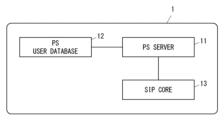
ネットワークプラットフォーム1は、1又はそれ以上のサーバを含む。ネットワークプラットフォーム1に含まれる各サーバは、1又はそれ以上のコンピュータであってもよい。例えば、図2に示されるように、ネットワークプラットフォーム1は、PSサーバ11、PSユーザデータベース12、及びSIPコア13を含んでもよい。PSサーバ11は、PSサービス(e.g., PTTサービス、push-to-videoサービス)のための集中型(centralized)サポートを提供する。より具体的には、PSサーバ11は、例えば、PSユーザ認証、UEs2(PS UEs)の位置の追跡(track)を維持すること、及びセルラー通信ネットワークのリソースのUEs2への割り当てを要求することを担当する。PSサーバ11は、GCSアプリケーションサーバ(AS)の機能を包含してもよい。PSユーザデータベース12は、PS user profileの情報を包含する。PS user profileは、パブリックセーフティ組織、パブリックセーフティ・サービス・プロバイダ、及び潜在的に(potentially)パブリックセーフティ・サービス・ユーザにより決定される。SIPコア13は、SIP registrationを担当し、SIP signalling bearer を確立し、各UE2(各UE2上のSIPクライアント)との間でSIPシグナリングメッセージを送受信する。PSユーザデータベース12は、ネットワークプラットフォーム1外の装置であってもよい。
さらに又はこれに代えて、ネットワークプラットフォーム1は、他のサーバを含んでもよい。例えば、ネットワークプラットフォーム1は、これらに限定されないが、GCSアプリケーションサーバ(AS)を含んでもよいし、SIPデータベースを含んでもよい。GCS ASは、EPS bearer service又はMBMS bearer service を利用して、UEsのグループへのアプリケーション・シグナリングの転送およびアプリケーション・データの配信を行う。SIPデータベースは、SIPコア13により必要とされるSIP加入者情報(SIP subscriptions)及び認証情報を包含する。
Additionally or alternatively,
LTEネットワーク3は、コアネットワーク(i.e., Evolved Packet Core(EPC))31及び無線アクセスネットワーク(i.e., Evolved Universal Terrestrial Radio Access Network(E-UTRAN))32を含む。EPC31は、複数のノードを含み、これらは複数のコントールプレーン・ノード及び複数のユーザプレーン(又はデータプレーン)ノードを含む。EPC31内の1又はそれ以上のノードはコントールプレーン機能及びユーザプレーン機能の両方を有してもよい。例えば、図1に示されるように、EPC31は、Packet Data Network Gateway(P-GW)311、Serving Gateway(S-GW)312、Mobility Management Entity313、Home Subscriber Server(HSS)314、Policy and Charging Rules Function(PCRF)315、Broadcast Multicast Service Center(BM-SC)316、及びMBMS Gateway(MBMS GW)317を含んでもよい。E-UTRAN32は、基地局(eNodeB(eNB))321を含む。図1には明示されていないが、当然に、EPC31は複数のS-GW312を含んでもよく、E-UTRAN32は複数のeNB321を含んでもよい。
The
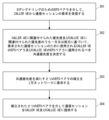
図3は、本実施形態に係るネットワークプラットフォーム1の動作の一例を示している。図3に示された動作は、ネットワークプラットフォーム1内の1つのサーバ(e.g., PSサーバ11)により行われてもよいし、複数のサーバ(e.g., PSサーバ11及びPSユーザデータベース12)により行われてもよい。
FIG. 3 shows an example of the operation of the
ステップ301では、ネットワークプラットフォーム1は、呼び出し元(caller)UE2Aで実行されているアプリケーションから、SIPシグナリングのためのEPSベアラを介して、通信セッションの要求を受信する。UE2Aで実行されているアプリケーションは、例えば、PTTアプリケーション・クライアント、又はSIPアプリケーション・クライアントであってもよい。当該通信セッションは、caller UE2A及び呼び出し先(callee)UE2Bの間のグループ通信セッションである。当該通信セッションは、例えば、PTT、push-to-video、ボイス通話、又はインスタント・メッセージングのための通信セッションであってもよい。SIPシグナリングのためのEPSベアラは、UE2AのためにLTEネットワーク3により設定されたデフォルトベアラであってもよい。
In
ステップ302では、ネットワークプラットフォーム1は、caller UE2Aに関連付けられた優先度及びcallee UE2Bに関連付けられた優先度のうち一方又は両方を取得する。UE2A及びUE2Bのそれぞれの優先度は、組織優先度、デバイス優先度、及びアプリケーション優先度のうち1つ又は任意の組み合わせであってもよい。
At
組織優先度は、PS-LTEネットワークによって提供されるパブリックセーフティ・サービスを使用する複数のパブリックセーフティ組織(e.g., 複数の地域警察署及び複数の地域消防署)の各々の優先度(優先度レベル)である。組織優先度は、これら複数のパブリックセーフティ組織の間の優先度ハンドリングのために使用される。 Organization priority is the priority (priority level) of each of multiple public safety organizations (e.g., multiple local police departments and multiple local fire departments) that use public safety services provided by the PS-LTE network. be. Organization priorities are used for priority handling among these multiple public safety organizations.
デバイス優先度は、1つのパブリックセーフティ組織に属する各ユーザによって使用される各UE2の優先度(優先度レベル)である。デバイス優先度は、複数のUEs2の間の優先度ハンドリングのために使用される。
Device priority is the priority (priority level) of each
アプリケーション優先度は、各UE2上で実行される各パブリックセーフティ・サービス・アプリケーション(又は各UE2に提供される各アプリケーションサービス)の優先度(優先度レベル)である。アプリケーション優先度は、複数のアプリケーションの間の優先度ハンドリングのために使用される。複数のパブリックセーフティ・サービス・アプリケーションは、例えば、PTTアプリケーション、push-to-videoアプリケーション、ボイス通話アプリケーション、ビデオ通話アプリケーション、及びインスタント・メッセージング・アプリケーションの任意の組み合わせを含む。 The application priority is the priority (priority level) of each public safety service application executed on each UE2 (or each application service provided to each UE2). Application priority is used for priority handling among multiple applications. Multiple public safety service applications include, for example, any combination of a PTT application, a push-to-video application, a voice call application, a video call application, and an instant messaging application.
ネットワークプラットフォーム1は、caller UE2Aに関連付けられた優先度及びcallee UE2Bに関連付けられた優先度のうち一方又は両方に基づいて、要求された通信セッションのために使用されるcaller UE2AのEPSベアラ及びcallee UE2BのEPSベアラに適用されるべき共通優先度を決定する。これらのEPSベアラは、caller UE2A及びcallee UE2Bの間のグループ通信セッションのためにcaller UE2A及びcallee UE2BそれぞれにLTEネットワーク3内で設定される。これらのEPSベアラは、caller UE2A及びcallee UE2Bそれぞれのデフォルトベアラ加えて設定される個別(dedicated)ベアラであってもよい。
The
幾つかの実装において、ネットワークプラットフォーム1は、パブリックセーフティ・サービス・ユーザの情報を管理するサーバから、組織優先度、デバイス優先度、及びアプリケーション優先度を取得してもよい。当該サーバは、例えば、PSユーザデータベース12、HSS314、図示されていないSIPデータベース、又は図示されていないSubscription Profile Repository(SPR)であってもよい。
In some implementations, the
共通優先度は、アプリケーションレイヤの優先度(例えば、組織優先度、デバイス優先度、又はアプリケーション優先度を示してもよい。この場合、ネットワークプラットフォーム1が共通優先度をさらにEPSベアラ優先度(e.g., QCI値若しくはARP値又は両方)に変換してもよいし、EPC31内の制御ノード(e.g., PCRF315)が共通優先度をEPSベアラの優先度に変換してもよい。これに代えて、共通優先度は、EPSベアラ優先度を示してもよい。
Common priority may indicate application layer priority (e.g. organization priority, device priority, or application priority). QCI value or ARP value or both), or the control node (e.g., PCRF 315) in the
幾つかの実装において、ネットワークプラットフォーム1は、caller UE2Aに関連付けられた優先度及びcallee UE2Bに関連付けられた優先度のうち高い方に従って共通優先度を決定してもよい。より具体的には、ネットワークプラットフォーム1は、共通優先度を、caller UE2Aに関連付けられた優先度及びcallee UE2Bに関連付けられた優先度のうち高い方に等しくセットしてもよい。
In some implementations, the
これに代えて、ネットワークプラットフォーム1は、caller UE2Aに関連付けられた優先度に従って共通優先度を決定してもよい。より具体的には、ネットワークプラットフォーム1は、共通優先度を、caller UE2Aに関連付けられた優先度に等しくセットしてもよい。
Alternatively,
これに代えて、ネットワークプラットフォーム1は、callee UE2Bに関連付けられた優先度に従って共通優先度を決定してもよい。より具体的には、ネットワークプラットフォーム1は、共通優先度を、callee UE2Bに関連付けられた優先度に等しくセットしてもよい。
Alternatively,
ステップ303では、ネットワークプラットフォーム1は、決定された共通優先度を満たす2つのEPSベアラの確立をLTEネットワーク3に要求する。なお、グループ通信のための個別ベアラが既に確立されている場合、ステップ303の要求は、既に確立されている個別ベアラの修正(modification)の要求であってもよい。ネットワークプラットフォーム1は、EPC31内の制御ノード(e.g., PCRF315)にステップ303の要求を送ってもよい。
In
ステップ304では、ネットワークプラットフォーム1は、LTEネットワーク3により確立(又は修正)された2つのEPSベアラを介して、グループ通信セッションをUE2A及びUE2Bに提供する。
In
図4は、本実施形態に係るグループ通信セッションの確立手順の一例を示すシーケンス図である。ステップ401では、caller UE2Aで実行されているアプリケーションは、SIPシグナリングのためのEPSベアラ411を介して、caller UE2A及びcallee UE2Bの間のグループ通信セッションの要求(e.g., PTT CALL SESSION REQUEST)をネットワークプラットフォーム1に送信する。
FIG. 4 is a sequence diagram showing an example of a procedure for establishing a group communication session according to this embodiment. In
当該要求に応答して、ネットワークプラットフォーム1は、caller UE2Aに関連付けられた優先度及びcallee UE2Bに関連付けられた優先度のうち一方又は両方を取得する。そして、ネットワークプラットフォーム1は、要求された通信セッションのために使用されるcaller UE2AのEPSベアラ412及びcallee UE2BのEPSベアラ413に適用されるべき共通優先度を決定する。
In response to the request, the
ステップ402では、ネットワークプラットフォーム1は、サービス情報を包含するシグナリングメッセージをEPC31内のPCRF315に送る。当該サービス情報は、共通優先度を示し、共通優先度に基づく2つのEPSベアラ412及び413の確立(又は修正)をPCRF315にトリガーする。なお、ネットワークプラットフォーム1は、EPSベアラ412及び413それぞれの確立(又は修正)のための2つのシグナリングメッセージをPCRF315に送ってもよい。
At
上述のように、共通優先度は、アプリケーションレイヤの優先度(例えば、組織優先度、デバイス優先度、又はアプリケーション優先度を示してもよい。この場合、ネットワークプラットフォーム1が共通優先度をさらにEPSベアラ優先度(e.g., QCI値若しくはARP値又は両方)に変換してもよいし、EPC31内の制御ノード(e.g., PCRF315)が共通優先度をEPSベアラの優先度に変換してもよい。これに代えて、共通優先度は、EPSベアラ優先度を示してもよい。
As described above, the common priority may indicate an application layer priority (eg, organizational priority, device priority, or application priority). It may be converted to priority (e.g., QCI value or ARP value or both), or the control node (e.g., PCRF 315) in
ステップ403では、PCRF315は、ネットワークプラットフォーム1からのトリガーに応答して、caller UE2AのためのEPSベアラ(個別ベアラ)412の確立又は修正手順を実行する。具体的には、PCRF315は、共通優先度(又はこれに関連付けられた共通EPSベアラ優先度)を満たすEPSベアラ412の確立をP-GW311(policy and charging enforcement function(PCEF))に要求する。P-GW311は、PCRF315からの要求に応答して個別ベアラの作成(又は修正)をS-GW312に要求し、個別EPSベアラ412の作成(又は修正)手順を開始する。これにより、共通優先度に関連付けられた個別EPSベアラ412が、P-GW311とUE2Aの間に、S-GW312、及びeNB321を通って確立される。
In
ステップ404では、EPSベアラ(個別ベアラ)412と同様に、共通優先度に関連付けられた個別EPSベアラ413が、P-GW311とUE2Aの間に、S-GW312、及びeNB321を通って確立される。なお、EPSベアラ413が通るS-GW312及びeNB321は、EPSベアラ412が通るそれらと異なってもよい。
In
ステップ405及び406では、ネットワークプラットフォーム1は、共通優先度に関連付けられた個別EPSベアラ412及び413を介して、グループ通信セッションをUEs2A及び2Bに提供する。
In
上述の動作によれば、ネットワークプラットフォーム1は、UEs2A及び2Bの間のグループ通信セッションを行うために複数のデバイスそれぞれにLTEネットワーク3内で設定される複数のベアラに共通優先度を適用することができる。したがって、UEs2A及び2Bの間のエンドツーエンド通信は所望の(共通)優先度を得ることができる。
According to the operation described above, the
<第2の実施形態>
本実施形態は、第1の実施形態で説明されたネットワークプラットフォーム1の動作の具体例を提供する。本実施形態に係るPS-LTEネットワークの構成例は、図1及び図2に示された例と同様である。<Second embodiment>
This embodiment provides a specific example of the operation of the
本実施形態では、PSサーバ11は、caller UE2A及びcallee UE2Bにそれぞれ関連付けられた2つの優先度のうち一方又は両方を取得し、共通優先度を決定し、共に共通優先度に関連付けられたUE2A及びUE2Bのための2つのEPSベアラの作成をトリガーするためにLTEネットワーク3(PCRF315)にサービス情報を送る。
In this embodiment, the
一例では、PSサーバ11は、caller UE2A及びcallee UE2Bにそれぞれ関連付けられた2つの優先度のうち一方又は両方をPSユーザデータベース12から取得してもよい。これに代えて、PSサーバ11は、これら2つの優先度のうち一方又は両方を、SIPコア13、HSS314、図示されていないSIPデータベース、又は図示されていないSPRから取得してもよい。
In one example, the
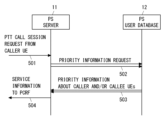
図5は、本実施形態に係るネットワークプラットフォーム1の動作の一例を示している。ステップ501では、PSサーバ11は、caller UE2A及びcallee UE2Bの間のグループ通信セッションの要求(e.g., PTT CALL SESSION REQUEST)をcaller UE2Aから受信する。ステップ502では、PSサーバ11は、優先度情報の要求をPSユーザデータベース12に送る。当該要求は、caller UE2A及びcallee UE2Bにそれぞれ関連付けられた2つの優先度のうち一方又は両方に関する。ステップ503では、PSユーザデータベース12は、2つの優先度のうち一方又は両方を示す返信をPSサーバ11に送る。ステップ504では、PSサーバ11は、共通優先度を決定し、共に共通優先度に関連付けられたUE2A及びUE2Bのための2つのEPSベアラの作成をトリガーするためにLTEネットワーク3(PCRF315)にサービス情報を送る。
FIG. 5 shows an example of the operation of the
上述の動作によれば、PSサーバ11は、PSユーザデータベース12(又は他のサーバ若しくはデータベース)と連携し、UEs2A及び2Bの間のグループ通信セッションを行うために複数のデバイスそれぞれにLTEネットワーク3内で設定される複数のベアラに共通優先度を適用することができる。
According to the operation described above, the
<第3の実施形態>
本実施形態は、第1の実施形態で説明されたネットワークプラットフォーム1の動作の具体例を提供する。本実施形態に係るPS-LTEネットワークの構成例は、図1及び図2に示された例と同様である。<Third Embodiment>
This embodiment provides a specific example of the operation of the
本実施形態では、
PSサーバ11は、SIPコア13は、caller UE2A及びcallee UE2Bにそれぞれ関連付けられた2つの優先度のうち一方又は両方を取得し、共通優先度を決定し、共に共通優先度に関連付けられたUE2A及びUE2Bのための2つのEPSベアラの作成をトリガーするためにLTEネットワーク3(PCRF315)にサービス情報を送る。In this embodiment,
The
一例では、SIPコア13は、caller UE2A及びcallee UE2Bにそれぞれ関連付けられた2つの優先度のうち一方又は両方をSIPデータベースから取得してもよい。これに代えて、PSサーバ11は、これら2つの優先度のうち一方又は両方を、HSS314又は図示されていないSPRから取得してもよい。
In one example, the
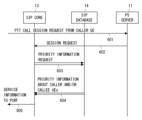
図6は、本実施形態に係るネットワークプラットフォーム1の動作の一例を示している。ステップ601では、PSサーバ11は、caller UE2A及びcallee UE2Bの間のグループ通信セッションの要求(e.g., PTT CALL SESSION REQUEST)をcaller UE2Aから受信する。ステップ602では、通信セッションの要求をSIPコア13に送る。ステップ603では、SIPコア13は、優先度情報の要求をSIPデータベース14に送る。当該要求は、caller UE2A及びcallee UE2Bにそれぞれ関連付けられた2つの優先度のうち一方又は両方に関する。ステップ604では、SIPデータベース14は、2つの優先度のうち一方又は両方を示す返信をSIPコア13に送る。ステップ605では、SIPコア13は、共通優先度を決定し、共に共通優先度に関連付けられたUE2A及びUE2Bのための2つのEPSベアラの作成をトリガーするためにLTEネットワーク3(PCRF315)にサービス情報を送る。
FIG. 6 shows an example of the operation of the
上述の動作によれば、SIPコア13は、SIPデータベース14(又は他のサーバ若しくはデータベース)と連携し、UEs2A及び2Bの間のグループ通信セッションを行うために複数のデバイスそれぞれにLTEネットワーク3内で設定される複数のベアラに共通優先度を適用することができる。
According to the operation described above, the
続いて以下では、上述の実施形態に係るネットワークプラットフォーム1内の1又はそれ以上のサーバ並びにUE2の構成例について説明する。図7は、PSサーバ11の構成例を示している。ネットワークプラットフォーム1内の他のサーバも、図7の構成と同様であってもよい。図7を参照すると、PSサーバ11は、ネットワークインターフェース701、プロセッサ702、及びメモリ703を含む。ネットワークインターフェース701は、他のサーバ(e.g., PSユーザデータベース12、及びSIPコア13)、EPC31内のノード(e.g., P-GW311、PCRF315、及びBM-SC316)、並びにその他のノードと通信するために使用される。ネットワークインターフェース701は、例えば、IEEE 802.3 seriesに準拠したネットワークインタフェースカード(NIC)を含んでもよい。
Next, an example configuration of one or more servers and
プロセッサ702は、メモリ703からソフトウェア(コンピュータプログラム)を読み出して実行することで、上述の実施形態において説明されたPSサーバ11の処理を行う。プロセッサ702は、例えば、マイクロプロセッサ、Micro Processing Unit(MPU)、又はCentral Processing Unit(CPU)であってもよい。プロセッサ702は、複数のプロセッサを含んでもよい。
The
メモリ703は、揮発性メモリ及び不揮発性メモリによって構成される。メモリ703は、物理的に独立した複数のメモリデバイスを含んでもよい。揮発性メモリは、例えば、Static Random Access Memory(SRAM)若しくはDynamic RAM(DRAM)又はこれらの組み合わせである。不揮発性メモリは、マスクRead Only Memory(MROM)、Electrically Erasable Programmable ROM(EEPROM)、フラッシュメモリ、若しくはハードディスクドライブ、又はこれらの任意の組合せである。メモリ703は、プロセッサ702から離れて配置されたストレージを含んでもよい。この場合、プロセッサ702は、ネットワークインターフェース701又は図示されていないI/Oインタフェースを介してメモリ703にアクセスしてもよい。
The
メモリ703は、上述の複数の実施形態で説明されたPSサーバ11による処理を行うための命令群およびデータを含む1又はそれ以上のソフトウェアモジュール(コンピュータプログラム)704を格納してもよい。いくつかの実装において、プロセッサ702は、当該ソフトウェアモジュール704をメモリ703から読み出して実行することで、上述の実施形態で説明されたPSサーバ11の処理を行うよう構成されてもよい。
The
図8は、UE2の構成例を示している。Radio Frequency(RF)トランシーバ801は、eNB321と通信するためにアナログRF信号処理を行う。RFトランシーバ801は、複数のトランシーバを含んでもよい。RFトランシーバ801により行われるアナログRF信号処理は、周波数アップコンバージョン、周波数ダウンコンバージョン、及び増幅を含む。RFトランシーバ801は、アンテナアレイ802及びベースバンドプロセッサ803と結合される。RFトランシーバ801は、変調シンボルデータ(又はOFDMシンボルデータ)をベースバンドプロセッサ803から受信し、送信RF信号を生成し、送信RF信号をアンテナアレイ802に供給する。また、RFトランシーバ801は、アンテナアレイ802によって受信された受信RF信号に基づいてベースバンド受信信号を生成し、これをベースバンドプロセッサ803に供給する。
FIG. 8 shows a configuration example of UE2. Radio Frequency (RF)
ベースバンドプロセッサ803は、無線通信のためのデジタルベースバンド信号処理(データプレーン処理)とコントロールプレーン処理を行う。デジタルベースバンド信号処理は、(a) データ圧縮/復元、(b) データのセグメンテーション/コンカテネーション、(c) 伝送フォーマット(伝送フレーム)の生成/分解、(d) 伝送路符号化/復号化、(e) 変調(シンボルマッピング)/復調、及び(f) Inverse Fast Fourier Transform(IFFT)によるOFDMシンボルデータ(ベースバンドOFDM信号)の生成などを含む。一方、コントロールプレーン処理は、レイヤ1(e.g., 送信電力制御)、レイヤ2(e.g., 無線リソース管理、及びhybrid automatic repeat request(HARQ)処理)、及びレイヤ3(e.g., アタッチ、モビリティ、及び通話管理に関するシグナリング)の通信管理を含む。
The
例えば、ベースバンドプロセッサ803によるデジタルベースバンド信号処理は、Packet Data Convergence Protocol(PDCP)レイヤ、Radio Link Control(RLC)レイヤ、Medium Access Control(MAC)レイヤ、およびPhysical(PHY)レイヤの信号処理を含んでもよい。また、ベースバンドプロセッサ803によるコントロールプレーン処理は、Non-Access Stratum(NAS)プロトコル、Radio Resource Control(RRC)プロトコル、及びMAC Control Element(CE)の処理を含んでもよい。
For example, the digital baseband signal processing by the
ベースバンドプロセッサ803は、ビームフォーミングのためのMIMOエンコーディング及びプリコーディングを行ってもよい。
ベースバンドプロセッサ803は、デジタルベースバンド信号処理を行うモデム・プロセッサ(e.g., Digital Signal Processor(DSP))とコントロールプレーン処理を行うプロトコルスタック・プロセッサ(e.g., CPU又はMPU)を含んでもよい。この場合、コントロールプレーン処理を行うプロトコルスタック・プロセッサは、後述するアプリケーションプロセッサ804と共通化されてもよい。
The
アプリケーションプロセッサ804は、CPU、MPU、マイクロプロセッサ、又はプロセッサコアとも呼ばれる。アプリケーションプロセッサ804は、複数のプロセッサ(複数のプロセッサコア)を含んでもよい。アプリケーションプロセッサ804は、メモリ806又は図示されていないメモリから読み出されたシステムソフトウェアプログラム(Operating System(OS))及び様々なアプリケーションプログラム(例えば、通話アプリケーション、WEBブラウザ、メーラ、カメラ操作アプリケーション、音楽再生アプリケーション)を実行することによって、UE2の各種機能を実現する。
幾つかの実装において、図8に破線(805)で示されているように、ベースバンドプロセッサ803及びアプリケーションプロセッサ804は、1つのチップ上に集積されてもよい。言い換えると、ベースバンドプロセッサ803及びアプリケーションプロセッサ804は、1つのSystem on Chip(SoC)デバイス805として実装されてもよい。SoCデバイスは、システムLarge Scale Integration(LSI)またはチップセットと呼ばれることもある。
In some implementations, the
メモリ806は、揮発性メモリ若しくは不揮発性メモリ又はこれらの組合せである。メモリ806は、物理的に独立した複数のメモリデバイスを含んでもよい。揮発性メモリは、例えば、SRAM若しくはDRAM又はこれらの組み合わせである。不揮発性メモリは、MROM、EEPROM、フラッシュメモリ、若しくはハードディスクドライブ、又はこれらの任意の組合せである。例えば、メモリ806は、ベースバンドプロセッサ803、アプリケーションプロセッサ804、及びSoC805からアクセス可能な外部メモリデバイスを含んでもよい。メモリ806は、ベースバンドプロセッサ803内、アプリケーションプロセッサ804内、又はSoC805内に集積された内蔵メモリデバイスを含んでもよい。さらに、メモリ806は、Universal Integrated Circuit Card(UICC)内のメモリを含んでもよい。
メモリ806は、上述の複数の実施形態で説明されたUE2による処理を行うための命令群およびデータを含む1又はそれ以上のソフトウェアモジュール(コンピュータプログラム)807を格納してもよい。幾つかの実装において、ベースバンドプロセッサ803又はアプリケーションプロセッサ804は、当該ソフトウェアモジュール807をメモリ806から読み出して実行することで、上述の実施形態で図面を用いて説明されたUE2の処理を行うよう構成されてもよい。
なお、上述の実施形態で説明されたUE2によって行われるコントロールプレーン処理及び動作は、RFトランシーバ801及びアンテナアレイ802を除く他の要素、すなわちベースバンドプロセッサ803及びアプリケーションプロセッサ804の少なくとも一方とソフトウェアモジュール807を格納したメモリ806とによって実現されることができる。
It should be noted that the control plane processing and operations performed by
図7及び図8を用いて説明したように、上述の実施形態に係るサーバ(e.g., PSサーバ11)及びUE2が有するプロセッサの各々は、図面を用いて説明されたアルゴリズムをコンピュータに行わせるための命令群を含む1又は複数のプログラムを実行する。これらのプログラムは、様々なタイプの非一時的なコンピュータ可読媒体(non-transitory computer readable medium)を用いて格納され、コンピュータに供給することができる。非一時的なコンピュータ可読媒体は、様々なタイプの実体のある記録媒体(tangible storage medium)を含む。非一時的なコンピュータ可読媒体の例は、磁気記録媒体(例えばフレキシブルディスク、磁気テープ、ハードディスクドライブ)、光磁気記録媒体(例えば光磁気ディスク)、Compact Disc Read Only Memory(CD-ROM)、CD-R、CD-R/W、半導体メモリ(例えば、マスクROM、Programmable ROM(PROM)、Erasable PROM(EPROM)、フラッシュROM、Random Access Memory(RAM))を含む。また、これらのプログラムは、様々なタイプの一時的なコンピュータ可読媒体(transitory computer readable medium)によってコンピュータに供給されてもよい。一時的なコンピュータ可読媒体の例は、電気信号、光信号、及び電磁波を含む。一時的なコンピュータ可読媒体は、電線及び光ファイバ等の有線通信路、又は無線通信路を介して、プログラムをコンピュータに供給できる。
As described with reference to FIGS. 7 and 8, each of the processors of the server (e.g., PS server 11) and
<その他の実施形態>
上述の実施形態は、各々独立に実施されてもよいし、適宜組み合わせて実施されてもよい。<Other embodiments>
The above-described embodiments may be implemented independently or in combination as appropriate.
上述の実施形態は、1又はそれ以上の公共安全関連(public safety-related)パブリックセーフティ・サービス(e.g., グループ通信サービス)を提供するLTEシステム(i.e., PS-LTEシステム)を主な対象として説明された。しかしながら、これらの実施形態は、LTE以外のセルラー通信ネットワークを使用する公衆安全システムに適用されてもよい。 The above embodiments are described primarily for LTE systems (i.e., PS-LTE systems) that provide one or more public safety-related public safety services (e.g., group communication services). was done. However, these embodiments may be applied to public safety systems using cellular communication networks other than LTE.
さらに、上述の実施形態は、同一方式の又は異なる方式の複数のセルラー通信ネットワークを使用する公衆安全システムに適用されてもよい。一例では、複数のセルラー通信ネットワークのうち1つはプライベート・セルラー通信ネットワークであってもよく、他の1つは公衆セルラー通信ネットワークであってもよい。さらに又はこれに代えて、複数のセルラー通信ネットワークのうち1つはLTEネットワークであり、他の1つはLTE以外のセルラー通信ネットワークであってもよい。 Further, the above-described embodiments may be applied to public safety systems using multiple cellular communication networks of the same type or of different types. In one example, one of the plurality of cellular communication networks may be a private cellular communication network and another one may be a public cellular communication network. Additionally or alternatively, one of the multiple cellular communication networks may be an LTE network and the other one may be a non-LTE cellular communication network.
上述した実施形態は本件発明者により得られた技術思想の適用に関する例に過ぎない。当該技術思想は、上述した実施形態のみに限定されるものではなく、種々の変更が可能である。 The above-described embodiment is merely an example of application of the technical idea obtained by the inventor of the present invention. The technical idea is not limited to the above-described embodiments, and various modifications are possible.
この出願は、2019年3月22日に出願された日本出願特願2019-055093を基礎とする優先権を主張し、その開示の全てをここに取り込む。 This application claims priority based on Japanese Patent Application No. 2019-055093 filed on March 22, 2019, and the entire disclosure thereof is incorporated herein.
1 ネットワークプラットフォーム
2 UE
3 LTEネットワーク
11 PSサーバ
12 PSユーザデータベース
13 SIPコア
14 SIPデータベース
31 EPC
32 E-UTRAN
702 プロセッサ
703 メモリ
803 ベースバンドプロセッサ
804 アプリケーションプロセッサ
806 メモリ1
3
32 E-UTRAN
702
Claims (10)
前記少なくとも1つのサーバは、
第1の無線端末で実行されているアプリケーションから、セルラー通信ネットワークによって提供される第1の通信路を介して、前記第1の無線端末及び第2の無線端末の間の通信セッションの要求を受信するよう構成され、
前記第1の無線端末に関連付けられた第1の優先度及び前記第2の無線端末に関連付けられた第2の優先度のうち一方又は両方に基づいて、前記通信セッションのために使用され且つ前記セルラー通信ネットワークによって提供される前記第1の無線端末の第2の通信路及び前記通信セッションのために使用され且つ前記セルラー通信ネットワークによって提供される前記第2の無線端末の第3の通信路の両方に適用されるべき共通優先度を決定するよう構成され、
前記共通優先度を満たす前記第2及び第3の通信路の確立を前記セルラー通信ネットワークに要求するよう構成され、
前記第2及び第3の通信路を介して前記通信セッションを前記第1及び第2の無線端末に提供するよう構成される、
システム。 A system comprising at least one server,
The at least one server is
receiving a request for a communication session between the first wireless terminal and the second wireless terminal from an application running on the first wireless terminal over a first communication path provided by a cellular communications network; is configured to
used for the communication session and based on one or both of a first priority associated with the first wireless terminal and a second priority associated with the second wireless terminal; a second channel of said first wireless terminal provided by a cellular communications network and a third channel of said second wireless terminal used for said communications session and provided by said cellular communications network; configured to determine a common priority to be applied to both;
configured to request the cellular communication network to establish the second and third communication paths that satisfy the common priority;
configured to provide the communication session to the first and second wireless terminals over the second and third communication paths;
system.
請求項1に記載のシステム。 the at least one server determines the common priority according to the higher of the first priority and the second priority;
The system of claim 1.
請求項1に記載のシステム。 the at least one server determines the common priority according to the first priority;
The system of claim 1.
請求項1に記載のシステム。 the at least one server determines the common priority according to the second priority;
The system of claim 1.
請求項1~4のいずれか1項に記載のシステム。 The first and second priorities relate to applications utilizing the communication session,
A system according to any one of claims 1-4.
前記第1のサーバは、前記通信セッションの前記要求を前記第1の無線端末から受信し、前記通信セッションの確立を前記第2のサーバに要求するよう構成され、
前記第2のサーバは、前記第1のサーバからの前記要求に応答して、前記第1及び第2の優先度を確認し、前記共通優先度を決定し、前記共通優先度を満たす前記第2及び第3の通信路の確立を前記セルラー通信ネットワークに要求するよう構成される、
請求項1~5のいずれか1項に記載のシステム。 the at least one server includes first and second servers;
the first server is configured to receive the request for the communication session from the first wireless terminal and request establishment of the communication session from the second server;
The second server checks the first and second priorities, determines the common priority, and satisfies the common priority in response to the request from the first server. configured to request the cellular communication network to establish second and third communication paths;
A system according to any one of claims 1-5.
前記第1のサーバは、PTTサーバ又はGroup Communication System Application Server(GCS AS)であり、
前記第2のサーバは、Session Initiation Protocol(SIP)サーバである、
請求項6に記載のシステム。 The communication session is a push-to-talk (PTT) session between the first and second wireless terminals or a group communication session between a plurality of wireless terminals including the first and second wireless terminals. ,
the first server is a PTT server or a Group Communication System Application Server (GCS AS);
wherein the second server is a Session Initiation Protocol (SIP) server;
7. A system according to claim 6.
前記第2の通信路は、前記第1の無線端末と前記システムとの間での前記通信セッションに関するデータパケットの転送に使用されるEPSベアラであり、
前記第3の通信路は、前記第2の無線端末と前記システムとの間での前記通信セッションに関するデータパケットの転送に使用されるEPSベアラである、
請求項1~7のいずれか1項に記載のシステム。 the first communication path is an Evolved Packet System (EPS) bearer used to transfer signaling messages between the first wireless terminal and the system;
the second communication path is an EPS bearer used to transfer data packets related to the communication session between the first wireless terminal and the system;
wherein the third communication path is an EPS bearer used to transfer data packets for the communication session between the second wireless terminal and the system;
A system according to any one of claims 1-7.
第1の無線端末で実行されているアプリケーションから、セルラー通信ネットワークによって提供される第1の通信路を介して、前記第1の無線端末及び第2の無線端末の間の通信セッションの要求を受信すること、
前記第1の無線端末に関連付けられた第1の優先度及び前記第2の無線端末に関連付けられた第2の優先度のうち一方又は両方に基づいて、前記通信セッションのために使用され且つ前記セルラー通信ネットワークによって提供される前記第1の無線端末の第2の通信路及び前記通信セッションのために使用され且つ前記セルラー通信ネットワークによって提供される前記第2の無線端末の第3の通信路の両方に適用されるべき共通優先度を決定すること、
前記共通優先度を満たす前記第2及び第3の通信路の確立を前記セルラー通信ネットワークに要求すること、及び
前記第2及び第3の通信路を介して前記通信セッションを前記第1及び第2の無線端末に提供すること、
を備える、方法。 A method performed by a system comprising at least one server, comprising:
receiving a request for a communication session between the first wireless terminal and the second wireless terminal from an application running on the first wireless terminal over a first communication path provided by a cellular communications network; to do
used for the communication session and based on one or both of a first priority associated with the first wireless terminal and a second priority associated with the second wireless terminal; a second channel of said first wireless terminal provided by a cellular communications network and a third channel of said second wireless terminal used for said communications session and provided by said cellular communications network; determining a common priority to be applied to both;
requesting the cellular communication network to establish the second and third communication paths that satisfy the common priority; and establishing the communication session over the second and third communication paths. to the wireless terminals of
A method.
請求項9に記載の方法。 10. The method of claim 9, wherein said determining comprises determining said common priority according to the higher of said first priority and said second priority.
Applications Claiming Priority (3)
| Application Number | Priority Date | Filing Date | Title |
|---|---|---|---|
| JP2019055093 | 2019-03-22 | ||
| JP2019055093 | 2019-03-22 | ||
| PCT/JP2019/047731 WO2020194889A1 (en) | 2019-03-22 | 2019-12-06 | System and method for same |
Publications (2)
| Publication Number | Publication Date |
|---|---|
| JPWO2020194889A1 JPWO2020194889A1 (en) | 2021-11-25 |
| JP7255672B2 true JP7255672B2 (en) | 2023-04-11 |
Family
ID=72609397
Family Applications (1)
| Application Number | Title | Priority Date | Filing Date |
|---|---|---|---|
| JP2021508728A Active JP7255672B2 (en) | 2019-03-22 | 2019-12-06 | System and method |
Country Status (3)
| Country | Link |
|---|---|
| US (1) | US20220159778A1 (en) |
| JP (1) | JP7255672B2 (en) |
| WO (1) | WO2020194889A1 (en) |
Citations (4)
| Publication number | Priority date | Publication date | Assignee | Title |
|---|---|---|---|---|
| US20140064070A1 (en) | 2012-08-31 | 2014-03-06 | Qualcomm Incorporated | Optimistic quality of service set up |
| US20140349660A1 (en) | 2013-05-23 | 2014-11-27 | Telefonaktiebolaget L M Ericsson (Publ) | Resource scheduling in a mobile communication network supporting machine-to-machine (m2m) and user equipment (ue) traffic |
| WO2017171598A1 (en) | 2016-04-01 | 2017-10-05 | Telefonaktiebolaget Lm Ericsson (Publ) | Handover in a wireless communication network with network slices |
| JP2018534812A (en) | 2015-10-02 | 2018-11-22 | テレフオンアクチーボラゲット エルエム エリクソン(パブル) | Improved priority handling for data flow transport in communication systems |
Family Cites Families (1)
| Publication number | Priority date | Publication date | Assignee | Title |
|---|---|---|---|---|
| KR101669276B1 (en) * | 2009-10-19 | 2016-10-25 | 삼성전자주식회사 | Method and apparatus for guaranteeing quality of service according to priority of terminal |
-
2019
- 2019-12-06 US US17/439,499 patent/US20220159778A1/en not_active Abandoned
- 2019-12-06 JP JP2021508728A patent/JP7255672B2/en active Active
- 2019-12-06 WO PCT/JP2019/047731 patent/WO2020194889A1/en not_active Ceased
Patent Citations (4)
| Publication number | Priority date | Publication date | Assignee | Title |
|---|---|---|---|---|
| US20140064070A1 (en) | 2012-08-31 | 2014-03-06 | Qualcomm Incorporated | Optimistic quality of service set up |
| US20140349660A1 (en) | 2013-05-23 | 2014-11-27 | Telefonaktiebolaget L M Ericsson (Publ) | Resource scheduling in a mobile communication network supporting machine-to-machine (m2m) and user equipment (ue) traffic |
| JP2018534812A (en) | 2015-10-02 | 2018-11-22 | テレフオンアクチーボラゲット エルエム エリクソン(パブル) | Improved priority handling for data flow transport in communication systems |
| WO2017171598A1 (en) | 2016-04-01 | 2017-10-05 | Telefonaktiebolaget Lm Ericsson (Publ) | Handover in a wireless communication network with network slices |
Non-Patent Citations (1)
| Title |
|---|
| 3rd Generation Partnership Project; Technical Specification Group Services and System Aspects; Funct,3GPP TS 23.379 [online],V16.1.0 (2019-01),2019年01月04日,第1-25頁, 第80-95頁, 第131-139頁,[retrieved on 2020.01.07], Retrieved from the Internet: <URL: https://www.3gpp.org/ftp/Specs/archive/23_series/23.379/23379-g10.zip> |
Also Published As
| Publication number | Publication date |
|---|---|
| JPWO2020194889A1 (en) | 2021-11-25 |
| US20220159778A1 (en) | 2022-05-19 |
| WO2020194889A1 (en) | 2020-10-01 |
Similar Documents
| Publication | Publication Date | Title |
|---|---|---|
| CN115244966B (en) | Apparatus and methods for supporting UPF event open services in wireless communication systems | |
| US12425267B2 (en) | 5G time sensitive networking bridge configuration | |
| US10897784B2 (en) | Apparatus and method for wireless communication, and non-transitory computer readable medium storing program | |
| CN114667746A (en) | Apparatus and method for PSA-UPF relocation in wireless communication system | |
| US12262447B2 (en) | Method and apparatus for supporting edge computing service for roaming UE in wireless communication system | |
| CN111615844B (en) | Method and apparatus for selecting a session management entity serving a wireless communication device | |
| KR102305630B1 (en) | Method for notifying for d2d commucation system and device therefor | |
| CN107666723B (en) | An information transmission method, fusion gateway and system | |
| US20220159560A1 (en) | System, wireless terminal, and method therefor | |
| CN111010744A (en) | Method and device for establishing session and method and device for sending message | |
| CN112954768B (en) | Communication method, device and system | |
| KR20160114585A (en) | Method for handling an id collision for d2d communication system and device therefor | |
| US11388602B2 (en) | Network slicing with a radio access network node | |
| CN102469415A (en) | Point-to-multipoint call method, terminal and system in trunking system based on LTE technology | |
| US11812365B2 (en) | System and method therefor | |
| US10897498B1 (en) | Distributed ledger technology (DLT) control over wireless data relays that serve user equipment (UE) | |
| WO2022067699A1 (en) | Service data flow transmission method, communication device, and communication system | |
| CN107431953A (en) | The method and apparatus of Business Stream shunting | |
| CN114270929A (en) | Apparatus and method for processing PDU session in wireless communication system | |
| WO2022067700A1 (en) | Communication method, apparatus, and system | |
| US10129920B2 (en) | Control apparatus, radio communication device, and method therefor | |
| KR102754791B1 (en) | Virtual User Equipment Set | |
| US20220159441A1 (en) | System and method therefor | |
| CN114938494B (en) | Communication method and device | |
| WO2022236448A1 (en) | A method of mbs session creation, and system and apparatus thereof |
Legal Events
| Date | Code | Title | Description |
|---|---|---|---|
| A521 | Request for written amendment filed |
Free format text: JAPANESE INTERMEDIATE CODE: A523 Effective date: 20210721 |
|
| A621 | Written request for application examination |
Free format text: JAPANESE INTERMEDIATE CODE: A621 Effective date: 20210721 |
|
| A131 | Notification of reasons for refusal |
Free format text: JAPANESE INTERMEDIATE CODE: A131 Effective date: 20220913 |
|
| A521 | Request for written amendment filed |
Free format text: JAPANESE INTERMEDIATE CODE: A523 Effective date: 20221108 |
|
| TRDD | Decision of grant or rejection written | ||
| A01 | Written decision to grant a patent or to grant a registration (utility model) |
Free format text: JAPANESE INTERMEDIATE CODE: A01 Effective date: 20230228 |
|
| A61 | First payment of annual fees (during grant procedure) |
Free format text: JAPANESE INTERMEDIATE CODE: A61 Effective date: 20230313 |
|
| R151 | Written notification of patent or utility model registration |
Ref document number: 7255672 Country of ref document: JP Free format text: JAPANESE INTERMEDIATE CODE: R151 |