JP6966397B2 - Bioelectrode composition, bioelectrode, and method for manufacturing bioelectrode - Google Patents
Bioelectrode composition, bioelectrode, and method for manufacturing bioelectrode Download PDFInfo
- Publication number
- JP6966397B2 JP6966397B2 JP2018158704A JP2018158704A JP6966397B2 JP 6966397 B2 JP6966397 B2 JP 6966397B2 JP 2018158704 A JP2018158704 A JP 2018158704A JP 2018158704 A JP2018158704 A JP 2018158704A JP 6966397 B2 JP6966397 B2 JP 6966397B2
- Authority
- JP
- Japan
- Prior art keywords
- bioelectrode
- group
- resin
- carbon
- component
- Prior art date
- Legal status (The legal status is an assumption and is not a legal conclusion. Google has not performed a legal analysis and makes no representation as to the accuracy of the status listed.)
- Active
Links
- 0 CC*(C)[*+](CCc(cc1)ccc1C(OC(CS(O)(=O)=O)C(F)(F)F)=O)C(C)(C)CC Chemical compound CC*(C)[*+](CCc(cc1)ccc1C(OC(CS(O)(=O)=O)C(F)(F)F)=O)C(C)(C)CC 0.000 description 4
Images


Classifications
-
- A—HUMAN NECESSITIES
- A61—MEDICAL OR VETERINARY SCIENCE; HYGIENE
- A61B—DIAGNOSIS; SURGERY; IDENTIFICATION
- A61B5/00—Measuring for diagnostic purposes; Identification of persons
- A61B5/24—Detecting, measuring or recording bioelectric or biomagnetic signals of the body or parts thereof
- A61B5/25—Bioelectric electrodes therefor
- A61B5/263—Bioelectric electrodes therefor characterised by the electrode materials
-
- A—HUMAN NECESSITIES
- A61—MEDICAL OR VETERINARY SCIENCE; HYGIENE
- A61B—DIAGNOSIS; SURGERY; IDENTIFICATION
- A61B5/00—Measuring for diagnostic purposes; Identification of persons
- A61B5/05—Detecting, measuring or recording for diagnosis by means of electric currents or magnetic fields; Measuring using microwaves or radio waves
- A61B5/053—Measuring electrical impedance or conductance of a portion of the body
-
- A—HUMAN NECESSITIES
- A61—MEDICAL OR VETERINARY SCIENCE; HYGIENE
- A61B—DIAGNOSIS; SURGERY; IDENTIFICATION
- A61B5/00—Measuring for diagnostic purposes; Identification of persons
- A61B5/24—Detecting, measuring or recording bioelectric or biomagnetic signals of the body or parts thereof
- A61B5/25—Bioelectric electrodes therefor
- A61B5/251—Means for maintaining electrode contact with the body
- A61B5/257—Means for maintaining electrode contact with the body using adhesive means, e.g. adhesive pads or tapes
-
- A—HUMAN NECESSITIES
- A61—MEDICAL OR VETERINARY SCIENCE; HYGIENE
- A61K—PREPARATIONS FOR MEDICAL, DENTAL OR TOILETRY PURPOSES
- A61K8/00—Cosmetics or similar toiletry preparations
- A61K8/18—Cosmetics or similar toiletry preparations characterised by the composition
- A61K8/72—Cosmetics or similar toiletry preparations characterised by the composition containing organic macromolecular compounds
- A61K8/84—Cosmetics or similar toiletry preparations characterised by the composition containing organic macromolecular compounds obtained by reactions otherwise than those involving only carbon-carbon unsaturated bonds
- A61K8/89—Polysiloxanes
- A61K8/896—Polysiloxanes containing atoms other than silicon, carbon, oxygen and hydrogen, e.g. dimethicone copolyol phosphate
- A61K8/898—Polysiloxanes containing atoms other than silicon, carbon, oxygen and hydrogen, e.g. dimethicone copolyol phosphate containing nitrogen, e.g. amodimethicone, trimethyl silyl amodimethicone or dimethicone propyl PG-betaine
-
- C—CHEMISTRY; METALLURGY
- C08—ORGANIC MACROMOLECULAR COMPOUNDS; THEIR PREPARATION OR CHEMICAL WORKING-UP; COMPOSITIONS BASED THEREON
- C08G—MACROMOLECULAR COMPOUNDS OBTAINED OTHERWISE THAN BY REACTIONS ONLY INVOLVING UNSATURATED CARBON-TO-CARBON BONDS
- C08G77/00—Macromolecular compounds obtained by reactions forming a linkage containing silicon with or without sulfur, nitrogen, oxygen or carbon in the main chain of the macromolecule
- C08G77/04—Polysiloxanes
- C08G77/22—Polysiloxanes containing silicon bound to organic groups containing atoms other than carbon, hydrogen and oxygen
- C08G77/28—Polysiloxanes containing silicon bound to organic groups containing atoms other than carbon, hydrogen and oxygen sulfur-containing groups
-
- H—ELECTRICITY
- H01—ELECTRIC ELEMENTS
- H01M—PROCESSES OR MEANS, e.g. BATTERIES, FOR THE DIRECT CONVERSION OF CHEMICAL ENERGY INTO ELECTRICAL ENERGY
- H01M4/00—Electrodes
- H01M4/02—Electrodes composed of, or comprising, active material
- H01M4/13—Electrodes for accumulators with non-aqueous electrolyte, e.g. for lithium-accumulators; Processes of manufacture thereof
- H01M4/139—Processes of manufacture
- H01M4/1395—Processes of manufacture of electrodes based on metals, Si or alloys
-
- A—HUMAN NECESSITIES
- A61—MEDICAL OR VETERINARY SCIENCE; HYGIENE
- A61B—DIAGNOSIS; SURGERY; IDENTIFICATION
- A61B2562/00—Details of sensors; Constructional details of sensor housings or probes; Accessories for sensors
- A61B2562/02—Details of sensors specially adapted for in-vivo measurements
- A61B2562/0209—Special features of electrodes classified in A61B5/24, A61B5/25, A61B5/283, A61B5/291, A61B5/296, A61B5/053
- A61B2562/0214—Capacitive electrodes
-
- A—HUMAN NECESSITIES
- A61—MEDICAL OR VETERINARY SCIENCE; HYGIENE
- A61B—DIAGNOSIS; SURGERY; IDENTIFICATION
- A61B5/00—Measuring for diagnostic purposes; Identification of persons
- A61B5/68—Arrangements of detecting, measuring or recording means, e.g. sensors, in relation to patient
- A61B5/6801—Arrangements of detecting, measuring or recording means, e.g. sensors, in relation to patient specially adapted to be attached to or worn on the body surface
- A61B5/6813—Specially adapted to be attached to a specific body part
-
- A—HUMAN NECESSITIES
- A61—MEDICAL OR VETERINARY SCIENCE; HYGIENE
- A61L—METHODS OR APPARATUS FOR STERILISING MATERIALS OR OBJECTS IN GENERAL; DISINFECTION, STERILISATION OR DEODORISATION OF AIR; CHEMICAL ASPECTS OF BANDAGES, DRESSINGS, ABSORBENT PADS OR SURGICAL ARTICLES; MATERIALS FOR BANDAGES, DRESSINGS, ABSORBENT PADS OR SURGICAL ARTICLES
- A61L2420/00—Materials or methods for coatings medical devices
- A61L2420/02—Methods for coating medical devices
-
- Y—GENERAL TAGGING OF NEW TECHNOLOGICAL DEVELOPMENTS; GENERAL TAGGING OF CROSS-SECTIONAL TECHNOLOGIES SPANNING OVER SEVERAL SECTIONS OF THE IPC; TECHNICAL SUBJECTS COVERED BY FORMER USPC CROSS-REFERENCE ART COLLECTIONS [XRACs] AND DIGESTS
- Y02—TECHNOLOGIES OR APPLICATIONS FOR MITIGATION OR ADAPTATION AGAINST CLIMATE CHANGE
- Y02E—REDUCTION OF GREENHOUSE GAS [GHG] EMISSIONS, RELATED TO ENERGY GENERATION, TRANSMISSION OR DISTRIBUTION
- Y02E60/00—Enabling technologies; Technologies with a potential or indirect contribution to GHG emissions mitigation
- Y02E60/10—Energy storage using batteries
Landscapes
- Health & Medical Sciences (AREA)
- Life Sciences & Earth Sciences (AREA)
- Engineering & Computer Science (AREA)
- Animal Behavior & Ethology (AREA)
- Veterinary Medicine (AREA)
- Public Health (AREA)
- General Health & Medical Sciences (AREA)
- Pathology (AREA)
- Medical Informatics (AREA)
- Molecular Biology (AREA)
- Surgery (AREA)
- Heart & Thoracic Surgery (AREA)
- Biomedical Technology (AREA)
- Physics & Mathematics (AREA)
- Biophysics (AREA)
- Chemical & Material Sciences (AREA)
- Radiology & Medical Imaging (AREA)
- Nuclear Medicine, Radiotherapy & Molecular Imaging (AREA)
- Chemical Kinetics & Catalysis (AREA)
- Birds (AREA)
- Epidemiology (AREA)
- Organic Chemistry (AREA)
- Polymers & Plastics (AREA)
- Medicinal Chemistry (AREA)
- Manufacturing & Machinery (AREA)
- Materials Engineering (AREA)
- Electrochemistry (AREA)
- General Chemical & Material Sciences (AREA)
- Measurement And Recording Of Electrical Phenomena And Electrical Characteristics Of The Living Body (AREA)
- Compositions Of Macromolecular Compounds (AREA)
- Silicon Polymers (AREA)
- Conductive Materials (AREA)
Description
本発明は、生体の皮膚に接触し、皮膚からの電気信号によって心拍数等の体の状態を検知することができる生体電極、及びその製造方法、並びに生体電極に好適に用いられる生体電極組成物に関する。 The present invention is a bioelectrode capable of contacting the skin of a living body and detecting a body condition such as a heart rate by an electric signal from the skin, a method for producing the same, and a bioelectrode composition preferably used for the bioelectrode. Regarding.
近年、IoT(Internet of Things)の普及と共にウェアラブルデバイスの開発が進んでいる。インターネットに接続できる時計や眼鏡がその代表例である。また、医療分野やスポーツ分野においても、体の状態を常時モニタリングできるウェアラブルデバイスが必要とされており、今後の成長分野である。 In recent years, with the spread of IoT (Internet of Things), the development of wearable devices is progressing. Watches and eyeglasses that can connect to the Internet are typical examples. Also, in the medical field and sports field, wearable devices that can constantly monitor the physical condition are required, which is a future growth field.
医療分野では、例えば電気信号によって心臓の動きを感知する心電図測定のように、微弱電流のセンシングによって体の臓器の状態をモニタリングするウェアラブルデバイスが検討されている。心電図の測定では、導電ペーストを塗った電極を体に装着して測定を行うが、これは1回だけの短時間の測定である。これに対し、上記のような医療用のウェアラブルデバイスの開発が目指すのは、数週間連続して常時健康状態をモニターするデバイスの開発である。従って、医療用ウェアラブルデバイスに使用される生体電極には、長時間使用した場合にも導電性の変化がないことや肌アレルギーがないことが求められる。また、これらに加えて、軽量であること、低コストで製造できることも求められている。 In the medical field, wearable devices that monitor the condition of body organs by sensing a weak electric current, such as electrocardiogram measurement that senses the movement of the heart by an electric signal, are being studied. In the electrocardiogram measurement, an electrode coated with a conductive paste is attached to the body for measurement, which is a one-time measurement for a short time. On the other hand, the aim of developing a wearable device for medical use as described above is to develop a device that constantly monitors the health condition for several weeks in a row. Therefore, bioelectrodes used in medical wearable devices are required to have no change in conductivity and no skin allergies even when used for a long period of time. In addition to these, it is also required to be lightweight and to be able to be manufactured at low cost.
医療用ウェアラブルデバイスとしては、体に貼り付けるタイプと、衣服に組み込むタイプがあり、体に貼り付けるタイプとしては、上記の導電ペーストの材料である水と電解質を含む水溶性ゲルを用いた生体電極が提案されている(特許文献1)。水溶性ゲルは、水を保持するための水溶性ポリマー中に、電解質としてナトリウム、カリウム、カルシウムを含んでおり、肌からのイオン濃度の変化を電気に変換する。一方、衣服に組み込むタイプとしては、PEDOT−PSS(Poly−3,4−ethylenedioxythiophene−Polystyrenesulfonate)のような導電性ポリマーや銀ペーストを繊維に組み込んだ布を電極に使う方法が提案されている(特許文献2)。 There are two types of wearable devices for medical use, one is a type that can be attached to the body and the other is a type that is incorporated into clothes. Has been proposed (Patent Document 1). Water-soluble gels contain sodium, potassium, and calcium as electrolytes in a water-soluble polymer for retaining water, and convert changes in ion concentration from the skin into electricity. On the other hand, as a type to be incorporated into clothes, a method of using a cloth in which a conductive polymer such as PEDOT-PSS (Poly-3,4-ethylenedioxythiophene-Polystyrene sulphonate) or a silver paste is incorporated into fibers has been proposed (patented). Document 2).
しかしながら、上記の水と電解質を含む水溶性ゲルを使用した場合には、乾燥によって水がなくなると導電性がなくなってしまうという問題があった。一方、銅等のイオン化傾向の高い金属を使用した場合には、人によっては肌アレルギーを引き起こすリスクがあるという問題があり、PEDOT−PSSのような導電性ポリマーを使用した場合にも、導電性ポリマーの酸性が強いために肌アレルギーを引き起こすリスクがあるという問題、洗濯中に繊維から導電ポリマーが剥がれ落ちる問題があった。 However, when the above-mentioned water-soluble gel containing water and an electrolyte is used, there is a problem that the conductivity is lost when the water is exhausted by drying. On the other hand, when a metal having a high ionization tendency such as copper is used, there is a problem that some people may cause skin allergy, and even when a conductive polymer such as PEDOT-PSS is used, it is conductive. There is a problem that there is a risk of causing skin allergy due to the strong acidity of the polymer, and there is a problem that the conductive polymer is peeled off from the fiber during washing.
また、優れた導電性を有することから、金属ナノワイヤー、カーボンブラック、及びカーボンナノチューブ等を電極材料として使用することも検討されている(特許文献3、4、5)。金属ナノワイヤーはワイヤー同士の接触確率が高くなるため、少ない添加量で通電することができる。しかしながら、金属ナノワイヤーは先端が尖った細い材料であるため、肌アレルギー発生の原因となる。このように、そのもの自体がアレルギー反応を起こさなくても、材料の形状や刺激性によって生体適合性が悪化する場合があり、導電性と生体適合性を両立させることは困難であった。
Further, since it has excellent conductivity, it is also considered to use metal nanowires, carbon black, carbon nanotubes and the like as electrode materials (
金属膜は導電性が非常に高いために優れた生体電極として機能すると思われるが、必ずしもそうではない。心臓の鼓動によって肌から放出されるのは微弱電流ではなく、ナトリウムイオン、カリウムイオン、カルシウムイオンである。このためイオンの濃度変化を電流に変える必要があるが、イオン化しづらい貴金属は肌からのイオンを電流に変える効率が悪い。よって貴金属を使った生体電極はインピーダンスが高く、肌との通電は高抵抗である。 Metallic films appear to function as excellent bioelectrodes due to their very high conductivity, but this is not always the case. It is not a weak electric current that is released from the skin by the heartbeat, but sodium ions, potassium ions, and calcium ions. Therefore, it is necessary to convert the change in ion concentration into an electric current, but precious metals that are difficult to ionize have poor efficiency in converting the ions from the skin into an electric current. Therefore, bioelectrodes made of precious metals have high impedance and high resistance to energization with the skin.
一方で、イオン性液体を添加したバッテリーが検討されている(特許文献6)。イオン性液体は熱的、化学的安定性が高く、導電性に優れる特徴を有しており、バッテリー用途への応用が広がっている。しかしながら、特許文献6に示されるような分子量が小さなイオン性液体は水に溶解するため、これが添加された生体電極を用いると、イオン性液体が肌からの汗によって抽出されることから、導電性が低下するだけでなく、これが肌に浸透して肌荒れの原因にもなる。 On the other hand, a battery to which an ionic liquid is added has been studied (Patent Document 6). Ionic liquids have high thermal and chemical stability and excellent conductivity, and their application to battery applications is expanding. However, since an ionic liquid having a small molecular weight as shown in Patent Document 6 dissolves in water, when a bioelectrode to which this is added is used, the ionic liquid is extracted by sweat from the skin, so that it is conductive. Not only does it decrease, but it also penetrates the skin and causes rough skin.
また、ポリマー型スルホンイミドのリチウム塩を用いたバッテリーが検討されている(非特許文献1)。しかしながら、リチウムはイオン移動性が高いためにバッテリーへ応用されているが、これは生体適合性を有する材料ではない。更には、シリコーンにペンダントされたフルオロスルホン酸のリチウム塩も検討されている(非特許文献2)。 Further, a battery using a lithium salt of a polymer-type sulfoneimide has been studied (Non-Patent Document 1). However, although lithium has been applied to batteries due to its high ion mobility, it is not a biocompatible material. Further, a lithium salt of fluorosulfonic acid pendant on silicone has also been studied (Non-Patent Document 2).
生体電極は肌から離れると体からの情報を得ることができなくなる。更に、接触面積が変化しただけでも通電する電気量に変動が生じ、心電図(電気信号)のベースラインが変動する。従って、身体から安定した電気信号を得るために、生体電極には、常に肌に接触しており、その接触面積も変化しないことが必要である。そのためには、生体電極が粘着性を有していることが好ましい。また、肌の伸縮や屈曲変化に追随できる伸縮性やフレキシブル性も必要である。 When the bioelectrode is separated from the skin, it cannot obtain information from the body. Further, even if the contact area changes, the amount of electricity to be energized fluctuates, and the baseline of the electrocardiogram (electric signal) fluctuates. Therefore, in order to obtain a stable electrical signal from the body, it is necessary that the bioelectrode is always in contact with the skin and the contact area thereof does not change. For that purpose, it is preferable that the bioelectrode has adhesiveness. In addition, elasticity and flexibility that can follow the expansion and contraction of the skin and changes in bending are also required.
本発明は、上記問題を解決するためになされたものであり、導電性及び生体適合性に優れ、軽量であり、かつ低コストで製造することができ、水に濡れても乾燥しても導電性が大幅に低下することがない生体電極用の生体接触層を形成できる生体電極組成物、該生体電極組成物で生体接触層を形成した生体電極、及びその製造方法を提供することを目的とする。 The present invention has been made to solve the above problems, has excellent conductivity and biocompatibility, is lightweight, can be manufactured at low cost, and is conductive even when wet or dried. It is an object of the present invention to provide a bioelectrode composition capable of forming a biocontact layer for a bioelectrode whose properties are not significantly deteriorated, a bioelectrode having a biocontact layer formed of the bioelectrode composition, and a method for producing the same. do.
上記課題を達成するために、本発明では、スルホン酸塩に結合するシルセスキオキサンを含有する生体電極組成物であって、前記スルホン塩が下記一般式(1)で示されるものであることを特徴とする生体電極組成物を提供する。

このような生体電極組成物であれば、導電性及び生体適合性に優れ、軽量であり、かつ低コストで製造することができ、水に濡れても乾燥しても導電性が大幅に低下することがない生体電極用の生体接触層を形成できる生体電極組成物となる。 Such a bioelectrode composition has excellent conductivity and biocompatibility, is lightweight, and can be manufactured at low cost, and the conductivity is significantly reduced even if it gets wet with water or dries. It is a bioelectrode composition capable of forming a biocontact layer for a bioelectrode.
また、前記スルホン酸塩に結合するシルセスキオキサンが下記一般式(2)で示される繰り返し単位aを有するものであることが好ましい。
このような繰り返し単位aを有するものであれば、より導電性及び生体適合性に優れ、軽量であり、かつ低コストで製造することができ、水に濡れても乾燥しても導電性が大幅に低下することがない生体電極用の生体接触層を形成できる生体電極組成物となる。 If it has such a repeating unit a, it is more excellent in conductivity and biocompatibility, is lightweight, and can be manufactured at low cost, and has a large conductivity even when it gets wet with water or dries. It is a bioelectrode composition capable of forming a biocontact layer for a bioelectrode that does not decrease in temperature.
また、本発明の生体電極組成物は、(A)成分としての前記スルホン酸塩に結合するシルセスキオキサンと、(B)成分としての粘着性樹脂を含有するものであることが好ましい。 Further, the bioelectrode composition of the present invention preferably contains silsesquioxane that binds to the sulfonate as the component (A) and an adhesive resin as the component (B).
このような(A)成分と(B)成分を有するものであれば、(B)成分が(A)成分と相溶して塩の溶出を防ぐとともに、より粘着性を発現させることができる。 If it has such a component (A) and a component (B), the component (B) can be compatible with the component (A) to prevent elution of the salt and to develop more adhesiveness.
この場合、前記(B)成分が、シリコーン樹脂、(メタ)アクリレート樹脂、ウレタン樹脂から選ばれる1種以上であることが好ましい。 In this case, it is preferable that the component (B) is at least one selected from a silicone resin, a (meth) acrylate resin, and a urethane resin.
このような(B)成分を有するものであれば、生体電極組成物から(A)成分が溶出するのをより防ぎ、より粘着力を増大させることができる。 If it has such a component (B), it is possible to further prevent the component (A) from elution from the bioelectrode composition and further increase the adhesive strength.
また、前記(B)成分として、アルケニル基を有するジオルガノシロキサンと、SiH基を有するオルガノハイドロジェンポリシロキサンとを含有するものであることが好ましい。 Further, it is preferable that the component (B) contains a diorganosiloxane having an alkenyl group and an organohydrogenpolysiloxane having a SiH group.
このような(B)成分を有するものであれば、生体電極組成物から(A)成分が溶出するのを一層防ぎ、粘着力を一層増大させることができる。 If it has such a component (B), it is possible to further prevent the component (A) from elution from the bioelectrode composition and further increase the adhesive strength.
この場合、前記(B)成分として、更にRxSiO(4−x)/2単位(Rは炭素数1〜10の置換又は非置換の一価炭化水素基、xは2.5〜3.5の範囲である。)及びSiO2単位を有するシリコーン樹脂を含有するものであることが好ましい。 In this case, as the component (B), R x SiO (4-x) / 2 units (R is a substituted or unsubstituted monovalent hydrocarbon group having 1 to 10 carbon atoms, x is 2.5 to 3. It is preferably in the range of 5) and a silicone resin having 2 units of SiO.
これにより、生体電極組成物から(A)成分が溶出するのをより一層防ぎ、粘着力をより一層増大させることができる。 This makes it possible to further prevent the component (A) from eluting from the bioelectrode composition and further increase the adhesive strength.
また、本発明の生体電極組成物は、更に(C)成分として、カーボン粉及び/又は金属粉を含有することが好ましい。 Further, the bioelectrode composition of the present invention preferably further contains carbon powder and / or metal powder as the component (C).
このようなものであれば、生体電極組成物の硬化物が導電性に優れたものとなる。 If it is such a thing, the cured product of the bioelectrode composition becomes excellent in conductivity.
この場合、(C)成分としての前記カーボン粉が、カーボンブラック及びカーボンナノチューブのいずれか又は両方であることが好ましい。 In this case, it is preferable that the carbon powder as the component (C) is one or both of carbon black and carbon nanotubes.
このようなものであれば、より導電性に優れたものとなる。 If it is such a thing, it becomes more excellent in conductivity.
また、(C)成分としての前記金属粉が、金、銀、白金、銅、錫、チタン、ニッケル、アルミニウム、タングステン、モリブデン、ルテニウム、クロム、インジウムから選ばれる金属粉であることが好ましく、前記金属粉が、銀粉であることがより好ましい。 Further, it is preferable that the metal powder as the component (C) is a metal powder selected from gold, silver, platinum, copper, tin, titanium, nickel, aluminum, tungsten, molybdenum, ruthenium, chromium and indium. It is more preferable that the metal powder is silver powder.
このような(C)成分であれば、本発明の生体電極組成物の導電性をより高めることができる。特に銀粉であれば、導電性、価格、生体適合性の面で優れたものとなる。 With such a component (C), the conductivity of the bioelectrode composition of the present invention can be further enhanced. In particular, silver powder is excellent in terms of conductivity, price, and biocompatibility.
前記生体電極組成物が、更に(D)成分として有機溶剤を含有するものであることが好ましい。 It is preferable that the bioelectrode composition further contains an organic solvent as the component (D).
このようなものであれば、生体電極組成物の塗布性が更に良好なものとなる。 If it is such a thing, the applicability of the bioelectrode composition becomes even better.
また、本発明では、導電性基材と該導電性基材上に形成された生体接触層とを有する生体電極であって、前記生体接触層が上記生体電極組成物の硬化物である生体電極を提供する。 Further, in the present invention, a bioelectrode having a conductive base material and a biocontact layer formed on the conductive base material, wherein the biocontact layer is a cured product of the bioelectrode composition. I will provide a.
本発明の生体電極であれば、上述のスルホン酸塩に結合するシルセスキオキサン(スルホン酸塩シルセスキオキサン)によって導電性及び生体適合性を両立でき、粘着性も有しているために肌との接触面積が一定で、肌からの電気信号を安定的に高感度で得ることができる。 Since the bioelectrode of the present invention can achieve both conductivity and biocompatibility by the silsesquioxane (sylsesquioxane sulfonate) bound to the above-mentioned sulfonate, and also has adhesiveness. The contact area with the skin is constant, and an electric signal from the skin can be stably obtained with high sensitivity.
この場合、前記導電性基材が、金、銀、塩化銀、白金、アルミニウム、マグネシウム、スズ、タングステン、鉄、銅、ニッケル、ステンレス、クロム、チタン、炭素、及び導電性ポリマーから選ばれる1種以上を含むものであることが好ましい。 In this case, the conductive substrate is one selected from gold, silver, silver chloride, platinum, aluminum, magnesium, tin, tungsten, iron, copper, nickel, stainless steel, chromium, titanium, carbon, and a conductive polymer. It is preferable that the above is included.
本発明の生体電極では、このような導電性基材を特に好適に用いることができる。 In the bioelectrode of the present invention, such a conductive base material can be particularly preferably used.
また、本発明では、導電性基材と該導電性基材上に形成された生体接触層とを有する生体電極の製造方法であって、前記導電性基材上に上記生体電極組成物を塗布し、硬化させることで前記生体接触層を形成する生体電極の製造方法を提供する。 Further, the present invention is a method for producing a bioelectrode having a conductive base material and a biocontact layer formed on the conductive base material, wherein the bioelectrode composition is applied onto the conductive base material. Provided is a method for manufacturing a bioelectrode that forms the biocontact layer by curing the bioelectrode.
本発明の生体電極の製造方法であれば、導電性及び生体適合性に優れ、軽量であり、水に濡れても乾燥しても導電性が大幅に低下することがない本発明の生体電極を、低コストで容易に製造することができる。 According to the method for producing a bioelectrode of the present invention, the bioelectrode of the present invention is excellent in conductivity and biocompatibility, is lightweight, and does not significantly decrease in conductivity even when wet or dried. , Can be easily manufactured at low cost.
この場合、前記導電性基材として、金、銀、塩化銀、白金、アルミニウム、マグネシウム、スズ、タングステン、鉄、銅、ニッケル、ステンレス、クロム、チタン、炭素、及び導電性ポリマーから選ばれる1種以上を含むものを用いることが好ましい。 In this case, the conductive substrate is one selected from gold, silver, silver chloride, platinum, aluminum, magnesium, tin, tungsten, iron, copper, nickel, stainless steel, chromium, titanium, carbon, and a conductive polymer. It is preferable to use one containing the above.
本発明の生体電極の製造方法では、このような導電性基材を特に好適に用いることができる。 In the method for producing a bioelectrode of the present invention, such a conductive base material can be particularly preferably used.
本発明では、下記一般式(3)で示されるアルコキシシラン化合物を提供する。
このようなアルコキシシラン化合物であれば、本発明の生体電極組成物を構成するスルホン酸塩に結合するシルセスキオキサンを合成するための前駆体として有用である。 Such an alkoxysilane compound is useful as a precursor for synthesizing silsesquioxane that binds to the sulfonate that constitutes the bioelectrode composition of the present invention.
また、本発明では、下記一般式(2)で示される繰り返し単位を有することを特徴とする重量平均分子量600〜1000000の範囲のシルセスキオキサンを提供する。
このようなシルセスキオキサンであれば、肌からの電気信号を効率良くデバイスに伝えることができ(即ち、導電性に優れ)、長期間肌に装着してもアレルギーを起こす恐れがなく(即ち、生体適合性に優れ)、水に濡れても乾燥しても導電性が大幅に低下することがない生体電極用の生体接触層を形成することができる生体電極組成物の成分として特に有用なものとなる。 With such silsesquioxane, the electrical signal from the skin can be efficiently transmitted to the device (that is, it has excellent conductivity), and there is no risk of causing allergies even if it is worn on the skin for a long period of time (that is, it has excellent conductivity). , Excellent biocompatibility), particularly useful as a component of bioelectrode compositions capable of forming biocontact layers for bioelectrodes that do not significantly reduce conductivity when wet or dry. It becomes a thing.
以上のように、本発明の生体電極組成物であれば、肌からの電気信号を効率良くデバイスに伝えることができ(即ち、導電性に優れ)、長期間肌に装着してもアレルギーを起こす恐れがなく(即ち、生体適合性に優れ)、軽量であり、低コストで製造することができ、水に濡れても乾燥しても導電性が大幅に低下することがない生体電極用の生体接触層を形成することができる生体電極組成物となる。また、導電性粉末(カーボン粉、金属粉)を添加することによって一層導電性を向上させることができ、粘着性と伸縮性を有する樹脂と組み合わせることによって特に高粘着力で伸縮性が高い生体電極を製造することができる。更に、添加剤等により肌に対する伸縮性や粘着性を向上させることができ、樹脂の組成や生体接触層の厚さを適宜調節することで、伸縮性や粘着性を調整することもできる。 As described above, the bioelectrode composition of the present invention can efficiently transmit an electric signal from the skin to the device (that is, has excellent conductivity), and causes allergies even when worn on the skin for a long period of time. Living organisms for bioelectrodes that are not afraid (ie, have excellent biocompatibility), are lightweight, can be manufactured at low cost, and do not significantly reduce conductivity when wet or dry. It is a bioelectrode composition capable of forming a contact layer. Further, the conductivity can be further improved by adding a conductive powder (carbon powder, metal powder), and a bioelectrode having particularly high adhesive force and high elasticity by combining with a resin having adhesiveness and elasticity. Can be manufactured. Further, the elasticity and adhesiveness to the skin can be improved by using additives and the like, and the elasticity and adhesiveness can be adjusted by appropriately adjusting the composition of the resin and the thickness of the biological contact layer.
また、本発明の生体電極であれば、上述のスルホン酸塩シルセスキオキサンによって導電性及び生体適合性を両立でき、粘着性も有しているために肌との接触面積が一定で、肌からの電気信号を安定的に高感度で得ることができる。 Further, in the case of the bioelectrode of the present invention, the above-mentioned silsesquioxane sulfonate can achieve both conductivity and biocompatibility, and since it also has adhesiveness, the contact area with the skin is constant, and the skin. It is possible to obtain an electric signal from the above stably with high sensitivity.
また、本発明の生体電極の製造方法であれば、導電性及び生体適合性に優れ、軽量であり、水に濡れても乾燥しても導電性が大幅に低下することがない本発明の生体電極を、低コストで容易に製造することができる。 Further, the bioelectrode manufacturing method of the present invention is excellent in conductivity and biocompatibility, is lightweight, and does not significantly reduce the conductivity even when wet or dried with water. Electrodes can be easily manufactured at low cost.
上述のように、導電性及び生体適合性に優れ、軽量であり、かつ低コストで製造することができ、水に濡れても乾燥しても導電性が大幅に低下することがない生体電極用の生体接触層を形成できる生体電極組成物、該生体電極組成物で生体接触層を形成した生体電極、及びその製造方法の開発が求められていた。 As described above, for bioelectrodes that have excellent conductivity and biocompatibility, are lightweight, can be manufactured at low cost, and do not significantly reduce conductivity even when wet or dried. There has been a demand for the development of a bioelectrode composition capable of forming a biocontact layer of the above, a bioelectrode having a biocontact layer formed of the bioelectrode composition, and a method for producing the same.
心臓の鼓動に連動して肌表面からナトリウム、カリウム、カルシウムイオンが放出されるところ、生体電極は、肌から放出されたこれらイオンの増減を電気信号に変換する必要がある。そのため、生体電極を構成するには、イオンの増減を伝達するためのイオン導電性に優れた材料が必要である。 Sodium, potassium, and calcium ions are released from the skin surface in conjunction with the heartbeat, and the bioelectrode needs to convert the increase or decrease of these ions released from the skin into electrical signals. Therefore, in order to construct a bioelectrode, a material having excellent ionic conductivity for transmitting an increase or decrease in ions is required.
本発明者らは、高イオン導電性の材料としてイオン性液体に着目した。イオン性液体は熱的、化学的安定性が高く、導電性に優れる特徴を有しており、バッテリー用途への応用が広がっている。また、イオン性液体としては、スルホニウム、ホスホニウム、アンモニウム、モルホリニウム、ピリジニウム、ピロリジニウム、イミダゾリウムの塩酸塩、臭化水素塩、ヨウ化水素塩、トリフルオロメタンスルホン酸塩、ノナフルオロブタンスルホン酸塩、ビス(トリフルオロメタンスルホニル)イミド酸塩、ヘキサフルオロホスファート塩、テトラフルオロボラート塩等が知られている。しかしながら、一般的にこれらの塩(特に分子量の小さいもの)は水和性が高いため、これらの塩を添加した生体電極組成物で生体接触層を形成した生体電極は、汗や洗濯によって塩が抽出され、導電性が低下する欠点があった。また、テトラフルオロボラート塩は毒性が高く、他の塩は水溶性が高いために肌の中に容易に浸透してしまい肌荒れが生じる(つまり、肌に対する刺激性が強い)という問題があった。 The present inventors have focused on ionic liquids as highly ionic conductive materials. Ionic liquids have high thermal and chemical stability and excellent conductivity, and their application to battery applications is expanding. The ionic liquids include sulfonium, phosphonium, ammonium, morpholinium, pyridinium, pyrrolidinium, imidazolium hydrochloride, hydrogen bromide, hydrogen iodide , trifluoromethanesulfonate, nonafluorobutanesulfonate, and bis. (Trifluoromethanesulfonyl) imidate, hexafluorophosphate salt, tetrafluoroborate salt and the like are known. However, since these salts (particularly those having a small molecular weight) are generally highly hydrated, the bioelectrode in which the biocontact layer is formed with the bioelectrode composition to which these salts are added is salted by sweat or washing. There was a drawback that it was extracted and the conductivity was reduced. In addition, the tetrafluoroborate salt is highly toxic, and other salts are highly water-soluble, so that they easily penetrate into the skin and cause rough skin (that is, they are highly irritating to the skin). ..
中和塩を形成する酸の酸性度が高いとイオンが強く分極し、イオン導電性が向上する。リチウムイオン電池として、ビス(トリフルオロメタンスルホニル)イミド酸やトリス(トリフルオロメタンスルホニル)メチド酸のリチウム塩が高いイオン導電性を示すのはこのためである。一方、酸強度が高くなればなるほど、この塩は生体刺激性が強いという問題がある。つまり、イオン導電性と生体刺激性はトレードオフの関係である。しかしながら、生体電極に適用する塩では、高イオン導電特性と低生体刺激性が両立されなければならない。 When the acidity of the acid forming the neutralizing salt is high, the ions are strongly polarized and the ionic conductivity is improved. This is the reason why lithium salts of bis (trifluoromethanesulfonyl) imide acid and tris (trifluoromethanesulfonyl) methidoic acid exhibit high ionic conductivity as lithium ion batteries. On the other hand, the higher the acid strength, the stronger the biostimulation of this salt. That is, there is a trade-off relationship between ionic conductivity and biostimulation. However, in the salt applied to the bioelectrode, both high ionic conductivity characteristics and low biostimulation must be compatible.
塩化合物の分子量が大きくなればなるほど、又立体的な高次構造なほど、肌への浸透性が低下して肌への刺激性が低下する。このことから、シルセスキオキサン(SSQ)に結合した塩化合物は、分子量が大きく3次元構造であるため理想的である。そこで、本発明者らは、イオン性のスルホン酸の塩に結合したシルセスキオキサン化合物を合成することに想到した。 The larger the molecular weight of the salt compound and the three-dimensional higher-order structure, the lower the permeability to the skin and the lower the irritation to the skin. From this, the salt compound bound to silsesquioxane (SSQ) is ideal because it has a large molecular weight and a three-dimensional structure. Therefore, the present inventors have come up with the idea of synthesizing a silsesquioxane compound bound to an ionic sulfonic acid salt.
更に、本発明者らは、この塩を、例えばシリコーン系、アクリル系、ウレタン系の粘着剤(樹脂)に混合したものを用いることによって、常に肌に密着し、長時間安定的な電気信号を得ることができることに想到した。 Furthermore, by using a mixture of this salt with, for example, a silicone-based, acrylic-based, or urethane-based adhesive (resin), the present inventors always adhere to the skin and obtain a stable electric signal for a long time. I came up with what I could get.
本発明者らは、上記課題について鋭意検討を重ねた結果、高感度な生体電極を構成するためには高いイオン導電性だけでは不十分な場合もあり、高い電子導電性が必要となることもあること、電子導電性を高めるにはカーボンや金属の粒子を添加することが効果的であること、これによって低インピーダンスで高感度な生体電極として機能することを見出し、本発明を完成させた。 As a result of diligent studies on the above-mentioned problems, the present inventors may not be sufficient with high ionic conductivity alone in order to construct a highly sensitive bioelectrode, and may require high electron conductivity. We have found that it is effective to add carbon or metal particles to enhance the electron conductivity, and thereby function as a bioelectrode with low impedance and high sensitivity, and completed the present invention.
即ち、本発明は、スルホン酸塩に結合するシルセスキオキサンを含有する生体電極組成物であって、前記スルホン酸塩が下記一般式(1)で示されるものであることを特徴とする生体電極組成物である。
以下、本発明について詳細に説明するが、本発明はこれらに限定されるものではない。 Hereinafter, the present invention will be described in detail, but the present invention is not limited thereto.
<生体電極組成物>
本発明の生体電極組成物は、スルホン酸塩に結合するシルセスキオキサン(SSQ)を含有し、かつ、前記スルホン酸塩が上記一般式(1)で示されるものであることを必須の条件とする。前記生体電極組成物は、(A)スルホン酸塩に結合するシルセスキオキサン化合物と、粘着性樹脂とを含有するものであってもよい。前記生体電極組成物は、さらに導電性粉末(カーボン粉、金属粉)を含有することができ、またさらに有機溶剤等を含有することもできる。
<Bioelectrode composition>
The bioelectrode composition of the present invention contains silsesquioxane (SSQ) that binds to a sulfonate, and it is an essential condition that the sulfonate is represented by the above general formula (1). And. The bioelectrode composition may contain (A) a silsesquioxane compound that binds to a sulfonate and an adhesive resin. The bioelectrode composition may further contain a conductive powder (carbon powder, metal powder), and may further contain an organic solvent or the like.
以下、各成分について、更に詳細に説明する。なお、以下において、前記スルホン酸塩に結合するシルセスキオキサンを「(A)成分」、粘着性樹脂を「(B)成分」、導電性粉末を「(C)成分」、有機溶剤等の添加剤を「(D)成分」ともいう。 Hereinafter, each component will be described in more detail. In the following, silsesquioxane bound to the sulfonate is referred to as "(A) component", the adhesive resin is referred to as "(B) component", the conductive powder is referred to as "(C) component", an organic solvent or the like. The additive is also referred to as "component (D)".
[(A)成分]
本発明の生体電極組成物は、(A)イオン性材料(塩)として(A)成分(スルホン酸塩に結合するシルセスキオキサン)を含有する。前記生体電極組成物に導電性材料として配合されるイオン性材料(塩)は、下記一般式(1)で示されるスルホン酸のナトリウム塩、カリウム塩、銀塩と結合したシルセスキオキサン化合物である。なお、以下において、スルホン酸塩に結合するシルセスキオキサンを「スルホン酸塩シルセスキオキサン」、又は、「スルホン酸塩SSQ」ともいう。
The bioelectrode composition of the present invention contains (A) a component (silsesquioxane that binds to a sulfonate) as an ionic material (salt). The ionic material (salt) blended as the conductive material in the bioelectrode composition is a silsesquioxane compound bonded to a sodium salt, a potassium salt, or a silver salt of a sulfonic acid represented by the following general formula (1). be. In the following, silsesquioxane that binds to a sulfonate is also referred to as "sulfonate silsesquioxane" or "sulfonate SSQ".
スルホン酸塩シルセスキオキサンは、下記一般式(2)で示される繰り返し単位aを有することが好ましい。
上記一般式(2)で示される繰り返し単位aとしては、具体的には下記のものを例示することができる。 Specific examples of the repeating unit a represented by the general formula (2) include the following.
ここでM+は前述の通りである。 Here, M + is as described above.
(繰り返し単位b)
本発明の生体電極組成物の(A)成分は、上記のaの繰り返し単位に加えて、導電性を向上させるために、グライム鎖を有するシルセスキオキサンからなる繰り返し単位bを有することができる。繰り返し単位bとしては、具体的には以下のものを例示することができる。
(Repeating unit b)
In addition to the repeating unit of a above, the component (A) of the bioelectrode composition of the present invention may have a repeating unit b made of silsesquioxane having a grime chain in order to improve conductivity. .. Specific examples of the repeating unit b include the following.
(繰り返し単位c)
本発明の生体電極組成物の(A)成分は、上記の繰り返し単位a、bに加えて、(B)成分の粘着性樹脂との混合性を向上させるために、水素原子、アルキル基やアリール基を有するシルセスキオキサンからなる繰り返し単位、及び/又は、Q単位である繰り返し単位cを有することができる。アルキル基やアリール基は、ヒドロキシ基、ハロゲン原子、エステル基、エーテル基、カルボキシル基、チオール基、(メタ)アクリル基、シアノ基、ニトロ基、ラクトン環を有していても良い。繰り返し単位cとしては、具体的には以下のものを例示することができる。
(Repeating unit c)
In addition to the repeating units a and b described above, the component (A) of the bioelectrode composition of the present invention contains a hydrogen atom, an alkyl group or an aryl in order to improve the mixability of the component (B) with the adhesive resin. It can have a repeating unit consisting of silsesquioxane having a group and / or a repeating unit c which is a Q unit. The alkyl group or aryl group may have a hydroxy group, a halogen atom, an ester group, an ether group, a carboxyl group, a thiol group, a (meth) acrylic group, a cyano group, a nitro group, or a lactone ring. Specific examples of the repeating unit c include the following.
(繰り返し単位d)
本発明の生体電極組成物の(A)成分は、上記のa、b、cの繰り返し単位に加えて、珪素以外のアルコキシ金属を共縮合させることにより金属−酸素結合を有する繰り返し単位dを導入することもできる。珪素以外のアルコキシ金属としては、硼素、アルミニウム、ガリウム、イットリウム、ゲルマニウム、チタン、ハフニウム、スズ、ヒ素、アンチモン、ニオブ、タンタル、ビスマス、リン、バナジウム、ジルコニウムを挙げることができる。これらのアルコキシ金属類は、具体的には特開2010−262230号中の段落0061〜0078に記載されている。
(Repeating unit d)
In addition to the repeating units a, b, and c described above, the component (A) of the bioelectrode composition of the present invention introduces a repeating unit d having a metal-oxygen bond by copolymerizing an alkoxy metal other than silicon. You can also do it. Examples of alkoxy metals other than silicon include boron, aluminum, gallium, yttrium, germanium, titanium, hafnium, tin, arsenic, antimony, niobium, tantalum, bismuth, phosphorus, vanadium, and zirconium. Specifically, these alkoxy metals are described in paragraphs 0061 to 0078 in JP-A-2010-262230.
(A)成分の繰り返し単位a(a単位)を有するポリシルセスキオキサンを合成する方法の1つとして、前駆体となるトリアルコキシシランの縮合反応による方法がある。この前駆体となるモノマーの合成方法は、二重結合を有するスルホン酸塩と、Si−H基を有するトリアルコキシシラン化合物との白金触媒存在下におけるヒドロシリル化反応によって得ることができる。 (A) As one of the methods for synthesizing polysilsesquioxane having the repeating unit a (a unit) of the component, there is a method by a condensation reaction of trialkoxysilane as a precursor. The method for synthesizing the precursor monomer can be obtained by a hydrosilylation reaction of a sulfonate having a double bond and a trialkoxysilane compound having a Si—H group in the presence of a platinum catalyst.
このようにして得られた化合物は下記一般式(3)に示すことができる。
また、グライム鎖を有する繰り返し単位b(b単位)は、二重結合とエーテル基を有する化合物と、Si−H基を有するトリアルコキシシラン化合物との白金触媒存在下におけるヒドロシリル化反応によって得ることができる。a単位とb単位はポリシルセスキオキサン1分子内に両方有していても良いし、それぞれa単位を有するシルセスキオキサンとエーテル基を有するシルセスキオキサン化合物をブレンドしても良い。a、b、c、d単位の共重合比率は、0<a<1.0、0≦b<1.0、0≦c<1.0、0≦d<1.0、好ましくは0.1≦a<1.0、0≦b≦0.9.0、0≦c<0.9、0≦d<0.9である。 Further, the repeating unit b (b unit) having a glyme chain can be obtained by a hydrosilylation reaction of a compound having a double bond and an ether group and a trialkoxysilane compound having a Si—H group in the presence of a platinum catalyst. can. The a unit and the b unit may be both contained in one molecule of polysilsesquioxane, or a silsesquioxane having an a unit and a silsesquioxane compound having an ether group may be blended, respectively. The copolymerization ratio in units of a, b, c and d is 0 <a <1.0, 0 ≦ b <1.0, 0 ≦ c <1.0, 0 ≦ d <1.0, preferably 0. 1 ≦ a <1.0, 0 ≦ b ≦ 0.9.0, 0 ≦ c <0.9, 0 ≦ d <0.9.
前記トリアルコキシシランの縮合方法については、例えば特開2010−262230号中の段落0079〜0099に記載の方法を用いることが好ましい。なお、さらにd単位を導入する場合にも上記方法を用いることができる。 As for the method for condensing the trialkoxysilane, for example, it is preferable to use the method described in paragraphs 0079 to 0999 in JP-A-2010-262230. The above method can also be used when the d unit is further introduced.
(A)成分の繰り返し単位a(a単位)を有するポリシルセスキオキサンは、前記前駆体(トリアルコキシシラン)の縮合反応により合成することができる。具体的には、例えば、二重結合を有するスルホン酸塩、必要であれば二重結合を有するエーテル化合物とSiH基を有するトリアルコキシシラン化合物と白金触媒とを混合し、加熱することによってヒドロシリル化反応を進行させてスルホン酸塩トリアルコキシシラン化合物(前駆体)を合成し、次いでこの前駆体化合物を、必要であればアルコキシシラン類、珪素以外のアルコキシ金属と、縮合反応させることによりポリシルセスキオキサン合成することができる。 (A) Polysilsesquioxane having a repeating unit a (a unit) of the component can be synthesized by a condensation reaction of the precursor (trialkoxysilane). Specifically, for example, a sulfonate having a double bond, if necessary, an ether compound having a double bond, a trialkoxysilane compound having a SiH group, and a platinum catalyst are mixed and hydrosilylated by heating. The reaction is allowed to proceed to synthesize a sulfonate trialkoxysilane compound (precursor), and then the precursor compound is subjected to a condensation reaction with alkoxysilanes and an alkoxy metal other than silicon, if necessary, to carry out a polysilseski. Oxane can be synthesized.
ポリシルセスキオキサンは、重量平均分子量600以上1000000以下の高分子化合物であることが望ましい。このように、スルホン酸塩が高分子のシルセスキオキサンにペンダントされることによって、塩化合物の分子量が大きくなり、立体的な高次構造をとるようになる。一般に塩化合物の分子量が大きくなればなるほど、又高次構造(3次元構造)をとるほど、肌への浸透性が低下して肌への刺激性は低下するため、このような高分子化合物であれば、肌を通過してアレルギーを引き起こすことをより防ぐことができる。 The polysilsesquioxane is preferably a polymer compound having a weight average molecular weight of 600 or more and 1,000,000 or less. In this way, the sulfonate is pendant to the polymer silsesquioxane, so that the molecular weight of the salt compound is increased and a three-dimensional higher-order structure is obtained. Generally, the larger the molecular weight of a salt compound and the higher the structure (three-dimensional structure), the lower the permeability to the skin and the lower the irritation to the skin. If so, it can be more prevented from passing through the skin and causing allergies.
以上のようにして、上記一般式(2)で示される繰り返し単位を有する重量平均分子量600〜1000000のシルセスキオキサン(スルホン酸塩SSQ)を合成することができる。前記シルセスキオキサンは、本発明の生体電極組成物に導電性材料として配合されるイオン性材料(塩)として好適である。 As described above, silsesquioxane (sulfonate SSQ) having a weight average molecular weight of 600 to 1,000,000 having a repeating unit represented by the above general formula (2) can be synthesized. The silsesquioxane is suitable as an ionic material (salt) to be blended as a conductive material in the bioelectrode composition of the present invention.
本発明の生体電極組成物において、(A)成分の配合量は、(B)成分100質量部に対して0.1〜300質量部とすることが好ましく、1〜200質量部とすることがより好ましい。また、(A)成分は、1種を単独で使用してもよいし、2種以上を混合で使用してもよい。 In the bioelectrode composition of the present invention, the blending amount of the component (A) is preferably 0.1 to 300 parts by mass, preferably 1 to 200 parts by mass with respect to 100 parts by mass of the component (B). More preferred. Further, the component (A) may be used alone or in combination of two or more.
[(B)成分]
本発明の生体電極組成物は(A)成分に加えて粘着性樹脂を(B)成分として含有することができる。生体電極組成物に配合される(B)成分は、上記の(A)イオン性シルセスキオキサン材料(スルホン酸塩SSQ)と相溶して塩の溶出を防ぎ、カーボン粉や金属粉等の導電性向上剤を保持し、粘着性を発現させるための成分であり、粘着性樹脂からなる。なお、(B)成分は、上述の(A)成分以外の樹脂であればよく、熱硬化性樹脂及び光硬化性樹脂のいずれか、又はこれらの両方であることが好ましく、特には、シリコーン樹脂(シリコーン系樹脂)、(メタ)アクリレート樹脂(アクリル系樹脂)、及びウレタン樹脂(ウレタン系樹脂)から選ばれる1種以上の樹脂であることが好ましい。
[(B) component]
The bioelectrode composition of the present invention can contain an adhesive resin as a component (B) in addition to the component (A). The component (B) blended in the bioelectrode composition is compatible with the above-mentioned (A) ionic silsesquioxane material (sulfonate SSQ) to prevent salt elution, and is used as carbon powder, metal powder, or the like. It is a component for holding a conductivity improving agent and developing adhesiveness, and is made of an adhesive resin. The component (B) may be any resin other than the above-mentioned component (A), and is preferably either a thermosetting resin or a photocurable resin, or both of them, and in particular, a silicone resin. It is preferably one or more resins selected from (silicone-based resin), (meth) acrylate resin (acrylic resin), and urethane resin (urethane-based resin).
粘着性のシリコーン系樹脂としては、付加反応硬化型又はラジカル架橋反応硬化型のものが挙げられる。付加反応硬化型としては、例えば、特開2015−193803号公報に記載の、アルケニル基を有するジオルガノシロキサン、R3SiO0.5及びSiO2単位を有するMQレジン、SiH基を複数有するオルガノハイドロジェンポリシロキサン、白金触媒、付加反応制御剤、及び有機溶剤を含有するものを用いることができる。また、ラジカル架橋反応硬化型としては、例えば、特開2015−193803号公報に記載の、アルケニル基を有していてもいなくてもよいジオルガノポリシロキサン、R3SiO0.5及びSiO2単位を有するMQレジン、有機過酸化物、及び有機溶剤を含有するものを用いることができる。ここでRは炭素数1〜10の置換又は非置換の一価の炭化水素基である。 Examples of the adhesive silicone resin include addition reaction curing type and radical crosslinking reaction curing type. The addition reaction curing type, for example, described in JP-A-2015-193803, diorganosiloxane having an alkenyl group, MQ resin having R 3 SiO 0.5 and SiO 2 units, organohydrogen having a plurality of SiH groups Those containing gempolysiloxane, platinum catalyst, addition reaction control agent, and organic solvent can be used. As the radical crosslinking reaction curing type, for example, JP described in JP 2015-193803, good diorganopolysiloxane or may not have an alkenyl group, R 3 SiO 0.5 and SiO 2 units It is possible to use an MQ resin containing an organic peroxide, an organic peroxide, and an organic solvent. Here, R is a substituted or unsubstituted monovalent hydrocarbon group having 1 to 10 carbon atoms.
また、ポリマー末端や側鎖にシラノールを有するポリシロキサンと、MQレジンを縮合反応させて形成したポリシロキサン・レジン一体型化合物を用いることもできる。MQレジンはシラノールを多く含有するためにこれを添加することによって粘着力が向上するが、架橋性がないためにポリシロキサンと分子的に結合していない。上記のようにポリシロキサンとレジンを一体型とすることによって、粘着力を増大させることができる。 Further, a polysiloxane / resin integrated compound formed by subjecting MQ resin to a condensation reaction with polysiloxane having silanol at the polymer terminal or side chain can also be used. Since MQ resin contains a large amount of silanol, the adhesive strength is improved by adding it, but it is not molecularly bound to polysiloxane because it has no crosslinkability. By integrating the polysiloxane and the resin as described above, the adhesive strength can be increased.
また、シリコーン系の樹脂には、アミノ基、オキシラン基、オキセタン基、ポリエーテル基、ヒドロキシ基、カルボキシル基、メルカプト基、メタクリル基、アクリル基、フェノール基、シラノール基、カルボン酸無水物基、アリール基、アラルキル基、アミド基、エステル基、ラクトン環から選ばれる基を有する変性シロキサンを添加することもできる。変性シロキサンを添加することによって、(A)成分のシリコーン樹脂中での分散性が向上する。変性シロキサンはシロキサンの片末端、両末端、側鎖のいずれが変性されたものでも構わない。 In addition, the silicone-based resin includes an amino group, an oxylan group, an oxetane group, a polyether group, a hydroxy group, a carboxyl group, a mercapto group, a methacryl group, an acrylic group, a phenol group, a silanol group, a carboxylic acid anhydride group, and an aryl. It is also possible to add a modified siloxane having a group selected from a group, an aralkyl group, an amide group, an ester group and a lactone ring. By adding the modified siloxane, the dispersibility of the component (A) in the silicone resin is improved. The modified siloxane may be one in which one end, both ends, or a side chain of the siloxane is modified.
(A)成分のポリシルセスキオキサン中に、Q単位を有することによって、前記(A)成分だけでMQレジンと同様粘着性を向上させることもできる。これによって、(A)成分のポリシルセスキオキサンを添加することによって、前記MQレジンを添加しなくても粘着性を確保することもできる。 By having the Q unit in the polysilsesquioxane of the component (A), the adhesiveness can be improved by the component (A) alone as in the case of the MQ resin. Thereby, by adding the polysilsesquioxane of the component (A), the adhesiveness can be ensured without adding the MQ resin.
粘着性のアクリル系樹脂としては、例えば、特開2016−011338号公報に記載の、親水性(メタ)アクリル酸エステル、長鎖疎水性(メタ)アクリル酸エステルを繰り返し単位として有するものを用いることができる。場合によっては、官能基を有する(メタ)アクリル酸エステルやシロキサン結合を有する(メタ)アクリル酸エステルを共重合してもよい。 As the adhesive acrylic resin, for example, a resin having a hydrophilic (meth) acrylic acid ester and a long-chain hydrophobic (meth) acrylic acid ester described in JP-A-2016-101338 as a repeating unit shall be used. Can be done. In some cases, a (meth) acrylic acid ester having a functional group or a (meth) acrylic acid ester having a siloxane bond may be copolymerized.
粘着性のウレタン系樹脂としては、例えば、特開2016−065238号公報に記載の、ウレタン結合と、ポリエーテルやポリエステル結合、ポリカーボネート結合、シロキサン結合を有するものを用いることができる。 As the adhesive urethane resin, for example, those having a urethane bond, a polyether or polyester bond, a polycarbonate bond, or a siloxane bond described in JP-A-2016-065238 can be used.
また、生体接触層から(A)成分が溶出することによる導電性の低下を防止するために、本発明の生体電極組成物において、(B)樹脂((B)成分)は上述の(A)成分との相溶性が高いものであることが好ましい。また、導電性基材からの生体接触層の剥離を防止するために、本発明の生体電極組成物において、(B)樹脂は導電性基材に対する接着性が高いものであることが好ましい。樹脂を、導電性基材や塩との相溶性が高いものとするためには、極性が高い樹脂を用いることが効果的である。このような樹脂としては、エーテル結合、エステル結合、アミド結合、イミド結合、ウレタン結合、チオウレタン結合、及びチオール基から選ばれる1つ以上を有する樹脂、例えば、ポリアクリル樹脂、ポリアミド樹脂、ポリイミド樹脂、ポリウレタン樹脂、及びポリチオウレタン樹脂等が挙げられる。また、一方で、生体接触層は生体に接触するため、生体からの汗の影響を受けやすい。従って、本発明の生体電極組成物において、(B)樹脂は撥水性が高く、加水分解しづらいものであることが好ましい。樹脂を、撥水性が高く、加水分解しづらいものとするためには、珪素を含有する樹脂を用いることが効果的である。 Further, in order to prevent a decrease in conductivity due to elution of the component (A) from the biological contact layer, the resin ((B) component) in the bioelectrode composition of the present invention is the above-mentioned (A). It is preferable that the compatibility with the component is high. Further, in order to prevent the biocontact layer from peeling off from the conductive base material, it is preferable that the resin (B) has high adhesiveness to the conductive base material in the bioelectrode composition of the present invention. In order to make the resin highly compatible with a conductive base material or a salt, it is effective to use a resin having a high polarity. Examples of such a resin include a resin having one or more selected from an ether bond, an ester bond, an amide bond, an imide bond, a urethane bond, a thiourethane bond, and a thiol group, for example, a polyacrylic resin, a polyamide resin, and a polyimide resin. , Polyurethane resin, polythiourethane resin and the like. On the other hand, since the biological contact layer comes into contact with the living body, it is easily affected by sweat from the living body. Therefore, in the bioelectrode composition of the present invention, it is preferable that the resin (B) has high water repellency and is difficult to hydrolyze. In order to make the resin highly water-repellent and difficult to hydrolyze, it is effective to use a resin containing silicon.
珪素原子を含有するポリアクリル樹脂としては、シリコーンを主鎖に有するポリマーと珪素原子を側鎖に有するポリマーとがあるが、どちらも好適に用いることができる。シリコーンを主鎖に有するポリマーとしては、(メタ)アクリルプロピル基を有するシロキサンあるいはシルセスキオキサン等を用いることができる。この場合は、光ラジカル発生剤を添加することで(メタ)アクリル部分を重合させて硬化させることができる。 Examples of the polyacrylic resin containing a silicon atom include a polymer having a silicone in the main chain and a polymer having a silicon atom in the side chain, both of which can be preferably used. As the polymer having silicone in the main chain, siloxane having a (meth) acrylic propyl group, silsesquioxane or the like can be used. In this case, the (meth) acrylic portion can be polymerized and cured by adding a photoradical generator.
珪素原子を含有するポリアミド樹脂としては、例えば、特開2011−079946号公報、米国特許5981680号公報に記載のポリアミドシリコーン樹脂等を好適に用いることができる。このようなポリアミドシリコーン樹脂は、例えば、両末端にアミノ基を有するシリコーン又は両末端にアミノ基を有する非シリコーン化合物と、両末端にカルボキシル基を有する非シリコーン又は両末端にカルボキシル基を有するシリコーンを組み合わせて合成することができる。 As the polyamide resin containing a silicon atom, for example, the polyamide silicone resin described in JP-A-2011-079946 and US Pat. No. 5,981,680 can be preferably used. Such a polyamide silicone resin may be, for example, a silicone having an amino group at both ends or a non-silicone compound having an amino group at both ends, and a non-silicone having a carboxyl group at both ends or a silicone having a carboxyl group at both ends. It can be combined and synthesized.
また、カルボン酸無水物とアミンを反応させて得られる、環化する前のポリアミド酸を用いてもよい。ポリアミド酸のカルボキシル基の架橋には、エポキシ系やオキセタン系の架橋剤を用いてもよいし、カルボキシル基とヒドロキシエチル(メタ)アクリレートとのエステル化反応を行って、(メタ)アクリレート部分の光ラジカル架橋を行ってもよい。 Further, a polyamic acid before cyclization, which is obtained by reacting a carboxylic acid anhydride with an amine, may be used. An epoxy-based or oxetane-based cross-linking agent may be used for cross-linking the carboxyl group of the polyamic acid, or an esterification reaction between the carboxyl group and the hydroxyethyl (meth) acrylate is carried out to obtain light from the (meth) acrylate portion. Radical cross-linking may be performed.
珪素原子を含有するポリイミド樹脂としては、例えば、特開2002−332305号公報に記載のポリイミドシリコーン樹脂等を好適に用いることができる。ポリイミド樹脂は粘性が非常に高いが、(メタ)アクリル系モノマーを溶剤かつ架橋剤として配合することによって低粘性にすることができる。 As the polyimide resin containing a silicon atom, for example, the polyimide silicone resin described in JP-A-2002-332305 can be preferably used. Although the polyimide resin has a very high viscosity, it can be made low in viscosity by blending a (meth) acrylic monomer as a solvent and a cross-linking agent.
珪素原子を含有するポリウレタン樹脂としては、ポリウレタンシリコーン樹脂を挙げることができ、このようなポリウレタンシリコーン樹脂では、両末端にイソシアネート基を有する化合物と末端にヒドロキシ基を有する化合物をブレンドして加熱することによってウレタン結合による架橋を行うことができる。なお、この場合、両末端にイソシアネート基を有する化合物か、末端にヒドロキシ基を有する化合物のいずれかあるいは両方に珪素原子(シロキサン結合)を含有する必要がある。あるいは、特開2005−320418号公報に記載されるように、ポリシロキサンにウレタン(メタ)アクリレートモノマーをブレンドして光架橋させることもできる。また、シロキサン結合とウレタン結合の両方を有し、末端に(メタ)アクリレート基を有するポリマーを光架橋させることもできる。 Examples of the polyurethane resin containing a silicon atom include a polyurethane silicone resin. In such a polyurethane silicone resin, a compound having an isocyanate group at both ends and a compound having a hydroxy group at the ends are blended and heated. It is possible to carry out cross-linking by urethane bonding. In this case, it is necessary to contain a silicon atom (siloxane bond) in either or both of the compound having an isocyanate group at both ends and the compound having a hydroxy group at both ends. Alternatively, as described in JP-A-2005-320418, a urethane (meth) acrylate monomer may be blended with polysiloxane and photocrosslinked. Further, a polymer having both a siloxane bond and a urethane bond and having a (meth) acrylate group at the terminal can be photocrosslinked.
珪素原子を含有するポリチオウレタン樹脂は、チオール基を有する化合物とイソシアネート基を有する化合物の反応によって得ることができ、これらのうちいずれかが珪素原子を含有していればよい。また、末端に(メタ)アクリレート基を有していれば、光硬化させることも可能である。 The polythiourethane resin containing a silicon atom can be obtained by the reaction of a compound having a thiol group and a compound having an isocyanate group, and any one of them may contain a silicon atom. Further, if it has a (meth) acrylate group at the terminal, it can be photocured.
シリコーン系の樹脂において、上述のアルケニル基を有するジオルガノシロキサン、R3SiO0.5及びSiO2単位を有するMQレジン、SiH基を複数有するオルガノハイドロジェンポリシロキサンに加えて、アミノ基、オキシラン基、オキセタン基、ポリエーテル基、ヒドロキシ基、カルボキシル基、メルカプト基、メタクリル基、アクリル基、フェノール基、シラノール基、カルボン酸無水物基、アリール基、アラルキル基、アミド基、エステル基、ラクトン環から選ばれる基を有する変性シロキサンを添加することによって上述の塩との相溶性が高まる。 In a silicone-based resin, diorganosiloxane having an alkenyl group as described above, MQ resin having R 3 SiO 0.5 and SiO 2 units, in addition to an organohydrogenpolysiloxane having a plurality of SiH group, an amino group, an oxirane group , Oxetane group, polyether group, hydroxy group, carboxyl group, mercapto group, methacrylic group, acrylic group, phenol group, silanol group, carboxylic acid anhydride group, aryl group, aralkyl group, amide group, ester group, lactone ring By adding a modified siloxane having a selected group, compatibility with the above-mentioned salt is enhanced.
なお、後述のように、生体接触層は生体電極組成物の硬化物である。硬化させることによって、肌と導電性基材の両方に対する生体接触層の接着性が良好なものとなる。なお、硬化手段としては、特に限定されず、一般的な手段を用いることができ、例えば、熱及び光のいずれか、又はその両方、あるいは酸又は塩基触媒による架橋反応等を用いることができる。架橋反応については、例えば、架橋反応ハンドブック 中山雍晴 丸善出版(2013年)第二章p51〜p371に記載の方法を適宜選択して行うことができる。
As will be described later, the biocontact layer is a cured product of the bioelectrode composition. By curing, the adhesiveness of the biological contact layer to both the skin and the conductive substrate becomes good. The curing means is not particularly limited, and general means can be used. For example, either heat and / or light, or a cross-linking reaction using an acid or a base catalyst can be used. The cross-linking reaction can be carried out, for example, by appropriately selecting the method described in
アルケニル基を有するジオルガノシロキサンと、SiH基を複数有するオルガノハイドロジェンポリシロキサンは、白金触媒による付加反応によって架橋させることができる。 The diorganosiloxane having an alkenyl group and the organohydrogenpolysiloxane having a plurality of SiH groups can be crosslinked by an addition reaction with a platinum catalyst.
白金触媒としては、塩化白金酸、塩化白金酸のアルコール溶液、塩化白金酸とアルコールとの反応物、塩化白金酸とオレフィン化合物との反応物、塩化白金酸とビニル基含有シロキサンとの反応物、白金−オレフィン錯体、白金−ビニル基含有シロキサン錯体等の白金系触媒、ロジウム錯体及びルテニウム錯体等の白金族金属系触媒などが挙げられる。また、これらの触媒をアルコール系、炭化水素系、シロキサン系溶剤に溶解・分散させたものを用いてもよい。 Platinum catalysts include platinum chloride, an alcohol solution of platinum chloride, a reaction product of platinum chloride acid and alcohol, a reaction product of platinum chloride acid and an olefin compound, and a reaction product of platinum chloride acid and a vinyl group-containing siloxane. Examples thereof include platinum-based catalysts such as platinum-olefin complex and platinum-vinyl group-containing siloxane complex, and platinum group metal-based catalysts such as rhodium complex and ruthenium complex. Further, those in which these catalysts are dissolved / dispersed in an alcohol-based, hydrocarbon-based, or siloxane-based solvent may be used.
なお、白金触媒の添加量は、樹脂100質量部に対して5〜2,000ppm、特には10〜500ppmの範囲とすることが好ましい。 The amount of the platinum catalyst added is preferably in the range of 5 to 2,000 ppm, particularly 10 to 500 ppm with respect to 100 parts by mass of the resin.
また、付加硬化型のシリコーン樹脂を用いる場合には、付加反応制御剤を添加してもよい。この付加反応制御剤は、溶液中及び塗膜形成後の加熱硬化前の低温環境下で、白金触媒が作用しないようにするためのクエンチャーとして添加するものである。具体的には、3−メチル−1−ブチン−3−オール、3−メチル−1−ペンチン−3−オール、3,5−ジメチル−1−ヘキシン−3−オール、1−エチニルシクロヘキサノール、3−メチル−3−トリメチルシロキシ−1−ブチン、3−メチル−3−トリメチルシロキシ−1−ペンチン、3,5−ジメチル−3−トリメチルシロキシ−1−ヘキシン、1−エチニル−1−トリメチルシロキシシクロヘキサン、ビス(2,2−ジメチル−3−ブチノキシ)ジメチルシラン、1,3,5,7−テトラメチル−1,3,5,7−テトラビニルシクロテトラシロキサン、1,1,3,3−テトラメチル−1,3−ジビニルジシロキサン等が挙げられる。 When an addition-curable silicone resin is used, an addition reaction control agent may be added. This addition reaction control agent is added as a quencher for preventing the platinum catalyst from acting in a solution and in a low temperature environment after formation of a coating film and before heat curing. Specifically, 3-methyl-1-butyne-3-ol, 3-methyl-1-pentyne-3-ol, 3,5-dimethyl-1-hexin-3-ol, 1-ethynylcyclohexanol, 3 -Methyl-3-trimethylsiloxy-1-butyne, 3-methyl-3-trimethylsiloxy-1-pentyne, 3,5-dimethyl-3-trimethylsiloxy-1-hexyne, 1-ethynyl-1-trimethylsiloxycyclohexane, Bis (2,2-dimethyl-3-butynoxy) dimethylsilane, 1,3,5,7-tetramethyl-1,3,5,7-tetravinylcyclotetrasiloxane, 1,1,3,3-tetramethyl -1,3-Divinyldisiloxane and the like can be mentioned.
付加反応制御剤の添加量は、樹脂100質量部に対して0〜10質量部、特に0.05〜3質量部の範囲とすることが好ましい。 The amount of the addition reaction control agent added is preferably in the range of 0 to 10 parts by mass, particularly 0.05 to 3 parts by mass with respect to 100 parts by mass of the resin.
光硬化を行う方法としては、(メタ)アクリレート末端やオレフィン末端を有している樹脂を用いるか、末端が(メタ)アクリレート、オレフィンやチオール基になっている架橋剤を添加するとともに、光によってラジカルを発生させる光ラジカル発生剤を添加する方法や、オキシラン基、オキセタン基、ビニルエーテル基を有している樹脂や架橋剤を用い、光によって酸を発生させる光酸発生剤を添加する方法が挙げられる。 As a method of photocuring, a resin having a (meth) acrylate terminal or an olefin terminal is used, or a cross-linking agent having a (meth) acrylate terminal, an olefin or a thiol group is added, and light is used. Examples include a method of adding a photoradical generator that generates radicals, and a method of adding a photoacid generator that generates acid by light using a resin or a cross-linking agent having an oxylan group, an oxetane group, and a vinyl ether group. Be done.
光ラジカル発生剤としては、アセトフェノン、4,4’−ジメトキシベンジル、ベンジル、ベンゾイン、ベンゾフェノン、2−ベンゾイル安息香酸、4,4’−ビス(ジメチルアミノ)ベンゾフェノン、4,4’−ビス(ジエチルアミノ)ベンゾフェノン、ベンゾインメチルエーテル、ベンゾインエチルエーテル、ベンゾインイソプロピルエーテル、ベンゾインブチルエーテル、ベンゾインイソブチルエーテル、4−ベンゾイル安息香酸、2,2’−ビス(2−クロロフェニル)−4,4’,5,5’−テトラフェニル−1,2’−ビイミダゾール、2−ベンゾイル安息香酸メチル、2−(1,3−ベンゾジオキソール−5−イル)−4,6−ビス(トリクロロメチル)−1,3,5−トリアジン、2−ベンジル−2−(ジメチルアミノ)−4’−モルホリノブチロフェノン、4,4’−ジクロロベンゾフェノン、2,2−ジエトキシアセトフェノン、2,2−ジメトキシ−2−フェニルアセトフェノン、2,4−ジエチルチオキサンテン−9−オン、ジフェニル(2,4,6−トリメチルベンゾイル)ホスフィンオキシド(BAPO)、1,4−ジベンゾイルベンゼン、2−エチルアントラキノン、1−ヒドロキシシクロヘキシルフェニルケトン、2−ヒドロキシ−2−メチルプロピオフェノン、2−ヒドロキシ−4’−(2−ヒドロキシエトキシ)−2−メチルプロピオフェノン、2−イソニトロソプロピオフェノン、2−フェニル−2−(p−トルエンスルホニルオキシ)アセトフェノン、2−フェニル−2−(p−トルエンスルホニルオキシ)アセトフェノンを挙げることができる。 Examples of the photoradical generator include acetophenone, 4,4'-dimethoxybenzyl, benzyl, benzoin, benzophenone, 2-benzoylbenzoic acid, 4,4'-bis (dimethylamino) benzophenone, and 4,4'-bis (diethylamino). Benzophenone, benzoin methyl ether, benzoin ethyl ether, benzoin isopropyl ether, benzoin butyl ether, benzoin isobutyl ether, 4-benzoyl benzoic acid, 2,2'-bis (2-chlorophenyl) -4,4', 5,5'-tetra Phenyl-1,2'-biimidazole, methyl 2-benzoylbenzoate, 2- (1,3-benzodioxol-5-yl) -4,6-bis (trichloromethyl) -1,3,5- Triazine, 2-benzyl-2- (dimethylamino) -4'-morpholinobtyrophenone, 4,4'-dichlorobenzophenone, 2,2-diethoxyacetophenone, 2,2-dimethoxy-2-phenylacetophenone, 2,4- Diethylthioxanthen-9-one, diphenyl (2,4,6-trimethylbenzoyl) phosphine oxide (BAPO), 1,4-dibenzoylbenzene, 2-ethylanthraquinone, 1-hydroxycyclohexylphenylketone, 2-hydroxy-2 -Methylpropiophenone, 2-hydroxy-4'-(2-hydroxyethoxy) -2-methylpropiophenone, 2-isonitrosopropiophenone, 2-phenyl-2- (p-toluenesulfonyloxy) acetophenone, 2-Phenyl-2- (p-toluenesulfonyloxy) acetophenone can be mentioned.
熱分解型のラジカル発生剤を添加することによって硬化させることもできる。熱ラジカル発生剤としては、2,2’−アゾビス(イソブチロニトリル)、2,2’−アゾビス(2,4−ジメチルバレロニトリル)、2,2’−アゾビス(2−メチルブチロニトリル)、2,2’−アゾビス(メチルプロピオンアミジン)塩酸、2,2’−アゾビス[2−(2−イミダゾリン−2−イル)プロパン]塩酸、2,2’−アゾビス(4−メトキシ−2,4−ジメチルバレロニトリル)、2,2’−アゾビス(2−メチルブチロニトリル)、2,2’−アゾビス(シクロヘキサン−1−カルボニトリル)、1[(1−シアノ−1−メチルエチル)アゾ]ホルムアミド、2,2’−アゾビス[2−メチル−N−(2−ヒドロキシエチル)プロピオンアミド]、2,2’−アゾビス[N−(2−プロペニル)−2−メチルプロピオンアミド]、2,2’−アゾビス(N−ブチル−2−メチルプロピオンアミド)、ジメチル−2,2’−アゾビス(イソブチレート)、4,4’−アゾビス(4−シアノペンタン酸)、ジメチル−2,2’−アゾビス(2−メチルプロピオネート)、ベンゾイルパーオキシド、tert−ブチルヒドロパーオキシド、クメンヒドロパーオキシド、ジ−tert−ブチルパーオキシド、ジ−tert−アミルパーオキシド、ジ−n−ブチルパーオキシド、ジクミルパーオキシド等を挙げることができる。 It can also be cured by adding a pyrolysis type radical generator. Examples of the thermal radical generator include 2,2'-azobis (isobutyronitrile), 2,2'-azobis (2,4-dimethylvaleronitrile), and 2,2'-azobis (2-methylbutyronitrile). , 2,2'-azobis (methylpropionamidine) hydrochloric acid, 2,2'-azobis [2- (2-imidazolin-2-yl) propane] hydrochloric acid, 2,2'-azobis (4-methoxy-2,4) -Dimethylvaleronitrile), 2,2'-azobis (2-methylbutyronitrile), 2,2'-azobis (cyclohexane-1-carbonitrile), 1 [(1-cyano-1-methylethyl) azo] Formamide, 2,2'-azobis [2-methyl-N- (2-hydroxyethyl) propionamide], 2,2'-azobis [N- (2-propenyl) -2-methylpropionamide], 2,2 '-Azobis (N-butyl-2-methylpropionamide), dimethyl-2,2'-azobis (isobutyrate), 4,4'-azobis (4-cyanopentanoic acid), dimethyl-2,2'-azobis ( 2-Methylpropionate), benzoylperoxide, tert-butylhydroperoxide, cumenehydroperoxide, di-tert-butyl peroxide, di-tert-amylper oxide, di-n-butyl peroxide, dicumyl Peroxide and the like can be mentioned.
光酸発生剤としては、スルホニウム塩、ヨードニウム塩、スルホニルジアゾメタン、N−スルホニルオキシイミド、オキシム−O−スルホネート型酸発生剤等を挙げることができる。光酸発生剤の具体例としては、例えば、特開2008−111103号公報の段落[0122]〜[0142]、特開2009−080474号公報に記載されているものが挙げられる。 Examples of the photoacid generator include sulfonium salts, iodonium salts, sulfonyldiazomethanes, N-sulfonyloxyimides, oxime-O-sulfonate type acid generators and the like. Specific examples of the photoacid generator include those described in paragraphs [0122] to [0142] of JP-A-2008-111103 and JP-A-2009-080474.
なお、ラジカル発生剤や光酸発生剤の添加量は、樹脂100質量部に対して0.1〜50質量部の範囲とすることが好ましい。 The amount of the radical generator or photoacid generator added is preferably in the range of 0.1 to 50 parts by mass with respect to 100 parts by mass of the resin.
これらの中でも、(B)成分の樹脂としては、アルケニル基を有するジオルガノシロキサンとSiH基を有するオルガノハイドロジェンポリシロキサンとを含有するものがより好ましく、更にRxSiO(4−x)/2単位(Rは炭素数1〜10の置換又は非置換の一価炭化水素基、xは2.5〜3.5の範囲である。)及びSiO2単位を有するシリコーン樹脂を含有するものが特に好ましい。 Among these, as the resin of the component (B), a resin containing a diorganosiloxane having an alkenyl group and an organohydrogenpolysiloxane having a SiH group is more preferable, and further, R x SiO (4-x) / 2 Especially those containing a silicone resin having a unit (R is a substituted or unsubstituted monovalent hydrocarbon group having 1 to 10 carbon atoms and x is a range of 2.5 to 3.5) and 2 units of SiO. preferable.
[(C)成分]
本発明の生体電極組成物は、(C)成分としての導電性粉末をさらに含有することができる。導電性粉末としては、導電性を有する粉末であれば特に制限されないが、カーボン粉(カーボン材料)、金属粉が好ましい。本発明の生体電極組成物は、イオン性材料(塩)として(A)成分(スルホン酸塩に結合するシルセスキオキサン)を含有するが、このような導電性粉末(カーボン粉、金属粉)をさらに添加することによって一層導電性を向上させることができる。なお、以下において、導電性粉末を「導電性向上剤」ともいう。
[(C) component]
The bioelectrode composition of the present invention can further contain a conductive powder as the component (C). The conductive powder is not particularly limited as long as it is a powder having conductivity, but carbon powder (carbon material) and metal powder are preferable. The bioelectrode composition of the present invention contains the component (A) (silsesquioxane that binds to a sulfonate) as an ionic material (salt), and such a conductive powder (carbon powder, metal powder). Can be further added to further improve the conductivity. In the following, the conductive powder is also referred to as a "conductive improver".
[カーボン粉]
導電性向上剤として、カーボン材料(カーボン粉)を添加することができる。カーボン材料としては、カーボンブラック、カーボンナノチューブ、炭素繊維等を挙げることができる。カーボンナノチューブは単層、多層のいずれであってもよく、表面が有機基で修飾されていても構わない。カーボン材料の添加量は、樹脂100質量部に対して1〜50質量部の範囲とすることが好ましい。
[Carbon powder]
A carbon material (carbon powder) can be added as the conductivity improving agent. Examples of the carbon material include carbon black, carbon nanotubes, carbon fibers and the like. The carbon nanotube may be either single-walled or multi-walled, and the surface may be modified with an organic group. The amount of the carbon material added is preferably in the range of 1 to 50 parts by mass with respect to 100 parts by mass of the resin.
[金属粉]
本発明の生体電極組成物には、電子導電性を高めるために、(C)成分として、金、銀、白金、銅、錫、チタン、ニッケル、アルミニウム、タングステン、モリブデン、ルテニウム、クロム、インジウムから選ばれる金属粉を添加することが好ましい。金属粉の添加量は、樹脂100質量部に対して1〜50質量部の範囲とすることが好ましい。
[Metal powder]
In order to enhance the electron conductivity, the bioelectrode composition of the present invention contains gold, silver, platinum, copper, tin, titanium, nickel, aluminum, tungsten, molybdenum, ruthenium, chromium and indium as the component (C). It is preferable to add the selected metal powder. The amount of the metal powder added is preferably in the range of 1 to 50 parts by mass with respect to 100 parts by mass of the resin.
金属粉の種類として導電性の観点では金、銀、白金が好ましく、価格の観点では銀、銅、銅、錫、チタン、ニッケル、アルミニウム、タングステン、モリブデン、ルテニウム、クロムが好ましい。生体適合性の観点では貴金属が好ましく、これらの観点で総合的には銀が最も好ましい。 As the type of metal powder, gold, silver and platinum are preferable from the viewpoint of conductivity, and silver, copper, copper, tin, titanium, nickel, aluminum, tungsten, molybdenum, ruthenium and chromium are preferable from the viewpoint of price. From the viewpoint of biocompatibility, precious metals are preferable, and from these viewpoints, silver is most preferable overall.
金属粉の形状としては、球状、円盤状、フレーク状、針状を挙げることができるが、フレーク状の粉末を添加したときの導電性が最も高くて好ましい。金属粉のサイズは100μm以下、タップ密度が5g/cm3以下、比表面積が0.5m2/g以上の、比較的低密度で比表面積が大きいフレークが好ましい。導電性向上剤として、金属粉とカーボン材料(カーボン粉)の両者を添加することもできる。 Examples of the shape of the metal powder include a spherical shape, a disk shape, a flake shape, and a needle shape, and the metal powder has the highest conductivity when the flake-shaped powder is added, which is preferable. Flake having a relatively low density and a large specific surface area, preferably having a size of 100 μm or less, a tap density of 5 g / cm 3 or less, and a specific surface area of 0.5 m 2 / g or more, is preferable. Both a metal powder and a carbon material (carbon powder) can be added as the conductivity improving agent.
[(D)成分]
本発明の生体電極組成物は、必要に応じて(D)成分としての添加剤をさらに含有することができる。添加剤としては、上記(A)から(C)成分以外のものであれば特に限定されないが、粘着性付与剤などの前記生体電極組成物の硬化物の伸縮性や粘着性を向上させることができる成分や、ラジカル発生剤、白金触媒などの硬化反応を促進する成分、有機溶剤などの生体電極組成物の取扱いを容易にする成分などを挙げることができる。以下、(D)成分について詳細に説明する。
[(D) component]
The bioelectrode composition of the present invention may further contain an additive as the component (D), if necessary. The additive is not particularly limited as long as it is other than the components (A) to (C), but it is possible to improve the elasticity and adhesiveness of the cured product of the bioelectrode composition such as a tackifier. Examples thereof include components that can be formed, components that promote the curing reaction such as radical generators and platinum catalysts, and components that facilitate the handling of bioelectrode compositions such as organic solvents. Hereinafter, the component (D) will be described in detail.
[粘着性付与剤]
本発明の生体電極組成物には、生体に対する粘着性を付与するために、粘着性付与剤を添加してもよい。このような粘着性付与剤としては、例えば、シリコーンレジンや非架橋性のシロキサン、非架橋性のポリ(メタ)アクリレート、非架橋性のポリエーテル等を挙げることができる。本発明の生体電極組成物は、必要に応じて(B)成分として粘着性樹脂を含有することができるが、このような粘着性付与剤を添加することによっても、生体に対する粘着性が更に好ましいものとなる。
[Adhesive-imparting agent]
A tackifier may be added to the bioelectrode composition of the present invention in order to impart tackiness to the living body. Examples of such tackifiers include silicone resins, non-crosslinkable siloxanes, non-crosslinkable poly (meth) acrylates, non-crosslinkable polyethers and the like. The bioelectrode composition of the present invention can contain a tacky resin as the component (B), if necessary, but the stickiness to the living body is further preferable by adding such a tackifier. It becomes a thing.
[有機溶剤]
また、本発明の生体電極組成物には、有機溶剤を添加することができる。有機溶剤としては、具体的には、トルエン、キシレン、クメン、1,2,3−トリメチルベンゼン、1,2,4−トリメチルベンゼン、1,3,5−トリメチルベンゼン、スチレン、αメチルスチレン、ブチルベンゼン、sec−ブチルベンゼン、イソブチルベンゼン、シメン、ジエチルベンゼン、2−エチル−p−キシレン、2−プロピルトルエン、3−プロピルトルエン、4−プロピルトルエン、1,2,3,5−テトラメチルトルエン、1,2,4,5−テトラメチルトルエン、テトラヒドロナフタレン、4−フェニル−1−ブテン、tert−アミルベンゼン、アミルベンゼン、2−tert−ブチルトルエン、3−tert−ブチルトルエン、4−tert−ブチルトルエン、5−イソプロピル−m−キシレン、3−メチルエチルベンゼン、tert−ブチル−3−エチルベンゼン、4−tert−ブチル−o−キシレン、5−tert−ブチル−m−キシレン、tert−ブチル−p−キシレン、1,2−ジイソプロピルベンゼン、1,3−ジイソプロピルベンゼン、1,4−ジイソプロピルベンゼン、ジプロピルベンゼン、ペンタメチルベンゼン、ヘキサメチルベンゼン、ヘキシルベンゼン、1,3,5−トリエチルベンゼン等の芳香族系炭化水素系溶剤、n−ヘプタン、イソヘプタン、3−メチルヘキサン、2,3−ジメチルペンタン、3−エチルペンタン、1,6−ヘプタジエン、5−メチル−1−ヘキシン、ノルボルナン、ノルボルネン、ジシクロペンタジエン、1−メチル−1,4−シクロヘキサジエン、1−ヘプチン、2−ヘプチン、シクロヘプタン、シクロヘプテン、1,3−ジメチルシクロペンタン、エチルシクロペンタン、メチルシクロヘキサン、1−メチル−1−シクロヘキセン、3−メチル−1−シクロヘキセン、メチレンシクロヘキサン、4−メチル−1−シクロヘキセン、2−メチル−1−ヘキセン、2−メチル−2−ヘキセン、1−ヘプテン、2−ヘプテン、3−ヘプテン、n−オクタン、2,2−ジメチルヘキサン、2,3−ジメチルヘキサン、2,4−ジメチルヘキサン、2,5−ジメチルヘキサン、3,3−ジメチルヘキサン、3,4−ジメチルヘキサン、3−エチル−2−メチルペンタン、3−エチル−3−メチルペンタン、2−メチルヘプタン、3−メチルヘプタン、4−メチルヘプタン、2,2,3−トリメチルペンタン、2,2,4−トリメチルペンタン、シクロオクタン、シクロオクテン、1,2−ジメチルシクロヘキサン、1,3−ジメチルシクロヘキサン、1,4−ジメチルシクロヘキサン、エチルシクロヘキサン、ビニルシクロヘキサン、イソプロピルシクロペンタン、2,2−ジメチル−3−ヘキセン、2,4−ジメチル−1−ヘキセン、2,5−ジメチル−1−ヘキセン、2,5−ジメチル−2−ヘキセン、3,3−ジメチル−1−ヘキセン、3,4−ジメチル−1−ヘキセン、4,4−ジメチル−1−ヘキセン、2−エチル−1−ヘキセン、2−メチル−1−ヘプテン、1−オクテン、2−オクテン、3−オクテン、4−オクテン、1,7−オクタジエン、1−オクチン、2−オクチン、3−オクチン、4−オクチン、n−ノナン、2,3−ジメチルヘプタン、2,4−ジメチルヘプタン、2,5−ジメチルヘプタン、3,3−ジメチルヘプタン、3,4−ジメチルヘプタン、3,5−ジメチルヘプタン、4−エチルヘプタン、2−メチルオクタン、3−メチルオクタン、4−メチルオクタン、2,2,4,4−テトラメチルペンタン、2,2,4−トリメチルヘキサン、2,2,5−トリメチルヘキサン、2,2−ジメチル−3−ヘプテン、2,3−ジメチル−3−ヘプテン、2,4−ジメチル−1−ヘプテン、2,6−ジメチル−1−ヘプテン、2,6−ジメチル−3−ヘプテン、3,5−ジメチル−3−ヘプテン、2,4,4−トリメチル−1−ヘキセン、3,5,5−トリメチル−1−ヘキセン、1−エチル−2−メチルシクロヘキサン、1−エチル−3−メチルシクロヘキサン、1−エチル−4−メチルシクロヘキサン、プロピルシクロヘキサン、イソプロピルシクロヘキサン、1,1,3−トリメチルシクロヘキサン、1,1,4−トリメチルシクロヘキサン、1,2,3−トリメチルシクロヘキサン、1,2,4−トリメチルシクロヘキサン、1,3,5−トリメチルシクロヘキサン、アリルシクロヘキサン、ヒドリンダン、1,8−ノナジエン、1−ノニン、2−ノニン、3−ノニン、4−ノニン、1−ノネン、2−ノネン、3−ノネン、4―ノネン、n−デカン、3,3−ジメチルオクタン、3,5−ジメチルオクタン、4,4−ジメチルオクタン、3−エチル−3−メチルヘプタン、2−メチルノナン、3−メチルノナン、4−メチルノナン、tert−ブチルシクロヘキサン、ブチルシクロヘキサン、イソブチルシクロヘキサン、4−イソプロピル−1−メチルシクロヘキサン、ペンチルシクロペンタン、1,1,3,5−テトラメチルシクロヘキサン、シクロドデカン、1−デセン、2−デセン、3−デセン、4−デセン、5−デセン、1,9−デカジエン、デカヒドロナフタレン、1−デシン、2−デシン、3−デシン、4−デシン、5−デシン、1,5,9−デカトリエン、2,6−ジメチル−2,4,6−オクタトリエン、リモネン、ミルセン、1,2,3,4,5−ペンタメチルシクロペンタジエン、α−フェランドレン、ピネン、テルピネン、テトラヒドロジシクロペンタジエン、5,6−ジヒドロジシクロペンタジエン、1,4−デカジイン、1,5−デカジイン、1,9−デカジイン、2,8−デカジイン、4,6−デカジイン、n−ウンデカン、アミルシクロヘキサン、1−ウンデセン、1,10−ウンデカジエン、1−ウンデシン、3−ウンデシン、5−ウンデシン、トリシクロ[6.2.1.02,7]ウンデカ−4−エン、n−ドデカン、2−メチルウンデカン、3−メチルウンデカン、4−メチルウンデカン、5−メチルウンデカン、2,2,4,6,6−ペンタメチルヘプタン、1,3−ジメチルアダマンタン、1−エチルアダマンタン、1,5,9−シクロドデカトリエン、1,2,4−トリビニルシクロヘキサン、イソパラフィン等の脂肪族炭化水素系溶剤、シクロヘキサノン、シクロペンタノン、2−オクタノン、2−ノナノン、2−ヘプタノン、3−ヘプタノン、4−ヘプタノン、2−ヘキサノン、3−ヘキサノン、ジイソブチルケトン、メチルシクロヘキサノン、メチルn−ペンチルケトン等のケトン系溶剤、3−メトキシブタノール、3−メチル−3−メトキシブタノール、1−メトキシ−2−プロパノール、1−エトキシ−2−プロパノール等のアルコール系溶剤、プロピレングリコールモノメチルエーテル、エチレングリコールモノメチルエーテル、プロピレングリコールモノエチルエーテル、エチレングリコールモノエチルエーテル、プロピレングリコールジメチルエーテル、ジエチレングリコールジメチルエーテル、ジイソプロピルエーテル、ジイソブチルエーテル、ジイソペンチルエーテル、ジ−n−ペンチルエーテル、メチルシクロペンチルエーテル、メチルシクロヘキシルエーテル、ジ−n−ブチルエーテル、ジ−secブチルエーテル、ジ−sec−ペンチルエーテル、ジ−tert−アミルエーテル、ジ−n−ヘキシルエーテル、アニソール等のエーテル系溶剤、プロピレングリコールモノメチルエーテルアセテート、プロピレングリコールモノエチルエーテルアセテート、乳酸エチル、ピルビン酸エチル、酢酸ブチル、3−メトキシプロピオン酸メチル、3−エトキシプロピオン酸エチル、酢酸tert−ブチル、プロピオン酸tert−ブチル、プロピレングリコールモノtert−ブチルエーテルアセテート、コハク酸ジメチル等のエステル系溶剤、γ−ブチロラクトン等のラクトン系溶剤などを挙げることができる。
[Organic solvent]
Further, an organic solvent can be added to the bioelectrode composition of the present invention. Specific examples of the organic solvent include toluene, xylene, cumene, 1,2,3-trimethylbenzene, 1,2,4-trimethylbenzene, 1,3,5-trimethylbenzene, styrene, α-methylstyrene, and butyl. Benzene, sec-butylbenzene, isobutylbenzene, simen, diethylbenzene, 2-ethyl-p-xylene, 2-propyltoluene, 3-propyltoluene, 4-propyltoluene, 1,2,3,5-tetramethyltoluene, 1 , 2,4,5-Tetramethyltoluene, Tetrahydronaphthalene, 4-phenyl-1-butene, tert-amylbenzene, amylbenzene, 2-tert-butyltoluene, 3-tert-butyltoluene, 4-tert-butyltoluene , 5-Isopropyl-m-xylene, 3-methylethylbenzene, tert-butyl-3-ethylbenzene, 4-tert-butyl-o-xylene, 5-tert-butyl-m-xylene, tert-butyl-p-xylene, Aromatic charcoal such as 1,2-diisopropylbenzene, 1,3-diisopropylbenzene, 1,4-diisopropylbenzene, dipropylbenzene, pentamethylbenzene, hexamethylbenzene, hexylbenzene, 1,3,5-triethylbenzene, etc. Hydrogen-based solvent, n-heptane, isoheptane, 3-methylhexane, 2,3-dimethylpentane, 3-ethylpentane, 1,6-heptadiene, 5-methyl-1-hexylene, norbornan, norbornene, dicyclopentadiene, 1 -Methyl-1,4-cyclohexadiene, 1-heptine, 2-heptin, cycloheptane, cycloheptene, 1,3-dimethylcyclopentane, ethylcyclopentane, methylcyclohexane, 1-methyl-1-cyclohexene, 3-methyl- 1-cyclohexylene, methylenecyclohexane, 4-methyl-1-cyclohexene, 2-methyl-1-hexene, 2-methyl-2-hexylene, 1-heptene, 2-heptene, 3-heptene, n-octane, 2,2 -Dimethyl hexane, 2,3-dimethyl hexane, 2,4-dimethyl hexane, 2,5-dimethyl hexane, 3,3-dimethyl hexane, 3,4-dimethyl hexane, 3-ethyl-2-methylpentane, 3- Ethyl-3-methylpentane, 2-methylheptane, 3-methylheptane, 4-methylheptane, 2,2,3-trimethylpentane, 2,2,4-trimethylpentane, cyclo Octane, cyclooctene, 1,2-dimethylcyclohexane, 1,3-dimethylcyclohexane, 1,4-dimethylcyclohexane, ethylcyclohexane, vinylcyclohexane, isopropylcyclopentane, 2,2-dimethyl-3-hexene, 2,4- Dimethyl-1-hexene, 2,5-dimethyl-1-hexene, 2,5-dimethyl-2-hexene, 3,3-dimethyl-1-hexene, 3,4-dimethyl-1-hexene, 4,4- Dimethyl-1-hexene, 2-ethyl-1-hexene, 2-methyl-1-heptene, 1-octene, 2-octene, 3-octene, 4-octene, 1,7-octadene, 1-octene, 2- Octin, 3-octin, 4-octin, n-nonane, 2,3-dimethylheptene, 2,4-dimethylheptene, 2,5-dimethylheptene, 3,3-dimethylheptene, 3,4-dimethylheptene, 3 , 5-Dimethylheptene, 4-ethylheptene, 2-methyloctane, 3-methyloctane, 4-methyloctane, 2,2,4,4-tetramethylpentene, 2,2,4-trimethylhexane, 2,2 , 5-trimethylhexane, 2,2-dimethyl-3-heptene, 2,3-dimethyl-3-heptene, 2,4-dimethyl-1-heptene, 2,6-dimethyl-1-heptene, 2,6-- Dimethyl-3-heptene, 3,5-dimethyl-3-heptene, 2,4,4-trimethyl-1-hexene, 3,5,5-trimethyl-1-hexene, 1-ethyl-2-methylcyclohexane, 1 -Ethyl-3-methylcyclohexane, 1-ethyl-4-methylcyclohexane, propylcyclohexane, isopropylcyclohexane, 1,1,3-trimethylcyclohexane, 1,1,4-trimethylcyclohexane, 1,2,3-trimethylcyclohexane, 1,2,4-trimethylcyclohexane, 1,3,5-trimethylcyclohexane, allylcyclohexane, hydrindane, 1,8-nonadien, 1-nonin, 2-nonin, 3-nonin, 4-nonin, 1-nonen, 2 -Nonen, 3-Nonen, 4-Nonen, n-decane, 3,3-dimethyloctane, 3,5-dimethyloctane, 4,4-dimethyloctane, 3-ethyl-3-methylheptene, 2-methylnonane, 3 -Methylnonane, 4-methylnonan, tert-butylcyclohexane, butylcyclohexane, isobutylcyclohexane, 4-isopropi Lu-1-methylcyclohexane, pentylcyclopentane, 1,1,3,5-tetramethylcyclohexane, cyclododecane, 1-decene, 2-decene, 3-decene, 4-decene, 5-decene, 1,9- Decadiene, decahydronaphthalene, 1-decene, 2-decene, 3-decene, 4-decene, 5-decene, 1,5,9-decatorien, 2,6-dimethyl-2,4,6-octatriene, limonene , Milsen, 1,2,3,4,5-pentamethylcyclopentadiene, α-ferrandrene, pinen, terpinen, tetrahydrodicyclopentadiene, 5,6-dihydrodicyclopentadiene, 1,4-decaziin, 1,5 -Decadine, 1,9-decadiine, 2,8-decadine, 4,6-decadiin, n-undecane, amylcyclohexane, 1-undecane, 1,10-undecadiene, 1-undecine, 3-undecane, 5-undecane, Tricyclo [6.2.1.0 2,7 ] undeca-4-ene, n-dodecane, 2-methylundecane, 3-methylundecane, 4-methylundecane, 5-methylundecane, 2,2,4,6 , 6-Pentamethylheptane, 1,3-dimethyladamantan, 1-ethyladamantan, 1,5,9-cyclododecatriene, 1,2,4-trivinylcyclohexane, aliphatic hydrocarbon solvents such as isoparaffin, cyclohexanone , Cyclopentanone, 2-octanone, 2-nonanone, 2-heptanone, 3-heptanone, 4-heptanone, 2-hexanone, 3-hexanone, diisobutylketone, methylcyclohexanone, methyl n-pentylketone and other ketone solvents, Alcohol-based solvents such as 3-methoxybutanol, 3-methyl-3-methoxybutanol, 1-methoxy-2-propanol, 1-ethoxy-2-propanol, propylene glycol monomethyl ether, ethylene glycol monomethyl ether, propylene glycol monoethyl ether , Ethylene glycol monoethyl ether, propylene glycol dimethyl ether, diethylene glycol dimethyl ether, diisopropyl ether, diisobutyl ether, diisopentyl ether, di-n-pentyl ether, methylcyclopentyl ether, methylcyclohexyl ether, di-n-butyl ether, di-sec butyl ether. , Di-sec-pentyl ether, di-tert-amyl ether , Di-n-hexyl ether, ether solvents such as anisole, propylene glycol monomethyl ether acetate, propylene glycol monoethyl ether acetate, ethyl lactate, ethyl pyruvate, butyl acetate, methyl 3-methoxypropionate, 3-ethoxypropionic acid Examples thereof include ester solvents such as ethyl, tert-butyl acetate, tert-butyl propionate, propylene glycol mono tert-butyl ether acetate and dimethyl succinate, and lactone solvents such as γ-butyrolactone.
なお、有機溶剤の添加量は、樹脂100質量部に対して10〜50,000質量部の範囲とすることが好ましい。本発明の生体電極組成物が、更に(D)成分として有機溶剤を含有するものであれば、生体電極組成物の塗布性が更に良好なものとなる。 The amount of the organic solvent added is preferably in the range of 10 to 50,000 parts by mass with respect to 100 parts by mass of the resin. If the bioelectrode composition of the present invention further contains an organic solvent as the component (D), the applicability of the bioelectrode composition will be further improved.
以上のように、本発明の生体電極組成物であれば、肌からの電気信号を効率良くデバイスに伝えることができ(即ち、導電性に優れ)、長期間肌に装着してもアレルギーを起こす恐れがなく(即ち、生体適合性に優れ)、軽量であり、低コストで製造することができ、水に濡れても乾燥しても導電性が大幅に低下することがない生体電極用の生体接触層を形成することができる生体電極組成物となる。また、導電性粉末(カーボン粉、金属粉)を添加することによって一層導電性を向上させることができ、粘着性と伸縮性を有する樹脂と組み合わせることによって特に高粘着力で伸縮性が高い生体電極を製造することができる。更に、添加剤等により肌に対する伸縮性や粘着性を向上させることができ、樹脂の組成や生体接触層の厚さを適宜調節することで、伸縮性や粘着性を調整することもできる。 As described above, the bioelectrode composition of the present invention can efficiently transmit an electric signal from the skin to the device (that is, has excellent conductivity), and causes allergies even when worn on the skin for a long period of time. Living organisms for bioelectrodes that are not afraid (ie, have excellent biocompatibility), are lightweight, can be manufactured at low cost, and do not significantly reduce conductivity when wet or dry. It is a bioelectrode composition capable of forming a contact layer. Further, the conductivity can be further improved by adding a conductive powder (carbon powder, metal powder), and a bioelectrode having particularly high adhesive force and high elasticity by combining with a resin having adhesiveness and elasticity. Can be manufactured. Further, the elasticity and adhesiveness to the skin can be improved by using additives and the like, and the elasticity and adhesiveness can be adjusted by appropriately adjusting the composition of the resin and the thickness of the biological contact layer.
<生体電極>
また、本発明では、導電性基材と該導電性基材上に形成された生体接触層とを有する生体電極であって、前記生体接触層が、上述の本発明の生体電極組成物の硬化物である生体電極を提供する。
<Bioelectrode>
Further, in the present invention, the bioelectrode is a bioelectrode having a conductive base material and a biocontact layer formed on the conductive base material, and the biocontact layer is the curing of the above-mentioned bioelectrode composition of the present invention. A bioelectrode which is a thing is provided.
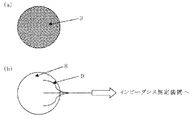
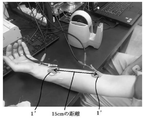
以下、本発明の生体電極について、図面を参照しながら詳細に説明するが、本発明はこれらに限定されるものではない。 Hereinafter, the bioelectrode of the present invention will be described in detail with reference to the drawings, but the present invention is not limited thereto.
図1は、本発明の生体電極の一例を示す概略断面図である。図1の生体電極1は、導電性基材2と該導電性基材2上に形成された生体接触層3とを有するものである。生体接触層3は本発明の生体電極組成物の硬化物からなる。生体接触層3を構成するイオン性シルセスキオキサン(SSQ)材料4は、前記スルホン酸塩シルセスキオキサンの硬化物を含む。生体接触層3は、さらに前記イオン性SSQ材料4以外の樹脂6、導電性粉末(金属粉5a、カーボン粉5b;以下、まとめて「導電性粉末」ともいう。)を含むことができる。以下図1,2を参照して、生体接触層3が、イオン性SSQ材料4と導電性粉末5a、5bが樹脂6中に分散された層である場合について説明するが、本発明の生体電極はこの態様に限定されない。なお、図中の5bはカーボンナノチューブである。
FIG. 1 is a schematic cross-sectional view showing an example of the bioelectrode of the present invention. The
このような図1の生体電極1を使用する場合には、図2に示されるように、生体接触層3(即ち、イオン性SSQ材料4と導電性粉末5a、5bが樹脂6中に分散された層)を生体7と接触させ、イオン性SSQ材料4と導電性粉末によって生体7から電気信号を取り出し、これを導電性基材2を介して、センサーデバイス等(不図示)まで伝導させる。このように、本発明の生体電極であれば、上述のイオン性SSQ材料によって導電性及び生体適合性を両立でき、粘着性も有しているために肌との接触面積が一定で、肌からの電気信号を安定的に高感度で得ることができる。
When such a
以下、本発明の生体電極の各構成材料について、更に詳しく説明する。 Hereinafter, each constituent material of the bioelectrode of the present invention will be described in more detail.
[導電性基材]
本発明の生体電極は、導電性基材を有するものである。この導電性基材は、通常、センサーデバイス等と電気的に接続されており、生体から生体接触層を介して取り出した電気信号をセンサーデバイス等まで伝導させる。
[Conductive substrate]
The bioelectrode of the present invention has a conductive base material. This conductive base material is usually electrically connected to a sensor device or the like, and conducts an electric signal taken out from a living body via a biological contact layer to the sensor device or the like.
導電性基材としては、導電性を有するものであれば特に限定されないが、例えば、金、銀、塩化銀、白金、アルミニウム、マグネシウム、スズ、タングステン、鉄、銅、ニッケル、ステンレス、クロム、チタン、炭素及び導電ポリマーから選ばれる1種以上を含むものとすることが好ましい。 The conductive substrate is not particularly limited as long as it has conductivity, but for example, gold, silver, silver chloride, platinum, aluminum, magnesium, tin, tungsten, iron, copper, nickel, stainless steel, chromium, and titanium. , It is preferable that it contains one or more selected from carbon and conductive polymers.
また、導電性基材は、特に限定されず、硬質な導電性基板等であってもよいし、フレキシブル性を有する導電性フィルムや導電性ペーストを表面にコーティングした布地や導電性ポリマーを練り込んだ布地であってもよい。導電性基材は平坦でも凹凸があっても金属線を織ったメッシュ状であってもよく、生体電極の用途等に応じて適宜選択すればよい。 The conductive substrate is not particularly limited, and may be a hard conductive substrate or the like, or a fabric or a conductive polymer whose surface is coated with a flexible conductive film or a conductive paste is kneaded. It may be a fabric. The conductive base material may be flat, uneven, or may be in the form of a mesh woven with a metal wire, and may be appropriately selected depending on the intended use of the bioelectrode.
[生体接触層]
本発明の生体電極は、導電性基材上に形成された生体接触層を有するものである。この生体接触層は、生体電極を使用する際に、実際に生体と接触する部分であり、導電性及び粘着性を有する。生体接触層は、上述の本発明の生体電極組成物の硬化物であり、即ち、上述の(A)成分と、必要に応じて(B)成分、(C)成分、(D)成分等を含有する組成物の硬化物からなる粘着性の樹脂層である。
[Biological contact layer]
The bioelectrode of the present invention has a biocontact layer formed on a conductive substrate. This biocontact layer is a portion that actually comes into contact with the living body when the bioelectrode is used, and has conductivity and adhesiveness. The biocontact layer is a cured product of the above-mentioned bioelectrode composition of the present invention, that is, the above-mentioned component (A) and, if necessary, component (B), component (C), component (D) and the like. It is an adhesive resin layer made of a cured product of the contained composition.
なお、生体接触層の粘着力としては、0.5N/25mm以上20N/25mm以下の範囲が好ましい。粘着力の測定方法は、JIS Z 0237に示される方法が一般的であり、基材としてはSUS(ステンレス鋼)のような金属基板やPET(ポリエチレンテレフタラート)基板を用いることができるが、人の肌を用いて測定することもできる。人の肌の表面エネルギーは、金属や各種プラスチックより低く、テフロン(登録商標)に近い低エネルギーであり、粘着しにくい性質である。 The adhesive strength of the biological contact layer is preferably in the range of 0.5 N / 25 mm or more and 20 N / 25 mm or less. As a method for measuring the adhesive strength, the method shown in JIS Z 0237 is generally used, and a metal substrate such as SUS (stainless steel) or a PET (polyethylene terephthalate) substrate can be used as the base material. It can also be measured using the skin of. The surface energy of human skin is lower than that of metals and various plastics, and it is a low energy close to that of Teflon (registered trademark), and it is difficult to adhere.
生体電極の生体接触層の厚さは、1μm以上5mm以下が好ましく、2μm以上3mm以下がより好ましい。生体接触層が薄くなるほど粘着力は低下するが、フレキシブル性は向上し、軽くなって肌へのなじみが良くなる。粘着性や肌への風合いとの兼ね合いで生体接触層の厚さを選択することができる。 The thickness of the biocontact layer of the bioelectrode is preferably 1 μm or more and 5 mm or less, and more preferably 2 μm or more and 3 mm or less. The thinner the biological contact layer, the lower the adhesive strength, but the more flexible it becomes, and the lighter it becomes, the better it fits on the skin. The thickness of the biological contact layer can be selected in consideration of the adhesiveness and the texture to the skin.
また、本発明の生体電極では、従来の生体電極(例えば、特開2004−033468号公報に記載の生体電極)と同様、使用時に生体から生体電極が剥がれるのを防止するために、生体接触層上に別途粘着膜を設けてもよい。別途粘着膜を設ける場合には、アクリル型、ウレタン型、シリコーン型等の粘着膜材料を用いて粘着膜を形成すればよく、特にシリコーン型は酸素透過性が高いためこれを貼り付けたままの皮膚呼吸が可能であり、撥水性も高いため汗による粘着性の低下が少なく、更に、肌への刺激性が低いことから好適である。なお、本発明の生体電極では、上記のように、生体電極組成物に粘着性付与剤を添加したり、生体への粘着性が良好な樹脂を用いたりすることで、生体からの剥がれを防止することができるため、上記の別途設ける粘着膜は必ずしも設ける必要はない。 Further, in the bioelectrode of the present invention, similarly to the conventional bioelectrode (for example, the bioelectrode described in Japanese Patent Application Laid-Open No. 2004-033468), in order to prevent the bioelectrode from peeling off from the living body during use, the biocontact layer A separate adhesive film may be provided on the top. When a separate adhesive film is provided, the adhesive film may be formed using an adhesive film material such as an acrylic type, a urethane type, or a silicone type. In particular, the silicone type has high oxygen permeability, so the adhesive film remains attached. It is suitable because it can breathe through the skin, has high water repellency, does not reduce the adhesiveness due to sweat, and has low irritation to the skin. In the bioelectrode of the present invention, as described above, by adding an adhesive-imparting agent to the bioelectrode composition or using a resin having good adhesiveness to the living body, peeling from the living body is prevented. Therefore, it is not always necessary to provide the adhesive film separately provided.
本発明の生体電極をウェアラブルデバイスとして使用する際の、生体電極とセンサーデバイスの配線や、その他の部材については、特に限定されるものではなく、例えば、特開2004−033468号公報に記載のものを適用することができる。 When the bioelectrode of the present invention is used as a wearable device, the wiring between the bioelectrode and the sensor device and other members are not particularly limited, and are described in, for example, Japanese Patent Application Laid-Open No. 2004-033468. Can be applied.
以上のように、本発明の生体電極であれば、上述の本発明の生体電極組成物の硬化物で生体接触層が形成されるため、肌からの電気信号を効率良くデバイスに伝えることができ(即ち、導電性に優れ)、長期間肌に装着してもアレルギーを起こす恐れがなく(即ち、生体適合性に優れ)、軽量であり、低コストで製造することができ、水に濡れても乾燥しても導電性が大幅に低下することがない生体電極となる。また、導線性粉を添加することによって一層導電性を向上させることができ、粘着性と伸縮性を有する樹脂と組み合わせることによって特に高粘着力で伸縮性が高い生体電極を製造することができる。更に、添加剤等により肌に対する伸縮性や粘着性を向上させることができ、樹脂の組成や生体接触層の厚さを適宜調節することで、伸縮性や粘着性を調整することもできる。従って、このような本発明の生体電極であれば、医療用ウェアラブルデバイスに用いられる生体電極として、特に好適である。 As described above, in the case of the bioelectrode of the present invention, since the biocontact layer is formed by the cured product of the bioelectrode composition of the present invention described above, the electrical signal from the skin can be efficiently transmitted to the device. (That is, it has excellent conductivity), it does not cause allergies even if it is worn on the skin for a long period of time (that is, it has excellent biocompatibility), it is lightweight, it can be manufactured at low cost, and it gets wet with water. It is a bioelectrode whose conductivity does not decrease significantly even when it dries. Further, the conductivity can be further improved by adding the conductive powder, and a bioelectrode having particularly high adhesive strength and high elasticity can be produced by combining with a resin having adhesiveness and elasticity. Further, the elasticity and adhesiveness to the skin can be improved by using additives and the like, and the elasticity and adhesiveness can be adjusted by appropriately adjusting the composition of the resin and the thickness of the biological contact layer. Therefore, such a bioelectrode of the present invention is particularly suitable as a bioelectrode used in a medical wearable device.
<生体電極の製造方法>
また、本発明では、導電性基材と該導電性基材上に形成された生体接触層とを有する生体電極の製造方法であって、前記導電性基材上に、上述の本発明の生体電極組成物を塗布し、硬化させることで前記生体接触層を形成する生体電極の製造方法を提供する。
<Manufacturing method of bioelectrode>
Further, the present invention is a method for manufacturing a bioelectrode having a conductive base material and a biological contact layer formed on the conductive base material, wherein the above-mentioned living body of the present invention is formed on the conductive base material. Provided is a method for producing a bioelectrode that forms the biocontact layer by applying and curing the electrode composition.
なお、本発明の生体電極の製造方法に使用される導電性基材等は、上述のものと同様でよい。 The conductive substrate and the like used in the method for producing a bioelectrode of the present invention may be the same as those described above.
導電性基材上に生体電極組成物を塗布する方法は、特に限定されないが、例えばディップコート、スプレーコート、スピンコート、ロールコート、フローコート、ドクターコート、スクリーン印刷、フレキソ印刷、グラビア印刷、インクジェット印刷等の方法が好適である。 The method of applying the bioelectrode composition on the conductive substrate is not particularly limited, and is, for example, dip coating, spray coating, spin coating, roll coating, flow coating, doctor coating, screen printing, flexographic printing, gravure printing, and inkjet. A method such as printing is preferable.
樹脂の硬化方法は、特に限定されず、生体電極組成物に使用する(A)、(B)成分によって適宜選択すればよいが、例えば、熱及び光のいずれか、又はこれらの両方で硬化させることが好ましい。また、上記の生体電極組成物に酸や塩基を発生させる触媒を添加しておいて、これによって架橋反応を発生させ、硬化させることもできる。 The method for curing the resin is not particularly limited and may be appropriately selected depending on the components (A) and (B) used in the bioelectrode composition. For example, the resin is cured by heat, light, or both. Is preferable. Further, it is also possible to add a catalyst for generating an acid or a base to the above-mentioned bioelectrode composition, thereby causing a cross-linking reaction and curing.
なお、加熱する場合の温度は、特に限定されず、生体電極組成物に使用する(A)、(B)成分によって適宜選択すればよいが、例えば50〜250℃程度が好ましい。 The temperature for heating is not particularly limited and may be appropriately selected depending on the components (A) and (B) used in the bioelectrode composition, but is preferably about 50 to 250 ° C. for example.
また、加熱と光照射を組み合わせる場合は、加熱と光照射を同時に行ってもよいし、光照射後に加熱を行ってもよいし、加熱後に光照射を行ってもよい。また、塗膜後の加熱の前に溶剤を蒸発させる目的で風乾を行ってもよい。 When heating and light irradiation are combined, heating and light irradiation may be performed at the same time, heating may be performed after light irradiation, or light irradiation may be performed after heating. Further, air drying may be performed for the purpose of evaporating the solvent before heating after the coating film.
以上のように、本発明の生体電極の製造方法であれば、導電性及び生体適合性に優れ、軽量であり、水に濡れても乾燥しても導電性が大幅に低下することがない本発明の生体電極を、低コストで容易に製造することができる。 As described above, the bioelectrode manufacturing method of the present invention has excellent conductivity and biocompatibility, is lightweight, and does not significantly reduce conductivity even when wet or dried. The bioelectrode of the invention can be easily manufactured at low cost.
以下、実施例及び比較例を用いて本発明を具体的に説明するが、本発明はこれらに限定されるものではない。なお、「Me」はメチル基、「Vi」はビニル基を示す。 Hereinafter, the present invention will be specifically described with reference to Examples and Comparative Examples, but the present invention is not limited thereto. In addition, "Me" indicates a methyl group and "Vi" indicates a vinyl group.
トルエンとPGMEAの1:1の混合溶剤中、二重結合を有するスルホン酸塩、必要であれば二重結合を有するエーテル化合物とSiH基を有するトリアルコキシシラン化合物と白金触媒とを混合し、60℃で2時間加熱することによって、スルホン酸塩に結合したスルホン酸塩トリアルコキシシラン化合物を合成した。溶剤を乾燥後、組成を、1H−NMRにより確認した。このアルコキシシラン化合物、必要に応じてアルコキシシラン類、珪素以外のアルコキシ金属を(共)縮合し、スルホン酸塩シルセスキオキサン(以下、「スルホン酸塩SSQともいう。)ポリマーを得た。このポリマーの重量平均分子量(Mw)及び分散度(Mw/Mn)は、溶剤としてテトラヒドロフラン(THF)を用いたゲルパーミエーションクロマトグラフィー(GPC)により確認した。このようにして合成したスルホン酸塩トリアルコキシシラン化合物1、スルホン酸塩SSQ1〜9を以下に示す。
In a 1: 1 mixed solvent of toluene and PGMEA, a sulfonate having a double bond, if necessary, an ether compound having a double bond, a trialkoxysilane compound having a SiH group, and a platinum catalyst are mixed, and 60 By heating at ° C. for 2 hours, a sulfonate trialkoxysilane compound bound to the sulfonate was synthesized. After the solvent was dried, the composition was confirmed by 1 H-NMR. This alkoxysilane compound, if necessary, alkoxysilanes, and an alkoxy metal other than silicon were (co) condensed to obtain a sulfonated silsesquioxane (hereinafter, also referred to as “sulfonate SSQ) polymer). The weight average molecular weight (Mw) and dispersibility (Mw / Mn) of the polymer were confirmed by gel permeation chromatography (GPC) using tetrahydrofuran (THF) as a solvent. The sulfonate trialkoxy thus synthesized. The
スルホン酸塩トリアルコキシシラン化合物1
メタノール200g、純水200g、35%塩酸1gを1Lのガラスフラスコに入れ、スルホン酸塩トリアルコキシシラン化合物1の0.5モル、テトラメトキシシラン0.5モルを室温で1時間かけて加え、8時間室温で攪拌した後、プロピレングリコールモノエチルエーテル(PGEE)300gを加え、減圧で濃縮してスルホン酸塩シルセスキオキサン1が30質量%含有のPGEE溶液を得た。
スルホン酸塩SSQ1
Mw=4,900
Mw/Mn=3.33
Sulfonate SSQ1
Mw = 4,900
Mw / Mn = 3.33
上記と同様の方法でスルホン酸塩に結合したトリアルコキシシラン、アルコキシシラン類を縮合し、下記スルホン酸塩SSQ2が30質量%含有のPGEE溶液を得た。
スルホン酸塩SSQ2
Mw=5,800
Mw/Mn=3.89
Sulfonate SSQ2
Mw = 5,800
Mw / Mn = 3.89
上記と同様の方法でスルホン酸塩に結合したトリアルコキシシラン、アルコキシシラン類を縮合し、下記スルホン酸塩SSQ3が30質量%含有のPGEE溶液を得た。
スルホン酸塩SSQ3
Mw=5,100
Mw/Mn=4.57
Sulfonate SSQ3
Mw = 5,100
Mw / Mn = 4.57
上記と同様の方法でスルホン酸塩に結合したトリアルコキシシラン、アルコキシシラン類を縮合し、下記スルホン酸塩SSQ4が30質量%含有のPGEE溶液を得た。
スルホン酸塩SSQ4
Mw=6,600
Mw/Mn=3.87
Sulfonate SSQ4
Mw = 6,600
Mw / Mn = 3.87
上記と同様の方法でスルホン酸塩に結合したトリアルコキシシラン、アルコキシシラン類を縮合し、下記スルホン酸塩SSQ5が30質量%含有のPGEE溶液を得た。
スルホン酸塩SSQ5
Mw=5,700
Mw/Mn=3.69
Sulfonate SSQ5
Mw = 5,700
Mw / Mn = 3.69
上記と同様の方法でスルホン酸塩に結合したトリアルコキシシラン、アルコキシシラン類を縮合し、下記スルホン酸塩SSQ6が30質量%含有のPGEE溶液を得た。
スルホン酸塩SSQ6
Mw=4,800
Mw/Mn=3.88
Sulfonate SSQ6
Mw = 4,800
Mw / Mn = 3.88
上記と同様の方法でスルホン酸塩に結合したトリアルコキシシラン、アルコキシシラン類を縮合し、下記スルホン酸塩SSQ7が30質量%含有のPGEE溶液を得た。
スルホン酸塩SSQ7
Mw=4,800
Mw/Mn=2.89
Sulfonate SSQ7
Mw = 4,800
Mw / Mn = 2.89
上記と同様の方法でスルホン酸塩に結合したトリアルコキシシラン、アルコキシシラン類、チタン−n−ブトキシドを縮合し、下記スルホン酸塩SSQ8が30質量%含有のPGEE溶液を得た。
スルホン酸塩SSQ8
Mw=7,700
Mw/Mn=4.77
Sulfonate SSQ8
Mw = 7,700
Mw / Mn = 4.77
上記と同様の方法でスルホン酸塩に結合したトリアルコキシシラン、アルコキシシラン類を縮合し、下記スルホン酸塩SSQ9が30質量%含有のPGEE溶液を得た。
スルホン酸塩SSQ9
Mw=7,800
Mw/Mn=3.33
Sulfonate SSQ9
Mw = 7,800
Mw / Mn = 3.33
比較例の生体電極組成物溶液にイオン性材料として配合した比較塩1〜4を以下に示す。
生体電極組成物溶液にシリコーン系の樹脂として配合したシロキサン化合物1〜4を以下に示す。 The siloxane compounds 1 to 4 blended as a silicone-based resin in the bioelectrode composition solution are shown below.
(シロキサン化合物1)
30%トルエン溶液での粘度が27,000mPa・sであり、アルケニル基含有量が0.007モル/100gであり、分子鎖末端がSiMe2Vi基で封鎖されたビニル基含有ポリジメチルシロキサンをシロキサン化合物1とした。
(Siloxane compound 1)
The viscosity of a 30% toluene solution is 27,000mPa · s, an alkenyl group content of 0.007 mol / 100 g, the molecular chain terminal siloxane vinyl group-containing polydimethylsiloxane blocked with SiMe 2 Vi group It was designated as
(シロキサン化合物2)
Me3SiO0.5単位及びSiO2単位からなるMQレジンのポリシロキサン(Me3SiO0.5単位/SiO2単位=0.8)の60%トルエン溶液をシロキサン化合物2とした。
(Siloxane compound 2)
A 60% toluene solution of an MQ resin polysiloxane (Me 3 SiO 0.5 unit / SiO 2 unit = 0.8) consisting of Me 3 SiO 0.5 unit and SiO 2 unit was used as
(シロキサン化合物3)
30%トルエン溶液での粘度が42,000mPa・sであり、アルケニル基含有量が0.007モル/100gであり、分子鎖末端がOHで封鎖されたビニル基含有ポリジメチルシロキサン40質量部、Me3SiO0.5単位及びSiO2単位からなるMQレジンのポリシロキサン(Me3SiO0.5単位/SiO2単位=0.8)の60%トルエン溶液100質量部、及びトルエン26.7質量部からなる溶液を還流させながら4時間加熱後、冷却して、MQレジンにポリジメチルシロキサンを結合させたものをシロキサン化合物3とした。
(Siloxane compound 3)
40 parts by mass of vinyl group-containing polydimethylsiloxane having a viscosity of 42,000 mPa · s in a 30% toluene solution, an alkenyl group content of 0.007 mol / 100 g, and a molecular chain end sealed with OH, Me. 60% solution 100 parts by weight of 3 SiO 0.5 units and polysiloxane MQ resin consisting of SiO 2 units (Me 3 SiO 0.5 units / SiO 2 unit = 0.8), and 26.7 parts by weight of toluene The siloxane compound 3 was obtained by binding polydimethylsiloxane to MQ resin after heating for 4 hours while refluxing the solution.
(シロキサン化合物4)
メチルハイドロジェンシリコーンオイルとして、信越化学工業製 KF−99を用いた。
(Siloxane compound 4)
KF-99 manufactured by Shin-Etsu Chemical Co., Ltd. was used as the methylhydrogen silicone oil.
また、シリコーン系の樹脂として、ポリエーテル型シリコーンオイルである側鎖ポリエーテル変性の信越化学工業製 KF−353を用いた。 Further, as the silicone-based resin, KF-353 manufactured by Shin-Etsu Chemical Co., Ltd., which is a side-chain polyether-modified, which is a polyether-type silicone oil, was used.
生体電極組成物溶液にアクリル系の樹脂として配合したアクリルポリマーを以下に示す。
アクリルポリマー1
Mw=108,000
Mw/Mn=2.32
Mw = 108,000
Mw / Mn = 2.32
生体電極組成物溶液にシリコーン系、アクリル系、あるいはウレタン系の樹脂として配合したシリコーンウレタンアクリレート1、2を以下に示す。
生体電極組成物溶液に配合した有機溶剤を以下に示す。
PGMEA:プロピレングリコール−1−モノメチルエーテル−2−アセテート
PGME:プロピレングリコール−1−モノメチルエーテル
PGEE:プロピレングリコール−1−モノエチルエーテル
アイソパーE:イソパラフィン系溶剤 スタンダード石油製
アイソパーG:イソパラフィン系溶剤 スタンダード石油製
The organic solvent blended in the bioelectrode composition solution is shown below.
PGMEA: Propylene glycol-1-monomethyl ether-2-acetate PGME: Propylene glycol-1-monomethyl ether PGEE: Propylene glycol-1-monoethyl ether Isopar E: Isoparaffin solvent Standard petroleum Isopar G: Isoparaffin solvent Standard petroleum Made
生体電極組成物溶液に添加剤として配合した金属粉、ラジカル発生剤、白金触媒、導電性向上剤(カーボンブラック、カーボンナノチューブ)を以下に示す。
金属粉 銀粉:Sigma−Aldrich社製 銀フレーク 直径10μm
金粉:Sigma−Aldrich社製 金粉 直径10μm以下
ラジカル発生剤:富士フイルム和光純薬社製 V−601
白金触媒:信越化学工業製 CAT−PL−50T
カーボンブラック:デンカ社製 デンカブラックHS−100
多層カーボンナノチューブ:Sigma−Aldrich社製 直径110〜170nm、長さ5〜9μm
The metal powder, radical generator, platinum catalyst, and conductivity improver (carbon black, carbon nanotube) blended as additives in the bioelectrode composition solution are shown below.
Metal powder Silver powder: Sigma-Aldrich silver flake diameter 10 μm
Gold powder: Sigma-Aldrich gold powder Diameter 10 μm or less Radical generator: Fujifilm Wako Pure Chemical Industries V-601
Platinum catalyst: CAT-PL-50T manufactured by Shin-Etsu Chemical Co., Ltd.
Carbon Black: Denka Black HS-100 manufactured by Denka
Multi-walled carbon nanotubes: manufactured by Sigma-Aldrich, diameter 110-170 nm, length 5-9 μm
[実施例1〜15、比較例1〜5]
表1及び表2に記載の組成で、イオン性材料(塩)、樹脂、有機溶剤、及び添加剤(ラジカル発生剤、白金触媒、導電性向上剤)をブレンドし、生体電極組成物溶液(生体電極溶液1〜15、比較生体電極溶液1〜5)を調製した。
[Examples 1 to 15, Comparative Examples 1 to 5]
The composition shown in Tables 1 and 2 is a blend of an ionic material (salt), a resin, an organic solvent, and an additive (radical generator, platinum catalyst, conductivity improver), and a bioelectrode composition solution (living body).
(導電性評価)
直径3cm、厚さ0.2mmのアルミニウム製の円板の上にアプリケーターを用いて生体電極組成物溶液(粘着剤溶液)を塗布し、室温で6時間風乾した後、オーブンを用いて窒素雰囲気下120℃で30分間ベークして硬化させて、1つの生体電極組成物溶液につき生体電極を4枚作製した。このようにして得られた生体電極は、図3(a)、(b)に示されるように、一方の面には生体接触層3を有し、他方の面には導電性基材としてアルミニウム製の円板8を有するものであった。次に、図3(b)に示されるように、生体接触層で覆われていない側のアルミニウム製の円板8の表面に銅配線9を粘着テープで貼り付けて引き出し電極とし、これをインピーダンス測定装置に接続した。図4に示されるように、人の腕の肌と生体接触層側が接触するように生体電極1’を2枚貼り付けて、その間隔を15cmとした。ソーラトロン社製の交流インピーダンス測定装置SI1260を用い、周波数を変えながら初期インピーダンスを測定した。次に、残りの2枚の生体電極を純水中に1時間浸漬し、水を乾燥させた後、上記と同様の方法で肌上のインピーダンスを測定した。周波数1,000Hzにおけるインピーダンスを表3に示す。
(Evaluation of conductivity)
A bioelectrode composition solution (adhesive solution) is applied on an aluminum disk having a diameter of 3 cm and a thickness of 0.2 mm using an applicator, air-dried at room temperature for 6 hours, and then air-dried in an oven under a nitrogen atmosphere. It was baked at 120 ° C. for 30 minutes and cured to prepare four bioelectrodes for one bioelectrode composition solution. As shown in FIGS. 3A and 3B, the bioelectrode thus obtained has a biocontact layer 3 on one surface and aluminum as a conductive substrate on the other surface. It had a disk 8 made of aluminum. Next, as shown in FIG. 3B, a
(粘着性評価)
生体電極組成物溶液を、アプリケーターを用いて厚さ100μmのPEN(ポリエチレンナフタレート)基板上に塗布し、室温で6時間風乾後、オーブンを用いて窒素雰囲気下120℃で30分間ベークして硬化させて、粘着フィルムを作製した。この粘着フィルムから25mm幅のテープを切り取り、これをステンレス板(SUS304)に圧着させ、室温で20時間放置した後、引っ張り試験機を用い角度180度、300mm/分の速度で粘着フィルムから作製したテープをステンレス板から引きはがすのに要する力(N/25mm)を測定した。結果を表3に示す。
(Adhesive evaluation)
The bioelectrode composition solution is applied onto a 100 μm-thick PEN (polyethylene naphthalate) substrate using an applicator, air-dried at room temperature for 6 hours, and then baked in an oven at 120 ° C. for 30 minutes to cure. Then, an adhesive film was produced. A 25 mm wide tape was cut from this adhesive film, crimped onto a stainless steel plate (SUS304), left at room temperature for 20 hours, and then manufactured from the adhesive film at an angle of 180 degrees and a speed of 300 mm / min using a tensile tester. The force (N / 25 mm) required to peel the tape from the stainless steel plate was measured. The results are shown in Table 3.
(生体接触層の厚さ測定)
上記の導電性評価試験で作製した生体電極において、生体接触層の厚さをマイクロメーターを用いて測定した。結果を表3に示す。
(Measurement of thickness of biological contact layer)
In the bioelectrode produced in the above conductivity evaluation test, the thickness of the biocontact layer was measured using a micrometer. The results are shown in Table 3.
表3に示されるように、スルホン酸塩SSQ化合物及び樹脂を配合した本発明の生体電極組成物を用いて生体接触層を形成した実施例1〜15では、初期インピーダンスが低く、水に浸漬し乾燥させた後も、大幅なインピーダンスの変化は起こらなかった。つまり、実施例1〜15では、初期の導電性が高く、水に濡れたり乾燥した場合にも導電性の大幅な低下が起こらない生体電極が得られた。また、このような実施例1〜15の生体電極は、従来の塩及び樹脂を配合した比較例1〜5の生体電極と同程度の良好な粘着力を有し、軽量であり、生体適合性に優れ、低コストで製造可能であった。 As shown in Table 3, in Examples 1 to 15 in which the biocontact layer was formed by using the bioelectrode composition of the present invention containing the sulfonate SSQ compound and the resin, the initial impedance was low and the mixture was immersed in water. After drying, there was no significant change in impedance. That is, in Examples 1 to 15, a bioelectrode was obtained which had high initial conductivity and did not cause a significant decrease in conductivity even when wet or dried with water. Further, such bioelectrodes of Examples 1 to 15 have good adhesive strength comparable to that of the bioelectrodes of Comparative Examples 1 to 5 in which a conventional salt and resin are blended, are lightweight, and are biocompatible. It was excellent and could be manufactured at low cost.
一方、従来の塩及び樹脂を配合した生体電極組成物を用いて生体接触層を形成した比較例1〜4では、初期インピーダンスは低いものの、水に浸漬し乾燥させた後は、桁が変わるほどの大幅なインピーダンスの増加が起こっていた。つまり、比較例1〜4では、初期の導電性は高いものの、水に濡れたり乾燥した場合には導電性が大幅に低下してしまう生体電極しか得られなかった。 On the other hand, in Comparative Examples 1 to 4 in which the biocontact layer was formed by using the conventional bioelectrode composition containing a salt and a resin, although the initial impedance was low, the digit changed after being immersed in water and dried. There was a significant increase in impedance. That is, in Comparative Examples 1 to 4, only bioelectrodes having high initial conductivity but whose conductivity was significantly reduced when wet or dried were obtained.
また、塩を配合せず樹脂を配合した生体電極組成物を用いて生体接触層を形成した比較例5では、塩を含まないため、水に浸漬し乾燥させた後も、桁が変わるほどの大幅なインピーダンスの増加は起こらなかったが、初期インピーダンスが高かった。つまり、比較例5では、初期の導電性の低い生体電極しか得られなかった。 Further, in Comparative Example 5 in which the biocontact layer was formed by using the bioelectrode composition containing the resin without the salt, since the biocontact layer did not contain the salt, the girder changed even after being immersed in water and dried. There was no significant increase in impedance, but the initial impedance was high. That is, in Comparative Example 5, only the initial bioelectrode having low conductivity was obtained.
以上のことから、本発明の生体電極組成物を用いて生体接触層を形成した生体電極であれば、導電性、生体適合性、導電性基材に対する接着性に優れ、イオン性材料の保持力に優れるため水に濡れても乾燥しても導電性が大幅に低下することがなく、軽量であり、また低コストで製造できることが明らかとなった。 From the above, a bioelectrode in which a biocontact layer is formed using the bioelectrode composition of the present invention has excellent conductivity, biocompatibility, and adhesiveness to a conductive substrate, and has a holding power of an ionic material. It has been clarified that the conductivity is not significantly reduced even if it gets wet or dried due to its excellent properties, it is lightweight, and it can be manufactured at low cost.
なお、本発明は、上記実施形態に限定されるものではない。上記実施形態は例示であり、本発明の特許請求の範囲に記載された技術的思想と実質的に同一な構成を有し、同様な作用効果を奏するものは、いかなるものであっても本発明の技術的範囲に包含される。 The present invention is not limited to the above embodiment. The above-described embodiment is an example, and any of the above-described embodiments having substantially the same configuration as the technical idea described in the claims of the present invention and having the same effect and effect is the present invention. Is included in the technical scope of.
1、1’…生体電極、 2…導電性基材、 3…生体接触層、
4…イオン性SSQ材料、 5a…金属粉、 5b…カーボン粉、 6…樹脂、
7…生体、 8…アルミニウム製の円板、 9…銅配線。
1, 1'... bioelectrode, 2 ... conductive substrate, 3 ... biocontact layer,
4 ... Ionic SSQ material, 5a ... Metal powder, 5b ... Carbon powder, 6 ... Resin,
7 ... living body, 8 ... aluminum disk, 9 ... copper wiring.
Claims (16)
前記導電性基材上に、請求項1から請求項11のいずれか1項に記載の生体電極組成物を塗布し、硬化させることで前記生体接触層を形成することを特徴とする生体電極の製造方法。 A method for manufacturing a bioelectrode having a conductive base material and a biocontact layer formed on the conductive base material.
A bioelectrode characterized by forming the biocontact layer by applying the bioelectrode composition according to any one of claims 1 to 11 onto the conductive substrate and curing the bioelectrode composition. Production method.
Priority Applications (2)
| Application Number | Priority Date | Filing Date | Title |
|---|---|---|---|
| JP2018158704A JP6966397B2 (en) | 2018-08-27 | 2018-08-27 | Bioelectrode composition, bioelectrode, and method for manufacturing bioelectrode |
| US16/532,606 US11839476B2 (en) | 2018-08-27 | 2019-08-06 | Bio-electrode composition, bio-electrode, and method for manufacturing a bio-electrode |
Applications Claiming Priority (1)
| Application Number | Priority Date | Filing Date | Title |
|---|---|---|---|
| JP2018158704A JP6966397B2 (en) | 2018-08-27 | 2018-08-27 | Bioelectrode composition, bioelectrode, and method for manufacturing bioelectrode |
Publications (2)
| Publication Number | Publication Date |
|---|---|
| JP2020031722A JP2020031722A (en) | 2020-03-05 |
| JP6966397B2 true JP6966397B2 (en) | 2021-11-17 |
Family
ID=69583385
Family Applications (1)
| Application Number | Title | Priority Date | Filing Date |
|---|---|---|---|
| JP2018158704A Active JP6966397B2 (en) | 2018-08-27 | 2018-08-27 | Bioelectrode composition, bioelectrode, and method for manufacturing bioelectrode |
Country Status (2)
| Country | Link |
|---|---|
| US (1) | US11839476B2 (en) |
| JP (1) | JP6966397B2 (en) |
Families Citing this family (4)
| Publication number | Priority date | Publication date | Assignee | Title |
|---|---|---|---|---|
| JP7627671B2 (en) | 2021-04-16 | 2025-02-06 | 信越化学工業株式会社 | Bioelectrode composition, bioelectrode, and method for producing bioelectrode |
| CN118019495A (en) * | 2021-09-29 | 2024-05-10 | 日东电工株式会社 | Electrode pads and biosensors |
| CN114574099A (en) * | 2021-12-28 | 2022-06-03 | 杭州圭臬新材料科技有限公司 | Addition type liquid silicon rubber composite film using octadiene modified MQ resin as reinforcing material and manufacturing method thereof |
| WO2024204664A1 (en) * | 2023-03-29 | 2024-10-03 | 日東電工株式会社 | Adhesive electrode for biological signal acquisition, electrode strip, biological sensor, and method for manufacturing adhesive electrode for biological signal acquisition |
Family Cites Families (24)
| Publication number | Priority date | Publication date | Assignee | Title |
|---|---|---|---|---|
| FR2669033B1 (en) * | 1990-11-14 | 1993-01-29 | Inst Francais Du Petrole | POLYARYLSILSESQUIOXANES COMPRISING AT LEAST ONE SULPHONIC GROUP, GRAFTS ON AN INORGANIC SUPPORT, THEIR PREPARATIONS AND THEIR APPLICATIONS. |
| JPH07106197B2 (en) | 1991-10-09 | 1995-11-15 | 日本メクトロン株式会社 | Conductive millable urethane rubber electrode |
| US6096453A (en) * | 1998-06-19 | 2000-08-01 | Adven Polymers, Inc. | Polymeric thin-film reversible electrochemical charge storage devices |
| US5981680A (en) | 1998-07-13 | 1999-11-09 | Dow Corning Corporation | Method of making siloxane-based polyamides |
| WO2002063073A1 (en) | 2000-12-23 | 2002-08-15 | Wen Lu | Long-lived conjugated polymer electrochemical devices incorporating ionic liquids |
| JP3865046B2 (en) | 2001-05-08 | 2007-01-10 | 信越化学工業株式会社 | Solvent-free polyimide silicone resin composition |
| JP2003225217A (en) | 2002-02-01 | 2003-08-12 | Shin Etsu Chem Co Ltd | Silicone rubber composition for bioelectrode and bioelectrode |
| JP3923861B2 (en) | 2002-07-03 | 2007-06-06 | フクダ電子株式会社 | Biological electrode |
| JP2005320418A (en) | 2004-05-07 | 2005-11-17 | Shin Etsu Chem Co Ltd | UV curable organopolysiloxane composition |
| JP4858714B2 (en) | 2006-10-04 | 2012-01-18 | 信越化学工業株式会社 | Polymer compound, resist material, and pattern forming method |
| KR101116963B1 (en) | 2006-10-04 | 2012-03-14 | 신에쓰 가가꾸 고교 가부시끼가이샤 | Polymer, Resist Composition, and Patterning Process |
| JP5019071B2 (en) | 2007-09-05 | 2012-09-05 | 信越化学工業株式会社 | Novel photoacid generator, resist material and pattern forming method using the same |
| JP5038354B2 (en) | 2009-05-11 | 2012-10-03 | 信越化学工業株式会社 | Silicon-containing antireflection film-forming composition, silicon-containing antireflection film-forming substrate, and pattern formation method |
| US8268399B2 (en) * | 2009-08-19 | 2012-09-18 | Xerox Corporation | Polyhedral oligomeric silsesquioxane image conditioning coating |
| JP5646153B2 (en) | 2009-10-06 | 2014-12-24 | 東レ・ダウコーニング株式会社 | Method for producing polyamide silicone copolymer |
| WO2013039151A1 (en) | 2011-09-15 | 2013-03-21 | 積水化成品工業株式会社 | Biomedical electrode coating pad |
| JP6296530B2 (en) | 2013-07-18 | 2018-03-20 | 国立研究開発法人科学技術振興機構 | Biocompatible electrode structure and manufacturing method thereof, and device and manufacturing method thereof |
| JP6073776B2 (en) | 2013-11-28 | 2017-02-01 | 日本電信電話株式会社 | Bioelectric signal monitor clothing |
| JP6348434B2 (en) | 2014-03-28 | 2018-06-27 | 信越化学工業株式会社 | Silicone pressure-sensitive adhesive composition, production method thereof, and pressure-sensitive adhesive film |
| JP6358874B2 (en) | 2014-06-27 | 2018-07-18 | ニチバン株式会社 | Acrylic adhesive composition and adhesive tape or sheet |
| ES2818096T3 (en) | 2014-09-19 | 2021-04-09 | Cosmed Pharmaceutical Co Ltd | Urethane-based pressure sensitive adhesive |
| JP6698148B2 (en) * | 2016-03-15 | 2020-05-27 | ソガン ユニバーシティ リサーチ ファウンデーションSogang University Research Foundation | Fluorine-based nanocomposite membrane containing polyhedral oligomeric silsesquioxane having a proton donor and a proton acceptor, and method for producing the same |
| JP6940357B2 (en) * | 2016-11-02 | 2021-09-29 | 信越化学工業株式会社 | Elastic film and its forming method, and elastic wiring film and its manufacturing method |
| JP6792538B2 (en) * | 2016-12-21 | 2020-11-25 | 信越化学工業株式会社 | Bioelectrode composition, bioelectrode, and method for producing bioelectrode |
-
2018
- 2018-08-27 JP JP2018158704A patent/JP6966397B2/en active Active
-
2019
- 2019-08-06 US US16/532,606 patent/US11839476B2/en active Active
Also Published As
| Publication number | Publication date |
|---|---|
| JP2020031722A (en) | 2020-03-05 |
| US11839476B2 (en) | 2023-12-12 |
| US20200060565A1 (en) | 2020-02-27 |
Similar Documents
| Publication | Publication Date | Title |
|---|---|---|
| JP6761386B2 (en) | Adhesive composition, bioelectrode, method for producing bioelectrode, and salt | |
| JP6966389B2 (en) | Bioelectrode composition, bioelectrode, and method for manufacturing bioelectrode | |
| JP6892376B2 (en) | Bioelectrode composition, bioelectrode, method for producing bioelectrode, and polymer compound | |
| JP6761384B2 (en) | Adhesive composition, bioelectrode, and method for manufacturing bioelectrode | |
| JP6836520B2 (en) | Bioelectrode composition, bioelectrode, and method for producing bioelectrode | |
| JP7099990B2 (en) | Bioelectrode composition, bioelectrode, and method for manufacturing bioelectrode | |
| JP6966310B2 (en) | Bioelectrode composition, bioelectrode, method for producing bioelectrode, and polymer compound | |
| JP6839125B2 (en) | Bioelectrode composition, bioelectrode, and method for producing bioelectrode | |
| KR102208934B1 (en) | Bio-electrode composition, bio-electrode, and method for manufacturing a bio-electrode | |
| JP7045768B2 (en) | Bioelectrode composition, bioelectrode, and method for manufacturing bioelectrode | |
| JP7111653B2 (en) | Bioelectrode composition, bioelectrode, and method for producing bioelectrode | |
| JP6966397B2 (en) | Bioelectrode composition, bioelectrode, and method for manufacturing bioelectrode | |
| JP6966396B2 (en) | Bioelectrode composition, bioelectrode, and method for manufacturing bioelectrode | |
| JP7627671B2 (en) | Bioelectrode composition, bioelectrode, and method for producing bioelectrode | |
| JP6993994B2 (en) | Bioelectrode composition, bioelectrode, and method for manufacturing bioelectrode | |
| JP7082082B2 (en) | Bioelectrode composition, bioelectrode, and method for manufacturing bioelectrode | |
| JP7411516B2 (en) | Bioelectrode composition, bioelectrode, and method for producing bioelectrode | |
| KR102653710B1 (en) | Bio-electrode composition, bio-electrode, method for manufacturing bio-electrode, and silicon material particle | |
| JP2022053498A (en) | Biological electrode composition, biological electrode, manufacturing method of biological electrode and silicon material particle |
Legal Events
| Date | Code | Title | Description |
|---|---|---|---|
| A521 | Request for written amendment filed |
Free format text: JAPANESE INTERMEDIATE CODE: A523 Effective date: 20190726 |
|
| A621 | Written request for application examination |
Free format text: JAPANESE INTERMEDIATE CODE: A621 Effective date: 20200721 |
|
| A131 | Notification of reasons for refusal |
Free format text: JAPANESE INTERMEDIATE CODE: A131 Effective date: 20210706 |
|
| A521 | Request for written amendment filed |
Free format text: JAPANESE INTERMEDIATE CODE: A523 Effective date: 20210817 |
|
| TRDD | Decision of grant or rejection written | ||
| A01 | Written decision to grant a patent or to grant a registration (utility model) |
Free format text: JAPANESE INTERMEDIATE CODE: A01 Effective date: 20211005 |
|
| A61 | First payment of annual fees (during grant procedure) |
Free format text: JAPANESE INTERMEDIATE CODE: A61 Effective date: 20211021 |
|
| R150 | Certificate of patent or registration of utility model |
Ref document number: 6966397 Country of ref document: JP Free format text: JAPANESE INTERMEDIATE CODE: R150 |