JP6877458B2 - Approved control system for satellite-based Internet access and transport - Google Patents
Approved control system for satellite-based Internet access and transport Download PDFInfo
- Publication number
- JP6877458B2 JP6877458B2 JP2018550364A JP2018550364A JP6877458B2 JP 6877458 B2 JP6877458 B2 JP 6877458B2 JP 2018550364 A JP2018550364 A JP 2018550364A JP 2018550364 A JP2018550364 A JP 2018550364A JP 6877458 B2 JP6877458 B2 JP 6877458B2
- Authority
- JP
- Japan
- Prior art keywords
- service
- demand
- satellite
- user terminal
- capacity
- Prior art date
- Legal status (The legal status is an assumption and is not a legal conclusion. Google has not performed a legal analysis and makes no representation as to the accuracy of the status listed.)
- Expired - Fee Related
Links
- 238000000034 method Methods 0.000 claims description 26
- 238000013475 authorization Methods 0.000 claims description 14
- 230000008569 process Effects 0.000 claims description 9
- 230000003068 static effect Effects 0.000 claims description 9
- 238000010586 diagram Methods 0.000 description 18
- 230000006870 function Effects 0.000 description 14
- 238000007726 management method Methods 0.000 description 11
- 230000000694 effects Effects 0.000 description 8
- 238000003860 storage Methods 0.000 description 6
- 238000004364 calculation method Methods 0.000 description 5
- 238000012546 transfer Methods 0.000 description 5
- 241000251730 Chondrichthyes Species 0.000 description 4
- 230000004913 activation Effects 0.000 description 4
- 238000013459 approach Methods 0.000 description 4
- 230000008859 change Effects 0.000 description 4
- 230000002829 reductive effect Effects 0.000 description 4
- 238000004513 sizing Methods 0.000 description 4
- 230000001413 cellular effect Effects 0.000 description 3
- 238000009826 distribution Methods 0.000 description 3
- 238000012545 processing Methods 0.000 description 3
- 230000011664 signaling Effects 0.000 description 3
- 230000006399 behavior Effects 0.000 description 2
- 238000004891 communication Methods 0.000 description 2
- 238000007405 data analysis Methods 0.000 description 2
- 238000005516 engineering process Methods 0.000 description 2
- 230000010354 integration Effects 0.000 description 2
- 230000003287 optical effect Effects 0.000 description 2
- 230000002441 reversible effect Effects 0.000 description 2
- 235000016936 Dendrocalamus strictus Nutrition 0.000 description 1
- 230000003190 augmentative effect Effects 0.000 description 1
- 238000005452 bending Methods 0.000 description 1
- 230000010267 cellular communication Effects 0.000 description 1
- 230000008878 coupling Effects 0.000 description 1
- 238000010168 coupling process Methods 0.000 description 1
- 238000005859 coupling reaction Methods 0.000 description 1
- 238000013499 data model Methods 0.000 description 1
- 230000003292 diminished effect Effects 0.000 description 1
- 238000011156 evaluation Methods 0.000 description 1
- 239000000835 fiber Substances 0.000 description 1
- 230000003993 interaction Effects 0.000 description 1
- 230000002452 interceptive effect Effects 0.000 description 1
- 230000000670 limiting effect Effects 0.000 description 1
- 230000007774 longterm Effects 0.000 description 1
- 239000000203 mixture Substances 0.000 description 1
- 238000012544 monitoring process Methods 0.000 description 1
- 230000036961 partial effect Effects 0.000 description 1
- 230000000644 propagated effect Effects 0.000 description 1
- 230000004044 response Effects 0.000 description 1
- 230000000717 retained effect Effects 0.000 description 1
- 238000013341 scale-up Methods 0.000 description 1
- 238000000926 separation method Methods 0.000 description 1
- 238000009987 spinning Methods 0.000 description 1
- 230000007704 transition Effects 0.000 description 1
Images





Classifications
-
- H—ELECTRICITY
- H04—ELECTRIC COMMUNICATION TECHNIQUE
- H04B—TRANSMISSION
- H04B7/00—Radio transmission systems, i.e. using radiation field
- H04B7/14—Relay systems
- H04B7/15—Active relay systems
- H04B7/185—Space-based or airborne stations; Stations for satellite systems
- H04B7/1851—Systems using a satellite or space-based relay
- H04B7/18519—Operations control, administration or maintenance
-
- H—ELECTRICITY
- H04—ELECTRIC COMMUNICATION TECHNIQUE
- H04W—WIRELESS COMMUNICATION NETWORKS
- H04W12/00—Security arrangements; Authentication; Protecting privacy or anonymity
- H04W12/08—Access security
-
- H—ELECTRICITY
- H04—ELECTRIC COMMUNICATION TECHNIQUE
- H04B—TRANSMISSION
- H04B7/00—Radio transmission systems, i.e. using radiation field
- H04B7/14—Relay systems
- H04B7/15—Active relay systems
- H04B7/185—Space-based or airborne stations; Stations for satellite systems
- H04B7/1853—Satellite systems for providing telephony service to a mobile station, i.e. mobile satellite service
- H04B7/18539—Arrangements for managing radio, resources, i.e. for establishing or releasing a connection
-
- H—ELECTRICITY
- H04—ELECTRIC COMMUNICATION TECHNIQUE
- H04L—TRANSMISSION OF DIGITAL INFORMATION, e.g. TELEGRAPHIC COMMUNICATION
- H04L63/00—Network architectures or network communication protocols for network security
- H04L63/10—Network architectures or network communication protocols for network security for controlling access to devices or network resources
- H04L63/107—Network architectures or network communication protocols for network security for controlling access to devices or network resources wherein the security policies are location-dependent, e.g. entities privileges depend on current location or allowing specific operations only from locally connected terminals
-
- H—ELECTRICITY
- H04—ELECTRIC COMMUNICATION TECHNIQUE
- H04W—WIRELESS COMMUNICATION NETWORKS
- H04W84/00—Network topologies
- H04W84/02—Hierarchically pre-organised networks, e.g. paging networks, cellular networks, WLAN [Wireless Local Area Network] or WLL [Wireless Local Loop]
- H04W84/04—Large scale networks; Deep hierarchical networks
- H04W84/06—Airborne or Satellite Networks
-
- H—ELECTRICITY
- H04—ELECTRIC COMMUNICATION TECHNIQUE
- H04B—TRANSMISSION
- H04B7/00—Radio transmission systems, i.e. using radiation field
- H04B7/14—Relay systems
- H04B7/15—Active relay systems
- H04B7/185—Space-based or airborne stations; Stations for satellite systems
- H04B7/1851—Systems using a satellite or space-based relay
-
- H—ELECTRICITY
- H04—ELECTRIC COMMUNICATION TECHNIQUE
- H04B—TRANSMISSION
- H04B7/00—Radio transmission systems, i.e. using radiation field
- H04B7/14—Relay systems
- H04B7/15—Active relay systems
- H04B7/185—Space-based or airborne stations; Stations for satellite systems
- H04B7/18578—Satellite systems for providing broadband data service to individual earth stations
- H04B7/18582—Arrangements for data linking, i.e. for data framing, for error recovery, for multiple access
-
- H—ELECTRICITY
- H04—ELECTRIC COMMUNICATION TECHNIQUE
- H04W—WIRELESS COMMUNICATION NETWORKS
- H04W40/00—Communication routing or communication path finding
- H04W40/02—Communication route or path selection, e.g. power-based or shortest path routing
- H04W40/12—Communication route or path selection, e.g. power-based or shortest path routing based on transmission quality or channel quality
Landscapes
- Engineering & Computer Science (AREA)
- Computer Networks & Wireless Communication (AREA)
- Signal Processing (AREA)
- Computer Security & Cryptography (AREA)
- Astronomy & Astrophysics (AREA)
- Physics & Mathematics (AREA)
- General Physics & Mathematics (AREA)
- Aviation & Aerospace Engineering (AREA)
- Computer Hardware Design (AREA)
- Computing Systems (AREA)
- General Engineering & Computer Science (AREA)
- Mobile Radio Communication Systems (AREA)
- Radio Relay Systems (AREA)
- Data Exchanges In Wide-Area Networks (AREA)
Description
本出願は、2016年3月24日に出願された米国仮特許出願第62/312,969号の利益を主張するものであり、その内容全体は、本明細書に詳細に記載されているかのように参照により組み込まれる。 This application claims the interests of U.S. Provisional Patent Application No. 62 / 312,969 filed on March 24, 2016, the entire contents of which are as if described in detail herein. Incorporated by reference.
本開示は、一般に電気通信に関する。より詳細には、本開示は、衛星ベースのインターネットアクセスおよびトランスポートのための承認制御に関する。 The present disclosure generally relates to telecommunications. More specifically, the present disclosure relates to authorization controls for satellite-based Internet access and transport.
インターネットの普及が増加し、今日の生活に日々影響を与え続けるにつれて、インターネットへのアクセスがますます重要なものになっている。容易に認識されるように、地上であろうと空中であろうと、特定の位置はしばしば、即座のアクセスを難しくしている。これらの困難なアクセス位置の1つのアプローチは、衛星ベースのインターネットアクセスを含み、その魅力は、インターネットの普及とともに増加している。したがって、そのような衛星ベースのインターネットアクセス設備の配備およびその後の管理を容易にするシステム、方法、および技法は、当技術分野への望ましい追加である。 Access to the Internet is becoming more and more important as the Internet becomes more prevalent and continues to affect our lives today. As is easily recognized, certain locations, whether on the ground or in the air, often make immediate access difficult. One approach to these difficult access locations involves satellite-based Internet access, and its appeal is increasing with the spread of the Internet. Therefore, systems, methods, and techniques that facilitate the deployment and subsequent management of such satellite-based Internet access facilities are a desirable addition to the art.
有利には、任意の現場において、任意の規模で、衛星ネットワークポータル(SNP)/アンカー共通ポイント(ACP)カバレージまたはビームモビリティとは無関係に、全部の需要および供給を含む衛星ベースのアクセス設備のより広い視野を提供する、衛星ベースのインターネットアクセスおよびトランスポートのための承認制御システムを対象とする本開示の態様によれば、当該分野において進歩がもたらされる。したがって、本開示の態様による方法およびシステムは、有利には、予測可能かつ地理空間的に計算可能な供給モデルに対してIPサービス(需要)を寸法決定し、配備し、したがって、(すなわちARは)いずれもその任意のCA(供給)エリアにおいて所望のしきい値を超えてオーバーサブスクライブされない。 Advantageously, more than satellite-based access equipment, including full supply and demand, at any site, at any scale, regardless of satellite network portal (SNP) / anchor common point (ACP) coverage or beam mobility. Aspects of the present disclosure for approved control systems for satellite-based Internet access and transport that provide a broader field of view bring advances in the field. Therefore, the methods and systems according to aspects of the present disclosure advantageously dimension and deploy IP services (demand) for a predictable and geospatial computable supply model, and thus (ie, AR ) Neither is oversubscribed above the desired threshold in any CA (supply) area.
より具体的には、本開示は、地球低軌道(LEO)衛星コンステレーションを介して地上グラウンドネットワーク(GN)に接続された複数のユーザ端末(UT)を含む、衛星ベースのインターネットアクセスおよびトランスポートネットワークのための承認制御システムについて記載し、GNは、コアネットワーク(CN)にさらに接続され、CNは、インターネットに接続され、承認制御システムは、UT、GN、LEO、およびCNに関するステータス情報を提供するように構成されたグローバル連合データベース(globally federated database)と、サービス加入者がサービスの存続期間の間に衛星ベースのネットワークにアクセスすることを常に承認するように構成された静的承認制御コンポーネントと、サービス加入者がセッションベースのサービス品質(QoS)承認のために衛星ベースのネットワーク処理システムにアクセスすることを選択的に承認するように構成された動的承認制御コンポーネントとを含み、承認制御システムは、UTによって要求される任意のサービスレベル(SL)に違反しないように、独立したスケジュールを各々が有するビームの移動するセット(moving set of beams)を含むインターネットおよびトランスポートネットワークへのアクセスを提供するように構成されている。 More specifically, the present disclosure includes satellite-based Internet access and transport, including multiple user terminals (UTs) connected to a terrestrial ground network (GN) via an Earth Low Orbit (LEO) satellite constellation. Describes the authorization control system for the network, the GN is further connected to the core network (CN), the CN is connected to the internet, and the authorization control system provides status information about UT, GN, LEO, and CN. With a globally federated database configured to allow service subscribers to always authorize access to satellite-based networks for the life of the service, and a static authorization control component configured to do so. An authorization control system, including a dynamic authorization control component configured to selectively authorize service subscribers to access satellite-based network processing systems for session-based quality of service (QoS) authorization. Provides access to the Internet and transport networks, including a moving set of beams, each with an independent schedule, so as not to violate any service level (SL) required by the UT. It is configured to do.
本概要は、本明細書において以下にさらに記載される本開示のいくつかの態様を簡単に識別するために提供される。本概要は、本開示の鍵となるまたは本質的な特徴を識別するものではなく、いかなる請求項の範囲をも限定しないものとする。 This summary is provided to briefly identify some aspects of the disclosure further described herein below. This summary does not identify the key or essential features of this disclosure and does not limit the scope of any claim.
「態様」という用語は、「少なくとも1つの態様」と解釈されるものとする。上述した態様および本開示の他の態様は、例として示されており、添付の図面に限定されるものではない。 The term "aspect" shall be construed as "at least one aspect". The above aspects and other aspects of the present disclosure are shown by way of example and are not limited to the accompanying drawings.
本開示のより完全な理解は、添付の図面を参照することによって実現され得る。 A more complete understanding of the present disclosure may be achieved by reference to the accompanying drawings.
以下は単に本開示の原理を示すものである。したがって、当業者は、本明細書に明示的に記載または図示されていないが、本開示の原理を具体化し、その意図および範囲内に含まれる様々な構成を考案することができることを諒解されよう。より具体的には、数多くの具体的な詳細が記載されているが、本開示の実施形態は、これらの具体的な詳細なしに実施されてもよく、他の例では、よく知られている回路、構造、および技法は、本開示の理解を不明瞭にしないために示されていないことを理解されよう。 The following merely shows the principles of the present disclosure. It will be appreciated by those skilled in the art that, although not expressly described or illustrated herein, the principles of the present disclosure can be embodied and various configurations within their intent and scope can be devised. .. More specifically, many specific details are described, but embodiments of the present disclosure may be implemented without these specific details and are well known in other examples. It will be appreciated that the circuits, structures, and techniques are not shown in order not to obscure the understanding of this disclosure.
さらに、本明細書に詳述されるすべての例および条件付き言語は、主に、明確に、読者が本開示の原理および本技術を促進するために発明者によって貢献される概念の理解を援助するための教育のためのものにすぎず、そのような特に詳述された例および条件に限定されないものと解釈されるものとする。 In addition, all examples and conditional languages detailed herein primarily help the reader, in a clear sense, to understand the principles of the present disclosure and the concepts contributed by the inventor to facilitate the art. It shall be construed as merely for education to do so and not limited to such particularly detailed examples and conditions.
さらに、本開示の原理、態様、および実施形態、ならびにその具体的な例を詳述する本明細書におけるすべての記述は、その構造的均等物と機能的均等物の両方を包含するものとする。さらに、そのような均等物は、現在知られている均等物と将来開発される均等物の両方、すなわち、構造にかかわらず、同じ機能を果たす任意の開発された要素を含むものとする。 In addition, all statements herein detailing the principles, embodiments, and embodiments thereof of the present disclosure shall include both structural and functional equivalents thereof. .. Further, such equivalents shall include both currently known equivalents and future developed equivalents, i.e. any developed element that performs the same function regardless of structure.
したがって、たとえば、本明細書の図が本開示の原理を具体化する例示的な構造の概念図を表すことは、当業者には諒解されよう。 Thus, for example, it will be appreciated by those skilled in the art that the figures herein represent a conceptual diagram of an exemplary structure that embodies the principles of the present disclosure.
さらに、任意のフローチャート、フロー図、状態遷移図、疑似コードなどは、コンピュータ可読媒体において実質的に表され得、コンピュータまたはプロセッサが明確に示されるかどうかにかかわらず、そのようなコンピュータまたはプロセッサによってそのように実行され得る、様々なプロセスを表すことは、当業者には諒解されよう。 In addition, any flowchart, flow diagram, state transition diagram, pseudo-code, etc. may be substantially represented in a computer-readable medium, and by such computer or processor, whether or not the computer or processor is explicitly indicated. It will be appreciated by those skilled in the art to represent the various processes that can be carried out in that way.
本明細書の特許請求の範囲において、指定された機能を実行するための手段として表される任意の要素は、たとえば、a)その機能を実行する回路要素の組合せ、またはb)したがって、機能を実行するためにそのソフトウェアを実行するための適切な回路と結合された、ファームウェア、マイクロコードなどを含む任意の形態のソフトウェアを含む、その機能を実行する任意の方法を包含するものとする。そのような請求項によって定義される本発明は、様々な列挙された手段によって提供される機能が、請求項が要求する方法で組み合わされ、まとめられているという事実にある。したがって、出願人は、それらの機能を提供することができる任意の手段を、本明細書に示されるものと均等とみなす。最後に、本明細書に特に明記しない限り、図面は一定の縮尺で描かれていない。 In the claims of the present specification, any element represented as a means for performing a specified function may be, for example, a) a combination of circuit elements performing the function, or b) therefore a function. It shall include any method of performing its function, including any form of software, including firmware, microcode, etc., coupled with the appropriate circuitry to execute the software to perform. The present invention as defined by such claims lies in the fact that the functions provided by various enumerated means are combined and combined in the manner required by the claims. Therefore, the applicant considers any means capable of providing those functions to be equivalent to those set forth herein. Finally, drawings are not drawn to a constant scale unless otherwise specified herein.
何らかの追加の背景として、OneWebが、より広いインターネットへのアクセスをインターネットプロトコル(IP)デバイスに提供するインターネットアクセスおよびトランスポートネットワークに与えた名前であることに言及することから始める。この意味で、OneWebは、光ファイバ、ケーブル、セルラー通信を含む他の既知のインターネットアクセス通信技術と同様なものと見なされ得る。しかしながら、当業者には容易に明らかになるように、そのアクセスネットワークトポロジは特にユニークである。 As some additional background, we start by mentioning that OneWeb is the name given to Internet Access and Transport Networks, which provides Internet Protocol (IP) devices with access to the wider Internet. In this sense, OneWeb can be considered similar to other known Internet access communication technologies, including fiber optics, cable, and cellular communications. However, its access network topology is particularly unique, as will be readily apparent to those skilled in the art.
より具体的には、従来のネットワークインフラストラクチャシステムおよびアーキテクチャは、固定ユーザとモバイルユーザの両方にサービスを提供する固定のインフラストラクチャを有することに言及する。OneWebトポロジでは、ネットワークインフラストラクチャ自体の本質的な部分である衛星はモバイルである。示すように、この差は、エアインターフェースリソース管理のいくつかの側面をかなり変える。 More specifically, it is mentioned that traditional network infrastructure systems and architectures have a fixed infrastructure that serves both fixed and mobile users. In the OneWeb topology, the satellite, which is an essential part of the network infrastructure itself, is mobile. As shown, this difference significantly changes some aspects of air interface resource management.
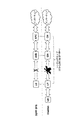
次に図1を参照すると、本開示の態様によるネットワークアーキテクチャを示す概略図が示されている。より具体的には、その図1から観測され得るように、いくつかのユーザ端末(UT)は、低地球軌道(LEO)衛星コンステレーションを介して地上グラウンドネットワーク(GN)に接続する。本明細書で使用されるUTは、しばしば、顧客構内機器(CPE)アクセスデバイスであり、なじみのあるケーブルモデムまたは他のモデムにいくらか類似した方法でネットワークへのアクセスを提供する。IPホストデバイス(ユーザデバイス(UD)として示される)は、Ethernet、Wi-Fi、LTEなどを含むいくつかの既知の通信技術のうちのいずれかの効果を介してUTに接続され、そのUTは、次いで、OneWebシステムを介してホストをインターネットに接続する。 Next, with reference to FIG. 1, a schematic diagram showing a network architecture according to the embodiment of the present disclosure is shown. More specifically, as can be observed from Figure 1, some user terminals (UTs) connect to the ground network (GN) via a low earth orbit (LEO) satellite constellation. As used herein, a UT is often a customer premises equipment (CPE) access device that provides access to a network in a manner somewhat similar to a familiar cable modem or other modem. An IP host device (shown as a user device (UD)) is connected to the UT via the effect of any of several known communication technologies, including Ethernet, Wi-Fi, LTE, etc. Then connect the host to the internet via the OneWeb system.
ある高レベルの抽象化において、図1に示されるOneWebシステムアーキテクチャは、ロングタームエボリューション(LTE)セルラーパケット無線アクセスを支える3GPPエボリューションパケットシステム(EPS)に関連付けられるアーキテクチャといくつかの類似点を有する。特に、当業者には容易に理解されるように、LTEは、発展型ノードB(eNB-セルラー基地局)に接続するユーザ機器(UE)デバイス(結合ホスト/モデムデバイス)を使用し、発展型ノードBは、次いで、図1に示すように、EPC(発展型パケットコア)に接続し、次いでインターネットに接続する。類似点は明らかに見え得るが、上述したように、エアインターフェース管理に関する詳細は著しく異なる。 At a high level of abstraction, the OneWeb system architecture shown in Figure 1 has some similarities to the architecture associated with the 3GPP Evolution Packet System (EPS) that underpins Long Term Evolution (LTE) cellular packet radio access. In particular, as will be readily appreciated by those skilled in the art, LTE uses advanced node B (eNB-cellular base station) connected user equipment (UE) devices (coupling host / modem devices) and is advanced. Node B then connects to the EPC (Evolved Packet Core) and then to the Internet, as shown in Figure 1. Similarities can be clearly seen, but as mentioned above, the details regarding air interface management are significantly different.
周知の従来のセルラーアーキテクチャであるLTEでは、各eNBは、しばしば「セル」と呼ばれるあらかじめ定義された静的なカバレージエリアにわたってエアインターフェース機能を提供する。動作中、セルは、サイズ、形状、および容量においてしばしば異なる。セル内のUEは、eNBの制御下でエアリソース容量を消費する。UEが所与のサービス需要(すなわち、電話呼)を満たすためのリソースを要求すると、UEは、その要求が「承認可能」であるかどうかを決定するために動的なセッションベースの承認制御(AC)手順に着手する。呼を提供するのに十分な容量がセル内にある場合、進めることが許可される。そうでない場合、要求は拒否される。LTEでは、所与のeNBは、常にそのエリア内のすべてのUEについて、所与のカバレージにわたって容量を制御する。これは、十分な容量供給(容量)および需要(トラフィック負荷)情報を有し、したがって、AC決定を行うのに良好な位置にある。そのようなことは、衛星ベースのOneWebシステムではしばしば当てはまらない。理由を理解するためには、GNの構成および機能を調べなければならない。 In LTE, a well-known traditional cellular architecture, each eNB provides air interface functionality over a predefined static coverage area, often referred to as a "cell." During operation, cells often differ in size, shape, and capacity. The UE in the cell consumes air resource capacity under the control of the eNB. When a UE requests a resource to meet a given service demand (ie, a phone call), the UE controls dynamic session-based approval (ie) to determine if the request is "approvable". AC) Start the procedure. If there is enough space in the cell to serve the call, it is allowed to proceed. Otherwise, the request will be rejected. In LTE, a given eNB always controls capacity over a given coverage for all UEs in the area. It has sufficient capacity supply (capacity) and demand (traffic load) information and is therefore in a good position to make AC decisions. That is often not the case with satellite-based OneWeb systems. To understand why, we have to look at the configuration and functionality of the GN.
今や当業者には理解されるように、GNは、OneWeb Service WAN(ワイドエリアネットワーク)またはSWANによって分離された2つの構成要素、衛星ネットワークポータル(SNP)とアンカー共通ポイント(ACP)とを含む。各SNPは、衛星ビームスケジューリングを処理する多くの要素、最も顕著には、LxP/BxPの組合せを含む。際立って対照的に、ACOは、CNへの固定eNBとして、GN全体を表す唯一のエンティティである。 As will be appreciated by those skilled in the art, the GN includes two components separated by the OneWeb Service WAN (Wide Area Network) or SWAN, the Satellite Network Portal (SNP) and the Anchor Common Point (ACP). Each SNP contains many elements that process satellite beam scheduling, most notably the LxP / BxP combination. In contrast, the ACO is the only entity that represents the entire GN as a fixed eNB to the CN.
衛星の移動、UTをカバーするサービスビームの移動、SNPに接続されたフィーダリンクの移動、およびCNからビーム、リンク、衛星の動きを隠す対応する必要性のために、SNP-ACPの分離は必要である。 Separation of SNP-ACP is necessary due to satellite movement, service beam movement covering UT, feeder link movement connected to SNP, and corresponding need to hide beam, link, satellite movement from CN. Is.
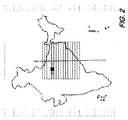
次に図2を参照すると、本開示の一態様による衛星スポットビームカバレージを示す概略図が示されている。理解できるように、衛星は極軌道にある。SNPは、回転している地球上にあり、それらがサービスするUTの多くがそうである(一部は飛行しているかもしれない)。すべてが衛星と比較して非常にゆっくり動いている。したがって、UTの位置に依存して、そのカバーする衛星は、主に北または南に移動している。 Next, with reference to FIG. 2, a schematic diagram showing satellite spot beam coverage according to one aspect of the present disclosure is shown. As you can see, the satellite is in polar orbit. SNPs are on a spinning Earth, and many of the UTs they serve are (some may be flying). Everything is moving very slowly compared to satellites. Therefore, depending on the position of the UT, the satellites it covers are moving primarily north or south.
インドのUTをカバーする北に行く衛星の近似経路が図2に示されていることに言及する。各衛星は、16個の長方形のスポットビームをそれに関連付けている。新しいスポットビームは、所与のUTをおよそ11秒ごとに通過する。地球が回転しており、UTも西東方向に歳差運動しているので、スポットビームも地球の表面を横切って東西方向にゆっくり移動する。さらに、スポットビームの東西幅を移動するには約40分かかることに留意されたい。図2に示した点線は、西にわずかに移動するにつれて、北に行く衛星の近似経路を示す。 It is noted that the approximate path of the northbound satellite covering India's UT is shown in Figure 2. Each satellite associates 16 rectangular spot beams with it. The new spot beam passes through a given UT approximately every 11 seconds. Since the earth is rotating and the UT is also precessing in the west-east direction, the spot beam also slowly moves east-west across the surface of the earth. In addition, note that it takes about 40 minutes to move the east-west width of the spot beam. The dotted line shown in Figure 2 shows the approximate path of the satellite going north as it moves slightly west.
諒解されるように、各UTは、任意の時点に一意の位置を占有する。各UTは、その位置からトラフィックを送受信し、逆方向リンクと順方向リンクの両方でエアインターフェース容量についての「需要」を生成する。複数のUTは、図3に概略的に示すように、所与のエリアにわたって広がり、ここでは、10、30、および50Mbps可変ビットレート(VBR)トラフィック需要の評価が示されている。 As you can see, each UT occupies a unique position at any given time. Each UT sends and receives traffic from that location, generating a "demand" for air interface capacity on both the reverse and forward links. Multiple UTs spread over a given area, as schematically shown in Figure 3, where evaluations of 10, 30, and 50 Mbps variable bit rate (VBR) traffic demand are shown.
本開示による衛星システムのための1つの主なシステム要件は、所与のエリアにおけるトラフィック需要が許容範囲内に維持されることである。この要件に対する1つの簡単なアプローチは、図3に示すように、点別(point-wise)(位置別)の需要を単純に合計し、次いで、それを容量と照合調整することを含む。しかしながら、残念なことに、エアインターフェース容量は、ビーム内で共有され、したがって、同じビーム内に存在する可能性がある2つのUTは、時間の経過とともに互いの利用可能な容量に影響を及ぼす。結果として、時間の経過に伴うスポットビームの動きのダイナミクスのために、1対のUTの相対的位置がビームを共有する時間の割合を決定し、したがって、ビームの能力について競合する時間の相対的割合を決定する。これは、ここで説明するゾーン全体にわたるUT需要の地理空間分布と呼ぶことになる。 One major system requirement for satellite systems according to the present disclosure is to keep traffic demand in a given area within acceptable limits. One simple approach to this requirement involves simply summing point-wise demand and then matching it to capacity, as shown in Figure 3. Unfortunately, however, the air interface capacitance is shared within the beam, so two UTs that may be in the same beam affect each other's available capacitance over time. As a result, due to the dynamics of spot beam movement over time, the relative positions of a pair of UTs determine the percentage of time that the beam is shared, and thus the relative time of competing for beam capability. Determine the percentage. This will be referred to as the geospatial distribution of UT demand across the zones described here.
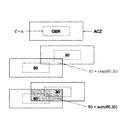
各UTを囲むことは、衛星スポットビームの幅および高さの実質的に2倍を測定する、その承認制御ゾーン(ACZ)と呼ばれるほぼ矩形のゾーンであることに留意されたい。さらに、これは低い緯度では一般に当てはまるが、より高い緯度では、ACZの形状は、ビームの重なりに起因して変わるが、同じ概念が適用されることに留意されたい。 Note that surrounding each UT is a nearly rectangular zone called its Approved Control Zone (ACZ), which measures virtually twice the width and height of the satellite spot beam. Furthermore, it should be noted that this is generally the case at lower latitudes, but at higher latitudes the shape of the ACZ changes due to beam overlap, but the same concept applies.
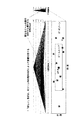
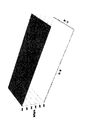
UT「X」の周りのACZのトップダウン図が図4に図式的に示されている。示されるこのACZは、VBR容量とGBR容量の両方に適用される。ビームが名目上1000×70kmの矩形である場合、ACZは、約2200×140kmである。aCZは、UT Xの容量需要がそのACZ内の他のUTに利用可能な容量供給に影響を及ぼし得る(すなわち、そこから減じる)地理的エリアを表す。したがって、これは、反射関係である。 A top-down diagram of the ACZ around the UT "X" is graphically shown in Figure 4. This ACZ shown applies to both VBR and GBR capacities. If the beam is nominally a 1000 x 70 km rectangle, the ACZ is about 2200 x 140 km. aCZ represents a geographic area where the capacity demand of UT X can affect (ie, decrement) the capacity supply available to other UTs within that ACZ. Therefore, this is a reflexive relation.
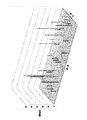
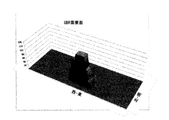
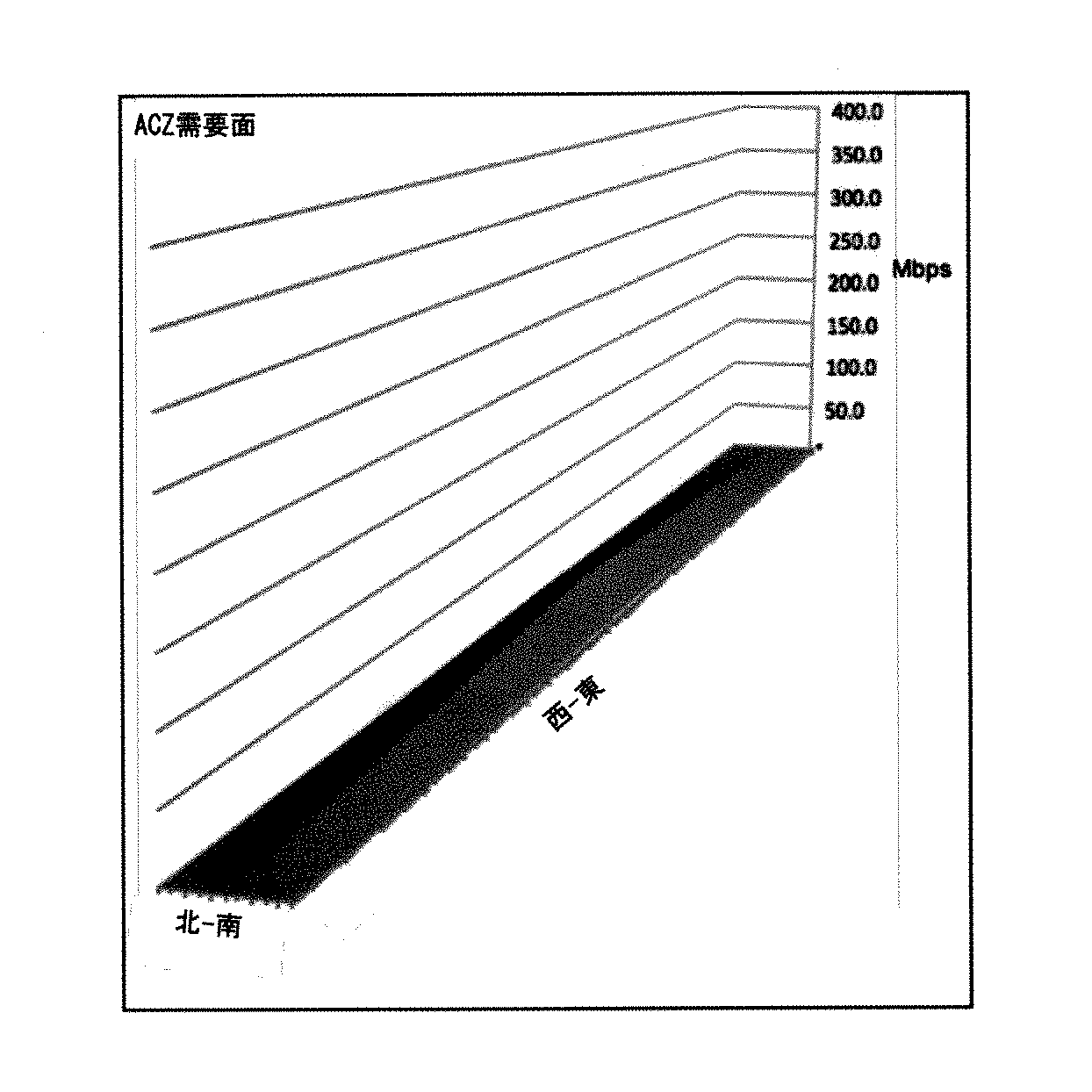
この点で、VBR需要について、UTのトラフィック需要の確率密度関数(PDF)がACZにわたって3D需要面を形成し、これは、図5に3Dグラフとして、ならびにその正面図と側面図の2Dグラフである図4の上半分に示されていることに言及する。UTがそのACZから消費する(または必要とする)容量は、ビームの形状および動きによって決定される統計的関数である。より具体的には、ACZの内部にある所与の位置Yがその定義するUT X(ACZの中央)に近いほど、Yの位置におけるUT Xからの容量についての統計的需要が高くなる。 In this regard, for VBR demand, the Probability Density Function (PDF) of UT's traffic demand forms a 3D demand plane across the ACZ, which is shown in Figure 5 as a 3D graph and in its front and side views as a 2D graph. Note that it is shown in the upper half of one Figure 4. The capacity that a UT consumes (or requires) from its ACZ is a statistical function determined by the shape and movement of the beam. More specifically, the closer a given position Y inside the ACZ is to its defined UT X (center of the ACZ), the higher the statistical demand for capacity from the UT X at the Y position.
観測され得るように、VBR面の形状は、「鮫ひれ」形状を有する細長いピラミッドに似ている(正確には幾何学的に言うピラミッドではないが)。表面にはその側面に沿って三角形が持ち上がっており、中心に向かって移動するにつれて壁の斜面の急勾配/屈曲がある。 As can be observed, the shape of the VBR surface resembles an elongated pyramid with a "shark fin" shape (although not exactly a geometric pyramid). The surface has triangles raised along its sides, with steep / bending slopes of the wall as it moves towards the center.
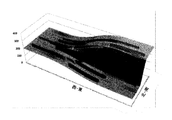
当然ながら、需要の強い東西の空間相関がある。南北の相関は、形状は同じであるが、ここでも、密度関数を作り出すビームの狭さに起因して、大きさは減少する。図5に示す表面の「高さ」は、オーバーサブスクライブされない25Mbpsの点源のVBR需要(OneWebシステムについての比較的大きい需要)に対応する。しかしながら、すべてのVBR需要はある程度オーバーサブスクライブされることが予想され、これによって、後で示すように、寸法決定のために実効レートが低下する。 Naturally, there is a spatial correlation between east and west, where demand is strong. The north-south correlation is the same in shape, but again diminished in magnitude due to the narrowness of the beam that produces the density function. The surface "height" shown in Figure 5 corresponds to the non-oversubscribed 25 Mbps point source VBR demand (relatively large demand for OneWeb systems). However, all VBR demand is expected to be oversubscribed to some extent, which reduces the effective rate for sizing, as will be shown later.
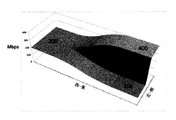
ここでの議論では、澄んだ空の400Mbpsのビーム容量を仮定する。400Mbpsのビーム容量の文脈における25MbpsのACZ需要面の相対的サイズが、図6に示されており、一見すると、小さい需要であるように見えるが、オーバーサブスクリプション率>1でさらに小さくなる。 In the discussion here, we assume a beam capacity of 400 Mbps in the clear sky. The relative size of the 25 Mbps ACZ demand surface in the context of a 400 Mbps beam capacity is shown in Figure 6, which at first glance appears to be a small demand, but is even smaller with an oversubscription rate> 1.
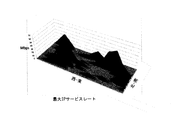
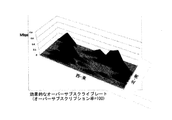
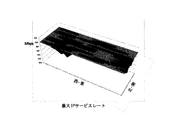
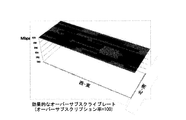
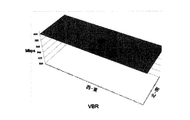
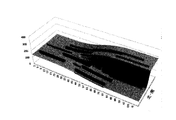
図3の図:UTトラフィック需要のポイント需要を対応するACZ需要面に変換することによって、VBR需要面を示すプロットである、図7(A)および図7(B)に示されるように、エリアにわたる総VBR需要面が生成される。最大(「最高」の)IPサービスレートが図7(A)に示されており、オーバーサブスクリプション率100を反映する、「縮小された」実効速度ベースのプロビジョニングレートが図7(B)に示されている。いくつかの個々の形状は、標準的なACZ需要面形状とは異なることがわかり、これは、複数の部分的に重なるACZ面がVBR需要面を作り出すからである。 Figure 3: Areas, as shown in Figures 7 (A) and 7 (B), which are plots showing the VBR demand plane by converting the point demand of UT traffic demand to the corresponding ACZ demand plane. A total VBR demand aspect is generated over. The maximum (“highest”) IP service rate is shown in Figure 7 (A), and the “reduced” effective speed-based provisioning rate, which reflects the oversubscription rate of 100, is shown in Figure 7 (B). Has been done. Some individual shapes have been found to differ from standard ACZ demand plane shapes, as multiple partially overlapping ACZ planes create a VBR demand plane.
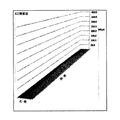
需要面に対する「裏側」が、地理空間的に利用可能な容量を示す、容量面のグラフである図8に示されていることに留意されたい。図8のこの単純化した(すなわち一様な)グラフは、400Mbpsの点別の「澄んだ空」ビーム容量を示す。澄んだ空の容量は雨がないことを前提としており、VBR需要が寸法決定される容量である。表面に沿った点別容量は、この領域で利用されている任意のトラフィック需要が空になる前のビームのものを反映している。すでにわかったように、ここでの表面は個々のACZよりも大きい。 Note that the “backside” to the demand area is shown in Figure 8, which is a capacity area chart showing the geospatial available capacity. This simplified (ie uniform) graph of Figure 8 shows the point-by-point "clear sky" beam capacitance at 400 Mbps. The capacity of the clear sky assumes that there is no rain and is the capacity that VBR demand is sized. The point-by-point capacity along the surface reflects that of the beam before any traffic demand used in this area was emptied. As we already know, the surface here is larger than the individual ACZs.
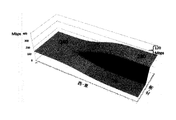
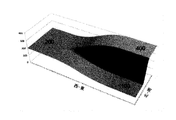
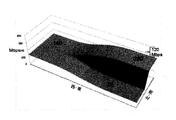
次に図9(A)および図9(B)を参照すると、需要を減じた供給(supply less demand)の2つの図(左右)が示されている。これらの図9(A)および図9(B)を参照すると、ランダムに配置された10、30、および50MbpsのVBR需要のセットが示されていることが観測され得る。これらは、容量を減じた面からの、部分的に重なる点別需要面のセットを作成する。前に提示したように、図9(A)は顧客が実際に感じる最大IPサービスレートを示し、図9(B)はオーバープロビジョニング率100で消費される実効レートを示す。図9(B)のみが、速度ベースの承認制御プロビジョニング計算において考慮される。最大(総)需要が63Mbpsを超えることはなく、これは、複数の需要面の最大点別総計(100のオーバーサブスクリプション率では0.63Mbps)であり、したがって、エリア内の任意の位置の利用可能な容量は、>=399.37Mbpsであるので、ここでは十分な容量が残存している(図9(B))。そのため、これは、非常に軽負荷なエリアの一例である。 Next, referring to FIGS. 9 (A) and 9 (B), two figures (left and right) of supply less demand are shown. With reference to these Figures 9 (A) and 9 (B), it can be observed that a set of randomly placed 10, 30, and 50 Mbps VBR demands is shown. These create a set of partially overlapping point-by-point demand faces from the face with reduced capacity. As presented earlier, Figure 9 (A) shows the maximum IP service rate that the customer actually feels, and Figure 9 (B) shows the effective rate consumed at an overprovisioning rate of 100. Only Figure 9 (B) is considered in the speed-based approval control provisioning calculation. Maximum (total) demand never exceeds 63 Mbps, which is the sum of the maximum points of multiple demand aspects (0.63 Mbps with an oversubscription rate of 100) and therefore available at any location within the area. The capacity is> = 399.37 Mbps, so sufficient capacity remains here (Fig. 9 (B)). Therefore, this is an example of a very light load area.
この点で、承認制御システムの主な目的は、述べるように、点別の空き容量がどこでもゼロを下回らないことを確実にすることであることに言及し、強調する。 In this regard, it is mentioned and emphasized that the main purpose of the approval control system is to ensure that the free space at each point does not fall below zero anywhere, as stated.
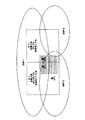
当業者によって容易に諒解されるように、承認制御問題は、管理領域(AR)とSNPカバレージエリアとビームエリアとの相対的なサイズのために、より困難になり、その一例が、市場容量分割、SNPカバレージ、およびビームを示す図10に示される。 As easily appreciated by those skilled in the art, approval control issues become more difficult due to the relative size of the controlled area (AR), SNP coverage area, and beam area, an example of which is market capacity splitting. , SNP coverage, and beam shown in FIG.
管理領域(単に図10に四角で示されている)は、1つまたは複数のサービスプロバイダ(SP)(すなわち、OneWeb)がAR全体にわたって容量割振り(CA)を取得した可能性のある四角内の連続した重ならない地理的エリア(たとえば国)を表す。一般に、サービスプロバイダディストリビュータキャップは、OneWebディストリビュータパートナーがサービスを提供するARの容量の%である。 The management area (simply shown as a square in Figure 10) is within a square where one or more service providers (SPs) (ie, OneWeb) may have acquired capacity allocation (CA) throughout the AR. Represents a continuous, non-overlapping geographical area (eg, a country). In general, the service provider distributor cap is% of the AR capacity served by the OneWeb Distributor Partner.
SNPカバレージエリア(図中)は、1つまたは複数のARをカバーする重なる地理的エリアを表す。SNPカバレージエリアは大きい楕円であり、不均一であり、しばしばAR全体よりも大きいが、(たとえば、シベリアを想像する)いくつかの大きいARの一部のみを含むこともある。 The SNP coverage area (in the figure) represents an overlapping geographic area that covers one or more ARs. The SNP coverage area is a large ellipse, non-uniform, often larger than the entire AR, but may contain only some of the few large ARs (for example, imagine Siberia).
図10に関してさらに、ビーム(細長い矩形)も多くのARに比べて大きく、しばしば所与の時間に複数をカバーすることに留意されたい。最も重要なことに、ビームはまた、期せずして、最小の(すなわち最も制限された)スケジューリング可能なエアリンクリソースであり、そのため、様々なARにおけるCAに分割され、次いで、様々なSPのUTのIPサービス間でさらに分割されなければならないビーム容量である。また、ビームが移動(南北)しており、歳差運動(東西)しているので、理論的容量(供給)は(多かれ少なかれ)固定のままであるが、瞬間的な負荷(需要)は、UTが各ビームに入ったりそこから離れたりすると変わる。複数のARがカバーされる場合、それらの相対的なわずかな供給容量(SP間で分割された)も変わり得る。 It should also be noted that with respect to FIG. 10, the beam (elongated rectangle) is also large compared to many ARs and often covers more than one at a given time. Most importantly, the beam is also unexpectedly the smallest (ie, most restricted) programmable airlink resource, so it is split into CAs in different ARs and then different SPs. The beam capacitance that must be further divided between the UT's IP services. Also, because the beam is moving (north-south) and precessing (east-west), the theoretical capacity (supply) remains (more or less) fixed, but the instantaneous load (demand) is It changes as the UT enters and leaves each beam. If multiple ARs are covered, their relative small supply capacity (split between SPs) can also change.
今や当業者であれば容易に理解されるように、「セル内セッションベース」のACプロセスの従来のワイヤレスアプローチは、当面のタスクに適さない。より具体的には、以下の点に関する。 The traditional wireless approach of "in-cell session-based" AC processes, which is now readily understood by those skilled in the art, is not suitable for the task at hand. More specifically, it relates to the following points.
LxP/BxP:LxP/BxPによって制御される各ビームは事実上「セル」であるが、各ビームは、現在のIPトラフィック需要情報を迅速に無関係にするほど速く動いている(新しいUTがビームに連続的に出入りするので)。「セル内」ビューは、有用な決定を下すには、あまりに近視眼的で動的すぎる。 LxP / BxP: Each beam controlled by LxP / BxP is effectively a "cell", but each beam is moving fast enough to quickly make the current IP traffic demand information irrelevant (new UT to beam). Because it goes in and out continuously). The "in-cell" view is too myopic and dynamic to make useful decisions.
SNP:SNPは、しばしば、相互のカバレージエリアの重なり、およびビームカバレージのダイナミクスに起因して、AC決定を行うための十分な需要および供給情報を有していないことが多い。多くのUTは、実際には、衛星の動きに応じてSNP間で「ピンポン」(すなわち、ハンドオフ)しており、どのSNPが実際にUTを所有しているかに関する質問を提起する(その答えはどちらでもない)。 SNPs: SNPs often do not have sufficient supply and demand information to make AC decisions due to the overlapping of coverage areas with each other and the dynamics of beam coverage. Many UTs are actually "ping-pong" (ie, handoff) between SNPs in response to satellite movement, raising the question of which SNP actually owns the UT (the answer is). Neither).
ACP:EPCの観点から「基地局」として機能するACPは、おそらくAC決定を行うのに最適なインフラストラクチャ要素である。モビリティを無視し、それらがサービスするUTのセットは一定である。それでも、視野があまりにも限られており、絶え間なく変化するビーム需要を有するBxPの絶え間なく変化する負荷を絶えずやりくりしている。さらに、各ビームの容量は同じである。したがって、実質的に同じリソース(後続のビーム)に対する同じトラフィックについての同じ承認制御決定を繰り返し行う(および再び行う)ことは冗長である。 ACP: Acting as a "base station" from an EPC perspective, ACP is probably the best infrastructure element for making AC decisions. Ignoring mobility, the set of UTs they serve is constant. Still, the field of view is so limited that it constantly manages the ever-changing load of BxP, which has a constantly changing beam demand. Moreover, the capacitance of each beam is the same. Therefore, it is redundant to repeat (and repeat) the same approval control decision for the same traffic for substantially the same resource (following beam).
エアインターフェースリソース管理のこの問題を解決するには、すべてのAR、ビーム、SNP、およびACPにわたって見ることができ、任意の現場において、任意の規模で、SNP/ACPカバレージまたはビームモビリティとは無関係に、全部の需要および供給を認識することができる「より広い」視野が必要である。したがって、本開示の態様による方法およびシステムは、有利には、いずれも(すなわちAR)がそのCA(供給)エリアのいずれかにおいて所望のしきい値を超えてオーバーサブスクライブされないように、予測可能かつ地理空間的に計算可能な供給モデルに対してIPサービス(需要)を寸法決定し、配備する。 To solve this problem of air interface resource management, it can be seen across all AR, beam, SNP, and ACP, at any site, at any scale, independent of SNP / ACP coverage or beam mobility. , Need a "wider" perspective that can recognize all demands and supplies. Therefore, the methods and systems according to aspects of the present disclosure are advantageously predictable so that none (ie, AR) is oversubscribed beyond the desired threshold in any of its CA (supply) areas. And dimension and deploy IP services (demand) for a geospatial computable supply model.
承認制御システム
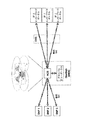
今や当業者であれば容易に理解されるように、グローバル承認制御機能が必要であり、示すように、図11に概略的に示されるような(ACS)によって、本開示に従って実現される。理解されるように、ACSは、グローバルリソース管理システム(GRNS)内で機能し、グローバルネットワーク運営センター(GNOC)に、配備されたUTのグローバルビューと、それらの一致したプロビジョニングされたアクティブなサービスクラス(SC)トラフィック需要とを提供する。ACSの物理的実現は、グローバル連合データベースを含み得るが、その管理面は、ローカルでのみ効力を発する。連合データベースのローカル部分は、他のPOP要素と並んで、選択されたポイントオブプレゼンス(POP)位置に存在することがあり、または、GNOCにホストされることもある。
Approval Control System A global approval control function is now required, as will be readily appreciated by those skilled in the art, and is implemented in accordance with the present disclosure, as shown, by (ACS) as outlined in Figure 11. To. As you can see, ACS works within the Global Resource Management System (GRNS) and has a global view of UTs deployed in the Global Network Operations Center (GNOC) and their matching provisioned active class of service. (SC) Provides traffic demand. The physical implementation of ACS may include a global federated database, but its administrative aspects only take effect locally. The local part of the federated database, alongside other POP elements, may reside at the selected point of presence (POP) location or may be hosted on the GNOC.
OneWeb POPは一般に、GNの「上側」部分(すなわちACP)、およびローカルなCN構成要素(すなわち、モビリティ管理エンティティ(MME)、およびサービング/パケットGW(S/P-GW))を含むと理解されることに留意されたい。GRMS-ACSデータベースの物理的な構成および位置にかかわらず、GNOCは、データベースシステムに「グローバルなビューポータル」を有し、任意の範囲および解像度で、統合された閲覧可能なものとしてそれを知覚する。 OneWeb POP is generally understood to include the "upper" part of the GN (ie ACP) and the local CN components (ie the Mobility Management Entity (MME), and the Serving / Packet GW (S / P-GW)). Please note that. Regardless of the physical configuration and location of the GRMS-ACS database, GNOC has a "global view portal" in the database system and perceives it as integrated viewable in any range and resolution. ..
さらに、ACSは、リソース管理動作の2つの主なモード、すなわち「静的」および「動的」承認制御モードを有することに留意されたい。 In addition, it should be noted that ACS has two main modes of resource management operation: "static" and "dynamic" authorization control modes.
静的承認制御 Static approval control
インターネットアクセスサービスは、典型的には、「ビットパイプ」をサービス加入者に販売することを伴う。各パイプは、サービス(一般にその帯域幅およびレイテンシの特性を含む)に関連付けられた(QoS)サービス品質パラメータ、および使用量ベース(たとえばトン数)または性能ベース(すなわち速度)とすることができる、その料金設定のモデル(tariffing model)に応じて異なり得る。技術的観点から、各データサービスは、OneWebエアインターフェース上でその速度(すなわちデータレート)、レイテンシ、および他の性能パラメータを指定するQoS定義であるIPサービスクラス(SC)によって実現される。各SCには、IPレベルでの優先QoS処理を示す対応するPHB(Differentiated Services Per-Hop Behavior)パラメータが関連付けられている。 Internet access services typically involve selling "bitpipes" to service subscribers. Each pipe can be quality of service (QoS) associated with a service (generally including its bandwidth and latency characteristics), and usage-based (eg, tonnage) or performance-based (ie, speed). It can vary depending on the tariffing model. From a technical point of view, each data service is implemented by a QoS definition, IP Service Class (SC), that specifies its speed (ie, data rate), latency, and other performance parameters on the OneWeb air interface. Each SC is associated with a corresponding Differentiated Services Per-Hop Behavior (PHB) parameter that indicates preferred QoS processing at the IP level.
OneWebは、トランスポートクラスIP QoSフレームワークアーキテクチャ仕様内で説明されているように、IPサービスクラスが定義され得るいくつかの基本的なIPトランスポートクラスを提供する。これらは、サービスの3つの基本形態を作成するのに適している。 OneWeb provides several basic IP transport classes in which IP service classes can be defined, as described in the Transport Class IP QoS Framework Architecture Specification. These are suitable for creating three basic forms of service.
完全優先転送サービス:音声またはビデオ会議などの用途に適する。 Full priority transfer service: Suitable for applications such as voice or video conferencing.
基本データサービス:従来の様々なIPアクセスサービスに適する。 Basic data service: Suitable for various traditional IP access services.
レイテンシ耐性サービス(Latency-tolerant Service):断続的な接続を利用するマシンツーマシンの用途に適する。 Latency-tolerant Service: Suitable for machine-to-machine applications that utilize intermittent connections.
基本データサービス(BDS)は、別段特別な(非基本的な)キャリッジのために分類されていない限り、IPトラフィックフローのセットを処理するものである。所与の時点でUTごとにアクティブなBDSが1つだけ存在する。各OneWeb BDSは、最大ビット(MBR)パラメータと、随意に、次の関係、0≦GBR≦MBRを一緒に満たす(GBR)パラメータを有するハイブリッドSCを含む。これによって、OneWebは、純粋に「ベストエフォート型」のデータサービス(たとえば、この場合、0=GBR<MBR)、従来の電話会社の「専用回線」サービス(この場合、0<GBR=MBR)、および最大ビットレートの調整可能な部分が常に利用可能であることが保証されるフレキシブルに融和される混合(すなわち、0<GBR<MBR)を提供することができる。これらは、それぞれVBR(可変ビットレート)、GBR(保証ビットレート)、およびハイブリッドVBR/GBRサービスと呼ばれる。 The Basic Data Service (BDS) handles a set of IP traffic flows unless specifically classified for a special (non-basic) carriage. There is only one active BDS per UT at a given time. Each OneWeb BDS includes a hybrid SC with a maximum bit (MBR) parameter and optionally the following relationship, a parameter that together satisfies 0 ≤ GBR ≤ MBR (GBR). This allows OneWeb to become a purely "best effort" data service (eg 0 = GBR <MBR in this case), a traditional telco "dedicated line" service (0 <GBR = MBR in this case), And a flexible blended mixture (ie, 0 <GBR <MBR) can be provided that ensures that the adjustable portion of the maximum bit rate is always available. These are called VBR (Variable Bit Rate), GBR (Guaranteed Bit Rate), and Hybrid VBR / GBR Services, respectively.
BDSは、ひとたび配備されると、「静的」(すなわち、ひとたびプロビジョニングされると変わらない)および「常時オン」である。そのようなサービスを提供することは、限られた容量のシステムに影響を与える。本質的に、常時オンのサービスを「オフ」にすることはできない。承認制御の観点から考えると、ひとたび常時オンのSCが配備されると、そのようなSCのアドミタンスの質問に対する回答は、サービスの存続期間を通じて、およびSCのサービス領域(SR)を通じて、常に「はい」でなければならない。この記載は、サービスされたエンティティが固定である場合(たとえば、家庭)またはモバイル(たとえば、旅客機)である場合に成り立つ。サービス領域は、SCを有効にするUTが動作し、そこから容量を消費するエリアである。固定のUTは1つのARから容量を消費する。モバイルUTは、1つまたは複数のARから容量を消費し得る。UTは、各AR内の一部のCAから容量を消費する。 BDS is "static" (ie, unchanged once provisioned) and "always on" once deployed. Providing such services affects systems with limited capacity. In essence, always-on services cannot be "off". From an approval control perspective, once an always-on SC is deployed, the answers to such SC admittance questions are always "yes" throughout the life of the service and throughout the SC's service area (SR). "Must. This statement holds if the serviced entity is fixed (eg, home) or mobile (eg, airliner). The service area is the area where the UT that enables SC operates and consumes capacity from it. Fixed UT consumes capacity from one AR. Mobile UTs can consume capacity from one or more ARs. UT consumes capacity from some CAs in each AR.
このすべては、配備の前に(および場合によっては販売時点においても)、SPによってACチェックが実行されなければならないということを必要とする(図11でわかるように、エンタープライズ先行ポータル(EP)をOSS経由でACSに使用して、SCの存続期間中に予想されるSRに十分な容量が存在することを確実にする)。そうでない場合、UTは、配備時にACSによるサービスが拒否される危険性がある。 All of this requires that the SP must perform an AC check before deployment (and possibly even at point of sale) (as you can see in Figure 11) with the Enterprise Leading Portal (EP). Used for ACS via OSS to ensure that there is sufficient capacity in the expected SR for the lifetime of the SC). Otherwise, the UT is at risk of being denied service by ACS during deployment.
固定のUTの場合、そのSRは、単に、UTが配備される位置を取り囲むACZである(図12の左側を参照)。必要な容量は、常にその点に存在しなければならず、その周囲のACZにおける需要の関数である。このようなチェックは、新しいSCをこの領域に追加することを検討し、既存のSCに害を与えずに新しいSCがプロビジョニングされ配備されるかどうかを判断する。SCが承認可能である場合、その配備は許可され、そうでなければ、許可されない。先験的SC承認可能性がUTの配備より前に要求されない唯一のケースは、商用モデル-1(CM-1)であることに留意されたい。CM-1によって、いわゆる「On Net」UT動作を排除する標準的な3GPPローミングベースの合意手順を使用してOneWebディストリビュータパートナーの迅速なオンボーディングを可能にし、そのようなチェックとの結果的統合は、すべてのSCにとって望ましく、保証ビットレート(GBR)または完全優先転送(EF)サービスには必須である。局所領域にあまりにも多くのサービスを追加すると、所与の容量割振りに負荷をかけすぎ、以前に配備されたサービスに関連付けられた「サービス契約」に違反する可能性がある。ここでの承認制御手順は、たまたまサービス配備の「前に」行われるので、ネットワーク寸法決定プロセスとしても容易に理解される。 For a fixed UT, that SR is simply the ACZ that surrounds where the UT is deployed (see left side of Figure 12). The required capacity must always be present at that point and is a function of demand in the surrounding ACZ. Such a check would consider adding a new SC to this area and determine if the new SC would be provisioned and deployed without harming the existing SC. If the SC is approvable, its deployment is allowed, otherwise it is not. Note that the only case where a priori SC approval is not required prior to UT deployment is Commercial Model-1 (CM-1). CM-1 enables rapid onboarding of OneWeb Distributor Partners using standard 3GPP roaming-based consensus procedures that eliminate so-called "On Net" UT behavior, resulting in integration with such checks. , Desirable for all SCs, and required for guaranteed bit rate (GBR) or full priority transfer (EF) services. Adding too many services to a local area can overload a given capacity allocation and violate the "service contract" associated with previously deployed services. The approval control procedure here happens to be done "before" the service is deployed, so it is easily understood as a network dimensioning process.
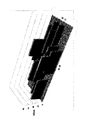
さらに、モバイルサービスには同じACプロセスが必要とされることに留意されたい。モバイルUTの場合、そのSRはその移動経路(たとえば、北大西洋の飛行経路の移動経路内にある可能性のある航空機の場合)によって定義され、移動中、そのACZによって掃引される連続的な包絡線における点別需要が考慮されなければならない(図12の右側参照)。ここでは、そのような経路に沿って需要および供給を推定し、可能性のあるワーストケースの需要要件を評価し、新しいモバイルサービスが承認可能かどうかを判断するために、より複雑なリソース管理アルゴリズムが必要とされる。モバイルサービスが販売される時点で、需要を把握するために、そのSCおよび関連するサービス領域がACSに入れられる。 Also note that mobile services require the same AC process. For mobile UTs, the SR is defined by its path of travel (for example, for aircraft that may be within the path of flight of the North Atlantic) and is a continuous envelope swept by its ACZ during travel. The point-by-point demand on the line must be taken into account (see the right side of Figure 12). Here, a more complex resource management algorithm to estimate supply and demand along such a route, assess potential worst-case demand requirements, and determine if a new mobile service is approvable. Is required. When a mobile service is sold, its SC and associated service areas are put into ACS to capture demand.
ネットワーク寸法決定/サービスクラス「What If」配備計画 Network dimensioning / service class "What If" deployment plan
OneWebディストリビュータパートナーは、エンタープライズポータル(EP)を使用して、各AR/CAにおけるそのリソース容量(供給)、その供給に対するその配備されたリソースIPサービス(需要)、および得られたIPサービスQoSに対する影響の様々な「ビュー」を見る。ネットワーク寸法決定のプロセスを検討し始めると、Table 1(表1)のサービスクラス配備ファクタに示すように、最終的にいくつかのファクタを考慮しなければならない。 OneWeb Distributor Partners use the Enterprise Portal (EP) to impact their resource capacity (supply) on each AR / CA, their deployed resource IP service (demand) on that supply, and the IP service QoS obtained. View various "views" of. As we begin to consider the network dimensioning process, we must ultimately consider several factors, as shown in the Service Class Deployment Factors in Table 1.
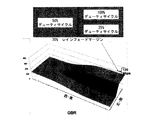
ここでは、EPがレンダリングするビューの種類の大まかな「感じ」を提供するために、主に、GBR寸法決定、およびデータレート、衛星デューティサイクルおよびレインフェードの関連ファクタ、ならびに割振り可能なVBR容量へのGBR負荷の影響(現在はUTのモビリティを無視する)を考慮する。「表面」に関する前の議論を想起すると、図8に最初に見られる「理想的な」容量面は、図13(A)において繰り返される。その表面は、ビーム当たり公称400Mbps、ビーム容量の完全に均一な(すなわち滑らかな)分布を想定する。 Here, to provide a rough "feel" of the type of view that the EP renders, primarily to GBR sizing and related factors for data rate, satellite duty cycle and rainfade, and assignable VBR capacity. Consider the impact of GBR load (currently ignoring UT mobility). Recalling the previous discussion of the "surface", the "ideal" capacitive surface first seen in FIG. 8 is repeated in FIG. 13 (A). Its surface assumes a perfectly uniform (ie smooth) distribution of beam capacitance, nominally 400 Mbps per beam.
図13(B)は、2つの別々の効果、すなわち、レインフェードマージンと衛星デューティサイクルを捕捉する。 Figure 13 (B) captures two separate effects: the rainfade margin and the satellite duty cycle.
レインフェードマージン:GBRサービスは、99.xx%のサービスレベル利用可能性(SLA)が提供されると予測される。そのようなSLAを提供するには、データレートをその保証されたレベル未満に低下させることなく、レインフェードマージンの可能性のあるワーストケースの影響についての動的エアリンクリソースの補償を可能にするように、容量マージンを含める必要がある。ここでは、30%のマージンを想定し、これによって、図示のように、GBRサービスプロビジョニングで利用可能な最大点別容量が280Mbpsに低減する。 Rainfade Margin: GBR services are expected to offer 99.xx% service level agreements (SLA). Providing such an SLA allows compensation for dynamic airlink resources for the effects of possible worst-case rainfade margins without lowering the data rate below its guaranteed level. As such, it is necessary to include a capacity margin. Here, we assume a margin of 30%, which reduces the maximum point-based capacity available for GBR service provisioning to 280 Mbps, as shown.
衛星デューティサイクル:理想的なGBR容量(左側)は、衛星スポットビームが100%のデューティサイクルで動作していると想定する。デューティサイクルは、衛星における電力を節約するために、0%から100%の間で1/8刻みで調整することができるので、そうである必要はない。図13(B)は、エリアの1/4が100%で動作しており(グレー)、1/4が25%のみで動作しており(青)、残りが50%のデューティサイクルで動作している(オレンジ)シナリオを示している。点別の配備可能なGBR容量への影響がわかる。様々なプラトー間の「傾斜路」は、ビームの形状のために南北方向よりも西東方向に伸長しているが、それ以外の点では類似している。 Satellite Duty Cycle: The ideal GBR capacity (on the left) assumes that the satellite spot beam is operating at 100% duty cycle. The duty cycle does not have to be because it can be adjusted in 1/8 increments between 0% and 100% to save power on the satellite. In Figure 13 (B), 1/4 of the area is operating at 100% (gray), 1/4 is operating at only 25% (blue), and the rest is operating at 50% duty cycle. (Orange) Shows the scenario. You can see the effect on the GBR capacity that can be deployed by point. The "tilts" between the various plateaus extend west-east rather than north-south due to the shape of the beam, but are otherwise similar.
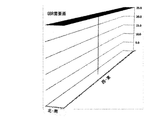
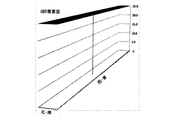
GBR需要の空間的性質は、VBR需要とは異なる。VBR需要は早期に見られる「鮫ひれ」形状を示すのに対し、GBR需要は、平らな「プラトー」と同等のものを作る。これら2つの「需要面」が図14(A)および図14(B)に示されており、これらは、両方の需要が1のオーバーサブスクリプション率(オーバーサブスクライブされていることを意味する)を想定している、空間需要とも呼ばれる、エリアの関数としての統計的IPサービス需要を表す。GBRプラトーより下の量を25Mbpsの需要基準の100%とみなす場合、25MbpsのVBRの鮫ひれより下の量はわずかに27.4%(このグリッドサイズの場合)であり、すなわち、プラトーより下の量の約1/4である。したがって、Mbps相当のVBRサービスは、対応するGBRサービスの空間需要のわずか〜25%しか誘発しない。 The spatial nature of GBR demand is different from VBR demand. VBR demand shows an early "shark fin" shape, while GBR demand makes the equivalent of a flat "plateau". These two "demand aspects" are shown in Figures 14 (A) and 14 (B), which mean that both demands have an oversubscription rate of 1 (meaning they are oversubscribed). Represents the statistical IP service demand as a function of the area, also called the space demand. If we consider the amount below the GBR plateau to be 100% of the 25Mbps demand standard, the amount below the shark fin of the 25Mbps VBR is only 27.4% (for this grid size), that is, the amount below the plateau. It is about 1/4 of. Therefore, Mbps-equivalent VBR services induce only ~ 25% of the space demand for the corresponding GBR services.
しかしながら、VBRサービスは典型的にはオーバーサブスクライブされる(すなわち、率>1)ので、所与のVBR負荷は、ここに示す空間需要のさらなる一部分を誘発するにすぎないことにすでに言及した。 However, it has already been mentioned that given VBR load only induces a further portion of the space demand shown here, as VBR services are typically oversubscribed (ie, rate> 1).
これを理解するために、次に、図15(A)および図15(B)に図式的に示すように、より典型的なVBR例(オーバーサブスクリプション率=100)を示す。ここでは、VBR、および「オーバーサブスクライブされないGBR」需要面のGBRの2つの25Mbpsサービスからの相対的空間需要(Mbps単位)を示す。GBR空間需要は、25Mbps/単位面積でフラットであるのに対し、VBR空間需要は前述の鮫ひれ分布を示すが、今は100分の1に縮小されている。正確な需要計算では、レインフェードマージン(GBRの場合)および最繁時負荷(VBRの場合)など他のファクタを考慮しなければならないので、これも実際の需要の正確な記述ではない。また、そのような計算は、Mbpsではなくクォークでも行われ、後者はここでは単によく知られているために示している。ここでは、説明のために差の大きさを大まかに近似している。 To understand this, the following is a more typical example of VBR (oversubscription rate = 100), as graphically shown in FIGS. 15 (A) and 15 (B). Here we show the relative spatial demand (in Mbps) from two 25 Mbps services, VBR and GBR on the "non-oversubscribed GBR" demand side. The GBR space demand is flat at 25 Mbps / unit area, while the VBR space demand shows the above-mentioned shark fin distribution, but it is now reduced to 1/100. This is also not an accurate description of actual demand, as accurate demand calculations must take into account other factors such as rainfade margin (for GBR) and peak load (for VBR). Also, such calculations are done in quarks instead of Mbps, the latter being shown here simply because it is well known. Here, the magnitude of the difference is roughly approximated for the sake of explanation.
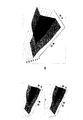
前に、VBR需要では、2つの重なる需要面(すなわち、重なるACZ)が一緒に「合計」されることがわかった。ここで、GBR需要に注目すると、2つの重なるプラトーが、不連続な方法で互いに空間需要を誘発し、重なりの程度に応じて、時として「合計」し、時として合計しないことがあることを観測している。図16の上部は、周囲のビームエリアおよびACZを含むGBR空間需要負荷を示す。下の2つの部分は、それぞれの需要が両方ともACZの交点に含まれるかどうかによって区別される、2つのGBR需要についてのACZの重なりの2つの異なる程度を示す。交点に含まれる場合、交差需要を「合計」することができ、そうでない場合、2つの需要の「最大」が交点の空間需要を決定する。 Earlier, it was found that in VBR demand, two overlapping demand aspects (ie, overlapping ACZ) are "summed" together. Focusing on GBR demand, it can be seen that two overlapping plateaus induce spatial demand on each other in a discontinuous manner, sometimes "summing" and sometimes not summing, depending on the degree of overlap. I'm observing. The upper part of FIG. 16 shows the GBR space demand load including the surrounding beam area and ACZ. The bottom two parts show two different degrees of ACZ overlap for two GBR demands, distinguished by whether each demand is both included at the intersection of the ACZs. If included at the intersection, the crossover demand can be "summed", otherwise the "maximum" of the two demands determines the space demand at the intersection.
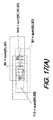
当然、これは一般化しており、3つの重なるACZのセットが、図17(A)および図17(B)に見られるように現れ、ここで、3D図は、剪断垂直壁のみを有する、階段状のプラトーを有するアステカピラミッドに似始める。 Naturally, this is generalized, and a set of three overlapping ACZs appears as seen in Figures 17 (A) and 17 (B), where the 3D view has only sheared vertical walls, stairs. Begins to resemble an Aztec pyramid with a shaped plateau.
さらに一般化して、各々GBR需要に対応する、図18に示されるいくつかのGBRプラトーを認識する。 Further generalizing, we recognize several GBR plateaus shown in Figure 18, each corresponding to GBR demand.
図19(A)に示される利用可能なGBR容量を取得するために、これらの需要は、次いで、図19(B)から減じられる。この図は、追加のGBR需要がプロビジョニングされる可能性のある利用可能な(残りの)容量を示す。 In order to obtain the available GBR capacity shown in FIG. 19 (A), these demands are then reduced from FIG. 19 (B). This figure shows the available (remaining) capacity for which additional GBR demand may be provisioned.
この点で、VBR(すなわち、非GBR)サービスは、関連するSLAを与えられると予想されないことに留意されたい。結果として、これは、図20(A)に示されるものの別の名称である、いわゆる「澄んだ空」の容量に対して寸法決定することができる。図20(B)は全GBR容量を示す。当面は、2つの面の形状の違いを無視して、少しその特性に戻り、説明する。 In this regard, it should be noted that VBR (ie, non-GBR) services are not expected to be given the associated SLAs. As a result, it can be dimensioned against the capacity of the so-called "clear sky", which is another name for what is shown in FIG. 20 (A). Figure 20 (B) shows the total GBR capacity. For the time being, ignoring the difference in shape between the two surfaces, I will return to that characteristic a little and explain it.
述べたように、観測され得るように、図20(B)は、全GBR容量を依然として示している。当面は、2つの面の形状の違いを無視して、少しそれに戻る。 As mentioned, as can be observed, FIG. 20 (B) still shows the total GBR capacity. For the time being, I'll ignore the difference in shape between the two faces and go back a bit.
有利には、OneWebスケジューラは、VBRサービスよりもGBRサービスのスケジューリングに優先順位を付ける。結果として、VBRサービスをプロビジョニングするために利用可能な容量は、任意の関連するGBR要求を考慮する(すなわち、減じる)必要がある。次に図21(A)および図21(B)を参照すると、これは、GBR需要とVBR需要の両方が取り除かれた後に利用可能なVBR容量を示す図21(A)に図式的に示されていることが観測され得る。 Advantageously, the OneWeb scheduler prioritizes scheduling GBR services over VBR services. As a result, the capacity available for provisioning VBR services needs to take into account (ie, reduce) any associated GBR requirements. Then with reference to FIGS. 21 (A) and 21 (B), this is graphically shown in FIG. 21 (A), which shows the VBR capacity available after both GBR demand and VBR demand have been removed. Can be observed.
ここで、図21(A)および図21(B)を想起すると、スケジュール可能なVBR面とGBR面の形状が異なることが明らかになる。2つの面の違いは、GBRスケジューリングは、利用可能な容量を計算するときに「ワーストケース」のレインフェードを考慮しなければならず、VBRスケジューリングは、「平均の」または「予想された」容量に対して喜んで寸法決定するという事実に由来する。これらの考察の結果、異なる表面形状が示される。それらの違いは、結果の容量デルタを示す図22でわかる。 Recalling FIGS. 21 (A) and 21 (B), it becomes clear that the shapes of the scheduled VBR surface and the GBR surface are different. The difference between the two aspects is that GBR scheduling must take into account the "worst case" rainfade when calculating the available capacity, and VBR scheduling is the "average" or "expected" capacity. It derives from the fact that it is willing to size. As a result of these considerations, different surface shapes are shown. The difference between them can be seen in Figure 22, which shows the resulting capacitance delta.
前述のように、前述の表面は、寸法決定されるべきIPサービスと比較して理解を容易にするために、bps(レート)で示されている。しかし、基礎となる供給および需要の計算は、「エアリソース」または「クォーク」の観点で行われる必要がある。名目上、クォークは「エアインターフェーストラフィックリソースのスケジューリング可能な最小単位」である。具体的には、クォークは、それぞれフォワードリンク(FL)またはリバースリンク(RL)に1つのクォークFLリソースブロック(RB)または2つのRL RBを備える。ビームデューティサイクルの関数としての特定の数値計算(Quarks/sec、またはQps単位)。 As mentioned above, the aforementioned surfaces are shown in bps (rates) for ease of understanding compared to IP services to be dimensioned. However, the underlying supply and demand calculations need to be done in terms of "air resources" or "quarks". Nominally, quarks are the "minimum programmable unit of air interface traffic resources." Specifically, each quark has one quark FL resource block (RB) or two RL RBs on the forward link (FL) or reverse link (RL), respectively. Specific numerical calculations (Quarks / sec, or Qps units) as a function of the beam duty cycle.
SCでのネットワーク寸法決定の機能図を図23に示す。IPサービスプランニングは、OneWebによってSC承認制御アルゴリズムが設計されたフレームワークである、承認制御フレームワーク(ACF)に従って実行される。各パートナーは、管理しているAR/CAごとにそれ自体の承認制御ポリシー(ACP)を定義するためにACFを自由に使用するが、ACFがそのパートナーに対して許可するものに従って、ACPは常に「実行可能」でなければならない。 Figure 23 shows a functional diagram of network dimensioning in SC. IP service planning is performed according to the Approval Control Framework (ACF), a framework designed by OneWeb for SC approval control algorithms. Each partner is free to use the ACF to define its own Approval Control Policy (ACP) for each AR / CA it manages, but the ACP always follows what the ACF allows for its partners. Must be "feasible".
簡単に言えば、容量(供給)とトラフィック(需要)の観点から、OneWebが供給を制御し、OneWebパートナーが需要を制御する。 Simply put, OneWeb controls supply and OneWeb partners control demand in terms of capacity (supply) and traffic (demand).
パートナーは、図23に示すように、供給または需要の変化の影響を見るために、またはそのACPを変化させ、その影響を評価するために、いわゆる「What if」計画を実行することができる。 Partners can carry out so-called “What if” plans to see the impact of changes in supply or demand, or to change their ACP and assess its impact, as shown in Figure 23.
パートナーは、ACFの実行可能範囲内にとどまる限り、OneWebとの対話なしに、希望するSC需要の任意の実際の変更を開始することができる。このアクティビティは、OneWeb OSSシステムを通じて開始され、GRMS ACSに伝播する。供給の任意の実際の変化は、OneWebとのオフライン(ヒューマンインザループ)対話を必要とする。 Partners can initiate any actual change in desired SC demand without interaction with OneWeb, as long as they remain within the ACF's viable range. This activity is initiated through the OneWeb OSS system and propagated to GRMS ACS. Any real change in supply requires offline (human-in-the-loop) dialogue with OneWeb.
Table 2(表2)に示すように、パートナーが要求し得るビューのタイプは様々である。 As shown in Table 2, there are various types of views that partners can request.
図:ビューのタイプにおいて、供給と実際の需要の両方の実際の(ほぼリアルタイムの)ビューは、ARにわたって可視であり、履歴のビューは、過去の任意の時点で可視であるものとする。また、計画の(すなわち計算された)ビューは、プロビジョニングされたもの、アクティブのもの、見通しのものに利用可能な履歴的に計画されるものとする。計画プロビジョニングのビューは、計画プロビジョニングのサービスクラス需要が(事前のサービス寸法決定を介して)承認されており、しかし、まだアクティブ化されていないUTにのみ適用される。計画アクティブのビューは、UT SC需要およびその先験的な計画されたアクティブの一致した供給の両方に適用される。同様に、計画見通しのビューは、需要と供給の両方をカバーし、「what if」計画を構成する。計画見通しは、履歴プロビジョニングのビューがアーカイブのために保持されることも要求する。 Figure: In view type, assume that the actual (near real-time) view of both supply and demand is visible across AR, and the historical view is visible at any point in the past. Also, the planned (ie calculated) view shall be historically planned available for provisioned, active, and prospective ones. The planned provisioning view applies only to UTs whose planned provisioning class of demand has been approved (via prior service sizing) but has not yet been activated. The planned active view applies to both the UT SC demand and the matched supply of its a priori planned active. Similarly, the plan outlook view covers both supply and demand and constitutes a "what if" plan. The planning outlook also requires that the historical provisioning view be retained for archiving.
有利には、供給および需要(GBR、VBR、合計など)の様々な局面から見ることができ、洗練された「what if」計画を可能にするために、(表:サービスクラスを想起して)寸法決定に影響を及ぼすファクタの実現可能な変動を可能にする、比較可能なビュー(すなわち、計画対実際、アクティブ対見通しなど)を対比することが可能である。 Advantageously, it can be seen from various aspects of supply and demand (GBR, VBR, total, etc.) and to enable sophisticated "what if" planning (Table: Recalling Service Class). It is possible to contrast comparable views (ie, planning vs. actual, active vs. outlook, etc.) that allow feasible variation in factors that influence sizing.
UT/SCの承認およびプロビジョニング:機能的に、新しいSCが配備される前に、EPは、ACSにSCの承認を要求するものとする。SCは、パートナーのACPに従ってACSによって「承認可能」とみなされる。そのように承認が与えられたSCは、プロビジョニングされたものとみなされるが、まだアクティブではない。 UT / SC Approval and Provisioning: Functionally, the EP shall require ACS to approve the SC before a new SC is deployed. The SC is considered "approvable" by ACS according to the partner's ACP. SCs so approved are considered provisioned, but not yet active.
しかしながら、この手順を説明する前に、OneWebはいくつかの商用モデル(CM)を提供することを目的としており、事前承認制御を省略(すなわち、図24のステップ2および3をスキップ)したCM-1と呼ばれる1つのモデルがあることに留意されたい。この省略は、時間のかかる、およびいくぶんコストのかかるOSS/BSSの統合を必要とせず、OneWebプロビジョニングサービスを配備する非常に簡単で迅速な手段をディストリビュータパートナーに提供したいという願望に由来する。VBRサービスのみを提供するための配備なしにCM-1を制限しているので、この省略は可能である。CM-1ではGBRサービスは許可されていない。
However, before explaining this procedure, OneWeb aims to provide some commercial models (CMs), omitting pre-approval control (
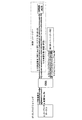
SC承認およびUTプロビジョニングの高レベルのアーキテクチャ図が図24に示され、以下のステップを含み、 A high-level architectural diagram of SC approval and UT provisioning is shown in Figure 24, which includes the following steps:
図:UT/SC承認およびプロビジョニングにおいて以下のステップからなる。 Figure: UT / SC approval and provisioning consists of the following steps:
1)EPは、1つまたは複数のAR/CAをカバーする所与のSR内の所与のUT上のSCのOSS配備を要求する。 1) The EP requires an OSS deployment of the SC on a given UT within a given SR covering one or more AR / CAs.
2)この要求は、必要に応じてOSSによって増強され、AC要求はACSに転送される。AC要求は、UT情報(識別情報(IMSI)、アンテナタイプ、固定の場合、位置(GPS))およびQoS情報(ベアラ構成、サービス領域、AR/CA)を含む。 2) This request is augmented by OSS as needed and the AC request is forwarded to ACS. The AC request includes UT information (identification information (IMSI), antenna type, location (GPS) if fixed) and QoS information (bearer configuration, service area, AR / CA).
3)SCがパートナーのACPに従って承認可能である場合、承認が与えられ、それ以外の場合は拒否される。ここでは、CM-1の意味合いは、承認は常に許可されることである(ステップ2と3はスキップされる)。したがって、ステップ1はステップ4に直接つながる。
3) Approval is given if the SC is approvable according to the partner's ACP, otherwise it is rejected. Here, the implication of CM-1 is that approval is always allowed (
4)成功を仮定すると、UTは、OneWeb(またはそのCM-1パートナー)のHSSにおいてプロビジョニングすることができる。 4) Assuming success, UT can be provisioned in OneWeb (or its CM-1 partner) HSS.
5)成功指示がACSからOSSに戻される。 5) Success instructions are returned from ACS to OSS.
6)成功指示がOSSからEPに転送される。 6) Success instructions are transferred from OSS to EP.
UT接続/SCアクティブ化:最終的に、プロビジョニングされたUTがネットワークに接続し、その承認されたSCがアクティブ化され、その後アクティブとみなされる。このプロセスアクティブが図25に示され、以下のステップを含む。 UT Connection / SC Activation: Eventually, the provisioned UT connects to the network, its approved SC is activated, and then it is considered active. This process activity is shown in Figure 25 and includes the following steps:
1)UTが配備され、ネットワークに接続すると、そのP-GWは、適切なHSSからSC情報を取り出し、対応するベアラを構成する。これによって、UTにIP接続が提供される。 1) When the UT is deployed and connected to the network, its P-GW retrieves SC information from the appropriate HSS and configures the corresponding bearer. This provides the UT with an IP connection.
2)その後、UTは、OSSにその接続を通知し、その事前構成されたUTおよびQoS情報(前のセクションのステップ2で説明したように)をOSSに伝える。
2) The UT then notifies the OSS of the connection and informs the OSS of its preconfigured UT and QoS information (as described in
3)OSSは、この情報を記録し、GRMS ACSに送る。次いで、ACSは、a)SCのアクティブ化を記録する(非CM-1)、またはb)承認されないSCのアクティブ化を記録する(CM-1)、またはc)何らかの管理上の理由でアクティブ化を拒否する。 3) OSS records this information and sends it to GRMS ACS. ACS then a) records the activation of the SC (non-CM-1), or b) records the activation of the unapproved SC (CM-1), or c) activates for some administrative reason. Reject.
4)ACSは、このUTを以前見たかどうかに留意して、許可または拒否をシグナリングする。 4) ACS signals allow or deny, noting if you have seen this UT before.
5)ACSが承認を拒否した場合、すぐに効力を発し得る(ネットワークを開始する)、またはUTが次に接続しようとするときに効力を発し得る(管理上禁止)。この選択はパートナーによって決定される。 5) If ACS refuses approval, it can take effect immediately (start the network) or the next time the UT tries to connect (administratively prohibited). This choice is determined by the partner.
UT接続通知(ステップ3)は、次のことに役立つことに留意されたい。1)CM-1 UT/SC(存在する場合)をACSに通知し、2)配備された/アクティブなUTおよびSCに関してACSを最新の状態に保つ。 Note that the UT connection notification (step 3) helps: 1) Notify ACS of CM-1 UT / SC (if any) and 2) Keep ACS up to date for deployed / active UTs and SCs.
これは、固定のサービスとモバイルサービスの両方に当てはまることに留意されたい。この情報は、UTごとにUTの以前にプロビジョニングされたSR情報と組み合わされると、ACSが、グローバルに配備されたアクティブなQoS SC(およびそのSR)の正確なピクチャを有することができ、その配備前に任意の新しいSCのAC決定を常に行うことが可能である。この情報は、プロビジョニング/承認されたサービス契約から逸脱していないことを確実にするために、各UTの位置/SRを監視するための手段を提供する。 Note that this applies to both fixed and mobile services. This information, combined with the previously provisioned SR information for each UT, allows ACS to have an accurate picture of the globally deployed active QoS SC (and its SR) and its deployment. It is always possible to make an AC decision for any new SC before. This information provides a means to monitor the location / SR of each UT to ensure that it does not deviate from the provisioned / approved service contract.
この点で、管理上禁止はいくつかの形を取り得ることに言及する。 In this regard, it is mentioned that administrative bans can take several forms.
1)CM-1では、新たに承認されたUTが(ACPごとに)利用可能なリソースを超える場合、CS OSSは、このUTをCN EIRブラックリストに追加し、OneWebネットワークに接続されないようにする。CS OSSは、卸売業者アカウントにそれを追加し、その状態を「ネットワークリソースが不十分のために禁止」に設定する。CS BSS/CRMは、UTがネットワークから管理上禁止されていることを識別する電子メールを卸売業者に送る。これは、リソースの問題に対処するための管理プロセスが発生するまで、ブラックリストに残る。 1) In CM-1, if the newly approved UT exceeds the available resources (per ACP), CS OSS will add this UT to the CN EIR blacklist to prevent it from connecting to the OneWeb network. .. CS OSS adds it to the wholesaler account and sets its state to "Prohibited due to insufficient network resources". CS BSS / CRM sends an email to the wholesaler identifying that the UT is administratively banned from the network. It remains blacklisted until a management process occurs to address the resource issue.
2)他のすべてのCMについては、承認制御は、CNにおけるSIMのプロビジョニングの前に行われるものとする。リソースが不足している場合、SIMはCNにおいてプロビジョニングされず、これによって、OneWebネットワークに接続できなくなる。しかしながら、事前プロビジョニング承認チェックが何らかの理由(間違い/事業者のオーバーライドなど)で行われず、接続のリソースが不十分になると、CS OSSは、それを卸売業者アカウントに追加し、その状態を「リソースの不足のために禁止」に設定する。 2) For all other CMs, approval control shall be performed prior to SIM provisioning in CN. If resources are scarce, the SIM will not be provisioned in the CN, which will prevent it from connecting to the OneWeb network. However, if the pre-provisioning approval check is not done for some reason (wrong / operator override, etc.) and the connection resources are insufficient, CS OSS will add it to the wholesaler account and call it "Resources". Set to "Prohibited due to lack".
UTプロビジョニングオーダーがどのように入れられたかに応じて、CS BSS/CRMは次のうちのいずれかを行う。a)エンタープライズポータルを介したオーダーエントリ、「ネットワークリソースが不十分」のためにUTプロビジョニングまたは承認が失敗したことを示すエラーウェブページを表示する、b)B2BウェブサービスAPIを介したオーダーエントリ、「ネットワークリソースが不十分」のためにUTプロビジョニングまたは承認が失敗したことを示すメッセージ(XMLまたはJSON)を戻す、c)バッチファイルを介したオーダーエントリ、「ネットワークリソースが不十分」のプロビジョニング/承認失敗コードを含む特定のSIMカード(IMEI、IMSI、およびMSDIN)を含むバッチファイルを戻す。 Depending on how the UT provisioning order was placed, CS BSS / CRM does one of the following: a) Order entry via the enterprise portal, display an error web page indicating that UT provisioning or authorization failed due to "insufficient network resources", b) Order entry via the B2B web service API, " Returns a message (XML or JSON) indicating that UT provisioning or authorization failed due to "insufficient network resources", c) order entry via batch file, provisioning / authorization failure for "insufficient network resources" Returns a batch file containing the specific SIM card (IMEI, IMSI, and MSDIN) that contains the code.
さらに、CN EIRは、他の利用規約違反(たとえば、UTが未認証、UTが紛失/盗難の報告を受けたなど)のSIMカードをグレーリストまたはブラックリストにも使用されることに留意されたい。 In addition, please note that CN EIR will also use SIM cards for other terms of use violations (eg UT unauthenticated, UT reported lost / stolen) for graylisting or blacklisting. ..
有利には、ACチェックおよびリソース計画(配備の前[またはCM-1配備の直後])の使用を通じて、または最終的には接続時に、承認されたSCのセットは、ビームパターンカバレージ、SNPの重なりなどに関係なく、実行可能なままである。したがって、ビームが通過する際にACチェックは必要ない。しかしながら、事業者が所与のAR内のそのCAに(誤りもしくは過失、または場合によっては意図的に)負荷をかけすぎた場合、各AR内の容量を割り振る階層スケジューラは、市場を共有する他の事業者のCAを、負荷をかけすぎた事業者による過度の借入から保護するように設計されているので、その加入者のみが損害を被ることになる。したがって、事業者は、CAに負荷をかけないことが奨励される。 Advantageously, through the use of AC checks and resource planning (before deployment [or immediately after CM-1 deployment]), or finally at connection time, the approved set of SCs overlaps beam pattern coverage, SNPs. Regardless of, it remains viable. Therefore, no AC check is required as the beam passes. However, if the operator overloads that CA in a given AR (wrong or negligent, or in some cases intentionally), the hierarchical scheduler that allocates capacity in each AR will share the market. It is designed to protect the CA of a business operator from excessive borrowing by an overloaded business operator, so only its subscribers will suffer damage. Therefore, operators are encouraged not to overwhelm the CA.
完全優先転送:いくつかのUTは、前述のBDS PHBに加えて、完全優先転送(EF)PHBをサポートするように構成され得る。EF PHB完全優先転送は、BDS SCよりも低いレイテンシ目標(たとえば、100ms対300ms)を有する対応する(追加の)EF SCを必要とするので、容量に対する比較的低い高い優先アクセスを有する。EF SCは、GBRパラメータが指定された状態で配備される。したがって、承認制御の観点から、EFトラフィックは、「GBR」トラフィックともみなされ、そのように扱われるものとする。 Full Priority Transfer: Some UTs may be configured to support Full Priority Transfer (EF) PHB in addition to the BDS PHB described above. The EF PHB full priority transfer has a relatively low high priority access to capacity as it requires a corresponding (additional) EF SC with a lower latency target (eg 100ms vs. 300ms) than the BDS SC. The EF SC is deployed with the GBR parameters specified. Therefore, from the perspective of authorization control, EF traffic is also considered and treated as "GBR" traffic.
動的承認制御:セッションベースのQoSは、時として(他のネットワークにおいて)ビデオ呼など、帯域幅を大量に消費する対話型アプリケーションをサポートして使用されることがある。そのようなセッションベースのQoSサポートは、動的ACと呼ばれるものを必要とする。動的ACは、そのようなセッションのためのモバイル動的ACシステムにおけるハンドオフ時にも発生する。そのため、これが必要であることが判明した場合、ここでも当てはまる。 Dynamic Approval Control: Session-based QoS is sometimes used to support bandwidth-intensive interactive applications, such as video calls (in other networks). Such session-based QoS support requires what is called dynamic AC. Dynamic AC also occurs during handoffs in mobile dynamic AC systems for such sessions. So if this turns out to be necessary, this is also the case.
セッションベースのQoSサポートが必要とされる方法は、アプリケーション、およびその基礎となるネットワークとの関係によって異なる。時として、アプリケーションがホストデバイスに常駐し、ホストOSにQoS要求を行い、ホストOSが、サポートが必要とされる対応するネットワークインターフェースにQoSサポートを要求することがある。これによって、インターフェースモデムは、適切なSCがアクセスネットワークに入ることを要求し、このモードのQoSシグナリングは、しばしばホストまたはモバイル主導型と呼ばれる。より一般的には、3GPPシステムでは、ホストアプリケーションがネットワーク側のアプリケーションの相手と対話し、ネットワーク接続された相手がQoSシグナリングにアクセスネットワークのSC要求を行わせる。これはしばしばネットワーク主導型シグナリングと呼ばれる。いずれの場合でも、QoS要求は、最終的に、AC決定を行わなければならないアクセスインターフェースリソース(すなわち、セルラーネットワークにおける基地局)をネットワーク要素が管理する道を見つける。 The way session-based QoS support is required depends on the relationship between the application and its underlying network. Occasionally, an application resides on a host device, makes a QoS request to the host OS, and the host OS requests QoS support from the corresponding network interface that needs support. This causes the interface modem to require the appropriate SC to enter the access network, and QoS signaling in this mode is often referred to as host or mobile driven. More generally, in a 3GPP system, the host application interacts with the network-side application partner, and the network-connected partner causes QoS signaling to make an SC request for the access network. This is often referred to as network-driven signaling. In either case, the QoS request ultimately finds a way for the network element to manage the access interface resources (ie, base stations in the cellular network) for which AC decisions must be made.
ここでは、すでに述べたように、基地局均等物(SNP)は、AC決定を行うための装備が整っていない。しかしながら、そのような質問をすると、SNPがSC ACクエリをACSに中継することが可能であり、これは、図:承認制御システムにおいて、すでにすべてのアクティブなSCを認識している。以前のように、セッションは、進行することが許可される場合もあり、許可されない場合もある。また、以前のように、SCが、モバイルが承認したオープンな質問である場合、SNPは、ACS内のその状態を維持し(アクティブなSCとして)、セッションが完了したときにそれを削除する責任がある。したがって、すべてのアプリケーション固有のセッションによる要求もACSにとって既知であり、そのAC決定に考慮される。 Here, as already mentioned, base station equals (SNPs) are not equipped to make AC decisions. However, when asked such a question, the SNP can relay the SC AC query to the ACS, which is already aware of all active SCs in Figure: Approval Control System. As before, the session may or may not be allowed to proceed. Also, as before, if the SC is a mobile-approved open question, the SNP is responsible for maintaining its state in ACS (as the active SC) and removing it when the session is complete. There is. Therefore, all application-specific session requests are also known to ACS and are taken into account in their AC decisions.
専用対共有の容量割振り:容量の割振りは、「専用」または「共有」のいずれかと想定される。共有のCAは単一のSPによって占有され、管理され、専用のCAは複数のSPによって占有される。共有のCAは、より広いエリア/グローバルサービスの容量を提供するために使用され得、この場合、サービスが共有のCAの大部分であり、モバイルの権威のある監視がOneWebまたはモビリティサービスパートナーによって提供される状態で、ARの共有のCA内の複数のモビリティ「フリート」が協働するSPによって共同管理される必要がある。 Dedicated vs. Shared Capacity Allocation: Capacity allocation is assumed to be either "dedicated" or "shared." A shared CA is occupied and managed by a single SP, and a dedicated CA is occupied by multiple SPs. Shared CAs can be used to provide larger area / global service capacity, in which case the services are the majority of shared CAs and mobile authoritative monitoring is provided by OneWeb or mobility service partners. In that state, multiple mobility "fleets" within the AR shared CA need to be jointly managed by a collaborative SP.
需要および供給:容量(すなわち、CA)の最大の「供給」は、ビジネスレベルで契約上決定され、典型的には、所与のARについて固定される。この最大供給に対して承認制御の決定が行われる。しかしながら、しばしば、容量の「需要」は、この最大値よりも小さくなる(たとえば、より少ない日中の使用パターン)。GRMSは、時間および空間にわたるローカル供給利用可能度を管理すると同時に、グローバル電力バジェット内にとどまるように衛星電力支出を管理する責任がある。これは、各衛星のデューティサイクルを軌道ごとに0%から100%の間で調整することによって行われる。ACSは、配備されたすべてのUTとそのアクティブなSCの状態とを認識しているので、GRMSは、この知識を、(たとえば日中の使用パターンなど)時間の経過とともにIPトラフィックの「需要」に関して学習される「データ分析」と結合して、衛星電力消費を最小限に抑えながら供給および需要に最もマッチするようにすることができる。 Supply and Demand: The maximum "supply" of capacity (ie, CA) is contractually determined at the business level and is typically fixed for a given AR. Approval control decisions are made for this maximum supply. However, often the "demand" for capacity is less than this maximum (eg, less daytime usage patterns). GRMS is responsible for managing local supply availability over time and space, as well as managing satellite power spending to stay within the global power budget. This is done by adjusting the duty cycle of each satellite between 0% and 100% for each orbit. ACS is aware of the state of all deployed UTs and their active SCs, so GRMS uses this knowledge to "demand" IP traffic over time (for example, daytime usage patterns). Combined with the "data analysis" learned about, it can be best matched to supply and demand while minimizing satellite power consumption.
ACSとBxP/AxP(スケジューラ)の関係:ACSは、BxP/AxPスケジューラの構築方法、および承認されたSCのスケジュール方法についての部分的な知識により動作する。対照的に、BxP/AxPは、AC決定が動的セッションQoSをサポートするようACSに要求しなければならないことを知っていること以外、概念の承認制御を認識しない。BxP/AxPは、(UTおよびSCが出入りするにつれて)すべてのアクティブなSCを受け入れ、それに従ってスケジューリングを適応させる必要がある。 Relationship between ACS and BxP / AxP (scheduler): ACS works with partial knowledge of how to build a BxP / AxP scheduler and how to schedule approved SCs. In contrast, BxP / AxP is unaware of the concept's approval control, except knowing that AC decisions must require ACS to support dynamic session QoS. BxP / AxP must accept all active SCs (as UTs and SCs move in and out) and adapt scheduling accordingly.
前述のように、ACS実装は、グローバル連合DBに対して動作するローカライズされたサーバインスタンスをローカライズした。重要な実装決定は、使用するDBのタイプ(SQLまたはNoSQL)次第である。カサンドラは、システムが生成することができるあらゆるレベルのACダイナミクス(読取り/書込み)を容易に処理できるので、考慮するのに良いNoSQL DBの候補である。しかし、ACのダイナミクスのレベルはそれほど高くない(多くの初期SCエントリは静的である)であり、リレーショナルクエリ処理は強力であるので、SQLアプローチ(リレーショナルDB)は先験的に除外すべきではない。 As mentioned earlier, the ACS implementation has localized a localized server instance that runs against a global federated DB. The important implementation decision depends on the type of DB used (SQL or NoSQL). Cassandra is a good NoSQL DB candidate to consider because it can easily handle all levels of AC dynamics (read / write) that the system can generate. However, the level of AC dynamics is not very high (many initial SC entries are static) and relational query processing is powerful, so the SQL approach (relational DB) should be excluded a priori. Absent.
それでもなお、OneWebが慎重すぎて失敗し、必要な程度にスケールアップすることが知られているDBから始めるのが最善の方法であり得る。大規模なデータ分析は、細工されたマルチテーブルのカサンドラスキーマの上に容易に実装される。時間とともに「SQL状の」特徴がカサンドラに追加されている。奇妙なことに、カサンドラでは「書込み」は比較的「フリー」であるので、多くのテーブルにわたって一貫したデータを書き込むことが方法である。データモデルは、高速AC決定のために必要な「ビュー」(読取り時に必要)が自然に従うように細工されている。 Nonetheless, it can be best to start with a DB that is known to cause OneWeb to fail too carefully and scale up to the extent necessary. Large-scale data analysis is easily implemented on top of a crafted multi-table Cassandra schema. Over time, "SQL-like" features have been added to Cassandra. Oddly enough, in Cassandra "writes" are relatively "free", so writing consistent data across many tables is the way to go. The data model is crafted to naturally follow the "views" (required at read time) needed for fast AC decisions.
概要:ACSは、すべてプロビジョニングされ、アクティブなSCの状態を世界中で維持する。このことは、この状態および計算をクラウドベースのリソースにオフロードすることによって、SNPが静的ACチェックと動的ACチェックの両方を実行するという要件を削除する。ACSは、さらに、市場、事業者、サービスなどによって区分可能な衛星エアインターフェースの需要および使用量のグローバルなピクチャをGNOCに提供する。したがって、これは、SPサービスプランナーによって、販売時点で有用な容量管理機能を提供する。 Summary: ACS is all provisioned and maintains an active SC state worldwide. This removes the requirement that SNPs perform both static and dynamic AC checks by offloading this state and computation to cloud-based resources. ACS also provides GNOC with a global picture of satellite air interface demand and usage that can be categorized by market, operator, service and more. Therefore, it provides a point-of-sale capacity management feature by the SP service planner.
最後に、図26は、本開示の態様による方法およびシステムを実施するのに適した例示的なコンピュータシステム2600を示す。すぐに諒解されるように、そのようなコンピュータシステムは、別のシステムに統合されてもよく、個別の要素または1つもしくは複数の統合された構成要素を介して実装されてもよい。コンピュータシステムは、たとえば、いくつかのオペレーティングシステムのうちのいずれかを実行するコンピュータを備え得る。本開示の上述の方法は、記憶されたプログラム制御命令としてコンピュータシステム2600上で実施されてもよい。
Finally, FIG. 26 shows an
コンピュータシステム2600は、プロセッサ2610、メモリ2620、記憶デバイス2630、および入出力構造2640を含む。1つまたは複数の入出力デバイスは、ディスプレイ2645を含み得る。1つまたは複数のバス2650は、典型的には、構成要素2610、2620、2630、および2640を相互接続する。プロセッサ2610は、シングルまたはマルチコアであってもよい。さらに、システムは、チップ上のシステムをさらに含む加速器などを含み得る。
The
プロセッサ2610は、本開示の実施形態が図面の1つまたは複数に記載されたステップを含み得る命令を実行する。そのような命令は、メモリ2620または記憶デバイス2630に記憶され得る。データおよび/または情報は、1つまたは複数の入出力デバイスを使用して受信および出力されてもよい。
メモリ2620は、データを記憶してもよく、揮発性または不揮発性メモリなどのコンピュータ可読媒体であってもよい。記憶デバイス2630は、たとえば、前述の方法を含むシステム2600の記憶デバイスを提供し得る。様々な態様において、記憶デバイス2630は、磁気、光、または他の記録技術を使用するフラッシュメモリデバイス、ディスクドライブ、光ディスクデバイス、またはテープデバイスであってもよい。
入出力構造2640は、システム2600の入出力動作を提供し得る。
The input /
この点で、本開示による方法、技法、および構造を特定の実装および/または実施形態に関して説明してきたが、当業者であれば、本開示はそれに限定されないことを認識することを、当業者は、容易に諒解されよう。したがって、本開示の範囲は、本明細書に添付された特許請求の範囲によってのみ限定されるものとする。 In this regard, those skilled in the art will recognize that the methods, techniques, and structures according to the present disclosure have been described with respect to specific implementations and / or embodiments, but those skilled in the art will recognize that this disclosure is not limited thereto. , Will be easily understood. Therefore, the scope of the present disclosure shall be limited only by the scope of claims attached to the present specification.
2600 コンピュータシステム
2610 プロセッサ
2620 メモリ
2630 記憶デバイス
2640 入出力構造
2645 ディスプレイ
2650 バス
2600 computer system
2610 processor
2620 memory
2630 Storage device
2640 Input / output structure
2645 display
2650 bus
Claims (9)
前記ユーザ端末、前記地上グラウンドネットワーク、前記地球低軌道衛星コンステレーション、および前記コアネットワークに関するステータス情報を提供するように構成されたグローバル連合データベースと、
前記グローバル連合データベースの少なくとも一部と通信するコンピュータシステムと
を備え、
前記コンピュータシステムが、プログラム制御命令を実行して、
(1)1つまたは複数の個々のサービス領域で使用するユーザ端末を承認することであって、承認された各ユーザ端末が、個々のサービスクラスおよび個々のサービス加入者に関連付けられて、個々のサービスクラスおよび個々のサービス加入者を有効にし、各サービス領域が、個々のサービスクラスを有効にするユーザ端末が動作し、かつ当該ユーザ端末が容量を消費するエリアである、ことと、
(2)サービス加入者が当該サービス加入者のサービスの存続期間の間に衛星ベースのネットワークにアクセスすることを常に許可するように構成された静的承認制御モードを有効にすることと、
(3)サービス加入者が、前記グローバル連合データベースによって提供される前記ステータス情報に基づいて、セッションベースのサービス品質サポートのために衛星ベースのネットワークにアクセスすることを選択的に許可するように構成された動的承認制御モードを有効にすることと
を行い、
前記承認制御システムが、独立したスケジュールを各々が有する衛星スポットビームの移動するセットを含む前記衛星ベースのインターネットアクセスおよびトランスポートネットワークへのアクセスを提供するように構成されている、システム。 A admission control system for the low-Earth trajectories MichiMamoru Review through constellation comprising a plurality of user terminals end connected to ground ground network, a satellite-based Internet access and transport networks, the ground ground network is further connected to a core network including at least one packet data network gateway, wherein the core network is connected to the Internet, the authorization control system,
A global federated database configured to provide status information about the user terminal , the ground network , the low earth orbit satellite constellation , and the core network.
With a computer system that communicates with at least part of the global federated database
With
The computer system executes a program control instruction and
(1) Approving user terminals for use in one or more individual service areas, where each approved user terminal is associated with an individual class of service and an individual service subscriber, individually. Each service area is an area in which a user terminal that enables a service class and individual service subscribers and enables the individual service class operates and the user terminal consumes capacity.
(2) Enabling a static authorization control mode configured to always allow a service subscriber to access satellite-based networks during the life of the service subscriber's service.
(3) service subscriber, on the basis of the said status information provided by the global federated database, to selectively allow access to the satellite-based network for session-based Quality of Service Support performed and enabling dynamic admission control mode configured,
The admission control system is configured to provide access to the satellite-based Internet access and transport network including a set of moving satellite spot beam, each having an independent schedule system.
少なくとも1つのユーザ端末が位置に固定され、
位置に固定された前記少なくとも1つのユーザ端末が、前記衛星スポットビームエリアの略2倍であるエリアにサービス領域を有し、
前記サービス領域が、前記少なくとも1つのユーザ端末が動作し、かつ前記少なくとも1つのユーザ端末が容量を消費するエリアである、請求項1に記載のシステム。 Each satellite spot beam is characterized by a satellite spot beam area,
At least one user terminal is fixed in position
The at least one user terminal fixed in position has a service area in an area that is approximately twice the satellite spot beam area.
The system according to claim 1 , wherein the service area is an area in which the at least one user terminal operates and the at least one user terminal consumes capacity.
Applications Claiming Priority (5)
| Application Number | Priority Date | Filing Date | Title |
|---|---|---|---|
| US201662312969P | 2016-03-24 | 2016-03-24 | |
| US62/312,969 | 2016-03-24 | ||
| US15/468,774 | 2017-03-24 | ||
| PCT/US2017/024036 WO2017165780A1 (en) | 2016-03-24 | 2017-03-24 | Admission control system for satellite-based internet access and transport |
| US15/468,774 US10506437B2 (en) | 2016-03-24 | 2017-03-24 | Admission control system for satellite-based internet access and transport |
Publications (2)
| Publication Number | Publication Date |
|---|---|
| JP2019518345A JP2019518345A (en) | 2019-06-27 |
| JP6877458B2 true JP6877458B2 (en) | 2021-05-26 |
Family
ID=59899036
Family Applications (1)
| Application Number | Title | Priority Date | Filing Date |
|---|---|---|---|
| JP2018550364A Expired - Fee Related JP6877458B2 (en) | 2016-03-24 | 2017-03-24 | Approved control system for satellite-based Internet access and transport |
Country Status (10)
| Country | Link |
|---|---|
| US (1) | US10506437B2 (en) |
| EP (1) | EP3433948B1 (en) |
| JP (1) | JP6877458B2 (en) |
| KR (1) | KR102071024B1 (en) |
| CN (1) | CN109379902B (en) |
| CA (1) | CA3018166C (en) |
| ES (1) | ES2817581T3 (en) |
| IL (1) | IL261874B (en) |
| SG (1) | SG11201808071QA (en) |
| WO (1) | WO2017165780A1 (en) |
Families Citing this family (3)
| Publication number | Priority date | Publication date | Assignee | Title |
|---|---|---|---|---|
| US10623995B2 (en) * | 2017-12-15 | 2020-04-14 | Gogo Llc | Dynamic load balancing of satellite beams |
| CN110972257B (en) * | 2018-09-29 | 2021-06-08 | 华为技术有限公司 | Communication method, related device and computer storage medium |
| US12081984B2 (en) | 2022-04-27 | 2024-09-03 | T-Mobile Usa, Inc. | Increasing efficiency of communication between a mobile device and a satellite associated with a wireless telecommunication network |
Family Cites Families (22)
| Publication number | Priority date | Publication date | Assignee | Title |
|---|---|---|---|---|
| FR2695775B1 (en) * | 1992-09-11 | 1994-11-10 | France Telecom | Method for reconfiguring antenna beam coverage in a satellite network. |
| US5490087A (en) | 1993-12-06 | 1996-02-06 | Motorola, Inc. | Radio channel access control |
| US5724659A (en) * | 1996-07-01 | 1998-03-03 | Motorola, Inc. | Multi-mode variable bandwidth repeater switch and method therefor |
| US6049593A (en) * | 1997-01-17 | 2000-04-11 | Acampora; Anthony | Hybrid universal broadband telecommunications using small radio cells interconnected by free-space optical links |
| US6366761B1 (en) * | 1998-10-06 | 2002-04-02 | Teledesic Llc | Priority-based bandwidth allocation and bandwidth-on-demand in a low-earth-orbit satellite data communication network |
| US6738363B1 (en) * | 1999-11-05 | 2004-05-18 | Nortel Networks Limited | Method and apparatus for scheduling call admission control in satellite and wireless networks |
| US8923256B2 (en) * | 2004-06-24 | 2014-12-30 | Intellectual Ventures I Llc | Transfer of packet data in system comprising mobile terminal, wireless local network and mobile network |
| US8135362B2 (en) * | 2005-03-07 | 2012-03-13 | Symstream Technology Holdings Pty Ltd | Symbol stream virtual radio organism method and apparatus |
| JP4667503B2 (en) * | 2006-05-22 | 2011-04-13 | 三菱電機株式会社 | Satellite communication system |
| CN1917402A (en) * | 2006-07-28 | 2007-02-21 | 蔡然 | Network technique of general label exchange in high performance nested radio laser communication network |
| US7894388B2 (en) * | 2007-01-05 | 2011-02-22 | Motorola Solutions, Inc. | Method and apparatus for relay zone bandwidth allocation |
| CN100559737C (en) * | 2007-03-16 | 2009-11-11 | 北京航空航天大学 | Space-based mobile communication system and communication method |
| US20090313007A1 (en) * | 2008-06-13 | 2009-12-17 | Ajay Bajaj | Systems and methods for automated voice translation |
| US20100142448A1 (en) * | 2008-09-04 | 2010-06-10 | Ludger Schlicht | Devices for a mobile, broadband, routable internet |
| US8214630B2 (en) * | 2009-02-24 | 2012-07-03 | General Instrument Corporation | Method and apparatus for controlling enablement of JTAG interface |
| US9507735B2 (en) * | 2009-12-29 | 2016-11-29 | International Business Machines Corporation | Digital content retrieval utilizing dispersed storage |
| US9397745B2 (en) * | 2010-05-18 | 2016-07-19 | Qualcomm Incorporated | Hybrid satellite and mesh network system for aircraft and ship internet service |
| CN103532836B (en) * | 2013-10-17 | 2016-04-27 | 阳光凯讯(北京)科技有限公司 | Inserting of satellite gateway device and there is its satellite network system based on IMS |
| US9479993B2 (en) * | 2014-03-19 | 2016-10-25 | Highes Network Systems, Llc | Apparatus and method for efficient handover for low earth orbit (LEO) satellite systems |
| WO2015164842A1 (en) * | 2014-04-24 | 2015-10-29 | Hughes Network Systems, Llc | Methods and system in supporting real time services with spectrum efficiency in a satellite network |
| US20160006500A1 (en) * | 2014-07-02 | 2016-01-07 | At&T Intellectual Property I, L.P. | Satellite packet network for cellular backhaul of access point devices |
| US9763167B2 (en) * | 2014-08-03 | 2017-09-12 | Hughes Network Systems, Llc | Centralized ground-based route determination and traffic engineering for software defined satellite communications networks |
-
2017
- 2017-03-24 JP JP2018550364A patent/JP6877458B2/en not_active Expired - Fee Related
- 2017-03-24 EP EP17720258.7A patent/EP3433948B1/en not_active Not-in-force
- 2017-03-24 WO PCT/US2017/024036 patent/WO2017165780A1/en not_active Ceased
- 2017-03-24 SG SG11201808071QA patent/SG11201808071QA/en unknown
- 2017-03-24 CA CA3018166A patent/CA3018166C/en active Active
- 2017-03-24 KR KR1020187029633A patent/KR102071024B1/en not_active Expired - Fee Related
- 2017-03-24 CN CN201780031533.8A patent/CN109379902B/en not_active Expired - Fee Related
- 2017-03-24 ES ES17720258T patent/ES2817581T3/en active Active
- 2017-03-24 US US15/468,774 patent/US10506437B2/en not_active Expired - Fee Related
-
2018
- 2018-09-20 IL IL261874A patent/IL261874B/en active IP Right Grant
Also Published As
| Publication number | Publication date |
|---|---|
| CA3018166C (en) | 2020-12-08 |
| SG11201808071QA (en) | 2018-10-30 |
| EP3433948B1 (en) | 2020-06-17 |
| IL261874A (en) | 2018-10-31 |
| CN109379902A (en) | 2019-02-22 |
| CN109379902B (en) | 2021-04-16 |
| CA3018166A1 (en) | 2017-09-28 |
| IL261874B (en) | 2021-01-31 |
| WO2017165780A1 (en) | 2017-09-28 |
| JP2019518345A (en) | 2019-06-27 |
| US10506437B2 (en) | 2019-12-10 |
| ES2817581T3 (en) | 2021-04-07 |
| EP3433948A1 (en) | 2019-01-30 |
| KR102071024B1 (en) | 2020-01-29 |
| KR20190002450A (en) | 2019-01-08 |
| US20170280326A1 (en) | 2017-09-28 |
Similar Documents
| Publication | Publication Date | Title |
|---|---|---|
| US12035387B2 (en) | Methods and apparatus for routine based fog networking | |
| US11405967B2 (en) | Enhanced femtocell with on-premise private network slice controller and multi-access edge computing service | |
| US11134410B2 (en) | Quality of service (QoS) control in mobile edge computing (MEC) | |
| US20220124547A1 (en) | Systems and methods to automate slice admission control | |
| US20170245176A1 (en) | Network optimization based on characteristic information regarding a network | |
| US20200008109A1 (en) | Base station handover method, system, and computer storage medium | |
| US12369071B2 (en) | System and method for reducing network component loads | |
| US10993177B2 (en) | Network slice instance creation | |
| US20150140955A1 (en) | Method and apparatus for reducing cell site power consumption in a wireless network | |
| US11825331B2 (en) | Systems and methods for quality-of-service framework for enterprise applications in mobile wireless networks | |
| US20240155435A1 (en) | Method for managing qos in a communications network using a machine learning | |
| US20240267336A1 (en) | Systems and methods for edge-to-edge quality of service flow control in network slices | |
| EP2790424A1 (en) | Mobility management method, system and equipment for group terminals | |
| US11736623B2 (en) | Systems and methods for granular charging in mobile wireless networks | |
| CN109547221A (en) | Big data analysis service providing method and device, computer readable storage medium | |
| US20240284298A1 (en) | Systems and methods for traffic steering in radio access network based on transport network and core network information | |
| KR102071024B1 (en) | Admission control system for satellite-based internet access and transmission | |
| US12628048B2 (en) | Systems and methods for providing network slice quality of service modifications in real time | |
| CN106211274A (en) | A method and device for accessing a service network, and a base station | |
| US11757707B2 (en) | Network assurance for 5G enterprise networks | |
| CN102550056B (en) | Method, device and system for policy control | |
| CN116866965A (en) | Backup method, communication device and communication system | |
| US20250234238A1 (en) | Systems and methods for adaptive policy control in cellular networks | |
| Pencheva et al. | An Extension of Mobile Edge Computing Bandwidth Management API |
Legal Events
| Date | Code | Title | Description |
|---|---|---|---|
| A621 | Written request for application examination |
Free format text: JAPANESE INTERMEDIATE CODE: A621 Effective date: 20181122 |
|
| A131 | Notification of reasons for refusal |
Free format text: JAPANESE INTERMEDIATE CODE: A131 Effective date: 20200114 |
|
| A521 | Request for written amendment filed |
Free format text: JAPANESE INTERMEDIATE CODE: A523 Effective date: 20200520 |
|
| A131 | Notification of reasons for refusal |
Free format text: JAPANESE INTERMEDIATE CODE: A131 Effective date: 20210215 |
|
| A521 | Request for written amendment filed |
Free format text: JAPANESE INTERMEDIATE CODE: A523 Effective date: 20210303 |
|
| TRDD | Decision of grant or rejection written | ||
| A01 | Written decision to grant a patent or to grant a registration (utility model) |
Free format text: JAPANESE INTERMEDIATE CODE: A01 Effective date: 20210405 |
|
| A61 | First payment of annual fees (during grant procedure) |
Free format text: JAPANESE INTERMEDIATE CODE: A61 Effective date: 20210427 |
|
| R150 | Certificate of patent or registration of utility model |
Ref document number: 6877458 Country of ref document: JP Free format text: JAPANESE INTERMEDIATE CODE Ref document number: 6877458 Country of ref document: JP Free format text: JAPANESE INTERMEDIATE CODE: R150 |
|
| LAPS | Cancellation because of no payment of annual fees |