JP5890593B2 - Method for preparing metal complex hydride nanorods - Google Patents
Method for preparing metal complex hydride nanorods Download PDFInfo
- Publication number
- JP5890593B2 JP5890593B2 JP2015528865A JP2015528865A JP5890593B2 JP 5890593 B2 JP5890593 B2 JP 5890593B2 JP 2015528865 A JP2015528865 A JP 2015528865A JP 2015528865 A JP2015528865 A JP 2015528865A JP 5890593 B2 JP5890593 B2 JP 5890593B2
- Authority
- JP
- Japan
- Prior art keywords
- hydride
- metal
- metal complex
- nanorods
- complex
- Prior art date
- Legal status (The legal status is an assumption and is not a legal conclusion. Google has not performed a legal analysis and makes no representation as to the accuracy of the status listed.)
- Active
Links
Images



Classifications
-
- C—CHEMISTRY; METALLURGY
- C01—INORGANIC CHEMISTRY
- C01B—NON-METALLIC ELEMENTS; COMPOUNDS THEREOF; METALLOIDS OR COMPOUNDS THEREOF NOT COVERED BY SUBCLASS C01C
- C01B6/00—Hydrides of metals including fully or partially hydrided metals, alloys or intermetallic compounds ; Compounds containing at least one metal-hydrogen bond, e.g. (GeH3)2S, SiH GeH; Monoborane or diborane; Addition complexes thereof
- C01B6/24—Hydrides containing at least two metals; Addition complexes thereof
-
- C—CHEMISTRY; METALLURGY
- C01—INORGANIC CHEMISTRY
- C01B—NON-METALLIC ELEMENTS; COMPOUNDS THEREOF; METALLOIDS OR COMPOUNDS THEREOF NOT COVERED BY SUBCLASS C01C
- C01B3/00—Hydrogen; Gaseous mixtures containing hydrogen; Separation of hydrogen from mixtures containing it; Purification of hydrogen; Reversible storage of hydrogen
- C01B3/0005—Reversible storage of hydrogen, e.g. by hydrogen getters or electrodes
- C01B3/001—Reversible storage of hydrogen, e.g. by hydrogen getters or electrodes characterised by the uptaking media; Treatment thereof
-
- B—PERFORMING OPERATIONS; TRANSPORTING
- B82—NANOTECHNOLOGY
- B82Y—SPECIFIC USES OR APPLICATIONS OF NANOSTRUCTURES; MEASUREMENT OR ANALYSIS OF NANOSTRUCTURES; MANUFACTURE OR TREATMENT OF NANOSTRUCTURES
- B82Y30/00—Nanotechnology for materials or surface science, e.g. nanocomposites
-
- B—PERFORMING OPERATIONS; TRANSPORTING
- B82—NANOTECHNOLOGY
- B82Y—SPECIFIC USES OR APPLICATIONS OF NANOSTRUCTURES; MEASUREMENT OR ANALYSIS OF NANOSTRUCTURES; MANUFACTURE OR TREATMENT OF NANOSTRUCTURES
- B82Y40/00—Manufacture or treatment of nanostructures
-
- B—PERFORMING OPERATIONS; TRANSPORTING
- B82—NANOTECHNOLOGY
- B82Y—SPECIFIC USES OR APPLICATIONS OF NANOSTRUCTURES; MEASUREMENT OR ANALYSIS OF NANOSTRUCTURES; MANUFACTURE OR TREATMENT OF NANOSTRUCTURES
- B82Y99/00—Subject matter not provided for in other groups of this subclass
-
- Y—GENERAL TAGGING OF NEW TECHNOLOGICAL DEVELOPMENTS; GENERAL TAGGING OF CROSS-SECTIONAL TECHNOLOGIES SPANNING OVER SEVERAL SECTIONS OF THE IPC; TECHNICAL SUBJECTS COVERED BY FORMER USPC CROSS-REFERENCE ART COLLECTIONS [XRACs] AND DIGESTS
- Y02—TECHNOLOGIES OR APPLICATIONS FOR MITIGATION OR ADAPTATION AGAINST CLIMATE CHANGE
- Y02E—REDUCTION OF GREENHOUSE GAS [GHG] EMISSIONS, RELATED TO ENERGY GENERATION, TRANSMISSION OR DISTRIBUTION
- Y02E60/00—Enabling technologies; Technologies with a potential or indirect contribution to GHG emissions mitigation
- Y02E60/30—Hydrogen technology
- Y02E60/32—Hydrogen storage
-
- Y—GENERAL TAGGING OF NEW TECHNOLOGICAL DEVELOPMENTS; GENERAL TAGGING OF CROSS-SECTIONAL TECHNOLOGIES SPANNING OVER SEVERAL SECTIONS OF THE IPC; TECHNICAL SUBJECTS COVERED BY FORMER USPC CROSS-REFERENCE ART COLLECTIONS [XRACs] AND DIGESTS
- Y10—TECHNICAL SUBJECTS COVERED BY FORMER USPC
- Y10S—TECHNICAL SUBJECTS COVERED BY FORMER USPC CROSS-REFERENCE ART COLLECTIONS [XRACs] AND DIGESTS
- Y10S977/00—Nanotechnology
- Y10S977/70—Nanostructure
- Y10S977/762—Nanowire or quantum wire, i.e. axially elongated structure having two dimensions of 100 nm or less
Landscapes
- Chemical & Material Sciences (AREA)
- Organic Chemistry (AREA)
- Inorganic Chemistry (AREA)
- Chemical Kinetics & Catalysis (AREA)
- Engineering & Computer Science (AREA)
- Combustion & Propulsion (AREA)
- Hydrogen, Water And Hydrids (AREA)
- Solid-Sorbent Or Filter-Aiding Compositions (AREA)
Description
本発明はナノ材料の調製に関する。さらに詳しくは、金属錯体水素化物ナノロッドを調製する1種の方法に関する。 The present invention relates to the preparation of nanomaterials. More particularly, it relates to one method of preparing metal complex hydride nanorods.
ナノスケールの材料は、新たな物理的及び/又は化学的特性を有する。ナノ技術の発展にとって、ナノ材料の簡便で制御可能な調製方法は最も基本的かつ重要なことである。 Nanoscale materials have new physical and / or chemical properties. For the development of nanotechnology, the simple and controllable preparation method of nanomaterials is the most basic and important.
ナノ材料の調製方法については既に多く取り組まれてきたが、従来の技術で依然として多種のナノ材料の調製が実現できない。例えば、金属錯体水素化物は分解しやすく極めて高い化学的活性(水、酸素とやや反応しやすい)を有する。そのため、従来異物が含まれない50nm未満の金属錯体水素化物ナノ材料の調製方法が未だにない。 Many methods for preparing nanomaterials have already been addressed, but the preparation of various types of nanomaterials is still not possible with conventional techniques. For example, a metal complex hydride is easily decomposed and has an extremely high chemical activity (slightly reactive with water and oxygen). Therefore, there is still no method for preparing a metal complex hydride nanomaterial of less than 50 nm that does not contain foreign substances.
温暖化ガスの排出及び再生不能エネルギーの消費は人類が直面している二つの難問である。水素エネルギーはかかる難問を解決する選択肢の一つであると有望視されている。水素エネルギーの利用は水素ガスと酸素ガスの化学反応を基にしている。当該化学反応はエネルギーと水だけを作り出すため、絶対にクリーンで汚染がない。従来、モバイル分野(例えば、水素燃料自動車、ノートパソコンと携帯電話)における水素エネルギーの大規模応用を妨げる最大のチャレンジは、水素貯蔵技術である。 Emissions of greenhouse gases and consumption of non-renewable energy are two challenges facing humanity. Hydrogen energy is promising as one of the options to solve this difficult problem. The use of hydrogen energy is based on the chemical reaction between hydrogen gas and oxygen gas. The chemical reaction produces only energy and water, so it is absolutely clean and free from contamination. Traditionally, the biggest challenge that hinders the large-scale application of hydrogen energy in the mobile field (eg hydrogen fueled cars, laptops and mobile phones) is hydrogen storage technology.
過去の数十年において、液体水素貯蔵、圧縮水素貯蔵、低温吸着水素貯蔵、固体水素化物による水素貯蔵との4種の水素貯蔵方法が開発された。その中、液体水素貯蔵と圧縮水素貯蔵は、容器が非常に高価でかさばって重いため、主に大型設備や決まった場所に使用される。 In the past decades, four types of hydrogen storage methods have been developed: liquid hydrogen storage, compressed hydrogen storage, cold adsorbed hydrogen storage, and solid hydride hydrogen storage. Among them, liquid hydrogen storage and compressed hydrogen storage are mainly used in large facilities and fixed places because the containers are very expensive and bulky and heavy.
低温吸着水素貯蔵は、やや低い温度条件下で相対的に高い質量及び体積水素貯蔵密度を有するが、(例えば、液体窒素温度下で、活性炭は4.5wt%の水素ガスを貯蔵できる。参照文献:Ahluwalia RK, Peng JK. Automotive hydrogen storage system using cryo-adsorption on activated carbon. Int J Hydrogen Energy 2009;34:5476-87.)日常的にこのような過酷な低温条件に達することが難しい。 Low temperature adsorbed hydrogen storage has a relatively high mass and volume hydrogen storage density under slightly lower temperature conditions (for example, under liquid nitrogen temperature, activated carbon can store 4.5 wt% hydrogen gas. Reference: Ahluwalia RK, Peng JK. Automotive hydrogen storage system using cryo-adsorption on activated carbon. Int J Hydrogen Energy 2009; 34: 5476-87.
固体水素貯蔵の水素化物は通常、金属水素化物と金属錯体水素化物との2種類に分かれる。LaNi5H6とMgH2のような金属水素化物については、大量の研究が行われた。常温下で、1モルのLaNi5は室温下とやや高い水素圧力下で6モルの水素原子を吸収できるとともに、やや低い水素圧力下で水素を放出することができるが、重量水素貯蔵容量が低すぎて1.5wt%未満となり、実用化要求を満たすことができない。MgH2は7wt%以上の水素ガスを貯蔵できるが、その操作温度がかなり高く、水素放出温度が300℃を上回り、水素吸蔵・放出速度がかなり弱く、実用化要求を満たすこともできない。 Solid hydrogen storage hydrides are usually divided into two types: metal hydrides and metal complex hydrides. A great deal of research has been done on metal hydrides such as LaNi 5 H 6 and MgH 2 . At room temperature, 1 mole of LaNi 5 can absorb 6 moles of hydrogen atoms at room temperature and slightly higher hydrogen pressure, and can release hydrogen at slightly lower hydrogen pressure, but has a low heavy hydrogen storage capacity. It is too low and becomes less than 1.5 wt%, and the practical application request cannot be satisfied. MgH 2 can store 7 wt% or more of hydrogen gas, but its operation temperature is considerably high, the hydrogen release temperature exceeds 300 ° C., the hydrogen storage / release rate is considerably weak, and the practical application requirement cannot be satisfied.
ここ数年、アルミ水素化物、ほう水素化物とアンモニア水素化物のような金属錯体水素化物は、その高い質量水素貯蔵密度及び体積水素貯蔵密度、並びに相対的に適切な水素吸蔵・放出速度及び熱力学でよく注目されている。例えば、Tiを混ぜ入れたNaAlH4は、130℃で可逆的に4.5wt%の水素貯蔵ができる(参照文献:Bogdanovic B, Schwickardi M. Ti-doped alkali metal aluminium hydrides as potential novel reversible hydrogen storage materials. J Alloys Compd 1997;253:1-9.)。Kで修飾したMg(NH2)2−2LiH複合体は130℃で5.2wt%の可逆的水素貯蔵量に達することができる(参照文献:Wang J, Liu T, Wu GT, Li W, Liu YF, Araujo CM, Scheicher RH, Blomqvist A, Ahuja R, Xiong ZT, Yang P, Gao MX, Pan HG, Chen P. Potassium-modified Mg(NH2)2/2LiH system for hydrogen storage. Angew Chem Int Edit 2009;48:5828-32.)。2LiBH4−MgH2複合体は、約400℃で11wt%以上の水素ガスを貯蔵することができる(参照文献:Vajo JJ, Skeith SL, Mertens F. Reversible storage of hydrogen in destabilized LiBH4. J Phys Chem B 2005;109:3719-22.)。しかし、上記材料は、米国エネルギー部が制定した燃料電池の水素源システムに対する技術要求まで依然として一定のギャップがある。 In recent years, metal complex hydrides such as aluminum hydride, borohydride and ammonia hydride have had high mass and volume hydrogen storage densities, as well as relatively appropriate hydrogen storage / release rates and thermodynamics. It has attracted a lot of attention. For example, NaAlH 4 mixed with Ti can reversibly store 4.5 wt% of hydrogen at 130 ° C. (reference: Bogdanovic B, Schwickardi M. Ti-doped alkali metal aluminum hydrides as potential novel reversible hydrogen storage materials. J Alloys Compd 1997; 253: 1-9.). Mg-modified NH (NH 2 ) 2 -2LiH complex can reach a reversible hydrogen storage capacity of 5.2 wt% at 130 ° C (reference: Wang J, Liu T, Wu GT, Li W, Liu YF, Araujo CM, Scheicher RH, Blomqvist A, Ahuja R, Xiong ZT, Yang P, Gao MX, Pan HG, Chen P. Potassium-modified Mg (NH 2 ) 2 / 2LiH system for hydrogen storage.Angew Chem Int Edit 2009 ; 48: 5828-32.). The 2LiBH 4 -MgH 2 complex can store 11 wt% or more of hydrogen gas at about 400 ° C. (Reference: Vajo JJ, Skeith SL, Mertens F. Reversible storage of hydrogen in destabilized LiBH 4 .J Phys Chem B 2005; 109: 3719-22.). However, these materials still have a certain gap until the technical requirements for the fuel cell hydrogen source system established by the US Department of Energy.
最近の研究成果によると、ナノ化を通じて水素化物の水素貯蔵性能を顕著に改善できると示されている。しかし、水素化物は分解しやすく、かつ極めて高い化学的活性(水、酸素とやや反応しやすい)を有するため、従来のナノ化方法でナノ水素化物(特に特別な形があるナノ水素化物)の直接調製に利用することは至難の業であった。 Recent research results show that the hydrogen storage performance of hydrides can be significantly improved through nanofabrication. However, since hydrides are easily decomposed and have extremely high chemical activity (slightly reactive with water and oxygen), nano hydrides (particularly nano hydrides with special forms) can be obtained by conventional nano-methods. It was extremely difficult to use it directly for preparation.
今までナノ金属水素化物の調製方法について、2種の間接調製法がある。その中、1種の方法は、ナノ多孔材料を使って金属水素化物の閉じ込めを行う。研究によると、溶液浸漬又は高圧溶融浸透の方法にてNaAlH4とLiBH4をナノ構造のカーボンに充填することができ、その水素吸蔵・放出温度が原材料より顕著に下がった(参照文献:Balde CP, Hereijgers BPC, Bitter JH, de Jong KP. Facilitated hydrogen storage in NaAlH4 supported on carbon nanofibers. Angew Chem Int Edit 2006;45:3501-3.とGross AF, Vajo JJ, Van Atta SL, Olson GL. Enhanced hydrogen storage kinetics of LiBH4 in nanoporous carbon scaffolds. J Phys Chem C 2008;112:5651-7.)。カーボンナノファイバーを含むNaAlH4は50℃で水素放出を開始する(参照文献:Balde CP, Hereijgers BPC, Bitter JH, de Jong KP. Facilitated hydrogen storage in NaAlH4supported on carbon nanofibers. Angew Chem Int Edit 2006;45:3501-3.)。しかし、ナノ構造に水素化物を充填する効率がやや低く、ナノ構造負荷のやや高い重量によって元の金属水素化物の水素貯蔵容量を引き下げられた。 To date, there are two indirect preparation methods for the preparation method of nanometal hydrides. Among them, one method uses nanoporous materials to confine metal hydrides. Research has shown that NaAlH 4 and LiBH 4 can be filled into nanostructured carbon by solution immersion or high pressure melt infiltration, and the hydrogen storage / release temperature is significantly lower than the raw material (reference: Balde CP , Hereijgers BPC, Bitter JH, de Jong KP. Facilitated hydrogen storage in NaAlH 4 supported on carbon nanofibers. Angew Chem Int Edit 2006; 45: 3501-3. And Gross AF, Vajo JJ, Van Atta SL, Olson GL.Enhanced hydrogen storage kinetics of LiBH 4 in nanoporous carbon scaffolds. J Phys Chem C 2008; 112: 5651-7.). NaAlH 4 containing carbon nanofibers begins to release hydrogen at 50 ° C. (reference: Balde CP, Hereijgers BPC, Bitter JH, de Jong KP. Facilitated hydrogen storage in NaAlH 4 supported on carbon nanofibers. Angew Chem Int Edit 2006; 45: 3501-3.). However, the efficiency of filling the nanostructure with hydride was slightly lower, and the hydrogen storage capacity of the original metal hydride was reduced by the slightly higher weight of the nanostructure load.
もう1種の方法は、まずナノ金属を調製した後に、ナノ金属に水素を吸収させてナノ水素化物を形成する。このような方法で調製したMgH2ナノワイヤは、直径が約50ナノメートルに達し、300℃で30分以内に7wt%の水素ガスの吸収・放出を行うことができる(参照文献:Li WY, Li CS, Ma H, Chen J. Magnesium nanowires: Enhanced kinetics for hydrogen absorption and desorption. J Am Chem Soc 2007;129:6710-1.)。しかし、やや高い水素吸収温度によって水素化物生成物の寸法が顕著に増大し、かつ当該方法は単一金属元素の水素化物だけに使用されるが、2種以上の非水素元素を含有する金属錯体水素化物に使用することができない。 Another method is to first prepare a nanometal and then absorb hydrogen into the nanometal to form a nanohydride. The MgH 2 nanowire prepared by such a method has a diameter of about 50 nanometers, and can absorb and release 7 wt% of hydrogen gas within 30 minutes at 300 ° C. (reference: Li WY, Li CS, Ma H, Chen J. Magnesium nanowires: Enhanced kinetics for hydrogen absorption and desorption. J Am Chem Soc 2007; 129: 6710-1.). However, a slightly higher hydrogen absorption temperature significantly increases the size of the hydride product, and the method is used only for hydrides of a single metal element, but a metal complex containing two or more non-hydrogen elements Cannot be used for hydrides.
錯体重合体は、リガンドで接続する金属陽イオン中心を含有する1種の無機又は有機金属重合体であり、配列状で拡張し、繰り返し単位が錯体化合物である重合体でもある。配列の拡張次元の数により、錯体重合体は、一次元、二次元又は三次元構造でよい。1種の特別な一次元錯体重合体は、金属錯体水素化物と有機リガンドで構成し、かつ金属水素化物が分解不能な状況下で有機リガンドを除去することができる。 The complex polymer is a kind of inorganic or organometallic polymer containing metal cation centers connected by a ligand, and is also a polymer that expands in an array and whose repeating unit is a complex compound. Depending on the number of extended dimensions of the array, the complex polymer may be a one-dimensional, two-dimensional or three-dimensional structure. One special one-dimensional complex polymer is composed of a metal complex hydride and an organic ligand, and can remove the organic ligand in a situation where the metal hydride cannot be decomposed.
例としては、アルミニウム水素化物マグネシウムエチルエーテル錯体重合体(Mg(AlH4)2/Et2O)(参照文献:Fichtner M, Fuhr O. Synthesis and structures of magnesium alanate and two solvent adducts. J Alloys Compd 2002;345:286-96.)、ホウ水素化物リチウム錯体重合体(LiBH4・X,Xがエーテル、メチルtert-ブチルエーテル又はテトラヒドロフラン)(参照文献:Giese HH, Noth H, Schwenk H, Thomas S. Metal tetrahydridoborates and tetrahydridometallates. 22 - Structural chemistry of lithium tetrahydroborate ether solvates. Eur J Inorg Chem 1998;941-9.和Ruiz JCG, Noeth H, Warchhold M. Coordination compounds of alkali metal tetrahydroborates with ethers and amines. Eur J Inorg Chem 2008;251-66.)及びランタニド類ホウ水素化物であるテトラヒドロフラン錯体重合体(Ln(BH4)2・2THF,LnはEu,Yb)(参照文献:Marks S, Heck JG, Habicht MH, Ona-Burgos P, Feldmann C, Roesky PW. [Ln(BH4)2(THF)2] (LnがEu, Yb)-A Highly Luminescent Material. Synthesis, Properties, Reactivity, and NMR Studies. J Am Chem Soc 2012;134:16983-6.)などを挙げられる。このような一次元錯体重合体は共同の構造特徴を有し、即ち、分子構造が一次元鎖状を呈し、金属錯体水素化物を骨組みとし、そのエッジ部を有機物リガンドで保護する。 Examples include aluminum hydride magnesium ethyl ether complex polymer (Mg (AlH 4 ) 2 / Et 2 O) (reference: Fichtner M, Fuhr O. Synthesis and structures of magnesium alanate and two solvent adducts. J Alloys Compd 2002 345: 286-96.), Borohydride lithium complex polymer (LiBH 4 · X, X is ether, methyl tert-butyl ether or tetrahydrofuran) (reference: Giese HH, Noth H, Schwenk H, Thomas S. Metal 22-Structural chemistry of lithium tetrahydroborate ether solvates.Eur J Inorg Chem 1998; 941-9.Ruiz JCG, Noeth H, Warchhold M. Coordination compounds of alkali metal tetrahydroborates with ethers and amines. ;. 251-66) and tetrahydrofuran complex polymer is a lanthanide borohydride (Ln (BH 4) 2 · 2THF, Ln is Eu, Yb) (see Document:.. Marks S, Heck JG , Habicht MH, Ona-Burgos P, Feldmann C, Roesky PW [Ln (BH 4) 2 (THF) 2] (Ln is Eu, Yb) -A Highly Luminescent Material Synthesis, Properties , Reactivity, and NMR Studies. J Am Chem Soc 2012; 134: 16983-6.). Such a one-dimensional complex polymer has a common structural feature, that is, the molecular structure has a one-dimensional chain shape, a metal complex hydride is used as a framework, and its edge is protected with an organic ligand.
本発明は、金属錯体水素化物ナノロッドを調製する方法を提供する。当該方法は操作が簡単で、利便性、操作性及び良好な汎用性を有し、かつ調製できた金属錯体水素化物ナノロッドの純度が高い。 The present invention provides a method for preparing metal complex hydride nanorods. This method is easy to operate, has convenience, operability and good versatility, and the purity of the prepared metal complex hydride nanorods is high.
金属錯体水素化物ナノロッドを調製する方法であり、次の手順を含む。 A method for preparing metal complex hydride nanorods, including the following procedure.
(1)金属錯体水素化物を有機溶剤と混合した後に乾燥し、一次元錯体重合体を得る。 (1) The metal complex hydride is mixed with an organic solvent and then dried to obtain a one-dimensional complex polymer.
金属錯体水素化物と有機溶剤を混ぜた後、金属錯体水素化物が線形成長して鎖状となり、鎖状の金属錯体水素化物を骨組みとし、有機溶剤と金属錯体水素化物での金属とは錯体結合による保護を形成する。 After mixing the metal complex hydride and the organic solvent, the metal complex hydride grows linearly into a chain, and the chain metal complex hydride is used as a framework, and the organic solvent and the metal in the metal complex hydride form a complex bond. Form protection by.
鎖状の金属錯体水素化物と鎖状の金属錯体水素化物外部を包む、錯体結合を形成する有機溶剤(即ち有機リガンド)とは、一次元錯体重合体と総称する。 The organic metal solvent (that is, organic ligand) that forms a complex bond and encloses the outside of the chain metal complex hydride and the chain metal complex hydride is generically called a one-dimensional complex polymer.
有機溶剤は通常エーテル結合を含む溶剤を選定する。エーテル結合での酸素原子が非共有電子対を有し、空軌道を有する金属とリガンド結合を形成しやすく、鎖状の一次元金属錯体水素化物に対し保護を形成し、前記有機溶剤はメチルエチルエーテル、メチルプロピルエーテル、エーテル、エチルプロピルエーテル、メチルtert−ブチルエーテル、テトラヒドロフラン、エポキシヘキサンとすることが望ましい。 As the organic solvent, a solvent containing an ether bond is usually selected. The oxygen atom in the ether bond has an unshared electron pair, easily forms a ligand bond with a metal having a vacant orbit, and forms a protection against a chain-like one-dimensional metal complex hydride. Ether, methyl propyl ether, ether, ethyl propyl ether, methyl tert-butyl ether, tetrahydrofuran, and epoxy hexane are preferable.
金属錯体水素化物と有機溶剤を混ぜ、一定時間攪拌することで金属錯体及び有機溶剤を十分に均等に混ぜるとともに、安定したリガンド結合を形成する。通常、攪拌時間を40min以上とする。 The metal complex hydride and the organic solvent are mixed, and the metal complex and the organic solvent are sufficiently evenly mixed by stirring for a predetermined time, and a stable ligand bond is formed. Usually, the stirring time is 40 min or more.
乾燥時に、金属とリガンド結合を形成できなかった有機溶剤を除去し、金属とリガンド結合を形成した有機溶剤は有機リガンドとなり、鎖状が異なる金属錯体水素化物を仕切る。 At the time of drying, the organic solvent that could not form a ligand bond with the metal is removed, and the organic solvent that has formed a ligand bond with the metal becomes an organic ligand, partitioning metal complex hydrides having different chain shapes.
乾燥は加熱法を採用することができ、当該有機溶剤の沸点まで加熱する。また減圧条件下で冷凍乾燥法を採用することもできる。 Drying can employ a heating method, and heating is performed up to the boiling point of the organic solvent. In addition, a freeze-drying method can be employed under reduced pressure conditions.
乾燥中に後続手順を正常に実施するために、有機溶剤と金属錯体水素化物との間に形成するリガンド結合が破壊されないことを保証する。 In order to successfully carry out the subsequent procedure during drying, it is ensured that the ligand bonds formed between the organic solvent and the metal complex hydride are not broken.
(2)前記工程(1)で得た一次元錯体重合体に対してメカニカルミリングを行う。メカニカルミリングを行う中で、ガス化した一次元錯体重合体を基材上に堆積・成長させて錯体重合体のナノロッドを得る。 (2) Mechanical milling is performed on the one-dimensional complex polymer obtained in the step (1). During mechanical milling, a gasified one-dimensional complex polymer is deposited and grown on a substrate to obtain complex polymer nanorods.
一次元錯体重合体に対しメカニカルミリングを行うとき、鎖状金属錯体水素化物間を有機溶剤によって仕切られ、鎖状が異なる金属錯体水素化物間の分子間力がやや弱いため、高エネルギーの機械力によって互いに分離してガス化しやすく、ガス化した一次元錯体重合体を基材上に堆積・成長させる。一次元錯体重合体自身が空間異方性を有するため、体積・成長中に異なる一次元錯体重合体が集中して束となり、ナノスケールのロッド状構造を形成する。 When mechanical milling is performed on a one-dimensional complex polymer, the chain metal complex hydride is partitioned by an organic solvent, and the intermolecular force between metal complex hydrides with different chain shapes is slightly weak. The gas is separated from each other and easily gasified, and the gasified one-dimensional complex polymer is deposited and grown on the substrate. Since the one-dimensional complex polymer itself has spatial anisotropy, different one-dimensional complex polymers are concentrated and bundled during volume and growth to form a nanoscale rod-shaped structure.
メカニカルミリングは一次元錯体重合体のガス化を目的として主にエネルギーの提供に使用される。従って、従来技術におけるミリング方法はいずれも使用できるが、前記メカニカルミリングが遊星ミリング又は横フライスであることが望ましい。前記メカニカルミリングのボール・材料比は20〜100:1とし、回転数は300〜600rpmとし、時間は1〜10時間とする。 Mechanical milling is mainly used to provide energy for the purpose of gasifying a one-dimensional complex polymer. Therefore, any of the conventional milling methods can be used, but the mechanical milling is preferably planetary milling or horizontal milling. The ball / material ratio of the mechanical milling is 20 to 100: 1, the rotation speed is 300 to 600 rpm, and the time is 1 to 10 hours.
メカニカルミリング中に一次元錯体重合体が分解しないことを保証する。分解温度がやや高い一次元錯体重合体にとっては、室温下でメカニカルミリングを行ってよい。分解温度がやや低い一次元錯体重合体にとっては、メカニカルミリング中に熱が生じ、温度が上昇するため、メカニカルミリング中の温度を一次元錯体重合体の分解温度未満に維持する冷却設備を追加する必要がある。前記冷却設備は、氷水浴又はドライアイス浴であることが望ましい。 Ensures that the one-dimensional complex polymer does not decompose during mechanical milling. For a one-dimensional complex polymer having a slightly high decomposition temperature, mechanical milling may be performed at room temperature. For one-dimensional complex polymers with a slightly lower decomposition temperature, heat is generated during mechanical milling and the temperature rises, so cooling equipment is added to maintain the temperature during mechanical milling below the decomposition temperature of the one-dimensional complex polymer. There is a need. The cooling facility is preferably an ice water bath or a dry ice bath.
メカニカルミリングの全過程においてミリング温度を一次元錯体重合体の分解温度未満、ガス化温度超に維持する必要があるため、適切なボール・材料比、回転数及びミリング時間を選定する必要があるほか、補助措置として冷却設備を追加することでミリング中の温度を柔軟に制御する。 Since it is necessary to maintain the milling temperature below the decomposition temperature of the one-dimensional complex polymer and above the gasification temperature throughout the mechanical milling process, it is necessary to select an appropriate ball / material ratio, rotation speed, and milling time. By adding cooling equipment as an auxiliary measure, the temperature during milling can be flexibly controlled.
基材については特別な制限がない。例えば、ステンレススチールやナイロンはいずれもよい。 There are no special restrictions on the substrate. For example, stainless steel or nylon may be used.
(3)前記工程(2)で得た錯体重合体のナノロッド内の有機リガンドを除去し、金属錯体水素化物ナノロッドを得る。 (3) The organic ligand in the nanorod of the complex polymer obtained in the step (2) is removed to obtain a metal complex hydride nanorod.
純度が高い錯体重合体のナノロッドを得るために、錯体重合体のナノロッド内の有機リガンドを除去する必要があり、加熱又は真空化方法を採用することが望ましい。手順(2)で得た錯体重合体のナノロッド内の有機リガンドを除去し、金属錯体水素化物ナノロッドを得る。 In order to obtain a complex polymer nanorod with high purity, it is necessary to remove the organic ligand in the complex polymer nanorod, and it is desirable to employ a heating or vacuuming method. The organic ligand in the nanorod of the complex polymer obtained in the procedure (2) is removed to obtain a metal complex hydride nanorod.
金属錯体水素化物が一次元構造を形成できることは、後続のナノロッド形成にとって極めて重要であるため、前記金属錯体水素化物は金属アルミ水素化物又は金属ホウ水素化物であることが望ましい。 Since the ability of the metal complex hydride to form a one-dimensional structure is extremely important for subsequent nanorod formation, the metal complex hydride is preferably a metal aluminum hydride or metal borohydride.
金属アルミ水素化物内の金属元素は、アルカリ金属、アルカリ土類金属又はランタニド類元素であることが望ましい。金属ホウ水素化物内の金属元素は、アルカリ金属、アルカリ土類金属又はランタニド類元素であることが望ましい。 The metal element in the metal aluminum hydride is preferably an alkali metal, alkaline earth metal or lanthanide element. The metal element in the metal borohydride is preferably an alkali metal, alkaline earth metal or lanthanide element.
また、金属アルミ水素化物内の金属元素は、アルカリ金属又はアルカリ土類金属であることがさらに望ましい。金属ホウ水素化物内の金属元素は、アルカリ金属又はアルカリ土類金属であることがさらに望ましい。 Further, the metal element in the metal aluminum hydride is more preferably an alkali metal or an alkaline earth metal. More preferably, the metal element in the metal borohydride is an alkali metal or an alkaline earth metal.
金属アルミ水素化物内の金属元素は、アルカリ土類金属であることが最も望ましい。金属ホウ水素化物内の金属元素は、アルカリ金属であることが最も望ましい。 Most preferably, the metal element in the metal aluminum hydride is an alkaline earth metal. Most preferably, the metal element in the metal borohydride is an alkali metal.
本発明は従来の技術と比べ、次のような長所を有する。 The present invention has the following advantages over the prior art.
1.純度が高い金属錯体水素化物のナノロッドを調製でき、ナノロッドの直径が100ナノメートル未満となる。 1. High purity metal complex hydride nanorods can be prepared and the nanorod diameter is less than 100 nanometers.
2.簡単で操作しやすく、金属錯体水素化物にとって良好な汎用性を有し、即ち異なる金属錯体水素化物ナノロッドの調製を実現することができる。 2. It is simple and easy to operate and has good versatility for metal complex hydrides, ie the preparation of different metal complex hydride nanorods can be realized.
3.調製で得た金属錯体水素化物ナノロッドは、純度が高く直径が小さいため、優れた水素貯蔵性能を有する。 3. Since the metal complex hydride nanorods obtained by the preparation have high purity and small diameter, they have excellent hydrogen storage performance.
各実施例で調製したサンプルの構造特徴は、X線回折パターン、フーリエ変換赤外吸収スペクトルとエネルギー分散スペクトルにて示す。そのうち、X線回折パターンはパナリティカルX’ Pert Pro回折計で測定し、40kVと40mAで計器を動作させ、テストステップを0.05°とした。フーリエ変換赤外吸収スペクトルはブルカーTensor27分光計で測定し、テストに透過モードを採用し、臭化カリウムとサンプルの質量比が100:1であった。エネルギー分散スペクトルはFEI Tecnai G2 F20 S−TWIN電子顕微鏡で測定し、作動電圧を200kVとした。 The structural features of the samples prepared in each example are shown by an X-ray diffraction pattern, a Fourier transform infrared absorption spectrum and an energy dispersion spectrum. Among them, the X-ray diffraction pattern was measured with a panalical X ′ Pert Pro diffractometer, the instrument was operated at 40 kV and 40 mA, and the test step was set to 0.05 °. The Fourier transform infrared absorption spectrum was measured with a Bruker Tensor 27 spectrometer, the transmission mode was adopted for the test, and the mass ratio of potassium bromide to the sample was 100: 1. The energy dispersion spectrum was measured with an FEI Tecnai G2 F20 S-TWIN electron microscope, and the operating voltage was 200 kV.
各実施例で調製したサンプルの水素放出性能は、TPDスペクトルと体積水素放出曲線で示す。TPDスペクトルは、質量分析計と温調加熱装置を組み合わせて測定し、パージガスを高純度アルゴンとし、パージガスの流速を20mL/minとし、加熱速度を2℃/minとした。体積水素放出曲線は体積水素放出計で測定し、初期状態を真空とし、加熱速度を2℃/minとした。 The hydrogen release performance of the sample prepared in each example is shown by TPD spectrum and volume hydrogen release curve. The TPD spectrum was measured by combining a mass spectrometer and a temperature control heating device, the purge gas was high purity argon, the purge gas flow rate was 20 mL / min, and the heating rate was 2 ° C./min. The volume hydrogen release curve was measured with a volume hydrogen release meter, the initial state was vacuum, and the heating rate was 2 ° C./min.
各実施例で調製したサンプルの微視的形態は、走査型電子顕微鏡写真と透過型電子顕微鏡写真で示す。走査型電子顕微鏡写真は日立S4800電子顕微鏡で撮影し、作動電圧を5kVとした。透過型電子顕微鏡写真はFEI Tecnai G2 F20 S−TWIN電子顕微鏡で撮影し、作動電圧を200kVとした。 The microscopic form of the sample prepared in each example is shown by a scanning electron micrograph and a transmission electron micrograph. Scanning electron micrographs were taken with a Hitachi S4800 electron microscope and the operating voltage was 5 kV. Transmission electron micrographs were taken with an FEI Tecnai G2 F20 S-TWIN electron microscope and the operating voltage was 200 kV.
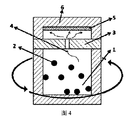
本発明の各実施例に使用されたミリングポットは図4に示すように、環状矢印がミリングポットの回転方向を示し、チャンバー1の中でボール2と研磨待ちの物質を研磨し、研磨物質がガス化した後、気相の研磨待ち物質4がフィルタ3の通路を経由して上昇した後、ミリングポットトップの基材6と接触し、基材6の上に気相蒸着を行い、堆積物5を得た。
As shown in FIG. 4, the milling pot used in each embodiment of the present invention indicates that the circular arrow indicates the rotation direction of the milling pot, the
(実施例1)
アルゴン雰囲気下のグローブボックスでは、1gのMg(AlH4)2と100 mLのエーテルをフラスコに入れて60min攪拌した後、40℃まで蒸発乾固させて1.8gの白い粉末(即ち一次元錯体重合体)を得た。フィルタ及び基材付きのミリングポットに当該白い粉末を入れ、常温下で、遊星ミリングマシンでボール・材料比が60:1、回転数が500rpmの条件でミリングを1.5時間行い、機械力にて物理的気相蒸着を駆動して基材上で堆積物(即ち錯体重合体のナノロッド)を得た。最後に基材上の堆積物に対し、90℃で熱処理を15分を行って最終的生成物(即ち金属錯体水素化物ナノロッド)を得た。
Example 1
In a glove box under an argon atmosphere, 1 g of Mg (AlH 4 ) 2 and 100 mL of ether are placed in a flask and stirred for 60 min, then evaporated to dryness to 40 ° C. and 1.8 g of white powder (ie, one-dimensional complex). Polymer) was obtained. The white powder is put in a milling pot with a filter and a substrate, and at room temperature, milling is performed for 1.5 hours with a planetary milling machine at a ball / material ratio of 60: 1 and a rotation speed of 500 rpm. Then, physical vapor deposition was driven to obtain a deposit (that is, a complex polymer nanorod) on the substrate. Finally, the deposit on the substrate was heat-treated at 90 ° C. for 15 minutes to obtain the final product (ie, metal complex hydride nanorods).
各調製段階のサンプルに対し、それぞれX線回折、フーリエ変換赤外吸収と走査型電子顕微鏡テストを行った。 The X-ray diffraction, Fourier transform infrared absorption, and scanning electron microscope tests were performed on the samples at each preparation stage.
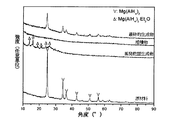
図1は、X線回折のテスト結果を示す。原材料(即ちMg(AlH4)2)の回折ピークとMg(AlH4)2の標準回折ピークとは一致した。そして、エーテルと混ぜて蒸発乾固させた後の白い粉末(蒸発乾固生成物)はMg(AlH4)2・Et2Oの標準回折ピークを呈した。ミリングを経て基材上で得た堆積物については、堆積物のX線回折パターンの中で回折ピークを観測することができず、堆積物を90℃で熱処理した(最終的生成物を得た)後、再度Mg(AlH4)2の標準回折ピークを観測できた。 FIG. 1 shows the X-ray diffraction test results. The diffraction peak of the raw material (namely, Mg (AlH 4 ) 2 ) and the standard diffraction peak of Mg (AlH 4 ) 2 coincided. The white powder (evaporated dry product) after mixing with ether and evaporating to dryness exhibited a standard diffraction peak of Mg (AlH 4 ) 2 .Et 2 O. For the deposit obtained on the substrate through milling, no diffraction peak could be observed in the X-ray diffraction pattern of the deposit, and the deposit was heat treated at 90 ° C. (the final product was obtained) After that, the standard diffraction peak of Mg (AlH 4 ) 2 could be observed again.
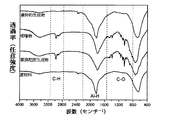
図2はフーリエ変換赤外吸収テストの結果を示す。原材料は、Al−H結合の吸収ピークしか見えなかった。そしてエーテルと混ぜて蒸発乾固させた後の白い粉末(蒸発乾固生成物)の中では、Al−H結合の吸収ピークのほか、C−H結合とC−O結合の吸収ピークも観測できた。ミリングを経て基材上で得た堆積物では、堆積物のフーリエ変換赤外吸収スペクトルは、蒸発乾固後に得た白い粉末と比べて基本的に一致した。堆積物を90℃で熱処理した(最終的生成物を得た)後、C−H結合とC−O結合の赤外吸収ピークが消え、Mg(AlH4)2でのAl−H結合の吸収ピークしか見えなくなった。 FIG. 2 shows the results of a Fourier transform infrared absorption test. As the raw material, only an absorption peak of Al—H bond was seen. In the white powder (evaporated dry product) after mixing with ether and evaporating to dryness, the absorption peak of C—H bond and C—O bond can be observed in addition to the absorption peak of Al—H bond. It was. In the deposit obtained on the substrate through milling, the Fourier transform infrared absorption spectrum of the deposit was basically consistent with the white powder obtained after evaporation to dryness. After heat-treating the deposit at 90 ° C. (to obtain the final product), the infrared absorption peaks of C—H bonds and C—O bonds disappear, and the absorption of Al—H bonds in Mg (AlH 4 ) 2 I can only see the peak.
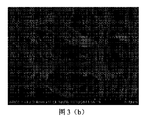
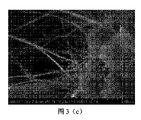
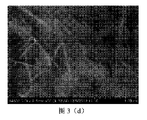
図3は、走査型電子顕微鏡の写真を示す。図3(a)によると、原材料がサイズや形状が異なる粒子を呈したことは分かった。エーテルと混ぜて蒸発乾固後の白い粉末(蒸発乾固生成物)は、図3(b)に示すように、直径が約1ミクロン、かつ長さが10ミクロンを超える均一なミクロンロッドであった。機械力で物理的気相蒸着を駆動して得た堆積物は、図3(c)に示すように直径が20〜40ナノメートル、かつ長さが1ミクロンを超えるナノロッドであった。堆積物を90℃熱処理して最終的生成物を得た。図3(d)に示すように、最終的生成物はナノロッド形態を保持した。 FIG. 3 shows a photograph of a scanning electron microscope. According to Fig.3 (a), it turned out that the raw material exhibited the particle | grains from which size and a shape differ. The white powder (evaporated dry product) after mixing with ether and evaporating to dryness is a uniform micron rod having a diameter of about 1 micron and a length of more than 10 microns, as shown in FIG. 3 (b). It was. Deposits obtained by driving physical vapor deposition with mechanical force were nanorods having a diameter of 20 to 40 nanometers and a length of more than 1 micron as shown in FIG. The deposit was heat treated at 90 ° C. to obtain the final product. As shown in FIG. 3 (d), the final product retained the nanorod form.
上記の結果によると次のことは分かった。Mg(AlH4)2がまずエーテルとMg(AlH4)2・Et2Oミクロンロッドを形成した後、高エネルギーメカニカルミリング過程で物理的気相蒸着を行って、Mg(AlH4)2・Et2Oナノロッド(即ち堆積物)を形成し、さらに熱処理を通じてエーテルを除去し、最終的にMg(AlH4)2ナノロッドを形成した。 According to the above results, the following was found. Mg (AlH 4 ) 2 first forms an ether and Mg (AlH 4 ) 2 .Et 2 O micron rod, and then physical vapor deposition is performed in a high energy mechanical milling process to produce Mg (AlH 4 ) 2 .Et. 2 O nanorods (ie, deposits) were formed, and the ether was further removed through heat treatment to finally form Mg (AlH 4 ) 2 nanorods.
図4に示すように、Mg(AlH4)2・Et2Oミクロンロッドがボール1とミリングポットのチャンバー1の中で激突してガス化し、気相Mg(AlH4)2・Et2Oがフィルタ3の通路を通して基材6上で堆積し、Mg(AlH4)2・Et2Oナノロッドを形成した。
As shown in FIG. 4, the Mg (AlH 4 ) 2 .Et 2 O micron rod crashes in the
(実施例2)
アルゴン雰囲気下のグローブボックスでは、0.5gのMg(AlH4)2と60 mLのメチルtert-ブチルエーテルをフラスコに入れて40min攪拌した後、45℃まで蒸発乾固させて0.9gの白い粉末を得た。図4に示すミリングポットの中に当該白い粉末を入れた。氷水浴下で横フライス盤の中でボール・材料比が80:1、回転数が450rpmの条件でミリングを1時間行うことで白い粉末サンプルをガス化・堆積させて基材上の堆積物を収集し、さらに堆積物を95℃で10分間熱処理して最終的生成物を得た。
(Example 2)
In a glove box under an argon atmosphere, 0.5 g of Mg (AlH 4 ) 2 and 60 mL of methyl tert-butyl ether were placed in a flask and stirred for 40 min, then evaporated to dryness to 45 ° C. and 0.9 g of white powder. Got. The white powder was put in the milling pot shown in FIG. The powder on the substrate is collected by gasifying and depositing a white powder sample by milling for 1 hour in a horizontal milling machine under an ice-water bath at a ball-to-material ratio of 80: 1 and a rotation speed of 450 rpm. Further, the deposit was heat-treated at 95 ° C. for 10 minutes to obtain a final product.
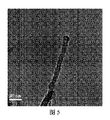
図5は最終的生成物の透過型電子顕微鏡写真である。生成物は直径が20ナノメートル、長さが200ナノメートルを超えるナノロッドであった。 FIG. 5 is a transmission electron micrograph of the final product. The product was a nanorod with a diameter greater than 20 nanometers and a length greater than 200 nanometers.
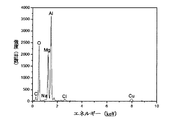
図6は最終的生成物の光電子エネルギースペクトルを示す。図6によると、MgとAlが主要元素であり、最終的生成物の純度が約95%であった。 FIG. 6 shows the photoelectron energy spectrum of the final product. According to FIG. 6, Mg and Al were the main elements, and the purity of the final product was about 95%.
(実施例3)
真空グローブボックスでは、2gのMg(AlH4)2と150 mLのエーテルをフラスコに入れて60min攪拌した後、40 ℃まで蒸発乾固させて3.6gの白い粉末を得た。フィルタ及び基材付きのミリングポットの中に当該白い粉末を入れた。氷水浴下で、遊星ミリングマシンでボール・材料比が50:1、回転数が550rpmの条件でミリングを2時間行うことで白い粉末をガス化・堆積させて基材上の堆積物を収集し、さらに堆積物を6h真空化処理して最終的生成物を得た。
(Example 3)
In a vacuum glove box, 2 g of Mg (AlH 4 ) 2 and 150 mL of ether were placed in a flask and stirred for 60 min, and then evaporated to dryness to 40 ° C. to obtain 3.6 g of white powder. The white powder was placed in a milling pot with a filter and a substrate. In an ice-water bath, milling is performed for 2 hours with a planetary milling machine under a ball-to-material ratio of 50: 1 and a rotational speed of 550 rpm to gasify and deposit white powder and collect deposits on the substrate. Further, the deposit was vacuum-treated for 6 hours to obtain a final product.
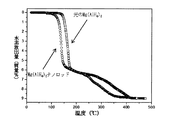
図7は原材料(即ちMg(AlH4)2)と最終的生成物のTPDスペクトルを示す。図7によると、最終的生成物の水素放出ピーク温度が原材料より25℃下がった。 FIG. 7 shows the TPD spectrum of the raw material (ie Mg (AlH 4 ) 2 ) and the final product. According to FIG. 7, the hydrogen release peak temperature of the final product was 25 ° C. below the raw material.
図8は、原材料と最終的生成物の体積水素放出曲線を示す。図8によると、最終的生成物は、450℃時の総水素放出量が8.7wt%であり、純度が94%であった。 FIG. 8 shows the volumetric hydrogen release curves of the raw materials and the final product. According to FIG. 8, the final product had a total hydrogen release at 8.7 ° C. of 8.7 wt% and a purity of 94%.
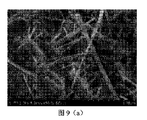
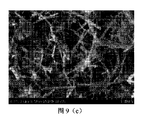
図9(a)は室温下での最終的生成物の走査型電子顕微鏡写真、図9(b)は200℃での最終的生成物の走査型電子顕微鏡写真、図9(c)は400℃での最終的生成物の走査型電子顕微鏡写真であり、これらの図によると、水素放出過程において最終的生成物の形態が基本的に不変を保持した。 9 (a) is a scanning electron micrograph of the final product at room temperature, FIG. 9 (b) is a scanning electron micrograph of the final product at 200 ° C., and FIG. 9 (c) is 400 ° C. Scanning electron micrographs of the final product at, and according to these figures, the final product morphology remained essentially unchanged during the hydrogen evolution process.
(実施例4)
アルゴン雰囲気下のグローブボックスでは、1gのLiBH4と100mLのメチルtert−ブチルエーテルをフラスコに入れて60min攪拌した後、−10℃と10Pa未満の気圧下で蒸発乾固させて4.3gの白い粉末を得た。フィルタ及び基材付きのミリングポットの中に当該白い粉末を入れた。ドライアイス浴下で、遊星ミリングマシンでボール・材料比が50:1、回転数が550rpmの条件でミリングを0.5時間行うことで白い粉末をガス化させて基材上で堆積させ、さらに基材上の堆積物を収集して最終的生成物を得た。
Example 4
In a glove box under an argon atmosphere, 1 g of LiBH 4 and 100 mL of methyl tert-butyl ether were placed in a flask and stirred for 60 min, and then evaporated to dryness at −10 ° C. and a pressure of less than 10 Pa to obtain 4.3 g of white powder. Got. The white powder was placed in a milling pot with a filter and a substrate. In a dry ice bath, milling is performed for 0.5 hours with a planetary milling machine under a ball-to-material ratio of 50: 1 and a rotational speed of 550 rpm, whereby white powder is gasified and deposited on the substrate. The deposit on the substrate was collected to obtain the final product.
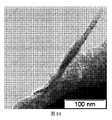
図10は最終的生成物の透過型電子顕微鏡写真である。生成物は直径が20ナノメートルのロッドであった。 FIG. 10 is a transmission electron micrograph of the final product. The product was a 20 nanometer diameter rod.
(実施例5)
真空グローブボックスでは、1gのEu(BH4)2と100mLのテトラヒドロフラン(THF)をフラスコに入れて60min攪拌した後、30 ℃と5Pa未満の気圧下で蒸発乾固させて固体粉末を得た。フィルタ及び基材付きのミリングポットの中に当該固体粉末を入れた。室温下で横フライス盤の上でボール・材料比が70:1、回転数が550rpmの条件でミリングを2時間行うことで基材上で堆積させ、さらに基材上の堆積物を収集し、80℃の条件下で15分間熱処理して最終的生成物を得た。最終的生成物は直径が30ナノメートルのナノロッドであった。
(Example 5)
In a vacuum glove box, 1 g of Eu (BH 4 ) 2 and 100 mL of tetrahydrofuran (THF) were placed in a flask and stirred for 60 min, and then evaporated to dryness at 30 ° C. and an atmospheric pressure of less than 5 Pa to obtain a solid powder. The solid powder was placed in a milling pot with a filter and a substrate. Milling was performed for 2 hours on a horizontal milling machine at room temperature under a ball-to-material ratio of 70: 1 and a rotation speed of 550 rpm, and the deposit on the substrate was collected. The final product was obtained by heat treatment at 15 ° C. for 15 minutes. The final product was a nanorod with a diameter of 30 nanometers.
(実施例6)
真空グローブボックスでは、1gのYb(BH4)2と100mLのテトラヒドロフラン(THF)をフラスコに入れて60min攪拌した後、30℃と5Pa未満の気圧下で蒸発乾固させて固体粉末を得た。フィルタ及び基材付きのミリングポットの中に当該固体粉末を入れた。氷水浴下で横フライス盤の上でボール・材料比が70:1、回転数が550rpmの条件でミリングを2時間行うことで基材上で堆積させ、さらに基材上の堆積物を収集し、80℃の条件下で15分間熱処理して最終的生成物を得た。最終的生成物は直径が25ナノメートルのナノロッドであった。
(Example 6)
In a vacuum glove box, 1 g of Yb (BH 4 ) 2 and 100 mL of tetrahydrofuran (THF) were placed in a flask and stirred for 60 minutes, and then evaporated to dryness at 30 ° C. and an atmospheric pressure of less than 5 Pa to obtain a solid powder. The solid powder was placed in a milling pot with a filter and a substrate. Milling is performed on a horizontal milling machine under an ice-water bath on a horizontal milling machine under conditions of a ball-to-material ratio of 70: 1 and a rotational speed of 550 rpm for 2 hours, and further deposits on the substrate are collected. The final product was obtained by heat treatment at 80 ° C. for 15 minutes. The final product was a nanorod with a diameter of 25 nanometers.
Claims (5)
(1)金属錯体水素化物を有機溶剤と混合した後に乾燥し、一次元錯体重合体を得る工程と、
(2)前記工程(1)で得た一次元錯体重合体に対してメカニカルミリングを行い、メカニカルミリングを行う中で、ガス化した一次元錯体重合体を基材上に堆積・成長させて錯体重合体のナノロッドを得る工程と、
(3)前記工程(2)で得た錯体重合体のナノロッド内の有機リガンドを除去し、金属錯体水素化物ナノロッドを得る工程と、を含み、
前記金属錯体水素化物が金属アルミ水素化物又は金属ホウ水素化物であることを特徴とする金属錯体水素化物ナノロッドを調製する方法。 A method for preparing metal complex hydride nanorods, comprising:
(1) mixing a metal complex hydride with an organic solvent and then drying to obtain a one-dimensional complex polymer;
(2) Mechanical milling is performed on the one-dimensional complex polymer obtained in the step (1), and during the mechanical milling, the gasified one-dimensional complex polymer is deposited and grown on a substrate to form a complex. Obtaining a nanorod of a polymer;
(3) The organic ligand is removed in nanorods of the step (2) obtained in complex polymers, seen including a step of obtaining the metal complex hydrides nanorods, a,
A method for preparing a metal complex hydride nanorod, wherein the metal complex hydride is a metal aluminum hydride or metal borohydride .
The metal ligand hydride nanorod is obtained by removing the organic ligand in the nanorod of the complex polymer obtained in the step (2) by a method of heating or vacuuming in the step (3). A method for preparing the metal complex hydride nanorod described in 1.
Applications Claiming Priority (3)
| Application Number | Priority Date | Filing Date | Title |
|---|---|---|---|
| CN201310335388.6A CN103407964B (en) | 2013-08-02 | 2013-08-02 | Method for preparing metal coordination hydride nanorods |
| CN201310335388.6 | 2013-08-02 | ||
| PCT/CN2013/086220 WO2015014034A1 (en) | 2013-08-02 | 2013-10-30 | Preparation method for nano-rod of metal-coordinated hydride |
Publications (2)
| Publication Number | Publication Date |
|---|---|
| JP2015529624A JP2015529624A (en) | 2015-10-08 |
| JP5890593B2 true JP5890593B2 (en) | 2016-03-22 |
Family
ID=49601026
Family Applications (1)
| Application Number | Title | Priority Date | Filing Date |
|---|---|---|---|
| JP2015528865A Active JP5890593B2 (en) | 2013-08-02 | 2013-10-30 | Method for preparing metal complex hydride nanorods |
Country Status (4)
| Country | Link |
|---|---|
| US (1) | US9580316B2 (en) |
| JP (1) | JP5890593B2 (en) |
| CN (1) | CN103407964B (en) |
| WO (1) | WO2015014034A1 (en) |
Families Citing this family (4)
| Publication number | Priority date | Publication date | Assignee | Title |
|---|---|---|---|---|
| CN104649229A (en) * | 2015-01-23 | 2015-05-27 | 上海大学 | Method for preparing nanometer limited range magnesium-based hydrogen storage material |
| CN108946664B (en) * | 2018-07-31 | 2020-06-09 | 浙江大学 | A kind of metal coordination hydride hydrate and its preparation method and application |
| CN111704156B (en) * | 2020-07-06 | 2022-07-15 | 宁夏大学 | Transition metal alanate and preparation method thereof |
| CN119500015B (en) * | 2024-11-25 | 2025-10-24 | 浙江大学 | A method and reaction device for preparing nanofibrous lithium borohydride |
Family Cites Families (8)
| Publication number | Priority date | Publication date | Assignee | Title |
|---|---|---|---|---|
| CN100347892C (en) | 2004-11-19 | 2007-11-07 | 南开大学 | Alkali metal coordination hydride hydrogen storage material and preparing method and uses thereof |
| US7608233B1 (en) * | 2007-02-12 | 2009-10-27 | Sandia Corporation | Direct synthesis of calcium borohydride |
| US8147788B1 (en) * | 2007-05-24 | 2012-04-03 | Sandia Corporation | Direct synthesis of magnesium borohydride |
| US8153020B1 (en) * | 2008-03-19 | 2012-04-10 | University Of South Florida | Hydrogen-storing hydride complexes |
| CN101565168B (en) * | 2009-02-19 | 2011-05-04 | 浙江大学 | Preparation method of multi-light metal coordination aluminum hydride hydrogen storage material |
| US9079136B2 (en) * | 2009-05-21 | 2015-07-14 | Battelle Memorial Institute | Thin, porous metal sheets and methods for making the same |
| JP2011020901A (en) * | 2009-07-16 | 2011-02-03 | Toyota Central R&D Labs Inc | Hydride complex and hydrogen storage material |
| CN102167286A (en) * | 2011-03-23 | 2011-08-31 | 浙江大学 | Multi-element light-weight coordination hydride hydrogen-storing material as well as preparation method and application thereof |
-
2013
- 2013-08-02 CN CN201310335388.6A patent/CN103407964B/en not_active Expired - Fee Related
- 2013-10-30 WO PCT/CN2013/086220 patent/WO2015014034A1/en not_active Ceased
- 2013-10-30 JP JP2015528865A patent/JP5890593B2/en active Active
- 2013-10-30 US US14/380,662 patent/US9580316B2/en not_active Expired - Fee Related
Also Published As
| Publication number | Publication date |
|---|---|
| US9580316B2 (en) | 2017-02-28 |
| WO2015014034A1 (en) | 2015-02-05 |
| CN103407964A (en) | 2013-11-27 |
| CN103407964B (en) | 2015-04-15 |
| JP2015529624A (en) | 2015-10-08 |
| US20160244329A1 (en) | 2016-08-25 |
Similar Documents
| Publication | Publication Date | Title |
|---|---|---|
| Wang et al. | Study on catalytic effect and mechanism of MOF (MOF= ZIF-8, ZIF-67, MOF-74) on hydrogen storage properties of magnesium | |
| Zhang et al. | Facile synthesis of small MgH2 nanoparticles confined in different carbon materials for hydrogen storage | |
| Lu et al. | Two-dimensional vanadium nanosheets as a remarkably effective catalyst for hydrogen storage in MgH2 | |
| Li et al. | Effect of the hierarchical Co@ C nanoflowers on the hydrogen storage properties of MgH2 | |
| Xie et al. | Formation of multiple-phase catalysts for the hydrogen storage of Mg nanoparticles by adding flowerlike NiS | |
| Seayad et al. | Recent advances in hydrogen storage in metal‐containing inorganic nanostructures and related materials | |
| Chen et al. | High loading nanoconfinement of V-decorated Mg with 1 nm carbon shells: hydrogen storage properties and catalytic mechanism | |
| Li et al. | In situ preparation of nanocrystalline Ni@ C and its effect on hydrogen storage properties of MgH2 | |
| Li et al. | Core–shell nanostructured magnesium-based hydrogen storage materials: a critical review | |
| Xie et al. | Effect of substitution of Nd for Mg on the hydrogen storage properties of Mg2Ni alloy | |
| Setijadi et al. | MgH2 with different morphologies synthesized by thermal hydrogenolysis method for enhanced hydrogen sorption | |
| Zhang et al. | Controllable fabrication of Ni-based catalysts and their enhancement on desorption properties of MgH2 | |
| CN110116990B (en) | In-situ preparation method of nano magnesium hydride | |
| Liang et al. | Study of the synthesis of PMMA-Mg nanocomposite for hydrogen storage application | |
| Xie et al. | Catalytic effects of decorating AlV3 nanocatalyst on hydrogen storage performance of Mg@ Mg17Al12 nanocomposite: experimental and theoretical study | |
| Zhang et al. | Superior catalytic effect of facile synthesized LaNi4. 5Mn0. 5 submicro-particles on the hydrogen storage properties of MgH2 | |
| Gao et al. | Confined NaAlH 4 nanoparticles inside CeO 2 hollow nanotubes towards enhanced hydrogen storage | |
| JP5890593B2 (en) | Method for preparing metal complex hydride nanorods | |
| Song et al. | Improvement in the hydrogen storage properties of Mg by mechanical grinding with Ni, Fe and V under H2 atmosphere | |
| Zhang et al. | Synthesis of magnesium nanoparticles with superior hydrogen storage properties by acetylene plasma metal reaction | |
| Tarasov et al. | Composite materials with 2D graphene structures: Applications for hydrogen energetics and catalysis with hydrogen participation | |
| Song et al. | Influence of the phase evolution and hydrogen storage behaviors of Mg-based alloy catalyzed by Gd-Fe compound | |
| Shao et al. | Preparation of the Mg2Ni compound from ultrafine particles and its hydrogen storage properties | |
| Zhang et al. | Reversible hydrogen storage in AlH3− LiNH2 system: L. Zhang et al. | |
| Zhang et al. | Enhancing hydrogen sorption performances of MgH2 by in-situ introduction of molybdate derived FeMo nano catalysts |
Legal Events
| Date | Code | Title | Description |
|---|---|---|---|
| A131 | Notification of reasons for refusal |
Free format text: JAPANESE INTERMEDIATE CODE: A131 Effective date: 20151020 |
|
| A521 | Request for written amendment filed |
Free format text: JAPANESE INTERMEDIATE CODE: A523 Effective date: 20160118 |
|
| TRDD | Decision of grant or rejection written | ||
| A01 | Written decision to grant a patent or to grant a registration (utility model) |
Free format text: JAPANESE INTERMEDIATE CODE: A01 Effective date: 20160209 |
|
| A61 | First payment of annual fees (during grant procedure) |
Free format text: JAPANESE INTERMEDIATE CODE: A61 Effective date: 20160218 |
|
| R150 | Certificate of patent or registration of utility model |
Ref document number: 5890593 Country of ref document: JP Free format text: JAPANESE INTERMEDIATE CODE: R150 |
|
| R250 | Receipt of annual fees |
Free format text: JAPANESE INTERMEDIATE CODE: R250 |
|
| R250 | Receipt of annual fees |
Free format text: JAPANESE INTERMEDIATE CODE: R250 |
|
| R250 | Receipt of annual fees |
Free format text: JAPANESE INTERMEDIATE CODE: R250 |
|
| R250 | Receipt of annual fees |
Free format text: JAPANESE INTERMEDIATE CODE: R250 |
|
| R250 | Receipt of annual fees |
Free format text: JAPANESE INTERMEDIATE CODE: R250 |