JP5648552B2 - Destination control program, destination control device, and destination control method - Google Patents
Destination control program, destination control device, and destination control method Download PDFInfo
- Publication number
- JP5648552B2 JP5648552B2 JP2011061773A JP2011061773A JP5648552B2 JP 5648552 B2 JP5648552 B2 JP 5648552B2 JP 2011061773 A JP2011061773 A JP 2011061773A JP 2011061773 A JP2011061773 A JP 2011061773A JP 5648552 B2 JP5648552 B2 JP 5648552B2
- Authority
- JP
- Japan
- Prior art keywords
- destination
- client
- reply
- identification information
- Prior art date
- Legal status (The legal status is an assumption and is not a legal conclusion. Google has not performed a legal analysis and makes no representation as to the accuracy of the status listed.)
- Expired - Fee Related
Links
Images







Landscapes
- Information Transfer Between Computers (AREA)
- Data Exchanges In Wide-Area Networks (AREA)
Description
本発明は、宛先制御プログラム等に関する。 The present invention relates to a destination control program and the like.
近年、電子メールは、利便性の高い情報通知手段となっている。例えば、ユーザは、メーリングリスト(Mailing List)を利用して、メールを送信することで、効率的に各種の情報を複数のユーザに通知することができる。以下では、メールXを送信するユーザを送信者Mとし、メールXを受信するユーザを、ユーザA、B、Cとする。 In recent years, electronic mail has become a highly convenient information notification means. For example, a user can efficiently notify various users of various types of information by sending mail using a mailing list. Hereinafter, a user who transmits the mail X is a sender M, and a user who receives the mail X is a user A, B, or C.
ユーザAは、メールXの内容を送信者Mの宛先(具体的には、ユーザA、B、C)以外のユーザDにも知らせた方が良いと判断し、メールXをユーザDへ転送する場合がある。そして、例えば、ユーザAが、メールXをユーザDに転送した後、送信者Xが初めに指定したユーザA、B、Cいずれかが、メールXに対して返信する場合がある。 The user A determines that it is better to inform the user D other than the destination of the sender M (specifically, the users A, B, and C) and forwards the mail X to the user D. There is a case. Then, for example, after the user A transfers the mail X to the user D, one of the users A, B, and C that is first designated by the sender X may reply to the mail X.
なお、従来技術1では、複数の宛先を設定してメールを送信する送信者の宛先を、メール当初の宛先に自動設定することで、複数の宛先を管理する管理者の負担を軽減するという技術が開示されている。 In the prior art 1, a technique for reducing the burden on an administrator who manages a plurality of destinations by automatically setting a destination of a sender who sends a mail by setting a plurality of destinations as the original destination of the mail. Is disclosed.
しかしながら、上述した従来技術では、元メールの宛先となるユーザが転送した先である、当初の宛先に含まれないユーザは、元メールのその後のやり取りを知ることができないという問題があった。 However, the above-described conventional technique has a problem in that a user not included in the original destination, which is a destination transferred by the user who is the destination of the original mail, cannot know subsequent exchanges of the original mail.
例えば、上記のように、メールXの宛先以外のユーザDへ、ユーザA、B、CのいずれかがメールXを転送した場合に、複数のユーザ間で返信機能を用いて行う「その後のメールXに関するやりとり」をユーザDが知ることが難しい。なぜなら、返信機能で宛先に設定される宛先は、メールXの送信者MとメールXの宛先であるユーザA、B、Cのいずれかであるからである。 For example, as described above, when any one of the users A, B, and C transfers the mail X to the user D other than the destination of the mail X, the “subsequent mail” is performed using a reply function among a plurality of users. It is difficult for the user D to know “the exchange about X”. This is because the destination set as the destination in the reply function is either the sender M of the mail X or the users A, B, and C that are the destination of the mail X.
よって、メールXのその後のやり取りをユーザDへも伝えるためには、例えば、ユーザDへ転送を行ったユーザAが、メールXの返信を行う場合であっても、手動でユーザDを追加する必要がある。つまり、ユーザAに操作が強いられる。また、転送処理を行ったユーザA以外のユーザB、CがメールXを返信する場合には、宛先にユーザDが設定されないので、ユーザDは、ユーザB、Cが返信したメールを受信できない。 Therefore, in order to convey the subsequent exchange of the mail X to the user D, for example, even when the user A who has transferred to the user D replies the mail X, the user D is manually added. There is a need. That is, the user A is forced to operate. Further, when the users B and C other than the user A who performed the transfer process return the mail X, the user D is not set as the destination, so the user D cannot receive the mail returned by the users B and C.
なお、送信者Mは、複数の宛先を指定するとして説明を行ったが、宛先が一つであっても同様の問題は発生する。送信者Mにより予め指定された宛先(ユーザA)以外のユーザ(ユーザD)へメールが転送された場合に、ユーザDが、その後のやり取りを知るためには、ユーザAがユーザDを宛先に追加する操作が必要とされる。 The sender M has been described as specifying a plurality of destinations, but the same problem occurs even if there is only one destination. When the mail is forwarded to a user (user D) other than the destination (user A) designated in advance by the sender M, in order for the user D to know the subsequent exchange, the user A sets the user D as the destination. An operation to add is required.
ここで、従来技術1によれば、メールの宛先に、メールを送信した送信者の宛先が追加されるものの、メールの宛先となるユーザが転送した当初の宛先に含まれないユーザが宛先に登録されるものではない。このため、従来技術1では、ユーザの宛先にユーザDが登録されることはなく、ユーザDは「その後のメールXに関するやりとり」を知ることができない。 Here, according to the prior art 1, although the destination of the sender who sent the mail is added to the destination of the mail, a user who is not included in the original destination transferred by the user who is the destination of the mail is registered in the destination Is not to be done. For this reason, in the prior art 1, the user D is not registered at the user's destination, and the user D cannot know “the subsequent exchange regarding the mail X”.
開示の技術は、上記に鑑みてなされたものであって、メールの宛先となるユーザが転送した宛先に含まれないユーザであっても、その後のメールのやり取りを知ることができる宛先制御プログラム等を提供することを目的とする。 The disclosed technology has been made in view of the above, and is a destination control program that can know subsequent mail exchange even if the user who is the mail destination is not included in the forwarded destination The purpose is to provide.
開示の宛先制御プログラムは、コンピュータに、クライアントからメール識別情報を有するメールを受け付け、メールのメール識別情報と、メールの送信元アドレスと、メールの宛先アドレスとを対応づけて記憶装置に記憶させる。また、コンピュータに、クライアントから受け付けたメールが転送メールか否かを判定させ、転送メールの場合には、前記メール識別情報に対応づけて、該転送メールの転送先アドレスを記憶装置に記憶させる。また、コンピュータにクライアントから受け付けたメールが返信メールか否かを判定させる。コンピュータに、返信メールの場合には、前記記憶装置を参照させ、該返信メールのメール識別情報に対応する複数の宛先アドレスおよび転送先アドレスを、前記返信メールの宛先に設定し、設定された返信メールの宛先のクライアントに返信メールを通知させる。 The disclosed destination control program accepts a mail having mail identification information from a client and causes the computer to store the mail identification information of the mail, the mail source address, and the mail destination address in association with each other in the storage device. In addition, the computer determines whether or not the mail received from the client is a forward mail, and in the case of the forward mail, the forwarding address of the forward mail is stored in the storage device in association with the mail identification information. Further, the computer determines whether the mail received from the client is a reply mail. In the case of a reply mail, the computer is referred to the storage device, a plurality of destination addresses and forwarding addresses corresponding to the mail identification information of the reply mail are set as the destination of the reply mail, and the set reply Notify the client of the mail address of the reply mail.
開示の宛先制御プログラムによれば、メールの宛先となるユーザが転送した宛先に含まれないユーザであっても、その後のメールのやり取りを知ることができるという効果を奏する。 According to the disclosed destination control program, even if the user who is the destination of the mail is not included in the transferred destination, it is possible to know the subsequent mail exchange.
以下に、本願の開示する宛先制御プログラム、宛先制御装置および宛先制御方法の実施例を図面に基づいて詳細に説明する。なお、この実施例によりこの発明が限定されるものではない。 Hereinafter, embodiments of a destination control program, a destination control device, and a destination control method disclosed in the present application will be described in detail with reference to the drawings. Note that the present invention is not limited to the embodiments.
図1は、本実施例にかかるメールシステムの構成を示す図である。図1に示すように、このメールシステムは、サーバ100、クライアント50a,50bを有する。サーバ100、クライアント50a,50bは、ネットワーク40に接続される。なお、ここでは一例として、クライアント50a,50bを示すが、他のクライアントを含んでもよい。なお、クライアント50a、50bを総称する場合、クライアント50とよぶことにする。
FIG. 1 is a diagram illustrating a configuration of a mail system according to the present embodiment. As shown in FIG. 1, the mail system includes a
クライアント50は、サーバ100にアクセスし、他のクライアントとの間でメールのやり取りを行う装置である。ユーザは、クライアント50を操作して、メールの送信(返送、転送を含む)と受信とを行う。また、複数のユーザにメールを送信する場合には、メーリングリスト等を利用して、複数の宛先を指定し、メールを送信する。
The client 50 is a device that accesses the
サーバ100は、クライアント間のメールのやり取りを管理するサーバである。特に、サーバ100は、ひとつまたは複数の宛先へ送信されたメールが、当初の宛先以外に転送された場合に、元メールのメッセージID(Identification)と、転送先アドレスとを対応づけておく。そして、サーバ100は、元メールのメッセージIDと、転送先アドレスとの関係を利用して、元メールから派生したメールの宛先に転送先アドレスを追加する。このような処理をサーバ100が実行することで、宛先となるユーザが宛先以外に転送した先のユーザであっても、その後のメールのやり取りを知ることができる。
The
ここで、メッセージIDについて説明する。サーバ100は、メールの送信(返信、転送を含む)を行なう場合には、メールのヘッダに、メールを一意に識別するメッセージIDを含める。メールを送信する場合には、ヘッダに唯一のメッセージIDが付与される。そして、該メールが返信、転送される場合には、返信メール、転送メールに対応する新たなメッセージIDが、返信元/転送元である該メールのメッセージIDに続くメッセージであることがわかるようにヘッダに含まれる。なお、返信/転送のおおもとである最初のメールに相当するメッセージIDを、元メールメッセージIDと表記する。
Here, the message ID will be described. When sending mail (including reply and transfer), the
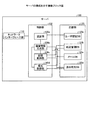
次に、図1に示したサーバ100の構成について説明する。図2は、サーバの構成を示す機能ブロック図である。図2に示すように、このサーバ100は、ネットワークインターフェース部110、記憶部120、制御部130を有する。
Next, the configuration of the
ネットワークインターフェース部110は、クライアント50a、50bとの間でデータ通信を行う装置である。例えば、ネットワークインターフェース部110は、通信カードや、通信装置に対応する。後述の制御部130は、ネットワークインターフェース部110を介して、クライアント50a、50bとデータ通信を行う。 The network interface unit 110 is a device that performs data communication with the clients 50a and 50b. For example, the network interface unit 110 corresponds to a communication card or a communication device. The control unit 130 described later performs data communication with the clients 50a and 50b via the network interface unit 110.
記憶部120は、ユーザ認証DB(Data Base)120a、転送管理DB120b、メールDB120c、追加宛先DB120dを有する。この記憶部120は、例えば、RAM(Random Access Memory)、ROM(Read Only Memory)、フラッシュメモリ(Flash Memory)などの半導体メモリ素子、またはハードディスク、光ディスクなどの記憶装置に対応する。
The storage unit 120 includes a user authentication DB (Data Base) 120a, a
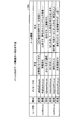
ユーザ認証DB120aは、ユーザを認証する場合に利用するデータを記憶する。図3は、ユーザ認証DBのデータ構造の一例を示す図である。図3に示すように、このユーザ認証DB120aは、ユーザID、パスワードを有する。 The user authentication DB 120a stores data used when authenticating a user. FIG. 3 is a diagram illustrating an example of a data structure of the user authentication DB. As shown in FIG. 3, the user authentication DB 120a has a user ID and a password.
転送管理DB120bは、あるメールを転送する転送メールに付与されるメッセージID、元メールのメッセージID、転送先アドレスを対応づけて記憶する。メールは送信される度に、ヘッダにメッセージIDが含まれる。また、返送時には、返送元から繋がる形で返送メールのメッセージIDがヘッダに追加される形となる。また、本発明では、転送時においても、転送元から繋がる形で転送メールのメッセージIDがヘッダに追加される形となる。返送/転送のおおもととなる最初のメールのメッセージIDが、元メールのメッセージIDとなる。図4は、転送管理DBのデータ構造の一例を示す図である。図4に示すように、この転送管理DB120bは、メッセージID、元メールメッセージID、転送先アドレスを有する。ここで、図4のメッセージIDは、転送メールに付与されるメッセージIDに対応する。図4の元メールメッセージIDは、元メールのメッセージIDに対応する。
The
メールDB120cは、各クライアント間でやり取りされるメールを記憶する。図5は、メールDBのデータ構造の一例を示す図である。図5に示すように、メールDBは、ユーザID、種別、メッセージID、メール情報を有する。メール情報には、タイトルと本文が含まれる。メールDB120cにおいては、ユーザIDは、ユーザを識別する情報であると共に、ユーザのアドレスに対応する。図5において、種別は、該当メールが送信であるか受信であるかを識別するものである。また、図5のメッセージIDは、そのメールが送信される際に生成された(そのメールに対応する)メッセージIDである。なお、メールDB120cに、ヘッダの情報をあわせて登録してもよい。
The
追加宛先DB120dは、元メールの当初の宛先に含まれていなかった転送先のアドレスを記憶する。図6は、追加宛先DBのデータ構造の一例を示す図である。図6に示すように、この追加宛先DB120dは、元メールメッセージIDと、追加アドレスとを対応づけて記憶する。この追加アドレスは、元メールの当初の宛先に含まれていなかった転送先のアドレスに対応するものである。 The additional destination DB 120d stores a transfer destination address that was not included in the original destination of the original mail. FIG. 6 is a diagram illustrating an example of the data structure of the additional destination DB. As shown in FIG. 6, the additional destination DB 120d stores the original mail message ID and the additional address in association with each other. This additional address corresponds to the forwarding address that was not included in the original destination of the original mail.
図2の説明に戻る。制御部130は、認証部130a、画面情報生成部130b、記憶制御部130c、宛先制御部140dを有する。制御部130は、ASIC(Application Specific Integrated Circuit)や、FPGA(Field Programmable Gate Array)などの集積装置に対応する。また、制御部130は、例えば、CPUやMPU(Micro Processing Unit)等の電子回路に対応する。 Returning to the description of FIG. The control unit 130 includes an authentication unit 130a, a screen information generation unit 130b, a storage control unit 130c, and a destination control unit 140d. The control unit 130 corresponds to an integrated device such as an application specific integrated circuit (ASIC) or a field programmable gate array (FPGA). The control unit 130 corresponds to an electronic circuit such as a CPU or MPU (Micro Processing Unit).
認証部130aは、クライアント50の認証を行う処理部である。認証部130aは、クライアント50からユーザIDとパスワードとの組を受け付け、同一の組が、ユーザ認証DB120aに存在する場合に、認証OKと判定する。これに対して、認証部130aは、クライアント50から受け付けたユーザIDとパスワードと同一の組が、ユーザ認証DB120aに存在しない場合には、認証NGと判定する。 The authentication unit 130 a is a processing unit that authenticates the client 50. The authentication unit 130a receives a set of a user ID and a password from the client 50, and determines that the authentication is OK when the same set exists in the user authentication DB 120a. On the other hand, if the same set of the user ID and password received from the client 50 does not exist in the user authentication DB 120a, the authentication unit 130a determines that the authentication is NG.
画面情報生成部130bは、各種の画面情報を生成し、クライアント50に送信する処理部である。例えば、画面情報生成部130bは、入力画面、認証エラー画面、メール表示画面、メッセージ作成画面等を生成する。 The screen information generation unit 130 b is a processing unit that generates various screen information and transmits it to the client 50. For example, the screen information generation unit 130b generates an input screen, an authentication error screen, a mail display screen, a message creation screen, and the like.
このうち、入力画面は、認証対象となるクライアント50に送信され、ユーザID、パスワードを入力させる画面である。入力画面に入力されたユーザID、パスワードは、上記認証部130aにより認証される。 Among these, the input screen is a screen that is transmitted to the client 50 to be authenticated and allows the user ID and password to be input. The user ID and password input on the input screen are authenticated by the authentication unit 130a.
認証エラー画面は、認証に失敗した旨を通知する画面である。画面情報生成部130bは、認証部130aが、認証NGと判定した場合に、認証エラー画面の情報を、クライアント50に送信する。 The authentication error screen is a screen for notifying that authentication has failed. The screen information generation unit 130b transmits the information on the authentication error screen to the client 50 when the authentication unit 130a determines that the authentication is NG.
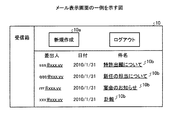
メール表示画面は、受信したメールの一覧に関する情報を表示する画面である。画面情報生成部130bは、ユーザIDとメールDB120cを基にしてメール表示画面を生成する。図7は、メール表示画面の一例を示す図である。このメール表示画面10は、メール表示画面の情報を受信したクライアント50の表示部に表示される。例えば、ユーザは、クライアント50を操作して、新規作成ボタン10aを押下することで、メッセージ作成要求を、サーバ100に行う。この場合には、新規にメールを作成する旨の情報がサーバ100に通知される。
The mail display screen is a screen that displays information related to the received mail list. The screen information generation unit 130b generates a mail display screen based on the user ID and the
また、ユーザはクライアント50を操作して、件名10bを選択して、件名10bのメール記事内容を表示した後に、メールの返信ボタン、転送ボタンなどを押下することで、メッセージ作成要求をサーバ100に行う。この場合には、メールの返信、転送を行う旨の情報がサーバ100に通知される。
In addition, the user operates the client 50 to select the subject 10b, display the mail article content of the subject 10b, and then press a mail reply button, a transfer button, and the like to send a message creation request to the
メッセージ作成画面は、ユーザがメッセージを作成する画面である。画面情報生成部130bは、クライアント50からメッセージ作成要求を受け付けた場合に、メッセージ作成画面の情報をクライアント50に送信する。図8は、メッセージ作成画面の一例を示す図である。このメッセージ作成画面20は、メッセージ作成画面の情報を受信したクライアント50の表示部に表示される。図8に示すように、このメッセージ作成画面20は、宛先20a、転送により追加された宛先20b、件名20c、本文入力欄20d、送信ボタン20eを有する。
The message creation screen is a screen on which the user creates a message. When receiving a message creation request from the client 50, the screen information generation unit 130 b transmits message creation screen information to the client 50. FIG. 8 is a diagram illustrating an example of a message creation screen. The message creation screen 20 is displayed on the display unit of the client 50 that has received the information on the message creation screen. As shown in FIG. 8, the message creation screen 20 includes a
宛先20aは、メールの宛先が設定される。この宛先には、例えば、従来の返信機能により、メールの送信元アドレスが設定される。転送により追加された宛先20bには、元メールの当初の宛先に含まれていない、元メールから派生したメールの転送先のアドレスが設定される。上記の宛先20a、転送により追加された宛先20bのアドレスは、後述の宛先制御部140dにより設定される。ユーザは、クライアント50を操作して、適宜、宛先20a、転送により追加された宛先20bの宛先を修正してもよい。
In the
件名20cは、件名を入力する領域である。本文入力欄20dは、記事本文を入力する領域である。送信ボタン20eは、メールを送信する場合に押下されるボタンである。ユーザは、クライアント50を操作して、件名20c、本文入力欄20d、に文章を入力し、送信ボタン20eを押下することで、メールの内容をサーバ100に通知する。
The subject 20c is an area for inputting a subject. The text input field 20d is an area for inputting an article text. The
画面情報生成部130bは、送信ボタンを押下され、メッセージ作成画面に入力された情報をクライアント50から取得した後に、ヘッダの生成を行う。画面情報生成部130bは、ヘッダを生成し、ユニークなメッセージIDを付与する。なお、メールが新規作成ではない場合、たとえば、返信メール、転送メールの場合には、返信元あるいは転送元メールのヘッダを取得し、ヘッダに取得したメッセージIDを加え、今回のメールがそのメールに続くメールであることを示すように、メッセージIDをヘッダに記載する。例えば、元メールのヘッダは、メールDB120cに記憶されている。
The screen information generation unit 130b generates a header after the transmission button is pressed and information input to the message creation screen is acquired from the client 50. The screen information generation unit 130b generates a header and assigns a unique message ID. If the mail is not newly created, for example, if it is a reply mail or forwarded mail, the header of the reply source or forwarded mail is acquired, the acquired message ID is added to the header, and the current mail is added to the mail. The message ID is written in the header to indicate that it is a subsequent mail. For example, the header of the original mail is stored in the
画面情報生成部130bは、ヘッダを生成した後、または、ヘッダにメッセージIDを追加した後に、メールDB120cにデータを登録する。例えば、画像情報生成部130bは、メールDB120cの該当するユーザIDの送信欄に、メッセージID、件名、記事本文を記録する。
The screen information generation unit 130b registers data in the
また、画面情報生成部130bは、受信欄に、宛先に対応するユーザIDと、メッセージID、件名、記事本文を記録する。なお、画面情報生成部130bは、メールDB120cに、ヘッダの情報を対応づけて記憶してもよい。または、記憶部120の所定の記憶領域に、ヘッダと、件名と、記事本文を一時的に記憶してもよい。
The screen information generation unit 130b records the user ID corresponding to the destination, the message ID, the subject, and the article text in the reception field. The screen information generation unit 130b may store the header information in the
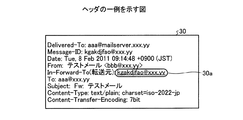
ところで、画面情報生成部130bは、メールの転送を行う旨の情報を受け付けていた場合には、メールのヘッダに、メールの転送である旨の情報を付与する。図9は、ヘッダの一例を示す図である。図9のヘッダ30には、本メールが転送メールであり、転送元のメッセージIDを示す情報30aが設定されている。これは、本メールの転送元が、メッセージIDであるkgakdifao@xxx.yyであることを示しているが、転送メールをさらに転送した場合は、転送元と、さらなる転送元とのふたつのメッセージIDがこの欄に記載される。
By the way, if the screen information generation unit 130b has received information indicating that the mail is to be transferred, the screen information generation unit 130b adds the information indicating that the mail is transferred to the header of the mail. FIG. 9 is a diagram illustrating an example of the header. In the
画面情報生成部130bは、メールの返信を行う旨の情報を受け付けた場合には、メールのヘッダに、メールの返送である旨の情報を付与する。これは従来のメールプロトコルにて実施されている方法で行なう。また、返信元のメールのヘッダを取得し、ヘッダの情報を宛先制御部140dに通知する。 When the screen information generating unit 130b receives information indicating that a mail is to be returned, the screen information generating unit 130b adds information indicating that the mail is returned to the header of the mail. This is done by the method implemented in the conventional mail protocol. Further, the header of the reply source mail is acquired, and the header information is notified to the destination control unit 140d.
また、画面情報生成部130bは、ヘッダを生成した後に、ヘッダの情報およびメールの転送先アドレスを、記憶制御部130cに出力する。 In addition, after generating the header, the screen information generation unit 130b outputs the header information and the mail transfer destination address to the storage control unit 130c.
記憶制御部130cは、ヘッダの情報、転送先アドレスを基にして、転送管理DB120b、追加宛先DB120dを更新する処理部である。記憶制御部130cは、ヘッダを参照し、メールが転送されたものである場合には、今回、生成されたメッセージIDと、元メールメッセージIDと、転送先アドレスを転送管理DB120bに登録する。
The storage control unit 130c is a processing unit that updates the
また、記憶制御部130cは、元メールメッセージIDと、転送先アドレスとを対応づけて、追加宛先DB120dに登録する。記憶制御部130cは、既に元メールメッセージIDと同一のメッセージIDが、追加宛先DB120dに登録されている場合には、該当するメッセージIDに対応づけて、転送先アドレスを追加する。 Further, the storage control unit 130c associates the original mail message ID with the transfer destination address and registers them in the additional destination DB 120d. If the same message ID as the original mail message ID is already registered in the additional destination DB 120d, the storage control unit 130c adds the transfer destination address in association with the corresponding message ID.
宛先制御部140dは、返信元のメールのヘッダを取得し、返信先の宛先として、元メールの送信者、受信者のアドレスに加えて、元メールの転送先アドレスを追加する処理部である。 The destination control unit 140d is a processing unit that acquires the header of the reply source mail and adds the forwarding address of the original mail in addition to the sender and recipient addresses of the original mail as the reply destination.
宛先制御部140dは、返信元のメールのヘッダから元メールメッセージIDを取得し、取得した元メールメッセージIDに対応する追加アドレスを追加宛先DB120dから取得する。この追加アドレスは、当初の宛先に含まれていなかった転送先のアドレスに対応する。 The destination control unit 140d acquires the original mail message ID from the header of the reply source mail, and acquires an additional address corresponding to the acquired original mail message ID from the additional destination DB 120d. This additional address corresponds to a transfer destination address that was not included in the original destination.
また、宛先制御部140dは、元メールメッセージIDをキーにして、メールDB120cから、元メールの送信者、受信者のアドレスを取得する。なお、宛先制御部140dは、転送管理DB120b、メールDB120cを基にして、元メールの送信者を取得してもよい。
The destination control unit 140d acquires the addresses of the sender and receiver of the original mail from the
宛先制御部140dは、上記の手法で取得した、元メールの送信者、受信者のアドレスを図8の宛先20aに設定する。また、宛先制御部140dは、転送先のアドレスを、転送により追加されたアドレス20bに設定する。
The destination control unit 140d sets the addresses of the sender and receiver of the original mail acquired by the above method as the
次に、図1に示したクライアント50の処理手順について説明する。図10は、クライアントの処理手順を示すフローチャートである。例えば、図10に示す処理は、ユーザからの表示要求を受け付けたことを契機に実行される。 Next, the processing procedure of the client 50 shown in FIG. 1 will be described. FIG. 10 is a flowchart showing the processing procedure of the client. For example, the process illustrated in FIG. 10 is executed when a display request from the user is received.
図10に示すように、クライアント50は、メールの表示要求を受け付けていない場合には(ステップS101,No)、再度ステップS101に移行する。一方、クライアント50は、メールの表示要求を受け付けた場合には(ステップS101,Yes)、サーバ100に、メール表示要求を送信する(ステップS102)。 As shown in FIG. 10, when the client 50 has not received a mail display request (step S101, No), the client 50 proceeds to step S101 again. On the other hand, when the client 50 receives a mail display request (step S101, Yes), the client 50 transmits a mail display request to the server 100 (step S102).
クライアント50は、サーバ100から入力画面を受信していない場合には(ステップS103,No)、再度ステップS103に移行する。一方、クライアント50は、サーバ100から入力画面を受信した場合には(ステップS103,Yes)、入力画面を表示する(ステップS104)。 If the client 50 has not received the input screen from the server 100 (No at Step S103), the client 50 proceeds to Step S103 again. On the other hand, when the client 50 receives the input screen from the server 100 (step S103, Yes), the client 50 displays the input screen (step S104).
クライアント50は、ユーザID、パスワードを受け付けていない場合には(ステップS105,No)、再度ステップS105に移行する。一方、クライアント50は、ユーザID、パスワードを受け付けた場合には(ステップS105,Yes)、ユーザID、パスワードをサーバ100に送信する(ステップS106)。 If the client 50 has not received a user ID or password (step S105, No), the client 50 proceeds to step S105 again. On the other hand, when the client 50 receives the user ID and password (step S105, Yes), the client 50 transmits the user ID and password to the server 100 (step S106).
クライアント50は、認証エラー画面を受信した場合には(ステップS107,Yes)、処理を終了する。クライアント50は、認証エラー画面を受信しない場合には(ステップS107,No)、メール表示画面をサーバ100から受信したか否かを判定する(ステップS109)。また、クライアント50は、認証エラー画面を表示する(ステップS108)。 When the client 50 receives the authentication error screen (step S107, Yes), the client 50 ends the process. When the client 50 does not receive the authentication error screen (No at Step S107), the client 50 determines whether the mail display screen is received from the server 100 (Step S109). In addition, the client 50 displays an authentication error screen (step S108).
クライアント50は、サーバ100からメール表示画面を受信していない場合には(ステップS109,No)、再度ステップS109に移行する。一方、クライアント50は、サーバ100からメール表示画面を受信した場合には(ステップS109,Yes)、メール表示画面を表示部に表示する(ステップS110)。 If the client 50 has not received the mail display screen from the server 100 (step S109, No), the client 50 proceeds to step S109 again. On the other hand, when the client 50 receives the mail display screen from the server 100 (step S109, Yes), the client 50 displays the mail display screen on the display unit (step S110).
クライアント50は、メッセージ作成要求を受け付けてない場合には(ステップS111,No)、ステップS113に移行する。クライアント50は、メッセージ作成要求を受け付けた場合には(ステップS111,Yes)、送信処理を実行する(ステップS112)。 When the client 50 has not received the message creation request (No at Step S111), the client 50 proceeds to Step S113. When the client 50 receives a message creation request (step S111, Yes), the client 50 executes a transmission process (step S112).
クライアント50は、ログアウト要求がない場合には(ステップS113,No)、ステップS111に移行する。一方、クライアント50は、ログアウト要求があった場合には(ステップS113,Yes)、ログアウト要求をサーバ100に送信する(ステップS114)。 If there is no logout request (step S113, No), the client 50 proceeds to step S111. On the other hand, if there is a logout request (step S113, Yes), the client 50 transmits a logout request to the server 100 (step S114).
次に、図10のステップS112に示した送信処理の処理手順について説明する。図11は、クライアントの送信処理の処理手順を示すフローチャートである。図11に示すように、クライアント50は、サーバ100にメッセージ作成要求を送信する(ステップS150)。 Next, the processing procedure of the transmission process shown in step S112 of FIG. 10 will be described. FIG. 11 is a flowchart illustrating the processing procedure of the client transmission processing. As shown in FIG. 11, the client 50 transmits a message creation request to the server 100 (step S150).
クライアント50は、メッセージ作成画面を受信していない場合には(ステップS151,No)、再度ステップS151に移行する。一方、クライアント50は、メッセージ作成画面を受信した場合には(ステップS151,Yes)、メッセージ作成画面を表示部に表示する(ステップS152)。 If the client 50 has not received the message creation screen (step S151, No), the client 50 proceeds to step S151 again. On the other hand, when the client 50 receives the message creation screen (step S151, Yes), the client 50 displays the message creation screen on the display unit (step S152).
クライアント50は、宛先、件名、記事本文の入力を受け付け(ステップS153)、送信ボタンが押下されていない場合には(ステップS154,No)、再度ステップS154に移行する。一方、クライアント50は、送信ボタンが押下された場合には(ステップS154,Yes)、宛先、件名、記事本文をサーバ100に送信する(ステップS155)。 The client 50 accepts input of the destination, subject, and article text (step S153). If the send button has not been pressed (step S154, No), the process proceeds to step S154 again. On the other hand, when the transmission button is pressed (Yes in step S154), the client 50 transmits the destination, the subject, and the article text to the server 100 (step S155).
次に、サーバ100の処理手順について説明する。図12は、クライアントからメール表示要求を受け付けた場合のサーバの処理手順を示すフローチャートである。例えば、図12に示す処理は、クライアント50からメールの表示要求を受け付けたことを契機にして実行される。図12に示すように、サーバ100は、メール表示要求をクライアント50から受け付けていない場合には(ステップS201,No)、再度ステップS201に移行する。
Next, the processing procedure of the
サーバ100は、クライアント50からメールの表示要求を受け付けた場合には(ステップS201,Yes)、入力画面をクライアント50に送信する(ステップS202)。サーバ100は、クライアント50からユーザID、パスワードを受信していない場合には(ステップS203,No)、再度ステップS203に移行する。
When receiving a mail display request from the client 50 (step S201, Yes), the
サーバ100は、ユーザID、パスワードを受信した場合には(ステップS203,Yes)、ユーザ認証DB120aを利用して、認証を行う(ステップS204)。サーバ100は、認証OKではない場合には(ステップS205,No)、認証エラー画面を作成し、クライアント50に送信する(ステップS206)。
When the
一方、サーバ100は、認証OKの場合には(ステップS205,Yes)、メールDBを用いて、利用者IDのメール表示画面を作成し(ステップS205a)、利用者IDのメール表示画面を送信する(ステップS205b)。また、サーバ100は、メッセージ作成要求を受信したか否かを判定する(ステップS207)。サーバ100は、メッセージ作成要求を受信したか否かを判定する(ステップS207)。サーバ100は、メッセージ作成要求を受信していない場合には(ステップS207,No)、ステップS213に移行する。
On the other hand, if the authentication is OK (step S205, Yes), the
一方、サーバ100は、メッセージ作成要求を受信した場合には(ステップS207,Yes)、メッセージ作成画面生成処理を実行する(ステップS208)。サーバ100は、メッセージ作成画面をクライアント50に送信し(ステップS209)、宛先、件名、記事本文を受信していない場合には(ステップS210,No)、再度ステップS210に移行する。
On the other hand, when the
一方、サーバ100は、宛先、件名、記事本文を受信した場合には(ステップS210,Yes)、メールDB120cの受信欄に、メッセージID、件名、記事本文を記録する(ステップS211)。
On the other hand, when the
サーバ100は、メールDB120cの送信欄に、メッセージID、件名、記事本文を記録し(ステップS212)、ログアウト要求をクライアント50から受信した場合には(ステップS213)、処理を終了する。サーバ100は、ログアウト要求をクライアント50から受信してない場合には、ステップS207に移行する。
The
次に、図12のステップS208に示したメッセージ作成画面生成処理の処理手順について説明する。図13は、メッセージ作成画面生成処理の処理手順を示す図である。図13に示すように、サーバ100は、メッセージID、ヘッダを生成し(ステップS250)、本メールは他のメールを転送するものであるか否かを判定する(ステップS251)。
Next, the processing procedure of the message creation screen generation process shown in step S208 of FIG. 12 will be described. FIG. 13 is a diagram illustrating a processing procedure of message creation screen generation processing. As shown in FIG. 13, the
サーバ100は、他のメールを転送するものである場合には(ステップS251,Yes)、転送管理DB120bに、本メールのメッセージIDと、元メールメッセージIDと、転送先アドレスとを対応づけて記録する(ステップS252)。
If the
サーバ100は、元メールメッセージIDが追加宛先DB120dに存在する場合には(ステップS253,Yes)、元メールメッセージIDに対応づけて、転送先アドレスを追加宛先DB120dに記録する(ステップS254)。その後、ステップS256に移行する。
When the original mail message ID exists in the additional destination DB 120d (step S253, Yes), the
サーバ100は、元メールメッセージIDが追加宛先DB120dに存在しない場合には(ステップS253,No)、元メールメッセージID、転送先アドレスを追加宛先DB120dに記録する(ステップS255)。サーバ100は、転送先のアドレスを宛先として、メッセージ作成画面を生成する(ステップS256)。
If the original mail message ID does not exist in the additional destination DB 120d (No in step S253), the
ところで、ステップS251において、サーバ100は、他のメールを転送するものではない場合に(ステップS251,No)、本メールは、他のメールを返信するものであるか否かを判定する(ステップS257)。
By the way, in step S251, when the
サーバ100は、他のメールを返信するものでない場合には(ステップS257,No)、返信先を宛先としてメッセージ作成画面を生成する(ステップS258)。一方、サーバ100は、他のメールを返信するものである場合には(ステップS257,Yes)、追加宛先DB120dに返信元メールの元メールメッセージIDが存在するか否かを判定する(ステップS259)。
If the
サーバ100は、追加宛先DB120dに返信元メールの元メールメッセージIDが存在しない場合には(ステップS259,No)、ステップS258に移行する。サーバ100は、追加宛先DB120dに返信元メールの元メールメッセージIDが存在する場合には(ステップS259,Yes)、追加する宛先を追加宛先DB120dから取得する(ステップS260)。
If the original mail message ID of the reply original mail does not exist in the additional destination DB 120d (step S259, No), the
サーバ100は、転送管理DB120bと、メールDB120cとを基にして、元メールの送信者および受信者のアドレスを取得する(ステップS261)。サーバ100は、追加する宛先、元メールの送信者および受信者の宛先を設定して、メッセージ作成画面を生成する(ステップS262)。
The
次に、本実施例にかかるメールシステムの効果について説明する。本実施例のサーバ100は、複数の宛先へ送信されたメールが、当初の宛先以外に転送された場合に、元メールメッセージIDと、転送先アドレスとを追加宛先DB120dに対応づけておく。そして、サーバ100は、元メールメッセージIDと、転送先アドレスとの関係を利用して、元メールから派生したメールの宛先に転送先アドレスを追加する。このような処理をサーバ100が実行することで、元メールの宛先となるユーザが転送した当初の宛先に含まれないユーザであっても、その後の元メールのやり取りを知ることができる。
Next, the effect of the mail system according to the present embodiment will be described. The
また、サーバ100は、元メールの当初に宛先に含まれていない転送先のアドレスをクライアント50に通知する。このため、クライアント50は、新たに追加された宛先を知ることができる。
Further, the
また、サーバ100は、メールを転送する場合には、メールのヘッダに転送メールである旨の情報を追加する。このため、転送するメールを識別することができる。
In addition, when transferring mail, the
また、サーバ100は、メールを転送したユーザと、返信するユーザが違う場合に、これから返信メールを送ろうとしているユーザに新たに追加されるアドレスを通知してもよい。このような処理をサーバ100が行うことによって、返信を行うユーザに、例えば、「自分以外の誰かが、転送を行っていて、その転送先にも、あなたのメールは今後送信されますよ」と知らせることができる。
In addition, when the user who forwarded the mail is different from the user who replies, the
ところで、サーバ100、クライアント50の各構成要素は機能概念的なものであり、必ずしも物理的に図示の如く構成されていることを要しない。すなわち、サーバ100、クライアント50の分散、統合の具体的形態は図示のものに限られず、その全部または一部を、各種の負荷や使用状況などに応じて、任意の単位で機能的または物理的に分散・統合して構成することができる。例えば、図2の各処理部130a〜140dの機能をまとめて、メール機能を有する処理部としてもよい。
By the way, each component of the
ここで、図2に示したサーバ100と同様の機能を実現する宛先制御プログラムを実行するコンピュータの一例を説明する。図14は、宛先制御プログラムを実行するコンピュータの一例を示す図である。
Here, an example of a computer that executes a destination control program that realizes the same function as the
図14に示すように、コンピュータ200は、各種演算処理を実行するCPU201と、ユーザからのデータの入力を受け付ける入力装置202と、ディスプレイ203を有する。また、コンピュータ200は、記憶媒体からプログラム等を読取る読み取り装置204と、ネットワークを介して他のコンピュータとの間でデータの授受を行うインターフェース装置205とを有する。また、コンピュータ200は、各種情報を一時記憶するRAM206と、ハードディスク装置207を有する。そして、各装置201〜207は、バス208に接続される。
As shown in FIG. 14, the
ハードディスク装置207には、画面情報生成プログラム207a、記憶制御プログラム207b、宛先制御プログラム207cを有する。CPU201は、各プログラム207a〜207cを読み出して、RAM206に展開する。画面情報生成プログラム207aは、画面情報生成プロセス206aとして機能する。記憶制御プログラム207bは、記憶制御プロセス206bとして機能する。宛先制御プログラム207cは、宛先制御プロセス206cとして機能する。
The
例えば、画面情報生成プロセス206aは、画面情報生成部130bに対応する。記憶制御プロセス206bは、記憶制御部130cに対応する。宛先制御プロセス206cは、宛先制御部140dに対応する。
For example, the screen
なお、各プログラム207a〜207cについては、必ずしも最初からハードディスク装置207に記憶させておかなくてもよい。例えば、コンピュータ200に挿入されるフレキシブルディスク(FD)、CD−ROM、DVDディスク、光磁気ディスク、ICカードなどの「可搬用の物理媒体」に各プログラムを記憶させておく。そして、コンピュータ200がこれらから各プログラムを読み出して実行するようにしてもよい。
Note that the
以上の各実施例を含む実施形態に関し、さらに以下の付記を開示する。 The following supplementary notes are further disclosed with respect to the embodiments including the above examples.
(付記1)コンピュータに、
クライアントからメールを識別するメール識別情報を有するメールを受け付け、
前記メール識別情報と、前記メールの送信元アドレスと、前記メールの宛先アドレスとを対応づけて記憶装置に記憶し、
クライアントから受け付けたメールが転送メールか否かを判定し、転送メールの場合には、該転送メールに含まれる前記メール識別情報に対応づけて、該転送メールの転送先アドレスを記憶装置に記憶し、
前記メールの前記メール識別情報を有する返信メールを検知した場合には、前記記憶装置を参照し、該メール識別情報に対応する複数の宛先アドレスおよび転送先アドレスを、該返信メールの宛先に設定し、
設定された前記返信メールの宛先となるクライアントに前記返信メールを通知する処理を実行させる宛先制御プログラム。
(Supplementary note 1)
Accept emails with email identification information that identifies emails from clients,
Storing the mail identification information, the sender address of the mail, and the destination address of the mail in a storage device in association with each other;
It is determined whether the mail received from the client is a forwarded mail. If the forwarded mail is forwarded, the forwarding address of the forwarded mail is stored in a storage device in association with the mail identification information included in the forwarded mail. ,
When a reply mail having the mail identification information of the mail is detected, the storage device is referred to, and a plurality of destination addresses and forwarding addresses corresponding to the mail identification information are set as the destination of the reply mail. ,
A destination control program for causing a client serving as a destination of the set reply mail to execute a process of notifying the reply mail.
(付記2)前記返信メールが有する前記メール識別情報に対応する複数の宛先アドレスおよび転送先アドレスを、前記返信メールの宛先に追加した場合に、追加した複数の宛先アドレスおよび転送先アドレスを、前記返信メールの送信元となるクライアントに通知することを特徴とする付記1に記載の宛先制御プログラム。 (Supplementary note 2) When a plurality of destination addresses and forwarding addresses corresponding to the mail identification information included in the reply mail are added to the destination of the reply mail, the added plurality of destination addresses and forwarding addresses are The destination control program according to appendix 1, which notifies a client as a sender of a reply mail.
(付記3)前記メールが複数の宛先アドレス宛である場合に、前記記憶装置は、前記宛先アドレスを複数記憶し、
前記転送メールを送信した第一の宛先アドレスと、前記返送メールを送信する第二の宛先アドレスが異なる場合に、前記転送先アドレスを、前記返信メールの送信元となるクライアントに通知することを特徴とする付記2に記載の宛先制御プログラム。
(Supplementary Note 3) When the mail is addressed to a plurality of destination addresses, the storage device stores a plurality of the destination addresses,
When the first destination address that sent the forwarded mail is different from the second destination address that sent the return mail, the forward destination address is notified to the client that is the source of the reply mail. The destination control program according to appendix 2.
(付記4)クライアントからメールを識別するメール識別情報を有するメールを受け付け、前記メール識別情報と、前記メールの送信元アドレスと、前記メールの宛先アドレスとを対応づけて記憶する記憶装置と、
クライアントから受け付けたメールが転送メールか否かを判定し、転送メールの場合には、該転送メールに含まれる前記メール識別情報に対応づけて、該転送メールの転送先アドレスを記憶装置に記憶する記憶制御部と、
前記メールの前記メール識別情報を有する返信メールを検知した場合には、前記記憶装置を参照し、該メール識別情報に対応する複数の宛先アドレスおよび転送先アドレスを、該返信メールの宛先に設定し、設定された前記返信メールの宛先となるクライアントに前記返信メールを通知する宛先制御部と
を有することを特徴とする宛先制御装置。
(Appendix 4) A storage device that accepts mail having mail identification information for identifying mail from a client, and stores the mail identification information, the mail source address, and the mail destination address in association with each other;
It is determined whether or not the mail received from the client is a forwarded mail. If the forwarded mail is forwarded, the forwarding address of the forwarded mail is stored in a storage device in association with the mail identification information included in the forwarded mail. A storage controller;
When a reply mail having the mail identification information of the mail is detected, the storage device is referred to, and a plurality of destination addresses and forwarding addresses corresponding to the mail identification information are set as the destination of the reply mail. A destination control unit that notifies the client that is the destination of the set reply mail of the reply mail.
(付記5)前記宛先制御部は、前記返信メールが有する前記メール識別情報に対応する複数の宛先アドレスおよび転送先アドレスを、前記返信メールの宛先に追加した場合に、追加した複数の宛先アドレスおよび転送先アドレスを、前記返信メールの送信元となるクライアントに通知することを特徴とする付記4に記載の宛先制御装置。 (Supplementary Note 5) When the plurality of destination addresses and forwarding addresses corresponding to the mail identification information included in the reply mail are added to the reply mail destination, the destination control unit adds the plurality of destination addresses and 5. The destination control apparatus according to appendix 4, wherein the forwarding address is notified to a client that is a transmission source of the reply mail.
(付記6)前記メールが複数の宛先アドレス宛である場合に、前記記憶装置は、前記宛先アドレスを複数記憶し、前記宛先制御部は、前記転送メールを送信した第一の宛先アドレスと、前記返送メールを送信する第二の宛先アドレスが異なる場合に、前記転送先アドレスを、前記返信メールの送信元となるクライアントに通知することを特徴とする付記5に記載の宛先制御装置。 (Supplementary Note 6) When the mail is addressed to a plurality of destination addresses, the storage device stores a plurality of the destination addresses, and the destination control unit includes a first destination address that has transmitted the forwarded mail, 6. The destination control apparatus according to appendix 5, wherein when the second destination address for sending the return mail is different, the transfer destination address is notified to a client as a sender of the reply mail.
(付記7)コンピュータが実行する宛先制御方法であって、
クライアントからメールを識別するメール識別情報を有するメールを受け付け、
前記メール識別情報と、前記メールの送信元アドレスと、前記メールの宛先アドレスとを対応づけて記憶装置に記憶し、
クライアントから受け付けたメールが転送メールか否かを判定し、転送メールの場合には、該転送メールに含まれる前記メール識別情報に対応づけて、該転送メールの転送先アドレスを記憶装置に記憶し、
前記メールの前記メール識別情報を有する返信メールを検知した場合には、前記記憶装置を参照し、該メール識別情報に対応する複数の宛先アドレスおよび転送先アドレスを、該返信メールの宛先に設定し、
設定された前記返信メールの宛先となるクライアントに前記返信メールを通知することを特徴とする宛先制御方法。
(Appendix 7) A destination control method executed by a computer,
Accept emails with email identification information that identifies emails from clients,
Storing the mail identification information, the sender address of the mail, and the destination address of the mail in a storage device in association with each other;
It is determined whether the mail received from the client is a forwarded mail. If the forwarded mail is forwarded, the forwarding address of the forwarded mail is stored in a storage device in association with the mail identification information included in the forwarded mail. ,
When a reply mail having the mail identification information of the mail is detected, the storage device is referred to, and a plurality of destination addresses and forwarding addresses corresponding to the mail identification information are set as the destination of the reply mail. ,
A destination control method characterized by notifying the reply mail to a set client of the reply mail.
(付記8)前記返信メールが有する前記メール識別情報に対応する複数の宛先アドレスおよび転送先アドレスを、前記返信メールの宛先に追加した場合に、追加した複数の宛先アドレスおよび転送先アドレスを、前記返信メールの送信元となるクライアントに通知することを特徴とする付記7に記載の宛先制御方法。 (Supplementary Note 8) When a plurality of destination addresses and forwarding addresses corresponding to the mail identification information included in the reply mail are added to the destination of the reply mail, the added plurality of destination addresses and forwarding addresses are 8. The destination control method according to appendix 7, wherein notification is made to a client that is a sender of the reply mail.
(付記9)前記メールが複数の宛先アドレス宛である場合に、前記記憶装置は、前記宛先アドレスを複数記憶し、
前記転送メールを送信した第一の宛先アドレスと、前記返送メールを送信する第二の宛先アドレスが異なる場合に、前記転送先アドレスを、前記返信メールの送信元となるクライアントに通知することを特徴とする付記7または8に記載の宛先制御方法。
(Supplementary Note 9) When the mail is addressed to a plurality of destination addresses, the storage device stores a plurality of the destination addresses,
When the first destination address that sent the forwarded mail is different from the second destination address that sent the return mail, the forward destination address is notified to the client that is the source of the reply mail. The destination control method according to appendix 7 or 8.
40 ネットワーク
50a,50b クライアント
100 サーバ
40 network 50a,
Claims (5)
いずれかのクライアントからメールを識別するメール識別情報を有するメールを受け付け、
前記メール識別情報と、前記メールの送信元アドレスと、前記メールの宛先アドレスとを対応づけて記憶装置に記憶し、
いずれかのクライアントから受け付けたメールがいずれかのメールに対する転送メールであるか否かを判定し、転送メールの場合には、該転送メールに含まれる転送元のメールのメール識別情報を転送元メール識別情報として、該転送メールの転送先アドレスと対応付けて記憶装置に記憶し、
いずれかのクライアントから受け付けたメールがいずれかのメールに対する返信メールであるか否かを判定し、返信メールの場合には、返信元のメールに含まれるメール識別情報が、前記記憶装置の前記転送元メール識別情報と一致する場合に、該転送元メール識別情報に対応付けられた転送先アドレスを、該返信メールの宛先に追加する設定を行い、
設定された前記返信メールの宛先となるクライアントに前記返信メールを通知する処理を実行させる宛先制御プログラム。 On the computer,
Accept emails with email identification information that identifies emails from any client,
Storing the mail identification information, the sender address of the mail, and the destination address of the mail in a storage device in association with each other;
It is determined whether the mail received from any client is a forward mail for any mail. In the case of the forward mail, the mail identification information of the forward mail included in the forward mail is used as the forward mail. As identification information , store it in a storage device in association with the forwarding address of the forwarded mail,
It is determined whether or not the mail received from any client is a reply mail to any mail, and in the case of the reply mail, the mail identification information included in the reply source mail is the transfer of the storage device If it matches the original mail identification information, a setting is made to add the forwarding address associated with the forwarding mail identification information to the reply mail destination,
A destination control program for causing a client serving as a destination of the set reply mail to execute a process of notifying the reply mail.
前記転送メールを送信した第一の宛先アドレスと、前記返信メールを送信する第二の宛先アドレスが異なる場合に、前記転送先アドレスを、前記返信メールの送信元となるクライアントに通知することを特徴とする請求項2に記載の宛先制御プログラム。 When the mail is addressed to a plurality of destination addresses, the storage device stores a plurality of the destination addresses,
When the first destination address that sent the forwarded mail is different from the second destination address that sent the reply mail, the forward destination address is notified to the client that is the sender of the reply mail. The destination control program according to claim 2.
いずれかのクライアントから受け付けたメールがいずれかのメールに対する転送メールであるか否かを判定し、転送メールの場合には、該転送メールに含まれる転送元のメールのメール識別情報を転送元メール識別情報として、該転送メールの転送先アドレスと対応付けて記憶装置に記憶する記憶制御部と、
いずれかのクライアントから受け付けたメールがいずれかのメールに対する返信メールであるか否かを判定し、返信メールの場合には、返信元のメールに含まれるメール識別情報が、前記記憶装置の前記転送元メール識別情報と一致する場合に、該転送元メール識別情報に対応付けられた転送先アドレスを、該返信メールの宛先に追加する設定を行い、設定された前記返信メールの宛先となるクライアントに前記返信メールを通知する宛先制御部と
を有することを特徴とする宛先制御装置。 A storage device that accepts mail having mail identification information for identifying mail from any client, and stores the mail identification information, the mail source address, and the mail destination address in association with each other;
It is determined whether the mail received from any client is a forward mail for any mail. In the case of the forward mail, the mail identification information of the forward mail included in the forward mail is used as the forward mail. A storage control unit that stores the identification information in a storage device in association with the forwarding address of the forwarding mail;
It is determined whether or not the mail received from any client is a reply mail to any mail, and in the case of the reply mail, the mail identification information included in the reply source mail is the transfer of the storage device When it matches the original mail identification information, a setting is made to add the forwarding address associated with the forwarding mail identification information to the destination of the reply mail, and to the client that is the destination of the set reply mail A destination control unit for notifying the reply mail.
いずれかのクライアントからメールを識別するメール識別情報を有するメールを受け付け、
前記メール識別情報と、前記メールの送信元アドレスと、前記メールの宛先アドレスとを対応づけて記憶装置に記憶し、
いずれかのクライアントから受け付けたメールがいずれかのメールに対する転送メールであるか否かを判定し、転送メールの場合には、該転送メールに含まれる転送元のメールのメール識別情報を転送元メール識別情報として、該転送メールの転送先アドレスと対応付けて記憶装置に記憶し、
いずれかのクライアントから受け付けたメールがいずれかのメールに対する返信メールであるか否かを判定し、返信メールの場合には、返信元のメールに含まれるメール識別情報が、前記記憶装置の前記転送元メール識別情報と一致する場合に、該転送元メール識別情報に対応付けられた転送先アドレスを、該返信メールの宛先に追加する設定を行い、
設定された前記返信メールの宛先となるクライアントに前記返信メールを通知することを特徴とする宛先制御方法。 A destination control method executed by a computer,
Accept emails with email identification information that identifies emails from any client,
Storing the mail identification information, the sender address of the mail, and the destination address of the mail in a storage device in association with each other;
It is determined whether the mail received from any client is a forward mail for any mail. In the case of the forward mail, the mail identification information of the forward mail included in the forward mail is used as the forward mail. As identification information , store it in a storage device in association with the forwarding address of the forwarded mail,
It is determined whether or not the mail received from any client is a reply mail to any mail, and in the case of the reply mail, the mail identification information included in the reply source mail is the transfer of the storage device If it matches the original mail identification information, a setting is made to add the forwarding address associated with the forwarding mail identification information to the reply mail destination,
A destination control method characterized by notifying the reply mail to a set client of the reply mail.
Priority Applications (1)
| Application Number | Priority Date | Filing Date | Title |
|---|---|---|---|
| JP2011061773A JP5648552B2 (en) | 2011-03-18 | 2011-03-18 | Destination control program, destination control device, and destination control method |
Applications Claiming Priority (1)
| Application Number | Priority Date | Filing Date | Title |
|---|---|---|---|
| JP2011061773A JP5648552B2 (en) | 2011-03-18 | 2011-03-18 | Destination control program, destination control device, and destination control method |
Publications (2)
| Publication Number | Publication Date |
|---|---|
| JP2012198719A JP2012198719A (en) | 2012-10-18 |
| JP5648552B2 true JP5648552B2 (en) | 2015-01-07 |
Family
ID=47180875
Family Applications (1)
| Application Number | Title | Priority Date | Filing Date |
|---|---|---|---|
| JP2011061773A Expired - Fee Related JP5648552B2 (en) | 2011-03-18 | 2011-03-18 | Destination control program, destination control device, and destination control method |
Country Status (1)
| Country | Link |
|---|---|
| JP (1) | JP5648552B2 (en) |
Family Cites Families (3)
| Publication number | Priority date | Publication date | Assignee | Title |
|---|---|---|---|---|
| JPH114250A (en) * | 1997-06-11 | 1999-01-06 | Hitachi Ltd | Email device |
| JP3614067B2 (en) * | 1999-12-27 | 2005-01-26 | 日本電気株式会社 | E-mail management system and recording medium storing e-mail management program |
| JP2010217994A (en) * | 2009-03-13 | 2010-09-30 | Nec Corp | Electronic mail system, mail client, mail flow management method and program |
-
2011
- 2011-03-18 JP JP2011061773A patent/JP5648552B2/en not_active Expired - Fee Related
Also Published As
| Publication number | Publication date |
|---|---|
| JP2012198719A (en) | 2012-10-18 |
Similar Documents
| Publication | Publication Date | Title |
|---|---|---|
| CN104521260B (en) | Wireless communication system, pairing device and method for pairing multiple devices | |
| JP2022020946A (en) | Information processing equipment, information processing system, communication format determination method and program | |
| US20070008987A1 (en) | Capturing contacts via people near me | |
| US10193871B2 (en) | Information processing apparatus, control method, and program | |
| CN102985931B (en) | Communication control system, server unit and communication control method | |
| JP6326173B1 (en) | Data transmission / reception system and data transmission / reception method | |
| CN101123811A (en) | Device and method for managing stations connected to WPA-PSK wireless network | |
| CN107948339B (en) | A network addressing method, device and device | |
| JPWO2015111221A1 (en) | Device certificate providing apparatus, device certificate providing system, and device certificate providing program | |
| CN102291271B (en) | Policing port, monitoring system, terminal and method thereof | |
| US20150047009A1 (en) | Access control method, access control system and access control device | |
| JP2019050511A (en) | Information processing device and computer program | |
| US7627906B2 (en) | Service discovery system, client terminal, service providing device, and service discovery method | |
| JP6056970B2 (en) | Information processing apparatus, terminal, information processing system, and information processing method | |
| CN100378693C (en) | Address notification apparatus and address notification method | |
| JP5648552B2 (en) | Destination control program, destination control device, and destination control method | |
| US20120011250A1 (en) | Communication program, communication method, and electric apparatus | |
| CN1798021A (en) | Communication supporting server, method and system | |
| US20090254622A1 (en) | Electronic mail receiving apparatus | |
| JP7052497B2 (en) | Information processing systems, information processing equipment, information processing methods, and programs | |
| JP7615573B2 (en) | Information processing device, program, and information processing system | |
| JP6379592B2 (en) | Network management device, network management program, and network management method | |
| JP6322763B1 (en) | Data transfer system and data transfer method | |
| JP6267387B1 (en) | Data transfer system and data transfer method | |
| JPWO2015008541A1 (en) | COMMUNICATION DEVICE, COMMUNICATION METHOD, AND PROGRAM |
Legal Events
| Date | Code | Title | Description |
|---|---|---|---|
| A621 | Written request for application examination |
Free format text: JAPANESE INTERMEDIATE CODE: A621 Effective date: 20140108 |
|
| A977 | Report on retrieval |
Free format text: JAPANESE INTERMEDIATE CODE: A971007 Effective date: 20140716 |
|
| A131 | Notification of reasons for refusal |
Free format text: JAPANESE INTERMEDIATE CODE: A131 Effective date: 20140722 |
|
| A521 | Request for written amendment filed |
Free format text: JAPANESE INTERMEDIATE CODE: A523 Effective date: 20140922 |
|
| TRDD | Decision of grant or rejection written | ||
| A01 | Written decision to grant a patent or to grant a registration (utility model) |
Free format text: JAPANESE INTERMEDIATE CODE: A01 Effective date: 20141014 |
|
| A61 | First payment of annual fees (during grant procedure) |
Free format text: JAPANESE INTERMEDIATE CODE: A61 Effective date: 20141027 |
|
| R150 | Certificate of patent or registration of utility model |
Ref document number: 5648552 Country of ref document: JP Free format text: JAPANESE INTERMEDIATE CODE: R150 |
|
| LAPS | Cancellation because of no payment of annual fees |