JP5073767B2 - COBOL source code check program, COBOL source code check system - Google Patents
COBOL source code check program, COBOL source code check system Download PDFInfo
- Publication number
- JP5073767B2 JP5073767B2 JP2010027222A JP2010027222A JP5073767B2 JP 5073767 B2 JP5073767 B2 JP 5073767B2 JP 2010027222 A JP2010027222 A JP 2010027222A JP 2010027222 A JP2010027222 A JP 2010027222A JP 5073767 B2 JP5073767 B2 JP 5073767B2
- Authority
- JP
- Japan
- Prior art keywords
- source code
- cobol source
- cobol
- statement
- code check
- Prior art date
- Legal status (The legal status is an assumption and is not a legal conclusion. Google has not performed a legal analysis and makes no representation as to the accuracy of the status listed.)
- Expired - Fee Related
Links
Images


Landscapes
- Debugging And Monitoring (AREA)
- Stored Programmes (AREA)
Description
本発明は、COBOL言語で記述されたプログラムソースコードをチェックする技術に関するものである。 The present invention relates to a technique for checking a program source code described in a COBOL language.
ソフトウェア開発では常に高品質な成果物が求められており、品質向上のために様々な点検活動が行われている。開発の期間は限られているため、品質点検を素早く高精度に実施する必要がある。 Software development always requires high-quality deliverables, and various inspection activities are being conducted to improve quality. Since the development period is limited, it is necessary to conduct quality inspections quickly and with high accuracy.
開発下流工程の成果物であるソースコードの品質点検に目を向けると、大きくテストと目視点検の2つの方法がある。このうちテストではソフトウェアに要求される仕様を確認し、目視点検では仕様確認に加えてテストで発見しにくい誤作動、非効率な記述、保守性などの品質も確認する。このように多くの内容を確認する目視点検は品質確保の活動として重要であるが、時間がかかる割に見落としが発生しやすく、さらに属人的で精度がばらつくという問題を含んでいる。 Looking at the quality check of the source code that is the product of the downstream development process, there are two main methods: a test and a visual check. Of these, the specifications required for the software are confirmed during the test, and the quality such as malfunction, inefficiency description, maintainability, etc. that are difficult to find in the test is confirmed in addition to the specification confirmation by visual inspection. Visual inspection to confirm such a large amount of content is important as an activity for ensuring quality, but it involves the problem that it tends to be overlooked even though it takes time, and it is personal and varies in accuracy.
近年Java(登録商標)やCなどのオープン系言語では目視点検をサポートするツールとしてFindBugs(非特許文献1)やSplint(非特許文献2)のようなツールが登場して、様々なプロジェクトで利用されている。しかしホスト系での開発案件が多いCOBOLについてはこういったツールが活用されておらず、未だ目視点検に係る上記課題を抱えている。 In recent years, tools such as FindBugs (Non-patent Document 1) and Splint (Non-patent Document 2) have emerged as tools that support visual inspection in open languages such as Java (registered trademark) and C, and are used in various projects. Has been. However, such tools are not used for COBOL, which has many development projects in the host system, and still has the above-mentioned problems related to visual inspection.
下記特許文献1では、コーディング規約に反するキーワードとソースコードを比較することにより、ソースコードがコーディング規約に沿っているか否かをチェックする技術が記載されている。
下記特許文献2では、実行頻度の高低によってソースコード内の各部をランク付けし、実質的にエラーとしてカウントすべきものとそうでないものを識別し易くする技術が記載されている。 Japanese Patent Application Laid-Open No. 2004-228667 describes a technique that ranks each part in a source code according to execution frequency and makes it easy to distinguish what should be counted as an error from what is not.
上記特許文献1に記載の技術では、キーワードに合致した部分がエラーとして検出されるため、プログラムの動作上は必ずしもエラーではない部分がエラーとして大量に検出される可能性を否定できない。
In the technique described in
上記特許文献2に記載の技術では、実行頻度を基準としてエラー可能性を識別しているため、実行頻度は低いが明らかにエラーである部分が、チェック対象から外れてしまう可能性がある。
In the technique described in
本発明は、上記のような課題を解決するためになされたものであり、COBOL言語の特性に適した、エラー検出精度の高いソースコードチェックプログラムを提供することを目的とする。 The present invention has been made to solve the above-described problems, and an object thereof is to provide a source code check program with high error detection accuracy suitable for the characteristics of the COBOL language.
本発明に係るCOBOLソースコードチェックプログラムは、COBOL言語のテーブルサイズを超えてそのテーブルにアクセスする処理がソースコード内に存在するか否かをチェックする。 The COBOL source code check program according to the present invention checks whether or not a process for accessing a table exceeding the COBOL language table size exists in the source code.
本発明に係るCOBOLソースコードチェックプログラムによれば、テーブルに対するサイズ制限に違反する不正アクセス処理を精度良く検出することができる。 According to the COBOL source code check program according to the present invention, it is possible to accurately detect unauthorized access processing that violates the size restriction on a table.
<実施の形態1>
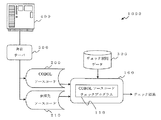
図1は、本実施の形態1に係るCOBOLソースコードチェックプログラム110を実行するコンピュータ100および関連するデータの入出力を示す図である。コンピュータ100は、COBOLプログラムのチェック作業を行うために用いるコンピュータである。
<
FIG. 1 is a diagram showing a
コンピュータ100は、チェック対象であるCOBOLソースコード200と、チェック規則を定義するチェック規則データ300を入力として受け取り、COBOLソースコード200のチェック結果を出力する。これらのデータは、必要に応じてコンピュータ100が備える記憶装置に格納される。
The
コンピュータ100は、COBOLソースコードチェックプログラム110を格納するHDD(Hard Disk Drive)などの記憶装置と、COBOLソースコードチェックプログラム110を実行するCPU(Central Processing Unit)などの演算装置を備える。また、各データを入出力するインタフェース、メモリなどを適宜備える。以下では説明の便宜上、COBOLソースコードチェックプログラム110を動作主体として説明する場合があるが、実際にCOBOLソースコードチェックプログラム110を実行するのはCPUなどの演算装置であることを付言しておく。
The
チェック規則データ300は、COBOLソースコードチェックプログラム110がCOBOLソースコード200をチェックする際の基準となるチェック規則を1以上定義する。例えば以下のようなチェック規則が例として挙げられる。
The
(チェック規則その1:テーブルの件数超過を避ける)
COBOL言語では、複数のデータを配列状に格納する変数の一種として、テーブルと呼ばれるものが用いられる。このテーブルは、はじめに最大サイズを指定しておき、その最大サイズ内でデータを保持する変数である。最大サイズを超えてテーブルにアクセスすることは、不正な処理として禁止される。
(Check rule # 1: Avoid exceeding the number of tables)
In the COBOL language, what is called a table is used as a kind of variable for storing a plurality of data in an array. This table is a variable that first specifies a maximum size and holds data within the maximum size. Accessing the table beyond the maximum size is prohibited as an illegal process.
(チェック規則その2:END−IFを必ず記述する)
COBOL言語では、IFステートメントに対応するEND−IFステートメントを記述しなくても、ピリオドによりIFステートメントの終端を記述することができる。しかし、ピリオドは見落としやすいため、ソースコードのメンテナンス担当者がソースコードを誤読したり、誤修正したりする要因となる。そこで本発明に係るCOBOLソースコードチェックプログラム110は、IFステートメントに対応するEND−IFステートメントが存在しているか否かをチェックすることとした。
(Check rule # 2: Always describe END-IF)
In the COBOL language, the end of an IF statement can be described by a period without describing an END-IF statement corresponding to the IF statement. However, the period is easy to overlook, which causes the source code maintenance person to misread or correct the source code. Therefore, the COBOL source code check program 110 according to the present invention checks whether an END-IF statement corresponding to the IF statement exists.
COBOLソースコードチェックプログラム110は、以下の手順でCOBOLソースコード200をチェックする。
The COBOL source code check program 110 checks the COBOL
(COBOLソースコードチェック手順:ステップ1)
COBOLソースコードチェックプログラム110は、COBOLソースコード200の構文を解析し、木構造のデータ(構文木)に変換して、メモリまたはHDDなどの記憶装置上に記憶する。1つのCOBOLソースコード200に対して1つの構文木が生成される。構文木の各構成要素には、COBOLソースコード200を構成する構文要素が格納される。
(COBOL source code check procedure: Step 1)
The COBOL source code check program 110 analyzes the syntax of the COBOL
(COBOLソースコードチェック手順:ステップ2)
COBOLソースコードチェックプログラム110は、ステップ1で生成した構文木の構成要素が保持しているCOBOLソースコード200の構文要素を走査する。COBOLソースコードチェックプログラム110は、チェック規則データ300が定義しているチェック規則とCOBOLソースコード200の構文要素を照らし合わせながら、COBOLソースコード200の記述エラーをチェックする。
(The COBOL source code check procedure: Step 2)
The COBOL source code check program 110 scans the syntax elements of the COBOL
(COBOLソースコードチェック手順:ステップ2:補足)
本ステップでは、構文木の個々の構成要素に対してエラーチェックを行うのみならず、複数の構成要素の組み合わせが適切であるか否かなど、複数の構成要素に対してエラーチェックを行う場合もある。
(COBOL source code check procedure: Step 2: Supplement)
In this step, not only error checking is performed on each component of the syntax tree, but also error checking may be performed on multiple components such as whether or not the combination of multiple components is appropriate. is there.
(COBOLソースコードチェック手順:ステップ3)
COBOLソースコードチェックプログラム110は、ステップ2の結果を、例えばCSV(Comma Separated Value)などの形式で出力する。
(COBOL source code check procedure: Step 3)
The COBOL source code check program 110 outputs the result of
以下では、「チェック規則その1:テーブルの件数超過を避ける」を例として、COBOLソースコードチェックプログラム110の具体的な動作を説明する。 Hereinafter, the specific operation of the COBOL source code check program 110 will be described by taking “Check Rule 1: Avoid exceeding the number of tables” as an example.
図2は、テーブルを使用するCOBOLソースコード200の1例を示す。図2の4行目において、テーブル「TABLE01」が、「OCCURS」ステートメントで最大サイズ「100」のテーブルとして定義されている。一方、8〜9行目において、変数「COUNTER」の値が200になるまでテーブルにアクセスしており、テーブルの最大サイズを超過したアクセスが発生している。以下、COBOLソースコードチェックプログラム110が図2のソースコードをチェックする過程を説明する。
FIG. 2 shows an example of a COBOL
(ステップ1:構文木を生成する)
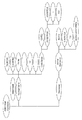
図3は、図2に示すCOBOLソースコード200の構文木を示す図である。ここでは記載の都合上、「PROCEDURE」DIVISIONの構文木のみを示した。COBOLソースコードチェックプログラム110は、COBOLソースコード200の構文要素と階層構造を解析し、図3に示すような構文木を生成する。構文木はメモリなどの一時記憶装置内にプログラム処理上のオブジェクトとして記憶してもよいし、構文木の内容を記述した構文木データをHDDに格納してもよい。
(Step 1: Generate a syntax tree)
FIG. 3 is a diagram showing a syntax tree of the
(ステップ1:構文木を生成する:補足)
COBOLソースコードチェックプログラム110は、COBOLソースコード200の構文要素をソースコードのまま構文木に格納するのではなく、必要に応じて構文要素をカテゴリ分けする。例えば、IFステートメント、EVALUATEステートメントなどの、条件文を持つステートメントに、「CONDITION」という構成要素を付与し、その配下に実際の条件文を格納する。ここでいう条件文とは、例えば不等式や等式が成立するか否かを判定する際の条件式に相当する。
(Step 1: Generate a syntax tree: Supplement)
The COBOL source code check program 110 does not store the syntax elements of the
(ステップ2:複数項目を有するデータ変数を探索する)
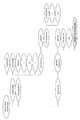
図4は、複数項目を有するデータ変数を探索する様子を示す図である。COBOLソースコードチェックプログラム110は、構文木を走査し、複数項目を有するデータ変数を探索する。具体的には、括弧()を添えているデータ項目を探索する。また、()内の添字もデータ項目とセットにして記録しておく。なお、データ項目を部分参照する構文要素は、本ステップの対象外とする。図4に示す例では、データ項目「DATA01」とその添字「COUNTER」が本ステップの探索対称となる。
(Step 2: Search for data variables having multiple items)
FIG. 4 is a diagram illustrating a state of searching for a data variable having a plurality of items. The COBOL source code check program 110 scans the syntax tree and searches for a data variable having a plurality of items. Specifically, a data item with parentheses () is searched. The subscripts in parentheses are also recorded as a set with data items. Note that syntax elements that partially reference data items are excluded from this step. In the example shown in FIG. 4, the data item “DATA01” and its subscript “COUNTER” are the search symmetry of this step.
(ステップ2:複数項目を有するデータ変数を探索する:補足)
本ステップは、サイズ制限のあるデータ項目を探索し、サイズ超過アクセスの問題を引き起こす可能性のあるソースコードを探し出す起点とする意義がある。
(Step 2: Search for data variables with multiple items: Supplement)
This step is meaningful as a starting point for searching for data items with size restrictions and searching for source code that may cause the problem of oversize access.
(ステップ3:テーブル定義を探索する)
COBOLソースコードチェックプログラム110は、COBOLソースコード200の「DATA」DIVISIONの構文木(図示せず)を走査し、ステップ2で探索したデータ項目(ここではDATA01)の定義を探索する。
(Step 3: Search table definition)
The COBOL source code check program 110 scans the “DATA” DIVISION syntax tree (not shown) of the
(ステップ4:テーブルサイズを取得する)
COBOLソースコードチェックプログラム110は、ステップ3で探索したデータ項目自身の定義、またはデータ項目が属する集団項目に、「OCCURS」ステートメントが宣言されているか否かをチェックする。「OCCURS」ステートメントが宣言されている場合は、その数値とデータ項目名を記録する。図2に示したCOBOLソースコード200の例では、「DATA01」が所属する集団項目「TABLE01」に「OCCURS」ステートメントが宣言されているので、その数値「100」と「DATA01」をセットにして記憶する。
(Step 4: Get table size)
The COBOL source code check program 110 checks whether an “OCCURS” statement is declared in the definition of the data item itself searched in
(ステップ5:条件文を探索する)
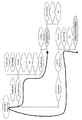
図5は、条件文を探索する様子を示す図である。COBOLソースコードチェックプログラム110は、COBOLソースコード200の「PROCEDURE」DIVISIONの構文木を、ステップ2で探索したデータ項目(ここではDATA01)から遡って走査し、条件文を探索する。ステップ1で説明した通り、条件文を持つ構成要素は必ず「CONDITION」構成要素を持つので、「CONDITION」を親ノードから順に探索すればよい。
(Step 5: Search for conditional statements)
FIG. 5 is a diagram illustrating a state in which a conditional sentence is searched. The COBOL source code check program 110 scans the syntax tree of “PROCEDURE” DIVISION of the
(ステップ5:条件文を探索する:補足)
本ステップは、データ項目の最大サイズを超えてそのデータ項目にアクセスする処理を引き起こす可能性のある条件文を洗い出す意義がある。
(Step 5: Search for conditional statements: supplement)
This step has the significance of identifying conditional statements that may cause processing to access the data item exceeding the maximum size of the data item.
(ステップ6:テーブル定義に合致する条件文を探索する)
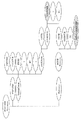
図6は、テーブル定義に合致する条件文を探索する様子を示す図である。COBOLソースコードチェックプログラム110は、ステップ5で探索した条件文の構文木のうち、ステップ2で記録した()内の添字に合致するものを探索する。図6に示した例では、ステップ2で記録した添字「COUNTER」が、「CONDITION」配下の「COUNTER>200」として見つかる。
(Step 6: Search for a conditional statement that matches the table definition)
FIG. 6 is a diagram illustrating a state in which a conditional sentence that matches the table definition is searched. The COBOL source code check program 110 searches for the syntax tree of the conditional sentence searched in
(ステップ7:テーブル定義と条件文を比較する)
COBOLソースコードチェックプログラム110は、ステップ4で取得したテーブルサイズと、ステップ5で取得した条件文とを比較し、テーブルサイズを超過するアクセスが生じるか否かを検証する。ここでは、ステップ4で取得した「OCCURS」ステートメントが指定するテーブルサイズが「100」であるのに対し、ステップ5で取得した条件文は「200」を指定している。したがって、COBOLソースコードチェックプログラム110は、「COUNTER>200」が記述エラーであるものとみなす。
(Step 7: Compare table definition and conditional statement)
The COBOL source code check program 110 compares the table size acquired in
以上、COBOLソースコードチェックプログラム110が図2のソースコードをチェックする過程を説明した。 In the foregoing, the process in which the COBOL source code check program 110 checks the source code of FIG. 2 has been described.
以上のように、本実施の形態1によれば、COBOLソースコードチェックプログラム110は、テーブルにアクセスする処理をCOBOLソースコード200の構文木から探索し、テーブルサイズを超過するアクセス処理が存在するか否かを検証する。これにより、不正なテーブルアクセス処理を事前に検出することができる。
As described above, according to the first embodiment, the COBOL source code check program 110 searches the syntax tree of the
具体的には、COBOLソースコードチェックプログラム110は、複数項目を有するデータ項目(上記例ではDATA01)を起点として構文木を探索し、そのデータ項目の条件文(上記例ではCOUNTER>200)とテーブルサイズ定義(上記例ではOCCURS 100)を比較する。データ項目を起点として構文木を探索することにより、データ項目のサイズを基準として不正アクセスを検出することができるので、検出漏れを確実に防ぐことができる。 Specifically, the COBOL source code check program 110 searches the syntax tree starting from a data item having a plurality of items (DATA01 in the above example), and a conditional statement (COUNTER> 200 in the above example) and table of the data item. Compare the size definitions (OCCURS 100 in the above example). By searching the syntax tree starting from the data item, it is possible to detect unauthorized access on the basis of the size of the data item, so it is possible to reliably prevent omission of detection.
<実施の形態2>
図7は、本発明の実施の形態2に係るCOBOLソースコードチェックシステム1000の構成図である。COBOLソースコードチェックシステム1000は、実施の形態1で説明したコンピュータ100、ホスト400、共有サーバ500を有する。
<
FIG. 7 is a configuration diagram of the COBOL source
COBOLソースコードチェックプログラム110は、開発作業用コンピュータであるコンピュータ100上で実行される一方、チェック対象であるCOBOLソースコード200は、ホスト(汎用機)400上に置かれていることが多い。この場合、ソースコードをチェックするためには、COBOLソースコード200をホスト400からコンピュータ100にダウンロードする必要がある。
The COBOL source code check program 110 is executed on the
ところが、チェックを完全にするためには、COBOLソースコード200から参照している外部ソースコード(図7の参照先ソースコード210)を併せてダウンロードする必要がある。この参照先ソースコード210は、膨大な量になることが多く、ダウンロード時間もその分だけ多くかかる。したがって、チェック作業を開始するまでの準備作業に時間がかかってしまう。
However, in order to complete the check, it is necessary to download the external source code (referred
そこで本実施の形態2では、ホスト400とコンピュータ100の間に共有サーバ500を設置し、共有サーバ500がホスト400から参照先ソースコード210を定期的にダウンロードすることとした。
Therefore, in the second embodiment, the shared
ホスト400が開発作業を行う場所から離れた遠隔に設置されているような場合には、ホスト400と共有サーバ500の間のダウンロード処理は時間がかかるものの、共有サーバ500とコンピュータ100の間のダウンロードは、例えば共有サーバ500を開発作業場所に設置しておけば、ごく短時間で済む。共有サーバ500は、時間のかかるダウンロード処理を例えば夜中にあらかじめ行っておく。これにより、COBOLソースコードチェックプログラム110が参照先ソースコード210を必要とする場合は、即座に必要な参照先ソースコード210を取得することができ、チェック作業にかかる時間を大幅に低減することができる。
When the host 400 is installed remotely from the place where the development work is performed, the download process between the host 400 and the shared
100:コンピュータ、110:COBOLソースコードチェックプログラム、200:COBOLソースコード、210:参照先ソースコード、300:チェック規則データ、400:ホスト、500:共有サーバ、1000:COBOLソースコードチェックシステム。 DESCRIPTION OF SYMBOLS 100: Computer, 110: COBOL source code check program, 200: COBOL source code, 210: Reference source code, 300: Check rule data, 400: Host, 500: Shared server, 1000: COBOL source code check system
Claims (3)
COBOLソースコードを読み込むステップと、
前記COBOLソースコードの構文を解析し、前記COBOLソースコードの構文要素を構成要素として保持する構文木を生成するステップと、
前記構文木の構成要素が保持している前記COBOLソースコードの構文要素をチェックするチェックステップと、
を実行させ、
前記チェックステップでは、前記コンピュータに、
COBOL言語のテーブルを参照し、またはデータを書き込むテーブルアクセス処理が前記構文木内に存在するか否かをチェックするステップと、
前記テーブルアクセス処理が存在する場合には、前記テーブルのサイズを超えて前記テーブルにアクセスするステートメントが存在するか否かをチェックするステップと、
前記テーブルのサイズを超えて前記テーブルにアクセスするステートメントが存在する場合は前記COBOLソースコードにエラーがあると判定するステップと、
を実行させることを特徴とするCOBOLソースコードチェックプログラム。 A program for causing a computer to execute a process for checking an error in a COBOL source code.
Reading the COBOL source code;
Analyzing the syntax of the COBOL source code and generating a syntax tree that holds the syntax elements of the COBOL source code as constituent elements;
A check step of checking a syntax element of the COBOL source code held by a component of the syntax tree;
And execute
In the checking step, the computer is
Checking whether a table access process for writing data or referring to a COBOL language table exists in the syntax tree;
If the table access process exists, checking whether there is a statement that accesses the table beyond the size of the table;
Determining that there is an error in the COBOL source code if there is a statement that accesses the table beyond the size of the table;
A COBOL source code check program characterized in that
PERFORMステートメント内にある括弧が付与されたデータ項目を探索するステップと、
前記構文木内から前記データ項目に対応するOCCURSステートメントとそのOCCURSステートメントが宣言する前記テーブルのサイズを探索するステップと、
前記構文木内の前記データ項目から遡って、前記テーブルに前記データ項目をセットするステートメントの繰返し条件を探索するステップと、
前記繰返し条件が前記テーブルのサイズを超過しているか否かをチェックするステップと、
前記テーブルのサイズを超過している場合は前記COBOLソースコードにエラーがあると判定するステップと、
を実行させることを特徴とする請求項1記載のCOBOLソースコードチェックプログラム。 In the checking step, the computer is
Searching for data items with parentheses in a PERFORM statement;
Searching from the syntax tree for an OCCURS statement corresponding to the data item and the size of the table declared by the OCCURS statement;
Searching for repetition conditions of statements that set the data items in the table retroactively from the data items in the syntax tree;
Checking whether the repetition condition exceeds the size of the table;
Determining that there is an error in the COBOL source code if the size of the table is exceeded;
The COBOL source code check program according to claim 1, wherein:
前記COBOLソースコードが参照している他のCOBOLソースコードを、前記COBOLソースコードまたは前記他のCOBOLソースコードが配置されているホストから定期的に取得するサーバと、
を有することを特徴とするCOBOLソースコードチェックシステム。 A computer that executes the COBOL source code check program according to claim 1 or 2,
A server that periodically obtains another COBOL source code referred to by the COBOL source code from the host where the COBOL source code or the other COBOL source code is arranged;
A COBOL source code checking system comprising:
Priority Applications (1)
| Application Number | Priority Date | Filing Date | Title |
|---|---|---|---|
| JP2010027222A JP5073767B2 (en) | 2010-02-10 | 2010-02-10 | COBOL source code check program, COBOL source code check system |
Applications Claiming Priority (1)
| Application Number | Priority Date | Filing Date | Title |
|---|---|---|---|
| JP2010027222A JP5073767B2 (en) | 2010-02-10 | 2010-02-10 | COBOL source code check program, COBOL source code check system |
Publications (2)
| Publication Number | Publication Date |
|---|---|
| JP2011164954A JP2011164954A (en) | 2011-08-25 |
| JP5073767B2 true JP5073767B2 (en) | 2012-11-14 |
Family
ID=44595561
Family Applications (1)
| Application Number | Title | Priority Date | Filing Date |
|---|---|---|---|
| JP2010027222A Expired - Fee Related JP5073767B2 (en) | 2010-02-10 | 2010-02-10 | COBOL source code check program, COBOL source code check system |
Country Status (1)
| Country | Link |
|---|---|
| JP (1) | JP5073767B2 (en) |
Family Cites Families (6)
| Publication number | Priority date | Publication date | Assignee | Title |
|---|---|---|---|---|
| JP3029368B2 (en) * | 1993-11-30 | 2000-04-04 | 株式会社東芝 | Program error detection method and error detection device |
| JPH1173328A (en) * | 1997-08-29 | 1999-03-16 | Nec Corp | Coding standard check system |
| JP3414319B2 (en) * | 1999-04-28 | 2003-06-09 | 日本電気株式会社 | Data retrieval apparatus, method and recording medium |
| JP2005190330A (en) * | 2003-12-26 | 2005-07-14 | Matsushita Electric Ind Co Ltd | Source program review support system |
| JP4818652B2 (en) * | 2005-07-22 | 2011-11-16 | 株式会社沖データ | Terminal management system |
| JP4914609B2 (en) * | 2005-12-28 | 2012-04-11 | 富士通株式会社 | Source code problem prediction program |
-
2010
- 2010-02-10 JP JP2010027222A patent/JP5073767B2/en not_active Expired - Fee Related
Also Published As
| Publication number | Publication date |
|---|---|
| JP2011164954A (en) | 2011-08-25 |
Similar Documents
| Publication | Publication Date | Title |
|---|---|---|
| Zhong et al. | Squirrel: Testing database management systems with language validity and coverage feedback | |
| US12093389B2 (en) | Data traffic characterization prioritization | |
| CN109992970B (en) | JAVA deserialization vulnerability detection system and method | |
| He et al. | Sofi: Reflection-augmented fuzzing for javascript engines | |
| Ocariza et al. | An empirical study of client-side JavaScript bugs | |
| EP2420931B1 (en) | Solving hybrid constraints to generate test cases for validating a software module | |
| US20250013753A1 (en) | Systems and methods for reverse engineering-based detection of vulnerabilities | |
| US9529662B1 (en) | Dynamic rule-based automatic crash dump analyzer | |
| EP2407887B1 (en) | Solving hybrid constraints to validate specification requirements of a software module | |
| US20120072988A1 (en) | Detection of global metamorphic malware variants using control and data flow analysis | |
| US9256519B2 (en) | Using linked data to determine package quality | |
| JP6817469B2 (en) | Inter-application dependency analysis to improve threat detection in computer systems | |
| US20240045956A1 (en) | Malicious source code detection | |
| US9087137B2 (en) | Detection of custom parameters in a request URL | |
| Varatalu et al. | RE#: high performance derivative-based regex matching with intersection, complement, and restricted lookarounds | |
| CN119249436A (en) | Code audit methods and tools for large project code bases | |
| CN119848841A (en) | Code analysis method and related equipment | |
| Jaeger et al. | Normalizing security events with a hierarchical knowledge base | |
| JP5073767B2 (en) | COBOL source code check program, COBOL source code check system | |
| Borzykh et al. | Detecting Code Security Breaches by Means of Dataflow Analysis | |
| Mariano et al. | Analyzing graph-based algorithms employed to generate test cases from finite state machines | |
| Manthey et al. | Spybug: Automated bug detection in the configuration space of SAT solvers | |
| US10157049B2 (en) | Static analysis with input reduction | |
| Kuliamin | A survey of software dynamic analysis methods | |
| Zhang et al. | Come for syntax, stay for speed, write secure code: an empirical study of security weaknesses in Julia programs: Zhang et al. |
Legal Events
| Date | Code | Title | Description |
|---|---|---|---|
| A977 | Report on retrieval |
Free format text: JAPANESE INTERMEDIATE CODE: A971007 Effective date: 20120528 |
|
| TRDD | Decision of grant or rejection written | ||
| A01 | Written decision to grant a patent or to grant a registration (utility model) |
Free format text: JAPANESE INTERMEDIATE CODE: A01 Effective date: 20120814 |
|
| A01 | Written decision to grant a patent or to grant a registration (utility model) |
Free format text: JAPANESE INTERMEDIATE CODE: A01 |
|
| A61 | First payment of annual fees (during grant procedure) |
Free format text: JAPANESE INTERMEDIATE CODE: A61 Effective date: 20120822 |
|
| R150 | Certificate of patent or registration of utility model |
Ref document number: 5073767 Country of ref document: JP Free format text: JAPANESE INTERMEDIATE CODE: R150 Free format text: JAPANESE INTERMEDIATE CODE: R150 |
|
| FPAY | Renewal fee payment (event date is renewal date of database) |
Free format text: PAYMENT UNTIL: 20150831 Year of fee payment: 3 |
|
| R250 | Receipt of annual fees |
Free format text: JAPANESE INTERMEDIATE CODE: R250 |
|
| S531 | Written request for registration of change of domicile |
Free format text: JAPANESE INTERMEDIATE CODE: R313531 |
|
| R350 | Written notification of registration of transfer |
Free format text: JAPANESE INTERMEDIATE CODE: R350 |
|
| R250 | Receipt of annual fees |
Free format text: JAPANESE INTERMEDIATE CODE: R250 |
|
| R250 | Receipt of annual fees |
Free format text: JAPANESE INTERMEDIATE CODE: R250 |
|
| LAPS | Cancellation because of no payment of annual fees |