JP4875756B2 - Mobile device management proxy system - Google Patents
Mobile device management proxy system Download PDFInfo
- Publication number
- JP4875756B2 JP4875756B2 JP2009547249A JP2009547249A JP4875756B2 JP 4875756 B2 JP4875756 B2 JP 4875756B2 JP 2009547249 A JP2009547249 A JP 2009547249A JP 2009547249 A JP2009547249 A JP 2009547249A JP 4875756 B2 JP4875756 B2 JP 4875756B2
- Authority
- JP
- Japan
- Prior art keywords
- service
- client
- state
- mobile
- proxy
- Prior art date
- Legal status (The legal status is an assumption and is not a legal conclusion. Google has not performed a legal analysis and makes no representation as to the accuracy of the status listed.)
- Expired - Fee Related
Links
Images




Classifications
-
- H—ELECTRICITY
- H04—ELECTRIC COMMUNICATION TECHNIQUE
- H04L—TRANSMISSION OF DIGITAL INFORMATION, e.g. TELEGRAPHIC COMMUNICATION
- H04L67/00—Network arrangements or protocols for supporting network services or applications
- H04L67/01—Protocols
- H04L67/10—Protocols in which an application is distributed across nodes in the network
- H04L67/1095—Replication or mirroring of data, e.g. scheduling or transport for data synchronisation between network nodes
-
- H—ELECTRICITY
- H04—ELECTRIC COMMUNICATION TECHNIQUE
- H04L—TRANSMISSION OF DIGITAL INFORMATION, e.g. TELEGRAPHIC COMMUNICATION
- H04L12/00—Data switching networks
- H04L12/28—Data switching networks characterised by path configuration, e.g. LAN [Local Area Networks] or WAN [Wide Area Networks]
-
- H—ELECTRICITY
- H04—ELECTRIC COMMUNICATION TECHNIQUE
- H04L—TRANSMISSION OF DIGITAL INFORMATION, e.g. TELEGRAPHIC COMMUNICATION
- H04L67/00—Network arrangements or protocols for supporting network services or applications
- H04L67/01—Protocols
- H04L67/12—Protocols specially adapted for proprietary or special-purpose networking environments, e.g. medical networks, sensor networks, networks in vehicles or remote metering networks
- H04L67/125—Protocols specially adapted for proprietary or special-purpose networking environments, e.g. medical networks, sensor networks, networks in vehicles or remote metering networks involving control of end-device applications over a network
-
- H—ELECTRICITY
- H04—ELECTRIC COMMUNICATION TECHNIQUE
- H04L—TRANSMISSION OF DIGITAL INFORMATION, e.g. TELEGRAPHIC COMMUNICATION
- H04L67/00—Network arrangements or protocols for supporting network services or applications
- H04L67/50—Network services
- H04L67/56—Provisioning of proxy services
-
- H—ELECTRICITY
- H04—ELECTRIC COMMUNICATION TECHNIQUE
- H04L—TRANSMISSION OF DIGITAL INFORMATION, e.g. TELEGRAPHIC COMMUNICATION
- H04L67/00—Network arrangements or protocols for supporting network services or applications
- H04L67/50—Network services
- H04L67/56—Provisioning of proxy services
- H04L67/567—Integrating service provisioning from a plurality of service providers
-
- H—ELECTRICITY
- H04—ELECTRIC COMMUNICATION TECHNIQUE
- H04W—WIRELESS COMMUNICATION NETWORKS
- H04W84/00—Network topologies
-
- H—ELECTRICITY
- H04—ELECTRIC COMMUNICATION TECHNIQUE
- H04L—TRANSMISSION OF DIGITAL INFORMATION, e.g. TELEGRAPHIC COMMUNICATION
- H04L67/00—Network arrangements or protocols for supporting network services or applications
- H04L67/50—Network services
- H04L67/56—Provisioning of proxy services
- H04L67/568—Storing data temporarily at an intermediate stage, e.g. caching
- H04L67/5681—Pre-fetching or pre-delivering data based on network characteristics
-
- H—ELECTRICITY
- H04—ELECTRIC COMMUNICATION TECHNIQUE
- H04L—TRANSMISSION OF DIGITAL INFORMATION, e.g. TELEGRAPHIC COMMUNICATION
- H04L67/00—Network arrangements or protocols for supporting network services or applications
- H04L67/50—Network services
- H04L67/60—Scheduling or organising the servicing of application requests, e.g. requests for application data transmissions using the analysis and optimisation of the required network resources
- H04L67/62—Establishing a time schedule for servicing the requests
Landscapes
- Engineering & Computer Science (AREA)
- Computer Networks & Wireless Communication (AREA)
- Signal Processing (AREA)
- Health & Medical Sciences (AREA)
- Computing Systems (AREA)
- General Health & Medical Sciences (AREA)
- Medical Informatics (AREA)
- Information Transfer Between Computers (AREA)
- Mobile Radio Communication Systems (AREA)
- Information Retrieval, Db Structures And Fs Structures Therefor (AREA)
Description
セルラー技術とIPベースの技術の収束は、諸技術をポータブルデバイスにまとめる触媒として働く。例えば、携帯電話などのモバイルクライアントは、現在、インターネットなどのIPネットワーク上でIPベースのサービスにアクセスすることができる。同様に、ポータブルコンピューターなどのコンピューティングシステムは、インターネットを介して電話の宛先に音声通話をかけることを容易にするモバイルクライアント技術を含むことができる。これは主に、両方の体制のユーザーが互いのサービスにアクセスすることができるように、ネットワークサービスプロバイダーが主要ネットワークをつなぐ手段を含むことによる。 The convergence of cellular and IP-based technologies serves as a catalyst to bring the technologies together into a portable device. For example, mobile clients such as mobile phones can now access IP-based services over IP networks such as the Internet. Similarly, computing systems such as portable computers can include mobile client technology that facilitates making voice calls to telephone destinations over the Internet. This is mainly due to the inclusion of means by which network service providers connect the main networks so that both regime users can access each other's services.
データ及びプログラムと対話するための互いに異なる要件の組をそれぞれが有する複数のコンピューティングデバイスをユーザーが持つことは一般的になっている。企業環境では、従業員の移動性が高まり、それによって、例えば移動の間、装置をオフライン状態で定期的に持ち運ぶので、最新の設定及び情報を維持することが重要になる。したがって、従業員が企業環境に恐らく新しい装置で再接続する必要があるとき、オペレーティングシステム、通信能力などの特定のデバイス特性が、従業員による必要なアクセスを妨げる制約とならないことが望ましい。 It has become common for users to have multiple computing devices, each having a different set of requirements for interacting with data and programs. In an enterprise environment, employee mobility is increased, which makes it important to maintain up-to-date settings and information, for example, as equipment is regularly taken offline during the move. Thus, when an employee needs to reconnect to the corporate environment, perhaps with new equipment, it is desirable that certain device characteristics, such as operating system, communication capabilities, etc., do not become a constraint that impedes the necessary access by the employee.
企業は、今日使用されている多くの異なるコンピューティングシステムに関するこの問題の解決に大きく前進している。ユーザーは、多くの異なるタイプのコンピューターを企業に持ち込むことができ、適切な許可が与えられると、バックエンドシステムによって提供されるサービスに容易にアクセスすることができる。しかし、日常業務のための透過的な接続性を提供するには、モバイルクライアントへのサポートも得ることができるべきである。例えば、スマートフォンでのデバイス及びユーザープレゼンス動作可能通信は、企業にとって、ワークフローを単純にし、生産性を向上させるのに有用であり得る。しかし、企業のこうしたモバイルクライアント能力を容易に識別し、クライアントがオンライン状態であれ、オフライン状態であれ、クライアント情報を透過的に検出し維持することができる機構が整うことが求められている。 Companies are making great strides in solving this problem for many different computing systems in use today. Users can bring many different types of computers into the enterprise and, with the appropriate permissions, can easily access the services provided by the backend system. However, support for mobile clients should also be available to provide transparent connectivity for daily operations. For example, smart phone device and user presence-enabled communications can be useful for businesses to simplify workflows and improve productivity. However, there is a need for a mechanism that can easily identify such mobile client capabilities of a company and transparently detect and maintain client information whether the client is online or offline.
したがって、企業は、多くの異なるタイプのデバイスのためのオープンスタンダードをベースとしたインフラストラクチャーの面で企業サポートを提供するために、システム統合へと移行している。しかし、従来の解決策には、異種のモバイルクライアント技術や、企業バックエンドシステムによって提供され得る多くの異なるサービスをサポートするための拡張可能で同種の且つスケーラブルなアーキテクチャーが欠如している。 Therefore, enterprises are moving to system integration to provide enterprise support in terms of infrastructure based on open standards for many different types of devices. However, conventional solutions lack a scalable, homogeneous and scalable architecture to support disparate mobile client technologies and many different services that can be provided by enterprise back-end systems.
下記は、開示された技術革新の幾つかの態様についての基本的な理解を促すために、簡略化された要約を提示している。この要約は広範な概要ではなく、また、主要な又は重要な要素を識別するものでも、その範囲を定めるものでもない。その唯一の目的は、以下に提示される一層詳細な説明の序文として、幾つかの概念を簡略化された形で提示することである。 The following presents a simplified summary in order to facilitate a basic understanding of some aspects of the disclosed innovations. This summary is not an extensive overview and does not identify or delimit the major or important elements. Its sole purpose is to present some concepts in a simplified form as a prelude to the more detailed description that is presented later.
開示されたアーキテクチャーは、柔軟で拡張可能且つ堅牢なモバイルクライアント(又はクライアントデバイス)管理システムである。このシステムは、バックエンドシステムからのサービスを求めるモバイルクライアントのプロキシとして働く。プロキシシステムは、モバイルクライアントに関連する状態情報の仮想クライアントイメージを含む。モバイルクライアントがプロキシと対話するとき、プロキシサーバーは、クライアントの仮想イメージを検証し、次いで、バックエンドシステムからクライアントへの最新の更新を取得するプロセスを最適化するために、仮想イメージと対話する。更に、状態の変更に基づいて、プロキシシステムは、モバイルクライアントのために、バックエンドシステムの1つ又は複数の任意のサービスに自動的且つ非同期的にアクセスする。モバイルクライアントがプロキシに接続するとき、プロキシは、仮想イメージの状態に関連する最新のサービスを有する。 The disclosed architecture is a flexible, extensible and robust mobile client (or client device) management system. This system acts as a proxy for mobile clients seeking services from backend systems. The proxy system includes a virtual client image of state information associated with the mobile client. When the mobile client interacts with the proxy, the proxy server validates the client's virtual image and then interacts with the virtual image to optimize the process of obtaining the latest updates from the backend system to the client. Further, based on the state change, the proxy system automatically and asynchronously accesses any service or services of the backend system for the mobile client. When the mobile client connects to the proxy, the proxy has the latest service related to the state of the virtual image.
プロキシアーキテクチャーは、抽象化コンポーネント(例えばサービスドライバー)を使用して任意のサービスにアクセスし、それを処理することができ、この抽象化コンポーネントは、異種のサービスを、仮想イメージのクライアント状態の更新のためにプロキシによって処理され得るフォーマットへと抽象化する。したがって、このアーキテクチャーは、拡張可能でスケーラブルである。更に、例えば、法人企業で使用されるとき、このアーキテクチャーは、サービスにアクセスするために多数のモバイルクライアントが接続する負荷バランシングを容易にする。クライアントサービスの需要を満たすように動的にスケールアップし、需要が減少するときにスケールダウンするように、複数のプロキシ管理システムが使用され得る。換言すると、クライアントは、特定のプロキシデバイス管理システムに接続する必要はない。 The proxy architecture can use an abstraction component (eg, a service driver) to access and process any service, which can disparate services and update the client state of the virtual image. To a format that can be processed by a proxy for This architecture is therefore scalable and scalable. Furthermore, for example, when used in a corporate enterprise, this architecture facilitates load balancing where a large number of mobile clients connect to access a service. Multiple proxy management systems may be used to dynamically scale up to meet client service demand and to scale down when demand decreases. In other words, the client does not need to connect to a specific proxy device management system.
より具体的には、プロキシは、任意のバックエンドシステムから作業単位として提示されたタスクを受信し処理するタスク実行エンジンを含むデバイス管理システムである。モバイルクライアントの状態情報は、仮想クライアントイメージとして格納されてもよく,そのイメージは、例えば複数のプロキシシステムに関連して格納され得る。したがって、複数のプロキシ管理システムは、必要に応じてイメージにアクセスすることができる。このシステムは、例えば、仮想デバイスイメージに基づいて(また、デバイスがオフライン状態であるとき)、バックエンドシステム作業、及びネットワークアクセス保護に必要な任意の作業を評価する能力を促進する。タスクエンジンは、仮想クライアントイメージの状態の変更に基づいて所望のサービスにアクセスするために、バックエンドシステムと非同期的に動作する。 More specifically, a proxy is a device management system that includes a task execution engine that receives and processes tasks presented as units of work from any back-end system. Mobile client state information may be stored as a virtual client image, which may be stored in association with multiple proxy systems, for example. Thus, multiple proxy management systems can access images as needed. The system facilitates the ability to evaluate back-end system work and any work required for network access protection, for example, based on the virtual device image (and also when the device is offline). The task engine operates asynchronously with the backend system to access a desired service based on a change in the state of the virtual client image.
このシステムは、頻繁に使用され得且つ不揮発性であるデバイス構成サービスプロバイダー値のキャッシュを維持することもできる。検証に従って、キャッシュされた情報は別個に検証されても、イメージの検証と組み合わせて検証されることもできる。タスク実行エンジンは、それが「タスク」オブジェクトを使用するデバイスの反対側で実施される作業単位を抽象化するので、任意のバックエンドシステムとインターフェースすることができる。したがって、プロキシをそれぞれのバックエンドシステムに接続する任意の数のドライバーは、デバイスの反対側で実施される作業単位をキューに入れることができる。更に、エンジンは作業単位をバッチで処理することができる。 The system can also maintain a cache of device configuration service provider values that can be used frequently and are non-volatile. According to validation, the cached information can be validated separately or in combination with image validation. The task execution engine can interface with any backend system because it abstracts the unit of work performed on the opposite side of the device that uses the “task” object. Thus, any number of drivers connecting proxies to their respective backend systems can queue units of work that are performed on the other side of the device. In addition, the engine can process units of work in batches.
プロキシシステムは、関連するモバイルデバイスが接続する前に1つ又は複数のタスクへの評価テストを実施するために仮想デバイス識別を使用することができる。この機構は、例えばクライアントデバイスがいつ重要な更新を必要とし、管理エンドポイントに接触することを強制されるべきか決定することを容易にする。プロキシタスクエンジンは、複数の任意のバックエンドシステムと非同期的に対話し、それによって、クライアントがオンライン状態であれ、オフライン状態であれ、ドライバーがいつでも作業を提示することを可能にする。更に、タスクエンジンは、それが処理し始め得る前に、すべてのドライバーが応答するのを待つ必要はない。 The proxy system can use virtual device identification to perform an evaluation test on one or more tasks before the associated mobile device connects. This mechanism facilitates, for example, determining when a client device needs a critical update and should be forced to contact a management endpoint. The proxy task engine interacts asynchronously with any number of backend systems, thereby allowing the driver to present work at any time, whether the client is online or offline. Furthermore, the task engine does not have to wait for all drivers to respond before it can begin processing.
上記内容及び関連の目的を達成するために、以下の説明及び添付の図面に関連して、開示された技術革新の例示的な特定の態様について本明細書に述べられる。しかし、これらの態様は、本明細書に開示された諸原理が使用され得る様々なやり方のほんの幾つかを示すものであり、こうしたすべての態様及びその等価物を含むものである。他の利点及び新規の特徴は、図面と併せて考慮されるとき、以下の詳細な説明から明らかになる。 To the accomplishment of the foregoing and related ends, certain specific aspects of the disclosed innovation are described herein in connection with the following description and the annexed drawings. However, these embodiments are merely illustrative of the various ways in which the principles disclosed herein may be used and include all such embodiments and their equivalents. Other advantages and novel features will become apparent from the following detailed description when considered in conjunction with the drawings.
一般に、開示されたアーキテクチャーは、企業バックエンドシステムからのサービスを求めるモバイルクライアントのためのモバイルクライアントデバイス・プロキシ管理サーバーである。モバイルクライアントに関連するクライアント状態情報は、例えば、モバイルクライアントがプロキシと対話するときデバイスのクライアント状態が最新のクライアント状態に更新されるように、サーバーで格納される。状態の変更に基づいて、プロキシシステムは、モバイルクライアントのためにバックエンドシステムの1つ又は複数の任意のサービスに非同期的にアクセスする。モバイルクライアントがプロキシに接続するとき、プロキシは、仮想イメージの状態に関連する最新のサービスを有する。同様に、プロキシシステムは、クライアントがいつでも接続することができ、プロキシから最新の状態情報を受け取り、及び/又はプロキシに追加の状態情報を渡すことができるという点で、クライアントへの非同期接続を促進する。 In general, the disclosed architecture is a mobile client device proxy management server for mobile clients seeking services from enterprise back-end systems. Client state information associated with the mobile client is stored at the server such that, for example, when the mobile client interacts with the proxy, the client state of the device is updated to the latest client state. Based on the state change, the proxy system asynchronously accesses one or more arbitrary services of the backend system for the mobile client. When the mobile client connects to the proxy, the proxy has the latest service related to the state of the virtual image. Similarly, the proxy system facilitates asynchronous connections to clients in that clients can connect at any time, receive up-to-date state information from the proxy, and / or pass additional state information to the proxy. To do.
次にこの技術革新について、図面を参照して述べる。図面では、全体を通して同様の要素に言及するために、同じ参照符号が使用される。以下の記述では、説明目的により、複数の具体的な詳細が、その完全な理解を促すために図示されている。しかし、この技術革新は、これらの具体的な詳細なしに実施され得ることが明らかであり得る。他の場合では、その説明を容易にするために、よく知られている構造及びデバイスがブロック図の形で図示されている。 Next, this technical innovation will be described with reference to the drawings. In the drawings, the same reference numerals are used to refer to similar elements throughout. In the following description, for the purposes of explanation, numerous specific details are set forth in order to facilitate a thorough understanding thereof. However, it can be clear that this innovation can be implemented without these specific details. In other instances, well-known structures and devices are shown in block diagram form in order to facilitate describing them.
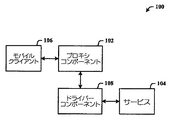
最初に図面を参照すると、図1は、開示された技術革新に従ってモバイルクライアント・プロキシサービスを提供するための、コンピューターで実施されるプロキシデバイス管理システム100を示している。システム100は、例えばモバイルクライアント106のために企業バックエンドシステムの任意のサービス104に非同期的にアクセスするためのプロキシコンポーネント102を含む。システム100は、任意のサービスにアクセスし、モバイルクライアントの状態に関連した処理のためにサービスをタスクに抽象化するためのドライバーを含むドライバーコンポーネント108をも備える。一つの実施の形態では、プロキシコンポーネント102及びドライバーコンポーネント108は、プロキシデバイス管理システム100を備える。
Referring initially to the drawings, FIG. 1 illustrates a computer-implemented proxy
代替の実装形態では、ドライバーコンポーネント108は、デバイス管理システム100とは別個の、リモートのコンポーネントであり得る。例えば、ドライバーコンポーネント108のドライバーはそれぞれ、プロキシコンポーネント102がそれぞれのサービスへの接続を要求するとき、対応するサービス位置のバックエンドドライバーがそれへのアクセスを容易にするように、それぞれのバックエンドサービス(又はサービスを提供したシステム)の一部であり得る。
In alternative implementations, the
別の実装形態では、新しいバックエンドシステムがオンライン状態になり、新しいドライバーを提供し及び/又は必要とするとき、ドライバーコンポーネント108は、プロキシコンポーネント102による将来の自動化された非同期の処理のためのドライバーの自動アップロードとインストールを容易にすることができる。
In another implementation, when a new back-end system goes online and provides and / or requires a new driver, the
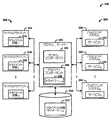
図2は、この技術革新によるプロキシデバイス管理のためのシステム200を一層詳細に示している。システム200は、1つ又は複数のモバイルクライアント206(モバイルクライアント1、モバイルクライアント2、…、モバイルクライアントMと示される。ただしMは正の整数である)のために対応するサービス(サービス1、サービス2、…、サービスNと示される)を提供する1つ又は複数のバックエンドシステム204(バックエンドシステム1、バックエンドシステム2、…、バックエンドシステムNと示される。ただしNは正の整数である)にアクセスするためのデバイスプロキシサーバー202を含む。クライアント206はそれぞれ、対応するクライアント状態(クライアント状態1,クライアント状態2、…、クライアント状態Mと示される)を含む。クライアント状態は、オペレーティングシステムのタイプ、バージョン、ハードウェア構成、アプリケーションバージョン、ユーザー情報、データバージョンなどのクライアント情報を含む。プロキシサーバー202は、バックエンドシステム204へのアクセスのためにプロキシサーバー202を駆動するプロキシコンポーネント102(例えばタスク実行エンジン)を含む。プロキシサーバー202は、ドライバーコンポーネント108をも含み、このドライバーコンポーネント108は、それぞれのバックエンドサーバー204(バックエンドシステム1〜N)へのアクセスを容易にする、バックエンドシステム204のそれぞれのためのドライバー208(ドライバー1〜Nと示される)を含む。サーバー202は、それぞれのクライアント206のクライアント状態の仮想イメージ212(クライアント状態イメージ1〜Mと示される)を格納する関連するデータ記憶部210を含むこともできる。データ記憶部210は、頻繁に必要とされ且つ不揮発性であるデバイス構成サービスプロバイダー(CSP)値のキャッシュとして働くことができる。
FIG. 2 shows in more detail a system 200 for proxy device management according to this innovation. System 200 corresponds to a service (service 1 , service) for one or more mobile clients 206 (denoted as mobile client 1 , mobile client 2 ,..., Mobile client M , where M is a positive integer). 2 ,..., Indicated as service N , one or more backend systems 204 (shown as backend system 1 , backend system 2 ,..., Backend system N , where N is a positive integer A
第1の動作において、第1のモバイルクライアント214がプロキシ202に接続するとき、第1のクライアント状態216は、プロキシデータ記憶部210に転送されて格納される。プロキシコンポーネント102は、第1のクライアント214によって必要とされた又は要求されたサービスを提供するのにバックエンドシステム204のうちのどれにアクセスすべきかを決定する。決定されると、ドライバーコンポーネント108は、対応するバックエンドシステム204及び対応するサービスにアクセスするための関連するドライバー208を提供する。選択されたサービスは、ドライバーコンポーネント108に所望のサービス情報を提供し、ドライバーコンポーネント108は、サービス情報を、プロキシサーバー202によって実行される任意のタスクに抽象化し、プロキシサーバー202は、(第1のクライアント214が接続される場合、)格納されたイメージ212の格納された第1のクライアント状態と第1のクライアント状態216とを更新する。
In the first operation, when the first
上記の第1の動作の完了後、次いで、第2の動作において、第1のクライアント214はオフライン状態になる(例えば、クライアントユーザーは第1のクライアント214の電源を切り、レンジの外に出る、…)。その後、一実装形態では、プロキシサーバー202は、(格納されたイメージ212の第1のクライアントイメージ内に格納されたドライバー情報に基づいて)第1のクライアント214のために以前に使用されたのと同じドライバーを使用してバックエンドシステム204に非同期的に接続し、格納されたイメージ212の既存の第1のクライアントイメージへの更新が存在することを検出し、プロキシサーバー202に関連して格納された第1のクライアントイメージにデータをアップロードする。最終的に、第1のクライアント214が、バックエンドシステム204へ接続するのではなく、プロキシサーバー202に再接続して企業バックエンドサービスを取得する場合、所望の情報は、プロキシサーバー202の格納されたイメージ212内の第1のクライアントイメージから容易に入手可能である。
After completion of the first operation above, then, in a second operation, the
しかし、理解されるように、第1のクライアント214は、プロキシサーバー202を介してバックエンドシステム204のうちの1つ又は複数にやはり接続され得る。第1のクライアント状態216のための格納された仮想イメージ212は、時間的に絶対最新のものでないことがある。これは、プロキシサーバー202によって更新処理を受けていることがある仮想クライアントイメージ212が多数あるからである。換言すると、第2のクライアント218のためのデータ記憶部210のクライアント状態の仮想イメージが処理を受けている期間、バックエンドシステム204は、第1のクライアント状態の仮想イメージにまだ移されていない更新を受け取ることができる。したがって、データ記憶部210内の第1のクライアントの仮想イメージは古くなる。第1のクライアント214は、(例えばユーザー設定に基づいて)第1のクライアント状態216が絶対的に最新であることを必要とする場合には、最新情報を取得し、或いはプロキシサーバー202に第1のクライアント状態216のすべて又は一部への更新処理を行うことを強制するために、バックエンドシステム204にルーティングされ得る。いずれの場合も、第1のクライアント状態212の仮想イメージは更新される。
However, as will be appreciated, the
実際の動作の一層具体的な説明においては、プロキシサーバー202は、(モバイルデバイスに対しては)フロントエンドで非同期的に、また(バックエンドシステムに対しては)バックエンドで非同期的に動作する。換言すると、クライアント206のうちの1つ又は複数が、対応する仮想クライアントイメージ212から更新を受け取るために接続している間、プロキシサーバー202はバックエンドでアクセス及び更新操作を行うことができる。それをサポートするために、プロキシサーバー202は、格納された仮想イメージ状態212への高速読取り/書出しアクセスを提供するためのキャッシュサブシステムを含むことができる。したがって、理解されるとおり、こうした作業に関連する負荷に対処するために複数のプロキシサーバーシステム202が使用され得る。負荷バランシング、スケーリング及びキャッシングについて、以下に述べる。
In a more specific description of the actual operation, the
プロキシサーバー202が、「タスク」オブジェクトを使用して、モバイルクライアントの反対側で実施される作業を作業単位(又はタスク)として抽象化することができるので、プロキシサーバー202のプロキシコンポーネント102は多くの任意のバックエンドシステム204と共に働くことができる。したがって、プロキシコンポーネント102をそれぞれのバックエンドシステム204に接続する任意の数のドライバー208が、対応するモバイルクライアント(及びクライアントデバイス)のために行われる作業をキューに入れることができる。したがって、プロキシコンポーネント102(又はプロキシエンジン)は、タスクをバッチで処理することができる。したがって、プロキシサーバー202は、多くのバックエンドシステム204が中央のプロキシコンポーネント102に作業単位を提示することを可能にするタスク指向の抽象化を容易にする。
Since the
プロキシサーバー202は、それぞれのクライアントが接続する前にタスクの評価テストを行うために、仮想のクライアントイメージ212(デバイス識別情報を含む)を使用することができる。したがって、この機構は、クライアントが重要な更新を必要とし、管理エンドポイント(又はバックエンドシステム204)に直ちに接触することを強制されるべきかどうか決定するために使用され得る。
The
上に述べたように、プロキシコンポーネント102は複数のバックエンドシステム204と共に非同期的に働く。これは、クライアントが接続されている、いないにかかわらず、ドライバー208が作業をいつでも提示することを可能にする。更に、プロキシコンポーネント102は、それがバックエンドシステム204からのサービスを処理し始め得る前にすべてのドライバーが応答するのを待つ必要はない。換言すると、第1のバックエンドシステム220及び第2のバックエンドシステム222に関連するドライバーは、第3のバックエンドシステム224のドライバーが応答する前に、データ処理のために使用され得る。
As mentioned above,
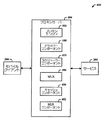
図3は、モバイルクライアント・プロキシサービスを容易にする代替のプロキシデバイス管理システム300を示している。システム300のプロキシサーバー202は、クライアント106の状態更新に関連するタスクを実行するためのタスク実行エンジン(TEE)304を備えるプロキシエンジン302を含む。プロキシエンジン302は、対応する複数のサービス310への複数のドライバー308を介して通信が行われ得るように、複数のアクセスコンポーネント306(例えばマルチプレクサー、すなわち「mux」)を含むこともできる。しかし、mux 306の包含は任意選択によることを理解されたい。ここでは、少なくとも3つのサービス、即ち、ディレクトリーサービス312(例えばマイクロソフト社によるActive Directory(商標))及び関連するディレクトリーサービスドライバー314、更新サービス316(例えばマイクロソフト社によるWindow Server Update Services(商標))及び関連する更新サービスドライバー318、並びに、メッセージングサービス320(例えばSMSショートメッセージサービス、MMSマルチメディア・メッセージングサービス、インスタントメッセージング、…)及び関連するメッセージングサービス・ドライバー322が提供される。3つのサービス及びドライバーだけが示されているが、更に多くのサービス及び関連するドライバーが実装され得る。更に、上記に示したように、単一のプロキシエンジン302では効率的に対処され得ない、フロントエンドのモバイルデバイスへの変化する需要、及びバックエンドサービスの変化する需要に動的に対処するために、複数のプロキシエンジン302が使用され得る。
FIG. 3 illustrates an alternative proxy
マルチプレクサー306はサービス310との通信を容易にする。TEE 304は、クライアント106からクライアント状態を取得し、どの部分が更新されるべきか決定するために状態を処理し、所望の更新に基づいて適切なサービス310へのアクセスを要求することができる。TEE 304は、ドライバー308を介してサービス310にルーティングするために、要求をmux 306に送信する。次いで、更新が、タスクへの抽象化処理のためにドライバー308に、次いでクライアント仮想イメージデータ記憶部210及び/又はクライアント102への挿入のためのTEE 304による処理のためにmux 306に返される。上述のように、タスク実行は、クライアント102がオンライン状態であるか、オフライン状態であるかに無関係に行われ得る。オフライン状態である場合、タスク実行は、データ記憶部210のクライアント状態イメージに対して行われる。したがって、クライアント102がプロキシエンジン302に接続するとき、クライアント状態への更新は、サービス310ではなく、データ記憶部210の仮想クライアント状態イメージから行われる。同様に、タスク実行は、プロキシ202がバックエンドサービス310に接続されるか否かに無関係に行われ得る。実行のためにプロキシエンジン302でキューに入れられたタスクがある限り、イメージ更新処理が行われ得る。
開示されたモバイルデバイスプロキシ管理システムは、サービスを提供するバックエンドシステムのタイプに無関係に、バックエンドサービスがプロキシサーバー202によってホストされ又は提供され、アクセスされ処理され得るという点で、汎用システムである。例えば、バックエンドシステムは、例えば多くの異なるタイプのオペレーティングシステム(例えばUnix(登録商標)、Linux、Windows(登録商標)、Appleなど)や、ファイル構造、プロトコル及びデータ形式を使用してサービスを提供することができる。ドライバー308は、TEE 304によって実行可能な任意のタスクにサービス情報を抽象化するために変換処理を実施する。対照的に、従来のアーキテクチャーは、拡張不可能でモバイルデバイスからバックエンドシステムへの1対1である、ハードコードされた実装を提供する。開示されたアーキテクチャーは、フロントエンドとバックエンドとの非同期操作を伴う多対多の拡張可能実装を提供する。
The disclosed mobile device proxy management system is a general purpose system in that the backend service can be hosted or provided by the
図4は、スケジューリング及び同期処理を使用する代替の汎用プロキシデバイス管理システム400を示している。ここで、ドライバーコンポーネント108は、それぞれのディレクトリーサービス312、更新サービス316及びメッセージサービス320のためのディレクトリーサービスドライバー314、更新サービスドライバー318、メッセージサービスドライバー322を含む。更に、システム400は、他のバックエンドサービス404用のドライバーコンポーネント108の一部としてサードパーティドライバー402が提供され得るように拡張可能である。
FIG. 4 illustrates an alternative generic proxy
プロキシエンジン406はTEE 304とmux 306とを含み、その機能については上に述べられている。更に、プロキシエンジン406は、クライアント106とサーバー202の仮想状態イメージとの間のフロントエンド上で、及び、バックエンドシステムとサーバー202の仮想状態イメージとの間のプロキシ202のバックエンド上で状態を同期するための同期コンポーネント408を含む。スケジューラーコンポーネント410は、サーバー202がバックエンド及び/又はフロントエンドで同期を実施するときのスケジューリングを容易にする。例えば、一実装形態によれば、同期は時間情報(例えば時間、日付、最終更新からの日数など)に基づくことができる。別の実装形態では、スケジューリングは状態データのバージョンに従う。理解されるように、スケジューリングは、それぞれのクライアント、1組のクライアント、クライアントのカテゴリー及びデバイス情報の規則にしたがい、クライアント状態、バックエンドシステムのポリシーの変更、バックエンドデータ等々にしたがって容易にされ得る。
ここで、TEE 304は、2つのデータ記憶部、即ちエンジンデータ記憶部412及び履歴データ記憶部414に対してインターフェースする。エンジンデータ記憶部412は、例えばクライアントのスケジューリング、規則、実行タスク及び同期に関する情報を保持することができる。履歴データ記憶部414は、このプロキシサーバー202に接続する複数のクライアントのクライアント仮想状態イメージデータの格納を容易にすることができる。データ記憶部(412及び414)は、高速実行及び処理のためのキャッシュメモリー(例えばDRAM)であり得る。したがって、プロキシサーバー202は、複数のプロキシサーバーのためのデータを格納するリモートデータ記憶部(図示せず)にアクセスすることができ、次いで、その選択された部分は、キャッシング及び非同期処理のために、適切なプロキシサーバーにアップロードされる。
Here, the
ユーザーの嗜好、状態、文脈又は他のメトリックスは、ユーザー体験を強化し、デスクトップコンピューターと比べてポータブルデバイスの固有の制限(例えば帯域幅、メモリー、処理能力、表示面積等)のうちの一部を相殺するので、情報のプリフェッチ及び/又はプリキャッシュなどのキャッシング機能が提供され得る。理解されるように、例えば、デバイス能力及びユーザー関連メトリックスに基づいて低価値と見なされる仮想イメージデータは、新しいコンテンツのための場所を空けるために、選択的に期限切れとされて記憶装置から出される。 User preferences, status, context or other metrics enhance the user experience and limit some of the inherent limitations of portable devices (eg bandwidth, memory, processing power, display area, etc.) compared to desktop computers. Because of the cancellation, caching functions such as information prefetching and / or pre-caching may be provided. As will be appreciated, for example, virtual image data that is considered low value based on device capabilities and user-related metrics is selectively expired and taken out of storage to make room for new content .
例示的な一つの実施の形態では、プロキシサーバーは、OMA DM(Open Mobile Alliance for Device Management:デバイス管理のためのオープンモバイルアライアンス)をサポートし、サーバー202とクライアントとの間の通信は、SyncMLプロトコルに従う。OMA DMは、携帯電話及びモバイル対応ポータブルコンピューティングデバイスなどのモバイルクライアント及びデバイスの管理を指定する。SyncMLは、オープンシステムのために提案されたXML(拡張可能マークアップ言語)ベースのプロトコルである。SyncMLは、任意のネットワークを介してデバイス及びアプリケーションを同期するための共通言語である。XMLを活用することによって、SyncMLは、ネットワーク化された情報を任意のモバイルデバイスと同期するために使用されることができ、モバイル情報は、ネットワーク化された任意のアプリケーションと同期され得る。電子メール、カレンダー、to−doリスト、連絡先情報、デバイス情報、アプリケーション情報などの個人情報及び他の所望のデータが、一貫したアクセス可能な最新状態にされ得る。更に、SyncMLは、例えば固定ネットワーク、赤外線、ケーブル、ブルーツースを介した同期を可能にする。
In one exemplary embodiment, the proxy server supports OMA DM (Open Mobile Alliance for Device Management), and the communication between the
図5は、この技術革新による例示的なディレクトリーサービスアクセス及び同期に関連するフローを示している。スケジューラー410は、プロキシエンジン406がディレクトリーサービスドライバー314に情報を通信することができるように、バックエンドシステムのディレクトリーサービス312への同期セッションを開始することができる。ドライバー314は、ドライバーラッパーモジュール500によって情報をバンドルし、ディレクトリーサービスグループ・ポリシードライバー502を介してディレクトリーサービス312にバンドルされた情報を通信する。ディレクトリーサービス312は、更新された所望のサービス情報又は作業をドライバー314に戻し、ドライバー314は作業を1つ又は複数のタスクとして抽象化する。タスクは、アンラップするためにドライバーラッパー500を介して、次いで実行するためにプロキシエンジン406を介して、エンジンデータベース412に渡される。上に述べたように、タスクのうちの1つ又は複数は、後に処理するためにキューに入れることもできる。したがって、タスク優先順位付け管理がプロキシエンジン406で使用され得る。
FIG. 5 illustrates the flow associated with exemplary directory service access and synchronization according to this innovation. The
クライアント106は、プロトコル(例えばSyncML)を介してXMLベースのデータを渡すために、プロキシエンジン406のプロキシエンジン層504(例えばSyncML)への接続を開始することができる。層504は、処理のためにXMLデータをTEE 304に転送する。TEE 304は、エンジンデータベース412からタスク情報をプルし、タスクを実行して、層504を介してクライアント106を更新し、活動履歴データベース414内に格納された仮想イメージ(図示せず)を更新する。層504で、実行されたタスクデータは、XMLに変換され、プロトコルを介してクライアント106に通信される。この時点で、クライアント106と仮想状態イメージの両方が、最新のクライアント状態で更新されている。一実装形態では、モバイルデバイスは、まず更新され得るが、プロキシはキャッシュ内に更新済み状態を保つことが理解されよう。次いで、キャッシュされた情報は、プロキシサーバーの仮想状態イメージに保持される。
The
図6は、1つ又は複数の特徴の自動化を容易にするマシン学習・推論(MLR)コンポーネント602を使用するプロキシデバイス管理システム600を示している。ここで、プロキシサーバー604は、状態関連タスクを処理するためのプロキシエンジン302と、関連するバックエンドシステム及びサービス104にアクセスするためのドライバーを提供するためのドライバーコンポーネント108と、同期をスケジューリングするためのスケジューラーコンポーネント410と、バックエンドサービス104の多重アクセスのためのmux 306とを含む。更に、サーバー602は、例えば高速データアクセス及びクライアント状態情報の処理のためのキャッシュコンポーネント606を含むことができる。一例では、キャッシュコンポーネント606は、例えば仮想イメージ状態に基づいて(及びデバイスがオフライン状態であるときに)、バックエンドシステム作業や、ネットワークアクセス保護に必要な任意の作業の事前評価テストを容易にする。事前評価テストは、クライアントが重要な更新を必要とし、管理エンドポイントに直ちに接触するように強制されるべきかどうか決定するために使用され得る。
FIG. 6 illustrates a proxy
キャッシュコンポーネント606は、頻繁に使用され得且つ不揮発性であるデバイス構成サービスプロバイダー値を維持することができる。
(例えば選択に関連する)このアーキテクチャーは、その様々な態様を実施するための様々なMLRベース手法を使用することができる。例えば、バックエンドサービス104にいつ非同期的に接続するかを決定するプロセスは、自動分類子システム及びプロセスによって容易にされ得る。
The
This architecture (eg, related to selection) may use various MLR-based approaches to implement its various aspects. For example, the process of determining when to connect to the
分類子は、入力属性ベクトル、x=(x1,x2,x3,x4,xn)をクラスラベルclass(x)にマッピングする関数である。また、分類子は、入力がクラスに属する信頼度、即ちf(x)=confidence(class(x))を出力することができる。こうした分類は、ユーザーが自動的に実施されることを望む動作を予知し又は推論するために、確率及び/又は他の統計解析(例えば、1つ又は複数の人の期待値を最大にするために解析の有用性及びコストを考慮に入れる解析)を使用することができる。 The classifier is a function that maps the input attribute vector, x = (x1, x2, x3, x4, xn) to the class label class (x). Further, the classifier can output the reliability that the input belongs to the class, that is, f (x) = confidence (class (x)). Such classification may be used to predict probabilities and / or other statistical analysis (eg, to maximize one or more people's expectations) in order to predict or infer the actions that the user desires to be performed automatically. Analysis that takes into account the utility and cost of the analysis.
本明細書では、用語「推論する」及び「推論」は、一般に、イベント及び/又はデータを介して捕捉された1組の観察から、システム、環境及び/又はユーザーの状態について論理的に考え又は推論するプロセスを指す。推論は、例えば、特定の文脈又は動作を識別するために使用されることができ、又は、状態に関する確率分布を生成することができる。推論は確率論的である。即ち、推論はデータ及びイベントの考慮に基づく関心のある状態に関する確率分布の計算であり得る。推論は、1組のイベント及び/又はデータから一層高いレベルのイベントを構成するために使用される技術を指すこともある。こうした推論によって、イベントが時間的に接近して相関している、いないに拘わらず、また、イベント及びデータが1つのイベント及びデータソースから生じているか、複数のイベント及びデータソースから生じているかに拘わらず、1組の観察されたイベント及び/又は格納されたイベントデータから新しいイベント又は動作が構築されることになる。 As used herein, the terms “infer” and “inference” generally refer to a logical view of a system, environment and / or user state from a set of observations captured via events and / or data. Refers to the process of reasoning. Inference can be employed, for example, to identify a specific context or action, or can generate a probability distribution over states. Inference is probabilistic. That is, inference can be a calculation of a probability distribution for a state of interest based on data and event considerations. Inference can also refer to techniques used to construct a higher level event from a set of events and / or data. These inferences indicate whether events are closely related in time or not, and whether events and data originate from a single event and data source or multiple events and data sources. Regardless, a new event or action will be constructed from a set of observed events and / or stored event data.
サポートベクトルマシン(SVM)は、使用され得る分類子の一例である。SVMは、可能な入力の空間で超曲面を見つけることによって動作し、この超曲面は、トリガー入力イベントを非トリガー入力イベントから最適なやり方で分離する。直観的には、これは、訓練データと同一ではないがそれに近いデータをテストするように分類を正確にする。他の有向(directed)及び無向(undirected)モデル分類手法には、例えば様々な形の統計回帰、単純ベイズ(naive Bayes)、ベイズネットワーク、決定木、ニューラルネットワーク、ファジィ論理モデルが含まれ、それぞれ異なるパターンの独立を表す他の統計分類モデルが使用され得る。本発明で用いられる分類もまた、ランク及び/又は優先度を割り当てるために使用される方法を含むものである。 A support vector machine (SVM) is an example of a classifier that can be used. SVM operates by finding a hypersurface in the space of possible inputs, which separates trigger input events from non-trigger input events in an optimal manner. Intuitively, this refines the classification to test data that is not identical to, but close to, the training data. Other directed and undirected model classification techniques include, for example, various forms of statistical regression, naive Bayes, Bayesian networks, decision trees, neural networks, fuzzy logic models, Other statistical classification models can be used, each representing a different pattern of independence. The classification used in the present invention also includes the methods used to assign ranks and / or priorities.
本明細書から容易に理解されるように、このアーキテクチャーは、(例えば汎用訓練データによって)明示的に訓練される分類子や、(例えばユーザー振舞いを観察し、外因性情報を受け取ることによって)暗黙的に訓練される分類子を使用することができる。例えば、SVMの分類子は、分類子コンストラクター及び特徴選択モジュール内の学習又は訓練段階によって構成される。したがって、分類子は、所定の基準に従って複数の機能を自動的に学習し実施するために使用され得る。 As can be readily appreciated from this specification, this architecture can be used for classifiers that are explicitly trained (eg, with generic training data), or (eg, by observing user behavior and receiving extrinsic information). An implicitly trained classifier can be used. For example, the SVM classifier is configured by a learning or training stage within a classifier constructor and feature selection module. Thus, the classifier can be used to automatically learn and implement multiple functions according to predetermined criteria.
例えば、クライアントデバイスのタイプに基づいて、MLRコンポーネント602は、同期が他のデバイスタイプと同じくらい頻繁には実施される必要がないかもしれないと学習し推論することができる。別の例では、MLRコンポーネント602は、どのデバイス状態が更新されるべきかの優先順位を付ける手段として、クライアントデバイスのユーザー嗜好情報を読み出すことを学習することができる。学習・推論は、帯域幅及び負荷などに基づいて別のプロキシサーバーにスケールアップするときに、他の企業プロキシサーバーに対してプロキシサーバー604のスケジューリング及びアドレス読込みを調整するためにも使用され得る。
For example, based on the type of client device, the
また、同期はイベントトリガーをベースとすることもできる。このタイプの実装形態では、クライアントデバイスは、クライアント状態の変更を監視するエージェント又は類似のソフトウェアモジュールを含むことができ、変更の範囲が所定のトリガー基準又は構成されたトリガー基準を満たすとき、エージェントは、プロキシサーバー604への同期要求をトリガーする。次いで、状態更新は、そのクライアントのプロキシサーバー604の仮想状態イメージに対して行われる。対応するクライアントがサーバー604に接続するとき、クライアントは最新の更新を受け取る。
Synchronization can also be based on event triggers. In this type of implementation, the client device can include an agent or similar software module that monitors client state changes, and when the scope of the change meets a predetermined or configured trigger criteria, the agent , Trigger a synchronization request to the
これらは、MLRコンポーネント602とバックエンド同期を得る方法とによって提供され得る柔軟性のほんの幾つかの例にすぎない。他の例は、所与のクライアント、又は接続されたすべてのクライアントについての更新のためにバックエンドシステムを周期的にポーリングするプロキシサーバーを含む。別の例は、サーバー604への更新要求をキューに入れるバックエンドシステムを含み、サーバーが先着順で要求を選択する。或いは、MLRコンポーネント602は、学習され推論された振舞いに基づいて要求を受け取り、優先順位付けすることができる。
These are just a few examples of the flexibility that can be provided by the
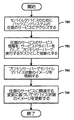
図7は、プロキシシステムによってモバイルデバイスを管理する方法を示している。説明を単純にするために、例えばフローチャートや流れ図の形で本明細書に示された1つ又は複数の方法論は、一連の行為として図示され述べられているが、この技術革新は、それに従って一部の行為が、本明細書に示され述べられた他の行為と異なる順序で、及び/又はそれと同時に行われ得るので、行為の順序によって制限されないことを理解し、評価されたい。例えば、当業者に理解されるように、方法論は、別法として、状態図などの、相互に関連する一連の状態又はイベントとして表され得る。更に、示されたすべての行為が、この技術革新に従って方法論を実施するのに必要であるとは限らない。 FIG. 7 illustrates a method for managing mobile devices by a proxy system. For simplicity of explanation, one or more methodologies illustrated herein, for example in the form of flowcharts or flowcharts, are illustrated and described as a series of actions, but this innovation is It should be appreciated and appreciated that the actions of the sections are not limited by the order of actions as they may be performed in a different order and / or concurrently with other actions shown and described herein. For example, as will be appreciated by those skilled in the art, a methodology may alternatively be represented as a series of interrelated states or events, such as a state diagram. Moreover, not all illustrated acts may be required to implement a methodology in accordance with this innovation.
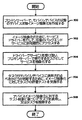
700で、バックエンドシステムの任意のサービスが、モバイルデバイスのためにプロキシサーバーによってアクセスされる。702で、バックエンドシステムからのサービス情報が、サービスドライバーを介してプロキシサーバーで実行するタスクとして抽象化される。704で、サービス情報を含む、モバイルデバイスのデバイス状態の抽象イメージが、プロキシサーバーに格納される。706で、モバイルデバイスのデバイス状態のイメージが、任意のサービスに関連する変更に基づいて更新される。 At 700, any services of the backend system are accessed by the proxy server for the mobile device. At 702, service information from the backend system is abstracted as a task to be executed on the proxy server via the service driver. At 704, an abstract image of the device state of the mobile device, including service information, is stored on the proxy server. At 706, the device state image of the mobile device is updated based on any service related changes.
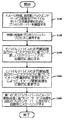
図8は、プロキシによってサービス及びモバイルデバイスを処理する方法を示している。800において、プロキシサーバーで、複数のモバイルデバイスの状態のデバイス状態イメージ抽象化が作成される。802で、任意のバックエンドシステムへのアクセスが、イメージ抽象化のうちの1つ又は複数のためのサービスドライバーを介して開始される。804で、任意のバックエンドシステムに関連するサービスが、非同期的にアクセスされる。806で、モバイルデバイスのうちの1つ又は複数についてのサービス情報が、サービスドライバーを介して返される。808で、サービス情報が、プロキシサーバーで実行する任意のタスクとしてサービスドライバーを介して抽象化される。810で、モバイルデバイスのそれぞれのイメージ抽象化が、タスクの実行に基づいて更新される。812で、デバイスがプロキシサーバーに接続するとき、モバイルデバイスが、それぞれのイメージ抽象化から非同期的に更新される。814で、更新処理の期間、モバイルデバイスから新しいデバイス情報が受け取られる。816で、新しいデバイス情報に基づいて、バックエンドサービスが、オンライン状態であるとき、新しいサービス情報を求めて非同期的にアクセスされる。 FIG. 8 illustrates a method for processing services and mobile devices by a proxy. At 800, a device state image abstraction of a plurality of mobile device states is created at the proxy server. At 802, access to any backend system is initiated via a service driver for one or more of the image abstractions. At 804, services associated with any backend system are accessed asynchronously. At 806, service information for one or more of the mobile devices is returned via the service driver. At 808, service information is abstracted via the service driver as an optional task to be executed on the proxy server. At 810, each image abstraction of the mobile device is updated based on the execution of the task. At 812, when the device connects to the proxy server, the mobile device is updated asynchronously from the respective image abstraction. At 814, new device information is received from the mobile device for the duration of the update process. At 816, based on the new device information, when the backend service is online, it is accessed asynchronously for new service information.
図9は、モバイルデバイスに更新を適用する前にデバイスイメージ抽象化への評価テストを実施する方法を示している。900において、プロキシサーバー上で、モバイルデバイスについて、モバイルデバイス状態イメージ抽象化が作成され、格納される。902で、イメージ抽象化のために、任意のバックエンドサービスが、サービスドライバーを介して非同期的にアクセスされる。904で、サービスがドライバーで受け取られ、プロキシサーバーで実行するタスクとして抽象化される。906で、タスクのうちの1つ又は複数がモバイルデバイスに適用されるべきかどうかを決定するために、タスクの評価テストが、イメージ抽象化に対して実施される。908において、モバイルデバイスのイメージ抽象化に対するテスト結果に基づいて、タスクのうちの1つ又は複数が適用され又は削除される。 FIG. 9 illustrates a method for performing an evaluation test on device image abstraction before applying an update to a mobile device. At 900, a mobile device state image abstraction is created and stored for a mobile device on a proxy server. At 902, any image backend service is accessed asynchronously via the service driver for image abstraction. At 904, the service is received by the driver and abstracted as a task to execute on the proxy server. At 906, a task evaluation test is performed on the image abstraction to determine whether one or more of the tasks should be applied to the mobile device. At 908, one or more of the tasks are applied or deleted based on the test results for the image abstraction of the mobile device.
図10は、この技術革新に従ってバックエンドサービスへの非同期アクセスをスケジューリングする方法を示している。1000で、プロキシで複数のモバイルデバイス状態イメージを更新するために、プロキシでスケジューリング情報が提供される。1002で、スケジューリング情報に基づいて、プロキシサーバーが、サービスドライバーを介してバックエンドサービスへのアクセスを開始する。1004で、バックエンドシステムのうちの1つ又は複数からのサービス情報が、サービスドライバーで受け取られ、タスクへ抽象化され、プロキシ上のタスク実行処理のためにキューに入れられる。1006で、タスクが、既存のプロキシ状態イメージに対して実行される。1008で、更新イメージが格納される。1010で、関連するモバイルデバイスのうちの1つ又は複数が、プロキシサーバーに非同期的に接続し、対応するイメージから、更新された状態を受け取る。 FIG. 10 illustrates a method for scheduling asynchronous access to backend services according to this innovation. At 1000, scheduling information is provided at the proxy to update multiple mobile device state images at the proxy. At 1002, the proxy server initiates access to the backend service via the service driver based on the scheduling information. At 1004, service information from one or more of the backend systems is received at the service driver, abstracted into tasks, and queued for task execution processing on the proxy. At 1006, a task is performed on an existing proxy state image. At 1008, the updated image is stored. At 1010, one or more of the associated mobile devices connect asynchronously to the proxy server and receive updated status from the corresponding image.
図11は、プロキシデバイス管理処理のために学習・推論処理を適用する方法を示している。1100で、プロキシサーバーが、イメージ生成及び非同期バックエンドサービス処理及びモバイルデバイス状態更新のために展開される。1102で、学習・推論がプロキシサーバープロセスに適用される。1104で、モバイルデバイス及びサービスアクセスの既存の非同期処理を考慮して、プロキシサーバーが、学習・推論に基づいて提供された新しいスケジューリングを自動的に採用する。1106で、モバイルデバイス及びサービスアクセスの既存の非同期処理を考慮して、プロキシサーバーが、学習・推論に基づいて、新しいイメージ更新処理及びサービスアクセスを自動的に採用する。1108で、モバイルデバイス及び第1のプロキシサーバーのサービスアクセスの既存の非同期処理を考慮して、サービス処理が、学習・推論に基づいて、追加のプロキシサーバーに合わせてスケーリングされる。 FIG. 11 shows a method of applying learning / inference processing for proxy device management processing. At 1100, a proxy server is deployed for image generation and asynchronous backend service processing and mobile device state updates. At 1102, learning and inference is applied to the proxy server process. At 1104, considering the existing asynchronous processing of mobile devices and service access, the proxy server automatically adopts the new scheduling provided based on learning and inference. At 1106, considering the existing asynchronous processing of mobile devices and service access, the proxy server automatically adopts new image update processing and service access based on learning and inference. At 1108, considering the existing asynchronous processing of service access of the mobile device and the first proxy server, the service processing is scaled for additional proxy servers based on learning and inference.
本出願で用いられるように、用語「コンポーネント」及び「システム」は、コンピューター関連のエンティティー、ハードウェア、ハードウェアとソフトウェアの組合せ、ソフトウェア又は実行中のソフトウェアを指すものである。例えば、コンポーネントは、プロセッサー上で実行されるプロセス、プロセッサー、ハードディスクドライブ、(光及び/又は磁気記憶媒体の)複数の記憶装置ドライブ、オブジェクト、実行可能ファイル、実行スレッド、プログラム及び/又はコンピューターであり得るが、これに限られる訳ではない。例を挙げると、サーバー上で実行されるアプリケーション及び該サーバーがコンピューターコンポーネントであり得る。1つ又は複数のコンポーネントが、プロセス及び/又は実行スレッド内に常駐することができ、コンポーネントは、1つのコンピューター上に集中させ、及び/又は2つ以上のコンピューター間で分散させることができる。 As used in this application, the terms “component” and “system” refer to computer-related entities, hardware, a combination of hardware and software, software or running software. For example, a component may be a process running on a processor, a processor, a hard disk drive, multiple storage drives (of optical and / or magnetic storage media), objects, executables, threads of execution, programs and / or computers. Get it, but you are not limited to this. By way of example, an application running on a server and the server can be a computer component. One or more components can reside within a process and / or thread of execution, and the components can be centralized on one computer and / or distributed between two or more computers.
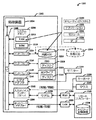
次に図12を参照すると、開示されたアーキテクチャーに従ってモバイルデバイスプロキシ処理を提供するように動作可能なコンピューティングシステム1200のブロック図が示されている。その様々な態様についての追加の文脈を提供するために、図12及び以下の議論は、この技術革新の様々な態様が実施され得る適切なコンピューティングシステム1200についての簡潔な概説を提供する。上記説明は、1つ又は複数のコンピューター上で実行され得るコンピューター実行可能命令の一般的な文脈のものであるが、当業者に認識されるように、この技術革新は、他のプログラムモジュールとの組合せで、及び/又はハードウェアとソフトウェアの組合せとしても実施され得る。
With reference now to FIG. 12, a block diagram of a
一般に、プログラムモジュールは、特定のタスクを実施し、又は特定の抽象データ型を実装するルーチン、プログラム、コンポーネント、データ構造体などを含む。更に、本発明の方法は、単一プロセッサーの又はマルチプロセッサーのコンピューターシステム、ミニコンピューター、メインフレームコンピューター、パーソナルコンピューター、手持ち式コンピューティングデバイス、マイクロプロセッサーベースの又はプログラマブルな家電などを含む、他のコンピューターシステム構成で実施され得、そのそれぞれは1つ又は複数の関連デバイスに動作可能に接続され得ることが理解されよう。 Generally, program modules include routines, programs, components, data structures, etc. that perform particular tasks or implement particular abstract data types. In addition, the method of the present invention is applicable to other computers, including single processor or multiprocessor computer systems, minicomputers, mainframe computers, personal computers, handheld computing devices, microprocessor-based or programmable consumer electronics, etc. It will be appreciated that a system configuration may be implemented, each of which may be operatively connected to one or more associated devices.
この技術革新の示された態様は、通信ネットワークを介してリンクされるリモート処理デバイスによって特定のタスクが実施される分散コンピューティング環境でも実施され得る。分散コンピューティング環境では、プログラムモジュールは、ローカルとリモートとのメモリー記憶装置に置かれ得る。 The illustrated aspects of this innovation may also be practiced in distributed computing environments where certain tasks are performed by remote processing devices that are linked through a communications network. In a distributed computing environment, program modules can be located in local and remote memory storage devices.
一般に、コンピューターは様々なコンピューター読取り可能媒体を含む。コンピューター読取り可能媒体は、コンピューターによってアクセスされ得る任意の使用可能な媒体とすることができ、揮発性と不揮発性であって取外し可能と取外し不可能の媒体を含む。限定するためではなく、例を挙げると、コンピューター読取り可能媒体は、コンピューター記憶媒体及び通信媒体を備え得る。コンピューター記憶媒体は、コンピューター読取り可能命令、データ構造体、プログラムモジュール又は他のデータなどの情報を格納するための任意の方法又は技術で実装された、揮発性と不揮発性であって取外し可能と取外し不可能の媒体を含む。コンピューター記憶媒体には、RAM、ROM、EEPROM、フラッシュメモリーその他のメモリー技術、CD−ROM、デジタルビデオディスク(DVD)その他の光ディスク記憶装置、磁気カセット、磁気テープ、磁気ディスク記憶装置その他の磁気記憶装置、或いは、所望の情報を格納するために使用され且つコンピューターによってアクセスされ得る他の任意の媒体が含まれるが、これらに限られない。 Generally, a computer includes a variety of computer-readable media. Computer readable media can be any available media that can be accessed by a computer and includes both volatile and nonvolatile media, removable and non-removable media. By way of example, and not limitation, computer-readable media can comprise computer storage media and communication media. Computer storage media is volatile and non-volatile, removable and removable, implemented in any manner or technique for storing information such as computer readable instructions, data structures, program modules or other data. Includes impossible media. Computer storage media include RAM, ROM, EEPROM, flash memory and other memory technologies, CD-ROM, digital video disk (DVD) and other optical disk storage devices, magnetic cassettes, magnetic tape, magnetic disk storage devices and other magnetic storage devices Or any other medium that can be used to store the desired information and accessed by a computer.
図12を再び参照すると、様々な態様を実施するための例示的なコンピューティングシステム1200がコンピューター1202を含んでおり、コンピューター1202は、処理装置1204とシステムメモリー1206とシステムバス1208とを含む。システムバス1208は、システムメモリー1206等を含むシステムコンポーネントのために処理装置1204に対するインターフェースを提供する。処理装置1204は、様々な市販のプロセッサーのいずれかであり得る。デュアルマイクロプロセッサー及び他のマルチプロセッサーアーキテクチャーも、処理装置1204として使用され得る。
Referring back to FIG. 12, an
システムバス1208は、様々な市販のバスアーキテクチャーのいずれかを使用して、(メモリーコントローラーを備えた、又は備えない)メモリーバス、周辺バス及びローカルバスに更に相互接続し得る複数のタイプのバス構造のいずれかであり得る。システムメモリー1206は、読取り専用メモリー(ROM)1210とランダム・アクセス・メモリー(RAM)1212とを含む。基本入出力システム(BIOS)は、ROM、EPROM、EEPROMなどの不揮発性メモリー1210内に格納され、このBIOSは、起動時などにコンピューター1202内の要素間で情報を転送するのに役立つ基本ルーチンを含む。RAM 1212は、データをキャッシュするためのスタティックRAMなどの高速RAMを含むこともできる。
The
コンピューター1202は更に、適切なシャーシー(図示せず)で外部使用するようにも構成され得る内部ハードディスクドライブ(HDD)1214(例えばEIDE、SATA)と、(例えば取外し可能なディスク1218との間で読み書きを行う)磁気フロッピーディスクドライブ(FDD)1216と、(例えばCD−ROMディスク1222を読み出し、又は、DVDなどの高容量光媒体との間で読み書きを行う)光ディスクドライブ1220とを含む。ハードディスクドライブ1214、磁気ディスクドライブ1216及び光ディスクドライブ1220は、それぞれハードディスクドライブインターフェース1224、磁気ディスクドライブインターフェース1226及び光ドライブインターフェース1228によってシステムバス1208に接続され得る。外部ドライブ実装のためのインターフェース1224は、ユニバーサルシリアルバス(USB)及びIEEE 1394インターフェース技術のうちの少なくとも1つ又は両方を含む。他の外部ドライブ接続技術はこの技術革新の意図の範囲内である。
The
ドライブ及びその関連のコンピューター読取り可能媒体は、データ、データ構造体、コンピューター実行可能命令などの不揮発性の記憶域を提供する。コンピューター1202に対して、ドライブ及び媒体は、適切なデジタル形式の任意のデータの記憶域を提供する。上記のコンピューター読取り可能媒体についての説明は、HDD、取外し可能な磁気ディスク、CDやDVDなどの取外し可能な光媒体に言及するが、当業者には理解されるように、zipドライブ、磁気カセット、フラッシュメモリーカード、カートリッジなど、コンピューターによって読取り可能な他のタイプの媒体も例示的な動作環境で使用され得、また更に、任意のこうした媒体は、開示された技術革新の諸方法を実施するためのコンピューター実行可能命令を含み得る。
Drives and associated computer readable media provide non-volatile storage for data, data structures, computer-executable instructions, and the like. For
オペレーティングシステム1230、1つ又は複数のアプリケーションプログラム1232、他のプログラムモジュール1234及びプログラムデータ1236を含む複数のプログラムモジュールが、ドライブ及びRAM 1212に格納され得る。オペレーティングシステム、アプリケーション、モジュール及び/又はデータのすべて又は一部もまた、RAM 1212にキャッシュされ得る。理解されるように、この技術革新は様々な市販のオペレーティングシステム又はオペレーティングシステムの組合せで実現され得る。
A plurality of program modules including operating system 1230, one or more application programs 1232,
アプリケーション1232及び/又はモジュール1234は、幾つか例を挙げると、プロキシコンポーネント102、ドライバーコンポーネント108、プロキシサーバー202、タスク実行エンジン304、mux 306、プロキシエンジン406、syncコンポーネント408、スケジューラーコンポーネント410、ドライバーラッパー500、ポリシー・ドライバー502、層504、MLRコンポーネント602及びキャッシュコンポーネント606に関連して本明細書に述べた機能及び能力を含むことができる。
Application 1232 and / or
ユーザーは、例えばキーボード1238やマウス1240などのポインティングデバイスのような1つ又は複数の有線/無線入力デバイスを介して、コンピューター1202にコマンド及び情報を入力することができる。他の入力デバイス(図示せず)は、マイクロホン、IRリモートコントロール、ジョイスティック、ゲームパッド、スタイラスペン、タッチスクリーンなどを含み得る。これら及び他の入力デバイスはしばしば、システムバス1208に結合された入力デバイスインターフェース1242を介して処理装置1204に接続されるが、パラレルポート、IEEE 1394シリアルポート、ゲームポート、USBポート、IRインターフェースなどの他のインターフェースによって接続され得る。
A user may enter commands and information into the
モニター1244又は他のタイプのディスプレイデバイスもまた、ビデオアダプター1246などのインターフェースを介してシステムバス1208に接続される。モニター1244に加えて、コンピューターは一般に、スピーカー、プリンターなどの他の周辺出力デバイス(図示せず)を含む。
A
コンピューター1202は、リモートコンピューター1248などの1つ又は複数のリモートコンピューターへの有線及び/又は無線通信を介する論理接続を使用して、ネットワーク化された環境で動作することができる。リモートコンピューター1248は、ワークステーション、サーバーコンピューター、ルーター、パーソナルコンピューター、ポータブルコンピューター、マイクロプロセッサーベースのエンターテイメント器具、ピアデバイス又は他の共通ネットワークノードとすることができ、また一般に、コンピューター1202に関して述べられた諸要素の多く又はすべてを含むが、簡潔にするために、メモリー/記憶装置1250だけが図示されている。図示された論理接続は、ローカルエリアネットワーク(LAN)1252や、例えば広域ネットワーク(WAN)1254のような一層大規模なネットワークへの有線/無線接続性を含む。こうしたLAN及びWANネットワーキング環境は、職場及び企業では一般的であり、そのすべてが例えばインターネット等のグローバル通信ネットワークに接続し得る、イントラネット等の企業規模のコンピューターネットワークを促進する。
LANネットワーキング環境で使用されるとき、コンピューター1202は、有線及び/又は無線の通信ネットワークインターフェース又はアダプター1256を介して、ローカルネットワーク1252に接続される。アダプター1256は、LAN 1252への有線又は無線通信を容易にすることができ、このLAN 1252は、ワイヤレスアダプター1256と通信するためにその上に置かれた無線アクセスポイントを含むこともできる。
When used in a LAN networking environment, the
WANネットワーキング環境内で使用されるとき、コンピューター1202は、モデム1258を含むことができ、又はWAN 1254上で通信サーバーに接続され、又はインターネット等によってWAN 1254を介して通信を確立する他の手段を有する。内部にあっても外部にあってもよく、また有線デバイスであっても無線デバイスであってもよいモデム1258は、シリアルポートインターフェース1242を介してシステムバス1208に接続される。ネットワーク化された環境では、コンピューター1202に関して図示されたプログラムモジュール又はその一部は、リモートメモリー/記憶装置1250に格納され得る。図示されたネットワーク接続は例示的なものであり、コンピューター間の通信リンクを確立する他の手段が使用され得ることが理解されよう。
When used within a WAN networking environment, the
コンピューター1202は、任意の無線デバイスや無線通信動作可能に配置されたエンティティー、例えばプリンター、スキャナー、デスクトップ及び/又はポータブルコンピューター、携帯情報端末、通信衛星、無線で検出可能なタグに関連する任意の機器又は位置(例えばキオスク、新聞売店、化粧室)、及び電話と通信するように動作可能である。これは、少なくともWi−Fi及びブルーツース(登録商標)無線技術を含む。したがって、この通信は、従来のネットワークのように事前定義された構造であっても、単に少なくとも2つのデバイス間のアドホック通信であってもよい。
The
次に図13を参照すると、バックエンドサービスのためにプロキシサーバーによってモバイルクライアント更新を容易にする例示的なコンピューティング環境1300の概略ブロック図が示されている。システム1300は1つ又は複数のクライアント1302を含む。クライアント1302はハードウェア及び/又はソフトウェア(例えばスレッド、プロセス、コンピューティングデバイス)であり得る。クライアント1302は、例えばこの技術革新を使用することによってクッキー及び/又は関連のコンテキスト情報を収容することができる。
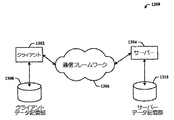
Referring now to FIG. 13, a schematic block diagram of an
また、システム1300は1つ又は複数のサーバー1304を含む。サーバー1304は、ハードウェア及び/又はソフトウェア(例えばスレッド、プロセス、コンピューティングデバイス)とすることもできる。サーバー1304は、例えばこのアーキテクチャーを使用することによって変換を実施するためのスレッドを収容することができる。クライアント1302とサーバー1304との間の1つの可能な通信は、2つ以上のコンピュータープロセス間で送信されるようになされたデータパケットの形であり得る。データパケットは、例えばクッキー及び/又は関連のコンテキスト情報を含み得る。システム1300は、クライアント1302とサーバー1304との間の通信を容易にするために使用され得る通信フレームワーク1306(例えばインターネットなどのグローバル通信ネットワーク)を含む。
The
通信は、有線(光ファイバーを含む)及び/又は無線技術によって容易にされ得る。クライアント1302は、クライアント1302にローカルな情報(例えばクッキー及び/又は関連のコンテキスト情報)を格納するために使用され得る1つ又は複数のクライアントデータ記憶部1308に動作可能に接続される。同様に、サーバー1304は、サーバー1304にローカルな情報を格納するために使用され得る1つ又は複数のサーバーデータ記憶部1310に動作可能に接続される。
Communication can be facilitated by wired (including optical fiber) and / or wireless technology.
上記に開示された内容は、開示された技術革新の例を含む。当然ながら、コンポーネント及び/又は方法論の考え得るあらゆる組合せについて説明することはできないが、更なる多くの組合せ及び置換が可能であることが当業者には認識されよう。したがって、この技術革新は、添付の特許請求の範囲の精神及び範囲内にあるこうしたすべての変更、修正及び変形を包含するものである。更に、用語「含む」が発明を実施するための形態又は特許請求の範囲において使用される限りでは、こうした用語は、用語「備える」が特許請求の範囲での移行語として解釈されるので、「備える」と同様に包含的なものとする。 What has been disclosed above includes examples of the disclosed innovation. Of course, not every possible combination of components and / or methodology can be described, but those skilled in the art will recognize that many more combinations and substitutions are possible. Accordingly, this innovation is intended to embrace all such alterations, modifications and variations that fall within the spirit and scope of the appended claims. Further, to the extent that the term “comprising” is used in the detailed description or the claims, such terms are intended to be interpreted as the term “comprising” is interpreted as a transition term in the claims. It shall be inclusive as well as “comprising”.
Claims (20)
コンピューター実施可能コンポーネントを実施するためのプロセッサーと、
コンピューター実施可能コンポーネントを記憶する記憶装置であって、
モバイルクライアントとの対話に応答して該モバイルクライアントの状態の仮想クライアントイメージを記憶し、前記モバイルクライアントのためにバックエンドシステムの任意のサービスにアクセスするためのプロキシコンポーネントと、
前記バックエンドシステムから前記任意のサービスのサービス情報を受け取り、前記任意のサービスに対応するサービスドライバーを介して、前記モバイルクライアントの状態を更新するために前記プロキシコンポーネントによって実行されるタスクとして、前記任意のサービスのサービス情報を抽象化するドライバーコンポーネントと
を有する記憶装置と、
を備え、
前記モバイルクライアントがオフライン状態のときに、前記プロキシコンポーネントが、前記モバイルクライアントのために記憶された前記モバイルクライアントの状態の前記仮想クライアントイメージに格納されたドライバー情報に基づいて前記サービスドライバーを使用して前記バックエンドシステムに非同期に接続し、前記仮想クライアントイメージへの更新が存在するときに前記モバイルクライアントの状態を更新するタスクを実行し、前記モバイルクライアントの状態を更新するタスクの実行に基づいて、前記モバイルクライアントの状態の更新された仮想クライアントイメージを記憶するよう構成されるデバイス管理システム。A device management system implemented by a computer,
A processor for implementing computer-executable components;
A storage device for storing computer-executable components,
A proxy component for storing a virtual client image of a state of the mobile client in response to interaction with the mobile client and accessing any service of a backend system for the mobile client;
As the task executed by the proxy component to receive service information of the arbitrary service from the back-end system and update the state of the mobile client via a service driver corresponding to the arbitrary service, the optional and a driver component that abstracts the service information of the service
A storage device having
With
When the mobile client is offline, the proxy component uses the service driver based on driver information stored in the virtual client image of the mobile client state stored for the mobile client. connect asynchronously to the back-end system, the virtual client running the you mobile client state update task when the update to the image exists, the execution of the mobile client state update to that task And a device management system configured to store an updated virtual client image of the mobile client state.
前記プロキシコンポーネントが、前記更新された仮想クライアントイメージに基づいて前記任意のサービスにアクセスする、
請求項1に記載のシステム。The updated virtual client image of the mobile client state includes a state update of the mobile client and driver information of a service driver used by the driver component for the mobile client;
The proxy component accesses the arbitrary service based on the updated virtual client image;
The system of claim 1.
前記モバイルクライアントが、前記状態の変更を受け取るために前記プロキシコンポーネントにアクセスするとき、前記モバイルクライアントの前記更新された仮想クライアントイメージから前記モバイルクライアントの状態を自動的に更新する
よう構成される、請求項1に記載のシステム。The proxy component is
Before Symbol mobile client when accessing the proxy component to receive a change in the state, configured to automatically update the state of the mobile client from the updated virtual client image of the mobile client, The system of claim 1.
モバイルデバイスとの対話に応答して、該モバイルデバイスのデバイス状態の仮想イメージをプロキシサーバーで記憶するステップと、
前記モバイルデバイスのために、前記プロキシサーバーから、1つ又は複数のバックエンドシステムの任意のサービスにアクセスするステップと、
前記任意のサービスのサービス情報を前記プロキシサーバーにおいて受信するステップと、
前記任意のサービスに対応するサービスドライバーを介して、前記モバイルデバイスのデバイス状態を更新するために前記プロキシサーバーによって実行されるタスクとして、前記任意のサービスのサービス情報を抽象化するステップと、
前記モバイルデバイスがオフライン状態のときに、前記プロキシサーバーが、前記モバイルデバイスのために記憶された前記モバイルデバイスの状態の前記仮想イメージに格納されたドライバー情報に基づいて前記サービスドライバーを使用して前記バックエンドシステムに非同期に接続し、前記仮想イメージへの更新が存在するときに前記モバイルデバイスの状態を更新するタスクを実行し、前記モバイルデバイスの状態を更新するタスクの実行に基づいて、前記モバイルデバイスの状態の更新された仮想イメージを記憶するステップと、
を備える方法。A method implemented by a computer,
Responsive to interaction with the mobile device, storing a virtual image of the device state of the mobile device at the proxy server;
Accessing any service of one or more backend systems from the proxy server for the mobile device;
Receiving service information of the arbitrary service at the proxy server;
Via a service driver corresponding to the given service, as the tasks performed by the proxy server to update the device state of the mobile device, comprising the steps of: abstracting service information of the arbitrary service,
When the mobile device is offline, the proxy server uses the service driver based on driver information stored in the virtual image of the mobile device state stored for the mobile device. Asynchronously connected to a back-end system, performing a task to update the state of the mobile device when there is an update to the virtual image, and based on execution of the task to update the state of the mobile device Storing an updated virtual image of the device state ;
A method comprising:
モバイルデバイスとの対話に応答して、該モバイルデバイスのデバイス状態の仮想イメージをプロキシサーバーで記憶するステップと、
前記モバイルデバイスのために、前記プロキシサーバーから、1つ又は複数のバックエンドシステムの任意のサービスにアクセスするステップと、
前記任意のサービスのサービス情報を前記プロキシサーバーにおいて受信するステップと、
前記任意のサービスに対応するサービスドライバーを介して、前記プロキシサーバーによって実行されるタスクとして、前記任意のサービスのサービス情報を抽象化するステップであって、前記タスクが、モバイルデバイスのデバイス状態を更新するために実行されるステップと、
前記モバイルクライアントがオフライン状態のときに、前記プロキシコンポーネントが、前記モバイルクライアントのために記憶された前記モバイルクライアントの状態の前記仮想クライアントイメージに格納されたドライバー情報に基づいて前記サービスドライバーを使用して前記バックエンドシステムに非同期に接続し、前記仮想クライアントイメージへの更新が存在するときに前記モバイルクライアントの状態を更新するタスクを実行し、前記モバイルクライアントの状態を更新するタスクの実行に基づいて、前記モバイルクライアントの状態の更新された仮想クライアントイメージを記憶するステップと、
を備える方法
を実行させるコンピューター読み取り可能記憶媒体。A computer-readable storage medium storing computer-executable instructions, when the computer-executable instructions are executed,
Responsive to interaction with the mobile device, storing a virtual image of the device state of the mobile device at the proxy server;
Accessing any service of one or more backend systems from the proxy server for the mobile device;
Receiving service information of the arbitrary service at the proxy server;
Abstracting service information of the arbitrary service as a task executed by the proxy server via a service driver corresponding to the arbitrary service, the task updating a device state of the mobile device Steps to be performed , and
When the mobile client is offline, the proxy component uses the service driver based on driver information stored in the virtual client image of the mobile client state stored for the mobile client. Asynchronously connected to the back-end system, performing a task to update the state of the mobile client when there is an update to the virtual client image, and based on execution of a task to update the state of the mobile client, Storing an updated virtual client image of the mobile client state ;
A computer-readable storage medium that causes a method comprising:
Applications Claiming Priority (3)
| Application Number | Priority Date | Filing Date | Title |
|---|---|---|---|
| US11/698,639 US7987471B2 (en) | 2007-01-26 | 2007-01-26 | Mobile device management proxy system |
| US11/698,639 | 2007-01-26 | ||
| PCT/US2007/088919 WO2008091472A1 (en) | 2007-01-26 | 2007-12-27 | Mobile device management proxy system |
Publications (3)
| Publication Number | Publication Date |
|---|---|
| JP2010517165A JP2010517165A (en) | 2010-05-20 |
| JP2010517165A5 JP2010517165A5 (en) | 2011-08-04 |
| JP4875756B2 true JP4875756B2 (en) | 2012-02-15 |
Family
ID=39644776
Family Applications (1)
| Application Number | Title | Priority Date | Filing Date |
|---|---|---|---|
| JP2009547249A Expired - Fee Related JP4875756B2 (en) | 2007-01-26 | 2007-12-27 | Mobile device management proxy system |
Country Status (7)
| Country | Link |
|---|---|
| US (1) | US7987471B2 (en) |
| EP (1) | EP2106669B1 (en) |
| JP (1) | JP4875756B2 (en) |
| KR (1) | KR101301333B1 (en) |
| CN (1) | CN101589599B (en) |
| TW (1) | TWI441477B (en) |
| WO (1) | WO2008091472A1 (en) |
Families Citing this family (96)
| Publication number | Priority date | Publication date | Assignee | Title |
|---|---|---|---|---|
| AU2003207495A1 (en) | 2002-01-08 | 2003-07-24 | Seven Networks, Inc. | Connection architecture for a mobile network |
| US7853563B2 (en) | 2005-08-01 | 2010-12-14 | Seven Networks, Inc. | Universal data aggregation |
| US8468126B2 (en) | 2005-08-01 | 2013-06-18 | Seven Networks, Inc. | Publishing data in an information community |
| US7917468B2 (en) | 2005-08-01 | 2011-03-29 | Seven Networks, Inc. | Linking of personal information management data |
| US7441271B2 (en) | 2004-10-20 | 2008-10-21 | Seven Networks | Method and apparatus for intercepting events in a communication system |
| US7706781B2 (en) | 2004-11-22 | 2010-04-27 | Seven Networks International Oy | Data security in a mobile e-mail service |
| FI117152B (en) | 2004-12-03 | 2006-06-30 | Seven Networks Internat Oy | E-mail service provisioning method for mobile terminal, involves using domain part and further parameters to generate new parameter set in list of setting parameter sets, if provisioning of e-mail service is successful |
| US7752633B1 (en) | 2005-03-14 | 2010-07-06 | Seven Networks, Inc. | Cross-platform event engine |
| US8438633B1 (en) | 2005-04-21 | 2013-05-07 | Seven Networks, Inc. | Flexible real-time inbox access |
| WO2006136660A1 (en) | 2005-06-21 | 2006-12-28 | Seven Networks International Oy | Maintaining an ip connection in a mobile network |
| US7769395B2 (en) | 2006-06-20 | 2010-08-03 | Seven Networks, Inc. | Location-based operations and messaging |
| US20080104269A1 (en) * | 2006-10-30 | 2008-05-01 | Research In Motion Limited | Method and apparatus for web browser page fragmentation |
| US8693494B2 (en) | 2007-06-01 | 2014-04-08 | Seven Networks, Inc. | Polling |
| US8805425B2 (en) | 2007-06-01 | 2014-08-12 | Seven Networks, Inc. | Integrated messaging |
| US8364181B2 (en) | 2007-12-10 | 2013-01-29 | Seven Networks, Inc. | Electronic-mail filtering for mobile devices |
| US9002828B2 (en) | 2007-12-13 | 2015-04-07 | Seven Networks, Inc. | Predictive content delivery |
| US8107921B2 (en) | 2008-01-11 | 2012-01-31 | Seven Networks, Inc. | Mobile virtual network operator |
| US8862657B2 (en) | 2008-01-25 | 2014-10-14 | Seven Networks, Inc. | Policy based content service |
| US20090193338A1 (en) | 2008-01-28 | 2009-07-30 | Trevor Fiatal | Reducing network and battery consumption during content delivery and playback |
| US9141483B1 (en) | 2008-03-27 | 2015-09-22 | Dropbox, Inc. | System and method for multi-tier synchronization |
| US8787947B2 (en) | 2008-06-18 | 2014-07-22 | Seven Networks, Inc. | Application discovery on mobile devices |
| US8078158B2 (en) | 2008-06-26 | 2011-12-13 | Seven Networks, Inc. | Provisioning applications for a mobile device |
| US8560713B2 (en) * | 2008-07-31 | 2013-10-15 | Sap Ag | Method and system for mediating enterprise service access for smart devices |
| US8224850B2 (en) * | 2008-08-13 | 2012-07-17 | Motorola Mobility, Inc. | Method and system for determining users that satisfy desired conditions |
| US8181178B2 (en) * | 2008-08-14 | 2012-05-15 | Yahoo! Inc. | Online batch execution |
| US8767688B2 (en) * | 2008-09-23 | 2014-07-01 | Lu Qian | Virtual network image system for wireless local area network services |
| US8909759B2 (en) | 2008-10-10 | 2014-12-09 | Seven Networks, Inc. | Bandwidth measurement |
| US9014640B2 (en) | 2008-10-31 | 2015-04-21 | Qualcomm Incorporated | Wake-up trigger for implementation of target actions |
| US9467518B2 (en) * | 2009-02-16 | 2016-10-11 | Communitake Technologies Ltd. | System, a method and a computer program product for automated remote control |
| US9665729B2 (en) * | 2009-04-13 | 2017-05-30 | Microsoft Technology Licensing, Llc | Revocation of application on mobile device |
| CN101924645B (en) * | 2009-06-12 | 2013-07-10 | 华为技术有限公司 | Device management method, device and system |
| US20110047253A1 (en) * | 2009-08-19 | 2011-02-24 | Samsung Electronics Co. Ltd. | Techniques for controlling gateway functionality to support device management in a communication system |
| EP3651028A1 (en) | 2010-07-26 | 2020-05-13 | Seven Networks, LLC | Mobile network traffic coordination across multiple applications |
| US9077630B2 (en) | 2010-07-26 | 2015-07-07 | Seven Networks, Inc. | Distributed implementation of dynamic wireless traffic policy |
| CA2857458A1 (en) | 2010-07-26 | 2012-02-09 | Michael Luna | Mobile application traffic optimization |
| US8838783B2 (en) | 2010-07-26 | 2014-09-16 | Seven Networks, Inc. | Distributed caching for resource and mobile network traffic management |
| WO2012060995A2 (en) | 2010-11-01 | 2012-05-10 | Michael Luna | Distributed caching in a wireless network of content delivered for a mobile application over a long-held request |
| GB2499534B (en) | 2010-11-01 | 2018-09-19 | Seven Networks Llc | Caching adapted for mobile application behavior and network conditions |
| WO2012061430A2 (en) | 2010-11-01 | 2012-05-10 | Michael Luna | Distributed management of keep-alive message signaling for mobile network resource conservation and optimization |
| US9060032B2 (en) | 2010-11-01 | 2015-06-16 | Seven Networks, Inc. | Selective data compression by a distributed traffic management system to reduce mobile data traffic and signaling traffic |
| US8484314B2 (en) | 2010-11-01 | 2013-07-09 | Seven Networks, Inc. | Distributed caching in a wireless network of content delivered for a mobile application over a long-held request |
| US9330196B2 (en) | 2010-11-01 | 2016-05-03 | Seven Networks, Llc | Wireless traffic management system cache optimization using http headers |
| US8166164B1 (en) | 2010-11-01 | 2012-04-24 | Seven Networks, Inc. | Application and network-based long poll request detection and cacheability assessment therefor |
| US8843153B2 (en) | 2010-11-01 | 2014-09-23 | Seven Networks, Inc. | Mobile traffic categorization and policy for network use optimization while preserving user experience |
| US8495195B1 (en) * | 2010-11-04 | 2013-07-23 | Sprint Communications Company L.P. | Cookie preservation when switching devices |
| CA2798523C (en) | 2010-11-22 | 2015-02-24 | Seven Networks, Inc. | Aligning data transfer to optimize connections established for transmission over a wireless network |
| EP3422775A1 (en) | 2010-11-22 | 2019-01-02 | Seven Networks, LLC | Optimization of resource polling intervals to satisfy mobile device requests |
| WO2012094675A2 (en) | 2011-01-07 | 2012-07-12 | Seven Networks, Inc. | System and method for reduction of mobile network traffic used for domain name system (dns) queries |
| US9038915B2 (en) | 2011-01-31 | 2015-05-26 | Metrologic Instruments, Inc. | Pre-paid usage system for encoded information reading terminals |
| US20130007625A1 (en) * | 2011-03-21 | 2013-01-03 | Victor Lozinski | Apparatus, system, and method for connecting mobile devices to a backend server in an enterprise software environment and initiating a business process |
| EP2700019B1 (en) | 2011-04-19 | 2019-03-27 | Seven Networks, LLC | Social caching for device resource sharing and management |
| WO2012149216A2 (en) | 2011-04-27 | 2012-11-01 | Seven Networks, Inc. | Mobile device which offloads requests made by a mobile application to a remote entity for conservation of mobile device and network resources and methods therefor |
| EP2702500B1 (en) | 2011-04-27 | 2017-07-19 | Seven Networks, LLC | Detecting and preserving state for satisfying application requests in a distributed proxy and cache system |
| WO2013015995A1 (en) | 2011-07-27 | 2013-01-31 | Seven Networks, Inc. | Automatic generation and distribution of policy information regarding malicious mobile traffic in a wireless network |
| US10592865B2 (en) * | 2011-08-05 | 2020-03-17 | Genband Us Llc | Methods, systems, and computer readable media for managing social interaction histories |
| US8781475B1 (en) | 2012-08-24 | 2014-07-15 | Utility Associates, Inc. | Method for switching from a first cellular network to a second cellular network |
| US8918503B2 (en) | 2011-12-06 | 2014-12-23 | Seven Networks, Inc. | Optimization of mobile traffic directed to private networks and operator configurability thereof |
| EP2789138B1 (en) | 2011-12-06 | 2016-09-14 | Seven Networks, LLC | A mobile device and method to utilize the failover mechanisms for fault tolerance provided for mobile traffic management and network/device resource conservation |
| US9009250B2 (en) * | 2011-12-07 | 2015-04-14 | Seven Networks, Inc. | Flexible and dynamic integration schemas of a traffic management system with various network operators for network traffic alleviation |
| US9277443B2 (en) | 2011-12-07 | 2016-03-01 | Seven Networks, Llc | Radio-awareness of mobile device for sending server-side control signals using a wireless network optimized transport protocol |
| US9324055B2 (en) * | 2011-12-08 | 2016-04-26 | Microsoft Technology Licensing, Llc | Techniques to manage remote events |
| WO2013090834A1 (en) | 2011-12-14 | 2013-06-20 | Seven Networks, Inc. | Operation modes for mobile traffic optimization and concurrent management of optimized and non-optimized traffic |
| US9021021B2 (en) | 2011-12-14 | 2015-04-28 | Seven Networks, Inc. | Mobile network reporting and usage analytics system and method aggregated using a distributed traffic optimization system |
| US8861354B2 (en) | 2011-12-14 | 2014-10-14 | Seven Networks, Inc. | Hierarchies and categories for management and deployment of policies for distributed wireless traffic optimization |
| CN102448147B (en) * | 2011-12-21 | 2014-12-03 | 华为技术有限公司 | Method and device for accessing wireless service |
| EP2801236A4 (en) | 2012-01-05 | 2015-10-21 | Seven Networks Inc | Detection and management of user interactions with foreground applications on a mobile device in distributed caching |
| WO2013116856A1 (en) | 2012-02-02 | 2013-08-08 | Seven Networks, Inc. | Dynamic categorization of applications for network access in a mobile network |
| US9326189B2 (en) | 2012-02-03 | 2016-04-26 | Seven Networks, Llc | User as an end point for profiling and optimizing the delivery of content and data in a wireless network |
| US8812695B2 (en) | 2012-04-09 | 2014-08-19 | Seven Networks, Inc. | Method and system for management of a virtual network connection without heartbeat messages |
| WO2013155208A1 (en) | 2012-04-10 | 2013-10-17 | Seven Networks, Inc. | Intelligent customer service/call center services enhanced using real-time and historical mobile application and traffic-related statistics collected by a distributed caching system in a mobile network |
| US9313252B2 (en) * | 2012-04-20 | 2016-04-12 | Microsoft Technology Licensing, Llc | Binding crud-type protocols in distributed agreement protocols |
| AU2013263340B2 (en) | 2012-05-16 | 2015-05-14 | Okta, Inc. | Systems and methods for providing and managing distributed enclaves |
| GB2503441A (en) | 2012-06-26 | 2014-01-01 | Ibm | Managing mobile devices using other mobile devices based on loation |
| WO2014011216A1 (en) | 2012-07-13 | 2014-01-16 | Seven Networks, Inc. | Dynamic bandwidth adjustment for browsing or streaming activity in a wireless network based on prediction of user behavior when interacting with mobile applications |
| EP2704396B1 (en) * | 2012-09-04 | 2019-07-31 | Tata Consultancy Services Limited | System and method facilitating communication in an adaptive virtual environment |
| US9161258B2 (en) | 2012-10-24 | 2015-10-13 | Seven Networks, Llc | Optimized and selective management of policy deployment to mobile clients in a congested network to prevent further aggravation of network congestion |
| US9307493B2 (en) | 2012-12-20 | 2016-04-05 | Seven Networks, Llc | Systems and methods for application management of mobile device radio state promotion and demotion |
| US9241314B2 (en) | 2013-01-23 | 2016-01-19 | Seven Networks, Llc | Mobile device with application or context aware fast dormancy |
| US8874761B2 (en) | 2013-01-25 | 2014-10-28 | Seven Networks, Inc. | Signaling optimization in a wireless network for traffic utilizing proprietary and non-proprietary protocols |
| CN103974312A (en) * | 2013-02-05 | 2014-08-06 | 中国移动通信集团公司 | WLAN (wireless local area network) equipment testing method, device and system |
| US8750123B1 (en) | 2013-03-11 | 2014-06-10 | Seven Networks, Inc. | Mobile device equipped with mobile network congestion recognition to make intelligent decisions regarding connecting to an operator network |
| US9559902B2 (en) * | 2013-06-02 | 2017-01-31 | Microsoft Technology Licensing, Llc | Distributed state model for system configuration synchronization |
| US9065765B2 (en) | 2013-07-22 | 2015-06-23 | Seven Networks, Inc. | Proxy server associated with a mobile carrier for enhancing mobile traffic management in a mobile network |
| EP3080725B1 (en) | 2013-12-12 | 2020-06-10 | Mobile Iron, Inc. | Application synchronization |
| US20150312102A1 (en) * | 2014-02-18 | 2015-10-29 | Seven Networks, Inc. | Policy management for signaling optimization in a wireless network for traffic utilizing proprietary and non-proprietary protocols |
| US9954728B2 (en) * | 2014-04-11 | 2018-04-24 | Arxan Technologies, Inc. | Management of mobile devices in a network environment |
| US9661440B2 (en) | 2014-07-25 | 2017-05-23 | Qualcomm Incorporated | Methods and systems for triggering efficient application synchronization |
| CN104881327B (en) * | 2015-06-01 | 2018-08-24 | 曙光信息产业(北京)有限公司 | The operation flow management method and device of cluster |
| US9606817B1 (en) | 2015-06-23 | 2017-03-28 | Symantec Corporation | Systems and methods for virtualizing internet of things (IoT) devices |
| US10136247B2 (en) * | 2015-10-20 | 2018-11-20 | Microsoft Technology Licensing, Llc | Physical and virtual phone mobility |
| US10331434B2 (en) * | 2016-12-21 | 2019-06-25 | Quanta Computer Inc. | System and method for remotely updating firmware |
| US20200028879A1 (en) | 2018-07-17 | 2020-01-23 | Microsoft Technology Licensing, Llc | Queryless device configuration determination-based techniques for mobile device management |
| US11184223B2 (en) * | 2018-07-31 | 2021-11-23 | Microsoft Technology Licensing, Llc | Implementation of compliance settings by a mobile device for compliance with a configuration scenario |
| US11811604B2 (en) * | 2021-03-17 | 2023-11-07 | Stripe, Inc. | Cross-platform contract validation |
| US20250053142A1 (en) | 2022-11-14 | 2025-02-13 | Xephor Solutions GmbH | Computing system |
| CN119382931A (en) * | 2024-09-23 | 2025-01-28 | 北京天地和兴科技有限公司 | A network security protection method, device, terminal equipment and storage medium |
Family Cites Families (33)
| Publication number | Priority date | Publication date | Assignee | Title |
|---|---|---|---|---|
| US6233577B1 (en) | 1998-02-17 | 2001-05-15 | Phone.Com, Inc. | Centralized certificate management system for two-way interactive communication devices in data networks |
| US6311206B1 (en) | 1999-01-13 | 2001-10-30 | International Business Machines Corporation | Method and apparatus for providing awareness-triggered push |
| US6480901B1 (en) | 1999-07-09 | 2002-11-12 | Lsi Logic Corporation | System for monitoring and managing devices on a network from a management station via a proxy server that provides protocol converter |
| WO2001075694A2 (en) * | 2000-03-31 | 2001-10-11 | Mdsi Mobile Data Solutions Inc. | Methods and systems for scheduling complex work orders for a workforce of mobile service technicians |
| JP2002007238A (en) | 2000-06-21 | 2002-01-11 | Nec Corp | Mobile communication system and its gateway selecting method |
| AU2001289212A1 (en) * | 2000-09-11 | 2002-03-26 | Viafone, Inc. | Method and system for integrating applications and mobile networks |
| US6895444B1 (en) * | 2000-09-15 | 2005-05-17 | Motorola, Inc. | Service framework with local proxy for representing remote services |
| US6944760B2 (en) | 2001-05-24 | 2005-09-13 | Openwave Systems Inc. | Method and apparatus for protecting identities of mobile devices on a wireless network |
| KR100682377B1 (en) * | 2001-05-25 | 2007-02-15 | 삼성전자주식회사 | Organic Electroluminescent Device and Method of Making the Same |
| US20030017826A1 (en) * | 2001-07-17 | 2003-01-23 | Dan Fishman | Short-range wireless architecture |
| US7149813B2 (en) * | 2001-08-14 | 2006-12-12 | Microsoft Corporation | Method and system for synchronizing mobile devices |
| US6697839B2 (en) | 2001-11-19 | 2004-02-24 | Oracle International Corporation | End-to-end mobile commerce modules |
| US20040215711A1 (en) | 2002-03-14 | 2004-10-28 | Openwave Systems Inc. | Mobile services platform architecture |
| JP4149199B2 (en) * | 2002-06-05 | 2008-09-10 | 富士通株式会社 | Mobile terminal auxiliary device, data synchronization method, and mobile terminal device |
| US6978453B2 (en) | 2002-10-21 | 2005-12-20 | Bitfone Corporation | System with required enhancements to syncML DM environment to support firmware updates |
| US8356067B2 (en) * | 2002-10-24 | 2013-01-15 | Intel Corporation | Servicing device aggregates |
| US8694620B2 (en) | 2003-09-08 | 2014-04-08 | Microsoft Corporation | System and method for an OMA DM extension to manage mobile device configuration settings |
| US7324473B2 (en) * | 2003-10-07 | 2008-01-29 | Accenture Global Services Gmbh | Connector gateway |
| US7523155B2 (en) | 2004-03-18 | 2009-04-21 | International Business Machines Corporation | Method, system and program product for using open mobile alliance (OMA) alerts to send client commands/requests to an OMA DM server |
| US7995506B2 (en) * | 2004-03-23 | 2011-08-09 | Flash Networks Ltd. | System and method for integrating information services through cellular network |
| US20050220080A1 (en) * | 2004-04-01 | 2005-10-06 | Nokia Corporation | System, method, computer program product, and business method for device group management using virtual device domain |
| US7613881B2 (en) | 2004-06-08 | 2009-11-03 | Dartdevices Interop Corporation | Method and system for configuring and using virtual pointers to access one or more independent address spaces |
| KR100641238B1 (en) | 2004-07-09 | 2006-11-02 | 엘지전자 주식회사 | Device management system and device management command scheduling method thereof |
| US7844964B2 (en) | 2004-09-23 | 2010-11-30 | Hewlett Packard Development Company, L.P. | Network for mass distribution of configuration, firmware and software updates |
| WO2006049276A1 (en) * | 2004-11-08 | 2006-05-11 | iWaveDesign, Inc. | Data transmission system |
| US20060217111A1 (en) | 2005-02-11 | 2006-09-28 | Sunil Marolia | Network for customer care and distribution of firmware and software updates |
| US20060200814A1 (en) | 2005-03-02 | 2006-09-07 | Nokia Corporation | Software distribution with activation control |
| US20060200503A1 (en) * | 2005-03-03 | 2006-09-07 | Nokia Corporation | Modifying back-end web server documents at an intermediary server using directives |
| US7716661B2 (en) | 2005-03-16 | 2010-05-11 | Microsoft Corporation | Embedded device update service |
| EP1705832A3 (en) * | 2005-03-22 | 2011-08-03 | Hewlett-Packard Development Company, L.P. | Device profile retrieval in a management network |
| EP1872527B1 (en) * | 2005-04-18 | 2013-05-29 | Research In Motion Limited | System and method for enabling group subscription for asynchronous push-based applications on a wireless device |
| CA2604899C (en) * | 2005-04-18 | 2012-10-02 | Research In Motion Limited | System and method for discovering component applications |
| EP1872522B1 (en) * | 2005-04-18 | 2012-12-05 | Research In Motion Limited | System and method for enabling asynchronous push-based applications on a wireless device |
-
2007
- 2007-01-26 US US11/698,639 patent/US7987471B2/en not_active Expired - Fee Related
- 2007-12-27 JP JP2009547249A patent/JP4875756B2/en not_active Expired - Fee Related
- 2007-12-27 CN CN2007800505269A patent/CN101589599B/en not_active Expired - Fee Related
- 2007-12-27 EP EP07869964.2A patent/EP2106669B1/en not_active Not-in-force
- 2007-12-27 KR KR1020097015702A patent/KR101301333B1/en active Active
- 2007-12-27 WO PCT/US2007/088919 patent/WO2008091472A1/en not_active Ceased
-
2008
- 2008-01-04 TW TW097100422A patent/TWI441477B/en not_active IP Right Cessation
Also Published As
| Publication number | Publication date |
|---|---|
| EP2106669A1 (en) | 2009-10-07 |
| US20080183800A1 (en) | 2008-07-31 |
| EP2106669B1 (en) | 2014-11-12 |
| CN101589599A (en) | 2009-11-25 |
| KR101301333B1 (en) | 2013-08-29 |
| CN101589599B (en) | 2013-02-13 |
| EP2106669A4 (en) | 2013-02-06 |
| KR20090111824A (en) | 2009-10-27 |
| JP2010517165A (en) | 2010-05-20 |
| WO2008091472A1 (en) | 2008-07-31 |
| TW200838213A (en) | 2008-09-16 |
| US7987471B2 (en) | 2011-07-26 |
| TWI441477B (en) | 2014-06-11 |
Similar Documents
| Publication | Publication Date | Title |
|---|---|---|
| JP4875756B2 (en) | Mobile device management proxy system | |
| US11729105B2 (en) | Offloading application traffic to a shared communication channel for signal optimization in a wireless network for traffic utilizing proprietary and non-proprietary protocols | |
| CN101809561B (en) | Synchronize the exchange of data and metadata | |
| US10216549B2 (en) | Methods and systems for providing application programming interfaces and application programming interface extensions to third party applications for optimizing and minimizing application traffic | |
| US20150312102A1 (en) | Policy management for signaling optimization in a wireless network for traffic utilizing proprietary and non-proprietary protocols | |
| US8595322B2 (en) | Target subscription for a notification distribution system | |
| US20130067015A1 (en) | Counting and reseting broadcast system badge counters | |
| CN102664909A (en) | Re-establishing push notification channels via user identifiers | |
| JP2013537754A (en) | Mobile application traffic optimization | |
| WO2008094377A1 (en) | Media continuity service between devices | |
| JP6067714B2 (en) | Scale-out system that acquires event data | |
| CA3130116A1 (en) | Enhanced file sharing systems and methods | |
| US20120079063A1 (en) | Method, apparatus and system for providing event notifications across a plurality of computers | |
| US20250063086A1 (en) | Group activity session synchronization | |
| WO2014204995A1 (en) | Methods and systems for providing application programming interfaces and application programming interface extensions to third party applications for optimizing and minimizing application traffic |
Legal Events
| Date | Code | Title | Description |
|---|---|---|---|
| A521 | Request for written amendment filed |
Free format text: JAPANESE INTERMEDIATE CODE: A523 Effective date: 20101222 |
|
| A621 | Written request for application examination |
Free format text: JAPANESE INTERMEDIATE CODE: A621 Effective date: 20101222 |
|
| A521 | Request for written amendment filed |
Free format text: JAPANESE INTERMEDIATE CODE: A523 Effective date: 20110614 |
|
| A871 | Explanation of circumstances concerning accelerated examination |
Free format text: JAPANESE INTERMEDIATE CODE: A871 Effective date: 20110614 |
|
| A131 | Notification of reasons for refusal |
Free format text: JAPANESE INTERMEDIATE CODE: A131 Effective date: 20110706 |
|
| A975 | Report on accelerated examination |
Free format text: JAPANESE INTERMEDIATE CODE: A971005 Effective date: 20110630 |
|
| A521 | Request for written amendment filed |
Free format text: JAPANESE INTERMEDIATE CODE: A523 Effective date: 20111006 |
|
| TRDD | Decision of grant or rejection written | ||
| A01 | Written decision to grant a patent or to grant a registration (utility model) |
Free format text: JAPANESE INTERMEDIATE CODE: A01 Effective date: 20111027 |
|
| A01 | Written decision to grant a patent or to grant a registration (utility model) |
Free format text: JAPANESE INTERMEDIATE CODE: A01 |
|
| A61 | First payment of annual fees (during grant procedure) |
Free format text: JAPANESE INTERMEDIATE CODE: A61 Effective date: 20111125 |
|
| FPAY | Renewal fee payment (event date is renewal date of database) |
Free format text: PAYMENT UNTIL: 20141202 Year of fee payment: 3 |
|
| R150 | Certificate of patent or registration of utility model |
Ref document number: 4875756 Country of ref document: JP Free format text: JAPANESE INTERMEDIATE CODE: R150 Free format text: JAPANESE INTERMEDIATE CODE: R150 |
|
| R250 | Receipt of annual fees |
Free format text: JAPANESE INTERMEDIATE CODE: R250 |
|
| S111 | Request for change of ownership or part of ownership |
Free format text: JAPANESE INTERMEDIATE CODE: R313113 |
|
| R350 | Written notification of registration of transfer |
Free format text: JAPANESE INTERMEDIATE CODE: R350 |
|
| R250 | Receipt of annual fees |
Free format text: JAPANESE INTERMEDIATE CODE: R250 |
|
| R250 | Receipt of annual fees |
Free format text: JAPANESE INTERMEDIATE CODE: R250 |
|
| R250 | Receipt of annual fees |
Free format text: JAPANESE INTERMEDIATE CODE: R250 |
|
| LAPS | Cancellation because of no payment of annual fees |