JP4130516B2 - Industrial radiography products - Google Patents
Industrial radiography products Download PDFInfo
- Publication number
- JP4130516B2 JP4130516B2 JP14780399A JP14780399A JP4130516B2 JP 4130516 B2 JP4130516 B2 JP 4130516B2 JP 14780399 A JP14780399 A JP 14780399A JP 14780399 A JP14780399 A JP 14780399A JP 4130516 B2 JP4130516 B2 JP 4130516B2
- Authority
- JP
- Japan
- Prior art keywords
- radiographic
- product
- grains
- silver halide
- ionizing radiation
- Prior art date
- Legal status (The legal status is an assumption and is not a legal conclusion. Google has not performed a legal analysis and makes no representation as to the accuracy of the status listed.)
- Expired - Fee Related
Links
- 238000002601 radiography Methods 0.000 title description 6
- 239000000839 emulsion Substances 0.000 claims description 36
- 229910052709 silver Inorganic materials 0.000 claims description 34
- 239000004332 silver Substances 0.000 claims description 34
- -1 silver halide Chemical class 0.000 claims description 30
- 230000005865 ionizing radiation Effects 0.000 claims description 24
- 150000001875 compounds Chemical class 0.000 claims description 14
- 125000000217 alkyl group Chemical group 0.000 claims description 9
- 125000004429 atom Chemical group 0.000 claims description 9
- BQCADISMDOOEFD-UHFFFAOYSA-N Silver Chemical compound [Ag] BQCADISMDOOEFD-UHFFFAOYSA-N 0.000 claims description 8
- 125000004432 carbon atom Chemical group C* 0.000 claims description 6
- 125000000623 heterocyclic group Chemical group 0.000 claims description 6
- 125000004435 hydrogen atom Chemical group [H]* 0.000 claims description 5
- 125000002887 hydroxy group Chemical group [H]O* 0.000 claims description 5
- UFHFLCQGNIYNRP-UHFFFAOYSA-N Hydrogen Chemical compound [H][H] UFHFLCQGNIYNRP-UHFFFAOYSA-N 0.000 claims description 3
- 125000001797 benzyl group Chemical group [H]C1=C([H])C([H])=C(C([H])=C1[H])C([H])([H])* 0.000 claims description 3
- 229910052739 hydrogen Inorganic materials 0.000 claims description 3
- 239000001257 hydrogen Substances 0.000 claims description 3
- 239000010410 layer Substances 0.000 description 12
- 238000000034 method Methods 0.000 description 11
- 230000035945 sensitivity Effects 0.000 description 10
- 230000014759 maintenance of location Effects 0.000 description 6
- 239000003795 chemical substances by application Substances 0.000 description 5
- 125000002496 methyl group Chemical group [H]C([H])([H])* 0.000 description 5
- 239000000126 substance Substances 0.000 description 5
- 108010010803 Gelatin Proteins 0.000 description 4
- 229920000159 gelatin Polymers 0.000 description 4
- 239000008273 gelatin Substances 0.000 description 4
- 235000019322 gelatine Nutrition 0.000 description 4
- 235000011852 gelatine desserts Nutrition 0.000 description 4
- 239000002245 particle Substances 0.000 description 4
- ADZWSOLPGZMUMY-UHFFFAOYSA-M silver bromide Chemical compound [Ag]Br ADZWSOLPGZMUMY-UHFFFAOYSA-M 0.000 description 4
- 229910000831 Steel Inorganic materials 0.000 description 3
- NINIDFKCEFEMDL-UHFFFAOYSA-N Sulfur Chemical compound [S] NINIDFKCEFEMDL-UHFFFAOYSA-N 0.000 description 3
- 229910052751 metal Inorganic materials 0.000 description 3
- 239000002184 metal Substances 0.000 description 3
- 230000005855 radiation Effects 0.000 description 3
- 239000010959 steel Substances 0.000 description 3
- 229910052717 sulfur Inorganic materials 0.000 description 3
- 239000011593 sulfur Substances 0.000 description 3
- JKFYKCYQEWQPTM-UHFFFAOYSA-N 2-azaniumyl-2-(4-fluorophenyl)acetate Chemical compound OC(=O)C(N)C1=CC=C(F)C=C1 JKFYKCYQEWQPTM-UHFFFAOYSA-N 0.000 description 2
- CIWBSHSKHKDKBQ-JLAZNSOCSA-N Ascorbic acid Chemical compound OC[C@H](O)[C@H]1OC(=O)C(O)=C1O CIWBSHSKHKDKBQ-JLAZNSOCSA-N 0.000 description 2
- IJGRMHOSHXDMSA-UHFFFAOYSA-N Atomic nitrogen Chemical compound N#N IJGRMHOSHXDMSA-UHFFFAOYSA-N 0.000 description 2
- RYGMFSIKBFXOCR-UHFFFAOYSA-N Copper Chemical compound [Cu] RYGMFSIKBFXOCR-UHFFFAOYSA-N 0.000 description 2
- 229910021612 Silver iodide Inorganic materials 0.000 description 2
- 125000000484 butyl group Chemical group [H]C([*])([H])C([H])([H])C([H])([H])C([H])([H])[H] 0.000 description 2
- 239000011247 coating layer Substances 0.000 description 2
- 229910052802 copper Inorganic materials 0.000 description 2
- 239000010949 copper Substances 0.000 description 2
- 230000007547 defect Effects 0.000 description 2
- 239000002019 doping agent Substances 0.000 description 2
- 230000002708 enhancing effect Effects 0.000 description 2
- 125000001495 ethyl group Chemical group [H]C([H])([H])C([H])([H])* 0.000 description 2
- XMBWDFGMSWQBCA-UHFFFAOYSA-N hydrogen iodide Chemical compound I XMBWDFGMSWQBCA-UHFFFAOYSA-N 0.000 description 2
- 230000001965 increasing effect Effects 0.000 description 2
- 238000007689 inspection Methods 0.000 description 2
- 239000006224 matting agent Substances 0.000 description 2
- 125000001147 pentyl group Chemical group C(CCCC)* 0.000 description 2
- 229920000642 polymer Polymers 0.000 description 2
- 125000001436 propyl group Chemical group [H]C([*])([H])C([H])([H])C([H])([H])[H] 0.000 description 2
- 239000011241 protective layer Substances 0.000 description 2
- 229940045105 silver iodide Drugs 0.000 description 2
- 238000003860 storage Methods 0.000 description 2
- KAMCBFNNGGVPPW-UHFFFAOYSA-N 1-(ethenylsulfonylmethoxymethylsulfonyl)ethene Chemical compound C=CS(=O)(=O)COCS(=O)(=O)C=C KAMCBFNNGGVPPW-UHFFFAOYSA-N 0.000 description 1
- CDAWCLOXVUBKRW-UHFFFAOYSA-N 2-aminophenol Chemical class NC1=CC=CC=C1O CDAWCLOXVUBKRW-UHFFFAOYSA-N 0.000 description 1
- 102000009027 Albumins Human genes 0.000 description 1
- 108010088751 Albumins Proteins 0.000 description 1
- VEXZGXHMUGYJMC-UHFFFAOYSA-M Chloride anion Chemical compound [Cl-] VEXZGXHMUGYJMC-UHFFFAOYSA-M 0.000 description 1
- VGGSQFUCUMXWEO-UHFFFAOYSA-N Ethene Chemical compound C=C VGGSQFUCUMXWEO-UHFFFAOYSA-N 0.000 description 1
- 239000005977 Ethylene Substances 0.000 description 1
- QIGBRXMKCJKVMJ-UHFFFAOYSA-N Hydroquinone Chemical compound OC1=CC=C(O)C=C1 QIGBRXMKCJKVMJ-UHFFFAOYSA-N 0.000 description 1
- 150000000996 L-ascorbic acids Chemical class 0.000 description 1
- 239000004372 Polyvinyl alcohol Substances 0.000 description 1
- BUGBHKTXTAQXES-UHFFFAOYSA-N Selenium Chemical compound [Se] BUGBHKTXTAQXES-UHFFFAOYSA-N 0.000 description 1
- 206010070834 Sensitisation Diseases 0.000 description 1
- 229910021607 Silver chloride Inorganic materials 0.000 description 1
- ZMZDMBWJUHKJPS-UHFFFAOYSA-M Thiocyanate anion Chemical compound [S-]C#N ZMZDMBWJUHKJPS-UHFFFAOYSA-M 0.000 description 1
- 238000010521 absorption reaction Methods 0.000 description 1
- 239000003463 adsorbent Substances 0.000 description 1
- 150000001299 aldehydes Chemical class 0.000 description 1
- 238000004458 analytical method Methods 0.000 description 1
- 239000002216 antistatic agent Substances 0.000 description 1
- 229960005070 ascorbic acid Drugs 0.000 description 1
- 235000010323 ascorbic acid Nutrition 0.000 description 1
- 239000011668 ascorbic acid Substances 0.000 description 1
- QVGXLLKOCUKJST-UHFFFAOYSA-N atomic oxygen Chemical compound [O] QVGXLLKOCUKJST-UHFFFAOYSA-N 0.000 description 1
- VOVLASAYEAYVHD-UHFFFAOYSA-N benzene-1,4-diol;1-phenylpyrazolidin-3-one Chemical compound OC1=CC=C(O)C=C1.N1C(=O)CCN1C1=CC=CC=C1 VOVLASAYEAYVHD-UHFFFAOYSA-N 0.000 description 1
- 239000011230 binding agent Substances 0.000 description 1
- 230000005540 biological transmission Effects 0.000 description 1
- 150000001844 chromium Chemical class 0.000 description 1
- 239000000084 colloidal system Substances 0.000 description 1
- 230000001066 destructive effect Effects 0.000 description 1
- 150000002012 dioxanes Chemical class 0.000 description 1
- BYBCDPXQFQGGTR-UHFFFAOYSA-L disilver;bromide;iodide Chemical compound [Br-].[Ag+].[Ag+].[I-] BYBCDPXQFQGGTR-UHFFFAOYSA-L 0.000 description 1
- 239000002270 dispersing agent Substances 0.000 description 1
- 238000001035 drying Methods 0.000 description 1
- 238000001914 filtration Methods 0.000 description 1
- 239000011521 glass Substances 0.000 description 1
- PCHJSUWPFVWCPO-UHFFFAOYSA-N gold Chemical compound [Au] PCHJSUWPFVWCPO-UHFFFAOYSA-N 0.000 description 1
- 229910052737 gold Inorganic materials 0.000 description 1
- 239000010931 gold Substances 0.000 description 1
- 150000002344 gold compounds Chemical class 0.000 description 1
- 229910052736 halogen Inorganic materials 0.000 description 1
- 150000002367 halogens Chemical class 0.000 description 1
- ZMZDMBWJUHKJPS-UHFFFAOYSA-N hydrogen thiocyanate Natural products SC#N ZMZDMBWJUHKJPS-UHFFFAOYSA-N 0.000 description 1
- 229910052738 indium Inorganic materials 0.000 description 1
- APFVFJFRJDLVQX-UHFFFAOYSA-N indium atom Chemical compound [In] APFVFJFRJDLVQX-UHFFFAOYSA-N 0.000 description 1
- 229910052741 iridium Inorganic materials 0.000 description 1
- 229910000464 lead oxide Inorganic materials 0.000 description 1
- 239000000314 lubricant Substances 0.000 description 1
- 238000004519 manufacturing process Methods 0.000 description 1
- 239000000463 material Substances 0.000 description 1
- 239000000203 mixture Substances 0.000 description 1
- 229910052757 nitrogen Inorganic materials 0.000 description 1
- 230000003287 optical effect Effects 0.000 description 1
- 150000002894 organic compounds Chemical class 0.000 description 1
- 229910052762 osmium Inorganic materials 0.000 description 1
- SYQBFIAQOQZEGI-UHFFFAOYSA-N osmium atom Chemical compound [Os] SYQBFIAQOQZEGI-UHFFFAOYSA-N 0.000 description 1
- YEXPOXQUZXUXJW-UHFFFAOYSA-N oxolead Chemical compound [Pb]=O YEXPOXQUZXUXJW-UHFFFAOYSA-N 0.000 description 1
- 229910052760 oxygen Inorganic materials 0.000 description 1
- 239000001301 oxygen Substances 0.000 description 1
- 239000000123 paper Substances 0.000 description 1
- 239000003208 petroleum Substances 0.000 description 1
- 229920003023 plastic Polymers 0.000 description 1
- 239000004033 plastic Substances 0.000 description 1
- 229920002451 polyvinyl alcohol Polymers 0.000 description 1
- 238000001556 precipitation Methods 0.000 description 1
- 238000002360 preparation method Methods 0.000 description 1
- 238000003672 processing method Methods 0.000 description 1
- NDGRWYRVNANFNB-UHFFFAOYSA-N pyrazolidin-3-one Chemical compound O=C1CCNN1 NDGRWYRVNANFNB-UHFFFAOYSA-N 0.000 description 1
- 229910052703 rhodium Inorganic materials 0.000 description 1
- 239000010948 rhodium Substances 0.000 description 1
- MHOVAHRLVXNVSD-UHFFFAOYSA-N rhodium atom Chemical compound [Rh] MHOVAHRLVXNVSD-UHFFFAOYSA-N 0.000 description 1
- 229910052711 selenium Inorganic materials 0.000 description 1
- 239000011669 selenium Substances 0.000 description 1
- 230000008313 sensitization Effects 0.000 description 1
- HKZLPVFGJNLROG-UHFFFAOYSA-M silver monochloride Chemical compound [Cl-].[Ag+] HKZLPVFGJNLROG-UHFFFAOYSA-M 0.000 description 1
- 239000002904 solvent Substances 0.000 description 1
- 239000003381 stabilizer Substances 0.000 description 1
- DHCDFWKWKRSZHF-UHFFFAOYSA-N sulfurothioic S-acid Chemical compound OS(O)(=O)=S DHCDFWKWKRSZHF-UHFFFAOYSA-N 0.000 description 1
- 239000004094 surface-active agent Substances 0.000 description 1
- 125000000391 vinyl group Chemical group [H]C([*])=C([H])[H] 0.000 description 1
- 229920002554 vinyl polymer Polymers 0.000 description 1
- 238000005406 washing Methods 0.000 description 1
- XLYOFNOQVPJJNP-UHFFFAOYSA-N water Substances O XLYOFNOQVPJJNP-UHFFFAOYSA-N 0.000 description 1
- 238000003466 welding Methods 0.000 description 1
- 239000002023 wood Substances 0.000 description 1
Classifications
-
- G—PHYSICS
- G03—PHOTOGRAPHY; CINEMATOGRAPHY; ANALOGOUS TECHNIQUES USING WAVES OTHER THAN OPTICAL WAVES; ELECTROGRAPHY; HOLOGRAPHY
- G03C—PHOTOSENSITIVE MATERIALS FOR PHOTOGRAPHIC PURPOSES; PHOTOGRAPHIC PROCESSES, e.g. CINE, X-RAY, COLOUR, STEREO-PHOTOGRAPHIC PROCESSES; AUXILIARY PROCESSES IN PHOTOGRAPHY
- G03C5/00—Photographic processes or agents therefor; Regeneration of such processing agents
- G03C5/16—X-ray, infrared, or ultraviolet ray processes
- G03C5/17—X-ray, infrared, or ultraviolet ray processes using screens to intensify X-ray images
-
- G—PHYSICS
- G03—PHOTOGRAPHY; CINEMATOGRAPHY; ANALOGOUS TECHNIQUES USING WAVES OTHER THAN OPTICAL WAVES; ELECTROGRAPHY; HOLOGRAPHY
- G03C—PHOTOSENSITIVE MATERIALS FOR PHOTOGRAPHIC PURPOSES; PHOTOGRAPHIC PROCESSES, e.g. CINE, X-RAY, COLOUR, STEREO-PHOTOGRAPHIC PROCESSES; AUXILIARY PROCESSES IN PHOTOGRAPHY
- G03C1/00—Photosensitive materials
- G03C1/005—Silver halide emulsions; Preparation thereof; Physical treatment thereof; Incorporation of additives therein
- G03C1/06—Silver halide emulsions; Preparation thereof; Physical treatment thereof; Incorporation of additives therein with non-macromolecular additives
- G03C1/08—Sensitivity-increasing substances
- G03C1/10—Organic substances
-
- G—PHYSICS
- G03—PHOTOGRAPHY; CINEMATOGRAPHY; ANALOGOUS TECHNIQUES USING WAVES OTHER THAN OPTICAL WAVES; ELECTROGRAPHY; HOLOGRAPHY
- G03C—PHOTOSENSITIVE MATERIALS FOR PHOTOGRAPHIC PURPOSES; PHOTOGRAPHIC PROCESSES, e.g. CINE, X-RAY, COLOUR, STEREO-PHOTOGRAPHIC PROCESSES; AUXILIARY PROCESSES IN PHOTOGRAPHY
- G03C1/00—Photosensitive materials
- G03C1/005—Silver halide emulsions; Preparation thereof; Physical treatment thereof; Incorporation of additives therein
- G03C1/06—Silver halide emulsions; Preparation thereof; Physical treatment thereof; Incorporation of additives therein with non-macromolecular additives
- G03C1/34—Fog-inhibitors; Stabilisers; Agents inhibiting latent image regression
-
- G—PHYSICS
- G03—PHOTOGRAPHY; CINEMATOGRAPHY; ANALOGOUS TECHNIQUES USING WAVES OTHER THAN OPTICAL WAVES; ELECTROGRAPHY; HOLOGRAPHY
- G03C—PHOTOSENSITIVE MATERIALS FOR PHOTOGRAPHIC PURPOSES; PHOTOGRAPHIC PROCESSES, e.g. CINE, X-RAY, COLOUR, STEREO-PHOTOGRAPHIC PROCESSES; AUXILIARY PROCESSES IN PHOTOGRAPHY
- G03C1/00—Photosensitive materials
- G03C1/005—Silver halide emulsions; Preparation thereof; Physical treatment thereof; Incorporation of additives therein
- G03C1/0051—Tabular grain emulsions
-
- G—PHYSICS
- G03—PHOTOGRAPHY; CINEMATOGRAPHY; ANALOGOUS TECHNIQUES USING WAVES OTHER THAN OPTICAL WAVES; ELECTROGRAPHY; HOLOGRAPHY
- G03C—PHOTOSENSITIVE MATERIALS FOR PHOTOGRAPHIC PURPOSES; PHOTOGRAPHIC PROCESSES, e.g. CINE, X-RAY, COLOUR, STEREO-PHOTOGRAPHIC PROCESSES; AUXILIARY PROCESSES IN PHOTOGRAPHY
- G03C1/00—Photosensitive materials
- G03C1/005—Silver halide emulsions; Preparation thereof; Physical treatment thereof; Incorporation of additives therein
- G03C1/035—Silver halide emulsions; Preparation thereof; Physical treatment thereof; Incorporation of additives therein characterised by the crystal form or composition, e.g. mixed grain
- G03C2001/03511—Bromide content
-
- G—PHYSICS
- G03—PHOTOGRAPHY; CINEMATOGRAPHY; ANALOGOUS TECHNIQUES USING WAVES OTHER THAN OPTICAL WAVES; ELECTROGRAPHY; HOLOGRAPHY
- G03C—PHOTOSENSITIVE MATERIALS FOR PHOTOGRAPHIC PURPOSES; PHOTOGRAPHIC PROCESSES, e.g. CINE, X-RAY, COLOUR, STEREO-PHOTOGRAPHIC PROCESSES; AUXILIARY PROCESSES IN PHOTOGRAPHY
- G03C7/00—Multicolour photographic processes or agents therefor; Regeneration of such processing agents; Photosensitive materials for multicolour processes
- G03C7/30—Colour processes using colour-coupling substances; Materials therefor; Preparing or processing such materials
- G03C7/3022—Materials with specific emulsion characteristics, e.g. thickness of the layers, silver content, shape of AgX grains
- G03C2007/3025—Silver content
-
- G—PHYSICS
- G03—PHOTOGRAPHY; CINEMATOGRAPHY; ANALOGOUS TECHNIQUES USING WAVES OTHER THAN OPTICAL WAVES; ELECTROGRAPHY; HOLOGRAPHY
- G03C—PHOTOSENSITIVE MATERIALS FOR PHOTOGRAPHIC PURPOSES; PHOTOGRAPHIC PROCESSES, e.g. CINE, X-RAY, COLOUR, STEREO-PHOTOGRAPHIC PROCESSES; AUXILIARY PROCESSES IN PHOTOGRAPHY
- G03C5/00—Photographic processes or agents therefor; Regeneration of such processing agents
- G03C5/16—X-ray, infrared, or ultraviolet ray processes
-
- Y—GENERAL TAGGING OF NEW TECHNOLOGICAL DEVELOPMENTS; GENERAL TAGGING OF CROSS-SECTIONAL TECHNOLOGIES SPANNING OVER SEVERAL SECTIONS OF THE IPC; TECHNICAL SUBJECTS COVERED BY FORMER USPC CROSS-REFERENCE ART COLLECTIONS [XRACs] AND DIGESTS
- Y10—TECHNICAL SUBJECTS COVERED BY FORMER USPC
- Y10S—TECHNICAL SUBJECTS COVERED BY FORMER USPC CROSS-REFERENCE ART COLLECTIONS [XRACs] AND DIGESTS
- Y10S430/00—Radiation imagery chemistry: process, composition, or product thereof
- Y10S430/167—X-ray
-
- Y—GENERAL TAGGING OF NEW TECHNOLOGICAL DEVELOPMENTS; GENERAL TAGGING OF CROSS-SECTIONAL TECHNOLOGIES SPANNING OVER SEVERAL SECTIONS OF THE IPC; TECHNICAL SUBJECTS COVERED BY FORMER USPC CROSS-REFERENCE ART COLLECTIONS [XRACs] AND DIGESTS
- Y10—TECHNICAL SUBJECTS COVERED BY FORMER USPC
- Y10S—TECHNICAL SUBJECTS COVERED BY FORMER USPC CROSS-REFERENCE ART COLLECTIONS [XRACs] AND DIGESTS
- Y10S430/00—Radiation imagery chemistry: process, composition, or product thereof
- Y10S430/167—X-ray
- Y10S430/168—X-ray exposure process
Landscapes
- Physics & Mathematics (AREA)
- Chemical & Material Sciences (AREA)
- General Physics & Mathematics (AREA)
- Spectroscopy & Molecular Physics (AREA)
- Chemical Kinetics & Catalysis (AREA)
- Engineering & Computer Science (AREA)
- Materials Engineering (AREA)
- Silver Salt Photography Or Processing Solution Therefor (AREA)
- Conversion Of X-Rays Into Visible Images (AREA)
- Analysing Materials By The Use Of Radiation (AREA)
Description
【0001】
【発明の属する技術分野】
本発明は、高エネルギー電離放射線(ionizing radiation)に暴露するために設計されたハロゲン化銀ラジオグラフ(放射線透過写真)用製品に関し、新規な工業用ラジオグラフシステム及び工業用ラジオグラフ像を得るための方法に関する。更に詳しくは、本発明は、改良された潜像の保持性及びより高いスピード感度(speed)を有する高エネルギーラジオグラフィのための製品に関する。
【0002】
【従来の技術】
工業用ラジオグラフィは、例えば、ガラス、紙、木又は金属で作られた部材の欠陥の検査及び分析のための非破壊方法である。この方法は、溶接及び航空機や原子炉部材における材料の構造、並びにパイプラインにおける欠陥部の検査のために、航空機産業、原子核産業及び石油産業の分野で広く利用されている。
【0003】
この方法は、ハロゲン化銀乳剤を含むラジオグラフ用製品を、一般にX線又はγ線などの高エネルギー電離放射線に暴露することを含んでなる。ラジオグラフ用乳剤のX線及びγ線に対する感度(sensitivity)は、ハロゲン化銀粒子によるこれら放射線の一部の吸収に起因するものであり、それによって電子の二次放出を引き起こし、その結果内部潜像を形成する。ラジオグラフ用製品は、次いで現像され定着される。
【0004】
可視光線を再放射(re−emit)する発光性(luminescent) スクリーンを通して露光される医療用のラジオグラフ用フィルムとは違って、工業用ラジオグラフィ用のフィルムは、可視光線に対して感光性であることは必要なく、従って一般に色感応性ではない。工業用ラジオグラフィ用のフィルムは、直接電離放射線に暴露されるか、又はスクリーンを通して暴露して電離放射線を増強する(intensify)。これらの増強用スクリーンは一般に金属製であり、ハロゲン化銀粒子に吸収されうる電離放射線の割合を増加させる。
【0005】
工業用ラジオグラフィ用の製品には、一般に乳剤層を横切る電離放射線をできるだけたくさん吸収するために、主として厚い(thick)粒子(立方体又はその他の立体形)からなるハロゲン化銀乳剤が用いられている。
【0006】
例えば、米国特許第4,883,748号又は欧州特許出願第757,286号に記載されているように、特定の平板状粒子からなる乳剤を含んでなる工業用ラジオグラフィ用のフィルムもまた知られている。平板状粒子乳剤を含んでなる工業用ラジオグラフ用製品を電離放射線に暴露すると、潜像の保持性が損なわれる。
【0007】
【発明が解決しようとする課題】
本発明の目的は、電離放射線への暴露によって得られる潜像の保持性が改良された、工業用ラジオグラフィ用の新規な製品を提供することにある。本発明のもう一つの目的は、改良されたラジオグラフ感度を有するラジオグラフ用製品を提供することにある。
【0008】
【課題を解決するための手段】
これらの、そしてその他の目的は、少なくとも50mg/dm2 の銀を含んでなる色感度を有しない(non−color −sensitive)ラジオグラフ用製品であって、少なくとも40keV に等しいエネルギーの電離放射線に暴露するために設計され、少なくともその1つの面が、乳剤中の粒子の少なくとも50%が平板状粒子であるハロゲン化銀乳剤の層で被覆されている支持体を含んでなり、且つ式
【0009】
【化2】
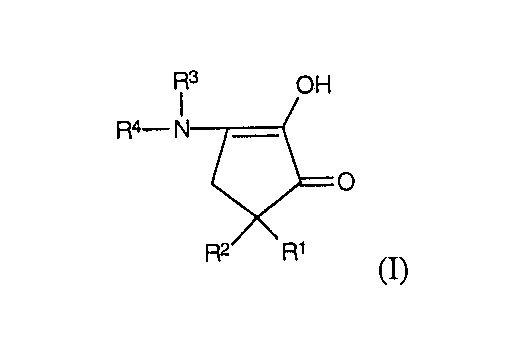
(式中、R1 及びR2 はそれぞれ独立して水素原子、炭素数1〜5の置換もしくは非置換のアルキル基、ヒドロキシル基又はベンジル基を表し、そしてR3 及びR4 はそれぞれ独立して水素又は炭素数1〜5のアルキル基を表し、又は一緒にって置換もしくは非置換の原子数4〜6の複素環を形成するのに必要な原子を表す)
の化合物を少なくとも0.05mmol/mol Ag含有するラジオグラフ用製品、
に関する本発明によって達成される。
【0011】
本発明はさらに、潜像を形成するために写真用製品をエネルギーが少なくとも40keV に等しい電離放射線に暴露し、続いてラジオグラフ像を形成するためにその製品を現像することを含む、工業用ラジオグラフィ用製品における画像の形成方法に関する。
【0012】
【発明の実施の形態】
本発明の一つの態様において、ラジオグラフ用製品は40keV から20MeV のエネルギー範囲の電離放射線に暴露される。
【0013】
特にこの新規なラジオグラフ用製品は、意外にも電離放射線への暴露によって得られた潜像の保持性が改良されることを示している。本発明の製品はまた、400keV より大きいか又は等しいエネルギーの電離放射線への暴露によってより高いスピード感度を示す。
【0014】
一つ又はそれ以上の化合物(I)が、本発明のラジオグラフ用製品中に組み入れることができる。
【0015】
含まれる化合物(I)の量は、好ましくは、銀1モル当り0.1mmol〜0.5mmolの範囲である。
【0016】
本発明の範囲において、R1 及びR2 は独立して直鎖もしくは分岐鎖のアルキル基であることができる。R1 及びR2 は、メチル、エチル、プロピル、ブチルもしくはペンチル基であることができ、好ましくはメチルである。具体的態様においては、R1 は水素原子又はヒドロキシル基であり、R2 はアルキル基、好ましくはメチルである。
【0017】
R3 及びR4 は、独立して直鎖もしくは分岐鎖のアルキル基であることができる。R3 及びR4 は、それぞれ独立して、例えば、メチル、エチル、プロピル、ブチルもしくはペンチル基であることができる。R3 及びR4 が一緒になって複素環を形成するのに必要な原子を含むとき、その複素環は窒素及び(又は)酸素などのさらなる原子を含むことができる。このようにして得られる複素環は、5〜6員の構成原子を含むことができ、例えば、モルホリノ、ピロリジノ、ピペリジノ又はピペラジノ基等を形成する。
【0018】
本発明に有用な化合物(I)は、例えば、
【0019】
【化3】
である。
本発明において、ラジオグラフ用製品は50〜200mg/dm2 の範囲の量の銀を含む。
【0021】
本発明のラジオグラフ用製品は少なくとも1種の平板状粒子乳剤を含む。「平板状粒子」とは、他の面よりもより大きな表面積の2つの平行な面を有する粒子として定義される。これらの粒子は、粒子の平均厚さ(e)に対する平均等価円周径(ECD)の割合である、それらのアスペクト比(R)によって特徴付けられる。
【0022】
本発明の範囲において、平板状粒子乳剤は、乳剤中の粒子の少なくとも50%、好ましくは少なくとも80%が2より大きいか又は等しい、好ましくは5〜20の範囲内のアスペクト比を有する平板状粒子であるような乳剤である。
【0023】
そのような乳剤は、例えばResearch Disclosure 1996年9月、591、第I節(以下リサーチ・ディスクロージャーという)に記載されている。
【0024】
本発明の範囲における有用な乳剤は、好ましくは、本質的に臭化銀で構成された、すなわち、粒子におけるハロゲン化銀が主として臭化銀であるようなハロゲン化銀粒子を含む。本発明の範囲において使用されうるハロゲン化銀粒子は、さらにヨウ化銀又は塩化銀を含有することができる。1つの態様において、本発明のラジオグラフ用製品の乳剤中の粒子は、少なくとも90%(モル)の臭化銀を含む。これらの粒子は、さらに塩化又はヨウ化銀を10%(モル)より少ないか等しい量で含むことができる。
【0025】
好ましい態様では、工業用ラジオグラフィ用の乳剤中のハロゲン化銀粒子は、3%未満の量のヨウ化物を含む臭化−ヨウ化銀粒子であり、ヨウ化物はハロゲン化銀粒子体の一部に偏っていてもよく又は全体に均等に分散していてもよい。
【0026】
本発明のラジオグラフ用製品における乳剤は、バインダー中に、通常はゼラチン、ゼラチン誘導体、アルブミン、ポリビニルアルコール、ビニルポリマー等のような水透過性の親水性コロイド中に分散されているハロゲン化銀粒子を含む。
【0027】
これらのハロゲン化銀乳剤は、ロジウム、インジウム、オスミウム又はイリジウムイオン等のようなドーパント(リサーチ・ディスクロージャーセクションI−D3参照)を、一般的には少量含むことができる。これらのドーパントは、一般に乳剤の製造中に混合される。
【0028】
ハロゲン化銀乳剤は、リサーチ・ディスクロージャーのセクションIVに記載された方法により化学増感することができる。一般に用いられる化学増感剤は、硫黄及び(又は)セレン及び(又は)金の化合物である。
【0029】
ハロゲン化銀乳剤はまた、とりわけ、リサーチ・ディスクロージャーセクションII−B,VI,VII, VIII 及びIXに記載されているような、光増白剤(optical brighteners) 、カブリ防止剤、界面活性剤、可塑剤、滑剤、硬化剤、安定剤、吸着剤及び(又は)分散剤を含有することができる。
【0030】
本発明のラジオグラフ用製品は、ハロゲン化銀乳剤層に加えて、ラジオグラフ用製品に通常用いられている他の層、例えば保護層(被覆層)、中間層、濾光層又はハレーション防止層を含むことができる。支持体は工業用ラジオグラフの製造に使用する任意の適当な支持体であってよい。通常の支持体は、エチレンのようなポリマー支持体である。
【0031】
被覆層は、静電防止剤(antistatic agents) 、ポリマー、艶消剤等を含むことができる。
【0032】
本発明の工業用ラジオグラフィ用の製品は、好ましくは、ハロゲン化銀乳剤で両面が被覆された支持体を含んでなり;支持体の2つの面上の乳剤は、サイズ、組成、銀含有量等が同一でも、又は異なっていてもよい。
【0033】
本発明のラジオグラフ用製品は、リサーチ・ディスクロージャーセクションII.Bに記載されているような硬化剤で硬化することができる。これらの硬化剤は、クロム塩、アルデヒド類、N−メチロール化合物、ジオキサン誘導体、活性ビニル基含有化合物、活性ハロゲン含有化合物等のような有機又は無機の硬化剤とすることができる。
【0034】
本発明におけるラジオグラフ用製品は、ラジオグラフ用製品の各面に設けられた、電離放射線を増強するための2枚のスクリーンで構成されるラジオグラフシステムにおいて用いることができる。
【0035】
これらの増強用スクリーンは、ハロゲン化銀粒子によって吸収される電離放射線の割合を増加させるスクリーンである。電離放射線は増強用スクリーンと相互作用して全方向に電子を放出する。これら電子のうちの幾らかが、乳剤層中のハロゲン化銀粒子によって吸収されて潜像の部位(latent image sites) を形成する。その粒子の方向へ放射される電子の数を増加させることによって、その粒子によって吸収される電子の数が増大する。これらのスクリーンは、一般に金属スクリーンである。
【0036】
通常用いられるスクリーンは、鉛、酸化鉛、又は銅や鋼のような稠密(dense) 金属のシートを含む。これらスクリーンの厚さは、0.025mm〜0.5mmまでの範囲であり、使用する電離放射線のタイプに依存する。
【0037】
ラジオグラフ像は、ラジオグラフ用製品を電離放射線に直接、又は増強用スクリーンを介して暴露することにより得られる。
【0038】
工業用ラジオグラフィのための現像処理方法は、現像剤を含む白黒現像浴及び、チオ硫酸塩、チオシアン酸塩又は硫黄含有有機化合物のようなハロゲン化銀可溶化剤を含む定着浴を含む。従来の現像剤は、一般にジヒドロキシベンゼン、3−ピラゾリドン又はアミノフェノール化合物である。アスコルビン酸又はアスコルビン酸誘導体に基づく現像剤もまた使用することができる。
【0039】
【実施例】
本発明を、本発明の利点を示す以下の実施例により詳細に説明する。
【0040】
例1
この例において使用したラジオグラフ用製品は、その両面を平板状粒子を含むハロゲン化銀乳剤の層で被覆した、銀含有量が75mg/dm2 /面(合計の銀の含有量150mg/dm2 )のエスター(ESTER)(商標)支持体から構成されたものである。
【0041】
乳剤はAgBrl(I:0.6モル%)、ECD=0.96μm、e=0.10μmの平板状粒子を含んでいた。ハロゲン化銀乳剤のそれぞれの層は、艶消剤を含むゼラチンの保護層で被覆した。
【0042】
この製品を、それに含まれる乾燥ゼラチンの合計量の3重量%に等しいビス(ビニルスルホニルメチル)エーテルで硬化した。
平板状粒子は、乳剤中の粒子の合計数の90%より多かった。
【0043】
乳剤をダブルジェット析出法により調製した。それを次いで硫黄及び金により増感した。化学増感剤の添加後、乳剤を65℃で15分間保持した。化合物(I)が存在するときには、それは化学増感及び温度保持の工程の後、40℃で下記の量添加した。
【0044】
それぞれのラジオグラフ用製品を、8mmの銅の濾光材を備えた2つの鉛のスクリーン(25μm)の間に設置し、次いでエネルギー220keV の放射線に暴露した。
【0045】
暴露の後、それぞれの製品を、ヒドロキノン−フェニドン現像剤を用いた硬化・現像工程(2分)、定着工程(2.5分)、洗浄工程(2分)及び乾燥工程を含む、工業用ラジオグラフィのためのコダックMX800(商標)プロセスにより現像した(8分、26℃、ドライ−オン−ドライ)。
【0046】
それぞれのサンプルに対して、フィルムのスピード感度をフィルムの支持体及びカブリの濃度より2段階上の濃度に等しい濃度を得るに必要な暴露によって測定した。
【0047】
暴露されたフィルムのサンプルを、周囲温度で1ヶ月貯蔵した。貯蔵後、フィルムを現像し、そのフィルムのスピード感度を再び評価した。
【0048】
下記の表は、暴露されたばかりのラジオグラフ等用製品と暴露されたラジオグラフ用製品の貯蔵後のものとの間のスピード感度の相違を示す。
【0049】
【表1】
スピード感度は化合物(I)を含まない対照フィルムを標準の100とし、これと比較して計算した。
【0051】
この例は、化合物(I)を含むラジオグラフ用製品を電離放射線に暴露したときには、潜像の保持性が実質的に改良されたことを示している。
【0052】
例2
この例においては、例1のラジオグラフ用製品をCo60放射線(1.2MeV)にスチールウェッジを介して暴露した。製品を例1に記載の条件下に現像した。
【0053】
表IIに示された濃度結果は、暴露され現像されたフィルムを、スチールウェッジの所定の領域について透過濃度計を用いて読み取ることにより得た。
【0054】
【表2】
これらの結果は、ラジオグラフ用製品が化合物(I)を含むときには、Co60への暴露が製品により高いラジオグラフの感度を与えることを示した。
【0056】
以下に、本発明の態様を述べる。
1.銀の含有量が少なくとも50mg/dm2 であり、少なくともその1つの面が、粒子の少なくとも50%が平板状粒子であるハロゲン化銀乳剤の層で被覆されている支持体を含んでなり、且つ式
【0057】
【化4】
(式中、R1 及びR2 はそれぞれ独立して水素原子、炭素数1〜5の置換もしくは非置換のアルキル基、ヒドロキシル基又はベンジル基であり;R3 及びR4 はそれぞれ独立して水素又は炭素数1〜5のアルキル基、又は一緒になって置換もしくは非置換の原子数4〜6の複素環を形成するのに必要な原子を含む)
【0059】
の化合物を少なくとも0.05mmol/mol Ag含む少なくとも40keV に等しいエネルギーの電離放射線に暴露するための非分光増感ラジオグラフ用製品。
【0060】
2.R1 が水素原子又はヒドロキシ基から選ばれ、R2 がメチル基である態様1に記載のラジオグラフ用製品。
3.ハロゲン化銀乳剤が主として臭化銀で構成された平板状粒子の乳剤である態様1に記載のラジオグラフ用製品。
4.化合物(I)が0.1〜0.5mmol/mol Agの範囲の量で存在する態様1に記載のラジオグラフ用製品。
【0061】
5.その両面がハロゲン化銀乳剤の層で被覆された支持体を含む態様1〜4の何れかに記載のラジオグラフ用製品。
6.平板状粒子を含んでなる工業用ラジオグラフィ用製品のスピード感度を向上させるための式(I)の化合物の使用。
7.平板状粒子を含んでなる工業X線用製品の、電離放射線に暴露することにより作成される潜像の保持性を改善するための式(I)の化合物の使用。
【0062】
8.次の工程:潜像を形成するために、態様1〜5の何れかに規定された工業用ラジオグラフ用製品を、少なくとも40keV に等しいエネルギーの電離放射線に暴露し;そしてラジオグラフの像を形成するためにその製品を現像することを含んでなる工業用ラジオグラフ像の形成方法。
9.電離放射線を増強するための2枚のスクリーン、及び態様1〜5の何れかに規定されたラジオグラフ用製品を含んでなり、スクリーンがラジオグラフ製品のそれぞれの面に配置されている工業用ラジオグラフィ用システム。[0001]
BACKGROUND OF THE INVENTION
The present invention relates to silver halide radiograph products designed for exposure to high energy ionizing radiation, and to obtain new industrial radiographic systems and industrial radiographic images. Concerning the method. More particularly, the present invention relates to a product for high energy radiography having improved latent image retention and higher speed sensitivity.
[0002]
[Prior art]
Industrial radiography is a non-destructive method for inspection and analysis of defects in components made of, for example, glass, paper, wood or metal. This method is widely used in the fields of aircraft industry, nuclear industry and petroleum industry for welding and structure of materials in aircraft and nuclear reactor components, and inspection of defects in pipelines.
[0003]
This method comprises exposing a radiographic product comprising a silver halide emulsion to high energy ionizing radiation, typically X-rays or gamma rays. The sensitivity of radiographic emulsions to X-rays and γ-rays is due to absorption of some of these radiation by the silver halide grains, thereby causing secondary emission of electrons, resulting in internal latent Form an image. The radiographic product is then developed and fixed.
[0004]
Unlike medical radiographic films exposed through a luminescent screen that re-emits visible light, industrial radiographic films are sensitive to visible light. It is not necessary to be, and is therefore generally not color sensitive. Industrial radiographic films are directly exposed to ionizing radiation or exposed through a screen to intensify ionizing radiation. These intensifying screens are generally metallic and increase the proportion of ionizing radiation that can be absorbed by the silver halide grains.
[0005]
Industrial radiographic products generally use silver halide emulsions consisting primarily of thick grains (cubic or other three-dimensional forms) to absorb as much ionizing radiation as possible across the emulsion layer. .
[0006]
Also known are industrial radiographic films comprising emulsions of specific tabular grains, as described for example in US Pat. No. 4,883,748 or European Patent Application 757,286. It has been. Exposure of an industrial radiographic product comprising a tabular grain emulsion to ionizing radiation impairs the retention of the latent image.
[0007]
[Problems to be solved by the invention]
It is an object of the present invention to provide a new product for industrial radiography with improved retention of latent images obtained by exposure to ionizing radiation. Another object of the present invention is to provide a radiographic product having improved radiographic sensitivity.
[0008]
[Means for Solving the Problems]
These and other objects are non-color-sensitive radiographic products comprising at least 50 mg / dm 2 of silver and are exposed to ionizing radiation with an energy equal to at least 40 keV And at least one side thereof comprising a support coated with a layer of a silver halide emulsion in which at least 50% of the grains in the emulsion are tabular grains and comprising the formula
[Chemical 2]
Wherein R 1 and R 2 each independently represent a hydrogen atom, a substituted or unsubstituted alkyl group having 1 to 5 carbon atoms, a hydroxyl group or a benzyl group, and R 3 and R 4 each independently Represents hydrogen or an alkyl group having 1 to 5 carbon atoms, or represents atoms necessary to form a substituted or unsubstituted heterocycle having 4 to 6 atoms together)
A radiographic product containing at least 0.05 mmol / mol Ag of
This is achieved by the present invention.
[0011]
The present invention further includes exposing a photographic product to ionizing radiation having an energy equal to at least 40 keV to form a latent image, followed by developing the product to form a radiographic image. The present invention relates to an image forming method in a graphic product.
[0012]
DETAILED DESCRIPTION OF THE INVENTION
In one embodiment of the invention, the radiographic product is exposed to ionizing radiation in the energy range of 40 keV to 20 MeV.
[0013]
In particular, this new radiographic product has surprisingly been shown to improve the retention of latent images obtained by exposure to ionizing radiation. The product of the present invention also exhibits higher speed sensitivity upon exposure to ionizing radiation greater than or equal to 400 keV.
[0014]
One or more compounds (I) can be incorporated into the radiographic product of the present invention.
[0015]
The amount of compound (I) contained is preferably in the range of 0.1 mmol to 0.5 mmol per silver mole.
[0016]
Within the scope of the present invention, R 1 and R 2 can independently be linear or branched alkyl groups. R 1 and R 2 can be methyl, ethyl, propyl, butyl or pentyl groups, preferably methyl. In a specific embodiment, R 1 is a hydrogen atom or a hydroxyl group and R 2 is an alkyl group, preferably methyl.
[0017]
R 3 and R 4 can be independently a linear or branched alkyl group. R 3 and R 4 can each independently be, for example, a methyl, ethyl, propyl, butyl or pentyl group. When R 3 and R 4 together contain the atoms necessary to form a heterocycle, the heterocycle can contain additional atoms such as nitrogen and / or oxygen. The heterocycle thus obtained can contain 5 to 6 membered atoms, for example forming a morpholino, pyrrolidino, piperidino or piperazino group.
[0018]
Compound (I) useful in the present invention is, for example,
[0019]
[Chemical 3]
It is.
In the present invention, for products radiograph comprises silver in an amount ranging from 50-200 mg / dm 2.
[0021]
The radiographic product of the present invention comprises at least one tabular grain emulsion. “Tabular grains” are defined as grains having two parallel faces with a larger surface area than the other faces. These particles are characterized by their aspect ratio (R), which is the ratio of the average equivalent circumference (ECD) to the average thickness (e) of the particles.
[0022]
Within the scope of the present invention, tabular grain emulsions are tabular grains having an aspect ratio in the range of at least 50%, preferably at least 80% of the grains in the emulsion greater than or equal to 2, preferably in the range of 5-20. It is an emulsion such as
[0023]
Such emulsions are described, for example, in Research Disclosure September 1996, 591, Section I (hereinafter referred to as Research Disclosure ).
[0024]
Emulsions useful within the scope of the present invention preferably comprise silver halide grains composed essentially of silver bromide, i.e., where the silver halide in the grains is predominantly silver bromide. The silver halide grains that can be used within the scope of the present invention can further contain silver iodide or silver chloride. In one embodiment, the grains in the emulsion of the radiographic product of the invention comprise at least 90% (mole) silver bromide. These grains may further contain less than or equal to 10% (mole) of chloride or silver iodide.
[0025]
In a preferred embodiment, the silver halide grains in the emulsion for industrial radiography are silver bromide-silver iodide grains containing less than 3% iodide, the iodide being part of the silver halide grain. Or may be evenly distributed throughout.
[0026]
The emulsions in the radiographic product of the present invention are silver halide grains dispersed in a binder, usually in a water permeable hydrophilic colloid such as gelatin, gelatin derivatives, albumin, polyvinyl alcohol, vinyl polymers, etc. including.
[0027]
These silver halide emulsions can generally contain small amounts of dopants such as rhodium, indium, osmium or iridium ions (see Research Disclosure Sections I-D3). These dopants are generally mixed during the preparation of the emulsion.
[0028]
The silver halide emulsion can be chemically sensitized by the method described in Research Disclosure Section IV. Commonly used chemical sensitizers are sulfur and / or selenium and / or gold compounds.
[0029]
Silver halide emulsions also include optical brighteners, antifoggants, surfactants, plastics, as described in Research Disclosure Sections II-B, VI, VII, VIII and IX, among others. Agents, lubricants, curing agents, stabilizers, adsorbents and / or dispersants can be included.
[0030]
In addition to the silver halide emulsion layer, the radiographic product of the present invention has other layers commonly used in radiographic products, such as a protective layer (coating layer), an intermediate layer, a light filtering layer or an antihalation layer Can be included. The support can be any suitable support used in the manufacture of industrial radiographs. A typical support is a polymer support such as ethylene.
[0031]
The coating layer can contain antistatic agents, polymers, matting agents and the like.
[0032]
The industrial radiographic product of the present invention preferably comprises a support coated on both sides with a silver halide emulsion; the emulsion on the two sides of the support has a size, composition and silver content. Etc. may be the same or different.
[0033]
The radiographic product of the present invention comprises a research disclosure section II. It can be cured with a curing agent as described in B. These curing agents can be organic or inorganic curing agents such as chromium salts, aldehydes, N-methylol compounds, dioxane derivatives, active vinyl group-containing compounds, active halogen-containing compounds and the like.
[0034]
The radiograph product in the present invention can be used in a radiograph system comprising two screens for enhancing ionizing radiation provided on each surface of the radiograph product.
[0035]
These intensifying screens are screens that increase the proportion of ionizing radiation absorbed by the silver halide grains. The ionizing radiation interacts with the intensifying screen and emits electrons in all directions. Some of these electrons are absorbed by the silver halide grains in the emulsion layer to form latent image sites. By increasing the number of electrons emitted in the direction of the particle, the number of electrons absorbed by the particle is increased. These screens are generally metal screens.
[0036]
Commonly used screens include sheets of lead, lead oxide, or dense metal such as copper or steel. The thickness of these screens ranges from 0.025 mm to 0.5 mm, depending on the type of ionizing radiation used.
[0037]
A radiographic image is obtained by exposing a radiographic product to ionizing radiation directly or through an intensifying screen.
[0038]
Development processing methods for industrial radiography include a black and white development bath containing a developer and a fixing bath containing a silver halide solubilizer such as a thiosulfate, thiocyanate or sulfur-containing organic compound. Conventional developers are generally dihydroxybenzene, 3-pyrazolidone or aminophenol compounds. Developers based on ascorbic acid or ascorbic acid derivatives can also be used.
[0039]
【Example】
The invention is illustrated in detail by the following examples which illustrate the advantages of the invention.
[0040]
Example 1
The radiographic product used in this example had a silver content of 75 mg / dm 2 / surface (total silver content 150 mg / dm 2) , coated on both sides with layers of a silver halide emulsion containing tabular grains. ) ESTER ™ support.
[0041]
The emulsion contained tabular grains of AgBrl (I: 0.6 mol%), ECD = 0.96 μm, e = 0.10 μm. Each layer of silver halide emulsion was coated with a protective layer of gelatin containing a matting agent.
[0042]
This product was hardened with bis (vinylsulfonylmethyl) ether equal to 3% by weight of the total amount of dry gelatin contained therein.
Tabular grains were greater than 90% of the total number of grains in the emulsion.
[0043]
The emulsion was prepared by the double jet precipitation method. It was then sensitized with sulfur and gold. After addition of chemical sensitizer, the emulsion was held at 65 ° C. for 15 minutes. When compound (I) was present, it was added in the following amounts at 40 ° C. after the steps of chemical sensitization and temperature holding.
[0044]
Each radiographic product was placed between two lead screens (25 μm) with 8 mm copper filter media and then exposed to 220 keV radiation.
[0045]
After exposure, each product is subjected to industrial radio, including curing / development process (2 minutes), fixing process (2.5 minutes), washing process (2 minutes) and drying process using hydroquinone-phenidone developer. Developed by Kodak MX800 ™ process for graphy (8 minutes, 26 ° C., dry-on-dry).
[0046]
For each sample, the speed sensitivity of the film was measured by the exposure required to obtain a density equal to two levels above the film support and fog density.
[0047]
Samples of the exposed film were stored for 1 month at ambient temperature. After storage, the film was developed and the speed sensitivity of the film was evaluated again.
[0048]
The table below shows the difference in speed sensitivity between the radiographic product just exposed and that after storage of the exposed radiographic product.
[0049]
[Table 1]
The speed sensitivity was calculated by comparing a control film containing no compound (I) with a standard of 100.
[0051]
This example shows that the retention of the latent image is substantially improved when the radiographic product containing Compound (I) is exposed to ionizing radiation.
[0052]
Example 2
In this example, the radiographic product of Example 1 was exposed to Co60 radiation (1.2 MeV) through a steel wedge. The product was developed under the conditions described in Example 1.
[0053]
The density results shown in Table II were obtained by reading the exposed and developed film using a transmission densitometer for a given area of the steel wedge.
[0054]
[Table 2]
These results indicated that when the radiographic product contains Compound (I), exposure to Co60 gives the product a higher radiographic sensitivity.
[0056]
Hereinafter, embodiments of the present invention will be described.
1. Comprising a support having a silver content of at least 50 mg / dm 2 and at least one face of which is coated with a layer of silver halide emulsion in which at least 50% of the grains are tabular grains; Formula [0057]
[Formula 4]
Wherein R 1 and R 2 are each independently a hydrogen atom, a substituted or unsubstituted alkyl group having 1 to 5 carbon atoms, a hydroxyl group or a benzyl group; R 3 and R 4 are each independently hydrogen Or an alkyl group having 1 to 5 carbon atoms, or atoms necessary to form a substituted or unsubstituted heterocyclic ring having 4 to 6 atoms together)
[0059]
Non-spectral sensitized radiographic product for exposure to ionizing radiation with an energy equal to at least 40 keV comprising at least 0.05 mmol / mol Ag of the compound.
[0060]
2. The radiographic product according to embodiment 1, wherein R 1 is selected from a hydrogen atom or a hydroxy group, and R 2 is a methyl group.
3. The radiographic product according to embodiment 1, wherein the silver halide emulsion is a tabular grain emulsion composed mainly of silver bromide.
4). The radiographic product according to embodiment 1, wherein compound (I) is present in an amount ranging from 0.1 to 0.5 mmol / mol Ag.
[0061]
5. A radiographic product according to any one of embodiments 1 to 4, comprising a support coated on both sides with layers of a silver halide emulsion.
6). Use of a compound of formula (I) for improving the speed sensitivity of an industrial radiographic product comprising tabular grains.
7). Use of a compound of formula (I) for improving the retention of a latent image produced by exposure to ionizing radiation of an industrial X-ray product comprising tabular grains.
[0062]
8). Next step: to form a latent image, the industrial radiographic product as defined in any of embodiments 1-5 is exposed to ionizing radiation with an energy equal to at least 40 keV; and the radiographic image is formed. A process for forming an industrial radiographic image comprising developing the product to achieve.
9. An industrial radio comprising two screens for enhancing ionizing radiation and a radiographic product as defined in any of aspects 1 to 5, wherein the screen is arranged on each side of the radiographic product Graphic system.
Claims (1)
の化合物を少なくとも0.05mmol/mol Ag含む少なくとも40keV に等しいエネルギーの電離放射線に暴露するための非分光増感ラジオグラフ用製品。Comprising a support having a silver content of at least 50 mg / dm 2 and at least one face of which is coated with a layer of silver halide emulsion in which at least 50% of the grains are tabular grains; formula
Non-spectral sensitized radiographic product for exposure to ionizing radiation with an energy equal to at least 40 keV comprising at least 0.05 mmol / mol Ag of the compound.
Applications Claiming Priority (2)
| Application Number | Priority Date | Filing Date | Title |
|---|---|---|---|
| FR9806867 | 1998-05-27 | ||
| FR9806867A FR2779242B1 (en) | 1998-05-27 | 1998-05-27 | NEW PRODUCT FOR INDUSTRIAL RADIOGRAPHY |
Publications (2)
| Publication Number | Publication Date |
|---|---|
| JP2000002957A JP2000002957A (en) | 2000-01-07 |
| JP4130516B2 true JP4130516B2 (en) | 2008-08-06 |
Family
ID=9526908
Family Applications (1)
| Application Number | Title | Priority Date | Filing Date |
|---|---|---|---|
| JP14780399A Expired - Fee Related JP4130516B2 (en) | 1998-05-27 | 1999-05-27 | Industrial radiography products |
Country Status (6)
| Country | Link |
|---|---|
| US (1) | US6326135B1 (en) |
| EP (1) | EP0961164B1 (en) |
| JP (1) | JP4130516B2 (en) |
| CN (1) | CN1236906A (en) |
| DE (1) | DE69910118T2 (en) |
| FR (1) | FR2779242B1 (en) |
Families Citing this family (2)
| Publication number | Priority date | Publication date | Assignee | Title |
|---|---|---|---|---|
| FR2879767B1 (en) * | 2004-12-17 | 2007-03-09 | Eastman Kodak Co | SYSTEM FOR INDUSTRIAL RADIOGRAPHY |
| JP2010019923A (en) * | 2008-07-08 | 2010-01-28 | Fujifilm Corp | Industrial x-ray photosensitive material |
Family Cites Families (7)
| Publication number | Priority date | Publication date | Assignee | Title |
|---|---|---|---|---|
| BE756535A (en) * | 1969-09-23 | 1971-03-01 | Eastman Kodak Co | OVERSENSITIZED SILVER HALIDE PHOTOGRAPHIC EMULSION |
| US3667958A (en) * | 1970-04-09 | 1972-06-06 | Eastman Kodak Co | Photosensitive and thermosensitive elements,compositions and processes |
| JPS599892B2 (en) * | 1975-04-03 | 1984-03-06 | 富士写真フイルム株式会社 | How to obtain a radiograph |
| FR2737588B1 (en) * | 1995-08-01 | 2001-11-02 | Kodak Pathe | NEW PRODUCT FOR INDUSTRIAL RADIOGRAPHY |
| US5773208A (en) * | 1996-11-27 | 1998-06-30 | Eastman Kodak Company | Latent image keeping improvement with a hexose reductone and green sensitized epitaxially-finished tabular grain emulsions |
| US5763145A (en) * | 1996-11-27 | 1998-06-09 | Eastman Kodak Company | Photographic element containing a reductone and, in the most blue light sensitive layer, a fine grain emulsion |
| US5876905A (en) * | 1997-03-20 | 1999-03-02 | Eastman Kodak Company | Dual-coated radiographic element capable of photothermographic imaging |
-
1998
- 1998-05-27 FR FR9806867A patent/FR2779242B1/en not_active Expired - Fee Related
-
1999
- 1999-05-04 US US09/304,717 patent/US6326135B1/en not_active Expired - Lifetime
- 1999-05-05 DE DE69910118T patent/DE69910118T2/en not_active Expired - Lifetime
- 1999-05-05 EP EP99420110A patent/EP0961164B1/en not_active Expired - Lifetime
- 1999-05-27 CN CN99107670A patent/CN1236906A/en active Pending
- 1999-05-27 JP JP14780399A patent/JP4130516B2/en not_active Expired - Fee Related
Also Published As
| Publication number | Publication date |
|---|---|
| US6326135B1 (en) | 2001-12-04 |
| JP2000002957A (en) | 2000-01-07 |
| FR2779242B1 (en) | 2000-06-30 |
| EP0961164A1 (en) | 1999-12-01 |
| CN1236906A (en) | 1999-12-01 |
| DE69910118T2 (en) | 2004-06-24 |
| EP0961164B1 (en) | 2003-08-06 |
| DE69910118D1 (en) | 2003-09-11 |
| FR2779242A1 (en) | 1999-12-03 |
Similar Documents
| Publication | Publication Date | Title |
|---|---|---|
| US5965337A (en) | Element for industrial radiography | |
| CA1321095C (en) | Unitary intensifying screen and radiographic element | |
| US3737313A (en) | Paper radiographic element containing silver halide grains rhodium salt sensitized,thioether ripened and polyvalent metal ion stabilized | |
| US4707435A (en) | Industrial X-ray system | |
| JP4130516B2 (en) | Industrial radiography products | |
| EP0065877B1 (en) | Industrial x-ray system | |
| EP0140666B1 (en) | Industrial x-ray photothermographic system | |
| JPS62215942A (en) | Heat-developable photosensitive material for x-ray photography | |
| EP0939336B1 (en) | New product and new process for obtaining industrial radiography | |
| US20060133561A1 (en) | System for industrial radiography | |
| US5900357A (en) | Product for industrial radiography having improved contrast | |
| Blanton | X-ray film as a two-dimensional detector for X-ray diffraction analysis | |
| US6815155B2 (en) | Radiographic imaging system and silver halide photographic material | |
| US6238853B1 (en) | Processing method of light-sensitive silver halide photographic materials showing less tendency to sludge formation | |
| JPS6053299B2 (en) | Combinations of photosensitive elements useful in radiography | |
| EP1104893B1 (en) | Processing method providing cold blue-black image tone for black-and white materials having silver halide tabular gain emulsions | |
| JPH04311945A (en) | Photosensitive halogenated silver photograph material | |
| EP1061413A1 (en) | Processing method of light-sensitive silver halide photographic materials showing less tendency to sludge formation. | |
| JPH052973B2 (en) | ||
| EP0682783B1 (en) | Radiographic assemblage | |
| Debelder et al. | Intensifying screens in transaxial tomography | |
| Bollen et al. | Neutron detection and radiography | |
| JPH052230A (en) | Silver halide photographic sensitive material | |
| GB2056112A (en) | Intensifying Screens in Transaxial Tomography |
Legal Events
| Date | Code | Title | Description |
|---|---|---|---|
| A621 | Written request for application examination |
Free format text: JAPANESE INTERMEDIATE CODE: A621 Effective date: 20060421 |
|
| A711 | Notification of change in applicant |
Free format text: JAPANESE INTERMEDIATE CODE: A711 Effective date: 20071226 |
|
| TRDD | Decision of grant or rejection written | ||
| A01 | Written decision to grant a patent or to grant a registration (utility model) |
Free format text: JAPANESE INTERMEDIATE CODE: A01 Effective date: 20080422 |
|
| A01 | Written decision to grant a patent or to grant a registration (utility model) |
Free format text: JAPANESE INTERMEDIATE CODE: A01 |
|
| A61 | First payment of annual fees (during grant procedure) |
Free format text: JAPANESE INTERMEDIATE CODE: A61 Effective date: 20080522 |
|
| R150 | Certificate of patent or registration of utility model |
Free format text: JAPANESE INTERMEDIATE CODE: R150 |
|
| FPAY | Renewal fee payment (event date is renewal date of database) |
Free format text: PAYMENT UNTIL: 20110530 Year of fee payment: 3 |
|
| FPAY | Renewal fee payment (event date is renewal date of database) |
Free format text: PAYMENT UNTIL: 20110530 Year of fee payment: 3 |
|
| FPAY | Renewal fee payment (event date is renewal date of database) |
Free format text: PAYMENT UNTIL: 20120530 Year of fee payment: 4 |
|
| FPAY | Renewal fee payment (event date is renewal date of database) |
Free format text: PAYMENT UNTIL: 20120530 Year of fee payment: 4 |
|
| FPAY | Renewal fee payment (event date is renewal date of database) |
Free format text: PAYMENT UNTIL: 20130530 Year of fee payment: 5 |
|
| R250 | Receipt of annual fees |
Free format text: JAPANESE INTERMEDIATE CODE: R250 |
|
| R250 | Receipt of annual fees |
Free format text: JAPANESE INTERMEDIATE CODE: R250 |
|
| LAPS | Cancellation because of no payment of annual fees |