JP2025041259A - Information processing device and control method - Google Patents
Information processing device and control method Download PDFInfo
- Publication number
- JP2025041259A JP2025041259A JP2023148450A JP2023148450A JP2025041259A JP 2025041259 A JP2025041259 A JP 2025041259A JP 2023148450 A JP2023148450 A JP 2023148450A JP 2023148450 A JP2023148450 A JP 2023148450A JP 2025041259 A JP2025041259 A JP 2025041259A
- Authority
- JP
- Japan
- Prior art keywords
- face
- person
- information processing
- processing device
- brightness
- Prior art date
- Legal status (The legal status is an assumption and is not a legal conclusion. Google has not performed a legal analysis and makes no representation as to the accuracy of the status listed.)
- Granted
Links
Images

Landscapes
- Power Sources (AREA)
- Studio Devices (AREA)
- Image Analysis (AREA)
Abstract
Description
本発明は、情報処理装置、及び制御方法に関する。 The present invention relates to an information processing device and a control method.
人物が近づくと使用可能な状態に遷移し、人物が離れると一部の機能を除いて停止した待機状態に遷移する機器がある。例えば、特許文献1には、赤外線センサを用いて、人物が近づいてきたか否か、或いは人物が遠ざかったか否かを検出している。
There are devices that transition to a usable state when a person approaches, and transition to a standby state in which all functions are stopped except for some functions when the person leaves. For example, in
近年、コンピュータビジョンなどの発展により、画像から顔を検出する際の検出精度が高くなってきている。そのため、赤外線センサによる人物の検出に代えて、顔検出による人物の検出も行われている。顔検出による人物の検出では、単に人物を検出するだけでなく顔の向きを検出することも可能であるため、顔の向き(正面を向いているか、横を向いているか等)に応じた制御を行うことも可能である。例えば、顔の向きが正面(機器の方向)を向いていないときには表示部の画面輝度を低減して省電力化することも行われている。 In recent years, advances in computer vision and other fields have led to increased accuracy in detecting faces from images. As a result, instead of detecting people using infrared sensors, people are now being detected using face detection. When detecting people using face detection, it is possible to not only detect people but also to detect the direction of the face, making it possible to perform control according to the direction of the face (whether the face is facing forward, to the side, etc.). For example, when the face is not facing forward (towards the device), the brightness of the display screen is reduced to save power.
しかしながら、複数人で画面を見ながら議論(ディスカッション)している場合、常に画面の方を見ているだけでなく互いに顔を見ながら話す時間もある。このとき、顔の向きが正面を向いていないと認識され、画面輝度が下がってしまうことがある。 However, when multiple people are having a discussion while looking at a screen, they are not always looking at the screen, but there are also times when they are looking at each other's faces while talking. In these cases, the screen brightness may be reduced if it is recognized that the faces are not facing forward.
本発明は、上記した事情に鑑みてなされたもので、顔の向きに応じて画面輝度を低減する輝度低減処理をより適切に行う情報処理装置、及び制御方法を提供することを目的の一つとする。 The present invention has been made in consideration of the above circumstances, and one of its objectives is to provide an information processing device and control method that more appropriately performs brightness reduction processing that reduces screen brightness according to the direction of the face.
本発明は上記の課題を解決するためになされたものであり、本発明の第1態様に係る情報処理装置は、表示部と、撮像部により撮像された撮像画像の画像データを一時的に記憶するメモリと、前記メモリに記憶された画像データに基づく処理を行うプロセッサと、を備え、前記プロセッサは、前記メモリに記憶された画像データを処理することにより、前記撮像画像の中から顔が撮像されている顔領域と前記顔の向きとを検出する顔検出処理と、前記顔検出処理により検出された前記顔の向きに基づいて、前記表示部の画面輝度を低減させる輝度低減処理と、前記顔検出処理により検出された前記顔領域の数が複数の場合、複数の前記顔領域の距離の関係に基づいて、前記輝度低減処理を有効にするか無効にするかを制御する輝度低減制御処理と、を行う。 The present invention has been made to solve the above problems, and an information processing device according to a first aspect of the present invention includes a display unit, a memory that temporarily stores image data of an image captured by an imaging unit, and a processor that performs processing based on the image data stored in the memory, and the processor performs a face detection process that detects a face area in the captured image where a face is captured and the orientation of the face by processing the image data stored in the memory, a brightness reduction process that reduces the screen brightness of the display unit based on the orientation of the face detected by the face detection process, and a brightness reduction control process that controls whether to enable or disable the brightness reduction process based on the relationship between the distances of the multiple face areas when the number of face areas detected by the face detection process is multiple.
上記情報処理装置において、前記プロセッサは、前記輝度低減制御処理において、前記顔検出処理により検出された前記顔領域の数が複数の場合、複数の前記顔領域のうち最も大きい第1顔領域と2番目に大きい第2顔領域との距離の関係に基づいて、前記輝度低減処理を有効にするか無効にするかを制御してもよい。 In the above information processing device, the processor may control whether to enable or disable the brightness reduction process in the brightness reduction control process when the number of face areas detected by the face detection process is multiple, based on the relationship in distance between a first face area, which is the largest of the multiple face areas, and a second face area, which is the second largest.
上記情報処理装置において、前記プロセッサは、前記輝度低減制御処理において、前記第1顔領域と前記第2顔領域との大きさの差が所定の閾値未満である場合、前記輝度低減処理を無効にしてもよい。 In the above information processing device, the processor may disable the brightness reduction control process when the difference in size between the first face area and the second face area is less than a predetermined threshold.
上記情報処理装置において、前記プロセッサは、前記顔検出処理において、前記第1顔領域に対応する人物を前記撮像部からの距離が最も近い第1人物とし、前記第2顔領域に対応する人物を前記撮像部からの距離が2番目に近い第2人物とし、前記輝度低減制御処理において、前記第1人物と前記第2人物との前記撮像部からの距離の差が所定の閾値未満である場合、前記輝度低減処理を無効にしてもよい。 In the above information processing device, the processor may, in the face detection process, determine the person corresponding to the first face area as the first person closest to the imaging unit, and the person corresponding to the second face area as the second person closest to the imaging unit, and in the brightness reduction control process, disable the brightness reduction process if the difference in distance from the imaging unit between the first person and the second person is less than a predetermined threshold value.
上記情報処理装置において、前記プロセッサは、前記輝度低減制御処理において、前記撮像画像上での前記第1顔領域と前記第2顔領域との間の距離が所定の閾値未満である場合、前記輝度低減処理を無効にしてもよい。 In the information processing device, the processor may disable the brightness reduction control process when the distance between the first face area and the second face area on the captured image is less than a predetermined threshold.
上記情報処理装置において、前記プロセッサは、前記顔検出処理において、前記第1顔領域に対応する人物を前記撮像部からの距離が最も近い第1人物とし、前記第2顔領域に対応する人物を前記撮像部からの距離が2番目に近い第2人物とし、前記輝度低減制御処理において、前記撮像画像上での前記第1人物と前記第2人物との間の距離が所定の閾値未満である場合、前記輝度低減処理を無効にしてもよい。 In the above information processing device, the processor may, in the face detection process, determine the person corresponding to the first face area as the first person closest to the imaging unit, and the person corresponding to the second face area as the second person closest to the imaging unit, and in the brightness reduction control process, disable the brightness reduction process if the distance between the first person and the second person on the captured image is less than a predetermined threshold.
上記情報処理装置において、前記プロセッサは、前記輝度低減制御処理において、前記第1顔領域と前記第2顔領域との大きさの差が所定の閾値未満であって且つ前記撮像画像上での前記第1顔領域と前記第2顔領域との間の距離が所定の閾値未満である場合、前記輝度低減処理を無効にしてもよい。 In the above information processing device, the processor may disable the brightness reduction control process when the difference in size between the first face area and the second face area is less than a predetermined threshold and the distance between the first face area and the second face area on the captured image is less than a predetermined threshold.
上記情報処理装置において、前記プロセッサは、前記顔検出処理において、前記第1顔領域に対応する人物を前記撮像部からの距離が最も近い第1人物とし、前記第2顔領域に対応する人物を前記撮像部からの距離が2番目に近い第2人物とし、前記輝度低減制御処理において、前記第1人物と前記第2人物との前記撮像部からの距離の差が所定の閾値未満であって且つ前記撮像画像上での前記第1人物と前記第2人物との間の距離が所定の閾値未満である場合、前記輝度低減処理を無効にしてもよい。 In the above information processing device, the processor may, in the face detection process, determine the person corresponding to the first face area as the first person closest to the imaging unit, and the person corresponding to the second face area as the second person second closest to the imaging unit, and in the brightness reduction control process, disable the brightness reduction process if the difference in distance from the imaging unit between the first person and the second person is less than a predetermined threshold and the distance between the first person and the second person on the captured image is less than a predetermined threshold.
上記情報処理装置において、前記プロセッサは、前記輝度低減制御処理において、前記顔検出処理により検出された前記顔領域の数が1つの場合、前記輝度低減処理を有効にしてもよい。 In the above information processing device, the processor may enable the brightness reduction process in the brightness reduction control process when the number of face regions detected by the face detection process is one.
また、本発明の第2態様に係る、表示部と、撮像部により撮像された撮像画像の画像データを一時的に記憶するメモリと、前記メモリに記憶された画像データに基づく処理を行うプロセッサと、を備える情報処理装置における制御方法は、前記プロセッサが、前記メモリに記憶された画像の画像データを処理することにより、前記撮像画像の中から顔が撮像されている顔領域と前記顔の向きとを検出する顔検出処理を行うステップと、前記顔検出処理により検出された前記顔の向きに基づいて、前記表示部の画面輝度を低減させる輝度低減処理を行うステップと、前記顔検出処理により検出された前記顔領域の数が複数の場合、複数の前記顔領域の距離の関係に基づいて、前記輝度低減処理を有効にするか無効にするかを制御する輝度低減制御処理を行うステップと、を含む。 In addition, according to a second aspect of the present invention, a control method for an information processing device including a display unit, a memory for temporarily storing image data of an image captured by an imaging unit, and a processor for performing processing based on the image data stored in the memory includes a step in which the processor performs face detection processing to detect a face area in which a face is captured from the captured image and the orientation of the face by processing the image data of the image stored in the memory, a step in which the processor performs brightness reduction processing to reduce the screen brightness of the display unit based on the orientation of the face detected by the face detection processing, and a step in which, when the number of the face areas detected by the face detection processing is more than one, a brightness reduction control processing to control whether to enable or disable the brightness reduction processing based on the relationship in distance between the multiple face areas.
本発明の上記態様によれば、顔の向きに応じて画面輝度を低減する輝度低減処理をより適切に行うことができる。 According to the above aspect of the present invention, it is possible to more appropriately perform brightness reduction processing that reduces screen brightness according to the direction of the face.
以下、図面を参照して、本発明の実施形態について説明する。
[概要]
まず、本実施形態に係る情報処理装置の概要について説明する。
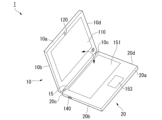
図1は、本実施形態に係る情報処理装置1の外観の構成例を示す斜視図である。
Hereinafter, an embodiment of the present invention will be described with reference to the drawings.
[overview]
First, an overview of the information processing device according to this embodiment will be described.
FIG. 1 is a perspective view showing an example of the external configuration of an
情報処理装置1は、例えば、ノート型(クラムシェル型)のPC(Personal Computer)である。情報処理装置1は、第1筐体10、第2筐体20、及びヒンジ機構15を備える。第1筐体10と第2筐体20は、ヒンジ機構15を用いて結合されている。第1筐体10は、第2筐体20に対して、ヒンジ機構15がなす回転軸の周りに相対的に回動可能である。第1筐体10と第2筐体20との回動による開き角を「θ」として図示している。
The
第1筐体10は、Aカバー、ディスプレイ筐体とも呼ばれる。第2筐体20は、Cカバー、システム筐体とも呼ばれる。以下の説明では、第1筐体10と第2筐体20の側面のうち、ヒンジ機構15が備わる面を、それぞれ側面10c、20cと呼ぶ。第1筐体10と第2筐体20の側面のうち、側面10c、20cとは反対側の面を、それぞれ側面10a、20aと呼ぶ。図示において、側面20aから側面20cに向かう方向を「後」と呼び、側面20cから側面20aに向かう方向を「前」と呼ぶ。後方に対して右方、左方を、それぞれ「右」、「左」と呼ぶ。第1筐体10、第2筐体20の左側面をそれぞれ側面10b、20bと呼び、右側面をそれぞれ側面10d、20dと呼ぶ。また、第1筐体10と第2筐体20とが重なり合って完全に閉じた状態(開き角θ=0°の状態)を「閉状態」と呼ぶ。閉状態において第1筐体10と第2筐体20との互いに対面する側の面を、それぞれの「内面」と呼び、内面に対して反対側の面を「外面」と呼ぶ。また、閉状態に対して第1筐体10と第2筐体20とが開いた状態のことを「開状態」と呼ぶ。
The
図1に示す情報処理装置1の外観は開状態の例を示している。開状態は、第1筐体10の側面10aと第2筐体20の側面20aとが離れた状態である。開状態では、第1筐体10と第2筐体20とのそれぞれの内面が表れる。開状態はユーザが情報処理装置1を使用する際の状態の一つであり、典型的には開き角θ=100~130°程度の状態で使用されることが多い。なお、開状態となる開き角θの範囲は、ヒンジ機構15よって回動可能な角度の範囲等に応じて任意に定めることができる。
The external appearance of the
第1筐体10の内面には、表示部110が設けられている。表示部110は、液晶ディスプレイ(LCD:Liquid Crystal Display)や有機EL(Electro Luminescence)ディスプレイなどを含んで構成されている。また、第1筐体10の内面のうち表示部110の周縁の領域に、撮像部120が設けられている。例えば、撮像部120は、表示部110の周縁の領域のうち側面20a側に配置されている。なお、撮像部120が配置される位置は一例であって、表示部110の表示画面に対面する方向を向くことが可能であれば他の場所であってもよい。
A
撮像部120は、開状態において、表示部110の表示画面に対面する方向(即ち、情報処理装置1の前方)の所定の撮像範囲を撮像する。所定の撮像範囲とは、撮像部120が有する撮像素子と撮像素子の撮像面の前方に設けられた光学レンズとによって定まる画角の範囲である。例えば、撮像部120は、情報処理装置1の前方(正面側)に存在する人物(ユーザ)を含む画像を撮像することができる。
When in the open state, the
また、第2筐体20の側面20bには、電源ボタン140が設けられている。電源ボタン140は、電源のオンまたはオフ、待機状態から通常動作状態への遷移、通常動作状態から待機状態への遷移などをユーザが指示するための操作子である。通常動作状態とは、特に制限なく処理の実行が可能なシステムの動作状態であり、例えば、ACPI(Advanced Configuration and Power Interface)で規定されているS0状態に相当する。
A
待機状態とは、システム処理の少なくとも一部が制限されている状態であって、通常動作状態よりも消費電力が低い状態である。例えば、待機状態は、スタンバイ状態、スリープ状態等であってもよく、Windows(登録商標)におけるモダンスタンバイや、ACPIで規定されているS3状態(スリープ状態)等に相当する状態であってもよい。また、待機状態には、少なくとも表示部の表示がOFF(画面OFF)となる状態、または画面ロックとなる状態が含まれてもよい。画面ロックとは、処理中の内容が視認できないように予め設定された画像(例えば、画面ロック用の画像)が表示部に表示され、ロックを解除(例えば、ユーザ認証)するまで、使用できない状態である。 The standby state is a state in which at least a part of the system processing is restricted, and the power consumption is lower than in the normal operating state. For example, the standby state may be a standby state, a sleep state, etc., and may be a state equivalent to modern standby in Windows (registered trademark) or the S3 state (sleep state) defined by ACPI. The standby state may also include a state in which at least the display of the display unit is turned OFF (screen OFF) or a state in which the screen is locked. A screen lock is a state in which a preset image (e.g., an image for locking the screen) is displayed on the display unit so that the contents being processed cannot be seen, and the device cannot be used until the lock is released (e.g., user authentication).
また、第2筐体20の内面には、ユーザの操作入力を受け付ける入力デバイスとして、キーボード151及びタッチパッド153が設けられている。なお、入力デバイスとして、キーボード151及びタッチパッド153に代えて、または加えて、タッチセンサが設けられてもよいし、マウスや外付けのキーボードが接続されてもよい。タッチセンサが設けられた構成の場合、表示部110の表示画面に対応する領域が操作を受け付けるタッチパネルとして構成されてもよい。また、入力デバイスには、音声が入力されるマイクが含まれてもよい。
The inner surface of the
なお、第1筐体10と第2筐体20とが閉じた閉状態では、第1筐体10の内面に設けられている表示部110、及び撮像部120と、第2筐体20の内面に設けられているキーボード151及びタッチパッド153は、互いに他方の筐体面で覆われ、機能を発揮できない状態となる。
When the
情報処理装置1は、撮像部120により撮像された撮像画像に基づいて、情報処理装置1の前方に存在する人物を検出するHPD(Human Presence Detection)処理を実行する。
The
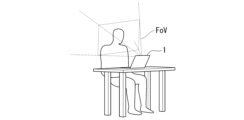
図2は、本実施形態に係る情報処理装置1の人物の検出範囲の一例を示す図である。図示する例において、情報処理装置1の前方の検出範囲FoV(Field of View:検出視野角)が、人物の検出可能な範囲である。
Figure 2 is a diagram showing an example of a person detection range of the
例えば、情報処理装置1は、撮像部120により撮像された撮像画像から顔が撮像されている顔領域を検出することにより、情報処理装置1の前方に人物(ユーザ)が存在するか否かを判定する。検出範囲FoVは、情報処理装置1が撮像する撮像画角に相当する。情報処理装置1は、撮像画像から顔領域が検出された場合、人物(ユーザ)が存在すると判定する。一方、情報処理装置1は、撮像画像から顔領域が検出されなかった場合、人物(ユーザ)が存在しないと判定する。
For example, the
情報処理装置1は、HPD処理により人物(ユーザ)の存在の有無に応じて情報処理装置1のシステムの動作状態を制御する。例えば、情報処理装置1は、情報処理装置1の前方に人物(ユーザ)が存在する場合には通常動作状態に制御し、情報処理装置1の前方に人物(ユーザ)が存在しない場合には待機状態に制御する。
The
また、情報処理装置1は、情報処理装置1の前方に人物(ユーザ)が存在する場合には、その人物(ユーザ)の顔の向きを検出する。例えば、情報処理装置1は、人物(ユーザ)の顔の向きが、情報処理装置1の方向(表示部110及び撮像部120の方向)を向いているか否かを判定する。ここでの顔の向きとは、顔の左右方向への回転角度に対応する向きである。以下では、情報処理装置1の方向(表示部110及び撮像部120の方向)を顔が向いている状態を、顔の向きが正面を向いている状態とする。また、顔の向きが正面に対して右方向または左方向を向いている状態を、顔の向きが横向きの状態とする。
Furthermore, when a person (user) is present in front of the
図3は、本実施形態に係る顔の向きに応じた画面輝度の制御を説明する模式図である。この図に示すように、情報処理装置1は、人物(ユーザ)の顔の向きに応じて表示部110の画面輝度を低減させる輝度低減処理を実行する。具体的には、情報処理装置1は、図3の(A)に示すように顔の向きが正面を向いているときに対して図3の(B)に示すように顔の向きが正面を向いていないとき(例えば、横を向いたとき)には、表示部110の画面輝度を低減させることで省電力化を図る。また、情報処理装置1は、再び顔の向きが正面を向いたときには、低減させる前の元の画面輝度に戻す。
Figure 3 is a schematic diagram illustrating the control of screen brightness according to the face direction according to this embodiment. As shown in this figure, the
以下では、低減していない元の画面輝度のことを「標準輝度」と称する。また、顔の向きが正面を向いていないとき(例えば、横を向いたとき)に標準輝度から低減した画面輝度のことを「低輝度」と称する。低輝度は、少なくとも標準輝度よりも低い輝度であるが、より低い輝度にするほど省電力化の効果が上がる。例えば、低輝度は、標準輝度の0~10%程度の輝度としてもよい。0%の輝度は、表示オフに相当する。なお、顔の向きが正面を向いていないときには、顔が上、下、または後ろを向いたとき等も含まれる。 In the following, the original screen brightness that has not been reduced is referred to as "standard brightness." Furthermore, the screen brightness reduced from the standard brightness when the face is not facing forward (for example, when facing sideways) is referred to as "low brightness." Low brightness is at least a brightness that is lower than the standard brightness, and the lower the brightness, the greater the effect of power saving. For example, low brightness may be a brightness of about 0-10% of the standard brightness. 0% brightness corresponds to the display being off. Note that when the face is not facing forward, this also includes when the face is facing up, down, or backwards.
ここで、複数人で情報処理装置1の画面を見ながら議論(ディスカッション)している場合には、常に画面の方を見ているだけでなく互いに顔を見ながら話す時間もある。このとき、ユーザが情報処理装置1の方向を一時的に向いていない状態となるが、顔の向きが正面を向いていないことによって画面輝度を低減させてしまうのは好ましくない。そこで、本実施形態に係る情報処理装置1は、顔の向きが正面を向いていない状態であっても、複数のユーザが議論(ディスカッション)している状態と判定できる場合には、画面輝度を低減させないように輝度低減処理を無効(Disable)に制御する。
Here, when multiple people are discussing while looking at the screen of the
例えば、情報処理装置1は、情報処理装置1の前方の検出範囲FoVに検出された人数が複数であり且つ情報処理装置1に最も近い人物と2番目に近い人物との距離が近い場合には、少なくともその2人はユーザであると判定して、輝度低減処理を無効にする。まず、情報処理装置1は、撮像部120により撮像された撮像画像から顔領域を検出することにより、情報処理装置1の前方の検出範囲FoVに検出された人数が複数であるか否かを判定する。
For example, when there is more than one person detected in the detection range FoV in front of the
複数の人数が検出された場合には、少なくとも最も近い人物と2番目に近い人物との距離が近ければ、少なくともその2人はユーザである可能性が高く、仮に横を向いたとしてもユーザが議論している状態であると推定できる。一方で、3人以上の人物が検出された場合、2番目に近い人物と3番目に近い人物との距離が仮に近くとも、両者と最も近い人物との距離が遠ければ、最も近い人物のみがユーザであると推定できる。 When multiple people are detected, if at least the closest person and the second closest person are close to each other, it is highly likely that at least these two people are users, and even if they are looking sideways, it can be inferred that the users are having a discussion. On the other hand, when three or more people are detected, even if the second closest person and the third closest person are close to each other, if they are far away from the closest person, it can be inferred that only the closest person is the user.
そこで、情報処理装置1は、複数の人数が検出された場合には、情報処理装置1に最も近い人物と2番目に近い人物との距離の関係に基づいて、輝度低減処理を有効にするか無効にするかを制御する。以下では、情報処理装置1に最も近い人物のことを「人物A」、2番目に近い人物のことを「人物B」と称する。例えば、情報処理装置1は、人物Aと人物Bの距離の関係として、撮像部120により顔検出用として撮像された撮像画像上での人物Aと人物Bとの間の距離と、人物Aと人物Bとの情報処理装置1(撮像部120)からの距離の差とを用いる。まず、図4を参照して、撮像部120により顔検出用として撮像された撮像画像上での人物Aと人物Bとの間の距離について説明する。
Therefore, when multiple people are detected, the
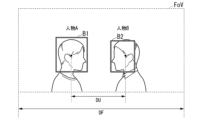
図4は、本実施形態に係るユーザが2人のときの顔検出の一例を示す模式図である。図示する例では、情報処理装置1が撮像部120により撮像された撮像画像から顔領域を検出することにより、情報処理装置1の前方の検出範囲FoVに互いの方を見て議論している人物Aと人物Bの顔領域(いずれも横顔)が検出されている。バウンディングボックスB1は、人物Aの顔領域を示している。また、バウンディングボックスB2は、人物Bの顔領域を示している。
Figure 4 is a schematic diagram showing an example of face detection when there are two users according to this embodiment. In the example shown, the
例えば、情報処理装置1は、人物Aと人物Bとの距離の関係として、この撮像画像上でのバウンディングボックスB1(人物Aの顔領域)の中心とバウンディングボックスB2(人物Bの顔領域)の中心との間の距離DUが所定の閾値未満であるか否かを判定する。この所定の閾値は、人物Aと人物Bとの両方がユーザとであると判定できる距離の閾値として予め設定されている。一例として、所定の閾値は、検出範囲FoVの両端(例えば、水平方向の両端)の距離DFの3分の1として設定されている。なお、この所定の閾値は、撮像部120の仕様(例えば画角)、検出範囲FoVの大きさ等によって適宜任意の値に設定することができる。
For example, the
なお、図4に示すように人物Aと人物Bとの間の距離DUが水平方向(検出範囲FoVにおける左右方向)の距離または水平方向の距離に近い場合には、検出範囲FoVの水平方向の両端の距離DFを基準として所定の閾値が設定される。一方、人物Aと人物Bとの間の距離DUが垂直方向(検出範囲FoVにおける上下方向)の距離または垂直方向の距離に近い場合には、検出範囲FoVの垂直方向の両端の距離を基準として所定の閾値が設定されてもよい。 As shown in FIG. 4, when the distance DU between person A and person B is close to the horizontal distance (left-right direction in the detection range FoV) or the horizontal distance, a predetermined threshold is set based on the distance DF between both ends of the horizontal direction of the detection range FoV. On the other hand, when the distance DU between person A and person B is close to the vertical distance (up-down direction in the detection range FoV) or the vertical distance, a predetermined threshold may be set based on the distance between both ends of the vertical direction of the detection range FoV.
ここで、撮像画像上での人物Aと人物Bとの間の距離DUのみでは、情報処理装置1からの奥行き方向(遠近)における人物Aと人物Bとの距離が不明である。たとえ人物Aと人物Bとの間の距離DUが近いとしても(近く見えたとしても)人物Aに対して人物Bの奥行き方向の距離が大きく異なれば、人物Bは人物Aの近くに存在しないためユーザではない可能性が高い。そこで、情報処理装置1は、人物Aと人物Bとの距離の関係として、さらに人物Aと人物Bとの情報処理装置1(撮像部120)からの距離の差も用いる。次に、図5を参照して、人物Aと人物Bとの情報処理装置1(撮像部120)からの距離の差について説明する。
Here, the distance between person A and person B in the depth direction (near or far) from the
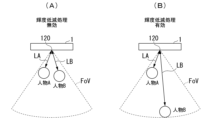
図5は、本実施形態に係る情報処理装置1からの人物の距離と輝度低減処理の制御の一例を示す模式図である。図示する例は、情報処理装置1の前方の検出範囲FoVに検出された人物Aおよび人物Bの位置の例をも指摘に示している。ここでは、情報処理装置1(撮像部120)から人物Aまでの距離を距離LAとし、情報処理装置1(撮像部120)から人物Bまでの距離を距離LBとしている。
Figure 5 is a schematic diagram showing an example of the control of brightness reduction processing and the distance of a person from the
例えば、情報処理装置1は、人物Aと人物Bとの距離の関係として、情報処理装置1(撮像部120)から人物Aまでの距離LAと情報処理装置1(撮像部120)から人物Bまでの距離LBとの差が所定の閾値未満であるか否かを判定する。この所定の閾値は、人物Aと人物Bとの両方がユーザとであると判定できる距離の差の閾値として予め設定されている。一例として、所定の閾値は、情報処理装置1(撮像部120)からの距離の差20%として設定されている。距離の差20%とは、距離LAに対する距離LBの差の絶対値または距離LBに対する距離LAの差の絶対値として示す閾値である。なお、この所定の閾値は、撮像部120の仕様(例えば画角)、検出範囲FoVの大きさ等によって適宜任意の値に設定することができる。
For example, the
ここで、情報処理装置1は、情報処理装置1(撮像部120)から人物までの距離を、例えば撮像画像から検出された顔領域の大きさに基づいて検出する。そのため、人物Aまでの距離LAと人物Bまでの距離LBとの差は、例えば人物Aの顔領域と人物Bの顔領域との大きさの差に対応する。即ち、情報処理装置1は、人物Aと人物Bとの距離の関係として、例えば人物Aの顔領域と人物Bの顔領域との大きさの差が所定の閾値未満であるか否かを判定する。つまり、所定の閾値は、人物Aの顔領域と人物Bの顔領域との大きさの差の閾値(例えば、20%)として設定されてもよい。
Here, the
図5の(A)に示す例は、人物Aの顔領域と人物Bの顔領域との大きさの差(即ち、距離LAと距離LBとの差)が所定の閾値(例えば、20%)未満である場合の人物Aおよび人物Bの位置の例を示している。情報処理装置1は、人物Aと人物Bとの間の距離DUが所定の閾値(例えば、距離DFの3分の1)未満であって且つ人物Aの顔領域と人物Bの顔領域との大きさの差(即ち、距離LAと距離LBとの差)が所定の閾値(例えば、20%)未満である場合、輝度低減処理を無効にする。
The example shown in FIG. 5A shows an example of the positions of person A and person B when the difference in size between the face region of person A and the face region of person B (i.e., the difference between distance LA and distance LB) is less than a predetermined threshold (e.g., 20%). When the distance DU between person A and person B is less than a predetermined threshold (e.g., one-third of the distance DF) and the difference in size between the face region of person A and the face region of person B (i.e., the difference between distance LA and distance LB) is less than a predetermined threshold (e.g., 20%), the
一方、図5の(B)に示す例は、人物Aの顔領域と人物Bの顔領域との大きさの差(即ち、距離LAと距離LBとの差)が所定の閾値(例えば、20%)以上である場合の人物Aおよび人物Bの位置の例を示している。情報処理装置1は、人物Aと人物Bとの間の距離DUが所定の閾値(例えば、距離DFの3分の1)未満であっても、人物Aの顔領域と人物Bの顔領域との大きさの差(即ち、距離LAと距離LBとの差)が所定の閾値(例えば、20%)以上である場合には、輝度低減処理を有効にする。なお、情報処理装置1は、人物Aと人物Bとの間の距離DUが所定の閾値(例えば、距離DFの3分の1)以上である場合には、人物Aの顔領域と人物Bの顔領域との大きさの差(即ち、距離LAと距離LBとの差)にかかわらず、輝度低減処理を有効にする。
On the other hand, the example shown in FIG. 5B shows an example of the positions of person A and person B when the difference in size between the face region of person A and the face region of person B (i.e., the difference between distance LA and distance LB) is a predetermined threshold value (e.g., 20%) or more. The
以下、本実施形態に係る情報処理装置1の構成について詳しく説明する。
[情報処理装置のハードウェア構成]
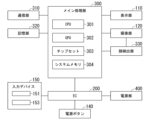
図6は、本実施形態に係る情報処理装置1のハードウェア構成の一例を示す概略ブロック図である。この図6において、図1の各部に対応する構成には同一の符号を付している。情報処理装置1は、表示部110、撮像部120、電源ボタン140、入力デバイス150、通信部160、記憶部170、EC(Embedded Controller)200、顔検出部210、メイン処理部300、及び電源部400を含んで構成される。
The configuration of the
[Hardware configuration of information processing device]
Fig. 6 is a schematic block diagram showing an example of a hardware configuration of the
表示部110は、メイン処理部300により実行されるシステム処理及びシステム処理上で動作するアプリケーションプログラムの処理等に基づいて生成された表示データ(画像)を表示する。
The
撮像部120は、第1筐体10の内面に対面する方向(前方)の所定の撮像範囲(画角)内の物体の像を撮像し、撮像した画像をメイン処理部300及び顔検出部210へ出力する。例えば、撮像部120は、可視光を用いて撮像する可視光カメラ(RGBカメラ)と赤外線を用いて撮像する赤外線カメラ(IRカメラ)とを備えている。
The
なお、撮像部120は、可視光カメラと赤外線カメラとのいずれか一方を含んで構成されてもよいし、両方を含んで構成されてもよい。
The
電源ボタン140は、ユーザの操作に応じて操作信号をEC200へ出力する。入力デバイス150は、ユーザの入力を受け付ける入力部であり、例えばキーボード151及びタッチパッド153を含んで構成されている。入力デバイス150は、キーボード151及びタッチパッド153に対する操作を受け付けることに応じて、操作内容を示す操作信号をEC200へ出力する。
The
通信部160は、無線または有線による通信ネットワークを介して他の機器と通信可能に接続し、各種のデータの送信および受信を行う。例えば、通信部160は、イーサネット(登録商標)等の有線LANインターフェースやWi-Fi(登録商標)等の無線LANインターフェース等を含んで構成されている。 The communication unit 160 is communicatively connected to other devices via a wireless or wired communication network, and transmits and receives various types of data. For example, the communication unit 160 includes a wired LAN interface such as Ethernet (registered trademark) and a wireless LAN interface such as Wi-Fi (registered trademark).
記憶部170は、HDD(Hard Disk Drive)、SSD(Solid State Drive)、RAM、ROMなどの記憶媒体を含んで構成される。記憶部170は、OS、デバイスドライバ、アプリケーションなどの各種のプログラム、その他、プログラムの動作により取得した各種のデータを記憶する。 The storage unit 170 includes storage media such as a hard disk drive (HDD), a solid state drive (SSD), a RAM, and a ROM. The storage unit 170 stores various programs such as an OS, device drivers, and applications, as well as various data acquired by the operation of the programs.
電源部400は、情報処理装置1の各部の動作状態に応じて各部へ電力を供給する。電源部400は、DC(Direct Current)/DCコンバータを備える。DC/DCコンバータは、AC(Alternate Current)/DCアダプタもしくはバッテリー(電池パック)から供給される直流電力の電圧を、各部で要求される電圧に変換する。DC/DCコンバータで電圧が変換された電力が各電源系統を介して各部へ供給される。例えば、電源部400は、EC200から入力される制御信号に基づいて各電源系統を介して各部に電力を供給する。
The
EC200は、CPU(Central Processing Unit)、RAM(Random Access Memory)、ROM(Read Only Memory)およびI/O(Input/Output)ロジック回路などを含んで構成されたマイクロコンピュータである。EC200のCPUは、自部のROMに予め記憶した制御プログラム(ファームウェア)を読み出し、読み出した制御プログラムを実行して、その機能を発揮する。EC200は、メイン処理部300とは独立に動作し、メイン処理部300の動作を制御し、その動作状態を管理する。また、EC200は、電源ボタン140、入力デバイス150、及び電源部400等と接続されている。
The EC200 is a microcomputer including a CPU (Central Processing Unit), a RAM (Random Access Memory), a ROM (Read Only Memory), and an I/O (Input/Output) logic circuit. The CPU of the EC200 reads a control program (firmware) prestored in its own ROM, executes the read control program, and performs its functions. The EC200 operates independently of the
例えば、EC200は、電源部400と通信を行うことにより、バッテリーの状態(残容量など)の情報を電源部400から取得するとともに、情報処理装置1の各部の動作状態に応じた電力の供給を制御するための制御信号などを電源部400へ出力する。また、EC200は、電源ボタン140や入力デバイス150から操作信号を取得し、取得した操作信号のうちメイン処理部300の処理に関連する操作信号についてはメイン処理部300へ出力する。
For example, the
顔検出部210は、撮像部120により撮像された撮像画像の画像データを処理するプロセッサを含んで構成されている。顔検出部210は、撮像部120により撮像された撮像画像の画像データを取得し、取得した画像データをメモリに一時的に保存する。画像データを保存するメモリは、システムメモリ304であってもよいし、顔検出部210内の不図示のメモリであってもよい。
The
例えば、顔検出部210は、撮像部120から取得した撮像画像の画像データを処理することにより、撮像画像から顔領域の検出、及び検出された顔領域の顔画像の顔の向きの検出などを行う顔検出処理を行う。顔の検出方法としては、顔の特徴情報を基に顔を検出する顔検出アルゴリズムや、顔の特徴情報を基に機械学習された学習データ(学習済みモデル)や顔検出ライブラリなどを用いた顔検出など、任意の検出方法を適用することができる。
For example, the
メイン処理部300は、CPU(Central Processing Unit)301、GPU(Graphic Processing Unit)302、チップセット303、及びシステムメモリ304を含んで構成され、OS(Operating System)に基づくシステム処理によって、OS上で各種のアプリケーションプログラムの処理が実行可能である。
The
CPU301は、BIOSのプログラムに基づく処理、OSのプログラムに基づく処理、OS上で動作するアプリケーションプログラムに基づく処理などを実行するプロセッサである。例えば、CPU301は、システムを待機状態から起動させて通常動作状態に遷移させる起動処理、通常動作状態から待機状態へ遷移させるスリープ処理などを実行する。また、CPU301は、上述した顔検出部210による顔検出処理の結果などに基づいて、表示部110の画面輝度を制御する画面輝度制御処理を実行する。
The
GPU302は、表示部110に接続されている。GPU302は、CPU301の制御に基づいて画像処理を実行して表示データを生成する。GPU302は、生成した表示データを表示部110に出力する。
The
チップセット303は、メモリコントローラとしての機能及びI/Oコントローラとしての機能などを有する。例えば、チップセット303は、CPU301及びGPU302によるシステムメモリ304、記憶部170などからのデータの読出し、書込みを制御する。また、チップセット303は、通信部160、表示部110およびEC200からのデータの入出力を制御する。また、チップセット303は、センサハブとしての機能を有する。例えば、チップセット303は、顔検出部210から取得する顔検出処理による検出結果などを取得してCPU301へ出力する。
The chipset 303 has a function as a memory controller and a function as an I/O controller. For example, the chipset 303 controls the reading and writing of data from the system memory 304, the storage unit 170, etc. by the
システムメモリ304は、CPU301で実行されるプログラムの読み込み領域ならびに処理データを書き込む作業領域などとして用いられる。また、システムメモリ304は、撮像部120で撮像された撮像画像の画像データを一時的に記憶する。
The system memory 304 is used as a reading area for the programs executed by the
なお、CPU301、GPU302、及びチップセット303は、一体化された一つのプロセッサとして構成されてもよいし、一部またはそれぞれが個々のプロセッサとして構成されてもよい。例えば、通常動作状態では、CPU301、GPU302、及びチップセット303のいずれも動作している状態となるが、待機状態では、チップセット303の少なくとも一部のみが動作している状態となる。
The
[情報処理装置の機能構成]
次に、輝度低減処理に関する情報処理装置1の機能構成について詳しく説明する。
[Functional configuration of information processing device]
Next, the functional configuration of the
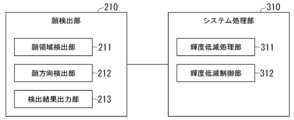
図7は、本実施形態に係る情報処理装置1の機能構成の一例を示す概略ブロック図である。情報処理装置1は、顔検出部210と、システム処理部310とを備えている。顔検出部210は、図6の顔検出部210に対応し、顔検出処理を行う機能構成として、顔領域検出部211と、顔方向検出部212と、検出結果出力部213とを備えている。
Figure 7 is a schematic block diagram showing an example of the functional configuration of the
顔領域検出部211は、撮像部120から取得した撮像画像の画像データを処理することにより、撮像画像から顔が撮像されている顔領域(顔画像の領域)を検出する。例えば、顔領域検出部211は、検出した顔領域の位置およびサイズ(大きさ)を示す情報を顔領域検出結果として出力する。顔領域の位置およびサイズ(大きさ)は、図4に示すバウンディングボックスB1、B2の中心の位置(座標)およびサイズ(大きさ)に相当する。
The face
顔方向検出部212は、顔領域検出部211により撮像画像から検出された顔領域に撮像されている顔の向きを検出する。例えば、顔方向検出部212は、顔領域内の顔の輪郭や、目、鼻、口などの位置などに基づいて、顔の向きを検出し、顔の向きが正面を向いているか否かを示す情報を顔方向検出結果として出力する。
The face
検出結果出力部213は、顔領域検出部211から出力された顔領域検出結果および顔方向検出部212から出力された顔方向検出結果を取得し、取得した顔領域検出結果および顔方向検出結果に基づいて顔検出処理による顔検出結果を出力する。例えば、検出結果出力部213は、顔領域検出部211から出力された顔領域検出結果に基づいて、検出された一または複数の顔領域ごとの顔領域の位置(座標)およびサイズ(大きさ)を示す情報をシステム処理部310へ出力する。
The detection result output unit 213 acquires the face area detection result output from the face
また、検出結果出力部213は、情報処理装置1(撮像部120)から最も近い人物の顔の向きに基づいて、「Attention」情報または「No Attention」情報をシステム処理部310へ出力する。「Attention」情報は、ユーザが情報処理装置1を見ている状態(注目している状態)であることを示す情報である。一方、「No Attention」情報は、ユーザが情報処理装置1を見ていない状態(注目していない状態)であることを示す情報である。
The detection result output unit 213 also outputs "Attention" information or "No Attention" information to the
例えば、検出結果出力部213は、検出された顔領域が1つの場合、その顔領域の顔の向き(即ち、最も近い人物の顔の向き)が正面を向いている(正面を向いた)場合には「Attention」情報をシステム処理部310へ出力する。一方、検出結果出力部213は、その顔領域の顔の向き(即ち、最も近い人物の顔の向き)が正面を向いていない場合には「No Attention」情報をシステム処理部310へ出力する。
For example, when one face area is detected, the detection result output unit 213 outputs "Attention" information to the
また、検出結果出力部213は、検出された顔領域が複数の場合、検出された顔領域のうち最も大きい顔領域の顔の向き(即ち、最も近い人物の顔の向き)が正面を向いている(正面を向いた)場合、「Attention」情報をシステム処理部310へ出力する。一方、検出結果出力部213は、検出された顔領域のうち最も大きい顔領域の顔の向き(即ち、最も近い人物の顔の向き)が正面を向いていない場合、「No Attention」情報をシステム処理部310へ出力する。
In addition, when multiple face areas are detected, if the face orientation of the largest face area among the detected face areas (i.e., the face orientation of the closest person) is facing forward (facing forward), the detection result output unit 213 outputs "Attention" information to the
システム処理部310は、CPU301またはチップセット303がシステムのプログラムまたはHPD処理用のプログラムを実行することにより実現される機能構成である。例えば、システム処理部310は、輝度低減処理部311と、輝度低減制御部312とを備えている。
The
輝度低減処理部311は、顔検出部210により検出された顔の向きに基づいて、表示部110の画面輝度を低減させる輝度低減処理を実行する。例えば、輝度低減処理部311は、通常動作状態において、顔検出部210から「No Attention」情報を取得した場合、画面輝度を低輝度に制御する。即ち、輝度低減処理部311は、顔検出部210により検出された顔領域のうち最も大きい顔領域の顔の向き(即ち、情報処理装置1(撮像部120)から最も近い人物の顔の向き)が正面を向いている状態から正面を向いていない状態に変化した(例えば、横を向いた)場合に、画面輝度を標準輝度から低輝度へ低減させる。
The brightness
また、輝度低減処理部311は、画面輝度を低輝度に制御した状態で、顔検出部210から「Attention」情報を取得した場合、画面輝度を標準輝度に戻す。即ち、輝度低減処理部311は、画面輝度を低減させた後に、顔検出部210により検出された顔領域のうち最も大きい顔領域の顔の向き(即ち、情報処理装置1(撮像部120)から最も近い人物の顔の向き)が正面を向いていると判定した場合、画面輝度を低減させる前の標準輝度に戻す。
In addition, when the brightness
また、輝度低減処理部311は、時間を計測するタイマを備えており、通常動作状態において顔検出部210から「No Attention」情報を取得してから画面輝度を低輝度に制御するまでの待機時間を計時する。例えば、輝度低減処理部311は、「No Attention」情報を取得しても所定の待機時間が経過するまでに「Attention」情報を取得した場合には、画面輝度を低輝度に制御しないで標準輝度のままとする。一方、輝度低減処理部311は、「No Attention」情報を取得した後、所定の待機時間が経過するまでに「Attention」情報を取得しない場合には、画面輝度を低輝度に制御する。これにより、ユーザが情報処理装置1を使用している最中に、一瞬よそ見をしただけで画面輝度が低輝度になってしまわないようにすることができる。所定の待機時間は、例えば10秒などに予め設定されている。なお、この所定の待機時間は、ユーザが設定可能な構成としてもよい。
The brightness
輝度低減制御部312は、顔検出部210により検出された顔領域の数が複数の場合(即ち、複数の人物が検出された場合)、複数の顔領域の距離の関係に基づいて、輝度低減処理部311による輝度低減処理を有効(Enable)または無効(Disable)に制御する。例えば、輝度低減制御部312は、顔検出部210により検出された複数の顔領域のうち最も大きい顔領域と2番目に大きい顔領域との距離の関係に基づいて、輝度低減処理を有効にするか無効にするかを制御する。即ち、輝度低減制御部312は、顔検出部210により検出された複数の人物のうち情報処理装置1(撮像部120)から最も近い人物A(図4、5参照)と情報処理装置1(撮像部120)から2番目に近い人物B(図4、5参照)との距離の関係に基づいて、輝度低減処理を有効にするか無効にするかを制御する。
When the number of face regions detected by the
一例として、輝度低減制御部312は、撮像画像上での人物Aと人物Bとの間の距離と、人物Aと人物Bとの情報処理装置1(撮像部120)からの距離の差とに基づいて、輝度低減処理を有効にするか無効にするかを制御する。 As an example, the brightness reduction control unit 312 controls whether to enable or disable the brightness reduction process based on the distance between person A and person B in the captured image and the difference in distance between person A and person B and the information processing device 1 (imaging unit 120).
具体的には、例えば図4を参照して説明したように、輝度低減制御部312は、撮像画像上での人物Aと人物Bとの間の距離DUが所定の閾値(例えば、検出範囲FoVの両端の距離DFの3分の1)未満であることを、輝度低減処理を無効にする第1の条件とする。例えば、輝度低減制御部312は、撮像画像上での人物Aの顔領域と人物Bの顔領域との間の距離DUが所定の閾値(例えば、検出範囲FoVの両端の距離DFの3分の1)未満であることを、輝度低減処理を無効にする第1の条件とする。 Specifically, as described with reference to FIG. 4, the brightness reduction control unit 312 sets the first condition for disabling the brightness reduction process as the distance DU between person A and person B on the captured image being less than a predetermined threshold (e.g., one-third of the distance DF between both ends of the detection range FoV). For example, the brightness reduction control unit 312 sets the first condition for disabling the brightness reduction process as the distance DU between the face area of person A and the face area of person B on the captured image being less than a predetermined threshold (e.g., one-third of the distance DF between both ends of the detection range FoV).
また、例えば図5を参照して説明したように、輝度低減制御部312は、情報処理装置1(撮像部120)から人物Aまでの距離LAと情報処理装置1(撮像部120)から人物Bまでの距離LBとの差が所定の閾値(例えば、20%)未満であることを、輝度低減処理を無効にする第2の条件とする。例えば、輝度低減制御部312は、人物Aの顔領域と人物Bの顔領域との大きさの差が所定の閾値(例えば、20%)未満であることを、輝度低減処理を無効にする第2の条件とする。 Also, as described with reference to FIG. 5, for example, the brightness reduction control unit 312 sets the second condition for disabling the brightness reduction process as follows: the difference between the distance LA from the information processing device 1 (imaging unit 120) to person A and the distance LB from the information processing device 1 (imaging unit 120) to person B is less than a predetermined threshold (for example, 20%). For example, the brightness reduction control unit 312 sets the second condition for disabling the brightness reduction process as follows: the difference in size between the face area of person A and the face area of person B is less than a predetermined threshold (for example, 20%).
そして、輝度低減制御部312は、上述した撮像画像上での人物Aと人物Bとの間の距離に基づく第1の条件と、人物Aと人物Bとの情報処理装置1(撮像部120)からの距離の差に基づく第2の条件との両方が満たされた場合、輝度低減処理を無効に制御する。一方、輝度低減制御部312は、上記第1の条件と第2の条件のいずれか一方または両方が満たされない場合、輝度低減処理を有効に制御する。 Then, when both the first condition based on the distance between person A and person B on the captured image described above and the second condition based on the difference in distance between person A and person B from the information processing device 1 (imaging unit 120) are satisfied, the brightness reduction control unit 312 controls the brightness reduction process to be invalid. On the other hand, when either or both of the first and second conditions described above are not satisfied, the brightness reduction control unit 312 controls the brightness reduction process to be valid.
なお、輝度低減制御部312は、顔検出部210により検出された顔領域の数が1つの場合(即ち、検出された人物が1人の場合)、輝度低減処理を有効に制御する。
The brightness reduction control unit 312 effectively controls the brightness reduction process when the number of face regions detected by the
[処理の動作]
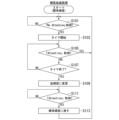
次に図8を参照して、輝度低減処理部311が実行する輝度低減処理の動作について説明する。図8は、本実施形態に係る輝度低減処理の一例を示すフローチャートである。ここでは、情報処理装置1が通常動作状態で画面輝度が標準輝度に設定されているものとする。
[Processing Operation]
Next, the operation of the brightness reduction process executed by the brightness
(ステップS101)輝度低減処理部311は、顔検出部210から「No Attention」情報を取得したか否かを判定する。輝度低減処理部311は、「No Attention」情報を取得していないと判定した場合(NO)、再びステップS101の処理を行う。一方、輝度低減処理部311は、「No Attention」情報を取得したと判定した場合(YES)、タイマを用いて待機時間の計時を開始する(ステップS103)。そして、ステップS105の処理へ進む。
(Step S101) The brightness
(ステップS105)輝度低減処理部311は、顔検出部210から「Attention」情報を取得したか否かを判定する。輝度低減処理部311は、「Attention」情報を取得していないと判定した場合(NO)、ステップS107の処理へ進む。
(Step S105) The brightness
(ステップS107)輝度低減処理部311は、タイマの値に基づいて待機時間(例えば、10秒)が経過したか否か(即ち、タイマが終了したか否か)を判定する。輝度低減処理部311は、待機時間(例えば、10秒)が経過していない(即ち、タイマが終了していない)と判定した場合(ステップS107:NO)、ステップS105の処理へ戻る。輝度低減処理部311は、待機時間(例えば、10秒)が経過する前に、「Attention」情報を取得したと判定した場合(ステップS105:YES)、ステップS101の処理に戻る。この時、タイマはリセットされる。
(Step S107) The brightness
一方、輝度低減処理部311は、ステップS107で待機時間(例えば、10秒)が経過したと判定した場合(ステップS107:YES)、ステップS109の処理へ進む。
On the other hand, if the brightness
(ステップS109)輝度低減処理部311は、画面輝度を標準輝度から低輝度に変更する。そして、ステップS111の処理へ進む。
(Step S109) The brightness
(ステップS111)輝度低減処理部311は、顔検出部210から「Attention」情報を取得したか否かを判定する。輝度低減処理部311は、「Attention」情報を取得していないと判定した場合(NO)、再びステップS111の処理を行う。一方、輝度低減処理部311は、「Attention」情報を取得したと判定した場合(YES)、画面輝度を標準輝度に戻す(ステップS113)。
(Step S111) The brightness
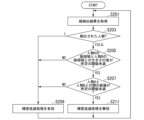
次に図9を参照して、輝度低減制御部312が実行する輝度低減制御処理の動作について説明する。図9は、本実施形態に係る輝度低減制御処理の一例を示すフローチャートである。 Next, the operation of the brightness reduction control process executed by the brightness reduction control unit 312 will be described with reference to FIG. 9. FIG. 9 is a flowchart showing an example of the brightness reduction control process according to this embodiment.
(ステップS201)輝度低減制御部312は、顔検出部210から顔検出処理による顔検出結果を取得する。そして、ステップS203の処理へ進む。
(Step S201) The brightness reduction control unit 312 acquires the face detection result from the face detection process from the
(ステップS203)輝度低減制御部312は、顔検出部210から取得した顔検出結果に基づいて、検出された人数(顔領域の数)を判定する。輝度低減制御部312は、検出された人数(顔領域の数)が1の場合、ステップS209の処理へ進む。一方、輝度低減制御部312は、検出された人数(顔領域の数)が2位所の場合、ステップS205の処理へ進む。
(Step S203) The brightness reduction control unit 312 determines the number of people detected (number of face areas) based on the face detection results obtained from the
(ステップS205)輝度低減制御部312は、人物Aの顔領域と人物Bの顔領域との大きさの差が所定の閾値(例えば、20%)未満であるか否かを判定する。輝度低減制御部312は、人物Aの顔領域と人物Bの顔領域との大きさの差が所定の閾値以上であると判定した場合(NO)、ステップS209の処理へ進む。一方、輝度低減制御部312は、人物Aの顔領域と人物Bの顔領域との大きさの差が所定の閾値未満であると判定した場合(YES)、ステップS207の処理へ進む。 (Step S205) The brightness reduction control unit 312 determines whether the difference in size between the face area of person A and the face area of person B is less than a predetermined threshold (e.g., 20%). If the brightness reduction control unit 312 determines that the difference in size between the face area of person A and the face area of person B is equal to or greater than the predetermined threshold (NO), the process proceeds to step S209. On the other hand, if the brightness reduction control unit 312 determines that the difference in size between the face area of person A and the face area of person B is less than the predetermined threshold (YES), the process proceeds to step S207.
(ステップS207)輝度低減制御部312は、撮像画像上での人物Aの顔領域と人物Bの顔領域との間の距離DUが所定の閾値(例えば、検出範囲FoVの両端の距離DFの3分の1)未満であるか否かを判定する。輝度低減制御部312は、撮像画像上での人物Aの顔領域と人物Bの顔領域との間の距離DUが所定の閾値以上であると判定した場合(NO)、ステップS209の処理へ進む。一方、輝度低減制御部312は、撮像画像上での人物Aの顔領域と人物Bの顔領域との間の距離DUが所定の閾値未満であると判定した場合(YES)、ステップS211の処理へ進む。 (Step S207) The brightness reduction control unit 312 determines whether the distance DU between the face area of person A and the face area of person B on the captured image is less than a predetermined threshold (e.g., one-third of the distance DF between both ends of the detection range FoV). If the brightness reduction control unit 312 determines that the distance DU between the face area of person A and the face area of person B on the captured image is equal to or greater than the predetermined threshold (NO), the process proceeds to step S209. On the other hand, if the brightness reduction control unit 312 determines that the distance DU between the face area of person A and the face area of person B on the captured image is less than the predetermined threshold (YES), the process proceeds to step S211.
(ステップS209)輝度低減制御部312は、情報処理装置1の前方にはユーザが1人しかいない(複数の人物が存在していてもユーザは1人)と判定し、輝度低減処理を有効にする。 (Step S209) The brightness reduction control unit 312 determines that there is only one user in front of the information processing device 1 (even if multiple people are present, there is only one user), and enables brightness reduction processing.
(ステップS211)輝度低減制御部312は、情報処理装置1の前方に複数のユーザが存在している(例えば複数のユーザが情報処理装置1の表示部110を見ながらディスカッションしている状態)と判定し、輝度低減処理を無効にする。
(Step S211) The brightness reduction control unit 312 determines that multiple users are present in front of the information processing device 1 (for example, multiple users are having a discussion while looking at the
[第1の実施形態のまとめ]
以上説明してきたように、本実施形態に係る情報処理装置1は、表示部110と、撮像部120により撮像された撮像画像の画像データを一時的に記憶するメモリ(例えば、システムメモリ304)と、上記メモリに記憶された画像データに基づく処理を行うプロセッサ(顔検出部210、CPU301およびチップセット303などのメイン処理部300など)を備えている。情報処理装置1は、上記メモリに記憶された撮像画像の画像データを処理することにより、撮像画像の中から顔が撮像されている顔領域と顔の向きとを検出する顔検出処理を実行する。また、情報処理装置1は、顔検出処理により検出された顔の向きに基づいて、表示部110の画面輝度を低減させる輝度低減処理を実行する。また、情報処理装置1は、顔検出処理により検出された顔領域の数が複数の場合、複数の顔領域の距離の関係に基づいて、上記輝度低減処理を有効にするか無効にするかを制御する輝度低減制御処理を実行する。
[Summary of the first embodiment]
As described above, the
これにより、情報処理装置1は、複数のユーザによって使用されているか否かによって顔の向きに応じて画面輝度を低減する輝度低減処理を有効または無効にするため、より適切に輝度低減処理を行うことができる。例えば、複数人で画面を見ながら議論(ディスカッション)している場合、常に画面の方を見ているだけでなく互いに顔を見ながら話す時間もあるが、輝度低減処理を無効にすることでユーザが使用している状態であるにもかかわらず画面輝度が下がってしまうことを防止できる。
As a result, the
具体的には、情報処理装置1は、輝度低減制御処理において、顔検出処理により検出された顔領域の数が複数の場合、複数の顔領域のうち最も大きい顔領域(第1顔領域)と2番目に大きい顔領域(第2顔領域)との距離の関係に基づいて、輝度低減処理を有効にするか無効にするかを制御する。
Specifically, in the brightness reduction control process, when the number of face areas detected by the face detection process is multiple, the
これにより、情報処理装置1は、複数の人物が検出された場合に、最も近い人物と2番目に近い人物との距離の関係に基づいて複数のユーザによって使用されているか否かを正しく判断して、輝度低減処理を有効にするか無効にするかを適切に制御することができる。
As a result, when multiple people are detected, the
例えば、情報処理装置1は、輝度低減制御処理において、複数の顔領域のうち最も大きい顔領域(第1顔領域)と2番目に大きい顔領域(第2顔領域)との大きさの差が所定の閾値未満であって且つ撮像画像上での第1顔領域と第2顔領域との間の距離が所定の閾値未満である場合、輝度低減処理を無効にする。
For example, in the brightness reduction control process, the
これにより、情報処理装置1は、最も近い人物と2番目に近い人物との距離が近い場合に複数のユーザによって使用されていると判断して輝度低減処理を無効にするため、輝度低減処理を適切に行うことができる。
As a result, when the distance between the closest person and the second closest person is short, the
また、情報処理装置1は、顔検出処理において、複数の顔領域のうち最も大きい顔領域(第1顔領域)に対応する人物を情報処理装置1(撮像部120)からの距離が最も近い人物A(第1人物)とし、2番目に大きい顔領域(第2顔領域)に対応する人物を情報処理装置1(撮像部120)からの距離が2番目に近い人物B(第2人物)とする。そして、情報処理装置1は、輝度低減制御処理において、人物Aと人物Bとの情報処理装置1(撮像部120)からの距離の差が所定の閾値未満であって且つ撮像画像上での人物Aと人物Bとの間の距離が所定の閾値未満である場合、輝度低減処理を無効にする。
In addition, in the face detection process, the
これにより、情報処理装置1は、最も近い人物と2番目に近い人物との距離が近い場合に複数のユーザによって使用されていると判断して輝度低減処理を無効にするため、輝度低減処理を適切に行うことができる。
As a result, when the distance between the closest person and the second closest person is short, the
また、情報処理装置1は、輝度低減制御処理において、顔検出処理により検出された顔領域の数が1つの場合、輝度低減処理を有効にする。
In addition, in the brightness reduction control process, the
これにより、情報処理装置1は、一人のユーザによって使用されているときには、そのユーザの顔の向きが正面を向いていないときには画面輝度を低減して省電力化することができる。
As a result, when the
また、本実施形態に係る情報処理装置1における制御方法は、情報処理装置1が、記メモリに記憶された撮像画像の画像データを処理することにより、撮像画像の中から顔が撮像されている顔領域と顔の向きとを検出する顔検出処理を行うステップと、顔検出処理により検出された顔の向きに基づいて、表示部110の画面輝度を低減させる輝度低減処理を行うステップと、顔検出処理により検出された顔領域の数が複数の場合、複数の顔領域の距離の関係に基づいて、上記輝度低減処理を有効にするか無効にするかを制御する輝度低減制御処理を行うステップと、を含む。
The control method in the
これにより、情報処理装置1は、複数のユーザによって使用されているか否かによって顔の向きに応じて画面輝度を低減する輝度低減処理を有効または無効にするため、より適切に輝度低減処理を行うことができる。例えば、複数人で画面を見ながら議論(ディスカッション)している場合、常に画面の方を見ているだけでなく互いに顔を見ながら話す時間もあるが、輝度低減処理を無効にすることでユーザが使用している状態であるにもかかわらず画面輝度が下がってしまうことを防止できる。
As a result, the
以上、この発明の実施形態について図面を参照して詳述してきたが、具体的な構成は上述の実施形態に限られるものではなく、この発明の要旨を逸脱しない範囲の設計等も含まれる。例えば、上述の実施形態において説明した各構成は、任意に組み合わせることができる。 Although the embodiments of the present invention have been described above in detail with reference to the drawings, the specific configurations are not limited to the above-mentioned embodiments, and include designs within the scope of the gist of the present invention. For example, the configurations described in the above-mentioned embodiments can be combined in any manner.
なお、上記実施形態では、撮像画像上での人物Aと人物Bとの間の距離に基づく第1の条件(図4参照)と、人物Aと人物Bとの情報処理装置1(撮像部120)からの距離の差に基づく第2の条件(図5参照)との両方が満たされた場合、輝度低減処理を無効に制御する態様を説明したが、これに限られるものではない。例えば、情報処理装置1は、上記第1の条件と第2の条件のいずれか一方が満たされた場合に、輝度低減処理を無効に制御してもよい。
In the above embodiment, a mode has been described in which the brightness reduction process is disabled when both a first condition (see FIG. 4) based on the distance between person A and person B on the captured image and a second condition (see FIG. 5) based on the difference in distance between person A and person B from the information processing device 1 (imaging unit 120) are satisfied, but this is not limiting. For example, the
例えば、撮像部120の仕様などによって撮像画角が狭い場合には検出範囲FoVの範囲(上下左右の幅)も狭くなる。この場合、検出範囲FoVから複数の顔領域が検出されると、検出された複数の顔領域間の撮像画像上での距離は必然的に近くなる。そのため、情報処理装置1は、人物Aと人物Bとの情報処理装置1(撮像部120)からの距離の差に基づく第2の条件(図5参照)のみが満たされることを条件として、輝度低減処理を無効に制御してもよい。
For example, if the imaging angle of view is narrow due to the specifications of the
具体的には、情報処理装置1は、輝度低減制御処理において、複数の顔領域のうち最も大きい顔領域(第1顔領域)と2番目に大きい顔領域(第2顔領域)との大きさの差が所定の閾値未満である場合、輝度低減処理を無効にしてもよい。
Specifically, in the brightness reduction control process, the
即ち、情報処理装置1は、輝度低減制御処理において、情報処理装置1(撮像部120)からの距離が最も近い人物A(第1人物)と2番目に近い人物B(第2人物)との情報処理装置1(撮像部120)からの距離の差が所定の閾値未満である場合、輝度低減処理を無効にしてもよい。
That is, in the brightness reduction control process, the
これにより、情報処理装置1は、最も近い人物と2番目に近い人物との距離が近い場合に複数のユーザによって使用されていると判断して輝度低減処理を無効にするため、輝度低減処理を適切に行うことができる。
As a result, when the distance between the closest person and the second closest person is short, the
また、撮像部120の仕様などによって検出範囲FoVの奥行き方向の距離が短い場合、検出範囲FoVから複数の顔領域が検出されると、検出された複数の顔領域の情報処理装置1(撮像部120)からの距離の差は必然的に小さくなる。そのため、情報処理装置1は、撮像画像上での人物Aと人物Bとの間の距離に基づく条件(図4参照)のみが満たされることを条件として、輝度低減処理を無効に制御してもよい。
In addition, if the depth direction distance of the detection range FoV is short due to the specifications of the
具体的には、情報処理装置1は、輝度低減制御処理において、複数の顔領域のうち最も大きい顔領域(第1顔領域)と2番目に大きい顔領域(第2顔領域)との間の撮像画像上での距離が所定の閾値未満である場合、輝度低減処理を無効にしてもよい。
Specifically, in the brightness reduction control process, the
即ち、情報処理装置1は、輝度低減制御処理において、情報処理装置1(撮像部120)からの距離が最も近い人物A(第1人物)と2番目に近い人物B(第2人物)との間の撮像画像上での距離が所定の閾値未満である場合、輝度低減処理を無効にしてもよい。
That is, in the brightness reduction control process, the
これにより、情報処理装置1は、最も近い人物と2番目に近い人物との距離が近い場合に複数のユーザによって使用されていると判断して輝度低減処理を無効にするため、輝度低減処理を適切に行うことができる。
As a result, when the distance between the closest person and the second closest person is short, the
また、CPU301とチップセット303とは個別のプロセッサとして構成されてもよいし、1つのプロセッサとして一体化して構成されてもよい。
The
また、上記実施形態では、顔検出部210がCPU301およびチップセット303とは別に備えられている例を示したが、顔検出部210の一部または全部は、チップセット303に備えられてもよいし、CPU301またはチップセット303と一体化されたプロセッサに備えられてもよい。例えば、CPU301とチップセット303と顔検出部210とは個別のプロセッサとして構成されてもよいし、1つのプロセッサとして一体化して構成されてもよい。また、顔検出部210の一部または全部は、EC200に備えられてもよい。また、システム処理部310の一部は、EC200に備えられてもよい。
In the above embodiment, an example was shown in which the
また、上述した待機状態には、ハイバネーション状態やパワーオフ状態等が含まれてもよい。ハイバネーション状態は、例えば、ACPIで規定されているS4状態に相当する。パワーオフ状態は、例えば、ACPIで規定されているS5状態(シャットダウンした状態)に相当する。なお、待機状態のうちスタンバイ状態、スリープ状態、ハイバネーション状態、パワーオフ状態などは、通常動作状態よりも電力の消費量が低い状態(電力の消費を抑えた状態)である。 The above-mentioned standby state may include a hibernation state, a power-off state, and the like. The hibernation state corresponds to, for example, the S4 state defined by ACPI. The power-off state corresponds to, for example, the S5 state (shutdown state) defined by ACPI. Among the standby states, the standby state, sleep state, hibernation state, and power-off state are states in which power consumption is lower (states in which power consumption is reduced) than in the normal operating state.
なお、上述した情報処理装置1は、内部にコンピュータシステムを有している。そして、上述した情報処理装置1が備える各構成の機能を実現するためのプログラムをコンピュータ読み取り可能な記録媒体に記録して、この記録媒体に記録されたプログラムをコンピュータシステムに読み込ませ、実行することにより上述した情報処理装置1が備える各構成における処理を行ってもよい。ここで、「記録媒体に記録されたプログラムをコンピュータシステムに読み込ませ、実行する」とは、コンピュータシステムにプログラムをインストールすることを含む。ここでいう「コンピュータシステム」とは、OSや周辺機器等のハードウェアを含むものとする。また、「コンピュータシステム」は、インターネットやWAN、LAN、専用回線等の通信回線を含むネットワークを介して接続された複数のコンピュータ装置を含んでもよい。また、「コンピュータ読み取り可能な記録媒体」とは、フレキシブルディスク、光磁気ディスク、ROM、CD-ROM等の可搬媒体、コンピュータシステムに内蔵されるハードディスク等の記憶装置のことをいう。このように、プログラムを記憶した記録媒体は、CD-ROM等の非一過性の記録媒体であってもよい。
The
また、記録媒体には、当該プログラムを配信するために配信サーバからアクセス可能な内部又は外部に設けられた記録媒体も含まれる。なお、プログラムを複数に分割し、それぞれ異なるタイミングでダウンロードした後に情報処理装置1が備える各構成で合体される構成や、分割されたプログラムのそれぞれを配信する配信サーバが異なっていてもよい。さらに「コンピュータ読み取り可能な記録媒体」とは、ネットワークを介してプログラムが送信された場合のサーバやクライアントとなるコンピュータシステム内部の揮発性メモリ(RAM)のように、一定時間プログラムを保持しているものも含むものとする。また、上記プログラムは、上述した機能の一部を実現するためのものであってもよい。さらに、上述した機能をコンピュータシステムに既に記録されているプログラムとの組み合わせで実現できるもの、いわゆる差分ファイル(差分プログラム)であってもよい。
The recording medium also includes an internal or external recording medium accessible from a distribution server to distribute the program. The program may be divided into multiple parts, downloaded at different times, and then combined by each component of the
また、上述した実施形態における情報処理装置1が備える各機能の一部、または全部を、LSI(Large Scale Integration)等の集積回路として実現してもよい。各機能は個別にプロセッサ化してもよいし、一部、又は全部を集積してプロセッサ化してもよい。また、集積回路化の手法はLSIに限らず専用回路、または汎用プロセッサで実現してもよい。また、半導体技術の進歩によりLSIに代替する集積回路化の技術が出現した場合、当該技術による集積回路を用いてもよい。
In addition, some or all of the functions of the
また、上記実施形態の情報処理装置1は、ノートブック型のPCに限られるものではなく、例えば、デスクトップ型PCなどであってもよい。
In addition, the
1 情報処理装置、10 第1筐体、20 第2筐体、15 ヒンジ機構、110 表示部、120 撮像部、140 電源ボタン、150 入力デバイス、151 キーボード、153 タッチパッド、160 通信部、170 記憶部、200 EC、210 顔検出部、211 顔領域検出部、212 顔方向検出部、213 検出結果出力部、300 メイン処理部、301 CPU、302 GPU、303 チップセット、304 システムメモリ、310 システム処理部、311 輝度低減処理部、312 輝度低減制御部、400 電源部 1 Information processing device, 10 First housing, 20 Second housing, 15 Hinge mechanism, 110 Display unit, 120 Imaging unit, 140 Power button, 150 Input device, 151 Keyboard, 153 Touch pad, 160 Communication unit, 170 Memory unit, 200 EC, 210 Face detection unit, 211 Face area detection unit, 212 Face direction detection unit, 213 Detection result output unit, 300 Main processing unit, 301 CPU, 302 GPU, 303 Chip set, 304 System memory, 310 System processing unit, 311 Brightness reduction processing unit, 312 Brightness reduction control unit, 400 Power supply unit
Claims (10)
撮像部により撮像された撮像画像の画像データを一時的に記憶するメモリと、
前記メモリに記憶された画像データに基づく処理を行うプロセッサと、
を備え、
前記プロセッサは、
前記メモリに記憶された画像データを処理することにより、前記撮像画像の中から顔が撮像されている顔領域と前記顔の向きとを検出する顔検出処理と、
前記顔検出処理により検出された前記顔の向きに基づいて、前記表示部の画面輝度を低減させる輝度低減処理と、
前記顔検出処理により検出された前記顔領域の数が複数の場合、複数の前記顔領域の距離の関係に基づいて、前記輝度低減処理を有効にするか無効にするかを制御する輝度低減制御処理と、
を行う情報処理装置。 A display unit;
a memory that temporarily stores image data of an image captured by the imaging unit;
A processor that performs processing based on the image data stored in the memory;
Equipped with
The processor,
a face detection process for detecting a face area in the captured image and a direction of the face by processing the image data stored in the memory;
a brightness reduction process for reducing a screen brightness of the display unit based on a direction of the face detected by the face detection process;
a brightness reduction control process for controlling whether to enable or disable the brightness reduction process based on a distance relationship between the plurality of face regions when the number of the face regions detected by the face detection process is multiple,
An information processing device that performs the above.
前記輝度低減制御処理において、前記顔検出処理により検出された前記顔領域の数が複数の場合、複数の前記顔領域のうち最も大きい第1顔領域と2番目に大きい第2顔領域との距離の関係に基づいて、前記輝度低減処理を有効にするか無効にするかを制御する、
請求項1に情報処理装置。 The processor,
In the luminance reduction control process, when the number of the face regions detected by the face detection process is multiple, whether to enable or disable the luminance reduction process is controlled based on a distance relationship between a first face region that is the largest among the multiple face regions and a second face region that is the second largest.
2. An information processing device according to claim 1.
前記輝度低減制御処理において、前記第1顔領域と前記第2顔領域との大きさの差が所定の閾値未満である場合、前記輝度低減処理を無効にする、
請求項2に記載の情報処理装置。 The processor,
In the luminance reduction control process, when a difference in size between the first face region and the second face region is less than a predetermined threshold, the luminance reduction process is disabled.
The information processing device according to claim 2 .
前記顔検出処理において、前記第1顔領域に対応する人物を前記撮像部からの距離が最も近い第1人物とし、前記第2顔領域に対応する人物を前記撮像部からの距離が2番目に近い第2人物とし、
前記輝度低減制御処理において、前記第1人物と前記第2人物との前記撮像部からの距離の差が所定の閾値未満である場合、前記輝度低減処理を無効にする、
請求項2に記載の情報処理装置。 The processor,
In the face detection process, a person corresponding to the first face area is determined as a first person who is closest to the imaging unit, and a person corresponding to the second face area is determined as a second person who is second closest to the imaging unit,
In the luminance reduction control process, when a difference in distance between the first person and the second person and the imaging unit is less than a predetermined threshold, the luminance reduction process is disabled.
The information processing device according to claim 2 .
前記輝度低減制御処理において、前記撮像画像上での前記第1顔領域と前記第2顔領域との間の距離が所定の閾値未満である場合、前記輝度低減処理を無効にする、
請求項2に記載の情報処理装置。 The processor,
In the luminance reduction control process, when a distance between the first face region and the second face region on the captured image is less than a predetermined threshold, the luminance reduction process is disabled.
The information processing device according to claim 2 .
前記顔検出処理において、前記第1顔領域に対応する人物を前記撮像部からの距離が最も近い第1人物とし、前記第2顔領域に対応する人物を前記撮像部からの距離が2番目に近い第2人物とし、
前記輝度低減制御処理において、前記撮像画像上での前記第1人物と前記第2人物との間の距離が所定の閾値未満である場合、前記輝度低減処理を無効にする、
請求項2に記載の情報処理装置。 The processor,
In the face detection process, a person corresponding to the first face area is determined as a first person who is closest to the imaging unit, and a person corresponding to the second face area is determined as a second person who is second closest to the imaging unit,
In the luminance reduction control process, when a distance between the first person and the second person on the captured image is less than a predetermined threshold, the luminance reduction process is disabled.
The information processing device according to claim 2 .
前記輝度低減制御処理において、前記第1顔領域と前記第2顔領域との大きさの差が所定の閾値未満であって且つ前記撮像画像上での前記第1顔領域と前記第2顔領域との間の距離が所定の閾値未満である場合、前記輝度低減処理を無効にする、
請求項2に記載の情報処理装置。 The processor,
In the luminance reduction control process, when a difference in size between the first face region and the second face region is less than a predetermined threshold and a distance between the first face region and the second face region on the captured image is less than a predetermined threshold, the luminance reduction process is disabled.
The information processing device according to claim 2 .
前記顔検出処理において、前記第1顔領域に対応する人物を前記撮像部からの距離が最も近い第1人物とし、前記第2顔領域に対応する人物を前記撮像部からの距離が2番目に近い第2人物とし、
前記輝度低減制御処理において、前記第1人物と前記第2人物との前記撮像部からの距離の差が所定の閾値未満であって且つ前記撮像画像上での前記第1人物と前記第2人物との間の距離が所定の閾値未満である場合、前記輝度低減処理を無効にする、
請求項2に記載の情報処理装置。 The processor,
In the face detection process, a person corresponding to the first face area is determined as a first person who is closest to the imaging unit, and a person corresponding to the second face area is determined as a second person who is second closest to the imaging unit,
In the brightness reduction control process, when a difference in distance between the first person and the second person from the imaging unit is less than a predetermined threshold and a distance between the first person and the second person on the captured image is less than a predetermined threshold, the brightness reduction process is disabled.
The information processing device according to claim 2 .
前記輝度低減制御処理において、前記顔検出処理により検出された前記顔領域の数が1つの場合、前記輝度低減処理を有効にする、
請求項1に記載の情報処理装置。 The processor,
In the luminance reduction control process, when the number of the face regions detected by the face detection process is one, the luminance reduction process is enabled.
The information processing device according to claim 1 .
前記プロセッサが、
前記メモリに記憶された画像の画像データを処理することにより、前記撮像画像の中から顔が撮像されている顔領域と前記顔の向きとを検出する顔検出処理を行うステップと、
前記顔検出処理により検出された前記顔の向きに基づいて、前記表示部の画面輝度を低減させる輝度低減処理を行うステップと、
前記顔検出処理により検出された前記顔領域の数が複数の場合、複数の前記顔領域の距離の関係に基づいて、前記輝度低減処理を有効にするか無効にするかを制御する輝度低減制御処理を行うステップと、
を含む制御方法。 A control method for an information processing device including a display unit, a memory that temporarily stores image data of an image captured by an imaging unit, and a processor that performs processing based on the image data stored in the memory, comprising:
The processor,
performing face detection processing for detecting a face area in which a face is captured from the captured image and a direction of the face by processing image data of the image stored in the memory;
performing a brightness reduction process for reducing screen brightness of the display unit based on the orientation of the face detected by the face detection process;
performing a brightness reduction control process for controlling whether to enable or disable the brightness reduction process based on a distance relationship between the plurality of face regions when the number of the face regions detected by the face detection process is multiple;
A control method comprising:
Priority Applications (1)
| Application Number | Priority Date | Filing Date | Title |
|---|---|---|---|
| JP2023148450A JP7562791B1 (en) | 2023-09-13 | 2023-09-13 | Information processing device and control method |
Applications Claiming Priority (1)
| Application Number | Priority Date | Filing Date | Title |
|---|---|---|---|
| JP2023148450A JP7562791B1 (en) | 2023-09-13 | 2023-09-13 | Information processing device and control method |
Publications (2)
| Publication Number | Publication Date |
|---|---|
| JP7562791B1 JP7562791B1 (en) | 2024-10-07 |
| JP2025041259A true JP2025041259A (en) | 2025-03-26 |
Family
ID=92969936
Family Applications (1)
| Application Number | Title | Priority Date | Filing Date |
|---|---|---|---|
| JP2023148450A Active JP7562791B1 (en) | 2023-09-13 | 2023-09-13 | Information processing device and control method |
Country Status (1)
| Country | Link |
|---|---|
| JP (1) | JP7562791B1 (en) |
Families Citing this family (1)
| Publication number | Priority date | Publication date | Assignee | Title |
|---|---|---|---|---|
| JP7777246B1 (en) * | 2025-01-17 | 2025-11-27 | レノボ・ジャパン合同会社 | Information processing device and control method |
Citations (3)
| Publication number | Priority date | Publication date | Assignee | Title |
|---|---|---|---|---|
| JP2001350549A (en) * | 2000-06-08 | 2001-12-21 | Hitachi Ltd | Display screen power saving control method, recording medium |
| JP2012060504A (en) * | 2010-09-10 | 2012-03-22 | Hitachi Consumer Electronics Co Ltd | Image display device |
| JP2013109430A (en) * | 2011-11-18 | 2013-06-06 | Lenovo Singapore Pte Ltd | Detection method of face direction and information processing instrument |
-
2023
- 2023-09-13 JP JP2023148450A patent/JP7562791B1/en active Active
Patent Citations (3)
| Publication number | Priority date | Publication date | Assignee | Title |
|---|---|---|---|---|
| JP2001350549A (en) * | 2000-06-08 | 2001-12-21 | Hitachi Ltd | Display screen power saving control method, recording medium |
| JP2012060504A (en) * | 2010-09-10 | 2012-03-22 | Hitachi Consumer Electronics Co Ltd | Image display device |
| JP2013109430A (en) * | 2011-11-18 | 2013-06-06 | Lenovo Singapore Pte Ltd | Detection method of face direction and information processing instrument |
Also Published As
| Publication number | Publication date |
|---|---|
| JP7562791B1 (en) | 2024-10-07 |
Similar Documents
| Publication | Publication Date | Title |
|---|---|---|
| CN115482568A (en) | Electronic device and control method | |
| JP2024156393A (en) | Information processing device and control method | |
| US12288496B2 (en) | Information processing apparatus and control method | |
| JP7488383B1 (en) | Information processing device and control method | |
| JP7590493B1 (en) | Information processing device and control method | |
| JP2024136703A (en) | Information processing device and control method | |
| CN115344110A (en) | Electronic device and control method | |
| JP2024136704A (en) | Information processing device and control method | |
| US20240420662A1 (en) | Information processing apparatus and control method | |
| US12293014B2 (en) | Information processing apparatus and control method | |
| JP7540030B1 (en) | Information processing device and control method | |
| JP7480371B1 (en) | Information processing device and control method | |
| JP7413481B1 (en) | Information processing device and control method | |
| JP7562791B1 (en) | Information processing device and control method | |
| JP7629136B1 (en) | Information processing device and control method | |
| JP7583207B1 (en) | Information processing device and control method | |
| JP7637720B2 (en) | Information processing device and control method | |
| JP7560601B1 (en) | Information processing device and control method | |
| JP7653467B2 (en) | Information processing device and control method | |
| JP7653468B2 (en) | Information processing device and control method | |
| JP7818125B1 (en) | Information processing device and control method | |
| JP7583144B1 (en) | Information processing device and control method | |
| US20260031063A1 (en) | Information processing apparatus and control method |
Legal Events
| Date | Code | Title | Description |
|---|---|---|---|
| A621 | Written request for application examination |
Free format text: JAPANESE INTERMEDIATE CODE: A621 Effective date: 20230913 |
|
| A711 | Notification of change in applicant |
Free format text: JAPANESE INTERMEDIATE CODE: A711 Effective date: 20231226 |
|
| A521 | Request for written amendment filed |
Free format text: JAPANESE INTERMEDIATE CODE: A821 Effective date: 20231226 |
|
| TRDD | Decision of grant or rejection written | ||
| A01 | Written decision to grant a patent or to grant a registration (utility model) |
Free format text: JAPANESE INTERMEDIATE CODE: A01 Effective date: 20240910 |
|
| A61 | First payment of annual fees (during grant procedure) |
Free format text: JAPANESE INTERMEDIATE CODE: A61 Effective date: 20240925 |
|
| R150 | Certificate of patent or registration of utility model |
Ref document number: 7562791 Country of ref document: JP Free format text: JAPANESE INTERMEDIATE CODE: R150 |
|
| S111 | Request for change of ownership or part of ownership |
Free format text: JAPANESE INTERMEDIATE CODE: R313113 |
|
| R350 | Written notification of registration of transfer |
Free format text: JAPANESE INTERMEDIATE CODE: R350 |
|
| S111 | Request for change of ownership or part of ownership |
Free format text: JAPANESE INTERMEDIATE CODE: R313113 |
|
| R350 | Written notification of registration of transfer |
Free format text: JAPANESE INTERMEDIATE CODE: R350 |