JP2021177458A - Nonaqueous electrolyte power storage element and manufacturing method thereof - Google Patents
Nonaqueous electrolyte power storage element and manufacturing method thereof Download PDFInfo
- Publication number
- JP2021177458A JP2021177458A JP2020082073A JP2020082073A JP2021177458A JP 2021177458 A JP2021177458 A JP 2021177458A JP 2020082073 A JP2020082073 A JP 2020082073A JP 2020082073 A JP2020082073 A JP 2020082073A JP 2021177458 A JP2021177458 A JP 2021177458A
- Authority
- JP
- Japan
- Prior art keywords
- positive electrode
- active material
- electrode active
- aqueous electrolyte
- material layer
- Prior art date
- Legal status (The legal status is an assumption and is not a legal conclusion. Google has not performed a legal analysis and makes no representation as to the accuracy of the status listed.)
- Granted
Links
- 239000011255 nonaqueous electrolyte Substances 0.000 title claims abstract description 168
- 238000003860 storage Methods 0.000 title claims abstract description 104
- 238000004519 manufacturing process Methods 0.000 title claims abstract description 28
- 239000007774 positive electrode material Substances 0.000 claims abstract description 143
- 229910052723 transition metal Inorganic materials 0.000 claims abstract description 110
- -1 lithium transition metal Chemical class 0.000 claims abstract description 92
- 229910052744 lithium Inorganic materials 0.000 claims abstract description 90
- 239000002905 metal composite material Substances 0.000 claims abstract description 74
- 229910052731 fluorine Inorganic materials 0.000 claims abstract description 50
- 239000011572 manganese Substances 0.000 claims abstract description 50
- 125000001153 fluoro group Chemical group F* 0.000 claims abstract description 47
- 125000004430 oxygen atom Chemical group O* 0.000 claims abstract description 46
- 229910052748 manganese Inorganic materials 0.000 claims abstract description 42
- PWHULOQIROXLJO-UHFFFAOYSA-N Manganese Chemical compound [Mn] PWHULOQIROXLJO-UHFFFAOYSA-N 0.000 claims abstract description 40
- 150000003624 transition metals Chemical class 0.000 claims abstract description 34
- 229910019142 PO4 Inorganic materials 0.000 claims abstract description 25
- 239000010452 phosphate Substances 0.000 claims abstract description 25
- NBIIXXVUZAFLBC-UHFFFAOYSA-K phosphate Chemical compound [O-]P([O-])([O-])=O NBIIXXVUZAFLBC-UHFFFAOYSA-K 0.000 claims abstract description 25
- 229910021314 NaFeO 2 Inorganic materials 0.000 claims description 16
- 150000001642 boronic acid derivatives Chemical class 0.000 claims description 9
- 230000008961 swelling Effects 0.000 abstract description 19
- BTBUEUYNUDRHOZ-UHFFFAOYSA-N Borate Chemical compound [O-]B([O-])[O-] BTBUEUYNUDRHOZ-UHFFFAOYSA-N 0.000 abstract description 16
- 229910006525 α-NaFeO2 Inorganic materials 0.000 abstract 1
- 229910006596 α−NaFeO2 Inorganic materials 0.000 abstract 1
- 239000000463 material Substances 0.000 description 52
- 238000000034 method Methods 0.000 description 39
- 239000011148 porous material Substances 0.000 description 32
- 239000002245 particle Substances 0.000 description 28
- 239000007773 negative electrode material Substances 0.000 description 24
- OKTJSMMVPCPJKN-UHFFFAOYSA-N Carbon Chemical compound [C] OKTJSMMVPCPJKN-UHFFFAOYSA-N 0.000 description 19
- 239000011149 active material Substances 0.000 description 17
- 239000000203 mixture Substances 0.000 description 16
- WHXSMMKQMYFTQS-UHFFFAOYSA-N Lithium Chemical compound [Li] WHXSMMKQMYFTQS-UHFFFAOYSA-N 0.000 description 15
- 239000002243 precursor Substances 0.000 description 15
- 230000000694 effects Effects 0.000 description 13
- 150000003839 salts Chemical class 0.000 description 13
- IGILRSKEFZLPKG-UHFFFAOYSA-M lithium;difluorophosphinate Chemical compound [Li+].[O-]P(F)(F)=O IGILRSKEFZLPKG-UHFFFAOYSA-M 0.000 description 12
- 150000001875 compounds Chemical class 0.000 description 11
- 239000003792 electrolyte Substances 0.000 description 11
- 150000005676 cyclic carbonates Chemical class 0.000 description 10
- 229910003002 lithium salt Inorganic materials 0.000 description 10
- 159000000002 lithium salts Chemical class 0.000 description 10
- 229910052751 metal Inorganic materials 0.000 description 10
- PXHVJJICTQNCMI-UHFFFAOYSA-N nickel Substances [Ni] PXHVJJICTQNCMI-UHFFFAOYSA-N 0.000 description 10
- 239000003125 aqueous solvent Substances 0.000 description 9
- 239000011230 binding agent Substances 0.000 description 9
- 150000005678 chain carbonates Chemical class 0.000 description 9
- 239000006258 conductive agent Substances 0.000 description 9
- HBBGRARXTFLTSG-UHFFFAOYSA-N Lithium ion Chemical compound [Li+] HBBGRARXTFLTSG-UHFFFAOYSA-N 0.000 description 8
- 229910052782 aluminium Inorganic materials 0.000 description 8
- 239000003575 carbonaceous material Substances 0.000 description 8
- 239000011888 foil Substances 0.000 description 8
- 229910002804 graphite Inorganic materials 0.000 description 8
- 239000010439 graphite Substances 0.000 description 8
- 229910001416 lithium ion Inorganic materials 0.000 description 8
- 239000002184 metal Substances 0.000 description 8
- 239000000654 additive Substances 0.000 description 7
- 229910052799 carbon Inorganic materials 0.000 description 7
- 239000013078 crystal Substances 0.000 description 7
- 239000000945 filler Substances 0.000 description 7
- 239000007789 gas Substances 0.000 description 7
- 229920000642 polymer Polymers 0.000 description 7
- 238000003825 pressing Methods 0.000 description 7
- 229920005989 resin Polymers 0.000 description 7
- 239000011347 resin Substances 0.000 description 7
- 239000007784 solid electrolyte Substances 0.000 description 7
- BVKZGUZCCUSVTD-UHFFFAOYSA-L Carbonate Chemical compound [O-]C([O-])=O BVKZGUZCCUSVTD-UHFFFAOYSA-L 0.000 description 6
- RYGMFSIKBFXOCR-UHFFFAOYSA-N Copper Chemical compound [Cu] RYGMFSIKBFXOCR-UHFFFAOYSA-N 0.000 description 6
- XAGFODPZIPBFFR-UHFFFAOYSA-N aluminium Chemical compound [Al] XAGFODPZIPBFFR-UHFFFAOYSA-N 0.000 description 6
- 239000003990 capacitor Substances 0.000 description 6
- 230000000052 comparative effect Effects 0.000 description 6
- 238000002360 preparation method Methods 0.000 description 6
- 239000011164 primary particle Substances 0.000 description 6
- 239000002562 thickening agent Substances 0.000 description 6
- 239000010936 titanium Substances 0.000 description 6
- 239000002033 PVDF binder Substances 0.000 description 5
- VYPSYNLAJGMNEJ-UHFFFAOYSA-N Silicium dioxide Chemical compound O=[Si]=O VYPSYNLAJGMNEJ-UHFFFAOYSA-N 0.000 description 5
- 238000000975 co-precipitation Methods 0.000 description 5
- HNPSIPDUKPIQMN-UHFFFAOYSA-N dioxosilane;oxo(oxoalumanyloxy)alumane Chemical compound O=[Si]=O.O=[Al]O[Al]=O HNPSIPDUKPIQMN-UHFFFAOYSA-N 0.000 description 5
- 238000007599 discharging Methods 0.000 description 5
- 238000005259 measurement Methods 0.000 description 5
- 229910052698 phosphorus Inorganic materials 0.000 description 5
- 229920002981 polyvinylidene fluoride Polymers 0.000 description 5
- 239000002904 solvent Substances 0.000 description 5
- 238000012360 testing method Methods 0.000 description 5
- SBLRHMKNNHXPHG-UHFFFAOYSA-N 4-fluoro-1,3-dioxolan-2-one Chemical compound FC1COC(=O)O1 SBLRHMKNNHXPHG-UHFFFAOYSA-N 0.000 description 4
- IJGRMHOSHXDMSA-UHFFFAOYSA-N Atomic nitrogen Chemical compound N#N IJGRMHOSHXDMSA-UHFFFAOYSA-N 0.000 description 4
- 239000006230 acetylene black Substances 0.000 description 4
- 230000000996 additive effect Effects 0.000 description 4
- 229910052802 copper Inorganic materials 0.000 description 4
- 239000010949 copper Substances 0.000 description 4
- 239000011889 copper foil Substances 0.000 description 4
- ZUOUZKKEUPVFJK-UHFFFAOYSA-N diphenyl Chemical compound C1=CC=CC=C1C1=CC=CC=C1 ZUOUZKKEUPVFJK-UHFFFAOYSA-N 0.000 description 4
- 238000009826 distribution Methods 0.000 description 4
- XLYOFNOQVPJJNP-UHFFFAOYSA-M hydroxide Chemical compound [OH-] XLYOFNOQVPJJNP-UHFFFAOYSA-M 0.000 description 4
- 150000002484 inorganic compounds Chemical class 0.000 description 4
- 229910010272 inorganic material Inorganic materials 0.000 description 4
- 150000002739 metals Chemical class 0.000 description 4
- 229910052759 nickel Inorganic materials 0.000 description 4
- 239000000843 powder Substances 0.000 description 4
- 239000011163 secondary particle Substances 0.000 description 4
- 238000001179 sorption measurement Methods 0.000 description 4
- 229910052719 titanium Inorganic materials 0.000 description 4
- 229910000838 Al alloy Inorganic materials 0.000 description 3
- 229910013870 LiPF 6 Inorganic materials 0.000 description 3
- 239000004698 Polyethylene Substances 0.000 description 3
- 239000004743 Polypropylene Substances 0.000 description 3
- RTAQQCXQSZGOHL-UHFFFAOYSA-N Titanium Chemical compound [Ti] RTAQQCXQSZGOHL-UHFFFAOYSA-N 0.000 description 3
- 239000002253 acid Substances 0.000 description 3
- 229910000323 aluminium silicate Inorganic materials 0.000 description 3
- 239000011575 calcium Substances 0.000 description 3
- 229910052791 calcium Inorganic materials 0.000 description 3
- 238000002347 injection Methods 0.000 description 3
- 239000007924 injection Substances 0.000 description 3
- 239000007788 liquid Substances 0.000 description 3
- 159000000003 magnesium salts Chemical class 0.000 description 3
- VLKZOEOYAKHREP-UHFFFAOYSA-N n-Hexane Chemical compound CCCCCC VLKZOEOYAKHREP-UHFFFAOYSA-N 0.000 description 3
- 229910052757 nitrogen Inorganic materials 0.000 description 3
- 229910021470 non-graphitizable carbon Inorganic materials 0.000 description 3
- 239000004745 nonwoven fabric Substances 0.000 description 3
- 239000011574 phosphorus Substances 0.000 description 3
- 229920000573 polyethylene Polymers 0.000 description 3
- 229920000098 polyolefin Polymers 0.000 description 3
- 229920001155 polypropylene Polymers 0.000 description 3
- XAEFZNCEHLXOMS-UHFFFAOYSA-M potassium benzoate Chemical compound [K+].[O-]C(=O)C1=CC=CC=C1 XAEFZNCEHLXOMS-UHFFFAOYSA-M 0.000 description 3
- 238000010298 pulverizing process Methods 0.000 description 3
- 238000006479 redox reaction Methods 0.000 description 3
- 238000007086 side reaction Methods 0.000 description 3
- 229910052708 sodium Inorganic materials 0.000 description 3
- 239000011734 sodium Substances 0.000 description 3
- 159000000000 sodium salts Chemical class 0.000 description 3
- 239000000243 solution Substances 0.000 description 3
- 239000000126 substance Substances 0.000 description 3
- 229910052718 tin Inorganic materials 0.000 description 3
- XLYOFNOQVPJJNP-UHFFFAOYSA-N water Substances O XLYOFNOQVPJJNP-UHFFFAOYSA-N 0.000 description 3
- 238000004804 winding Methods 0.000 description 3
- ZZXUZKXVROWEIF-UHFFFAOYSA-N 1,2-butylene carbonate Chemical compound CCC1COC(=O)O1 ZZXUZKXVROWEIF-UHFFFAOYSA-N 0.000 description 2
- ZPFAVCIQZKRBGF-UHFFFAOYSA-N 1,3,2-dioxathiolane 2,2-dioxide Chemical compound O=S1(=O)OCCO1 ZPFAVCIQZKRBGF-UHFFFAOYSA-N 0.000 description 2
- YJTKZCDBKVTVBY-UHFFFAOYSA-N 1,3-Diphenylbenzene Chemical group C1=CC=CC=C1C1=CC=CC(C=2C=CC=CC=2)=C1 YJTKZCDBKVTVBY-UHFFFAOYSA-N 0.000 description 2
- VAYTZRYEBVHVLE-UHFFFAOYSA-N 1,3-dioxol-2-one Chemical compound O=C1OC=CO1 VAYTZRYEBVHVLE-UHFFFAOYSA-N 0.000 description 2
- BJWMSGRKJIOCNR-UHFFFAOYSA-N 4-ethenyl-1,3-dioxolan-2-one Chemical compound C=CC1COC(=O)O1 BJWMSGRKJIOCNR-UHFFFAOYSA-N 0.000 description 2
- VTYYLEPIZMXCLO-UHFFFAOYSA-L Calcium carbonate Chemical compound [Ca+2].[O-]C([O-])=O VTYYLEPIZMXCLO-UHFFFAOYSA-L 0.000 description 2
- 229910000881 Cu alloy Inorganic materials 0.000 description 2
- OIFBSDVPJOWBCH-UHFFFAOYSA-N Diethyl carbonate Chemical compound CCOC(=O)OCC OIFBSDVPJOWBCH-UHFFFAOYSA-N 0.000 description 2
- IAZDPXIOMUYVGZ-UHFFFAOYSA-N Dimethylsulphoxide Chemical compound CS(C)=O IAZDPXIOMUYVGZ-UHFFFAOYSA-N 0.000 description 2
- GUUVPOWQJOLRAS-UHFFFAOYSA-N Diphenyl disulfide Chemical compound C=1C=CC=CC=1SSC1=CC=CC=C1 GUUVPOWQJOLRAS-UHFFFAOYSA-N 0.000 description 2
- 229920002943 EPDM rubber Polymers 0.000 description 2
- KMTRUDSVKNLOMY-UHFFFAOYSA-N Ethylene carbonate Chemical compound O=C1OCCO1 KMTRUDSVKNLOMY-UHFFFAOYSA-N 0.000 description 2
- UQSXHKLRYXJYBZ-UHFFFAOYSA-N Iron oxide Chemical compound [Fe]=O UQSXHKLRYXJYBZ-UHFFFAOYSA-N 0.000 description 2
- SECXISVLQFMRJM-UHFFFAOYSA-N N-Methylpyrrolidone Chemical compound CN1CCCC1=O SECXISVLQFMRJM-UHFFFAOYSA-N 0.000 description 2
- 239000004642 Polyimide Substances 0.000 description 2
- 238000002441 X-ray diffraction Methods 0.000 description 2
- 229910021536 Zeolite Inorganic materials 0.000 description 2
- 229910045601 alloy Inorganic materials 0.000 description 2
- 239000000956 alloy Substances 0.000 description 2
- 150000001450 anions Chemical class 0.000 description 2
- RDOXTESZEPMUJZ-UHFFFAOYSA-N anisole Chemical compound COC1=CC=CC=C1 RDOXTESZEPMUJZ-UHFFFAOYSA-N 0.000 description 2
- 150000001491 aromatic compounds Chemical class 0.000 description 2
- 229910021383 artificial graphite Inorganic materials 0.000 description 2
- 239000012298 atmosphere Substances 0.000 description 2
- QVGXLLKOCUKJST-UHFFFAOYSA-N atomic oxygen Chemical compound [O] QVGXLLKOCUKJST-UHFFFAOYSA-N 0.000 description 2
- 229910052788 barium Inorganic materials 0.000 description 2
- QVQLCTNNEUAWMS-UHFFFAOYSA-N barium oxide Chemical compound [Ba]=O QVQLCTNNEUAWMS-UHFFFAOYSA-N 0.000 description 2
- TZCXTZWJZNENPQ-UHFFFAOYSA-L barium sulfate Chemical compound [Ba+2].[O-]S([O-])(=O)=O TZCXTZWJZNENPQ-UHFFFAOYSA-L 0.000 description 2
- 235000010290 biphenyl Nutrition 0.000 description 2
- 239000004305 biphenyl Substances 0.000 description 2
- 229910052796 boron Inorganic materials 0.000 description 2
- 229910052794 bromium Inorganic materials 0.000 description 2
- BRPQOXSCLDDYGP-UHFFFAOYSA-N calcium oxide Chemical compound [O-2].[Ca+2] BRPQOXSCLDDYGP-UHFFFAOYSA-N 0.000 description 2
- 239000000292 calcium oxide Substances 0.000 description 2
- ODINCKMPIJJUCX-UHFFFAOYSA-N calcium oxide Inorganic materials [Ca]=O ODINCKMPIJJUCX-UHFFFAOYSA-N 0.000 description 2
- 238000006243 chemical reaction Methods 0.000 description 2
- 229910052801 chlorine Inorganic materials 0.000 description 2
- 229910052804 chromium Inorganic materials 0.000 description 2
- 239000011651 chromium Substances 0.000 description 2
- 238000004891 communication Methods 0.000 description 2
- 239000002131 composite material Substances 0.000 description 2
- 230000001186 cumulative effect Effects 0.000 description 2
- 238000003795 desorption Methods 0.000 description 2
- TXCDCPKCNAJMEE-UHFFFAOYSA-N dibenzofuran Chemical compound C1=CC=C2C3=CC=CC=C3OC2=C1 TXCDCPKCNAJMEE-UHFFFAOYSA-N 0.000 description 2
- IEJIGPNLZYLLBP-UHFFFAOYSA-N dimethyl carbonate Chemical compound COC(=O)OC IEJIGPNLZYLLBP-UHFFFAOYSA-N 0.000 description 2
- 229910001873 dinitrogen Inorganic materials 0.000 description 2
- USIUVYZYUHIAEV-UHFFFAOYSA-N diphenyl ether Chemical compound C=1C=CC=CC=1OC1=CC=CC=C1 USIUVYZYUHIAEV-UHFFFAOYSA-N 0.000 description 2
- 239000002612 dispersion medium Substances 0.000 description 2
- JBTWLSYIZRCDFO-UHFFFAOYSA-N ethyl methyl carbonate Chemical compound CCOC(=O)OC JBTWLSYIZRCDFO-UHFFFAOYSA-N 0.000 description 2
- 239000011737 fluorine Substances 0.000 description 2
- 125000000524 functional group Chemical group 0.000 description 2
- 229910052733 gallium Inorganic materials 0.000 description 2
- 229910052732 germanium Inorganic materials 0.000 description 2
- 229910021469 graphitizable carbon Inorganic materials 0.000 description 2
- 229910052736 halogen Inorganic materials 0.000 description 2
- 125000004435 hydrogen atom Chemical group [H]* 0.000 description 2
- 229910052740 iodine Inorganic materials 0.000 description 2
- 150000002500 ions Chemical class 0.000 description 2
- 229910052742 iron Inorganic materials 0.000 description 2
- XEEYBQQBJWHFJM-UHFFFAOYSA-N iron Substances [Fe] XEEYBQQBJWHFJM-UHFFFAOYSA-N 0.000 description 2
- 238000010030 laminating Methods 0.000 description 2
- 239000011777 magnesium Substances 0.000 description 2
- 229910052749 magnesium Inorganic materials 0.000 description 2
- 229910044991 metal oxide Inorganic materials 0.000 description 2
- 229910052750 molybdenum Inorganic materials 0.000 description 2
- 229910052758 niobium Inorganic materials 0.000 description 2
- 229910052755 nonmetal Inorganic materials 0.000 description 2
- TWNQGVIAIRXVLR-UHFFFAOYSA-N oxo(oxoalumanyloxy)alumane Chemical compound O=[Al]O[Al]=O TWNQGVIAIRXVLR-UHFFFAOYSA-N 0.000 description 2
- 229910052760 oxygen Inorganic materials 0.000 description 2
- 239000001301 oxygen Substances 0.000 description 2
- 239000002006 petroleum coke Substances 0.000 description 2
- 239000011301 petroleum pitch Substances 0.000 description 2
- 229920001721 polyimide Polymers 0.000 description 2
- 229920001343 polytetrafluoroethylene Polymers 0.000 description 2
- 239000004810 polytetrafluoroethylene Substances 0.000 description 2
- 229910052700 potassium Inorganic materials 0.000 description 2
- RUOJZAUFBMNUDX-UHFFFAOYSA-N propylene carbonate Chemical compound CC1COC(=O)O1 RUOJZAUFBMNUDX-UHFFFAOYSA-N 0.000 description 2
- 229910052706 scandium Inorganic materials 0.000 description 2
- 229910052710 silicon Inorganic materials 0.000 description 2
- 229910052814 silicon oxide Inorganic materials 0.000 description 2
- OIIWPAYIXDCDNL-UHFFFAOYSA-M sodium 3-(trimethylsilyl)propionate Chemical compound [Na+].C[Si](C)(C)CCC([O-])=O OIIWPAYIXDCDNL-UHFFFAOYSA-M 0.000 description 2
- 239000007787 solid Substances 0.000 description 2
- 239000006104 solid solution Substances 0.000 description 2
- 239000011029 spinel Substances 0.000 description 2
- 229910052596 spinel Inorganic materials 0.000 description 2
- 239000010935 stainless steel Substances 0.000 description 2
- 229910001220 stainless steel Inorganic materials 0.000 description 2
- 229910052712 strontium Inorganic materials 0.000 description 2
- IATRAKWUXMZMIY-UHFFFAOYSA-N strontium oxide Chemical compound [O-2].[Sr+2] IATRAKWUXMZMIY-UHFFFAOYSA-N 0.000 description 2
- 239000002203 sulfidic glass Substances 0.000 description 2
- HHVIBTZHLRERCL-UHFFFAOYSA-N sulfonyldimethane Chemical compound CS(C)(=O)=O HHVIBTZHLRERCL-UHFFFAOYSA-N 0.000 description 2
- 229910052715 tantalum Inorganic materials 0.000 description 2
- YTZKOQUCBOVLHL-UHFFFAOYSA-N tert-butylbenzene Chemical compound CC(C)(C)C1=CC=CC=C1 YTZKOQUCBOVLHL-UHFFFAOYSA-N 0.000 description 2
- QJMMCGKXBZVAEI-UHFFFAOYSA-N tris(trimethylsilyl) phosphate Chemical compound C[Si](C)(C)OP(=O)(O[Si](C)(C)C)O[Si](C)(C)C QJMMCGKXBZVAEI-UHFFFAOYSA-N 0.000 description 2
- 229910052721 tungsten Inorganic materials 0.000 description 2
- 229910052720 vanadium Inorganic materials 0.000 description 2
- 239000010457 zeolite Substances 0.000 description 2
- 229910052725 zinc Inorganic materials 0.000 description 2
- 229910052726 zirconium Inorganic materials 0.000 description 2
- VSKCGJBMHRNFCZ-UHFFFAOYSA-N (2,2-dioxo-1,3,2-dioxathiolan-4-yl)methyl methanesulfonate Chemical compound CS(=O)(=O)OCC1COS(=O)(=O)O1 VSKCGJBMHRNFCZ-UHFFFAOYSA-N 0.000 description 1
- WDXYVJKNSMILOQ-UHFFFAOYSA-N 1,3,2-dioxathiolane 2-oxide Chemical compound O=S1OCCO1 WDXYVJKNSMILOQ-UHFFFAOYSA-N 0.000 description 1
- IOBWAHRFIPQEQL-UHFFFAOYSA-N 1,3-difluoro-2-methoxybenzene Chemical compound COC1=C(F)C=CC=C1F IOBWAHRFIPQEQL-UHFFFAOYSA-N 0.000 description 1
- HUDMAQLYMUKZOZ-UHFFFAOYSA-N 1,4-difluoro-2-methoxybenzene Chemical compound COC1=CC(F)=CC=C1F HUDMAQLYMUKZOZ-UHFFFAOYSA-N 0.000 description 1
- GUYHXQLLIISBQF-UHFFFAOYSA-N 1-cyclohexyl-2-fluorobenzene Chemical compound FC1=CC=CC=C1C1CCCCC1 GUYHXQLLIISBQF-UHFFFAOYSA-N 0.000 description 1
- YAOIFBJJGFYYFI-UHFFFAOYSA-N 1-cyclohexyl-4-fluorobenzene Chemical compound C1=CC(F)=CC=C1C1CCCCC1 YAOIFBJJGFYYFI-UHFFFAOYSA-N 0.000 description 1
- MBDUIEKYVPVZJH-UHFFFAOYSA-N 1-ethylsulfonylethane Chemical compound CCS(=O)(=O)CC MBDUIEKYVPVZJH-UHFFFAOYSA-N 0.000 description 1
- CRMJLJFDPNJIQA-UHFFFAOYSA-N 2,4-difluoro-1-methoxybenzene Chemical compound COC1=CC=C(F)C=C1F CRMJLJFDPNJIQA-UHFFFAOYSA-N 0.000 description 1
- HIXDQWDOVZUNNA-UHFFFAOYSA-N 2-(3,4-dimethoxyphenyl)-5-hydroxy-7-methoxychromen-4-one Chemical compound C=1C(OC)=CC(O)=C(C(C=2)=O)C=1OC=2C1=CC=C(OC)C(OC)=C1 HIXDQWDOVZUNNA-UHFFFAOYSA-N 0.000 description 1
- FALRKNHUBBKYCC-UHFFFAOYSA-N 2-(chloromethyl)pyridine-3-carbonitrile Chemical compound ClCC1=NC=CC=C1C#N FALRKNHUBBKYCC-UHFFFAOYSA-N 0.000 description 1
- QHTJSSMHBLGUHV-UHFFFAOYSA-N 2-methylbutan-2-ylbenzene Chemical compound CCC(C)(C)C1=CC=CC=C1 QHTJSSMHBLGUHV-UHFFFAOYSA-N 0.000 description 1
- HHCHLHOEAKKCAB-UHFFFAOYSA-N 2-oxaspiro[3.5]nonane-1,3-dione Chemical compound O=C1OC(=O)C11CCCCC1 HHCHLHOEAKKCAB-UHFFFAOYSA-N 0.000 description 1
- SYIUWAVTBADRJG-UHFFFAOYSA-N 2H-pyran-2,6(3H)-dione Chemical compound O=C1CC=CC(=O)O1 SYIUWAVTBADRJG-UHFFFAOYSA-N 0.000 description 1
- AYKYXWQEBUNJCN-UHFFFAOYSA-N 3-methylfuran-2,5-dione Chemical compound CC1=CC(=O)OC1=O AYKYXWQEBUNJCN-UHFFFAOYSA-N 0.000 description 1
- OFNISBHGPNMTMS-UHFFFAOYSA-N 3-methylideneoxolane-2,5-dione Chemical compound C=C1CC(=O)OC1=O OFNISBHGPNMTMS-UHFFFAOYSA-N 0.000 description 1
- DSMUTQTWFHVVGQ-UHFFFAOYSA-N 4,5-difluoro-1,3-dioxolan-2-one Chemical compound FC1OC(=O)OC1F DSMUTQTWFHVVGQ-UHFFFAOYSA-N 0.000 description 1
- SROHGOJDCAODGI-UHFFFAOYSA-N 4,5-diphenyl-1,3-dioxol-2-one Chemical compound O1C(=O)OC(C=2C=CC=CC=2)=C1C1=CC=CC=C1 SROHGOJDCAODGI-UHFFFAOYSA-N 0.000 description 1
- OYOKPDLAMOMTEE-UHFFFAOYSA-N 4-chloro-1,3-dioxolan-2-one Chemical compound ClC1COC(=O)O1 OYOKPDLAMOMTEE-UHFFFAOYSA-N 0.000 description 1
- SJHAYVFVKRXMKG-UHFFFAOYSA-N 4-methyl-1,3,2-dioxathiolane 2-oxide Chemical compound CC1COS(=O)O1 SJHAYVFVKRXMKG-UHFFFAOYSA-N 0.000 description 1
- VMAJRFCXVOIAAS-UHFFFAOYSA-N 4-phenyl-1,3-dioxol-2-one Chemical compound O1C(=O)OC=C1C1=CC=CC=C1 VMAJRFCXVOIAAS-UHFFFAOYSA-N 0.000 description 1
- ZKOGUIGAVNCCKH-UHFFFAOYSA-N 4-phenyl-1,3-dioxolan-2-one Chemical compound O1C(=O)OCC1C1=CC=CC=C1 ZKOGUIGAVNCCKH-UHFFFAOYSA-N 0.000 description 1
- 239000005995 Aluminium silicate Substances 0.000 description 1
- OYPRJOBELJOOCE-UHFFFAOYSA-N Calcium Chemical compound [Ca] OYPRJOBELJOOCE-UHFFFAOYSA-N 0.000 description 1
- 229920002134 Carboxymethyl cellulose Polymers 0.000 description 1
- BWGNESOTFCXPMA-UHFFFAOYSA-N Dihydrogen disulfide Chemical compound SS BWGNESOTFCXPMA-UHFFFAOYSA-N 0.000 description 1
- LFQSCWFLJHTTHZ-UHFFFAOYSA-N Ethanol Chemical compound CCO LFQSCWFLJHTTHZ-UHFFFAOYSA-N 0.000 description 1
- PXGOKWXKJXAPGV-UHFFFAOYSA-N Fluorine Chemical compound FF PXGOKWXKJXAPGV-UHFFFAOYSA-N 0.000 description 1
- 229910005933 Ge—P Inorganic materials 0.000 description 1
- DGAQECJNVWCQMB-PUAWFVPOSA-M Ilexoside XXIX Chemical compound C[C@@H]1CC[C@@]2(CC[C@@]3(C(=CC[C@H]4[C@]3(CC[C@@H]5[C@@]4(CC[C@@H](C5(C)C)OS(=O)(=O)[O-])C)C)[C@@H]2[C@]1(C)O)C)C(=O)O[C@H]6[C@@H]([C@H]([C@@H]([C@H](O6)CO)O)O)O.[Na+] DGAQECJNVWCQMB-PUAWFVPOSA-M 0.000 description 1
- 229910013063 LiBF 4 Inorganic materials 0.000 description 1
- 229910013684 LiClO 4 Inorganic materials 0.000 description 1
- 229910013131 LiN Inorganic materials 0.000 description 1
- 229910013528 LiN(SO2 CF3)2 Inorganic materials 0.000 description 1
- 229910013392 LiN(SO2CF3)(SO2C4F9) Inorganic materials 0.000 description 1
- 229910012424 LiSO 3 Inorganic materials 0.000 description 1
- ABLZXFCXXLZCGV-UHFFFAOYSA-N Phosphorous acid Chemical compound OP(O)=O ABLZXFCXXLZCGV-UHFFFAOYSA-N 0.000 description 1
- 229920003171 Poly (ethylene oxide) Polymers 0.000 description 1
- 229920000388 Polyphosphate Polymers 0.000 description 1
- 241000156302 Porcine hemagglutinating encephalomyelitis virus Species 0.000 description 1
- 229910052581 Si3N4 Inorganic materials 0.000 description 1
- 229910000831 Steel Inorganic materials 0.000 description 1
- NINIDFKCEFEMDL-UHFFFAOYSA-N Sulfur Chemical compound [S] NINIDFKCEFEMDL-UHFFFAOYSA-N 0.000 description 1
- GWEVSGVZZGPLCZ-UHFFFAOYSA-N Titan oxide Chemical compound O=[Ti]=O GWEVSGVZZGPLCZ-UHFFFAOYSA-N 0.000 description 1
- SYRDSFGUUQPYOB-UHFFFAOYSA-N [Li+].[Li+].[Li+].[O-]B([O-])[O-].FC(=O)C(F)=O Chemical compound [Li+].[Li+].[Li+].[O-]B([O-])[O-].FC(=O)C(F)=O SYRDSFGUUQPYOB-UHFFFAOYSA-N 0.000 description 1
- WNROFYMDJYEPJX-UHFFFAOYSA-K aluminium hydroxide Chemical compound [OH-].[OH-].[OH-].[Al+3] WNROFYMDJYEPJX-UHFFFAOYSA-K 0.000 description 1
- PNEYBMLMFCGWSK-UHFFFAOYSA-N aluminium oxide Inorganic materials [O-2].[O-2].[O-2].[Al+3].[Al+3] PNEYBMLMFCGWSK-UHFFFAOYSA-N 0.000 description 1
- 235000012211 aluminium silicate Nutrition 0.000 description 1
- 150000001408 amides Chemical class 0.000 description 1
- 229910052586 apatite Inorganic materials 0.000 description 1
- 239000007864 aqueous solution Substances 0.000 description 1
- 239000004760 aramid Substances 0.000 description 1
- 239000012300 argon atmosphere Substances 0.000 description 1
- 229920003235 aromatic polyamide Polymers 0.000 description 1
- 125000004429 atom Chemical group 0.000 description 1
- OYLGJCQECKOTOL-UHFFFAOYSA-L barium fluoride Chemical compound [F-].[F-].[Ba+2] OYLGJCQECKOTOL-UHFFFAOYSA-L 0.000 description 1
- 229910001632 barium fluoride Inorganic materials 0.000 description 1
- JRPBQTZRNDNNOP-UHFFFAOYSA-N barium titanate Chemical compound [Ba+2].[Ba+2].[O-][Ti]([O-])([O-])[O-] JRPBQTZRNDNNOP-UHFFFAOYSA-N 0.000 description 1
- 229910002113 barium titanate Inorganic materials 0.000 description 1
- 239000000440 bentonite Substances 0.000 description 1
- 229910000278 bentonite Inorganic materials 0.000 description 1
- SVPXDRXYRYOSEX-UHFFFAOYSA-N bentoquatam Chemical compound O.O=[Si]=O.O=[Al]O[Al]=O SVPXDRXYRYOSEX-UHFFFAOYSA-N 0.000 description 1
- WLLOZRDOFANZMZ-UHFFFAOYSA-N bis(2,2,2-trifluoroethyl) carbonate Chemical compound FC(F)(F)COC(=O)OCC(F)(F)F WLLOZRDOFANZMZ-UHFFFAOYSA-N 0.000 description 1
- 229910001593 boehmite Inorganic materials 0.000 description 1
- 229910000019 calcium carbonate Inorganic materials 0.000 description 1
- WUKWITHWXAAZEY-UHFFFAOYSA-L calcium difluoride Chemical compound [F-].[F-].[Ca+2] WUKWITHWXAAZEY-UHFFFAOYSA-L 0.000 description 1
- 229910001634 calcium fluoride Inorganic materials 0.000 description 1
- 239000006229 carbon black Substances 0.000 description 1
- 150000004649 carbonic acid derivatives Chemical class 0.000 description 1
- 150000001733 carboxylic acid esters Chemical class 0.000 description 1
- 239000000919 ceramic Substances 0.000 description 1
- 150000001786 chalcogen compounds Chemical class 0.000 description 1
- 239000003795 chemical substances by application Substances 0.000 description 1
- 239000011248 coating agent Substances 0.000 description 1
- 238000000576 coating method Methods 0.000 description 1
- 239000004020 conductor Substances 0.000 description 1
- PMHQVHHXPFUNSP-UHFFFAOYSA-M copper(1+);methylsulfanylmethane;bromide Chemical compound Br[Cu].CSC PMHQVHHXPFUNSP-UHFFFAOYSA-M 0.000 description 1
- HHNHBFLGXIUXCM-GFCCVEGCSA-N cyclohexylbenzene Chemical compound [CH]1CCCC[C@@H]1C1=CC=CC=C1 HHNHBFLGXIUXCM-GFCCVEGCSA-N 0.000 description 1
- GUJOJGAPFQRJSV-UHFFFAOYSA-N dialuminum;dioxosilane;oxygen(2-);hydrate Chemical compound O.[O-2].[O-2].[O-2].[Al+3].[Al+3].O=[Si]=O.O=[Si]=O.O=[Si]=O.O=[Si]=O GUJOJGAPFQRJSV-UHFFFAOYSA-N 0.000 description 1
- 229910003460 diamond Inorganic materials 0.000 description 1
- 239000010432 diamond Substances 0.000 description 1
- CCAFPWNGIUBUSD-UHFFFAOYSA-N diethyl sulfoxide Chemical compound CCS(=O)CC CCAFPWNGIUBUSD-UHFFFAOYSA-N 0.000 description 1
- SXWUDUINABFBMK-UHFFFAOYSA-L dilithium;fluoro-dioxido-oxo-$l^{5}-phosphane Chemical compound [Li+].[Li+].[O-]P([O-])(F)=O SXWUDUINABFBMK-UHFFFAOYSA-L 0.000 description 1
- 238000007865 diluting Methods 0.000 description 1
- VAYGXNSJCAHWJZ-UHFFFAOYSA-N dimethyl sulfate Chemical compound COS(=O)(=O)OC VAYGXNSJCAHWJZ-UHFFFAOYSA-N 0.000 description 1
- BDUPRNVPXOHWIL-UHFFFAOYSA-N dimethyl sulfite Chemical compound COS(=O)OC BDUPRNVPXOHWIL-UHFFFAOYSA-N 0.000 description 1
- ROORDVPLFPIABK-UHFFFAOYSA-N diphenyl carbonate Chemical compound C=1C=CC=CC=1OC(=O)OC1=CC=CC=C1 ROORDVPLFPIABK-UHFFFAOYSA-N 0.000 description 1
- LTYMSROWYAPPGB-UHFFFAOYSA-N diphenyl sulfide Chemical compound C=1C=CC=CC=1SC1=CC=CC=C1 LTYMSROWYAPPGB-UHFFFAOYSA-N 0.000 description 1
- 238000010494 dissociation reaction Methods 0.000 description 1
- 230000005593 dissociations Effects 0.000 description 1
- 238000001035 drying Methods 0.000 description 1
- 229920001971 elastomer Polymers 0.000 description 1
- 239000000806 elastomer Substances 0.000 description 1
- 230000005611 electricity Effects 0.000 description 1
- 239000008151 electrolyte solution Substances 0.000 description 1
- RTZKZFJDLAIYFH-UHFFFAOYSA-N ether Substances CCOCC RTZKZFJDLAIYFH-UHFFFAOYSA-N 0.000 description 1
- XVOCEVMHNRHJMX-UHFFFAOYSA-N ethyl-hydroxy-oxogermane Chemical compound CC[Ge](O)=O XVOCEVMHNRHJMX-UHFFFAOYSA-N 0.000 description 1
- 229920001973 fluoroelastomer Polymers 0.000 description 1
- 239000006232 furnace black Substances 0.000 description 1
- 239000011521 glass Substances 0.000 description 1
- VANNPISTIUFMLH-UHFFFAOYSA-N glutaric anhydride Chemical compound O=C1CCCC(=O)O1 VANNPISTIUFMLH-UHFFFAOYSA-N 0.000 description 1
- 150000004676 glycans Chemical class 0.000 description 1
- 229910052735 hafnium Inorganic materials 0.000 description 1
- 150000004820 halides Chemical class 0.000 description 1
- 150000008282 halocarbons Chemical group 0.000 description 1
- 125000005843 halogen group Chemical group 0.000 description 1
- 150000002367 halogens Chemical class 0.000 description 1
- 150000004678 hydrides Chemical class 0.000 description 1
- 238000001027 hydrothermal synthesis Methods 0.000 description 1
- 150000004679 hydroxides Chemical class 0.000 description 1
- FAHBNUUHRFUEAI-UHFFFAOYSA-M hydroxidooxidoaluminium Chemical compound O[Al]=O FAHBNUUHRFUEAI-UHFFFAOYSA-M 0.000 description 1
- 230000001771 impaired effect Effects 0.000 description 1
- 229910052500 inorganic mineral Inorganic materials 0.000 description 1
- NLYAJNPCOHFWQQ-UHFFFAOYSA-N kaolin Chemical compound O.O.O=[Al]O[Si](=O)O[Si](=O)O[Al]=O NLYAJNPCOHFWQQ-UHFFFAOYSA-N 0.000 description 1
- 238000007561 laser diffraction method Methods 0.000 description 1
- 150000002642 lithium compounds Chemical class 0.000 description 1
- 229910021437 lithium-transition metal oxide Inorganic materials 0.000 description 1
- VTHJTEIRLNZDEV-UHFFFAOYSA-L magnesium dihydroxide Chemical compound [OH-].[OH-].[Mg+2] VTHJTEIRLNZDEV-UHFFFAOYSA-L 0.000 description 1
- 239000000347 magnesium hydroxide Substances 0.000 description 1
- 229910001862 magnesium hydroxide Inorganic materials 0.000 description 1
- 239000000395 magnesium oxide Substances 0.000 description 1
- CPLXHLVBOLITMK-UHFFFAOYSA-N magnesium oxide Inorganic materials [Mg]=O CPLXHLVBOLITMK-UHFFFAOYSA-N 0.000 description 1
- AXZKOIWUVFPNLO-UHFFFAOYSA-N magnesium;oxygen(2-) Chemical compound [O-2].[Mg+2] AXZKOIWUVFPNLO-UHFFFAOYSA-N 0.000 description 1
- 238000012423 maintenance Methods 0.000 description 1
- 230000014759 maintenance of location Effects 0.000 description 1
- FPYJFEHAWHCUMM-UHFFFAOYSA-N maleic anhydride Chemical compound O=C1OC(=O)C=C1 FPYJFEHAWHCUMM-UHFFFAOYSA-N 0.000 description 1
- 239000012528 membrane Substances 0.000 description 1
- QSHDDOUJBYECFT-UHFFFAOYSA-N mercury Chemical compound [Hg] QSHDDOUJBYECFT-UHFFFAOYSA-N 0.000 description 1
- 229910052753 mercury Inorganic materials 0.000 description 1
- 150000004706 metal oxides Chemical class 0.000 description 1
- UZKWTJUDCOPSNM-UHFFFAOYSA-N methoxybenzene Substances CCCCOC=C UZKWTJUDCOPSNM-UHFFFAOYSA-N 0.000 description 1
- GBPVMEKUJUKTBA-UHFFFAOYSA-N methyl 2,2,2-trifluoroethyl carbonate Chemical compound COC(=O)OCC(F)(F)F GBPVMEKUJUKTBA-UHFFFAOYSA-N 0.000 description 1
- 229920000609 methyl cellulose Polymers 0.000 description 1
- 230000011987 methylation Effects 0.000 description 1
- 238000007069 methylation reaction Methods 0.000 description 1
- 239000001923 methylcellulose Substances 0.000 description 1
- 235000010981 methylcellulose Nutrition 0.000 description 1
- 239000010445 mica Substances 0.000 description 1
- 229910052618 mica group Inorganic materials 0.000 description 1
- 239000011707 mineral Substances 0.000 description 1
- 238000002156 mixing Methods 0.000 description 1
- 238000012986 modification Methods 0.000 description 1
- 230000004048 modification Effects 0.000 description 1
- 229910052901 montmorillonite Inorganic materials 0.000 description 1
- 239000004570 mortar (masonry) Substances 0.000 description 1
- 229910021382 natural graphite Inorganic materials 0.000 description 1
- 150000004767 nitrides Chemical class 0.000 description 1
- 150000002825 nitriles Chemical class 0.000 description 1
- 239000010450 olivine Substances 0.000 description 1
- 229910052609 olivine Inorganic materials 0.000 description 1
- 239000003960 organic solvent Substances 0.000 description 1
- MHYFEEDKONKGEB-UHFFFAOYSA-N oxathiane 2,2-dioxide Chemical compound O=S1(=O)CCCCO1 MHYFEEDKONKGEB-UHFFFAOYSA-N 0.000 description 1
- 238000006864 oxidative decomposition reaction Methods 0.000 description 1
- RVTZCBVAJQQJTK-UHFFFAOYSA-N oxygen(2-);zirconium(4+) Chemical compound [O-2].[O-2].[Zr+4] RVTZCBVAJQQJTK-UHFFFAOYSA-N 0.000 description 1
- VSIIXMUUUJUKCM-UHFFFAOYSA-D pentacalcium;fluoride;triphosphate Chemical compound [F-].[Ca+2].[Ca+2].[Ca+2].[Ca+2].[Ca+2].[O-]P([O-])([O-])=O.[O-]P([O-])([O-])=O.[O-]P([O-])([O-])=O VSIIXMUUUJUKCM-UHFFFAOYSA-D 0.000 description 1
- YVBBRRALBYAZBM-UHFFFAOYSA-N perfluorooctane Chemical compound FC(F)(F)C(F)(F)C(F)(F)C(F)(F)C(F)(F)C(F)(F)C(F)(F)C(F)(F)F YVBBRRALBYAZBM-UHFFFAOYSA-N 0.000 description 1
- 150000003014 phosphoric acid esters Chemical class 0.000 description 1
- 230000000704 physical effect Effects 0.000 description 1
- 229920003229 poly(methyl methacrylate) Polymers 0.000 description 1
- 229920002239 polyacrylonitrile Polymers 0.000 description 1
- 229920000447 polyanionic polymer Polymers 0.000 description 1
- 239000004926 polymethyl methacrylate Substances 0.000 description 1
- 239000001205 polyphosphate Substances 0.000 description 1
- 235000011176 polyphosphates Nutrition 0.000 description 1
- 229920001451 polypropylene glycol Polymers 0.000 description 1
- 229920001282 polysaccharide Polymers 0.000 description 1
- 239000005017 polysaccharide Substances 0.000 description 1
- 229920002689 polyvinyl acetate Polymers 0.000 description 1
- 239000011118 polyvinyl acetate Substances 0.000 description 1
- 239000001267 polyvinylpyrrolidone Substances 0.000 description 1
- 229920000036 polyvinylpyrrolidone Polymers 0.000 description 1
- 235000013855 polyvinylpyrrolidone Nutrition 0.000 description 1
- 238000001556 precipitation Methods 0.000 description 1
- 230000000717 retained effect Effects 0.000 description 1
- 239000004576 sand Substances 0.000 description 1
- 239000012047 saturated solution Substances 0.000 description 1
- 238000000790 scattering method Methods 0.000 description 1
- 238000007789 sealing Methods 0.000 description 1
- 239000010703 silicon Substances 0.000 description 1
- HBMJWWWQQXIZIP-UHFFFAOYSA-N silicon carbide Chemical compound [Si+]#[C-] HBMJWWWQQXIZIP-UHFFFAOYSA-N 0.000 description 1
- 229910010271 silicon carbide Inorganic materials 0.000 description 1
- 239000000377 silicon dioxide Substances 0.000 description 1
- HQVNEWCFYHHQES-UHFFFAOYSA-N silicon nitride Chemical compound N12[Si]34N5[Si]62N3[Si]51N64 HQVNEWCFYHHQES-UHFFFAOYSA-N 0.000 description 1
- 238000003980 solgel method Methods 0.000 description 1
- 238000010532 solid phase synthesis reaction Methods 0.000 description 1
- 239000010959 steel Substances 0.000 description 1
- 229920003048 styrene butadiene rubber Polymers 0.000 description 1
- 229940014800 succinic anhydride Drugs 0.000 description 1
- 229920005608 sulfonated EPDM Polymers 0.000 description 1
- 150000003459 sulfonic acid esters Chemical class 0.000 description 1
- 229910052717 sulfur Inorganic materials 0.000 description 1
- 239000011593 sulfur Substances 0.000 description 1
- 150000003467 sulfuric acid derivatives Chemical class 0.000 description 1
- 230000002194 synthesizing effect Effects 0.000 description 1
- 239000000454 talc Substances 0.000 description 1
- 229910052623 talc Inorganic materials 0.000 description 1
- GUVRBAGPIYLISA-UHFFFAOYSA-N tantalum atom Chemical compound [Ta] GUVRBAGPIYLISA-UHFFFAOYSA-N 0.000 description 1
- ISIJQEHRDSCQIU-UHFFFAOYSA-N tert-butyl 2,7-diazaspiro[4.5]decane-7-carboxylate Chemical compound C1N(C(=O)OC(C)(C)C)CCCC11CNCC1 ISIJQEHRDSCQIU-UHFFFAOYSA-N 0.000 description 1
- ISXOBTBCNRIIQO-UHFFFAOYSA-N tetrahydrothiophene 1-oxide Chemical compound O=S1CCCC1 ISXOBTBCNRIIQO-UHFFFAOYSA-N 0.000 description 1
- GOIXNQVIDQSYOR-UHFFFAOYSA-J tetralithium 2-fluoro-2-oxoacetate Chemical compound C(C(=O)[O-])(=O)F.C(C(=O)[O-])(=O)F.C(C(=O)[O-])(=O)F.C(C(=O)[O-])(=O)F.[Li+].[Li+].[Li+].[Li+] GOIXNQVIDQSYOR-UHFFFAOYSA-J 0.000 description 1
- 229920001169 thermoplastic Polymers 0.000 description 1
- 229920005992 thermoplastic resin Polymers 0.000 description 1
- HNKJADCVZUBCPG-UHFFFAOYSA-N thioanisole Chemical compound CSC1=CC=CC=C1 HNKJADCVZUBCPG-UHFFFAOYSA-N 0.000 description 1
- OGIDPMRJRNCKJF-UHFFFAOYSA-N titanium oxide Inorganic materials [Ti]=O OGIDPMRJRNCKJF-UHFFFAOYSA-N 0.000 description 1
- YZYKZHPNRDIPFA-UHFFFAOYSA-N tris(trimethylsilyl) borate Chemical compound C[Si](C)(C)OB(O[Si](C)(C)C)O[Si](C)(C)C YZYKZHPNRDIPFA-UHFFFAOYSA-N 0.000 description 1
- 238000001291 vacuum drying Methods 0.000 description 1
- 239000011800 void material Substances 0.000 description 1
- 239000002759 woven fabric Substances 0.000 description 1
- 229910001928 zirconium oxide Inorganic materials 0.000 description 1
Images
Classifications
-
- Y—GENERAL TAGGING OF NEW TECHNOLOGICAL DEVELOPMENTS; GENERAL TAGGING OF CROSS-SECTIONAL TECHNOLOGIES SPANNING OVER SEVERAL SECTIONS OF THE IPC; TECHNICAL SUBJECTS COVERED BY FORMER USPC CROSS-REFERENCE ART COLLECTIONS [XRACs] AND DIGESTS
- Y02—TECHNOLOGIES OR APPLICATIONS FOR MITIGATION OR ADAPTATION AGAINST CLIMATE CHANGE
- Y02E—REDUCTION OF GREENHOUSE GAS [GHG] EMISSIONS, RELATED TO ENERGY GENERATION, TRANSMISSION OR DISTRIBUTION
- Y02E60/00—Enabling technologies; Technologies with a potential or indirect contribution to GHG emissions mitigation
- Y02E60/10—Energy storage using batteries
-
- Y—GENERAL TAGGING OF NEW TECHNOLOGICAL DEVELOPMENTS; GENERAL TAGGING OF CROSS-SECTIONAL TECHNOLOGIES SPANNING OVER SEVERAL SECTIONS OF THE IPC; TECHNICAL SUBJECTS COVERED BY FORMER USPC CROSS-REFERENCE ART COLLECTIONS [XRACs] AND DIGESTS
- Y02—TECHNOLOGIES OR APPLICATIONS FOR MITIGATION OR ADAPTATION AGAINST CLIMATE CHANGE
- Y02P—CLIMATE CHANGE MITIGATION TECHNOLOGIES IN THE PRODUCTION OR PROCESSING OF GOODS
- Y02P70/00—Climate change mitigation technologies in the production process for final industrial or consumer products
- Y02P70/50—Manufacturing or production processes characterised by the final manufactured product
Landscapes
- Electric Double-Layer Capacitors Or The Like (AREA)
- Secondary Cells (AREA)
- Battery Electrode And Active Subsutance (AREA)
Abstract
Description
本発明は、非水電解質蓄電素子及びその製造方法に関する。 The present invention relates to a non-aqueous electrolyte power storage device and a method for manufacturing the same.
リチウムイオン二次電池に代表される非水電解質二次電池は、エネルギー密度の高さから、パーソナルコンピュータ、通信端末等の電子機器、自動車等に多用されている。上記非水電解質二次電池は、一般的には、セパレータで電気的に隔離された一対の電極と、この電極間に介在する非水電解質とを有し、両電極間でイオンの受け渡しを行うことで充放電するよう構成される。また、非水電解質二次電池以外の非水電解質蓄電素子として、リチウムイオンキャパシタや電気二重層キャパシタ等のキャパシタも広く普及している。 Non-aqueous electrolyte secondary batteries typified by lithium ion secondary batteries are widely used in electronic devices such as personal computers and communication terminals, automobiles, etc. due to their high energy density. The non-aqueous electrolyte secondary battery generally has a pair of electrodes electrically separated by a separator and a non-aqueous electrolyte interposed between the electrodes, and transfers ions between the two electrodes. It is configured to charge and discharge. In addition, capacitors such as lithium ion capacitors and electric double layer capacitors are also widely used as non-aqueous electrolyte power storage elements other than non-aqueous electrolyte secondary batteries.
非水電解質蓄電素子用の正極活物質として、α−NaFeO2型結晶構造を有するリチウム遷移金属複合酸化物が知られている。このような複合酸化物であり、遷移金属(Me)に対するマンガンの含有量がモル比で0.5以下であり、遷移金属に対するリチウムのモル比がほぼ1である、いわゆるLiMeO2型活物質を用いた非水電解質二次電池が実用化されている。 As a positive electrode active material for a non-aqueous electrolyte power storage element, a lithium transition metal composite oxide having an α-NaFeO type 2 crystal structure is known. Such a composite oxide, a so-called LiMeO type 2 active material in which the content of manganese to the transition metal (Me) is 0.5 or less in terms of molar ratio and the molar ratio of lithium to the transition metal is approximately 1. The non-aqueous electrolyte secondary battery used has been put into practical use.
一方、近年、α−NaFeO2型結晶構造を有するリチウム遷移金属複合酸化物の中でも、Li2MnO3とLiMeO2との固溶体であるともされる、遷移金属に対するマンガンの含有量がモル比で0.5を超え、遷移金属に対するリチウムのモル比が1を超えるリチウム遷移金属複合酸化物が知られている(特許文献1、2参照)。このような、マンガン含有量及びリチウム含有量の多いリチウム遷移金属複合酸化物は、質量あたりの容量が大きい正極活物質として注目されている。容量が大きい正極活物質を用いることで、非水電解質蓄電素子のエネルギー密度がより高まることが期待できる。
On the other hand, in recent years, among lithium transition metal composite oxides having an α-NaFeO type 2 crystal structure, the content of manganese with respect to the transition metal, which is also considered to be a solid solution of Li 2 MnO 3 and LiMeO 2, is 0 in terms of molar ratio. Lithium transition metal composite oxides having a molar ratio of lithium to a transition metal of more than .5 and more than 1 are known (see
上記のようなマンガン含有量の多いリチウム遷移金属複合酸化物の粒子は、一般的に見かけ密度が低いため、正極を作製した際の正極活物質層の体積あたりの容量密度が低い。このため、マンガン含有量の多いリチウム遷移金属複合酸化物を用いて正極を作製する場合、プレス等により正極活物質層を高密度化することが望ましい。しかし、マンガン含有量の多いリチウム遷移金属複合酸化物を含み高密度化された正極活物質層を備える非水電解質蓄電素子は、充放電サイクルに伴う容器膨れが大きくなるという不都合を有する。 Since the particles of the lithium transition metal composite oxide having a high manganese content as described above generally have a low apparent density, the volume density per volume of the positive electrode active material layer when the positive electrode is produced is low. Therefore, when a positive electrode is produced using a lithium transition metal composite oxide having a high manganese content, it is desirable to increase the density of the positive electrode active material layer by pressing or the like. However, the non-aqueous electrolyte power storage element provided with the positive electrode active material layer containing the lithium transition metal composite oxide having a high manganese content and having a high density has an inconvenience that the container swelling due to the charge / discharge cycle becomes large.
本発明の目的は、マンガン含有量の多いリチウム遷移金属複合酸化物を正極に用いた非水電解質蓄電素子であって、正極活物質層の体積あたりの容量密度が高く、充放電サイクルに伴う容器膨れが抑制された非水電解質蓄電素子、及びこのような非水電解質蓄電素子の製造方法を提供することである。 An object of the present invention is a non-aqueous electrolyte power storage element using a lithium transition metal composite oxide having a high manganese content as a positive electrode, which has a high capacity density per volume of the positive electrode active material layer and is a container associated with a charge / discharge cycle. It is an object of the present invention to provide a non-aqueous electrolyte storage element in which swelling is suppressed, and a method for manufacturing such a non-aqueous electrolyte storage element.
本発明の一態様に係る非水電解質蓄電素子は、正極活物質層を有する正極と、非水電解質とを備え、上記正極活物質層が、α−NaFeO2構造を有し、遷移金属に対するマンガンの含有量がモル比で0.5を超えるリチウム遷移金属複合酸化物を含み、上記正極活物質層の多孔度が35%以下であり、上記非水電解質が、フッ素原子と酸素原子とを有するリン酸塩及びフッ素原子と酸素原子とを有するホウ酸塩の少なくとも一方を含有する非水電解質蓄電素子である。 The non-aqueous electrolyte power storage element according to one aspect of the present invention includes a positive electrode having a positive electrode active material layer and a non-aqueous electrolyte, and the positive electrode active material layer has an α-NaFeO 2 structure and manganese for a transition metal. Contains a lithium transition metal composite oxide having a molar ratio of more than 0.5, the positive electrode active material layer has a porosity of 35% or less, and the non-aqueous electrolyte has a fluorine atom and an oxygen atom. It is a non-aqueous electrolyte storage element containing at least one of a phosphate and a borate having a fluorine atom and an oxygen atom.
本発明の他の一態様に係る非水電解質蓄電素子は、正極活物質層を有する正極と、非水電解質とを備え、上記正極活物質層が、α−NaFeO2構造を有し、遷移金属に対するマンガンの含有量がモル比で0.5を超えるリチウム遷移金属複合酸化物を含み、上記正極活物質層の見かけ密度が2.6g/cm3以上であり、上記非水電解質が、フッ素原子と酸素原子とを有するリン酸塩及びフッ素原子と酸素原子とを有するホウ酸塩の少なくとも一方を含有する非水電解質蓄電素子である。 The non-aqueous electrolyte power storage element according to another aspect of the present invention includes a positive electrode having a positive electrode active material layer and a non-aqueous electrolyte, and the positive electrode active material layer has an α-NaFeO 2 structure and is a transition metal. The content of manganese to the electrode contains a lithium transition metal composite oxide having a molar ratio of more than 0.5, the apparent density of the positive electrode active material layer is 2.6 g / cm 3 or more, and the non-aqueous electrolyte is a fluorine atom. It is a non-aqueous electrolyte power storage element containing at least one of a phosphate having an oxygen atom and a borate having a fluorine atom and an oxygen atom.
本発明の他の一態様に係る非水電解質蓄電素子の製造方法は、正極活物質層を有する正極を準備することと、非水電解質を準備することとを備え、上記正極活物質層が、α−NaFeO2構造を有し、遷移金属に対するマンガンの含有量がモル比で0.5を超えるリチウム遷移金属複合酸化物を含み、上記正極活物質層の多孔度が35%以下であり、上記非水電解質が、フッ素原子と酸素原子とを有するリン酸塩及びフッ素原子と酸素原子とを有するホウ酸塩の少なくとも一方を含有する非水電解質蓄電素子の製造方法である。 A method for producing a non-aqueous electrolyte power storage element according to another aspect of the present invention includes preparing a positive electrode having a positive electrode active material layer and preparing a non-aqueous electrolyte, and the positive electrode active material layer is provided with the above-mentioned positive electrode active material layer. It has an α-NaFeO 2 structure, contains a lithium transition metal composite oxide having a manganese content of more than 0.5 in molar ratio with respect to the transition metal, and the porosity of the positive electrode active material layer is 35% or less. A method for producing a non-aqueous electrolyte power storage element, wherein the non-aqueous electrolyte contains at least one of a phosphate having a fluorine atom and an oxygen atom and a borate acid having a fluorine atom and an oxygen atom.
本発明の他の一態様に係る非水電解質蓄電素子の製造方法は、正極活物質層を有する正極を準備することと、非水電解質を準備することとを備え、上記正極活物質層が、α−NaFeO2構造を有し、遷移金属に対するマンガンの含有量がモル比で0.5を超えるリチウム遷移金属複合酸化物を含み、上記正極活物質層の見かけ密度が2.6g/cm3以上であり、上記非水電解質が、フッ素原子と酸素原子とを有するリン酸塩及びフッ素原子と酸素原子とを有するホウ酸塩の少なくとも一方を含有する非水電解質蓄電素子の製造方法である。 A method for producing a non-aqueous electrolyte power storage element according to another aspect of the present invention includes preparing a positive electrode having a positive electrode active material layer and preparing a non-aqueous electrolyte, and the positive electrode active material layer is provided with the above-mentioned positive electrode active material layer. It has an α-NaFeO 2 structure, contains a lithium transition metal composite oxide having a manganese content of more than 0.5 in molar ratio with respect to the transition metal, and the apparent density of the positive electrode active material layer is 2.6 g / cm 3 or more. The non-aqueous electrolyte is a method for producing a non-aqueous electrolyte power storage element containing at least one of a phosphate having a fluorine atom and an oxygen atom and a borate acid having a fluorine atom and an oxygen atom.
本発明の一態様によれば、マンガン含有量の多いリチウム遷移金属複合酸化物を正極に用いた非水電解質蓄電素子であって、正極活物質層の体積あたりの容量密度が高く、充放電サイクルに伴う容器膨れが抑制された非水電解質蓄電素子、及びこのような非水電解質蓄電素子の製造方法を提供することができる。 According to one aspect of the present invention, it is a non-aqueous electrolyte power storage element using a lithium transition metal composite oxide having a high manganese content as a positive electrode, has a high capacity density per volume of the positive electrode active material layer, and has a charge / discharge cycle. It is possible to provide a non-aqueous electrolyte power storage element in which the swelling of the container is suppressed, and a method for manufacturing such a non-aqueous electrolyte power storage element.
初めに、本明細書によって開示される非水電解質蓄電素子及びその製造方法の概要について説明する。 First, an outline of the non-aqueous electrolyte power storage device disclosed by the present specification and a method for manufacturing the same will be described.
本発明の一態様に係る非水電解質蓄電素子は、正極活物質層を有する正極と、非水電解質とを備え、上記正極活物質層が、α−NaFeO2構造を有し、遷移金属に対するマンガンの含有量がモル比で0.5を超えるリチウム遷移金属複合酸化物を含み、上記正極活物質層の多孔度が35%以下であり、上記非水電解質が、フッ素原子と酸素原子とを有するリン酸塩及びフッ素原子と酸素原子とを有するホウ酸塩の少なくとも一方を含有する非水電解質蓄電素子(A)である。 The non-aqueous electrolyte power storage element according to one aspect of the present invention includes a positive electrode having a positive electrode active material layer and a non-aqueous electrolyte, and the positive electrode active material layer has an α-NaFeO 2 structure and manganese for a transition metal. Contains a lithium transition metal composite oxide having a molar ratio of more than 0.5, the positive electrode active material layer has a porosity of 35% or less, and the non-aqueous electrolyte has a fluorine atom and an oxygen atom. It is a non-aqueous electrolyte power storage element (A) containing at least one of a phosphate and a borate having a fluorine atom and an oxygen atom.
当該非水電解質蓄電素子(A)は、マンガン含有量の多いリチウム遷移金属複合酸化物を正極に用いた非水電解質蓄電素子であって、正極活物質層の体積あたりの容量密度が高く、充放電サイクルに伴う容器膨れが抑制されている。 The non-aqueous electrolyte storage element (A) is a non-aqueous electrolyte storage element using a lithium transition metal composite oxide having a high manganese content for the positive electrode, and has a high capacity density per volume of the positive electrode active material layer and is filled. The swelling of the container due to the discharge cycle is suppressed.
本発明の他の一態様に係る非水電解質蓄電素子は、正極活物質層を有する正極と、非水電解質とを備え、上記正極活物質層が、α−NaFeO2構造を有し、遷移金属に対するマンガンの含有量がモル比で0.5を超えるリチウム遷移金属複合酸化物を含み、上記正極活物質層の見かけ密度が2.6g/cm3以上であり、上記非水電解質が、フッ素原子と酸素原子とを有するリン酸塩及びフッ素原子と酸素原子とを有するホウ酸塩の少なくとも一方を含有する非水電解質蓄電素子(B)である。 The non-aqueous electrolyte power storage element according to another aspect of the present invention includes a positive electrode having a positive electrode active material layer and a non-aqueous electrolyte, and the positive electrode active material layer has an α-NaFeO 2 structure and is a transition metal. The content of manganese to the electrode contains a lithium transition metal composite oxide having a molar ratio of more than 0.5, the apparent density of the positive electrode active material layer is 2.6 g / cm 3 or more, and the non-aqueous electrolyte is a fluorine atom. It is a non-aqueous electrolyte power storage element (B) containing at least one of a phosphate having an oxygen atom and a borate having a fluorine atom and an oxygen atom.
当該非水電解質蓄電素子(B)も、マンガン含有量の多いリチウム遷移金属複合酸化物を正極に用いた非水電解質蓄電素子であって、正極活物質層の体積あたりの容量密度が高く、充放電サイクルに伴う容器膨れが抑制されている。 The non-aqueous electrolyte storage element (B) is also a non-aqueous electrolyte storage element using a lithium transition metal composite oxide having a high manganese content for the positive electrode, and has a high capacity density per volume of the positive electrode active material layer and is filled. The swelling of the container due to the discharge cycle is suppressed.
上記の効果が生じる理由は定かでは無いが、以下のことが推測される。一般に、プレス等によって正極活物質層を高密度化する場合、プレス圧が大きいと、正極活物質であるリチウム遷移金属複合酸化物粒子が圧壊されることがある。このような場合、圧壊によって新しく生じた粒子の表面(新生面)による比表面積の増大によって、非水電解質との副反応が生じやすくなるため、ガス発生に伴う膨れが大きくなる傾向がある。 The reason why the above effect occurs is not clear, but the following can be presumed. Generally, when the positive electrode active material layer is densified by a press or the like, if the press pressure is large, the lithium transition metal composite oxide particles which are the positive electrode active material may be crushed. In such a case, an increase in the specific surface area due to the surface (new surface) of the particles newly generated by crushing tends to cause a side reaction with the non-aqueous electrolyte, so that the swelling due to gas generation tends to increase.
Li2MnO3とLiMeO2との固溶体であるとされるマンガン含有量の多いリチウム遷移金属複合酸化物は、通常、遷移金属に対するリチウムの含有量がモル比で1を超えることから、リチウム過剰型活物質とも呼ばれる。このような、マンガン含有量の多いリチウム遷移金属複合酸化物の作製方法としては、遷移金属に対するリチウムのモル比がほぼ1であるLiMeO2型活物質の場合と同様に、水酸化物前駆体を経由する方法と、炭酸塩前駆体を経由する方法とがある。 A lithium transition metal composite oxide having a high manganese content, which is considered to be a solid solution of Li 2 MnO 3 and LiMeO 2 , usually has a lithium content of more than 1 in terms of molar ratio to the transition metal, and thus is a lithium excess type. Also called active material. As a method for producing such a lithium transition metal composite oxide having a high manganese content, a hydroxide precursor is used as in the case of the LiMeO type 2 active material in which the molar ratio of lithium to the transition metal is approximately 1. There is a method of passing through and a method of passing through a carbonate precursor.
水酸化物前駆体を経由してマンガン含有量の多いリチウム遷移金属複合酸化物を作製した場合、上記リチウム遷移金属複合酸化物の粒子は、LiMeO2型活物質の粒子に比べて嵩高く、見かけ密度が低いものとなる。この理由は、Ni(OH)2やCo(OH)2の一次粒子の結晶形態は針状であるのに対し、Mn(OH)2の一次粒子の結晶形態は六角板状であるという特徴と関連するものであり、遷移金属中のMn比率が高いことに由来するものである。 When a lithium transition metal composite oxide having a high manganese content is prepared via a hydroxide precursor, the particles of the lithium transition metal composite oxide are bulkier than the particles of the LiMeO type 2 active material and appear to be bulky. The density will be low. The reason for this is that the crystal morphology of the primary particles of Ni (OH) 2 and Co (OH) 2 is needle-shaped, whereas the crystal morphology of the primary particles of Mn (OH) 2 is hexagonal plate-shaped. It is related and is derived from the high Mn ratio in the transition metal.
また、マンガン含有量の多いリチウム遷移金属複合酸化物は、遷移金属の酸化還元反応に加え、酸素の酸化還元反応を利用することで、大きい容量が得られるとされている。しかし、酸素の酸化還元反応は反応抵抗が大きい。このようなマンガン含有量の多いリチウム遷移金属複合酸化物の粒子において、反応抵抗を低減する方法として、比表面積を大きくすることが考えられる。そこで、炭酸塩前駆体を経由してマンガン含有量の多いリチウム遷移金属複合酸化物を作製することで、一次粒子径を小さく形成でき、比表面積の大きい粒子が得られる。ところが、そのような一次粒子から形成される二次粒子は、一次粒子間に多くの細孔又は空隙を有する。このことから、炭酸塩前駆体を経由してマンガン含有量の多いリチウム遷移金属複合酸化物を作製した場合も、上記リチウム遷移金属複合酸化物の粒子は、LiMeO2型活物質の粒子に比べて嵩高く、見かけ密度が低いものとなる。 Further, it is said that a lithium transition metal composite oxide having a high manganese content can obtain a large capacity by utilizing the redox reaction of oxygen in addition to the redox reaction of the transition metal. However, the redox reaction of oxygen has a large reaction resistance. In such particles of a lithium transition metal composite oxide having a high manganese content, it is conceivable to increase the specific surface area as a method of reducing the reaction resistance. Therefore, by producing a lithium transition metal composite oxide having a high manganese content via a carbonate precursor, the primary particle size can be reduced and particles having a large specific surface area can be obtained. However, the secondary particles formed from such primary particles have many pores or voids between the primary particles. From this, even when a lithium transition metal composite oxide having a high manganese content is produced via a carbonate precursor, the particles of the lithium transition metal composite oxide are compared with the particles of the LiMeO type 2 active material. It is bulky and has a low apparent density.
以上のようなことから、通常、マンガン含有量の多いリチウム遷移金属複合酸化物は、LiMeO2型活物質等に比べて見かけ密度が低い。従って、マンガン含有量の多いリチウム遷移金属複合酸化物を活物質として用いた正極は、通常の圧力でプレスを行っても正極活物質層が充填されにくいことから、正極活物質層を高密度化する場合には、通常よりも大きな圧力でプレスを行う必要がある。このプレス工程で、活物質の二次粒子に強い圧力がかかるため、一次粒子間の空隙及び細孔が潰される形で、二次粒子が圧壊されやすい。 From the above, the lithium transition metal composite oxide having a high manganese content usually has a lower apparent density than the LiMeO type 2 active material and the like. Therefore, a positive electrode using a lithium transition metal composite oxide having a high manganese content as an active material is difficult to be filled with the positive electrode active material layer even when pressed under normal pressure, so that the positive electrode active material layer is made denser. If this is the case, it is necessary to press at a pressure higher than usual. In this pressing process, strong pressure is applied to the secondary particles of the active material, so that the voids and pores between the primary particles are crushed, and the secondary particles are easily crushed.
これに対して、LiMeO2型活物質等の他の活物質の粒子は、上記マンガン含有量の多いリチウム遷移金属複合酸化物を活物質と比較して嵩高いものではないので、通常の圧力でプレスを行うことで、十分に高密度の正極活物質層が得られるので、上記したような、プレス工程による活物質二次粒子の圧壊は生じ難い。 On the other hand, the particles of other active materials such as LiMeO type 2 active material are not bulky as compared with the active material of the lithium transition metal composite oxide having a high manganese content. By performing the pressing, a sufficiently high-density positive electrode active material layer can be obtained, so that the crushing of the active material secondary particles by the pressing process as described above is unlikely to occur.
すなわち当該非水電解質蓄電素子(A)及び非水電解質蓄電素子(B)は、マンガン含有量の多いリチウム遷移金属複合酸化物を正極に用いた非水電解質蓄電素子において正極活物質層を高密度化しようとした場合に顕著に生じる特有の課題を解決するものである。 That is, the non-aqueous electrolyte storage element (A) and the non-aqueous electrolyte storage element (B) have a high density of the positive electrode active material layer in the non-aqueous electrolyte storage element using a lithium transition metal composite oxide having a high manganese content as the positive electrode. It solves the peculiar problem that arises when trying to convert.
当該非水電解質蓄電素子(A)においては、活物質粒子の表面において、非水電解質に含有されているフッ素原子と酸素原子とを有するリン酸塩又はフッ素原子と酸素原子とを有するホウ酸塩由来の良好な被膜が形成されると推測される。このような被膜により、非水電解質との副反応が抑制され、ガス発生に伴う容器膨れが抑制されていると推測される。なお、当該非水電解質蓄電素子(A)においては、正極活物質層の体積あたりの容量密度が高い結果、正極活物質層の体積あたりのエネルギー密度が高いものとなり得る。 In the non-aqueous electrolyte power storage element (A), a phosphate having a fluorine atom and an oxygen atom contained in the non-aqueous electrolyte or a borate having a fluorine atom and an oxygen atom is contained on the surface of the active material particles. It is presumed that a good film of origin is formed. It is presumed that such a coating suppresses side reactions with non-aqueous electrolytes and suppresses container swelling due to gas generation. In the non-aqueous electrolyte power storage element (A), as a result of the high capacity density per volume of the positive electrode active material layer, the energy density per volume of the positive electrode active material layer can be high.
当該非水電解質蓄電素子(B)においても、上述した非水電解質蓄電素子(A)と同様の理由により、非水電解質との副反応が抑制され、ガス発生に伴う容器膨れが抑制されていると推測される。また、当該非水電解質蓄電素子(B)においても、正極活物質層の体積あたりの容量密度が高い結果、正極活物質層の体積あたりのエネルギー密度が高いものとなり得る。 In the non-aqueous electrolyte storage element (B) as well, for the same reason as the above-mentioned non-aqueous electrolyte storage element (A), side reactions with the non-aqueous electrolyte are suppressed, and container swelling due to gas generation is suppressed. It is presumed. Further, also in the non-aqueous electrolyte power storage element (B), as a result of the high capacity density per volume of the positive electrode active material layer, the energy density per volume of the positive electrode active material layer can be high.
正極活物質層の多孔度とは、正極活物質層を構成する各成分の真密度から算出される正極活物質層の真密度と、正極活物質層の見かけ密度とから、下記式により求められる値をいう。
多孔度(%)=100−(見かけ密度/真密度)×100
The porosity of the positive electrode active material layer is calculated by the following formula from the true density of the positive electrode active material layer calculated from the true density of each component constituting the positive electrode active material layer and the apparent density of the positive electrode active material layer. The value.
Porosity (%) = 100- (apparent density / true density) x 100
正極活物質層の見かけ密度とは、正極活物質層の質量を正極活物質層の見かけ体積で除した値をいう。見かけ体積とは、空隙部分を含む体積をいい、正極活物質層の平均厚さと面積との積として求めることができる。正極活物質層の平均厚さは、任意の5ヶ所で測定した厚さの平均値とする。 The apparent density of the positive electrode active material layer is a value obtained by dividing the mass of the positive electrode active material layer by the apparent volume of the positive electrode active material layer. The apparent volume refers to the volume including the void portion, and can be obtained as the product of the average thickness and the area of the positive electrode active material layer. The average thickness of the positive electrode active material layer shall be the average value of the thickness measured at any five locations.
本発明の一態様に係る非水電解質蓄電素子の製造方法は、正極活物質層を有する正極を準備することと、非水電解質を準備することとを備え、上記正極活物質層が、α−NaFeO2構造を有し、遷移金属に対するマンガンの含有量がモル比で0.5を超えるリチウム遷移金属複合酸化物を含み、上記正極活物質層の多孔度が35%以下であり、上記非水電解質が、フッ素原子と酸素原子とを有するリン酸塩及びフッ素原子と酸素原子とを有するホウ酸塩の少なくとも一方を含有する非水電解質蓄電素子の製造方法(A)である。 The method for producing a non-aqueous electrolyte power storage element according to one aspect of the present invention includes preparing a positive electrode having a positive electrode active material layer and preparing a non-aqueous electrolyte, and the positive electrode active material layer is α-. It has a NaFeO 2 structure, contains a lithium transition metal composite oxide having a manganese content of more than 0.5 in molar ratio with respect to the transition metal, has a porosity of 35% or less of the positive electrode active material layer, and is non-aqueous. This is a method (A) for producing a non-aqueous electrolyte storage element in which the electrolyte contains at least one of a phosphate having a fluorine atom and an oxygen atom and a borate having a fluorine atom and an oxygen atom.
当該非水電解質蓄電素子の製造方法(A)によれば、マンガン含有量の多いリチウム遷移金属複合酸化物を正極に用いた非水電解質蓄電素子であって、正極活物質層の体積あたりの容量密度が高く、充放電サイクルに伴う容器膨れが抑制された非水電解質蓄電素子を製造することができる。 According to the method (A) for manufacturing the non-aqueous electrolyte storage element, the non-aqueous electrolyte storage element uses a lithium transition metal composite oxide having a high manganese content as the positive electrode, and has a capacity per volume of the positive electrode active material layer. It is possible to manufacture a non-aqueous electrolyte power storage element having a high density and suppressing container swelling due to a charge / discharge cycle.
本発明の他の一態様に係る非水電解質蓄電素子の製造方法は、正極活物質層を有する正極を準備することと、非水電解質を準備することとを備え、上記正極活物質層が、α−NaFeO2構造を有し、遷移金属に対するマンガンの含有量がモル比で0.5を超えるリチウム遷移金属複合酸化物を含み、上記正極活物質層の見かけ密度が2.6g/cm3以上であり、上記非水電解質が、フッ素原子と酸素原子とを有するリン酸塩及びフッ素原子と酸素原子とを有するホウ酸塩の少なくとも一方を含有する非水電解質蓄電素子の製造方法(B)である。 A method for producing a non-aqueous electrolyte power storage element according to another aspect of the present invention includes preparing a positive electrode having a positive electrode active material layer and preparing a non-aqueous electrolyte, and the positive electrode active material layer is provided with the above-mentioned positive electrode active material layer. It has an α-NaFeO 2 structure, contains a lithium transition metal composite oxide having a manganese content of more than 0.5 in molar ratio with respect to the transition metal, and the apparent density of the positive electrode active material layer is 2.6 g / cm 3 or more. In the method (B) for producing a non-aqueous electrolyte power storage element, wherein the non-aqueous electrolyte contains at least one of a phosphate having a fluorine atom and an oxygen atom and a borate acid having a fluorine atom and an oxygen atom. be.
当該非水電解質蓄電素子の製造方法(B)によっても、マンガン含有量の多いリチウム遷移金属複合酸化物を正極に用いた非水電解質蓄電素子であって、正極活物質層の体積あたりの容量密度が高く、充放電サイクルに伴う容器膨れが抑制された非水電解質蓄電素子を製造することができる。 According to the method (B) for manufacturing the non-aqueous electrolyte storage element, the non-aqueous electrolyte storage element uses a lithium transition metal composite oxide having a high manganese content as the positive electrode, and the volume density per volume of the positive electrode active material layer. It is possible to manufacture a non-aqueous electrolyte power storage element in which the swelling of the container due to the charge / discharge cycle is suppressed.
以下、本発明の一実施形態に係る非水電解質蓄電素子、及びその製造方法について詳説する。 Hereinafter, a non-aqueous electrolyte power storage device according to an embodiment of the present invention and a method for manufacturing the same will be described in detail.
<非水電解質蓄電素子>
本発明の一実施形態に係る非水電解質蓄電素子は、正極、負極及び非水電解質を有する。正極及び負極は、通常、セパレータを介して積層又は巻回により交互に重畳された電極体を形成する。この電極体は容器に収納され、この容器内に非水電解質が充填される。非水電解質は、正極と負極との間に介在する。また、容器としては、通常用いられる公知の金属容器、樹脂容器等を用いることができる。以下、非水電解質蓄電素子の一例として、非水電解質二次電池(以下、単に「二次電池」ともいう。)について説明する。
<Non-aqueous electrolyte power storage element>
The non-aqueous electrolyte power storage device according to the embodiment of the present invention has a positive electrode, a negative electrode, and a non-aqueous electrolyte. The positive electrode and the negative electrode usually form electrode bodies that are alternately superposed by stacking or winding through a separator. The electrode body is housed in a container, and the container is filled with a non-aqueous electrolyte. The non-aqueous electrolyte is interposed between the positive electrode and the negative electrode. Further, as the container, a commonly used known metal container, resin container, or the like can be used. Hereinafter, as an example of the non-aqueous electrolyte power storage element, a non-aqueous electrolyte secondary battery (hereinafter, also simply referred to as “secondary battery”) will be described.
(正極)
正極は、正極基材、及びこの正極基材に直接又は中間層を介して配される正極活物質層を有する。
(Positive electrode)
The positive electrode has a positive electrode base material and a positive electrode active material layer arranged directly on the positive electrode base material or via an intermediate layer.
正極基材は、導電性を有する。「導電性」を有するとは、JIS−H−0505(1975年)に準拠して測定される体積抵抗率が107Ω・cm以下であることを意味し、「非導電性」とは、上記体積抵抗率が107Ω・cm超であることを意味する。正極基材の材質としては、アルミニウム、チタン、タンタル、ステンレス鋼等の金属又はこれらの合金が用いられる。これらの中でも、耐電位性、導電性の高さ、及びコストの観点からアルミニウム又はアルミニウム合金が好ましい。正極基材としては、箔、蒸着膜等が挙げられ、コストの観点から箔が好ましい。したがって、正極基材としてはアルミニウム箔又はアルミニウム合金箔が好ましい。アルミニウム又はアルミニウム合金としては、JIS−H−4000(2014年)に規定されるA1085、A3003等が例示できる。 The positive electrode base material has conductivity. The A has a "conductive" means that the volume resistivity is measured according to JIS-H-0505 (1975 years) is not more than 10 7 Ω · cm, "non-conductive", means that the volume resistivity is 10 7 Ω · cm greater. As the material of the positive electrode base material, metals such as aluminum, titanium, tantalum, and stainless steel, or alloys thereof are used. Among these, aluminum or an aluminum alloy is preferable from the viewpoint of potential resistance, high conductivity, and cost. Examples of the positive electrode base material include foils and vapor-deposited films, and foils are preferable from the viewpoint of cost. Therefore, aluminum foil or aluminum alloy foil is preferable as the positive electrode base material. Examples of aluminum or aluminum alloy include A1085 and A3003 specified in JIS-H-4000 (2014).
正極基材の平均厚さとしては、5μm以上50μm以下が好ましく、10μm以上40μm以下がより好ましい。正極基材の平均厚さを上記下限以上とすることで、正極基材の強度を高めることができる。正極基材の平均厚さを上記上限以下とすることで、二次電池の体積当たりのエネルギー密度を高めることができる。正極基材及び後述する負極基材の「平均厚さ」とは、所定の面積の基材を打ち抜いた際の打ち抜き質量を、基材の真密度及び打ち抜き面積で除した値をいう。 The average thickness of the positive electrode base material is preferably 5 μm or more and 50 μm or less, and more preferably 10 μm or more and 40 μm or less. By setting the average thickness of the positive electrode base material to the above lower limit or more, the strength of the positive electrode base material can be increased. By setting the average thickness of the positive electrode base material to be equal to or less than the above upper limit, the energy density per volume of the secondary battery can be increased. The "average thickness" of the positive electrode base material and the negative electrode base material described later refers to a value obtained by dividing the punched mass when a base material having a predetermined area is punched by the true density of the base material and the punched area.
中間層は、正極基材と正極活物質層との間に配される層である。中間層の構成は特に限定されず、例えば、樹脂バインダ及び導電性を有する粒子を含む。中間層は、例えば、炭素粒子等の導電性を有する粒子を含むことで正極基材と正極活物質層との接触抵抗を低減する。 The intermediate layer is a layer arranged between the positive electrode base material and the positive electrode active material layer. The composition of the intermediate layer is not particularly limited, and includes, for example, a resin binder and conductive particles. The intermediate layer contains, for example, conductive particles such as carbon particles to reduce the contact resistance between the positive electrode base material and the positive electrode active material layer.
正極活物質層は、正極活物質を含む正極合剤の層である。正極活物質層(正極合剤)は、正極活物質の他、必要に応じて導電剤、バインダ、増粘剤、フィラー等の任意成分を含んでいてよい。 The positive electrode active material layer is a layer of a positive electrode mixture containing a positive electrode active material. The positive electrode active material layer (positive electrode mixture) may contain an optional component such as a conductive agent, a binder, a thickener, and a filler, if necessary, in addition to the positive electrode active material.
正極活物質は、リチウム遷移金属複合酸化物を含む。このリチウム遷移金属複合酸化物は、α−NaFeO2構造を有し、遷移金属に対するマンガンの含有量がモル比で0.5を超える。上記リチウム遷移金属複合酸化物は、遷移金属に対するリチウムの含有量がモル比で1を超える、いわゆるリチウム過剰型活物質であってよい。当該二次電池においてこのような正極活物質が用いられていることで、質量あたりの容量が大きいものとなる。 The positive electrode active material contains a lithium transition metal composite oxide. This lithium transition metal composite oxide has an α-NaFeO 2 structure, and the content of manganese with respect to the transition metal exceeds 0.5 in terms of molar ratio. The lithium transition metal composite oxide may be a so-called lithium excess type active material in which the content of lithium with respect to the transition metal exceeds 1 in terms of molar ratio. By using such a positive electrode active material in the secondary battery, the capacity per mass becomes large.
上記リチウム遷移金属複合酸化物は、下記式1で表されるものであってよい。
Li1+αMe1−αO2 ・・・1
式1中、0<α<1である。遷移金属(Me)に対するLiの含有量はモル比で1.0超であり、1.1以上又は1.2以上が好ましく、1.3以上が好ましいこともある。遷移金属(Me)に対するLiの含有量の上限は、モル比で1.5又は1.45であってよい。この値は(1+α)/(1−α)で表される。
The lithium transition metal composite oxide may be represented by the following
Li 1 + α Me 1-α O 2 ... 1
In
上記式1中のMeはMnを含む遷移金属である。遷移金属(Me)に対するMnの含有量はモル比で0.5超であり、0.55以上又は0.6以上が好ましい。遷移金属(Me)に対するMnの含有量の上限は、モル比で0.7であってよい。
Me in the
上記式1中のMeは、Mn以外に、Ni又はCoを含むことが好ましく、Niを含むことがより好ましい。Meには、本発明の効果を損なわない範囲で、その他の遷移金属元素が含有されていてもよい。
Me in the
遷移金属(Me)に対するNiの含有量は、0.1以上0.5未満が好ましく、0.15以上0.4以下がより好ましい。Niの含有量を上記範囲とすることにより、エネルギー密度、容量密度等が向上する。 The content of Ni with respect to the transition metal (Me) is preferably 0.1 or more and less than 0.5, and more preferably 0.15 or more and 0.4 or less. By setting the Ni content within the above range, the energy density, capacity density, and the like are improved.
遷移金属(Me)に対するCoの含有量は、例えば0以上0.3以下であってよい。 The content of Co with respect to the transition metal (Me) may be, for example, 0 or more and 0.3 or less.
なお、本明細書におけるリチウム遷移金属複合酸化物の組成比は、次の方法により完全放電状態としたときの組成比をいう。まず、非水電解質蓄電素子を、0.05Cの電流で通常使用時の充電終止電圧となるまで定電流充電し、満充電状態とする。30分の休止後、0.05Cの電流で通常使用時の下限電圧まで定電流放電する。解体し、正極を取り出し、金属リチウム電極を対極とした試験電池を組み立て、正極合剤1gあたり10mAの電流値で、正極電位が2.0V vs.Li/Li+となるまで定電流放電を行い、正極を完全放電状態に調整する。再解体し、正極を取り出す。ジメチルカーボネートを用いて、取り出した正極に付着した非水電解質を十分に洗浄し、室温にて一昼夜乾燥後、正極活物質のリチウム遷移金属複合酸化物を採取する。採取したリチウム遷移金属複合酸化物を測定に供する。非水電解質蓄電素子の解体から測定までの作業は露点−60℃以下のアルゴン雰囲気中で行う。ここで、通常使用時とは、当該非水電解質蓄電素子について推奨され、又は指定される充放電条件を採用して当該非水電解質蓄電素子を使用する場合であり、当該非水電解質蓄電素子のための充電器が用意されている場合は、その充電器を適用して当該非水電解質蓄電素子を使用する場合をいう。 The composition ratio of the lithium transition metal composite oxide in the present specification refers to the composition ratio when the lithium transition metal composite oxide is brought into a completely discharged state by the following method. First, the non-aqueous electrolyte power storage element is constantly charged with a current of 0.05 C until it reaches the end-of-charge voltage during normal use, and is brought into a fully charged state. After a 30-minute pause, a constant current discharge of 0.05 C to the lower limit voltage during normal use. It was disassembled, the positive electrode was taken out, a test battery with a metallic lithium electrode as the counter electrode was assembled, and the positive electrode potential was 2.0 V vs. at a current value of 10 mA per 1 g of the positive electrode mixture. A constant current discharge is performed until Li / Li + , and the positive electrode is adjusted to a completely discharged state. Re-disassemble and take out the positive electrode. The non-aqueous electrolyte adhering to the removed positive electrode is thoroughly washed with dimethyl carbonate, dried at room temperature for 24 hours, and then the lithium transition metal composite oxide of the positive electrode active material is collected. The collected lithium transition metal composite oxide is used for measurement. The work from disassembly of the non-aqueous electrolyte power storage element to measurement is performed in an argon atmosphere with a dew point of -60 ° C or lower. Here, the normal use is a case where the non-aqueous electrolyte storage element is used by adopting the charge / discharge conditions recommended or specified for the non-aqueous electrolyte storage element, and the non-aqueous electrolyte storage element of the non-aqueous electrolyte storage element. When a charger for this purpose is prepared, it means a case where the charger is applied to use the non-aqueous electrolyte power storage element.
上記リチウム遷移金属複合酸化物は、固相法、ゾルゲル法、水熱法、共沈法等の種々の方法で合成することができる。これらの中でも、遷移金属の分布の均一性が高いことなどから、共沈法により合成された複合酸化物を用いることが好ましい。共沈法は、水溶液中で沈殿(共沈)させることにより、Mn等の遷移金属を含む前駆体を作製し、この前駆体とリチウム化合物との混合物を焼成してリチウム遷移金属複合酸化物を合成する方法である。上記共沈により得られる前駆体としては、水酸化物前駆体又は炭酸塩前駆体を採用することができる。 The lithium transition metal composite oxide can be synthesized by various methods such as a solid phase method, a sol-gel method, a hydrothermal method, and a coprecipitation method. Among these, it is preferable to use a composite oxide synthesized by the coprecipitation method because the distribution of the transition metal is highly uniform. In the coprecipitation method, a precursor containing a transition metal such as Mn is prepared by precipitation (coprecipitation) in an aqueous solution, and a mixture of this precursor and a lithium compound is calcined to obtain a lithium transition metal composite oxide. It is a method of synthesizing. As the precursor obtained by the above coprecipitation, a hydroxide precursor or a carbonate precursor can be adopted.
上記前駆体は、水酸化物前駆体でもよいが、炭酸塩前駆体を採用することで、真球度の高い前駆体及びリチウム遷移金属複合酸化物を得ることができる。したがって、このリチウム遷移金属複合酸化物を用いると、均一で平滑度の高い正極活物質層を備えた正極を製造することができる。また、炭酸塩前駆体から得られた上記リチウム遷移金属複合酸化物は、ピーク微分細孔容積が0.7mm3/(g・nm)以上又は0.8mm3/(g・nm)以上となる傾向にある。 The precursor may be a hydroxide precursor, but by adopting a carbonate precursor, a precursor having a high sphericity and a lithium transition metal composite oxide can be obtained. Therefore, by using this lithium transition metal composite oxide, it is possible to produce a positive electrode having a uniform and highly smooth positive electrode active material layer. The lithium transition metal composite oxide obtained from the carbonate precursor has a peak differential pore volume of 0.7 mm 3 / (g · nm) or more or 0.8 mm 3 / (g · nm) or more. There is a tendency.
本発明の一実施形態において、上記リチウム遷移金属複合酸化物のピーク微分細孔容積は0.7mm3/(g・nm)以上が好ましく、0.8mm3/(g・nm)以上がより好ましい。上記リチウム遷移金属複合酸化物のピーク微分細孔容積が上記下限以上であることで、容量を大きくすることなどができる。一方、ピーク微分細孔容積が大きいリチウム遷移金属複合酸化物は、通常、プレス等による圧壊が特に生じ易い。従って、ピーク微分細孔容積が上記下限以上であるリチウム遷移金属複合酸化物が用いられている場合、充放電サイクルに伴う容器膨れを特に効果的に抑制することができ、本発明を採用することによる容器膨れの抑制効果が顕著に表れる。なお、上記リチウム遷移金属複合酸化物のピーク微分細孔容積の上限は、例えば3mm3/(g・nm)であってよく、2.5mm3/(g・nm)であってもよい。 In one embodiment of the present invention, the peak differential pore volume of the lithium transition metal composite oxide is preferably 0.7 mm 3 / (g · nm) or more, more preferably 0.8 mm 3 / (g · nm) or more. .. When the peak differential pore volume of the lithium transition metal composite oxide is at least the above lower limit, the volume can be increased. On the other hand, a lithium transition metal composite oxide having a large peak differential pore volume is usually particularly liable to be crushed by a press or the like. Therefore, when a lithium transition metal composite oxide having a peak differential pore volume equal to or higher than the above lower limit is used, container swelling due to a charge / discharge cycle can be suppressed particularly effectively, and the present invention is adopted. The effect of suppressing the swelling of the container due to the above is remarkable. The upper limit of the peak differential pore volume of the lithium transition metal composite oxide may be, for example, 3 mm 3 / (g · nm) or 2.5 mm 3 / (g · nm).
リチウム遷移金属複合酸化物のピーク微分細孔容積は、窒素ガス吸着法を用いた吸着等温線からBJH法で求める値とする。具体的には、ピーク微分細孔容積は以下の方法により測定する。測定試料としてリチウム遷移金属複合酸化物1.00gを測定用のサンプル管に入れ、120℃にて6時間、続いて180℃にて6時間真空乾燥することで、測定試料中の水分を十分に除去する。次に、液体窒素を用いた窒素ガス吸着法により、相対圧力P/P0(P0=約770mmHg)が0から1の範囲内で吸着側及び脱離側の等温線を測定する。そして、脱離側の等温線を用いてBJH法により計算することにより、累積細孔容積カーブを求める。このカーブから、全細孔容積(cm3/g)の値が得られる。次に、上記累積細孔容積カーブを線形(Linear)微分することにより、横軸を細孔径(nm)とし、縦軸を微分細孔容積(mm3/(g・nm)とする微分細孔容積カーブを得る。本明細書において、「ピーク微分細孔容積」とは、上記微分細孔容積カーブの最大点における縦軸の値をいう。また、「微分細孔容積が最大値を示す細孔径」とは、上記微分細孔容積カーブの最大点における横軸の値をいう。 The peak differential pore volume of the lithium transition metal composite oxide is a value obtained by the BJH method from the adsorption isotherm using the nitrogen gas adsorption method. Specifically, the peak differential pore volume is measured by the following method. By placing 1.00 g of lithium transition metal composite oxide as a measurement sample in a sample tube for measurement and vacuum drying at 120 ° C. for 6 hours and then at 180 ° C. for 6 hours, the water content in the measurement sample is sufficiently removed. Remove. Next, the isotherms on the adsorption side and the desorption side are measured within a range of 0 to 1 relative pressure P / P0 (P0 = about 770 mmHg) by a nitrogen gas adsorption method using liquid nitrogen. Then, the cumulative pore volume curve is obtained by calculating by the BJH method using the isotherms on the desorption side. From this curve, the value of total pore volume (cm 3 / g) can be obtained. Next, by linearly differentiating the cumulative pore volume curve, the horizontal axis is the pore diameter (nm) and the vertical axis is the differential pore volume (mm 3 / (g · nm)). Obtaining a volume curve. In the present specification, the “peak differential pore volume” means the value on the vertical axis at the maximum point of the differential pore volume curve, and “the fineness in which the differential pore volume indicates the maximum value”. The “pore diameter” refers to the value on the horizontal axis at the maximum point of the differential pore volume curve.
上記リチウム遷移金属複合酸化物の微分細孔容積が最大値を示す細孔径は、10nmから200nmの範囲にあることが好ましく、20nmから100nmの範囲にあることがより好ましい。また、上記リチウム遷移金属複合酸化物の全細孔容積は、0.03cm3/g以上0.2cm3/g以下が好ましく、0.06cm3/g以上0.1cm3/g以下がより好ましい。上記リチウム遷移金属複合酸化物の微分細孔容積が最大値を示す孔径、又は全細孔容積が上記範囲である場合、容量をさらに大きくすることなどができ、また、本発明を採用したときの容器膨れの抑制効果がより顕著に表れる。 The pore diameter at which the differential pore volume of the lithium transition metal composite oxide exhibits the maximum value is preferably in the range of 10 nm to 200 nm, and more preferably in the range of 20 nm to 100 nm. The total pore volume of the lithium transition metal composite oxide is preferably 0.03 cm 3 / g or more 0.2 cm 3 / g or less, more preferably 0.06 cm 3 / g or more 0.1 cm 3 / g .. When the pore diameter showing the maximum value of the differential pore volume of the lithium transition metal composite oxide or the total pore volume is within the above range, the capacity can be further increased, and when the present invention is adopted. The effect of suppressing container swelling appears more prominently.
正極活物質には、上記リチウム遷移金属複合酸化物以外の他の正極活物質が含まれていてもよい。上記正極活物質中の上記リチウム遷移金属複合酸化物の含有量は例えば50質量%以上であってよいが、70質量%以上が好ましく、80質量%以上がより好ましく、90質量%以上がさらに好ましく、99質量%以上がよりさらに好ましく、実質的に100質量%であってもよい。正極活物質に占める上記リチウム遷移金属複合酸化物の含有割合を高めることで、正極活物質層の体積あたりの容量密度をより高めることができる。 The positive electrode active material may contain a positive electrode active material other than the above lithium transition metal composite oxide. The content of the lithium transition metal composite oxide in the positive electrode active material may be, for example, 50% by mass or more, preferably 70% by mass or more, more preferably 80% by mass or more, still more preferably 90% by mass or more. , 99% by mass or more is more preferable, and it may be substantially 100% by mass. By increasing the content ratio of the lithium transition metal composite oxide in the positive electrode active material, the volume density per volume of the positive electrode active material layer can be further increased.
上記リチウム遷移金属複合酸化物以外の他の正極活物質としては、リチウムイオン二次電池等に通常用いられる公知の正極活物質の中から適宜選択できる。上記正極活物質としては、通常、リチウムイオンを吸蔵及び放出することができる材料が用いられる。例えば、上述したLiMeO2型活物質、スピネル型結晶構造を有するリチウム遷移金属酸化物、ポリアニオン化合物、カルコゲン化合物、硫黄等が挙げられる。 As the positive electrode active material other than the above-mentioned lithium transition metal composite oxide, a known positive electrode active material usually used for a lithium ion secondary battery or the like can be appropriately selected. As the positive electrode active material, a material capable of occluding and releasing lithium ions is usually used. For example, the above-mentioned LiMeO type 2 active material, lithium transition metal oxide having a spinel type crystal structure, polyanion compound, chalcogen compound, sulfur and the like can be mentioned.
正極活物質の平均粒径は、例えば、0.1μm以上20μm以下とすることが好ましい。正極活物質の平均粒径を上記下限以上とすることで、正極活物質の製造又は取り扱いが容易になる。正極活物質の平均粒径を上記上限以下とすることで、正極活物質層の電子伝導性が向上する。ここで、「平均粒径」とは、JIS−Z−8825(2013年)に準拠し、粒子を溶媒で希釈した希釈液に対しレーザ回折・散乱法により測定した粒径分布に基づき、JIS−Z−8819−2(2001年)に準拠し計算される体積基準積算分布が50%となる値を意味する。 The average particle size of the positive electrode active material is preferably 0.1 μm or more and 20 μm or less, for example. By setting the average particle size of the positive electrode active material to the above lower limit or more, the production or handling of the positive electrode active material becomes easy. By setting the average particle size of the positive electrode active material to the above upper limit or less, the electron conductivity of the positive electrode active material layer is improved. Here, the "average particle size" is based on JIS-Z-8825 (2013), and is based on the particle size distribution measured by a laser diffraction / scattering method with respect to a diluted solution obtained by diluting the particles with a solvent. It means a value at which the volume-based integrated distribution calculated in accordance with Z-8819-2 (2001) is 50%.
正極活物質等の粒子を所定の形状で得るためには粉砕機や分級機等が用いられる。粉砕方法として、例えば、乳鉢、ボールミル、サンドミル、振動ボールミル、遊星ボールミル、ジェットミル、カウンタージェットミル、旋回気流型ジェットミル又は篩等を用いる方法が挙げられる。粉砕時には水、あるいはヘキサン等の有機溶剤を共存させた湿式粉砕を用いることもできる。分級方法としては、篩や風力分級機等が、乾式、湿式ともに必要に応じて用いられる。 A crusher, a classifier, or the like is used to obtain particles such as a positive electrode active material in a predetermined shape. Examples of the crushing method include a method using a mortar, a ball mill, a sand mill, a vibrating ball mill, a planetary ball mill, a jet mill, a counter jet mill, a swirling airflow type jet mill, a sieve, and the like. At the time of pulverization, wet pulverization in which water or an organic solvent such as hexane coexists can also be used. As a classification method, a sieve, a wind power classifier, or the like is used as needed for both dry and wet types.
正極活物質層における正極活物質の含有量としては、70質量%以上99質量%以下が好ましく、80質量%以上98質量%以下がより好ましく、90質量%以上96質量%以下がさらに好ましい。正極活物質の含有量を上記範囲とすることで、二次電池の電気容量を大きくすることなどができる。 The content of the positive electrode active material in the positive electrode active material layer is preferably 70% by mass or more and 99% by mass or less, more preferably 80% by mass or more and 98% by mass or less, and further preferably 90% by mass or more and 96% by mass or less. By setting the content of the positive electrode active material in the above range, the electric capacity of the secondary battery can be increased.
導電剤は、導電性を有する材料であれば特に限定されない。このような導電剤としては、例えば、黒鉛;ファーネスブラック、アセチレンブラック等のカーボンブラック;金属;導電性セラミックス等が挙げられる。導電剤の形状としては、粉状、繊維状等が挙げられる。これらの中でも、電子伝導性及び塗工性の観点よりアセチレンブラックが好ましい。 The conductive agent is not particularly limited as long as it is a conductive material. Examples of such a conductive agent include graphite; carbon black such as furnace black and acetylene black; metal; conductive ceramics and the like. Examples of the shape of the conductive agent include powder and fibrous. Among these, acetylene black is preferable from the viewpoint of electron conductivity and coatability.
正極活物質層における導電剤の含有量としては、1質量%以上10質量%以下が好ましく、2質量%以上5質量%以下がより好ましい。導電剤の含有量を上記範囲とすることで、二次電池の電気容量を大きくすることなどができる。 The content of the conductive agent in the positive electrode active material layer is preferably 1% by mass or more and 10% by mass or less, and more preferably 2% by mass or more and 5% by mass or less. By setting the content of the conductive agent in the above range, the electric capacity of the secondary battery can be increased.
バインダとしては、例えば、フッ素樹脂(ポリテトラフルオロエチレン(PTFE)、ポリフッ化ビニリデン(PVDF)等)、ポリエチレン、ポリプロピレン、ポリイミド等の熱可塑性樹脂;エチレン−プロピレン−ジエンゴム(EPDM)、スルホン化EPDM、スチレンブタジエンゴム(SBR)、フッ素ゴム等のエラストマー;多糖類高分子等が挙げられる。 Examples of the binder include fluororesins (polytetrafluoroethylene (PTFE), polyvinylidene fluoride (PVDF), etc.), thermoplastic resins such as polyethylene, polypropylene, and polyimide; ethylene-propylene-diene rubber (EPDM), sulfonated EPDM, and the like. Elastomers such as styrene-butadiene rubber (SBR) and fluororubber; thermoplastic polymers and the like can be mentioned.
正極活物質層におけるバインダの含有量としては、1質量%以上10質量%以下が好ましく、2質量%以上5質量%以下がより好ましい。バインダの含有量を上記範囲とすることで、活物質を安定して保持することができる。 The binder content in the positive electrode active material layer is preferably 1% by mass or more and 10% by mass or less, and more preferably 2% by mass or more and 5% by mass or less. By setting the binder content within the above range, the active material can be stably retained.
増粘剤としては、例えばカルボキシメチルセルロース(CMC)、メチルセルロース等の多糖類高分子が挙げられる。増粘剤がリチウム等と反応する官能基を有する場合、予めメチル化等によりこの官能基を失活させてもよい。 Examples of the thickener include polysaccharide polymers such as carboxymethyl cellulose (CMC) and methyl cellulose. When the thickener has a functional group that reacts with lithium or the like, this functional group may be inactivated by methylation or the like in advance.
フィラーは、特に限定されない。フィラーとしては、ポリプロピレン、ポリエチレン等のポリオレフィン、シリカ、アルミナ、ゼオライト、ガラス、アルミノケイ酸塩等が挙げられる。 The filler is not particularly limited. Examples of the filler include polyolefins such as polypropylene and polyethylene, silica, alumina, zeolite, glass, aluminosilicate and the like.
正極活物質層は、B、N、P、F、Cl、Br、I等の典型非金属元素、Li、Na、Mg、Al、K、Ca、Zn、Ga、Ge、Sn、Sr、Ba等の典型金属元素、Sc、Ti、V、Cr、Mn、Fe、Co、Ni、Cu、Mo、Zr、Nb、W等の遷移金属元素を正極活物質、導電剤、バインダ、増粘剤、フィラー以外の成分として含有してもよい。 The positive electrode active material layer includes typical non-metal elements such as B, N, P, F, Cl, Br, I, Li, Na, Mg, Al, K, Ca, Zn, Ga, Ge, Sn, Sr, Ba and the like. Typical metal elements of Sc, Ti, V, Cr, Mn, Fe, Co, Ni, Cu, Mo, Zr, Nb, W and other transition metal elements are used as positive electrode active materials, conductive agents, binders, thickeners, fillers. It may be contained as a component other than.
正極活物質層は、ホスホン酸等のリンのオキソ酸、又はリンのオキソ酸に由来する成分がさらに含有されていてもよい。このような場合、正極活物質層の表面にリンのオキソ酸に由来する被膜が形成されガス発生抑制効果が高まることなどにより、充放電サイクルに伴う容器膨れがより抑制される。 The positive electrode active material layer may further contain a phosphorus oxo acid such as phosphonic acid or a component derived from the phosphorus oxo acid. In such a case, a film derived from phosphorus oxoacid is formed on the surface of the positive electrode active material layer to enhance the gas generation suppressing effect, and thus the container swelling due to the charge / discharge cycle is further suppressed.
本発明の一実施形態において、正極活物質層の多孔度の上限は35%であり、34%、33%又は32%であることが好ましい。正極活物質層の多孔度が上記上限以下であることで、正極活物質層の体積あたりの容量密度を高めることができる。一方、この正極活物質層の多孔度の下限は、例えば25%が好ましく、27%又は30%がより好ましいこともある。正極活物質層の多孔度が上記下限以上であることで、充放電サイクルに伴う容器膨れをより抑制することなどができる。 In one embodiment of the present invention, the upper limit of porosity of the positive electrode active material layer is 35%, preferably 34%, 33% or 32%. When the porosity of the positive electrode active material layer is not more than the above upper limit, the volume density per volume of the positive electrode active material layer can be increased. On the other hand, the lower limit of the porosity of the positive electrode active material layer is preferably, for example, 25%, and may be more preferably 27% or 30%. When the porosity of the positive electrode active material layer is at least the above lower limit, it is possible to further suppress container swelling due to the charge / discharge cycle.
本発明の他の実施形態において、正極活物質層の見かけ密度の下限は2.6g/cm3であり、2.7g/cm3が好ましい。正極活物質層の見かけ密度が上記下限以上であることで、正極活物質層の体積あたりの容量密度を高めることができる。一方、この正極活物質層の見かけ密度の上限は、例えば3.2g/cm3が好ましく、3.0g/cm3がより好ましいこともある。正極活物質層の見かけ密度が上記上限以下であることで、充放電サイクルに伴う容器膨れをより抑制することなどができる。 In another embodiment of the present invention, the lower limit of the apparent density of the positive electrode active material layer is 2.6g / cm 3, 2.7g / cm 3 are preferred. When the apparent density of the positive electrode active material layer is at least the above lower limit, the volume density per volume of the positive electrode active material layer can be increased. The upper limit of the apparent density of the positive electrode active material layer, for example 3.2 g / cm 3 is preferable, 3.0 g / cm 3 is also more preferable. When the apparent density of the positive electrode active material layer is not more than the above upper limit, it is possible to further suppress the swelling of the container due to the charge / discharge cycle.
上記正極活物質層の多孔度及び見かけ密度は、正極活物質層形成時のプレス圧の強度等によって調整することができる。 The porosity and apparent density of the positive electrode active material layer can be adjusted by adjusting the strength of the press pressure at the time of forming the positive electrode active material layer.
(負極)
負極は、負極基材、及びこの負極基材に直接又は中間層を介して配される負極活物質層を有する。負極の中間層の構成は特に限定されず、正極の中間層と同様の構成とすることができる。
(Negative electrode)
The negative electrode has a negative electrode base material and a negative electrode active material layer arranged directly on the negative electrode base material or via an intermediate layer. The configuration of the intermediate layer of the negative electrode is not particularly limited, and the same configuration as that of the intermediate layer of the positive electrode can be used.
負極基材は、導電性を有する。負極基材の材質としては、銅、ニッケル、ステンレス鋼、ニッケルメッキ鋼、アルミニウム等の金属又はこれらの合金が用いられる。これらの中でも銅又は銅合金が好ましい。負極基材としては、箔、蒸着膜等が挙げられ、コストの観点から箔が好ましい。したがって、負極基材としては銅箔又は銅合金箔が好ましい。銅箔の例としては、圧延銅箔、電解銅箔等が挙げられる。 The negative electrode base material has conductivity. As the material of the negative electrode base material, metals such as copper, nickel, stainless steel, nickel-plated steel, and aluminum, or alloys thereof are used. Among these, copper or a copper alloy is preferable. Examples of the negative electrode base material include foils and vapor-deposited films, and foils are preferable from the viewpoint of cost. Therefore, a copper foil or a copper alloy foil is preferable as the negative electrode base material. Examples of the copper foil include rolled copper foil, electrolytic copper foil and the like.
負極基材の平均厚さとしては、3μm以上30μm以下が好ましく、5μm以上20μm以下がより好ましい。負極基材の平均厚さを上記下限以上とすることで、負極基材の強度を高めることができる。負極基材の平均厚さを上記上限以下とすることで、二次電池の体積当たりのエネルギー密度を高めることができる。 The average thickness of the negative electrode base material is preferably 3 μm or more and 30 μm or less, and more preferably 5 μm or more and 20 μm or less. By setting the average thickness of the negative electrode base material to the above lower limit or more, the strength of the negative electrode base material can be increased. By setting the average thickness of the negative electrode base material to be equal to or less than the above upper limit, the energy density per volume of the secondary battery can be increased.
負極活物質層は、負極活物質を含む負極合剤の層である。負極活物質層(負極合剤)は、負極活物質の他、必要に応じて導電剤、バインダ、増粘剤、フィラー等の任意成分を含んでいてよい。導電剤、バインダ、増粘剤、フィラー等の任意成分は、正極活物質層と同様のものを用いることができる。負極活物質層におけるこれらの各任意成分の含有量は、正極活物質層におけるこれらの含有量として記載した範囲とすることができる。 The negative electrode active material layer is a layer of a negative electrode mixture containing a negative electrode active material. The negative electrode active material layer (negative electrode mixture) may contain an optional component such as a conductive agent, a binder, a thickener, and a filler, if necessary, in addition to the negative electrode active material. As any component such as a conductive agent, a binder, a thickener, and a filler, the same one as that of the positive electrode active material layer can be used. The content of each of these optional components in the negative electrode active material layer can be in the range described as these contents in the positive electrode active material layer.
負極活物質としては、公知の負極活物質の中から適宜選択できる。リチウムイオン二次電池用の負極活物質としては、通常、リチウムイオンを吸蔵及び放出することができる材料が用いられる。負極活物質としては、例えば、金属Li;Si、Sn等の金属又は半金属;Si酸化物、Ti酸化物、Sn酸化物等の金属酸化物又は半金属酸化物;Li4Ti5O12、LiTiO2、TiNb2O7等のチタン含有酸化物;ポリリン酸化合物;炭化ケイ素;黒鉛(グラファイト)、非黒鉛質炭素(易黒鉛化性炭素又は難黒鉛化性炭素)等の炭素材料等が挙げられる。負極活物質層においては、これら材料の1種を単独で用いてもよく、2種以上を混合して用いてもよい。 The negative electrode active material can be appropriately selected from known negative electrode active materials. As the negative electrode active material for a lithium ion secondary battery, a material capable of occluding and releasing lithium ions is usually used. Examples of the negative electrode active material include metals Li; metals or semi-metals such as Si and Sn; metal oxides or semi-metal oxides such as Si oxides, Ti oxides and Sn oxides; Li 4 Ti 5 O 12 ; Titanium-containing oxides such as LiTIO 2 and TiNb 2 O 7 ; polyphosphate compounds; silicon carbide; carbon materials such as graphite (graphite) and non-graphitable carbon (easy-to-graphite carbon or non-graphite-resistant carbon) can be mentioned. Be done. In the negative electrode active material layer, one of these materials may be used alone, or two or more of these materials may be mixed and used.
「黒鉛」とは、充放電前又は放電状態において、X線回折法により決定される(002)面の平均格子面間隔(d002)が0.33nm以上0.34nm未満の炭素材料をいう。黒鉛としては、天然黒鉛、人造黒鉛が挙げられる。安定した物性の材料を入手できるという観点で、人造黒鉛が好ましい。 “Graphite” refers to a carbon material having an average lattice spacing (d 002 ) of (002) planes determined by X-ray diffraction before charging / discharging or in a discharged state of 0.33 nm or more and less than 0.34 nm. Examples of graphite include natural graphite and artificial graphite. Artificial graphite is preferable from the viewpoint that a material having stable physical properties can be obtained.
「非黒鉛質炭素」とは、充放電前又は放電状態においてX線回折法により決定される(002)面の平均格子面間隔(d002)が0.34nm以上0.42nm以下の炭素材料をいう。非黒鉛質炭素としては、難黒鉛化性炭素や、易黒鉛化性炭素が挙げられる。非黒鉛質炭素としては、例えば、樹脂由来の材料、石油ピッチまたは石油ピッチ由来の材料、石油コークスまたは石油コークス由来の材料、植物由来の材料、アルコール由来の材料等が挙げられる。 “Non-graphitic carbon” refers to a carbon material having an average lattice spacing (d 002 ) of (002) planes determined by X-ray diffraction before charging / discharging or in a discharged state of 0.34 nm or more and 0.42 nm or less. say. Examples of non-graphitizable carbon include non-graphitizable carbon and easily graphitizable carbon. Examples of the non-graphic carbon include a resin-derived material, a petroleum pitch or a petroleum pitch-derived material, a petroleum coke or a petroleum coke-derived material, a plant-derived material, an alcohol-derived material, and the like.
ここで、黒鉛及び非黒鉛質炭素を定義する「放電状態」とは、負極活物質として炭素材料を含む負極を作用極として、金属Liを対極として用いた単極電池において、開回路電圧が0.7V以上である状態をいう。開回路状態での金属Li対極の電位は、Liの酸化還元電位とほぼ等しいため、上記単極電池における開回路電圧は、Liの酸化還元電位に対する炭素材料を含む負極の電位とほぼ同等である。つまり、上記単極電池における開回路電圧が0.7V以上であることは、負極活物質である炭素材料から、充放電に伴い吸蔵放出可能なリチウムイオンが十分に放出されていることを意味する。 Here, the "discharge state" that defines graphite and non-graphitic carbon means that the open circuit voltage is 0 in a unipolar battery in which a negative electrode containing a carbon material as a negative electrode active material is used as a working electrode and metallic Li is used as a counter electrode. It means a state where the voltage is 7V or higher. Since the potential of the metal Li counter electrode in the open circuit state is substantially equal to the redox potential of Li, the open circuit voltage in the single pole battery is substantially equal to the potential of the negative electrode containing the carbon material with respect to the redox potential of Li. .. That is, the fact that the open circuit voltage of the single-pole battery is 0.7 V or more means that lithium ions that can be occluded and discharged are sufficiently released from the carbon material that is the negative electrode active material during charging and discharging. ..
「難黒鉛化性炭素」とは、上記d002が0.36nm以上0.42nm以下の炭素材料をいう。 The “non-graphitizable carbon” refers to a carbon material having d 002 of 0.36 nm or more and 0.42 nm or less.
「易黒鉛化性炭素」とは、上記d002が0.34nm以上0.36nm未満の炭素材料をいう。 The “graphitizable carbon” refers to a carbon material having d 002 of 0.34 nm or more and less than 0.36 nm.
負極活物質は、通常、粒子(粉体)である。負極活物質の平均粒径は、例えば、1nm以上100μm以下とすることができる。負極活物質の平均粒径を上記下限以上とすることで、負極活物質の製造又は取り扱いが容易になる。負極活物質の平均粒径を上記上限以下とすることで、活物質層の電子伝導性が向上する。粉体を所定の粒径で得るためには粉砕機や分級機等が用いられる。粉砕方法及び粉級方法は、例えば、上記正極で例示した方法から選択できる。 The negative electrode active material is usually particles (powder). The average particle size of the negative electrode active material can be, for example, 1 nm or more and 100 μm or less. By setting the average particle size of the negative electrode active material to be equal to or higher than the above lower limit, the production or handling of the negative electrode active material becomes easy. By setting the average particle size of the negative electrode active material to the above upper limit or less, the electron conductivity of the active material layer is improved. A crusher, a classifier, or the like is used to obtain a powder having a predetermined particle size. The pulverization method and the powder grade method can be selected from, for example, the methods exemplified for the positive electrode.
負極活物質層における負極活物質の含有量は、60質量%以上99質量%以下が好ましく、90質量%以上98質量%以下がより好ましい。負極活物質の含有量を上記の範囲とすることで、負極活物質層の高エネルギー密度化と製造性を両立できる。 The content of the negative electrode active material in the negative electrode active material layer is preferably 60% by mass or more and 99% by mass or less, and more preferably 90% by mass or more and 98% by mass or less. By setting the content of the negative electrode active material within the above range, it is possible to achieve both high energy density and manufacturability of the negative electrode active material layer.
負極活物質層は、B、N、P、F、Cl、Br、I等の典型非金属元素、Li、Na、Mg、Al、K、Ca、Zn、Ga、Ge、Sn、Sr、Ba等の典型金属元素、Sc、Ti、V、Cr、Mn、Fe、Co、Ni、Cu、Mo、Zr、Ta、Hf、Nb、W等の遷移金属元素を負極活物質、導電剤、バインダ、増粘剤、フィラー以外の成分として含有してもよい。 The negative electrode active material layer includes typical non-metal elements such as B, N, P, F, Cl, Br, I, Li, Na, Mg, Al, K, Ca, Zn, Ga, Ge, Sn, Sr, Ba and the like. Typical metal elements such as Sc, Ti, V, Cr, Mn, Fe, Co, Ni, Cu, Mo, Zr, Ta, Hf, Nb, W, etc. It may be contained as a component other than the viscous agent and the filler.
(セパレータ)
セパレータは、公知のセパレータの中から適宜選択できる。セパレータとして、例えば、基材層のみからなるセパレータ、基材層の一方の面又は双方の面に耐熱粒子とバインダとを含む耐熱層が形成されたセパレータ等を使用することができる。セパレータの基材層の材質としては、例えば、織布、不織布、多孔質樹脂フィルム等が挙げられる。これらの材質の中でも、強度の観点から多孔質樹脂フィルムが好ましく、非水電解質の保液性の観点から不織布が好ましい。セパレータの基材層の材料としては、シャットダウン機能の観点から例えばポリエチレン、ポリプロピレン等のポリオレフィンが好ましく、耐酸化分解性の観点から例えばポリイミドやアラミド等が好ましい。セパレータの基材層として、これらの樹脂を複合した材料を用いてもよい。
(Separator)
The separator can be appropriately selected from known separators. As the separator, for example, a separator composed of only a base material layer, a separator in which a heat-resistant layer containing heat-resistant particles and a binder is formed on one surface or both surfaces of the base material layer can be used. Examples of the material of the base material layer of the separator include woven fabrics, non-woven fabrics, and porous resin films. Among these materials, a porous resin film is preferable from the viewpoint of strength, and a non-woven fabric is preferable from the viewpoint of liquid retention of a non-aqueous electrolyte. As the material of the base material layer of the separator, polyolefins such as polyethylene and polypropylene are preferable from the viewpoint of shutdown function, and polyimide and aramid are preferable from the viewpoint of oxidative decomposition resistance. As the base material layer of the separator, a material in which these resins are composited may be used.
耐熱層に含まれる耐熱粒子は、大気下で室温から500℃まで加熱したときの質量減少が5%以下であるものが好ましく、大気下で室温から800℃まで加熱したときの質量減少が5%以下であるものがさらに好ましい。上記質量減少が所定以下である材料として無機化合物が挙げられる。無機化合物として、例えば、酸化鉄、酸化ケイ素、酸化アルミニウム、酸化チタン、チタン酸バリウム、酸化ジルコニウム、酸化カルシウム、酸化ストロンチウム、酸化バリウム、酸化マグネシウム、アルミノケイ酸塩等の酸化物;水酸化マグネシウム、水酸化カルシウム、水酸化アルミニウム等の水酸化物;窒化アルミニウム、窒化ケイ素等の窒化物;炭酸カルシウム等の炭酸塩;硫酸バリウム等の硫酸塩;フッ化カルシウム、フッ化バリウム等の難溶性のイオン結晶;シリコン、ダイヤモンド等の共有結合性結晶;タルク、モンモリロナイト、ベーマイト、ゼオライト、アパタイト、カオリン、ムライト、スピネル、オリビン、セリサイト、ベントナイト、マイカ等の鉱物資源由来物質又はこれらの人造物等が挙げられる。無機化合物として、これらの物質の単体又は複合体を単独で用いてもよく、2種以上を混合して用いてもよい。これらの無機化合物の中でも、二次電池の安全性の観点から、酸化ケイ素、酸化アルミニウム、又はアルミノケイ酸塩が好ましい。 The heat-resistant particles contained in the heat-resistant layer preferably have a mass loss of 5% or less when heated from room temperature to 500 ° C. in the atmosphere, and a mass loss of 5% when heated from room temperature to 800 ° C. in the atmosphere. The following are more preferable. Inorganic compounds can be mentioned as materials whose mass reduction is less than or equal to a predetermined value. As inorganic compounds, for example, oxides such as iron oxide, silicon oxide, aluminum oxide, titanium oxide, barium titanate, zirconium oxide, calcium oxide, strontium oxide, barium oxide, magnesium oxide, aluminosilicate; magnesium hydroxide, water. Hydroxides such as calcium oxide and aluminum hydroxide; nitrides such as aluminum nitride and silicon nitride; carbonates such as calcium carbonate; sulfates such as barium sulfate; sparingly soluble ion crystals such as calcium fluoride and barium fluoride Covalently bonded crystals such as silicon and diamond; talc, montmorillonite, boehmite, zeolite, apatite, kaolin, mulite, spinel, olivine, sericite, bentonite, mica and other mineral resource-derived substances or man-made products thereof. .. As the inorganic compound, a simple substance or a complex of these substances may be used alone, or two or more kinds thereof may be mixed and used. Among these inorganic compounds, silicon oxide, aluminum oxide, or aluminosilicate is preferable from the viewpoint of safety of the secondary battery.
セパレータの空孔率は、強度の観点から80体積%以下が好ましく、放電性能の観点から20体積%以上が好ましい。ここで、「空孔率」とは、体積基準の値であり、水銀ポロシメータでの測定値を意味する。 The porosity of the separator is preferably 80% by volume or less from the viewpoint of strength, and preferably 20% by volume or more from the viewpoint of discharge performance. Here, the "porosity" is a volume-based value, and means a value measured by a mercury porosity meter.
セパレータとして、ポリマーと非水電解質とで構成されるポリマーゲルを用いてもよい。ポリマーとして、例えば、ポリアクリロニトリル、ポリエチレンオキシド、ポリプロピレンオキシド、ポリメチルメタアクリレート、ポリビニルアセテート、ポリビニルピロリドン、ポリフッ化ビニリデン等が挙げられる。ポリマーゲルを用いると、漏液を抑制する効果がある。セパレータとして、上述したような多孔質樹脂フィルム又は不織布等とポリマーゲルを併用してもよい。 As the separator, a polymer gel composed of a polymer and a non-aqueous electrolyte may be used. Examples of the polymer include polyacrylonitrile, polyethylene oxide, polypropylene oxide, polymethylmethacrylate, polyvinylacetate, polyvinylpyrrolidone, polyvinylidene fluoride and the like. The use of polymer gel has the effect of suppressing liquid leakage. As the separator, a polymer gel may be used in combination with the above-mentioned porous resin film or non-woven fabric.
(非水電解質)
非水電解質は、フッ素原子と酸素原子とを有するリン酸塩及びフッ素原子と酸素原子とを有するホウ酸塩の少なくとも一方を含有する。非水電解質は、非水電解液であってよい。非水電解質が非水電解液である場合、上記リン酸塩及びホウ酸塩の少なくとも一方に加えて、非水溶媒と、電解質塩とをさらに含む。
(Non-aqueous electrolyte)
The non-aqueous electrolyte contains at least one of a phosphate having a fluorine atom and an oxygen atom and a borate salt having a fluorine atom and an oxygen atom. The non-aqueous electrolyte may be a non-aqueous electrolyte solution. When the non-aqueous electrolyte is a non-aqueous electrolyte solution, it further contains a non-aqueous solvent and an electrolyte salt in addition to at least one of the above phosphate and borate.
フッ素原子と酸素原子とを有するリン酸塩は、通常、このリン酸塩を構成するアニオン中にフッ素原子及び酸素原子を含む。このリン酸塩は、リチウム塩、ナトリウム塩、カリウム塩、マグネシウム塩、オニウム塩等であってよいが、これらの中でもリチウム塩が好ましい。 A phosphate having a fluorine atom and an oxygen atom usually contains a fluorine atom and an oxygen atom in the anions constituting the phosphate. The phosphate may be a lithium salt, a sodium salt, a potassium salt, a magnesium salt, an onium salt or the like, but among these, the lithium salt is preferable.
フッ素原子と酸素原子とを有するリン酸塩としては、ジフルオロリン酸リチウム、モノフルオロリン酸リチウム、ジフルオロジオキサラトリン酸リチウム、テトラフルオロオキサラトリン酸リチウム等が挙げられ、ジフルオロリン酸リチウムが好ましい。 Examples of the phosphate having a fluorine atom and an oxygen atom include lithium difluorophosphate, lithium monofluorophosphate, lithium difluorodioxalatrine, lithium tetrafluorooxalate, and the like, and lithium difluorophosphate is preferable. ..
フッ素原子と酸素原子とを有するホウ酸塩は、通常、このホウ酸塩を構成するアニオン中にフッ素原子及び酸素原子を含む。このホウ酸塩は、リチウム塩、ナトリウム塩、カリウム塩、マグネシウム塩、オニウム塩等であってよいが、これらの中でもリチウム塩が好ましい。 A borate having a fluorine atom and an oxygen atom usually contains a fluorine atom and an oxygen atom in the anions constituting the borate. The borate may be a lithium salt, a sodium salt, a potassium salt, a magnesium salt, an onium salt or the like, but among these, the lithium salt is preferable.
フッ素原子と酸素原子とを有するホウ酸塩としては、ジフルオロオキサラトホウ酸リチウムが好ましい。 As the borate having a fluorine atom and an oxygen atom, lithium difluorooxalate borate is preferable.
上記非水電解質における上記フッ素原子と酸素原子とを有するリン酸塩及びフッ素原子と酸素原子とを有するホウ酸塩の少なくとも一方の含有量としては、0.01質量%以上3質量%以下が好ましく、0.1質量%以上2質量%以下がより好ましく、0.3質量%以上1質量%以下がより好ましい。上記含有量を上記下限以上とすることで、十分な被膜が形成でき、ガス発生に伴う容器膨れをより抑制することができる。一方、上記含有量を上記上限以下とすることで、非水電解質蓄電素子の充放電性能等を高めることができる。 The content of at least one of the phosphate having a fluorine atom and an oxygen atom and the borate salt having a fluorine atom and an oxygen atom in the non-aqueous electrolyte is preferably 0.01% by mass or more and 3% by mass or less. , 0.1% by mass or more and 2% by mass or less is more preferable, and 0.3% by mass or more and 1% by mass or less is more preferable. By setting the content to the above lower limit or more, a sufficient film can be formed, and container swelling due to gas generation can be further suppressed. On the other hand, by setting the content to the above upper limit or less, the charge / discharge performance of the non-aqueous electrolyte power storage element can be improved.
非水溶媒としては、公知の非水溶媒の中から適宜選択できる。非水溶媒としては、環状カーボネート、鎖状カーボネート、カルボン酸エステル、リン酸エステル、スルホン酸エステル、エーテル、アミド、ニトリル等が挙げられる。 The non-aqueous solvent can be appropriately selected from known non-aqueous solvents. Examples of the non-aqueous solvent include cyclic carbonate, chain carbonate, carboxylic acid ester, phosphoric acid ester, sulfonic acid ester, ether, amide, nitrile and the like.
非水溶媒として、水素原子の一部がハロゲンに置換されたものを用いてもよい。上記ハロゲンとしては、フッ素が好ましい。水素原子の一部がフッ素に置換されたフッ素化溶媒、すなわちフッ素化環状カーボネート、フッ素化鎖状カーボネート等のフッ素原子を有する溶媒を用いることで、正極電位が高電位に至る使用条件下でも十分に使用できる。非水溶媒中のフッ素化溶媒の含有量としては、50体積%以上が好ましく、70体積%以上、90体積%以上又は100体積%がより好ましい。 As the non-aqueous solvent, a solvent in which a part of hydrogen atoms is replaced with halogen may be used. Fluorine is preferable as the halogen. By using a fluorinated solvent in which a part of hydrogen atoms is replaced with fluorine, that is, a solvent having a fluorinated atom such as a fluorinated cyclic carbonate or a fluorinated chain carbonate, it is sufficient even under usage conditions where the positive electrode potential reaches a high potential. Can be used for. The content of the fluorinated solvent in the non-aqueous solvent is preferably 50% by volume or more, more preferably 70% by volume or more, 90% by volume or more, or 100% by volume.
環状カーボネートとしては、エチレンカーボネート(EC)、プロピレンカーボネート(PC)、ブチレンカーボネート(BC)、ビニレンカーボネート(VC)、ビニルエチレンカーボネート(VEC)、クロロエチレンカーボネート、フルオロエチレンカーボネート(FEC)、ジフルオロエチレンカーボネート(DFEC)、スチレンカーボネート、1−フェニルビニレンカーボネート、1,2−ジフェニルビニレンカーボネート等が挙げられる。これらの中でも、フッ素化された環状カーボネートが好ましく、FECがより好ましい。 Examples of the cyclic carbonate include ethylene carbonate (EC), propylene carbonate (PC), butylene carbonate (BC), vinylene carbonate (VC), vinyl ethylene carbonate (VEC), chloroethylene carbonate, fluoroethylene carbonate (FEC), and difluoroethylene carbonate. (DFEC), styrene carbonate, 1-phenylvinylene carbonate, 1,2-diphenylvinylene carbonate and the like can be mentioned. Among these, fluorinated cyclic carbonate is preferable, and FEC is more preferable.
鎖状カーボネートとしては、ジエチルカーボネート(DEC)、ジメチルカーボネート(DMC)、エチルメチルカーボネート(EMC)、ジフェニルカーボネート、トリフルオロエチルメチルカーボネート(TFEMC)、ビス(トリフルオロエチル)カーボネート等が挙げられる。これらの中でも、フッ素化された鎖状カーボネートが好ましく、TFEMCがより好ましい。 Examples of the chain carbonate include diethyl carbonate (DEC), dimethyl carbonate (DMC), ethyl methyl carbonate (EMC), diphenyl carbonate, trifluoroethyl methyl carbonate (TFEMC), and bis (trifluoroethyl) carbonate. Among these, fluorinated chain carbonate is preferable, and TFEMC is more preferable.
非水溶媒として、環状カーボネート又は鎖状カーボネートを用いることが好ましく、環状カーボネートと鎖状カーボネートとを併用することがより好ましい。環状カーボネートを用いることで、電解質塩の解離を促進して非水電解液のイオン伝導度を向上させることができる。鎖状カーボネートを用いることで、非水電解液の粘度を低く抑えることができる。環状カーボネートと鎖状カーボネートとを併用する場合、環状カーボネートと鎖状カーボネートとの体積比率(環状カーボネート:鎖状カーボネート)としては、例えば、5:95から50:50の範囲とすることが好ましい。 As the non-aqueous solvent, it is preferable to use cyclic carbonate or chain carbonate, and it is more preferable to use cyclic carbonate and chain carbonate in combination. By using the cyclic carbonate, the dissociation of the electrolyte salt can be promoted and the ionic conductivity of the non-aqueous electrolyte solution can be improved. By using the chain carbonate, the viscosity of the non-aqueous electrolytic solution can be kept low. When the cyclic carbonate and the chain carbonate are used in combination, the volume ratio of the cyclic carbonate to the chain carbonate (cyclic carbonate: chain carbonate) is preferably in the range of, for example, 5:95 to 50:50.
電解質塩としては、公知の電解質塩から適宜選択できる。なお、この電解質塩には、フッ素原子と酸素原子とを有するリン酸塩及びフッ素原子と酸素原子とを有するホウ酸塩は含まれないものとする。電解質塩としては、リチウム塩、ナトリウム塩、カリウム塩、マグネシウム塩、オニウム塩等が挙げられる。これらの中でもリチウム塩が好ましい。 The electrolyte salt can be appropriately selected from known electrolyte salts. It is assumed that this electrolyte salt does not contain a phosphate having a fluorine atom and an oxygen atom and a borate salt having a fluorine atom and an oxygen atom. Examples of the electrolyte salt include lithium salt, sodium salt, potassium salt, magnesium salt, onium salt and the like. Of these, lithium salts are preferred.
リチウム塩としては、LiPF6、LiBF4、LiClO4、LiN(SO2F)2等の無機リチウム塩、LiSO3CF3、LiN(SO2CF3)2、LiN(SO2C2F5)2、LiN(SO2CF3)(SO2C4F9)、LiC(SO2CF3)3、LiC(SO2C2F5)3等のハロゲン化炭化水素基を有するリチウム塩等が挙げられる。これらの中でも、無機リチウム塩が好ましく、LiPF6がより好ましい。 Lithium salts include inorganic lithium salts such as LiPF 6 , LiBF 4 , LiClO 4 , LiN (SO 2 F) 2 , LiSO 3 CF 3 , LiN (SO 2 CF 3 ) 2 , LiN (SO 2 C 2 F 5 ). 2 , LiN (SO 2 CF 3 ) (SO 2 C 4 F 9 ), LiC (SO 2 CF 3 ) 3 , LiC (SO 2 C 2 F 5 ) 3, etc. Lithium salts having halogenated hydrocarbon groups, etc. Can be mentioned. Among these, an inorganic lithium salt is preferable, and LiPF 6 is more preferable.
非水電解質における電解質塩の含有量は、0.1mol/dm3以上2.5mol/dm3以下が好ましく、0.3mol/dm3以上2.0mol/dm3以下がより好ましく、0.5mol/dm3以上1.7mol/dm3以下がさらに好ましく、0.7mol/dm3以上1.5mol/dm3以下が特に好ましい。電解質塩の含有量を上記の範囲とすることで、非水電解質のイオン伝導度を高めることができる。 The content of the electrolyte salt in the nonaqueous electrolyte is preferably 0.1 mol / dm 3 or more 2.5 mol / dm 3 or less, 0.3 mol / dm 3 or more 2.0 mol / dm 3, more preferably less, 0.5 mol / dm 3 or more 1.7 mol / dm 3 and more preferably less, 0.7 mol / dm 3 or more 1.5 mol / dm 3 or less is particularly preferred. By setting the content of the electrolyte salt in the above range, the ionic conductivity of the non-aqueous electrolyte can be increased.
非水電解質は、さらに添加剤を含んでもよい。このような添加剤としては、例えばビフェニル、アルキルビフェニル、ターフェニル、ターフェニルの部分水素化体、シクロヘキシルベンゼン、t−ブチルベンゼン、t−アミルベンゼン、ジフェニルエーテル、ジベンゾフラン等の芳香族化合物;2−フルオロビフェニル、o−シクロヘキシルフルオロベンゼン、p−シクロヘキシルフルオロベンゼン等の上記芳香族化合物の部分ハロゲン化物;2,4−ジフルオロアニソール、2,5−ジフルオロアニソール、2,6−ジフルオロアニソール、3,5−ジフルオロアニソール等のハロゲン化アニソール化合物;無水コハク酸、無水グルタル酸、無水マレイン酸、無水シトラコン酸、無水グルタコン酸、無水イタコン酸、シクロヘキサンジカルボン酸無水物;亜硫酸エチレン、亜硫酸プロピレン、亜硫酸ジメチル、硫酸ジメチル、硫酸エチレン、スルホラン、ジメチルスルホン、ジエチルスルホン、ジメチルスルホキシド、ジエチルスルホキシド、テトラメチレンスルホキシド、ジフェニルスルフィド、4,4’−ビス(2,2−ジオキソ−1,3,2−ジオキサチオラン)、4−メチルスルホニルオキシメチル−2,2−ジオキソ−1,3,2−ジオキサチオラン、チオアニソール、ジフェニルジスルフィド、ジピリジニウムジスルフィド、1,3−プロペンスルトン、1,3−プロパンスルトン、1,4−ブタンスルトン、1,4−ブテンスルトン、パーフルオロオクタン、ホウ酸トリストリメチルシリル、リン酸トリストリメチルシリル、チタン酸テトラキストリメチルシリル等が挙げられる。これらの添加剤は、1種を単独で用いてもよく、2種以上を混合して用いてもよい。 The non-aqueous electrolyte may further contain additives. Examples of such additives include aromatic compounds such as biphenyl, alkylbiphenyl, terphenyl, partially hydrides of terphenyl, cyclohexylbenzene, t-butylbenzene, t-amylbenzene, diphenyl ether and dibenzofuran; 2-fluoro. Partial halides of the above aromatic compounds such as biphenyl, o-cyclohexylfluorobenzene, p-cyclohexylfluorobenzene; 2,4-difluoroanisole, 2,5-difluoroanisole, 2,6-difluoroanisole, 3,5-difluoro Halogenated anisole compounds such as anisole; succinic anhydride, glutaric anhydride, maleic anhydride, citraconic anhydride, glutaconic anhydride, itaconic anhydride, cyclohexanedicarboxylic acid anhydride; ethylene sulfite, propylene sulfite, dimethyl sulfite, dimethyl sulfate, Ethylene Sulfate, Sulforane, dimethylsulfone, diethylsulfone, dimethylsulfoxide, diethylsulfoxide, tetramethylenesulfoxide, diphenylsulfide, 4,4'-bis (2,2-dioxo-1,3,2-dioxathiolane), 4-methylsulfonyl Oxymethyl-2,2-dioxo-1,3,2-dioxathiolane, thioanisol, diphenyldisulfide, dipyridinium disulfide, 1,3-propensulton, 1,3-propanesulton, 1,4-butanesulton, 1,4 -Butensulton, perfluorooctane, tritrimethylsilyl borate, tritrimethylsilyl phosphate, tetrakistrimethylsilyl titanate and the like can be mentioned. These additives may be used alone or in combination of two or more.
非水電解質に含まれる上記添加剤の含有量は、非水電解質に対して0.01質量%以上10質量%以下が好ましく、0.1質量%以上7質量%以下がより好ましく、0.2質量%以上5質量%以下がさらに好ましく、0.3質量%以上3質量%以下が特に好ましい。添加剤の含有量を上記の範囲とすることで、高温保存後の容量維持性能又は充放電サイクル性能を向上させたり、安全性をより向上させたりすることができる。 The content of the additive contained in the non-aqueous electrolyte is preferably 0.01% by mass or more and 10% by mass or less, more preferably 0.1% by mass or more and 7% by mass or less, and 0.2. It is more preferably mass% or more and 5 mass% or less, and particularly preferably 0.3 mass% or more and 3 mass% or less. By setting the content of the additive in the above range, it is possible to improve the capacity maintenance performance or charge / discharge cycle performance after high-temperature storage, and further improve the safety.
非水電解質には、固体電解質を用いてもよく、非水電解液と固体電解質とを併用してもよい。 As the non-aqueous electrolyte, a solid electrolyte may be used, or a non-aqueous electrolyte solution and a solid electrolyte may be used in combination.
固体電解質としては、リチウム、ナトリウム、カルシウム等のイオン伝導性を有し、常温(例えば15℃から25℃)において固体である任意の材料から選択できる。固体電解質としては、例えば、硫化物固体電解質、酸化物固体電解質、及び酸窒化物固体電解質、ポリマー固体電解質等が挙げられる。 The solid electrolyte can be selected from any material having ionic conductivity such as lithium, sodium and calcium and being solid at room temperature (for example, 15 ° C. to 25 ° C.). Examples of the solid electrolyte include sulfide solid electrolytes, oxide solid electrolytes, oxynitride solid electrolytes, polymer solid electrolytes and the like.
硫化物固体電解質としては、例えば、Li2S−P2S5、LiI−Li2S−P2S5、Li10Ge−P2S12等が挙げられる。 Examples of the sulfide solid electrolyte include Li 2 SP 2 S 5 , Li I-Li 2 SP 2 S 5 , Li 10 Ge-P 2 S 12, and the like.
<非水電解質蓄電素子の製造方法>
本発明の一実施形態に係る非水電解質蓄電素子の製造方法は、正極活物質層を有する正極を準備すること(正極準備工程)と、非水電解質を準備すること(非水電解質準備工程)とを備える。
<Manufacturing method of non-aqueous electrolyte power storage element>
The method for manufacturing a non-aqueous electrolyte power storage element according to an embodiment of the present invention is to prepare a positive electrode having a positive electrode active material layer (positive electrode preparation step) and to prepare a non-aqueous electrolyte (non-aqueous electrolyte preparation step). And.
正極準備工程は、正極を作製する工程であってよい。正極の作製は、正極基材に直接又は中間層を介して、正極合剤ペーストを塗布し、乾燥後の塗布層(正極活物質層)をプレスすることなどにより行うことができる。上記正極合剤ペーストには、正極活物質等、正極活物質層(正極合剤)を構成する各成分、及び分散媒が含まれる。正極活物質には、上記リチウム遷移金属複合酸化物が含まれる。 The positive electrode preparation step may be a step of producing a positive electrode. The positive electrode can be produced by applying the positive electrode mixture paste directly to the positive electrode base material or via an intermediate layer, and pressing the coated layer (positive electrode active material layer) after drying. The positive electrode mixture paste contains each component constituting the positive electrode active material layer (positive electrode mixture) such as the positive electrode active material, and a dispersion medium. The positive electrode active material includes the above-mentioned lithium transition metal composite oxide.
当該製造方法の一実施形態においては、プレス圧の強度等によって、正極活物質層の多孔度が35%以下となるように調整する。これにより、α−NaFeO2構造を有し、遷移金属に対するマンガンの含有量がモル比で0.5を超えるリチウム遷移金属複合酸化物を含み、多孔度が35%以下の正極活物質層が形成される。 In one embodiment of the manufacturing method, the porosity of the positive electrode active material layer is adjusted to 35% or less depending on the strength of the press pressure or the like. As a result, a positive electrode active material layer having an α-NaFeO 2 structure, containing a lithium transition metal composite oxide having a manganese content of more than 0.5 in molar ratio with respect to the transition metal, and having a porosity of 35% or less is formed. Will be done.
また、当該製造方法の他の実施形態においては、プレス圧の強度等によって、正極活物質層の見かけ密度が2.6g/cm3以上となるように調整する。これにより、α−NaFeO2構造を有し、遷移金属に対するマンガンの含有量がモル比で0.5を超えるリチウム遷移金属複合酸化物を含み、見かけ密度が2.6g/cm3以上の正極活物質層が形成される。 Further, in another embodiment of the manufacturing method, the apparent density of the positive electrode active material layer is adjusted to 2.6 g / cm 3 or more depending on the strength of the press pressure or the like. As a result, the positive electrode activity has an α-NaFeO 2 structure, contains a lithium transition metal composite oxide having a manganese content of more than 0.5 in molar ratio with respect to the transition metal, and an apparent density of 2.6 g / cm 3 or more. A material layer is formed.
当該製造方法においては、ピーク微分細孔容積が0.7mm3/(g・nm)以上、さらには0.8mm3/(g・nm)以上であるリチウム遷移金属複合酸化物を用いることが好ましい。 In the production method, it is preferable to use a lithium transition metal composite oxide having a peak differential pore volume of 0.7 mm 3 / (g · nm) or more and further 0.8 mm 3 / (g · nm) or more. ..
非水電解質準備工程は、フッ素原子と酸素原子とを有するリン酸塩及びフッ素原子と酸素原子とを有するホウ酸塩の少なくとも一方を含有する非水電解質を準備する工程である。非水電解質準備工程は、上記非水電解質を調製する工程であってよい。非水電解質の調製は、例えば、非水溶媒、電解質塩、フッ素原子と酸素原子とを有するリン酸塩及びフッ素原子と酸素原子とを有するホウ酸塩の少なくとも一方、並びに必要に応じて添加剤を混合することによって行うことができる。 The non-aqueous electrolyte preparation step is a step of preparing a non-aqueous electrolyte containing at least one of a phosphate having a fluorine atom and an oxygen atom and a borate salt having a fluorine atom and an oxygen atom. The non-aqueous electrolyte preparation step may be a step of preparing the non-aqueous electrolyte. The preparation of the non-aqueous electrolyte is described, for example, in a non-aqueous solvent, an electrolyte salt, at least one of a phosphate having a fluorine atom and an oxygen atom and a borate having a fluorine atom and an oxygen atom, and optionally an additive. Can be done by mixing.
当該非水電解質蓄電素子の製造方法は、正極を準備することと、非水電解質を準備することとの他、負極を準備すること、上記正極及び上記負極を、セパレータを介して積層又は巻回することにより電極体を形成すること、上記電極体を容器に収容すること、並びに上記容器に上記非水電解質を注入すること等を備えていてよい。注入後、注入口を封止することにより当該非水電解質蓄電素子を得ることができる。また、組み立てられ、注入口が封止された未充放電蓄電素子に対して初期充放電をすることを経て当該非水電解質蓄電素子を得てもよい。 The method for manufacturing the non-aqueous electrolyte power storage element includes preparing a positive electrode, preparing a non-aqueous electrolyte, preparing a negative electrode, and laminating or winding the positive electrode and the negative electrode via a separator. By doing so, the electrode body may be formed, the electrode body may be housed in a container, and the non-aqueous electrolyte may be injected into the container. After the injection, the non-aqueous electrolyte power storage element can be obtained by sealing the injection port. Further, the non-aqueous electrolyte power storage element may be obtained by performing initial charge / discharge on the uncharged / discharged power storage element that has been assembled and the injection port is sealed.
<その他の実施形態>
本発明の蓄電素子は、上記実施形態に限定されるものではなく、本発明の要旨を逸脱しない範囲内において種々変更を加えてもよい。例えば、ある実施形態の構成に他の実施形態の構成を追加することができ、また、ある実施形態の構成の一部を他の実施形態の構成又は周知技術に置き換えることができる。さらに、ある実施形態の構成の一部を削除することができる。また、ある実施形態の構成に対して周知技術を付加することができる。
<Other Embodiments>
The power storage element of the present invention is not limited to the above embodiment, and various modifications may be made without departing from the gist of the present invention. For example, the configuration of one embodiment can be added to the configuration of another embodiment, and a part of the configuration of one embodiment can be replaced with the configuration of another embodiment or a well-known technique. In addition, some of the configurations of certain embodiments can be deleted. Further, a well-known technique can be added to the configuration of a certain embodiment.
また、上記実施の形態においては、非水電解質蓄電素子が非水電解質二次電池である形態を中心に説明したが、その他の非水電解質蓄電素子であってもよい。その他の非水電解質蓄電素子としては、キャパシタ(電気二重層キャパシタ、リチウムイオンキャパシタ)等が挙げられる。 Further, in the above-described embodiment, the non-aqueous electrolyte storage element is mainly a non-aqueous electrolyte secondary battery, but other non-aqueous electrolyte storage elements may be used. Examples of other non-aqueous electrolyte storage elements include capacitors (electric double layer capacitors, lithium ion capacitors) and the like.
図1に、本発明に係る非水電解質蓄電素子の一実施形態である矩形状の非水電解質蓄電素子1(非水電解質二次電池)の概略図を示す。なお、同図は、容器内部を透視した図としている。図1に示す非水電解質蓄電素子1は、電極体2が容器3に収納されている。電極体2は、正極活物質を備える正極と、負極活物質を備える負極とが、セパレータを介して巻回されることにより形成されている。正極は、正極リード41を介して正極端子4と電気的に接続され、負極は、負極リード51を介して負極端子5と電気的に接続されている。
FIG. 1 shows a schematic view of a rectangular non-aqueous electrolyte storage element 1 (non-aqueous electrolyte secondary battery) which is an embodiment of the non-aqueous electrolyte storage element according to the present invention. The figure is a perspective view of the inside of the container. In the non-aqueous electrolyte
本発明に係る非水電解質蓄電素子の構成については特に限定されるものではなく、円筒型電池、角型電池(矩形状の電池)、扁平型電池等が一例として挙げられる。本発明は、上記の非水電解質蓄電素子を複数備える蓄電装置としても実現することができる。蓄電装置の一実施形態を図2に示す。図2において、蓄電装置30は、複数の蓄電ユニット20を備えている。それぞれの蓄電ユニット20は、複数の非水電解質蓄電素子1を備えている。上記蓄電装置30は、電気自動車(EV)、ハイブリッド自動車(HEV)、プラグインハイブリッド自動車(PHEV)等の自動車用電源として搭載することができる。
The configuration of the non-aqueous electrolyte power storage element according to the present invention is not particularly limited, and examples thereof include a cylindrical battery, a square battery (rectangular battery), and a flat battery. The present invention can also be realized as a power storage device including a plurality of the above-mentioned non-aqueous electrolyte power storage elements. An embodiment of the power storage device is shown in FIG. In FIG. 2, the
以下、実施例によって本発明をさらに具体的に説明するが、本発明は以下の実施例に限定されるものではない。 Hereinafter, the present invention will be described in more detail with reference to Examples, but the present invention is not limited to the following Examples.
[実施例1]
正極活物質として、α−NaFeO2構造を有し、かつLi1+α(Ni0.33Mn0.67)1−αO2((1+α)/(1−α)=1.33、α=0.14)で表されるリチウム遷移金属複合酸化物を準備した。上記リチウム遷移金属複合酸化物について、上記した方法にて細孔分布を測定したところ、微分細孔容積が最大値を示す細孔径が40nmから80nmの範囲で、ピーク微分細孔容積が0.98mm3/(g・nm)であった。また、全細孔容積は0.075cm3/gであった。質量比で、正極活物質:アセチレンブラック(AB):ポリフッ化ビニリデン(PVDF)=94.75:3.0:2.25の割合(固形物換算)で含み、N−メチルピロリドン(NMP)を分散媒とする混合物を作製した。この混合物に、添加剤として、正極活物質の質量に対して0.5質量%のホスホン酸(H3PO3)を添加し、正極合剤ペーストを作製した。この正極合剤ペーストを正極基材としてのアルミニウム箔に塗布し、乾燥後プレスし、正極Aを得た。得られた正極Aの正極活物質層の多孔度及び見かけ密度を上記した方法にて算出した。多孔度は32%、見かけ密度は2.77g/cm3であった。
負極として、金属リチウム負極を作製した。
セパレータとして、ポリオレフィン製微多孔膜を用意した。
非水電解質として、FECとTFEMCとを体積比30:70で混合した非水溶媒に、電解質塩としてヘキサフルオロリン酸リチウム(LiPF6)が1.0mol/dm3の含有量となるように溶解させた溶液を調製した。さらにこの溶液に対し、ジフルオロリン酸リチウム(LiDFP)を約0.5質量%混合し、非水電解質とした。なお、この非水電解質はLiDFPの飽和溶液として調製した。
上記セパレータを介して、上記正極Aと負極とを積層することにより電極体を作製した。この電極体を容器に収納し、内部に上記非水電解質を注入した後、封口し、実施例1の非水電解質蓄電素子を得た。
[Example 1]
As a positive electrode active material, it has an α-NaFeO 2 structure and Li 1 + α (Ni 0.33 Mn 0.67 ) 1-α O 2 ((1 + α) / (1-α) = 1.33, α = 0. The lithium transition metal composite oxide represented by .14) was prepared. When the pore distribution of the lithium transition metal composite oxide was measured by the above method, the pore diameter showing the maximum value of the differential pore volume was in the range of 40 nm to 80 nm, and the peak differential pore volume was 0.98 mm. It was 3 / (g · nm). The total pore volume was 0.075 cm 3 / g. By mass ratio, the positive electrode active material: acetylene black (AB): polyvinylidene fluoride (PVDF) = 94.75: 3.0: 2.25 (solid matter equivalent) is contained, and N-methylpyrrolidone (NMP) is contained. A mixture used as a dispersion medium was prepared. To this mixture, as an additive, 0.5% by mass of phosphorous acid (H 3 PO 3 ) with respect to the mass of the positive electrode active material was added to prepare a positive electrode mixture paste. This positive electrode mixture paste was applied to an aluminum foil as a positive electrode base material, dried and pressed to obtain a positive electrode A. The porosity and apparent density of the positive electrode active material layer of the obtained positive electrode A were calculated by the above method. The porosity was 32% and the apparent density was 2.77 g / cm 3 .
A metallic lithium negative electrode was produced as the negative electrode.
A microporous polyolefin membrane was prepared as a separator.
As a non-aqueous electrolyte, FEC and TFEMC were dissolved in a non-aqueous solvent mixed at a volume ratio of 30:70 so that lithium hexafluorophosphate (LiPF 6 ) as an electrolyte salt had a content of 1.0 mol / dm 3. The prepared solution was prepared. Further, about 0.5% by mass of lithium difluorophosphate (LiDFP) was mixed with this solution to prepare a non-aqueous electrolyte. This non-aqueous electrolyte was prepared as a saturated solution of LiDFP.
An electrode body was produced by laminating the positive electrode A and the negative electrode via the separator. This electrode body was housed in a container, the non-aqueous electrolyte was injected into the container, and then the electrode body was sealed to obtain the non-aqueous electrolyte power storage element of Example 1.
[実施例2、比較例1、2]
非水電解質に、ジフルオロリン酸リチウム(LiDFP)に替えて表1に記載の化合物を0.5質量%混合した、又は化合物を混合しなかったこと以外は、実施例1と同様にして、実施例2及び比較例1、2の各非水電解質蓄電素子を得た。なお、表中、LiDFPは「ジフルオロリン酸リチウム」LiDFOBは「ジフルオロオキサラトホウ酸リチウム」、TMSPは「リン酸トリス(トリメチルシリル)」を示す。また、表中「−」は、該当する化合物を混合していないことを示す。
[Example 2, Comparative Examples 1 and 2]
The same procedure as in Example 1 was carried out, except that the compound shown in Table 1 was mixed with the non-aqueous electrolyte in an amount of 0.5% by mass instead of lithium difluorophosphate (LiDFP), or the compound was not mixed. Each non-aqueous electrolyte power storage element of Example 2 and Comparative Examples 1 and 2 was obtained. In the table, LiDFP indicates "lithium difluorophosphate", LiDFOB indicates "lithium difluorooxalatoborate", and TMSP indicates "tris (trimethylsilyl) phosphate". In addition, "-" in the table indicates that the corresponding compound is not mixed.
[参考例1]
実施例1の正極Aの作製時と比較してプレス圧の強度を弱くしてプレスを行ったこと以外は実施例1と同様にして、正極Bを得た。得られた正極Bの正極活物質層の多孔度及び見かけ密度を上記した方法にて算出した。多孔度は40%、見かけ密度は2.45g/cm3であった。正極として上記正極Bを用いたこと以外は実施例1と同様にして、参考例1の非水電解質蓄電素子を得た。
[Reference example 1]
A positive electrode B was obtained in the same manner as in Example 1 except that the pressing pressure was weakened as compared with the case of producing the positive electrode A of Example 1 and the pressing was performed. The porosity and apparent density of the positive electrode active material layer of the obtained positive electrode B were calculated by the above method. The porosity was 40% and the apparent density was 2.45 g / cm 3 . The non-aqueous electrolyte power storage element of Reference Example 1 was obtained in the same manner as in Example 1 except that the positive electrode B was used as the positive electrode.
[参考例2から4]
非水電解質に、ジフルオロリン酸リチウム(LiDFP)に替えて表1に記載の化合物を0.5質量%混合した、又は化合物を混合しなかったこと以外は、参考例1と同様にして、参考例2から4の各非水電解質蓄電素子を得た。
[Reference Examples 2 to 4]
Reference is made in the same manner as in Reference Example 1 except that 0.5% by mass of the compound shown in Table 1 was mixed with the non-aqueous electrolyte in place of lithium difluorophosphate (LiDFP), or the compound was not mixed. Each non-aqueous electrolyte power storage element of Examples 2 to 4 was obtained.
(初期充放電)
得られた各非水電解質蓄電素子について、25℃にて、以下の条件にて2サイクルの初期充放電を行った。充電は、充電電流0.1C、充電電圧4.7Vの定電流定電圧(CCCV)充電とし、充電終止条件は、充電電流が0.05Cとなるまでとした。放電は、放電電流0.1C、放電終止電圧2.0Vの定電流(CC)放電とした。充電後及び放電後にはそれぞれ10分間の休止期間を設けた。2サイクル目の放電電気量に基づいて、正極活物質層の体積あたりの容量密度(mAh/cm3)を求めた。
(Initial charge / discharge)
Each of the obtained non-aqueous electrolyte power storage elements was initially charged and discharged for two cycles at 25 ° C. under the following conditions. Charging was performed by constant current constant voltage (CCCV) charging with a charging current of 0.1 C and a charging voltage of 4.7 V, and the charging termination condition was until the charging current reached 0.05 C. The discharge was a constant current (CC) discharge with a discharge current of 0.1 C and a discharge end voltage of 2.0 V. A 10-minute rest period was provided after charging and discharging. Based on the amount of electricity discharged in the second cycle, the volume density (mAh / cm 3 ) per volume of the positive electrode active material layer was determined.
(充放電サイクル試験)
次いで、初期充放電後の各非水電解質蓄電素子について、25℃にて、以下の条件にて50サイクルの充放電サイクル試験を行った。
充電は、充電電流0.2C、充電電圧4.7Vの定電流定電圧(CCCV)充電とし、充電終止条件は、充電電流が0.05Cとなるまでとした。放電は、放電電流0.1C、放電終止電圧2.0Vの定電流(CC)放電とした。充電後及び放電後にはそれぞれ10分間の休止期間を設けた。
上記充放電サイクル試験前後で、各非水電解質蓄電素子の体積を測定し、充放電サイクル試験後の体積増加率(%)を求めた。
(Charge / discharge cycle test)
Next, each non-aqueous electrolyte power storage element after the initial charge / discharge was subjected to a 50-cycle charge / discharge cycle test at 25 ° C. under the following conditions.
Charging was performed by constant current constant voltage (CCCV) charging with a charging current of 0.2 C and a charging voltage of 4.7 V, and the charging termination condition was until the charging current reached 0.05 C. The discharge was a constant current (CC) discharge with a discharge current of 0.1 C and a discharge end voltage of 2.0 V. A 10-minute rest period was provided after charging and discharging.
Before and after the charge / discharge cycle test, the volume of each non-aqueous electrolyte power storage element was measured, and the volume increase rate (%) after the charge / discharge cycle test was determined.
各非水電解質蓄電素子の正極活物質層の体積あたりの容量密度(mAh/cm3)及び体積増加率(%)について表1に示す。 Table 1 shows the volume density (mAh / cm 3 ) and the volume increase rate (%) per volume of the positive electrode active material layer of each non-aqueous electrolyte storage element.
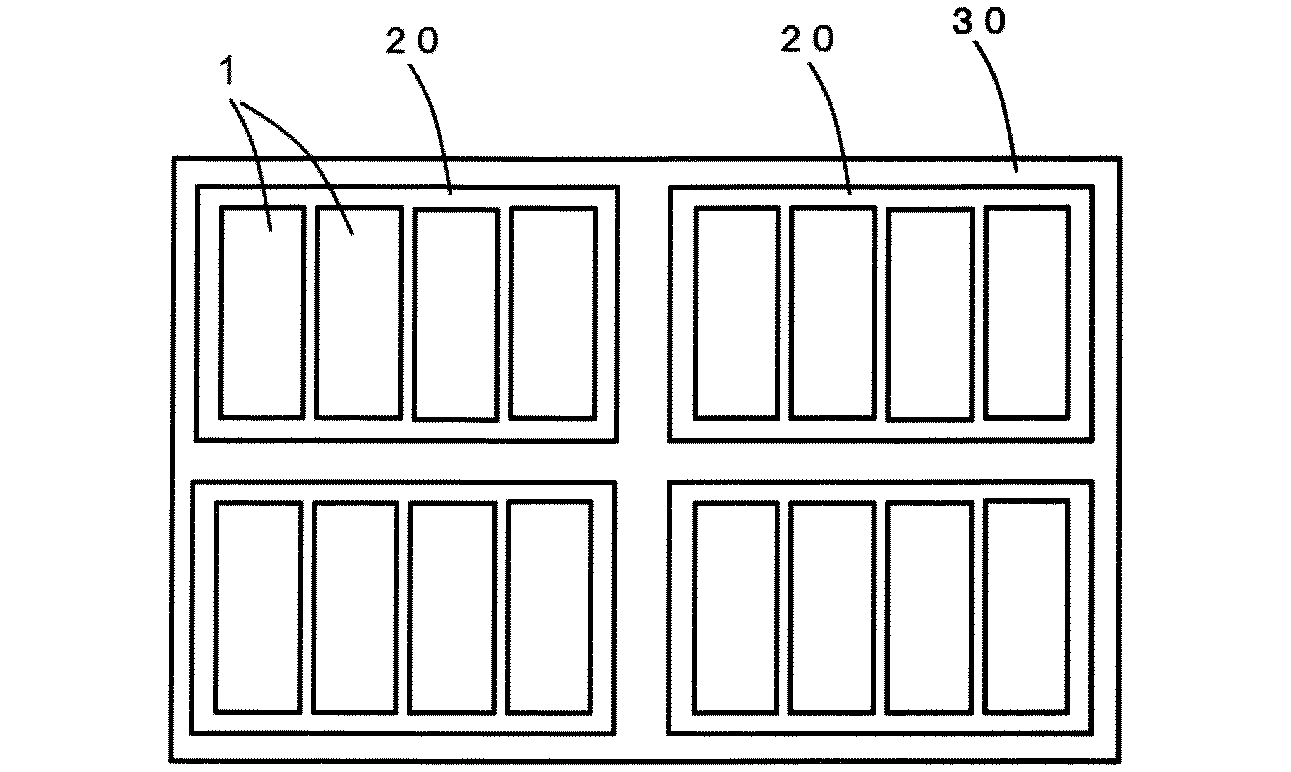
表1から以下のことが確認できる。比較例2と参考例4とを比較すると、正極活物質層の多孔度を低くする、あるいは見かけ密度を高くすると、正極活物質層の体積あたりの容量密度は高まるものの、充放電サイクル後の体積増加率が大きくなる。比較例2と参考例4との対比から、充放電サイクル後に体積増加率が大きくなること、つまり、容器膨れが大きくなることは、正極活物質層を高密度化した場合に顕著になるものであるといえる。
上記比較例2に対して、非水電解質にフッ素原子と酸素原子とを有するリン酸塩であるLiDFP又はフッ素原子と酸素原子とを有するホウ酸塩であるLiDFOBを含有する実施例1、2は、高い容量密度を保ちつつ、体積増加率が低減されていることがわかる。しかし、非水電解質にTMSPを含有する比較例1は、体積増加率の低減効果が表れなかった。
一方、参考例1から3のように、正極活物質層が高密度化されていない場合は、非水電解質に各化合物を混合しても体積増加率の低減効果は表れなかった。なお、これは、各化合物によって形成される被膜によるガス発生抑制効果よりも、各化合物が分解するときのガス発生の影響が大きいためと推測される。
このように、充放電サイクル後の体積増加率の抑制効果は、高密度化された正極活物質層を備える非水電解質蓄電素子に対して、特定の化合物を含有する非水電解質を適用した場合に生じる特有の効果であることが確認できる。
The following can be confirmed from Table 1. Comparing Comparative Example 2 and Reference Example 4, when the porosity of the positive electrode active material layer is lowered or the apparent density is increased, the volume density per volume of the positive electrode active material layer is increased, but the volume after the charge / discharge cycle is increased. The rate of increase increases. From the comparison between Comparative Example 2 and Reference Example 4, the increase in volume increase rate after the charge / discharge cycle, that is, the increase in container swelling, becomes remarkable when the positive electrode active material layer is densified. It can be said that there is.
In contrast to Comparative Example 2 above, Examples 1 and 2 containing LiDFP, which is a phosphate having a fluorine atom and an oxygen atom, or LiDFOB, which is a borate salt having a fluorine atom and an oxygen atom, in a non-aqueous electrolyte It can be seen that the volume increase rate is reduced while maintaining a high capacitance density. However, Comparative Example 1 in which TMSP was contained in the non-aqueous electrolyte did not show the effect of reducing the volume increase rate.
On the other hand, when the positive electrode active material layer was not densified as in Reference Examples 1 to 3, the effect of reducing the volume increase rate did not appear even if each compound was mixed with the non-aqueous electrolyte. It is presumed that this is because the effect of gas generation when each compound is decomposed is greater than the effect of suppressing gas generation by the film formed by each compound.
As described above, the effect of suppressing the volume increase rate after the charge / discharge cycle is obtained when a non-aqueous electrolyte containing a specific compound is applied to the non-aqueous electrolyte power storage element provided with the densified positive electrode active material layer. It can be confirmed that it is a peculiar effect that occurs in.
本発明は、パーソナルコンピュータ、通信端末等の電子機器、自動車等の電源として使用される非水電解質蓄電素子等に適用できる。 The present invention can be applied to electronic devices such as personal computers and communication terminals, non-aqueous electrolyte power storage elements used as power sources for automobiles, and the like.
1 非水電解質蓄電素子
2 電極体
3 容器
4 正極端子
41 正極リード
5 負極端子
51 負極リード
20 蓄電ユニット
30 蓄電装置
1 Non-aqueous electrolyte
Claims (4)
上記正極活物質層が、α−NaFeO2構造を有し、遷移金属に対するマンガンの含有量がモル比で0.5を超えるリチウム遷移金属複合酸化物を含み、
上記正極活物質層の多孔度が35%以下であり、
上記非水電解質が、フッ素原子と酸素原子とを有するリン酸塩及びフッ素原子と酸素原子とを有するホウ酸塩の少なくとも一方を含有する非水電解質蓄電素子。 A positive electrode having a positive electrode active material layer and a non-aqueous electrolyte are provided.
The positive electrode active material layer contains a lithium transition metal composite oxide having an α-NaFeO 2 structure and having a manganese content of more than 0.5 in terms of molar ratio with respect to the transition metal.
The porosity of the positive electrode active material layer is 35% or less.
A non-aqueous electrolyte storage element in which the non-aqueous electrolyte contains at least one of a phosphate having a fluorine atom and an oxygen atom and a borate salt having a fluorine atom and an oxygen atom.
上記正極活物質層が、α−NaFeO2構造を有し、遷移金属に対するマンガンの含有量がモル比で0.5を超えるリチウム遷移金属複合酸化物を含み、
上記正極活物質層の見かけ密度が2.6g/cm3以上であり、
上記非水電解質が、フッ素原子と酸素原子とを有するリン酸塩及びフッ素原子と酸素原子とを有するホウ酸塩の少なくとも一方を含有する非水電解質蓄電素子。 A positive electrode having a positive electrode active material layer and a non-aqueous electrolyte are provided.
The positive electrode active material layer contains a lithium transition metal composite oxide having an α-NaFeO 2 structure and having a manganese content of more than 0.5 in terms of molar ratio with respect to the transition metal.
The apparent density of the positive electrode active material layer is 2.6 g / cm 3 or more.
A non-aqueous electrolyte storage element in which the non-aqueous electrolyte contains at least one of a phosphate having a fluorine atom and an oxygen atom and a borate salt having a fluorine atom and an oxygen atom.
上記正極活物質層が、α−NaFeO2構造を有し、遷移金属に対するマンガンの含有量がモル比で0.5を超えるリチウム遷移金属複合酸化物を含み、
上記正極活物質層の多孔度が35%以下であり、
上記非水電解質が、フッ素原子と酸素原子とを有するリン酸塩及びフッ素原子と酸素原子とを有するホウ酸塩の少なくとも一方を含有する非水電解質蓄電素子の製造方法。 It comprises preparing a positive electrode having a positive electrode active material layer and preparing a non-aqueous electrolyte.
The positive electrode active material layer contains a lithium transition metal composite oxide having an α-NaFeO 2 structure and having a manganese content of more than 0.5 in terms of molar ratio with respect to the transition metal.
The porosity of the positive electrode active material layer is 35% or less.
A method for producing a non-aqueous electrolyte power storage element, wherein the non-aqueous electrolyte contains at least one of a phosphate having a fluorine atom and an oxygen atom and a borate salt having a fluorine atom and an oxygen atom.
上記正極活物質層が、α−NaFeO2構造を有し、遷移金属に対するマンガンの含有量がモル比で0.5を超えるリチウム遷移金属複合酸化物を含み、
上記正極活物質層の見かけ密度が2.6g/cm3以上であり、
上記非水電解質が、フッ素原子と酸素原子とを有するリン酸塩及びフッ素原子と酸素原子とを有するホウ酸塩の少なくとも一方を含有する非水電解質蓄電素子の製造方法。
It comprises preparing a positive electrode having a positive electrode active material layer and preparing a non-aqueous electrolyte.
The positive electrode active material layer contains a lithium transition metal composite oxide having an α-NaFeO 2 structure and having a manganese content of more than 0.5 in terms of molar ratio with respect to the transition metal.
The apparent density of the positive electrode active material layer is 2.6 g / cm 3 or more.
A method for producing a non-aqueous electrolyte power storage element, wherein the non-aqueous electrolyte contains at least one of a phosphate having a fluorine atom and an oxygen atom and a borate salt having a fluorine atom and an oxygen atom.
Priority Applications (1)
| Application Number | Priority Date | Filing Date | Title |
|---|---|---|---|
| JP2020082073A JP7371571B2 (en) | 2020-05-07 | 2020-05-07 | Non-aqueous electrolyte storage device and method for manufacturing the same |
Applications Claiming Priority (1)
| Application Number | Priority Date | Filing Date | Title |
|---|---|---|---|
| JP2020082073A JP7371571B2 (en) | 2020-05-07 | 2020-05-07 | Non-aqueous electrolyte storage device and method for manufacturing the same |
Publications (2)
| Publication Number | Publication Date |
|---|---|
| JP2021177458A true JP2021177458A (en) | 2021-11-11 |
| JP7371571B2 JP7371571B2 (en) | 2023-10-31 |
Family
ID=78409545
Family Applications (1)
| Application Number | Title | Priority Date | Filing Date |
|---|---|---|---|
| JP2020082073A Active JP7371571B2 (en) | 2020-05-07 | 2020-05-07 | Non-aqueous electrolyte storage device and method for manufacturing the same |
Country Status (1)
| Country | Link |
|---|---|
| JP (1) | JP7371571B2 (en) |
Cited By (1)
| Publication number | Priority date | Publication date | Assignee | Title |
|---|---|---|---|---|
| JP2023077217A (en) * | 2021-11-24 | 2023-06-05 | 株式会社Gsユアサ | Non-aqueous electrolyte and non-aqueous electrolyte storage element |
Citations (5)
| Publication number | Priority date | Publication date | Assignee | Title |
|---|---|---|---|---|
| JP2006093067A (en) * | 2004-09-27 | 2006-04-06 | Kusaka Rare Metal Products Co Ltd | Lithium secondary battery positive pole material and method for manufacturing it |
| JP2013211239A (en) * | 2012-03-30 | 2013-10-10 | Toda Kogyo Corp | Positive electrode active material particulate powder, method for producing the same, and nonaqueous electrolyte secondary battery |
| JP2014011064A (en) * | 2012-06-29 | 2014-01-20 | Toyota Motor Corp | Lithium secondary battery |
| WO2019117282A1 (en) * | 2017-12-15 | 2019-06-20 | 株式会社Gsユアサ | Positive electrode active material for non-aqueous electrolyte secondary battery, method for manufacturing positive electrode active material for non-aqueous electrolyte secondary battery, positive electrode for non-aqueous electrolyte secondary battery, and non-aqueous electrolyte secondary battery |
| JP2020004693A (en) * | 2018-06-21 | 2020-01-09 | 株式会社Gsユアサ | Non-aqueous electrolyte secondary battery and method for manufacturing non-aqueous electrolyte secondary battery |
-
2020
- 2020-05-07 JP JP2020082073A patent/JP7371571B2/en active Active
Patent Citations (5)
| Publication number | Priority date | Publication date | Assignee | Title |
|---|---|---|---|---|
| JP2006093067A (en) * | 2004-09-27 | 2006-04-06 | Kusaka Rare Metal Products Co Ltd | Lithium secondary battery positive pole material and method for manufacturing it |
| JP2013211239A (en) * | 2012-03-30 | 2013-10-10 | Toda Kogyo Corp | Positive electrode active material particulate powder, method for producing the same, and nonaqueous electrolyte secondary battery |
| JP2014011064A (en) * | 2012-06-29 | 2014-01-20 | Toyota Motor Corp | Lithium secondary battery |
| WO2019117282A1 (en) * | 2017-12-15 | 2019-06-20 | 株式会社Gsユアサ | Positive electrode active material for non-aqueous electrolyte secondary battery, method for manufacturing positive electrode active material for non-aqueous electrolyte secondary battery, positive electrode for non-aqueous electrolyte secondary battery, and non-aqueous electrolyte secondary battery |
| JP2020004693A (en) * | 2018-06-21 | 2020-01-09 | 株式会社Gsユアサ | Non-aqueous electrolyte secondary battery and method for manufacturing non-aqueous electrolyte secondary battery |
Cited By (2)
| Publication number | Priority date | Publication date | Assignee | Title |
|---|---|---|---|---|
| JP2023077217A (en) * | 2021-11-24 | 2023-06-05 | 株式会社Gsユアサ | Non-aqueous electrolyte and non-aqueous electrolyte storage element |
| JP7815707B2 (en) | 2021-11-24 | 2026-02-18 | 株式会社Gsユアサ | Nonaqueous electrolyte and nonaqueous electrolyte storage element |
Also Published As
| Publication number | Publication date |
|---|---|
| JP7371571B2 (en) | 2023-10-31 |
Similar Documents
| Publication | Publication Date | Title |
|---|---|---|
| WO2021246186A1 (en) | Positive electrode and power storage element | |
| JP2022075345A (en) | Positive electrode for power storage element and power storage element | |
| EP4109586A1 (en) | Positive electrode for energy storage element and energy storage element | |
| CN117769779A (en) | Storage element | |
| WO2023286718A1 (en) | Power storage element | |
| JP2022073197A (en) | Positive electrode active material mixture for power storage element, positive electrode for power storage element, and power storage element | |
| JP7850523B2 (en) | Energy storage element | |
| JP2022139794A (en) | Non-aqueous electrolyte storage element | |
| JP7371571B2 (en) | Non-aqueous electrolyte storage device and method for manufacturing the same | |
| EP4297122A1 (en) | Positive electrode active material for nonaqueous electrolyte power storage elements, positive electrode for nonaqueous electrolyte power storage elements, nonaqueous electrolyte power storage element, power storage unit, and power storage device | |
| JP2021034298A (en) | Nonaqueous electrolyte secondary battery, and method for manufacturing nonaqueous electrolyte secondary battery | |
| US12451486B2 (en) | Energy storage device and energy storage apparatus | |
| CN117716556A (en) | Non-aqueous electrolyte storage device | |
| CN117597793A (en) | Positive electrode, power storage element, and power storage device | |
| WO2022097400A1 (en) | Positive electrode active material for power storage element, positive electrode for power storage element, power storage element, and power storage device | |
| JP2022134613A (en) | Positive electrode mixture for non-aqueous electrolyte storage element, positive electrode for non-aqueous electrolyte storage element, and non-aqueous electrolyte storage element | |
| JP2022017033A (en) | Positive electrode active material particles, their manufacturing method, power storage element, and power storage device | |
| EP4425634A1 (en) | Nonaqueous electrolyte power storage element, device, and method for using nonaqueous electrolyte power storage element | |
| EP4485606A1 (en) | Nonaqueous electrolyte power storage element | |
| EP4209455A1 (en) | Positive electrode for non-aqueous electrolyte power storage element, non-aqueous electrolyte power storage element, and power storage device | |
| JP2023100541A (en) | Negative electrode for electricity storage element and electricity storage element | |
| EP4250419A1 (en) | Nonaqueous electrolyte power storage element, electronic device, and automobile | |
| WO2023032751A1 (en) | Positive electrode for nonaqueous electrolyte power storage element, nonaqueous electrolyte power storage element, and power storage device | |
| JP2024040730A (en) | Non-aqueous electrolyte energy storage device, equipment, method of using non-aqueous electrolyte energy storage device, and manufacturing method of non-aqueous electrolyte energy storage device | |
| WO2023190422A1 (en) | Positive electrode for non-aqueous electrolyte power storage element, and non-aqueous electrolyte power storage element comprising same |
Legal Events
| Date | Code | Title | Description |
|---|---|---|---|
| A621 | Written request for application examination |
Free format text: JAPANESE INTERMEDIATE CODE: A621 Effective date: 20230208 |
|
| TRDD | Decision of grant or rejection written | ||
| A977 | Report on retrieval |
Free format text: JAPANESE INTERMEDIATE CODE: A971007 Effective date: 20230913 |
|
| A01 | Written decision to grant a patent or to grant a registration (utility model) |
Free format text: JAPANESE INTERMEDIATE CODE: A01 Effective date: 20230919 |
|
| A61 | First payment of annual fees (during grant procedure) |
Free format text: JAPANESE INTERMEDIATE CODE: A61 Effective date: 20231002 |
|
| R150 | Certificate of patent or registration of utility model |
Ref document number: 7371571 Country of ref document: JP Free format text: JAPANESE INTERMEDIATE CODE: R150 |