JP2017516618A - Artificial vestibular organ system - Google Patents
Artificial vestibular organ system Download PDFInfo
- Publication number
- JP2017516618A JP2017516618A JP2017514244A JP2017514244A JP2017516618A JP 2017516618 A JP2017516618 A JP 2017516618A JP 2017514244 A JP2017514244 A JP 2017514244A JP 2017514244 A JP2017514244 A JP 2017514244A JP 2017516618 A JP2017516618 A JP 2017516618A
- Authority
- JP
- Japan
- Prior art keywords
- artificial
- hair means
- artificial hair
- vestibular
- signal
- Prior art date
- Legal status (The legal status is an assumption and is not a legal conclusion. Google has not performed a legal analysis and makes no representation as to the accuracy of the status listed.)
- Granted
Links
Images

Classifications
-
- A—HUMAN NECESSITIES
- A61—MEDICAL OR VETERINARY SCIENCE; HYGIENE
- A61F—FILTERS IMPLANTABLE INTO BLOOD VESSELS; PROSTHESES; DEVICES PROVIDING PATENCY TO, OR PREVENTING COLLAPSING OF, TUBULAR STRUCTURES OF THE BODY, e.g. STENTS; ORTHOPAEDIC, NURSING OR CONTRACEPTIVE DEVICES; FOMENTATION; TREATMENT OR PROTECTION OF EYES OR EARS; BANDAGES, DRESSINGS OR ABSORBENT PADS; FIRST-AID KITS
- A61F2/00—Filters implantable into blood vessels; Prostheses, i.e. artificial substitutes or replacements for parts of the body; Appliances for connecting them with the body; Devices providing patency to, or preventing collapsing of, tubular structures of the body, e.g. stents
- A61F2/02—Prostheses implantable into the body
- A61F2/18—Internal ear or nose parts, e.g. ear-drums
-
- A—HUMAN NECESSITIES
- A61—MEDICAL OR VETERINARY SCIENCE; HYGIENE
- A61N—ELECTROTHERAPY; MAGNETOTHERAPY; RADIATION THERAPY; ULTRASOUND THERAPY
- A61N1/00—Electrotherapy; Circuits therefor
-
- A—HUMAN NECESSITIES
- A61—MEDICAL OR VETERINARY SCIENCE; HYGIENE
- A61N—ELECTROTHERAPY; MAGNETOTHERAPY; RADIATION THERAPY; ULTRASOUND THERAPY
- A61N1/00—Electrotherapy; Circuits therefor
- A61N1/02—Details
- A61N1/04—Electrodes
- A61N1/05—Electrodes for implantation or insertion into the body, e.g. heart electrode
- A61N1/0526—Head electrodes
-
- A—HUMAN NECESSITIES
- A61—MEDICAL OR VETERINARY SCIENCE; HYGIENE
- A61N—ELECTROTHERAPY; MAGNETOTHERAPY; RADIATION THERAPY; ULTRASOUND THERAPY
- A61N1/00—Electrotherapy; Circuits therefor
- A61N1/18—Applying electric currents by contact electrodes
- A61N1/32—Applying electric currents by contact electrodes alternating or intermittent currents
- A61N1/36—Applying electric currents by contact electrodes alternating or intermittent currents for stimulation
- A61N1/3605—Implantable neurostimulators for stimulating central or peripheral nerve system
- A61N1/3606—Implantable neurostimulators for stimulating central or peripheral nerve system adapted for a particular treatment
-
- A—HUMAN NECESSITIES
- A61—MEDICAL OR VETERINARY SCIENCE; HYGIENE
- A61N—ELECTROTHERAPY; MAGNETOTHERAPY; RADIATION THERAPY; ULTRASOUND THERAPY
- A61N1/00—Electrotherapy; Circuits therefor
- A61N1/18—Applying electric currents by contact electrodes
- A61N1/32—Applying electric currents by contact electrodes alternating or intermittent currents
- A61N1/36—Applying electric currents by contact electrodes alternating or intermittent currents for stimulation
- A61N1/3605—Implantable neurostimulators for stimulating central or peripheral nerve system
- A61N1/36128—Control systems
-
- A—HUMAN NECESSITIES
- A61—MEDICAL OR VETERINARY SCIENCE; HYGIENE
- A61F—FILTERS IMPLANTABLE INTO BLOOD VESSELS; PROSTHESES; DEVICES PROVIDING PATENCY TO, OR PREVENTING COLLAPSING OF, TUBULAR STRUCTURES OF THE BODY, e.g. STENTS; ORTHOPAEDIC, NURSING OR CONTRACEPTIVE DEVICES; FOMENTATION; TREATMENT OR PROTECTION OF EYES OR EARS; BANDAGES, DRESSINGS OR ABSORBENT PADS; FIRST-AID KITS
- A61F11/00—Methods or devices for treatment of the ears or hearing sense; Non-electric hearing aids; Methods or devices for enabling ear patients to achieve auditory perception through physiological senses other than hearing sense; Protective devices for the ears, carried on the body or in the hand
- A61F11/04—Methods or devices for enabling ear patients to achieve auditory perception through physiological senses other than hearing sense, e.g. through the touch sense
-
- A—HUMAN NECESSITIES
- A61—MEDICAL OR VETERINARY SCIENCE; HYGIENE
- A61F—FILTERS IMPLANTABLE INTO BLOOD VESSELS; PROSTHESES; DEVICES PROVIDING PATENCY TO, OR PREVENTING COLLAPSING OF, TUBULAR STRUCTURES OF THE BODY, e.g. STENTS; ORTHOPAEDIC, NURSING OR CONTRACEPTIVE DEVICES; FOMENTATION; TREATMENT OR PROTECTION OF EYES OR EARS; BANDAGES, DRESSINGS OR ABSORBENT PADS; FIRST-AID KITS
- A61F2/00—Filters implantable into blood vessels; Prostheses, i.e. artificial substitutes or replacements for parts of the body; Appliances for connecting them with the body; Devices providing patency to, or preventing collapsing of, tubular structures of the body, e.g. stents
- A61F2/02—Prostheses implantable into the body
- A61F2/18—Internal ear or nose parts, e.g. ear-drums
- A61F2002/183—Ear parts
Landscapes
- Health & Medical Sciences (AREA)
- General Health & Medical Sciences (AREA)
- Veterinary Medicine (AREA)
- Engineering & Computer Science (AREA)
- Biomedical Technology (AREA)
- Public Health (AREA)
- Life Sciences & Earth Sciences (AREA)
- Animal Behavior & Ethology (AREA)
- Radiology & Medical Imaging (AREA)
- Nuclear Medicine, Radiotherapy & Molecular Imaging (AREA)
- Cardiology (AREA)
- Heart & Thoracic Surgery (AREA)
- Neurology (AREA)
- Neurosurgery (AREA)
- Vascular Medicine (AREA)
- Transplantation (AREA)
- Oral & Maxillofacial Surgery (AREA)
- Pulmonology (AREA)
- Otolaryngology (AREA)
- Prostheses (AREA)
- External Artificial Organs (AREA)
Abstract
本発明に係る人工前庭器官システムは、人工半規管と、前記人工半規管内に充填された液体と、前記人工半規管内で前記液体の動きを感知する人工有毛手段と、人工有毛手段で発生された信号を生体刺激信号に変換する信号変換部と、前記生体刺激信号を用いて生体刺激パルスを生成し、膨大部に伝達する生体刺激パルス生成部と、各構成要素に電源を供給する電源部とを含んでなる。前記人工有毛手段は、液体の流動による圧力を感知する圧力感知式、若しくは液体の流動による流速を感知する速度感知式からなることができる。圧力感知式の人工有毛手段は、曲げセンサ、ピエゾセンサ、FSRセンサのうち、1つから構成することができ、前記速度感知式の人工有毛手段は、液体の流動によって回転する回転翼と、前記回転翼の回転速度を測定する速度測定機構を含んでなることができる。本発明に係る人工前庭器官システムは、前庭器官が損傷した人体に適用され、半規管の役割を代替することができる。【選択図】図1An artificial vestibular organ system according to the present invention is generated by an artificial semicircular canal, a liquid filled in the artificial semicircular canal, artificial hair means for sensing movement of the liquid in the artificial semicircular canal, and artificial hair means. A signal conversion unit that converts the received signal into a biostimulation signal, a biostimulation pulse generation unit that generates a biostimulation pulse using the biostimulation signal and transmits the biostimulation pulse, and a power supply unit that supplies power to each component And comprising. The artificial hair means may be of a pressure sensing type that senses pressure due to liquid flow, or a speed sensing type that senses flow rate due to liquid flow. The pressure-sensitive artificial hair means may be composed of one of a bending sensor, a piezo sensor, and an FSR sensor, and the speed-sensitive artificial hair means includes a rotating wing that rotates by a liquid flow, A speed measuring mechanism for measuring a rotational speed of the rotor blade may be included. The artificial vestibular organ system according to the present invention is applied to a human body in which the vestibular organ is damaged, and can replace the role of the semicircular canal. [Selection] Figure 1
Description
本発明は人体に適用され、損傷した半規管の役割を代替することができる人工前庭器官システムに関する。 The present invention relates to an artificial vestibular system that can be applied to the human body and replace the role of a damaged semicircular canal.
前庭器官は、耳の最も内側にある内耳に位置し、身体の平衡感覚を担当する身体組織であって、円形嚢と球形嚢で構成されて平衡感覚を担当する前庭と回転感覚を感知する3つの半規管からなる。 The vestibular organ is located in the innermost inner ear of the ear and is a body tissue responsible for the sense of balance of the body, and is composed of a circular sac and a spherical sac to sense the vestibule responsible for the sense of balance and a sense of rotation 3 It consists of two semicircular canals.
前庭の平衡班には、繊毛上に耳石が載っており、人体が傾いたり加速度運動をしたりすると、繊毛が耳石の動きを認識して感知する。 An otolith is placed on the cilia in the vestibule of the vestibule, and the cilia recognizes and senses the movement of the otolith when the human body tilts or accelerates.
各半規管は、回転運動の感知を担当し、その位置によって前半規管、後半規管、外側半規管で構成され、空間の3つの平面において、それぞれ互いに直角に位置する。 Each semicircular canal is in charge of sensing rotational movement, and is constituted by an anterior semicircular canal, a rear semicircular canal, and an outer semicircular canal depending on their positions, and they are positioned at right angles to each other in three planes of space.
半規管内はリンパ液で充填されており、半規管内の有毛細胞がリンパ液の動きを感知することによって回転運動を認識する。 The semicircular canal is filled with lymph fluid, and the hair cells in the semicircular canal recognize the rotational movement by sensing the movement of the lymph fluid.
人が頭を傾けたり、体を動かしたりすると、重力によって前庭器官の耳石が傾くことになり、有毛細胞を刺激して小脳が位置感覚を感じる。 When a person tilts his head or moves his body, the otolith of the vestibular organ is tilted by gravity, stimulating hair cells and feeling the sense of position.
すなわち、前庭は重力や三次元的な線形加速度運動を感知する機能をして、半規管は3つの官からなり、リンパ液の流れによって体の回転動きを感知する。 That is, the vestibule functions to sense gravity and three-dimensional linear acceleration motion, and the semicircular canal consists of three officers and senses the rotational movement of the body by the flow of lymph.
しかし、かかる前庭器官に障害が生じる場合、平衡感覚及び回転運動感知機能を喪失して正常な活動ができなくなるので、これを代替することができる人工前庭器官の開発が至急に求められている。 However, when a failure occurs in such a vestibular organ, the sense of balance and the rotational motion sensing function are lost and normal activity cannot be performed. Therefore, the development of an artificial vestibular organ that can replace this is urgently required.
本発明は、上述した従来の問題点を解決するためになされたものであり、人体に適用され、損傷した半規管及び有毛細胞の役割を代替することができる人工前庭器官システムを提供することを目的とする。 The present invention has been made to solve the above-mentioned conventional problems, and provides an artificial vestibular organ system that can be applied to the human body and can replace the role of damaged semicircular canals and hair cells. Objective.
前記目的を達成するため、本発明に係る人工前庭器官システムは、人工半規管と、前記人工半規管内に充填された液体と、前記人工半規管内において前記液体の動きを感知する人工有毛手段と、人工有毛手段で発生した信号を生体刺激信号に変換する信号変換部と、前記信号変換部で変換された生体刺激信号を膨大部に伝達する生体刺激パルス生成部と、前記人工有毛手段と信号変換部及び生体刺激パルス生成部に電源を供給する電源部とを含んでなる。 In order to achieve the above object, an artificial vestibular system according to the present invention includes an artificial semicircular canal, a liquid filled in the artificial semicircular canal, and artificial hair means for sensing movement of the liquid in the artificial semicircular canal. A signal conversion unit that converts a signal generated by the artificial hair means into a biological stimulation signal, a biological stimulation pulse generation unit that transmits the biological stimulation signal converted by the signal conversion unit to the enormous portion, and the artificial hair means And a power supply unit that supplies power to the signal conversion unit and the biological stimulation pulse generation unit.
前記人工有毛手段は、液体の流動による圧力を感知する圧力感知式であってもよい。 The artificial hair means may be a pressure sensing type that senses pressure due to the flow of liquid.
前記圧力感知式の人工有毛手段は、曲げ素子を用いる曲げセンサ方式からなってもよく、ピエゾ素子を用いるピエゾセンサ方式からなってもよく、重合体フィルムを用いるFSR(force sensing resistor)センサ方式からなってもよい。 The pressure-sensitive artificial hair means may be composed of a bending sensor method using a bending element, may be composed of a piezo sensor method using a piezo element, and is based on an FSR (force sensing resistor) sensor method using a polymer film. It may be.
前記人工有毛手段は、液体の流動による流速を感知する速度感知式であってもよい。 The artificial hair means may be a speed sensing type that senses a flow rate due to a liquid flow.
前記速度感知式の人工有毛手段は、液体の流動によって回転する回転翼と、前記回転翼の回転速度を測定する速度測定機構を含んでなることができる。 The speed-sensing artificial hair means may include a rotating wing that rotates by a liquid flow, and a speed measuring mechanism that measures a rotating speed of the rotating wing.
前記速度測定機構は、ホールセンサからなってもよく、または光学エンコーダからなってもよい。 The speed measuring mechanism may consist of a Hall sensor or an optical encoder.
以上で説明したような本発明に係る人工前庭器官システムは、前庭器官が損傷した人体に適用されて半規管の役割を代替することにより、前庭器官の損傷によって生活に支障をきたす人のリハビリに役立てるというメリットがある。 The artificial vestibular organ system according to the present invention as described above is applied to a human body in which the vestibular organ is damaged and substitutes for the role of the semicircular canal, thereby helping rehabilitation of a person who interferes with life due to damage of the vestibular organ. There is a merit.
以下、図面を参照し、本発明の好適な実施例に係る人工前庭器官システムの構造及び動作について具体的に説明する。 Hereinafter, the structure and operation of an artificial vestibular system according to a preferred embodiment of the present invention will be described in detail with reference to the drawings.
図1は、本発明の好適な実施例に係る人工前庭器官システムを概略的に示す構成図である。 FIG. 1 is a block diagram schematically showing an artificial vestibular organ system according to a preferred embodiment of the present invention.
図1を参照すると、本発明に係る人工前庭器官システムは、人工半規管10と、前記人工半規管10内に充填された液体12と、前記人工半規管10内において前記液体12の動きを感知する人工有毛手段14と、前記人工有毛手段14で発生した電気信号、若しくは磁気信号を生体刺激信号に変換する信号変換部19と、前記信号変換部で変換された生体刺激信号を膨大部に伝達する生体刺激パルス生成部16と、前記人工有毛手段14と信号変換部及び生体刺激パルス生成部16に電源を供給する電源部18とを含んでなる。
Referring to FIG. 1, an artificial vestibular organ system according to the present invention includes an artificial
前記人工半規管10は、密閉式チューブ管の形に作製してもよく、図1に示すように円形のチューブ管の形に作製してもよく、図2aに示すように半円形のチューブ管の形に作製してもよい。
The artificial
前記人工半規管10内に充填された液体12は、人工リンパ液に該当する。
The
前記生体刺激パルス生成部16は、前庭神経刺激用電極から構成することができる。
The
前記人工有毛手段14は、人工半規管内の液体12の動きを感知し、液体の動きによって電気信号、若しくは磁気信号を生成して信号変換部へ出力する。前記人工有毛手段14は、液体12の流動による圧力を感知し、感知された圧力に応じる電気信号、若しくは磁気信号を生成して出力する圧力感知方式で構成してもよく、液体12の流れによる流速を感知し、感知された流速に応じる電気信号、若しくは磁気信号を生成して出力する速度感知方式で構成してもよい。
The artificial hair means 14 senses the movement of the
前記圧力感知式の人工有毛手段14は、液体12の流動圧力を感知できる様々な形態のセンサのうち、1つからなり得るが、例えば、曲げセンサ(flex sensor)、ピエゾセンサ(Piezo electric sensor)、FSR(force sensing resistor)センサなどを用いることができる。
The pressure-sensitive artificial hair means 14 may be one of various types of sensors capable of sensing the flow pressure of the
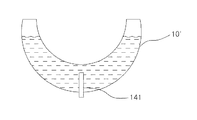
図2aは、人工有毛手段として曲げセンサを用いる場合を例示的に示す使用状態図である。図2aを参照すると、前記曲げセンサは、外部の圧力によって変形若しくは曲げが生じる曲げ素子141を用いるものであって、曲げ素子141の変形度合いに応じて抵抗値が変わることによって液体の流動圧力の変化を測定する。
FIG. 2 a is a usage state diagram exemplarily showing a case where a bending sensor is used as the artificial hair means. Referring to FIG. 2 a, the bending sensor uses a
前記曲げセンサは、図1に示す円形の人工半規管10だけでなく、図2aに示す半円形の人工半規管10´にも適用することができる。
The bending sensor can be applied not only to the circular artificial
前記ピエゾセンサは、結晶体が圧力を受けて結晶体内に電荷が発生するか、逆に結晶体に電界を加える際に機械的変形を起こすピエゾ素子によって圧力変化を測定する。 The piezo sensor measures a change in pressure by a piezo element that generates a charge in the crystal body due to pressure applied to the crystal body or conversely causes mechanical deformation when an electric field is applied to the crystal body.
前記FSRセンサは、圧力が加えられることによって抵抗が減少する重合体フィルム(polymer film)素子により圧力変化を測定する。ここで、前記FSRセンサによる抵抗値の変化を電気信号に変えるためには、ホイートストンブリッジを活用することができる。 The FSR sensor measures a change in pressure by a polymer film element whose resistance is decreased by applying pressure. Here, a Wheatstone bridge can be used to change the change in resistance value by the FSR sensor into an electric signal.
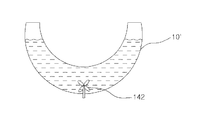
図2bは、人工有毛手段を速度感知方式で構成した場合を例示的に示す使用状態図である。図2bを参照すると、前記速度感知方式の人工有毛手段14は、液体12の流れによって回転するように構成された回転翼142と、前記回転翼142の回転速度を測定する速度測定機構を含んでなることができる。ここで、前記速度測定機構は、ホールセンサないしは光学エンコーダで構成することができる。
FIG. 2B is a usage state diagram illustrating the case where the artificial hair means is configured by a speed sensing method. Referring to FIG. 2 b, the speed-sensing artificial hair means 14 includes a
以下、前述した構成からなる本発明に係る人工前庭器官システムの動作について具体的に説明する。 Hereinafter, the operation of the artificial vestibular system according to the present invention having the above-described configuration will be described in detail.
まず、人体が回転運動をすると、前記人工半規管10内の液体12が流動し、液体12の流動によって前記人工有毛手段14が反応することで電気信号が発生される。
First, when the human body rotates, the
前記人工有毛手段14を圧力感知方式で構成した場合、圧力感知のために用いられたセンサの特性によって液体12の流動圧力を測定し、それに応じる電気信号を発生する。前述したように、圧力感知のために曲げセンサ、ピエゾセンサ、FSRセンサのうち、1つを用いることができる。
When the artificial hair means 14 is configured by a pressure sensing method, the flow pressure of the
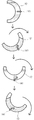
図3は、曲げセンサを用いて人工有毛手段を構成した場合、人工有毛手段の動作を説明するため、例示的に示す状態図である。図3に示すように、特に人工有毛手段14として曲げセンサを用いた場合、人工半規管10´が回転すると、人工半規管の回転によって液体12が流動することになり、液体流動の影響を受けて曲げ素子141が液体12の流動方向、すなわち人工半規管の回転による相対的な回転方向に傾くことになる。このように回転によって曲げ素子の傾きが発生し、かかる曲げ素子141の変形度合いに応じて抵抗値が変わることによって液体の流動圧力の変化を測定する。
FIG. 3 is an exemplary state diagram illustrating the operation of the artificial hair means when the artificial hair means is configured using a bending sensor. As shown in FIG. 3, in particular, when a bending sensor is used as the artificial hair means 14, when the artificial semicircular canal 10 'rotates, the
一方、図2bに示すように、人工有毛手段14を、回転翼と速度測定機構を含む流速感知方式で構成する場合、回転翼が液体12の流れによって回転し、速度測定機構が、かかる回転翼の動きの速度を感知して感知された速度に対応する電気信号を発生させ、出力する。前記速度測定機構には、ホールセンサ若しくは光学エンコーダを用いることができる。
On the other hand, as shown in FIG. 2b, when the artificial hair means 14 is configured by a flow velocity sensing method including a rotating blade and a speed measuring mechanism, the rotating blade is rotated by the flow of the
続いて、前記信号変換部19では、人工有毛手段14から伝達された電気信号を生体刺激信号に変換させて、生体刺激パルス生成部へ提供する。生体刺激パルス生成部16は、前庭神経刺激用電極で構成され、信号変換部から提供された生体刺激信号を生体刺激パルスに変換して膨大部へ伝達することになり、膨大部に伝達された生体刺激パルスによって、人体が回転運動を感知する。
Subsequently, the
一方、前述した構成を有する本発明に係る人工前庭器官システムにおいて、人工有毛手段14で発生する電気信号が微弱な場合には、それを増幅するための信号増幅部をさらに備えることができる。前記信号増幅部は、反転増幅器、非反転増幅器、若しくは計測増幅器などで構成することができる。前記信号増幅部は、人工有毛手段の出力端若しくは信号変換部の出力端に連結して使用することができる。 On the other hand, in the artificial vestibular organ system according to the present invention having the above-described configuration, when the electrical signal generated by the artificial hair means 14 is weak, it can further include a signal amplifying unit for amplifying it. The signal amplifying unit can be composed of an inverting amplifier, a non-inverting amplifier, a measurement amplifier, or the like. The signal amplification unit can be used by being connected to the output end of the artificial hair means or the output end of the signal conversion unit.
前記生体刺激パルス生成部16は、信号変換部から伝達を受けた生体刺激信号によって神経の発火率を決定し、発火率に該当する周波数のパルス信号を生成して出力することになる。前記生体刺激パルス生成部16は、電圧制御発振器(voltage controlled oscillator:VCO)で構成することができる。
The
一方、本発明において、前記曲げ素子141を、摩擦帯電(triboelectric charging)方式が可能なように構成すると、別途の電源供給手段がなくても作動が可能である。ここで、摩擦帯電方式とは、金属物体同士の摩擦によって生成される電気を用いる方式である。
Meanwhile, in the present invention, if the
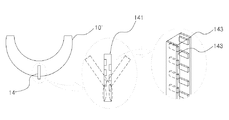
図4は、本発明に係る人工前庭器官システムにおいて、人工有毛手段として摩擦帯電方式の曲げ素子を用いた場合を例示的に示す構成図である。図4を参照すると、摩擦帯電方式の曲げ素子は、1組の金属部材143を相互に接触可能に配置して構成することで、両金属部材143同士の動きによって両金属部材143が互いに摩擦し合って電気が発生することになるので、これを電源として用いることができる。すなわち、人が動くと人工半規管の液体によって曲げ素子が動き、それによって内側にある金属部材同士が摩擦を起こすことになる。
FIG. 4 is a block diagram exemplarily showing a case where a frictional charging type bending element is used as the artificial hair means in the artificial vestibular organ system according to the present invention. Referring to FIG. 4, the frictional charging type bending element is configured by arranging a pair of
本発明の場合、人体内部において低電力で作動することが可能なため、該当チャージ方式を用いるに非常に適合する。 In the case of the present invention, since it is possible to operate with low power inside the human body, it is very suitable for using the corresponding charge method.
一方、本発明に係る人工前庭器官システムを3軸、すなわちピッチ軸、ヨー軸、ロール軸に拡張して構成し、これを三半規管内に設けることができる。このように構成された人工前庭器官システムを三半規管に設ける場合、全方位に対する認識が可能になる。 On the other hand, the artificial vestibular system according to the present invention can be configured to be expanded to three axes, that is, a pitch axis, a yaw axis, and a roll axis, and can be provided in a semicircular canal. When the thus constructed artificial vestibular organ system is provided in the semicircular canal, recognition in all directions is possible.
以上、本発明について好適な実施例を中心に説明したが、これは例示であるだけで、本発明を限定するものではなく、本発明の属する分野における通常の知識を有する者であれば、本発明の本質的な特性から外れない範囲内で、以上に例示されていない様々な変形と応用が可能であることが分かるでしょう。さらに、かかる変形と応用に関係した相違点については、請求の範囲において規定する本発明の範囲に含まれるものとして解析すべきである。 The present invention has been described above with reference to a preferred embodiment. However, this is merely an example, and is not intended to limit the present invention. Any person having ordinary knowledge in the field to which the present invention belongs It will be understood that various modifications and applications not exemplified above are possible without departing from the essential characteristics of the invention. Further, differences relating to such modifications and applications should be analyzed as being included within the scope of the present invention as defined in the claims.
本発明に係る人工前庭器官システムは、医療分野において広く使用することができる。
The artificial vestibular system according to the present invention can be widely used in the medical field.
本発明に係る人工前庭器官システムは、医療分野において広く使用することができる。本発明は、以下の研究事業の一環として研究されている。
課題固有番号:2010−0020163
部署名:教育部(Ministry of Education)
研究管理専門機関:韓国研究財団(National Research Foundation of Korea)
研究事業名:重点研究所支援事業
研究課題名:グリーンバイオミメティック植込み型の電子チップおよびU−生体情報処理プラットフォームの融合技術開発(Development of Convergence Technology for Green Biomimetic Implantable ICs and U-bioinformation Processing Platform)
寄与率:1/1
主管機関:インハ大学
研究期間:2016.05.01〜2017.04.30
The artificial vestibular system according to the present invention can be widely used in the medical field. The present invention has been studied as part of the following research projects.
Assignment unique number: 2010-0020163
Department name: Ministry of Education
Research management organization: National Research Foundation of Korea
Research Project Name: Priority Research Institute Support Project
Name of research project: Development of Convergence Technology for Green Biomimetic Implantable ICs and U-bioinformation Processing Platform
Contribution rate: 1/1
Supervising organization: Inha University
Research period: 2016.05.01-2017.04.30
Claims (14)
前記人工有毛手段で発生された電気信号若しくは磁気信号を用いて生体刺激パルスを生成し、膨大部に伝達する生体刺激パルス生成部と、
を含む人工前庭器官システム。 Artificial hair means for generating an electric signal or a magnetic signal by a change in position;
A biostimulation pulse generation unit that generates a biostimulation pulse using an electrical signal or a magnetic signal generated by the artificial hair means, and transmits the biostimulation pulse to a huge portion;
Including artificial vestibular organ system.
前記人工半規管内に充填された液体と、
前記人工半規管内に位置し、人工半規管内の液体の動きによって電気信号若しくは磁気信号を発生させる人工有毛手段と、
前記人工有毛手段で感知した電気信号若しくは磁気信号を用いて生体刺激パルスを生成し、前記生成された生体刺激パルスを膨大部に伝達する生体刺激パルス生成部と、
を含む人工前庭器官システム。 An artificial semicircular canal containing artificial hair on one side of the interior;
A liquid filled in the artificial semicircular canal;
Artificial hair means located in the artificial semicircular canal and generating an electrical signal or a magnetic signal by the movement of liquid in the artificial semicircular canal;
A biostimulation pulse generating unit that generates a biostimulation pulse using an electrical signal or a magnetic signal sensed by the artificial hair means, and transmits the generated biostimulation pulse to a huge part;
Including artificial vestibular organ system.
前記人工有毛手段で発生した電気信号若しくは磁気信号を生体刺激信号に変換する信号変換部と、
前記人工有毛手段と信号変換部及び生体刺激パルス生成部に電源を供給する電源部と、
をさらに備えることを特徴とする、請求項3に記載の人工前庭器官システム。 The artificial vestibular system is
A signal converter for converting an electrical signal or a magnetic signal generated by the artificial hair means into a biological stimulation signal;
A power supply for supplying power to the artificial hair means, the signal converter and the biostimulation pulse generator;
The artificial vestibular organ system according to claim 3, further comprising:
液体の流動によって回転する回転翼と、
前記回転翼の回転速度を測定する速度測定機構と、
を含んでなることを特徴とする、請求項10に記載の人工前庭器官システム。 The speed-sensitive artificial hair means is:
A rotor blade that rotates by the flow of liquid;
A speed measuring mechanism for measuring the rotational speed of the rotor blade;
The artificial vestibular system according to claim 10, comprising:
Applications Claiming Priority (3)
| Application Number | Priority Date | Filing Date | Title |
|---|---|---|---|
| KR1020140154154A KR102327278B1 (en) | 2014-11-07 | 2014-11-07 | artificial vestibular organ system |
| KR10-2014-0154154 | 2014-11-07 | ||
| PCT/KR2015/010286 WO2016072621A1 (en) | 2014-11-07 | 2015-09-30 | Artificial vestibular organ system |
Publications (2)
| Publication Number | Publication Date |
|---|---|
| JP2017516618A true JP2017516618A (en) | 2017-06-22 |
| JP6285079B2 JP6285079B2 (en) | 2018-02-28 |
Family
ID=55909316
Family Applications (1)
| Application Number | Title | Priority Date | Filing Date |
|---|---|---|---|
| JP2017514244A Active JP6285079B2 (en) | 2014-11-07 | 2015-09-30 | Artificial vestibular organ system |
Country Status (4)
| Country | Link |
|---|---|
| US (1) | US10478286B2 (en) |
| JP (1) | JP6285079B2 (en) |
| KR (1) | KR102327278B1 (en) |
| WO (1) | WO2016072621A1 (en) |
Families Citing this family (3)
| Publication number | Priority date | Publication date | Assignee | Title |
|---|---|---|---|---|
| US11027140B2 (en) * | 2018-06-15 | 2021-06-08 | Wisconsin Alumni Research Foundation | Self-powered, auto-responsive implanted vagal nerve stimulator for weight control |
| CN109009663A (en) * | 2018-07-18 | 2018-12-18 | 大连葆光节能空调设备厂 | Benign paroxysmal positional vertigo vibration therapy equipment |
| KR102597890B1 (en) * | 2021-02-18 | 2023-11-02 | 인제대학교 산학협력단 | Smart Artificial Bladder Using FSR Sensor |
Citations (4)
| Publication number | Priority date | Publication date | Assignee | Title |
|---|---|---|---|---|
| JPS6235266A (en) * | 1985-08-08 | 1987-02-16 | Matsushita Electric Ind Co Ltd | Flow velocity detecting device |
| US20070255154A1 (en) * | 2006-04-28 | 2007-11-01 | Medtronic, Inc. | Activity level feedback for managing obesity |
| US20120277835A1 (en) * | 2010-01-12 | 2012-11-01 | The Johns Hopkins University | Implantable vestibular prosthesis |
| US20140194673A1 (en) * | 2013-01-07 | 2014-07-10 | Wright State University | Piezoelectric-based, self-sustaining artificial cochlea |
Family Cites Families (6)
| Publication number | Priority date | Publication date | Assignee | Title |
|---|---|---|---|---|
| US6314324B1 (en) * | 1999-05-05 | 2001-11-06 | Respironics, Inc. | Vestibular stimulation system and method |
| US20070027465A1 (en) * | 2005-08-01 | 2007-02-01 | Merfeld Daniel M | Vestibular canal plug |
| US8973233B2 (en) * | 2010-07-01 | 2015-03-10 | Ronald G. Jones | Propellant actuated hinge remover |
| CN103153393B (en) * | 2010-07-21 | 2016-03-30 | Med-El电气医疗器械有限公司 | Vestibular implant system with internal and external motion sensors |
| BR112015021558A2 (en) * | 2013-03-04 | 2017-07-18 | 3M Innovative Properties Co | nonwoven abrasive articles containing abrasive particles formed |
| WO2014176353A1 (en) * | 2013-04-24 | 2014-10-30 | Tl Technologies Llc | Rehabilitation monitoring device |
-
2014
- 2014-11-07 KR KR1020140154154A patent/KR102327278B1/en active Active
-
2015
- 2015-09-30 JP JP2017514244A patent/JP6285079B2/en active Active
- 2015-09-30 US US15/474,224 patent/US10478286B2/en active Active
- 2015-09-30 WO PCT/KR2015/010286 patent/WO2016072621A1/en not_active Ceased
Patent Citations (4)
| Publication number | Priority date | Publication date | Assignee | Title |
|---|---|---|---|---|
| JPS6235266A (en) * | 1985-08-08 | 1987-02-16 | Matsushita Electric Ind Co Ltd | Flow velocity detecting device |
| US20070255154A1 (en) * | 2006-04-28 | 2007-11-01 | Medtronic, Inc. | Activity level feedback for managing obesity |
| US20120277835A1 (en) * | 2010-01-12 | 2012-11-01 | The Johns Hopkins University | Implantable vestibular prosthesis |
| US20140194673A1 (en) * | 2013-01-07 | 2014-07-10 | Wright State University | Piezoelectric-based, self-sustaining artificial cochlea |
Also Published As
| Publication number | Publication date |
|---|---|
| KR20160054761A (en) | 2016-05-17 |
| JP6285079B2 (en) | 2018-02-28 |
| US10478286B2 (en) | 2019-11-19 |
| WO2016072621A1 (en) | 2016-05-12 |
| KR102327278B1 (en) | 2021-11-17 |
| US20180168801A1 (en) | 2018-06-21 |
Similar Documents
| Publication | Publication Date | Title |
|---|---|---|
| EP3258829B1 (en) | Measurement and collection of human tremors through a handheld tool | |
| Koh et al. | A self-powered 3D activity inertial sensor using hybrid sensing mechanisms | |
| JP6285079B2 (en) | Artificial vestibular organ system | |
| ES3043411T3 (en) | Determination of structural characteristics of an object | |
| Lambrecht et al. | Miniature low-power inertial sensors: promising technology for implantable motion capture systems | |
| Raoufi et al. | Development of a biomimetic semicircular canal with MEMS sensors to restore balance | |
| KR102758812B1 (en) | self-powered vital signs sensor and monitoring system using the same | |
| Kim et al. | Development of a muscle circumference sensor to estimate torque of the human elbow joint | |
| EP1571988B1 (en) | Activity monitoring | |
| JP5302289B2 (en) | Portable calorimeter | |
| Sardini et al. | Wireless intraoral sensor for the physiological monitoring of tongue pressure | |
| De Pasquale et al. | Wearable system with embedded force sensors for neurologic rehabilitation trainings | |
| Allen et al. | Evaluation of fall risk for post-stroke patients using bluetooth low-energy wireless sensor | |
| Moreno et al. | Wearable robot technologies | |
| CN103845064B (en) | A kind of flesh pine measuring device and custodial care facility | |
| De Pasquale | Artificial human joint for the characterization of piezoelectric transducers in self-powered telemedicine applications | |
| Sardini et al. | Analysis of tongue pressure sensor for biomedical applications | |
| Lin et al. | Development of the miniaturized wireless Inertial Measurement Unit WB-4: Pilot test for mastication analysis | |
| Shkel et al. | Feasibility study on a prototype of vestibular implant using MEMS gyroscopes | |
| Singh et al. | Wearable knee joint angle measurement system based on force sensitive resistors | |
| Moshizi et al. | A bio-inspired vestibular system using MEMS sensors and 3D printing technology | |
| KR20150121513A (en) | artificial vestibular organ system | |
| Megalingam et al. | Design and implementation of intelligent crutches for medical applications | |
| Jeong et al. | A dual-axis single-proof-mass angular accelerometer for a vestibular prosthesis | |
| Shivwanshi et al. | Design and development of wireless sensor network for biomedical application |
Legal Events
| Date | Code | Title | Description |
|---|---|---|---|
| A621 | Written request for application examination |
Free format text: JAPANESE INTERMEDIATE CODE: A621 Effective date: 20161121 |
|
| A521 | Request for written amendment filed |
Free format text: JAPANESE INTERMEDIATE CODE: A523 Effective date: 20170407 |
|
| A977 | Report on retrieval |
Free format text: JAPANESE INTERMEDIATE CODE: A971007 Effective date: 20171006 |
|
| A131 | Notification of reasons for refusal |
Free format text: JAPANESE INTERMEDIATE CODE: A131 Effective date: 20171017 |
|
| A521 | Request for written amendment filed |
Free format text: JAPANESE INTERMEDIATE CODE: A523 Effective date: 20180117 |
|
| TRDD | Decision of grant or rejection written | ||
| A01 | Written decision to grant a patent or to grant a registration (utility model) |
Free format text: JAPANESE INTERMEDIATE CODE: A01 Effective date: 20180130 |
|
| A61 | First payment of annual fees (during grant procedure) |
Free format text: JAPANESE INTERMEDIATE CODE: A61 Effective date: 20180131 |
|
| R150 | Certificate of patent or registration of utility model |
Ref document number: 6285079 Country of ref document: JP Free format text: JAPANESE INTERMEDIATE CODE: R150 |
|
| R250 | Receipt of annual fees |
Free format text: JAPANESE INTERMEDIATE CODE: R250 |
|
| R250 | Receipt of annual fees |
Free format text: JAPANESE INTERMEDIATE CODE: R250 |
|
| R250 | Receipt of annual fees |
Free format text: JAPANESE INTERMEDIATE CODE: R250 |
|
| R250 | Receipt of annual fees |
Free format text: JAPANESE INTERMEDIATE CODE: R250 |
|
| R250 | Receipt of annual fees |
Free format text: JAPANESE INTERMEDIATE CODE: R250 |
|
| R250 | Receipt of annual fees |
Free format text: JAPANESE INTERMEDIATE CODE: R250 |