JP2017516079A - System, method and device for distributing positioning assistance data - Google Patents
System, method and device for distributing positioning assistance data Download PDFInfo
- Publication number
- JP2017516079A JP2017516079A JP2016558318A JP2016558318A JP2017516079A JP 2017516079 A JP2017516079 A JP 2017516079A JP 2016558318 A JP2016558318 A JP 2016558318A JP 2016558318 A JP2016558318 A JP 2016558318A JP 2017516079 A JP2017516079 A JP 2017516079A
- Authority
- JP
- Japan
- Prior art keywords
- mobile device
- location
- server
- inference model
- region
- Prior art date
- Legal status (The legal status is an assumption and is not a legal conclusion. Google has not performed a legal analysis and makes no representation as to the accuracy of the status listed.)
- Pending
Links
Images

Classifications
-
- H—ELECTRICITY
- H04—ELECTRIC COMMUNICATION TECHNIQUE
- H04W—WIRELESS COMMUNICATION NETWORKS
- H04W4/00—Services specially adapted for wireless communication networks; Facilities therefor
- H04W4/02—Services making use of location information
- H04W4/029—Location-based management or tracking services
-
- H—ELECTRICITY
- H04—ELECTRIC COMMUNICATION TECHNIQUE
- H04W—WIRELESS COMMUNICATION NETWORKS
- H04W4/00—Services specially adapted for wireless communication networks; Facilities therefor
- H04W4/02—Services making use of location information
-
- G—PHYSICS
- G01—MEASURING; TESTING
- G01C—MEASURING DISTANCES, LEVELS OR BEARINGS; SURVEYING; NAVIGATION; GYROSCOPIC INSTRUMENTS; PHOTOGRAMMETRY OR VIDEOGRAMMETRY
- G01C21/00—Navigation; Navigational instruments not provided for in groups G01C1/00 - G01C19/00
- G01C21/20—Instruments for performing navigational calculations
- G01C21/206—Instruments for performing navigational calculations specially adapted for indoor navigation
-
- G—PHYSICS
- G01—MEASURING; TESTING
- G01S—RADIO DIRECTION-FINDING; RADIO NAVIGATION; DETERMINING DISTANCE OR VELOCITY BY USE OF RADIO WAVES; LOCATING OR PRESENCE-DETECTING BY USE OF THE REFLECTION OR RERADIATION OF RADIO WAVES; ANALOGOUS ARRANGEMENTS USING OTHER WAVES
- G01S5/00—Position-fixing by co-ordinating two or more direction or position line determinations; Position-fixing by co-ordinating two or more distance determinations
- G01S5/01—Determining conditions which influence positioning, e.g. radio environment, state of motion or energy consumption
- G01S5/012—Identifying whether indoors or outdoors
-
- G—PHYSICS
- G01—MEASURING; TESTING
- G01S—RADIO DIRECTION-FINDING; RADIO NAVIGATION; DETERMINING DISTANCE OR VELOCITY BY USE OF RADIO WAVES; LOCATING OR PRESENCE-DETECTING BY USE OF THE REFLECTION OR RERADIATION OF RADIO WAVES; ANALOGOUS ARRANGEMENTS USING OTHER WAVES
- G01S5/00—Position-fixing by co-ordinating two or more direction or position line determinations; Position-fixing by co-ordinating two or more distance determinations
- G01S5/02—Position-fixing by co-ordinating two or more direction or position line determinations; Position-fixing by co-ordinating two or more distance determinations using radio waves
- G01S5/0205—Details
- G01S5/0236—Assistance data, e.g. base station almanac
-
- G—PHYSICS
- G01—MEASURING; TESTING
- G01S—RADIO DIRECTION-FINDING; RADIO NAVIGATION; DETERMINING DISTANCE OR VELOCITY BY USE OF RADIO WAVES; LOCATING OR PRESENCE-DETECTING BY USE OF THE REFLECTION OR RERADIATION OF RADIO WAVES; ANALOGOUS ARRANGEMENTS USING OTHER WAVES
- G01S5/00—Position-fixing by co-ordinating two or more direction or position line determinations; Position-fixing by co-ordinating two or more distance determinations
- G01S5/02—Position-fixing by co-ordinating two or more direction or position line determinations; Position-fixing by co-ordinating two or more distance determinations using radio waves
- G01S5/0252—Radio frequency fingerprinting
- G01S5/02521—Radio frequency fingerprinting using a radio-map
-
- G—PHYSICS
- G01—MEASURING; TESTING
- G01S—RADIO DIRECTION-FINDING; RADIO NAVIGATION; DETERMINING DISTANCE OR VELOCITY BY USE OF RADIO WAVES; LOCATING OR PRESENCE-DETECTING BY USE OF THE REFLECTION OR RERADIATION OF RADIO WAVES; ANALOGOUS ARRANGEMENTS USING OTHER WAVES
- G01S5/00—Position-fixing by co-ordinating two or more direction or position line determinations; Position-fixing by co-ordinating two or more distance determinations
- G01S5/02—Position-fixing by co-ordinating two or more direction or position line determinations; Position-fixing by co-ordinating two or more distance determinations using radio waves
- G01S5/0269—Inferred or constrained positioning, e.g. employing knowledge of the physical or electromagnetic environment, state of motion or other contextual information to infer or constrain a position
-
- H—ELECTRICITY
- H04—ELECTRIC COMMUNICATION TECHNIQUE
- H04W—WIRELESS COMMUNICATION NETWORKS
- H04W24/00—Supervisory, monitoring or testing arrangements
- H04W24/08—Testing, supervising or monitoring using real traffic
-
- H—ELECTRICITY
- H04—ELECTRIC COMMUNICATION TECHNIQUE
- H04W—WIRELESS COMMUNICATION NETWORKS
- H04W4/00—Services specially adapted for wireless communication networks; Facilities therefor
- H04W4/02—Services making use of location information
- H04W4/021—Services related to particular areas, e.g. point of interest [POI] services, venue services or geofences
Landscapes
- Engineering & Computer Science (AREA)
- Remote Sensing (AREA)
- Radar, Positioning & Navigation (AREA)
- Physics & Mathematics (AREA)
- General Physics & Mathematics (AREA)
- Computer Networks & Wireless Communication (AREA)
- Signal Processing (AREA)
- Automation & Control Theory (AREA)
- Electromagnetism (AREA)
- Position Fixing By Use Of Radio Waves (AREA)
- Navigation (AREA)
- Mobile Radio Communication Systems (AREA)
- Telephonic Communication Services (AREA)
Abstract
開示されるものは、測位補助データをモバイルデバイス(100)に提供するためのシステム、方法、およびデバイスである。特定のインプリメンテーションにおいて、モバイルデバイス(100)は、推論モデルを表すパラメータを受信し得る(304)。モバイルデバイス(100)は、次いで、特定の領域にあるものとしてモバイルデバイス(100)のロケーションを分類するために、推論モデルに観測値を適用し得る(306)。モバイルデバイス(100)は、次いで、特定の領域に少なくとも部分的に基づいて測位補助データを要求し得る(308)。【選択図】 図1Disclosed are systems, methods, and devices for providing positioning assistance data to a mobile device (100). In certain implementations, the mobile device (100) may receive parameters that represent an inference model (304). The mobile device (100) may then apply the observations to the inference model (306) to classify the location of the mobile device (100) as being in a particular area. The mobile device (100) may then request positioning assistance data based at least in part on the particular area (308). [Selection] Figure 1
Description
これは、参照によって本明細書に全体として組み込まれている、2014年3月24日出願の米国特許出願第14/224,027号の優先権を主張するPCT出願である。 This is a PCT application claiming priority from US patent application Ser. No. 14 / 224,027 filed Mar. 24, 2014, which is incorporated herein by reference in its entirety.
技術分野:
[0001] 本明細書に説明される実施形態は、モバイル測位および/またはナビゲーション技法に向けられている。
Technical field :
[0001] The embodiments described herein are directed to mobile positioning and / or navigation techniques.
情報:
[0002] グローバル測位システム(GPS)および他の同様の衛星測位システム(SPS)は、屋外環境におけるモバイルハンドセットのためのナビゲーションサービスを可能にしてきた。衛星信号が屋内環境では確実に受信および/または捕捉されないこともあるので、異なる技法がナビゲーションサービスを可能にするために採用され得る。例えば、モバイルデバイスは、通常、既知のロケーションに配置された3つ以上の地上ワイヤレスアクセスポイントまでのレンジを測定することによって位置フィックス(a position fix)を取得することができる。このようなレンジは、例えば、そのようなアクセスポイントから受信される屋内信号からMAC IDアドレスを取得することと、そのようなアクセスポイントから受信される信号の1つまたは複数の特性、例えば、数個の例を挙げると、信号強度、ラウンドトリップ遅延といったものを測定することとによって、測定され得る。
Information :
[0002] Global positioning systems (GPS) and other similar satellite positioning systems (SPS) have enabled navigation services for mobile handsets in outdoor environments. Since satellite signals may not be reliably received and / or captured in an indoor environment, different techniques may be employed to enable navigation services. For example, a mobile device can typically obtain a position fix by measuring the range to three or more terrestrial wireless access points located at known locations. Such a range is, for example, obtaining a MAC ID address from an indoor signal received from such an access point and one or more characteristics of the signal received from such an access point, eg, a number To give an example, it can be measured by measuring things such as signal strength, round trip delay.
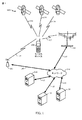
[0003] 非限定的かつ非包括的な態様が、以下の図面を参照して説明され、ここで、別途指定されていない限り、同様の参照番号は、様々な図面全体を通して同様の部分を指す。 [0003] Non-limiting and non-inclusive aspects are described with reference to the following drawings, wherein like reference numerals refer to like parts throughout the various views unless otherwise specified. .
[0013] 簡潔には、特定のインプリメンテーションは、モバイルデバイスにおいて、サーバにモバイルデバイスのロケーションの1つまたは複数のインジケータを送信することと、ロケーションの1つまたは複数のインジケータに少なくとも部分的に基づく推論モデル(an inference model)を表すパラメータをサーバから受信することと、推論モデルを表すパラメータにモバイルデバイスによって取得された1つまたは複数の観測値を適用することに少なくとも部分的に基づいて、モバイルデバイスが複数の候補領域のうちの特定の領域に位置している(located)、または接近していることを決定することと、モバイルデバイスがその特定の領域に位置している、または接近していることを示す要求メッセージをサーバに送信することと、その要求メッセージに少なくとも部分的に基づいて決定されたサーバ測位補助データを受信することと、を備える方法に向けられる。 [0013] Briefly, certain implementations may transmit at a mobile device one or more indicators of a location of the mobile device to a server and at least partially in the one or more indicators of the location. Based at least in part on receiving a parameter representing an inference model from the server and applying one or more observations obtained by the mobile device to the parameter representing the inference model, Determining that the mobile device is located or approaching a particular area of the plurality of candidate areas and that the mobile device is located or approached to that particular area Send a request message to the server indicating that Receiving a server positioning auxiliary data determined based at least in part on message is directed to a method comprising a.
[0014] 別の特定のインプリメンテーションは、ワイヤレス通信ネットワークにメッセージをワイヤレスに送信し、ワイヤレス通信ネットワークからメッセージをワイヤレスに受信するワイヤレストランシーバデバイスと、モバイルデバイスのロケーションの1つまたは複数のインジケータを備える1つまたは複数のメッセージを、ワイヤレストランシーバデバイスを通してサーバに送信することを開始することと、ロケーションの1つまたは複数のインジケータに少なくとも部分的に基づく推論モデルを表すパラメータを備える、トランシーバデバイスにおいてサーバから受信される1つまたは複数のメッセージを取得することと、推論モデルを表すパラメータにモバイルデバイスによって取得された1つまたは複数の観測値を適用することに少なくとも部分的に基づいて、モバイルデバイスが複数の候補領域のうちの特定の領域に位置している、または接近していることを決定することと、モバイルデバイスが特定の領域に位置している、または接近していることを示す要求メッセージを、トランシーバデバイスを通してサーバに送信することを開始することと、要求メッセージに少なくとも部分的に基づいて決定された測位補助データを備える、トランシーバデバイスにおいてサーバから受信される1つまたは複数のメッセージを取得することと、を行う1つまたは複数のプロセッサと、を備えるモバイルデバイスに向けられる。 [0014] Another particular implementation includes a wireless transceiver device that wirelessly sends messages to and receives messages wirelessly from a wireless communication network, and one or more indicators of the location of the mobile device. The server at the transceiver device comprising a parameter representing an inference model based at least in part on initiating transmission of the one or more messages to the server through the wireless transceiver device and the one or more indicators of the location Obtaining one or more messages received from and applying one or more observations obtained by the mobile device to parameters representing the inference model Based at least in part on determining that the mobile device is located in or close to a particular region of the plurality of candidate regions; and the mobile device is located in the particular region; Or a request message indicating approaching is received from the server at the transceiver device comprising initiating transmission to the server through the transceiver device and positioning assistance data determined based at least in part on the request message Is directed to a mobile device comprising: obtaining one or more messages to be performed; and one or more processors performing.
[0015] 別の特定のインプリメンテーションは、モバイルデバイスのロケーションの1つまたは複数のインジケータを備える1つまたは複数のメッセージをサーバに送信することを開始することと、ロケーションの1つまたは複数のインジケータに少なくとも部分的に基づく推論モデルを表すパラメータを備える、ワイヤレストランシーバデバイスにおいて受信されるサーバからの1つまたは複数のメッセージを取得することと、推論モデルを表すパラメータにモバイルデバイスによって取得された1つまたは複数の観測値を適用することに少なくとも部分的に基づいて、モバイルデバイスが複数の候補領域のうちの特定の領域に位置している、または接近していることを決定することと、モバイルデバイスが特定の領域に位置している、または接近していることを示す要求メッセージをサーバに送信することを開始することと、要求メッセージに少なくとも部分的に基づいて決定された測位補助データを備える、ワイヤレストランシーバデバイスにおいてサーバからの1つまたは複数のメッセージを取得することと、を行うように1つまたは複数のプロセッサによって実行可能である機械可読命令を記憶した記憶媒体、を備える物品に向けられる。 [0015] Another particular implementation initiates sending one or more messages comprising one or more indicators of the location of the mobile device to the server, and one or more of the locations Obtaining one or more messages from a server received at the wireless transceiver device comprising a parameter representing an inference model based at least in part on the indicator, and the parameter representing the inference model obtained by the mobile device Determining that the mobile device is located in or close to a particular area of the plurality of candidate areas based at least in part on applying one or more observations; and The device is located in a specific area, One or more from the server at the wireless transceiver device comprising initiating transmission of a request message indicating proximity to the server and positioning assistance data determined based at least in part on the request message And a storage medium having machine-readable instructions executable by one or more processors to perform the process.
[0016] 別の特定のインプリメンテーションは、サーバにモバイルデバイスのロケーションの1つまたは複数のインジケータを送信するための手段と、ロケーションの1つまたは複数のインジケータに少なくとも部分的に基づく推論モデルを表すパラメータをサーバから受信するための手段と、推論モデルを表すパラメータにモバイルデバイスによって取得された1つまたは複数の観測値を適用することに少なくとも部分的に基づいて、モバイルデバイスが複数の候補領域のうちの特定の領域に位置している、または接近していることを決定するための手段と、モバイルデバイスがその特定の領域に位置している、または接近していることを示す要求メッセージをサーバに送信するための手段と、その要求メッセージに少なくとも部分的に基づいて決定された測位補助データをサーバから受信するための手段と、を備えるモバイルデバイスに向けられる。 [0016] Another particular implementation includes means for transmitting one or more indicators of a location of a mobile device to a server and an inference model based at least in part on the one or more indicators of the location. The mobile device is configured to receive a plurality of candidate regions based at least in part on means for receiving parameters representing the server and applying one or more observations acquired by the mobile device to the parameters representing the inference model. A request message indicating that the mobile device is located or approached in the particular area and means for determining that the mobile device is located or approached in the particular area A means for sending to the server and based at least in part on the request message And means for receiving the positioning aiding data determined from the server Te is directed to a mobile device comprising a.
[0017] 上述のインプリメンテーションが、単に例示的なインプリメンテーションにすぎず、本願請求項に記載の主題が、これらの例示的なインプリメンテーションの任意の特定の態様に必ずしも限定されるわけではないことが理解されるべきである。 [0017] The implementations described above are merely exemplary implementations, and the claimed subject matter is not necessarily limited to any particular aspect of these exemplary implementations. It should be understood that this is not the case.
[0018] 特定のインプリメンテーションにおいて、モバイルデバイスのナビゲーションエンジンは、モバイルデバイスが1つの特定の動作環境にある間の測定値を、モバイルデバイスが異なる環境にあった場合とは異なるように処理し得る。例えば、屋外環境において、ナビゲーションエンジンは、衛星位置システム(SPS:satellite position system)信号の捕捉から取得される疑似レンジ測定値に少なくとも部分的に基づいてナビゲーション状態を推定および/または予測するためにカルマンフィルタ(Kalman filter)を使用し得る。例えば、屋内環境において、ナビゲーションエンジンは、モバイルデバイスにおいて捕捉される屋内信号の特性の測定値に少なくとも部分的に基づいてナビゲーション状態を推定および/または予測するために粒子フィルタを使用し得る。 [0018] In certain implementations, the navigation engine of the mobile device handles measurements while the mobile device is in one particular operating environment differently than if the mobile device were in a different environment. obtain. For example, in an outdoor environment, a navigation engine may use a Kalman filter to estimate and / or predict navigation conditions based at least in part on pseudo range measurements obtained from acquisition of a satellite position system (SPS) signal. (Kalman filter) may be used. For example, in an indoor environment, the navigation engine may use a particle filter to estimate and / or predict navigation conditions based at least in part on measurements of characteristics of indoor signals captured at the mobile device.
[0019] モバイルデバイスがナビゲート可能な異なる領域の至るところを移動すると、その時々にナビゲーションエンジンは、ナビゲーション状態を推定および/または予測するように信号を処理するための関連アプローチの適用間を同様に遷移し得る。例えば、屋内環境と屋外環境との間を遷移する場合、モバイルデバイスのナビゲーションエンジンは、ナビゲーション状態を推定および/または予測するために、SPS信号を捕捉することによって位置フィックスを試みることから、屋内送信機(例えば、IEEE規格802.11のアクセスポイント(AP))からの信号を捕捉しようと試みることへ、またその逆に同様に遷移し得る。しかしながら、通常、測位動作においてSPS信号の使用からWiFi信号の使用へ、またその逆に遷移するための最適条件を決定するための明確な技法がない。また、異なるフィルタリング技法の使用間の急な遷移は、推定および/または予測されたナビゲーション状態における急な「ジャンプ」を誘発し得る。 [0019] As the mobile device moves through different regions that can be navigated, sometimes the navigation engine similarly applies between related approaches for processing signals to estimate and / or predict navigation states. It can transition to. For example, when transitioning between an indoor environment and an outdoor environment, the mobile engine's navigation engine tries to fix the position by capturing the SPS signal to estimate and / or predict the navigation state, so indoor transmission A transition may be made to attempting to acquire a signal from a machine (eg, an IEEE standard 802.11 access point (AP)) and vice versa. However, there is usually no clear technique for determining the optimal conditions for transitioning from using SPS signals to using WiFi signals and vice versa in positioning operations. Also, a sudden transition between the use of different filtering techniques may induce a sudden “jump” in the estimated and / or predicted navigation state.
[0020] ある実施形態によると、モバイルデバイスは、屋内ナビゲーション環境で使用するための測位補助データを取得するためにサーバに接触し得る。モバイルデバイスからのそのような要求は、例えば、エリア内にあると決定されたモバイルデバイスの大まかなロケーションのインジケーションを含み得る。要求される測位補助データは、測位補助データの数個の例を挙げると、例えば、モバイルデバイスが位置しているローカルエリアに関するデジタルマップ、測位動作で使用するための送信機のロケーション、無線ヒートマップデータ(radio heatmap data)、ルーティング可能性グラフ(routeability graphs)、確率ヒートマップデータ(probability heatmap data)を含み得る。 [0020] According to an embodiment, the mobile device may contact a server to obtain positioning assistance data for use in an indoor navigation environment. Such a request from the mobile device may include, for example, an indication of the approximate location of the mobile device that has been determined to be within the area. The required positioning assistance data includes several examples of positioning assistance data, for example, a digital map regarding the local area where the mobile device is located, a transmitter location for use in positioning operations, and a wireless heat map. Data (radio heatmap data), routeability graphs (probability heatmap data) may be included.
[0021] 特定の実施形態において、測位サーバは、ロケーションコンテキスト識別子(LCI:location context identifiers)を記憶し、それを特定の「ロケーションコンテキスト」と関連付け得る。このようなロケーションコンテキストは、例えば、グローバル座標システムにしたがってマッピングされない建物の特定のフロアまたは他の屋内エリアといった、ローカルに定義されるエリアを含み得る。LCIは、いくつかの例を挙げると、例えば、屋内マップ上のルートまたは経路、ローカルであるか、またはロケーションコンテキストに一意である関心ポイント(points of interest)のような、ロケーションコンテキスト上に重ね合わされる追加情報を要求するためのハンドル(handles)として使用され得る。 [0021] In certain embodiments, the positioning server may store location context identifiers (LCI) and associate it with specific "location contexts". Such a location context may include a locally defined area, such as a particular floor of a building or other indoor area that is not mapped according to the global coordinate system. The LCI is superimposed on a location context, such as a route or route on an indoor map, points of interest that are local or unique to the location context, to name a few examples. Can be used as handles to request additional information.
[0022] ある実施形態によると、あるエリア内に移動するモバイルデバイスは、そのエリアに関連付けられた1つまたは複数のLCIを取得するために測位サーバに接触し得る。特定のエリアをカバーしている、または特定のエリアに関係するLCIを取得するために、モバイルデバイスは、最初に、特定のエリアを示す、および/または特定のエリアを表すローカル送信機から情報を受信し得る。例えば、モバイルデバイスは、1つまたは複数のWiFiアクセスポイントから送信される信号からのMAC識別子(MAC ID)および/または同様のものに関連した受信信号強度インジケーション(RSSI)を取得し得る。代替的に、モバイルデバイスは、GPSのような衛星測位システムから送信される信号、および/または、例えば、ロケーション情報を提供することが可能なアプリケーションプログラミングインターフェースからの情報を受信し得る。モバイルデバイスは、次いで、上述したロケーション情報(例えば、MAC ID、RSSI、および/または他のロケーション情報)を提供することによって、問題のエリアと関連付けられた1つまたは複数のLCIを要求するために測位サーバとワイヤレスに通信し得る。測位サーバは、次いで、ロケーションコンテキスト(例えば、建物のフロアまたは他の屋内空間)を決定するためにモバイルデバイスから受信されたそのような情報を使用し、決定されたロケーションコンテキストに関連付けられた1つまたは複数のLCIを提供することによって要求に応答し得る。 [0022] According to an embodiment, a mobile device that moves within an area may contact a positioning server to obtain one or more LCIs associated with the area. In order to obtain an LCI covering or relating to a specific area, the mobile device first obtains information from a local transmitter that indicates the specific area and / or represents the specific area. Can be received. For example, a mobile device may obtain a received signal strength indication (RSSI) associated with a MAC identifier (MAC ID) and / or the like from signals transmitted from one or more WiFi access points. Alternatively, the mobile device may receive signals transmitted from a satellite positioning system such as GPS and / or information from an application programming interface that can provide, for example, location information. The mobile device then requests one or more LCIs associated with the area in question by providing the location information described above (eg, MAC ID, RSSI, and / or other location information). It can communicate wirelessly with a positioning server. The positioning server then uses such information received from the mobile device to determine a location context (eg, a building floor or other indoor space), one associated with the determined location context. Or it can respond to the request by providing multiple LCIs.
[0023] ある実施形態によると、モバイルデバイスは、モバイルデバイスのロケーションを示す1つまたは複数のパラメータをサーバに送信し得る。上で指摘したように、これらのパラメータは、例えば、モバイルデバイスの大まかなロケーションのインジケーションを含み得る。1つ複数のパラメータの受信に応答して、サーバは、モバイルデバイスが、モバイルデバイスのロケーションを複数の所定の候補領域のうちの特定の領域にあるものとして分類するのを補助する特定の推論モデルを示す追加のパラメータを提供し得る。モバイルデバイスは、次いで、モバイルデバイスが複数の候補領域のうちの特定の領域にあるかどうかを推論するために、推論モデルを示すパラメータに、モバイルデバイスにおいて取得された測定値を適用し得る。モバイルデバイスは、次いで、前記モバイルデバイスが特定の環境に位置している、または接近しているという推論を示す要求メッセージをサーバに送信し、その推論に少なくとも部分的に基づいて決定された測位補助データを受信し得る。 [0023] According to an embodiment, the mobile device may send one or more parameters indicating the location of the mobile device to the server. As pointed out above, these parameters may include, for example, a rough location indication of the mobile device. In response to receiving the one or more parameters, the server may identify a particular inference model that assists the mobile device in classifying the location of the mobile device as being in a particular area of the plurality of predetermined candidate areas. An additional parameter may be provided that indicates The mobile device may then apply the measurements obtained at the mobile device to a parameter indicative of the inference model to infer whether the mobile device is in a particular region of the plurality of candidate regions. The mobile device then sends a request message to the server indicating an inference that the mobile device is located in or close to a particular environment, and a positioning aid determined based at least in part on the inference Data can be received.
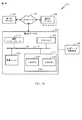
[0024] ある特定のインプリメンテーションにおいて、図1に示されているように、モバイルデバイス100は、衛星測位システム(SPS)衛星160からSPS信号159を受信または捕捉し得る。いくつかの実施形態において、SPS衛星160は、GPSまたはガリレオ衛星システムのような、1つのグローバルナビゲーション衛星システム(GNSS)からのものであり得る。他の実施形態において、SPS衛星は、限定ではないが、GPS、ガリレオ、グロナス、または北斗(コンパス)衛星システムのような、複数のGNSSからのものであり得る。他の実施形態において、SPS衛星は、数個の例を挙げると、例えば、広域補強システム(WAAS:Wide Area Augmentation System)、欧州静止衛星ナビゲーションオーバーレイサービス(EGNOS:European Geostationary Navigation Overlay Service)、準天頂衛星システム(QZSS:Quasi-Zenith Satellite System)のような、いずれか1つのいくつかの領域ナビゲーション衛星システム(RNSS)からのものであり得る。
[0024] In certain implementations, as shown in FIG. 1, the
[0025] 加えて、モバイルデバイス100は、ワイヤレス通信ネットワークに無線信号を送信し、ワイヤレス通信ネットワークから無線信号を受信し得る。1つの例において、モバイルデバイスは、ワイヤレス通信リンク123を介して、基地局トランシーバ110にワイヤレス信号を送信する、または基地局トランシーバ110からワイヤレス信号を受信することによって、セルラ通信ネットワークと通信し得る。同様に、モバイルデバイス100は、ワイヤレス通信リンク125を介して、ローカルトランシーバ115にワイヤレス信号を送信する、またはローカルトランシーバ115からワイヤレス信号を受信し得る。
[0025] In addition, the
[0026] 特定のインプリメンテーションにおいて、ローカルトランシーバ115は、ワイヤレス通信リンク123を介した基地局トランシーバ110によって可能にされるレンジでよりも、ワイヤレス通信リンク125を介した、より短いレンジで、モバイルデバイス100と通信するように構成され得る。例えば、ローカルトランシーバ115は、屋内環境に配置され得る。ローカルトランシーバ115は、ワイヤレスローカルエリアネットワーク(WLAN、例えば、IEEE規格802.11ネットワーク)またはワイヤレスパーソナルエリアネットワーク(WPAN、例えば、Bluetooth(登録商標)ネットワーク)へのアクセスを提供し得る。別の例示的なインプリメンテーションにおいて、ローカルトランシーバ115は、セルラ通信プロトコルに従うリンク125上での通信を容易にすることが可能なフェムトセルトランシーバを備え得る。当然ながら、これらは、ワイヤレスリンクを介してモバイルデバイスと通信することができるネットワークの例にすぎないことが理解されるべきであり、本願請求項に記載の主題は、この点に関して限定されるものではない。
[0026] In certain implementations, the
[0027] 特定のインプリメンテーションにおいて、基地局トランシーバ110およびローカルトランシーバ115は、リンク145を通したネットワーク130を介してサーバ140、150、および155と通信し得る。ここで、ネットワーク130は、有線リンクまたはワイヤレスリンクの任意の組み合わせを備え得る。特定のインプリメンテーションにおいて、ネットワーク130は、ローカルトランシーバ115または基地局トランシーバ150を通したモバイルデバイス100とサーバ140、150、または155との間の通信を容易にすることが可能なインターネットプロトコル(IP)インフラストラクチャを備え得る。別のインプリメンテーションにおいて、ネットワーク130は、モバイルデバイス100とのモバイルセルラ通信を容易にするために、例えば、基地局コントローラまたはマスタ切り替えセンタ(図示せず)のようなセルラ通信ネットワークインフラストラクチャを備え得る。
In certain implementations,
[0028] 特定のインプリメンテーションにおいて、および以下に説明されるように、モバイルデバイス100は、モバイルデバイス100の位置フィックスまたは推定されたロケーションを計算することが可能な回路類および処理リソースを有し得る。例えば、モバイルデバイス100は、4つ以上のSPS衛星160までの疑似レンジ測定値に少なくとも部分的に基づいて位置フィックスを計算し得る。ここで、モバイルデバイス100は、4つ以上のSPS衛星160から捕捉された信号159における疑似雑音コード位相検出に少なくとも部分的に基づいて、そのような疑似レンジ測定値を計算し得る。特定のインプリメンテーションにおいて、モバイルデバイス100は、数個の例を挙げると、例えば、アルマナック(almanac)、エフェメリスデータ(ephemeris data)、ドプラー検索ウィンドウ(Doppler search windows)を含む、SPS衛星160によって送信される信号159の捕捉を支援するための測位補助データをサーバ140、150、または155から受信し得る。
[0028] In certain implementations and as described below, the
[0029] 他のインプリメンテーションにおいて、モバイルデバイス100は、例えば、アドバンストフォワード三点測量(AFLT:advanced forward trilateration)、および/または観測到来時間差(OTDOA:observed time difference of arrival)のような、いくつかの技法のうちの任意の1つを使用して、既知のロケーション(例えば、基地局トランシーバ110のような)に固定された地上送信機から受信される信号を処理することによって位置フィックスを取得し得る。これらの特定の技法において、既知のロケーションに固定された送信機によって送信され、かつモバイルデバイス100において受信されるパイロット信号に少なくとも部分的に基づいて、モバイルデバイス100から既知のロケーションに固定されたそのような地上送信機のうちの3つ以上までのレンジが測定され得る。ここで、サーバ140、150、または155は、AFLTおよびOTDOAのような測位技法を容易にするために、例えば、地上送信機のロケーションおよびアイデンティティを含む測位補助データをモバイルデバイス100に提供することが可能であり得る。例えば、サーバ140、150、または155は、特定の領域または複数領域におけるセルラ基地局のロケーションおよびアイデンティティを示す基地局アルマナック(BSA:a base station almanac)を含み得る。
[0029] In other implementations, the
[0030] 屋内環境または都市キャニオン(urban canyon)といった特定の環境において、モバイルデバイス100は、十分な数のSPS衛星160から信号159を捕捉することが可能ではないこともあるか、または位置フィックスを計算するのにAFLTあるいはOTDOAを行わないこともある。代替的に、モバイルデバイス100は、ローカル送信機(例えば、既知のロケーションに配置されたWLANアクセスポイント)から捕捉された信号に少なくとも部分的に基づいて位置フィックスを計算することが可能であり得る。例えば、モバイルデバイスは、既知のロケーションに配置された3つ以上の屋内の地上ワイヤレスアクセスポイントまでのレンジを測定することによって位置フィックスを取得し得る。このようなレンジは、例えば、そのようなアクセスポイントから受信された信号からMAC IDアドレスを取得することと、そのようなアクセスポイントから受信された信号の1つまたは複数の特性、例えば、受信信号強度(RSSI)、ラウンドトリップ時間(RTT)、または到来角(AOA:angle of arrival)といったものを測定することによって、アクセスポイントまでのレンジ測定値を取得することと、によって測定され得る。代替的なインプリメンテーションにおいて、モバイルデバイス100は、屋内エリア内の特定のロケーションにおける予想されるRSSIおよび/またはRTTシグネチャ(signatures)を示す無線ヒートマップに、捕捉された信号の特性を適用することによって屋内位置フィックスを取得し得る。特定のインプリメンテーションにおいて、無線ヒートマップは、ローカル送信機のアイデンティティ(例えば、ローカル送信機から捕捉された信号から認識可能であるMADアドレス)、識別されたローカル送信機によって送信される信号からの予想されるRSSI、識別された送信機からの予想されるRTT、および場合によっては、これら予想されるRSSIまたはRTTからの標準偏差を関連付け得る。無線ヒートマップは、関心エリアにわたる(例えば、LCIによってカバーされるエリアにわたる)別々のロケーションにおけるグリッドポイント(gridpoint)を(例えば、設定された間隔で)定義し得る。任意の特定のグリッドポイントにおいて、無線ヒートマップは、1つまたは複数の既知のAPによって送信される信号に関する予想されるシグネチャ値(signature values)を関連付け得る。しかしながら、これらが、無線ヒートマップに記憶され得る値の例にすぎず、また、本願請求項に記載の主題が、この点において限定されるものではないことが理解されるべきである。
[0030] In certain environments, such as indoor environments or urban canyons, the
[0031] 特定のインプリメンテーションにおいて、モバイルデバイス100は、サーバ140、150、または155から、屋内測位動作のための測位補助データを受信し得る。例えば、このような測位補助データは、例えば、測定されたRSSIおよび/またはRTTに少なくとも部分的に基づいて既知のロケーションに配置された送信機までのレンジを測定することを可能にする、これらの送信機のロケーションおよびアイデンティティを含み得る。屋内測位動作を支援する他の測位補助データは、数個の例を挙げると、無線ヒートマップ、磁気ヒートマップ、送信機のロケーションおよびアイデンティティ、ルーティング可能性グラフを含み得る。モバイルデバイスによって受信される他の測位補助データは、例えば、表示するため、またはナビゲーションを支援するための屋内エリアのローカルマップを含み得る。このようなマップは、モバイルデバイス100が特定の屋内エリアに入るとモバイルデバイス100に提供され得る。このようなマップは、ドア、廊下、通路、壁、等のような屋内特徴、トイレ、公衆電話、部屋名、店舗、等のような関心ポイントを示し得る。このようなマップを取得して表示することによって、モバイルデバイスは、追加のコンテキストをユーザに提供するために、表示されたマップ上にモバイルデバイス(およびユーザ)の現在のロケーションをオーバーレイし得る。
[0031] In certain implementations, the
[0032] 1つのインプリメンテーションにおいて、ルーティング可能性グラフおよび/またはデジタルマップは、モバイルデバイス100が、屋内エリア内の、また物理的な障害物(例えば、壁)および通路(例えば、壁にある出入り口)の影響を受けやすい、ナビゲーションのための実現可能なエリアを定義するのを補助し得る。ここで、ナビゲーションのための実現可能なエリアを定義することによって、モバイルデバイス100は、動きモデル(a motion model)にしたがって(例えば、粒子フィルタおよび/またはカルマンフィルタにしたがって)ロケーションおよび/または動きの道筋を推定するための測定値をフィルタリングするアプリケーションを支援するための制約(constraints)を適用し得る。ローカル送信機からの信号の捕捉から取得された測定値に加えて、特定の実施形態によると、モバイルデバイス100は、さらに、モバイルデバイス100のロケーションまたは動き状態を推定する際に、慣性センサ(例えば、加速度計、ジャイロスコープ、磁力計、等)、および/または環境センサ(例えば、温度センサ、マイクロフォン、気圧センサ、周辺光センサ、カメライメージャ、等)から取得された測定値または推論に動きモデルを適用し得る。
[0032] In one implementation, the routable graph and / or the digital map are such that the
[0033] ある実施形態によると、モバイルデバイス100は、例えば、ユニバーサルリソースロケータ(URL)の選択を通して屋内補助データを要求することによって、サーバ140、150、または155を通して屋内測位補助データにアクセスし得る。特定のインプリメンテーションにおいて、サーバ140、150、または155は、数個の例を挙げると、例えば、建物のフロア、病院の棟、空港のターミナル、大学キャンパスの複数部分、大型ショッピングモールの複数エリア、を含む多くの異なる屋内エリアをカバーする屋内測位補助データを提供することが可能であり得る。また、モバイルデバイス100のメモリリソースおよびデータ送信リソースは、サーバ140、150、または155によってサービスされるすべてのエリアに関する屋内測位補助データの受信を非実用的または実現不可能にすることもあり、モバイルデバイス100からの屋内測位補助データを求める要求は、モバイルデバイス100のロケーションの大まかな推定またはコース推定を示し得る。モバイルデバイス100は、次いで、モバイルデバイス100のロケーションの大まかな推定またはコース推定を含む、および/またはその推定に近接するエリアをカバーする屋内測位補助データが提供され得る。
[0033] According to certain embodiments, the
[0034] 上で指摘したように、モバイルデバイス100からの屋内測位補助データを求める要求は、ロケーションコンテキスト識別子(LCI)を指定し得る。このようなLCIは、例えば、グローバル座標システムにしたがってマッピングされない建物の特定のフロアまたは他の屋内エリアといった、ローカルに定義されるエリアと関連付けられ得る。特定のインプリメンテーションにおいて、複数の別々のLCIによってカバーされる領域は、別個のものであり得るか、またはオーバーラップしていることもある。1つの例示的なサーバアーキテクチャにおいて、エリアに入ると、モバイルデバイス100は、エリアまたは隣接するエリアをカバーする1つまたは複数のLCIを提供するようにサーバ140といった第1のサーバに要求し得る。ここで、モバイルデバイス100からの要求は、モバイルデバイス100の大まかなロケーションを含み得、その結果、要求されたサーバは、既知のLCIによってカバーされるエリアとその大まかなロケーションを関連付けて、次いで、それらのLCIをモバイルデバイス100に送信することができる。モバイルデバイス100は、次いで、上述されたLCIのうちの1つまたは複数(例えば、デジタルマップ、ビーコン送信機のロケーションおよび識別、無線ヒートマップまたはルーティング可能性グラフ)によって識別可能なエリアに関係した測位補助データを取得するための、サーバ150といった異なるサーバとの後続のメッセージにおいて、受信されたLCIを使用し得る。
[0034] As pointed out above, a request for indoor positioning assistance data from the
[0035] 上で指摘したように、ロケーションサーバは、モバイルデバイス100がそこに位置している、または接近していると予想される特定の領域に合わせられた測位補助をモバイルデバイス100に提供し得る。このように、それは、そのモバイルデバイス100が特定の領域内に位置している、または接近していると推論するのに有用であり得る。ある例示的なインプリメンテーションにおいて、モバイルデバイス100は、モバイルデバイス100のロケーションを示す1つまたは複数のパラメータを含む1つまたは複数のメッセージをロケーションサーバ(例えば、サーバ140、150、または155)に送信し得る。これに応答して、モバイルデバイス100は、モバイルデバイス100が、複数の所定の領域のうちの特定の領域内にある、または接近しているものとしてロケーションを分類することを可能にする推論モデルのパラメータを受信し得る。モバイルデバイス100は、次いで、特定の領域をカバーする測位補助データを求める後続の要求を行い得る。
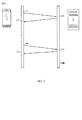
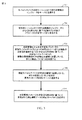
[0035] As pointed out above, the location server provides the
[0036] 図2は、ある実施形態によって、モバイルデバイスとサーバとの間で送信される一連のメッセージを例示する実例的なメッセージフロー図である。図3は、図2に示される一連のメッセージに関連してモバイルデバイスにおいて実行され得る実例的なプロセスのフロー図である。しかしながら、図3に述べられるように行われるアクションは、図2に関連して述べられる詳細によって必ずしも制限されるわけではないことが理解されるべきである。時間202において、モバイルデバイスは、モバイルデバイスのロケーションを示すパラメータを備える1つまたは複数のメッセージをサーバに送信し得る。例えば、ブロック302において、モバイルデバイスは、測位補助データを受信することに関連して、数個の例を提供すると、例えば、最後に(most recently)取得されたSPS位置フィックス、モバイルデバイスにおいて捕捉されたローカル信号から取得されるMACアドレス、ユーザ入力またはデジタルカメラにおいてキャプチャされた画像から導出されるパラメータ、信号強度測定値、環境センサによって取得される測定値を備える1つまたは複数のメッセージをサーバに送信し得る。
[0036] FIG. 2 is an illustrative message flow diagram illustrating a series of messages sent between a mobile device and a server, according to an embodiment. FIG. 3 is a flow diagram of an illustrative process that may be performed at a mobile device in connection with the series of messages shown in FIG. However, it should be understood that the actions performed as described in FIG. 3 are not necessarily limited by the details described in connection with FIG. At
[0037] 時間204において、サーバは、時間202において送信されたメッセージを受信し、それに応答して、推論モデルを示すパラメータを備える1つまたは複数のメッセージをモバイルデバイスに送信し得る。推論モデルを示すこれらのパラメータは、モバイルデバイスが、そのロケーションを、複数の候補領域のうちの特定の領域に位置している、または接近しているものとして分類することを可能にし得る。例えば、以下に説明されるように、モバイルデバイスが、モバイルデバイスのロケーションを含む特定の領域を推論することを可能にする推論モデルは、数個の例を挙げると、例えば、サポートベクトル機械(SVM:support vector machine)、決定木(decision tree)論理、屋内/屋外決定論理、ベイズ分類(Bayes classification)、ナイーブベイズ分類(Naive Bayes classification)のような、いくつかの分類モデルまたは予測モデルのうちの任意の1つを含み得る。モバイルデバイスにおいて取得された測定値または情報に少なくとも部分的に基づいて、推論モデルを示すパラメータは、モバイルデバイスが、複数の候補領域のうちの特定の領域内にある、または接近しているものとしてそのロケーションを正確に分類することを可能にし得る。例えば、モバイルデバイスは、そのロケーションが、屋内エリアであること、屋外エリアであること、屋外エリアに接近している屋内エリアにあること、または屋内エリアに接近している屋外エリアにあることを推論し得る。モバイルデバイスが、例えば、そのロケーションが屋外エリアにあると推論した場合、モバイルデバイスは、SPS信号を捕捉することによって位置フィックスを取得しようと試み得る。これに対して、モバイルデバイスが、そのロケーションが屋内エリアにあると推論した場合、モバイルデバイスは、上述の屋内測位技法のうちの1つまたは複数を使用して、そのロケーションの推定を決定しようと試み得る。代替的に、推論モデルを示すパラメータは、モバイルデバイスが、そのロケーションが特定のLCIによってカバーされる特定の領域内に位置している、または接近している、あるいは、異なるLCIによってカバーされるエリア間を遷移している、等のことを推論することを可能にし得る。これは、モバイルデバイスが、特定のLCIによってカバーされるエリアに合わせられた測位補助データを効率的に要求および取得することを可能にすることができる。
[0037] At
[0038] 時間206において、モバイルデバイスは、時間204においてサーバから送信された推論モデルを表す、特徴付ける、対応する、関連する、および/または示すパラメータを備える1つまたは複数のメッセージを受信し得る。これは、図3のブロック304における実例的な実施形態に例示されている。時間206において受信されたパラメータおよびモバイルデバイスにおいて取得された観測値に少なくとも部分的に基づいて、モバイルデバイスは、モバイルデバイスがそこに位置している、または接近していると推論される特定の領域をカバーする測位補助データを要求する、時間208において送信される要求メッセージをまとめ(formulate)得る。時間208における要求メッセージの送信は、例えば、図3のブロック308にしたがって生じ得る。時間210における要求メッセージの受信に応答して、サーバは、モバイルデバイスのロケーションを含むと推論される、または含むと予測される領域をカバーする、要求された測位補助データを含む1つまたは複数のメッセージを時間210において送信し得る。
[0038] At
[0039] 簡潔にするために、図2は、時間204および210においてモバイルデバイスとメッセージを交換する単一のサーバデバイスを示す。しかしながら、単一の「サーバ」が、第1のデバイスが時間204においてモバイルデバイスとメッセージを交換し、第2のデバイスが時間210においてモバイルデバイスとメッセージを交換する、異なる2つのデバイスとしてインプリメントされ得ることが理解されるべきである。異なる2つのデバイスは、異なる物理的アドレスおよび/またはネットワークアドレスさえも備え得るが、その本願請求項に記載の主題はこの点において限定されるものではない。
[0039] For simplicity, FIG. 2 shows a single server device exchanging messages with the mobile device at
[0040] ブロック306におけるある実施形態によると、時間206と208との間に、モバイルデバイスは、特定の領域(例えば、屋内領域対屋外領域、または特定のLCIによってカバーされるエリア内)にある、または接近しているものとしてモバイルデバイスのロケーションを分類するために、モバイルデバイスによって取得された観測値を推論モデルのパラメータに適用し得る。モバイルデバイスのロケーションが特定の領域にあるという推論は、モバイルデバイスの推定されたロケーションが、高い尤度(例えば、どちらかといえば)を有する特定の領域にあるという決定を必要とし得る。モバイルデバイスのロケーションが特定の領域に接近しているという推論は、例えば、モバイルデバイスのロケーションが、特定の領域に遷移しているという決定を備え得る。例えば、速度ベクトルを伴うモバイルデバイスのロケーションの推定は、モバイルデバイスが、近い将来に特定の領域に位置しそうであるということを示し得る。別の例において、観測された傾向は、モバイルデバイスが特定の領域(例えば、観測された過去の行動および/または習慣に加えたロケーション)に位置しそうであることを示し得る。推論モデルのパラメータに適用される観測値は、例えば、時間208より前にモバイルデバイスによって取得された任意の観測値を含み得、推論モデルに適用され得る観測値の数個の例を提供すると、例えば、ローカルアクセスポイント(例えば、IEEE規格802.11またはBluetooth(登録商標))から捕捉された信号からのRTTまたはRSSI測定値、最後のSPS位置フィックス、慣性または環境センサから取得された測定値、カメラ画像を含む。1つのインプリメンテーションにおいて、ブロック304において受信された推論モデルを示す受信されたパラメータは、LCIの各々のためのAPのMACアドレスおよびLCIに適用可能な推論モデルを示すパラメータのリストを含み得る。1つの例示的なアプリケーションにおいて、モバイルデバイスは、LCIによってカバーされるエリアにあるものとしてモバイルデバイスのロケーションを分類するために、そのLCIによってカバーされるエリアにサービス提供する1つまたは複数のAPから送信される信号を単純に捕捉し得る。言い換えると、LCIによってカバーされる特定のエリアにサービス提供するAPを識別するMACアドレスを有する信号を捕捉することによって、モバイルデバイスが特定のエリアに位置していることが推論され得る。しかしながら、これらが、推論モデルを表す、示す、関連する、対応する、またはそうでなければ特徴付けることができるパラメータの例にすぎないことが理解されるべきであり、本願請求項に記載の主題はこの点に関して限定されるものではない。
[0040] According to certain embodiments at
[0041] サーバからモバイルデバイスに送信される推論モデルを示すパラメータは、推論モデルのサイズまたはスケールに少なくとも部分的に基づいて、増加する量のリソース(例えば、メモリ容量、メッセージ送信帯域幅、電池リソース、等)を消費し得る。このようなサイズおよびスケールは、例えば、分類プロセスにおいて評価される多くの特徴によって決定され得る。したがって、多くの特徴を、最も信頼できるもの、または確定的であるものに減少させると、推論モデルのパフォーマンスを著しく犠牲にすることなくモバイルデバイスの処理に対する影響を低減することができる。 [0041] The parameter indicative of the inference model transmitted from the server to the mobile device is based on at least partly the size or scale of the inference model, and an increasing amount of resources (eg, memory capacity, message transmission bandwidth, battery resource). , Etc.). Such size and scale can be determined, for example, by a number of features that are evaluated in the classification process. Thus, reducing many features to be the most reliable or deterministic can reduce the impact on mobile device processing without significantly sacrificing the performance of the inference model.
[0042] 本明細書に説明されるように、ブロック306において、モバイルデバイスは、モバイルデバイスが特定のLCIに、または特定のLCIの外に位置していることを推論するために、あるいは、モバイルデバイスが特定のLCIの中に遷移しているかその外に遷移しているかどうかを予測するために、推論モデルに観測値(例えば、RSSIまたはRTT測定値)を適用し得る。これは、(例えば、カルマンフィルタまたは粒子フィルタを使用して)モバイルデバイスの動き状態をモデル化することによって、単一の時期から適用された観測値または一連の観測値に少なくとも部分的に基づいて決定され得る。特定のインプリメンテーションにおいて以下で指摘されるように、RSSIヒートマップ内の予想されるシグネチャ値は、モバイルデバイスのロケーションの分類(例えば、屋内、屋外、特定のLCI内、等)を推論または予測するために、モデル化された動き状態および/または観測値に適用され得る規則のセットをまとめるように処理され得る。
[0042] As described herein, at
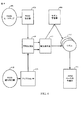
[0043] ある実施形態によると、時間204においてサーバによって送信される推論モデルを示すパラメータは、「オフライン」で、または分類属性および特徴が定義され得る学習段階において導出され得る。このような推論モデルは、上述のように、モバイルデバイスが、特定の領域(例えば、屋内対屋外、または複数のLCIのうちの1つ)にある、または接近しているものとしてモバイルデバイスのロケーションを分類することを可能にし得る。図4は、上述のように、モバイルデバイスが特定の領域内に位置しているか接近しているかどうかを決定する際に、モバイルデバイスによって適用されることになる推論モデルを示すパラメータを生成するためのプロセスのフロー図である。図4に述べられるアクションおよびプロセスは、サーバ(例えば、サーバ140、150、または155)のようなコンピューティングプラットフォームによって行われ得る。この特定の例示的なインプリメンテーションにおいて、推論モデルのこのようなパラメータは、ヒートマップモデル(HMM)ベースの予測子414を備え得る。しかしながら、これが、特定の実施形態にしたがった推論モデルを示すパラメータの例にすぎないことが理解されるべきであり、本願請求項に記載の主題は、この点に関して限定されるものではない。
[0043] According to an embodiment, parameters indicative of the inference model sent by the server at
[0044] 特定の例示された例において、RSSI抽出器404は、RSSIヒートマップ値402を処理して抽出されたRSSI特徴を提供し得る。上で指摘したように、RSSIヒートマップ値402は、エリアをカバーする特定のポイント(例えば、エリアをカバーするグリッドポイント)を基準とした予想されるRSSIシグネチャ値を備え得る。プリプロセッサ420は、(例えば、クラウドソースのモバイルデバイス観測値から取得された)RSSI読み取り値(readings)または測定値418を処理して特徴生成器(features generator)408に入力を提供し得る。RSSI読み取り値または測定値418は、ペアリングされ得るか、または取得されたRSSI読み取り値または測定値と同時に起こるロケーションのグラウンドトルース測定値(ground-truth measurements)を基準とし得る。RSSI抽出器404からの抽出およびプリプロセッサ420からの前処理されたRSSI読み取り値に少なくとも部分的に基づいて、特徴生成器408は、推論モデルに使用されることになる、属性選択器412によって選択され得る特徴を表す属性を提供し得る。属性選択器は、分類モデルに組み込まれることになる最も信頼できる属性を選択し、信頼できない分類またはスプリアス(spurious)の分類につながる属性を省き得る。ある実施形態によると、RSSI抽出器404は、無線ヒートマップにおいて定義されたグリッドポイントの特徴を抽出し得る。1つのインプリメンテーションにおいて、特定のグリッドポイントロケーションは、屋内または屋外のような特定の領域にあるものとして分類され得る。しかしながら、これが、モバイルデバイスのロケーションを分類する使用のために抽出され得る特徴の例にすぎないことが理解されるべきであり、本願請求項に記載の主題はこの点に関して限定されるものではない。
[0044] In certain illustrated examples, RSSI extractor 404 may process RSSI heat map value 402 to provide extracted RSSI features. As pointed out above, the RSSI heat map value 402 may comprise an expected RSSI signature value relative to a particular point covering the area (eg, a grid point covering the area). The
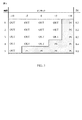
[0045] 本明細書の特定のインプリメンテーションにおいて説明されるように、APは、IEEE規格802.11のAPに限定されるものではなく、例えば、Bluetooth(登録商標)トランシーバまたはフェムトセルトランシーバも含み得る。APが屋内環境に位置し得る特定のシナリオにおいて、そのような屋内環境の外にあるモバイル受信機は、依然として、屋内APから送信される信号を検出、捕捉、および測定し得る。しかしながら、屋外環境で受信および捕捉される信号の強度は著しく低いこともある。特定のインプリメンテーションにおいて、ロケーションは、そのロケーションにある特定のAPから受信された信号の強度に少なくとも部分的に基づいて、屋内または屋外にあるものとして分類され得る。例示の目的で提示された特定の例において、以下の表1は、特定のアクセスポイント(AP1、AP2、またはAP3として図示)によって送信された信号からの予想されるRSSIシグネチャ値を含むグリッドポイント関する、RSSI抽出器404によって抽出される例示的な特徴、およびそれらグリッドポイントのロケーションの分類を示す。 [0045] As described in certain implementations herein, an AP is not limited to an IEEE standard 802.11 AP, for example, a Bluetooth® transceiver or a femtocell transceiver. May be included. In certain scenarios where the AP may be located in an indoor environment, mobile receivers outside such an indoor environment may still detect, capture, and measure signals transmitted from the indoor AP. However, the strength of signals received and captured in an outdoor environment can be significantly lower. In a particular implementation, a location may be classified as being indoors or outdoors based at least in part on the strength of signals received from a particular AP at that location. In a specific example presented for illustrative purposes, Table 1 below relates to a grid point that includes an expected RSSI signature value from a signal transmitted by a particular access point (shown as AP1, AP2, or AP3). , Shows exemplary features extracted by RSSI extractor 404, and the classification of the locations of those grid points.

[0046] 上の特定の例において、内側環境にあることが知られているグリッドポイントにおけるAP1、AP2、およびAP3から受信された信号の予想される強度が、外側環境にあることが知られているグリッドポイントにおいて受信された信号の予想される強度よりも実質的に高いことが観測され得る。表1に示された特徴を補完するために、プリプロセッサ420は、以下の表2に要約されたRSSI読み取り値418から追加の特徴を抽出し得る。
[0046] In the specific example above, the expected strength of the signals received from AP1, AP2, and AP3 at grid points known to be in the inner environment is known to be in the outer environment. It can be observed that it is substantially higher than the expected strength of the signal received at a grid point. To complement the features shown in Table 1, the
[0047] ここで、しきい値の信号強度は、−70dBおよび−90dBに設定される。しかしながら、これらが、適用されることができる例示的なしきい値にすぎず、また、本願請求項に記載の主題が、この点において限定されるものではないことが理解されるべきである。内側または外側にあると知られている特定のロケーションで、しきい値レベルの受信信号強度を有する信号の数がカウントされ得る。ある特定のしきい値より上の受信信号強度を有する捕捉された信号の総数に少なくとも部分的に基づいて、モバイルデバイスのロケーションは、内側領域または外側領域にあるものとして分類され得る。 Here, the signal strength of the threshold is set to −70 dB and −90 dB. However, it is to be understood that these are merely exemplary thresholds that can be applied, and that claimed subject matter is not limited in this respect. At a particular location known to be inside or outside, the number of signals having a threshold level of received signal strength may be counted. Based at least in part on the total number of captured signals having received signal strength above a certain threshold, the location of the mobile device may be classified as being in the inner region or the outer region.
[0048] 上記推論モデルの特定の例は、モバイルデバイスのロケーションを、他の領域とは別個の領域(例えば、屋内対屋外、1つの特定のLCI対別のLCI内)であるものとして分類し得る。しかしながら、1つの代替的なインプリメンテーションにおいて、推論モデルは、モバイルデバイスが特定のエリア内に位置している、または接近しているという尤度または確率(例えば、モバイルデバイスが屋内環境にある、または特定のLCI内に位置しているという確率または尤度)を計算し得る。 [0048] A specific example of the above inference model classifies the location of a mobile device as being an area distinct from other areas (eg, indoor vs. outdoor, within one particular LCI versus another LCI). obtain. However, in one alternative implementation, the inference model is the likelihood or probability that the mobile device is located in or close to a particular area (eg, the mobile device is in an indoor environment, Or the probability or likelihood of being within a particular LCI).
[0049] 特定のインプリメンテーションにおいて、RSSI無線ヒートマップ内の予想されるシグネチャ値は、現場のAPによって実際に適用される送信電力から外れ得る問題の信号を送信するようにAPにおいて適用される特定の送信電力を仮定し得る。加えて、特定のインプリメンテーションにおいて、異なるモバイルデバイス受信機は、ローカルAPから捕捉された信号に異なる利得を適用し得る。このように、同じロケーションにおける異なるモバイルデバイス受信機によって捕捉された信号のRSSI値は、異なるモバイルデバイス受信機によって適用される異なる受信機利得に少なくとも部分的に基づいて変わり得る。ここで、モバイル受信機において適用される利得の変動および/または送信電力の変動(および、誤って置かれたAP、マルチパスAP、または予想されるRSSIヒートマップシグネチャ値を計算するために使用される不正確な伝搬モデルのような他のファクタ)は、特定のロケーションに関する無線ヒートマップ内の予想されるRSSIシグネチャ値と測定されたRSSIとの間のオフセットの一因となり得る。特定のインプリメンテーションにおいて、時間にわたって、モバイルデバイスは、そのようなオフセットを(例えば、グラウンドトルース観測値、および無線ヒートマップ内の予想されるRSSIシグネチャ値と測定されたRSSIの比較に基づいて)推定し、予想されるRSSIシグネチャ値に測定されたRSSIを将来適用するためにオフセットをキャッシュに格納し得る。 [0049] In a particular implementation, the expected signature value in the RSSI radio heat map is applied at the AP to transmit a signal of interest that may deviate from the transmit power actually applied by the field AP. A specific transmission power may be assumed. In addition, in certain implementations, different mobile device receivers may apply different gains to signals acquired from the local AP. In this way, the RSSI values of signals captured by different mobile device receivers at the same location may vary based at least in part on different receiver gains applied by different mobile device receivers. Here, it is used to calculate gain variation and / or transmission power variation (and misplaced AP, multipath AP, or expected RSSI heatmap signature value applied at the mobile receiver. Other factors such as inaccurate propagation models) may contribute to the offset between the expected RSSI signature value in the wireless heatmap for the particular location and the measured RSSI. In certain implementations, over time, the mobile device may have such an offset (eg, based on ground truth observations and expected RSSI signature values in the wireless heatmap compared to measured RSSIs). The offset may be stored in the cache for future estimation and application of the measured RSSI to the expected RSSI signature value.
[0050] 別のインプリメンテーションにおいて、特定のモバイルデバイスおよび特定のAPに関するオフセットは、特定のモバイルデバイスが屋内会場に入るより前に推定され得る。例えば、建物に入るより前に、モバイルデバイスは、LCI(例えば、屋外部分に延在するカバレッジを有するLCI)によってカバーされるエリア内の正確なGNSS位置フィックスを取得し得る。位置フィックスを取得するのと同時に、モバイルデバイスは、RSSIを測定するために、特定のAPによって送信される信号を捕捉し得る。モバイルデバイスは、測定されたRSSIと、GNSS位置フィックスによって決定されたモバイルデバイスの推定されたロケーションとを含む1つまたは複数のメッセージをサーバに送信し得る。サーバは、次いで、受信機利得またはオフセット値として差分を計算するために、(例えば、RSSIヒートマップグリッドポイントから位置フィックスによって決定された推定されたロケーションまで外挿または内挿された)無線ヒートマップからの予想されるRSSIシグネチャと測定されたRSSIを比較し得る。計算された受信機利得またはオフセット値は、次いで、サーバからモバイルデバイスへの返答メッセージで送信され得る。モバイルデバイスは、次いで、(例えば、屋内と屋外との間の遷移を検出するために)本明細書に説明される分類器(classifiers)と共に受信機利得またはオフセットを採用し得る。 [0050] In another implementation, the offset for a particular mobile device and a particular AP may be estimated before the particular mobile device enters the indoor venue. For example, prior to entering a building, the mobile device may obtain an accurate GNSS location fix in an area covered by LCI (eg, LCI with coverage extending to an outdoor portion). Concurrently with obtaining the position fix, the mobile device may acquire a signal transmitted by a particular AP to measure RSSI. The mobile device may send one or more messages to the server that include the measured RSSI and the estimated location of the mobile device determined by the GNSS position fix. The server then wireless heatmap (eg, extrapolated or interpolated from the RSSI heatmap grid point to the estimated location determined by the position fix) to calculate the difference as a receiver gain or offset value. The expected RSSI signature from and the measured RSSI may be compared. The calculated receiver gain or offset value can then be sent in a reply message from the server to the mobile device. The mobile device may then employ receiver gains or offsets with classifiers described herein (eg, to detect transitions between indoors and outdoors).
[0051] 無線ヒートマップ内の予想されるRSSIシグネチャ値からの、測定されたRSSIのオフセットにおける不確実性が、関心領域にある、または接近しているものとしてモバイルデバイスを分類する推論における確実性または正確性に影響を及ぼし得ることが認められ得る。1つのインプリメンテーションにおいて、モバイルデバイスのロケーションは、内側(または屋内)、外側(または、屋外)、または境界(例えば、決定的に内側でも外側でもない)にあると分類され得る。ある実施形態によると、確率推論モデルは、RSSIを測定するための捕捉された信号に適用される受信機利得または「オフセット」に少なくとも部分的に基づいて、モバイルデバイスが屋内領域に位置しているか屋外領域に位置しているかどうかに関する推論を調節し得る。 [0051] Uncertainty in the inference that the uncertainty in the measured RSSI offset from the expected RSSI signature value in the wireless heat map classifies the mobile device as being in or close to the region of interest Or it can be seen that accuracy can be affected. In one implementation, the location of the mobile device may be classified as being inside (or indoor), outside (or outdoors), or border (eg, not critically inside or outside). According to an embodiment, the probabilistic inference model is based on whether the mobile device is located in an indoor area based at least in part on a receiver gain or “offset” applied to the captured signal for measuring RSSI. Inferences regarding whether or not located in an outdoor area may be adjusted.
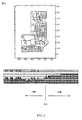
[0052] 図5に例示されている特定のインプリメンテーションにおいて、可能な5つの別々のオフセットが、時間1〜5において、−10dB、−5dB、0dB、+5dB、および+10dBとして識別されている。例えば、時間1において、モバイルデバイスのロケーションは、5つの可能なオフセットのうち4つに関して屋外領域にあると分類され得る。モバイルデバイスが屋内エリアにあるという推論された確率または尤度は、0.2と推論され得る。時間4までに、モバイルデバイスのロケーションは、5つの可能なオフセットのうち3つに関して屋外領域にあると分類され得る。モバイルデバイスが屋内エリア内にあるという推論された確率または尤度は、次いで、0.4に上がり得る。時間5までに、モバイルデバイスのロケーションは、5つの可能なオフセットのうち4つに関して屋内エリアにあると分類され得る。モバイルデバイスが屋内エリアにあるという推論された確率または尤度は、次いで、0.8に上がり得る。ここで、モバイルデバイスが屋内エリア内にあるという増加する推論された確率は、モバイルデバイスのロケーションが、時間1〜時間5に屋内環境に向かって移動する傾向にあることを示唆し得ることがさらに認められ得る。マップが内部領域および外部領域を示す図6に、同様の例が例示されている。矢印は、屋内部分からのモバイルデバイスの移動と屋外部分への遷移を例示している。アンサンブル予測アルゴリズムを適用すると、モバイルデバイスのロケーションは、屋内領域から離れて屋外領域に向かって遷移していると予測され得る。
[0052] In the particular implementation illustrated in FIG. 5, five possible separate offsets are identified as -10 dB, -5 dB, 0 dB, +5 dB, and +10 dB at times 1-5. For example, at
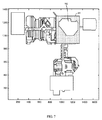
[0053] 特定のシナリオにおいて、建物の内部部分で測位を行うことは、屋外領域で測位を行うのと同様に挙動し得る。例えば、内部の中庭、内部の縦穴(interior well)、等におけるロケーションは、建物の他の部分からのAP送信のレンジ外にあり得る。このように、このような内部部分に利用可能な信頼できるヒートマップデータがいずれも存在しないこともある。ある実施形態によると、推論モデルを発展させるためのトレーニング(training)は、建物をカバーするエリアの限られた部分だけからのヒートマップ値に依存し得る。図7は、内部部分702を含む建物の内部のマップであり、ここにおいて、屋内測位技法はうまく働かないこともある。部分702は、境界ボックスの境界を定めることによって部分704から離され得る。特定の例において、部分704をカバーするヒートマップデータは、(例えば、ナイーブベイズ、決定木、またはSVMモデルを使用して)推論モデルをトレーニングする際に使用するために分離され得る(例えば、部分704の外側の部分を除外する)。正確性におけるさらなる改良は、情報利得の基準(an information gain measure)に少なくとも部分的に基づいて特徴をランク付けすることによって達成され得る。図8に示されている特定の例において、複数のAPのMACアドレスは、最も適するもの(most relevant)から最も適さないもの(least relevant)にランク付けされ得る。ナイーブベイズ(NB)および決定木(DT)ベースの推論モデルを使用して正確な推論を行う対応する確率で示されるように、属性は、正しい推論をもたらす対応する確率を用いて、トップ5、トップ10、等とランク付けされ得る。
[0053] In certain scenarios, positioning in an interior part of a building may behave in the same way as positioning in an outdoor area. For example, locations in the interior courtyard, interior wells, etc. may be outside the range of AP transmissions from other parts of the building. Thus, there may be no reliable heat map data available for such internal parts. According to certain embodiments, training to develop an inference model may depend on heat map values from only a limited portion of the area covering the building. FIG. 7 is a map of the interior of a building that includes an
[0054] 特定のLCIでは、推論モデルに関するパラメータの単一のセットは、一貫した決定境界が想定される場合に不正確であり得る。特定のインプリメンテーションにおいて、LCIによってカバーされるエリアはタイルに分割され得、その結果、推論モデルが特定のタイルのためにトレーニングされ得る。例えば、その中心として特定のロケーションを有するタイルが形成され得る。特定のタイルに関して、分類器は、特定のノードまたはグリッドポイント上の屋内/屋外タグを使用してトレーニングされ得る。GNSS位置フィックスの受信および推論モデルのパラメータを求めるモバイルデバイスからの要求に応答して(例えば、図2の時間204において)、サーバは、推論モデル、GNSS位置フィックスに最も近いタイルのロケーションおよびサイズを示す1つまたは複数のパラメータを含む1つまたは複数のメッセージで応答し得る。モバイルデバイスは、次いで、モバイルデバイスのロケーションを屋内または屋外であると分類するために、推論モデルを示す送信されたパラメータを使用し得る。モバイルデバイスがタイルによってカバーされるエリアを出ると、モバイルデバイスは、推論モデル、別のタイルのロケーションおよびサイズを示すパラメータを求める新たな要求をサーバに送信し得る。
[0054] For a particular LCI, a single set of parameters for an inference model may be inaccurate if a consistent decision boundary is assumed. In a particular implementation, the area covered by the LCI can be divided into tiles so that the inference model can be trained for a particular tile. For example, a tile having a specific location as its center can be formed. For a particular tile, the classifier can be trained using indoor / outdoor tags on a particular node or grid point. In response to receiving the GNSS position fix and requesting the parameters of the inference model (eg, at
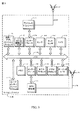
[0055] 図9は、ある実施形態によるモバイルデバイスの概略図である。モバイルデバイス100(図1)は、図9に示されているモバイルデバイス1100の1つまたは複数の特徴を備え得る。ある特定の実施形態において、モバイルデバイス1100は、また、ワイヤレス通信ネットワークにわたってアンテナ1122を介してワイヤレス信号1123を送信および受信することが可能である、ワイヤレストランシーバ1121を備え得る。ワイヤレストランシーバ1121は、ワイヤレストランシーババスインターフェース1120によってバス1101に接続され得る。ワイヤレストランシーババスインターフェース1120は、いくつかの実施形態において、ワイヤレストランシーバ1121と少なくとも部分的に一体化され得る。いくつかの実施形態は、数個の例を挙げると、例えば、WiFi、CDMA、WCDMA(登録商標)、LTE(登録商標)、およびBluetooth(登録商標)のような、対応する複数のワイヤレス通信規格にしたがって信号を送信および/または受信することを可能にするために、複数のワイヤレストランシーバ1121およびワイヤレスアンテナ1122を含み得る。
[0055] FIG. 9 is a schematic diagram of a mobile device according to an embodiment. Mobile device 100 (FIG. 1) may comprise one or more features of mobile device 1100 shown in FIG. In certain embodiments, mobile device 1100 can also comprise a
[0056] モバイルデバイス1100は、また、SPSアンテナ1158を介してSPS信号1159を受信および捕捉することが可能なSPS受信機1155を備え得る。SPS受信機1155は、また、モバイルデバイス1000のロケーションを推定するための捕捉されたSPS信号1159を全体的または部分的に処理し得る。いくつかの実施形態において、(1つまたは複数の)汎用プロセッサ1111、メモリ1140、(1つまたは複数の)DSP1112、および/または専用プロセッサ(図示せず)は、また、全体的または部分的に、捕捉されたSPS信号を処理し、および/またはSPS受信機1155と併せてモバイルデバイス1100の推定されたロケーションを計算するように利用され得る。測位動作を行う際に使用するためのSPSまたは他の信号の記憶は、メモリ1140またはレジスタ(図示せず)において行われ得る。
[0056] The mobile device 1100 may also comprise an
[0057] また、図9に示されているように、モバイルデバイス1100は、バスインターフェース1110によってバス1101に接続された(1つまたは複数の)デジタルシグナルプロセッサ(DSP)1112、バスインターフェース1110によってバス1101に接続された(1つまたは複数の)汎用プロセッサ1111、およびメモリ1140を備え得る。バスインターフェース1110は、(1つまたは複数の)DSP1112、(1つまたは複数の)汎用プロセッサ1111、およびメモリ1140と一体化され得る。様々な実施形態において、複数の機能が、数個の例を挙げると、RAM、ROM、FLASH、またはディスクドライブのような、コンピュータ可読記憶媒体上等のメモリ1140に記憶された1つまたは複数の機械可読命令の応答実行において行われ得る。1つまたは複数の命令は、(1つまたは複数の)汎用プロセッサ1111、専用プロセッサ、または(1つまたは複数の)DSP1112によって実行可能であり得る。メモリ1140は、本明細書に説明されている機能を行うように(1つまたは複数の)プロセッサ1111および/または(1つまたは複数の)DSP1112によって実行可能であるソフトウェアコード(プログラミングコード、命令、等)を記憶する、非一時的なプロセッサ可読メモリおよび/またはコンピュータ可読メモリを備え得る。 Also, as shown in FIG. 9, the mobile device 1100 includes a digital signal processor (DSP) 1112 connected to the bus 1101 by the bus interface 1110, and a bus by the bus interface 1110. A general-purpose processor (s) 1111 connected to 1101 and a memory 1140 may be provided. The bus interface 1110 may be integrated with the DSP (s) 1111, the general processor (s) 1111, and the memory 1140. In various embodiments, the functions are one or more stored in memory 1140, such as on a computer readable storage medium, such as RAM, ROM, FLASH, or disk drive, to name a few examples. This can be done in response execution of machine readable instructions. The one or more instructions may be executable by a general-purpose processor (s) 1111, a dedicated processor, or a DSP (s) 1112. The memory 1140 may be software code (programming code, instructions, instructions) that may be executed by the processor (s) 1111 and / or the DSP (s) 1112 to perform the functions described herein. Etc.) may be provided, including non-transitory processor readable memory and / or computer readable memory.
[0058] また、図9に示されているように、ユーザインターフェース1135は、数個の例を挙げると、例えば、スピーカ、マイクロフォン、ディスプレイデバイス、振動デバイス、キーボード、タッチスクリーンのような、いくつかのデバイスのうちの任意の1つを備え得る。特定のインプリメンテーションにおいて、ユーザインターフェース1135は、ユーザが、モバイルデバイス1100上にホストされた1つまたは複数のアプリケーションと対話することを可能にし得る。例えば、ユーザインターフェース1135のデバイスは、ユーザからのアクションに応答して、(1つまたは複数の)DSP1112または汎用プロセッサ1111によってさらに処理されるようにアナログまたはデジタル信号をメモリ1140上に記憶し得る。同様に、モバイルデバイス1100上にホストされたアプリケーションは、ユーザに出力信号を提示するようにアナログまたはデジタル信号をメモリ1140上に記憶し得る。別のインプリメンテーションにおいて、モバイルデバイス1100は、例えば、専用スピーカ、マイクロフォン、デジタル・アナログ回路類、アナログ・デジタル回路類、増幅器、および/または利得制御を備えた専用オーディオ入力/出力(I/O)デバイス1170をオプションで含み得る。しかしながら、これはオーディオI/Oがいかにしてモバイルデバイスにインプリメントされ得るかの例にすぎず、また、本願請求項に記載の主題が、この点において限定されるものではないことが理解されるべきである。別のインプリメンテーションにおいて、モバイルデバイス1100は、キーボードまたはタッチスクリーンデバイス上のタッチまたは圧力に反応するタッチセンサ1162を備え得る。
[0058] Also, as shown in FIG. 9, the
[0059] モバイルデバイス1100は、また、静止画または動画をキャプチャするための専用カメラデバイス1164を備え得る。カメラデバイス1164は、数個の例に挙げると、例えば、画像化センサ(例えば、電荷結合素子またはCMOSイメージャ)、レンズ、アナログ・デジタル回路類、フレームバッファを備え得る。1つのインプリメンテーションにおいて、キャプチャされた画像を表す信号の追加の処理、調節、符号化、または圧縮が、汎用/アプリケーションプロセッサ1111または(1つまたは複数の)DSP1112において行われ得る。代替的に、専用ビデオプロセッサ1168は、キャプチャされた画像を表す信号の調節、符号化、圧縮、または操作を行い得る。加えて、ビデオプロセッサ1168は、モバイルデバイス1100上のディスプレイデバイス(図示せず)に提示するために、記憶された画像データを復号/復元し得る。
[0059] The mobile device 1100 may also include a
[0060] モバイルデバイス1100は、また、例えば、慣性センサおよび環境センサを含み得る、バス1101に結合されたセンサ1160も備え得る。センサ1160の慣性センサは、例えば、(例えば、3次元におけるモバイルデバイス1100の加速度に集合的に応じる)加速度計、1つまたは複数のジャイロスコープ、または(例えば、1つまたは複数のコンパスアプリケーションをサポートするための)1つまたは複数の磁力計を備え得る。モバイルデバイス1100の環境センサは、数個の例を挙げると、例えば、温度センサ、気圧センサ、周辺光センサ、カメライメージャ、マイクロフォンを備え得る。センサ1160は、メモリ1140に記憶され得、また、例えば、測位またはナビゲーション動作に向けられたアプリケーションのような、1つまたは複数のアプリケーションをサポートする汎用/アプリケーションプロセッサ1111または(1つまたは複数の)DPS1112によって処理され得る、アナログまたはデジタル信号を生成し得る。例えば、(1つまたは複数の)DSP1112または汎用/アプリケーションプロセッサ1111は、図3のブロック306において示されたプロセスのアクションのすべてまたは一部分を行うことが可能であり得る。
[0060] Mobile device 1100 may also include a
[0061] 特定のインプリメンテーションにおいて、モバイルデバイス1100は、ワイヤレストランシーバ1121またはSPS受信機1155において受信およびダウンコンバートされる信号のベースバンド処理を行うことが可能な専用モデムプロセッサ1166を備え得る。同様に、モデムプロセッサ1166は、ワイヤレストランシーバ1121による送信のためにアップコンバートされる信号のベースバンド処理を行い得る。代替のインプリメンテーションにおいて、専用モデムプロセッサを有する代わりに、ベースバンド処理は、汎用プロセッサまたはDSP(例えば、汎用/アプリケーションプロセッサ1111または(1つまたは複数の)DSP1112)によって行われ得る。しかしながら、これらは、ベースバンド処理を行い得る構造の例にすぎず、また、本願請求項に記載の主題が、この点において限定されるものではないことが理解されるべきである。また、ワイヤレストランシーバ1121は、モデムプロセッサ1166および/または汎用/アプリケーションプロセッサ1111または(1つまたは複数の)DSP1112と組み合わせて、図3のブロック302、304、308、または310に述べられたアクションを行い得る。
[0061] In certain implementations, the mobile device 1100 may comprise a
[0062] 図10は、例えば、図1(例えば、サーバ140、145、および150を含む)に関連して上述された技法またはプロセスをインプリメントするように構成可能な1つまたは複数のデバイスを含み得る例示的なシステム1200を例示する概略図である。システム1200は、例えば、第1のデバイス1202、第2のデバイス1204、および第3のデバイス1206を含み得、これらは、ワイヤレス通信ネットワーク1208を通して動作的に結合され得る。ある態様において、第1のデバイス1202は、例えば、基地局アルマナックのような、測位補助データを提供することが可能なサーバを備え得る。第1のデバイス1202は、また、要求モバイルデバイスのロケーションの大まかな推定に少なくとも部分的に基づいて要求モバイルデバイスにLCIを提供することが可能なサーバを備え得る。第1のデバイス1202は、また、モバイルデバイスからの要求において指定されたLCIのロケーションに関連する屋内測位補助データを提供することが可能なサーバを備え得る。第2および第3のデバイス1204および1206は、ある態様において、モバイルデバイスを備え得る。また、ある態様において、ワイヤレス通信ネットワーク1208は、例えば、1つまたは複数のワイヤレスアクセスポイントを備え得る。しかしながら、本願請求項に記載の主題は、これらに関して範囲が限定されるものではない。
[0062] FIG. 10 includes, for example, one or more devices configurable to implement the techniques or processes described above in connection with FIG. 1 (eg, including
[0063] 図10に示されている、第1のデバイス1202、第2のデバイス1204、および第3のデバイス1206は、ワイヤレス通信ネットワーク1208を介してデータを交換するように構成可能であり得る任意のデバイス、器具、または機械を表し得る。限定ではなく例として、第1のデバイス1202、第2のデバイス1204、または第3のデバイス1206のいずれも、例えば、デスクトップコンピュータ、ラップトップコンピュータ、ワークステーション、サーバデバイス、または同様のもののような1つまたは複数のコンピューティングデバイスあるいはプラットフォーム、例えば、携帯情報端末、モバイル通信デバイス、または同様のもののような1つまたは複数のパーソナルコンピューティングまたは通信デバイスまたは器具、例えば、データベースまたはデータ記憶サービスプロバイダ/システム、ネットワークサービスプロバイダ/システム、インターネットまたはイントラネットサービスプロバイダ/システム、携帯または検索エンジンサービスプロバイダ/システム、ワイヤレス通信サービスプロバイダ/システムのようなコンピューティングシステムまたは関連したサービスプロバイダ機能、あるいはこれらの任意の組み合わせ、を含み得る。第1、第2、および第3のデバイス1202、1204、および1206のいずれも、それぞれ、本明細書に説明されている例にしたがった、基地局アルマナックサーバ、基地局、またはモバイルデバイスのうちの1つまたは複数を備え得る。
[0063] The
[0064] 同様に、図8に示されている、ワイヤレス通信ネットワーク1208は、第1のデバイス1202、第2のデバイス1204、および第3のデバイス1206のうちの少なくとも2つの間でのデータの交換をサポートするように構成可能な1つまたは複数の通信リンク、プロセス、またはリソースを表す。限定ではなく例として、ワイヤレス通信ネットワーク1208は、ワイヤレスまたは有線通信リンク、電話またはテレコミュニケーションズシステム、データバスまたはチャネル、光ファイバー、地上車または宇宙ビークルのリソース、ローカルエリアネットワーク、広域ネットワーク、イントラネット、インターネット、ルータまたはスイッチ、および同様のもの、あるいはこれらの任意の組み合わせを含み得る。例えば、第3のデバイス1206の部分的に覆われているものとして例示された破線のボックスによって例示されているように、ワイヤレス通信ネットワーク1208に動作的に結合される追加の同様のデバイスがあり得る。
[0064] Similarly, the
[0065] システム1200に示されている様々なデバイスおよびネットワーク、および本明細書にさらに説明されているプロセスおよび方法のすべてまたは一部が、ハードウェア、ファームウェア、ソフトウェア、またはこれらの任意の組み合わせを使用して、またはそうでなければこれらを含んで、インプリメントされ得ることが認識される。
[0065] Various devices and networks shown in
[0066] したがって、限定ではなく例として、第2のデバイス1204は、バス1228を通してメモリ1222に動作的に結合された少なくとも1つの処理ユニット1220を含み得る。
[0066] Thus, by way of example and not limitation, the
[0067] 処理ユニット1220は、データ算出プロシージャまたはプロセスの少なくとも一部分を行うように構成可能な1つまたは複数の回路を表す。限定ではなく例として、処理ユニット1220は、1つまたは複数のプロセッサ、コントローラ、マイクロプロセッサ、マイクロコントローラ、特定用途向け集積回路、デジタルシグナルプロセッサ、プログラマブル論理デバイス、フィールドプログラマブルゲートアレイ、および同様のもの、あるいはそれらの任意の組み合わせを含み得る。
[0067] The
[0068] メモリ1222は、任意のデータ記憶メカニズムを表す。メモリ1222は、例えば、一次メモリ1224および二次メモリ1226を含み得る。一次メモリ1224は、例えば、ランダムアクセスメモリ、読み取り専用メモリ、等を含み得る。この例では処理ユニット1220から離されているものとして例示されているが、一次メモリ1224のすべてまたは一部が、処理ユニット1220内に提供され得るか、またはそうでなければ、処理ユニット1120とコロケート/結合され得ることが理解されるべきである。特定のインプリメンテーションにおいて、処理ユニット1220は、上述された図4に述べられたアクションの1つまたは複数を行うようにメモリ1224上に記憶された機械可読命令を実行し得る。
[0068] Memory 1222 represents any data storage mechanism. The memory 1222 may include a
[0069] 二次メモリ1226は、例えば、一次メモリと同様のまたは類似したタイプのメモリ、あるいは、例えば、ディスクドライブ、光ディスクドライブ、テープドライブ、ソリッドステートメモリドライブ、等のような、1つまたは複数のデータ記憶デバイスまたはシステムを含み得る。ある特定のインプリメンテーションにおいて、二次メモリ1226は、コンピュータ可読媒体1240を動作的に受容し得るか、またはそうでなければ、コンピュータ可読媒体1240に結合するように構成可能であり得る。コンピュータ可読媒体1240は、例えば、システム1200内のデバイスのうちの1つまたは複数のための、アクセス可能なデータ、コード、または命令を搬送または製造することができる任意の非一時的な媒体を含み得る。コンピュータ可読媒体1240は、記憶媒体とも称され得る。
[0069]
[0070] 第2のデバイス1204は、例えば、少なくともワイヤレス通信ネットワーク1208への第2のデバイス1204の動作的結合を提供するか、またはそうでなければサポートする通信インターフェース1030を含み得る。限定ではなく例として、通信インターフェース1230は、ネットワークインターフェースデバイスまたはカード、モデム、ルータ、スイッチ、トランシーバ、および同様のものを含み得る。
[0070] The
[0071] 第2のデバイス1204は、例えば、入力/出力デバイス1232を含み得る。入力/出力デバイス1232は、人間の入力または機械の入力を許可、またはそうでなければ導入するように構成可能であり得る1つまたは複数のデバイスあるいは特徴、もしくは、人間の出力または機械の出力を配信、またはそうでなければ提供するように構成可能であり得る1つまたは複数のデバイスあるいは特徴を表す。限定ではなく例として、入力/出力デバイス1232は、動作的に構成されたディスプレイ、スピーカ、キーボード、マウス、トラックボール、タッチスクリーン、データポート、等を含み得る。
[0071] The
[0072] 本明細書に説明された方法は、特定の例によるアプリケーションに依存して様々な手段によってインプリメントされ得る。例えば、このような方法は、ハードウェア、ファームウェア、ソフトウェア、またはこれらの組み合わせにインプリメントされ得る。例えば、ハードウェアのインプリメンテーションでは、処理ユニットは、1つまたは複数の特定用途向け集積回路(「ASIC」)、デジタルシグナルプロセッサ(「DSP」)、デジタルシグナル処理デバイス(「DSPD」)、プログラマブル論理デバイス(「PLD」)、フィールドプログラマブルゲートアレイ(「FPGA」)、プロセッサ、コントローラ、マイクロコントローラ、マイクロプロセッサ、電子デバイス、本明細書に説明された機能を行うように設計された他のデバイスユニット、またはこれらの組み合わせ内にインプリメントされ得る。 [0072] The methods described herein may be implemented by various means depending on the application according to a particular example. For example, such a method can be implemented in hardware, firmware, software, or a combination thereof. For example, in a hardware implementation, the processing unit may be one or more application specific integrated circuits (“ASICs”), digital signal processors (“DSP”), digital signal processing devices (“DSPD”), programmable, Logic devices ("PLDs"), field programmable gate arrays ("FPGAs"), processors, controllers, microcontrollers, microprocessors, electronic devices, and other device units designed to perform the functions described herein , Or a combination thereof.
[0073] 本明細書に含まれる詳細な説明のいくつかの部分は、特定の装置、または専用コンピューティングデバイスあるいはプラットフォームのメモリ内に記憶される2値デジタル信号上の動作の象徴的な表現またはアルゴリズムの用語で提示される。この特定の明細書のコンテキストにおいて、特定の装置という用語または同様の用語は、それがプログラムソフトウェアからの命令に従って特定の動作を行うようにプログラムされると、汎用コンピュータを含む。アルゴリズム的記述または象徴的表現は、作業の要旨を他の当業者に伝達するための、信号処理または関連技術における当業者によって使用される技法の例である。アルゴリズムは、本明細書において、また一般的に、所望の結果に至る、首尾一貫した動作のシーケンスまたは類似した信号処理であると考えられる。このコンテキストにおいて、動作または処理は、物理量の物理的な操作を伴う。通常、必ずではないが、そのよう量は、記憶、転送、組み合わせ、比較、またはそうでなければ操作されることが可能な電気信号または磁気信号の形態をとり得る。ビット、データ、値、エレメント、シンボル、文字、用語、数、番号、または同様のものとして、このような信号を指すことが、主に共通使用の理由で、時として便利であることが証明されている。しかしながら、これらまたは同様の用語のすべてが、適切な物理量と関連付けられるべきであり、便利なラベルにすぎないことが理解されるべきである。別途明記されていない限り、本明細書の説明から明らかであるように、本明細書全体を通じて、「処理する」、「算出する」、「計算する」、「決定する(determining)」、または同様のもののような用語を利用した説明が、専用コンピュータ、専用コンピューティング装置、または同様の専用電子コンピューティングデバイスのような、特定の装置のアクションまたはプロセスを指すことが理解される。したがって、本明細書のコンテキストにおいて、専用コンピュータまたは同様の専用電子コンピューティングデバイスは、通常、専用コンピュータまたは同様の専用電子コンピューティングデバイスのメモリ、レジスタ、または他の情報記憶デバイス、送信デバイス、あるいはディスプレイデバイス内の、物理的な電子量または磁気量として表される信号を操作または変換することが可能である。 [0073] Some portions of the detailed description contained herein are intended to represent symbolic representations of operations on binary digital signals that are stored in the memory of a particular device or dedicated computing device or platform, or Presented in algorithmic terms. In the context of this specific specification, the term specific device or similar term includes a general purpose computer when it is programmed to perform a specific operation in accordance with instructions from program software. Algorithmic descriptions or symbolic representations are examples of techniques used by those of ordinary skill in the signal processing or related arts to convey the substance of their work to others skilled in the art. An algorithm is considered herein and generally a consistent sequence of operations or similar signal processing that leads to a desired result. In this context, operation or processing involves physical manipulation of physical quantities. Usually, though not necessarily, such quantities can take the form of electrical or magnetic signals capable of being stored, transferred, combined, compared, or otherwise manipulated. It has proven convenient at times, principally for reasons of common usage, to refer to such signals as bits, data, values, elements, symbols, characters, terms, numbers, numbers, or the like. ing. However, it should be understood that all of these or similar terms are to be associated with the appropriate physical quantities and are merely convenient labels. Throughout this specification, unless otherwise specified, “process,” “calculate,” “calculate,” “determining,” or the like, as will be apparent from the description herein It is understood that a description utilizing terms such as those refer to actions or processes of a particular device, such as a dedicated computer, dedicated computing device, or similar dedicated electronic computing device. Thus, in the context of this specification, a dedicated computer or similar dedicated electronic computing device is typically a memory, register, or other information storage device, transmitting device, or display of the dedicated computer or similar dedicated electronic computing device. It is possible to manipulate or convert signals in the device, expressed as physical electron quantities or magnetic quantities.
[0074] 本明細書に説明されるワイヤレス通信技法は、ワイヤレス広域ネットワーク(「WWAN」)、ワイヤレスローカルエリアネットワーク(「WLAN」)、ワイヤレスパーソナルエリアネットワーク(WPAN)、等のような様々なワイヤレス通信ネットワークと接続し得る。「ネットワーク」および「システム」という用語は、本明細書では交換可能に使用され得る。WWANは、符号分割多元接続(「CDMA」)ネットワーク、時分割多元接続(「TDMA」)ネットワーク、周波数分割多元接続(「FDMA」)ネットワーク、直交周波数多元接続(「OFDMA」)ネットワーク、シングルキャリア周波数分割多元接続(「SC−FDMA」)ネットワーク、または上記ネットワークの任意の組み合せ、等であり得る。CDMAネットワークは、ごくわずかの無線技術を挙げると、cdma2000、広帯域CDMA(「W−CDMA(登録商標)」)のような、1つまたは複数の無線アクセス技術(「RAT」)をインプリメントし得る。ここで、cdma2000は、IS−95、IS−2000、およびIS−856規格によってインプリメントされる技術を含み得る。TDMAネットワークは、モバイル通信のためのグローバルシステム(「GSM(登録商標)」)、デジタルアドバンスドモバイル電話システム(「D−AMPS」)、または他の何らかのRATをインプリメントし得る。GSMおよびW−CDMAは、「第3世代パートナーシッププロジェクト(「3GPP(登録商標)」)という名称のコンソーシアムによる文書に説明されている。cdma2000は、「第3世代パートナーシッププロジェクト2(「3GPP2」)」という名称のコンソーシアムによる文書に説明されている。3GPPおよび3GPP2の文書は、公的に入手可能である。4Gロングタームエボリューション(「LTE」)通信ネットワークは、また、ある態様において、本願請求項に記載の主題にしたがってインプリメントされ得る。WLANは、IEEE802.11xネットワークを備え得、WPANは、例えば、Bluetoothネットワーク、IEEE802.15xを備え得る。本明細書に説明されるワイヤレス通信のインプリメンテーションは、また、WWAN、WLAN、またはWPANの任意の組み合せと関連して使用され得る。 [0074] The wireless communication techniques described herein include various wireless communications such as a wireless wide area network ("WWAN"), a wireless local area network ("WLAN"), a wireless personal area network (WPAN), and so on. Can connect to the network. The terms “network” and “system” may be used interchangeably herein. WWAN includes code division multiple access (“CDMA”) networks, time division multiple access (“TDMA”) networks, frequency division multiple access (“FDMA”) networks, orthogonal frequency multiple access (“OFDMA”) networks, and single carrier frequency. It may be a split multiple access (“SC-FDMA”) network, or any combination of the above networks, etc. A CDMA network may implement one or more radio access technologies (“RAT”), such as cdma2000, wideband CDMA (“W-CDMA®”), to name just a few radio technologies. Here, cdma2000 may include technologies implemented by IS-95, IS-2000, and IS-856 standards. A TDMA network may implement a global system for mobile communications (“GSM®”), a digital advanced mobile telephone system (“D-AMPS”), or some other RAT. GSM and W-CDMA are described in documents from a consortium named “3rd Generation Partnership Project” (“3GPP®”). cdma2000 is described in documents from a consortium named “3rd Generation Partnership Project 2 (“ 3GPP2 ”)”. 3GPP and 3GPP2 documents are publicly available. A 4G Long Term Evolution (“LTE”) communication network may also be implemented according to the claimed subject matter in certain aspects. The WLAN may comprise an IEEE 802.11x network, and the WPAN may comprise, for example, a Bluetooth network, IEEE 802.15x. The wireless communication implementation described herein may also be used in connection with any combination of WWAN, WLAN, or WPAN.
[0075] 別の態様において、先に記載されたように、ワイヤレス送信機またはアクセスポイントは、フェムトセルを備え得、セルラ電話サービスをビジネルまたは自宅に拡張するために利用される。このようなインプリメンテーションにおいて、1つまたは複数のデバイスは、例えば、コード分割多元接続(「CDMA」)セルラ通信プロトコルを介してフェムトセルと通信し得、フェムトセルは、インターネットのような別のブロードバンドネットワークを経由して、より大きいセルラテレコミュニケーションネットワークへのアクセスをモバイルデバイスに提供し得る。 [0075] In another aspect, as described above, a wireless transmitter or access point may comprise a femto cell and is utilized to extend cellular telephone service to a business or home. In such an implementation, one or more devices may communicate with a femtocell, for example, via a code division multiple access (“CDMA”) cellular communication protocol, where the femtocell may Mobile devices may be provided with access to a larger cellular telecommunications network via a broadband network.
[0076] 本明細書に説明される技法は、いくつかのGNSSおよび/またはGNSSの組み合わせのうちのいずれか1つを含むSPSと使用され得る。さらに、そのような技法は、「擬似衛星(pseudolites)」として働く地上送信機、またはSVとそのような地上送信機との組み合わせを利用する測位システムと使用され得る。地上送信機は、例えば、PNコードまたは他のレンジングコード(例えば、GPSまたはCDMAセルラ信号と同様)をブロードキャストする地上送信機を含み得る。そのような送信機は、遠隔受信機による識別を可能にするために一意的なPNコードが割り当てられ得る。地上送信機は、例えば、トンネル、鉱山、建物、都市キャニオン、または他の囲まれたエリアの中のような、軌道周回SVからのSPS信号が利用不可能であり得る状況でSPSを増大させるのに有用であり得る。擬似衛星の別のインプリメンテーションは無線ビーコンとして知られている。本明細書に使用される「SV」という用語は、擬似衛星、擬似衛星の同等物、および場合によると他のものとして働く地上送信機を含むように意図されている。本明細書に使用される「SPS信用」および/または「SV信号」という用語は、地上送信機からのSPSのような信号を含むように意図されており、擬似衛星または擬似衛星の同等物として働く地上送信機を含む。 [0076] The techniques described herein may be used with an SPS that includes any one of several GNSS and / or combinations of GNSS. In addition, such techniques may be used with terrestrial transmitters that act as “pseudolites” or positioning systems that utilize a combination of SV and such terrestrial transmitters. A terrestrial transmitter may include, for example, a terrestrial transmitter that broadcasts a PN code or other ranging code (eg, similar to a GPS or CDMA cellular signal). Such a transmitter may be assigned a unique PN code to allow identification by a remote receiver. Ground transmitters increase SPS in situations where SPS signals from orbiting SV may be unavailable, such as in tunnels, mines, buildings, urban canyons, or other enclosed areas. Can be useful to. Another implementation of pseudolites is known as a wireless beacon. The term “SV” as used herein is intended to include pseudolites, pseudolite equivalents, and possibly terrestrial transmitters that act as others. As used herein, the terms “SPS trust” and / or “SV signal” are intended to include signals such as SPS from terrestrial transmitters, as pseudolites or pseudolite equivalents. Includes working ground transmitter.
[0077] 本明細書で使用されている、「および」ならびに「または」という用語は、それが使用されるコンテキストに少なくとも部分的に依存することになる様々な意味を含み得る。通常、「または」は、A、B、またはCのようなリストを関連付けるために使用される場合、本明細書で包括的な感覚で使用される、A、B、およびC、と同様に、本明細書で排他的な感覚で使用される、A、B、またはC、を意味するように意図されている。本明細書全体を通しての、「1つの例」または「ある例」への参照は、例と関連して説明される特定の特徴、構造、または特性が、本願請求項に記載の主題の少なくとも1つの例に含まれることを意味する。したがって、本明細書全体にわたる様々な場所における「1つの例において」または「ある例」というフレーズが出てきても、必ずしもすべてが同一の例を指しているわけではない。さらに、特定の特徴、構造、または特性は、1つまたは複数の例において組み合わせられ得る。本明細書に説明されている例は、デジタル信号を使用して動作する、機械、デバイス、エンジン、または装置を含み得る。このような信号は、電子信号、光信号、電磁信号、またはロケーション間で情報を提供する任意の形態のエネルギーを備え得る。 [0077] As used herein, the terms "and" and "or" can include a variety of meanings that will depend at least in part on the context in which it is used. Usually, “or” when used to associate a list such as A, B, or C, like A, B, and C, used in a comprehensive sense herein, It is intended to mean A, B, or C, as used herein with an exclusive sense. Throughout this specification a reference to “an example” or “an example” refers to a particular feature, structure, or characteristic described in connection with the example, at least one of the subject matter recited in the claims. Is included in one example. Thus, the appearances of the phrases “in one example” or “in an example” in various places throughout this specification are not necessarily all referring to the same example. Furthermore, the particular features, structures, or characteristics may be combined in one or more examples. Examples described herein may include a machine, device, engine, or apparatus that operates using digital signals. Such a signal may comprise an electronic signal, an optical signal, an electromagnetic signal, or any form of energy that provides information between locations.
[0078] 例示的な特徴であると現在考えられているものが例示および説明されてきたが、様々な他の修正が行なわれることができ、本願請求項に記載の主題から逸脱することなく同等物が代用され得ることが、当業者によって理解されるであろう。さらに、本明細書に説明された中心的な概念から逸脱せずに、多くの修正が、本願請求項に記載の主題の教示に特定の状況を適合させるために行われ得る。したがって、本願請求項に記載の主題が、開示された特定の例に限定されるものではなく、このような本願請求項に記載の主題が、添付の特許請求の範囲およびその同等物の範囲内にあるすべての態様もまた含み得ることが意図されている。 [0078] While what is presently considered to be exemplary features have been illustrated and described, various other modifications can be made and equivalent without departing from the claimed subject matter. It will be appreciated by those skilled in the art that things can be substituted. In addition, many modifications may be made to adapt a particular situation to the teachings of the subject matter recited in the claims without departing from the central concept described herein. Accordingly, the claimed subject matter is not limited to the specific examples disclosed, and such claimed subject matter is within the scope of the appended claims and their equivalents. It is intended that all embodiments in can also be included.
[0078] 例示的な特徴であると現在考えられているものが例示および説明されてきたが、様々な他の修正が行なわれることができ、本願請求項に記載の主題から逸脱することなく同等物が代用され得ることが、当業者によって理解されるであろう。さらに、本明細書に説明された中心的な概念から逸脱せずに、多くの修正が、本願請求項に記載の主題の教示に特定の状況を適合させるために行われ得る。したがって、本願請求項に記載の主題が、開示された特定の例に限定されるものではなく、このような本願請求項に記載の主題が、添付の特許請求の範囲およびその同等物の範囲内にあるすべての態様もまた含み得ることが意図されている。
以下に、本願出願の当初の特許請求の範囲に記載された発明を付記する。
[C1]
モバイルデバイスにおいて、
前記モバイルデバイスのロケーションの1つまたは複数のインジケータをサーバに送信することと、
前記ロケーションの前記1つまたは複数のインジケータに少なくとも部分的に基づく推論モデルを表すパラメータを前記サーバから受信することと、
前記推論モデルを表す前記パラメータに前記モバイルデバイスによって取得された1つまたは複数の観測値を適用することに少なくとも部分的に基づいて、前記モバイルデバイスが、複数の候補領域のうちの特定の領域に位置している、または接近していることを決定することと、
前記モバイルデバイスが前記特定の領域に位置している、または接近していることを示す要求メッセージを前記サーバに送信することと、
前記要求メッセージに少なくとも部分的に基づいて決定された測位補助データを前記サーバから受信することと
を備える、方法。
[C2]
前記推論モデルを表す前記パラメータは、送信機デバイスの1つまたは複数のロケーションを備え、前記観測値の少なくとも1つは、前記送信機デバイスの少なくとも1つによって送信され、かつ前記モバイルデバイスにおいて捕捉される信号の受信信号強度の測定値を備える、C1に記載の方法。
[C3]
前記モバイルデバイスが、前記複数の領域のうちの第1の領域に位置している、または接近していると決定される場合、1つまたは複数の衛星測位システム(SPS)信号を捕捉しようと試みることと、
前記モバイルデバイスが、前記第1の領域とは異なる前記複数の領域のうちの第2の領域に位置している、または接近していると決定される場合、屋内測位動作を試みることと
をさらに備える、C1に記載の方法。
[C4]
前記1つまたは複数の観測値は、ワイヤレス送信機から捕捉された信号の受信信号強度インジケーション(RSSI)測定値を備え、前記推論モデルを表す前記1つまたは複数のパラメータは、
前記RSSI測定値と関連付けられた予想されるRSSIシグネチャ値の比較に、関連付けられたしきい値を適用することに少なくとも部分的に基づいて、前記モバイルデバイスが特定の領域に位置しているか接近しているかどうかを特徴付けるパラメータ
を備え、前記方法は、さらに、
前記比較を決定する際に前記RSSI測定値に適用するためのオフセットを増加的に変えることと、
前記RSSI値に関連付けられたしきい値を超える比較数に少なくとも部分的に基づいて、前記モバイルデバイスの前記ロケーションが前記屋内エリアまたは前記屋外エリアにあるものとして決定することと
を備える、C1に記載の方法。
[C5]
前記特定の領域は、屋内領域または屋外領域である、C1に記載の方法。
[C6]
前記複数の候補領域は、ロケーションコンテキスト識別子(LCI)に関連付けられた領域を備え、前記特定の領域は、前記LCIのうちの特定の1つに関連付けられた領域を備える、C1に記載の方法。
[C7]
受信された測位補助データは、前記LCIのうちの前記特定の1つに関連付けられた前記領域に関する測位補助データを備える、C6に記載の方法。
[C8]
前記推論モデルを表す前記パラメータは、別々のロケーションに関連付けられた予想されるシグネチャ値の無線ヒートマップから抽出された特徴に少なくとも部分的に基づいて形成される、C1に記載の方法。
[C9]
ワイヤレス通信ネットワークにメッセージをワイヤレスに送信し、前記ワイヤレス通信ネットワークからメッセージをワイヤレスに受信するワイヤレストランシーバデバイスと、
モバイルデバイスのロケーションの1つまたは複数のインジケータを備える1つまたは複数のメッセージを、前記ワイヤレストランシーバデバイスを通してサーバに送信することを開始することと、
前記ロケーションの前記1つまたは複数のインジケータに少なくとも部分的に基づく推論モデルを表すパラメータを備える、前記トランシーバデバイスにおいて前記サーバから受信される1つまたは複数のメッセージを取得することと、
前記推論モデルを表す前記パラメータに前記モバイルデバイスによって取得された1つまたは複数の観測値を適用することに少なくとも部分的に基づいて、前記モバイルデバイスが、複数の候補領域のうちの特定の領域に位置している、または接近していることを決定することと、
前記モバイルデバイスが前記特定の領域に位置している、または接近していることを示す要求メッセージを、前記トランシーバデバイスを通して前記サーバに送信することを開始することと、
前記要求メッセージに少なくとも部分的に基づいて決定された測位補助データを備える、前記トランシーバデバイスにおいて前記サーバから受信される1つまたは複数のメッセージを取得することと
を行う1つまたは複数のプロセッサと
を備える、モバイルデバイス。
[C10]
前記特定の領域は、屋内領域または屋外領域である、C9に記載のモバイルデバイス。
[C11]
前記複数の候補領域は、ロケーションコンテキスト識別子(LCI)に関連付けられた領域を備え、前記特定の領域は、前記LCIのうちの特定の1つに関連付けられた領域を備える、C9に記載のモバイルデバイス。
[C12]
受信された測位補助データは、前記LCIのうちの前記特定の1つに関連付けられた前記領域に関する測位補助データを備える、C11に記載のモバイルデバイス。
[C13]
前記推論モデルを示す前記パラメータは、別々のロケーションに関連付けられた予想されるシグネチャ値の無線ヒートマップから抽出された特徴に少なくとも部分的に基づいて形成される、C9に記載のモバイルデバイス。
[C14]
モバイルデバイスのロケーションの1つまたは複数のインジケータを備える1つまたは複数のメッセージをサーバに送信することを開始することと、
前記ロケーションの前記1つまたは複数のインジケータに少なくとも部分的に基づく推論モデルを表すパラメータを備える、前記ワイヤレストランシーバデバイスにおいて受信される1つまたは複数のメッセージを前記サーバから取得することと、
前記推論モデルを表す前記パラメータに前記モバイルデバイスによって取得された1つまたは複数の観測値を適用することに少なくとも部分的に基づいて、前記モバイルデバイスが、複数の候補領域のうちの特定の領域に位置している、または接近していることを決定することと、
前記モバイルデバイスが前記特定の領域に位置している、または接近していることを示す要求メッセージを前記サーバに送信することを開始することと、
前記要求メッセージに少なくとも部分的に基づいて決定された測位補助データを備える1つまたは複数のメッセージを、前記ワイヤレストランシーバデバイスにおいて前記サーバから取得することと
を行うように1つまたは複数のプロセッサによって実行可能である機械可読命令を記憶した記憶媒体
を備える、物品。
[C15]
前記推論モデルを表す前記パラメータは、送信機デバイスの1つまたは複数のロケーションを備え、前記観測値の少なくとも1つは、前記送信機デバイスの少なくとも1つによって送信され、かつ前記モバイルデバイスにおいて捕捉される信号の受信信号強度の測定値を備える、C14に記載の物品。
[C16]
前記命令は、前記1つまたは複数のプロセッサによって、
前記モバイルデバイスが、前記複数の領域のうちの第1の領域に位置していると推論される場合、1つまたは複数のSPS信号を捕捉しようと試みることと、
前記モバイルデバイスが、前記第1の領域とは異なる前記複数の領域のうちの第2の領域に位置していると推論される場合、屋内測位動作を試みることと
を行うようにさらに実行可能である、C14に記載の物品。
[C17]
前記1つまたは複数の観測値は、ワイヤレス送信機から捕捉された信号の受信信号強度インジケーション(RSSI)測定値を備え、前記推論モデルを表す前記パラメータは、
前記RSSI測定値と関連付けられた予想されるRSSIシグネチャ値の比較に、関連付けられたしきい値を適用することに少なくとも部分的に基づいて、前記モバイルデバイスが特定の領域に位置しているかどうかを特徴付けるパラメータ
を備え、前記命令は、前記1つまたは複数のプロセッサによって、
前記比較を決定する際に前記RSSI測定値に適用するためのオフセットを増加的に変えることと、
前記RSSI値に関連付けられたしきい値を超える比較数に少なくとも部分的に基づいて、前記モバイルデバイスの前記ロケーションが前記屋内エリアまたは前記屋外エリアにあるものとして推論することと
を行うようにさらに実行可能である、C14に記載の物品。
[C18]
モバイルデバイスのロケーションの1つまたは複数のインジケータをサーバに送信するための手段と、
前記ロケーションの前記1つまたは複数のインジケータに少なくとも部分的に基づく推論モデルを表すパラメータを前記サーバから受信するための手段と、
前記推論モデルを表す前記パラメータに前記モバイルデバイスによって取得された1つまたは複数の観測値を適用することに少なくとも部分的に基づいて、前記モバイルデバイスが、複数の候補領域のうちの特定の領域に位置している、または接近していることを決定するための手段と、
前記モバイルデバイスが前記特定の領域に位置している、または接近していることを示す要求メッセージを前記サーバに送信するための手段と、
前記要求メッセージに少なくとも部分的に基づいて決定された測位補助データを前記サーバから受信するための手段と
を備える、モバイルデバイス。
[C19]
前記推論モデルを表す前記パラメータは、送信機デバイスの1つまたは複数のロケーションを備え、前記観測値の少なくとも1つは、前記送信機デバイスの少なくとも1つによって送信され、かつ前記モバイルデバイスにおいて捕捉される信号の受信信号強度の測定値を備える、C18に記載のモバイルデバイス。
[C20]
前記モバイルデバイスが、前記複数の領域のうちの第1の領域に位置している、または接近していると決定される場合、1つまたは複数の衛星測位システム(SPS)信号を捕捉しようと試みるための手段と、
前記モバイルデバイスが、前記第1の領域とは異なる前記複数の領域のうちの第2の領域に位置している、または接近していると決定される場合、屋内測位動作を試みるための手段と
をさらに備える、C18に記載のモバイルデバイス。
[C21]
前記1つまたは複数の観測値は、ワイヤレス送信機から捕捉された信号の受信信号強度インジケーション(RSSI)測定値を備え、前記推論モデルを表す前記パラメータは、
前記RSSI測定値と関連付けられた予想されるRSSIシグネチャ値の比較に、関連付けられたしきい値を適用することに少なくとも部分的に基づいて、前記モバイルデバイスが特定の領域に位置しているか接近しているかどうかを特徴付けるパラメータ
を備え、前記モバイルデバイスは、さらに、
前記比較を決定する際に前記RSSI測定値に適用するためのオフセットを増加的に変えるための手段と、
前記RSSI値に関連付けられたしきい値を超える比較数に少なくとも部分的に基づいて、前記モバイルデバイスの前記ロケーションが前記屋内エリアまたは前記屋外エリアにあるものとして決定するための手段と
を備える、C18に記載のモバイルデバイス。
[C22]
前記特定の領域は、屋内領域または屋外領域である、C18に記載のモバイルデバイス。
[C23]
前記複数の候補領域は、ロケーションコンテキスト識別子(LCI)に関連付けられた領域を備え、前記特定の領域は、前記LCIのうちの特定の1つに関連付けられた領域を備える、C18に記載のモバイルデバイス。
[C24]
受信された測位補助データは、前記LCIのうちの前記特定の1つに関連付けられた前記領域に関する測位補助データを備える、C22に記載のモバイルデバイス。
[C25]
前記推論モデルを表す前記パラメータは、別々のロケーションに関連付けられた予想されるシグネチャ値の無線ヒートマップから抽出された特徴に少なくとも部分的に基づいて形成される、C18に記載のモバイルデバイス。
[0078] While what is presently considered to be exemplary features have been illustrated and described, various other modifications can be made and equivalent without departing from the claimed subject matter. It will be appreciated by those skilled in the art that things can be substituted. In addition, many modifications may be made to adapt a particular situation to the teachings of the subject matter recited in the claims without departing from the central concept described herein. Accordingly, the claimed subject matter is not limited to the specific examples disclosed, and such claimed subject matter is within the scope of the appended claims and their equivalents. It is intended that all embodiments in can also be included.
Hereinafter, the invention described in the scope of claims of the present application will be appended.
[C1]
On mobile devices
Sending one or more indicators of the location of the mobile device to a server;
Receiving a parameter from the server representing an inference model based at least in part on the one or more indicators of the location;
Based at least in part on applying one or more observations acquired by the mobile device to the parameter representing the inference model, the mobile device may be in a particular region of a plurality of candidate regions. Determining that it is located or approaching;
Sending a request message to the server indicating that the mobile device is located in or close to the particular area;
Receiving from the server positioning assistance data determined based at least in part on the request message;
A method comprising:
[C2]
The parameter representing the inference model comprises one or more locations of a transmitter device, and at least one of the observations is transmitted by at least one of the transmitter devices and captured at the mobile device. The method of C1, comprising a measurement of received signal strength of the signal.
[C3]
If the mobile device is determined to be located or approaching a first one of the plurality of regions, it attempts to acquire one or more satellite positioning system (SPS) signals. And
If the mobile device is determined to be located or approaching a second region of the plurality of regions different from the first region, attempting an indoor positioning operation
The method of C1, further comprising:
[C4]
The one or more observations comprise a received signal strength indication (RSSI) measurement of a signal acquired from a wireless transmitter, and the one or more parameters representing the inference model are:
Based on, at least in part, applying an associated threshold to a comparison of an expected RSSI signature value associated with the RSSI measurement, the mobile device is located in or close to a particular region. Parameters that characterize whether
The method further comprises:
Incrementally changing the offset to apply to the RSSI measurement in determining the comparison;
Determining that the location of the mobile device is in the indoor area or the outdoor area based at least in part on a comparison number that exceeds a threshold associated with the RSSI value;
The method of C1, comprising.
[C5]
The method according to C1, wherein the specific area is an indoor area or an outdoor area.
[C6]
The method of C1, wherein the plurality of candidate regions comprises a region associated with a location context identifier (LCI) and the specific region comprises a region associated with a particular one of the LCIs.
[C7]
The method of C6, wherein the received positioning assistance data comprises positioning assistance data for the region associated with the particular one of the LCIs.
[C8]
The method of C1, wherein the parameter representing the inference model is formed based at least in part on features extracted from a wireless heat map of expected signature values associated with different locations.
[C9]
A wireless transceiver device for wirelessly sending messages to and receiving messages wirelessly from said wireless communication network;
Initiating sending one or more messages comprising one or more indicators of the location of the mobile device to the server through the wireless transceiver device;
Obtaining one or more messages received from the server at the transceiver device comprising parameters representing an inference model based at least in part on the one or more indicators of the location;
Based at least in part on applying one or more observations acquired by the mobile device to the parameter representing the inference model, the mobile device may be in a particular region of a plurality of candidate regions. Determining that it is located or approaching;
Initiating sending a request message through the transceiver device to the server indicating that the mobile device is located in or close to the particular area;
Obtaining one or more messages received from the server at the transceiver device comprising positioning assistance data determined based at least in part on the request message;
With one or more processors
A mobile device comprising:
[C10]
The mobile device according to C9, wherein the specific area is an indoor area or an outdoor area.
[C11]
The mobile device of C9, wherein the plurality of candidate regions comprise a region associated with a location context identifier (LCI), and the particular region comprises a region associated with a particular one of the LCIs. .
[C12]
The mobile device of C11, wherein the received positioning assistance data comprises positioning assistance data related to the region associated with the particular one of the LCIs.
[C13]
The mobile device of C9, wherein the parameter indicative of the inference model is formed based at least in part on features extracted from a wireless heat map of expected signature values associated with different locations.
[C14]
Initiating transmission of one or more messages comprising one or more indicators of the location of the mobile device to the server;
Obtaining from the server one or more messages received at the wireless transceiver device comprising parameters representing an inference model based at least in part on the one or more indicators of the location;
Based at least in part on applying one or more observations acquired by the mobile device to the parameter representing the inference model, the mobile device may be in a particular region of a plurality of candidate regions. Determining that it is located or approaching;
Initiating sending a request message to the server indicating that the mobile device is located in or close to the particular area;
Obtaining from the server at the wireless transceiver device one or more messages comprising positioning assistance data determined based at least in part on the request message;
Storage medium having machine-readable instructions executable by one or more processors to perform
An article comprising.
[C15]
The parameter representing the inference model comprises one or more locations of a transmitter device, and at least one of the observations is transmitted by at least one of the transmitter devices and captured at the mobile device. An article according to C14, comprising a measurement of the received signal strength of the signal.
[C16]
The instructions are executed by the one or more processors.
Attempting to capture one or more SPS signals if the mobile device is inferred to be located in a first of the plurality of regions;
If the mobile device is inferred to be located in a second region of the plurality of regions different from the first region, attempting an indoor positioning operation;
An article according to C14, further executable to perform.
[C17]
The one or more observations comprise received signal strength indication (RSSI) measurements of signals acquired from a wireless transmitter, and the parameter representing the inference model is:
Whether the mobile device is located in a particular region based at least in part on applying an associated threshold to a comparison of an expected RSSI signature value associated with the RSSI measurement. Characterizing parameters
Wherein the instructions are executed by the one or more processors,
Incrementally changing the offset to apply to the RSSI measurement in determining the comparison;
Inferring that the location of the mobile device is in the indoor area or the outdoor area based at least in part on a comparison number that exceeds a threshold associated with the RSSI value;
An article according to C14, further executable to perform.
[C18]
Means for transmitting one or more indicators of the location of the mobile device to the server;
Means for receiving parameters from the server representing an inference model based at least in part on the one or more indicators of the location;
Based at least in part on applying one or more observations acquired by the mobile device to the parameter representing the inference model, the mobile device may be in a particular region of a plurality of candidate regions. Means for determining being located or approaching;
Means for sending a request message to the server indicating that the mobile device is located in or close to the particular area;
Means for receiving positioning assistance data determined based at least in part on the request message from the server;
A mobile device comprising:
[C19]
The parameter representing the inference model comprises one or more locations of a transmitter device, and at least one of the observations is transmitted by at least one of the transmitter devices and captured at the mobile device. The mobile device of C18, comprising a measurement of received signal strength of the signal.
[C20]
If the mobile device is determined to be located or approaching a first one of the plurality of regions, it attempts to acquire one or more satellite positioning system (SPS) signals. Means for
Means for attempting an indoor positioning operation if the mobile device is determined to be located or approaching a second region of the plurality of regions different from the first region;
The mobile device according to C18, further comprising:
[C21]
The one or more observations comprise received signal strength indication (RSSI) measurements of signals acquired from a wireless transmitter, and the parameter representing the inference model is:
Based on, at least in part, applying an associated threshold to a comparison of an expected RSSI signature value associated with the RSSI measurement, the mobile device is located in or close to a particular region. Parameters that characterize whether
The mobile device further comprises:
Means for incrementally changing an offset for application to the RSSI measurement in determining the comparison;
Means for determining that the location of the mobile device is in the indoor area or the outdoor area based at least in part on a comparison number that exceeds a threshold associated with the RSSI value;
A mobile device according to C18, comprising:
[C22]
The mobile device according to C18, wherein the specific area is an indoor area or an outdoor area.
[C23]
The mobile device of C18, wherein the plurality of candidate regions comprises a region associated with a location context identifier (LCI), and the specific region comprises a region associated with a particular one of the LCIs. .
[C24]
The mobile device of C22, wherein the received positioning assistance data comprises positioning assistance data related to the region associated with the particular one of the LCIs.
[C25]
The mobile device of C18, wherein the parameter representing the inference model is formed based at least in part on features extracted from a wireless heat map of expected signature values associated with different locations.
Claims (25)
前記モバイルデバイスのロケーションの1つまたは複数のインジケータをサーバに送信することと、
前記ロケーションの前記1つまたは複数のインジケータに少なくとも部分的に基づく推論モデルを表すパラメータを前記サーバから受信することと、
前記推論モデルを表す前記パラメータに前記モバイルデバイスによって取得された1つまたは複数の観測値を適用することに少なくとも部分的に基づいて、前記モバイルデバイスが、複数の候補領域のうちの特定の領域に位置している、または接近していることを決定することと、
前記モバイルデバイスが前記特定の領域に位置している、または接近していることを示す要求メッセージを前記サーバに送信することと、
前記要求メッセージに少なくとも部分的に基づいて決定された測位補助データを前記サーバから受信することと
を備える、方法。 On mobile devices
Sending one or more indicators of the location of the mobile device to a server;
Receiving a parameter from the server representing an inference model based at least in part on the one or more indicators of the location;
Based at least in part on applying one or more observations acquired by the mobile device to the parameter representing the inference model, the mobile device may be in a particular region of a plurality of candidate regions. Determining that it is located or approaching;
Sending a request message to the server indicating that the mobile device is located in or close to the particular area;
Receiving positioning assistance data determined based at least in part on the request message from the server.
前記モバイルデバイスが、前記第1の領域とは異なる前記複数の領域のうちの第2の領域に位置している、または接近していると決定される場合、屋内測位動作を試みることと
をさらに備える、請求項1に記載の方法。 If the mobile device is determined to be located or approaching a first one of the plurality of regions, it attempts to acquire one or more satellite positioning system (SPS) signals. And
If the mobile device is determined to be located in or approaching a second region of the plurality of regions different from the first region, further attempting an indoor positioning operation; The method of claim 1 comprising.
前記RSSI測定値と関連付けられた予想されるRSSIシグネチャ値の比較に、関連付けられたしきい値を適用することに少なくとも部分的に基づいて、前記モバイルデバイスが特定の領域に位置しているか接近しているかどうかを特徴付けるパラメータ
を備え、前記方法は、さらに、
前記比較を決定する際に前記RSSI測定値に適用するためのオフセットを増加的に変えることと、
前記RSSI値に関連付けられたしきい値を超える比較数に少なくとも部分的に基づいて、前記モバイルデバイスの前記ロケーションが前記屋内エリアまたは前記屋外エリアにあるものとして決定することと
を備える、請求項1に記載の方法。 The one or more observations comprise a received signal strength indication (RSSI) measurement of a signal acquired from a wireless transmitter, and the one or more parameters representing the inference model are:
Based on, at least in part, applying an associated threshold to a comparison of an expected RSSI signature value associated with the RSSI measurement, the mobile device is located in or close to a particular region. A parameter characterizing whether or not the method further comprises:
Incrementally changing the offset to apply to the RSSI measurement in determining the comparison;
Determining the location of the mobile device as being in the indoor area or the outdoor area based at least in part on a comparison number that exceeds a threshold associated with the RSSI value. The method described in 1.
モバイルデバイスのロケーションの1つまたは複数のインジケータを備える1つまたは複数のメッセージを、前記ワイヤレストランシーバデバイスを通してサーバに送信することを開始することと、
前記ロケーションの前記1つまたは複数のインジケータに少なくとも部分的に基づく推論モデルを表すパラメータを備える、前記トランシーバデバイスにおいて前記サーバから受信される1つまたは複数のメッセージを取得することと、
前記推論モデルを表す前記パラメータに前記モバイルデバイスによって取得された1つまたは複数の観測値を適用することに少なくとも部分的に基づいて、前記モバイルデバイスが、複数の候補領域のうちの特定の領域に位置している、または接近していることを決定することと、
前記モバイルデバイスが前記特定の領域に位置している、または接近していることを示す要求メッセージを、前記トランシーバデバイスを通して前記サーバに送信することを開始することと、
前記要求メッセージに少なくとも部分的に基づいて決定された測位補助データを備える、前記トランシーバデバイスにおいて前記サーバから受信される1つまたは複数のメッセージを取得することと
を行う1つまたは複数のプロセッサと
を備える、モバイルデバイス。 A wireless transceiver device for wirelessly sending messages to and receiving messages wirelessly from said wireless communication network;
Initiating sending one or more messages comprising one or more indicators of the location of the mobile device to the server through the wireless transceiver device;
Obtaining one or more messages received from the server at the transceiver device comprising parameters representing an inference model based at least in part on the one or more indicators of the location;
Based at least in part on applying one or more observations acquired by the mobile device to the parameter representing the inference model, the mobile device may be in a particular region of a plurality of candidate regions. Determining that it is located or approaching;
Initiating sending a request message through the transceiver device to the server indicating that the mobile device is located in or close to the particular area;
Obtaining one or more messages received from the server at the transceiver device, comprising positioning assistance data determined based at least in part on the request message; and A mobile device.
前記ロケーションの前記1つまたは複数のインジケータに少なくとも部分的に基づく推論モデルを表すパラメータを備える、前記ワイヤレストランシーバデバイスにおいて受信される1つまたは複数のメッセージを前記サーバから取得することと、
前記推論モデルを表す前記パラメータに前記モバイルデバイスによって取得された1つまたは複数の観測値を適用することに少なくとも部分的に基づいて、前記モバイルデバイスが、複数の候補領域のうちの特定の領域に位置している、または接近していることを決定することと、
前記モバイルデバイスが前記特定の領域に位置している、または接近していることを示す要求メッセージを前記サーバに送信することを開始することと、
前記要求メッセージに少なくとも部分的に基づいて決定された測位補助データを備える1つまたは複数のメッセージを、前記ワイヤレストランシーバデバイスにおいて前記サーバから取得することと
を行うように1つまたは複数のプロセッサによって実行可能である機械可読命令を記憶した記憶媒体
を備える、物品。 Initiating transmission of one or more messages comprising one or more indicators of the location of the mobile device to the server;
Obtaining from the server one or more messages received at the wireless transceiver device comprising parameters representing an inference model based at least in part on the one or more indicators of the location;
Based at least in part on applying one or more observations acquired by the mobile device to the parameter representing the inference model, the mobile device may be in a particular region of a plurality of candidate regions. Determining that it is located or approaching;
Initiating sending a request message to the server indicating that the mobile device is located in or close to the particular area;
Performing by one or more processors to obtain one or more messages comprising positioning assistance data determined based at least in part on the request message from the server at the wireless transceiver device An article comprising a storage medium having stored machine readable instructions.
前記モバイルデバイスが、前記複数の領域のうちの第1の領域に位置していると推論される場合、1つまたは複数のSPS信号を捕捉しようと試みることと、
前記モバイルデバイスが、前記第1の領域とは異なる前記複数の領域のうちの第2の領域に位置していると推論される場合、屋内測位動作を試みることと
を行うようにさらに実行可能である、請求項14に記載の物品。 The instructions are executed by the one or more processors.
Attempting to capture one or more SPS signals if the mobile device is inferred to be located in a first of the plurality of regions;
If the mobile device is inferred to be located in a second region of the plurality of regions that is different from the first region, the mobile device may be further operable to perform an indoor positioning operation. 15. An article according to claim 14, wherein:
前記RSSI測定値と関連付けられた予想されるRSSIシグネチャ値の比較に、関連付けられたしきい値を適用することに少なくとも部分的に基づいて、前記モバイルデバイスが特定の領域に位置しているかどうかを特徴付けるパラメータ
を備え、前記命令は、前記1つまたは複数のプロセッサによって、
前記比較を決定する際に前記RSSI測定値に適用するためのオフセットを増加的に変えることと、
前記RSSI値に関連付けられたしきい値を超える比較数に少なくとも部分的に基づいて、前記モバイルデバイスの前記ロケーションが前記屋内エリアまたは前記屋外エリアにあるものとして推論することと
を行うようにさらに実行可能である、請求項14に記載の物品。 The one or more observations comprise received signal strength indication (RSSI) measurements of signals acquired from a wireless transmitter, and the parameter representing the inference model is:
Whether the mobile device is located in a particular region based at least in part on applying an associated threshold to a comparison of an expected RSSI signature value associated with the RSSI measurement. Characterizing parameters, and the instructions are executed by the one or more processors,
Incrementally changing the offset to apply to the RSSI measurement in determining the comparison;
Further inferring that the location of the mobile device is in the indoor area or the outdoor area based at least in part on a comparison number that exceeds a threshold associated with the RSSI value. 15. An article according to claim 14, which is possible.
前記ロケーションの前記1つまたは複数のインジケータに少なくとも部分的に基づく推論モデルを表すパラメータを前記サーバから受信するための手段と、
前記推論モデルを表す前記パラメータに前記モバイルデバイスによって取得された1つまたは複数の観測値を適用することに少なくとも部分的に基づいて、前記モバイルデバイスが、複数の候補領域のうちの特定の領域に位置している、または接近していることを決定するための手段と、
前記モバイルデバイスが前記特定の領域に位置している、または接近していることを示す要求メッセージを前記サーバに送信するための手段と、
前記要求メッセージに少なくとも部分的に基づいて決定された測位補助データを前記サーバから受信するための手段と
を備える、モバイルデバイス。 Means for transmitting one or more indicators of the location of the mobile device to the server;
Means for receiving parameters from the server representing an inference model based at least in part on the one or more indicators of the location;
Based at least in part on applying one or more observations acquired by the mobile device to the parameter representing the inference model, the mobile device may be in a particular region of a plurality of candidate regions. Means for determining being located or approaching;
Means for sending a request message to the server indicating that the mobile device is located in or close to the particular area;
Means for receiving positioning assistance data determined based at least in part on the request message from the server.
前記モバイルデバイスが、前記第1の領域とは異なる前記複数の領域のうちの第2の領域に位置している、または接近していると決定される場合、屋内測位動作を試みるための手段と
をさらに備える、請求項18に記載のモバイルデバイス。 If the mobile device is determined to be located or approaching a first one of the plurality of regions, it attempts to acquire one or more satellite positioning system (SPS) signals. Means for
Means for attempting an indoor positioning operation if the mobile device is determined to be located or approaching a second region of the plurality of regions different from the first region; The mobile device of claim 18, further comprising:
前記RSSI測定値と関連付けられた予想されるRSSIシグネチャ値の比較に、関連付けられたしきい値を適用することに少なくとも部分的に基づいて、前記モバイルデバイスが特定の領域に位置しているか接近しているかどうかを特徴付けるパラメータ
を備え、前記モバイルデバイスは、さらに、
前記比較を決定する際に前記RSSI測定値に適用するためのオフセットを増加的に変えるための手段と、
前記RSSI値に関連付けられたしきい値を超える比較数に少なくとも部分的に基づいて、前記モバイルデバイスの前記ロケーションが前記屋内エリアまたは前記屋外エリアにあるものとして決定するための手段と
を備える、請求項18に記載のモバイルデバイス。 The one or more observations comprise received signal strength indication (RSSI) measurements of signals acquired from a wireless transmitter, and the parameter representing the inference model is:
Based on, at least in part, applying an associated threshold to a comparison of an expected RSSI signature value associated with the RSSI measurement, the mobile device is located in or close to a particular region. The mobile device further comprising a parameter characterizing whether or not
Means for incrementally changing an offset for application to the RSSI measurement in determining the comparison;
Means for determining the location of the mobile device as being in the indoor area or the outdoor area based at least in part on a comparison number that exceeds a threshold associated with the RSSI value. Item 19. The mobile device according to Item 18.
Applications Claiming Priority (3)
| Application Number | Priority Date | Filing Date | Title |
|---|---|---|---|
| US14/224,027 US9247381B2 (en) | 2014-03-24 | 2014-03-24 | System, method and devices for delivering positioning assistance data |
| US14/224,027 | 2014-03-24 | ||
| PCT/US2015/022077 WO2015148405A1 (en) | 2014-03-24 | 2015-03-23 | System, method and devices for delivering positioning assistance data |
Publications (2)
| Publication Number | Publication Date |
|---|---|
| JP2017516079A true JP2017516079A (en) | 2017-06-15 |
| JP2017516079A5 JP2017516079A5 (en) | 2018-04-12 |
Family
ID=52991951
Family Applications (1)
| Application Number | Title | Priority Date | Filing Date |
|---|---|---|---|
| JP2016558318A Pending JP2017516079A (en) | 2014-03-24 | 2015-03-23 | System, method and device for distributing positioning assistance data |
Country Status (6)
| Country | Link |
|---|---|
| US (1) | US9247381B2 (en) |
| EP (1) | EP3123112A1 (en) |
| JP (1) | JP2017516079A (en) |
| KR (1) | KR20160134688A (en) |
| CN (1) | CN106104207A (en) |
| WO (1) | WO2015148405A1 (en) |
Cited By (2)
| Publication number | Priority date | Publication date | Assignee | Title |
|---|---|---|---|---|
| JP2019114222A (en) * | 2017-12-24 | 2019-07-11 | オリンパス株式会社 | Imaging system, learning device, and imaging device |
| JPWO2021079509A1 (en) * | 2019-10-25 | 2021-04-29 |
Families Citing this family (24)
| Publication number | Priority date | Publication date | Assignee | Title |
|---|---|---|---|---|
| US10028118B2 (en) * | 2014-11-26 | 2018-07-17 | Boe Technology Group Co., Ltd. | Intelligent security identification apparatus and system |
| US20160187457A1 (en) * | 2014-12-29 | 2016-06-30 | Qualcomm Incorporated | Hybrid model for smart positioning data processing |
| US10239738B2 (en) * | 2015-03-06 | 2019-03-26 | Walmart Apollo, Llc | Apparatus and method of monitoring product placement within a shopping facility |
| US20170094454A1 (en) * | 2015-09-25 | 2017-03-30 | Qualcomm Incorporated. | Efficiency crowdsourcing of wireless network-related data |
| US9674671B2 (en) * | 2015-09-28 | 2017-06-06 | Qualcomm Incorporated | Message processing based on the reception condition of satellite signals |
| US10228453B2 (en) * | 2015-11-13 | 2019-03-12 | Huawei Technologies Co., Ltd. | Indoor positioning method and device |
| WO2017120061A1 (en) * | 2016-01-07 | 2017-07-13 | Wal-Mart Stores, Inc. | Systems and methods of mapping storage facilities |
| US9766349B1 (en) * | 2016-09-14 | 2017-09-19 | Uber Technologies, Inc. | Localization and tracking using location, signal strength, and pseudorange data |
| US10791510B2 (en) | 2017-02-27 | 2020-09-29 | Hewlett Packard Enterprise Development Lp | Classification of access points |
| US10979854B2 (en) * | 2017-06-02 | 2021-04-13 | Apple Inc. | Extending a radio map |
| CN107766815B (en) * | 2017-10-18 | 2021-05-18 | 福州大学 | Visual auxiliary service operation method |
| CN109085533B (en) * | 2018-07-03 | 2020-11-06 | 上海西井信息科技有限公司 | Local wireless wave communication positioning method, system, equipment and storage medium |
| CN109669201A (en) * | 2018-11-13 | 2019-04-23 | 斯沃德教育科技股份有限公司 | It is a kind of based on wearable indoor and outdoor location algorithm |
| CN110012419A (en) * | 2018-11-13 | 2019-07-12 | 斯沃德教育科技股份有限公司 | A kind of wearable localization method |
| US10721708B1 (en) * | 2018-11-20 | 2020-07-21 | Cisco Technology, Inc. | Device location classification using data collected by wireless access points |
| CN111263329B (en) * | 2018-11-30 | 2021-06-22 | 华为技术有限公司 | Vehicle networking communication method, distribution module, central server and regional server |
| US10785744B1 (en) * | 2019-04-10 | 2020-09-22 | Cisco Technology, Inc. | Offloading location computation from cloud to access point (AP) with projection on base phase vectors |
| US11445465B2 (en) * | 2019-11-21 | 2022-09-13 | Qualcomm Incorporated | UE-based positioning |
| US11233588B2 (en) * | 2019-12-03 | 2022-01-25 | Toyota Motor Engineering & Manufacturing North America, Inc. | Devices, systems and methods for determining a proximity of a peripheral BLE device |
| CN110986950B (en) * | 2019-12-09 | 2023-10-17 | 上海上实龙创智慧能源科技股份有限公司 | A BIM-based factory noise intensity safety area navigation method |
| US20210374122A1 (en) * | 2020-05-27 | 2021-12-02 | Koninklijke Philips N.V. | Method and systems for cleaning and enriching data from a real-time locating system |
| US12513498B2 (en) * | 2020-11-20 | 2025-12-30 | Qualcomm Incorporated | Indoor communication mode for user equipment |
| CN115708387A (en) * | 2021-08-18 | 2023-02-21 | 杭州萤石软件有限公司 | Method and device for identifying indoor and outdoor scenes and mobile terminal |
| CN115086877B (en) * | 2022-06-23 | 2025-03-18 | 上海钧正网络科技有限公司 | Device positioning method, device, terminal and medium based on Bluetooth signal propagation model |
Citations (4)
| Publication number | Priority date | Publication date | Assignee | Title |
|---|---|---|---|---|
| JP2011002243A (en) * | 2009-06-16 | 2011-01-06 | Ntt Docomo Inc | Indoor/outdoor decision apparatus and indoor/outdoor decision method |
| US20120150434A1 (en) * | 2010-12-13 | 2012-06-14 | Electronics And Telecommunications Research Institute | Method for providing location service and mobile terminal |
| US20130102334A1 (en) * | 2011-10-21 | 2013-04-25 | Qualcomm Incorporated | Egress based map region classification |
| JP2013536631A (en) * | 2010-07-30 | 2013-09-19 | クゥアルコム・インコーポレイテッド | Method and apparatus for use in determining that a mobile station is in one or more specific indoor areas |
Family Cites Families (10)
| Publication number | Priority date | Publication date | Assignee | Title |
|---|---|---|---|---|
| US7024195B2 (en) | 2001-10-24 | 2006-04-04 | Motorola, Inc. | Location based grouping for wireless network coverage area |
| US8369264B2 (en) | 2005-10-28 | 2013-02-05 | Skyhook Wireless, Inc. | Method and system for selecting and providing a relevant subset of Wi-Fi location information to a mobile client device so the client device may estimate its position with efficient utilization of resources |
| US20100211308A1 (en) * | 2009-02-19 | 2010-08-19 | Microsoft Corporation | Identifying interesting locations |
| US8655371B2 (en) | 2010-01-15 | 2014-02-18 | Apple Inc. | Location determination using cached location area codes |
| US8587476B2 (en) | 2010-05-11 | 2013-11-19 | Blackberry Limited | System and method for providing location information on mobile devices |
| US9148763B2 (en) * | 2010-07-30 | 2015-09-29 | Qualcomm Incorporated | Methods and apparatuses for mobile station centric determination of positioning assistance data |
| CN102333351B (en) * | 2011-06-27 | 2014-03-19 | 北京智慧图科技发展有限责任公司 | Positioning technology switching method and mobile equipment |
| US8594701B2 (en) * | 2011-10-11 | 2013-11-26 | Qualcomm Incorporated | System and/or method for pedestrian navigation |
| GB201200831D0 (en) | 2012-01-18 | 2012-02-29 | Sensewhere Ltd | Improved positioning system |
| CN102645666B (en) * | 2012-05-11 | 2014-04-30 | 常熟南师大发展研究院有限公司 | Method for switching indoor ultra wide band (UWB) location and outdoor global position system (GPS) location |
-
2014
- 2014-03-24 US US14/224,027 patent/US9247381B2/en active Active
-
2015
- 2015-03-23 WO PCT/US2015/022077 patent/WO2015148405A1/en not_active Ceased
- 2015-03-23 EP EP15717702.3A patent/EP3123112A1/en not_active Withdrawn
- 2015-03-23 CN CN201580012700.5A patent/CN106104207A/en active Pending
- 2015-03-23 KR KR1020167025848A patent/KR20160134688A/en not_active Withdrawn
- 2015-03-23 JP JP2016558318A patent/JP2017516079A/en active Pending
Patent Citations (4)
| Publication number | Priority date | Publication date | Assignee | Title |
|---|---|---|---|---|
| JP2011002243A (en) * | 2009-06-16 | 2011-01-06 | Ntt Docomo Inc | Indoor/outdoor decision apparatus and indoor/outdoor decision method |
| JP2013536631A (en) * | 2010-07-30 | 2013-09-19 | クゥアルコム・インコーポレイテッド | Method and apparatus for use in determining that a mobile station is in one or more specific indoor areas |
| US20120150434A1 (en) * | 2010-12-13 | 2012-06-14 | Electronics And Telecommunications Research Institute | Method for providing location service and mobile terminal |
| US20130102334A1 (en) * | 2011-10-21 | 2013-04-25 | Qualcomm Incorporated | Egress based map region classification |
Cited By (3)
| Publication number | Priority date | Publication date | Assignee | Title |
|---|---|---|---|---|
| JP2019114222A (en) * | 2017-12-24 | 2019-07-11 | オリンパス株式会社 | Imaging system, learning device, and imaging device |
| JPWO2021079509A1 (en) * | 2019-10-25 | 2021-04-29 | ||
| WO2021079509A1 (en) * | 2019-10-25 | 2021-04-29 | 三菱電機株式会社 | Facility equipment control system, information terminal, location identification method, and program |
Also Published As
| Publication number | Publication date |
|---|---|
| US20150271632A1 (en) | 2015-09-24 |
| US9247381B2 (en) | 2016-01-26 |
| KR20160134688A (en) | 2016-11-23 |
| WO2015148405A1 (en) | 2015-10-01 |
| CN106104207A (en) | 2016-11-09 |
| EP3123112A1 (en) | 2017-02-01 |
Similar Documents
| Publication | Publication Date | Title |
|---|---|---|
| US9247381B2 (en) | System, method and devices for delivering positioning assistance data | |
| EP3186653B1 (en) | Selective crowdsourcing of location-related data | |
| EP3433631B1 (en) | Selective crowdsourcing for multi-level positioning | |
| JP6370886B2 (en) | Methods to adapt to venue positioning capability | |
| US9395189B2 (en) | Indoor structure inference using points of interest | |
| US8594701B2 (en) | System and/or method for pedestrian navigation | |
| US9026138B2 (en) | Method and/or system for obtaining signatures for use in navigation | |
| KR101589419B1 (en) | Adaptive passive scanning and/or active probing techniques for mobile device positioning | |
| US20130102334A1 (en) | Egress based map region classification | |
| US9664773B2 (en) | Utilizing a mobile device to learn parameters of a radio heat map | |
| US20140323160A1 (en) | Utilizing a pressure profile to determine a location context identifier | |
| US20140064112A1 (en) | Context-based position determination | |
| JP2017503148A (en) | Method, system, and device for providing location-based services in the field |
Legal Events
| Date | Code | Title | Description |
|---|---|---|---|
| A521 | Request for written amendment filed |
Free format text: JAPANESE INTERMEDIATE CODE: A523 Effective date: 20161201 |
|
| A521 | Request for written amendment filed |
Free format text: JAPANESE INTERMEDIATE CODE: A523 Effective date: 20180228 |
|
| A621 | Written request for application examination |
Free format text: JAPANESE INTERMEDIATE CODE: A621 Effective date: 20180228 |
|
| A977 | Report on retrieval |
Free format text: JAPANESE INTERMEDIATE CODE: A971007 Effective date: 20181226 |
|
| A131 | Notification of reasons for refusal |
Free format text: JAPANESE INTERMEDIATE CODE: A131 Effective date: 20190115 |
|
| A02 | Decision of refusal |
Free format text: JAPANESE INTERMEDIATE CODE: A02 Effective date: 20190806 |