JP2016110653A - Method for dividing and tracking content in video stream - Google Patents
Method for dividing and tracking content in video stream Download PDFInfo
- Publication number
- JP2016110653A JP2016110653A JP2015238600A JP2015238600A JP2016110653A JP 2016110653 A JP2016110653 A JP 2016110653A JP 2015238600 A JP2015238600 A JP 2015238600A JP 2015238600 A JP2015238600 A JP 2015238600A JP 2016110653 A JP2016110653 A JP 2016110653A
- Authority
- JP
- Japan
- Prior art keywords
- subspace
- low
- measurement data
- matrix
- parameter
- Prior art date
- Legal status (The legal status is an assumption and is not a legal conclusion. Google has not performed a legal analysis and makes no representation as to the accuracy of the status listed.)
- Pending
Links
Images
Classifications
-
- G—PHYSICS
- G06—COMPUTING OR CALCULATING; COUNTING
- G06T—IMAGE DATA PROCESSING OR GENERATION, IN GENERAL
- G06T7/00—Image analysis
- G06T7/20—Analysis of motion
- G06T7/215—Motion-based segmentation
-
- G—PHYSICS
- G06—COMPUTING OR CALCULATING; COUNTING
- G06F—ELECTRIC DIGITAL DATA PROCESSING
- G06F18/00—Pattern recognition
- G06F18/20—Analysing
- G06F18/21—Design or setup of recognition systems or techniques; Extraction of features in feature space; Blind source separation
- G06F18/213—Feature extraction, e.g. by transforming the feature space; Summarisation; Mappings, e.g. subspace methods
- G06F18/2134—Feature extraction, e.g. by transforming the feature space; Summarisation; Mappings, e.g. subspace methods based on separation criteria, e.g. independent component analysis
- G06F18/21345—Feature extraction, e.g. by transforming the feature space; Summarisation; Mappings, e.g. subspace methods based on separation criteria, e.g. independent component analysis enforcing sparsity or involving a domain transformation
-
- G—PHYSICS
- G06—COMPUTING OR CALCULATING; COUNTING
- G06V—IMAGE OR VIDEO RECOGNITION OR UNDERSTANDING
- G06V10/00—Arrangements for image or video recognition or understanding
- G06V10/40—Extraction of image or video features
- G06V10/46—Descriptors for shape, contour or point-related descriptors, e.g. scale invariant feature transform [SIFT] or bags of words [BoW]; Salient regional features
- G06V10/462—Salient features, e.g. scale invariant feature transforms [SIFT]
-
- G—PHYSICS
- G06—COMPUTING OR CALCULATING; COUNTING
- G06V—IMAGE OR VIDEO RECOGNITION OR UNDERSTANDING
- G06V10/00—Arrangements for image or video recognition or understanding
- G06V10/70—Arrangements for image or video recognition or understanding using pattern recognition or machine learning
- G06V10/77—Processing image or video features in feature spaces; using data integration or data reduction, e.g. principal component analysis [PCA] or independent component analysis [ICA] or self-organising maps [SOM]; Blind source separation
- G06V10/7715—Feature extraction, e.g. by transforming the feature space, e.g. multi-dimensional scaling [MDS]; Mappings, e.g. subspace methods
-
- G—PHYSICS
- G06—COMPUTING OR CALCULATING; COUNTING
- G06V—IMAGE OR VIDEO RECOGNITION OR UNDERSTANDING
- G06V20/00—Scenes; Scene-specific elements
- G06V20/40—Scenes; Scene-specific elements in video content
- G06V20/46—Extracting features or characteristics from the video content, e.g. video fingerprints, representative shots or key frames
- G06V20/47—Detecting features for summarising video content
-
- G—PHYSICS
- G06—COMPUTING OR CALCULATING; COUNTING
- G06V—IMAGE OR VIDEO RECOGNITION OR UNDERSTANDING
- G06V10/00—Arrangements for image or video recognition or understanding
- G06V10/40—Extraction of image or video features
- G06V10/513—Sparse representations
-
- G—PHYSICS
- G06—COMPUTING OR CALCULATING; COUNTING
- G06V—IMAGE OR VIDEO RECOGNITION OR UNDERSTANDING
- G06V10/00—Arrangements for image or video recognition or understanding
- G06V10/40—Extraction of image or video features
- G06V10/62—Extraction of image or video features relating to a temporal dimension, e.g. time-based feature extraction; Pattern tracking
Landscapes
- Engineering & Computer Science (AREA)
- Theoretical Computer Science (AREA)
- Computer Vision & Pattern Recognition (AREA)
- General Physics & Mathematics (AREA)
- Physics & Mathematics (AREA)
- Multimedia (AREA)
- Artificial Intelligence (AREA)
- Evolutionary Computation (AREA)
- Databases & Information Systems (AREA)
- Software Systems (AREA)
- Medical Informatics (AREA)
- General Health & Medical Sciences (AREA)
- Computing Systems (AREA)
- Health & Medical Sciences (AREA)
- Data Mining & Analysis (AREA)
- Life Sciences & Earth Sciences (AREA)
- Bioinformatics & Cheminformatics (AREA)
- Bioinformatics & Computational Biology (AREA)
- Evolutionary Biology (AREA)
- General Engineering & Computer Science (AREA)
- Image Analysis (AREA)
- Compression Or Coding Systems Of Tv Signals (AREA)
Abstract
【課題】ビデオストリーム内のコンテンツを分割及び追跡する方法を提供する。【解決手段】測定データにおけるコンテンツの動きを特徴付ける適応ステップサイズパラメーター及び低次元部分空間が初期化される。低次元部分空間によって特徴付けられたコンテンツの動きとは異なるコンテンツの動きを特徴付ける疎成分を表す疎ベクトルが求められる。測定データの低次元部分空間における変化が、近接点反復及び上記パラメーターを用いて求められ、このパラメーターは、この変化に従って更新される。低次元部分空間を表す低ランク部分空間行列が、上記変化及び上記パラメーターに従って更新される。次に、低次元部分空間を表す低ランク行列及び疎ベクトルが出力される。【選択図】図1A method for segmenting and tracking content in a video stream is provided. An adaptive step size parameter and a low dimensional subspace characterizing content movement in measurement data are initialized. A sparse vector representing a sparse component characterizing the content movement different from the content movement characterized by the low-dimensional subspace is obtained. Changes in the low-dimensional subspace of the measurement data are determined using the proximity point iteration and the above parameters, which are updated according to this change. A low rank subspace matrix representing the low dimensional subspace is updated according to the changes and the parameters. Next, a low rank matrix and a sparse vector representing the low dimensional subspace are output. [Selection] Figure 1
Description
本発明は、包括的には、コンピュータービジョンに関し、より詳細には、ビデオ内のコンテンツを分割及び追跡することに関する。 The present invention relates generally to computer vision, and more particularly to segmenting and tracking content within a video.
高次元データに組み込まれた低次元部分空間を分割及び追跡する問題は、背景セグメンテーション、異常検出、動きセグメンテーション、及び、ターゲット位置特定等の多くの用途において発生する。例えば、固定カメラ又は移動カメラによって取得されたシーンは、このシーン内の比較的静止した背景を特徴付ける部分空間にまたがる低ランク成分と、このビデオシーン内の通常は前景における移動物体に対応する疎成分(スパース成分(sparse component))とに分割することができる。 The problem of segmenting and tracking low-dimensional subspaces embedded in high-dimensional data occurs in many applications such as background segmentation, anomaly detection, motion segmentation, and target location. For example, a scene acquired by a fixed or moving camera may have a low-rank component that spans a subspace that characterizes a relatively static background in this scene, and a sparse component that usually corresponds to a moving object in the foreground. It can be divided into (sparse component).
この問題は、あらゆる時間ステップt、例えば、画像のシーケンス内の各画像において、不完全で雑音を有する測定値

部分空間
行列A及びSの列は、それぞれ、全てのt∈{1...m}について水平に積み重ねられたベクトルat及びstであり、選択演算子Ωは、行列Bにおける測定データを指定する。 The columns of the matrices A and S are all tε {1. . . m} are horizontally stacked vector a t and s t for the selection operator Ω designates the measurement data in the matrix B.
低次元部分空間特定の従来の方法は、まず、測定データを行列に編成し、次いで、様々な技法、例えば低ランク行列因数分解を用いて部分空間にまたがる基底ベクトルを求める。 A conventional method of low-dimensional subspace identification first organizes the measurement data into a matrix and then uses various techniques, such as low rank matrix factorization, to determine basis vectors that span the subspace.
それらの方法を拡張したものは、行列を、部分空間に対応する低ランク成分と、雑音を表す疎成分とに因数分解する。 An extension of those methods factors the matrix into low rank components corresponding to subspaces and sparse components representing noise.
しかしながら、データの次元数が、ビデオの場合のように大きくなったとき、レイテンシー(latency)が問題となる。したがって、データがリアルタイムで取得又は処理されるとき、そのデータが不完全であり、疎雑音によって破損していても、低次元部分空間を分割及び追跡することができる方法を提供することが必要である。別の問題は、低次元部分空間(背景)が時間とともに変動する可能性があるということである。その場合、全てのデータが1つの行列にグループ化されているとき、部分空間は、低ランク行列によって表すことができない。例えば、戸外のシーンにおける背景は、日中の照明が変動する可能性がある。同様に、監視ビデオでは、以前移動していた物体が、当該物体が静止した状態で背景に追加されたり、背景から取り除かれたりする可能性がある。 However, when the data dimension increases as in the case of video, latency becomes a problem. Therefore, when data is acquired or processed in real time, it is necessary to provide a method that can partition and track a low-dimensional subspace even if the data is incomplete and corrupted by sparse noise. is there. Another problem is that the low dimensional subspace (background) can vary over time. In that case, when all the data is grouped into one matrix, the subspace cannot be represented by a low rank matrix. For example, backgrounds in outdoor scenes can vary in daytime lighting. Similarly, in surveillance video, previously moving objects may be added to the background or removed from the background with the object still.
1つの従来技術の方法である特許文献1は、動画ビデオに表されるような物体の適応型確率的追跡の方法を記載している。この方法は、追跡されている物体を表す固有基底を特定する。この固有基底の現在の推定値を用いて、物体ロケーションの最大事後推定値が求められる。固有基底は、その後、ターゲット物体の外観の変化を考慮するために更新される。 One prior art method, US Pat. No. 5,697,086, describes a method for adaptive stochastic tracking of objects as represented in moving video. This method identifies an eigenbase that represents the object being tracked. Using the current estimate of this eigenbase, the maximum posterior estimate of the object location is determined. The eigenbase is then updated to account for changes in the appearance of the target object.
別の従来技術である特許文献2は、長い時間的経過にわたって学習される安定したモデル構成要素と、比較的短い時間的経過にわたって学習される一時的な構成要素との双方を含む外観モデルの学習を記載している。モデルパラメーターは、オンライン期待値最大化(EM(expectation-maximization))アルゴリズムを用いて時間とともに適応される。 Another prior art, US Pat. No. 6,057,059, learns an appearance model that includes both stable model components that are learned over a long time course and temporary components that are learned over a relatively short time course. Is described. Model parameters are adapted over time using an online expectation-maximization (EM) algorithm.
特許文献3は、姿勢モデル、アライメント確信度スコア(alignment confidence score)、及び適応項値に基づいて物体の追跡状態を求めることによって、ビデオに表された物体を追跡することを記載している。この追跡状態は、ビデオ内の以前のフレームのセットにおける物体が存在する可能性の高い位置(the object's likely position)を所与として、フレーム内の物体が存在する可能性の高い位置を定義する。 Patent Document 3 describes tracking an object represented in a video by obtaining a tracking state of the object based on a posture model, an alignment confidence score, and an adaptive term value. This tracking state defines the position where an object in a frame is likely to be present given the object's likely position in the previous set of frames in the video.
グラスマンランク1更新部分空間推定(GROUSE:Grassmannian Rank-One Update Subspace Estimation)は、不完全なデータからのリアルタイム部分空間推定を取り扱うことができる1つの方法である。これについては、非特許文献1を参照されたい。GROUSEは、グラスマン多様体上で部分空間のランク1更新を用いる。しかしながら、GROUSEは、極小値(local minima)において捕捉される可能性がある。
Grassmann Rank-One Update Subspace Estimation (GROUSE) is one method that can handle real-time subspace estimation from incomplete data. For this, see Non-Patent
並列部分空間推定及び再帰的最小二乗による追跡(PETRELS:Parallel Subspace Estimation and Tracking by Recursive Least Squares)も、リアルタイムで低次元部分空間を特定することができる。これについては、非特許文献2を参照されたい。PETRELSは、時間ステップごとのデータに関する射影残差の幾何級数的にディスカウントされる合計(geometrically discounted sum)を、部分空間行列の各行を考慮しない再帰的手順を用いて並列に最小化する。GROUSE及びPETRELSの双方は、破損したデータ及び非ガウス雑音を受けるデータを正しく取り扱うことができない。
Parallel subspace estimation and tracking by recursive least squares (PETRELS) can also identify low-dimensional subspaces in real time. For this, see Non-Patent
グラスマンロバスト適応型部分空間追跡アルゴリズム(GRASTA:Grassmannian Robust Adaptive Subspace Tracking Algorithm)は、GROUSEと類似している。これについては、非特許文献3を参照されたい。GRASTAも、グラスマン多様体を更新するが、GROUSEのl2コスト関数をl1ノルムコスト関数に置き換える。このコスト関数は、データ内の異常値を正しく取り扱いながら、絶対誤差の合計を最小化する。 The Grassmann Robust Adaptive Subspace Tracking Algorithm (GRASTA) is similar to GROUSE. For this, see Non-Patent Document 3. GRASTA also updates the Glassman manifold, but replaces the GROUSE l 2 cost function with the l 1 norm cost function. This cost function minimizes the sum of absolute errors while correctly handling outliers in the data.
別のリアルタイムな方法は、再帰的射影圧縮センシング(ReProCS:Recursive Projected Compressive Sensing)である。これについては、非特許文献4を参照されたい。ReProCSは、データを部分空間の直交補空間上に再帰的に射影し、その後、スパース復元(疎復元)を行って異常値を求める。しかしながら、その方法は、部分空間の正確な初期推定値を必要とする。 Another real-time method is Recursive Projected Compressive Sensing (ReProCS). For this, see Non-Patent Document 4. ReProCS recursively projects data onto an orthogonal complementary space of a partial space, and then performs sparse restoration (sparse restoration) to obtain an abnormal value. However, that method requires an accurate initial estimate of the subspace.
本発明の実施の形態は、ビデオの時間変化するコンテンツをリアルタイムで分割及び追跡する方法及びシステムを提供する。このコンテンツは、支配的成分(dominant component)及び疎成分を含むことができる。支配的成分は、例えば、低次元部分空間として表される大部分が静止した背景を含むことができる。疎成分は、疎ベクトルによって表される移動物体を含むことができる。 Embodiments of the present invention provide a method and system for segmenting and tracking time-varying content of a video in real time. This content can include a dominant component and a sparse component. The dominant component can include, for example, a largely stationary background represented as a low-dimensional subspace. The sparse component can include a moving object represented by a sparse vector.
ビデオは、不完全な測定値から、雑音を有する異常値の存在下で取得することができる。本方法は、測定値と、それらの測定値を部分空間の推定値上に射影したものとの間のl1ノルムコスト関数を最小化する。 The video can be obtained from incomplete measurements in the presence of outliers with noise. The method minimizes the l 1 norm cost function between the measurements and their projections onto the subspace estimates.
例えば乗算器の交番方向法(ADMM:alternating direction method of multipliers)を用いて、射影の係数及びスパース異常値が、部分空間の現在の推定値について最初に求められ、この部分空間の推定値は、適応ステップサイズパラメーター(adaptive step-size parameter)とともに近接点反復手順(proximal point iterative procedure)を用いて更新される。近接点反復手順は、ニュートン法と類似しており、高次元データを伴う制約無し平滑最小化問題(unconstrained smooth minimization problems)を解く。 For example, using the alternating direction method of multipliers (ADMM), the projection coefficients and sparse outliers are first determined for the current estimate of the subspace, and the subspace estimate is It is updated using a proximal point iterative procedure with an adaptive step-size parameter. The near point iteration procedure is similar to the Newton method and solves unconstrained smooth minimization problems with high-dimensional data.
本発明の1つの実施の形態では、測定値は、ビデオ内の画像のシーケンスである。1つ又は複数の画像のセットが、時間ステップごとに処理される。例えば、このセットは、グループオブピクチャ(GoP:group of pictures)とすることができる。本方法は、ビデオの支配的な静止した背景を低次元部分空間として特徴付け、この比較的大きな背景を、ビデオ内の通常は前景におけるそれよりも小さな移動物体を通常特徴付けるスパース物体から分離する。 In one embodiment of the invention, the measurement is a sequence of images in the video. One or more sets of images are processed at each time step. For example, the set can be a group of pictures (GoP). The method characterizes the dominant stationary background of the video as a low-dimensional subspace and separates this relatively large background from sparse objects that typically characterize moving objects in the video that are usually smaller than those in the foreground.
本発明の別の実施の形態では、測定値は、圧縮ビデオ内の画像のシーケンスから抽出された動きベクトルである。これらの動きベクトルは、ビデオ内のオプティカルフローを表すことができる。この実施の形態による方法は、低次元部分空間を用いてビデオ内の支配的なオプティカルフローを特定及び追跡し、この支配的なオプティカルフローを、交互に変化する(alternate)オプティカルフロー、例えば、支配的なオプティカルフローと異なるオプティカルフローから分離する。 In another embodiment of the invention, the measurement is a motion vector extracted from a sequence of images in the compressed video. These motion vectors can represent the optical flow in the video. The method according to this embodiment uses a low-dimensional subspace to identify and track the dominant optical flow in the video, and this dominant optical flow is alternated with an optical flow, eg, a dominant. Separating from a different optical flow from a typical optical flow.
別の実施の形態では、測定データは、ストリーミングビデオにおいて抽出及び追跡される特徴記述子(feature descriptors)を有する特徴点(interest points)に対応する。1つの例では、抽出された特徴点のサブセットのみが追跡される。受信されたビデオ画像にわたって画像内の特徴記述子間の類似点(affinities)を特徴付ける隣接行列(adjacency matrix)が構築される。この実施の形態による方法は、グラフのスペクトルの一部分を占有する部分空間のうちの1つ又はそれらの結合体によって表される特徴点のクラスターを特定及び追跡する。 In another embodiment, the measurement data corresponds to interest points having feature descriptors that are extracted and tracked in the streaming video. In one example, only a subset of the extracted feature points is tracked. An adjacency matrix is constructed that characterizes the affinity between feature descriptors in the image over the received video image. The method according to this embodiment identifies and tracks a cluster of feature points represented by one or a combination of subspaces that occupy a portion of the spectrum of the graph.
本発明の実施形態は、データストリームの測定値を用いて、低次元部分空間に存在するデータストリーム内の物体を分割及び追跡するための方法及びシステムを提供する。例えば、ビデオ内の物体の大きな集合体が、静的であるか又はゆっくりと変化する支配的な動き軌道(dominant motion trajectory)を有するとともに、ビデオ内の他の物体は支配的な軌道とは異なる動き軌道を有するビデオストリーム内の画像のシーケンスを考える。 Embodiments of the present invention provide methods and systems for segmenting and tracking objects in a data stream residing in a low dimensional subspace using data stream measurements. For example, a large collection of objects in a video has a dominant motion trajectory that is static or slowly changing, while other objects in the video are different from the dominant trajectory Consider a sequence of images in a video stream that has a moving trajectory.
1つの実施形態では、本発明において説明する方法は、画像が取得された後にプロセッサに達したビデオの画像の形態における、測定値の静止した比較的大きな背景成分を、ビデオ内の通常は前景における、より小さな移動物体を特徴付ける、典型的な疎な物体(typically sparse objects)から分離する。 In one embodiment, the method described in the present invention provides a stationary, relatively large background component of measurements in the form of a video image that reaches the processor after the image is acquired, usually in the foreground in the video. Separating from typical sparse objects, characterizing smaller moving objects.
本発明の別の実施形態では、測定値は、非ガウス雑音によって破損されている可能性がある圧縮ビデオ内の画像のシーケンスから抽出された動きベクトルである。これらの動きベクトルは、ビデオ内の物体の大きな集合体の動きを追跡するビデオ内のオプティカルフローを表す。本方法は、低次元部分空間又は複数の低次元部分空間の結合体(a union of low-dimensional subspaces)を用いて、支配的なオプティカルフローを分割及び追跡する。 In another embodiment of the invention, the measurement is a motion vector extracted from a sequence of images in the compressed video that may be corrupted by non-Gaussian noise. These motion vectors represent the optical flow in the video that tracks the movement of a large collection of objects in the video. The method uses a low-dimensional subspace or a combination of low-dimensional subspaces to partition and track the dominant optical flow.
更に別の実施形態では、測定値は、欠落したデータ点を有する。例えば、動きベクトルが、圧縮ビデオ内の画像のシーケンスのサブセットのみから抽出される場合、本発明の方法は、低次元部分空間又は複数の低次元部分空間の結合体を特定した後、支配的なオプティカルフローに対応する欠落したデータ点を求める。 In yet another embodiment, the measurement has missing data points. For example, if the motion vector is extracted from only a subset of the sequence of images in the compressed video, the method of the present invention may be dominant after identifying a low-dimensional subspace or a combination of multiple low-dimensional subspaces. Find the missing data points corresponding to the optical flow.
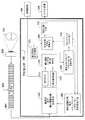
図1に示すように、本方法及びシステムは、測定データ101、例えば、カメラ103によってシーン102から取得されたビデオ101内の画像のシーケンスを処理する。カメラは、静止している場合もあるし、移動している場合もある。画像は、リアルタイムで、例えば、画像が取得された速度と同じフレームレート(24fps又は60fps)で処理することができる。本方法は、当該技術分野において知られているようにバスによってメモリ及び入出力インターフェースに接続されたプロセッサ100において実行される。このメモリは、画像を表す測定データに加えて、本方法によって用いられるベクトル、行列及びパラメーター等の他のデータ構造体も記憶するのに用いられる。
As shown in FIG. 1, the present method and system processes a
ストリーム内の最初の測定データ104、例えばビデオシーケンス内の最初の画像について、初期部分空間行列131及び初期ステップサイズパラメーター126が初期化される(105)。疎ベクトルの形態における疎成分111、及び、部分空間係数112が、反復的ソルバー(iterative solver)、例えば乗算器の交番方向法(ADMM:alternating direction method of multipliers)を用いて、第1の測定データから求められる(110)。次に、部分空間における変化121が、最初の測定データ104、疎成分111、及び、部分空間係数112に従って求められる(120)。適応ステップサイズパラメーター126が、部分空間における変化121に従って更新される(125)。次に、部分空間行列131は、部分空間における変化121及び更新された適応ステップサイズパラメーター126を用いて更新される(130)。ストリーム内の2番目の測定データ及び後続のあらゆる測定データについて、更新された部分空間行列131及び更新された適応ステップサイズパラメーターが、初期部分空間行列及び初期ステップサイズパラメーターとして用いられる。このプロセスは、データストリームからの全ての測定データ101が処理されるまで反復的に繰り返される。
For the
ストリームからのあらゆる新たな測定データの到着後、疎ベクトルによって表される移動物体108は、現在の部分空間行列131において表される背景から既に分離されている。
After arrival of any new measurement data from the stream, the moving
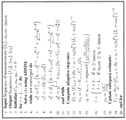
図2は、本方法の詳細なステップの擬似コードを示している。この擬似コードによって用いられる変数は、以下に定義されている。 FIG. 2 shows the pseudo code of the detailed steps of the method. The variables used by this pseudo code are defined below.
1つの実施形態では、測定データは、ビデオシーケンス内の特徴点(interest points)の特徴に対応する。特徴点の間にエッジ及び重みを割り当てるために、グラフが、特徴点に対応する、スケール不変特徴変換(SIFT:Scale Invariant Feature Transform)、高速網膜キーポイント(FREAK:Fast Retina Keypoint)、バイナリーロバスト不変スケーラブルキーポイント(BRISK:Binary Robust Invariant Scalable Keypoints)等の特徴記述子を用いて、測定データから構築される。本方法は、次に、グラフのスペクトルの一部分を占有するとともに特徴点の間の支配的な関連付けを特徴付ける低次元部分空間のうちの1つ又はそれらの結合体を特定する。また、本方法は、グラフスペクトルに存在する疎な関連付け又は非ガウス分布の関連付けから支配的な関連付けをセグメンテーションする。 In one embodiment, the measurement data corresponds to features of interest points in the video sequence. To assign edges and weights between feature points, the graph corresponds to the feature points, Scale Invariant Feature Transform (SIFT), Fast Retina Keypoint (FRAK), Binary Robust Invariant It is constructed from measurement data using feature descriptors such as scalable keypoints (BRISK). The method then identifies one or a combination of low-dimensional subspaces that occupy a portion of the graph's spectrum and characterize the dominant association between feature points. The method also segments dominant associations from sparse or non-Gaussian associations present in the graph spectrum.
リアルタイム部分空間推定
非ガウス雑音によって破損される場合がある不完全なストリーミング測定値101、例えば圧縮ビデオからの低次元部分空間行列131のリアルタイム推定を説明する。まず、本発明の課題を説明するとともに、用いられる表記を定義する。次に、測定値の間のl1ノルムコスト関数を最小化すること、及び、それらの測定値を部分空間上に射影して部分空間係数112及びスパース異常値(または、スパース外れ値)111を求めることを説明する。次に、部分空間は、最小二乗推定を用いることに基づく近接点反復手順を用いて更新される(130)とともに、適応ステップサイズパラメーター126が更新される(125)。
Real-time subspace estimation Real-time estimation of
利点として、本発明の方法は、従来技術のように部分空間更新をグラスマン多様体に制限せず、適応ステップサイズを用いる。加えて、本方法は、部分空間の正確な初期推定値を必要とせず、例えば、部分空間は、ランダムな部分空間に設定される。 As an advantage, the method of the present invention does not limit subspace updates to Grassmann manifolds as in the prior art, but uses adaptive step sizes. In addition, the method does not require an accurate initial estimate of the subspace, for example, the subspace is set to a random subspace.
拡張ラグランジアンに基づく近接点反復手順
本方法は、l1ノルムコスト関数を用いて拡張ラグランジアンを最小化し、変数(Ut,st,at,yt)に関する以前の部分空間推定値への更新の近接性を維持する平滑化項を用いる。目的コストは、以下の式によって表すことができる。
Proximity point iterative procedure method based on the extended Lagrangian, l 1 norm minimize extended Lagrangian using a cost function, variable update of (U t, s t, a t, y t) to the previous subspace estimate for A smoothing term that maintains the proximity of is used. The target cost can be expressed by the following equation.
ここで、etは、Ωt(et)=0であり、かつ
式(2)は、変数Ut及びatに関して非凸である。したがって、本発明は、変数(st,at,yt)及びその後の変数Utにわたる最小化を交番するPETRELS手法及びGRASTA手法に従うものとする。Utを固定することによって、式(2)の複数の最小点(minimizers)は等しくなる。すなわち、以下の式となる。 Equation (2) is a non-convex with respect to the variable U t and a t. Thus, the present invention shall follow the PETRELS and GRASTA methods that alternate variables (s t , a t , y t ) and subsequent minimization over the variable U t . By fixing U t , the minimums in Equation (2) are equal. That is, the following expression is obtained.
次に、部分空間Utは、適応ステップサイズμを用いて、以下の関数を最小化するように勾配ステップを選ぶことによって更新される。 The subspace U t is then updated by choosing the gradient step to minimize the following function using the adaptive step size μ.
方法
図2の擬似コードによって示すように、準備段階の後、第1段階(ステップ4〜11)は、反復的方法、例えばADMMを用いて、式(3)を解く。変数at、st、及びytは、終了条件が満たされるまで、以下の更新シーケンスを反復することによって求められる(ステップ7〜10)。
Method After the preparation phase, as shown by the pseudo code in FIG. 2, the first phase (steps 4-11) solves equation (3) using an iterative method, for example ADMM. The variables a t , s t , and y t are determined by repeating the following update sequence until the termination condition is satisfied (steps 7-10).
ここで、
第2段階(ステップ12〜17)では、以下の式を用いて式(4)を最小化することによって、部分空間Utが更新される(ステップ19)。
適応ステップサイズパラメーター
適応ステップサイズパラメーターについて、本方法は、正則化項(regularizer)μtを用いて、部分空間131の推定の収束の速度を制御する。特に、μの値が小さいほど、変化する部分空間に対するUtのより高速な適応、すなわち、降下方向がより大きくなることが可能になるのに対して、μの値が大きいほど、Utのより低速な変化しか可能でない。
Adaptive Step Size Parameter For the adaptive step size parameter, the method uses a regularizer μ t to control the speed of convergence of the
降下方向
次に、適応ステップサイズパラメーターμt 126を、以下の式に従って更新することができる(125)。
The adaptive step
ここで、
GRASTAと同様に、そのような更新ルールを選択することの背後にある直観は、2つの連続した部分空間更新Gt−1及びGtが同じ方向を有する場合、すなわち、〈Gt−1,Gt〉>0である場合、ターゲットの部分空間が依然として現在の部分空間推定値から遠く離れているという考えに由来している。その結果、更新されるステップサイズμtは、高速な適応を可能にするようにより小さくあるべきであり、これは、ηtを増加させることによって達成される。同様に、〈Gt−1,Gt〉<0であるとき、部分空間更新は、ターゲットの部分空間を中心にして発振する可能性があり、したがって、より大きなμtが必要とされる。部分空間更新のノルムの積(||Gt−1||F・||Gt||F)が過度に小さいとき、例えば、10−6よりも小さいとき、現在の部分空間推定値はターゲット部分空間に近いと仮定され、ηtがシグモイドの大きさだけ強制的に減少されることに留意されたい。 Similar to GRASTA, the intuition behind choosing such an update rule is that if two consecutive subspace updates G t−1 and G t have the same direction, ie, <G t−1 , If G t >> 0, it comes from the idea that the target subspace is still far from the current subspace estimate. As a result, the updated step size μ t should be smaller to allow fast adaptation, which is achieved by increasing η t . Similarly, when <G t−1 , G t ><0, the subspace update may oscillate around the target subspace, and therefore a larger μ t is required. When the subspace update norm product (|| G t-1 || F · || G t || F ) is too small, eg, less than 10 −6 , the current subspace estimate is the target Note that η t is forcibly reduced by the size of the sigmoid, assuming near subspace.
Claims (9)
前記セットから測定データを求めるステップと、
前記測定データにおける前記コンテンツの動きを特徴付けるパラメーター及び低次元部分空間を初期化するステップであって、前記パラメーターは、適応ステップサイズパラメーターである、初期化するステップと、
前記低次元部分空間によって特徴付けられた前記コンテンツの前記動きと異なる前記コンテンツの前記動きを特徴付ける疎成分を表す疎ベクトルを求めるステップと、
近接点反復及び前記パラメーターを用いて、前記測定データの前記低次元部分空間における変化を求めるステップと、
前記変化に従って前記パラメーターを更新するステップと、
前記変化及び前記パラメーターに従って、前記低次元部分空間を表す低ランク部分空間行列を更新するステップと、
前記低次元部分空間を表す前記低ランク部分空間行列、及び、前記疎ベクトルを出力するステップと、
を含み、
各前記ステップは、前記測定データを記憶するメモリに接続されたプロセッサが実行し、
前記ビデオストリームは、カメラによってシーンから取得される、
ビデオストリーム内のコンテンツを分割及び追跡する方法。 A method for segmenting and tracking content in a video stream, wherein the video includes a sequence of images, the method comprising: at each time step for each set of one or more images in the video stream;
Obtaining measurement data from the set;
Initializing a parameter characterizing the movement of the content in the measurement data and a low-dimensional subspace, wherein the parameter is an adaptive step size parameter;
Obtaining a sparse vector representing a sparse component characterizing the motion of the content different from the motion of the content characterized by the low-dimensional subspace;
Determining a change in the low-dimensional subspace of the measurement data using proximity point iteration and the parameters;
Updating the parameter according to the change;
Updating a low rank subspace matrix representing the low dimensional subspace according to the change and the parameter;
Outputting the low rank subspace matrix representing the low dimensional subspace and the sparse vector;
Including
Each of the steps is performed by a processor connected to a memory that stores the measurement data,
The video stream is obtained from the scene by a camera,
A method for segmenting and tracking content in a video stream.
前記測定データと、前記測定データを前記低ランク部分空間行列の前記推定値上に射影したものとの間の相違を定量化するデータミスフィット関数を求めることと、
前記データミスフィット関数を最小化する前記疎ベクトル及び部分空間係数ベクトルを求めることと、
を更に含む、請求項1に記載の方法。 An estimate of the low rank subspace matrix and an estimate of the parameter are available;
Determining a data misfit function that quantifies the difference between the measurement data and the projection of the measurement data onto the estimate of the low rank subspace matrix;
Determining the sparse and subspace coefficient vectors that minimize the data misfit function;
The method of claim 1, further comprising:
前記更新された低ランク部分空間行列及び前記事前に処理された測定データの前記パラメーターから、前記低ランク部分空間行列の前記推定値及び前記パラメーターの前記推定値を求めること、
を更に含む、請求項2に記載の方法。 The measurement data is pre-processed and new measurement data is available,
Determining the estimate of the low rank subspace matrix and the estimate of the parameter from the updated low rank subspace matrix and the parameters of the preprocessed measurement data;
The method of claim 2 further comprising:
を更に含む、請求項1に記載の方法。 Obtaining an error component that determines a missing data point from the measurement data using an estimate of the low-dimensional subspace;
The method of claim 1, further comprising:
前記低次元部分空間が速く変化するときは前記パラメーターを減少させ、前記低次元部分空間がゆっくりと変化するときは前記パラメーターを増加させることによって、前記パラメーターを更新することと、
を更に含む、請求項1に記載の方法。 Determining the change by projecting the difference between the updated low rank subspace matrix and the estimated value of previous measurement data onto the orthogonal complement of the low dimensional subspace;
Updating the parameter by decreasing the parameter when the low-dimensional subspace changes rapidly, and increasing the parameter when the low-dimensional subspace changes slowly;
The method of claim 1, further comprising:
前記測定データを、各画像の圧縮された動きベクトルとして求めることと、
前記ビデオストリーム内の支配的な動きフローを特徴付ける前記低次元部分空間を求めることと、
前記支配的な動きフローから交互に変化する動きフローを特徴付ける前記疎成分を求めることと、
前記支配的な動きフローを表す低ランク行列及び前記交互に変化する動きフローを表す前記疎ベクトルを出力することと、
を更に含む、請求項1に記載の方法。 The video stream is compressed and the method includes:
Determining the measurement data as a compressed motion vector of each image;
Determining the low-dimensional subspace characterizing the dominant motion flow in the video stream;
Determining the sparse component characterizing an alternating motion flow from the dominant motion flow;
Outputting a low rank matrix representing the dominant motion flow and the sparse vector representing the alternating motion flow;
The method of claim 1, further comprising:
グラフ隣接行列及びグラフラプラシアンのうちの一方又はそれらの組み合わせからグラフ行列を求めることと、
前記グラフ行列のスペクトルの一部分を占有する部分空間のうちの1つ又はそれらの結合体から前記低次元部分空間を求めることと、
を更に含む、請求項1に記載の方法。 A graph is constructed from the measurement data, and the method includes:
Obtaining a graph matrix from one or a combination of a graph adjacency matrix and a graph Laplacian;
Determining the low-dimensional subspace from one or a combination of subspaces that occupy a portion of the spectrum of the graph matrix;
The method of claim 1, further comprising:
Applications Claiming Priority (2)
| Application Number | Priority Date | Filing Date | Title |
|---|---|---|---|
| US14/562,861 | 2014-12-08 | ||
| US14/562,861 US9697614B2 (en) | 2014-12-08 | 2014-12-08 | Method for segmenting and tracking content in videos using low-dimensional subspaces and sparse vectors |
Publications (2)
| Publication Number | Publication Date |
|---|---|
| JP2016110653A true JP2016110653A (en) | 2016-06-20 |
| JP2016110653A5 JP2016110653A5 (en) | 2018-11-08 |
Family
ID=56094531
Family Applications (1)
| Application Number | Title | Priority Date | Filing Date |
|---|---|---|---|
| JP2015238600A Pending JP2016110653A (en) | 2014-12-08 | 2015-12-07 | Method for dividing and tracking content in video stream |
Country Status (2)
| Country | Link |
|---|---|
| US (1) | US9697614B2 (en) |
| JP (1) | JP2016110653A (en) |
Cited By (1)
| Publication number | Priority date | Publication date | Assignee | Title |
|---|---|---|---|---|
| JP2021533427A (en) * | 2019-07-04 | 2021-12-02 | 浙江大学Zhejiang University | Reconstruction method of geostationary sea color satellite data by empirical orthogonal function decomposition method |
Families Citing this family (14)
| Publication number | Priority date | Publication date | Assignee | Title |
|---|---|---|---|---|
| CN106530330B (en) * | 2016-12-08 | 2017-07-25 | 中国人民解放军国防科学技术大学 | Video Object Tracking Method Based on Low Rank Sparse |
| CN108288021A (en) * | 2017-12-12 | 2018-07-17 | 深圳市深网视界科技有限公司 | A kind of crowd's accident detection method, electronic equipment and storage medium |
| CN108021950B (en) * | 2017-12-28 | 2021-05-25 | 河南科技大学 | Image classification method based on low-rank sparse representation |
| CN108616720B (en) * | 2018-03-06 | 2020-02-07 | 西安大衡天成信息科技有限公司 | Multi-station frequency spectrum monitoring data compression processing method |
| CN109215780B (en) * | 2018-08-24 | 2022-05-31 | 齐鲁工业大学 | Multi-modal data analysis method and system based on high Laplace regularization low-rank representation |
| US10824935B2 (en) * | 2018-10-17 | 2020-11-03 | Mitsubishi Electric Research Laboratories, Inc. | System and method for detecting anomalies in video using a similarity function trained by machine learning |
| SE1851573A1 (en) | 2018-12-13 | 2020-06-14 | Mat Ab | A method, computer program, computer program product and system for representing visual information |
| CN110189356B (en) * | 2019-04-24 | 2023-05-12 | 沈阳大学 | Fusion Lasso target tracking method under reverse low-rank sparse constraint |
| CN110109114B (en) * | 2019-05-09 | 2020-11-10 | 电子科技大学 | Scanning radar super-resolution imaging detection integrated method |
| CN110232705B (en) * | 2019-05-17 | 2023-05-12 | 沈阳大学 | A Reverse Low-Rank Sparse Learning Object Tracking Method Fused with Fractional Variational Adjustment |
| CN111553416B (en) * | 2020-04-28 | 2024-05-28 | 江苏理工学院 | A low-rank sparse spatial subspace clustering method |
| CN113936196B (en) * | 2021-09-29 | 2024-05-14 | 江苏大学 | Robust data dimension reduction method based on low-rank Laplace graph learning |
| CN115236208B (en) * | 2022-06-27 | 2023-04-07 | 哈尔滨工业大学 | Steel rail health monitoring method based on information enhancement and variable step length sparse expression |
| CN115690869B (en) * | 2022-09-15 | 2026-03-20 | 华东理工大学 | A multi-view face recognition system based on sparse feature selection |
Family Cites Families (4)
| Publication number | Priority date | Publication date | Assignee | Title |
|---|---|---|---|---|
| US7058205B2 (en) | 2001-12-07 | 2006-06-06 | Xerox Corporation | Robust, on-line, view-based appearance models for visual motion analysis and visual tracking |
| US7463754B2 (en) | 2003-11-13 | 2008-12-09 | Honda Motor Co. | Adaptive probabilistic visual tracking with incremental subspace update |
| US8085982B1 (en) | 2008-06-20 | 2011-12-27 | Google Inc. | Object tracking in video with visual constraints |
| US9251438B2 (en) * | 2012-10-24 | 2016-02-02 | Regents Of The University Of Minnesota | Convex minimization and data recovery with linear convergence |
-
2014
- 2014-12-08 US US14/562,861 patent/US9697614B2/en not_active Expired - Fee Related
-
2015
- 2015-12-07 JP JP2015238600A patent/JP2016110653A/en active Pending
Non-Patent Citations (1)
| Title |
|---|
| JUN HE ET AL.: "Online Robust Subspace Tracking from Partial Information", INFORMATION THEORY, JPN7019000015, 20 September 2011 (2011-09-20), US, pages 1 - 28 * |
Cited By (3)
| Publication number | Priority date | Publication date | Assignee | Title |
|---|---|---|---|---|
| JP2021533427A (en) * | 2019-07-04 | 2021-12-02 | 浙江大学Zhejiang University | Reconstruction method of geostationary sea color satellite data by empirical orthogonal function decomposition method |
| JP7004844B2 (en) | 2019-07-04 | 2022-01-21 | 浙江大学 | Reconstruction method of geostationary sea color satellite data by empirical orthogonal function decomposition method |
| US11790580B2 (en) | 2019-07-04 | 2023-10-17 | Zhejiang University | Method for reconstructing geostationary ocean color satellite data based on data interpolating empirical orthogonal functions |
Also Published As
| Publication number | Publication date |
|---|---|
| US9697614B2 (en) | 2017-07-04 |
| US20160162577A1 (en) | 2016-06-09 |
Similar Documents
| Publication | Publication Date | Title |
|---|---|---|
| JP2016110653A (en) | Method for dividing and tracking content in video stream | |
| Dosovitskiy et al. | Generating images with perceptual similarity metrics based on deep networks | |
| JP6395555B2 (en) | How to process video captured from a scene | |
| Chatterjee et al. | Efficient and robust large-scale rotation averaging | |
| JP6489551B2 (en) | Method and system for separating foreground from background in a sequence of images | |
| CN105590091B (en) | Face recognition method and system | |
| EP2352128B1 (en) | Mobile body detection method and mobile body detection apparatus | |
| US20110243381A1 (en) | Methods for tracking objects using random projections, distance learning and a hybrid template library and apparatuses thereof | |
| US10019801B2 (en) | Image analysis system and method | |
| Ait Jellal et al. | LS-ELAS: Line segment based efficient large scale stereo matching | |
| Mansour et al. | Video background subtraction using semi-supervised robust matrix completion | |
| CN111028282A (en) | Unsupervised pose and depth calculation method and system | |
| CN109614933B (en) | A Motion Segmentation Method Based on Deterministic Fitting | |
| WO2021027543A1 (en) | Monocular image-based model training method and apparatus, and data processing device | |
| US12450755B2 (en) | Systems and methods for motion estimation and view prediction | |
| CN112861830A (en) | Feature extraction method, device, apparatus, storage medium, and program product | |
| Li et al. | Projective factorization of multiple rigid-body motions | |
| CN119131265A (en) | Three-dimensional panoramic scene understanding method and device based on multi-view consistency | |
| Javed et al. | Robust background subtraction to global illumination changes via multiple features-based online robust principal components analysis with Markov random field | |
| CN114170558B (en) | Method, system, apparatus, medium, and article for video processing | |
| Lu et al. | SLAM-supported self-training for 6D object pose estimation | |
| Chen et al. | Usp-gaussian: unifying spike-based image reconstruction, pose correction and gaussian splatting | |
| Cheng et al. | Semi-supervised 3d hand-object pose estimation via pose dictionary learning | |
| Liu et al. | Robust online matrix completion with Gaussian mixture model | |
| Guerreiro et al. | Factorization with missing data for 3D structure recovery |
Legal Events
| Date | Code | Title | Description |
|---|---|---|---|
| A521 | Request for written amendment filed |
Free format text: JAPANESE INTERMEDIATE CODE: A523 Effective date: 20180921 |
|
| A621 | Written request for application examination |
Free format text: JAPANESE INTERMEDIATE CODE: A621 Effective date: 20180921 |
|
| A871 | Explanation of circumstances concerning accelerated examination |
Free format text: JAPANESE INTERMEDIATE CODE: A871 Effective date: 20180921 |
|
| A975 | Report on accelerated examination |
Free format text: JAPANESE INTERMEDIATE CODE: A971005 Effective date: 20181206 |
|
| A977 | Report on retrieval |
Free format text: JAPANESE INTERMEDIATE CODE: A971007 Effective date: 20181206 |
|
| A131 | Notification of reasons for refusal |
Free format text: JAPANESE INTERMEDIATE CODE: A131 Effective date: 20190115 |
|
| A601 | Written request for extension of time |
Free format text: JAPANESE INTERMEDIATE CODE: A601 Effective date: 20190313 |
|
| A02 | Decision of refusal |
Free format text: JAPANESE INTERMEDIATE CODE: A02 Effective date: 20190709 |