JP2011511368A - Representation of Qualitative Object Changes in a Knowledge-Based Framework for Multimaster Synchronization Environments - Google Patents
Representation of Qualitative Object Changes in a Knowledge-Based Framework for Multimaster Synchronization Environments Download PDFInfo
- Publication number
- JP2011511368A JP2011511368A JP2010545039A JP2010545039A JP2011511368A JP 2011511368 A JP2011511368 A JP 2011511368A JP 2010545039 A JP2010545039 A JP 2010545039A JP 2010545039 A JP2010545039 A JP 2010545039A JP 2011511368 A JP2011511368 A JP 2011511368A
- Authority
- JP
- Japan
- Prior art keywords
- node
- synchronization
- knowledge
- version
- objects
- Prior art date
- Legal status (The legal status is an assumption and is not a legal conclusion. Google has not performed a legal analysis and makes no representation as to the accuracy of the status listed.)
- Granted
Links
Images


Classifications
-
- H—ELECTRICITY
- H04—ELECTRIC COMMUNICATION TECHNIQUE
- H04L—TRANSMISSION OF DIGITAL INFORMATION, e.g. TELEGRAPHIC COMMUNICATION
- H04L12/00—Data switching networks
- H04L12/28—Data switching networks characterised by path configuration, e.g. LAN [Local Area Networks] or WAN [Wide Area Networks]
- H04L12/2803—Home automation networks
- H04L12/2807—Exchanging configuration information on appliance services in a home automation network
- H04L12/281—Exchanging configuration information on appliance services in a home automation network indicating a format for calling an appliance service function in a home automation network
-
- G—PHYSICS
- G06—COMPUTING OR CALCULATING; COUNTING
- G06F—ELECTRIC DIGITAL DATA PROCESSING
- G06F16/00—Information retrieval; Database structures therefor; File system structures therefor
- G06F16/10—File systems; File servers
- G06F16/17—Details of further file system functions
- G06F16/178—Techniques for file synchronisation in file systems
-
- G—PHYSICS
- G06—COMPUTING OR CALCULATING; COUNTING
- G06F—ELECTRIC DIGITAL DATA PROCESSING
- G06F16/00—Information retrieval; Database structures therefor; File system structures therefor
- G06F16/20—Information retrieval; Database structures therefor; File system structures therefor of structured data, e.g. relational data
- G06F16/27—Replication, distribution or synchronisation of data between databases or within a distributed database system; Distributed database system architectures therefor
-
- H—ELECTRICITY
- H04—ELECTRIC COMMUNICATION TECHNIQUE
- H04L—TRANSMISSION OF DIGITAL INFORMATION, e.g. TELEGRAPHIC COMMUNICATION
- H04L67/00—Network arrangements or protocols for supporting network services or applications
- H04L67/01—Protocols
- H04L67/10—Protocols in which an application is distributed across nodes in the network
- H04L67/1095—Replication or mirroring of data, e.g. scheduling or transport for data synchronisation between network nodes
-
- H—ELECTRICITY
- H04—ELECTRIC COMMUNICATION TECHNIQUE
- H04L—TRANSMISSION OF DIGITAL INFORMATION, e.g. TELEGRAPHIC COMMUNICATION
- H04L12/00—Data switching networks
- H04L12/28—Data switching networks characterised by path configuration, e.g. LAN [Local Area Networks] or WAN [Wide Area Networks]
- H04L12/2803—Home automation networks
- H04L2012/2847—Home automation networks characterised by the type of home appliance used
- H04L2012/2849—Audio/video appliances
Landscapes
- Engineering & Computer Science (AREA)
- Theoretical Computer Science (AREA)
- Automation & Control Theory (AREA)
- Databases & Information Systems (AREA)
- General Physics & Mathematics (AREA)
- General Engineering & Computer Science (AREA)
- Physics & Mathematics (AREA)
- Data Mining & Analysis (AREA)
- Computer Networks & Wireless Communication (AREA)
- Signal Processing (AREA)
- Computing Systems (AREA)
- Information Transfer Between Computers (AREA)
- Information Retrieval, Db Structures And Fs Structures Therefor (AREA)
Abstract
本開示は、オブジェクト品質の概念を含むように知識ベース同期フレームワークを拡張する、マルチマスター同期環境においてネットワークノード間で同期を取るステップに関する。一実施形態では、オブジェクトの与えられたバージョンについての知識ベクトルに、オブジェクトについての品質情報を表す追加的な次元(複数可)が置かれ、オブジェクトの品質のどのタイプが同期プロセスの一部としてノードに伝えられるべきかをノードが決定することを可能にするために、その次元が同期プロセス中に考慮される。他の実施形態は、マルチマスター同期環境において他のノードによって維持される同じオブジェクトに関する将来の同期を回避するために、オブジェクトを無効化するステップを含む。
【選択図】図1The present disclosure relates to the steps of synchronizing between network nodes in a multi-master synchronization environment that extends the knowledge based synchronization framework to include the concept of object quality. In one embodiment, the knowledge vector for a given version of an object is populated with additional dimension (s) representing quality information about the object, and which type of object quality nodes as part of the synchronization process The dimension is taken into account during the synchronization process in order to allow the node to decide what should be conveyed to the. Another embodiment includes invalidating the object to avoid future synchronization on the same object maintained by other nodes in a multi-master synchronization environment.
[Selected figure] Figure 1
Description
本開示は、マルチマスター同期環境(multi−master synchronization environment)のための知識ベース同期フレームワーク(knowledge based synchronization framework)における、同期が取られたオブジェクト(複数可)に対する変更についての知識を記述するための拡張メタデータに関し、拡張メタデータは、変更についての質的情報(qualitative information)を含む。 This disclosure describes the knowledge about changes to synchronized object (s) in a knowledge based synchronization framework for multi-master synchronization environments. With respect to the extended metadata of, the extended metadata includes qualitative information about the change.
モバイルコンピューティングおよび通信デバイスの人気が、いつでもユーザーが望むときに情報を送受信できるようにしたいという対応する願望を生み出した。簡単に言えば、ユーザーは、いつどこにいても、またデバイス個々の能力がどうであれ、情報およびアプリケーションへの様々なデバイスからのユビキタスアクセスを望んでおり、加えて、ユーザーは、そのような情報に直に(on the fly)アクセスし、更新できることを望んでおり、データが可能な限り正確で最新であることの保証を望んでいる。 The popularity of mobile computing and communication devices has created a corresponding desire to be able to send and receive information whenever the user desires. Simply put, users want ubiquitous access from various devices to information and applications, wherever and whenever they are and what the capabilities of the individual devices are, and in addition, users can They want to be able to access and update them on the fly, and want a guarantee that the data is as accurate and up-to-date as possible.
デバイスおよびオブジェクトに互いにデータのレプリカを共有させることを試みる様々な分散データシステムが存在する。例えば、音楽共有システムは、PC、セルフォン、ゲーム機、およびMP3プレーヤーの間で音楽の同期を取ることができる。電子メールデータは、ワークサーバー、クライアントPC、およびポータブル電子メールデバイスの間で同期を取ることができる。しかし、今日、そのようなデバイスが互いに1組の共通情報の同期を取る限りにおいて、同期は一般に、静的設定に従ってデバイス間で取られる。しかし、これらのデバイスが頻繁にまたは断続的に切断される場合、すなわち、相手との通信から切断され得るようにデバイスが疎結合されている場合、例えば、セルフォンがトンネル内に入った場合、または同期が取られるデバイスの数が動的である場合、デバイスが、互いに再接続するとき、またはネットワークに参加するときに、他の各デバイスがどのような変更を必要とするかを決定するための、トポロジー独立な方法を有することが望ましくなる。 There are various distributed data systems that attempt to make devices and objects share replicas of data with each other. For example, a music sharing system can synchronize music between a PC, a cell phone, a game console, and an MP3 player. Email data can be synchronized between work servers, client PCs, and portable email devices. However, today, as long as such devices synchronize a set of common information with each other, synchronization is generally taken between the devices according to a static configuration. However, if these devices are disconnected frequently or intermittently, ie if the devices are loosely coupled such that they can be disconnected from communicating with the other, eg if the cell phone enters the tunnel, or If the number of devices to be synchronized is dynamic, to determine what changes each other device needs when the devices reconnect with each other or join the network It would be desirable to have a topology independent method.
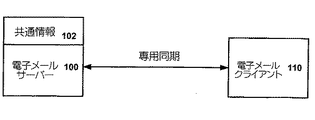
図1に示されるように、今日では、電子メールサーバーが電子メールクライアントと同期を取る場合など、マスターノード100がクライアントノード110と専用方式で同期を取る様々な例が存在する。2つのデバイス間の専用同期であるため、2つのデバイス間で同期を取るために必要とされる情報102は、マスターノード100によって追跡することができる。そのような情報102は、任意選択的に、クライアントノード110によっても同様に追跡することができるが、マスターノード100とクライアントノード110の間の接続が時々切断される場合、または同期デバイスの数が突然増加もしくは減少し得る場合、それらのデバイスのすべてにおいて各デバイスが必要とする共通な情報の必要な情報を追跡することは、難しい問題となる。 As shown in FIG. 1, today, there are various examples where the master node 100 synchronizes with the client node 110 in a dedicated manner, such as when the email server synchronizes with the email client. Because of the dedicated synchronization between the two devices, the information 102 needed to synchronize between the two devices can be tracked by the master node 100. Such information 102 can optionally be tracked by client node 110 as well, but if the connection between master node 100 and client node 110 is occasionally broken, or the number of synchronization devices is If it can suddenly increase or decrease, tracking the required information of the common information that each device needs in all of those devices becomes a difficult problem.
現在の解決策は、しばしば、同期セマンティクス(synchronization semantics)を、任意のノードではなく、もっぱら特定のノード(例えば、電子メールサーバー)のクロックまたは論理透かし(logical watermark)に基づかせる。これらのシステムは、単一の接続ノードまたはマスターの場合には良好に機能し得る。しかし、ノード接続のトポロジーまたはパターンが予測不能に変化し得る場合、それらのシステムは、問題に打ち当たる。 Current solutions often base synchronization semantics solely on the clock or logical watermark of a particular node (e.g., an email server), rather than on any node. These systems may work well in the case of a single connection node or master. However, if the topology or pattern of node connections can change unpredictably, those systems run into problems.
他のシステムは、問題に対処するために、特定の種類のデータオブジェクトのための独自仕様の同期モデルを構築し、すべてのデバイスにおいて、データフォーマットに固有な膨大な量のプリミティブメタデータを追跡する。例えば、特定のWordプロセッシング文書フォーマットのオブジェクトの同期を取るために、文書およびその基本プリミティブを表現することに、それらが時間とともに変化するにつれて、多くのオーバーヘッドおよび複雑さがもたらされ、共通の1組のWordプロセッシング文書に従って同期を取ることを望む他のデバイスに対してその情報を効率的に表現することにも、多くのオーバーヘッドおよび複雑さがもたらされる。そのようなシステムは、構築が複雑になって多くのコストがかかり、それが基づいているカスタムデータフォーマットのせいで拡張可能性がない(non−extendible)のに加えて、生成し、分析し、追跡しなければならない大量のメタデータのせいで本質的に拡張可能性がない(unscalable)。 Other systems build proprietary synchronization models for specific types of data objects to address the problem, and track the vast amount of primitive metadata specific to the data format on all devices . For example, in representing documents and their basic primitives in order to synchronize objects of a specific Word processing document format, as they change with time, a lot of overhead and complexity are introduced, a common one Efficiently representing that information to other devices that want to synchronize according to a set of Word processing documents also introduces a lot of overhead and complexity. Such systems are complex to build and cost a lot, and in addition to being non-extensible due to the custom data format they are based on, generate and analyze, It is inherently unscalable due to the large amount of metadata that must be tracked.
加えて、そのような解決策は、1つの特定の領域、例えばWordプロセッシング文書にのみ適用される。例えば、ピクチャ、ビデオ、電子メール、文書、データベースストアなど、すべての種類の同期オブジェクトが考慮される場合、マルチマスター環境内のすべてのデバイスにおいてそのようなオブジェクトの進化を追跡するために、各オブジェクトタイプに基づいたカスタム同期解決策を実施することは、現在のところ機能し得ないことが分かる。したがって、そのような解決策は、同期セマンティクスをデータセマンティクス(data semantics)と密接に結び付ける。 In addition, such a solution applies only to one particular area, for example a Word processing document. For example, if all types of synchronization objects are considered, such as pictures, videos, emails, documents, database stores, etc., each object to track the evolution of such objects in all devices in a multi-master environment It can be seen that implementing a custom synchronization solution based on type does not currently work. Thus, such a solution ties synchronization semantics closely with data semantics.
したがって、トポロジー内のコンピューターが互いに接続する方法を変更した場合、またはコンピューターの数が増加するにつれて、ノード独立の同期知識が必要とされている。例えば、メディアプレーヤーの場合、多数のコンピューター間および多数のウェブサイト間で同期を取るのが望ましいことがある。たいていの場合、ほとんどのアプリケーションは、少数のよく知られたエンドポイント(ホームPCおよびメディアプレーヤー)の間でデータの同期を取ることができるにすぎない。しかし、メディアプレーヤーアプリケーションのユーザーにとって、デバイスコミュニティー(device community)は時間とともに進化するので、デバイスによって利用される音楽ライブラリーのためのデータ同期の柔軟性がますます必要となり、それによって、より堅牢なシステムの必要性が生み出される。 Thus, node-independent synchronization knowledge is required as the computers in the topology change the way they connect to each other, or as the number of computers increases. For example, in the case of a media player, it may be desirable to synchronize between a large number of computers and a large number of websites. In most cases, most applications can only synchronize data between a few well-known endpoints (home PC and media player). However, for users of media player applications, the device community evolves with time, thus requiring more flexibility in data synchronization for the music library utilized by the device, thereby making it more robust The need for a system is created.
その必要性は、起こり得る変更のタイプの観点から多くのコンピューティングオブジェクトが一枚岩的でないことを考えた場合、より一層複雑になる。今日の複雑なコンピューティング環境では、オブジェクト変更は、単なる「オブジェクトへのデータの追加」または「オブジェクトからのデータの除去」を越えた多様な変更を含む。オブジェクトのデータのいくつかに対する変更は、変更されるデータの除去と、変更を反映したデータの追加と考えることもできる。したがって、一枚岩的な見方の下では、オブジェクトの進化の観点からオブジェクトに何が起こり得るかについて、限られた見方が、すなわち、オブジェクトによって表されるデータは、いくつかの新しいデータを用いて拡大でき、オブジェクトによって表されるデータの一部は、残りを同じに留めたまま変更でき、および/またはオブジェクトによって表されるデータの一部は、削除できる、という見方があるにすぎない。 The need is even more complicated when considering that many computing objects are not monolithic in terms of the type of possible changes. In today's complex computing environment, object modification involves a variety of modifications beyond simply "adding data to an object" or "removing data from an object". Changes to some of the object's data can also be thought of as removing the changed data and adding data that reflects the change. Thus, under a monolithic view, a limited view of what can happen to an object in terms of its evolution, ie the data represented by the object is expanded with some new data There is a view that only some of the data represented by the object can be changed leaving the rest the same, and / or some of the data represented by the object can be deleted.
これに関連して、オブジェクトに関する多数の属性のすべても変更することができる。例えば、オブジェクトの名前、オブジェクトが最後に閲覧されたとき、オブジェクトのフィールドの許容可能な長さ、オブジェクトのスキーマ(例えば、連絡先スキーマ)、オブジェクトの忠実度(例えば、オーディオ)、オブジェクトに適用される圧縮方式、オブジェクトの解像度(例えば、画像もしくはビデオ)、オブジェクトのファイルフォーマット、またはオブジェクトに対して定義できる他の任意の機能はすべて、オブジェクトのデータの追加または除去という単純な表現によっては適切に反映されない、オブジェクトの変更可能な属性の例である。 Related to this, all of the many attributes of the object can also be changed. For example, the object's name, the object's field's acceptable length when the object was last viewed, the object's schema (eg, contact schema), the object's fidelity (eg, audio), the object Compression schemes, object resolution (eg, image or video), file format of the object, or any other functionality that can be defined for the object, all depending on the simple expression of adding or removing data for the object. An example of changeable attributes of an object that are not reflected.
これに関連して、異なるデバイスは、同じオブジェクトの表現に関して、異なる要件または制限を有する。例えば、PC上でのオブジェクトの表現は一般に、メモリーが限定されたモバイル電話上でのオブジェクトの表現とは異なる要件に関連する。一例として、画像オブジェクトが与えられた場合、PC上では10Mbの原画像を表現する方がより適しており、一方、ディスプレイおよびメモリーがより小さなモバイル電話に対しては、同じ与えられた画像オブジェクトを300Kbの画像として表現する方がより適している。 In this context, different devices have different requirements or limitations with regard to the representation of the same object. For example, the representation of objects on a PC is generally associated with different requirements than the representation of objects on mobile phones with limited memory. As an example, given an image object, it is better to represent a 10 Mb original image on a PC, while for mobile phones with smaller displays and memories the same given image object It is more suitable to express as a 300 Kb image.
いくつかの従来のシステムは、第1の品質から第2の品質への品質変化をこうむるオブジェクトを別個のオブジェクトとして扱い、すなわち、第1の品質に留まる第1のオブジェクトを維持するのに加えて、オブジェクトがこうむった変更を第2の品質に反映したまったく新しい第2のオブジェクトを生成する。結果として、両方のオブジェクトは、同期が取られて進行する。異なるオブジェクトの数、デバイスの数、および/または異なる品質のバージョンの数が少なからぬものになった場合、そのようなシステムが、禁止せざるを得ない、非常に無駄の多いものになることが分かる。 Some conventional systems treat objects that suffer a quality change from a first quality to a second quality as separate objects, ie, in addition to maintaining a first object that remains at a first quality , Create a completely new second object that reflects the changes the object has made in the second quality. As a result, both objects progress in a synchronized manner. If the number of different objects, devices, and / or versions of different qualities becomes considerable, such a system can become prohibitively wasteful. I understand.
したがって、オブジェクトは複雑な方法で変更でき、特に、異なる能力の異なるデバイスにわたって同期が取られるので、同期メタデータ内においてそのような変更を効率的に表し、同時に、上で説明されたような疎結合されたマルチマスター同期環境において同期を扱うための方法が、現在望まれている。簡潔に言えば、オブジェクトが品質の変更をこうむった場合に、可能であるならば、デバイスの複雑なマルチマスターネットワークトポロジーにおける知識交換(knowledge exchange)において、オブジェクトの品質の減少または増加を表す能力が、無数の同期シナリオのために望まれる。 Thus, objects can be modified in complex ways, and in particular, as synchronization is taken across different devices of different capabilities, such modifications are efficiently represented in the synchronization metadata at the same time as the sparse as described above A method for handling synchronization in a combined multi-master synchronization environment is currently desired. Briefly, if an object suffers a change in quality, the ability to represent a decrease or increase in the quality of the object in knowledge exchange in the complex multi-master network topology of the device, if possible. , Desired for countless synchronization scenarios.
今日の同期モデルの上で説明された難点は、従来のシステムの問題のいくつかについての概要を提供することを意図したものにすぎず、網羅的であることは意図していない。従来のシステムが抱える他の問題、および本明細書で説明される様々な非限定的な実施形態の対応する利点は、以下の説明を検討することでより明らかとなるであろう。 The difficulties described above in today's synchronization model are only intended to provide an overview of some of the problems of conventional systems and are not intended to be exhaustive. Other problems with conventional systems and the corresponding advantages of the various non-limiting embodiments described herein will become more apparent upon review of the following description.
本明細書では、より詳細な説明および添付の図面における以下の例示的で非限定的な実施形態の様々な態様の基本的または概略的な理解を可能にする助けとなるように、簡略化された要約が提供される。しかし、この要約は、広範なまたは網羅的な概要として意図されていない。代わりに、この要約の唯一の目的は、以下の様々な実施形態のより詳細な説明に対する前置きとして、いくつかの例示的で非限定的な実施形態に関連するいくつかの概念を簡略化された形式で提示することである。 This specification has been simplified to help provide a basic or schematic understanding of the various aspects of the following exemplary non-limiting embodiments in the detailed description and the accompanying drawings. A summary is provided. However, this summary is not intended as a broad or exhaustive overview. Instead, the sole purpose of this summary is to simplify some concepts related to some exemplary non-limiting embodiments, as a prelude to the more detailed description of the various embodiments below. It is to present in a form.
本明細書では、オブジェクト品質の概念を含むように知識ベース同期フレームワークを拡張する、マルチマスター同期環境における複数のネットワークノード間の同期を提供する様々な実施形態が説明される。有利には、同期フレームワークによれば、エンドポイントは、知識交換の目的で、同期データの1つまたは複数のオブジェクトの品質の定義を可能にする方法で、データの同期を取ることができる。 Described herein are various embodiments that provide synchronization between multiple network nodes in a multi-master synchronization environment that extends the knowledge based synchronization framework to include the concept of object quality. Advantageously, the synchronization framework allows the endpoint to synchronize data in a way that allows definition of the quality of one or more objects of synchronous data for the purpose of knowledge exchange.
一実施形態では、オブジェクトの与えられたバージョンについての知識ベクトル(knowledge vector)に、オブジェクトのそのバージョンについての増分品質情報を表す追加的な次元(複数可)が置かれ、オブジェクトの品質のどのタイプが同期プロセスの一部としてノードに伝えられるべきかをノードが決定することを可能にするために、その次元が同期プロセス中に考慮される。例えば、ノードにとって望ましくない品質を有するオブジェクトは、マルチマスター同期環境において他のノードによって維持されるそのようなオブジェクトに関する将来の同期を回避するために無効化(tombstone)することができ、他の実施形態では、オブジェクトに対する変更が非破壊的(non−destructive)である(とノードによって決定された)場合、オブジェクトの現在のバージョンは、現在のバージョンの別のバージョン、すなわち、変更されたオブジェクトの品質レベルを表すバージョンを反映するように拡張される。変更が破壊的(destructive)と見なされた場合、同期メタデータによって、新しいバージョンが反映される。 In one embodiment, the knowledge vector for a given version of an object is populated with additional dimension (s) representing incremental quality information for that version of the object, and which type of quality of the object The dimension is taken into account during the synchronization process in order to allow the node to decide whether it should be communicated to the node as part of the synchronization process. For example, objects with qualities that are not desirable for a node can be tombstoned to avoid future synchronization on such objects maintained by other nodes in a multi-master synchronization environment, other implementations In form, if the changes to the object are non-destructive (as determined by the node), then the current version of the object is another version of the current version, ie the quality of the changed object Expanded to reflect the version representing the level. If the change is considered destructive, the synchronization metadata reflects the new version.
上記および他の実施形態が、以下でより詳細に説明される。 The above and other embodiments are described in more detail below.
様々な非限定的な実施形態が、添付の図面を参照してさらに説明される。 Various non-limiting embodiments are further described with reference to the accompanying drawings.
概要
背景技術において説明されたように、とりわけ、従来のシステムは、オブジェクトに生じたあらゆる変更毎にオブジェクトの異なるバージョンを生成するが、そのようなシステムは、無損失変換、トランスコーディング、トランスクリプション、または忠実度の変更など、オブジェクトに対する変更についての質的情報を獲得しない。例えば、デバイスが、望む質的バージョンのオブジェクトとのみ同期を取ることができ、オブジェクトによって拒否される質的バージョンを有するオブジェクトとは同期を取らないように、オブジェクトまたはオブジェクトの特定のバージョンの品質の変更についての情報を、同期言語(synchronization language)自体の一部として獲得することが望ましい。
Overview As explained in the background art, among other things, conventional systems generate a different version of an object for every change made to an object, but such systems do lossless transformation, transcoding, transcription Do not obtain qualitative information about changes to objects, such as changes in fidelity or For example, the quality of a particular version of an object or of an object so that the device can only synchronize with the qualitative version of the desired object and not with the object having the qualitative version rejected by the object. It is desirable to obtain information about the change as part of the synchronization language itself.
したがって、様々な非限定的な実施形態では、マルチマスター同期環境内の異なるノードが、知識を比較でき、どのオブジェクトの同期を取り、どのオブジェクトは同期を取るのが望ましくないかを決定できるように、異なる忠実度、変換、符号化の、すなわち、異なる質的バージョンのオブジェクトは、マルチマスター同期環境において、オブジェクトの品質についての情報を獲得する方法で同期が取られる。 Thus, in various non-limiting embodiments, different nodes in a multi-master synchronization environment can compare knowledge, determine which objects to synchronize, and which objects are not desirable to synchronize. Objects of different fidelity, transformation, encoding, i.e. different qualitative versions, are synchronized in a way to obtain information about the quality of the objects in a multi-master synchronization environment.
以降のロードマップについて一言すると、まず、本明細書で説明されるいくつかの実施形態の概要が提示される。その後、マルチマスターデータ同期システムにおいて知識を効率的に表現するための一般的な機構についてのいくつかの補足的なコンテキストが与えられる。次に、補足的なコンテキストについての例示的で非限定的な実施形態および特徴がより詳細に説明され、オブジェクトに対する変更についての質的情報を表現するためのマルチマスターデータ同期システムの代替実施形態が理解され、続いて、そのような実施形態を実施できる代表的なネットワークおよびコンピューティング環境が説明される。 In short, for the roadmap below, an overview of some embodiments described herein is presented. Then, some additional context is given about the general mechanism to express knowledge efficiently in a multi-master data synchronization system. Next, exemplary non-limiting embodiments and features of the supplemental context are described in more detail, and an alternative embodiment of a multi-master data synchronization system for expressing qualitative information about changes to objects is described. It will be appreciated and, subsequently, representative networks and computing environments in which such embodiments may be implemented.
これに関連して、様々な実施形態は、本明細書で知識と呼ばれる概念に基づいた同期のためのモデルを定義する、マルチマスター同期環境のノードのためのデータ同期フレームワークに関する。簡潔に言えば、知識は、同期が取られるオブジェクトから論理的に分離されて維持されるメタデータであり、デバイスが、最初に知識を交換し、次にオブジェクトに対するどの変更を互いに受け渡すべきかを効率的に列挙できるように、レプリカの状態ベース同期についての効率的な要約を定義する。有利には、各ノードは、オブジェクトのどの品質は同期を取るのが望ましく、オブジェクトのどの品質は同期を取るのが望ましくないかに関する独自のルールを定義することができる。例えば、デバイスは、どのバージョンが望ましいかを決定するためのテストを指定することができ、または異なる品質を好ましさの順序にランク付けして並べることができる。 In this regard, various embodiments relate to a data synchronization framework for nodes in a multi-master synchronization environment that defines a model for synchronization based on a concept referred to herein as knowledge. Briefly, knowledge is metadata that is maintained logically separated from the objects being synchronized, and devices should first exchange knowledge and then which changes to objects should be passed on to each other Define an efficient summary of replica state-based synchronization so that you can efficiently list Advantageously, each node can define its own rules as to what qualities of the object it is desirable to synchronize and which qualities of the object are undesirable to synchronize. For example, the device may specify a test to determine which version is desired, or may rank different qualities in order of preference.
これに関連して、多くの場合、マルチマスター同期トポロジーの各デバイスが、同期が取られるオブジェクトの品質レベルについて何を知っているか(例えば、低解像度か、それとも高解像度か)、またはより一般的に、各デバイスが、デバイスによって維持されるオブジェクトに適用される任意の1つもしくは複数の変換について何を知っているかを効率的に表現する方法で、データの同期を取ることが有益である。この点において、個々のエンドポイントが、より低い品質のオブジェクト(またはオブジェクトの第1の変換)と同期を取るべきか、それともより高い品質のオブジェクト(またはオブジェクトの第2のより適切な変換)を有するデバイスを探し出すべきかを決定できるように、デバイスは、そのような情報を知識交換の一部として効率的に伝達することができる。 Related to this, often what each device in a multi-master synchronization topology knows about the quality level of the object being synchronized (eg low resolution or high resolution), or more generally It is beneficial to synchronize data in a way that efficiently represents what each device knows about any one or more transformations applied to the objects maintained by the device. In this regard, should each endpoint be synchronized with a lower quality object (or a first transformation of an object) or a higher quality object (or a second more appropriate transformation of an object) Devices can effectively communicate such information as part of a knowledge exchange, so that they can decide whether to locate a device that they have.
一実施形態では、エンドポイントは、許容できない変換、符号化、忠実度などのバージョンを受信した場合は常に、その許容できないオブジェクトバージョンを無効化し、実質的にそのアイテムを同期プロセスから削除することができるが、将来の同期がその許容できないバージョンを再び受け入れることを回避するように、エンドポイントは、許容できないバージョンについてのメタデータを維持する。しかし、時間とともに、そのような無効化メタデータが、許容し得ないほど増加することがあり得る。要するに、デバイスは、特に機能が限定されており、おそらくは多くを拒否するデバイスの場合は、本当のところ、それまでに対話したが好まなかったものすべての記録を維持する必要はない。 In one embodiment, the endpoint may invalidate the unacceptable object version and substantially remove the item from the synchronization process whenever it receives an unacceptable conversion, encoding, fidelity, etc. version. Although it can, the endpoint maintains metadata about the unacceptable version so that future synchronization will not accept the unacceptable version again. However, with time, such invalidation metadata may increase unacceptably. In short, the device is particularly limited in functionality, and in the case of a device that probably rejects a lot, it is not really necessary to maintain a record of everything that it has interacted with but did not like.
このタイプの知識の効率的な表現を利用する他の実施形態では、ノード間での質的情報の共有の達成は、データのバージョンをバージョン管理することによって達成される。そのような実施形態は、2層の場合はバージョンのバージョンをバージョン管理し、3層の場合はバージョンのバージョンのバージョンをバージョン管理し、以降も同様にすることによって、オブジェクトに適用される変換または品質レベルを任意の数のレベルまたは層にまで拡張することもできる。個々のエンドポイントは、オブジェクトに対する特定の変更が、バージョンのバージョン管理を必要としない一般的な変更(ティックカウント(tickcount)の通常の増加、または新しいバージョンの適用)を表すか、それとも代わりに、現在のティックカウントによって表されるバージョンをバージョン管理することによって表される、忠実度または変換の変更を表すかを決定することが可能である。 In another embodiment that utilizes an efficient representation of this type of knowledge, achieving sharing of qualitative information between nodes is achieved by versioning versions of data. Such an embodiment applies the transformation or object to an object by versioning version versions in the case of two layers, versioning version versions of versions in the case of three layers, and so on. Quality levels can also be extended to any number of levels or layers. Individual endpoints may, or instead, whether a specific change to an object represents a general change (a normal increase in tickcount, or the application of a new version) that does not require version control of the version It is possible to determine whether to represent a change in fidelity or transformation, which is represented by versioning the version represented by the current tick count.
どのオブジェクトが変化したかについての情報をバージョンを介して効率的に獲得し、表現する能力と、それに加えて、それらのオブジェクトがどのように変化したかについての情報を獲得し、表現する能力は、実質的に、エンドポイントに、オブジェクトの特定のバージョンがエンドポイントにとってどれだけ有益かを告げる。したがって、知識表現にバージョン情報のバージョン管理を含めることによって知識を拡張することは、オブジェクトに対する変換についての質的情報を伝える目的を達成するための別の方法である。 The ability to efficiently acquire and express, through versions, information about which objects have changed, as well as the ability to acquire and express information about how those objects changed In effect, tell the endpoint how useful the particular version of the object is for the endpoint. Thus, extending knowledge by including versioning of version information in the knowledge representation is another way to achieve the purpose of conveying qualitative information about transformations on objects.
言及されたように、無効化する実施形態は、オブジェクトが望まないアイテムを受信した(例えば、デバイスのメモリーに対して解像度が高すぎる)ときに、デバイスが、そのアイテムを再び受信しないようにそのアイテムを無効化することができるが、アイテムについて知らされたが、そのアイテムを削除したという知識を伝えることができるように実施することもできる。したがって、様々な実施形態は、オブジェクトの異なる品質についての情報が同期知識の一部として定義されるように、オブジェクトの変換またはトランスコーディングの品質の概念を同期自体の言語に組み込む。 As mentioned, the invalidation embodiment prevents the device from receiving the item again when the object receives an item that it does not want (eg, the resolution is too high for the device's memory). An item can be revoked, but it can also be implemented so that it can convey the knowledge that the item was informed but that the item has been deleted. Thus, various embodiments incorporate the notion of object transformation or transcoding quality into the language of synchronization itself, such that information about the different qualities of the object is defined as part of the synchronization knowledge.
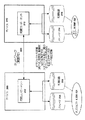
図2は、マルチマスター同期環境において同期を取るオブジェクトの概念を全体として図説するブロック図であり、オブジェクトは、オブジェクトのために定義された同期メタデータに従って異なる品質にある。示されるように、デバイス200およびデバイス210は、ネットワーク220(複数可)と、それぞれ同期コンポーネント202、212とを介して互いに接続し、同期を取るものとして示されている。各同期コンポーネント202、212は、ストレージ204、214内にオブジェクトを保存するばかりでなく、以下でより詳細に説明されるように、それぞれそれらのオブジェクトの同期知識206、216も維持する。これに関連して、データタイプおよびネットワークトポロジーとは独立に同期を取るために使用される同期知識206、216は、オブジェクトの品質を説明するメタデータを含むように拡大することができる。
FIG. 2 is a block diagram generally illustrating the concept of synchronizing objects in a multi-master synchronization environment, where the objects are of different qualities according to the synchronization metadata defined for the objects. As shown, device 200 and device 210 are shown connected and synchronized with one another via network 220 (s) and
オブジェクトの品質を説明するメタデータの場合、これは、オブジェクトの同期のために、オブジェクトの異なる変換についての質的情報を獲得できることを意味する。例えば、図示されるように、同じオブジェクトXは、デバイス200およびデバイス210上で表現することができ、それぞれオブジェクト230および230’として表現される。オブジェクト230は、品質Q1を有し、オブジェクト230’は、品質Q1と異なる品質Q2を有する。したがって、様々な実施形態に関連して説明される知識に基づいたマルチマスター同期プロトコルによれば、同期知識206、216は、オブジェクトに対する変更のバージョン管理に加えて、オブジェクトの同じバージョンの異なる品質を説明する情報を含む。
In the case of metadata describing the quality of an object, this means that qualitative information about the different transformations of the object can be obtained for object synchronization. For example, as shown, the same object X can be represented on device 200 and device 210 and is represented as
例えば、オブジェクトX230は、WMAフォーマットの歌とすることができ、一方、オブジェクトX230’は、同じ歌とすることができるが、AACフォーマットとして符号化される。2つのオブジェクトをその歌の異なるバージョンとして表現する代わりに、本明細書の様々な実施形態は、それが同じバージョンであるが、そのバージョンに関連付けられた異なる品質が存在することを示す、知識表現を可能にする。したがって、ノードは同期メタデータ内に含まれる品質情報に基づいて、与えられた品質バージョンの同期を取るべきかどうかを決定することができる。
For example,
歌が例として使用されたが、オブジェクトのタイプは関係がない。オブジェクトのバージョンが異なる質的特性を有すると考え得ることを宣言するのが有益である場合はいつでも、同じ技法を適用することができる。例えば、PC上のOutlook内の連絡先アイテムは、モバイル電話上の連絡先アイテムよりも多くのフィールドを含むことができる。前者は、後者よりも品質が高い連絡先のバージョンであると、ノードによって見なされ得る。そのような場合、本質的に、それは、連絡先アイテムによって表されるデータの量についての忠実度または解像度の変化である。したがって、実質的に、任意のアイテムは、例えば、異なる符号化または同じプログラムの異なるプログラミング言語トランスコーディングなど、同じオブジェクトの変換に関連する変化に分類することができる。したがって、本明細書の実施形態のいくつかは、概念の簡素化のため、オーディオまたはビデオの文脈において説明されるが、任意のタイプのオブジェクトが、品質変換をこうむると見なすことができ、各エンドポイントは、その目標のため、同期の観点からそれが何を意味するかを定義することができる。 Although a song was used as an example, the type of object is irrelevant. The same techniques can be applied whenever it is useful to declare that versions of an object can be considered to have different qualitative characteristics. For example, a contact item in Outlook on a PC can include more fields than a contact item on a mobile phone. The former may be viewed by the node as being a higher quality contact version than the latter. In such case, it is essentially a change in fidelity or resolution for the amount of data represented by the contact item. Thus, virtually any item can be classified as a change associated with the transformation of the same object, eg, different encodings or different programming language transcoding of the same program. Thus, although some of the embodiments herein are described in the context of audio or video for conceptual simplicity, any type of object can be considered to suffer quality conversion, each end Points can define what that means in terms of synchronization for that goal.
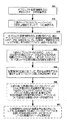
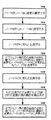
図3は、マルチマスター同期環境において様々なノード間で同期を取ることを目的とした、オブジェクトのための「品質」情報の使用を説明する、全体的なフロー図である。300において、いくつかのポイントにおいて、異なる品質を有するオブジェクトのバージョンに対して、同期メタデータが定義される。310において、ノードが、マルチマスター同期環境において、任意のネットワークトポロジーに従って構成された1つまたは複数のネットワークを介して、別のノードに接続する。320において、ノードは、同期メタデータを学習すること、すなわち、別のノードから受信すること、もしくは別のノードに要求し、受信することができ、またはノードは、同期メタデータを別のノードに送信することができ、メタデータは、同期が取られる1組のオブジェクトのためのバージョン管理情報を説明し、オブジェクトに適用される変換の質的特性についての品質情報を含む。 FIG. 3 is an overall flow diagram that illustrates the use of "quality" information for an object for the purpose of synchronizing between various nodes in a multi-master synchronization environment. At 300, synchronization metadata is defined at several points for versions of objects with different qualities. At 310, a node connects to another node in a multi-master synchronization environment via one or more networks configured according to any network topology. At 320, a node can learn synchronization metadata, ie, receive from another node, request from another node, receive, or a node can transmit synchronization metadata to another node. The metadata, which can be transmitted, describes versioning information for the set of objects to be synchronized, and includes quality information about the qualitative characteristics of the transformation applied to the objects.
330において、オブジェクトについての品質情報の集合的知識を決定するために、品質情報を含む2つのノードの同期メタデータが比較される。340において、1組のオブジェクトについての品質情報の集合的知識に基づいて、ノードは、どのオブジェクトの同期を取るべきかを選択することができる。350において、比較の後、任意選択的に、ノードは、ノードのために定義された品質基準を満たさない、1組のオブジェクトのうちのオブジェクトにアクションを取る(例えば、削除する)ことができるが、他のノードとの将来の効率的な知識交換のために、取られたアクションについて説明する同期メタデータを維持することもできる。 At 330, the synchronization metadata of the two nodes containing the quality information is compared to determine collective knowledge of the quality information about the object. At 340, based on the collective knowledge of quality information about the set of objects, the node can select which objects to synchronize. At 350, after comparison, optionally, the node can take action (eg, delete) on an object in the set of objects that does not meet the quality criteria defined for the node. It is also possible to maintain synchronous metadata describing actions taken for future efficient knowledge exchange with other nodes.
例えば、ノードは、オブジェクトの最高品質のバージョンのみを保持することを選択することができる。画像の場合、例えば、オブジェクトが5Mbバージョンを有する場合、300Kbバージョンは、ノード上での両バージョンのサポートを仮定したより低い解像度であるので、削除することができる。別のノードの場合、300Kbは、そのノードによってサポートされる最高の解像度であることがあり、そのため、ノードは、300Kbよりも高いオブジェクトの品質バージョンを拒否するように定義することができる。同様に、同じデータの異なる符号化は、互換性の観点から、異なるノードでは異なるように適用することができ、したがって、有利には、同期メタデータへの品質メタデータの包含は、取得できる異なる種類のオブジェクトについての各ノードがもち得る視力(vision)を改善し、同時に、どの品質バージョンが望ましくないかをノードが表現する仕組みを可能にする。 For example, a node can choose to keep only the highest quality version of an object. In the case of an image, for example, if the object has a 5 Mb version, the 300 Kb version can be deleted as it is a lower resolution assuming support of both versions on the node. For another node, 300 Kb may be the highest resolution supported by that node, so a node can be defined to reject quality versions of objects higher than 300 Kb. Similarly, different encodings of the same data can be applied differently at different nodes in terms of compatibility, so advantageously the inclusion of quality metadata in the synchronization metadata can be obtained differently It improves the vision that each node can have for the kind of objects, and at the same time allows the mechanism to express which quality version is undesirable.
360において、任意選択的に、ステップ350に従って削除されたいくつかのオブジェクトは、同期メタデータ内で無効化することができ、それは、ローカルデバイス上でオブジェクトが削除され、ノードは過去にその品質を有するアイテムについて知らされたことがあるが、ノードは将来再びそのアイテムについて知らされたくないことを示す。一実施形態では、ノードは、拒否された品質を有するアイテムについての情報を維持することによって、アイテムを有することについて実質的に嘘をつくが、そのアイテムが将来望まれないことも通知する。例えば、そのようなオブジェクトについては、将来の知識交換の最中に同期知識を比較する目的で、オブジェクトがかつて学習されて拒否されたことを示すようにブールフラグ(Boolean flag)を設定することができる。 At 360, optionally, some objects deleted according to step 350 can be invalidated in the synchronization metadata, which means that the objects are deleted on the local device and the node has its quality in the past Although it has been informed about the item that it has, the node indicates that it does not want to be informed about the item again in the future. In one embodiment, the node substantially lies about having the item by maintaining information about the item having the rejected quality, but also notifies that the item is not desired in the future. For example, for such objects, to compare synchronization knowledge during future knowledge exchange, set the Boolean flag to indicate that the object was once learned and rejected it can.
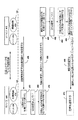
図4は、マルチマスター環境において同期を取るための知識交換フレームワークにおける、同期メタデータ内の品質情報の代表的な実施を示すフローチャート図である。示されるように、デバイス300とデバイス410は接続され、同期を取ることを望む。例を簡潔にするため、図4は、デバイス400とデバイス410の間で同期が取られる1つのオブジェクト402および412をそれぞれ示しているが、当該技法は、任意の1組のオブジェクトのために拡張することができる。言及されたように、本明細書で説明される実施形態によれば、同期知識404および414が、オブジェクト402および412のために、デバイス400および410によってそれぞれ維持される。これに関連して、同期知識404は、品質Q1がオブジェクト402に適用されることを表し、同期知識414は、品質Q2がオブジェクト412に適用されることを表す。
FIG. 4 is a flow chart diagram illustrating an exemplary implementation of quality information in synchronization metadata in a knowledge exchange framework for synchronizing in a multi-master environment. As shown,
450に示されるように、ノードが、マルチマスター同期環境において、任意のネットワークトポロジーに従って構成された1つまたは複数のネットワークを介して、他のノードに接続した後、デバイス410は、デバイス410から同期知識414を受信することができる。452において、デバイス400は、以下でより詳細に説明される知識交換原理に従って、知識404を知識414と比較する。
As shown at 450, after nodes have connected to other nodes in a multi-master synchronization environment via one or more networks configured according to any network topology, device 410 synchronizes from device 410
これに関連して、454において、デバイス400は、同期知識414内で表されるバージョンQ2が望ましいかどうかを決定することができる。望ましい場合、456において、ローカル知識404は、知識414の品質情報Q2を用いて更新される。次に458において、デバイス400は、デバイス400が関心のあるオブジェクトの更新を要求し、更新された知識404が、デバイス410に送信される。今度は、460において、デバイス410が、更新された知識404を知識414と比較し、462において、品質Q1を有するデバイス400のバージョンが望ましいかどうかを決定する。464において、知識414は、更新された知識414を含むように更新され、知識交換を完了させる。466において、更新された知識404が、Q2がデバイス400にとって望ましいことを示している場合、468において、デバイス400は、そのような更新を受信し、470において、それがデバイス400によって保存される。同様に、デバイス410は、望む変更をデバイス400から受信する。このようにして、同期知識交換は、デバイスが、同期中に受信したバージョンの品質について選り好みすることを可能にする。
効率的な知識表現および交換
様々な非限定的な実施形態による、マルチマスター同期環境における、知識として表現された同期メタデータを介するオブジェクトの品質の表現を説明する前置きとして、このセクションでは、データ同期フレームワークにおける、知識を効率的に表現するための全体的な機構の概要が提示される。
In this regard, at 454, the device 400 can determine if the
Efficient knowledge representation and exchange As a prelude to describing the representation of the quality of objects via synchronization metadata expressed as knowledge in a multi-master synchronization environment according to various non-limiting embodiments, this section describes data synchronization. An overview of the overall mechanism for efficiently expressing knowledge in the framework is presented.
全体的な同期機構は、(1)第1のノードによって必要とされる最低限のデータのみを送信するように第2のノードに要求することによる、接続デバイス間での知識の効率的な交換、(2)第1のノードと第2のノードの間でのデータの状態の不一致すなわち競合を効率的かつ正確に認識する能力、(3)任意の数のノードを同期させる能力、および(4)任意のノードを任意の他のノードを介して同期させる能力、すなわち、ピアツーピアのマルチマスター同期環境において動作する能力を含む。 The overall synchronization mechanism is: (1) efficient exchange of knowledge between connected devices by requiring the second node to transmit only the minimum data needed by the first node (2) the ability to efficiently and accurately recognize data state inconsistencies or conflicts between the first and second nodes, (3) the ability to synchronize any number of nodes, and (4 2.) Including the ability to synchronize any node via any other node, ie to operate in a peer-to-peer multi-master synchronization environment.
全体的な機構を用いて、2つのデバイス間で共有されるいくつかの情報に対して、任意の数の変更を行うことができる。2つのデバイスは接続されるといつでも、互いに知識を交換することによって、デバイス間での変更を容易にするための、互いが何を知っており、何を知らないかを再構成するために必要とされる少なくとも最低限の量の情報を知るようになる。3つ以上のデバイスが含まれる場合、共有される情報のより大きなベース(base)についての知識に関して、知識は不完全になり得るが、多数のデバイス間でより多くの知識が共有されるので、時間とともにデバイスが他のデバイスに接続するにつれ、集合的な知識がデバイスによって蓄積され続けることに留意されたい。 With the overall mechanism, any number of changes can be made to some of the information shared between the two devices. Whenever two devices are connected, they need to reconfigure what they know and what they do not know, to facilitate changes between devices by exchanging knowledge with each other You will know at least the minimum amount of information that is said. If more than two devices are involved, knowledge may be incomplete with regard to knowledge about the larger base of information to be shared, but more knowledge is shared among many devices. Note that as the devices connect to other devices over time, collective knowledge continues to be accumulated by the devices.
有利には、様々な非限定的な実施形態では、同期は、1組のデバイスまたは1組のデバイスの一部に対して実行され、そのすべてが1組のオブジェクトの最新バージョンを維持することに関心があるが、同期は、そのようなデバイスが、コンピューティングエコシステム(computing ecosystem)においてデバイスが同期を取ることができる異なるオブジェクトについて質的結論を下すことも可能にする。デバイスが1つまたは複数のネットワークを介して1組のデバイスのうちの他のデバイス(複数可)と再び接続する場合はいつも、そのデバイスは、他のデバイス(複数可)がそれらの集合的知識を用いて表すのと同じくらい最新の集合的知識を再獲得する。このようにして、疎接続されたデバイスであっても、1組のデバイスと接触し、接触を断つことができ、その後、最新の1組の集合的知識を所有する任意の1組のデバイスと接触することによって、獲得し損ねたすべての知識を再学習することができる。 Advantageously, in various non-limiting embodiments, synchronization is performed to a set of devices or a portion of a set of devices, all of which maintain the latest version of a set of objects. Although of interest, synchronization also allows such devices to make qualitative conclusions about the different objects to which they can synchronize in the computing ecosystem. Whenever a device reconnects with other device (s) of a set of devices via one or more networks, that device has other knowledge of the other device (s) of them. Reacquire collective knowledge as up-to-date as you would represent using. In this way, even a loosely connected device can contact and break contact with a set of devices, and then with any set of devices that possesses the latest set of collective knowledge. By touching, it is possible to relearn all the knowledge that has been acquired.
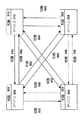
図5は、知識交換が、任意の数のデバイスに一般化または拡張可能であることを示している。示されるように、非限定的な数のデバイスとして、4つのデバイス500、510、520、530が、デバイス間で共有される1組の共通情報について各デバイスが何を知っており、何を知らないかをそれぞれ示す知識表現502、512、522、532とともに示されている。
FIG. 5 shows that knowledge exchange can be generalized or extended to any number of devices. As shown, as a non-limiting number of devices, the four devices 500, 510, 520, 530 know what each device knows about a set of common information shared among the devices and what they know It is shown together with
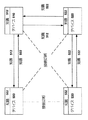
有利には、図6に示されるように、ネットワーク内の接続が切断された場合でさえも、それにも関わらず、他のデバイスへの少なくとも1つの接続が直接的または間接的に存在する限り、デバイス500、510、520、530のすべてによって、完全な1組の知識が獲得できる。例えば、示されるように、デバイス530の知識532は、デバイス520との知識交換、次にデバイス520とデバイス510の間の知識交換、最後にデバイス510とデバイス500の間の知識交換を介して、依然として、デバイス500に到達する。 Advantageously, as shown in FIG. 6, even when the connection in the network is disconnected, as long as at least one connection to the other device is still present directly or indirectly, With all of the devices 500, 510, 520, 530, a complete set of knowledge can be obtained. For example, as shown, knowledge 532 of device 530 may be via knowledge exchange with device 520, then knowledge exchange between device 520 and device 510, and finally knowledge exchange between device 510 and device 500. Still, the device 500 is reached.
より多くのデバイスが、共有される共通情報についての知識を共有する場合、様々な非限定的な実施形態による知識交換(複数可)は、集合的知識がどのデバイスから来るかについて関知しないので、デバイスのすべてが利益を得る。デバイスの各々は、それが接続された他のデバイスのいずれかから、デバイス間で共有される情報についての多くの知識を獲得しようと試みて独立に動作する。 If more devices share knowledge about the shared common information, knowledge exchange (s) according to various non-limiting embodiments do not know which device the collective knowledge comes from, All of the devices benefit. Each of the devices operates independently in an attempt to gain much of the knowledge about the information shared between the devices from any of the other devices to which it is connected.
例示的で非限定的な詳細では、2つのノードが会話に関わり、会話の最後に、関心のあるデータセットについて同等の知識を有するための方法が、さらに詳細に説明される。この方法は、ピアツーピアネットワーク/マルチマスター環境に入って来た新しい各デバイスに対して知識交換能力を授けることによって、2つのノードを超えて拡張可能である。 In the exemplary non-limiting detail, the method for two nodes involved in a conversation and at the end of the conversation to have equal knowledge of the data set of interest is described in more detail. This method can be extended beyond two nodes by granting knowledge exchange capabilities to each new device coming into the peer-to-peer network / multi-master environment.
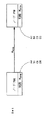
したがって、図7に示されるように、任意の数のノードを有するピアツーピアネットワークのノード700は、ノード710とデータを交換することを望む。ノードAは、ノード710に変更を要求することによって開始し、それを行うために、ノード700は、示されるように、(KN700として表された)その知識をノード710に送信する。 Thus, as shown in FIG. 7, node 700 of a peer-to-peer network having any number of nodes desires to exchange data with node 710. Node A starts by requesting node 710 to make changes, and to do so, node 700 transmits its knowledge (represented as K N 700 ) to node 710, as shown.
デバイスまたはノードの知識は、デバイス間で共有される各オブジェクトを文字識別子を用いてラベル付けすることによって表され、次に、後に付けられた数字が、このオブジェクトの最新バージョンを表す。例えば、図7に示されるようにKN700は、オブジェクトA、B、C、Dを含み、その各々は、ノード700とノード710の間で同期が取られ、各オブジェクトの後に付けられた数字は、デバイスにおいて知られているオブジェクトの最新バージョンを表す。例えば、時間t=1における知識KN700は、図7においてA4、B3、C6、D0と表記される、Aの第5バージョン、Bの第4バージョン、Cの第7バージョン、Dの第1バージョンを含む。対照的に、時間t=1におけるノード710の知識KN710は、図7においてA3、B6、C6、D2と表記される、Aの第4バージョン、Bの第7バージョン、Cの第7バージョン、Dの第3バージョンを含むことができる。 The knowledge of the device or node is represented by labeling each object shared between the devices with a textual identifier, and then the numbers given after it represent the latest version of this object. For example, as shown in FIG. 7, K N 700 includes objects A, B, C, D, each of which is synchronized between node 700 and node 710, and the number appended after each object is , Represents the latest version of the object known in the device. For example, the knowledge K N 700 at time t = 1 is denoted as A4, B3, C6, D0 in FIG. 7, the fifth version of A, the fourth version of B, the seventh version of C, the first version of D including. In contrast, the knowledge K N 710 of node 710 at time t = 1 is the fourth version of A, the seventh version of B, the seventh version of C, denoted A3, B6, C6, D2 in FIG. A third version of D can be included.
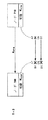
図8に示されるように、時間T=2において、ノード710は、ノード700から受信した知識KN700を自らの知識KN710と比較し、何がノード700に送信される必要があるかを決定する。この例では、ノード700の知識のB3、D0は、ノード710の知識のB6、D2よりも遅れているので、結果として、ノード710は、BおよびDに関する変更をノード700に送信する。ノード710は、B6とB3の間の変更およびD2とD0の間の変更をノード700に送信する場合、(ノード710上で最新の変更が行われたときがいつであろうとそれを反映した)ノード710が有する知識KN710の最新バージョンとともに送信する。 As shown in FIG. 8, at time T = 2, node 710 compares knowledge K N700 received from node 700 and their knowledge K N710, determines what needs to be sent to node 700 Do. In this example, B3 and D0 of node 700's knowledge lag behind B6 and D2 of node 710's knowledge so that node 710 sends changes to B and D to node 700. If node 710 sends changes between B6 and B3 and changes between D2 and D0 to node 700 (which reflects when the latest change was made on node 710) It transmits with the latest version of the knowledge K N 710 possessed by the node 710.
時間t=3を表す図9に示されるように、ノード700への知識KN710の送信は、同じバージョンであったにも関わらず、ノード700とノード710の両方がオブジェクトに対する変更を行ったことが後で判明した場合、ノード700が、競合を検出する(例えば、後の解決のためにそれらを保存する)ことを可能にする。これは、自律的な更新、効率的な列挙を可能にするが、ノードが変更に出会い、それを交換した場合に、正しい競合検出も可能にする。例えば、例において、C6が知識KN710と知識KN710の双方で同じオブジェクトではない場合、例えば、双方がC5からC6に独立に進化した場合、どちらのC6が正しいC6であるかは、例えば、同期シナリオおよび含まれるデバイスに適した事前に定められた方針による解決に従った競合解決に委ねるために保留にすることができる。 As shown in FIG. 9 representing time t = 3, the transmission of the knowledge K N 710 to the node 700 is that both the node 700 and the node 710 have made changes to the object despite being of the same version Later will allow node 700 to detect conflicts (eg, save them for later resolution). This allows for autonomous updating, efficient enumeration, but also enables correct conflict detection if nodes encounter changes and exchange them. For example, in the example, if C6 is not the same object in both knowledge K N710 and knowledge K N710 , for example, if both independently evolve from C5 to C6, for example, which C6 is the correct C6, for example It may be reserved for conflict resolution according to the synchronization scenario and the predefined policy suitable for the device involved.
上で説明された全体的な機構を使用する、分散マルチマスター同期環境の任意の2つのノード間の例示的な知識交換プロセスが、図10のフロー図に示されている。1000において、ノードAは、ノードBとの同期を要求し、それによって、ノードAが知らない変更をノードBに求める。ノードBに授けるため、1010において、ノードAは、その知識をノードBに送信する。1020において、ノードBは、ノードAから受信した知識を自らの知識と比較して、ノードBが知っているどの変更をノードAに送信すべきかを決定する。1030において、ノードBは、そのような変更をノードAに送信し、加えて、ノードBは、ノードAが1040において同様の知識比較を実行できるように、その知識をノードAに送信する。本明細書で説明される実施形態と一貫性を保って、デバイスにとって望ましくないメタデータによる質的特性を有するオブジェクトは、デバイスの制限のせいで、またはそのような質的特性はデバイスが目標を促進する助けとならないので、同期が取られない。 An exemplary knowledge exchange process between any two nodes of a distributed multi-master synchronization environment, using the general mechanism described above, is illustrated in the flow diagram of FIG. At 1000, Node A requests synchronization with Node B, thereby asking Node B for changes that Node A does not know. At 1010, node A sends its knowledge to node B to endorse node B. At 1020, Node B compares the knowledge received from Node A with its own knowledge to determine which changes Node B knows should be sent to Node A. At 1030, Node B sends such changes to Node A, and in addition, Node B sends its knowledge to Node A so that Node A can perform a similar knowledge comparison at 1040. Consistent with the embodiments described herein, objects that have qualitative characteristics due to metadata that are undesirable for the device may be due to device limitations or such qualitative characteristics may cause the device to target It can not be synchronized because it does not help promote.
1050において、ノードAは、ノードAおよびノードB上でバージョンの独立した進化が発生している場合、ノードBの知識に反映された最新バージョンとノードAの知識に反映された最新バージョンの間の潜在的な競合を検出する。任意選択的に、競合の場合にどちらのノードが他方のノードに優先されるかを決定するために、いずれかの競合解決方針を適用することができる。1060において、ノードBによって所有されない最新の変更が、ノードAからノードBに送信される。競合解決方針が、ノード間で共通情報を維持するために、変更がノードBからノードAに送信されるか、それともノードAからノードBに送信されるかを追加的に指図する。独立したバージョン管理がOKまたは望ましい場合、競合解決は別の選択肢にならない。本明細書で説明される実施形態と一貫性を保って、デバイスにとって望ましくないメタデータによる質的特性を有するオブジェクトは、デバイスの制限のせいで、またはそのような質的特性はデバイスが目標を促進する助けとならないので、同期が取られない。 At 1050, if node A is experiencing independent evolution of versions on node A and node B, then the node A is between the latest version reflected in node B's knowledge and the latest version reflected in node A's knowledge. Detect potential conflicts. Optionally, any conflict resolution policy can be applied to determine which node takes precedence over the other node in case of a conflict. At 1060, the latest changes not owned by Node B are sent from Node A to Node B. The contention resolution policy additionally dictates whether the change is sent from node B to node A or from node A to node B in order to maintain common information between nodes. If independent versioning is OK or desirable, conflict resolution is not another option. Consistent with the embodiments described herein, objects that have qualitative characteristics due to metadata that are undesirable for the device may be due to device limitations or such qualitative characteristics may cause the device to target It can not be synchronized because it does not help promote.
図11は、フィルタリングされた知識が可能である場合に、すなわち、ノードの知識の一部が1つまたは複数の他のノードと同期が取られる場合に、知識を交換するための一般化された機構を示している。示されるように、各レプリカAおよびBは、同期プロバイダPAおよびプロバイダPBをそれぞれ有する。これに関連して、各レプリカAおよびBは、知識KAおよびKBをそれぞれ維持し、潜在的には、フィルタリングされた知識FAおよびFBも維持する。部分化(subsetting)のない場合と同様に、レプリカのいずれかが、別のレプリカの変更1100を要求することができ、変更を伝える他のレプリカに応答して、変更1110を受信することができる。図示されるように、レプリカAは、1100において、所定の範囲の1組のオブジェクトについての変更を要求することができ、組内のオブジェクトの品質についての情報を含むその知識を送信する。同様に、1110において、知識KAおよびKBの分析に基づいて、1110において、レプリカBは知っているが、レプリカAは知らない変更が、品質の範囲内にあるオブジェクトについて、レプリカAに送信される。フィルタリングされた知識FAとフィルタリングされた知識FBが同じ範囲(scope)内にある場合、一般化された知識交換に関して、
KA=KA∪KB
となる。
FIG. 11 is generalized for exchanging knowledge when filtered knowledge is possible, ie when part of a node's knowledge is synchronized with one or more other nodes The mechanism is shown. As shown, each replica A and B has a synchronization provider PA and a provider PB, respectively. In this regard, each replica A and B maintains knowledge K A and K B respectively, and potentially also filtered knowledge F A and F B. As with no subsetting, any of the replicas may request another
K A = K A ∪K B
It becomes.
フィルタリングされた知識FAとフィルタリングされた知識FBが同じ範囲内にない場合、
代わりに、知識は、以下のように、それぞれのフィルターFAとFBの共通部分に射影された他のレプリカの知識を既存の知識に加える関数である。
If the filtered knowledge F A and the filtered knowledge F B are not in the same range,
Instead, the knowledge is a function that adds the knowledge of other replicas projected onto the intersection of the respective filters F A and F B to the existing knowledge, as follows:
KA=KA∪(KB→(FA∩FB))
アプリケーションの中でもとりわけ、これらのタイプのフィルターのための例示的で非限定的なアプリケーションは、カラム(column)、または同期フレームワークの任意の変更ユニット(change unit)をフィルタリングするためのものである。システムにおいてカラム変更は移動操作の影響を受ける可能性が低いので、これは特に適用可能である。フィルター表現(filter representation)および知識統合(knowledge consolidation)という、留意するに値する2つの検討対象が、このシナリオに関して存在する。
K A = K A ∪ (K B → (F A ∩F B ))
Among the applications, an exemplary non-limiting application for these types of filters is to filter columns, or any change units of the synchronization framework. This is particularly applicable as column changes in the system are less likely to be affected by the move operation. Two worth considering considerations for this scenario exist: filter representation and knowledge consolidation.
フィルター表現に関して、移動のないフィルターの場合のフィルター表現は、以下のようになる。各フィルターは、フィルター内に含まれる変更ユニットのリストとして表現される。この表現は、表現の便利な手段を提供するばかりでなく、必要な場合にフィルターを組み合わせる能力も提供する。フィルターを組み合わせる能力は、知識を統合するために有益である。 With respect to the filter expression, the filter expression in the case of the filter without movement is as follows. Each filter is represented as a list of change units contained within the filter. This expression not only provides a convenient means of expression, but also provides the ability to combine filters where necessary. The ability to combine filters is beneficial for integrating knowledge.
知識統合に関して、知識を最も簡潔な形式に保つため、知識を統合する能力が維持されなければならない。これに関連して、知識を最もコンパクトな形式に維持できるように、フィルタリングされた知識の断片(fragment)を統合することができる。 With respect to knowledge integration, the ability to integrate knowledge must be maintained in order to keep the knowledge in the simplest form. In this context, it is possible to integrate filtered knowledge fragments so that the knowledge can be kept in the most compact form.
フィルターを組み合わせる能力について検討すると、フィルターは1組の変更ユニットとして表現できるので、両方のフィルターに存在する変更ユニットの組を分離することによって、フィルター内の重複を照合調整することができる。 Considering the ability to combine filters, the filters can be expressed as a set of change units, so the separation within the filters can be reconciled by separating the set of change units present in both filters.
また、フィルターのためのベクトルは、フィルター内の個々の変更ユニットの各々に適用されるので、フィルターの組み合わせは、両方のフィルター内の各変更ユニットについて、変更ユニットのための合成ベクトルを見つけることによって、実行することができる。その後、ベクトルのすべてが知られると、共通のベクトルを有する変更ユニットが、新しいフィルター内に再度組み合わされる。 Also, since the vector for the filter is applied to each of the individual change units in the filter, the combination of filters is by finding a composite vector for the change unit for each change unit in both filters Can be done. Then, when all of the vectors are known, modification units with common vectors are recombined into a new filter.
フィルターは、デバイス間でどの情報の同期を取るかを制御するための1つの方法であるが、フィルターは一般に、以下でより詳細に説明される実施において提供されるように、アイテムの品質の特性を同期メタデータの一部として扱わない。 While filters are one way to control which information is synchronized between devices, filters are generally characteristic of the quality of the item, as provided in the implementation described in more detail below. Do not treat as part of synchronous metadata.
したがって、知識の概念は、マルチマスター同期ネットワークの多数のノード間での知識交換のため、データを効率的に表現するために使用することができ、ネットワークのいずれのノードも、ノード間で同期が取られる共通情報または共通情報の一部を独立して進化させることができる。上で説明された知識ベースフレームワークは、マルチマスター同期環境のために実施することができ、以下でより詳細に説明されるように、フレームワークは、効率的な同期メタデータを介したオブジェクトのバージョンの品質についての概念を含むように拡張可能である。
オブジェクトの品質の知識ベース表現
様々な実施形態では、マルチマスター同期トポロジーにおけるデバイスによるデータの効率的な同期が提供され、デバイスは、同期が取られるオブジェクトの品質レベル(例えば、第1のオーディオフォーマットか、それとも第2のオーディオフォーマットか、第1の解像度か、それとも第2の解像度か、もしくは第1のスキーマに準拠するのか、それとも第2のスキーマに準拠するのか)について知っており、またはより一般的に、各デバイスは、オブジェクトのバージョンに適用されるいずれか1つもしくは複数の変換について知っている。個々のエンドポイントが、第1の品質のオブジェクトのバージョン(もしくはオブジェクトのバージョンの第1の変換)と同期を取るべきかどうかを決定でき、または異なる品質を有するオブジェクトのバージョン(もしくはオブジェクトのバージョンの第2のより適切な変換)を有するデバイスを探し出せるように、デバイスは、知識交換の一部としてそのような情報を効率的に伝達することができる。
Thus, the notion of knowledge can be used to represent data efficiently, for knowledge exchange between multiple nodes of a multi-master synchronization network, and any node of the network is synchronized between nodes Common information taken or part of common information can be evolved independently. The knowledge-based framework described above can be implemented for a multi-master synchronization environment, and as described in more detail below, the framework allows efficient synchronization of objects via synchronization metadata. It is extensible to include the notion of version quality.
Knowledge Based Representation of Object Quality In various embodiments, efficient synchronization of data by devices in a multi-master synchronization topology is provided, and the devices are used to determine the quality level of the objects to be synchronized (eg, the first audio format? Or know the second audio format, the first resolution, the second resolution, or the first schema, or the second schema), or more generally In particular, each device knows about any one or more transformations that apply to the version of the object. Each endpoint can decide whether to synchronize with the version of the object of the first quality (or the first conversion of the version of the object) or the version of the object with different quality (or the version of the object The device can efficiently communicate such information as part of a knowledge exchange, so that it can find the device with the second more appropriate conversion).
どのオブジェクトが変化したかについての情報をバージョンを介して効率的に獲得および表現する能力と、それらのオブジェクトが質的にどのように変換されたかについての情報を獲得および表現する能力は、実質的に、オブジェクトの特定のバージョンがエンドポイントにとってどれだけ有益であるかをエンドポイントに告げ、オブジェクトが「変化した」または「異なる」という単なる事実よりも多くの情報が利用可能である。 The ability to efficiently obtain and express information about which objects have changed through versions, and to obtain and express information on how those objects were qualitatively transformed, is substantial In addition, it tells the endpoint how useful the particular version of the object is for the endpoint, and more information is available than the mere fact that the object is "changed" or "different".
例えば、iPodは、すべての種類のオーディオファイルを消費することはできず、オーディオファイルの独自仕様フォーマットを再生するのに最もよく適している。対照的に、他のほとんどのMP3プレーヤーは、オーディオファイルのiPod独自仕様フォーマットを再生することができない。したがって、同期言語自体の一部として、異なるオーディオファイル符号化など、同じオブジェクトの異なる品質バージョンについて、知識交換の一部として同期を取ることが望ましいかを、デバイスに決定させることが望ましい。 For example, the iPod can not consume all types of audio files, and is best suited for playing back proprietary formats of audio files. In contrast, most other MP3 players can not play the iPod proprietary format of audio files. Thus, as part of the synchronization language itself, it is desirable to have the device decide whether it is desirable to synchronize as part of knowledge exchange, for different quality versions of the same object, such as different audio file encodings.
実施形態の第1の組では、無効化が実施され、それによって、オブジェクトが望まないアイテム(例えば、デバイスのメモリーに対して高すぎる解像度、またはデバイスによってサポートされない異なるスキーマに準拠するオブジェクトのバージョン、またはデバイスが符号化を復号できないなど)を受信した場合、デバイスは、デバイスがそのアイテムを再び受信することを望まないことを同期メタデータが反映するように、そのアイテムを無効化することができる。エンドポイントは、許容できない変換、符号化、忠実度などのバージョンを受信した場合、許容できないオブジェクトバージョンを無効化することができ、実質的に、そのデバイスとの同期プロセスからそのアイテムを削除する。 In the first set of embodiments, invalidation is performed, whereby items that the object does not want (e.g., resolutions too high for the memory of the device, or versions of the object conforming to different schemas not supported by the device, Or if the device receives the encoding can not be decoded, etc.), the device can invalidate the item so that the synchronization metadata reflects that the device does not want to receive the item again . An endpoint can invalidate an unacceptable object version when it receives a version of unacceptable conversion, encoding, fidelity, etc., substantially removing the item from the process of synchronizing with the device.
アイテムは望まれていないので、デバイスによって削除することができ、または他の適切なアクションをオブジェクトに対して取ることができる。別の適切なアクションの例は、オブジェクトのバージョンがデバイスにとって不適切な符号化であるのに、デバイスがそのオブジェクトの復号器を有さない場合に、それにも関わらず、デバイスが、不適切な符号化をデバイスにとって理解可能な符号化にトランスコードするトランスコーダーを有することがある場合とすることができる。そのような場合、オブジェクトを削除する代わりに、デバイスは、オブジェクトを別の符号化に変換し、同期メタデータ内でその変換または新しい品質レベルを表すことができる。 Because the item is not desired, it can be deleted by the device or other appropriate actions can be taken on the object. Another example of an appropriate action is that if the version of the object is an encoding that is inappropriate for the device, but the device does not have a decoder for that object, the device is nevertheless inappropriate It may be the case that it has a transcoder that transcodes the coding to a device understandable to the device. In such a case, instead of deleting the object, the device may convert the object to another encoding and represent that conversion or new quality level in synchronous metadata.
これに関連して、エンドポイントは、将来の同期が許容できないバージョンを再び受け入れることを回避するように、許容できないバージョンについてのメタデータを維持し続ける。しかし、時間とともに、そのような無効化メタデータが、許容し得ないほど増加することがあり得る。要するに、デバイスがそれまでに対話したが好まなかったものすべての記録を維持することは、特に機能が限定されており、多くのオブジェクトを拒否するデバイスの場合、またはめったに遭遇しない品質のオブジェクトの場合、効率的ではない。 In this regard, the endpoint continues to maintain metadata about the unacceptable version so as to prevent future synchronization from accepting the unacceptable version again. However, with time, such invalidation metadata may increase unacceptably. In short, maintaining a record of everything the device has interacted with but did not like, especially in the case of devices with limited functionality, rejecting many objects, or objects of rarely encountered quality , Not efficient.
しかし、あるコンピューティング同期エコシステムの場合、そのような1組の実施形態は、例えば、デバイスが一般に互換性をもち、類似のアプリケーションならびに類似のメモリーおよび処理能力を有し、デバイスの各々が他のデバイスが知っているすべてを知りたがる可能性が高いため、少数の拒否しかもたらされない可能性が高い同期環境において、きわめて良好に機能することがある。デバイスがハードウェアおよび/またはソフトウェア特徴においてより一層異質になるにつれて、デバイスが他のデバイスが知っているすべてを知りたがらない可能性がより高くなる。その状況は、異なる言語を話す人々と類似している。互いに異なる言語を話す人々の間では、人が他人が理解できる言語を話し始めるまで、多くのコミュニケーションの拒否が発生する。 However, in the case of a computing synchronous ecosystem, such a set of embodiments may, for example, be compatible with devices in general, with similar applications and similar memory and processing power, each of the devices being Because it is likely to want to know everything that the devices know, it may work quite well in a synchronized environment where it is likely that only a few rejections will result. As devices become more and more heterogeneous in hardware and / or software features, they are more likely not to know all that other devices know. The situation is similar to people who speak different languages. Among people who speak different languages, many denials of communication occur until one begins to speak a language that others can understand.
この点において、オブジェクトのバージョンの品質の概念を、オブジェクト自体のソースであるデバイスに拡張することができる。例えば、時間とともに、デバイスは、特定のノードからの通信のほとんどまたはすべてが低いまたは非互換の品質にあり、したがって、多くが拒否されることを学習することができる。そのような場合、デバイスは、時間とともに、低い品質の別のデバイスと同期を取らず、そのデバイスにとってより関係のある知識を有する、より高い品質のデバイスを待つことを選択することができる。例えば、MP3プレーヤーは、iPodがiPod独自仕様フォーマットの歌のみを有することを学習した後は、iPodと同期を取らないことを選択することができ、デバイスが将来、iPodとの知識交換および比較を実行しなくて済むようにする。 In this regard, the notion of object version quality can be extended to the device that is the source of the object itself. For example, over time, the device can learn that most or all of the communication from a particular node is at a low or incompatible quality, and thus many are rejected. In such cases, the device may choose to wait for a higher quality device that over time does not synchronize with another device of lower quality and has more relevant knowledge for that device. For example, after learning that the iPod only has songs in the iPod proprietary format, the MP3 player can choose not to sync with the iPod, and the device will, in the future, exchange knowledge and comparisons with the iPod Make it unnecessary to execute.
言及されたように、オブジェクトのバージョンについての品質情報を表現する1つの方法は、デバイスに適さないオブジェクトのバージョンにデバイスが気づき、それを拒否した場合に、オブジェクトを無効化することである。多くの拒否が発生した場合、オブジェクトの数が劇的に増加するにつれて、各デバイスが将来何を受信したくないかについてのデバイス当たりに保存される情報の量が、問題を提示し得る。 As mentioned, one way to express quality information about a version of an object is to invalidate the object if the device notices and rejects the version of the object that is not suitable for the device. If a large number of rejections occur, as the number of objects increases dramatically, the amount of information stored per device about what each device does not want to receive in the future may present a problem.
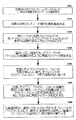
無効化する実施形態が、全体として、図12のフロー図によって示されている。1200において、様々なノードが、多様なマルチマスター同期環境において、任意のトポロジカルフレームワークに従って、互いに接続することができる。1210において、2つ以上のノードが、知識交換を介して同期を開始する。220において、他のノードから受信したオブジェクトの各バージョンについて、各ノードは、オブジェクトのバージョンによって表される品質がノードにとって望ましいかどうかを決定する。1230において、望ましいかどうかに関わらず、遭遇したバージョンの知識を含むように、同期メタデータが更新される。1240において、バージョンが望ましい場合、そのバージョンは同期を取り続け、すなわち、オブジェクトのそのバージョンに関する同期は、将来の知識交換において変わることなく取られ続ける。1250において、オブジェクトが望ましくないとノードが決定した場合、バージョンの知識は(将来の知識交換においてノードに対してそのオブジェクトの同期を取らないようにするために)維持されるが、1260において、オブジェクトの望ましくないバージョンは削除することができ、またはオブジェクトのそのバージョンに対して、変換などの他のアクションを取ることができる。 The disabling embodiment is generally illustrated by the flow diagram of FIG. At 1200, various nodes can be connected together according to any topological framework in various multi-master synchronization environments. At 1210, two or more nodes initiate synchronization via knowledge exchange. At 220, for each version of the object received from other nodes, each node determines whether the quality represented by the version of the object is desirable for the node. At 1230, the synchronization metadata is updated to include the knowledge of the version encountered, whether desired or not. At 1240, if a version is desired, the version continues to synchronize, ie, synchronization regarding the version of the object continues to be taken unchanged in future knowledge exchanges. At 1250, if the node decides that an object is not desired, then the knowledge of the version is maintained (to keep the object synchronized to the node in future knowledge exchanges), but at 1260 the object Unwanted versions of can be deleted, or other actions such as transformation can be taken on that version of the object.
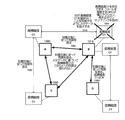
無効化する実施形態の動作が、全体として、図13に示されている。示されるように、最初、1302において、ノードA1300とノードC1320は、同期を取っており、両方のノードがサポートする高精細度オブジェクトO1を同期させている。しかし、1304において、ノードA100とノードB1310が同期を取るとき、1314において、ノードB1310は、オブジェクトの高精細度バージョンを保存できないと決定し、そのため、オブジェクトが削除またはより低い精細度バージョンに変換される。例では、簡略にするため、オブジェクトがノードB1310によって削除される。1312において、ノードBは、ノードB1310がオブジェクトのそのバージョンと再び同期を取ることを望まないことを反映するように、同期知識を拡大する。
The operation of the disabling embodiment is generally shown in FIG. As shown, initially at 1302,
有利には、その後、1322において、ノードC1320がノードB1310と同期を取るとき、高精細度オブジェクトO1は、ノードB1310がそのバージョンの非所望を反映する知識を有するので、同期が取られない。しかし、1332において、後でノードD1330がノードB1310と同期を取るとき、低精細度バージョンには除外が存在しないので、ノードD1330は、オブジェクトO1の低精細度バージョンをノードB1310に同期させる。このようにして、各ノードは、時間とともに、異なる品質のデータの様々なバージョンに対する嫌忌を反映することができ、サポートされないアイテムに対する努力を繰り返して、不必要な同期トラフィックを生じさせることなく、より知的に同期を取ることができる。
Advantageously, then, at 1322, when
代替的な1組の実施形態では、新しい独立したバージョンに値する破壊的変更とは対照的に、品質は、データのバージョンが品質変換をこうむったことが決定されるデータのバージョンのバージョン管理によって、同期メタデータ内で表される。オブジェクトのバージョンに適用される変換または品質レベルの1つの層を表すためのバージョンのバージョン管理に加えて、そのような実施形態は、任意の数のレベルまたは層に、例えば、2層の場合のバージョンのバージョンのバージョン管理、3層の場合のバージョンのバージョンのバージョンのバージョン管理などに拡張することもできる。 In an alternative set of embodiments, quality is by version control of the version of the data where it is determined that the version of the data has undergone quality conversion, in contrast to the destructive changes that merit new independent versions. Represented in synchronous metadata. In addition to version versioning to represent one layer of transformations or quality levels applied to object versions, such an embodiment may be applied to any number of levels or layers, for example, in the case of two layers. It can also be extended to version version control, version version version control for three tiers, etc.
有利には、個々のエンドポイントは、オブジェクトに対する特定の変更が、新しいバージョンが生成される、例えば、ティックカウントが増加されるなど、バージョンのバージョン管理をトリガーしない一般的な変更を表すか、それとも代わりに、例えば、現在のティックカウントによって表されるオブジェクトのバージョンをバージョン管理するなど、オブジェクトの現在のバージョンをバージョン管理することによって表されるタイプの、忠実度または変換変更を表すかを決定することが可能である。したがって、バージョン情報のバージョン管理を知識表現に含めることによる知識の拡張は、オブジェクトに対する変換についての質的情報を伝える目的を達成する別の方法である。 Advantageously, does the individual endpoint indicate that a particular change to the object is a general change that does not trigger versioning of the version, such as when a new version is generated, eg, tick counts are increased, or Instead, determine if it represents a fidelity or transformation change of the type represented by versioning the current version of the object, eg versioning the version of the object represented by the current tick count It is possible. Thus, extending knowledge by including version control of version information in the knowledge representation is another way of achieving the purpose of conveying qualitative information about transformations on objects.
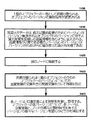
バージョン情報をバージョン管理するための例示的な実施形態が、図14のフロー図に示されている。1400において、1組のオブジェクトの一部として同期が取られるオブジェクトのバージョンの質的特性が変更される。1410において、同期メタデータは、例えば質的変更のためにバージョンがバージョン管理される、オブジェクトのバージョンに対する質的変更を反映した品質情報を含むように拡大される。品質情報が2層である場合、バージョンのバージョンがバージョン管理され、さらに層が増えた場合も同様である。1420において、ノードが、マルチマスター同期環境内の別のノードに接続する。 An exemplary embodiment for versioning version information is shown in the flow diagram of FIG. At 1400, the qualitative characteristics of the version of the object synchronized as part of the set of objects are changed. At 1410, the synchronization metadata is expanded to include quality information reflecting qualitative changes to the version of the object, eg, the version is versioned due to qualitative changes. When the quality information is two layers, the version of the version is versioned, and the same applies to the case where the number of layers is increased. At 1420, a node connects to another node in a multi-master synchronization environment.
1430において、ノードは、同期が取られる1組のオブジェクトのうちのオブジェクトのバージョンについての品質バージョン情報の交換を含む知識交換を介して同期を取る。1440において、各ノードは、知識交換に従って更新を列挙し、受信する。その後、オブジェクトの各バージョンについて、各ノードは、品質情報と、ノードが異なる質的特性を有するバージョンの様々なバージョンを望むかどうかを検討する。 At 1430, the nodes synchronize via knowledge exchange, including the exchange of quality version information for versions of objects of the set of objects to be synchronized. At 1440, each node enumerates and receives updates according to knowledge exchange. Then, for each version of the object, each node considers whether it wants quality information and different versions of the version with different qualitative characteristics of the node.
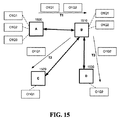
同じオブジェクトの異なる質的バージョンに対応するオブジェクトのバージョンの異なるバージョンを表す効率性が、図15のブロック図にさらに示されている。図15では、最初に、ノードA1500は、オブジェクトOの同じバージョンの異なる質的バージョンを有する。示されるように、O1Q1は、オブジェクトOの第1のバージョンを表すメタデータを示す表記であり、Q1は、オブジェクトO1のバージョンの第1の品質バージョンであることを示す。したがって、ノードA1500は、オブジェクトO1の3つの異なる質的バージョンQ1、Q2、Q3を含む。その後、T1において、T1におけるノードA1500とノードB1510の間の知識交換の後、ノードB1510は、バージョンQ1およびQ2のみを望むことを指定し、その後、それらの同期が取られる。その後、T2およびT3におけるさらなる同期において、オブジェクトC1520は、品質Q1を有するバージョンのみを望み、一方、オブジェクトD1530は、品質Q2を有するバージョンのみを望む。したがって、異なる品質の表現は、オブジェクトの多くの不必要で無駄な同期を回避するために、マルチマスター同期環境においてどのバージョンの同期を取るべきかを決定する機会を各デバイスに与える。
The efficiencies representing different versions of object versions corresponding to different qualitative versions of the same object are further illustrated in the block diagram of FIG. In FIG. 15, initially,
図16は、1組のAPIを介して完全または部分知識交換を実行するためのデバイス1600の例示的で非限定的な実施のブロック図である。示されるように、デバイス1600は、非限定的な実施形態による、別のデバイスと1組のオブジェクト1630の同期を取るための知識交換技法を実行する同期モジュール1620を含む。1組のオブジェクト1630は、効率的な動作のためにキャッシュ(図示されず)内に保存することもでき、その場合、1組のオブジェクト1630は、オフラインアプリケーションによって後で更新することができる。同期モジュール1620は、本明細書で説明されたように、一般に知識交換技法に従ってデータを他のノードに送信し、他のノードから受信するための同期通信モジュール1622を含むことができる。
FIG. 16 is a block diagram of an example non-limiting implementation of a device 1600 for performing full or partial knowledge exchange via a set of APIs. As shown, device 1600 includes a synchronization module 1620 that performs knowledge exchange techniques for synchronizing a set of
同期通信モジュール1622は、例えばオプションの承認モジュール1640を介して承認された場合に、第2のデバイスとの同期を開始し、第2のデバイスに接続することができる同期開始モジュール1624を含むこともできる。同期モジュール1622は、同期の開始に応答して、例えば、知識を取得もしくは送信するため、または変更を取得もしくは送信するために、1組のオブジェクト1630についての完全および/または部分知識1602をAPIを介して第2のデバイスに送信するI/Oモジュール1626を含むこともできる。同様に、I/Oモジュール1626は、第2のデバイスの要求した知識または変更1612、および第2のデバイスが起源の1組のオブジェクト1630に施された変更を受信することができる。次に、同期分析モジュール1628は、1組のオブジェクト1630に対して行われた任意の変更を適用するように、またローカルに行われた変更を決定するために、第2のデバイスから受信した知識1612を第1のデバイスの知識1602と比較するように、またはデバイス間の同期を完了するために第2のデバイスに送信するように動作する。
The synchronization communication module 1622 may also include a synchronization initiation module 1624 that may initiate synchronization with the second device and be connected to the second device, for example when approved via the
本明細書の実施形態によれば、図5から図11に関連して説明されたようなバージョン管理知識1603などの、1組のオブジェクト1630についてのノードによって所有される知識1602は、知識ベースフレームワーク内のオブジェクトに適用される変換についての質的情報を定義する品質知識1604を含むように拡大される。
According to embodiments herein, knowledge 1602 owned by a node for a set of
言及されたように、その概要が上で提供された知識フレームワーク内に含まれるメタデータを拡大することによる、オブジェクトのバージョンの知識ベース品質の様々な実施形態が、本明細書で提供された。疑念を避けるために言えば、本明細書で使用される「品質」という用語は、広い意味をもち、データに関する質的特性に影響を与える1つまたは複数の変換または機能に従ってデータを変換できる任意の方法を指す。したがって、品質という用語は、しばしば、文脈固有またはアプリケーション固有である。この点について、上で説明されたように、知識交換の一部として交換される同期メタデータ内にオブジェクトの異なる質的バージョンの概念を含めることによって、各エンドポイントは、コンピューティングシステム内で同期を取ることになった場合に、異なるバージョンにどう対処するかを決定することができる。 As mentioned, various embodiments of the knowledge base quality of the version of the object are provided herein by expanding the metadata contained within the knowledge framework the summary of which has been provided above. . For the avoidance of doubt, the term "quality" as used herein has a broad meaning and any that can transform data according to one or more transformations or functions that affect the qualitative characteristics of the data. Refers to the method of Thus, the term quality is often context specific or application specific. In this regard, as described above, each endpoint is synchronized within the computing system by including the notion of different qualitative versions of objects in the synchronization metadata exchanged as part of the knowledge exchange. When it comes to taking, you can decide how to deal with different versions.
同様に、「変換」という用語および「トランスコーディング」という用語は、データを変更するための任意の機能を指す。加えて、「解像度」または「忠実度」の変更という用語は、広く、細部をより多くまたは少なく含むように任意のオブジェクトを変更することを指す。マルチマスター同期環境において複数のネットワークノード間の同期を提供する様々な実施形態が本明細書で説明され、それらは、同期オブジェクト(複数可)の質的変換の概念を含むように知識ベース同期フレームワークを拡張する。 Similarly, the terms "transform" and "transcoding" refer to any function for changing data. In addition, the term "resolution" or "fidelity" change broadly refers to changing any object to include more or less details. Various embodiments providing synchronization between multiple network nodes in a multi-master synchronization environment are described herein, which are knowledge based synchronization frames to include the concept of qualitative transformation of synchronization object (s). Extend the work.
したがって、様々な実施形態の拡張メタデータ表現は、エンドポイントが、オブジェクトの同じバージョンの異なる質的バージョンについてノードと他のノードの間で同期を取ることが望ましいかどうかをノードが決定できるように、オブジェクトに適用される変更がオブジェクトを質的に変換するかどうかを含むオブジェクトに関する知識を効率的に学習し、伝えることを可能にする。その場合、知識交換は、関与するノードにとってオブジェクトのバージョンのどの品質が最も望ましいかについての分析を含むことができ、オブジェクトの望ましくない品質バージョンを、オブジェクトのそれらの品質バージョンを受信することを望まない他のノードに送信する不必要な反復を防止することができる。
例示的なネットワークおよび分散環境
本明細書で説明された同期インフラストラクチャーの様々な実施形態は、コンピューターネットワークの一部としてまたは分散コンピューティング環境内に展開でき、任意の種類のデータストアに接続できる、任意のコンピューターまたは他のクライアントもしくはサーバーデバイスとの関連で実施できることを当業者であれば理解できよう。これに関連して、本明細書で説明された様々な実施形態は、任意の数のメモリーまたはストレージユニット、ならびに任意の数のストレージユニットにわたって発生する任意の数のアプリケーションおよびプロセスを有する、任意のコンピューターシステムまたは環境において実施することができる。これは、リモートまたはローカルストレージを有する、ネットワーク環境または分散コンピューティング環境内に展開されるサーバーコンピューターおよびクライアントコンピューターを有する環境を含むが、それに限定されない。
Thus, the expanded metadata representations of the various embodiments allow nodes to determine whether it is desirable for an endpoint to synchronize between nodes and other nodes for different qualitative versions of the same version of an object. Allows to efficiently learn and convey knowledge about the object, including whether changes applied to the object qualitatively transform the object. In that case, the knowledge exchange can include an analysis of which quality of the object version is most desirable for the involved nodes, and it is desirable to receive undesirable quality versions of the object and those quality versions of the object Unnecessary repetition to send to other nodes can be prevented.
Exemplary Networks and Distributed Environments The various embodiments of the synchronization infrastructure described herein can be deployed as part of a computer network or within a distributed computing environment and can connect to any type of data store. Those skilled in the art will appreciate that it may be practiced in the context of any computer or other client or server device. In this regard, the various embodiments described herein have any number of memory or storage units, and any number of applications and processes occurring across any number of storage units. It can be implemented in a computer system or environment. This includes, but is not limited to, an environment with server computers and client computers deployed in a network environment or distributed computing environment with remote or local storage.
分散コンピューティングは、コンピューティングデバイスおよびシステム間の通信交換によって、コンピューターリソースおよびサービスの共用を提供する。これらのリソースおよびサービスは、情報の交換、ファイルなどのオブジェクトのキャッシュストレージおよびディスクストレージを含む。これらのリソースおよびサービスは、負荷バランシング、リソースの拡張、および処理の専門化などのための、多数の処理ユニットにわたる処理能力の共用も含む。分散コンピューティングは、ネットワーク接続性を利用し、クライアントが、それらの集団的能力を利用して、企業全体を益することを可能にする。これに関連して、様々なデバイスは、本開示の様々な実施形態のために説明されたような同期インフラストラクチャーを使用できる、アプリケーション、オブジェクト、またはリソースを有することができる。 Distributed computing provides sharing of computer resources and services by the exchange of communications between computing devices and systems. These resources and services include the exchange of information, cache storage of objects such as files and disk storage. These resources and services also include the sharing of processing power across multiple processing units, such as for load balancing, resource expansion, and processing specialization. Distributed computing takes advantage of network connectivity and allows clients to take advantage of their collective capabilities to benefit the entire enterprise. In this regard, various devices may have applications, objects, or resources that can use the synchronization infrastructure as described for the various embodiments of the present disclosure.
図17は、例示的なネットワークまたは分散コンピューティング環境の概略図を提供している。分散コンピューティング環境は、アプリケーション1730、1732、1734、1736、1738によって表されるような、プログラム、メソッド、データストア、プログラマブルロジックなどを含むことができる、コンピューティングオブジェクト1710、1712など、およびコンピューティングオブジェクトまたはデバイス1720、1722、1724、1726、1728などを含む。オブジェクト1710、1712など、およびコンピューティングオブジェクトまたはデバイス1720、1722、1724、1726、1728などが、PDA、オーディオ/ビデオデバイス、モバイル電話、MP3プレーヤー、パーソナルコンピューター、ラップトップなど、異なるデバイスを含み得ることは理解できよう。
FIG. 17 provides a schematic diagram of an exemplary network or distributed computing environment. A distributed computing environment may include programs, methods, data stores, programmable logic etc. as represented by
各オブジェクト1710、1712など、およびコンピューティングオブジェクトまたはデバイス1720、1722、1724、1726、1728などは、通信ネットワーク1740によって直接的または間接的に、1つまたは複数の他のオブジェクト1710、1712など、およびコンピューティングオブジェクトまたはデバイス1720、1722、1724、1726、1728などと通信することができる。図17では単一の要素として示されているが、ネットワーク1740は、図17のシステムにサービスを提供する他のコンピューティングオブジェクトおよびコンピューティングデバイスを含むことができ、ならびに/または図示されていない多数の相互接続ネットワークを表すことができる。各オブジェクト1710、1712など、または1720、1722、1724、1726、1728などは、本開示の様々な実施形態に従って提供される同期インフラストラクチャーとの通信または同期インフラストラクチャーの実施に適した、API、または他のオブジェクト、ソフトウェア、ファームウェア、および/もしくはハードウェアを利用できる、アプリケーション1730、1732、1734、1736、1738などのアプリケーションも含むことができる。
Each
分散コンピューティング環境をサポートする様々なシステム、コンポーネント、およびネットワーク構成が存在する。例えば、コンピューティングシステムは、有線または無線システムによって、ローカルネットワークまたは広域分散ネットワークによって、互いに接続することができる。現在、多くのネットワークが、広域分散コンピューティングのためのインフラストラクチャーを提供し、多くの異なるネットワークを包含する、インターネットに結合されるが、任意のネットワークインフラストラクチャーが、様々な実施形態で説明されたような同期インフラストラクチャーに付随する例示的な通信のために使用できる。 There are various systems, components, and network configurations that support distributed computing environments. For example, computing systems can be connected together by wired or wireless systems, by local networks or widely distributed networks. Currently, many networks are connected to the Internet, providing infrastructure for widely distributed computing and encompassing many different networks, but any network infrastructure has been described in various embodiments. It can be used for exemplary communications associated with such synchronization infrastructures.
したがって、クライアント/サーバー、ピアツーピア、またはハイブリッドアーキテクチャーなど、多数のネットワークトポロジーおよびネットワークインフラストラクチャーが利用できる。「クライアント」は、それが関係しない別のクラスまたはグループのサービスを使用する、クラスまたはグループのメンバーである。クライアントは、別のプログラムまたはプロセスによって提供されるサービスを要求するプロセス、すなわち、大雑把に言って1組の命令またはタスクとすることができる。クライアントプロセスは、他のプログラムまたはサービス自体についてのいかなる作業詳細も「知る」必要なしに、要求したサービスを利用する。 Thus, many network topologies and network infrastructures are available, such as client / server, peer-to-peer, or hybrid architectures. A "client" is a member of a class or group that uses the services of another class or group to which it is not related. The client can be a process that requests services provided by another program or process, ie roughly a set of instructions or tasks. The client process utilizes the requested service without having to "know" any working details about the other program or the service itself.
クライアント/サーバーアーキテクチャー、特にネットワークシステムでは、クライアントは通常、別のコンピューター、例えばサーバーによって提供される共用ネットワークリソースにアクセスするコンピューターである。図17の図では、非限定的な例として、コンピューター1720、1722、1724、1726、1728などが、クライアントと考えることができ、コンピューター1710、1712などが、サーバーと考えることができ、サーバー1710、1712などは、クライアントコンピューター1720、1722、1724、1726、1728などからのデータの受信、データの保存、データの処理、クライアントコンピューター1720、1722、1724、1726、1728などへのデータの送信などの、データサービスを提供するが、状況に応じて、任意のコンピューターをクライアント、サーバー、またはその両方と見なすことができる。これらのコンピューティングデバイスのいずれかは、1つまたは複数の実施形態のために本明細書で説明されたような同期インフラストラクチャーに関連し得る、処理データ、同期または要求サービスまたはタスクとすることができる。
In a client / server architecture, in particular a network system, the client is usually a computer that accesses another computer, for example a shared network resource provided by the server. In the illustration of FIG. 17, as a non-limiting example,
サーバーは一般に、インターネットまたはワイヤレスネットワークインフラストラクチャーなどのリモートまたはローカルネットワークを介してアクセス可能なリモートコンピューターシステムである。クライアントプロセスは、第1のコンピューターシステムにおいてアクティブとすることができ、サーバープロセスは、第2のコンピューターシステムにおいてアクティブとすることができ、それらは通信媒体を介して互いに通信し、したがって、分散機能を提供し、多数のクライアントがサーバーの情報収集能力を利用することを可能にする。同期インフラストラクチャーに従って利用される任意のソフトウェアオブジェクトは、スタンドアロンで提供することができ、または多数のコンピューティングデバイスもしくはオブジェクトにわたって分散することができる。 The server is generally a remote computer system accessible via a remote or local network, such as the Internet or a wireless network infrastructure. The client processes can be active in the first computer system, and the server processes can be active in the second computer system, which communicate with each other via the communication medium, and thus the distributed functions. Provide and allow multiple clients to take advantage of the server's information gathering capabilities. Any software objects utilized in accordance with the synchronization infrastructure may be provided stand-alone or may be distributed across multiple computing devices or objects.
通信ネットワーク/バス1740がインターネットであるネットワーク環境では、例えば、サーバー1710、1712などは、ハイパーテキスト伝送プロトコル(HTTP)など、多くの知られたプロトコルのいずれかを介して、クライアント1720、1722、1724、1726、1728などが通信するウェブサーバーとすることができる。サーバー1710、1712などは、分散コンピューティング環境に特徴的なように、クライアント1720、1722、1724、1726、1728などとして機能することもできる。
例示的なコンピューティングデバイス
言及されたように、有利には、本明細書で説明された技法は、コンピューティングシステムにおいて他のオブジェクトと同期を取るのが望ましい任意のデバイスに適用することができる。したがって、ハンドヘルド、ポータブル、および他のコンピューティングデバイス、ならびにすべての種類のコンピューティングオブジェクトが、様々な実施形態と関連して、すなわち、デバイスが同期を取ることができるどこででも、使用されることが企図されていることを理解されたい。したがって、以下図18で説明される以下の汎用リモートコンピューターは、コンピューティングデバイスの単なる一例にすぎない。
In a network environment where communication network /
Exemplary Computing Device As mentioned, advantageously, the techniques described herein may be applied to any device for which it is desirable to synchronize with other objects in a computing system. Thus, handheld, portable, and other computing devices, as well as all kinds of computing objects, may be used in connection with various embodiments, ie anywhere the device can be synchronized. It should be understood that it is intended. Thus, the following general purpose remote computer described below in FIG. 18 is merely an example of a computing device.
必ずしも必要ではないが、実施形態は、デバイスもしくはオブジェクト用のサービスのデベロッパーによって使用するために、オペレーティングシステムを介して部分的に実施することができ、および/または本明細書で説明された様々な実施形態の1つもしくは複数の機能態様を実行するように動作するアプリケーションソフトウェア内に含まれることができる。ソフトウェアは、クライアントワークステーション、サーバー、または他のデバイスなど、1つまたは複数のコンピューターによって実行される、プログラムモジュールなどのコンピューター実行可能命令という一般的な文脈において説明することができる。コンピューターシステムが、データを伝達するために使用できる様々な構成およびプロトコルを有し、したがって、特定の構成またはプロトコルを限定的なものと見なすべきではないことを当業者であれば理解されよう。 Although not required, the embodiments may be implemented partially through the operating system for use by developers of services for devices or objects, and / or various ones described herein. Application software can be included that operates to perform one or more functional aspects of the embodiments. Software may be described in the general context of computer-executable instructions, such as program modules, being executed by one or more computers, such as client workstations, servers, or other devices. Those skilled in the art will appreciate that the computer system has various configurations and protocols that can be used to communicate data, and thus, the particular configurations or protocols should not be considered limiting.
したがって、図18は、本明細書で説明された実施形態の1つまたは複数の態様を実施できる適切なコンピューティングシステム環境1800の一例を示しているが、上で明確にしたように、コンピューティングシステム環境1800は、適切なコンピューティング環境の一例にすぎず、使用または機能の範囲に関していかなる限定も暗示しようとは意図していない。コンピューティング環境1800は、例示的な動作環境1800内に示されたコンポーネントのいずれか1つまたは組み合わせに関して、何らかの依存性または必要性を有すると解釈されるべきではない。 Thus, FIG. 18 illustrates one example of a suitable computing system environment 1800 that can implement one or more aspects of the embodiments described herein, as identified above. System environment 1800 is only one example of a suitable computing environment and is not intended to imply any limitation as to the scope of use or functionality. The computing environment 1800 should not be construed as having any dependency or need with respect to any one or combination of components illustrated in the exemplary operating environment 1800.
図18を参照すると、1つまたは複数の実施形態を実施するための例示的なリモートデバイスは、コンピューター1810の形態をとる汎用コンピューティングデバイスを含む。コンピューター1810のコンポーネントは、限定することなく、処理ユニット1820、システムメモリー1830、およびシステムメモリーを含む様々なシステムコンポーネントを処理ユニット1820に結合するシステムバス1822を含むことができる。
Referring to FIG. 18, an exemplary remote device for implementing one or more embodiments includes a general purpose computing device in the form of a
コンピューター1810は一般に、コンピューター1810によってアクセスできる任意の利用可能媒体とすることができる様々なコンピューター可読媒体を含む。システムメモリー1830は、リードオンリーメモリー(ROM)および/またはランダムアクセスメモリー(RAM)などの揮発性および/または不揮発性メモリーの形態をとるコンピューター記憶媒体を含むことができる。限定することなく例を挙げると、メモリー1830は、オペレーティングシステム、アプリケーションプログラム、他のプログラムモジュール、およびプログラムデータも含むことができる。
ユーザーは、入力デバイス1840を介してコンピューター1810にコマンドおよび情報を入力することができる。モニターまたは他のタイプの表示デバイスも、出力インタフェース1850などのインタフェースを介してシステムバス1822に接続される。モニターに加えて、コンピューターは、出力インタフェース1850を介して接続できる、スピーカーおよびプリンターなどの他の周辺出力デバイスも含むことができる。
A user can enter commands and information into
コンピューター1810は、リモートコンピューター1870などの1つまたは複数の他のリモートコンピューターへの論理接続を使用して、ネットワークまたは分散環境において動作することができる。リモートコンピューター1870は、パーソナルコンピューター、サーバー、ルーター、ネットワークPC、ピアデバイスもしくは他の共通ネットワークノード、または他の任意のリモート媒体消費もしくは伝送デバイスとすることができ、コンピューター1810に関して上で説明された要素のいずれかまたはすべてを含むことができる。図18に示される論理接続は、ローカルエリアネットワーク(LAN)またはワイドエリアネットワーク(WAN)などのネットワーク1872を含むが、他のネットワーク/バスを含むこともできる。そのようなネットワーク環境は、家庭、オフィス、企業規模のコンピューターネットワーク、イントラネット、およびインターネットにおいて一般的である。
上で言及されたように、例示的な実施形態が様々なコンピューティングデバイスおよびネットワークアーキテクチャーに関連して説明されたが、基礎をなす概念は、任意のネットワークシステム、および同期を取ることが望ましい任意のコンピューティングデバイスまたはシステムに適用することができる。 As mentioned above, although the exemplary embodiments have been described in relation to various computing devices and network architectures, the underlying concepts are preferably any network system, and it is desirable to synchronize. It can apply to any computing device or system.
また、アプリケーションおよびサービスが同期インフラストラクチャーを使用することを可能にする、例えば、適切なAPI、ツールキット、ドライバーコード、オペレーティングシステム、コントロール、スタンドアロンまたはダウンロード可能ソフトウェアオブジェクトなど、同一または類似の機能を実施するための多数の方法が存在する。したがって、本明細書の実施形態は、API(または他のソフトウェアオブジェクト)の観点からばかりでなく、同期機能を提供するソフトウェアまたはハードウェアオブジェクトからも企図される。したがって、本明細書で説明された様々な実施形態は、全部がハードウェアである態様、部分的にハードウェアで、部分的にソフトウェアである態様、およびソフトウェアの態様を有することができる。 It also enables applications and services to use the synchronization infrastructure, eg implement the same or similar functions as appropriate APIs, toolkits, driver codes, operating systems, controls, stand-alone or downloadable software objects There are many ways to do this. Thus, the embodiments herein are contemplated not only from the point of view of the API (or other software object), but also from software or hardware objects that provide synchronization functionality. Thus, the various embodiments described herein may have aspects that are entirely hardware, partially hardware, partially software, and software.
「例示的(exemplary)」という語は、本明細書では、例、例証、または実例として役立つことを意味するために使用される。疑念を避けるために言えば、本明細書で開示される主題は、そのような例によって限定されない。加えて、「例示的」として本明細書で説明された任意の態様または設計は、他の態様または設計よりも好ましいまたは有利であると解釈される必要はなく、当業者に知られる等価の例示的な構造および技法を排除することを意味するものでもない。さらに、「含む(includes)」、「有する(has)」、「含む(contains)」という用語、および他の類似の語が詳細な説明または特許請求の範囲において使用される限り、疑念を避けるために言えば、そのような用語は、任意の追加要素または他の要素を排除しない開かれた移行語としての「含む(comprising)」という用語と類似の仕方で包含的であることを意図している。 The word "exemplary" is used herein to mean serving as an example, illustration, or illustration. For the avoidance of doubt, the subject matter disclosed herein is not limited by such examples. In addition, any aspect or design described herein as "exemplary" is not necessarily to be construed as preferred or advantageous over other aspects or designs, and equivalent examples known to those skilled in the art It does not mean to exclude all kinds of structures and techniques. In addition, in order to avoid doubt as long as the terms "includes", "has", "contains" and other like terms are used in the detailed description or claims As such, such terms are intended to be inclusive in a manner similar to the term "comprising" as an open transition word that does not exclude any additional or other elements. There is.
「限定された品質」という用語は、オブジェクトの存在の開始および/または終了が制限されるような、同期システムにおけるオブジェクトの存在に対する制限を指す。 The term "limited quality" refers to a restriction on the presence of an object in a synchronization system such that the start and / or end of the presence of the object is limited.
言及されたように、本明細書で説明された様々な技法は、ハードウェアもしくはソフトウェアに関連して、または適切な場合には両方の組み合わせに関連して実施することができる。本明細書で使用される「コンポーネント」および「システム」などの用語も同様に、ハードウェア、ハードウェアとソフトウェアの組み合わせ、ソフトウェア、または実行中ソフトウェアといったコンピューター関連エンティティーを指すことを意図している。例えば、コンポーネントは、限定することなく、プロセッサー上で実行中のプロセス、プロセッサー、オブジェクト、実行可能ファイル、実行スレッド、プログラム、および/またはコンピューターとすることができる。例えば、コンピューター上で実行中のアプリケーションおよびコンピューターは、コンポーネントとすることができる。1つまたは複数のコンポーネントが、プロセスおよび/または実行スレッド内に存在することができ、コンポーネントは、1つのコンピューター上に局在すること、および/または2つ以上のコンピューター間に分散することができる。 As mentioned, the various techniques described herein may be implemented in connection with hardware or software or, where appropriate, with a combination of both. The terms "component" and "system" as used herein are also intended to refer to computer related entities such as hardware, a combination of hardware and software, software, or software running . For example, a component can be, without limitation, a process running on a processor, a processor, an object, an executable, a thread of execution, a program, and / or a computer. For example, applications running on a computer and the computer can be components. One or more components can reside in a process and / or thread of execution, and the components can be localized on one computer and / or distributed between two or more computers .
上述のシステムは、いくつかのコンポーネント間の対話に関して説明された。そのようなシステムおよびコンポーネントが、それらのコンポーネントもしくは特定のサブコンポーネント、特定のコンポーネントもしくはサブコンポーネントのいくつか、および/または追加のコンポーネントを、それらの様々な順列および組み合わせに従って含むことができることが理解できよう。サブコンポーネントは、親コンポーネント内に含まれる(階層的である)代わりに、他のコンポーネントに通信可能に結合されたコンポーネントとして実施することもできる。加えて、1つまたは複数のコンポーネントは、集約機能を提供する単一のコンポーネントに組み合わせること、またはいくつかの別個のサブコンポーネントに分割することができ、統合機能を提供するために、そのようなサブコンポーネントに通信可能に結合する、管理層などの任意の1つまたは複数の中間層を提供できることに留意されたい。本明細書で説明されたコンポーネントはいずれも、本明細書で特に説明されないが、当業者に一般に知られている、1つまたは複数の他のコンポーネントと対話することもできる。 The system described above has been described in terms of interactions between several components. It can be appreciated that such systems and components can include those components or particular subcomponents, some particular components or subcomponents, and / or additional components, in accordance with their various permutations and combinations. You see. Sub-components can also be implemented as components communicatively coupled to other components instead of being contained (hierarchical) within parent components. In addition, one or more components can be combined into a single component providing aggregate functionality, or divided into several separate subcomponents, such as to provide integration functionality It should be noted that any one or more middle layers, such as a management layer, may be provided that communicatively couple to sub-components. Any of the components described herein may also interact with one or more other components not specifically described herein but generally known to one of ordinary skill in the art.
上で説明された例示的なシステムに鑑みて、説明された主題に従って実施できる方法は、様々な図のフローチャートを参照することでより良く理解されよう。説明を簡素にする目的で、方法は一連のブロックとして示され、説明されたが、いくつかのブロックは本明細書で叙述および説明されたのとは異なる順序ならびに/または他のブロックと同時に生じることができるので、特許請求される主題はブロックの順序によって限定されないことを理解および認識されたい。非順次的または分岐するフローがフローチャートを介して示された場合、同一または類似の結果を達成する他の様々な分岐、フロー経路、およびブロックの順序が実施できることが理解できよう。さらに、これ以降で説明される方法を実施するために、図示されたブロックのすべてが必ずしも必要とされるわけではない。 In view of the exemplary systems described above, methods that may be implemented in accordance with the described subject matter will be better understood with reference to the flowcharts of the various figures. Although the method has been shown and described as a series of blocks for the purpose of simplifying the description, some blocks may occur simultaneously with different sequences and / or other blocks than described and described herein. It should be understood and appreciated that as claimed, the claimed subject matter is not limited by the order of the blocks. It will be appreciated that if a non-sequential or branching flow is indicated through the flow chart, the order of the various other branches, flow paths, and blocks that achieve the same or similar results can be implemented. Moreover, not all illustrated blocks may be required to implement the methodologies described hereinafter.
本明細書で説明された様々な実施形態に加えて、対応する実施形態から逸脱することなく、それらと同一または等価の機能を実行するために、他の類似の実施形態が使用でき、または説明された実施形態に変更および追加を施し得ることを理解されたい。またさらに、多数の処理チップまたは多数のデバイスは、本明細書で説明された1つまたは複数の機能の実行を分担することができ、同様に、ストレージは、複数のデバイスにわたって達成することができる。したがって、本発明は、任意の単一の実施形態または1組の実施形態に限定されず、むしろ添付の特許請求の範囲に従った広さ、主旨、および範囲において解釈されるべきである。 In addition to the various embodiments described herein, other similar embodiments may be used or described to perform the same or equivalent functions as and without departing from the corresponding embodiments. It should be understood that modifications and additions may be made to the described embodiments. Still further, multiple processing chips or multiple devices can share the execution of one or more functions described herein, and similarly storage can be achieved across multiple devices . Accordingly, the present invention is not limited to any single embodiment or set of embodiments, but rather should be construed in breadth, scope, and scope in accordance with the appended claims.
Claims (21)
与えられたデータ範囲について、前記第1のノードと前記第2のノードの間で、両ノード上で表現される1組のオブジェクトについての同期知識を交換するステップ(320)であって、前記第1のノードおよび前記第2のノードの同期知識が、それぞれ、前記第1のノードおよび前記第2のノード上で表現される前記1組のオブジェクトのうちのオブジェクトの対応するバージョンを表す同期メタデータを含み、前記同期知識の表現が、データタイプから独立である、ステップと、
前記同期知識交換に基づいて、どちらが他方のノードに対して受信ノードになってもよい前記第1のノードまたは前記第2のノードによって、前記受信ノード上で表現されるオブジェクトに適用された第2の変換とは異なる、対応するオブジェクトに適用された第1の変換を有する、前記1組のオブジェクトのうちのオブジェクトを受信し、前記第1の変換が前記第2の変換とは異なる品質であることを認識するステップ(340)と、
前記第1の変換が適用された前記オブジェクトのバージョンについての前記受信ノードによる知識と、前記第2の変換が適用された前記オブジェクトのバージョンについての知識とを表す変換メタデータを含むように、前記受信ノードの前記同期メタデータを更新するステップ(360)と
を含む方法。 A method for synchronizing a set of objects between a first node and a second node of a plurality of nodes communicatively coupled via one or more networks in a multi-master synchronization environment There,
Exchanging synchronization knowledge about a set of objects represented on both nodes between the first node and the second node for a given data range, the step of Synchronization metadata representing the corresponding version of an object of the set of objects represented on the first node and the second node, respectively, the synchronization knowledge of the one node and the second node And wherein the representation of said synchronization knowledge is independent of data type
A second applied to an object represented on the receiving node by the first node or the second node which may become a receiving node relative to the other node based on the synchronization knowledge exchange Receiving an object of the set of objects, having a first transformation applied to a corresponding object, different from the transformation of the first transformation, the first transformation being of a different quality than the second transformation Recognizing (340)
The transformation metadata representing knowledge by the receiving node about the version of the object to which the first transformation has been applied and knowledge of the version of the object to which the second transformation has been applied; Updating (360) the synchronization metadata of the receiving node.
をさらに含む請求項1に記載の方法。 Determining (340), based on at least one predefined criterion, whether the object to which the first transformation has been applied is desirable for the receiving node, the determining step comprising: The method of claim 1, further comprising the step of: comparing one transformation function with a second transformation function.
をさらに含む請求項2に記載の方法。 Deleting the object by the receiving node if the object to which the first transformation has been applied is not desired for the receiving node (350)
The method of claim 2, further comprising
をさらに含む請求項3に記載の方法。 If the object to which the first transformation has been applied is not desired for the receiving node, then the receiving node has been informed about the version of the object to which the first transformation has been applied, but in the multi-master synchronization environment Invalidating the object by updating the synchronization metadata of the receiving node to reflect that it does not want to receive the version as part of a future knowledge exchange with other nodes To do (360)
The method of claim 3, further comprising
請求項1に記載の方法。 The step (360) of updating the synchronization metadata extends the synchronization metadata with transformation metadata representing knowledge of the first and second transformations that are different for the same object. Further including steps,
The method of claim 1.
請求項1に記載の方法。 The step (360) of updating the synchronization metadata represents knowledge about the object to which different first transformations and second transformations have been applied, the receiving node being capable of applying the first transformations And e. Expanding the synchronization metadata with transformation metadata indicating whether the object has been deleted or whether the second transformation has applied the object has been deleted.
The method of claim 1.
請求項6に記載の方法。 Whether the step of expanding (1250) the synchronization metadata has deleted the object to which the first conversion is applicable to the receiving node or has deleted the object to which the second conversion is applicable Extending the synchronization metadata for the object with a Boolean value representing
The method of claim 6.
前記外部知識に対する前記変更と、前記1組のオブジェクトに対する前記対応する変更とを前記第2のノードに送信するステップ(1060)と
をさらに含む請求項9に記載の方法。 Based on the comparing step, a change to the external knowledge about the set of objects represented on the second node and a corresponding change for the set of objects represented on the second node Determining (1060) the change and
10. The method of claim 9, further comprising: transmitting (1060) the change to the external knowledge and the corresponding change to the set of objects to the second node.
前記複数のノードのうちの前記ノードと前記他のノードの間で前記1組のオブジェクトの同期を取るための同期コンポーネント1620であって、
データタイプとは独立に、前記他のノードと前記ノードの間の知識交換のためのメタデータ構造を定義する同期プロトコルを介して、前記他のノードとの同期を開始し、前記同期プロトコルに基づいて、前記1組のオブジェクトの同期を取るための要求を前記他のノードに送信し、それに応答して、前記他のノード上で表現される前記1組のオブジェクトに対応する他のノードオブジェクトの第1のバージョン管理情報と、前記他のノードオブジェクトの第1のバージョン管理情報に対応する他のノードオブジェクトの第2のバージョン管理情報とを含む前記1組のオブジェクトについての外部知識を前記他のノードから受信する、同期通信コンポーネント1622であって、前記他のノードオブジェクトの第2のバージョン管理情報が、前記他のノードオブジェクトの第1のバージョン管理情報をバージョン管理し、前記他のノードオブジェクトの第1のバージョン管理情報によって表される前記1組のオブジェクトのバージョンについての異なる忠実度レベルを表す、同期通信コンポーネント1622と、
前記1組のオブジェクトについての前記外部知識、対応する他のノードオブジェクトの第1のバージョン管理情報、および他のノードオブジェクトの第2のバージョン管理情報を、前記1組のオブジェクトについての前記ローカル知識、対応するノードオブジェクトの第1のバージョン管理情報、および前記ノードオブジェクトの第1のバージョン管理情報のバージョンをバージョン管理した対応するノードオブジェクトの第2のバージョン管理情報と比較して、前記1組のオブジェクトの更新されるローカル知識、対応するノードオブジェクトの第1のバージョン管理情報、および対応するノードオブジェクトの第2のバージョン管理情報によってどの変更が反映されるべきかを決定することによって、前記ノード上で表現される前記1組のオブジェクトについてのローカル知識と、対応するノードオブジェクトバージョン管理情報を更新する、同期分析コンポーネント1628と
を含む同期コンポーネント1620
を含むノード。 A node of the plurality of nodes connectable via one or more networks that synchronizes a set of objects between a node of the plurality of nodes and another node in a multi-master synchronization environment ,
A synchronization component 1620 for synchronizing the set of objects between the node of the plurality of nodes and the other node,
Starting synchronization with the other node via a synchronization protocol defining a metadata structure for knowledge exchange between the other node and the node independently of the data type, based on the synchronization protocol A request to synchronize the set of objects to the other node, and in response thereto, another node object corresponding to the set of objects represented on the other node The external knowledge about the set of objects including the first version management information and the second version management information of the other node object corresponding to the first version management information of the other node object A synchronous communication component 1622, received from a node, wherein the second version control information of the other node object is Synchronous communication, versioning first versioning information of another node object, representing different fidelity levels for the version of the set of objects represented by the first versioning information of the other node object With component 1622
The external knowledge of the set of objects, first version control information of corresponding other node objects, and second version control information of other node objects, the local knowledge of the set of objects, The set of objects, comparing the first version management information of the corresponding node object and the second version management information of the corresponding node object that versioned the version of the first version management information of the node object By determining which changes are to be reflected by the updated local knowledge of, the first version control information of the corresponding node object, and the second version control information of the corresponding node object Said one set to be expressed Updating a local knowledge, the corresponding node object versioning information about the object, synchronization component 1620 that includes a synchronization analysis component 1628
A node that contains
前記第1のノードによって前記1組のオブジェクトのうちの少なくとも1つのオブジェクトの質的特性を変更するステップ(1400)と、
前記質的特性に対する前記変更を表す品質メタデータを含むように、前記少なくとも1つのオブジェクトに関する前記第1のノードの同期知識メタデータを更新するステップ(1410)であって、前記同期知識メタデータの表現が、データタイプから独立である、ステップと、
前記第1のノードによって前記第2のノードに前記第1のノードの前記更新された同期知識メタデータを送信するステップを含む、前記第1のノードによって前記第2のノードと同期を取るステップ(1430)であって、送信する前記ステップが、前記第1のノード上で表現される前記1組のオブジェクトのバージョンに対応する前記1組のオブジェクトのうちのオブジェクトのバージョンメタデータと、前記1組のオブジェクトの前記バージョンに関連する任意の対応する品質メタデータとを送信するステップを含む、ステップと
を含む方法。 A method for synchronizing a set of objects between a first node and a second node of a plurality of nodes communicatively coupled via one or more networks in a multi-master synchronization environment There,
Altering qualitative characteristics of at least one object of the set of objects by the first node (1400);
Updating (1410) synchronization knowledge metadata of the first node with respect to the at least one object to include quality metadata representing the change to the qualitative characteristic, the synchronization knowledge metadata of A step whose representation is independent of the data type
Synchronizing with the second node by the first node, including transmitting by the first node the updated synchronization knowledge metadata of the first node to the second node ( 1430), wherein the transmitting comprises: version metadata of an object of the set of objects corresponding to a version of the set of objects represented on the first node; Sending any corresponding quality metadata associated with the version of the object of.
請求項14に記載の方法。 Said updating (1410) comprises changing in response to said changing of said qualitative characteristic of said at least one object,
The method of claim 14.
をさらに含む、請求項14に記載の方法。 Determining (1440) changing the altering the qualitative characteristic of the at least one object based on at least one criterion defined by the first node;
The method of claim 14, further comprising
Applications Claiming Priority (3)
| Application Number | Priority Date | Filing Date | Title |
|---|---|---|---|
| US12/024,967 US8185495B2 (en) | 2008-02-01 | 2008-02-01 | Representation of qualitative object changes in a knowledge based framework for a multi-master synchronization environment |
| US12/024,967 | 2008-02-01 | ||
| PCT/US2009/030205 WO2009099690A1 (en) | 2008-02-01 | 2009-01-06 | Representation of qualitative object changes in a knowledge based framework for a multi-master synchronization environment |
Publications (3)
| Publication Number | Publication Date |
|---|---|
| JP2011511368A true JP2011511368A (en) | 2011-04-07 |
| JP2011511368A5 JP2011511368A5 (en) | 2012-02-23 |
| JP5622590B2 JP5622590B2 (en) | 2014-11-12 |
Family
ID=40931594
Family Applications (1)
| Application Number | Title | Priority Date | Filing Date |
|---|---|---|---|
| JP2010545039A Active JP5622590B2 (en) | 2008-02-01 | 2009-01-06 | Representing qualitative object changes in a knowledge-based framework for multi-master synchronization environments |
Country Status (5)
| Country | Link |
|---|---|
| US (1) | US8185495B2 (en) |
| EP (1) | EP2248302B1 (en) |
| JP (1) | JP5622590B2 (en) |
| CN (1) | CN101933294B (en) |
| WO (1) | WO2009099690A1 (en) |
Cited By (1)
| Publication number | Priority date | Publication date | Assignee | Title |
|---|---|---|---|---|
| WO2015037494A1 (en) * | 2013-09-12 | 2015-03-19 | メタフロンティア合同会社 | Terminal device, server device, data management system, and recording medium on which program is recorded |
Families Citing this family (34)
| Publication number | Priority date | Publication date | Assignee | Title |
|---|---|---|---|---|
| US8799219B2 (en) * | 2008-11-11 | 2014-08-05 | Microsoft Corporation | Selection of media content item having preferred instance attributes |
| US8284803B2 (en) * | 2009-12-30 | 2012-10-09 | Microsoft Corporation | Cross-scope synchronization of data item knowledge and corresponding metadata |
| US8341099B2 (en) * | 2010-03-12 | 2012-12-25 | Microsoft Corporation | Semantics update and adaptive interfaces in connection with information as a service |
| US8386423B2 (en) * | 2010-05-28 | 2013-02-26 | Microsoft Corporation | Scalable policy-based database synchronization of scopes |
| KR101697979B1 (en) * | 2010-11-23 | 2017-01-19 | 삼성전자주식회사 | Method and apparatus for syncronizing data in connected devices |
| US8538926B2 (en) * | 2011-03-08 | 2013-09-17 | Rackspace Us, Inc. | Massively scalable object storage system for storing object replicas |
| CA2769773C (en) * | 2011-11-04 | 2018-01-09 | Gemcom Software International Inc. | System and method for data communication over a network |
| US9031909B2 (en) | 2011-11-29 | 2015-05-12 | Microsoft Technology Licensing, Llc | Provisioning and/or synchronizing using common metadata |
| US20130283175A1 (en) * | 2012-04-23 | 2013-10-24 | Alcatel-Lucent Canada Inc. | Synchronization management groups |
| US10866952B2 (en) | 2013-03-04 | 2020-12-15 | Fisher-Rosemount Systems, Inc. | Source-independent queries in distributed industrial system |
| US10386827B2 (en) | 2013-03-04 | 2019-08-20 | Fisher-Rosemount Systems, Inc. | Distributed industrial performance monitoring and analytics platform |
| US10649449B2 (en) | 2013-03-04 | 2020-05-12 | Fisher-Rosemount Systems, Inc. | Distributed industrial performance monitoring and analytics |
| US9558220B2 (en) | 2013-03-04 | 2017-01-31 | Fisher-Rosemount Systems, Inc. | Big data in process control systems |
| US9665088B2 (en) | 2014-01-31 | 2017-05-30 | Fisher-Rosemount Systems, Inc. | Managing big data in process control systems |
| US9397836B2 (en) | 2014-08-11 | 2016-07-19 | Fisher-Rosemount Systems, Inc. | Securing devices to process control systems |
| US9804588B2 (en) | 2014-03-14 | 2017-10-31 | Fisher-Rosemount Systems, Inc. | Determining associations and alignments of process elements and measurements in a process |
| US10282676B2 (en) | 2014-10-06 | 2019-05-07 | Fisher-Rosemount Systems, Inc. | Automatic signal processing-based learning in a process plant |
| US10223327B2 (en) | 2013-03-14 | 2019-03-05 | Fisher-Rosemount Systems, Inc. | Collecting and delivering data to a big data machine in a process control system |
| US9740802B2 (en) | 2013-03-15 | 2017-08-22 | Fisher-Rosemount Systems, Inc. | Data modeling studio |
| US10678225B2 (en) | 2013-03-04 | 2020-06-09 | Fisher-Rosemount Systems, Inc. | Data analytic services for distributed industrial performance monitoring |
| US10909137B2 (en) | 2014-10-06 | 2021-02-02 | Fisher-Rosemount Systems, Inc. | Streaming data for analytics in process control systems |
| US10649424B2 (en) | 2013-03-04 | 2020-05-12 | Fisher-Rosemount Systems, Inc. | Distributed industrial performance monitoring and analytics |
| US9823626B2 (en) | 2014-10-06 | 2017-11-21 | Fisher-Rosemount Systems, Inc. | Regional big data in process control systems |
| US11112925B2 (en) | 2013-03-15 | 2021-09-07 | Fisher-Rosemount Systems, Inc. | Supervisor engine for process control |
| US10168691B2 (en) | 2014-10-06 | 2019-01-01 | Fisher-Rosemount Systems, Inc. | Data pipeline for process control system analytics |
| IN2015CH01317A (en) * | 2015-03-18 | 2015-04-10 | Wipro Ltd | |
| US20170054790A1 (en) * | 2015-08-21 | 2017-02-23 | Neatly Co. | System and Method for Object Compression and State Synchronization |
| US10503483B2 (en) | 2016-02-12 | 2019-12-10 | Fisher-Rosemount Systems, Inc. | Rule builder in a process control network |
| CN107332721B (en) * | 2017-08-27 | 2019-07-12 | 海南大学 | Internet of Things resource collection and transmission optimization system for typed resources |
| US11055314B1 (en) | 2018-12-31 | 2021-07-06 | Facebook, Inc. | Techniques for a database-driven messaging user interface |
| US10855761B1 (en) | 2018-12-31 | 2020-12-01 | Facebook, Inc. | Techniques for in-place directive execution |
| US11025576B1 (en) * | 2018-12-31 | 2021-06-01 | Facebook, Inc. | Techniques for backend-specific cursor tracking |
| US10979500B1 (en) * | 2018-12-31 | 2021-04-13 | Facebook, Inc. | Techniques for directive-based messaging synchronization |
| WO2022209475A1 (en) * | 2021-03-29 | 2022-10-06 | Nec Corporation | Method and server for adaptively updating a target subject identification stored in a database |
Citations (6)
| Publication number | Priority date | Publication date | Assignee | Title |
|---|---|---|---|---|
| JPH11149448A (en) * | 1997-11-18 | 1999-06-02 | Sony Corp | Network system, client terminal and relay server |
| JP2000057032A (en) * | 1998-07-03 | 2000-02-25 | Mitsubishi Electric Inf Technol Center America Inc | A general-purpose system for synchronizing objects on multiple servers, a system for synchronizing objects on two servers, a method for synchronizing objects on two servers, and an object that exists on two servers is a type of object Synchronization system that is synchronized irrespective of the method of detecting and resolving conflicts in synchronization of objects between two servers |
| JP2000222268A (en) * | 1999-01-29 | 2000-08-11 | Hitachi Ltd | How to sync files between multiple computers |
| JP2000339211A (en) * | 1999-05-25 | 2000-12-08 | Casio Comput Co Ltd | File processing device, file processing system, and storage medium |
| US20030145020A1 (en) * | 2002-01-31 | 2003-07-31 | Ngo J. Thomas | Data replication based upon a non-destructive data model |
| JP2007058275A (en) * | 2005-08-22 | 2007-03-08 | Brother Ind Ltd | Node device, shared information update processing program, shared information update method, and information sharing system |
Family Cites Families (31)
| Publication number | Priority date | Publication date | Assignee | Title |
|---|---|---|---|---|
| US7536524B2 (en) * | 1998-07-31 | 2009-05-19 | Kom Networks Inc. | Method and system for providing restricted access to a storage medium |
| US6401104B1 (en) * | 1999-07-03 | 2002-06-04 | Starfish Software, Inc. | System and methods for synchronizing datasets using cooperation among multiple synchronization engines |
| US6742025B2 (en) * | 1999-09-30 | 2004-05-25 | International Business Machines Corp. | System and method for server managed modification of operating system data stored within a network device |
| US6738766B2 (en) * | 2000-02-02 | 2004-05-18 | Doongo Technologies, Inc. | Apparatus and methods for providing personalized application search results for wireless devices based on user profiles |
| US7216289B2 (en) * | 2001-03-16 | 2007-05-08 | Microsoft Corporation | Method and apparatus for synchronizing multiple versions of digital data |
| US7363388B2 (en) * | 2001-03-28 | 2008-04-22 | Siebel Systems, Inc. | Method and system for direct server synchronization with a computing device |
| US20030093435A1 (en) * | 2001-11-05 | 2003-05-15 | Bandekar Vijay R. | Method and system for application level data object synchronization between two or more processes |
| US7606881B2 (en) * | 2002-04-25 | 2009-10-20 | Oracle International Corporation | System and method for synchronization of version annotated objects |
| CN1261877C (en) * | 2002-10-11 | 2006-06-28 | 鸿富锦精密工业(深圳)有限公司 | Multi-node file synchronization system and method |
| US7506007B2 (en) * | 2003-03-03 | 2009-03-17 | Microsoft Corporation | Interval vector based knowledge synchronization for resource versioning |
| US7290019B2 (en) * | 2003-03-03 | 2007-10-30 | Microsoft Corporation | Garbage collection of tombstones for optimistic replication systems |
| US7636776B2 (en) * | 2003-07-31 | 2009-12-22 | Microsoft Corporation | Systems and methods for synchronizing with multiple data stores |
| US7756825B2 (en) * | 2003-07-31 | 2010-07-13 | Microsoft Corporation | Synchronization peer participant model |
| US20050060370A1 (en) * | 2003-09-17 | 2005-03-17 | Sony Corporation | Version based content distribution and synchronization system and method |
| US7383291B2 (en) * | 2004-05-24 | 2008-06-03 | Apple Inc. | Method for sharing groups of objects |
| US7593943B2 (en) * | 2005-01-14 | 2009-09-22 | Microsoft Corporation | Method and system for synchronizing multiple user revisions to a shared object |
| US7610317B2 (en) * | 2005-02-22 | 2009-10-27 | Microsoft Corporation | Synchronization with derived metadata |
| US7761412B2 (en) * | 2005-04-22 | 2010-07-20 | Microsoft Corporation | Synchronization move support systems and methods |
| US20060277224A1 (en) * | 2005-06-07 | 2006-12-07 | Microsoft Corporation | Synchronizing arbitrary data using a flexible schema |
| US7930346B2 (en) * | 2005-08-24 | 2011-04-19 | Microsoft Corporation | Security in peer to peer synchronization applications |
| KR100678921B1 (en) * | 2005-10-18 | 2007-02-05 | 삼성전자주식회사 | Method and apparatus for performing synchronization using a device suitable for a multi-server environment as a client |
| US20070168535A1 (en) | 2005-12-22 | 2007-07-19 | Ilmo Ikonen | System and method for data communication between devices |
| US7890646B2 (en) | 2006-04-27 | 2011-02-15 | Microsoft Corporation | Synchronization orchestration |
| US7953710B2 (en) * | 2006-06-23 | 2011-05-31 | Microsoft Corporation | Multi-master database synchronization without loss of convergence |
| CN100531059C (en) * | 2006-06-29 | 2009-08-19 | 明基电通股份有限公司 | State Synchronization System and Method |
| US7653640B2 (en) * | 2006-07-31 | 2010-01-26 | Microsoft Corporation | Two-way and multi-master synchronization over web syndications |
| US7620659B2 (en) * | 2007-02-09 | 2009-11-17 | Microsoft Corporation | Efficient knowledge representation in data synchronization systems |
| US7565513B2 (en) * | 2007-02-28 | 2009-07-21 | Advanced Micro Devices, Inc. | Processor with power saving reconfigurable floating point unit decoding an instruction to single full bit operation or multiple reduced bit operations |
| US8090685B2 (en) * | 2007-09-14 | 2012-01-03 | Microsoft Corporation | Knowledge based synchronization of subsets of data with no move condition |
| US20090089448A1 (en) * | 2007-09-28 | 2009-04-02 | David Sze | Mobile browser with zoom operations using progressive image download |
| US20090196311A1 (en) * | 2008-01-31 | 2009-08-06 | Microsoft Corporation | Initiation and expiration of objects in a knowledge based framework for a multi-master synchronization environment |
-
2008
- 2008-02-01 US US12/024,967 patent/US8185495B2/en not_active Expired - Fee Related
-
2009
- 2009-01-06 JP JP2010545039A patent/JP5622590B2/en active Active
- 2009-01-06 EP EP09707545.1A patent/EP2248302B1/en not_active Not-in-force
- 2009-01-06 CN CN2009801039985A patent/CN101933294B/en not_active Expired - Fee Related
- 2009-01-06 WO PCT/US2009/030205 patent/WO2009099690A1/en not_active Ceased
Patent Citations (6)
| Publication number | Priority date | Publication date | Assignee | Title |
|---|---|---|---|---|
| JPH11149448A (en) * | 1997-11-18 | 1999-06-02 | Sony Corp | Network system, client terminal and relay server |
| JP2000057032A (en) * | 1998-07-03 | 2000-02-25 | Mitsubishi Electric Inf Technol Center America Inc | A general-purpose system for synchronizing objects on multiple servers, a system for synchronizing objects on two servers, a method for synchronizing objects on two servers, and an object that exists on two servers is a type of object Synchronization system that is synchronized irrespective of the method of detecting and resolving conflicts in synchronization of objects between two servers |
| JP2000222268A (en) * | 1999-01-29 | 2000-08-11 | Hitachi Ltd | How to sync files between multiple computers |
| JP2000339211A (en) * | 1999-05-25 | 2000-12-08 | Casio Comput Co Ltd | File processing device, file processing system, and storage medium |
| US20030145020A1 (en) * | 2002-01-31 | 2003-07-31 | Ngo J. Thomas | Data replication based upon a non-destructive data model |
| JP2007058275A (en) * | 2005-08-22 | 2007-03-08 | Brother Ind Ltd | Node device, shared information update processing program, shared information update method, and information sharing system |
Non-Patent Citations (3)
| Title |
|---|
| "MSDN Selection(2) Microsoft Windows NT Active Directory技術概要", アスキーNT, vol. 第3巻 第7号, JPN6013041829, 1 July 1998 (1998-07-01), JP, pages 268 - 276, ISSN: 0002902749 * |
| 荒木拓也ほか2名: "マスターレスなDB同期システムとシームレスな動画視聴システムへの応用", 情報処理学会研究報告, vol. 第2006巻 第14号, JPN6013016034, 17 February 2006 (2006-02-17), JP, pages 299 - 304, ISSN: 0002902747 * |
| 藤田将幸: "効きめバツグン! Active Directory実践テクニック 最終回 複製の競合に関するトラブル", WINDOWS 2000 WORLD, vol. 第8巻 第6号, JPN6013041828, 1 June 2003 (2003-06-01), JP, pages 171 - 173, ISSN: 0002902748 * |
Cited By (3)
| Publication number | Priority date | Publication date | Assignee | Title |
|---|---|---|---|---|
| WO2015037494A1 (en) * | 2013-09-12 | 2015-03-19 | メタフロンティア合同会社 | Terminal device, server device, data management system, and recording medium on which program is recorded |
| JP2015056070A (en) * | 2013-09-12 | 2015-03-23 | メタフロンティア合同会社 | Terminal device, data processing program, and data management system |
| US10148984B2 (en) | 2013-09-12 | 2018-12-04 | Soliton Systems K.K. | Terminal device, server device, data management system, and recording medium on which program is recorded |
Also Published As
| Publication number | Publication date |
|---|---|
| US8185495B2 (en) | 2012-05-22 |
| CN101933294B (en) | 2013-08-21 |
| EP2248302A1 (en) | 2010-11-10 |
| EP2248302A4 (en) | 2015-01-07 |
| JP5622590B2 (en) | 2014-11-12 |
| US20090196179A1 (en) | 2009-08-06 |
| WO2009099690A1 (en) | 2009-08-13 |
| EP2248302B1 (en) | 2016-04-13 |
| CN101933294A (en) | 2010-12-29 |
Similar Documents
| Publication | Publication Date | Title |
|---|---|---|
| JP5622590B2 (en) | Representing qualitative object changes in a knowledge-based framework for multi-master synchronization environments | |
| US9135321B2 (en) | Synchronization infrastructure for networked devices, applications and services in a loosely coupled multi-master synchronization environment | |
| JP5456677B2 (en) | Web service endpoint synchronization in a multi-master synchronization environment | |
| US8090685B2 (en) | Knowledge based synchronization of subsets of data with no move condition | |
| US8675687B2 (en) | Cross-scope synchronization of data item knowledge and corresponding metadata | |
| US20090196311A1 (en) | Initiation and expiration of objects in a knowledge based framework for a multi-master synchronization environment | |
| US20090193149A1 (en) | Synchronization of multidimensional data in a multimaster synchronization environment with prediction | |
| JP2010518520A (en) | Multimaster data synchronization conflict resolution for distributed devices | |
| CN101583939A (en) | Synchronization protocol for loosely coupled devices | |
| Kovachev et al. | Building mobile multimedia services: a hybrid cloud computing approach | |
| JP2015502596A (en) | Remote access from mobile devices | |
| CN109962834A (en) | Information processing method, system, terminal and computer storage medium | |
| CN115706811A (en) | Data processing method and device | |
| CN118093218A (en) | Device driver management method, device, equipment and storage medium | |
| CN113342811A (en) | HBase table data processing method and device | |
| KR20050068041A (en) | System and method for resource sharing | |
| Hafsøe et al. | Semantically enabled qos aware service discovery and orchestration for manets | |
| CN114979156A (en) | Method, system and terminal for realizing edge cloud service |
Legal Events
| Date | Code | Title | Description |
|---|---|---|---|
| A521 | Request for written amendment filed |
Free format text: JAPANESE INTERMEDIATE CODE: A523 Effective date: 20111228 |
|
| A621 | Written request for application examination |
Free format text: JAPANESE INTERMEDIATE CODE: A621 Effective date: 20111228 |
|
| A977 | Report on retrieval |
Free format text: JAPANESE INTERMEDIATE CODE: A971007 Effective date: 20130731 |
|
| A131 | Notification of reasons for refusal |
Free format text: JAPANESE INTERMEDIATE CODE: A131 Effective date: 20130812 |
|
| A02 | Decision of refusal |
Free format text: JAPANESE INTERMEDIATE CODE: A02 Effective date: 20140307 |
|
| A521 | Request for written amendment filed |
Free format text: JAPANESE INTERMEDIATE CODE: A523 Effective date: 20140707 |
|
| A911 | Transfer to examiner for re-examination before appeal (zenchi) |
Free format text: JAPANESE INTERMEDIATE CODE: A911 Effective date: 20140715 |
|
| TRDD | Decision of grant or rejection written | ||
| A01 | Written decision to grant a patent or to grant a registration (utility model) |
Free format text: JAPANESE INTERMEDIATE CODE: A01 Effective date: 20140919 |
|
| A61 | First payment of annual fees (during grant procedure) |
Free format text: JAPANESE INTERMEDIATE CODE: A61 Effective date: 20140922 |
|
| R150 | Certificate of patent or registration of utility model |
Ref document number: 5622590 Country of ref document: JP Free format text: JAPANESE INTERMEDIATE CODE: R150 |
|
| S111 | Request for change of ownership or part of ownership |
Free format text: JAPANESE INTERMEDIATE CODE: R313113 |
|
| R350 | Written notification of registration of transfer |
Free format text: JAPANESE INTERMEDIATE CODE: R350 |
|
| R250 | Receipt of annual fees |
Free format text: JAPANESE INTERMEDIATE CODE: R250 |
|
| R250 | Receipt of annual fees |
Free format text: JAPANESE INTERMEDIATE CODE: R250 |
|
| R250 | Receipt of annual fees |
Free format text: JAPANESE INTERMEDIATE CODE: R250 |
|
| R250 | Receipt of annual fees |
Free format text: JAPANESE INTERMEDIATE CODE: R250 |
|
| R250 | Receipt of annual fees |
Free format text: JAPANESE INTERMEDIATE CODE: R250 |
|
| R250 | Receipt of annual fees |
Free format text: JAPANESE INTERMEDIATE CODE: R250 |
|
| R250 | Receipt of annual fees |
Free format text: JAPANESE INTERMEDIATE CODE: R250 |
|
| R250 | Receipt of annual fees |
Free format text: JAPANESE INTERMEDIATE CODE: R250 |