JP2005298741A - Two-pack type reinforcing agent composition for buildings and main agent and curing agent used for the same - Google Patents
Two-pack type reinforcing agent composition for buildings and main agent and curing agent used for the same Download PDFInfo
- Publication number
- JP2005298741A JP2005298741A JP2004119589A JP2004119589A JP2005298741A JP 2005298741 A JP2005298741 A JP 2005298741A JP 2004119589 A JP2004119589 A JP 2004119589A JP 2004119589 A JP2004119589 A JP 2004119589A JP 2005298741 A JP2005298741 A JP 2005298741A
- Authority
- JP
- Japan
- Prior art keywords
- agent
- composition
- main
- curing agent
- resin
- Prior art date
- Legal status (The legal status is an assumption and is not a legal conclusion. Google has not performed a legal analysis and makes no representation as to the accuracy of the status listed.)
- Granted
Links
Images
Classifications
-
- A—HUMAN NECESSITIES
- A61—MEDICAL OR VETERINARY SCIENCE; HYGIENE
- A61H—PHYSICAL THERAPY APPARATUS, e.g. DEVICES FOR LOCATING OR STIMULATING REFLEX POINTS IN THE BODY; ARTIFICIAL RESPIRATION; MASSAGE; BATHING DEVICES FOR SPECIAL THERAPEUTIC OR HYGIENIC PURPOSES OR SPECIFIC PARTS OF THE BODY
- A61H39/00—Devices for locating or stimulating specific reflex points of the body for physical therapy, e.g. acupuncture
- A61H39/04—Devices for pressing such points, e.g. Shiatsu or Acupressure
-
- A—HUMAN NECESSITIES
- A61—MEDICAL OR VETERINARY SCIENCE; HYGIENE
- A61H—PHYSICAL THERAPY APPARATUS, e.g. DEVICES FOR LOCATING OR STIMULATING REFLEX POINTS IN THE BODY; ARTIFICIAL RESPIRATION; MASSAGE; BATHING DEVICES FOR SPECIAL THERAPEUTIC OR HYGIENIC PURPOSES OR SPECIFIC PARTS OF THE BODY
- A61H23/00—Percussion or vibration massage, e.g. using supersonic vibration; Suction-vibration massage; Massage with moving diaphragms
- A61H23/02—Percussion or vibration massage, e.g. using supersonic vibration; Suction-vibration massage; Massage with moving diaphragms with electric or magnetic drive
-
- A—HUMAN NECESSITIES
- A61—MEDICAL OR VETERINARY SCIENCE; HYGIENE
- A61H—PHYSICAL THERAPY APPARATUS, e.g. DEVICES FOR LOCATING OR STIMULATING REFLEX POINTS IN THE BODY; ARTIFICIAL RESPIRATION; MASSAGE; BATHING DEVICES FOR SPECIAL THERAPEUTIC OR HYGIENIC PURPOSES OR SPECIFIC PARTS OF THE BODY
- A61H39/00—Devices for locating or stimulating specific reflex points of the body for physical therapy, e.g. acupuncture
- A61H39/007—Stimulation by mechanical vibrations, e.g. ultrasonic
-
- A—HUMAN NECESSITIES
- A61—MEDICAL OR VETERINARY SCIENCE; HYGIENE
- A61H—PHYSICAL THERAPY APPARATUS, e.g. DEVICES FOR LOCATING OR STIMULATING REFLEX POINTS IN THE BODY; ARTIFICIAL RESPIRATION; MASSAGE; BATHING DEVICES FOR SPECIAL THERAPEUTIC OR HYGIENIC PURPOSES OR SPECIFIC PARTS OF THE BODY
- A61H2201/00—Characteristics of apparatus not provided for in the preceding codes
- A61H2201/01—Constructive details
- A61H2201/0157—Constructive details portable
-
- A—HUMAN NECESSITIES
- A61—MEDICAL OR VETERINARY SCIENCE; HYGIENE
- A61H—PHYSICAL THERAPY APPARATUS, e.g. DEVICES FOR LOCATING OR STIMULATING REFLEX POINTS IN THE BODY; ARTIFICIAL RESPIRATION; MASSAGE; BATHING DEVICES FOR SPECIAL THERAPEUTIC OR HYGIENIC PURPOSES OR SPECIFIC PARTS OF THE BODY
- A61H2201/00—Characteristics of apparatus not provided for in the preceding codes
- A61H2201/10—Characteristics of apparatus not provided for in the preceding codes with further special therapeutic means, e.g. electrotherapy, magneto therapy or radiation therapy, chromo therapy, infrared or ultraviolet therapy
- A61H2201/105—Characteristics of apparatus not provided for in the preceding codes with further special therapeutic means, e.g. electrotherapy, magneto therapy or radiation therapy, chromo therapy, infrared or ultraviolet therapy with means for delivering media, e.g. drugs or cosmetics
-
- A—HUMAN NECESSITIES
- A61—MEDICAL OR VETERINARY SCIENCE; HYGIENE
- A61H—PHYSICAL THERAPY APPARATUS, e.g. DEVICES FOR LOCATING OR STIMULATING REFLEX POINTS IN THE BODY; ARTIFICIAL RESPIRATION; MASSAGE; BATHING DEVICES FOR SPECIAL THERAPEUTIC OR HYGIENIC PURPOSES OR SPECIFIC PARTS OF THE BODY
- A61H2205/00—Devices for specific parts of the body
- A61H2205/02—Head
- A61H2205/021—Scalp
Landscapes
- Health & Medical Sciences (AREA)
- Rehabilitation Therapy (AREA)
- Animal Behavior & Ethology (AREA)
- Physical Education & Sports Medicine (AREA)
- Pain & Pain Management (AREA)
- Life Sciences & Earth Sciences (AREA)
- Epidemiology (AREA)
- General Health & Medical Sciences (AREA)
- Public Health (AREA)
- Veterinary Medicine (AREA)
- Engineering & Computer Science (AREA)
- Mechanical Engineering (AREA)
- Working Measures On Existing Buildindgs (AREA)
- Compositions Of Macromolecular Compounds (AREA)
- Paints Or Removers (AREA)
Abstract
Description
本発明は、コンクリートや木材等からなる建物外壁や建物基礎等に塗工して補強する二液性建造物補強剤組成物、及びその二液性建造物補強剤組成物に用いる主剤と硬化剤に関するものである。 The present invention relates to a two-component building reinforcing agent composition for coating and reinforcing a building outer wall or building foundation made of concrete, wood, etc., and a main agent and a curing agent used for the two-component building reinforcing agent composition It is about.
ビルや戸建住宅の外壁、基礎部分、柱部分等のコンクリートや木材からなる部分の劣化や腐食に対する防護策として、セメントに樹脂分を混入した材料を被着体に上塗りする方法や、硬化性樹脂からなる接着剤を欠損部分に充填する方法が行われている。 In order to protect against deterioration and corrosion of concrete and wood parts such as the outer walls, foundations, and pillars of buildings and detached houses, a method of overcoating the adherend with a material mixed with resin in cement and curability A method of filling a defective portion with an adhesive made of resin has been performed.
しかしながら、セメントに樹脂分を混入したとしてもセメント材を主剤としたものは、後に再度クラックが生じる場合も多く、被着体との密着性も好ましいものではなかった。一方、硬化性樹脂からなる接着剤等を使用する方法は、ひび割れ等に対して充填し水分の建造物内への進入を防止するという面では効果的であるが、接着剤自体が樹脂からなるため、セメント性の補強剤に比べてその強度が劣っており建造物自体の補強にはあまり寄与しないものであった。また、塗工において気温差による粘度の影響を受けやすく、均一な品質が得られないばかりか、粘度が低くなる場合は“液だれ”現象が起こり、その塗工技術が要求されるものであった。 However, even if a resin component is mixed in the cement, those containing a cement material as a main agent often cause cracks again later, and the adhesion to the adherend is not preferable. On the other hand, the method of using an adhesive made of a curable resin is effective in terms of filling against cracks and preventing moisture from entering the building, but the adhesive itself is made of resin. Therefore, its strength is inferior to that of cement-based reinforcing agents, and it does not contribute much to the reinforcement of the building itself. In addition, the coating is easily influenced by the viscosity due to the temperature difference, so that uniform quality cannot be obtained, and when the viscosity becomes low, a “drip” phenomenon occurs, and the coating technology is required. It was.
これらの問題を解決する二液性建造物補強剤としてロックウールやガラス繊維を添加する技術(特許文献1や特許文献2)が開発されている。
しかしながら、より少量でより高い接着性や強度を与える建造物用補強剤の実現が望まれていた。そこで、本発明は、被着体となる建造物の基礎や外壁に対して、その表面に塗工するだけで常温で硬化し、被着体と一体となって建造物の強度や耐久性を向上させる建造物補強剤組成物であって、被着体に対する接着性や強度が高い二液性建造物補強剤組成物とその組成物に用いる主剤、強化剤を得ることを目的としてなされたものである。 However, it has been desired to realize a reinforcing agent for buildings that gives higher adhesion and strength in a smaller amount. Therefore, the present invention cures at room temperature just by applying to the foundation and outer wall of the building to be attached, and the strength and durability of the building together with the adherend. A building reinforcing agent composition to be improved, which is made for the purpose of obtaining a two-component building reinforcing agent composition having high adhesion and strength to an adherend and a main agent and a reinforcing agent used in the composition. It is.
以上の目的を達成するために本発明は、主剤と硬化剤を混合して固化する二液性建造物補強剤組成物について、アラミド繊維又はシリカの少なくとも何れかを含み、主剤がエポキシ樹脂、フェノール樹脂、ポリウレタン樹脂、ポリエステル樹脂の少なくとも何れかから選択される樹脂組成物でなることを特徴とする二液性建造物補強剤組成物を提供する。 In order to achieve the above object, the present invention relates to a two-component building reinforcing agent composition in which a main agent and a curing agent are mixed and solidified, and contains at least one of aramid fiber or silica, and the main agent is an epoxy resin, phenol. A two-component building reinforcing agent composition comprising a resin composition selected from at least one of a resin, a polyurethane resin, and a polyester resin.
主剤と硬化剤を混合して固化する二液性建造物補強剤組成物について、アラミド繊維又はシリカの少なくとも何れかを含み、主剤がエポキシ樹脂、フェノール樹脂、ポリウレタン樹脂、ポリエステル樹脂の少なくとも何れかから選択される樹脂組成物でなることとしたため、ロックウールなどの他の無機繊維や他の有機繊維を用いた場合に比べて固化物の強度が向上し、建造物の補強に優れている。 About the two-component building reinforcing agent composition in which the main agent and the curing agent are mixed and solidified, it contains at least one of aramid fiber or silica, and the main agent is from at least one of an epoxy resin, a phenol resin, a polyurethane resin, and a polyester resin. Since it is made of the selected resin composition, the strength of the solidified product is improved as compared with the case where other inorganic fibers such as rock wool or other organic fibers are used, and the structure is excellent in reinforcement.
また、セメント材ではなく樹脂を主剤とするため、被着体となる建造物の外壁等のひび割れ、亀裂などの箇所に十分浸透するだけでなく、コンクリートや木材自体に浸透しやすいため、被着体との密着性に優れるとともに、被着体である建造物自体の強度向上、保護に寄与する。 In addition, since resin is used as the main agent instead of cement material, it not only penetrates into cracks and cracks on the outer wall of the building that is the adherend, but also easily penetrates into concrete and wood itself. In addition to excellent adhesion to the body, it contributes to improving the strength and protecting the structure itself, which is the adherend.
さらに、建造物表面に二液性建造物補強剤組成物による被膜が形成されるため、紫外線、酸性雨などから、建造物を保護することができ耐候性が向上する。さらに、水分の進入も防止することができるため、白アリ等の害虫の進入、発生を阻止することができる。 Furthermore, since a film of the two-component building reinforcing agent composition is formed on the building surface, the building can be protected from ultraviolet rays, acid rain, etc., and weather resistance is improved. Furthermore, since the ingress of moisture can be prevented, the invasion and generation of pests such as white ants can be prevented.
本発明は、特に主剤にエポキシ樹脂組成物を用い、硬化剤にアミン系硬化剤を用いると、これらの成分の相互作用により、建造物を構成するコンクリートや木材に浸透して強固な固化物を得ることができる。また、作業時間中の固化は遅く、作業終了後の固化は早期に進むため、作業性が良い。 In the present invention, when an epoxy resin composition is used as a main agent and an amine-based curing agent is used as a curing agent, a solidified product that penetrates concrete and wood constituting the building due to the interaction of these components. Can be obtained. Further, the solidification during the working time is slow, and the solidification after the completion of the work proceeds early, so that the workability is good.
また、本発明においては、主剤にアラミド繊維又はシリカの少なくとも何れかを含むものとして構成することができる。 Moreover, in this invention, it can comprise as a main ingredient containing at least any one of an aramid fiber or a silica.
粘度が高く樹脂液である主剤に対してアラミド繊維又はシリカの少なくとも何れかを含有させたため、アラミド繊維又はシリカは安定して主剤中に分散し、保存安定性に優れた主剤となる。 Since at least one of the aramid fiber or silica is contained in the main agent having a high viscosity as a resin liquid, the aramid fiber or silica is stably dispersed in the main agent and becomes a main agent excellent in storage stability.
また、硬化剤にアラミド繊維又はシリカの少なくとも何れかを含むものとして構成することができる。 Moreover, it can comprise as a hardener containing at least any one of an aramid fiber or a silica.
主剤ではなく、硬化剤にアラミド繊維又はシリカの少なくとも何れかを含むこととすれば、粘度の低い硬化剤の粘度が上がり、主剤との粘度差が小さくなるため、作業現場での主剤と硬化剤の混合が容易になる。 If at least one of aramid fiber or silica is contained in the curing agent instead of the main agent, the viscosity of the curing agent having a low viscosity increases and the difference in viscosity from the main agent becomes small. Therefore, the main agent and the curing agent at the work site are reduced. It becomes easy to mix.
本発明の二液性建造物補強剤組成物によれば、被着体となる建造物の基礎や外壁に対して、その表面に塗工するだけで、被着体と一体となって建造物の強度や耐久性を向上させることができる。さらに、二液性であるため保存性に優れるとともに、主剤、硬化剤及びその混合組成物の粘度を適度に調整できるため、作業現場における作業性に優れ、建造物の補強作業全体に対するコストパフォーマンスを向上させることが可能となる。 According to the two-component building reinforcing agent composition of the present invention, the building is integrated with the adherend only by coating on the surface and the base of the building to be attached. Strength and durability can be improved. Furthermore, since it is two-component, it has excellent storage stability, and the viscosity of the main agent, curing agent and mixed composition can be adjusted appropriately, so it has excellent workability at the work site and cost performance for the entire reinforcement work of the building. It becomes possible to improve.
また、本発明の二液性建造物補強剤組成物用の主剤によれば、保存安定性に優れ、塗工時にだれが生じにくい主剤である。 Moreover, according to the main ingredient for the two-component building reinforcing agent composition of the present invention, the main ingredient is excellent in storage stability and hardly causes drooling during coating.
また、本発明の二液性建造物補強剤組成物用の硬化剤によれば、歩留まりの良い硬化剤とすることができる。また、主剤との粘度差を小さくすることができるため、作業現場での主剤との混合を容易にすることができる。 Moreover, according to the hardening | curing agent for the two-component building reinforcement agent composition of this invention, it can be set as a hardening agent with a sufficient yield. Moreover, since the difference in viscosity with the main agent can be reduced, mixing with the main agent at the work site can be facilitated.
以下、本発明の実施形態について以下詳細に説明する。 Hereinafter, embodiments of the present invention will be described in detail.
本発明の二液性の建造物補強剤用組成物は、液状合成樹脂からなる主剤と、その主剤に常温で反応して鎖状又は網目状高分子を生成する硬化剤とからなる。二液性としたのは、塗工前は、保存性、安定性に優れ、塗工の際に簡単に調製でき、かつ塗工後も別段の作業なしに常温で即効的に硬化するという性質を有するからであり、保存性、作業面での容易性、そして、コストパフォーマンスに優れるからである。これに対し、一液性の補強剤では、十分な硬化(強度)が得られなかったり、硬化のために加熱等の後処理が必要であったり、硬化までに時間がかかったり、保存性が悪かったりといった問題がある。 The two-component composition reinforcing agent composition of the present invention comprises a main agent composed of a liquid synthetic resin and a curing agent that reacts with the main agent at room temperature to form a chain or network polymer. The two-part nature is that it has excellent storage stability and stability before coating, can be easily prepared at the time of coating, and can be cured immediately at room temperature without any additional work after coating. This is because it has excellent storage stability, ease of work, and cost performance. On the other hand, with a one-component reinforcing agent, sufficient curing (strength) cannot be obtained, post-treatment such as heating is necessary for curing, curing takes time, and storage stability is high. There are problems such as being bad.
本発明で用いられる主剤は、液状合成樹脂であって、硬化剤と常温で反応するプレポリマーである。具体的には、エポキシ樹脂、フェノール樹脂、ポリウレタン樹脂、ポリエステル樹脂などを主成分とする組成物を用いることができる。 The main agent used in the present invention is a liquid synthetic resin, which is a prepolymer that reacts with a curing agent at room temperature. Specifically, a composition containing an epoxy resin, a phenol resin, a polyurethane resin, a polyester resin, or the like as a main component can be used.
エポキシ樹脂としては、例えば、ビスフェノールAや、ビスフェノールF等のビスフェノール化合物、レゾルシン、ハイドロキノン等の多価フェノール、フェノールノボラック等のポリフェノール化合物と、エピクロルヒドリンとから誘導されるもの等が挙げられる。 Examples of the epoxy resin include those derived from bisphenol A and bisphenol compounds such as bisphenol F, polyphenols such as resorcin and hydroquinone, polyphenol compounds such as phenol novolac, and epichlorohydrin.
フェノール樹脂は、レゾール樹脂などであり、例えば、フェノール、クレゾール、ビスフェノールA、ビスフェノールF等のフェノール類とホルムアルデヒド、パラホルムアルデヒド、トリオキサン、フルフラール等のアルデヒド類とを塩基性触媒を用いて反応させて製造したものである。 The phenolic resin is a resol resin, for example, manufactured by reacting phenols such as phenol, cresol, bisphenol A and bisphenol F with aldehydes such as formaldehyde, paraformaldehyde, trioxane and furfural using a basic catalyst. It is a thing.
ポリウレタン樹脂は、ポリイソシアネートとポリオールを反応させて得られる末端にイソシアネート基を有するウレタンプレポリマーである。イソシアネートとしては、例えばトリレンジイソシアネート(TDI)、ヘキサメチレンジイソシアネート(HMDI)、キシリレンジイソシアネート(XDI)などが挙げられ、ポリオールとしては、2価または3価アルコール類、ポリエーテルポリオール類等であり、エチレングリコール、プロピレングリコール、1,3−ブタンジオール、1,4−ブタンジオール、グリセリン等が挙げられる。 The polyurethane resin is a urethane prepolymer having an isocyanate group at a terminal obtained by reacting a polyisocyanate and a polyol. Examples of the isocyanate include tolylene diisocyanate (TDI), hexamethylene diisocyanate (HMDI), and xylylene diisocyanate (XDI). Examples of the polyol include divalent or trivalent alcohols and polyether polyols. Examples include ethylene glycol, propylene glycol, 1,3-butanediol, 1,4-butanediol, and glycerin.
ポリエステル樹脂は、無水フタル酸、無水マレイン酸で代表される不飽和ジカルボン酸誘導体とポリエチレングリコール、ポリプロピレングリコール等のジオールとの反応生成物である不飽和ポリエステルが挙げられる。 Examples of the polyester resin include unsaturated polyesters which are reaction products of unsaturated dicarboxylic acid derivatives represented by phthalic anhydride and maleic anhydride and diols such as polyethylene glycol and polypropylene glycol.
これらの樹脂の中でも、エポキシ樹脂が熱硬化性樹脂の中でも主剤と硬化材の反応バランスが取りやすい点や、グリシロールを添加することによって容易に主剤の粘度調整ができる点で好ましい。この主剤の粘度は、1000mp.s〜3000mp.s、好ましくは1000mp.s程度である。 Among these resins, the epoxy resin is preferable among the thermosetting resins in that the reaction balance between the main agent and the curing material can be easily obtained and the viscosity of the main agent can be easily adjusted by adding glycilol. The viscosity of the main agent is about 1000 mp.s to 3000 mp.s, preferably about 1000 mp.s.
硬化剤は、主剤と反応して硬化物を得るものであり、主剤に応じて選択される。主剤にエポキシ樹脂を用いた場合の硬化剤は、アミン系物質であり、例えば、フェニレンジアミンやトリレンジアミン等の芳香族多価アミン、脂肪族多価アミン、ポリアミドアミン類等の変性アミン類が挙げられる。主剤にフェノール樹脂を用いた場合の硬化剤には、リン酸およびそのエステル等、P−トルエンスルホン酸等のスルホン酸類等の酸触媒、レゾルシン等が挙げられる。主剤にポリウレタン樹脂を用いた場合の硬化剤は、ポリ(オキシエチレン)ポリオール等のポリオールが挙げられる。主剤にポリエステル樹脂を用いた場合の硬化剤は、ベンゾイルパーオキサイド、メチルエチルケトンパーオキサイド等のパーオキサイド類が挙げられる。 A hardening | curing agent reacts with a main ingredient and obtains hardened | cured material, and is selected according to a main ingredient. When the epoxy resin is used as the main agent, the curing agent is an amine-based substance. For example, aromatic polyamines such as phenylenediamine and tolylenediamine, modified polyamines such as aliphatic polyamines, and polyamidoamines are used. Can be mentioned. Examples of the curing agent when a phenol resin is used as the main agent include acid catalysts such as phosphoric acid and esters thereof, sulfonic acids such as P-toluenesulfonic acid, and resorcin. Examples of the curing agent when a polyurethane resin is used as the main agent include polyols such as poly (oxyethylene) polyol. Examples of the curing agent when a polyester resin is used as the main agent include peroxides such as benzoyl peroxide and methyl ethyl ketone peroxide.
主剤または硬化剤、あるいはその双方には、ヤシ繊維、ビニロン、ナイロン、ポリエステル、アラミドなどの有機繊維や、アルミ繊維、ガラス繊維、ロックウールなどの無機繊維、シリカなどの無機粉末などの添加剤を添加して二液性建造物補強剤組成物の強度向上を図ることができる。 Additives such as organic fibers such as palm fiber, vinylon, nylon, polyester, and aramid, inorganic fibers such as aluminum fiber, glass fiber, rock wool, and inorganic powder such as silica are added to the main agent and / or curing agent. Addition can improve the strength of the two-component building reinforcing agent composition.
主剤や硬化剤、またはこれらの双方に添加するアラミド繊維などの有機繊維の長さは1.5mm〜25mm、太さは10μm〜0.1mmである。この程度の長さのものは、硬化剤へ添加すれば粘度増加が顕著であることや市場で入手し易く安価であるため好ましいが、1.5mmより短いと増粘効果が小さく、強度の向上効果が不十分であり、25mmを超えると分散が困難である。また、太さが10μmより細いか0.1mmより太いものは添加量に対する強度の増加効果に乏しい。 The length of the organic fiber such as aramid fiber added to the main agent, the curing agent, or both is 1.5 mm to 25 mm, and the thickness is 10 μm to 0.1 mm. The length of this level is preferable because if added to the curing agent, the increase in viscosity is remarkable and it is easy to obtain in the market and inexpensive, but if it is shorter than 1.5 mm, the thickening effect is small and the strength is improved. The effect is insufficient, and dispersion is difficult when it exceeds 25 mm. Further, when the thickness is thinner than 10 μm or thicker than 0.1 mm, the effect of increasing the strength with respect to the added amount is poor.
また、添加するシリカは、平均粒径が325メッシュ〜10メッシュ、好ましくは、100メッシュ〜48メッシュであり、剛性の向上、塗装面を美しく仕上げること及び耐熱性、長面性、クラック防止が図られるという特徴があるシリカである。尚、平均粒径が325メッシュより小さいものは分散が困難であり、10メッシュより大きいものは強度の増加効果に乏しい。 The silica to be added has an average particle size of 325 mesh to 10 mesh, preferably 100 mesh to 48 mesh, which improves rigidity, beautifully finishes the painted surface, and provides heat resistance, long surface properties, and crack prevention. It is a silica characterized by In addition, it is difficult to disperse those having an average particle size smaller than 325 mesh, and those having an average particle size larger than 10 mesh are poor in increasing the strength.
また、添加するガラス繊維などの無機繊維の長さは1.5mm〜25mm、太さは10μm〜0.1mmである。1.5mmより短いと硬化剤に添加した場合の増粘効果が小さく、強度の向上効果が不十分であり、25mmを越えると分散が困難で塗布むらが生じることがある。太さが10μmより細いか0.1mmより太いものは添加量に対する強度の増加効果に乏しい。 Moreover, the length of inorganic fiber, such as glass fiber to add, is 1.5-25 mm, and thickness is 10 micrometers-0.1 mm. If it is shorter than 1.5 mm, the thickening effect when added to the curing agent is small and the effect of improving the strength is insufficient, and if it exceeds 25 mm, dispersion is difficult and uneven coating may occur. When the thickness is thinner than 10 μm or thicker than 0.1 mm, the effect of increasing the strength with respect to the added amount is poor.
これらの添加剤の中では、アラミド繊維や、シリカを用いることが、同量の他の有機繊維や無機繊維を混入させた場合に比べて10%〜30%の強度増大が認められる点で好ましい。また、ガラス繊維にシリカが混ざることで、線から面の塗膜が形成され、一層強度が図られる。 Among these additives, it is preferable to use an aramid fiber or silica in view of an increase in strength of 10% to 30% compared to the case where the same amount of another organic fiber or inorganic fiber is mixed. . Moreover, the silica is mixed with the glass fiber, whereby a coating film is formed from the line to the surface, and the strength is further increased.
上記添加剤の混合比(重量)は、主剤と硬化剤の混合物20重量部に対して、アラミド繊維などの有機繊維の場合は0.1重量部〜0.3重量部、好ましくは0.2重量部である。また、ガラス繊維などの無機繊維の場合は0.3重量部〜0.5重量部、好ましくは0.4重量部である。さらにシリカは、0.6重量部〜1.8重量部、好ましくは1.2重量部である。有機繊維で0.1重量部、無機繊維で0.3重量部、シリカで1.2重量部より多いと粘度が高くなりすぎる場合があり作業現場での主剤と硬化剤の混合が困難となる。また、有機繊維で0.1重量部、無機繊維で0.4重量部、シリカで1.0重量部より少なければ添加効果が十分ではない。 The mixing ratio (weight) of the above additives is 0.1 to 0.3 parts by weight, preferably 0.2 parts by weight in the case of organic fibers such as aramid fibers, with respect to 20 parts by weight of the mixture of the main agent and the curing agent. Parts by weight. In the case of inorganic fibers such as glass fiber, the amount is 0.3 to 0.5 parts by weight, preferably 0.4 parts by weight. Further, the amount of silica is 0.6 to 1.8 parts by weight, preferably 1.2 parts by weight. If it is more than 0.1 parts by weight of organic fiber, 0.3 parts by weight of inorganic fiber, and 1.2 parts by weight of silica, the viscosity may become too high and mixing of the main agent and curing agent at the work site becomes difficult. . Moreover, the addition effect is not sufficient if it is less than 0.1 part by weight of organic fiber, 0.4 part by weight of inorganic fiber and 1.0 part by weight of silica.
繊維状物質やシリカと、二液性建造物補強剤組成物やその主剤、または硬化剤との混合は、例えばオムニミキサーにより行うことができ、通常3分〜10分、好ましくは5分前後混合することにより行われる。 The fibrous material or silica can be mixed with the two-component building reinforcing agent composition or the main agent or the curing agent, for example, with an omni mixer, and usually mixed for about 3 minutes to 10 minutes, preferably about 5 minutes. Is done.
硬化剤の粘度は、上記有機繊維などの添加剤を加えて主剤の粘度に同程度とすることが可能であり、50mp.s〜100mp.s、好ましくは50mp.sとすることができる。上記添加剤を加えれば、加えない場合に比べて粘度が高くなるため、作業現場における主剤と硬化剤の混合が容易かつ確実に行うことができる。主剤の粘度が高すぎる場合には、主剤と混合し易い軟化剤を添加することにより、作業現場において適宜粘度調整をすることができる。 The viscosity of the curing agent can be made approximately the same as the viscosity of the main agent by adding an additive such as the above organic fiber, and can be 50 mp.s to 100 mp.s, preferably 50 mp.s. If the additive is added, the viscosity becomes higher than when the additive is not added, so that the main agent and the curing agent can be easily and reliably mixed at the work site. When the viscosity of the main agent is too high, the viscosity can be appropriately adjusted at the work site by adding a softening agent that is easily mixed with the main agent.
主剤と硬化剤の混合比(重量)は、主剤と硬化剤の種類や組合せにより変化するが、主剤にエポキシ系樹脂を用い、硬化剤にアミン系硬化剤を用いた場合は、主剤:硬化剤=100:50〜100:35である。硬化剤の主剤に対する混合比は、これより多くても少なくても硬化が不十分となるため好ましくない。両者の混合は、手混ぜかハンドミキサーで作業現場にて簡単に行うことができる。主剤と硬化剤を混合した直後の混合物の粘度は、700mp.s〜1100mp.s、好ましくは、1000mp.s程度とすることができる。これは、上記添加剤を加えないである程度の強度を発生させる従来品の粘度が通常1500mp.s〜2000mp.sであり、夏場で3000mp.s、冬場で10000mp.sになるのと比べて粘度を低く保つことができ、塗工作業が容易で作業効率が向上する。 The mixing ratio (weight) of the main agent and the curing agent varies depending on the type and combination of the main agent and the curing agent, but when an epoxy resin is used as the main agent and an amine curing agent is used as the curing agent, the main agent: the curing agent. = 100: 50 to 100: 35. If the mixing ratio of the curing agent to the main agent is larger or smaller than this, the curing becomes insufficient, which is not preferable. Both can be easily mixed at the work site by hand mixing or hand mixing. The viscosity of the mixture immediately after mixing the main agent and the curing agent is 700 mp.s to 1100 mp.s, preferably about 1000 mp.s. This is because the viscosity of the conventional product that generates a certain level of strength without adding the above additives is usually 1500 mp.s to 2000 mp.s, which is 3000 mp.s in summer and 10000 mp.s in winter. Can be kept low, coating work is easy and work efficiency is improved.
なお、主剤又は硬化剤には、必要に応じて着色顔料や体質顔料、表面調整剤、消泡剤、分散剤、可塑剤、溶剤、硬化触媒、染料、湿潤剤、レベリング剤等を適宜添加してもよい。着色顔料を加えたものは、建造物の補強だけでなく、外観の美化にも有益である。 In addition, coloring pigments, extender pigments, surface conditioners, antifoaming agents, dispersants, plasticizers, solvents, curing catalysts, dyes, wetting agents, leveling agents, etc. are appropriately added to the main agent or curing agent as necessary. May be. The addition of the color pigment is useful not only for reinforcing the building but also for beautifying the appearance.
二液性建造物補強剤組成物を路面に対して施工するような場合には、塗工後、この補強剤組成物が固化するまでの間にガラス粒や、砂粒、アルミ粉、セラミック粉のような滑り止め材を施工面に散布することにより、施工面の質感を変化させると共に、滑り止めに役立てることができる。滑り止め材の粒径は、直径φ=0.1〜3mmが好ましく、滑り止め材の添加量は、樹脂量の5%〜15%が好ましい。 When a two-component building reinforcing agent composition is applied to the road surface, the glass particles, sand particles, aluminum powder, ceramic powder, etc., after coating, until the reinforcing agent composition solidifies. By spreading such a non-slip material on the construction surface, it is possible to change the texture of the construction surface and to help prevent the slip. The particle diameter of the anti-slip material is preferably a diameter φ = 0.1 to 3 mm, and the addition amount of the anti-slip material is preferably 5% to 15% of the resin amount.
本発明を適用しうる建造物は、コンクリート製、木製の建造物が主であるが、これらの材質に限られず、タイルや人工大理石などを用いたものに対しても優れた補強効果を発揮する。また、建造物には、ビル、戸建住宅などのような建物の外壁や基礎、柱等の建物自体に限られず、浴室、洗面所、トイレの土台周り等の建物に用いられる部材に対しても適用可能である。 Buildings to which the present invention can be applied are mainly concrete and wooden buildings, but are not limited to these materials, and exhibit excellent reinforcing effects even for those using tiles or artificial marble. . In addition, the building is not limited to the building itself such as a building, a detached house, etc., but the building itself such as a bathroom, washroom, toilet base, etc. Is also applicable.
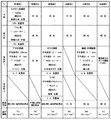
実施例1〜実施例3、比較例1〜比較例3として製造した二液性建造物補強剤組成物の主剤、硬化剤、および添加剤の詳細について図1に示す。 FIG. 1 shows details of the main agent, curing agent, and additive of the two-component building reinforcing agent composition produced as Examples 1 to 3 and Comparative Examples 1 to 3.
各実施例、比較例の二液性建造物補強剤組成物は、図1に示すように主剤又は硬化剤の何れかに添加剤を加えオムニミキサーにて5分間攪拌して添加剤を混合しておいた。次に、主剤と硬化剤を回転式攪拌機にて混合攪拌して二液性建造物補強剤組成物を得た。得られた二液性建造物補強剤組成物をコンクリート製の建物の外壁にゴムヘラにて塗工した後、約2〜3時間放置して硬化させた。実施例1〜実施例3の二液性建造物補強剤組成物を用いたものは、被着体である外壁のクラックが埋められるとともに、外壁自体へも二液性建造物補強剤組成物が浸透し、強固な外壁が得られた。一方、比較例1〜比較例3の二液性建造物補強剤組成物を用いたものは、クラックが埋まり、外壁自体への浸透もあったが、比較例2の二液性建造物補強剤組成物はやや外壁の強度が劣り、比較例1と比較例3の二液性建造物補強剤組成物では強固な外壁は得られなかった。 As shown in FIG. 1, the two-component building reinforcing agent composition of each example and comparative example is mixed with the additive by adding the additive to either the main agent or the curing agent and stirring for 5 minutes with an omni mixer. I left it. Next, the main agent and the curing agent were mixed and stirred with a rotary stirrer to obtain a two-component building reinforcing agent composition. The obtained two-component building reinforcing agent composition was applied to the outer wall of a concrete building with a rubber spatula and then allowed to stand for about 2-3 hours to be cured. In the case of using the two-component building reinforcing agent composition of Example 1 to Example 3, cracks on the outer wall, which is an adherend, are buried, and the two-component building reinforcing agent composition is also applied to the outer wall itself. It penetrated and a strong outer wall was obtained. On the other hand, the two-component building reinforcing agent composition of Comparative Examples 1 to 3 was filled with cracks and penetrated into the outer wall itself, but the two-component building reinforcing agent of Comparative Example 2 The composition was slightly inferior in strength of the outer wall, and the two-part building reinforcing agent composition of Comparative Example 1 and Comparative Example 3 did not provide a strong outer wall.
なお、この二液性建造物補強剤組成物を用いてJIS−A1106に基づくコンクリート曲げ強度試験を行った。幅×長さ×高さ=150mm×530mm×150mmのB.Bセメント試料に厚さ1mmとなるように上記二液性建造物補強剤組成物を塗布して曲げ強度を測定した。その結果も図1に示す。 In addition, the concrete bending strength test based on JIS-A1106 was done using this two-component building reinforcement agent composition. Width × length × height = 150 mm × 530 mm × 150 mm The above two-component building reinforcing agent composition was applied to a B cement sample to a thickness of 1 mm, and the bending strength was measured. The results are also shown in FIG.
曲げ強度試験の結果から、アラミド繊維を混入した実施例1や実施例2の二液性建造物補強剤組成物は、主剤と硬化剤の他に添加剤を全く含まない比較例1の二液性建造物補強剤組成物や、アラミド繊維以外の有機繊維であるポリエステル繊維を混入した比較例2の二液性建造物補強剤組成物に比較して、強度向上がはっきりと認められた。 From the results of the bending strength test, the two-component building reinforcing agent composition of Example 1 or Example 2 in which aramid fibers are mixed does not contain any additives other than the main agent and the curing agent. Strength improvement was clearly recognized as compared with the two-component building reinforcing agent composition of Comparative Example 2 in which the polyester fiber which is an organic fiber other than the aramid fiber was mixed.
また、ガラス繊維とシリカを混入した実施例3の二液性建造物補強剤組成物も、ガラス繊維だけを含みシリカを含まない比較例3の二液性建造物補強剤組成物に比較して、強度向上がはっきりと認められた。 Further, the two-component building reinforcing agent composition of Example 3 in which glass fibers and silica are mixed is also compared with the two-component building reinforcing agent composition of Comparative Example 3 that contains only glass fibers and does not contain silica. Strength improvement was clearly recognized.
Claims (4)
アラミド繊維又はシリカの少なくとも何れかを含み、主剤がエポキシ樹脂、フェノール樹脂、ポリウレタン樹脂、ポリエステル樹脂の少なくとも何れかから選択される樹脂組成物でなることを特徴とする二液性建造物補強剤組成物。 In the two-component building reinforcing agent composition in which the main agent and the curing agent are mixed and solidified,
A two-component building reinforcing agent composition comprising a resin composition containing at least one of aramid fibers or silica, and wherein the main component is selected from at least one of an epoxy resin, a phenol resin, a polyurethane resin, and a polyester resin Stuff.
Priority Applications (2)
| Application Number | Priority Date | Filing Date | Title |
|---|---|---|---|
| JP2004119589A JP3964883B2 (en) | 2004-04-14 | 2004-04-14 | Curing agent for two-component building reinforcement composition |
| KR1020050026457A KR100670718B1 (en) | 2004-04-14 | 2005-03-30 | Main Components and Curing Agents Used in Two-Component Dry Building Reinforcement Compositions and Their Two-Component Dry Building Reinforcement Compositions |
Applications Claiming Priority (1)
| Application Number | Priority Date | Filing Date | Title |
|---|---|---|---|
| JP2004119589A JP3964883B2 (en) | 2004-04-14 | 2004-04-14 | Curing agent for two-component building reinforcement composition |
Publications (2)
| Publication Number | Publication Date |
|---|---|
| JP2005298741A true JP2005298741A (en) | 2005-10-27 |
| JP3964883B2 JP3964883B2 (en) | 2007-08-22 |
Family
ID=35330672
Family Applications (1)
| Application Number | Title | Priority Date | Filing Date |
|---|---|---|---|
| JP2004119589A Expired - Lifetime JP3964883B2 (en) | 2004-04-14 | 2004-04-14 | Curing agent for two-component building reinforcement composition |
Country Status (2)
| Country | Link |
|---|---|
| JP (1) | JP3964883B2 (en) |
| KR (1) | KR100670718B1 (en) |
Cited By (4)
| Publication number | Priority date | Publication date | Assignee | Title |
|---|---|---|---|---|
| KR100722219B1 (en) | 2006-09-26 | 2007-05-29 | 장광근 | Underwater anticorrosive coating and underwater structure coating |
| CN102493673A (en) * | 2011-12-01 | 2012-06-13 | 杭州岩土工程有限公司 | Method for reinforcing epoxy coating used on building surfaces |
| JP2018104543A (en) * | 2016-12-26 | 2018-07-05 | 新日鉄住金化学株式会社 | Crack propagation inhibition resin composition and cured article thereof |
| US20200231826A1 (en) * | 2017-10-04 | 2020-07-23 | Hitachi Chemical Company, Ltd. | Coating solution, method for producing coating film, and coating film |
Families Citing this family (1)
| Publication number | Priority date | Publication date | Assignee | Title |
|---|---|---|---|---|
| CN110804335B (en) * | 2019-12-11 | 2021-11-16 | 株洲时代新材料科技股份有限公司 | Flame-retardant epoxy putty and preparation method and application thereof |
Family Cites Families (2)
| Publication number | Priority date | Publication date | Assignee | Title |
|---|---|---|---|---|
| DE60014337T2 (en) * | 1999-10-19 | 2005-10-06 | Otsuka Kagaku K.K. | HARDENER FOR EPOXY RESINS AND EPOXY RESIN COMPOSITION |
| JP3872986B2 (en) * | 2002-01-18 | 2007-01-24 | 株式会社 コーシンハウスケアリング | Two-component building reinforcement and main component for two-component building reinforcement |
-
2004
- 2004-04-14 JP JP2004119589A patent/JP3964883B2/en not_active Expired - Lifetime
-
2005
- 2005-03-30 KR KR1020050026457A patent/KR100670718B1/en not_active Expired - Fee Related
Cited By (6)
| Publication number | Priority date | Publication date | Assignee | Title |
|---|---|---|---|---|
| KR100722219B1 (en) | 2006-09-26 | 2007-05-29 | 장광근 | Underwater anticorrosive coating and underwater structure coating |
| CN102493673A (en) * | 2011-12-01 | 2012-06-13 | 杭州岩土工程有限公司 | Method for reinforcing epoxy coating used on building surfaces |
| CN102493673B (en) * | 2011-12-01 | 2014-01-08 | 杭州岩土工程有限公司 | Method for reinforcing epoxy coating used on building surfaces |
| JP2018104543A (en) * | 2016-12-26 | 2018-07-05 | 新日鉄住金化学株式会社 | Crack propagation inhibition resin composition and cured article thereof |
| US20200231826A1 (en) * | 2017-10-04 | 2020-07-23 | Hitachi Chemical Company, Ltd. | Coating solution, method for producing coating film, and coating film |
| US11787957B2 (en) * | 2017-10-04 | 2023-10-17 | Resonac Corporation | Coating solution, method for producing coating film, and coating film |
Also Published As
| Publication number | Publication date |
|---|---|
| KR20060044995A (en) | 2006-05-16 |
| JP3964883B2 (en) | 2007-08-22 |
| KR100670718B1 (en) | 2007-01-19 |
Similar Documents
| Publication | Publication Date | Title |
|---|---|---|
| US10259749B2 (en) | Premixed hybrid grout | |
| KR100949599B1 (en) | Waterproofing method with water reactive polyurethane resin compounds | |
| US6017588A (en) | Method for reinforcing structures | |
| KR102504814B1 (en) | Water catalyzed type hybrid waterproof composition and waterproofing method using the same | |
| JP2005187683A (en) | Primer for resin coating film | |
| KR100670718B1 (en) | Main Components and Curing Agents Used in Two-Component Dry Building Reinforcement Compositions and Their Two-Component Dry Building Reinforcement Compositions | |
| JP3872986B2 (en) | Two-component building reinforcement and main component for two-component building reinforcement | |
| JP3806039B2 (en) | Two-component building reinforcing agent and method of reinforcing the building using the two-component building reinforcing agent | |
| JP2000072512A (en) | Laminated structure and its construction method | |
| JPH10339040A (en) | Reinforcing method for structure | |
| KR102435241B1 (en) | Low-temperature fast curing epoxy binder composition and method for repairing pavement of deteriorated concrete road using the binder composition | |
| JP3326534B2 (en) | How to waterproof structures | |
| JP2678866B2 (en) | Curable resin composition and waterproof coating method | |
| JP4320675B2 (en) | Fill joint material and joint joint construction method | |
| KR20110090637A (en) | Eco-friendly epoxy adhesive | |
| JP3165586B2 (en) | Base adjustment material composition and concrete coating method using the same | |
| JP3515356B2 (en) | One-pack moisture-curable urethane resin paving material | |
| JP5018694B2 (en) | Fill joint material and joint joint construction method | |
| KR102767359B1 (en) | Highly permeable epoxy primer composition | |
| KR100739200B1 (en) | Cement composition for artificial structure manufacturing | |
| KR102287964B1 (en) | Repairing agent with excellent wettability and rapid setting, and concrete crack repair method using the same | |
| RU2133257C1 (en) | Composition for high-dense mastics making | |
| JP2011016858A (en) | Impregnation sealer composition and method of reinforcing surface of ligneous material | |
| KR100667688B1 (en) | Primer composition for structure reinforcement and structure reinforcement method using the same | |
| JPH04288379A (en) | Method for filling void of plywood |
Legal Events
| Date | Code | Title | Description |
|---|---|---|---|
| A711 | Notification of change in applicant |
Free format text: JAPANESE INTERMEDIATE CODE: A711 Effective date: 20060511 |
|
| A621 | Written request for application examination |
Free format text: JAPANESE INTERMEDIATE CODE: A621 Effective date: 20060601 |
|
| A871 | Explanation of circumstances concerning accelerated examination |
Free format text: JAPANESE INTERMEDIATE CODE: A871 Effective date: 20060601 |
|
| A521 | Request for written amendment filed |
Free format text: JAPANESE INTERMEDIATE CODE: A821 Effective date: 20060511 |
|
| A521 | Request for written amendment filed |
Free format text: JAPANESE INTERMEDIATE CODE: A523 Effective date: 20060608 |
|
| A975 | Report on accelerated examination |
Free format text: JAPANESE INTERMEDIATE CODE: A971005 Effective date: 20060704 |
|
| A977 | Report on retrieval |
Free format text: JAPANESE INTERMEDIATE CODE: A971007 Effective date: 20060908 |
|
| A131 | Notification of reasons for refusal |
Free format text: JAPANESE INTERMEDIATE CODE: A131 Effective date: 20060919 |
|
| A602 | Written permission of extension of time |
Free format text: JAPANESE INTERMEDIATE CODE: A602 Effective date: 20061205 |
|
| A521 | Request for written amendment filed |
Free format text: JAPANESE INTERMEDIATE CODE: A523 Effective date: 20061225 |
|
| A131 | Notification of reasons for refusal |
Free format text: JAPANESE INTERMEDIATE CODE: A131 Effective date: 20070130 |
|
| A521 | Request for written amendment filed |
Free format text: JAPANESE INTERMEDIATE CODE: A523 Effective date: 20070329 |
|
| TRDD | Decision of grant or rejection written | ||
| A01 | Written decision to grant a patent or to grant a registration (utility model) |
Free format text: JAPANESE INTERMEDIATE CODE: A01 Effective date: 20070515 |
|
| A61 | First payment of annual fees (during grant procedure) |
Free format text: JAPANESE INTERMEDIATE CODE: A61 Effective date: 20070524 |
|
| R150 | Certificate of patent or registration of utility model |
Ref document number: 3964883 Country of ref document: JP Free format text: JAPANESE INTERMEDIATE CODE: R150 Free format text: JAPANESE INTERMEDIATE CODE: R150 |
|
| FPAY | Renewal fee payment (event date is renewal date of database) |
Free format text: PAYMENT UNTIL: 20110601 Year of fee payment: 4 |
|
| R250 | Receipt of annual fees |
Free format text: JAPANESE INTERMEDIATE CODE: R250 |
|
| FPAY | Renewal fee payment (event date is renewal date of database) |
Free format text: PAYMENT UNTIL: 20120601 Year of fee payment: 5 |
|
| R250 | Receipt of annual fees |
Free format text: JAPANESE INTERMEDIATE CODE: R250 |
|
| FPAY | Renewal fee payment (event date is renewal date of database) |
Free format text: PAYMENT UNTIL: 20120601 Year of fee payment: 5 |
|
| FPAY | Renewal fee payment (event date is renewal date of database) |
Free format text: PAYMENT UNTIL: 20130601 Year of fee payment: 6 |
|
| R250 | Receipt of annual fees |
Free format text: JAPANESE INTERMEDIATE CODE: R250 |
|
| R250 | Receipt of annual fees |
Free format text: JAPANESE INTERMEDIATE CODE: R250 |
|
| R250 | Receipt of annual fees |
Free format text: JAPANESE INTERMEDIATE CODE: R250 |
|
| R250 | Receipt of annual fees |
Free format text: JAPANESE INTERMEDIATE CODE: R250 |
|
| R250 | Receipt of annual fees |
Free format text: JAPANESE INTERMEDIATE CODE: R250 |
|
| R250 | Receipt of annual fees |
Free format text: JAPANESE INTERMEDIATE CODE: R250 |
|
| R250 | Receipt of annual fees |
Free format text: JAPANESE INTERMEDIATE CODE: R250 |
|
| R250 | Receipt of annual fees |
Free format text: JAPANESE INTERMEDIATE CODE: R250 |
|
| R250 | Receipt of annual fees |
Free format text: JAPANESE INTERMEDIATE CODE: R250 |
|
| R250 | Receipt of annual fees |
Free format text: JAPANESE INTERMEDIATE CODE: R250 |
|
| R250 | Receipt of annual fees |
Free format text: JAPANESE INTERMEDIATE CODE: R250 |
|
| R250 | Receipt of annual fees |
Free format text: JAPANESE INTERMEDIATE CODE: R250 |
|
| EXPY | Cancellation because of completion of term |