JP2005297067A - Method for forming investment casting mold, forming system and investment casting method - Google Patents
Method for forming investment casting mold, forming system and investment casting method Download PDFInfo
- Publication number
- JP2005297067A JP2005297067A JP2005118007A JP2005118007A JP2005297067A JP 2005297067 A JP2005297067 A JP 2005297067A JP 2005118007 A JP2005118007 A JP 2005118007A JP 2005118007 A JP2005118007 A JP 2005118007A JP 2005297067 A JP2005297067 A JP 2005297067A
- Authority
- JP
- Japan
- Prior art keywords
- shell
- heating
- forming
- composition
- mor
- Prior art date
- Legal status (The legal status is an assumption and is not a legal conclusion. Google has not performed a legal analysis and makes no representation as to the accuracy of the status listed.)
- Pending
Links
- 238000000034 method Methods 0.000 title claims abstract description 59
- 238000005495 investment casting Methods 0.000 title claims abstract description 24
- 238000010438 heat treatment Methods 0.000 claims abstract description 38
- 239000000203 mixture Substances 0.000 claims abstract description 30
- 239000003870 refractory metal Substances 0.000 claims abstract description 20
- 150000002430 hydrocarbons Chemical class 0.000 claims abstract description 12
- 239000004215 Carbon black (E152) Substances 0.000 claims abstract description 10
- 229930195733 hydrocarbon Natural products 0.000 claims abstract description 10
- 230000001590 oxidative effect Effects 0.000 claims abstract description 9
- 229910052751 metal Inorganic materials 0.000 claims description 26
- 239000002184 metal Substances 0.000 claims description 26
- 238000005728 strengthening Methods 0.000 claims description 15
- 238000005266 casting Methods 0.000 claims description 14
- 239000000919 ceramic Substances 0.000 claims description 12
- QVGXLLKOCUKJST-UHFFFAOYSA-N atomic oxygen Chemical compound [O] QVGXLLKOCUKJST-UHFFFAOYSA-N 0.000 claims description 9
- 239000011248 coating agent Substances 0.000 claims description 9
- 238000000576 coating method Methods 0.000 claims description 9
- 229910052760 oxygen Inorganic materials 0.000 claims description 9
- 239000001301 oxygen Substances 0.000 claims description 9
- 239000007789 gas Substances 0.000 claims description 8
- 239000011247 coating layer Substances 0.000 claims description 5
- 239000010410 layer Substances 0.000 claims description 5
- 239000011261 inert gas Substances 0.000 claims description 4
- 239000006227 byproduct Substances 0.000 claims description 3
- 230000015556 catabolic process Effects 0.000 claims description 2
- 238000006731 degradation reaction Methods 0.000 claims description 2
- 230000003647 oxidation Effects 0.000 abstract description 8
- 238000007254 oxidation reaction Methods 0.000 abstract description 8
- 239000011257 shell material Substances 0.000 description 55
- 230000008569 process Effects 0.000 description 14
- 238000001816 cooling Methods 0.000 description 10
- 229910045601 alloy Inorganic materials 0.000 description 7
- 239000000956 alloy Substances 0.000 description 7
- 238000010304 firing Methods 0.000 description 6
- 229910052799 carbon Inorganic materials 0.000 description 5
- OKTJSMMVPCPJKN-UHFFFAOYSA-N Carbon Chemical compound [C] OKTJSMMVPCPJKN-UHFFFAOYSA-N 0.000 description 4
- VYPSYNLAJGMNEJ-UHFFFAOYSA-N Silicium dioxide Chemical compound O=[Si]=O VYPSYNLAJGMNEJ-UHFFFAOYSA-N 0.000 description 4
- 238000004519 manufacturing process Methods 0.000 description 4
- 239000000463 material Substances 0.000 description 4
- 238000000465 moulding Methods 0.000 description 4
- 230000006378 damage Effects 0.000 description 3
- 238000005516 engineering process Methods 0.000 description 3
- CURLTUGMZLYLDI-UHFFFAOYSA-N Carbon dioxide Chemical compound O=C=O CURLTUGMZLYLDI-UHFFFAOYSA-N 0.000 description 2
- MCMNRKCIXSYSNV-UHFFFAOYSA-N Zirconium dioxide Chemical compound O=[Zr]=O MCMNRKCIXSYSNV-UHFFFAOYSA-N 0.000 description 2
- 230000000712 assembly Effects 0.000 description 2
- 238000000429 assembly Methods 0.000 description 2
- 230000008901 benefit Effects 0.000 description 2
- 239000011230 binding agent Substances 0.000 description 2
- 239000013078 crystal Substances 0.000 description 2
- 238000010586 diagram Methods 0.000 description 2
- 238000001704 evaporation Methods 0.000 description 2
- 230000008020 evaporation Effects 0.000 description 2
- 238000007689 inspection Methods 0.000 description 2
- 230000008018 melting Effects 0.000 description 2
- 238000002844 melting Methods 0.000 description 2
- 239000000843 powder Substances 0.000 description 2
- 239000000377 silicon dioxide Substances 0.000 description 2
- 239000002002 slurry Substances 0.000 description 2
- 238000007711 solidification Methods 0.000 description 2
- 230000008023 solidification Effects 0.000 description 2
- 229910000601 superalloy Inorganic materials 0.000 description 2
- 241000588731 Hafnia Species 0.000 description 1
- 229910000760 Hardened steel Inorganic materials 0.000 description 1
- ZOKXTWBITQBERF-UHFFFAOYSA-N Molybdenum Chemical compound [Mo] ZOKXTWBITQBERF-UHFFFAOYSA-N 0.000 description 1
- 230000009471 action Effects 0.000 description 1
- 229910052782 aluminium Inorganic materials 0.000 description 1
- PNEYBMLMFCGWSK-UHFFFAOYSA-N aluminium oxide Inorganic materials [O-2].[O-2].[O-2].[Al+3].[Al+3] PNEYBMLMFCGWSK-UHFFFAOYSA-N 0.000 description 1
- 150000001721 carbon Chemical class 0.000 description 1
- 229910002092 carbon dioxide Inorganic materials 0.000 description 1
- 239000001569 carbon dioxide Substances 0.000 description 1
- 238000005524 ceramic coating Methods 0.000 description 1
- 238000001311 chemical methods and process Methods 0.000 description 1
- 238000006243 chemical reaction Methods 0.000 description 1
- 229910052804 chromium Inorganic materials 0.000 description 1
- 238000002485 combustion reaction Methods 0.000 description 1
- 230000007797 corrosion Effects 0.000 description 1
- 238000005260 corrosion Methods 0.000 description 1
- 238000005520 cutting process Methods 0.000 description 1
- 230000007547 defect Effects 0.000 description 1
- 230000032798 delamination Effects 0.000 description 1
- QDOXWKRWXJOMAK-UHFFFAOYSA-N dichromium trioxide Chemical compound O=[Cr]O[Cr]=O QDOXWKRWXJOMAK-UHFFFAOYSA-N 0.000 description 1
- KZHJGOXRZJKJNY-UHFFFAOYSA-N dioxosilane;oxo(oxoalumanyloxy)alumane Chemical compound O=[Si]=O.O=[Si]=O.O=[Al]O[Al]=O.O=[Al]O[Al]=O.O=[Al]O[Al]=O KZHJGOXRZJKJNY-UHFFFAOYSA-N 0.000 description 1
- 238000007598 dipping method Methods 0.000 description 1
- 238000004090 dissolution Methods 0.000 description 1
- 238000001035 drying Methods 0.000 description 1
- 238000001962 electrophoresis Methods 0.000 description 1
- CJNBYAVZURUTKZ-UHFFFAOYSA-N hafnium(IV) oxide Inorganic materials O=[Hf]=O CJNBYAVZURUTKZ-UHFFFAOYSA-N 0.000 description 1
- 230000006872 improvement Effects 0.000 description 1
- 238000012986 modification Methods 0.000 description 1
- 230000004048 modification Effects 0.000 description 1
- 229910052750 molybdenum Inorganic materials 0.000 description 1
- 239000011733 molybdenum Substances 0.000 description 1
- 229910052863 mullite Inorganic materials 0.000 description 1
- 229910052758 niobium Inorganic materials 0.000 description 1
- 239000010955 niobium Substances 0.000 description 1
- GUCVJGMIXFAOAE-UHFFFAOYSA-N niobium atom Chemical compound [Nb] GUCVJGMIXFAOAE-UHFFFAOYSA-N 0.000 description 1
- 229910000510 noble metal Inorganic materials 0.000 description 1
- 239000002245 particle Substances 0.000 description 1
- 238000005240 physical vapour deposition Methods 0.000 description 1
- 238000010248 power generation Methods 0.000 description 1
- 239000002243 precursor Substances 0.000 description 1
- 230000002028 premature Effects 0.000 description 1
- 239000011253 protective coating Substances 0.000 description 1
- 230000002787 reinforcement Effects 0.000 description 1
- 230000035939 shock Effects 0.000 description 1
- 238000005245 sintering Methods 0.000 description 1
- 238000003980 solgel method Methods 0.000 description 1
- 238000005507 spraying Methods 0.000 description 1
- 238000003860 storage Methods 0.000 description 1
- 238000003466 welding Methods 0.000 description 1
Images

Classifications
-
- B—PERFORMING OPERATIONS; TRANSPORTING
- B22—CASTING; POWDER METALLURGY
- B22C—FOUNDRY MOULDING
- B22C9/00—Moulds or cores; Moulding processes
- B22C9/02—Sand moulds or like moulds for shaped castings
- B22C9/04—Use of lost patterns
- B22C9/043—Removing the consumable pattern
-
- B—PERFORMING OPERATIONS; TRANSPORTING
- B22—CASTING; POWDER METALLURGY
- B22C—FOUNDRY MOULDING
- B22C9/00—Moulds or cores; Moulding processes
- B22C9/10—Cores; Manufacture or installation of cores
-
- B—PERFORMING OPERATIONS; TRANSPORTING
- B22—CASTING; POWDER METALLURGY
- B22C—FOUNDRY MOULDING
- B22C1/00—Compositions of refractory mould or core materials; Grain structures thereof; Chemical or physical features in the formation or manufacture of moulds
-
- B—PERFORMING OPERATIONS; TRANSPORTING
- B22—CASTING; POWDER METALLURGY
- B22C—FOUNDRY MOULDING
- B22C13/00—Moulding machines for making moulds or cores of particular shapes
- B22C13/08—Moulding machines for making moulds or cores of particular shapes for shell moulds or shell cores
- B22C13/085—Moulding machines for making moulds or cores of particular shapes for shell moulds or shell cores by investing a lost pattern
-
- B—PERFORMING OPERATIONS; TRANSPORTING
- B22—CASTING; POWDER METALLURGY
- B22C—FOUNDRY MOULDING
- B22C7/00—Patterns; Manufacture thereof so far as not provided for in other classes
- B22C7/02—Lost patterns
-
- B—PERFORMING OPERATIONS; TRANSPORTING
- B22—CASTING; POWDER METALLURGY
- B22C—FOUNDRY MOULDING
- B22C9/00—Moulds or cores; Moulding processes
- B22C9/12—Treating moulds or cores, e.g. drying, hardening
Landscapes
- Engineering & Computer Science (AREA)
- Mechanical Engineering (AREA)
- Chemical & Material Sciences (AREA)
- Materials Engineering (AREA)
- Molds, Cores, And Manufacturing Methods Thereof (AREA)
- Mold Materials And Core Materials (AREA)
- Casting Devices For Molds (AREA)
Abstract
Description
本発明は、インベストメント鋳造に関する。より詳細には、本発明は、酸化可能な中子を有する鋳型を使用するインベストメント鋳造に関する。 The present invention relates to investment casting. More particularly, the present invention relates to investment casting using a mold having an oxidizable core.
インベストメント鋳造は、複雑な形状を有する金属製部材、特に中空部材を形成するために一般に使用されている技術であり、超合金ガスタービンエンジン部材の製作に使用されている。 Investment casting is a technique commonly used to form metal parts, particularly hollow parts, with complex shapes, and is used to make superalloy gas turbine engine parts.
ガスタービンエンジンは、航空機の推進、発電、船舶の推進、およびポンプを含む用途に広く使用されている。ガスタービンエンジン用途においては、効率が最重要の目的である。 Gas turbine engines are widely used in applications including aircraft propulsion, power generation, ship propulsion, and pumps. Efficiency is the most important objective in gas turbine engine applications.
ガスタービンエンジン効率の改善は、より高温での作動により達成できるが、タービンセクションにおける現在の作動温度は、タービン部材内に使用される超合金材料の融点を超えている。その結果、空冷するのが一般的な方法である。冷却は、エンジンの圧縮機セクションから相対的に低温の空気を、冷却されるタービン部材内の通路を通して流すことによって行われる。このような冷却には、エンジン効率に付随する犠牲が伴う。従って、向上した特定の冷却を行って所定量の冷却空気から得られる冷却の利益量を最大にするのが非常に望まれている。これは、細かな正確に配置された冷却通路セクションの使用によって得ることができる。 Although improved gas turbine engine efficiency can be achieved by operating at higher temperatures, the current operating temperature in the turbine section exceeds the melting point of the superalloy material used in the turbine components. As a result, air cooling is a common method. Cooling is accomplished by flowing relatively cool air from the compressor section of the engine through a passage in the turbine member to be cooled. Such cooling comes at the cost of engine efficiency. Accordingly, it is highly desirable to provide enhanced specific cooling to maximize the cooling benefit obtained from a predetermined amount of cooling air. This can be obtained by the use of fine and precisely arranged cooling passage sections.
ブレードおよびベーンなどといった内部冷却されるタービンエンジン部品のインベストメント鋳造に関しては、よく発展した分野が存在する。典型的なプロセスにおいては、各キャビティが鋳造される部品におおよそ対応する形状を有する一つまたは複数の鋳型キャビティ(mold cavity)を有する鋳型が作成される。鋳型を作成する典型的なプロセスには、部品の一つまたは複数のワックス型すなわちワックスパターン(wax pattern)の使用が含まれる。ワックスパターンは、部品内の冷却通路の容積部(positive)におおよそ対応するセラミック中子上にワックスを成形することによって形成される。シェル作成プロセスにおいては、周知の方法によって一つまたは複数のそのようなワックスパターンの周りにセラミックシェルが形成される。ワックスは、オートクレーブ内での融解などによって除去できる。シェルは、シェルを強化するように焼成できる。これにより、部品を画定する一つまたは複数の区画を有するシェルからなる鋳型が残されるが、この鋳型はまた、冷却通路を画定する一つまたは複数のセラミック中子を含む。次に、一つまたは複数の部品を鋳造するように溶融合金を鋳型に導入できる。合金が冷却および凝固されると、シェルおよび中子は、一つまたは複数の成形された部品から機械的および/または化学的に除去できる。次に一つまたは複数の部品は、一つまたは複数の段階で機械加工および/または処理できる。
セラミック中子自体は、セラミック粉末と結合剤物質の混合物を硬化鋼金型内に注入し、この混合物を成形することで形成できる。金型から取り除いた後、未焼結(green)中子は、熱的に後処理して結合剤を取り除き、また焼成してセラミック粉末を互いに焼結させる。より細かな冷却形状部へ向かう傾向は、中子製造技術に負担をかけてきた。細かな形状部は、製造が困難であり得るしかつ/あるいは一旦製造されると壊れやすいことが判明し得る。同一出願人の同時係属のシャー(Shah)らの米国特許第6,637,500号は、セラミックおよび耐熱金属中子の組み合わせのさまざまな例を開示している。しかしながら、さまざまな耐熱金属は、シェルを焼成するのに使用される温度付近の高温で酸化される傾向がある。従って、シェル焼成は、耐熱金属中子を劣化させ、それによって、満足されない可能性のある部品の内部形状部が生成されることがある。従って、このような中子およびそれらの製造技術には、さらなる改良の余地が残っている。 The ceramic core itself can be formed by pouring a mixture of ceramic powder and binder material into a hardened steel mold and molding the mixture. After removal from the mold, the green core is thermally post-treated to remove the binder and fired to sinter the ceramic powders together. The trend toward finer cooling features has placed a burden on core manufacturing technology. Fine features can be difficult to manufacture and / or can prove to be fragile once manufactured. Co-pending Shah et al. US Pat. No. 6,637,500 of the same applicant discloses various examples of ceramic and refractory metal core combinations. However, various refractory metals tend to oxidize at high temperatures around the temperatures used to fire the shell. Thus, shell firing can degrade the refractory metal core, thereby creating an internal shape of the part that may not be satisfied. Accordingly, there remains room for further improvement in such cores and their manufacturing techniques.
本発明の一態様は、インベストメント鋳造鋳型を形成する方法を含む。シェルは、炭化水素をベースにした本体内に耐熱金属をベースにした中子が少なくとも部分的に埋め込まれている炭化水素をベースにした本体から成るパターンの上に形成される。本体は次に、シェルから実質的に除去される。シェルは、第一の組成の第一の雰囲気中で加熱することによって強化される。シェルは、真空中または第一の組成とは異なる第二の組成の第二の雰囲気中で加熱することによってさらに強化される。 One aspect of the present invention includes a method of forming an investment casting mold. The shell is formed over a pattern of a hydrocarbon-based body in which a refractory metal-based core is at least partially embedded within a hydrocarbon-based body. The body is then substantially removed from the shell. The shell is strengthened by heating in a first atmosphere of a first composition. The shell is further strengthened by heating in a vacuum or a second atmosphere of a second composition different from the first composition.
さまざまな実施において、さらなる強化工程の加熱は、鋳型へ溶融金属を導入する前の予熱とすることができる。第一の組成は、第二の組成より酸化性とすることができる。方法は、ブレードまたはベーンなどのガスタービンエンジンエーロフォイル部材を作製するのに使用できる。第一の組成は、大部分(例えば、体積で)、空気から成り得る。第二の組成は、大部分、一つまたは複数の不活性ガスから成り得る。第一の組成は、少なくとも15kPaの酸素分圧を有し得る。第二の組成は、10kPa以下の酸素分圧を有し得る。強化は、最大MOR強度の65〜80%の第一の破壊係数(modulus of rupture)(MOR)強度をシェルに与えるのに効果的であり得る。さらなる強化は、最大MOR強度の少なくとも85%の第二のMOR強度をシェルに与えるのに効果的であり得る。本体の実質的な除去の後に、シェルは、最大MOR強度の50%以下の予備的MOR強度を有し得る。 In various implementations, the heating of the further strengthening step can be preheating prior to introducing the molten metal into the mold. The first composition can be more oxidizing than the second composition. The method can be used to make gas turbine engine airfoil members such as blades or vanes. The first composition can consist largely of air (eg, by volume). The second composition can consist largely of one or more inert gases. The first composition may have an oxygen partial pressure of at least 15 kPa. The second composition can have an oxygen partial pressure of 10 kPa or less. The reinforcement can be effective to give the shell a first modulus of rupture (MOR) strength of 65-80% of the maximum MOR strength. Further strengthening can be effective to give the shell a second MOR strength of at least 85% of the maximum MOR strength. After substantial removal of the body, the shell may have a preliminary MOR strength of 50% or less of the maximum MOR strength.
本発明の別の態様は、インベストメント鋳造する方法を含む。そのような鋳造鋳型を形成できる。溶融金属を鋳型に導入できる。溶融金属は、凝固させることができる。鋳型は、破壊的に除去できる。さまざまな実施において、シェルの温度は、さらなる強化と溶融金属の導入との間でしきい値(例えば1200°F)より下に下がらない。 Another aspect of the invention includes a method for investment casting. Such a casting mold can be formed. Molten metal can be introduced into the mold. The molten metal can be solidified. The mold can be removed destructively. In various implementations, the temperature of the shell does not fall below a threshold (eg, 1200 ° F.) between further strengthening and the introduction of molten metal.
本発明の別の態様は、インベストメント鋳造鋳型を形成する方法を含む。一つまたは複数の被覆層が、ワックスの第一の部分と耐熱金属を含む第二の部分とを有する犠牲パターンに施される。水蒸気脱ワックス(steam dewax)によって、パターンの第一の部分の主要部分を除去でき、被覆層によって形成されるシェル内に第二の部分を残すことができる。シェルを硬化させかつワックスの残留物または副生成物を除去するようにシェルの第一の加熱があり得る。この第一の加熱は、最大MOR強度の85%以下の第一の破壊係数(MOR)強度をシェルに与えるのに効果的であり得る。シェルの第二の加熱が、第二のMOR強度にシェルを強化できる。 Another aspect of the invention includes a method of forming an investment casting mold. One or more coating layers are applied to a sacrificial pattern having a first portion of wax and a second portion comprising a refractory metal. Steam dewax can remove the main part of the first part of the pattern and leave the second part in the shell formed by the covering layer. There may be a first heating of the shell to cure the shell and remove wax residues or by-products. This first heating can be effective to provide the shell with a first coefficient of failure (MOR) strength of 85% or less of the maximum MOR strength. Second heating of the shell can strengthen the shell to a second MOR strength.
さまざまな実施において、第一の加熱は、酸化性雰囲気中とすることができ、第二の加熱は真空中または不活性雰囲気中とすることができる。第二の加熱は、溶融金属の導入の前の予熱とすることができる。第一のMOR強度は、最大MOR強度の65〜80%とすることができる。第二の加熱は、第二のMOR強度が最大MOR強度の少なくとも85%となるように効果的であり得る。第一の加熱は、800°Fと1100°Fの間のピーク温度を有し得る。第二の加熱は、1500°Fを超えるピーク温度を有し得る。第一の加熱は、少なくとも2.0時間、800°Fと1100°Fの間の温度を有し得る。第二の加熱は、少なくとも1.0時間、1500°Fを超える温度を有し得る。第二の部分は、耐熱金属中子と、耐熱金属中子上の被覆と、施す前に耐熱金属中子に取り付けられたセラミック中子とを含むことができる。 In various implementations, the first heating can be in an oxidizing atmosphere and the second heating can be in a vacuum or an inert atmosphere. The second heating can be preheating before the introduction of the molten metal. The first MOR intensity can be 65-80% of the maximum MOR intensity. The second heating may be effective so that the second MOR intensity is at least 85% of the maximum MOR intensity. The first heating may have a peak temperature between 800 ° F and 1100 ° F. The second heating can have a peak temperature in excess of 1500 ° F. The first heating may have a temperature between 800 ° F. and 1100 ° F. for at least 2.0 hours. The second heating can have a temperature in excess of 1500 ° F. for at least 1.0 hour. The second portion can include a refractory metal core, a coating on the refractory metal core, and a ceramic core attached to the refractory metal core prior to application.
本発明の別の実施態様は、インベストメント鋳造鋳型を形成する方法を含む。一つまたは複数の被覆層が、鋳型空隙を形成するための第一の部分と、鋳型の部分を形成するための第二の部分とを有する犠牲パターンに施される。第一の工程では、パターンの第一の部分の主要部分が除去され、被覆層によって形成されるシェル内に第二の部分が残される。第二の工程では、シェルは、最大MOR強度の85%以下の第一の破壊係数(MOR)強度をシェルに与えるのに効果的になるように最初に硬化される。第三の工程では、シェルは、パターンの第二の部分の実質的な劣化なしでさらに硬化される。 Another embodiment of the invention includes a method of forming an investment casting mold. One or more coating layers are applied to a sacrificial pattern having a first portion for forming a mold cavity and a second portion for forming a portion of the mold. In the first step, the main part of the first part of the pattern is removed, leaving a second part in the shell formed by the covering layer. In the second step, the shell is first cured to be effective in providing the shell with a first coefficient of failure (MOR) strength that is 85% or less of the maximum MOR strength. In the third step, the shell is further cured without substantial degradation of the second portion of the pattern.
さまざまな実施において、方法は、ガスタービンエンジン部材を作製するのに使用できる。第二の工程は、少なくとも20kPaの酸素分圧下で実質的に実施できる。第三の工程は、5kPa以下の酸素分圧下で実質的に実施できる。 In various implementations, the method can be used to make a gas turbine engine component. The second step can be carried out substantially under an oxygen partial pressure of at least 20 kPa. The third step can be substantially carried out under an oxygen partial pressure of 5 kPa or less.
本発明の別の態様は、インベストメント鋳造鋳型を形成するためのシステムを含む。パターンの上にシェルを形成する手段が備えられる。パターンは、炭化水素をベースにした本体内に耐熱金属をベースにした中子が少なくとも部分的に埋め込まれている炭化水素をベースにした本体から成る。本体をシェルから実質的に除去する手段が備えられる。第一の組成の第一の雰囲気中で加熱することによってシェルを強化する手段が備えられる。真空中または第一の組成とは異なる第二の組成の第二の雰囲気中で加熱することによるシェルのさらなる強化の手段が備えられる。 Another aspect of the invention includes a system for forming an investment casting mold. Means are provided for forming a shell over the pattern. The pattern comprises a hydrocarbon-based body in which a core based on a refractory metal is at least partially embedded within a hydrocarbon-based body. Means are provided for substantially removing the body from the shell. Means are provided for strengthening the shell by heating in a first atmosphere of a first composition. Means are provided for further strengthening of the shell by heating in a vacuum or in a second atmosphere of a second composition different from the first composition.
本発明の一つまたは複数の実施例の詳細は、添付の図面および以下の説明で示される。本発明の他の特徴、目的、および利点は、説明および図面、そして請求の範囲によって明らかになるであろう。 The details of one or more embodiments of the invention are set forth in the accompanying drawings and the description below. Other features, objects, and advantages of the invention will be apparent from the description and drawings, and from the claims.
さまざまな図面中の同様の参照番号および符号は、同様の部材を示す。 Like reference numbers and designations in the various drawings indicate like parts.
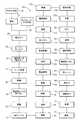
図1は、インベストメント鋳造鋳型を形成する例示的な方法20を示す。一つまたは複数の金属製中子部材が形成22され(例えば、シート金属からスタンピングまたは切削することによるモリブデンおよびニオブなどの耐熱金属から)、被覆24される。適切な被覆材料としては、シリカ、アルミナ、ジルコニア、クロミア(chromia)、ムライト、およびハフニア(hafnia)が挙げられる。好ましくは、耐熱金属と被覆の熱膨張率(coefficient of thermal expansion)(CTE)は類似している。被覆は、任意の適切な技術(例えば、CVD、PVD、電気泳動、およびゾルゲル法)によって施すことができる。個々の層は一般に、0.1から1ミルの厚みとすることができる。溶融金属腐食および溶解からの保護のためのセラミック被覆と組み合わせて、Pt、他の貴金属、Cr、およびAlの金属層を酸化保護のために金属製中子部材に施すことができる。
FIG. 1 illustrates an
一つまたは複数のセラミック中子も形成26される(例えば、成形および焼成プロセスにおけるシリカから)。一つまたは複数の被覆金属製中子部材(以下、耐熱金属中子(refractory metal core)(RMC)という)を、一つまたは複数のセラミック中子に組み付け28る。中子アッセンブリは次いで、天然または合成ワックスなどの容易に犠牲となる材料でオーバーモールド(overmold)30される(例えば、鋳型内にアッセンブリを配置して、その周りにワックスを成形することにより)。与えられた鋳型内に含まれるそのような複数のアッセンブリが有り得る。 One or more ceramic cores are also formed 26 (eg, from silica in a molding and firing process). One or more coated metal core members (hereinafter referred to as refractory metal cores (RMC)) are assembled 28 to one or more ceramic cores. The core assembly is then overmolded 30 with an easily sacrificial material such as natural or synthetic wax (eg, by placing the assembly in a mold and molding the wax around it). There can be multiple such assemblies contained within a given mold.
オーバーモールドされた中子アッセンブリ(またはアッセンブリの群)は、鋳造される部品の外部形状に大まかに対応する外部形状を有する鋳造パターンを形成する。パターンは次いで、シェル形成固定具に組み付け32ることができる(例えば、固定具の端部プレート間のワックス溶接(wax welding)によって)。パターンは次いで、シェル形成34される(例えば、スラリー浸漬、スラリー噴霧、または同様なものの一つまたは複数の段階によって)。シェルが堆積された後に、それは乾燥36できる。乾燥は、引き続く処理を可能とするのに少なくとも十分な強度またはその他の物理的完全性の性質をシェルに与える。例えば、包まれ(invest)た中子アッセンブリを収容するシェルは、シェル形成固定具から完全にまたは部分的に取り外す38ことができ、次いで脱ワックス装置(dewaxer)(例えば、水蒸気オートクレーブ)に移動40させることができる。脱ワックス装置内では、水蒸気脱ワックスプロセス42が、ワックスの主要部分を除去し、シェル内に取り付けられた中子アッセンブリを残す。シェルおよび中子アッセンブリは、最終の鋳型を大まかに形成することになる。しかしながら、脱ワックスプロセスは一般に、シェル内部の上および中子アッセンブリの上にワックスまたは副生成物炭化水素残留物を残す。
The overmolded core assembly (or group of assemblies) forms a casting pattern having an external shape that roughly corresponds to the external shape of the part being cast. The pattern can then be assembled 32 to a shell forming fixture (eg, by wax welding between the end plates of the fixture). The pattern is then shelled 34 (eg, by one or more stages of slurry dipping, slurry spraying, or the like). After the shell is deposited, it can be dried 36. Drying gives the shell at least sufficient strength or other physical integrity properties to allow subsequent processing. For example, the shell containing the wrapped core assembly can be completely or partially removed 38 from the shell forming fixture and then transferred to a dewaxer (eg, a steam autoclave) 40. Can be made. Within the dewaxing apparatus, a
脱ワックス後に、シェルは、雰囲気炉(例えば、空気またはその他の酸化性雰囲気を含む)に移動44させ、その中で、シェルは、シェルを予め強化(prestrengthen)するのに効果的な第一の長さの時間、第一のピーク温度に加熱46する。加熱46によって、残留するどのようなワックス残留物も除去する(例えば、蒸発によって)かあるいは炭化水素残留物を炭素に変換させるかの一方または両方を行うことができる。雰囲気中の酸素は、炭素と反応して二酸化炭素を形成する。炭素の除去は、後続の作業段階において使用する真空ポンプを閉塞(clog)させる炭素を避けるのに有利である。この炭素燃焼は一般に、シェルの有利な予強化に伴うシェルの酸化と同時に起こり得る。例示的な予強化は、シェルの極限(例えば、最大の完全に焼成した)破壊係数(MOR)強度の一部(例えば、50〜90%、より狭くは、60〜85%、あるいは65〜80%)をシェルに与える。通常のシェル材料では、工業的な方法は一般に、実質的に最大のMOR強度を達成するように実質的に完全にシェルを焼成することとして、少なくとも1時間、少なくとも1500°Fの温度で焼成することを伴う。通常の方法では、シェルを、少なくともこの期間、少なくとも概略等温に維持する。これは、脱ワックス直後の相対的に未焼結状態の極限MOR強度の50%よりかなり下からの上昇を意味し得る。予硬化(pre−harden)温度は、一つまたは複数の金属製中子部材の実質的な酸化を防止するために、雰囲気炉内の雰囲気の酸化性の性質を考慮して、十分に低いのが有利である。保護被覆の存在にもかかわらず、酸化は、被覆内の微小割れ(microcrack)および細孔(porosity)の存在に起因して、依然としてかなりの可能性のある問題である。酸化によって、被覆の剥離またはその他の損傷、および金属製中子上の表面の凹凸(irregularities)が生じ得る。被覆の損傷によって、後続の高い鋳造温度における金属製中子部材の蒸発、および、鋳造合金と金属製中子部材との反応、の一方または両方が生じ得る。酸化により引き起こされた表面の凹凸は次いで、鋳造部品の関連する内面に欠陥を形成するが、これは、細かな特徴部を形成する際の特別な問題となる。例示的なピーク予硬化温度は、2〜4時間の予硬化時間で、1150°F未満(例えば、800〜1100°F)である。例示的な予硬化温度および時間は、約1000°F、約3.5時間である。
After dewaxing, the shell is moved 44 to an atmospheric furnace (eg, containing air or other oxidizing atmosphere), in which the shell is the first effective in prestrengthening the shell.
予硬化の後、鋳型は、雰囲気炉から取り出し、冷却し、検査48することができる。鋳型は、一方向凝固(directionally solidified)(DS)鋳造物または単結晶(single−crystal)(SX)鋳造物から成る最終の結晶構造を確立するように鋳型内に金属種晶を配置することによって種晶接触(seed)50できる。それにもかかわらず、本発明の技術は、他のDS鋳造技術およびSX鋳造技術(例えば、そこでは、シェル形状寸法が、結晶粒セレクタ(selector)(または選択装置)を規定する)に、あるいは他の微小構造(microstructure)の鋳造物に適用できる。代替として、鋳型は、それらを有することができる。鋳型は、鋳造炉(例えば、炉内で頂部に冷却板(chill plate)が配置してある)に移動52させることができる。鋳造炉は、鋳造合金の酸化を防止するようにポンプで真空排気54するかあるいは非酸化性雰囲気(例えば、不活性ガス)を充填することができる。鋳型を予熱(preheat)するように鋳造炉を加熱56する。この予熱は、二つの目的すなわち、シェルをさらに硬化および強化する(例えば、極限MOR強度の少なくとも5%は増える)ように、また、溶融合金を導入する際に合金の熱衝撃および時期尚早の凝固を防止するためにシェルを予熱するように機能する。従って、予熱温度および時間は、シェルの予硬化された状態を超えて実質的にさらにシェルを硬化するのに十分となるのが有利である。これは、シェル内のセラミック粒子の焼結を含むことができる。有利なMORは、極限MORの85%を超過し、より詳細には、90または95%を超過する。これは、少なくとも1200°F、より詳細には少なくとも1400°Fの予熱温度で、また約1600°Fの例示的な予熱温度で達成できる。例示的な予熱時間は、約1時間(例えば、0.25〜4.0時間、より狭くは、0.75〜2.0時間)である。
After pre-curing, the mold can be removed from the atmosphere furnace, cooled, and inspected 48. The mold is placed by placing a metal seed in the mold to establish a final crystal structure consisting of a directionally solidified (DS) casting or a single-crystal (SX) casting.
予熱後、依然として真空条件下で、溶融金属を鋳型内へ注入58し、鋳型を冷却して合金を凝固60させる(例えば、炉の高温帯域からの引き出し後)。凝固後、真空は破壊62でき、冷却した鋳型は、鋳造炉から取り出す64ことができる。シェルは、脱シェル(deshell)プロセス66(例えば、シェルの機械的な破壊)で取り出すことができ、中子アッセンブリは、鋳造物品(例えば、最終部品の金属製前駆体)を残すように脱中子(decore)プロセス68(例えば、化学的プロセス)で取り出すことができる。鋳造物品は、機械加工70、化学的および/または熱的な処理72、および被覆74を行って最終部品を形成できる。 After preheating, still under vacuum conditions, molten metal is injected 58 into the mold and the mold is cooled to solidify the alloy 60 (eg, after withdrawal from the hot zone of the furnace). After solidification, the vacuum can be broken 62 and the cooled mold can be removed 64 from the casting furnace. The shell can be removed with a deshell process 66 (eg, mechanical destruction of the shell) and the core assembly is being removed to leave a cast article (eg, the metal precursor of the final part). It can be removed in a decor process 68 (eg, a chemical process). The cast article can be machined 70, chemically and / or thermally treated 72, and coated 74 to form the final part.
図2は、例示的なプロセスの代替の変形例100を示し、ここでは、同様の工程は、同様の参照符号で示してある。しかしながら、代替のプロセスは、焼成を予熱から分離している。従って、検査48の後で、予硬化した鋳型を、続いて鋳造を行う鋳造炉から分離できる非雰囲気炉に移動102させる。移動後、非雰囲気炉は、ポンプで真空排気104(および/または不活性ガスまたはその混合物などの不活性雰囲気を充填)できる。真空排気後、鋳型は、予熱56と同様の温度および時間で焼成106できる。焼成後、真空を破壊108し(あるいは不活性雰囲気を別な方法で排気し)、鋳型を取り出す110ことができる。取り出し後、さらなる検査112、一時的保管、追加の処理、および同様なものなどを行うことができる。その後、鋳型は、種晶接触114でき、鋳造炉へ移動116させることができる。ポンプでの真空排気118は、ポンプでの真空排気54と同様とすることができる。予熱120は、予熱56と同様とすることができるか、あるいは、焼成作用が少なくとも大まかに既に生じてしまっているようにより突然とすることができる。
FIG. 2 shows an
本発明の一つまたは複数の実施態様を説明した。それにもかかわらず、本発明の精神および範囲から逸脱せずにさまざまな変形を行い得ることは理解されるであろう。例えば、原理は、既存のまたは今なお開発されているプロセスの変形として実施でき、これらの場合、これらのプロセスは、実施のパラメータを左右するかあるいは指定するであろう。従って、他の実施態様は、添付の特許請求の範囲内にある。 One or more embodiments of the present invention have been described. Nevertheless, it will be understood that various modifications may be made without departing from the spirit and scope of the invention. For example, the principles can be implemented as variations of existing or still developed processes, in which case these processes will dictate or specify implementation parameters. Accordingly, other embodiments are within the scope of the appended claims.
Claims (26)
本体をシェルから実質的に除去し、
第一の組成の第一の雰囲気中で加熱することによってシェルを強化し、
真空中または第一の組成とは異なる第二の組成の第二の雰囲気中で加熱することによってシェルをさらに強化する、
ことを含むことを特徴とする、インベストメント鋳造鋳型を形成する方法。 Forming a shell on a pattern comprising a hydrocarbon-based body in which a core based on a refractory metal is at least partially embedded in a hydrocarbon-based body;
Substantially removing the body from the shell,
Strengthening the shell by heating in a first atmosphere of a first composition;
Further strengthening the shell by heating in a vacuum or in a second atmosphere of a second composition different from the first composition;
A method of forming an investment casting mold.
さらなる強化の加熱は、実質的に1400〜1600°Fにおいてである、
ことを特徴とする請求項1記載の方法。 Enhanced heating is substantially at 800-1100 ° F.
Further enhanced heating is substantially at 1400-1600 ° F.
The method of claim 1 wherein:
さらなる強化は、最大MOR強度の少なくとも85%の第二のMOR強度をシェルに与えるのに効果的である、
ことを特徴とする請求項1記載の方法。 The strengthening is effective to give the shell a first failure modulus (MOR) strength of 65-80% of the maximum MOR strength,
Further strengthening is effective to give the shell a second MOR strength of at least 85% of the maximum MOR strength.
The method of claim 1 wherein:
溶融金属を鋳型に導入し、
溶融金属を凝固させ、
鋳型を破壊的に除去する、
ことを含むことを特徴とする、インベストメント鋳造する方法。 Forming an investment casting mold according to claim 1;
Introducing molten metal into the mold,
Solidify the molten metal,
Remove the mold destructively,
A method of casting an investment, comprising:
パターンの第一の部分の主要部分を除去するように被覆パターンを水蒸気脱ワックスし、被覆層によって形成されるシェル内に第二の部分を残すことと、
シェルを硬化させかつワックスの残留物または副生成物を除去するためのシェルの第一の加熱であって、最大MOR強度の85%以下の第一の破壊係数(MOR)強度をシェルに与えるのに効果的である、第一の加熱と、
第二のMOR強度にシェルを強化するためのシェルの第二の加熱と、
を含むことを特徴とするインベストメント鋳造鋳型を形成する方法。 Applying one or more coating layers to a sacrificial pattern having a first portion of wax and a second portion comprising a refractory metal core;
Steam dewaxing the coating pattern to remove a major portion of the first portion of the pattern, leaving a second portion in the shell formed by the coating layer;
First heating of the shell to harden the shell and remove wax residues or by-products, providing the shell with a first coefficient of failure (MOR) strength of 85% or less of the maximum MOR strength Effective in the first heating,
A second heating of the shell to strengthen the shell to a second MOR strength;
A method of forming an investment casting mold, comprising:
第二の加熱は、真空中または不活性雰囲気中においてである、
ことを特徴とする請求項15記載の方法。 The first heating is in an oxidizing atmosphere;
The second heating is in a vacuum or in an inert atmosphere;
The method according to claim 15.
第二の加熱は、第二のMOR強度が最大MOR強度の少なくとも85%となるように効果的である、
ことを特徴とする請求項15記載の方法。 The first MOR intensity is 65-80% of the maximum MOR intensity,
The second heating is effective so that the second MOR intensity is at least 85% of the maximum MOR intensity.
The method according to claim 15.
第二の加熱は、1500°Fを超えるピーク温度を有する、
ことを特徴とする請求項15記載の方法。 The first heating has a peak temperature between 800 ° F. and 1100 ° F.
The second heating has a peak temperature above 1500 ° F.
The method according to claim 15.
第二の加熱は、少なくとも1.0時間、1500°Fを超える温度を有する、
ことを特徴とする請求項15記載の方法。 The first heating has a temperature between 800 ° F. and 1100 ° F. for at least 2.0 hours;
The second heating has a temperature in excess of 1500 ° F. for at least 1.0 hour;
The method according to claim 15.
耐熱金属中子と、
耐熱金属中子上の被覆と、
施す前に耐熱金属中子に取り付けられたセラミック中子と、
を含むことを特徴とする請求項15記載の方法。 The second part is
A heat-resistant metal core,
A coating on a refractory metal core;
A ceramic core attached to a refractory metal core before application;
16. The method of claim 15, comprising:
パターンの第一の部分の主要部分を除去し、被覆層によって形成されるシェル内に第二の部分を残す、第一の工程と、
最大MOR強度の85%以下の第一の破壊係数(MOR)強度をシェルに与えるのに効果的になるようにシェルを最初に硬化する、第二の工程と、
パターンの第二の部分の実質的な劣化なしでシェルをさらに硬化する、第三の工程と、
を含むことを特徴とするインベストメント鋳造鋳型を形成する方法。 Applying one or more coating layers to a sacrificial pattern having a first portion for forming a mold cavity and a second portion for forming a portion of the mold;
Removing a major part of the first part of the pattern, leaving a second part in the shell formed by the covering layer;
A second step of first curing the shell to be effective to impart a first failure modulus (MOR) strength of 85% or less of the maximum MOR strength to the shell;
A third step of further curing the shell without substantial degradation of the second part of the pattern;
A method of forming an investment casting mold, comprising:
第三の工程は、5kPa以下の酸素分圧下で実質的に実施する、
ことを特徴とする請求項22記載の方法。 The second step is substantially carried out under an oxygen partial pressure of at least 20 kPa;
The third step is substantially carried out under an oxygen partial pressure of 5 kPa or less,
23. The method of claim 22, wherein:
溶融金属を鋳型に導入し、
溶融金属を凝固させ、
インベストメント鋳造鋳型を破壊的に除去する、
ことを含むことを特徴とするインベストメント鋳造する方法。 Forming an investment casting mold according to claim 22;
Introducing molten metal into the mold,
Solidify the molten metal,
Destructively removing investment casting molds,
An investment casting method characterized by comprising:
本体をシェルから実質的に除去する手段と、
第一の組成の第一の雰囲気中で加熱することによってシェルを強化する手段と、
真空中または第一の組成とは異なる第二の組成の第二の雰囲気中で加熱することによってシェルをさらに強化する手段と、
を備えることを特徴とする、インベストメント鋳造鋳型を形成するためのシステム。 Means for forming a shell on a pattern comprising a hydrocarbon-based body in which a core based on a refractory metal is at least partially embedded within a hydrocarbon-based body;
Means for substantially removing the body from the shell;
Means for strengthening the shell by heating in a first atmosphere of a first composition;
Means for further strengthening the shell by heating in a vacuum or in a second atmosphere of a second composition different from the first composition;
A system for forming an investment casting mold.
Applications Claiming Priority (1)
| Application Number | Priority Date | Filing Date | Title |
|---|---|---|---|
| US10/825,396 US6951239B1 (en) | 2004-04-15 | 2004-04-15 | Methods for manufacturing investment casting shells |
Publications (1)
| Publication Number | Publication Date |
|---|---|
| JP2005297067A true JP2005297067A (en) | 2005-10-27 |
Family
ID=34940869
Family Applications (1)
| Application Number | Title | Priority Date | Filing Date |
|---|---|---|---|
| JP2005118007A Pending JP2005297067A (en) | 2004-04-15 | 2005-04-15 | Method for forming investment casting mold, forming system and investment casting method |
Country Status (10)
| Country | Link |
|---|---|
| US (1) | US6951239B1 (en) |
| EP (1) | EP1600230B1 (en) |
| JP (1) | JP2005297067A (en) |
| KR (1) | KR100619195B1 (en) |
| CN (1) | CN1683098A (en) |
| AT (1) | ATE397983T1 (en) |
| CA (1) | CA2504059A1 (en) |
| DE (1) | DE602005007420D1 (en) |
| RU (1) | RU2299111C2 (en) |
| SG (1) | SG116594A1 (en) |
Cited By (2)
| Publication number | Priority date | Publication date | Assignee | Title |
|---|---|---|---|---|
| US7861766B2 (en) | 2006-04-10 | 2011-01-04 | United Technologies Corporation | Method for firing a ceramic and refractory metal casting core |
| CN103433431A (en) * | 2013-09-06 | 2013-12-11 | 安徽应流集团霍山铸造有限公司 | Ceramic core for inner cavity of cylinder cover |
Families Citing this family (29)
| Publication number | Priority date | Publication date | Assignee | Title |
|---|---|---|---|---|
| US7240718B2 (en) * | 2005-09-13 | 2007-07-10 | United Technologies Corporation | Method for casting core removal |
| US20070068649A1 (en) * | 2005-09-28 | 2007-03-29 | Verner Carl R | Methods and materials for attaching ceramic and refractory metal casting cores |
| US20080110024A1 (en) * | 2006-11-14 | 2008-05-15 | Reilly P Brennan | Airfoil casting methods |
| US7967555B2 (en) * | 2006-12-14 | 2011-06-28 | United Technologies Corporation | Process to cast seal slots in turbine vane shrouds |
| US7866370B2 (en) * | 2007-01-30 | 2011-01-11 | United Technologies Corporation | Blades, casting cores, and methods |
| US20120175075A1 (en) * | 2007-07-18 | 2012-07-12 | United Technologies Corporation | Preformed ceramic seed well for single crystal starter seed |
| US8434997B2 (en) * | 2007-08-22 | 2013-05-07 | United Technologies Corporation | Gas turbine engine case for clearance control |
| CN100488664C (en) * | 2007-10-29 | 2009-05-20 | 福建省建阳市汽车锻压件厂 | Investment precision casting process for producing automobile I-shaped front shaft |
| US7942188B2 (en) * | 2008-03-12 | 2011-05-17 | Vent-Tek Designs, Llc | Refractory metal core |
| US8042268B2 (en) * | 2008-03-21 | 2011-10-25 | Siemens Energy, Inc. | Method of producing a turbine component with multiple interconnected layers of cooling channels |
| US9174271B2 (en) * | 2008-07-02 | 2015-11-03 | United Technologies Corporation | Casting system for investment casting process |
| US8914976B2 (en) * | 2010-04-01 | 2014-12-23 | Siemens Energy, Inc. | Turbine airfoil to shroud attachment method |
| US9403208B2 (en) | 2010-12-30 | 2016-08-02 | United Technologies Corporation | Method and casting core for forming a landing for welding a baffle inserted in an airfoil |
| CN102161076B (en) * | 2011-04-21 | 2013-01-23 | 安徽应流铸业有限公司 | Thermal treatment method of precision casting lost foam precision casting die shell |
| CN102248124B (en) * | 2011-06-17 | 2012-12-26 | 河南豫兴铸造有限公司 | Technology for molding wax mould of single cast |
| US9314838B2 (en) * | 2012-09-28 | 2016-04-19 | Solar Turbines Incorporated | Method of manufacturing a cooled turbine blade with dense cooling fin array |
| WO2014053189A1 (en) * | 2012-10-05 | 2014-04-10 | L'air Liquide Societe Anonyme Pour L'etude Et L'exploitation Des Procedes Georges Claude | Lost wax process and calcination furnace therefor |
| US20160001354A1 (en) * | 2013-03-01 | 2016-01-07 | United Technologies Corporation | Gas turbine engine component manufacturing method and core for making same |
| FR3020292B1 (en) * | 2014-04-24 | 2016-05-13 | Snecma | MOLD FOR MONOCRYSTALLINE FOUNDRY |
| FR3046736B1 (en) | 2016-01-15 | 2021-04-23 | Safran | REFRACTORY CORE INCLUDING A MAIN BODY AND A SHELL |
| FR3054149B1 (en) | 2016-07-22 | 2019-04-05 | Safran | PROCESS FOR PRODUCING CARAPACE MOLD |
| US10639705B2 (en) * | 2016-12-23 | 2020-05-05 | Fisher Controls International Llc | Combined technology investment casting process |
| US10814377B2 (en) | 2017-06-28 | 2020-10-27 | Raytheon Technologies Corporation | Method for casting shell dewaxing |
| CN107745082A (en) * | 2017-09-01 | 2018-03-02 | 东风精密铸造安徽有限公司 | A kind of hot pressing note ceramic core and preparation method thereof |
| FR3084894B1 (en) * | 2018-08-07 | 2022-01-21 | Commissariat Energie Atomique | CERAMIC COATING FOR FOUNDRY CORE |
| RU2718635C1 (en) * | 2019-06-19 | 2020-04-10 | Федеральное государственное унитарное предприятие "Центральный институт авиационного моторостроения имени П.И. Баранова" | Method of making ceramic shell for casting blades (embodiments) |
| CN112808936A (en) * | 2020-12-30 | 2021-05-18 | 中核北方核燃料元件有限公司 | Forming and manufacturing method of CF4 nuclear fuel pipe seat |
| CN114682730B (en) * | 2022-04-13 | 2024-06-25 | 广东栎烽新材料有限公司 | Carbon-filled investment casting wax electrode material based on electrophoretic deposition process and preparation method thereof |
| WO2025034166A1 (en) * | 2023-08-04 | 2025-02-13 | Agency For Science, Technology And Research | Improved formulation of water-soluble ceramic cores for investment casting to enhance high temperature structural integrity |
Family Cites Families (15)
| Publication number | Priority date | Publication date | Assignee | Title |
|---|---|---|---|---|
| GB783805A (en) * | 1954-07-26 | 1957-10-02 | Mercast Corp | Improvements in disposable casting patterns and the production of shell moulds thereby |
| US3519057A (en) * | 1967-08-08 | 1970-07-07 | Howmet Corp | Eliminating patterns from and hardening of shell molds |
| IT1096996B (en) * | 1977-07-22 | 1985-08-26 | Rolls Royce | METHOD FOR THE MANUFACTURE OF A BLADE OR BLADE FOR GAS TURBINE ENGINES |
| JPH01237047A (en) * | 1988-03-18 | 1989-09-21 | Hitachi Ltd | Mold for shell mold |
| RU2033292C1 (en) * | 1991-07-08 | 1995-04-20 | Писарев Игорь Евгеньевич | Method of making shell molds with use of investment patterns |
| RU2048955C1 (en) * | 1992-02-04 | 1995-11-27 | Юрий Апполинарьевич Караник | Method of making castings of ferrous and non-ferrous metals |
| US6209621B1 (en) * | 1995-07-07 | 2001-04-03 | Depuy Orthopaedics, Inc. | Implantable prostheses with metallic porous bead preforms applied during casting and method of forming the same |
| GB9601910D0 (en) * | 1996-01-31 | 1996-04-03 | Rolls Royce Plc | A method of investment casting and a method of making an investment casting mould |
| CA2254505A1 (en) * | 1997-12-22 | 1999-06-22 | Joseph C. Schim | Rapidly forming complex hollow shapes using lost wax investment casting |
| DE19830607C2 (en) * | 1998-07-09 | 2002-08-01 | Hte Ag The High Throughput Exp | Process for the detection of a product in the downstream of a catalytic material of a variety of catalytic materials |
| US6932145B2 (en) * | 1998-11-20 | 2005-08-23 | Rolls-Royce Corporation | Method and apparatus for production of a cast component |
| EP2359958B1 (en) * | 1998-11-20 | 2017-06-07 | Rolls-Royce Corporation | Method for production of a ceramic casting mold system |
| US20020104639A1 (en) * | 2001-01-09 | 2002-08-08 | Kroes Calvin L. | Investment casting with improved melt feeding |
| US20030015308A1 (en) * | 2001-07-23 | 2003-01-23 | Fosaaen Ken E. | Core and pattern manufacture for investment casting |
| US6637500B2 (en) | 2001-10-24 | 2003-10-28 | United Technologies Corporation | Cores for use in precision investment casting |
-
2004
- 2004-04-15 US US10/825,396 patent/US6951239B1/en not_active Expired - Lifetime
-
2005
- 2005-04-01 KR KR1020050027511A patent/KR100619195B1/en not_active Expired - Fee Related
- 2005-04-05 SG SG200502024A patent/SG116594A1/en unknown
- 2005-04-11 CA CA002504059A patent/CA2504059A1/en not_active Abandoned
- 2005-04-15 DE DE602005007420T patent/DE602005007420D1/en not_active Expired - Lifetime
- 2005-04-15 EP EP05252383A patent/EP1600230B1/en not_active Expired - Lifetime
- 2005-04-15 JP JP2005118007A patent/JP2005297067A/en active Pending
- 2005-04-15 RU RU2005111092/02A patent/RU2299111C2/en not_active IP Right Cessation
- 2005-04-15 AT AT05252383T patent/ATE397983T1/en not_active IP Right Cessation
- 2005-04-15 CN CNA2005100674185A patent/CN1683098A/en active Pending
Cited By (2)
| Publication number | Priority date | Publication date | Assignee | Title |
|---|---|---|---|---|
| US7861766B2 (en) | 2006-04-10 | 2011-01-04 | United Technologies Corporation | Method for firing a ceramic and refractory metal casting core |
| CN103433431A (en) * | 2013-09-06 | 2013-12-11 | 安徽应流集团霍山铸造有限公司 | Ceramic core for inner cavity of cylinder cover |
Also Published As
| Publication number | Publication date |
|---|---|
| CA2504059A1 (en) | 2005-10-15 |
| ATE397983T1 (en) | 2008-07-15 |
| DE602005007420D1 (en) | 2008-07-24 |
| CN1683098A (en) | 2005-10-19 |
| KR100619195B1 (en) | 2006-09-06 |
| US6951239B1 (en) | 2005-10-04 |
| KR20060045420A (en) | 2006-05-17 |
| RU2299111C2 (en) | 2007-05-20 |
| EP1600230B1 (en) | 2008-06-11 |
| US20050230078A1 (en) | 2005-10-20 |
| SG116594A1 (en) | 2005-11-28 |
| EP1600230A1 (en) | 2005-11-30 |
Similar Documents
| Publication | Publication Date | Title |
|---|---|---|
| US6951239B1 (en) | Methods for manufacturing investment casting shells | |
| EP1844878B1 (en) | Method for firing a ceramic and refractory metal casting core | |
| EP1857198B1 (en) | Methods for attaching casting cores | |
| US10821501B2 (en) | Coated casting core and manufacture methods | |
| EP1764170B1 (en) | Method for core removal in lost wax casting | |
| US7753104B2 (en) | Investment casting cores and methods | |
| US7779892B2 (en) | Investment casting cores and methods | |
| US9421606B2 (en) | Casting cores and manufacture methods | |
| US11014151B2 (en) | Method of making airfoils | |
| EP3381582B1 (en) | Method of making complex internal passages in turbine airfoils | |
| KR20070035941A (en) | Methods and materials for attaching cores for casting ceramics and refractory metals |
Legal Events
| Date | Code | Title | Description |
|---|---|---|---|
| A977 | Report on retrieval |
Free format text: JAPANESE INTERMEDIATE CODE: A971007 Effective date: 20080618 |
|
| A131 | Notification of reasons for refusal |
Free format text: JAPANESE INTERMEDIATE CODE: A131 Effective date: 20080624 |
|
| A02 | Decision of refusal |
Free format text: JAPANESE INTERMEDIATE CODE: A02 Effective date: 20081202 |