JP2005295867A - Non-human transgenic animals as type 2 diabetes models - Google Patents
Non-human transgenic animals as type 2 diabetes models Download PDFInfo
- Publication number
- JP2005295867A JP2005295867A JP2004115646A JP2004115646A JP2005295867A JP 2005295867 A JP2005295867 A JP 2005295867A JP 2004115646 A JP2004115646 A JP 2004115646A JP 2004115646 A JP2004115646 A JP 2004115646A JP 2005295867 A JP2005295867 A JP 2005295867A
- Authority
- JP
- Japan
- Prior art keywords
- diabetes
- type
- transgenic animal
- srebp
- protein
- Prior art date
- Legal status (The legal status is an assumption and is not a legal conclusion. Google has not performed a legal analysis and makes no representation as to the accuracy of the status listed.)
- Pending
Links
Images



Classifications
-
- C—CHEMISTRY; METALLURGY
- C12—BIOCHEMISTRY; BEER; SPIRITS; WINE; VINEGAR; MICROBIOLOGY; ENZYMOLOGY; MUTATION OR GENETIC ENGINEERING
- C12N—MICROORGANISMS OR ENZYMES; COMPOSITIONS THEREOF; PROPAGATING, PRESERVING, OR MAINTAINING MICROORGANISMS; MUTATION OR GENETIC ENGINEERING; CULTURE MEDIA
- C12N15/00—Mutation or genetic engineering; DNA or RNA concerning genetic engineering, vectors, e.g. plasmids, or their isolation, preparation or purification; Use of hosts therefor
- C12N15/09—Recombinant DNA-technology
- C12N15/63—Introduction of foreign genetic material using vectors; Vectors; Use of hosts therefor; Regulation of expression
- C12N15/79—Vectors or expression systems specially adapted for eukaryotic hosts
- C12N15/85—Vectors or expression systems specially adapted for eukaryotic hosts for animal cells
- C12N15/8509—Vectors or expression systems specially adapted for eukaryotic hosts for animal cells for producing genetically modified animals, e.g. transgenic
-
- A—HUMAN NECESSITIES
- A01—AGRICULTURE; FORESTRY; ANIMAL HUSBANDRY; HUNTING; TRAPPING; FISHING
- A01K—ANIMAL HUSBANDRY; AVICULTURE; APICULTURE; PISCICULTURE; FISHING; REARING OR BREEDING ANIMALS, NOT OTHERWISE PROVIDED FOR; NEW BREEDS OF ANIMALS
- A01K67/00—Rearing or breeding animals, not otherwise provided for; New or modified breeds of animals
- A01K67/027—New or modified breeds of vertebrates
- A01K67/0275—Genetically modified vertebrates, e.g. transgenic
-
- G—PHYSICS
- G01—MEASURING; TESTING
- G01N—INVESTIGATING OR ANALYSING MATERIALS BY DETERMINING THEIR CHEMICAL OR PHYSICAL PROPERTIES
- G01N33/00—Investigating or analysing materials by specific methods not covered by groups G01N1/00 - G01N31/00
- G01N33/48—Biological material, e.g. blood, urine; Haemocytometers
- G01N33/50—Chemical analysis of biological material, e.g. blood, urine; Testing involving biospecific ligand binding methods; Immunological testing
- G01N33/5005—Chemical analysis of biological material, e.g. blood, urine; Testing involving biospecific ligand binding methods; Immunological testing involving human or animal cells
- G01N33/5008—Chemical analysis of biological material, e.g. blood, urine; Testing involving biospecific ligand binding methods; Immunological testing involving human or animal cells for testing or evaluating the effect of chemical or biological compounds, e.g. drugs, cosmetics
- G01N33/5082—Supracellular entities, e.g. tissue, organisms
- G01N33/5088—Supracellular entities, e.g. tissue, organisms of vertebrates
-
- A—HUMAN NECESSITIES
- A01—AGRICULTURE; FORESTRY; ANIMAL HUSBANDRY; HUNTING; TRAPPING; FISHING
- A01K—ANIMAL HUSBANDRY; AVICULTURE; APICULTURE; PISCICULTURE; FISHING; REARING OR BREEDING ANIMALS, NOT OTHERWISE PROVIDED FOR; NEW BREEDS OF ANIMALS
- A01K2217/00—Genetically modified animals
- A01K2217/05—Animals comprising random inserted nucleic acids (transgenic)
-
- A—HUMAN NECESSITIES
- A01—AGRICULTURE; FORESTRY; ANIMAL HUSBANDRY; HUNTING; TRAPPING; FISHING
- A01K—ANIMAL HUSBANDRY; AVICULTURE; APICULTURE; PISCICULTURE; FISHING; REARING OR BREEDING ANIMALS, NOT OTHERWISE PROVIDED FOR; NEW BREEDS OF ANIMALS
- A01K2227/00—Animals characterised by species
- A01K2227/10—Mammal
- A01K2227/105—Murine
-
- A—HUMAN NECESSITIES
- A01—AGRICULTURE; FORESTRY; ANIMAL HUSBANDRY; HUNTING; TRAPPING; FISHING
- A01K—ANIMAL HUSBANDRY; AVICULTURE; APICULTURE; PISCICULTURE; FISHING; REARING OR BREEDING ANIMALS, NOT OTHERWISE PROVIDED FOR; NEW BREEDS OF ANIMALS
- A01K2267/00—Animals characterised by purpose
- A01K2267/03—Animal model, e.g. for test or diseases
- A01K2267/0306—Animal model for genetic diseases
Landscapes
- Health & Medical Sciences (AREA)
- Life Sciences & Earth Sciences (AREA)
- Engineering & Computer Science (AREA)
- Biomedical Technology (AREA)
- Biotechnology (AREA)
- Chemical & Material Sciences (AREA)
- Genetics & Genomics (AREA)
- General Health & Medical Sciences (AREA)
- Bioinformatics & Cheminformatics (AREA)
- Zoology (AREA)
- Molecular Biology (AREA)
- Immunology (AREA)
- Environmental Sciences (AREA)
- Physics & Mathematics (AREA)
- Organic Chemistry (AREA)
- General Engineering & Computer Science (AREA)
- Hematology (AREA)
- Cell Biology (AREA)
- Urology & Nephrology (AREA)
- Microbiology (AREA)
- Wood Science & Technology (AREA)
- Veterinary Medicine (AREA)
- Biochemistry (AREA)
- Biodiversity & Conservation Biology (AREA)
- Plant Pathology (AREA)
- Toxicology (AREA)
- Biophysics (AREA)
- Tropical Medicine & Parasitology (AREA)
- Animal Husbandry (AREA)
- Animal Behavior & Ethology (AREA)
- Food Science & Technology (AREA)
- Medicinal Chemistry (AREA)
- Analytical Chemistry (AREA)
- General Physics & Mathematics (AREA)
- Pathology (AREA)
- Micro-Organisms Or Cultivation Processes Thereof (AREA)
- Investigating Or Analysing Biological Materials (AREA)
Abstract
【課題】 2型糖尿病モデル動物、このモデル動物を用いる糖尿病治療薬のスクリーニング方法などを提供すること。
【解決手段】 上記課題は、活性型SREBP-2タンパク質をコードするDNAがプロモーターの制御下に配置されている組換えDNAが導入され、膵臓β細胞における活性型SREBP-2タンパク質の過剰発現により2型糖尿病の症状を呈する、2型糖尿病モデルとしての非ヒトトランスジェニック動物、このトランスジェニック動物を用いて糖尿病の治療薬をスクリーニングする方法などによって達成される。
【選択図】 なし
PROBLEM TO BE SOLVED: To provide a type 2 diabetes model animal, a screening method for a therapeutic drug for diabetes using the model animal, and the like.
[Means for solving the problems] The above-mentioned problem is solved by introducing a recombinant DNA in which a DNA encoding an active SREBP-2 protein is placed under the control of a promoter and overexpressing the active SREBP-2 protein in pancreatic β cells. This is achieved by a non-human transgenic animal that exhibits symptoms of type 2 diabetes as a type 2 diabetes model, a method for screening a therapeutic agent for diabetes using this transgenic animal, and the like.
[Selection figure] None
Description
本発明は、2型糖尿病モデルとしての非ヒトトランスジェニック動物、このモデル動物を用いる糖尿病治療薬のスクリーニング方法、2型糖尿病モデル動物の作製方法等に関する。 The present invention relates to a non-human transgenic animal as a type 2 diabetes model, a method for screening a therapeutic agent for diabetes using the model animal, a method for producing a type 2 diabetes model animal, and the like.
糖尿病は現在生活慣習病の中核として現代の国民病と呼ばれ、その予防・治療方法の開発は急務である。糖尿病の発症機構は解明されていないが、血糖を低下させるホルモンであるインスリンの不足(インスリン分泌不全)とインスリン作用障害(インスリン抵抗性)という2つの病態が混在していると言われている。また、通常、糖尿病は、(1)インスリンをつくる膵臓のβ細胞まで破壊され、インスリンを補充し続けなければならない1型;(2)インスリンの分泌不足やインスリンの働きが悪くなっている2型;(3)特定の原因によるその他の糖尿病;(4)妊娠糖尿病等に分類されている。 Diabetes is now called a national disease as the core of lifestyle-related diseases, and the development of prevention and treatment methods is urgent. Although the onset mechanism of diabetes has not been elucidated, it is said that there are two pathological conditions, insufficiency of insulin, which is a hormone that lowers blood sugar (insulin secretion failure), and impaired insulin action (insulin resistance). Diabetes mellitus usually has (1) type 1 in which the β cells of the pancreas that produce insulin are destroyed and have to continue to be supplemented with insulin; (2) type 2 in which insulin secretion is poor and insulin function is poor (3) Other diabetes caused by specific causes; (4) Gestational diabetes and the like.
1型糖尿病は、自己免疫疾患の一つであり、臨床的にインスリン依存型糖尿病と呼ばれることもある。1型糖尿病では、インスリンを分泌する膵臓のβ細胞が自己の免疫系から攻撃を受け破壊される。インスリンは、血液中の糖を細胞に吸収させ、血糖値を下げる働きをもっているホルモンで、その分泌が減ると、血液中の糖は増え、細胞中の糖は不足する。この状態が続くと、細胞は生命活動を維持できなくなるので、さまざまな臓器障害、失明や足の壊死がもたらされることになる。1型糖尿病のモデルマウスは公知であり、そのモデルマウスを用いて1型糖尿病の治療に関する研究も進んでいる(例えば、Science. 2003 Nov 14;302(5648):1223-7参照)。 Type 1 diabetes is one of autoimmune diseases and is sometimes clinically called insulin-dependent diabetes. In type 1 diabetes, pancreatic β-cells that secrete insulin are attacked and destroyed by their own immune system. Insulin is a hormone that absorbs sugar in the blood into cells and lowers blood glucose levels. When the secretion is reduced, the sugar in the blood increases and the sugar in the cell becomes insufficient. If this condition persists, the cells will not be able to maintain vital activities, resulting in various organ damage, blindness and foot necrosis. A model mouse for type 1 diabetes is known, and research on the treatment of type 1 diabetes using the model mouse is also progressing (see, for example, Science. 2003 Nov 14; 302 (5648): 1223-7).
2型糖尿病は、臨床的視点からインスリン非依存型糖尿病と呼ばれることもあり、膵臓のβ細胞におけるインスリン分泌不全と、インスリン抵抗性とによって発症する。インスリン分泌不全とインスリン抵抗性のどちらが強く関わっているかは個々の症例あるいは
各症例の経過によって異なるが混在していることも多い。インスリン分泌不全は、正常な場合は、食事をとりブドウ糖が吸収され血糖値が上がり始めると、それに対応して瞬時にインスリンが分泌されるが、インスリン分泌不全の状態では、この反応が欠如し、血糖の上昇に遅れてインスリンが分泌される。なお、インスリンが分泌されているのに、様々な原因でインスリンの作用が障害された状態をインスリン抵抗性があるという。1型糖尿病は免疫学的機序が明確で病態を反映したモデルマウスは前述のように既に報告されている。しかし、2型糖尿病モデルマウスに関しては、成因が複雑であるためヒトの病態を十分に説明するモデルは、未だに報告されていない。
Type 2 diabetes is sometimes referred to as non-insulin-dependent diabetes from a clinical point of view, and develops due to impaired insulin secretion in the pancreatic β cells and insulin resistance. Whether insulin secretion deficiency or insulin resistance is strongly involved varies depending on individual cases or the course of each case, but is often mixed. Insulin deficiency is normal, when you eat a meal, glucose is absorbed, and when the blood sugar level begins to rise, insulin is secreted instantly, but in the state of insulin secretion deficiency, this reaction is lacking, Insulin is secreted after an increase in blood sugar. Insulin resistance is a state in which the action of insulin is impaired due to various causes even though insulin is secreted. As described above, type 1 diabetes has already been reported as a model mouse in which the immunological mechanism is clear and the disease state is reflected. However, regarding the type 2 diabetes model mouse, since the etiology is complicated, a model that sufficiently explains human pathology has not yet been reported.
一方、SREBP(Sterol Regulatory Element Binding Protein)ファミリーは、ステロール合成制御転写因子ファミリーで、コレステロール合成系酵素群、LDLレセプター遺伝子プロモーター領域に共通する特異配列SREに結合し転写発現を制御する。SREBPにはSREBP-1a, SREBP-1c及びSREBP-2の2つのサブファミリーがあることが知られている。今までの研究によって生体内では、SREBP-1cが脂肪酸、中性脂肪(トリグリセリド)の合成を、SREBP-2がコレステロールの合成を担っていることが知られている(J Clin Invest 1996;98:1575- 1584;J Clin Invest 1997;99:846-854; J Clin Invest 1998;101:2331-2339; 総説Cell. 1997;89:331-40(非特許文献1))。しかしながら、SREBP-2と糖尿病、特に2型糖尿病との関係については未だ報告されていない。
On the other hand, the SREBP (Sterol Regulatory Element Binding Protein) family is a sterol synthesis control transcription factor family, which binds to a specific sequence SRE common to cholesterol synthase enzymes and LDL receptor gene promoter regions to control transcriptional expression. SREBP is known to have two subfamilies, SREBP-1a, SREBP-1c and SREBP-2. It has been known from studies so far that SREBP-1c is responsible for the synthesis of fatty acids and triglycerides and SREBP-2 is responsible for the synthesis of cholesterol in vivo (J Clin Invest 1996; 98: 1575-1584; J Clin Invest 1997; 99: 846-854; J Clin Invest 1998; 101: 2331-2339; Review Cell. 1997; 89: 331-40 (Non-Patent Document 1)). However, the relationship between SREBP-2 and diabetes, particularly type 2 diabetes, has not yet been reported.
また、特表2003−501102号公報(特許文献1)には、SREBPタンパク質を発現させ又は異常な発現をさせるために遺伝学的に修飾されたハエ又は線虫である動物モデルが開示されている。しかし、この公報に記載された実験動物(ハエ又は線虫)モデルは、脂質代謝に関する研究用に用いられるものである。いずれにしろ、この公報にも、SREBPタンパク質と糖尿病との関係については何ら示唆されていない。
国内の糖尿病患者数は6〜700万人と推定され、その予備軍も同数いると言われている。糖尿病の発症機序は解明されておらず、有効な治療薬もないのが現状である。特に、わが国では2型糖尿病が90〜97%と圧倒的に多く、この2型糖尿病の治療方法あるいは治療薬の開発が強く望まれている。 The number of diabetic patients in the country is estimated to be 6 to 700 million, and it is said that there are the same number of reserves. The pathogenesis of diabetes has not been elucidated, and there is no effective therapeutic drug at present. In particular, type 2 diabetes is overwhelmingly 90% to 97% in Japan, and the development of a treatment method or a therapeutic agent for this type 2 diabetes is strongly desired.
本発明者等は、ヒト活性型SREBP-2タンパク質をコードするDNAをマウスに導入することにより、インスリン分泌細胞である膵臓のβ細胞に特異的にSREBP-2を強制的に過剰発現させたマウスを作製した。この場合、想定される変化は膵臓β細胞内でのコレステロール代謝の変動(合成の活性化)のみであったところ、驚くべきことに、このマウスでは、コレステロール代謝異常に加えて顕著なインスリン分泌の低下をきたし血糖が上昇し、明確に2型糖尿病に類似する症状を呈することを見出した。このような病態は、細胞に脂肪酸過剰状態、中性脂肪(トリグリセリド)が蓄積してインスリン分泌が低下するという、従来の脂肪毒性学説による作用機序とは異なるものである。つまり、コレステロール代謝の変動ないしはSREBP-2そのものが2型糖尿病の病因として考えられるということであり、コレステロール代謝がらみでのインスリン分泌低下や糖尿病との関連について今までに報告がなかったことを考慮すると、この発見は極めて画期的なものと言える。 The present inventors forcibly overexpressed SREBP-2 specifically in pancreatic β cells, which are insulin-secreting cells, by introducing DNA encoding human active SREBP-2 protein into mice. Was made. In this case, the only expected change was a change in cholesterol metabolism (activation of synthesis) in the pancreatic β-cells. Surprisingly, in this mouse, in addition to abnormal cholesterol metabolism, there was a marked insulin secretion. It was found that the blood sugar was lowered and the blood sugar increased, and clearly exhibited symptoms similar to type 2 diabetes. Such a pathological condition is different from the mechanism of action according to the conventional theory of lipotoxicity, in which fatty acid excess state, neutral fat (triglyceride) accumulates in cells, and insulin secretion decreases. In other words, changes in cholesterol metabolism or SREBP-2 itself can be considered as the etiology of type 2 diabetes, and considering the fact that there has been no report on the relationship between insulin secretion decline and diabetes due to cholesterol metabolism This discovery is extremely groundbreaking.
本発明は、上記知見に基づいて完成されたもので、次に示す、2型糖尿病モデルとしての非ヒトトランスジェニック動物、このモデル動物を用いる糖尿病治療薬のスクリーニング方法、2型糖尿病モデル動物の作製方法等を提供する。 The present invention has been completed based on the above findings. The following non-human transgenic animal as a type 2 diabetes model, method for screening a therapeutic agent for diabetes using this model animal, and production of a type 2 diabetes model animal Provide methods etc.
(1)活性型SREBP-2タンパク質をコードするDNAがプロモーターの制御下に配置されている組換えDNAが導入され、膵臓β細胞における活性型SREBP-2タンパク質の過剰発現により2型糖尿病の症状を呈する、2型糖尿病モデルとしての非ヒトトランスジェニック動物。
(2)前記2型糖尿病の症状が、コレステロール代謝異常と膵臓β細胞におけるインスリン分泌障害を含む前記(1)に記載のトランスジェニック動物。
(3) 前記前記活性型SREBP-2タンパク質をコードするDNAがヒト活性型SREBP-2cDNAである、前記(1)に記載のトランスジェニック動物。
(4) 前記プロモーターがラットインスリンI遺伝子のプロモーターである、前記(1)又は(2)に記載のトランスジェニック動物。
(1) Recombinant DNA in which DNA encoding active SREBP-2 protein is placed under the control of a promoter has been introduced, and overexpression of active SREBP-2 protein in pancreatic β-cells has caused symptoms of type 2 diabetes Presented non-human transgenic animal as a type 2 diabetes model.
(2) The transgenic animal according to (1), wherein the symptoms of type 2 diabetes include abnormal cholesterol metabolism and impaired insulin secretion in pancreatic β cells.
(3) The transgenic animal according to (1), wherein the DNA encoding the active SREBP-2 protein is human active SREBP-2 cDNA.
(4) The transgenic animal according to (1) or (2), wherein the promoter is a promoter of rat insulin I gene.
(5)前記組換えDNAに、さらに遺伝子マーカーが導入されている、前記(1)〜(4)のいずれかに記載のトランスジェニック動物。
(6) 前記遺伝子マーカーが緑色蛍光タンパク質である、前記(5)に記載のトランスジェニック動物。
(7)マウス、ラット又はウサギである前記(1)〜(6)のいずれかに記載のトランスジェニック動物。
(8)マウスである前記(7)に記載のトランスジェニック動物。
(5) The transgenic animal according to any one of (1) to (4), wherein a gene marker is further introduced into the recombinant DNA.
(6) The transgenic animal according to (5), wherein the gene marker is green fluorescent protein.
(7) The transgenic animal according to any one of (1) to (6), which is a mouse, a rat or a rabbit.
(8) The transgenic animal according to (7), which is a mouse.
(9) 前記(1)〜(8)のいずれかに記載のトランスジェニック動物を用いる、2型糖尿病治療薬のスクリーニング方法。
(10) 前記トランスジェニック動物に、試験化合物を投与した後に糖尿病の症状の変化を観察する工程を含む、前記(9)に記載の2型糖尿病治療薬のスクリーニング方法。
(11)ヒト活性型SREBP-2タンパク質をコードするDNAがプロモーターの制御下に配置されている組換えDNAを構築し、前記組換えDNA及び遺伝子マーカーを非ヒト動物の受精卵に導入し、得られた受精卵を偽妊娠非ヒト哺乳動物に移植し、その動物を飼育し、前記遺伝子マーカーの発現産物を指標として、生まれた仔から前記組換えDNAを有する仔を選択する、2型糖尿病の症状を呈するトランスジェニック動物の作製方法。
(9) A screening method for a therapeutic agent for type 2 diabetes using the transgenic animal according to any one of (1) to (8).
(10) The method for screening a therapeutic agent for type 2 diabetes according to (9), comprising a step of observing a change in a symptom of diabetes after administering a test compound to the transgenic animal.
(11) constructing a recombinant DNA in which a DNA encoding a human active SREBP-2 protein is placed under the control of a promoter, introducing the recombinant DNA and gene marker into a fertilized egg of a non-human animal, The fertilized egg is transplanted into a pseudopregnant non-human mammal, the animal is bred, and a pup having the recombinant DNA is selected from the born pups using the expression product of the gene marker as an index. A method for producing a transgenic animal exhibiting symptoms.
本発明のトランスジェニック動物は、新規の2型糖尿病モデル動物として、糖尿病の発症機構の研究ならびに糖尿病治療薬のスクリーニングのツールとして有用である。特に、他の既存の糖尿病モデル動物は 糖尿病の発症要件として高脂肪食負荷を必要とするものや著明な肥満をきたしているものが多いが、本発明の好ましい態様によるトランスジェニックマウスは、自然発症し、かつ肥満をきたしておらず、日本人に多い2型糖尿病の病態に類似している。したがって、本発明によるトランスジェニックマウスはそのような病態の2型糖尿病モデルマウスとして有用である。 The transgenic animal of the present invention is useful as a novel type 2 diabetes model animal as a tool for studying the onset mechanism of diabetes and screening for a therapeutic drug for diabetes. In particular, many other existing diabetes model animals require a high-fat diet load as a condition for developing diabetes or have markedly obese, but the transgenic mice according to a preferred embodiment of the present invention are naturally It develops and is not obese and resembles the pathology of type 2 diabetes that is common in Japanese. Therefore, the transgenic mouse according to the present invention is useful as a type 2 diabetes model mouse having such a disease state.
以下、本発明を詳細に説明する。 Hereinafter, the present invention will be described in detail.
1.2型糖尿病モデル動物としての非ヒトトランスジェニック動物
本発明は、膵臓β細胞にコレステロール合成制御転写因子SREBP-2を過剰発現させることによりインスリン分泌能が低下する新規な2型糖尿病のモデル動物を提供するものである。このようなモデル動物は、2型糖尿病の発症機序解明および治療薬開発に有用である。
具体的には、本発明の第1の態様によれば、活性型SREBP-2タンパク質をコードするDNAがプロモーターの制御下に配置されている組換えDNAが導入され、膵臓β細胞におけるSREBP-2の強制過剰発現により2型糖尿病の症状を呈する、2型糖尿病モデルとしての非ヒトトランスジェニック動物が提供される。
Non-human transgenic animal as a model animal for type 1.2 diabetes The present invention is a novel model animal for type 2 diabetes whose insulin secretion ability is reduced by overexpressing the cholesterol synthesis control transcription factor SREBP-2 in pancreatic β cells. Is to provide. Such model animals are useful for elucidating the pathogenesis of type 2 diabetes and for developing therapeutic agents.
Specifically, according to the first aspect of the present invention, a recombinant DNA in which a DNA encoding an active SREBP-2 protein is placed under the control of a promoter is introduced, and SREBP-2 in pancreatic β cells is introduced. A non-human transgenic animal as a type 2 diabetes model that exhibits symptoms of type 2 diabetes due to forced overexpression of is provided.
本明細書において、「SREBP-2タンパク質」は、ステロール調節エレメント結合タンパク質(Sterol Regulatory Element Binding Protein)であるSREBPのサブファミリーの一つであり、コレステロール合成の制御に関与する公知の膜結合型タンパク質である。SREBP-2遺伝子及びSREBP-2タンパク質は、例えば、Proc Natl Acad Sci U S A. 1993 Dec 15;90(24):11603-7等の文献に記載されている。特に、ヒトSREBP-2タンパク質のアミノ酸配列は、NCBIにAccession No. AAA50746として登録されており、配列番号1で示される。ヒトSREBP-2cDNAの塩基配列はGenBankにAccession No. U02031として登録されており、配列番号2で示される。 In the present specification, “SREBP-2 protein” is one of the subfamily of SREBP, which is a sterol regulatory element binding protein, and is a known membrane-bound protein involved in the control of cholesterol synthesis. It is. The SREBP-2 gene and the SREBP-2 protein are described in documents such as Proc Natl Acad Sci USA A. 1993 Dec 15; 90 (24): 11603-7. In particular, the amino acid sequence of human SREBP-2 protein is registered with NCBI as Accession No. AAA50746 and is represented by SEQ ID NO: 1. The base sequence of human SREBP-2 cDNA is registered in GenBank as Accession No. U02031 and is represented by SEQ ID NO: 2.
SREBP-2の内因性発現に関しては、多少の強弱はあるもののほとんどの組織にあまねく発現している。ただし、転写因子としては、極めてユニークであるが、SREBP-2は膜結合型タンパク質として存在しており、そのままでは転写因子として活性を発揮できない。その細胞がコレステロールの要求が高まった時だけ、活性部分が切断され、核内に移行し、コレステロール合成系の遺伝子群の発現を高め、コレステロールを供給する。逆にコレステロールが十分の際は、切断されず、SREBP-2の転写活性は発揮されない。このシステムにより細胞内のコレステロール量は適切にコントロールされている。 Regarding the endogenous expression of SREBP-2, it is expressed in almost all tissues although there is some strength. However, although it is extremely unique as a transcription factor, SREBP-2 exists as a membrane-bound protein, and cannot act as a transcription factor as it is. Only when the demand for cholesterol in the cell increases, the active part is cleaved and translocated into the nucleus, increasing the expression of genes in the cholesterol synthesis system and supplying cholesterol. Conversely, when cholesterol is sufficient, it is not cleaved and the transcriptional activity of SREBP-2 is not exhibited. By this system, the amount of intracellular cholesterol is appropriately controlled.
上記のSERBP-2に起因するコレステロール調節機構は、細胞一般に働いているシステムであり、正常のβ細胞内でも同様の機構が働いていると推測される。本発明のトランスジェニック動物では、核内に移行する部分のみ、つまり活性型のSREBP-2を強制過剰発現しているので、上記フィードバックがかからず、強制的にコレステロールの合成が高まった状態になる。つまり、本発明のトランスジェニック動物は、β細胞特異的に持続活性化しており、その結果、2型糖尿病の症状を呈するのである。ここで、2型糖尿病の症状としては、コレステロール代謝異常(過剰合成)、膵臓β細胞におけるインスリン分泌障害の他、高血糖、尿糖陽性、肥満をきたさないなどの症状が挙げられる。これらの症状は、公知の手法に基づいて判断することができる。例えば、高血糖及びインスリンの分泌障害については、ブドウ糖負荷試験において高血糖およびインスリン低下等の傾向を調べることによって判断することができる。これらの症状を呈しているか否かについては、当業者の判断によって行なうことができる。例えば、コレステロールの過剰合成については、マウスの膵臓からランゲルハンス氏島(以下、「ラ氏島」ともいう)を単離し、脂質抽出し、コレステロール含量を測定した場合に、正常動物群と比較してモデル動物群のラ氏島中のコレステロール量が10%以上、より明確には20%以上、さらに明確には30%以上増加している場合にコレステロールが過剰合成されていると判断することができる。また、インスリン分泌障害については、例えば、マウスの膵臓からラ氏島を単離し、高グルコースの培養液中におけるインスリン分泌量を測定した場合に、正常動物群と比較してモデル動物群の培養液中インスリン量が20%以上、より明確には30%以上減少している場合にインスリン分泌障害であると判断することができる。あるいは、生体におけるインスリン分泌能の低下については、糖負荷試験すなわちマウス個体にブドウ糖を負荷し、経時的に採血し、血中インスリン濃度を測定し、正常動物群と比較してモデル動物群のインスリン濃度が、統計的有意差をもって低下している場合に個体としてインスリン分泌障害であると判断することができる。また、高血糖については、上記糖負荷試験あるいは繰り返し採血を行い、正常動物群と比較してモデル動物群の血糖値が、統計的有意差をもって高値であるときに高血糖と判断することができる。糖尿病の診断は、ヒトの診断基準を単純に当てはめられないため、安定して高血糖を呈し、尿糖が陽性の場合に糖尿病といえる。インスリン分泌低下型の糖尿病の場合は、上記インスリン分泌能の低下も、糖尿病の診断を強く支持する。 The cholesterol regulation mechanism resulting from SERBP-2 is a system that works in general cells, and it is presumed that the same mechanism works in normal β cells. In the transgenic animal of the present invention, only the portion that translocates into the nucleus, that is, the active SREBP-2 is forcibly overexpressed, so the above feedback is not applied and the cholesterol synthesis is forcibly increased. Become. That is, the transgenic animal of the present invention is continuously activated specifically for β cells, and as a result, exhibits symptoms of type 2 diabetes. Here, symptoms of type 2 diabetes include abnormalities of cholesterol metabolism (oversynthesis), impaired insulin secretion in pancreatic β cells, hyperglycemia, urinary glucose positivity, and obesity. These symptoms can be determined based on a known method. For example, hyperglycemia and insulin secretion disorders can be determined by examining trends such as hyperglycemia and insulin reduction in a glucose tolerance test. Whether or not these symptoms are present can be determined by those skilled in the art. For example, regarding cholesterol oversynthesis, Langerhans Islet (hereinafter referred to as “La Islet”) is isolated from the pancreas of mice, extracted with lipids, and measured for cholesterol content compared to normal animals. Cholesterol can be judged to be oversynthesized when the amount of cholesterol in the model animal group, La Isle, is increased by 10% or more, more clearly 20% or more, and more specifically 30% or more. . As for insulin secretion disorders, for example, when la islet is isolated from mouse pancreas and the amount of insulin secretion in the culture solution of high glucose is measured, the culture solution of the model animal group is compared with the normal animal group. When the amount of medium insulin is reduced by 20% or more, more specifically 30% or more, it can be determined that the insulin secretion is impaired. Alternatively, as for the decrease in insulin secretion ability in the living body, a glucose tolerance test, that is, glucose is loaded into a mouse individual, blood is collected over time, the blood insulin concentration is measured, and the insulin in the model animal group is compared with the normal animal group. When the concentration is decreased with a statistically significant difference, it can be determined that the individual has impaired insulin secretion. As for hyperglycemia, the above glucose tolerance test or repeated blood collection is performed, and when the blood glucose level of the model animal group is high with a statistically significant difference compared to the normal animal group, it can be determined as hyperglycemia. . Diabetes diagnosis cannot be simply applied to human diagnostic criteria, and thus can be said to be diabetic when it stably exhibits hyperglycemia and is positive for urine sugar. In the case of diabetes with decreased insulin secretion, the decrease in insulin secretion ability strongly supports the diagnosis of diabetes.
ここで、本明細書でいう「活性型SREBP-2タンパク質」は、上記のようにして切断されたSREBP-2タンパク質の活性部分あるいはその変異タンパク質をいう。より詳しくは、「活性型SREBP-2タンパク質」は、配列番号1で表されるアミノ酸配列の1〜460番目のアミノ酸残基を有するタンパク質(ヒト活性型)、またはその変異タンパク質であって、コレステロール合成関与遺伝子に対する転写因子としての活性を有するものをいう。本発明でいう活性型SREBP-2タンパク質は、いずれの種由来のものでもよいが、好ましくはヒト由来である。ここで、「変異タンパク質」は、コレステロール合成関与遺伝子に対する転写因子としての機能を有する限り特に限定されないが、例えば、上記ヒトタンパク質のアミノ酸配列に対して欠失、置換、挿入、及び/または付加が生じたアミノ酸配列からなる変異タンパク質である。アミノ酸の変異部位および個数は、変異タンパク質が転写活性を保持している限り特に制限はないが、変異個数は通常1〜30アミノ酸残基、好ましくは1〜10アミノ酸残基、さらに好ましくは1〜数個(例えば6個)である。 As used herein, “active SREBP-2 protein” refers to an active portion of the SREBP-2 protein cleaved as described above or a mutant protein thereof. More specifically, the “active SREBP-2 protein” is a protein having 1st to 460th amino acid residues of the amino acid sequence represented by SEQ ID NO: 1 (human active type), or a mutant protein thereof, It has activity as a transcription factor for genes involved in synthesis. The active SREBP-2 protein referred to in the present invention may be derived from any species, but is preferably derived from a human. Here, the “mutant protein” is not particularly limited as long as it has a function as a transcription factor for a gene involved in cholesterol synthesis. For example, deletion, substitution, insertion, and / or addition to the amino acid sequence of the human protein is not limited. It is a mutant protein consisting of the resulting amino acid sequence. The mutation site and number of amino acids are not particularly limited as long as the mutant protein retains transcription activity, but the number of mutations is usually 1 to 30 amino acid residues, preferably 1 to 10 amino acid residues, and more preferably 1 to 1 amino acid residues. There are several (for example, 6).
本発明においては、対象とする動物の種類は特に限定されないが、好ましい動物として、マウス、ラット、ウサギ、ヤギ、ウシなどが挙げられる。この中では、作製が容易であることからマウスが最も好ましい。 In the present invention, the type of the target animal is not particularly limited, but preferable animals include mice, rats, rabbits, goats, cows and the like. Of these, the mouse is most preferred because it is easy to produce.
2.トランスジェニック動物の作製
本発明は上記トランスジェニック動物の作製方法も提供する。具体的には、本発明のトランスジェニック動物の作製方法は、(1)ヒト活性型SREBP-2タンパク質をコードするDNAがプロモーターの制御下に配置されている組換えDNAを構築し、(2)前記組換えDNA及び遺伝子マーカーを非ヒト動物の受精卵に導入し、(3)得られた受精卵を偽妊娠非ヒト哺乳動物に移植し、(4)その動物を飼育し、(5)前記遺伝子マーカーの発現産物を指標として、生まれた仔から前記組換えDNAを染色体中に有する仔を選択し、交配によりラインを確立後、組換えDNA由来のタンパクが目的の組織に安定して発現しているラインを選択する工程を含む。
2. Production of Transgenic Animal The present invention also provides a method for producing the above-described transgenic animal. Specifically, the method for producing a transgenic animal of the present invention comprises (1) constructing a recombinant DNA in which a DNA encoding a human active SREBP-2 protein is placed under the control of a promoter, (2) Introducing the recombinant DNA and gene marker into a fertilized egg of a non-human animal, (3) transplanting the obtained fertilized egg to a pseudopregnant non-human mammal, (4) raising the animal, (5) Using the expression product of the gene marker as an index, after selecting the offspring that has the recombinant DNA in the chromosome from the born offspring and establishing a line by mating, the recombinant DNA-derived protein is stably expressed in the target tissue. Selecting a line that is present.
トランスジェニック動物(例えば、マウス)の作製方法はよく知られており、例えば、(1)Methods in Enzymology Vol 225"Guide totechniques in mouse development" edited by Paul M. Wassarman, Melvin L.DePamphilis, Academic Press, INC.;(2)羊土社「ジーンターゲッテイングの最新技術」;(3)Gordon, J. W. (1993) Guide to Techniques in Mouse Development (Wassarman, P. M., and DePamphilis, M. L., Eds.), Academic Press, San Diegoなどに詳細に記載されている。また、本発明に用いられるPCR、プライマーの作製、ゲノムDNAの調製、クローニング、酵素処理等の方法は、当業者によく知られている通常の方法により行うことができる("Molecular Cloning, A Laboratory Manual", Third Edition, Cold Spring Harbor Press, Cold Spring Harbor Laboratory, Cold Spring Harbor, New York(2001年)等参照)。 Methods for producing transgenic animals (eg, mice) are well known. For example, (1) Methods in Enzymology Vol 225 “Guide to techniques in mouse development” edited by Paul M. Wassarman, Melvin L. DePamphilis, Academic Press, INC .; (2) Yodosha “The latest technology of gene targeting”; (3) Gordon, JW (1993) Guide to Techniques in Mouse Development (Wassarman, PM, and DePamphilis, ML, Eds.), Academic Press, It is described in detail in San Diego and others. In addition, PCR, primer preparation, genomic DNA preparation, cloning, enzyme treatment, and the like used in the present invention can be performed by ordinary methods well known to those skilled in the art ("Molecular Cloning, A Laboratory"). Manual ", Third Edition, Cold Spring Harbor Press, Cold Spring Harbor Laboratory, Cold Spring Harbor, New York (2001)).
本発明において好ましく用いられる動物は上述したようにマウスであるから、以下、トランスジェニックマウスの作製を例に挙げて本発明の非ヒトトランスジェニック動物の作製方法について説明する。 Since the animal preferably used in the present invention is a mouse as described above, the method for producing a non-human transgenic animal of the present invention will be described below by taking the production of a transgenic mouse as an example.
本発明のトランスジェニックマウスの作製に際しては、まず、本発明で用いる活性型SREBP-2遺伝子がプロモーターの制御下に配置されるように組換えDNA(又はDNAコンストラクト)を構築する。本発明で用いる活性型SREBP-2タンパク質をコードするDNAは、DNA合成、cDNAクローニング、ゲノムクローニング、ポリメラーゼ連鎖反応(PCR)技術、及び、これらの手段の組合せを含む多数の製法により製造され得る(例えば、Molecular Cloning, A Laboratory Manual", Third Edition, Cold Spring Harbor Press, Cold Spring Harbor Laboratory, Cold Spring Harbor, New York(2001年)等参照)。 In producing the transgenic mouse of the present invention, a recombinant DNA (or DNA construct) is first constructed so that the active SREBP-2 gene used in the present invention is placed under the control of a promoter. The DNA encoding the active SREBP-2 protein used in the present invention can be produced by a number of production methods including DNA synthesis, cDNA cloning, genomic cloning, polymerase chain reaction (PCR) technology, and combinations of these means ( For example, see Molecular Cloning, A Laboratory Manual ", Third Edition, Cold Spring Harbor Press, Cold Spring Harbor Laboratory, Cold Spring Harbor, New York (2001)).
本発明で用いる活性型SREBP-2タンパク質をコードするDNAは、通常の遺伝子組換え技術により構築することができる。例えば、既知のアミノ酸配列及び塩基配列情報等をもとに設計し、合成したプライマーやプローブを用い、PCR法やハイブリダイズ法によりcDNAライブラリーをスクリーニングして得ることができる。このようにして得られる目的のDNAを適当なプロモーターの下流に連結したDNAコンストラクト又は発現ベクターを作成することにより、適当な宿主中でSREBP-2タンパク質を発現させることができる。なお、本発明で用いる活性型SREBP-2タンパク質をコードするDNAは、好ましくはヒト活性型SREBP-2cDNAである。 The DNA encoding the active SREBP-2 protein used in the present invention can be constructed by ordinary gene recombination techniques. For example, it can be obtained by screening a cDNA library by PCR or hybridization using a primer or probe designed and synthesized based on known amino acid sequence and nucleotide sequence information. The SREBP-2 protein can be expressed in an appropriate host by preparing a DNA construct or expression vector in which the target DNA thus obtained is linked downstream of an appropriate promoter. The DNA encoding the active SREBP-2 protein used in the present invention is preferably human active SREBP-2 cDNA.
ここで用いられるベクターとしては、例えば、プラスミド、コスミド、ウイルス(ファージを含む)等が挙げられる。このベクターもまた、通常の遺伝子組換え技術を用いて、設計、構築することができる。このベクターにおいて、通常、プロモーター及びヒト活性型SREBP-2遺伝子が発現可能なように5'から3'方向に連結される。プロモーターとしては、SREBP-2遺伝子を膵臓β細胞特異的に発現可能であれば特に限定されないが、例えば、ラットインスリンI遺伝子のプロモータ−(Alpert S, Hanahan D, Teitelman G. Cell. 1988 Apr 22;53(2):295-308)、アミリンプロモーター等が例示される。本発明においては、ラットインスリンI遺伝子のプロモータ−が特に好ましい。なお、目的遺伝子が適格に発現するように、必要に応じて、エンハンサー、サイレンサー、ポリA付加シグナルなどを発現ベクター中に組み込むことができる。 Examples of the vector used here include plasmids, cosmids, viruses (including phages) and the like. This vector can also be designed and constructed using conventional gene recombination techniques. In this vector, the promoter and human active SREBP-2 gene are usually linked in the 5 ′ to 3 ′ direction so that they can be expressed. The promoter is not particularly limited as long as the SREBP-2 gene can be expressed specifically in pancreatic β cells. For example, a promoter of rat insulin I gene (Alpert S, Hanahan D, Teitelman G. Cell. 1988 Apr 22; 53 (2): 295-308), amylin promoter and the like. In the present invention, the rat insulin I gene promoter is particularly preferred. In addition, an enhancer, a silencer, a poly A addition signal, and the like can be incorporated into the expression vector as necessary so that the target gene is expressed appropriately.
好ましくは、上記ベクターに、本発明で用いるDNAと共に、遺伝子マーカーを導入することが好ましい。そのような遺伝子マーカーとして、例えば、緑色蛍光タンパク質(GFP、EGFP等)、ルシフェラーゼ、β−ガラクトシダーゼ、クロラムフェニコールアセチルトランスフェラーゼ等が挙げられる。上記DNAと共に遺伝子マーカーを発現ベクターに導入した場合は、仔マウスに発現している遺伝子マーカーの発現産物を指標とすることにより、前記組換えDNA及び遺伝子マーカーの導入、発現の有無を効率良く確認することができる。 Preferably, a gene marker is introduced into the vector together with the DNA used in the present invention. Examples of such gene markers include green fluorescent protein (GFP, EGFP, etc.), luciferase, β-galactosidase, chloramphenicol acetyltransferase, and the like. When a genetic marker is introduced into an expression vector together with the above DNA, the introduction of the recombinant DNA and the genetic marker and the presence / absence of the expression are efficiently confirmed by using the expression product of the genetic marker expressed in the pup mouse as an index. can do.
このようにして得られる組換えDNAを受精卵に導入する方法としては、マイクロインジェクション法、レトロウィルス・ベクターによる方法、又は、胚性幹細胞を用いる方法等が挙げられるが、マイクロインジェクション法が通常用いられる。なお、本発明に用いられる受精卵の培養、マイクロインジェクション、受精卵の移植等の方法は、当業者によく知られている通常の方法により行うことができる。
次いで、マイクロインジェクションによって上記組み換えDNAを導入した受精卵を偽妊娠マウスの卵管に移植する。そして、そのマウスを飼育し、生まれた仔マウスから前記組換えDNAを有する仔マウスを選択することによって本発明のトランスジェニックマウスを得ることができる。生まれた仔マウスからの組換えDNAを有する仔マウスの選択は、例えば、マウス尾より抽出したゲノムDNAを鋳型とし、ヒトSREBP-2遺伝子の塩基配列や発現に要する随伴する塩基配列上その他の一部を有する特異的なプライマーを用いたPCRにて、前記組換えDNAの導入の有無を内因性マウスSREBP-2とは識別して確認する方法により行うことができる。また、遺伝子マーカーを発現ベクターに導入した場合は、遺伝子マーカーの発現産物を指標とすることにより、前記組換えDNA及び遺伝子マーカーの導入の有無を確認することができる。
Examples of a method for introducing the recombinant DNA thus obtained into a fertilized egg include a microinjection method, a method using a retrovirus vector, a method using embryonic stem cells, and the like, but the microinjection method is usually used. It is done. In addition, methods such as culture of fertilized eggs, microinjection, and transplantation of fertilized eggs used in the present invention can be performed by ordinary methods well known to those skilled in the art.
Next, the fertilized egg introduced with the recombinant DNA by microinjection is transplanted into the oviduct of a pseudopregnant mouse. Then, the transgenic mouse of the present invention can be obtained by breeding the mouse and selecting a pup having the recombinant DNA from the born pups. Selection of pups that have recombinant DNA from born mice, for example, using genomic DNA extracted from the tail of the mouse as a template, and other ones on the base sequence of the human SREBP-2 gene and the accompanying base sequence required for expression. The presence or absence of the introduction of the recombinant DNA can be determined by PCR using a specific primer having a region and discriminated from the endogenous mouse SREBP-2. In addition, when a gene marker is introduced into an expression vector, the presence or absence of introduction of the recombinant DNA and gene marker can be confirmed by using the expression product of the gene marker as an index.
本願発明のトランスジェニックマウスが2型糖尿病モデルマウスとして使用可能か否かについては、そのマウスにまず導入遺伝子の膵臓β細胞における発現を確認し、その直接の効果としてβ細胞におけるコレステロール代謝異常(過剰合成)を検討する。さらに最終的には膵臓β細胞におけるインスリン分泌障害の他、高血糖、多尿、尿糖陽性等の糖尿病としての表現型が現われているか否かによって判断する。 Regarding whether or not the transgenic mouse of the present invention can be used as a type 2 diabetes model mouse, the expression of the transgene in the pancreatic β cell was first confirmed in the mouse, and as a direct effect thereof, abnormal cholesterol metabolism in the β cell (excessive) Consider synthesis. Further, finally, determination is made based on whether or not a phenotype as diabetes such as hyperglycemia, polyuria, urine sugar positivity, etc. appears in addition to impaired insulin secretion in pancreatic β cells.
3.スクリーニング方法
本願発明者らが作製したトランスジェニックマウスは、後述の実施例において確認されているように、所見上も、検査上もさらに病理学的にも2型糖尿病のモデルマウスであると結論づけることができる。したがって、本発明のトランスジェニックマウスは2型糖尿病の動物モデルとして2型糖尿病の発症機序を解明し、その治療法及び治療薬を開発するためのスクリーニングツールとして有用である。
3. Screening method It is concluded that the transgenic mouse produced by the present inventors is a model mouse of type 2 diabetes both in terms of observation, examination, and pathology, as confirmed in the Examples below. Can do. Therefore, the transgenic mouse of the present invention is useful as a screening tool for elucidating the onset mechanism of type 2 diabetes as an animal model of type 2 diabetes, and developing a therapeutic method and therapeutic agent.
したがって、本発明の他の態様によれば、前記トランスジェニック動物に、試験化合物を投与した後に糖尿病の症状の変化を観察する工程を含む、2型糖尿病治療薬のスクリーニング方法が提供される。具体的には、本願発明のトランスジェニックマウスを被験マウス群、及び、非トランスジェニック同胞を対照マウス群にわけ、被験マウス群に試験する試験化合物を投与し、その後、被験マウス群、及び、対照マウス群のそれぞれから尿及び血液を採取し、尿中の糖含有量、血糖値等を測定し、これらの測定値を比較・検討することによって、試験化合物が2型糖尿病の治療薬として有効であるか否かを的確に判断することができる。 Therefore, according to another aspect of the present invention, there is provided a method for screening a therapeutic agent for type 2 diabetes, comprising the step of observing changes in diabetes symptoms after administering a test compound to the transgenic animal. Specifically, the transgenic mouse of the present invention is divided into a test mouse group and a non-transgenic sibling is divided into a control mouse group, and a test compound to be tested is administered to the test mouse group, and then the test mouse group and the control By collecting urine and blood from each group of mice, measuring the urine sugar content, blood glucose level, etc., and comparing and examining these measurements, the test compound is effective as a therapeutic agent for type 2 diabetes. It is possible to accurately determine whether or not there is.
以下、本発明を実施例及び実験例に基づいてより具体的に説明するが、本発明はこれに限定されるものではない。 Hereinafter, the present invention will be described more specifically based on examples and experimental examples, but the present invention is not limited thereto.
(1)インスリンプロモーター制御下SREBP-2遺伝子発現ベクターの作製
分子生物学的手法一般に関しては、標準的手法に従って行った(Molecular Cloning, A Laboratory Manual", Third Edition, Cold Spring Harbor Press, Cold Spring Harbor Laboratory, Cold Spring Harbor, New York(2001年)等参照)。トランスジェニックマウス作製に必要なマイクロインジェクション用DNAの調整のため、インスリンプロモーター制御下SREBP-2遺伝子発現ベクターの作製を行った。図1にその構成を示す。
(1) Preparation of SREBP-2 gene expression vector under the control of insulin promoter
In general, molecular biology techniques were performed according to standard techniques (see Molecular Cloning, A Laboratory Manual, Third Edition, Cold Spring Harbor Press, Cold Spring Harbor Laboratory, Cold Spring Harbor, New York (2001), etc.) In order to prepare DNA for microinjection necessary for the production of transgenic mice, an SREBP-2 gene expression vector was prepared under the control of an insulin promoter, and its configuration is shown in FIG.
(プロモーター:)
導入遺伝子の生体内でβ細胞における特異的発現のため、過去のTgマウスにおいて発現実績のあるラットインスリンプロモーターI (Alpert S, Hanahan D, Teitelman G. Cell. 1988 Apr 22;53(2):295-308)を発現プロモーターとして用いた。ラットゲノムDNAをテンプレートとして下記プライマーを用いて、-715 bpから+31 bp部分をPCRにより得た。
5'プライマー:5'-TCTCAACTCCTTGAAAATAGCTACCT-f-3'(配列番号3)
3'プライマー:-GGTCTATGATTGTAGCTGGTCACTTA-r-3'(配列番号4)
なお、DNAポリメラーゼとしては、platinum Pfx DNA polymerase (インビトロゲン社)を用いた。
(promoter:)
Rat insulin promoter I (Alpert S, Hanahan D, Teitelman G. Cell. 1988 Apr 22; 53 (2): 295, which has been successfully expressed in past Tg mice, due to the specific expression of transgenes in β cells in vivo. -308) was used as the expression promoter. Using the following primers with rat genomic DNA as a template, a -715 bp to +31 bp portion was obtained by PCR.
5 'primer: 5'-TCTCAACTCCTTGAAAATAGCTACCT-f-3' (SEQ ID NO: 3)
3 'primer: -GGTCTATGATTGTAGCTGGTCACTTA-r-3' (SEQ ID NO: 4)
As a DNA polymerase, platinum Pfx DNA polymerase (Invitrogen) was used.
(発現cDNA)
ヒトSREBP (Sterol Regulatory Element-Binding Protein) のcDNAは、ヒトSREBP-2cDNA発現ベクターpCMVhSREBP-2(ヒトSREBP-2の転写活性部分1〜460アミノ酸残基を含むcDNAの発現ベクター、Amemiya-Kudo M, Shimano H, Hasty AH, Yahagi N, Yoshikawa T, Matsuzaka T, Okazaki H, Tamura Y, Iizuka Y, Ohashi K, Osuga J, Harada K, Gotoda T, Sato R, Kimura S, Ishibashi S, Yamada N. J Lipid Res. 2002 43(8):1220-35.)より用いた。
(Expressed cDNA)
Human SREBP (Sterol Regulatory Element-Binding Protein) cDNA is a human SREBP-2 cDNA expression vector pCMVhSREBP-2 (cDNA expression vector containing transcriptional active portion 1 to 460 amino acid residues of human SREBP-2, Amemiya-Kudo M, Shimano H, Hasty AH, Yahagi N, Yoshikawa T, Matsuzaka T, Okazaki H, Tamura Y, Iizuka Y, Ohashi K, Osuga J, Harada K, Gotoda T, Sato R, Kimura S, Ishibashi S, Yamada N. J Lipid Res. 2002 43 (8): 1220-35.).
転写を終了させるポリAシグナルについては、上記発現ベクター中のヒト成長ホルモンのポリAシグナルを用いた。以上のDNAをプラスミドブルースクリプトII SK(+/-) (ストラタジーン社)内に図1の様に融合させ、発現ベクターを構築した。PCRより得たDNA部分に関しては、DNAシークエンシングにより塩基配列を確認した。発現ベクターの機能は、β細胞のセルラインにトランスフェクションしてSREBP-2の転写活性をルシフェレースリポーターアッセイならびに発現タンパクをウェスタンブロット法で確認した。 For the poly A signal for terminating transcription, the poly A signal of human growth hormone in the above expression vector was used. The above DNA was fused in plasmid bluescript II SK (+/−) (Stratagene) as shown in FIG. 1 to construct an expression vector. Regarding the DNA portion obtained by PCR, the nucleotide sequence was confirmed by DNA sequencing. The function of the expression vector was transfected into a cell line of β cells, and the transcriptional activity of SREBP-2 was confirmed by luciferase reporter assay and the expressed protein was confirmed by Western blotting.
(2)マイクロインジェクション用DNAの調整
キアゲン社のプラスミド精製キットを用いて、上記のプラスミドDNAを大量精製し、制限酵素NotI, XhoIで切断し、図1に示す注入DNA部分をアガロース電気泳動にて分離後、QIAEX II Gel Extraction Kit(キアゲン社)を用いて精製した。
(2) Preparation of DNA for microinjection A large amount of the above plasmid DNA was purified using a Qiagen plasmid purification kit, cleaved with restriction enzymes NotI and XhoI, and the injected DNA portion shown in FIG. After separation by electrophoresis, purification was performed using QIAEX II Gel Extraction Kit (Qiagen).
(3)トランスジェニックマウス の作製
トランスジェニックマウスの作製は成書Methods in Enzymology Vol 225"Guide totechniques in mouse development" edited by Paul M. Wassarman, Melvin L.DePamphilis, Academic Press, INC.に準じて行った。概要はB6SJL / F2マウス間の自然交配によって得られた受精卵(BDF2)の雄性前核に(1)で得られた発現遺伝子を、調整し、マイクロインジェクション(micro-injection)法(オハイオ大学発明の米国特許4873191に基づき施行)にて、約1000コピー共導入後、ICR偽妊娠マウス(0.5dpc)の卵管内に移植し作製した。受精卵移植後19.5dpcで妊娠マウスから帝王切開で生存仔を摘出または自然出産させ、45匹のF0マウスを得た。
(3) Production of transgenic mice Transgenic mice were produced according to the method in Enzymology Vol 225 "Guide to techniques in mouse development" edited by Paul M. Wassarman, Melvin L. DePamphilis, Academic Press, INC. . The outline is that the micro-injection method (Ohio University) was prepared by adjusting the expressed gene obtained in (1) to the male pronucleus of fertilized eggs (BDF 2 ) obtained by natural mating between B6SJL / F2 mice. Invented in accordance with US Pat. No. 4,873,191 of the invention, about 1000 copies were co-introduced and transplanted into the oviduct of an ICR pseudopregnant mouse (0.5 dpc). At 19.5 dpc after fertilized egg transplantation, surviving pups were excised or spontaneously delivered by caesarean section from pregnant mice to obtain 45 F0 mice.
得られた45匹から尾DNAを抽出し後述のPCR法にて5匹のF0マウスのゲノムDNAに注入遺伝子の導入を確認した。以後このPCRはジェノタイピングのスクリーニングにも用いた。
具体的には、尾DNAを鋳型に、導入遺伝子部分に特異的な下記プライマーセットを用いて以下の反応条件で行った。
Tail DNA was extracted from the 45 mice obtained, and the introduction of the injected gene was confirmed in the genomic DNA of 5 F0 mice by the PCR method described below. This PCR was subsequently used for genotyping screening.
Specifically, the reaction was carried out under the following reaction conditions using tail DNA as a template and the following primer set specific for the transgene portion.
プライマー:
(hBP-2側,sense):5'AGCTTCTAAAGGGCATCGACCTA3'(配列番号5)
(hGH側,antisense):5'TAGAGGACACCTAGTCAGACAAAATGAT3'(配列番号6)
Primer:
(HBP-2 side, sense): 5'AGCTTCTAAAGGGCATCGACCTA3 '(SEQ ID NO: 5)
(hGH side, antisense): 5'TAGAGGACACCTAGTCAGACAAAATGAT3 '(SEQ ID NO: 6)
PCR条件:
94℃ × 4min. × 1cycle
94℃ × 1min. × 35cycle
60℃ × 1min. × 35cycle
72℃ × 1min. × 35cycle
72℃ × 4min. × 1cycle
PCR conditions:
94 ℃ × 4min. × 1cycle
94 ℃ × 1min. × 35cycle
60 ℃ × 1min. × 35cycle
72 ℃ × 1min. × 35cycle
72 ℃ × 4min. × 1cycle
(4)発現ラインの特定
上記の結果、染色体DNAへの導入が認められた5匹のファウンダーマウスにC57BL6/Jマウス(クレア社より購入)を交配し、子孫に上記同様の尾DNAのPCRにて、遺伝子の導入を確認して、ラインを確立した。
各ラインの子孫マウスの膵臓よりラ氏島を分離して、総RNAをTRIzol (インビトロゲン社)を用いて抽出し、さらにリアルタイム PCR法により、ヒトSREBP-2の発現を検討した。発現の最も多いラインAを確定し、C57BL6/Jマウスとの交配を繰り返し、繁殖ならびに遺伝子背景をC57BL6/Jストレインのそれに近付けるように戻し交配を繰り返した。
この交配の期間中、ジェノタイピングより得たトランスジェニックマウスと非トランスジェニック同胞マウスを対照に初期解析を行った。トランスジェニックマウスラインAは安定して、メンデルの法則に従って同胞中50%に近い陽性率を示し、導入遺伝子の染色体組み込みが安定して伝搬していることが確認された。またラ氏島(単離方法後述)由来RNAから定量性リアルタイムPCR法用いて、ヒトSREBP-2mRNAの発現を測定すると(方法後述ならびに図5参照)個体間のばらつきなく安定して確認され、β細胞特異的ヒトSREBP-2過剰発現トランスジェニックマウスラインが確立したと考えられた。
(4) Identification of expression line As a result of the above, C57BL6 / J mice (purchased from Claire) were mated to 5 founder mice that were introduced into chromosomal DNA, and progeny were subjected to PCR of tail DNA as described above. After confirming the introduction of the gene, a line was established.
La islet was isolated from the pancreas of offspring mice of each line, total RNA was extracted using TRIzol (Invitrogen), and the expression of human SREBP-2 was examined by real-time PCR. Line A with the highest expression was determined, mating with C57BL6 / J mice was repeated, and backcrossing was repeated so that the breeding and gene background was close to that of the C57BL6 / J strain.
During this mating period, initial analysis was performed using transgenic mice obtained by genotyping and non-transgenic sibling mice as controls. Transgenic mouse line A was stable and showed a positive rate close to 50% in the sibling according to Mendel's law, confirming that the chromosomal integration of the transgene was stably propagated. In addition, when the expression of human SREBP-2 mRNA was measured from RNA derived from La Tsushima (isolation method described later) using quantitative real-time PCR (see method later and FIG. 5), it was confirmed stably without variation among individuals. It was considered that a cell-specific human SREBP-2 overexpressing transgenic mouse line was established.
なお、定量性リアルタイムPCR法は次のようにして行なった。各サンプルをTrizolを用いてRNAを抽出、これよりcDNA の合成は、サーモスクリプト(インビトロゲン社)を使用し、TaqMan (Applied Biosystems、ABI社)による定量性 PCR (50°C 2分, 95°C 10 分の後 、95°C 15 秒, 60°C 1 分を40サイクル) を ABI Prism 7000 PCR instrument (Applied Biosystems)を用いて施行した。 用いたプライマーならびにプローブは、次の通りである。 The quantitative real-time PCR method was performed as follows. RNA was extracted from each sample using Trizol. From this, cDNA was synthesized using Thermoscript (Invitrogen) and quantitative PCR (50 ° C for 2 minutes, 95 ° C) using TaqMan (Applied Biosystems, ABI). C 10 minutes, 95 ° C 15 seconds, 60 ° C 1 minute 40 cycles) was performed using an ABI Prism 7000 PCR instrument (Applied Biosystems). The primers and probes used are as follows.
ヒトSREBP-2:
5'-CCAACTCTGCAAGTCAAGGTTTCT-f-3' (配列番号7)
5'-GCGTGATCATTACCGTCTGTTGT-r-3' (配列番号8)
マウスHMGCoA合成酵素:
5'-AGGAAACTTCGCTCACACCT-f-3' (配列番号9)
5'-GCCATGTATCTGTTTTGGCC-r-3' (配列番号10)
プローブ:
CAGCAGCCCAGCAGAGGTTTTCTACAATC (配列番号11)
サイクロフィリン:
5'- TGGCTCACAGTTCTTCATAACCA-f-3' (配列番号12)
5'- ATGACATCCTTCAGTGGCTTGTC-r-3' (配列番号13)
プローブ:
5'-TCCATGCCCTCTAGAACTTTGCCGAA-3' (配列番号14)
Human SREBP-2:
5'-CCAACTCTGCAAGTCAAGGTTTCT-f-3 '(SEQ ID NO: 7)
5'-GCGTGATCATTACCGTCTGTTGT-r-3 '(SEQ ID NO: 8)
Mouse HMGCoA synthase:
5'-AGGAAACTTCGCTCACACCT-f-3 '(SEQ ID NO: 9)
5'-GCCATGTATCTGTTTTGGCC-r-3 '(SEQ ID NO: 10)
probe:
CAGCAGCCCAGCAGAGGTTTTCTACAATC (SEQ ID NO: 11)
Cyclophilin:
5'-TGGCTCACAGTTCTTCATAACCA-f-3 '(SEQ ID NO: 12)
5'- ATGACATCCTTCAGTGGCTTGTC-r-3 '(SEQ ID NO: 13)
probe:
5'-TCCATGCCCTCTAGAACTTTGCCGAA-3 '(SEQ ID NO: 14)
(5)作製マウスの表現型:糖尿病の確認
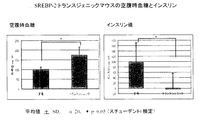
上記のようにして得たトランスジェニックマウスラインAは普通食にて飼育中、尿糖陽性、多尿を認め、糖尿病の発症が示唆された。図2に示すように空腹時血糖を測定すると(グルコース測定キット、和光純薬)、トランスジェニックマウス群では174 mg/dlと非トランスジェニック同胞対照群の99 mg/dlに比して有意に高値を示し、インスリン値(ELISAキット、シバヤギ)は測定感度以下であった。通常の摂食下では、300〜500 mg/dlと明らかに糖尿病の血糖値を示した。
(5) Phenotype of the produced mouse: Confirmation of diabetes The transgenic mouse line A obtained as described above was found to be urinary sugar positive and polyuria during breeding on a normal diet, suggesting the onset of diabetes. When fasting blood glucose was measured as shown in FIG. 2 (glucose measurement kit, Wako Pure Chemical Industries), 174 mg / dl in the transgenic mouse group was significantly higher than 99 mg / dl in the non-transgenic sibling control group The insulin level (ELISA kit, Shibayagi) was below the measurement sensitivity. Under normal feeding, the blood glucose level was clearly 300-500 mg / dl.
トランスジェニックマウス群において、糖負荷試験(1g/kg体重(20%溶液)のブドウ糖を尾静脈より注射、経時的(前, 5, 15, 30分)に眼窩静脈より採血、血糖ならびに血中インスリン値を測定)を施行すると、インスリン分泌障害型の糖尿病パターンを示した(図3)。すなわち、各時間ポイントで対照に比し、有意の高値を示し、糖負荷に対する高血糖が遷延した。 また対照群で認められた血糖上昇に応じた血中インスリン値の上昇も、トランスジェニックマウス群ではほとんど認められず、インスリン分泌障害が著明であった。 In the transgenic mice group, glucose tolerance test (1 g / kg body weight (20% solution) of glucose was injected from the tail vein, blood was collected from the orbital vein over time (before, 5, 15, 30 minutes), blood glucose and blood insulin (Measured value) showed a diabetic pattern of impaired insulin secretion (FIG. 3). That is, at each time point, the value was significantly higher than that of the control, and hyperglycemia against glucose load was prolonged. In addition, the increase in blood insulin level corresponding to the increase in blood glucose observed in the control group was hardly observed in the transgenic mouse group, and the insulin secretion disorder was remarkable.
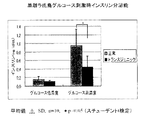
さらにインスリン分泌障害を直接に確認する目的で、膵臓ラ氏島を分離すると、ラ氏島の個数、個々のサイズに約50%程度の減少を認めており、さらにその形態に異常を認め、ラ氏島の障害が認められた。分離した後、サイズをそろえた上で個々のラ氏島に関して培養時におけるインスリン分泌能を検討したところ、図4に示すように培養液中のブドウ糖に対するインスリン分泌も50%低下しており、個々のラ氏島に関してもインスリン分泌能の低下を認めた。
なお、ラ氏島の単離は、次のようにして行なった。マウスを頚椎脱臼にて屠殺し、胆管結紮後、コラゲナーゼ溶液 (4mg/ml、10mM HEPES (pH 7.4) 0.5% BSA (KRBH ) 2.5 mlを膵管に注入し膨潤した膵臓をさらに 37°C で3.5分培養し、KRBHで洗浄後、単離したラ氏島を実体顕微鏡下で、採取した。
Furthermore, for the purpose of directly confirming insulin secretion disorder, when the pancreatic la islet was isolated, a decrease of about 50% was observed in the number and individual size of the la islet, and an abnormality was observed in its morphology. The obstacle of Uchijima was recognized. After separation, the size of each of the islets was examined and the insulin secretion ability during the culture was examined for each of the islands. As shown in FIG. 4, insulin secretion for glucose in the culture solution was also reduced by 50%. In addition, a decrease in insulin secretion ability was observed for La Uchijima.
In addition, La Ushima was isolated as follows. Mice were sacrificed by cervical dislocation, and after bile duct ligation, collagenase solution (4 mg / ml, 10 mM HEPES (pH 7.4) 0.5% BSA (KRBH) 2.5 ml was injected into the pancreatic duct and the swollen pancreas was further incubated at 37 ° C for 3.5 minutes. After culturing and washing with KRBH, the isolated La Islet was collected under a stereomicroscope.
以上より、確立したラットインスリンプロモーターヒトSREBP-2トランスジェニックマウスでは、インスリン分泌障害による糖尿病を呈することが確認された。ライン別の発現量の検討の際、図5に示すようにヒトSREBP-2発現量がラインAよりも少ないが発現の認められたラインBに関しても同様の検討を一部行い、発現量がより少ないことに合致して、糖尿病に関する各検討事項が軽度に存在することが確認された。すなわち導入遺伝子SREBP2の発現量に応じた表現系を呈していることがわかり、ラインAの表現系が遺伝子導入による非特異的効果でなく、発現したSREBP-2の量依存性の効果であることが確認された。 From the above, it was confirmed that the established rat insulin promoter human SREBP-2 transgenic mouse exhibits diabetes due to impaired insulin secretion. When examining the expression level for each line, as shown in FIG. 5, the same study was partially conducted for line B, where the expression level of human SREBP-2 was lower than that of line A, but the expression level was higher. Consistent with the small number, it was confirmed that there were mild considerations related to diabetes. In other words, it is clear that the expression system according to the expression level of the transgene SREBP2 is exhibited, and the expression system of line A is not a non-specific effect by gene transfer but an amount-dependent effect of expressed SREBP-2 Was confirmed.
(6)作製マウス糖尿病の病態
上記のようにして作製されたトランスジェニックマウスにおいては、1型糖尿病に認められるようなβ細胞廃絶によるインスリンの枯渇ではなく、基礎分泌よりもむしろブドウ糖刺激に対する応答分泌が障害されている点において、2型糖尿病の病態を呈している。またこのマウスは、体重や、外見、解剖上の脂肪組織重量は正常と同等で、肥満を認めない。すなわち同じ2型糖尿病でも肥満糖尿病モデルやインスリン抵抗性モデルマウスとは明かに病態が異なり、日本人に比較的多く認められる非肥満性インスリン分泌障害型の2型糖尿病モデルマウスとなる。図5に示すように導入遺伝子の発現量に応じてコレステロール合成系の鍵酵素であるHMGCoA合成酵素の発現も誘導されており、本マウスのβ細胞ではコレステロール合成が活性化されていると考えられ、糖尿病発症との関連が推測された。
上記のようにして作製されたトランスジェニックマウスは、インスリン分泌障害の新しい機序により糖尿病を発症しており、糖尿病発症の新しい概念を包含している。従来よりインスリン分泌障害の病因として、β細胞に中性脂肪が蓄積することが注目されてきた。本マウスでは、コレステロールが蓄積することが予想され、コレステロール代謝とインスリン分泌障害という全く新しい病体機序の可能性を示唆している点でも新規性の高い糖尿病モデルといえる。
(6) Pathology of Produced Mouse Diabetes In the transgenic mouse produced as described above, insulin is not depleted due to β-cell depletion as observed in type 1 diabetes, but is responsive to glucose stimulation rather than basal secretion. Presents with a pathological condition of type 2 diabetes. In addition, this mouse has the same body weight, appearance, and anatomical fat tissue weight as normal, and does not recognize obesity. That is, even in the same type 2 diabetes, the disease state is clearly different from the obese diabetes model and insulin resistance model mouse, and it becomes a non-obese insulin secretion disorder type 2 diabetes model mouse which is relatively common in Japanese. As shown in FIG. 5, the expression of HMGCoA synthase, which is a key enzyme in the cholesterol synthesis system, is also induced according to the expression level of the transgene, and it is considered that cholesterol synthesis is activated in the β cells of this mouse. The relationship with the onset of diabetes was speculated.
The transgenic mouse produced as described above develops diabetes by a new mechanism of impaired insulin secretion, and includes a new concept of diabetes onset. Conventionally, it has been noticed that neutral fat accumulates in β cells as a cause of insulin secretion disorder. This mouse is a highly novel diabetes model in that cholesterol is expected to accumulate and suggests the possibility of a completely new pathological mechanism of cholesterol metabolism and impaired insulin secretion.
本発明の非ヒトトランスジェニック動物は、2型糖尿病の発症機構の研究ならびに2型糖尿病の治療薬のスクリーニング用ツールとして有用である。本発明の好ましい態様によるトランスジェニックマウスは、繁殖の際、子孫の半数が病態マウス、半数が正常対象群として利用できるため、研究に好都合である。また他に知られている2型糖尿病に近い病態を示すモデル動物は肥満が著明であったり、インスリン抵抗性が前面にでており糖尿病を発症させるのに長期に高脂肪食などの特別負荷食を投与しなければならない点で不便であった。本マウスは、肥満を呈しておらず、また普通食において、若年時よりインスリン分泌を低下した糖尿病を発症する利便性にすぐれたモデルである。またさらに上記負荷食を与えることにより、より重篤な糖尿病を惹起することもできる利点もある。
以上より、本発明の他の態様によるスクリーニング方法は、日本人に多いとされる2型糖尿病の治療薬をスクリーニングする際に有効に利用できる。
The non-human transgenic animal of the present invention is useful as a tool for studying the onset mechanism of type 2 diabetes and screening for therapeutic agents for type 2 diabetes. The transgenic mouse according to a preferred embodiment of the present invention is convenient for research because, during breeding, half of the offspring can be used as a diseased mouse and half as a normal subject group. In addition, other known animal models that exhibit a condition close to that of type 2 diabetes have marked obesity, insulin resistance is on the front, and special burdens such as a high-fat diet for a long time to develop diabetes It was inconvenient in that food had to be administered. This mouse does not exhibit obesity, and is a convenient model for developing diabetes in which insulin secretion is reduced from a young age in a normal diet. Furthermore, there is also an advantage that more severe diabetes can be induced by giving the above-mentioned load diet.
As described above, the screening method according to another aspect of the present invention can be effectively used for screening a therapeutic agent for type 2 diabetes, which is often found in Japanese.
配列番号3:プライマー
配列番号4:プライマー
配列番号5:プライマー
配列番号6:プライマー
配列番号7:プライマー
配列番号8:プライマー
配列番号9:プライマー
配列番号10:プライマー
配列番号11:プライマー
配列番号12:プライマー
配列番号13:プライマー
配列番号14:プライマー
Sequence number 3: Primer Sequence number 4: Primer Sequence number 5: Primer Sequence number 6: Primer Sequence number 7: Primer Sequence number 8: Primer Sequence number 9: Primer Sequence number 10: Primer Sequence number 11: Primer Sequence number 12: Primer Sequence number 13: Primer Sequence number 14: Primer
Claims (11)
Priority Applications (4)
| Application Number | Priority Date | Filing Date | Title |
|---|---|---|---|
| JP2004115646A JP2005295867A (en) | 2004-04-09 | 2004-04-09 | Non-human transgenic animals as type 2 diabetes models |
| EP05729372A EP1743523A4 (en) | 2004-04-09 | 2005-04-08 | NON-HUMAN TRANSGENIC ANIMAL AS A MODEL FOR TYPE 2 DIABETES |
| PCT/JP2005/007285 WO2005096810A1 (en) | 2004-04-09 | 2005-04-08 | Nonhuman transgenic animal as type 2 diabetes model |
| US11/547,663 US20090320147A1 (en) | 2004-04-09 | 2005-04-08 | Nonhuman transgenic animal as type 2 diabetes model |
Applications Claiming Priority (1)
| Application Number | Priority Date | Filing Date | Title |
|---|---|---|---|
| JP2004115646A JP2005295867A (en) | 2004-04-09 | 2004-04-09 | Non-human transgenic animals as type 2 diabetes models |
Publications (1)
| Publication Number | Publication Date |
|---|---|
| JP2005295867A true JP2005295867A (en) | 2005-10-27 |
Family
ID=35124745
Family Applications (1)
| Application Number | Title | Priority Date | Filing Date |
|---|---|---|---|
| JP2004115646A Pending JP2005295867A (en) | 2004-04-09 | 2004-04-09 | Non-human transgenic animals as type 2 diabetes models |
Country Status (4)
| Country | Link |
|---|---|
| US (1) | US20090320147A1 (en) |
| EP (1) | EP1743523A4 (en) |
| JP (1) | JP2005295867A (en) |
| WO (1) | WO2005096810A1 (en) |
Families Citing this family (1)
| Publication number | Priority date | Publication date | Assignee | Title |
|---|---|---|---|---|
| CN114711190B (en) * | 2022-03-01 | 2022-12-20 | 黑龙江联生生物科技有限公司 | Research application of hypoglycemic effect of beta-nicotinamide nucleotide |
Family Cites Families (2)
| Publication number | Priority date | Publication date | Assignee | Title |
|---|---|---|---|---|
| DE19816894C1 (en) * | 1998-04-16 | 2000-03-02 | Wilhelm Krone | SREBP-2 deficient cell lines |
| US6322962B1 (en) * | 1998-08-14 | 2001-11-27 | Board Of Regents, The University Of Texas System | Sterol-regulated Site-1 protease and assays of modulators thereof |
-
2004
- 2004-04-09 JP JP2004115646A patent/JP2005295867A/en active Pending
-
2005
- 2005-04-08 WO PCT/JP2005/007285 patent/WO2005096810A1/en not_active Ceased
- 2005-04-08 EP EP05729372A patent/EP1743523A4/en not_active Withdrawn
- 2005-04-08 US US11/547,663 patent/US20090320147A1/en not_active Abandoned
Also Published As
| Publication number | Publication date |
|---|---|
| EP1743523A4 (en) | 2008-05-14 |
| EP1743523A1 (en) | 2007-01-17 |
| US20090320147A1 (en) | 2009-12-24 |
| WO2005096810A1 (en) | 2005-10-20 |
Similar Documents
| Publication | Publication Date | Title |
|---|---|---|
| Orquera et al. | The homeodomain transcription factor NKX2. 1 is essential for the early specification of melanocortin neuron identity and activates Pomc expression in the developing hypothalamus | |
| KR101018002B1 (en) | Lung cancer and respiratory tuberculosis-derived interstitial pneumonia-induced transgenic mouse and preparation method thereof | |
| Zhang et al. | Establishment of liver specific glucokinase gene knockout mice: a new animal model for screening anti-diabetic drugs | |
| EP1240822B1 (en) | Diabetes onset model mammal | |
| CN114134152A (en) | GLP1R gene humanized non-human animal and construction method and application thereof | |
| US10182560B2 (en) | Transgene construct encoding delta 12 fatty acid | |
| EP1224861B1 (en) | Test method relating to adipose cells and to obesity by using a human h-pgds overexpressing non-human animal | |
| CN101532018B (en) | Producing method of transgenic mouse containing anthropogenic proto-oncogene c-Ha-ras and application thereof | |
| AU741340B2 (en) | Non human transgenic animal in which the expression of the gene coding for insulin is deleted | |
| US20090320147A1 (en) | Nonhuman transgenic animal as type 2 diabetes model | |
| US6080911A (en) | Mice models of growth hormone insensitivity | |
| CN114982718A (en) | Mouse systemic obesity model caused by gene defect and construction method thereof | |
| JP5030792B2 (en) | Diabetes model animal | |
| US20250212856A1 (en) | Genetically modified mouse, methods for producing the same, and uses thereof | |
| WO2003099003A1 (en) | Adiponectin-knoucout nonhuman animal | |
| JP6650649B2 (en) | Genetically modified non-human model animals | |
| JPH06292485A (en) | Gene-introduced diabetic model animal | |
| WO2007058986A2 (en) | Methods for diagnosing and identifying effective therapeutics for major depressive disorder | |
| JP3817638B2 (en) | Transgenic non-human mammal | |
| JP2008154489A (en) | MafK / MafA gene modified non-human animal and method for producing the non-human animal | |
| CN118028377A (en) | Construction method of secretory albumin inhibitor gene knockout mouse model | |
| CN118140873A (en) | Diabetes animal model and its construction method and application | |
| WO2001013716A1 (en) | α-TOCOPHEROL TRANSPORT PROTEIN KNOCKOUT ANIMAL | |
| JP2008271913A (en) | Transgenic non-human animals | |
| WO2002005633A1 (en) | P300 transgenic animal |
Legal Events
| Date | Code | Title | Description |
|---|---|---|---|
| A621 | Written request for application examination |
Free format text: JAPANESE INTERMEDIATE CODE: A621 Effective date: 20060515 |
|
| A131 | Notification of reasons for refusal |
Free format text: JAPANESE INTERMEDIATE CODE: A131 Effective date: 20090310 |
|
| A02 | Decision of refusal |
Free format text: JAPANESE INTERMEDIATE CODE: A02 Effective date: 20090630 |