JP2005295558A - Method for discriminating and recovering stall - Google Patents
Method for discriminating and recovering stall Download PDFInfo
- Publication number
- JP2005295558A JP2005295558A JP2005100591A JP2005100591A JP2005295558A JP 2005295558 A JP2005295558 A JP 2005295558A JP 2005100591 A JP2005100591 A JP 2005100591A JP 2005100591 A JP2005100591 A JP 2005100591A JP 2005295558 A JP2005295558 A JP 2005295558A
- Authority
- JP
- Japan
- Prior art keywords
- data packet
- packet
- stall
- response
- sequence
- Prior art date
- Legal status (The legal status is an assumption and is not a legal conclusion. Google has not performed a legal analysis and makes no representation as to the accuracy of the status listed.)
- Granted
Links
- 238000000034 method Methods 0.000 title claims abstract description 61
- 230000008569 process Effects 0.000 claims abstract description 30
- 230000005540 biological transmission Effects 0.000 claims abstract description 24
- 230000004044 response Effects 0.000 claims abstract description 18
- 238000004891 communication Methods 0.000 abstract description 19
- 230000000694 effects Effects 0.000 abstract description 8
- 230000002401 inhibitory effect Effects 0.000 abstract 2
- 102100036409 Activated CDC42 kinase 1 Human genes 0.000 description 9
- 238000012152 algorithmic method Methods 0.000 description 8
- 101000741965 Homo sapiens Inactive tyrosine-protein kinase PRAG1 Proteins 0.000 description 6
- 102100038659 Inactive tyrosine-protein kinase PRAG1 Human genes 0.000 description 6
- 230000010267 cellular communication Effects 0.000 description 5
- 230000007246 mechanism Effects 0.000 description 4
- 238000012986 modification Methods 0.000 description 4
- 230000004048 modification Effects 0.000 description 4
- 238000012545 processing Methods 0.000 description 4
- 238000013459 approach Methods 0.000 description 2
- 238000005516 engineering process Methods 0.000 description 2
- 230000001960 triggered effect Effects 0.000 description 2
- 238000004458 analytical method Methods 0.000 description 1
- 230000003466 anti-cipated effect Effects 0.000 description 1
- 230000001174 ascending effect Effects 0.000 description 1
- 230000001413 cellular effect Effects 0.000 description 1
- 230000001934 delay Effects 0.000 description 1
- 238000001514 detection method Methods 0.000 description 1
- 239000002360 explosive Substances 0.000 description 1
- 238000007726 management method Methods 0.000 description 1
- 238000004886 process control Methods 0.000 description 1
- 230000008707 rearrangement Effects 0.000 description 1
- 238000011084 recovery Methods 0.000 description 1
- 230000004043 responsiveness Effects 0.000 description 1
- 238000004088 simulation Methods 0.000 description 1
- 230000001360 synchronised effect Effects 0.000 description 1
- 230000007704 transition Effects 0.000 description 1
Images


Classifications
-
- H—ELECTRICITY
- H04—ELECTRIC COMMUNICATION TECHNIQUE
- H04L—TRANSMISSION OF DIGITAL INFORMATION, e.g. TELEGRAPHIC COMMUNICATION
- H04L1/00—Arrangements for detecting or preventing errors in the information received
- H04L1/12—Arrangements for detecting or preventing errors in the information received by using return channel
- H04L1/16—Arrangements for detecting or preventing errors in the information received by using return channel in which the return channel carries supervisory signals, e.g. repetition request signals
- H04L1/18—Automatic repetition systems, e.g. Van Duuren systems
- H04L1/1829—Arrangements specially adapted for the receiver end
- H04L1/1848—Time-out mechanisms
-
- H—ELECTRICITY
- H04—ELECTRIC COMMUNICATION TECHNIQUE
- H04L—TRANSMISSION OF DIGITAL INFORMATION, e.g. TELEGRAPHIC COMMUNICATION
- H04L1/00—Arrangements for detecting or preventing errors in the information received
- H04L1/12—Arrangements for detecting or preventing errors in the information received by using return channel
- H04L1/16—Arrangements for detecting or preventing errors in the information received by using return channel in which the return channel carries supervisory signals, e.g. repetition request signals
- H04L1/18—Automatic repetition systems, e.g. Van Duuren systems
-
- H—ELECTRICITY
- H04—ELECTRIC COMMUNICATION TECHNIQUE
- H04L—TRANSMISSION OF DIGITAL INFORMATION, e.g. TELEGRAPHIC COMMUNICATION
- H04L1/00—Arrangements for detecting or preventing errors in the information received
- H04L1/12—Arrangements for detecting or preventing errors in the information received by using return channel
- H04L1/16—Arrangements for detecting or preventing errors in the information received by using return channel in which the return channel carries supervisory signals, e.g. repetition request signals
- H04L1/18—Automatic repetition systems, e.g. Van Duuren systems
- H04L1/1829—Arrangements specially adapted for the receiver end
- H04L1/1835—Buffer management
- H04L1/1838—Buffer management for semi-reliable protocols, e.g. for less sensitive applications such as streaming video
Landscapes
- Engineering & Computer Science (AREA)
- Computer Networks & Wireless Communication (AREA)
- Signal Processing (AREA)
- Multimedia (AREA)
- Mobile Radio Communication Systems (AREA)
- Detection And Prevention Of Errors In Transmission (AREA)
- Communication Control (AREA)
- Maintenance And Management Of Digital Transmission (AREA)
Abstract
Description
本発明は遠隔通信に関し、より詳細には無線通信に関する。 The present invention relates to telecommunications, and more particularly to wireless communications.
無線通信システムは、複数の地理的に分散したセルラ通信サイトや基地局を採用している。各基地局は、定常すなわち固定型の無線通信デバイスやユニットとの間における通信信号の送受信をサポートする。各基地局は、通常セル/セクタと呼ばれる特定の領域にわたって通信を処理する。無線通信システム用の全サービス・エリアは、展開された基地局用のセルの和集合(union)によって定義される。この点に関して、隣接したセル・サイトまたは近くのセル・サイト用のサービス・エリアは、可能であれば、システムの外側境界内の隣接した通信範囲を確保するため、互いに重なり合うことができる。 Wireless communication systems employ multiple geographically dispersed cellular communication sites and base stations. Each base station supports transmission / reception of communication signals with a stationary or fixed type wireless communication device or unit. Each base station handles communications over a specific area usually referred to as a cell / sector. The total service area for a wireless communication system is defined by the union of deployed base station cells. In this regard, the service areas for adjacent cell sites or nearby cell sites can overlap with each other, if possible, to ensure adjacent coverage within the outer boundary of the system.
アクティブなとき、無線ユニットはフォワード・リンクすなわちダウンリンクを介して少なくとも1つの基地局から信号を受信し、リバース・リンクすなわちアップリンクを介して少なくとも1つの基地局へ信号を送信する。セルラ通信システム用のリンクまたはチャネルを定義するための多くの異なるスキームが存在し、これには、たとえばTDMA(時分割多元接続)スキーム、FDMA(周波数分割多元接続)スキーム、およびCDMA(符号分割多元接続)スキームなどが含まれる。CDMA通信では、異なる無線チャネルは、異なる情報ストリームを暗号化するために使用される異なるチャネル化コードまたはシーケンスによって区別され、これは、同時伝送用の1つまたは複数の異なる搬送周波数で変調することができる。受信側は適切なコードまたはシーケンスを使用して、受信された信号から特定のストリームを復元し、受信された信号を復号することができる。 When active, the wireless unit receives signals from at least one base station via the forward link or downlink and transmits signals to at least one base station via the reverse link or uplink. There are many different schemes for defining links or channels for cellular communication systems, including, for example, TDMA (Time Division Multiple Access) schemes, FDMA (Frequency Division Multiple Access) schemes, and CDMA (Code Division Multiplexing). Connection) scheme and so on. In CDMA communications, different radio channels are distinguished by different channelization codes or sequences used to encrypt different information streams, which are modulated with one or more different carrier frequencies for simultaneous transmission. Can do. The receiver can use an appropriate code or sequence to recover a particular stream from the received signal and decode the received signal.
音声用途のために、従来のセルラ通信システムは無線ユニットと基地局の間の専用リンクを採用している。音声通信は本質的に遅延への耐性が低い。したがって無線セルラ通信システム内の無線ユニットは、1つまたは複数の専用リンクを介して信号を送受信する。この点に関して、アクティブな各無線ユニットは通常、アップリンク上の専用リンクだけでなく、ダウンリンク上の専用リンクの割り当ても要求する。 For voice applications, conventional cellular communication systems employ dedicated links between radio units and base stations. Voice communications are inherently less tolerant of delay. Thus, wireless units within a wireless cellular communication system transmit and receive signals via one or more dedicated links. In this regard, each active wireless unit typically requires assignment of a dedicated link on the downlink as well as a dedicated link on the uplink.
インターネットの爆発的な普及とデータに対する需要の増加によって、リソース管理がセルラ通信システムにおいてますます大きな問題となっている。次世代無線通信システムは、インターネット・アクセスとマルチメディア通信のサポートにおいて高速のパケット・データ・サービスを提供することを期待されている。しかし音声とは異なり、データ通信は遅延への耐性が比較的高く、潜在的に集中的な性質を内在することがある。そういうものとして、データ通信はダウンリンクまたはアップリンク上の専用リンクを要求せずに、むしろ1つまたは複数のチャネルを複数の無線ユニットによって共有できるようにする場合がある。この構成によって、アップリンク上の各無線ユニットは、利用可能なリソースを求めて競い合う。アップリンクにおける管理対象リソースは、基地局で受信された電力と、各ユーザによって、たとえば他のセクタまたはセル内だけでなく、同一のセクタまたはセル内の他のユーザに対して生じた干渉とを含む。これは、固定された送信電力の割当量(budget)を含むダウンリンク上の管理対象リソースとは対照的である。 With the explosive spread of the Internet and increasing demand for data, resource management has become an increasingly significant problem in cellular communication systems. Next generation wireless communication systems are expected to provide high-speed packet data services in support of Internet access and multimedia communications. However, unlike voice, data communication is relatively tolerant of delay and may be potentially intensive in nature. As such, data communications may not require a dedicated link on the downlink or uplink, but rather allow one or more channels to be shared by multiple wireless units. With this configuration, each wireless unit on the uplink competes for available resources. Managed resources in the uplink are the power received at the base station and the interference caused by each user, for example not only in other sectors or cells, but also to other users in the same sector or cell. Including. This is in contrast to managed resources on the downlink that include a fixed transmit power budget.
データ通信は遅延への耐性が比較的高く、潜在的に集中的な性質を内在することがあるが、次世代無線通信システムにおいて予想される1つの問題は、データ・ブロックまたはデータ・パケット送信の失敗である。より具体的には、たとえば基地局は複数のパケットからの1つまたは複数のデータ・パケットを、識別された無線ユニットへ首尾よく送信できない場合がある。この失敗の結果、基地局はハイブリッド自動再送要求(「HARQ」)などの任意の数の再送信技術を使用して、たとえば無線ユニットによって首尾よく受信されなかったデータ・パケットを配送することがある。しかし基地局が、以前に首尾よく送信できなかったパケットの再送信を試みている間に、他のデータ・パケットが後からその無線ユニットに送信される場合がある。 Although data communication is relatively tolerant of delay and may inherently be intensive in nature, one problem that is anticipated in next generation wireless communication systems is that of data block or data packet transmission. It is a failure. More specifically, for example, the base station may not be able to successfully transmit one or more data packets from multiple packets to the identified wireless unit. As a result of this failure, the base station may use any number of retransmission techniques, such as hybrid automatic repeat request (“HARQ”), to deliver data packets that were not successfully received by the wireless unit, for example. . However, other data packets may later be transmitted to the wireless unit while the base station attempts to retransmit a packet that was not previously successfully transmitted.
High Speed Downlink Packet Access(「HSDPA」)システムでは、各無線ユニットは、基地局によって設定されるタイマを採用している。パケット・データは基地局から無線ユニットへシーケンス方式(sequental manner)で送信される。無事に受信されると、無線ユニットは、処理用にそのバッファからパケット・データを同じシーケンス・オーダー(sequential order)で配送する。もしも受信中に、受信されたデータ・パケットのシーケンス・オーダー(sequential order)にギャップが生じたと無線ユニットが判断した場合、無線ユニットは未着データ・パケット用のタイマを始動させる。このタイマはタイム・ウィンドウを提供し、このウィンドウ内で無線ユニットは、未着と認識された各データ・パケットが送信および/または再送信スキームによって首尾よく受信されるのを待つ。タイマ・ウィンドウが終了する前に、再送信スキームが未着データ・パケットを無線ユニットに首尾よく配送できない場合、無線ユニットはそのパケットが失われたとみなす。 In a High Speed Downlink Packet Access (“HSDPA”) system, each wireless unit employs a timer set by the base station. Packet data is transmitted from the base station to the wireless unit in a sequential manner. If successfully received, the wireless unit delivers packet data from its buffer in the same sequence order for processing. If during reception, the wireless unit determines that a gap has occurred in the sequence order of the received data packet, the wireless unit starts a timer for unarrived data packets. This timer provides a time window within which the wireless unit waits for each data packet that has been acknowledged to be successfully received by the transmission and / or retransmission scheme. If the retransmission scheme cannot successfully deliver a missing data packet to the wireless unit before the timer window expires, the wireless unit considers the packet lost.
データ・パケットは、様々な理由で失われることがある。第1のシナリオとしては、データ・パケットを再送信する試みが最大限度を超過し、これ以上の再送信は許容できないと基地局が判断する場合がある。第2のシナリオとしては、基地局がデータ・パケットの送信や再送信を一方的に中断するよう決定する場合がある。第3のシナリオとしては、より優先順位の高いカスタマまたはより優先順位の高いデータが基地局のリソースを必要としていると基地局が判断し、それに従って「未着」データ・パケットの送信および/または再送信を終了する場合がある。第4のシナリオとしては、無線ユニットが、エラーを伴って送信されたデータ・パケットを受信する場合がある。この点に関しては、無線ユニットがNACK(たとえば、エラーを伴ったデータ・パケットの受信を示す否定応答)を送信する一方で、基地局は代わりにACK(たとえば、無線ユニットがデータ・パケットを首尾よく受信したことを示す肯定応答)を誤って受信し、結果的に基地局内では再送信がまったく行われない。 Data packets can be lost for various reasons. In a first scenario, the base station may determine that the attempt to retransmit the data packet has exceeded the maximum limit and no further retransmissions are acceptable. In a second scenario, the base station may decide to unilaterally interrupt data packet transmission or retransmission. As a third scenario, the base station may determine that a higher priority customer or higher priority data requires base station resources and, accordingly, sending “missing” data packets and / or The retransmission may end. In a fourth scenario, the wireless unit may receive a data packet that was transmitted with an error. In this regard, while the wireless unit sends a NACK (eg, a negative acknowledgment indicating receipt of an errored data packet), the base station instead ACKs (eg, the wireless unit successfully acknowledges the data packet). (Acknowledgment indicating reception) is erroneously received, and as a result, no retransmission is performed in the base station.
したがってHSDPAシステムでは、未着である1つまたは複数のデータ・パケットが送信および/または再送信のいずれかの時点で失われたと基地局が判断する場合がある。しかし対照的に無線ユニットは、タイマが切れるまで未着データ・パケットが失われたことを確認しない。したがって無線ユニットは、受信されたデータ・パケットを処理する前に、および/または様々な他の技術によって失われたパケットの回復を試みる前に、タイマが切れるまで待たなければならない。タイマが切れるまでのこの遅延または待ち時間は、時に失速期間と呼ばれる。 Thus, in an HSDPA system, a base station may determine that one or more missing data packets have been lost at some point during transmission and / or retransmission. In contrast, however, the wireless unit does not confirm that missing data packets have been lost until the timer expires. Thus, the wireless unit must wait until the timer expires before processing the received data packet and / or before attempting to recover packets lost by various other techniques. This delay or waiting time before the timer expires is sometimes called the stall period.
失速期間の長さは、比較的長時間に及ぶことがある。基地局は、たとえば再送信を中断することによって、またはより優先順位の高いカスタマやより優先順位の高いデータに対応するよう決定することによって、基地局によるタイマの設定よりも大幅に短い時間で、未着パケットが失われたと判定を下す場合がある。未着データ・パケットを再送信する試みを無線ユニットが所定の回数処理できるように、タイマは当初控えめに設定されている点に留意されたい。各送信を完了するまでの時間にはばらつきがあるため、再送信の試みを所定の回数完了するまでの時間は異なる可能性がある。したがって有効な送信が尚早に終了することのないように、タイマは控えめに設定されている。 The length of the stall period can be relatively long. The base station can be significantly shorter than the timer set by the base station, for example by interrupting retransmissions or by deciding to accommodate higher priority customers or higher priority data, In some cases, it may be determined that a missing packet has been lost. Note that the timer is initially conservatively set so that the wireless unit can process a predetermined number of attempts to retransmit the missing data packet. Since the time to complete each transmission varies, the time to complete a predetermined number of retransmission attempts may be different. Thus, the timer is conservatively set so that valid transmissions do not end prematurely.
上記の結果として、不要な遅延を回避するかまたは最小限に抑える効率的で高速なデータ通信をサポートする方法に対する需要が存在する。さらに、無線ユニットにおける失速状態(stalling condition)期間の影響を最小限に抑える方法に対するニーズが存在する。 As a result of the above, there is a need for a method that supports efficient and high-speed data communication that avoids or minimizes unnecessary delays. Further, there is a need for a method that minimizes the impact of a stalling condition period in a wireless unit.
本発明は、遠隔通信ネットワークにおける失速状態の影響を最小限に抑えるデータ通信のための方法を提供する。より詳細には、本発明は、複数のシーケンス・データ・パケットの1つがオーダーの乱れた(out−of−order)受信によって失速する(stall)可能性を判定する方法を提供する。判定された失速状態の可能性によって、本発明は、失速状態の影響を軽減するフラッシュ・コマンド(flush command)を送信することができる。本発明の目的のために、フラッシュ・コマンドは、データ・パケットが失速しているかどうかを検出するために、そして失速したデータ・パケットを無線ユニットで特定のメモリ・ロケーション(たとえば有限バッファの一端)用に指定できるかどうかを検出するために、基地局(たとえばノードB)と通信することができる。 The present invention provides a method for data communication that minimizes the effects of stall conditions in telecommunications networks. More particularly, the present invention provides a method for determining the likelihood that one of a plurality of sequence data packets will stall due to out-of-order reception. Depending on the determined stall condition possibility, the present invention can send a flash command that reduces the effects of the stall condition. For the purposes of the present invention, the flush command is used to detect whether a data packet is stalled and to identify the stalled data packet at a specific memory location (eg, one end of a finite buffer) at the wireless unit. To communicate with a base station (e.g., Node B).
本発明の一実施形態では、失速状態の可能性は、データ・パケットのシーケンス内にある少なくとも1つのデータ・パケット用に判定される。またこの方法は、判定された失速状態の可能性に応答してフラッシュ・コマンドを送信する工程も含む。フラッシュ・コマンドの送信に先立って、失速状態用に判定された可能性に応答して待ち時間を見積もることができる。この待ち時間は、1つのデータ・パケットを送信できる前に必要となるタイム・スロットの平均数を測定することによって見積もることができる。見積もられた待ち時間は、データ・パケットのシーケンス内で低位の(たとえば前の)指定を有する別のパケットを首尾よく送信できたことや、失速状態用に判定された可能性(たとえば非失速状態の可能性)に依存する場合がある。 In one embodiment of the invention, the possibility of a stall condition is determined for at least one data packet that is in the sequence of data packets. The method also includes sending a flash command in response to the determined possible stall condition. Prior to sending the flash command, the latency can be estimated in response to the possibility determined for the stall condition. This latency can be estimated by measuring the average number of time slots needed before one data packet can be transmitted. Estimated latency can be due to the successful transmission of another packet with a lower (eg, previous) designation in the sequence of data packets or the possibility of being determined for a stall condition (eg, non-stall) Depending on the possibility of the situation).
この実施形態および他の実施形態は、以降の詳細な説明を添付の特許請求の範囲および本明細書に付属の図面と併せて読めば、当業者には明らかになるであろう。
本発明は、添付の図面を参照しながら非限定的な実施形態に関する以降の説明を読むことによって、よりよく理解できるであろう。
This and other embodiments will become apparent to those of ordinary skill in the art when the following detailed description is read in conjunction with the appended claims and the drawings attached hereto.
The invention may be better understood by reading the following description of non-limiting embodiments with reference to the accompanying drawings.
本出願の図面は正確な縮尺を期したものではなく、単なる概略図であり、したがって本発明の具体的な寸法を描くことを意図したものではないことを強調しておきたい。本発明の具体的な寸法は、当業者が本明細書の開示を精査することによって測定することができる。 It should be emphasized that the drawings in this application are not to scale and are merely schematic and are therefore not intended to depict specific dimensions of the invention. The specific dimensions of the present invention can be determined by one of ordinary skill in the art upon reviewing the disclosure herein.
本発明は、遠隔通信ネットワークにおける失速状態の影響を最小限に抑えるデータ通信のための方法を提供する。より詳細には、本発明は、複数のシーケンス・データ・パケットの1つがオーダーの乱れた受信によって失速する可能性を判定する方法を提供する。判定された可能性によって、本発明は失速状態の影響を軽減するよう試みることができる。 The present invention provides a method for data communication that minimizes the effects of stall conditions in telecommunications networks. More particularly, the present invention provides a method for determining the likelihood that one of a plurality of sequence data packets will stall due to out-of-order reception. Depending on the determined possibility, the present invention can attempt to mitigate the effects of stall conditions.
図1を参照すると、本発明の一実施形態を示すフローチャートが描かれている。より詳細には、遠隔通信ネットワークにおける失速状態の影響を最小限に抑えるためのアルゴリズム的方法(10)が示されている。本発明の一実施例では、High Speed Downlink Packet Access(「HSDPA」)および/またはHigh Speed Uplink Packet Access(「HSUPA」)のサポートにおいてパケットが送信される場合に、失速状態が生じる可能性がある点に留意されたい。したがってこれらのパケットは、具体的に指定されたシーケンスまたはオーダーを有する場合がある。 Referring to FIG. 1, a flowchart illustrating one embodiment of the present invention is depicted. More particularly, an algorithmic method (10) is shown for minimizing the effects of stall conditions in telecommunications networks. In one embodiment of the present invention, a stall condition may occur when a packet is transmitted in support of High Speed Downlink Packet Access (“HSDPA”) and / or High Speed Uplink Packet Access (“HSUPA”). Please note that. These packets may therefore have a specifically designated sequence or order.
図1のアルゴリズム的方法(10)は、はじめにデータ・パケットのシーケンスからの少なくとも1つのパケット用の失速状態の可能性を判定する工程(工程20)を含む場合がある。失速状態の可能性は、1つまたは複数のシステム・パラメータに応答して判定することができる。このシステム・パラメータは、基地局(たとえばノードB)において利用可能、確認可能、および/または計算可能とすることができる。この1つまたは複数のシステム・パラメータは、たとえばデータ・パケットのシーケンスのサイズ、複数の再送要求プロセス、その複数の再送要求プロセスのそれぞれにとっての少なくとも1つの優先順位、アップリンク上のエラーの可能性(たとえばアップリンク応答エラー)、およびダウンリンク上のエラーの可能性(たとえばダウンリンクパケット送信エラー)を含むことができる。 The algorithmic method (10) of FIG. 1 may initially include determining a possible stall condition (step 20) for at least one packet from a sequence of data packets. The possibility of a stall condition can be determined in response to one or more system parameters. This system parameter may be available, verifiable, and / or calculable at the base station (eg, Node B). The one or more system parameters may include, for example, the size of the sequence of data packets, multiple retransmission request processes, at least one priority for each of the multiple retransmission request processes, and potential errors on the uplink. (Eg, uplink response errors), and possible errors on the downlink (eg, downlink packet transmission errors).
少なくとも1つのパケット用の失速状態の可能性が判定されると、その後図1のアルゴリズム的方法(10)は、失速状態の影響を軽減するよう試みる前の待ち時間を見積もる工程(工程30)を含むことができる。この待ち時間を見積もる工程は、失速状態の可能性を判定したことに応答して実行することができる。より詳細には、この待ち時間を見積もる工程は、データ・パケットのシーケンスからの1つのデータ・パケット(たとえば最新のデータ・パケット)が送信に先立って(たとえば最新のデータ・パケットの送信に先立って)経験する可能性のあるタイム・スロットの数を測定する工程を含むことができる。一実施例では、タイム・スロットの数は平均とすることができる。 Once the possibility of a stall condition for at least one packet is determined, the algorithmic method (10) of FIG. 1 then includes a step (step 30) of estimating a wait time before attempting to mitigate the effects of the stall condition. Can be included. This step of estimating the waiting time can be performed in response to determining the possibility of a stall condition. More particularly, this step of estimating the latency is performed when one data packet (eg, the latest data packet) from a sequence of data packets is prior to transmission (eg, prior to transmission of the latest data packet). ) Measuring the number of time slots that may be experienced. In one embodiment, the number of time slots can be average.
タイム・スロットの数を測定する工程は複数の工程によって実現できる点に留意されたい。この点に関して、最新のデータ・パケットが送信用に最初にきっかけを与えられる場合がある。その後、最新のデータ・パケットよりも低位のシーケンス指定を有し、かつ以前に送信されたがまだ受信されていない別のデータ・パケットが失速する可能性があるかどうかについて判定が下される。これらの工程から、最新のデータ・パケット用に見積もられた待ち時間の有意性を得ることができる。 Note that the process of measuring the number of time slots can be accomplished by multiple processes. In this regard, the latest data packet may be initially triggered for transmission. A determination is then made as to whether another data packet that has a lower sequence designation than the most recent data packet and that has been previously transmitted but not yet received may be stalled. From these steps, the significance of the estimated latency for the latest data packet can be obtained.
次いで図1のアルゴリズム的方法(10)は、その後に失速状態の影響を軽減するフラッシュ・コマンドを送信する工程(工程40)を含むことができる。フラッシュ・コマンドの送信は、判定された可能性に応答して実行することができる。本発明の目的のために、フラッシュ・コマンドは、データ・パケットが失速しているかどうかを検出するために、そして失速したデータ・パケットを無線ユニットで特定のメモリ・ロケーション(たとえば有限バッファの一端)用に指定できるかどうかを検出するために、基地局(たとえばノードB)と通信することができる。 The algorithmic method (10) of FIG. 1 may then include the step of sending a flush command (step 40) that subsequently reduces the effects of the stall condition. The sending of the flash command can be performed in response to the determined possibility. For the purposes of the present invention, the flush command is used to detect whether a data packet is stalled and to identify the stalled data packet at a specific memory location (eg, one end of a finite buffer) at the wireless unit. To communicate with a base station (e.g., Node B).
本発明の一実施形態では、フラッシュ・コマンドを送信する工程は、最新のデータ・パケットよりも低位のシーケンス指定を有し、かつ以前に送信された別のデータ・パケットが失速していることを判定したことに応答して前述の最新のデータ・パケットを送信することによって、実現することができる。この時点で、受信側は最新のデータ・パケットを受信することができる。次いで受信側および/または送信側で、失速したデータ・パケットが特定のメモリ・ロケーション用に指定されたかどうかについて判定を下すことができる。一実施例では、特定のメモリ・ロケーションは有限メモリ・バッファの一端(たとえば、最上部または最下部)に存在する。たとえば、失速したデータ・パケットがバッファの最下部用に指定された場合、送信側はフラッシュ・コマンドを実行することができ、これによって最新のデータ・パケットは、隣接するメモリ・ロケーション内のデータ・パケットにバッファ内のギャップを埋めさせる。 In one embodiment of the present invention, the step of sending a flush command has a lower sequence designation than the most recent data packet, and indicates that another previously sent data packet has stalled. This can be realized by transmitting the aforementioned latest data packet in response to the determination. At this point, the receiver can receive the latest data packet. A determination can then be made at the receiving and / or transmitting side as to whether a stalled data packet has been designated for a particular memory location. In one embodiment, the particular memory location is at one end (eg, the top or bottom) of the finite memory buffer. For example, if a stalled data packet is designated for the bottom of the buffer, the sender can execute a flush command, which causes the latest data packet to be sent to the data in the adjacent memory location. Let the packet fill the gap in the buffer.
図2を参照すると、本発明の別の実施形態を示すフローチャートが描かれている。より詳細には、たとえば基地局(たとえばノードB)と基地局コントローラ(たとえば無線ネットワーク・コントローラ)など、遠隔通信ネットワーク内のインフラストラクチャ・エレメントの間の失速状態に対処するためのアルゴリズム的方法(100)が示されている。本発明の一実施例では、High Speed Downlink Packet Access(「HSDPA」)および/またはHigh Speed Uplink Packet Access(「HSUPA」)などのサービスのサポートにおいてパケットが送信される場合に、失速状態が生じる可能性がある点に留意されたい。したがってこれらのパケットは、具体的に指定されたシーケンスまたはオーダーを有する場合がある。 Referring to FIG. 2, a flowchart illustrating another embodiment of the present invention is depicted. More particularly, an algorithmic method (100 for dealing with stall conditions between infrastructure elements in a telecommunications network, such as a base station (eg, Node B) and a base station controller (eg, a radio network controller), for example. )It is shown. In one embodiment of the present invention, a stall condition may occur when a packet is sent in support of services such as High Speed Downlink Packet Access (“HSDPA”) and / or High Speed Uplink Packet Access (“HSUPA”). Please note that there are characteristics. These packets may therefore have a specifically designated sequence or order.
図2のアルゴリズム的方法(100)は、データ・パケットのシーケンスからの少なくとも1つのパケット用の失速状態の可能性を判定する工程(工程120)を含む。一実施例では、失速状態の可能性を判定する工程は、1つまたは複数のシステム・パラメータに応答して基地局(たとえばノードB)で実施することができる。これらのシステム・パラメータは、基地局(たとえばノードB)において利用可能、確認可能、および/または計算可能とすることができる。この1つまたは複数のシステム・パラメータは、たとえばデータ・パケットのシーケンスのサイズ、複数の再送要求プロセス、その複数の再送要求プロセスのそれぞれにとっての少なくとも1つの優先順位、アップリンク上のエラーの可能性、およびダウンリンク上のエラーの可能性を含むことができる。 The algorithmic method (100) of FIG. 2 includes determining a possible stall condition (step 120) for at least one packet from a sequence of data packets. In one example, determining a possible stall condition may be performed at a base station (eg, Node B) in response to one or more system parameters. These system parameters may be available, verifiable, and / or calculable at the base station (eg, Node B). The one or more system parameters may include, for example, the size of the sequence of data packets, multiple retransmission request processes, at least one priority for each of the multiple retransmission request processes, and potential errors on the uplink. , And the possibility of errors on the downlink.
少なくとも1つのパケット用の失速状態の可能性が判定されると、図2のアルゴリズム的方法(100)は、判定された可能性に応答してサービス・タイムアウト条件用の推奨範囲を計算し、送信することができる(工程130)。このサービス・タイムアウト条件は基地局(たとえばノードB)によって実施され、次いで基地局コントローラ(たとえば無線ネットワーク・コントローラ)へ送信することができる。推奨されたサービス・タイムアウト条件は、ネットワーク効率を維持しつつ失速状態を最小限に抑えるために提示されたタイマ範囲に相当する場合がある。 Once a possible stall condition for at least one packet is determined, the algorithmic method (100) of FIG. 2 calculates a recommended range for the service timeout condition in response to the determined possibility and transmits (Step 130). This service timeout condition can be implemented by the base station (eg, Node B) and then transmitted to the base station controller (eg, radio network controller). The recommended service timeout condition may correspond to the timer range presented to minimize stall conditions while maintaining network efficiency.
より詳細には、提示されたタイマ範囲から選択されたタイマは、たとえば万一データ・パケットが未着とみなされた場合に始動することができる。タイマが切れると、失速状態の誘因となった未着データ・パケットは失われたとみなされる。タイマが切れると、無線ユニットはパケットが失われたことを上位層に伝える点に留意されたい。したがって、上位層はこの失われたパケットを回復するよう試みることができる。 More specifically, a timer selected from the presented timer range can be started, for example, in the event that a data packet is deemed undelivered. When the timer expires, the missing data packet that triggered the stall condition is considered lost. Note that when the timer expires, the wireless unit tells the upper layer that the packet has been lost. Thus, the upper layer can attempt to recover this lost packet.
その後、基地局コントローラ(たとえば無線ネットワーク・コントローラ)は、サービス・タイムアウト条件用の推奨範囲を基地局(たとえばノードB)から受信することができる。たとえばコール・セットアップの間、サービス・タイムアウト条件の範囲は、基地局コントローラ(たとえば無線ネットワーク・コントローラ)によって無線ユニットへ送信することができる。次いで無線ユニットは、自身のパフォーマンスを最大に高めるための最適なサービス・タイムアウト条件を選択する。したがって図2のアルゴリズム的方法(100)は、コール・セットアップ中に基地局コントローラによって測定されたサービス・タイムアウト条件の範囲を無線ユニットへ送信する工程を含むこともできる(工程140)。 The base station controller (eg, radio network controller) can then receive a recommended range for the service timeout condition from the base station (eg, Node B). For example, during call setup, a range of service timeout conditions can be transmitted to a wireless unit by a base station controller (eg, a radio network controller). The wireless unit then selects the optimal service timeout condition to maximize its performance. Accordingly, the algorithmic method (100) of FIG. 2 may also include transmitting to the wireless unit a range of service timeout conditions measured by the base station controller during call setup (step 140).
Universal Mobile Telecom Service(「UMTS」)では、たとえばHigh Speed Downlink Packet Access(「HSDPA」)およびHigh Speed Uplink Packet Access(「HSUPA」)機能用のデータ保全性は、非同期ダウンリンクで同期アップリンク、かつN−チャネルのハイブリッド自動再送要求(「ARQ」)スキームを介して維持することができる。受信側はこのタイプのARQ法を使用して、本来意図していたシーケンスに拘束されることなくパケットを受け取ることができる。パケットが必ず高位層へ正しいオーダーで転送されるために、並べ替えバッファが受信側のプロトコル内に存在する。したがって、シミュレーションを介して広範囲のシステム・パラメータ値にわたる並べ替えバッファの動作は、失速状態への対処に関連する場合がある。受信側の並べ替えバッファの分析モデルは、失速の可能性および失速を取り除くのにかかると予想された待ち時間を得ることによって採用することができる。この点に関して送信側は、デッド・フェーズ(dead phase)に際して、どのような場合に、またどのようなときに受信側において失速を取り除くべきかを決定することができる。 In Universal Mobile Telecom Service (“UMTS”), for example, High Speed Downlink Packet Access (“HSDPA”) and High Speed Uplink Packet Access (“HSUP”) It can be maintained via an N-channel hybrid automatic repeat request (“ARQ”) scheme. A receiver can use this type of ARQ method to receive packets without being bound to the originally intended sequence. A reordering buffer exists in the receiving protocol to ensure that packets are transferred to the higher layer in the correct order. Therefore, the operation of the reordering buffer over a wide range of system parameter values via simulation may be related to dealing with stall conditions. An analysis model of the receiver reordering buffer can be employed by obtaining the possibility of stalling and the expected latency to remove the stalling. In this regard, the transmitting side can determine when and when to remove the stall at the receiving side during the dead phase.
従来のARQスキームの場合と同様に、各データ・パケットには昇順のシーケンス番号を割り当てることができる。また情報ビットにエラー検出コードを追加し、パケットが肯定的に(たとえばACK)または否定的に(たとえばNACK)応答されるよう要求することによって、パケットの配送を保証することもできる。NACKの場合、パケットを再送信すべきである。もしも所定のインターバル内にフィードバック・メッセージが受信されない場合、送信側はこれをNACKと解釈できるため、そのパケットを再送信することもでき、したがって同期アップリンクとなる。 As with the conventional ARQ scheme, each data packet can be assigned an ascending sequence number. It is also possible to guarantee the delivery of the packet by adding an error detection code to the information bits and requesting that the packet be answered positively (eg ACK) or negatively (eg NACK). In the case of NACK, the packet should be retransmitted. If a feedback message is not received within a given interval, the sender can interpret this as a NACK, so it can also retransmit the packet, thus becoming a synchronous uplink.
たとえばUMTSでは、HSDPA機能を導入して、ダウンリンク・パフォーマンスの最大速度およびスループットを増大させることができる。増大における1つの領域は、チャネルの状況に迅速に適合するための即応性を向上させることである。したがって、MAC―hsと呼ばれることもあるメディア・アクセス制御(「MAC」)エンティティの追加を、MAC副層の一部として基地局(たとえばノードB)内で実施することができる。基地局内のMAC―hsエンティティにおいてN個のARQ状態マシンまたはプロセスを介して1つのARQ技術をサポートすることができる。1つのARQプロセスは1つのチャネル上でARQの動作を制御することから、N個のチャネルに対してはN個のARQプロセスが存在することができる。各無線ユニット用に、新たな送信シーケンス番号(「TSN」)をNチャネル内の各送信に添付することができる。単一の無線ユニット用に最大8つまでの同時チャネルまたはプロセスが存在することができる。これらのプロセスは、トラフィックの異なる優先順位クラスに従ってサブグループに分割することができ、TSNは各優先順位クラスにとって固有のものとすることができる。 For example, in UMTS, HSDPA functionality can be introduced to increase the maximum speed and throughput of downlink performance. One area in the growth is to improve responsiveness to quickly adapt to channel conditions. Thus, the addition of a media access control (“MAC”) entity, sometimes referred to as MAC-hs, can be implemented in the base station (eg, Node B) as part of the MAC sublayer. One ARQ technology may be supported via N ARQ state machines or processes at the MAC-hs entity in the base station. Since one ARQ process controls the operation of ARQ on one channel, there can be N ARQ processes for N channels. For each wireless unit, a new transmission sequence number (“TSN”) can be attached to each transmission in the N channel. There can be up to 8 simultaneous channels or processes for a single radio unit. These processes can be divided into subgroups according to different priority classes of traffic, and the TSN can be unique for each priority class.
このスキームの下では、データ・パケットは自身の本来のオーダーに拘束されることなく受信側に到達することができる。異なるHARQ技術は、それぞれ異なる回数の再送信を要求する場合があるため、再送信プロセスは無作為の時間に首尾よく受信することができる。データ・パケットは各自の本来のオーダーで高位層へ配送されることになっているため、あるパケットは、自分よりも低位のシーケンス番号を有するデータ・パケットがまだ受信されていない場合、高位層へ配送されないことがある。高位層上のシーケンスの乱れたパケットの影響は、特定のサービス用に構成された動作モードに依存する場合がある。 Under this scheme, data packets can reach the receiver without being bound to their original order. Since different HARQ techniques may require different number of retransmissions, the retransmission process can be successfully received at random times. Since data packets are to be delivered to higher layers in their original order, a packet is sent to a higher layer if a data packet with a lower sequence number has not yet been received. May not be delivered. The impact of out-of-sequence packets on higher layers may depend on the operating mode configured for a particular service.
あるパケットが自分よりも低位の未着パケットのために高位層へ配送されない場合、その未着パケットは失速したとみなすことができる。図3を参照すると、受信側における失速の一例が示されている。ここでは、受信側における並べ替えバッファが示されている。ここではパケット#1、#2、#3、#4が送信されたが、パケット#2がまだ受信側で正しく受信されていない。パケット#1は高位層へ配送されたが、並べ替えバッファ内に失速すなわち「ギャップ」があり、パケット#3および#4を高位層へ配送できないでいる。
If a packet is not delivered to a higher layer due to an unarrived packet lower than itself, the unarrived packet can be regarded as stalled. Referring to FIG. 3, an example of stall on the receiving side is shown. Here, a rearrangement buffer on the receiving side is shown. Here,
シーケンスの乱れた配送による並べ替えバッファ内のギャップを取り除くために、2つの基本的な失速回避メカニズムを採用することができる。第1の失速回避手法はタイマ・メカニズムを利用する。ここでは、低位のシーケンス番号を有するパケットが到達しないためにあるパケットが高位層に配送されない場合に、タイマを始動することができる。タイマが切れると、ギャップをフラッシュすることができ、高位のRadio Link Control(「RLC」)層を介して、失われたパケットを回復することができる。しかしこの方法によって、待ち時間が増大する。 Two basic stall avoidance mechanisms can be employed to eliminate gaps in the reordering buffer due to out-of-sequence delivery. The first stall avoidance technique uses a timer mechanism. Here, a timer can be started when a packet with a lower sequence number does not arrive and a packet is not delivered to a higher layer. When the timer expires, the gap can be flushed and lost packets can be recovered via the higher Radio Link Control (“RLC”) layer. However, this method increases latency.
第2の失速回避はウィンドウ・ベースのメカニズムとすることができる。ここでは、送信側は受信側の並べ替えバッファ内の失速を取り除くために、パケット・シーケンス番号のモジュール性(modular nature)から得られた1セットのルールの下で動作することができる。ウィンドウ・サイズは、受信側で予想されるシーケンス番号の範囲を定義し、あいまいにならないように、ウィンドウ・サイズはTSNスペースの半分を超えてはならない。たとえばTSNが3ビットを割り当てられている場合、シーケンス番号の範囲は0、1、2、...7とすることができる。送信側は、4パケット(またはそれ未満)のTSNウィンドウの範囲内でしかパケットを送信することができない。TSN#1、#2、および#3が受信され、#0が受信されていない場合、送信側は#0を再送信するか、または新たなパケット#4を送信することができる。しかし#4を送信すれば、ウィンドウが進み、#0が再送信されないことを受信側に伝えることができる。こうすれば、高位層へ配送されない可能性のあるパケット#0によって高位のパケット上に生じた失速を終了させることができる。
The second stall avoidance can be a window based mechanism. Here, the sender can operate under a set of rules derived from the modular nature of packet sequence numbers to remove stalls in the receiver's reordering buffer. The window size defines the range of sequence numbers expected at the receiver, and the window size should not exceed half of the TSN space so as not to be ambiguous. For example, if the TSN is assigned 3 bits, the sequence number range is 0, 1, 2,. . . 7 can be used. The sender can only send packets within a TSN window of 4 packets (or less). When
UMTSにとって、ウィンドウ・サイズは、受信側で受け入れることができるパケット番号の最大範囲を規定する可能性がある点に留意されたい。ウィンドウ・サイズベースの技術には、こうした最大範囲は存在しない。たとえばUMTSのウィンドウ・サイズが3である場合、はじめにTSN{0、1、2}を送信することができる。しかし#1および#2が受信される一方で、#0が受信されない場合、#0を再送信するか、または#3を送信することができる。#0を送信した場合、組合せ{0}しか許容できないが、一方で#3を送信した場合、ウィンドウが進み、許容できる組合せは{3、4、5}となる。ウィンドウ・サイズベースのスキームでは、{0、4、5}を許容することができ、パケット番号の範囲を3よりも大きくすることができる。予想されるシーケンス番号の範囲の増大を認めることができる。一方、ウィンドウ・サイズの定義は、再送信または新たなパケットの送信のいずれかの前に送信されるパケットの番号とすることができる。他のUMTSスキームでは、新たなウィンドウは、ウィンドウが進んだ場合に新たなパケットを送信することしかできないが、対照的にウィンドウ・サイズベースの技術では、前のウィンドウ内の少なくとも1つのパケットを首尾よく受信できる限り、新たなパケットを各ウィンドウに送信することができる。 Note that for UMTS, the window size may define the maximum range of packet numbers that can be accepted at the receiver. There is no such maximum range for window size-based technology. For example, if the UMTS window size is 3, TSN {0, 1, 2} can be transmitted first. However, if # 1 and # 2 are received while # 0 is not received, # 0 can be retransmitted or # 3 can be transmitted. When # 0 is transmitted, only the combination {0} is allowed. On the other hand, when # 3 is transmitted, the window advances and the allowable combination is {3, 4, 5}. In the window size based scheme, {0, 4, 5} can be allowed and the range of packet numbers can be larger than 3. An increase in the range of expected sequence numbers can be observed. On the other hand, the definition of the window size can be the number of the packet that is transmitted before either the retransmission or the transmission of a new packet. In other UMTS schemes, a new window can only send a new packet as the window advances, whereas window size-based techniques succeed at least one packet in the previous window. As long as it can be received well, a new packet can be sent to each window.
さらに、1つのUMTSのN−チャネル・スキームの下では、各プロセスは特定のタイム・スロットと結びついていない場合がある。この点に関して、各プロセスは、より良好な無線通信条件を有するより優先順位の高いクラスのトラフィックやユーザによる優先使用のためにその順番を失う場合がある。実際に送信側は、異なる優先順位クラスおよび他のユーザや内部の優先順位クラスによる優先使用が存在するために、いくつかのタイム・スロットの間、ユーザやユーザ内の特定の優先順位クラスに対して何も送信しない場合がある。 Further, under one UMTS N-channel scheme, each process may not be associated with a particular time slot. In this regard, each process may lose its order due to higher priority classes of traffic with better wireless communication conditions and preferential use by users. In fact, the sender can use a different priority class and preferential usage by other users or internal priority classes, so that for some time slots, for a user or a specific priority class within a user. May not send anything.
本明細書に記載のウィンドウ・サイズベースの技術は、事前に無限のシーケンス番号スペースを前提としているが、一方で1つのUMTS手法は、TSNに割り当てられたビット数に基づいてモジュラ・スキームを定義する場合がある。直接の結果として、この1つのUMTS手法は前述のウィンドウ・メカニズムの下で動作することになる。 The window size-based technique described here presupposes an infinite sequence number space in advance, while one UMTS approach defines a modular scheme based on the number of bits allocated to the TSN. There is a case. As a direct result, this one UMTS approach will work under the window mechanism described above.
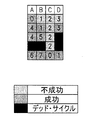
図4を参照すると、1つの送信プロセスが示されている。説明をわかりやすくするため、HARQプロセスの数はTSNスペースの半分に等しくすることができると仮定する。さらに、NACKからACKへのフィードバック・チャネルにおけるエラーも考慮していない。前述の教示の目的から、以下の点に留意されたい。まずはM=1と設定することによる複数の受信側からのバックワード/フォワード・フェーズの表記のケースである。さらにフォワード・フェーズ(「F」)は、パケットを正しく受信できるまでに、列上の連続したスロットのシーケンスとして定義することができ、一方でバックワード・フェーズ(「B」)は、対応するACKを送信側で受信できるまでに、受信に続く列上のスロットのシーケンスとして定義することができる。下線の付いたFは、バックワード・フェーズなしで生じることができる、たとえば最初の試みでACKを受信することができる新たなパケット遷移(packet transition)を識別する点にも留意されたい。パケット・シーケンス番号は、送信プロセスをさらに示す際の補助とすることができる。本明細書で詳述するように、シーケンス番号スペースが0、1、2、...7に相当し、4の再送信プロセスが採用され、NACKからACKへのエラーがない場合、TSN用に3ビットを採用できることも前提とすべきである。別の前提は、モジュラ・ウィンドウがシーケンス番号スペースの半分のサイズ、たとえば4を有する場合である。 Referring to FIG. 4, one transmission process is shown. For ease of explanation, assume that the number of HARQ processes can be equal to half the TSN space. Furthermore, it does not take into account errors in the NACK to ACK feedback channel. For the purposes of the foregoing teachings, note the following points. First, it is a case of expressing the backward / forward phase from a plurality of receiving sides by setting M = 1. Furthermore, the forward phase (“F”) can be defined as a sequence of consecutive slots on the queue before the packet can be received correctly, while the backward phase (“B”) has a corresponding ACK. Can be defined as a sequence of slots on the column following reception. Note also that the underlined F identifies a new packet transition that can occur without a backward phase, for example, an ACK can be received on the first attempt. The packet sequence number can be an aid in further indicating the transmission process. As detailed herein, the sequence number space is 0, 1, 2,. . . It should be assumed that 3 bits can be used for TSN if 4 retransmission processes are employed and there is no NACK to ACK error. Another assumption is that the modular window has half the size of the sequence number space, e.g.
第1のフレーム/サイクルでは、プロセスA、B、C、およびDによってパケット#0、#1、#2、および#3をそれぞれ送信することができる。成功できるのは、#0だけである。しかし対応するACKも、はじめは成功することができる。
In the first frame / cycle,
第2のフレームでは、プロセスA、B、C、およびDによってパケット#4、#1、#2、および#3をそれぞれ送信することができる。モジュラ・ウィンドウは、第1のフレームの間にパケット#0を首尾よく受信できたため、進むことができる。パケット#2は、成功できなかった唯一のパケットである可能性がある。図示してあるように、プロセスAは、ACKが正しく受信されていないことを示すためにパケット#2を送信し続け、やがて受信側内に失速を引き起こす可能性がある。
In the second frame, packets # 4, # 1, # 2, and # 3 can be transmitted by processes A, B, C, and D, respectively. The modular window can proceed because
第3のフレームでは、プロセスA、B、C、およびDによってパケット#4、#5、#2、および#3をそれぞれ送信することができる。モジュラ・ウィンドウは、第2のフレームの間にパケット#1を首尾よく受信できたため、進むことができる。再びパケット#2が不成功に終わる。プロセスAは、ACKが前のフレームの間に受信されなかったため、#4を再送信している可能性がある。その一方でプロセスDは、次のパケット番号#6が現行ウィンドウの外にあるため、新たなパケットを送信できない可能性がある。この状況は失速フェーズと呼んでさしつかえない。たしかに送信側は、ウィンドウを進めて、その後並べ替えバッファをフラッシュし、それによってデッド・フェーズを回避するよう決定することができる。しかしこれを行うと、高位層におけるパケット回復のために待ち時間が増える可能性がある。
In the third frame, packets # 4, # 5, # 2, and # 3 can be transmitted by processes A, B, C, and D, respectively. The modular window can proceed because
フレーム4では、前のフレームの間にパケット#2が不成功に終わったために、そしてそれに伴ってウィンドウを進めることができなかったために、プロセスA、B、およびDが失速フェーズを経験する可能性がある。しかし今度はパケット#2が成功し、ウィンドウが進み、フレーム5において4つの新たなパケットを送信することができる。失速フェーズによって、各プロセスのパケット更新から次のパケット更新までの時間が増加する。さらに送信プロセス(列)は、もはや独立した存在ではなくなる可能性がある。具体的には、1つのフレーム中の1つのプロセスにおける送信の失敗によって、次のフレームにおける他のすべてのプロセスで新たなパケットを送信できなくなる可能性がある。
In frame 4, process A, B, and D may experience a stall phase because
例示的な実施形態を参照しながら具体的な発明について説明したが、この説明は限定的な意味で解釈されることを意図したものではない。本発明について説明したが、この説明を参照すれば、本明細書に添付された特許請求の範囲に列挙された本発明の趣旨から逸脱することなく、例示的実施形態に対する様々な修正、ならびに本発明に関する追加の実施形態が当業者にとって明らかになることを理解されたい。したがって方法、システム、およびその一部、ならびに本明細書に記載の方法およびシステムの一部は、ネットワーク・エレメント、無線ユニット、基地局、基地局コントローラ、携帯電話交換局、および/またはレーダー・システムなど、異なる場所に実装することができる。さらに、本明細書に記載のシステムを実装および使用するのに必要な処理回路は、特定用途向け集積回路、ソフトウェア駆動型処理回路、ファームウェア、プログラマブル論理装置、ハードウェア、こうしたコンポーネントの個々のコンポーネントまたは構成内に実装することができ、これは当業者が本開示の利点を享受すれば理解できるであろう。これらの修正、構成、および方法、ならびに他の様々な修正、構成、および方法は、本明細書に図示および記載した代表的な応用例に厳密に準拠することなく、かつ本発明の趣旨および範囲から逸脱することなく本発明に対して実施できることを、当業者なら容易に認識するであろう。したがって添付の特許請求の範囲は、本発明の真の範囲内に収まる修正や実施形態をすべて包含すると考えられる。 While the particular invention has been described with reference to illustrative embodiments, this description is not intended to be construed in a limiting sense. Having described the invention, reference may be made to this description for various modifications to the illustrative embodiments, as well as for the present invention, without departing from the spirit of the invention as recited in the claims appended hereto. It should be understood that additional embodiments relating to the invention will be apparent to those skilled in the art. Accordingly, methods, systems, and portions thereof, as well as portions of the methods and systems described herein, are network elements, wireless units, base stations, base station controllers, cellular telephone exchanges, and / or radar systems. Etc. can be implemented in different places. Further, the processing circuitry required to implement and use the systems described herein may include application specific integrated circuits, software driven processing circuitry, firmware, programmable logic devices, hardware, individual components of such components, or It can be implemented in a configuration, which will be understood by those skilled in the art if they enjoy the benefits of this disclosure. These modifications, configurations, and methods, as well as various other modifications, configurations, and methods, do not strictly conform to the exemplary application illustrated and described herein, and are within the spirit and scope of the present invention. Those skilled in the art will readily recognize that the present invention can be practiced without departing from the invention. Accordingly, the appended claims are intended to cover all modifications and embodiments that fall within the true scope of this invention.
Claims (10)
前記失速状態の前記判定された可能性に応答してフラッシュ・コマンドを送信する工程とを含む、通信の方法。 Determining a possible stall condition for at least one data packet in the sequence of data packets;
Transmitting a flash command in response to the determined possibility of the stall condition.
送信に先立って少なくとも第1のデータ・パケット用のタイム・スロットの平均数を測定する工程を含む、請求項2に記載の方法。 Estimating the waiting time,
The method of claim 2, comprising measuring an average number of time slots for at least the first data packet prior to transmission.
送信用に少なくとも前記第1のデータ・パケットにきっかけを与える工程と、
前記第1のデータ・パケットよりも低位のシーケンス指定を有する第2のデータ・パケットが失速しているかどうかを判定する工程とを含む、請求項3に記載の方法。 Measuring the average number of the waiting slots;
Triggering at least the first data packet for transmission;
Determining whether a second data packet having a lower sequence designation than the first data packet is stalled.
前記第2のデータ・パケットが失速していると判定したことに応答して前記第1のデータ・パケットを送信する工程を含む、請求項4に記載の方法。 Sending the flash command comprises:
5. The method of claim 4, comprising transmitting the first data packet in response to determining that the second data packet is stalled.
前記第2のデータ・パケットが特定のメモリ・ロケーション用に指定されるかどうかを判定する工程であって、前記特定のメモリ・ロケーションが有限バッファの一端に存在する工程とを含む、請求項5に記載の方法。 Transmitting the first data packet comprises:
Determining whether the second data packet is designated for a particular memory location, wherein the particular memory location is at one end of a finite buffer. The method described in 1.
前記受信された推奨範囲に応答してサービス・タイムアウト範囲を送信する工程とを含む、通信の方法。 Receiving a recommended range for the service timeout condition;
Transmitting a service timeout range in response to the received recommended range.
The possibility of the stall condition is determined in response to at least one radio system parameter, wherein the at least one radio system parameter includes a size of the data packet sequence, a plurality of retransmission request processes, and the plurality of retransmissions. 10. A method according to claim 1 or 9, comprising at least one priority for each of the requesting processes, a potential error on the uplink and a potential error on the downlink.
Applications Claiming Priority (2)
| Application Number | Priority Date | Filing Date | Title |
|---|---|---|---|
| US10/815128 | 2004-03-31 | ||
| US10/815,128 US7957389B2 (en) | 2004-03-31 | 2004-03-31 | Method of stall identification and recovery |
Publications (2)
| Publication Number | Publication Date |
|---|---|
| JP2005295558A true JP2005295558A (en) | 2005-10-20 |
| JP4822728B2 JP4822728B2 (en) | 2011-11-24 |
Family
ID=34887738
Family Applications (1)
| Application Number | Title | Priority Date | Filing Date |
|---|---|---|---|
| JP2005100591A Expired - Fee Related JP4822728B2 (en) | 2004-03-31 | 2005-03-31 | Stall identification and recovery methods |
Country Status (5)
| Country | Link |
|---|---|
| US (1) | US7957389B2 (en) |
| EP (1) | EP1583274A1 (en) |
| JP (1) | JP4822728B2 (en) |
| KR (1) | KR101107817B1 (en) |
| CN (1) | CN1677913B (en) |
Cited By (5)
| Publication number | Priority date | Publication date | Assignee | Title |
|---|---|---|---|---|
| JP2009514474A (en) * | 2005-11-01 | 2009-04-02 | ノキア コーポレイション | HSUPAHARQ processing flash |
| JP2010512714A (en) * | 2006-12-12 | 2010-04-22 | インターデイジタル テクノロジー コーポレーション | Method and apparatus for transmitting and receiving packets via high speed downlink packet access |
| JP2010239377A (en) * | 2009-03-31 | 2010-10-21 | Nec Commun Syst Ltd | Wireless network control apparatus, mobile communication system, reordering control method and program |
| JP2011512757A (en) * | 2008-02-13 | 2011-04-21 | クゥアルコム・インコーポレイテッド | Variable abort timer |
| JP2012526457A (en) * | 2009-05-04 | 2012-10-25 | ノーテル・ネットワークス・リミテッド | Using a variable timer to send an error indication |
Families Citing this family (16)
| Publication number | Priority date | Publication date | Assignee | Title |
|---|---|---|---|---|
| FI20045297A0 (en) * | 2004-08-16 | 2004-08-16 | Nokia Corp | Radio resource control of HSUPA system |
| US8705515B2 (en) * | 2005-06-30 | 2014-04-22 | Qualcomm Incorporated | System and method for resolving conflicts in multiple simultaneous communications in a wireless system |
| US7792026B2 (en) * | 2006-02-17 | 2010-09-07 | Alcatel-Lucent Usa Inc. | Method of calculating a time period to wait for missing data packets |
| GB2437349B (en) * | 2006-04-18 | 2008-03-12 | Motorola Inc | Optimised packet data transmission protocol in a communication system employing a transmission window |
| KR20070119859A (en) | 2006-06-16 | 2007-12-21 | 삼성전자주식회사 | Method and device for efficiently solving packet reversal in mobile communication system |
| KR100738051B1 (en) * | 2006-07-28 | 2007-07-12 | 경북대학교 산학협력단 | Traffic limiter and method |
| WO2008024282A2 (en) * | 2006-08-21 | 2008-02-28 | Interdigital Technology Corporation | Method and apparatus for controlling arq and harq transmissions and retranmissions in a wireless communication system |
| US8006122B2 (en) * | 2007-01-10 | 2011-08-23 | International Business Machines Corporation | Methods, systems, and computer products for detection of and policy directed resolution of signaling sympathy sickness in a multisystem cluster |
| CN101179436B (en) * | 2007-11-23 | 2010-10-27 | 上海华为技术有限公司 | Method and device for realizing association of debugging logs |
| TW200931869A (en) * | 2007-12-31 | 2009-07-16 | Interdigital Patent Holdings | Method and apparatus for handling interactions between measurement gap, automated repeat request, discontinuous reception and discontinuous transmission in wireless communications |
| US8279794B2 (en) * | 2008-09-24 | 2012-10-02 | Qualcomm Incorporated | Opportunistic data forwarding and dynamic reconfiguration in wireless local area networks |
| JP2012532480A (en) * | 2009-06-29 | 2012-12-13 | コーニンクレッカ フィリップス エレクトロニクス エヌ ヴィ | Method for communicating in a network |
| US8416784B2 (en) * | 2009-09-03 | 2013-04-09 | Samsung Electronics Co., Ltd. | Apparatus and method for receiving packet data in wireless communication system |
| KR101578047B1 (en) * | 2010-01-13 | 2015-12-17 | 삼성전자 주식회사 | Apparatus and method to reorder data packets in a communication system |
| US20140301223A1 (en) * | 2011-08-12 | 2014-10-09 | Alcatel Lucent | Estimation of delay probability and skew time of data packet transmitted over a communication network |
| US10764781B2 (en) * | 2016-05-03 | 2020-09-01 | Qualcomm Incorporated | Systems and methods for reordering data received from a plurality of radio access technologies (RATs) |
Citations (2)
| Publication number | Priority date | Publication date | Assignee | Title |
|---|---|---|---|---|
| JPH05503197A (en) * | 1990-12-04 | 1993-05-27 | インターナショナル・ビジネス・マシーンズ・コーポレーション | Methods of error recovery in data communication systems |
| WO2003041424A2 (en) * | 2001-11-06 | 2003-05-15 | Koninklijke Philips Electronics N.V. | Wireless communication arrangements with encapsulation and header compression |
Family Cites Families (13)
| Publication number | Priority date | Publication date | Assignee | Title |
|---|---|---|---|---|
| US6285662B1 (en) * | 1999-05-14 | 2001-09-04 | Nokia Mobile Phones Limited | Apparatus, and associated method for selecting a size of a contention window for a packet of data system |
| US7035214B1 (en) * | 1999-09-28 | 2006-04-25 | Nortel Networks Limited | System and method for a negative acknowledgement-based transmission control protocol |
| EP1337075B1 (en) * | 2000-05-17 | 2007-07-11 | Matsushita Electric Industrial Co., Ltd. | Hybrid ARQ system with data and control channel for packet data transmission |
| EP1263159A1 (en) * | 2001-06-01 | 2002-12-04 | Telefonaktiebolaget Lm Ericsson | Method and receiver for improved data packet transfer in a transmission protocol with repeat requests |
| SE0103506D0 (en) * | 2001-10-19 | 2001-10-19 | Ericsson Telefon Ab L M | HARQ stall avoidance |
| US20030095536A1 (en) | 2001-11-16 | 2003-05-22 | Hu Teck H. | Multi-priority re-sequencing method and apparatus |
| EP1326397B1 (en) * | 2002-01-03 | 2010-03-10 | Innovative Sonic Limited | Timer based stall avoidance mechanism for high speed wireless communication system |
| KR100747464B1 (en) | 2002-01-05 | 2007-08-09 | 엘지전자 주식회사 | Deadlock avoidance method using timer for high speed downlink packet connection (HSDPA) system |
| DE60306433T2 (en) * | 2002-02-01 | 2007-09-13 | Innovative Sonic Ltd. | Method for preventing blocking by means of the receiving state of the HARQ processes |
| US6693910B2 (en) * | 2002-06-28 | 2004-02-17 | Interdigital Technology Corporation | System and method for avoiding stall of an H-ARQ reordering buffer in a receiver |
| US7403528B2 (en) | 2002-09-13 | 2008-07-22 | Lucent Technologies Inc. | Method of data communication using a control message |
| CN1258894C (en) * | 2003-06-18 | 2006-06-07 | 清华大学 | Resource scheduling method utilized in operations sensitive to downward error in OFDM |
| US7366877B2 (en) * | 2003-09-17 | 2008-04-29 | International Business Machines Corporation | Speculative instruction issue in a simultaneously multithreaded processor |
-
2004
- 2004-03-31 US US10/815,128 patent/US7957389B2/en not_active Expired - Fee Related
-
2005
- 2005-03-15 EP EP05251547A patent/EP1583274A1/en not_active Withdrawn
- 2005-03-30 CN CN2005100595997A patent/CN1677913B/en not_active Expired - Fee Related
- 2005-03-31 JP JP2005100591A patent/JP4822728B2/en not_active Expired - Fee Related
- 2005-03-31 KR KR1020050026898A patent/KR101107817B1/en not_active Expired - Fee Related
Patent Citations (3)
| Publication number | Priority date | Publication date | Assignee | Title |
|---|---|---|---|---|
| JPH05503197A (en) * | 1990-12-04 | 1993-05-27 | インターナショナル・ビジネス・マシーンズ・コーポレーション | Methods of error recovery in data communication systems |
| WO2003041424A2 (en) * | 2001-11-06 | 2003-05-15 | Koninklijke Philips Electronics N.V. | Wireless communication arrangements with encapsulation and header compression |
| JP2005509381A (en) * | 2001-11-06 | 2005-04-07 | コーニンクレッカ フィリップス エレクトロニクス エヌ ヴィ | Wireless communication device for header compression |
Cited By (8)
| Publication number | Priority date | Publication date | Assignee | Title |
|---|---|---|---|---|
| JP2009514474A (en) * | 2005-11-01 | 2009-04-02 | ノキア コーポレイション | HSUPAHARQ processing flash |
| JP4838317B2 (en) * | 2005-11-01 | 2011-12-14 | ノキア コーポレイション | HSUPAHARQ processing flash |
| JP2010512714A (en) * | 2006-12-12 | 2010-04-22 | インターデイジタル テクノロジー コーポレーション | Method and apparatus for transmitting and receiving packets via high speed downlink packet access |
| US10205564B2 (en) | 2006-12-12 | 2019-02-12 | Interdigital Technology Corporation | Method and apparatus for transmitting and receiving a packet via high speed downlink packet access |
| JP2011512757A (en) * | 2008-02-13 | 2011-04-21 | クゥアルコム・インコーポレイテッド | Variable abort timer |
| JP2010239377A (en) * | 2009-03-31 | 2010-10-21 | Nec Commun Syst Ltd | Wireless network control apparatus, mobile communication system, reordering control method and program |
| JP2012526457A (en) * | 2009-05-04 | 2012-10-25 | ノーテル・ネットワークス・リミテッド | Using a variable timer to send an error indication |
| US8904245B2 (en) | 2009-05-04 | 2014-12-02 | Apple Inc. | Using a variable timer for sending an error indication |
Also Published As
| Publication number | Publication date |
|---|---|
| JP4822728B2 (en) | 2011-11-24 |
| EP1583274A1 (en) | 2005-10-05 |
| KR20060045060A (en) | 2006-05-16 |
| CN1677913B (en) | 2012-02-29 |
| US7957389B2 (en) | 2011-06-07 |
| KR101107817B1 (en) | 2012-01-31 |
| US20050220032A1 (en) | 2005-10-06 |
| CN1677913A (en) | 2005-10-05 |
Similar Documents
| Publication | Publication Date | Title |
|---|---|---|
| JP4822728B2 (en) | Stall identification and recovery methods | |
| US12040898B2 (en) | Method and arrangement for retransmission using HARQ | |
| JP4584989B2 (en) | Method and system for providing autonomous retransmission in a wireless communication system | |
| JP4558794B2 (en) | WCDMA uplink HARQ operation during TTI length reconfiguration | |
| EP1307990B1 (en) | Flexible arq for packet data transmission | |
| US7403528B2 (en) | Method of data communication using a control message | |
| JP2008118227A (en) | Mobile communication system, wireless base station and handover reconnecting method used therefor | |
| CN101340267B (en) | Communication system transmission control method and device | |
| JP2011055435A (en) | Apparatus and method for retransmission control | |
| JP5121660B2 (en) | Transmission method and transmission apparatus for communication system | |
| JP5755178B2 (en) | Transmission method and transmission apparatus for communication system | |
| HK1135259B (en) | Mobile terminal, base station and method used in the mobile terminal and base station |
Legal Events
| Date | Code | Title | Description |
|---|---|---|---|
| A621 | Written request for application examination |
Free format text: JAPANESE INTERMEDIATE CODE: A621 Effective date: 20080331 |
|
| A131 | Notification of reasons for refusal |
Free format text: JAPANESE INTERMEDIATE CODE: A131 Effective date: 20101025 |
|
| A601 | Written request for extension of time |
Free format text: JAPANESE INTERMEDIATE CODE: A601 Effective date: 20110125 |
|
| A602 | Written permission of extension of time |
Free format text: JAPANESE INTERMEDIATE CODE: A602 Effective date: 20110128 |
|
| A521 | Request for written amendment filed |
Free format text: JAPANESE INTERMEDIATE CODE: A523 Effective date: 20110425 |
|
| TRDD | Decision of grant or rejection written | ||
| A01 | Written decision to grant a patent or to grant a registration (utility model) |
Free format text: JAPANESE INTERMEDIATE CODE: A01 Effective date: 20110810 |
|
| A01 | Written decision to grant a patent or to grant a registration (utility model) |
Free format text: JAPANESE INTERMEDIATE CODE: A01 |
|
| A61 | First payment of annual fees (during grant procedure) |
Free format text: JAPANESE INTERMEDIATE CODE: A61 Effective date: 20110906 |
|
| R150 | Certificate of patent or registration of utility model |
Free format text: JAPANESE INTERMEDIATE CODE: R150 |
|
| FPAY | Renewal fee payment (event date is renewal date of database) |
Free format text: PAYMENT UNTIL: 20140916 Year of fee payment: 3 |
|
| R250 | Receipt of annual fees |
Free format text: JAPANESE INTERMEDIATE CODE: R250 |
|
| R250 | Receipt of annual fees |
Free format text: JAPANESE INTERMEDIATE CODE: R250 |
|
| R250 | Receipt of annual fees |
Free format text: JAPANESE INTERMEDIATE CODE: R250 |
|
| R250 | Receipt of annual fees |
Free format text: JAPANESE INTERMEDIATE CODE: R250 |
|
| LAPS | Cancellation because of no payment of annual fees |