JP2005292832A - Language model adaptation using semantic supervision - Google Patents
Language model adaptation using semantic supervision Download PDFInfo
- Publication number
- JP2005292832A JP2005292832A JP2005101016A JP2005101016A JP2005292832A JP 2005292832 A JP2005292832 A JP 2005292832A JP 2005101016 A JP2005101016 A JP 2005101016A JP 2005101016 A JP2005101016 A JP 2005101016A JP 2005292832 A JP2005292832 A JP 2005292832A
- Authority
- JP
- Japan
- Prior art keywords
- data
- class
- gram
- background
- adaptive
- Prior art date
- Legal status (The legal status is an assumption and is not a legal conclusion. Google has not performed a legal analysis and makes no representation as to the accuracy of the status listed.)
- Granted
Links
Images
Classifications
-
- G—PHYSICS
- G06—COMPUTING OR CALCULATING; COUNTING
- G06F—ELECTRIC DIGITAL DATA PROCESSING
- G06F40/00—Handling natural language data
- G06F40/20—Natural language analysis
-
- A—HUMAN NECESSITIES
- A44—HABERDASHERY; JEWELLERY
- A44B—BUTTONS, PINS, BUCKLES, SLIDE FASTENERS, OR THE LIKE
- A44B19/00—Slide fasteners
- A44B19/24—Details
-
- G—PHYSICS
- G10—MUSICAL INSTRUMENTS; ACOUSTICS
- G10F—AUTOMATIC MUSICAL INSTRUMENTS
- G10F5/00—Details or accessories
- G10F5/02—Actions
-
- G—PHYSICS
- G10—MUSICAL INSTRUMENTS; ACOUSTICS
- G10L—SPEECH ANALYSIS TECHNIQUES OR SPEECH SYNTHESIS; SPEECH RECOGNITION; SPEECH OR VOICE PROCESSING TECHNIQUES; SPEECH OR AUDIO CODING OR DECODING
- G10L15/00—Speech recognition
- G10L15/08—Speech classification or search
- G10L15/18—Speech classification or search using natural language modelling
- G10L15/1815—Semantic context, e.g. disambiguation of the recognition hypotheses based on word meaning
Landscapes
- Engineering & Computer Science (AREA)
- Theoretical Computer Science (AREA)
- Physics & Mathematics (AREA)
- General Engineering & Computer Science (AREA)
- Health & Medical Sciences (AREA)
- Artificial Intelligence (AREA)
- Audiology, Speech & Language Pathology (AREA)
- Computational Linguistics (AREA)
- General Health & Medical Sciences (AREA)
- General Physics & Mathematics (AREA)
- Multimedia (AREA)
- Acoustics & Sound (AREA)
- Machine Translation (AREA)
Abstract
Description
本発明は、言語処理で用いられる言語モデルに関する。詳細には、本発明は、所望のドメインに言語モデルを適応させることに関する。 The present invention relates to a language model used in language processing. In particular, the invention relates to adapting a language model to a desired domain.
自動音声認識(ASR:automatic speech recognition)などの言語処理システムは、しばしば、トレーニングおよびテストデータと実際のドメインデータとの間の不一致に由来するエラーによる性能劣化を扱わなければならないことが多い。よく知られているように、音声認識システムは、音響モデルおよび統計言語モデル(LM:language model)を用いて認識を提供する。音響モデルの新しいドメインへの適応は、限られた成功でしか取り組まれておらず、言語モデルの適応は、満足のいく成果を達成していない。 Language processing systems, such as automatic speech recognition (ASR), often have to deal with performance degradation due to errors resulting from discrepancies between training and test data and actual domain data. As is well known, speech recognition systems provide recognition using acoustic models and statistical language models (LMs). Adaptation of acoustic models to new domains has been addressed with limited success, and adaptation of language models has not achieved satisfactory results.
統計言語モデル(LM)は、単語系列の事前確率推定を提供する。LMは、最も可能性の高い単語系列の仮説探索(hypothesis search)をガイドするので、ASRおよびその他の形態の言語処理において重要な構成要素である。よいLMは、優れた言語処理性能のために不可欠であることが知られている。 A statistical language model (LM) provides prior probability estimation of word sequences. The LM is an important component in ASR and other forms of language processing because it guides the most probable word sequence hypothesis search. A good LM is known to be essential for good language processing performance.
広く、LMはテストデータに類似していると期待される大量のトレーニングデータから集められた、平滑化されたNグラム統計(n−gram stastistics)を使用する。しかしながら、類似性の定義はゆるく、対象となるある所与のドメインにどのデータソースを使用すべきかの決定は、ほとんどの場合試行錯誤により、普通、モデル作成者に委ねられる。 Broadly, LM uses smoothed N-gram statistics collected from large amounts of training data that are expected to be similar to test data. However, the definition of similarity is loose and the decision of which data source to use for a given domain of interest is usually left to the modeler, usually by trial and error.
常に、トレーニングまたはテストデータと実際のドメインまたは「インドメイン(in−domain)」データとの間には不一致が存在し、それによりエラーがもたらされる。不一致の1つの源は、テストデータ中の語彙外の単語(out−of vocabulary words)に由来するものである。例えば、元々1つの航空会社のために設計された飛行機旅行情報システムは、問題の会社によってサービスが提供される都市名、空港名などでの不一致のために、別の会社に対してはうまく機能しないことがある。 There is always a discrepancy between the training or test data and the actual or “in-domain” data, which leads to errors. One source of discrepancy comes from out-of vocabulary words in the test data. For example, an air travel information system that was originally designed for one airline works well for another because of a mismatch in the name of the city, airport, etc. served by the company in question. There are things that do not.
別の潜在的な不一致の源は、異なる言語スタイルに由来するものである。例えば、ニュースドメインでの言語スタイルは、飛行機旅行情報ドメインとは異なる。ニュースワイヤやその他の一般的テキストでトレーニングされた言語モデルは、飛行機旅行情報ドメインではあまりうまく機能しないことがある。 Another potential source of inconsistencies comes from different language styles. For example, the language style in the news domain is different from the airplane travel information domain. Language models trained on newswires and other common text may not work very well in the air travel information domain.
異なる技法を用いて大量のバックグラウンドデータでトレーニングされたLMを適応させるために様々なアプローチが試されてきたが、どれも優れた結果を達成しておらず、ゆえに、LM適応における改善が絶えず必要とされている。前述の問題の1つまたは複数に対処する方法があれば役立つであろう。 Various approaches have been tried to adapt LM trained with large amounts of background data using different techniques, but none have achieved excellent results, and therefore improvements in LM adaptation are constantly improving. is necessary. It would be helpful to have a way to address one or more of the aforementioned problems.
言語モデルを適応させるための方法および装置が提供される。この方法および装置は、インドメイン意味情報(in−domain semantic information)を利用して言語モデルの管理されたクラスベースの適応(supervised class−based adaptation)を提供する。 Methods and apparatus are provided for adapting language models. The method and apparatus provide supervised class-based adaptation of language models using in-domain semantic information.
一般に、適応を行うのに使用されるリソースは、一般のテキストを示すバックグラウンドデータと、選択されたドメインで使用され、クラスに編成された意味エンティティのセットから導出される。別の実施形態では、モデル化される選択されたドメインを示す適応データも使用される。 In general, the resources used to perform the adaptation are derived from background data indicating general text and a set of semantic entities used in the selected domain and organized into classes. In another embodiment, adaptation data indicating the selected domain to be modeled is also used.
前記の別の実施形態では、そのようなデータは、意味エンティティのセットのクラスに相関され、一般のテキストを示すバックグラウンドデータに基づくバックグラウンドNグラムクラスカウントデータと、意味エンティティのセットのクラスに相関され、モデル化される選択されたドメインを示す適応データに基づく適応Nグラムクラスカウントデータとを備える。このデータから、そして意味エンティティのセットを使用して、バックグラウンドワードカウントデータおよび適応ワードカウントデータを計算し、適応データおよび意味項目のセットのドメインに言語モデルを適応させるためのベースとして使用することができる。 In another embodiment of the foregoing, such data is correlated to a semantic entity set class, background N-gram class count data based on background data indicating general text, and a semantic entity set class. Adaptive N-gram class count data based on adaptive data indicative of the selected domain to be correlated and modeled. From this data, and using a set of semantic entities, calculate background word count data and adaptive word count data and use them as a basis for adapting the language model to the domain of the set of adaptive data and semantic items Can do.
本発明は、言語モデル適応のシステムおよび方法に関する。しかしながら、本発明をより詳細に論じる前に、本発明を使用することのできる1つの例示的な環境について論じることにする。 The present invention relates to a system and method for language model adaptation. However, before discussing the present invention in more detail, one exemplary environment in which the present invention can be used will be discussed.
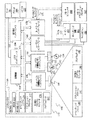
図1に、本発明を実施することのできる適したコンピューティング環境100の一例を示す。コンピューティングシステム環境100は、適したコンピューティング環境の一例にすぎず、本発明の使用または機能の範囲に関していかなる限定を示唆するものではない。また、コンピューティング環境100は、例示的な動作環境100に示す構成要素のいずれか1つまたはその組合せに関するいかなる依存性または要件を有するものと解釈されるべきではない。
FIG. 1 illustrates an example of a
本発明は、数多くの他の汎用または専用のコンピューティングシステム環境または構成で動作する。本発明と共に使用するのに適すると考えられる周知のコンピューティングシステム、環境、および/または構成の例には、それだけに限られないが、パーソナルコンピュータ、サーバコンピュータ、ハンドヘルドまたはラップトップデバイス、マルチプロセッサシステム、マイクロプロセッサベースのシステム、セットトップボックス、プログラム可能な民生用電子機器、ネットワークPC、ミニコンピュータ、メインフレームコンピュータ、上記のシステムまたはデバイスのいずれかを含む分散コンピューティング環境などが含まれる。 The invention is operational with numerous other general purpose or special purpose computing system environments or configurations. Examples of well-known computing systems, environments, and / or configurations that may be suitable for use with the present invention include, but are not limited to, personal computers, server computers, handheld or laptop devices, multiprocessor systems, Microprocessor based systems, set top boxes, programmable consumer electronics, network PCs, minicomputers, mainframe computers, distributed computing environments including any of the above systems or devices, and the like.
本発明は、コンピュータにより実行される、プログラムモジュールなどのコンピュータ実行可能命令の一般的コンテキストで説明することができる。一般に、プログラムモジュールには、特定のタスクを行い、または特定の抽象データ型を実装するルーチン、プログラム、オブジェクト、コンポーネント、データ構造などが含まれる。当業者は、本明細書の説明および/または図をコンピュータ実行可能命令として実施することができ、それは、以下で論じる任意の形態のコンピュータ可読媒体上で具体化することができる。 The invention may be described in the general context of computer-executable instructions, such as program modules, being executed by a computer. Generally, program modules include routines, programs, objects, components, data structures, etc. that perform particular tasks or implement particular abstract data types. Those skilled in the art can implement the description and / or figures herein as computer-executable instructions, which can be embodied on any form of computer-readable media discussed below.
本発明は、通信ネットワークを介してリンクされたリモート処理装置によってタスクが行われる分散コンピューティング環境で実施することもできる。分散コンピューティング環境では、プログラムモジュールは、メモリ記憶装置を含むローカルとリモート両方のコンピュータ記憶媒体に位置することがある。 The invention may also be practiced in distributed computing environments where tasks are performed by remote processing devices that are linked through a communications network. In a distributed computing environment, program modules may be located in both local and remote computer storage media including memory storage devices.
図1を参照すると、本発明を実施するための例示的なシステムは、コンピュータ110の形態の汎用コンピューティングデバイスを含む。コンピュータ110の構成要素には、それだけに限られないが、処理装置120、システムメモリ130、およびシステムメモリを含む様々なシステム構成要素を処理装置120に結合するシステムバス121が含まれ得る。システムバス121は、メモリバスまたはメモリコントローラ、周辺バス、および様々なバスアーキテクチャのいずれかを使用したローカルバスを含むいくつかのタイプのバス構造のいずれでもよい。例として、限定ではなく、そのようなアーキテクチャには、ISA(Industry Standard Architecture)バス、MCA(Micro Channel Architecutre)バス、拡張ISA(EISA)バス、VESA(Video Electronics Standards Association)ローカルバス、およびメザニンバスとも呼ばれるPCI(Peripheral Component Interconnect)バスが含まれる。
With reference to FIG. 1, an exemplary system for implementing the invention includes a general purpose computing device in the form of a
コンピュータ110は、通常、様々なコンピュータ可読媒体を含む。コンピュータ可読媒体は、コンピュータ110によってアクセスすることができる任意の利用可能な媒体とすることができ、それには揮発性媒体と不揮発性媒体の両方、リムーバブル媒体と非リムーバブル媒体の両方が含まれる。例として、限定ではなく、コンピュータ可読媒体には、コンピュータ記憶媒体および通信媒体が含まれ得る。コンピュータ記憶媒体には、コンピュータ可読命令、データ構造、プログラムモジュールまたはその他のデータなどの情報を記憶するための任意の方法または技術で実施された、揮発性および不揮発性の両方、リムーバブルおよび非リムーバブルの両方の媒体が含まれる。コンピュータ記憶媒体には、それだけに限られないが、RAM、ROM、EEPROM、フラッシュメモリなどのメモリ技術、CD−ROM、デジタル多用途ディスク(DVD)などの光ディスク記憶、磁気カセット、磁気テープ、磁気ディスク記憶などの磁気記憶装置、または所望の情報の格納に使用でき、コンピュータ110によってアクセスすることができる他の任意の媒体が含まれる。通信媒体は、通常、コンピュータ可読命令、データ構造、プログラムモジュールまたはその他のデータを、搬送波WAVまたは他のトランスポート機構などの変調データ信号に具体化し、任意の情報配信媒体を含む。「変調データ信号」という用語は、信号に情報を符号化するような形でその特性の1つまたは複数が設定または変更された信号を意味する。例として、限定ではなく、通信媒体には、有線ネットワークや直接配線接続などの有線媒体、および音響、RF、赤外線、その他の無線媒体などの無線媒体が含まれる。上記のいずれの組合せも、コンピュータ可読媒体の範囲内に含まれるべきである。
システムメモリ130は、読取り専用メモリ(ROM)131やランダムアクセスメモリ(RAM)132などの揮発性および/または不揮発性メモリの形態のコンピュータ記憶媒体を含む。起動時などに、コンピュータ110内の要素間の情報転送を助ける基本ルーチンが入った基本入出力システム(BIOS)133は、通常、ROM131に格納される。RAM132は、通常、処理装置120によって直ちにアクセス可能であり、そして/または現在処理されているデータおよび/またはプログラムモジュールを収容する。例として、限定ではなく、図1に、オペレーティングシステム134、アプリケーションプログラム135、その他のプログラムモジュール136、およびプログラムデータ137を示す。
The
コンピュータ110は、他のリムーバブル/非リムーバブル、揮発性/不揮発性コンピュータ記憶媒体を含むことができる。例にすぎないが、図1に、非リムーバブルの不揮発性磁気媒体との間で読取りまたは書込みを行うハードディスクドライブ141、リムーバブルの不揮発性磁気ディスク152との間で読取りまたは書込みを行う磁気ディスクドライブ151、およびCD−ROMや他の光媒体など、リムーバブルの不揮発性光ディスク156との間で読取りまたは書込みを行う光ディスクドライブ155を示す。例示的な動作環境で使用することのできる他のリムーバブル/非リムーバブル、揮発性/不揮発性のコンピュータ記憶媒体には、それだけに限られないが、磁気テープカセット、フラッシュメモリカード、デジタル多用途ディスク、デジタルビデオテープ、ソリッドステートRAM、ソリッドステートROMなどが含まれる。ハードディスクドライブ141は、通常、インターフェース140などの非リムーバブルメモリインターフェースを介してシステムバス121に接続され、磁気ディスクドライブ151および光ディスクドライブ155は、通常、インターフェース150などのリムーバブルメモリインターフェースによってシステムバス121に接続される。
The
前述し、図1に示すドライブおよび関連するコンピュータ記憶媒体は、コンピュータ可読命令、データ構造、プログラムモジュールおよびコンピュータ110のその他のデータのストレージを提供する。図1では、例えば、ハードディスクドライブ141は、オペレーティングシステム144、アプリケーションプログラム145、その他のプログラムモジュール146、およびプログラムデータ147を格納するものとして示されている。これらのコンポーネントは、オペレーティングシステム134、アプリケーションプログラム135、その他のプログラムモジュール136、およびプログラムデータ137と同じでも、異なっていてもよいことに留意されたい。オペレーティングシステム144、アプリケーションプログラム145、その他のプログラムモジュール146、およびプログラムデータ147には、少なくともそれらが異なるコピーであることを示すために、図では異なる番号が付与されている。
The drive described above and shown in FIG. 1 and associated computer storage media provide storage of computer readable instructions, data structures, program modules, and other data of the
ユーザは、キーボード162や、マイクロフォン163などの入力装置、マウス、トラックボール、タッチパッドといったポインティングデバイス161を介してコンピュータ110にコマンドおよび情報を入力することができる。他の入力装置(図示せず)には、ジョイスティック、ゲームパッド、衛星アンテナ、スキャナなどが含まれることがある。上記およびその他の入力装置は、システムバスに結合されたユーザ入力インターフェース160を介して処理装置120に接続されるが、パラレルポート、ゲームポート、ユニバーサルシリアルバス(USB)といった他のインターフェースおよびバス構造によって接続することもできる。モニタ191または他の種類の表示装置もビデオインターフェース190などのインターフェースを介してシステムバス121に接続される。モニタ191に加えて、コンピュータはスピーカ197やプリンタ196など他の周辺出力装置を含むこともでき、それらは、出力周辺インターフェース195を介して接続することができる。
A user can input commands and information into the
コンピュータ110は、リモートコンピュータ180など、1つまたは複数のリモートコンピュータへの論理接続を使用してネットワーク化された環境で動作することができる。リモートコンピュータ180は、パーソナルコンピュータ、ハンドヘルド装置、サーバ、ルータ、ネットワークPC、ピアデバイスおよびその他の共通ネットワークノードとすることができ、通常、コンピュータ110に関連して上述した要素の多くまたはすべてを含む。図1に示す論理接続には、ローカルエリアネットワーク(LAN)171およびワイドエリアネットワーク(WAN)173が含まれるが、他のネットワークを含むこともある。そのようなネットワーク環境は、オフィス、企業規模のコンピュータネットワーク、イントラネットおよびインターネットで一般的である。
LANネットワーク環境で使用されるとき、コンピュータ110はネットワークインターフェースまたはアダプタ170を介してLAN171に接続される。WANネットワーク環境で使用されるとき、コンピュータ110は、通常、モデム172、またはインターネットなどのWAN173を介して通信を確立するための他の手段を含む。モデム172は、内蔵でも外付けでもよく、ユーザ入力インターフェース160または他の適当な機構を介してシステムバス121に接続することができる。ネットワーク化環境では、コンピュータ110に関連して示すプログラムモジュール、またはその部分は、リモートメモリ記憶装置に格納することもできる。例として、限定ではなく、図1に、リモートアプリケーションプログラム185をリモートコンピュータ180上にあるものとして示す。図示したネットワーク接続は例示的なものであり、コンピュータ間で通信を確立する他の手段を使用できることが理解されるであろう。
When used in a LAN network environment, the
本発明は、図1との関連で説明したようなコンピュータシステム上で実行できることに留意すべきである。しかしながら、本発明は、サーバや、メッセージ処理専用のコンピュータでも、本発明の異なる部分が分散コンピューティングシステムの異なる部分で実行される分散システムでも実行することができる。 It should be noted that the present invention can be performed on a computer system as described in connection with FIG. However, the present invention can be implemented in a server, a computer dedicated to message processing, or a distributed system in which different parts of the invention are executed in different parts of a distributed computing system.
上に示したように、本発明は、言語モデル適応のためのシステムおよび方法に関するものである。適応を行うのに使用されるリソースは、適応される必要のあるバックグラウンドLMを含む。一般に、バックグラウンドLMは、それだけに限られないが、ニュース記事など、バックグラウンドトレーニングデータの大きなコーパスから得られる。このバックグラウンドトレーニングデータを使用して、バックグラウンド言語モデルのためのNグラム統計が得られる。 As indicated above, the present invention relates to a system and method for language model adaptation. The resources used to perform the adaptation include the background LM that needs to be adapted. In general, the background LM is obtained from a large corpus of background training data, such as, but not limited to, news articles. This background training data is used to obtain N-gram statistics for the background language model.
意味データベースまたは意味情報は、適応のための管理された情報(supervised information)を提供する。この説明では、意味データベースは意味エンティティ(クラス)のリストを広く、模式的に表し、それらがインドメイン自然言語テキストにおいて遭遇するのと同じ形態であると想定される具現化(realizations)のリストを各エンティティが伴う。例えば、意味データベースは、複数のクラスについて一般的に明確に定義された意味エンティティのリストの形態とすることができる。例えば、以下に一例として使用するように、予約を行う旅行情報を得るために航空会社によって使用される音声認識における言語モデルの意味項目には、その航空会社によってサービスが提供される都市および飛行先の様々な空港のリストが含まれ得る。意味エンティティおよびクラスの別の例は、企業の従業員、当月の日、当年の月のリストとすることができ、それらは、おそらく、スケジューリング用途のインドメインに含まれるであろう。 The semantic database or semantic information provides supervised information for adaptation. In this description, the semantic database represents a wide and schematic list of semantic entities (classes), and a list of realizations that are assumed to be in the same form as they are encountered in in-domain natural language text. Accompanying each entity. For example, the semantic database may be in the form of a list of semantic entities that are generally well defined for multiple classes. For example, as used below as an example, the semantic items in the language model in speech recognition used by an airline to obtain travel information to make a reservation include the city and destination served by that airline. A list of various airports may be included. Another example of semantic entities and classes could be a list of company employees, the day of the month, and the month of the year, which would probably be included in the in-domain for scheduling purposes.
意味クラスは、開いたクラスと閉じたクラスに分類することができる。開いたクラス中のクラスメンバは、ドメイン間で変化するが、閉じたクラス中のクラスメンバは変化しない。例えば、飛行機旅行用途での意味クラスは以下のものとすることができるであろう。 Semantic classes can be classified into open classes and closed classes. Class members in open classes change between domains, but class members in closed classes do not change. For example, the semantic classes for air travel applications could be:
開いたクラス:{AIRLINE(航空会社)、AIRPORT(空港)、CITY(都市)、STATE(州)}
閉じたクラス:{DAYS(日)、MONTH(月)、INTERVAL(間隔)、CLASS OF SERVICE(サービスクラス)、ZONE(ゾーン)、FOOD SERVICE(フードサービス)、GROUND SERVICE(地上サービス)}
用途ごとに、意味クラスの数およびタイプは大きく変化する可能性がある。しかしながら、飛行機旅行用途などいくつかの用途では、その意味クラスが特定されると、その意味エンティティまたは単語(word)レベルの具現化だけで、別の航空会社による使用のためにその言語モデルを本質的に適応させるために変更する必要のあるすべてとすることができる。
Open classes: {AIRLINE (airline), AIRPORT (airport), CITY (city), STATE (state)}
Closed classes: {DAYS (day), MONTH (month), INTERVAL (interval), CLASS OF SERVICE (service class), ZONE (zone), FOOD SERVICE (food service), GROUND SERVICE (ground service)}
For each application, the number and type of semantic classes can vary greatly. However, in some applications, such as air travel applications, once the semantic class is specified, the language model is essential for use by another airline, with only its semantic entity or word level implementation. All that needs to be changed to adapt adaptively.
言語モデル適応で使用されるオプションの第3のリソースは適応データである。適応データは、インドメインのアプリケーションでのクラスの使用例となりうるセンテンス(sentences)、フレーズ(phrases)、テキストセグメント(text segements)などの形態の実際のまたはインドメインのデータを備える。バックグラウンドデータに比べて、適応データは、普通、バックグラウンドデータより何桁も少ない。一実施形態では、インドメインデータは、適応開発データ(adaptation developement data)と適応トレーニングデータ(adaptation training data)にサブ分割される。適応トレーニングデータは、バックグラウンドトレーニングセットと組み合わされてより大きなトレーニングセットになり、両セットからのNグラムカウントは等しい重みで混合される(ただし、他の混合スキームも可能であり、Nグラムカウントは、MAP適応などのように、異なる重みで混合することもできる)。適応開発データは、厳密に、バックグラウンド言語モデルおよび適応言語モデルの両方を平滑化するために使用される。開発セットからのNグラムは、バックグラウンド/適応言語モデルには含められない。 An optional third resource used in language model adaptation is adaptation data. The adaptation data comprises actual or in-domain data in the form of sentences, phrases, text segments, etc., which can be examples of the use of classes in in-domain applications. Compared to background data, adaptive data is usually orders of magnitude less than background data. In one embodiment, the in-domain data is subdivided into adaptation development data and adaptation training data. The adaptive training data is combined with the background training set into a larger training set, and N-gram counts from both sets are mixed with equal weight (although other mixing schemes are possible, N-gram counts are Can be mixed with different weights, such as MAP adaptation). The adaptive development data is strictly used to smooth both the background language model and the adaptive language model. N-grams from the development set are not included in the background / adaptive language model.
例示的な実施形態では、すべてのデータセットは単語レベルの自然言語テキストである。 In the exemplary embodiment, all datasets are word-level natural language text.
(クラスベースの適応)
管理された意味情報(supervised semantic information)がクラスベースの言語モデルの使用を通じて言語モデルに組み込まれる。簡潔には、単一の意味クラスc3に属する新しい単語w3の確率推定は以下のように行うことができる。
(Class-based adaptation)
Supervised semantic information is incorporated into the language model through the use of a class-based language model. Briefly, the probability estimation of a new word w 3 belonging to a single semantic class c 3 can be performed as follows.
Pr(w3|w2w1)=Pr(w3|c3)・Pr(c3|w2w1) (1)
ここで、Pr(w3|c3w2w1)=Pr(w3|c3)というモデルリングを前提とする。
Pr (w 3 | w 2 w 1 ) = Pr (w 3 | c 3 ) · Pr (c 3 | w 2 w 1 ) (1)
Here, it is assumed that Pr (w 3 | c 3 w 2 w 1 ) = Pr (w 3 | c 3 ) modeling.
例えば、Pr(city name(都市名)|fly to(へ飛行))は以下を用いて推定される。 For example, Pr (city name (city name) | fly to) is estimated using:
Pr(city name|fly to)=Pr(city name|CITY(都市))・Pr(CITY|fly to)
ここで、Pr(CITY|fly to)は、意味クラスでタグ付けされたトレーニングデータを用いて推定され、Pr(city name|CITY)は、インドメイン意味データベースを用いて適応される。以前のインドメイン知識が利用可能である場合、よくある都市名は、まれな都市名より高い確率で割り当てることができ、そうでなければ、都市名の一様分布が想定される。クラスベースの適応アプローチを用いることの利点は以下の通りである。
Pr (city name | fly to) = Pr (city name | CITY (city)) ・ Pr (CITY | fly to)
Here, Pr (CITY | fly to) is estimated using training data tagged with semantic classes, and Pr (city name | CITY) is adapted using an in-domain semantic database. If previous in-domain knowledge is available, common city names can be assigned with higher probability than rare city names, otherwise a uniform distribution of city names is assumed. The advantages of using a class-based adaptive approach are:
単語コンテキストを仮定した意味クラスの確率はうまく推定することができる。上記の例では、Pr(city name|fly to)は、トレーニングデータおよび適応データで非常に類似していると考えられる。 The probability of the semantic class assuming the word context can be estimated well. In the above example, Pr (city name | fly to) is considered very similar in training data and adaptation data.
インドメイン意味データを用いてPr(w3|c3)を適応させることにより、高速LM適応を行なうことができる。適応された確率Pr(w3|c3)は、ドメイン特有の言語モデルを再トレーニングする新しいトレーニングテキストを収集することなく、カウント「w1w2w3」と組み合わされる。 By adapting Pr (w 3 | c 3 ) using in-domain semantic data, high-speed LM adaptation can be performed. The adapted probability Pr (w 3 | c 3 ) is combined with the count “w 1 w 2 w 3 ” without collecting new training text to retrain the domain specific language model.
語句(word phrases)が意味クラスにカプセル化されるので、より広範な単語コンテキストで確率推定を実現することができる。例えば、5グラム「los angeles to new york」は、トライグラム(trigrams)「los angeles to」、「angeles to new」および「to new york」のシーケンスとしてモデル化されるよりも直感的に満足の行くクラストライグラム「CITY to CITY」としてモデル化される。 Since word phrases are encapsulated in semantic classes, probability estimation can be achieved in a wider word context. For example, the 5 gram “los angels to new york” is more intuitively satisfying than being modeled as a sequence of trigrams “los angeles to”, “angels to new” and “to new york”. It is modeled as a class trigram “CITY to CITY”.
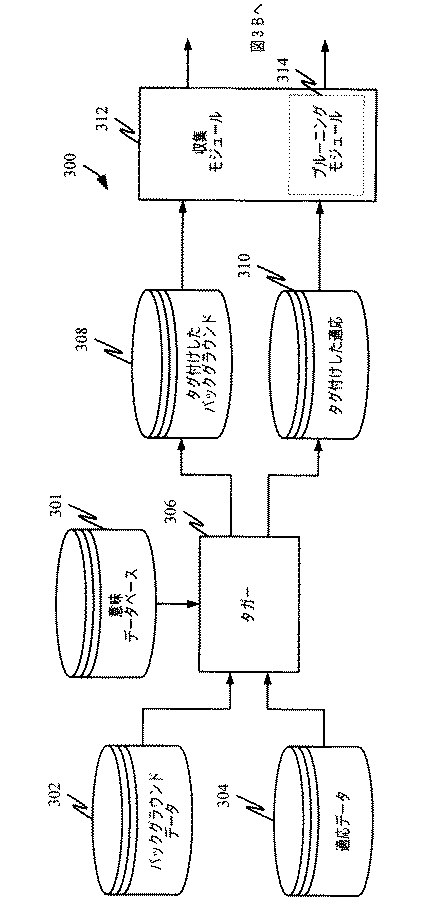
(適応手順)
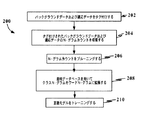
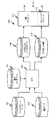
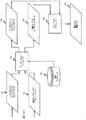
図2に例示的な適応手順200を示す。図3Aおよび3Bに、手順200を行うための例示的システム300を示す。上に示したように、適応データの使用はオプションであるが、本発明の別の実施形態である。両方を用いた実施形態について以下に説明するが、これは必須または限定とみなすべきではない。また、説明に進む前に、手順200およびシステム300が、一般に同時にバックグラウンドデータおよびオプションの適応データ上で動作するものとして記述されていることに留意されたい。しかしながら、これは、理解を簡単にするためであり、必要または限定とみなすべきではない。
(Adaptation procedure)
An
ステップ202は、一般に、バックグラウンドデータおよび適応データの両方のためにタグ付けデータを得ることを表している。例示した実施形態では、これは、202に示すように単語レベルのデータをタグ付けすることを含む。特に、トレーニング(バックグラウンドおよび適応)データが、図2のステップ202で意味クラスと先ずタグ付けされる。当然ながら、タグ付けされたデータが存在する場合、このステップは不要である。図3Aでは、意味データベースが301で示され、トレーニングデータはコーパス302および304にあり、この場合、タグ付けはタガー306によって行われる。
Step 202 generally represents obtaining tagged data for both background data and adaptation data. In the illustrated embodiment, this includes tagging word level data as shown at 202. In particular, training (background and adaptation) data is first tagged with semantic classes in
タガー306は、コーパス302および304によって提供された単語レベルのテキストを変更し、そこで認識された意味エンティティのクラスを示すタグを付加する。例えば、「fly from san francisco to」が与えられ、「san francisco」が意味クラス「CITY」に属すると知っている場合、タガー306からの出力は、「fly from CITY to」になることになる。意味エンティティのいくつかが対応する意味クラスで置き換えられた単語レベルのトレーニングデータは308および310で示されている。
The
一実施形態では、タグ付けにヒューリスティックス(heuristics)を適用することができる。そのようなヒューリスティックスは、タグ付けのための単純な文字列マッチングアプローチを含んでもよい。タガー306は、所与のデータベースエントリをテキスト中の単語のシーケンスと合致させ、そのようにして特定された最長のフレーズにクラスラベルを割り当てる。別の実施形態では、単語のあいまい性が異なるクラス間で発生した場合、その語句はタグなしのままとされる。別の実施形態では、各意味クラス候補に確率を割り当てることによって、ソフトなタグ付けを行うことができるであろう。
In one embodiment, heuristics can be applied to tagging. Such heuristics may include a simple string matching approach for tagging. The
ステップ202でタグ付けが行われた後、タグ付けデータが、別途、提供されない場合、手順はステップ204に進んですべてのトレーニングテキストからクラスNグラムカウントを収集し、そうでない場合は、タグ付けデータに含まれる固有のNグラムをカウントする。図3Aで、このステップは収集モジュール312によって行われる。
If tagging data is not provided separately after tagging in
クラスNグラムカウントのプルーニングを備えるオプションのステップ206を必要に応じて行うこともできる。クラスベースの適応では、クラスNグラムが単語Nグラムに拡張されると、言語モデルのサイズは、各意味クラス中の要素数によって強く影響される。例えば、クラストライグラム「PERSON joins COMPANY(「人」が「会社」に入社する)」(この場合、「PERSON」および「COMPANY」が意味クラスを含む)は、「PERSON」と「COMPANY」がそれぞれ何千ものクラス要素を含むとき何百万もの単語トライグラムを生じる。それゆえ、言語モデルプルーニングが、言語モデルのサイズを扱いやすくするために必要になることがある。一実施形態では、複数の意味クラスを含むNグラムは廃棄される。計算リソースが利用可能であれば、それらを保持することもできるであろう。加えて、単語Nグラムに拡張する前に、クラスNグラムのカウントカットオフプルーニングを用いることができる。図3Aには、収集モジュール312がプルーニングモジュール314を使用することによってこの機能を行うものしてと示されている。収集モジュール312からの出力は、図3Bに示すバックグラウンドNグラムカウントデータ316および適応Nグラムカウントデータ318を備える。
An
ステップ208で、クラスNグラムが意味データベース301を用いて単語Nグラムに拡張される。図3Bでは、このステップはワードNグラムジェネレータ320によって行われる。一実施形態では、ワードNグラムジェネレータ320は、以下の拡張アルゴリズムを実施し、バックグラウンドNグラムワードカウントデータ322および適応Nグラムワードカウントデータ324を生成することができる。
At
(a)クラスNグラムを仮定し、クラスタグをそのクラス要素のそれぞれによって置き換える。 (A) Assuming a class N-gram, replace the class tag with each of its class elements.
例えば、クラストライグラム「analyst for COMPANY」は、単語4グラム「analyst for x.y.」を作成することができ、ここで、「x.y.」は意味データベース中の会社名(Verizon Wirelessなど)である。 For example, a class trigram “analyst for COMPANY” can create a 4-gram “analyst for xy”, where “xy” is a company name in a semantic database (such as Verizon Wireless). ).
(b)クラスNグラムカウントから単語Nグラムカウントを算出する。 (B) Calculate the word N-gram count from the class N-gram count.
単語Nグラムカウントは、Pr(word|class)に応じて、その対応するクラスNグラムカウントの一部として算出される。 The word N-gram count is calculated as part of its corresponding class N-gram count in accordance with Pr (word | class).
意味クラス「COMPANY」の確率が、
Pr(microsoft|COMPANY)=0.5
Pr(oracle|COMPANY)=0.25
Pr(verizon wireless|COMPANY)=0.25
であり、
Nグラム「analyst for COMPANY」が5カウントであった
と想定すると、
単語レベルのNグラムカウントデータは、
「analyst for microsoft」=2.5
「analyst for oracle」=1.25
「analyst for verizon wireless」=1.25
になるであろう。
Probability of semantic class “COMPANY”
Pr (Microsoft | COMPANY) = 0.5
Pr (oracle | COMPANY) = 0.25
Pr (verizon wireless | COMPANY) = 0.25
And
Assuming that the N-gram “analyst for COMPANY” was 5 counts,
N-gram count data at the word level is
“Analyst for Microsoft” = 2.5
“Analyst for oracle” = 1.25
“Analyst for verizon wireless” = 1.25
It will be.
上記の例では、生成された単語4グラム「analyst for x.y.」のカウントは、
#(「analyst for COMPANY」)・Pr(「x.y.」|COMPANY)
に等しい。
In the example above, the count of the generated word 4 gram “analyst for xy” is:
# ("Analyst for COMPANY") / Pr ("xy" | COMPANY)
be equivalent to.
(c)しかしながら、クラスベースのNグラムは、マルチワード(multi−word)意味エントリのために特定のNグラムのトレーニングと動作しない単語レベルのNグラムを生成することができることに留意されたい。例えば、3ワードのNグラム言語モデルが望まれていると想定すると、「analyst for verizon wireless」は正しい形態のものではない。この状況では、スライディングウィンドウを用いてより低次の単語Nグラムが生成される。上記の例では、「analyst for verizon」も1.25のカウントを有するであろうし、「for verizon wireless」も1.25のカウントを有するであろう。 (C) However, it should be noted that class-based N-grams can generate word-level N-grams that do not work with specific N-gram training for multi-word semantic entries. For example, assuming that a three-word N-gram language model is desired, “analyst for verizon wire” is not of the correct form. In this situation, a lower order word N-gram is generated using the sliding window. In the above example, “analyst for verizon” will also have a count of 1.25, and “for verizon wireless” will also have a count of 1.25.
しかしながら、クラスがNグラム中の他の場所、すなわち、右端の位置以外に現れた場合、マルチワード意味項目拡張(multi−word semantic item expansion)について二重カウンティングを避けるのに以下のステップを行うことができる。先の例と同様に、拡張に関するステップ(a)と計算に関するステップ(b)が同じ方式で行われる。しかし、ステップ(c)は行われず、むしろ、Nグラムのコンテキストは、拡張後に所望の数の右端の単語だけを取ることにより短縮される。 However, if the class appears elsewhere in the N-gram, ie, other than at the rightmost position, the following steps should be taken to avoid double counting for multi-word semantic item expansion: Can do. As in the previous example, step (a) for expansion and step (b) for calculation are performed in the same manner. However, step (c) is not performed, rather the N-gram context is shortened by taking only the desired number of rightmost words after expansion.
例として、カウント5を有する「COMPANY analyst said」のクラストライグラムを、
Pr(microsoft|COMPANY)=0.5
Pr(oracle|COMPANY)=0.25
Pr(verizon wireless|COMPANY)=0.25
の意味クラス「COMPANY」の同じ確率で想定すると、その単語レベルのNグラムデータは、
「microsoft analyst said」=2.5
「oracle analyst said」=1.25
「wireless analyst said」=1.25
になり、ここで、「wireless analyst said」は、トライグラムに右端の3ワードだけを取ることにより実現されたものである。
As an example, a class trigram of “COMPANY analyst aid” with a count of 5
Pr (Microsoft | COMPANY) = 0.5
Pr (oracle | COMPANY) = 0.25
Pr (verizon wireless | COMPANY) = 0.25
Assuming the same probability of the semantic class “COMPANY”, the N-gram data at the word level is
“Microsoft Analyst Said” = 2.5
“Oracle analyst said” = 1.25
“Wireless analyst side” = 1.25
Here, “wireless analyst aid” is realized by taking only the rightmost three words in the trigram.
意味データベース301がタガー306およびワードNグラムジェネレータ320と共に動作可能である場合が示されているが、データベース301のインスタンスのそれぞれでの内容は、多くの用途で異なることがあり、それによりこの方法がより役立つことを理解されたい。
Although the case where the
ステップ210で、言語モデル326が、バックグラウンドデータおよびオプションの適応データの生成された単語Nグラムカウントを用いてトレーニングされ、ここでは、トレーニングモジュール328によって行われる。必要ならば、単語Nグラムに関してカウントカットオフプルーニングを行って言語モデルのサイズをさらに低減することもできる。
At
トレーニングは、Nグラム相対頻度推定(n−gram relative frequency estimates)を平滑化することを含むことができる。例えば、参照により本明細書に組み込まれる非特許文献1に記載されている削除補間法(deleted−interpolation method)を、Nグラム相対頻度推定を平滑化するために使用することができる。簡潔には、この再帰的削除補間式(recursive deleted−interpolation formula)は以下のように定義される。 Training can include smoothing N-gram relative frequency estimates. For example, the deleted-interpolation method described in Non-Patent Document 1 incorporated herein by reference can be used to smooth N-gram relative frequency estimation. Briefly, this recursive deleted-interpolation formula is defined as follows:
ここで、 here,
は単語Nグラムの相対頻度を表し、 Represents the relative frequency of the word N-gram,
は前のn−1語に及ぶ単語履歴である。異なるコンテキスト順で均一な単語分布1/VのNグラムモデルが線形に補間される。補間重み Is a word history spanning the previous n-1 words. An N-gram model with uniform word distribution 1 / V in different context orders is interpolated linearly. Interpolation weight
は、周知の最尤法を用いて推定することができる。データのまばらさのために、補間重みは、普通、単語コンテキストをクラスにグループ化することにより推定パラメータ数を低減するために結び付けられる。1つの可能な方法は、ある所与の単語コンテキストの出現数に基づいてパラメータをバケット化することである。 Can be estimated using a known maximum likelihood method. Because of the sparseness of the data, interpolation weights are usually tied to reduce the number of estimated parameters by grouping word contexts into classes. One possible way is to bucket the parameters based on the number of occurrences of a given word context.
ステップ210により、管理された言語モデル適応を完了し、この例では、削除補間された言語モデルが提供される。言語処理システムにおける削除補間された言語モデルの実装は、標準ARPA形式のバックオフ言語モデルへの変換を含んでもよい。2004年3月26日に出願された「REPRESENTATION OF A DELETED INTERPOLATION N−GRAM LANGUAGE MODEL IN ARPA STANDARD FORMAT」というタイトルの同時継続中の米国特許出願に、ARPA形式への変換の一例について記載されており、それをワンパスシステムに用いることができる。 Step 210 completes the managed language model adaptation, which in this example provides a deleted interpolated language model. Implementation of a deleted interpolated language model in a language processing system may include conversion to a standard ARPA format backoff language model. An example of conversion to ARPA format is described in a co-pending US patent application entitled “REPRESENTATION OF A DELETED INTERPOLATION N-GRAM LANGUAGE MODEL IN ARPA STANDARD FORMAT” filed on March 26, 2004. It can be used in a one-pass system.
本発明を特定の実施形態を参照して説明してきたが、本発明の精神および範囲を逸脱することなく、形態および詳細に変更を加えることができることを当業者は理解するであろう。 Although the invention has been described with reference to particular embodiments, those skilled in the art will recognize that changes may be made in form and detail without departing from the spirit and scope of the invention.
100 コンピューティング環境
110 コンピュータ
120 処理装置
130 システムメモリ
131 ROM
132 RAM
133 BIOS
134 オペレーティングシステム
135 アプリケーションプログラム
136 その他のプログラムモジュール
137 プログラムデータ
140 非リムーバブル不揮発性メモリインターフェース
141 ハードディスクドライブ
144 オペレーティングシステム
145 アプリケーションプログラム
146 その他のプログラムモジュール
147 プログラムデータ
150 リムーバブル不揮発性メモリインターフェース
151 磁気ディスクドライブ
152 リムーバブルの不揮発性磁気ディスク
155 光ディスクドライブ
156 リムーバブルの不揮発性光ディスク
160 ユーザ入力インターフェース
161 ポインティング装置
162 キーボード
163 マイクロフォン
170 ネットワークインターフェース
171 ローカルエリアネットワーク
172 モデム
173 ワイドエリアネットワーク
180 リモートコンピュータ
185 リモートアプリケーションプログラム
190 ビデオインターフェース
191 モニタ
195 出力周辺インターフェース
196 プリンタ
197 スピーカ
300 例示的システム
301 意味データベース
302 バックグラウンドデータ
304 適応データ
306 タガー
308 タグ付けしたバックグラウンド
310 タグ付けした適応
312 収集モジュール
314 プルーニングモジュール
316 バックグラウンドN−グラムクラスカウントデータ
318 適応N−グラムクラスカウントデータ
320 ワードN−グラムジェネレータ
322 バックグラウンドN−グラムワードカウントデータ
324 適応N−グラムワードカウントデータ
326 適応された言語モデル
328 トレーニングモジュール
DESCRIPTION OF
132 RAM
133 BIOS
134 Operating System 135
Claims (16)
前記新しいドメインに向けられていない一般的テキストフレーズを示すバックグラウンドデータを受け取ることと、
前記新しいドメインで使用され、クラスに編成された意味エンティティのセットを受け取ることと、
前記バックグラウンドデータ、前記意味エンティティおよびそのクラスに基づいてバックグラウンドNグラムクラスカウントデータを生成することと、
前記バックグラウンドNグラムクラスカウントデータに基づいて言語モデルをトレーニングすることと
を備えることを特徴とする方法。 A method for adapting an N-gram language model to a new domain,
Receiving background data indicating a generic text phrase not directed to the new domain;
Receiving a set of semantic entities used in the new domain and organized into classes;
Generating background N-gram class count data based on the background data, the semantic entity and its class;
Training a language model based on the background N-gram class count data.
前記適応データ、前記意味エンティティおよびそのクラスに基づいて適応Nグラムクラスカウントデータを生成することと
をさらに備え、
前記言語モデルをトレーニングすることは、前記バックグラウンドNグラムクラスカウントデータおよび前記適応Nグラムクラスカウントデータに基づいてトレーニングすることを備えることを特徴とする請求項1に記載の方法。 Receiving adaptation data indicating a text phrase used in the new domain;
Generating adaptive N-gram class count data based on the adaptive data, the semantic entity and its class;
The method of claim 1, wherein training the language model comprises training based on the background N-gram class count data and the adaptive N-gram class count data.
前記適応Nグラムクラスカウントデータ、前記意味エンティティおよびそのクラスに基づいて適応Nグラムワードデータを生成することと
をさらに備え、
前記バックグラウンドNグラムクラスカウントデータおよび前記適応Nグラムクラスカウントデータに基づいて前記言語モデルをトレーニングすることは、バックグラウンドNグラムワードデータおよび適応Nグラムワードデータを用いることを備えることを特徴とする請求項2に記載の方法。 Generating background N-gram word data based on the background N-gram class count data, the semantic entity and its class;
Generating adaptive N-gram word data based on the adaptive N-gram class count data, the semantic entity and its class;
Training the language model based on the background N-gram class count data and the adaptive N-gram class count data comprises using background N-gram word data and adaptive N-gram word data. The method of claim 2.
選択されたドメインで使用され、クラスに編成された意味エンティティのセットを受け取るステップと、
前記意味エンティティのセットのクラスに相関され、一般テキストを示すバックグラウンドデータに基づくバックグラウンドNグラムクラスカウントデータを受け取るステップと、
前記意味エンティティのセットのクラスに相関され、モデル化される選択されたドメインを示す適応データに基づく適応Nグラムクラスカウントデータを受け取るステップと、
前記バックグラウンドNグラムクラスカウントデータ、前記適応Nグラムクラスカウントデータおよび前記意味エンティティのセットに基づいて言語モデルをトレーニングするステップと
を備えたことを特徴とするコンピュータ可読媒体。 A computer-readable medium having computer-executable instructions for performing the step of generating a language model, the step comprising:
Receiving a set of semantic entities used in the selected domain and organized into classes;
Receiving background N-gram class count data that is correlated to the class of the set of semantic entities and based on background data indicative of general text;
Receiving adaptive N-gram class count data based on adaptive data indicative of a selected domain to be modeled and correlated to the class of semantic entity sets;
Training a language model based on the background N-gram class count data, the adaptive N-gram class count data, and the set of semantic entities.
The computer-readable medium of claim 15, wherein the smoothing step comprises using a deletion interpolation algorithm.
Applications Claiming Priority (2)
| Application Number | Priority Date | Filing Date | Title |
|---|---|---|---|
| US10/814,906 | 2004-03-31 | ||
| US10/814,906 US7478038B2 (en) | 2004-03-31 | 2004-03-31 | Language model adaptation using semantic supervision |
Publications (2)
| Publication Number | Publication Date |
|---|---|
| JP2005292832A true JP2005292832A (en) | 2005-10-20 |
| JP4855701B2 JP4855701B2 (en) | 2012-01-18 |
Family
ID=34887730
Family Applications (1)
| Application Number | Title | Priority Date | Filing Date |
|---|---|---|---|
| JP2005101016A Expired - Fee Related JP4855701B2 (en) | 2004-03-31 | 2005-03-31 | Language model adaptation using semantic management |
Country Status (5)
| Country | Link |
|---|---|
| US (1) | US7478038B2 (en) |
| EP (1) | EP1582998A3 (en) |
| JP (1) | JP4855701B2 (en) |
| KR (1) | KR101122954B1 (en) |
| CN (1) | CN1677487B (en) |
Families Citing this family (64)
| Publication number | Priority date | Publication date | Assignee | Title |
|---|---|---|---|---|
| US7996219B2 (en) | 2005-03-21 | 2011-08-09 | At&T Intellectual Property Ii, L.P. | Apparatus and method for model adaptation for spoken language understanding |
| US8433558B2 (en) | 2005-07-25 | 2013-04-30 | At&T Intellectual Property Ii, L.P. | Methods and systems for natural language understanding using human knowledge and collected data |
| US8924212B1 (en) | 2005-08-26 | 2014-12-30 | At&T Intellectual Property Ii, L.P. | System and method for robust access and entry to large structured data using voice form-filling |
| US8825482B2 (en) | 2005-09-15 | 2014-09-02 | Sony Computer Entertainment Inc. | Audio, video, simulation, and user interface paradigms |
| US7574349B2 (en) * | 2006-03-29 | 2009-08-11 | Xerox Corporation | Statistical language-model based system for detection of missing attachments |
| WO2007138875A1 (en) * | 2006-05-31 | 2007-12-06 | Nec Corporation | Speech recognition word dictionary/language model making system, method, and program, and speech recognition system |
| US20080071533A1 (en) * | 2006-09-14 | 2008-03-20 | Intervoice Limited Partnership | Automatic generation of statistical language models for interactive voice response applications |
| US9070363B2 (en) * | 2007-10-26 | 2015-06-30 | Facebook, Inc. | Speech translation with back-channeling cues |
| US8972268B2 (en) | 2008-04-15 | 2015-03-03 | Facebook, Inc. | Enhanced speech-to-speech translation system and methods for adding a new word |
| US8090570B2 (en) | 2006-10-26 | 2012-01-03 | Mobile Technologies, Llc | Simultaneous translation of open domain lectures and speeches |
| US11222185B2 (en) | 2006-10-26 | 2022-01-11 | Meta Platforms, Inc. | Lexicon development via shared translation database |
| US9128926B2 (en) * | 2006-10-26 | 2015-09-08 | Facebook, Inc. | Simultaneous translation of open domain lectures and speeches |
| US7856351B2 (en) * | 2007-01-19 | 2010-12-21 | Microsoft Corporation | Integrated speech recognition and semantic classification |
| US8886545B2 (en) | 2007-03-07 | 2014-11-11 | Vlingo Corporation | Dealing with switch latency in speech recognition |
| US20110054899A1 (en) * | 2007-03-07 | 2011-03-03 | Phillips Michael S | Command and control utilizing content information in a mobile voice-to-speech application |
| US8880405B2 (en) | 2007-03-07 | 2014-11-04 | Vlingo Corporation | Application text entry in a mobile environment using a speech processing facility |
| US10056077B2 (en) * | 2007-03-07 | 2018-08-21 | Nuance Communications, Inc. | Using speech recognition results based on an unstructured language model with a music system |
| US8838457B2 (en) | 2007-03-07 | 2014-09-16 | Vlingo Corporation | Using results of unstructured language model based speech recognition to control a system-level function of a mobile communications facility |
| US20080221900A1 (en) * | 2007-03-07 | 2008-09-11 | Cerra Joseph P | Mobile local search environment speech processing facility |
| US20090030691A1 (en) * | 2007-03-07 | 2009-01-29 | Cerra Joseph P | Using an unstructured language model associated with an application of a mobile communication facility |
| US20080288252A1 (en) * | 2007-03-07 | 2008-11-20 | Cerra Joseph P | Speech recognition of speech recorded by a mobile communication facility |
| US20110054898A1 (en) * | 2007-03-07 | 2011-03-03 | Phillips Michael S | Multiple web-based content search user interface in mobile search application |
| US20110054900A1 (en) * | 2007-03-07 | 2011-03-03 | Phillips Michael S | Hybrid command and control between resident and remote speech recognition facilities in a mobile voice-to-speech application |
| US20080312934A1 (en) * | 2007-03-07 | 2008-12-18 | Cerra Joseph P | Using results of unstructured language model based speech recognition to perform an action on a mobile communications facility |
| US8635243B2 (en) | 2007-03-07 | 2014-01-21 | Research In Motion Limited | Sending a communications header with voice recording to send metadata for use in speech recognition, formatting, and search mobile search application |
| US20110054896A1 (en) * | 2007-03-07 | 2011-03-03 | Phillips Michael S | Sending a communications header with voice recording to send metadata for use in speech recognition and formatting in mobile dictation application |
| US20090030685A1 (en) * | 2007-03-07 | 2009-01-29 | Cerra Joseph P | Using speech recognition results based on an unstructured language model with a navigation system |
| US8886540B2 (en) * | 2007-03-07 | 2014-11-11 | Vlingo Corporation | Using speech recognition results based on an unstructured language model in a mobile communication facility application |
| US20090030697A1 (en) * | 2007-03-07 | 2009-01-29 | Cerra Joseph P | Using contextual information for delivering results generated from a speech recognition facility using an unstructured language model |
| US8949266B2 (en) | 2007-03-07 | 2015-02-03 | Vlingo Corporation | Multiple web-based content category searching in mobile search application |
| US20110054895A1 (en) * | 2007-03-07 | 2011-03-03 | Phillips Michael S | Utilizing user transmitted text to improve language model in mobile dictation application |
| US8949130B2 (en) * | 2007-03-07 | 2015-02-03 | Vlingo Corporation | Internal and external speech recognition use with a mobile communication facility |
| US20110054897A1 (en) * | 2007-03-07 | 2011-03-03 | Phillips Michael S | Transmitting signal quality information in mobile dictation application |
| US20090030687A1 (en) * | 2007-03-07 | 2009-01-29 | Cerra Joseph P | Adapting an unstructured language model speech recognition system based on usage |
| US20090030688A1 (en) * | 2007-03-07 | 2009-01-29 | Cerra Joseph P | Tagging speech recognition results based on an unstructured language model for use in a mobile communication facility application |
| US20110054894A1 (en) * | 2007-03-07 | 2011-03-03 | Phillips Michael S | Speech recognition through the collection of contact information in mobile dictation application |
| CN101271450B (en) * | 2007-03-19 | 2010-09-29 | 株式会社东芝 | Method and device for tailoring language model |
| US8682660B1 (en) * | 2008-05-21 | 2014-03-25 | Resolvity, Inc. | Method and system for post-processing speech recognition results |
| US8489399B2 (en) * | 2008-06-23 | 2013-07-16 | John Nicholas and Kristin Gross Trust | System and method for verifying origin of input through spoken language analysis |
| US9266023B2 (en) | 2008-06-27 | 2016-02-23 | John Nicholas and Kristin Gross | Pictorial game system and method |
| TWI383752B (en) | 2008-10-28 | 2013-02-01 | Ind Tech Res Inst | Food processor with phonetic recognition ability |
| US9646603B2 (en) * | 2009-02-27 | 2017-05-09 | Longsand Limited | Various apparatus and methods for a speech recognition system |
| US8229743B2 (en) * | 2009-06-23 | 2012-07-24 | Autonomy Corporation Ltd. | Speech recognition system |
| US8380520B2 (en) | 2009-07-30 | 2013-02-19 | Industrial Technology Research Institute | Food processor with recognition ability of emotion-related information and emotional signals |
| US8190420B2 (en) | 2009-08-04 | 2012-05-29 | Autonomy Corporation Ltd. | Automatic spoken language identification based on phoneme sequence patterns |
| US8577670B2 (en) * | 2010-01-08 | 2013-11-05 | Microsoft Corporation | Adaptive construction of a statistical language model |
| CN102132945B (en) * | 2010-01-21 | 2014-04-02 | 财团法人工业技术研究院 | Food manufacturing device combined with semantic recognition function |
| US8527534B2 (en) | 2010-03-18 | 2013-09-03 | Microsoft Corporation | Bootstrap and adapt a document search engine |
| US8838433B2 (en) | 2011-02-08 | 2014-09-16 | Microsoft Corporation | Selection of domain-adapted translation subcorpora |
| US8515746B1 (en) * | 2012-06-20 | 2013-08-20 | Google Inc. | Selecting speech data for speech recognition vocabulary |
| CN103971675B (en) * | 2013-01-29 | 2016-03-02 | 腾讯科技(深圳)有限公司 | Automatic speech recognition method and system |
| US9892115B2 (en) | 2013-06-11 | 2018-02-13 | Facebook, Inc. | Translation training with cross-lingual multi-media support |
| US9400783B2 (en) * | 2013-11-26 | 2016-07-26 | Xerox Corporation | Procedure for building a max-ARPA table in order to compute optimistic back-offs in a language model |
| RU2642343C2 (en) * | 2013-12-19 | 2018-01-24 | Общество с ограниченной ответственностью "Аби Продакшн" | Automatic composition of semantic description of target language |
| RU2592395C2 (en) * | 2013-12-19 | 2016-07-20 | Общество с ограниченной ответственностью "Аби ИнфоПоиск" | Resolution semantic ambiguity by statistical analysis |
| US20150254233A1 (en) * | 2014-03-06 | 2015-09-10 | Nice-Systems Ltd | Text-based unsupervised learning of language models |
| US9972311B2 (en) * | 2014-05-07 | 2018-05-15 | Microsoft Technology Licensing, Llc | Language model optimization for in-domain application |
| US9679558B2 (en) | 2014-05-15 | 2017-06-13 | Microsoft Technology Licensing, Llc | Language modeling for conversational understanding domains using semantic web resources |
| US9437189B2 (en) | 2014-05-29 | 2016-09-06 | Google Inc. | Generating language models |
| KR102167719B1 (en) * | 2014-12-08 | 2020-10-19 | 삼성전자주식회사 | Method and apparatus for training language model, method and apparatus for recognizing speech |
| US9734826B2 (en) | 2015-03-11 | 2017-08-15 | Microsoft Technology Licensing, Llc | Token-level interpolation for class-based language models |
| RU2618374C1 (en) * | 2015-11-05 | 2017-05-03 | Общество с ограниченной ответственностью "Аби ИнфоПоиск" | Identifying collocations in the texts in natural language |
| CN109145145A (en) | 2017-06-16 | 2019-01-04 | 阿里巴巴集团控股有限公司 | A kind of data-updating method, client and electronic equipment |
| WO2022252203A1 (en) * | 2021-06-04 | 2022-12-08 | Citrix Systems, Inc. | Interpretation risk detection |
Citations (3)
| Publication number | Priority date | Publication date | Assignee | Title |
|---|---|---|---|---|
| WO2002029783A1 (en) * | 2000-09-30 | 2002-04-11 | Intel Corporation | Method and system for using rule-based knowledge to build a class-based domain specific statistical language model |
| JP2002342323A (en) * | 2001-05-15 | 2002-11-29 | Mitsubishi Electric Corp | Language model learning device, speech recognition device using the same, language model learning method, speech recognition method using the same, and storage medium storing those methods |
| US7043422B2 (en) * | 2000-10-13 | 2006-05-09 | Microsoft Corporation | Method and apparatus for distribution-based language model adaptation |
Family Cites Families (12)
| Publication number | Priority date | Publication date | Assignee | Title |
|---|---|---|---|---|
| US5258909A (en) | 1989-08-31 | 1993-11-02 | International Business Machines Corporation | Method and apparatus for "wrong word" spelling error detection and correction |
| US5267345A (en) | 1992-02-10 | 1993-11-30 | International Business Machines Corporation | Speech recognition apparatus which predicts word classes from context and words from word classes |
| EP0602296A1 (en) | 1992-12-17 | 1994-06-22 | International Business Machines Corporation | Adaptive method for generating field dependant models for intelligent systems |
| EP1152398B1 (en) * | 1992-12-31 | 2005-02-16 | Apple Computer, Inc. | A speech recognition system |
| US5467425A (en) | 1993-02-26 | 1995-11-14 | International Business Machines Corporation | Building scalable N-gram language models using maximum likelihood maximum entropy N-gram models |
| US5651095A (en) * | 1993-10-04 | 1997-07-22 | British Telecommunications Public Limited Company | Speech synthesis using word parser with knowledge base having dictionary of morphemes with binding properties and combining rules to identify input word class |
| US5752052A (en) * | 1994-06-24 | 1998-05-12 | Microsoft Corporation | Method and system for bootstrapping statistical processing into a rule-based natural language parser |
| US5937384A (en) | 1996-05-01 | 1999-08-10 | Microsoft Corporation | Method and system for speech recognition using continuous density hidden Markov models |
| US6188976B1 (en) * | 1998-10-23 | 2001-02-13 | International Business Machines Corporation | Apparatus and method for building domain-specific language models |
| WO2000025299A1 (en) * | 1998-10-27 | 2000-05-04 | Siemens Aktiengesellschaft | Method and layout for forming classes for a language model based on linguistic classes |
| WO2001003008A1 (en) * | 1999-07-03 | 2001-01-11 | The Trustees Of Columbia University In The City Of New York | Fundamental entity-relationship models for the generic audio visual data signal description |
| US7080004B2 (en) * | 2001-12-05 | 2006-07-18 | Microsoft Corporation | Grammar authoring system |
-
2004
- 2004-03-31 US US10/814,906 patent/US7478038B2/en not_active Expired - Fee Related
-
2005
- 2005-03-24 EP EP05102379A patent/EP1582998A3/en not_active Ceased
- 2005-03-31 KR KR1020050026978A patent/KR101122954B1/en not_active Expired - Fee Related
- 2005-03-31 CN CN2005100562527A patent/CN1677487B/en not_active Expired - Fee Related
- 2005-03-31 JP JP2005101016A patent/JP4855701B2/en not_active Expired - Fee Related
Patent Citations (3)
| Publication number | Priority date | Publication date | Assignee | Title |
|---|---|---|---|---|
| WO2002029783A1 (en) * | 2000-09-30 | 2002-04-11 | Intel Corporation | Method and system for using rule-based knowledge to build a class-based domain specific statistical language model |
| US7043422B2 (en) * | 2000-10-13 | 2006-05-09 | Microsoft Corporation | Method and apparatus for distribution-based language model adaptation |
| JP2002342323A (en) * | 2001-05-15 | 2002-11-29 | Mitsubishi Electric Corp | Language model learning device, speech recognition device using the same, language model learning method, speech recognition method using the same, and storage medium storing those methods |
Non-Patent Citations (3)
| Title |
|---|
| JPN6010068464, Gareth Moore, Steve Young, "Class−based language model adaptation using mixtures of word−class weights", Proceedings of the ICSLP 2000, 20001016, vol.4, p.512−515, CN * |
| JPN6010068466, Rukmini Iyer, Mari Ostendorf, Herb Gish, "Using Out−of−Domain Data to Improve In−Domain Language Models", IEEE SIGNAL PROCESSING LETTERS, 199708, VOL.4, NO.8, p.221−223 * |
| JPN6010068468, C. Crespo, D. Tapias, G. Escalada, J. Alvarez, "LANGUAGE MODEL ADAPTATION FOR CONVERSATIONAL SPEECH RECOGNITION USING AUTOMATICALLY TAGGED PSEUDO−MO", Proceedings of the IEEE International Conference on Acoustics, Speech, and Signal Processing, 1997, 19970421, vol.2, p.823−826, DE * |
Also Published As
| Publication number | Publication date |
|---|---|
| US20050228641A1 (en) | 2005-10-13 |
| EP1582998A2 (en) | 2005-10-05 |
| CN1677487A (en) | 2005-10-05 |
| CN1677487B (en) | 2010-06-16 |
| KR101122954B1 (en) | 2012-06-20 |
| JP4855701B2 (en) | 2012-01-18 |
| KR20060045069A (en) | 2006-05-16 |
| EP1582998A3 (en) | 2008-01-23 |
| US7478038B2 (en) | 2009-01-13 |
Similar Documents
| Publication | Publication Date | Title |
|---|---|---|
| JP4855701B2 (en) | Language model adaptation using semantic management | |
| JP4724377B2 (en) | Statistical model for slots and preterminals for rule-based grammars in natural language understanding (NLU) systems | |
| US7379867B2 (en) | Discriminative training of language models for text and speech classification | |
| US7624006B2 (en) | Conditional maximum likelihood estimation of naïve bayes probability models | |
| US9934778B2 (en) | Conversion of non-back-off language models for efficient speech decoding | |
| JP5379155B2 (en) | CJK name detection | |
| JP5901001B1 (en) | Method and device for acoustic language model training | |
| US20040243408A1 (en) | Method and apparatus using source-channel models for word segmentation | |
| CN113053367A (en) | Speech recognition method, model training method and device for speech recognition | |
| EP2643770A2 (en) | Text segmentation with multiple granularity levels | |
| JP4974470B2 (en) | Representation of deleted interpolation N-gram language model in ARPA standard format | |
| JP4738753B2 (en) | Automatic resolution of segmentation ambiguity in grammar authoring | |
| JP5770753B2 (en) | CJK name detection | |
| JP4067776B2 (en) | Language model construction device and speech recognition device | |
| JP3836607B2 (en) | Statistical language model generator for speech recognition. | |
| Simunec et al. | N-gram Based Croatian Language Network | |
| US7231349B2 (en) | Method and apparatus for compressing asymmetric clustering language models | |
| CN111797612A (en) | A method for automatic data function item extraction | |
| Saraswathi et al. | Building language models for Tamil speech recognition system | |
| Jeong et al. | Improving speech recognition and understanding using error-corrective reranking | |
| Roukos | Natural language understanding | |
| JP2003248496A (en) | Language model adaptation method |
Legal Events
| Date | Code | Title | Description |
|---|---|---|---|
| A621 | Written request for application examination |
Free format text: JAPANESE INTERMEDIATE CODE: A621 Effective date: 20080314 |
|
| A131 | Notification of reasons for refusal |
Free format text: JAPANESE INTERMEDIATE CODE: A131 Effective date: 20101130 |
|
| A521 | Request for written amendment filed |
Free format text: JAPANESE INTERMEDIATE CODE: A523 Effective date: 20110228 |
|
| A131 | Notification of reasons for refusal |
Free format text: JAPANESE INTERMEDIATE CODE: A131 Effective date: 20110415 |
|
| A521 | Request for written amendment filed |
Free format text: JAPANESE INTERMEDIATE CODE: A523 Effective date: 20110711 |
|
| A131 | Notification of reasons for refusal |
Free format text: JAPANESE INTERMEDIATE CODE: A131 Effective date: 20110906 |
|
| A521 | Request for written amendment filed |
Free format text: JAPANESE INTERMEDIATE CODE: A523 Effective date: 20110914 |
|
| TRDD | Decision of grant or rejection written | ||
| A01 | Written decision to grant a patent or to grant a registration (utility model) |
Free format text: JAPANESE INTERMEDIATE CODE: A01 Effective date: 20111021 |
|
| A01 | Written decision to grant a patent or to grant a registration (utility model) |
Free format text: JAPANESE INTERMEDIATE CODE: A01 |
|
| A61 | First payment of annual fees (during grant procedure) |
Free format text: JAPANESE INTERMEDIATE CODE: A61 Effective date: 20111027 |
|
| FPAY | Renewal fee payment (event date is renewal date of database) |
Free format text: PAYMENT UNTIL: 20141104 Year of fee payment: 3 |
|
| R150 | Certificate of patent or registration of utility model |
Free format text: JAPANESE INTERMEDIATE CODE: R150 |
|
| R250 | Receipt of annual fees |
Free format text: JAPANESE INTERMEDIATE CODE: R250 |
|
| S111 | Request for change of ownership or part of ownership |
Free format text: JAPANESE INTERMEDIATE CODE: R313113 |
|
| R371 | Transfer withdrawn |
Free format text: JAPANESE INTERMEDIATE CODE: R371 |
|
| S111 | Request for change of ownership or part of ownership |
Free format text: JAPANESE INTERMEDIATE CODE: R313113 |
|
| R360 | Written notification for declining of transfer of rights |
Free format text: JAPANESE INTERMEDIATE CODE: R360 |
|
| R360 | Written notification for declining of transfer of rights |
Free format text: JAPANESE INTERMEDIATE CODE: R360 |
|
| R371 | Transfer withdrawn |
Free format text: JAPANESE INTERMEDIATE CODE: R371 |
|
| S111 | Request for change of ownership or part of ownership |
Free format text: JAPANESE INTERMEDIATE CODE: R313113 |
|
| R350 | Written notification of registration of transfer |
Free format text: JAPANESE INTERMEDIATE CODE: R350 |
|
| R250 | Receipt of annual fees |
Free format text: JAPANESE INTERMEDIATE CODE: R250 |
|
| LAPS | Cancellation because of no payment of annual fees |