JP2004190098A - B-containing Ni-base alloy with excellent hot workability - Google Patents
B-containing Ni-base alloy with excellent hot workability Download PDFInfo
- Publication number
- JP2004190098A JP2004190098A JP2002360156A JP2002360156A JP2004190098A JP 2004190098 A JP2004190098 A JP 2004190098A JP 2002360156 A JP2002360156 A JP 2002360156A JP 2002360156 A JP2002360156 A JP 2002360156A JP 2004190098 A JP2004190098 A JP 2004190098A
- Authority
- JP
- Japan
- Prior art keywords
- hot
- base alloy
- hot workability
- workability
- alloy
- Prior art date
- Legal status (The legal status is an assumption and is not a legal conclusion. Google has not performed a legal analysis and makes no representation as to the accuracy of the status listed.)
- Pending
Links
Images
Landscapes
- Forging (AREA)
- Powder Metallurgy (AREA)
Abstract
【課題】摩耗や腐食成分の入った樹脂ペレット製造用押出成形機のスクリュー、その他、摩耗、腐食環境で使用する部品等の用いる熱間加工性に優れたB含有Ni基合金を提供する。
【解決手段】質量%で、Mo:10〜30%、Cr:(10〜64%)−1.5Mo、B:0.5〜1.0%、残部がNiおよび不可避的不純物からなり、かつ、硼化物面積率を20〜40%としたことを特徴とする熱間加工性に優れたB含有Ni基合金。また、上記に成分組成にB含有Ni基合金を熱間鍛造、熱間圧延および熱間押出してなることを特徴とする熱間加工性に優れたB含有Ni基合金。
【選択図】 図1An object of the present invention is to provide a B-containing Ni-based alloy excellent in hot workability used for a screw of an extrusion molding machine for producing resin pellets containing abrasion and corrosion components, and other parts used in abrasion and corrosion environments.
SOLUTION: In mass%, Mo: 10 to 30%, Cr: (10 to 64%)-1.5Mo, B: 0.5 to 1.0%, the balance consisting of Ni and unavoidable impurities, and A B-containing Ni-base alloy having excellent hot workability, wherein the boride area ratio is 20 to 40%. Further, a B-containing Ni-base alloy excellent in hot workability, characterized in that a B-containing Ni-base alloy having a component composition as described above is obtained by hot forging, hot rolling and hot extrusion.
[Selection diagram] Fig. 1
Description
【0001】
【発明の属する技術分野】
本発明は、摩耗や腐食成分の入った樹脂ペレット製造用押出成形機のスクリュー、その他、摩耗、腐食環境で使用する部品等の用いる熱間加工性に優れたB含有Ni基合金に関するものである。
【0002】
【従来の技術】
従来、耐食、耐摩耗性の両方を必要とする場合、Ni基合金で硼化物や珪化物を析出させる合金がよく使用されている。例えば、特開平8−157991号公報(特許文献1)に開示されているように、Ni−Mo−B系合金として、特に塩酸耐食性が要求される部材に用いられる塩酸耐食合金として塩酸耐食性に優れた表面硬化用材料として用いられる合金が知られている。
【0003】
【引用文献】
(1)特許文献1(特開平8−157991号公報)
【0004】
【発明が解決しようとする課題】
しかしながら、上述した特許文献1に記載の合金の場合は、塩酸耐食合金として塩酸耐食性に優れた表面硬化用材料として用いられる合金ではあるが、熱間加工性が悪いため一般的には肉盛りや溶射などの表面処理を施す方法でのみ利用され、コストの面で十分なものでなかった。すなわち、熱間加工性を向上させ、加工歩留りを向上させることによる低コスト化を図るには十分でなかった。
【0005】
【課題を解決するための手段】
上述したような問題を解消するために、発明者らは鋭意開発を進めた結果、B含有量を0.5〜1.0%とすることで、熱間加工時に析出する硼化物量を低減させることができ、熱間加工性が飛躍的に向上する。また、肉盛りや溶射などにより得られる鋳造組織と異なり、硼化物が微細に点在するため、耐摩耗性も従来技術以上に優れている熱間加工性に優れたB含有Ni基合金を提供するものである。その発明の要旨とするところは、
(1)質量%で、Mo:10〜30%、Cr:(10〜64%)−1.5Mo、B:0.5〜1.0%、残部がNiおよび不可避的不純物からなり、かつ、硼化物面積率を20〜40%としたことを特徴とする熱間加工性に優れたB含有Ni基合金。
【0006】
(2)前記(1)に記載のB含有Ni基合金を熱間鍛造してなることを特徴とする熱間加工性に優れたB含有Ni基合金。
(3)前記(1)に記載のB含有Ni基合金を熱間圧延してなることを特徴とする熱間加工性に優れたB含有Ni基合金。
(4)前記(1)に記載のB含有Ni基合金を熱間押出してなることを特徴とする熱間加工性に優れたB含有Ni基合金である。
【0007】
【発明の実施の形態】
以下、本発明に係る成分組成の限定理由について説明する。
Mo:10〜30%
Moは、マトリックスの耐食性を向上させるに必要な元素であるが、しかし、10%未満ではその効果が得られず、30%を超えるとNiに溶け込む関係から、その上限を30%とした。
【0008】
Cr:(10〜64%)−1.5Mo%
Crは、Moと同様に、マトリックスの耐食性を向上させるに必要な元素であるが、しかし、10%−1.5Mo%未満ではその効果が得られず、また、64%−1.5Mo%を超えると脆性相が析出してくることから、その上限を64%−1.5Mo%とした。
【0009】
B:0.5〜1.0%
Bは、耐摩耗性を向上させるに必要な元素である。しかし、0.5%未満ではその効果が十分でなく、また、1.0%を超えると熱間での変形能に限界があり、その上限を1.0%とした。
Niは、基材であり、高い耐食性を得るために必要な元素である。
硼化物面積率を20〜40%
硼化物面積率を20%以上としたのは、耐摩耗性を向上させるためである。しかし、40%を超えると熱間での変形能に限界があり、その上限を40%とした。
【0010】
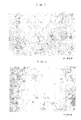
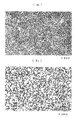
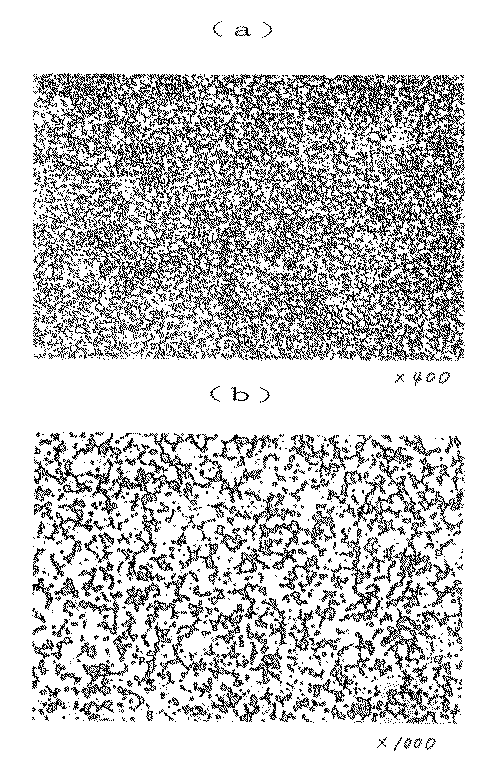
図1は、本発明に係るNiCrMoBのミクロ組織での鋳造材を示す顕微鏡写真である。図1(a)は、400倍の顕微鏡写真であり、図1(b)は1000倍の顕微鏡写真である。また、図2は、本発明に係るNiCrMoBのミクロ組織での粉末熱間押出材を示す顕微鏡写真である。図2(a)は、400倍の顕微鏡写真であり、図2(b)は1000倍の顕微鏡写真である。
【0011】
【実施例】
以下、本発明について実施例によって具体的に説明する。
表1に示す成分組成のNi基合金を真空誘導溶解炉にて溶解し、合金塊を鋳造した後熱間鍛造にてφ400×L1300mm、ないし熱間押出しの場合は、出湯温度1500℃、噴霧圧4MPaにてガスアトマイズ法で作製した粉末を分級した後、φ210×L690mmのステンレス容器に上記ガスアトマイズ法で作製したホウ化物析出合金粉末を充填し、脱気し封入しビレットを加熱保持温度で2時間保持し1100℃で熱間押出した。その後、それぞれの場合の仕上温度を1140℃に加熱して、仕上寸法φ95mmを得る。その結果を表1に示す。表1には各B含有量での硼化物面積率と加工性、ヒート回数および歩留りを示す。
【0012】
硼化物面積率については、湿式研磨した後、光学顕微鏡写真で撮影し、視野100μm×100μmでの画像解析で評価した。また、加工性については、○:加工中割れなし、×:加工中割れあり、さらに、ヒート回数については、本合金は加工温度範囲が狭く、加工中の温度低下により加工率が低下する。そのため、加工温度以下になった場合は再度加熱をし加工をするという作業を繰り返す必要がある。耐食性は、40℃、10%塩酸、弗酸、硫酸および硝酸のそれぞれの水溶液に10時間浸漬後の腐食減量を1時間当たりに換算し、300mg/m2 /h未満を〇で評価した。また、耐摩耗性は大越式摩耗試験(試験片サイズ:10×25×50mm)を相手リング:SCM:420、摩耗試験:400m、最終荷重61.8N、すべり速度:2.4m/sの条件で試験を実施した。表1に示すように、B含有量が1.10%と高い場合は、硼化物面積率が大きいために、加工性および歩留りが悪いことが分かる。
【0013】
【表1】
【発明の効果】
以上述べたように、本発明による合金材料は、量産性に優れる熱間加工により製造することが可能となり、コストダンを図ることができる極めて優れた効果を奏するものである。
【図面の簡単な説明】
【図1】本発明に係るNiCrMoBのミクロ組織での鋳造材を示す顕微鏡写真である。
【図2】本発明に係るNiCrMoBのミクロ組織での粉末熱間押出し材を示す顕微鏡写真である。[0001]
TECHNICAL FIELD OF THE INVENTION
The present invention relates to a B-containing Ni-based alloy excellent in hot workability used for a screw of an extrusion molding machine for producing resin pellets containing abrasion and corrosion components, and other components used in abrasion and corrosion environments. .
[0002]
[Prior art]
Conventionally, when both corrosion resistance and wear resistance are required, an alloy that precipitates boride or silicide with a Ni-based alloy is often used. For example, as disclosed in Japanese Patent Application Laid-Open No. H8-157991 (Patent Document 1), a Ni-Mo-B-based alloy has excellent hydrochloric acid corrosion resistance, particularly as a hydrochloric acid corrosion-resistant alloy used for members requiring hydrochloric acid corrosion resistance. Alloys used as surface hardening materials are also known.
[0003]
[References]
(1) Patent Document 1 (Japanese Patent Application Laid-Open No. H8-157991)
[0004]
[Problems to be solved by the invention]
However, in the case of the alloy described in Patent Document 1 described above, although it is an alloy used as a surface hardening material having excellent hydrochloric acid corrosion resistance as a hydrochloric acid corrosion-resistant alloy, it is generally hardened due to poor hot workability. It is used only in a method of performing a surface treatment such as thermal spraying, and is not sufficient in terms of cost. That is, it is not sufficient to reduce the cost by improving the hot workability and the processing yield.
[0005]
[Means for Solving the Problems]
In order to solve the above-mentioned problems, the inventors have intensively developed and as a result, by reducing the B content to 0.5 to 1.0%, the amount of boride precipitated during hot working is reduced. And the hot workability is dramatically improved. In addition, unlike the cast structure obtained by overlaying or thermal spraying, boric acid is finely scattered, so that a B-containing Ni-based alloy with excellent hot workability that is superior in wear resistance to that of the prior art is provided. Is what you do. The gist of the invention is that
(1) By mass%, Mo: 10 to 30%, Cr: (10 to 64%)-1.5Mo, B: 0.5 to 1.0%, the balance consisting of Ni and unavoidable impurities, and A B-containing Ni-based alloy excellent in hot workability, characterized in that a boride area ratio is 20 to 40%.
[0006]
(2) A B-containing Ni-based alloy excellent in hot workability, obtained by hot forging the B-containing Ni-based alloy according to (1).
(3) A B-containing Ni-base alloy excellent in hot workability, obtained by hot rolling the B-containing Ni-base alloy according to (1).
(4) A B-containing Ni-base alloy excellent in hot workability, which is obtained by hot-extruding the B-containing Ni-base alloy according to (1).
[0007]
BEST MODE FOR CARRYING OUT THE INVENTION
Hereinafter, the reasons for limiting the component composition according to the present invention will be described.
Mo: 10 to 30%
Mo is an element necessary for improving the corrosion resistance of the matrix. However, if less than 10%, the effect cannot be obtained. If more than 30%, Mo is dissolved in Ni, so the upper limit is set to 30%.
[0008]
Cr: (10-64%)-1.5Mo%
Cr is an element necessary for improving the corrosion resistance of the matrix, similar to Mo. However, its effect is not obtained at less than 10% -1.5Mo%, and 64% -1.5Mo% If it exceeds, a brittle phase will precipitate, so the upper limit was made 64% -1.5Mo%.
[0009]
B: 0.5 to 1.0%
B is an element necessary for improving wear resistance. However, if it is less than 0.5%, the effect is not sufficient, and if it exceeds 1.0%, there is a limit in hot deformability, and the upper limit is set to 1.0%.
Ni is a base material and is an element necessary for obtaining high corrosion resistance.
Boride area ratio of 20-40%
The reason why the boride area ratio is set to 20% or more is to improve abrasion resistance. However, if it exceeds 40%, there is a limit to the hot deformability, and the upper limit is set to 40%.
[0010]
FIG. 1 is a micrograph showing a cast material having a microstructure of NiCrMoB according to the present invention. FIG. 1A is a photomicrograph at 400 × magnification, and FIG. 1B is a photomicrograph at 1000 × magnification. FIG. 2 is a micrograph showing a powder hot extruded material having a microstructure of NiCrMoB according to the present invention. FIG. 2A is a photomicrograph at 400 × magnification, and FIG. 2B is a photomicrograph at 1000 × magnification.
[0011]
【Example】
Hereinafter, the present invention will be described specifically with reference to Examples.
A Ni-base alloy having a component composition shown in Table 1 was melted in a vacuum induction melting furnace, an alloy ingot was cast, and then hot forging was performed at φ400 × L1300 mm. In the case of hot extrusion, the tapping temperature was 1500 ° C. After classifying the powder produced by the gas atomization method at 4 MPa, a stainless steel container of φ210 × L690 mm was filled with the boride precipitated alloy powder produced by the gas atomization method, degassed and sealed, and the billet was held at the heating holding temperature for 2 hours. And hot extruded at 1100 ° C. Thereafter, the finishing temperature in each case is heated to 1140 ° C. to obtain a finishing dimension φ95 mm. Table 1 shows the results. Table 1 shows the area ratio of boride, the workability, the number of heats, and the yield at each B content.
[0012]
The boride area ratio was evaluated by image analysis in a visual field of 100 μm × 100 μm by taking an optical microscope photograph after wet polishing. Regarding the workability, :: no cracks during processing, ×: cracks during processing, and further, regarding the number of heats, the working temperature range of the present alloy is narrow, and the processing rate decreases due to a decrease in temperature during processing. Therefore, when the temperature falls below the processing temperature, it is necessary to repeat the operation of heating and processing again. The corrosion resistance was evaluated by converting the corrosion loss after immersion in an aqueous solution of 10% hydrochloric acid, hydrofluoric acid, sulfuric acid, and nitric acid at 40 ° C. for 10 hours into one hour, and evaluating less than 300 mg / m 2 / h by Δ. The abrasion resistance was determined by an Ogoshi-type abrasion test (specimen size: 10 × 25 × 50 mm) with the following conditions: ring: SCM: 420, abrasion test: 400 m, final load: 61.8 N, sliding speed: 2.4 m / s. The test was carried out. As shown in Table 1, when the B content is as high as 1.10%, the workability and the yield are poor because the boride area ratio is large.
[0013]
[Table 1]
【The invention's effect】
As described above, the alloy material according to the present invention can be manufactured by hot working, which is excellent in mass productivity, and has an extremely excellent effect of reducing cost.
[Brief description of the drawings]
FIG. 1 is a micrograph showing a cast material having a microstructure of NiCrMoB according to the present invention.
FIG. 2 is a micrograph showing a powder hot extruded material having a microstructure of NiCrMoB according to the present invention.
Claims (4)
Mo:10〜30%、
Cr:(10〜64%)−1.5Mo%、
B:0.5〜1.0%、
残部がNiおよび不可避的不純物からなり、かつ、硼化物面積率を20〜40%としたことを特徴とする熱間加工性に優れたB含有Ni基合金。In mass%,
Mo: 10 to 30%,
Cr: (10-64%)-1.5Mo%,
B: 0.5 to 1.0%,
A B-containing Ni-based alloy having excellent hot workability, with the balance being Ni and unavoidable impurities and having a boride area ratio of 20 to 40%.
Priority Applications (1)
| Application Number | Priority Date | Filing Date | Title |
|---|---|---|---|
| JP2002360156A JP2004190098A (en) | 2002-12-12 | 2002-12-12 | B-containing Ni-base alloy with excellent hot workability |
Applications Claiming Priority (1)
| Application Number | Priority Date | Filing Date | Title |
|---|---|---|---|
| JP2002360156A JP2004190098A (en) | 2002-12-12 | 2002-12-12 | B-containing Ni-base alloy with excellent hot workability |
Publications (1)
| Publication Number | Publication Date |
|---|---|
| JP2004190098A true JP2004190098A (en) | 2004-07-08 |
Family
ID=32759304
Family Applications (1)
| Application Number | Title | Priority Date | Filing Date |
|---|---|---|---|
| JP2002360156A Pending JP2004190098A (en) | 2002-12-12 | 2002-12-12 | B-containing Ni-base alloy with excellent hot workability |
Country Status (1)
| Country | Link |
|---|---|
| JP (1) | JP2004190098A (en) |
Cited By (1)
| Publication number | Priority date | Publication date | Assignee | Title |
|---|---|---|---|---|
| JP2012246517A (en) * | 2011-05-26 | 2012-12-13 | Sanyo Special Steel Co Ltd | Ni-BASED BORIDE DISPERSED CORROSION RESISTANT AND WEAR RESISTANT ALLOY |
-
2002
- 2002-12-12 JP JP2002360156A patent/JP2004190098A/en active Pending
Cited By (1)
| Publication number | Priority date | Publication date | Assignee | Title |
|---|---|---|---|---|
| JP2012246517A (en) * | 2011-05-26 | 2012-12-13 | Sanyo Special Steel Co Ltd | Ni-BASED BORIDE DISPERSED CORROSION RESISTANT AND WEAR RESISTANT ALLOY |
Similar Documents
| Publication | Publication Date | Title |
|---|---|---|
| JP5652730B1 (en) | Ni-base superalloy and manufacturing method thereof | |
| JP6826879B2 (en) | Manufacturing method of Ni-based super heat-resistant alloy | |
| CN107427896A (en) | The manufacture method of Ni base superalloy | |
| WO2014142089A1 (en) | HEAT-RESISTANT Ni-BASED ALLOY AND METHOD FOR MANUFACTURING SAME | |
| CN108179317A (en) | A kind of 700 DEG C of preparation methods with high-performance easy processing titanium | |
| CN110592444A (en) | A kind of 700-720MPa strength, heat-resistant, high-intergranular corrosion-resistant aluminum alloy and preparation method thereof | |
| CN111118422B (en) | Preparation method of high-tungsten high-cobalt nickel alloy fine-grain plate | |
| CN106636746A (en) | High-strength and high-elongation high-temperature titanium alloy and preparing technology thereof | |
| WO2019107502A1 (en) | Hot-die ni-based alloy, hot-forging die employing same, and forged-product manufacturing method | |
| JP6660042B2 (en) | Method for manufacturing extruded Ni-base superalloy and extruded Ni-base superalloy | |
| CN114790524A (en) | Preparation process of a high fracture toughness Ti2AlNb-based alloy forging | |
| CN106435318A (en) | High-strength high-toughness vanadium alloy and preparation method thereof | |
| CN108531773A (en) | A kind of Ti3Al intermetallic compound high-temperature structural materials | |
| TW591115B (en) | Cu-based alloy and method of manufacturing high strength and high thermal conductive forged article using the same | |
| CN108034874B (en) | A kind of rare earth magnesium alloy containing molybdenum rhenium and preparation method thereof | |
| CN1167823C (en) | High-temperature wear-resistant and corrosion-resistant Cr-Ni-Si metal silicide alloy material | |
| CN111187941A (en) | High-strength high-toughness copper alloy material and preparation method thereof | |
| WO2017170433A1 (en) | Method for producing ni-based super heat-resistant alloy | |
| CN110343907A (en) | High-strength casting Ni containing W3Al based high-temperature alloy and preparation method thereof | |
| CN101985711A (en) | Multicomponent heat-resistant magnesium alloy taking Sn and Gd as main components and preparation method thereof | |
| JP2020152965A (en) | Aluminum alloy material, its manufacturing method and impeller | |
| CN109161767A (en) | A kind of creep-resistant property magnesium alloy of the phase containing W and preparation method thereof | |
| CN108441707A (en) | A kind of high intensity tungstenic system nickel-base high-temperature alloy material and its preparation method and application | |
| WO2018061540A1 (en) | HOT EXTRUSION-MOLDING METHOD FOR Ni-BASED SUPER HEAT-RESISTANT ALLOY AND PRODUCTION METHOD FOR Ni-BASED SUPER HEAT-RESISTANT ALLOY EXTRUSION MATERIAL | |
| JP2732934B2 (en) | Constant temperature forging die made of Ni-base alloy with excellent high-temperature strength and high-temperature oxidation resistance |
Legal Events
| Date | Code | Title | Description |
|---|---|---|---|
| A621 | Written request for application examination |
Effective date: 20050606 Free format text: JAPANESE INTERMEDIATE CODE: A621 |
|
| A977 | Report on retrieval |
Effective date: 20070119 Free format text: JAPANESE INTERMEDIATE CODE: A971007 |
|
| A131 | Notification of reasons for refusal |
Free format text: JAPANESE INTERMEDIATE CODE: A131 Effective date: 20070327 |
|
| A521 | Written amendment |
Free format text: JAPANESE INTERMEDIATE CODE: A523 Effective date: 20070511 |
|
| A02 | Decision of refusal |
Free format text: JAPANESE INTERMEDIATE CODE: A02 Effective date: 20070605 |