EP4583630A2 - Verwendung von dnai zur identifizierung eines smf zur unterstützung der verbindung mit einem lokalen dn - Google Patents
Verwendung von dnai zur identifizierung eines smf zur unterstützung der verbindung mit einem lokalen dn Download PDFInfo
- Publication number
- EP4583630A2 EP4583630A2 EP25177655.5A EP25177655A EP4583630A2 EP 4583630 A2 EP4583630 A2 EP 4583630A2 EP 25177655 A EP25177655 A EP 25177655A EP 4583630 A2 EP4583630 A2 EP 4583630A2
- Authority
- EP
- European Patent Office
- Prior art keywords
- smf
- dnai
- amf
- access
- function
- Prior art date
- Legal status (The legal status is an assumption and is not a legal conclusion. Google has not performed a legal analysis and makes no representation as to the accuracy of the status listed.)
- Pending
Links
Images





Classifications
-
- H—ELECTRICITY
- H04—ELECTRIC COMMUNICATION TECHNIQUE
- H04W—WIRELESS COMMUNICATION NETWORKS
- H04W60/00—Affiliation to network, e.g. registration; Terminating affiliation with the network, e.g. de-registration
-
- H—ELECTRICITY
- H04—ELECTRIC COMMUNICATION TECHNIQUE
- H04W—WIRELESS COMMUNICATION NETWORKS
- H04W76/00—Connection management
- H04W76/10—Connection setup
- H04W76/11—Allocation or use of connection identifiers
-
- H—ELECTRICITY
- H04—ELECTRIC COMMUNICATION TECHNIQUE
- H04W—WIRELESS COMMUNICATION NETWORKS
- H04W76/00—Connection management
- H04W76/10—Connection setup
- H04W76/12—Setup of transport tunnels
-
- H—ELECTRICITY
- H04—ELECTRIC COMMUNICATION TECHNIQUE
- H04W—WIRELESS COMMUNICATION NETWORKS
- H04W76/00—Connection management
- H04W76/20—Manipulation of established connections
- H04W76/22—Manipulation of transport tunnels
-
- H—ELECTRICITY
- H04—ELECTRIC COMMUNICATION TECHNIQUE
- H04W—WIRELESS COMMUNICATION NETWORKS
- H04W8/00—Network data management
- H04W8/005—Discovery of network devices, e.g. terminals
Definitions
- the method further comprises notifying the first SMF controlling the PDU session of the UE that the UE is in an area of interest in which a DN identified by the DNAI is to be used for some or all traffic of the UE.
- discovering the second SMF supporting the DNAI comprises querying a Network Function Repository Function (NRF) for an SMF that supports the DNAI.
- NRF Network Function Repository Function
- Certain embodiments may provide a technical advantage, whereby an SMF requires less configuration while facilitating access to DNs.
- Radio Node As used herein, a "radio node” is either a radio access node or a wireless communication device.
- Radio Access Node As used herein, a “radio access node” or “radio network node” or “radio access network node” is any node in a Radio Access Network (RAN) of a cellular communications network that operates to wirelessly transmit and/or receive signals.
- RAN Radio Access Network
- a radio access node examples include, but are not limited to, a base station (e.g., a New Radio (NR) base station (gNB) in a Third Generation Partnership Project (3GPP) Fifth Generation (5G) NR network or an enhanced or evolved Node B (eNB) in a 3GPP Long Term Evolution (LTE) network), a high-power or macro base station, a low-power base station (e.g., a micro base station, a pico base station, a home eNB, or the like), a relay node, a network node that implements part of the functionality of a base station (e.g., a network node that implements a gNB Central Unit (gNB-CU) or a network node that implements a gNB Distributed Unit (gNB-DU)) or a network node that implements part of the functionality of some other type of radio access node.
- a base station e.g., a New Radio (NR) base station (gNB)
- a "core network node” is any type of node in a core network or any node that implements a core network function.
- Some examples of a core network node include, e.g., a Mobility Management Entity (MME), a Packet Data Network Gateway (P-GW), a Service Capability Exposure Function (SCEF), a Home Subscriber Server (HSS), or the like.
- MME Mobility Management Entity
- P-GW Packet Data Network Gateway
- SCEF Service Capability Exposure Function
- HSS Home Subscriber Server
- a core network node examples include a node implementing a Access and Mobility Function (AMF), a User Plane Function (UPF), a Session Management Function (SMF), an Authentication Server Function (AUSF), a Network Slice Selection Function (NSSF), a Network Exposure Function (NEF), a Network Function (NF) Repository Function (NRF), a Policy Control Function (PCF), a Unified Data Management (UDM), or the like.
- AMF Access and Mobility Function
- UPF User Plane Function
- SMF Session Management Function
- AUSF Authentication Server Function
- NSSF Network Slice Selection Function
- NEF Network Exposure Function
- NRF Network Exposure Function
- NRF Network Exposure Function
- PCF Policy Control Function
- UDM Unified Data Management
- a "communication device” is any type of device that has access to an access network.
- Some examples of a communication device include, but are not limited to: mobile phone, smart phone, sensor device, meter, vehicle, household appliance, medical appliance, media player, camera, or any type of consumer electronic, for instance, but not limited to, a television, radio, lighting arrangement, tablet computer, laptop, or Personal Computer (PC).
- the communication device may be a portable, hand-held, computer-comprised, or vehicle-mounted mobile device, enabled to communicate voice and/or data via a wireless or wireline connection.
- One type of communication device is a wireless communication device, which may be any type of wireless device that has access to (i.e., is served by) a wireless network (e.g., a cellular network).
- a wireless communication device include, but are not limited to: a User Equipment device (UE) in a 3GPP network, a Machine Type Communication (MTC) device, and an Internet of Things (IoT) device.
- UE User Equipment
- MTC Machine Type Communication
- IoT Internet of Things
- Such wireless communication devices may be, or may be integrated into, a mobile phone, smart phone, sensor device, meter, vehicle, household appliance, medical appliance, media player, camera, or any type of consumer electronic, for instance, but not limited to, a television, radio, lighting arrangement, tablet computer, laptop, or PC.
- the wireless communication device may be a portable, hand-held, computer-comprised, or vehicle-mounted mobile device, enabled to communicate voice and/or data via a wireless connection.
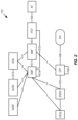
- FIG. 1 illustrates one example of a cellular communications system 100 in which embodiments of the present disclosure may be implemented.
- the cellular communications system 100 is a 5G System (5GS) including a NR RAN or LTE RAN (i.e., E-UTRA RAN).
- the RAN includes base stations 102-1 and 102-2, which in 5G NR are referred to as gNBs (e.g., LTE RAN nodes connected to 5GC, which are referred to as gn-eNBs), controlling corresponding (macro) cells 104-1 and 104-2.
- the base stations 102-1 and 102-2 are generally referred to herein collectively as base stations 102 and individually as base station 102.
- the (macro) cells 104-1 and 104-2 are generally referred to herein collectively as (macro) cells 104 and individually as (macro) cell 104.
- the RAN may also include a number of low power nodes 106-1 through 106-4 controlling corresponding small cells 108-1 through 108-4.
- the low power nodes 106-1 through 106-4 can be small base stations (such as pico or femto base stations) or Remote Radio Heads (RRHs), or the like.
- RRHs Remote Radio Heads
- one or more of the small cells 108-1 through 108-4 may alternatively be provided by the base stations 102.
- the low power nodes 106-1 through 106-4 are generally referred to herein collectively as low power nodes 106 and individually as low power node 106.
- the small cells 108-1 through 108-4 are generally referred to herein collectively as small cells 108 and individually as small cell 108.
- the cellular communications system 100 also includes a core network 110, which in the 5GS is referred to as the 5G Core (5GC).
- the base stations 102 (and optionally the low power nodes 106) are connected to the core network 110.
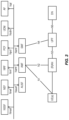
- N15 and N7 are defined since the PCF applies policy to the AMF and SMF, respectively.
- N12 is required for the AMF to perform authentication of the UE.
- N8 and N10 are defined because the subscription data of the UE is required for the AMF and SMF.
- a NF e.g., SMF, AMF
- a 5GC registers its NF metadata to a NRF.
- the NF metadata is stored in a NF profile of the NF.
- Embodiments described herein add a new data element in the NF profile of the SMF.
- This new data element is a DNAI (or list of DNAIs) supported by the SMF.
- a DNAI names certain access (e.g., interfaces) supported by a UPF. If a UPF supports registration of itself, it can register its supported DNAIs. However, in this case, this information is also added to the NF profile for the SMF.
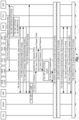
- the SMF subscribes to event reporting from the AMF for the UE's presence in the area of interest via Namf_EvenExposure_Subscribe request and response.
- the AMF notifies the SMF of the UE's presence in the area of interest via Namf_EventExposure_Notify.
- the new I-SMF selects a new I-UPF based on the DNAI. That is, the new I-SMF selects a new I-UPF which has access to the local DN, indicated by the DNAI. The new I-SMF then performs actions such that the SMF and the selected UPF are inserted for the existing PDU session. More specifically, in this example at step 726, the new I-SMF initiates a N4 Session Establishment to the new I-UPF.
- steps 7-9 and 17-21 of clause 4.23.4.3 in 3GPP Technical Specification (TS) 23.502 are performed (e.g., inserting the new I-SMF as an I-SMF for the PDU Session).
- steps 1-9 of clause 4.23.9.1 in 3GPP TS 23.502 are performed.
- FIG. 8 is a schematic block diagram of a network node 800 according to some embodiments of the present disclosure.
- the network node 800 may be, for example, a core network node (e.g., a MME), a network node that implements a core network function (e.g., an AMF), or a radio access node (e.g., the base station 102 or 106) that implements all or part of the functionality of a network node (e.g., a base station, an AMF, an SMF, etc.) described herein.
- a core network node e.g., a MME
- a network node that implements a core network function e.g., an AMF
- a radio access node e.g., the base station 102 or 106
- the network node 800 includes a control system 802 that includes one or more processors 804 (e.g., Central Processing Units (CPUs), Application Specific Integrated Circuits (ASICs), Field Programmable Gate Arrays (FPGAs), and/or the like), memory 806, and a network interface 808.
- the one or more processors 804 are also referred to herein as processing circuitry.
- the network node 800 is a radio access node, the network node 800 may include one or more radio units 810 that each includes one or more transmitters 812 and one or more receivers 814 coupled to one or more antennas 816.
- the radio units 810 may be referred to or be part of radio interface circuitry.
- the radio unit(s) 810 is external to the control system 802 and connected to the control system 802 via, e.g., a wired connection (e.g., an optical cable). However, in some other embodiments, the radio unit(s) 810 and potentially the antenna(s) 816 are integrated together with the control system 802.
- the one or more processors 804 operate to provide one or more functions of a network node 800 as described herein (e.g., one or more functions of a base station, a MME, an AMF, an SMF, etc. described herein, e.g., with respect to Figures 4A-7 ).
- the function(s) are implemented in software that is stored, e.g., in the memory 806 and executed by the one or more processors 804.
- FIG. 9 is a schematic block diagram that illustrates a virtualized embodiment of the network node 800 according to some embodiments of the present disclosure.
- a "virtualized" network node is an implementation of the network node 800 in which at least a portion of the functionality of the network node 800 is implemented as a virtual component(s) (e.g., via a virtual machine(s) executing on a physical processing node(s) in a network(s)).
- the radio access node 800 includes one or more processing nodes 900 coupled to or included as part of a network(s) 902.
- Each processing node 900 includes one or more processors 904 (e.g., CPUs, ASICs, FPGAs, and/or the like), memory 906, and a network interface 908.
- the network node 800 may also include the control system 802 and/or the one or more radio units 810, as described above.
- the control system 802 may be connected to the radio unit(s) 810 via, for example, an optical cable or the like. If present, the control system 802 or the radio unit(s) 810 are connected to the processing node(s) 900 via the network 902.
- functions 910 of the network node 800 described herein are implemented at the one or more processing nodes 900 or distributed across the one or more processing nodes 900 and the control system 802 and/or the radio unit(s) 810 in any desired manner.
- some or all of the functions 910 of the network node 800 described herein are implemented as virtual components executed by one or more virtual machines implemented in a virtual environment(s) hosted by the processing node(s) 900.
- additional signaling or communication between the processing node(s) 900 and the control system 802 is used in order to carry out at least some of the desired functions 910.
- the control system 802 may not be included, in which case the radio unit(s) 810 communicate directly with the processing node(s) 900 via an appropriate network interface(s).
- a computer program including instructions which, when executed by at least one processor, causes the at least one processor to carry out the functionality of network node 800 or a node (e.g., a processing node 900) implementing one or more of the functions 910 of the network node 800 in a virtual environment according to any of the embodiments described herein is provided.
- a carrier comprising the aforementioned computer program product is provided.
- the carrier is one of an electronic signal, an optical signal, a radio signal, or a computer readable storage medium (e.g., a non-transitory computer readable medium such as memory).
- FIG 10 is a schematic block diagram of the network node 800 according to some other embodiments of the present disclosure.
- the network node 800 includes one or more modules 1000, each of which is implemented in software.
- the module(s) 1000 provide the functionality of the network node 800 described herein (e.g., one or more functions of a base station, an AMF, an SMF, etc. described herein, e.g., with respect to Figures 4A-7 ).
- This discussion is equally applicable to the processing node 900 of Figure 9 where the modules 1000 may be implemented at one of the processing nodes 900 or distributed across multiple processing nodes 900 and/or distributed across the processing node(s) 900 and the control system 802.
- any appropriate steps, methods, features, functions, or benefits disclosed herein may be performed through one or more functional units or modules of one or more virtual apparatuses.
- Each virtual apparatus may comprise a number of these functional units.
- These functional units may be implemented via processing circuitry, which may include one or more microprocessor or microcontrollers, as well as other digital hardware, which may include Digital Signal Processor (DSPs), special-purpose digital logic, and the like.
- the processing circuitry may be configured to execute program code stored in memory, which may include one or several types of memory such as Read Only Memory (ROM), Random Access Memory (RAM), cache memory, flash memory devices, optical storage devices, etc.
- Program code stored in memory includes program instructions for executing one or more telecommunications and/or data communications protocols as well as instructions for carrying out one or more of the techniques described herein.
- the processing circuitry may be used to cause the respective functional unit to perform corresponding functions according one or more embodiments of the present disclosure.
- Embodiment 1 A method performed by a SMF for providing access to a DN, the method comprising one or more of: registering a NF profile for the SMF, the NF profile including a first DNAI that indicates that the SMF has access to a DN identified by the first DNAI.
- Embodiment 2 The method of embodiment 1 wherein the first DNAI indicates that the SMF supports a UPF that supports access to the DN.
- Embodiment 3 The method of embodiment 1 or 2 further comprising receiving, from an AMF, a message that causes insertion of the SMF for an existing PDU session, the message comprising the first DNAI.
- Embodiment 4 The method of embodiment 3 further comprising selecting a UPF using the first DNAI.
- Embodiment 6 The method of embodiment 5 wherein performing the one or more actions comprises retrieving the SM context for the existing PDU Session from a second SMF controlling the PDU session.
- Embodiment 16 The method of embodiment 15 further comprising notifying the SMF controlling the PDU session of a UE that the UE is in an area of interest in which a DN identified by the first DNAI is to be used for some or all traffic of the UE.
- Embodiment 19 The method of any of embodiment 17 further comprising, in response to selecting the I-SMF, requesting a SM context for the PDU session.
- Embodiment 20 The method of any of embodiments 15 to 18 wherein the AMF is an AMF of a 5GC.
- Embodiment 21 A network node in a communications system, the network node configured to perform the method of any of embodiments 1 to 20.
- Embodiment 22 The network node of claim 21 further comprising: a communication interface; and processing circuitry configured to perform the method of any of embodiments 1 to 20.
Landscapes
- Engineering & Computer Science (AREA)
- Computer Networks & Wireless Communication (AREA)
- Signal Processing (AREA)
- Mobile Radio Communication Systems (AREA)
- Computer And Data Communications (AREA)
Applications Claiming Priority (3)
| Application Number | Priority Date | Filing Date | Title |
|---|---|---|---|
| US201962954846P | 2019-12-30 | 2019-12-30 | |
| PCT/IB2020/062556 WO2021137180A1 (en) | 2019-12-30 | 2020-12-30 | Using dnai to identify a smf supporting connection to a local dn |
| EP20838631.8A EP4085726B1 (de) | 2019-12-30 | 2020-12-30 | Verwendung von dnai zur identifizierung einer smf zur unterstützung der verbindung zu einem lokalen dn |
Related Parent Applications (1)
| Application Number | Title | Priority Date | Filing Date |
|---|---|---|---|
| EP20838631.8A Division EP4085726B1 (de) | 2019-12-30 | 2020-12-30 | Verwendung von dnai zur identifizierung einer smf zur unterstützung der verbindung zu einem lokalen dn |
Publications (2)
| Publication Number | Publication Date |
|---|---|
| EP4583630A2 true EP4583630A2 (de) | 2025-07-09 |
| EP4583630A3 EP4583630A3 (de) | 2025-10-01 |
Family
ID=74141615
Family Applications (2)
| Application Number | Title | Priority Date | Filing Date |
|---|---|---|---|
| EP20838631.8A Active EP4085726B1 (de) | 2019-12-30 | 2020-12-30 | Verwendung von dnai zur identifizierung einer smf zur unterstützung der verbindung zu einem lokalen dn |
| EP25177655.5A Pending EP4583630A3 (de) | 2019-12-30 | 2020-12-30 | Verwendung von dnai zur identifizierung eines smf zur unterstützung der verbindung mit einem lokalen dn |
Family Applications Before (1)
| Application Number | Title | Priority Date | Filing Date |
|---|---|---|---|
| EP20838631.8A Active EP4085726B1 (de) | 2019-12-30 | 2020-12-30 | Verwendung von dnai zur identifizierung einer smf zur unterstützung der verbindung zu einem lokalen dn |
Country Status (3)
| Country | Link |
|---|---|
| US (2) | US20230104162A1 (de) |
| EP (2) | EP4085726B1 (de) |
| WO (1) | WO2021137180A1 (de) |
Families Citing this family (5)
| Publication number | Priority date | Publication date | Assignee | Title |
|---|---|---|---|---|
| WO2022063413A1 (en) * | 2020-09-25 | 2022-03-31 | Telefonaktiebolaget Lm Ericsson (Publ) | Methods and apparatuses for providing extended access to a local area data network, computer program and computer program product |
| TWI806289B (zh) * | 2021-01-29 | 2023-06-21 | 瑞典商Lm艾瑞克生(Publ)電話公司 | 工作階段管理功能、藉由工作階段管理功能執行之方法、電腦可讀儲存媒體及電腦程式產品 |
| CN117546596A (zh) * | 2021-06-28 | 2024-02-09 | 苹果公司 | 用于配置与iab mec的通信的系统和方法 |
| CN113691969B (zh) * | 2021-07-16 | 2022-10-18 | 华为技术有限公司 | 通信方法和装置 |
| AU2022327300C1 (en) * | 2021-08-08 | 2026-02-05 | Huawei Technologies Co., Ltd. | Communication method and apparatus |
Family Cites Families (3)
| Publication number | Priority date | Publication date | Assignee | Title |
|---|---|---|---|---|
| CN110248352B (zh) * | 2018-01-12 | 2020-08-21 | 华为技术有限公司 | 会话管理方法、设备及计算机可读存储介质 |
| CN110149665B (zh) * | 2018-02-14 | 2021-02-23 | 华为技术有限公司 | 一种网元的选择方法及装置 |
| CN112291777B (zh) * | 2019-07-23 | 2024-12-06 | 华为技术有限公司 | 一种会话管理网元的选择方法、装置及系统 |
-
2020
- 2020-12-30 WO PCT/IB2020/062556 patent/WO2021137180A1/en not_active Ceased
- 2020-12-30 EP EP20838631.8A patent/EP4085726B1/de active Active
- 2020-12-30 US US17/789,309 patent/US20230104162A1/en not_active Abandoned
- 2020-12-30 EP EP25177655.5A patent/EP4583630A3/de active Pending
-
2025
- 2025-02-28 US US19/066,921 patent/US20250203680A1/en active Pending
Also Published As
| Publication number | Publication date |
|---|---|
| US20250203680A1 (en) | 2025-06-19 |
| EP4085726B1 (de) | 2025-05-21 |
| EP4583630A3 (de) | 2025-10-01 |
| EP4085726C0 (de) | 2025-05-21 |
| WO2021137180A1 (en) | 2021-07-08 |
| EP4085726A1 (de) | 2022-11-09 |
| US20230104162A1 (en) | 2023-04-06 |
Similar Documents
| Publication | Publication Date | Title |
|---|---|---|
| EP4085726B1 (de) | Verwendung von dnai zur identifizierung einer smf zur unterstützung der verbindung zu einem lokalen dn | |
| EP4101188A1 (de) | Erweiterung von npcf-ereignisexposition mit nutzungsüberwachung | |
| US20230269608A1 (en) | Nf discovery and selection based on service response latency measurements | |
| JP2023504228A (ja) | アプリケーションプログラミングインタフェース(api)フィルタに基づくapi能力変更の報告 | |
| US20240080651A1 (en) | Rvas network function for hplmn | |
| US12279125B2 (en) | Registered UE count in slice service area | |
| WO2021038443A1 (en) | Relation indication for multi-sim devices | |
| EP4173328A1 (de) | Bestimmung eines standardnetzwerk-slices | |
| CN116868603A (zh) | 针对af会话的外部参数提供的新方法 | |
| EP4223014A1 (de) | Sicherstellung der netzwerksteuerung des gleichzeitigen zugriffs auf netzwerk-slices mit anwendungsbewusstsein | |
| US20240015493A1 (en) | CORE NETWORK BECOMING AWARE OF PLMNs WITH DISASTER CONDITIONS | |
| WO2022097096A1 (en) | Notification of disaster condition and alternative plmns | |
| JP7710603B2 (ja) | NFServiceタイプの定義に対するPLMNごとのOAuth2要件 | |
| WO2022152616A2 (en) | Methods and apparatuses for changing network slice | |
| EP4278708A1 (de) | Umlenkung und wiederholung der registrierung | |
| US20250301302A1 (en) | Ursp rule provisioning in roaming | |
| US20250142449A1 (en) | Centralized counting in multi service areas | |
| US20240023182A1 (en) | Handling the unknown rrc establishment cause value in nr | |
| WO2022238911A1 (en) | Controlled ue steering due to slicing | |
| WO2022214395A1 (en) | Enhancement on upf selection via nrf | |
| WO2022233541A1 (en) | New attribute to the definition of type clientcredentialsassertion to enable backwards compatibility with rel-16 nf producers | |
| WO2025141400A1 (en) | Enhancements of ran timing synchronization status reporting |
Legal Events
| Date | Code | Title | Description |
|---|---|---|---|
| PUAI | Public reference made under article 153(3) epc to a published international application that has entered the european phase |
Free format text: ORIGINAL CODE: 0009012 |
|
| STAA | Information on the status of an ep patent application or granted ep patent |
Free format text: STATUS: THE APPLICATION HAS BEEN PUBLISHED |
|
| AC | Divisional application: reference to earlier application |
Ref document number: 4085726 Country of ref document: EP Kind code of ref document: P |
|
| AK | Designated contracting states |
Kind code of ref document: A2 Designated state(s): AL AT BE BG CH CY CZ DE DK EE ES FI FR GB GR HR HU IE IS IT LI LT LU LV MC MK MT NL NO PL PT RO RS SE SI SK SM TR |
|
| REG | Reference to a national code |
Ref country code: DE Ref legal event code: R079 Free format text: PREVIOUS MAIN CLASS: H04W0076220000 Ipc: H04W0076110000 |
|
| PUAL | Search report despatched |
Free format text: ORIGINAL CODE: 0009013 |
|
| AK | Designated contracting states |
Kind code of ref document: A3 Designated state(s): AL AT BE BG CH CY CZ DE DK EE ES FI FR GB GR HR HU IE IS IT LI LT LU LV MC MK MT NL NO PL PT RO RS SE SI SK SM TR |
|
| RIC1 | Information provided on ipc code assigned before grant |
Ipc: H04W 76/11 20180101AFI20250828BHEP Ipc: H04W 76/12 20180101ALI20250828BHEP Ipc: H04W 76/22 20180101ALI20250828BHEP Ipc: H04W 60/00 20090101ALI20250828BHEP Ipc: H04W 8/00 20090101ALN20250828BHEP |
|
| STAA | Information on the status of an ep patent application or granted ep patent |
Free format text: STATUS: REQUEST FOR EXAMINATION WAS MADE |
|
| 17P | Request for examination filed |
Effective date: 20260112 |