EP4583073A1 - Information processing device and information processing method - Google Patents
Information processing device and information processing method Download PDFInfo
- Publication number
- EP4583073A1 EP4583073A1 EP23859946.8A EP23859946A EP4583073A1 EP 4583073 A1 EP4583073 A1 EP 4583073A1 EP 23859946 A EP23859946 A EP 23859946A EP 4583073 A1 EP4583073 A1 EP 4583073A1
- Authority
- EP
- European Patent Office
- Prior art keywords
- image
- display
- controller
- recognition result
- information processing
- Prior art date
- Legal status (The legal status is an assumption and is not a legal conclusion. Google has not performed a legal analysis and makes no representation as to the accuracy of the status listed.)
- Pending
Links
Images











Classifications
-
- G—PHYSICS
- G07—CHECKING-DEVICES
- G07G—REGISTERING THE RECEIPT OF CASH, VALUABLES, OR TOKENS
- G07G1/00—Cash registers
- G07G1/01—Details for indicating
-
- G—PHYSICS
- G06—COMPUTING OR CALCULATING; COUNTING
- G06Q—INFORMATION AND COMMUNICATION TECHNOLOGY [ICT] SPECIALLY ADAPTED FOR ADMINISTRATIVE, COMMERCIAL, FINANCIAL, MANAGERIAL OR SUPERVISORY PURPOSES; SYSTEMS OR METHODS SPECIALLY ADAPTED FOR ADMINISTRATIVE, COMMERCIAL, FINANCIAL, MANAGERIAL OR SUPERVISORY PURPOSES, NOT OTHERWISE PROVIDED FOR
- G06Q20/00—Payment architectures, schemes or protocols
- G06Q20/08—Payment architectures
- G06Q20/18—Payment architectures involving self-service terminals [SST], vending machines, kiosks or multimedia terminals
-
- G—PHYSICS
- G06—COMPUTING OR CALCULATING; COUNTING
- G06V—IMAGE OR VIDEO RECOGNITION OR UNDERSTANDING
- G06V10/00—Arrangements for image or video recognition or understanding
- G06V10/20—Image preprocessing
- G06V10/22—Image preprocessing by selection of a specific region containing or referencing a pattern; Locating or processing of specific regions to guide the detection or recognition
- G06V10/235—Image preprocessing by selection of a specific region containing or referencing a pattern; Locating or processing of specific regions to guide the detection or recognition based on user input or interaction
-
- G—PHYSICS
- G06—COMPUTING OR CALCULATING; COUNTING
- G06V—IMAGE OR VIDEO RECOGNITION OR UNDERSTANDING
- G06V10/00—Arrangements for image or video recognition or understanding
- G06V10/70—Arrangements for image or video recognition or understanding using pattern recognition or machine learning
- G06V10/764—Arrangements for image or video recognition or understanding using pattern recognition or machine learning using classification, e.g. of video objects
-
- G—PHYSICS
- G06—COMPUTING OR CALCULATING; COUNTING
- G06V—IMAGE OR VIDEO RECOGNITION OR UNDERSTANDING
- G06V10/00—Arrangements for image or video recognition or understanding
- G06V10/98—Detection or correction of errors, e.g. by rescanning the pattern or by human intervention; Evaluation of the quality of the acquired patterns
- G06V10/987—Detection or correction of errors, e.g. by rescanning the pattern or by human intervention; Evaluation of the quality of the acquired patterns with the intervention of an operator
-
- G—PHYSICS
- G06—COMPUTING OR CALCULATING; COUNTING
- G06V—IMAGE OR VIDEO RECOGNITION OR UNDERSTANDING
- G06V20/00—Scenes; Scene-specific elements
- G06V20/20—Scenes; Scene-specific elements in augmented reality scenes
-
- G—PHYSICS
- G06—COMPUTING OR CALCULATING; COUNTING
- G06V—IMAGE OR VIDEO RECOGNITION OR UNDERSTANDING
- G06V20/00—Scenes; Scene-specific elements
- G06V20/50—Context or environment of the image
- G06V20/52—Surveillance or monitoring of activities, e.g. for recognising suspicious objects
-
- G—PHYSICS
- G06—COMPUTING OR CALCULATING; COUNTING
- G06V—IMAGE OR VIDEO RECOGNITION OR UNDERSTANDING
- G06V20/00—Scenes; Scene-specific elements
- G06V20/70—Labelling scene content, e.g. deriving syntactic or semantic representations
-
- G—PHYSICS
- G06—COMPUTING OR CALCULATING; COUNTING
- G06V—IMAGE OR VIDEO RECOGNITION OR UNDERSTANDING
- G06V30/00—Character recognition; Recognising digital ink; Document-oriented image-based pattern recognition
- G06V30/10—Character recognition
-
- G—PHYSICS
- G07—CHECKING-DEVICES
- G07G—REGISTERING THE RECEIPT OF CASH, VALUABLES, OR TOKENS
- G07G1/00—Cash registers
- G07G1/0036—Checkout procedures
- G07G1/0045—Checkout procedures with a code reader for reading of an identifying code of the article to be registered, e.g. barcode reader or radio-frequency identity [RFID] reader
- G07G1/0054—Checkout procedures with a code reader for reading of an identifying code of the article to be registered, e.g. barcode reader or radio-frequency identity [RFID] reader with control of supplementary check-parameters, e.g. weight or number of articles
- G07G1/0063—Checkout procedures with a code reader for reading of an identifying code of the article to be registered, e.g. barcode reader or radio-frequency identity [RFID] reader with control of supplementary check-parameters, e.g. weight or number of articles with means for detecting the geometric dimensions of the article of which the code is read, such as its size or height, for the verification of the registration
Definitions
- the disclosure relates to an information processing device and an information processing method.
- Patent Literature 1 discloses an object recognition device that includes an image interface receiving an image that is obtained by imaging a predetermined location where multiple objects are placed.
- Patent Literature 1 Japanese Unexamined Patent Application Publication No. 2018-129038
- an information processing device includes an acquisition unit and a controller.
- the acquisition unit receives a captured image including a first object image as an image of a first object.
- the controller causes a display to display the first object image and a recognition result of the first object.
- the controller Upon receiving from an input unit a selected one of the first object image and the recognition result of the first object, the controller causes the display to display with emphasis an unselected other of the first object image and the recognition result of the first object.
- an information processing method includes receiving an image including at least one object; recognizing what object an object included in the image is; outputting a recognized recognition result and the image; and in response to receiving an input from a user selecting one of the outputted recognition result and the object, outputting a display screen to display with emphasis an other one not selected by the user.
- An embodiment of the disclosure may expedite the payment process of the user.
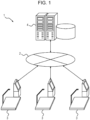
- a payment system 1 illustrated in FIG. 1 may be configured as a POS (Point Of Sales) system.
- the payment system 1 includes at least one information processing system 3 and a server 4.
- the payment system 1 includes multiple information processing systems 3.
- the information processing system 3 and the server 4 may communicate with each other via a network 2.
- the network 2 may be any network including the Internet.
- the information processing system 3 may be installed at any store.
- the information processing system 3 may be installed at a convenience store, a supermarket, a restaurant, or the like.
- the server 4 receives the process result of the information processing system 3 from the information processing system 3 via the network 2. In response to the received process result, the server 4 manages a stock status and the like of the store where the information processing system 3 has been installed.
- the information processing system 3 includes a first imaging unit 12 and an information processing device 20.
- the information processing system 3 may further include the table 10, a support pillar 11, the display 13 and a second imaging unit 14.
- the information processing device 20 may be configured as a device separate from the first imaging unit 12 and the display 13.
- the information processing device 20 may be integrated with at least one selected from the group consisting of, for example, the display 13, the first imaging unit 12, the support pillar 11, the table 10, and the second imaging unit 14.
- the table 10 includes a top surface 10s.
- the user may place on the top surface 10s an object they want to purchase.
- the user places on the top surface 10s only an object they want to purchase but without limitation to this, the user may place the object in a state enclosed in a shopping basket or a shopping bag.
- the top surface 10s has an almost rectangular shape but is not limited to this and may have any shape.
- the support pillar 11 supports the first imaging unit 12.
- the support pillar 11 extends upward from a side portion of the table 10 toward the space above the top surface 10s. Note that a method of supporting the first imaging unit 12 is not limited to the support pillar 11.
- the support pillar 11 may support the first imaging unit 12 in any method that the first imaging unit 12 is able to image at least part of the top surface 10s of the table 10.
- the first imaging unit 12 may generate an image through image capturing.
- the first imaging unit 12 is secured to the support pillar 11 such that the first imaging unit 12 is able to image at least part of a surface of the table 10, for example, at least part of the top surface 10s.
- the first imaging unit 12 may be secured such that an optical axis thereof is perpendicular to the top surface 10s.
- the first imaging unit 12 is secured such that the first imaging unit 12 is able to image the entire surface of the top surface 10s of the table 10 and the optical axis of the first imaging unit 12 is perpendicular to the top surface 10s of the table 10.
- the first imaging unit 12 may be secured to the leading end of the support pillar 11.
- the first imaging unit 12 may image consecutively at any frame rate.
- the first imaging unit 12 may capture a moving image.
- the first imaging unit 12 may be a camera.
- the display 13 may be any display.
- the display 13 displays an image transmitted from the information processing device 20.
- the display 13 may operate as a touch screen of an input unit to be described below.
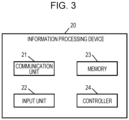
- the information processing device 20 includes a communication unit 21, an input unit 22, a memory 23, and a controller 24.
- the communication unit 21 includes at least one communication module connectable to the network 2.
- the communication module may be a communication module complying with standards, for example, for a wired LAN (local area network), a wireless LAN, or the like.
- the communication unit 21 is connected to the network 2 via the wired LAN or the wireless LAN via the communication module.
- the communication unit 21 includes a communication module that is communicable with the first imaging unit 12, the display 13, and the second imaging unit 14.
- the communication module is a communication module that complies with standards for communication lines. Communication via the communication unit 21 may be performed via at least one of a wired communication or a wireless communication. Via the communication module, the communication unit 21 works as an acquisition unit that receives from at least one of the first imaging unit 12 or the second imaging unit 14 an image of an object placed on the top surface 10s of the table 10. Via the communication module, the communication unit 21 may communicate with a weight sensor 81 described below.
- the input unit 22 may receive an input from a user.
- the input unit 22 includes at least one input interface that is able to receive an input from the user.
- the input interface is, for example, a touch screen that is integrated with a physical key, a capacitive key, a pointing device, a microphone or the display 13.
- the input unit 22 receives an input to the touch screen that is integrated with the display 13.
- the memory 23 includes at least two types of memories selected from the group consisting of at least one semiconductor memory, at least one magnetic memory, and at least one optical memory.
- the semiconductor memory is, for example, a RAM (random access memory), a ROM (read only memory), or the like.
- the RAM is, for example, an SRAM (static random access memory), a DRAM (dynamic random access memory), or the like.
- the ROM is, for example, an EEPROM (electrically erasable programmable read only memory) or the like.
- the memory 23 may work as a main memory, an auxiliary memory, or a cache memory.
- the memory 23 stores data used in the action of the information processing device 20 and data obtained in the action of the information processing device 20.
- the controller 24 includes at least one processor, at least one dedicated circuit, or a combination thereof.
- the processor is a general-purpose processor, such as a CPU (central processing unit) or a GPU (graphics processing unit), or a dedicated processor specialized in a particular process.
- the dedicated circuit is for example, a FPGA (field-programmable gate array), an ASIC (application specific integrated circuit), or the like.
- the controller 24 performs a process related to the action of the information processing device 20 while controlling each unit of the information processing device 20.
- the controller 24 acquires a selection, performed by the input unit 22, between an object included in an image and a recognition result of the object. For example, a user who wants to confirm the recognition result of the object inputs the selection via the input unit 22. Upon receiving the selection, the controller 24 transmits to the display 13 via the communication unit 21 a signal for displaying with emphasis one that is not selected by the user between the object included in the image and the recognition result of the object. When the display 13 and the information processing device 20 are configured as a unitary device, the controller 24 may transmit the signal to the display 13 not via the communication unit 21.
- the controller 24 receives at the input unit 22 an input instructing payment to be started.
- a user who wants to make the payment of an object may enter the input at the input unit 22.
- the user places an object they want to purchase on the top surface 10s of the table 10.
- the user may enter to the input unit 22 the input instructing the payment to be started after placing the object on the top surface 10s of the table 10.
- the controller 24 receives an image captured by the first imaging unit 12 or the second imaging unit 14.
- the controller 24 may receive images captured by the first imaging unit 12 and the second imaging unit 14.
- the controller 24 receives the captured image by receiving the image, captured by the first imaging unit 12, at the communication unit 21.
- the captured image includes an image of an object the user has placed on the top surface 10s of the table 10.
- the controller 24 recognizes which object the object included in the received captured image is.
- the controller 24 recognizes which object the object is by executing an object recognition process on the captured image.
- the object recognition process is a process that identifies which object the object is by detecting an image of the object included in the captured image.
- the controller 24 may execute the object recognition process by using a learning model that is generated through machining learning, such as deep learning.
- the controller 24 acquires a recognition result by identifying an object name of the object through object recognition. Having identified an object name, the controller 24 may identify the number of objects recognized.
- the recognition result of the object recognition process includes data on an object name and the number of objects recognized.
- the object recognition process is not limited to the execution performed by the controller 24 in the information processing device 20 but may be executed by an external server or the like.
- the external server executes the object recognition process
- the external server receives the captured image via the communication unit 21 and executes the object recognition process.
- the controller 24 acquires the recognition result from the external server via the communication unit 21.
- the object recognition may identify information, such as ID, which, in place of an object name, identifies an object.
- the controller 24 may acquire the object name corresponding to the identified ID, using a correspondence table or the like stored on the memory 23.
- the controller 24 outputs the recognition result to the display 13.
- the controller 24 notifies a user of the recognition result by outputting an image indicating the recognition result to the display 13.
- the controller 24 outputs the recognition result to the display 13 when the controller 24 recognizes which object the object included in the captured image is, but without limitation to this, the controller 24 may output the recognition result to the display 13 when the input unit 22 receives from a user an instruction to display a confirmation screen.
- the instruction to display the confirmation screen may be an action of pressing a key to shift to the confirmation screen.
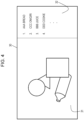
- the controller 24 causes the display 13 to display an image 30.
- the image 30 includes an image 31 and an image 32.
- the image 31 may be displayed on a left portion of the display 13 and the image 32 may be displayed on a right portion of the display 13.
- the image 31 is an image captured by the first imaging unit 12.
- the image 31 includes objects which the user has placed on the table 10.
- the image 32 displays object names as the recognition result of the objects the user has placed on the table 10. At this time, information or the like related to the number of each object and the price of each object may be displayed together with the object names on the image 32.
- the object names displayed on the image 32 may be displayed in the order at which the information processing device 20 has recognized the object names.
- the object names on the image 32 may be displayed in the order of high to low price or low to high price of each object. In this case, the user may easily confirm an object that has a large effect on the magnitude of the total sum.
- the object names on the image 32 may be displayed in the order of high to low recognition accuracy or low to high recognition accuracy of each object. In this case, the user may easily confirm an object that has a large effect on the accuracy of the total sum.
- the object names on the image 32 may be displayed in the order of large to small size or small to large size of each object within the image 31. In this case, the user may easily confirm from a large and noticeable object or from a small and hard-to-find object.
- the object names on the image 32 may be displayed in the order of large to small number or small to large number of the same object. In this case, the user may easily confirm objects purchased in a large quantity. According to any criteria, the user may change the display order of the object names displayed on the image 32 by operating the input unit. Information on the prices of the objects may be pre-stored in association with the object names on the memory 23.
- a user confirms the recognition result displayed on the display 13.
- the user may select a first object name 32a using a cursor 33 as illustrated in FIG. 5 to confirm whether the recognition result displayed on the image 32 is correct.
- the selection of the first object name 32a may be based on an action of superimposing the cursor 33 on the first object name 32a followed by pressing a key.
- an emphasis image 34a superimposed on a first object image 31a serving as an image of the object corresponding to the first object name 32a is displayed.
- the emphasis image 34a may be, for example, an image that forms a frame along the external shape of the first object image 31a.
- the displaying of the emphasis image 34a emphasizes the first object image 31a in comparison with other object images and the user can confirm a correspondence relationship between the emphasized object image and the first object name 32a.
- the user selects the first object name 32a using the cursor 33, but without limitation to this, the user may select the first object name 32a by directly touching the first object name 32a on a touch screen or by pointing to the first object name 32a included in the image 32 using the hand of the user.
- the cursor 33 may not be used.
- the emphasis image 34a is displayed in a shape matching the external shape of the corresponding first object image 31a, but without limitation to this, the emphasis image 34a may fully overlap the first object image 31a.
- the emphasis image 34a may be, for example, the bounding rectangle of the first object image 31a.
- the emphasis image 34a has the same size as the first object image 31a but, without limitation to this, an image larger than the first object image 31a or an image smaller than the first object image 31a may be displayed.
- the controller 24 After confirming the first object image 31a displayed with emphasis by the emphasis image 34a, the user newly selects a second object name 32b as another object using the cursor 33 as illustrated in FIG. 6 . At this time, the controller 24 erases the emphasis image 34a superimposed on the first object image 31a that is already confirmed, and superimposes an emphasis image 34b on a second object image 31b corresponding to the newly selected second object name 32b. At this time, the controller 24 may display the first object name 32a at the lower-most row by changing the first object name 32a in position. Alternatively, the controller 24 may segment the region of the image 32 in an up-down direction into a first region and a second region, display an unselected object name 32 in the first region and move the selected first object name 32a to the second region.
- the user may easily find the object name 32 to be confirmed, by displaying the selected object name 32 and the unselected object name 32 in a distinguishable way.
- the timing of erasing the superimposed emphasis image 34a is not limited to when the second object name 32b is newly selected.
- the superimposing emphasis image 34a may be erased when the user moves the cursor selecting the first object name 32a from the first object name 32a.
- the superimposing emphasis image 34a may be erased when the user presses a key that deletes the displaying of the emphasis image 34a.
- the superimposing emphasis image 34a may be erased when a key to shift to a payment process to pay the prices of the object is pressed.
- the superimposing emphasis image 34a may be erased after a predetermined time elapse from when the user inputs the selection of the first object name 32a.
- the second object image 31b is positioned lower than the object in the first object image 31a. Therefore, the first object image 31a causes part of the second object image 31b to be invisible.
- the outline of the second object image 31b may be drawn as an emphasis image within an area where the second object image 31b and the first object image 31a overlap each other.
- a second object image 31b' imaged before the objects are placed on the table 10 may be displayed in superimposition on the second object image 31b.
- the user may easily compare the recognition result with the object placed on the table 10. With this configuration, the user may easily confirm whether the recognition result is correct.
- an emphasis image 34c is displayed in superimposition on a third object image 31c that the information processing device 20 has determined to correspond to the object name 32c'.
- a third object name 32c is correct but the third object name 32c' is incorrect.
- the user may enter an input to correct the incorrect third object name 32c'.
- the input to correct the incorrect third object name 32c' may be an input to select the incorrect third object name 32c' again, an input to select the incorrect third object name 32c' for a predetermined time period or longer, an input to press a key that corrects an object name included in the information processing device 20 or the image 30, or a selection of the third object image 31c determined to correspond to the incorrect third object name 32c'.
- the controller 24 Upon receiving an input to correct the incorrect third object name 32c' from the user, the controller 24 causes the display 13 to display an image 35 illustrated in FIG. 8 .
- the emphasis image 35 includes multiple object names as correction options 35a, 35b, and 35c, determined to correspond to the third object image 31c.
- the correction option 35a from among these correction options is identical to a third object name 32c that correctly corresponds to the third object image 31c.
- the correction options 35a, 35b, and 35c may be displayed in the order of from high to low certainty or low to high certainty of the recognition result, in the alphabetical order of the object names, or in the order from high to low price or low to high price of each of the objects.
- the user Upon determining that the correction option 35a is the correct third object name 32c, the user enters an input to select the correction option 35a in the image 35. Upon receiving the input to select the correction option 35a in the image 35, the controller 24 corrects the incorrect third object name 32c' included in the image 32 to the correction option 35a. Upon receiving the input to select the correction option 35a, the controller 24 may transmit an instruction to output an image and sound used to confirm the change of the third object name 32c' to the correction option 35a. When the correction options 35a, 35b, and 35c do not include the object name corresponding to the second object image 31b, the user may directly input the corresponding object name.
- FIG. 9 is a flowchart illustrating operations in an information processing method of an embodiment of the disclosure.
- the information processing method includes step S101 through step S112. For example, when the input unit 22 receives an input to instruct payment start, the controller 24 starts a process in step S101.
- the controller 24 acquires data on a captured image by receiving an image from the first imaging unit 12 via the communication unit 21 (step S101).
- the controller 24 executes the object recognition process to the captured image received in the process in step S101 (step S102).
- the controller 24 acquires the recognition result by executing the object recognition process.
- the controller 24 causes the display 13 to display an image indicating the recognition result acquired in the process in step S102 (step S103). For example, the controller 24 causes the display 13 to display the image 30 illustrated in FIG. 4 .
- the controller 24 determines whether the input unit 22 has received the input to select the first object name 32a in the image 32 (step S104).
- the controller 24 proceeds to a process in step S108 upon determining that the input unit 22 has not received the input to select the first object name 32a (step S104: NO). For example, when the input unit 22 has received from the user an input to shift to a payment process, the controller 24 may determine that the input unit 22 has not received the input to select the first object name 32a. Note that when a predetermined time period has elapsed without any operation since the displaying of the image 30 illustrated in FIG. 4 , the controller 24 may determine that the input unit 22 has not received the input to select the first object name 32a.
- step S105 the controller 24 transmits to the display 13 an instruction that causes the display 13 to display the emphasis image 34a superimposed on the first object image 31a in response to the input that is from the user via the input unit 22 and selects the first object name 32a.
- the controller 24 determines whether the input unit 22 has received the input to select the second object name 32b in the image 32 (step S106).
- the controller 24 proceeds to a process in step S107 upon determining that the input unit 22 has received the input to select the second object name 32b (step S106: YES). For example, when the input unit 22 has received a touch input on the second object name 32b illustrated in FIG. 6 , the controller 24 determines that the input unit 22 has received the input to select the second object name 32b.
- step S108 If the input unit 22 has received the input to correct the third object name 32c' (step S108: YES), the controller 24 proceeds to step S109. For example, when the input unit 22 has received a touch input to hold down the third object name 32c' in excess of a predetermined time period as illustrated in FIG. 7 , the controller 24 determines that the input unit 22 has received the input to correct the third object name 32c'.
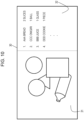
- the controller 24 proceeds to a process in step S305, upon determining that the input unit 22 has received the input to select the first object image 31a (step S304: YES). For example, when the input unit 22 has received a touch input on the first object image 31a as illustrated in FIG. 10 , the controller 24 determines that the input unit 22 has received the input to select the first object image 31a.
- the controller 24 proceeds to a process in step S308, upon determining that the input unit 22 has not received the input to select the first object image 31a (step S304: NO). For example, when the input unit 22 has received an input from the user to shift to the payment process, the controller 24 may determine that the input unit 22 has not received the input to select the first object image 31a. Note that when a predetermined time period has elapsed without any operation since the displaying of the image 30 as illustrated in FIG. 4 , the controller 24 may determine that the input unit 22 has not received the input to select the first object image 31a.
- step S305 the controller 24 transmits to the display 13 an instruction that causes the display 13 to display the emphasis image 34a superimposed on the first object name 32a in response to the input that is from the user via the input unit 22 and selects the first object image 31a.
- the controller 24 determines whether the input unit 22 has received an input to select the second object image 31b in the image 31 (step S306).
- the controller 24 proceeds to a process in step S307, upon determining that the input unit 22 has received the input to select the second object image 31b (step S306: YES). For example, when the input unit 22 has received a touch input on the second object image 31b, the controller 24 determines that the input unit 22 has received the input to select the second object image 31b.
- the controller 24 proceeds to a process in step S312, upon determining that the input unit 22 has not received the input to select the second object image 31b (step S306: NO). For example, when the input unit 22 has received an input to shift to the payment process of the user, the controller 24 determines that the input unit 22 has not received the input to select the second object image 31b. Note that when a predetermined time period has elapsed without any operation, the controller 24 may determine that the input unit 22 has not received the input to select the second object image 31b.
- step S307 the controller 24 transmits to the display 13 an instruction that causes the display 13 to delete the emphasis image 34a that is already displayed and superimposed on the first object image 31a in response to the input that is from the user via the input unit 22 and selects the second object image 31b.
- the controller 24 then returns to the process in step S305.
- step S308 through step S312 are the same as and/or similar to the processes in step S208 through step S212, the description thereof is omitted.
- Variation 3 of the display process is described below. Note that a procedure duplicating the above-described display process is omitted.
- the controller 24 causes the display 13 to display the image 30. Detail of the process is described above and omitted.
- the user may easily compare the recognition result with the object placed on the table 10. In this configuration, the user may easily confirm whether the recognition result is correct.
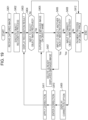
- FIG. 19 is a flowchart illustrating operations in the information processing method in the variation 2 of the disclosure.
- the information processing method includes step S401 through step S412. Note that the description duplicating the above-described step S101 through step S112 is omitted.
- step S401 through S403 Since operations in step S401 through S403 are the same as and/or similar to the operations in the above-described step S101 through step S103, the description of the operations in step S401 through S403 is omitted.
- the controller 24 determines whether the input unit 22 has received the input to select the first object image 31a in the image 32 (step S404).
- the controller 24 proceeds to a process in step S305 upon determining that the input unit 22 has received the input to select the first object image 31a (step S404: YES). For example, when the controller 24 determines that the input unit 22 has received a touch input on the first object name 32a as illustrated in FIG. 18 , the controller 24 determines that the input unit 22 has received the input to select the first object name 32a.
- the controller 24 proceeds to a process in step S308 upon determining that the input unit 22 has not received the input to select the first object image 31a (step S404: NO). For example, when the input unit 22 has received an input to shift to the payment process of the user, the controller 24 determines that the input unit 22 has not received the input to select the first object image 31a. Note that the determination at the controller 24 that the input unit 22 has not received the input to select the first object image 31a is not limited to the case described above, but may be a case when a predetermined time period has elapsed since the displaying of the image 30 as illustrated in FIG. 4 .
- the controller 24 proceeds to a process in step S307 upon determining that the input unit 22 has received the input to select the second object image 31b (step S406: YES). For example, when the input unit 22 has received a touch input on the second object image 31b, the controller 24 determines that the input unit 22 has received the input to select the second object image 31b.
- step S208 upon determining that the input unit 22 has not received the input to select the second object image 31b (step S406: NO). For example, when the input unit 22 has received the input to shift to the payment process of the user, the controller 24 determines that the input unit 22 has not received the input to select the second object image 31b. Note that the determination at controller 24 that the input unit 22 has not received the input to select the second object image 31b is not limited to the case described above, but may be a case when a predetermined time period has elapsed since the displaying of the image 30 as illustrated in FIG. 18 .
- step S407 the controller 24 transmits to the display 13 an instruction that causes the display 13 to delete the emphasis image 34a superimposed on the first object name 32a in response to the input that is from the user via the input unit 22 and selects the second object image 31b.
- the controller 24 then returns to the process in step S405.
- the controller 24 determines whether the input unit 22 has received an input to correct the third object name 32c' determined to correspond to the third object image 31c (step S408).
- step S409 upon determining that the input unit 22 has received the input to correct the third object name 32c' (step S408: YES). For example, when the input unit 22 has received a touch input to select the third object name 32c' with the emphasis image 34c superimposed on the third object name 32c', the controller 24 determines that the input unit 22 has received the input to correct the third object name 32c'.
- FIG. 21 is a flowchart illustrating operations in a recognition method in the variation 3 of the disclosure.
- the information processing method includes steps S501 through S512. Note that the description duplicating the above-described step S401 through step S412 is omitted.
- step S501 through step S504 are the same as and/or similar to the operations in the above-described step S401 through step S404, the description thereof is omitted.
- step S505 the controller 24 transmits to the display 13 an instruction that causes the display 13 to display both the emphasis image 34a superimposed on the first object image 31a and the emphasis image 34a superimposed on the first object name 32a in response to the input that is from the user via the input unit 22 and selects the first object image 31a.
- step S506 duplicates step S406, the description thereof is omitted.
- step S507 the controller 24 transmits to the display 13 an instruction that causes the display 13 to delete the emphasis image 34a superimposed on the first object image 31a and the emphasis image 34a superimposed on the first object name 32a in response to the input that is from the user via the input unit 22 and selects the second object image 31b.
- the controller 24 then returns to the process in step S505.
- step S508 through step S512 are the same as and/or similar to the operations in step S408 through step S412, the description thereof is omitted.
- Variation 5 of the display process is described below. Note that a procedure duplicating the above-described display process is omitted.
- the controller 24 causes the display 13 to display the image 30. Detail of the process is described above and omitted.
- the user confirms the recognition result displayed on the display 13 when the display 13 displays the image 30 as illustrated in FIG. 4 .
- the user selects the first object image 31a using the cursor 33 as illustrated in FIG. 22 .
- the display 13 displays each of the emphasis image 34a superimposed on the first object image 31a, the emphasis image 34a superimposed on the first object name 32a corresponding to the first object image 31a, and an association line 36a connecting the first object image 31a to the first object name 32a.
- the emphasis image 34a and the emphasis image 34b are displayed in the same color but may be displayed without limitation to this.
- the association line 36a is drawn as a solid line in the embodiment, but without limitation to this, may be drawn as a broken line.
- the user may easily confirm the correspondence relationship between the first object image 31a and the first object name 32a.
- FIG. 23 is a flowchart illustrating operations in the recognition method in the variation 4 of the disclosure.
- the information processing method includes step S601 through step S612. Note that the description duplicating the above-described step S501 through step S512 is omitted.
- step S606 duplicates step S506, the description thereof is omitted.
- step S607 the controller 24 transmits to the display 13 an instruction that causes the display 13 to delete the emphasis image 34a superimposed on the first object image 31a, the emphasis image 34a superimposed on the first object name 32a, and the association line 36a connecting the first object image 31a to the first object name 32a in response to the input that is from the user via the input unit 22 and selects the second object image 31b.
- the controller 24 then returns the process in step S605.
- step S608 through step S612 are the same as and/or similar to the step S508 through step S512, the description thereof is omitted.
- the controller 24 causes the display 13 to display the image 30. Detail of the process is described above and omitted.
- the user confirms the recognition result displayed on the display 13 when the display 13 displays the image 30 as illustrated in FIG. 4 .
- the user selects the first object image 31a using the cursor 33 as illustrated in FIG. 24 .
- the display 13 displays each of the emphasis image 34a superimposed on the first object image 31a and the emphasis image 34a superimposed on the first object name 32a corresponding to the first object image 31a. Detail of the process is described above and omitted.
- the user selects a new second object image 31b after confirming the first object image 31a and the first object name 32a, the first object image 31a and the first object name 32a are displayed with emphasis in color different from the second object image 31b. Therefore, the user may easily determine whether the displayed objects have already been confirmed.
- FIG. 25 is a flowchart illustrating operations in the recognition method in the variation 6 of the disclosure.
- the information processing method includes step S701 through step S712. Note that the description duplicating the above-described step S501 through step S512 is omitted.
- step S701 through step S706 are the same as and/or similar to the operations in the above-described step S501 through step S506, the description thereof is omitted.
- step S707 the controller 24 transmits to the display 13 an instruction that causes the display 13 to display the emphasis image 34a superimposed on the first object image 31a, and the emphasis image 34a superimposed on the first object name 32a, in a color different from the color displayed in step S705, in response to the input that is from the user via the input unit 22 and selects the second object image 31b.
- the controller 24 then returns to the process in step S705.
- step S708 through step S712 are the same as and/or similar to step S708 through step S712, the description thereof is omitted.
- Variation 7 of the display process is described below. Note that a procedure duplicating the above-described display process is omitted.
- the user confirms the recognition result displayed on the display 13 when the display 13 displays the image 30 as illustrated in FIG. 4 .
- the user selects the first object image 31a using the cursor 33 as illustrated in FIG. 26 .
- the display 13 displays the emphasis image 34a superimposed on the first object name 32a corresponding to the first object image 31a.
- a registered image 37a corresponding to the first object image 31a is displayed together.
- the registered image 37a is the image of an object stored on the memory 23. In the embodiment, the registered image 37a is displayed at a lower right of the image 30 in the embodiment but may be displayed without limitation to this.
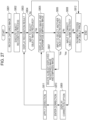
- FIG. 27 is a flowchart illustrating operations in the recognition method in the variation 7 of the disclosure.
- the information processing method includes step S801 through step S812. Note that the description duplicating the above-described step S401 through step S412 is omitted.
- step S807 the controller 24 transmits to the display 13 an instruction that causes the display 13 to delete the emphasis image 34a superimposed on the first object name 32a, and the registered image 37a in response to the input that is from the user via the input unit 22 and selects the second object image 31b.
- the controller 24 then returns to the process in step S805.
- step S808 through step S812 are the same as and/or similar to step S408 through step S412, the description thereof is omitted.
- Variation 8 of the display process is described below. Note that a procedure duplicating the above-described display process is omitted.
- the controller 24 causes the display 13 to display the image 30. Detail of the process is described above and omitted.
- the user confirms the recognition result displayed on the display 13 when the display 13 displays the image 30 as illustrated in FIG. 4 .
- the user selects the second object name 32b using the cursor 33 as illustrated in FIG. 28 .
- the display 13 displays a registered image 37b corresponding to the second object name 32b and superimposed on the second object image 31b corresponding to the second object name 32b.
- the second object image 31b is superimposed on and beneath another first object image 31a.
- the registered image 37b is superimposed on the corresponding second object image 31b and is also superimposed on a portion where the first object image 31a is superimposed on the second object image 31b.
- the superimposition of the registered image 37b on the second object images 31b may cause the object to be smoothly confirmed.
- FIG. 29 is a flowchart illustrating operations in the information processing method in the variation 7 of the disclosure.
- the information processing method includes step S901 through step S912. Note that the description duplicating the above-described step S101 through step S112 is omitted.
- step S901 through step S904 duplicates the above-described step S101 through step S104, the description thereof is omitted.
- step S905 the controller 24 transmits to the display 13 an instruction that causes the display 13 to display the registered image 37a superimposed on the first object image 31a in response to the input that is from the user via the input unit 22 and selects the first object name 32a.
- step S906 duplicates step S106, the description thereof is omitted.
- step S907 the controller 24 transmits to the display 13 an instruction that causes the display 13 to delete the registered image 37a superimposed on the first object image 31a in response to the input that is from the user via the input unit 22 and selects the second object name 32b.
- the controller 24 then returns to the process in step S905.
- step S908 through step S912 duplicate step S108 through step S112, the description thereof is omitted.
- the description such as “the first” or “the second” is an identifier identifying the configurations.
- numbers are interchangeable in the configurations.
- identifiers “the first” and “the second” of a first object and a second object are interchangeable.
- the interchange of the identifiers are concurrently performed.
- the configurations are identified.
- the identifiers may be deleted.
- the configurations with the identifiers deleted may be identified using reference signs. In the disclosure, only the description, such as "the first” or “the second” should not be used as the interpretation of the order of configurations or the basis of the presence of an identifier having a small number.
Landscapes
- Engineering & Computer Science (AREA)
- Physics & Mathematics (AREA)
- General Physics & Mathematics (AREA)
- Theoretical Computer Science (AREA)
- Multimedia (AREA)
- Business, Economics & Management (AREA)
- Computer Vision & Pattern Recognition (AREA)
- Accounting & Taxation (AREA)
- General Health & Medical Sciences (AREA)
- Quality & Reliability (AREA)
- Databases & Information Systems (AREA)
- Evolutionary Computation (AREA)
- Artificial Intelligence (AREA)
- Medical Informatics (AREA)
- Software Systems (AREA)
- Computing Systems (AREA)
- Health & Medical Sciences (AREA)
- Computational Linguistics (AREA)
- Finance (AREA)
- Strategic Management (AREA)
- General Business, Economics & Management (AREA)
- Geometry (AREA)
- Cash Registers Or Receiving Machines (AREA)
- User Interface Of Digital Computer (AREA)
Abstract
Description
- This application claims priority from
Japanese Patent Application No. 2022-136048 filed August 29, 2022 - The disclosure relates to an information processing device and an information processing method.
- Conventionally known techniques capture an image of an object with an imaging device or the like for payment process of a price of an object and recognize which object the object is. For example,
Patent Literature 1 discloses an object recognition device that includes an image interface receiving an image that is obtained by imaging a predetermined location where multiple objects are placed. - Patent Literature 1:
Japanese Unexamined Patent Application Publication No. 2018-129038 - In an embodiment of the disclosure, an information processing device includes an acquisition unit and a controller. The acquisition unit receives a captured image including a first object image as an image of a first object. The controller causes a display to display the first object image and a recognition result of the first object. Upon receiving from an input unit a selected one of the first object image and the recognition result of the first object, the controller causes the display to display with emphasis an unselected other of the first object image and the recognition result of the first object.
- In an embodiment of the disclosure, an information processing method includes receiving an image including at least one object; recognizing what object an object included in the image is; outputting a recognized recognition result and the image; and in response to receiving an input from a user selecting one of the outputted recognition result and the object, outputting a display screen to display with emphasis an other one not selected by the user.
-
-
FIG. 1 is a schematic configuration of a payment system in an embodiment of the disclosure. -
FIG. 2 is a schematic configuration of an information processing system illustrated inFIG. 1 . -
FIG. 3 is a block diagram of an information processing device illustrated inFIG. 2 . -
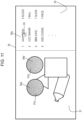
FIG. 4 is an image of a recognition result displayed on a display in an embodiment. -
FIG. 5 is an image that emphasizes a first object among objects displayed on the display in an embodiment. -
FIG. 6 is an image that emphasizes a second object among the objects displayed on the display in an embodiment. -
FIG. 7 is an image that emphasizes a third object among the objects displayed on the display in an embodiment. -
FIG. 8 is an image that corrects an incorrect object name among object names displayed on the display in an embodiment. -
FIG. 9 is a flowchart illustrating a display process in an embodiment. -
FIG. 10 is an image of a recognition result displayed on the display invariation 1. -
FIG. 11 is an image that emphasizes objects recognized to be in a plural number among the objects displayed on the display invariation 1. -
FIG. 12 is an image that emphasizes only one of the objects recognized to be in the plural number among the objects displayed on the display invariation 1. -
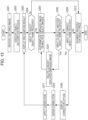
FIG. 13 is a flowchart illustrating a display process in thevariation 1. -
FIG. 14 is an image that emphasizes an object name of objects recognized to be in a plural number among the objects displayed on the display invariation 2. -
FIG. 15 is an image that emphasizes only one of the object names of the objects recognized to be in the plural number among the objects displayed on the display invariation 2. -
FIG. 16 is an image that emphasizes object names of objects recognized to be in the plural number among the objects displayed on the display in thevariation 2. -
FIG. 17 is a flowchart illustrating a display process in thevariation 2. -
FIG. 18 is an image that emphasizes a first object name among object names displayed on the display invariation 3. -
FIG. 19 is a flowchart illustrating a display process invariation 3. -
FIG. 20 is an image that emphasizes one object among objects displayed on the display invariation 4 and one object of object names. -
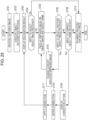
FIG. 21 is a flowchart illustrating a display process in thevariation 4. -
FIG. 22 is an image that emphasizes an object and an object name displayed on the display in variation 5. -
FIG. 23 is a flowchart illustrating a display process in the variation 5. -
FIG. 24 is an image that emphasizes an object and an object name displayed on the display in variation 6. -
FIG. 25 is a flowchart illustrating a display process in the variation 6. -
FIG. 26 is an image that emphasizes one object among objects displayed on the display in variation 7. -
FIG. 27 is a flowchart illustrating a display process in the variation 7. -
FIG. 28 is an image that emphasizes one object among objects displayed on the display in variation 8. -
FIG. 29 is a flowchart illustrating a display process in the variation 8. - When multiple objects are recognized from a single image and a recognition result is displayed to a user in a conventional use of an object recognition device including an image interface, the user is forced to confirm at a time the multiple objects and the recognition result displayed in the image. At this time, the user may have difficulty in determining whether the correspondence between the multiple objects and the recognition result is right or wrong. For this reason, payment process of the user has been delayed.
- An embodiment of the disclosure may expedite the payment process of the user.
- Embodiments of the disclosure are described below with reference to the drawings.
- A
payment system 1 illustrated inFIG. 1 may be configured as a POS (Point Of Sales) system. Thepayment system 1 includes at least oneinformation processing system 3 and aserver 4. In the embodiment, thepayment system 1 includes multipleinformation processing systems 3. - The
information processing system 3 and theserver 4 may communicate with each other via anetwork 2. Thenetwork 2 may be any network including the Internet. - The
information processing system 3 may be installed at any store. For example, theinformation processing system 3 may be installed at a convenience store, a supermarket, a restaurant, or the like. - The
information processing system 3 in the embodiment may be configured as an unmanned regi. The unmanned regi may also be referred to as a self-regi. Note that "regi" is an abbreviation of a cash register and, for example, is used to pay for an object to be purchased. For example, in theinformation processing system 3, a user as a customer of the store places an object to be purchased on a table 10 as illustrated inFIG. 2 . Theinformation processing system 3 captures the image of the object placed by the user. Theinformation processing system 3 recognizes which object the object included in the captured image generated through image capturing is. By recognizing the object, theinformation processing system 3 may calculate a total sum of the object which is charged to the user. Herein, when an imaging device, such as a camera, images the object, multiple objects may be placed on the table 10. Theinformation processing system 3 is not limited to the unmanned regi but may be a manned cash regi or a semi-self regi. - The
information processing system 3 may be configured as regi in the POS system. Theinformation processing system 3 transmits via thenetwork 2 to the server 4 a process result including the total sum of the objects, information on each of the objects, and a price of each of the objects. - The
server 4 receives the process result of theinformation processing system 3 from theinformation processing system 3 via thenetwork 2. In response to the received process result, theserver 4 manages a stock status and the like of the store where theinformation processing system 3 has been installed. - Referring to
FIG. 2 , theinformation processing system 3 includes afirst imaging unit 12 and aninformation processing device 20. Theinformation processing system 3 may further include the table 10, asupport pillar 11, thedisplay 13 and asecond imaging unit 14. In the embodiment, theinformation processing device 20 may be configured as a device separate from thefirst imaging unit 12 and thedisplay 13. However, theinformation processing device 20 may be integrated with at least one selected from the group consisting of, for example, thedisplay 13, thefirst imaging unit 12, thesupport pillar 11, the table 10, and thesecond imaging unit 14. - The table 10 includes a
top surface 10s. The user may place on thetop surface 10s an object they want to purchase. In the embodiment, the user places on thetop surface 10s only an object they want to purchase but without limitation to this, the user may place the object in a state enclosed in a shopping basket or a shopping bag. In the embodiment, thetop surface 10s has an almost rectangular shape but is not limited to this and may have any shape. - The
support pillar 11 supports thefirst imaging unit 12. Thesupport pillar 11 extends upward from a side portion of the table 10 toward the space above thetop surface 10s. Note that a method of supporting thefirst imaging unit 12 is not limited to thesupport pillar 11. Thesupport pillar 11 may support thefirst imaging unit 12 in any method that thefirst imaging unit 12 is able to image at least part of thetop surface 10s of the table 10. - The
first imaging unit 12 may generate an image through image capturing. Thefirst imaging unit 12 is secured to thesupport pillar 11 such that thefirst imaging unit 12 is able to image at least part of a surface of the table 10, for example, at least part of thetop surface 10s. Thefirst imaging unit 12 may be secured such that an optical axis thereof is perpendicular to thetop surface 10s. For example, thefirst imaging unit 12 is secured such that thefirst imaging unit 12 is able to image the entire surface of thetop surface 10s of the table 10 and the optical axis of thefirst imaging unit 12 is perpendicular to thetop surface 10s of the table 10. Thefirst imaging unit 12 may be secured to the leading end of thesupport pillar 11. Thefirst imaging unit 12 may image consecutively at any frame rate. Thefirst imaging unit 12 may capture a moving image. For example, thefirst imaging unit 12 may be a camera. - The
display 13 may be any display. Thedisplay 13 displays an image transmitted from theinformation processing device 20. Thedisplay 13 may operate as a touch screen of an input unit to be described below. - The
second imaging unit 14 may generate an image through image capturing. Thesecond imaging unit 14 is secured to a ceiling above the table 10 such that thesecond imaging unit 14 is able to image the table 10 and the surroundings of the table 10. An image captured by thesecond imaging unit 14 includes a user in front of the table 10 and other users who are lining to use theinformation processing system 3. Thesecond imaging unit 14 may image the table 10 at an angle different from the angle of thefirst imaging unit 12. In one case, the table 10 imaged at multiple angles may allow to be recognized an object that is difficult to recognize in the image captured by thefirst imaging unit 12 but is recognizable in the image captured by thesecond imaging unit 14. Thesecond imaging unit 14 may capture images consecutively any frame rate. Thesecond imaging unit 14 may capture a moving image. For example, thesecond imaging unit 14 may be a camera. - Referring to
FIG. 3 , theinformation processing device 20 includes acommunication unit 21, aninput unit 22, amemory 23, and acontroller 24. - The
communication unit 21 includes at least one communication module connectable to thenetwork 2. The communication module may be a communication module complying with standards, for example, for a wired LAN (local area network), a wireless LAN, or the like. Thecommunication unit 21 is connected to thenetwork 2 via the wired LAN or the wireless LAN via the communication module. - The
communication unit 21 includes a communication module that is communicable with thefirst imaging unit 12, thedisplay 13, and thesecond imaging unit 14. The communication module is a communication module that complies with standards for communication lines. Communication via thecommunication unit 21 may be performed via at least one of a wired communication or a wireless communication. Via the communication module, thecommunication unit 21 works as an acquisition unit that receives from at least one of thefirst imaging unit 12 or thesecond imaging unit 14 an image of an object placed on thetop surface 10s of the table 10. Via the communication module, thecommunication unit 21 may communicate with a weight sensor 81 described below. - The
input unit 22 may receive an input from a user. Theinput unit 22 includes at least one input interface that is able to receive an input from the user. The input interface is, for example, a touch screen that is integrated with a physical key, a capacitive key, a pointing device, a microphone or thedisplay 13. In the embodiment, theinput unit 22 receives an input to the touch screen that is integrated with thedisplay 13. - The
memory 23 includes at least two types of memories selected from the group consisting of at least one semiconductor memory, at least one magnetic memory, and at least one optical memory. The semiconductor memory is, for example, a RAM (random access memory), a ROM (read only memory), or the like. The RAM is, for example, an SRAM (static random access memory), a DRAM (dynamic random access memory), or the like. The ROM is, for example, an EEPROM (electrically erasable programmable read only memory) or the like. Thememory 23 may work as a main memory, an auxiliary memory, or a cache memory. Thememory 23 stores data used in the action of theinformation processing device 20 and data obtained in the action of theinformation processing device 20. - The
controller 24 includes at least one processor, at least one dedicated circuit, or a combination thereof. The processor is a general-purpose processor, such as a CPU (central processing unit) or a GPU (graphics processing unit), or a dedicated processor specialized in a particular process. The dedicated circuit is for example, a FPGA (field-programmable gate array), an ASIC (application specific integrated circuit), or the like. Thecontroller 24 performs a process related to the action of theinformation processing device 20 while controlling each unit of theinformation processing device 20. - The
controller 24 acquires a selection, performed by theinput unit 22, between an object included in an image and a recognition result of the object. For example, a user who wants to confirm the recognition result of the object inputs the selection via theinput unit 22. Upon receiving the selection, thecontroller 24 transmits to thedisplay 13 via the communication unit 21 a signal for displaying with emphasis one that is not selected by the user between the object included in the image and the recognition result of the object. When thedisplay 13 and theinformation processing device 20 are configured as a unitary device, thecontroller 24 may transmit the signal to thedisplay 13 not via thecommunication unit 21. - A procedure from the start of payment to a process of displaying a recognition result with emphasis is described below with reference to
FIG. 4 ,FIG. 5 andFIG. 6 . - The
controller 24 receives at theinput unit 22 an input instructing payment to be started. A user who wants to make the payment of an object may enter the input at theinput unit 22. When the user enters the input at theinput unit 22, the user places an object they want to purchase on thetop surface 10s of the table 10. The user may enter to theinput unit 22 the input instructing the payment to be started after placing the object on thetop surface 10s of the table 10. - The
controller 24 receives an image captured by thefirst imaging unit 12 or thesecond imaging unit 14. Thecontroller 24 may receive images captured by thefirst imaging unit 12 and thesecond imaging unit 14. In the embodiment, thecontroller 24 receives the captured image by receiving the image, captured by thefirst imaging unit 12, at thecommunication unit 21. The captured image includes an image of an object the user has placed on thetop surface 10s of the table 10. - The
controller 24 recognizes which object the object included in the received captured image is. In the embodiment, thecontroller 24 recognizes which object the object is by executing an object recognition process on the captured image. The object recognition process is a process that identifies which object the object is by detecting an image of the object included in the captured image. Thecontroller 24 may execute the object recognition process by using a learning model that is generated through machining learning, such as deep learning. In the embodiment, thecontroller 24 acquires a recognition result by identifying an object name of the object through object recognition. Having identified an object name, thecontroller 24 may identify the number of objects recognized. In the embodiment, note that the recognition result of the object recognition process includes data on an object name and the number of objects recognized. Note that the object recognition process is not limited to the execution performed by thecontroller 24 in theinformation processing device 20 but may be executed by an external server or the like. When the external server executes the object recognition process, the external server, in more detail, receives the captured image via thecommunication unit 21 and executes the object recognition process. When the external server executes the object recognition process, thecontroller 24 acquires the recognition result from the external server via thecommunication unit 21. The object recognition may identify information, such as ID, which, in place of an object name, identifies an object. In this case, thecontroller 24 may acquire the object name corresponding to the identified ID, using a correspondence table or the like stored on thememory 23. - The
controller 24 outputs the recognition result to thedisplay 13. In the embodiment, thecontroller 24 notifies a user of the recognition result by outputting an image indicating the recognition result to thedisplay 13. In the embodiment, thecontroller 24 outputs the recognition result to thedisplay 13 when thecontroller 24 recognizes which object the object included in the captured image is, but without limitation to this, thecontroller 24 may output the recognition result to thedisplay 13 when theinput unit 22 receives from a user an instruction to display a confirmation screen. The instruction to display the confirmation screen may be an action of pressing a key to shift to the confirmation screen. - Referring to
FIG. 4 , for example, thecontroller 24 causes thedisplay 13 to display animage 30. Theimage 30 includes animage 31 and animage 32. Theimage 31 may be displayed on a left portion of thedisplay 13 and theimage 32 may be displayed on a right portion of thedisplay 13. Theimage 31 is an image captured by thefirst imaging unit 12. Theimage 31 includes objects which the user has placed on the table 10. Theimage 32 displays object names as the recognition result of the objects the user has placed on the table 10. At this time, information or the like related to the number of each object and the price of each object may be displayed together with the object names on theimage 32. The object names displayed on theimage 32 may be displayed in the order at which theinformation processing device 20 has recognized the object names. The object names on theimage 32 may be displayed in the order of high to low price or low to high price of each object. In this case, the user may easily confirm an object that has a large effect on the magnitude of the total sum. The object names on theimage 32 may be displayed in the order of high to low recognition accuracy or low to high recognition accuracy of each object. In this case, the user may easily confirm an object that has a large effect on the accuracy of the total sum. The object names on theimage 32 may be displayed in the order of large to small size or small to large size of each object within theimage 31. In this case, the user may easily confirm from a large and noticeable object or from a small and hard-to-find object. The object names on theimage 32 may be displayed in the order of large to small number or small to large number of the same object. In this case, the user may easily confirm objects purchased in a large quantity. According to any criteria, the user may change the display order of the object names displayed on theimage 32 by operating the input unit. Information on the prices of the objects may be pre-stored in association with the object names on thememory 23. - When the
image 30 illustrated inFIG. 4 is displayed on thedisplay 13, a user confirms the recognition result displayed on thedisplay 13. The user may select afirst object name 32a using acursor 33 as illustrated inFIG. 5 to confirm whether the recognition result displayed on theimage 32 is correct. The selection of thefirst object name 32a may be based on an action of superimposing thecursor 33 on thefirst object name 32a followed by pressing a key. Once the user has selected thefirst object name 32a, anemphasis image 34a superimposed on afirst object image 31a serving as an image of the object corresponding to thefirst object name 32a is displayed. Theemphasis image 34a may be, for example, an image that forms a frame along the external shape of thefirst object image 31a. The displaying of theemphasis image 34a emphasizes thefirst object image 31a in comparison with other object images and the user can confirm a correspondence relationship between the emphasized object image and thefirst object name 32a. In the embodiment, the user selects thefirst object name 32a using thecursor 33, but without limitation to this, the user may select thefirst object name 32a by directly touching thefirst object name 32a on a touch screen or by pointing to thefirst object name 32a included in theimage 32 using the hand of the user. When the touch screen is used, thecursor 33 may not be used. In the embodiment, theemphasis image 34a is displayed in a shape matching the external shape of the correspondingfirst object image 31a, but without limitation to this, theemphasis image 34a may fully overlap thefirst object image 31a. Theemphasis image 34a may be, for example, the bounding rectangle of thefirst object image 31a. In the embodiment, theemphasis image 34a has the same size as thefirst object image 31a but, without limitation to this, an image larger than thefirst object image 31a or an image smaller than thefirst object image 31a may be displayed. - After confirming the
first object image 31a displayed with emphasis by theemphasis image 34a, the user newly selects asecond object name 32b as another object using thecursor 33 as illustrated inFIG. 6 . At this time, thecontroller 24 erases theemphasis image 34a superimposed on thefirst object image 31a that is already confirmed, and superimposes anemphasis image 34b on asecond object image 31b corresponding to the newly selectedsecond object name 32b. At this time, thecontroller 24 may display thefirst object name 32a at the lower-most row by changing thefirst object name 32a in position. Alternatively, thecontroller 24 may segment the region of theimage 32 in an up-down direction into a first region and a second region, display anunselected object name 32 in the first region and move the selectedfirst object name 32a to the second region. The user may easily find theobject name 32 to be confirmed, by displaying the selectedobject name 32 and theunselected object name 32 in a distinguishable way. The timing of erasing the superimposedemphasis image 34a is not limited to when thesecond object name 32b is newly selected. The superimposingemphasis image 34a may be erased when the user moves the cursor selecting thefirst object name 32a from thefirst object name 32a. The superimposingemphasis image 34a may be erased when the user presses a key that deletes the displaying of theemphasis image 34a. The superimposingemphasis image 34a may be erased when a key to shift to a payment process to pay the prices of the object is pressed. The superimposingemphasis image 34a may be erased after a predetermined time elapse from when the user inputs the selection of thefirst object name 32a. In the example inFIG. 6 , thesecond object image 31b is positioned lower than the object in thefirst object image 31a. Therefore, thefirst object image 31a causes part of thesecond object image 31b to be invisible. In such a case, the outline of thesecond object image 31b may be drawn as an emphasis image within an area where thesecond object image 31b and thefirst object image 31a overlap each other. Alternatively, asecond object image 31b' imaged before the objects are placed on the table 10 may be displayed in superimposition on thesecond object image 31b. - Since in this way, the corresponding
first object image 31a or the correspondingsecond object image 31b is displayed with emphasis, the user may easily compare the recognition result with the object placed on the table 10. With this configuration, the user may easily confirm whether the recognition result is correct. - A process to correct an incorrect recognition result about the displayed objects is described with reference to
FIG. 7 andFIG. 8 . - When the user selects an incorrectly recognized
object name 32c' displayed on thedisplay 13, anemphasis image 34c is displayed in superimposition on a third object image 31c that theinformation processing device 20 has determined to correspond to theobject name 32c'. At this time, as the object name corresponding to the third object image 31c, athird object name 32c is correct but thethird object name 32c' is incorrect. When the user finds that the incorrectthird object name 32c' is displayed, the user may enter an input to correct the incorrectthird object name 32c'. The input to correct the incorrectthird object name 32c' may be an input to select the incorrectthird object name 32c' again, an input to select the incorrectthird object name 32c' for a predetermined time period or longer, an input to press a key that corrects an object name included in theinformation processing device 20 or theimage 30, or a selection of the third object image 31c determined to correspond to the incorrectthird object name 32c'. - Upon receiving an input to correct the incorrect
third object name 32c' from the user, thecontroller 24 causes thedisplay 13 to display animage 35 illustrated inFIG. 8 . Theemphasis image 35 includes multiple object names ascorrection options correction option 35a from among these correction options is identical to athird object name 32c that correctly corresponds to the third object image 31c. Thecorrection options correction option 35a is the correctthird object name 32c, the user enters an input to select thecorrection option 35a in theimage 35. Upon receiving the input to select thecorrection option 35a in theimage 35, thecontroller 24 corrects the incorrectthird object name 32c' included in theimage 32 to thecorrection option 35a. Upon receiving the input to select thecorrection option 35a, thecontroller 24 may transmit an instruction to output an image and sound used to confirm the change of thethird object name 32c' to thecorrection option 35a. When thecorrection options second object image 31b, the user may directly input the corresponding object name. -
FIG. 9 is a flowchart illustrating operations in an information processing method of an embodiment of the disclosure. The information processing method includes step S101 through step S112. For example, when theinput unit 22 receives an input to instruct payment start, thecontroller 24 starts a process in step S101. - The
controller 24 acquires data on a captured image by receiving an image from thefirst imaging unit 12 via the communication unit 21 (step S101). Thecontroller 24 executes the object recognition process to the captured image received in the process in step S101 (step S102). Thecontroller 24 acquires the recognition result by executing the object recognition process. - The
controller 24 causes thedisplay 13 to display an image indicating the recognition result acquired in the process in step S102 (step S103). For example, thecontroller 24 causes thedisplay 13 to display theimage 30 illustrated inFIG. 4 . - The
controller 24 determines whether theinput unit 22 has received the input to select thefirst object name 32a in the image 32 (step S104). - The
controller 24 proceeds to a process in step S105 upon determining that theinput unit 22 has received the input to select thefirst object name 32a (step S104: YES). For example, when theinput unit 22 has received a touch input on thefirst object name 32a illustrated inFIG. 4 , thecontroller 24 determines that theinput unit 22 has received the input to select thefirst object name 32a. - The
controller 24 proceeds to a process in step S108 upon determining that theinput unit 22 has not received the input to select thefirst object name 32a (step S104: NO). For example, when theinput unit 22 has received from the user an input to shift to a payment process, thecontroller 24 may determine that theinput unit 22 has not received the input to select thefirst object name 32a. Note that when a predetermined time period has elapsed without any operation since the displaying of theimage 30 illustrated inFIG. 4 , thecontroller 24 may determine that theinput unit 22 has not received the input to select thefirst object name 32a. - In a process in step S105, the
controller 24 transmits to thedisplay 13 an instruction that causes thedisplay 13 to display theemphasis image 34a superimposed on thefirst object image 31a in response to the input that is from the user via theinput unit 22 and selects thefirst object name 32a. - The
controller 24 determines whether theinput unit 22 has received the input to select thesecond object name 32b in the image 32 (step S106). - The
controller 24 proceeds to a process in step S107 upon determining that theinput unit 22 has received the input to select thesecond object name 32b (step S106: YES). For example, when theinput unit 22 has received a touch input on thesecond object name 32b illustrated inFIG. 6 , thecontroller 24 determines that theinput unit 22 has received the input to select thesecond object name 32b. - The
controller 24 proceeds to a process in step S112 upon determining that theinput unit 22 has not received the input to select thesecond object name 32b (step S106: NO). For example, when theinput unit 22 has received the input to shift to the payment process of the user, thecontroller 24 determines that theinput unit 22 has not received the input to select thesecond object name 32b. Note that a predetermined time period has elapsed without any operation, thecontroller 24 may determine that theinput unit 22 has not received the input to select thesecond object name 32b. - In a process in step S107, the
controller 24 transmits to thedisplay 13 an instruction that causes thedisplay 13 to delete theemphasis image 34a that is already displayed and superimposed on thefirst object image 31a in response to the input that is from the user via theinput unit 22 and selects thesecond object name 32b. Thecontroller 24 then returns to the process in step S105. - The
controller 24 determines whether theinput unit 22 has received an input to correct thethird object name 32c' in the image 32 (step S108). - If the
input unit 22 has received the input to correct thethird object name 32c' (step S108: YES), thecontroller 24 proceeds to step S109. For example, when theinput unit 22 has received a touch input to hold down thethird object name 32c' in excess of a predetermined time period as illustrated inFIG. 7 , thecontroller 24 determines that theinput unit 22 has received the input to correct thethird object name 32c'. - The
controller 24 proceeds to step S112 upon determining theinput unit 22 has not received the input to correct thethird object name 32c' (step S108: NO). For example, when thecontroller 24 determines that theinput unit 22 has received an input to shift to the payment process of the user, thecontroller 24 determines that theinput unit 22 has not received the input to correct thethird object name 32c'. Note that when a predetermined time period has elapsed without any operation of the user, thecontroller 24 may determine that theinput unit 22 has not received the input to correct thethird object name 32c'. - In a process in step S109, the
controller 24 displays animage 35. Theimage 35 includes thecorrection options - The
controller 24 receives at the input unit 22 a user input as a correction input to select a correction option included in theimage 35 displayed in step S109 (step S110). The correction input is not limited to the selection of the correction option but may be an input of an object name by the user. - In response to the correction input entered in step S110, the
controller 24 corrects the object name 31c' corresponding to the third object image 31c (step S 111). Thecontroller 24 then returns to the process in step S103. - In a process in step S112, the
controller 24 performs the payment process to settle the payment for the object in accordance with the recognition result in the process in step S102. - In this way, instead of performing the payment process immediately after displaying the recognition result to the user via the
display 13, thecontroller 24 in theinformation processing device 20 displays with emphasis the object image to confirm the recognized object. In this configuration, the user may confirm smoothly whether the object image displayed has been correctly recognized. The user may also perform quickly the payment process. -
Variation 1 of the display process is described below. Note that the description of a procedure duplicating the above-described display process is omitted. - Referring to
FIG. 10 , thecontroller 24 causes thedisplay 13 to display theimage 30. At this time, differently from inFIG. 4 , thecontroller 24 may display each object name together with a quantity thereof instead of displaying a plural number of the same object name. For example, when thecontroller 24 recognizes two anpans, thecontroller 24 may display the number of anpans as 2. Concerning an object of the same type, thecontroller 24 may display the number of objects and one object name serving as a high-level concept of the object. As an example, when an anpan and a cream bun are recognized, thecontroller 24 may display a presence of two slices of sweet buns or bread as a high-level concept. - When the
image 30 is displayed on thedisplay 13 as illustrated inFIG. 10 , the user confirms the recognition result displayed on thedisplay 13. At this time, in order to confirm whether the recognition result displayed on theimage 32 is correct, the user selects thefirst object name 32a using thecursor 33 as illustrated inFIG. 11 . In the variation, thedisplay 13 displays a singlefirst object name 32a and indicates that corresponding objects are two. When the user selects thefirst object name 32a, thedisplay 13 displays theemphasis images first object images first object name 32a. Theemphasis images first object name 32a, thedisplay 13 displays in theimage 30 thefirst object names 32a' and 32a" corresponding to thefirst object name 32a as illustrated inFIG. 12 , and furthermore, when the user selects thefirst object name 32a', thedisplay 13 may display theemphasis image 34a corresponding to thecorresponding object image 32a. As an example, when thefirst object name 32a is an anpan, anpans may be displayed as both thefirst object names 32a' and 32a", and when the user selects to display any anpan (thefirst object name 32a' or 32a"), thedisplay 13 may display theemphasis image 34a in superimposition on the corresponding anpan (thefirst object images first object name 32a is a sweet bun as a high-level concept, the anpan may be displayed as thefirst object name 32a' and the cream bun may be displayed as thefirst object name 32a", and when the user selects the anpan (thefirst object name 32a'), theemphasis image 34a may be displayed in superimposition on the anpan (thefirst object image 31a). -
FIG. 13 is a flowchart illustrating operations in an information processing method in thevariation 1 of the disclosure. The information processing method includes step S201 through step S212. Note that the description duplicating the above-described step S101 through step S112 is omitted. - Operations in step S201 through step S204 are identical to or similar to operations in the above-described step S101 through step S104 and the description thereof is omitted.
- In a process in step S205, the
controller 24 transmits to thedisplay 13 an instruction that causes thedisplay 13 to display theemphasis images first object images input unit 22 and selects thefirst object name 32a. - Since step S206 through step S212 are the same as and/or similar to the above-described step S106 through step S112, the description thereof is omitted.
-
Variation 2 of the display process is described below. Note that a procedure duplicating the display process described above is omitted. - Referring to
FIG. 10 , thecontroller 24 causes thedisplay 13 to display theimage 30. Detail of the process is described above and omitted. - When the
display 13 displays theimage 30 as illustrated inFIG. 10 , the user confirms the recognition result displayed on thedisplay 13. At this time, the user selects thefirst object image 31a using thecursor 33 as illustrated inFIG. 14 to confirm whether the recognition result displayed on theimage 32 is correct. When the user selects thefirst object image 31a, thedisplay 13 displays theemphasis image 34a' superimposed on thefirst object image 31a' sorted as the same object as thefirst object image 31a and theemphasis image 34a superimposed on thefirst object name 32a. At this time, theemphasis image 34a' superimposed on thefirst object image 31a' may not necessarily be displayed. When the user selects thefirst object image 31a, thedisplay 13 may display not only theemphasis image 34a superimposed on thefirst object name 32a but also theemphasis image 34a' on the correspondingfirst object name 32a' from among multiplefirst object names 32a' included in thefirst object name 32a as illustrated inFIG. 15 . Also, when the user selects thefirst object image 31a, thedisplay 13 may display, as illustrated inFIG. 16 , theemphasis images first object image 31a and thefirst object image 31a' as the same object as thefirst object image 31a, and theemphasis images first object names first object images first object names 32a' and 32a" are object names of objects included in thefirst object names 32a. At this time, theemphasis image 34a superimposed on thefirst object image 31a and theemphasis image 34a' superimposed on thefirst object name 32a' corresponding to thefirst object image 31a may be in the same color. Theemphasis image 34a' superimposed on thefirst object image 31a and theemphasis image 34a" superimposed on thefirst object name 32a" corresponding to thefirst object image 31a may be in the same color. Furthermore, theemphasis image 34a and theemphasis image 34a' may be different in color from theemphasis image 34a' and theemphasis image 34a". -
FIG. 17 is a flowchart illustrating operations in the information processing method of thevariation 1 in the disclosure. The information processing method includes step S301 through step S312. Note that a description duplicating the above-described step S201 through step S212 is omitted. - Since step S301 through step S303 are the same as and/or similar to the above-described operations in step S201 through step S203, the description thereof is omitted.
- The
controller 24 determines whether theinput unit 22 has received an input to select thefirst object image 31a in the image 31 (step S304). - The
controller 24 proceeds to a process in step S305, upon determining that theinput unit 22 has received the input to select thefirst object image 31a (step S304: YES). For example, when theinput unit 22 has received a touch input on thefirst object image 31a as illustrated inFIG. 10 , thecontroller 24 determines that theinput unit 22 has received the input to select thefirst object image 31a. - The
controller 24 proceeds to a process in step S308, upon determining that theinput unit 22 has not received the input to select thefirst object image 31a (step S304: NO). For example, when theinput unit 22 has received an input from the user to shift to the payment process, thecontroller 24 may determine that theinput unit 22 has not received the input to select thefirst object image 31a. Note that when a predetermined time period has elapsed without any operation since the displaying of theimage 30 as illustrated inFIG. 4 , thecontroller 24 may determine that theinput unit 22 has not received the input to select thefirst object image 31a. - In the process in step S305, the
controller 24 transmits to thedisplay 13 an instruction that causes thedisplay 13 to display theemphasis image 34a superimposed on thefirst object name 32a in response to the input that is from the user via theinput unit 22 and selects thefirst object image 31a. - The
controller 24 determines whether theinput unit 22 has received an input to select thesecond object image 31b in the image 31 (step S306). - The
controller 24 proceeds to a process in step S307, upon determining that theinput unit 22 has received the input to select thesecond object image 31b (step S306: YES). For example, when theinput unit 22 has received a touch input on thesecond object image 31b, thecontroller 24 determines that theinput unit 22 has received the input to select thesecond object image 31b. - The
controller 24 proceeds to a process in step S312, upon determining that theinput unit 22 has not received the input to select thesecond object image 31b (step S306: NO). For example, when theinput unit 22 has received an input to shift to the payment process of the user, thecontroller 24 determines that theinput unit 22 has not received the input to select thesecond object image 31b. Note that when a predetermined time period has elapsed without any operation, thecontroller 24 may determine that theinput unit 22 has not received the input to select thesecond object image 31b. - In a process in step S307, the
controller 24 transmits to thedisplay 13 an instruction that causes thedisplay 13 to delete theemphasis image 34a that is already displayed and superimposed on thefirst object image 31a in response to the input that is from the user via theinput unit 22 and selects thesecond object image 31b. Thecontroller 24 then returns to the process in step S305. - Since the processes in step S308 through step S312 are the same as and/or similar to the processes in step S208 through step S212, the description thereof is omitted.
-
Variation 3 of the display process is described below. Note that a procedure duplicating the above-described display process is omitted. - Referring to
FIG. 4 , thecontroller 24 causes thedisplay 13 to display theimage 30. Detail of the process is described above and omitted. - When the
display 13 displays theimage 30 illustrated inFIG. 4 , the user confirms the recognition result displayed on thedisplay 13. At this time, in order to confirm whether the recognition result displayed on theimage 32 is correct, the user selects thefirst object image 31a using thecursor 33 as illustrated inFIG. 18 . When the user has selected thefirst object image 31a, thedisplay 13 displays theemphasis image 34a superimposed on thefirst object name 32a corresponding to thefirst object image 31a. The displaying of theemphasis image 34a emphasizes thefirst object name 32a. When thefirst object name 32a is emphasized to the user, not only theemphasis image 34a is superimposed but also a color, a thickness or a size of each font of thefirst object name 32a may be changed. In the embodiment, the user selects thefirst object name 32a using thecursor 33 but, without limitation to this, the user may directly select thefirst object name 32a using a touch screen. At this time, thecursor 33 may not be displayed. - With the corresponding
first object name 32a displayed with emphasis in this way, the user may easily compare the recognition result with the object placed on the table 10. In this configuration, the user may easily confirm whether the recognition result is correct. -
FIG. 19 is a flowchart illustrating operations in the information processing method in thevariation 2 of the disclosure. The information processing method includes step S401 through step S412. Note that the description duplicating the above-described step S101 through step S112 is omitted. - Since operations in step S401 through S403 are the same as and/or similar to the operations in the above-described step S101 through step S103, the description of the operations in step S401 through S403 is omitted.
- The
controller 24 determines whether theinput unit 22 has received the input to select thefirst object image 31a in the image 32 (step S404). - The
controller 24 proceeds to a process in step S305 upon determining that theinput unit 22 has received the input to select thefirst object image 31a (step S404: YES). For example, when thecontroller 24 determines that theinput unit 22 has received a touch input on thefirst object name 32a as illustrated inFIG. 18 , thecontroller 24 determines that theinput unit 22 has received the input to select thefirst object name 32a. - The
controller 24 proceeds to a process in step S308 upon determining that theinput unit 22 has not received the input to select thefirst object image 31a (step S404: NO). For example, when theinput unit 22 has received an input to shift to the payment process of the user, thecontroller 24 determines that theinput unit 22 has not received the input to select thefirst object image 31a. Note that the determination at thecontroller 24 that theinput unit 22 has not received the input to select thefirst object image 31a is not limited to the case described above, but may be a case when a predetermined time period has elapsed since the displaying of theimage 30 as illustrated inFIG. 4 . - In a process in step S405, the
controller 24 transmits to thedisplay 13 an instruction that causes thedisplay 13 to display theemphasis image 34a superimposed on thefirst object name 32a in response to the input that is from the user via theinput unit 22 and selects thefirst object image 31a. - The
controller 24 determines whether theinput unit 22 has received the input to select thesecond object image 31b in the image 32 (step S406). - The
controller 24 proceeds to a process in step S307 upon determining that theinput unit 22 has received the input to select thesecond object image 31b (step S406: YES). For example, when theinput unit 22 has received a touch input on thesecond object image 31b, thecontroller 24 determines that theinput unit 22 has received the input to select thesecond object image 31b. - The
controller 24 proceeds to step S208 upon determining that theinput unit 22 has not received the input to select thesecond object image 31b (step S406: NO). For example, when theinput unit 22 has received the input to shift to the payment process of the user, thecontroller 24 determines that theinput unit 22 has not received the input to select thesecond object image 31b. Note that the determination atcontroller 24 that theinput unit 22 has not received the input to select thesecond object image 31b is not limited to the case described above, but may be a case when a predetermined time period has elapsed since the displaying of theimage 30 as illustrated inFIG. 18 . - In a process in step S407, the
controller 24 transmits to thedisplay 13 an instruction that causes thedisplay 13 to delete theemphasis image 34a superimposed on thefirst object name 32a in response to the input that is from the user via theinput unit 22 and selects thesecond object image 31b. Thecontroller 24 then returns to the process in step S405. - The
controller 24 determines whether theinput unit 22 has received an input to correct thethird object name 32c' determined to correspond to the third object image 31c (step S408). - The
controller 24 proceeds to step S409 upon determining that theinput unit 22 has received the input to correct thethird object name 32c' (step S408: YES). For example, when theinput unit 22 has received a touch input to select thethird object name 32c' with theemphasis image 34c superimposed on thethird object name 32c', thecontroller 24 determines that theinput unit 22 has received the input to correct thethird object name 32c'. - Since step S409 through step S412 duplicating the above-described step S109 through step S112, the description thereof is omitted.
-
Variation 4 of the display process is described below. Note that a procedure duplicating the above-described display process is omitted. - Referring to
FIG. 4 , thecontroller 24 causes thedisplay 13 to display theimage 30. Detail of the process is described above and omitted. - The user confirms the recognition result displayed on the
display 13 when thedisplay 13 displays theimage 30 illustrated inFIG. 4 . At this time, in order to confirm whether the recognition result displayed in theimage 32 is correct, the user selects thefirst object image 31a using thecursor 33 as illustrated inFIG. 20 . When the user has selected thefirst object image 31a, thedisplay 13 displays each of theemphasis image 34a superimposed on thefirst object image 31a and theemphasis image 34a superimposed on thefirst object name 32a corresponding to thefirst object image 31a. At this time, theemphasis image 34a and theemphasis image 34b are displayed in the same color but may be displayed without limitation to this. - Since the
emphasis image 34a superimposed on thefirst object image 31a and theemphasis image 34b superimposed on thefirst object name 32a corresponding to theobject image 32a are concurrently displayed as described above, the user may easily confirm the correspondence relationship between thefirst object image 31a and thefirst object name 32a. -
FIG. 21 is a flowchart illustrating operations in a recognition method in thevariation 3 of the disclosure. The information processing method includes steps S501 through S512. Note that the description duplicating the above-described step S401 through step S412 is omitted. - Since operations in step S501 through step S504 are the same as and/or similar to the operations in the above-described step S401 through step S404, the description thereof is omitted.
- In a process in step S505, the
controller 24 transmits to thedisplay 13 an instruction that causes thedisplay 13 to display both theemphasis image 34a superimposed on thefirst object image 31a and theemphasis image 34a superimposed on thefirst object name 32a in response to the input that is from the user via theinput unit 22 and selects thefirst object image 31a. - Since step S506 duplicates step S406, the description thereof is omitted.
- In a process in step S507, the
controller 24 transmits to thedisplay 13 an instruction that causes thedisplay 13 to delete theemphasis image 34a superimposed on thefirst object image 31a and theemphasis image 34a superimposed on thefirst object name 32a in response to the input that is from the user via theinput unit 22 and selects thesecond object image 31b. Thecontroller 24 then returns to the process in step S505. - Since operations in step S508 through step S512 are the same as and/or similar to the operations in step S408 through step S412, the description thereof is omitted.
- Variation 5 of the display process is described below. Note that a procedure duplicating the above-described display process is omitted.
- Referring to
FIG. 4 , thecontroller 24 causes thedisplay 13 to display theimage 30. Detail of the process is described above and omitted. - The user confirms the recognition result displayed on the
display 13 when thedisplay 13 displays theimage 30 as illustrated inFIG. 4 . At this time, in order to confirm whether the recognition result displayed on theimage 32 is correct, the user selects thefirst object image 31a using thecursor 33 as illustrated inFIG. 22 . When the user has selected thefirst object image 31a, thedisplay 13 displays each of theemphasis image 34a superimposed on thefirst object image 31a, theemphasis image 34a superimposed on thefirst object name 32a corresponding to thefirst object image 31a, and anassociation line 36a connecting thefirst object image 31a to thefirst object name 32a. At this time, theemphasis image 34a and theemphasis image 34b are displayed in the same color but may be displayed without limitation to this. Theassociation line 36a is drawn as a solid line in the embodiment, but without limitation to this, may be drawn as a broken line. - Since the
emphasis image 34a superimposed on thefirst object image 31a, theemphasis image 34b superimposed on thefirst object name 32a corresponding to theobject image 32a, and theassociation line 36a connecting thefirst object image 31a to thefirst object name 32a are concurrently displayed as described above, the user may easily confirm the correspondence relationship between thefirst object image 31a and thefirst object name 32a. -
FIG. 23 is a flowchart illustrating operations in the recognition method in thevariation 4 of the disclosure. The information processing method includes step S601 through step S612. Note that the description duplicating the above-described step S501 through step S512 is omitted. - Since operations in step S601 through step S604 are the same as and/or similar to the operations in the above-described step S501 through step S504, the description thereof is omitted.
- In a process in step S605, the
controller 24 transmits to thedisplay 13 an instruction that causes thedisplay 13 to display theemphasis image 34a superimposed on thefirst object image 31a, theemphasis image 34a superimposed on thefirst object name 32a, and theassociation line 36a connecting thefirst object image 31a to thefirst object name 32a in response to the input that is from the user via theinput unit 22 and selects thefirst object image 31a. - Since step S606 duplicates step S506, the description thereof is omitted.
- In a process in step S607, the
controller 24 transmits to thedisplay 13 an instruction that causes thedisplay 13 to delete theemphasis image 34a superimposed on thefirst object image 31a, theemphasis image 34a superimposed on thefirst object name 32a, and theassociation line 36a connecting thefirst object image 31a to thefirst object name 32a in response to the input that is from the user via theinput unit 22 and selects thesecond object image 31b. Thecontroller 24 then returns the process in step S605. - Since step S608 through step S612 are the same as and/or similar to the step S508 through step S512, the description thereof is omitted.
- Variation 6 of the display process is described below. Note that a procedure duplicating the above-described display process is omitted.
- Referring to
FIG. 4 , thecontroller 24 causes thedisplay 13 to display theimage 30. Detail of the process is described above and omitted. - The user confirms the recognition result displayed on the
display 13 when thedisplay 13 displays theimage 30 as illustrated inFIG. 4 . At this time, in order to confirm whether the recognition result displayed on theimage 32 is correct, the user selects thefirst object image 31a using thecursor 33 as illustrated inFIG. 24 . When the user has selected thefirst object image 31a, thedisplay 13 displays each of theemphasis image 34a superimposed on thefirst object image 31a and theemphasis image 34a superimposed on thefirst object name 32a corresponding to thefirst object image 31a. Detail of the process is described above and omitted. - After confirming the
first object name 32a emphasized by theemphasis image 34a and displayed, the user newly selects thesecond object image 31b as another object using thecursor 33 as illustrated inFIG. 20 . At this time, thecontroller 24 changes the colors of theemphasis image 34a superimposed on the already confirmedfirst object image 31a and theemphasis image 34a superimposed on thefirst object name 32a and superimposes theemphasis image 34b on the newly selectedsecond object image 31b and theemphasis image 34b on thesecond object name 32b corresponding to thesecond object image 31b. At this time, theemphasis image 34a and theemphasis image 34b may be displayed in different colors. Theemphasis image 34a and theemphasis image 34b may be displayed in different colors in the same and/or similar manner. By differentiating theemphasis image 34a from theemphasis image 34b in display format, theemphasis image 34a from theemphasis image 34b in display format, the user may easily recognize that, for example, thefirst object name 32a has already been confirmed. - When the user selects a new
second object image 31b after confirming thefirst object image 31a and thefirst object name 32a, thefirst object image 31a and thefirst object name 32a are displayed with emphasis in color different from thesecond object image 31b. Therefore, the user may easily determine whether the displayed objects have already been confirmed. -
FIG. 25 is a flowchart illustrating operations in the recognition method in the variation 6 of the disclosure. The information processing method includes step S701 through step S712. Note that the description duplicating the above-described step S501 through step S512 is omitted. - Since operations in step S701 through step S706 are the same as and/or similar to the operations in the above-described step S501 through step S506, the description thereof is omitted.
- In a process in step S707, the
controller 24 transmits to thedisplay 13 an instruction that causes thedisplay 13 to display theemphasis image 34a superimposed on thefirst object image 31a, and theemphasis image 34a superimposed on thefirst object name 32a, in a color different from the color displayed in step S705, in response to the input that is from the user via theinput unit 22 and selects thesecond object image 31b. Thecontroller 24 then returns to the process in step S705. - Since step S708 through step S712 are the same as and/or similar to step S708 through step S712, the description thereof is omitted.
- Variation 7 of the display process is described below. Note that a procedure duplicating the above-described display process is omitted.
- Referring to
FIG. 4 , thecontroller 24 causes thedisplay 13 to display theimage 30. Detail of the process is described above and omitted. - The user confirms the recognition result displayed on the
display 13 when thedisplay 13 displays theimage 30 as illustrated inFIG. 4 . At this time, in order to confirm whether the recognition result displayed on theimage 32 is correct, the user selects thefirst object image 31a using thecursor 33 as illustrated inFIG. 26 . When the user has selected thefirst object image 31a, thedisplay 13 displays theemphasis image 34a superimposed on thefirst object name 32a corresponding to thefirst object image 31a. When theemphasis image 34a is displayed, aregistered image 37a corresponding to thefirst object image 31a is displayed together. The registeredimage 37a is the image of an object stored on thememory 23. In the embodiment, the registeredimage 37a is displayed at a lower right of theimage 30 in the embodiment but may be displayed without limitation to this. The registeredimage 37a is displayed together when theemphasis image 34a is displayed as illustrated inFIG. 26 but without limitation to this, the registeredimage 37a may be displayed together when theemphasis image 34a is displayed. Furthermore, the registeredimage 37a may be changed in response to the posture, such as the direction, the tilt, or the like, of thefirst object image 31a such that the registeredimage 37a is displayed in the same direction or at the same tilt as thefirst object image 31a. - Displaying additionally the registered
image 37a together with theemphasis image 34a in this way improves confirmation accuracy of the recognition result of the user. -
FIG. 27 is a flowchart illustrating operations in the recognition method in the variation 7 of the disclosure. The information processing method includes step S801 through step S812. Note that the description duplicating the above-described step S401 through step S412 is omitted. - Since operations in step S801 through step S804 are the same as and/or similar to the operations in the above-described step S401 through step S404, the description thereof is omitted.
- In a process in step S805, the
controller 24 transmits to thedisplay 13 an instruction that causes thedisplay 13 to display both theemphasis image 34a superimposed on thefirst object name 32a corresponding to thefirst object image 31a, and the registeredimage 37a corresponding to thefirst object image 31a in response to the input that is from the user via theinput unit 22 and selects thefirst object image 31a. - Since step S806 duplicates step S406, the description thereof is omitted.
- In a process in step S807, the
controller 24 transmits to thedisplay 13 an instruction that causes thedisplay 13 to delete theemphasis image 34a superimposed on thefirst object name 32a, and the registeredimage 37a in response to the input that is from the user via theinput unit 22 and selects thesecond object image 31b. Thecontroller 24 then returns to the process in step S805. - Since step S808 through step S812 are the same as and/or similar to step S408 through step S412, the description thereof is omitted.
- Variation 8 of the display process is described below. Note that a procedure duplicating the above-described display process is omitted.
- Referring to
FIG. 4 , thecontroller 24 causes thedisplay 13 to display theimage 30. Detail of the process is described above and omitted. - The user confirms the recognition result displayed on the
display 13 when thedisplay 13 displays theimage 30 as illustrated inFIG. 4 . At this time, in order to confirm whether the recognition result displayed on theimage 32 is correct, the user selects thesecond object name 32b using thecursor 33 as illustrated inFIG. 28 . When the user has selected thesecond object name 32b, thedisplay 13 displays aregistered image 37b corresponding to thesecond object name 32b and superimposed on thesecond object image 31b corresponding to thesecond object name 32b. In the embodiment, thesecond object image 31b is superimposed on and beneath anotherfirst object image 31a. At this time, the registeredimage 37b is superimposed on the correspondingsecond object image 31b and is also superimposed on a portion where thefirst object image 31a is superimposed on thesecond object image 31b. - Even when the
second object images 31b are superimposed on each other and correctness confirmation of an object is difficult, the superimposition of the registeredimage 37b on thesecond object images 31b may cause the object to be smoothly confirmed. -
FIG. 29 is a flowchart illustrating operations in the information processing method in the variation 7 of the disclosure. The information processing method includes step S901 through step S912. Note that the description duplicating the above-described step S101 through step S112 is omitted. - Since step S901 through step S904 duplicates the above-described step S101 through step S104, the description thereof is omitted.
- In a process in step S905, the
controller 24 transmits to thedisplay 13 an instruction that causes thedisplay 13 to display the registeredimage 37a superimposed on thefirst object image 31a in response to the input that is from the user via theinput unit 22 and selects thefirst object name 32a. - Since step S906 duplicates step S106, the description thereof is omitted.
- In a process in step S907, the
controller 24 transmits to thedisplay 13 an instruction that causes thedisplay 13 to delete the registeredimage 37a superimposed on thefirst object image 31a in response to the input that is from the user via theinput unit 22 and selects thesecond object name 32b. Thecontroller 24 then returns to the process in step S905. - Since step S908 through step S912 duplicate step S108 through step S112, the description thereof is omitted.
- The disclosure has been described in accordance with the drawings and the embodiment and note that any person skilled in the art may easily perform a variety of variations or corrections in accordance with the disclosure. Therefore keep in mind that these variations, corrections or a combination of the embodiments fall within the scope of the disclosure.
- In the disclosure, the description, such as "the first" or "the second" is an identifier identifying the configurations. In the disclosure, in the configurations identified by the description, such as "the first" or "the second," numbers are interchangeable in the configurations. For example, identifiers "the first" and "the second" of a first object and a second object are interchangeable. The interchange of the identifiers are concurrently performed. After the interchange of the identifiers, the configurations are identified. The identifiers may be deleted. The configurations with the identifiers deleted may be identified using reference signs. In the disclosure, only the description, such as "the first" or "the second" should not be used as the interpretation of the order of configurations or the basis of the presence of an identifier having a small number.
- (1) In an embodiment, an information processing device includes:
- an acquisition unit configured to receive a captured image including a first object image as an image of a first object; and
- a controller configured to cause a display to display the first object image and a recognition result of the first object;
- wherein the controller is further configured to cause the display to display, upon receiving a selected one of the first object image and the recognition result of the first object from an input unit, an unselected other of the first object image and the recognition result of the first object with emphasis.
- (2) In the information processing device according to the above-described (1), wherein the captured image includes a second object image as an image of a second object;
- wherein the controller is configured to cause the display to display the second object image and a recognition result of the second object; and
- wherein upon receiving, from the input unit, a selected one of the second object image and the recognition result of the second object after displaying one of the first object image and the recognition result of the first object with emphasis, the controller is configured to delete a display screen that emphasizes the first object image or the recognition result of the first object, and cause the display to display with emphasis an unselected other of the second object image and the recognition result of the second object.
- (3) In the information processing device according to the above-described (2), wherein upon receiving a new selection, into the input unit, of one of the second object image and the recognition result of the second object after displaying one of the first object image or the recognition result of the first object with emphasis, the controller is configured to change a display format of the display screen that emphasizes the first object image or the recognition result of the first object, and cause the display to display with emphasis an unselected other of the second object and the recognition result of the second object.
- (4) In the information processing device according to the above-described (1) through (3), wherein the controller is configured to cause the display to display both a display screen emphasizing either the first object image or the recognition result of the first object and a line connecting the first object image to the recognition result of the first object.
- (5) The information processing device according to the above-described (1) through (3) further includes a memory configured to memorize a registered image of the object,
wherein the controller is configured to cause the display to further display both a display screen that emphasizes either the first object image or the recognition result of the first object and the registered image of the first object. - (6) In the information processing device according to the above-described (5), wherein the controller is configured to cause the display to display the registered image superimposed on the first object image.
- (7) In the information processing device according to the above-described (6), wherein the controller is configured to cause the display to display the registered image responsive to a posture of an object corresponding to the first object image.
- (8) In the information processing device according to the above-described (1) through (4), wherein the captured image includes a plurality of first object images, and
the controller is configured to cause the display to display the recognition result of the first objects and a number of the first objects recognized from the captured image. - (9) In the information processing device according to the above-described (8), wherein upon receiving from the input unit a selection of the recognition result of the first object, the controller is configured to cause the display to further display each of a plurality of the recognition results of the first object.
- (10) In the information processing device according to the above-described (1) through (9), wherein the captured image includes a second object image that is an image of a second object that is same type as the first object, and
wherein the controller is configured to cause the display to display an object name that is a high-level concept of both the first object and the second object. - (11) In the information processing device according to the above-described (1) through (10), wherein the controller is configured to cause the display to display with emphasis both the first object image and the recognition result of the first object, upon receiving from the input unit a selection of one of the first object image and the recognition result of the first object.
- (12) In the information processing device according to the above-described (1) through (11), wherein the controller is configured to cause the display to display a correction option for correcting the recognition result of the first object.
- (13) In an embodiment, an information processing method includes:
- receiving an image including at least one object,
- recognizing what object an object contained in the image is,
- outputting a recognized recognition result and the image, and
- in response to receiving an input of a user selecting one of the outputted recognition result and the object, outputting a display screen to display with emphasis an other one not selected by the user.
- (14) In an embodiment, an information processing device includes:
a display configured to display, when an image including a first object and a recognition result of the first object are displayed and one of the first object and the recognition result of the first object is selected by a user, an unselected other of the first object and the recognition result with emphasis. -
- 1 payment system
- 2 network
- 3 information processing system
- 4 server
- 10 table
- 10s top surface
- 11 support pillar
- 12 imaging unit
- 13 display
- 14 imaging device
- 20 information processing device
- 21 communication unit
- 22 input unit
- 23 memory
- 24 controller
- 34
34a 34b emphasis images - 35
35a 35b emphasis images - 36 36a association line
- 37 37a registered image
Claims (14)
- An information processing device comprising:an acquisition unit configured to receive a captured image including a first object image as an image of a first object; anda controller configured to cause a display to display the first object image and a recognition result of the first object;wherein the controller is further configured to cause the display to display, upon receiving a selected one of the first object image and the recognition result of the first object from an input unit, an unselected other of the first object image and the recognition result of the first object with emphasis.
- The information processing device according to claim 1, wherein the captured image includes a second object image as an image of a second object;wherein the controller is configured to cause the display to display the second object image and a recognition result of the second object; andwherein upon receiving, from the input unit, a selected one of the second object image and the recognition result of the second object after displaying one of the first object image and the recognition result of the first object with emphasis, the controller is configured to delete a display screen that emphasizes the first object image or the recognition result of the first object, and cause the display to display with emphasis an unselected other of the second object image and the recognition result of the second object.
- The information processing device according to claim 2, wherein upon receiving a new selection, into the input unit, of one of the second object image and the recognition result of the second object after displaying one of the first object image or the recognition result of the first object with emphasis, the controller is configured to change a display format of the display screen that emphasizes the first object image or the recognition result of the first object, and cause the display to display with emphasis an unselected other of the second object and the recognition result of the second object.
- The information processing device according to claim 1, wherein the controller is configured to cause the display to display both a display screen emphasizing either the first object image or the recognition result of the first object and a line connecting the first object image to the recognition result of the first object.
- The information processing device according to claim 1 to 3, further comprising a memory configured to memorize a registered image of the object,
wherein the controller is configured to cause the display to further display both a display screen that emphasizes either the first object image or the recognition result of the first object and the registered image of the first object. - The information processing device according to claim 5, wherein the controller is configured to cause the display to display the registered image superimposed on the first object image.
- The information processing device according to claim 6, wherein the controller is configured to cause the display to display the registered image responsive to a posture of an object corresponding to the first object image.
- The information processing device according to claim 1, wherein the captured image includes a plurality of first object images, and
the controller is configured to cause the display to display the recognition result of the first objects and a number of the first objects recognized from the captured image. - The information processing device according to claim 8, wherein upon receiving from the input unit a selection of the recognition result of the first object, the controller is configured to cause the display to further display each of a plurality of the recognition results of the first object.
- The information processing device according to claim 1, wherein the captured image includes a second object image that is an image of a second object that is same type as the first object, and
wherein the controller is configured to cause the display to display an object name that is a high-level concept of both the first object and the second object. - The information processing device according to claim 1, wherein the controller is configured to cause the display to display with emphasis both the first object image and the recognition result of the first object, upon receiving from the input unit a selection of one of the first object image and the recognition result of the first object.
- The information processing device according to claim 1, wherein the controller is configured to cause the display to display a correction option for correcting the recognition result of the first object.
- An information processing method comprising:receiving an image including at least one object,recognizing what object an object contained in the image is,outputting a recognized recognition result and the image, andin response to receiving an input of a user selecting one of the outputted recognition result and the object, outputting a display screen to display with emphasis an other one not selected by the user.
- An information processing device comprising:
a display configured to display, when an image including a first object and a recognition result of the first object are displayed and one of the first object and the recognition result of the first object is selected by a user, an unselected other of the first object and the recognition result with emphasis.
Applications Claiming Priority (2)
| Application Number | Priority Date | Filing Date | Title |
|---|---|---|---|
| JP2022136048 | 2022-08-29 | ||
| PCT/JP2023/028138 WO2024048177A1 (en) | 2022-08-29 | 2023-08-01 | Information processing device and information processing method |
Publications (2)
| Publication Number | Publication Date |
|---|---|
| EP4583073A1 true EP4583073A1 (en) | 2025-07-09 |
| EP4583073A4 EP4583073A4 (en) | 2026-01-28 |
Family
ID=90099221
Family Applications (1)
| Application Number | Title | Priority Date | Filing Date |
|---|---|---|---|
| EP23859946.8A Pending EP4583073A4 (en) | 2022-08-29 | 2023-08-01 | INFORMATION PROCESSING DEVICE AND INFORMATION PROCESSING METHOD |
Country Status (3)
| Country | Link |
|---|---|
| EP (1) | EP4583073A4 (en) |
| JP (2) | JP7809215B2 (en) |
| WO (1) | WO2024048177A1 (en) |
Family Cites Families (8)
| Publication number | Priority date | Publication date | Assignee | Title |
|---|---|---|---|---|
| US8031170B2 (en) * | 2007-05-09 | 2011-10-04 | Research In Motion Limited | User interface for selecting a photo tag |
| US9218530B2 (en) * | 2010-11-04 | 2015-12-22 | Digimarc Corporation | Smartphone-based methods and systems |
| US20130010068A1 (en) * | 2011-04-12 | 2013-01-10 | Radiation Monitoring Devices, Inc. | Augmented reality system |
| JP6503814B2 (en) * | 2015-03-19 | 2019-04-24 | カシオ計算機株式会社 | Item registration apparatus, item registration method and program |
| US10095939B2 (en) | 2017-02-06 | 2018-10-09 | Toshiba Tec Kabushiki Kaisha | Article recognition apparatus and article recognition method |
| WO2019181034A1 (en) * | 2018-03-22 | 2019-09-26 | 日本電気株式会社 | Registration system, registration method, and program |
| JP2020135105A (en) * | 2019-02-14 | 2020-08-31 | グローリー株式会社 | Object recognition device, object recognition method and object recognition program |
| JP7361262B2 (en) * | 2019-03-29 | 2023-10-16 | パナソニックIpマネジメント株式会社 | Settlement payment device and unmanned store system |
-
2023
- 2023-08-01 EP EP23859946.8A patent/EP4583073A4/en active Pending
- 2023-08-01 JP JP2024544054A patent/JP7809215B2/en active Active
- 2023-08-01 WO PCT/JP2023/028138 patent/WO2024048177A1/en not_active Ceased
-
2026
- 2026-01-20 JP JP2026007382A patent/JP2026067927A/en active Pending
Also Published As
| Publication number | Publication date |
|---|---|
| JP2026067927A (en) | 2026-04-21 |
| JP7809215B2 (en) | 2026-01-30 |
| JPWO2024048177A1 (en) | 2024-03-07 |
| WO2024048177A1 (en) | 2024-03-07 |
| EP4583073A4 (en) | 2026-01-28 |
Similar Documents
| Publication | Publication Date | Title |
|---|---|---|
| US20200379630A1 (en) | Commodity recognition apparatus and commodity recognition method | |
| US20140023242A1 (en) | Recognition dictionary processing apparatus and recognition dictionary processing method | |
| US9600893B2 (en) | Image processing device, method, and medium for discriminating a type of input image using non-common regions | |
| EP2624553A2 (en) | Method for providing user interface and video receiving apparatus thereof | |
| US20200334656A1 (en) | Product recognition apparatus, sales data processing apparatus, and control method | |
| EP4583073A1 (en) | Information processing device and information processing method | |
| JP6565252B2 (en) | Information processing apparatus, information processing method, and program | |
| JP6398331B2 (en) | Information processing apparatus, control method, and program | |
| JP5115457B2 (en) | Cursor movement control method, apparatus, and program | |
| CN101473290A (en) | Line shape processing device, line shape processing method, information recording medium, and program | |
| US20210253152A1 (en) | Information processing device | |
| JP6355256B2 (en) | Menu screen construction device, menu processing device, menu screen production method, menu processing method, and program | |
| JP2016139342A (en) | Information input method by device cooperation, information processing device, computer program | |
| JP2017219909A (en) | Operation input device, sales data processing device, and program | |
| JP7268670B2 (en) | Information processing device, control method, and program | |
| WO2019167278A1 (en) | Store device, store system, image acquisition method and program | |
| US20250182083A1 (en) | Information processing device and information processing method | |
| US20230267727A1 (en) | Image analysis apparatus, image analysis method, and storage medium | |
| JP6866888B2 (en) | Information processing device, screen display method, and program | |
| JP2017146939A (en) | Image display device, display control method and display control program | |
| JP7598902B2 (en) | Information processing device, information processing method, and program | |
| US20230385895A1 (en) | Display control apparatus, display control method, and non-transitory computer-readable medium | |
| US20170257563A1 (en) | Image processing apparatus | |
| US20090244002A1 (en) | Method, Device and Program for Controlling Display, and Printing Device | |
| WO2024122506A1 (en) | Information processing device, information processing method, and display device |
Legal Events
| Date | Code | Title | Description |
|---|---|---|---|
| STAA | Information on the status of an ep patent application or granted ep patent |
Free format text: STATUS: THE INTERNATIONAL PUBLICATION HAS BEEN MADE |
|
| PUAI | Public reference made under article 153(3) epc to a published international application that has entered the european phase |
Free format text: ORIGINAL CODE: 0009012 |
|
| STAA | Information on the status of an ep patent application or granted ep patent |
Free format text: STATUS: REQUEST FOR EXAMINATION WAS MADE |
|
| 17P | Request for examination filed |
Effective date: 20250204 |
|
| AK | Designated contracting states |
Kind code of ref document: A1 Designated state(s): AL AT BE BG CH CY CZ DE DK EE ES FI FR GB GR HR HU IE IS IT LI LT LU LV MC ME MK MT NL NO PL PT RO RS SE SI SK SM TR |
|
| DAV | Request for validation of the european patent (deleted) | ||
| DAX | Request for extension of the european patent (deleted) | ||
| REG | Reference to a national code |
Ref country code: DE Ref legal event code: R079 Free format text: PREVIOUS MAIN CLASS: G07G0001000000 Ipc: G06V0020700000 |
|
| A4 | Supplementary search report drawn up and despatched |
Effective date: 20260108 |
|
| RIC1 | Information provided on ipc code assigned before grant |
Ipc: G06V 20/70 20220101AFI20251223BHEP Ipc: G07G 1/00 20060101ALI20251223BHEP Ipc: G07G 1/01 20060101ALI20251223BHEP Ipc: G06V 10/22 20220101ALI20251223BHEP Ipc: G06V 20/20 20220101ALI20251223BHEP Ipc: G06Q 20/18 20120101ALI20251223BHEP Ipc: G06V 10/764 20220101ALI20251223BHEP Ipc: G06V 10/98 20220101ALI20251223BHEP Ipc: G06V 20/52 20220101ALI20251223BHEP Ipc: G06V 30/10 20220101ALI20251223BHEP |