EP4582984A2 - Adaptive profilierung von cloud-diensten unter verwendung von maschinenlernen zur malware-erkennung - Google Patents
Adaptive profilierung von cloud-diensten unter verwendung von maschinenlernen zur malware-erkennung Download PDFInfo
- Publication number
- EP4582984A2 EP4582984A2 EP25177639.9A EP25177639A EP4582984A2 EP 4582984 A2 EP4582984 A2 EP 4582984A2 EP 25177639 A EP25177639 A EP 25177639A EP 4582984 A2 EP4582984 A2 EP 4582984A2
- Authority
- EP
- European Patent Office
- Prior art keywords
- service
- cloud
- malware detection
- malware
- inter
- Prior art date
- Legal status (The legal status is an assumption and is not a legal conclusion. Google has not performed a legal analysis and makes no representation as to the accuracy of the status listed.)
- Pending
Links
Images







Classifications
-
- H—ELECTRICITY
- H04—ELECTRIC COMMUNICATION TECHNIQUE
- H04L—TRANSMISSION OF DIGITAL INFORMATION, e.g. TELEGRAPHIC COMMUNICATION
- H04L63/00—Network architectures or network communication protocols for network security
- H04L63/14—Network architectures or network communication protocols for network security for detecting or protecting against malicious traffic
- H04L63/1408—Network architectures or network communication protocols for network security for detecting or protecting against malicious traffic by monitoring network traffic
- H04L63/1425—Traffic logging, e.g. anomaly detection
-
- H—ELECTRICITY
- H04—ELECTRIC COMMUNICATION TECHNIQUE
- H04L—TRANSMISSION OF DIGITAL INFORMATION, e.g. TELEGRAPHIC COMMUNICATION
- H04L63/00—Network architectures or network communication protocols for network security
- H04L63/14—Network architectures or network communication protocols for network security for detecting or protecting against malicious traffic
- H04L63/1433—Vulnerability analysis
-
- G—PHYSICS
- G06—COMPUTING OR CALCULATING; COUNTING
- G06F—ELECTRIC DIGITAL DATA PROCESSING
- G06F21/00—Security arrangements for protecting computers, components thereof, programs or data against unauthorised activity
- G06F21/50—Monitoring users, programs or devices to maintain the integrity of platforms, e.g. of processors, firmware or operating systems
- G06F21/55—Detecting local intrusion or implementing counter-measures
-
- H—ELECTRICITY
- H04—ELECTRIC COMMUNICATION TECHNIQUE
- H04L—TRANSMISSION OF DIGITAL INFORMATION, e.g. TELEGRAPHIC COMMUNICATION
- H04L63/00—Network architectures or network communication protocols for network security
- H04L63/14—Network architectures or network communication protocols for network security for detecting or protecting against malicious traffic
- H04L63/1408—Network architectures or network communication protocols for network security for detecting or protecting against malicious traffic by monitoring network traffic
- H04L63/1416—Event detection, e.g. attack signature detection
-
- H—ELECTRICITY
- H04—ELECTRIC COMMUNICATION TECHNIQUE
- H04L—TRANSMISSION OF DIGITAL INFORMATION, e.g. TELEGRAPHIC COMMUNICATION
- H04L63/00—Network architectures or network communication protocols for network security
- H04L63/14—Network architectures or network communication protocols for network security for detecting or protecting against malicious traffic
- H04L63/1441—Countermeasures against malicious traffic
Definitions
- the subject matter described herein generally relates to computers, to computer security, and to computer network security and, more particularly, the subject matter relates to cyber-security adaptive profiling of distributed cloud-native services.
- Cloud services are vulnerable to malicious threats.
- cloud environments were generally believed more resilient to cyber threats.
- cloud environments have been found to be equally prone to malware infections.
- cloud services providers may quickly identify and remove malicious content, attackers exploit any short window of opportunity. Techniques are thus needed that detect evidence of malware in cloud services.
- a cloud-service malware detection application infers, in real time or in near real time, evidence of cloud malware infecting cloud services.
- the cloud-service malware detection application provides security by monitoring incoming communications, outgoing communications, API calls, and other inter-service activities conducted between cloud services in a cloud-computing environment. Because the cloud-computing environment may have many different cloud services implemented as bare metal machines, virtual machines, containers, and/or functions, the cloud-service malware detection application detects service anomalies as evidence of malicious events that span multiple hosts and cloud services.
- the cloud-service malware detection application automatically and individually profiles each cloud service, thus providing quicker, more accurate, and more scalable malware detection. Accordingly, there is provided a method, a computer, and a computer program as detailed in the claims that follow.
- Some examples relate to adaptive profiling of cloud services using machine learning.
- Cloud computing has grown, threat actors now target cyberattacks to cloud services.
- Cloud malware exploits a vulnerability associated with a cloud service.
- Examples of a cloud-service malware detection application thus monitor any cloud service and detect service anomalies as evidence of malware.
- a service behavioral profile is generated by a machine learning model.
- the service behavioral profile describes or represents normal operations of the cloud service.
- the cloud-service malware detection application monitors any contemporaneous incoming communications, outgoing communications, API calls, and other inter-service activities conducted between computers, virtual machines, containers, and/or functions providing cloud services. Any inter-service activity may then be compared to the service behavioral profile.
- the inter-service activity may be considered or inferred to be one normal operations of the cloud service. If, however, the inter-service activity deviates from, or fails to conform to, the service behavioral profile, then some examples may classify or infer the inter-service activity to be abnormal or unexpected service activity.
- the cloud-service malware detection application may flag the inter-service activity as potential evidence of cloud malware. Alerts, escalations, and other threat procedures may be implemented that protect the cloud service.
- Example techniques may be implemented as a third party cloud service in any cloud-computing environment.
- Today's cloud-computing networks may have hundreds, or even thousands, of different and distributed, cloud services.
- Some examples thus also describe a third party cloud malware detection service that profiles/characterizes each different cloud service.
- the cloud malware detection service may be called or invoked by other cloud services in the cloud-computing environment.
- the cloud malware detection service identifies and trains a service-specific machine learning model using inter-service activities representing normal or expected service activities of each corresponding cloud service. Once trained, then, the cloud malware detection service specifically detects service anomalies as evidence of any malware targeted to the corresponding cloud service.
- the cloud malware detection service provides individualized, service-specific malware detection.
- the cloud malware detection service may thus be deployed throughout any cloud-computing environment with little or no custom coding or implementation.
- the cloud malware detection service is thus agnostic to the cloud service, thus quickly adapting and implementing cloud service-specific malware detection.
- malware detection is easily implemented.
- any machine learning model may be used. Sample data points, or features, of normal or expected inter-service activities may be fed as inputs to the desired machine learning model.
- the machine learning model may generate statistical ranges or values of these normal or expected inter-service activities. Should any contemporaneous incoming communications, outgoing communications, API calls, and other inter-service activities lie outside statistical models, then potential evidence of cloud malware has been detected and threat procedures may be implemented.
- Cloud services malware detection will now be described more fully hereinafter with reference to the accompanying drawings. Cloud services malware detection, however, may be embodied in many different forms and should not be construed as limited to the examples set forth herein. These examples are provided so that this disclosure will be thorough and complete and fully convey cloud services malware detection to those of ordinary skill in the art. Moreover, all the examples of cloud services malware detection are intended to encompass both structural and functional equivalents thereof. Additionally, it is intended that such equivalents include both currently known equivalents as well as equivalents developed in the future ( i.e., any elements developed that perform the same function, regardless of structure).
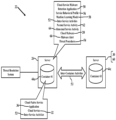
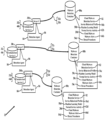
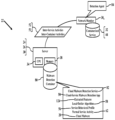
- FIGs. 1-5 illustrate some examples of inferring cloud malware 20 in a cloud-computing environment 22.
- a computer 24 operates in the cloud-computing environment 22.
- FIG. 1 illustrates the computer 24 as a server 26.
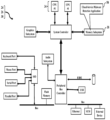
- the computer 24, though, may be any processor-controlled device, as later paragraphs will explain.
- the server 26 communicates via a communications network 28 (e.g., public Internet, private network, and/or hybrid network) with other servers, devices, computers, or other network members 30 operating within, or affiliated with, the cloud-computing environment 22.
- the server 26 is programmed to provide one or more cloud services 32 to the network members 30 of the cloud-computing environment 22.
- the server 26 thus has a hardware processor 34 (illustrated as "CPU") that executes a cloud-native service application 36 stored in a memory device 38.
- the cloud-native service application 36 may be a computer program, instruction(s), or code that instructs or causes the server 26 to provide the cloud service 32, perhaps on demand, on behalf of a service provider 40.
- the cloud-native service application 36 may be executed by, or associated with, a virtual machine 42.
- the cloud-native service application 36 in particular, may be packaged as an isolated container 44 that contains all of the necessary elements to provide the cloud service 32.
- the cloud-native service application 36 for simplicity, is thus known as a containerized service 32 and 44.
- the cloud-computing environment 22 delivers hosted cloud-native services, like storage, servers, and application services, via the communications network 28 (such as the Internet).
- the communications network 28 such as the Internet
- the cloud malware 20 may infect the cloud-computing environment 22.
- the cloud malware 20 exploits a vulnerability associated with the cloud service 32.
- the cloud service 32 runs as the container 44 in the distributed AMAZON ® Web Services platform. If any electronic data stored in an AMAZON SIMPLE STORAGE SERVICE ® (or "AMAZON S3 ® ”) storage container bucket gets compromised, the cloud service 32 could be commanded to setup a malicious AWS LAMBDA ® service. This malicious service may copy and steal the electronic data from the AMAZON S3 ® storage container bucket and exfiltrate the electronic data to an unauthorized network destination.
- the cloud malware 20 may thus cause a security breach that threatens the accuracy/confidentiality/integrity of the cloud service 32.
- the cloud malware 20 may further jeopardize the performance and functioning of the hardware processor 34 and the memory device 38. Simply put, the cloud service 32 must be monitored against attacks by the malicious cloud malware 20.
- FIG. 1 thus illustrates an example of a cloud-service malware detection application 50.
- the cloud-service malware detection application 50 detects, in real time or in near real time, anomalies as evidence of the cloud malware 20.
- FIG. 1 illustrates the cloud-service malware detection application 50 installed to, and locally stored by, the server 26.
- the cloud-service malware detection application 50 may be integrated into the container 44 that packages the cloud service 32.
- the cloud-service malware detection application 50 may be implemented as its own containerized cloud malware detection service.
- the cloud-service malware detection application 50 interfaces with, and perhaps supervises, the cloud-native service application 36.
- the cloud-service malware detection application 50 monitors any events, communications, and activities associated with the cloud service 32.
- the cloud-service malware detection application 50 monitors and approves/denies inter-service activities 52 conducted by the container 44 (e.g., the cloud-native service application 36 providing the cloud service 32). If the inter-service activities 52 indicate evidence of the cloud malware 20, the cloud-service malware detection application 50 may automatically implement notification/quarantine/isolation/halt or other threat procedures 54 that protect the server 26 and the cloud-computing environment 22.
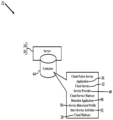
- FIGs. 2-4 further illustrate examples of cloud services malware detection.
- An example of the cloud-service malware detection application 50 uses a service behavioral profile 56 to detect the cloud malware 20.
- the service behavioral profile 56 is automatically and autonomously generated by a machine learning model 58 that interfaces with, or is integrated with, the cloud-service malware detection application 50.
- the cloud-service malware detection application 50 may monitor the contemporaneous inter-service activities 52 conducted by the cloud-native service application 36 providing the cloud service 32.
- FIG. 3 for example, the cloud-service malware detection application 50 monitors the inter-service activities 52 conducted between different containers (illustrated as reference numerals 44a and 44b) that are co-hosted by the server 26.
- FIG. 44a and 44b containers that are co-hosted by the server 26.
- the cloud-service malware detection application 50 monitors the inter-service activities 52 conducted (via the communications network 28 illustrated in FIG. 1 ) between different containers 44a and 44c hosted by different network nodal members (illustrated as servers 26 and 60).
- the cloud-service malware detection application 50 may thus monitor and supervise the inter-container activities 53 conducted between different containerized services 32 and 44.
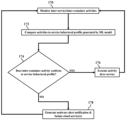
- the cloud-service malware detection application 50 compares any inter-service activity 52 to the service behavioral profile 56. If the inter-service activity 52 matches or conforms to the service behavioral profile 56, then the cloud-service malware detection application 50 may permit or allow the inter-service activity 52 to continue or to execute.
- the inter-service activity 52 may be classified as normal or expected service activity 62 conducted while providing the cloud service 32. If, however, the cloud-service malware detection application 50 determines that the inter-service activity 52 deviates from, or fails to match, the service behavioral profile 56, then the cloud-service malware detection application 50 may classify the inter-service activity 52 as an anomaly or unexpected service activity 64. The cloud-service malware detection application 50, in other words, may flag the inter-service activity 52 as potential evidence of the cloud malware 20. The cloud-service malware detection application 50 may thus generate and send a malware alert notification 66 to any notification addresses that initiate further investigation. The cloud-service malware detection application 50 may also implement the predefined threat procedures 54 that protect the cloud-computing environment 22.
- any threat notification scheme may be used.
- the cloud-service malware detection application 50 may implement the threat procedures 54.
- the cloud-service malware detection application 50 may instruct its host machine (such as the server 26) to generate and to send the malware alert notification 66 to predefined notification addresses.
- the malware alert notification 66 may be any message, webpage/website/social posting, and/or SMS text.
- the malware alert notification 66 may have any electronic content describing the inter-service activity 52 (such as the inter-container activity 53) that is the suspected cloud malware 20.
- the cloud-service malware detection application 50 may be programmed or coded to include far more detailed escalation actions.
- FIG. 4 illustrates a procedural hand-off to a threat resolution system that is more specifically programmed to inspect or resolve the cloud malware 20.
- cloud-service malware detection application 50 detects evidence of any malicious event (e.g., the cloud malware 20)
- operations may be implemented or executed that quarantine the cloud service 36.
- Operations may additionally or alternatively include quarantining the host machine (such as the server 26).
- Operations may additionally or alternatively include terminating the container 44 (e.g., the cloud-native service application 36 providing the cloud service 32).
- Service orchestration software may additionally or alternatively be instructed or commanded to remove the container 44 from the cloud computing environment 22. Because evidence of the cloud malware 20 has been detected, any actions may be implemented that isolate the offending cloud service 36 to protect the cloud computing environment 22.
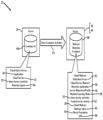
- FIG. 5 further illustrates examples of quickly detecting the cloud malware 20.
- the cloud-service malware detection application 50 may initially train the machine learning model 58 to recognize, or to predict, many different features or indicators of the normal or expected service activities 62.
- the machine learning model 58 may be trained with cloud service training data 70 representing the normal or expected service activities 62.
- the cloud service training data 70 describes actual, known, and/or normal activities that should be, or have been, conducted by the cloud-native service application 36 providing the cloud service 32.
- the cloud service training data 70 may be extracted from actual samples, attributes, calls, events, parameters, and/or ranges of values that have been historically observed/logged as uncorrupted or unaffected by the cloud malware 20.
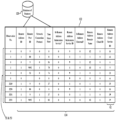
- Predictions may be made. Because the machine learning model 58 may build a statistical model, the machine learning model 58 may statistically predict a range of the normal or expected service activities 62. As a simple example, the machine learning model 58 may generate the cloud-service behavioral profile 56 using Gaussian probability distributions based on the cloud service training data 70. One or more standard deviations and confidence intervals may then be calculated to predict ranges of the normal or expected service activities 62. As the cloud-service malware detection application 50 inspects the inter-service activities 52, the statistical models may be used to predict that any inter-service activity 52 lies within, or deviates or differs from, the cloud-service behavioral profile 56.
- the cloud-service malware detection application 50 may thus classify the inter-service activity 52 as the abnormal or unexpected service activity 64 and, thus, the suspected cloud malware 20.
- the cloud-service malware detection application 50 may then cause the cloud-native service application 36, and/or the server 26, to nearly instantaneously stop/halt/terminate the offending inter-service activity 52. Indeed, the cloud-service malware detection application 50 may even disable the entire cloud service 32.
- the cloud-service malware detection application 50 may further generate the malware alert notification 66 that is sent (via the communications network 28) to any destination/recipient network address.
- the cloud-service malware detection application 50 thus autonomously and quickly protects the cloud-computing environment 22 from the cloud malware 20.
- the cloud-service malware detection application 50 provides many improvements to computer functioning.
- the cloud-service behavioral profile 56 for example, is autonomously and automatically generated by the cloud-service malware detection application 50 invoking the machine learning model 58.
- Conventional malware detection solutions use manually-generated profiles that are exceptionally laborious to create and slow to implement. Manually-generated profiles, in plain words, are simply too complicated to humanly complete, as hundreds or even thousands of rules must be coded. In practice, then, manually-generated profiles are too simple and incomplete, thus causing conventional malware detection products to under catch, or over catch, the cloud malware 20.
- conventional malware detection schemes train machine learning models with threat data. That is, conventional schemes train machine learning models to identity or predict malware using known, previously discovered vulnerability traits.
- the cloud-service malware detection application 50 trains the machine learning model 58 with the normal or expected service activities 62 conducted by the cloud-native service application 36. If any inter-service activity 52 deviates from the cloud-service behavioral profile 56, the inter-service activity 52 may be immediately classified as suspicious and flagged as the cloud malware 20.
- the cloud-service malware detection application 50 thus need not have a priori knowledge of any event or activity caused by any threat.
- the cloud-service malware detection application 50 maintains the accuracy/integrity of the cloud service 32, and the cloud-service malware detection application 50 prevents malware-degraded hardware and memory performance of the computer 24.
- FIGs. 6-8 illustrate more examples of containerized architectures.
- FIG. 6 illustrates a container-integration approach to malware detection.
- the cloud-service malware detection application 50 in other words, may be integrated with the container 44 that packages the cloud-native service application 36 providing the cloud service 32.
- the cloud-service malware detection application 50 in particular, may be installed into, inserted into, added to, or imported into the container 44 that packages or contains the cloud-native service application 36 providing the cloud service 32.
- the service provider 40 (of the cloud service 32) codes the cloud-service malware detection application 50 into the cloud-native service application 36.
- the cloud-service malware detection application 50 receives or intercepts the inter-service activities 52 and processes according to the service behavioral profile 56.
- the service provider 40 may thus manage the lifecycle of the cloud service 32, including the cloud-service malware detection application 50.
- FIGs. 7-8 illustrate examples of hosted service solutions.
- the cloud-service malware detection application 50 may be packaged as its own malware detection container 80 providing a cloud malware detection service 82.
- the cloud-service malware detection application 50 may be packaged to contain all of its necessary elements to provide the cloud malware detection service 82.
- the malware detection container 80 for example, packages the service behavioral profile 56 generated by the machine learning model 58 based on the normal service activities 62. When evidence of the cloud malware 20 is determined/predicted, the malware detection container 80 may also package the code generating the malware alert notification 66 and other threat procedures 54.
- the malware detection container 80 (providing the cloud malware detection service 82) may be co-hosted by the server 26 that also hosts the different cloud service 32.
- FIG. 8 illustrate examples of hosted service solutions.
- the cloud-service malware detection application 50 may be packaged as its own malware detection container 80 providing a cloud malware detection service 82.
- the cloud-service malware detection application 50 may be packaged to contain all of its necessary elements to provide the cloud malware detection service 82.
- the malware detection container 80 is hosted by the different network member 30 (illustrated as the server 60) operating within, or affiliated with, the cloud-computing environment 22.
- the cloud-service malware detection application 50, packaged as the malware detection container 80 may be separate/remote network resource/service that may be invoked by any network member 30 of the cloud-computing environment 22.
- a detection agent 84 may inform the malware detection container 80.
- the detection agent 84 cooperates with the cloud-native service application 36 providing the cloud service 32.
- the detection agent 84 may have code or instructions that cause the server 26, and/or the cloud-native service application 36 (providing the cloud service 32), to read or intercept the inter-service activities 52 (such as the inter-container activities 53) conducted by the container 44.
- the service provider 40 may install or add the detection agent 84 to an operating system executed by the server 26.
- the service provider 40 may additionally or alternatively install or add the detection agent 84 to the cloud-native service application 36 providing the cloud service 32.
- the malware detection container 80 may expose its application programming interfaces ("APIs") 86 for calling/requesting the cloud malware detection service 82.
- APIs application programming interfaces
- the detection agent 84 invokes the APIs 86 and may instruct or cause its host server 26 to send or transfer the inter-service activities 52 (via the communications network 28 illustrated in FIG. 1 ) to the network IP address representing the malware detection container 80, the cloud malware detection service 82, and/or the cloud-service malware detection application 50.
- the detection agent 84 in plain words, may send a request specifying the cloud malware detection service 82 based on the inter-service activities 52.
- the malware detection container 80 may provide the cloud malware detection service 82. If evidence of the cloud malware 20 is detected, the cloud-service malware detection application 50 may send the malware alert notification 66 and may implement the threat procedures 54.
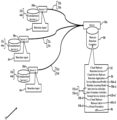
- FIGs. 9A-9B illustrate more examples of containerized services architectures.
- the cloud-computing environment 22 may have many, perhaps even hundreds, of different and distributed, containerized cloud services 32. Such a complicated architecture is too difficult to illustrate.
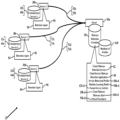
- FIG. 9A simply illustrates four (4) network members 30a-d providing their corresponding containerized cloud services 32a-d and 44a-d.
- network member 30a in particular, hosts the malware detection container 80 providing the cloud malware detection service 82.
- the cloud malware detection service 82 may utilize multiple malware detection containers (illustrated as reference numerals 80a-c). Because the cloud-computing environment 22 may implement many hundreds or more of distributed, containerized cloud services 32, such a large service architecture may overwhelm the performance capabilities of a single malware detection container 80. Indeed, packet congestion, network delays, and timing/performance objectives may require the installation of multiple and distributed malware detection containers 80a-c to adequately serve the needs of the cloud-computing environment 22.
- the cloud malware detection service 82 monitors the cloud services 32.
- the network members 30b-d may each store and execute an instance of the detection agent 84.
- Each instance of the detection agent 84 may instruct the corresponding network member 30b-d to invoke the APIs 86 and to report its corresponding inter-service/inter-container activities 52b-d and 53b-d (via the communications network 28 illustrated in FIG. 1 ) to the network IP address associated with the malware detection container 80 providing the cloud malware detection service 82.
- the malware detection container 80 provides the cloud malware detection service 82, based on the corresponding service behavioral profile 56b-d that is associated with the containerized cloud service 32b-d.
- Each containerized cloud service 32b-d may have its unique service behavioral profile 56b-d, generated based on historical observations of the corresponding normal service activity 62b-d.
- the cloud malware detection service 82 may be configured to utilize different machine learning models 58b-d that are predetermined or pre-selected according to the containerized cloud service 32b-d.
- the cloud malware detection service 82 may thus be trained to detect different cloud malware 20b-d, again depending on the corresponding containerized cloud service 32b-d.
- the cloud malware detection service 82 may be additionally configured with different malware alert notifications 66b-d and different threat procedures 54b-d, again depending on the corresponding containerized cloud service 32b-d.
- the cloud malware detection service 82 may thus be customized according to the containerized cloud service 32b-d.
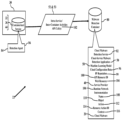
- FIGs. 10-11 illustrate examples of the inter-service activities 52 that may be monitored by the cloud-service malware detection application 50 and/or the cloud malware detection service 82.
- the cloud-computing environment 22 may provide thousands or even millions of distributed containers 44, with each different container 44 specializing in a corresponding cloud service 32.
- Each container 44 may package a single function that performs a specific task (sometimes referred to as a "microservice"). Large, complicated software applications may thus be broken up into much smaller, and more specialized, cloud services 32. As this disclosure above explained, though, such a complicated architecture is too difficult to illustrate.
- FIGs. 10-11 thus simply illustrate two (2) containerized services 32/44 and 80/82.
- the detection agent 84 may report the corresponding inter-service activities 52 and/or the inter-container activities 53 (via the communications network 28 illustrated in FIG. 1 ) to the network IP address representing the malware detection container 80 packaging the cloud malware detection service 82.
- the detection agent 84 may request the cloud malware detection service 82 using the APIs 86, as above explained.
- the inter-service activities 52 may include network connections 90.
- the cloud-service malware detection application 50 may monitor and inspect the incoming/outgoing inter-service/inter-container activities 52 and/or 53 conducted to/from the container 44.
- each container 44 is assigned to, and associated with, a unique cloud service identifier 92 and an Internet Protocol address 94.
- communications are established with other containers and services.
- the hosting network member 30, the cloud service 32, and/or the detection agent 84 may report the network connections 90, the service identifiers 92, and/or the Internet Protocol addresses 94 to the malware detection container 80 packaging the cloud malware detection service 82.
- the cloud-service malware detection application 50 may inspect one, some, or all of these inter-service activities 52 and identify or classify the corresponding cloud service 32.
- the cloud-service malware detection application 50 may read, or generate, logs describing input data sent to other containers 44, output data received from other containers 44, their corresponding Internet Protocol addresses 94, and/or cloud service identifiers 92.
- the cloud-service malware detection application 50 may read or log inter-container and/or inter-host requests, responses, replies, events, activities, their corresponding Internet Protocol addresses 94, and/or cloud service identifiers 92.
- the cloud-service malware detection application 50 may query and retrieve these inter-container Internet Protocol addresses 94 and cloud service identifiers 92 from cloud configuration data 96 provided by AWS ® , GOOGLE ® , MICROSOFT ® , or any other cloud-service provider hosting the cloud-computing environment 22. Because the container 44 is configured to talk to incoming and to outgoing external container services, the cloud-service malware detection application 50 may identify the external container 44 by reading the cloud configuration data 96 describing inter-container communications.
- the network connections 90 allow identity inferences.
- the network connections 90 allow the cloud-service malware detection application 50 to distinguish between an IP address for an object store API, an IP address of a local host, and an IP address of a computer on a network. Furthermore, the cloud-service malware detection application 50 may distinguish between an internal application or a public IP address.
- the Internet Protocol address 94 and cloud service identifier 92 may even quickly and easily identify other categories of services (such as a SALESFORCE ® API or a SLACK ® messaging service).
- the cloud-service malware detection application 50 may identify and/or classify the cloud service identifier 92 by monitoring the inter-service network connections 90 between the different containers 44 and the cloud services 32. Any method or network data may be used to infer service identities.
- IP addresses may be retrieved and compared to the IP address 94 assigned to the container 44, thus identifying the cloud service 32 and/or service provider 40.
- Internet Protocol reputations 99 may be retrieved and used to identify IP addresses associated with bulk spam, malware, dangerous domains, or suspicious locations ( e.g ., poor IP reputations). Again, though, any method or network data may be used to infer service identities.
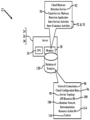
- FIG. 11 illustrates more examples of the inter-service activities 52.
- the cloud-service malware detection application 50 may generate and monitor an API resource identification 100.
- the cloud-computing environment 22 may deploy thousands or even millions of different containers 44, with each container 44 providing a corresponding cloud micro-service 32.
- Each container 44 may thus be associated with application programming interfaces (or "APIs") that defines protocols for using the native cloud service 32 provided by the container 44.
- the hosting network member 30, the cloud service 32, and/or the detection agent 84 may report incoming and outgoing API calls 102 to the malware detection container 80 packaging the cloud malware detection service 82.
- the API resource identification 100 reveals the web resource 104 called by the cloud service 32 and the service provider 40.
- the cloud-service malware detection application 50 may thus generate and monitor a runtime network instrumentation 106.
- the cloud-service malware detection application 50 may generate the runtime network instrumentation 106 by identifying the API call 102 and by accessing and using publicly-available details about the API call 102. For example, suppose that the container 44 (e.g., the cloud-native service application 36) issues an HTTP REST API call 102. Because the packet headers in the HTTP portion are visibly available, the cloud-service malware detection application 50 may read the HTTP portion and identify the URL hosting the API resource. The IP reputation 99 associated with the URL host may identify malicious threat actors.
- the cloud-service malware detection application 50 may identify that the container 44 is communicating with the particular web resource 104 (such as SALESFORCE ® ) and making a modification to the web resource 104.
- encrypted network traffic may also be inspected and identified.
- the detection agent 84 may inspect packet headers in HTTPS traffic (such as by using the extended Berkeley Packet Filter or eBPF) to extract and identify security observability data.
- the cloud-service malware detection application 50 may obtain fine-grained details of the API call 102 and determine the API resource identification 100, even from encrypted traffic. The API resource identification 100 may thus reveal the cloud malware 20 attempting a rogue resource modification.
- the cloud-service malware detection application 50 may encode other information.
- the cloud-service malware detection application 50 may be programmed to include details regarding all, some, or commonly used API calls 102. These API details allow the cloud-service malware detection application 50 to distinguish between different API calls 102 (such as REST API call from a Graph QL call).
- Amazon's AWS ® offers hundreds of different API calls 102.
- the cloud-service malware detection application 50 may be coded to include fine details regarding all, or a popular or common subset, of these AWS ® API calls 102. These fine details may be retrieved from the cloud configuration data 96 (such as Amazon's AWS ® specification) and provide a deep knowledge of the resource exposed by the API call 102.
- These fine details may reveal a name 108, an object 110, and an action 112 associated with the API call 102. These fine details may be incorporated into the API resource identification 100, thus providing a rich-data description of the inter-container API calls 102 associated with the container 44 providing the cloud service 32.
- the cloud-service malware detection application 50 may generate a resource action identification 114.
- the cloud-service malware detection application 50 may generate the resource action identification 114 by semantically translating the action 112 (revealed by the API resource identification 100) using a context 116.
- the cloud-service malware detection application 50 may identify the API call 102 as a creation of a resource from its context 116. If the context 116 is an AMAZON S3 ® bucket, the resource action identification 114 identifies the corresponding semantics and a single action 112.
- the resource action identification 114 is a rich glossary of semantics associated with API calls 102 and their corresponding name 108, object 110, and action 112.
- the cloud-service malware detection application 50 may thus train the machine learning model 58 to identify anomalies using the features or indicators of the normal service activities 62.
- the cloud-service malware detection application 50 may then be deployed per-container 44, and/or per-service 32, for monitored cloud services 32.
- Each container/service instance of the cloud-service malware detection application 50 gets differently trained to identify container-specific/service-specific anomalies (or threats).
- the cloud-service malware detection application 50 may thus generate the unique service behavioral profile 56 for each distributed cloud service 32. Because the cloud-service malware detection application 50 may use statistical approaches, the cloud-service malware detection application 50 may statistically predict if a cloud service operation (in terms of the service identity 92) is considered anomalous.
- the cloud-service malware detection application 50 provides more improvements to computer functioning.
- the cloud-service malware detection application 50 provides malware protection to distributed cloud-native computing services.
- the cloud-service malware detection application 50 predicts the cloud malware 20 by detecting anomalous inter-service activities 52 conducted between different containerized services 32 and even by different inter-host network members 30.
- the cloud-service malware detection application 50 may generate the cloud-service behavioral profile 56 based on inter-service/inter-container incoming and outgoing network communications 90, the API calls 102, and other inter-service activities 52 conducted between the different containers 44 providing the different cloud services 32 distributed in the cloud-computing environment 22.
- the cloud-service malware detection application 50 detects anomalies in the context of the cloud services 32 utilizing each other.
- the cloud-service malware detection application 50 operates in a domain of the inter-service/inter-container communications 90, API calls 102, and other inter-service activities 52 that are deployed on multiple computer hosts 30 distributed in the cloud-computing environment 22.
- Conventional malware detection schemes focus on signals within a single host, which misses an attack that spans over multiple hosts 30.
- the cloud-service malware detection application 50 detects anomalies in a much bigger picture with context - i.e., an attack that spans over multiple hosts and the context being the cloud services 32 involved in the attack. Indeed, by analyzing the API calls 102, the cloud-service malware detection application 50 provides insights into the behavior of the cloud-native service application 36 (providing the cloud service 32), again at a big picture level.
- malware detection applications for example, only monitor and analyze local system calls at the host level. Because the cloud-service malware detection application 50 profiles based on inter-service/inter-container communications, API calls 102, and other inter-service activities 52, the examples of the cloud-service malware detection application 50 provide greater and more useful malware detection in a distributed services system.
Landscapes
- Engineering & Computer Science (AREA)
- Computer Security & Cryptography (AREA)
- General Engineering & Computer Science (AREA)
- Computer Hardware Design (AREA)
- Signal Processing (AREA)
- Computer Networks & Wireless Communication (AREA)
- Computing Systems (AREA)
- Software Systems (AREA)
- Theoretical Computer Science (AREA)
- Physics & Mathematics (AREA)
- General Physics & Mathematics (AREA)
- Data Exchanges In Wide-Area Networks (AREA)
- Debugging And Monitoring (AREA)
- Computer And Data Communications (AREA)
Applications Claiming Priority (2)
| Application Number | Priority Date | Filing Date | Title |
|---|---|---|---|
| US18/053,838 US12445478B2 (en) | 2022-11-09 | 2022-11-09 | Adaptive profiling of cloud services using machine learning for malware detection |
| EP23202855.5A EP4369657B1 (de) | 2022-11-09 | 2023-10-10 | Adaptive profilierung von cloud-diensten unter verwendung von maschinenlernen zur malware-erkennung |
Related Parent Applications (2)
| Application Number | Title | Priority Date | Filing Date |
|---|---|---|---|
| EP23202855.5A Division EP4369657B1 (de) | 2022-11-09 | 2023-10-10 | Adaptive profilierung von cloud-diensten unter verwendung von maschinenlernen zur malware-erkennung |
| EP23202855.5A Division-Into EP4369657B1 (de) | 2022-11-09 | 2023-10-10 | Adaptive profilierung von cloud-diensten unter verwendung von maschinenlernen zur malware-erkennung |
Publications (2)
| Publication Number | Publication Date |
|---|---|
| EP4582984A2 true EP4582984A2 (de) | 2025-07-09 |
| EP4582984A3 EP4582984A3 (de) | 2025-08-20 |
Family
ID=88373811
Family Applications (2)
| Application Number | Title | Priority Date | Filing Date |
|---|---|---|---|
| EP23202855.5A Active EP4369657B1 (de) | 2022-11-09 | 2023-10-10 | Adaptive profilierung von cloud-diensten unter verwendung von maschinenlernen zur malware-erkennung |
| EP25177639.9A Pending EP4582984A3 (de) | 2022-11-09 | 2023-10-10 | Adaptive profilierung von cloud-diensten unter verwendung von maschinenlernen zur malware-erkennung |
Family Applications Before (1)
| Application Number | Title | Priority Date | Filing Date |
|---|---|---|---|
| EP23202855.5A Active EP4369657B1 (de) | 2022-11-09 | 2023-10-10 | Adaptive profilierung von cloud-diensten unter verwendung von maschinenlernen zur malware-erkennung |
Country Status (2)
| Country | Link |
|---|---|
| US (1) | US12445478B2 (de) |
| EP (2) | EP4369657B1 (de) |
Families Citing this family (1)
| Publication number | Priority date | Publication date | Assignee | Title |
|---|---|---|---|---|
| US20260067297A1 (en) * | 2024-08-27 | 2026-03-05 | Infoblox Inc. | Device anomaly detection based on dns queries |
Family Cites Families (7)
| Publication number | Priority date | Publication date | Assignee | Title |
|---|---|---|---|---|
| US8893274B2 (en) * | 2011-08-03 | 2014-11-18 | Trend Micro, Inc. | Cross-VM network filtering |
| US9191403B2 (en) | 2014-01-07 | 2015-11-17 | Fair Isaac Corporation | Cyber security adaptive analytics threat monitoring system and method |
| US11122058B2 (en) | 2014-07-23 | 2021-09-14 | Seclytics, Inc. | System and method for the automated detection and prediction of online threats |
| US10462256B2 (en) | 2016-02-10 | 2019-10-29 | Curtail, Inc. | Comparison of behavioral populations for security and compliance monitoring |
| US10581873B2 (en) * | 2017-07-11 | 2020-03-03 | Cisco Technology, Inc. | Securing micro-services |
| US10936717B1 (en) * | 2018-01-30 | 2021-03-02 | EMC IP Holding Company LLC | Monitoring containers running on container host devices for detection of anomalies in current container behavior |
| WO2021171093A1 (en) | 2020-02-28 | 2021-09-02 | Darktrace, Inc. | Cyber security for a software-as-a-service factoring risk |
-
2022
- 2022-11-09 US US18/053,838 patent/US12445478B2/en active Active
-
2023
- 2023-10-10 EP EP23202855.5A patent/EP4369657B1/de active Active
- 2023-10-10 EP EP25177639.9A patent/EP4582984A3/de active Pending
Also Published As
| Publication number | Publication date |
|---|---|
| US20240154987A1 (en) | 2024-05-09 |
| US12445478B2 (en) | 2025-10-14 |
| EP4369657A1 (de) | 2024-05-15 |
| EP4582984A3 (de) | 2025-08-20 |
| EP4369657B1 (de) | 2025-07-09 |
Similar Documents
| Publication | Publication Date | Title |
|---|---|---|
| US11783035B2 (en) | Multi-representational learning models for static analysis of source code | |
| US11816214B2 (en) | Building multi-representational learning models for static analysis of source code | |
| Koroniotis et al. | Forensics and deep learning mechanisms for botnets in internet of things: A survey of challenges and solutions | |
| US9686292B2 (en) | System and method for continuous device profiling | |
| US10200384B1 (en) | Distributed systems and methods for automatically detecting unknown bots and botnets | |
| US10581880B2 (en) | System and method for generating rules for attack detection feedback system | |
| EP4185975B1 (de) | Detektion von anomaler anzahl neuer entitäten | |
| US20190089725A1 (en) | Deep Architecture for Learning Threat Characterization | |
| US12489793B2 (en) | Dynamic cybersecurity scoring using traffic fingerprinting and risk score improvement | |
| US20140090056A1 (en) | Security alert prioritization | |
| CN114402567B (zh) | 算法生成的域的在线检测 | |
| WO2021225650A1 (en) | Detecting malicious activity in a cluster | |
| US20250240313A1 (en) | Large language model (llm) powered detection reasoning solution | |
| EP4369657B1 (de) | Adaptive profilierung von cloud-diensten unter verwendung von maschinenlernen zur malware-erkennung | |
| Arul et al. | Supervised deep learning vector quantization to detect MemCached DDOS malware attack on cloud | |
| US20250047695A1 (en) | Advanced threat prevention | |
| US20250343814A1 (en) | Strategically aged domain detection | |
| CN113726761A (zh) | 一种基于白名单的网络安全防护方法 | |
| CN114301689A (zh) | 校园网络安全防护方法、装置、计算设备及存储介质 | |
| EP4485248A1 (de) | Maschinengelernte böswillige vorhersagen | |
| US20240281352A1 (en) | Artificial Intelligence Monitoring | |
| US20250233875A1 (en) | Operational Prediction on User-Based Contextual Sessions | |
| US12627683B2 (en) | Risk management simulator for multi-cloud data components | |
| US20260095470A1 (en) | Cybersecurity Breach Prediction | |
| US20250071135A1 (en) | Detecting vulnerabilities by seeding a computing resource with monitored scripts |
Legal Events
| Date | Code | Title | Description |
|---|---|---|---|
| PUAI | Public reference made under article 153(3) epc to a published international application that has entered the european phase |
Free format text: ORIGINAL CODE: 0009012 |
|
| STAA | Information on the status of an ep patent application or granted ep patent |
Free format text: STATUS: THE APPLICATION HAS BEEN PUBLISHED |
|
| AC | Divisional application: reference to earlier application |
Ref document number: 4369657 Country of ref document: EP Kind code of ref document: P |
|
| AK | Designated contracting states |
Kind code of ref document: A2 Designated state(s): AL AT BE BG CH CY CZ DE DK EE ES FI FR GB GR HR HU IE IS IT LI LT LU LV MC ME MK MT NL NO PL PT RO RS SE SI SK SM TR |
|
| REG | Reference to a national code |
Ref country code: DE Ref legal event code: R079 Free format text: PREVIOUS MAIN CLASS: G06F0021550000 Ipc: H04L0009400000 |
|
| PUAL | Search report despatched |
Free format text: ORIGINAL CODE: 0009013 |
|
| AK | Designated contracting states |
Kind code of ref document: A3 Designated state(s): AL AT BE BG CH CY CZ DE DK EE ES FI FR GB GR HR HU IE IS IT LI LT LU LV MC ME MK MT NL NO PL PT RO RS SE SI SK SM TR |
|
| RIC1 | Information provided on ipc code assigned before grant |
Ipc: H04L 9/40 20220101AFI20250715BHEP Ipc: G06F 21/55 20130101ALI20250715BHEP |
|
| STAA | Information on the status of an ep patent application or granted ep patent |
Free format text: STATUS: REQUEST FOR EXAMINATION WAS MADE |
|
| 17P | Request for examination filed |
Effective date: 20260219 |